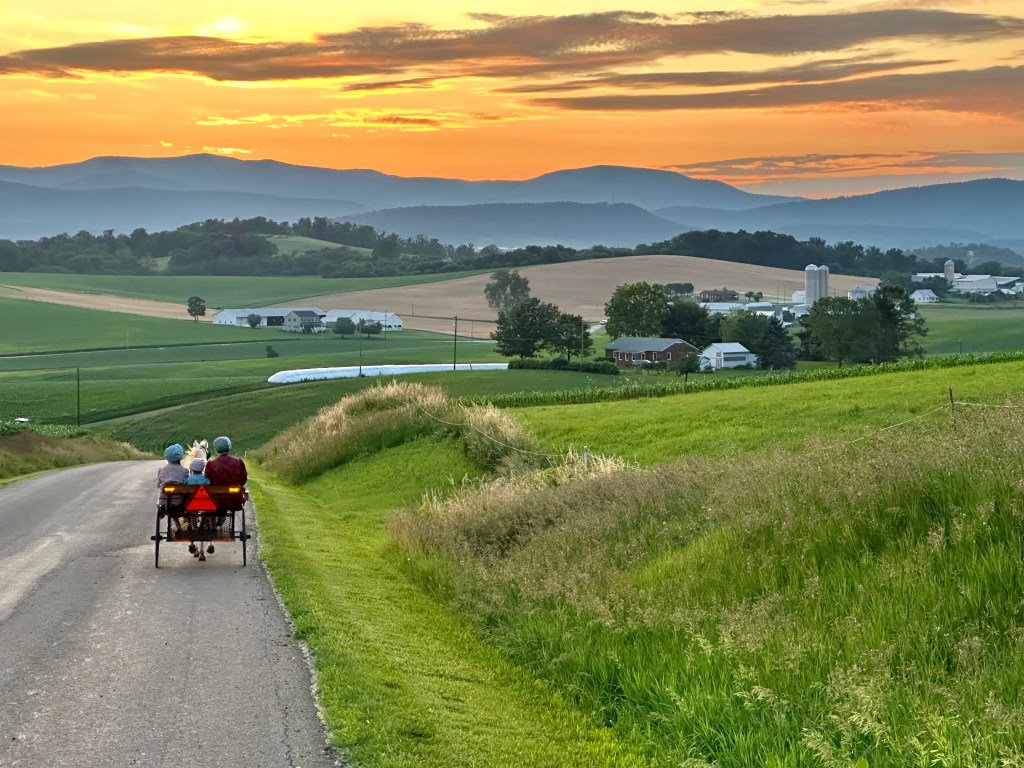
Sunset from Mole Hill, Dayton, Virginia. Photo by Bruce Stambaugh
Being at the right place at the right time is an essential part of photography. That’s what happened recently when I went to photograph the sunset from my favorite location, Mole Hill, near Dayton, Virginia.
When I arrived on the west side of Mole Hill, a noted area landmark, I discovered I was not alone. Several cars were stopped ahead of me on the gradual downhill slope. But once the sun sank behind the Allegheny Mountains, the vehicles continued on.
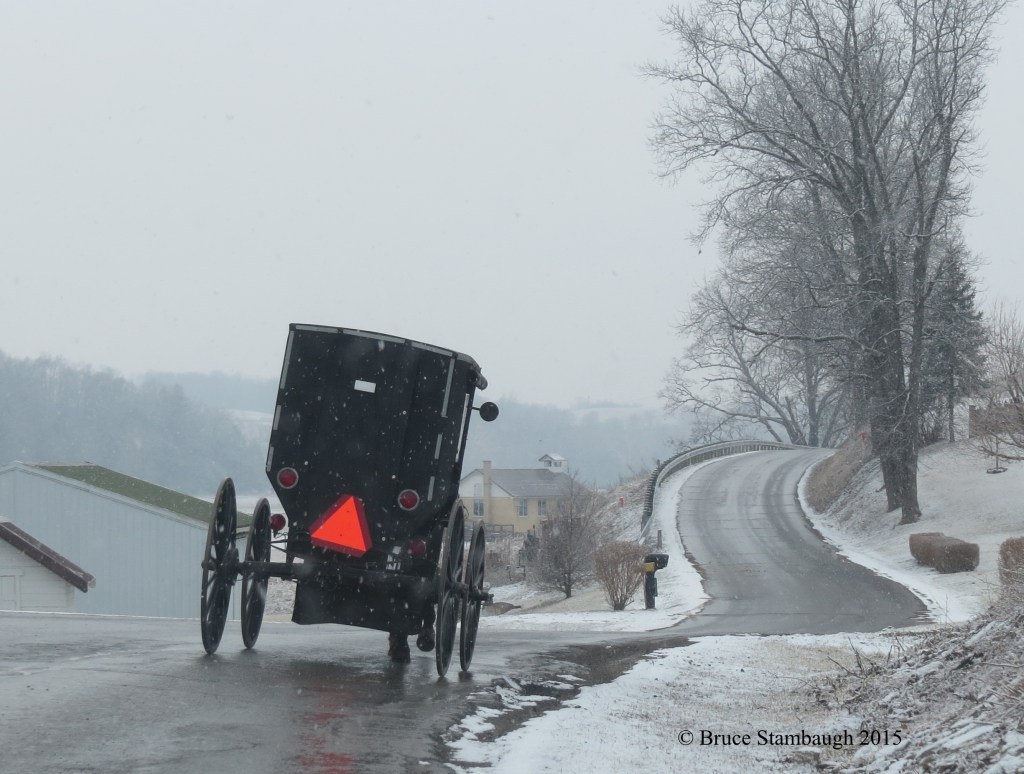
On my way up the road, I noticed a horse-drawn cart with an Old Order Mennonite young woman and two girls sitting on the wooden bench. They were parked beneath a walnut tree, admiring the various colors of the quickly changing landscape.
Imagine my surprise when I heard the clip-clop of horse hooves on the road’s surface. I turned around and saw the cart coming my way. I couldn’t believe my good fortune.
Out of respect to them, I waited until they were well past me before I took the photo. Like the Amish, Old Order Mennonites do not want their pictures taken for religious reasons.
Their little cart, with their yellow caution lights flashing, made this ho-hum sunset spectacular. I’m grateful I was there at the right time to capture the scene.
The pastoral landscape we enjoyed. Photo by Bruce Stambaugh
The weather was similar to the day we married 54 years ago, mostly sunny and warm. So, we decided to celebrate our anniversary by enjoying the scenic outdoors in Virginia’s Shenandoah Valley.
We drove the country roads in two Virginia counties, where Old Order Mennonite farms dominate rolling landscapes at the foot of the Allegheny Mountains. Those families have kept the farms intact for the most part. Generations have raised crops and livestock, including poultry, without selling off their prized road frontage for homes or small businesses. They must enjoy the scenery and quiet, too.
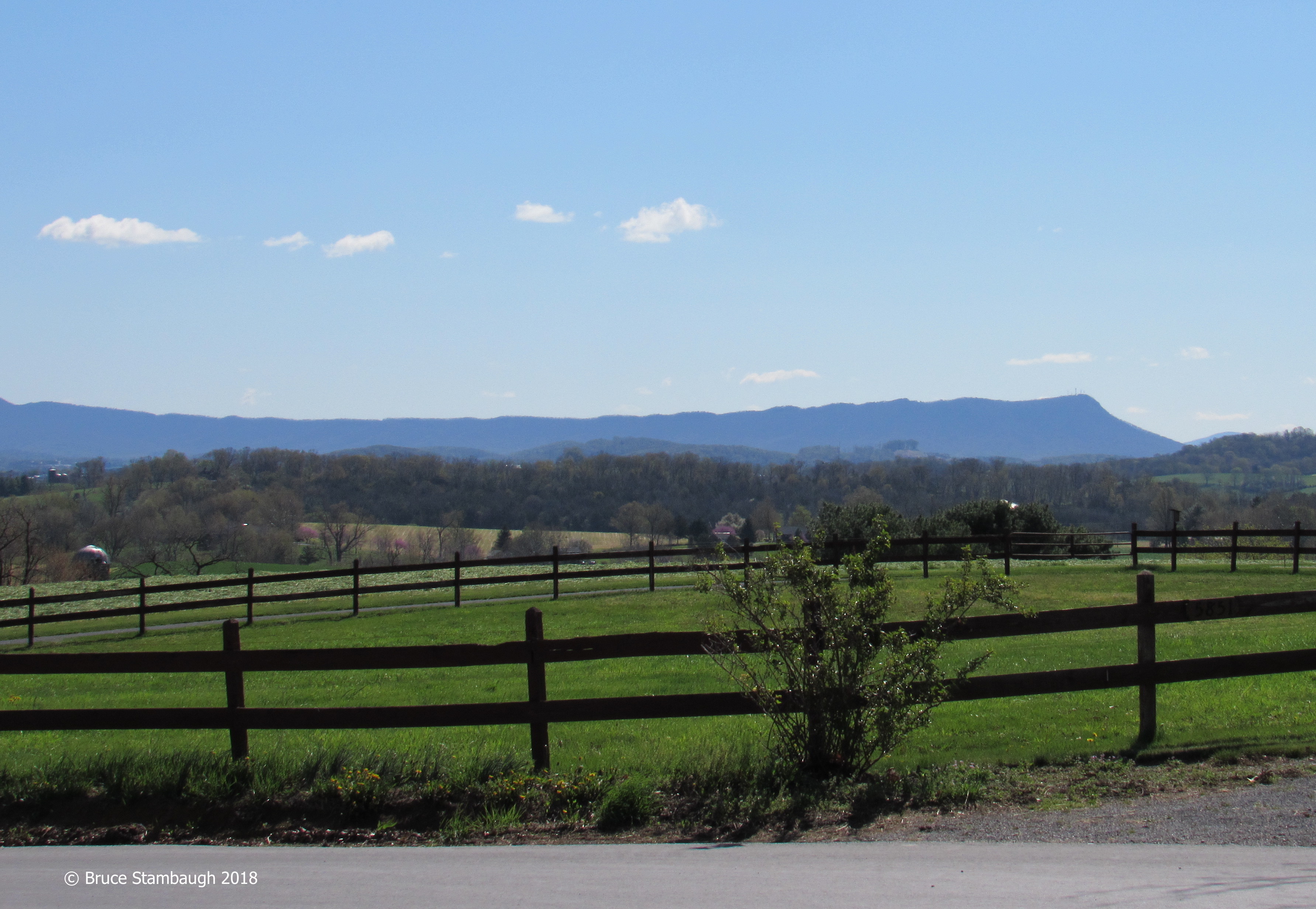
Despite the lack of rainfall, succulent green grasses for beef cattle, dairy cows, and plump sheep brimmed beneath tree-dotted pastures. Cottony clouds sailed overhead in the cerulean sky.
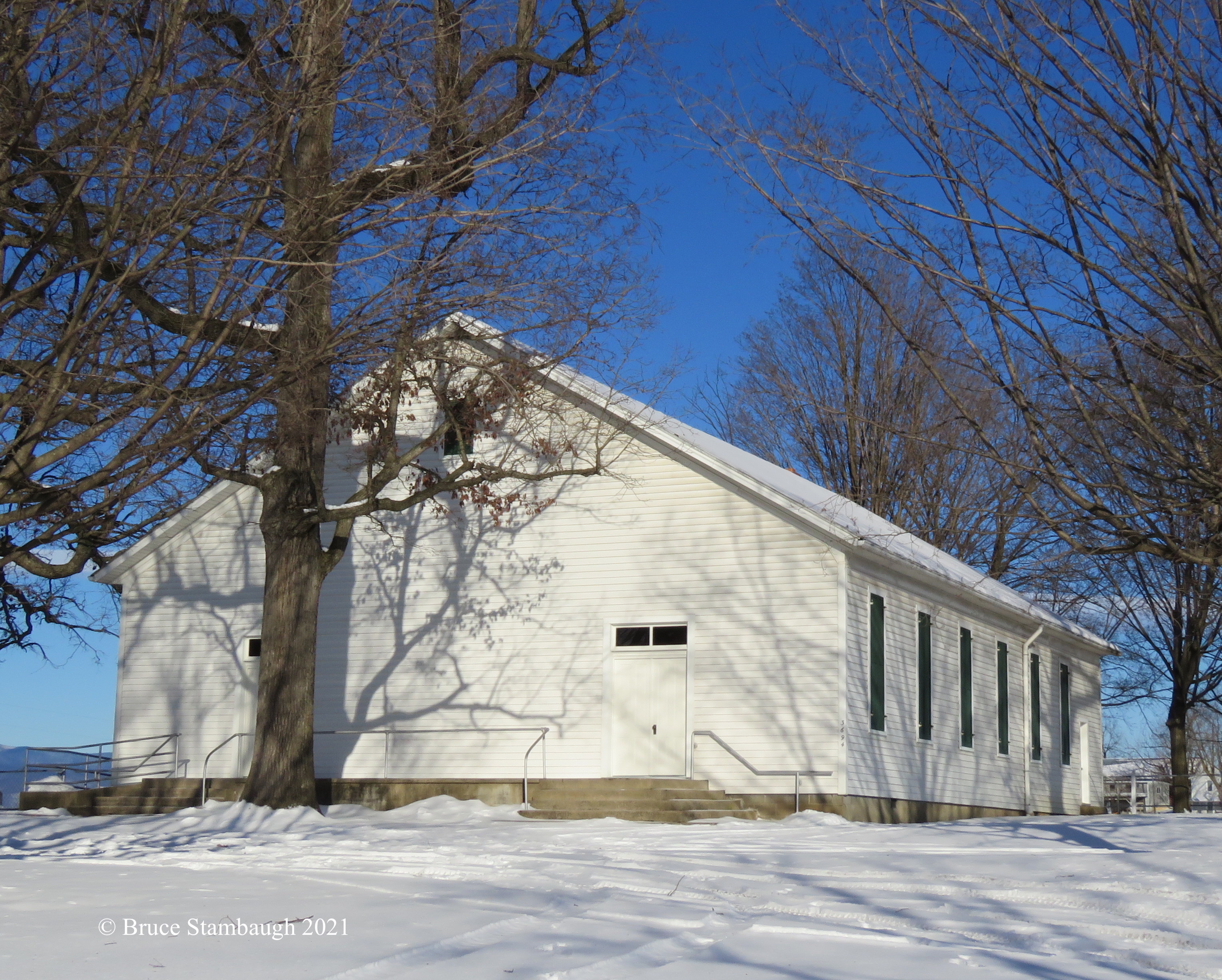
We visited a local birding hotspot across from a plain but pristine Old Order Mennonite church, where the men and women sit in benches on opposite sides after filing through separate doorways. Killdeer, Pectoral Sandpipers, and Canada Geese called and preened in the morning’s warmth, while pairs of Tree Swallows divebombed me for being too close to their birdbox.
Pectoral Sandpipers. Photo by Bruce Stambaugh
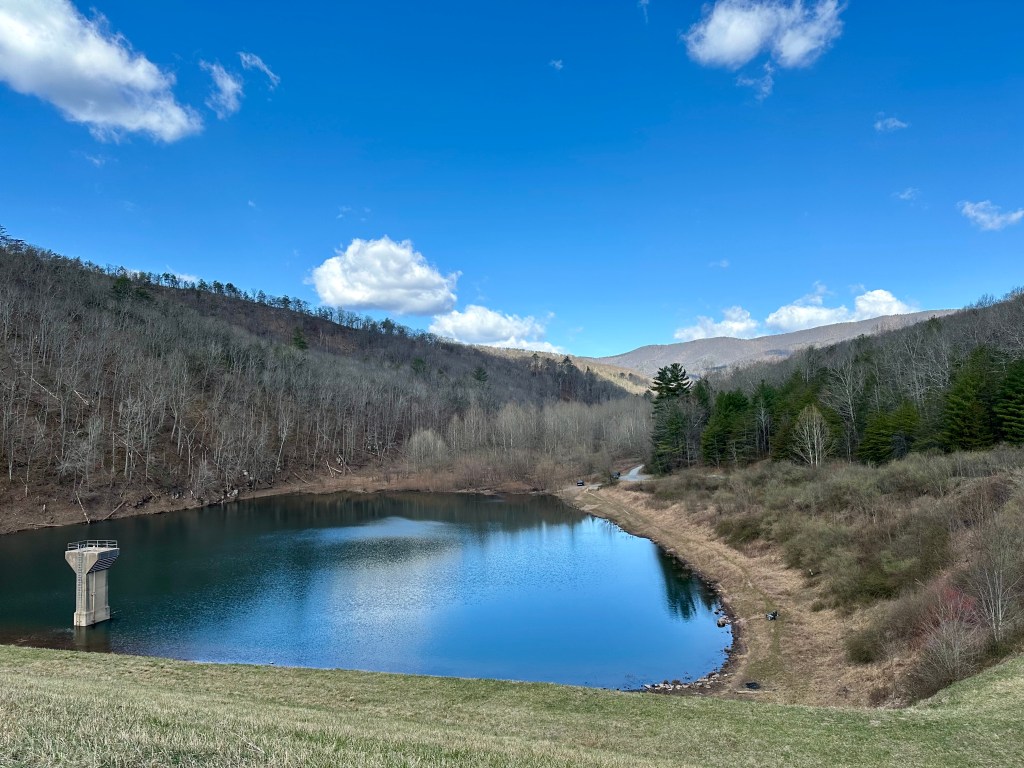
We turned onto a narrow, notoriously bumpy road that led to a mountain reservoir. A stream rushed between the mountains’ steep, forested foothills, marking the boundary between Virginia and West Virginia. Mint-colored leaves had only sprouted, allowing views of rock-filled talus slopes.
At the reservoir, the azure sky commanded the scene. Far below on its shores, fishermen plied the still water that mirrored the blue canopy overhead.
Though in no hurry, we kept driving south to our lunchtime destination. We wound up, down, and around onto primary roads and entered a historic, small southern city where artists and restaurants have replaced millineries, general stores, and saloons. We spied the old railroad station two city blocks away, where Amtrak and excursion trains still stop.
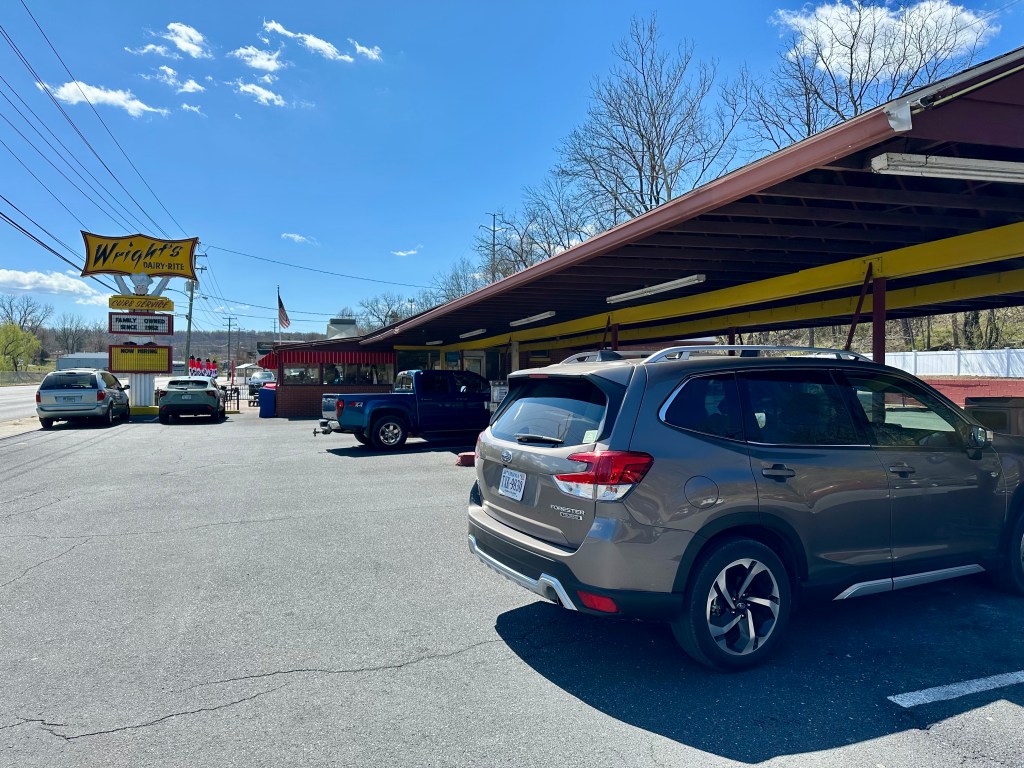
We were delighted to find a restaurant serving fresh seafood and luscious desserts. However, my wife diligently discovered an old-fashioned drive-in a mile away serving the best hot fudge sundaes.
It had been decades since I had to push a button to order food. The speakers looked like those we had at drive-in movie theaters in the 1960s. Our sundaes arrived just as we ordered, with chocolate ice cream.
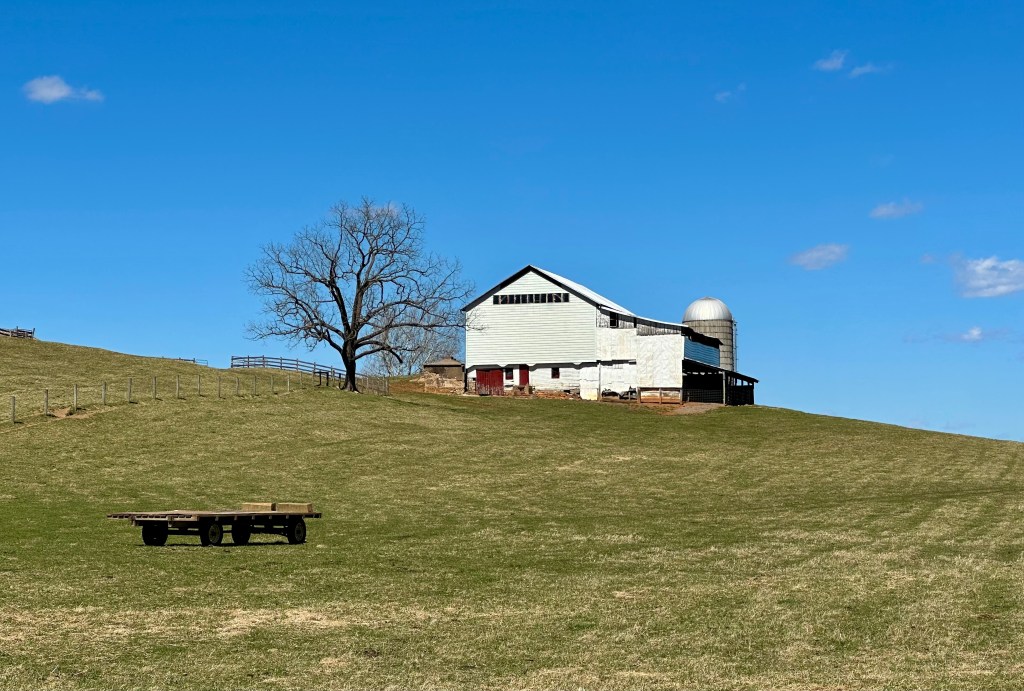
After the nostalgic pleasures, we headed west again toward the mountains before turning north. We passed ranches with lazy brooks snaking through green pastures occasionally speckled with grazing Black Angus cattle. Experienced farmers kept hilltop trees for cattle to gather on hot, humid Virginia days.
Drivers of the few vehicles that passed us waved the familiar index finger hello. If they know you, they point at you as a sign of recognition. We were fine with being admiring strangers.
Abandoned farmsteads stood on steep hillsides surrounded by trees planted ages ago. The houses were weathered and had broken windows, while many old outbuildings and barns had collapsed.
The long farm lanes that ended at white two-story houses and red bank barns reminded me of the happy, innocent Ohio days I drove down to pick up my fiancée. Like her lane, a small ridge of stubble grass divided the tire tracks.
The weather nearly matched the day we married all those years ago. Sunny skies and unseasonably warm temperatures dominated that precious day, too. However, the pungent smell of manure that the farmer had sprayed on the fields across from the country church was missing.
We made our way home happy, contented, and glad we had chosen to renew our vows so quietly, personally, amid welcome familiarity.
Steers graze on greening grass. Photo by Bruce Stambaugh
Nothing says summer like children fishing on a sultry August morning. These three youngsters enjoyed a time away from farm chores to make a few casts into the pond in front of their home.
The boy reeled in his line quickly like he had caught something. A closer look (please click on the photo) shows that he has a wry smirk on his face, and for good reason. He caught a weed, which you can see flying at the end of his line.
So far, this certainly has been an old-fashioned Ohio winter. The only problem with that statement is that we live in Virginia.
I was afraid this might happen since my wife and I decided to forgo our usual weeks-long hiatus to our beloved Amelia Island, Florida. It wasn’t always warm in our snowbird retreat there either, but at least it never snowed.
My preferred winter morning scene.
I don’t mind the snow so much. It’s the cold that gets to me. The older I get, the colder I get. My doctor blames that phenomenon on some of the medications that I take. Still, the results are the same.
My wife and I determined it best for us to stay close to home here in the Shenandoah Valley during the pandemic. We didn’t want to miss our chance at getting our virus vaccines since we were in a priority category to receive the shots.
We decided that it was better to endure the usually milder winters of Virginia than those of the Buckeye State we knew so well. This year there’s hardly been a difference.
Scenes from Ohio winters.
We have had cold, windy, wet, snowy, and often gray winter days. It hasn’t been as bad as living in the northeast Ohio Snowbelt. But we still feel those cold Arctic northwest winds nevertheless.
The Allegheny Mountains to our west help block some of the storms, and their western upslopes receive much more snow than we do here in the valley. However, if a storm tracks east of the mountains, we get our fair share of the white stuff, too. Snow and cold have been the rule, not the exception this winter for us.
So far this winter, we have had multiple measurable snowstorms. Some even lasted for a couple of days. We are used to seeing more sunny days here than we did in Ohio. Not this winter. I miss my frequent doses of vitamin D.
There is one good thing about snow in Virginia. It shuts everything down, significantly decreasing the number of drivers trying to test their macho mettle.
In Ohio, severe winter storms also closed schools, businesses, and highways. But that didn’t stop hardy souls from enjoying the snow. In extreme storms, snowmobiles ruled the roads until the snowplows ruined the fun.
Friends have teased us about all the winter storms we’ve had so far this year. “I thought you moved south,” they jest. My rational reply always is, “Yes, just not far enough south.” For the record, we are at the same latitude as Cincinnati.
Of course, we moved here for the grandkids. I’m pleased that they also have sledding hills to conquer and snow forts to build, as we did as youngsters. I’m contented to hear about their fun rather than join in.
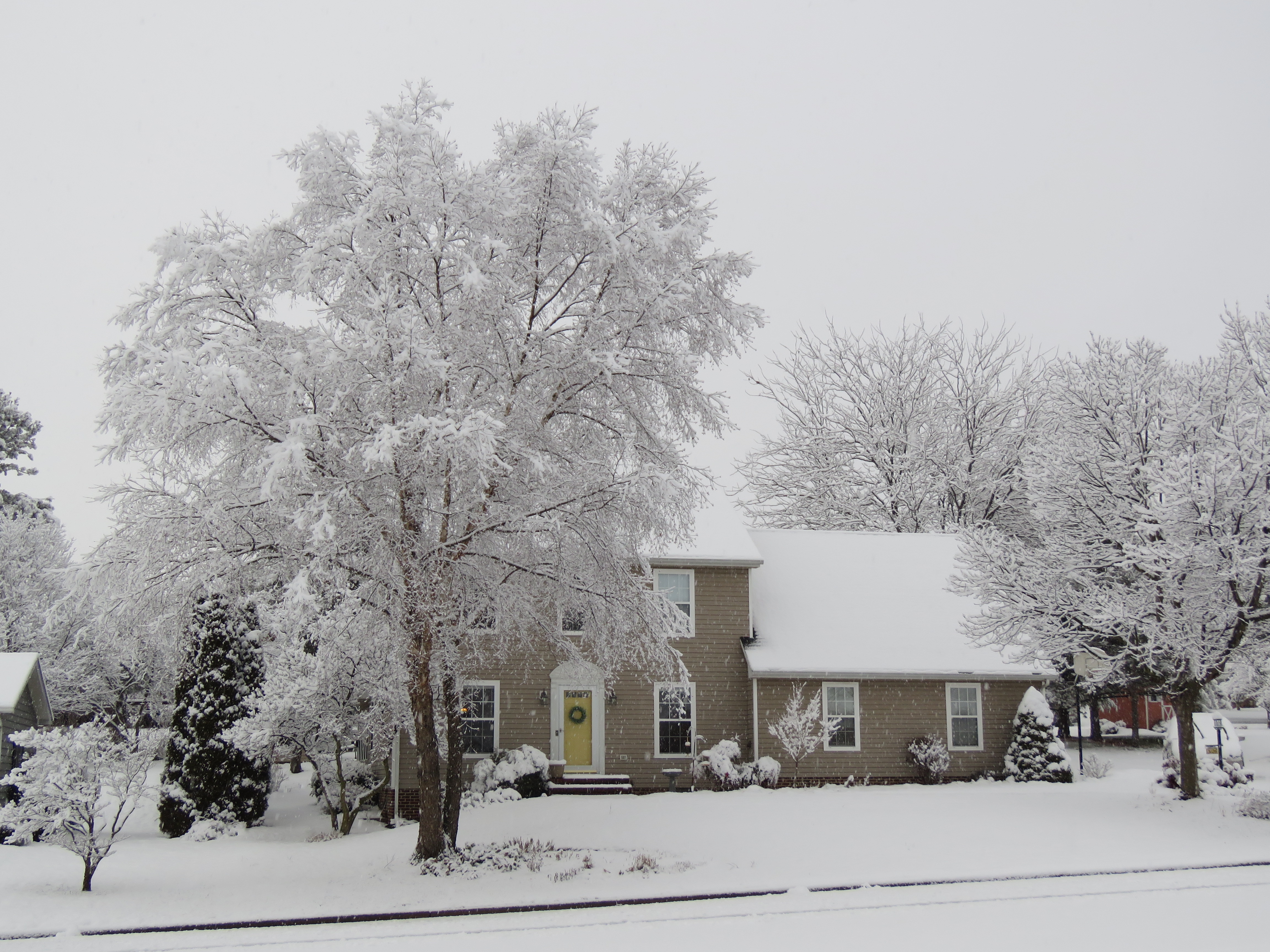
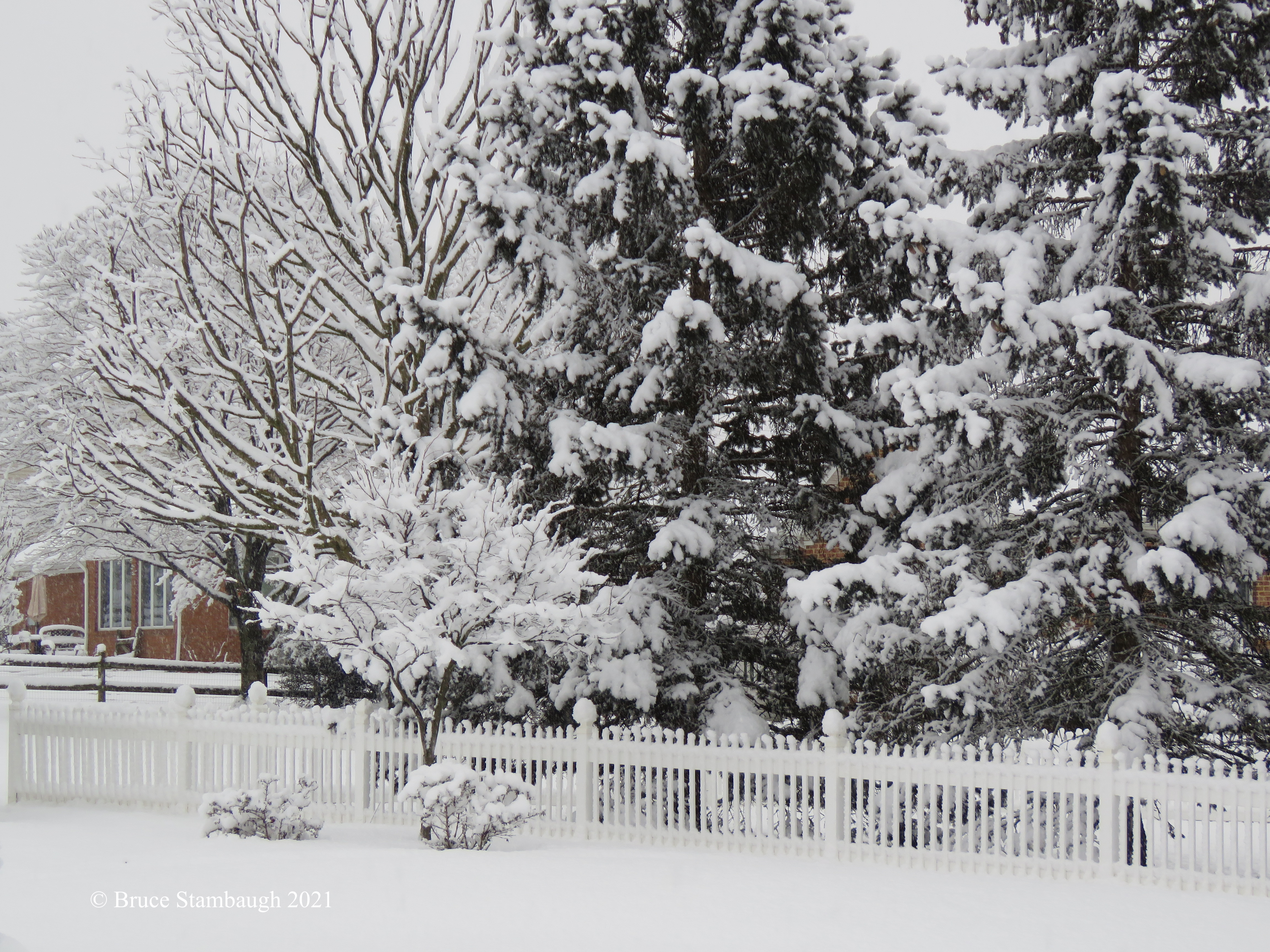
Scenes for Virginia winters.
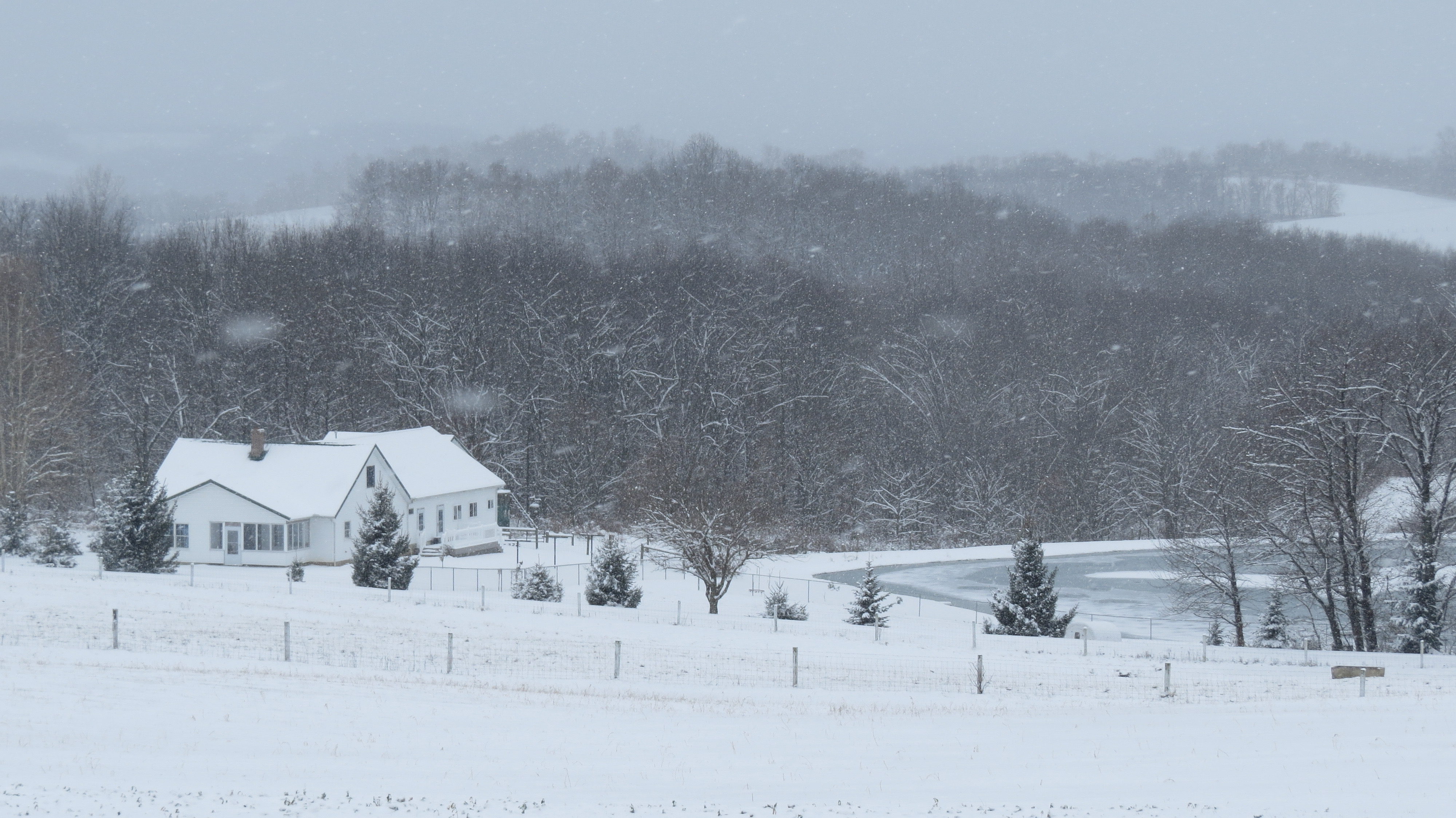
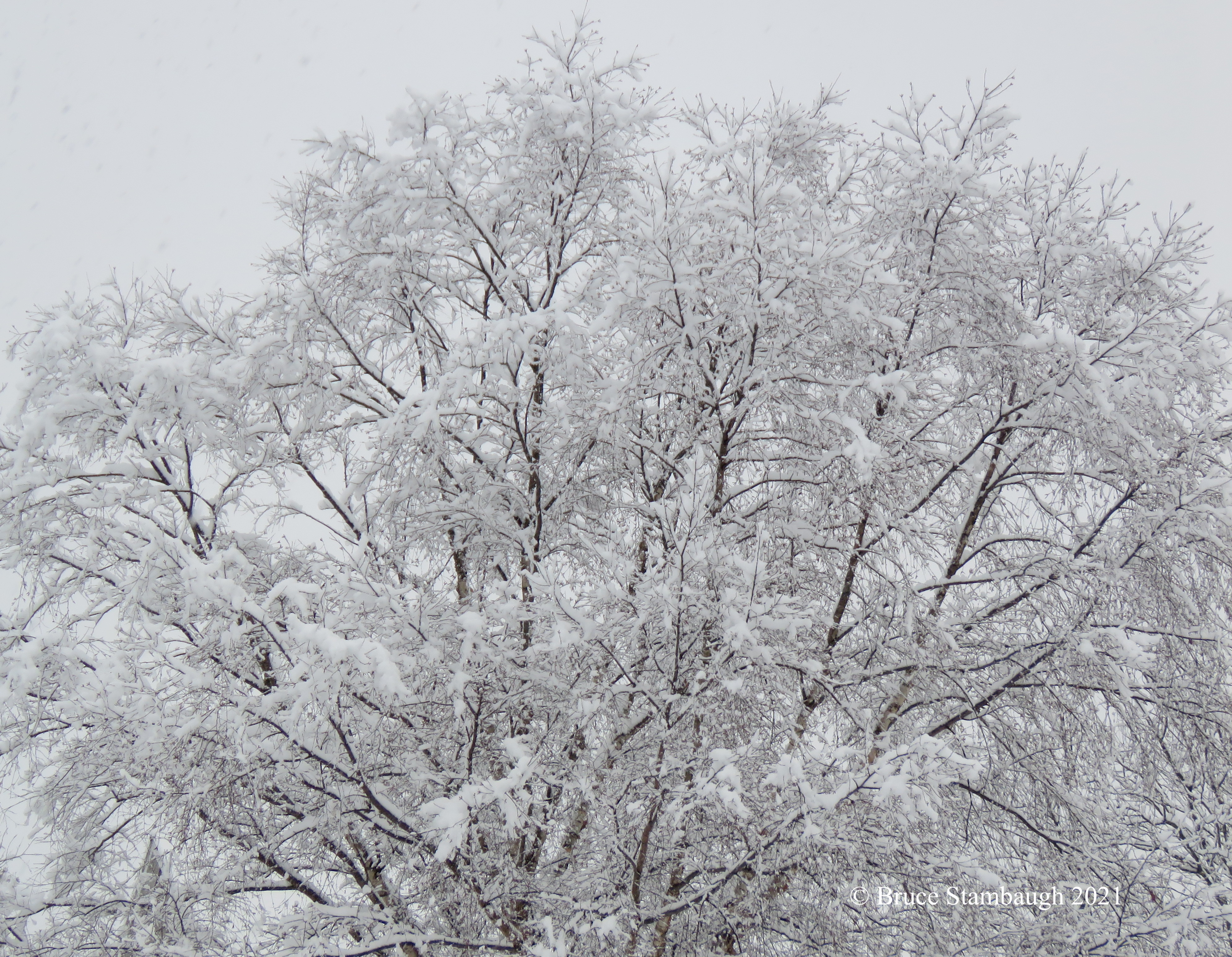
Snow brings more than recreation, though. The aesthetic results of valley snowstorms are a marvel. Like our former home, rolling farms dot the landscape of our expansive county. When blanketed with inches of snow, the already pastoral scenes turn majestic.
The mountainous landscapes become black and white panoramas of steeply sloped woods sprouting from white forest floors. Old Order Mennonites in buggies and on bikes don’t let the slippery stuff stop their endeavors. In that regard, it feels just like Holmes County, too.
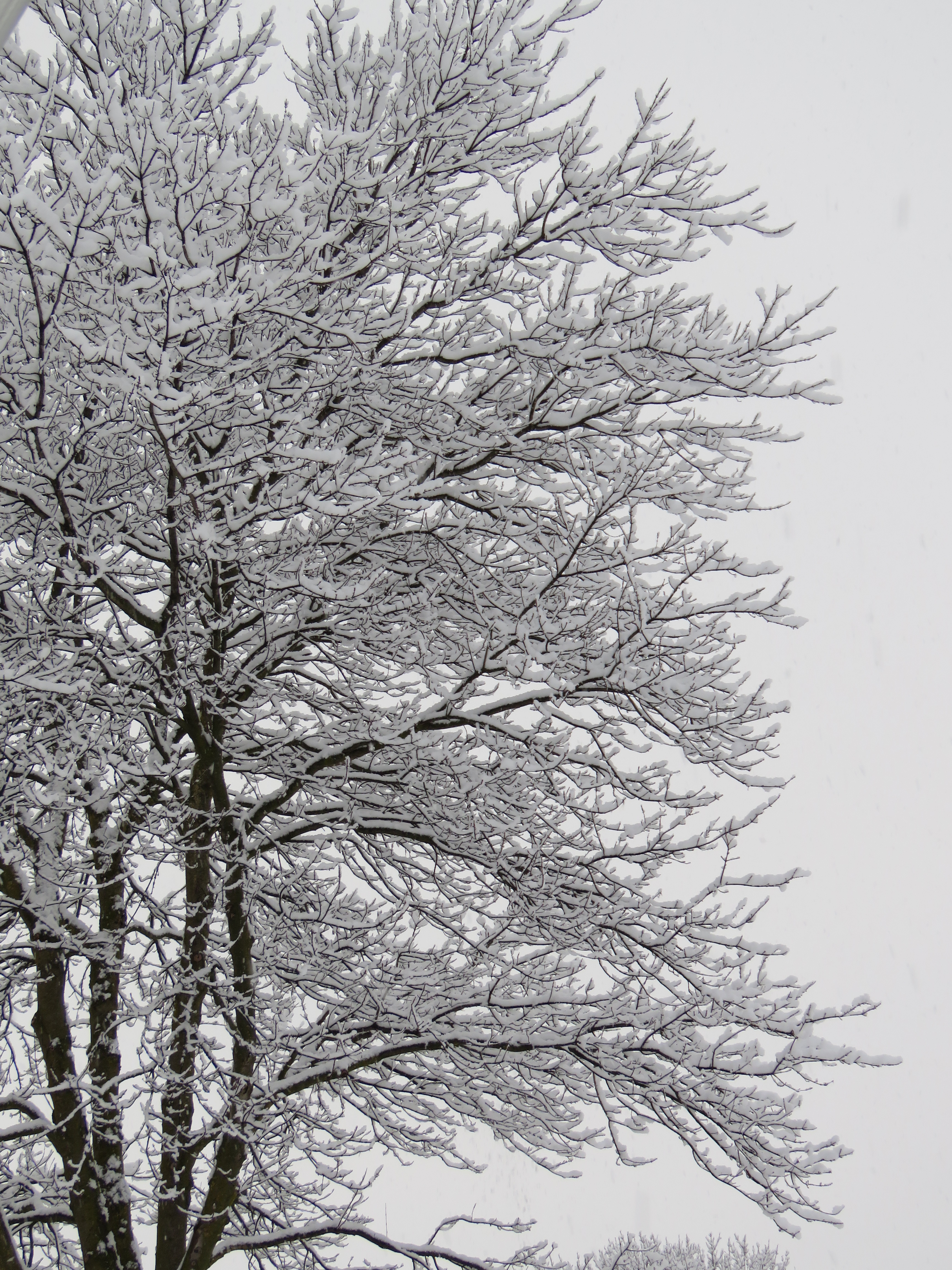
The nice thing is that we don’t have to leave our home to enjoy the snow-sculpted scenery. Frosted branches of the neighbors’ evergreens bend low from the wet, white weight. We miss the Florida sunshine, but Neva and I are enjoying the beauty of wintertime in Virginia just as much as we did in Ohio.
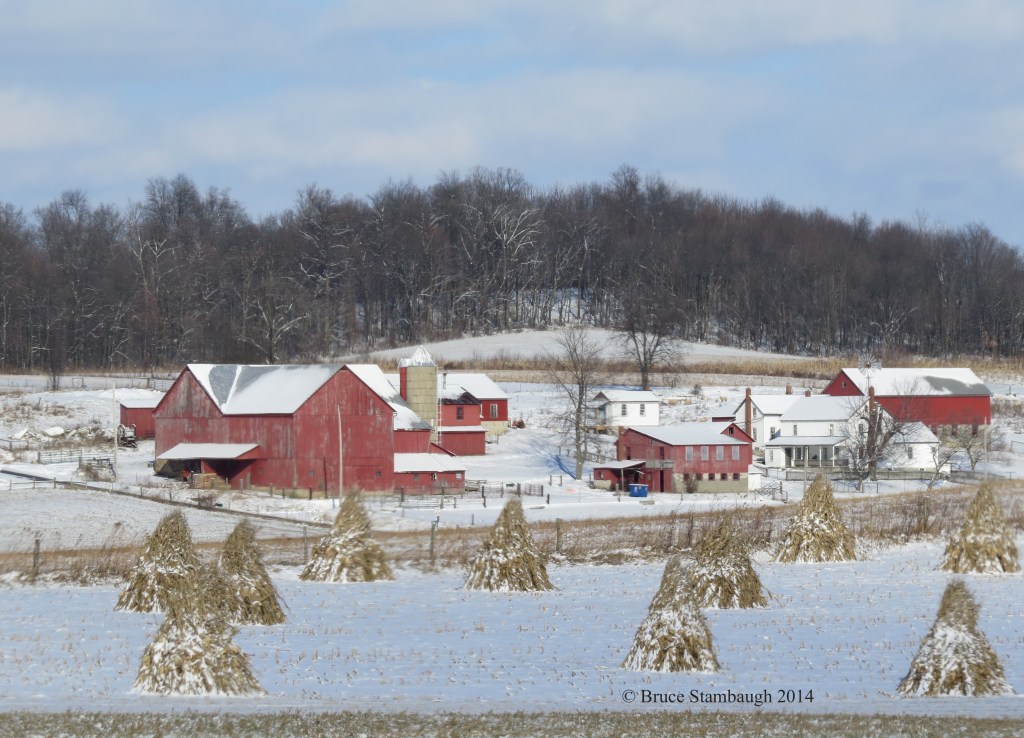
Snow-covered Old Order Mennonite farms at the base of the Allegheny Mountains.
Old Order Mennonite farms dot the landscape in western Rockingham Co., Virginia.
Americans will enjoy yet another three-day weekend in the U.S. with Labor Day picnics and outdoor events of all kinds. However, this year’s activities likely will best be tempered with proper physical distancing and perhaps a dab of humility, given all the national chaos.
Labor Day became a national holiday when President Grover Cleveland signed a bill into law in 1894. It designated the first Monday of September as a day to honor all those who work. Several states had done so previously after labor strikes and deadly battles between workers and authorities. The ugly details, unfortunately, compare equally to today’s ongoing strife in the U.S.
Growing up in a blue-collar town in northeast Ohio, Labor Day served two purposes for the young. It was yet another three-day holiday weekend, and it marked the end of summer. A half-century or more ago, summer vacation from school ran Memorial Day to Labor Day.
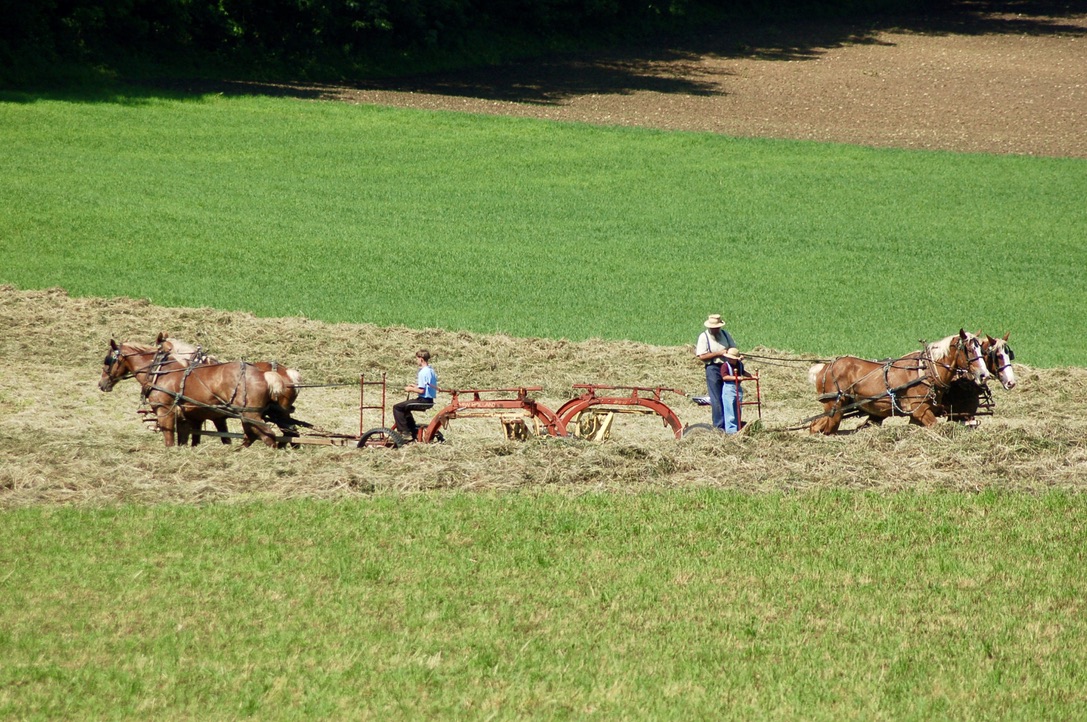
As a youngster, I don’t recall being curious about why there was a Labor Day. As an adult, I now know that it was a hard-fought effort on the part of laborers for fair pay, decent work hours, and safe conditions. Amish children routinely help adults with chores, especially on farms.
Even in a pandemic, we can easily forget or ignore the efforts of others to make our lives more comfortable and enjoyable. In that regard, Labor Day might be the most under-appreciated U.S. holiday.
During the Industrial Revolution, machines created jobs, and people willingly and unwillingly filled them. Men, and too often children as young as six-years-old, worked long, grueling hours, sometimes half a day with no overtime pay.
The children, of course, were paid far less than the adults for the same amount of work time. Such treatment helped bring about our current child labor laws.
It only seems logical to have a holiday that celebrates work. A strong work ethic is valued in cultures worldwide. Too often, however, folks don’t see it that way. They imagine that they somehow have a grip on the virtue of work, while at the same time chastising others as lazy or preferring government handouts.
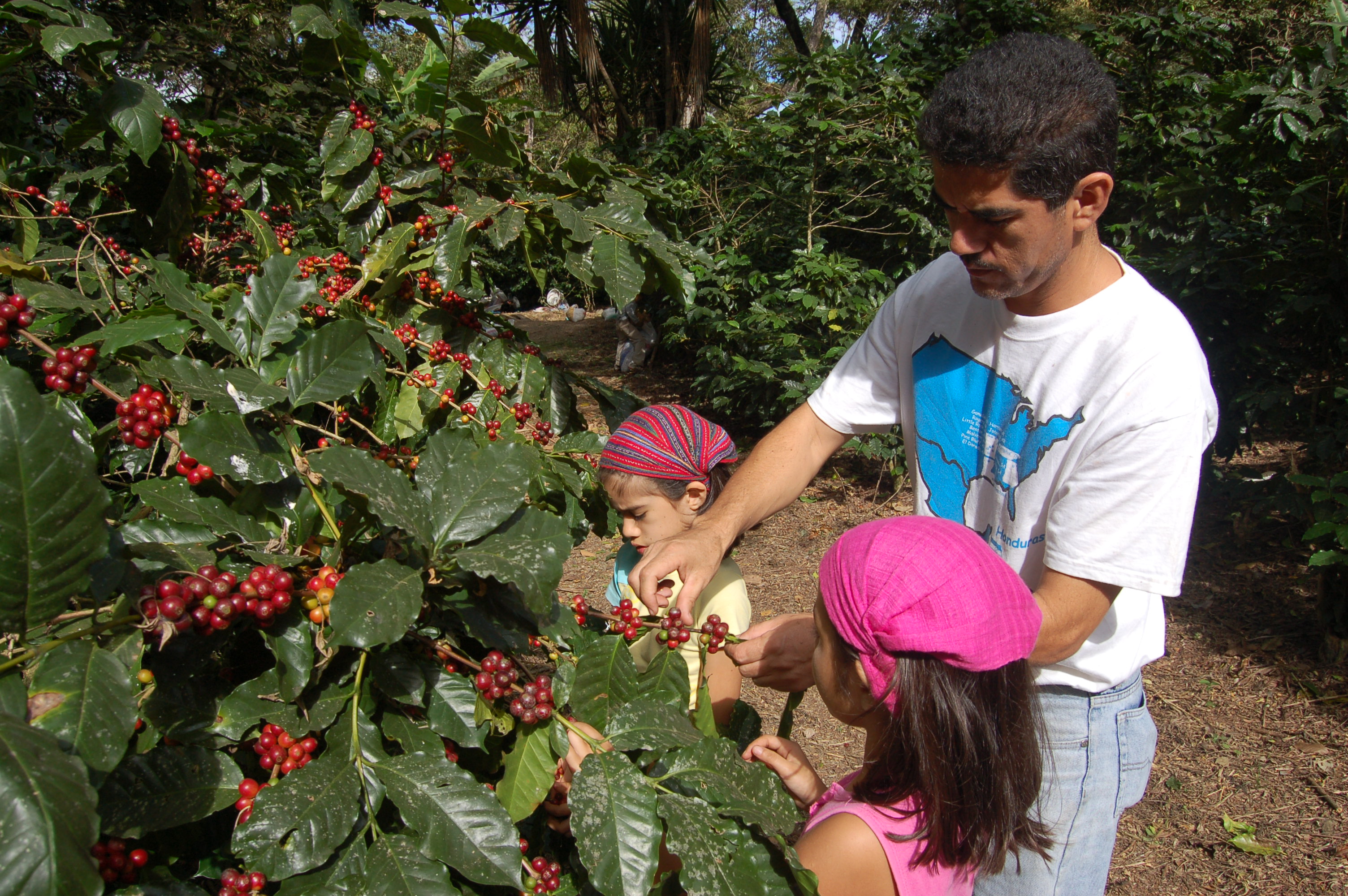
Harvesting coffee beans in Honduras is a family affair.Multiple trips to Honduras helped me see through that divisive thinking. Hispanics like to work as well and as hard as any other culture. They also did so earning less than a dollar an hour for a day’s work in maquilas, or sweatshops, making brand name clothing for citizens of the western world to wear.
We are fortunate in this country to have had workers who banded together in the 19th and early 20th centuries to demand fair pay and safe working conditions. Today, however, say the word “union,” and it might be the end of a budding conversation.
The truth of the matter is that were it not for unions and strikers, we might not be enjoying an extra day off of work this weekend. Given our fast-paced, 24/7 online universe, many workers might rightly wonder, “what day off of work?”
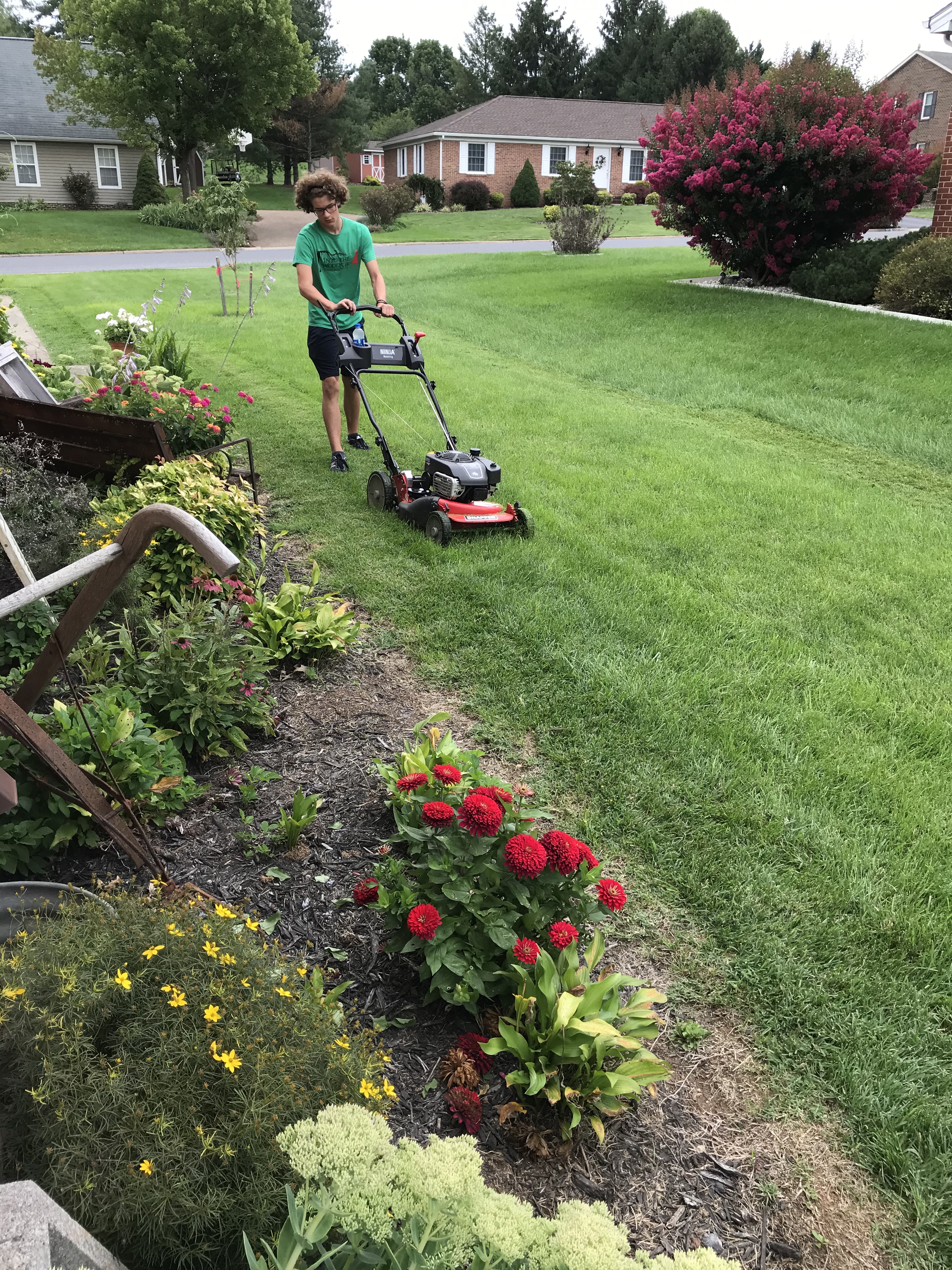
Our grandson mowing our lawn.I much appreciate the influence of my parents, grandparents, and their peers in modeling the importance of having a strong work ethic. It helped my siblings and me in gaining an education, training, and extended careers.
Energetic peers surrounded my wife and me for all of our adult lives in Ohio’s Amish country, where work ethic continues to be revered. It’s equally so in the Appalachian and Old Order Mennonite cultures in Virginia’s Shenandoah Valley, where we now live.
This Labor Day, like every Labor Day, we will smile upon the generations of bold laborers who made it possible for us to work and play along life’s way.
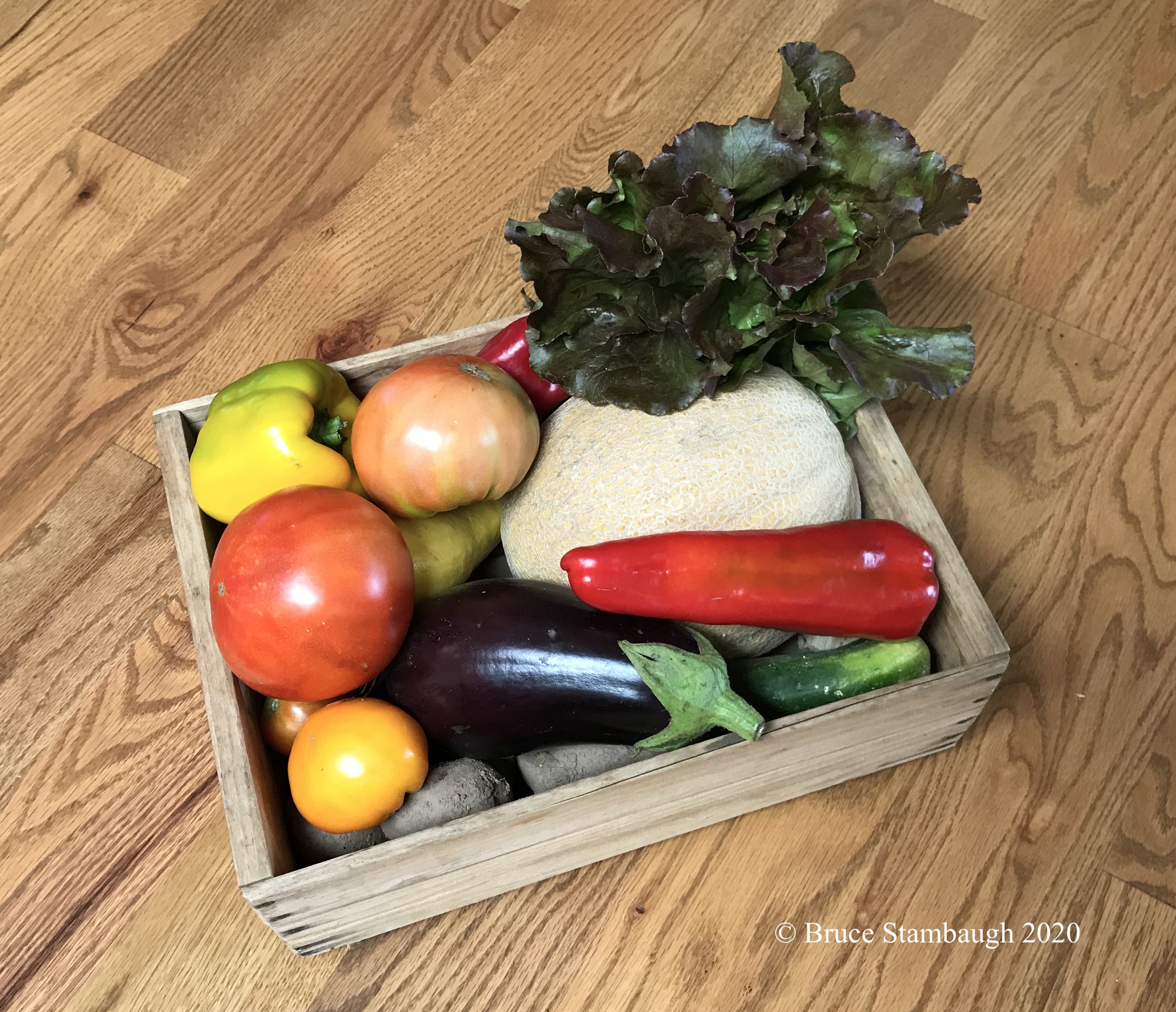
The colors of summer are as pretty as they are delicious and nutritious.
Just as I began to write about the colors of summer, a friend posted on social media about her visit to a local farmers market. In one digital photo, she succinctly summarized what I intended to say.
A cornucopia of vibrant colors from gardening harvests filled her photo. The variety of tomatoes alone captured nearly every hue of an artist’s paint pallet.
Ruby reds, luscious purples, warm yellows, and lime greens took center stage of their kitchen table. The light yellow of summer squash and the ribbed texture of a muskmelon represented the earthen tones.
A perfect emerald cucumber, the variegated rind of a watermelon, and a cluster of fresh basil leaves provided a generous sampling of the locally grown greens. The haul from your gardens, nearby produce stands, and farmers’ markets likely create similar still-life artistry.
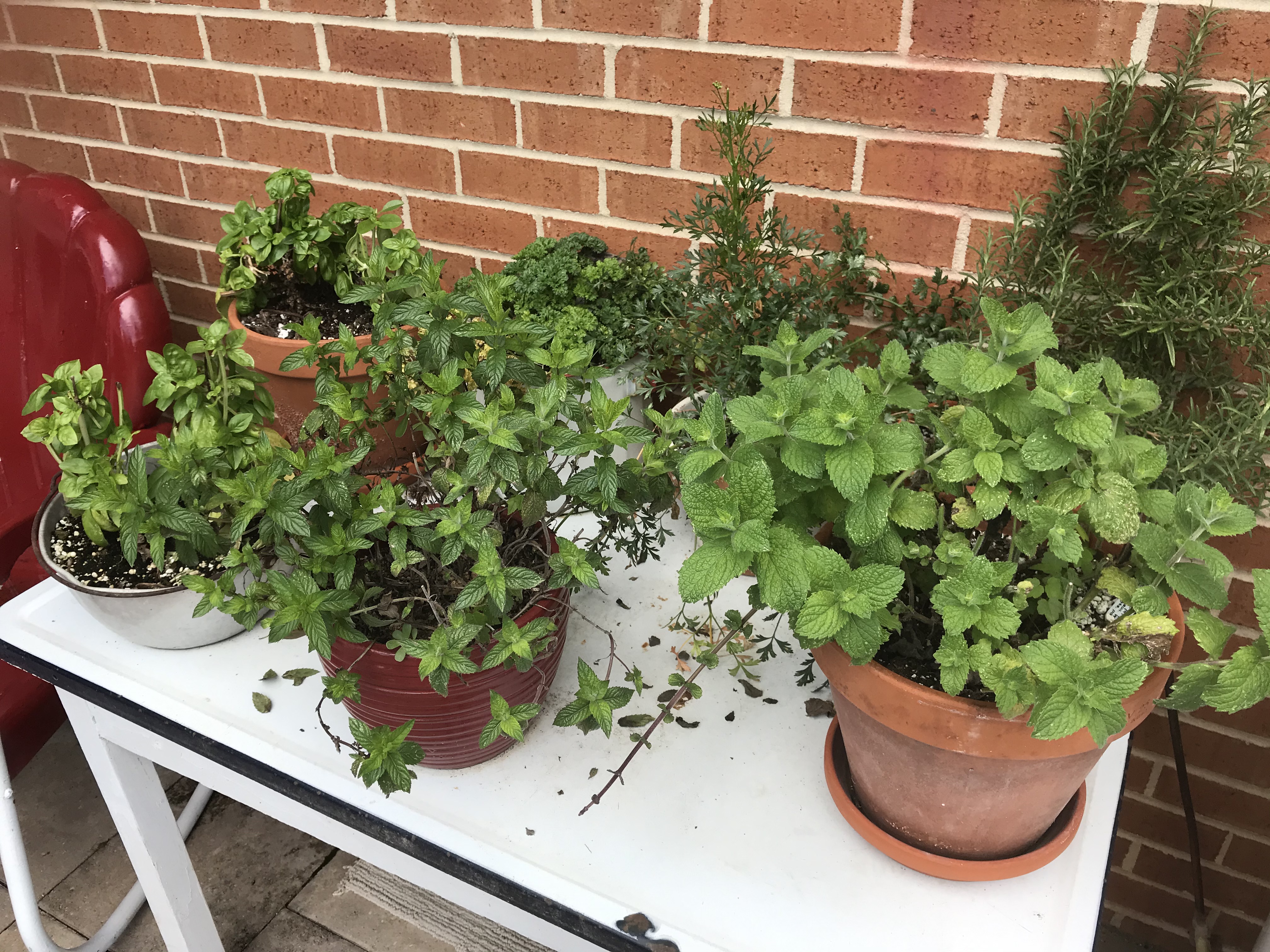
Our house is no different, despite not having a garden. My wife does pamper a half dozen potted herb plants sitting on the white enamel top of an inherited old table on our patio.
Our daughter supplies us with all the plump, juicy, and tasty tomatoes that we can use from her garden. Her blackberry plants have produced an abundance of delicious tartness, too.
The half-box of organic fruits and vegetables we get each Monday from our Community Supporting Agriculture program assures that we maintain a healthy, flavorful diet. We also frequent several local produce businesses, mostly operated by the Shenandoah Valley’s Old Order Mennonites.
It that regard, we are reminded of our Ohio home, where we knew many of the Amish and Mennonite vendors personally. Somehow that seemed to make their homegrown offerings all the tastier.
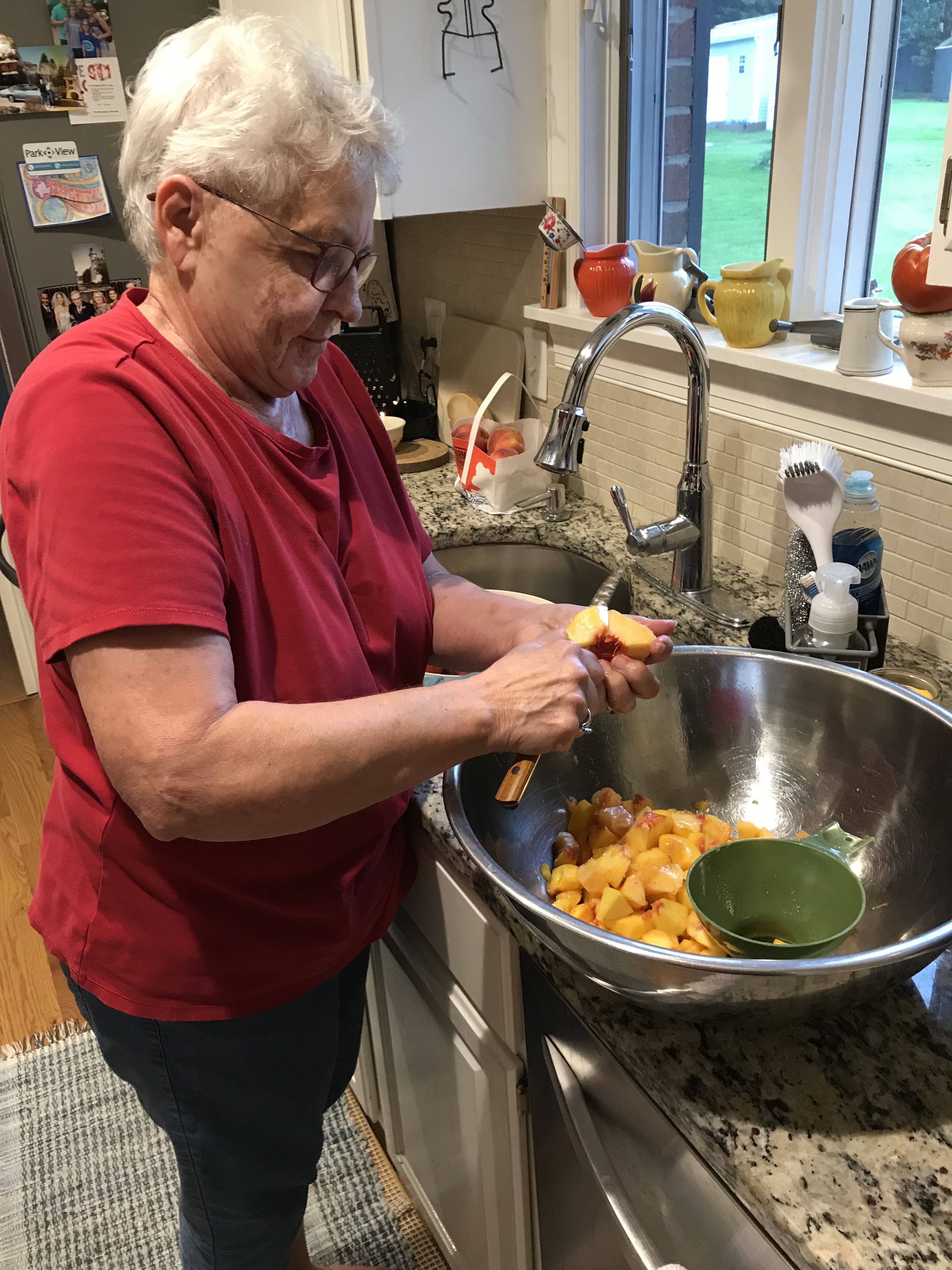
My energetic wife ensures that we celebrate the summer’s colorful bounty all year long. Canning and freezing are in her farmer genes.
When it comes to preserving the downhome goodness of food, we have noticed a difference between living in Ohio versus residing in Virginia. Instead of in spurts, everything seems to come ripe at once in the valley.
One day we are canning peaches and the next day tomatoes. Those jars have barely stopped popping their lids when the sweet corn comes ready, tender, tasty, and delicious. The varieties here are as delicious as our Ohio favorite, Incredible.
We’ve also learned a few new tricks living in a new culture in a new state. We husk the sweet corn, clean it, and cut the kernels straight from the cobs. Neva fills the plastic containers, and when we want fresh corn at Thanksgiving, that’s when it gets cooked and not before.
Apples are next on the list. The sweet tartness of the ginger golds more than satisfy our family’s taste buds. Neva freezes enough for the grandkids, who usually finish off their supply long before Nana can do another batch.
Of course, canning and freezing are a lot of hard work. Sterilizing the jars and lids, cleaning the fruit and veggies, and peeling when required, all take time and effort. Then there is enduring the sauna-like heat at the height of the canning process in our tiny galley kitchen.
The vent fan works overtime, expelling the heat and steam to help cool the temporary cannery. But in the long run, it’s all well-worth every drop of sweat.
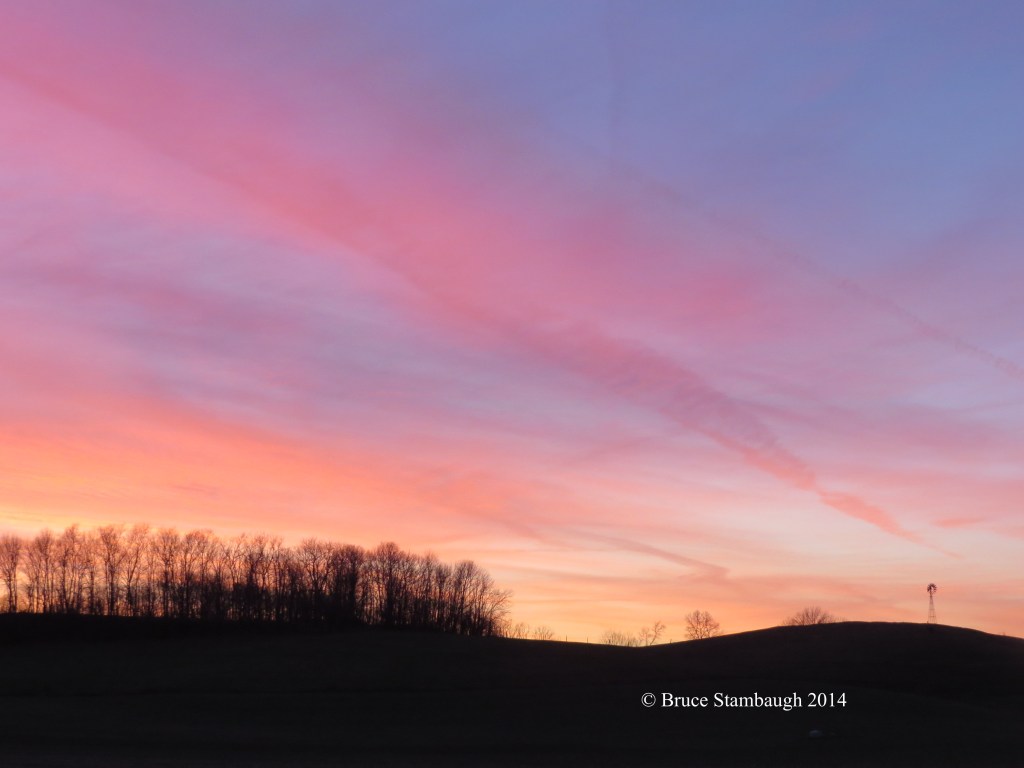
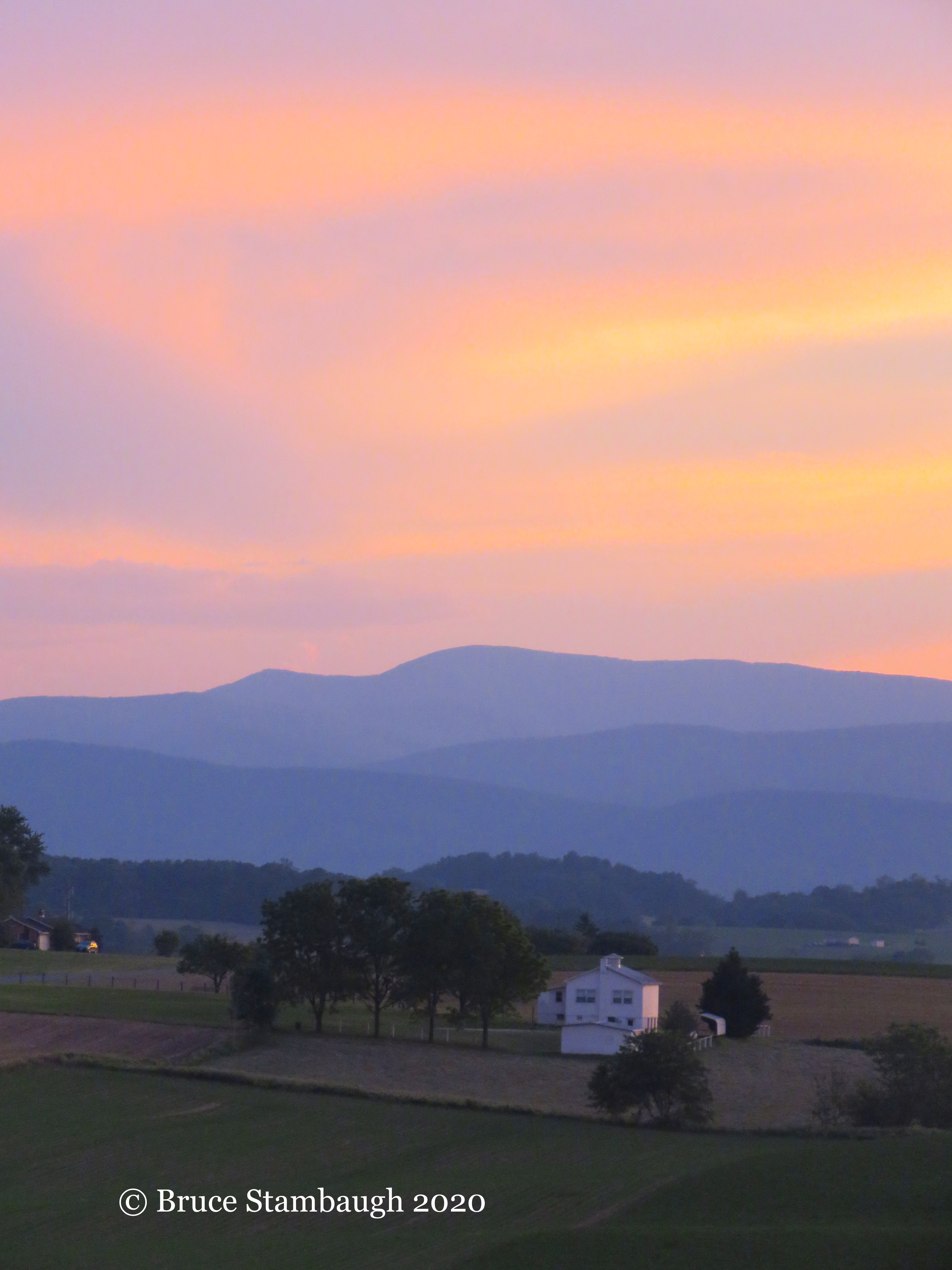
Colorful sunsets have been far and few between this spring in the Shenandoah Valley. We have had strings of days when we hardly see the sun. It’s been that cloudy, and often chilly.
The few times the evening sky did offer hope, I headed out. I wasn’t disappointed on June 6. I felt fortunate to capture this shot long after the sun had hidden behind the Allegheny Mountains that mark the boundary between Virginia and West Virginia.
The texturing and laying of the clouds seemed to mimic that of the folded mountains below. The north face of the private two-room school reflected the heavens above.
“Sunset at Mountain View School” is my Photo of the Week.
May’s Flower Full Moon was the last of the three supermoons of 2020. I wanted to photograph the full moon rising over the Massanutten Mountain Range that runs through the heart of Virginia’s Shenandoah Valley. However, my plans changed due to the weather. Spring has been unusually cloudy here this year. With a predicted clear sky on May 7, I was determined to capture shots of the full moon setting over the Allegheny Mountains that serve as the border between Virginia and West Virginia in Rockingham Co.
I had a clear view of the moon from Mole Hill, an ancient volcano, and noted area landmark west of Harrisonburg. Dawn’s early light highlighted Old Order Mennonite farms that dot the landscape all the way to the Allegheny foothills. The rusty silo, the brick farmhouse, the rolling, fertile fields, and the sweeping mountain slopes all take your eye right to the setting moon.
Sunday morning at Pleasant View Old Order Mennonite Church.
By Bruce Stambaugh
Exploring has always been in my blood. Curiosity has coursed through my veins all of my life.
The move from Ohio to Virginia’s Shenandoah Valley merely whetted my appetite to become familiar with my new surroundings. A myriad of opportunities abound, either spontaneously or scheduled, to explore this beautiful, historic setting.
The view from Pleasant View Old Order Mennonite Church.Many of my junkets have been self-started. A lazy afternoon’s drive around the rolling, scenic countryside brings new people and places into my life. The Shenandoah Valley region is rich in history, a personal favorite subject. I needed more.
I just completed my second class, an overview of Mennonites in the valley.
Phil Kniss, the pastor of Park View Mennonite Church in Harrisonburg, taught the class. He is an astute student of Mennonite history, so I knew I’d learn a lot.
The first session served as a historical survey of Mennonites, tracing their beginnings to the 16th century Reformation. Because of their steadfast beliefs, many Mennonites endured persecution to the point of martyrdom.
Consequently, many moved from their European homelands to the New World, where they hoped for a new chance to live peaceably. Unfortunately, conflicts followed them right into the 18th century as they settled in Virginia’s Shenandoah Valley. They tried to live in peace farming the fertile soil, but war found them again.
Armed with that information, class field trips sent us into the lives and history of the many sects of Mennonites in the valley. A small choir enthralled us with their magnificent singing at the local Mennonite high school that is celebrating its 100th year.
This slideshow requires JavaScript.
At the Old Order Mennonite elementary school, I flashed back to former Ohio days of living among the Amish with their own private schools. The horse and buggy Old Order Mennonites are spiritual cousins to the Amish.
At the unassuming Old Order Mennonite church, a devoted preacher succinctly explained the scriptural basis for their simple way of living. Like all other Old Order men, he was clean-shaven but spoke Pennsylvania Dutch, an anomaly among his people.
This slideshow requires JavaScript.
At the buggy shop, we laughed and learned through the wisdom of the father-son combo that so efficiently ran the business so necessary to the Old Order way of life. The elder’s humor kept us on our toes.
In an Old Order Mennonite home, we gave thanks and feasted on a scrumptious home-cooked meal. The sparkle in our host’s eyes twinkled her delight in our contentment.
This slideshow requires JavaScript.
At Bank Mennonite Church, we learned of an orchestrated church split with genuine intent to agreeably disagree on specific theological applications while continuing a parallel spiritual path. Congregates dressed and lived like Conservative Mennonites in Holmes County, Ohio with a notable exception. Again, the men had no beards.
At the final class at Crossroads Heritage Center, we explored a type of living museum. Guides explained pioneer life as we wound through original, relocated old houses and various other buildings.
It was a fitting location for the last class. From high on a hill, the valley played out below us. The city bustled beneath the hot morning sunshine. Yet, the farmland’s still earthy springtime fragrances enveloped us.
From that vantage point, I imagined the struggles, the heartache, the determination and the desire to live their lives in community together through productivity, and finding peace and satisfaction in weaving their daily lives together.























 Roadkill Crossing
You must be logged in to post a comment.