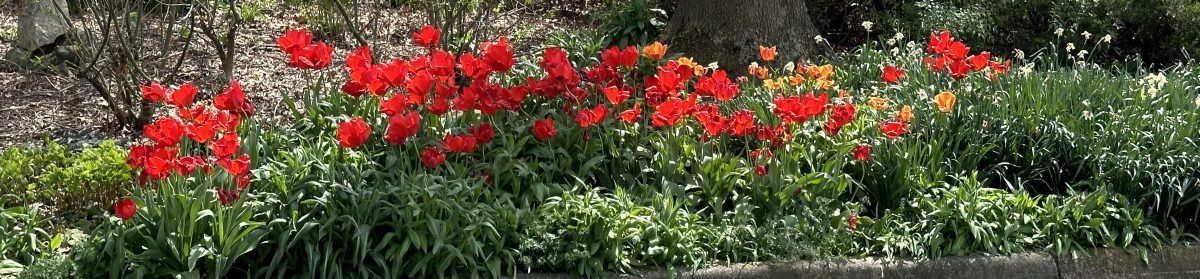
Feeding the Winter Birds

A Northern Flicker at the peanut butter suet feeder. Photo by Bruce Stambaugh

Feeding the birds is one of our favorite winter pastimes. My wife and I enjoy watching college sports, but the colorful birds take precedence over the TV.

Feeding the birds provides us with plenty of entertainment from fall to spring, and we only have to look out our windows. We have done so for all of our nearly 55 years of marriage. We fed birds for the 48 years we lived in Holmes County, Ohio.

Our bird-feeding habit continued when we retired to Virginia’s Shenandoah Valley eight years ago to be close to our daughter’s family. But things were a little different. In Ohio, we lived in the country where natural bird habitats surrounded our property.

Here in Virginia, we live in a suburban setting, just outside the city limits of Harrisonburg. The habitat for birds is much different.

Like many housing developments, homes are close together. Fortunately, our backyard neighbors have mature stands of Colorado Blue Spruce and other evergreens. Plus, we have trees and shrubs around our home that provide cover for the birds.

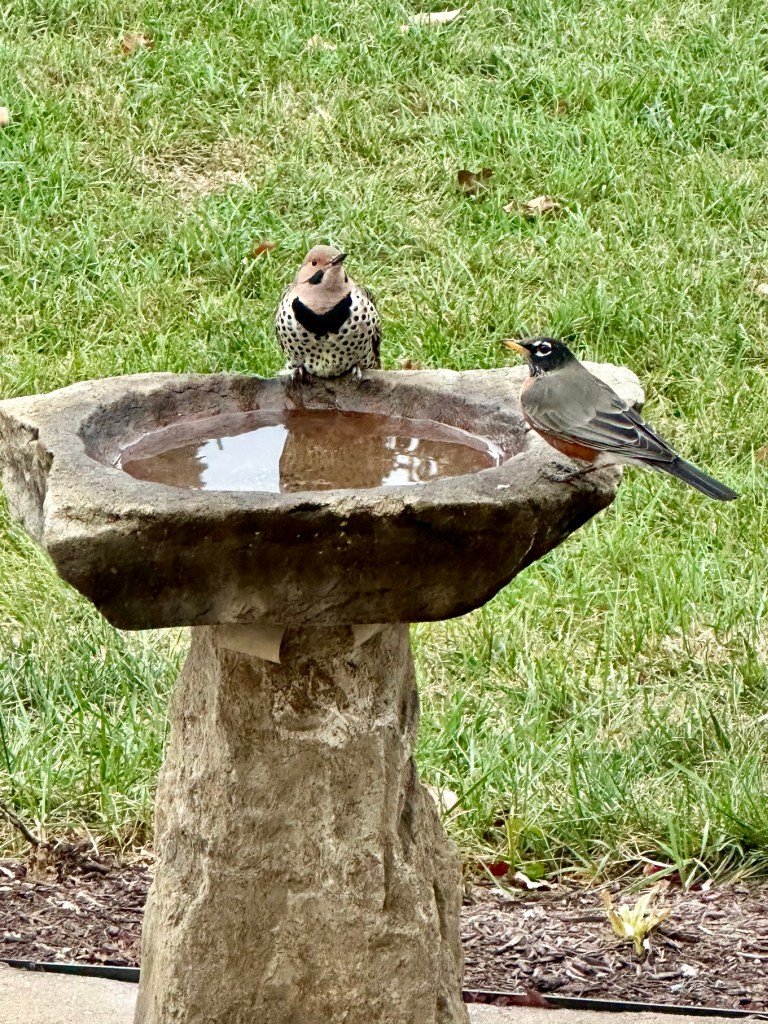
Besides food and shelter, our avian friends need water, too. So, I added three birdbaths to provide drinking and bathing for the birds. Of course, it’s fun to watch them bathe and drink. It’s amazing how the different species drink.
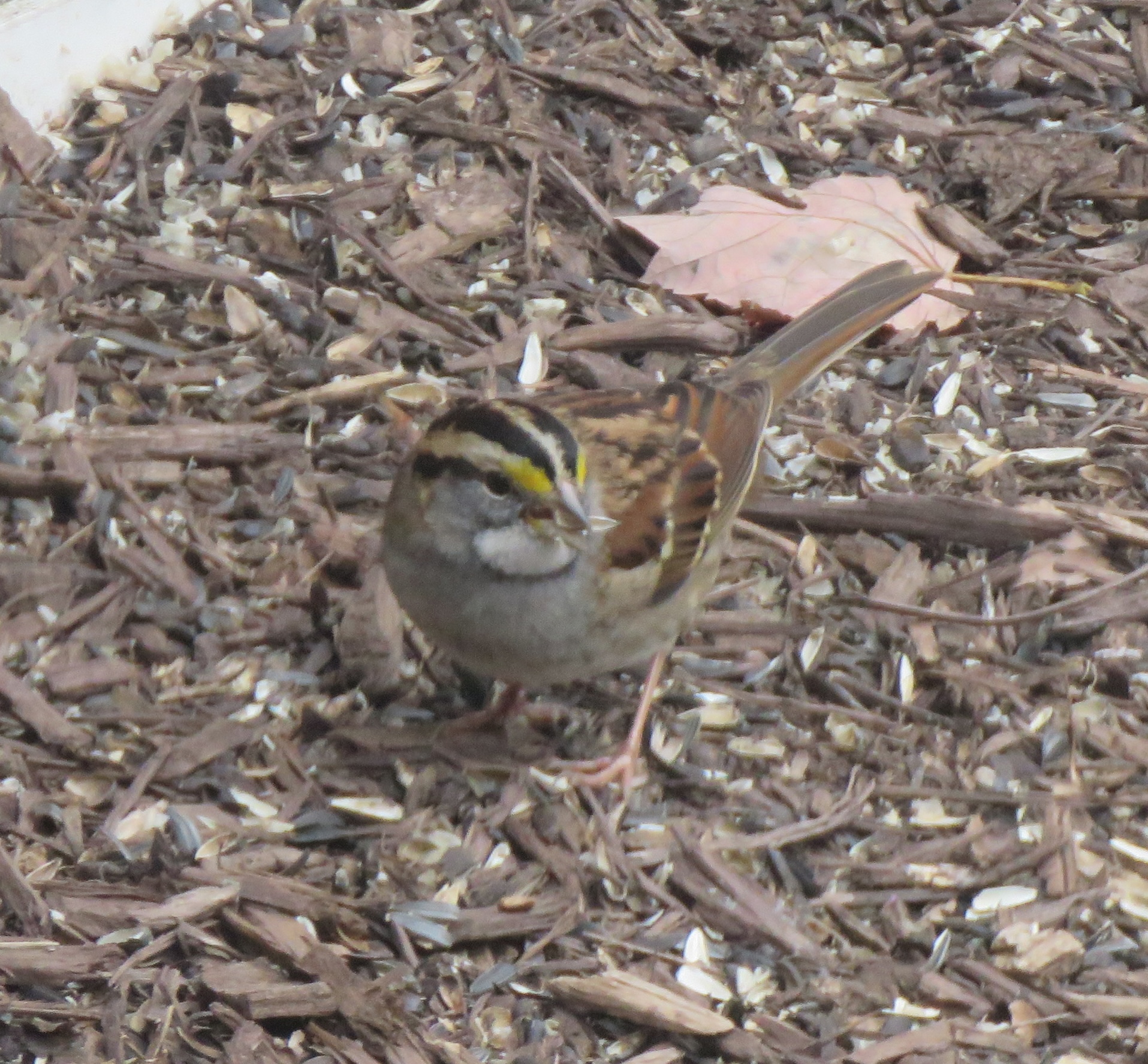
Please click on the photos to enlarge them.

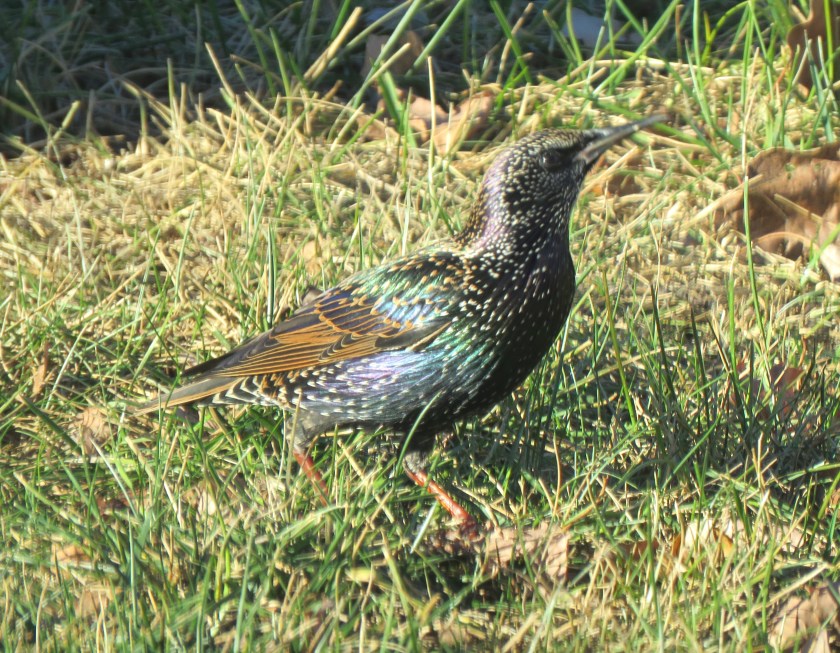
The number of bird species has increased over the eight years that we have lived near Harrisonburg. However, the number of birds has decreased, except for the dreaded European Starlings and the Brown-headed Cowbirds.

Still, I’ve been pleased with the birds that have frequented our feeders. I have four in the front yard, and four in the back. The feed and types of feeders are selected based on the diets and habits of the various species that have frequented our property.

Some bird species are solely ground feeders, so I make sure I spread the feed they eat on the surface near the other feeders. Tube-type feeders allow perching birds to access seeds through holes along the sides. The suet feeder contains cakes of peanut butter suet, encased in a wooden frame with wire-mesh facings on each side.

I place the feeders where the birds feel safe from predators, such as Sharp-shinned and Cooper’s Hawks, which occasionally strafe the neighborhood feeders in hopes of catching a songbird lunch. It’s the way nature works. The feeders and birdbaths are located where we can conveniently view the birds and where they can be easily refilled.

A tube feeder that holds a pound of black-oil sunflower seeds hangs from a limb on the west side of the front yard red maple tree. A suet feeder filled with peanut butter suet dangles from a limb on the east side of the tree. I scatter clean, cracked corn and safflower seeds below them.

The fourth feeder is suctioned to the window in front of my desk. It’s filled with safflower seeds, which only a few birds will eat. Fortunately, safflower seeds are a second-choice food for Northern Cardinals, which seem to have no fear if I’m at my computer on the inside of the window. If I move too quickly, however, they quickly scatter.

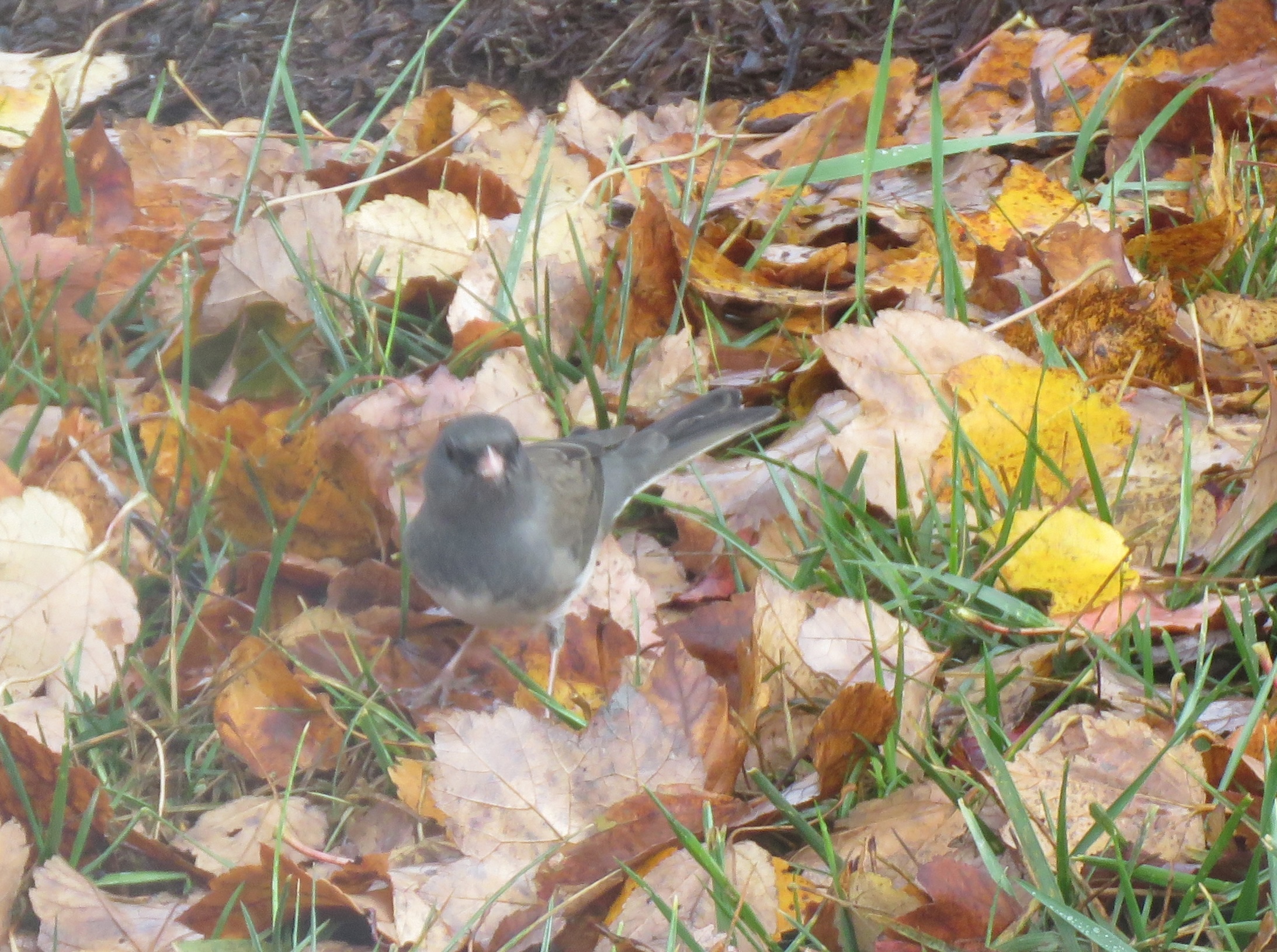
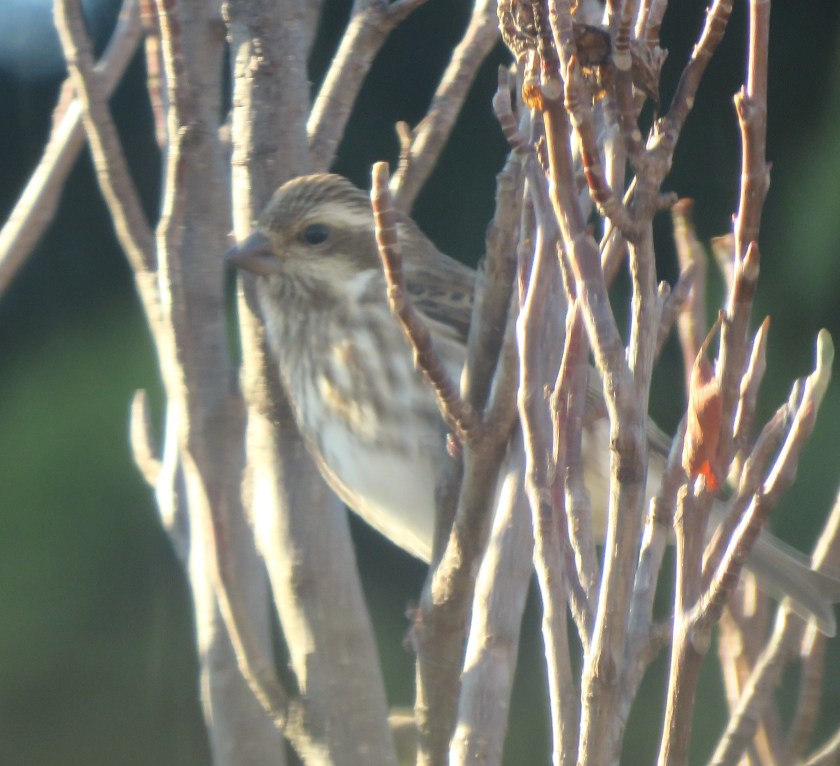
Why do I use these feeds? Black-oil sunflower seeds and hearts attract many species of birds. Northern Cardinals, House Finches, American Goldfinches, Purple Finches, Blue Jays, Dark-eyed Juncos, Downy Woodpeckers, Carolina Wrens, and Carolina Chickadees all choose this seed as a staple to their diet during the winter months.

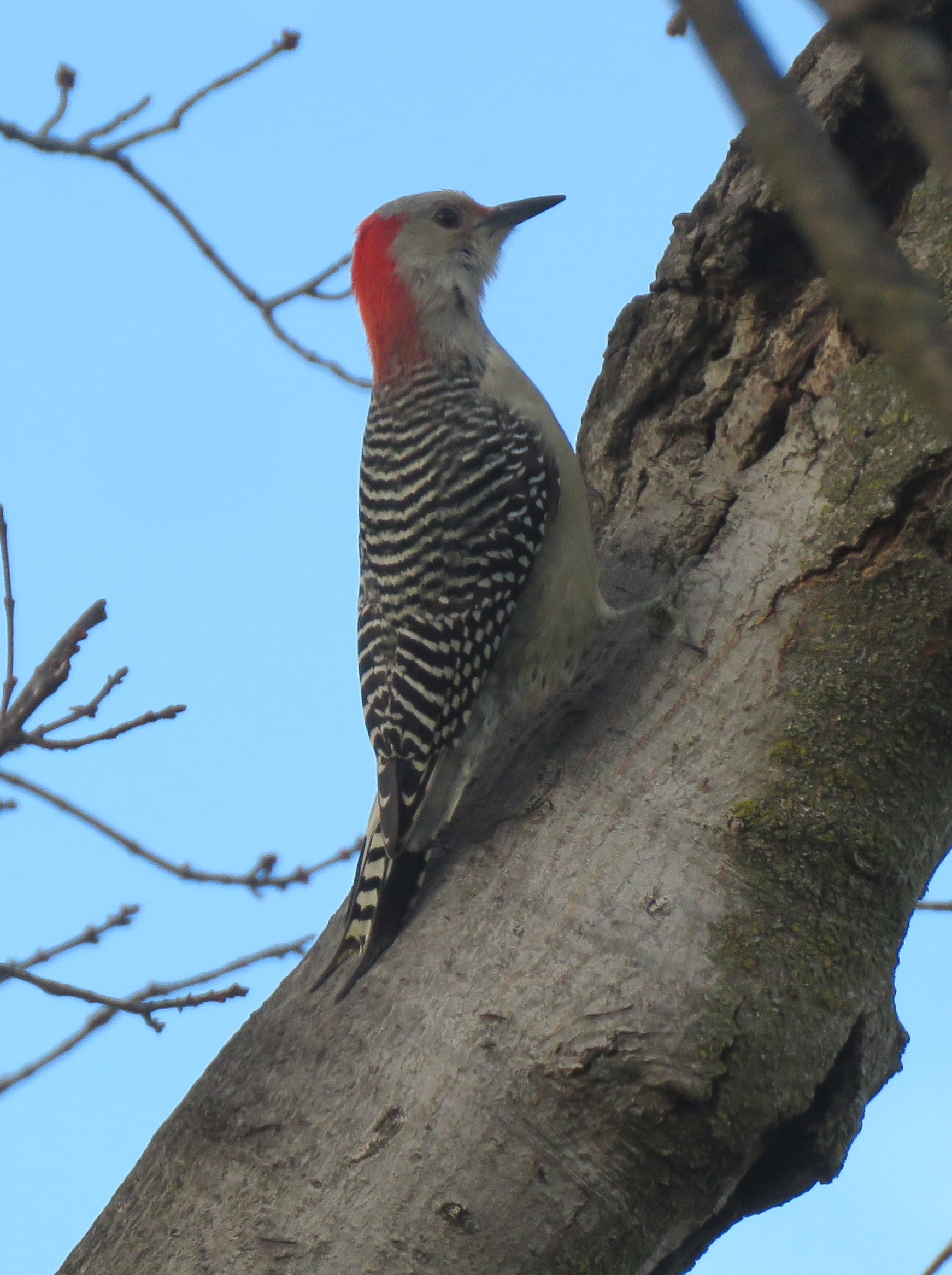
So far this year, Downy, Hairy, and Red-bellied Woodpeckers and Northern Flickers have come to the suet feeder. So have the Carolina Wrens, Carolina Chickadees, and small flocks of European Starlings and Brown-headed Cowbirds.

The star of the show, however, has been a Yellow-bellied Sapsucker. Its feeding pattern has been once in the morning and once in the afternoon. I stop what I’m doing and watch the sapsucker, knowing I’m fortunate to have it appear.
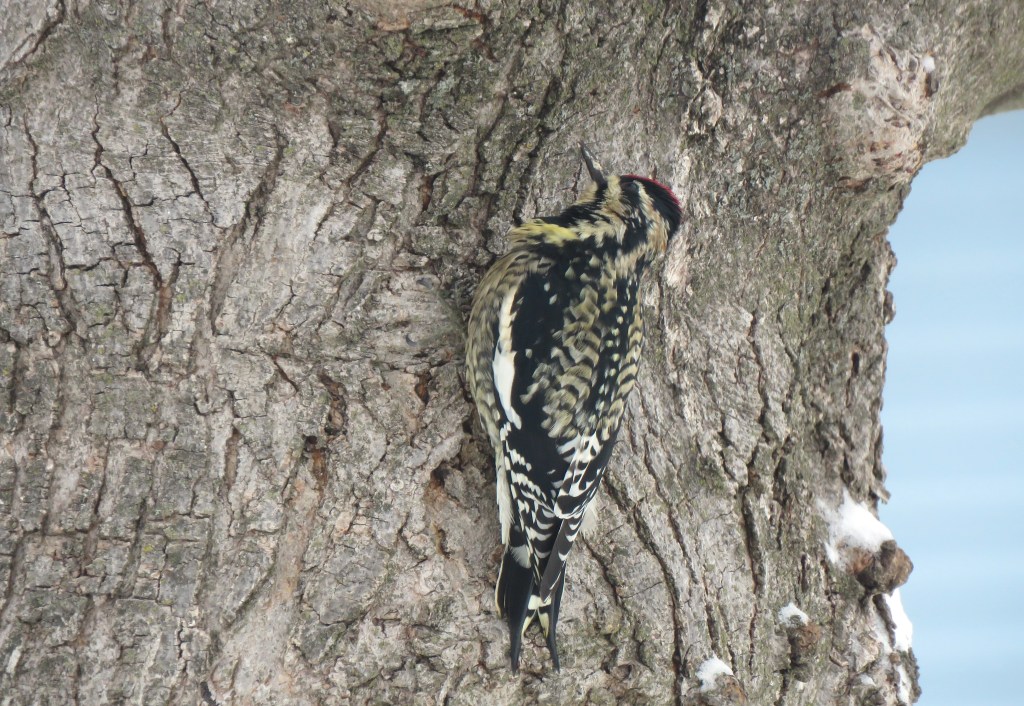
Yellow-bellied Sapsucker. Photo by Bruce Stambaugh

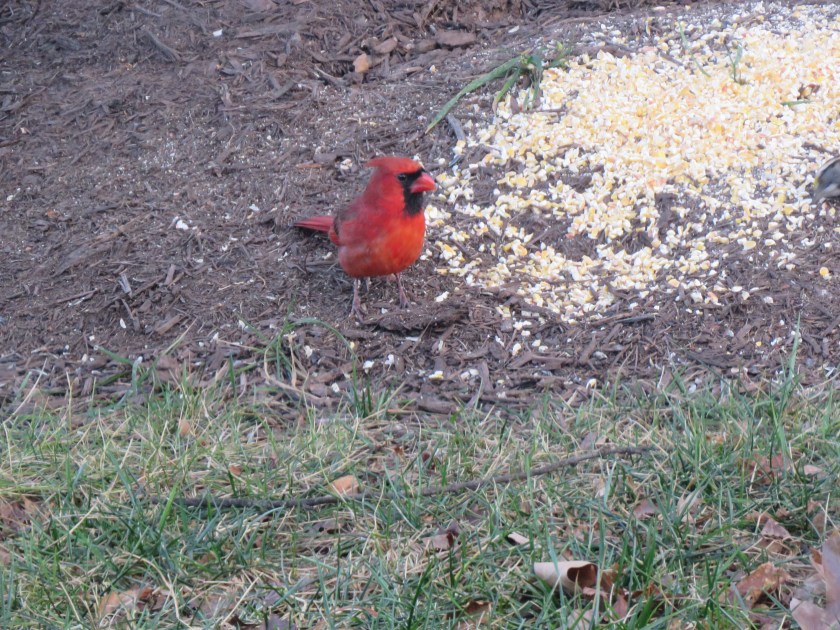
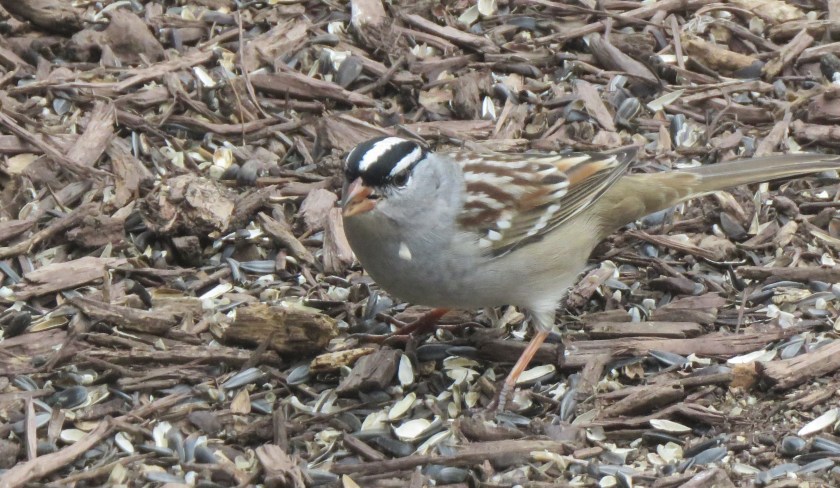
I spread corn to pacify the starlings and cowbirds. Unfortunately, their taste buds prefer the suet. The cardinals, White-throated Sparrows, White-crowned Sparrows, Song Sparrows, House Finches, and Blue Jays ensure the corn doesn’t go to waste.

Our home’s rear windows provide the best view of the feeders and heated birdbaths in the backyard, where most of the cover grows along the property lines. A tubed feeder hangs from the spouting of our screened-in porch, which serves as a shield from strong winds and the strafing hawks.

The hanging feeder holds a mix of black oil sunflower seeds and medium cracked sunflower hearts, which most of the seed-eating songbirds prefer. It’s also the most expensive feed. So, I mix the two seeds to make the precious offerings last longer.

I spread cracked corn on the ground between the feeder and the birdbath. Beyond that, in the yard, I placed a porcelain-topped table and set a homemade wooden feeder on top. More cracked corn goes in that feeder. I also spread some on the ground underneath the table.

Part of the beauty of feeding the birds is the surprises that happen. You never know what will show up at the feeders minute by minute. Like the time I happened to see a Pileated Woodpecker at the nearly empty suet feeder. In a flash, it was gone. But the joy was simply in its appearance, no matter how long it stayed.

In previous years, small flocks of Purple Finches and Pine Siskins have graced the feeders. What a joy it was to see them.

However, I am content with the regular visitors who shelter in the trees, shrubs, and bushes on or near our property. Who wouldn’t love to view a bright red male Northern Cardinal perched in a snow-laden evergreen branch or watch the regal White-crowned Sparrow scratch in the seed only a few feet away?

Of course, I realize that I miss birds when I’m not home or doing other things. I can’t be gazing out of the windows all of the time. Nevertheless, I am thrilled with the ones I do.

Male Northern Cardinal. Photo by Bruce Stambaugh

© Bruce Stambaugh 2025

The Old Oak Tree

Photo by Bruce Stambaugh

Imagine yourself standing on a ridge on a beautiful, temperate fall day. Scattered soft clouds float eastward in a pale blue sky. A gentle east wind mellows the strong afternoon sunshine.

The grass is lush after some long-overdue rain. And a lone, giant red oak, its leaves just now turning to their rusty color, looms over the landscape like it has for a century or more. Battered by winds and lightning strikes, the rugged oak stands as a centennial for all who care to notice.

Miles away, the southern slope of Massanutten Mountain glides to the floor of Virginia’s magnificent Shenandoah Valley. Miles farther southeast, the southern section of Shenandoah National Park marks the horizon.

Fortunately for me, imagination became reality a few days ago. I enhaled the entirety of the precious landscape, not wanting to leave. Of course, I had to. Still, even as I view this photo, nature’s glory fills my soul.

© Bruce Stambaugh 2025

“Here’s Looking at You, Kid.”

Photo by Bruce Stambaugh

That famous line, improvised by Humphrey Bogart for Ingrid Bergman in the movie classic “Casablanca,” seemed most appropriate for this shot.

My wife and I attended our granddaughter’s high school volleyball team’s game last night. However, this cute toddler paid little attention to the action on the court. Instead, she entertained herself as any babe would do, wiggling around from her father’s lap to his shoulder and back again.

When she grabbed her father’s sunglasses off his hat, he helped her put them on, and she loved it. She was so proud, she just had to show me. Consequently, I had to share my joy as well.

© Bruce Stambaugh 2025

Spring Concert!

Spring concert. Photo by Bruce Stambaugh

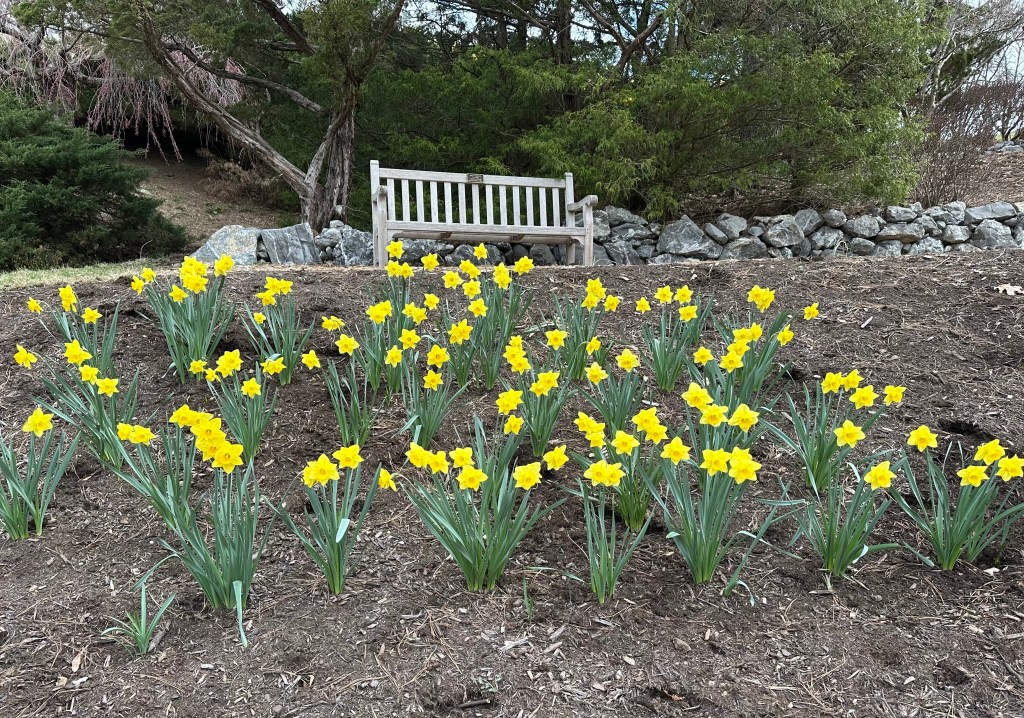
The Daffodil Choir sang an impressive concert at Edith J. Carrier Arboretum yesterday in Harrisonburg, Virginia. Their harmonic voices carried into the valley and reverberated throughout the surrounding woodlots.

Try as it might, no city or Interstate traffic noise could overpower these beautiful, angelic singers. I lost it when their four-part harmony sang “In the Blub There is a Flower.”

© Bruce Stambaugh 2025

When A Little Bird Brought Me Joy

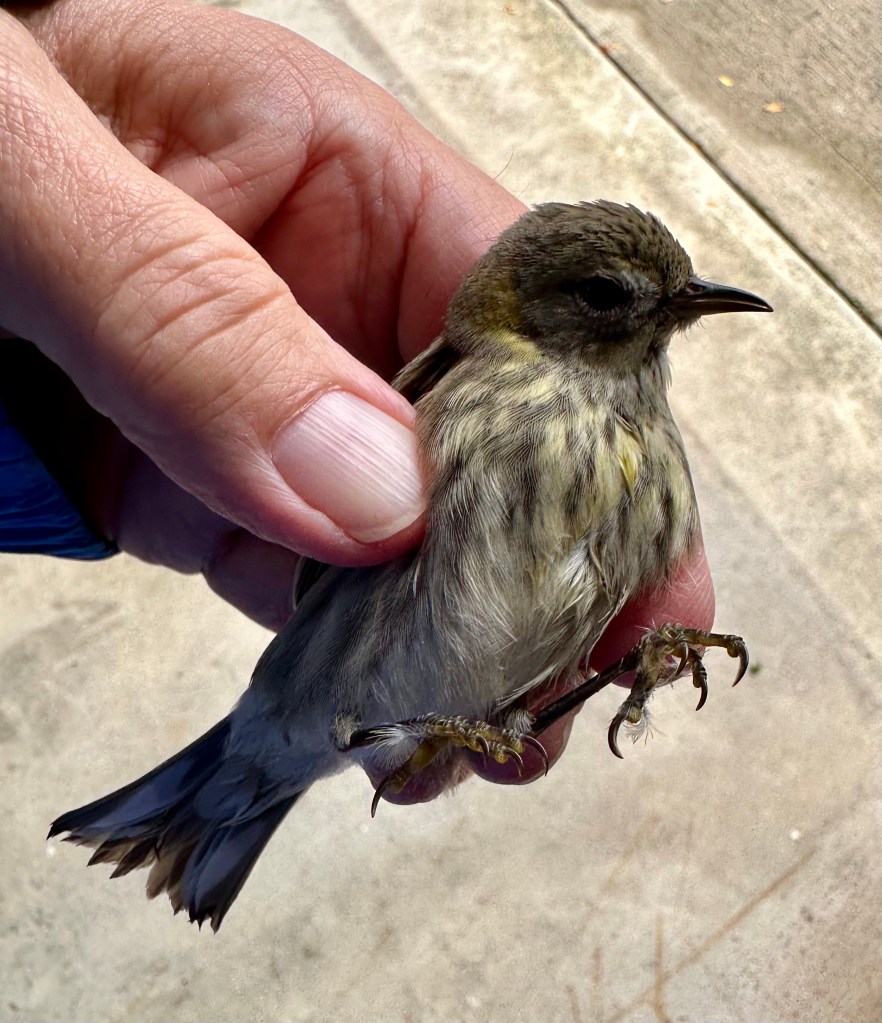
The Cape May Warbler after it hit a window. Photo by Bruce Stambaugh

I had lots to do. My first destination was the pharmacy, where I was to pick up a couple of prescriptions. As I started inside, a little bird stopped me.

The bird lay on the sidewalk upside down, twitching. I looked up and saw a large plate glass window. Another bird strike, I thought to myself.

I decided to leave the bird there. If it were still there when I returned after getting my prescriptions, I would see if I could help the poor critter. The other items on my to-do list could wait.

The tiny bird was still in the same spot in the few minutes I was away. It had managed to flop onto its feet but gave every sign of being injured. I bent down and gently picked it up. I thought the stripes on its belly and a faint yellow color indicated a Pine Siskin. I shared a photo of the bird with better birders than me and was happy to learn it was a Cape May Warbler.

This bird’s coloration would be much brighter in springtime, dressed in its mating attire. It was fall migration, and Cape May Warblers, like many other songbirds, turned dull for protection on their way to the Caribbean Islands from their summer nesting grounds in the far north’s spruce forests.

I returned to my vehicle and placed the stunned bird in the only thing I had: a grocery store tote bag. I called the nearest bird rehab center and was instructed to put the bird in a small box with airholes and secure it to keep it in place.

Back home, I found an appropriate box, laid a hand towel in the bottom, and placed another smaller box with slits over it so the bird could breathe. I headed for the rehab center 40 minutes away.

A mile from the rehab center, more rain from the remnants of Hurricane Helene began to fall. This wildlife hospital was in a mountainside woods outside a small city in Virginia’s Shenandoah Valley. I pulled up to the front door, and a volunteer soon arrived. Because I had called, they were waiting for me.

Just like a human hospital, I had forms to fill out. I wrote down my contact information and specific details on where and when I had found the bird. I was handed a card with the patient’s number on it to use should I inquire about the bird’s status. And just like that, I was on my way home.

I emailed the rehab center to correct my misidentification, but I didn’t hear back until two days later when I received a phone call. They thanked me for taking the time to bring them the warbler. The lab tech confirmed that the bird injured itself by hitting the window.

It was having trouble breathing and had internal inflammation. The rehabbers gave it oxygen, water, food, and the proper medication. The bird responded to the expert treatment and was ready for release, and their protocol requested that it be set free close to where it was found.

The caller wanted to know if I would pick up the bird and take it to a park near where I found the warbler. Without hesitation, I again cast aside my plans for the afternoon and gladly drove down to pick up the bird and release it at the park.

Returning with my healed patient, I wondered what my reaction might be. I was glad the bird had recovered, but emotionally, there was more to it than that. As a long-time avid bird watcher, I had found many birds dead from window strikes. I would freeze their bodies until I could take them to a local wilderness education center. The carcasses would be preserved and put on display for schoolchildren to inspect. As a birder and a retired educator, that gave me satisfaction.

But this case was different. I checked both the rescuer and transporter boxes on the form I filled out at the rehab center entrance. I felt joy for the bird and the rehabbers’ successful efforts. As for me, I rejoiced that I had forgone those errands to save the dainty bird.

I wasn’t any avian hero. Still, I was thrilled when I opened the box. After a brief hesitation, the recovered Cape May Warbler beautifully flew into the woods nearby, never to be seen again. I couldn’t stop smiling.

The Cape May Warbler quickly flew to a stand of trees nearby. Photo by Bruce Stambaugh

Basking in the Joy: A Family Reunited

Together again after four years.

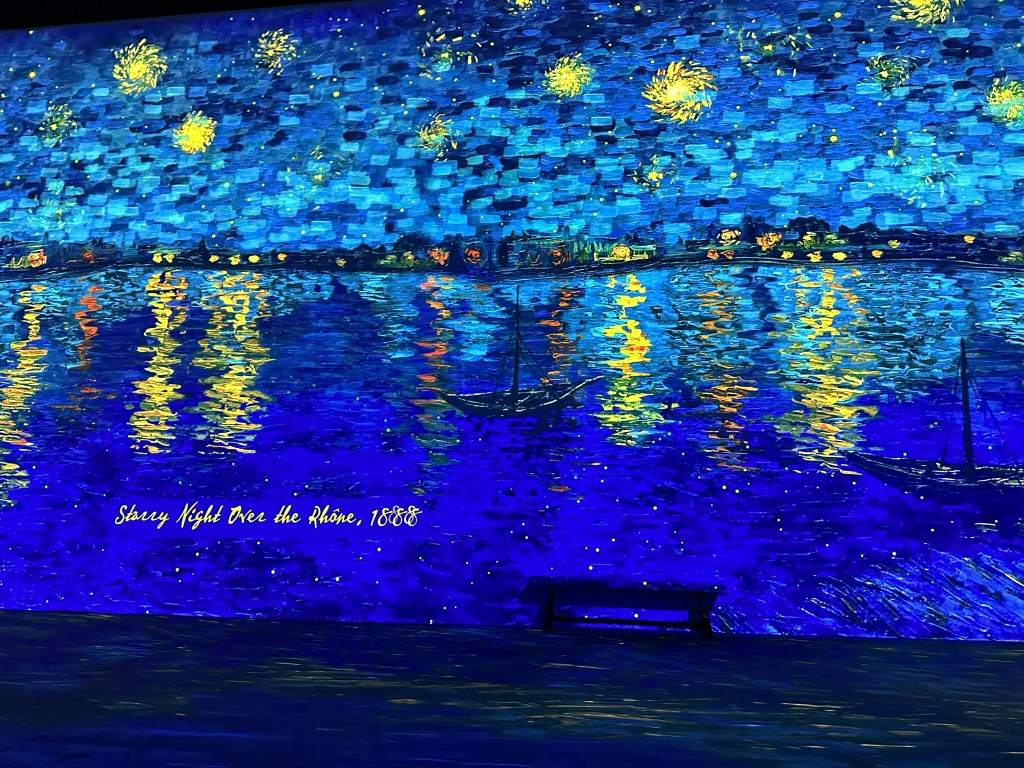
I gladly handed over my iPhone to the ticket-taker at the Van Gogh Immersive Experience in Washington, D.C. We had only just gathered everyone together at the entrance when she had offered to take our family photo, an image I dearly wanted.

It had been four years since the three families had all been together, and in that time, another grandchild had joined our ranks. Our two oldest grandsons had never met the youngest. I wanted this precious moment to be documented for perpetuity. As mobile as today’s societies are, especially the younger generations, I wasn’t taking any chances. I considered the family photograph as my personalized Father’s Day present.

As it turned out, this was the only photo of all of us together at the same place at the same time we got in the three-day gathering in our nation’s capital. The comings and goings of our active crew mirrored the busy lives of our adult children, their spouses, and teenagers. I certainly wasn’t disappointed.

I had my shot and could now relax into the follow-the-crowd mode. The other adults, our daughter, son, son-in-law, and daughter-in-law, would share the responsibility of setting the agenda for the Sunday through Tuesday reunion. I’m usually the one to suggest and plan trips. However, this time I silently relished my grandfatherly role. Though not surprised, I marveled at their skills in managing offspring, arranging transportation, and finding restaurants to suit everyone.

Of course, they consulted Nana and Poppy about places we wanted to go, do, visit, and tour. I was more than happy to go with the flow. Shoot. I would have been pleased if we had stayed in the hotel. A certain familial satisfaction overcame me.

The pandemic played a significant role in keeping us apart all this while. Our son, his wife, and the newest grandson, Teddy, live in upstate New York, a seven-hour drive from the lovely Shenandoah Valley, where my wife and I live. We moved there six years ago from our home of 38 years in Ohio’s Amish country to be close to our daughter and her family.

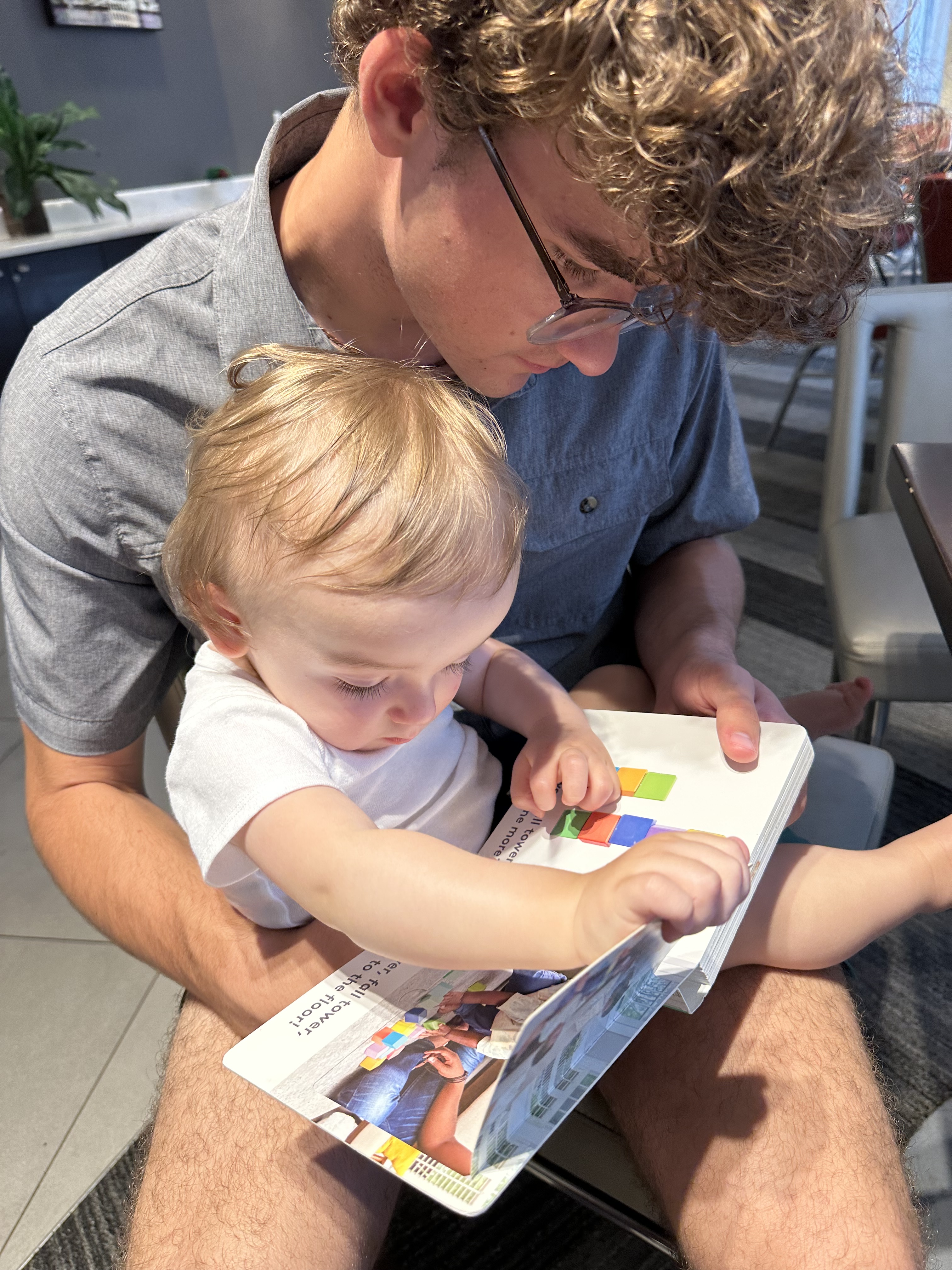
Teddy arrived over a year ago, complicating our Nana and Poppy roles. Our son and his wife have done an exceptional job keeping us informed of Teddy’s progress, and we travel north as we can.

But here we all were, assembled together. Everyone agreed to make the Van Gogh experience our initial group event. The New Yorkers intended to take the Metro from Dulles International Airport to the hotel. Due to track maintenance, that plan got derailed. It took them longer to get from the airport to the hotel than from Rochester to Dulles.

With air temperatures heating up, the Van Gogh Immersion became the perfect place to chill and smother Teddy with plenty of attention. To enhance the experience, lounge chairs, bean bags, small ottomans, and blankets were scattered around the gymnasium-sized, carpeted room. We all found our relaxation niche and enjoyed the show. Teddy loved showing off his newly found walking and running skills. The rest of us merely basked in the moments as they unfolded.

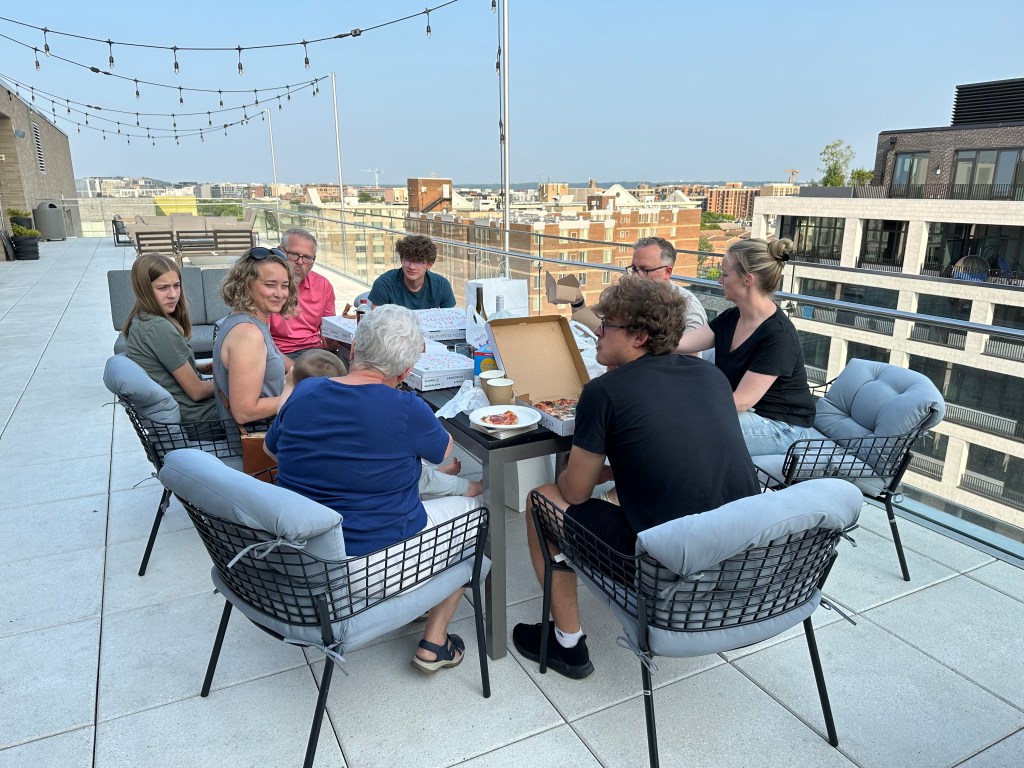
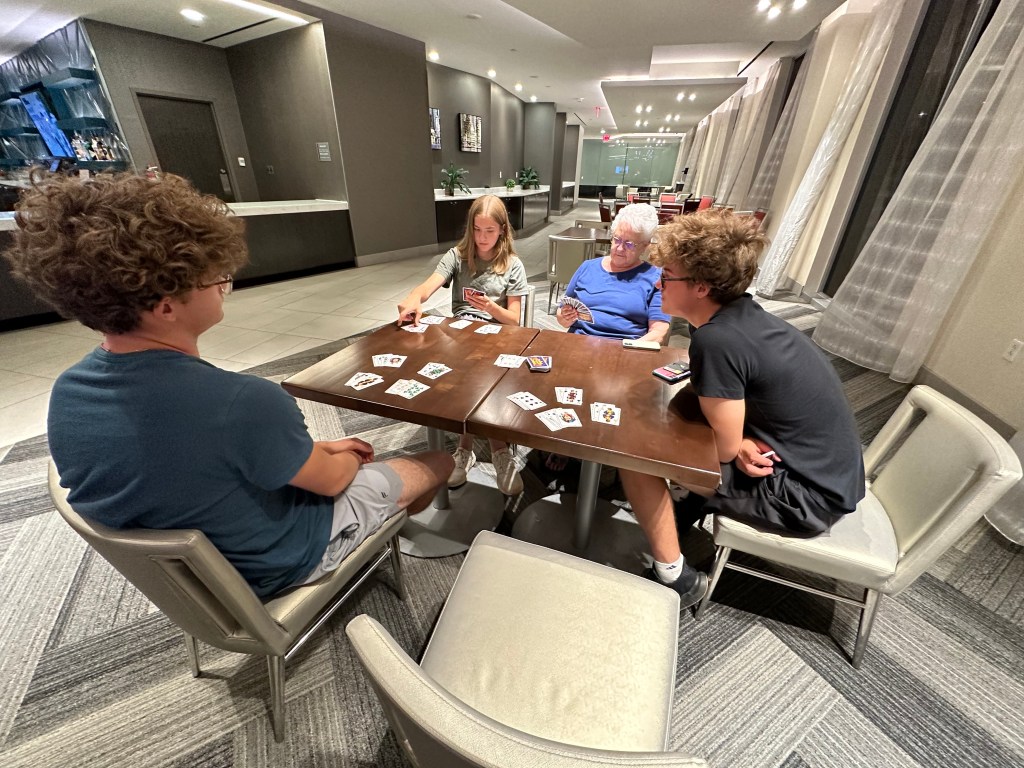
That was plenty for the first day. Returning to the hotel, we ordered dinner from a local pizzeria. We found the perfect place to hold a pizza party and enjoy each other’s company, the building’s rooftop. I relished the lively chatter, the food, and the cityscape views. We finished the day with gelato and a rousing game of cards with the teens. It was a balance we all needed to complete the day.

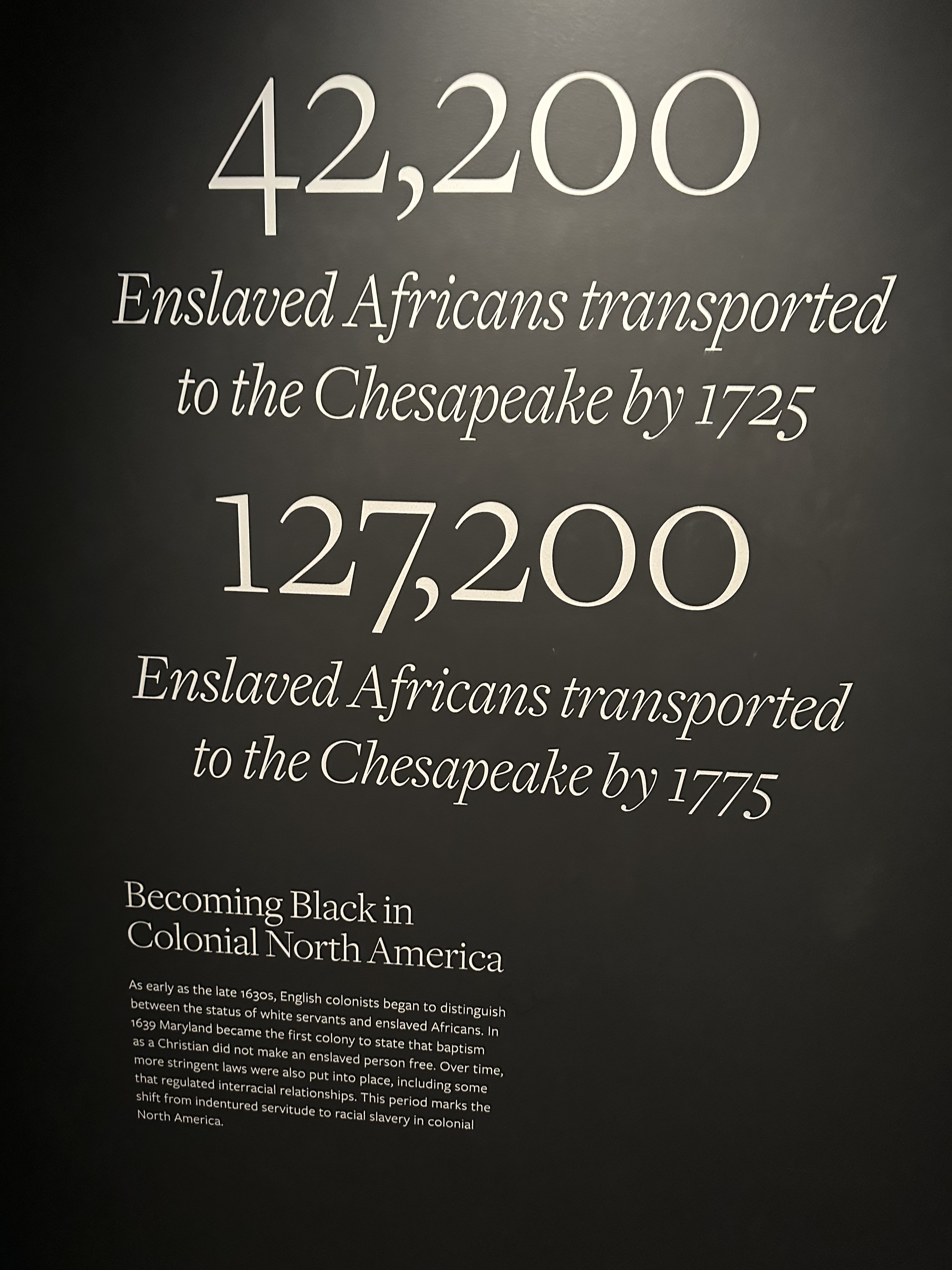
We walked a mile in the morning’s coolness the next day for a delicious breakfast spread. The portions were so large that only the teens cleaned their plates. We stayed so long that the day’s heat had already begun as we worked our way toward the National Mall. It was Juneteenth, and we had tickets for the National Museum of African American History and Culture. We wanted the youngsters to see first-hand the sad history of how African Americans arrived in this country and what they endured in slavery, the Jim Crow era, and the present. The chronology began on the lower floors, and we worked our way up in small groups. Is there another choice when you have a toddler and septuagenarians in the same family? We didn’t have time to do the outstanding museum justice.

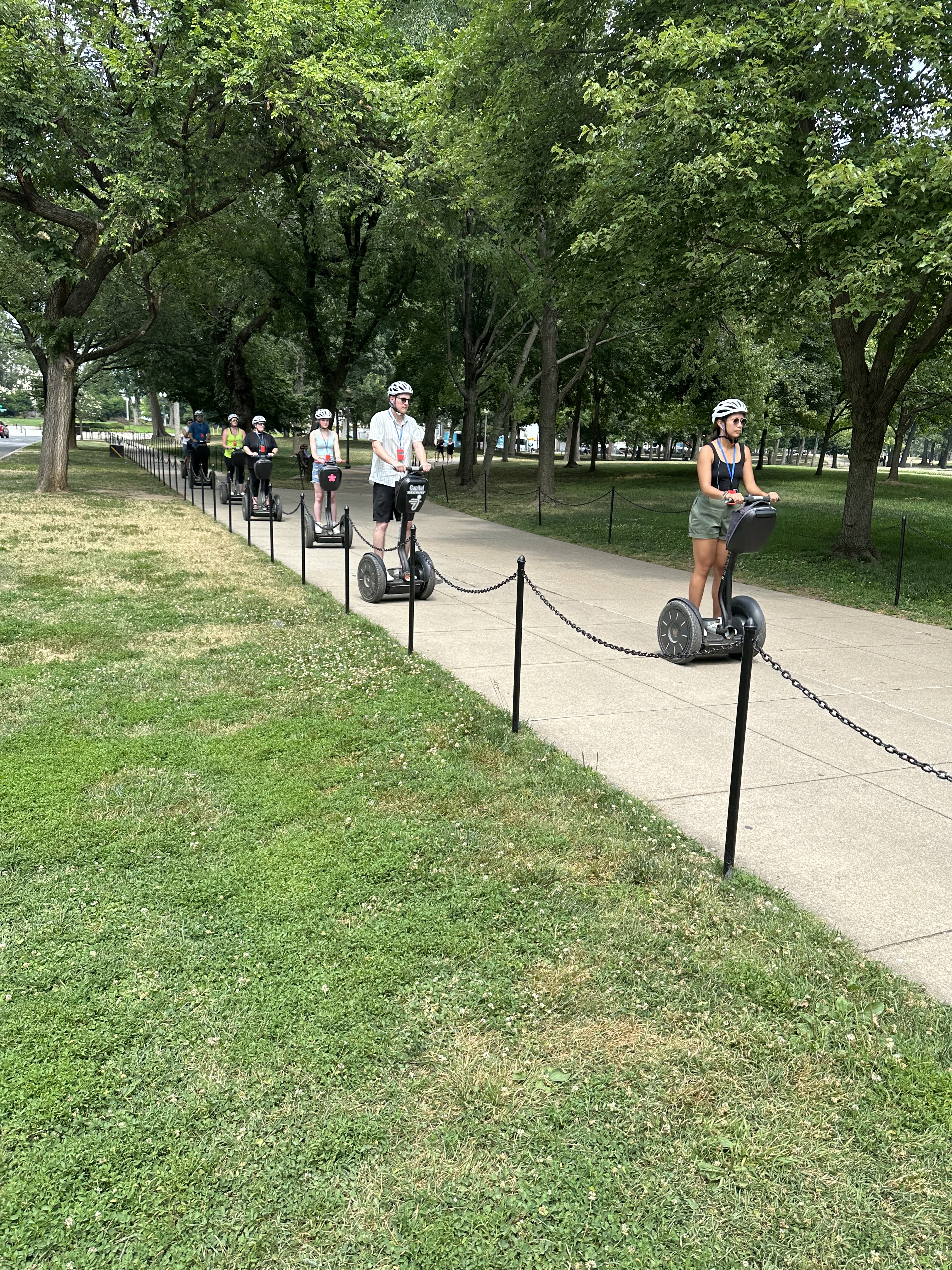
We exited into the early afternoon heat and humidity commonplace for D.C. summer days. Teddy’s parents found a refreshment truck parked near some massive shade trees, and the rest of us soon joined them for some shaved ice and smoothies. Nana was in her glory feeding Teddy some of her cool mango drink. Teddy’s eager reaction showed his gratitude.

A short walk brought us to the World War II Memorial in the shadow of the Washington Monument and at the reflecting pool’s eastern end. I spied a group of Amish circling the memorial’s parameter and recognized the older leader. Unfortunately, I was too far away to say hello.

We continued walking west to the Lincoln Memorial for the older grandkids to experience. Before we left the area, we pointed out the impressive yet solemn Vietnam War Memorial from a distance.

By now, everyone was tired, and we headed back to the hotel via three modes of transportation. Some of us took an Uber, while two adventurous teens followed their father to the Metro. Since Teddy needed a nap, his parents chose to push the stroller three miles.

With the day’s heat and humidity, we were glad for the hotel’s air conditioning in which to rest. However, the teenagers all wanted to play cards, a vacation tradition since they were young. We ordered burgers from a local restaurant and reclaimed the hotel’s rooftop. The banter and passing around Teddy put a punctuation mark on a fulfilling day. The games played on, but we seniors called it a night, our hearts full.

As I settled in for the night, I reflected on the day’s interactions. Everyone we met, hotel, restaurant, museum staff, and Uber drivers, were engaging and courteous. They made this country boy feel right at home in the city.

The adults headed for a lighter breakfast than the previous day while the teens slept in. Afterward, they had to be awakened to say goodbye to Teddy and his parents, who had to leave for their return flight. We hugged and kissed and thanked them for making the trip, and then they were gone.

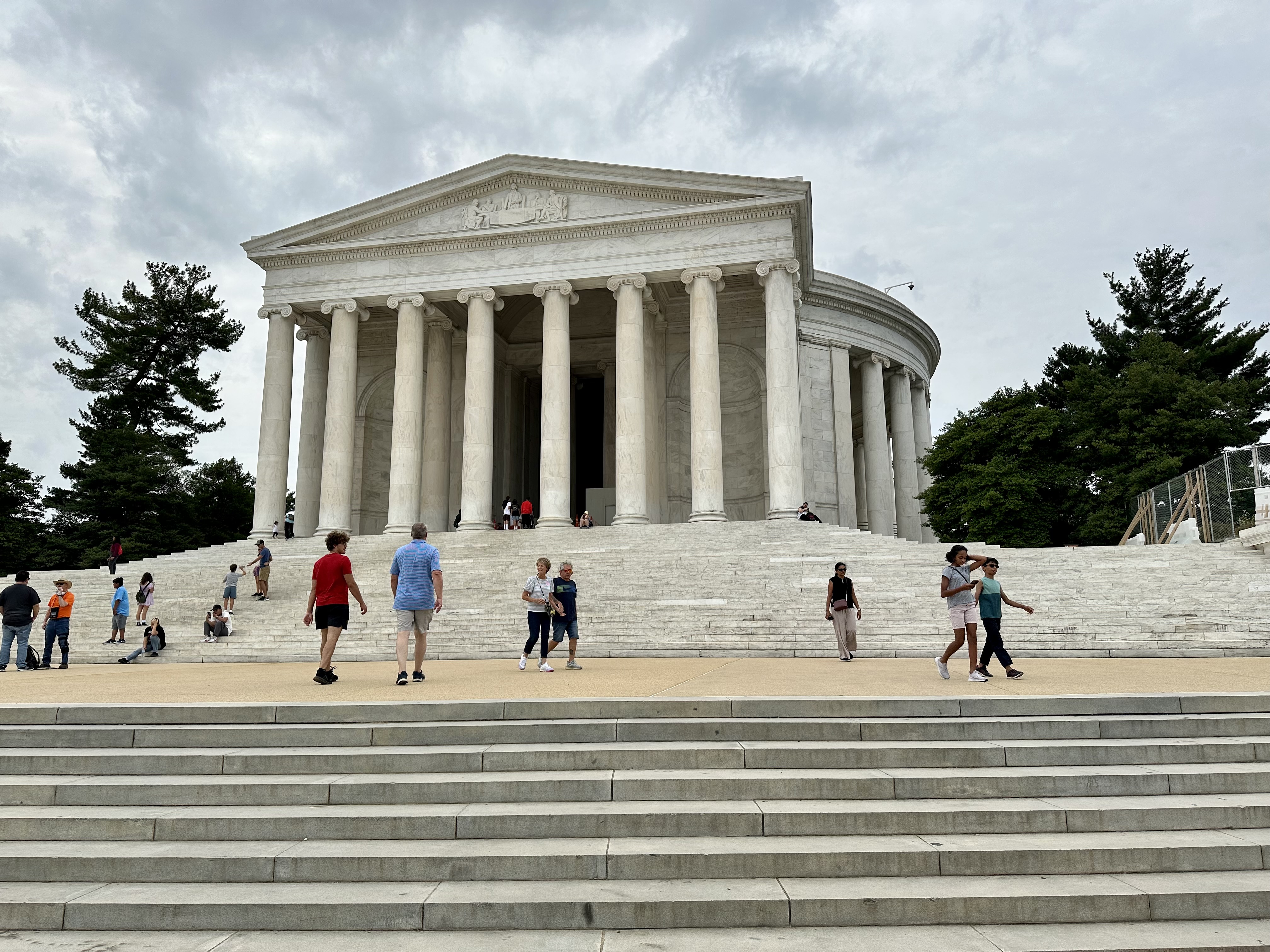
Those that remained returned to the monument area. Our first stop was the Jefferson Memorial. The day was warm again, but a steady east wind made it bearable.

Please click on the photos to enlarge them.

We walked to the Franklin Delano Roosevelt Memorial, which my late father truly enjoyed when I first visited it with him as part of an Honor Flight for World War II veterans. I told the grandkids how their great-grandfather, who used a wheelchair, nearly rose to his feet when he saw the statues of the longest-serving president. Dad even knew the name of Roosevelt’s dog, which also had an oversized bronze.

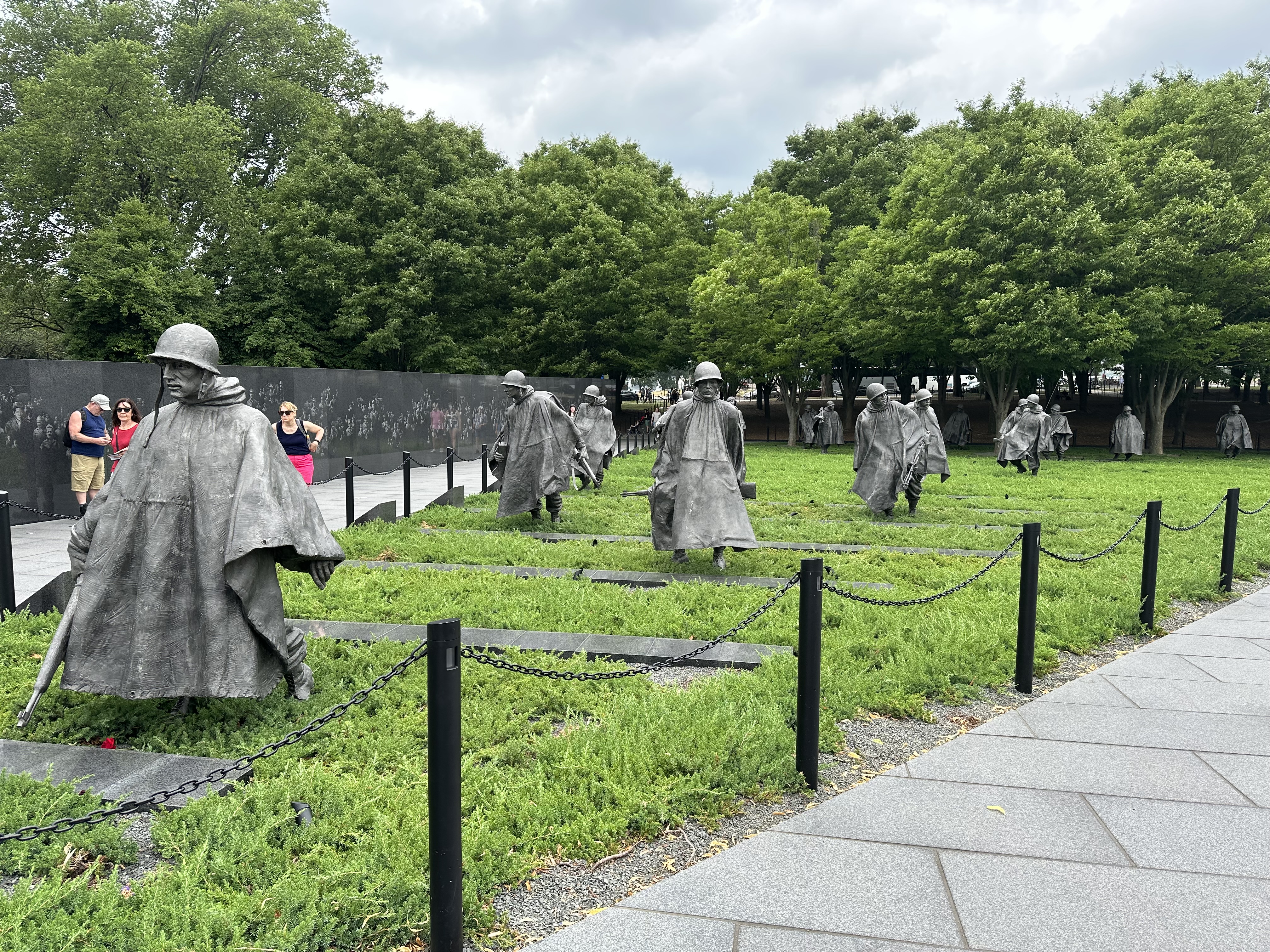
The Martin Luther King, Jr. Memorial stood a short walk away. We were a few months late for the blooming of the famous cherry trees along the path. The impressive King Memorial faced the Jefferson Memorial across the choppy basin. From there, we strolled to the Korean War Memorial. With its platoon of soldier statues, the setting gives you pause about the futility of war.

It was time to head home. We retraced our steps through the FDR Memorial and back to the van. As we rolled south down the interstate, I enjoyed the commotion of the card games with Nana and teenage grandchildren in the back seats. I was happy to have my son-in-law drive and most grateful for our joyous times together.

We had so much fun that we had already made tentative plans for next year’s get-together. In the meantime, I’ll bask in the joyous afterglow of our little family’s reunion.

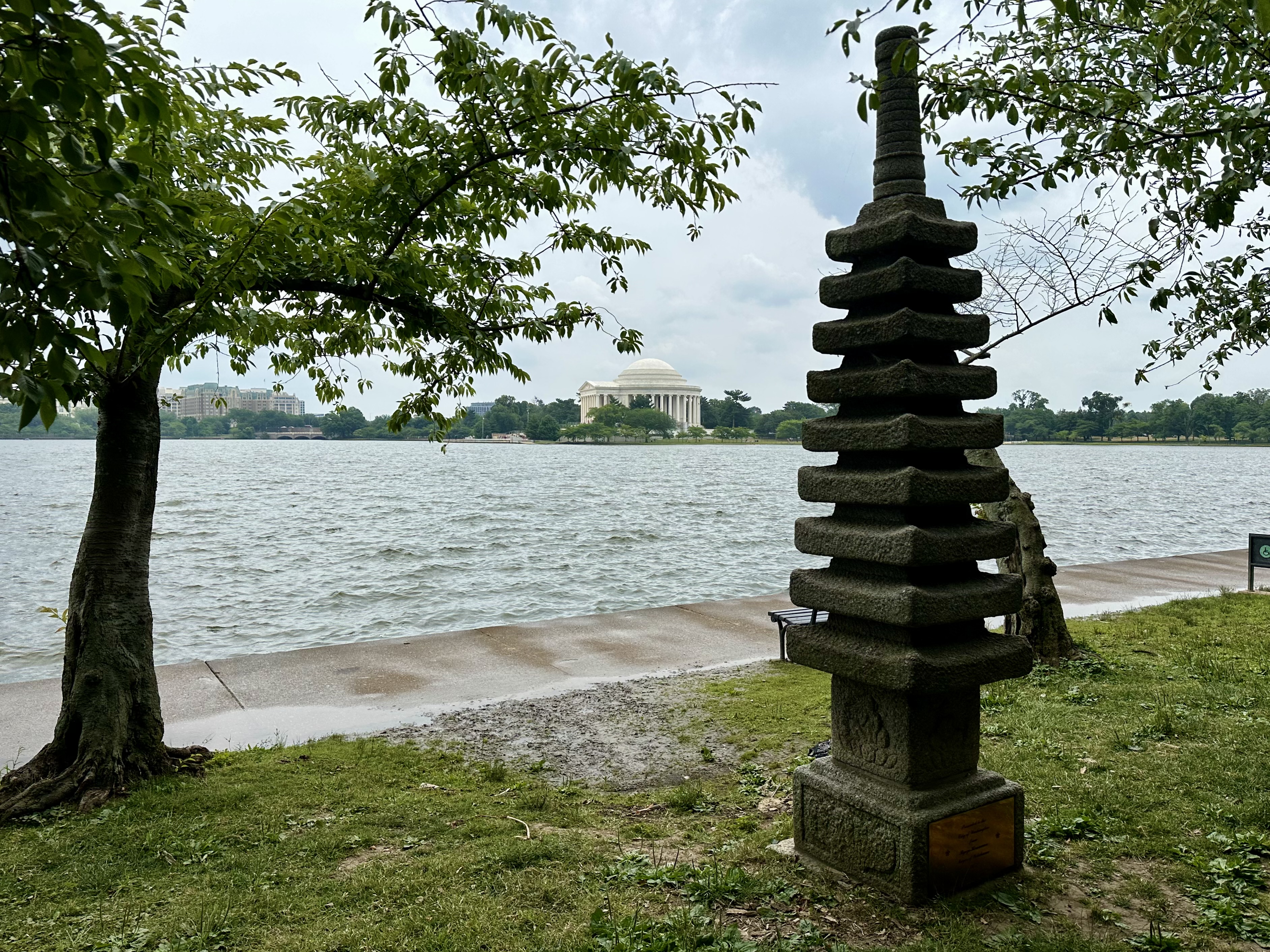
The pagoda stands amid the cherry trees with the Jefferson Memorial in the background. Photo © Bruce Stambaugh 2023.

© Bruce Stambaugh 2023

Joy in a Time of Sorrow

Yes, it is possible.

A tornado-damaged barn in Ohio’s Amish country.

Like most everyone else, I was shocked and saddened to hear of the death, injuries, and massive destruction left by the late-season outbreak of strong tornadoes that hit the country’s midsection like a gut punch recently.

Given this and other tragic global current events, how can we be joyous now? The answer is both easy and hard.

This family of tornadoes brought sorrow to innocent people. Survivors were thankful to be alive. Many people lost everything, and dozens died.

As I viewed the video of the immediate aftermath of the tornadoes, one clip particularly caught my attention. A first responder walked into a heavily-damaged nursing home where one person died from the tornado strike.

As the firefighter waded through inches of water in the dark, he passed several elderly nursing home residents sitting in their wheelchairs waiting for help. More than one of the residents thanked the firefighter for his assistance.

I was amazed. I figured those poor folks would be in shock and confused. Some probably were. But a few chose to express their thanks and joy for help despite their dire circumstances.

Not everyone can be joyous in this holiday season. Some feel alone. Some are homeless, cold, separated from family, while others mourn the loss of loved ones.

Our family knows those feelings all too well. My wife’s father died just before Christmas in 2001, and eight years later, I lost my father on December 21.

At Dad’s memorial service, I told those in attendance not to be sad for us. Dad loved Christmas and that there was no better time for him to pass on. He would have loved the festive decorations of the church.

During calling hours before the service, friends, family, and acquaintances shared their condolences and heartfelt stories of knowing our father. I remember one young man in particular.

The youngster came with his grandparents to express both his gratitude and sorrow. The young man remembered our father because Dad had shown him his arrowhead collection. That lasting impression exemplified our father’s love for life and learning.

How could we be sad at that? We couldn’t be, of course.

We loved our quirky, gregarious father, and we loved that others had opportunities to experience our father’s wide range of interests and joy for life. The fact that so many took time out of their holiday celebrations and ventured out in the snow and cold to be with us spoke volumes.

Joy on Christmas morning.

Another recollection of joy experienced at a stressful time was at the first fire I responded to as a volunteer firefighter in Ohio’s Amish country. A chimney fire had spread into the attic of a century-old Amish farmhouse. At the end of a 30-foot ladder, I sprayed water onto the fire through a small attic window.

With the flames under control, I looked down to the front yard, and I couldn’t believe the unfolding scene. Scores of people, primarily Amish, rushed in and out of the house, hauling out precious family heirlooms, furniture, dishes, and other items.

Several ladies and teenage girls already had washed some of the family’s clothes and hung them on the laundry line. Talk about expressing joy in the face of despair.

That is the way life is, isn’t it? When we are down and out for whatever reason, joy reaches in and touches our heart and soul and gives us hope.

We can choose to be joyful even in the face of death and terror. At every opportunity, be the joy.

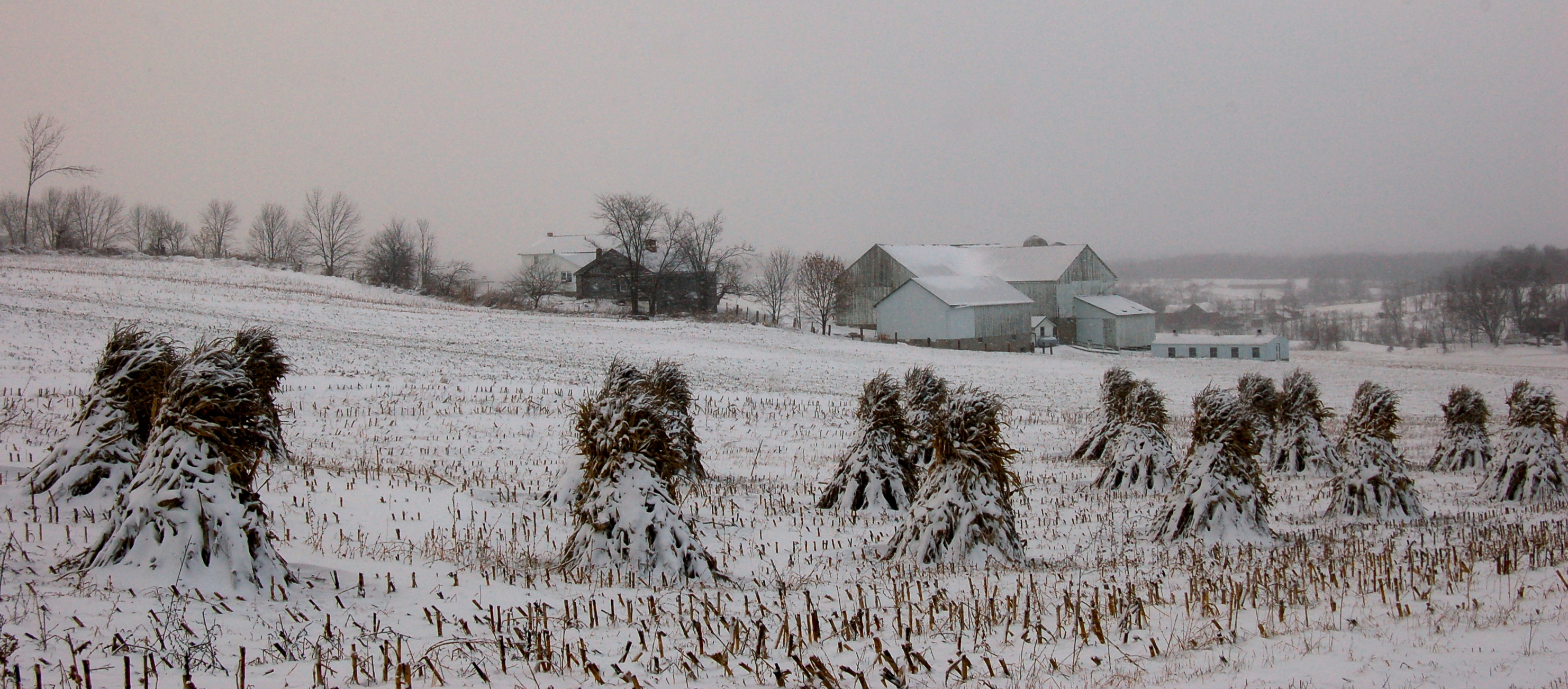
An Amish farmstead in December.

© Bruce Stambaugh 2021

We’re leaving the lights on for you

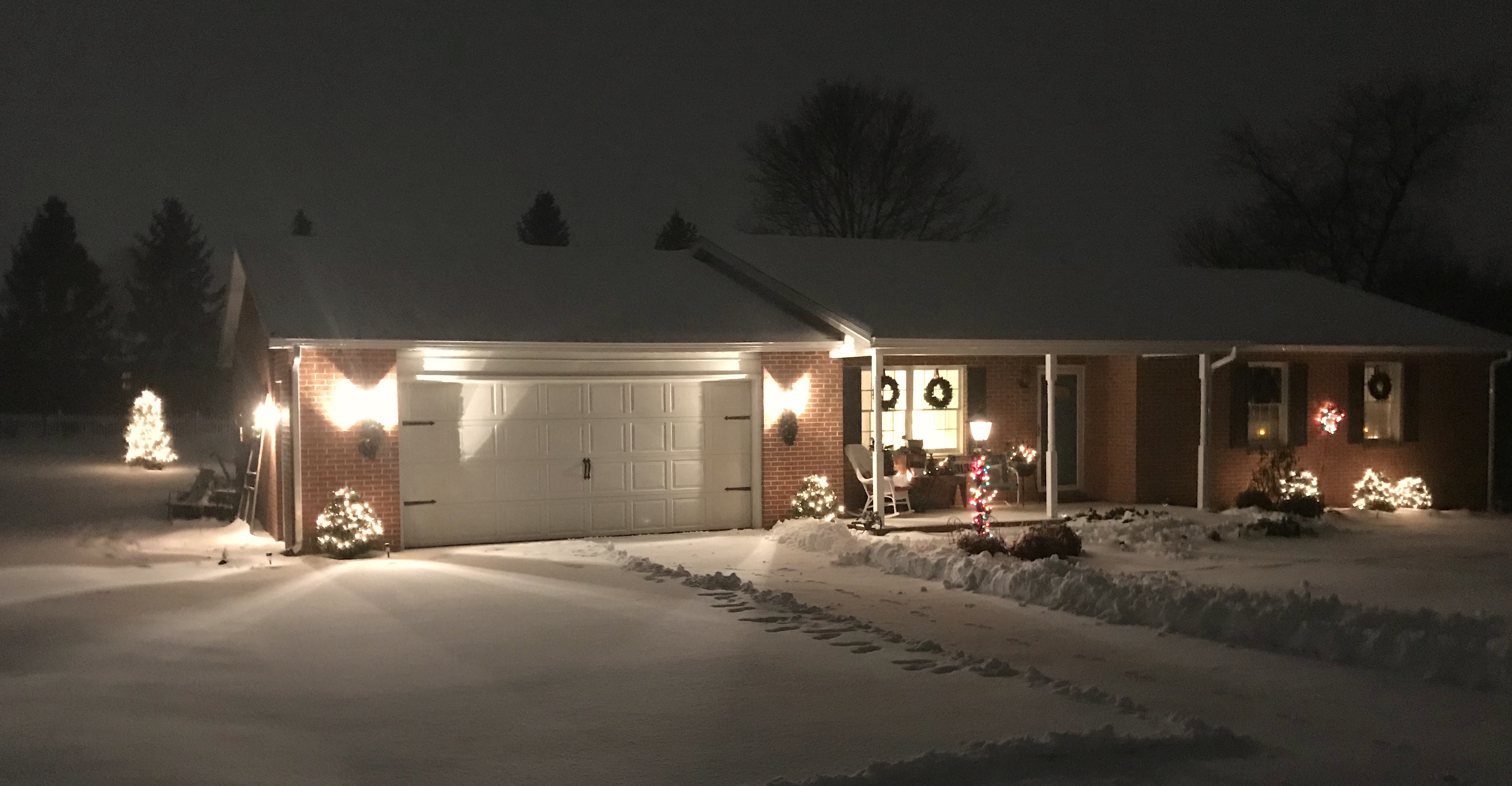
Photo by Bruce Stambaugh

My wife and I are leaving the lights on for you. And, no, we’re not Motel 6.

The year-end holidays may be over, but our modest festive light display is still burning brightly. We began our celebrative decorating early and are letting our lights shine well into the New Year.

We are not crazy, nor do we own stock in our electricity company. We have our altruistic reasons for letting the lights continue to shine.

Lighting up our homes inside and out runs deep in our linage. My wife’s family always brightened their cozy farmhouse with tactful holiday flare. Her frugal farmer parents wanted to share their holiday spirit, too.

Although my exuberant father sometimes got a bit too flashy for my taste, my family was no different. Nevertheless, Dad’s heart was in the right place. He wanted to bring joy to all who passed by our little brick bungalow on our busy suburban corner.

Dad’s enthusiasm seemed to progress with each passing year, however. He loaded the corner evergreen with strings of those big-bulbed multi-colored lights. Later, he outlined the front porch, then still later erected dangly white lights that imitated icicles around the roof’s edges.

Fortunately, our mother, the artist, had control over the creative interior decorating. The decked-out Christmas tree always stood in front of the living room’s picture window. Christmas cards covered the inside of the old wooden front door, and the fireplace mantel always said Happy Holidays!

My wife and I have a 49-year tradition of lighting up our home inside and out for the holidays. We credit our parents for that creative itch.

Given the world’s state in 2020, Neva and I decided to get a jumpstart on our holiday decorating. We had the time and opportunity since we tried to follow the stay close to home pandemic guidelines. So, that precisely is what we did.

We didn’t try to imitate my late father by any stretch of the imagination. We simply did our usual holiday festooning, only jumpstarted the holiday decorating just before Thanksgiving. The traditional commencement for our holiday decorating was the day after.

Our Jenny tree, a memorial for a friend gone too soon.

Now with Christmas come and gone, we packed away most of the interior decorations. But drive by our modest ranch home at night, and you’ll discover the exterior lights still brightly burning. They will continue to do so for a while.

What is our motivation? We are taking the idea of letting your light shine seriously. And why not? With the pandemic and continued social polarization, society is still bewildered and dismayed nationally and globally. The recent coup attempt in our nation’s capital only added to the nationwide angst.

Some might view our extended light display as simple-minded. We’re alright with that. It’s just our way of expressing gratitude for a new year and new opportunities to make things right in the world.

We also know that some might think our actions foolish. Our lights will shine nevertheless.

The multiple strings of little white lights combined won’t generate much real warmth. Instead, by letting the lights continue to glow, we hope that their presence, their shining on, countering the cold darkness of the world, will, in some small ways, warm a few hearts.

Like our late parents, our sincere hope is that this humble display simply helps brighten any passersby’s souls on any given chilly winter’s eve. We’ve noticed that we aren’t alone. Others continue to keep their holiday lights on, too.

Whether it’s a single glowing candle in the front window or a lighting extravaganza, that light radiates joy. That’s a commodity all of us need now and always.

© Bruce Stambaugh 2020

Putting mystery back in the holidays of miracles and light


December’s mainstay holidays are cloaked in mystery and miracles. Darkness to light summarizes the current holiday season theme regardless of which ones you observe.

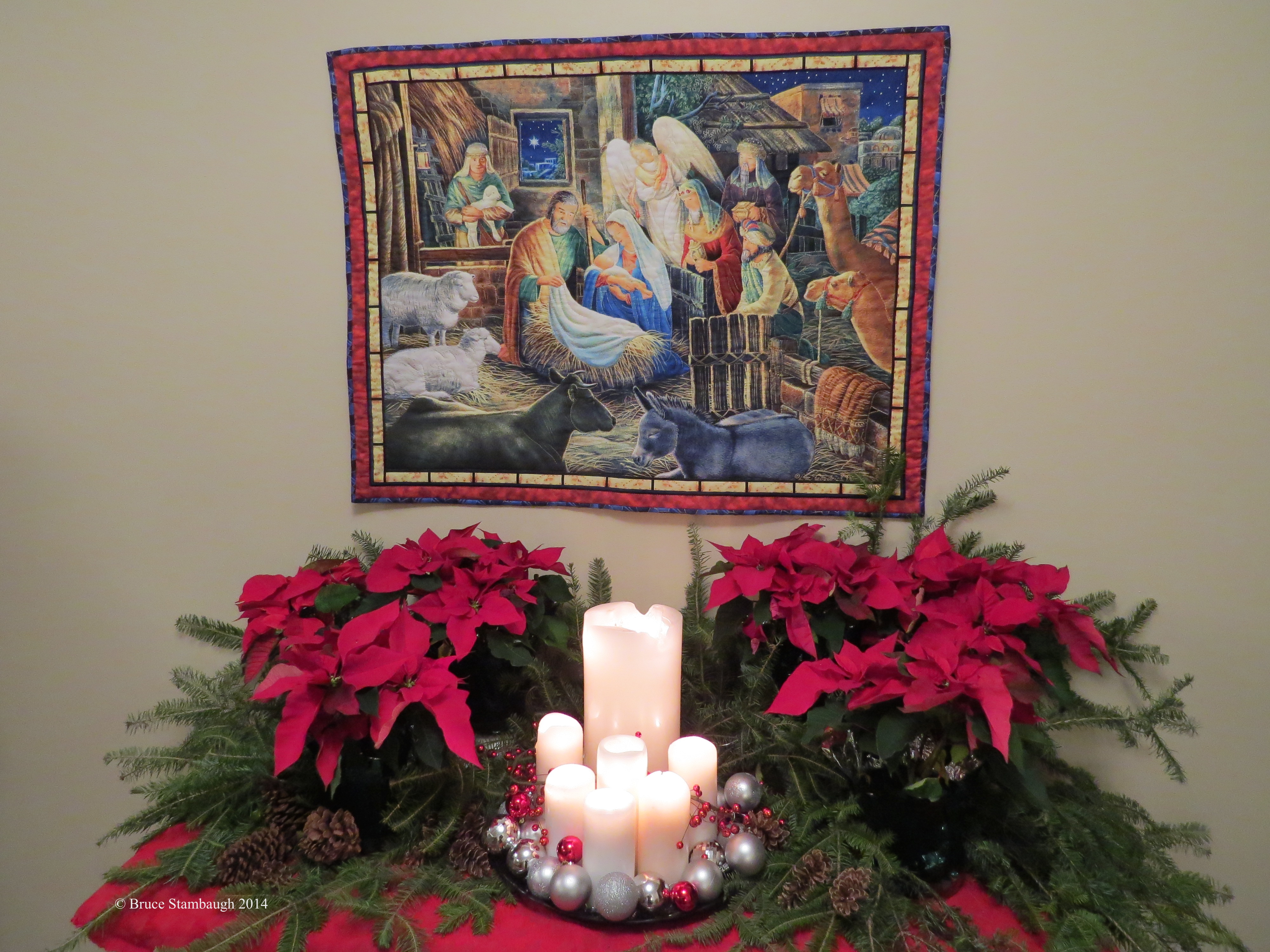
Hanukkah, Christmas, and even the winter solstice share those common qualities. They each come with their own history, a bit of mystery, and a requisite for reverence. The three even overlap in time, traditions, and symbols.

Hanukkah and Christmas each have deep, overlapping religious roots, while the winter solstice has pagan origins. All three, however, connect winter’s darkness with some concept of light. In fact, the triumvirate celebrates light in authentic, yet distinctive practices.

Besides illuminating light in the year’s darkest time, this triune of holidays has another commonality. The celebration of all three can last for days in keeping their specific purposes.

The winter solstice occurs when the sun reaches its farthest southward point for the year. That is precisely 9:19 p.m. EST on December 21. In Universal Time, the winter solstice is December 22 at 4:49 a.m.

The winter solstice marks the latest dawn and the earliest sunset. It is the longest night and shortest day for those of us who live in the Northern Hemisphere. Of course, it’s just the opposite for those south of the equator.

History and archeology show us that earth’s early peoples recognized this critical point in whatever way they marked time. They understood that the sun’s path could be predicted on a regular route across the sky.

Archeological wonders like England’s Stonehenge and Peru’s Machu Picchu stand as evidence of this. Indigenous peoples in America’s southwest also marked the end of darkness in similar light-filled ceremonies.

Historians are still unraveling the mysteries of these cultural rituals. Fire and light were essential symbols in most of these ancient celebrations. I marvel at how those two entities connect to Hanukkah and Christmas.

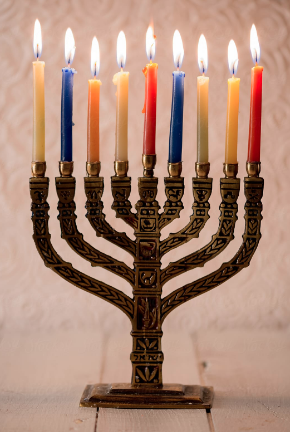
This year Hanukkah is celebrated by the Jewish faith from December 22 to 30. Hanukkah is the commemoration of a historic miracle involving light.

The Jewish holiday arose after the temple in Jerusalem was recaptured from cruel ruler Antiochus. Wanting to rededicate the holy temple, the Judah victors found only enough olive oil to burn sacred candles for one night. Mysteriously, the menorah candle burned for eight consecutive nights, establishing the miracle of Hanukkah.

Christmas, of course, is December 25, most likely assigned that date to coincide with the winter solstice and Hanukkah celebrations, according to some historians. They reasoned that if the shepherds were guarding the grazing sheep, the season would have been one other than winter.

Regardless, Christmastime is a celebration of another kind of light. It, too, is rooted in a miracle, that of Mary’s virgin birth of Jesus, meaning, “God with us.”

Christians begin the Yuletide season with the Advent preparation four weeks ahead of Christmas Day. Some sects of Christianity then extend the celebration to January 6 or Epiphany or Old Christmas, which the Amish humbly celebrate.

For me, in this blend of holidays, the light brings anticipation of better things to come: lighter, longer days, a hope for a better, sunnier new year, the joy of personal peace by walking with the light, and the love of all Creation.

The vibrant spirits of the season, miracle and mystery, gently weave the interconnected holiday celebrations together with the threads of hope, joy, peace, and love. Will we allow ourselves to be wrapped lovingly in this warm garment more radiant than the brightest star?

I pray that the mystery of miracle envelops you and yours in joy and light this holiday season.

Winter solstice sunset.

© Bruce Stambaugh 2019

When the lost is found


During my morning devotions, I try to include a brief time of meditation. A recent theme focused on observing rather than reacting with anger, fear, or judgment to human interactions.

Little did I know then that before the day would end, I would personally apply that lesson.

The day was foggy in the Shenandoah Valley. Random openings in the haze allowed the morning sunshine to poke through. The Blue Ridge Mountains, however, were socked in. I wanted to go there for one last chance to capture the beauty of a Shenandoah fall.

With the hope that the sun would eventually burn off the overcast, I headed to Shenandoah National Park. By the time I arrived shortly after noontime, that is precisely what happened.

Driving along the park’s extolled Skyline Drive is a joy at any time of the year. It is an absolute privilege to experience the fantastic colors of the fall foliage.


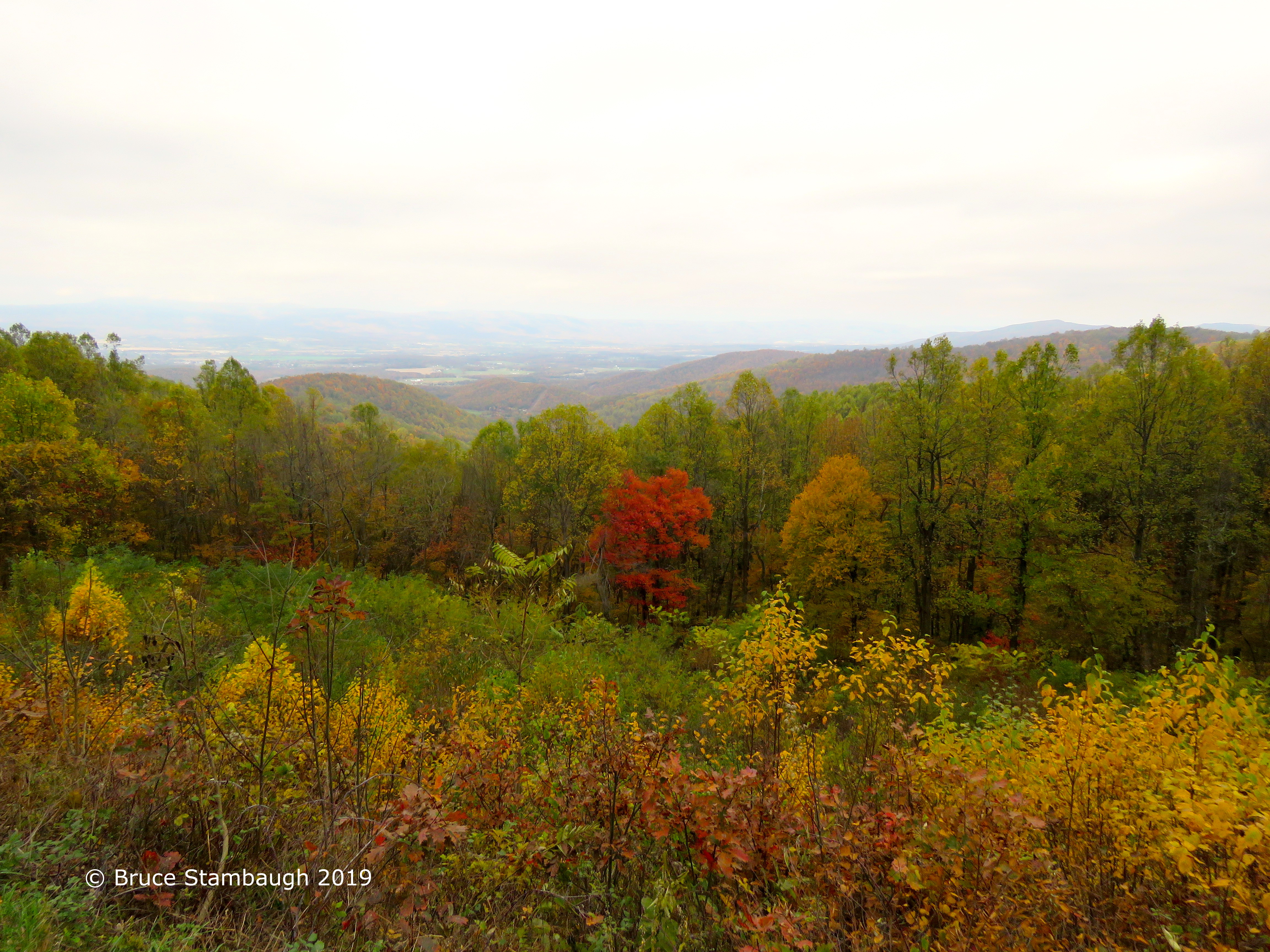
The park burst with scarlet, red, yellow, orange, amber, russet, brown, and crimson. Each hue complemented the others. I drove in the fresh, moist mountain air with the moon roof open and the windows partially down, taking in the autumn’s sights, sounds, and pungent fragrances.

I made several stops to photograph the scenery and finally recognized my fatigue at Big Meadows, where I stopped for lunch. The combination of my emotional exhilaration and the numerous times of exiting and reentering my vehicle had tired me. It was a reminder that my leg still had healing to do.

I retraced my route. Fog still rolled up out of the hollows and dissipated before my eyes. I continued to pull into nearly every overlook to capture the gorgeous splendor.

At my last stop, I reached for my camera, but it wasn’t there. I quickly searched in the vehicle, but the camera was gone. I must have left it on a stone wall at the last overlook where I had paused for an afternoon snack.


This slideshow requires JavaScript.


In the five-mile backtrack, my thoughts ticked off the options. It could still be there. Someone may have turned the camera in, or it was gone.

For most of my life, I have been my own worst critic. I berate myself when I err or let my emotions control my mood because of a negative situation. Not this time.

Remembering the morning’s meditation, I mentally weighed the consequences of my lapse of concentration by leaving the camera. I also accepted the situation without self-judgment.

Where I lost my camera.

I had captured dozens of photos of the incredible scenery. Now, they could be lost. I still had the day’s experience, however. That would be serenity enough, camera or no camera.

When I arrived at the overlook, the camera was nowhere to be found. I used my best option. I returned to the Big Meadows visitors’ center and reported my camera missing.

I headed south again, making a couple of more stops before I arrived at the Swift Run entrance station, where I access the park. I asked the ranger if anyone had turned in a camera. To my amazement, she said a young woman had given her a camera only 30 minutes ago. It was mine!

Of course, I was ecstatic to have the camera back, but not as delighted as I was with my self-control. No anger, no negative thoughts, no self-blame had arisen.

It had been a fulfilling day. A morning lesson, time in nature, a senior moment, a trustworthy person, and a personal watershed breakthrough brought deep contentment. I could not have been happier.

© Bruce Stambaugh 2019

Bay Photos by Donna

Wildlife photos from the Chesapeake Bay region

ROAD TO NARA

Culture and Communities at the Heart Of India

K Hertzler Art

Artist and nature journalist in the Shenandoah Valley of Virginia.

Maria Vincent Robinson

Photographer Of Life and moments

Gabriele Romano

Personal Blog

Jennifer Murch

Art is the only way to run away without leaving home. -Twyla Tharp

Roadkill Crossing

Writing generated from the rural life

ANJOLI ROY

writer. teacher. podcast cohost.

Casa Alterna

El amor cruza fronteras / Love crosses borders