In Search of Mountain Laurel

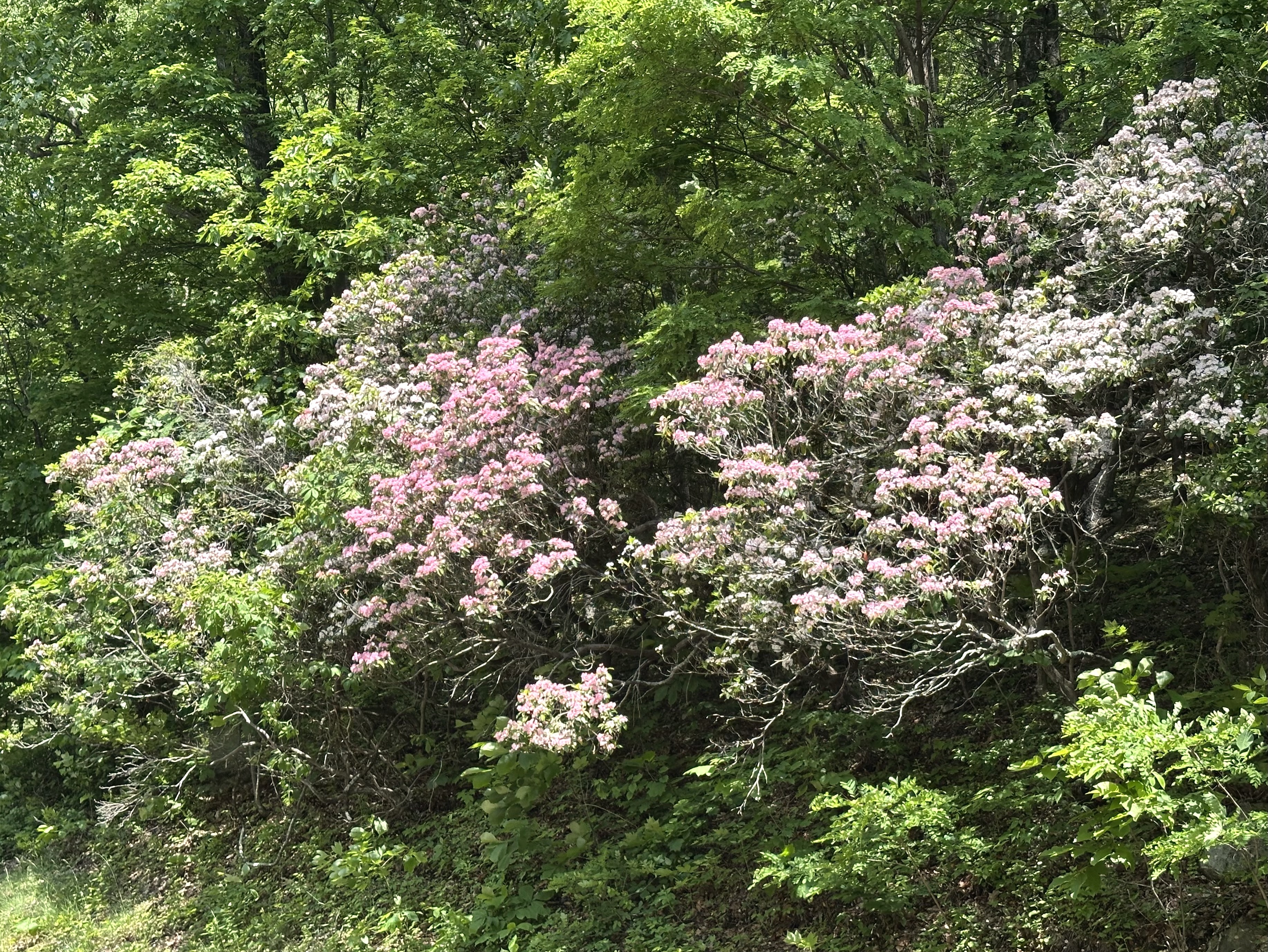
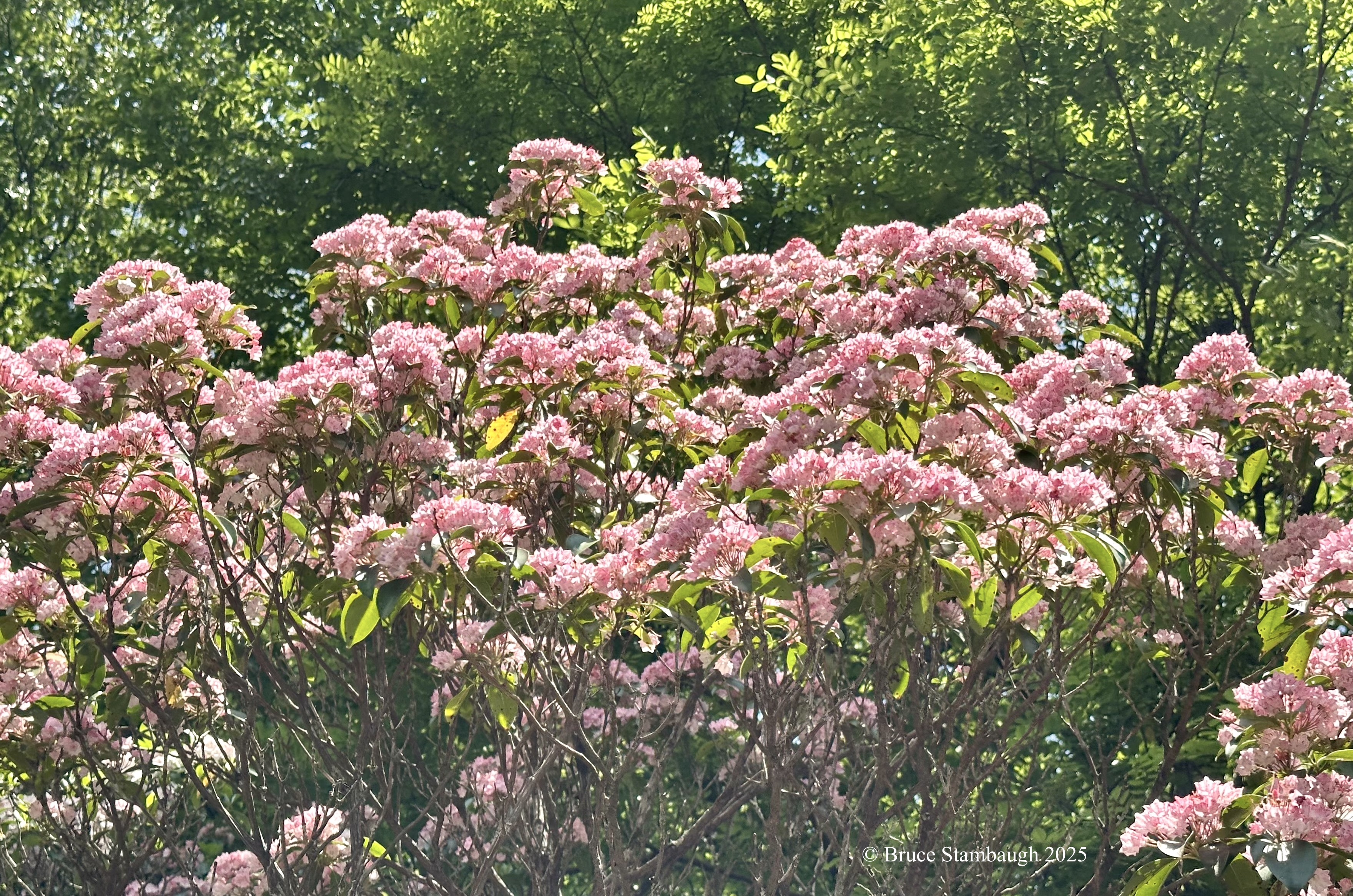
Mountain Laurel blossoms. Photo by Bruce Stambaugh

I went for the birds and the blossoms, but forgot about the bugs. They didn’t deter me, however.

My neighbor had told me that the Mountain Laurel bushes were blooming at various locations in Shenandoah National Park, just a short drive from my home. The laurel blooms from late May into mid-June, depending on elevation.

Of course, I had to see for myself. I fixed a hiker’s lunch, packed my binoculars, camera, and a couple of jackets, and headed out. It’s often 10 degrees or more cooler in the mountains than in the Shenandoah Valley, where I live.

I didn’t need to bother with the jackets. The temperature was 70 degrees when I arrived, and it was humid, with little to no breeze. It was 79 when I left.

A small black bear cub greeted me not long after I entered the park. Fortunately, it scampered back off the old stone wall away from the road and into the forest.

I soon reached my first destination. Just a short distance off Skyline Drive, I reached the Appalachian Trail, which crossed a fire road. I didn’t see any Mountain Laurel, but songbirds were plentiful. So were the knats and mosquitoes.

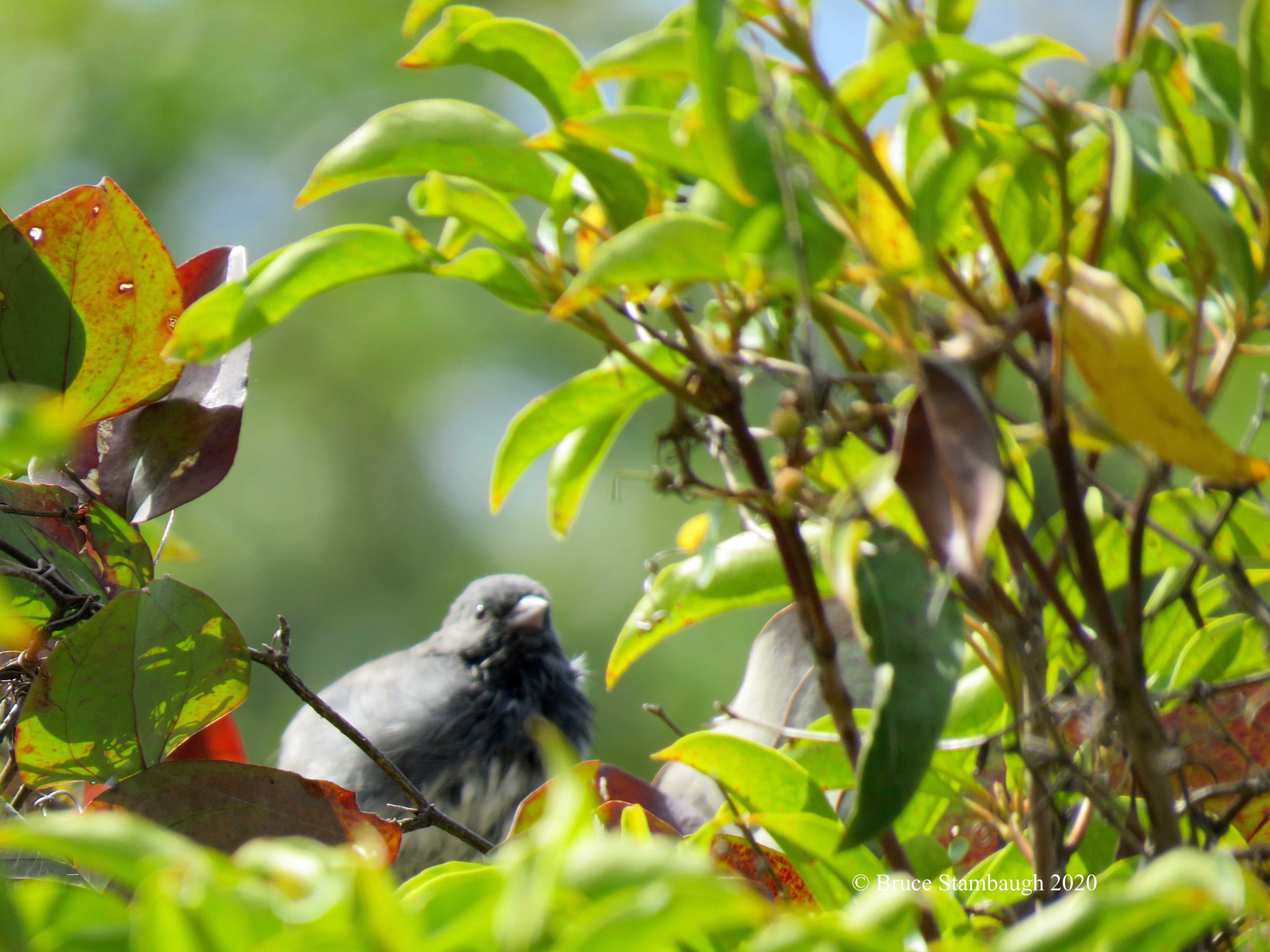
A male Eastern Towhee. Photo by Bruce Stambaugh

I strolled along the AT, swatting at the pesky bugs and trying to locate the many warblers I was hearing and recording on my smartphone’s birding app. Singing its unmistakable “drink your tea” melody, a male Eastern Towhee posed for a photo on a limb hanging right over the trail.

I met a lone through-hiker from South Carolina. She hoped to reach Mt. Kadadhin in Maine by mid-September. She told me she had passed many stands of Mountain Laurel on her hike so far, which began at the Appalachian Trail’s traditional starting point, Springer Mountain, in Georgia.

She headed north while I retraced my steps to my vehicle. The birdsong was terrific, but the forest’s full foliage made it challenging for this old guy to spot the warblers as they flitted from one branch to another, munching on their insect smorgasbord.
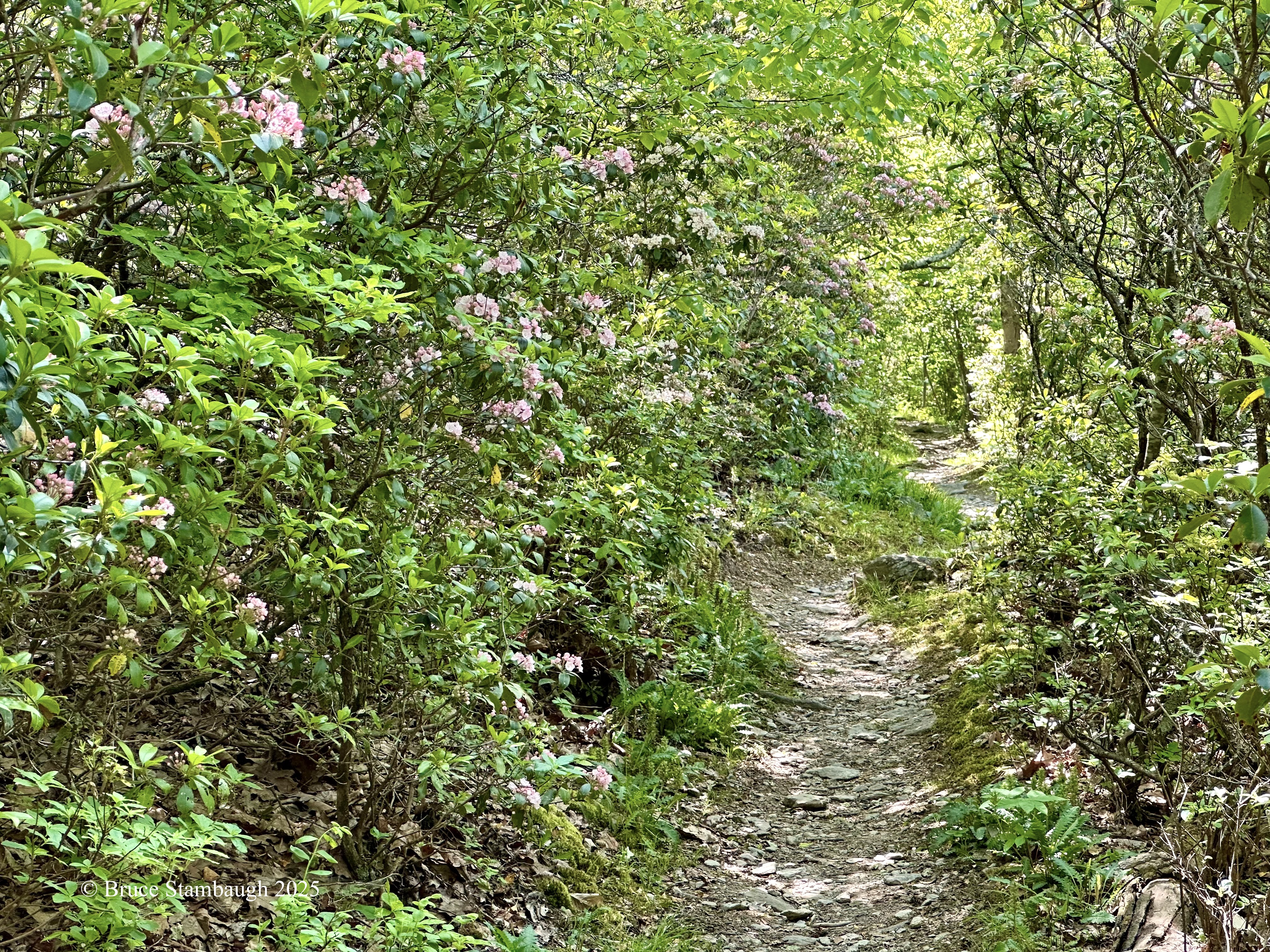
Besides, my main goal was to photograph the blooming Mountain Laurel. I followed my neighbor’s directions to another section of the AT, where the Mountain Laurel was so prolific that it formed a floral tunnel.

The laurels were in all stages of blooming, from tight pink buds to hexagonal flowers in full bloom. In places, the sun filtered through the forest canopy, highlighting the beauty before me.

The laurel blooms offered no fragrance, and I never saw an insect of any kind on any of the hundreds of blossoms. There was a good reason for that. As pretty as the prized flowers are, they are poisonous to any living creature. Every part of the plant is toxic.

So, if someone offers you Mountain Laurel honey, politely decline. Merely enjoy the flowers with their evergreen leaves. If you go, make sure you take your favorite bug spray.
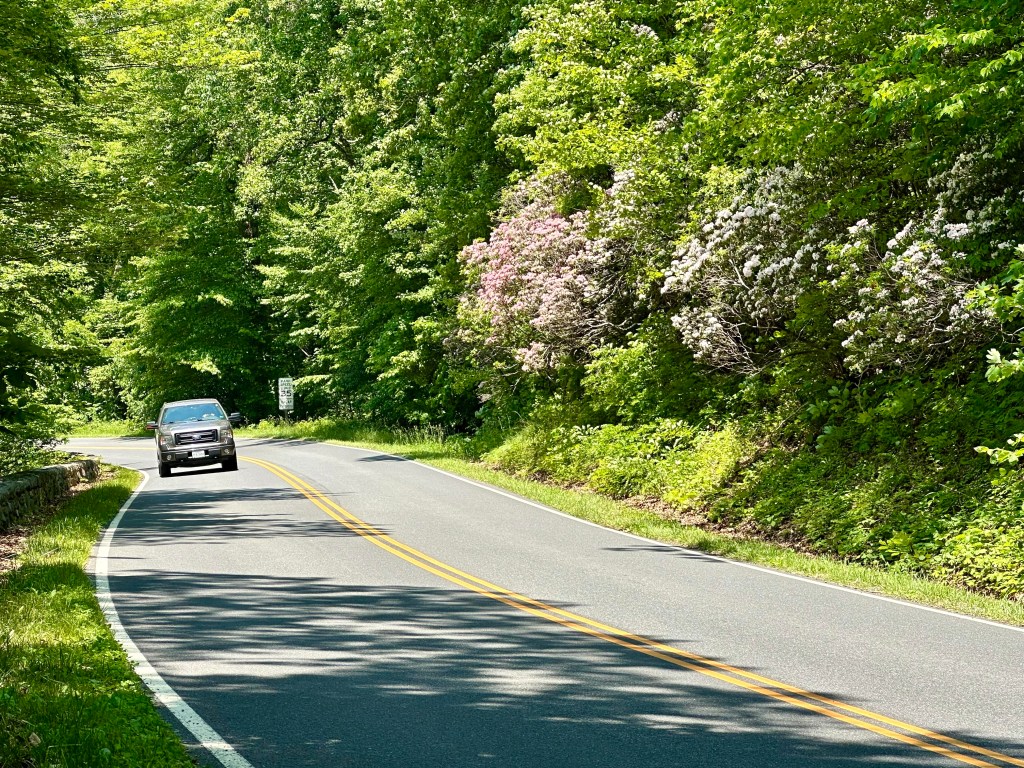
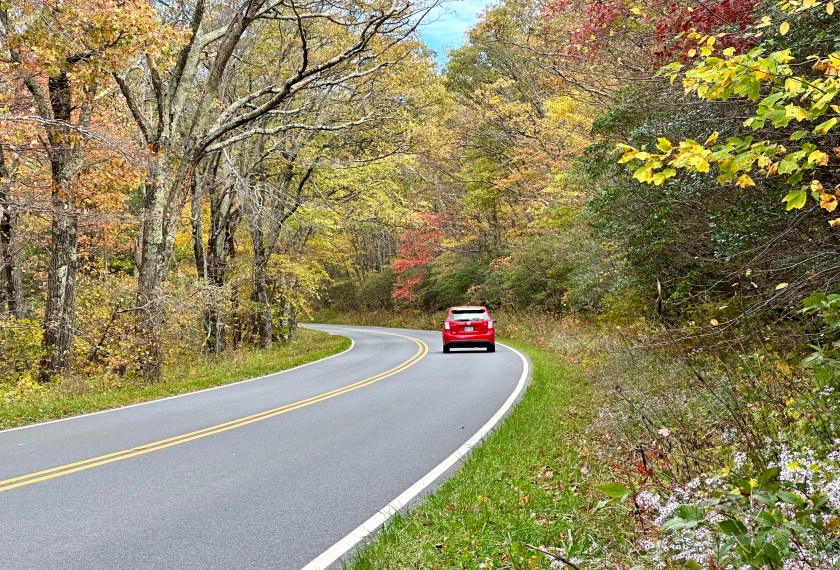
Mountain Laurel grows along the Skyline Drive in several locations. Photo by Bruce Stambaugh

© Bruce Stambaugh 2025

Shenandoah National Park: Before and After the Peak Leaf Colors

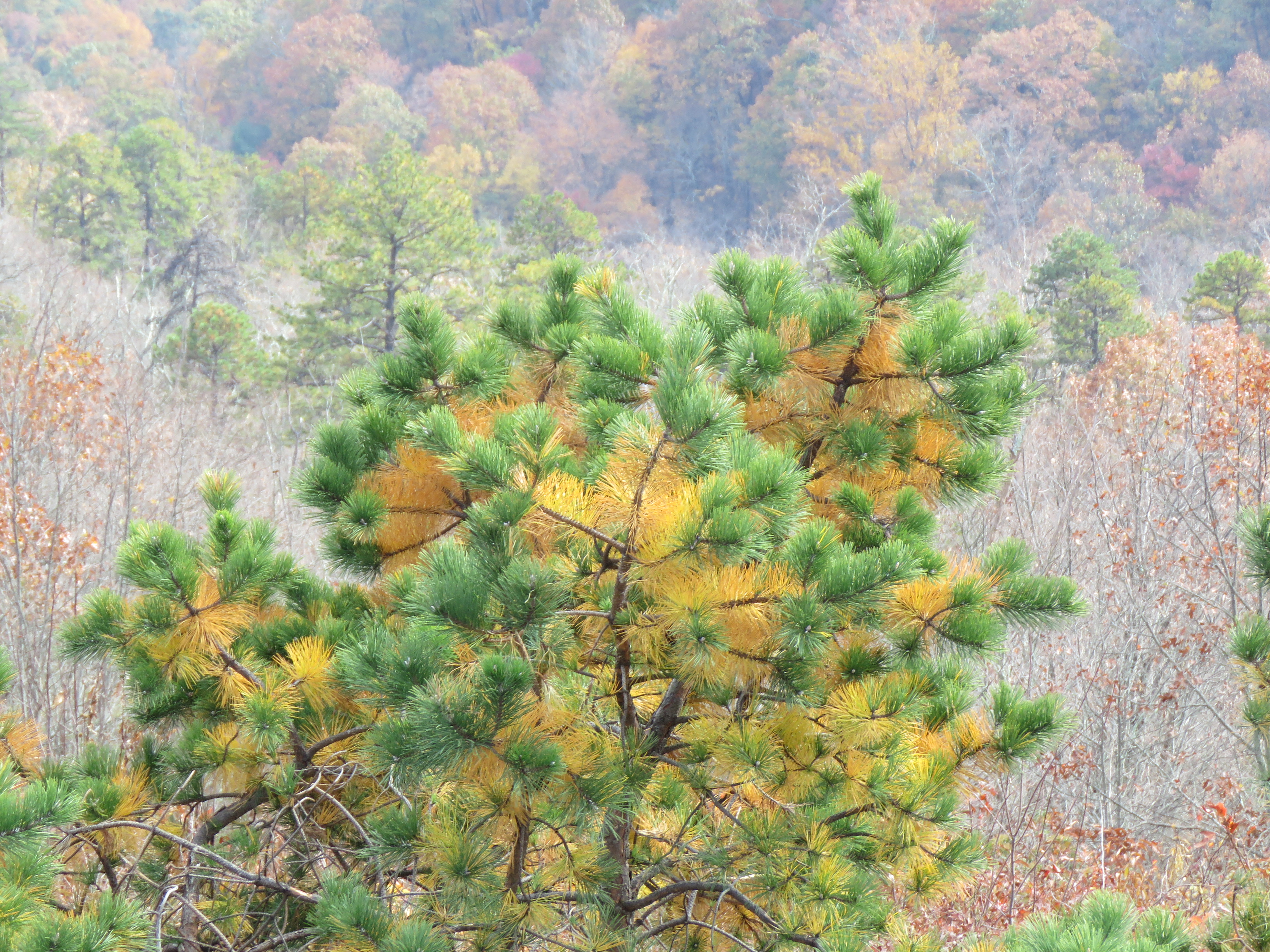
Nature’s beauty reigned even after the peak colors had faded. Photo by Bruce Stambaugh

Fall is a great time to hike, bird, and shoot photos. Shenandoah National Park is my go-to place to combine all three hobbies in one trip.

However, I have learned to avoid the peak color time due to crowds. People from around the world visit the park to admire its autumn glory, which means traffic is also at its peak on the iconic Skyline Drive.

By mid-morning, lines of vehicles form at entrance stations. Overlook parking spaces fill up quickly, forcing people to park along the busy roadway. The same is true for trailhead parking lots.

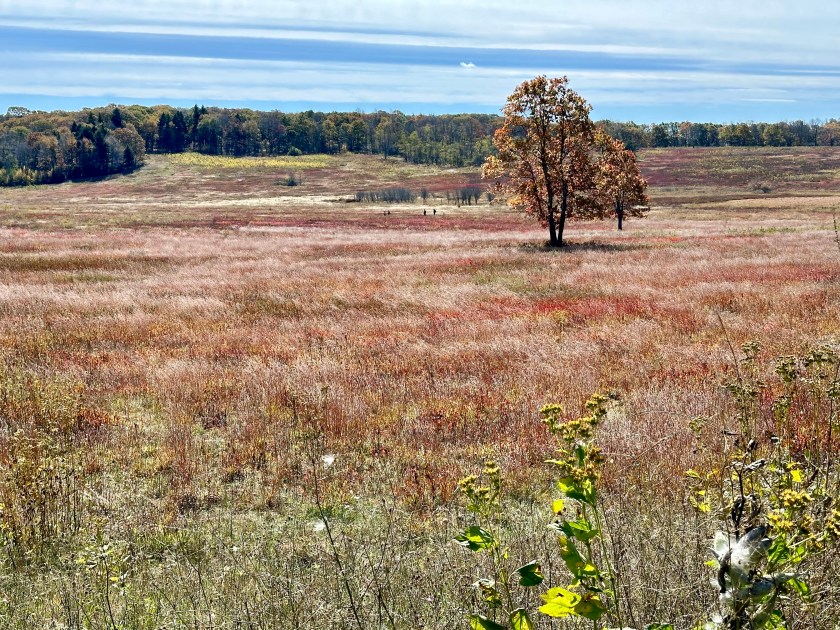
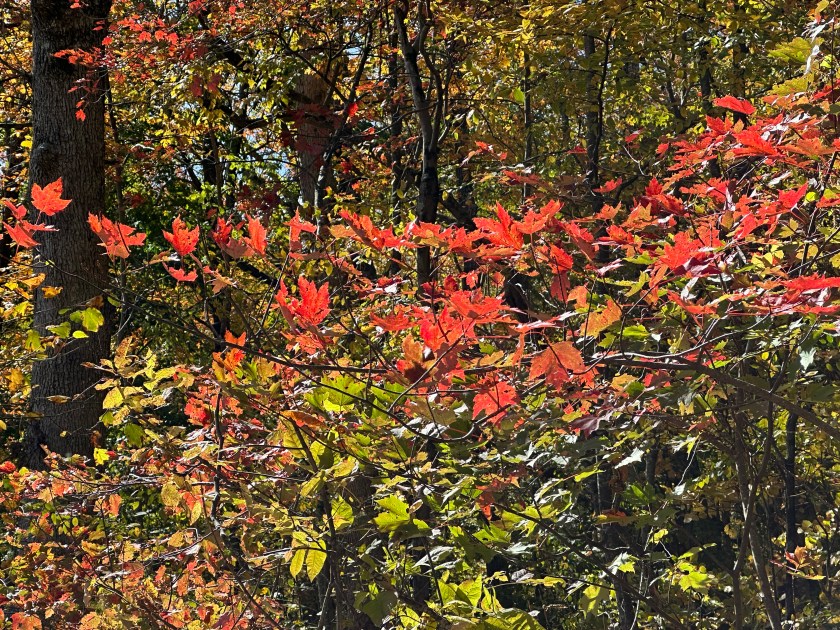
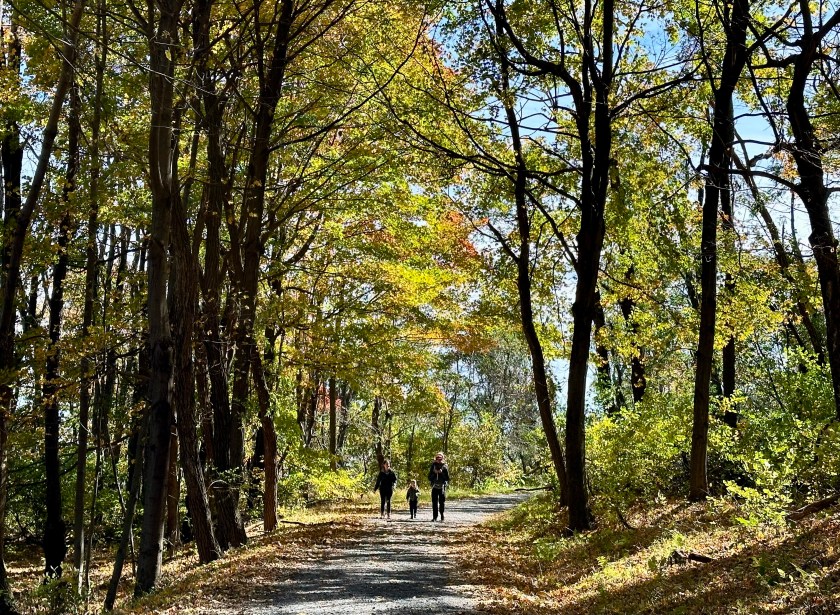
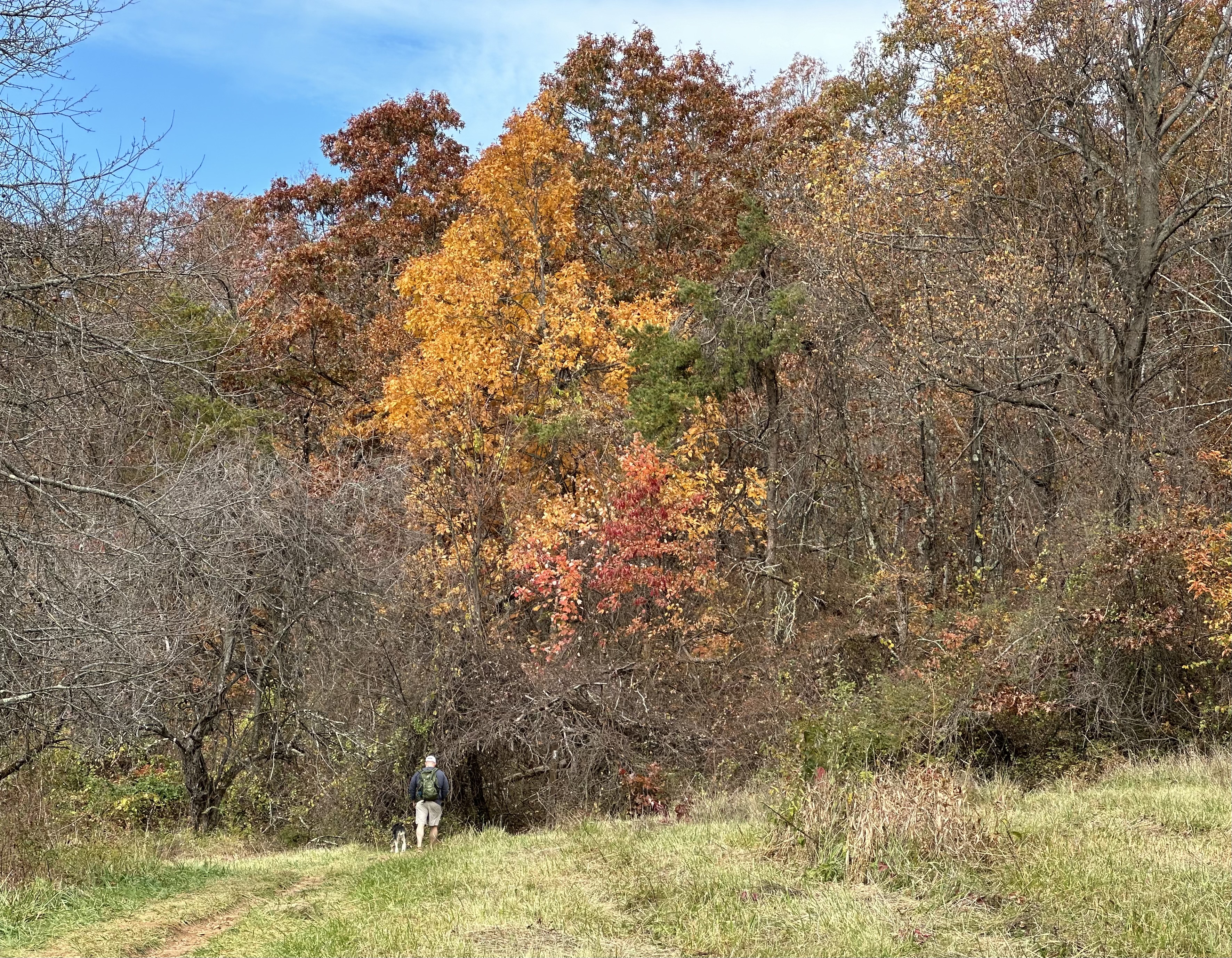
Before the peak of leaf colors.

So, I chose to catch the leaf colors before and after the peak. The park is still busy, but it is tolerable, and I am satisfied with a stirring hike filled with picturesque views, unexpected wildlife, and migrating birds.

In the mountains, altitude affects the coloring as much as sunshine, cooler nighttime temperatures, and morning frosts. So, the trees might be dull or even bare at the hike’s beginning, and a half mile down the trail, a blaze of color brightens the way.

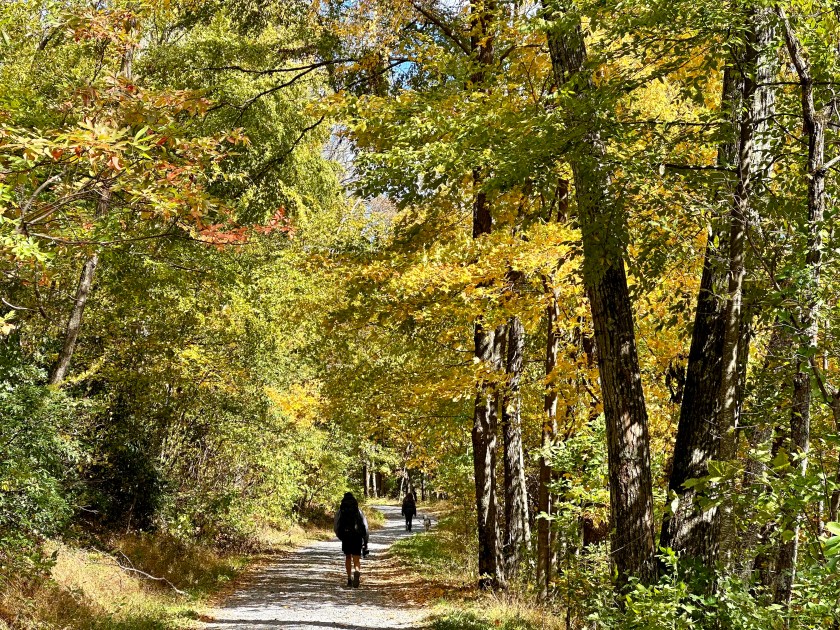
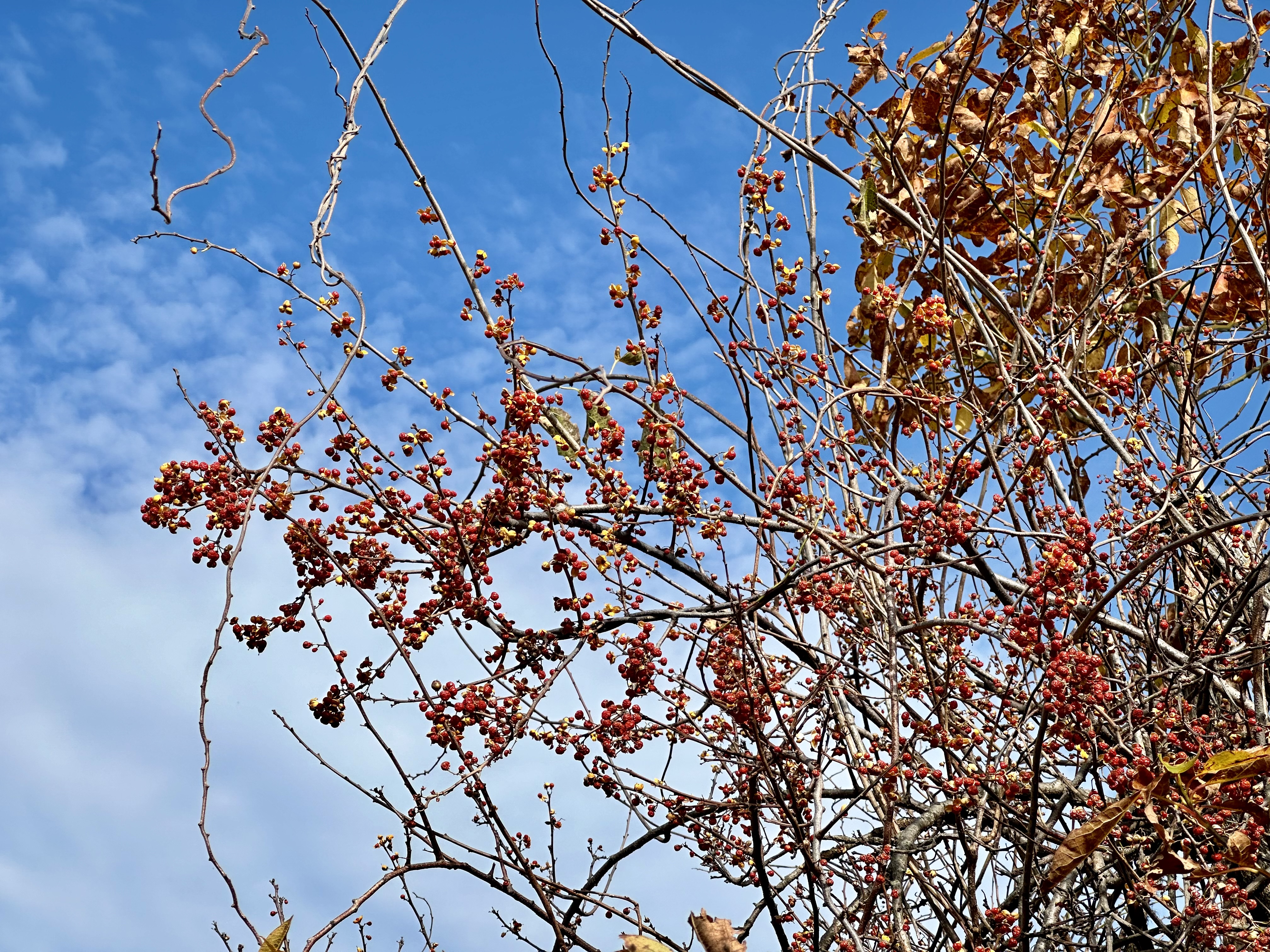
After the peak. Please click on the photos to enlarge them.

Though I have missed the height of the turning leaves, I enjoy the before-and-after with equal zeal. It’s fun to note the differences I discover and meet friendly folks along the way. The park’s beauty has energized them, too.

Besides, I admired nature’s colorful summit in other locales in Virginia’s lovely Shenandoah Valley. It is the perfect place to enjoy hiking, birding, and photography all in one joyous day trip.

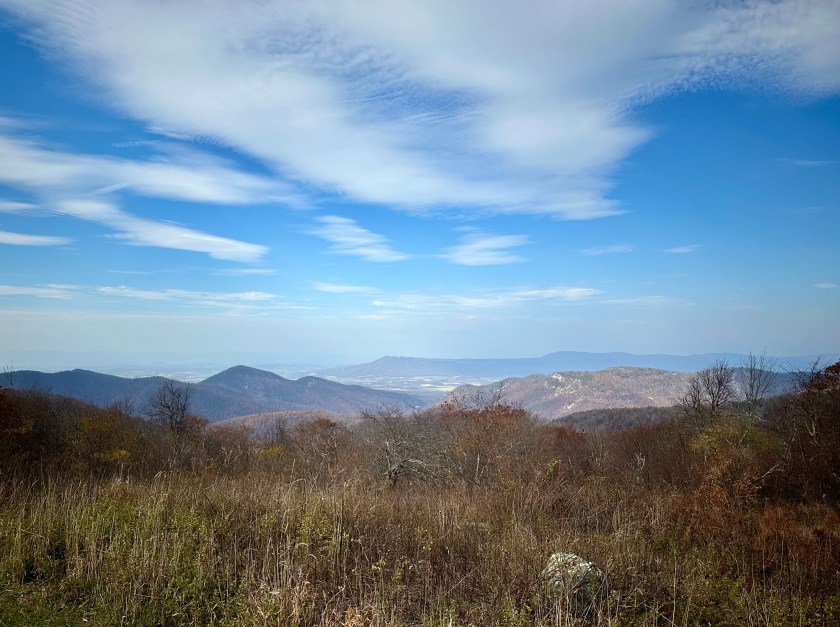
A view west into the Shenandoah Valley. Photo by Bruce Stambaugh

© Bruce Stambaugh 2024

Celebrating National Park Week

Hiking the Appalachian Trail in Shenandoah National Park. Photo by Bruce Stambaugh

This is National Park Week in the United States. In celebration of our 63 beautiful national parks, this is the first of a series of photos I have taken in Shenandoah National Park.

Shenandoah National Park has a storied and somewhat troublesome history, given how farmers and their hired hands were removed from the park before it was developed starting in late 1935.

Though the land was rugged and steep in many places, over 2,000 folks lived, farmed, and worked on the 198,000 acres that became the first national park in the eastern part of the U.S. Landowners were paid an assessed rate for their property, which the federal government purchased via eminent domain.

Of course, many of the people were tenants who cared for the land, while the property owners lived in the Shenandoah Valley or elsewhere. The tenants received nothing for their inconvenience. Consequently, some of their descendants still have grudges against the government.

Nevertheless, Shenandoah National Park is a popular place to visit since millions of people live within a day’s drive. Plus, the Appalachian Trail (AT) stretches 101 miles through the park, drawing day and overnight hikers. The AT weaves along the crest of the Blue Ridge Mountains, crossing the Skyline Drive several times.

I enjoy day hikes in the park, which often involve hiking sections of the AT to spur trails that lead to waterfalls, rigorous climbs, and scenic overlooks. I especially appreciate the flora and fauna that I encounter.

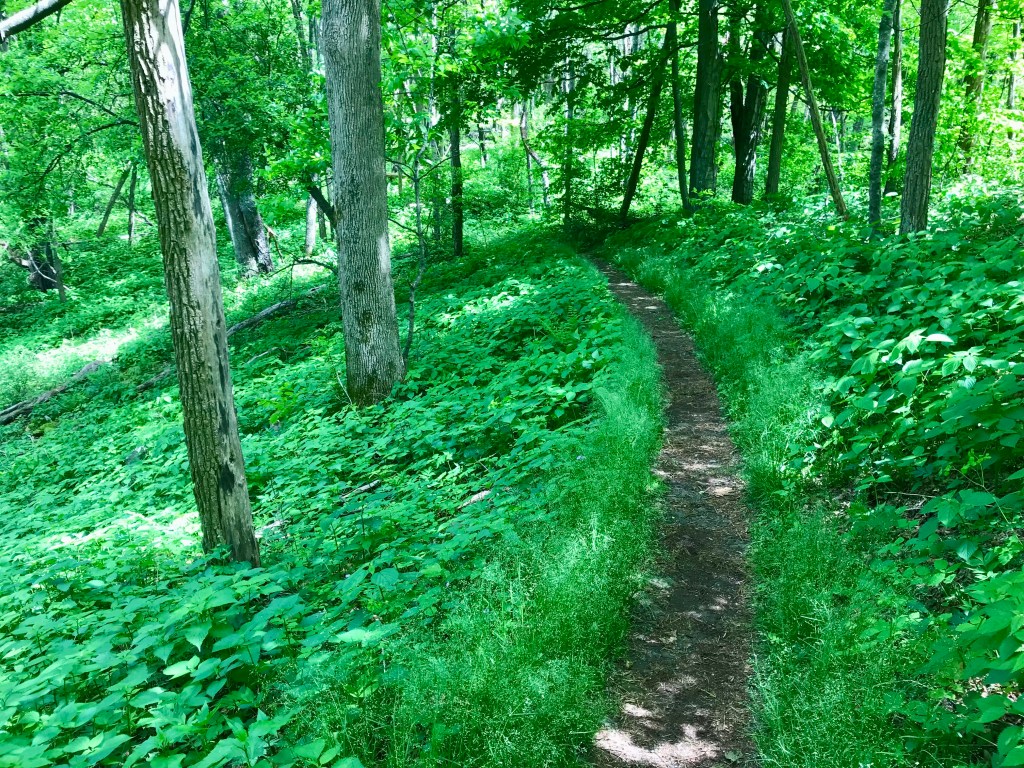
This photo, taken in late May 2018, represents the lusciousness of the park’s greenery, from ground cover to towering trees. The photo was not altered to enhance the green.

Tomorrow, I’ll post what I saw to the left of where this photo was taken.

© Bruce Stambaugh 2024

Now I Understand Why Seniors Guard Their Daily Schedules so Closely

Day hiking the Appalachian Trail in Shenandoah National Park. Photo by Bruce Stambaugh

I always needed a clarification. I was the marketing coordinator for a continuous care facility 10 miles from home.

Part of my responsibilities included writing a quarterly newsletter that featured people from every aspect of the campus. I interviewed residents in the nursing home, assisted living, independent living, and even employees.

Most residents welcomed me into their living space, gladly answered my questions, and allowed me to photograph them, often with a piece of quilting or carving they had done. It was the reaction of other residents that threw me off. Some declined when I asked them to be interviewed for the newsletter, while others said they were too busy.

I thought to myself, “They’re in a retirement community. How can they be too busy to be interviewed for half an hour?” So, I asked them for an alternative date. Again, they would offer an excuse that I couldn’t come that day because they had a doctor’s appointment, a friend was coming for a visit, a hair appointment, or some other reason at a specific time.

I stayed persistent and said I could come well before or after their appointment. Most declined, saying to pick another day that suited them. It usually was a day they didn’t have anything planned.

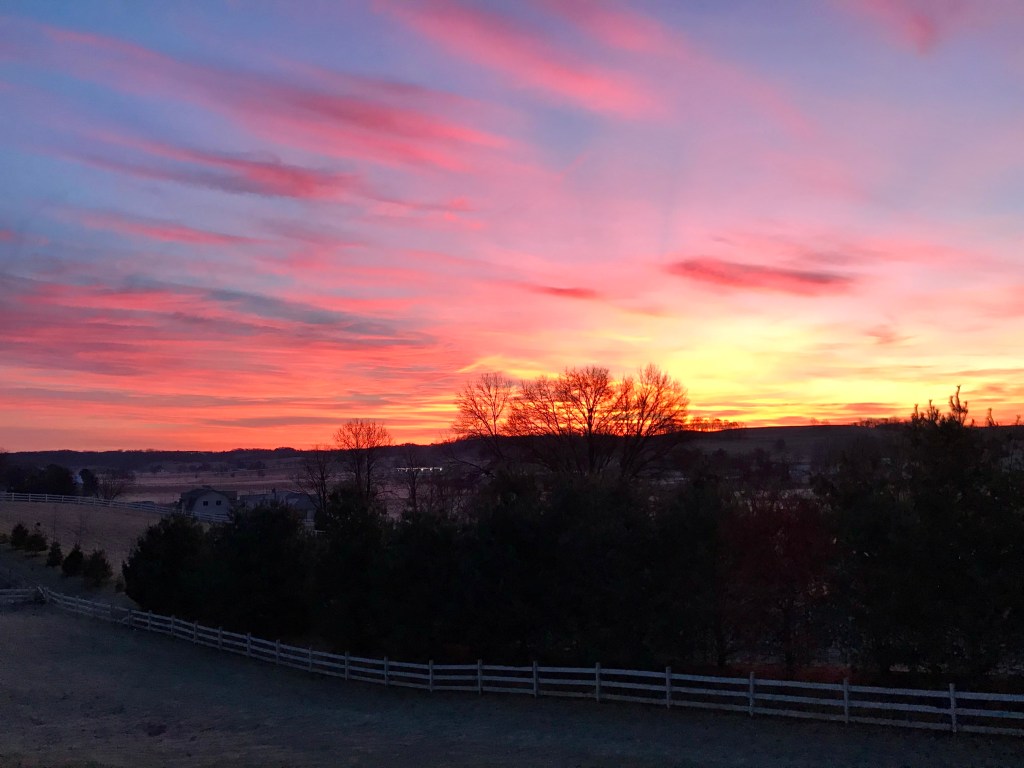
Sunrise at the Ohio retirement community where I worked. Photo by Bruce Stambaugh

That should have been my first hint. Still, I didn’t quite understand why they couldn’t see me in the morning when they had a late afternoon appointment.

I do now. I held that position 20 years ago. At 76, I am the age of some of the folks I interviewed. I find myself repeating their behavior.

My wife and I retired, but not to a retirement community. We live in a ranch home on a third of an acre. We downsized considerably when moving from our long-time Ohio home to Virginia’s lovely Shenandoah Valley to be close to three of our four grandchildren.

I’m done for the day if I mow the yard, which usually takes about an hour and a half, including trimming. Out of sheer fatigue, I readily turn down opportunities to fill in the rest of the day. The only exception is if one of the grandkids has a concert or baseball or volleyball game.

After an exerting project, I am more than content to sit on my lounge chair on our screened-in back porch and read or relax. Even though I exercise regularly, I need to recharge the next day.

I am even careful about scheduling anything other than a doctor’s appointment on a single day. I have to drive across town to get to the medical office. I always wonder what traffic will be like. Our small city hosts two thriving universities, several non-profits, and many businesses and residences, including many townhouses and condos serving as college student housing. Plus, I have to cross an interstate highway that runs right through the middle of the city, with vehicles entering and exiting. As much as I like to drive, it can be stressful.

So, I confess that I didn’t fully realize the effects of aging. In my 50s, I was still raring to go. In 2024, not so much. I still walk, hike, and do photography, and I am an active bird watcher. Those I can combine in one outing. But not if I have another kind of commitment that day. I spread out the activities in which I partake.

So, to all those former residents in the retirement community, I apologize for shaking my head at your excuses. I now guard my daily schedules like you did all those years ago. Thanks for the life lesson, even though I learned it too late.

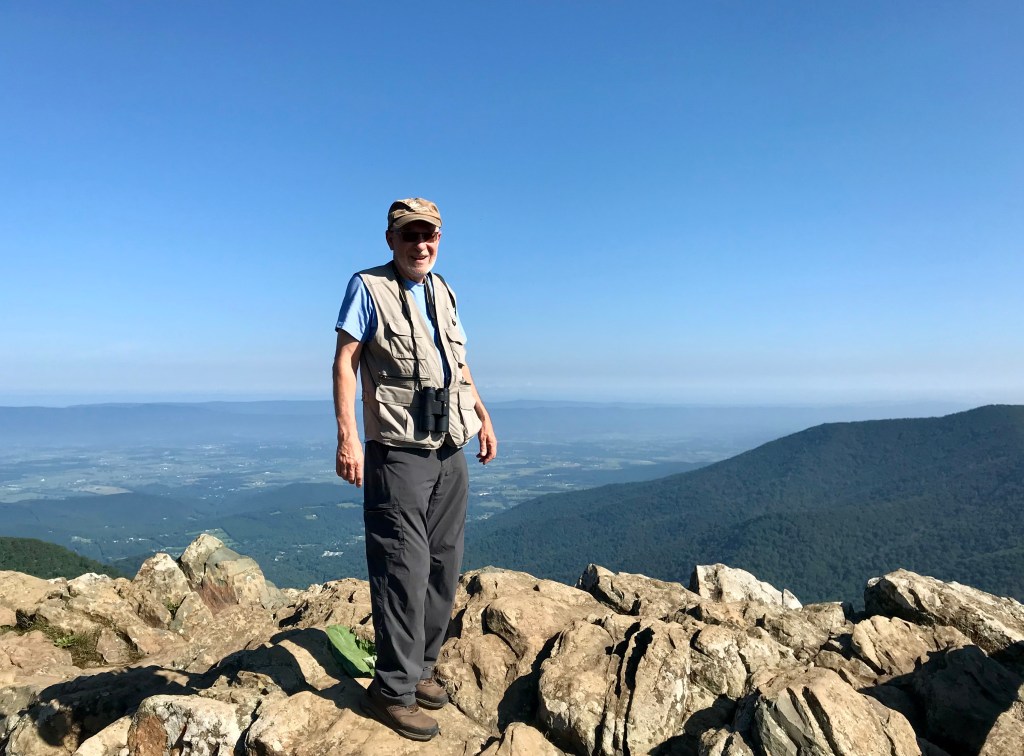
The author at Hawksbill Peak in Shenandoah National Park. Photo by Bruce Stambaugh

© Bruce Stambaugh 2024

Back Out on the Trail

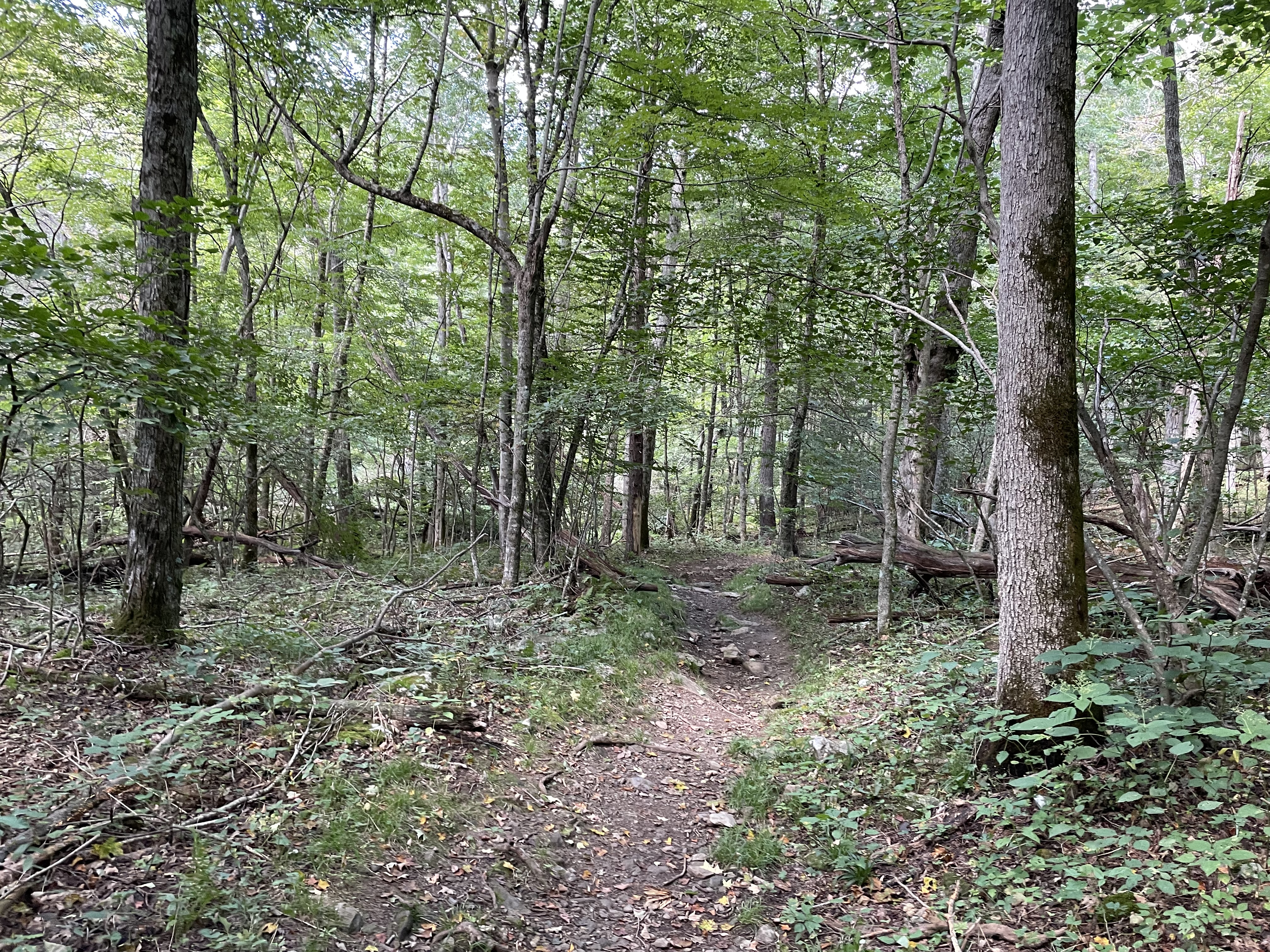
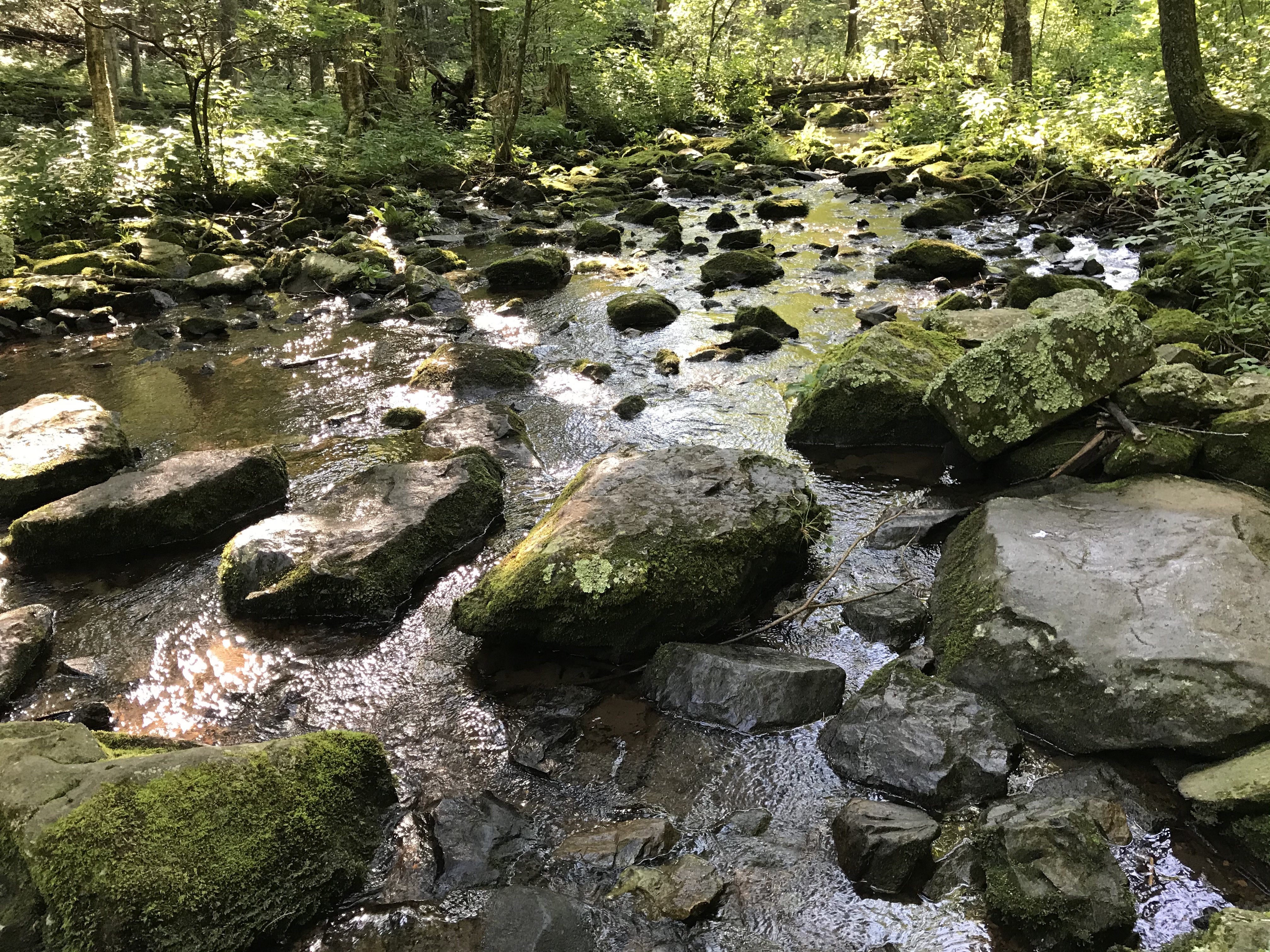
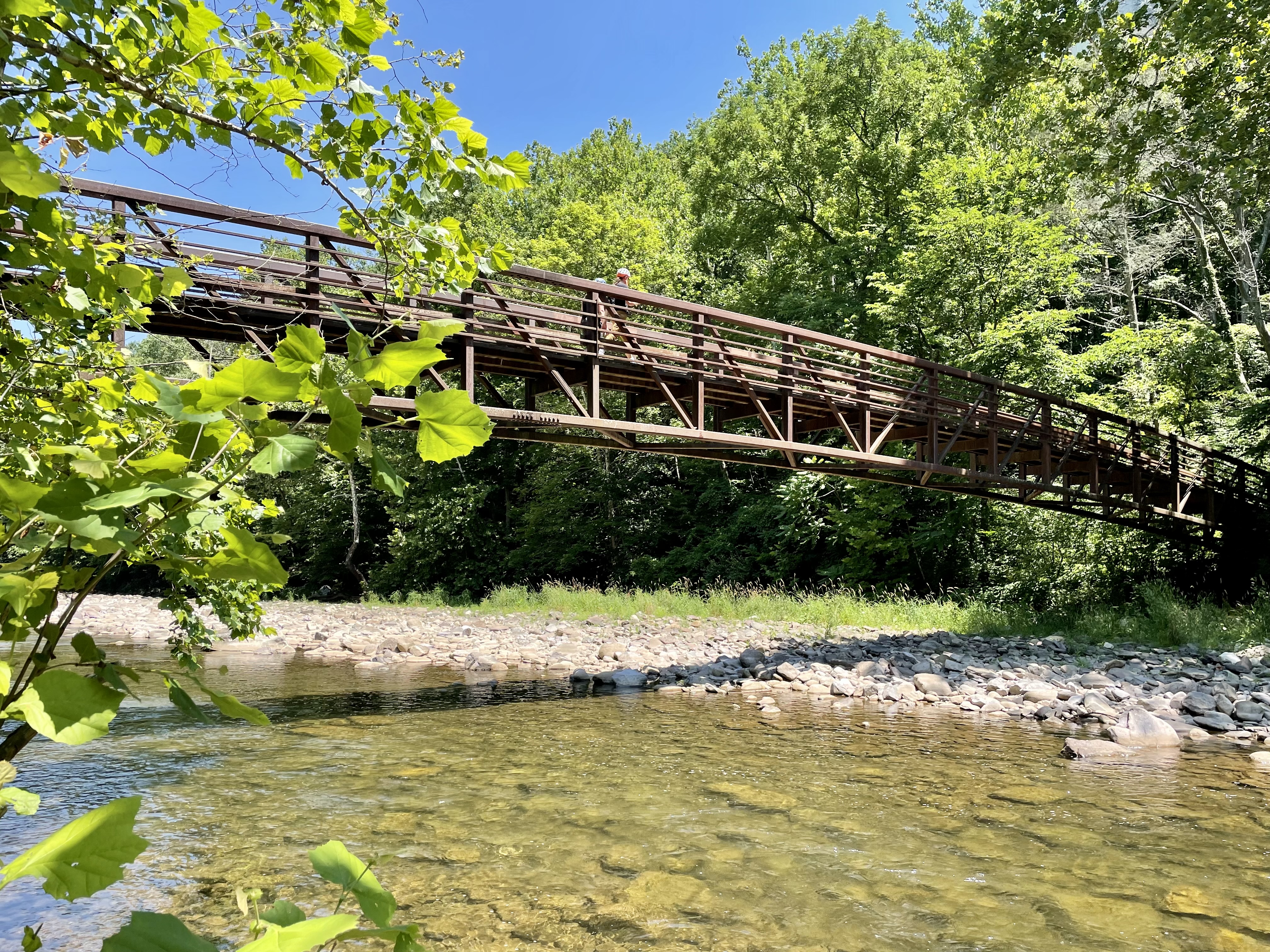
Crossing the Mill Prong on the Mill Prong Trail, Shenandoah National Park.

It had been too long. I missed hiking regularly.

I had several excuses as to why I hadn’t hiked: I was traveling; the weather was too hot and humid; it was too rainy; I had family obligations. I could list more, but you likely don’t want to hear them.

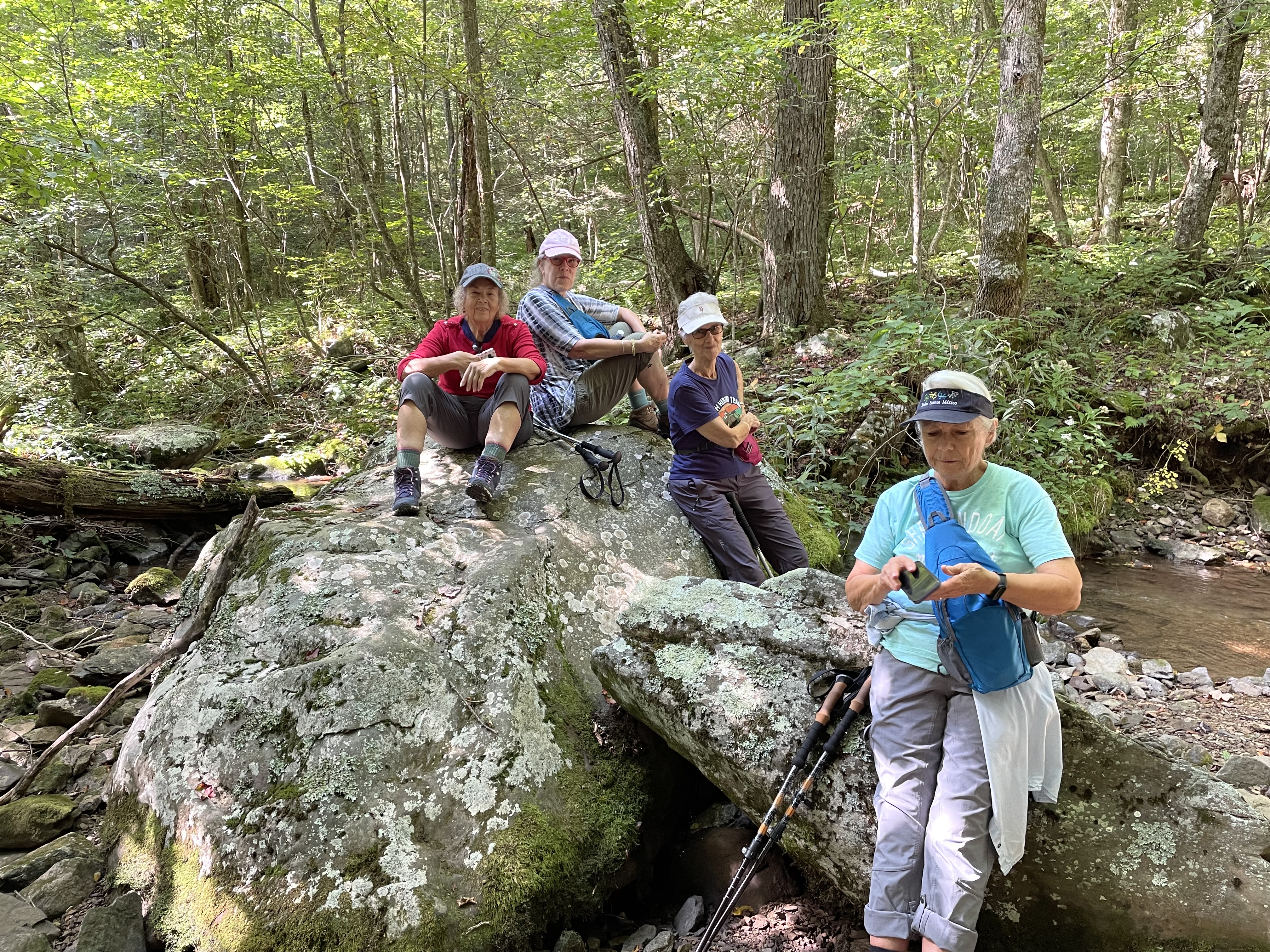
So, I gladly agreed to lead a group when an opportunity to hike came along. A friend and several of her female friends hike local trails weekly. The Mill Prong Trail in Shenandoah National Park was on their radar, but they were unfamiliar with it. My friend knew I had hiked it.

I chauvinistically asked if men were allowed in their hiking entourage, and I was quickly admonished. They wanted to hike and wanted me to lead the way.

The Mill Prong is a side trail that juts off the Appalachian Trail (AT) at mile marker 53 on Skyline Drive in the park. The trail leads to the Rapidan Camp, the summer home of President Herbert Hoover and First Lady Lou Henry Hoover.

My trail app on my iPhone listed it as a moderately strenuous 3.7-mile hike round trip. We wouldn’t be going that far. Since all in our group were in their 70s, our goal was to hike to the intersection with the Mill Prong Horse Trail. That is exactly one mile.

This day was much cooler than the previous weeks of hot, sticky, and sometimes wet days in Virginia’s Shenandoah Valley. When we arrived at the parking lot where the AT crosses Skyline Drive, my van’s thermometer read 60 degrees. It was perfect hiking weather.

To access Mill Prong Trail, you must walk across the roadway and then a short distance on the AT. Soon you’re at the Mill Prong Trailhead.

I had told the ladies that this wasn’t the most scenic hike. They were more concerned with the trail’s difficulty and elevation gains. Having hiked it previously, I knew that the Mill Prong was a comparatively gradual decline to the horse trail. We had no intention of going to Rapidan Camp. A two-mile roundtrip hike down and back would suffice.

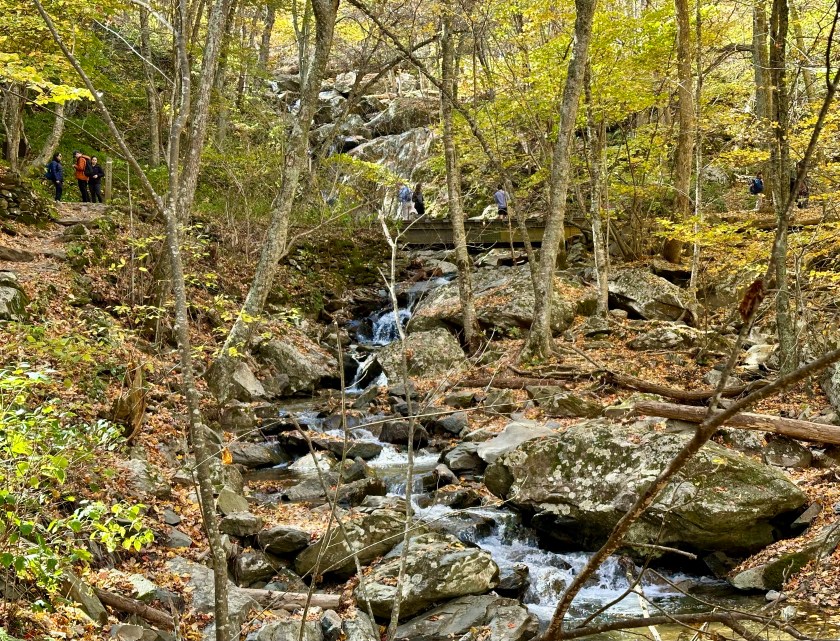
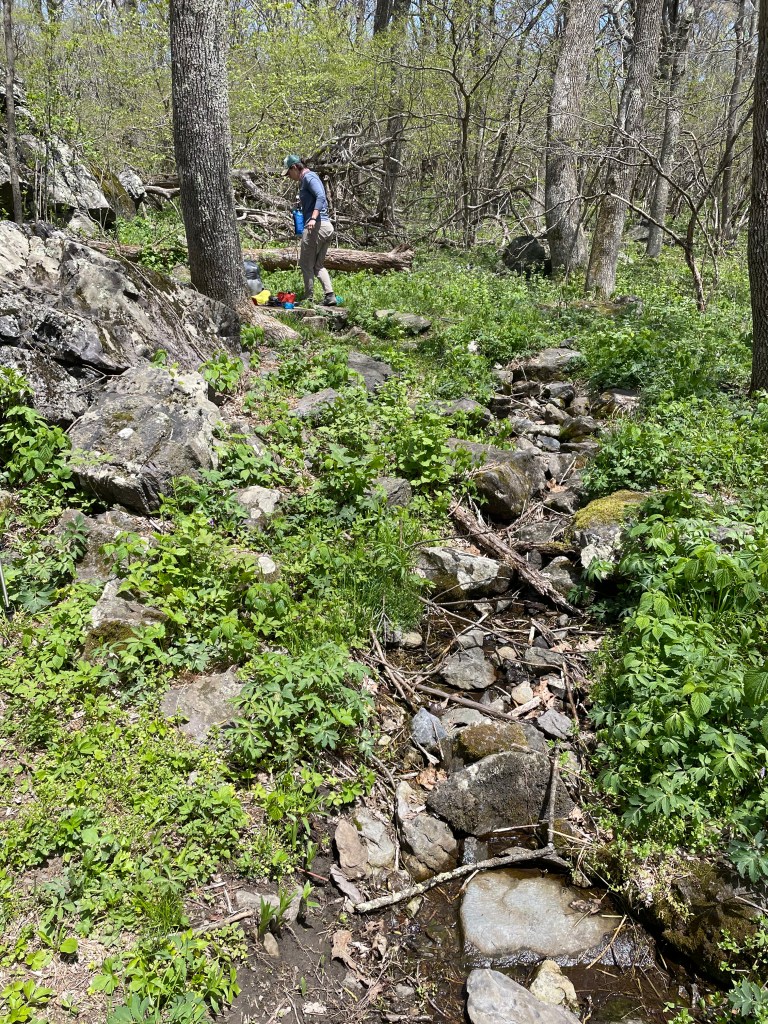
The Mill Prong Trail has two stream crossings. Trail-keepers conveniently placed large rocks for hikers to successfully cross both without getting wet. That is, as long as you don’t slip and fall. I was the only one who did.

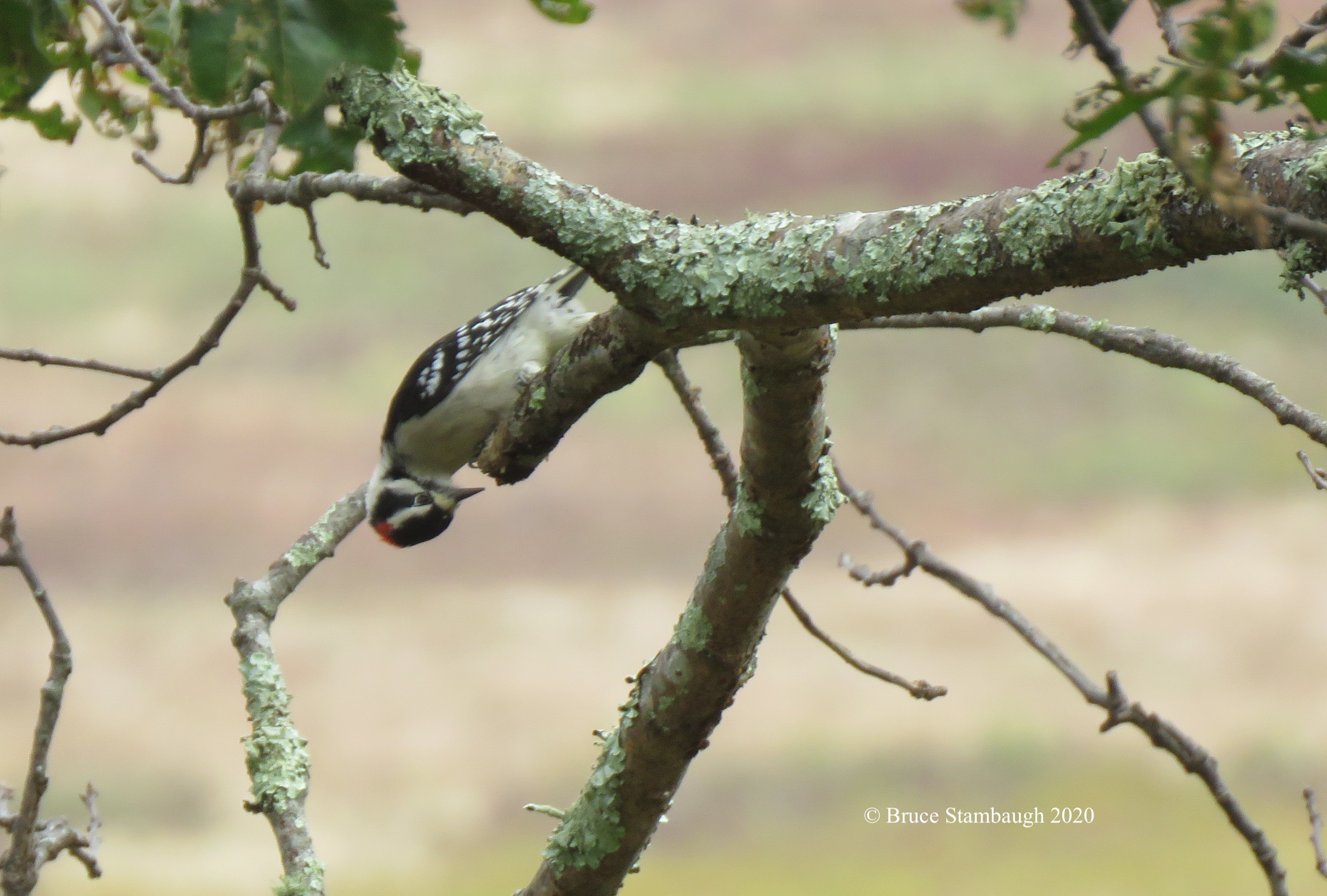
The trek down the Mill Prong trail was similar to my earlier experience. The walk was eerily quiet. I only heard a lone Downy Woodpecker along the mostly dirt path down and back. We saw no other hikers until a young woman passed us as we were nearly finished, and she was just starting.

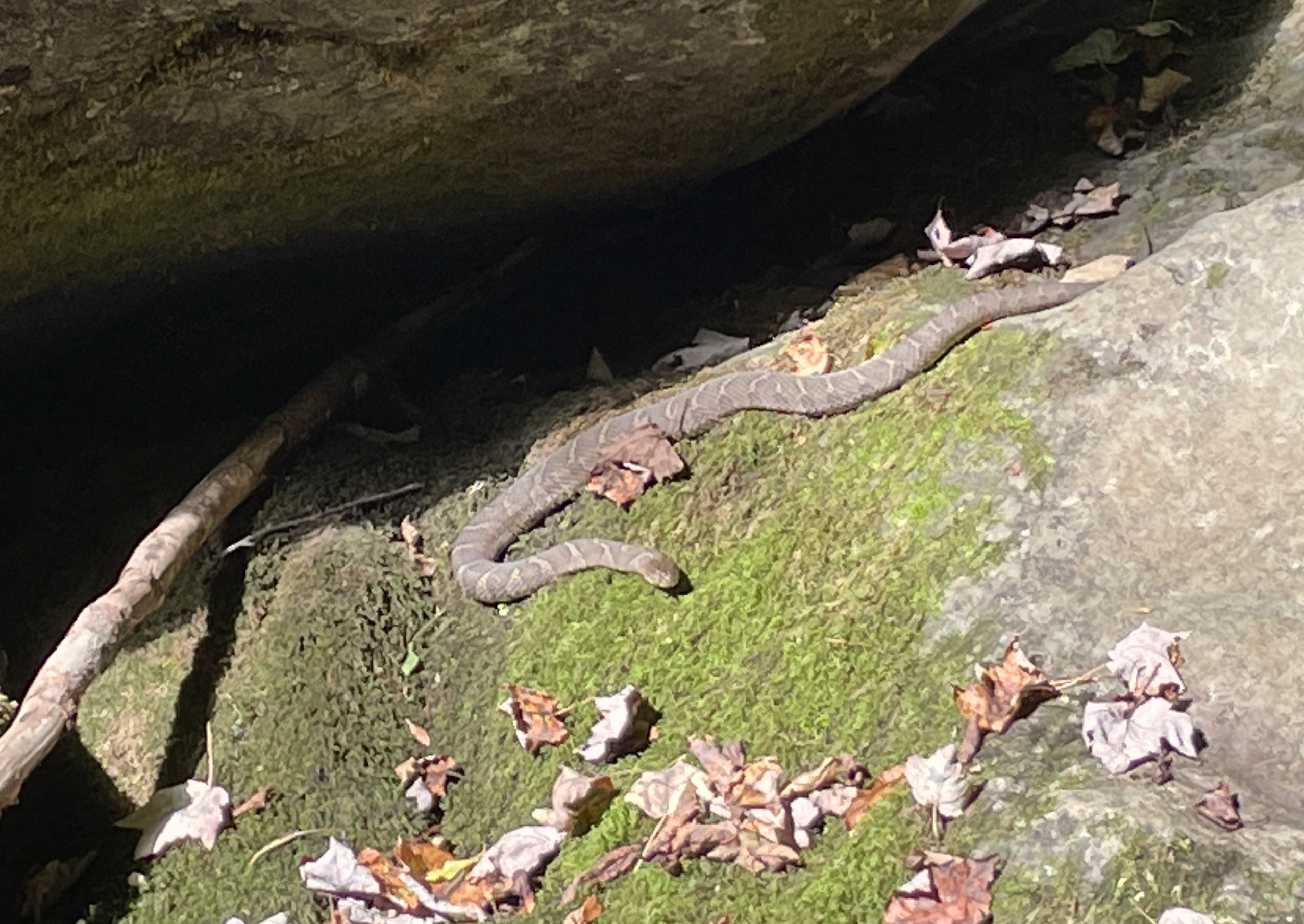
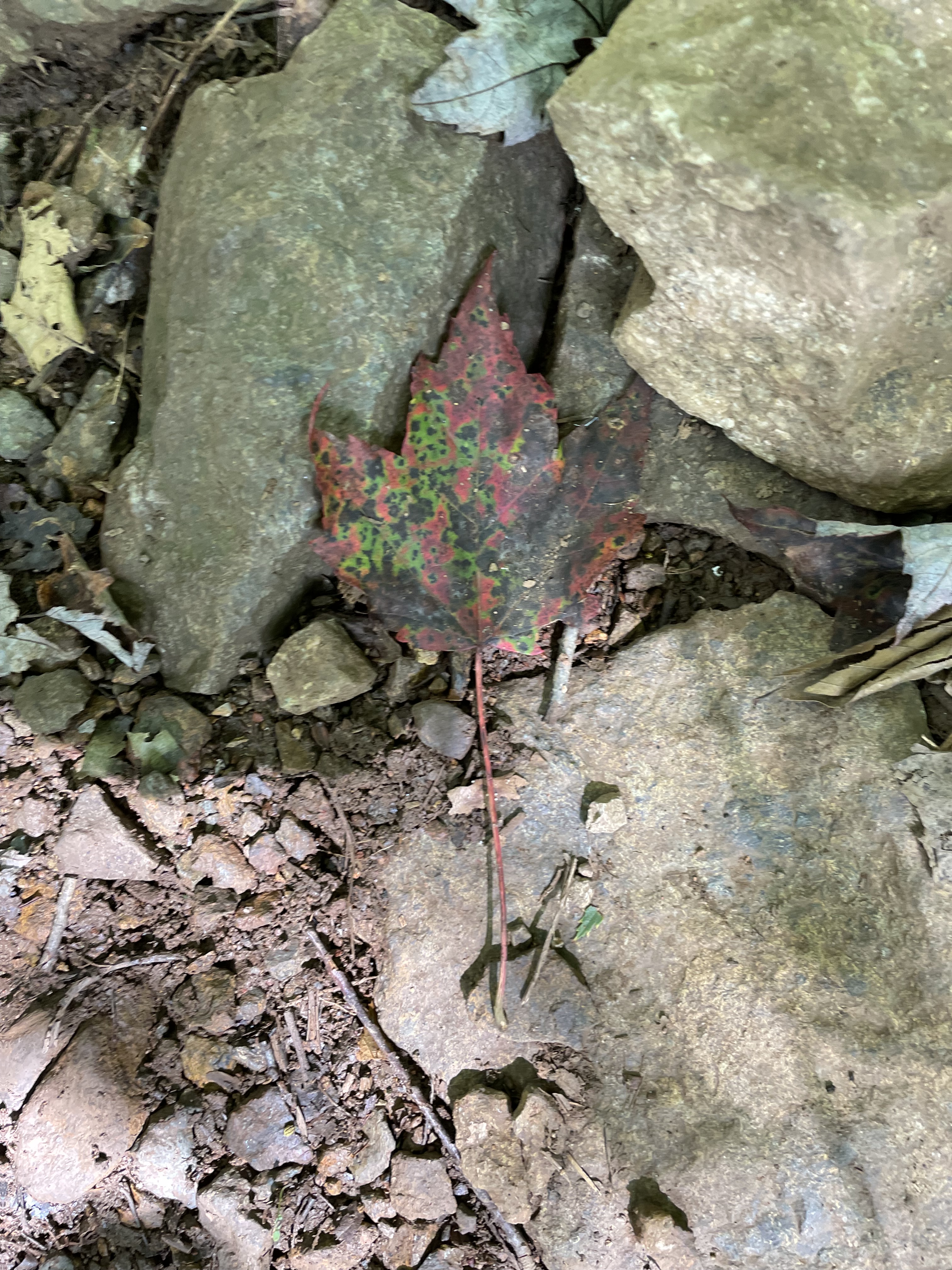
We took our time, enjoying nature’s stillness, the verdant forest floor carpeted with ferns, grasses, and wildflowers. We respectfully observed the colorful fungus and the four-foot northern water snake soaking in the morning sun on a large moss-covered rock in the middle of the trickling stream.

We took a break just after passing the horse trail, precisely one mile from the trailhead. We ate our snacks, inspected the snake, kept our distance, and hydrated.

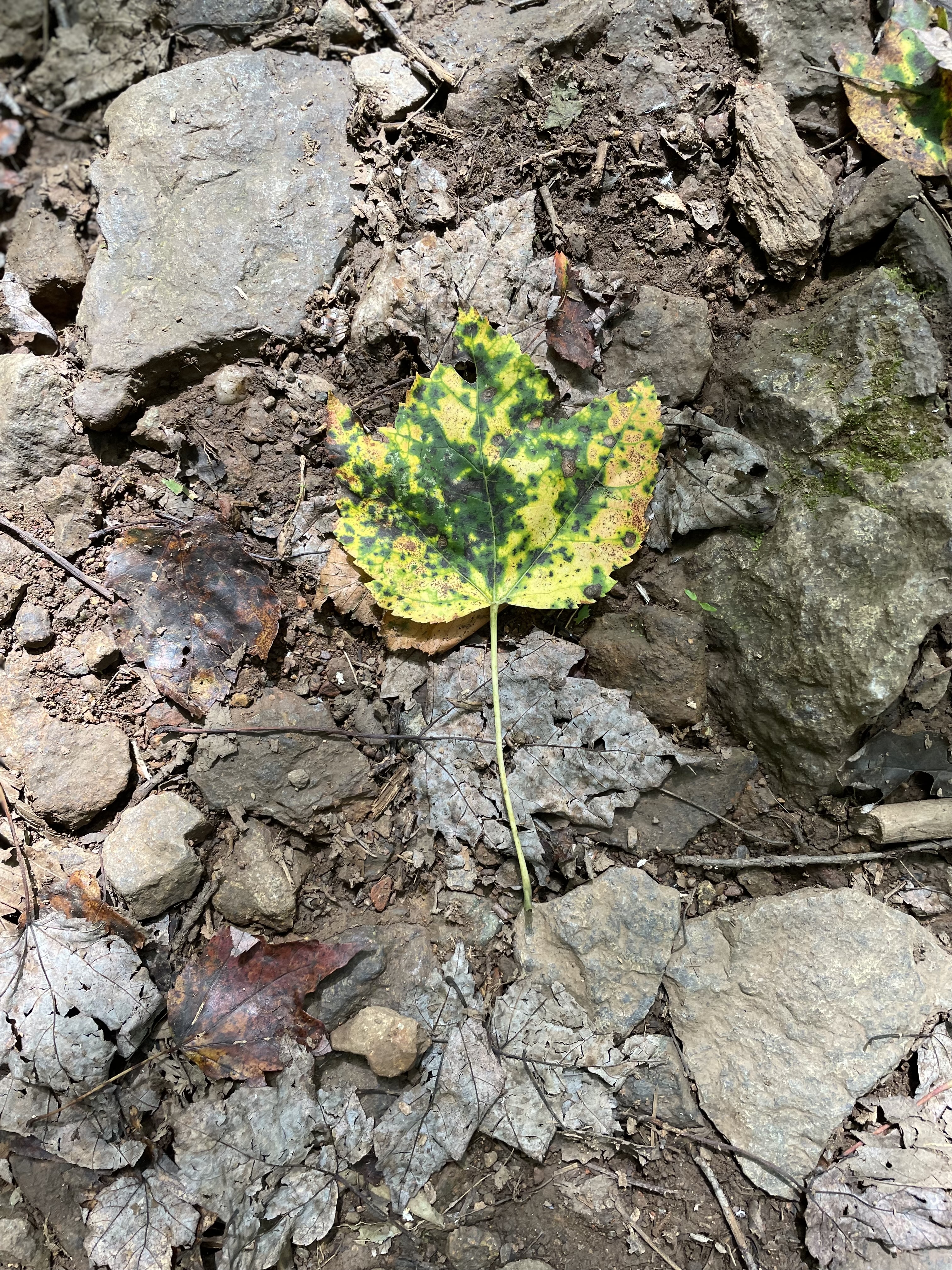
Then it was time to head back up the gradual incline. The trail effortlessly wound its way past outcroppings, back across the two forks of the Mill Prong, shaded all the way by a mixed hardwood forest. It was already shedding some of its leaves.

Just before we reached the intersection with the AT, birds and pollinators began to appear. Jewelweed bloomed everywhere, especially in a triangle between the AT and Skyline Drive. Hummingbirds zipped left and right, and a few Monarchs and Tiger Swallowtails flitted here and there.

Despite our tired old bones, smiles dominated. It was a perfect ending to just the kind of hike the ladies like to take. Me, too.

Stepping stones.

© Bruce Stambaugh 2022

A Day With My Grandson

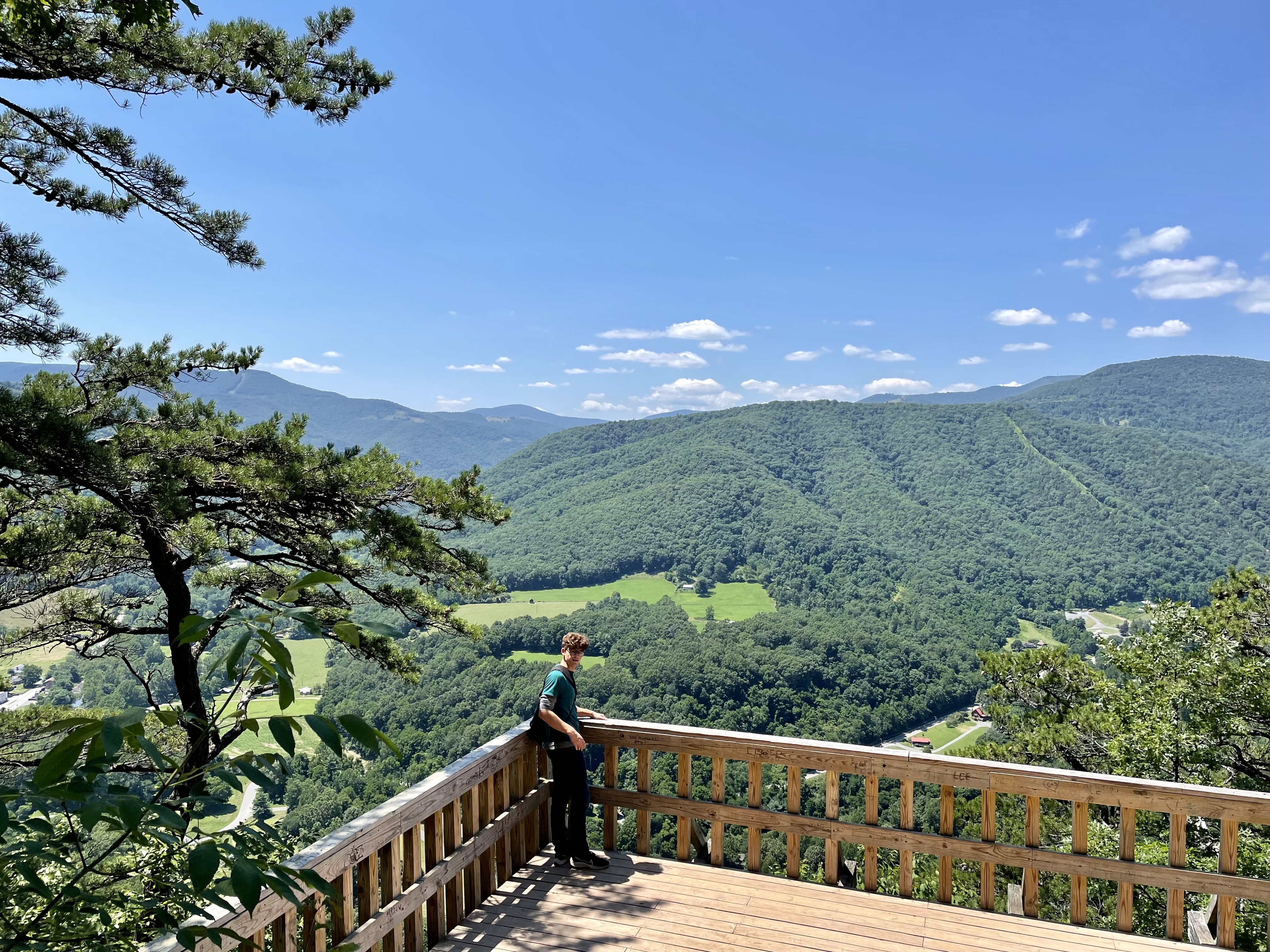
Grandson Davis enjoyed the view from the overlook deck at Seneca Rocks, West Virginia.

Weather nut that I am, I check the forecast regularly. Monday looked to be decent weather for hiking. Cooler temperatures in the higher elevations and no rain. That would work out just fine for several reasons.

Our daughter and her husband had left the previous Sunday to take our oldest grandchild to his college orientation in Richmond, Virginia. Of course, the university had nearly four days of activities for the new students and their parents.

That left the middle grandchild, Davis, and our only granddaughter, Maren, to check on. With them both being responsible teenagers, that didn’t require much.

With school out for the summer, Maren loves to help Nana with puzzles, baking, and other hands-on chores. She also mows our lawn. That left Davis and me to find trouble together.

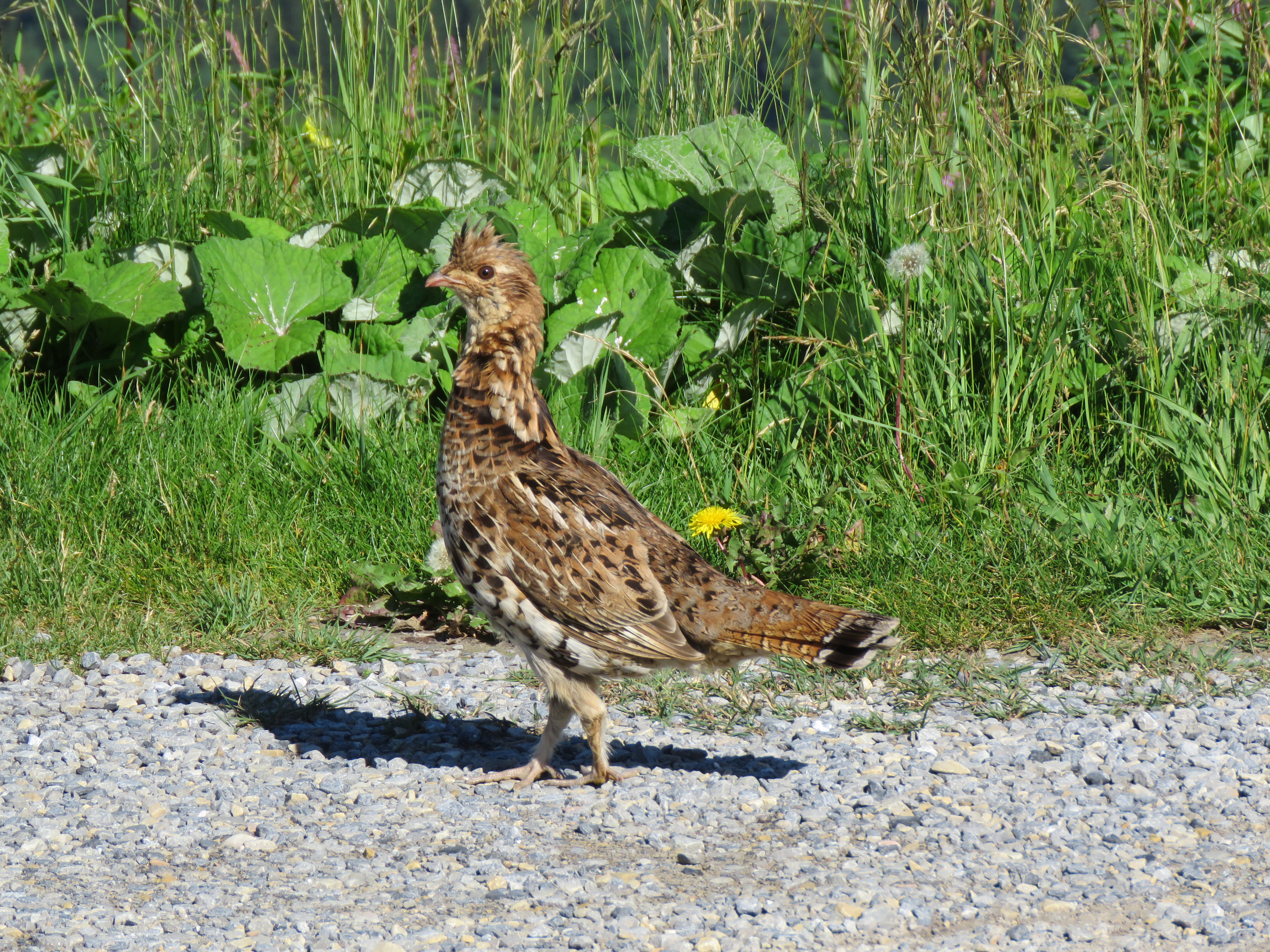
Since we both like to hike, we visited Spruce Knob, the highest point in West Virginia. It’s an hour and a half drive for us. We left mid-morning, but Davis didn’t take long to nod. How he could snooze in all that hilly, twisting driving I was doing, I don’t know. He woke as I slowed to photograph a Ruffed Grouse strutting its stuff on the Forest Service road near the mountain top.

Male Ruffed Grouse.

After taking a few snapshots of this often elusive bird, we were soon in the parking lot. Other than a Forest Service employee, we had the place to ourselves. However, we hadn’t even started on the trail when I realized I had forgotten the insect repellent. Fat flies buzzed nearby, but none landed on us the entire time we were there.

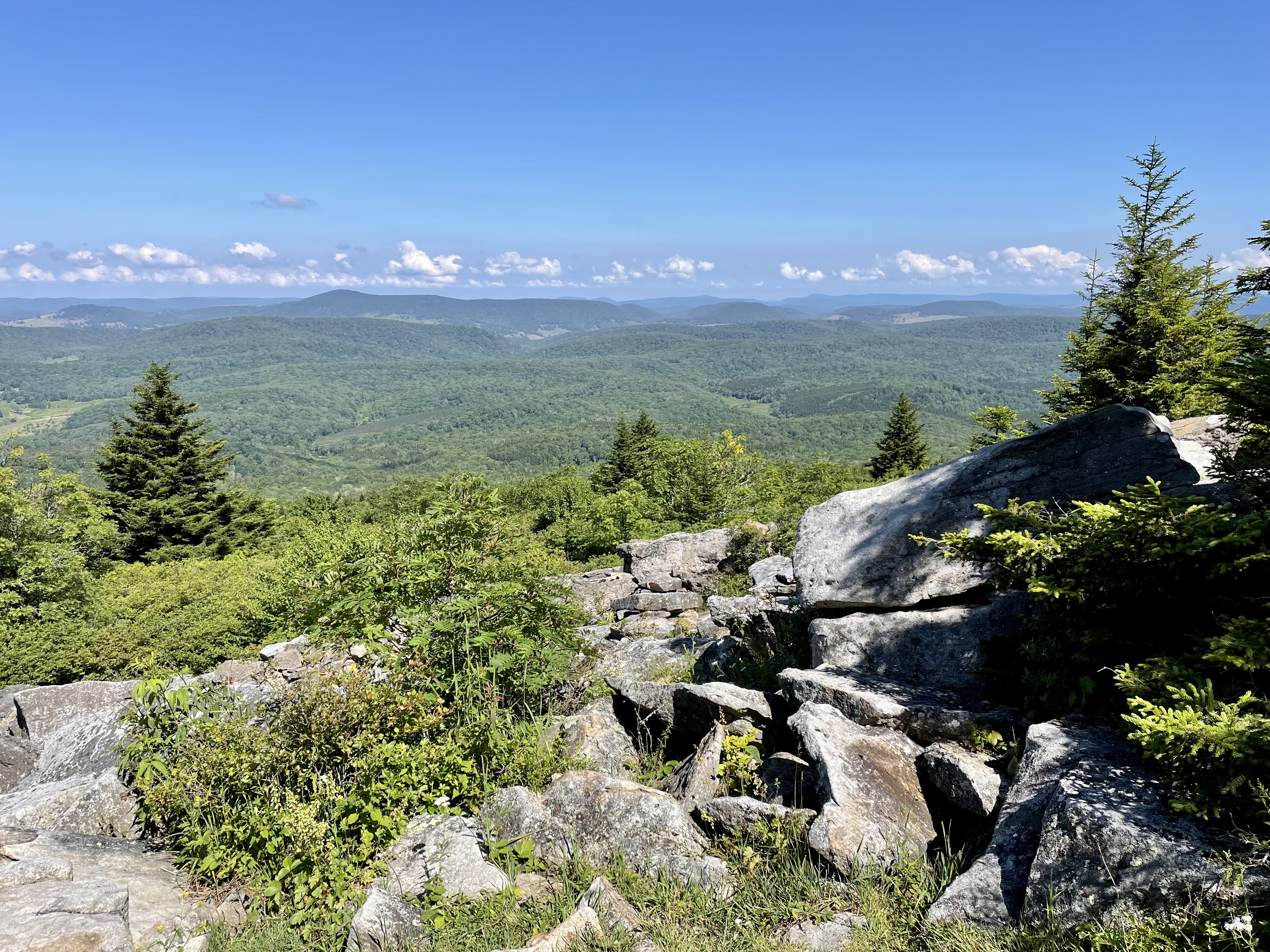
Spruce Knob affords beautiful views on a clear day like today. Only a few puffy clouds formed over distant mountain ranges to the west. The air was a pleasant 66 degrees with little humidity and no haze to obscure our views.

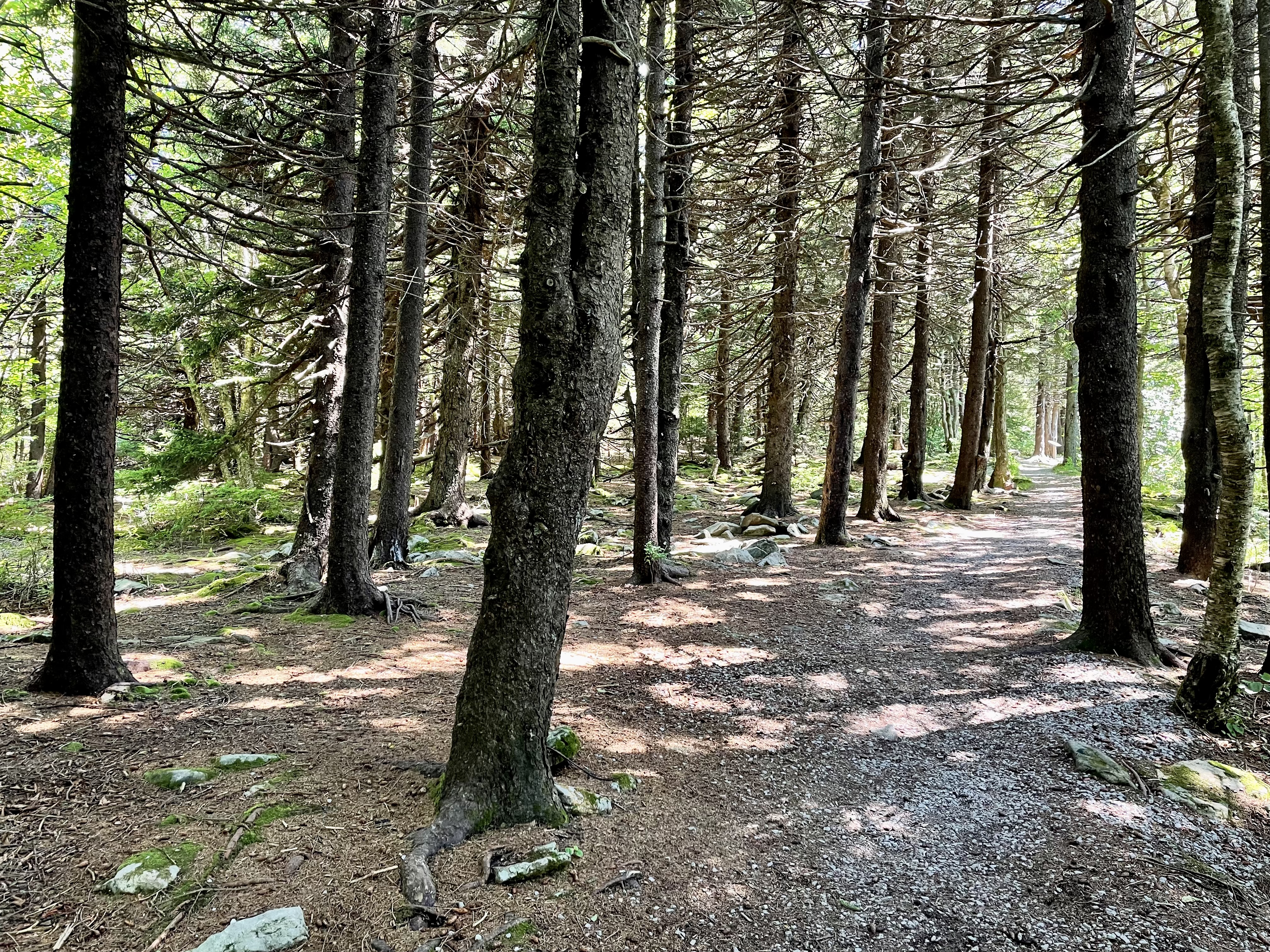
We walked the loop trail that leads from the parking lot and back. The scent of the spruce filled the air. Wildflowers and birdsongs were abundant. We basked in both.

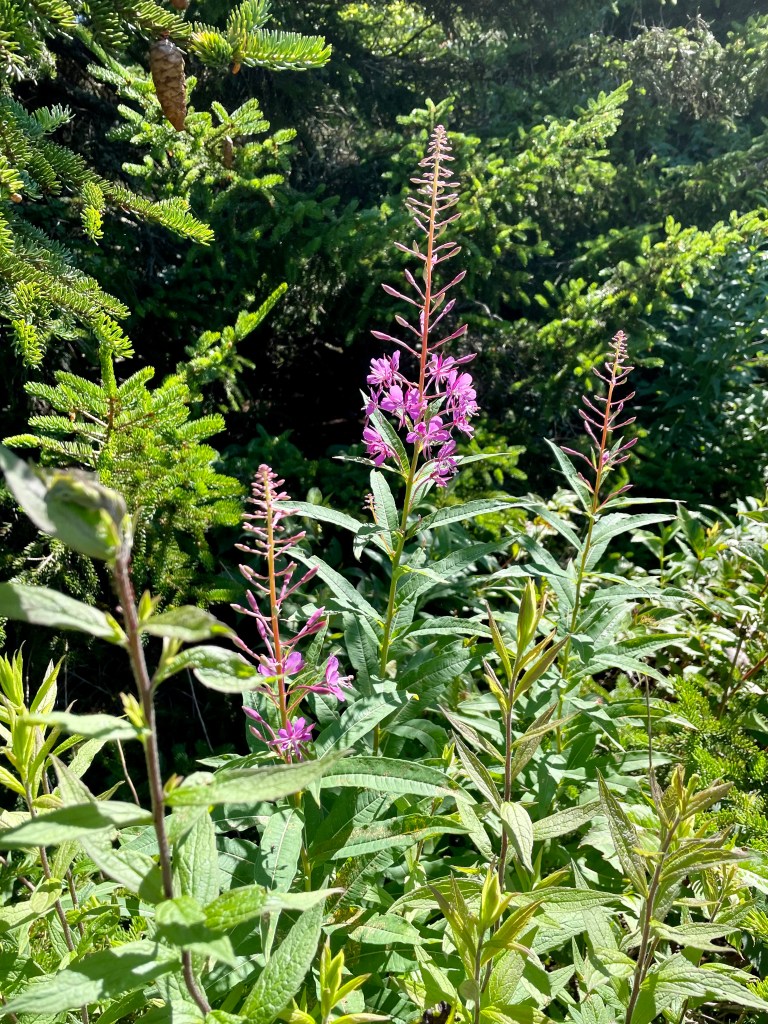
I know I slowed Davis down by constantly pausing to photograph wildflowers, birds, and butterflies. Trooper that he is, Davis didn’t complain.

I wanted Davis to enjoy this trip. It was one he was supposed to do at the end of the school year with several students and six teachers. The trip was canceled at the last minute when three teachers came down with Covid-19. In the end, all six were sick.

They were to camp out and visit Spruce Knob, Seneca Rocks, and Dolly Sods. All were in the same geographic area of the old folded mountains and valleys.

So, while Nana and Maren were enjoying each other’s company, and Davis’s brother and parents were occupied with college orientation, Davis and I explored some of the wilds and wonders of West Virginia.

We studied the large piles of giant rocks along the path and at the slope of the mountain, long ago rounded by millenniums of erosion from wind, water, ice, and snow. The teacher in me quizzed Davis about how the rocks got where they did. He graciously played along with my lame attempts.

We saw migrant birds and birds that should be migrants but reside here year-round. Dark-eyed Juncos commonly nest in Canadian provinces. The exception is the Appalachian Mountains.

Because these beautiful ridges hold the same habitat and provide the necessary nutrients, the birds live here and farther up the Appalachian range into New England. Davis wanted to know why the other Junocs migrated when the birds we saw stayed. I hope he seeks a better answer than I gave him.

We enjoyed the views east and west and headed to Seneca Rocks, where we would eat our brown bag lunches. When we arrived at the valley picnic grounds, it was 82 degrees and humid.

From there, we could clearly see the face of the vertical rocks jutting straight up. Eons ago, they had been parallel until the collision of continents forced them to fracture and face the sky.

Unfortunately, no rock climbers could be seen. The day was likely too hot for such strenuous activity.

We gathered our things and headed up. The trailhead started at the North Fork of the South Branch of the Potomac River. The bridge that crosses it goes by the same cumbersome name.

Davis was eager to let his long legs glide him up the well-maintained trail. My old weathered ones weren’t so cooperative. The first third of the path is the steepest. We rested according to my needs. Davis never complained or barged ahead.

We passed other hikers on their way down, and other younger hikers passed us on the way up. I noticed some of them didn’t have hiking shoes or water. We later trekked by some of those same hikers, now fatigued. We reached the top more than an hour after we had started.

The trail leads to an overlook platform that provides gorgeous views of the mountain ridge west of German Valley that the river continues to carve out. We rested and talked with other hikers who soon reached the summit.

Going down took half the time. Davis wondered about going on to Dolly Sods up the road a piece. I wisely said we would save that adventure for another outing. We still had that long drive home.

Adventures like these are the reason we moved from Ohio’s Amish country to Virginia. Now, with the birth of our fourth grandchild in Rochester, New York, we have additional opportunities to watch our grandchildren grow.

Grandson Teddy was born on May 14.

© Bruce Stambaugh 2022

Bluebells on the Bluebell Trail

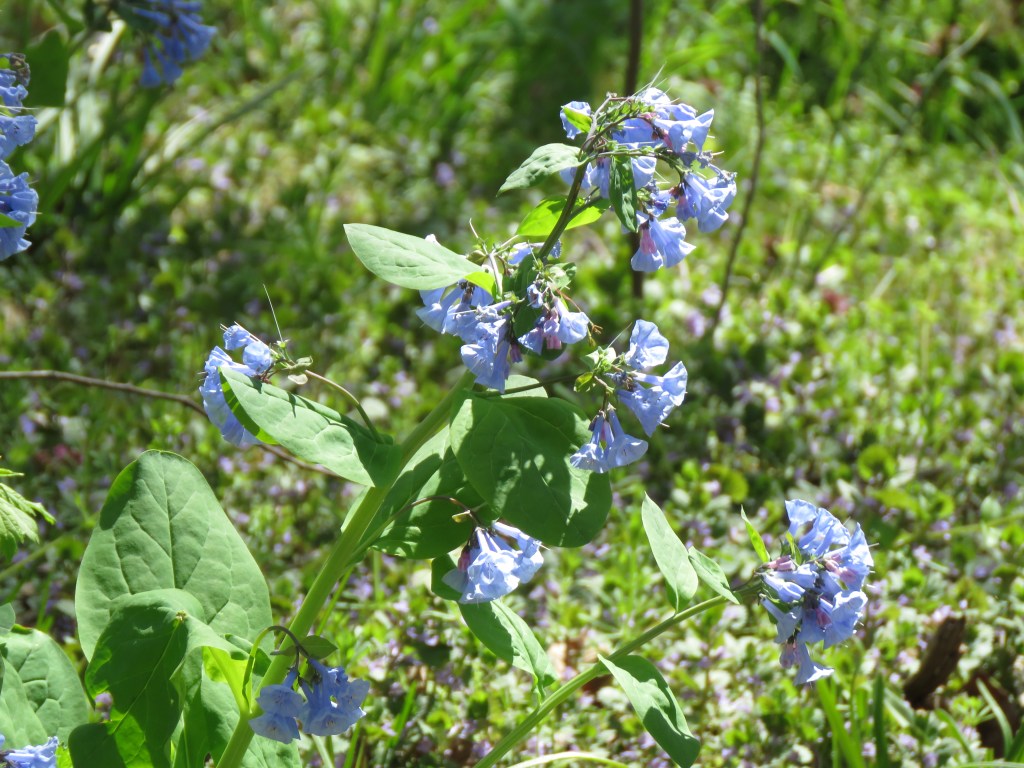
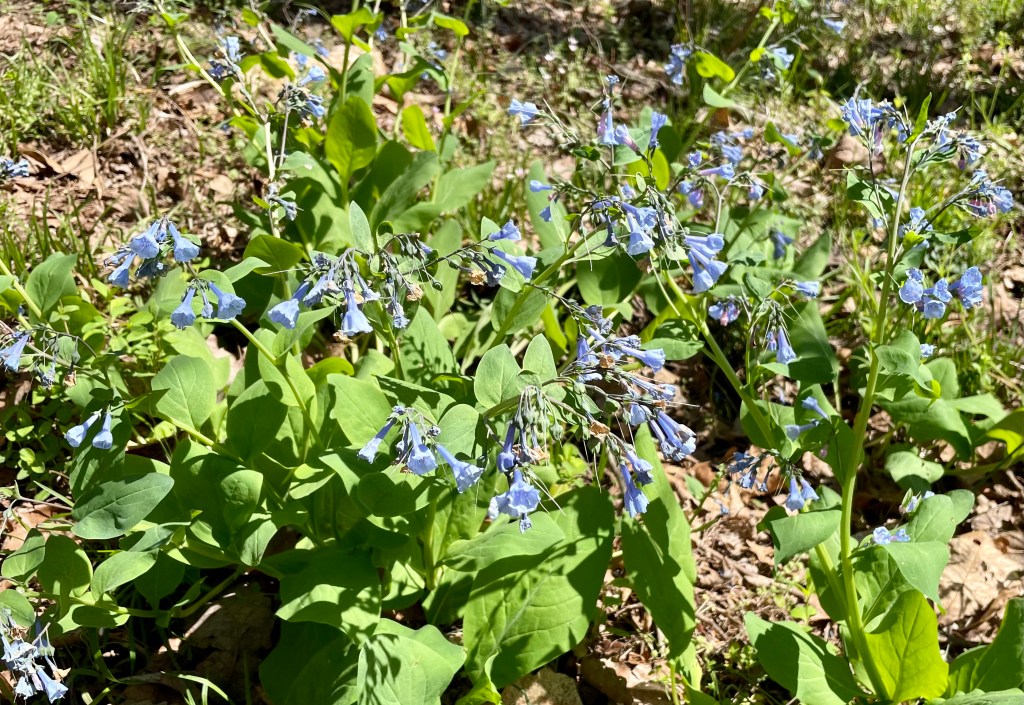
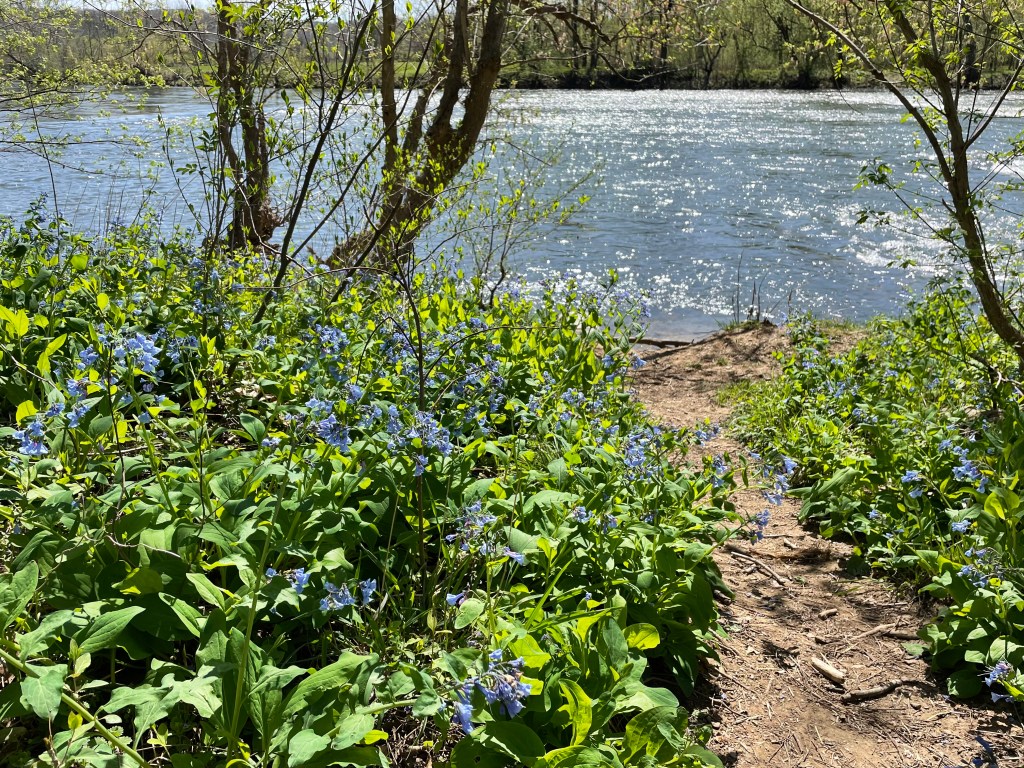
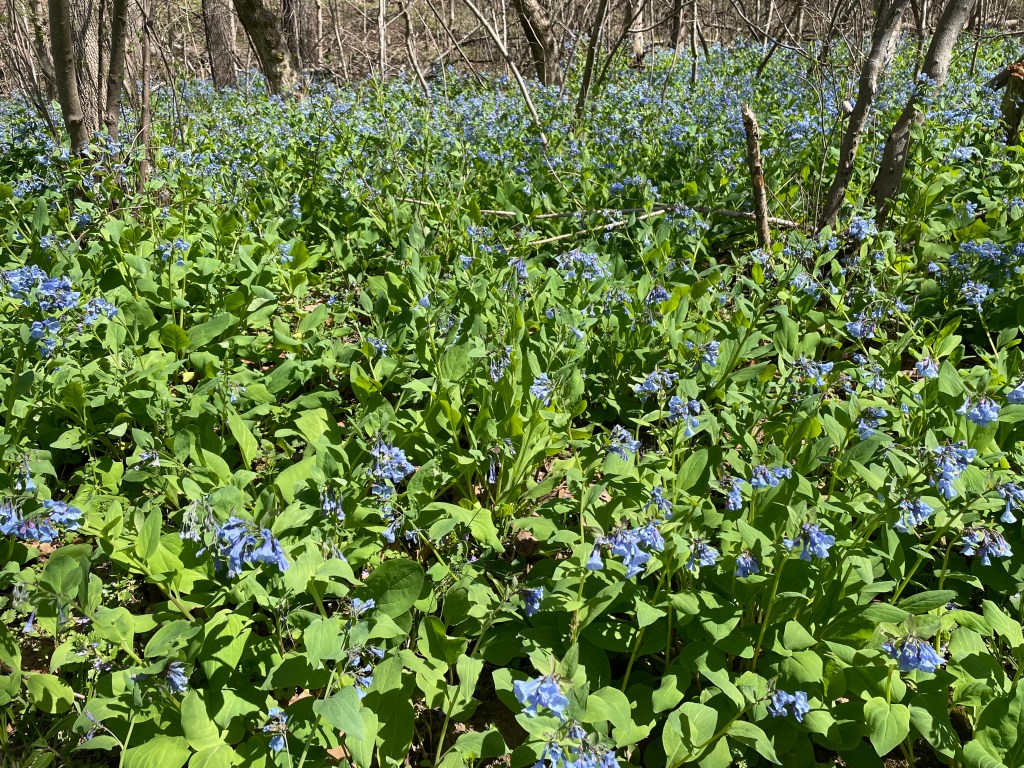
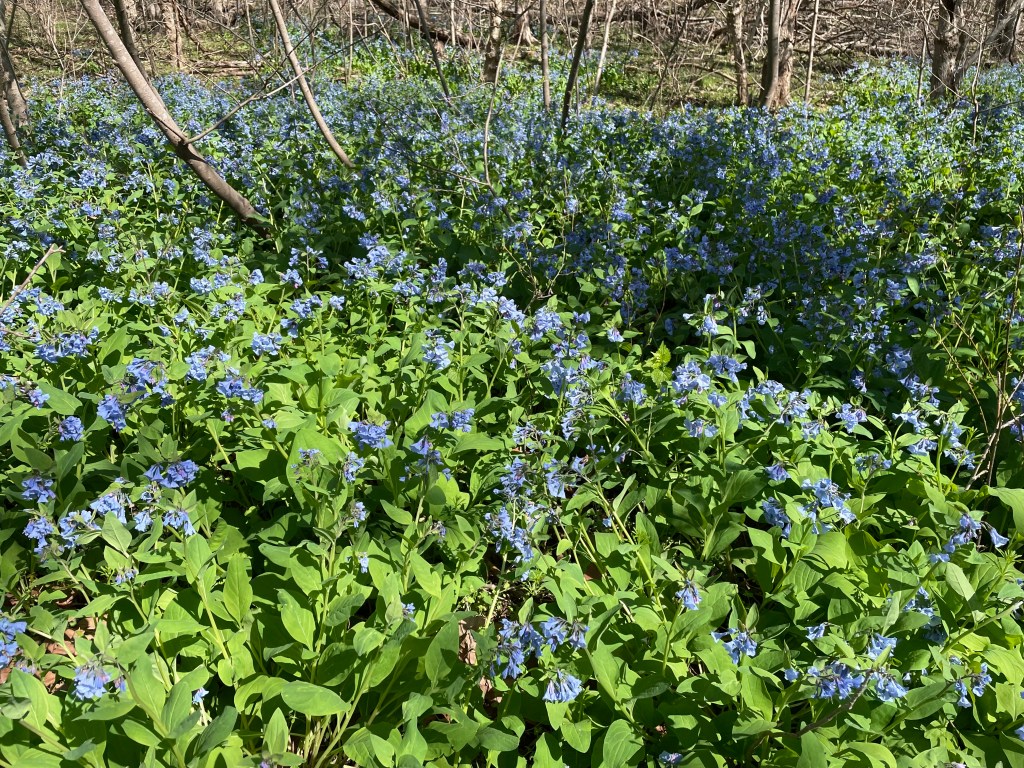
Virginia Bluebells beautified the space between the Bluebell Trail and the South Forth of the Shenandoah River in Shenandoah River State Park.

Friends told me that the Virginia Bluebells were at peak bloom along the Bluebell Trail in Shenandoah River State Park. I had to go see for myself.

The weather was perfect. Sunny skies and warm temperatures dominated the day. Both had been recent rarities in the Shenandoah Valley.

So, off I went, down what the Confederates called the Middle Road, to Timberville. From there, I took U.S. 211 east through New Market, up and across the Massanutten Mountain Range, and around the quaint town of Luray to U.S. 340.

A dozen miles later, I entered the park to find the empty entrance station. Due to staffing shortages, it’s an honor system to enter. You grab an envelope, place $10 in it, and deposit the fee into the slot. Hang the receipt from your rearview mirror, and you’re good to go.

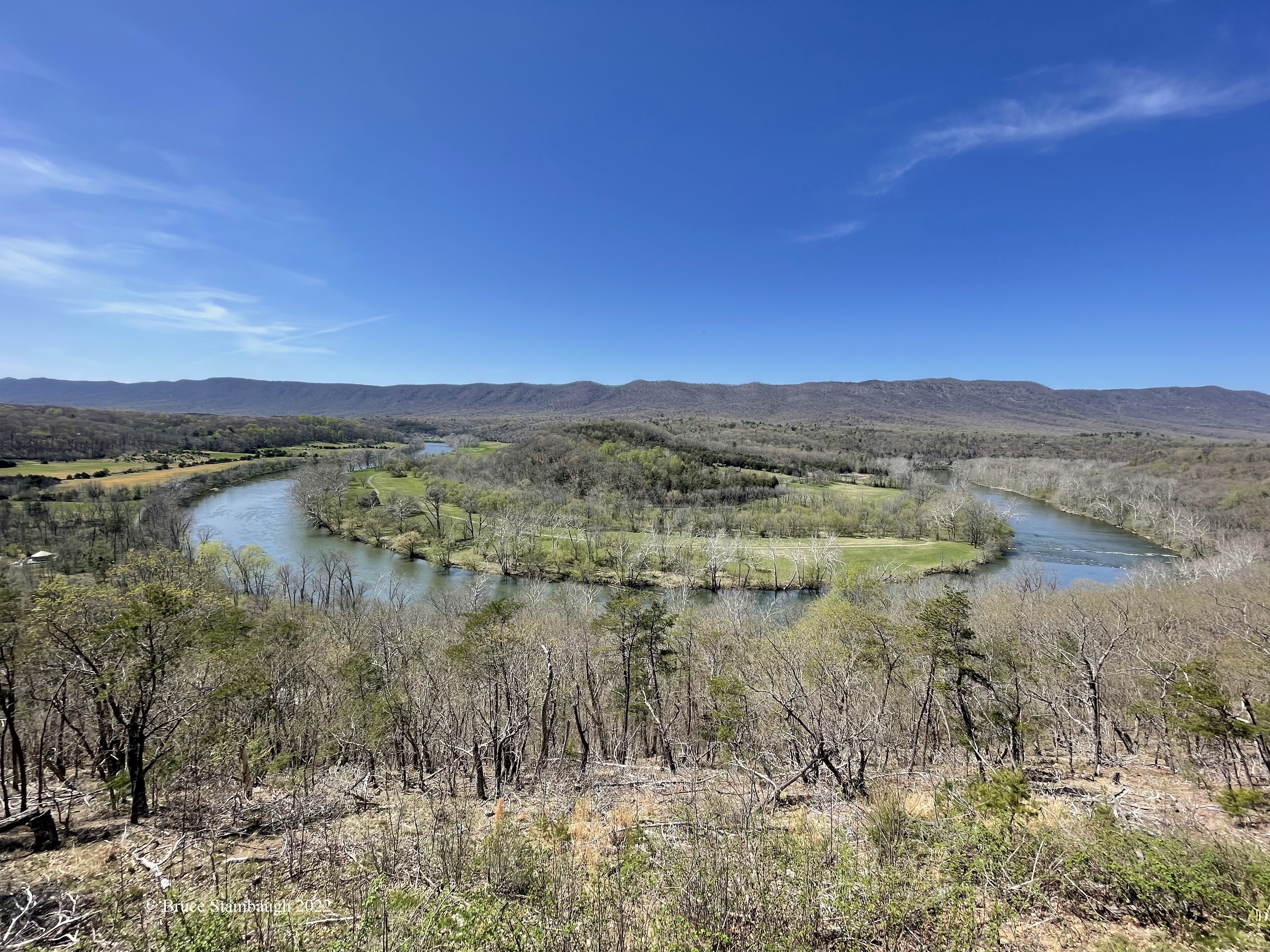
And what a splendid day it was. First, I stopped at Cullers Overlook for a fantastic view of the South Fork of the Shenandoah River, snaking its way north. Only a few more miles, and it converges with its twin, the North Fork of the Shenandoah River, at Front Royal. The majestic and historic Shenandoah River flows north to meet the Potomac River at Harper’s Ferry, West Virginia.

The South Fork of the Shenandoah River from Cullers Overlook, Shenandoah River State Park, Bentonville, Virginia.

As glorious as that view was, I didn’t linger long. I wanted to see the Bluebells. It was all downhill from there to the trailhead a half-mile away.

With camera and binoculars in hand, I eagerly set out on the mile-long trail. A swarm of insects greeted me only a few steps onto the earthen path. I had forgotten to pack the bug spray, so I raised my tolerance level and soldiered on.

Soon I began to pass folks who had a head start on me. They assured me that I couldn’t miss the lovely flowers as they headed to their vehicles. They were right.

Once the trail straightened out, patches large and small of Virginia Bluebells spread across the forest floor like a blue and green carpet. They even lined the riverbank much of the time.

I had an ample selection of flower photo ops. Since I also enjoy birds, calls from high above told me that warblers and other songbirds were foraging for insects among the emerging leaves.

The hungry little birds moved fast and furious, fueling up for their continued flight north. To my surprise, my attention focused on more obvious winged creatures.

Several butterflies flitted all around the trees and flowers in irregular patterns. I soon learned to stay still and let the beautiful insects come to me. Several were puddling on the path wear they found damp spots. They extracted nutrients from the moistened soil. A few stayed in place long enough for me to get a few decent shots.

Of course, I kept passing other hikers, and a few bikers who surprised me from behind. The butterflies flew but often returned within camera range.

I didn’t see as many birds as I had hoped, but I counted the trip a success. Communing intimately with nature tends to fill you with joy and appreciation. By the time I left, my cup overflowed

© Bruce Stambaugh 2022

Slow down for the rest of May

Enjoying the outdoors is one way

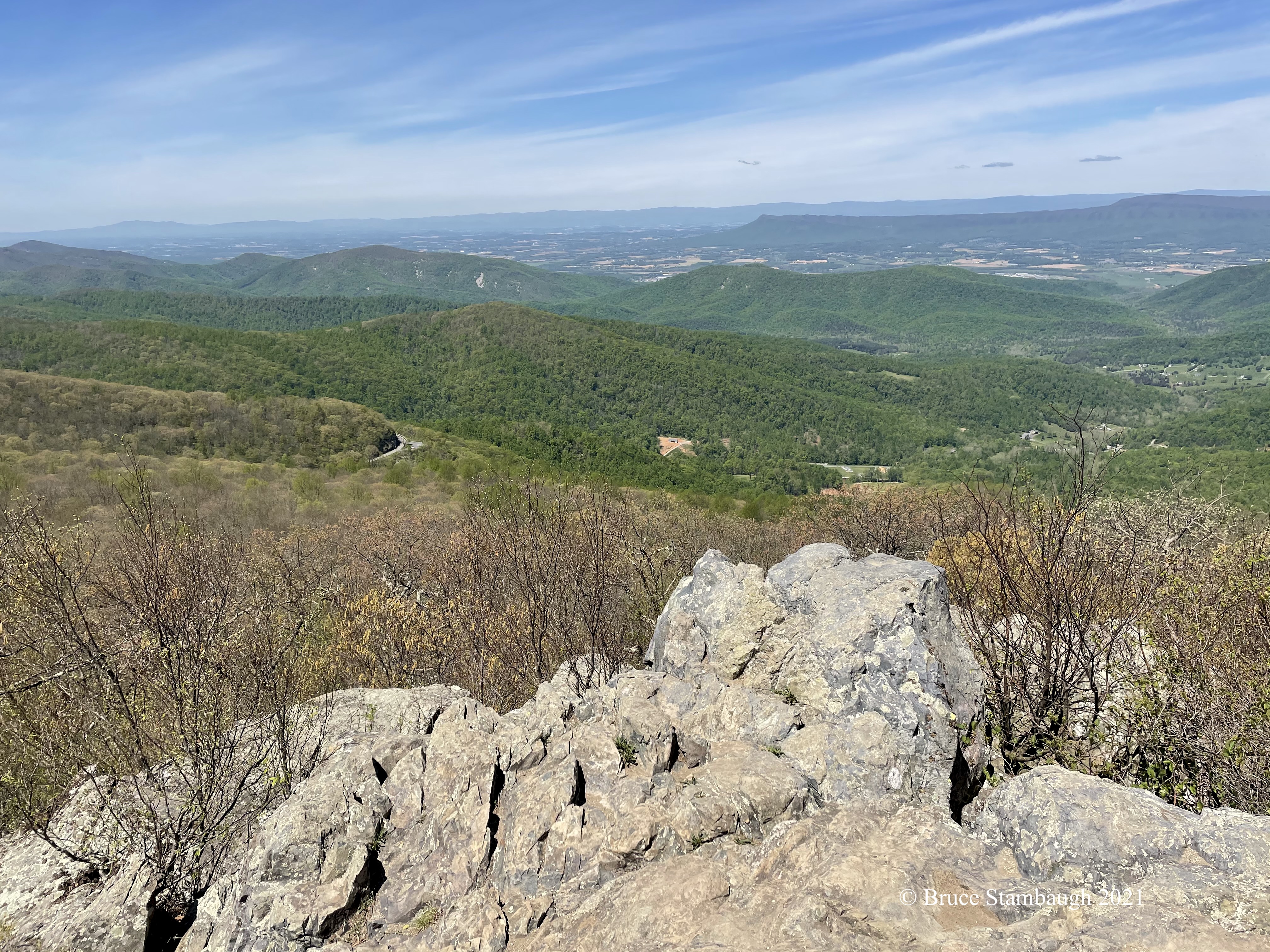
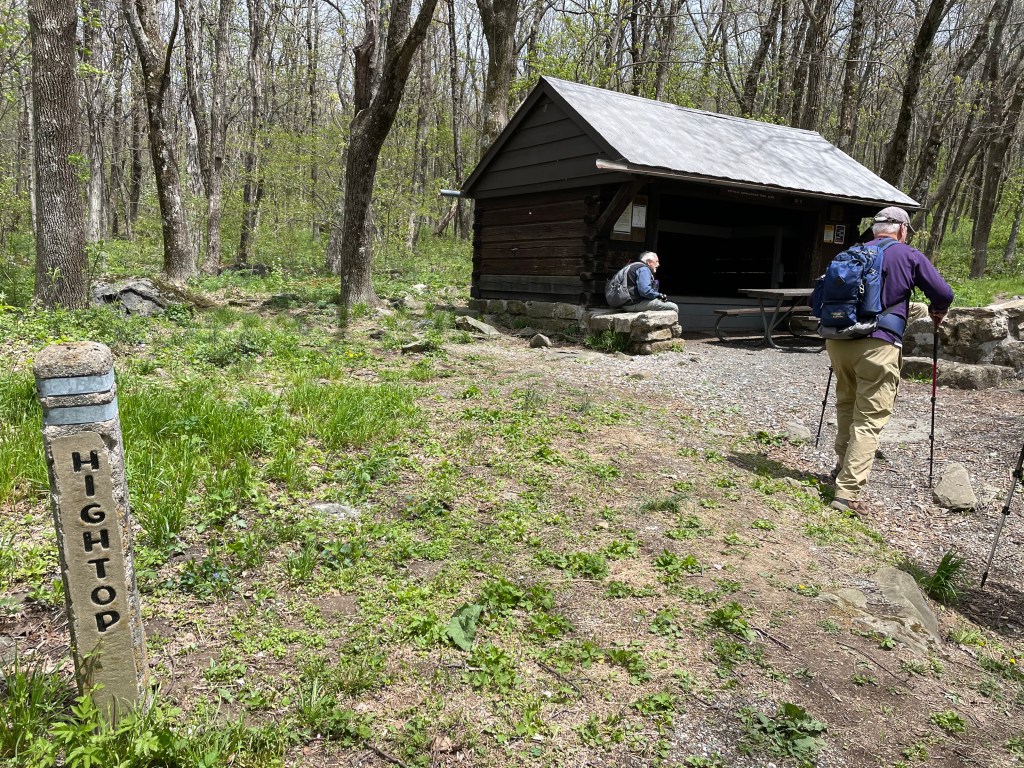
Hightop Mountain, Shenandoah National Park.

Don’t look now, but we are in the middle of May already. May always goes too fast for my liking.

Ideally, it would be nice to put a speed limit on each of May’s 31 days to slow their pace. Of course, that is a romantic pipe dream.

There is an antidote. We can each slow down, take our time, enjoy all that is around us.

Here in the Shenandoah Valley, I am grateful to be part of a hiking group that helps me do just that. It’s a program primarily designed for retirees, so going slow is what we do.

The group generally hikes twice a month and almost always in the gem of the valley, Shenandoah National Park. Each outing is limited to a dozen hikers. The leader is a retired bank president who volunteers in the park by keeping trails open for hikers.

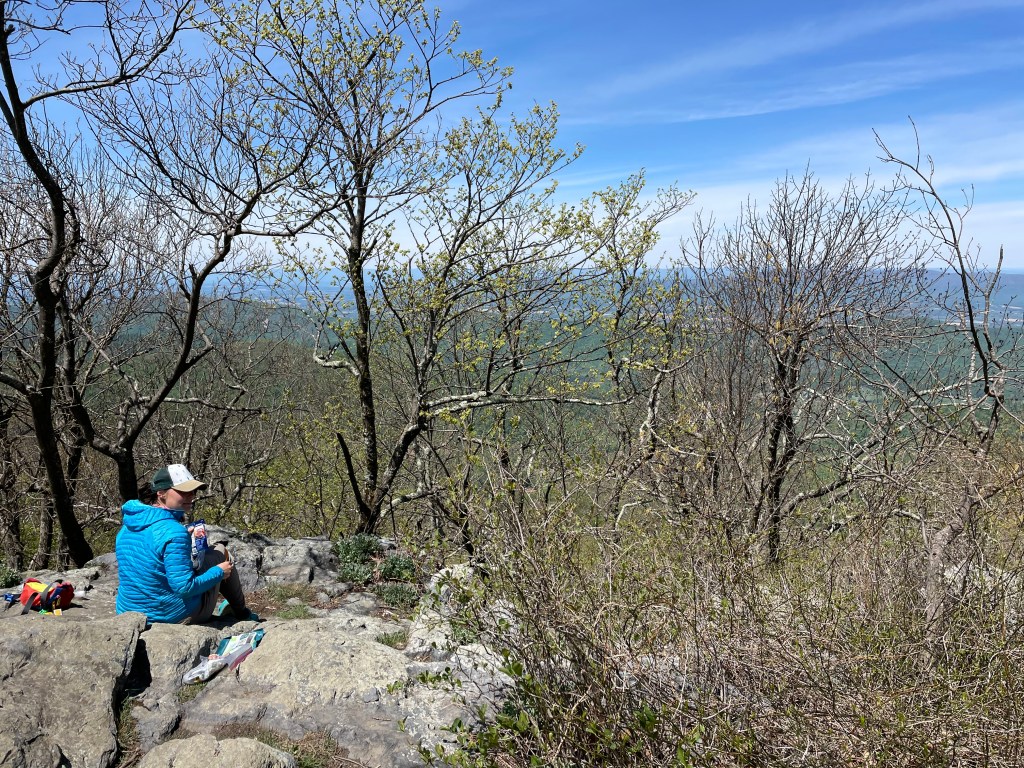
I can’t participate in every hike, but I try to do both hikes in May if I can. The leaves of the mountain forests have yet to unfurl, allowing many wildflowers and trees to bloom. Plus, hikers’ nemeses, heat, humidity, and insects, are scarce.

Our leader plans the hikes and reminds us to come ready for the cool mountain temperatures and bring plenty of water and a lunch. We often trek to a precipice that overlooks the rolling countryside that dominates the Shenandoah Valley.

Mosey might be a better way to describe our hikes. We usually take four or more hours to hike three to four miles roundtrip. Pokey we may be, but we indeed have a glorious time enjoying each other’s company and the beauty we encounter.

It’s not unusual for us to climb 1,000 feet or more in that distance and back down again. Along the way, we frequently stop to enjoy and photograph the floral display spread out for us like a colorful carpet on the forest floor.

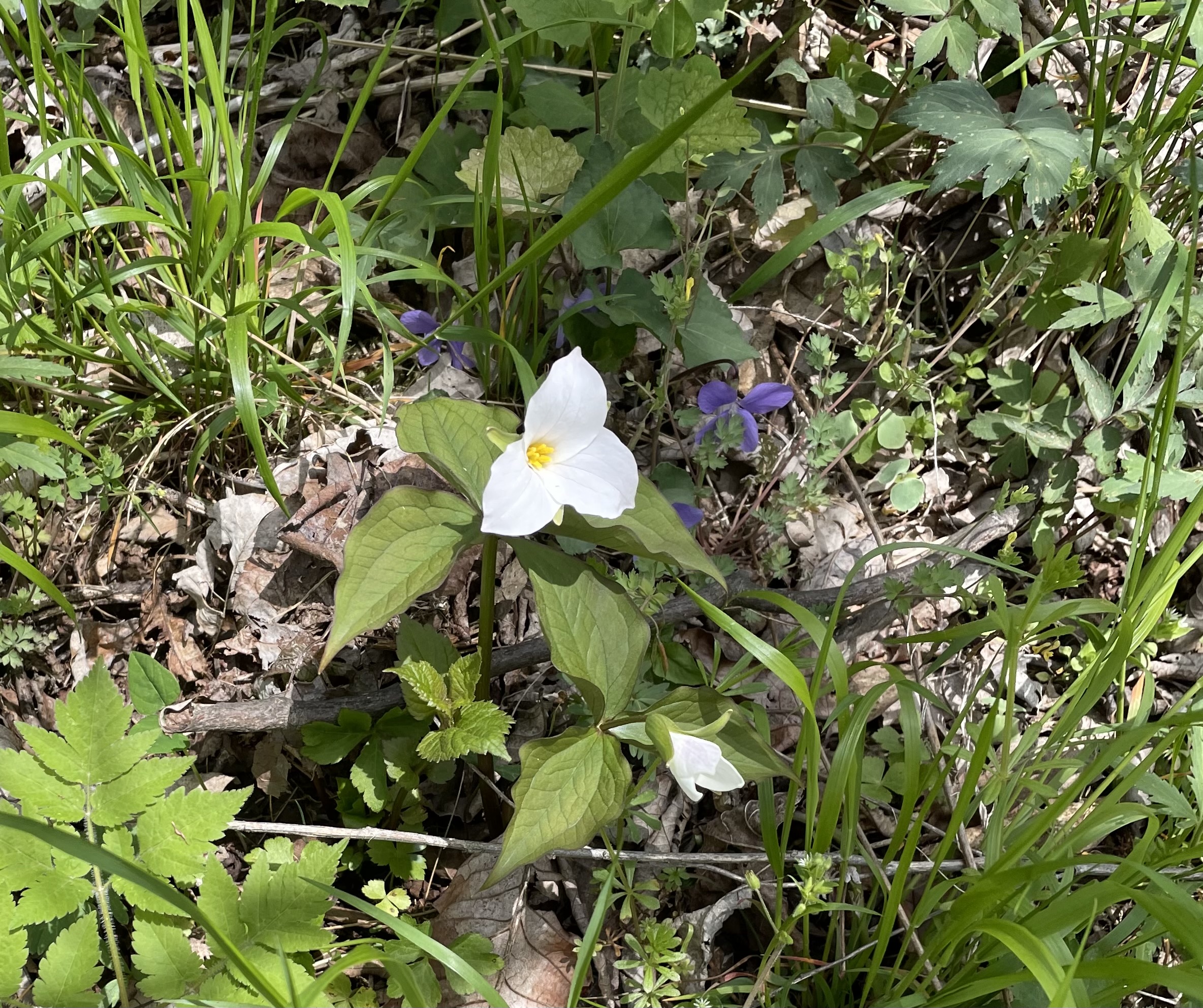
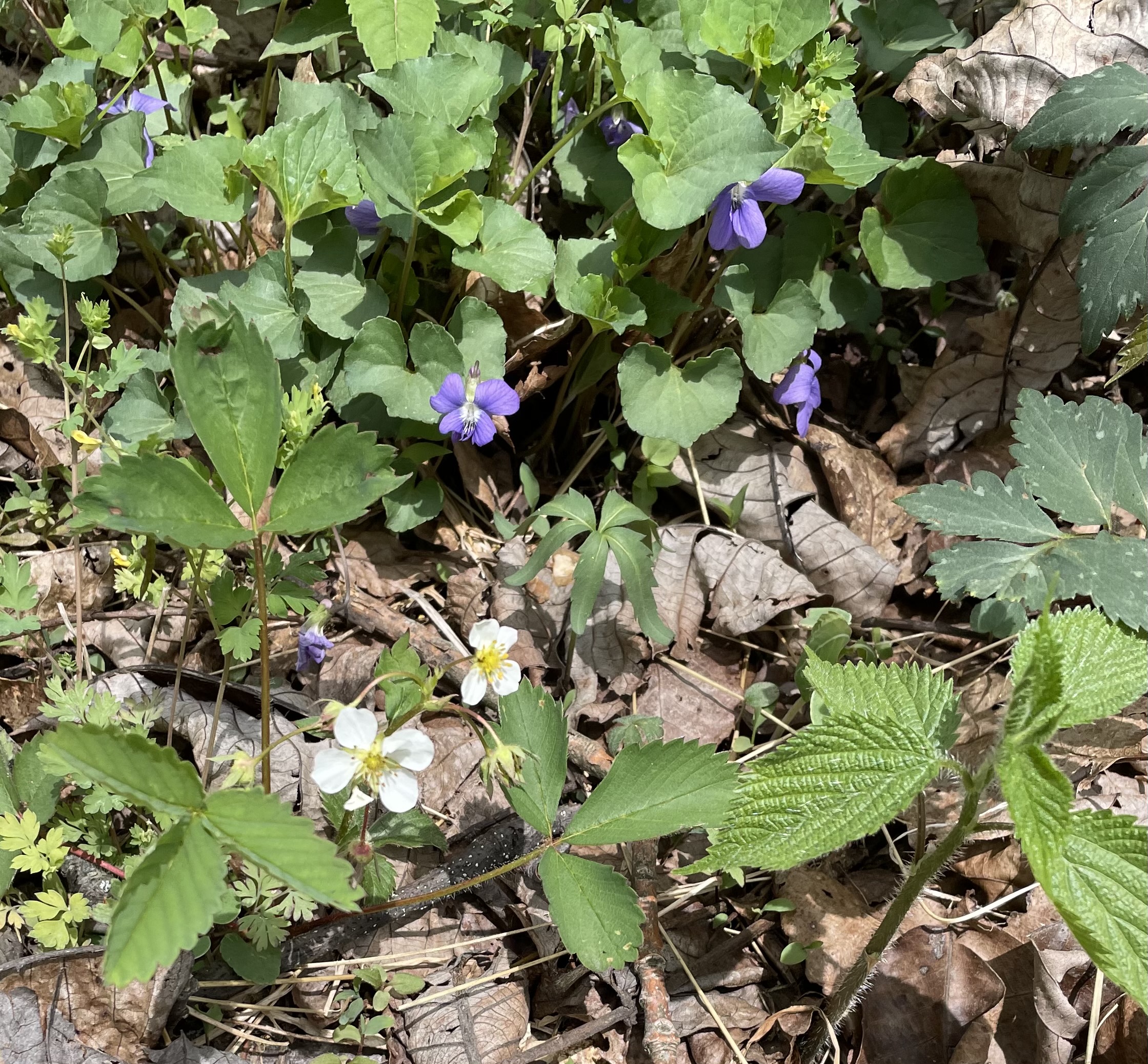
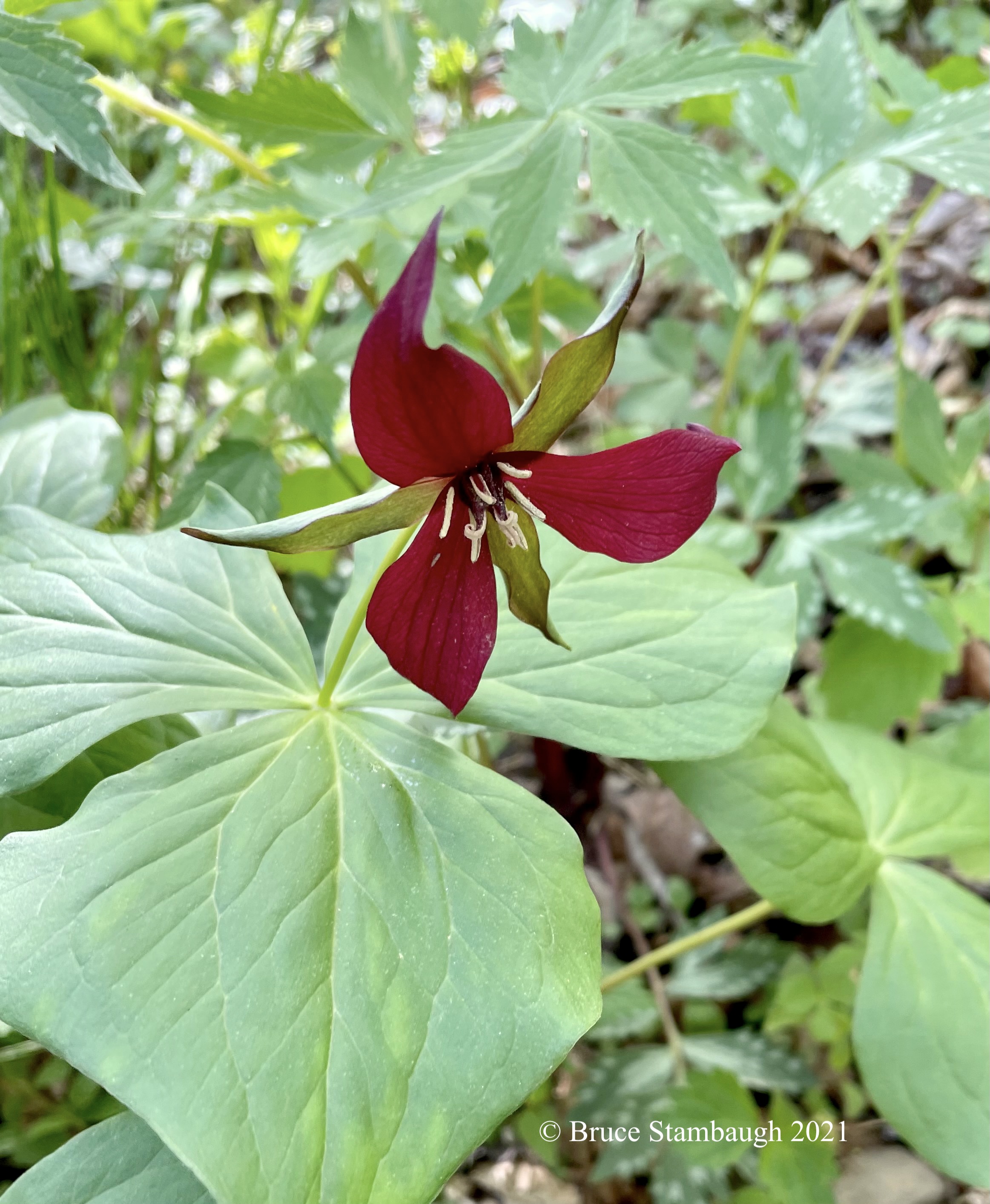
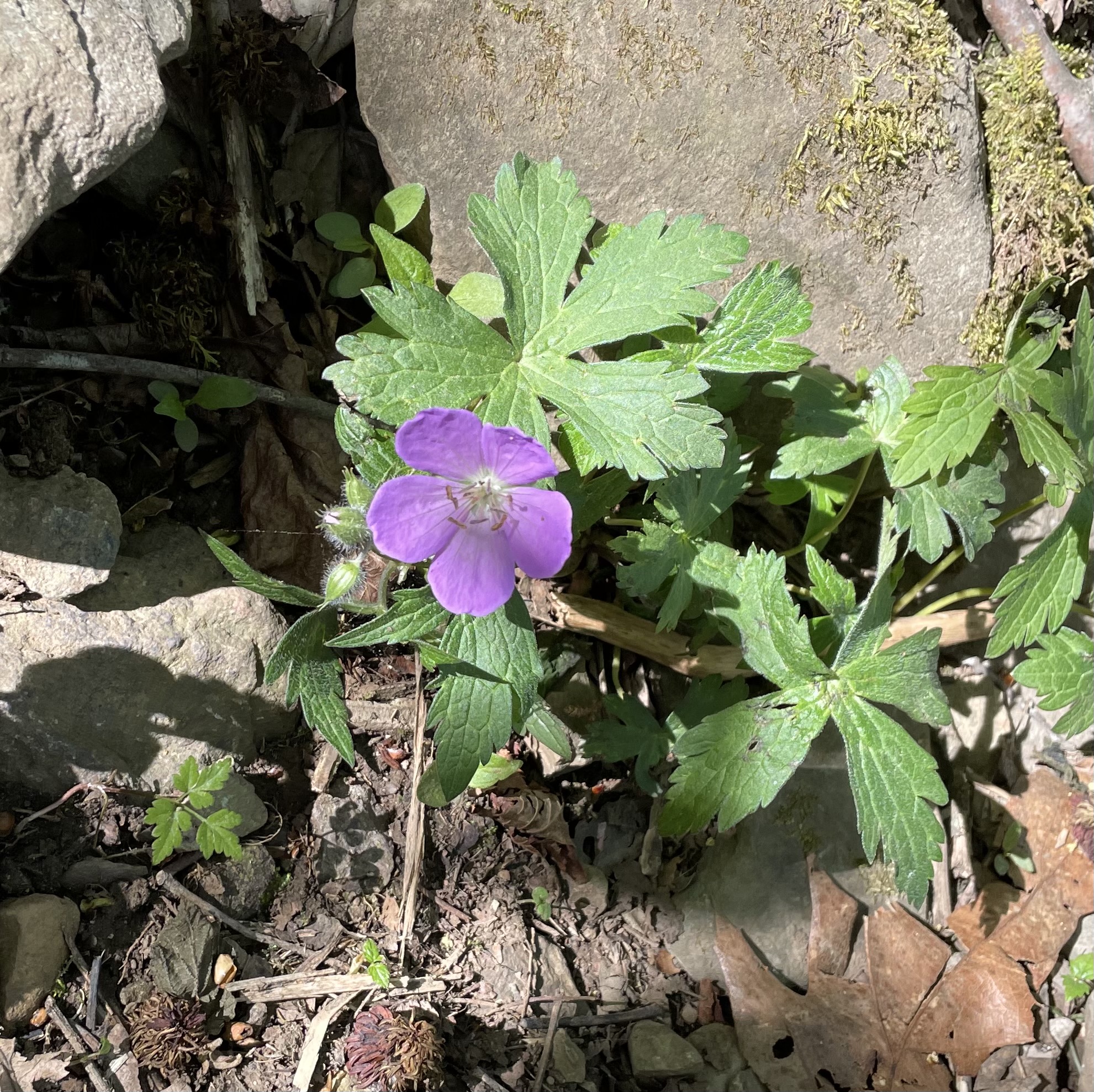
On our latest trip, we enjoyed seeing both large and small-flowered white trilliums, patches of red trilliums, wild geraniums, yellow and blue violets, black haw bushes, and hawthorn trees in bloom. Wild strawberries blossomed low while towering tulip poplar buds opened high above.

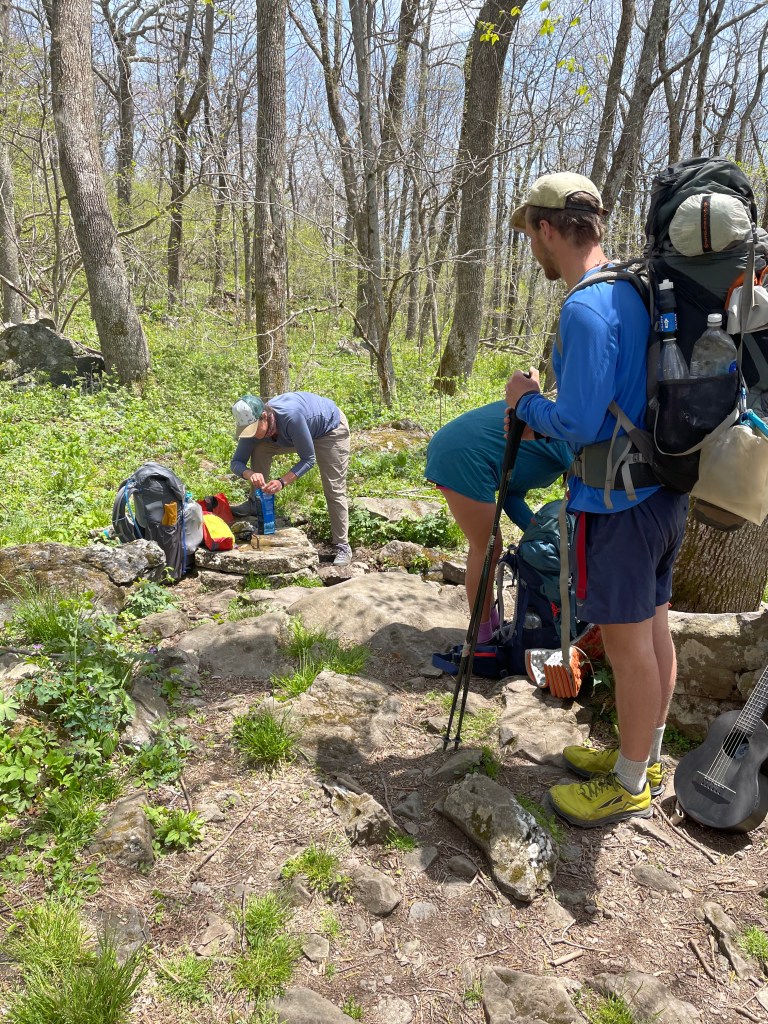
To reach the summit of Hightop Mountain, we walked the Appalachian Trail (AT) that snakes its way the entire length of the national park. We meet other day hikers like us, section hikers, and through-hikers.

Section-hikers walk the AT one section at a time, returning multiple times later to do more hiking. Through hikers are the serious ones. Their goal is to hike the entire 2,500 miles of the AT.

Most start at the trail’s beginning in Georgia and hike north to its terminus in Maine. In doing so, they experience an unfolding of spring over and over from the south to the rugged northeast.

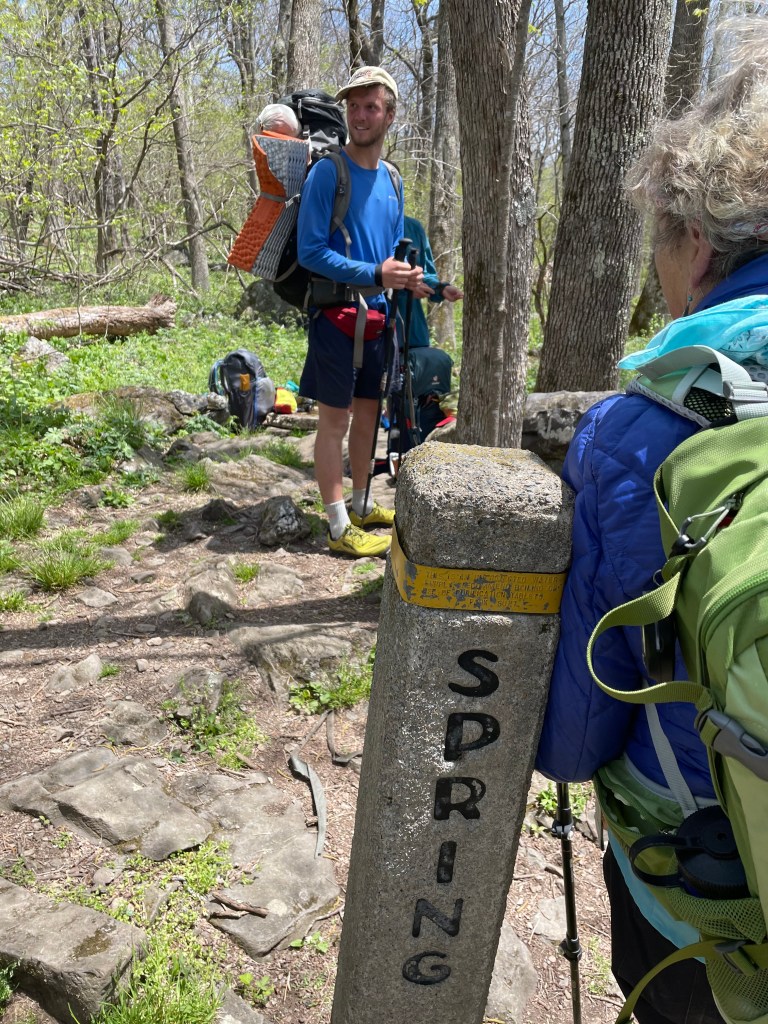
Our group tries to give way to these more experienced hikers, but they are often as curious about us as we are about them. They often share their trail names and hometowns, and off they go.

We then return to observing the songbirds singing and flitting all around us and the many varieties of wildflowers as we meander. At our age, we have no choice to simply take our time to be safe and to inhale both our surroundings and the refreshingly cool mountain air.

Perhaps that is a good lesson for all of us. Slow down. Take your time. Enjoy all you encounter, moment by moment, breath by breath. Maybe then the remainder of May will gladly join you.

Our lunchtime view with a through hiker.

© Bruce Stambaugh 2021

Letting Creation find you

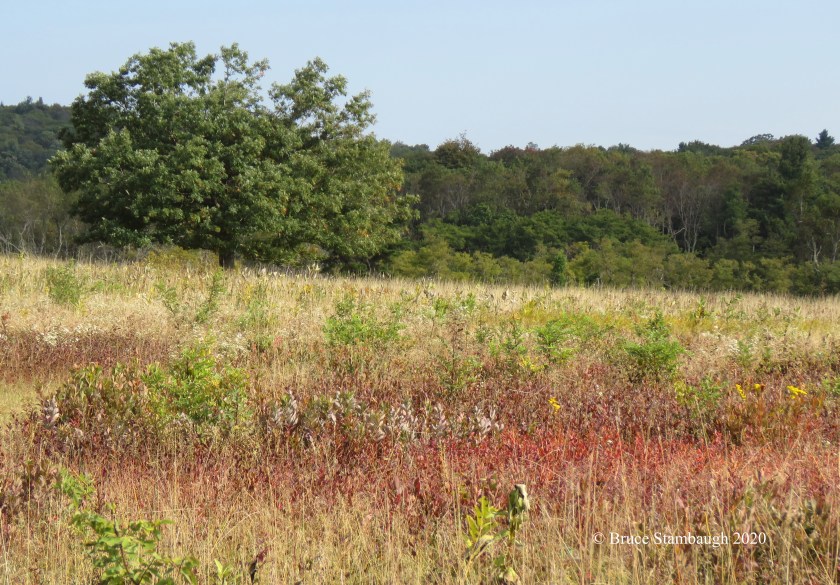
Looking west from a point in Big Meadows in Shenandoah National Park.

Even though the morning’s southeast breeze was gentle, the leaves rained down like ticker-tape parade confetti. I was in my favorite outdoor space, Shenandoah National Park’s Big Meadows.

Big Meadows is an anomaly. No logical or scientific reasons can explain why the expansive meadow sits in the middle of this popular national gem.

Scientists have determined that there is nothing unique about the soil’s geologic makeup or bedrocks below that would create a meadow in the middle of a forest. In a matter of yards, the foliage changes from plants of a kettle-like marsh to wooded hillsides. I imagined Big Meadows as God’s thumb stamp of approval on these ancient mountains.

In the short time we have lived in Virginia, I’ve found fall is my favorite time to visit this gorgeous spot. From our valley home, the weather appeared to be perfect. But when you visit the mountains, conditions can be changeable at any time of year. I packed for the unexpected, and that’s what I got. With every step, creation’s glory unfolded.

You could hardly call my creeping along as hiking. I followed the parameter of the southern part of Big Meadows. In three hours, I covered only a mile and a half. A wooly worm would have made more progress, but likely not shared my joy.

I wasn’t out to break any endurance records. I went to see whatever came to me as I strolled along and through the area’s various topography. In the mountains, just a change in altitude of a few feet makes a big difference in the kinds of vegetation that grow.

This gently sloping mead is home to flowers, grasses, reeds, trees, and assorted creatures great and small. As an invader of their varied habitat, I tried to remain obscure.

With fall’s migration, I knew plenty of bird species might be passing through on their way south. I expected year-round residents, too, along with a few lingering butterflies.

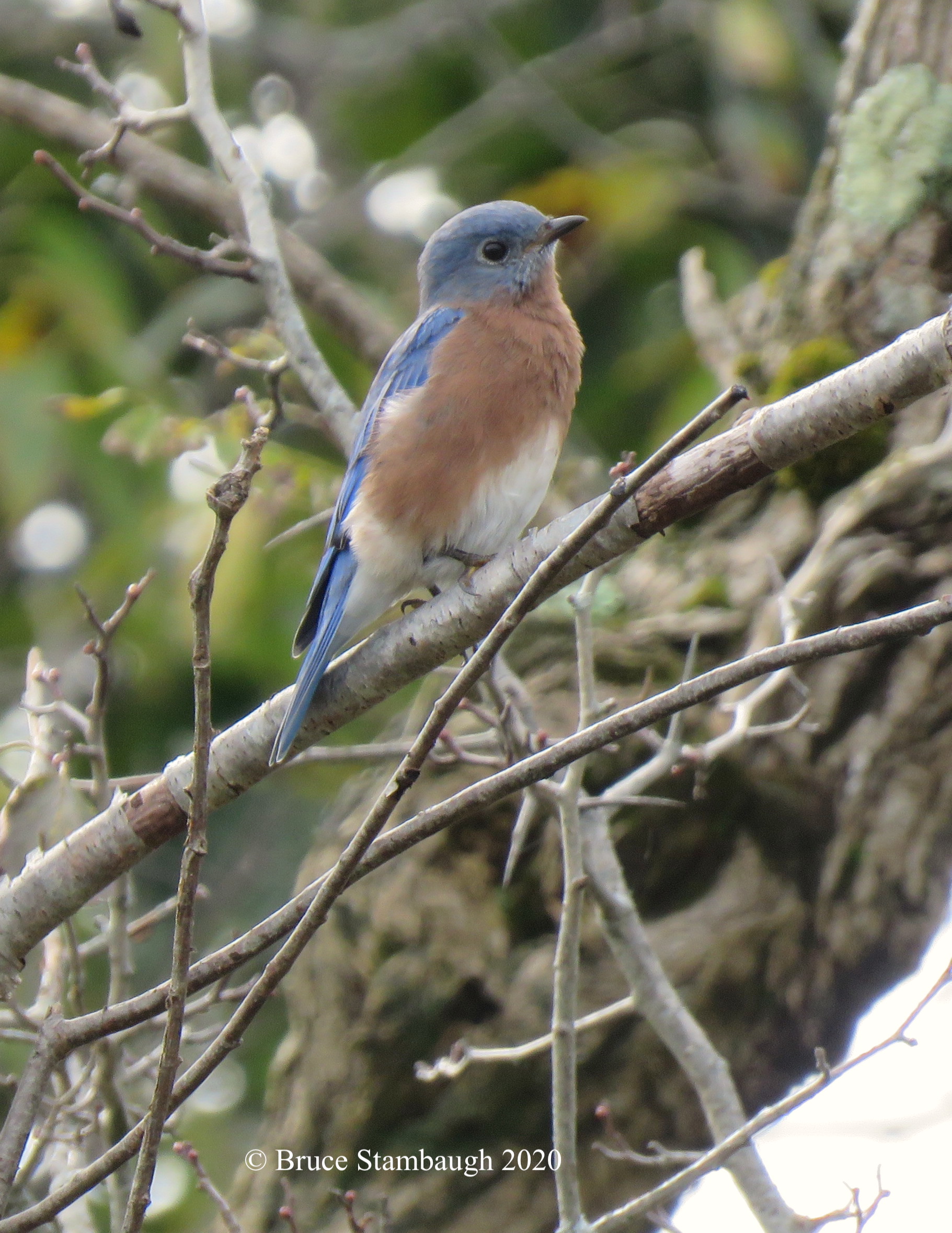
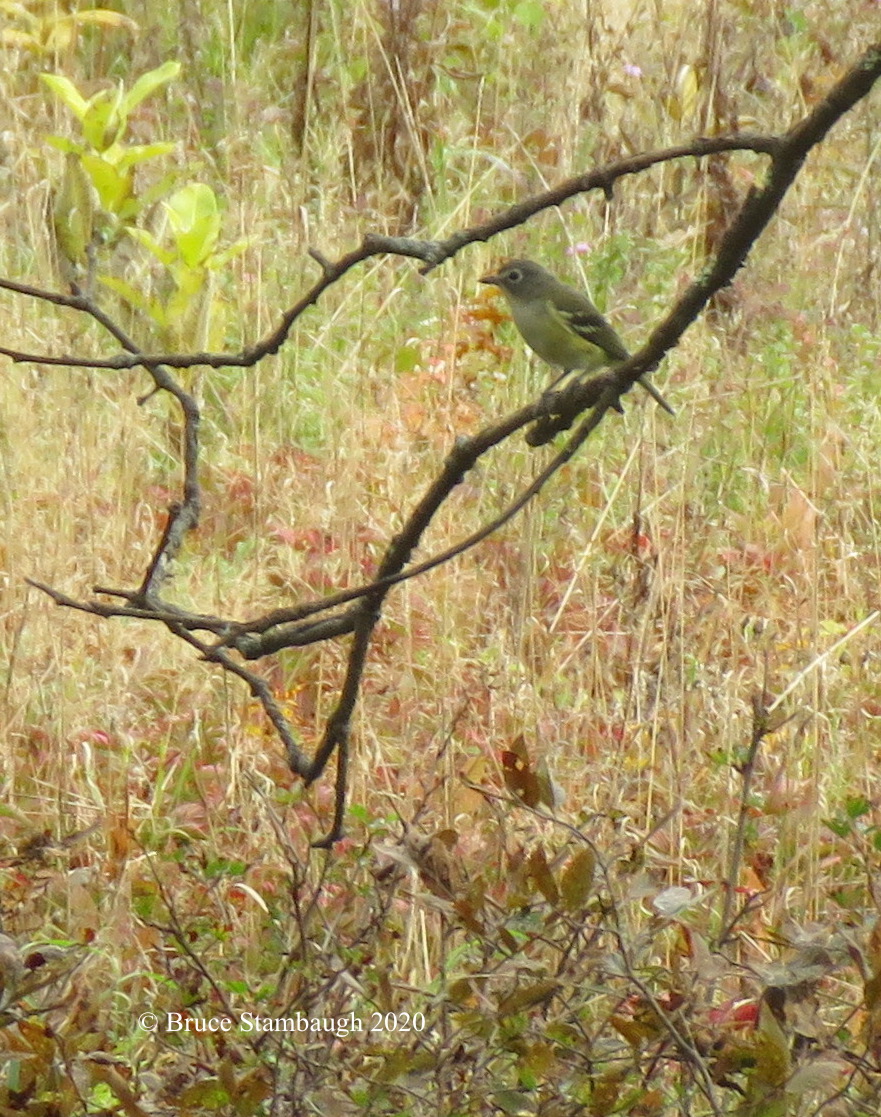
Resident eastern bluebirds and handsome field and song sparrows greeted me. Eastern phoebes, magnolia warblers, blue-headed vireos, Carolina chickadees, and dark-eyed juncos darted about, too.

Dressed in their duller non-breeding feathers, some birds, especially the warblers, went unidentified by this average birder. Chirps near and far came from other species that I couldn’t locate.

I crept along the raggedy edge that separated fields from woods, exhilarated. I lingered in a high place beneath a sweeping white oak at the meadow’s southernmost border, where I could see near and far.

Contentment filled me as I sensed all the life around me. Instead of hiker, birder, or photographer, I was an uninvited but appreciative guest. Every moment bore existential meaning.

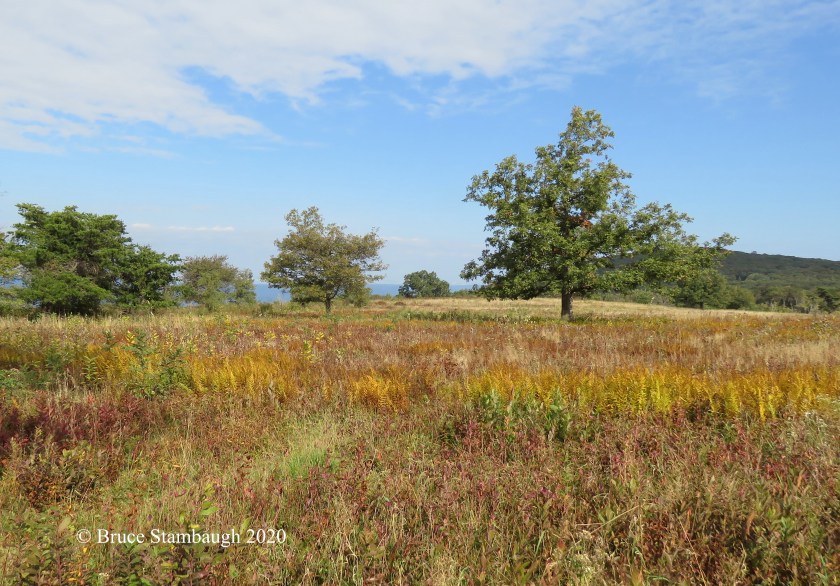
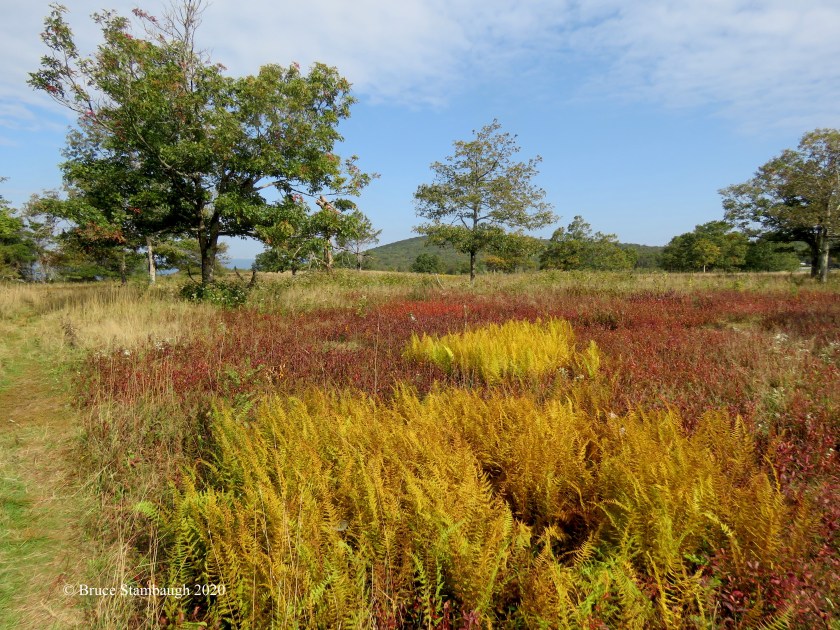
The first frosts of the season created a festive carpet of fall’s primary colors that spread across the landscape. The leafy trees and evergreens looked on in envy. Red-tinted green leaves, spent wildflowers, delicate ferns frosted golden, ruby-colored blueberry leaves, and russet grasses decorated the earth like it was Christmas.

Overhead, the sky also joined nature’s artistry. One minute, it was pure cerulean, the next white fluffy clouds.

Suddenly, a fog rolled in from the eastern piedmont. The steady breeze soon carried it to the western slope of the Blue Ridge Mountains.

I breathed an appreciative silent prayer of gratitude for all these sights and sounds. The old withered away, yet the promise of rebirth remained.           

At every step that I took, I was delighted to have observed all that found me.

The fog that hung over Shenandoah National Park even after I left.

© Bruce Stambaugh 2020

Feeling stressed, fearful? Head outside!

The misty morning view from the Skyline Drive.

Awash with news and information about COVID-19, it’s easy to feel tense, confused, irritable, fearful, or even bored. Due to the global pandemic, millions of people of all colors, religions, cultures, and languages are experiencing similar trepidations.

A sense of hopelessness can be emotionally overwhelming. There’s a way to help overcome that despair. Head outside!

Studies have shown that connecting with nature calms fears, and uplifts spirits. I embrace those findings as often as I can. I recently headed to my favorite get-away place, Shenandoah National Park.

Mine was a twofold mission. Besides going into the wild, this was my first hiking experience since my knee replacement surgery last September.

I started early to beat the heat and humidity. The sun hadn’t yet risen over the Blue Ridge Mountains as I approached the park on U.S. 33. I exit that road into the park at Swift Run Gap.

This slideshow requires JavaScript.


Rounding a slight curve on a typically hazy summer morning, I noticed a large dark object in the opposite lanes of the divided highway. I slowed and rolled past a massive black bear standing beyond the grassy medium.

The magnificent creature looked both ways and then bolted across the roadway. It promptly disappeared into the steep, wooded hillside before I could even grab my camera.

Buoyed by that encounter, I arrived at the trailhead in high spirits. Surely, anything that I would experience the rest of the day would be anti-climactic, unless I saw another bear on the hike. I didn’t.

I walked a few yards on the Appalachian Trail to where it intersected with the trail I wanted, the Mill Prong. It was all downhill from there until the return trip.

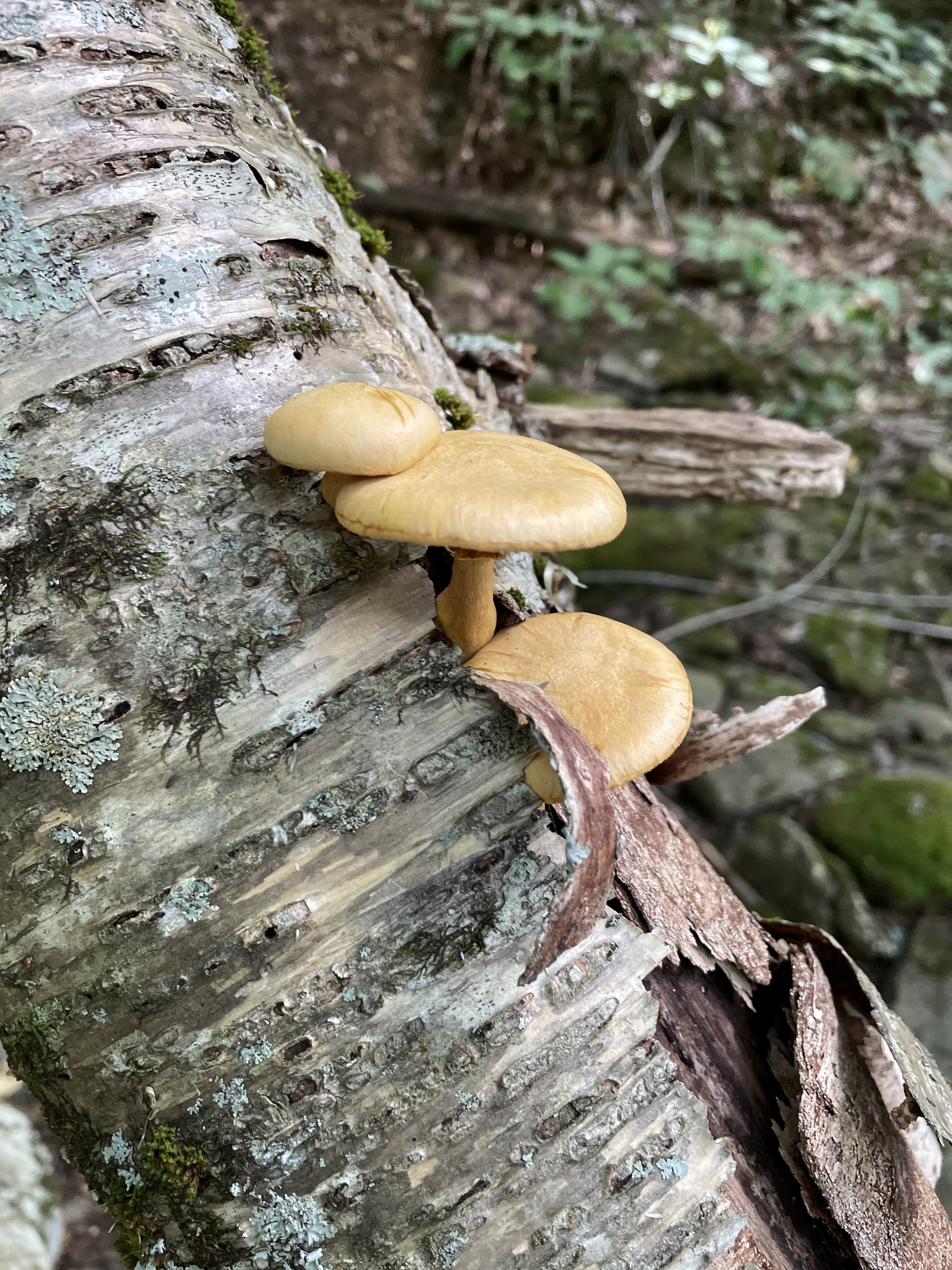
The forest was amazingly still. No birds sang, and no vehicles hummed along the nearby Skyline Drive. I took in every moment, the wildflowers, the ferns, brightly colored fungus conspicuously growing on dead trees. The distant sound of water gurgling its way down the mountainside lured me onward.

I heard or saw no one else. A gray catbird burst from a bush beside the trail. A feisty squirrel angrily scurried away, flapping its tail in disgust of the human disruption.

I rested at the shallow stream. The morning sun filtered through the forest canopy, sparkling the gently rippling water. I felt exalted.

Farther downstream, I sat on a large rock and just enjoyed the sound of water trickling over ancient boulders. On my return trip, I passed a few other hikers. Each one donned face masks as we passed on the trail. More gratitude and thoughtfulness mutually expressed.


Click on the photos to enlarge them.
When I reached the parking lot, the strengthening morning sun spotlighted some bright orange Turk’s cap lilies just off the trail. Their beauty drew me like a magnet. I snapped my camera’s shutter over and over, trying to preserve the glory I beheld perfectly.

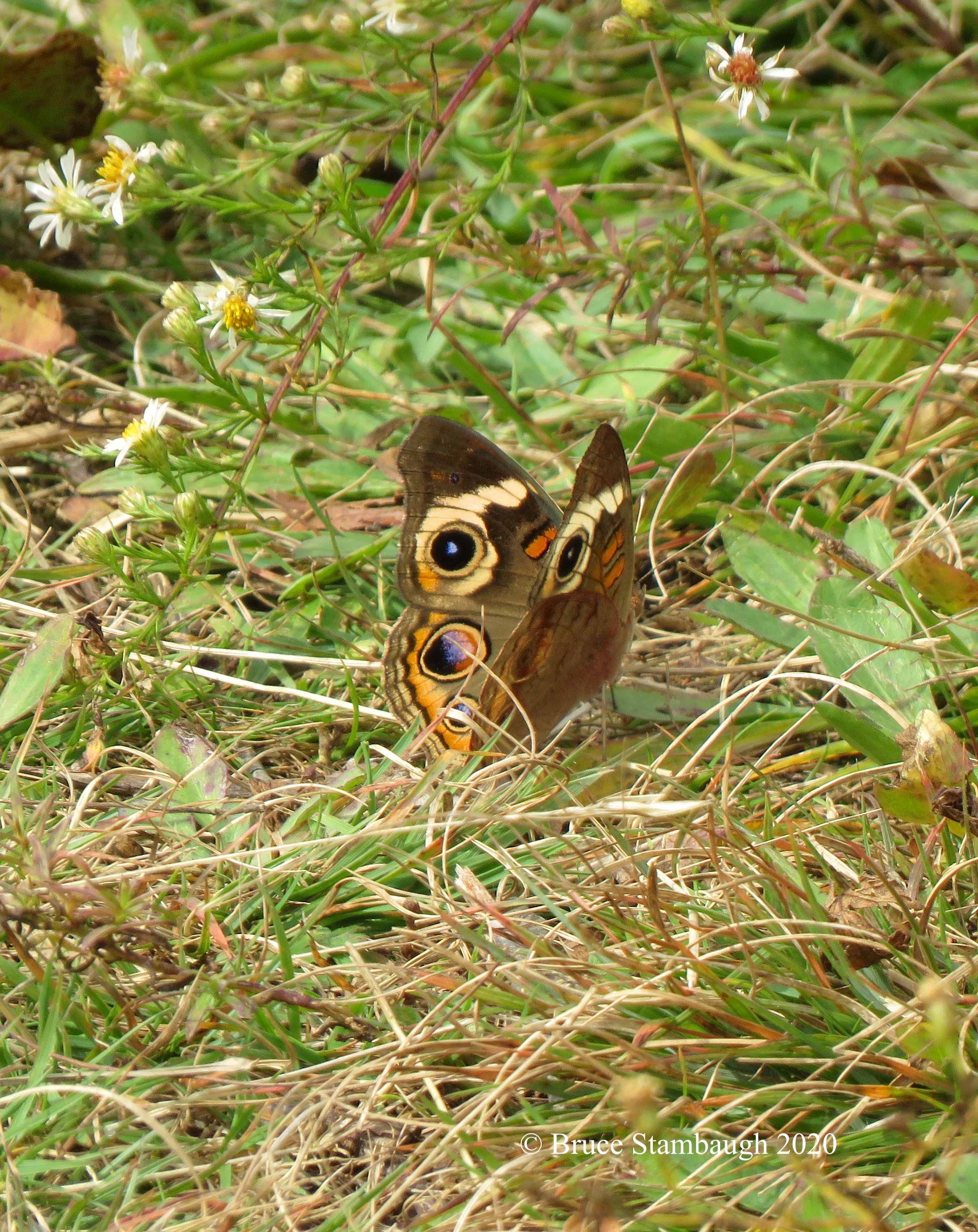
Suddenly, a female tiger swallowtail butterfly alighted on the same flower that I was photographing. Again, delight and gratitude filled me to the full.

In the rest of the world, the pandemic raged. But in the wild, only the big black bear, the forest’s serenity, the kindness of other hikers, and this tango of floral and fauna mattered.

I was thankful for each magical moment, and for the skillful surgeon who had replaced my knee. Gratitude is appropriate anytime, but especially during this pandemic.

Connecting with nature does indeed do wonders for your soul. You can find peace and gratitude in a local park or even your backyard.

Get outdoors, follow the prescribed safety rules, and enjoy all that comes your way.

The splendor at trail’s end.

© Bruce Stambaugh 2020

Bay Photos by Donna

Wildlife photos from the Chesapeake Bay region

ROAD TO NARA

Culture and Communities at the Heart Of India

K Hertzler Art

Artist and nature journalist in the Shenandoah Valley of Virginia.

Maria Vincent Robinson

Photographer Of Life and moments

Gabriele Romano

Personal Blog

Jennifer Murch

Art is the only way to run away without leaving home. -Twyla Tharp

Roadkill Crossing

Writing generated from the rural life

ANJOLI ROY

writer. teacher. podcast cohost.

Casa Alterna

El amor cruza fronteras / Love crosses borders