Feeding the Winter Birds

A Northern Flicker at the peanut butter suet feeder. Photo by Bruce Stambaugh

Feeding the birds is one of our favorite winter pastimes. My wife and I enjoy watching college sports, but the colorful birds take precedence over the TV.

Feeding the birds provides us with plenty of entertainment from fall to spring, and we only have to look out our windows. We have done so for all of our nearly 55 years of marriage. We fed birds for the 48 years we lived in Holmes County, Ohio.

Our bird-feeding habit continued when we retired to Virginia’s Shenandoah Valley eight years ago to be close to our daughter’s family. But things were a little different. In Ohio, we lived in the country where natural bird habitats surrounded our property.

Here in Virginia, we live in a suburban setting, just outside the city limits of Harrisonburg. The habitat for birds is much different.

Like many housing developments, homes are close together. Fortunately, our backyard neighbors have mature stands of Colorado Blue Spruce and other evergreens. Plus, we have trees and shrubs around our home that provide cover for the birds.

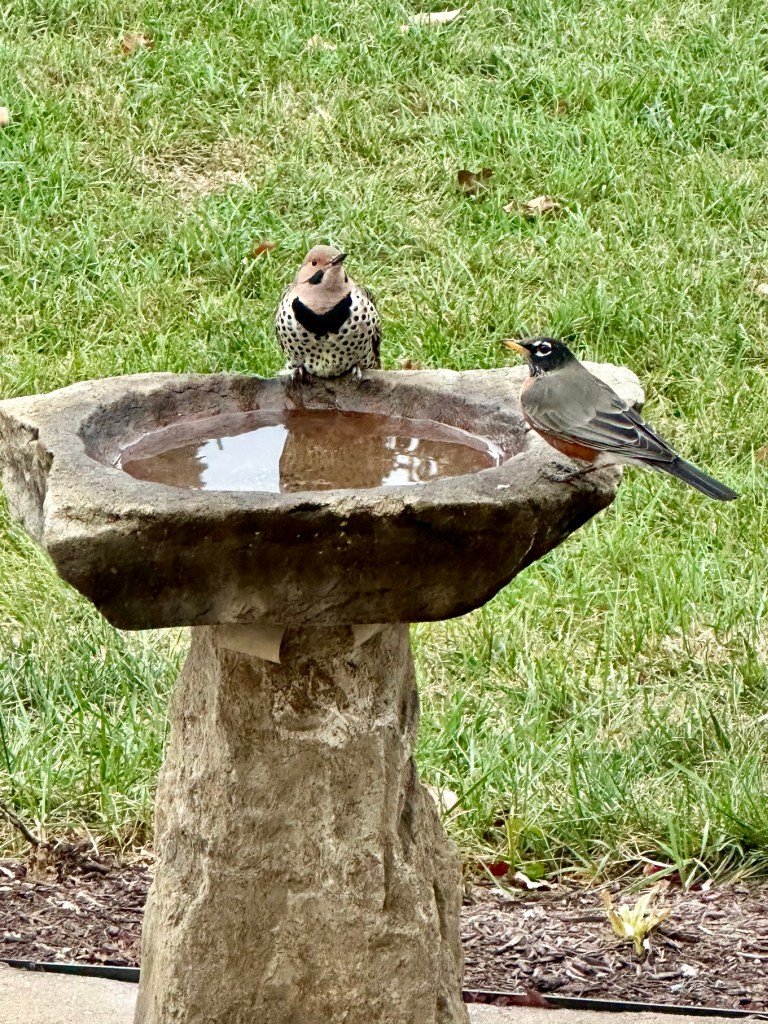
Besides food and shelter, our avian friends need water, too. So, I added three birdbaths to provide drinking and bathing for the birds. Of course, it’s fun to watch them bathe and drink. It’s amazing how the different species drink.
Please click on the photos to enlarge them.

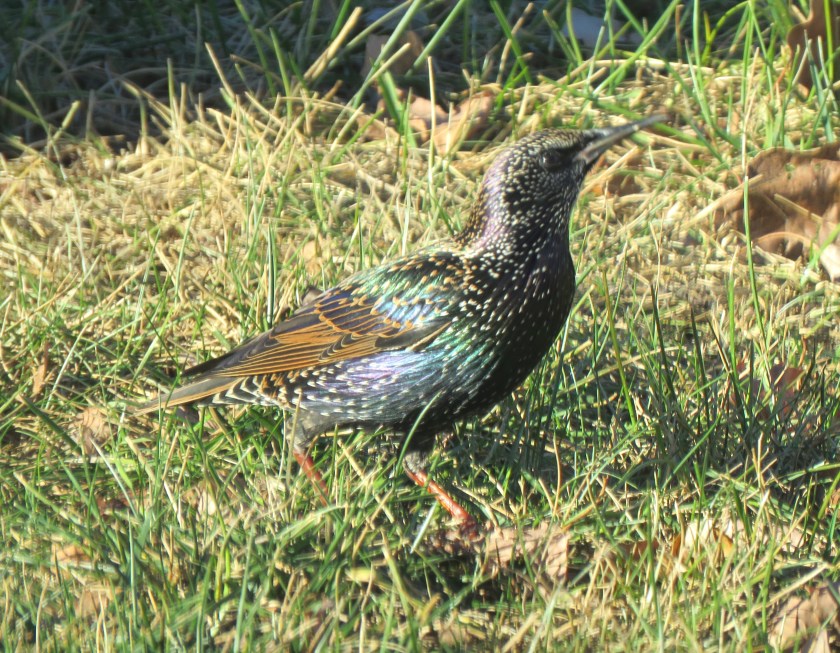
The number of bird species has increased over the eight years that we have lived near Harrisonburg. However, the number of birds has decreased, except for the dreaded European Starlings and the Brown-headed Cowbirds.

Still, I’ve been pleased with the birds that have frequented our feeders. I have four in the front yard, and four in the back. The feed and types of feeders are selected based on the diets and habits of the various species that have frequented our property.

Some bird species are solely ground feeders, so I make sure I spread the feed they eat on the surface near the other feeders. Tube-type feeders allow perching birds to access seeds through holes along the sides. The suet feeder contains cakes of peanut butter suet, encased in a wooden frame with wire-mesh facings on each side.

I place the feeders where the birds feel safe from predators, such as Sharp-shinned and Cooper’s Hawks, which occasionally strafe the neighborhood feeders in hopes of catching a songbird lunch. It’s the way nature works. The feeders and birdbaths are located where we can conveniently view the birds and where they can be easily refilled.

A tube feeder that holds a pound of black-oil sunflower seeds hangs from a limb on the west side of the front yard red maple tree. A suet feeder filled with peanut butter suet dangles from a limb on the east side of the tree. I scatter clean, cracked corn and safflower seeds below them.

The fourth feeder is suctioned to the window in front of my desk. It’s filled with safflower seeds, which only a few birds will eat. Fortunately, safflower seeds are a second-choice food for Northern Cardinals, which seem to have no fear if I’m at my computer on the inside of the window. If I move too quickly, however, they quickly scatter.

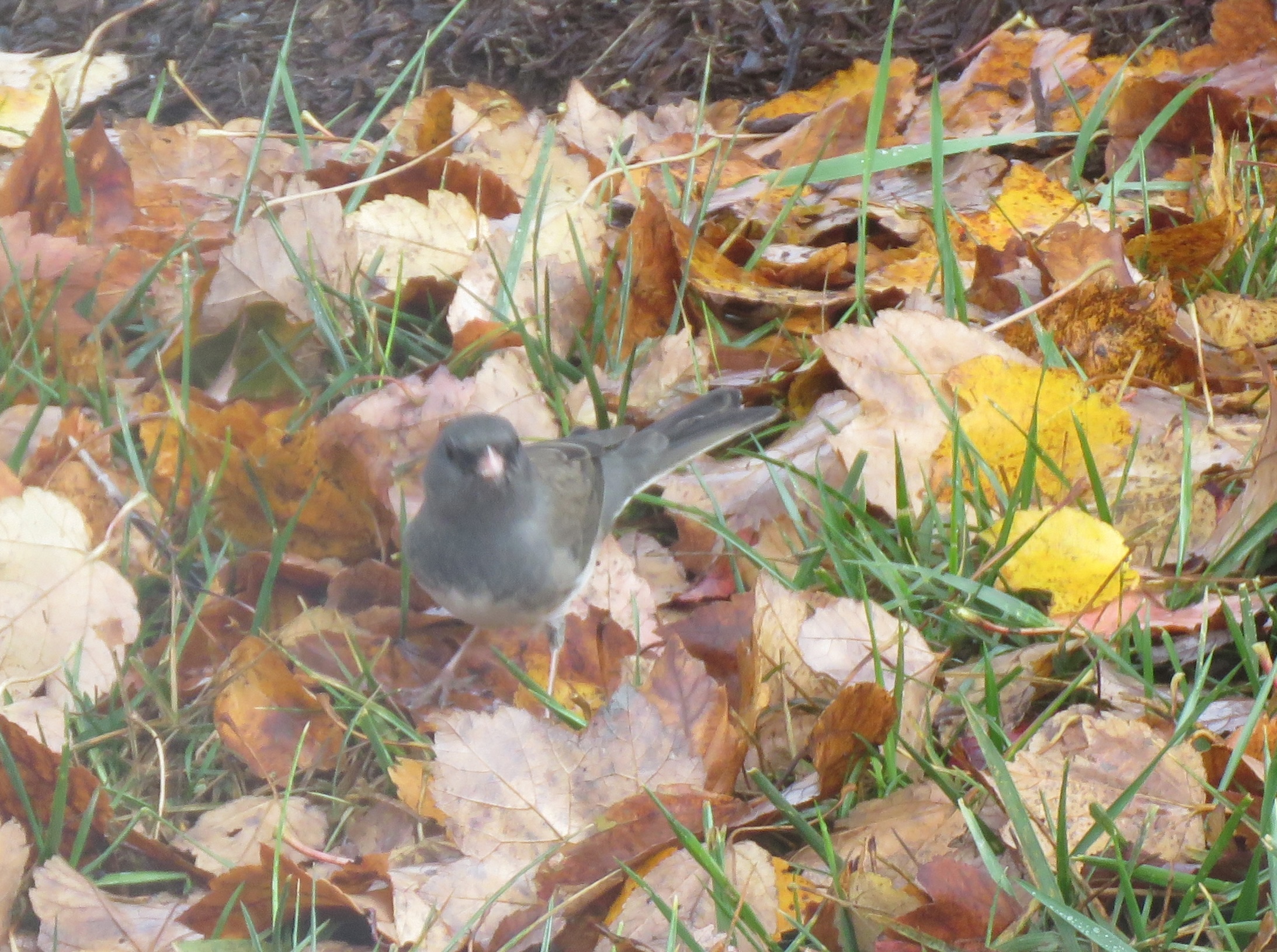
Why do I use these feeds? Black-oil sunflower seeds and hearts attract many species of birds. Northern Cardinals, House Finches, American Goldfinches, Purple Finches, Blue Jays, Dark-eyed Juncos, Downy Woodpeckers, Carolina Wrens, and Carolina Chickadees all choose this seed as a staple to their diet during the winter months.

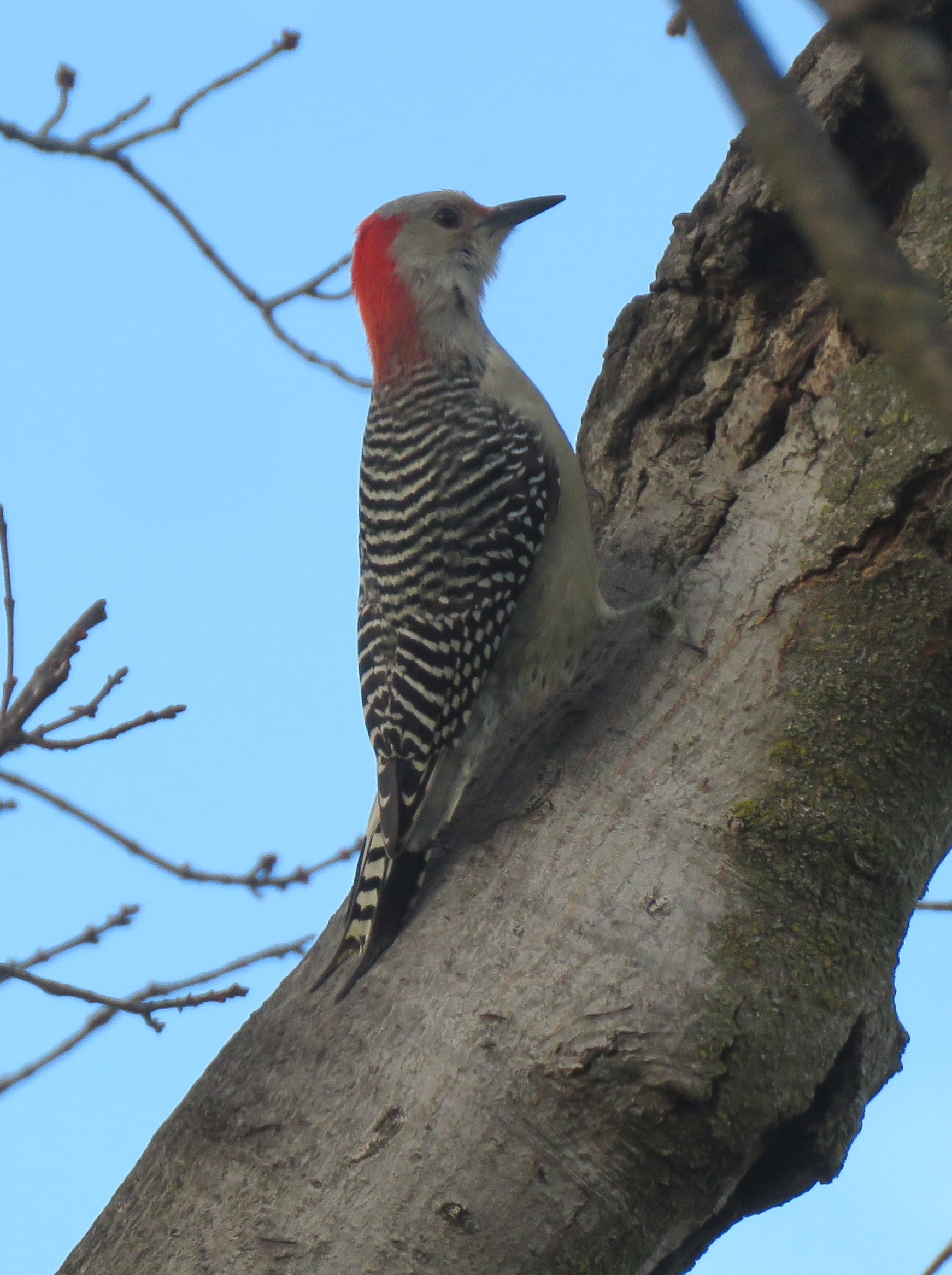
So far this year, Downy, Hairy, and Red-bellied Woodpeckers and Northern Flickers have come to the suet feeder. So have the Carolina Wrens, Carolina Chickadees, and small flocks of European Starlings and Brown-headed Cowbirds.

The star of the show, however, has been a Yellow-bellied Sapsucker. Its feeding pattern has been once in the morning and once in the afternoon. I stop what I’m doing and watch the sapsucker, knowing I’m fortunate to have it appear.
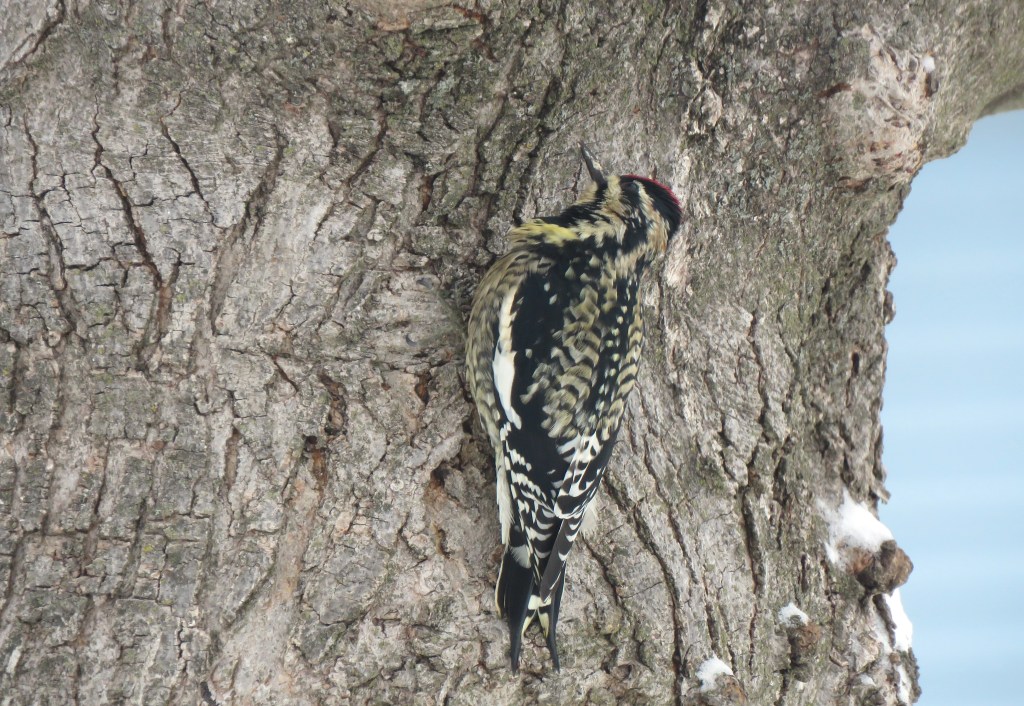
Yellow-bellied Sapsucker. Photo by Bruce Stambaugh

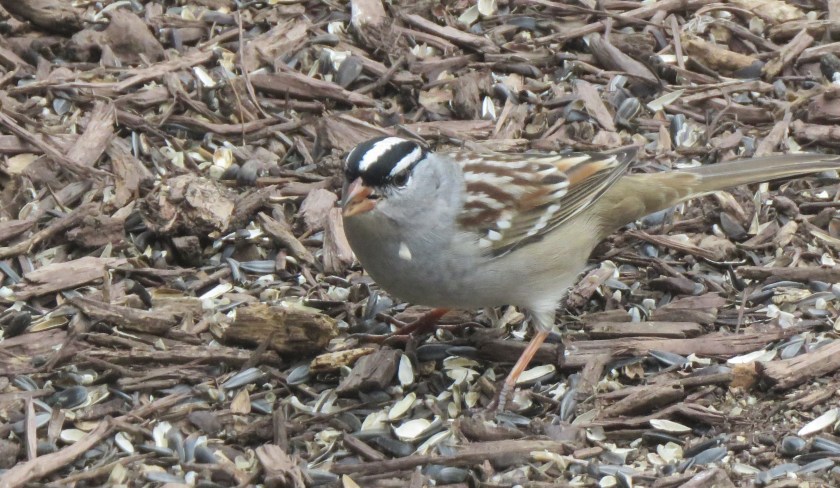
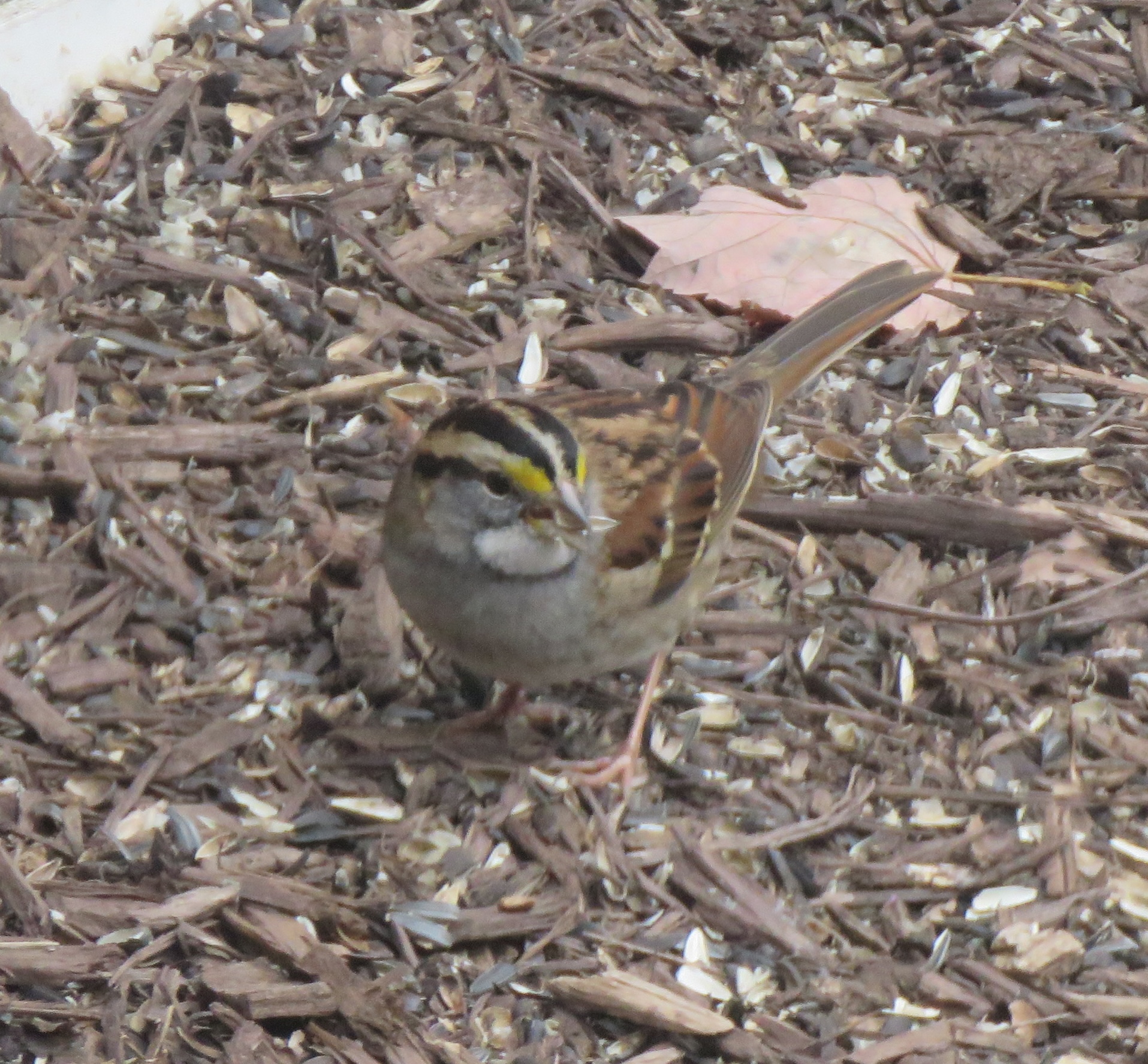
I spread corn to pacify the starlings and cowbirds. Unfortunately, their taste buds prefer the suet. The cardinals, White-throated Sparrows, White-crowned Sparrows, Song Sparrows, House Finches, and Blue Jays ensure the corn doesn’t go to waste.

Our home’s rear windows provide the best view of the feeders and heated birdbaths in the backyard, where most of the cover grows along the property lines. A tubed feeder hangs from the spouting of our screened-in porch, which serves as a shield from strong winds and the strafing hawks.

The hanging feeder holds a mix of black oil sunflower seeds and medium cracked sunflower hearts, which most of the seed-eating songbirds prefer. It’s also the most expensive feed. So, I mix the two seeds to make the precious offerings last longer.

I spread cracked corn on the ground between the feeder and the birdbath. Beyond that, in the yard, I placed a porcelain-topped table and set a homemade wooden feeder on top. More cracked corn goes in that feeder. I also spread some on the ground underneath the table.

Part of the beauty of feeding the birds is the surprises that happen. You never know what will show up at the feeders minute by minute. Like the time I happened to see a Pileated Woodpecker at the nearly empty suet feeder. In a flash, it was gone. But the joy was simply in its appearance, no matter how long it stayed.

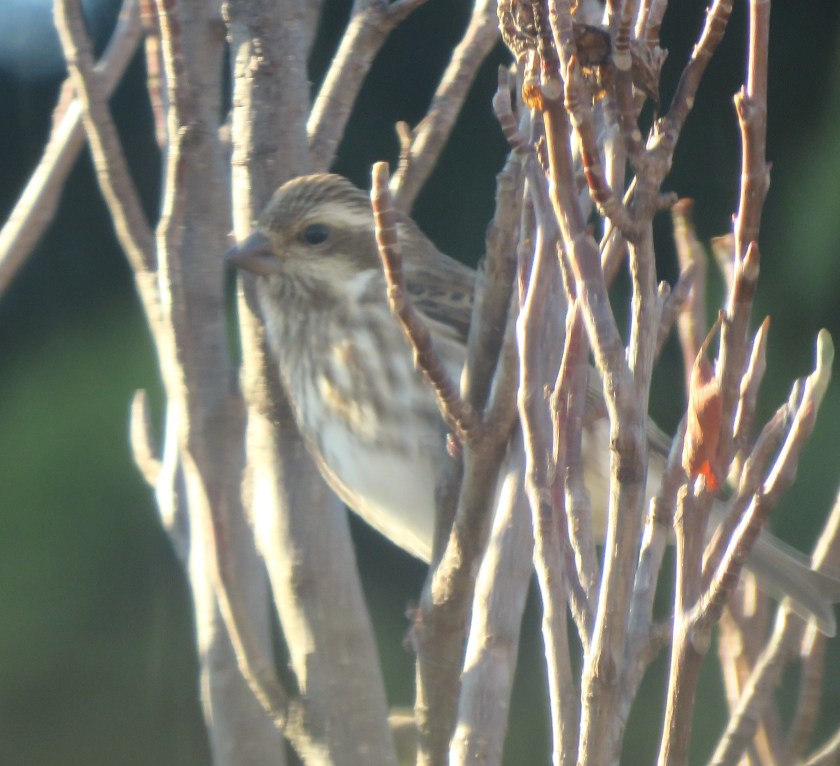
In previous years, small flocks of Purple Finches and Pine Siskins have graced the feeders. What a joy it was to see them.

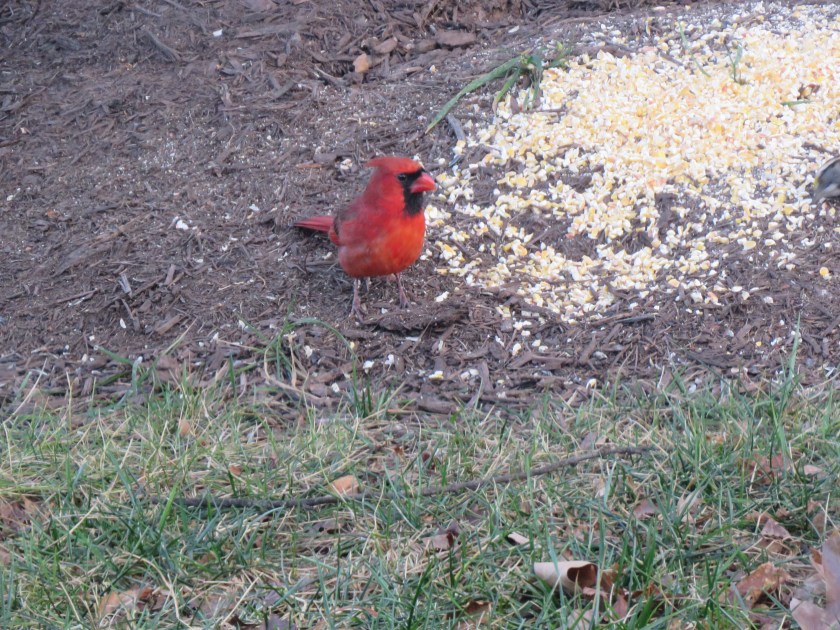
However, I am content with the regular visitors who shelter in the trees, shrubs, and bushes on or near our property. Who wouldn’t love to view a bright red male Northern Cardinal perched in a snow-laden evergreen branch or watch the regal White-crowned Sparrow scratch in the seed only a few feet away?

Of course, I realize that I miss birds when I’m not home or doing other things. I can’t be gazing out of the windows all of the time. Nevertheless, I am thrilled with the ones I do.

Male Northern Cardinal. Photo by Bruce Stambaugh

© Bruce Stambaugh 2025

This picture really is worth a thousand words

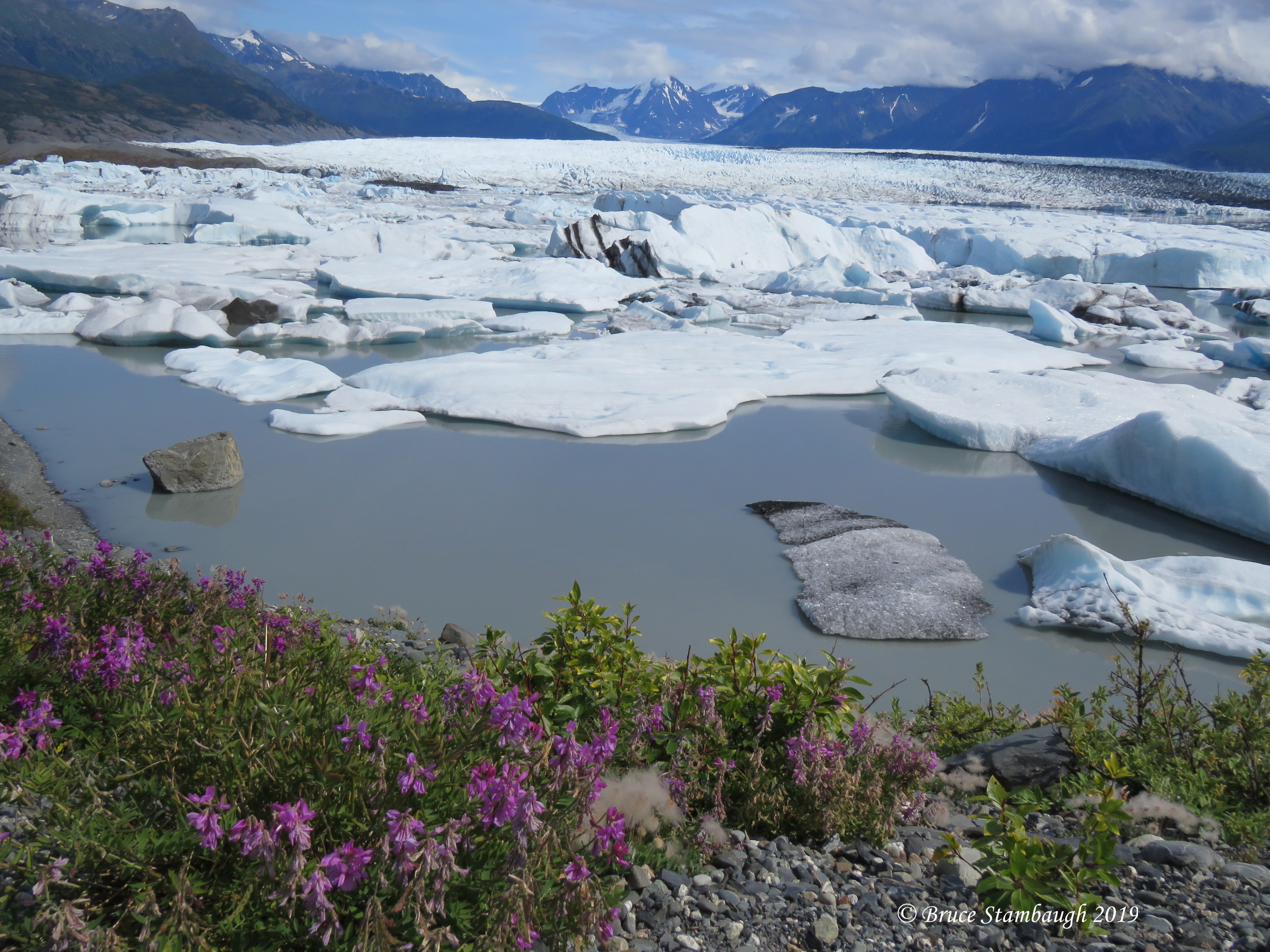
Overlooking the icebergs in front of the Knik Glacier, Palmer, AK.

Of the more than 2,000 photos that I took on a recent two-week trip with my wife, one single photo stands out for me. It wouldn’t win any photo contests, but it best represents the sentiment of our journey to Alaska and Canada’s Yukon Territory.

The picture could have been of the ubiquitous and colorful fireweed blanketing a misty alpine meadow. During our visit, I captured the brilliant pink flower in every stage of blooming. But that’s not it.

I could have easily chosen one of several digital landscapes of the Knik Glacier. Our friends Doug and Rosene took us there on our very first day in the 49th state. The views were stunning, the experience exhilarating. But, no, that’s not my favorite photo.

The early morning view from Flat Top Mountain overlooking Anchorage, Alaska could certainly qualify, too. I could faintly see the grand mountain Denali through the morning haze. That wasn’t it either.

Other possibilities were the many snapshots of caribou grazing in meadows in Denali National Park and Preserve. For shooting at some distance through the window of a refurbished school bus, I thought the photos turned out pretty well. However, none of those shots could compare to my favorite.

This slideshow requires JavaScript.

I had hoped to see a bull moose while on our trip. As we approached the end of our Denali tour, we spied one lumbering through the brush 100 feet from the bus. Even my first bull moose pictures couldn’t match the one that touched me most.

We much enjoyed our walk around the frontier town of Dawson City, Yukon. With its dirt streets and eclectic set of residential and commercial structures, it looked like a set right out of a John Wayne movie. As lovely as that assortment of Dawson photos was, they couldn’t measure up to my pick.

You should see Emerald Lake, a beautiful body of water worthy of its colorful name in the Yukon. Surrounded by mountains dotted with forests and meadows, the shots I got are some of my favorites, but not the favorite.

Shortly after that, we stopped at the quaint village of Carcross, built on a spit of land between two sparkling lakes. I captured a flock of ducks twisting and turning in the sky over Lake Bennett. As ecstatic as I was, those pictures can’t compare to my most precious shot.

Please click on the photos to enlarge them.

The narrow-gauge train trip down the mountain gap from the Canadian border to Skagway, Alaska was breathtaking. With a clear sky and divine mountainous scenery, the shot of the train crossing the trestle over a river is calendar-worthy. Nope. That’s not the one either.

I had high expectations for getting shots of several different glaciers in Glacier Bay National Park. Sea, air, and light conditions made for perfect shots. But as you likely have surmised, they aren’t my choice either.

I was fortunate to capture memorable photos of gorgeous scenery, thrilling wildlife, spectacular glaciers, and eye-catching architecture. Yet, none qualify as my shot of shots. What is?

My favorite photo of our dream vacation is one of the best I have ever taken of my wife. Neva is standing at the stern of our cruise ship as it slowly eases out of port to begin our brief voyage.

The smile on her face is both precious and priceless. As she looks back at the camera, Neva’s radiance lights up the dim evening setting. It wasn’t the anticipation that created that glow. It was the pure pleasure of being there together.

© Bruce Stambaugh 2019

Holidays and friends are a natural combination

Shenandoah sunrise, Harrisonburg VA
Sunrise over Harrisonburg, VA.

By Bruce Stambaugh

I read an article recently about the importance of having friends. The timing couldn’t have been better.

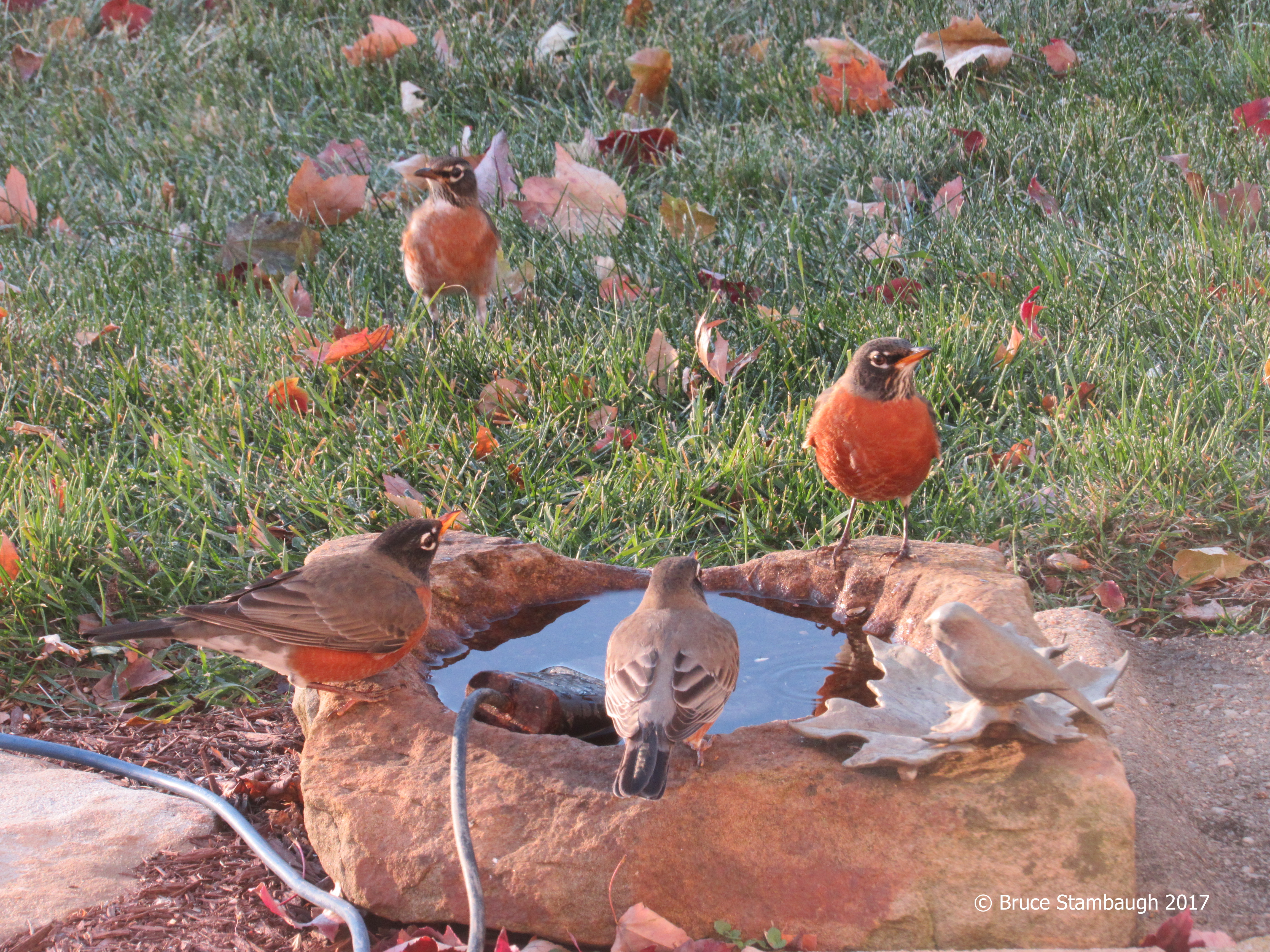
It was one of those bright and beautiful mornings when I should have been exceedingly happy. American Robins welcomed the frosty day with glorious and varied song, a rare occurrence this late in the year. Having done their duty, they continued their exuberance by mobbing the heated birdbath in the backyard and guzzling the refreshing water, perhaps to soothe their rusty voices.

As often happens in our too busy lives, I forgot this welcome distraction all too quickly. We had early morning business in town. Sign here. Sign there, and we were off to a favorite coffee shop that also happens to offer gluten-free scones. But there was a first world problem. I couldn’t find a parking spot, and I didn’t want to do the drive-thru.

holiday food tray, holiday gatherings
A tray of simple foods beautifully decorated by my creative wife.
I had hoped to enjoy quality time with my wife, sip a mocha and nibble at a tasty treat. Because reality didn’t meet my expectations, I punted and drove home. I know. It was silly of me. Typical man.

Back home I found the article in an email I receive daily. The thrust of the story forced me to immediately readjust my stubborn attitude. The piece presented nothing new or earth shattering but redeemed me with just plain common sense.

In a nutshell, here’s what the writer said about friends. We need them, and they need us. He wasn’t talking social media friends either. As human beings, we need real, live, face-to-face friendships.

Numbers aren’t the point. Connectivity is. The keys, the writer suggested, were having friends who are dependable, enjoyable, and easy to talk to. It was that simple and yet that hard.

That kind of intimacy can only happen with so many people. The suggestion was to gather together a few friends who share that trio of characteristics. When it comes to friendships, quality should always outweigh quantity. The writer said the group should meet regularly to help bolster the relational bonds.

Now in our busy, bustling 21st-century lives that effort takes time and planning. It also requires commitment. That’s the dependable part.

holiday gatherings, friends
Our small group before we ate a simple holiday meal.
If you aren’t already a part of such a friendship circle, the holidays provide excellent opportunities to start. Food is a necessary common denominator in sharing with friends. It’s the equalizer, the icebreaker, and the unifier of people. Food transcends all human hesitations.

Once the group is created, it’s important to set a regular time and place to meet. Each party or couple should be responsible for some aspect of the meal. It doesn’t have to be a feast. A simple dinner will suffice.

In living in the same locale for nearly 50 years, Neva and I had all of that. We knew what we were giving up when we decided to move to the Shenandoah Valley to be near our grandchildren.

We hoped it wouldn’t be long before we would be gathering with new friends, and that’s precisely what has happened. We’ve joined a like-minded set of former Ohioans who have also resettled in the area. We meet once a month, and food and inspiring conversation are always given elements of our evenings.

Find the folks you enjoy, who are dependable, and who are affable. Begin with a holiday party. It just might be the start of a routine that will fill your life with unexpected joy, just like robins suddenly singing on a chilly December morning.

robins, birdbath
Gathering around water hole.

© Bruce Stambaugh 2017

Bay Photos by Donna

Wildlife photos from the Chesapeake Bay region

ROAD TO NARA

Culture and Communities at the Heart Of India

K Hertzler Art

Artist and nature journalist in the Shenandoah Valley of Virginia.

Maria Vincent Robinson

Photographer Of Life and moments

Gabriele Romano

Personal Blog

Jennifer Murch

Art is the only way to run away without leaving home. -Twyla Tharp

Roadkill Crossing

Writing generated from the rural life

ANJOLI ROY

writer. teacher. podcast cohost.

Casa Alterna

El amor cruza fronteras / Love crosses borders