Where did summer go already?

corn shocks, Holmes Co. OH
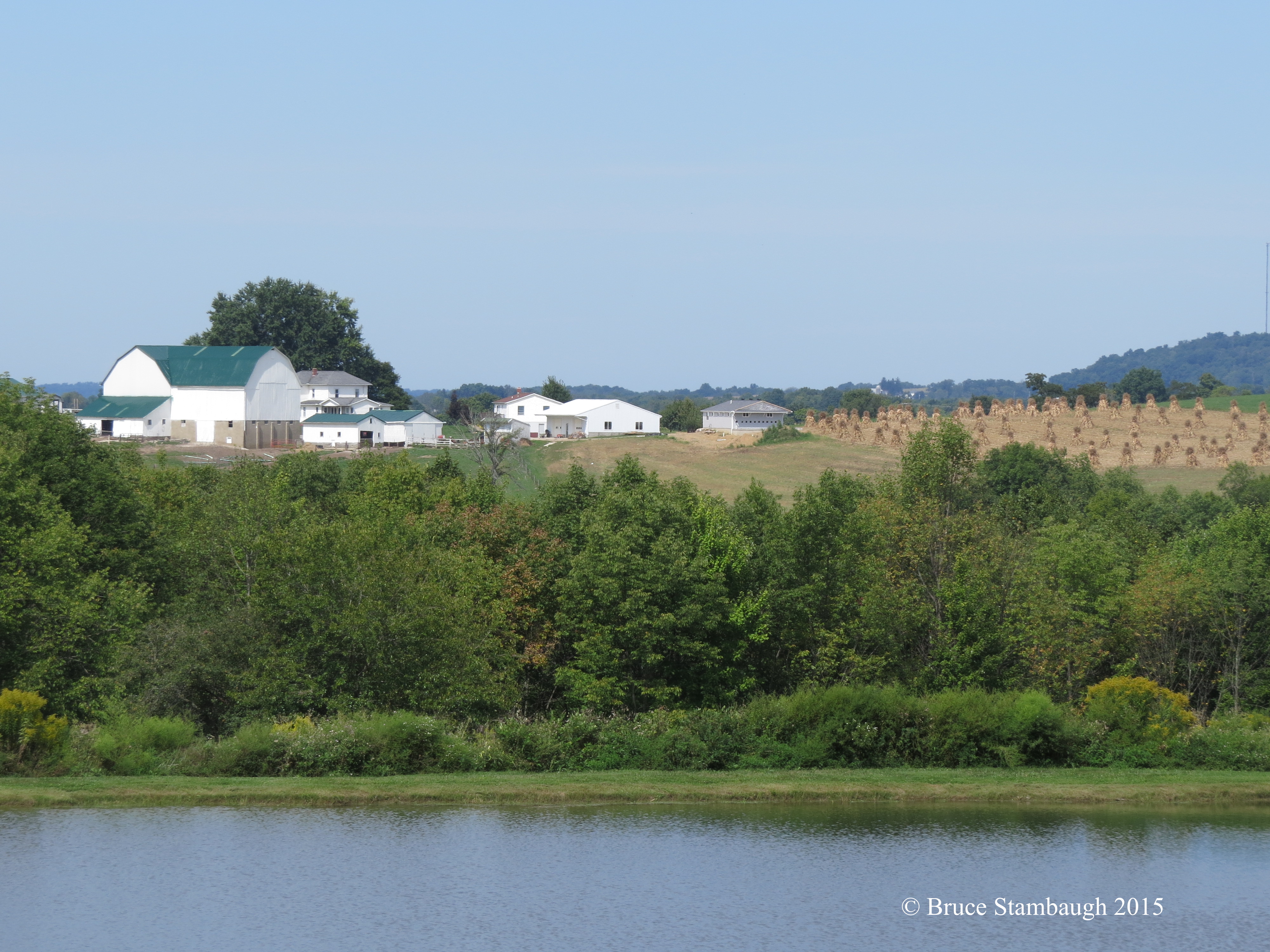
Corn shocks already.

By Bruce Stambaugh

It seems like only yesterday that we were asking ourselves, “When will summer arrive?” I think that was in June when it was still cool and very wet.

Well, a lot has changed since then. It seemed like the summertime months turned on themselves. It was a Jekyll and Hyde summer to be sure.

The persistent rains of early summer suddenly ceased. After the deluge that created localized flash flooding in Holmes County on July 14, regular rains were scarce. We lapsed into a dry spell that lasted too long to help the corn kernels swell with sweetness.

July flash flooding, Holmes Co. OH
Flash flooding.
Initially, truck patches struggled with mildew, mold and rot in the chilly dampness of early summer. Later, though, as crops matured, their unquenched thirst did them in. They ripened ahead of schedule, withered on the vine or failed to produce the desired yield.

So here we are, the autumnal equinox upon us, and we’re wondering, “Where did summer go already?” As humans, we can be as fickle and contrary as Ohio’s crazy weather. It’s in our nature, and we have the grievance gene working overtime.

Therefore, now that September is waning, it seems only fair to wonder what happened to summer. My best answer is, “I don’t know.” I do know, however, that the signs of summer’s end have shown for some time.

School started weeks ago for many students, always a sure omen of summer’s demise. Summer flies other white flags, too.

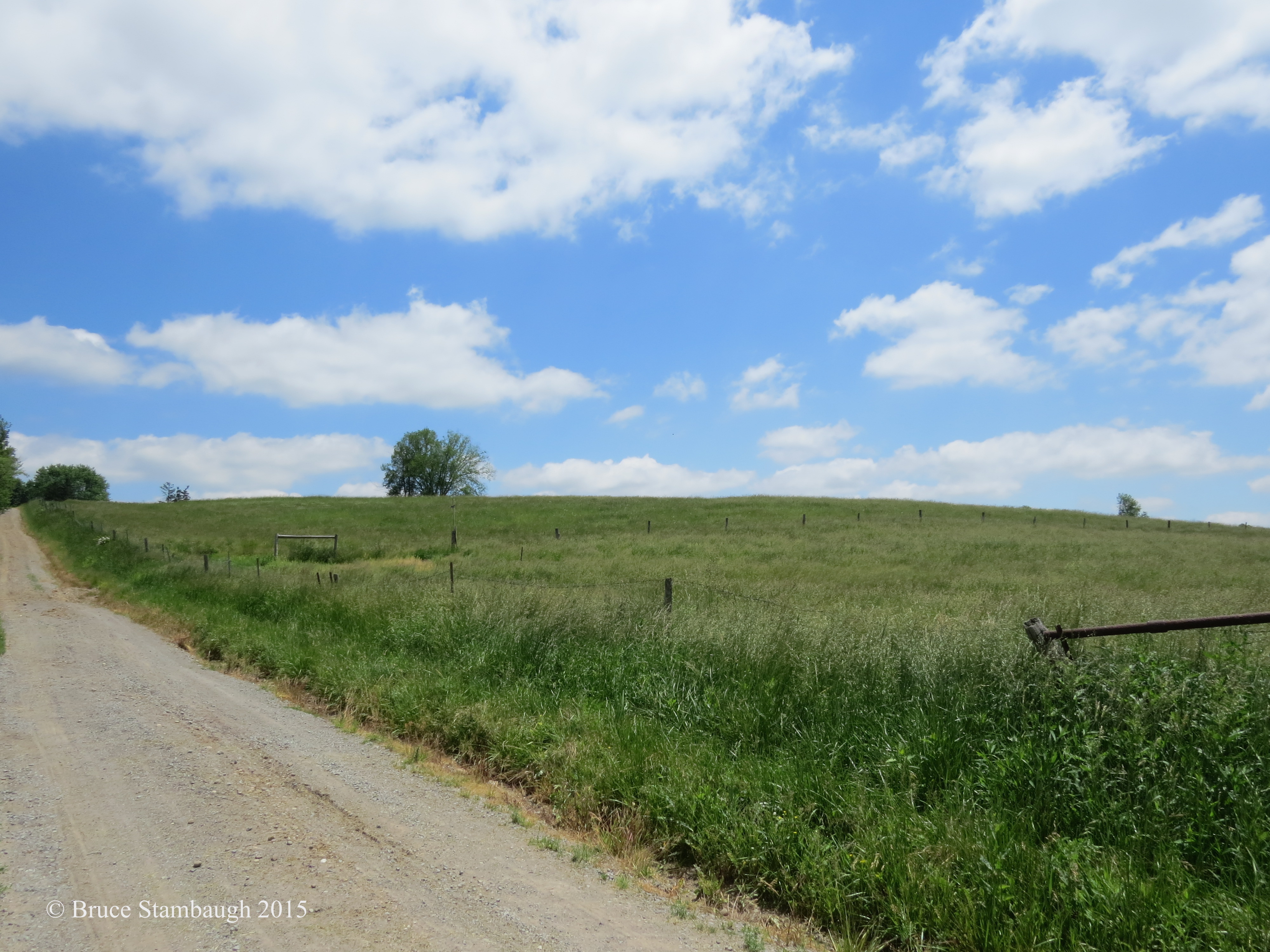
Spurred on by the early rains, rows and rows of field corn sprouted lush and fertile, growing taller than tall. Without regular August rains, they have withered and turned brittle brown overnight. It’s been a long time since I remember seeing cornstalks standing like mustered soldiers this early in the harvest time.

(Click on the photos to enlarge them.)

Fireflies faded, and crickets increased amid the dryness. Our feathered friends have dawned their duller wardrobe for safety sake. Their luxurious singing has muted with their habitat’s colors.

Migration is in full swing for birds and butterflies alike. Look quickly. They won’t stay. They have long, challenging journeys ahead.

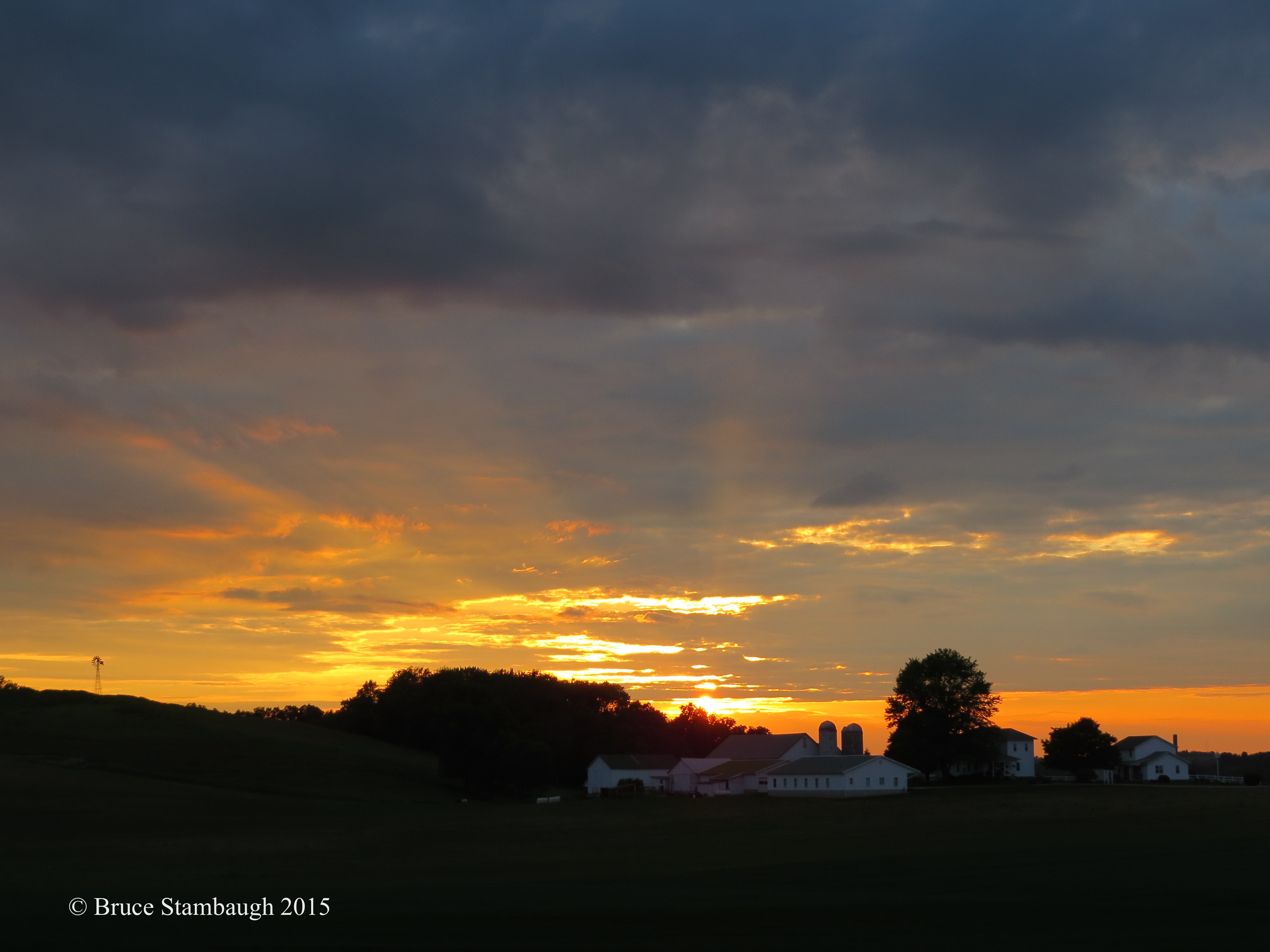
Another obvious indication of summer’s passing is just how soon sunset seems to arrive each evening. And that’s after the sun was late in rising daily.

With the reduction in daylight hours, the air has cooled considerably overall. Of course we’ll still have some splendid days ahead. But day-by-day, week-by-week, the evening and morning coolness forces us to dress in layers to adjust to the daily variables.

Summer has gradually been waving goodbye in a very colorful fashion for weeks now. Deciduous leaves have been slowly changing from their summer greens into fall’s warmer fashionable trends of crimsons, yellows, and russets. Many leaves have just simply fallen off.

Healthy stands of goldenrod bend and recoil with the slightest breeze. Wild sunflowers separate highways from pastureland. The American Goldfinches couldn’t be happier, gorging on their fresh fruit.

Funny how we humans too often seem to want what we don’t have, and when it does arrive, we long for something else. I think that pretty much sums up summer and answers our rhetorical questions about summer’s arrival and departure.

We can’t control the weather or the seasons. We can only enjoy them whatever weather they bring. The key is to embrace the moment at hand, so we don’t have to look back and wonder where the time went.

Summer is about to depart. Let’s send her out with joy, as we usher in the harvest season with gladness and thanksgiving.

summer sunset, Holmes Co. OH
Goodbye summer.

© Bruce Stambaugh 2015

Friends of friends become your friends, too

friends, birthday celebration
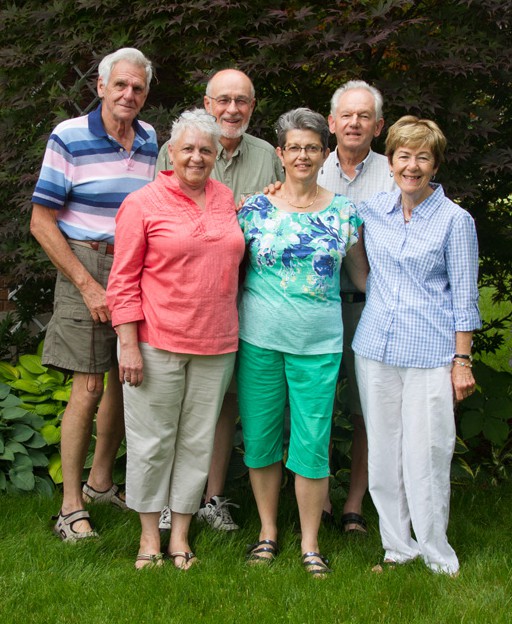
Friends Ruth, Don and Ken before Gail arrived for the surprise. © Bruce Stambaugh 2015

By Bruce Stambaugh

I contemplated the circuitous route of just how I happened to be sitting beneath a party canopy in this Ontario, Canada couple’s backyard. It’s a long but enjoyable story.

It all started when my wife was 14-years-old. Of course, Neva wasn’t my wife then. We married young, but not that young.

Neva accompanied her youth group to a church conference in Kitchener, Ontario, Canada in 1964. With hundreds of teenagers from around the U.S. and Canada attending, with the teens assigned to sleep in homes of local folks.

That’s where Neva met Ruth. Ruth’s family hosted Neva. Neva and Ruth connected right away, and they kept in touch. Seven years later, Ruth and her husband, Ken, attended our wedding in northeast Ohio.

They returned to Ontario. We set up shop here. We all began our careers and started families. We visited Ken and Ruth once when our daughter was just two. Now her youngest child is five. Time melts away, doesn’t it?

With the internet, texting, email, and online chatting science fiction, correspondence via regular mail diminished over time. Life got in the way of our long distance friendship.

About 20 years ago, that unexpectedly changed. Neva saw an advertisement for a tour. She called the toll-free number and guess who answered? Ruth.

friends meeting
Meeting place. © Bruce Stambaugh 2015
Their personal connection was restored. Ken and Ruth have visited us here in Holmes Co., and we’ve returned to their place in Kitchener. We even vacationed together once. Sometimes we meet in between.

When Ruth learned that Neva and I had become snowbirds to Florida’s Amelia Island, she mentioned that their across the street neighbors also wintered there. That’s where our life circle began to expand.

Ruth exchanged contact numbers with their neighbors and us, and the result was pure magic. In February 2014, we arranged to meet Don and Gail at a coffee shop in Fernandina Beach, the island’s only town.

Before the first sip of coffee, the four of us were yacking away as if we had been lifetime friends. Gail was born in England and still has that lovely disarming accent that is as genuine and gentle as she is. Don was from Bermuda and carries that notorious island swagger with him still, even though he’s been a Canadian now for years.

We chattered like teenagers at a soda shop. It didn’t take long to discover that both Don and I had been volunteer firefighters. As if that wasn’t enough to cement our friendship, photography and nature were also common hobbies.

Having been to Bermuda a couple of times ourselves, we knew many of the locales they mentioned. Don shared stories from his childhood until the present.

true friends
Gail and Neva. © Bruce Stambaugh 2015
Gail and Neva got along famously, too. While Don and I were off shooting too many photos, our wives were happy just to shop, browse thrift stores, or sit and share. They clicked like childhood friends.

A carpenter by trade, Don was intrigued to learn that the wood industry was king in our county. Over the next month, we would take day trips together, go out to eat, or just play dominoes. That pattern repeated last winter.

That brings me back to sitting under the canopy. We surprised both Don and Gail by crashing her surprise birthday party.

For that little coup, you can blame Ken and Ruth. That’s what lifelong friends do for one another. They help create other equally robust friendships.

That’s the thing about friendship circles. They enrich your life.

friends
Friends. © Don Brown 2015

© Bruce Stambaugh 2015

Sleepyhead

sleeping barn owl, juvenile barn owl
Sleepyhead. © Bruce Stambaugh 2015

When the farmer called me the other morning, I was away from home. He said he had two juvenile Barn Owls sleeping near his barn. My wife and I finally arrived at the Amish farm two miles from our home. The owls were still in the same place. Both were still sound asleep despite being only a few yards from a busy highway.

The owls had recently fledged from their nest box in the farmer’s barn. Rather than be disturbed by their younger siblings, still too young to fly, each owl found a personal, private spot to snooze. This one chose a silver maple tree in the farmer’s yard. The afternoon sun highlighted its breast feathers and some of the tree’s leaves.

“Sleepyhead” is my Photo of the Week.

© Bruce Stambaugh 2015

Some days are simply for the birds and more

Amish farm
The farm. © Bruce Stambaugh 2015

By Bruce Stambaugh

Some days are simply for the birds.

Recently, I had a couple of days that were exactly that. I helped out a friend by leading a few birding field trips to a local farm.

The target birds were young Barn Owls, a couple of fuzzy baby American Kestrels, and bubbly Bobolinks. In a rather rare situation, both Barn Owls and Kestrels had hatched their young in nesting boxes the farmer had erected in his old bank barn. The meadow across the road remained uncut so the tinkling Bobolinks could frolic and flourish.

The farmer and his family went out of their way to accommodate both the birds and us. Their farmstead was neat as a pin. Flower beds and gardens were nearly pristine. The three generations that called this place home welcomed us with open arms and hearts.

Both the farm’s setting and the intentional agricultural techniques employed accounted for the diversity of birds and other wildlife. Surrounded by rounded hills dotted with emerald woodlots, the land rolled away from the farm buildings more like waves than fields.

This slideshow requires JavaScript.

I imagined in a birdseye view a quilted panorama. Broad patches of variegated greens and tans from forested hills, alternating fields of pasture and croplands stitched together by brushy fencerows created a pastoral patterned effect.

Such a landscape also enhanced the desired habitats and food sources needed for the various avian species. It was obvious the farmer, typical of many in our area, understood the balance between conservation and productivity. Sad to say, some deem that approach as inefficient or even old-fashioned.

The days were precious in so many ways. Cottony clouds hung in salient skies over windswept grasses nearly as tall as the weathered wooden fence posts that delineated their boundaries.

The meadow’s high grasses mingled with seedy weeds, and wildflowers danced in the wind beneath while the Bobolinks, Eastern Meadowlarks, Song and Savannah Sparrows and Red-winged Blackbirds let loose. The birds’ melodious chorus easily drew the attention and appreciation of each group. All the birders, spanning three generations, thought the birds and their songs beautiful and luxurious.

(Click on the photos to enlarge them.)

Though he said he wasn’t a birder, the kind farmer had erected nesting boxes in his ancient barn for the owls. That is what attracted folks from near and far for this special chance to view the birds. It was indeed rare to have both owls and falcons nesting in the same barn.

Participants hailed from cities. Others lived nearby. Their ages ranged from preschoolers to octogenarians. A courageous woman on crutches in the midst of cancer treatments even ventured forth. I drew strength from their enthusiasm.

Atop wobbly ladders, we viewed the baby birds one by one through a pencil-sized peephole drilled in the plywood boxes made by students at a local vocational school. A small, square hole cut into the barn siding permitted the adults to enter and exit to feed their young.

Below, hushed conversations ensued in each group. Sunlight streamed through the intentional spaces between the horizontal clapboards. Still the barn was dark and steamy.

No one complained whatsoever. All realized what a privilege it was to view the birds and enjoy the genial hospitality of this marvelous family who welcomed all of God’s creatures.

These glorious days were definitely for the birds, obviously in a juxtaposed sense. The smiles on the faces of all the birders declared each visit a joyous success. None of us could have asked for more.

meadow, Amish farm
The meadow. © Bruce Stambaugh 2015

© Bruce Stambaugh 2015

Remembering to be grateful for each new day

Amish buggy, Holmes County OH
Horseless carriage. © Bruce Stambaugh 2015

By Bruce Stambaugh

On my morning walk, my neighbor’s grandsons exited the house well before 9 a.m. They each had their necessary baseball gear in tow, gloves, bat, and ball.

I called out to them, “Baseball for breakfast, boys?”

They just smiled and ran to their imaginary Major League park, the grass groomed immaculately by their grandfather. I walked on, lifted by the sound of bat striking ball.

Because the local greenhouse was having a sale, more traffic than normal traveled the tiny rural road. Believe me, they were busy.

eastern meadowlark, songbirds
Eastern Meadowlark. © Bruce Stambaugh 2015
The chorus from the Song Sparrows, Eastern Meadowlarks, Red-winged Blackbirds, and Red-headed Woodpeckers helped balance the roar of engines and jake brakes accelerating and descending hills on highways a mile away.

That’s one of the luxuries of living in the country. The sounds of life’s contrasts become all too obvious.

Young Amish girls, all three sisters that I knew, pulled an empty wagon toward the greenhouse.

“Going shopping this morning?” I asked them. A simple “Yes” and a few giggles was their retort. I silently lauded the mother for allowing the girls to pick out the desired plants.

This opportunity gave them responsibility, decision making, and experience in money exchanging, all valuable life skills. It was just one example of raising children in the way they should go.

As I reached Jonas’ farm, his wife walked down the sidewalk to the gravel driveway where her husband waited in the buggy. I waved, and Jonas returned the common greeting.

All the while I strolled and interacted with these good folks, I kept thinking of my friends far away in Syria, Iraq, Honduras, Texas, California, and other foreign countries.

How I wished they could be walking with me to experience this goodness that I take for granted far too often. Instead, some of them were just trying to stay alive, work diligently for peace, help the needy, and recover from massive flooding.

Amish, Amish boy, bicycle
Biking by. © Bruce Stambaugh 2015
At that point, I embraced them and the day the only ways I knew how. I thought and prayed for them as I walked along on this lovely morning. I hoped it was as divine for them whatever their current situation.

When I passed by the greenhouse on the return trip, there was Jonas again. He was sitting in the buggy while his wife looked for flowers and plants.

I kiddingly cried out to him, too. “Don’t you like shopping, Jonas?”

“I trust my wife,” he said. I bet he helped her plant whatever she bought though. That’s the kind of betrothed devotion I admire.

Potting shed, landscape decorations
The potting shed. © Bruce Stambaugh 2015
Down the homestretch, where traffic gets busier and louder, an Indigo Bunting sang from deep within a woodlot. I stepped to the road’s side to let the vehicles zip by, and to listen to this magical sound. I wished the drivers could hear it as well.

When I reached our property, my heart sang in harmony with the birds. My energetic wife was watering a variety of colorful flowers, some she had purchased at the greenhouse sale earlier that morning.

The Eastern Bluebirds flew from the birdhouse I had put up for them. My heart rejoiced all the more. I was glad they had won out over the pesky House Sparrows. A House Wren chattered atop another birdhouse nearby.

I have a lot for which I am grateful. This walk reminded me that each morning I open my eyes I need to say a joy-filled thanks.

rural sunset, Holmes County OH
Rays of hope. © Bruce Stambaugh 2015

© Bruce Stambaugh 2015

Good morning!

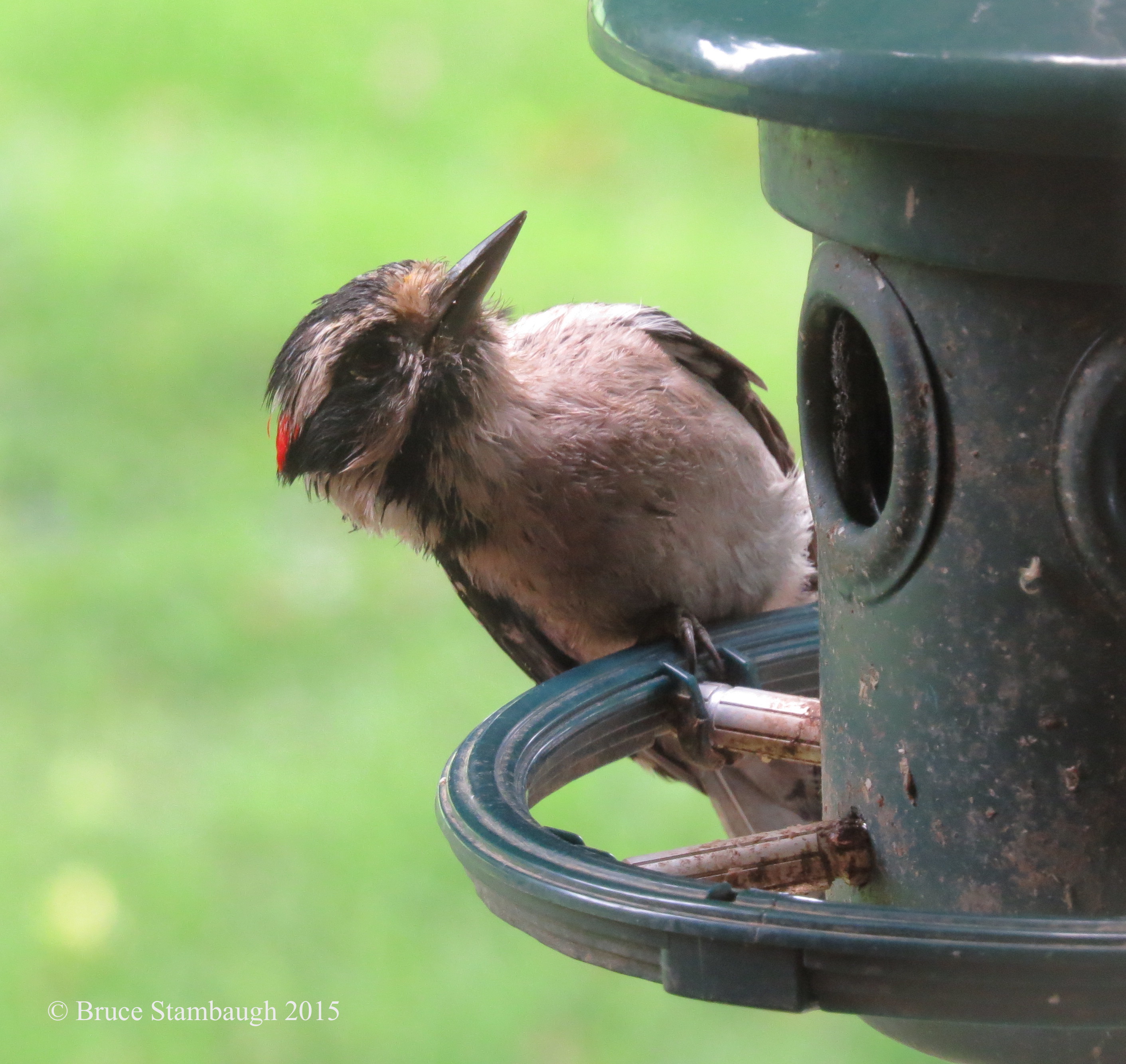
downy woodpecker
Good morning! © Bruce Stambaugh 2015

I am fortunate to have several species of Ohio’s woodpeckers come to my feeders on a regular basis. Most prefer the peanut butter suet feeder that hangs from a branch of the large maple tree in our backyard. A few will venture up to the hopper feeder hanging right outside our kitchen window. They can’t resist the chipped sunflower seeds that many other birds also enjoy.

I’m glad I had my camera in hand when this juvenile male Downy Woodpecker, soaked from the day’s rain, arrived at the feeder. The young bird didn’t seem deterred either by my presence or its rather damp feathers.

“Good morning!” is my Photo of the Week.

© Bruce Stambaugh 2015

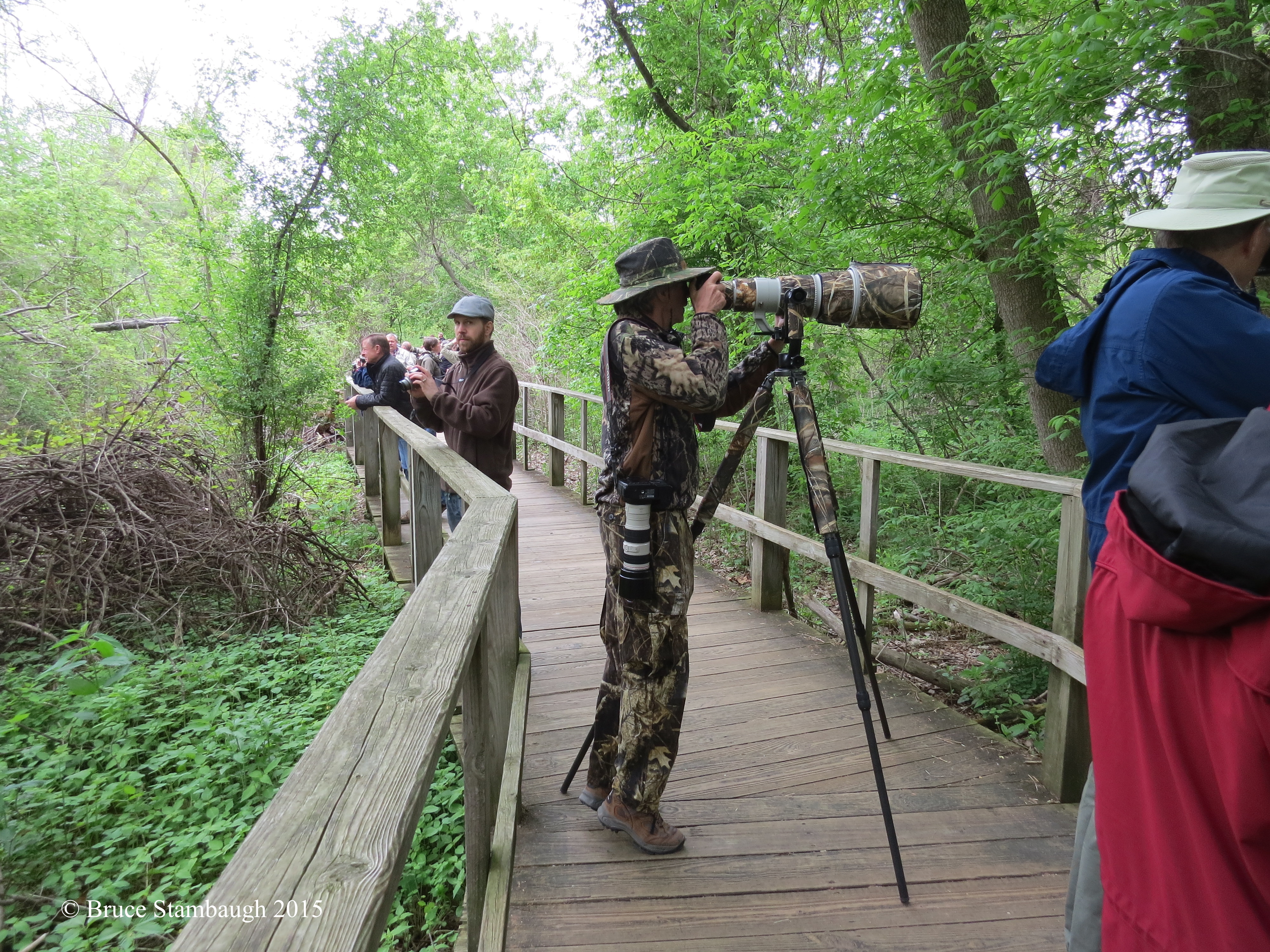
Camouflaged

Camouflaged. © Bruce Stambaugh 2015
Camouflaged. © Bruce Stambaugh 2015.

I recently went in search of migrating warblers and other bird species at Magee Marsh Wildlife Area near Oak Harbor, OH. It was the peak of the Biggest Week in American Birding, sponsored by the Black Swamp Birding Observatory. Thousands of folks from around the world came to the annual event.

Magee Marsh has a well-maintained boardwalk for birders to observe up close the many beautiful birds that flit around. The boardwalk meanders through the various favorable habitats, woods, marsh, water. At times, the walkway is packed. People clump up to get a view of a showy or rare species, with birders helping birders to find the bird. That’s just how birders are. Well, most of them at least.

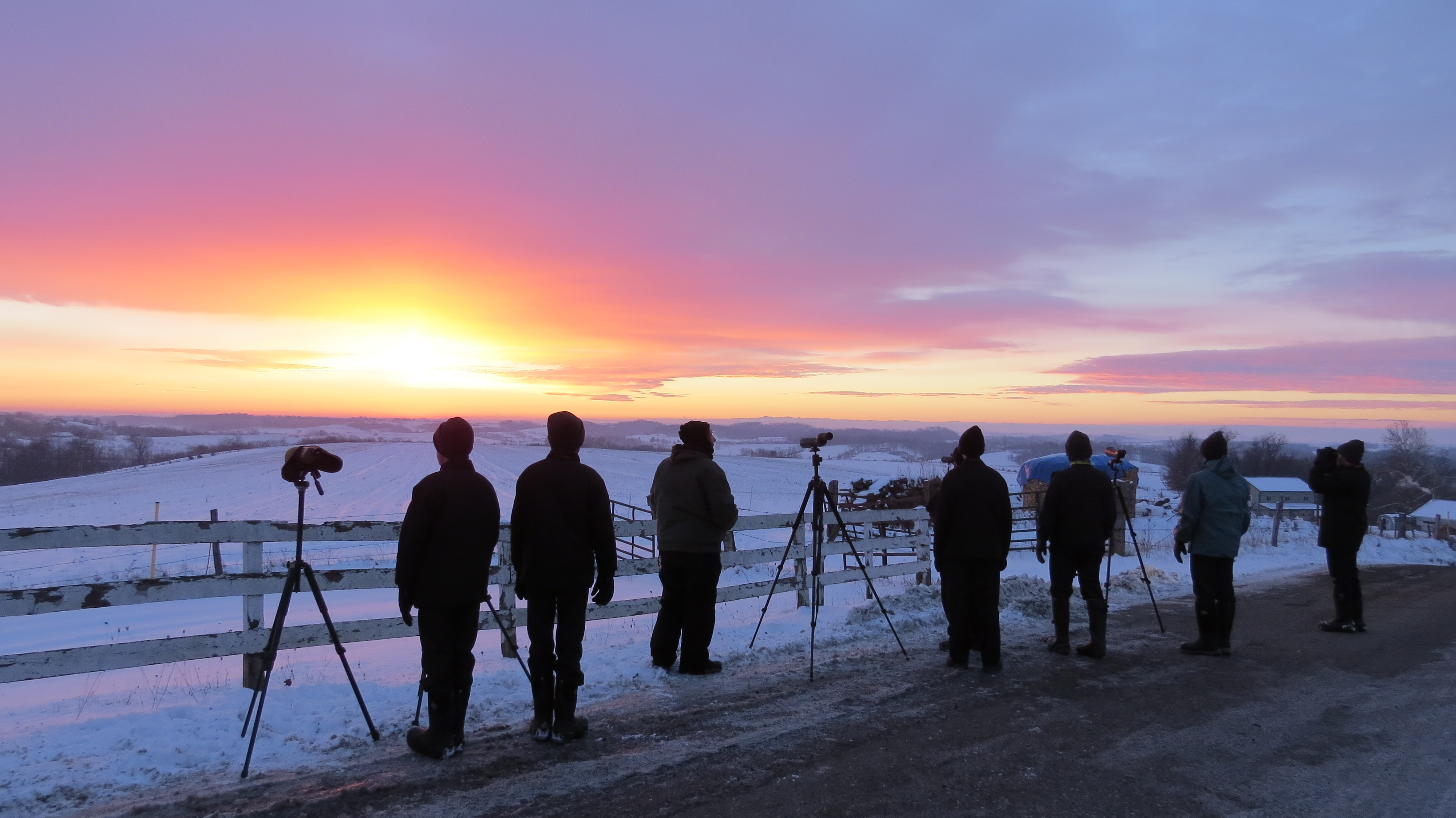
When I came upon this photographer aiming his huge camera at something, I had to take his photo. He was the only person I saw all day that totally blocked the boardwalk. This individual wore all the right clothes and used the best photography equipment.

He clearly only had one thing in mind, and courtesy wasn’t one of them. His camouflage outfit and camera said it all. He was there to shoot photos of birds. He seemed totally oblivious to the fact that thousands of others wanted to do the same and were unable to pass the way he was set up. Also, the boardwalk rules, both written and understood, clearly state, “No tripods.”

I’m glad this photographer was the exception, not the rule at Magee Marsh. “Camouflaged” is my Photo of the Week.

© Bruce Stambaugh 2015

For birders, migration is like Christmas in springtime

Bay-breasted Warbler, migratiing birds, locating birds
Migrating warblers, like this Bay-breasted Warbler, are often easy to hear but hard to locate since they usually stay high in trees and are constantly on the move feeding. © Bruce Stambaugh 2015

By Bruce Stambaugh

Like children dreaming of Old St. Nick on Christmas Eve, this is the time of year birders have yearned for, longed for, relished.

For hardcore birders, spring migration is a Christmas morning that spans several weeks from mid-March to mid-May. Avid birders are especially on the alert now to find the many species they seek, and some they couldn’t even imagine.

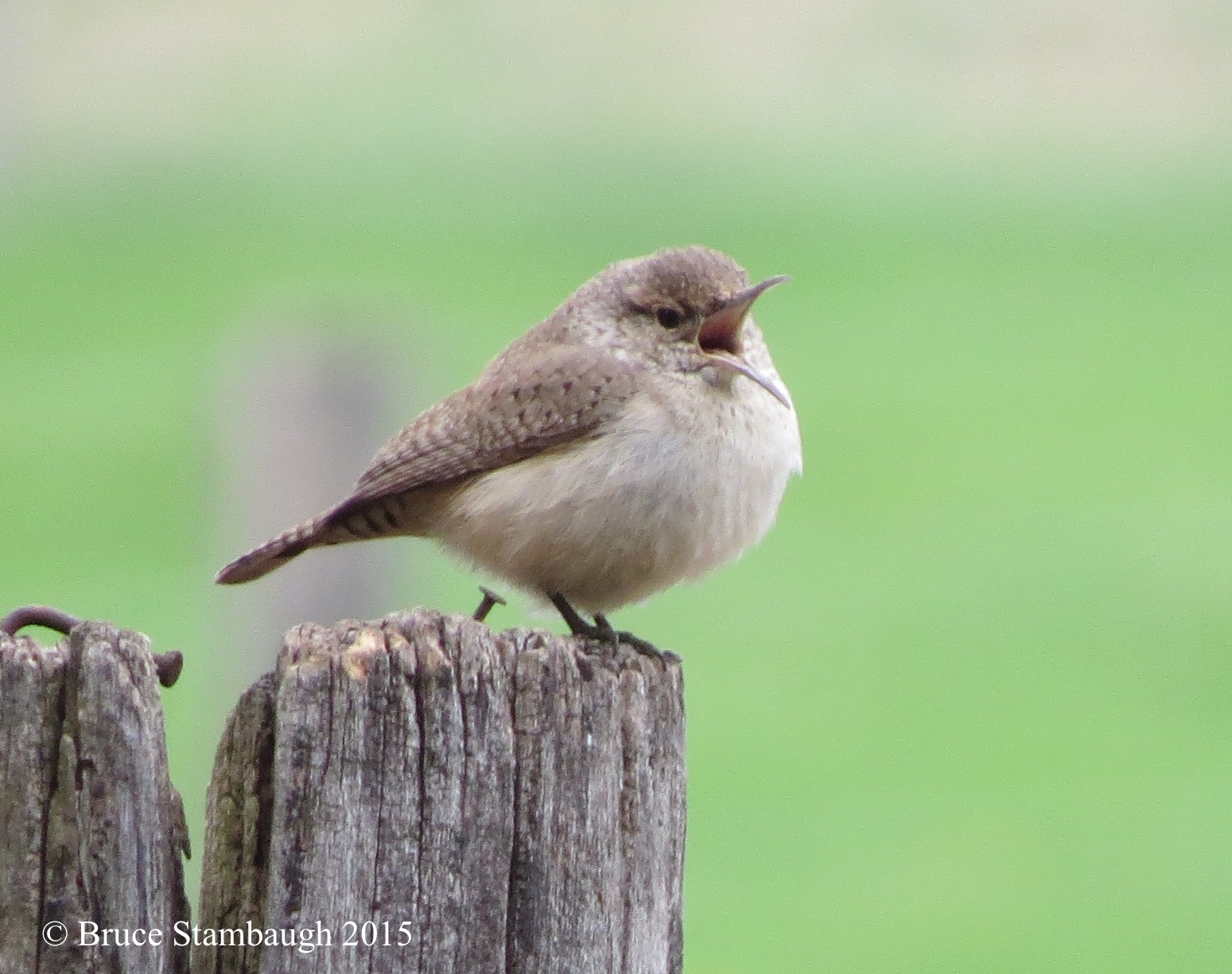
Rock Wren, rare birds, spring migration
Rock Wren. © Bruce Stambaugh 2015
When a rarity shows up like the Rock Wren did last spring, it’s a birding bonanza. The Rock Wren became a rock star. For several days, the bird from America’s southwest was a magnet, attracting folks from far and wide to Holmes County.

Such birds are the exception. The spring migratory norm is to view birds that either return here to nest or to catch a glimpse of those that are just passing through. Depending on the weather, the transients might stay a day or two, or just make a short pit stop to rest and refuel.

The challenge is to be at the right place at the right time to see and hear the birds.

For me, I’m just as happy to note the return of my backyard birds. The Chimney Swifts rattled the fireplace doors as they swooped into our chimney the evening of April 18, the same date as last year.

How do I know? Like most birders, I keep a list of when I see a species for the first time each year. In the birding world, that’s known as the FOY, first of year. For instance, the Red-headed Woodpecker was a day later than last year, arriving April 21.

This slideshow requires JavaScript.

Today’s birders use social networking sources to track the movement and appearance of the various species. That gives the flocks of birders a heads up on finding and photographing particular birds.

We are fortunate in Ohio to have one of the best locations in the country to observe and hear a wide variety of transitory and returning birds, especially warblers. This time of year both birds and birders pack Magee Marsh Wildlife Area.

A conservation group, the Black Swamp Bird Observatory, located at the entrance to Magee Marsh in northwest Ohio, sponsors “America’s Biggest Week in Birding.” In fact, it’s going on right now.

These folks welcome thousands of birders, amateur to professional, in hosting this attractive annual festival. Magee Marsh, a state park, is billed as “the warbler capital of the world.” Having been there on many occasions, I can attest to that.

Birders from around the world converge on Magee Marsh just to watch the warblers and shorebirds come and go. It’s not unusual to observe 20 or more kinds of warblers in just a few hours. Magee Marsh and the surrounding acreage are protected habitat that ensures safe harbor for migrating and nesting birds of all sizes, colors and species.

My first visit to Magee Marsh years ago was indeed like Christmas. A few steps onto the wooden boardwalk and I spotted a variety of colorful warblers decked out in their impressive breeding plumage. The brightly colored little birds looked like Christmas tree ornaments perched on low-hanging tree branches.

Where I live here in Ohio’s Amish country, we don’t necessarily have to drive that far to enjoy the migrating birds. The Killbuck Marsh Wildlife Area, the Holmes County Trail, The Wilderness Center, and the many ponds and lakes in our area provide excellent habitat for a variety of birds.

Or you can just step outside and watch and listen. You just might think it’s Christmas in springtime.

overlapping birds in spring migration
Winter and summer residents, like this White-crowned Sparrow, and male Rose-breasted Grosbeack, oftern overlap during spring migration. © Bruce Stambaugh 2015

© Bruce Stambaugh 2015

Morning sunshine

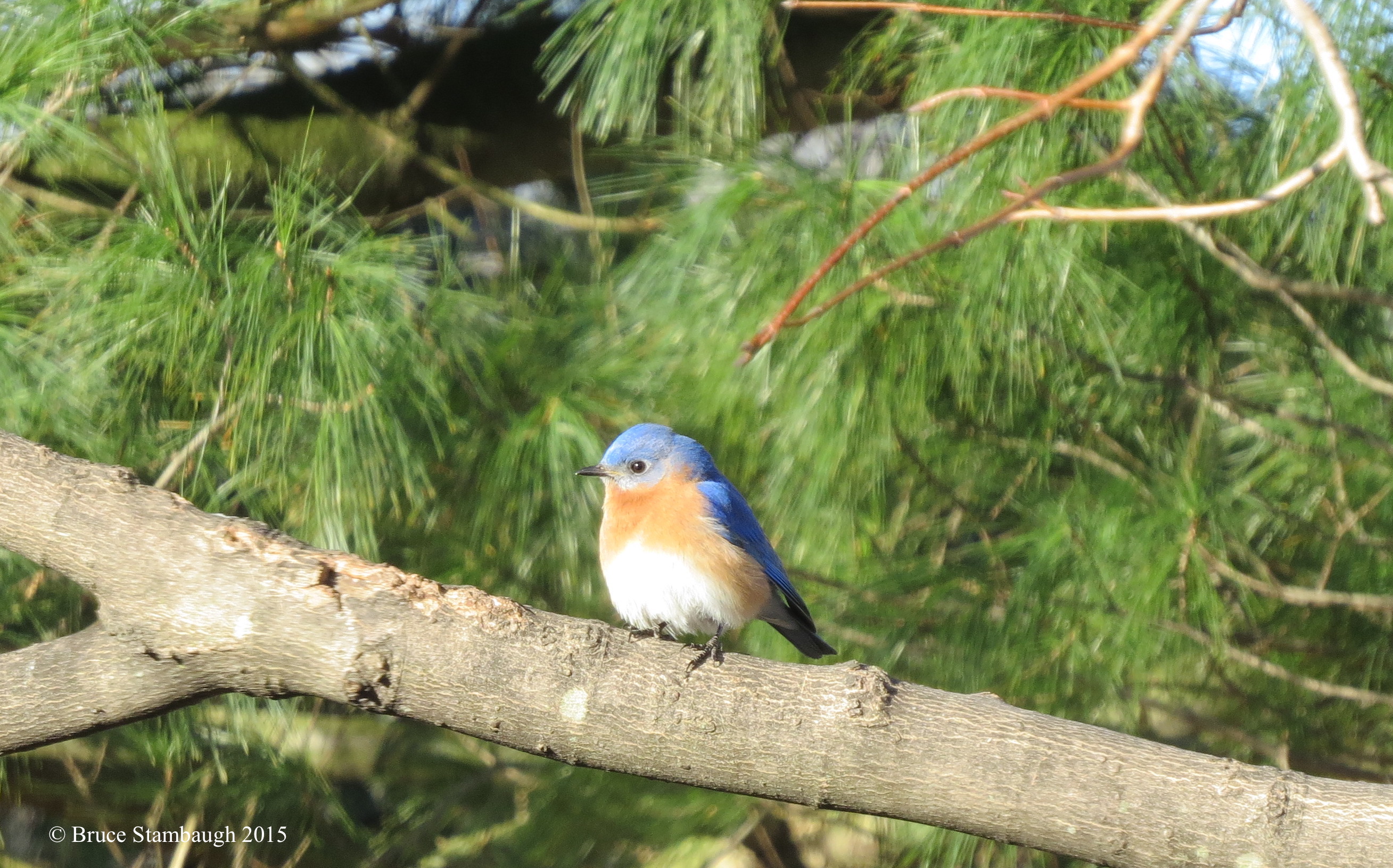
male eastern bluebird
Male Eastern Bluebird. © Bruce Stambaugh 2015

Though the air was still cold, the morning sun was shining brightly. This male Eastern Bluebird took full advantage of it, too. As it waited on a chance at the peanut butter suet feeder in our backyard, the beautiful bird soaked in the sunshine’s warmth.

The sun and the bird together brought morning sunshine to me. “Morning sunshine” is my Photo of the Week.

© Bruce Stambaugh 2015

Liquid striations

Ruddy Duck, duck on pond, art photography
Liquid striations. © Bruce Stambaugh 2015
When I snapped the shutter, I thought I was taking a photo of this male Ruddy Duck in its winter plumage. When I downloaded it to my computer, I realized I had much more than a duck on a pond.

The long lens, the lighting, the ripples in the pond all contributed to my Photo of the Week, “Liquid striations.”

© Bruce Stambaugh 2015

Bay Photos by Donna

Wildlife photos from the Chesapeake Bay region

ROAD TO NARA

Culture and Communities at the Heart Of India

K Hertzler Art

Artist and nature journalist in the Shenandoah Valley of Virginia.

Maria Vincent Robinson

Photographer Of Life and moments

Gabriele Romano

Personal Blog

Jennifer Murch

Art is the only way to run away without leaving home. -Twyla Tharp

Roadkill Crossing

Writing generated from the rural life

ANJOLI ROY

writer. teacher. podcast cohost.

Casa Alterna

El amor cruza fronteras / Love crosses borders