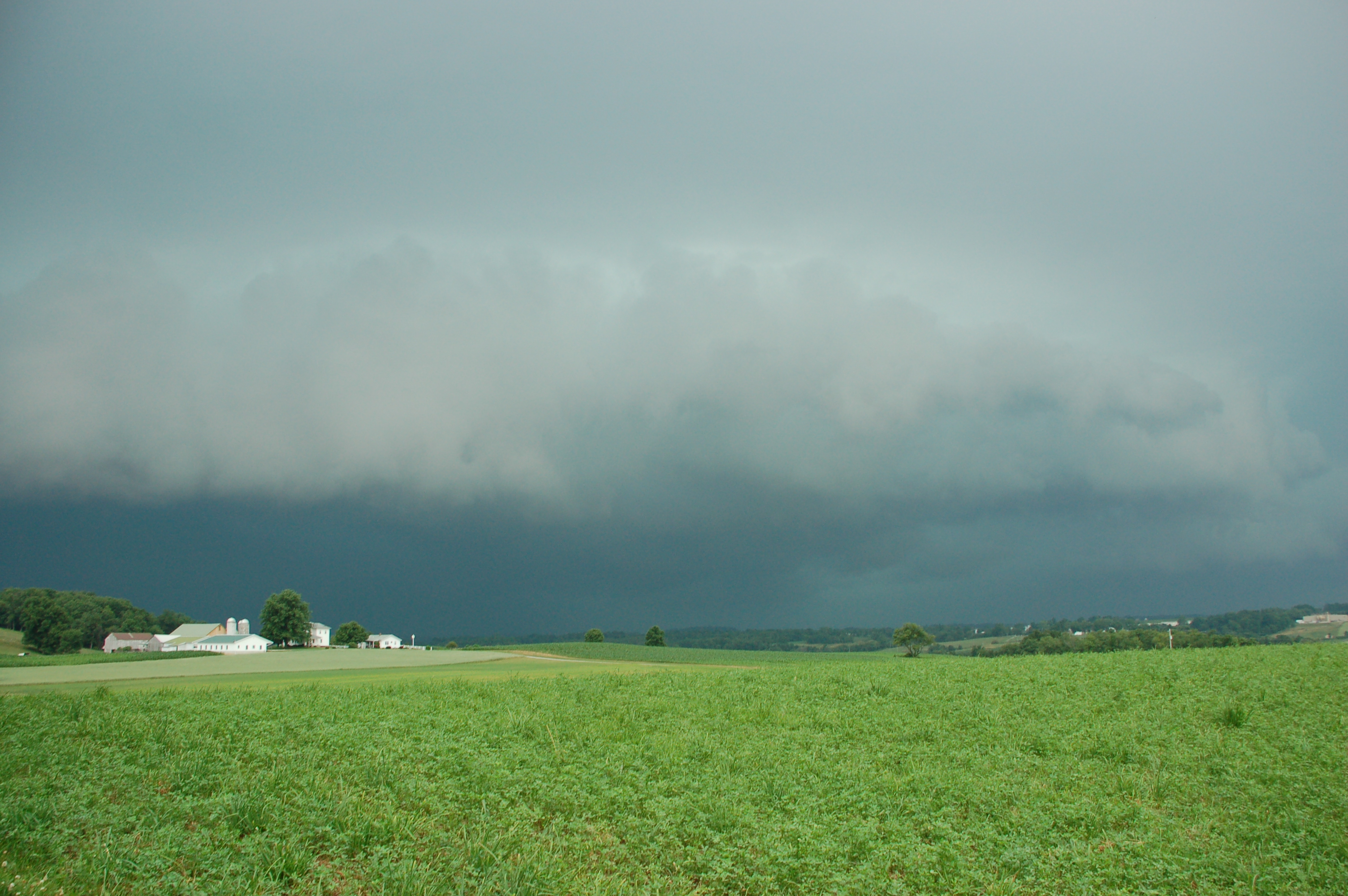
From the tallest trees
of the interfacing woods,
the red-tailed hawk gleans
the pasture, grain and hay fields,
fallow, fertile, emerging, golden,
winter, spring, summer and fall.
Bruce Stambaugh
Feb. 6, 2011


By Bruce Stambaugh
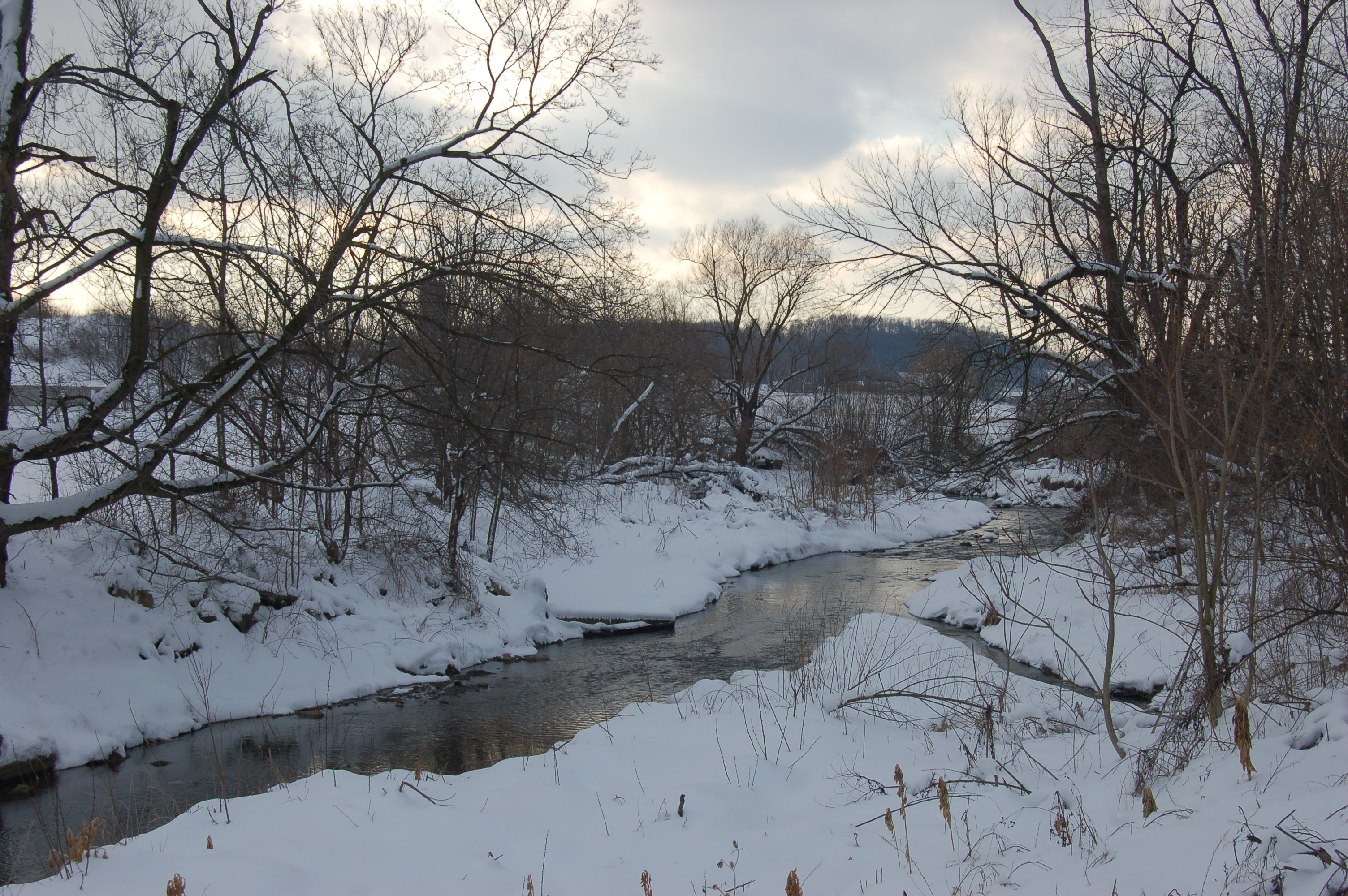
Like it or not, winter is right around the corner. We have already tasted some of winter’s appetizers, snow, temperatures in the teens, and, of course, shortened daylight.
Fortunately here in Ohio’s Amish Country, the snow didn’t amount to much, and the skinny temperatures quickly moderated. Once winter arrives officially next week, that could change. We could have a snow-filled winter like last year, or worse yet, one like 1977 and 1978 when snowdrifts reached 20 feet or more.
Living in Ohio all my life, I have found it helpful to mentally and physically prepare myself for the inevitable. Whether it is prolonged or only stays awhile, the weather will get cold, and it will snow from time to time.

Those who dislike that harsh reality and who are in a position to do so flee south or southwest to warmer climes. At least the snowbirds hope they will be warmer. Last year proved otherwise. It frosted in Florida and snowed deep in the heart of Texas.

All of us can’t escape the onslaught of winter’s harshness. Some of us don’t want to. Others are involuntarily stuck here to fend for themselves.
I have fond childhood memories of the benefits of winter, like ice skating, sledding, flinging snowballs and digging snow tunnels. Most of them likely were indeed in the throes of winter. But I do remember delivering newspapers in a glorious Christmas Eve snow.
I also recall hustling our young son and daughter into my in-laws’ farmhouse amid stinging, sideways snow, howling winds, and frigid wind chills. There are times when Ohio winters are at their absolute worst in December.
We then anticipate January and February to be utterly horrible. And low and behold they might turn out to be meek and mild, not to mention mucky.
Whether we stay or whether we go, winter, regardless of the weather, will arrive. We might as well get ready for it.

In many ways, we already have. The tomato trellises we erected last spring have long been coaxed out of the ground and stored in the garden shed, thanks mostly to one of our kind, strong young neighbors.
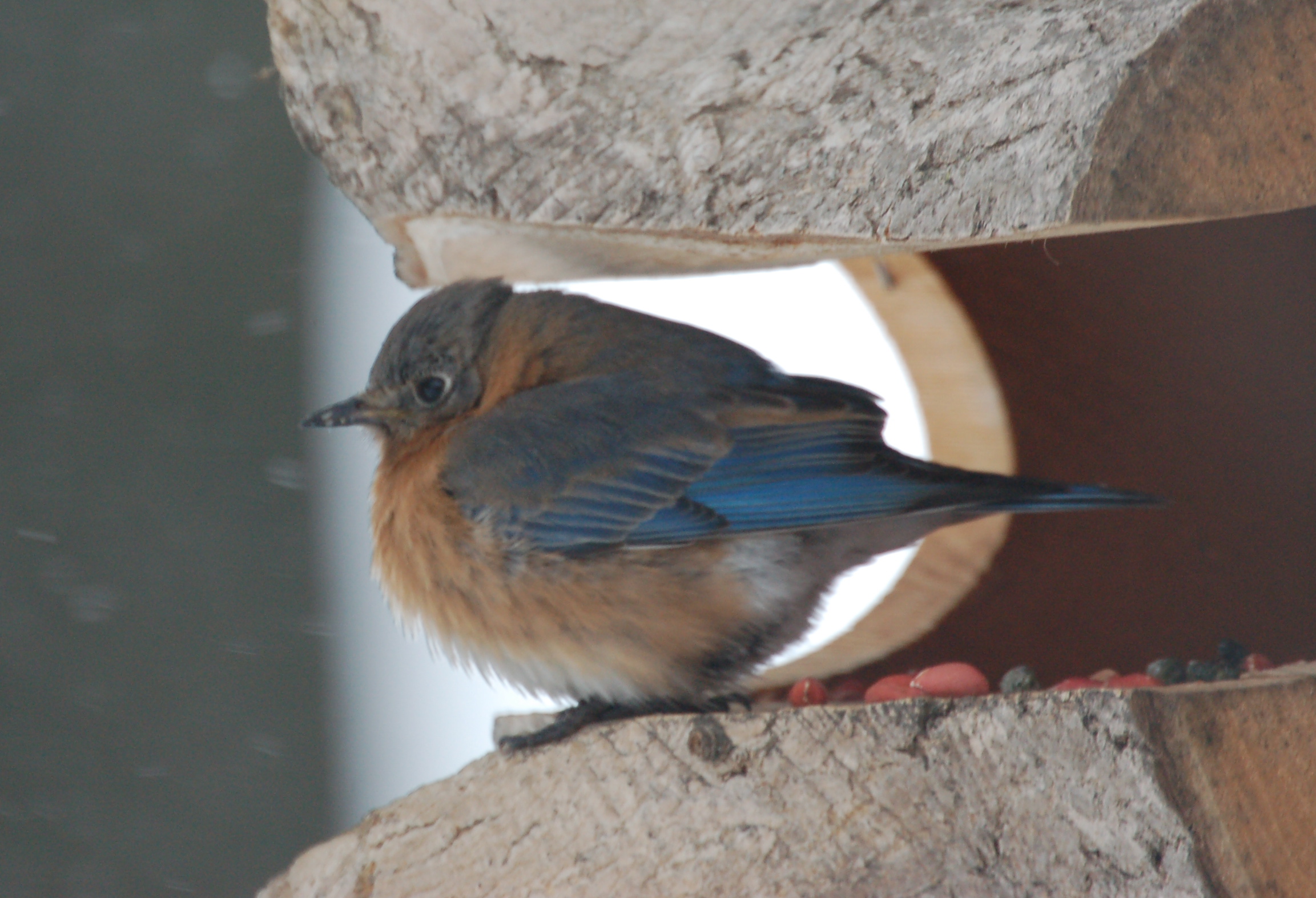
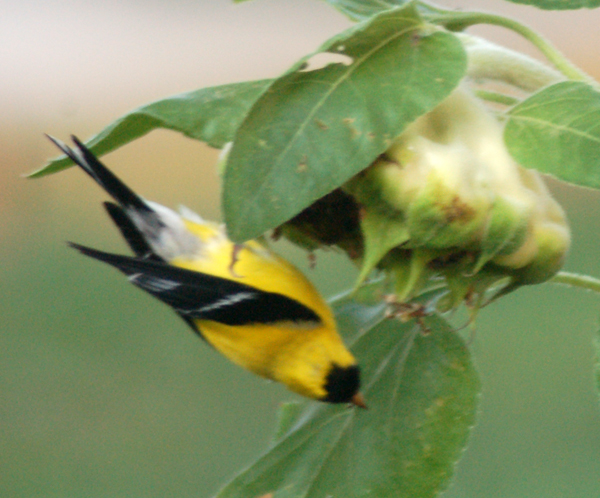
The birdfeeders have been cleaned, filled and hung, and the backyard birds, and a couple of mooching fox squirrels, have already been taking advantage of the freebies. Actually, I am the one that is grateful. Watching the birds, and squirrels, rabbits and occasional deer, enjoy the cracked corn, oil sunflower seeds and suet mixes is my winter’s entertainment.

In truth, I feed the birds year-round. With winter’s approach, I merely increase the number and style of feeders to accommodate the various feeding habits of my feathered friends.
Of course, I can’t neglect the vehicles that transport us from place to place during the winter weather. I make sure each is winterized and ready to endure whatever winter has to throw at us.
The woodpile is stacked high and wide, ready to feed the hungry fireplace. I’d rather be shunning the cold elements in front of a warm fire than on the outside shoveling them. Who wouldn’t?
Winter is nigh. Are you ready?

By Bruce Stambaugh
Even before we left to visit our daughter’s family in Virginia’s lovely Shenandoah Valley, signs of fall were abundant.

A casual drive around the Holmes County countryside provided enough evidence to
convince even an inattentive jury. Autumn had no choice but to plead guilty as charged.
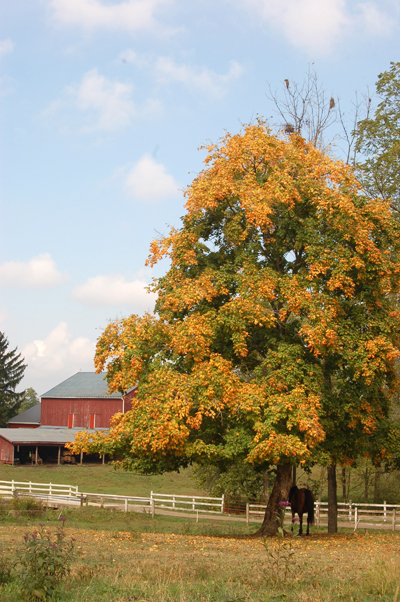
Fall’s natural arrival was indisputable. Leaves had begun their annual transformation from green to some color of the rainbow. Others, due to the late summer dryness, simply fell off the trees altogether.
The regular purr of leaf blowers had replaced the regular whine of lawnmowers, further proof that summer had succumbed to fall. Occasional columns of white smoke signaled smoldering leaf piles.
Fall weather arrived just before we left for our Virginia visit. A strong cold front pushed the warm, muggy air out, and replaced it with cloudy, rainy, cooler days and nights. The annual fall fogs had already begun making morning commutes temporarily treacherous.

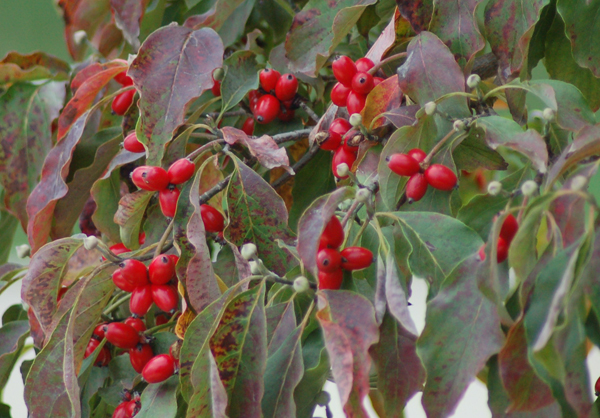
In my own yard, silky green to purplish dogwood leaves accentuated the trees’ bold, bright red berries. The backyard birds weren’t too pleased with me for disturbing their feasting.
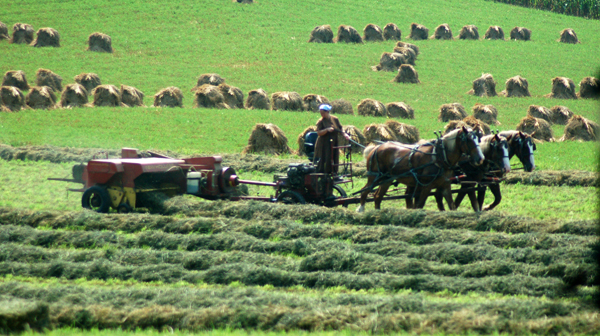
My neighbor was just beginning an early harvest of his field corn, and we had yet to have a frost. Elsewhere, other farmers still resorted to the old-fashioned and nostalgic way of picking corn. They filled their fields with row upon row of shocks, mimicking an encampment of teepees.

A month ago already football had replaced baseball as the primary pastime, whether viewed from the bleachers or the couch. Back outside, squirrels scurried across the road. Some of them didn’t make it, casualty to road kill or a hunter’s sharp aim.
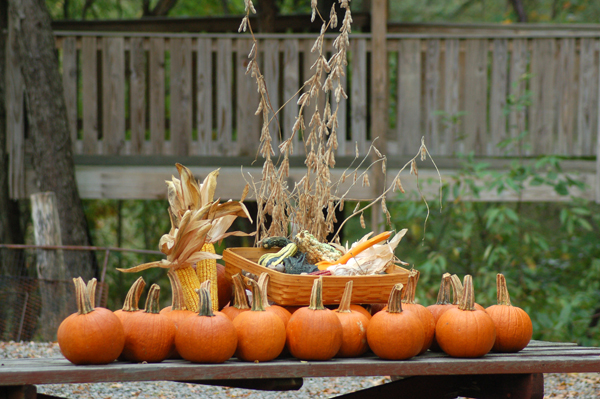
Long before the leaves began to change colors, autumn was being ushered in with human flare. Front porches once home to pots of impatiens, petunias and begonias were now decorated with all sizes of orange pumpkins, gold, white and crimson chrysanthemums and multi-colored and curiously shaped gourds.

For those desiring more man-made symbols, giant ghouls and inflated spiders hanging on webs big enough to catch a bus popped up almost overnight. The business industry had also begun their annual capitalization of fall with seasonal displays and multi-media commercials.
Inventory at roadside produce stands had changed accordingly. Bound bundles of cornstalks and the aforementioned flowers and squash replaced zucchini and tomatoes.
One place banked on a narrow market share. The good folks only offered the scarce bittersweet. By the number of cars in their tiny lot, they seemed to have found their niche.
Fall festivals, often historically annual events, began to celebrate nearly every conceivable aspect of autumn. A town picked a theme, say pumpkins, apple butter, antiques, wooly worms, quilting, or just good old-fashioned fun, and the festival was on.
These endeavors were not unique to Amish country either. Large banners across the main drags of many a town on our drive from Ohio to Virginia announced their particular local event.
Fall even showed its face on menus with fresh pumpkin pie, locally grown apples sliced and dipped in yummy caramel, and of course the seasonal snack mix of candy corn and salted peanuts.

Given all these obvious signs of fall, there can be no doubt. From gardens to town squares, fall is in full force everywhere we look.

By Bruce Stambaugh
The day after my favorite resort town, Lakeside, Ohio, ended its gated season, which was Labor Day, I began to see the place in a different light.
Like Cinderella’s carriage, the town had transformed into its natural state overnight. Streets that had bustled for weeks with pedestrians, bicycles, golf carts and motorized vehicles suddenly became quiet. Lakeside’s population had dropped faster than the stock market.
Cottages that had housed happy families all summer were now boarded up for the winter. Businesses once crowded with customers were also shuttered for the season.

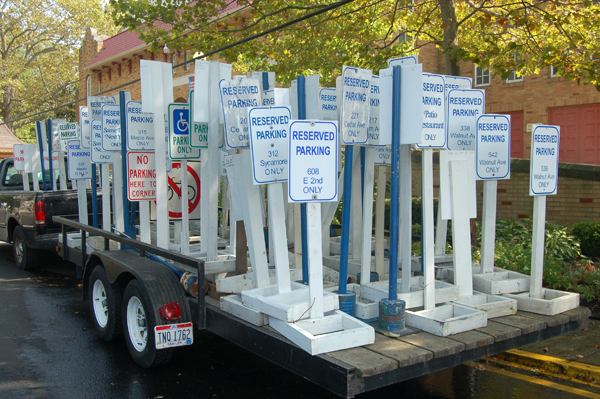
Maintenance crews made their rounds undoing what they had worked so hard to ready three short months ago. They picked up the traffic and parking signs needed to control the passage on the narrow streets with limited parking.
The workers seemed to be in no hurry whatsoever. Perhaps sensing the newfound quietness themselves, they soberly went about their business, the crackling of their portable radios occasionally breaking the hushed spell.
Their pace could have been from the day’s extraordinary heat as much as it was lack of ambition. The land wind wasn’t much help, blocked by the combination of the southerly rise of the peninsula itself, the town’s closely packed cottages and buildings and the giant hardwoods that overshadowed everything.

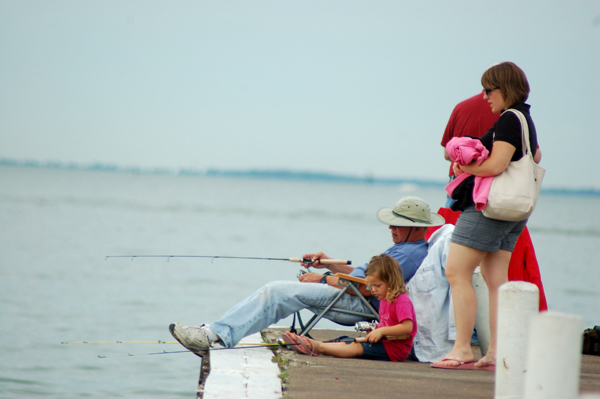
The only relief, if there was any to be had, could be on the dock, which protrudes a football field length into Lake Erie. Normally crowded with sun worshippers, fishermen, and people just wanting to soak in the scene, I nearly had the cement pier to myself.
The afternoon sun blazed away, and the wind was fierce, but cooler than in town thanks to the lake. I faced my folding chair east away from the wind. I was glad I had.

I had taken both camera and binoculars to while away the time. I enjoyed just scanning the broad horizon that stretched from the islands to Marblehead, where a huge freighter was moored at the stone quarry.
The strong westerly wind whipped the waves furiously. Anchored fishing boats bobbed like fishing line bobbers.
Ring-billed seagulls found security from the wind in the lee of the dock. One played King on the Hill. It had landed on a slightly submerged rock, and lorded it over all the other gulls that floated in the choppy water.

High above, another bird caught my eye. An osprey sailed with the wind, searching the shallow waters near the shore for unsuspecting fish. Its mate soon joined the hunt. They circled and hovered but always wind-driven east were soon out of view even with binoculars.
I put the glasses down and quickly noticed smaller, streamlined birds dive-bombing the water. They zigged-zagged and glided, then rose up and hurled themselves into the lake like rocks, but only for a few seconds. The small flock of migrating Common and Forster’s Terns put on quite a show in filling up for the long journey south.
Suddenly the stack of the freighter let loose sooty puffs of diesel smoke. It had taken on its load and was ready to sail. Even though I was upwind and a mile away, I could hear the huge, powerful props churn the water as the massive boat slipped away.

In less than 20 minutes, it had turned northeast for deeper water, destination unknown to me. I, however, knew mine. I returned to our hospitality house for dinner, glad I had taken the time to observe Lakeside in a slower, even more peaceful mode than usual.

By Bruce Stambaugh
Word to the wise. If you ask for directions in Holmes County, Ohio, you just might want to get a second or even third opinion. Better yet, use a map, atlas, a GPS or a combination of those geographical aides.
Here’s why. With three to four million visitors to our fine county every year, some of them get lost, or at least do not know exactly where they are. Shoot. Some might not even know where they want to go.

But given what I have observed and heard over the years, that’s not a problem either. The genial folks who live here will gladly offer some directional advice if asked.
Generally, the directions given answer the directions sought. But not always. Holmes County has its fair share of ornery characters.
Of course, I wouldn’t be one of them, though living where I do I certainly have had plenty of chances. While working outside, it is not uncommon for a car to slow on our busy highway and have either a passenger or the driver ask how to get to Berlin or Millersburg, or a specific business.
I try to be as succinct as possible, using landmarks and road numbers and the appropriate “turn right” or “turn left.” I like to end with what I have heard countless other locals finish their directional spiel. “Like we say in Holmes County, you can’t miss it.”

Meant as affable words of encouragement, too often I fear they are the deathblow to everything that preceded that comment. Since I never see the persons again, I can’t testify whether the colloquialism is true or not. But it could be worse, and sometimes is. The following antidotal incidents are completely true.
After a tourist inquired of a local where a certain person lived, the native immediately asked in all seriousness, “Do you know where the eight-sided barn used to be?” The point of reference had burned to the ground several years previous.
Here’s another. A tourist asked for directions to little unincorporated Saltillo, a cluster of homes at the diagonal crossroads of two county highways. These were the instructions. “You go up a long hill, over a small hump in the road, then it’s just a hop, skip and a jump from there.”
They get better. The state superintendent of public instruction, driving a state car with state license plates, stopped and asked for directions. Seeing the distinguished gentleman’s suit and tie and glancing at the plates, the unsuspecting superintendent got directions that took him far out of his way. Fortunately, he had a good sense of humor and understood the county’s suspicions towards state and federal officials.
A friend of mine was standing on the square in Millersburg when someone in a car going west asked directions to Berlin, five miles to the east. My friend sent them north to Wooster, east to Canton, south to Dover and west to Berlin, a distance of 96 miles.

The same friend was once asked for directions from Millersburg to Mohawk Dam in Coshocton County from someone from out of the area. The vehicle was pulling a fishing boat.
My friend figured someone was sending this poor fellow on a wild goose chase. Since the guy had driven this far, my friend figured he might as well complete the ruse. The proper directions were given and the man and his boat were on their way.
Mohawk Dam is a flood-control, dry dam. I’m sure they couldn’t have missed it.

Wildlife Photos From The Chesapeake Bay Region
Culture and Communities at the Heart Of India
Artist and nature journalist in the Shenandoah Valley of Virginia.
Photographer Of Life and moments
Less Noise. More Meaning
Art is the only way to run away without leaving home. -Twyla Tharp
Writing generated from the rural life
writer. teacher. podcast cohost.
El amor cruza fronteras / Love crosses borders
You must be logged in to post a comment.