Alice always made me smile

By Bruce Stambaugh

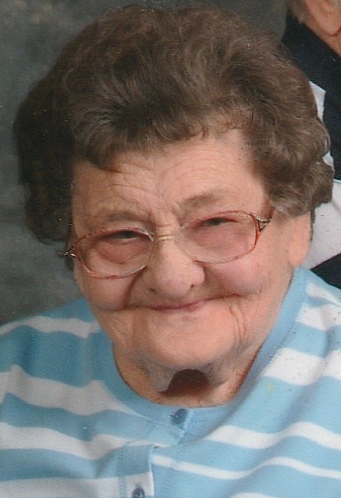
Alice.
Alice always made me smile. Oh, she could be annoying. Even when I’d kindly caution her to keep her voice down, that didn’t stop Alice from being Alice. Nor did that stop me from liking her.

I got to know Alice at our little church in Millersburg, Ohio. I can’t even remember how long I’d had the privilege of being Alice’s friend. She was a friend to many, to whomever she met really. Alice just had that kind of outgoing, unabashed personality.

Nothing held Alice back. If she wanted something or wanted you to know something that she knew, she’d share, any place, any time. Tact and appropriateness of timing were never part of Alice’s arsenal. Ironically, consideration of others most certainly was. It’s what motivated her, drove her, caused her to fearlessly blurt out her innermost feelings with no compunction.

Alice could be a pill, even a pest. If she had your number, especially your phone number, Alice would find any old excuse to call you. Alice often rambled on and on if you would let her. That’s how much she loved you.

Alice attended church whenever possible. Other good folks went out of their way to provide transportation for her.

Alice loved Helen Steiner Rice poems. She’d read them aloud every chance she got in church, often in honor of someone’s birthday. Of course, Alice did so long after other announcements had already been made. Spitfire that she was, Alice didn’t need a microphone. She would just shout out her comments, prayer requests, and recitations as the spirit moved.

Alice could pull this off because everyone knew her situation. It wasn’t toleration mind you. It was admiration for her unequivocal love for others and her fierce desire to share whatever was on her mind. Nearly 99 percent of the time, her thoughts and concerns were for others, not herself.

Alice receiving communion.
As Alice did her readings or made her proclamations, knowing smiles radiated from all around the congregation. Every worship leader graciously acknowledged her comments and the service continued without a hitch.

In addition to poems, Alice loved a good joke and prank. Though often silly and uncomplicated, Alice laughed her wicked laugh as she told and retold the punch lines. Once when our infant granddaughter squeezed Alice’s index finger and wouldn’t let go, Alice was in heaven. She joyously reminded me of that incident whenever she could. That was Alice.

Several years ago, I escorted Alice to Texas to visit her only living brother, whose health was failing. People thought I was crazy to take on that formidable task.

Though dependent on a wheelchair, Alice traveled with no problems. The further we got from Millersburg, the quieter she got. The return trip proved just the opposite.

Alice listened to my every instruction. Deep down, she and I both knew just how much this journey, paid for anonymously, meant to her. Witnessing Alice embrace her brother Floyd was one of my lifetime thrills.

Quixotic as she was, Alice married late in life on the most romantic day of the year, Valentines Day, Feb. 14, 1970. She and her husband Charlie lived right behind our church. In recent months, Alice was confined to a nursing home, substantially reducing her mobility. Alice recently died there at age 95.

Alice’s unbridled love for life was an excellent gift to us all. In her memory and in her honor, I hope that same devotion becomes an exemplary measure of living out our own lives.

© Bruce Stambaugh 2018

Roots

designs in the sand, beach
Roots.

Sunny days or cloudy, high tide or low, the ever-changing elements of a walk on an oceanfront beach stir my senses and imagination. I try to keep a sharp eye out for the unusual. When I spotted these etchings in the sand, I saw a cross-section of roots reaching deep into fertile soil far below the floor of a magnificent forest.

In reality, these markings are nothing more than the tracings of pebbles and shells first being washed upon the shore and then just as quickly drawn back into the sea by its never-ending motion. They still looked like tree roots to me.

“Roots” is my Photo of the Week.

© Bruce Stambaugh 2018

The Beach Lady’s lasting legacy

American Beach, Amelia Island FL
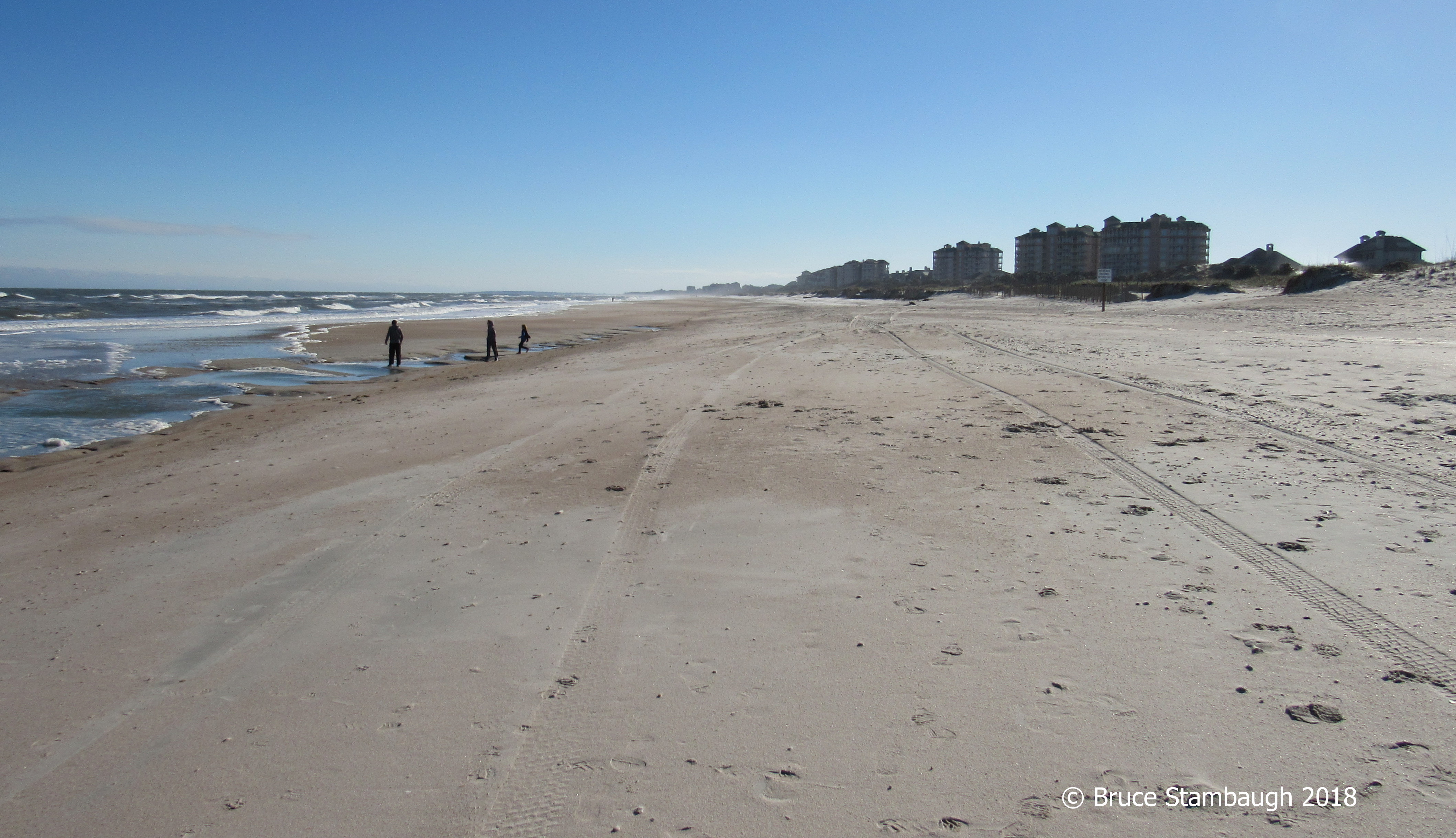
American Beach today.

By Bruce Stambaugh

In the United States, February has been designated as Black History Month for many years now. Some schools, libraries, and other institutions give the theme only cursory attention while others plan meaningful and memorable events, including art shows, lectures, and dramas.

When my wife and I discovered Amelia Island’s American Beach on one of our Florida snowbird retreats, our interest piqued. We quickly learned a lot about decades of injustices, discrimination, and intolerance of blacks in our society.

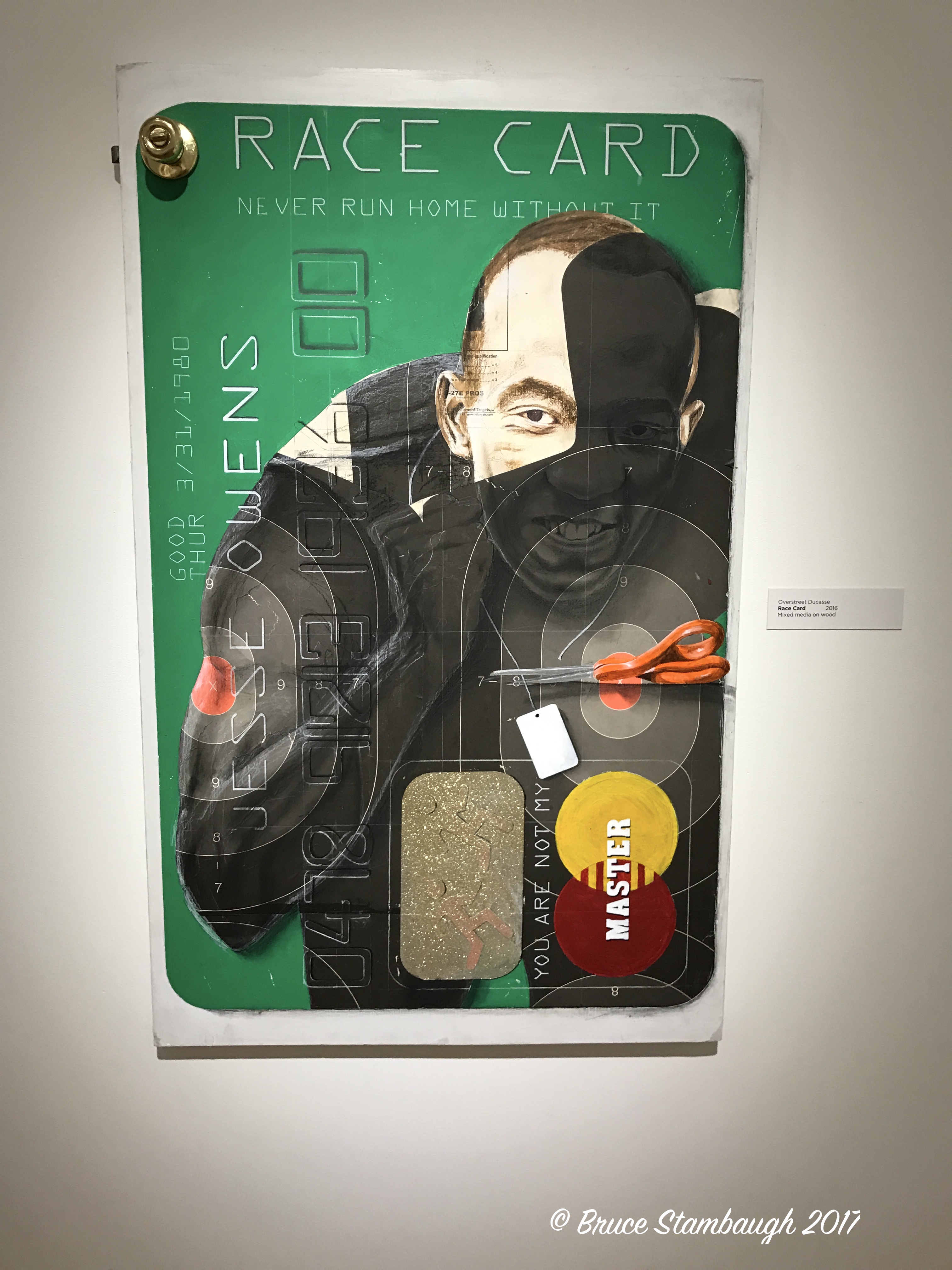
Black History Month art
Art for Black History Month.
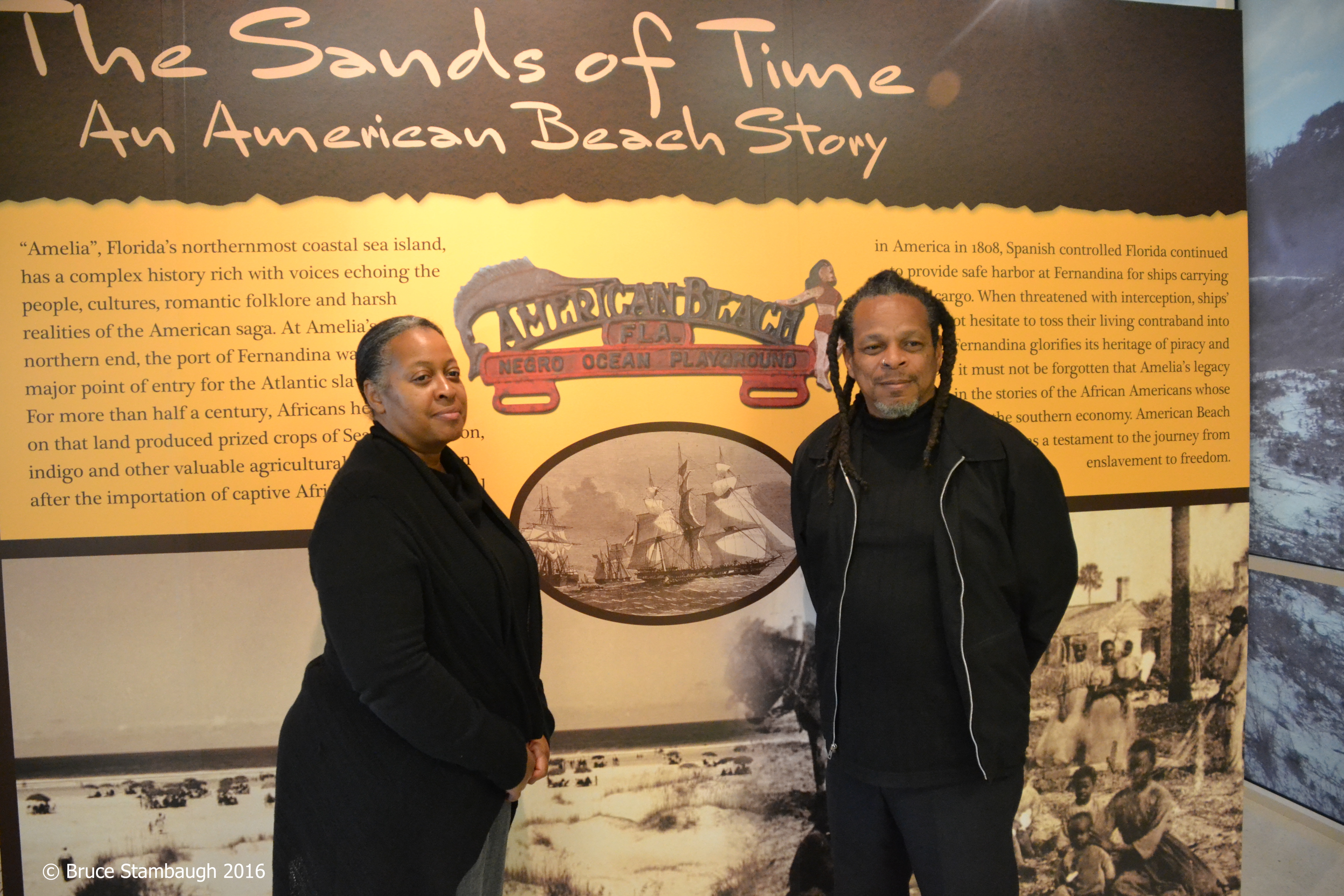
The American Beach Museum is a tidy, organized, and informative exhibition hall on Julia Street in a secluded historic district on the south end of this Atlantic Coast barrier island. The place may be tiny, but it is packed with facts, stories, relics, and photos that make your head spin trying to absorb it all. The volunteer guides are the most gracious people one would ever want to meet, and gladly help explain and amplify the historical information.

The short video featuring the Beach Lady, MaVynee Betsch, is the highlight of the tour. It makes you want to have been on that tour bus with her to hear her passionate stories of experiencing racism, discrimination, personal career success, her genuine love of nature, history, family, and the Creator who gave us the responsibility for caring for this marvelous earth.

In her case, the Beach Lady cut short a lucrative and professionally successful career as an opera singer in Europe to return to her beloved American Beach to ensure its preservation. She had her ups and downs in that endeavor. In the end, the Beach Lady’s efforts prevailed, even years after her death from cancer.

This slideshow requires JavaScript.

For her persistence and persuasive hard work, MaVynee left her mark everywhere around American Beach. The beach itself is the most obvious result. Its sand dunes are some of the highest in the state. The beach’s sands are white and smooth, much desired by island developers. However, due much in part to the Beach Lady, the National Park Service now supervises the 80 some acres of the area.

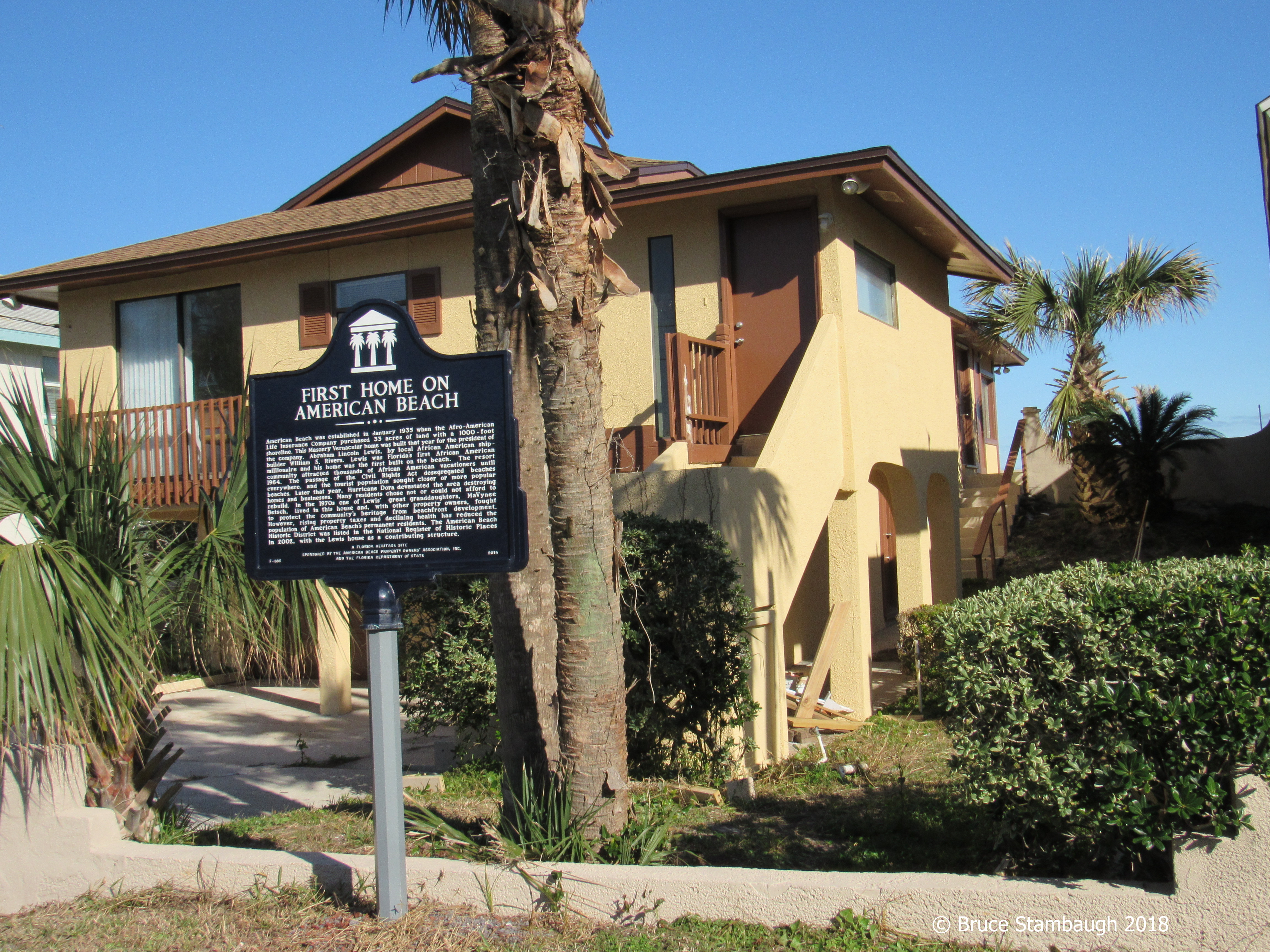
American Beach was the only one on which blacks were permitted on Amelia Island. That segregation lasted until 1970. American Beach was founded in 1935 by the Afro American Insurance Co. president A. L. Lewis, the Beach Lady’s grandfather. American Beach provided a place for recreation and relaxation without humiliation during the Jim Crow era. It offered a place of hope in a time of despair for dark-skinned people.

Ironically, the original 100 by 100 ft. plots of land were always integrated. Some of the original buildings still exist, though they are not in the best condition. Evan’s Hall, a gathering place for music and dance, is one of them. Today some of the beachfront houses are worth millions of dollars.

American Beach, Amelia Island FL
Historical marker.
The museum holds photographs, artifacts, and displays of the legacy of the Beach Lady, including her seven-foot length of hair. Some thought her eccentric. Others knew better. Her devotion to family, nature, and her beloved beach remains for all to see today.

Each winter, we always make a point of visiting the museum and American Beach itself. We do so as a personal reminder of segregation in this country, of those who worked so diligently to overcome it and the sacrifices they made in doing so. MaVynee, the museum, and American Beach are testaments to what was, is, and yet needs to be done to indeed guarantee equality for all in this great country of ours.

Amelia Island FL
Volunteer guides at the American Beach Museum.

© Bruce Stambaugh 2018

Long-tailed Duck

Silver Lake, Dayton VA, birding
Long-tailed Duck.

I only had a few hours to give to the annual Christmas Bird Count (CBC). This would be my first for Rockingham Co., Virginia. I had participated in several CBCs before, all in Holmes Co., Ohio. I primarily served as a driver for the many Amish birders who turned out each year on the designed day. CBCs are conducted at various dates near the end of December each year around the country. They help keep track of the numbers and species of birds seen from year to year.

Weather often plays a role in the varieties and the total number of species seen. This particular day in Rockingham Co. began crisp and clear. I decided to spend my limited time searching around Dayton, a small community five miles south of where we live. I hoped the man-made Silver Lake would yield some unusual species. I wasn’t disappointed.

The bright morning sun had burned off much of the haze. Right after I had parked my vehicle, I spotted this beautiful Long-tailed Duck, a rare visitor to Rockingham Co. With the morning light in my favor, I was able to capture this photo of the stunning duck in its winter plumage. I particularly liked how the churned water of the paddling duck reflected the turquoise sky in sharp contrast with the more murky surface of the lake.

“Long-tailed Duck” is my Photo of the Week.

© Bruce Stambaugh 2018

We can learn a lot from “old” people

running on the beach, sunrise
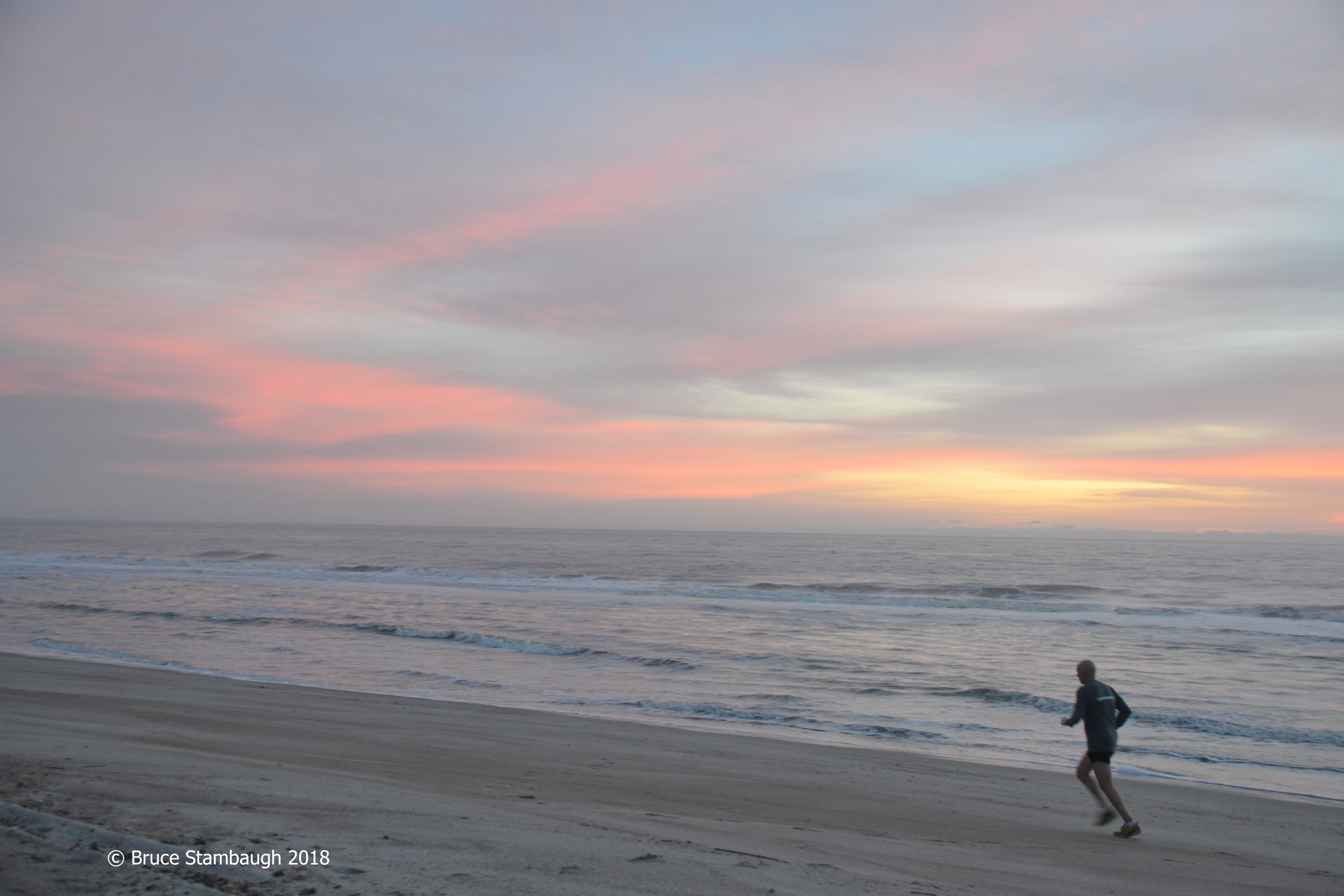
It’s a new day. Get moving.

By Bruce Stambaugh

When I turned 70, I received lots of celebratory wishes and unsolicited advice. Like a 70-year-old needs advice.

One ditty was the seven and 70 rule. The idea is that seven-year-olds will say anything, and 70 year-olds have earned the right by default to espouse whatever they want. Clearly, I didn’t know or obey that tenet. Wanted or not, I’ve been offering my opinions my entire life.

Nevertheless, I’ve done a lot of thinking since hitting that personal milestone. I feel fortunate, grateful, honored, humbled as I review my life. I have many, many kind people to thank for giving me challenges I didn’t think I could meet, opportunities I never expected, and critiquing I didn’t want to hear but definitely needed. To steal a movie title, it’s been a wonderful life.

Best of all, life continues, but for how long? None of us really knows for sure. As the saying goes, embrace each day as if it were your last. It just might be.

That somber thought used to bother me, scare me even. As a teenager, I thought I’d live forever. I know that’s not going to happen. I read the obituaries every morning, and I find the life summaries of too many people my age or younger.

Death where is thy sting? Many a sermon has already been preached on that topic. I won’t add to that litany.

Instead, I want to share a purposeful phenomenon that seems to resonate with many seniors. Generally speaking, we’re not afraid of death anymore.

After I retired as a public educator, I began my second career in community relations and marketing at a retirement community near my former Ohio home. I wasn’t there long until a common philosophy became apparent among the residents. As they aged, they were happier in their lives, despite increased physical and mental afflictions, reduced agility, and less energy overall. I recently learned that gerontologists confirm these observations. As people’s bodies decline, instead of feeling worse about themselves, they feel better.

horse and buggy
What’s around the corner?
Given their settings and expected elderly ailments, logic would dictate the opposite. Why had death indeed lost its sting for them? In general, they needed less in life and from life. They had given their all and were genuinely happy for that. Also, they looked forward to what they called “going home.”

Regrets? Sure, they had a few, just as I do. But that alone could not deter their enthusiasm for whatever came their way. They still expressed anxiety about all of life’s catastrophes they saw on TV, in the newspapers, and online.

But these were folks who had survived The Great Depression, who knew the value of work, being thrifty, conserving for the future and for future generations. They may not have liked many of the social changes that flew in the face of what they believed. But for the most part, neither did they let that bother them or think less of those who behaved or felt differently than they did. Their knowledge and experience taught them that. In my book, that is the very definition of wisdom.

I admired their gumption, fortitude, love of life, and their focus on being in the presence of each moment. They were ready for whatever came next. I’m trying my best to model that attitude, too, to my wife, my family, my friends, my neighbors, to whomever I meet.

Like my octogenarian friends at the retirement community, I’m ready for the next chapter of my life to unfold, one day, one person, one event, one glorious sunrise, one breathtaking sunset at a time.

Florida, sunset, Amelia River
Even at life’s low tide beauty abounds.

© Bruce Stambaugh 2018

The Princess of Tides

Main Beach Fernandina Beach FL
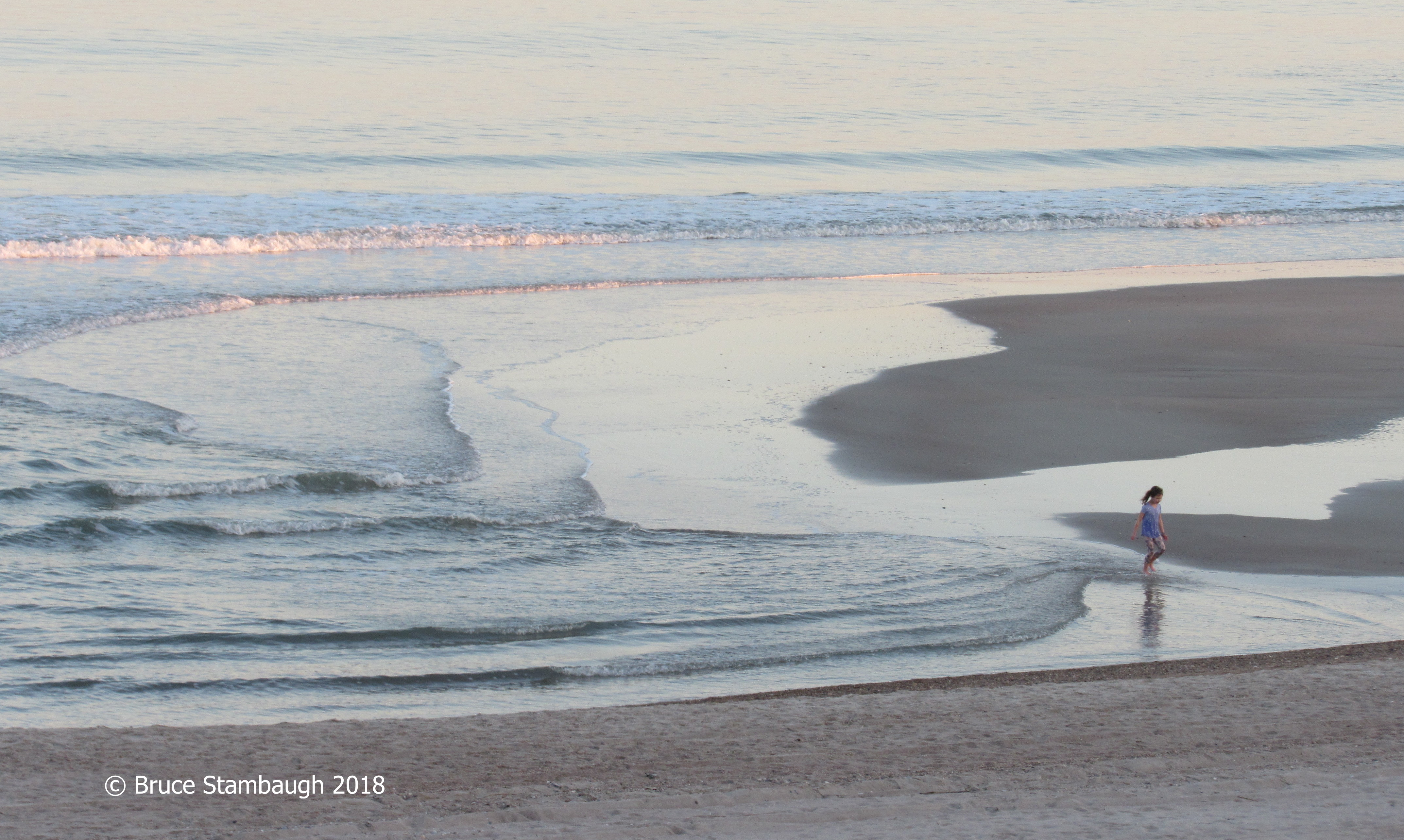
The Princess of Tides.

I enjoyed watching this little girl play at the beach at low tide at sunset. With the setting sun reflected in the soft waves, I loved the movement captured in this photo. It’s as if the girl had the ocean tied to her ankles, pulling it in towards the sandy shore.

With apologies to the late Pat Conroy, “The Princess of Tides” is my Photo of the Week.

© Bruce Stambaugh 2018

“The Post:” A personal review

I’ll begin with the disclaimers.

1. I am not a professional movie reviewer. In fact, this is my first ever written movie review. I didn’t read any of the reviews, professional or otherwise, about “The Post” before or after I saw it. I didn’t talk with anyone who had seen the movie before I saw it either. I went to “The Post” with only faint recollections of those days and the events that occurred decades ago in my formative years.

2. I have always had ink in my veins. Growing up in suburban blue-collar Canton, Ohio, a neighbor lady called me “The Beacon Journal” in honor of the respected Akron, Ohio daily. I took her title as a compliment. As a youngster, I was always the first to know what was going on in our busy neighborhood bursting with post-war children. When the siren at the volunteer fire station three blocks away sounded, I often was the first one to arrive, wanting to know what was burning. Careful to stay clear of the trucks, I’d follow them on my bike if I could or sneak a peek at the chalkboard inside the door to the firehouse where the info about the call was scribbled.

3. I majored in journalism at Kent State University, graduating a year before the infamous shooting. While there, I was both the campus stringer for The Plain Dealer, once the premier newspaper in Cleveland. I also was a student reporter for the Daily Kent Stater, a requirement for journalism majors. Kent State was a magnet for political activism in the tumultuous 1960s. It all swirled around me, a naïve, young student taking it all in one event at a time. I reported what I observed about student war protests and couriered photos and copy from Kent to Cleveland.

4. My first career spanned 30-years in public education in Holmes County, Ohio, filled with a dynamic mix of Appalachian and Amish/Mennonite cultures and their historical quirks. Still, I kept the ink in my veins flowing by serving as the information officer for local volunteer fire departments. I also continued to write feature stories for The Plain Dealer and local newspapers. I served as co-editor for 12 years for the magazine of the Ohio Conference of the Mennonite Church.

5. After retiring as a school administrator, I began using my journalism background full-time by serving as public relations/marketing coordinator for a local retirement community and as a marketing consultant for an Amish-owned furniture business. And I have been writing a weekly newspaper column since 1999.

All this is to say that I had a personal and professional vested interest in “The Post.”

Whether Steven Spielberg, the movie’s director, used creative license in the storyline of “The Post” is insignificant. I can’t know if Ben Bradlee schmoozed with Jack Kennedy or not, or whether Kay Graham and Robert McNamara really were good friends. I didn’t research it. I didn’t even Google it. All I know is this: With marvelous performances by Meryl Streep and Tom Hanks, “The Post” put the importance of our first amendment rights of a free press front and center. What was critical then is even more so today, especially given today’s tense political situation and a president who seems incapable of understanding or separating the roles and responsibilities of each branch of government and a free press to report to the citizenry.

Given my background, I know personally how important that Supreme Court ruling was. Justice Black’s words, speaking for the majority, reaffirmed my beliefs, my life as a tiny, trivial citizen in this fantastic country of ours. No president from Truman to Trump, no person or organization from Bannon to Breitbart, can silence the truth. If they do, our democracy is doomed. It’s that simple. To me, that was THE point. As the credits rolled at movie’s end, the memories were vivid, the emotions raw and real, and tears flowed.

After the movie, I sent a text to my son saying that “The Post” was the best movie I had ever seen. He thought that strong praise indeed. I explained by saying that it connected the dots of where we are today politically back to the Civil Rights/Vietnam era, the time that most formulated the person I am today. Watching those scenes, hearing those secret Nixon tapes, having all of those names come tumbling off the screen and into this 70-year-old brain somehow finally made it all make sense to me, brought me peace amid the chaos of where we are today. I felt fulfilled, closure, and hope all in one emotional release.

I have another disclaimer.

6. I was once mistaken for Spielberg in Phoenix Sky Harbor International Airport in Arizona. The person refused to believe my denial, and my companions couldn’t stop laughing.

Regardless of your politics, go see “The Post.” I hope it will set you free as it did me.

Bruce Stambaugh

Beginning anew with feeding the backyard birds

tube feeder
Male Red-breasted Grosbeak and Male House Finch.

By Bruce Stambaugh

I knew when we moved from our home in Ohio’s Amish country to Virginia’s Shenandoah Valley that my backyard birding experiences would change. I just didn’t know how much difference there would be.

Our Virginia ranch home is one of nearly 500 in an established housing development west of Harrisonburg in Rockingham County. Mature trees, shrubs, and well-manicured lawns surround the many-styled houses. However, none of the vegetation is as dense as we had had in Holmes County.

Over the years, I tried to create an inviting habitat around our rural Ohio home for birds of all species, whether they nested or just needed the cover to approach the feeders. Neva complemented my efforts with beautiful flowerbeds all around the house. Birds, bees, butterflies, and other wildlife thrived.

a bird in the bush
Male Northern Cardinal.
The wide variety of cover and available water and food sources for birds near our home enhanced the variety of species seen on or near our Holmes County abode. White-winged crossbills, bald eagles, yellow-bellied sapsuckers, pileated woodpeckers, various warblers, barn owls, long-eared owls, and screech owls were just some of the amazing birds we had seen in the 38 years we lived there.

I wondered what birds would find their way to our Virginia home. I hung birdfeeders and placed birdbaths in the front and backyards not long after moving in. Our one-third acre only had two red maples, one in the front yard and one in the back. Nearby properties held sycamore, white pine, wild cherry, pin oaks, sugar maple, mimosa, and various shrubs and flowerbeds. The closest stream was a half-mile away.

The rolling hills and broad valleys are reminiscent of those in Holmes County. But they are not the same, and I didn’t expect the birds to be the same because of that. They haven’t been.

I was thrilled when red-breasted grosbeaks and northern cardinals showed up at the feeders soon after I erected them last May. I had the ubiquitous house sparrows and house finches, too. But once the common grackles arrived with their new fledglings, the more desirable birds were crowded out. Even the bossy blue jays headed for cover. I took the feeders down for the summer.

I rehung the feeders in early fall, including the suet feeder, in hopes of attracting some woodpeckers and other suet-eating birds. Again, songbirds found the food quickly. The northern cardinals and house finches returned. A small flock of American goldfinches followed, too, along with mourning doves.

As the weather cooled, more birds arrived. A red-bellied woodpecker found the suet and often came early morning and late evening. A male downy woodpecker appeared irregularly. Dark-eyed juncos and white-throated sparrows scratched at offering on the ground below. I was especially ecstatic with the latter. Their melancholy song seems to linger in winter’s frosty air.

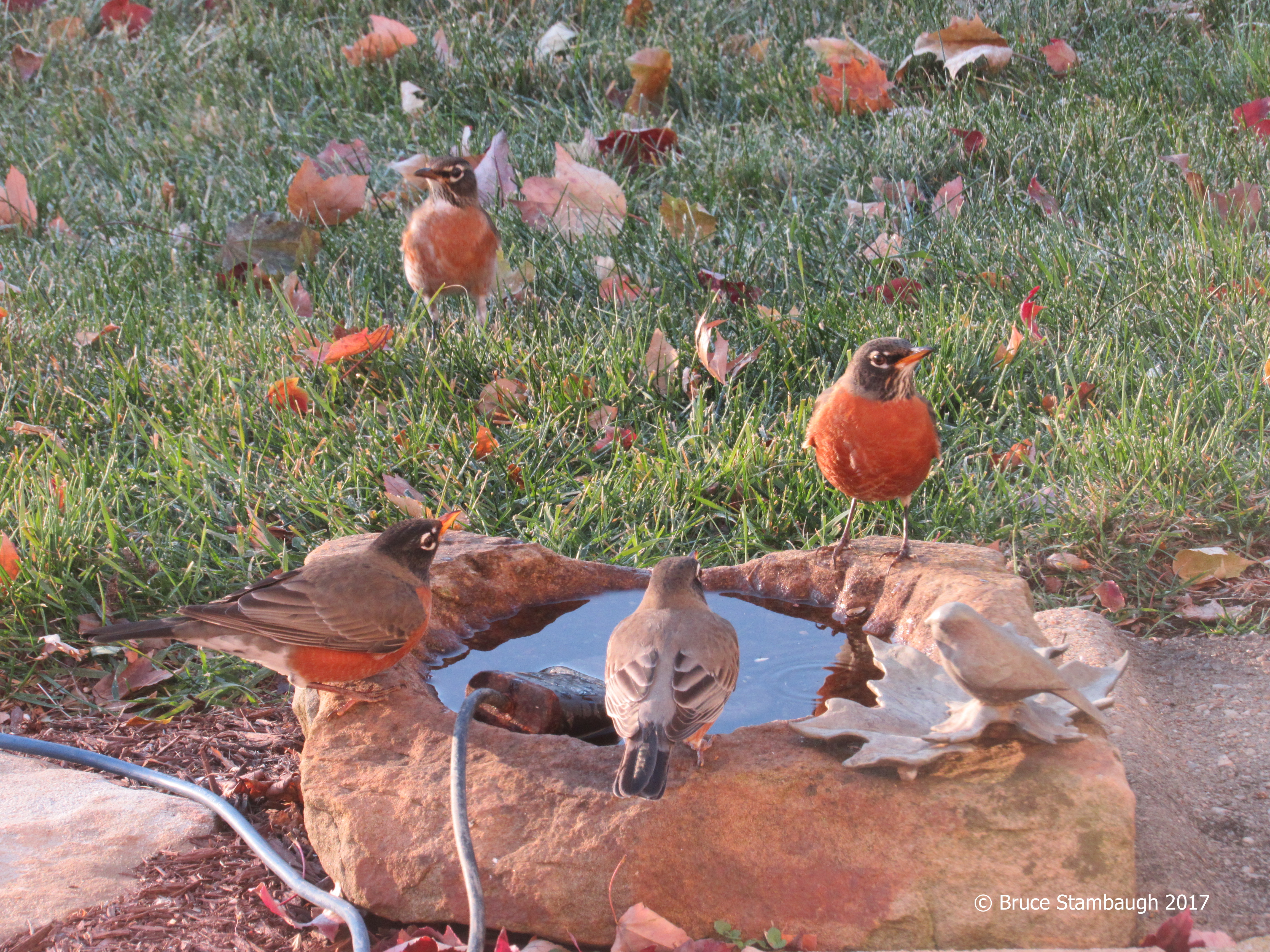
Other yard birds included flocks of American robins. Unlike Holmes County where robins seek shelter in dense woods or migrate altogether, robins in Virginia linger longer. They forage on berries, crabapples, and grubs they find in yards and beneath mulch in flowerbeds. The robins particularly enjoy the birdbath for drinking and bathing.

A troop of European Starlings replaced the grackles as the rascals of the feeders. They’re pretty birds, but they can devour four cakes of peanut butter suet in a day. The woodpeckers shared my disapproval.

My bird feeders may not have attracted the variety of birds we had in Ohio. I keep them up anyhow to enjoy the ones that do appear. It’s a pastime that both my wife and I find more than worthwhile.

robins, birdbath
Gathering around water hole.

© Bruce Stambaugh 2018

Almost Home

Old Order Mennonite buggy, Virginia, Shenandoah Valley
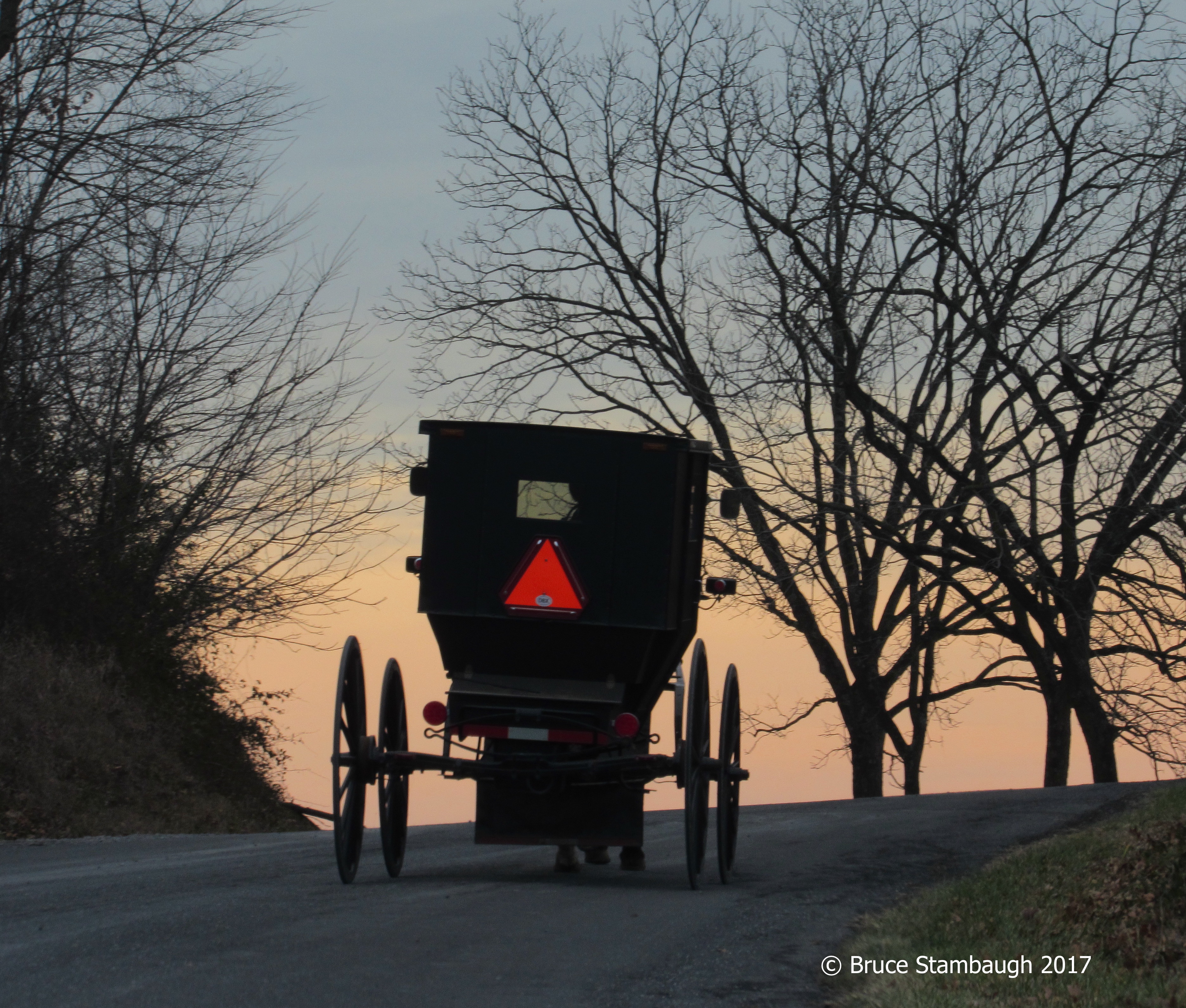
Almost Home.

Out for an early evening drive, my wife and I came upon this Old Order Mennonite buggy near the summit of Mole Hill Rd., west of Harrisonburg, Virginia. Having lived in Holmes County, the heart of Ohio’s Amish country, for most of our adult lives, we were used to following buggies up and down the rolling hills and winding roads.

Now that we live in Virginia’s Shenandoah Valley, we occasionally have the same experience since we live near Dayton, the center of life for the thriving Old Order Mennonite community. Like the Amish, they, too, stay rooted to the land by using the horse and buggy as their chief means of local transportation and by their rural, agrarian lifestyles. Also, like the Amish, they hire drivers to take them on longer trips.

Shortly after I snapped this photo, the buggy turned left, hurried up a long lane to home. The short scene was a happy reminder of the life we lived in Holmes Co., Ohio, and an affirmation of the new life we have begun in the Commonwealth of Virginia.

“Almost Home” is my Photo of the Week.

© Bruce Stambaugh 2018

A glimpse into the past, hope for the future

living history, old stone house, Granite Quarry NC
Living history.

By Bruce Stambaugh

I parked the van on the 21st Century side of the road and walked with my wife and our host couple across the two-lane highway back to 1766. The combination of the cold winter air and the smoke from several campfires immediately invigorated our senses and drew us in like kids to candy.

It was Christmas 18th Century style at the Old Stone House in the appropriately named village of Granite Quarry, North Carolina. The massive stones that formed the large, two-story house had been quarried a short distance away. A cast of volunteers decked out in period attire for their chosen character roles held me spellbound at every station.

The ladies at the beehive oven kept producing fresh-baked goodies for visitors to sample. The cornbread was pretty tasty. Members of the Mecklenburg Militia caroused around quietly spinning yarns that spanned generations. Still, they did their duty. To my knowledge, no one was arrested for pilfering sweet bread or inciting unrest.

This slideshow requires JavaScript.

The militia’s cotton tents appeared flimsy and insufficient to keep out the cold for their camp over. Indeed, a spy told me they all intended to sleep in the comfort of the little log cabin outbuilding that housed a book sale for the event. Given the bite in the late afternoon air, I couldn’t blame them.

The old granite house stood proud and impressive, having been restored 50 years earlier. Its 22-inch walls kept the interior warm in the winter and cool in the summer.

We stepped into the living room to time-appropriate music as our guide rattled off detail after detail of what life was like three centuries ago. Though this house was large and elegant even by today’s standards, life was demanding. The family and their indentured servants and slaves always had plenty to do merely to ensure day-to-day survival.

The children in our group weren’t too impressed with the straw ticking that served as the mattress on the old rope bed. “Sleep tight and don’t let the bedbugs bite” took on a practical meaning to them. The guide demonstrated the sizeable wooden key for tightening the ropes that served as slats to hold the mattress. The herb tansy was interspersed with the straw to keep most of the bugs away. We all laughed when a stinkbug crawled out onto the ticking.

Upstairs was plain and noticeably cooler since the only heat came from the first-floor fireplaces. A slave squeezed into a wall space behind the massive kitchen fireplace to keep the fire going overnight.

Since the builder of the house had migrated south from Lancaster, Pennsylvania, he modeled his home after the ones he knew. The spacious clapboard kitchen was attached to the main house, wherein that era the kitchen was a separate building at most southern homes.

Old Stone House, Granite Quarry NC
Will the door to the past help guide us into a better future?
The kitchen was the engine that ran the household. Here everything from cooking to spinning to laundry to bathing took place. Since the youngest in the family got the last bath using the same water as the others, you didn’t want to “throw the baby out with the bathwater.” The guide mused how we still use sayings without knowing their real origin.

In warmer weather, bathing took place in the stream that ran through the deciduous woods behind the house. Likely there was no lingering in that outdoor bathing arrangement.

I marvel at this kind of living history. It allows us to stand in the present, glimpse the past, and long for a better life for all future generations everywhere.

© Bruce Stambaugh 2018

Bay Photos by Donna

Wildlife Photos From The Chesapeake Bay Region

ROAD TO NARA

Culture and Communities at the Heart Of India

K Hertzler Art

Artist and nature journalist in the Shenandoah Valley of Virginia.

Maria Vincent Robinson

Photographer Of Life and moments

Gabriele Romano

Personal Blog

Jennifer Murch

Art is the only way to run away without leaving home. -Twyla Tharp

Roadkill Crossing

Writing generated from the rural life

ANJOLI ROY

writer. teacher. podcast cohost.

Casa Alterna

El amor cruza fronteras / Love crosses borders