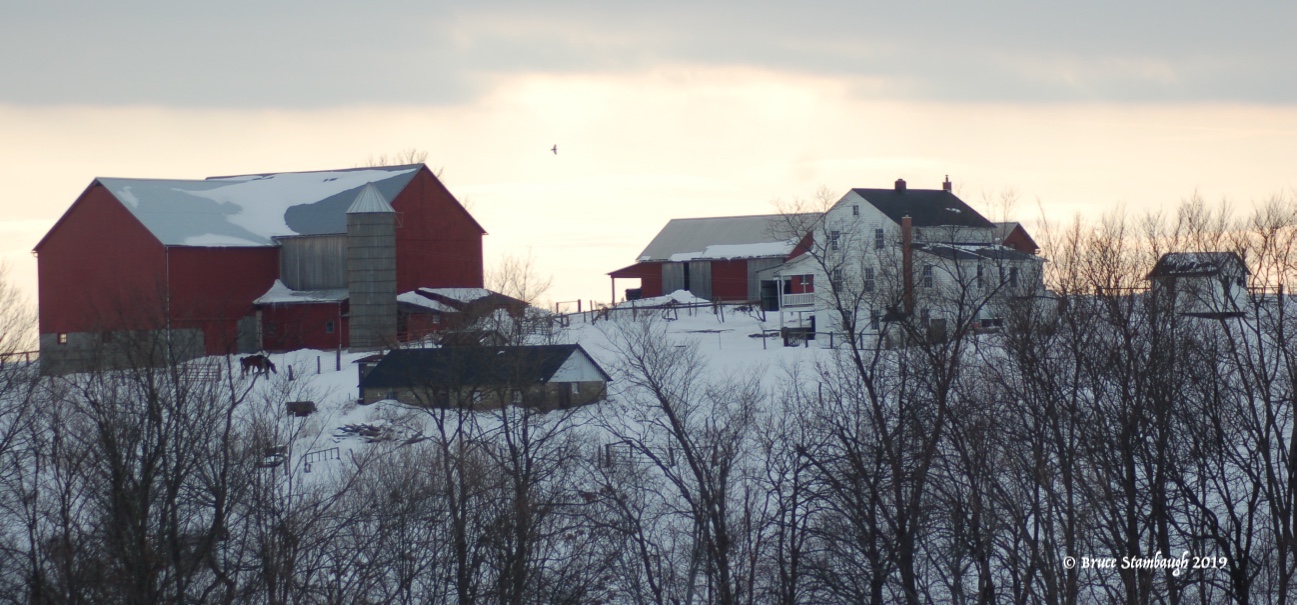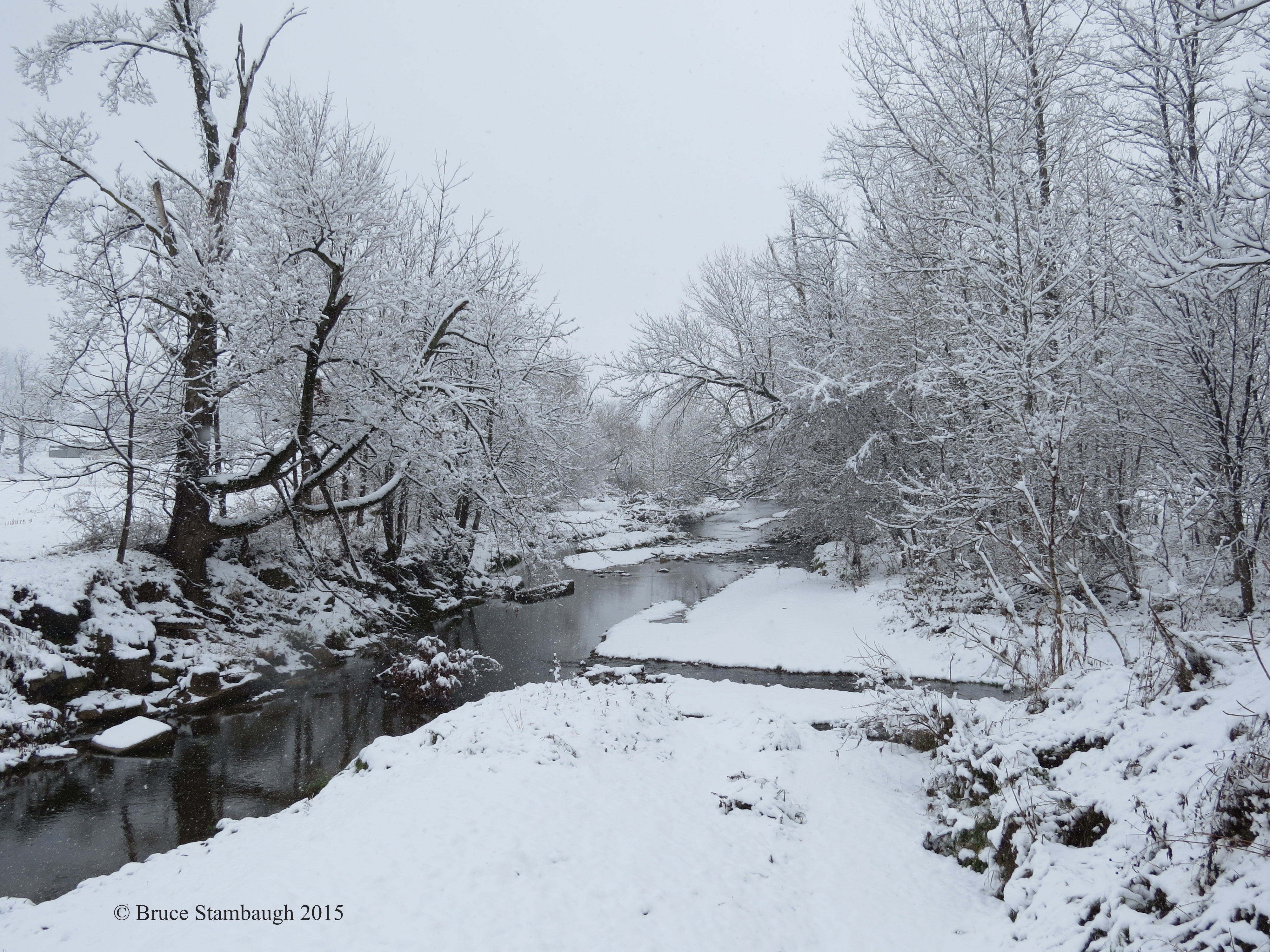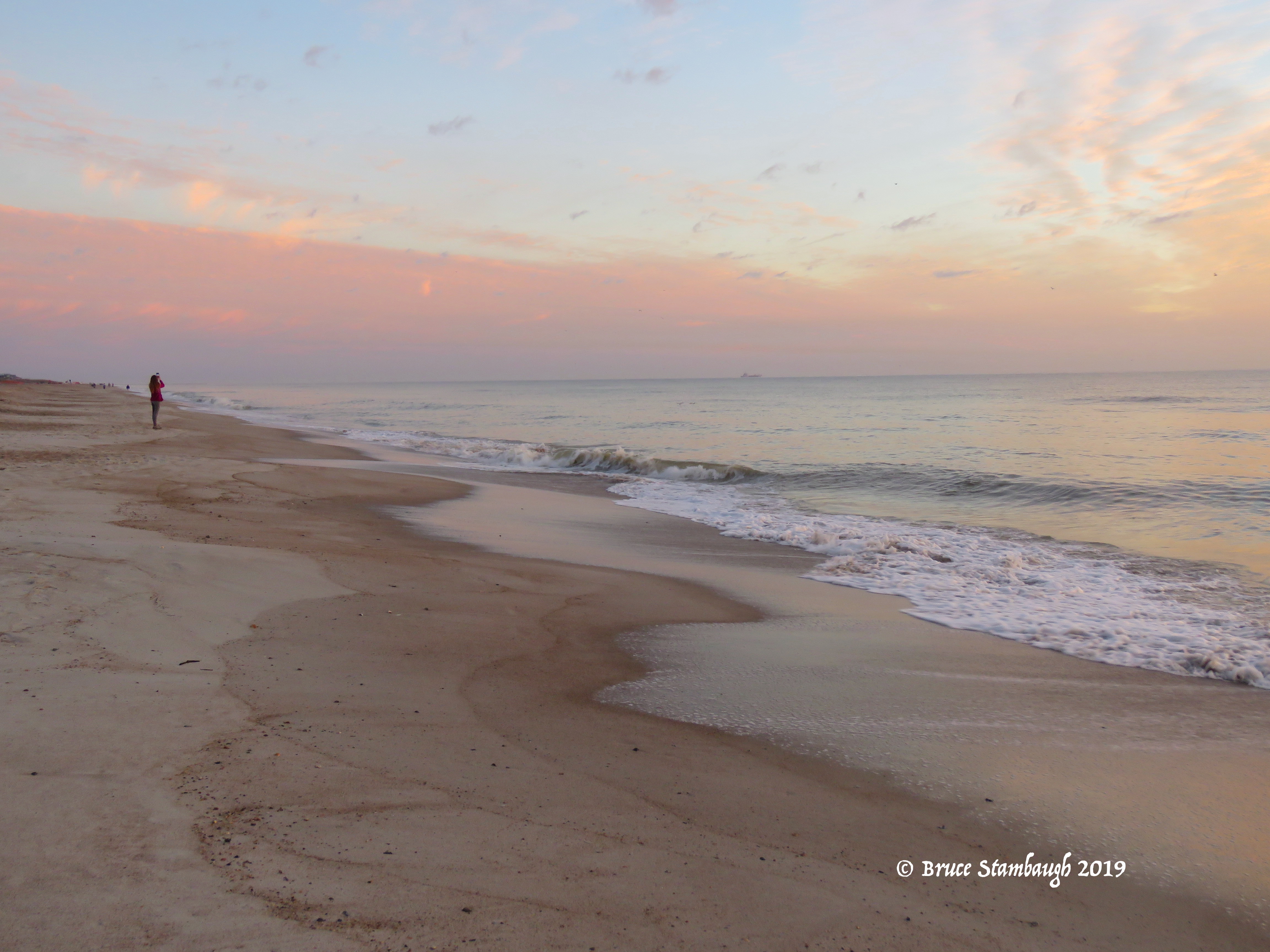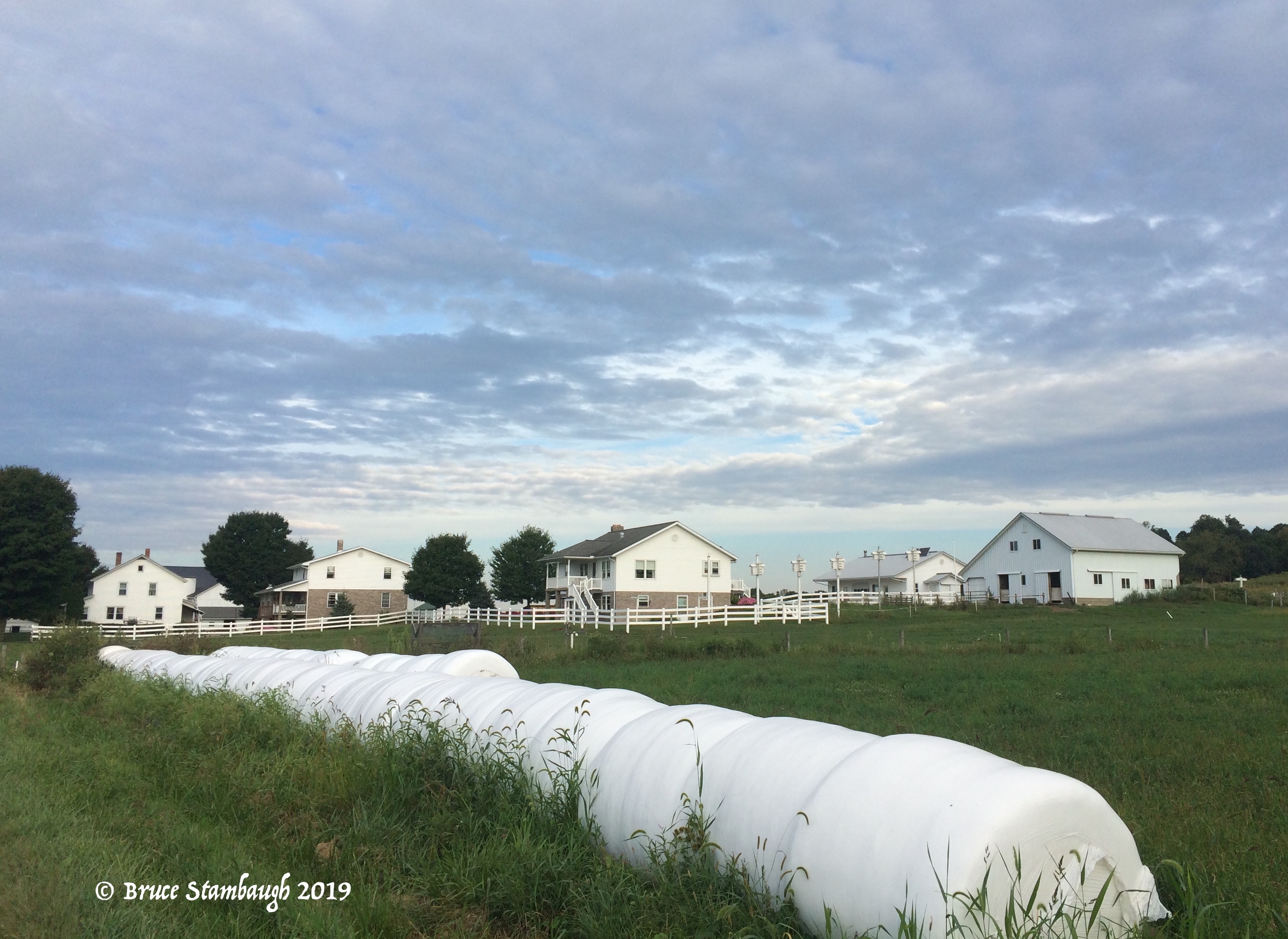
Transforming work into play

Holmes Co. OH, Millersburg OH
The prairie on the hill.

By Bruce Stambaugh

Several years ago, our lifetime friends Dave and Kate built their dream house on a hill overlooking Millersburg, Ohio. They picked the perfect spot.

From that lofty vantage point overlooking a lovely valley, Dave and Kate can see the county courthouse clock tower, the school where they both taught, and the hospital where their children were born.

The setting is marvelous, the view fantastic. Still, through hard work and creativity, the couple has managed to improve their surroundings, not only for themselves but for the wild things, too.

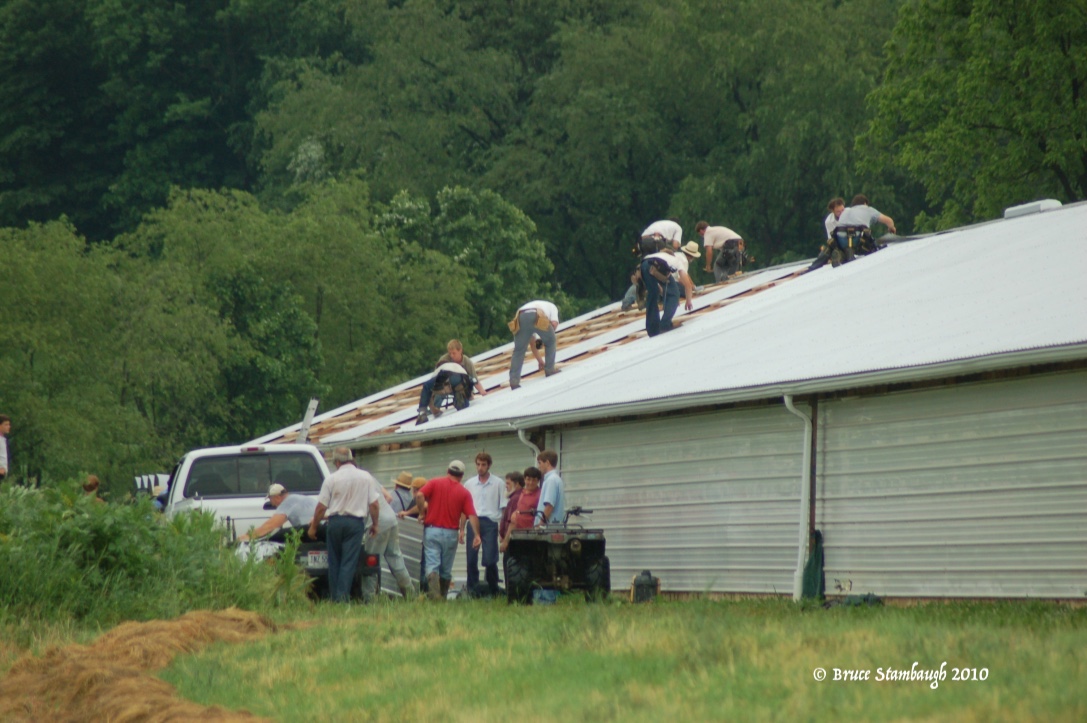
About five years ago, Dave decided to turn work into play so to speak. He kicked the cows out of the five-acre, pastured hillside that surrounded the house. His goal was simply to let nature take her course.

Before the European invasion 300 years ago, a dense, mature forest covered most of what is now Ohio. Dave wanted to test an old theory that the land would replenish itself if allowed to go fallow.

So instead of cows grazing, grasses, plants, and seedlings began to sprout freely. Today, the results are impressive, producing rewards that even the amiable couple could never have imagined.

This slideshow requires JavaScript.

On an all-too-brief return to our Ohio haunts, Dave led me on a walking tour of his mostly-spontaneous prairie. We traversed a looping pattern of mown paths that crisscrossed the rolling hillside topography.

Up and down and around we walked. All the while Dave pointed out some of the changes that had already naturally occurred. In some spots, he had helped things along with saplings and young trees he had planted. He checked on them like a mother hen guarding her chicks.

Of course, he encaged the plantings with wire mesh to stymie the ubiquitous and free-ranging deer that nibble the tender and tasty leaves and stalks. Sometimes it worked.

Wildflowers and plants now flourished in the prairie plots where heifers used to munch. The floral growth attracted appreciative pollinators that flitted and buzzed about while we ambled along. Bees and butterflies, flies, dragonflies, and damselflies all made appearances.

Holmes Co. OH, Millersburg OH
Eastern Bluebirds.
Several pairs of eastern bluebirds tended to their nests in boxes Dave had erected. Some had eggs, some second brood hatchlings. Others were empty. When we cleaned out an old nest from one birdhouse, a bluebird pair began building anew a short time later. Dave’s face glowed.

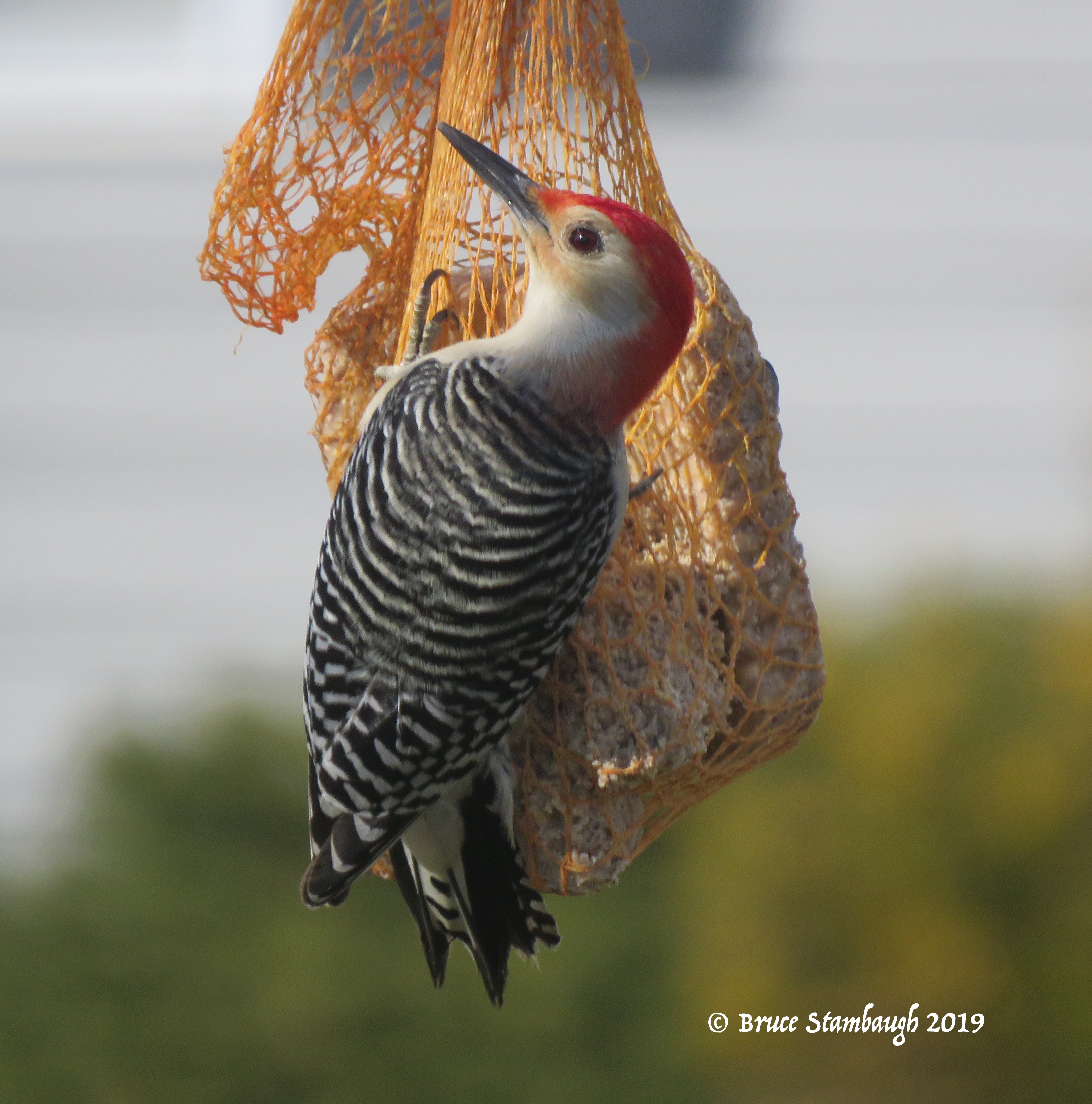
At the bird feeders, Ohio’s smallest to largest woodpeckers and several species in between vied for the suet offerings. Both pileated and red-bellied even brought their young to learn to forage for the protein.

On the parameters of the property, red-tailed hawks dove from shaded oak perches, unsuccessful in snagging a mammal breakfast. An indigo bunting began its song but stopped short, a typical behavior this late in the summer.

Cedar waxwings preened in the morning sunshine on dead ash snags. American goldfinches harvested thistledown for their late-season nests.

The gnarled, amber trunks of giant Osage orange trees served as living statuaries in the young reclaimed landscape. Their coarse-skin fruit hung lime-green and eerie, like so many Martian brains.

Once dormancy dominates the prairie, Dave will mow down this marvelous and necessary wildlife habitat to eliminate the human-made nuisance multi-flowered rose bushes. Of course, he’ll save the trees, both those he planted and the multitude of volunteers that are thriving.

That adage is coming true. Left to grow on its own, this come-what-may former pasture is an ever-changing habitat for all things bright and beautiful. The environmentally friendly owners couldn’t be more grateful.

Holmes Co. OH, Millersburg OH
Sunrise valley view.

© Bruce Stambaugh 2018

Why I always dreaded August’s return

August, sunset, Virginia
An early August sunset.

By Bruce Stambaugh

August is upon us once again.

As I look back on it, I always dreaded the return of the eighth month. Through my not-so-nostalgic reflections, I realized that my reasons evolved across the decades.

As an elementary school student, I knew all too well what August’s arrival meant. We were down to one month of summer vacation.

Those were the days when agrarian mentality ruled the school year. All scholarly studies were squeezed between Labor Day and Memorial Day. When the county fair gates closed, the school doors opened.

Now, of course, no such luxury exists for students. Back to school shopping has already begun. With August at hand, many students start the daily countdown until the dreaded day arrives.

Don’t get me wrong. I liked school, well, the elementary version at least. However, I enjoyed playing much more so. Summer vacation generated much less stress for youngsters then. Our screen time meant going to the drive-in movie theater on Friday nights. Our phones stayed at home firmly affixed to the wall.

butterfly, wildflowers, Virginia
Male Pipevine Swallowtail butterfly on Cardinal flower.
So when the calendar flipped to August, the neighborhood gang of hooligans started planning our next sleep-out under the stars or our next daytime adventure at the creek down-over-the-hill. Time was a wasting.

In high school and college, it wasn’t playtime but work that got shortened by the start of school. At $2.06 an hour, I needed to work all I could to deter my own educational expenses. With younger siblings and a stay-at-home mother, it was the least I could do to help the family financially. My older brother set that model.

When I started my career in public education, I began to more fully understand the importance of August. It meant readying for another school year, only this time as the teacher and eventually principal.

The late summer days of August always meant sweating it out decorating my classroom before the students arrived. Those old schools didn’t have air conditioning. I could hear the busyness of protégés down the hallways also preparing for the coming school year. We came in early morning and early evening to avoid the afternoon heat.

August, Ohio's Amish country
Come August, summer winds down.
When I joined the administrative ranks, August meant meetings, which I loathed unless they were held on the local golf course. That venue seldom happened, however, despite the chatter around the window table at the locals’ favorite eatery.

I heard samplings of student whining from our son and daughter, who knew too well that the coming of August meant school band camps and fall sports practices. Our son chose wisely. He joined the golf team and scored much better than his father ever could.

Just like their parents’ childhood schedules, once the county fair ended, the school year began for our children, too. By then, however, Labor Day became the first school holiday, not the summer’s last.

Somehow, though, we all survived those August perils. As a retiree, August has lost it sting. I don’t have the self-imposed barriers to hurdle anymore. I can relax in air conditioning as the thermometer hits 90.

Like all the previous years, I anticipate golden sunsets sinking beyond the horizon. I’ll watch for the Perseid meteor shower, hoping that the August haze has faded in the cool of the night.

The fraternal twins of retirement and maturity have a mellowing effect on sour attitudes. Instead of dread, this August I’ll breathe in a deep breath, say a prayer of gratitude for another new month, and enjoy the moments at hand.

Ohio's Amish country, Amish
Back to school.

© Bruce Stambaugh 2018

Summer is a humbling time

Amish farm, corn, wheat, oats
Grains of Summer.

By Bruce Stambaugh

With all of its positive and pleasant attributes, summer makes it hard to be humble.

We all want to get out and take full advantage of the sunny days filled with warmer temperatures and a wide variety of activities. We fling ourselves full force into each day whether it’s for work or for play. We want to drink in every drop of sunshine, warmth, and blue skies, from dawn to dusk.

Hungry Mother SP VA
At the beach.
Toddlers, children, and teens fill the local swimming pools, both public and backyard venues, while adults keep watchful eyes on the less careful youth. Construction workers bask in the fair weather, narrowing four lanes to one with an arsenal of orange barrels.

Lawnmowers hum morning, noon, and evening throughout global neighborhoods. Contractors and excavators work sunup to sundown. Farmers are in their glory, beginning to harvest the fruits of their labor.

In many places, the corn reached far beyond knee-high-by-the-Fourth-of-July standards. In others, stalks stood only inches tall, drowned out by the super wet spring and early summer rains.

Amber waves of grain really did roll in the wind until giant combines gobbled them up or they formed rows of shocks like so many soldiers standing guard in Amish-owned fields.

Summer, however, has other, more drastic ways to get our attention with her weapons. Summer can humble us lowly humans in many ways. Think floods, wildfires, tornadoes, droughts, golf ball-sized hail, record heat and humidity.

No matter our stature or station in life, we all succumb to those prevailing conditions. Summer humbles us.

humble singFor those unfamiliar with E.B. White’s beloved children’s classic “Charlotte’s Web,” humility played a major role in the book’s plot and dialogue. The spider Charlotte wove “Humble” into the web that served to save the life of the precocious pig Wilbur. She wanted a word that meant “not proud” as Wilbur’s crowning characteristic.

But humility has a second meaning beyond the social one. Humble implies a willingness to learn, and thankfully summer has much to teach us. The lessons are all around us in a more pleasing, useful, and beautiful form than what disasters wrought.

Vegetable gardens and truck patches team with all sorts of goodies that nurture us. Tasty homegrown sweet corn, luscious red tomatoes, green, red, and yellow peppers, and tangles of zucchini are just a few examples.

Roadside produce stands and supermarkets tempt us with juicy peaches and vine-ripened melons. Generations ago indigenous Americans taught us to plant, tend, and harvest these marvels.

For those non-gardeners among us, we sniff and thump and feel and taste to select the best of the bunch like our parents and grandparents did. The poor fruits and veggies pay the ultimate price.

Please click on the photos to enlarge them.

Flower gardens are peaking with hollyhocks and zinnias and cultivated flowers, too. Leafy hardwoods provide shade and refreshing coolness from the oppressive summer heat for humans and critters alike.

Wildflowers and wildlife, too, show their stuff. Dainty spotted fawns venture out on their own while mom watches from more secluded spaces. Parent bluebirds and house wrens ferry insects, worms, and berries to their youngsters nearly as big as the adult birds.

Families crowd beaches and climb mountains on vacations, exploring new venues or returning to old haunts discovered by previous generations.

Where is humility in all of this? Using the educational definition, it’s merely a reminder of the responsibility of the created to care for the creation. That is about as humbled as we can get.

pasture field, cumulous clouds
Summer landscape.

© Bruce Stambaugh 2018

Mere observation brings renewal

Lakeside OH, Chautauqua Lakeside
The fountain in front of Hotel Lakeside.

By Bruce Stambaugh

I’m sitting on a bench beneath the shade of a determined sugar maple tree, perhaps its verdant growth encouraged by the view I’m enjoying. Who or what wouldn’t be heartened with these delightful surroundings.

Youngsters set sail on skiffs, their teenage teachers guiding them into and out of the steady east wind, tacking, and turning this way and that, the multi-colored sails energized by the steady lake breeze.

Only weeks ago a much different scene played out in this same location. One nor’easter after the other pounded the shoreline that now houses a single-file line of dinghies slotted between wooden four by fours.

The shoreline lost, as it always does, against such strong forces of nature. So did the dock, which had its securely anchored metal benches washed overboard.

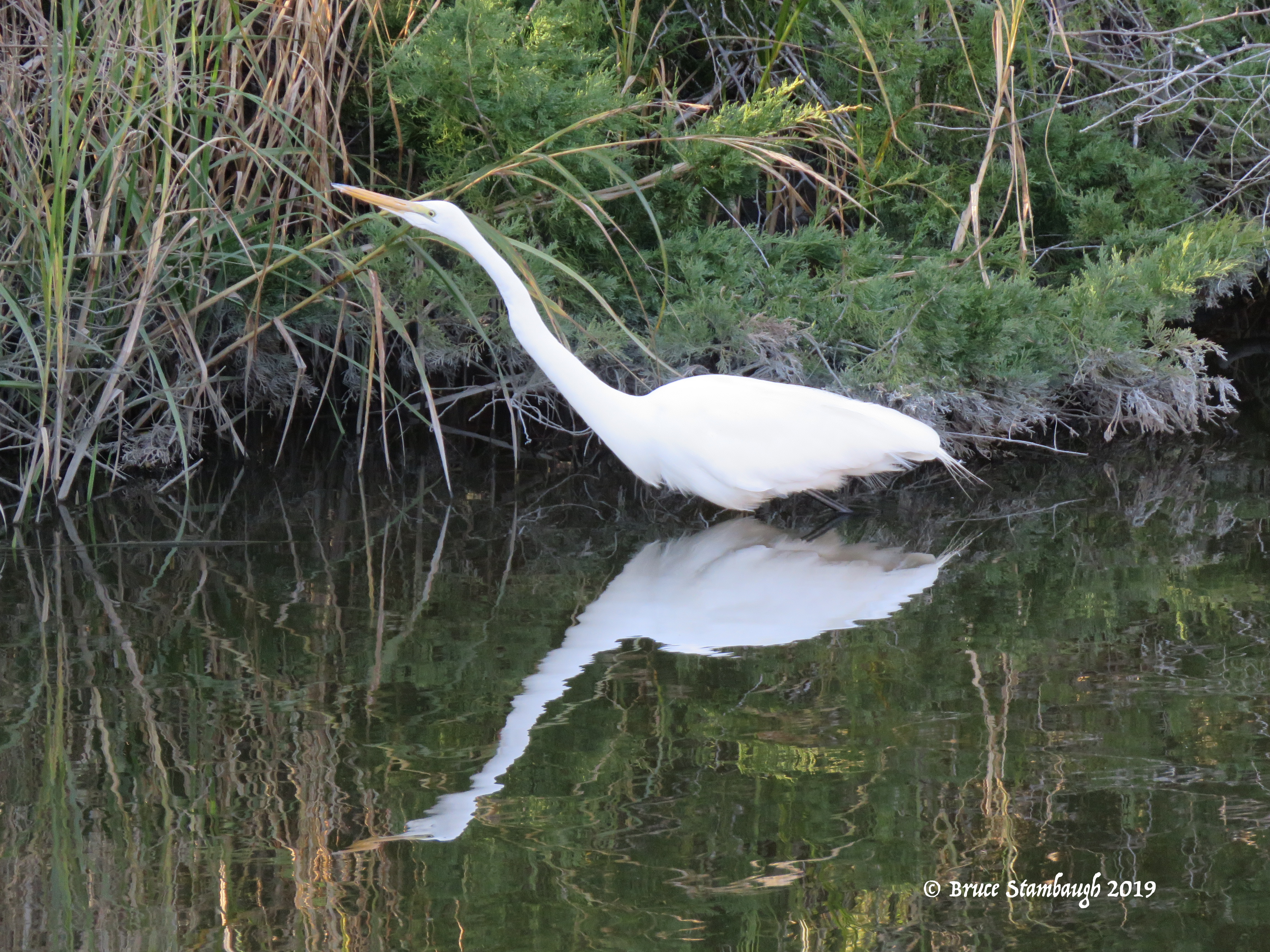
Today, however, is different. The lake breeze is just stiff enough to keep Old Glory and the nautical signals continually flapping and a lone great egret working overtime to a new upwind fishing spot.

Beyond the pier’s end, a cigarette boat slices with ease through the small waves of Lake Erie. Sun worshippers, fisher-people, and swimmers all bask in the sun-drenched day, thankful the oppressive heat and humidity of recent days have been replaced by these ideal conditions. Not a single contrail pollutes the all-blue sky.

Purple Martins and tree swallows also sail over all the human aquatic action, skimming the latest hatch of Mayflies from the air.

This slideshow requires JavaScript.

Parents and proud grandparents stand along the shoreline or in the pavilion watching their sons and daughters and grandsons and granddaughters sail away on the blue-green water chop. In a matter of minutes, they safely return, smiles replacing any lingering fear of their maiden voyage.

Just off of the end of the reinforced breaker wall of native limestone, fishermen bob in their bass boat, casting and recasting without success. They soon move on to calmer and hopefully more productive waters.

Back on shore, walkers stroll the sidewalk that runs the full length of the shoreline that makes Lakeside lakeside. This Ohio resort town, appropriately known as the Chautauqua on Lake Erie, is bustling with activity on this Sunday afternoon.

Lifetime Lakesiders gather on other shaded wooden benches like they have for decades like their parents and grandparents did before them. Only the seats are different. The view, the busyness of recreation, education, arts and crafts, and entertainment of the friendly, gated community unfold all around them just as it did when they were children, too.

Bicycles and golf carts wait patiently for their drivers and passengers in the green grass along the blacktop’s edge. The bikes stand unlocked, and ignition keys dangle freely in the carts. Such is Lakeside.

Daring teenage girls try their hand and legs at paddle boards, nimbly dropping to their knees when their hesitation takes hold. They eventually regain their confidence and return to their paddling.

The Westminster chimes of the clock tower atop the nearby pavilion bong 3 p.m., followed by bells singing “How Great Though Art.” Behind me, a gurgling fountain lures a toddler away from her mother until she beckons her daughter to the spotting scope aimed at Perry’s Monument on Put-in-Bay.

These few minutes spent observing, absorbing, listening, looking, appreciating all that is Lakeside, Ohio renews my body, mind, and spirit. Given this setting, that’s what is supposed to happen.

You don’t have to be at Lakeside to garner these healthy, in-the-moment results. But it sure helps.

Lakeside Chautauqua, Lakeside OH, swimming
Fun in the sun.

© Bruce Stambaugh 2018

Never a dull moment at Lakeside, Ohio

throughthehollyhocksbybrucestambaugh
The waterfront at Lakeside.

By Bruce Stambaugh

There’s never a dull moment at Lakeside, Ohio. That’s quite a statement for a sleepy, little village on the shores of Lake Erie.

Don’t misunderstand. That doesn’t mean the residents are rowdy. Just the opposite is true for this Chautauqua town.

In the summertime, Lakeside bursts with energy and activities, planned and spontaneous. There’s never a dull moment because there’s just so much to do for any and every age level. I’ll let the activities speak for themselves.

The Lakeside programming offers vacationers and residents a multitude of sponsored options that enrich the body, mind, and soul. Founded in 1873 as a Methodist Church camp, Lakeside has evolved into a summer destination for thousands of folks across the country.

shuffleboard, Lakeside OH
Shuffleboard, a favorite Lakeside pasttime.
Lakeside is a place that welcomes all who come to relax, learn, meet new folks, enjoy entertainment, and commune with others and nature. It’s why we keep going back year after year. Now that we’ve moved to Virginia, my wife and I make Lakeside our guaranteed summer vacation.

Since Lakeside is a gated community during the summer season, it’s a safe place to be for one and all. Kids are free to roam its crisscrossed streets that run the mile length of the cottage-filled community.

They won’t be alone. The community swells to 6,000 or more residents at summer’s peak. Making new friends is easy. Besides, the 300 year-round residents are glad to have the company.

Planned programs and classes for toddlers to teens to senior citizens fill each day. Choosing which activities and events to participate in creates an estimable problem. You won’t hear “I’m bored” at Lakeside.

Children can attend arts and crafts classes, build model boats, or enjoy a game of shuffleboard with family and friends. Lectures, bible studies, morning worship, and walking tours enlighten the adults.

For those who love the water, Lakeside offers swimming in its new pool that includes lap lanes, a kid’s area, and water slide. There’s even a children’s splash park down by the dock.

The waterfront is really where the action is at Lakeside. The dock is the go-to place for sunbathers and fisherpersons alike. Lifeguards standby for those who choose to swim in the lake. Sailors young and old navigate their own boats.

sunset, Lakeside OH
Sunset on the dock.

You can fill your day with more casual options, too. Take a leisurely walk along the shore while enjoying beautiful flower gardens, lovely cottages, and gorgeous views of Kelley’s Island, and Perry’s Monument at Put-in-Bay. Or sit on a park bench beneath giant shade trees and dream the day away.

In the evening, Hoover Auditorium takes center stage with a variety of programs that captivate the entire family. Admission costs are included in the gate fees.

If the weather cooperates, sunsets draw people to the dock for picturesque photo ops. Sunrises are just as spectacular rising over the lake with their pinks and blues.

A farmers market offers up local produce and delicious homemade goodies two mornings a week. For those less worried about their diet, freshly made donuts and hand-dipped ice cream bring many smiles.

As for my wife and me, we’re more than content to sit on our favorite sweeping front porch that dominates the front side of the guesthouse where we stay. At the corner of Third and Walnut, we have a first-class view of all that Lakeside has to offer.

I’m always happy but never surprised to spot long-lost friends walk by. That reconnecting alone nurtures my body, mind, and spirit to the full.

sunrise, Lakeside OH
Silhouettes at sunrise.

© Bruce Stambaugh 2018

Celebrating the freedom to be kind

Fort McHenry, Baltimore MD
Fort McHenry.

By Bruce Stambaugh

Long ago, someone once tried to trick me with a skewed question. “Do the English celebrate the Fourth of July?” was the query.

My answer went something like this: “Well, the English have a July 4th like the rest of the world, but I doubt that they celebrate it.”

The Fourth of July is Independence Day in the United States. It’s a day of traditions: family gatherings, picnics with hot dogs and hamburgers, baseball games, and fireworks, although the latter is often spread out over a period of days depending on planned community events.

American flags are flown, and many decorate their houses with red, white, and blue buntings. Some communities hold parades with high school bands, fire trucks, decorated floats, and troupes of children riding patriotic adorned bicycles.

In typical American fashion, fireworks on the Fourth of July began in 1777 during the Revolutionary War with England. They weren’t the only flashes and booms in the sky then. Muskets and canons were also fired as ways to increase the commotion and hopefully boost the morale of the rebelling colonists.

A few years later during the War of 1812, Baltimore, Maryland had a life or death situation louder and fiercer than any fireworks. On September 13, 1814, the British Navy opened fire on Fort McHenry, the primary protective garrison of the city’s harbor. Much like today, Baltimore was an essential Atlantic coast port. Its defense was vital against the British, who had just burned the nation’s capital, Washington, D.C.

The fort withstood a horrific 27-hour bombardment by the British fleet. Francis Scott Key, a noted attorney, witnessed the attack from a ship in the harbor. When the smoke and mist cleared in the morning, Key saw the stars and stripes still flying from the fort, and was moved to write a poem about the battle. That poem became the lyrics for the “Star Spangled Banner,” our national anthem.

My wife and I recently visited the fort with a friend. As I watched a replica of the original flag flap in the morning breeze, I thought about the importance of celebrating the Fourth of July. It’s much more vital than food, fun, and colorful pyrotechnic displays.

In these current, trying times, when everyone seems to be talking and fewer people listening, I recoiled at the unnecessary squabbles going on in families, private and public meetings, in the media and on social media. Much of it is not pretty, and too much of it is hurtful, divisive, and driven by fear, not fact.

A person I recently met gave this suggestion: Treat people kindly in the moment. It might be the only time you have with them. She was right.

This Fourth of July, wouldn’t it be wonderful if we began listening to one another without bias, without interruption, without labeling, without being dismissive or rude or worse? After all, we are one nation, made up of many peoples from many different origins, languages, races, religions, beliefs, and backgrounds. That is as the Founding Fathers envisioned in the words of the U.S. Constitution.

So let’s carry on with the usual Independence Day activities. As we join together with family, friends, neighbors, and even strangers, let’s begin again to converse with one another with civility, kindness, respect, and appreciation, whether we agree or disagree with what is said.

That’s how a community as small as a family and as large as a nation should behave in order to thrive. In accomplishing that, we really will have something to celebrate on the Fourth of July besides Independence Day.

grocery store sign
A sign for many cultures.

© Bruce Stambaugh 2018

Inspired by water from a rock

Rock Spring Cabin, Shenandoah NP
The view from the cabin.

By Bruce Stambaugh

Life is a mystery.

I hiked the short trail with one thing in mind. I wanted to find the old cabin and take a photo of its chimney if it indeed had one. As so often happens in life, discovering what I was looking became secondary in this trek.

I took my time on the trail, soaking in all the glorious sights and sounds that I encountered along the way. There was a lot to absorb.

Rock Spring Cabin was a short distance away from a crude hut built for hikers along the Appalachian Trail in Virginia’s Shenandoah National Park. From the cabin’s covered front porch, the Page Valley played out in the patchwork patterns of fields far below.

The cabin at Rock Spring.
The primitive log cabin did indeed have a stone chimney. I snapped my picture and headed for the spring of Rock Spring Cabin nearby.

When I arrived, I was stunned at what I saw. I stood there in both amazement and disbelief. There, high in the Blue Ridge Mountains, cold, clean, crystal clear water gurgled from beneath giant boulders as old as time. Human interaction, of course, had to plumb it with a PVC pipe.

Instantly, my mind flashed back to my childhood. I thought of the Old Testament Bible story of Moses striking a rock and water gushing forth for the assembly of disgruntled, thirsty Jews wandering in the desert. That ancient story always struck me as a blend of awe, mystery, and miracle.

I contemplated the moment. I couldn’t help but wonder why here at this spot, more than 3,000 feet above sea level did water run from rocks? The earth does fantastic, mysterious things. Explanations are not always required.

Still, I reckoned the answer to my rhetorical question. Clearly, the rock strata folded long before human history began and forged a channel for the water table below.

Yet, there was something mystical about the rock spring, its waters trickling down the steep slope far into the valley below. I mentally traced its path from small stream to a creek that formed a tributary to the Shenandoah River. Farther north, it met the broad Potomac River at Harper’s Ferry, West Virginia, and then flowed east through rapids and placid waters alike, passing the nation’s hectic capital into the Chesapeake Bay and on into the Atlantic Ocean.

Noisy ravens awakened me from my lively daydreaming. Apparently, they viewed me as an intruder. Not wanting that title, I returned to the main trail, warblers, and thrushes flitting and singing in the leafy canopy high overhead.

I walked a short distance down the trail, and the raven followed me, swooped low, and continued its nasal banter. It was only then that I realized that I was not the target of its raucous concern.

A motion drew my eyes downward. Not 30 feet away a young black bear grazed along the forest floor. My head instinctively swiveled in search of the mother bear. I saw only trees, plants, and rocks.

black bear cub, Shenandoah NP
Young black bear.

I gingerly stepped a few feet down the trail where I could get a better view of the cub, likely in its second season given its size. One click of the camera shutter and the bear spied me and bounded down the hill towards the spring. Overflowing with wonder and joy, I headed in the opposite direction for the parking lot.

I went searching for a cabin and found so much more. An emerald forest. Water from a rock. Agitated ravens. A frightened bear cub.

Life is a mystery waiting to be solved.

Appalachian Trail, Rock Spring Trail
The emerald way to Rock Spring Cabin.

© Bruce Stambaugh 2018

Telling tales tall and true

Dick Stambaugh, native Americans, artifacts
Dad gave his last public presentation on Native Americans 10 years ago at age 88.

By Bruce Stambaugh

My late father wore a lot of hats in his long life. Husband, father, son, brother, uncle, engineer, sailor, hunter, fisherman, volunteer, traveler, archeologist, writer, photographer, teacher, leader, joiner, and planner. In short, Dad’s life was both full and fulfilling.

From these varied life experiences, Dad gained his most formidable reputation, that of a storyteller. No matter the situation, Dad loved to relive the past by telling one tale after the other. He could regale yarns with the best of them, embellishing the story when the facts needed a little flavoring. Perhaps that was one of the reasons people liked him so much.

Dad used his many interests and experiences to inform and entertain people of all ages and situations. He gave many presentations to school children and senior citizens alike about Native Americans who had lived in the Ohio region. Dad used arrowheads and other artifacts that he had found on nearby farms to make the talk as meaningful as possible for his audiences.

People often remarked to me that Dad was a great storyteller. With no disrespect, I’d reply by saying, “Yes, he was, and some of those stories were actually true.”

What Dad didn’t realize was that his adventurous life created a book of charming chapters all their own. Each one of my siblings likely has their personal favorite stories they could share.

Mom and Dad on their wedding day, August 1942.
Dad loved to hunt, as much for the camaraderie with his fellow hunters as for bringing home game. That was especially true during deer season. Once when he actually shot a deer, he had a remarkable story to accompany the carcass.

Hunting in the hilly, steep terrain of southeast Ohio, Dad was tracking a nice buck through deep snow. With the buck quickly outdistancing Dad by going up the opposite hill across a ravine, Dad took a desperate shot just as the deer jumped a wire fence.

Dad saw the deer go down and schlepped to the spot as best he could in the wintery conditions. Dad was shocked by what he found when he climbed over the fence. Lying in the snow was a dead deer all right, only it was a doe. Dad happily retold that story every chance he could, with the snow getting deeper with each recap.

Another time Dad returned from hunting and showed us the game he had shot. He went out to feed Boots, our springer spaniel, but couldn’t find her. Thinking she had run off, we all looked and looked in vain. A week later Dad opened the car trunk, and there was Boots, faithfully and quietly waiting for her master to finally let her out. She had been in the trunk all that time without food or water.

On another hunting expedition in glacial kame and kettle topography, Boots ran a rabbit into the thicket of the marshy bottomland. The hunting party plunged into the briers and brambles in hot pursuit while Dad ordered me, just 10 or so at the time, to stay on the more open hillside. Soon I heard a shot, quickly followed by a yelp and then a shout from my father, “You shot my dog!”

Fortunately, Boots only had a few buckshot pellets in one paw and limped on. The poor rabbit, likely scared out of its fur, had actually jumped into the crook of a small tree a few feet from the ground. I don’t remember the fate of either the rabbit or the tree.

Dick Stambaugh was a fantastic storyteller. He also wrote some incredible, memorable tales through the exciting, engaging life he lived.

thecottagebybrucestambaugh
The cottage my parents built and where Dad loved to hunt and fish.

© Bruce Stambaugh 2018

Let the summer reading commence

By Bruce Stambaugh

It’s June and time to start making a dent in the summer reading lists. I’ve been reminded of that fact multiple times lately. Maybe you have been, too.

Scholarly newsletters featuring summer reading lists have recently inundated my email inbox. Friends on social media are both asking for reading suggestions and offering their own.

For full disclosure purposes, I am not the reader in the family. That honor goes to my wife, who reads and reads and reads. She has her reading habits down pat.

Me? I’m a laissez-faire reader, meaning I read as the literary spirit moves me. That also means that I don’t have a summer reading list.

What I peruse depends on my mood, mode, and purpose for reading. If I’m reading for pleasure, you can find me on the back porch, lounging in a rocker, beverage by my side, book or magazine in my hand. I’m not a romance novel kind of person.

Learning new words is also an essential part of why I read. I want to learn about the subject matter, but I also desire to expand my vocabulary. Every now and then I’ll insert a few of those new words into my writings. Once a teacher, always a teacher.

Growing up, I don’t remember having many books in our home. I don’t know why. With five active children in a small brick bungalow, perhaps we just didn’t have space.

We did frequent the local libraries though. My siblings and I would hop on a bus. It cost us a quarter each way, a significant investment in learning 60 years ago.

I especially loved the library located in an old refurbished mansion in Canton, Ohio’s center city. The combined smell of the books and a faint odor of a home once loved drew me in.

I’d scamper the spiral stairs of the ancient home with its coal smoke-blackened stone exterior. I couldn’t get enough of the thick, frosted glass floors of the mezzanine. The books became secondary to this young mind.

I wasn’t a great reader in school, as in elementary, junior high, high school, and college. Reading to me was like swimming, and I can’t swim. I think that fear of reading aloud manifested from having to orally read in front of 35 other terrified second graders. I heard the giggles when I stumbled over big words like “truck” and “peanut.”

Phonics was foreign back then. Sight-reading was the preferred method, and for me sometimes tricky. It’s probably the reason I read so slowly.

I loved to be read to, however. When I became a teacher, I made sure I incorporated reading aloud Mark Twain, Betsy Byers, William H. Armstrong, Madeline L’Engle, and others to the students after their noon recesses.

Times have changed. Access to reading is literally at your fingertips in today’s electronic world. I mention to my wife a book that I’d like to read, and a few minutes later she has it downloaded on her iPad from the library.

Since I’m a news nut, I prefer online reading based on stories gleaned from those multiple daily email newsletters. One click and I’m reading some marvelous stuff.

Still, there is just something about holding a book or magazine or newspaper that seems more appealing than the screen-time perusing. Maybe it’s just the physical satisfaction of turning a page in anticipation of what is ahead.

Either way, reading is reading regardless of your preferred style. It’s June already, time to get serious about reading, summer lists not required.

© Bruce Stambaugh 2018

Behold summer’s sights and sounds

Summer sunrise.

By Bruce Stambaugh

Memorial Day has come and gone. You know what that means? It’s the traditional but unofficial start to summer in the United States.

Public swimming pools will open to the sounds of laughter and joyous splashing by youngsters fresh out of school. They are the envy of those still laboring over mandated tests and counting the days until they, too, can roam free.

Church camps and scout camps and Bible schools will open their floodgates and let the children pour in. Snipe hunts and dreaded memorizations will commence just to get to the real treasures, homemade snacks.

The warning chirps of robins disturbed from their nests resound until inattentive humans continue on their way. The first broods of fledglings squawk and beg for their parents to feed them despite being nearly as big. If a brown-headed cowbird has snuck into a song sparrow’s nest, the scene can be grotesque.

At the feeder.
Lawn mowers, riding mowers, weed eaters, and leaf blowers join the summer society’s songfest, mostly off key. Those willing and able to expend the energy on their hands and knees for hours at a time do less intrusive weeding. Their rewards come in more than tidy flowerbeds. They enjoy the bees and butterflies flitting from bloom to bloom.

Ruby-throated hummingbirds zip from flower to flower, too. They supplement their diet with long sips at the local sugar water fountain to the delight of dedicated bird watchers everywhere.

Many times the best show is when the tiny birds chase one another high and low, zigzagging at light speed after one another even though there are plenty of places to perch and feed. Those in charge of refilling the feeders applaud the performances.

At night, the summer breezes diminish. Fireflies rise up out of the grasses and fields and light up the evening skies blinking their romantic messages. Overhead, commercial jets sail beneath the stars and planets that twinkle brightly.

This slideshow requires JavaScript.

On the horizon, faint yellow flashes children like to label heat lightning interrupt the nighttime play. In reality, storms a hundred miles away had already driven other children indoors long before dark.

The next day, the sunrise blazed crimson and orange, signaling a fabled warning to sailors and civilians alike that rain was on its way. Sure enough, a squall line raced through, bending trees to the stress point. A few sacrificed a limb to save the whole.

Lightning flashed and crashed, and hailstones pelted the ripening strawberries to the dismay of both growers and customers. In suburbs and cities, torrents rutted gardens and sump pumps ran overtime.

Those were minor issued compared to the storms that others endure. All of this romanticizing and reminiscing about summer pales in comparison to those whose nights are peppered with gunshots and emergency sirens.

Summer in the city is filled with garden plots, swimming pools, day camps, and library readathons, too. Picnics in the park and taking in a baseball game, Major League or Little League, are also part of the warm weather entertainment.

Bicycling along picturesque country roads or designated bike paths hits its peak. Helmets are always a safety requirement.

Isn’t everything merely a matter of perspective and geography and circumstances?

We still have nearly three weeks until the summer solstice, the scientific start of fun in the sun. It’s also the day with the most daylight, giving us plenty of opportunities to enjoy the sights and sounds of summer yet to come.

Amish girls, Holmes Co. OH
Enjoying a summer’s day.

© Bruce Stambaugh 2018

Bay Photos by Donna

Wildlife Photos From The Chesapeake Bay Region

ROAD TO NARA

Culture and Communities at the Heart Of India

K Hertzler Art

Artist and nature journalist in the Shenandoah Valley of Virginia.

Maria Vincent Robinson

Photographer Of Life and moments

Gabriele Romano

Less Noise. More Meaning

Jennifer Murch

Art is the only way to run away without leaving home. -Twyla Tharp

Roadkill Crossing

Writing generated from the rural life

ANJOLI ROY

writer. teacher. podcast cohost.

Casa Alterna

El amor cruza fronteras / Love crosses borders