Finding purpose during Advent

Advent is at hand. It is the season of anticipation as we draw an end to another tumultuous year on planet Earth.

I find that both ironic and a touch melancholy. As we approach the winter solstice, a celebratory light should brighten the darkness. Yet, for too many, the light is dim or nonexistent. It doesn’t have to be that way.

Our western world is aglow and abuzz with glitzy television commercials, flashing, and sometimes gaudy light displays in keeping the season. But of what honor is gaudiness when so many among us are sad, tired, distraught, hungry, homeless, and helpless?

Enter Advent. It is the antithesis of the holiday commercialization that pounds our senses in nearly every aspect that the marketing Mad Men conspire to throw at us. We lust for gold, frankincense, and myrrh 21st-century style.

Perhaps we need an epiphany before Epiphany to set the holidays aright. We seem to have turned the once admired axiom, “It’s better to give than to receive” on its head. We need to right the ship before we sink.

Though an exclusive Christian tradition, Advent is an inclusive, active, intentional, iconic time for all. Advent is as much an action as it is a prelude to Christmas. In truth, Advent’s meaning far preceded any contemporary applications.

More than a preparation for “God is with us,” some biblical scholars believe that Advent was 40 days of fasting leading up to Epiphany. That shines a new perspective on an ancient holy day.

I apologize for the sermonette. I hope that with these few words, others will also catch Advent’s meaning of watchfulness, alertness, love, peace, and service.

There is no room in the inn during Advent for greed, power, position, wealth, riches, avarice, and hate. Contemplation, meditation, prayer, thoughtfulness, charity, humility, and assistance to those in desperate need purposely fulfill the Advent message and meaning.

So what’s my point? Back in our former home, Holmes Co., Ohio, Share-A-Christmas was always an excellent first start on the eve of this holiday season. The annual community goodwill effort of providing for the needy set the stage for even more opportunity to personally be kind and generous.

Those of us fortunate enough to live in the wealthiest country in the world can do a world of good more for those among us who are truly low in spirit. Slow down. Take time to notice who they are and where they are. Opportunities abound all around.

Once aware, be bold, and take the next step. Do so in some personal way that satisfies an immediate need for others. It’s really not that difficult.

When it comes to charity and generosity, spontaneity seasons the gifts. Practicality wraps them, makes them intimate.

Here are a few starter suggestions: Visit the sick. Send a note or card to those in nursing homes. Honor the widows and widowers with nothing more than your listening ears. Meet people where they are.

Though too humble to say so, my good wife set a perfect example for us last Christmastime. As we drove our vehicle toward a red light in downtown Harrisonburg, Virginia, on a cold and blustery night, we noticed a homeless woman holding a cardboard sign on the corner sidewalk.

I offered a bottle of water that I usually carry for such an occasion. When Neva saw that the young woman had no gloves, she instantly reacted. Without hesitation, my wife peeled off her own gloves, and I handed them to the woman.

Advent presented itself, and Neva responded. How can we likewise let our light shine in today’s darkness?


© Bruce Stambaugh 2019

Gratitude for Thanksgiving

Thanksgiving is a time set aside to recognize, remember, and celebrate our blessings. It is an official civil holiday with spiritual implications.

Many Americans will gather with family and friends around a table laden with roasted turkey, mashed potatoes and gravy, grandma’s stuffing, cranberry sauce, and homemade pumpkin pies. Think Norman Rockwell’s famous “Freedom from Want” painting. Only replace those famous, happy faces with those who will grace your own banquet.

Gathering for this glorious day is a blessing unto itself. We shouldn’t take that privilege for granted. Many don’t have that esteemed opportunity for a variety of reasons. Still, they celebrate, each in their own ways and traditions.

Some will fill their plates with the traditional carved turkey and all the trimmings, or perhaps a succulent ham. Others will choose a different course. Chinese carryout, homemade lasagna, or pork and sauerkraut are all viable options. It’s not the menu, but the meaning, the moment, and the memories we make that matters.

Thanksgiving meal with friends.

My heart swells when I recall all those long-ago Thanksgivings with our mother’s mother. Grandma’s three daughters, their spouses, and 17 grandchildren elbowed around a food-filled table to scrumptiously dine and enthusiastically express our appreciation for life itself.

At that point in our lives, none of the three families could claim to be wealthy. But clamoring around that long table with people we loved, and with those mouth-watering aromas wafting in the air, we were rich indeed.

With children in diapers to pimple-faced teens, it was a calamitous scene to be sure. The biggest fuss, if I recall correctly, was over who got to break the wishbone. We probably were all too young to comprehend the real reason and blessings being bestowed on us in those treasured moments.

As youngsters will do, we were too anxious to taste the turkey, enjoy the stuffing, and devour the pies. After that, it was a game of touch football, or we played hide and seek. Grass stains on blue jeans put a temporary damper on the festivities.

What sticks in my mind after all those years gone by is the joy of just being together. We were truly blessed but too young and excitable to know it. Now, I am sincerely grateful for those gatherings and those heart-warming memories.

We were only a decade or two removed from World War II. The Cold War was just heating up. We practiced air raid drills at school as often as fire drills. Thanksgiving Day was precious, and we gathered and played in honor of the day and despite the day’s disturbing news.

Though today’s headlines are just as conflicted and disconcerting, we seem to be living in a different world. Families are often too geographically scattered to celebrate together. They rely on technology to connect them, even if it is only for a few minutes of video conversation.

Others celebrate Thanksgiving in multiple gatherings, visiting one side of the family, and then going to the other. If that happens on the same day, please don’t bring out the scales.

I don’t mean to overstate the obvious. Given the frenzy of commercial clamor this time of year, let’s make sure gratitude is the centerpiece of each and every thanksgiving table regardless of what food is served.

It’s been my experience that when gratefulness prevails, more blessings will flow all around. If we all express our profound gratitude, Thanksgiving will be pretty tasty, no matter what’s on the menu.

Food, family, friends, gratitude. That’s a recipe that will guarantee a memorable Thanksgiving.

Thanksgiving sunrise.

© Bruce Stambaugh 2019

When the lost is found


During my morning devotions, I try to include a brief time of meditation. A recent theme focused on observing rather than reacting with anger, fear, or judgment to human interactions.

Little did I know then that before the day would end, I would personally apply that lesson.

The day was foggy in the Shenandoah Valley. Random openings in the haze allowed the morning sunshine to poke through. The Blue Ridge Mountains, however, were socked in. I wanted to go there for one last chance to capture the beauty of a Shenandoah fall.

With the hope that the sun would eventually burn off the overcast, I headed to Shenandoah National Park. By the time I arrived shortly after noontime, that is precisely what happened.

Driving along the park’s extolled Skyline Drive is a joy at any time of the year. It is an absolute privilege to experience the fantastic colors of the fall foliage.


The park burst with scarlet, red, yellow, orange, amber, russet, brown, and crimson. Each hue complemented the others. I drove in the fresh, moist mountain air with the moon roof open and the windows partially down, taking in the autumn’s sights, sounds, and pungent fragrances.

I made several stops to photograph the scenery and finally recognized my fatigue at Big Meadows, where I stopped for lunch. The combination of my emotional exhilaration and the numerous times of exiting and reentering my vehicle had tired me. It was a reminder that my leg still had healing to do.

I retraced my route. Fog still rolled up out of the hollows and dissipated before my eyes. I continued to pull into nearly every overlook to capture the gorgeous splendor.

At my last stop, I reached for my camera, but it wasn’t there. I quickly searched in the vehicle, but the camera was gone. I must have left it on a stone wall at the last overlook where I had paused for an afternoon snack.


This slideshow requires JavaScript.


In the five-mile backtrack, my thoughts ticked off the options. It could still be there. Someone may have turned the camera in, or it was gone.

For most of my life, I have been my own worst critic. I berate myself when I err or let my emotions control my mood because of a negative situation. Not this time.

Remembering the morning’s meditation, I mentally weighed the consequences of my lapse of concentration by leaving the camera. I also accepted the situation without self-judgment.

Where I lost my camera.

I had captured dozens of photos of the incredible scenery. Now, they could be lost. I still had the day’s experience, however. That would be serenity enough, camera or no camera.

When I arrived at the overlook, the camera was nowhere to be found. I used my best option. I returned to the Big Meadows visitors’ center and reported my camera missing.

I headed south again, making a couple of more stops before I arrived at the Swift Run entrance station, where I access the park. I asked the ranger if anyone had turned in a camera. To my amazement, she said a young woman had given her a camera only 30 minutes ago. It was mine!

Of course, I was ecstatic to have the camera back, but not as delighted as I was with my self-control. No anger, no negative thoughts, no self-blame had arisen.

It had been a fulfilling day. A morning lesson, time in nature, a senior moment, a trustworthy person, and a personal watershed breakthrough brought deep contentment. I could not have been happier.

© Bruce Stambaugh 2019

November: The contemplative month

2017-11-20 14.19.03

The fall election is over. Daylight Savings Time has come and gone, and so have most of this fall’s colorful leaves. It must be November.

We can thank the pelting rains and wicked winds of a raucous cold front for dislodging most of the leaves. We can thank Congress for the time change.

I never adjust well to this convoluted toying of time. I wake up early and am ready for bed before dark that Sunday afternoon.

When we lived in the heart of Ohio’s Amish Country, I always chuckled at the various reactions to this contrived notion of messing with clocks to supposedly save energy. The Amish had that down to a science.

Some Amish complied with the change to stay connected with the rest of society. Others compromised and moved the time back a half an hour. Some never changed time in the first place.

2016-11-05 16.28.16

I miss that kind of contrariness. I haven’t checked with local buggy-driving Old Order Mennonite farmers here in Virginia to know if they mess with time in the same manner.

With the time changed and the leaves disappearing, our attention turns to Thanksgiving preparations. At least it should if we aren’t too distracted by all the Christmas gift-giving commercials already on television.

It can be for that very reason alone that I become contemplative in November. I think it’s the colder weather though. I do appreciate the cleaner, clearer air. Thanks to a couple of killing frosts, I can breathe again.

Then, too, the early darkness readies me for bed way before bedtime. These are the days of the earliest sunsets of the year until we get to the winter solstice.

I do appreciate the clear evening skies, too. I love to watch the moon creep across the darkened sky surrounded by sparkling jewels and winking planets.

The month of November ushers in the dormant season. By month’s end, the deciduous trees will be bare. We’ll see things in the landscape we had totally forgotten about, like houses we didn’t remember were there.

cropped-dsc_0555.jpgThe longer evenings give me time to reflect on the activities of the day. I do miss my fireplace, though. There is truly nothing like warming your backside sitting on the hearth in front of a roaring, crackling fire.

I used those evenings to think and reflect on our past, present, and future. With that, we recognize November’s other holiday, Veterans Day.

November is like recess at school. It’s the needed break between all of the action of October and December.

Soon Black Friday advertisements will blitz our mailboxes, newspapers, TV commercials, and annoying social media ads. Thanksgiving will be no more than a prelude to that glorious commercial day. Too bad there’s not an app to eliminate that.

As you might have surmised by now, I’m well into my contemplative shtick. I have a brain. I try to use it every now and then. November’s dark days seem like a good time to do that.

Come to think of it, whatever happened to Indian summer? With nine of the last 10 years the warmest on record globally, maybe the weather gods decided we don’t need it anymore. It’s just a thought.

Everything seems to slow down in November. From my point of view, that’s one of the eleventh month’s purposes. Let’s all take a little time to sit back, relax, talk with your spouse, listen to your children, play with your grandchildren, and be kind to one another.

Christmas is only a few weeks away.

2017-11-27 18.26.53

© Bruce Stambaugh 2019

Testing the limits of my new-found freedom

Looking west from the Skyline Drive.

I saw my chance at freedom, and I took it.

The previous day I had met with my orthopedic surgeon seven weeks after my knee replacement surgery. His last comment to me succinctly and professionally summed up his analysis of my progress. “I’ll see you next September,” he said with a broad grin.

I had driven myself the 35 miles south to the doctor’s appointment. Previously, my lovely wife had served as my chauffeur.

I still had a few physical therapy sessions to complete, and the doctor wanted me to return to the gym for some specialized exercises to strengthen my legs. Other than that, I had no restrictions, and I intended to make the most of it.

After an hour session with the physical therapists the next day, I decided to head to Shenandoah National Park. I had seen some beautiful photos of gorgeous fall foliage in the park, and I wanted to experience it myself.

Such an excursion would get me out and about so I could shoot some photographs of my own. My limited mobility had kept me close to home. On this beautiful, bright day, I felt free.

So after lunch, I headed to the park. My initial intentions were to do double-duty. A friend had a short film previewing in Charlottesville not far from the national park’s southern boundary. I figured I could do the Skyline Drive, take a few photos, and make the mid-afternoon screening.

I drove half an hour to the park entrance, where I joined a long line of vehicles. I wasn’t the only one who wanted to enjoy this gorgeous day.

At one of my stops at an overlook on the famous scenic Skyline Drive, reality hit. Altogether, the physical therapy, the driving, the numerous frequent stops had taken their toll. I was exhausted.

This slideshow requires JavaScript.


I altered my plans. I wouldn’t make it to Charlottesville. In fact, driving to the park’s southern entrance was also out.

I continued driving, stopping, and photographing the incredible scenery. The old, folded mountains, dotted with nature’s emerging color-scape, and the clarity of the day had emotionally thrilled me despite my tiredness.

At one turnout, I found complete contentment despite my fatigue. I had observed several monarch butterflies floating on the day’s easy breeze. They looked for any sign of sweet nourishment on their long journey south. A lone monarch flitted around in front of me until it rested on a single fading flower.

The view across the storied Shenandoah Valley was pristine. The atmosphere was so clear that I could easily see from my spot on the Blue Ridge Mountains to the Allegheny Mountains 40 miles to the west. Their summit ridge separates Virginia from West Virginia.

In between lay the iconic valley itself. I spotted Mole Hill, a local landmark. Mole Hill is a long-extinct volcanic dome now capped with a deciduous forest that still showed mostly hunter green.

Earth toned farm fields fanned out from Mole Hill. The afternoon sun highlighted bright white houses and bank barns of Old Order Mennonite farms. From so far away, they appeared as miniatures. With that satisfying scene etched in my mind, it was time to head home.

By realistically reevaluating my situation, I was able to take my time, expend my energy to the max, and enjoy the colorful landscapes. I had passed my first test of independence.

Of course, I exacted a price for exercising my freedom. Fatigue and the day’s pleasantries helped me sleep well that night.

White and Gold.

© Bruce Stambaugh 2019

The joyous return of the migrating birds


As the colorful leaves fade and twirl in the wind, another splash of luster arrives to dot the landscape. Migrating birds appear to see the winter through. I relish their return.

Many of the birds, of course, merely pass through on their way to much warmer southern climes. The ruby-throated hummingbirds, for example, have long been gone. A stray late one might yet be seen. Most are far south of Virginia’s Shenandoah Valley by now.

I’ve had two tube feeders hanging from the red maple trees in the front and back yards for weeks now. Many of the year-round regulars have begun to partake in the free sunflower seed buffet.

Male Red-bellied Woodpecker.

The noisy red-bellied woodpeckers are hard to miss. Their iridescent red-striped head and contrasting black and white ladder back are as flashy as their aggressive behavior. They’re not bullies. They just know what they want and help themselves.

Our smallest woodpecker, the downy, is much more pensive and much less flashy. Only a blotch of red on the back of the head identifies the male from the similarly marked black and white feathered female.

Every now and then, a northern flicker or two will show up at the birdbaths or forage for ants in the mulch on warmer days. With their earth-tone coloration, they are handsome birds for sure.

An array of bedecked songbirds frequents the feeders, too. A cheery chip, chip, announces the presence of the bright red northern male cardinals and their khaki-colored mates. That color combination enhances any bird feeding station.

Northern Flicker

It’s the richly feathered Carolina wrens, however, that keep the cooler fall air filled with music. Their protein preference is to search for dead insects than to settle for seeds. Even the peanut butter suet isn’t their first choice.

The beautifully patterned song sparrows might belt out a chorus or two. However, it’s the plaintive call of the white-throated sparrows that thrills me. They have only now just begun to arrive. Their hop, kick, and scratch feeding tactic is a joy to watch as well.

The white-crowned sparrows are the showpieces of the sparrow species. Their distinctive black and white stripes can’t be missed. Their looks alone qualify them as the feeder referees.

Red-breasted Nuthatch.

A lone eastern towhee made a brief appearance in the back yard recently. It foraged beneath the pines that border the neighbor’s property. It was a first for my Virginia yard list.

Last year, I was pleasantly surprised by the appearances of a small flock of purple finches. Though less colorful than their male counterparts, the females stood out with their creamy patches and brown streaks. Neatly attired red-breasted nuthatches also appeared intermittingly. I’m hoping all of them return.

Given the recent report on the loss of nearly 30 percent of North America’s bird population in the last 50 years, I’ll be happy with whatever birds do arrive. Several species have even been declared extinct. Europe is experiencing similar losses of bird species.

The extensive study covered nearly the exact timeframe that I have been watching and feeding birds. All the while, bird populations have slowly been declining. Losses of habitats in nesting, migrating, and wintering locales have hurt the bird numbers. Climate change and herbicide usage are other suspected causes of the birds’ demise.

Despite the bad news, I’ll continue to feed the birds in the fall and winter. The birds provide welcome entertainment during the dormant months. The way it’s going, the birds will need all the help they can get.

A male Northern Cardinal braved an ice storm in search of food.

© Bruce Stambaugh 2019

Enjoy each moment as it occurs

I didn’t realize how much I charged through life until I couldn’t. Getting a new knee will do that to you.

Much like my late father, I wanted to get as much out of life as I could. Dad would come home from work, eat supper, and off he would go to his next adventure. His chosen activities ran the gamut of his interests: softball, arrowhead hunting, fishing, hunting, or attending one of his many organizational meetings.

With all this time on my hands in recuperation mode, I have come to an insightful realization. I mirrored my father for too long in my life. I had and still have many interests. Besides my career in public education, community service consumed much of my time.

Volunteer firefighting, township trustee, hospital trustee meetings, and church leadership all demanded my time. Those days are over. I still enjoy the out-of-doors just as Dad did. In my open-air times, I shoot birds, too, only I use a camera.

The inspection.
This time of year, the leaves are usually my main focus. Given my current limited mobility status, however, that has mostly changed. Unless I go for a drive with my chauffeur wife, I enjoy the colors that I can see from home.

What better time than October to change gears, relax, and just embrace each moment as it arrives. The air has cooled. The front and back doors are propped open, inviting a refreshing and gentle breeze to flow through the house.

The morning sun illuminates our neighbor’s home across the street. A glorious blue sky serves as the backdrop, and a handsome birch tree and a tinting red maple stand as bookend accents. Their fall decorations of yellow mums and cluster of orange pumpkins give a warm welcome.

To the south, the sun bathes the backyard, too, highlighting the pale green, elongated leaves of the shingle oak we transplanted from our Ohio home. Those leaves, also, are slowly transforming to a gilded brown and will rustle in the winter winds until springtime buds displace them.

A family of house finches chatters softly in the blue spruces above the white picket fence of another neighbor. Northern cardinals chip in adjacent pines before taking turns at the black oil sunflower feeder. A family of eastern bluebirds checks out a birdhouse for possible winter habitation.

With the afternoon sun beaming, I return to my reading on the patio. The natural warmth seems to enhance the book’s enlightening content. To keep my leg limber, I shift positions as often as I turn pages.


Towards evening, it’s rush hour at the birdbaths. American Robins, unseen and unheard for days, suddenly swamp the three aquatic venues available. The hand-honed sandstone bath proves the most popular. Others settle for the water dish and the old cast iron pedestal basin.

Living life at my modified and sometimes stationary pace is inspirational. In my reposed state, I marvel at the rosebuds outside my office window, closed tight in the morning, and fully opened by mid-afternoon.

Both the Harvest Moon and the Hunter’s Moon have come and gone. The first frost has ended the growing season in many locales while others have experienced their first snowfall. Winter is knocking on the door. October’s showiness will soon be over.

It is with great gratitude that I embrace each moment as it arrives, glad that my previous busyness is history. My sincere hope is that I’ll still apply this moment-by-moment attitude when I no longer have to sit icing my elevated knee.

© Bruce Stambaugh 2019

Healing is a humbling experience


I thought I was doing so well with my new knee. Then reality hit.

At my two-week post-surgery check-up, the orthopedic surgeon was pleased with my progress. However, he didn’t like the swelling in my leg from above my knee to my toes. I didn’t much like it, either.

The doctor said the swelling was most likely from my daily goal of walking a mile. I needed to rest, not walk.

That was my reality check. Thinking I was doing the right thing, my extra walking was actually slowing the healing process, adding to the post-surgery pain that goes with any major operation like knee replacement.

The doctor repeated what I already knew and was doing. “Elevate your leg, ice it, and rest,” were his orders. He assured me that I was well ahead of schedule in my healing. I need not try to hurry it along with my aggressive walking goals.

I got the same message the next day from my physical therapists. The swelling was hindering my ability to stretch, extend, and flex my repaired leg. I felt silly.

I got the message loud and clear. Healing takes time.

Being retired, the time I had. So I reordered my post-surgery routine. I continued with my physical therapy twice a week. I did my exercises and stretches. I wore out my recliner, my go-to spot to raise my leg and ice it, a lot.

Most importantly, I eliminated the additional walking. Both the doctor and therapists told me that many patients still used either a walker or a cane several weeks after the surgery. I walked without either a week after my operation.

I was the exception to the rule. Only I didn’t realize it or appreciate it. The doctor said that my dedication to the pre-surgery exercises likely had prepared me for a quicker response to walking unaided.

However, I needed to adhere to after surgery recommendations for a successful recovery. Now that I have settled into my new routine, I see how foolish I was to try to rush something that genuinely needed time and rest to properly heal.

I have always been an active, involved, engaging person who enjoys helping people. I like staying busy. I enjoy work that I can do. I learned that for the present, my most important task was to rest, elevate, and ice.

I listened to the medical experts by reprogramming that energy. I have limited my computer time. When I do write, I type with the laptop on my lap, feet up.

Treasure hunt.
I sit in the sunshine on the back porch, reading or watching gray squirrels plant acorns in the grass. Minutes later, the ever-observant blue jays unearth those same tasty treasures. For a change of scenery, I lounge in the comfort of my recliner, feet up, leg iced, and reading.

Even at this slower, laid-back approach, the days seem to fly by. I hope that’s not merely a reflection of my age.

The healing process has been an awakening and a humbling experience. I thought of others who weren’t as fortunate as me. Weeks after their surgery, they still relied on walkers and canes. I realized the arrogance of my over-zealousness to heal.

I grasped the importance of patience. The stark awareness of my situation increased my gratitude.

I learned that clarifying my own condition sharpened my empathy for those not as fortunate. Compassion took on a new form.

Healing from significant trauma to the body, whether by choice or accident, simply takes time. This old patient has finally discerned how to be patient.

© Bruce Stambaugh 2019

October is the nostalgic month

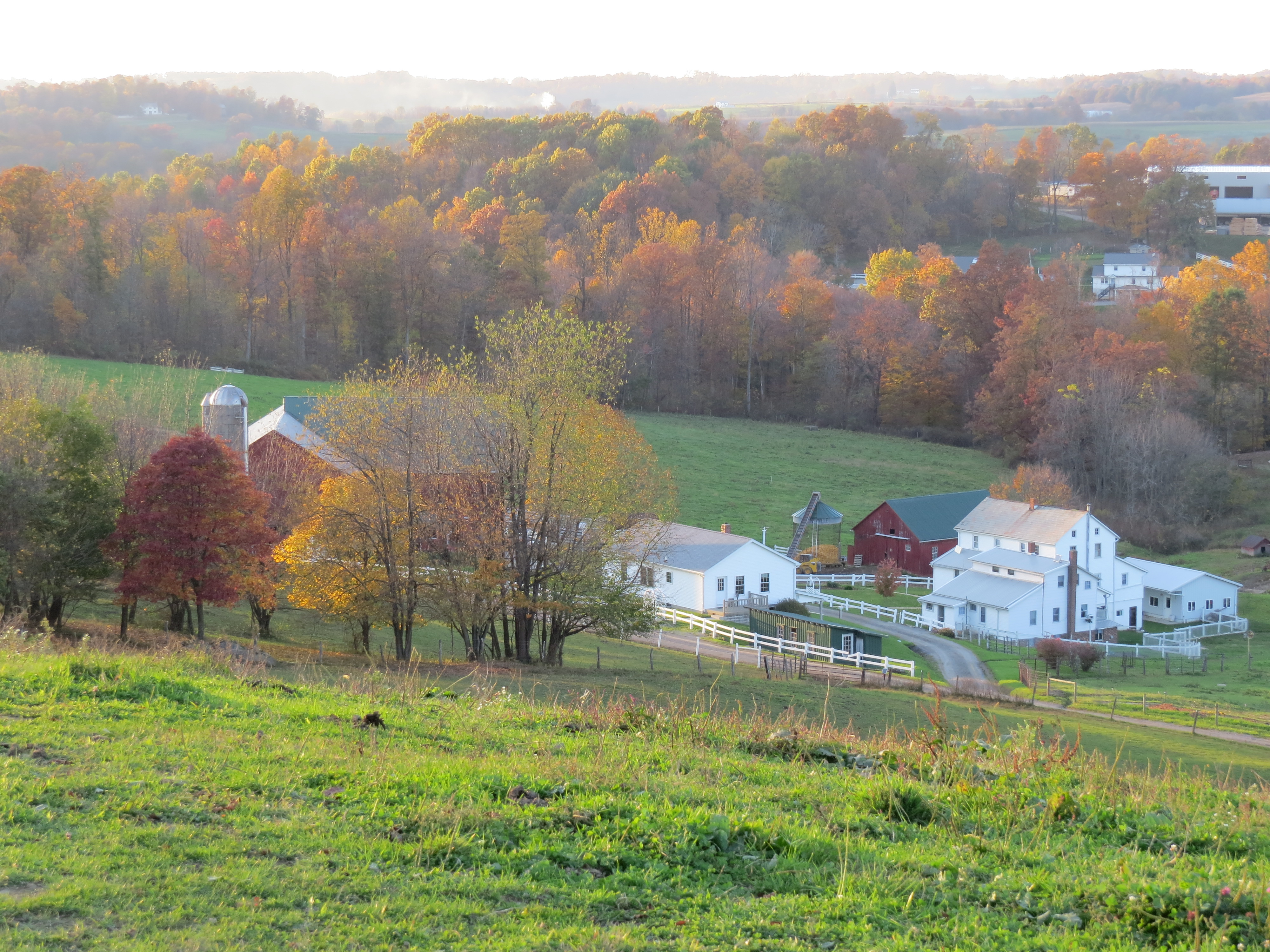
A typical fall scene in eastern Holmes Co., Ohio.

If the calendar has a nostalgic month, October is it for me.

As a child, our father would load his brood of five into the old cream-colored Chevy, and we would head southwest out of our blue-collar steel town to the wonders of Holmes County, Ohio. Oh, the things we would see and encounter.

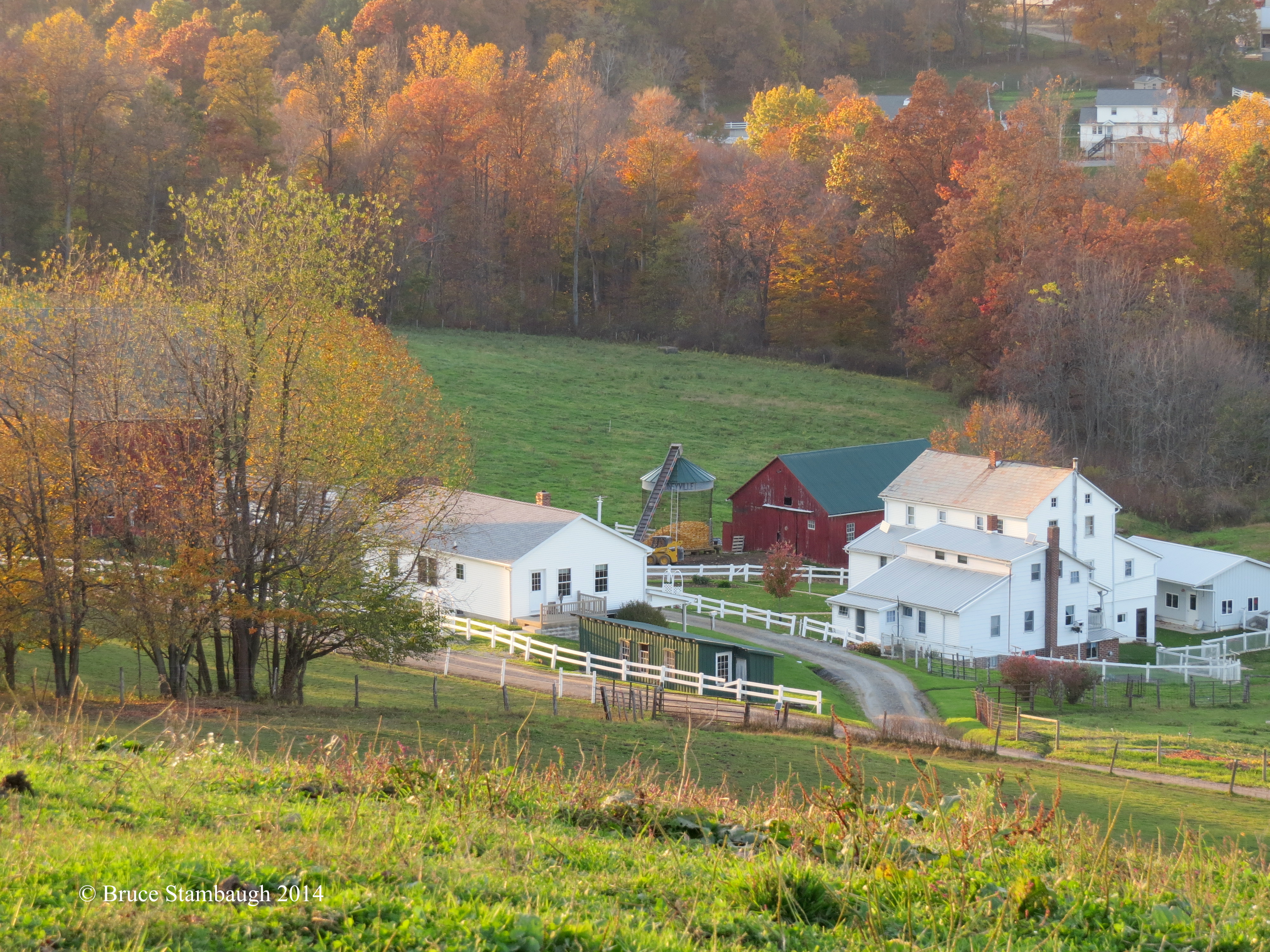
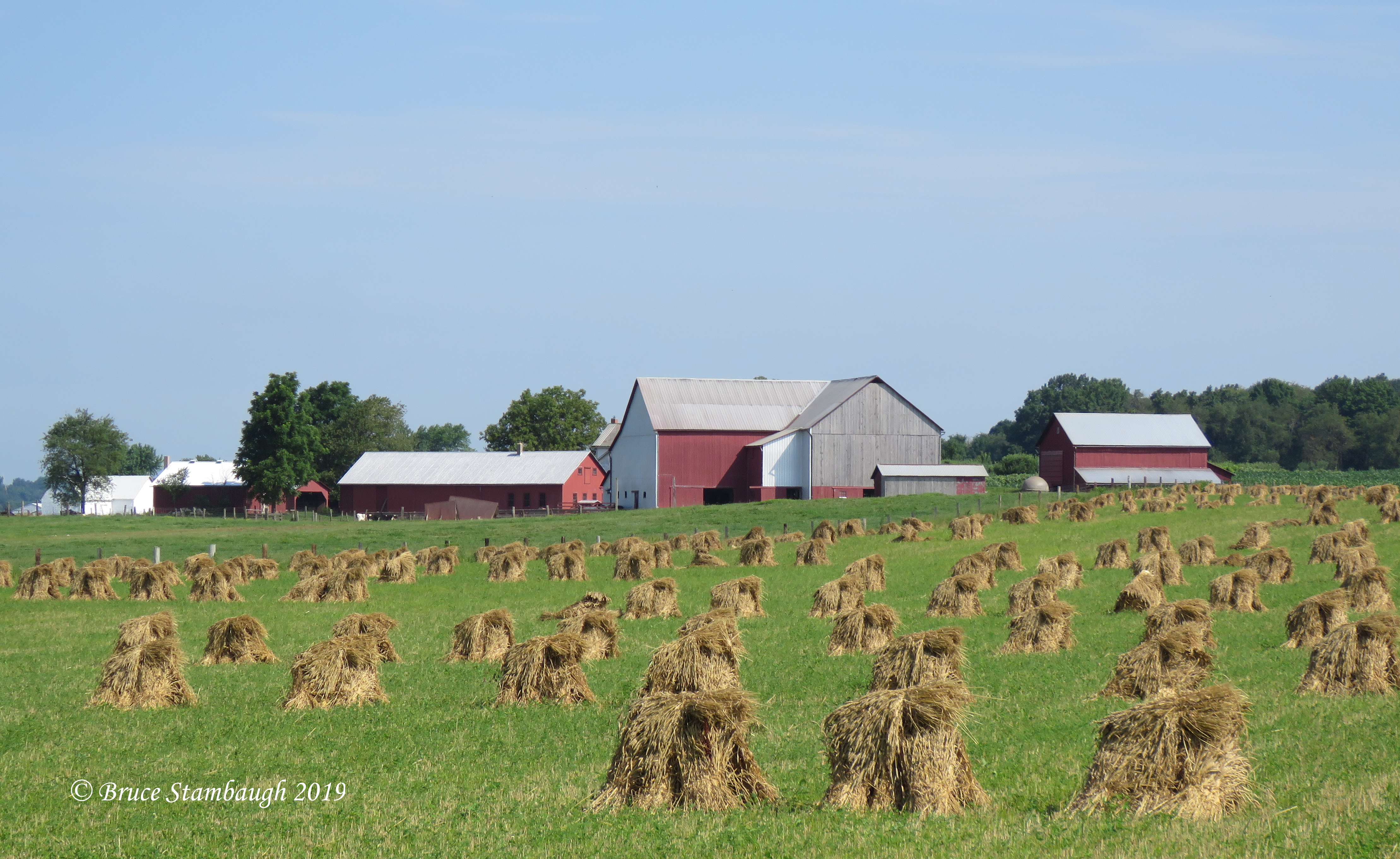
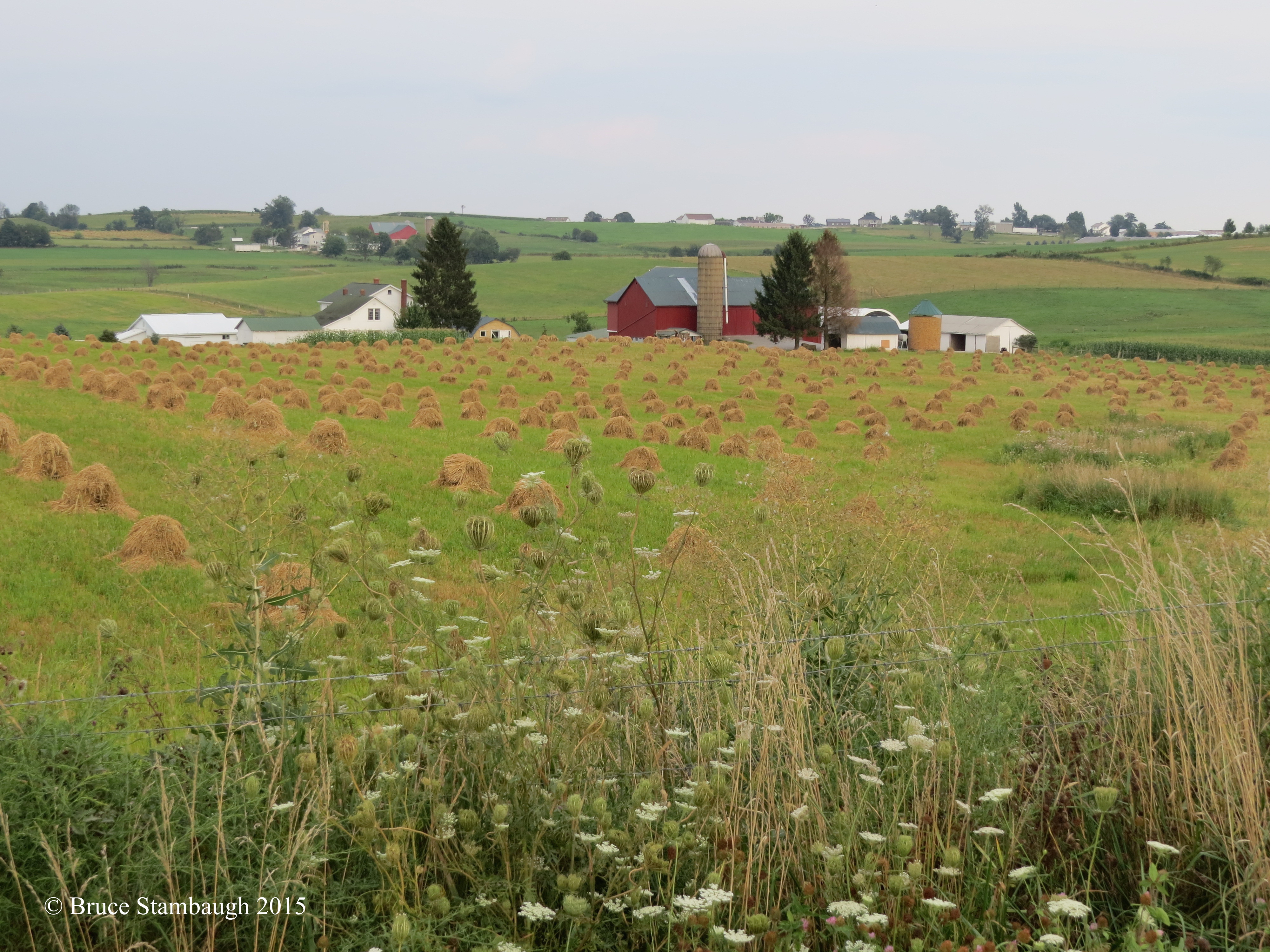
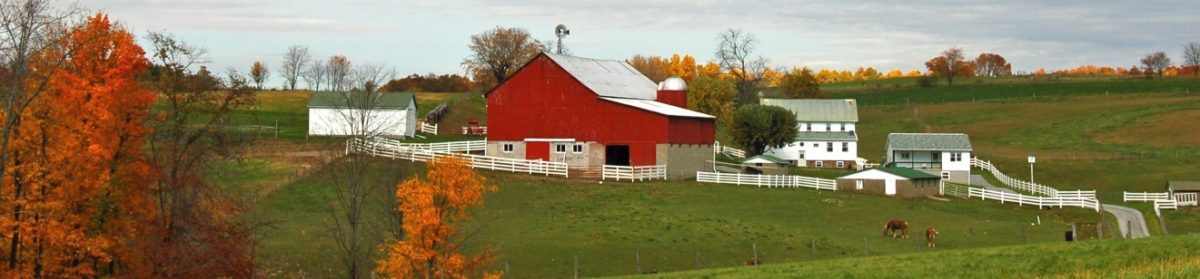
We’d stop along the windy way of U.S. 62 to sample cheese. We watched horse-drawn black buggies clop along, marvel at the corn shocks standing in rolling fields, and gape at long farm lanes that led to large white houses with big red bank barns. The real show, however, was in admiring woodlot after woodlot ablaze with every shade of orange, red, and yellow.

Dad would photograph the most colorful of the scenes. I couldn’t have imagined that as an adult that I would spend the best years of my life in that setting, among those people.

If I had to pick an ideal month and place to paint an iconic picture of our life, it would have to be October in Holmes County. My wife and I reared and raised our children there. We fulfilled our careers there and made life-long friendships.

During the first decade of our life together, my wife and I lived in the western hills of Holmes County. In October, there was no prettier drive than the road from Killbuck to Glenmont with its seven hills all dotted gold, russet, and yellow. It was a landscape artist’s paradise.

We built our first home on a bluff facing into that lovely valley. The view was always gorgeous in October.

When we moved to the eastern section of the county, our directional orientation and views changed but were equally splendid. Facing east, many gorgeous sunrises greeted us. The brilliant sunsets we enjoyed from the back yard were similarly lovely.

Our Ohio October view.

The bucolic scenes of corn shocks drying in fields surrounded by blushing sugar maples, rusting oaks, and yellowing ash and tulip poplars were commonplace, but no less appreciated. I drove back many of those long lanes to converse with the inhabitants of those white houses, and the keepers of those red barns. It was like those childhood visions had become actuality. That’s because they indeed had.

But October served as a double-edged sword of sorts for me. I didn’t mind the changeable weather. If an early-season Canadian clipper arrived, the snow seldom stuck, and if it did, the fluffy whitewash merely enhanced the already glorious countryside.

It wasn’t the weather or even the stinging scent of burning leaves that concerned me, though. Early Halloween pranks brought us volunteer firefighters out at 3 in the morning to douse some of the corn shocks that had been set on fire for pure orneriness.

On more than one occasion, town squares resembled barnyards. Temporary pens of goats and sheep were surrounded by hay bales and relocated corn shocks that blocked the traffic flow.

The good news was that the farmers usually got their livestock back safe and sound. Fortunately, that tradition has waned with the advent of security cameras and alarms.

We haven’t experienced such shenanigans during our two-year stint in Virginia’s Shenandoah Valley. With consecutive dry summer and fall months, the autumn leaf colorations can’t compare to those of our former home either.

I suppose that is what in part drives my pleasant autumn nostalgia for those bygone Holmes County days. October does that to me.

© Bruce Stambaugh 2019

Recognizing the virtue of September’s silence

Listen. Did you hear it? If not, there’s still time. In a few short days, September’s most significant gift will be gone.

The changing leaves too often get all the attention, especially the gorgeous sugar maples. I have no argument with that whatsoever. September merely sets the stage for Nature’s colorful artwork.

Inexplicably, that wondrous, warming rainbow leaves leafy trails to this September virtuous quality. Can you guess what it is?

In the pondering, we uncover this gracious gift the world is too often too busy to unwrap. September’s silent specialty is all around us. Do you hear it? That rhetorical question is no joke.

Silence is golden as the saying goes, and from beginning to end that silence is never more so than in September. Listen again to see if you agree.

September gives us ample opportunity to embrace her unique child. Her silence never sleeps. She is as still as still can be 24-hours a day.

At every dawn, September’s stillness is broken not by the sun, but by humankind winding up for another day of work. Unnatural sounds break the silence and intrude upon our slumber.

The morning train whistles reverberate up and down the valley warning of its impending crossings. Even with the house windows closed, we can hear it from miles away.

Tires hum on the variegated macadam where country and city roadways meet. On occasion, sirens tell a tale of disrespect, distress, or disorder that further disturbs September’s sacredness.

With the initial rush over, my wife and I settle on the back porch for a simple breakfast. Too fascinated with the month’s hush, we seldom interrupt it or one another’s thoughts.

Thinking the coast is clear, mourning doves swoop in for morning refreshments at the birdbaths. One slight movement by either of us and the spell is broken. The ripple of wind that propels them to safety in the neighbor’s blue spruce tickles my neck.

A rabbit nibbles freely at the fibrous greenery. Its oversized eyes sparkle in the sunshine, its floppy ears twitch without disturbing the quietude.

We take up the same positions at lunchtime. Migrating ruby-throated hummingbirds squawk their arrival at the nearby feeder. Too much like humans, they spend more energy chasing each other away rather than learning to share the nourishing liquid nectar.

The leaves and needles of the neighborhood trees hang limp and still. Even if a slight afternoon breeze gently bounces them around, they remain faithful to the code of September silence. They hit the ground inaudibly.

Beneath those shady limbs, lawnmowers roar back and forth, back and forth. When the last blade is cut, the glorious silence returns. Does anyone hear it?

If not, the ubiquitous gangs of bellowing blue jays are sure to enforce it with their host of calls and cries. Their intentions are righteous; their methods are inadequate and contradictory, to say the least. Still, once gone, September’s silence is palpable.

Twilight may be the best time to catch a glimpse, a snippet, a pocketful of September’s hush. With the day’s work done and supper over, the last of the season’s crickets sing the silent song into the night.

Overhead, the Milky Way, dim as it is in the potentate sky, twinkles its approval of the welcome stillness. The day is done. Though many have tried sunup to sundown, September’s silence has thankfully prevailed.

Much like the rest of us, September’s days are numbered. Listen for her calming silence while there is still time.

© Bruce Stambaugh 2019

Bay Photos by Donna

Wildlife Photos From The Chesapeake Bay Region

ROAD TO NARA

Culture and Communities at the Heart Of India

K Hertzler Art

Artist and nature journalist in the Shenandoah Valley of Virginia.

Maria Vincent Robinson

Photographer Of Life and moments

Gabriele Romano

Personal Blog

Jennifer Murch

Art is the only way to run away without leaving home. -Twyla Tharp

Roadkill Crossing

Writing generated from the rural life

ANJOLI ROY

writer. teacher. podcast cohost.

Casa Alterna

El amor cruza fronteras / Love crosses borders