In last week’s Photo of the Week blog post, I featured a teenager photographing flowers. I told her parents how inspiring it was to see a young person so interested in photography, something far beyond selfies. When the young woman joined the conversation, I gave her some advice. I told her to look around when everyone else is looking at the obvious and showed her an example of what I meant. She and her parents thanked me, and we parted ways.
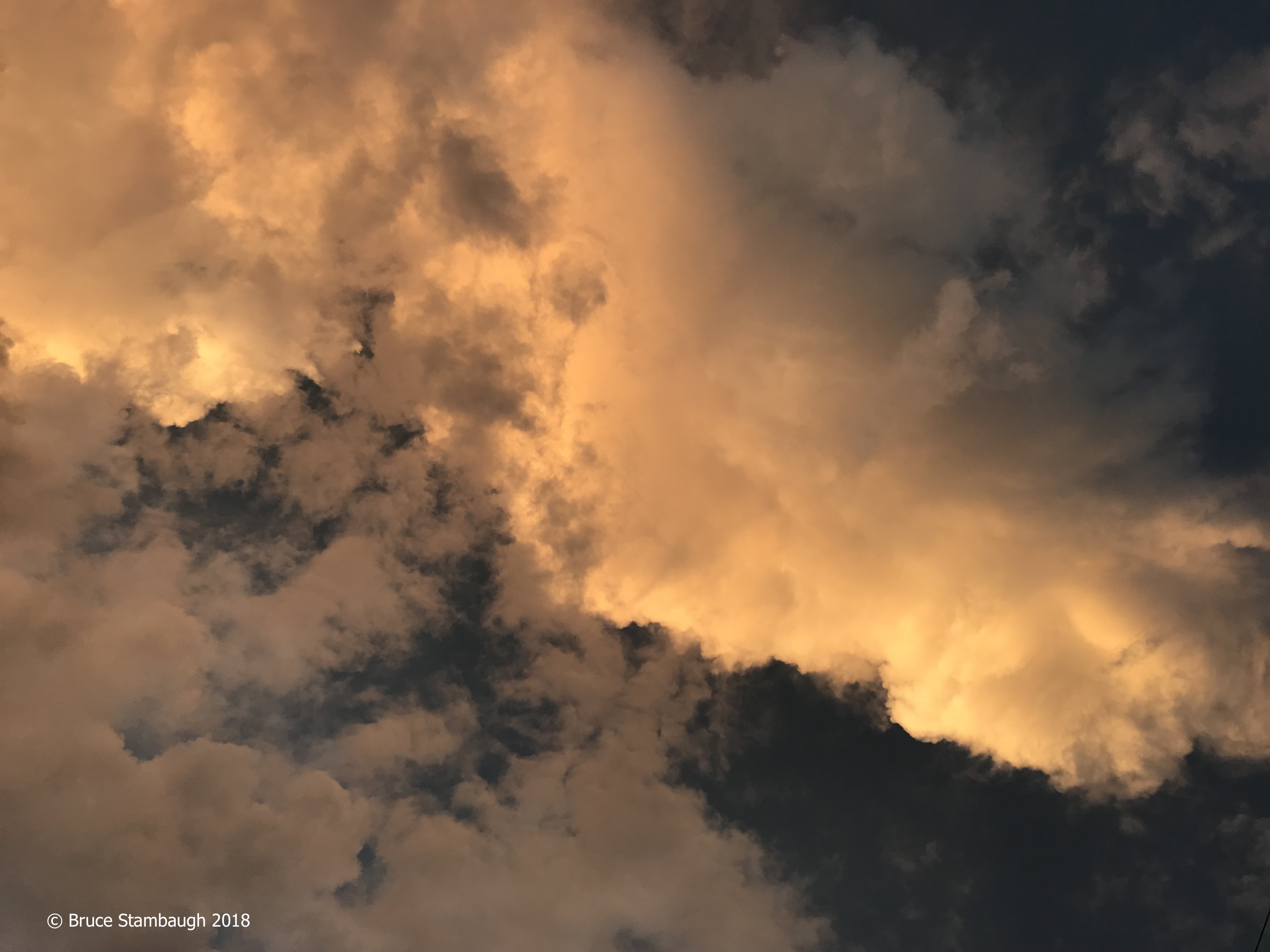
“Looking Up” is an example of taking my own advice, something I too often fail to do. Just ask my patient wife. While recently photographing a sunset after the passage of some summer thunderstorms, I was ready to leave when I happened to look overhead. This is what I saw, the remaining rays of the day highlighting some roiling cumulonimbus clouds.
I couldn’t believe all of the beauty that was right above me while I waited on a spectacular sunset that didn’t materialize. As I told the young photographer, look all around you. You just might find something spectacular to capture and share.
As I look back on it, I always dreaded the return of the eighth month. Through my not-so-nostalgic reflections, I realized that my reasons evolved across the decades.
As an elementary school student, I knew all too well what August’s arrival meant. We were down to one month of summer vacation.
Those were the days when agrarian mentality ruled the school year. All scholarly studies were squeezed between Labor Day and Memorial Day. When the county fair gates closed, the school doors opened.
Now, of course, no such luxury exists for students. Back to school shopping has already begun. With August at hand, many students start the daily countdown until the dreaded day arrives.
Don’t get me wrong. I liked school, well, the elementary version at least. However, I enjoyed playing much more so. Summer vacation generated much less stress for youngsters then. Our screen time meant going to the drive-in movie theater on Friday nights. Our phones stayed at home firmly affixed to the wall.
Male Pipevine Swallowtail butterfly on Cardinal flower.So when the calendar flipped to August, the neighborhood gang of hooligans started planning our next sleep-out under the stars or our next daytime adventure at the creek down-over-the-hill. Time was a wasting.
In high school and college, it wasn’t playtime but work that got shortened by the start of school. At $2.06 an hour, I needed to work all I could to deter my own educational expenses. With younger siblings and a stay-at-home mother, it was the least I could do to help the family financially. My older brother set that model.
When I started my career in public education, I began to more fully understand the importance of August. It meant readying for another school year, only this time as the teacher and eventually principal.
The late summer days of August always meant sweating it out decorating my classroom before the students arrived. Those old schools didn’t have air conditioning. I could hear the busyness of protégés down the hallways also preparing for the coming school year. We came in early morning and early evening to avoid the afternoon heat.
Come August, summer winds down.When I joined the administrative ranks, August meant meetings, which I loathed unless they were held on the local golf course. That venue seldom happened, however, despite the chatter around the window table at the locals’ favorite eatery.
I heard samplings of student whining from our son and daughter, who knew too well that the coming of August meant school band camps and fall sports practices. Our son chose wisely. He joined the golf team and scored much better than his father ever could.
Just like their parents’ childhood schedules, once the county fair ended, the school year began for our children, too. By then, however, Labor Day became the first school holiday, not the summer’s last.
Somehow, though, we all survived those August perils. As a retiree, August has lost it sting. I don’t have the self-imposed barriers to hurdle anymore. I can relax in air conditioning as the thermometer hits 90.
Like all the previous years, I anticipate golden sunsets sinking beyond the horizon. I’ll watch for the Perseid meteor shower, hoping that the August haze has faded in the cool of the night.
The fraternal twins of retirement and maturity have a mellowing effect on sour attitudes. Instead of dread, this August I’ll breathe in a deep breath, say a prayer of gratitude for another new month, and enjoy the moments at hand.
With all of its positive and pleasant attributes, summer makes it hard to be humble.
We all want to get out and take full advantage of the sunny days filled with warmer temperatures and a wide variety of activities. We fling ourselves full force into each day whether it’s for work or for play. We want to drink in every drop of sunshine, warmth, and blue skies, from dawn to dusk.
At the beach.Toddlers, children, and teens fill the local swimming pools, both public and backyard venues, while adults keep watchful eyes on the less careful youth. Construction workers bask in the fair weather, narrowing four lanes to one with an arsenal of orange barrels.
Lawnmowers hum morning, noon, and evening throughout global neighborhoods. Contractors and excavators work sunup to sundown. Farmers are in their glory, beginning to harvest the fruits of their labor.
In many places, the corn reached far beyond knee-high-by-the-Fourth-of-July standards. In others, stalks stood only inches tall, drowned out by the super wet spring and early summer rains.
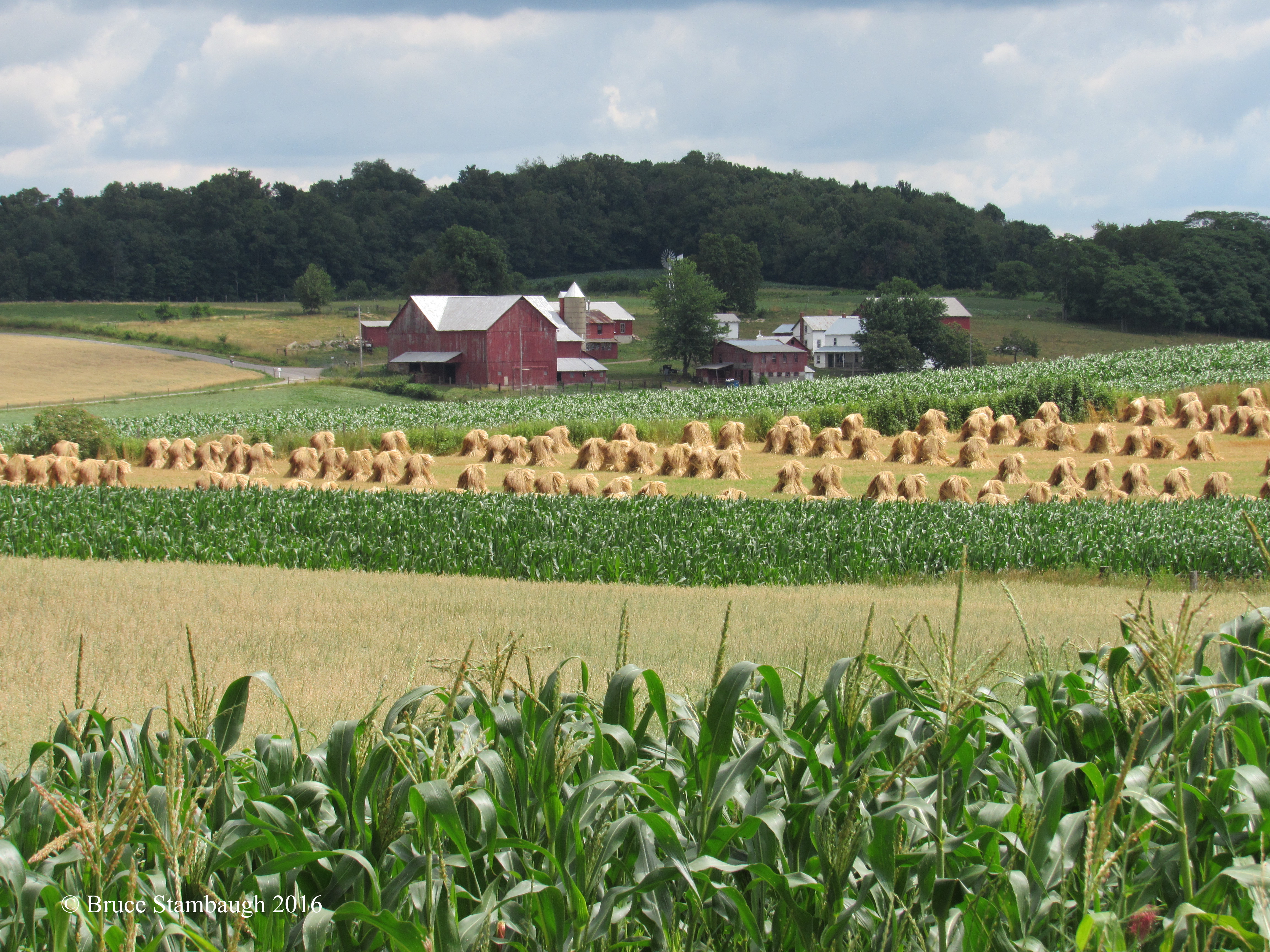
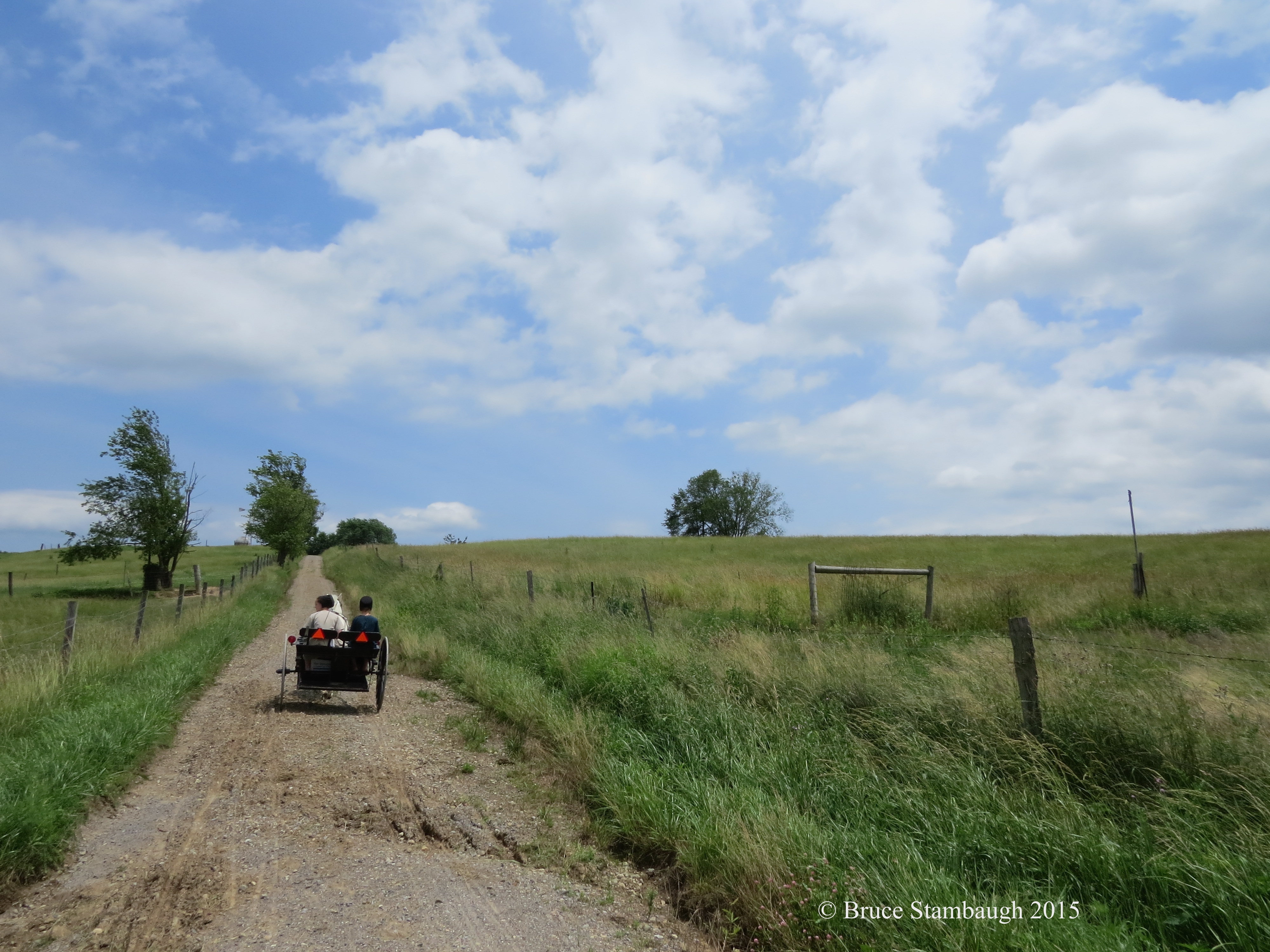
Amber waves of grain really did roll in the wind until giant combines gobbled them up or they formed rows of shocks like so many soldiers standing guard in Amish-owned fields.
Summer, however, has other, more drastic ways to get our attention with her weapons. Summer can humble us lowly humans in many ways. Think floods, wildfires, tornadoes, droughts, golf ball-sized hail, record heat and humidity.
No matter our stature or station in life, we all succumb to those prevailing conditions. Summer humbles us.
For those unfamiliar with E.B. White’s beloved children’s classic “Charlotte’s Web,” humility played a major role in the book’s plot and dialogue. The spider Charlotte wove “Humble” into the web that served to save the life of the precocious pig Wilbur. She wanted a word that meant “not proud” as Wilbur’s crowning characteristic.
But humility has a second meaning beyond the social one. Humble implies a willingness to learn, and thankfully summer has much to teach us. The lessons are all around us in a more pleasing, useful, and beautiful form than what disasters wrought.
Vegetable gardens and truck patches team with all sorts of goodies that nurture us. Tasty homegrown sweet corn, luscious red tomatoes, green, red, and yellow peppers, and tangles of zucchini are just a few examples.
Roadside produce stands and supermarkets tempt us with juicy peaches and vine-ripened melons. Generations ago indigenous Americans taught us to plant, tend, and harvest these marvels.
For those non-gardeners among us, we sniff and thump and feel and taste to select the best of the bunch like our parents and grandparents did. The poor fruits and veggies pay the ultimate price.
Please click on the photos to enlarge them.
Does and fawns.
Rose Campions.
The neighbor’s flowers.
Amber waves of grain.
Home delivery.
Purple Coneflowers.
Flower gardens are peaking with hollyhocks and zinnias and cultivated flowers, too. Leafy hardwoods provide shade and refreshing coolness from the oppressive summer heat for humans and critters alike.
Wildflowers and wildlife, too, show their stuff. Dainty spotted fawns venture out on their own while mom watches from more secluded spaces. Parent bluebirds and house wrens ferry insects, worms, and berries to their youngsters nearly as big as the adult birds.
Families crowd beaches and climb mountains on vacations, exploring new venues or returning to old haunts discovered by previous generations.
Where is humility in all of this? Using the educational definition, it’s merely a reminder of the responsibility of the created to care for the creation. That is about as humbled as we can get.
I’m sitting on a bench beneath the shade of a determined sugar maple tree, perhaps its verdant growth encouraged by the view I’m enjoying. Who or what wouldn’t be heartened with these delightful surroundings.
Youngsters set sail on skiffs, their teenage teachers guiding them into and out of the steady east wind, tacking, and turning this way and that, the multi-colored sails energized by the steady lake breeze.
Only weeks ago a much different scene played out in this same location. One nor’easter after the other pounded the shoreline that now houses a single-file line of dinghies slotted between wooden four by fours.
The shoreline lost, as it always does, against such strong forces of nature. So did the dock, which had its securely anchored metal benches washed overboard.
Today, however, is different. The lake breeze is just stiff enough to keep Old Glory and the nautical signals continually flapping and a lone great egret working overtime to a new upwind fishing spot.
Beyond the pier’s end, a cigarette boat slices with ease through the small waves of Lake Erie. Sun worshippers, fisher-people, and swimmers all bask in the sun-drenched day, thankful the oppressive heat and humidity of recent days have been replaced by these ideal conditions. Not a single contrail pollutes the all-blue sky.
Purple Martins and tree swallows also sail over all the human aquatic action, skimming the latest hatch of Mayflies from the air.
This slideshow requires JavaScript.
Parents and proud grandparents stand along the shoreline or in the pavilion watching their sons and daughters and grandsons and granddaughters sail away on the blue-green water chop. In a matter of minutes, they safely return, smiles replacing any lingering fear of their maiden voyage.
Just off of the end of the reinforced breaker wall of native limestone, fishermen bob in their bass boat, casting and recasting without success. They soon move on to calmer and hopefully more productive waters.
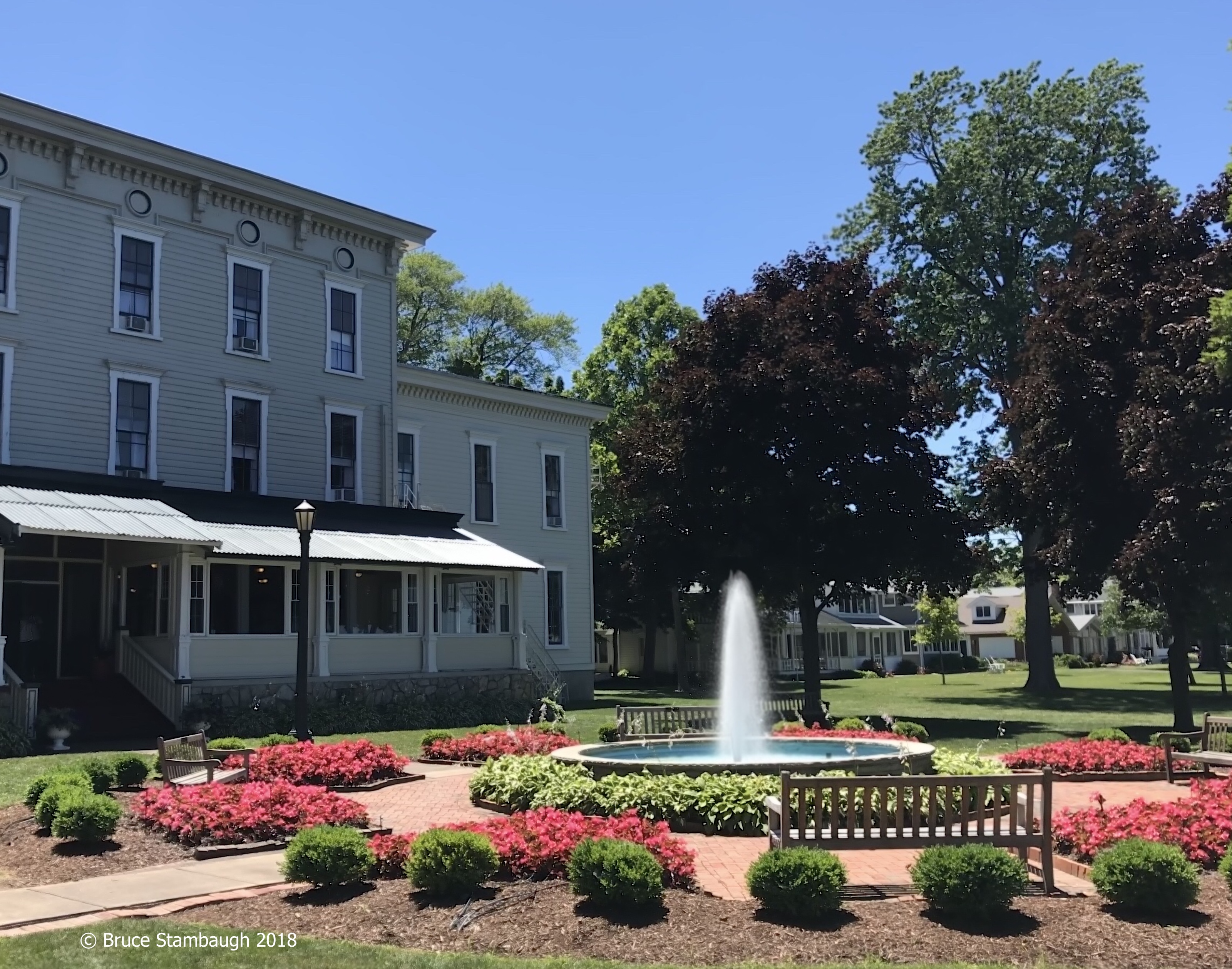
Back on shore, walkers stroll the sidewalk that runs the full length of the shoreline that makes Lakeside lakeside. This Ohio resort town, appropriately known as the Chautauqua on Lake Erie, is bustling with activity on this Sunday afternoon.
Lifetime Lakesiders gather on other shaded wooden benches like they have for decades like their parents and grandparents did before them. Only the seats are different. The view, the busyness of recreation, education, arts and crafts, and entertainment of the friendly, gated community unfold all around them just as it did when they were children, too.
Bicycles and golf carts wait patiently for their drivers and passengers in the green grass along the blacktop’s edge. The bikes stand unlocked, and ignition keys dangle freely in the carts. Such is Lakeside.
Daring teenage girls try their hand and legs at paddle boards, nimbly dropping to their knees when their hesitation takes hold. They eventually regain their confidence and return to their paddling.
The Westminster chimes of the clock tower atop the nearby pavilion bong 3 p.m., followed by bells singing “How Great Though Art.” Behind me, a gurgling fountain lures a toddler away from her mother until she beckons her daughter to the spotting scope aimed at Perry’s Monument on Put-in-Bay.
These few minutes spent observing, absorbing, listening, looking, appreciating all that is Lakeside, Ohio renews my body, mind, and spirit. Given this setting, that’s what is supposed to happen.
You don’t have to be at Lakeside to garner these healthy, in-the-moment results. But it sure helps.
The night sky was bright and promising, at least where I live west of Harrisonburg, Virginia. It seemed near perfect conditions for photographing June’s Strawberry Full Moon rising over the Blue Ridge and Massanutten Mountains. But it wasn’t to be.
I arrived at my prearranged position high on a hill that overlooks the city and provides an excellent view to the east. I was in for a surprise, however. A broken layer of clouds hovered over the Blue Ridge Mountains. I knew the moon was to rise at 9:05 p.m. EST. As that time came and went, I still could not see even the faintest hint of the full moon.
Finally, just before 10 p.m., the clouds lightened from the moon’s glow. It wasn’t the shot I wanted or had hoped for, but it’s the one I got. I often take photos backlit by the sun. “Veiled beauty,” my Photo of the Week, was backlit by the moon.
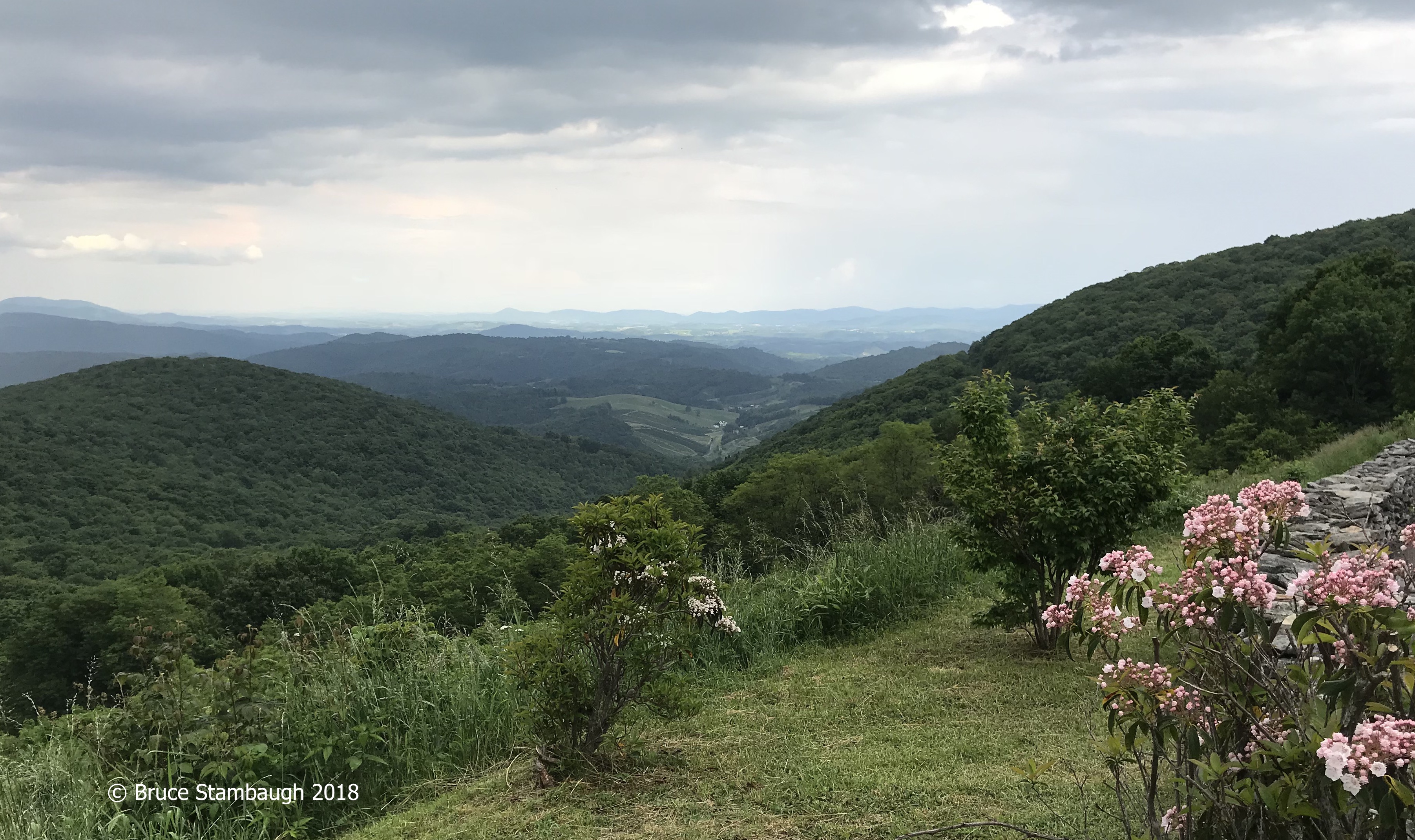
Traveling with friends, we wanted to reach the overlook at Grayson Highlands State Park near Whitetop, VA, before a front moved through bringing heavy rains. We just made it.
We were pleasantly surprised to see not only a marvelous view but that the Mountain Laurel bushes were blooming. No other clumps of them were in blossom as we drove up the mountain. These beauties just made the view all the more impressive.
The mountain range far in the distance is the Blue Ridge.
“Mountain Laurel with a view” is my Photo of the Week.
Spring Sunset.
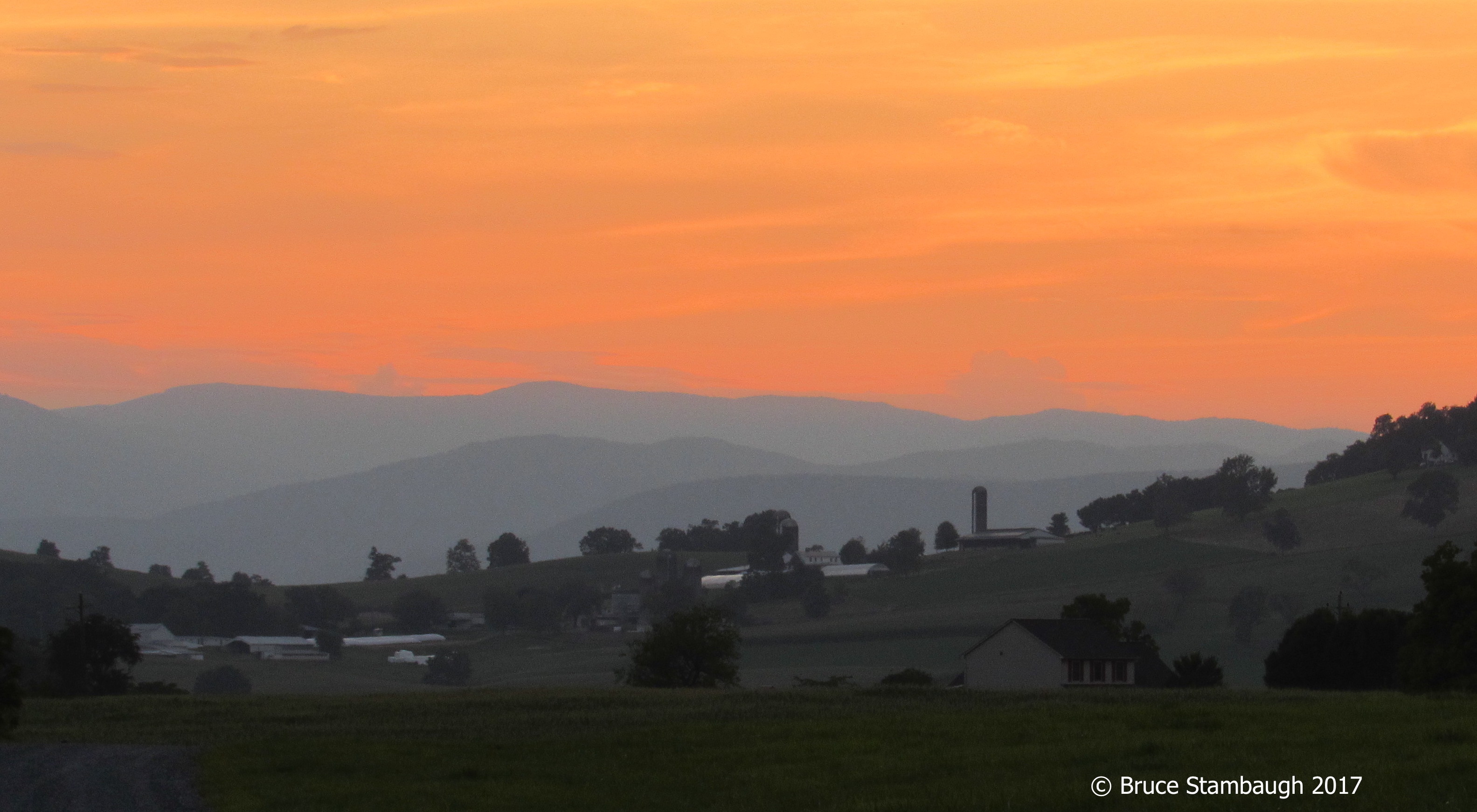
One thing about photographing sunsets is certain. You have to be at the right place at the right time to capture the beauty.
As I was driving desperately trying to find the perfect spot to capture the quickly fading sunset, the colors suddenly brightened. I pulled in the nearest farm lane, pointed my camera and clicked away. Once was enough, as this shot shows. Seconds later, the western sky went gray over the Allegheny Mountains that create the border between Virginia and West Virginia.
Memorial Day has come and gone. You know what that means? It’s the traditional but unofficial start to summer in the United States.
Public swimming pools will open to the sounds of laughter and joyous splashing by youngsters fresh out of school. They are the envy of those still laboring over mandated tests and counting the days until they, too, can roam free.
Church camps and scout camps and Bible schools will open their floodgates and let the children pour in. Snipe hunts and dreaded memorizations will commence just to get to the real treasures, homemade snacks.
The warning chirps of robins disturbed from their nests resound until inattentive humans continue on their way. The first broods of fledglings squawk and beg for their parents to feed them despite being nearly as big. If a brown-headed cowbird has snuck into a song sparrow’s nest, the scene can be grotesque.
At the feeder.Lawn mowers, riding mowers, weed eaters, and leaf blowers join the summer society’s songfest, mostly off key. Those willing and able to expend the energy on their hands and knees for hours at a time do less intrusive weeding. Their rewards come in more than tidy flowerbeds. They enjoy the bees and butterflies flitting from bloom to bloom.
Ruby-throated hummingbirds zip from flower to flower, too. They supplement their diet with long sips at the local sugar water fountain to the delight of dedicated bird watchers everywhere.
Many times the best show is when the tiny birds chase one another high and low, zigzagging at light speed after one another even though there are plenty of places to perch and feed. Those in charge of refilling the feeders applaud the performances.
At night, the summer breezes diminish. Fireflies rise up out of the grasses and fields and light up the evening skies blinking their romantic messages. Overhead, commercial jets sail beneath the stars and planets that twinkle brightly.
This slideshow requires JavaScript.
On the horizon, faint yellow flashes children like to label heat lightning interrupt the nighttime play. In reality, storms a hundred miles away had already driven other children indoors long before dark.
The next day, the sunrise blazed crimson and orange, signaling a fabled warning to sailors and civilians alike that rain was on its way. Sure enough, a squall line raced through, bending trees to the stress point. A few sacrificed a limb to save the whole.
Lightning flashed and crashed, and hailstones pelted the ripening strawberries to the dismay of both growers and customers. In suburbs and cities, torrents rutted gardens and sump pumps ran overtime.
Those were minor issued compared to the storms that others endure. All of this romanticizing and reminiscing about summer pales in comparison to those whose nights are peppered with gunshots and emergency sirens.
Summer in the city is filled with garden plots, swimming pools, day camps, and library readathons, too. Picnics in the park and taking in a baseball game, Major League or Little League, are also part of the warm weather entertainment.
Bicycling along picturesque country roads or designated bike paths hits its peak. Helmets are always a safety requirement.
Isn’t everything merely a matter of perspective and geography and circumstances?
We still have nearly three weeks until the summer solstice, the scientific start of fun in the sun. It’s also the day with the most daylight, giving us plenty of opportunities to enjoy the sights and sounds of summer yet to come.
When a friend posted on social media audio of Dickcissels singing at dusk, I wanted to see the birds. Dickcissels are rare here, according to birding records and range maps. Dickcissels are listed as scarce for Virginia’s Shenandoah Valley breeding maps.
With my morning and early afternoon tightly scheduled, I knew I had a small window of opportunity to find this beautiful bird with an even more beautiful song. Severe storms were forecast for the area for the early evening. I headed north 10 miles as soon as I could. When I reached the intersection where the birds’ song had been recorded, I immediately heard them upon exiting my vehicle. Finding them was a different story.
I had seen my first Dickcissels in similar habitat in Ohio. Unfortunately, they are drawn to alfalfa fields dotted with weeds like ironweed that grow taller than the legume the farmer planted. Sure enough, using my binoculars, that’s where I spotted the first male Dickcissel. I felt pressured to photograph the birds. Thunder rumbled in the distance near the Allegheny Mountains 20 miles west.
To my surprise, a Dickcissel rose out of the thick foliage and flew directly towards me, landing on a tree branch right above my head. As I raised my camera to capture the bird up close, it took flight and perched on an ironweed plant nearly a football field away. I clicked away anyhow.
I scanned the field in the direction of other Dickcissels that I heard. I found a pair about 50 yards south of my location. Just as I started to walk south, a male and female flew to the woven-wire fence that surrounded the hayfield.
I immediately stopped and found a place to brace myself to steady the camera. Even before I could get off my first shot, the female flew, leaving the male to sit along, singing eloquently. I clicked away hoping for some decent results. A light rain had already started obscuring the sun, which gave me less light to work with.
Finally, when a car approached from the south, the beautiful bird flew in the direction of its mate. I headed for the car, happy to have witnessed both the bird and its enchanting song.
“Beautiful bird, beautiful song” is my Photo of the Week.
Full Moon Rising.
Precisely at 8:05 p.m. on April 29, 2018, the full moon rose over the Massanutten Mountain range just east of Harrisonburg, Virginia. I stationed myself atop a hill behind Eastern Mennonite University on the city’s northwest side to ensure I had a clear vantage point to view the moonrise. I wasn’t disappointed as the moon peeked right at a change in elevation in the landmark mountain ridge. Massanutten runs through the center of Virginia’s Shenandoah Valley from Harrisonburg northeast to near Strasburg.
I was fortunate that the evening was clear and the humidity was low, which allowed for a perfect view of the full moon. “Full Moon Rising” is my Photo of the Week.










 Roadkill Crossing
You must be logged in to post a comment.