In like a lion, out like a lamb, or not

March snow in the mountains.

March is famous for its variable weather. After all, the familiar saying, “In like a lion, out like a lamb” references the month of March.

There’s a good reason for that. It’s easy to imagine our log cabin ancestors being more than ready for spring after enduring snowstorm after snowstorm. However, pioneer-era folklore was based more on hope than meteorological compilations.

They professed that if March began with yet more lion-like elements, then it had to end with gentler, calmer, warmer, more welcoming weather. Who could blame them?

It’s only natural to want more appealing weather than another cold spell. In animalizing weather, it’s much safer to deal with a lamb than a lion, especially if you were a 19th-century settler with a bad case of cabin fever.

Likely, there was more to it than that. Those hardy people believed in a balance of life. Aristotle’s “moderation in all things” was their mantra. So, they logically applied that theory to the weather as well. If March was harsh in the beginning, it should be mild by month’s end.

Unfortunately, the weather doesn’t work that way. We take what we get, and given what we have gotten in the past, March’s weather could be a doozy. A lot of factors come into play.


March’s normal weather, whatever normal is these days, has historically played hijinks with global societies. March is known to deliver every variety of weather in its 31 days, and not always where or when you might think.

My family has personal experience with March’s fickleness. Seven years ago, we traveled from Ohio to Virginia’s Shenandoah Valley to babysit our three grandkids, then ages eight, six, and three. Their parents went on a much-needed vacation to Florida.

Shortly after we arrived, a strong cold front moved through the eastern U.S. causing chaos. While Florida froze, the storm dumped a foot of heavy, wet snow on us. Babysitting was never so much fun as we frolicked in the winter wonderland. Sled riding, building snow forts, and snowmen filled much of our time.

When we returned home a week later to Holmes County, Ohio, the weather was dreamy. Under sunny skies, Amish farmers were plowing fields with horses. Now those seem like the good old days.

When we arrived home.

It’s easy to be nostalgic about March. I always thought of the third month as the bridge between winter and spring. Hoes and rakes replaced sleds and ice skates. The snow on the daffodils never lasted long.

It’s much harder to face the reality of the Marches of the 21st century. Now, severe storms are occurring more frequently and are much stronger than in previous times.

More than a hundred years of industrialization have drastically changed global climate patterns. Tropical areas that usually receive regular rains have been drought-stricken, resulting in catastrophic wildfires. Think Australia and California.

Globally, the last 10 years have produced nine of the warmest years on record. In fact, this January was the warmest ever. That could explain in part why many skiers, ice skaters, and ice fishermen far and wide had to feel abandoned by the nearly winterless winter weather.

That said, March will still be March. It just might be wilder than in olden years. Our forebearers rhymes may have had some wishful reasoning to them. The reality in the early 21st century may deliver more dramatic climatological results.

If we are fortunate, perhaps the meteorological lion and lamb will lie down together peaceably. That might bring spring weather of biblical proportions.

The signs say it all.

© Bruce Stambaugh 2020

Savoring the Sunset

2020-02-11 18.39.03

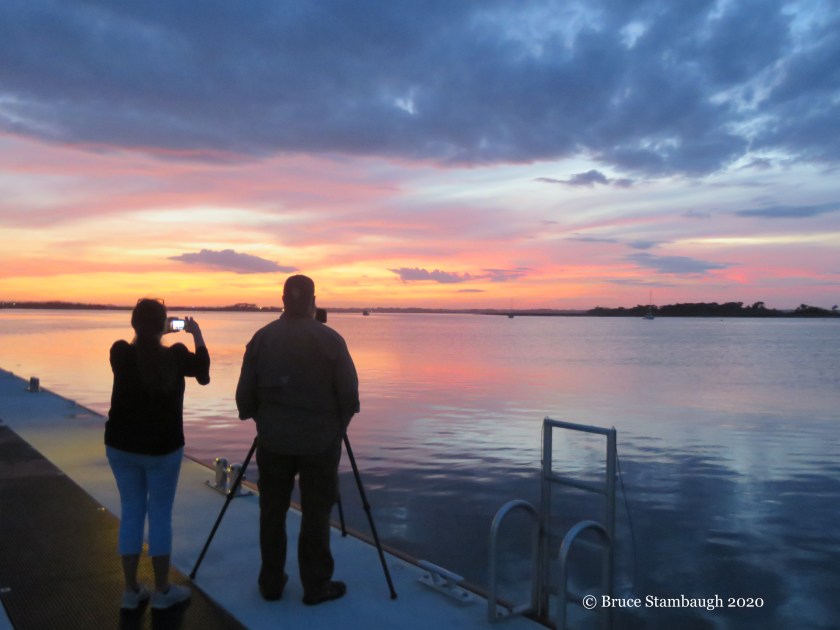
There is nothing particularly spectacular about this photo. Yes, it’s a pretty sunset, and yes, I captured two photographers snapping pictures of it.

I chose to feature this photo for personal, even sentimental reasons. It was the last colorful sunset we had before we left Florida to return to Virginia. It was also one of a handful of decent sunsets we had in the six weeks we wintered in Fernandina Beach.

The marina there is a gathering place for amateur and professional photographers to view the sunset. After a lengthy delay in repairs, it had only reopened a few days before this photo was taken. Winds and high water from Hurricane Matthew severely damaged the marina on the Amelia River in October 2016. It was great to be able to once again meet with friends and strangers and share a lovely sunset at the water’s edge.

This sunset gave us roses and yellows, and the wavy clouds added a soft, pillowy effect to the sky. The river served as a fuzzy mirror to all that unfolded.

As I was leaving, I turned back for one more shot and saw this scene. My friend Carollee had her point-and-shoot camera, while the other photographer was taking time-lapse shots of the sunset.

“Savoring the Sunset” is my Photo of the Week.

© Bruce Stambaugh 2020
Trailing the Trawler


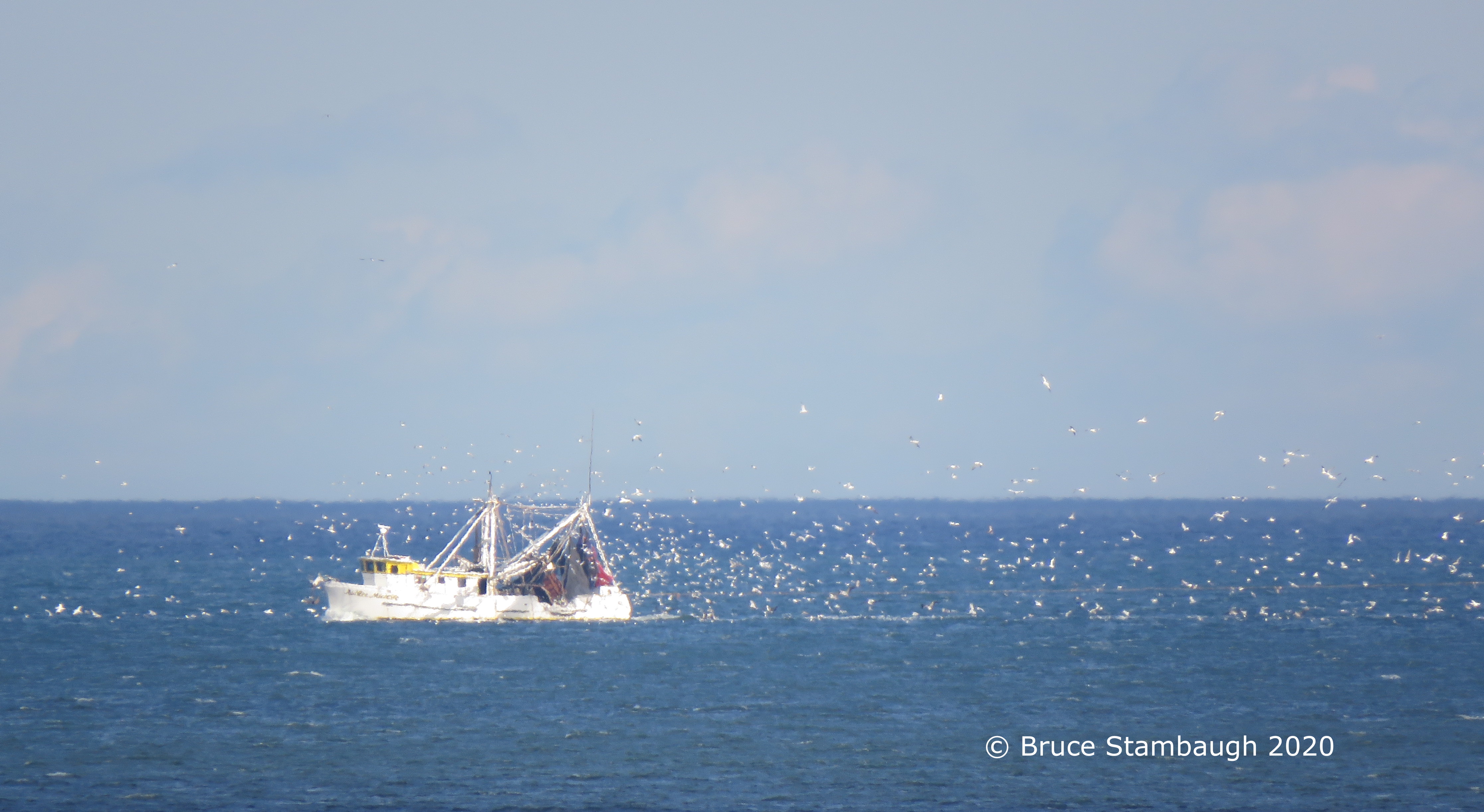
The timing couldn’t have been better. With the late afternoon sun shining brightly, this shrimping trawler headed for port to unload the day’s fresh catches. Clearly, the boat and its crew weren’t alone.

An assortment of gull species, Northern Gannets, and other sea birds followed along, hoping for an easy meal as the crew pitched unwanted catches overboard. It was unusual for the trawler to be close enough to shore to zoom in for a decent shot.

“Trailing the Trawler” is my Photo of the Week.

© Bruce Stambaugh 2020
Tropical Sunset


Though the sky wasn’t the most colorful as sunsets go, the setting certainly was. These palm trees stood on a bluff over the Amelia River in Old Town Fernandina Beach, Florida. They nicely provided that tropical look as the sun sank in the west.

“Tropical Sunset” is my Photo of the Week.

© Bruce Stambaugh 2020

Orange on Yellow


Here’s some color to brighten any winter dullness that might be fogging your mind as January comes to an end. I spotted this Gulf Fritillary butterfly on Egans Creek Greenway in Fernandina Beach, Florida, where we spend our snowbirding days.

“Orange on Yellow” is my Photo of the Week.

© Bruce Stambaugh 2020

Dappled Sunset


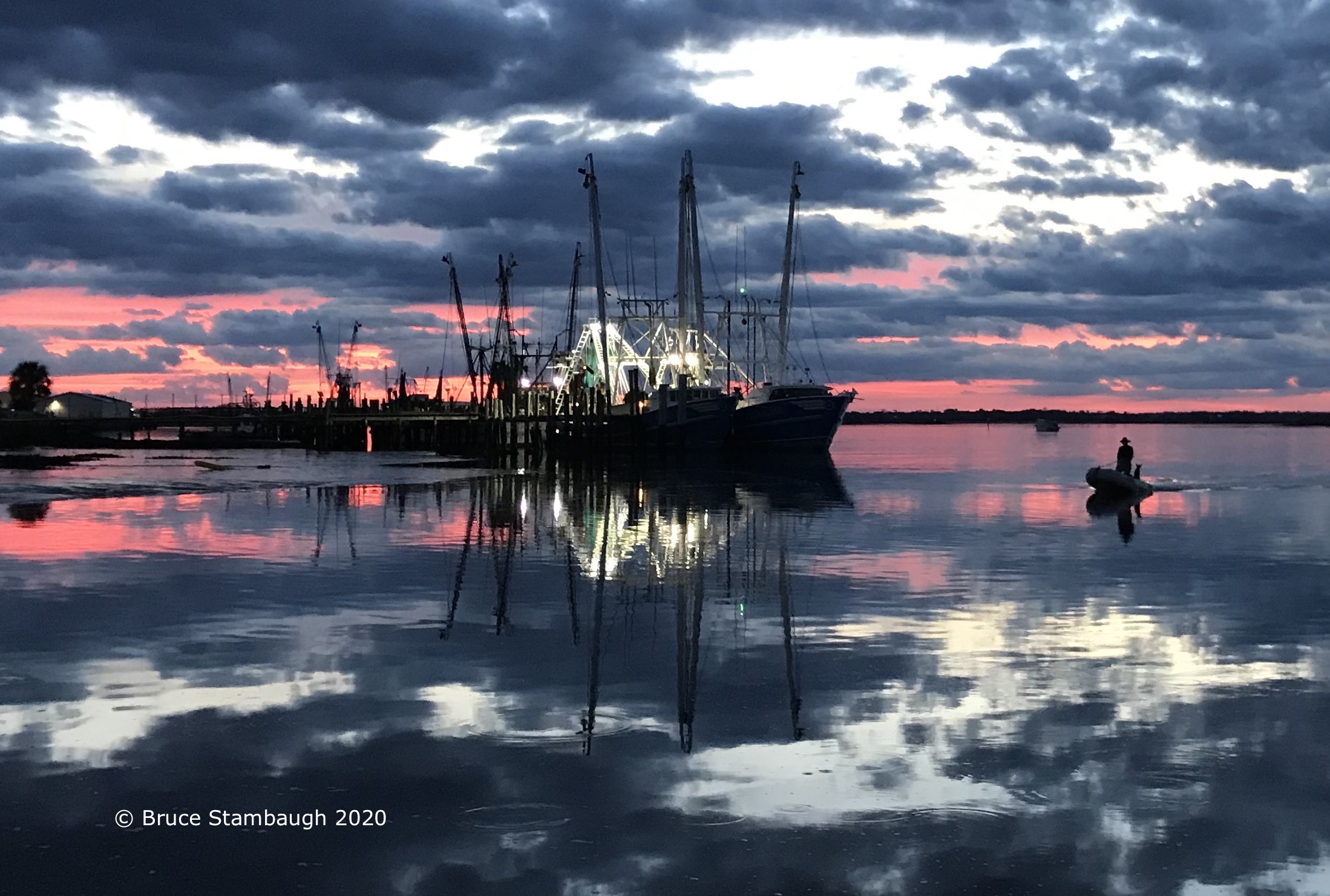
I had given up on this sunset. In fact, I was already heading back to my car from the dock when the sky suddenly changed. I hustled back onto the dock to get a few shots before the sky called it a night. I couldn’t believe my good fortune when an older man with a barking dog cruised into view in a dingy. Their presence added a human element to this painting-like scene.

Rather than wax poetic about all of the aspects and details of the photo, I’ll simply let you enjoy it from your own perspective.

“Dappled Sunset” is my Photo of the Week.

© Bruce Stambaugh 2020

Basking in nature’s unexpected gifts

Raining over the ocean.

I stood on the shoreline alone in joyous disbelief. This wasn’t supposed to be happening, and yet, it was, it did.

“This” was no ordinary sunrise. Our snowbird rental on the Atlantic Ocean northeast of Jacksonville, Florida, affords us striking views, especially at dawn.

The sea mirrored the sky as the celestial kaleidoscope slowly revolved from violets to pinks to oranges to gold to grays. I willingly allowed those siblings of earth and atmosphere to kidnap me.

My initial urge was to shout for joy, but that seemed irreverent, uncouth, and even sacrilegious. For once in my life, I stayed silent, sedated by the aura that engulfed me.

A renegade cumulonimbus cloud hovered miles offshore. Sheets of rain cascaded into the sea.

My eyes drew heavenward. The risen sun, hidden by clouds over the Gulf Stream, illuminated the universe, at least the part that I could see. It was heavenly, indeed.

With each degree that the sun rose into the clouds, the refracted rays altered the colors. As if someone had flipped a light switch, the violet hue transformed into orange, bathing everything it touched.

The scene was surreal. I felt like I had been pulled above the beach, the foamy waves no longer lapping at my feet.

It was then that I more fully appreciated the ocean’s contribution to this original, living painting. The gently swelling sea reflected both the water’s depth and the sky’s variable palate.

This slideshow requires JavaScript.


Dabs of puffy clouds scalloped the sky. The ocean’s choppy undulating created a more linear composition. It was cottony above, corduroy below.

Though the consistencies remained the same, the colors continued to change. The wind scurried the dazzling clouds east while the ocean rolled west.

An instantaneous golden glow ensued when the sun finally peeked through the distant clouds hanging above the horizon. Overhead, the rain clouds just as suddenly converted the gold to gray unapologetically.

With the sky now spritzing droplets, I turned to retreat to the condo. And then I stopped to behold another divine marvel.

A brilliant double rainbow arched above our suntanned building complex. Once again, I was awestruck. I motioned for my wife to go look at the rainbow. She only waved back from the balcony. Desperate, I pointed to the sky, mimed a bow with my right hand, and pointed up.

This time Neva understood and rushed to the back of the condo. She returned before I could even begin to clean the sand from my shoes. Her radiance from seeing the double promise equaled that of the sky, which made me even happier.

By the time I made it back to the condo, the sky had darkened, and the rain pelted down. The morning’s free art exhibit was now washed out.

Other than the rain, none of this was expected. The official forecast had called for precipitation to overrun the northern Florida east coast overnight. But with the rain’s delayed arrival, we were treated to this transformative experience.

This ecclesiastical event seemed to last an eternity. However, the timestamp on the scores of photographs that I took showed only 10 minutes had elapsed.

The magical scene had changed so rapidly that I couldn’t take in all of the finite details as they occurred. A review of my photos revealed the dramatic, atmospheric sequence of changes in that short window of opportunity.

Appreciative is too small of a word to describe my gratitude for having viewed the wondrous display. But most grateful I am.

© Bruce Stambaugh 2020

Mowing snow while mulching leaves

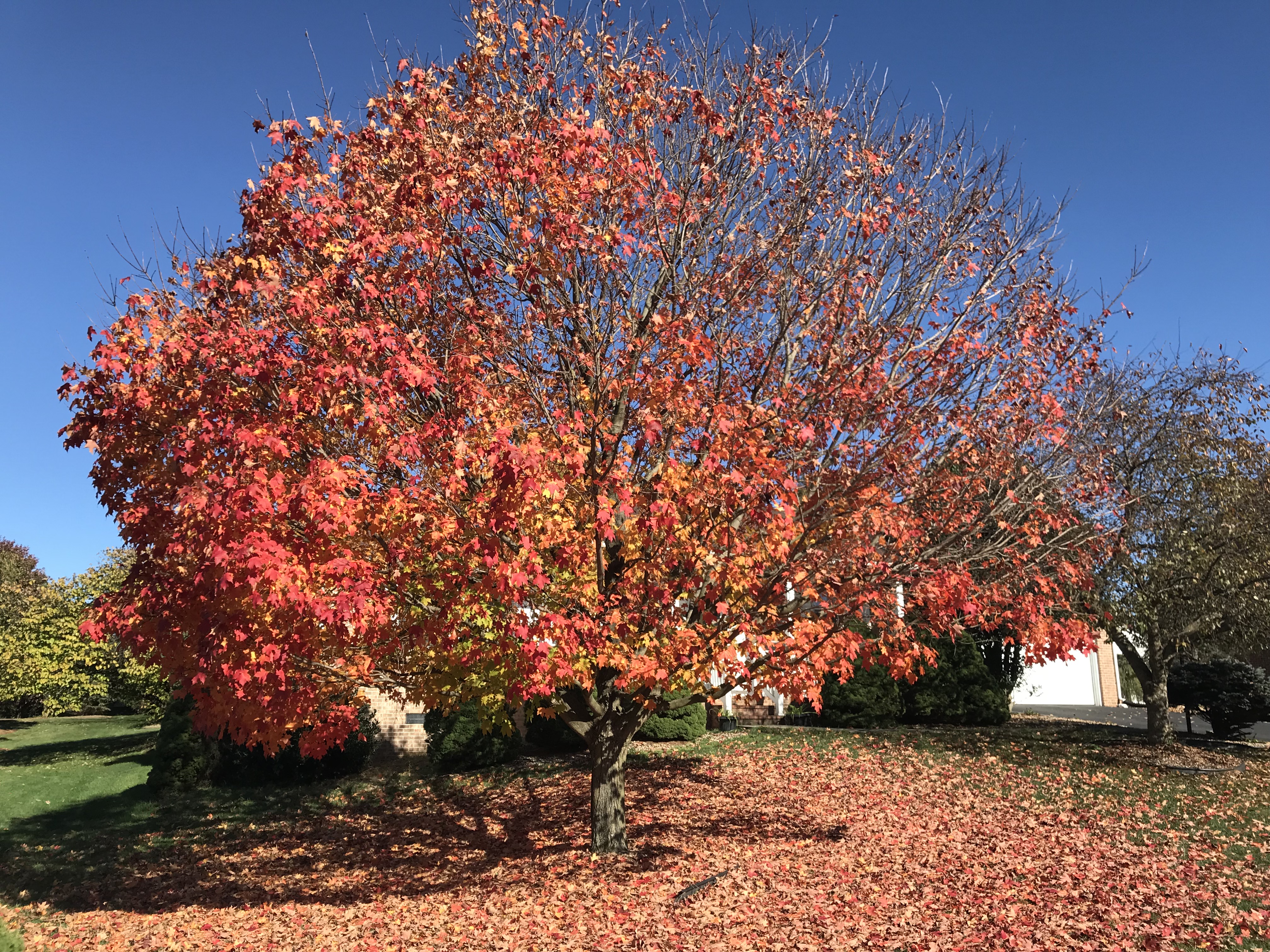
Before the leaves fell.

This time it wasn’t my fault. Every time I went to mulch the accumulation of leaves that covered much of our yard, something or someone else thwarted my good intentions. We all know where that road leads.

First of all, I wanted to wait until all of the red maple leaves in the backyard had fallen. For some reason, they clung like flies to flypaper. The leaves of the front yard red maple had all tumbled weeks earlier.

When the weather was sunny and warmish, which wasn’t that often in the late fall of Virginia’s Shenandoah Valley, we were gone. When we were home, it was too wet, or other commitments kept me from doing the job.

Even with a couple of gusty windstorms, the leaves clung fast to the tree. Meanwhile, the rest of the neighborhood’s assortment of dead foliage swirled around and landed in our yard like it was a leaf magnet.

The turkey.
It was nearly Thanksgiving before the leaves finally succumbed. Even then, it took almost a week before most of them lay on the ground. The leafy blanket was so thick I could hardly see the grass in spots.

Finally, the timing and weather seemed just right. However, because of a heavy frost, I waited until after lunch to make my move. I shouldn’t have.

I had just started the leaf blower when our yardman arrived. Rain was forecast for the next day, and he wanted to get the year’s last organic fertilizer on the grass despite the carpet of leaves.

He assured me that the rain would wash the fertilizer off the leaves and into the ground. I yielded the yard to him. It rained for three days.

After the rain subsided, it turned cold, freezing the leaves in place. I continued to wait and watch the forecast. It was now early December.

A skiff of snow caused another delay. Most of it melted, except for the snow in the north-slanting shadows of our backyard neighbor’s evergreens and the front of our north-facing house.

A storm with freezing rains was approaching. It was now or never to mulch the leaves.

A few of the neighbor’s leaves.
I set the mower to its highest level so that only the tallest growth of grass would be clipped. I donned my insulated coveralls, put on my waterproof shoes, and cranked up the mulching mower.

Around and round I went, reversing course with each completed trip of the yard’s parameter. The piles of dried leaves that I had blown out of the flowerbeds and shrubbery into the grass easily shredded to bits. The backyard leaves were a different story.

A messy mix of chewed up leaves and dirt began to stick to the wheels. The messiness increased when I hit the patches of thin snow. The pulverized blend of icy moisture and leaves turned to sludge. I stubbornly mulched on.

By the time I had finally finished, the poor mower looked like it had endured a motocross mud run. Brown muck covered much of the mower’s bright red body. The wheels were caked in a sticky mixture of chopped leaves and residue of red clay that poses as Virginia topsoil.

Shreds of green grass clippings topped off the muddy mess like colorful sprinkles on an ice cream cone. It was so sad and ugly that I couldn’t even take a picture of it.

But the mulching was done, and I was a happy man. The unusually difficult task of mowing my lawn had become an existential saga. And then the sun came out.

Not this much snow.

© Bruce Stambaugh 2020

Iridescent Cloud


An important characteristic for any photographer is to be observant. By that, I mean to be aware of what is going on around you while you are actually focused on a different task. Doing so allows a photographer to capture that certain event when it occurs.

That was the case for me recently. I was reading on the balcony of our rented condo on the Atlantic Ocean when something caught my eye. An unusual collection of high clouds drifted across the late morning sun’s path. Because this was the day the sun was closest to the earth, the sun’s glare was extra harsh. However, I could see defused color in the mixture of clouds streaming in front of the blazing sun. It certainly wasn’t a rainbow, but the colors were similar only distributed randomly. They also occurred close to the sun.

The weather geek in me said that this was an iridescent cloud. I researched cloud types to confirm my conclusion. Sure enough, it indeed was an iridescent cloud, something not often seen because their appearance is usually short-lived.

Of course, the next duty of a photographer is to share what was captured. So I have. “Iridescent Cloud” is my Photo of the Week.

© Bruce Stambaugh 2020

Noteworthy news that didn’t make the headlines in 2019


Well, we made it. You and I have traveled yet one more year around the sun. True to form, 2019 was full of wonder, mistakes, successes, and a smorgasbord of conundrums and craziness.

As usual, I kept track of a few of the lesser but still extraordinary events and findings during the year.

January 20 – A meteorite was recorded striking the surface of the moon during the Super Full Blood Wolf Moon total lunar eclipse.
January 22 – According to a report from nonprofit Oxfam, the world’s 26 wealthiest people are worth the same amount of money as the world’s poorest 3.8 billion.
January 30 – The temperature dropped to -48 degrees with a wind chill of -65 in Norris Camp, Minnesota, making it the coldest place in the lower 48 states.

Early morning sky, January 31.

February 1 – The BBC reported that January was the hottest month on record in Australia and that five days were among the top 10 on record for the warmest.
February 7 – NASA reported that the last five years have been the hottest since records began being kept in 1880, with 2018 the fourth warmest year.
February 13 – NASA announced that it had declared the Mars rover dead after being unable to communicate with it following a massive dust storm on the red planet.
March 25 – A British Airways flight bound for Dusseldorf, Germany, instead accidentally landed in Edinburgh, Scotland, because the company filed the wrong flight papers.
March 26 – UPS began an experimental delivery system using drones in North Carolina.
March 27 – Airbnb, the online home-sharing site, surpassed Hilton Hotels in annual sales.
April 11 – A standup comedian in England died halfway through his comedy routine, only the audience thought it was part of his act.
April 19 – A 10-year-old Fredrick, Maryland girl born without hands won a national handwriting contest.
April 22 – The BBC reported that 23 million people use 123456 as their password for private online accounts, with 123456789 as the second most popular password.
May 22 – The last known ship to bring slaves to the U.S., the schooner Clotilda, was discovered in a remote branch of Alabama’s Mobile River.
May 23 – Longtime Marietta, Georgia, mail carrier Floyd Martin retired, and on his last route, residents decorated their mailboxes and held a block party after he finished his deliveries.
May 31 – After 20 rounds and running out of hard words, the National Spelling Bee in Washington, D.C., crowned an unprecedented eight co-champions.
June 5 – Tom Rice, 97, of Coronado, California, reenacted his pre-D-Day 1944 jump into Carentan, France, as part of the 75th anniversary of the Allied invasion at Normandy.
June 11 – Kraft announced that it was selling salad frosting, which was French dressing disguised in a colorful bottle to get kids to like it.
June 19 – A survey by YouGov reported that 39 percent of Americans between the ages of 18 and 24 hadn’t used deodorant in the last 30 days.
July 3 – The American Automobile Association estimated that a record 49 million people would be traveling the U.S. highways on the Fourth of July holiday.
July 12 – A report on British roadkill showed that badgers were the mammals most likely to meet their end on the highway, although pheasants led the animal roadway mortality rate.
July 22 – Officials near Sandpoint, Idaho removed turtle crossing signs because thieves kept stealing them as soon as the unique warning signs were replaced.
August 14 – A 12-year-old boy attending a family reunion found a rare Ice Age wooly mammoth tooth by a creek near the Inn at Honey Run near Millersburg, Ohio.
August 15 – A new study released by the U.S. Geological Survey showed that 90 percent of rainwater samples in Colorado included microplastic shards, beads, and fibers.
September 6 – A new international study showed that 90 percent of the time eyewitnesses would assist someone assaulted in public.
September 7 – Miami Marlins pitcher Brian Moran struck out his young brother, Colin, pinch-hitting for the Pittsburgh Pirates.
September 21 – When a car fell on his neighbor pinning him, Zac Clark, a 16-year-old high school football player from Butler, Ohio, rushed over and lifted the 3,000-pound auto, saving the neighbor’s life.
One of my proudest moments.

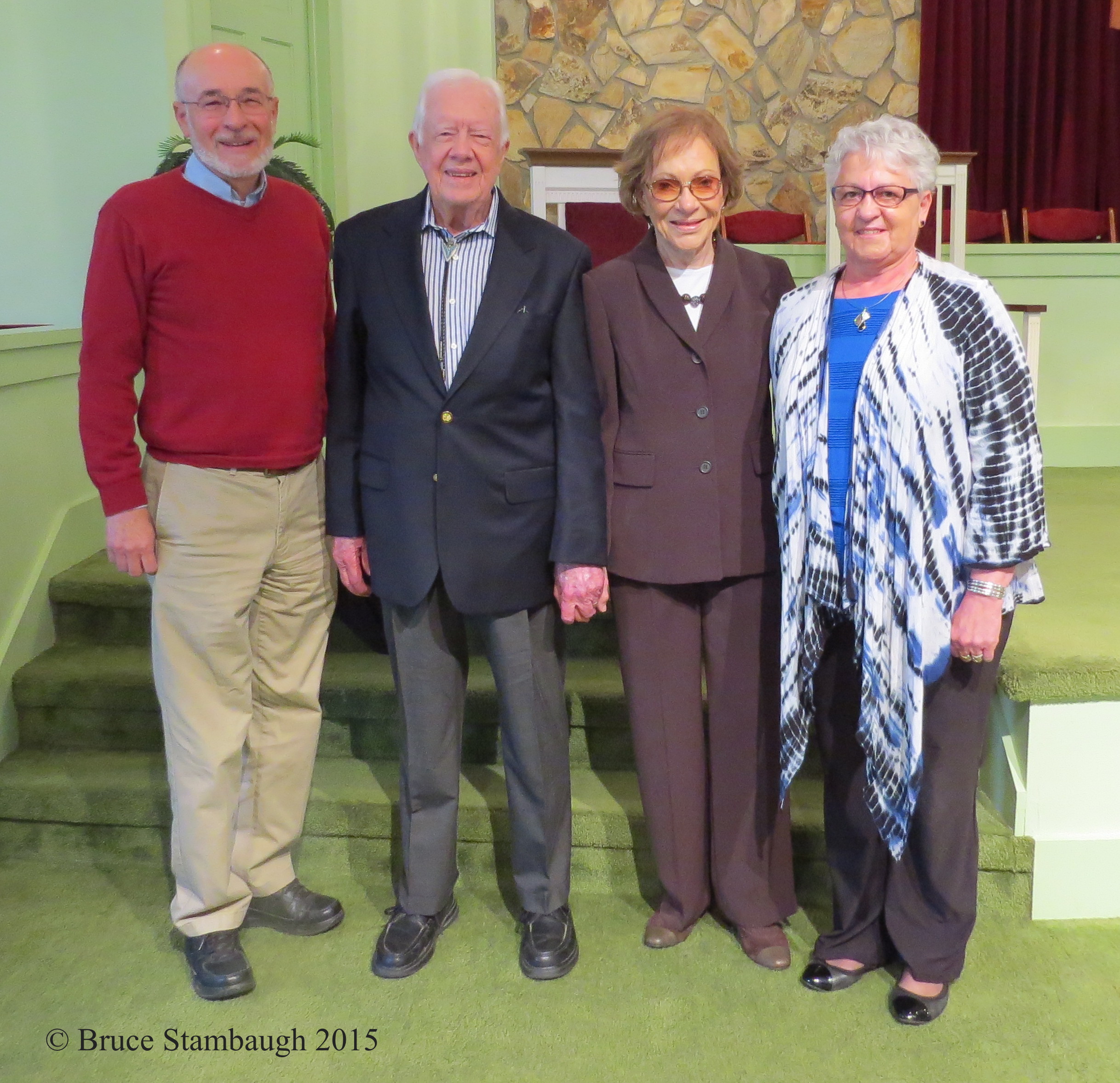
October 7 – After falling at his home in Plains, Georgia the previous day, former President Jimmy Carter, 95, with a bandage above his left eye and a visible welt below, still helped build a Habitat for Humanity home in Nashville, Tennessee.
October 18 – NASA astronauts Christina Koch and Jessica Meir performed the first all-female spacewalk when they ventured outside the International Space Station for five and a half hours to replace a faulty battery charger.
October 30 – Firefighters in Simi Valley, California successfully saved the Ronald Reagan Presidential Library from a wildfire with assistance from a herd of goats brought in earlier in the year to eat away the brush surrounding the library.
November 3 – When midnight shift workers didn’t show up at a Birmingham Waffle House restaurant, several customers jumped behind the counter to help the lone employee serve 30 other customers.
November 8 – The last survivor of the Hindenburg Disaster, Werner Gustav Doehner, died in Laconia, New Hampshire, at age 90.
November 18 – Police in Goddard, Kansas, discovered a camel, cow, and donkey wandering along a rural road.
December 9 – A New York City man removed and ate a banana from a Miami, Florida art exhibit that had sold for $120,000.
December 10 – A 43-year-old Monroe County, Louisiana man, was arrested for fixing the bingo game he was calling so his relatives could win.
December 20 – Emily Williams, a wildlife ecologist in Alaska, was late for work because a moose was licking the salt off of her car.

Here’s hoping 2020 will give us both a better year and better eyesight in all that is happening around us.

Happy New Year!

© Bruce Stambaugh 2019

Bay Photos by Donna

Wildlife Photos From The Chesapeake Bay Region

ROAD TO NARA

Culture and Communities at the Heart Of India

K Hertzler Art

Artist and nature journalist in the Shenandoah Valley of Virginia.

Maria Vincent Robinson

Photographer Of Life and moments

Gabriele Romano

Personal Blog

Jennifer Murch

Art is the only way to run away without leaving home. -Twyla Tharp

Roadkill Crossing

Writing generated from the rural life

ANJOLI ROY

writer. teacher. podcast cohost.

Casa Alterna

El amor cruza fronteras / Love crosses borders