Singing in the sunset.
One of the joys about being in the out-of-doors is experiencing the unexpected. Nature’s ways never cease to pleasantly surprise me.
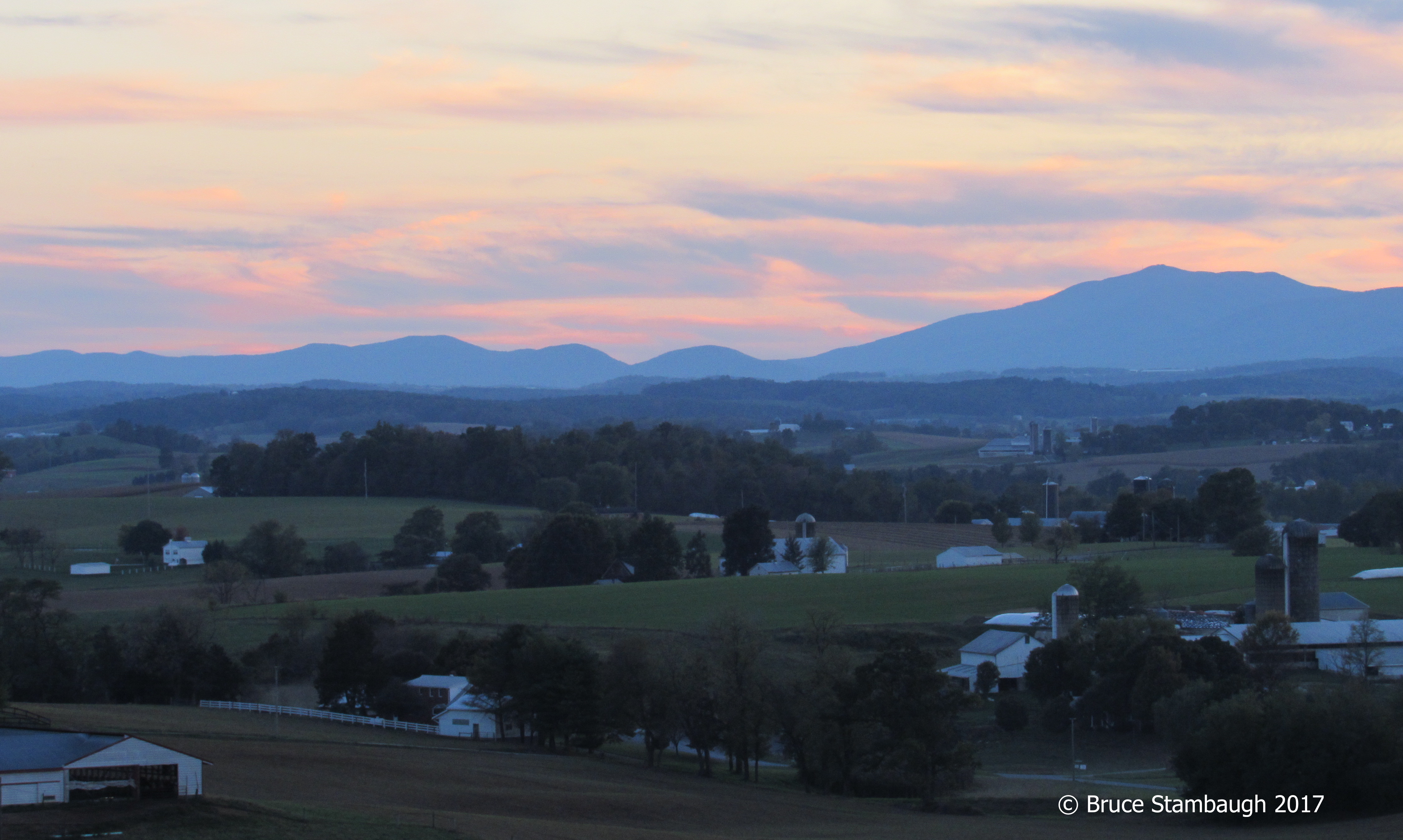
Such was the case recently when I went out to photograph the sunset. Doing so is always an adventure. You never know what the results will be. When I arrived at my chosen destination not far from our home near Harrisonburg, Virginia, I had a feeling my quest would be disappointing. I was wrong, not in the sunset so much as the aura of the setting.
I parked at the entrance of a nearby farm that doubles as an event center. I could see a thick bank of clouds hovering over the Allegheny Mountains 20 miles to the west. Usually, that means that the sun’s rays will be blocked from reflecting off of the congregation of cumulus clouds hanging in the evening sky. But I’ve learned that when it comes to sunsets, patience is a valuable virtue.
So while I waited, I watched the steers grazing in the sweeping, limestone-studded pasture. Other than the lone bull, they paid me little heed.
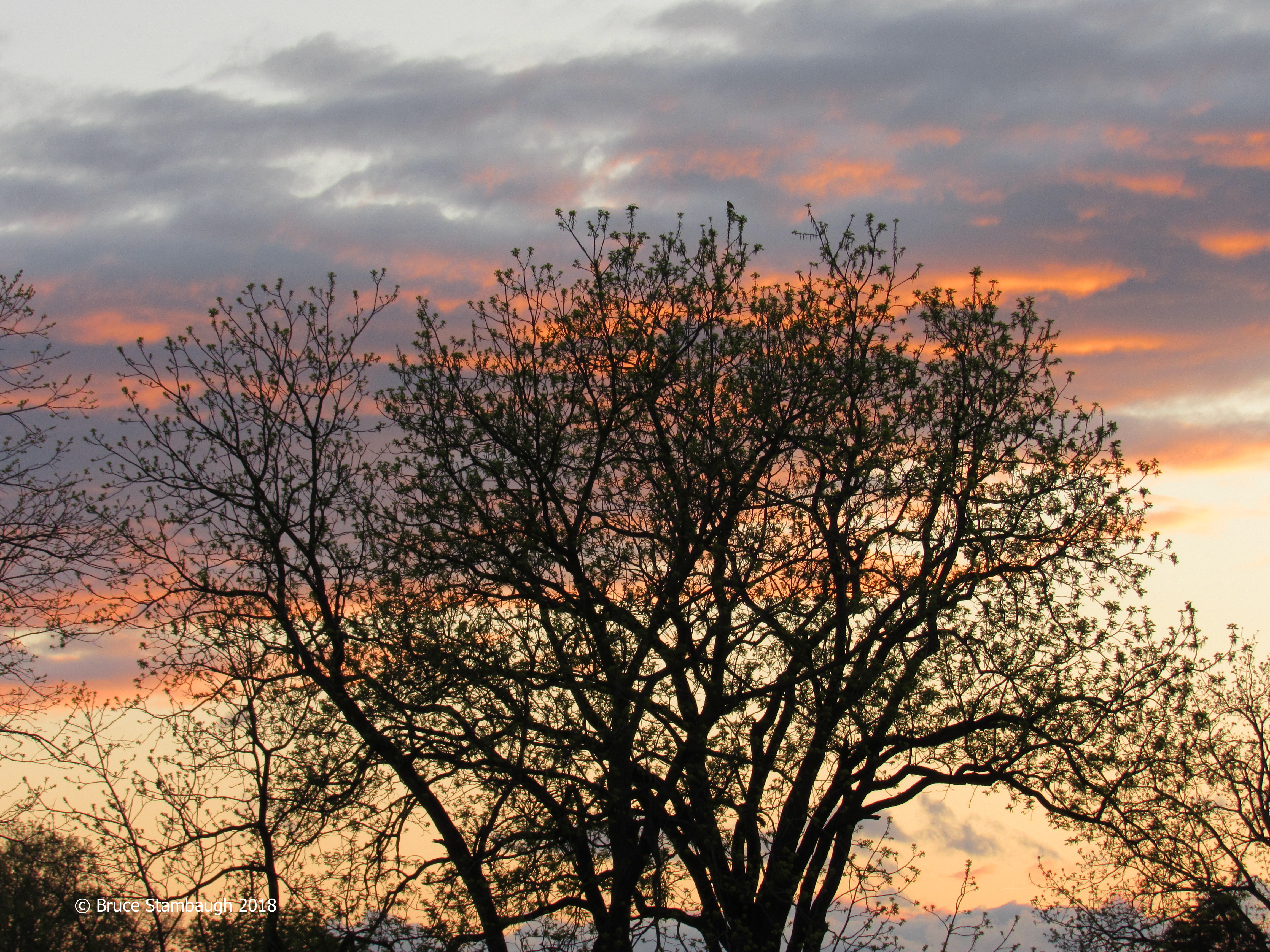
Soon, my attention was diverted to another source. An Eastern Meadowlark was belting out its evening song. At first, I had a hard time locating the bird. Just as the sunset reached its color peak, I spotted the bird high atop a deciduous tree whose leaves were in their infancy of unfurling. The song mesmerized me. It was as if the bird were serenading the setting sun. I have included a link to give you an idea of what I heard here.
If you can’t spot the Eastern Meadowlark, please click on the photo to enlarge it. Look for the bird center-right at the very top of the tree.
Being career educators, my wife and I both enjoy new learning opportunities. In the year we have been residents of Virginia’s Shenandoah Valley, we have only put a dent in the many educational experiences that are available in the area.
Often times our discoveries are more by circumstance than planning. That makes it all the more fun and exciting.
We often seek out activities and places that pique the interests of friends and family that have come to visit. They frequently match those of our own.
Historic downtown Harrisonburg holds plenty of intriguing places to visit. The Virginia Quilt Museum is just one of them.
Located in an old but well-maintained mansion, the museum has rotating exhibits. When we recently visited there with friends, beautiful old and new quilts were on display.
The multiple galleries in the museum displayed quilts from both noted artists and early Virginia settlers. History, beauty, and even heartache awaited us on three different levels and around every corner of the museum. Each quilt told an aspect of a life we could only imagine.
Please click on the photos to enlarge them.
This slideshow requires JavaScript.
The quilters’ masterful workmanship and use of vibrant colors more than captivated us. They helped us understand cultures and lifestyles we never could have experienced. I was simultaneously intrigued and awestruck at the skill, the people, and the story each quilt whispered and sometimes shouted.
Using fabric and thread, the artists stitched together tales of the strength of families and community. The use of textiles in many of the quilts represented the importance of fabric in both ancient and current African cultures.
Many quilts glowed both intimacy and joy while others were more subdued, accented with rich browns and smooth cream colors that automatically captivated viewers. You couldn’t help but admire the craftsmanship and splendor.
The exhibits represented five different presentations, three from Africa and two from Virginia. The quilts were a mix of old and new, telling historical and contemporary stories in various patterns, vivid colors, and an assortment of textures.
Nelson Mandela.
This unexpected but pleasant surprise was as much a lesson in humanity as it was quilting. One quilter spent a dozen years in several villages in West Africa living with the peoples of the land, observing, studying, living in their culture and participating in their daily activities. Her quilts vividly shared snippets of valued community life.
The older quilts were just as moving, knowing that enslaved women pieced together textiles out of necessity and for practical purposes. The women applied the skills they brought with them from their mother countries. They used their knowledge of piecing, embroidery, applique, and weaving.
Other quilts displayed were from early pioneers who settled in the Shenandoah Valley decades ago. Some of those family names continue in the valley today.
Whether from Africa or Virginia, each represented a window into a new world for me, one of courage and devotion to family, appreciation for their lives and setting in which they lived and live. Artistic creativity expressed joy and perseverance, a turbulent history, and determined survival.
Through these magnificent works, we learned that art, beauty, history, purpose, medium, skill, and storytelling transcend culture, language, location, and race. This exhibit was more than a quilt display. It was a needed and thoughtful spotlight on the human condition.
Quilts reveal colors, fabric, delicate hand stitching, creativity, and craftsmanship. They also can tell compelling stories as well. These particular quilts indeed were tales in tapestry.
Full Moon Rising.
Precisely at 8:05 p.m. on April 29, 2018, the full moon rose over the Massanutten Mountain range just east of Harrisonburg, Virginia. I stationed myself atop a hill behind Eastern Mennonite University on the city’s northwest side to ensure I had a clear vantage point to view the moonrise. I wasn’t disappointed as the moon peeked right at a change in elevation in the landmark mountain ridge. Massanutten runs through the center of Virginia’s Shenandoah Valley from Harrisonburg northeast to near Strasburg.
I was fortunate that the evening was clear and the humidity was low, which allowed for a perfect view of the full moon. “Full Moon Rising” is my Photo of the Week.
My Virginia office where I write is similar to my former Ohio office. Both were converted bedrooms right across the hall from our master bedroom. Just like Ohio, my desk is right in front of a big window where I can look out onto and into the world for inspiration.
Being an easily distracted person, I actually enjoy being diverted from my writing by life’s everyday interactions that I see. I find the digressions to be intriguing rather than agitating.
Right outside my Ohio office.Life’s noises, of course, filtered in, too. Contrary to what you might think, sounds stirred me as well.
The resonances I hear always have, do and will captivate me. Similarities abound between the Virginia and Ohio settings.
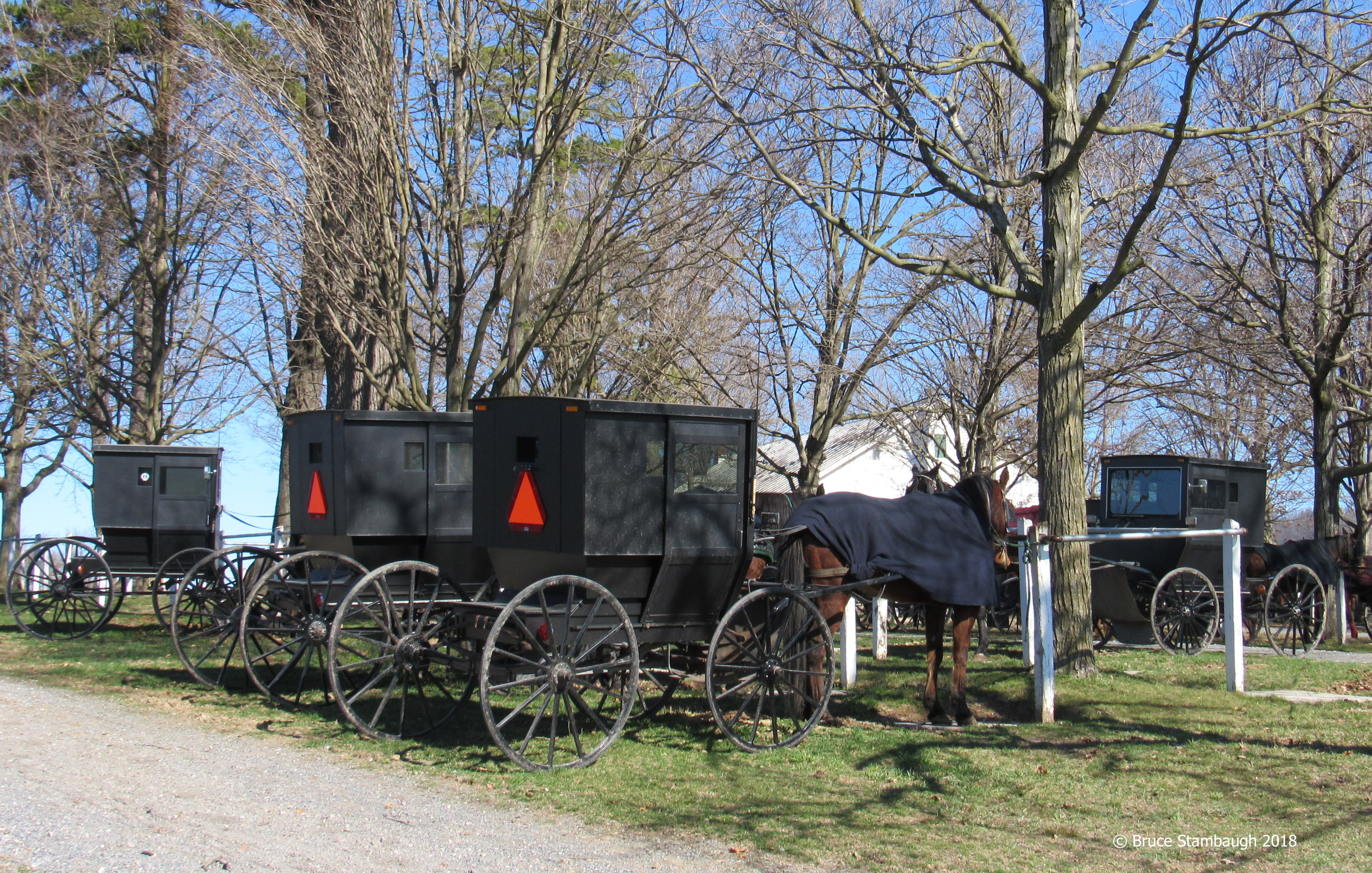
In Ohio, I loved the soothing sound of horseshoes clopping along against the hard macadam of County Road 201. On unusually quiet, warm days with the windows flung open, I could hear the rhythmical clack, clack, clack of the buggy horse’s cadence coming from a quarter mile away or more.
My wife and I both recognized how fortunate we were to hear that sound so regularly. Often we heard families talking or singing or sometimes occasional boom boxes blaring. Teenagers will be teenagers no matter their culture.
I miss that element of living among the Amish. Though Old Order Mennonite farms are close by our Virginia home, I’ve never seen or heard one of their buggies on our suburban neighborhood street.
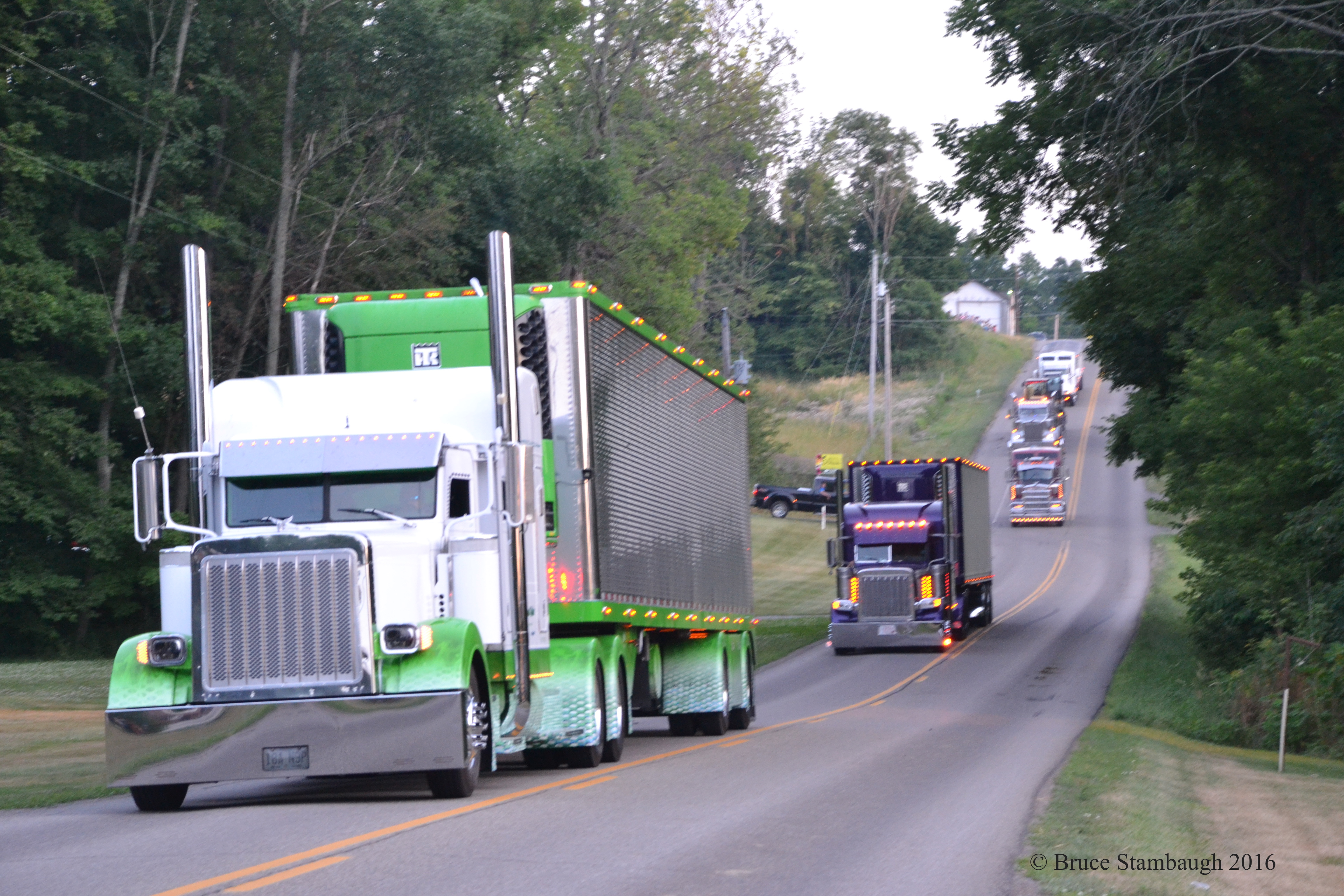
Semis rumble down CR 201.I always said that our Ohio home was built on the Berlin-Wooster expressway. County Road 201 served as the chief artery between those two locales. It made easy access to both places, especially for semi-trucks. That was one sound I despised.
I loathed their use of jake brakes heading north down Number 10 hill, a ski slope-like descent. The obnoxious clatter frightened birds, bikers, and four-legged animals and woke me up, often at 3 a.m.
We don’t have that problem now. Every now and then a large delivery truck cruises past the house. It’s the exception, not the rule. Most passers-by are bikers, walkers, and leashed canines.
A mechanical sound I did enjoy during Ohio winters was the county snowplows clearing the road of the latest snowfall. They always did a marvelous job. One year they knocked down our mailbox three times in the space of two weeks.
VA snowplow.In Virginia, it doesn’t snow enough for the state to invest in snowplow equipment for secondary highways. Instead, they contract local farmers to clear the roads with big plows on large tractors. If I hadn’t been out shoveling myself, I would have never heard them. The snow seemed to muffle their diesel engines.
Sounds that reach my office aren’t always external. In Virginia, I can easily hear the washing machine thumping and the clothes dryer spinning, buttons and zippers clinking against the tumbling metal drum even though the laundry room is at the opposite end of our ranch home. Remembering to go empty the machines is another story altogether.
Our Ohio home was a bi-level. My office was upstairs, the washer and dryer were downstairs. I seldom heard the cycle-completed buzzers. At least that was my excuse.
I still hear children playing, dogs barking, birds singing, jets sailing overhead, sirens whaling in the distance. Those are universal sounds that are part of the human condition.
It’s been a year since we moved to Virginia. The similar reassuring sounds of life in the Commonwealth mimic those of the Buckeye State. Those are sounds I can live with anywhere.
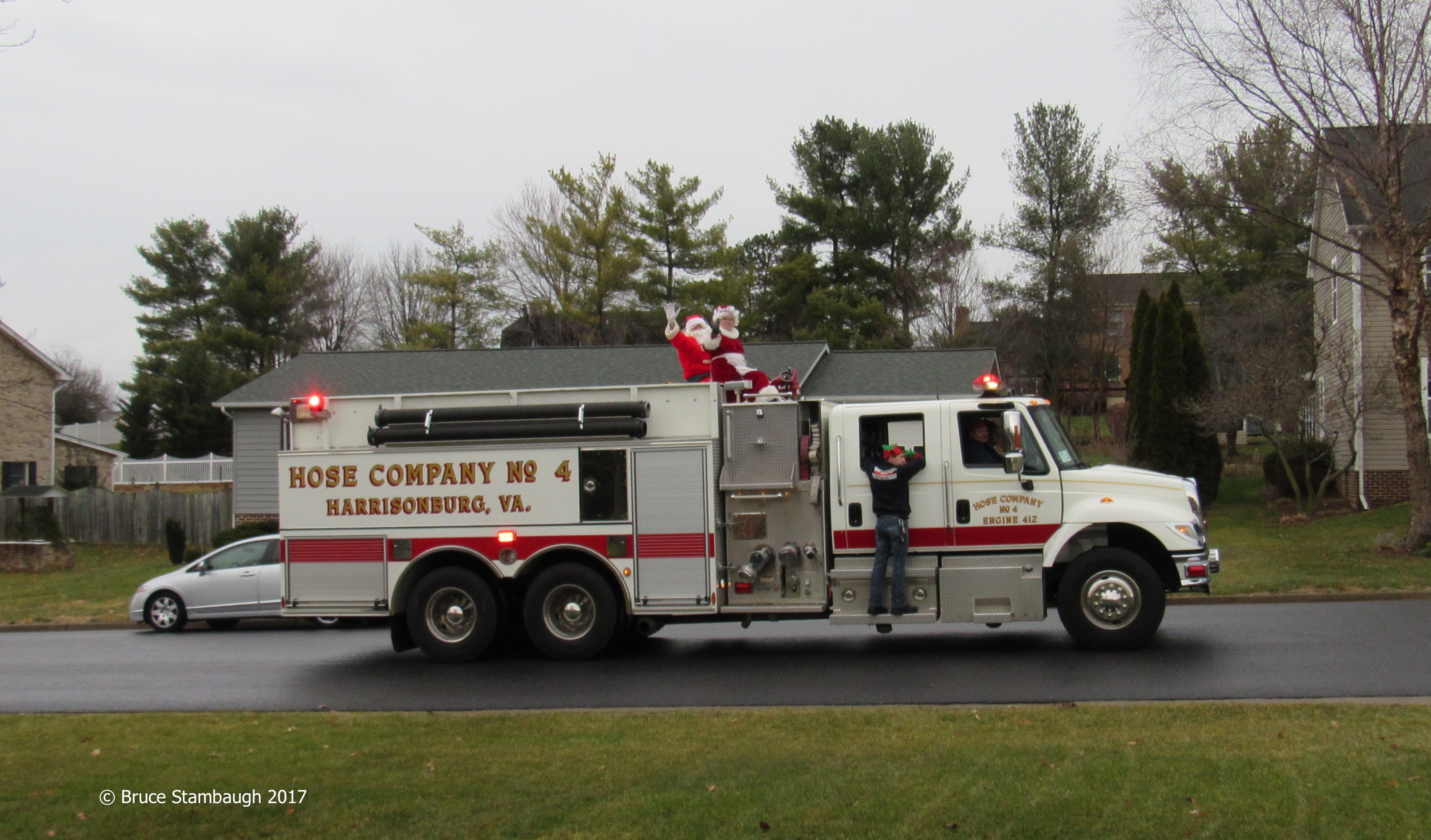
Even Santa and Mrs. Claus rolled by our Virginia home.
It’s been nearly a year now that my wife and I moved from Holmes Co., Ohio to Virginia’s Rockingham Co. One way I’m learning about the area, its people, its topography, its history, its culture, is just by driving around. Of course, I usually have my camera with me to document what I see and find.
Before we moved from Ohio, we would pass through a small burg named Cootes Store on our way to visit our daughter and her family in Harrisonburg. It was hardly more than a crossroads in the northwestern part of the county. I found the name intriguing and just assumed that once upon a time a real “Cootes Store” must have existed there.
On one of my discovery runs, I found Cootes Store. Its personality jumped out at me through all of the old, eclectic merchandise visible inside and out. This likely isn’t the original building, but it is all that remains of what once must have been a thriving business to have a town named for it.
You can read more about the history of Cootes Store here. “Cootes Store” is my Photo of the Week.
I had high hopes for attracting backyard birds to our Virginia home. I hung feeders from the two maple trees on our property almost as soon as the movers had unloaded our household goods from the moving trucks nearly a year ago.
Well, maybe it wasn’t that quick, but still, the feeders went up, one in the front yard and one in the back. I also erected a jelly feeder for the Baltimore Orioles and a sugar water feeder for the ruby-throated hummingbirds.
I was excited about starting our retirement years anew in Virginia. The grandkids were paramount in deciding to relocate. Birding came a little farther down the priority list.
Still, I wanted to see just what birds I would attract. To my surprise, it didn’t take very long for some prized yard birds to appear. Northern cardinals, rose-breasted grosbeaks, American goldfinches and other species found the feeders right away. Tufted titmice, and black-capped and Carolina chickadees made occasional appearances, too. I was ecstatic.
Ohio backyard birds.
Red-headed Woodpecker.
White-crowned Sparrow.
Male Downy and Male Pileated Woodpeckers.
Yellow-bellied Sapsucker.
Male Red-bellied Woodpecker
Chipping Sparrow.
Male Eastern Bluebird.
The results nevertheless were mixed. The numbers and species, however, were much fewer than what I had seen in Ohio. Back in the Buckeye State, orioles gulped grape jelly by the jarful. Hummingbirds zipped to my feeder by the kitchen window. At least seven woodpecker species visited my feeders, including pileated woodpeckers that brought their young to gorge on peanut butter suet.
Songbirds were abundant and frequent visitors, too. Showy white-crowned sparrows were favorites. I especially enjoyed the eastern bluebirds. They brightened any dull Ohio day with both their brilliant springtime feathers and their sweet lullaby calls.
In Virginia, daily drama cropped up around the bird feeders. Large, bossy, and noisy common grackles consistently scared the more desirable species away. They also drained the feeders once they brought their young. In addition, scores of squirrels munched their way through the feed they could reach. The more sought-after birds didn’t have a chance, so I took the feeders down for the summer. In Ohio, I fed the birds year-round.
I rehung the feeders in the fall. With the pest birds elsewhere, the better backyard birds returned. I was happy for that, and even more pleased when the dark-eyed juncos and white-throated sparrows arrived for the winter.
Virginia backyard birds.
This slideshow requires JavaScript.
It’s not that I expected Virginia to be Ohio. They were two different locales with entirely different habitats altogether. For bird watching, habitat is crucial.
We no longer lived in a rural flyway like we did in Ohio. The habitat of our suburban neighborhood in no way remotely resembles the bird-inviting one we had in Ohio. It is also wholly unfair to compare one year in Virginia to a lifetime of appreciating Ohio birds.
I photographed all the various birds I saw in Ohio. I have hundreds, perhaps thousands of digital shots. Reviewing them revives fond memories for me. But as much as I would like to, I can’t linger there.
Now, I take pleasure in the natural springtime wakeup calls of the white-throated sparrows, song sparrows, and cardinals. I pay more attention to the gregarious American robins that I once took for granted. I chuckle at the effervescent northern mockingbirds that frequent our neighborhood.
I miss those Ohio birds to be sure. However, the recent appearance of a migrating pine siskin sparked an epiphany.
That little bird brought home a valuable life lesson for me that is apropos far beyond the birding world. Be happy with what you have.
Being the photography nerd that I am, I always like to document family gatherings. That’s especially true when we gather for special occasions like birthdays.
Our oldest grandson recently turned 14, as you can surmise by the numerical candles in his marble birthday cake. I asked his siblings to join Evan at the table for a quick photo before the cake was cut. Knowing from past experiences that all three like to ham it up, I specifically asked Evan, Davis, and Maren for a decent shot. This is what they gave me. It was the only shot I took because their poses perfectly reflect their individual personalities. I couldn’t have asked for a more candid shot if I had wanted it. Welcome to the new definition of “decent shot.”
It’s been a long winter. That’s true whether you live in Minnesota, where winter seems eternal, or here in Virginia’s Shenandoah Valley, where consistent spring weather should have arrived long ago.
When it comes to weather here, there are no guarantees. Put another way, if you don’t like the weather, just wait a while. It will change.
I’ve heard people say that about the weather in Ohio, Virginia, Pennsylvania, Colorado, and Florida to name a few locations. Regardless of the state of residence, they are all correct. Apparently “here” is a relative place. Weather in many areas is even more fickle than politicians or used car salesmen.
That seems especially apt now when winter seems determined to hold her icy grip on the good folks in many states. Just when we think spring has arrived with a lovely warm day, the next day brings cold and wind and too often more unwanted snow.
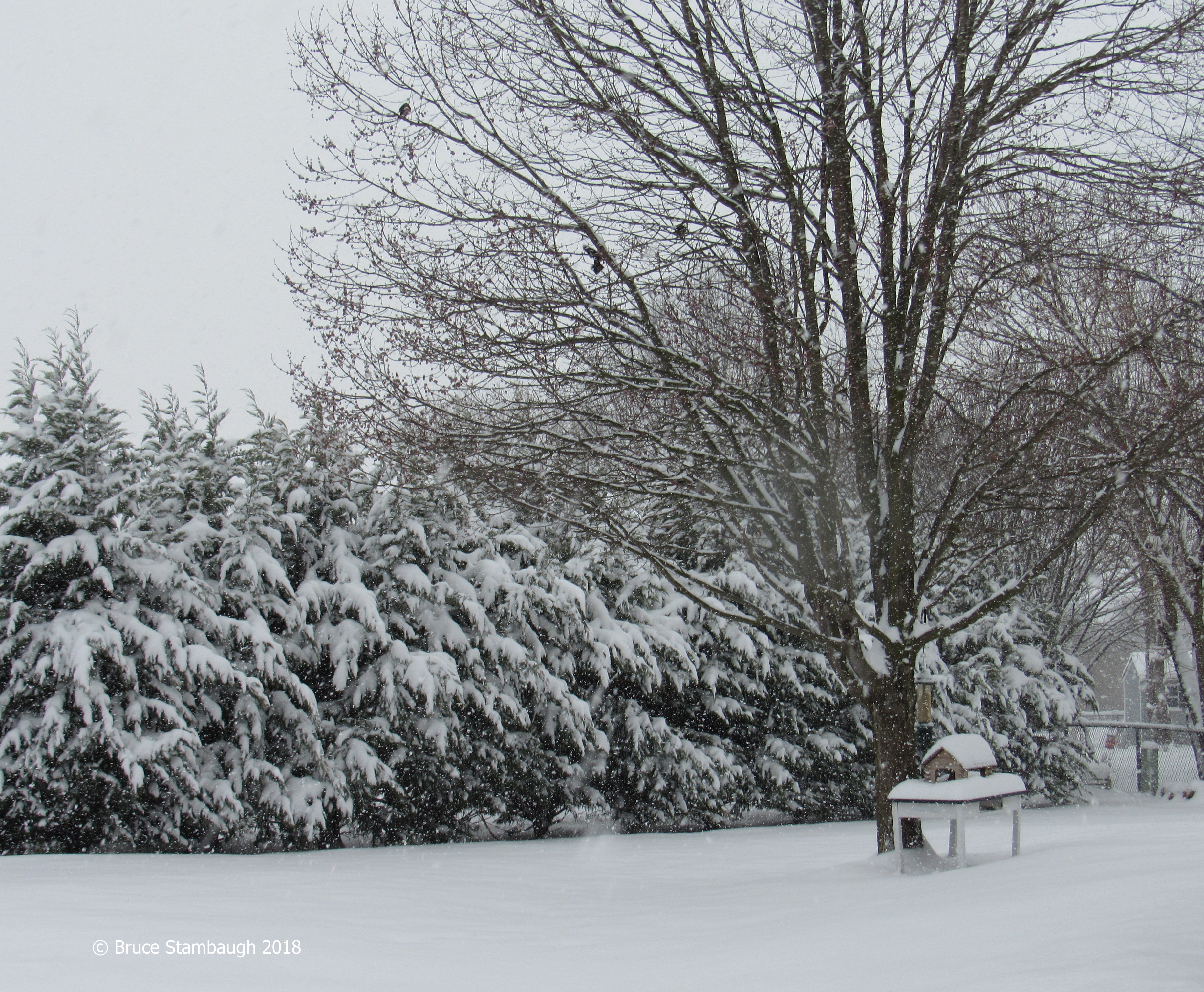
An early spring snowstorm blanketed Virginia’s Shenandoah Valley.
People mumble about the unseasonable cold, impatient to get outside in shorts and t-shirts and work or play in decent weather. Excavators, contractors, and landscapers make promises they can’t keep to customers, and then justifiably blame the lousy weather for the delays.
Temperatures far and wide are 20 degrees Fahrenheit or more below average for April. It isn’t the first time, however, that the weather has played havoc with people’s springtime schedules. Record lows are in the teens from bygone years long forgotten.
I can remember a frost on June 2. My wife recalls snow on her birthday, May 27. Our young son once endured a nine-mile ride home in a four-wheel drive fire truck from a friend’s house during an April snowstorm that dumped 20 heavy, wet inches on Holmes County.
This slideshow requires JavaScript.
Of course, two days later, the only remaining evidence of the storm was the snow piles from parking lots being plowed. The weather did warm up. It will warm up again, eventually.
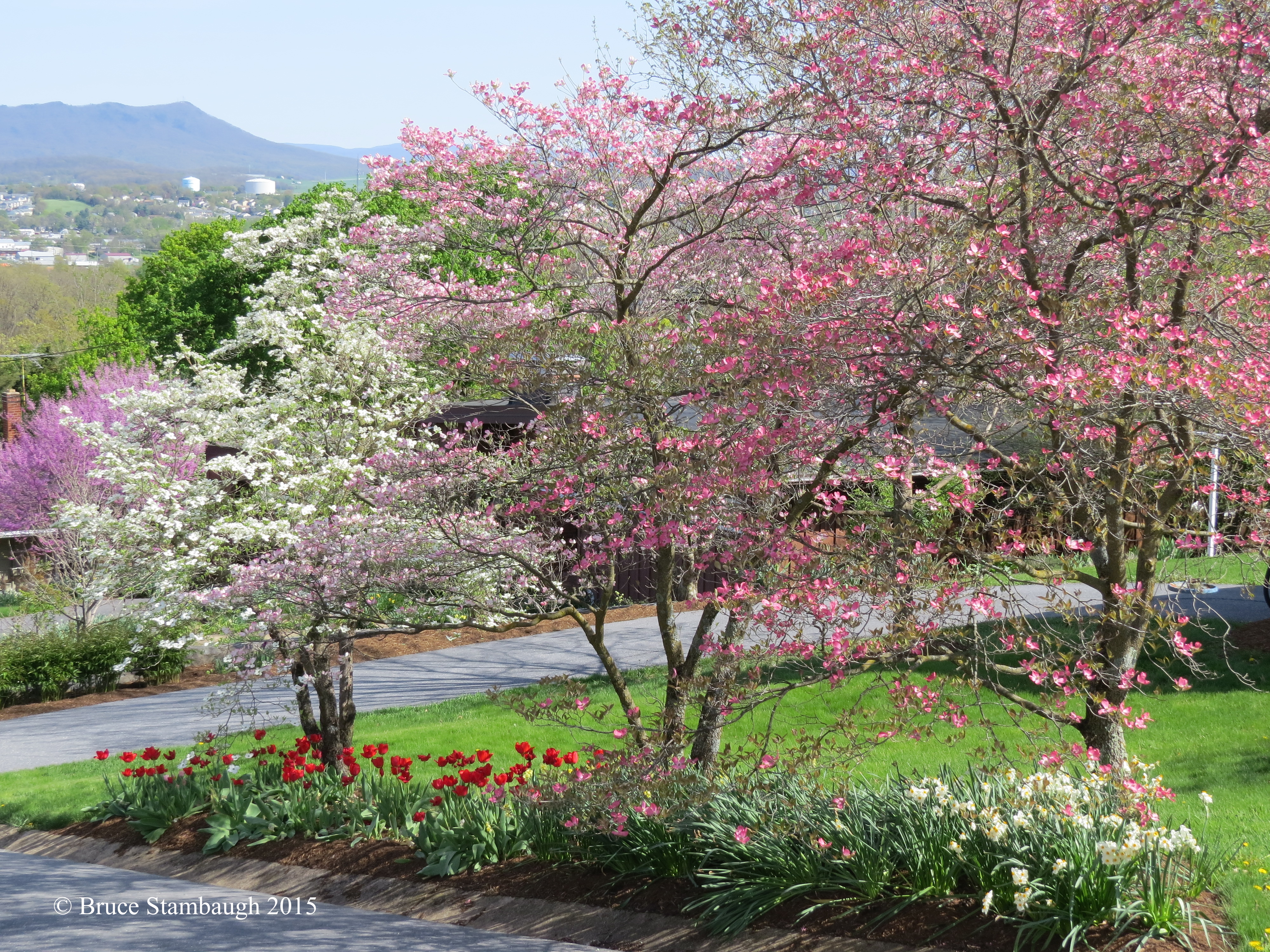
After all, haven’t the daffodils bloomed? Aren’t the tulips ready to show their bright colors? Aren’t the tree buds swollen or even already unfurling? Has your lawn been mowed? Aren’t the robins calling out their territorial cacophonies? I bet the answers are mostly in the affirmative to that little springtime quiz.
Yes, it’s been a long, cold, wet winter, but nothing that we haven’t seen before and will likely see again. It’s just that we are so anxious for warming sunshine and frolic outside that we often lose our perspective. No matter what state of residence, we forget that all of this has happened before, not in the same order perhaps, but with the same frustrating results.
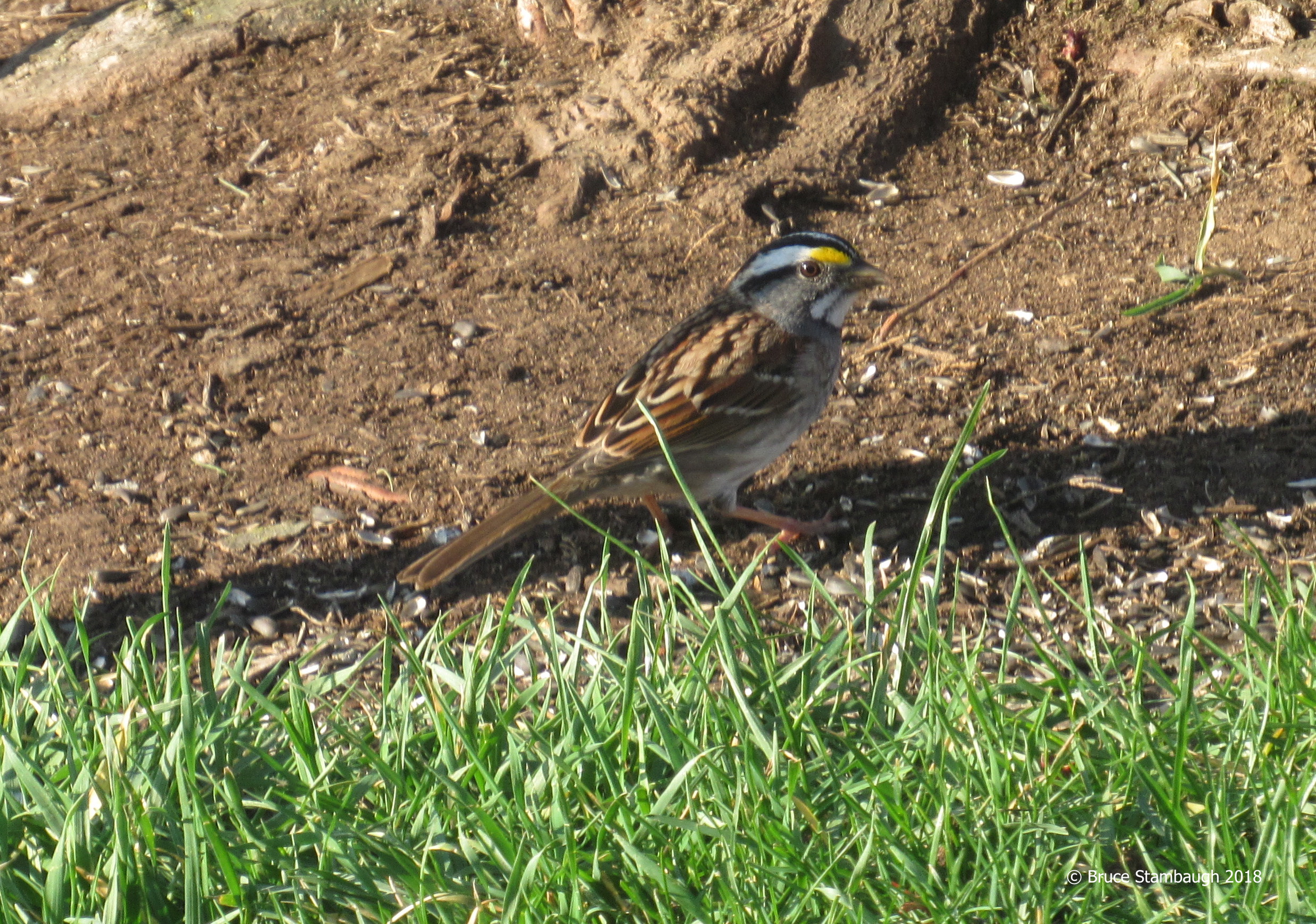
A handsome male White-throated Sparrow.The other day I observed a brief, hopeful moment in my backyard that exactly proves my point of this year’s overlap of winter and spring. Side-by-side, a white-throated sparrow jumped and scratched for seed on the ground while a chipping sparrow pecked at the same offerings like a couple on a dinner date. The latter may stay, while I’ll soon miss the former’s magical song.
Seeing those two species together served a not so subtle reminder. Life goes on, just not at the pace or with the climatological conditions we humans desire. But eventually spring will indeed out-muscle winter, the weather will warm, and we’ll soon be complaining about having to mow the lawn twice a week.
Humans, you see, can be as capricious as the weather. In truth, the annual transition of hibernation to rebirth will find closure. Just be patient and keep a warm coat handy.
Nature ushered in springtime with a significant snowstorm in the eastern part of the United States. We received at least seven inches of heavy, wet snow in Rockingham Co in Virginia’s Shenandoah Valley. Though I would have preferred a warmer welcome to spring, the storm beautifully blanketed the landscape far and wide.
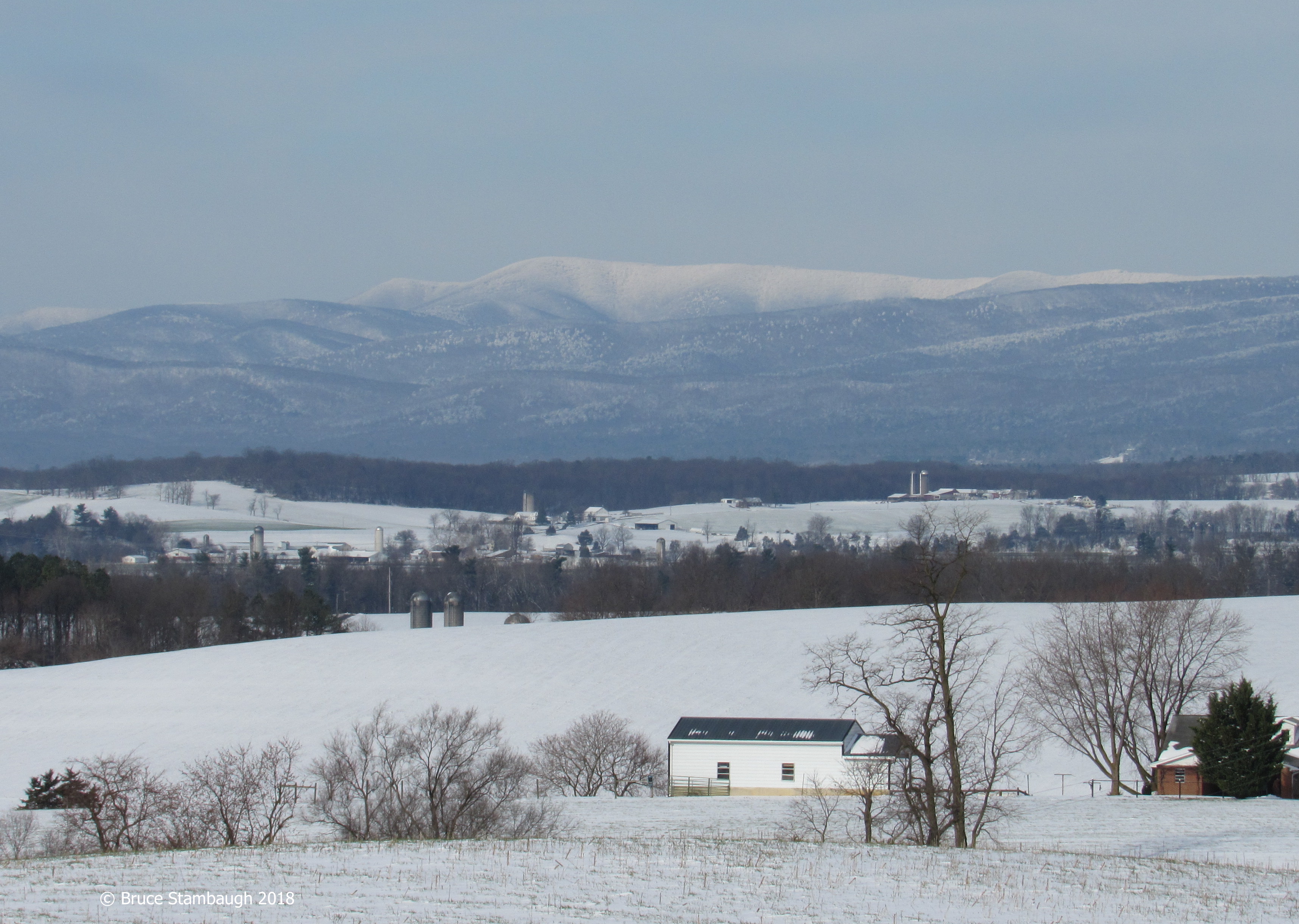
In this photo, the tree-studded Allegheny Mountains of eastern West Virginia show the stunning results of a substantial March snowstorm.
My wife and I were returning from our winter hiatus on Amelia Island, Florida when I first spotted a glimpse of familiar mountains. We were still well south of Martinsville, Virginia in the folding foothills of North Carolina’s Piedmont region.
As much as we had enjoyed our time in the Sunshine State, we were glad to see those Blue Ridge Mountains that would guide us home. They earned that name long ago with the shadowy, bluish hue they cast from a distance. Their western cousins, the Allegheny Mountains, do the same.
We wound our way through south-central Virginia. We passed my maternal grandmother’s homestead and cruised through Roanoke, a city surrounded by those ancient, rounded ridges. From that point, the primary objective was to stay alive amid the bobbing and weaving strings of traffic on the always congested and dangerous I-81, which dissects the lovely Shenandoah Valley.
Holmes Co. farmstead.It was the last stretch that led us home. Less than a year ago, our home was among the lesser but equally charming hills of Holmes County, Ohio. Ironically, they are the westernmost foothills of the Appalachian range that includes both the Blue Ridge and Allegheny Mountains.
Neva and I had spent all of our adult lives living in Holmes County. We had resided in both the county’s western and eastern sections. In west Holmes, the valleys were broader and hills steeper than those in the more gently rolling landscapes of the east that were dotted with Amish farms and family-owned cottage industries. We loved our times in both the east and west.
After a lifetime of arriving home in Holmes County, my emotions felt conflicted, from incongruity to tranquility as we approached our newest county of residence near our grandchildren. Still, we shared the familiar feelings of comfort and security as we approached our Virginia home.
That amalgam of thoughts flooded my mind as Massanutten Mountain came into view. It’s the geographic landmark that juts through the center of Rockingham County and looms to the east of our new hometown, Harrisonburg.
Mole Hill.Exiting the interstate, I pointed the van west towards an even more iconic landmark, Mole Hill. It’s alleged to be a long-dormant volcano, now sprinkled with stands of mixed hardwoods, fertile farm fields, and homey farmsteads. Mole Hill appears to be at the end our street. In reality, it’s a couple of miles west the way the crow flies. Viewing that satisfying scene brought smiles to our faces.
Because we were so deeply rooted in the Holmes County community through schools, church, and local service organizations, it has taken us a while to indeed settle into being Virginians. This return trip from Florida personally sealed the deal.
Dusk at Mole Hill.
Mole Hill reflection.
Massanutten from Heritage Village.
Orange and blue.
Massanutten Mt.
Mole Hill from Dayton.
Farms on Mole Hill.
Even the folds are blue.
Please click the photos to enlarge.
I never thought I’d consider any place but Holmes County home. I was wrong. As much as we enjoyed our time in Florida, it was reassuring to be back in the Shenandoah Valley.
A few minor complications arose, however. I couldn’t remember where the cereal bowls were, the bathroom light switch was, and that the wastebasket was under the kitchen sink. The weather also forced us to wear winter coats again.
I have a friend Ava who was born and raised just a few miles from our suburban Virginia home. She now lives in Ohio, and always celebrates returning to these “blue, blue mountains,” as Ava refers to them.
Neva and I now know that same exhilarating feeling. With no disrespect to Holmes County, it was good to be home.












 Roadkill Crossing
You must be logged in to post a comment.