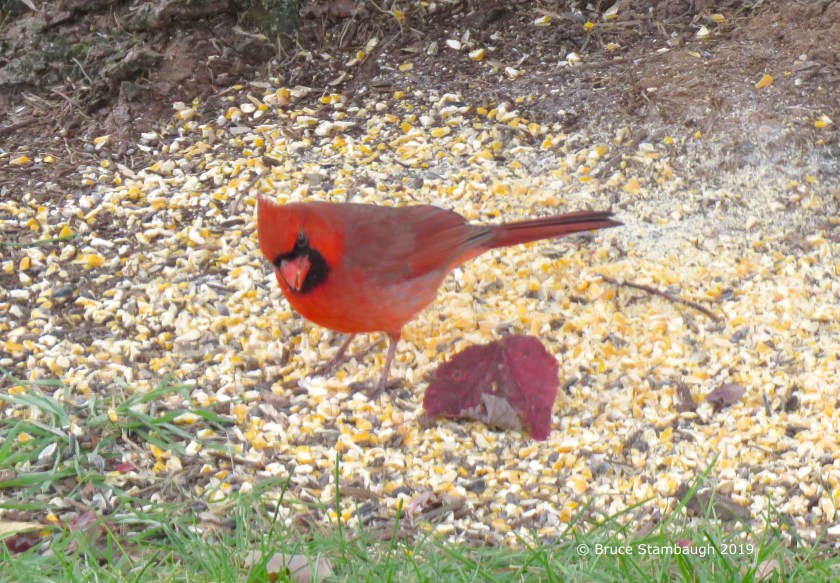
Welcome to November!


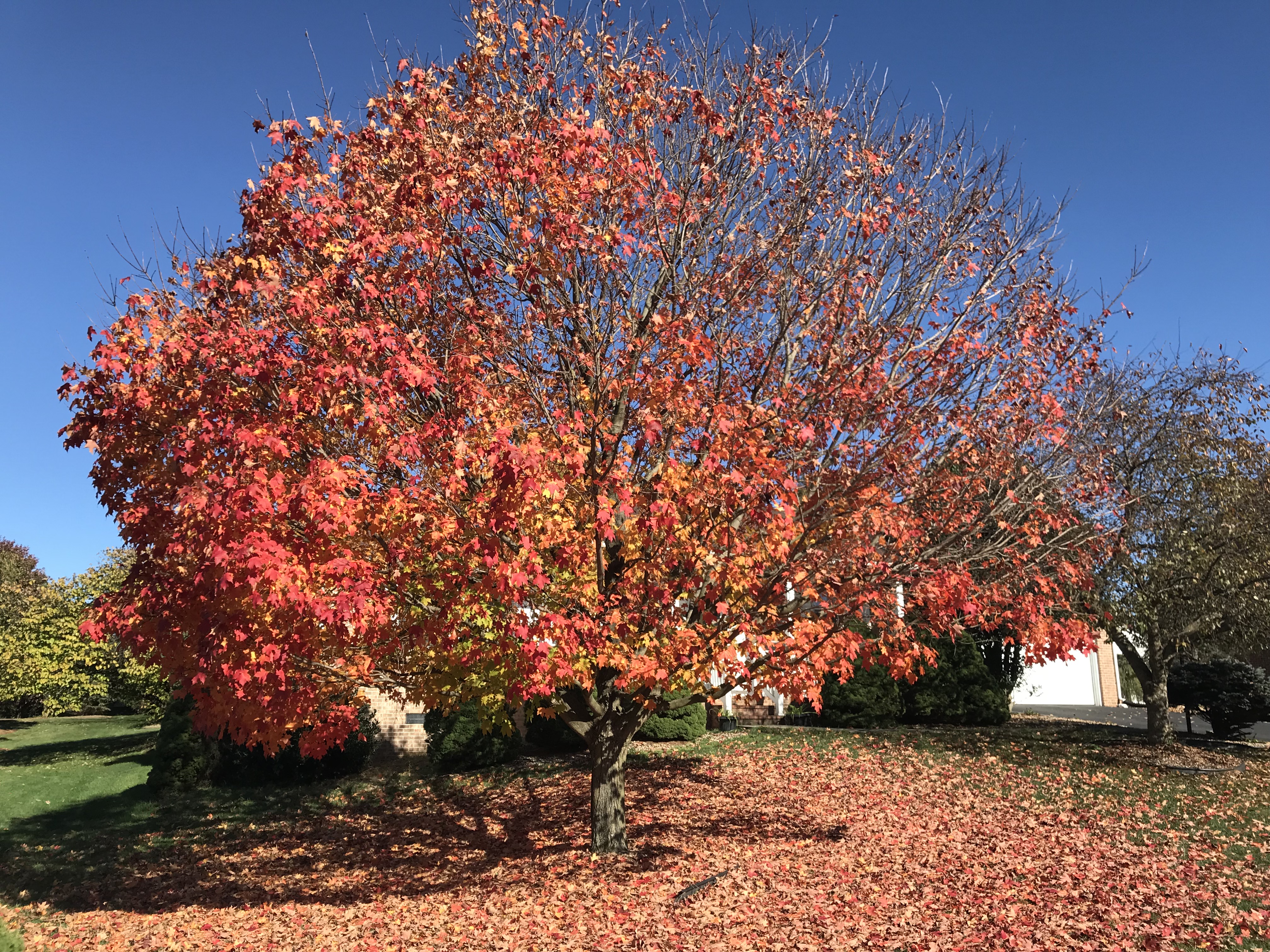
I could think of no better way to welcome you to November than share some of the beautiful fall colors of the Shenandoah Valley. Even after yesterday’s severe storms with heavy rain and strong winds, many trees held onto their leaves. This lovely sugar maple is evidence of that.

I hope the rest of the month will be a beautiful as this tree.

© Bruce Stambaugh 2019

The joyous return of the migrating birds


As the colorful leaves fade and twirl in the wind, another splash of luster arrives to dot the landscape. Migrating birds appear to see the winter through. I relish their return.

Many of the birds, of course, merely pass through on their way to much warmer southern climes. The ruby-throated hummingbirds, for example, have long been gone. A stray late one might yet be seen. Most are far south of Virginia’s Shenandoah Valley by now.

I’ve had two tube feeders hanging from the red maple trees in the front and back yards for weeks now. Many of the year-round regulars have begun to partake in the free sunflower seed buffet.

Male Red-bellied Woodpecker.

The noisy red-bellied woodpeckers are hard to miss. Their iridescent red-striped head and contrasting black and white ladder back are as flashy as their aggressive behavior. They’re not bullies. They just know what they want and help themselves.

Our smallest woodpecker, the downy, is much more pensive and much less flashy. Only a blotch of red on the back of the head identifies the male from the similarly marked black and white feathered female.

Every now and then, a northern flicker or two will show up at the birdbaths or forage for ants in the mulch on warmer days. With their earth-tone coloration, they are handsome birds for sure.

An array of bedecked songbirds frequents the feeders, too. A cheery chip, chip, announces the presence of the bright red northern male cardinals and their khaki-colored mates. That color combination enhances any bird feeding station.

Northern Flicker

It’s the richly feathered Carolina wrens, however, that keep the cooler fall air filled with music. Their protein preference is to search for dead insects than to settle for seeds. Even the peanut butter suet isn’t their first choice.

The beautifully patterned song sparrows might belt out a chorus or two. However, it’s the plaintive call of the white-throated sparrows that thrills me. They have only now just begun to arrive. Their hop, kick, and scratch feeding tactic is a joy to watch as well.

The white-crowned sparrows are the showpieces of the sparrow species. Their distinctive black and white stripes can’t be missed. Their looks alone qualify them as the feeder referees.

Red-breasted Nuthatch.

A lone eastern towhee made a brief appearance in the back yard recently. It foraged beneath the pines that border the neighbor’s property. It was a first for my Virginia yard list.

Last year, I was pleasantly surprised by the appearances of a small flock of purple finches. Though less colorful than their male counterparts, the females stood out with their creamy patches and brown streaks. Neatly attired red-breasted nuthatches also appeared intermittingly. I’m hoping all of them return.

Given the recent report on the loss of nearly 30 percent of North America’s bird population in the last 50 years, I’ll be happy with whatever birds do arrive. Several species have even been declared extinct. Europe is experiencing similar losses of bird species.

The extensive study covered nearly the exact timeframe that I have been watching and feeding birds. All the while, bird populations have slowly been declining. Losses of habitats in nesting, migrating, and wintering locales have hurt the bird numbers. Climate change and herbicide usage are other suspected causes of the birds’ demise.

Despite the bad news, I’ll continue to feed the birds in the fall and winter. The birds provide welcome entertainment during the dormant months. The way it’s going, the birds will need all the help they can get.

A male Northern Cardinal braved an ice storm in search of food.

© Bruce Stambaugh 2019

Shenandoah Fall


The morning sun cast an illuminating light on the colorful deciduous trees west of Harrisonburg, Virginia, in the heart of the pastoral Shenandoah Valley. Cloud shadows played across the Allegheny Mountains that divide Virginia from West Virginia and served as a quiet backdrop for the colorful foreground. Also, note the rolling fence in the front of the scene mirrors the undulating mountains in the background.

“Shenandoah Fall” is my Photo of the Week.

© Bruce Stambaugh 2019

Enjoy each moment as it occurs

I didn’t realize how much I charged through life until I couldn’t. Getting a new knee will do that to you.

Much like my late father, I wanted to get as much out of life as I could. Dad would come home from work, eat supper, and off he would go to his next adventure. His chosen activities ran the gamut of his interests: softball, arrowhead hunting, fishing, hunting, or attending one of his many organizational meetings.

With all this time on my hands in recuperation mode, I have come to an insightful realization. I mirrored my father for too long in my life. I had and still have many interests. Besides my career in public education, community service consumed much of my time.

Volunteer firefighting, township trustee, hospital trustee meetings, and church leadership all demanded my time. Those days are over. I still enjoy the out-of-doors just as Dad did. In my open-air times, I shoot birds, too, only I use a camera.

The inspection.
This time of year, the leaves are usually my main focus. Given my current limited mobility status, however, that has mostly changed. Unless I go for a drive with my chauffeur wife, I enjoy the colors that I can see from home.

What better time than October to change gears, relax, and just embrace each moment as it arrives. The air has cooled. The front and back doors are propped open, inviting a refreshing and gentle breeze to flow through the house.

The morning sun illuminates our neighbor’s home across the street. A glorious blue sky serves as the backdrop, and a handsome birch tree and a tinting red maple stand as bookend accents. Their fall decorations of yellow mums and cluster of orange pumpkins give a warm welcome.

To the south, the sun bathes the backyard, too, highlighting the pale green, elongated leaves of the shingle oak we transplanted from our Ohio home. Those leaves, also, are slowly transforming to a gilded brown and will rustle in the winter winds until springtime buds displace them.

A family of house finches chatters softly in the blue spruces above the white picket fence of another neighbor. Northern cardinals chip in adjacent pines before taking turns at the black oil sunflower feeder. A family of eastern bluebirds checks out a birdhouse for possible winter habitation.

With the afternoon sun beaming, I return to my reading on the patio. The natural warmth seems to enhance the book’s enlightening content. To keep my leg limber, I shift positions as often as I turn pages.


Towards evening, it’s rush hour at the birdbaths. American Robins, unseen and unheard for days, suddenly swamp the three aquatic venues available. The hand-honed sandstone bath proves the most popular. Others settle for the water dish and the old cast iron pedestal basin.

Living life at my modified and sometimes stationary pace is inspirational. In my reposed state, I marvel at the rosebuds outside my office window, closed tight in the morning, and fully opened by mid-afternoon.

Both the Harvest Moon and the Hunter’s Moon have come and gone. The first frost has ended the growing season in many locales while others have experienced their first snowfall. Winter is knocking on the door. October’s showiness will soon be over.

It is with great gratitude that I embrace each moment as it arrives, glad that my previous busyness is history. My sincere hope is that I’ll still apply this moment-by-moment attitude when I no longer have to sit icing my elevated knee.

© Bruce Stambaugh 2019

A Veiled Hunter’s Moon


Thin clouds hung over Massanutten Mountain as October’s Hunter’s Moon rose near Harrisonburg, Virginia. The result was an eerie effect as the moon began to rise above the clouds.

“A Veiled Hunter’s Moon” is my Photo of the Week.

© Bruce Stambaugh 2019

Recognizing the virtue of September’s silence

Listen. Did you hear it? If not, there’s still time. In a few short days, September’s most significant gift will be gone.

The changing leaves too often get all the attention, especially the gorgeous sugar maples. I have no argument with that whatsoever. September merely sets the stage for Nature’s colorful artwork.

Inexplicably, that wondrous, warming rainbow leaves leafy trails to this September virtuous quality. Can you guess what it is?

In the pondering, we uncover this gracious gift the world is too often too busy to unwrap. September’s silent specialty is all around us. Do you hear it? That rhetorical question is no joke.

Silence is golden as the saying goes, and from beginning to end that silence is never more so than in September. Listen again to see if you agree.

September gives us ample opportunity to embrace her unique child. Her silence never sleeps. She is as still as still can be 24-hours a day.

At every dawn, September’s stillness is broken not by the sun, but by humankind winding up for another day of work. Unnatural sounds break the silence and intrude upon our slumber.

The morning train whistles reverberate up and down the valley warning of its impending crossings. Even with the house windows closed, we can hear it from miles away.

Tires hum on the variegated macadam where country and city roadways meet. On occasion, sirens tell a tale of disrespect, distress, or disorder that further disturbs September’s sacredness.

With the initial rush over, my wife and I settle on the back porch for a simple breakfast. Too fascinated with the month’s hush, we seldom interrupt it or one another’s thoughts.

Thinking the coast is clear, mourning doves swoop in for morning refreshments at the birdbaths. One slight movement by either of us and the spell is broken. The ripple of wind that propels them to safety in the neighbor’s blue spruce tickles my neck.

A rabbit nibbles freely at the fibrous greenery. Its oversized eyes sparkle in the sunshine, its floppy ears twitch without disturbing the quietude.

We take up the same positions at lunchtime. Migrating ruby-throated hummingbirds squawk their arrival at the nearby feeder. Too much like humans, they spend more energy chasing each other away rather than learning to share the nourishing liquid nectar.

The leaves and needles of the neighborhood trees hang limp and still. Even if a slight afternoon breeze gently bounces them around, they remain faithful to the code of September silence. They hit the ground inaudibly.

Beneath those shady limbs, lawnmowers roar back and forth, back and forth. When the last blade is cut, the glorious silence returns. Does anyone hear it?

If not, the ubiquitous gangs of bellowing blue jays are sure to enforce it with their host of calls and cries. Their intentions are righteous; their methods are inadequate and contradictory, to say the least. Still, once gone, September’s silence is palpable.

Twilight may be the best time to catch a glimpse, a snippet, a pocketful of September’s hush. With the day’s work done and supper over, the last of the season’s crickets sing the silent song into the night.

Overhead, the Milky Way, dim as it is in the potentate sky, twinkles its approval of the welcome stillness. The day is done. Though many have tried sunup to sundown, September’s silence has thankfully prevailed.

Much like the rest of us, September’s days are numbered. Listen for her calming silence while there is still time.

© Bruce Stambaugh 2019

Finding a new sanctuary

Big Meadows.

Not long after we moved to Virginia’s Shenandoah Valley more than two years ago, I sought a nature spot. I wanted a place where I could practice my photography, quietly watch birds, or simply do some walking.

I had many such places within an hour of our home in Holmes County, Ohio. They all had their unique features that attracted many folks in addition to fulfilling my photography, birding, and hiking desires. I had hoped to find one location close to our Virginia home that met those needs, too.

I have plenty of choices when it comes to getting out into nature for walks, birding, and photography in the Shenandoah Valley. I hit the trifecta if I can incorporate all three into one trip.

When you have a national park within the boundaries of your county, the answer seems obvious. It’s a 40 minutes drive to the park’s closest entrance. Shenandoah National Park was formed out of parts of eight Virginia counties, Rockingham among them.

This slideshow requires JavaScript.

The park offers a host of options for visitors, though I have only been able to thoroughly explore a few so far. Big Meadows is one of those, and to date, it has been my go-to spot.

Big Meadows is a wide-open space on the summit of Skyline Drive at mile-marker 51. Its simplistic name perfectly describes its main feature. The place is a big meadow.

What’s it doing there, and why? With the park’s dense forests, fast-running streams that often lead to crashing waterfalls, Big Meadows is an anomaly to the park. No one seems to know how or why Big Meadows was formed. It’s certainly a fish out of water given the diverse geology, geography, and biology in Shenandoah National Park.

Big Meadows is and always has been lush with wildflowers, grasses, and low shrubs. Archeological research reveals that Native Americans camped in Big Meadows. Evidence shows they used controlled burns to flush out the abundant wildlife of the area. The park service still uses controlled burns to keep Big Meadows Big Meadows.

The area is more than a big meadow, however. The Byrd Visitors Center offers an informative display on the formation of the park, along with a gift store, and restrooms. A way station for hikers, an amphitheater, a lodge, restaurant, campgrounds, picnic areas, and multiple hiking trails can all be reached from Big Meadows.

A few photos from my most recent visit to Big Meadows. Please click on the photos to enlarge them.

Of course, the Appalachian Trial runs on the west slope of the Blue Ridge Mountains on the edge of Big Meadows. Waterfalls are not far away along with some incredible views of the Shenandoah Valley.

On a hot summer’s day, Big Meadows is a pleasant escape from the valley’s heat and humidity. The temperature on the mountain can be 10 to 15 degrees cooler.

Even for those who aren’t able to hike very far, Big Meadows offers a lot. Visitors can sit in their cars while butterflies flit from one group of flowers to another. I’ve even seen dark-eyed juncos pecking for food around the Byrd Visitors Center in the summer.

The winter weather gets so wicked, however, that I tend to only visit spring, summer, and fall. Besides, the park often closes the Skyline Drive in the winter anyhow.

Everyone needs a place to get away, a place to relax, to take a load off, retreat from the hectic, pounding pace that we’ve come to know in the early 21st century. Big Meadows is such a place for me. Where is yours?

The view of the Shenandoah Valley from Big Meadows Lodge.

© Bruce Stambaugh 2019

Why September is the golden month

September in the Shenandoah Valley.

My wife caught the moment perfectly. We sat on our back porch enjoying our usual simple Sunday supper.

“It’s really still,” Neva said. In response, I looked up. I am not sure why, because silence can’t be seen.

As usual, though, she was right. For no dogs barked, no lawnmowers purred, nor were any voices heard.

An unusual phenomenon caught my attention. A light breeze blew through the back yard, rustling the red maple leaves. Though they quivered steadily, they, too, were silent. I found that both eerie and fascinating.

I relaxed in the uplifting and refreshing quietude. Such an instance enables you to see the moment itself as it is, not as you want it to be.

Turning.
Here we were only on the first day of the month, and already September issued forth one of its many golden moments. If the ninth month kept to its course, there surely would be many more, hurricanes notwithstanding.

The stillness seemed to be the day’s crown jewel, adorning a crest of many arches already naturally appointed. I noted a few of the maple’s eastern-facing leaves had already tinged.

On my morning walk around the neighborhood, I had noticed that other trees also had begun to transform their leaves. A giant sugar maple showed reds and orange where the morning’s first light peeks over the eastern hill that separates the city from the country.

A helter-skelter pattern of blotchy brown infested the fringes of the pointy leaves of a mighty pin oak. I had to wonder if it was seasonal change, blight, insects, or a combination of those causes.

Overhead, a disorganized flock of Canada geese winged it south. I heard the honking long before I saw the birds. Someone or something must have disturbed their foraging in a nearby farmer’s field to be out of formation.

Not the usual V-pattern.

On social media, birders in Ohio and Virginia alike shared photos of western sandpipers, red knots, and other gorgeous birds visiting local mudflats and waterways on their return trip. Birds know when it’s time and September gladly greets them.

The summer’s heat had taken its toll on flowers, whether wild or cultivated. Even recent decent rains couldn’t revive them.

On the way home from church, I had noticed the once lush leaves of the soybean fields had dulled to pale green. Interspersed flecks of diluted yellow appeared randomly, much like the pin oak’s disorderly display.

In contrast, fields of sunflowers glowed golden, a living symbol for the month itself. September is notorious for being the gilded sibling among its peers. Could jealousy be why August stirs and spins its tropical trouble into its September sister?

September relishes its title. It shows off its stuff at county fairs, produce stands and in supermarkets. The honeyed tones of summer squash, cantaloupes, the last of the season’s sweet corn, and the early ripened gourds and pumpkins prove the point.

Pumpkins galore.

I suppose that is only appropriate since stores are already pushing fall sales and Halloween merchandise. If they haven’t already done so, primary classroom windows will mimic the fall colors with a run on yellow, red, and orange construction paper.

Of course, with the flip of a mental sports switch, our attention has turned from baseball to football. High school, college, and pro scores dominated the front pages of Saturday morning newspapers, at least the ones that still publish.

Crickets trading musical text messages woke me from my muse. September is here, and I intend to enjoy every moment the fair-haired month has to offer. I hope you can as well.

© Bruce Stambaugh 2019

Shenandoah Sunset


Given the crazy assortment of weather we have had in the Shenandoah Valley this summer, photographic sunsets have been hard to comeby. Any hint of a possible colorful evening sky, and I headed to my favorite sunset spot. Too often it was to no avail.

Recently, however, that changed, even with few cumulous clouds to reflect the setting sun. I was glad for this recent sunset, and I am happy to share it with you.

“Shenandoah Sunset” is my Photo of the Week.

© Bruce Stambaugh 2019

Watching the grandkids grow

Times have changed, and so have the grandkids.
Our grandkids are growing in so many ways. The most apparent transformations, of course, are their physical changes.

On their last visit to Nana and Poppy’s Ohio home, we had family photos taken. That was April 2017. At 5 foot 9 inches, I was taller than all three grandchildren. Not anymore.

When we returned from a recent trip to Alaska, I could no longer make that claim. Both Evan and Davis have outgrown me. Two years makes a big difference when you are growing youngsters.

In fact, Davis is challenging his older brother for tallest sibling bragging rights. At 15 and 13, they both likely have some growing yet to do.

When Nana asked Davis if he was the tallest in his middle school, he said not by a long shot. One classmate is already 6 foot 3 inches.

When I asked what sports the tall teen plays, Davis quickly replied with one defining word: “Guitar!” That’s what I get for stereotyping.

We took the sprouting trio out for our annual before-school-begins breakfast at their favorite eatery. Since it was already going on 10 a.m. by the time we arrived, the outing was more like brunch. Growing youngsters need their sleep.

The discussion around the breakfast table revealed other sorts of growth. They each shared about their recent trip to the west coast.

Back in Ohio.
The highlights they named surprised both Nana and me. They all liked the Chihuly Art glass garden in Seattle. Riding motorbikes and four-wheelers in Oregon was a close second, followed by watching surfers at Huntington Beach, California with cousins they got to meet for the first time.

We talked about the upcoming school year. When asked about the classes they would be taking in high school and middle school, each boy pulled out a smartphone and read off their schedules. Little sister, who isn’t so little anymore, is excited to have her best friend in her fourth-grade class.

As they chattered on and we waited on the food, I couldn’t help but reflect on their younger years in Texas, where all three were born. We enjoyed those infrequent visits, although the hot Lone Star summers often kept us inside playing with Matchbox toys and changing diapers.

Now they live in the heart of Virginia’s Shenandoah Valley, and so do we. They are the primary reasons we moved here from the beloved Buckeye State more than two years ago. Living five miles apart is much more convenient than five hours by airplane.

Watching the grandkids change so quickly is both gratifying and a bit scary. We relish each moment, even the predictable squabbles of youth and siblings. I’m thankful that the role of grandparent is less harried than that of the parent.

Evan, Davis, and Maren all have their various likes and dislikes, gifts and abilities. It is both a joy and a challenge to keep up with their busy, young lives.

We bundle up and watch Even pitch even if it’s 40 degrees with a stiff northwest wind. I marvel at Davis’ preference for quiet, personal time, whether on a solo bike ride or being in his room. I shake my head in disbelief at Maren’s packed after-school schedule. How she manages soccer and choir practices, and piano lessons that sometimes follow one another is a mystery to me.

The grandchildren are growing. Nana and I relish the rapid changes that seem to occur daily. We anticipate with wonder all that is yet to come, thankful we’re here to help and take it all in.

Kids being kids.

© Bruce Stambaugh 2019

Bay Photos by Donna

Wildlife photos from the Chesapeake Bay region

ROAD TO NARA

Culture and Communities at the Heart Of India

K Hertzler Art

Artist and nature journalist in the Shenandoah Valley of Virginia.

Maria Vincent Robinson

Photographer Of Life and moments

Gabriele Romano

Personal Blog

Jennifer Murch

Art is the only way to run away without leaving home. -Twyla Tharp

Roadkill Crossing

Writing generated from the rural life

ANJOLI ROY

writer. teacher. podcast cohost.

Casa Alterna

El amor cruza fronteras / Love crosses borders