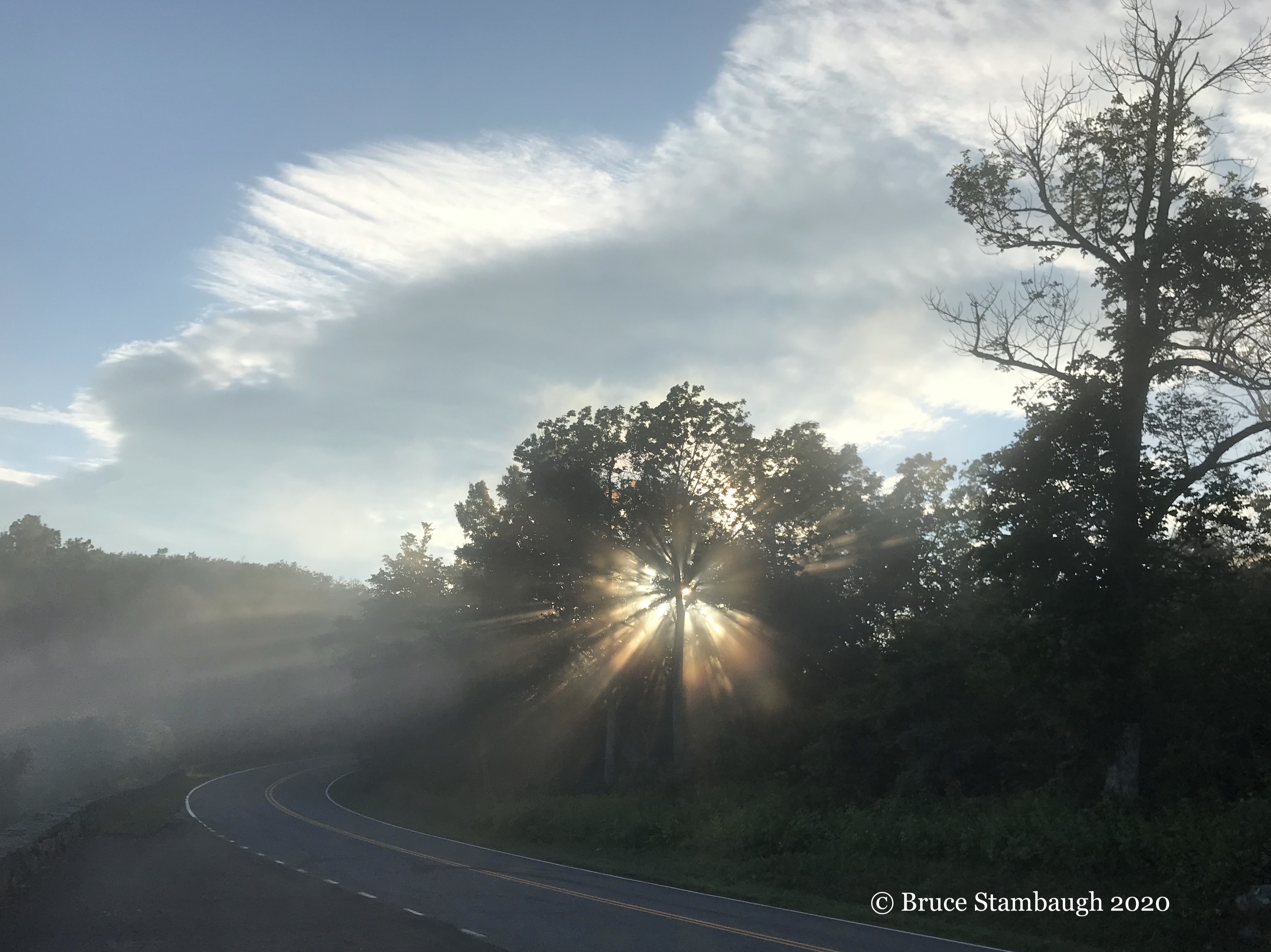
I was driving along the Skyline Drive in Shenandoah National Park early in the morning when I came upon this scene. Fortunately, the fog was rolling up the side of the Blue Ridge Mountains right at an overlook.
Watching the fog rise rapidly out of the Shenandoah Valley and up over the mountains was a treat. The sun was just peeking over the eastern ridge when I turned and caught this scene. The crown of the tree scattered the sun’s rays into the eerie fog, creating this spectacular scene. The high clouds perfectly framed my Photo of the Week, “Shining Through.”
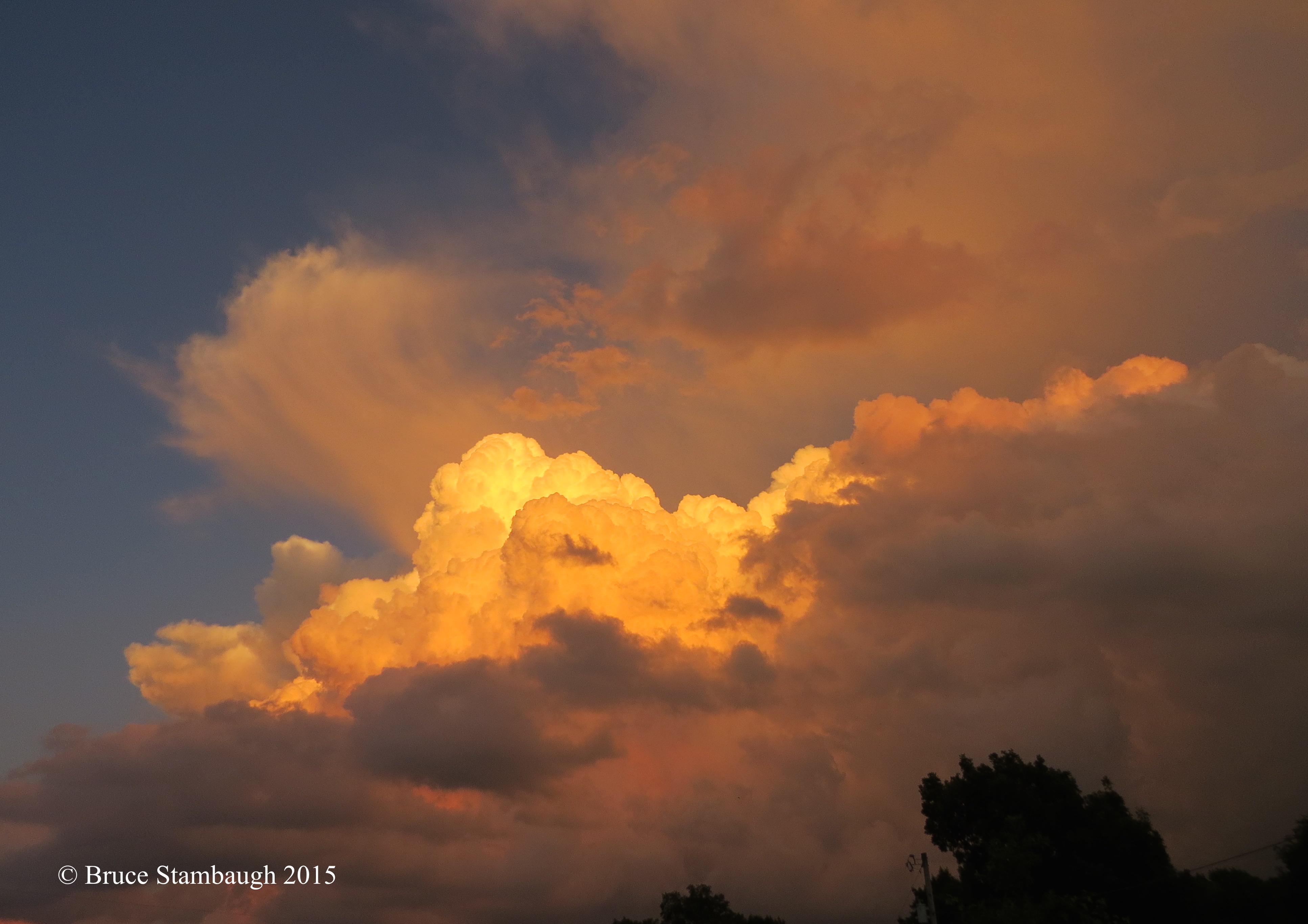
An evening thunderstorm over a neighboring county.
In case you haven’t noticed, we have entered those dreaded dog days of summer. It’s hot, humid, and dry almost everywhere across the country.
The Shenandoah Valley hasn’t been excluded from the stifling temperatures and muggy air. Rains have been sporadic, all or nothing events.
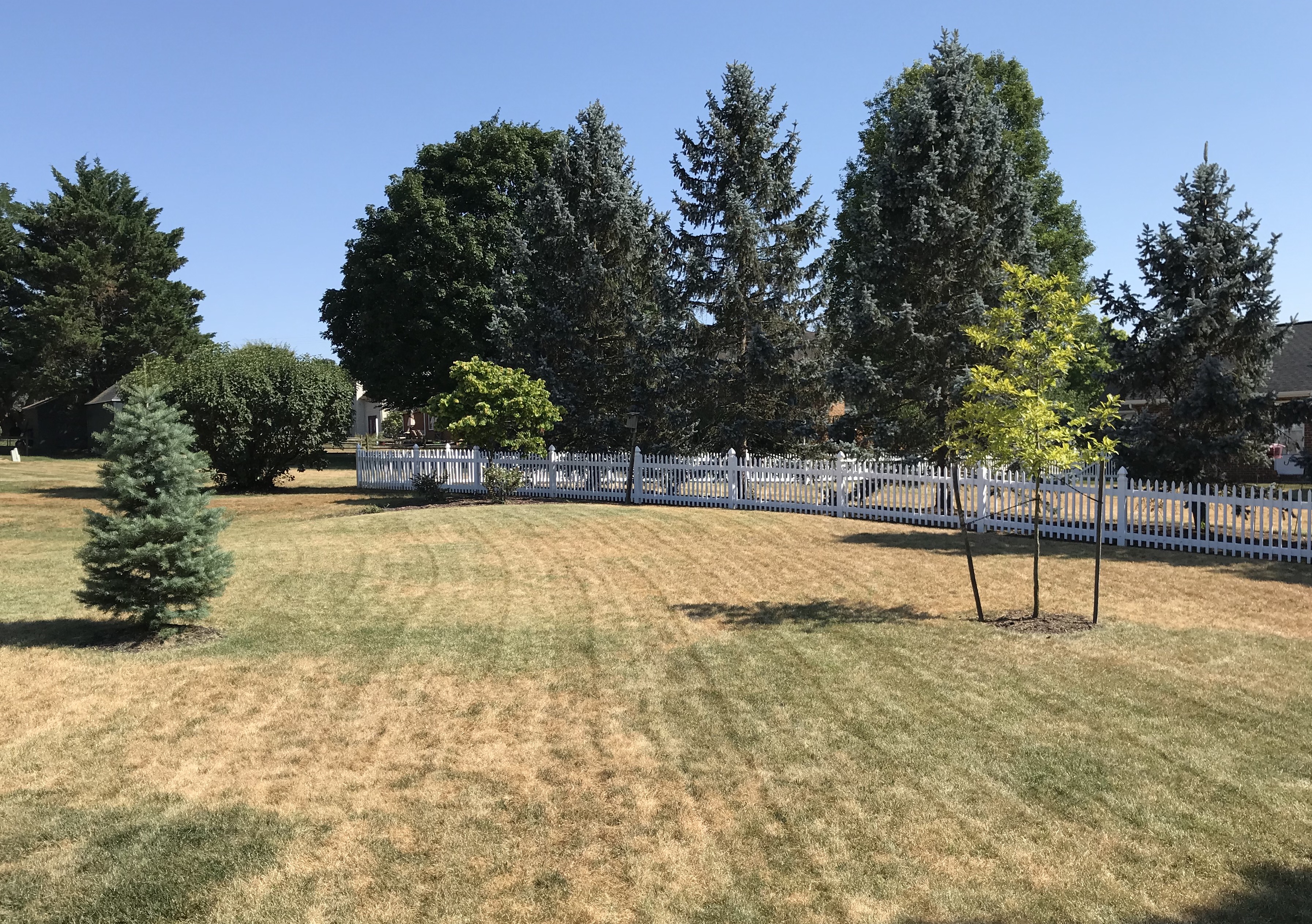
The look says it all.The few times it has rained at our place near Harrisonburg, I could have walked through the widely dispersed drops and not gotten wet. Our backyard is so brown that it resembles a beach more than it does a lawn. Only, the grass crunches rather than squishes beneath your feet.
I understood the meaning of dog days even as a child but also wondered where that term originated. I knew that when adults talked about the dog days, it meant sunny, hot, humid, and dry times.
The Amish still don’t have air conditioning.Those were days when the neighborhood kids would head for the woods or the creek down over the hill from our little red brick house. Mom wanted us outside playing, and with no air conditioning then, we were glad to oblige her.
But I sensed dog days meant something more profound than being so dastardly hot that the dogs wouldn’t whimper. Naturally, I Googled to find out the source of the saying. As simple as the phrase may sound, its origin is a bit complex.
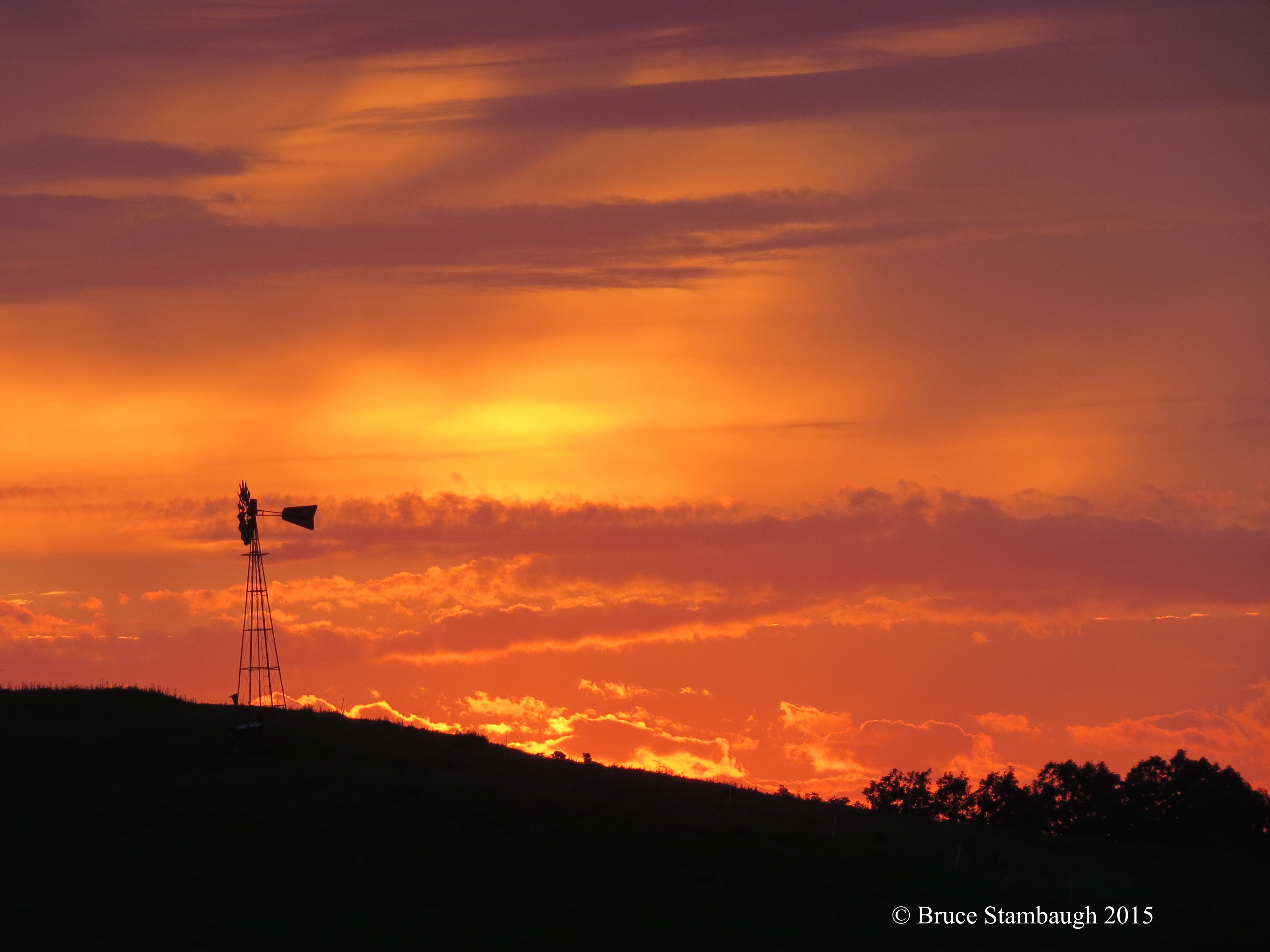
It turns out that the phrase had little to do with dogs panting or even the lazy, hazy days of summer. There was a muddled mix of astronomy and fantasy involved in bringing in the dog days, not necessarily a heatwave. A blazing dog day sunset in Ohio’s Amish country.
Dog days first referred to Sirius, the dog star. The appearance of Sirius in the early morning sky just before sunrise ushered in the dog days for the ancient Greeks and Romans. In their time, that occurred in late July.
Back then, sailors, travelers, and stargazers didn’t have to deal with light pollution. They worshiped the heavens, establishing names and stories for stars and constellations.
In Homer’s “The Iliad,” Sirius is referred to as Orion’s dog star. Then, the dog star brought wars and disasters of all sorts. I guess they had to blame something. It might as well be an imaginary culprit.
Still, I can just imagine families gathered around a fire long ago, staring skyward, as an elder told the story of the dog star. Today, of course, most of us couldn’t find Sirius even if we could see the stars.
Whatever tradition you acknowledge and expound, the dog days of summer are here. They have gotten off to a roaring start in more ways than the hot weather.
The comet Neowise has been thrilling people for a couple of weeks now. It should be at its brightest. If you haven’t taken time to check it out, all you need are some binoculars, some keen eyes, and be willing to enjoy the cooler evening air with a good view of the western horizon. You won’t be disappointed.
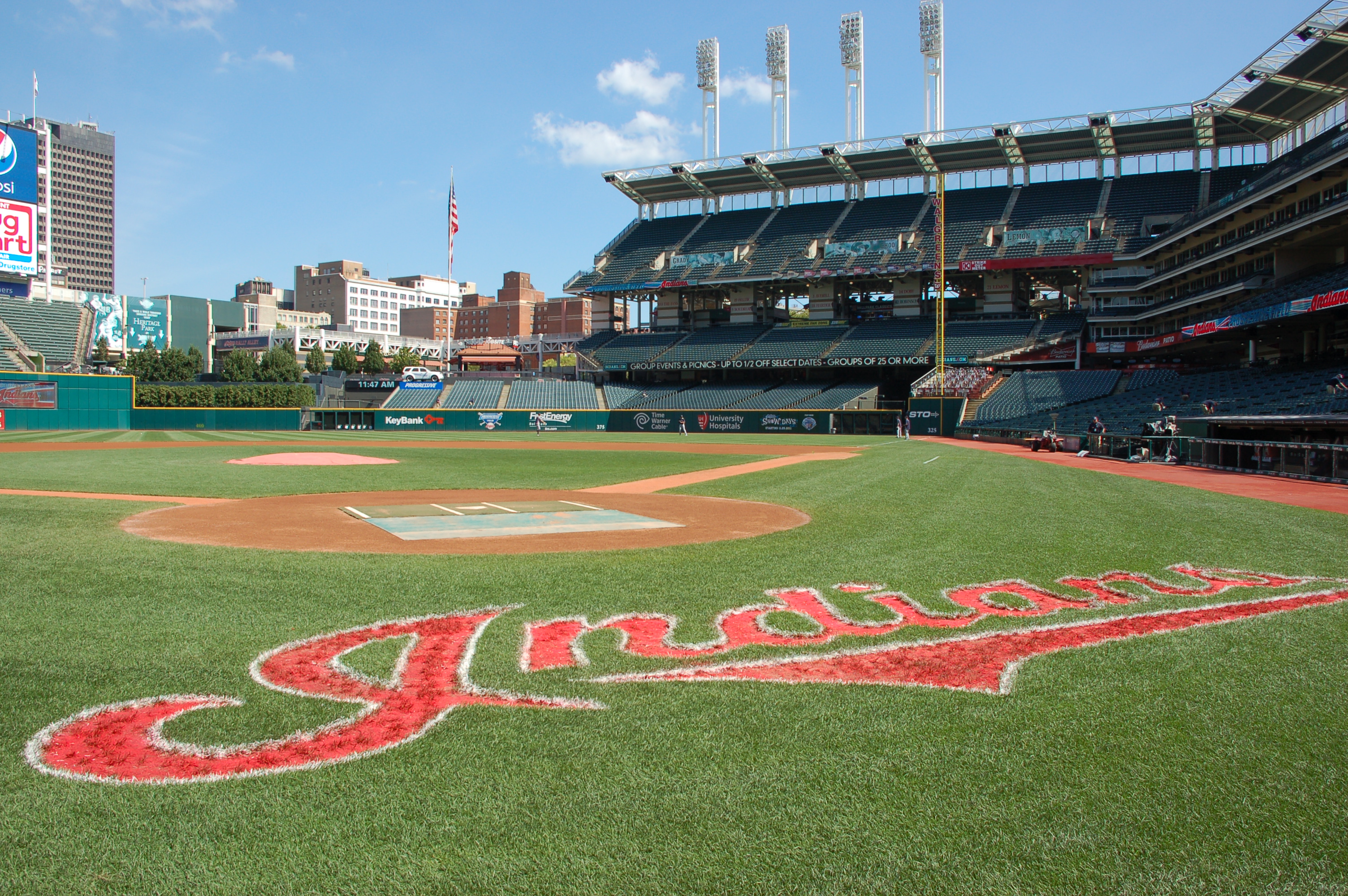
Summer’s dog days are also hosting the debut of the delayed Major League Baseball season. Even with a 60-game schedule, I’m not holding out much hope for my favorite team, the Cleveland Indians.
Authorities thought that the warmer months would slow the spread of the cursed Covid-19 virus. Instead, the number of U.S. cases and, unfortunately, coronavirus-caused deaths are both increasing as the summer steams along.
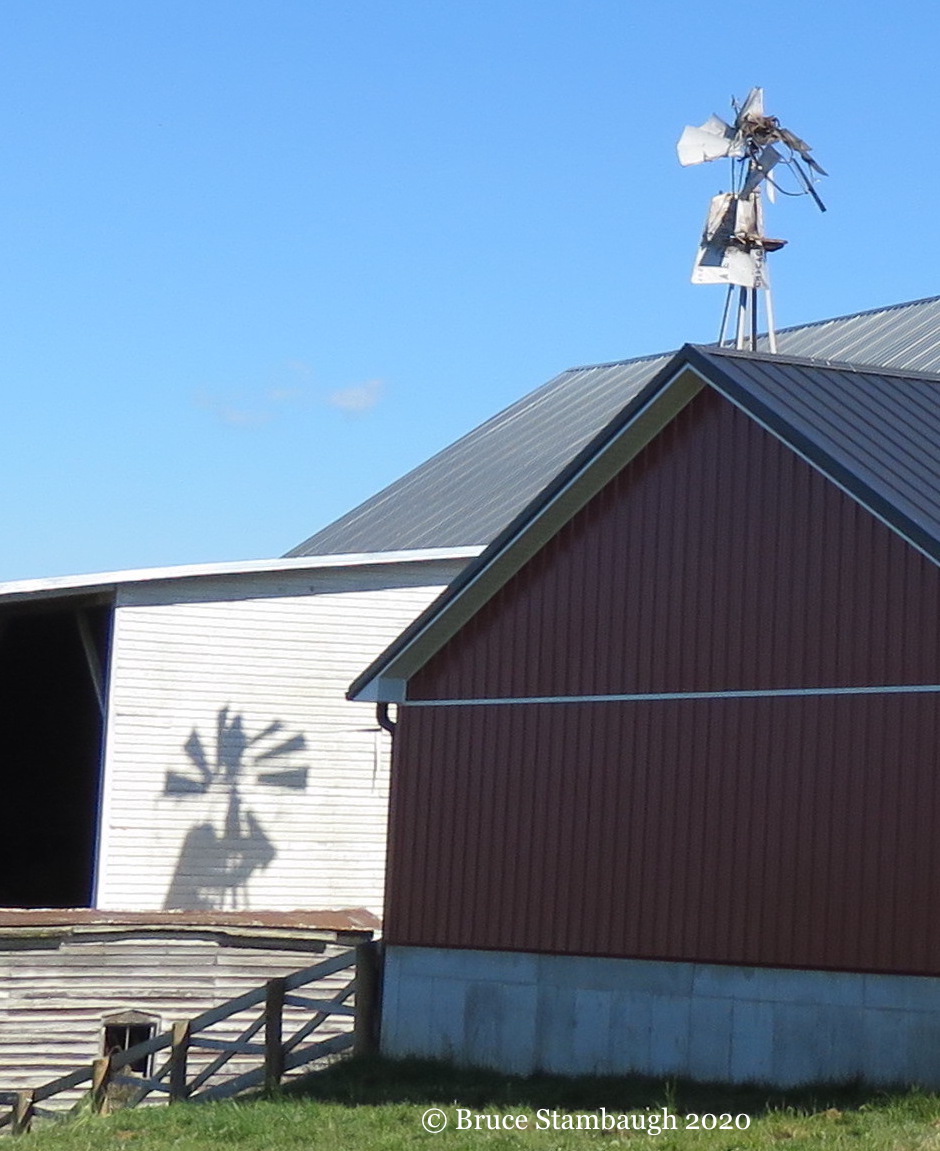
I loved how the morning’s sun cast a distinctive shadow on the bright, white siding of this Old Order Mennonite farmer’s barn. When I looked closer, it seemed like the shadow didn’t precisely match the shape of the mangled windmill. The fins appear to be collapsed. The shadow shows differently, however.
The difference between my vantage point and the sun’s position in the sky created the effect. “The Broken Shadow” is my Photo fo the Week.
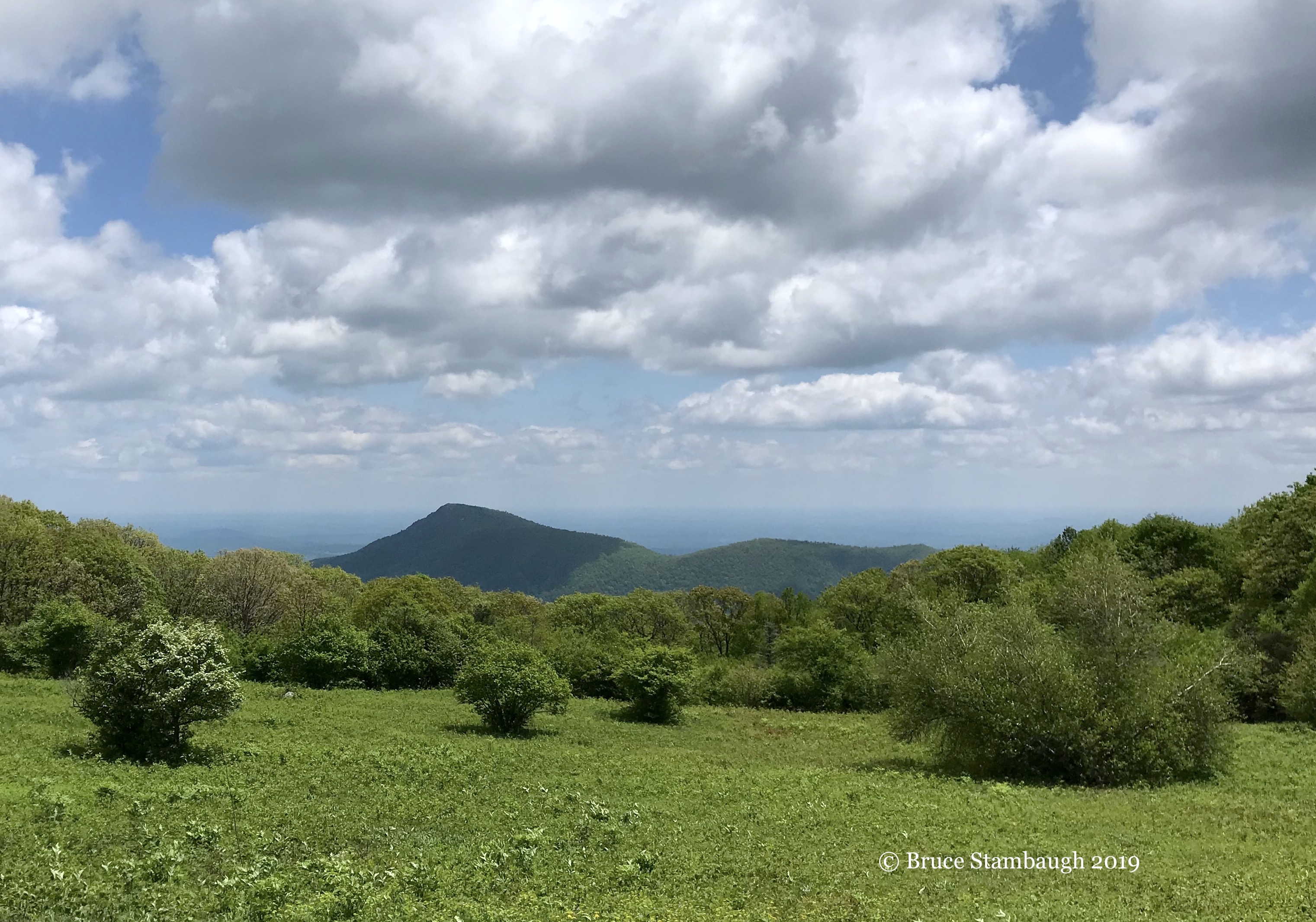
Old Rag is a popular hike in Shenandoah NP.
My wife and I have enjoyed Shenandoah National Park since we moved to Virginia three years ago. There’s a lot to love about the park, and it’s less than an hour away.
We’re not the only ones who appreciate it, of course. The estimates of annual visitors compare to those of Ohio’s Amish country, our former residence. Each location attracts millions of visitors a year.
Of course, the novel coronavirus pandemic has put a damper on tourist numbers everywhere. With the virus cases flattening out in Virginia, the park has mostly reopened.
When we want to break our stay-close-to-home routines, Neva and I head for the hills. Sometimes I will venture out alone, birding, hiking and shooting photos. It’s an enchanting place, a multi-sensory extravaganza.
This slideshow requires JavaScript.
I hear the beautiful song of an indigo bunting, and I raise my binoculars, scanning the area for the likely source of the melody. Novice that I am at identifying bird calls, I want to make sure I am matching the right species with the song. I’ve learned that, like human accents, bird calls of the same species vary geographically.
Once I find the bird, I switch to my camera to try to get a decent photo. With the trees in full summer canopy, that’s not easy to do. Now and then, I am fortunate to find a bird singing in the open, and I click away.
I catch a slight, silent movement out of the corner of my eye. Is it a doe with a fawn, or perhaps twins? Is it a black bear grazing before nightfall? One never knows. On warm days, keeping a lookout for a lounging timber rattler while scrambling on a rock outcropping is always a good idea.
Male Indigo Bunting.
South River.
Beauty in any season.
Hike rewarded.
Ridge view.
Gold and black.
Pink and blue.
Peregrine Falcons.
The park is a great place to take sunset photos, too. But sunsets in the mountains can be problematic.
The expansive, rolling Shenandoah Valley is bordered on the east and west by mountain ranges. Sunsets can be as disappointing as they are stunning. Weather plus geography equals a formula for the unknown.
When we lived in Ohio, all we had to do was look out our windows to know the potential for a spectacular sunrise or sunset. We were spoiled.
Here in the breadbasket of Virginia, the rising and falling topography makes it iffy to predict what the eastern and western skies will do at dawn or dusk, respectively. You hope, pray, and go for it. Sometimes you are disappointed. Other times, you are speechless.
From this…
…to this dreamland sunset in a matter of minutes.
(Mouse over the photos for the captions)
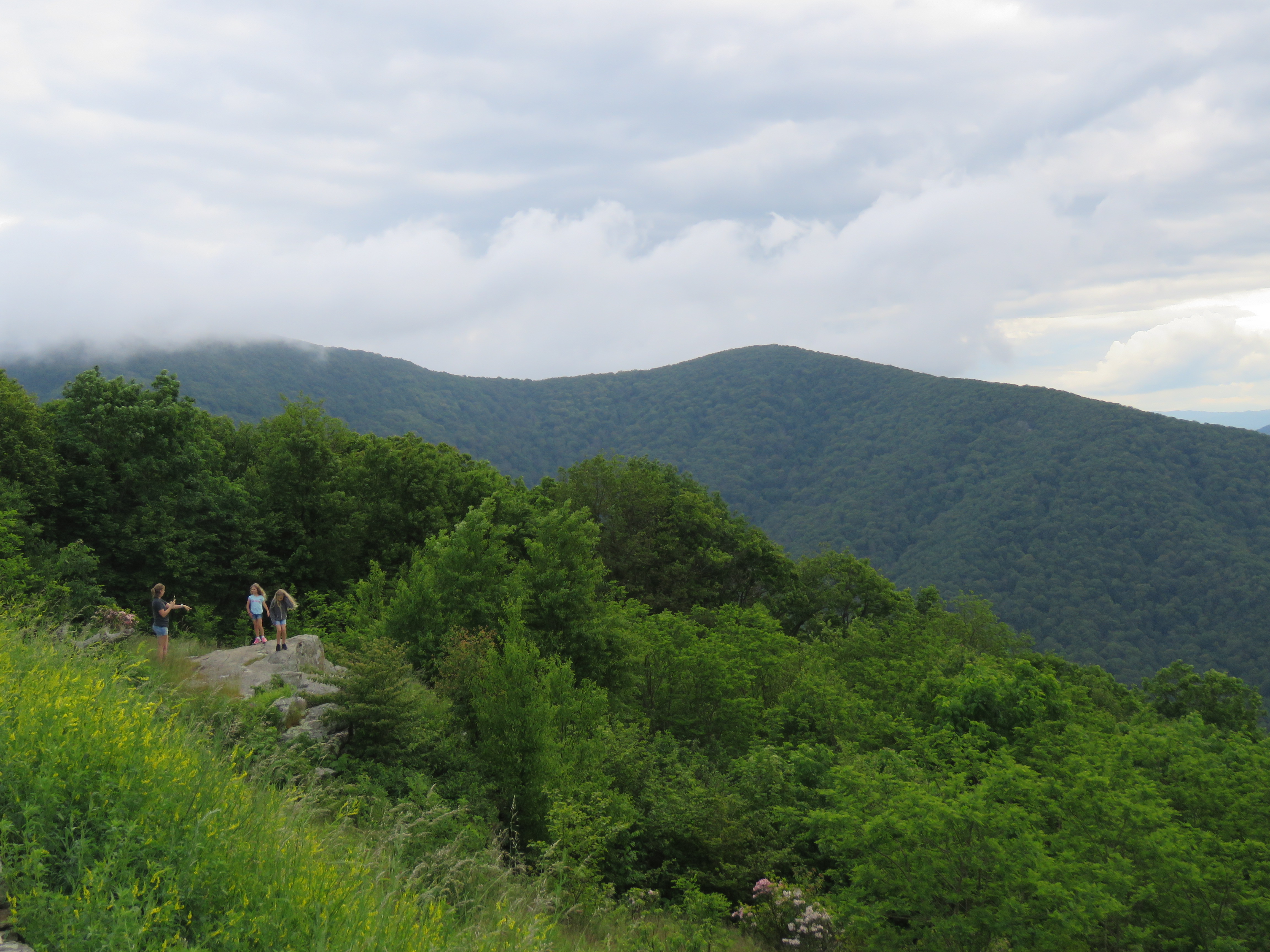
It can be cloudy and raining in the valley. The view from the mountains of the park, however, might be spectacular if you wait long enough. Pick one of the many west-facing overlooks along the majestic Skyline Drive, and prepare yourself for come-what-may.
The elevation of the old, folded mountains ranges up to 2,500 feet higher than that of the valley. From the park, you can see the Allegheny Mountains that mark the boundary between the Commonwealth and West Virginia.
Patience, intuition, and good fortune can be the formula for bathing in a dreamland. Even with a thick cloud cover, the sun can still break through, turning drabness into beautiful in the blink of an eye.
I’ve learned to be ready for the unexpected as the sun slinks below the jagged horizon. Will the clouds refract the sun’s rays into pinks and blues, lavenders and oranges? Or will they merely steal away the sun without fanfare?
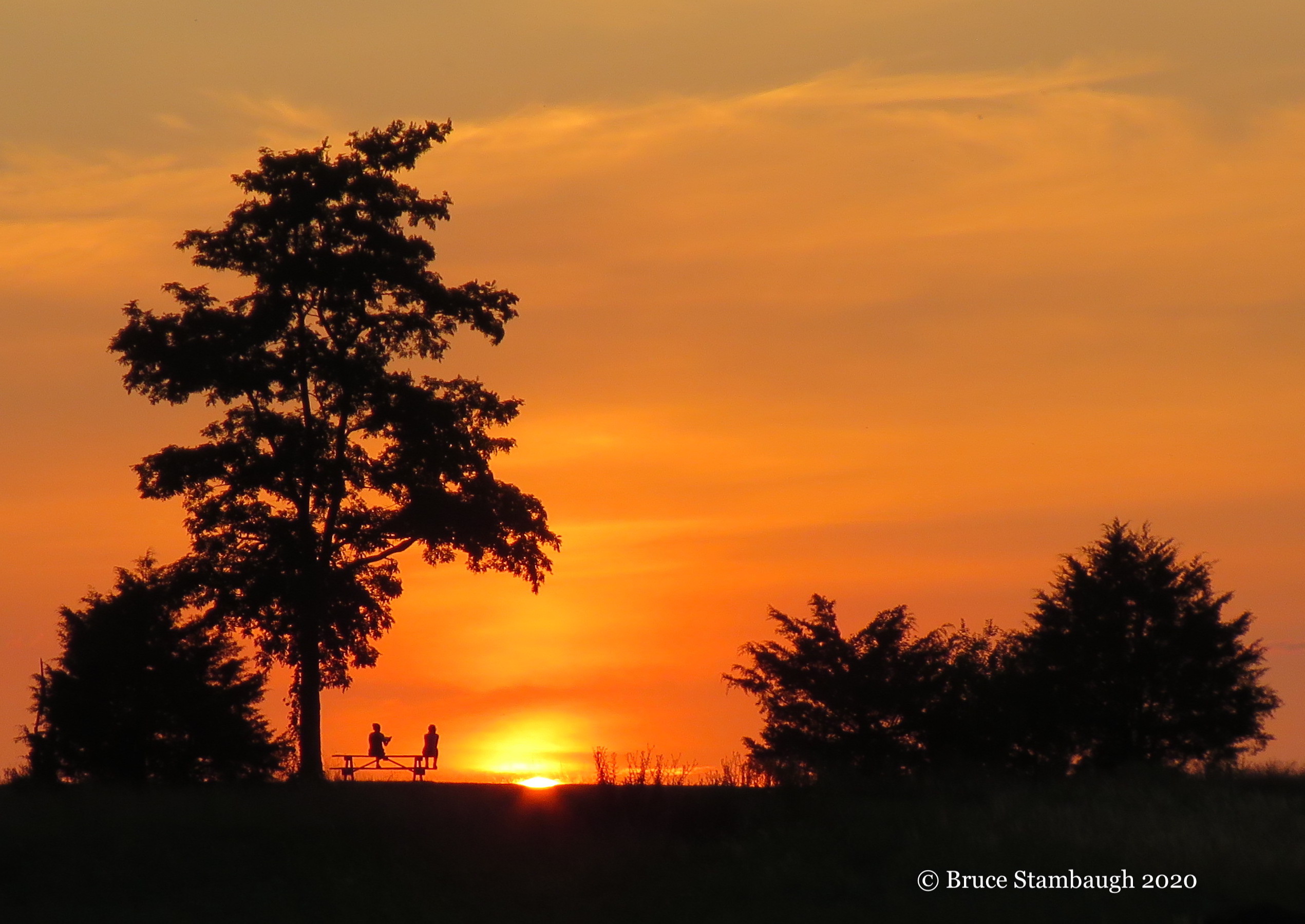
Sometimes a photogenic scene comes to you. In a way, that’s what happened in this photo. I was watching my grandchildren swim on a recent summer evening when the western sky caught my attention. With other adults present, I excused myself and walked to the only open spot on the property. The sky was rapidly turning orange with the sun nearing the tip of the Allegheny Mountains, which were beyond the little ridge before me.
I was entirely satisfied to let the tree and shrubs fill the foreground and let the sky do the rest. Out of the corner of my eye, I noticed two women walking towards the opening. They would provide the perfect scale for this frame if they stayed in view. Fortunately, they sat on the picnic table just as the sun disappeared below the ridge.
My subjects certainly had a better view of the sunset than I did. However, I was perfectly happy to capture this scene.
A Fourth of July parade in Lakeside, Ohio.
As a youngster, I remember having mixed emotions about the Fourth of July. It had nothing to do with my patriotism, and everything to do with my youth.
I joyously anticipated the fireworks displays, wherever and however we got to see them. The reality, though, was that this red, white, and blue holiday marked the halfway point of the year. More importantly, it meant in my young mind that we were already halfway through the summer. Schools would be starting before we knew it.
When my four siblings and I were young, we would gather on a starry July 4th night on the edge of the hill a block west of our brick bungalow. We would anxiously look south and wait for the sparkling pyrotechnic patterns.
On rare occasions, we talked our father into driving closer to Meyers Lake Amusement Park, where the fireworks were ignited to explode over the lake. To avoid the parking lot traffic jam, Dad chose a side street that afforded a decent view of the aerial show.
The fireworks tradition continued into my adulthood when my wife and I started our family. From our home on County Road 201, we could see fireworks from various towns north, east, and southeast.
The summer of 1988 may have been the best time for fireworks for our family of four. Flying back from a vacation in California, we left Chicago’s O’Hare airport right at dark for the last leg of our trip. We looked down from on high as multiple fireworks displays erupted until we landed an hour later at Ohio’s Akron-Canton airport. Nature’s fireworks over Holmes Co., Ohio are just as impressive.
Years later, friends built a beautiful home high on a hill overlooking Millersburg. They had the perfect view of the fireworks shot from the safety of the former county fairgrounds location. Our friends made it a grand occasion, inviting one and all. A plate of food to share was the price of admission.
I enjoyed the fellowship of friends, former students, and some people I had only just met. We oohed and awed together once the colorful and noisy celebration began.
That’s one tradition we left behind when we moved to the heart of Virginia’s lovely Shenandoah Valley. Our city launches its fireworks display from a local park. We have enjoyed the show with our grandchildren on more than one occasion. Not this year.
A local resort, Massanutten, also holds a festival that features fireworks. However, like many locations across the nation, that won’t happen this year because of the pandemic. Officials were wisely concerned about keeping physical distances, which is much harder to do with crowds of people. Massanutten Mountain, Harrisonburg, VA.
Some localities canceled everything, while others like Massanutten, canceled the festival. The fireworks will fly as usual.
These are the times in which we live. We need to accept that we are in the middle of the worst pandemic in a century. The viral repercussions range far beyond silent, darkened skies on the Fourth of July.
Our Founding Fathers created the most daring democratic republic experiment ever attempted. It’s entirely up to each of us to make sure our democracy endures for all peoples to exercise each of their first amendment rights.
Whether watching fireworks live or on TV, let those symbolic rockets red glares and bombs bursting in the air be a rededication to life, liberty, and the pursuit of happiness. Can the sparks ignite a new fire of freedom for all the nation’s people regardless of race, color, creed, or religion? Isn’t that the intent of the First Amendment?
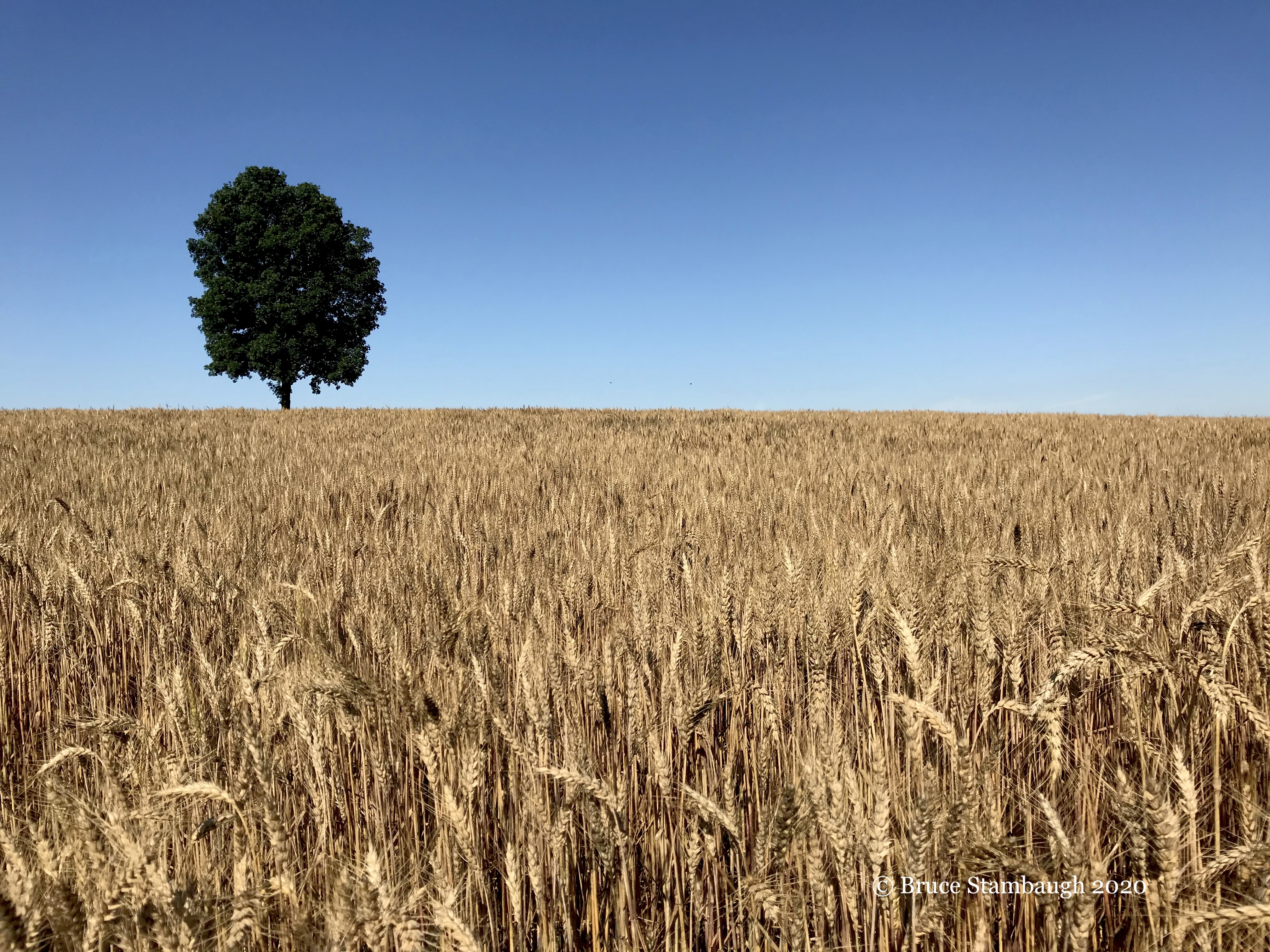
It must be July! The winter wheat is ripening to a golden brown here in the Shenandoah Valley, also known as the breadbasket of Virginia. Once the moisture count in the heads of grain reaches a low enough percentage, the combines will start to roll through the fields day and night.
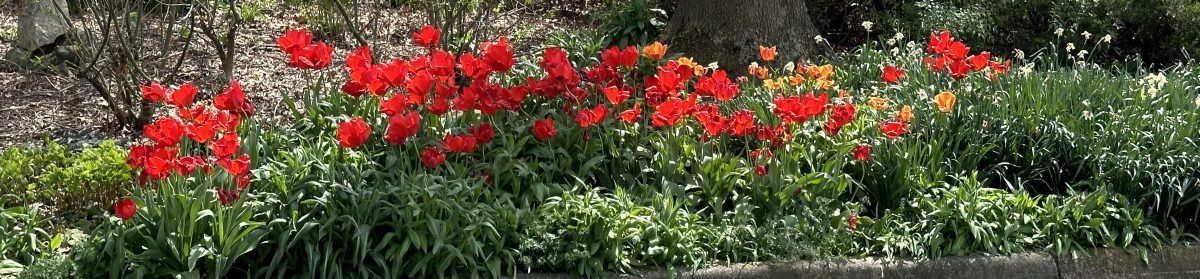
I loved that this Old Order Mennonite farmer left the sugar maple tree to grow and that he planted his crops around it. “The Wheat Field” is my Photo of the Week.
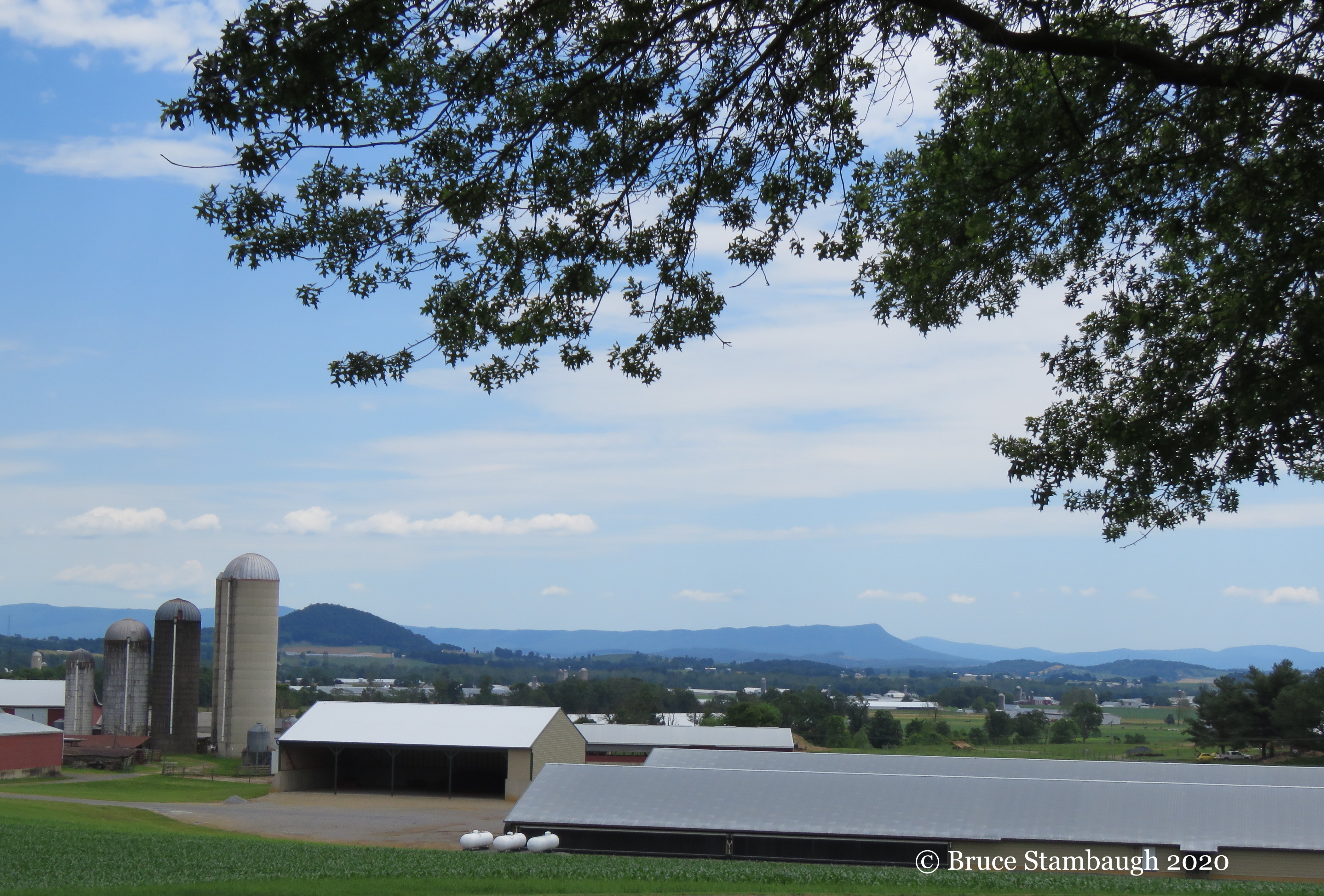
The Blue Ridge Mountains in the distance mark the eastern boundary of Rockingham Co.
My wife and I have closely followed the stay-at-home coronavirus requirements since they began in mid-March. We hadn’t even been out of our county until just the other day.
Even though Rockingham is the second-largest county in square miles in Virginia, we stayed close to home nevertheless. We have taken the pandemic and the safety recommendations suggested by medical professionals seriously.
While waiting for the predicted rain to arrive, Neva and I went about our regular homebound routines. She sewed and read. I wrote and spent too much time on social media, including sorting my many daily emails. When our church’s weekly newsletter landed in my inbox, I got an idea after reading it.
Friends had recently visited Shenandoah National Park, which stretches 105-miles along the Blue Ridge Mountains. The mountains grace and mark the eastern boundary of Rockingham County. The mountain laurel bushes were in full bloom.
That’s all that I needed to read. With the afternoon half gone and the forecasted rain failing to appear, I suggested we head to the park, too. Neva gladly agreed.
Fog rolled in from the east.We dressed for the cooler weather that we were sure to encounter in the higher elevations of the park. We were glad we did. Fearsome black clouds hovered over the mountains as we headed east.
We have lived here long enough to know that the mountain weather’s main characteristic is fickleness. The weather changes quickly in those blue mountains.
Sure enough, in the 25 miles we drove on Skyline Drive to Limberlost Trail, we dodged in and out of the sunshine, clouds, fast-moving fog, mist, and even a little rain. We kept going.
We were so glad we had. Only a couple of other cars were in the parking lot of the handicapped accessible trail. Limberlost is a 1.3-mile loop trail that is beautiful in every season.
I had never been on the trail in the spring when the mountain laurel bloomed. Neva had never been there at all. We were both in for an awe-inspiring treat.
This slideshow requires JavaScript.
We only had to walk a short distance before we encountered the beautiful blooming bushes. We were glad that we had dropped what we were doing and followed our friends’ advice.
Individual bushes and thickets of blooming mountain laurel flourished all along the circular path. They overwhelmed other, more subtle wildflowers that I almost missed.
This area of the park had burned several years ago. Many of the old-growth trees were gone, replaced by patches of spindly saplings. The trail ran through them, creating a fairy-like world. Colorful fungus grew out of tree stumps, and fallen timber left lying right where they landed.
Lush Christmas ferns carpeted the forest floor. The fragrant pink and white blossoms of the mountain laurel painted a lovely contrast to the emerald of the tree canopy above and the sea of ferns below.
We noticed no bees or butterflies, however. I later learned that this variety of rhododendron is toxic to both pollinators and humans. Look, but don’t touch.
A chorus of warblers, vireos, and other woodland birds serenaded us on our enchanting stroll. We were clearly in a national park, but it felt like paradise. Our spontaneity had certainly paid off.
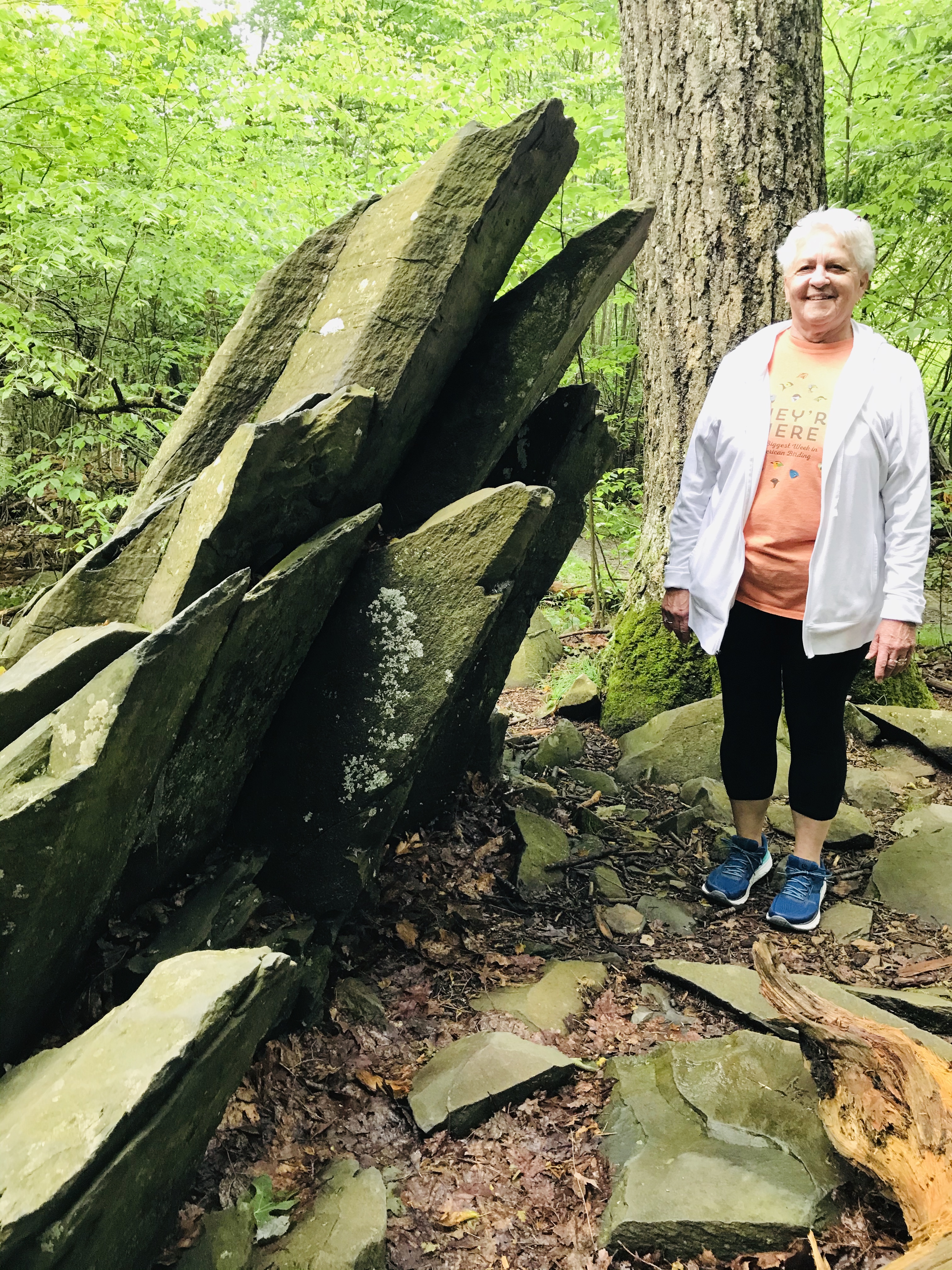
The trail even featured an ancient basalt columnar outcropping.I realize not everyone has a national park to hurry off to in less than an hour. But you likely have a special place that you have meant to visit, someplace you haven’t been since a child.
So, pack up the kids, the snacks, drinks, and don’t forget the hand sanitizer, masks, gloves, and your camera. You just might find paradise, too.
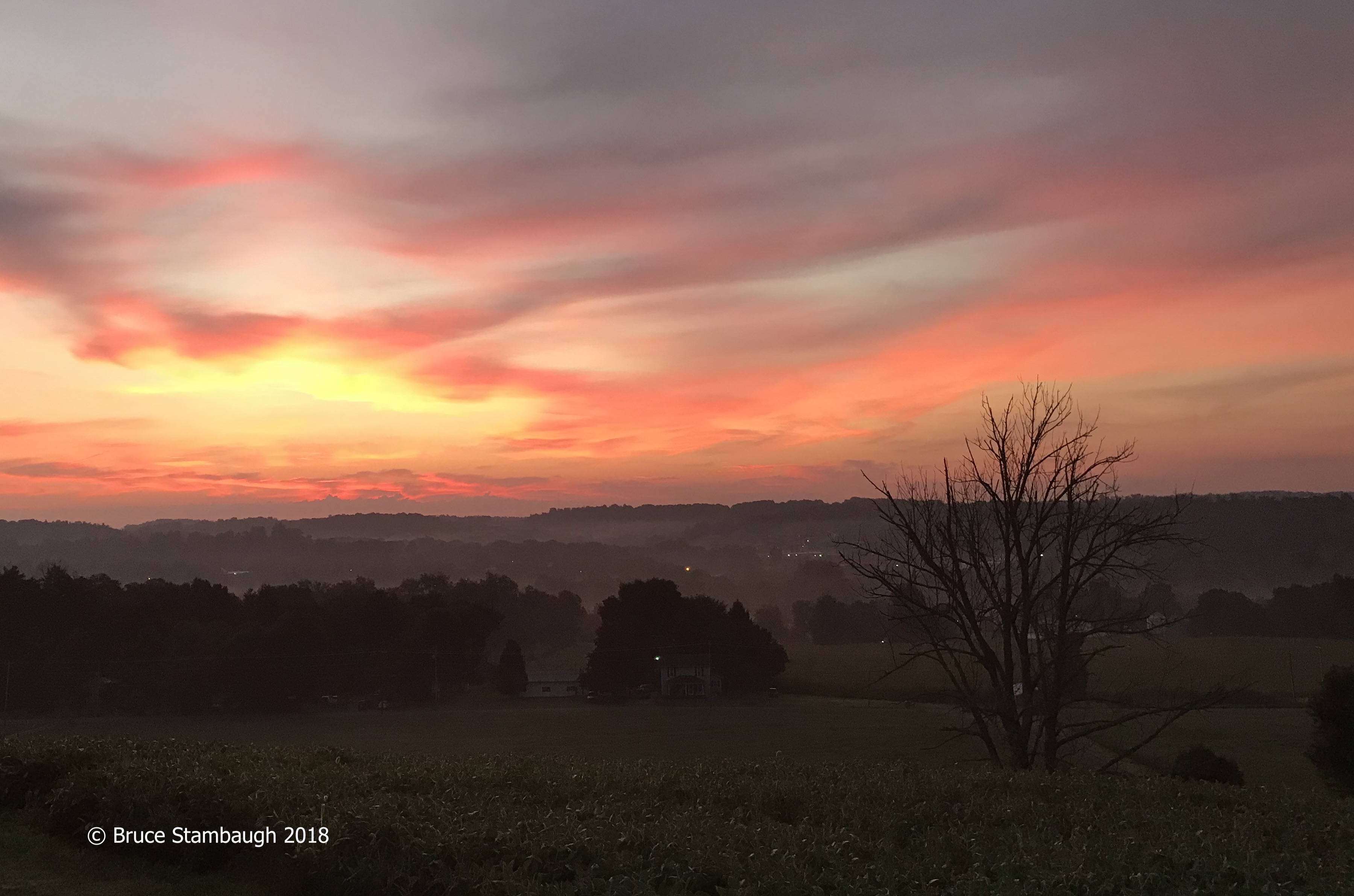
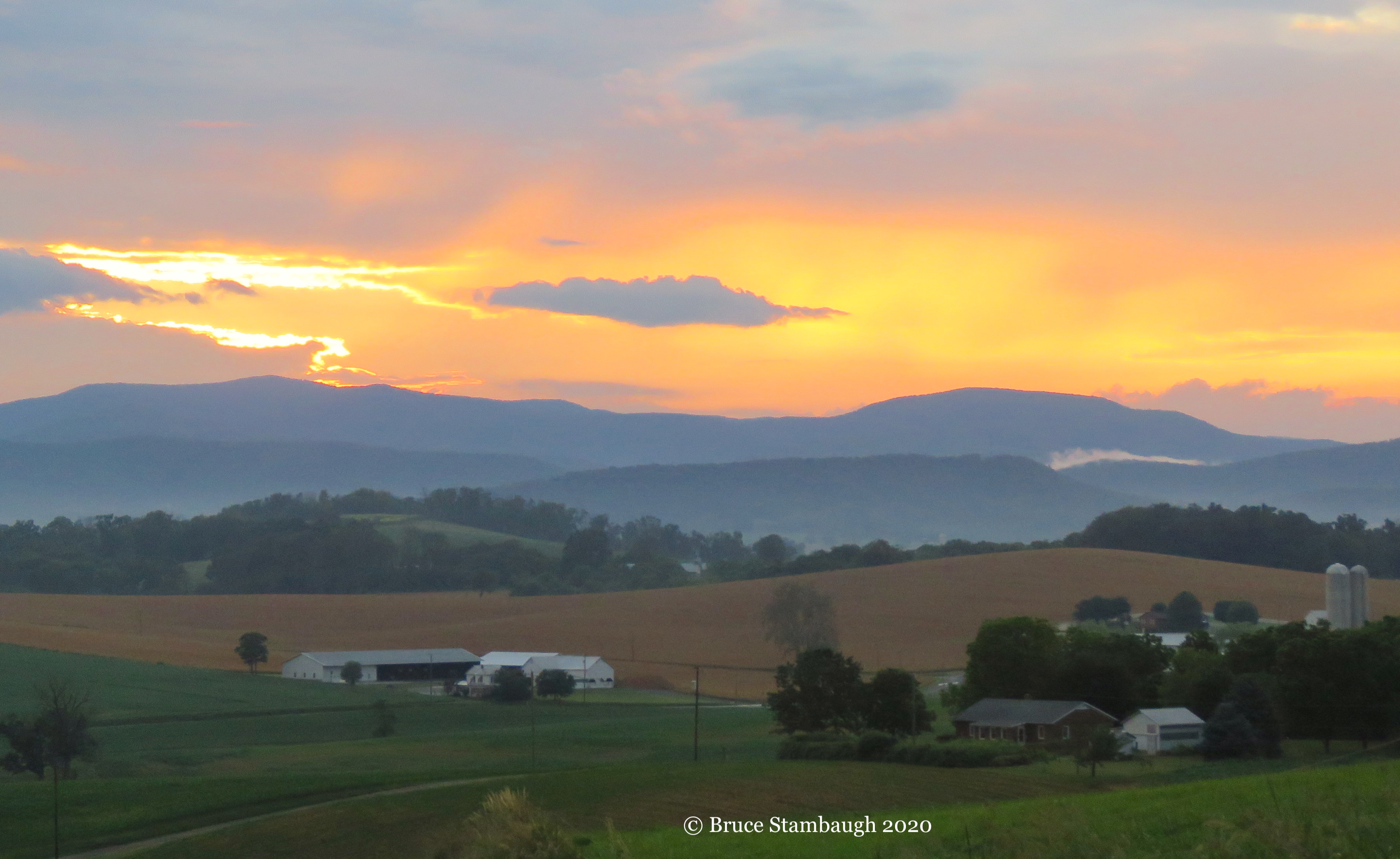
There is nothing particularly spectacular about this photo, although it is pretty. The photo’s details make for a diverse composition: The deflected sunset rays, the fog rising from the hollows of the Allegheny Mountain foothills, and the overall pastoral setting itself. Throw in the fact that this shot was taken on the 2020 summer solstice, and the landscape photo becomes even more meaningful.
So why the title “Hope?” I never expected to be able to take this shot. We had had a string of relatively chilly and cloudy days in the Shenandoah Valley. June 20, the date of this year’s summer solstice, continued that trend. However, after heavy rain moved through, pinks, yellows, and oranges began to appear in the evening sky. I grabbed my camera and headed to my favorite sunset spot, Mole Hill, an extinct volcano core that is a local landmark. It’s higher elevation affords an impressive view of the rolling valley, the foothills, and the mountains themselves.
Though this is not a particularly stunning sunset, it was one that I never thought that I would be able to capture. Consequently, “Hope” is my Photo of the Week.
Colorful sunsets have been far and few between this spring in the Shenandoah Valley. We have had strings of days when we hardly see the sun. It’s been that cloudy, and often chilly.
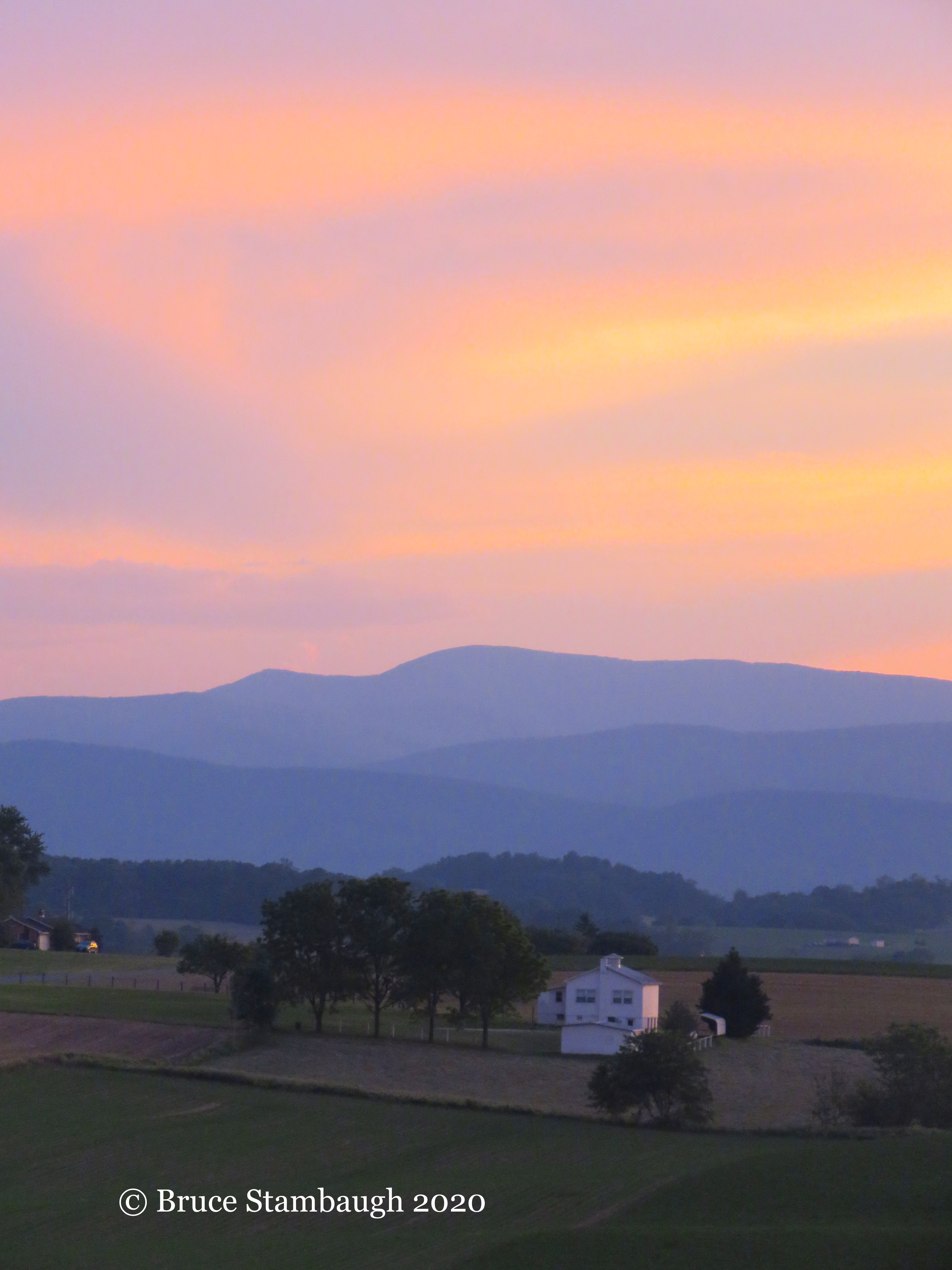
The few times the evening sky did offer hope, I headed out. I wasn’t disappointed on June 6. I felt fortunate to capture this shot long after the sun had hidden behind the Allegheny Mountains that mark the boundary between Virginia and West Virginia.
The texturing and laying of the clouds seemed to mimic that of the folded mountains below. The north face of the private two-room school reflected the heavens above.
“Sunset at Mountain View School” is my Photo of the Week.








 Roadkill Crossing
You must be logged in to post a comment.