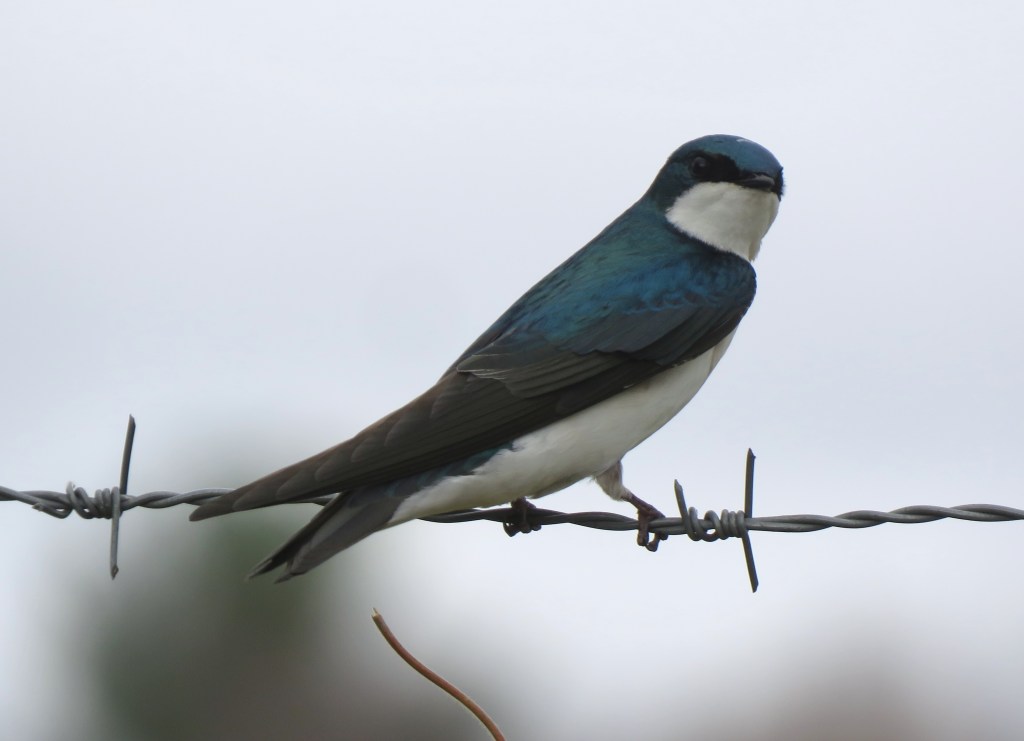
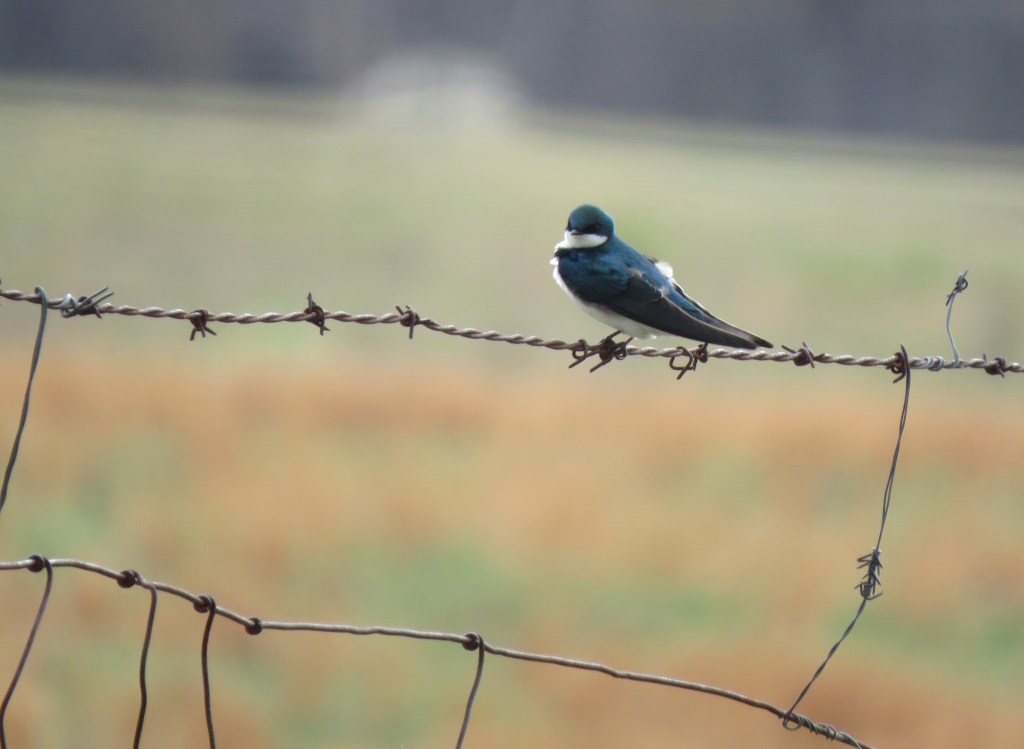
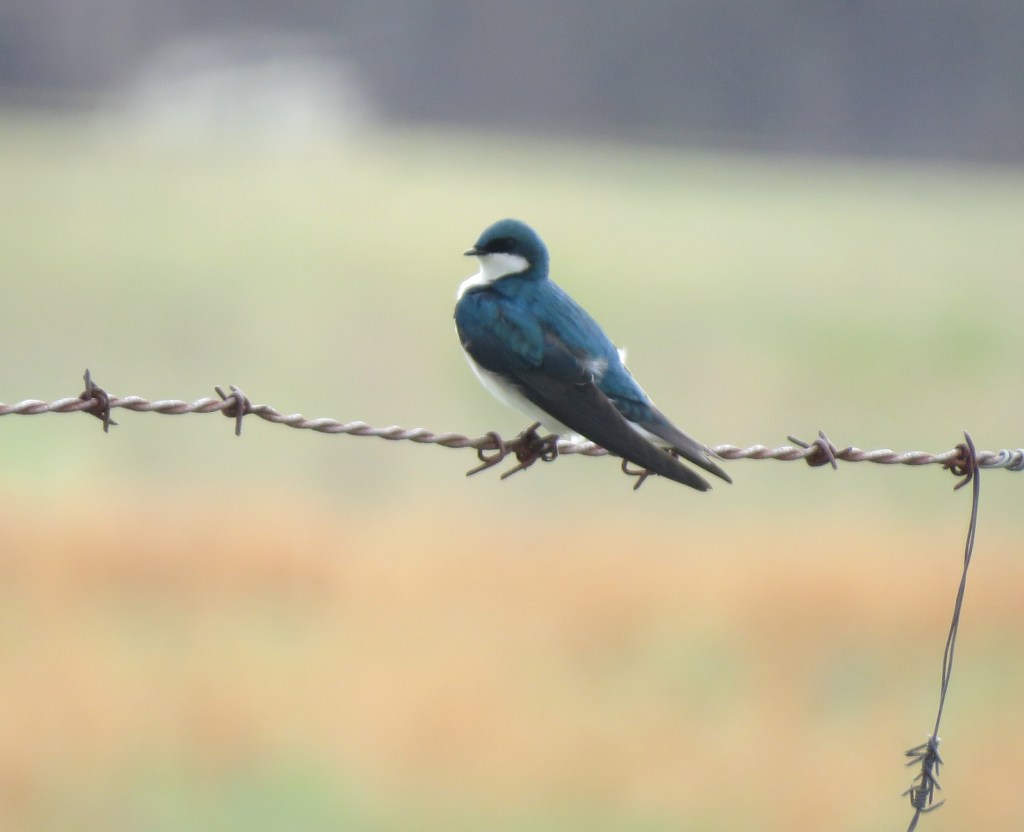
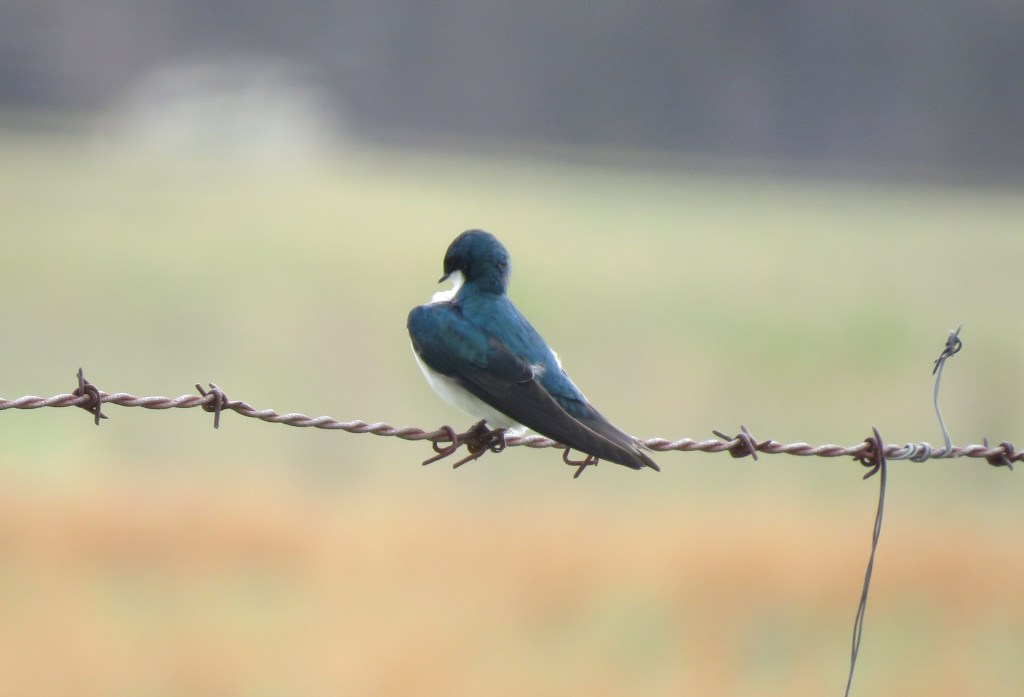
Tree Swallows are back! They are usually the first of the swallow family to return north.
With the spring migration in full swing, it’s a joy to see these beautiful, acrobatic birds once again coursing over fields and ponds in Virginia.
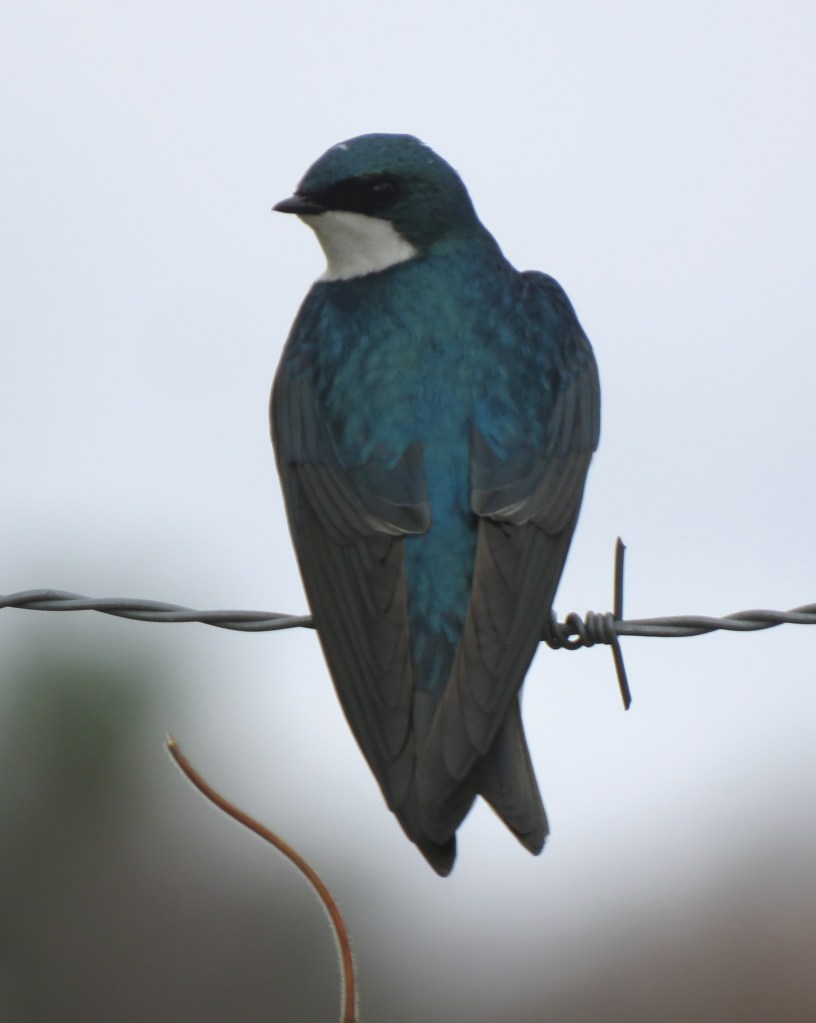
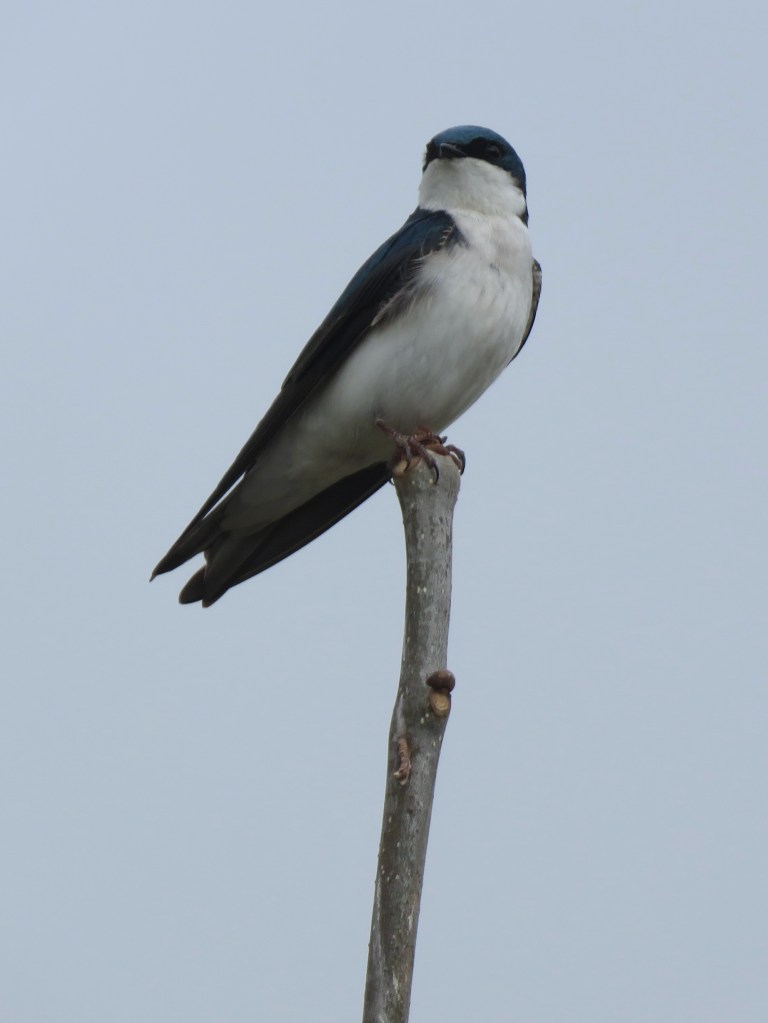
Tree Swallows benefit humankind by devouring thousands of insects as they dive and dart over farm fields and wetlands alike. Not only that, their iridescent deep-blue backs and clean, creamy front and undersides make them gorgeous to look at.
These aerolists twist and turn, chasing flying insects. They nest in tree hollows and nest boxes usually meant for Eastern Bluebirds.
Don’t let their beauty or their sweet, chirping sound deceive you. When nesting, Tree Swallows will divebomb anyone who comes close to a box where they are nesting. I can speak from experience.
While searching a local marsh with bluebird boxes fixed to roadside fence posts, I unintentionally got too close to one. Soon, a pair of Tree Swallows took turns buzzing my head. I quickly realized my mistake and moved away.
Photos by Bruce Stambaugh
Tree Swallows are fiercely competitive, too. I once saw a pair of males battling over a hole in an old snag by a canal. The two birds faced off, screeching noisily as their wings flapped frantically.
Soon, one bird forced the other one down toward the canal’s surface, but didn’t stop there. The bird on top forced the upside-down bird underwater, drowning it in less than a minute.
Tree Swallows perch in small to large groups on telephone wires and fence wires. From that perch, they launch into an attack on unseen prey.
During haymaking times, Tree Swallows join Barn Swallows in swooping high and low in circles around the farmer’s mowing machine. They feast on the fleeing insects as the farmer cuts the alfalfa or mows a pasture field.
Come June, Tree Swallows will have taken up nesting from the midsouthern states to near the Arctic tundras. They winter along the southern and western coastlines in the United States and throughout Central America.
So, take heart. If the flashy Tree Swallows haven’t reached your area yet, be patient. Migration continues through early June.
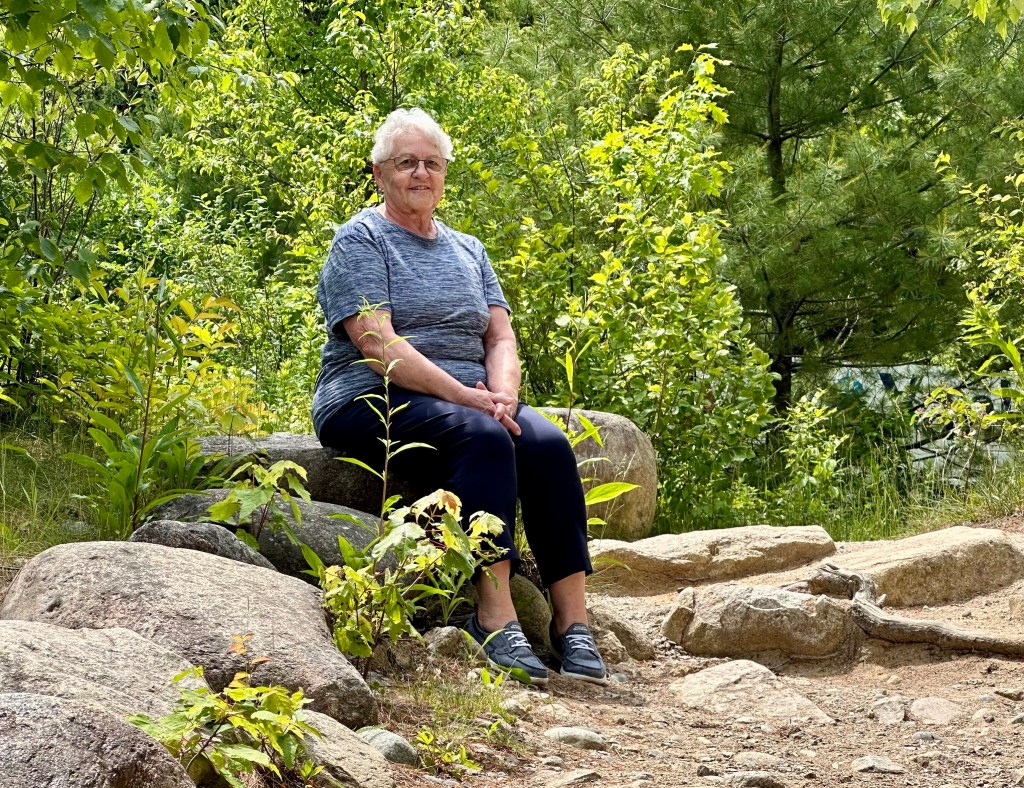
Tomorrow is our 55th wedding anniversary. I am most grateful to my lovely and loving wife, our son and daughter, and their spouses, to our extended families, and to our many friends we have made over all those years.
Neva and I wouldn’t be where we are today without their wonderful advice, support, and love. Happy 55th, Neva!
Neva, along the Kancamagus Highway in New Hampshire. Photo by Bruce Stambaugh
My wife and I enjoy visiting her cousin and spouse in the Piedmont of North Carolina. They return the favor by visiting us in Virginia’s Shenandoah Valley.
We all enjoy many of the same types of retirement excursions, including the local history of areas we visit. We like antiques and thrift stores. And we all enjoy watching birds.
We ventured out to a state park a few miles from their home. While looking for early songbird migrants, we walked a short loop through a woods with moslty second growth trees.
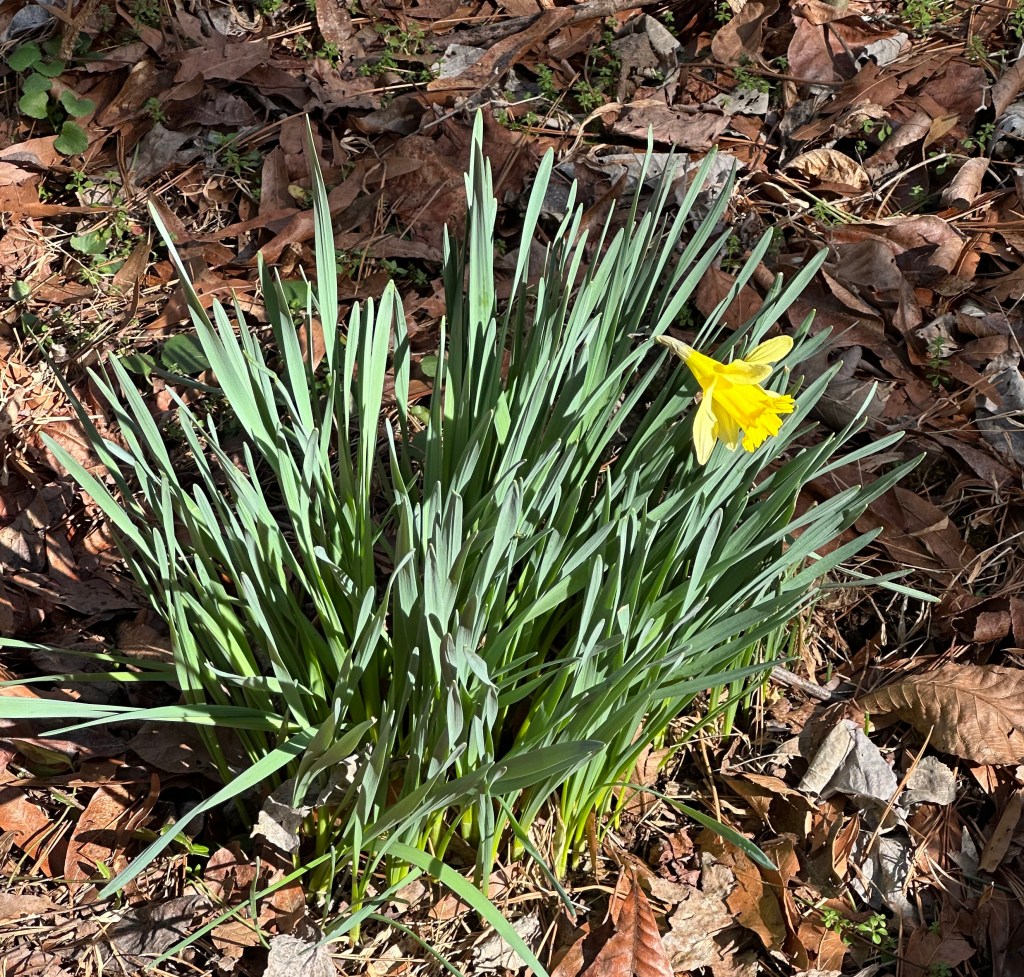
Sprinkled in among the woods were remnants of former residences and farm buildings. Near them, this clump of daffodils had sprouted up, a spontaneous memorial to the people who planted them.
After all the snow we had, it was a pleasure to find a single blossom in full bloom.
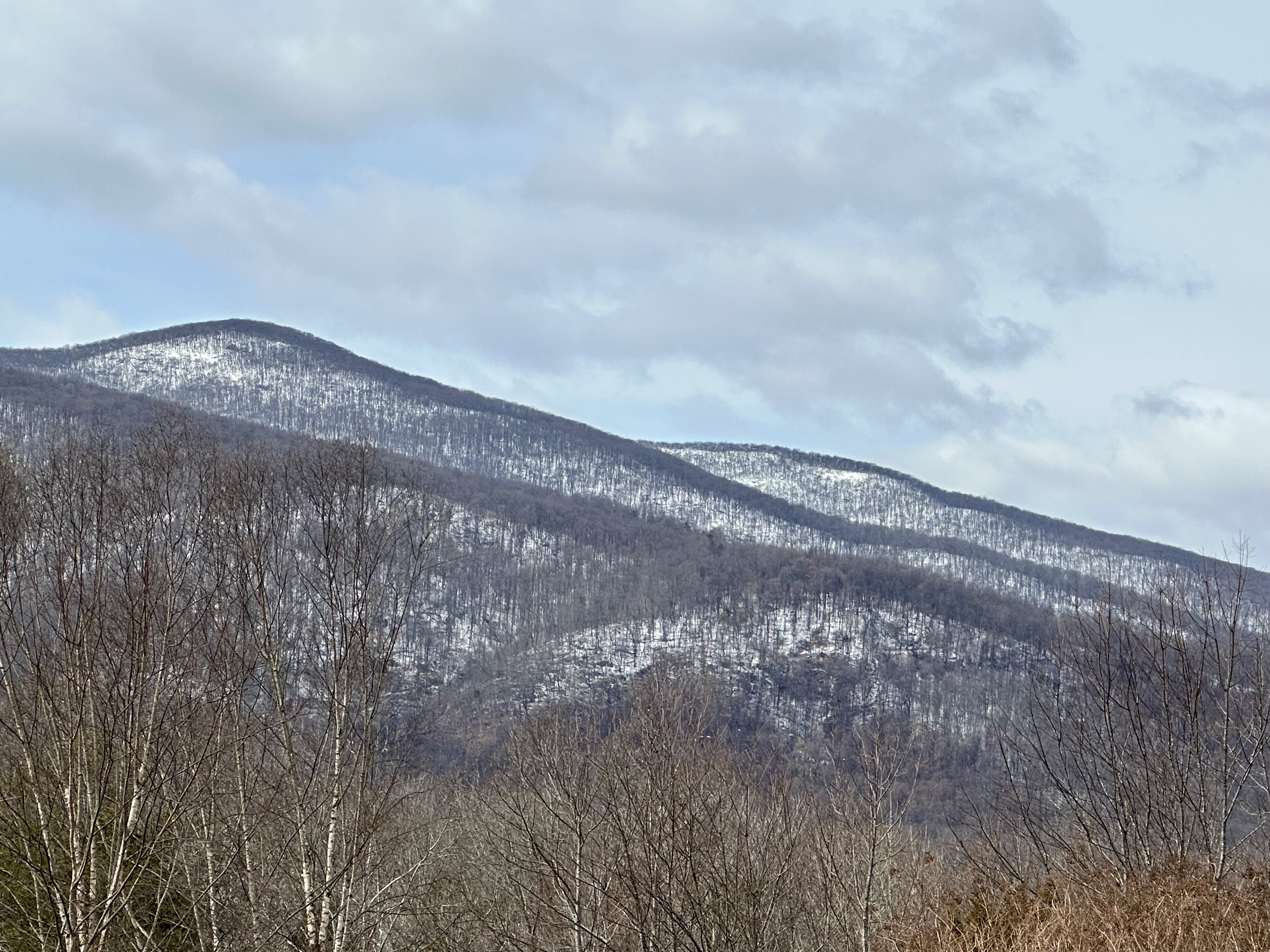
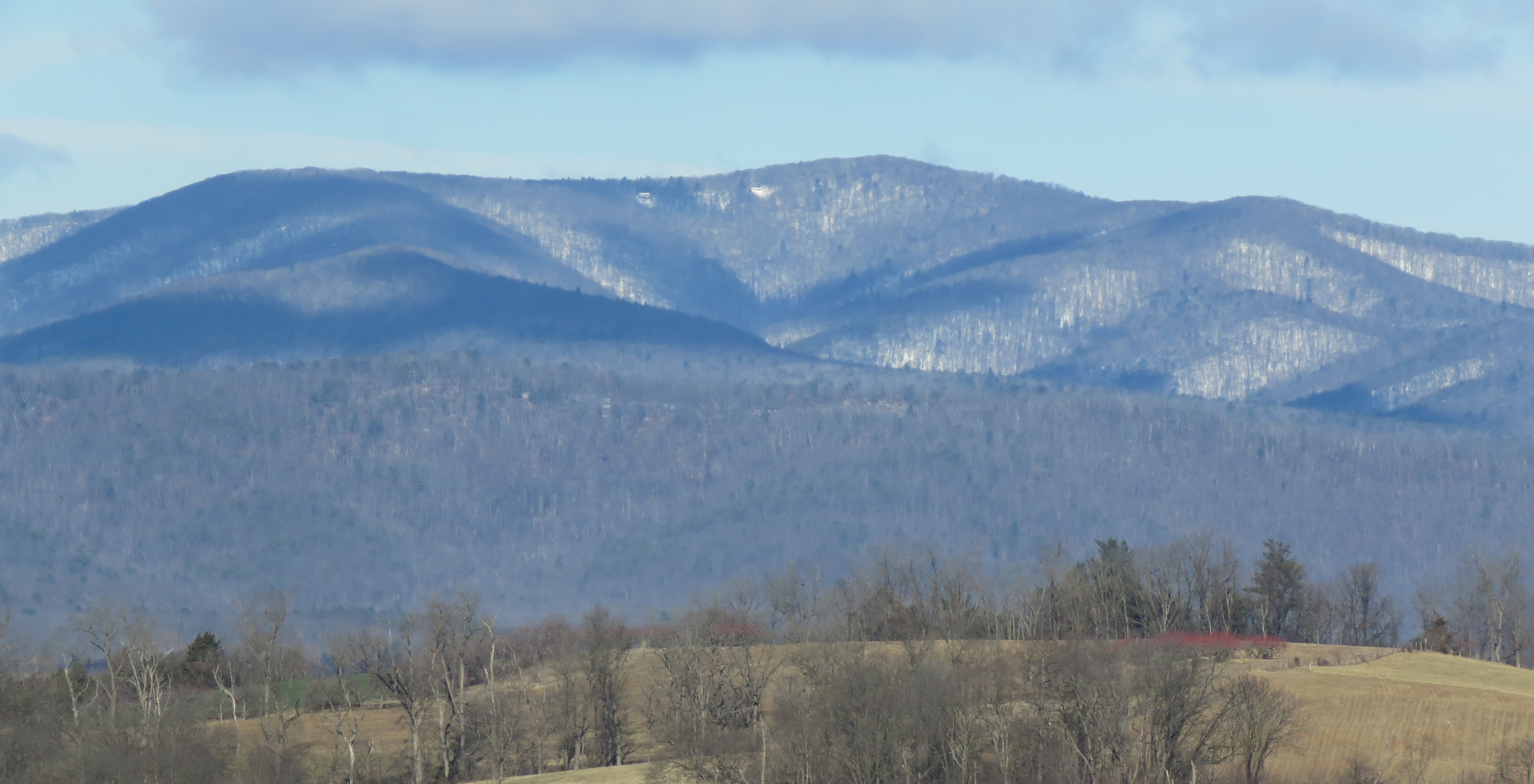
Shenandoah Mountain as seen from the rolling valley. Photo by Bruce Stambaugh
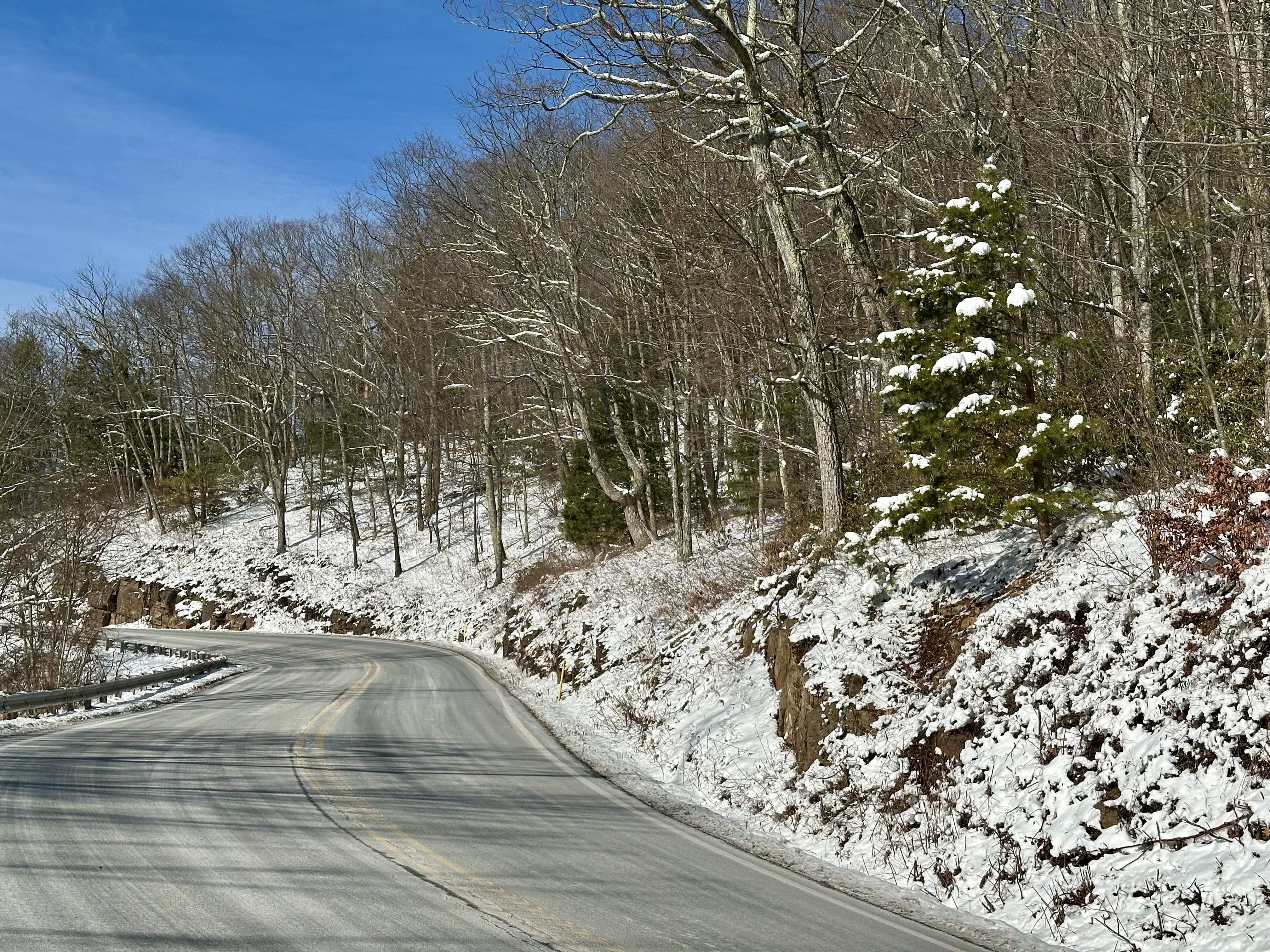
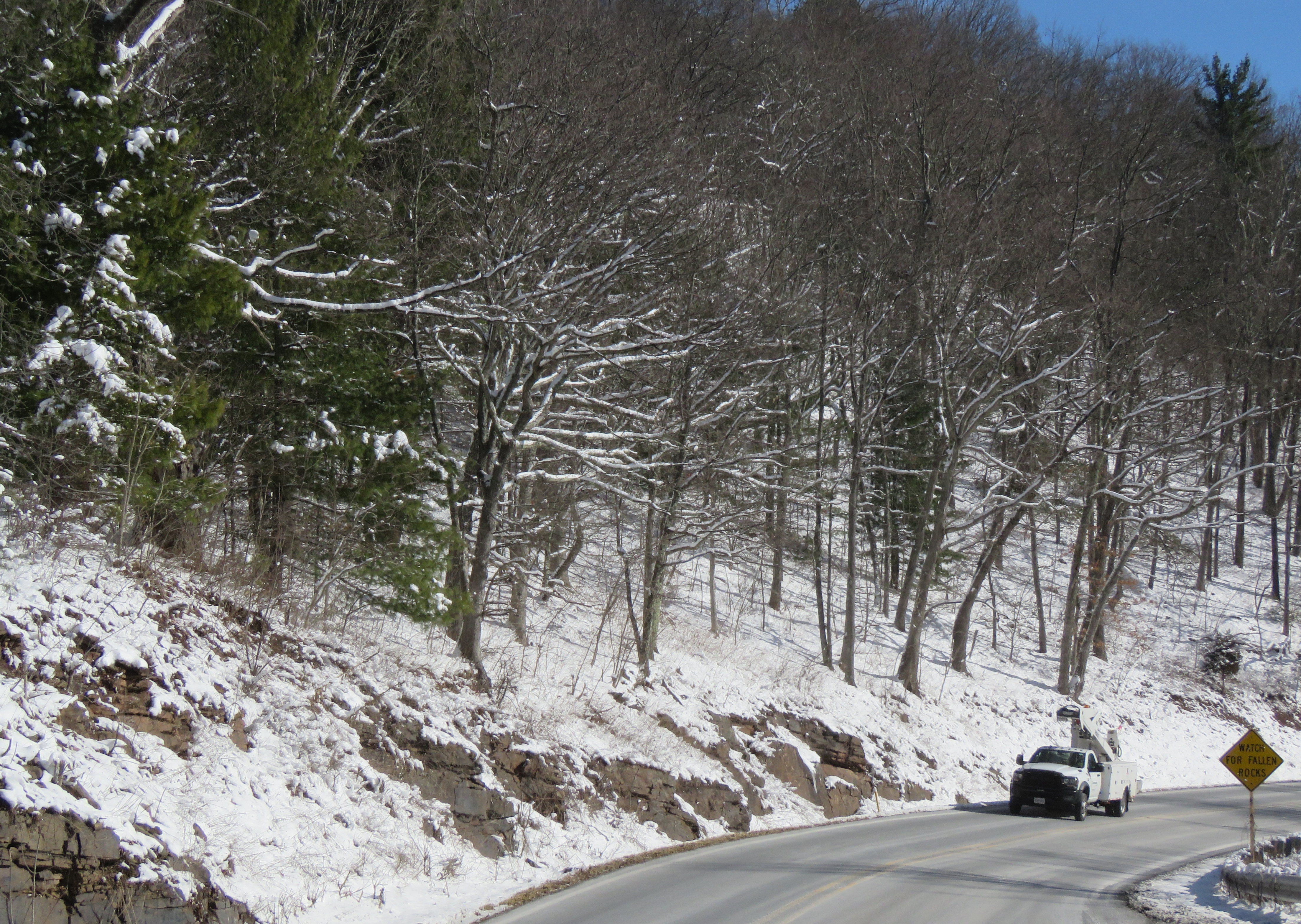
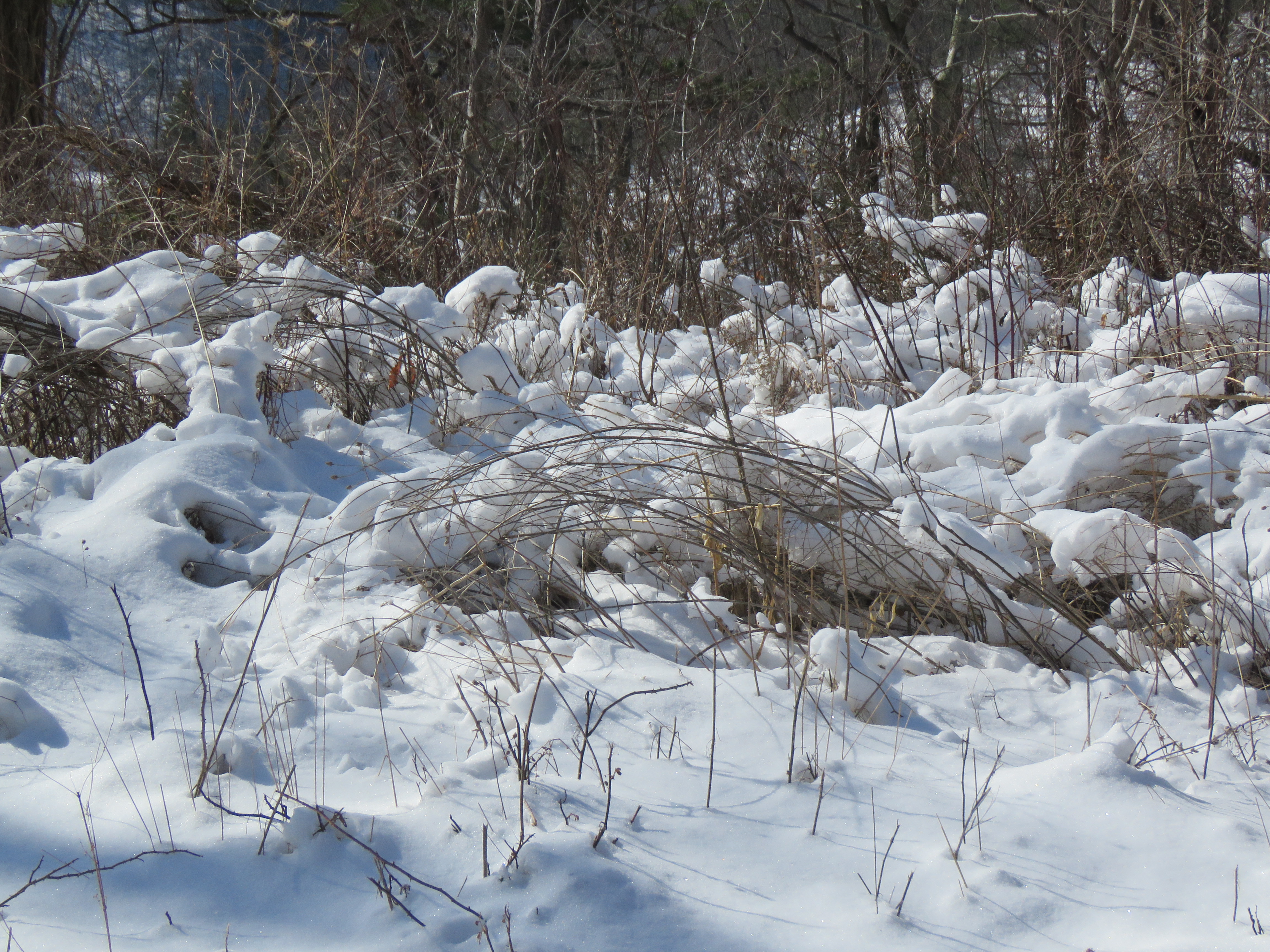
On Shenandoah Mountain, a miles’ long ridge that marks the boundary between Virginia and West Virginia, the snow glistened in the bright sunshine of a recent morning.
Far below, a majority of the snow cover in Rockingham County in Virginia’s Shenandoah Valley had melted into the moisture-starved landscape. A few days later, it snowed again.
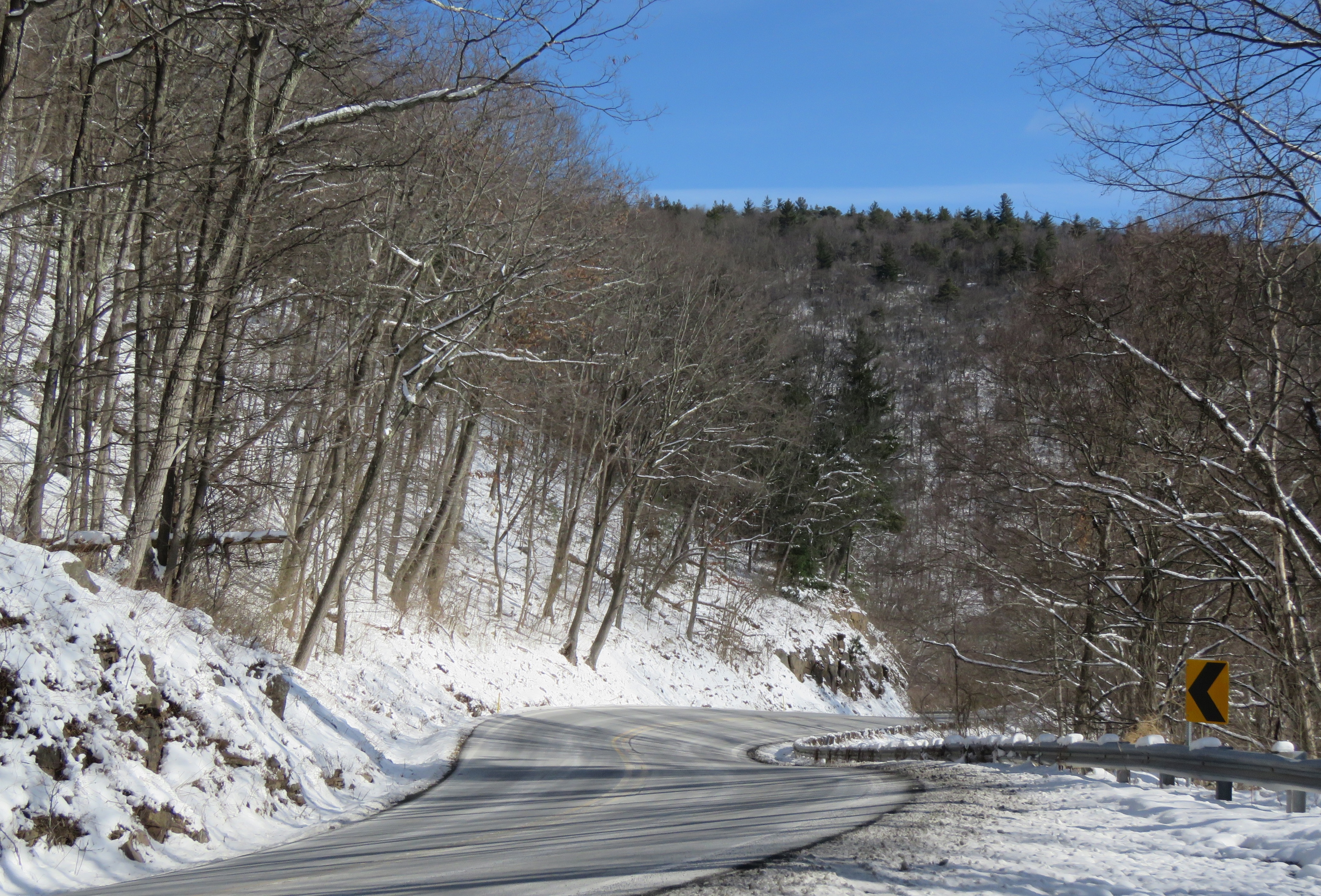
In the eight and a half years my wife and I have lived here, the serene winter scenery has drawn my admiration. Too often, though, snow still clung to the winding, switchback road to Shenandoah’s summit. So, I admired from a distance.
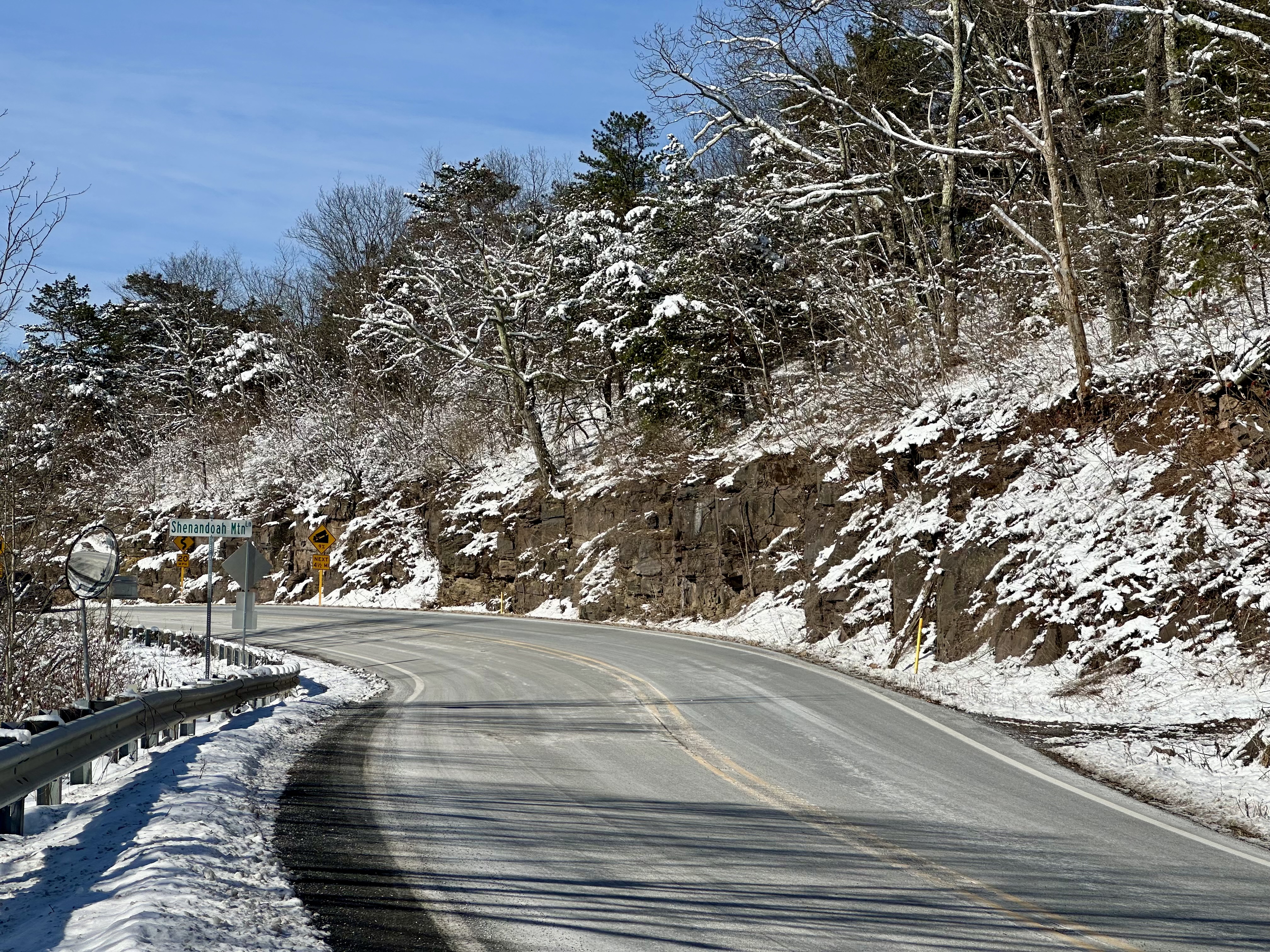
However, I took advantage of the glorious day and ventured out, hoping that days after the heavy snow fell, US 33 would be bone dry all the way to the West Virginia line. That’s just the way I found it.
Please click on the photos to enlarge them.
Shenandoah Mountain is a much-revered landmark to locals on either side of the famed mountain. The mountain is actually an entire range that runs southwest to northeast for 73 miles. The undulating ridge ranges from 3,500 to 4,397 feet in altitude at Elliott Knob.
Not to be confused with Shenandoah National Park at the eastern end of Rockingham County, Shenandoah Mountain serves as the eastern front of the Appalachian Mountains. It is a substantial part of the George Washington National Forest in both Virginia and West Virginia. Its extensive biodiversity includes alpine vegetation, flowers, and wildlife, which attract hikers and birders from afar.
In the wintertime, I marvel at the contrast between the snow and the charcoal-colored stands of forest, dotted occasionally by the dark green of tall, twisted pines. The storied mountain draws me like a magnet.
As I drove up the curvy highway, the snow depth increased as I climbed higher and higher. I noted safe places to pull off for photos on the way back down. Though the sun shone brightly, the wind blew steadily. It was 29 degrees when I started the climb, and 19 at the peak. I was surprised that the wind rustling through the bare trees made the only sound I heard.
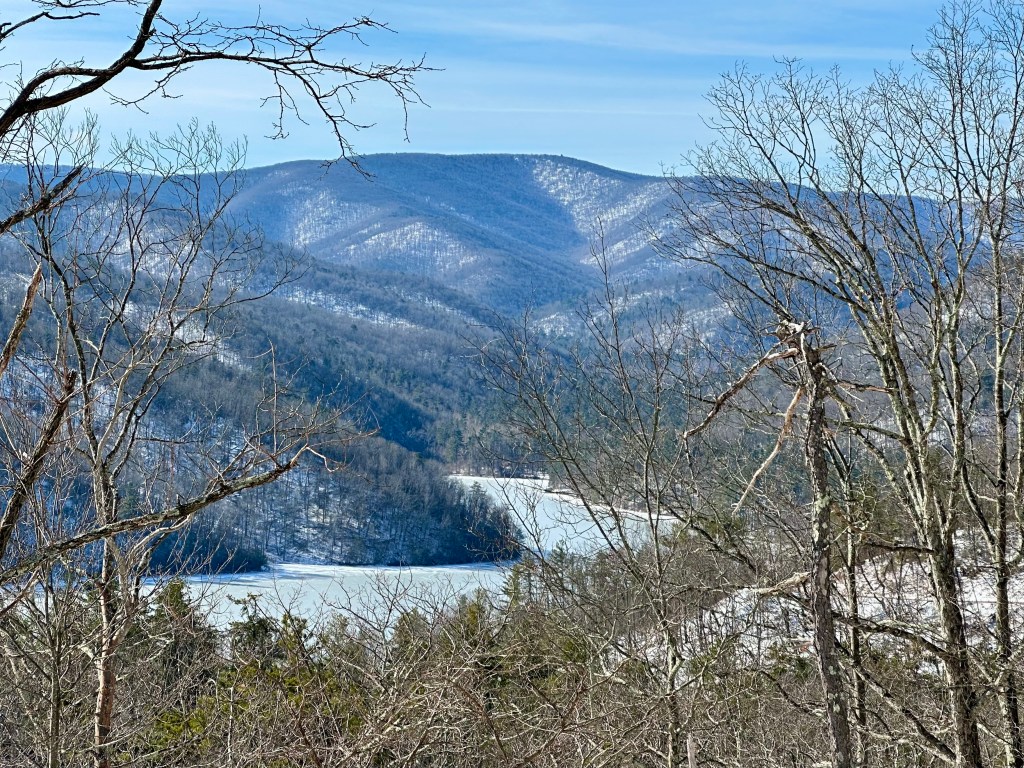
Switzer Lake viewed from US 33. Photo by Bruce Stambaugh
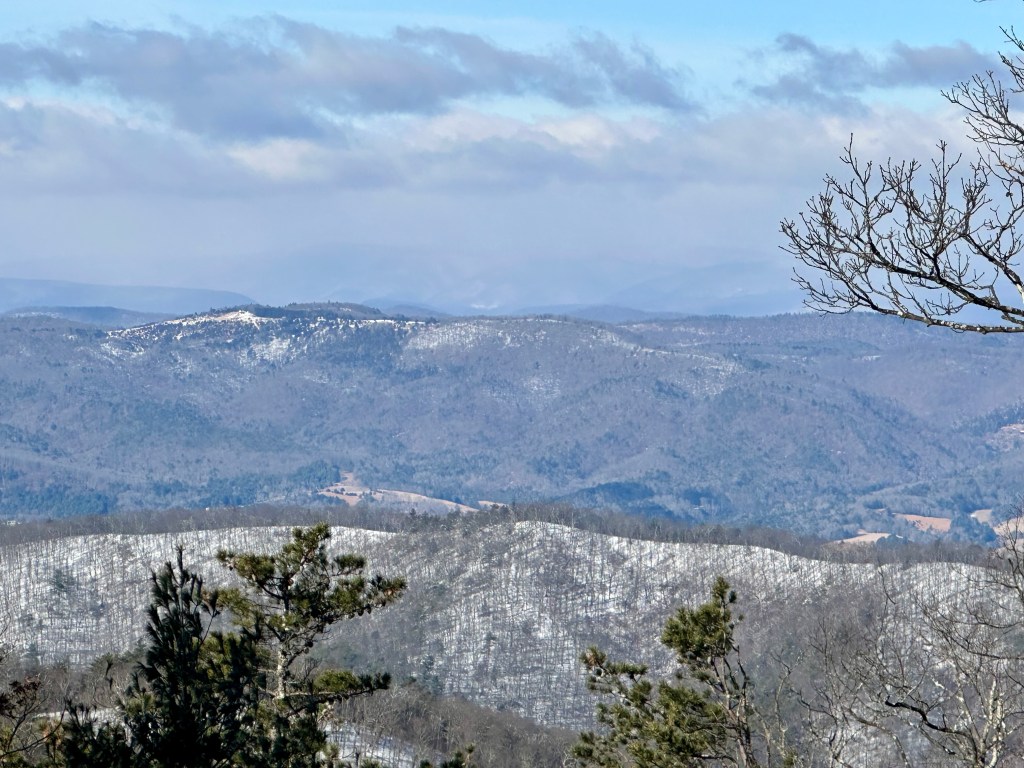
I expected more snow as I looked at the multiple mountain ranges of the Appalachians in the Mountain State’s interior. But apparently, this latest storm dumped an upslope snow, meaning most of the snow fell on the western slopes of the mountains as the winds blew eastward.
On the way back down to the valley, I stopped a few times where the state had made short breaks in the guardrails. At those spots, I pulled my vehicle completely off the road to capture a few photos. One man even slowed, lowered his window, and asked if I needed help. I thanked him and assured him I was fine.
Surrounded by all this beauty and quietude, how could I be otherwise?
The Appalachian Mountains in West Virginia, viewed from Shenandoah Mountain. Photo by Bruce Stambaugh
Only a skiff of snow dusted the central Shenandoah Valley in Virginia, while the coastal cities and communities got hammered with blizzard-blown feet of snow.
The mountains surrounding the valley, however, received their fair share of snow. The snow highlighted the forest-covered slopes.
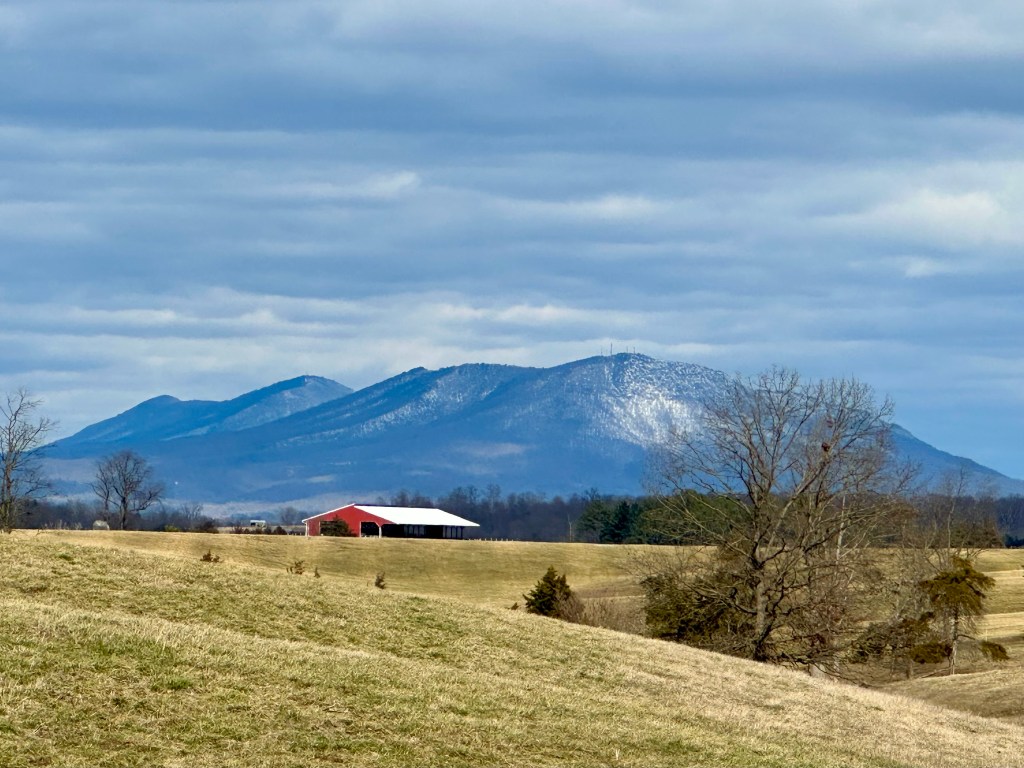
The Massanutten Range, which splits the valley from Front Royal at the north to Harrisonburg at the south terminus, especially stood out with its fresh snowpack.
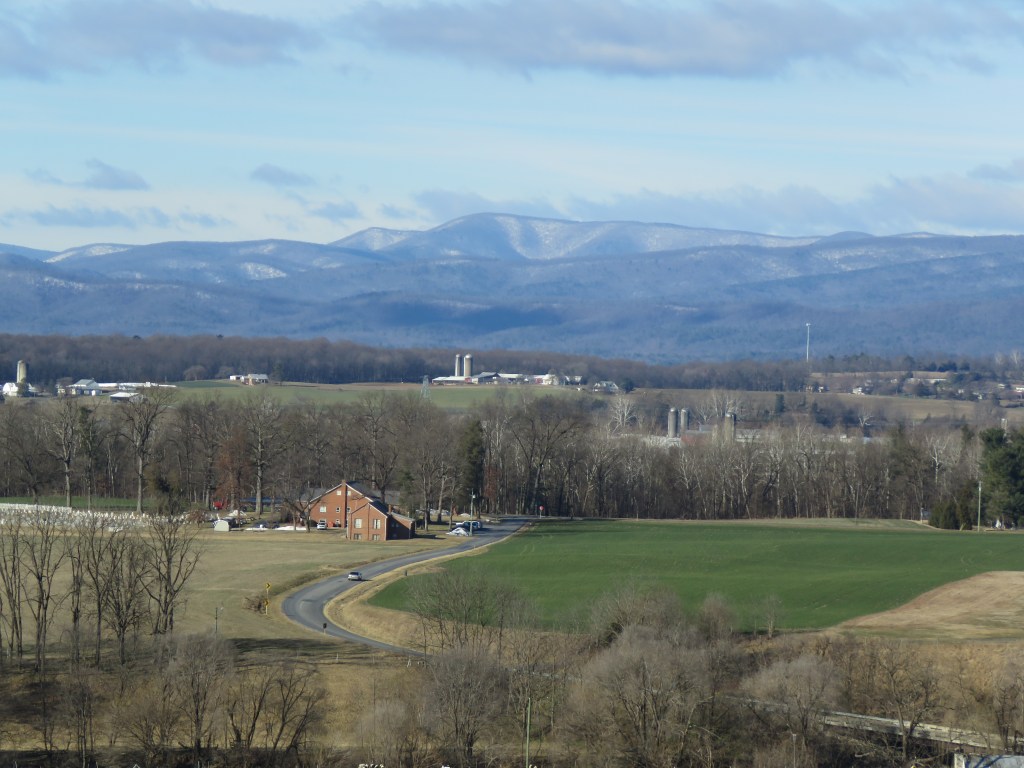
By the next afternoon, the dusting of snow in the valley had melted. Massanutten Mountain, however, showed its snow. The difference between the valley and the forest-studded mountain was not only obvious but also stunning.
This photo was taken near Weyers Cave, Virginia, looking north to Massanutten.
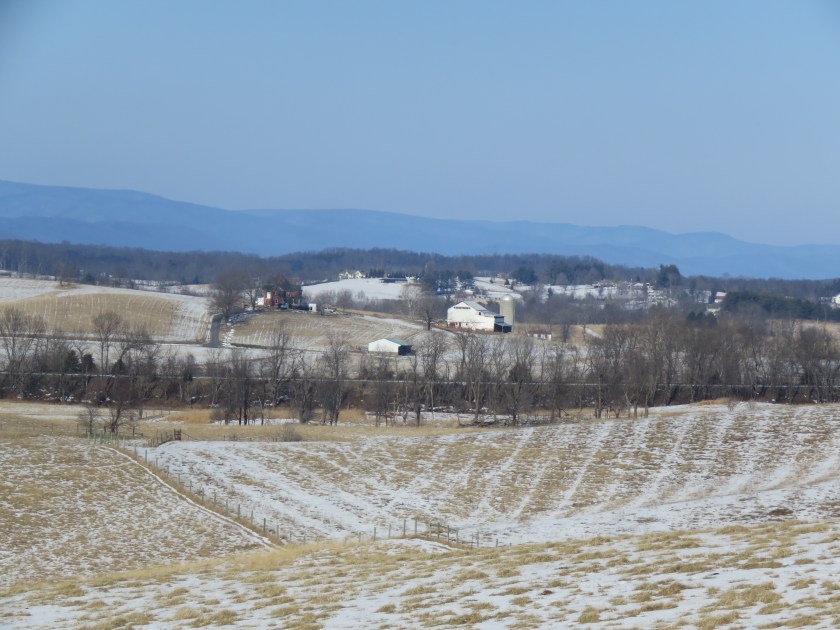
The daytime temperatures in Virginia’s Shenandoah Valley have been above freezing for the last few days. Consequently, the melting of several inches of snow that fell three weeks ago has begun.
I ventured out in the late morning recently to do some birding. However, I ended up taking more landscape photos because the birds weren’t as active as I’d expected.
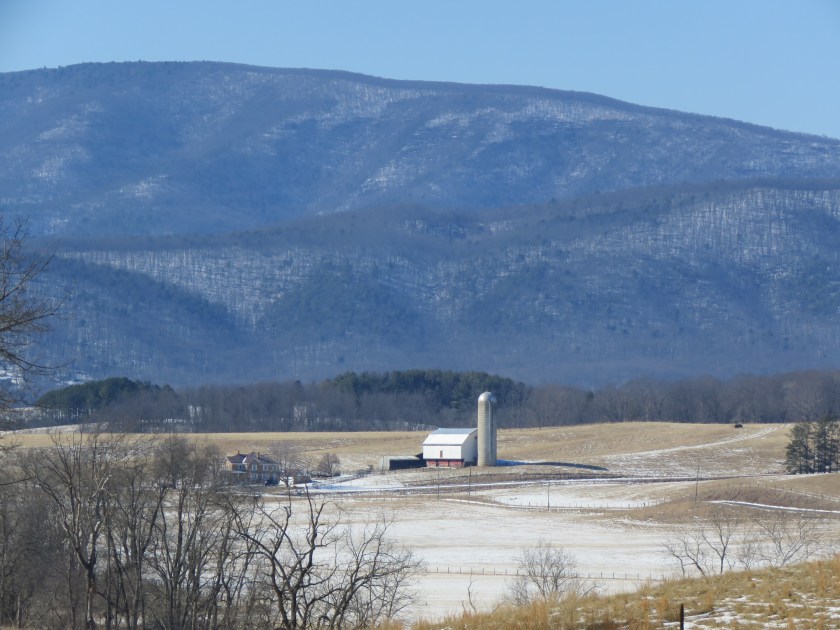
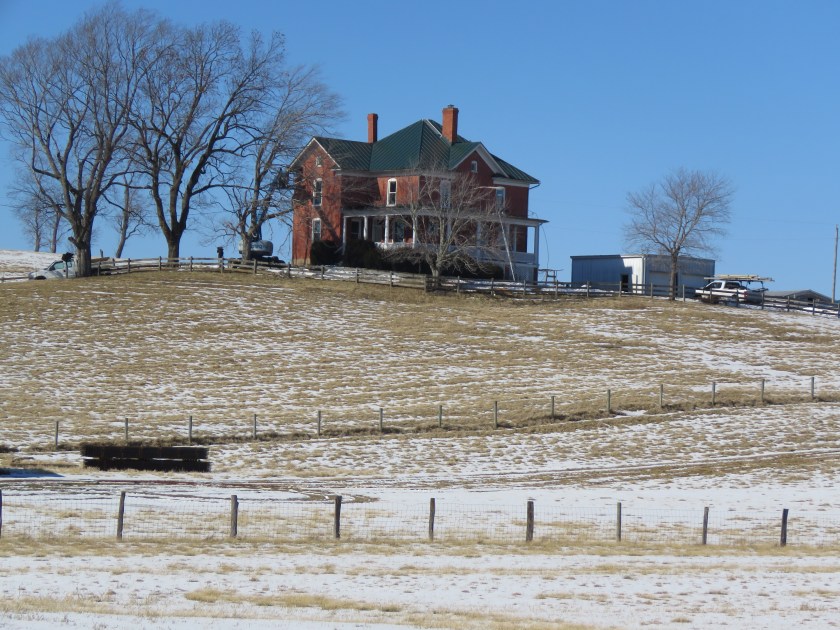
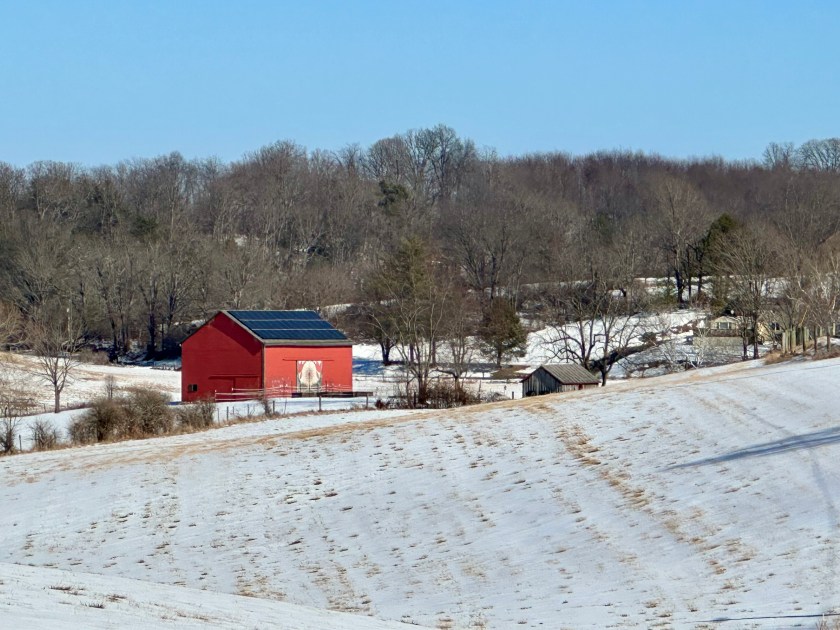
I found the topography southwest of Staunton especially captivating, with its rolling landscape, country estates along winding, narrow roads, and the snow-covered North Mountain range as a backdrop to the west. Beauty surrounded me in every direction.
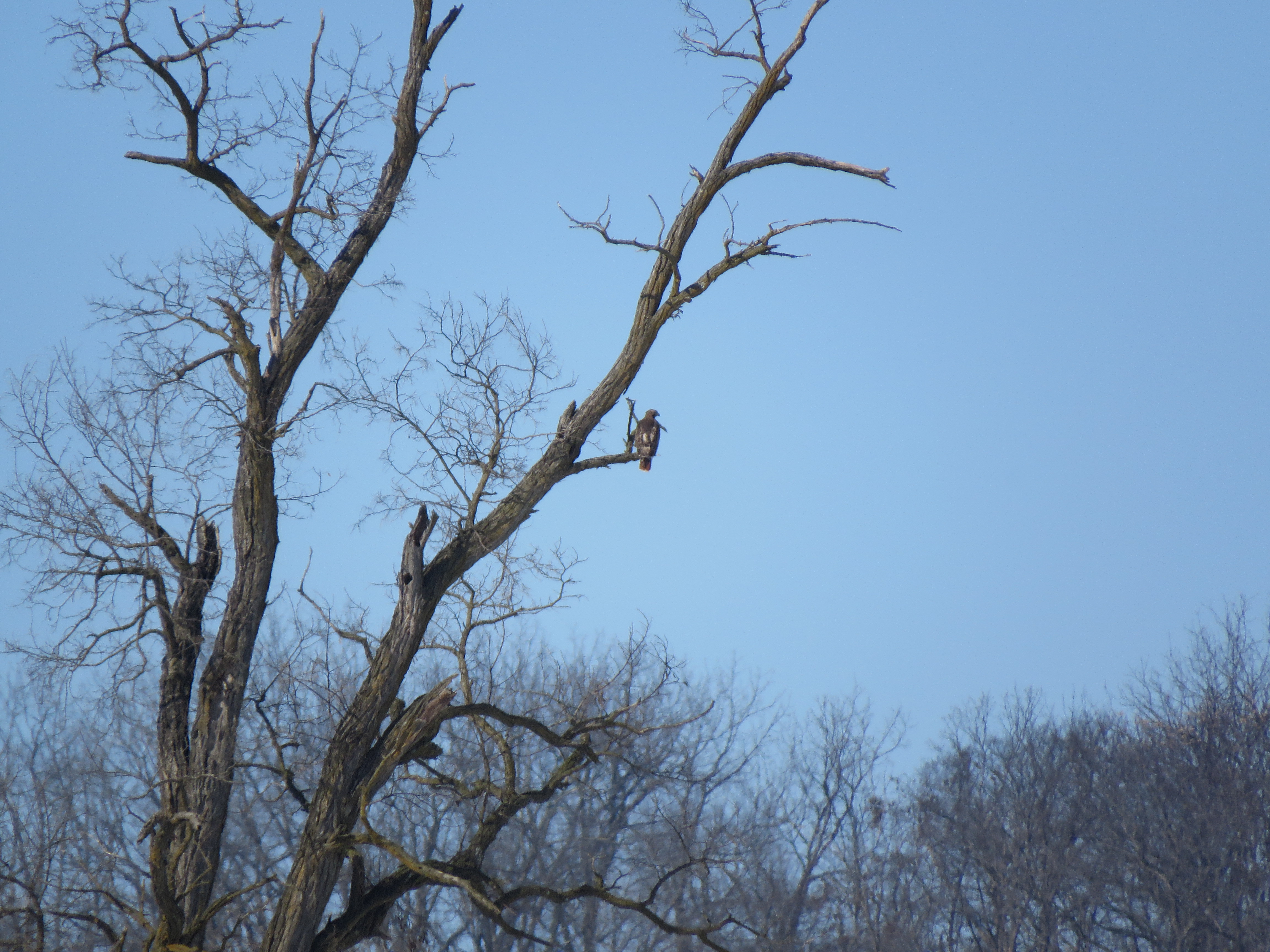
In one location, a Red-tailed Hawk perched on a limb, posture focused downward in hopes of spotting an unsuspecting rabbit, squirrel, or field mouse. In another, a light-phase Red-tailed Hawk soared in the afternoon sunshine, sailing on thermals rising from the warming farm fields below.
White-throated Sparrows and Song Sparrows fed along the exposed roadside grasses and road grit, but scurried for fencerow brambles as my SUV rolled by at pedestrian speed. In the rural areas, traffic was scarce, allowing me to take my time and enjoy the scenery all around me. I stopped several times in the space of a quarter mile to inhale the fresh air, absorb the warm sunshine, and scout for any birds.
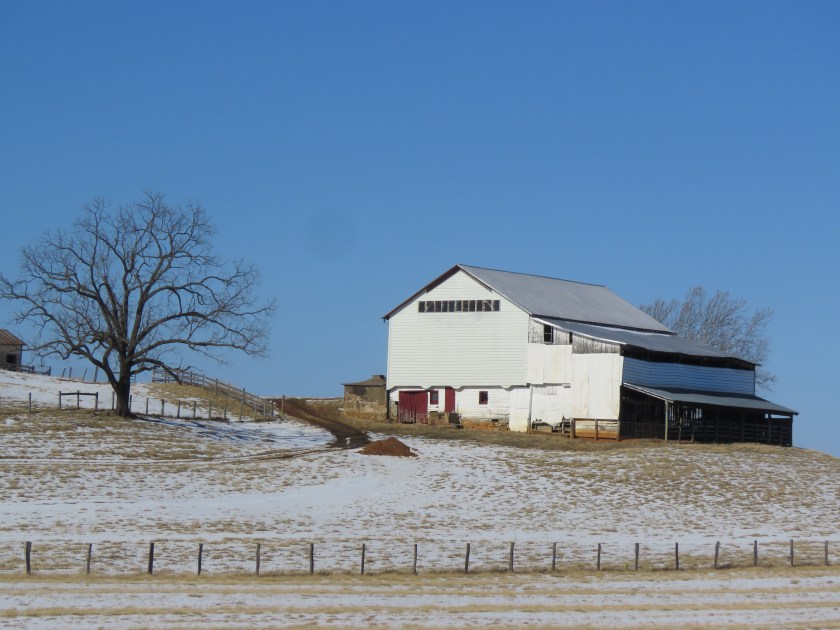
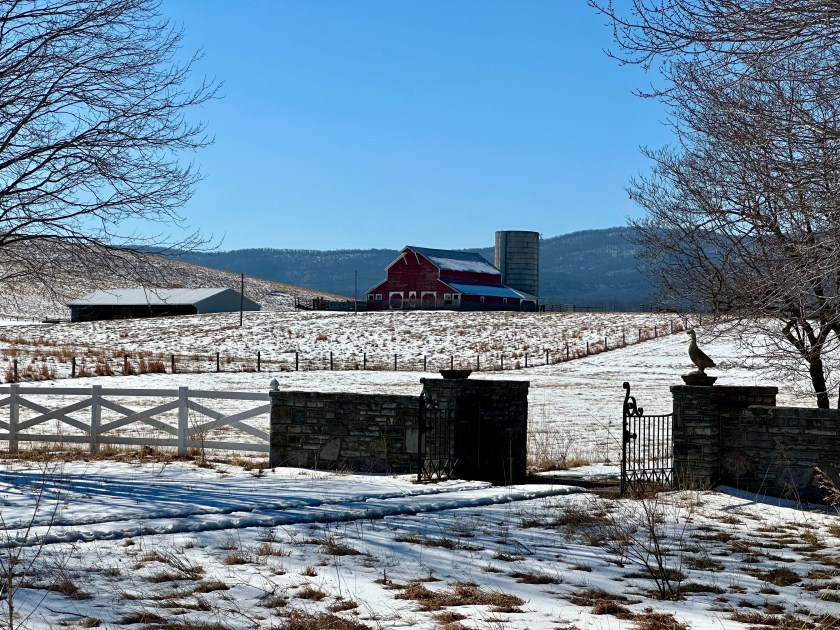
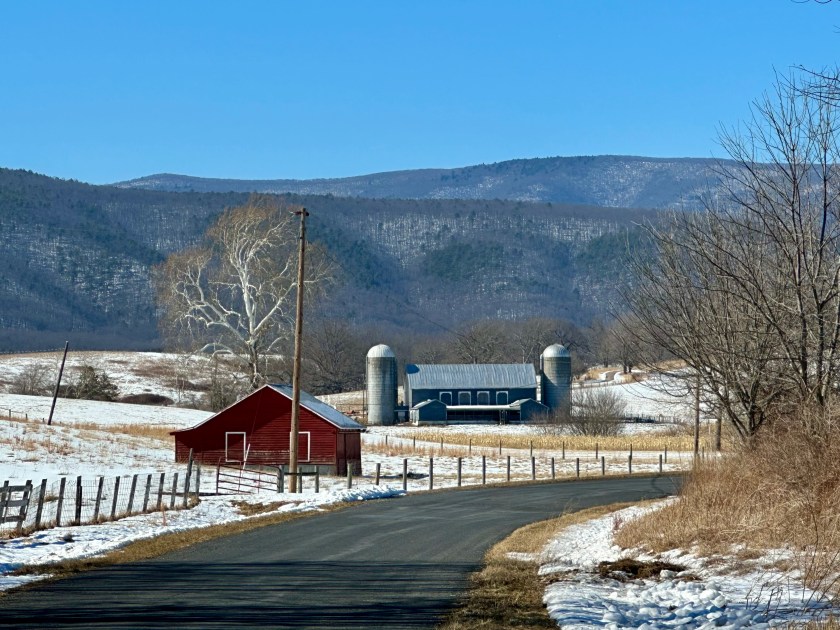
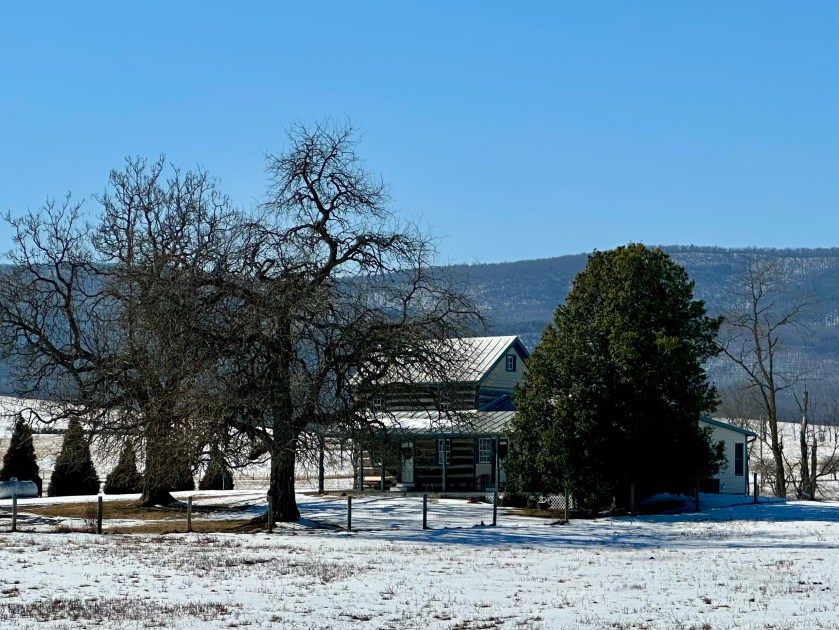
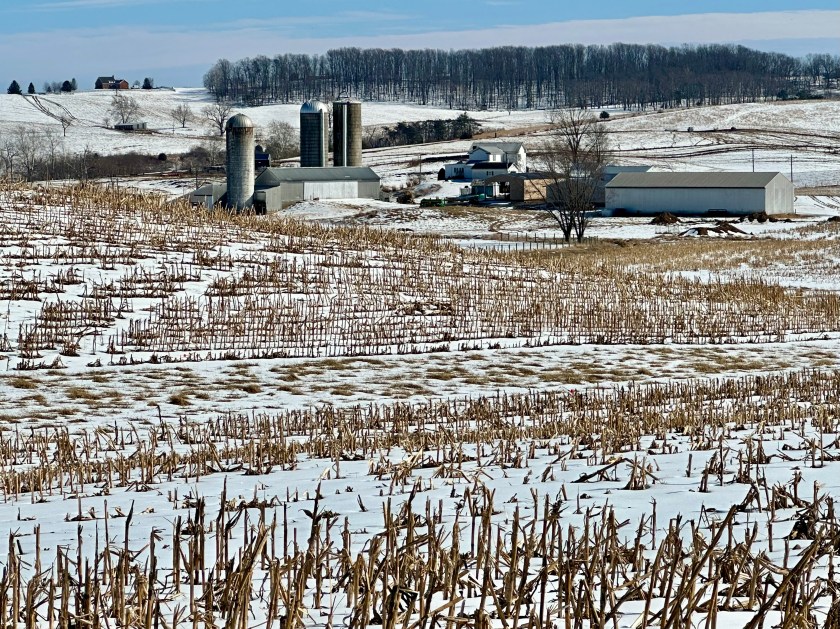
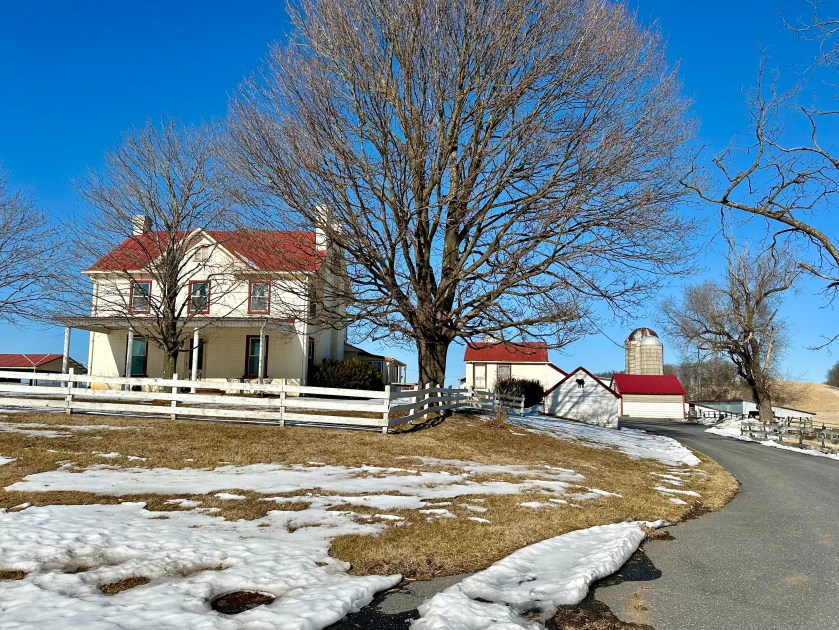
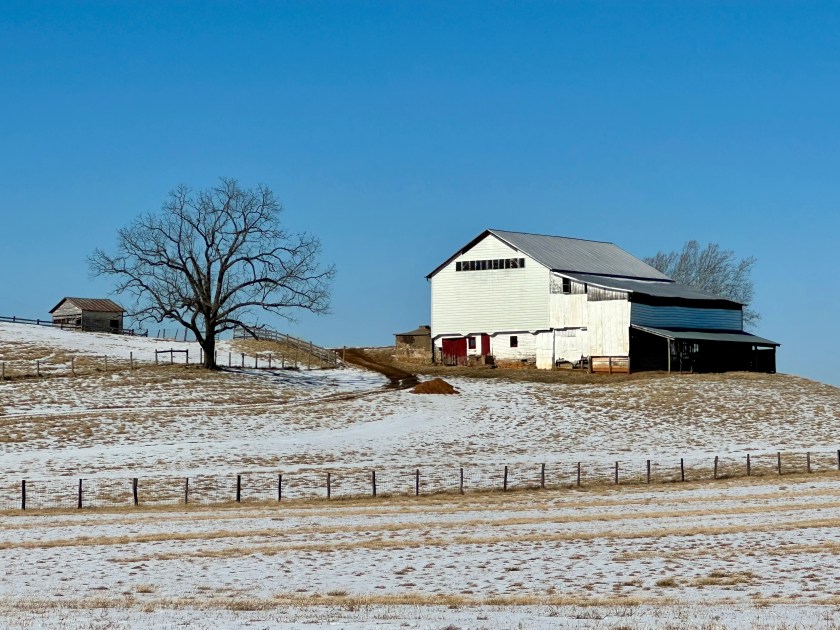
I marveled at the patterns in the diminishing snow. Polka dots of grasses surrounded by inches of snowy white speckled south-facing hillsides. Tractor tracks among corn stubble created abstract paintings. Farmsteads stood silent, as if in awe of the February thaw, painting their own Currier and Ives.
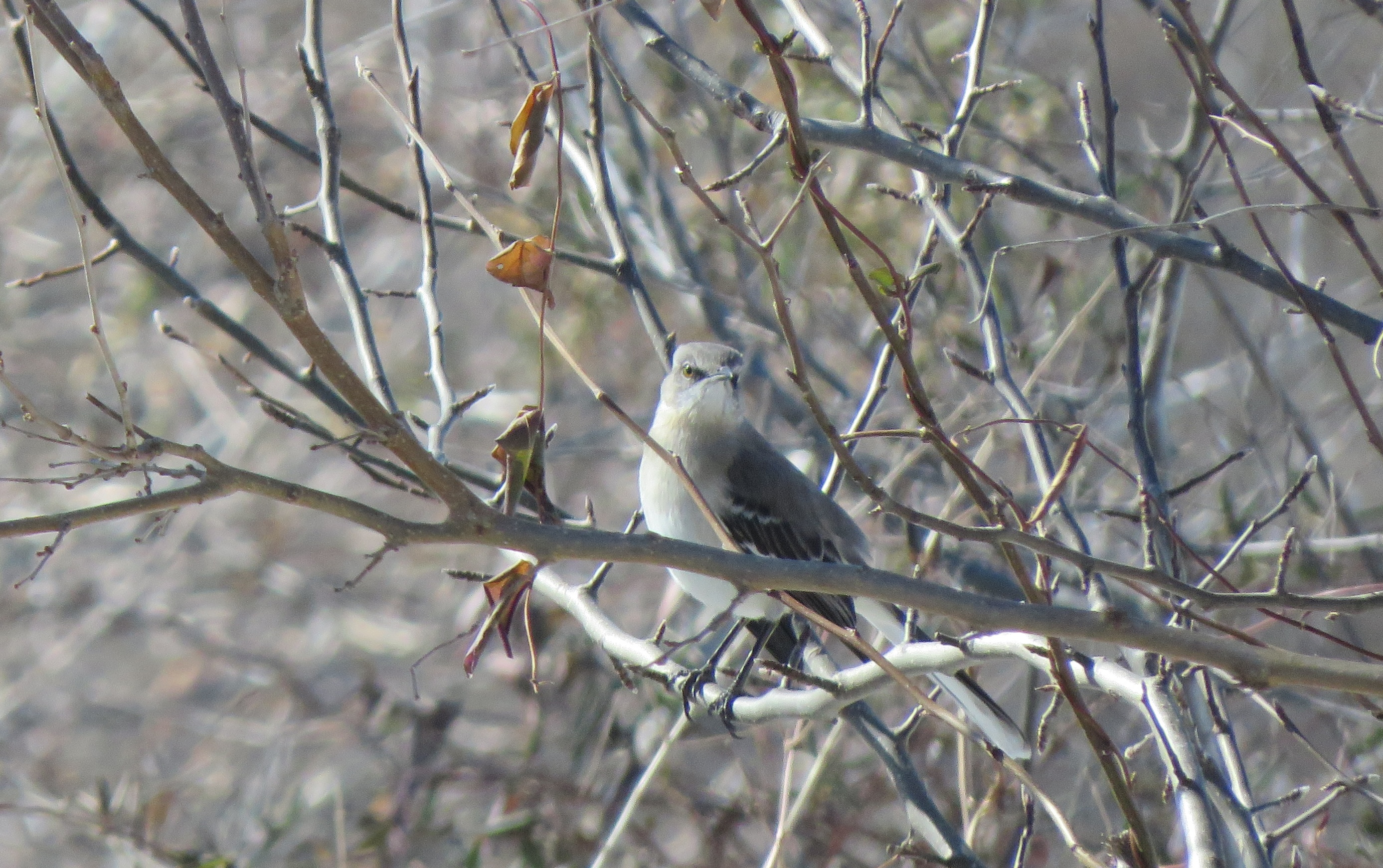
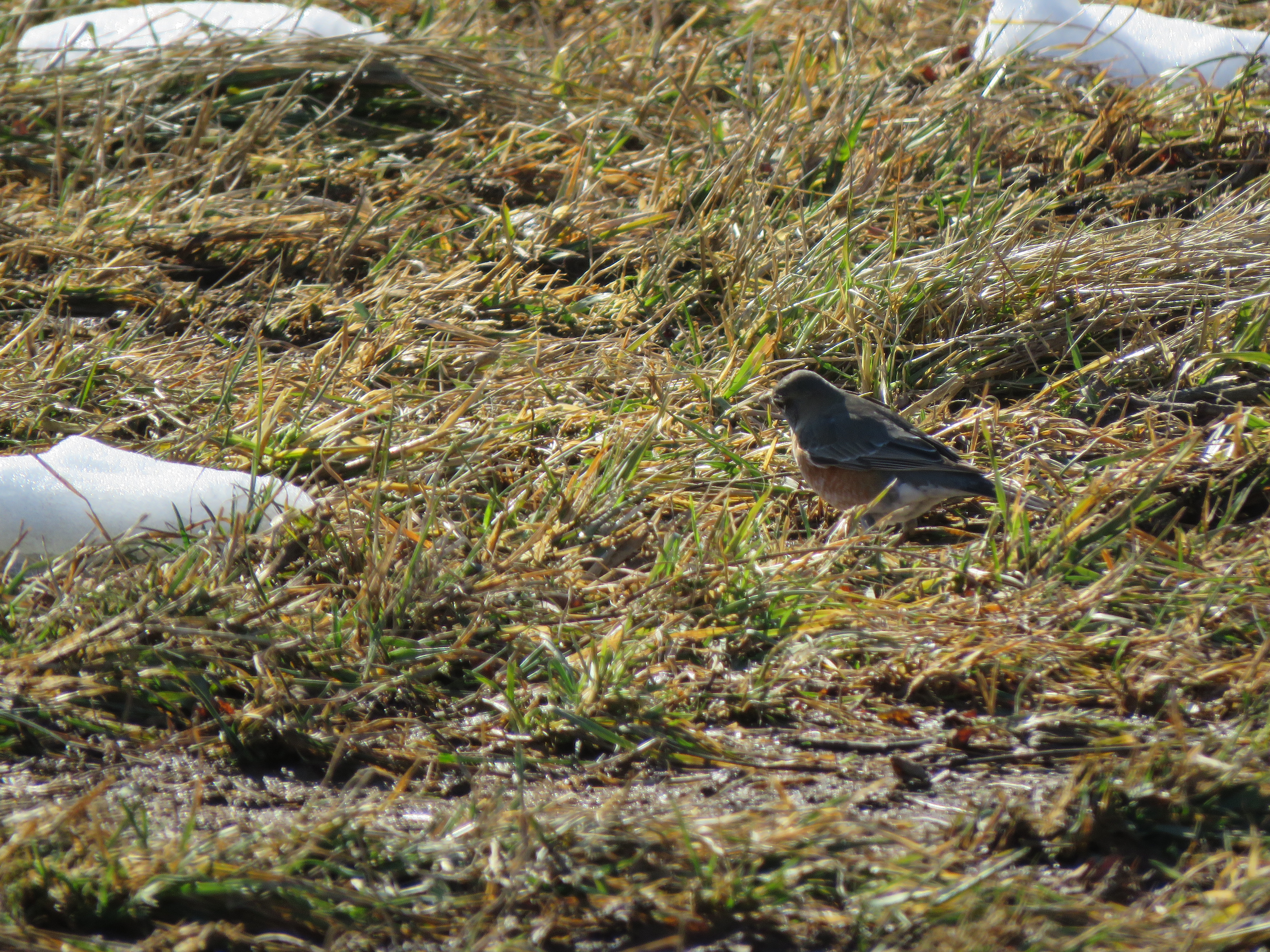
A Northern Mockingbird played hide and seek with me, playing hard to get. Darting in and out of roadside thickets, I managed a few photos of the tricky bird. American Robins launched from treelines to forage in the high grasses of pastures still dotted with snow.
Canada Geese gleaned for food in a wide-open pasture as the ice on a bordering creek gave way to the welcome warmth. I spooked a pair of Mallards enjoying pockets of open water when I stepped out of my vehicle. The geese ignored their quacking.
On the way home, I stopped at a city park along the North River where Long-tailed ducks had been reported. Instead, I found a few humans less interested in patterns in snow or waterfowl than me.
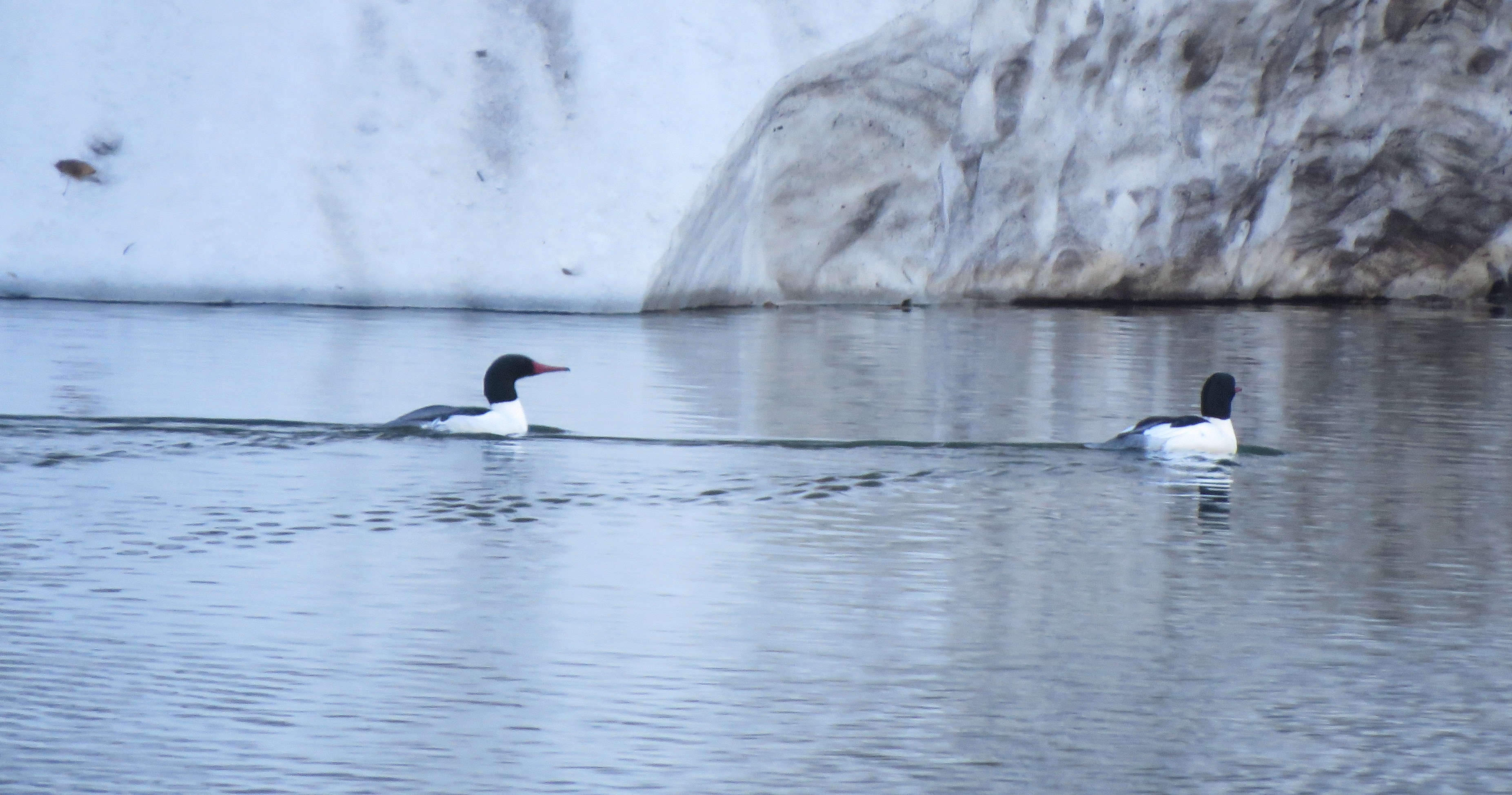
I walked across a footbridge to approach the riverside. At the other end, three seniors my age laughed and shrieked with one another, ignorant of the flock of Common Merganzers floating nearby. The birds quickly took flight.
On the way to my SUV, a trio of young boys threw sticks and pinecones at a small flock of Mallards foraging in the river’s shallows. I advised the youngsters that it’s wrong to disturb wildlife. They hung their heads until I passed by, and then continued their barrage. However, they fled when I turned around and stared at them.
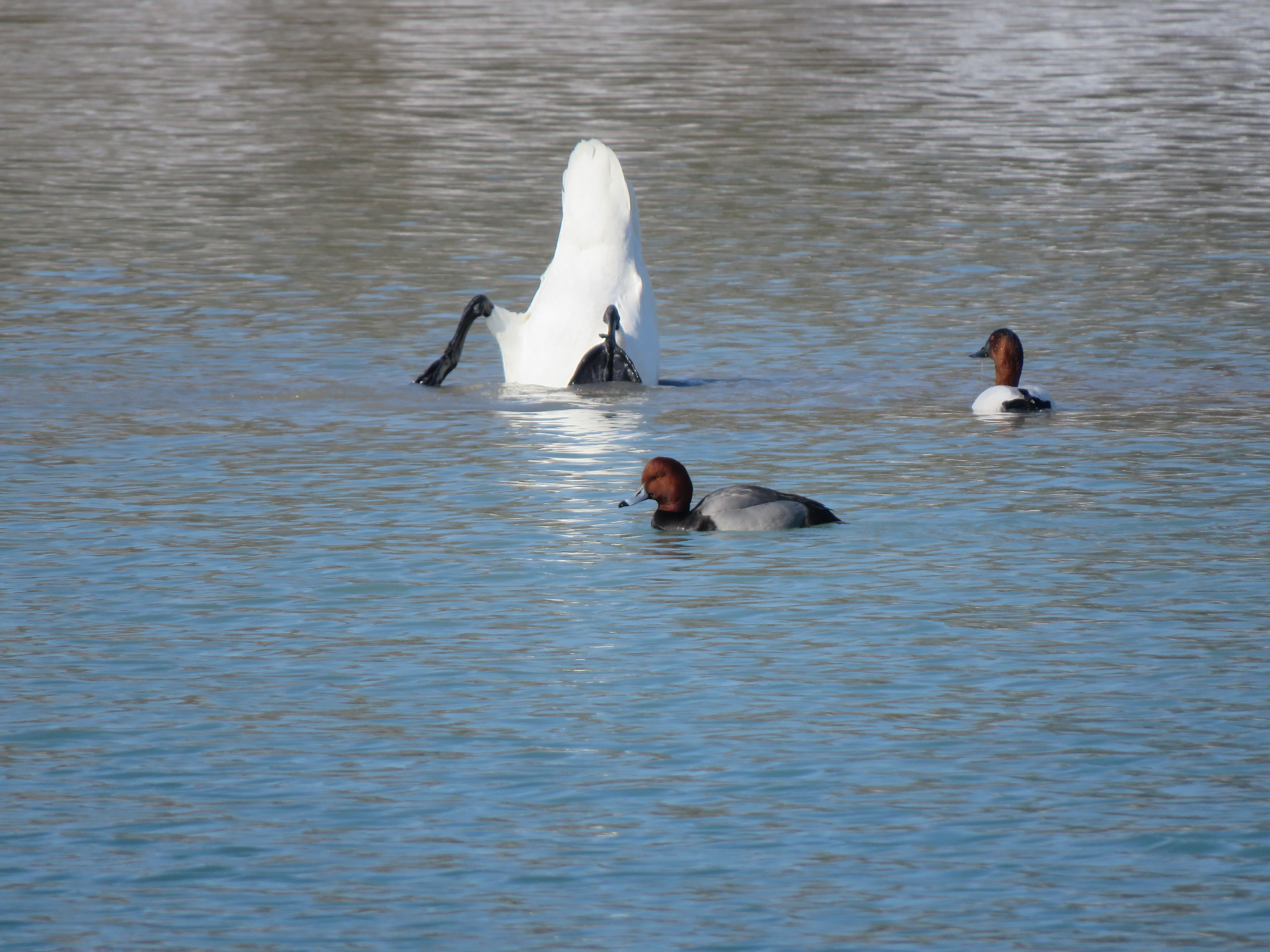
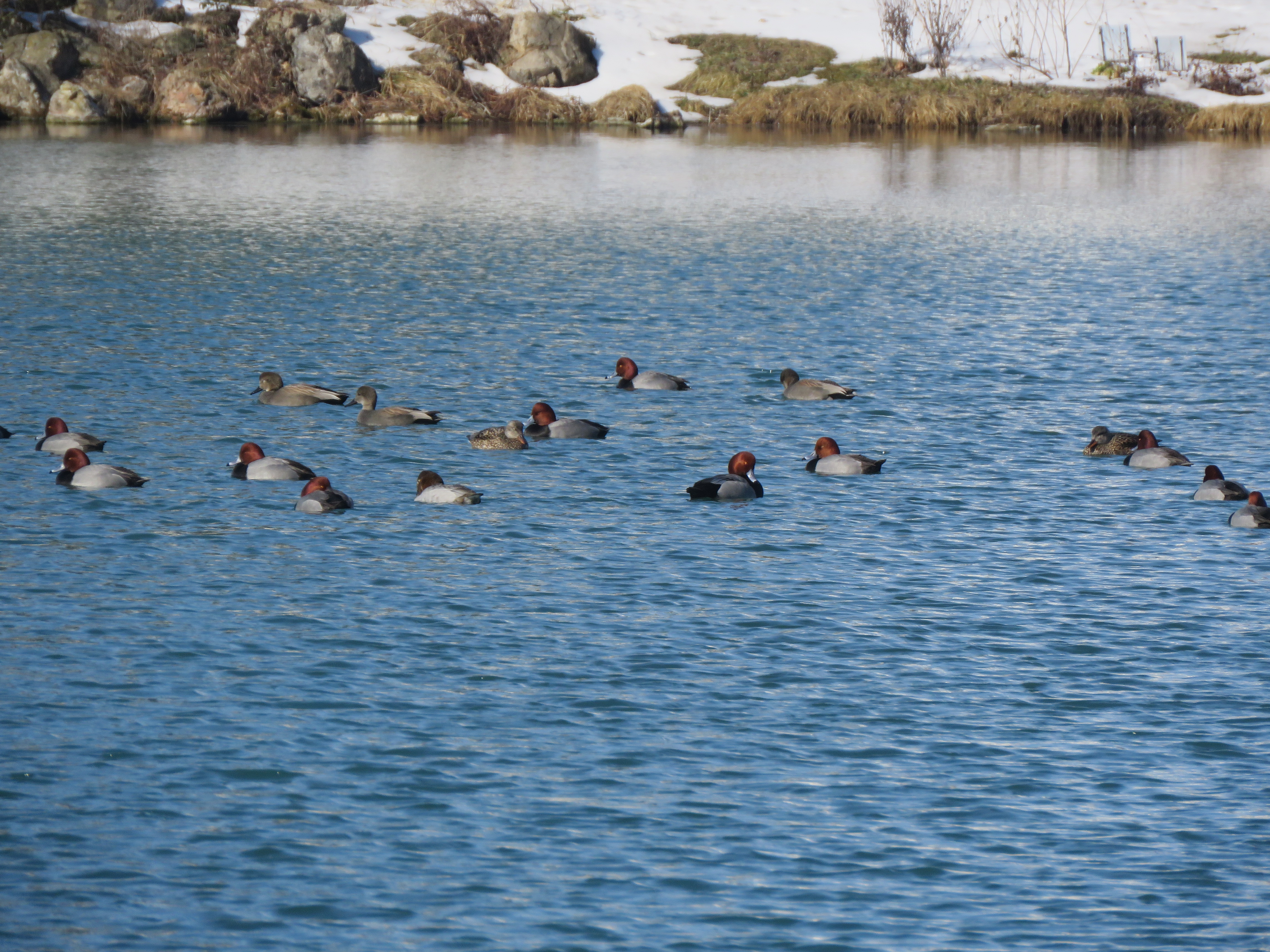
Ironically, the best birds were the closest to home. The thaw substantially diminished the ice on Silver Lake, and the waterfowl basked in the afternoon sunshine. Redheads, Canvasbacks, Buffleheads, and Pied-billed Grebes swam and dove for food.
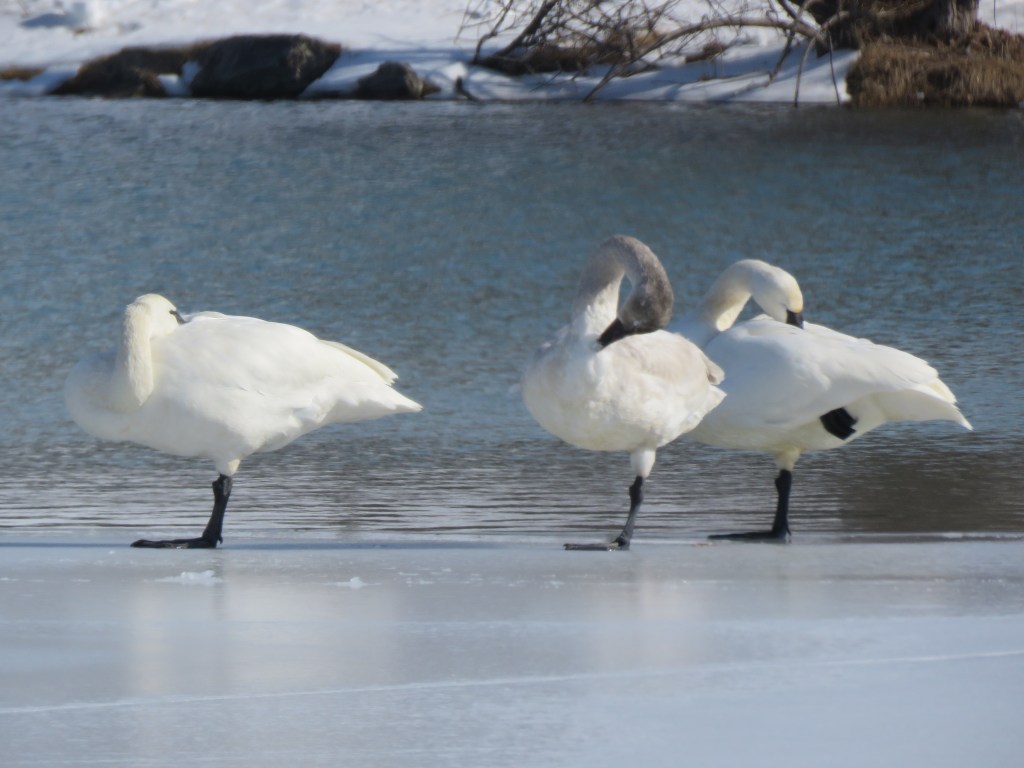
Best of all, six Tundra Swans stood on the thinning ice, preening in the sun’s warmth. It was a glorious six hours spent in communion with Nature and all her blessings.
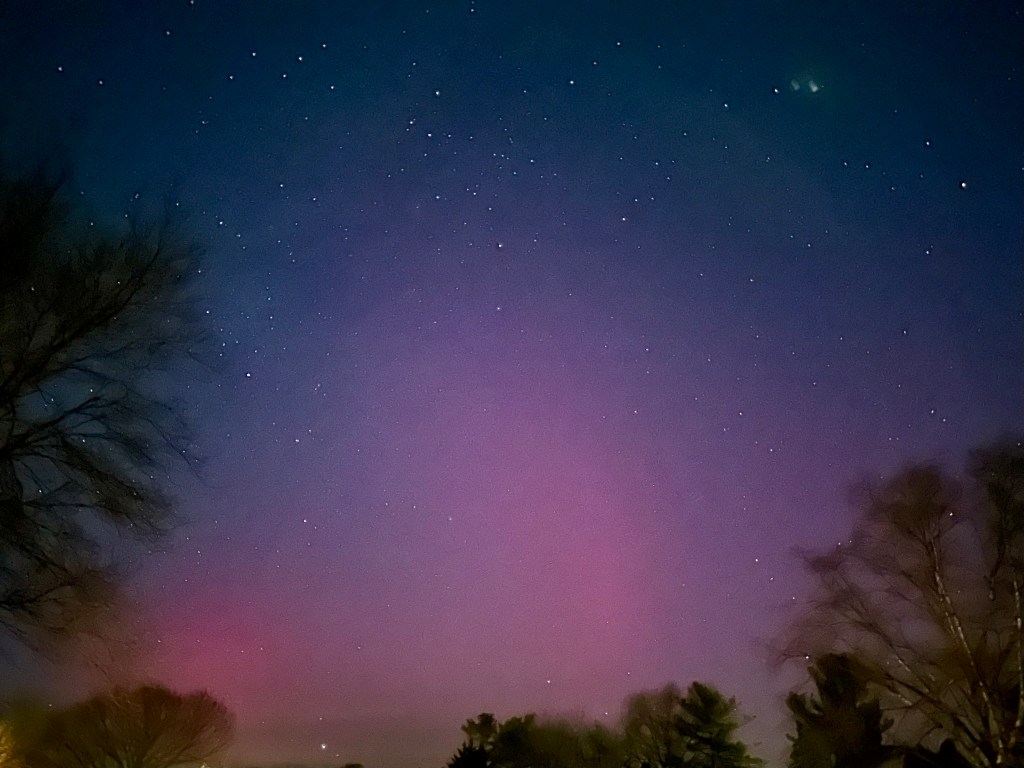
The aurora borealis as seen from my driveway on January 20. Photo by Bruce Stambaugh
I get excited when there’s a chance to see the northern lights or aurora borealis. I suspect I’m not alone. Why shouldn’t we be excited?
After all, the colorful lights are dancing in the sky over the polar north. That’s a long way from the Shenandoah Valley in western Virginia.
I follow social media posts closely for sun flares and alerts on possible northern light events. But being this far south, I keep my expectations in check.
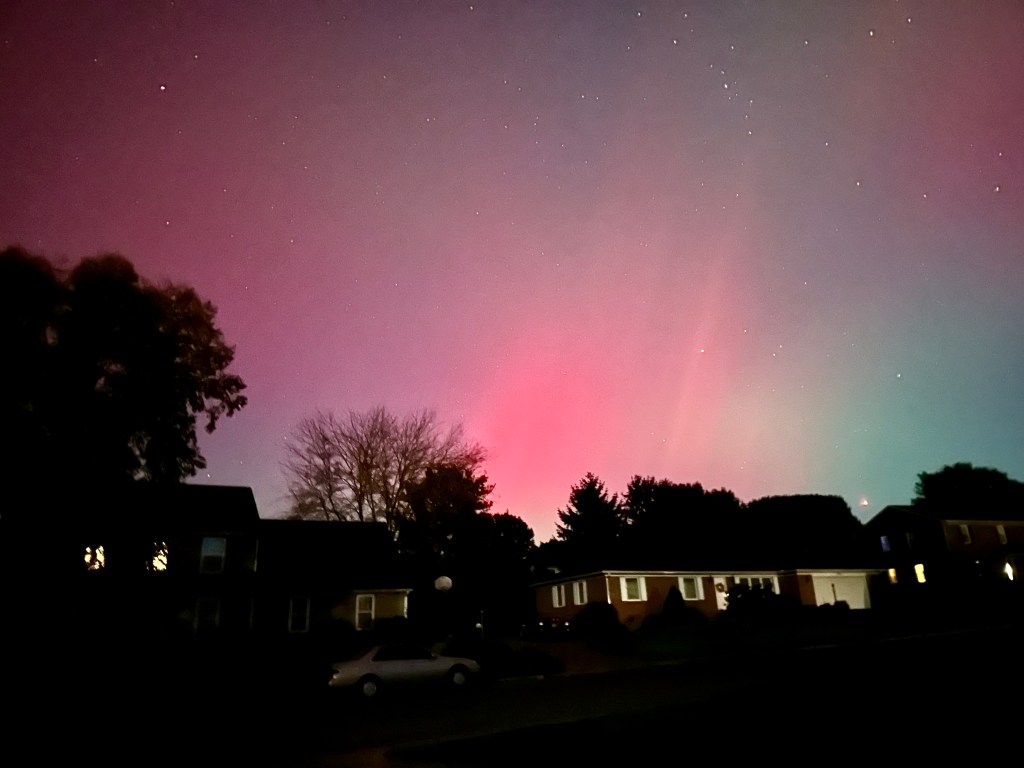
History has shown, however, that seeing these beautiful phenomena is indeed possible in Virginia and points south. In fact, on October 10, 2024, at 10:30 p.m., I walked out the front door, and greens, reds, and pinks danced in the sky over my neighbors’ houses. Of course, the light display was much farther north than that.
The aurora borealis as seen from my front porch on October 10, 2024. Photo by Bruce Stambaugh
I snapped a couple of photos and went back to bed. The app on my cell phone had alerted me to the possibility of seeing the aurora borealis. And there it was.
Looking back on that experience, I wish I had chosen a better viewing location for more photos instead of going back to sleep. Still, I was happy with the pictures I got. They clearly showed the northern lights.
So, when the alert came out for Monday and Tuesday, January 19 and 20, this week, I was ready. However, being a man, and an aging one at that, I easily got distracted.
The NCAA National Championship football game between Indiana University and Miami University was on TV at 7:30. Because the IU coach had led James Madison University’s football team to exciting winning seasons, my wife and I were glued to the TV. JMU is located in Harrisonburg, Virginia.
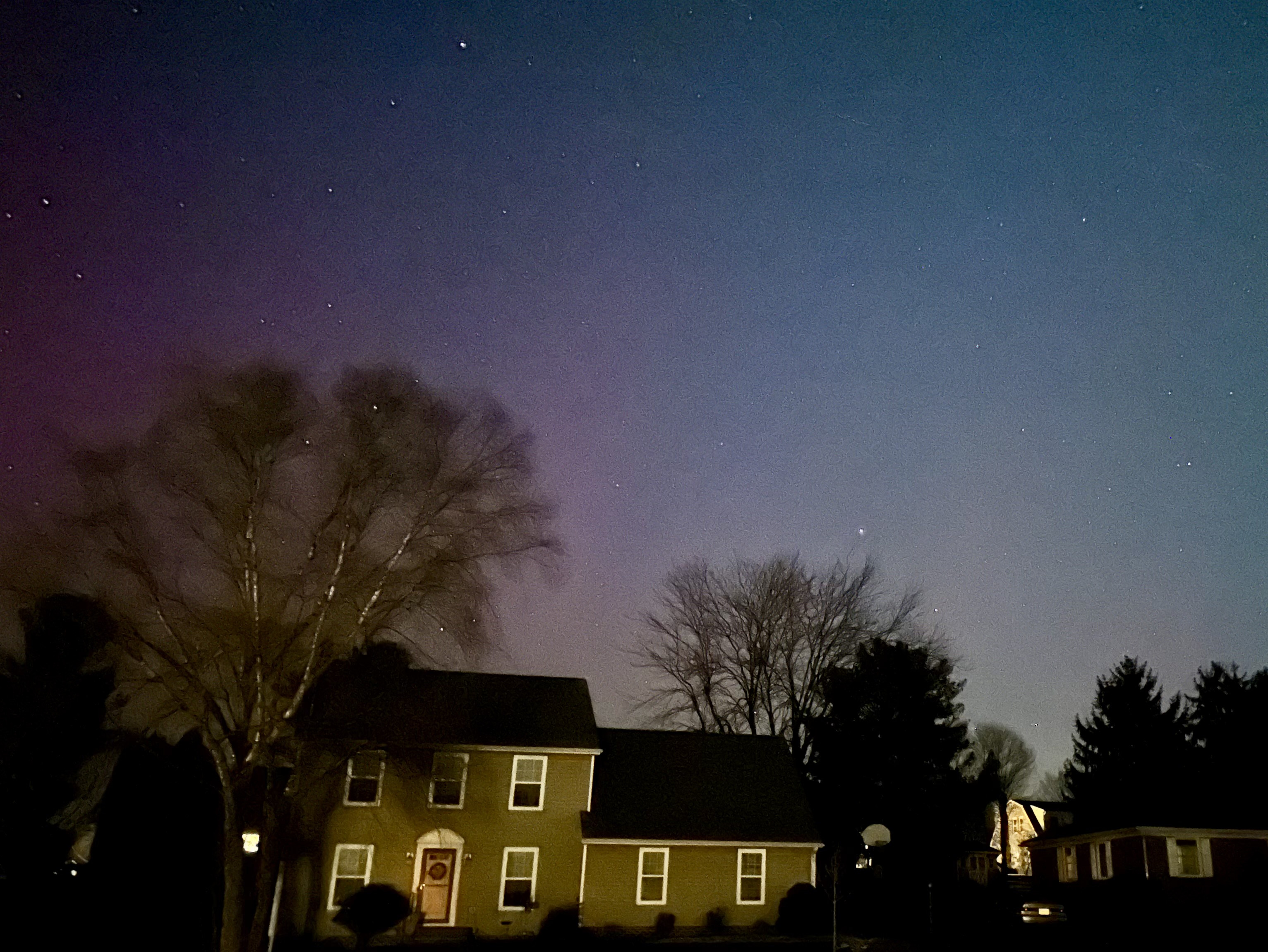
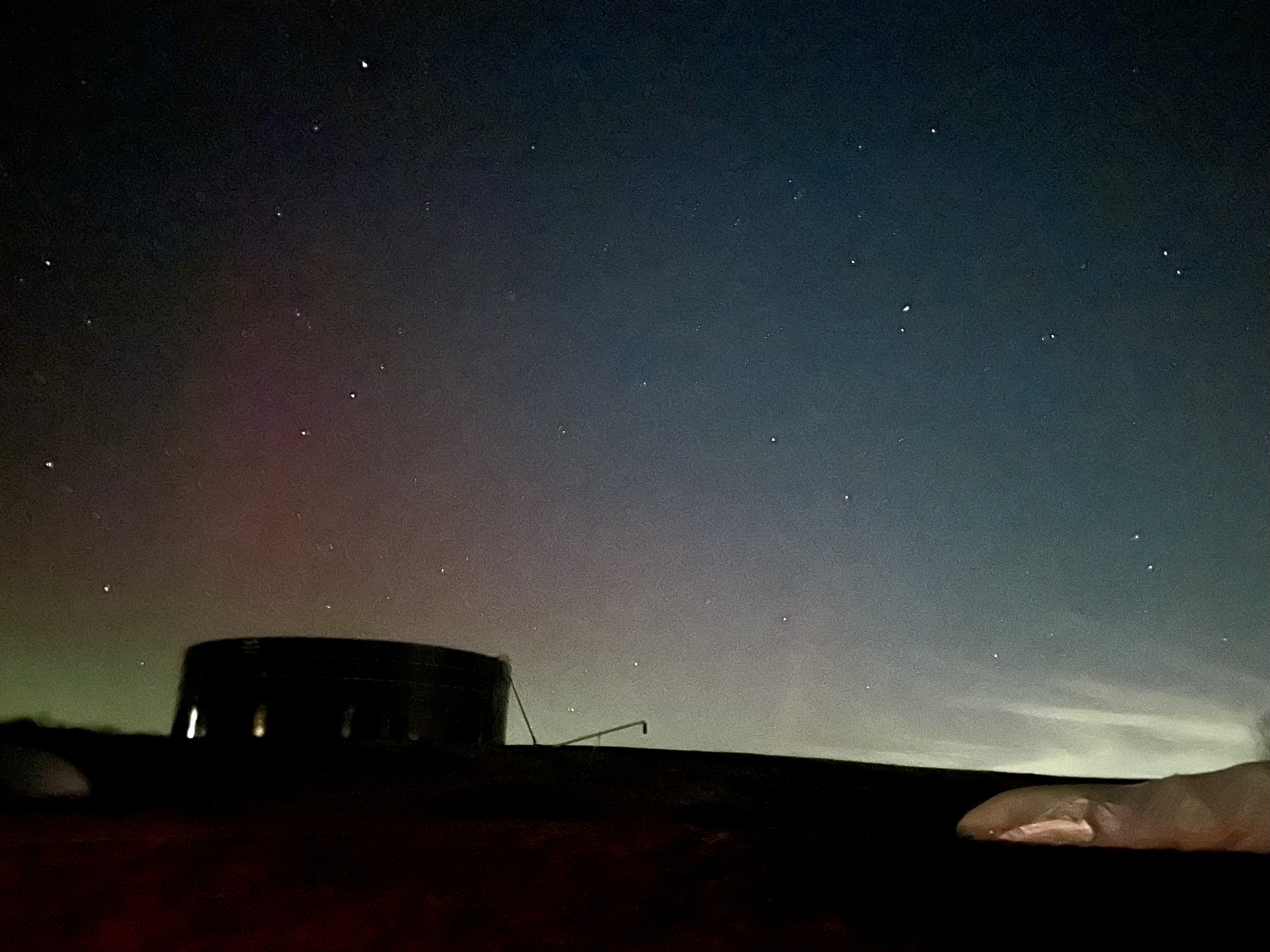
However, my attention shifted when I saw a photo of the aurora borealis posted on Facebook by a friend who lives a few miles away. I walked outside, took a few pictures, and could see a little red in the sky.
So, I diverted my attention from football to photography and went in search of a decent view of the northern sky. It was harder than I thought. Rockingham County, where I live, may be in the Shenandoah Valley, but it certainly is not flat.
The landscape, predominantly agricultural west of the city, is rolling, dotted with high hills, and full of powerlines running every which way. With no moonlight, the night was dark, so even though I was familiar with the roadways, I had difficulty finding a place with a good view, free of light from security lights or buildings.
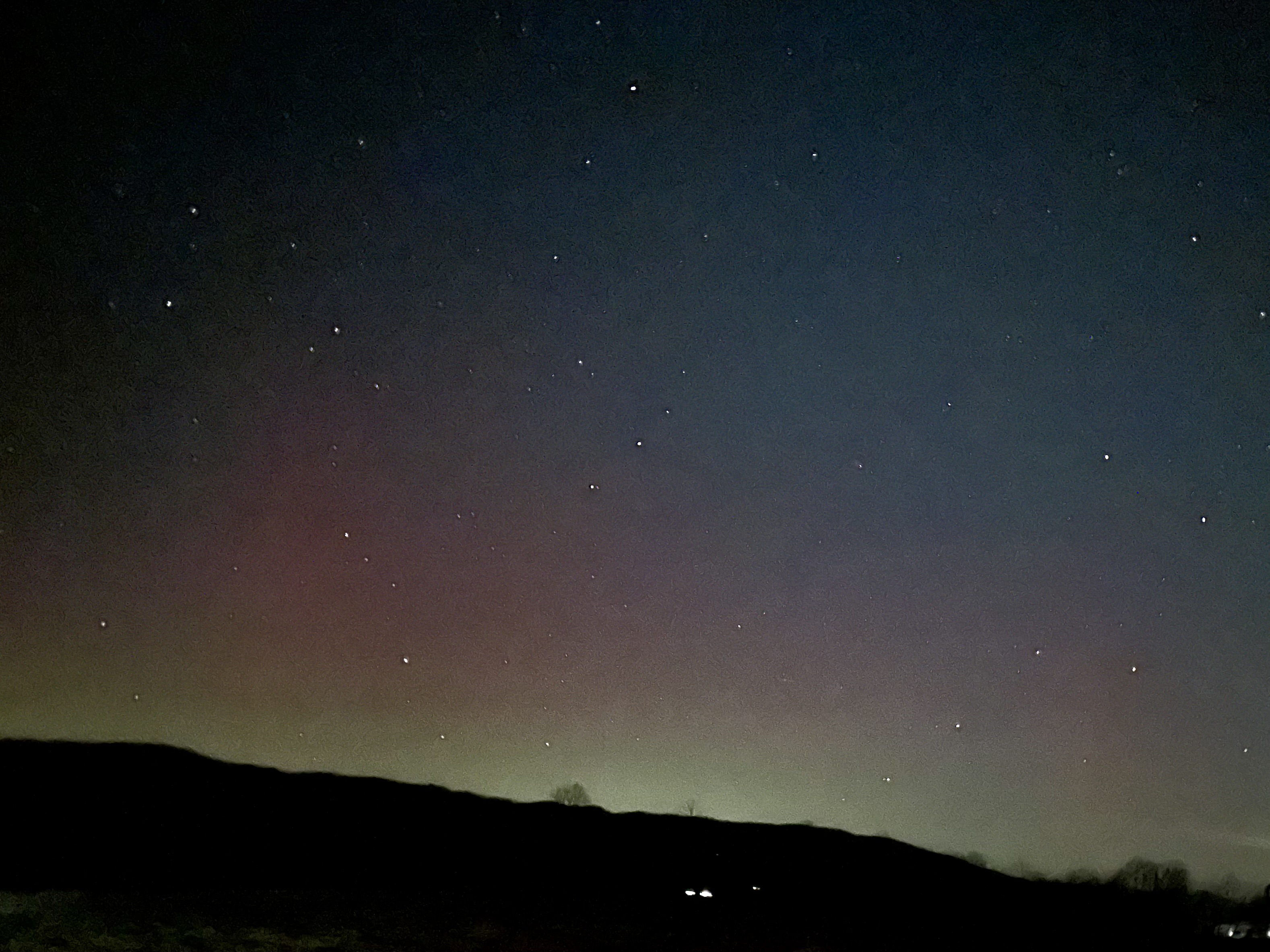
It didn’t take me long, however, to realize that the colors had faded since my friend took her photo two hours earlier. I headed home with fairly dull images of the night sky.
I was determined to make the aurora my priority after dark on Tuesday night. I again stepped into the darkness of our neighborhood and immediately saw reds and pinks in the sky, especially to the northwest. It is one advantage of having no street lights in our housing development. Of course, the colors I saw can’t compare to the amazing shots of curtains of colors dancing in the sky in the northernmost latitudes.
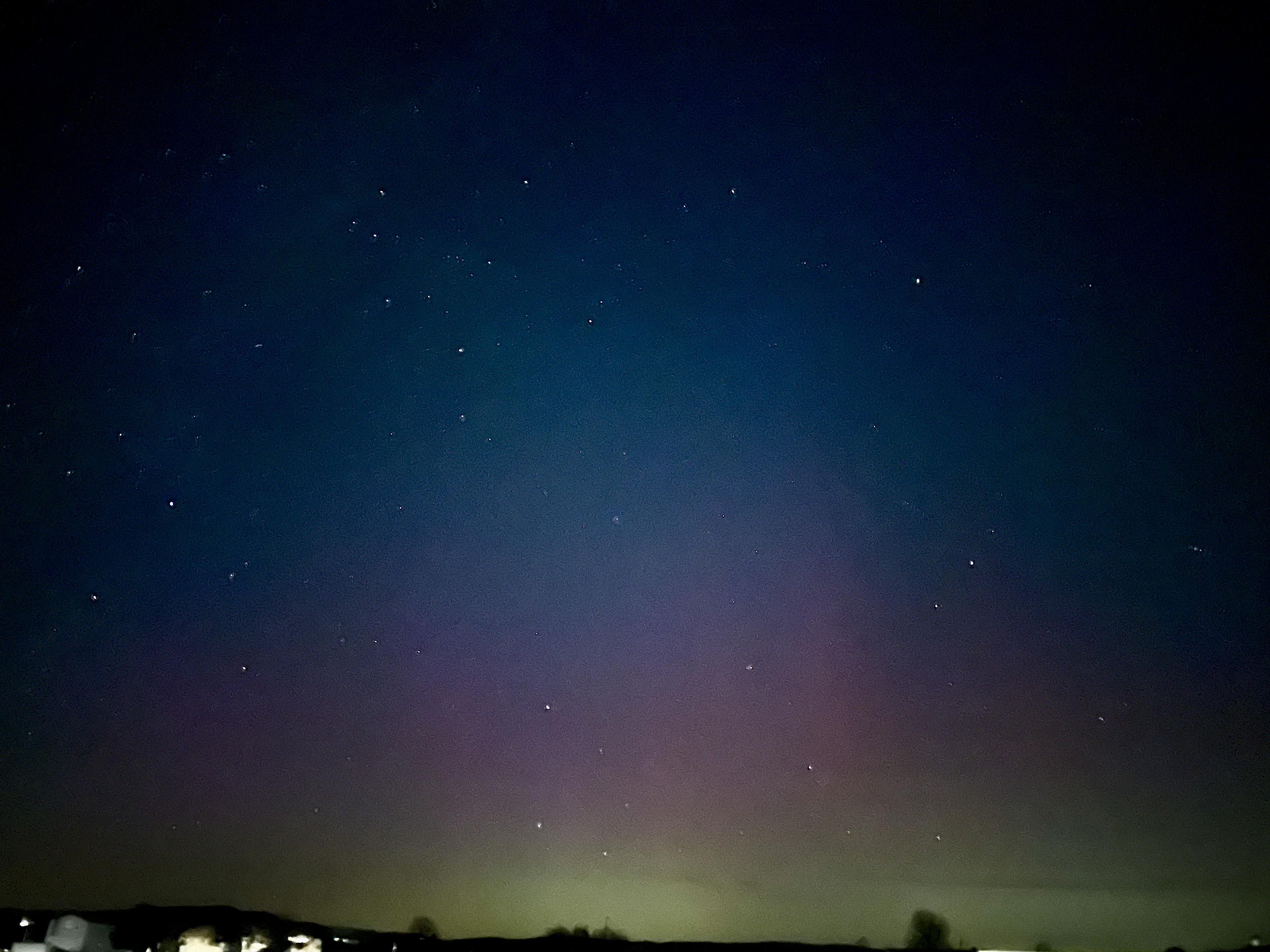
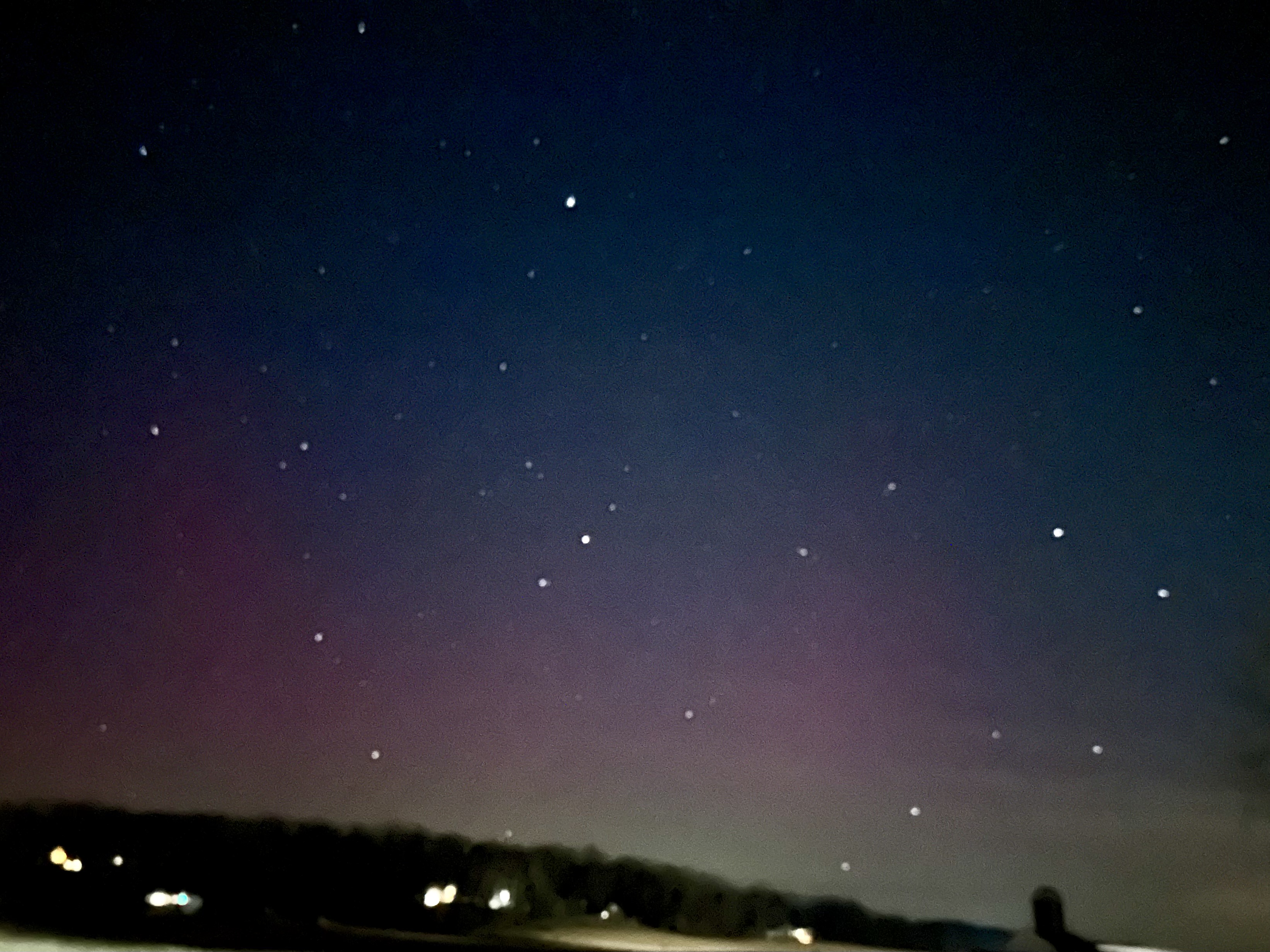
With temperatures below normal in our area, I bundled up and headed out, this time more certain about where I needed to go. But again, once I got out into the open countryside, the aurora colors seemed to dim.
The photo with the house was my first hint of the northern lights. The rest are from my excursion in the county. Please click on the images to enlarge them.
They were brighter than the previous night, but not like I had seen in October 2024 or when I saw my first northern light in Ohio’s Amish country decades ago.
In that case, I was walking out to retrieve the evening paper from its roadside box when I first heard and then saw the northern lights. I stopped in my tracks when I heard a loud crackling sound, like a zap of electrical current.
I looked toward the sound, and in the southern sky, bright green zigzagging flashes danced low in the night sky. They lasted only seconds, but I realized what they were even though they appeared on the wrong horizon.
Soon, bulletins appeared on TV screens across northern Ohio about strange objects appearing in the sky. Witnesses who saw what I saw called the police and TV and radio stations to report the weird noises and lights.
There were all kinds of speculations, aliens included. Even the local weather service put out a special statement. When I saw that, I called the weather office at the Akron-Canton Airport to share what I observed.
I felt obligated to set the record straight, and since I was a trained severe weather spotter for the National Weather Service, they were familiar with where I lived.
Because of that experience, I longed to see the aurora borealis in its proper setting, the northern sky. Consequently, I was very pleased to be able to view them in Virginia, not once, but twice.
You can be assured I’ll remain on the lookout whenever the next aurora alert is issued, regardless of what time of night it is or what’s on TV.
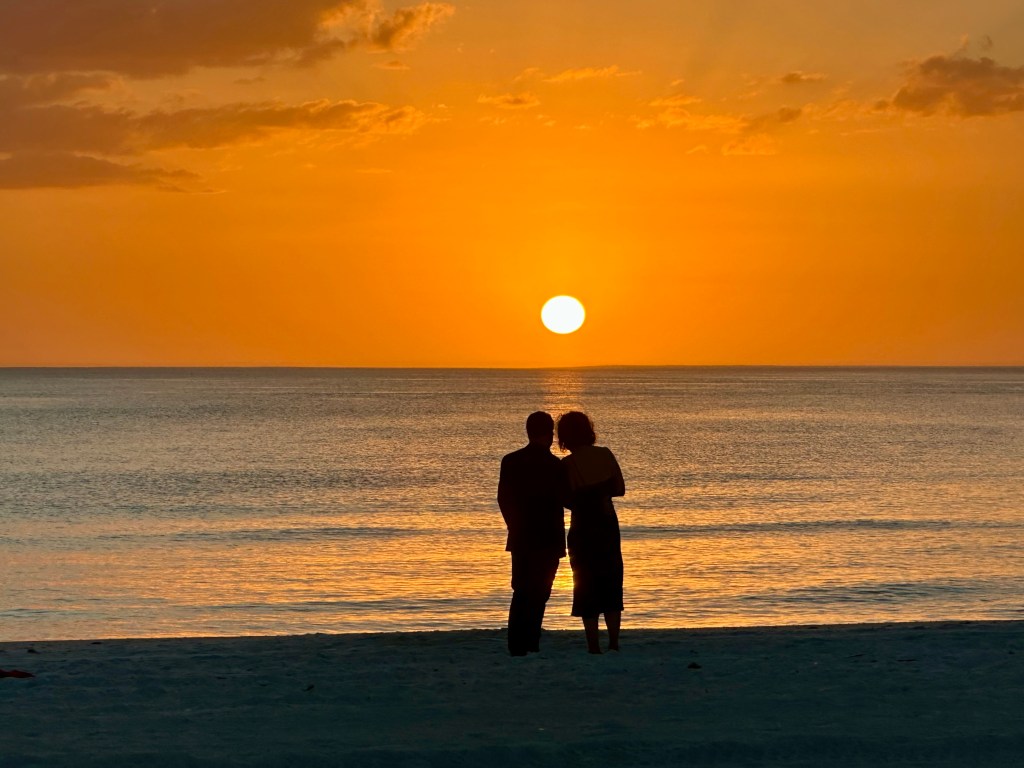
This middle-aged couple provided a perfect silhouette while standing in their street clothes on North Lido Beach in Sarasota, Florida.
I observed them for several minutes, simply standing there, leaning in, and casually touching one another in flirtatious gestures, as lovers tend to do. But they keep their eyes on the setting sun, seemingly comfortable with one another in those precious moments.


 Roadkill Crossing
You must be logged in to post a comment.