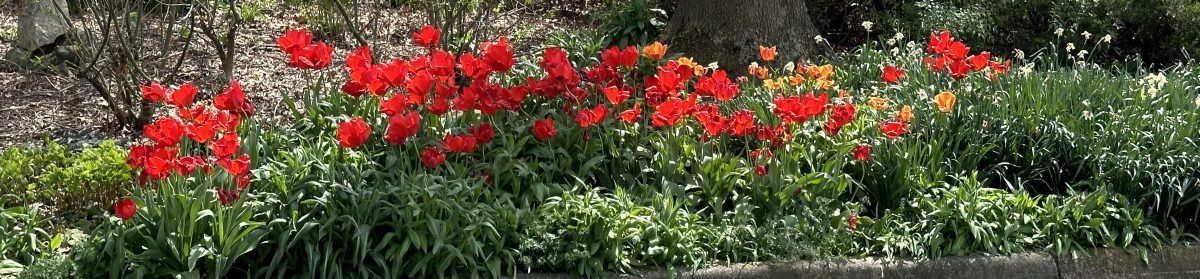
What more evidence is needed that Spring is finally here? Daffodils blooming in a wooded hillside and a man sleeping on a park bench in the afternoon sunshine pretty much says it all. Spring has arrived indeed.
My goal was to capture the vernal equinox sunset. Instead, I came away with a shot that resembled a Claude Monet landscape.
I positioned myself on a hill in northwest Harrisonburg, Virginia in hopes of getting photos of the Super Full Worm Moon rising over the Massanutten Mountains that run north to south in the middle of the Shenandoah Valley. Unfortunately, a layer of rain clouds blocked that attempt. With that foiled, I turned my attention to the setting sun on the first day of spring.
Hazy clouds filled the western horizon as well, though the sun did its best to burn through. Residue smoke from controlled burns in the Jefferson National Forest during the day fuzzed up the view all the more. Sunsets around the equinoxes are the shortest of the year. This one merely melted away behind the blue, blue folds of the Allegheny Mountains.
The one thing that constantly amazes me is how much I learn by taking photos. And often what I learn has more to do with the setting than photography itself. This photo is the perfect example.
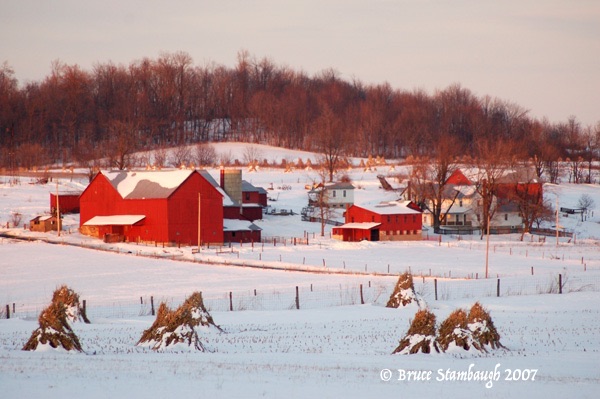
Anyone would be happy to take this shot. I certainly was. The late afternoon light was perfect shining on the Blue Ridge Mountains, highlighting the ice-encrusted trees along the undulating summit. This is the southern section of Shenandoah National Park.
I noticed a historical plaque close to where I had stopped to get the shot. So I pulled up to read what the plate said. I was stunned. Here among all these rolling farm fields against the backdrop of the mesmerizing Blue Ridge Mountains a bloody, decisive Civil War battle had been fought. Known as the Battle of Piedmont, Union soldiers defeated Confederate troops. This led to the fall of Staunton and control of the railways in the Shenandoah Valley, known as the Breadbasket of Confederacy.
The combat was costly on both sides. The Union suffered 800 casualties and the South nearly twice as many with 1,500. I wondered if passersby knew of the blood spilled all those decades ago. What did the farmers think as they plowed those fields?
I took the photo with mixed emotions. The scenery was marvelous, the history humbling. Without the marker, this would be just another beautiful rural scene. In reality, it is so much more than that.
“Beautiful view, horrific history” is my Photo of the Week.
Though cold for early March, bright sunshine bathed the landscape in Virginia’s lovely Shenandoah Valley. This farmer took advantage of the situation and spread a different kind of sunshine.
For those of you not familiar with rural lingo, “spreading sunshine” equals spreading manure. It’s a necessary and important job on a family farm that includes horses, cows, and other livestock. Winter weather, especially this wet winter’s weather, doesn’t always allow farmers to regularly “clean out the barn.”
When the opportunity presents itself, farmers waste no time in getting the job done. When crop fields are frozen enough to support heavy farm equipment, the manure spreaders are loaded with the fertile livestock waste and spread onto the frost-firmed ground.
It can be a stinky job, but someone has to do it. In fact, it is the smell that satirically coined the phrase “spreading sunshine.” When the ground is frozen, its time to rid the barns of all the manure that can be hauled while the conditions are right.
It was Thursday, and I hadn’t decided on my Photo of the Week, which I normally do well ahead of time. The last few days have been hectic with family responsibilities, writing deadlines, and yet another winter storm that brought snow, sleet, freezing rain, and rain.
I was thinking about what photo to feature as I drove home from a meeting this morning. When I turned south onto Switchboard Road, this scene grabbed my attention. I looked in my rearview mirror and to the road ahead of me. The narrow, curvy road is a busy thoroughfare, but the coast was clear. Down went the window, and I quickly snapped the scene.
The morning’s sun filtered through the storm’s residual clouds and a streak of rising fog. The rays glinted off of the three inches of snow encrusted with a glaze of ice. It looks black and white with only a hint of light blue showing.
I knew right then and there that “From Switchboard Road” would be my Photo of the Week.
No matter where you live, winter offers a wide variety of colors across its changeable landscapes.
Often, the colors transform with the weather’s latest tantrum. Given the global climate’s bipolar dysfunctions, winter’s color palette has expanded far beyond its usual earth tones and neutral hues. Wetter and warmer winters convert lawns from frosted brown to April’s greens.
Living in Ohio for nearly seven decades, I intimately learned nature’s dormant color schemes. She usually painted under steely skies, which perhaps limited her range of color options.
Growing up in a blue-collar suburb in northeast Ohio, my memory is filled with a canvas of white on white. We sledded down steep hillside paths beneath stately evergreens laden with inches of snow.
Clumps of yellowy prairie grasses waved in the icy wind as we zoomed by shouting and laughing like the kids we were. Our wind-chapped cheeks and red noses were proof of our gold, silver, and bronze successes.
Besides the fun, we relished a good snow cover that blanketed the grit and grime that most winters brought. The fluffy whiteness enlivened the quiescent landscape, the leafless trees with their non-descript brown, gray, and black trunks and branches. The pure white snow on piney coniferous bows highlighted clusters of chestnut pinecones.
Heavy wet snow provided a stark color contrast of white on black. That all shifted in a flash when a wicked winter wind whipped nature’s artwork into layered snowdrifts crusty enough for adventuresome children to walk on.
Ohio winter weather being what it is and always has been, not much changed as I grew into adulthood. Browns and whites alternated dominating the lay of the land with temperature playing the role of the artisan. A mundane scene became a Currier and Ives gem with four inches of overnight snow.
A January thaw altered all that in a hurry. The snow melted into a mushy, muddy mess, and brown soon became the primary color and texture, much to my mother’s chagrin. Usually, though, our inattentive father rightly got the blame for the sticky indoor tracks.
Dealing with both the gooeyness and the frozen precipitation as an adult tendered an entirely different perspective than as a youngster. I hated how everything wore the dirt and grime of winter. That was especially true of driving a filthy automobile. Wash it one day, and it was dirty again the next.
Warm, attractive colors in winter did and do exist of course. Think red holly berries against glossy green leaves powdered with fresh snow.
Each new day brings opportunity. Catch a showy sunrise that may last only a few seconds before succumbing to layers of gray clouds. Sunsets are equally stunning, especially if reflected by lakes and streams, which double the orange, yellow, red, and pink pleasure.
Bright colors come alive literally. Is there anything prettier than northern cardinals perched on evergreens waiting their turn at the bird feeders? If eastern bluebirds also arrive, the winter day becomes all the cheerier.
Moving to Virginia’s Shenandoah Valley has lessened some of the sting and bland of winter. We tend to have more sunny and warmer days than we did in Ohio. When it does snow, the aesthetic results are still the same. However, the white stuff doesn’t last as long.
Winter’s radiant sunshine enhances any locale just as it can brighten all human spirits.
January can be lackluster if you let it. Just look a little harder for any hint of color wherever you live. Like many TV commercial disclaimers, your results may vary.
The end of 2018 is in sight. Given the state of the world today, perhaps we all need a fresh start in life, no matter our age, our situation, our status. A new year brings new hope.
I reflected on all of that during a recent snowstorm that blanketed much of Virginia’s Shenandoah Valley. Shadows of the tree, its limbs, and the bird feeder they held played upon the newly fallen snow in our front yard. The contemplative scene gave pause to my birdwatching, to my reading, to my writing, to all that was happening near and far.
The long shadows cast by the late afternoon sun that had finally broken through gave hope that neither the winter’s frostiness nor the world’s cold calamities could keep us down long. For in the abrupt transition between the snowy brightness and shadowy darkness, light prevails.
Here’s hoping that light will shine warmly for the approaching New Year. “Year-end Shadows” is my Photo of the Week.
Last year at this time we were still settling into new surroundings, situations, and holiday opportunities as our relocation process to Virginia’s magical Shenandoah Valley continued. We had moved there to be close to our grandchildren. Celebrating the joyous season with them was paramount.
But this year was different. With Thanksgiving as early as it could be, we found an opening in our busy retirement schedules to return to our Ohio homeland.
An early winter snowstorm surprised us as we traversed roads in the higher elevations of West Virginia and Maryland. That couldn’t deter us, however. We arrived safely in the Buckeye State to celebrate personally with a few family members and friends, people we love and cherish. Some gatherings were planned while others were serendipitous.
Fun with friends.The frivolity began before we could even unpack our suitcases. That’s the kind of company we keep, and that is willing to host us. Our first evening meal and lively conversation with lots of laughter set the tone for our all too brief visit. We had so much fun we could have turned around and gone straight back to Virginia and been pleased with the trip. Of course, we didn’t.
The next morning we met old friends at a busy locally-owned bistro for breakfast. We discovered other friends there, too. We stayed so long it would have been more profitable if the proprietor had charged us per hour rather than per meal.
As we left for old haunts near Holmes County’s Mt. Hope, the van mysteriously pulled into the parking lot of a favorite chocolate shop. Affabile store owner Jason must sweeten his candy with his hospitality.
We made a beeline to the furniture store where I served as its chief marketer for 11 years in Mt. Hope to say hello to former fellow staff members. Fond hellos, fun memories, and new looks for the store inside and out greeted us. Their ability to create the latest styles in beautiful furniture boggles my mind.
After that enlightening encounter, we took a break at the charming Red Mug Coffee shop, an apt name if there ever was one. Of course, I drank my delicious brew from a red mug.
We hadn’t even ordered when a former student entered. Lonnie and our family go way back. He was born two hours before our daughter. Their cribs were side by side in the nursery at the hospital in Millersburg.
Then a high school friend of our son spied us and years of catching up ensued. Marlin proudly shared photos of his adopted children. Those kids couldn’t be in a more loving situation.
This slideshow requires JavaScript.
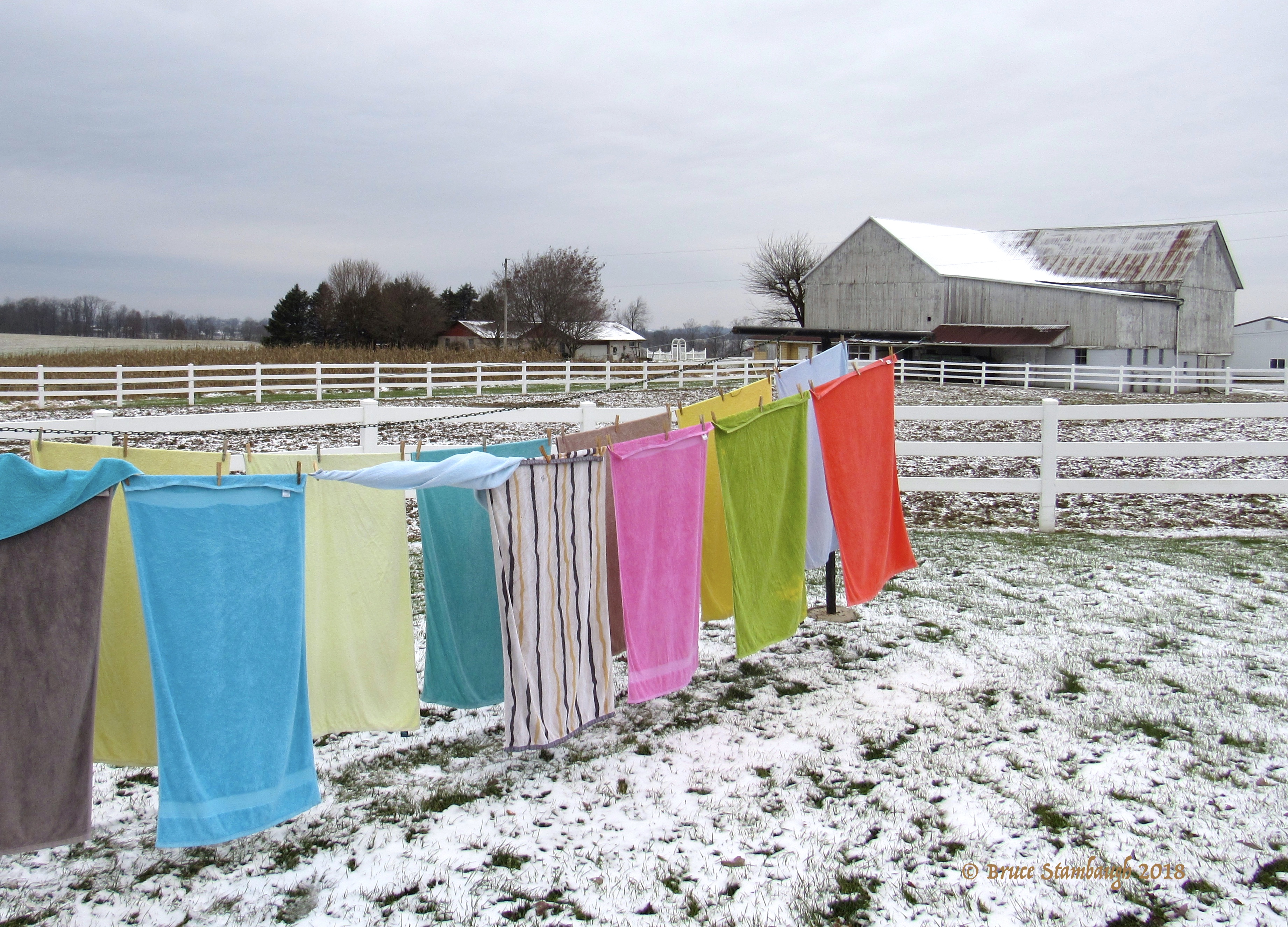
Laundry on the washline told us that Martha was home. After warm, welcoming hugs, we visited with her and her youngest child until we just had to leave. Our timing couldn’t have been better. I stopped to visit briefly with my friend Dan, who mows the roadsides in the township where I served as a trustee for 20 years.
We found our former across-the-road neighbors Paul and Mary as gracious and hospitable as ever. The time ticked away here much too quickly as well.
The visiting continued at Killbuck with the doctor who brought our daughter and son into this world. As always, his spry wife considered us family. We checked in with a couple of their children and spouses, too. Of course, “children” is a relative term since they all are grandparents.
The pace of our last day in Ohio was just the opposite. Neva went shopping with her sister, and sure enough, met even more friends. I ran some necessary errands before going birding. I was thankful for the exercise, the wildlife I encountered, and many photo opportunities. The sun finally burned through the haze by late afternoon. Still, the air’s temperature couldn’t come close to matching the warmth of fellowship we had experienced.
Holidays are for gathering, reminiscing, sharing. Through both our planned and spontaneous encounters, it was indeed a joy to be home for the holidays.
A young buck white-tailed deer bounded across the trail far ahead of me. Click the photo to enlarge it.
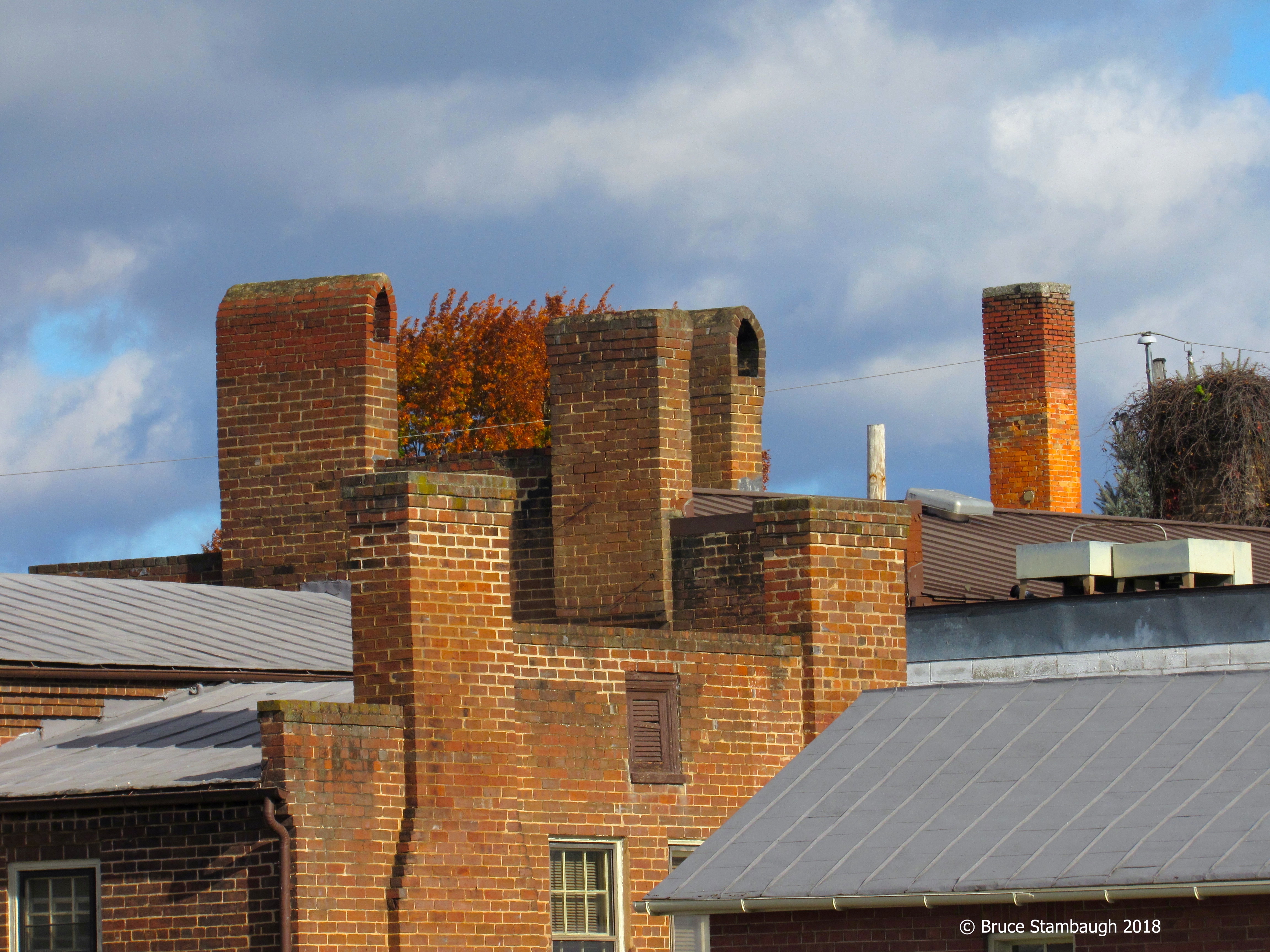
Chimneys
For a small town, the buildings in downtown Dayton, Virginia have a lot of chimneys. Santa may have to work overtime in this rural village in the Shenandoah Valley.
The annual migration of birds has been going on for some time now. Fall in the birding vernacular doesn’t equal calendar fall.
There is a logical reason for that. Different species of birds begin their migration at different times. Shorebirds and songbirds often lead the winged entourage to warmer climes. Others trail along alone or in giant flocks to the delight of avid birders. To account for these time travel variances in the birding world, fall is the most extended season, running from August through November.
At the suet feeder.
The same concept is valid for trees and deciduous plants. Some species begin their winter hibernation sooner than others. Their various changing colors can foretell this annual transition. Poison ivy leaves often turn bright red before September arrives, while the glossy leaves of shingle oaks fade from emerald to russet and hang on until early spring.
For me, I welcome these transitions, especially the birding varieties. As the leaves of the red maples in our yard began to fall, birds I had not seen before began to arrive.
Storms brought down many of the remaining leaves. They also blew in flocks of birds, some temporarily. Others seem here to stay.
Last fall, our first in the Shenandoah Valley, birds were scarce at the feeders. The numbers and variety of birds were well below my expectations. I longed for the many beautiful birds we had had in Ohio.
Optimist that I am, I hung the feeders again right after Labor Day and attracted a few regulars. I can always count on chatty house finches and boisterous blue jays. Once the weather cooled, the suet feeder went up in the backyard.
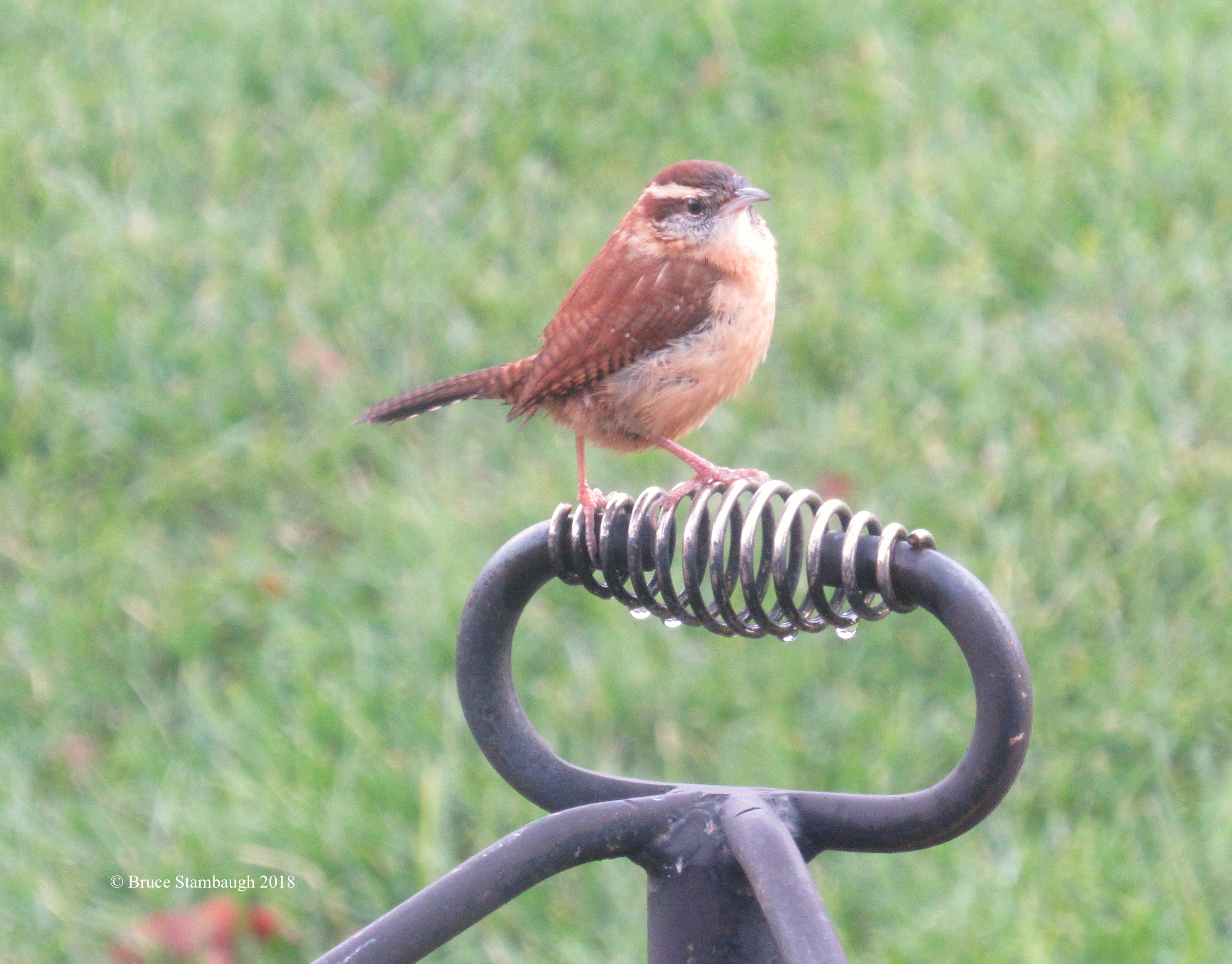
An inquisitive Carolina Wren.
I was contented with the usual suspects, happy that even the Carolina Wrens made regular appearances. But I could not have anticipated what happened next. About six weeks ago, I noticed some birds that resembled the numerous house finches that frequented our feeders. A closer inspection with the binoculars told me that we had a small flock of purple finches with a few pine siskins thrown in for good measure. I was ecstatic.
I had never had purple finches at the feeders and only had had passing pine siskins that took a break to refuel during migration. I hoped beyond hope that the birds would stay. So far they have.
These are gorgeous birds, each in their particular plumage. The reddish hues of the male purple finches appear iridescent, especially if the sun reflects off of their foreheads where the winter colors are the brightest. Though much duller and muted, the rich browns and creams of the females’ feathers are equally stunning.
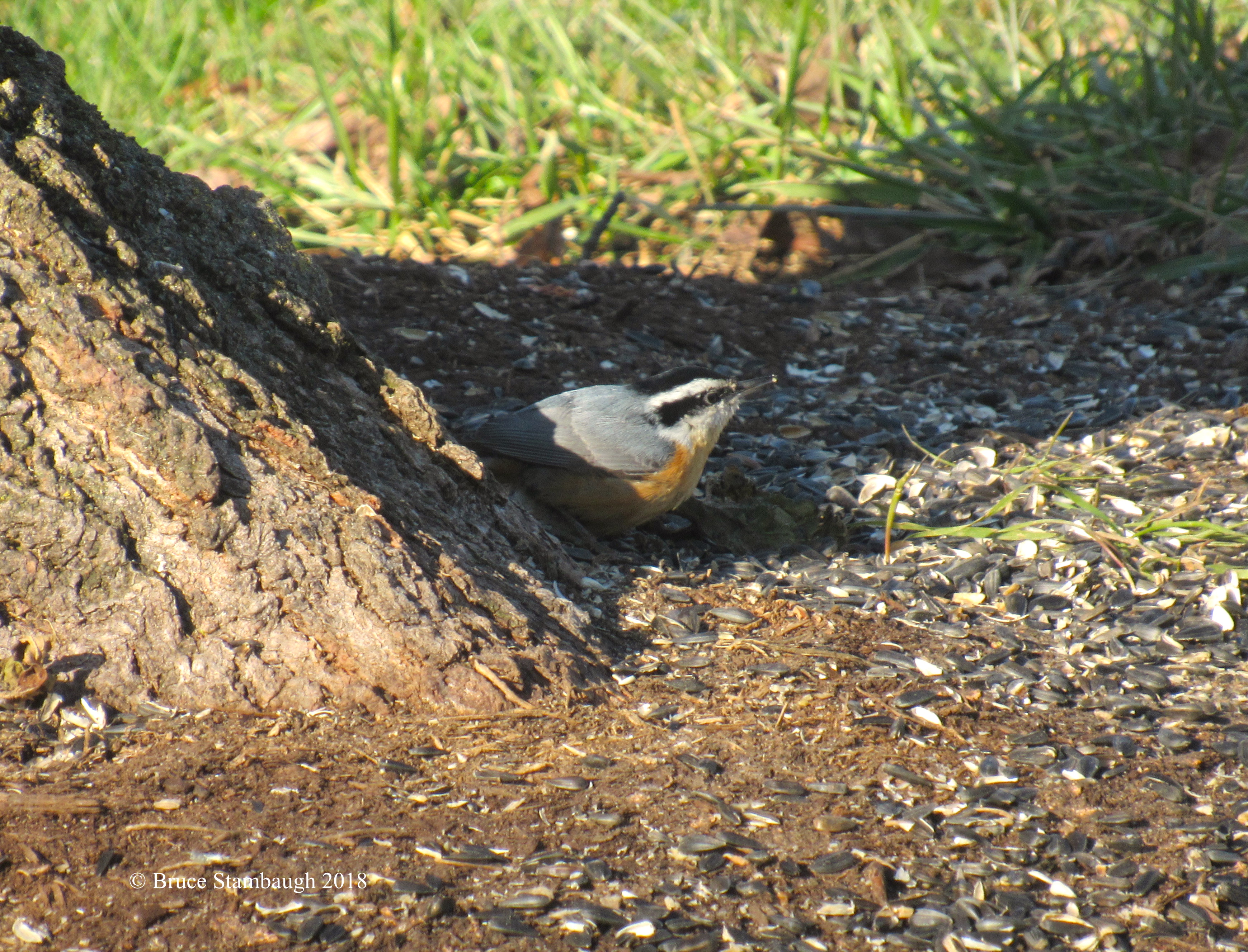
A rare visitor, a Red-breasted Nuthatch.
The more demur pine siskins tend to feed with the purple finches and the American goldfinches. Their brown stripes and flash of yellow at the wing tips make them striking birds as well.
The departure of the leaves and arrival of the birds mimic life. We can’t do anything about the past and try as we might, we can’t predict the future. Dull leaves and the arrival of purple finches are proof positive.
To be most productive, I strive to be present in each moment regardless of what change occurs. The mystery of it all sparks a spirit of gratitude.
I’m thankful the birds and trees keep reminding me that change is inevitable. If we pay attention, we can enrich our lives by embracing each subtle transformation, seasonal or otherwise.
For good or for ill, change happens. It is the way life is.










 Roadkill Crossing
You must be logged in to post a comment.