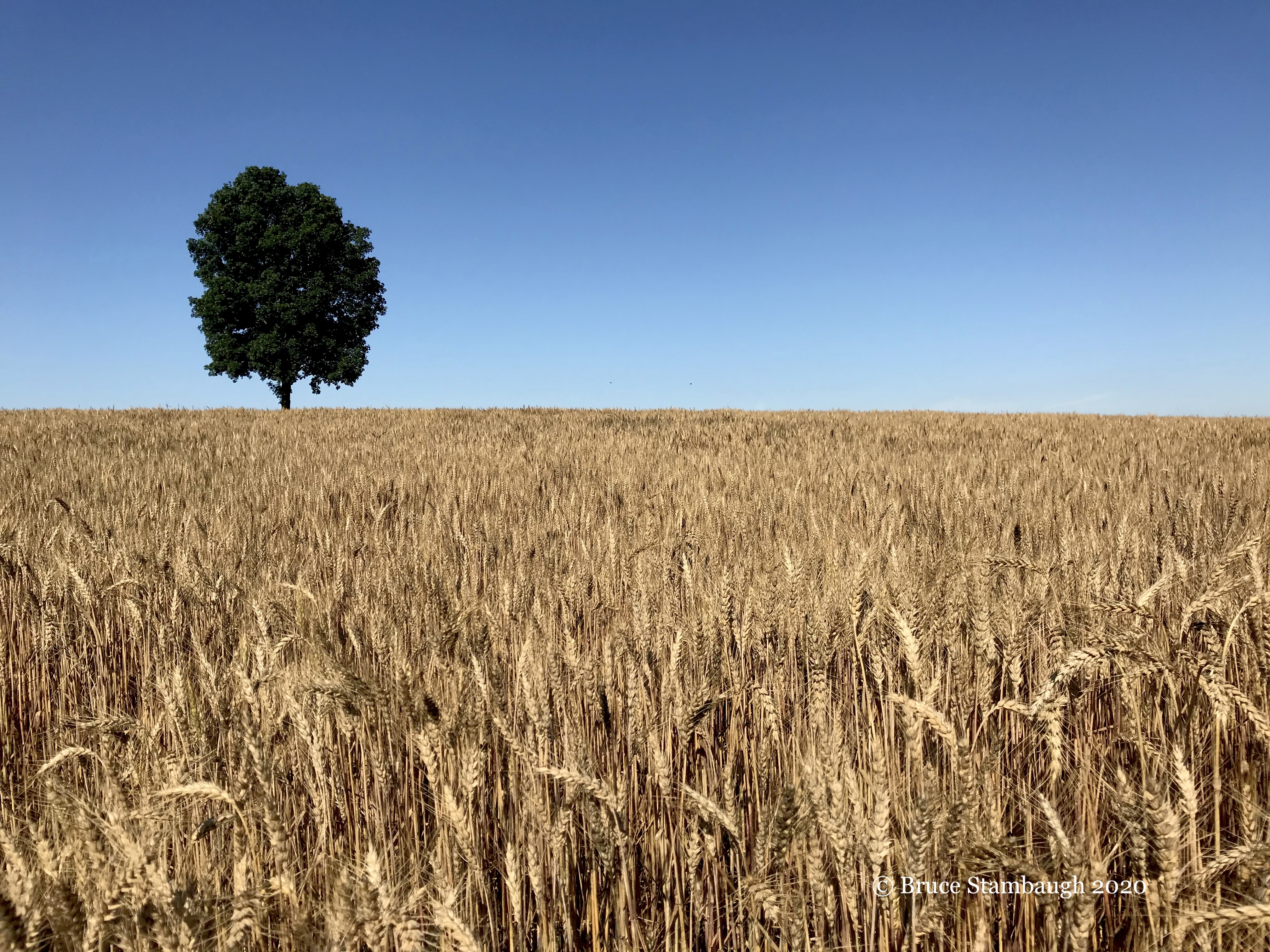
It must be July! The winter wheat is ripening to a golden brown here in the Shenandoah Valley, also known as the breadbasket of Virginia. Once the moisture count in the heads of grain reaches a low enough percentage, the combines will start to roll through the fields day and night.
I loved that this Old Order Mennonite farmer left the sugar maple tree to grow and that he planted his crops around it. “The Wheat Field” is my Photo of the Week.
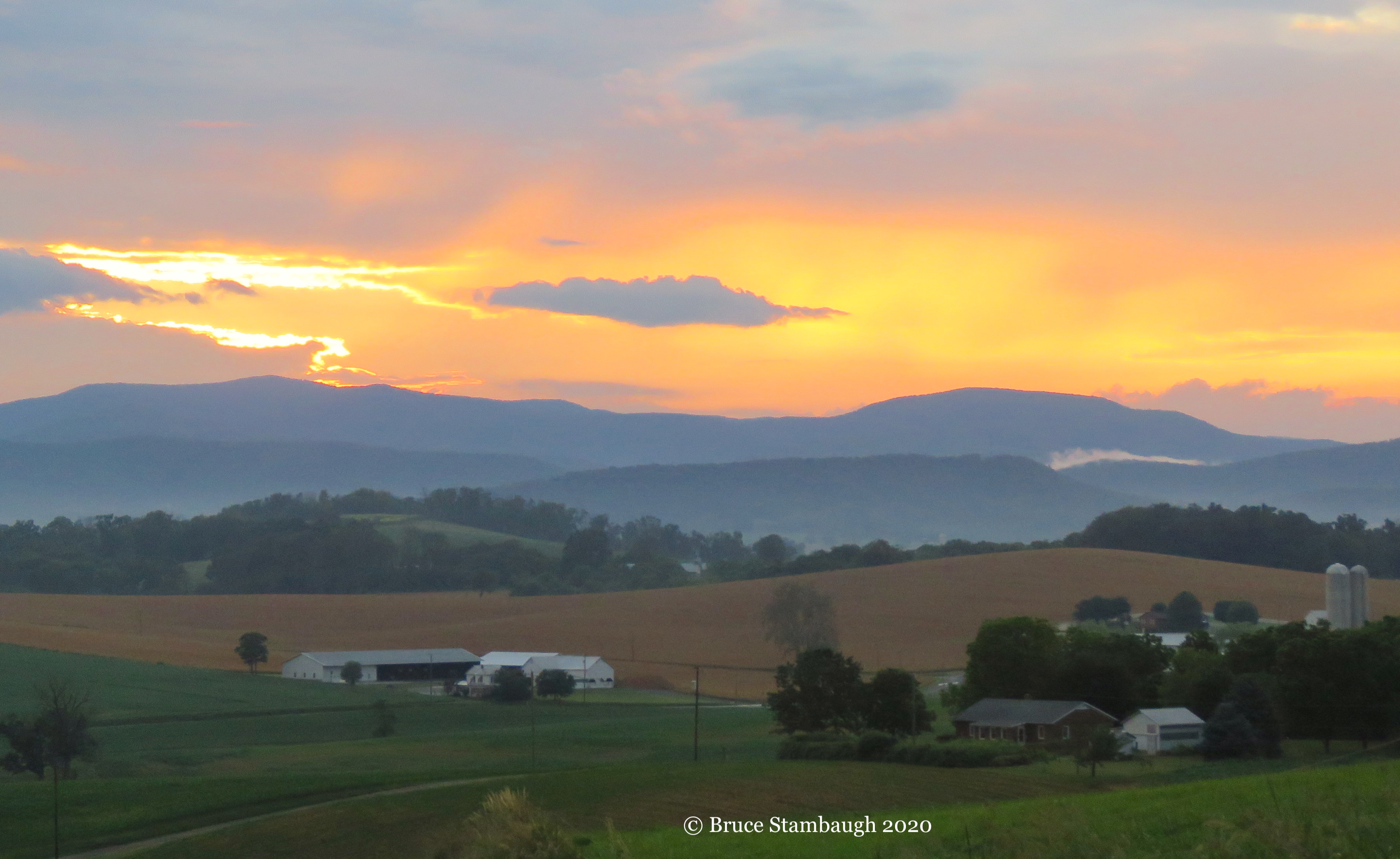
There is nothing particularly spectacular about this photo, although it is pretty. The photo’s details make for a diverse composition: The deflected sunset rays, the fog rising from the hollows of the Allegheny Mountain foothills, and the overall pastoral setting itself. Throw in the fact that this shot was taken on the 2020 summer solstice, and the landscape photo becomes even more meaningful.
So why the title “Hope?” I never expected to be able to take this shot. We had had a string of relatively chilly and cloudy days in the Shenandoah Valley. June 20, the date of this year’s summer solstice, continued that trend. However, after heavy rain moved through, pinks, yellows, and oranges began to appear in the evening sky. I grabbed my camera and headed to my favorite sunset spot, Mole Hill, an extinct volcano core that is a local landmark. It’s higher elevation affords an impressive view of the rolling valley, the foothills, and the mountains themselves.
Though this is not a particularly stunning sunset, it was one that I never thought that I would be able to capture. Consequently, “Hope” is my Photo of the Week.
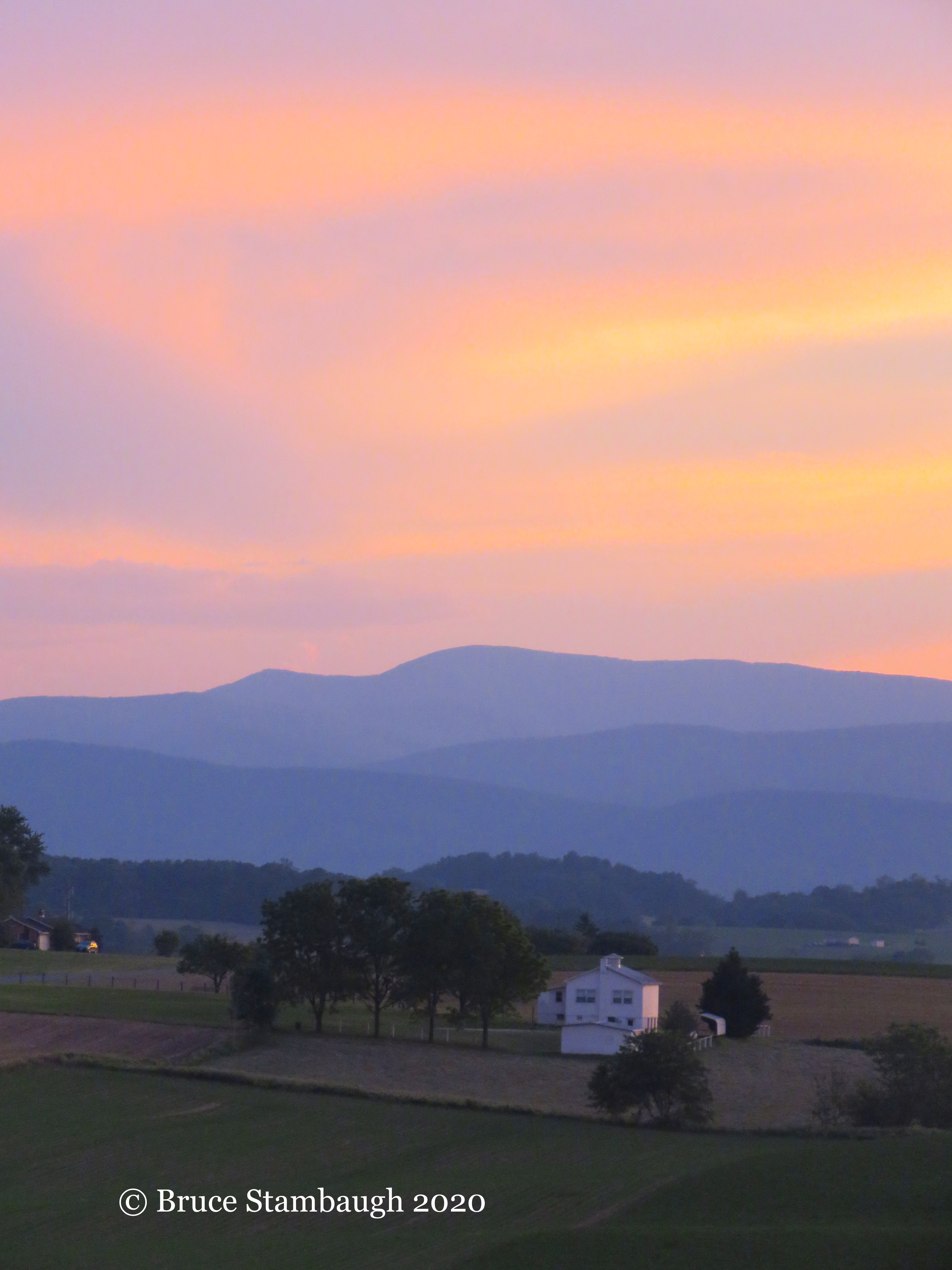
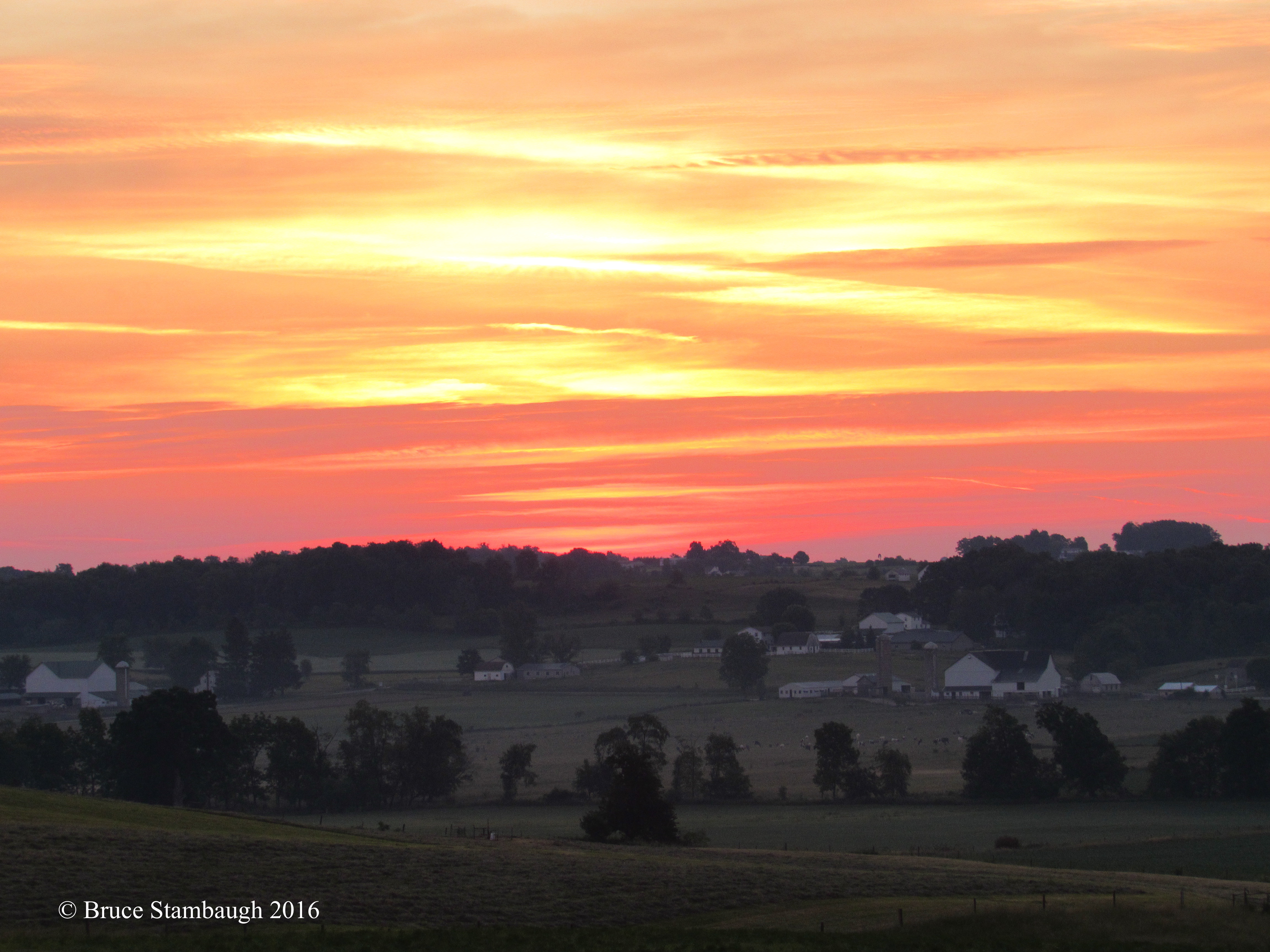
Colorful sunsets have been far and few between this spring in the Shenandoah Valley. We have had strings of days when we hardly see the sun. It’s been that cloudy, and often chilly.
The few times the evening sky did offer hope, I headed out. I wasn’t disappointed on June 6. I felt fortunate to capture this shot long after the sun had hidden behind the Allegheny Mountains that mark the boundary between Virginia and West Virginia.
The texturing and laying of the clouds seemed to mimic that of the folded mountains below. The north face of the private two-room school reflected the heavens above.
“Sunset at Mountain View School” is my Photo of the Week.
A June sunrise in Ohio’s Amish country.
No calendar is needed to know what month it is. Doors and windows are flung wide open. Summer’s pleasing sounds and pleasant aromas waft in. It must be June.
Sit by a stream where the cottonwoods grow. A summer breeze stirs, and suddenly it’s a blizzard of cottony seeds drifting everywhere. The situation can be as aggravating as it is beautiful.
Once the dew dries, a cacophony of motorized humming ensues, seemingly lasting all day. All the neighbors want to get their lawns mowed before the anticipated rain arrives. It never does. At least the yards are manicured.
To protect their precious eggs, grackles and American robins perform Kamikaze raids on the backyard squirrels who are in search of lunch. The rabbits munch the tender grass undisturbed and unknowing nearby.
The leaves of the deciduous trees appear to have fully unfurled overnight. Contented with their newfound shade, grazing livestock swish their tails, flicking flies left and right, left and right.
Dinner tables brighten with outdoor bouquets brought indoors. Red roses, pink and white peonies, blue salvia, and lavender snapdragons proudly show their colors and intermingle their delicate fragrances.
On the stove, kettles of fresh-picked mint disperse organic menthol. Thirsty throats endure the wait, knowing lunchtime will bring refreshing minty sweetness.
Even the gray catbird pauses for a sip from the birdbath, having warbled all morning from the depths and darkness of the neighbor’s dense yew. The territorial northern mockingbird cuts short that respite, however.
Balmy mornings slip quietly into steamy afternoons. Cumulous clouds build and billow, dappling the landscape with their speeding, oscillating shadows.
By late afternoon, the cooling breezes have retreated. A sultry stillness is ubiquitous. Even the birds grow quiet in anticipation of the coming storms.
A line of darkness fills the western horizon. Soon thunder rumbles the squall line’s approach. Sweaty farmhands work faster still if that is even possible. Saving the first-cutting of hay becomes the day’s primary objective.
After the storm, a double rainbow temporarily shines in the east. Thankful for the cooler air, the rectangular bales stack the haymow higher and higher. Those abandoned in the flattened field will have to wait until they dry.
In the city, waitresses hustle to dry dampened outdoor tables and chairs, all spaced safely according to coronavirus standards. Soon, the customers return, jackets in hand as a precaution for the cooling evening.
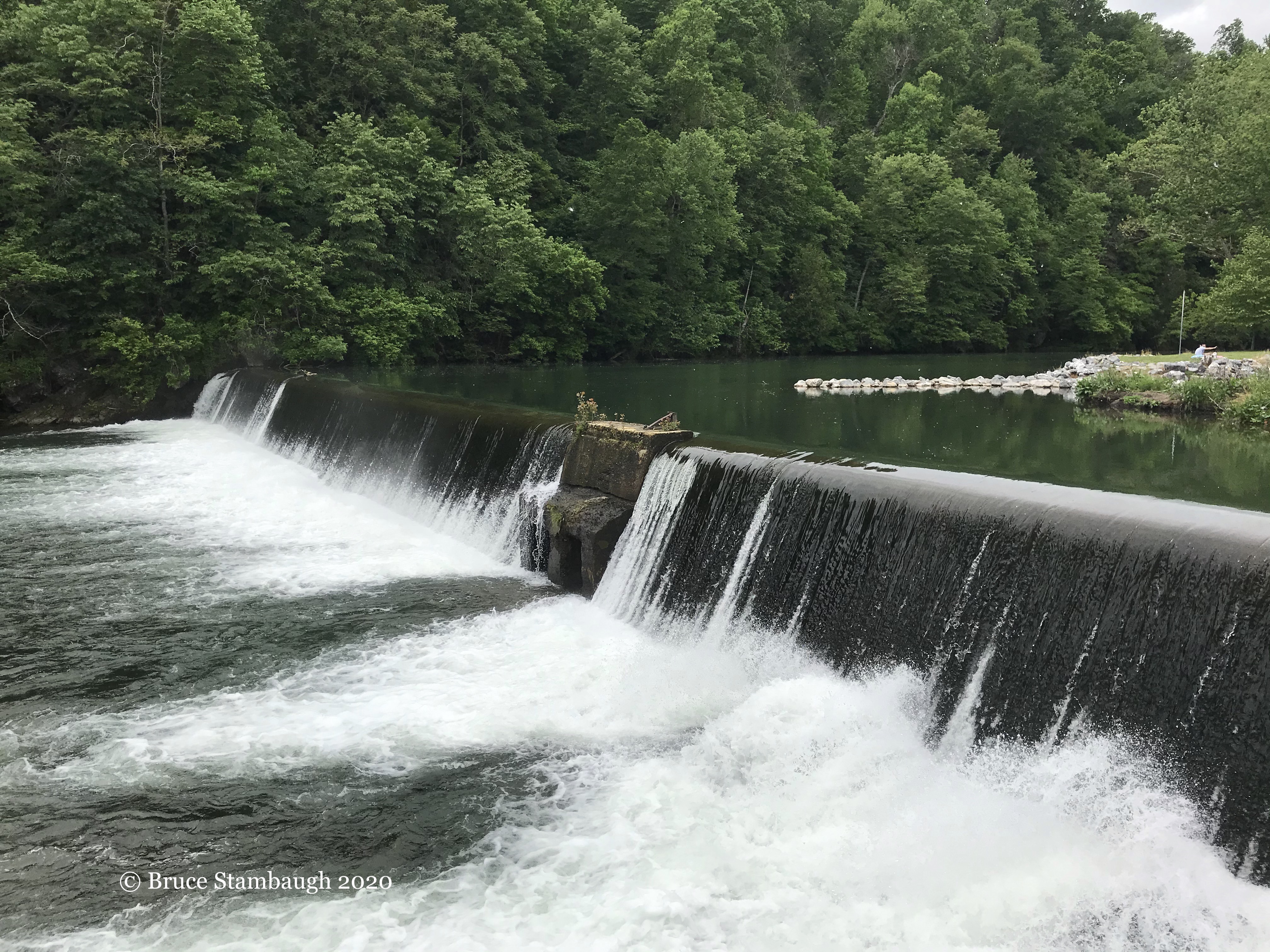
In the Allegheny, the Blue Ridge, and the Massanutten Mountain ranges, plump little Louisiana waterthrushes fill the air with luxurious songs. They serve as soliloquies to the music of the rushing mountain streams.
Mountain laurel bushes are at peak bloom, while other wildflowers are only now appearing. The valley-to-mountaintop elevations allow June’s sweetness to thrive all month long.
Honey bees and bumblebees enjoy all the blooms, whether domesticated or wild. They are not picky. Ruby-throated hummingbirds zig and zag at sugar-water feeders to the delight of bird-lovers young and old.
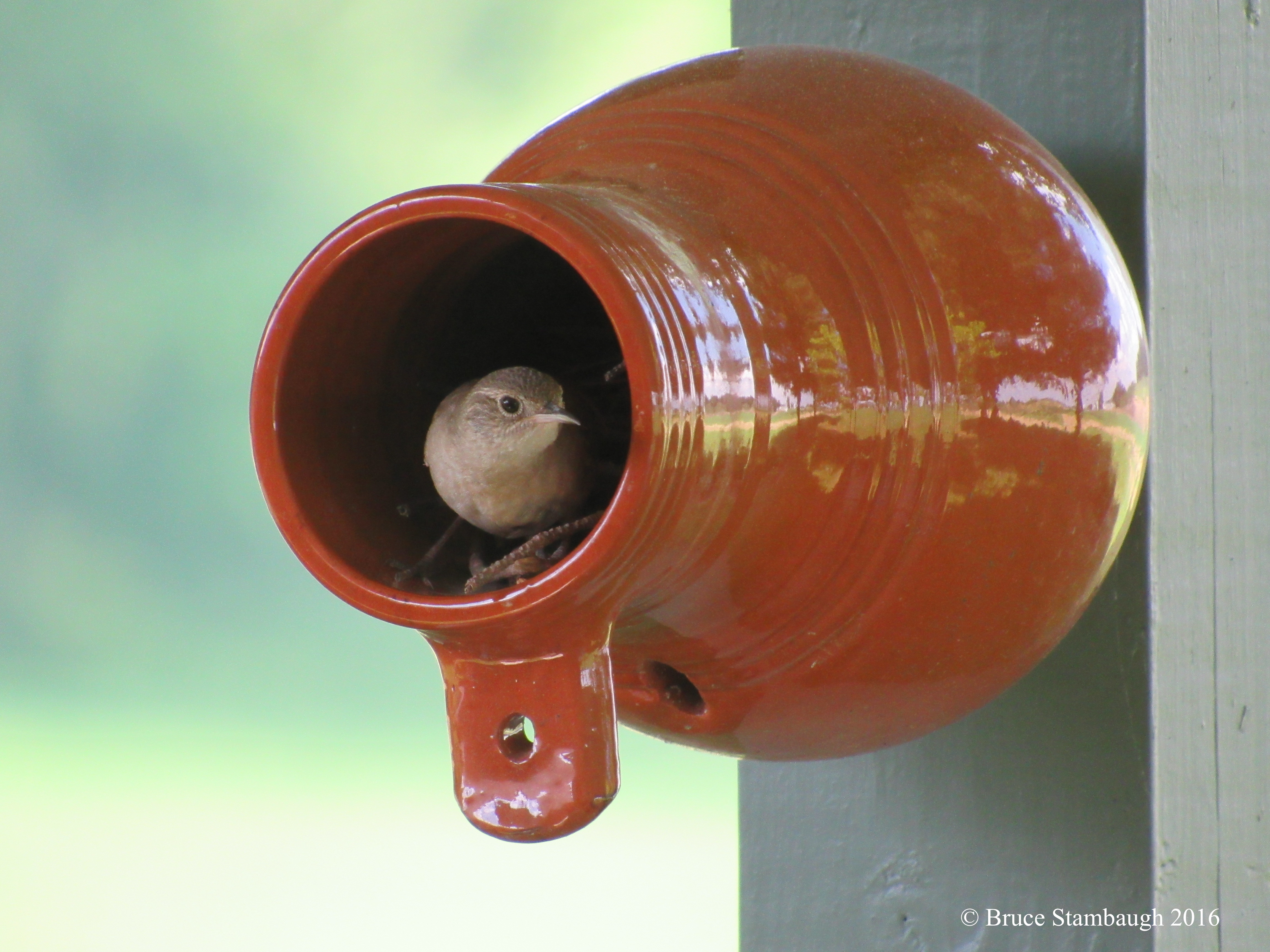
House wrens continue their month-long chatter of courtship, nest-building, incubation, and non-stop feeding. Once the constant rattling goes silent, the brood has fledged, and the cycle begins anew.
We humans of the northern hemisphere enjoy the extended daylight June affords. We work and play all day.
When the sun yields its daytime dominion, the moon, the stars, and the planets light up the heavens. We can enjoy the sparkling show until the neighborhood skunk sends us inside.
I reached into my archives and found this lovely Eastern Meadowlark singing from an old wooden fence post. You can frequently hear these colorful robin-sized birds before you spot them.
I thought the shot was the perfect way to welcome you all to June. “Whistling in June” is my Photo of the Week.
May’s Flower Full Moon was the last of the three supermoons of 2020. I wanted to photograph the full moon rising over the Massanutten Mountain Range that runs through the heart of Virginia’s Shenandoah Valley. However, my plans changed due to the weather. Spring has been unusually cloudy here this year. With a predicted clear sky on May 7, I was determined to capture shots of the full moon setting over the Allegheny Mountains that serve as the border between Virginia and West Virginia in Rockingham Co.
I had a clear view of the moon from Mole Hill, an ancient volcano, and noted area landmark west of Harrisonburg. Dawn’s early light highlighted Old Order Mennonite farms that dot the landscape all the way to the Allegheny foothills. The rusty silo, the brick farmhouse, the rolling, fertile fields, and the sweeping mountain slopes all take your eye right to the setting moon.
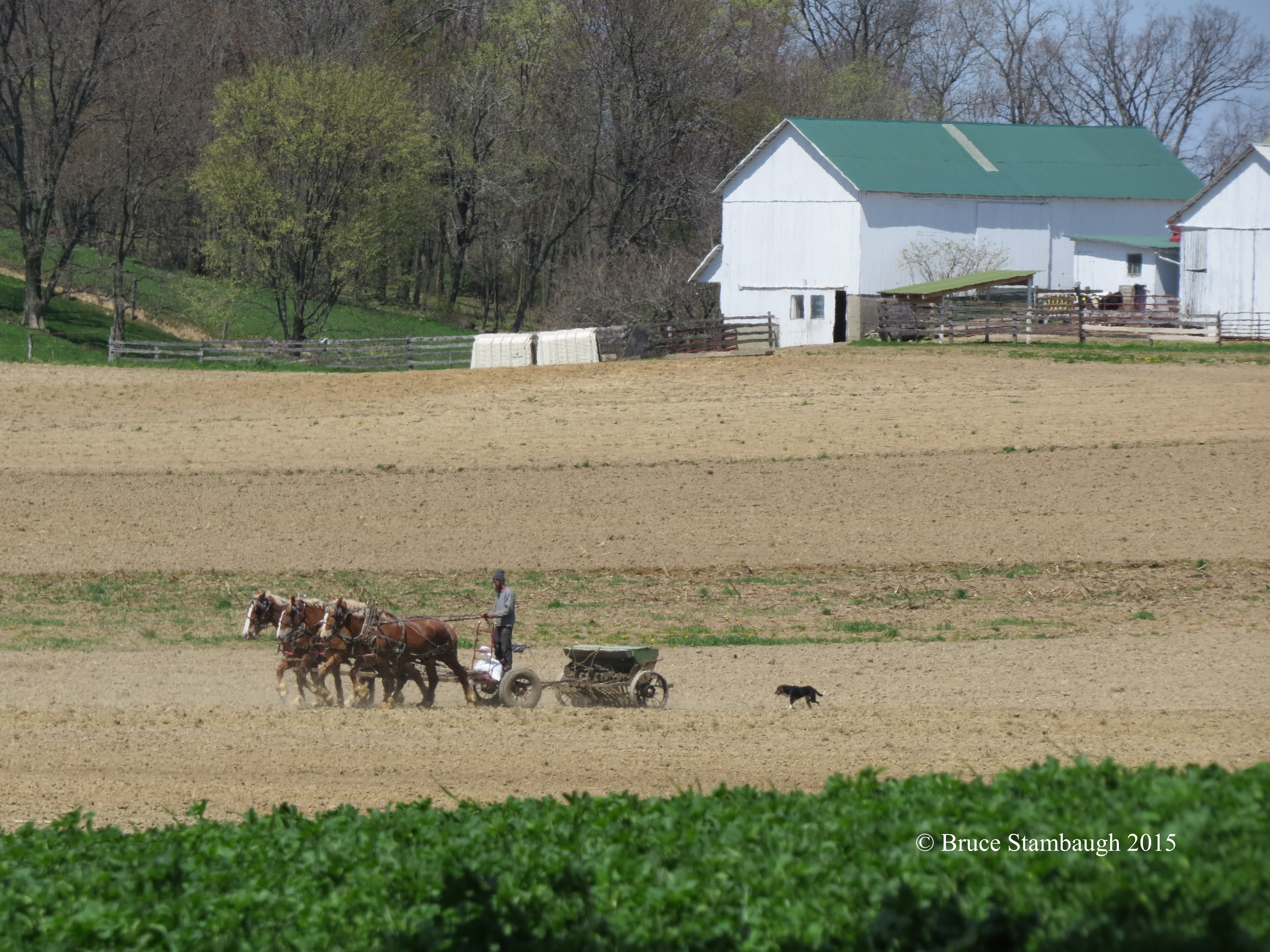
It was exactly five years ago today that I took this photo of our Amish neighbor planting corn in the late-April sunshine. Add in the faithful dog, and it’s an iconic spring scene in Ohio’s Amish country. A majority of the three to four million tourists who visit Holmes Co., Ohio, every year come for such nostalgic vistas as this. Horsedrawn plows and planters bring back fond memories for our most senior folks. It’s a way of life that is rapidly disappearing, even in the largest Amish population in the world. Today, fewer than 10 percent of Amish still farm.
“Spring in Ohio’s Amish Country” is my Photo of the Week.
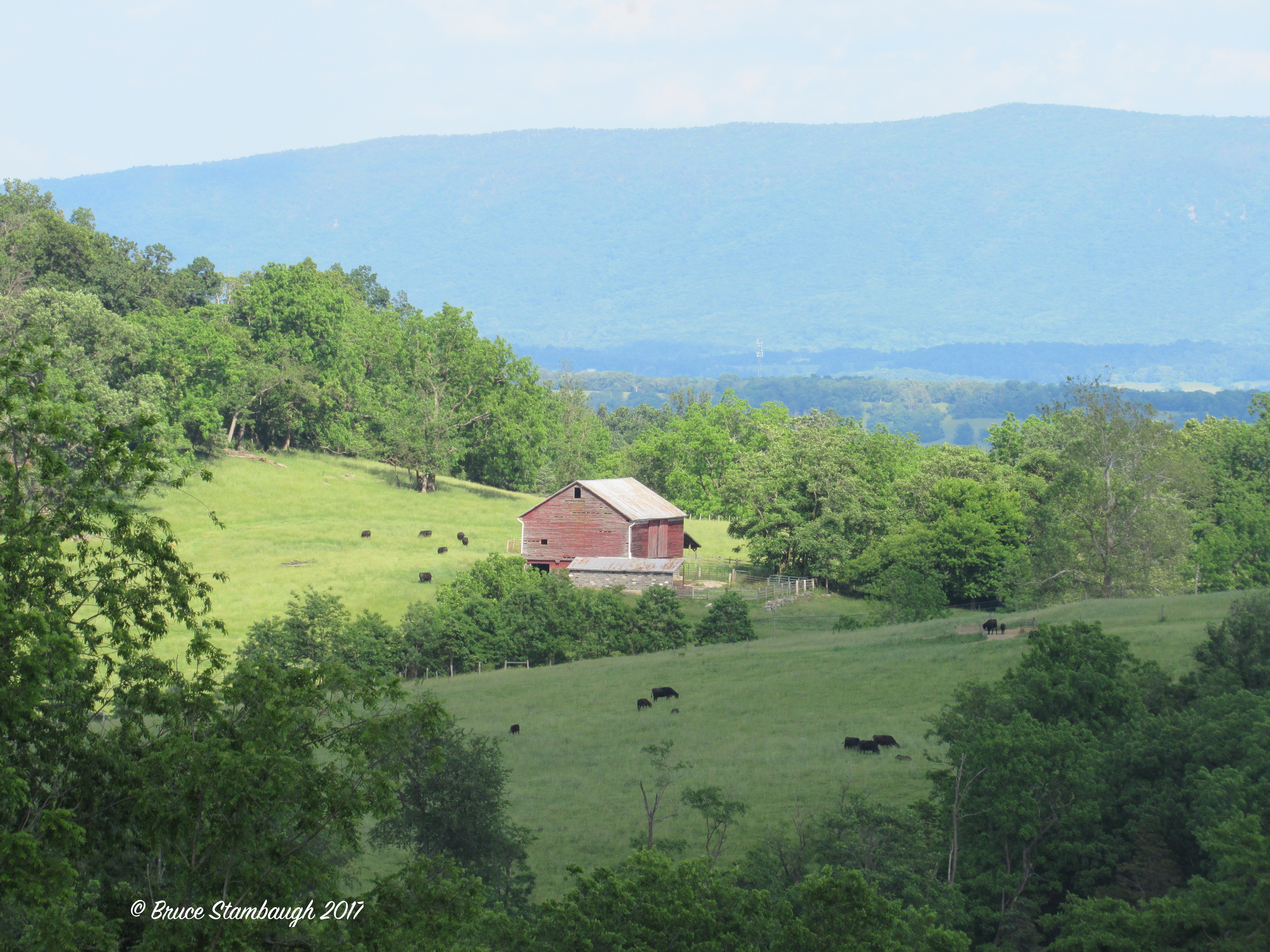
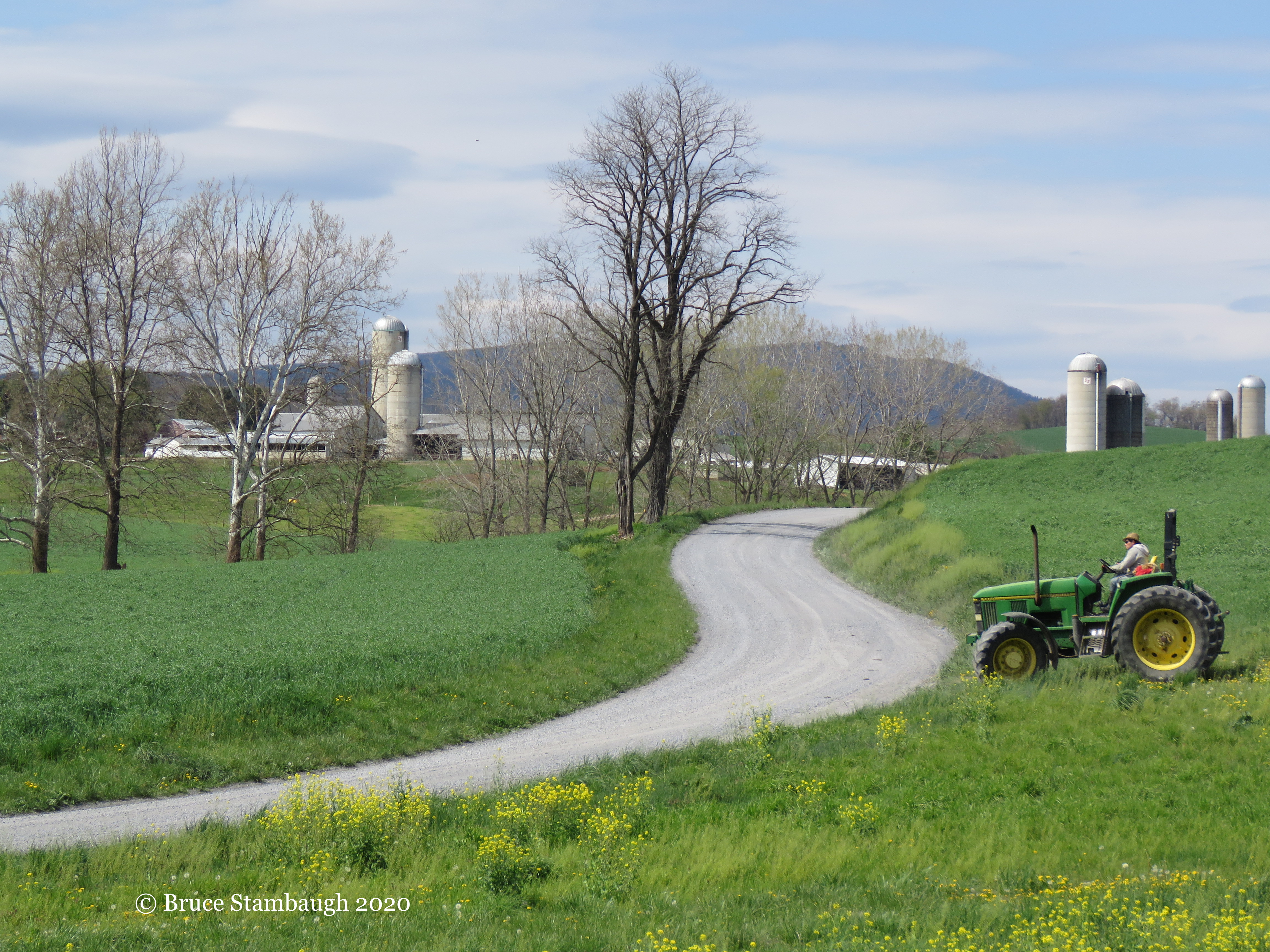
It must be spring! Farmers in Virginia’s pastoral Shenandoah Valley are out and about preparing their fields for this year’s crops. In fact, farmers in Rockingham Co., Virginia, have already made their first cuttings of hay for silage to feed their livestock.
This farmer, riding his ubiquitous John Deere tractor, was heading back to the farm.
To stretch my legs and get some fresh air during our self-quarantine time, I took a short drive to a local park. I was the only one there. As I walked along the paved path, I found this female Mallard resting on a limestone boulder in a small stream near Dayton, Virginia. She looked pretty contented to me.
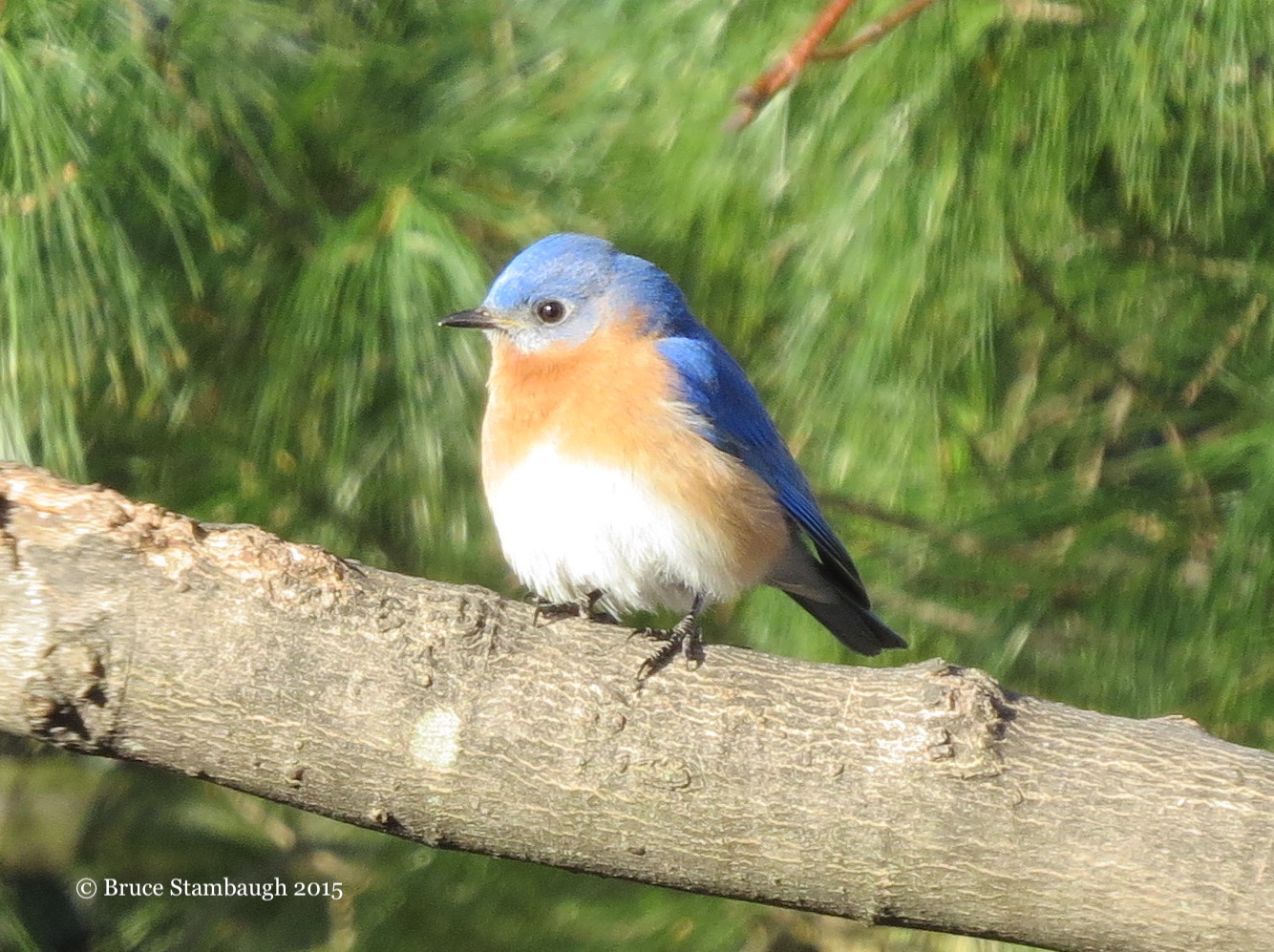
Eastern Bluebirds are some of my favorite birds. I love everything about them. Their colors are stunning, as this male perfectly models. Their songs are subdued, wishful, peaceful, and satisfying. They are docile, eat tons of insects and seeds, and are generally congenial to humans. Once on the decline, Eastern Bluebirds are making a comeback thanks in part to bluebird trails being established in appropriate habitat for them.
I took this photo five years ago in our Ohio backyard. This male was basking in the morning sunshine on a day late in March. Eastern Bluebirds made regular visits to my feeders year-round.





 Roadkill Crossing
You must be logged in to post a comment.