Lessons from the Civil War still need to be learned

Memorial markers commemorating the Battle of Cedar Creek.

My wife and I moved to the Shenandoah Valley more than three years ago to be closer to our three grandchildren. We also drew closer to the Civil War.

I remember studying about the Civil War in school, of course. But places and battles like Antietam, Gettysburg, Manassas, Petersburg, and Appomattox overshadowed any Civil War engagements that occurred in the breadbasket of the Confederacy.

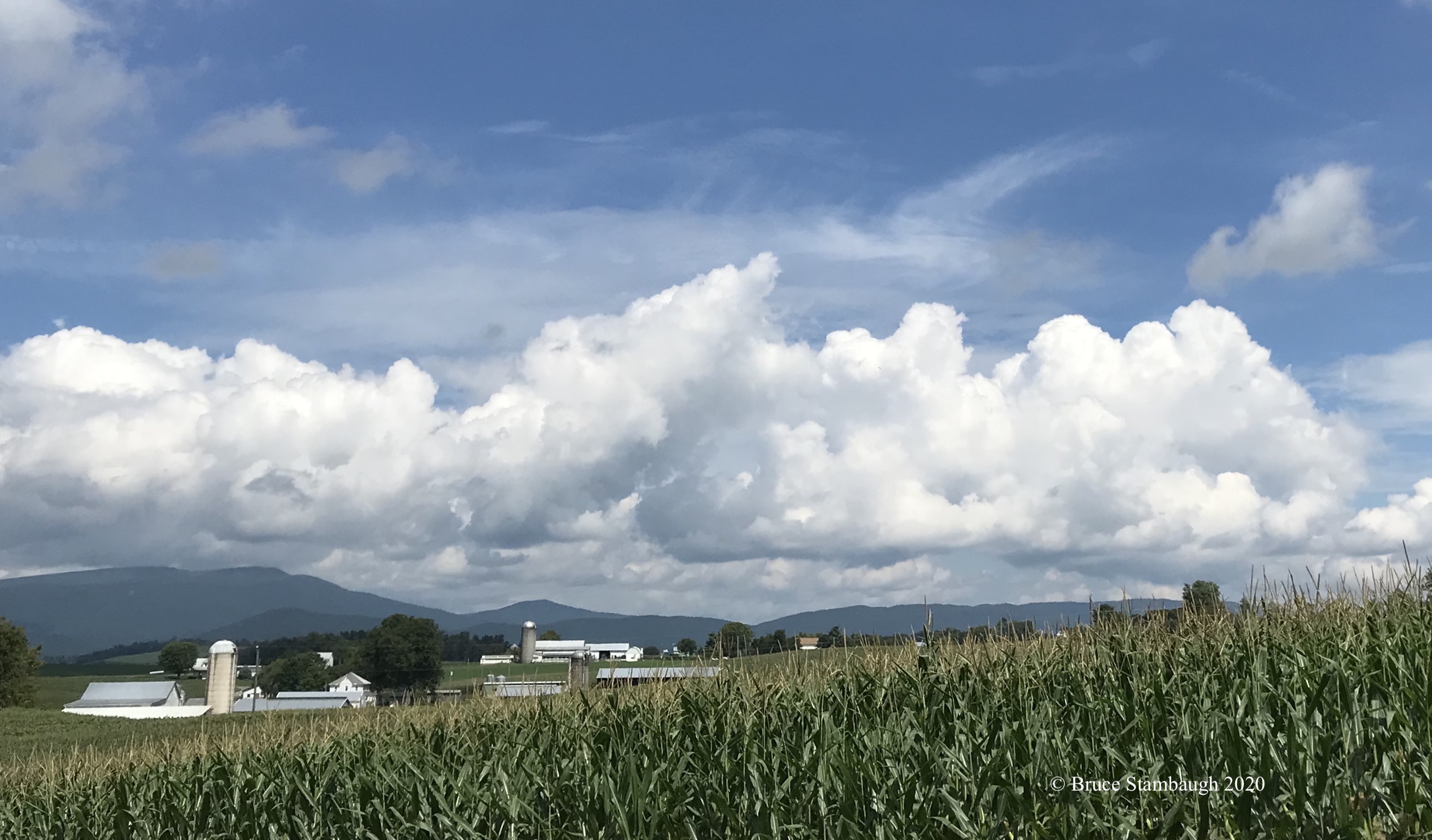
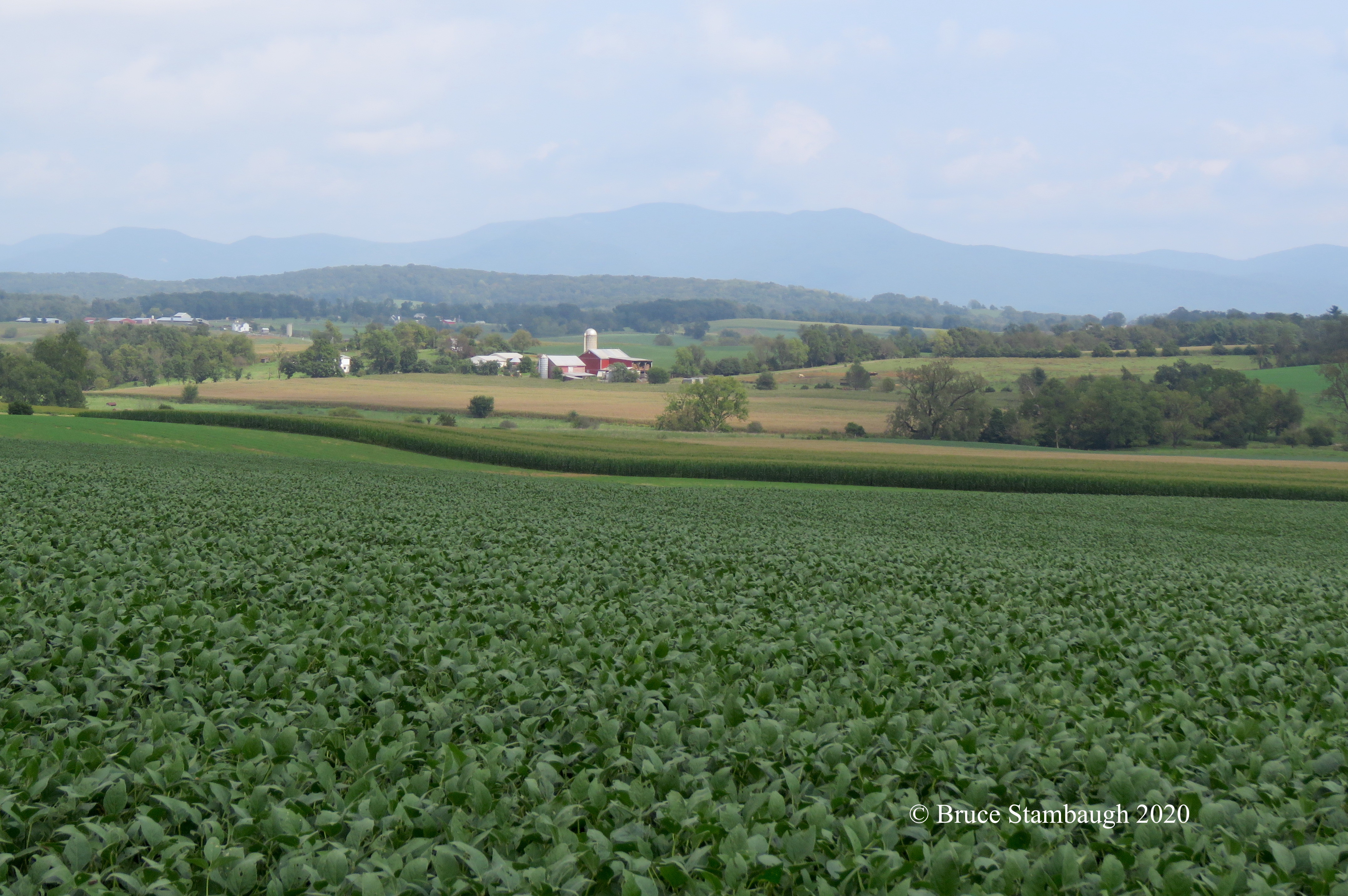
That agricultural label was apt. The Shenandoah Valley, especially the area where we live near Harrisonburg, played a vital role in keeping the Confederate States Army fed. The valley is still one of the prime agricultural regions of the Commonwealth.

Agriculture continues to be an economic priority in the Shenandoah Valley.

Many of the citizens of the valley joined in fighting for the south. Others from the Rockingham County area remained neutral, however, preferring to tend their farms. When troops from both south and north moved through the valley, they often bought or helped themselves to foodstuffs, produce, corn, and even livestock.

I recently completed an online university course on the Civil War in the Shenandoah Valley. I saw the class as an opportunity to learn more about what some locals still call “The War of Northern Aggression.”

Indeed, the class taught me much about the war, local mores and history, and just how much military action occurred on and along roads we regularly travel. At times, it felt eerie to know the exact number of casualties on both sides in settings we frequent.

I sat up straighter in my chair when the instructor shared a map that showed troop encampments around Harrisonburg, the central city in Rockingham County. When he pointed to where one of George A. Custer’s cavalry divisions camped, I took notice. It was the area where we live. A friend who grew up here told me that he only remembered our housing development as a pasture with lots of limestone outcroppings. He said it had never been plowed.

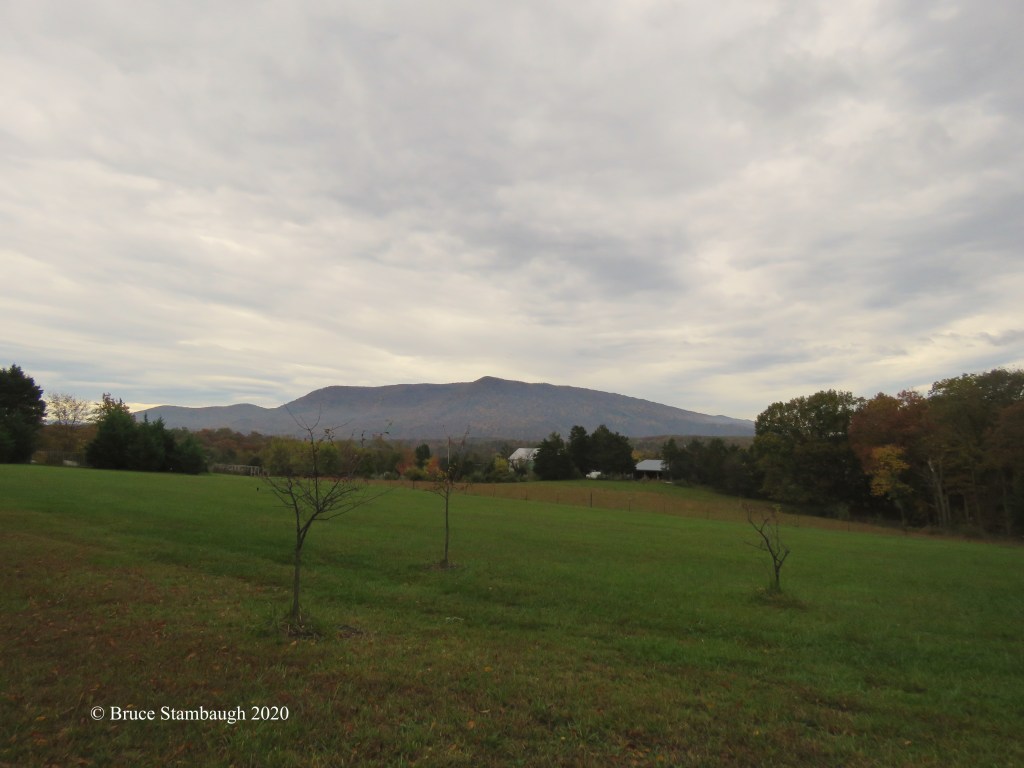
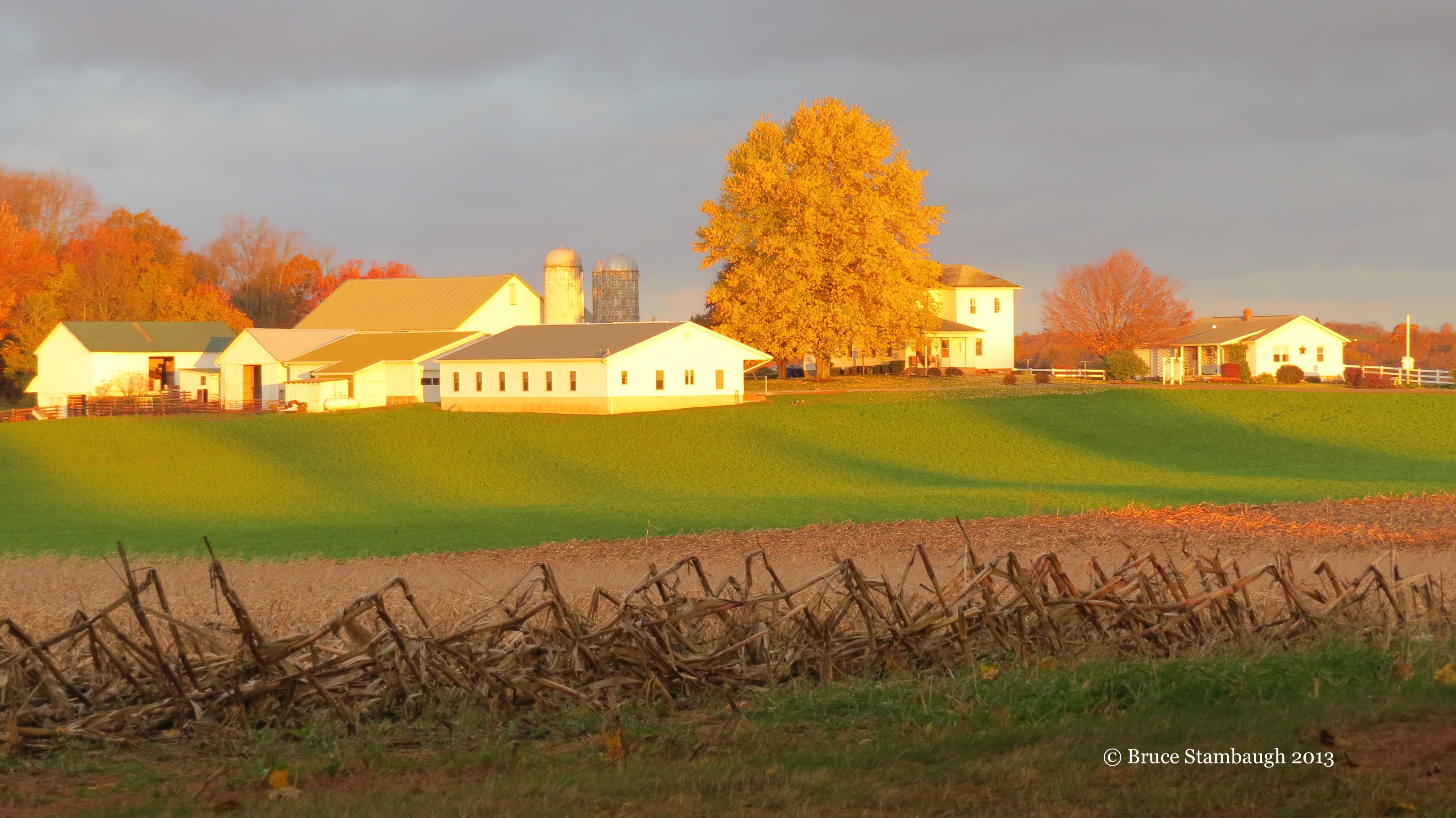
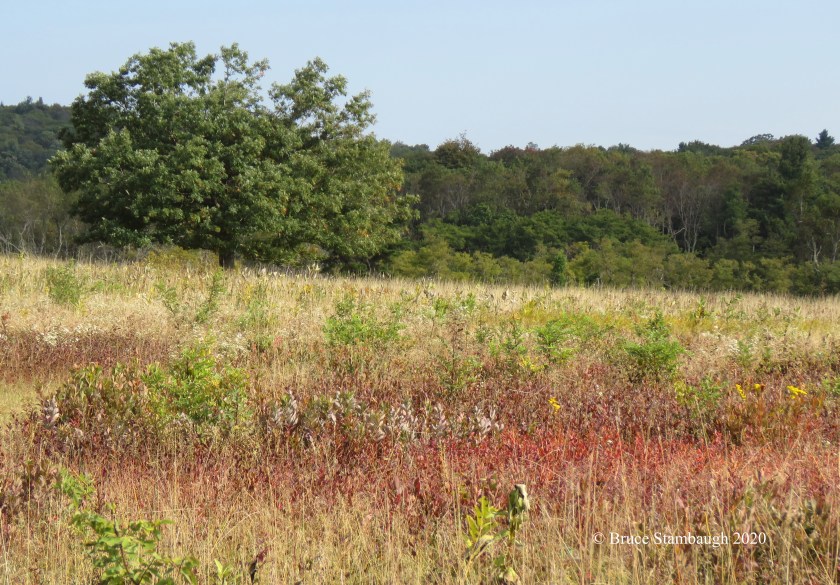
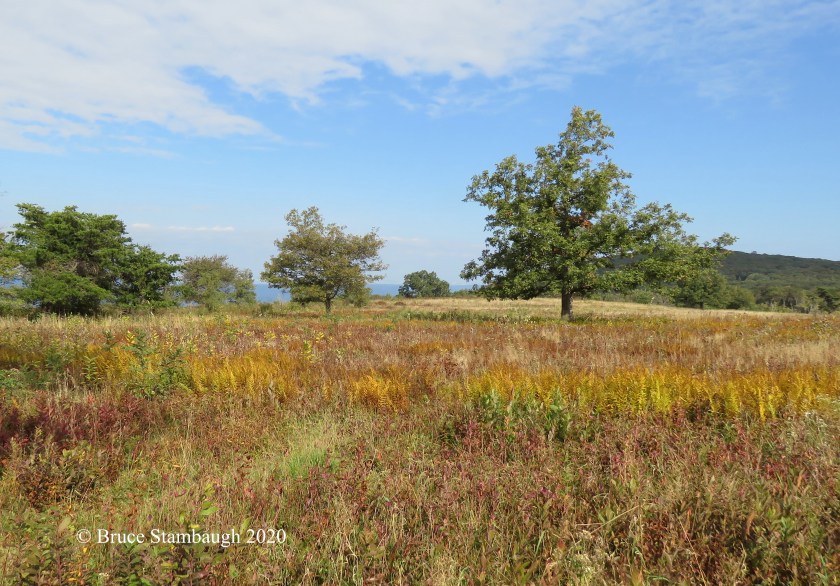
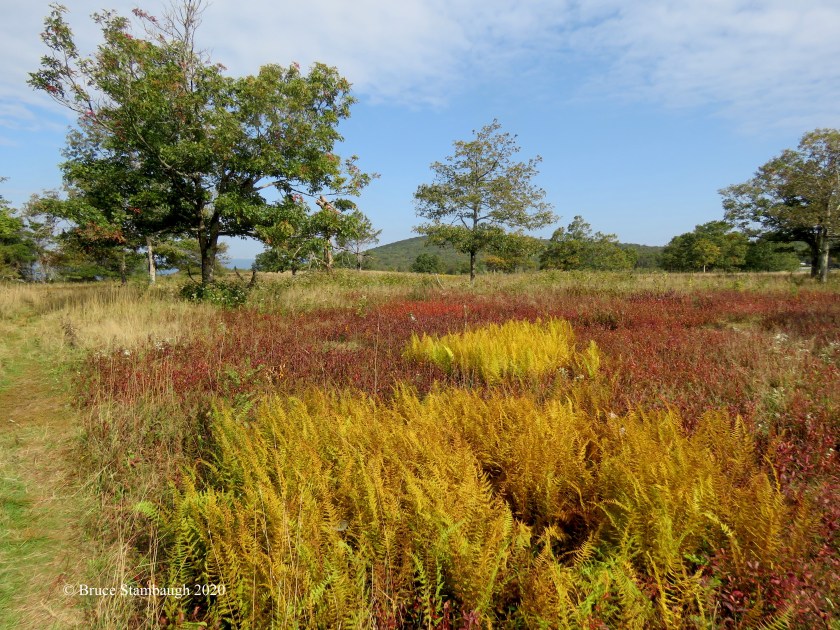
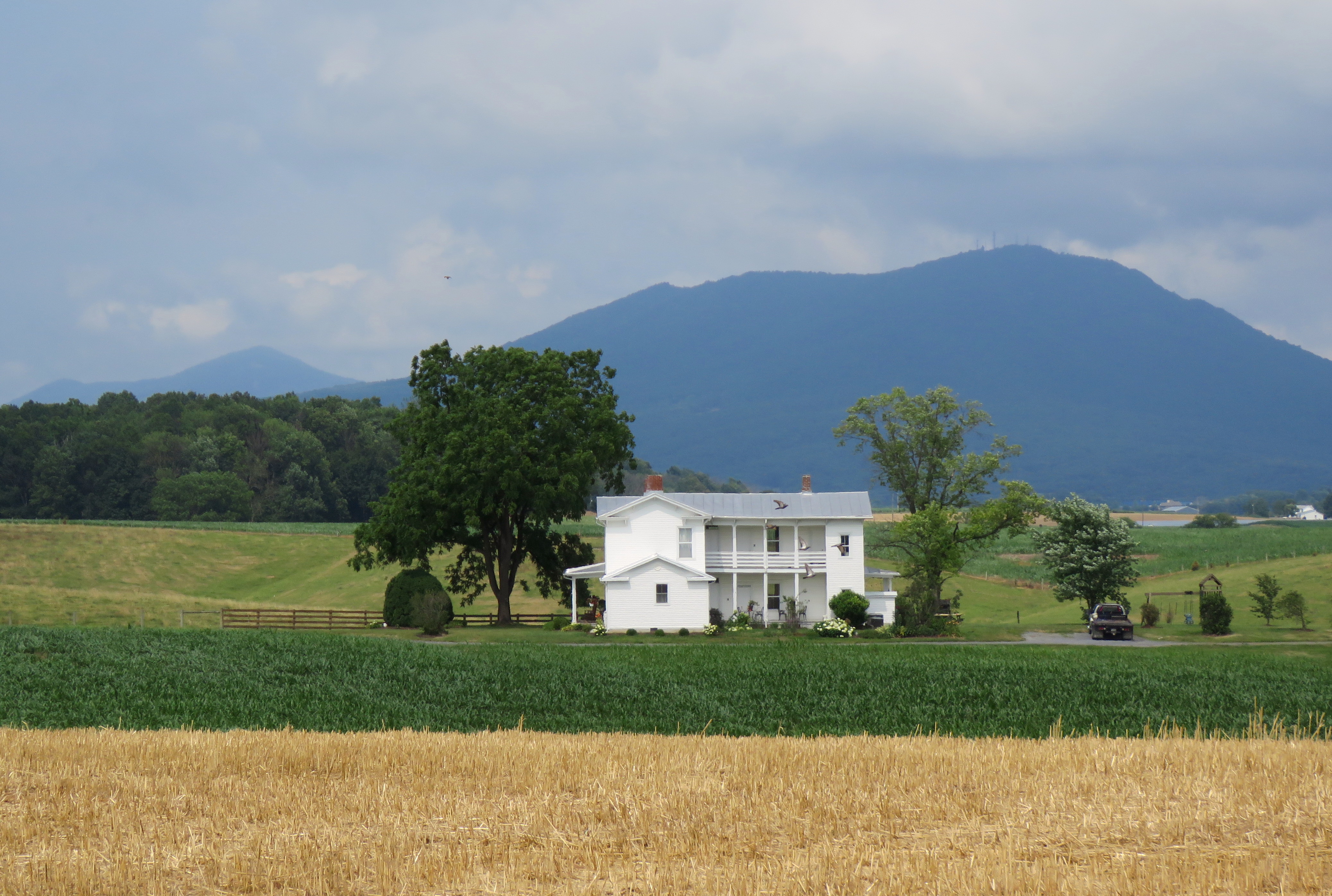
The most significant battles in the valley took place in the northern section near Winchester, where the photos above were taken. Lesser skirmishes happened in and around Rockingham County.

One such engagement happened near Cootes Store along the north branch of the famed Shenandoah River. I have a new reverence for the place that we occasionally drive by now that I know Confederates chased Custer and his cavalry across the river as Union soldiers forded absconded livestock. For the record, Confederate flags still fly all around that location.

The small historical town of Dayton, five minutes south of where we live, played a defining part in one of the valley’s darkest events of the Civil War. General Phillip Sheridan, commander of the Union Army in the valley campaign, learned that one of his top aides, John Rodgers Meigs, had been murdered near Dayton.

In retaliation, Sheridan ordered the burning of barns, mills, homes, and crops in a five-mile radius around the town. Most of the residents there were Mennonite farmers who had remained neutral during the war. Nor did they own slaves.

Another aide to Sheridan, Lt. Col. Thomas E. Wildes, begged the general to rescind the order because the residents had treated Union troops well. Sheridan relented, but only for the Dayton area. In appreciation, a plague was placed in Dayton honoring Wildes. Elsewhere in the valley, the Union Army implemented the burning. This action devastated the residents and crippled the Confederate food supply.
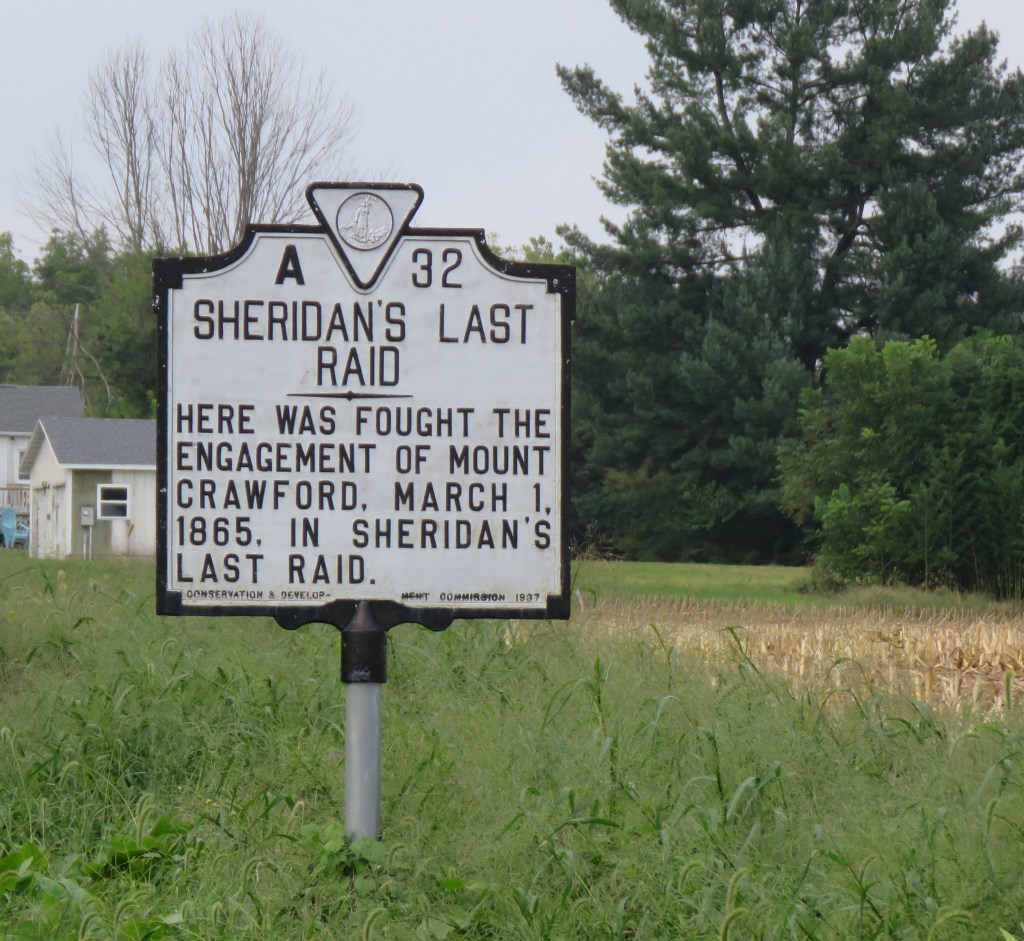
Those events are known as “The Burning.” Not surprisingly, hard feelings remain today. That attitude mirrors the current political animosity in the U.S.

As I viewed some of the local battlefields where thousands of casualties on both sides occurred, I couldn’t help but compare that violence to today’s heated rancor and divisiveness.

So how long should we hang on to hate? Isn’t it time to intentionally be more peaceable with one another?      

Union cannons at the Battle of Third Winchester.

© Bruce Stambaugh 2020
   

Autumn Splendor

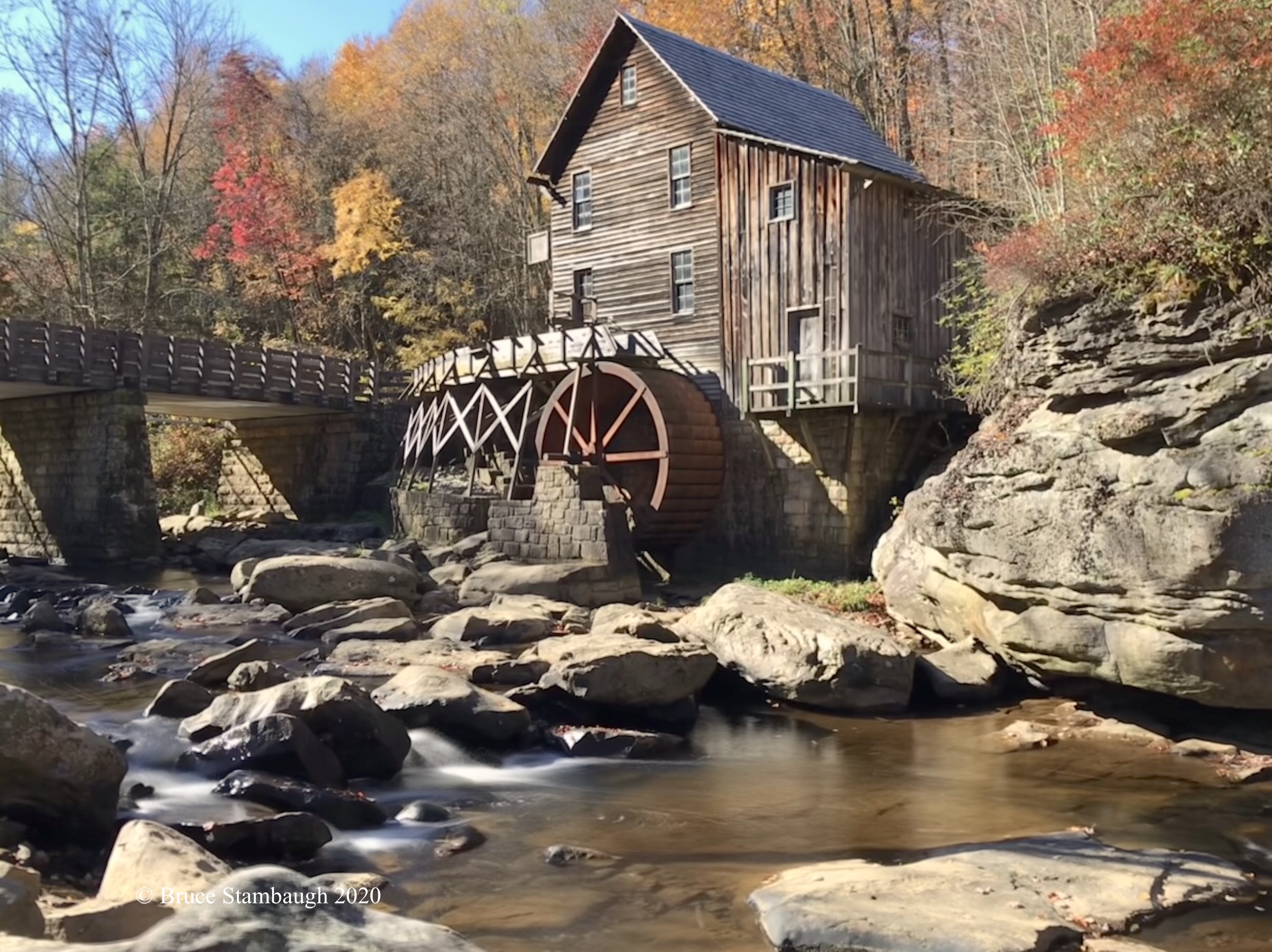
The Glade Creek Grist Mill in West Virginia’s Babcock State Park is on most photographer’s “must do” list. I was no exception, especially since moving to Virginia’s Shenandoah Valley more than three years ago.

The old mill is most often photographed in fall and winter. I missed the peak of the leaf color by just a few days. Still, I was pleased with the residual colors that framed the mill along its namesake stream.

“Autumn Splendor” is my Photo of the Week.

© Bruce Stambaugh 2020
Halloween pranks then and now

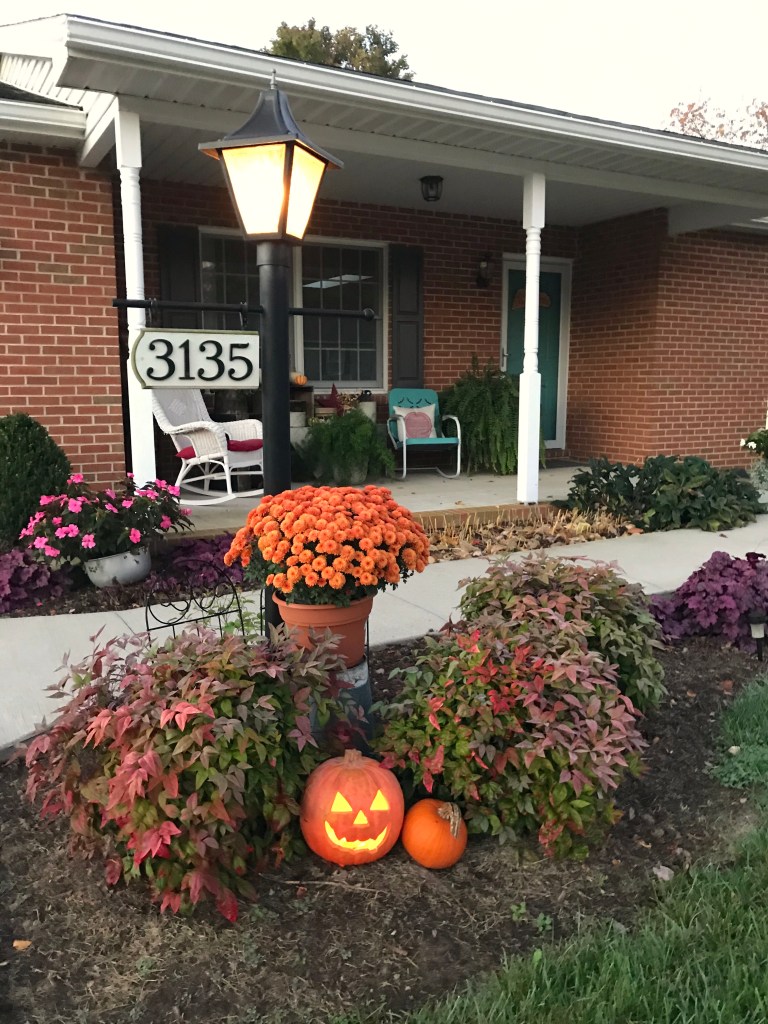
We don’t need a calendar to remind us that Halloween is just around the corner, quickly followed by the U.S. presidential election. Do we get doubly spooked this year?

I can’t decide which is worse, all of the Halloween related commercials or the political campaign ads on television. Sometimes it’s hard to distinguish between the two.

Halloween has had a history of inspiring misbehavior, reference Ichabod Crane. Unfortunately, ghoulish nonsense gradually replaced good-natured orneriness over time.

When I was a youngster, a hooligan once stole a pumpkin right off of our front porch. My younger siblings and I happened to see the teenage culprit dashing down Winton Ave. with our jack-o-lantern still flickering with each stride the young man took.

Once we arrived back home after a two-hour trick or treat raid of the neighborhood, we forgot about the lowly pumpkin. Our childish attention turned to comparing who got the most and the best candy.

Our family dentist declared the winner at our next checkups. The one with the fewest cavities won.

Growing up in suburbia in the 1950s and 60s was mild compared to today, however. Usual Halloween tricks included throwing shelled field corn against people’s windows to scare them. Soaping windows was also a common prank. Those who traded soap for paraffin were considered mean.

I found out what real Halloween tomfooleries were when we moved to Holmes County, Ohio, in the heart of Amish country. Torching corn stalks in the middle of the night and burning tires on highways were major annoyances, not to mention illegal and dangerous. The county sheriff added extra patrols to try to quell the orneriness.

I remember one story, vividly. A sheriff’s deputy that I knew was driving his cruiser through dense fog late one night. An egg thrown from a passing Amish buggy hit his vehicle, and a short pursuit ensued. The black buggy with no lights quickly disappeared into the thick fog.

Teens took turns tormenting different towns. It would be Berlin one night, Mt. Hope the next. Then it was Benton, followed by Farmerstown, and on and on it went.

There never seemed to be any rhyme or reason to the order of towns adorned. Toilet paper streaming from trees and utility lines decorated each village. I hope that doesn’t occur during the pandemic, or they’ll be another shortage of toilet paper.

Pranksters would hoist farm equipment atop buildings and corral “borrowed” livestock in town squares. At least they provided hay and straw for the animals. The critters and buggies usually found their way back to the rightful owners.

Trick or treating was more controlled in the rural areas. Community organizations and volunteer fire departments hosted gatherings for children and handed out candy in pre-stuffed bags. Hundreds of costumed kids paraded before judges, who then awarded cash prizes for the funniest, the most creative, and the scariest costumes.

This year community-based parties like those that our children attended will replace trick or treating. With the pandemic still raging, many communities around the country are rightly canceling traipsing door-to-door.

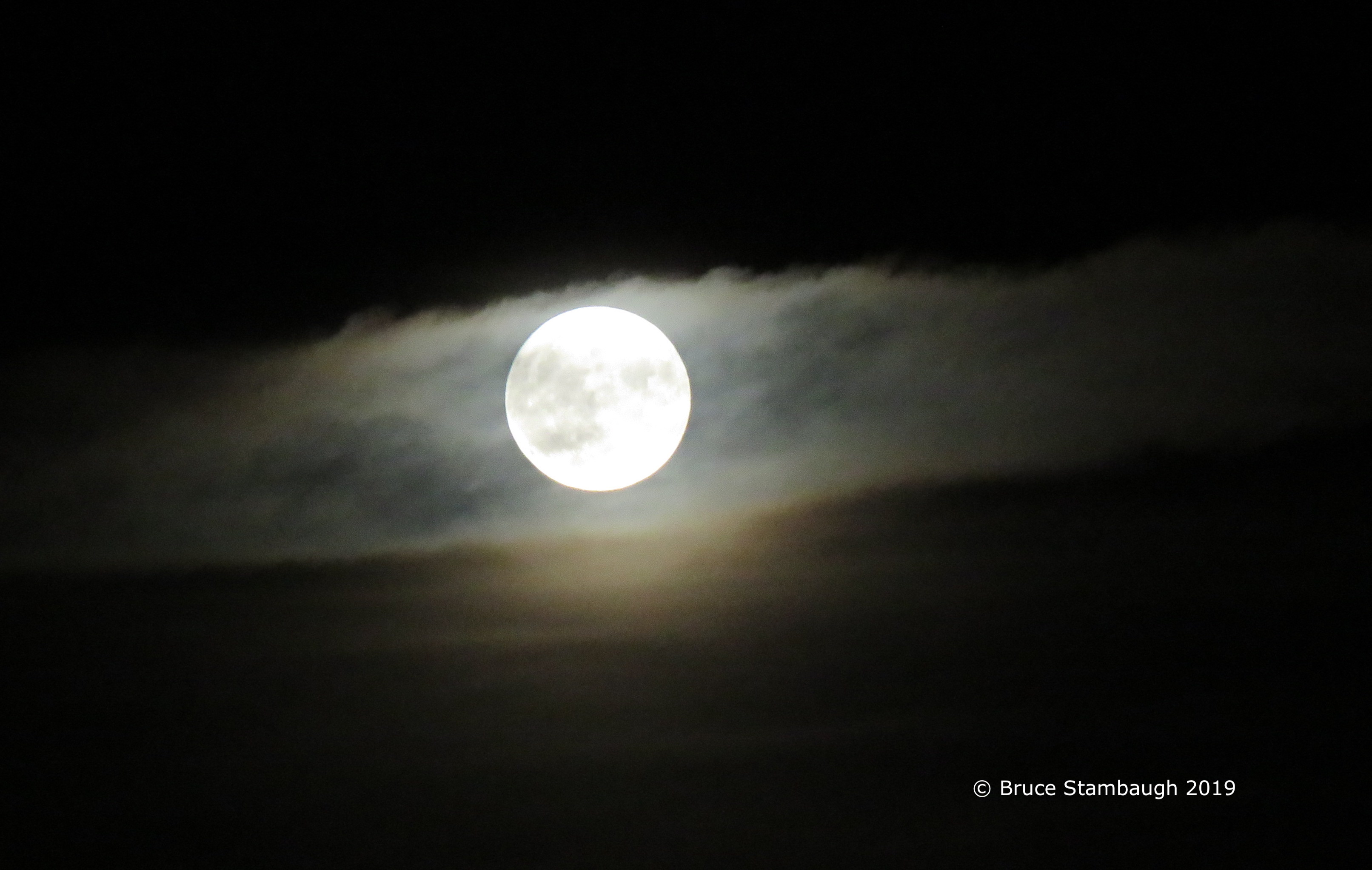
But don’t worry. This year Halloween night has some extra special celestial treats for everyone. The night sky will scare up a Blue Moon. The October 1 Harvest Moon was the month’s first full moon.

There’s more. Mars won’t be this close to Earth again for a long time. The red planet will cozy up to the full Blue Moon on Halloween night.

Let’s hope for a clear sky so that we can enjoy the heavenly show. Just don’t gaze skyward too long. Someone might steal your pumpkin.

© Bruce Stambaugh 2020

What a view!

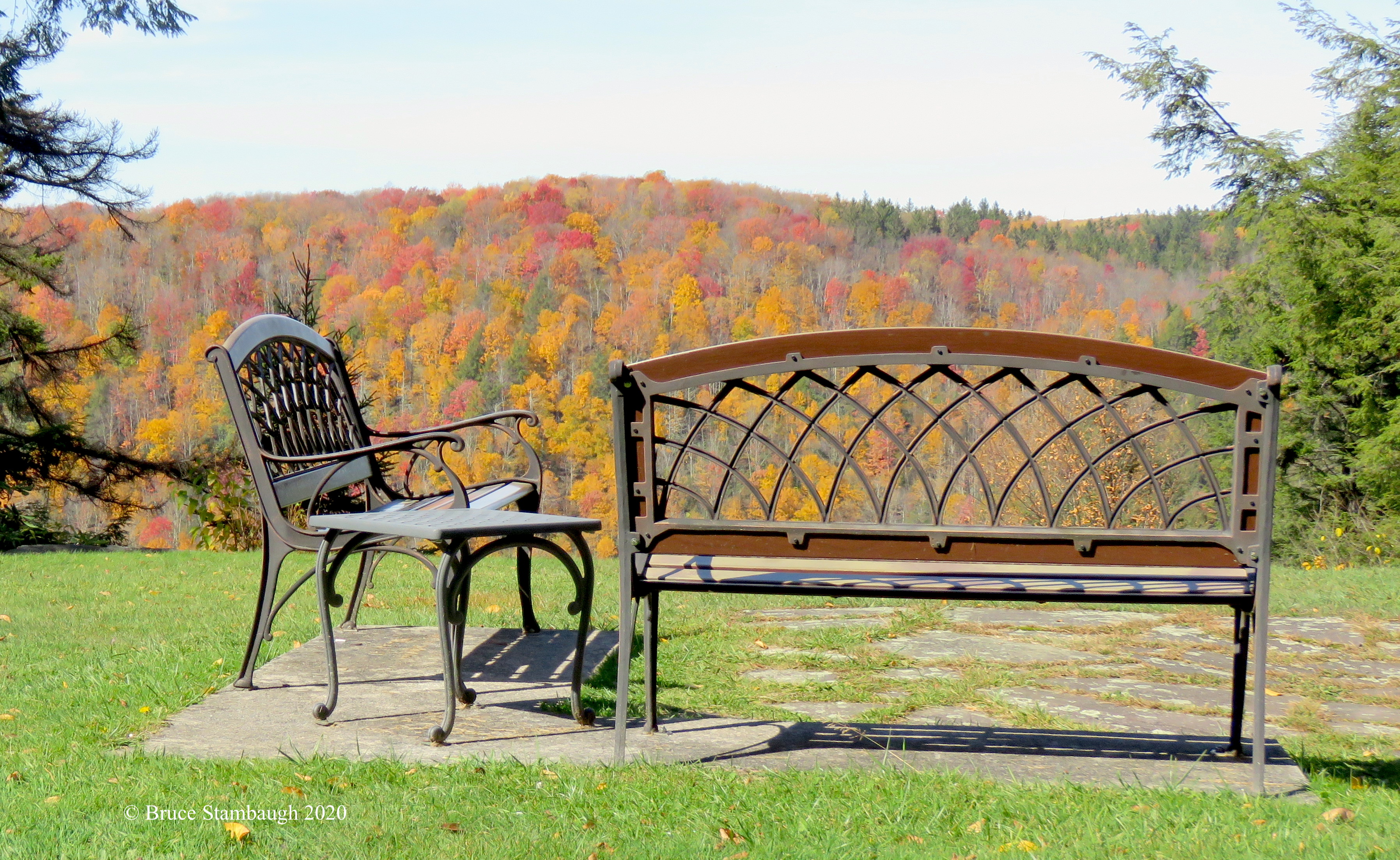
My wife and I had heard of Blackwater Falls State Park near Davis, West Virginia. But we had never been there. When our neighbors told us that the leaves were at peak color, we did a day trip to check it out. We weren’t disappointed.

It had rained the previous day, so some of the trees had dropped a few leaves. Still, the Blackwater River valley was gorgeous from every angle. This was the view from our lunch table outside the lodge. The scalloped designs and curves of the pair of love seats and the end table in front of us created an intriguing foreground for the lovely leaves beyond.

“What a view!” is my Photo of the Week.

© Bruce Stambaugh 2020
Pure Gold

This was our view every fall when we lived in Ohio’s Amish country. I took this shot from our backyard. The sun had just risen above the hills to our east, bathing everything, including the already colorful leaves, in pure gold.

“Pure Gold” is my Photo of the Week.

© Bruce Stambaugh 2020
Letting Creation find you

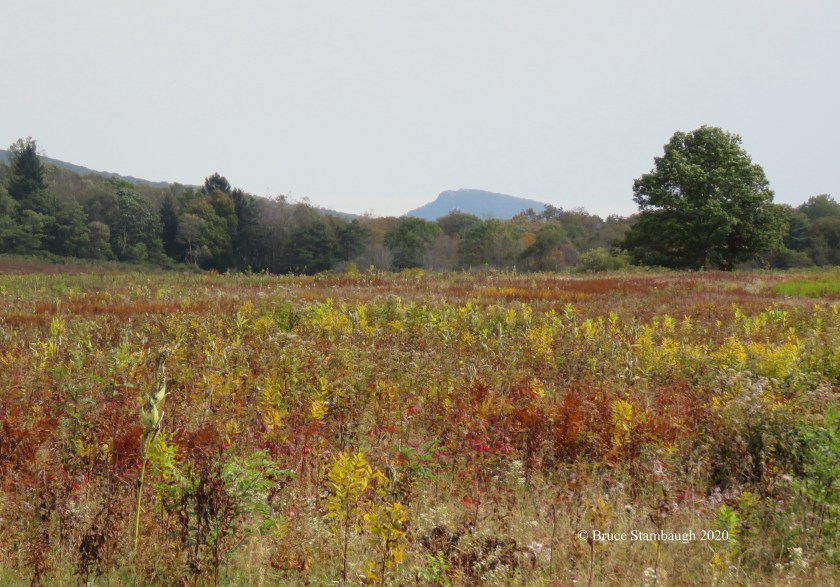
Looking west from a point in Big Meadows in Shenandoah National Park.

Even though the morning’s southeast breeze was gentle, the leaves rained down like ticker-tape parade confetti. I was in my favorite outdoor space, Shenandoah National Park’s Big Meadows.

Big Meadows is an anomaly. No logical or scientific reasons can explain why the expansive meadow sits in the middle of this popular national gem.

Scientists have determined that there is nothing unique about the soil’s geologic makeup or bedrocks below that would create a meadow in the middle of a forest. In a matter of yards, the foliage changes from plants of a kettle-like marsh to wooded hillsides. I imagined Big Meadows as God’s thumb stamp of approval on these ancient mountains.

In the short time we have lived in Virginia, I’ve found fall is my favorite time to visit this gorgeous spot. From our valley home, the weather appeared to be perfect. But when you visit the mountains, conditions can be changeable at any time of year. I packed for the unexpected, and that’s what I got. With every step, creation’s glory unfolded.

You could hardly call my creeping along as hiking. I followed the parameter of the southern part of Big Meadows. In three hours, I covered only a mile and a half. A wooly worm would have made more progress, but likely not shared my joy.

I wasn’t out to break any endurance records. I went to see whatever came to me as I strolled along and through the area’s various topography. In the mountains, just a change in altitude of a few feet makes a big difference in the kinds of vegetation that grow.

This gently sloping mead is home to flowers, grasses, reeds, trees, and assorted creatures great and small. As an invader of their varied habitat, I tried to remain obscure.

With fall’s migration, I knew plenty of bird species might be passing through on their way south. I expected year-round residents, too, along with a few lingering butterflies.

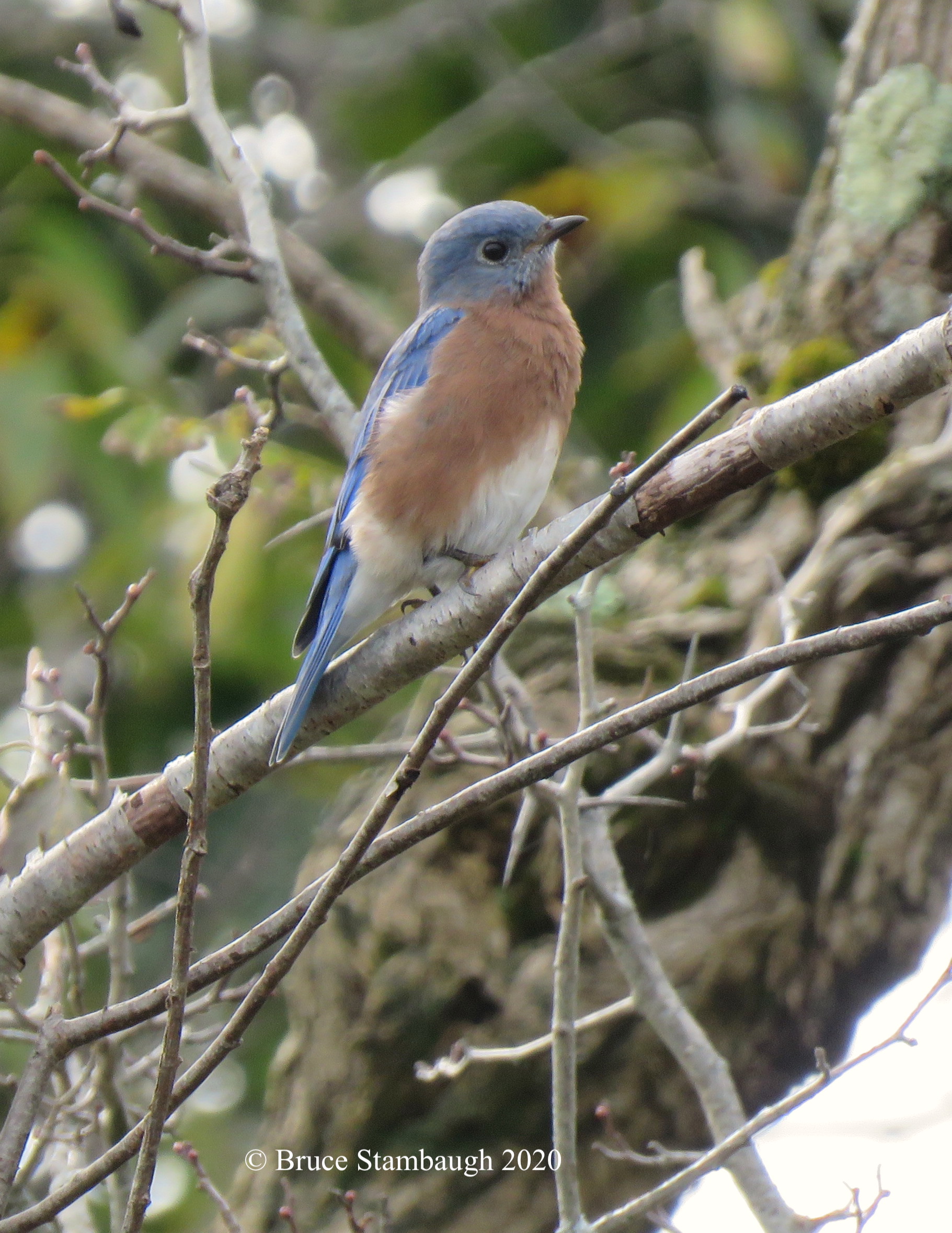
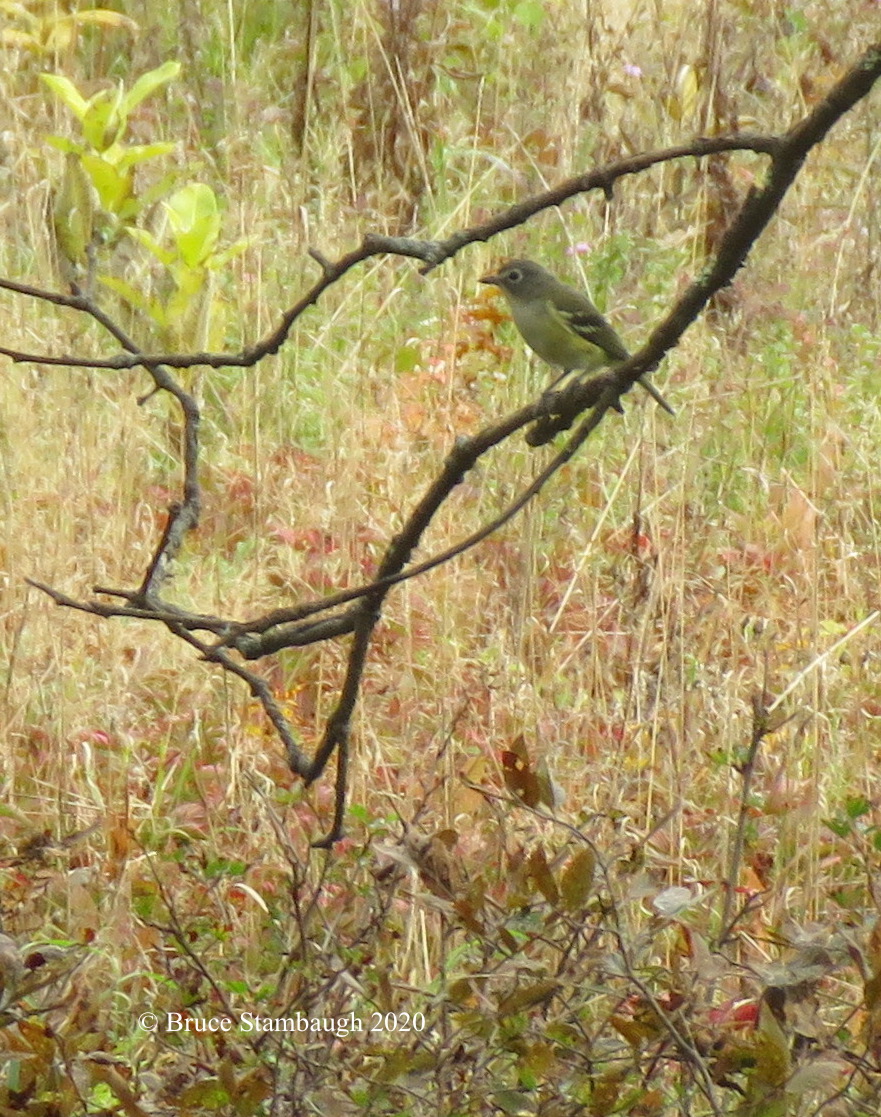
Resident eastern bluebirds and handsome field and song sparrows greeted me. Eastern phoebes, magnolia warblers, blue-headed vireos, Carolina chickadees, and dark-eyed juncos darted about, too.

Dressed in their duller non-breeding feathers, some birds, especially the warblers, went unidentified by this average birder. Chirps near and far came from other species that I couldn’t locate.

I crept along the raggedy edge that separated fields from woods, exhilarated. I lingered in a high place beneath a sweeping white oak at the meadow’s southernmost border, where I could see near and far.

Contentment filled me as I sensed all the life around me. Instead of hiker, birder, or photographer, I was an uninvited but appreciative guest. Every moment bore existential meaning.

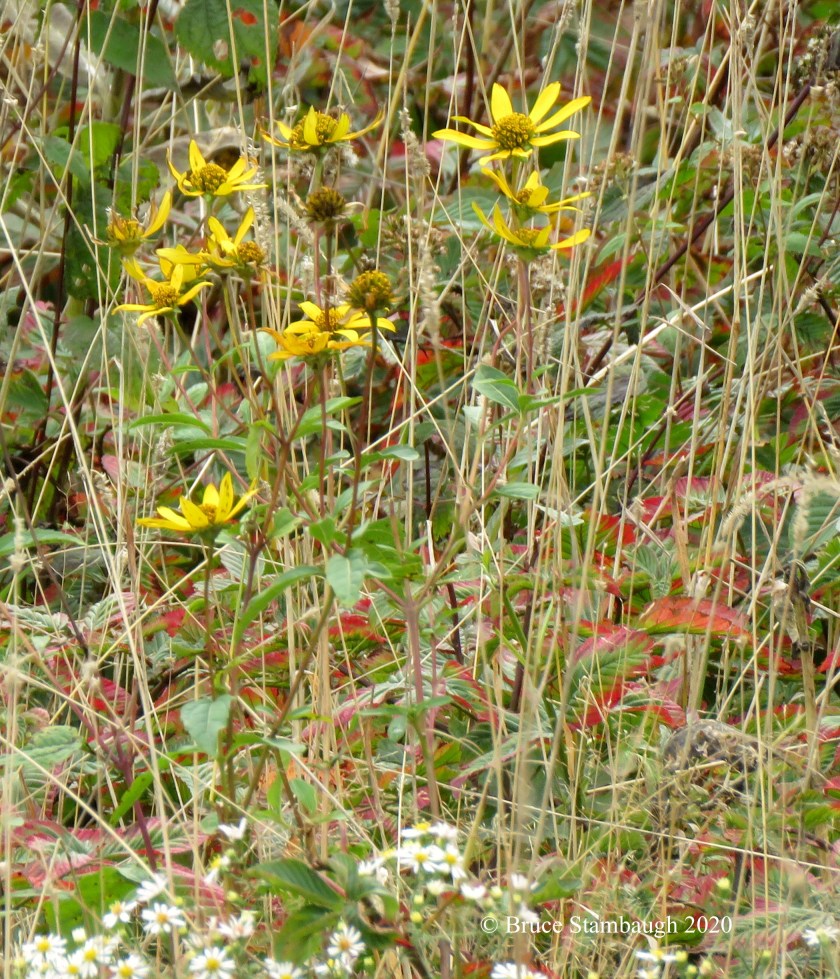
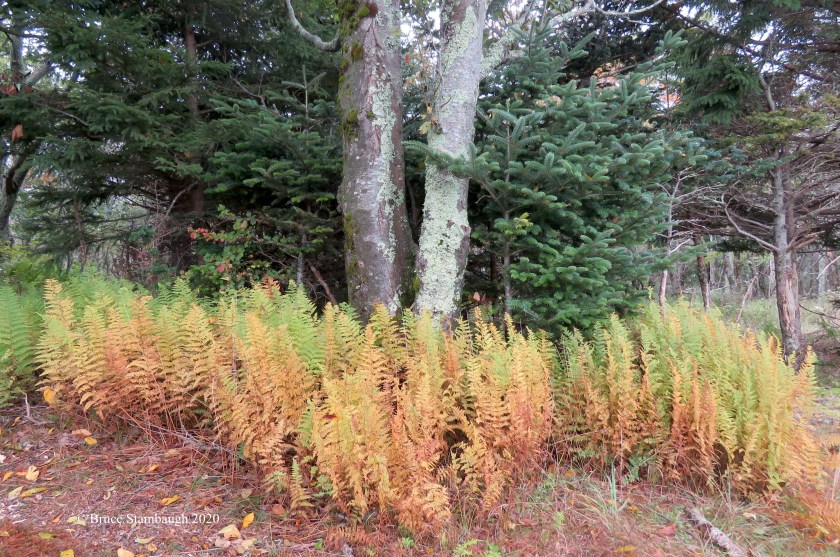
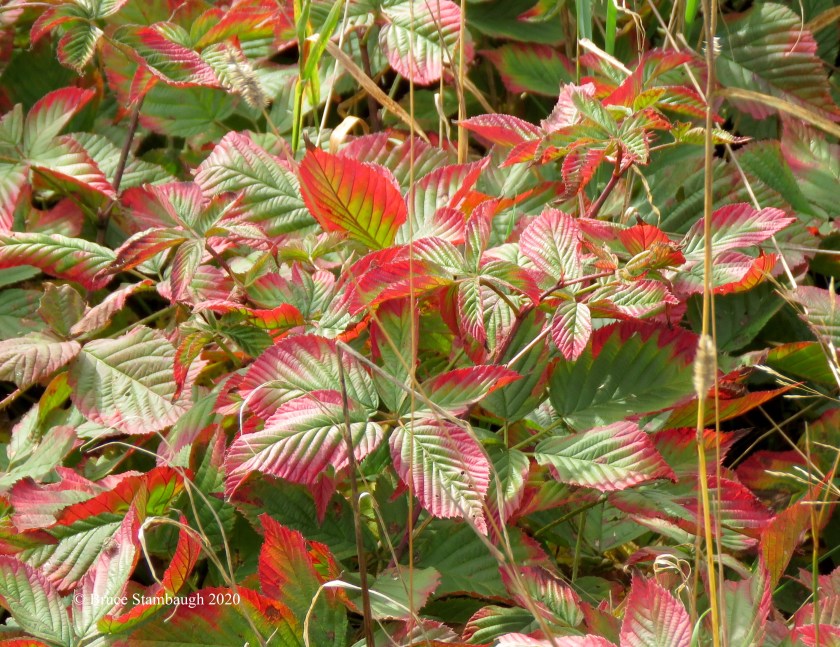
The first frosts of the season created a festive carpet of fall’s primary colors that spread across the landscape. The leafy trees and evergreens looked on in envy. Red-tinted green leaves, spent wildflowers, delicate ferns frosted golden, ruby-colored blueberry leaves, and russet grasses decorated the earth like it was Christmas.

Overhead, the sky also joined nature’s artistry. One minute, it was pure cerulean, the next white fluffy clouds.

Suddenly, a fog rolled in from the eastern piedmont. The steady breeze soon carried it to the western slope of the Blue Ridge Mountains.

I breathed an appreciative silent prayer of gratitude for all these sights and sounds. The old withered away, yet the promise of rebirth remained.           

At every step that I took, I was delighted to have observed all that found me.

The fog that hung over Shenandoah National Park even after I left.

© Bruce Stambaugh 2020
Entering the October of my life

October in Ohio’s Amish country.

October offers up some of the year’s best weather. It often claims ownership of the year’s first killing frost, too, and the first snow. Sometimes it’s both.

October and I have a lot in common.

Weather is one of my favorite hobbies. I have satisfied that itch as a volunteer severe weather spotter for half a century for the National Weather Service. However, October is usually one of the quieter weather months unless a tropical storm plays havoc across the eastern U.S. Evidence 2012’s Superstorm Sandy.

The western edge of Superstorm Sandy exits Holmes Co., Ohio.

October tends to be the calendar’s buffer between fairer weather and the more barren, colder months that follow. In other words, the tenth month foretells the winding down of every year. There can be no better year than the present to draw to a close. I doubt that I need to elaborate or provide the gory details.

Enough of the quixotic shenanigans. October and I have much more in common than climatological conditions.

I’ve entered the October of my life. I stay as active as I can, but it’s pitiful to watch me throw a tennis ball for our granddog to fetch. Millie is so unimpressed that she often refuses to give up the retrieved ball I’ve thrown.

Millie.

Millie knows that my toss can’t compare to that of our oldest grandchild, the 16-year-old with a pitcher’s arm. Millie gets to run far beyond one of my feeble efforts.

Before and since my knee replacement a year ago, I have maintained a regular exercise routine. I also do yoga twice a week. I try to walk a mile every day. I ride my bike around and up and down our inclined neighborhood. To look at me, you wouldn’t know that I do any of that.

I have never been a muscular guy. But I usually could hold my own in most physical activities. Not anymore.

I am not ashamed to admit it. I’ve accepted where I am in life. I also kindly relent to any assistance from passersby when I’m toting multiple bags of mulch or birdseed, or anything heavier than a gallon of milk. I’m old, and I want to get older. So I quash my male ego and accept offers to help.

A few years ago, Walter C. Wright wrote a book, “The Third Third of Life: Preparing for Your Future.” It’s a workbook to help you ready for retirement and beyond. It’s an easy, practical read. The hardest part is accepting the fact that you are in that senior citizen-stage of life. For some, it comes sooner than it does for others.

When I was young, I’d spouted off that I would live until I was 100. I have longevity on both sides of the family to back that up. But I also have ancestors who never reached retirement age.

Like leaves on deciduous trees, I want to keep on hanging on as long as I can. However, the leaves, of course, eventually color, fade, and fall.

I also understand that that is where October and I differ. After the foliage tumbles, buds protrude for next year’s crop to unfurl, and once again nurture the growing tree with a thriving canopy.

Humans don’t have that option. We get one shot at life unless you believe in reincarnation. For the record, I don’t. But if I did, I would return either as a chiropractor or a meteorologist.

October is a fine month of the year. I have fond memories of her from childhood to the present. Here’s to many more nostalgic Octobers for everyone.

October on the line.

© Bruce Stambaugh 2020

Meditating while driving

A balmy day in the Shenandoah Valley.

When I drive alone, I often meditate.

It’s not what you might think. I don’t close my eyes, of course. I just enjoy the peace and the time alone to think. I don’t forget about driving. It would be both foolish and dangerous to do so.

I try to allow extra time for a more leisurely drive. I avoid superhighways. Backroads are my preference because I never know when I might need to stop to take a few photos of the fantastic scenery that Virginia’s Shenandoah Valley affords.

Unlike my younger years, I drive silently. No radio, no CDs playing. I enjoy the quiet unless the road surface is too rough. Then I take in the music that my tires sing to the tune over the various macadam surface textures. The octaves change by the mile.

I’ll use the GPS when I have to. Once I know the way, however, I am on my own, like the other day when I had a doctor’s appointment 35 miles away.

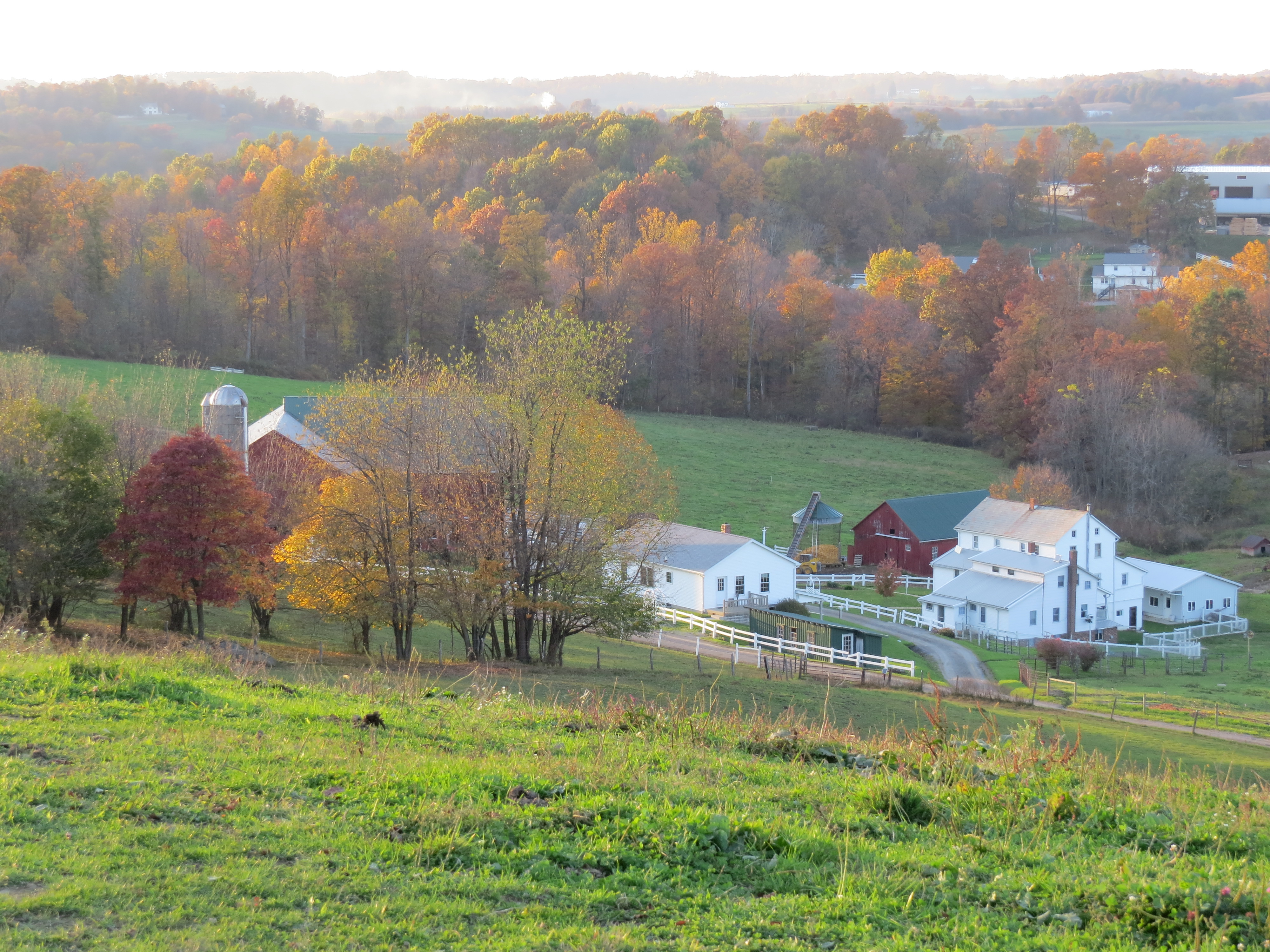
A typical farm in the Shenandoah Valley.

I left nearly two hours before my 2 p.m. appointment. Besides a couple of brief planned stops, I knew there would be photo opportunities along the way. I had been that route before.

Driving in that contemplative state helps to clear my mind from all of life’s noisiness. Plus, I get to enjoy the mountains to my left and mountains to my right. In between, there is nothing but gently rolling countryside dotted by farms, fields, forests, and more gigantic chicken houses than I care to count.

Weather permitting, I ride with the windows down and the sunroof open. I sometimes pay the price if I pass a freshly manured field.

This trip turned extra-special. Once I passed Sulphur Pump Road, I turned south on the narrowest windy way with no ditches and farmers’ fences hard against the blacktop.

The paved path twisted and turned, rolled up, down, and around until I made a slight right onto Battlefield Road. In less than a half a mile, I crossed a short narrow bridge in the curve of the road. Ahead, an old plantation sat high on a ridge behind a grove of mature pines.

The spot where young men died in the Civil War Battle of Bonnie Doon.

At this exact spot at the bottom of the hill, Americans fought Americans in a Civil War skirmish. Hand-to-hand combat ensued, with heavy casualties on both sides. Today, fruit trees and fence line trees waved in the wind.

No historical marker identified the bloody spot. I knew it from a Civil War class that I am taking remotely. It was this week’s lesson.


Farther south, a couple of miles, two different historical markers on opposite sides of the road defined the facts and sight of a deadlier clash, the Battle of Piedmont. Field corn and an impressive planting of soybeans nearly hid both plaques, while the Blue Ridge Mountains and Shenandoah National Park created an enchanting backdrop.

I wondered if people knew what had taken place here, the massive loss of life, the many casualties, and prisoners of war, the consequence of the Union victory. If they knew, did they still hold a grudge or even care?

Did they appear only as fields of corn and beans to them? Were people merely on their way from point A to point B in their daily lives as they passed?

I pondered all of this as I arrived at the impressive multi-storied medical office building. I donned my mask, had my temperature taken, responded in the negative to all of the required COVID-19 questions, and waited my turn for my 21st-century exam.

My nomadic meditation had ended.

The Union army engaged Confederate soldiers on this ridge.

© Bruce Stambaugh 2020
Autumnal Equinox Sunrise


Fall in the Northern Hemisphere has officially arrived! I always welcome the fresher, cleaner air, less humidity, and cooler temperatures.

The first sunrise of autumn on September 23, 2013, brought all of that and more. As you can see, fall got off to a foggy start that day.

This photo was taken as the sun filtered through a typical September morning fog in Ohio’s Amish country, where I used to live. The wagon in the alfalfa field is a church bench wagon. It was parked there to provide seating for an Amish wedding.

“Autumnal Equinox Sunrise” is my Photo of the Week.

© Bruce Stambaugh 2020
Officially welcoming another autumn


Residents of the Northern Hemisphere are on the eve of yet another autumnal equinox. Autumn officially begins at 9:30 a.m. EDT on Tuesday, September 22.

Autumn has given us plenty of warnings even before her arrival. Instead of turning red, many of the leaves on our backyard maple have simply been falling off one-by-one for weeks. We can thank the leafcutters for much of that.

The crazy weather of this insane year has also played a role in the dying leaves, along with other climatological irregularities. Let’s count the ways.

In late spring, an extended spell of chilly, wet March-like days did their damage. The steady damp weather kept farmers out of fields over much of the U.S. east of the Rocky Mountains.

Some bird species even delayed nesting because the weather was so foul. If birds did nest, naturalists found hatchlings dead because their parents couldn’t find enough insects to feed them.

Then just like that, it got hot and dry. Here in western Virginia, the furnace was on one day, and the air conditioner the next. Vegetation flourished in such conditions, causing the humid, hot wind to carry various pollens far and wide. According to my allergist, I wasn’t the only one sneezing.

The day the rains started in mid-July.
About the time Major League Baseball finally began in July, the heavens opened up. The rains canceled games, and so did COVID-19 because too many players tested positive.

Record rains pelted the full length of the Shenandoah Valley. August usually is a hot and dry month here. Not this year. The weather was more like June should have been. We mowed our lush lawn twice a week for several consecutive weeks.

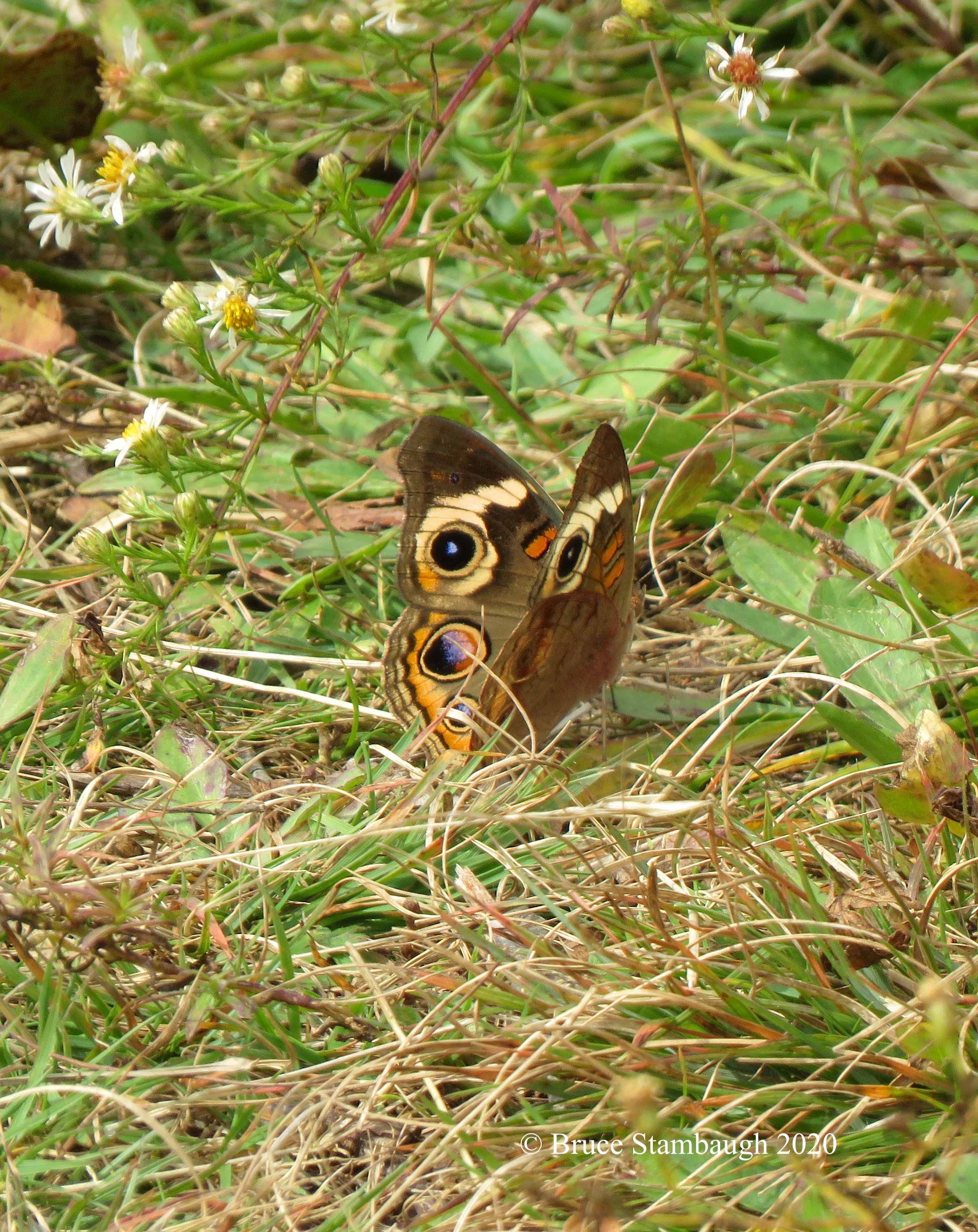
All the while, fall kept creeping upon us. Butterflies, relatively scarce during June and July, began to arrive. So did the ruby-throated hummingbirds. Now they are all filling up their tanks for their annual southern migration.


The yellow, green, and black Monarch caterpillars have morphed their way into magnificent orange and black butterflies. Predators have learned to avoid dining on them since the Monarch’s appetite for milkweed renders them bitter, according to lepidopterists.

That dreaded F word, F-R-O-S-T, has already made appearances across the northern reaches of the U.S. Can the rest of us be far behind?

If you listen to the jingles and jargon on TV, this is pumpkin spice everything season. Despite the marketing ploys, I’ll gladly stick to my decaf mocha lattes. They’ll taste just as robust when the first freeze hits.

Of course, hurricane season peaks in the first few weeks of fall. The National Hurricane Center has already increased its predictions for both the numbers and intensities of those tropical storms.

Out west, you can’t breathe the air. It’s so oppressively hot and thick with smoke from record-breaking fires that have caused death, destruction, and devastation to humans, wildlife, and entire towns. More than 10 percent of Oregon’s population has been evacuated as of this writing.

Unfortunately for those millions of west coast folks, the sky has glowed an apocalyptic orange for all the wrong reasons. A good frost or even a lovely blanket of snow would greatly help those tired firefighters slow the infernos.

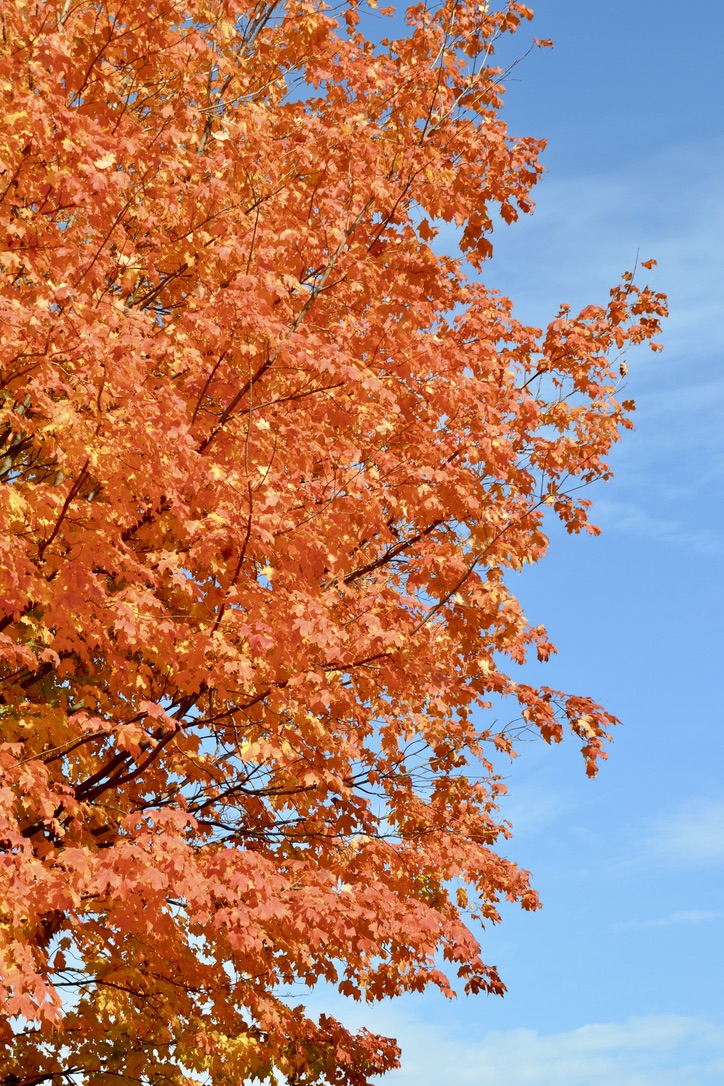
Autumn, of course, abounds with fiery colors, orange included. In addition to the winged creatures, mums, maples, pumpkins, and gourds are but few of the things that warmly usher in fall.

Climate change has undoubtedly played a part in stirring up 2020’s weird and wild weather. It’s been a universally strange enough year already all the way around.

Let’s welcome fall with a blissful hope for more normal global weather patterns.

The right kind of orange.

© Bruce Stambaugh 2020
Bay Photos by Donna

Wildlife Photos From The Chesapeake Bay Region

ROAD TO NARA

Culture and Communities at the Heart Of India

K Hertzler Art

Artist and nature journalist in the Shenandoah Valley of Virginia.

Maria Vincent Robinson

Photographer Of Life and moments

Gabriele Romano

Personal Blog

Jennifer Murch

Art is the only way to run away without leaving home. -Twyla Tharp

Roadkill Crossing

Writing generated from the rural life

ANJOLI ROY

writer. teacher. podcast cohost.

Casa Alterna

El amor cruza fronteras / Love crosses borders