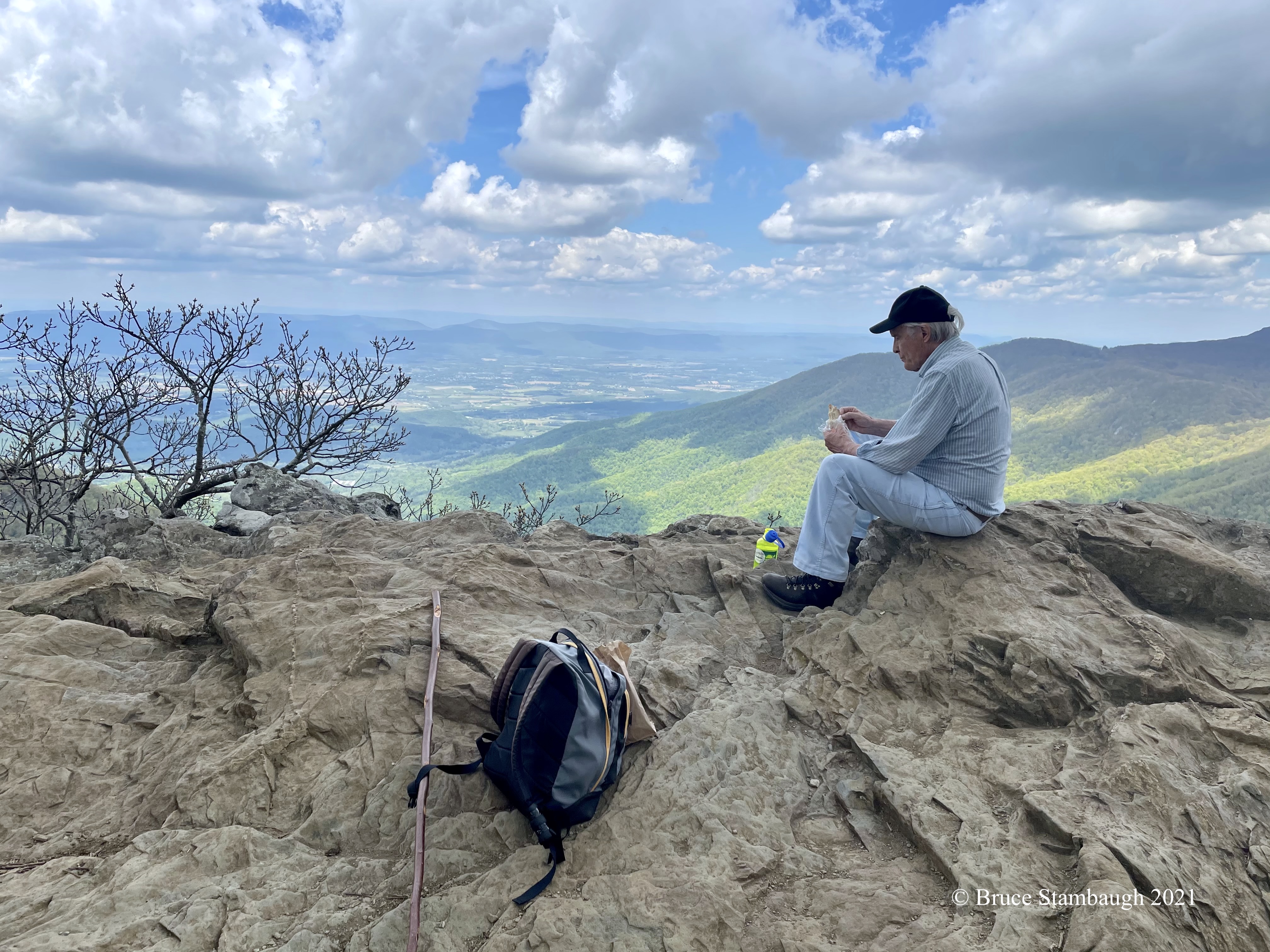
Hiking has its rewards. Reaching the summit of a peak is one of them. Hikers often celebrate with some cool water and a light lunch to refresh their body’s energy. This hiker is doing just that while also enjoying the gorgeous view from Hawksbill Summit, the highest peak in Shenandoah National Park. New Market Gap in the Massanutten Range is in the distance.
I live in one of the prettiest places in the world. I can be atop the Allegheny Mountains in less than half an hour. They are the mountains in the far distance, center to left in the photo.
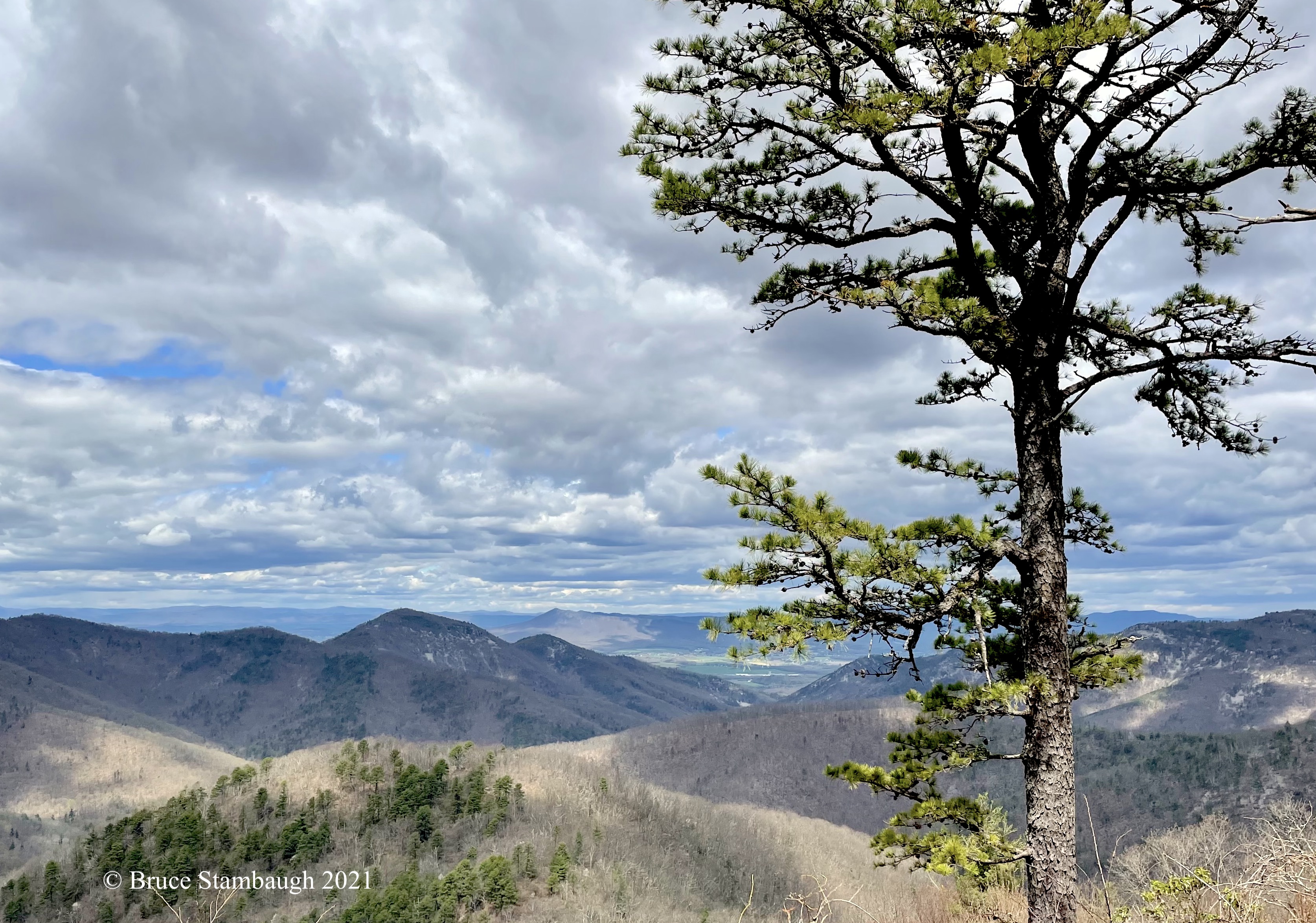
In less than an hour, I can be driving on the enchanting Skyline Drive in Shenandoah National Park, which runs 105 miles along the Blue Ridge Mountains. This photo was taken less than a month ago from Rockytop Overlook on Skyline Drive.
The peak in the center of the photo is the southern tip of the Massanutten Mountains east of Harrisonburg, Virginia. These old age mountain ranges can’t compare in beauty to the younger, sharper, snow-covered Rocky Mountains. Nonetheless, I find beauty in the mountains that border and bisect the Shenandoah Valley even on a mostly cloudy day.
Just south of the quaint village of Luray, Virginia, Willow Grove Mill stands between the east and west branches of the Hawksbills Creek. As interesting as the old mill was, it was the old, one-lane bridge that crossed the creek that intrigued me. The bridge was straight as an arrow, but as soon as you crossed it, the road took a sharp left turn.
“The Bridge to Willow Grove Mill” is my Photo of the Week.
I’ve known a few characters in my lifetime. I bet you have, too.
By character, I mean a unique individual who enjoys life outside the expected societal norms. Every family, workplace, and even church seems to have at least one individual who fits the profile.
I’ve learned that you don’t have to be human to be a character either. Our long-departed rat terrier Bill fit that category.
Bill’s personality far outsized his small frame. He once jumped up to try a catch a Canada goose that flew low over our Ohio home.
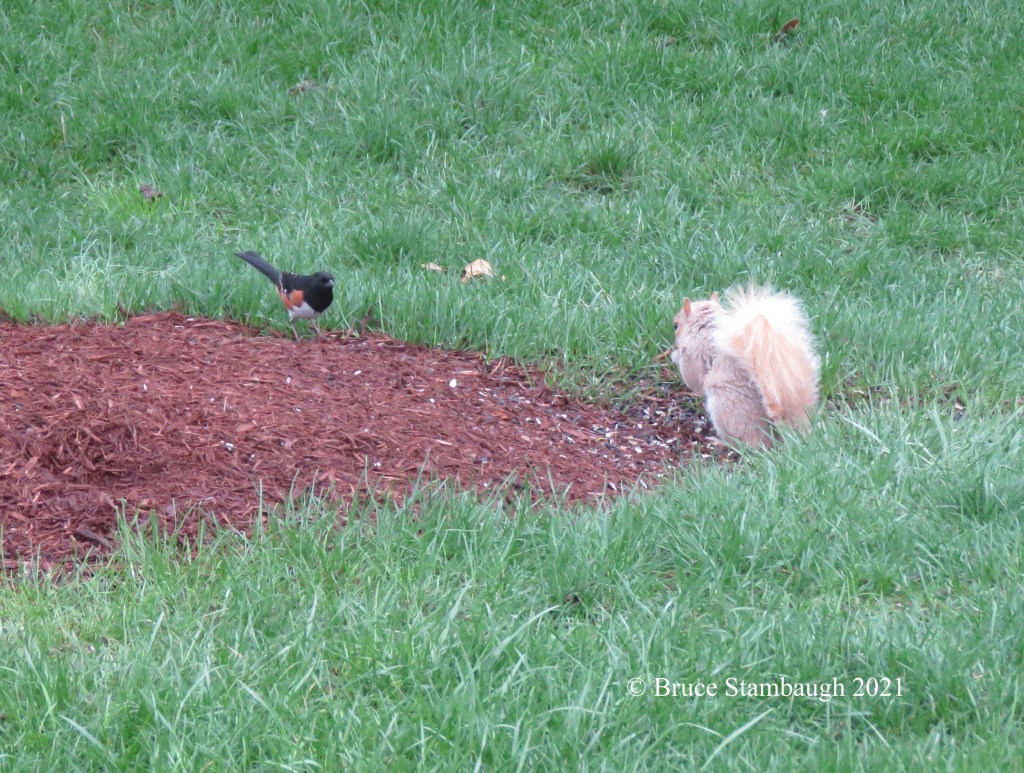
Other non-human characters include our backyard blonde squirrel and a pair of mallard ducks that frequent our neighborhood.
Just being blonde and a squirrel is character enough. When other squirrels approach, Blonde rapidly flips her beautiful golden tail to defend her territory. Satisfied that all is clear, she stretches out on the cool grass in the shadow of the maple, relishing in her most recent victory.
The ducks are a different story. Even though our suburban home’s closest water sources are swimming pools, this pair flies around the neighborhood, landing on rooftops. From there, they scout out nearby birdfeeders and go house to house foraging for breakfast, lunch, and supper.
The mallards and a standoff between an Eastern Towhee and the blonde squirrel.
Characters, however, don’t have to be living beings or animals.
Take our Julian calendar, for example. Months have dynamic personalities, too. April earns head of the class and not necessarily for alphabetical reasons.
Among her 11 siblings, April can often be a bit obnoxious. That’s especially true when it comes to weather.
April showers bring much more than May flowers. April’s repertoire dishes out tornadoes, snow, frost, floods, 80 degree days, and more. Sometimes only hours separate those diverse conditions.
No matter where you live in the United States or Canada, April can be a stinker. She doesn’t rely only on April 1 to fool you. One day, it’s 15 degrees above average. The sun is shining in a clear blue sky, while songbirds fill the warm air with luxurious melodies. The sound of lawnmowers echoes far and wide.
The next day the fog is so thick the sun can’t even breakthrough. Soon the wind picks up, and storm clouds race across the landscape, pelting rain, hail, and producing winds that exceed the speed limit. It would be justifiable if the weather service issued an arrest warrant for April for perpetrating days like this.
It’s not that we don’t expect variety in the weather. It is spring, after all. But it would be pure pleasure to know it’s safe to store the ice scrapers and snow shovels for at least a few months.
I have anecdotal evidence of such events. One early April day, 20 inches of heavy, wet snow brought much of Ohio to a halt. Volunteer fire departments ferried medical workers to and from hospitals.
On April 3 and 4, 1974, massive and deadly tornados hit Xenia, Ohio, and many other locations in more than a dozen states. Holmes County was in the path of the storm, too.
The sky turned pea green, and everything grew still. The tornado never touched down, but instead, tattered and torn objects from Xenia drifted to earth. People found checks and personal effects from 150 miles southwest.
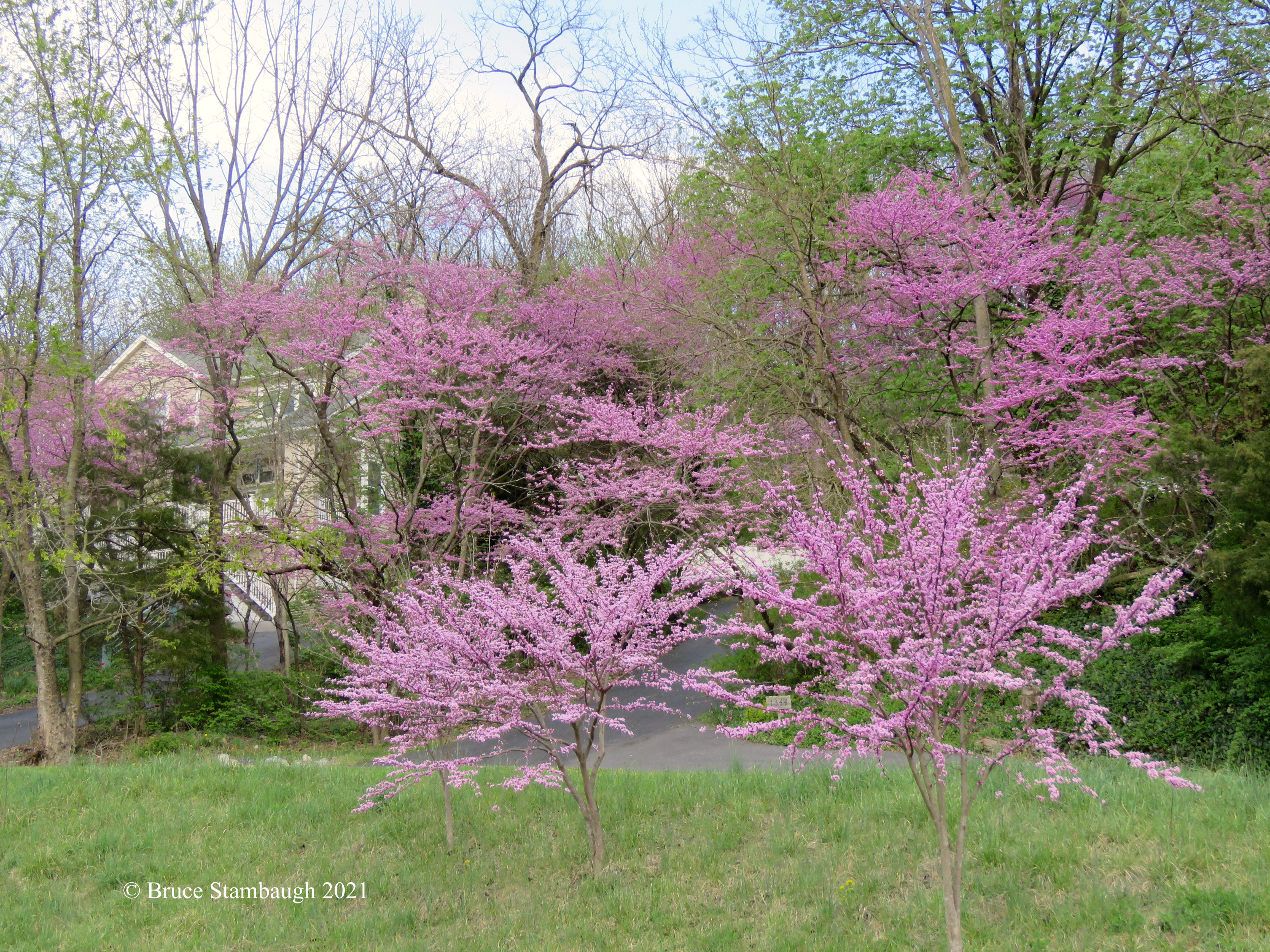
April continues to be a Jekyll and Hyde. Just as our redbuds were about to bloom pink and bold, back-to-back days of 20-degree mornings deadened their potential pink beauty. I hope they can recover from their frigid encounters.
April is a character, all right. She still has time to repent, however.
I must have been about 10 or 11 when I first visited a synagogue. Our Sunday school teacher had arranged the tour, and the rabbi graciously welcomed our wide-eyed gaggle of juveniles.
Simply by entering, we knew this was a sacred place. We were all eyes and ears taking in the unfamiliar surroundings as the kind rabbi explained the various symbols. I wish I could remember his words. I can never forget the awe that overwhelmed me.
There is no better time than Holy Week to recall those memories, especially this year. Passover and Holy Week overlap, as they often do. It’s an excellent time to remember our Judeo/Christian heritage.
From Palm Sunday to Easter morning, we experience the whole gamut of human emotions, actions, and reactions. The historical and spiritual significance of humanity’s triumphs and failures are on full display. Jewish and Christian roots run deep into humankind’s evolution.
Easter Morning Worship
Passover, a major Jewish holiday, began at sundown, March 27, and ends the evening of April 4, Easter Sunday. The miracle of Passover commemorated the Israelites exodus from Egypt and began their transition from slavery to freedom.
The seder is the central ritual of Passover, occurring the first two nights. The retelling of the Exodus story accompanied by psalms and songs highlight a festive meal of traditional foods.
With Jerusalem teaming with people, Jesus rode into the city on the day we now call Palm Sunday. By Maunday Thursday, the scene had turned more solemn at the last supper. Good Friday, Jesus’ crucifixion and death occurred to the great horror of his followers.
On the third day, the miracle of Jesus’ resurrection occurred. Today, we call it Easter morning.
That was always a day that I anticipated as a child, more for the secular celebrative goodies than the mystical resurrection story. That always fascinated me, but being a child, I was more interested in more tangible traditions.
I wasn’t alone. My four siblings joined in the fun. We cherished the challenge to find our woven Easter baskets chocked full of chocolate bunnies, jelly beans, and the hard-boiled eggs that we had colored the day before.
The over-sized Easter Bunny (our father was six-foot, two-inches tall) didn’t make it easy on us. If we accidentally found a brother or sister’s basket, we kept quiet, not wanting to spoil their fun.
We always knew that the baskets were somewhere in the house, usually on the main floor. However, I once found my Easter basket in the basement in the washing machine.
Once that fun was over, we hurriedly dressed up for Easter Sunday worship service. We often took a family photo before heading to the always-packed sanctuary.
After church, we couldn’t wait to return home, where our saintly mother had fixed an Easter ham with all the trimmings. An Easter egg hunt outside often followed the noontime meal.
My wife and I continued those traditions with our children. They enjoyed the searching as much as I had in my childhood.
Of course, age, life experiences, and maturity appropriately alter one’s perspective on holidays, along with many other life events. That’s as it should be.
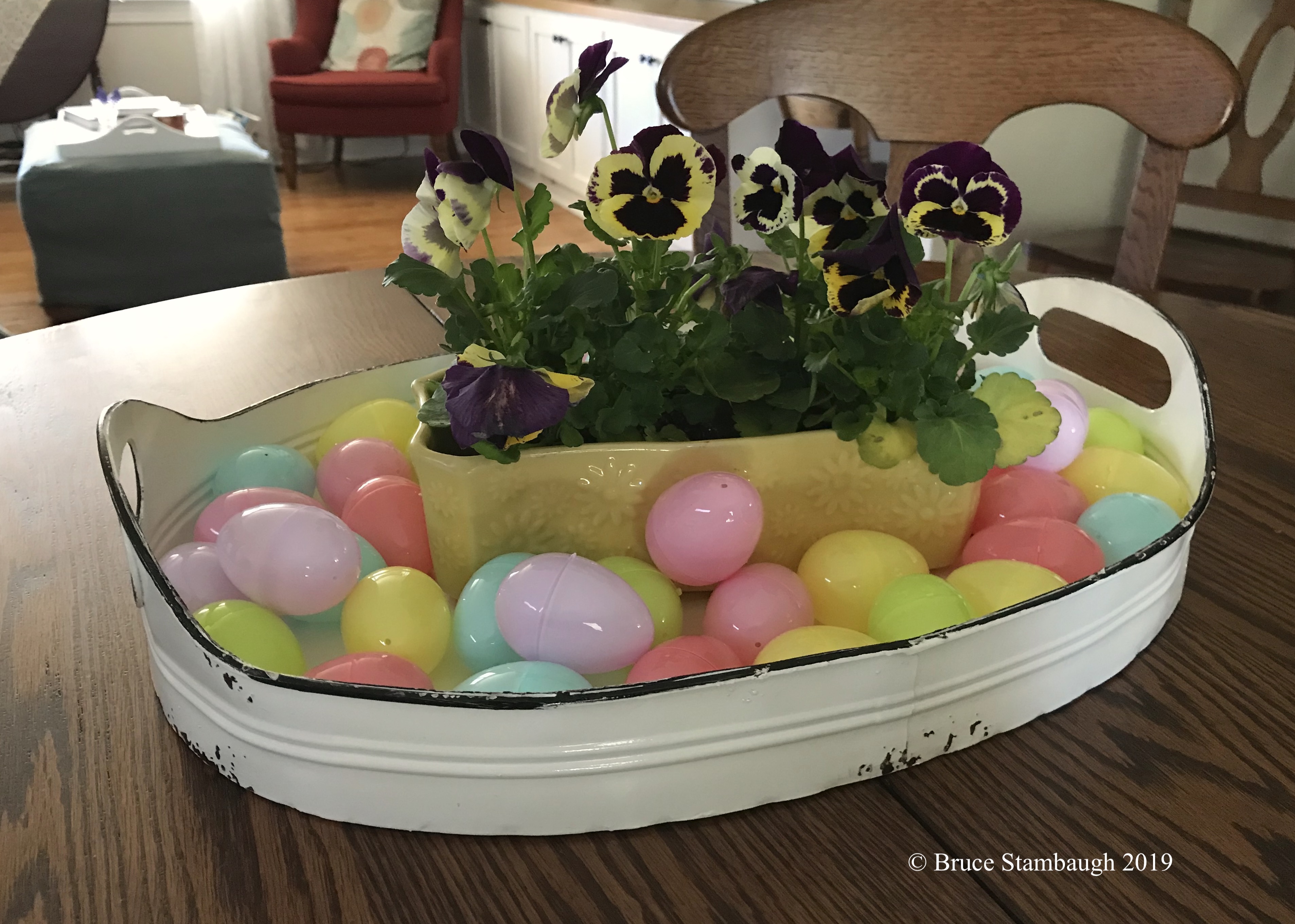
As a grandfather, I am more focused on the more meaningful reasons for Passover and Easter. We still enjoy hiding the decorated eggs for the grandkids while I can still maneuver to hide them in a downspout or reach high into a redbud tree.
Perhaps that has been part of my spiritual resurrection. I still relish the fun stuff of holidays while contemplating the more profound, personal satisfaction of celebrating another Easter morning.
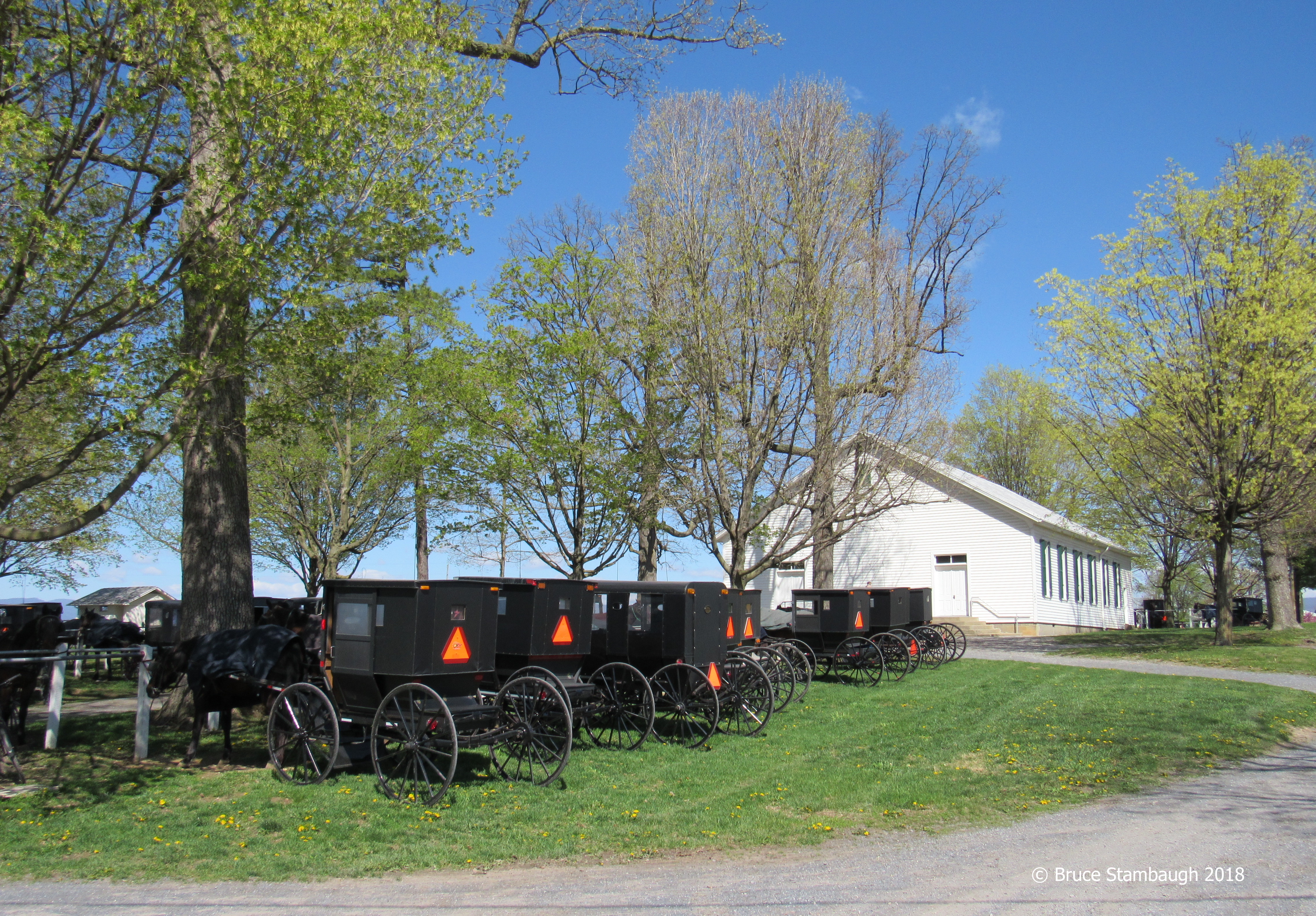
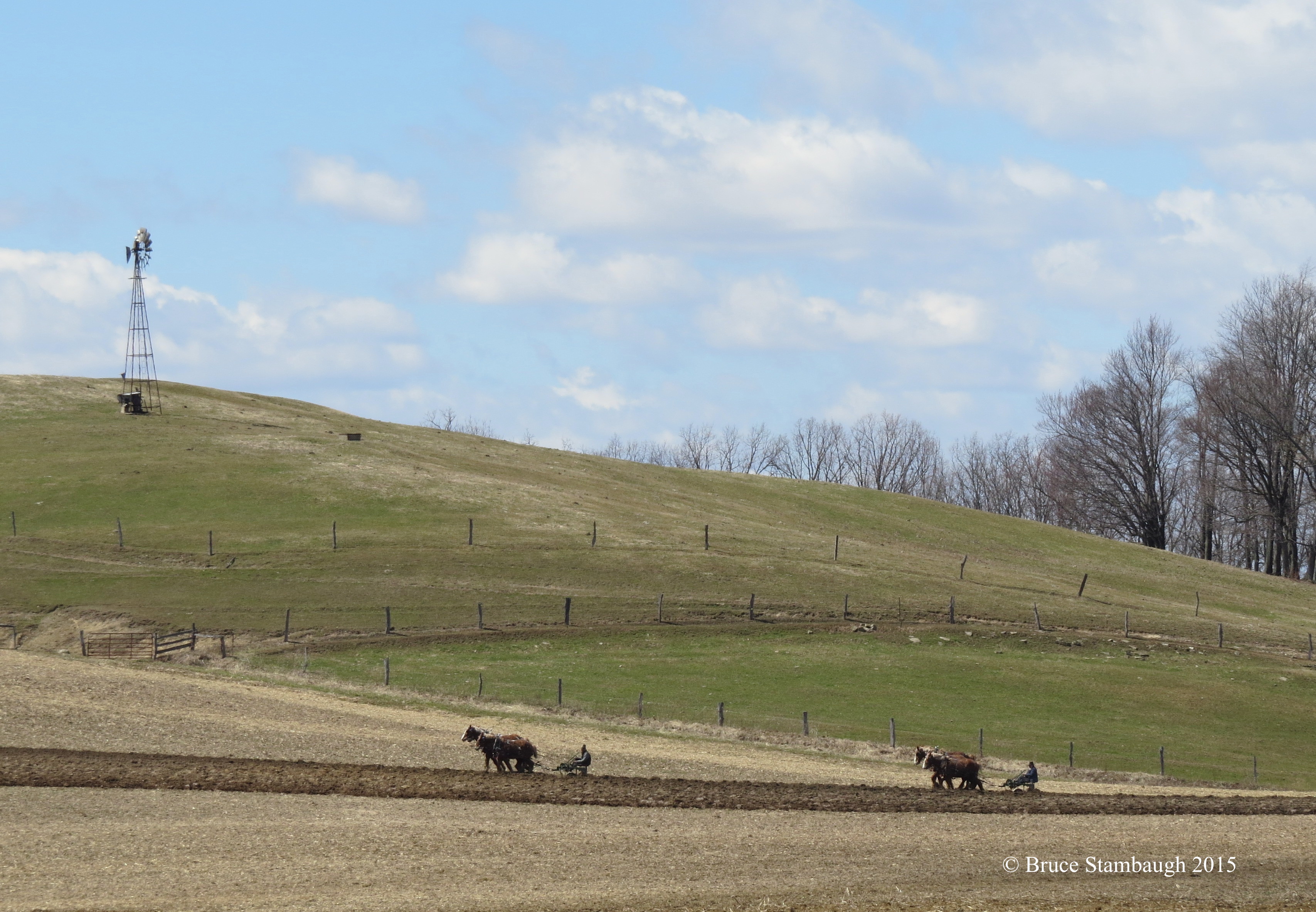
When my wife and I lived in Ohio’s Amish country, there was one sure sign of spring that I always relished. Our Amish neighbors plowing the first furrows of soil always said spring to me.
I never tired of the witnessing the annual tradition. Powerful and beautiful workhorses pulling the farmers seated upon one-bottom plows sealed the spring deal for me.
The jingle of the horses’ harnesses, the smell of freshly turned soil, the encouraging voices of the men calling the names of the horses to keep going created a reassuring feeling. Though the vernal equinox had already passed, this scene always invigorated me. Of course, the longer days, the chorus of songbirds, the pale blue sky, and the budding flowers didn’t hurt either.
March has always been one of my favorite months for several reasons. Mind you, I don’t get as excited as youngsters on Christmas morning, but it’s close.
March is a transitional month, especially for those who live in the northern realms of the northern hemisphere. That’s especially true for March weather, though I don’t give much credence to the “in like a lion, out like a lamb” folklore.
March serves up a meteorological smorgasbord. Rain, sleet, snow, sunshine, and severe weather can all appear in the month’s 31 days.
A March day in Ohio’s Amish country.
The day I cherish most is the vernal equinox, which is March 20 this year. Let’s hope that the green of St. Patrick’s Day carries on over into April. I won’t hold my breath, however.
March marks the official transition from winter to spring. If the ground isn’t too soggy, planting vegetables and flower gardens commences, and farmers prepare their fields for sowing crops.
When we lived in Holmes County, Ohio, I always marveled at the hardiness of farmers, usually teenagers and young men, who braved the elements to plow and disk the fields. It may have been sunny when they left the barn, but somehow it always seemed to snow or rain when they hit the fields. Still, their teams of beautiful workhorses plodded on.
Here in Virginia’s Shenandoah Valley, it’s giant-sized tractors and the consequences of zipping in and out of fields that drivers have to watch out for on the ubiquitous narrow, winding roads. Unfortunately, the sticky, red mud is difficult to clean off of your vehicles.
Speaking of mud, I never knew about schools closing for mud days until I moved to Holmes County. Curiosity cured me on the first trip down a rural gravel road. When I became a township trustee, I positively hated when gravel roads turned to mush or hard surface roads disintegrated.
Sandhill Cranes.
March usually means the end of sugaring time. By month’s end, the tempo of warm days and cold nights that encouraged the sap to flow has ended.
Birders live for spring, and March often provides the first rush of migrants returning to nest or passing through to destinations farther north. Is there anything more exciting than hearing a flock of sandhill cranes honking overhead in the twilight?
March means color returns to the deadened landscape. Green shoots of plants and flowers push through the barren soil, even if the majority are dandelions.
A walk in the woods reveals nature at work at many levels. Look down, and patches of spring beauties carpet the ground. Listen, and choirs of spring peepers fill the warm evening air. Look up, and you might find owlets staring you down, nervously jostling on a limb.
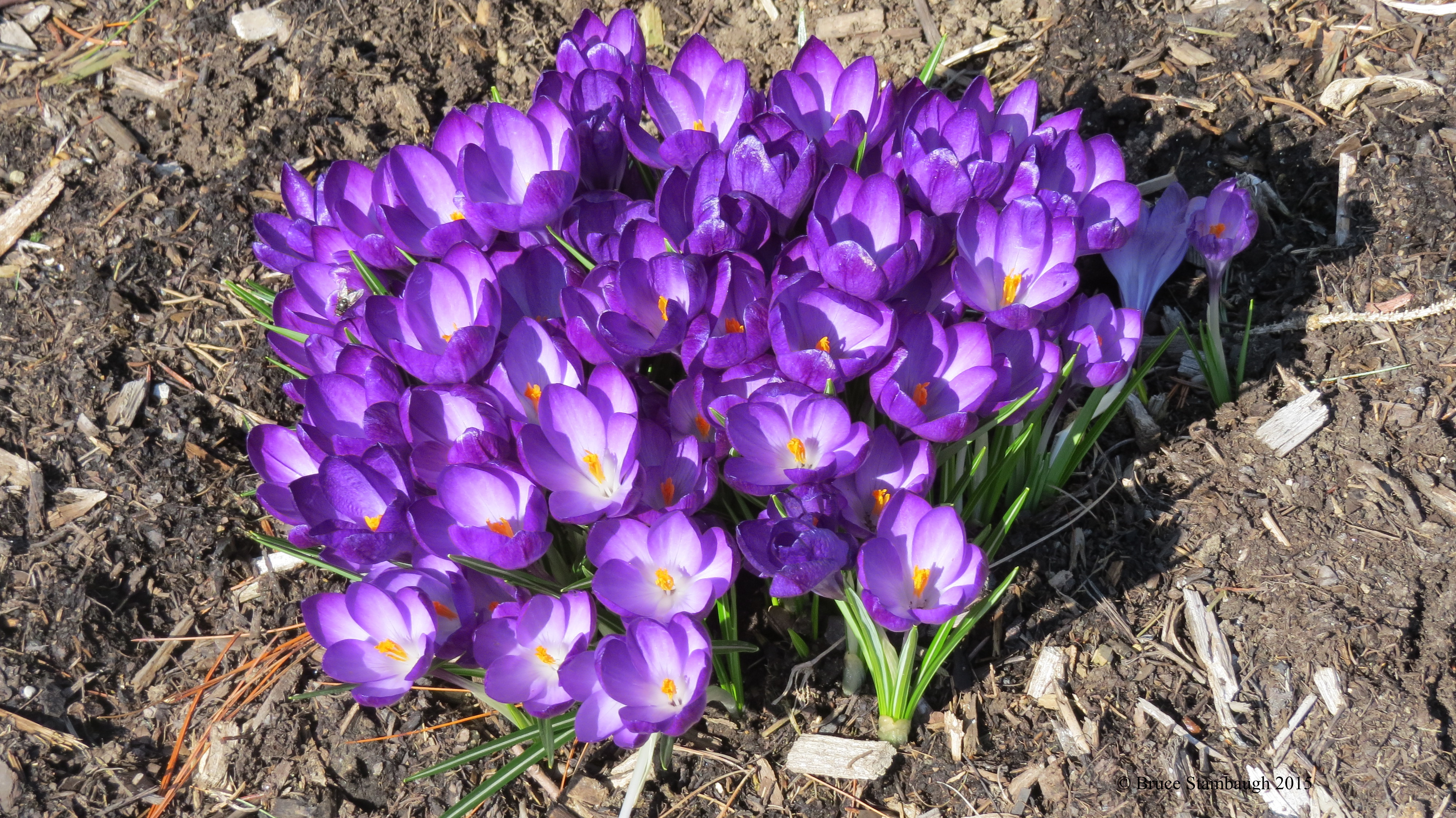
Crocuses are some of the first blooms in flower gardens.
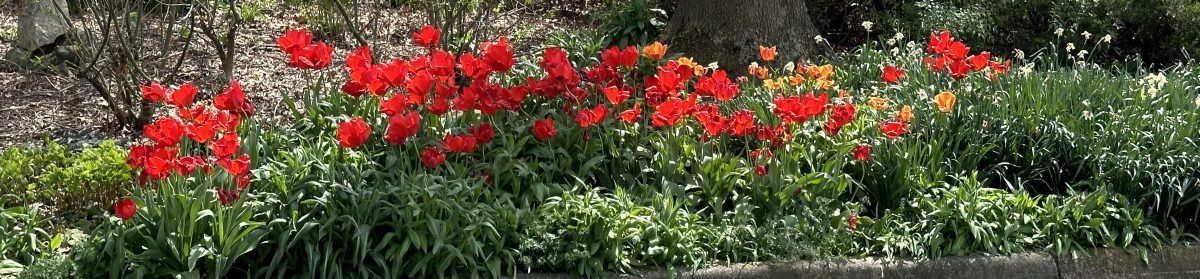
Photos of royal crocuses, buttery daffodils, and perhaps the season’s first tulips fill social media pages. It’s society’s 21st-century expression of joy and relief.
Of course, March means work. Winter’s litter of sticks and last fall’s leaves piled in corners far from their mother tree get recycled. Folks are eager to get outside and fuss about the appearance of their yards. They crank up their mowers even though snow is in the forecast.
I put out my hummingbird and oriole feeders in the hope of attracting any early arrivals. While I wait, I am more than content with waking to a competing chorus of robins and cardinals each morning.
Of course, I’m partial to March for personal reasons, especially this year. It’s our anniversary month. Welcoming March for 50 years together is singularly reason enough to celebrate the third month’s arrival.
The fertile farmland of Virginia’s Shenandoah Valley.
Crocuses are some of the very first flowers of spring. They are emerging all around our neighborhood here in the Shenandoah Valley. Of course, spring doesn’t officially arrive until March 20. But we are glad for the floral showy expressions after this long, cold, wet winter.
Patience is a virtue. The exact origin of that proverb is hard to determine but about as straightforward in its meaning as can be.
In “Piers Plowman,” William Langland wrote about a man searching for faith in the 14th century. This work marked one of the earliest references to patience. A line in the poem reads, “patience is a fair virtue.”
What does that mean exactly? To me, it says that instead of rushing ahead on our own, we should pay attention to what is actually happening, no matter how weird or repulsive it may seem. The coronavirus fits that description.
In this case, patience requires us to depend on those who deal with such anomalies daily. Scientists, doctors, and researchers all belong in that category.
Throughout the pandemic, vigilance remains required. We continue to need to wear masks when we go out or visit others. We also need to keep our social distance and wash our hands. Those were and continue to be simple instructions that I embraced because they benefited others besides me.
Still, practicing patience is hard to do. The ongoing pandemic is proof positive.
Impatient people bolted ahead, behaving as if everything was as it had been in the world, when in fact, it wasn’t. Refusing to wear a mask, physically distance, or alter daily routines has prolonged the virus’s life.
Consequently, the pandemic is also a teacher, and we all are in the same classroom. Some pupils listen and learn, while others misbehave or fall asleep.
The pandemic has taught us a lot about people and their willingness to accept scientific facts, the reality of a new disease and the unknown, and realize the consequences of an infection run rampant.
It’s important to note that being patient has its benefits. The pandemic forced me to slow down, relax, notice, care, and listen. Since we were together even more than usual, my wife and I gave each other expanded personal space and time than we had previously.
First pitch of the 2016 World Series, Cubs vs. Indians.
It’s not like I didn’t know patience before the pandemic. After all, the Cleveland Indians are my favorite sports team. It’s been 73 years since they last won the World Series. If following that team doesn’t require patience, I don’t know what does. I learned early on the mantra of “wait until next year.”
Well, it’s next year. A new baseball season is upon us. Perhaps this is Cleveland’s year. Only time will tell. Like enduring the pandemic, patience will be an essential virtue with this team and every aspect of life.
Patience requires us to stop, breathe, observe, sense, and move slowly. Patience is and will continue to be essential for mental, physical, and spiritual survival during the pandemic.
Ephesians 4:2 reads: “Be completely humble and gentle; be patient, bearing with one another in love.” I learned that it’s critical to apply that to myself, too. I realized that it was okay to feel down with all that the pandemic brought and about activities that we couldn’t do, especially with those we love.
Patience modeled.
We have waited patiently for an effective vaccine, and now it is here. People are receiving inoculations against this deadly virus. Still, we will continue to follow the crucial guidelines of wearing a mask, physical distancing, and washing our hands for 20 seconds or more. As Yogi Berra famously mumbled, “It ain’t over until it’s over.”
Patience became the watchword of the pandemic. It will continue to persevere until we all work together to conquer this unwanted virus. That will prove patience a valuable and vital virtue, indeed.
Bird migration is in full flight. To check for any waterfowl and shorebirds that might be passing through, I head to nearby Silver Lake in Dayton, Virginia. It’s also a favorite spot for sunrise and sunset photos.
On a recent afternoon, I found this flotilla of ducks in the sparkle of the afternoon sun at the south end of the lake. Among this group were Ring-necked and Redheaded Ducks and Greater Scaups.
You must be logged in to post a comment.