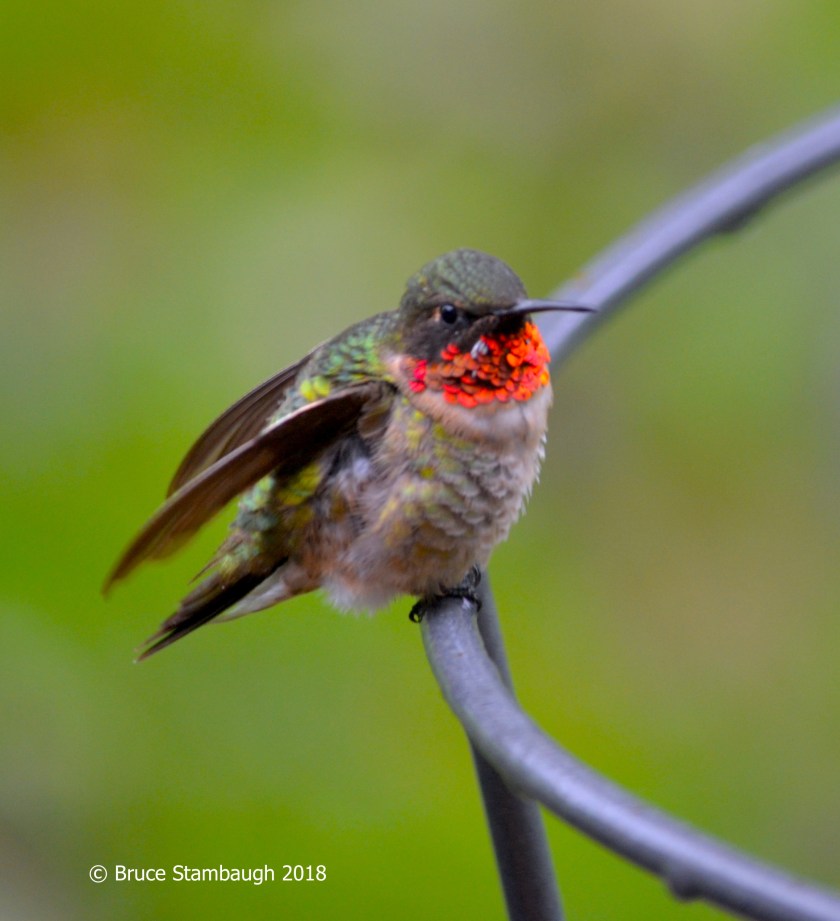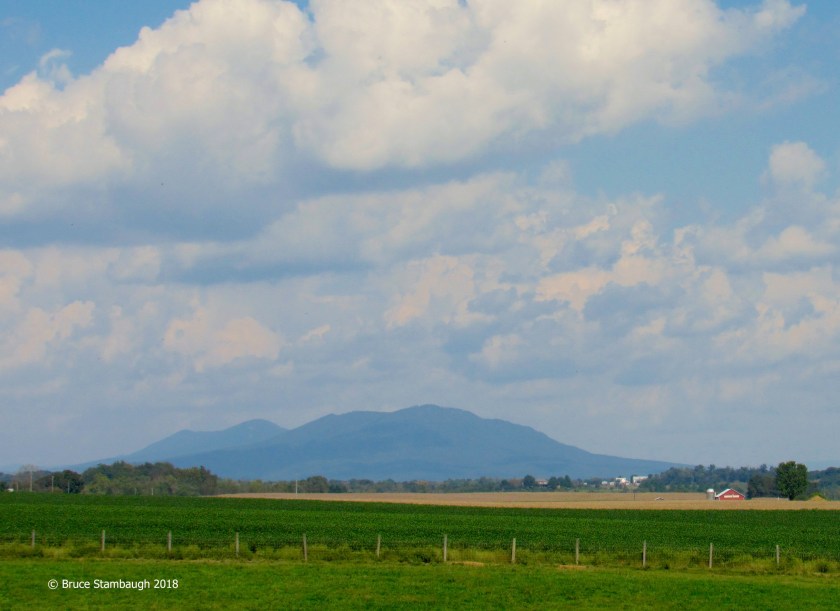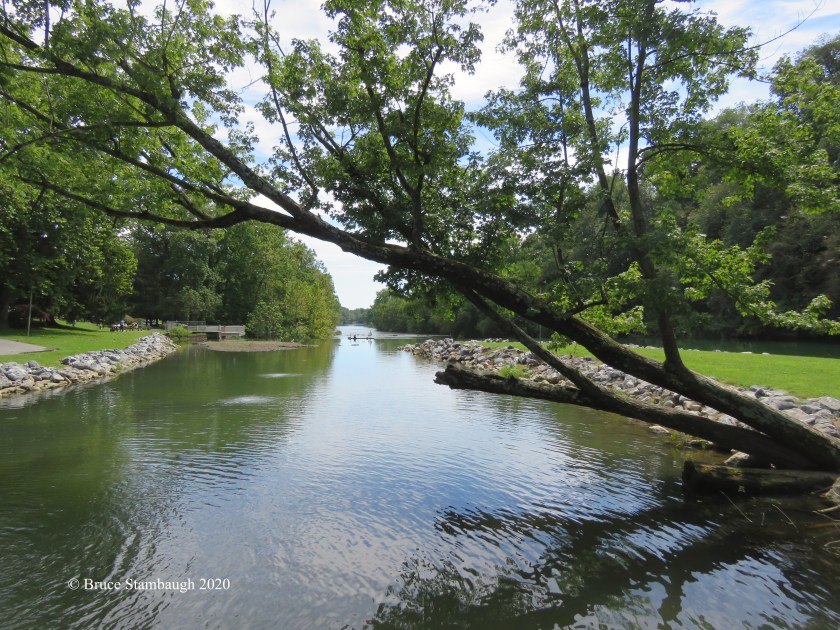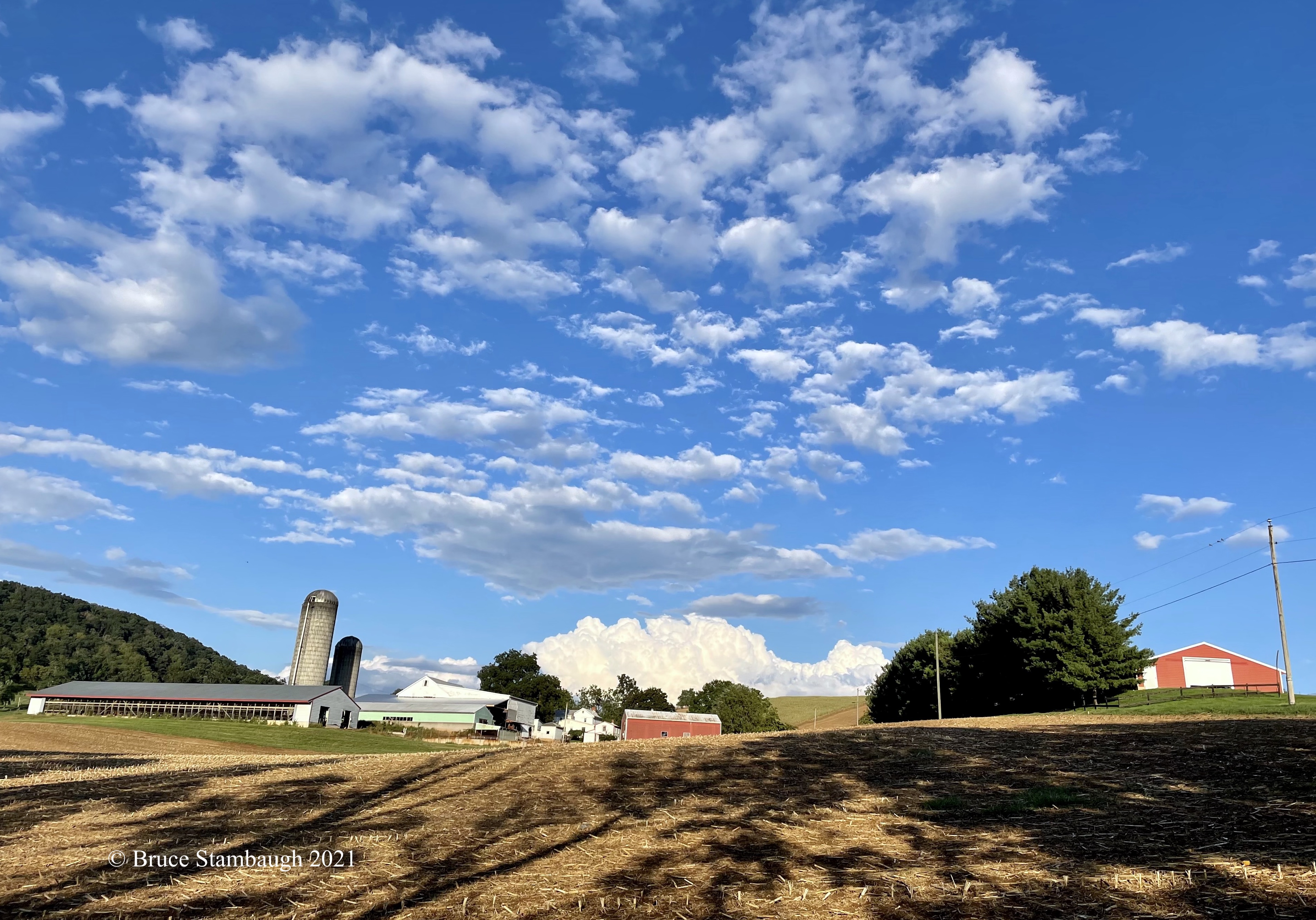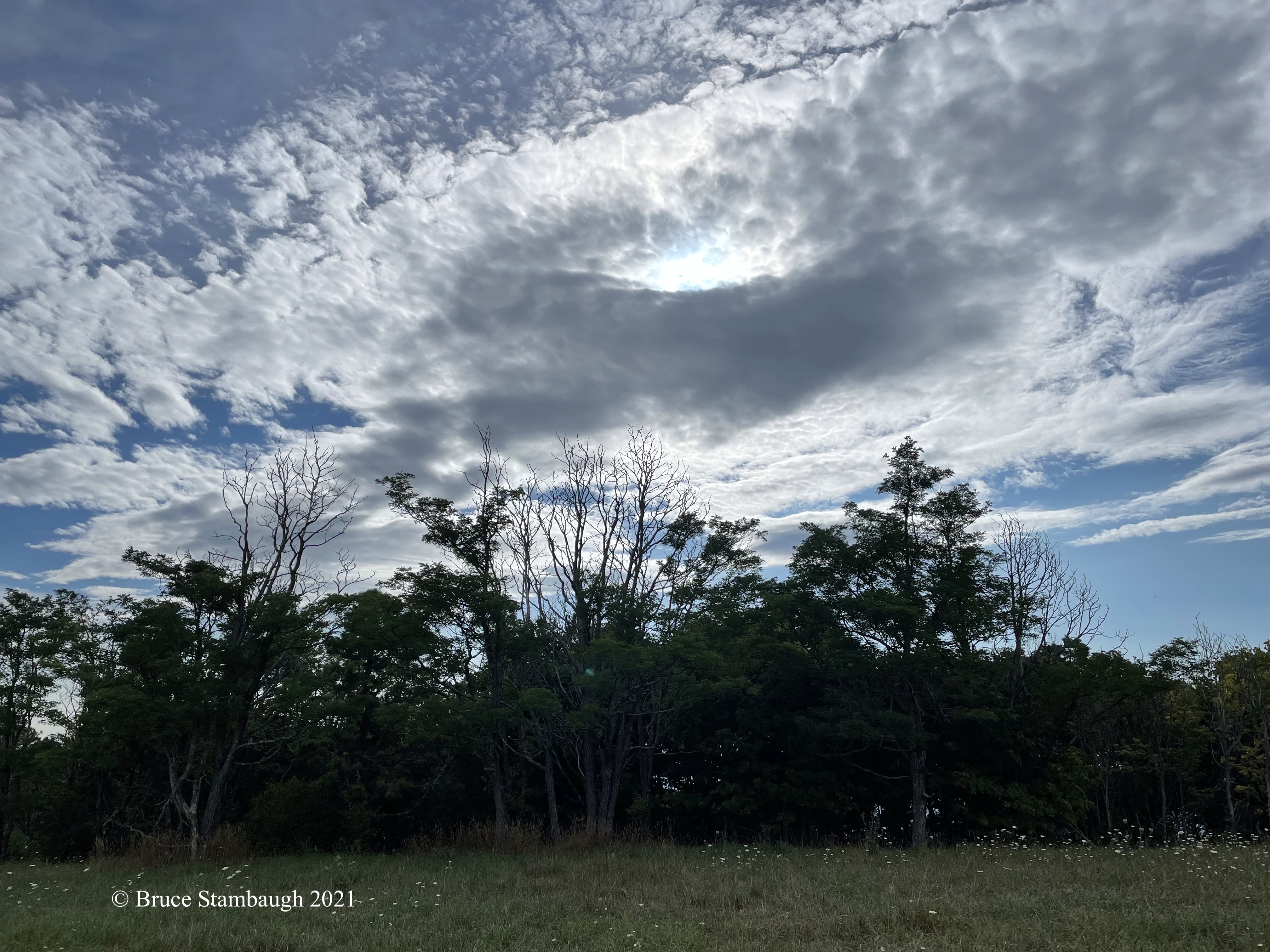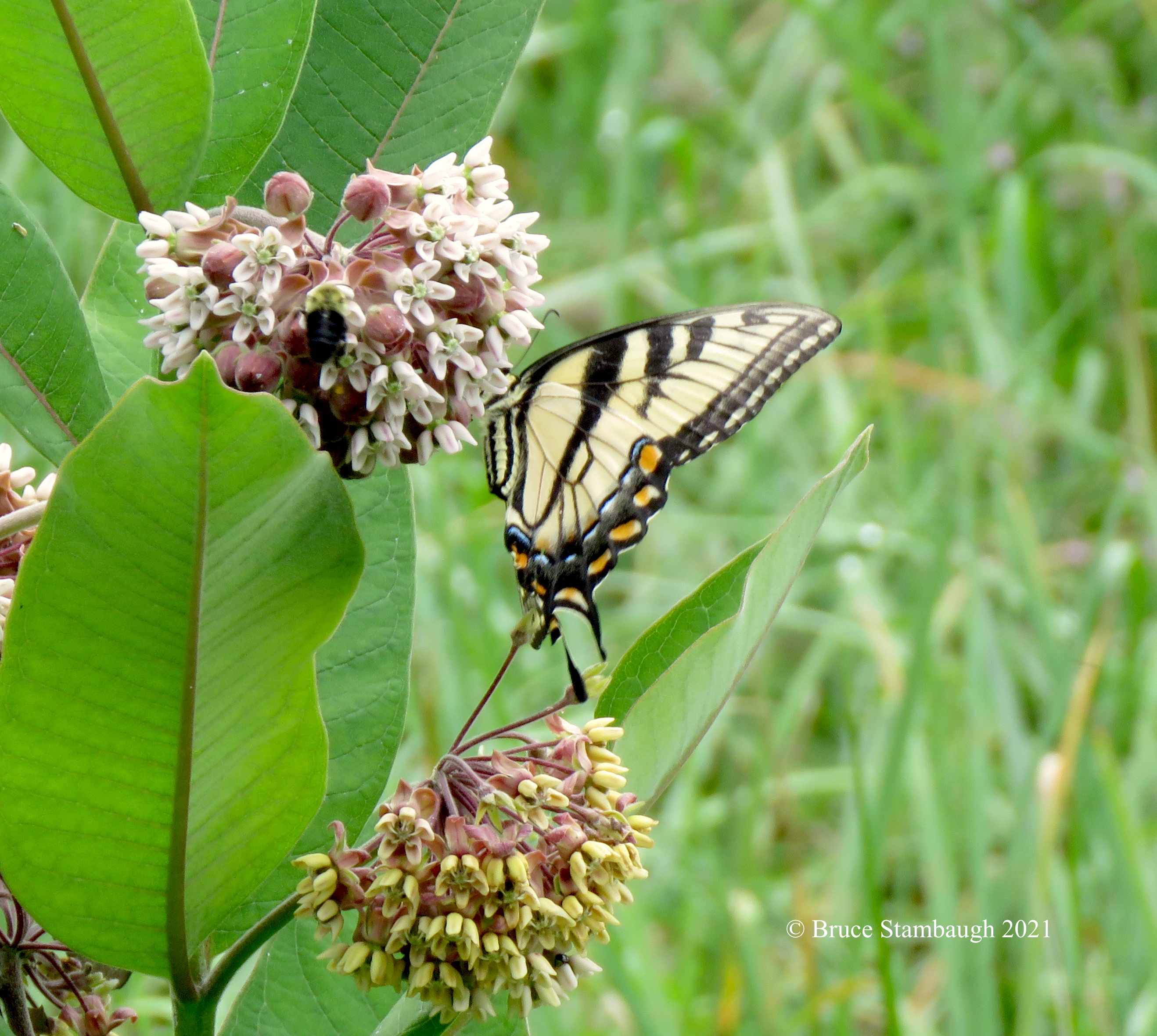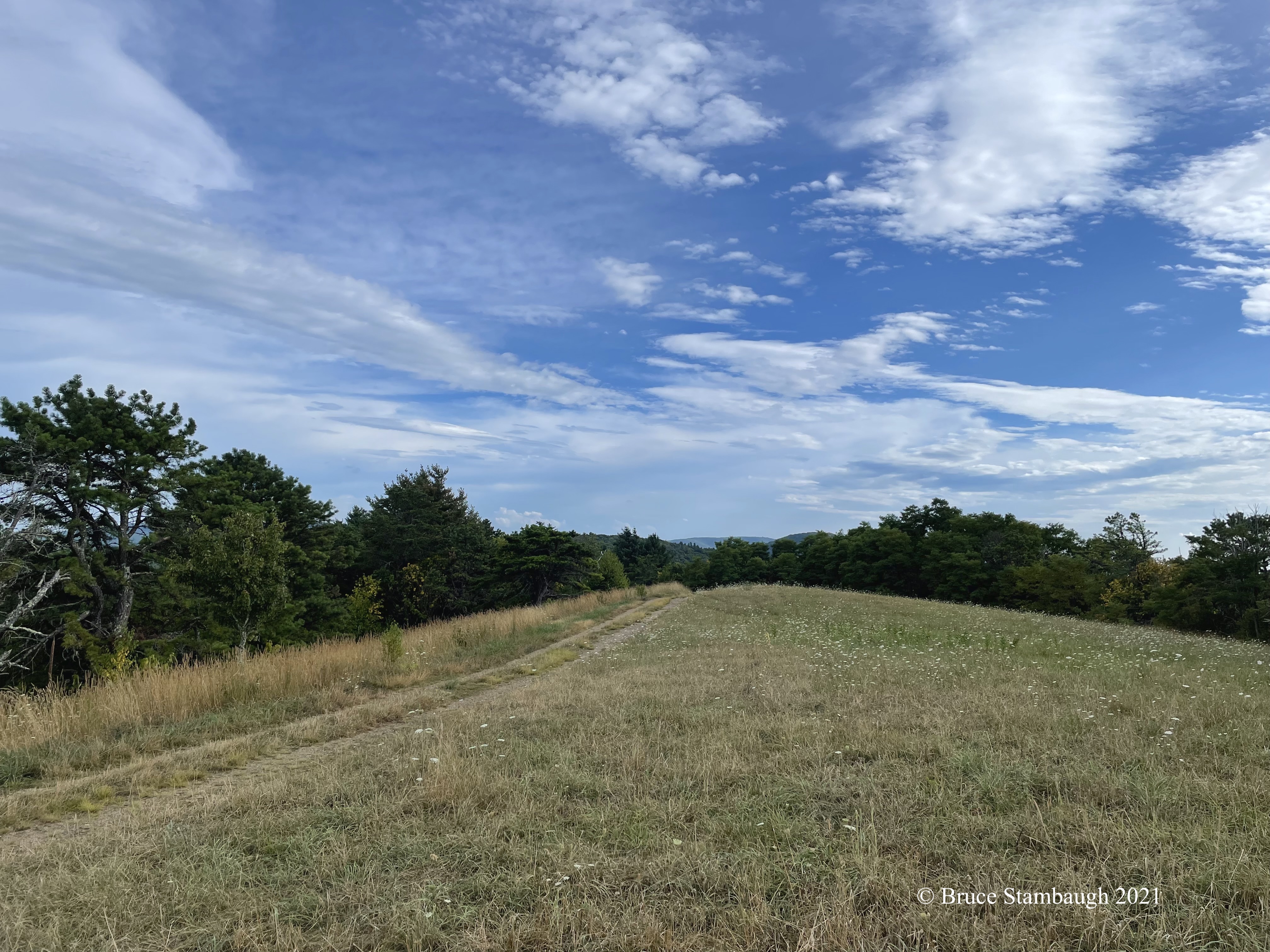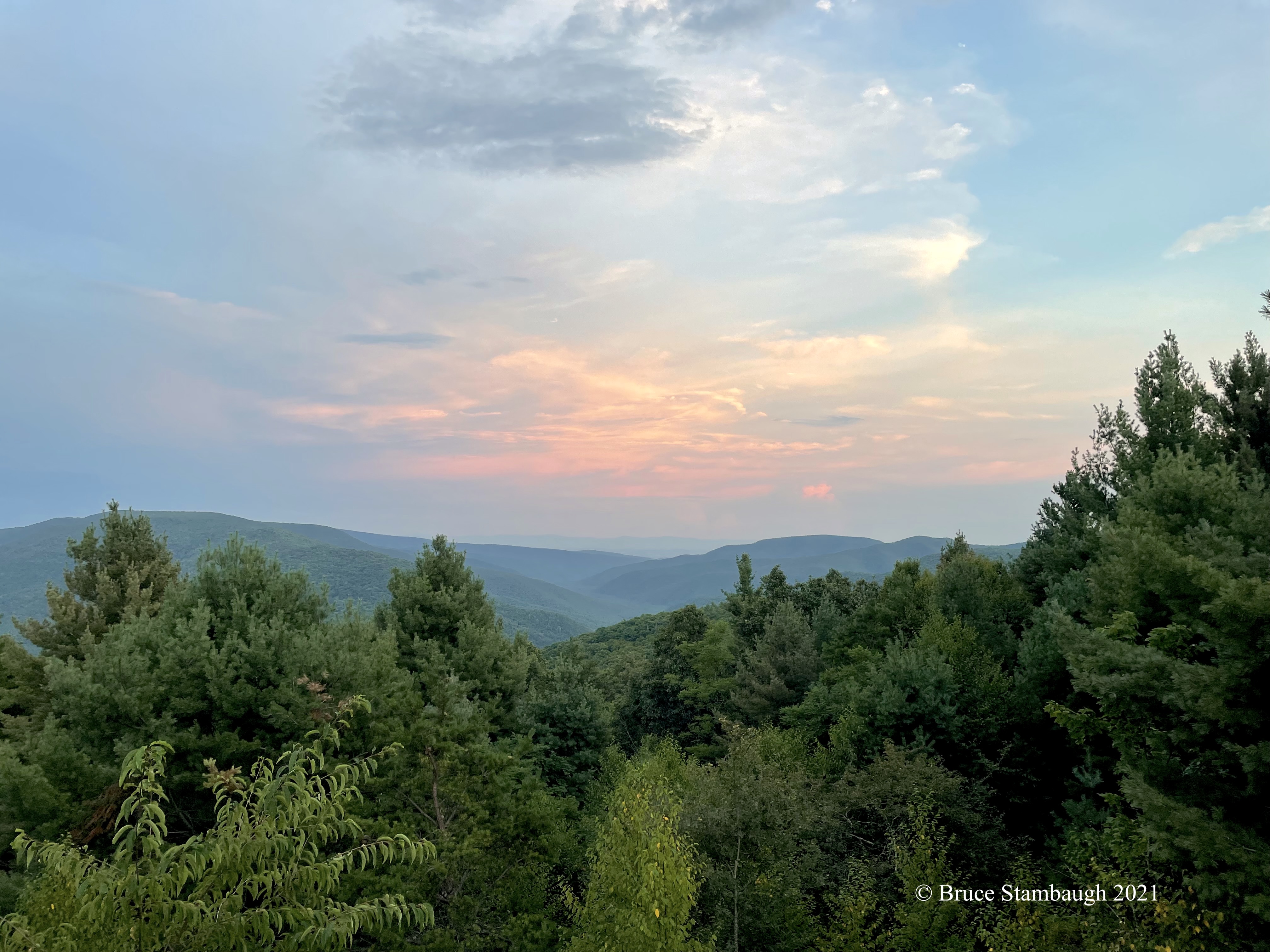
This female American Goldfinch prepared to join the rest of the flock after feeding on these dried up Black-eyed Susan seedpods. The cluster of still-blooming Black-eyed Susans in the background gave depth to the photo. I was grateful that the bird hung on long enough for me to get this shot. As soon as I clicked the shutter, she flew.
Nothing says summer like children fishing on a sultry August morning. These three youngsters enjoyed a time away from farm chores to make a few casts into the pond in front of their home.
The boy reeled in his line quickly like he had caught something. A closer look (please click on the photo) shows that he has a wry smirk on his face, and for good reason. He caught a weed, which you can see flying at the end of his line.
The Milky Way and Perseid meteors. Photo by Michael Mancewicz on Unsplash.
When was the last time you went out and sat under the stars and just enjoyed the evening?
We used to do that as kids regularly. But as adults, not so much. Come 10 p.m. or sooner, it’s lights out for this baby boomer.
Of course, enjoying and appreciating life often occurs outside our comfort zones. When my wife and I received an invitation to view the Perseids meteor shower on its peak night, we couldn’t refuse.
Our friend Edgar asked us to accompany him to his mountaintop cabin to watch the meteoric show. We left early to take in all that nature had to offer on Shenandoah Mountain.
The 30-minute trip was worth the drive alone. We traveled U.S. 33 west through a forested tunnel of hardwoods and pines, crossing the Dry River multiple times as it winds its way down into the Shenandoah Valley.
With a moderate drought in full swing, the rocky riverbed indeed was dry. We passed parks and gated lanes into the George Washington National Forest and zigzagged our way up the mountain slope.
Before reaching the summit, we turned a hard right into the private road that led to Edgar’s cabin. He unlocked the gate, and we began our rock and roll ascent on the two-lane drive, one track for right tires and the other for the left.
Soon the incline smoothed to wave-like rolling. We stopped at Big Hill, Shenandoah Mountain’s summit. My GPS read precisely 3,800 feet in altitude.
I was surprised to find that much of the rounded old mountain top was a meadowland full of wildflowers and butterflies despite the lack of rain. The verdant views in every direction were hazy but still impressive.
The best was yet to come. After a light dinner in Edgar’s cabin, we talked the evening away. When our daughter sent a text that she had seen a meteor from the city’s high school parking lot, we hightailed it outside.
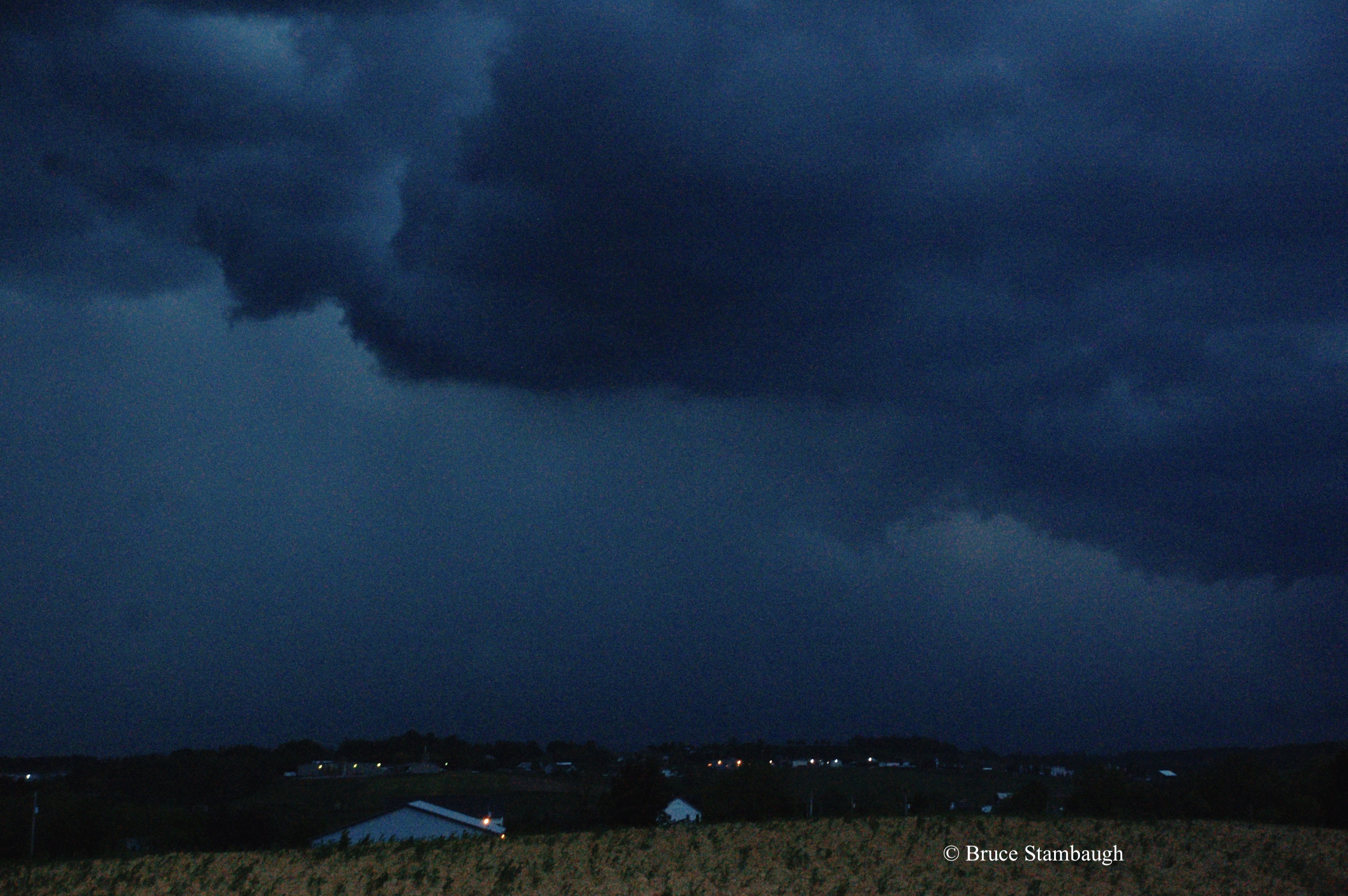
We didn’t stay long. Residue clouds from afternoon thunderstorms lingered over the mountain ridges.
We retreated inside to continue our enlightening conversation. Edgar related the cabin’s history and how his wife’s family had acquired the property and built the place. Once they became owners, Edgar and his late wife remodeled it. The view from the deck was incredible.
At 10:30, we turned out the lights and headed outside. The three of us sat in the sloping yard and looked northeast. We knew the peak time of the meteor shower was yet to come.
We hoped for some early meteors, and we weren’t disappointed. Our lively conversation quickly filled in the gaps between the intermittent flashes in the night sky.
Crickets and katydids waged a surround-sound insect symphony. Soon an out-of-tune screech owl grated their nocturnal harmony.
A singular cry interrupted the concert from the tree line that marked the Virginia/West Virginia boundary 30 yards to our west. Several meteors later, the bobcat bid farewell from much farther down the ridge.
Even if there had been no meteors, the night sky’s sparkling diamonds captivated us. The clouds had dissipated, and stars, planets, constellations, and the Milky Way served as our canopy. Both the Big Dipper and the Little Dipper shone brightly as the mountain coolness enwrapped us.
The meteors put on a splendid show for this trio of grandparents. Some streaked long and brilliant, others short and dull. Grateful for one last bright burst from the heavens, we headed home, full of grace and in awe of nature’s wonders.
My wife and I felt honored to be under the spell of the starry universe and Edgar’s gracious hospitality.
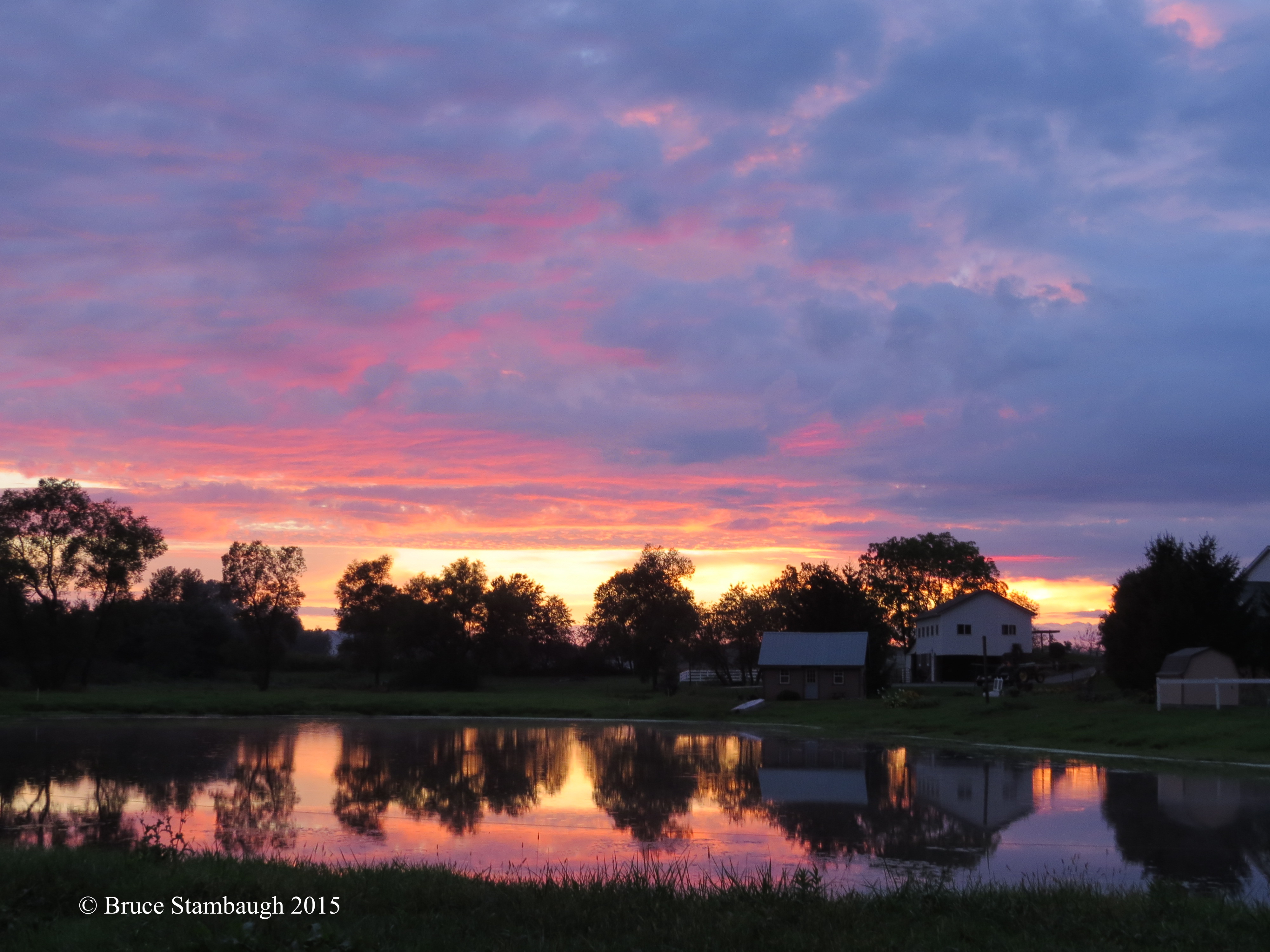
Author and artist Christine Valters Paintners offers an enlightening viewpoint on photography. Instead of “taking” photos, we receive them. That concept puts photography and the photographer in an entirely different light. (Given this photograph, please excuse the pun.)
I embrace her idea. As I recalled how I merely happened upon this enchanting sunset scene, Christine’s words rang true for me. I didn’t do anything to “capture” this lovely setting. It was there for me to receive, and I am more than happy to share it with you.
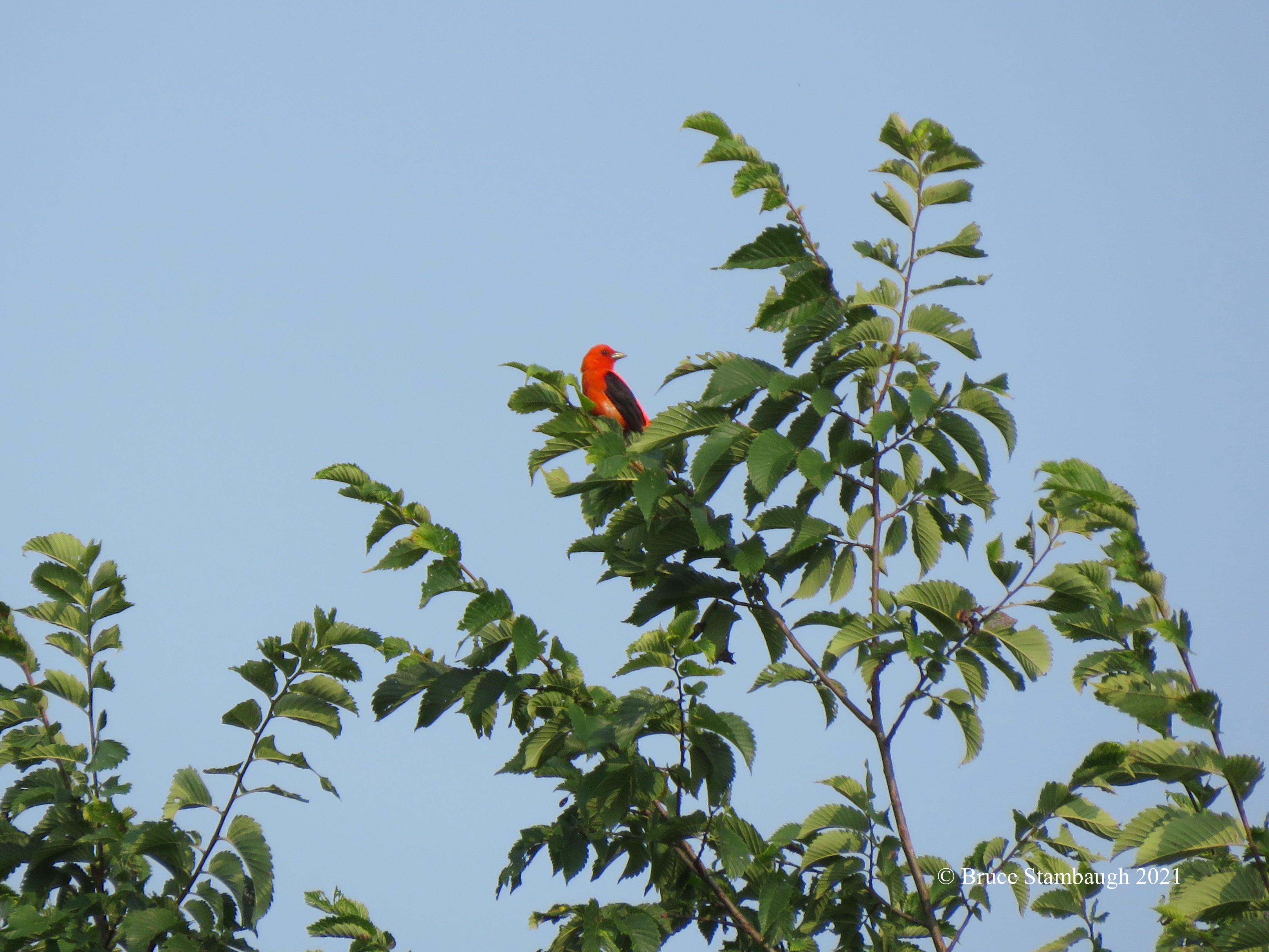
We were all standing on the deck of the cabin when my wife spotted a bright red bird at the top of a tree 40 yards away. Through the binoculars, I quickly found the bird. Its jet black wings nicely contrasted with its radiant red body.
Upon hearing the description, the property owner was ecstatic. “I’ve been hoping the scarlet tanager would return,” he said with glee.
I got as much kick out of Rice’s reaction as I did seeing the distinctly marked bird. After all, this was a big, middle-aged man, not some youngster seeing this beauty for the first time.
I love it when people love nature. Their company becomes all the more enjoyable.
I shouldn’t have been surprised by our host’s excitement. My wife and I were there as guests to tour his expanse of property high on one of the seven hills of Glenmont in southwestern Holmes County, Ohio.
Our connection with this enthusiastic young man and his partner Liz goes back decades. My wife was Rice’s kindergarten teacher. We’ve known Liz since she was born and her baby boomer parents even longer.
When our children were children, they played together. We were as close as close friends can be. Neva and I felt privileged to explore this restored property that was all about conservation.
The scarlet tanager was only one of the highlights of our visit. Inside the cabin, an old property plat map hung framed on the wall. I’m a sucker for maps, and it called my name.
When I look at a map, one of the first things I do is find the legend. It tells me how to read the map. The descriptions of the property boundary markers caught my attention.
A large solid blue dot represented stone markers, which European settlers used when they claimed the land not long after Ohio became a state in 1803. Different icons identified more conventional boundary markers like standard iron pins.
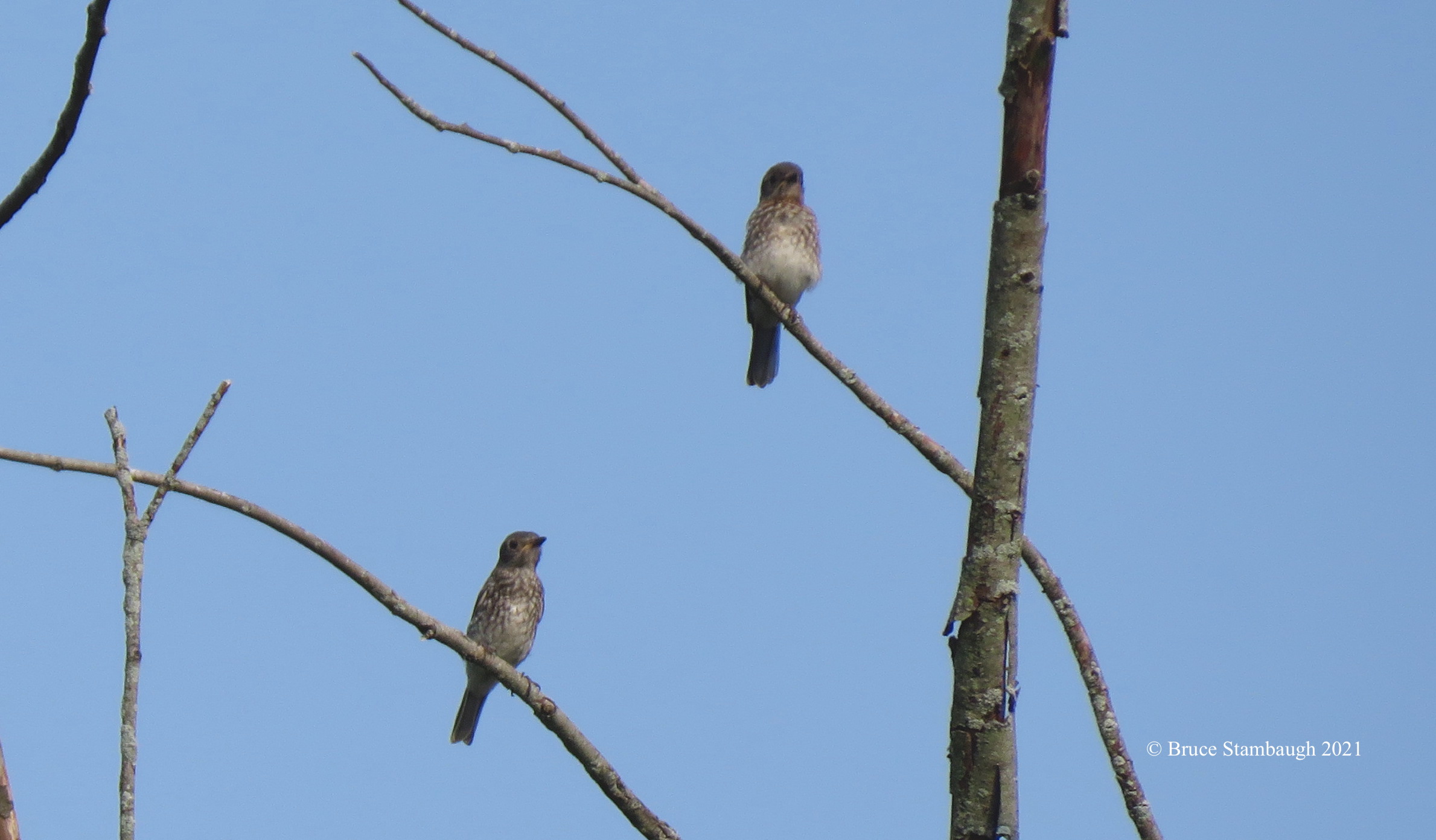
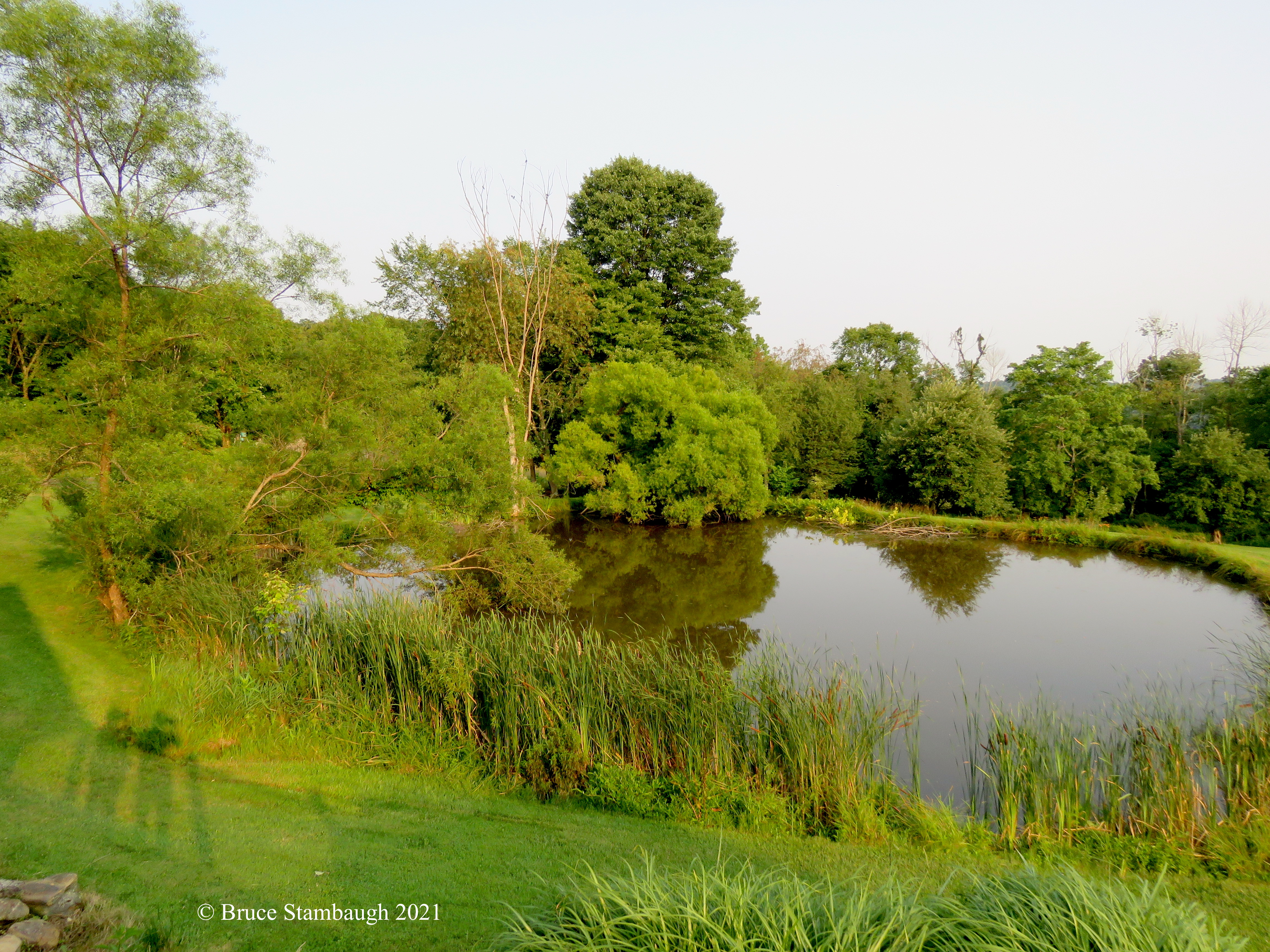
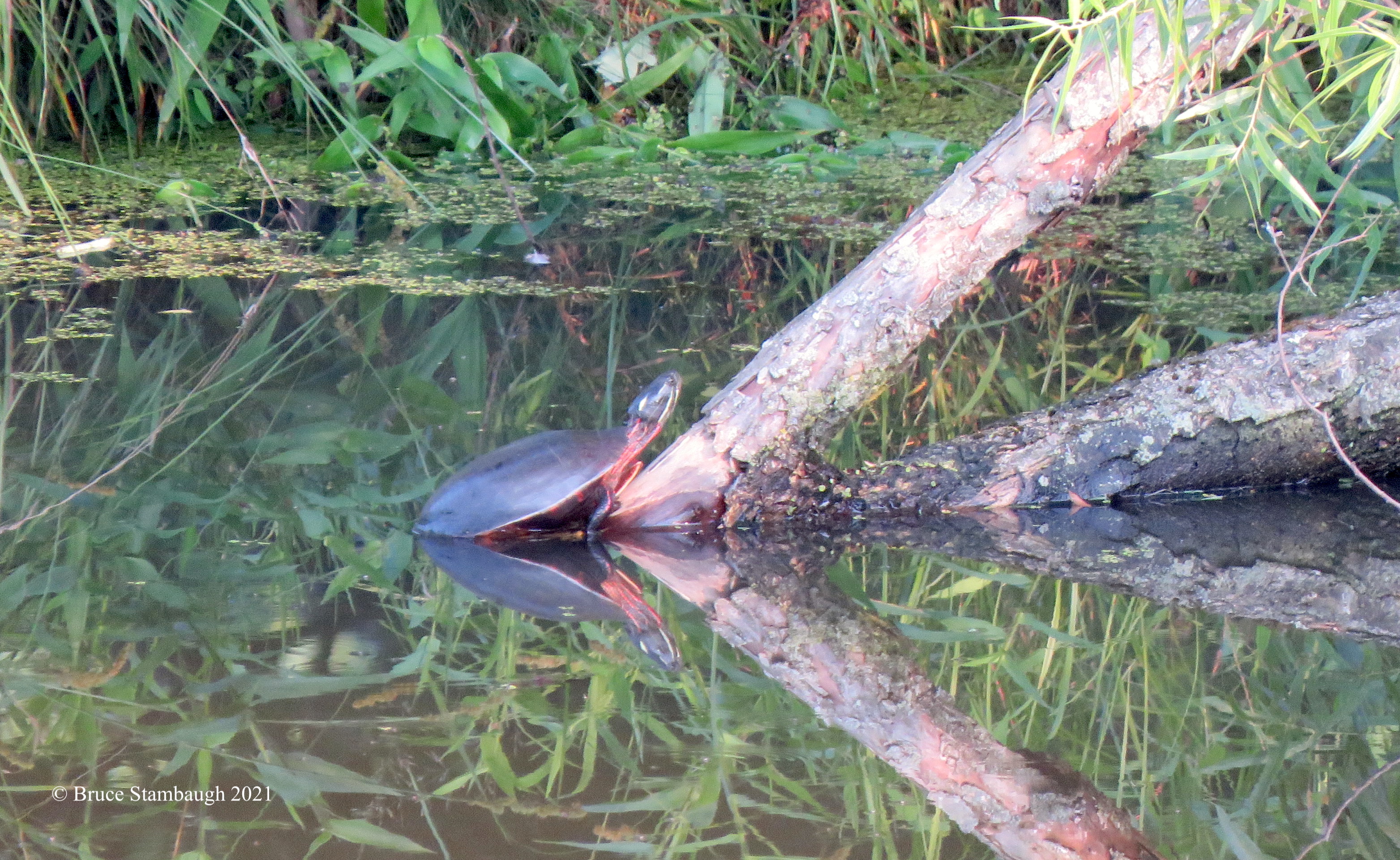
Out on the large porch of the restored cabin, we spotted more than the scarlet tanager. Barn swallows swooped low over a trio of small ponds, skimming the water’s surface for a drink on the fly. A pair of young eastern bluebirds watched the show from perches on a dead ash tree. Painted turtles sunned themselves on an old snag angled into the water.
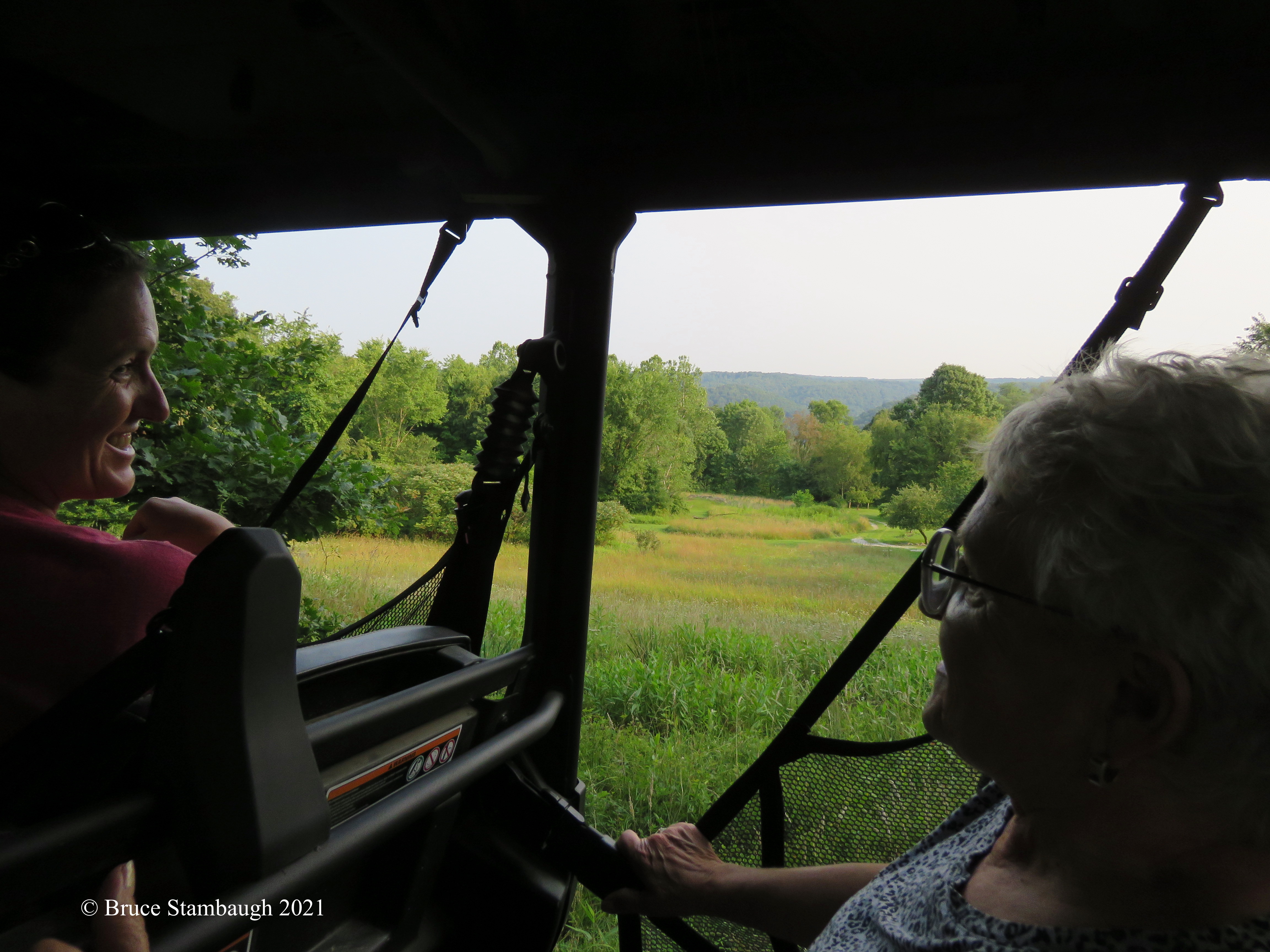
Sensing my intrigue, our hosts piled my wife and me into a Cadillac version of an all-terrain vehicle (ATV), and off we went to tour the rolling, mostly forested acreage. Of course, I wanted to find those unusual stone markers, too.
Our friends had cleared and maintained paths that wound up, down, and around the hilly landscape. We were in for a real treat.
We crossed a tree line in the ATV and spied a young buck with velvety spiked antlers. We stopped to view an open, rolling field planted explicitly with crops for the wildlife. Conservation is Rice’s practical goal.
As we continued over the undulating trails, our host pointed out trees he specified to be left by loggers who thinned the woods three years earlier. He walked with the loggers to ensure only the designated ones were cut.
High above the cabin, we came upon one of the old stone markers. It was too easy to find. A surveyor had recently spray-painted its top fluorescent red.
I appreciate people who care for the land. When they express their excitement openly at seeing the fruits of their labor, everyone is rewarded, including the wildlife.
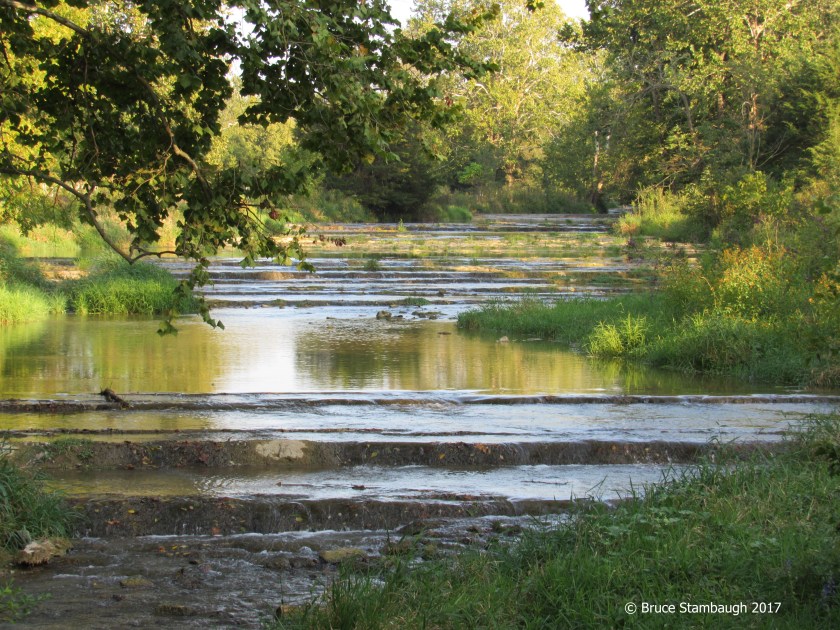
The Dry River in Virginia’s Rockingham County really is dry. It isn’t always.
With heavy and persistent spring rains, the river often runs strong and bank full. When that happens, the river is not crossable. That’s because no bridge spans the waterway. Rather, a large cement slab has long been in place for vehicles to pass over the riverbed. “Road Closed” signs are posted when the water is running too high and fast over the concrete crossing. Appropriately, the road that runs across the river is named “Slab Road.”
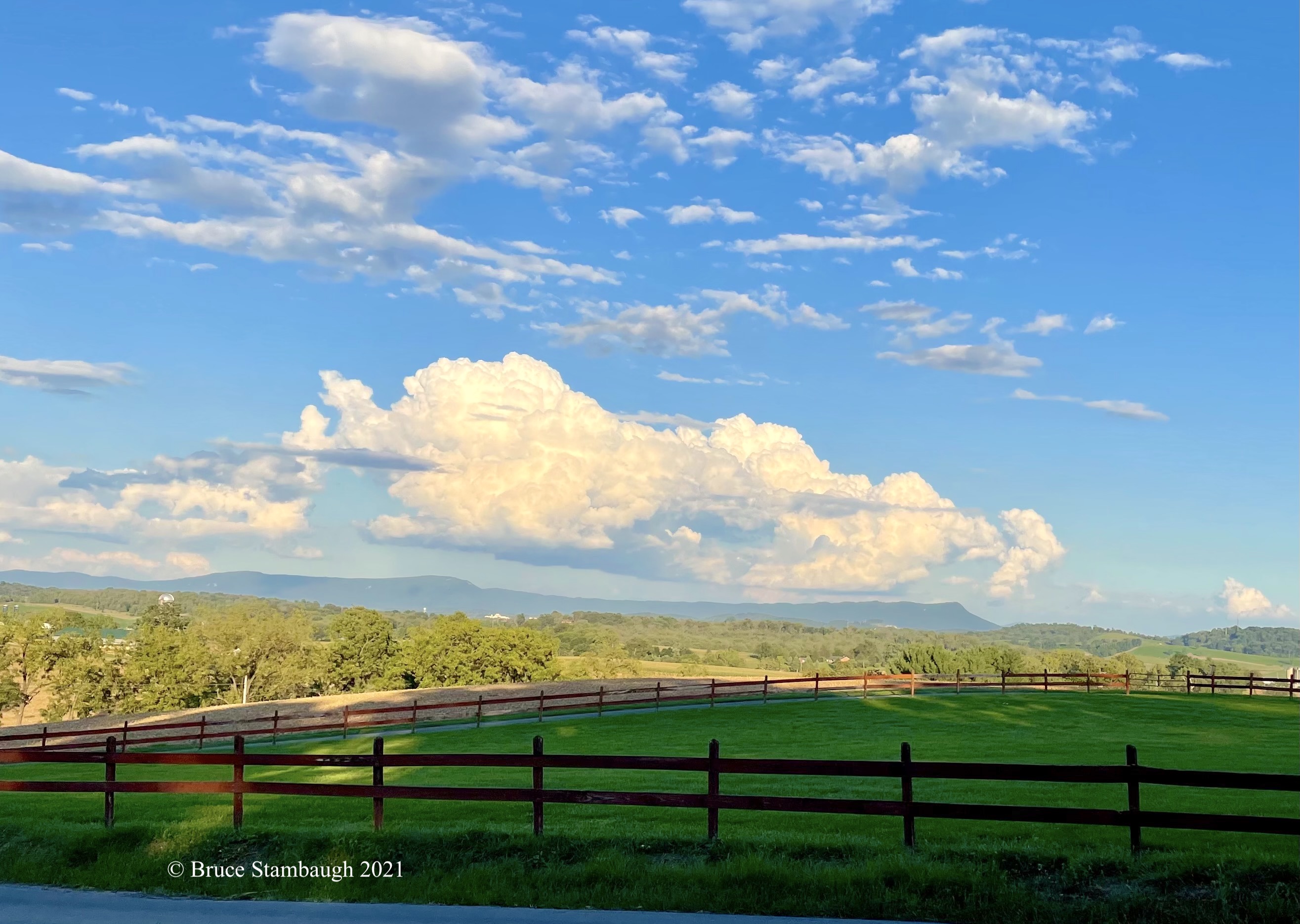
Precipitation has been greatly lacking here in the Shenandoah Valley since early June. Consequently, the Dry River has been bone dry for quite a while.
The calendar didn’t change, but the weather sure did.
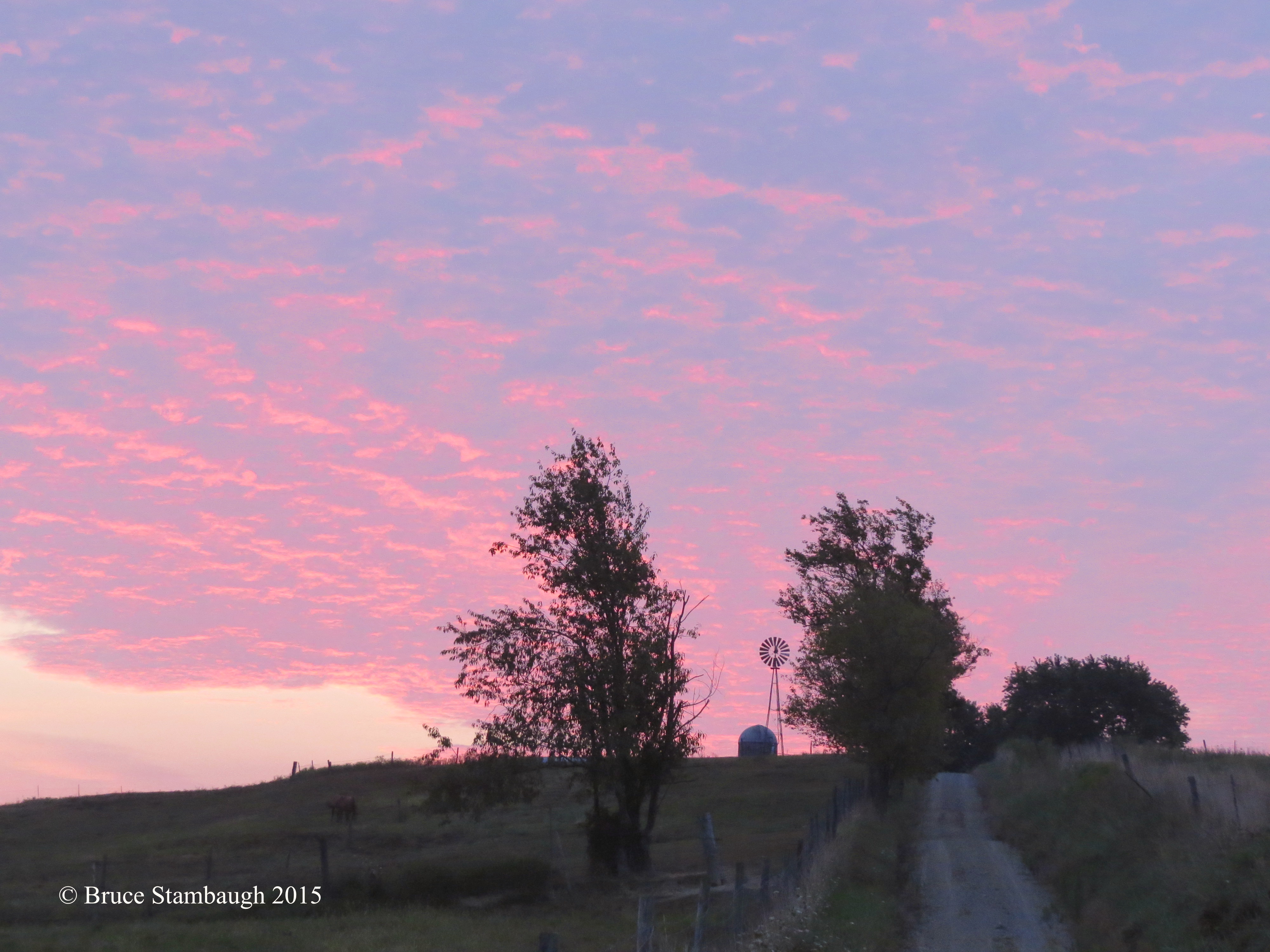
Wheat shocks glow in the evening sun in Holmes County, Ohio.
August came early this year. The calendar didn’t change, but the weather sure did.
The three H’s customarily associated with August, hot, humid, and hazy, have been around off and on since this June. Unfortunately, the dreaded trio has been mostly “on” all across the continent and beyond.
The results haven’t been pretty or even healthy. Record high temperatures fed massive wildfires, more typical for the fall months. The fires have been burning all across the West and in several Canadian provinces. A wildfire completely obliterated the small town of Lytton, B.C.
The wildfires have fed the brilliant sunrises and sunsets in recent days. Brisk winds aloft have spread soot particles eastward, creating that giant orange ball in the sky that we usually can’t look at directly. The August haze is extra heavy from Maine to Florida.
A wildfire-enhanced sunset.
August’s weather seemed both more predictable and tolerable a half-century ago. Global warming and climate change weren’t household phrases back then. They are now.
In those days, the school year ran from the day after Labor Day until Memorial Day weekend. The school district seldom used up the permitted allotment of snow days. So, we knew we had the whole summer season to enjoy.
As a youngster, I always welcomed August even though it was the last month of school vacation. The neighborhood gang of baby boomers took the hot, hazy, and humid weather in stride.
You are never too young to help husk corn.
We were content to sit beneath giant shade trees and play cards and board games instead of more strenuous adventures. We saved our more energetic shenanigans for cooler evenings. I’ll skip the details since the statutes of limitations haven’t expired. No harm to life or property occurred, however.
August always gave us suburban kids pause. August was our reality check. It forewarned us to use our last remaining days of freedom wisely. We usually didn’t.
A few of us, of course, had jobs associated with youth, like paper routes and mowing lawns. My older brother and I both delivered newspapers. In those days, I had ink on my fingers and not in my veins.
County fairs and street fairs began in earnest. Our county fair was always the last week of August and ended on Labor Day. When the fair closed, the schoolhouse doors opened.
Our father usually grew a garden well away from our suburban home. After supper, my siblings and I crowded into the family car, and off we would go to help hoe, weed, and hopefully pick my favorite vegetable, sweet corn.
If we had a bumper crop, we headed to a strip mall parking lot, popped the trunk, and sold our excess at a dollar a dozen. Dad usually threw in an extra ear for free, the gardener’s equivalent of a baker’s dozen.
Back home, our dear mother had the pressure cooker ready. All we had to do was husk the corn. It’s another job that I still relish. My wife says I will be applying that apt skill as soon as the bi-colored corn is ripe.
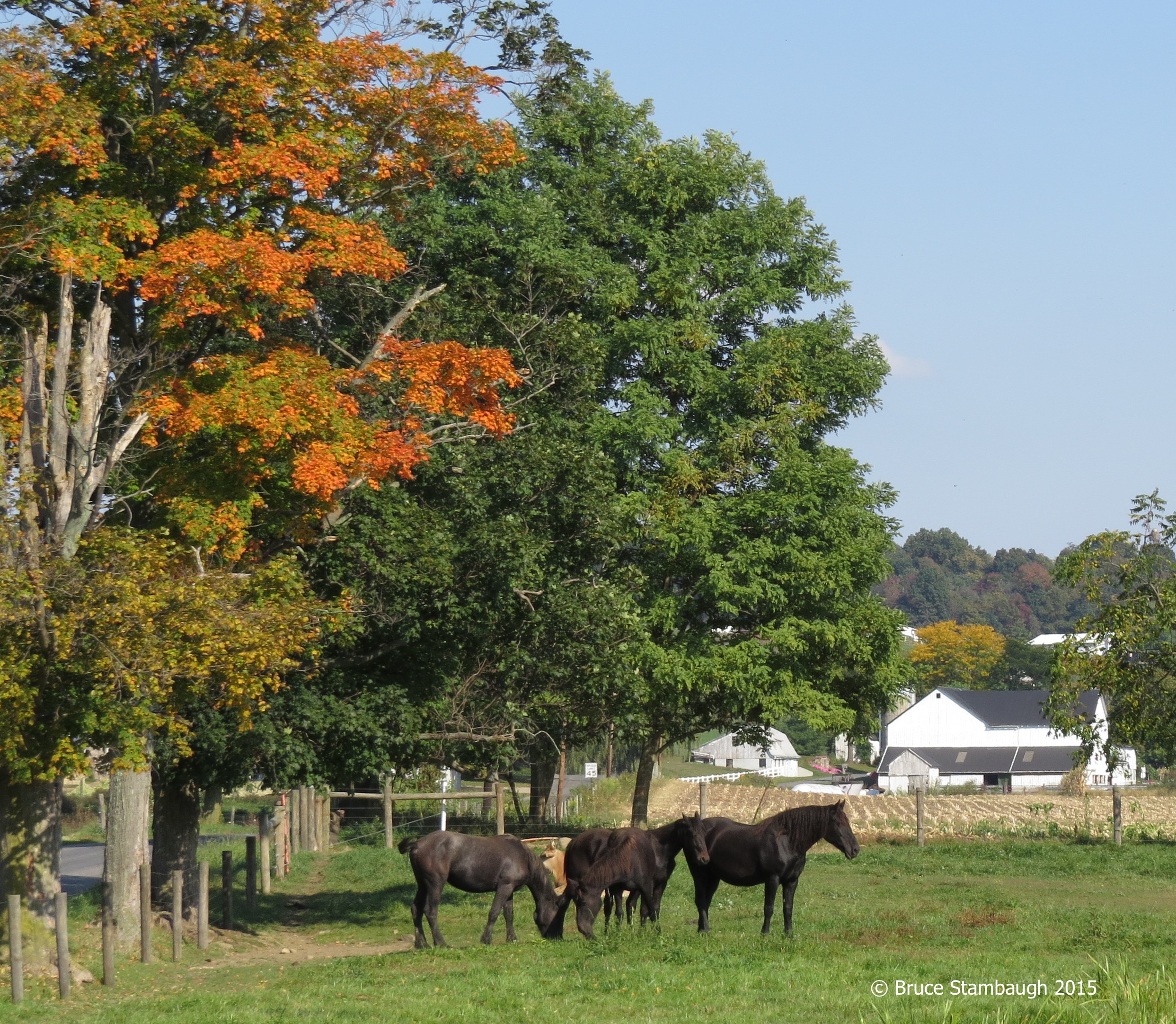
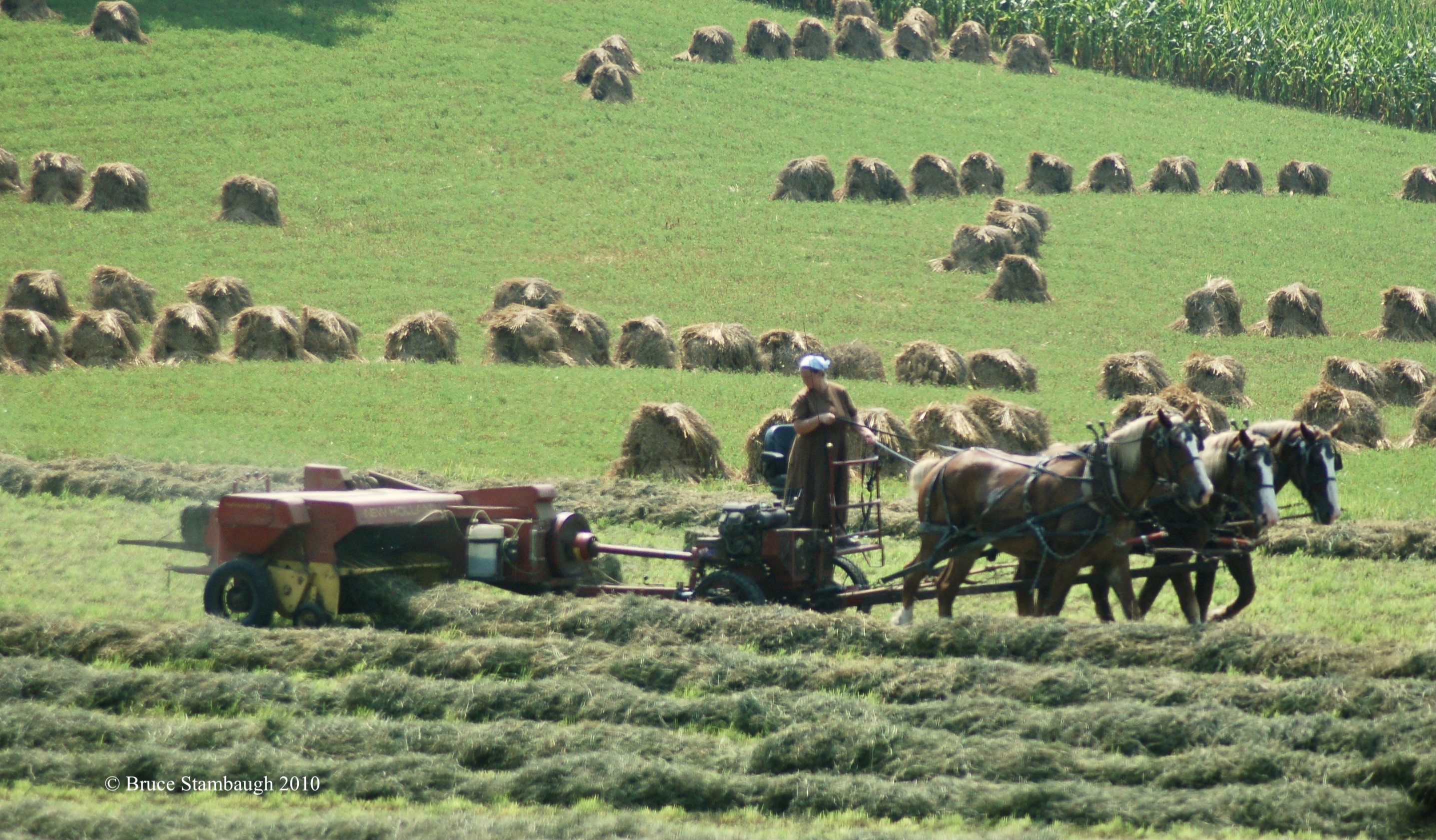
Occasionally, Dad would also load the family into the car, and we headed to Holmes County. I always admired the platoon of golden wheat shocks standing at attention in the fields of Amish farmers.
I had no idea then that I would be spending most of my adult life living there. It served as a foretaste of many good things to come for me.
I look back on my lifetime of Augusts with pleasant memories. None of the three H’s can bake, wilt, or obscure them.
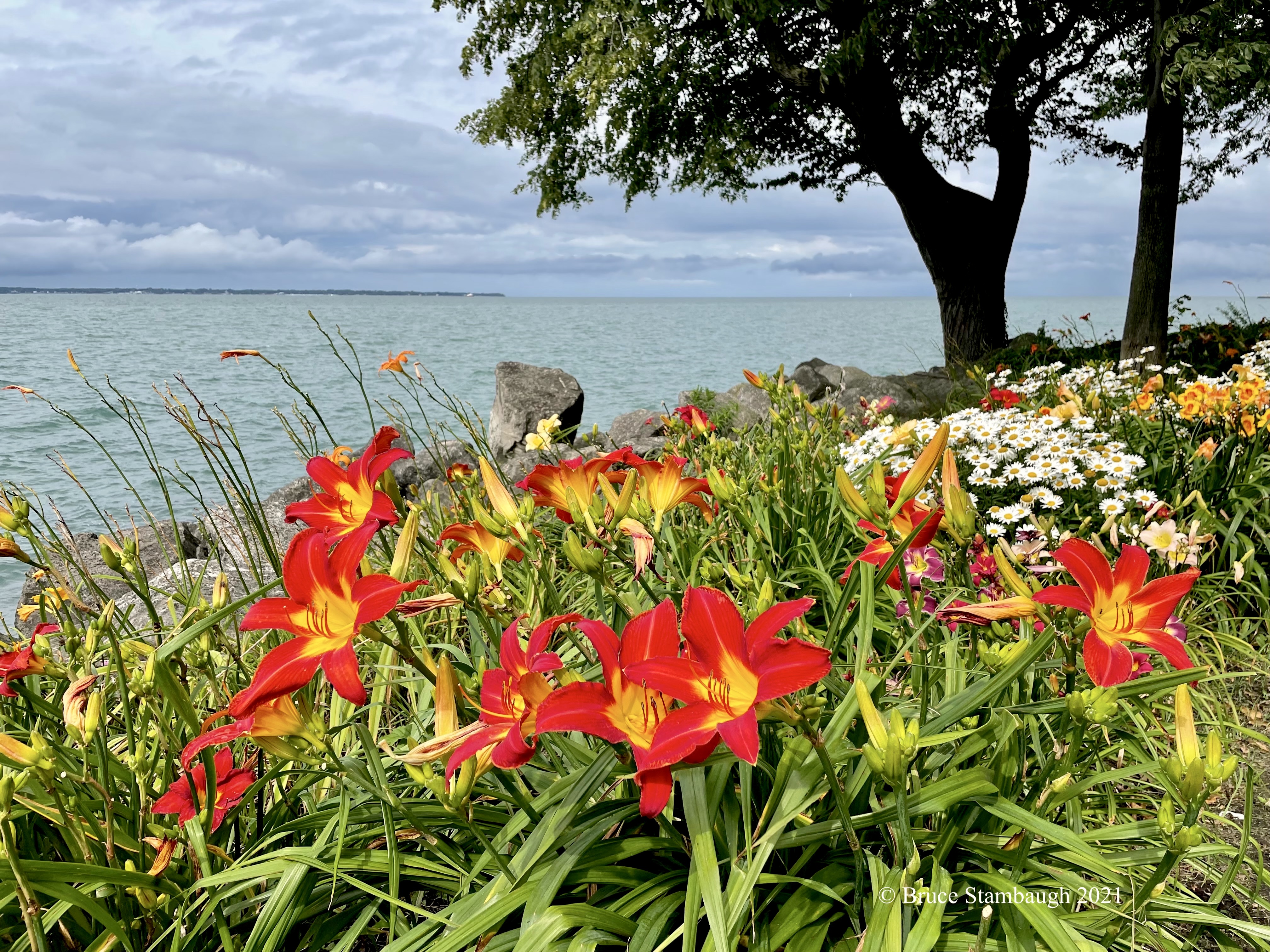
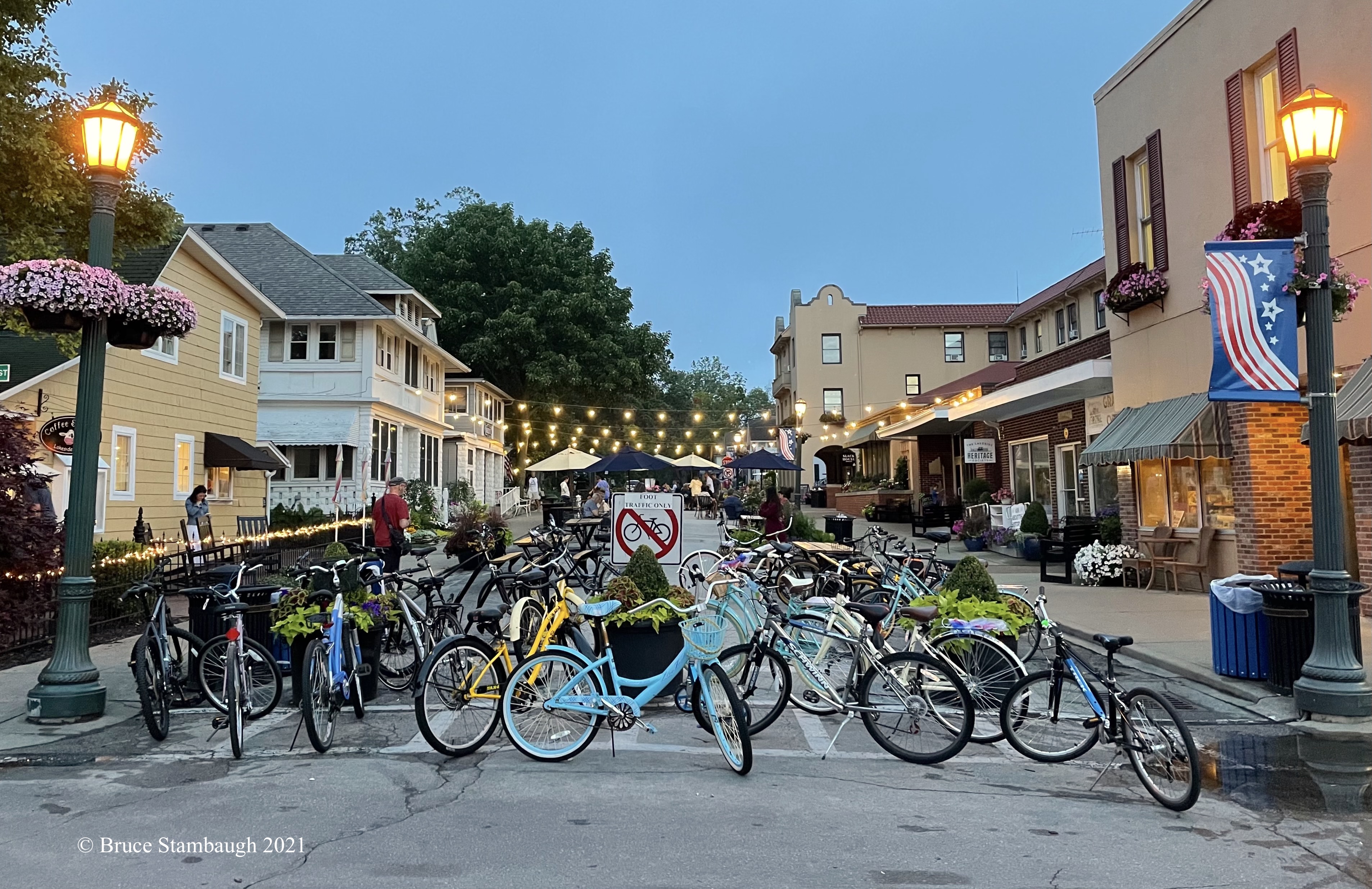
Beauty and exercise go hand-in-hand at Lakeside, Ohio.
My wife and I could hardly wait for our Ohio vacation to arrive. It wasn’t so much the destination as it was the people we would see.
After 50 years of marriage, relationships are everything to us. With all of the interruptions caused by the pandemic restrictions and safety measures, the sheer desire to see friends and family members drew us back to our home state.
Sure, we wanted to visit our old rural Ohio stomping grounds, Holmes County. Before that, though, would come a much anticipated week at our beloved Lakeside, Ohio. It’s the Buckeye State’s most beautiful mile.
We have relaxed there each July since 1987, minus last year’s pandemic summer-sequestering. We looked forward to enjoying all of the resort town’s amenities.
We longed to stroll along the Lake Erie shoreline to view the colorful collage of flowers. We looked forward to playing dominoes with other baby boomer friends on the porch of our hospitality house. Most of all, we anticipated reuniting with fellow Lakesiders.
First, we connected with a couple of my siblings on the way. My youngest brother and his wife greeted us with their new Britney Spaniel puppy in tow. Our sister soon joined us, and we caught up with news of children and grandchildren around a table of finger foods.
To help further break up the long drive from Virginia, we stayed overnight with a lifelong friend. Glad for our company, she went overboard to accommodate us, sharing deep conversations that resulted in laughter, tears, and lots of delicious food. Our reunion holiday was off to a good start.
Beautiful summer weather welcomed us to the Chautauqua on Lake Erie. Lakeside was still Lakeside.
However, a powerful night-time cold front arrived, drowning out many of our outdoor Lakeside plans. The weather remained wet and chilly, more so than the forecasts had foretold.
Still, we were at our favorite family resort, and that was all that mattered. The on-again-off-again rain couldn’t dampen our reconnecting with old friends and meeting new ones.
As a photographer, I always enjoyed rising early for gorgeous sunrises over the lake. Clouds and fog foiled that, too. The sun still rose. We just couldn’t see it.
The traditional stroll to the dock for sunsets even became iffy. A bagpiper serenaded the sundown to the joy and amazement of the adoring crowd at one of the few sunsets that we did see.
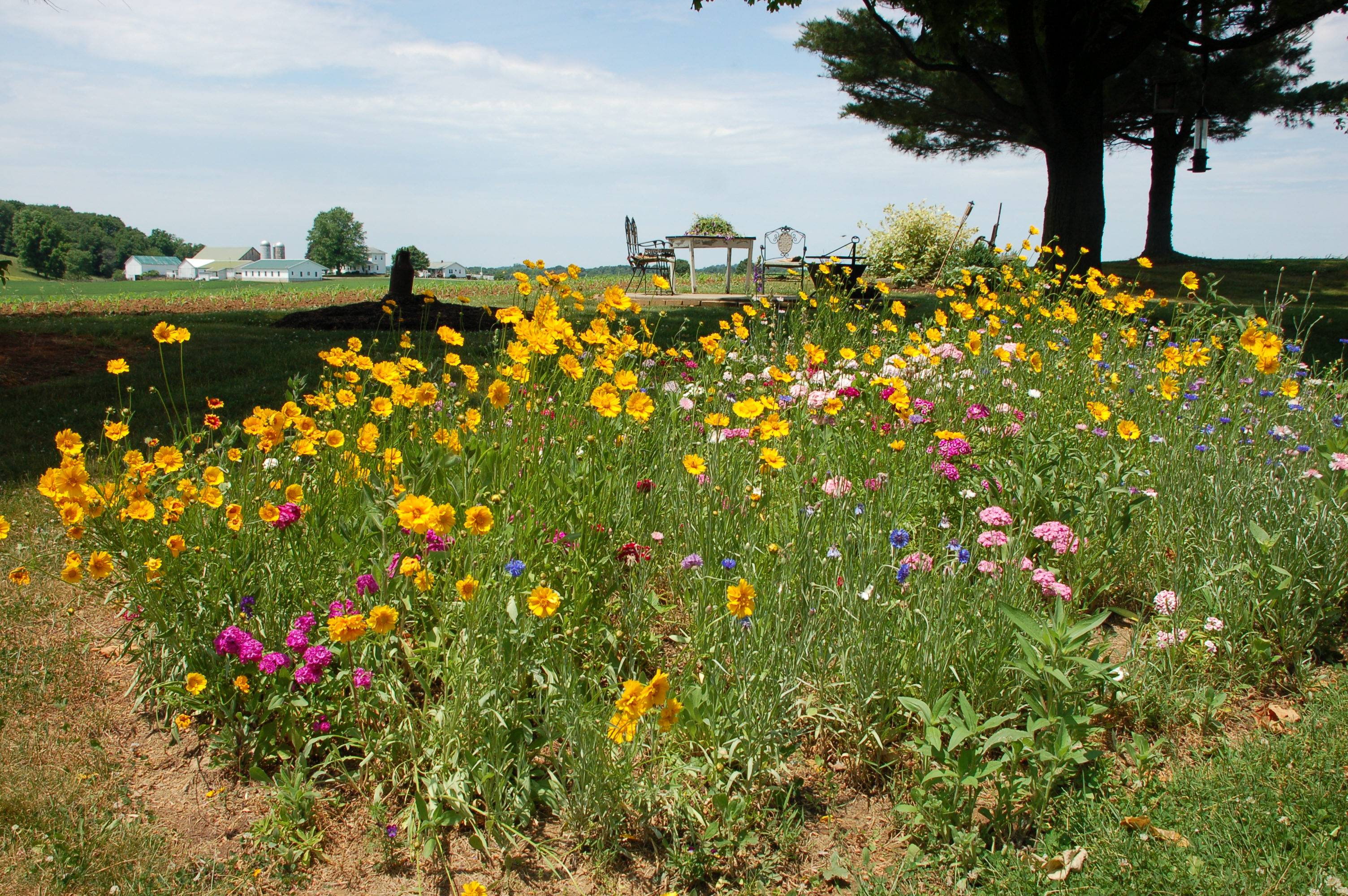
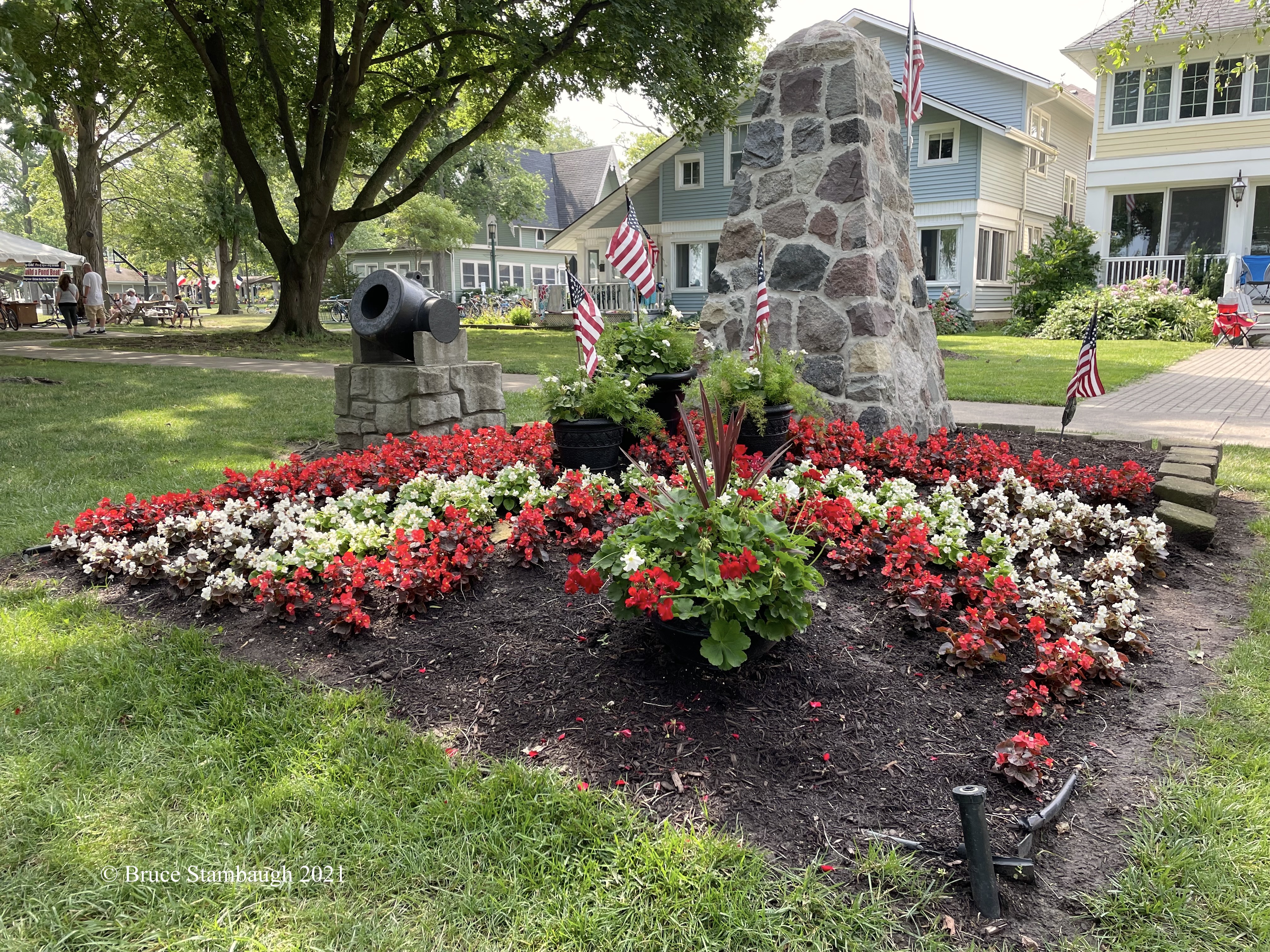
Summer flowers brightened cottages, homes, and even businesses thanks to the dedication of the hardworking Lakeside staff and volunteers. We enjoyed the many flashy floral displays.
Despite the weather, the Lakeside days slipped away. Saturday came too soon, and we bid farewell to our Lakeside friends. We headed southeast for dinner with my two brothers and their spouses.
Then it was off to the heart of Ohio’s Amish country, Holmes County, where we had spent most of our adult lives until moving to the Shenandoah Valley to be close to our grandchildren four years ago. We were amazed at the continued new construction, primarily commercial buildings.
On Sunday, we returned to the church where we worshiped for 46 years. More friends shared hugs and smiles both before and after the service.
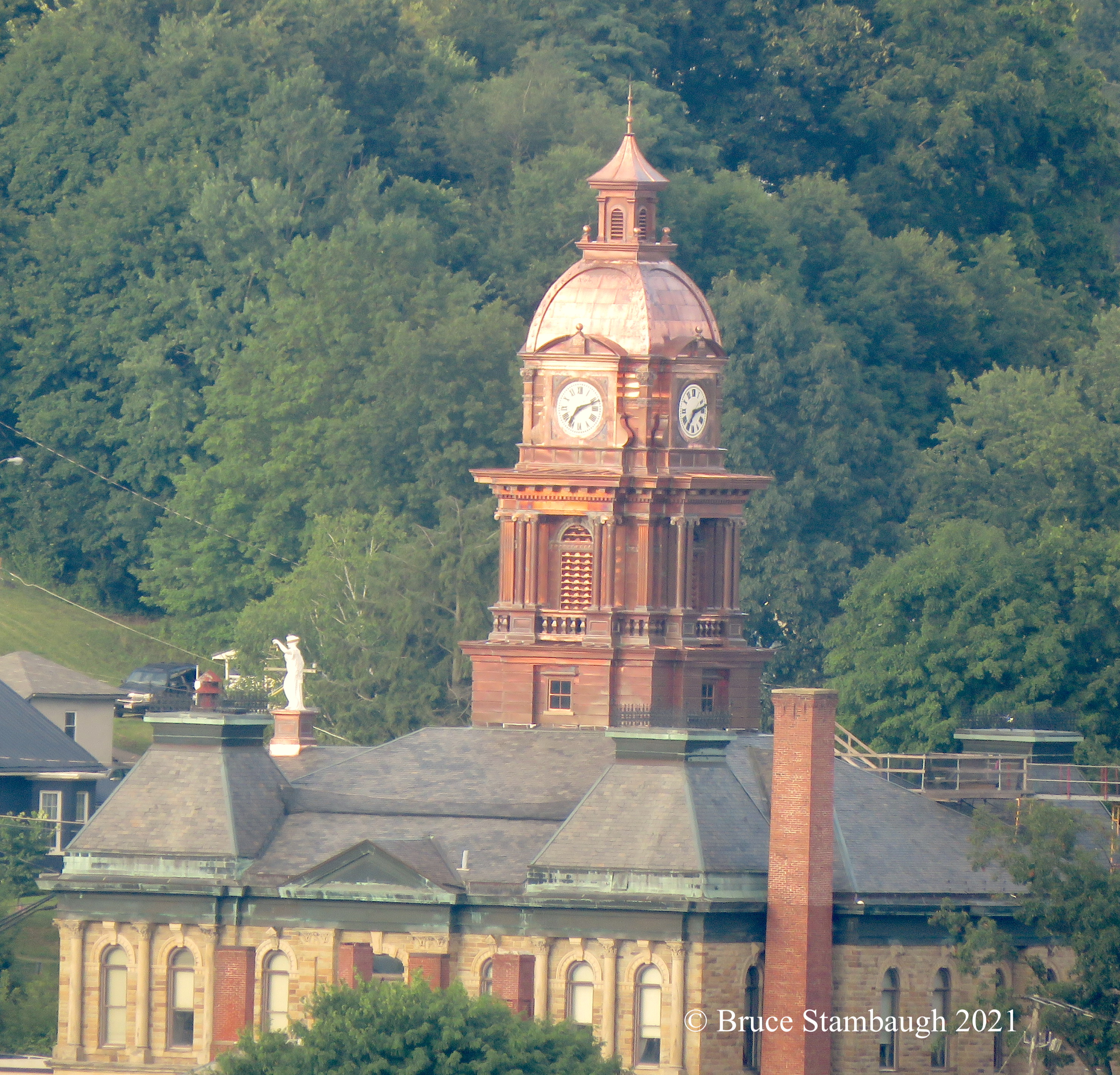
We stayed with dear friends and watched the sun glint off of the newly restored courthouse dome. It was hard to believe the many changes of the last four years as our gracious hosts drove us around the county.
As we headed back home, we made one more important stop. Breakfast with my wife’s sister and husband and a close cousin and his wife, all baby boomers, too, served as an appropriate send-off.
Spirited conversations and genuine fellowship with family and friends marked the pinnacle of our Ohio vacation. Soggy weather couldn’t swamp that.
The patch of lovely pink coneflowers drew me to them. The pretty flowerbed would make a nice photo. Then I spotted a lone bee atop one of the flowers. It sat motionless, as if resting. The amount of yellow pollen protruding from each side impressed me. I had to snap a photograph before it flew away.
Ironically, the bee stayed still, and I walked away glad that it had caught the attention of these old eyes.
I took this photo exactly seven years ago today while I was checking my roads as a township trustee in Holmes County, Ohio. Wheat shocks standing in fields like this one was once a common scene in Ohio’s Amish country.
Today, only the lowest order of Amish still shock their winter wheat, oats, and corn in the fall. The mainline Amish have introduced horse-drawn harvesting machines to gather their grain. Doing so was a matter of efficiency. With less than 10 percent of Amish still farming, fewer farmers are available to help in the harvesting process.
Consequently, this photo perhaps is a shocking scene in today’s terms. “A Shocking Scene” is my Photo of the Week.
You must be logged in to post a comment.