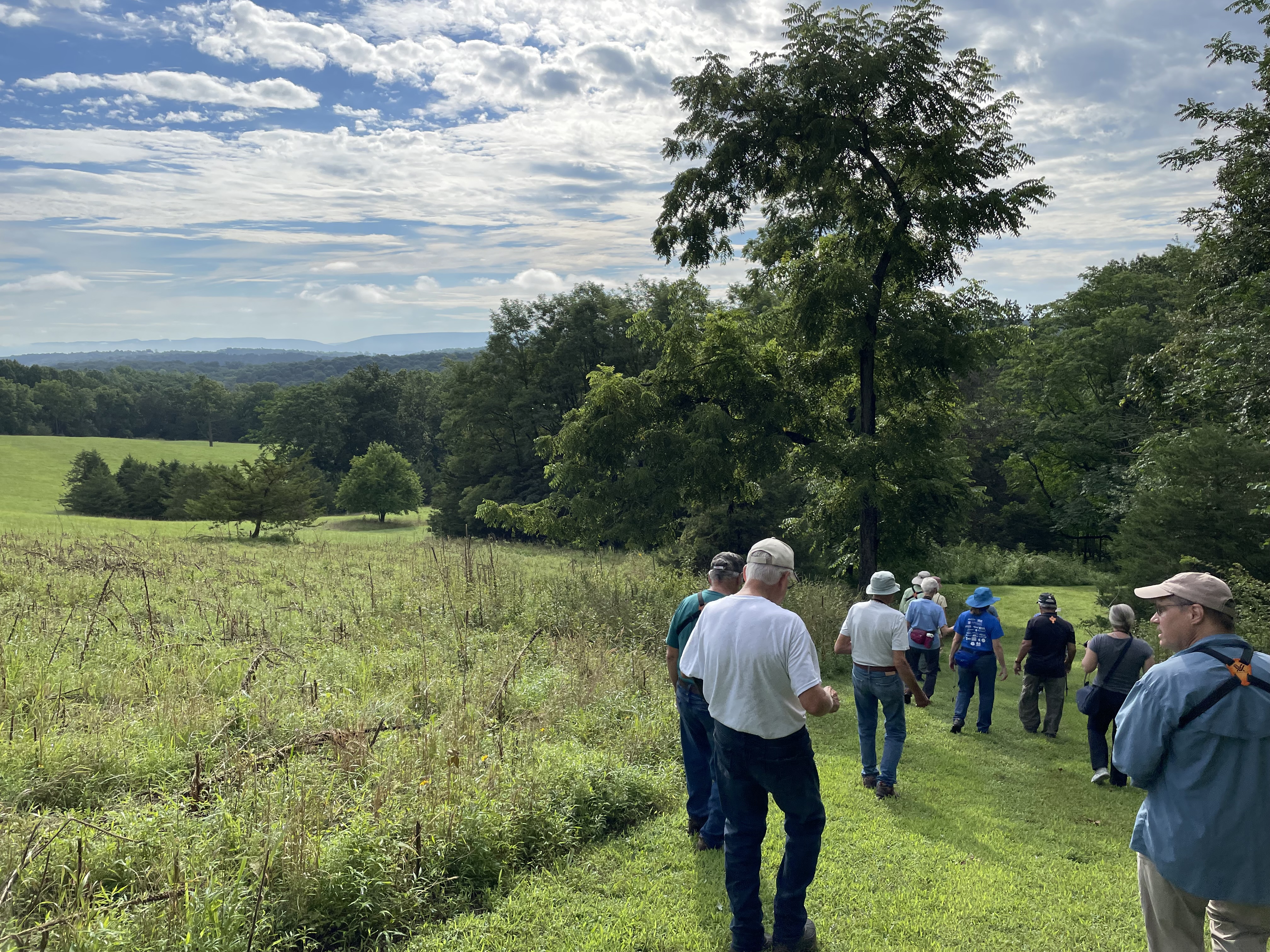
I couldn’t help but feel wide-ranging gratitude as I walked with a dozen other nature lovers. Billed as a bird walk, it was so much more than that. I wasn’t surprised by that realization.
Most in the group who took the tour, including the property owners, were in our third third of life. That is to say, most of us had more days behind us than we had ahead of us. That fact only made the pleasant August morning sweeter.
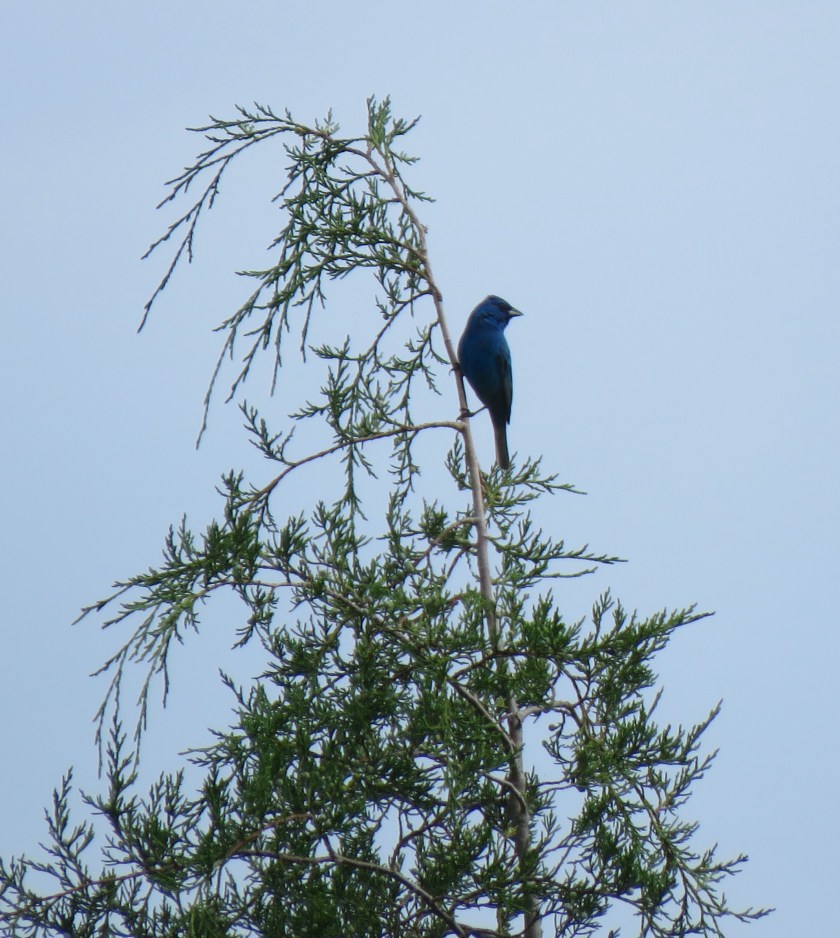
Indigo Bunting.
The landowners invited a noted local birder who tried his best to keep us corralled and informed. But Baby Boomers being who they are, we often overlooked our leader, and most of the group had moved on. Guilty as charged.
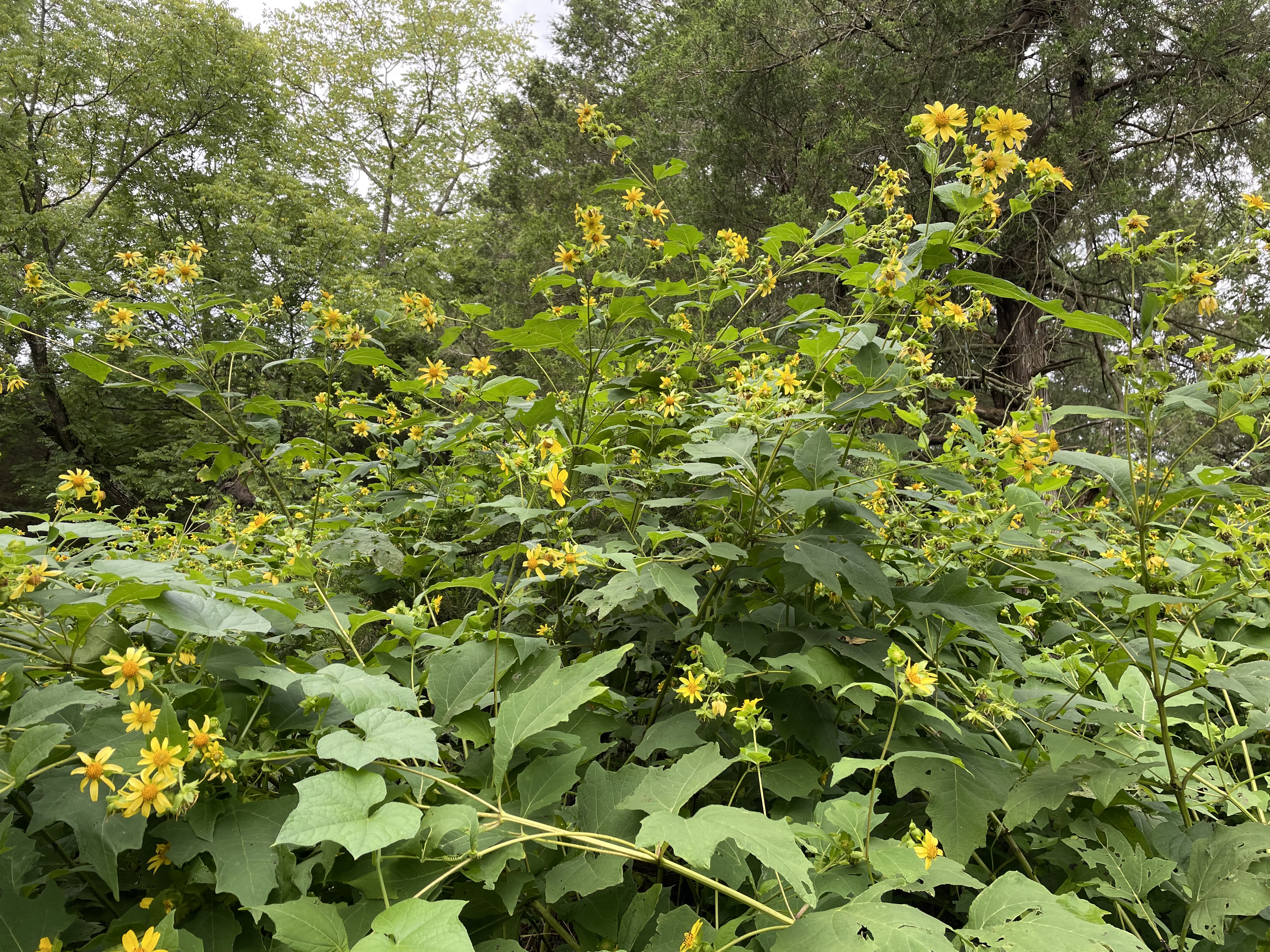
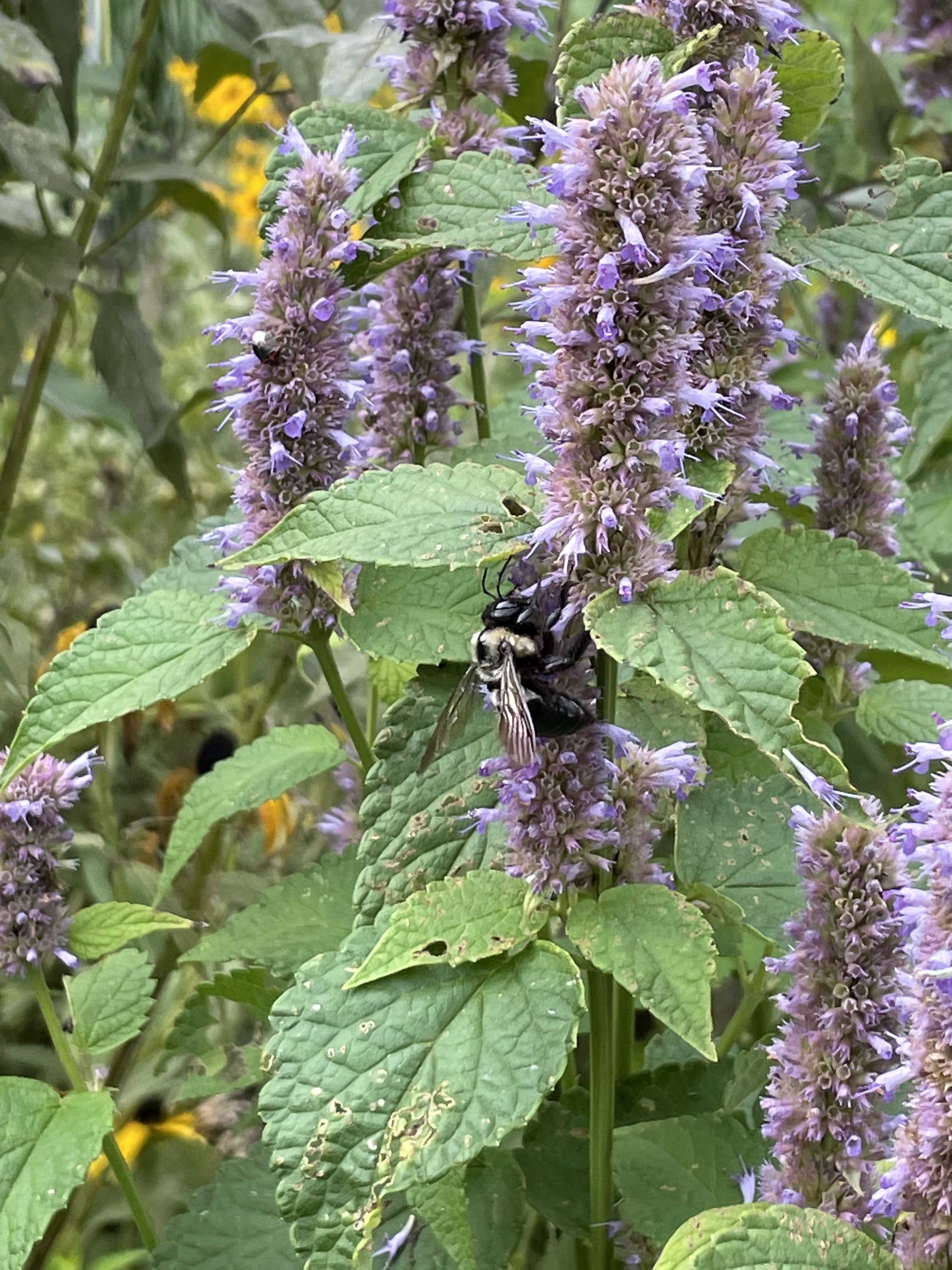
I attribute that to being enraptured with our surroundings. We walked the mown paths amid meadows of wildflowers, stands of woodlots, and the buzz of bees, the distraction of beautiful butterflies and plenty of avian species. There were too many times when I simply wanted to stay in place and absorb all that surrounded me. Believe me, there was lots to take in.
But we didn’t want to overstay our welcome. So, like it or not, this grateful group of nature enthusiasts kept moving. There was so much to see in such a short time.
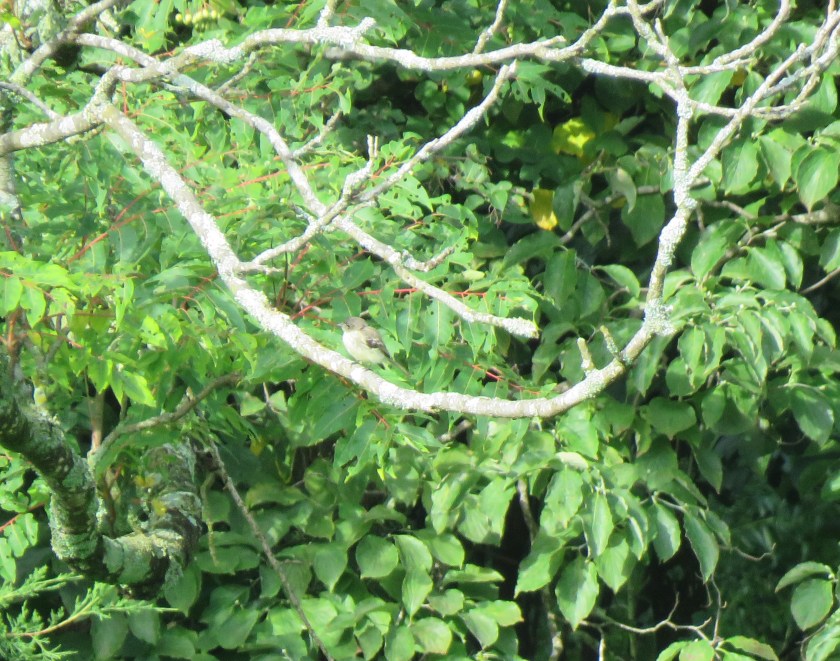
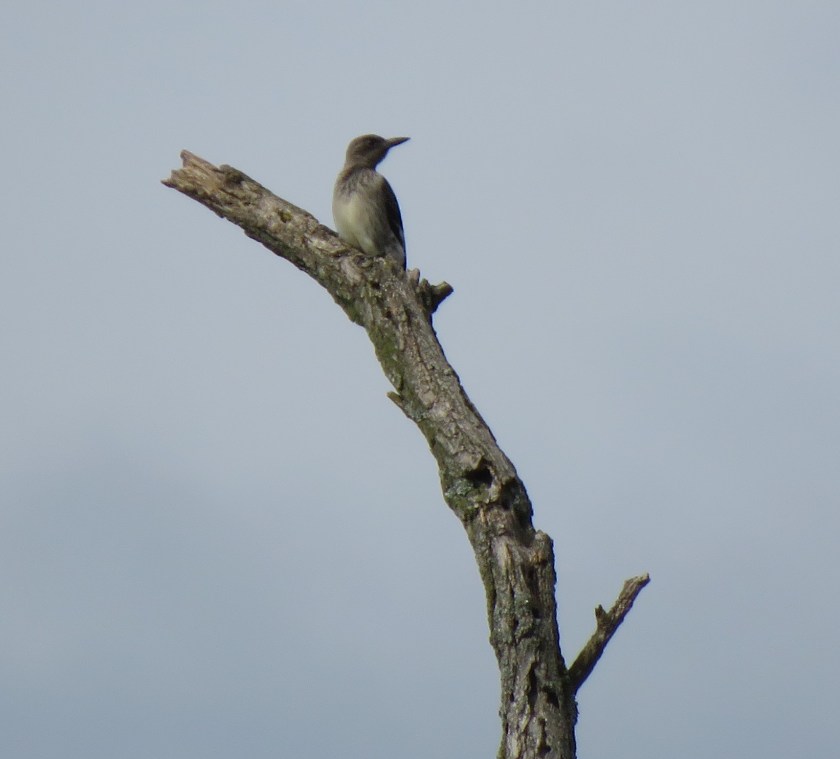
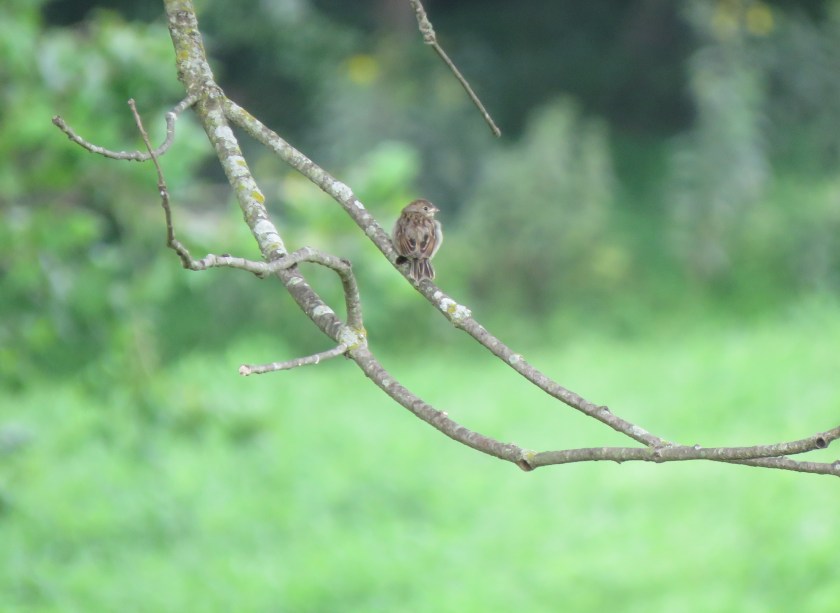
Near the end, I lingered to identify a solitary sparrow that perched in a tree many yards away. My binoculars didn’t help much given the distance. While I waited for the expert birder to verify my find, a Belted Kingfisher zoomed over the rushing creek below me. Just then, an Eastern Meadowlark took flight overhead, and a gang of Barn Swallows abandoned their perches on the big round hale bales in search for breakfast.
The sparrow sat dutifully on the tree limb while the walk’s leader edged closer. Finally, it turned its head, revealing its pinkish bill. Field Sparrow, it was.
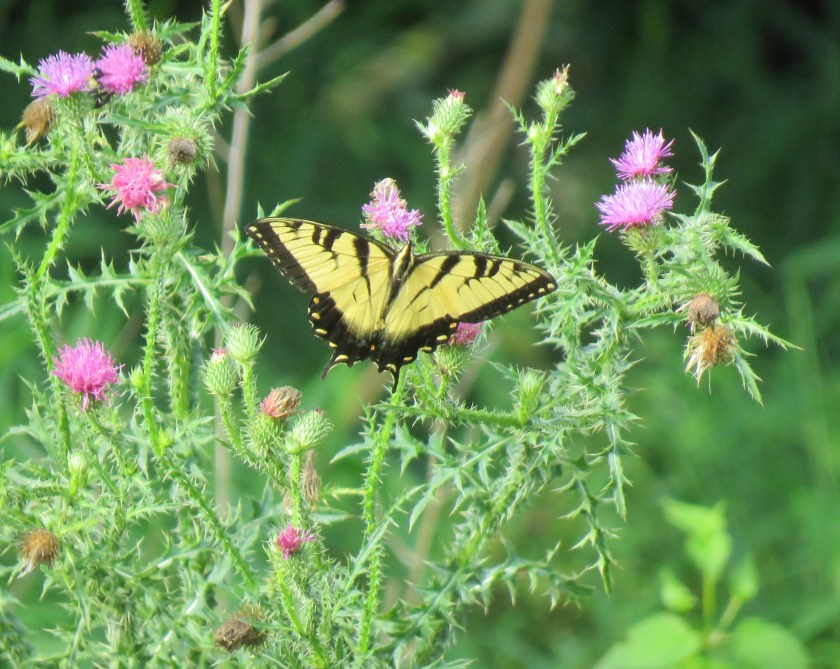
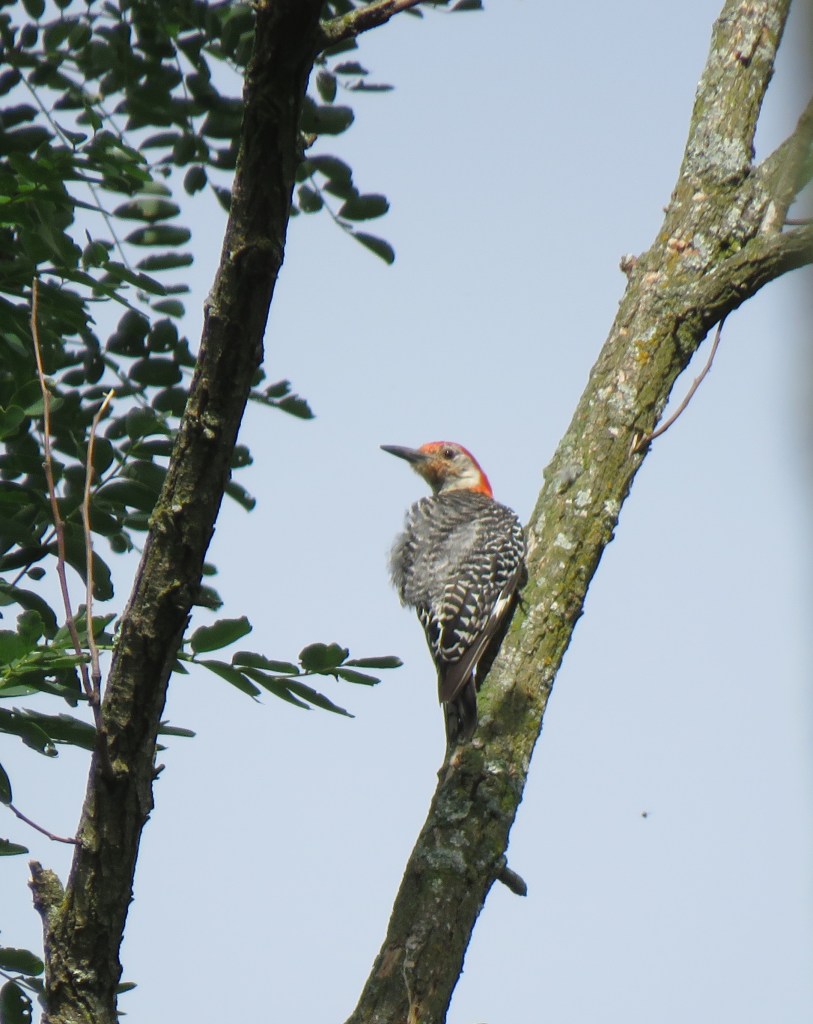
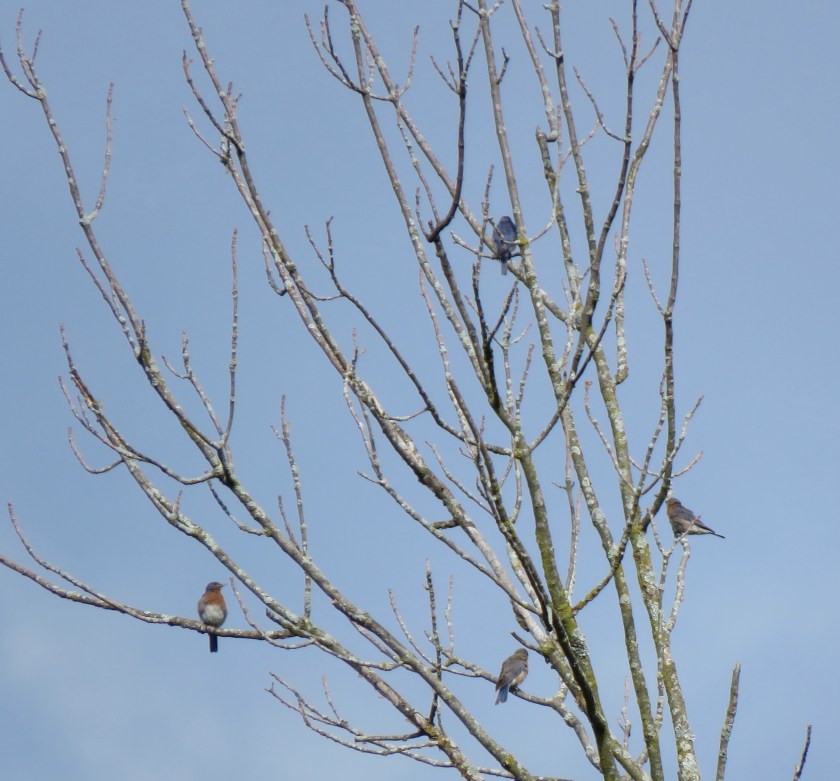
We saw 44 species of birds in our limited time. We got some excellent looks at songbirds and others. I was torn between birdwatching, snapping photos of butterflies, and enjoying the many summer wildflowers.
I was grateful for this kind couple to invite us onto their property and allow us to enjoy the fruits of their labor. After all, that’s how gratitude works. Blessings upon blessings create overflowing gratitude that begs to be shared.
Have you ever intended to photograph one subject and instead captured something entirely different?
That’s what happened to me last evening. I wanted to shoot the full super moon rising over the Shenandoah National Park in Virginia. As soon as I left home, I could see there might be a problem. A large rain cloud hovered over the park, right where the moon was calculated to appear.
Hoping the cloud might move on or dissipate, I kept driving. I am so glad I did.
A full moon always rises as the sun sets. In the Shenandoah Valley, the sun sinks below the Allegheny Mountains that mark Virginia/West Virginia state lines to the west. It rises over the Blue Ridge Mountains to the east.
As I drove east, the last of the day’s sun rays illuminated the clouds over the national park. The closer I got, the more the clouds transitioned from white to peach to orange.
I arrived at my photo destination in time to capture the moment’s beauty. For me, this easily made up for missing the moonrise.
The group I was with Saturday morning was nearing the end of our fruitful bird walk. We had seen 44 species in about three hours as we strolled around this lovely acreage of rolling wildflower meadows dotted with woodlots.
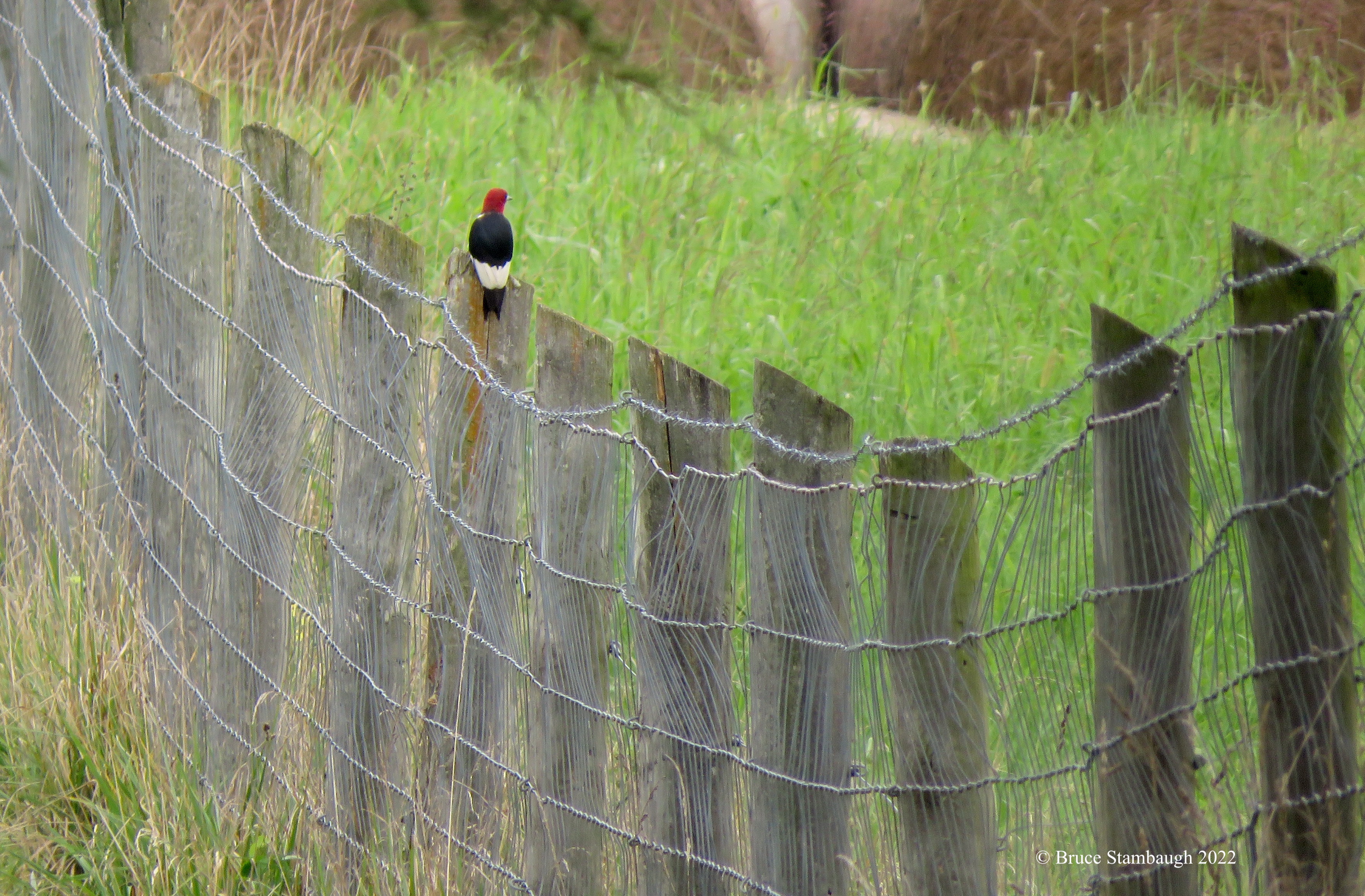
As we neared the end of our bird walk, this regal-looking Red-headed Woodpecker flew in front of us. It landed on this fence post at least 50-yards away. I was game for a shot anyway.
My hand-held camera captured this compressed scene with my 1,200 mm lens fully extended. The fence posts were actually several feet apart. Clearly, this photo was a long shot in more ways than one.
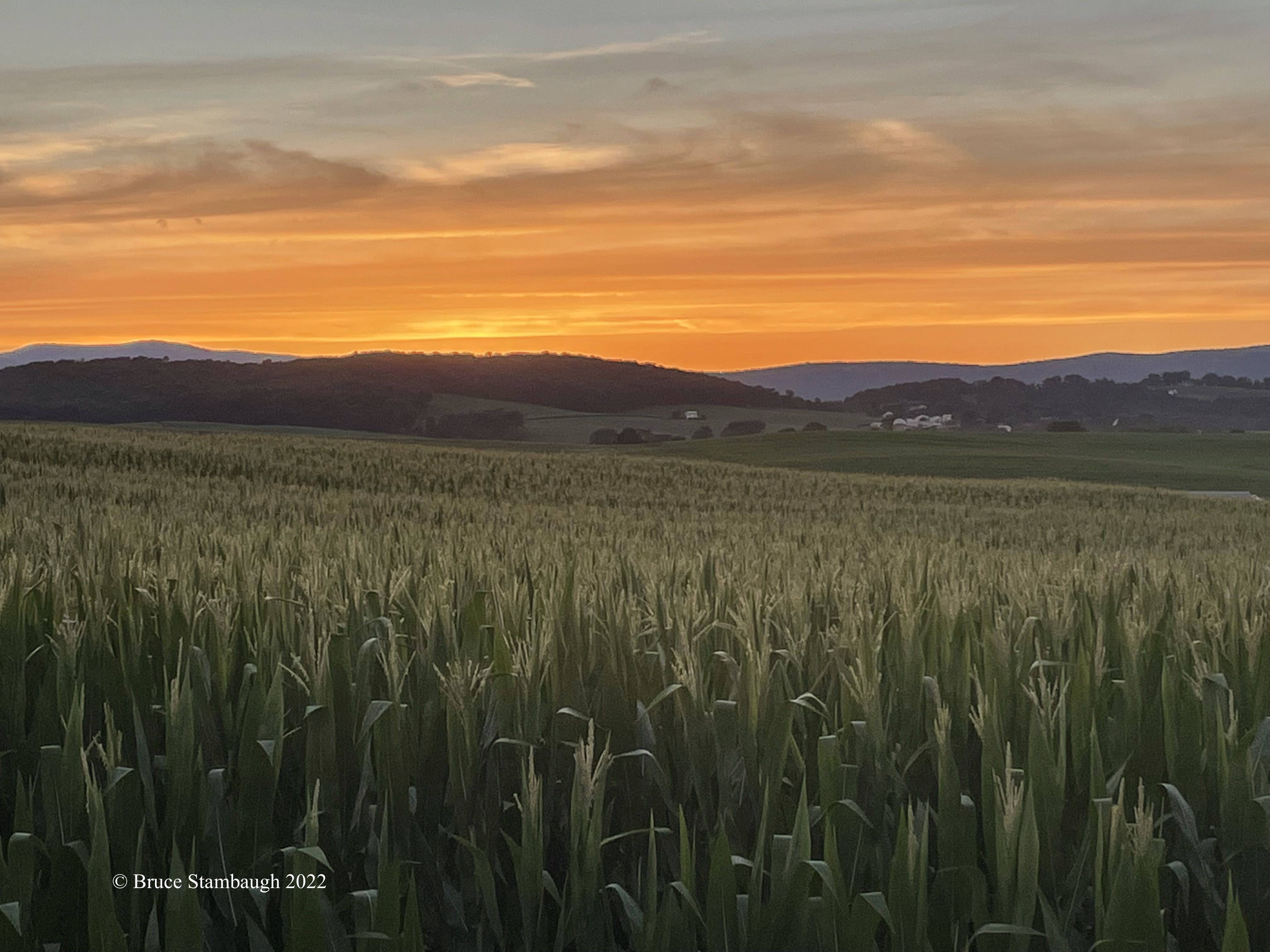
I am always looking for new locations to capture sunsets. I accidentally found this spot on a dead end road.
While the sunset wasn’t spectacular, something else caught my attention. The sweet fragrance of growing corn filled my senses. Then I noticed how the soft evening light highlighted the emerging tassels of the cornstalks. The flow of the large cornfield took my eye right back to the Allegheny Mountains and the setting sun.
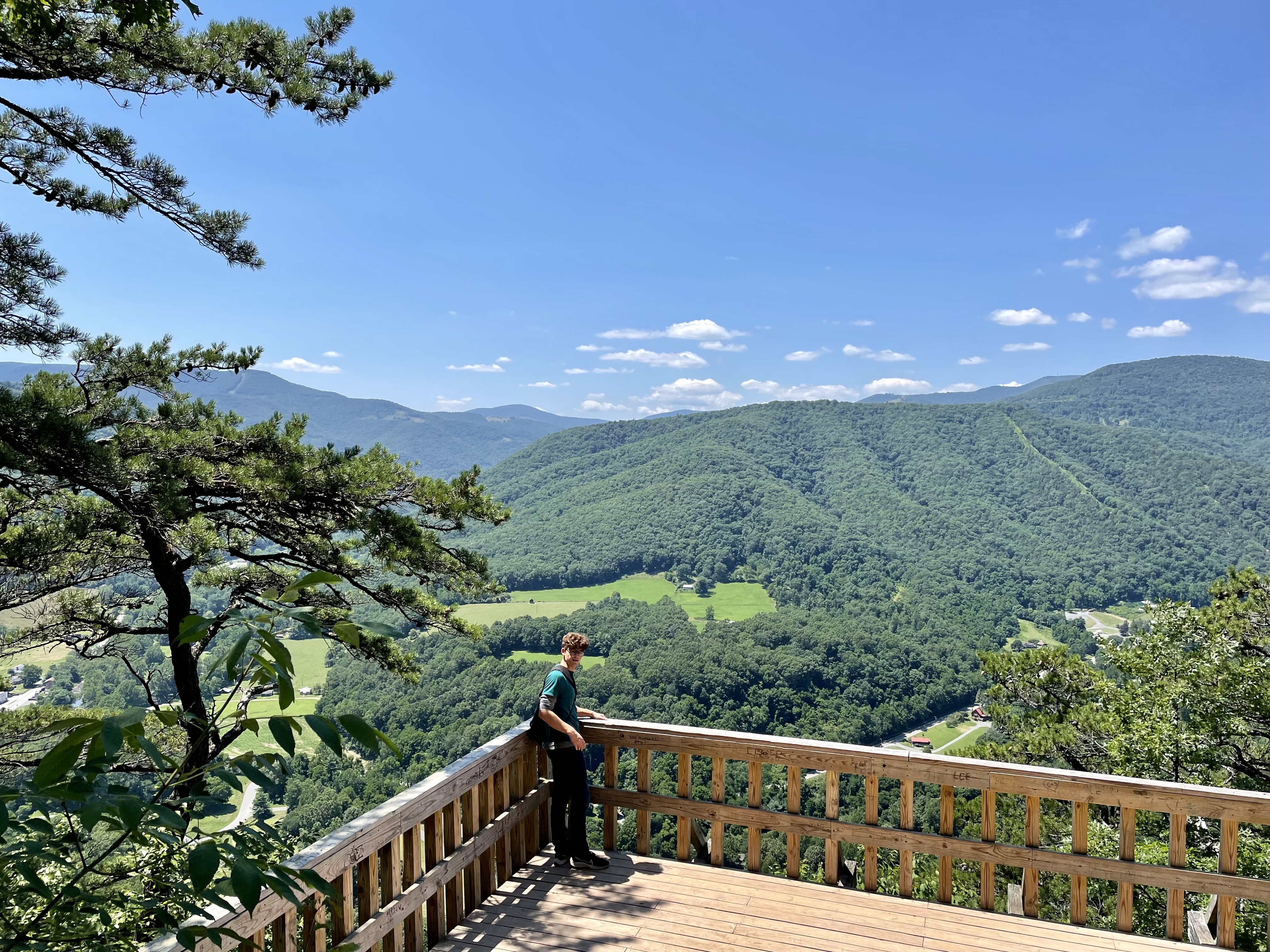
Grandson Davis enjoyed the view from the overlook deck at Seneca Rocks, West Virginia.
Weather nut that I am, I check the forecast regularly. Monday looked to be decent weather for hiking. Cooler temperatures in the higher elevations and no rain. That would work out just fine for several reasons.
Our daughter and her husband had left the previous Sunday to take our oldest grandchild to his college orientation in Richmond, Virginia. Of course, the university had nearly four days of activities for the new students and their parents.
That left the middle grandchild, Davis, and our only granddaughter, Maren, to check on. With them both being responsible teenagers, that didn’t require much.
With school out for the summer, Maren loves to help Nana with puzzles, baking, and other hands-on chores. She also mows our lawn. That left Davis and me to find trouble together.
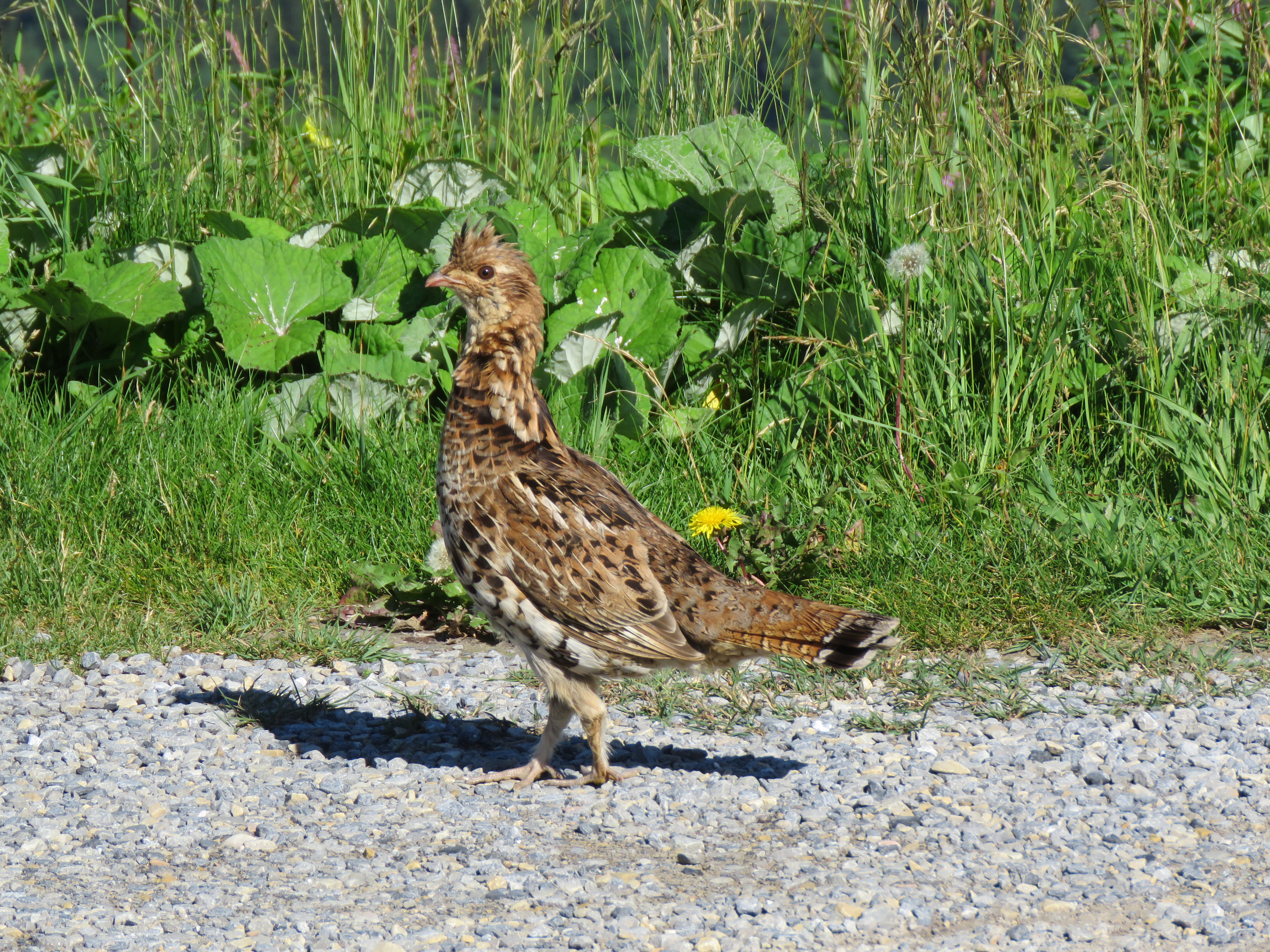
Since we both like to hike, we visited Spruce Knob, the highest point in West Virginia. It’s an hour and a half drive for us. We left mid-morning, but Davis didn’t take long to nod. How he could snooze in all that hilly, twisting driving I was doing, I don’t know. He woke as I slowed to photograph a Ruffed Grouse strutting its stuff on the Forest Service road near the mountain top.
Male Ruffed Grouse.
After taking a few snapshots of this often elusive bird, we were soon in the parking lot. Other than a Forest Service employee, we had the place to ourselves. However, we hadn’t even started on the trail when I realized I had forgotten the insect repellent. Fat flies buzzed nearby, but none landed on us the entire time we were there.
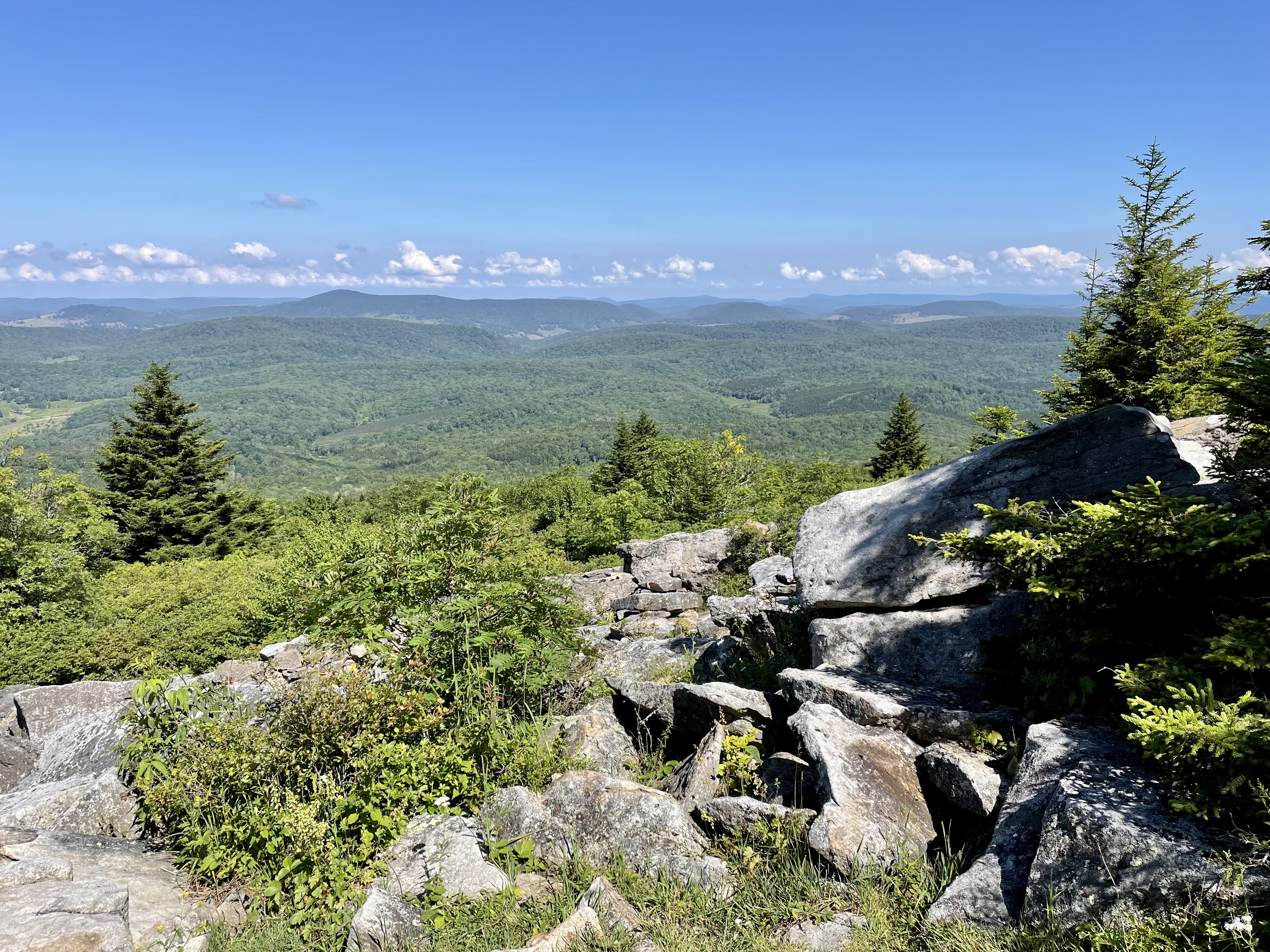
Spruce Knob affords beautiful views on a clear day like today. Only a few puffy clouds formed over distant mountain ranges to the west. The air was a pleasant 66 degrees with little humidity and no haze to obscure our views.
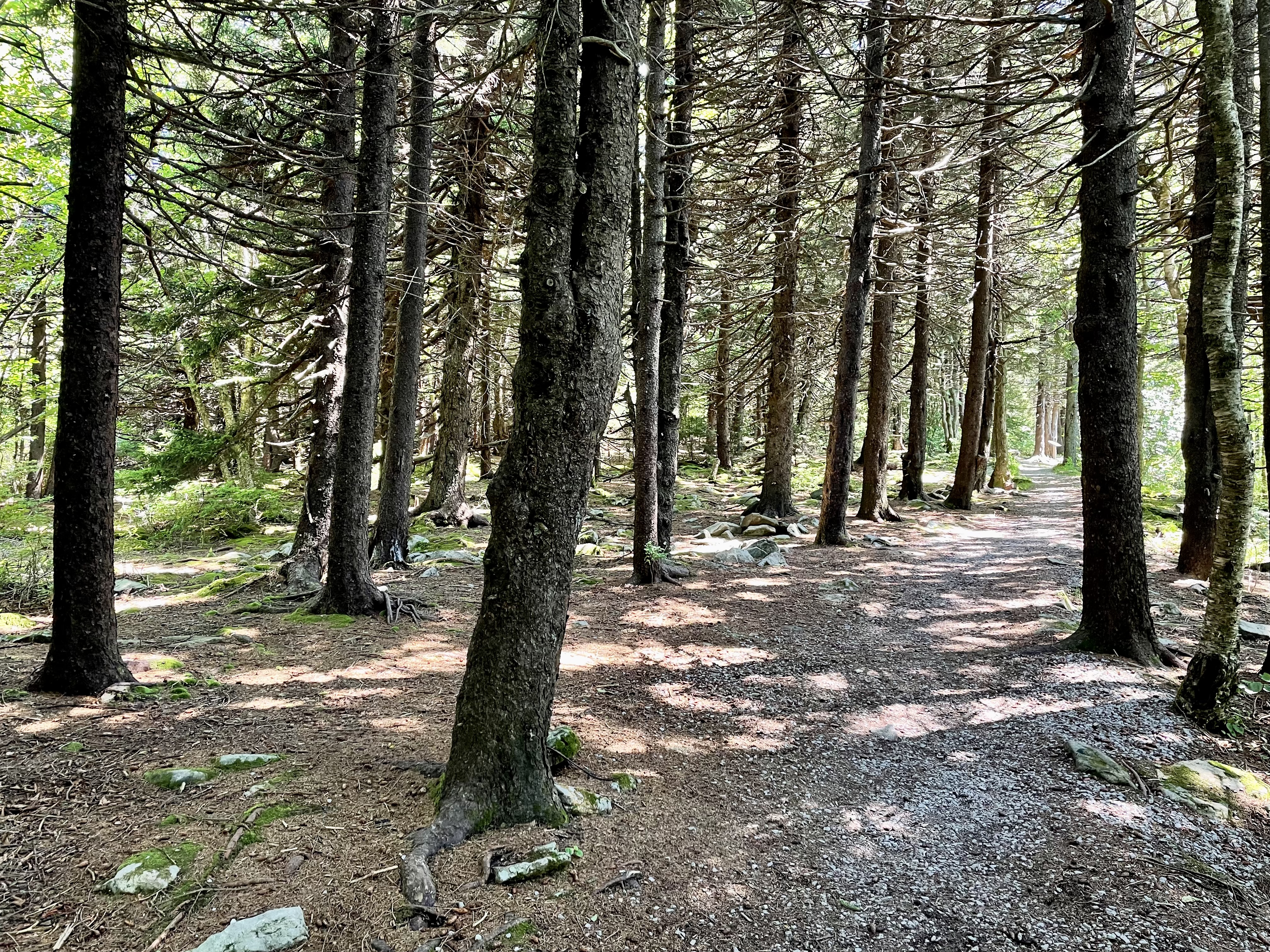
We walked the loop trail that leads from the parking lot and back. The scent of the spruce filled the air. Wildflowers and birdsongs were abundant. We basked in both.
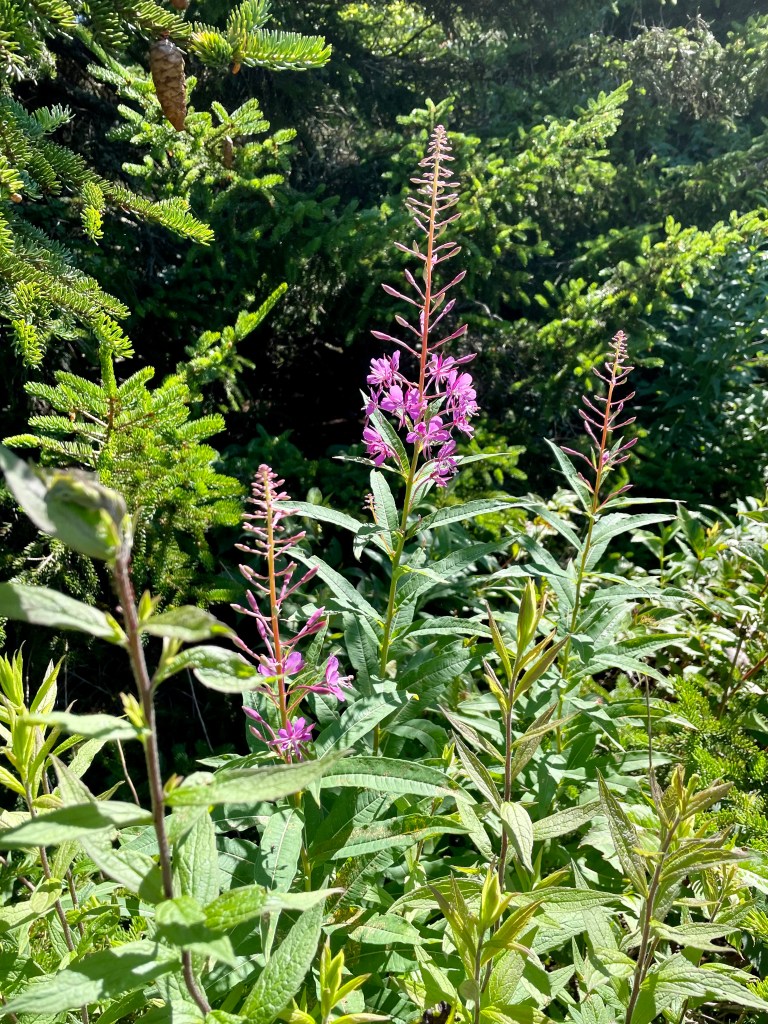
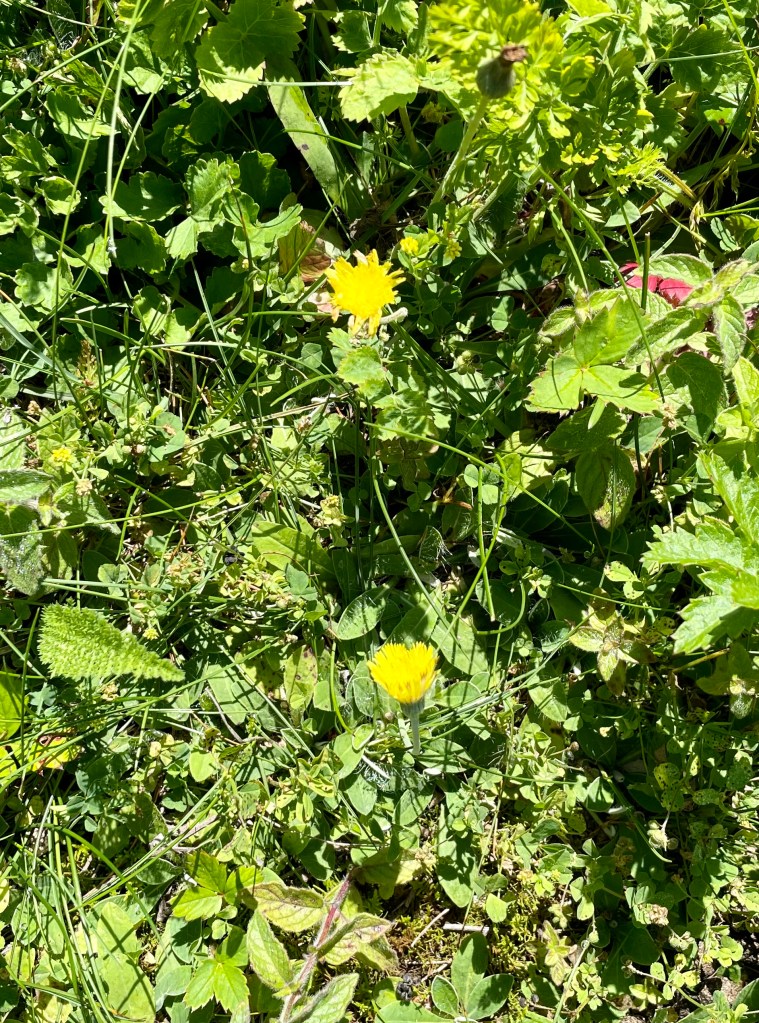
I know I slowed Davis down by constantly pausing to photograph wildflowers, birds, and butterflies. Trooper that he is, Davis didn’t complain.
I wanted Davis to enjoy this trip. It was one he was supposed to do at the end of the school year with several students and six teachers. The trip was canceled at the last minute when three teachers came down with Covid-19. In the end, all six were sick.
They were to camp out and visit Spruce Knob, Seneca Rocks, and Dolly Sods. All were in the same geographic area of the old folded mountains and valleys.
So, while Nana and Maren were enjoying each other’s company, and Davis’s brother and parents were occupied with college orientation, Davis and I explored some of the wilds and wonders of West Virginia.
We studied the large piles of giant rocks along the path and at the slope of the mountain, long ago rounded by millenniums of erosion from wind, water, ice, and snow. The teacher in me quizzed Davis about how the rocks got where they did. He graciously played along with my lame attempts.
We saw migrant birds and birds that should be migrants but reside here year-round. Dark-eyed Juncos commonly nest in Canadian provinces. The exception is the Appalachian Mountains.
Because these beautiful ridges hold the same habitat and provide the necessary nutrients, the birds live here and farther up the Appalachian range into New England. Davis wanted to know why the other Junocs migrated when the birds we saw stayed. I hope he seeks a better answer than I gave him.
We enjoyed the views east and west and headed to Seneca Rocks, where we would eat our brown bag lunches. When we arrived at the valley picnic grounds, it was 82 degrees and humid.
From there, we could clearly see the face of the vertical rocks jutting straight up. Eons ago, they had been parallel until the collision of continents forced them to fracture and face the sky.
Unfortunately, no rock climbers could be seen. The day was likely too hot for such strenuous activity.
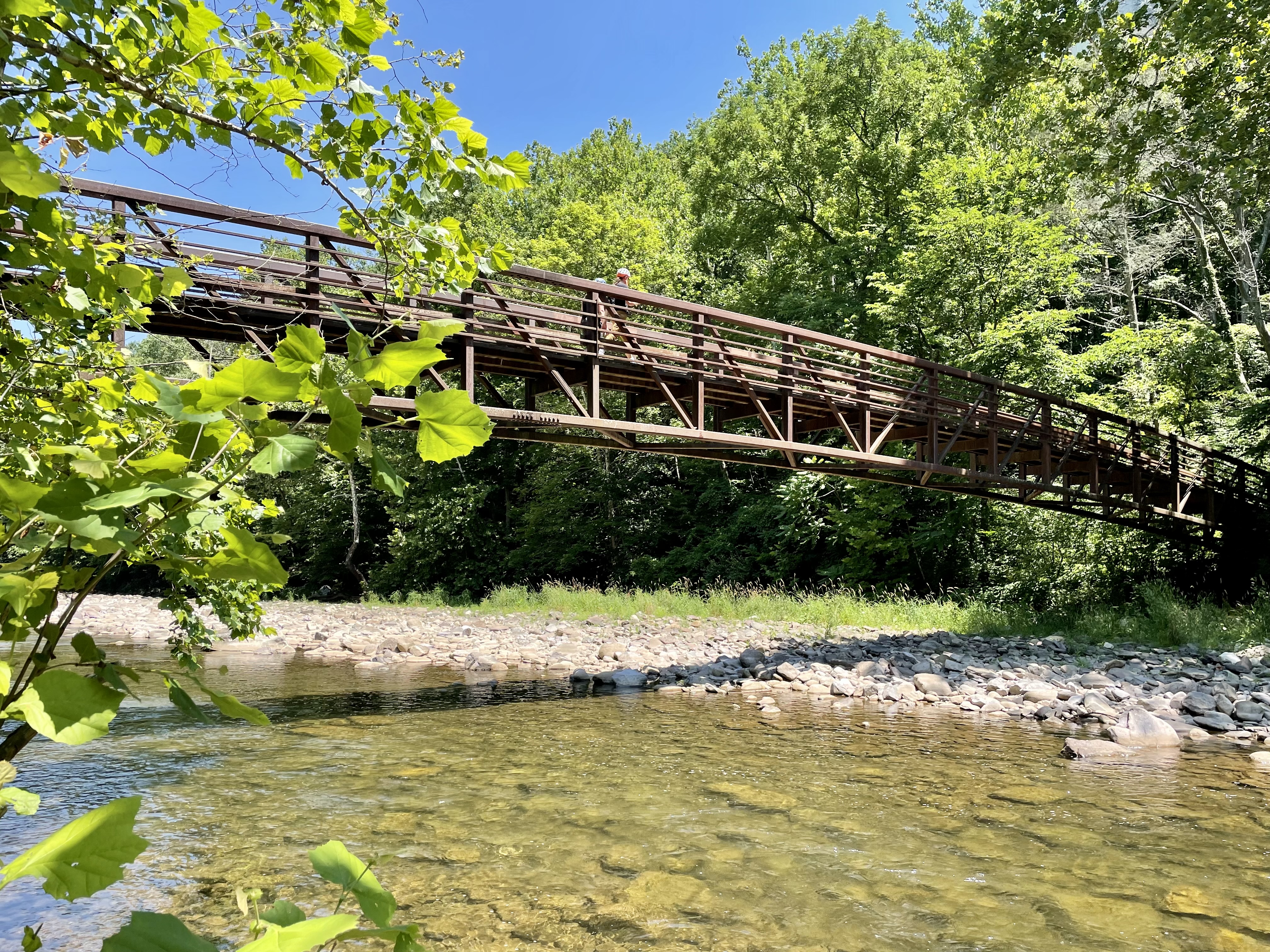
We gathered our things and headed up. The trailhead started at the North Fork of the South Branch of the Potomac River. The bridge that crosses it goes by the same cumbersome name.
Davis was eager to let his long legs glide him up the well-maintained trail. My old weathered ones weren’t so cooperative. The first third of the path is the steepest. We rested according to my needs. Davis never complained or barged ahead.
We passed other hikers on their way down, and other younger hikers passed us on the way up. I noticed some of them didn’t have hiking shoes or water. We later trekked by some of those same hikers, now fatigued. We reached the top more than an hour after we had started.
The trail leads to an overlook platform that provides gorgeous views of the mountain ridge west of German Valley that the river continues to carve out. We rested and talked with other hikers who soon reached the summit.
Going down took half the time. Davis wondered about going on to Dolly Sods up the road a piece. I wisely said we would save that adventure for another outing. We still had that long drive home.
Adventures like these are the reason we moved from Ohio’s Amish country to Virginia. Now, with the birth of our fourth grandchild in Rochester, New York, we have additional opportunities to watch our grandchildren grow.
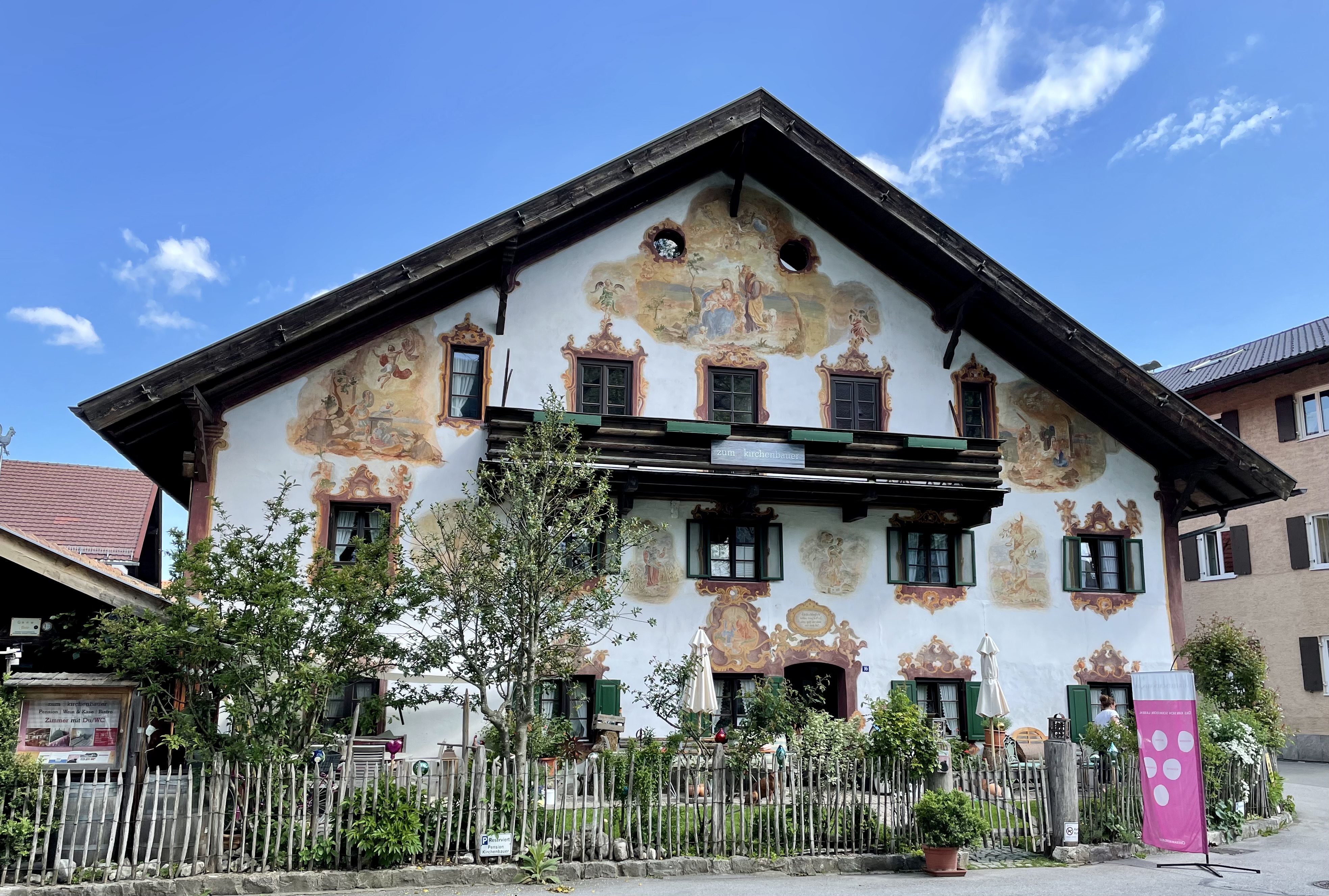
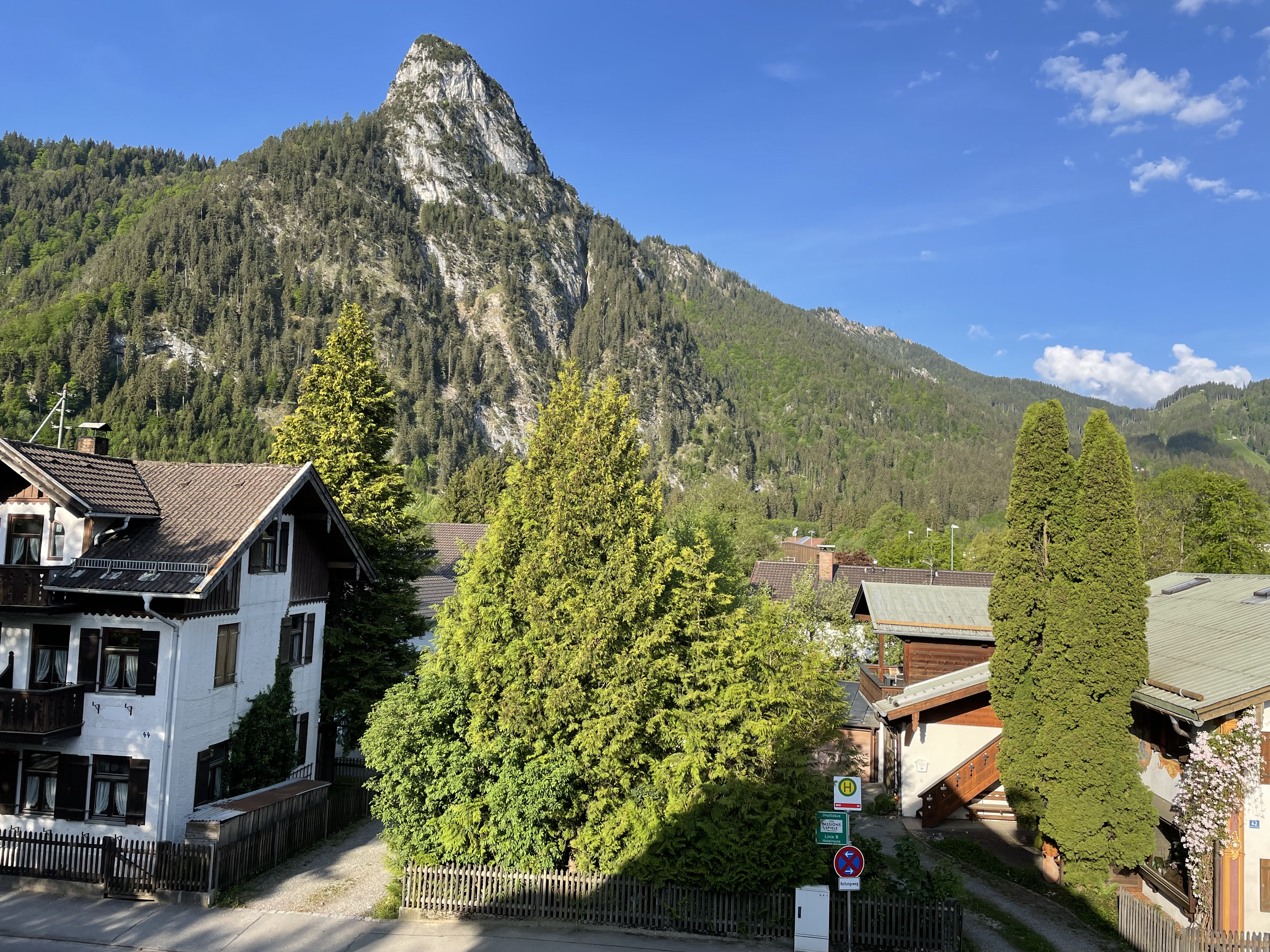
Frescos and gardens were a common occurrence in Oberammergau, Germany.
As we neared the end of our tour of Austria, Germany, and Switzerland, we finally had a good part of a day free. We chose to walk the streets of the beautifully adorned buildings of Oberammergau, Germany.
According to the tour company, the day’s highlight would be the Passion Play, held every 10 years since its inception in 1634. Even before seeing the lengthy play, my wife and I found marvels of our own.
After a hearty breakfast in our quaint hotel, we strolled around the picturesque village admiring the architecture, many frescos, lovely gardens, and personable town folks. The blue sky and warm weather made it even more enjoyable.
In Bavaria, it’s common for shopkeepers and farmers alike to live in the same building as their businesses and animals. The shops in Oberammergau were no exception.
The homes are tidy and most designed around the pride of being located where they were, at the base of the Alps. They decorated their buildings with themed frescoes and flowers, potted and planted.
Their gardens were as lovely as they were productive. Artistic patterns of hedges surrounded flower and vegetable gardens while many roofs donned solar panels. These were more examples of how green Europe is.
St. Peter and St. Paul Catholic Church was as beautiful as any others we had seen on the trip. The graves in the cemetery surrounding the old church were well-maintained and decorated with flowers to remember lost loved ones.
Even though our seats were reserved, we were advised to arrive an hour ahead of the 2:30 p.m. start time. Long lines had already formed as we passed through security.
The Oberammergau Passion Play began when villagers prayed that if no more people in the village died from the plague, they would perform a play of Christ’s life, death, and resurrection, now known as Holy Week. Their prayers were answered, and they kept their promise. The 2020 play was canceled because of the pandemic and rescheduled for May into October this year.
Of course, the play is in German, but English booklets are provided to follow the dialogue as long as there is light. The original text has been revised over the years, and with the addition of the poignant musical score, the play is performed more as an oratory.
The Oberammergau auditorium and two of the young actors who also worked at a restaurant during the dinner break.
Most of the actors and vocalists are local residents. Their performance and singing were equally outstanding. Since no video or cameras were permitted, I didn’t take any photos during the five-hour play.
That’s right, five hours! The play is broken into two parts. The first two and a half hours are presented in the afternoon with a three-hour break for dinner. The play began again at 8 p.m. and ran until 10:30 p.m.
Our tour company arranged for meals between acts at a restaurant close to the Oberammergau Playhouse. Ironically, the man who played Pilot owns the restaurant where we ate. His son, who plays John, also is part owner. He actually worked between the two acts that evening. We were impressed with their acting and their hospitality.
It had been another inspiring yet long day for us senior citizens. We couldn’t imagine what the next couple of days would bring.
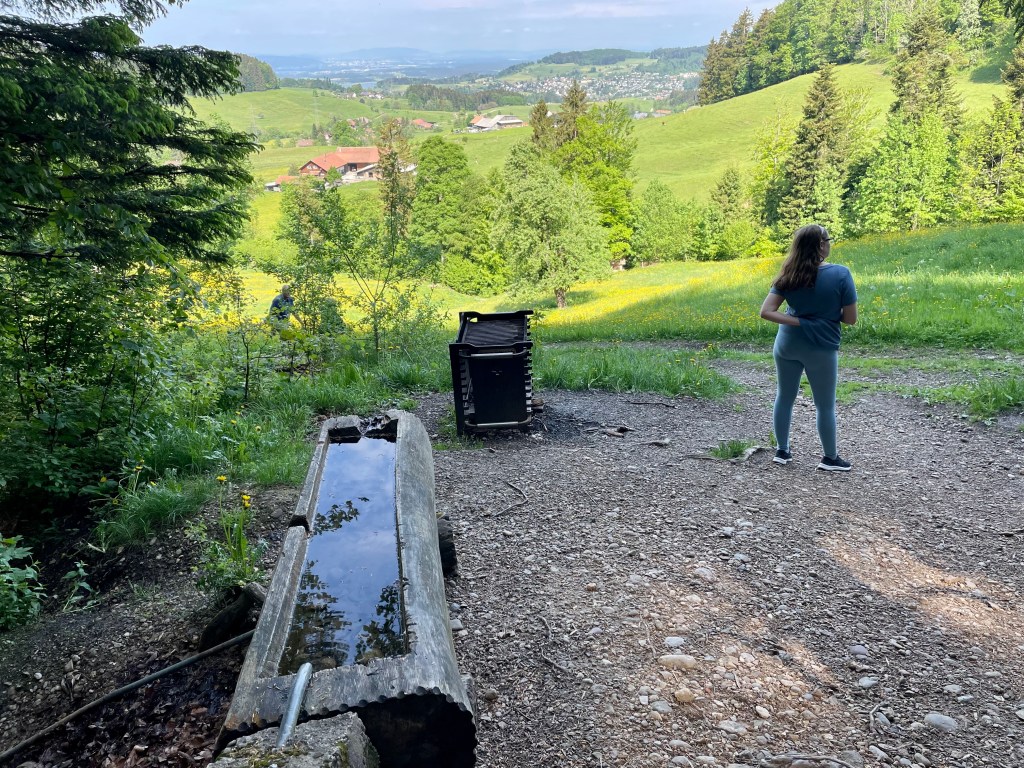
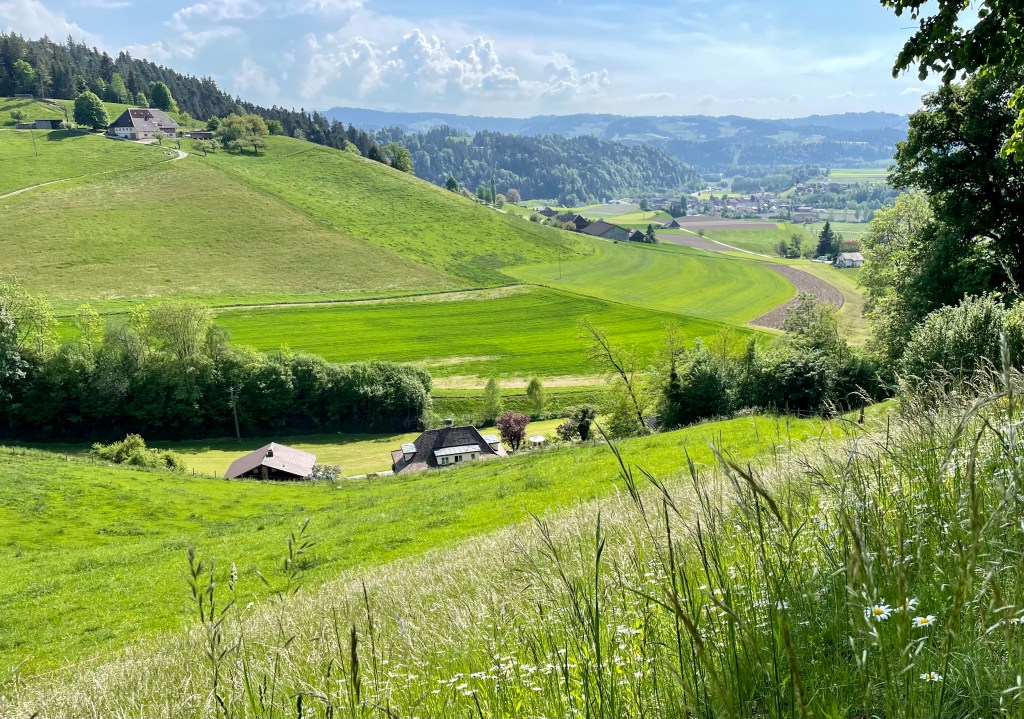
The pastoral view of Baretswil, Switzerland from the trail to the Anabaptist Cave.
This was the day of all the days of our trip that I had most anticipated. Visiting the Anabaptist Cave, or Tauferhole, near Baretswil, Switzerland, was a dream come true.
But there was a catch. Long before our group ever left for Europe, our tour organizer had asked me to share my story of how and why I became Mennonite. Mennonites were some of the most radical of the early Anabaptists during the Protestant Reformation. To be able to share my personal story in that historic, sacred place meant more than I can say. I only knew that I would strive to keep it short and to the point.
We left beautiful Lucerne for the quaint village of Baretswel, Switzerland, where we would meet our local guides at the Reformed Church. Our group enjoyed the scenic morning drive, and after a break of necessity, we followed David and Ruth to where the bus could no longer go.
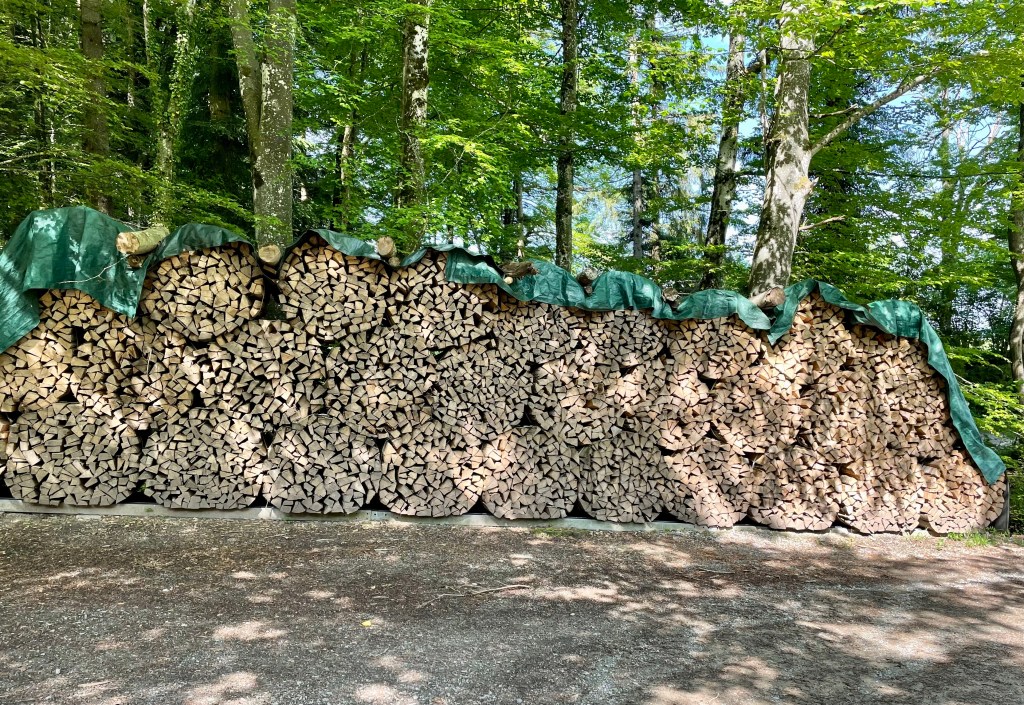
From there, we hoofed it up the hill through meadows full of wildflowers and marvelous fragrances. We passed dairy cows grazing and huge wood piles curing for next winter’s firing. We regrouped in the shade of the forest near the top of the hill before heading out on the trail to the once-hidden cave.
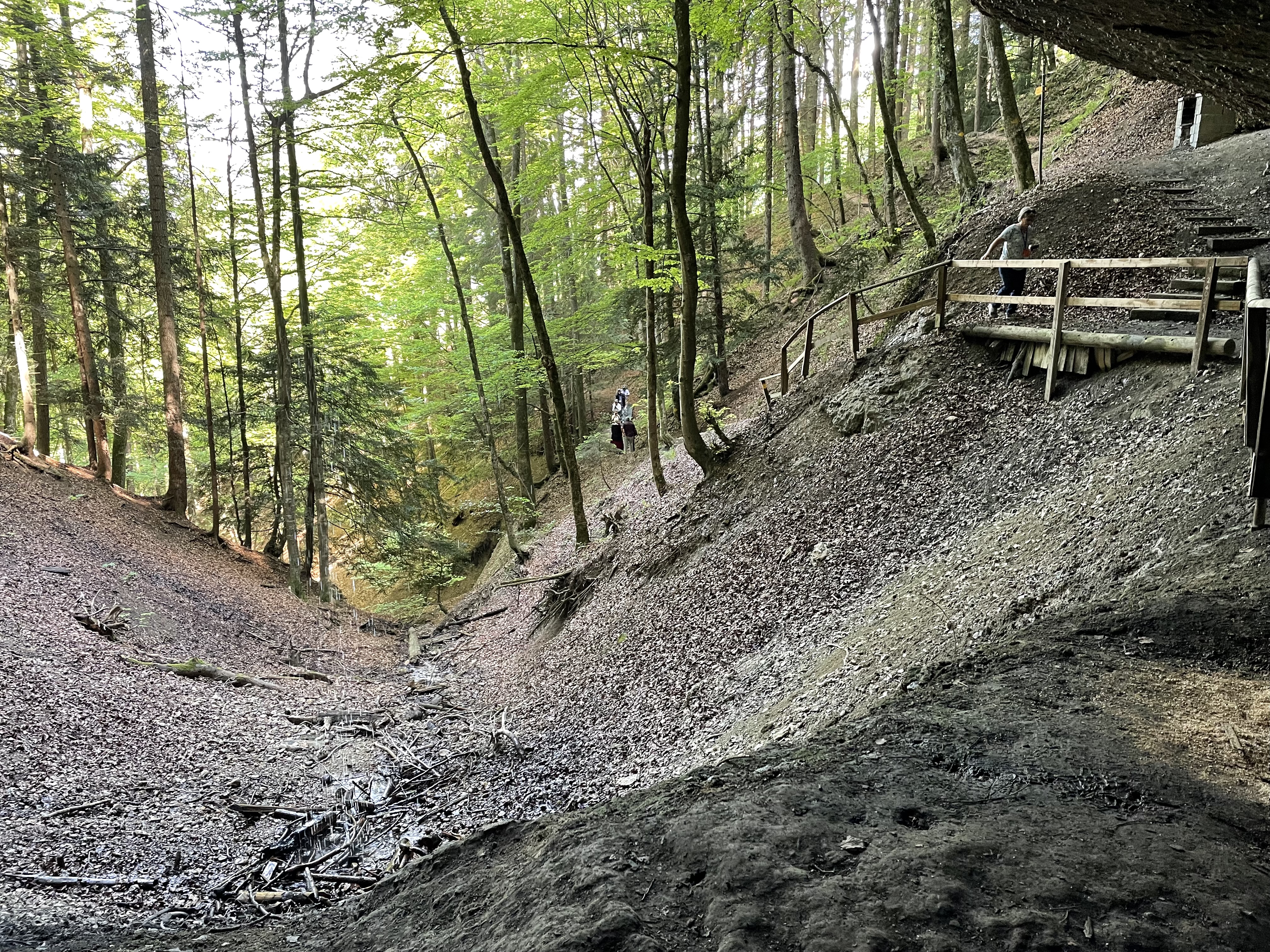
Once into the woods, the incline lessened. More concerning was the steep drop-off into a ravine created by eons of erosion from a stream flowing from and beneath the cave. Fortunately, a wooden handrail had been erected in recent years at the most dangerous spots.
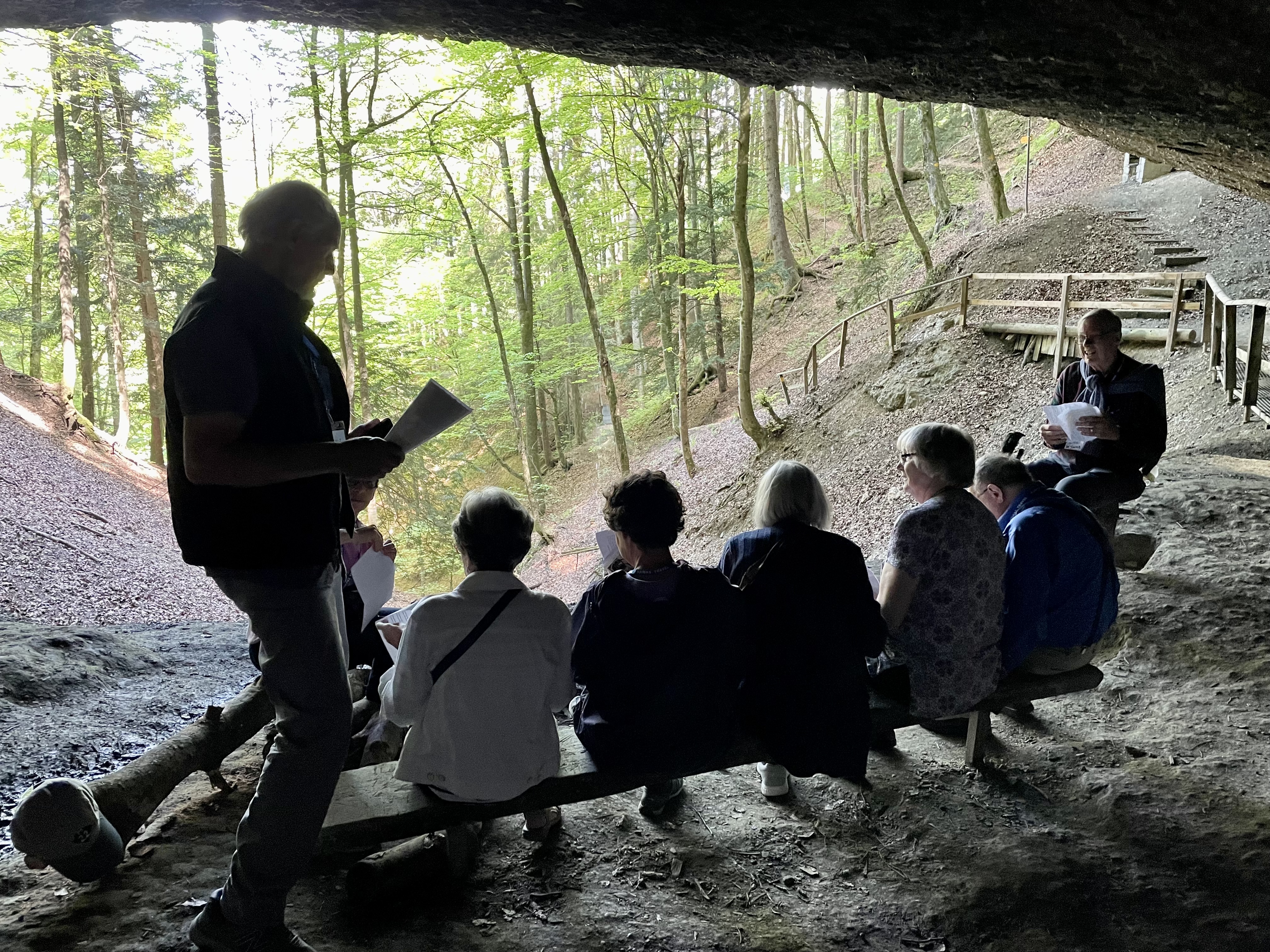
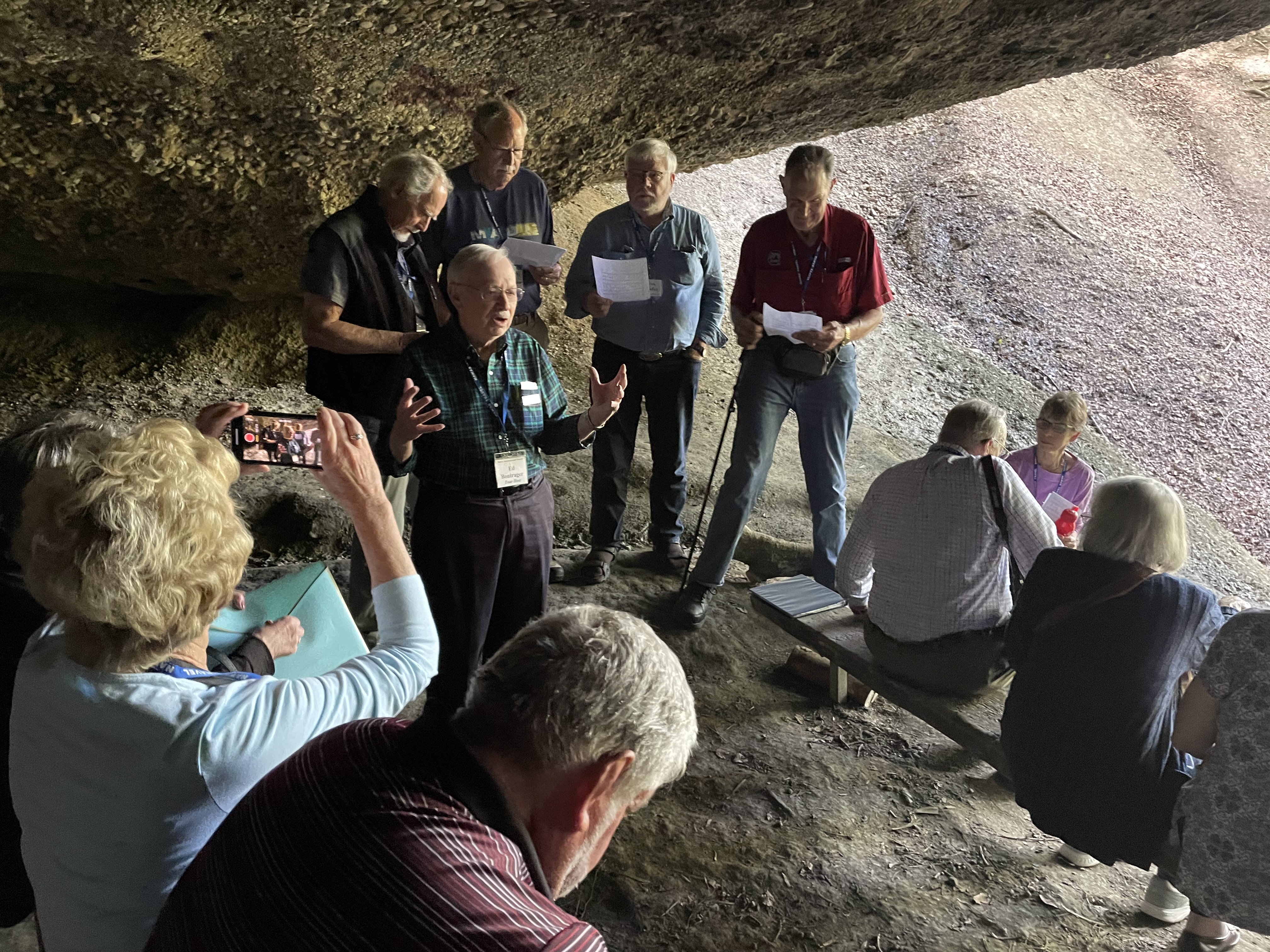
I quickly explored the deepest reaches of the cave, which were no more than a few hundred feet. Once the entire group assembled, save one who declined the hike for physical reasons, our tour host Ed took over.
We sang a couple of meaningful songs, and another member of our group, a Hospice chaplain in Indiana, shared a meditation. It perfectly set the foundation for my sharing.
To the relief of those who know me, I kept my talk to one type-written page, only once veering from the script. I told about coming of age during the Vietnam War in the 1960s. Though my grandfather had served in World War I and my father in World War II, I had no desire to participate in that political conflict.
The week after I met my wife-to-be, Neva took me to the Sunday church service at Beech Mennonite Church near Louisville, Ohio. The sermon was on nonresistance, one of the primary principles of peace churches, which the Mennonite Church still proclaims.
It was what I was looking for, and I gladly accepted. I joined the church nine months later, just a couple weeks before our marriage. Neva has stood by my side for 51 years through thick and thin. I am forever grateful to the late Wayne North for preaching that subject that drew me into the church.
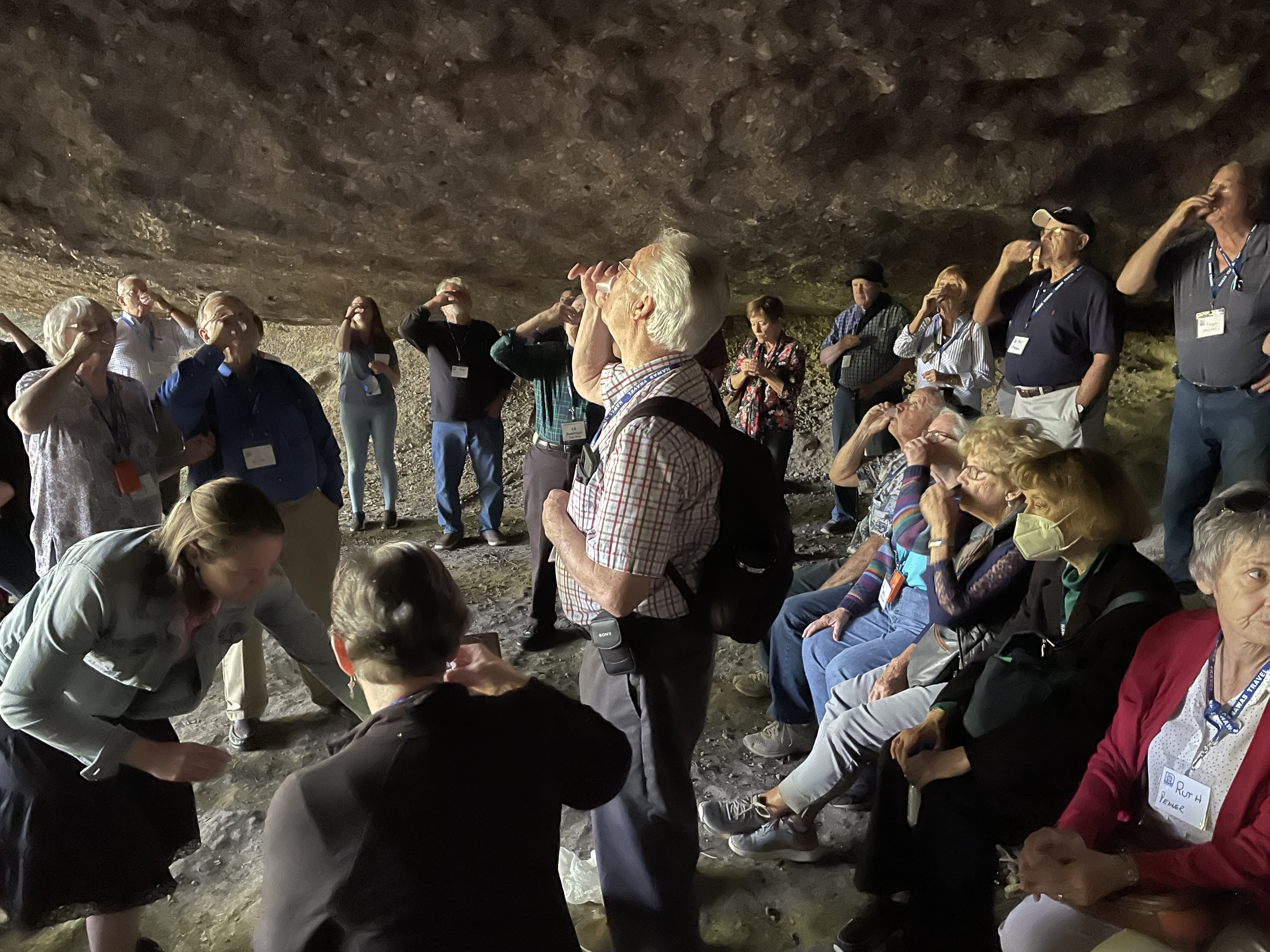
Following my sharing, we sang some more, had a prayer, and took communion together. Had it not been for our ancestors who believed in nonresistance, adult baptism, and service to others to highlight a few critical points, we would not have been there on that special day. It was indeed a bucket list experience.
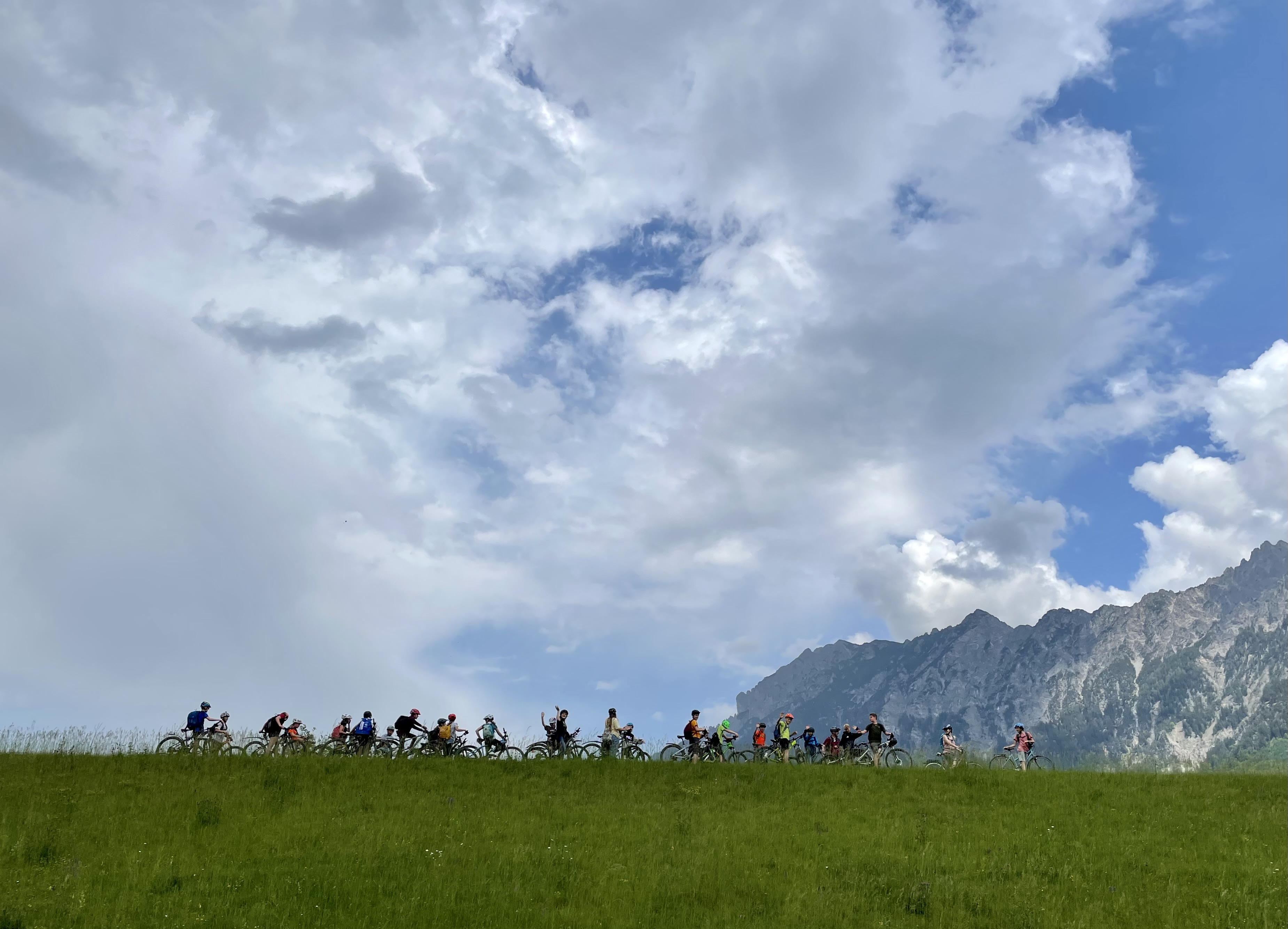
Students wave to me from the levy along the Rhine River. The mountains are in Liechtenstein.
All too soon, we walked back down the path to the awaiting bus and bid our new friends goodbye. We were off to Innsbruck, Austria. On the way, we stopped along the Rhine River for a late lunch break.
When I learned that Liechtenstein was just across the river, I climbed the many steps to the river levy to at least grab a quick photo. After descending the stairway, a school group bicycling along the levy stopped to rest. Their observant teacher had them wave to me before we left for Innsbruck.
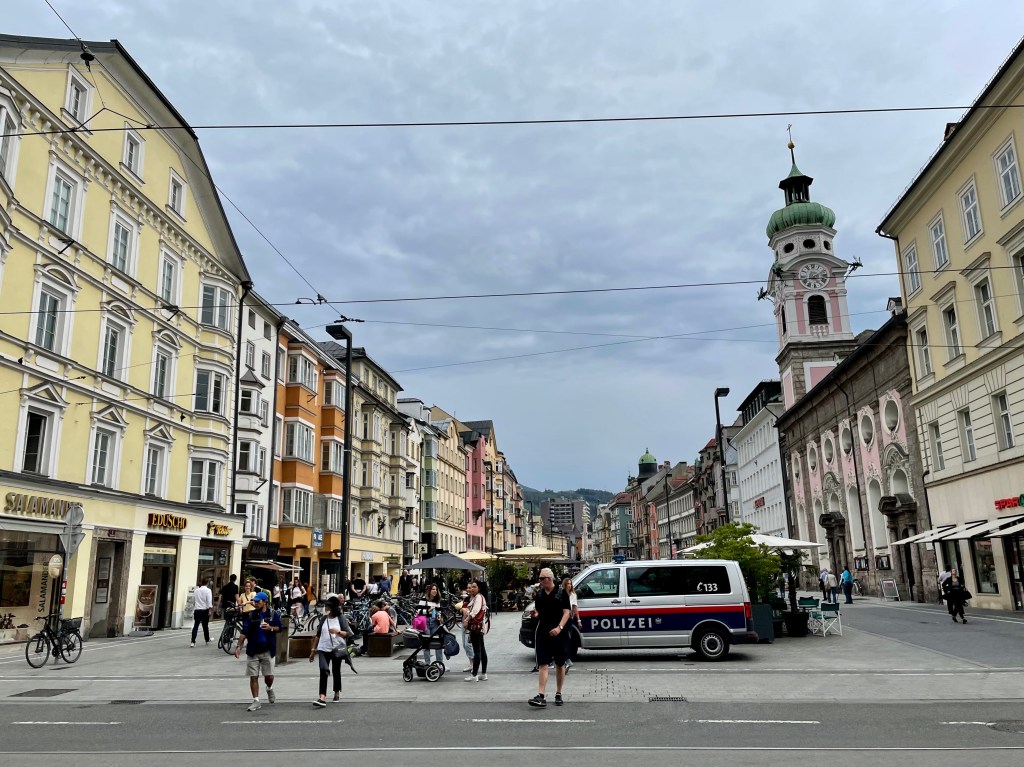
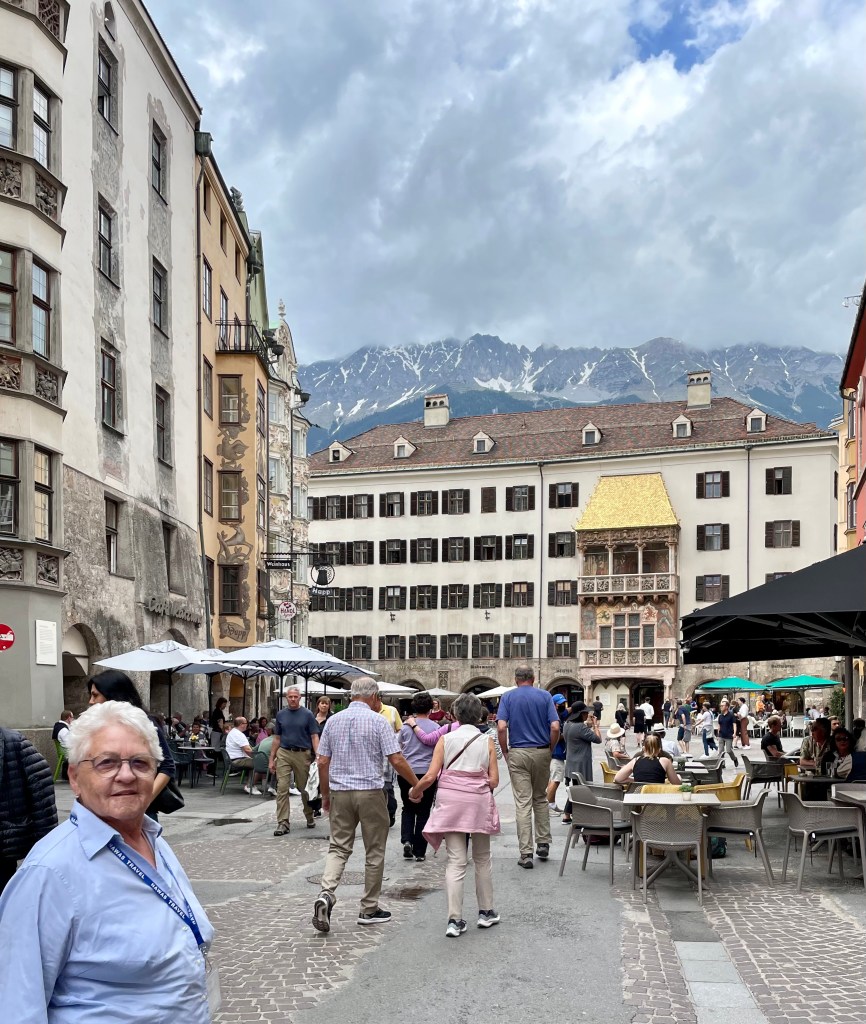
Our stop in beautiful Innsbruck was all too brief. We walked the cobblestone streets around the Old Town section of the city, viewing markets and the Golden Roof home of Emperor Maximilian.
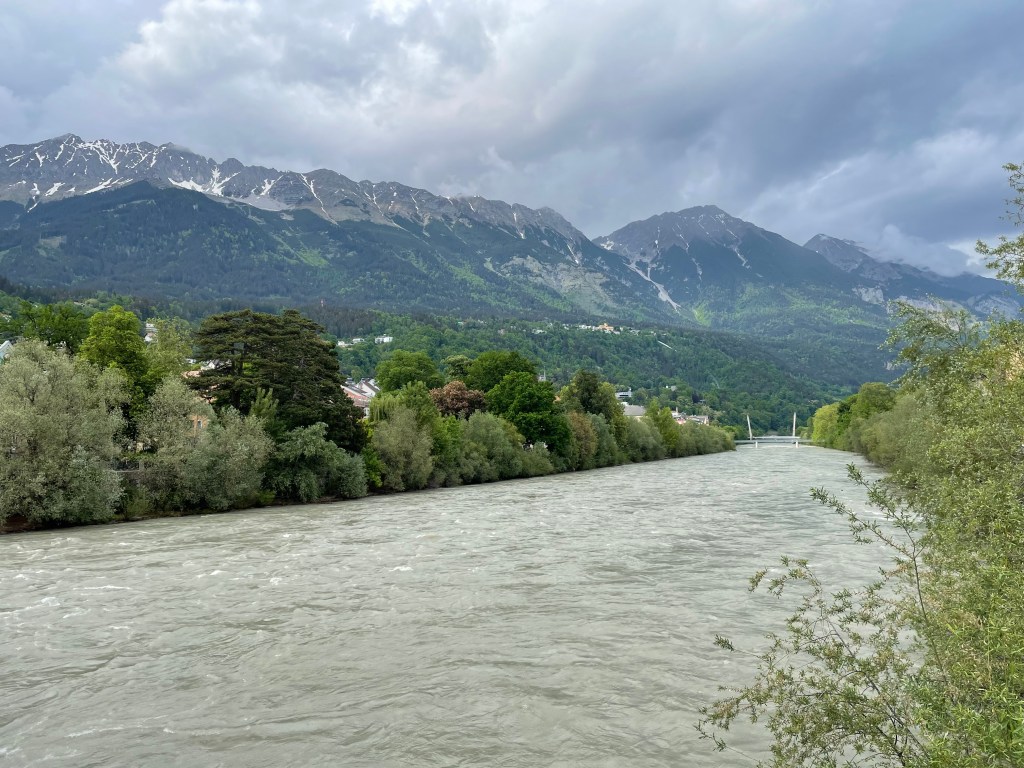
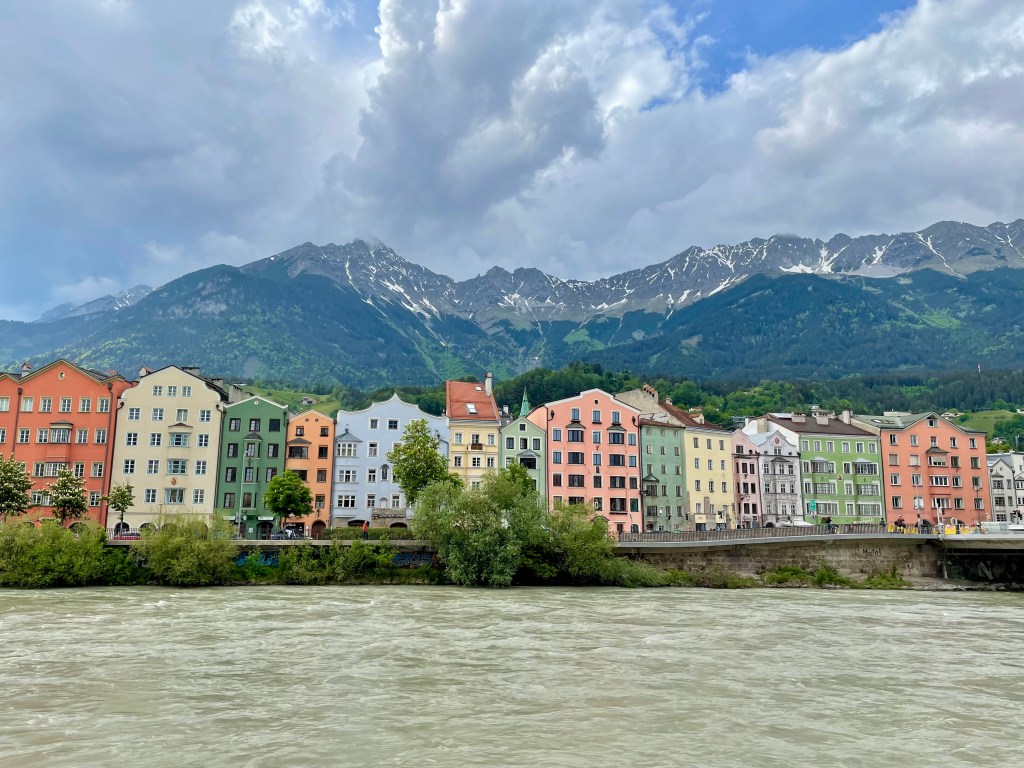
My wife and I strolled along the Inn River, enjoying the pastel-painted homes. The snow-covered Alps hovering above made it a picture-postcard moment.
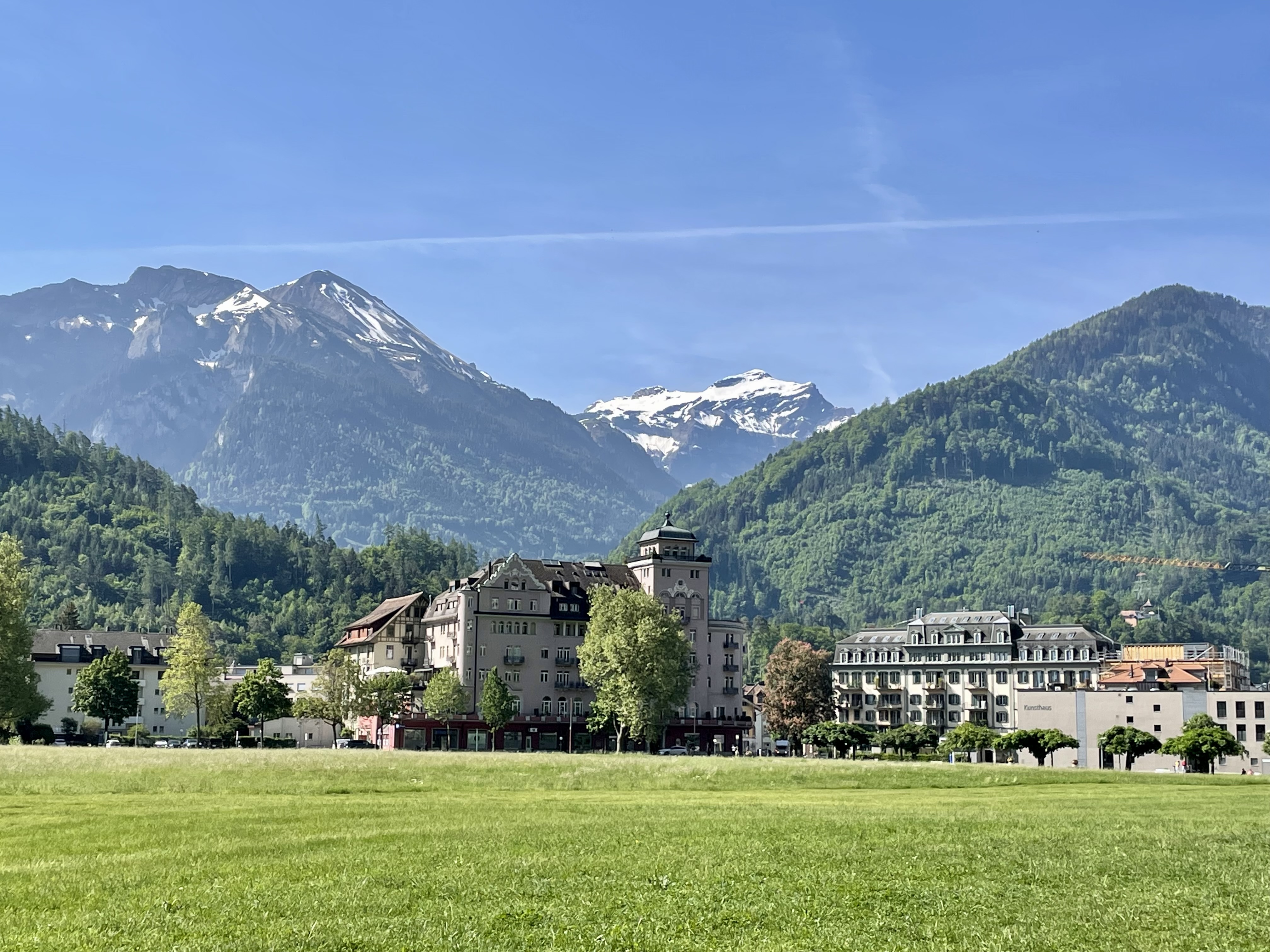
The 13,642 ft. peak of Jungfrau, as viewed from Interlaken, Switzerland.
We knew that the fourth day of our tour would be jam-packed. We couldn’t imagine just how filled the day would be with one wonder after the other.
The day dawned with a bright blue sky and high expectations. We left our hotel in Lucerne and headed into the Swiss Alps. The lovely weather made the incredible scenery all the more amazing.
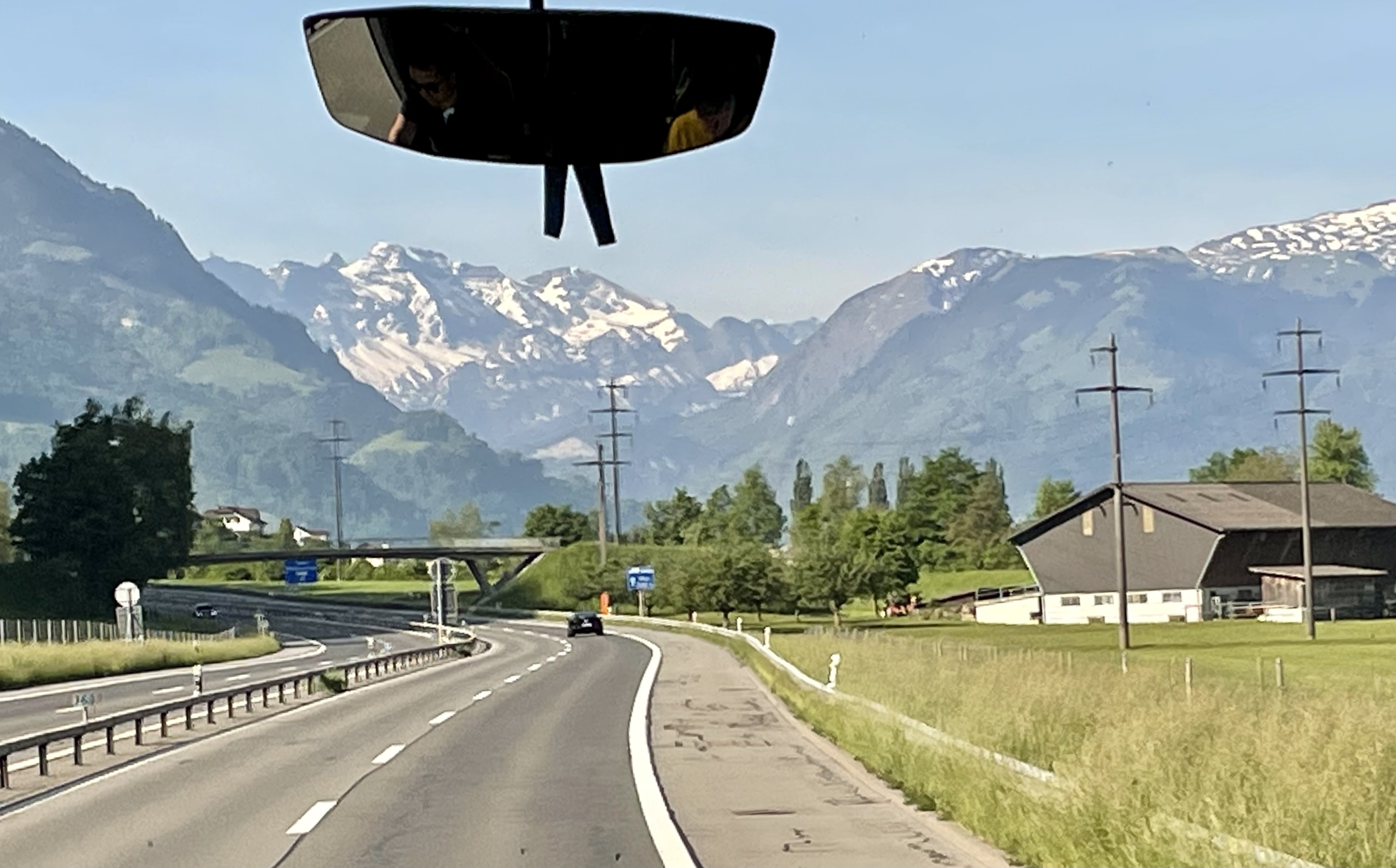
My wife and I chose seats close to the front of the bus to get a good view of where we were headed. We weren’t disappointed. Snow-capped mountains soon came into view as we traveled along the well-maintained highway system that included several long tunnels.
The view from the front of the bus.
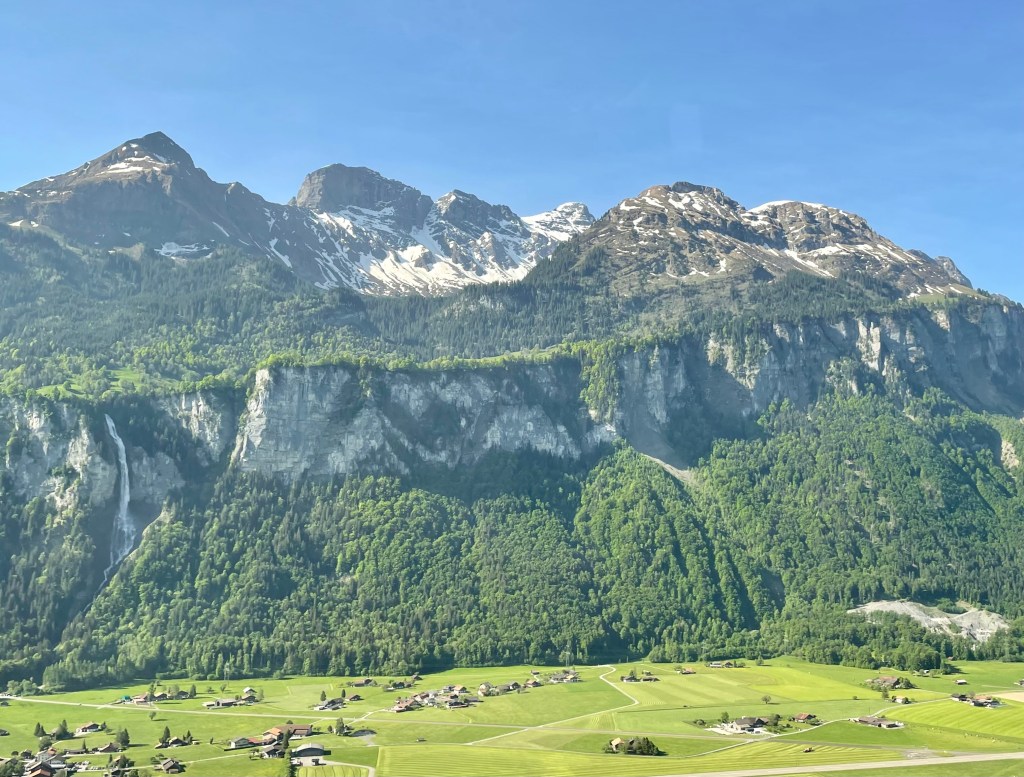
The scenery was green in more than one way. Farmers made hay and cattle grazed on slanting pastures that ran far up the mountainsides. Hiking and biking paths led away from cities and towns far into the country and highlands. The efficient train systems did as well.
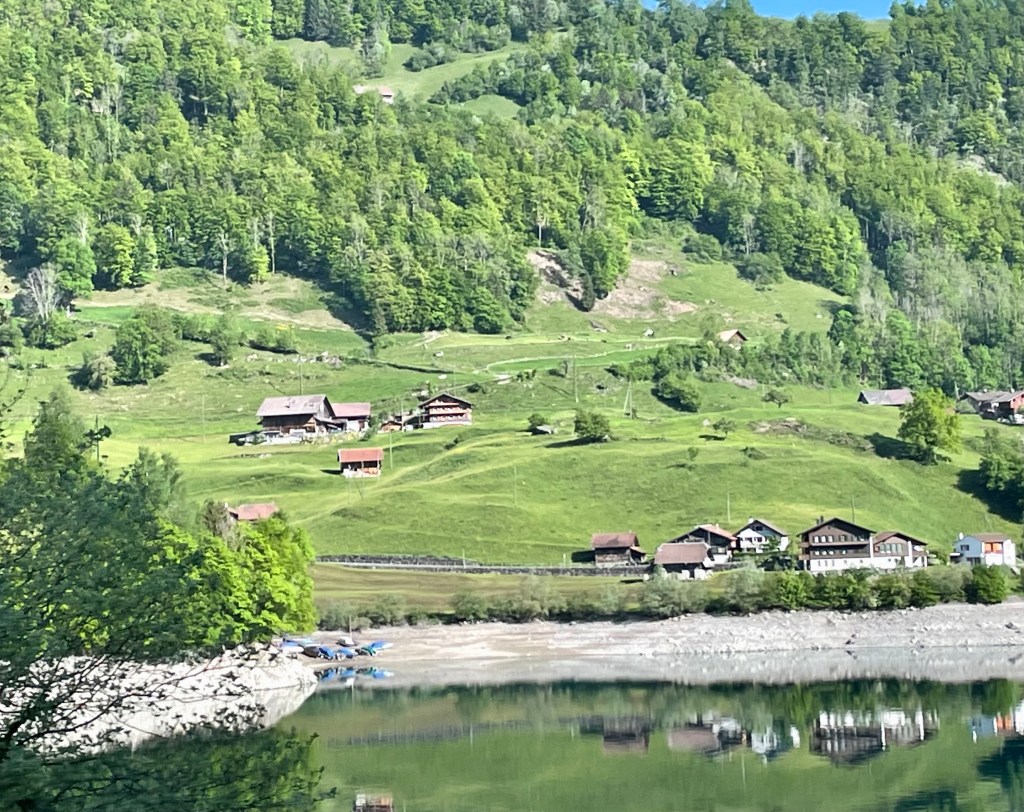
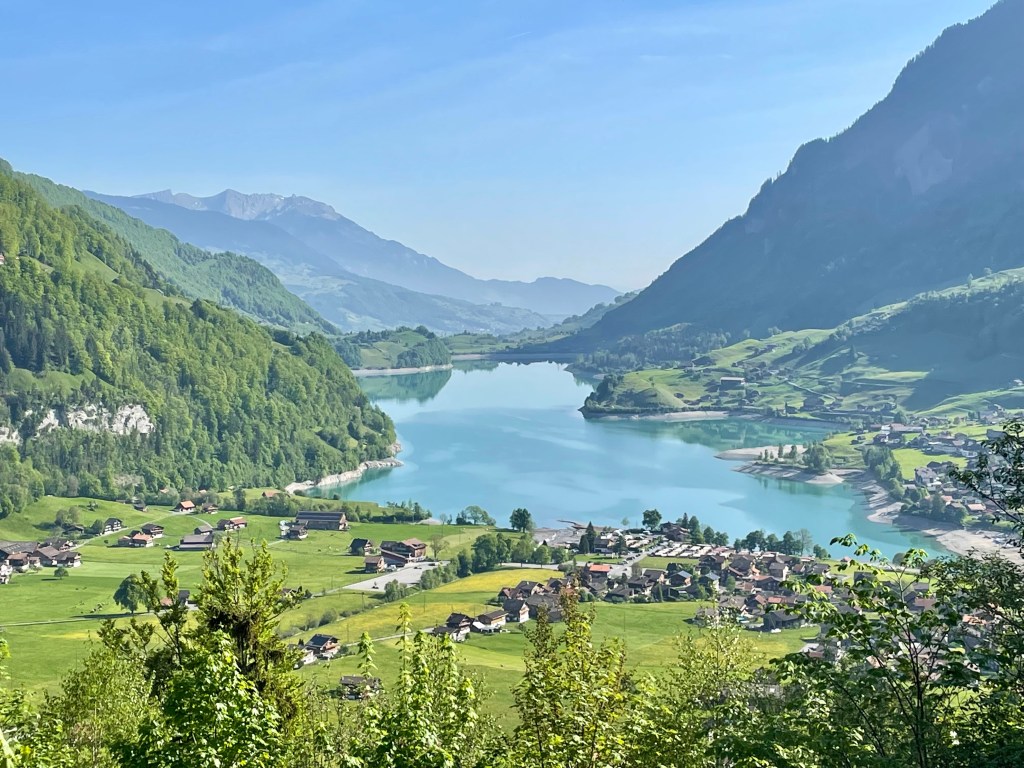
I secretly wanted the bus to stop multiple times so I could take photos without window glare. Of course, that wasn’t going to happen. The bus did stop at one pull out to view the valley and Lungernersee below. As beautiful as that was, the best was yet to come.
We stopped at Interlaken for long enough to know that I want to return someday. I could breathe in that fresh mountain air and those incredible sights for a long time. Skydivers entertained us as they swooped overhead beneath their colorful parachutes, landing in a field right in front of us.
Jungfrau’s 13,642 ft. peak shown brightly in the morning sun. It was all I could do to board the bus. Still, even more fantastic scenery awaited.
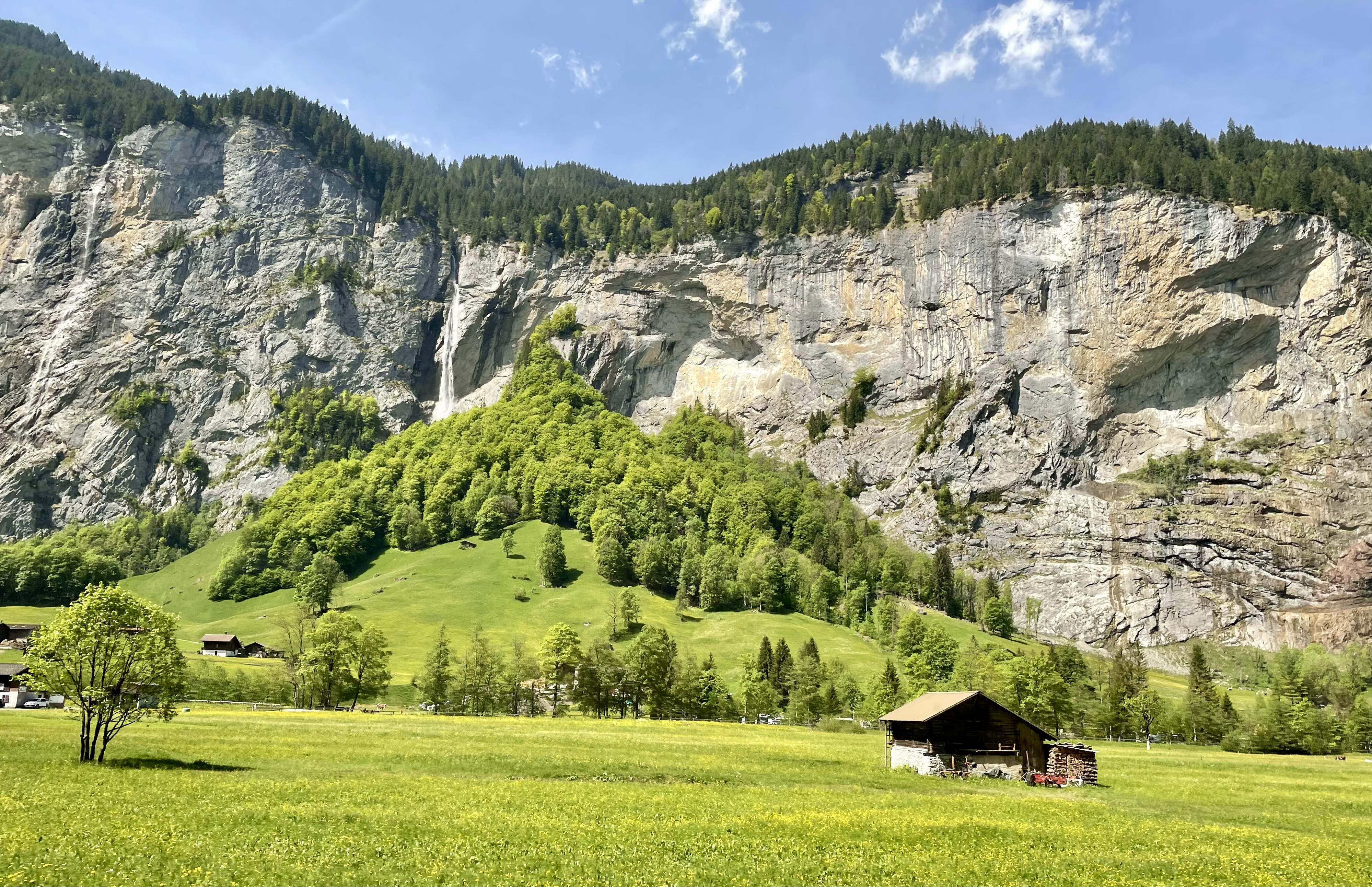
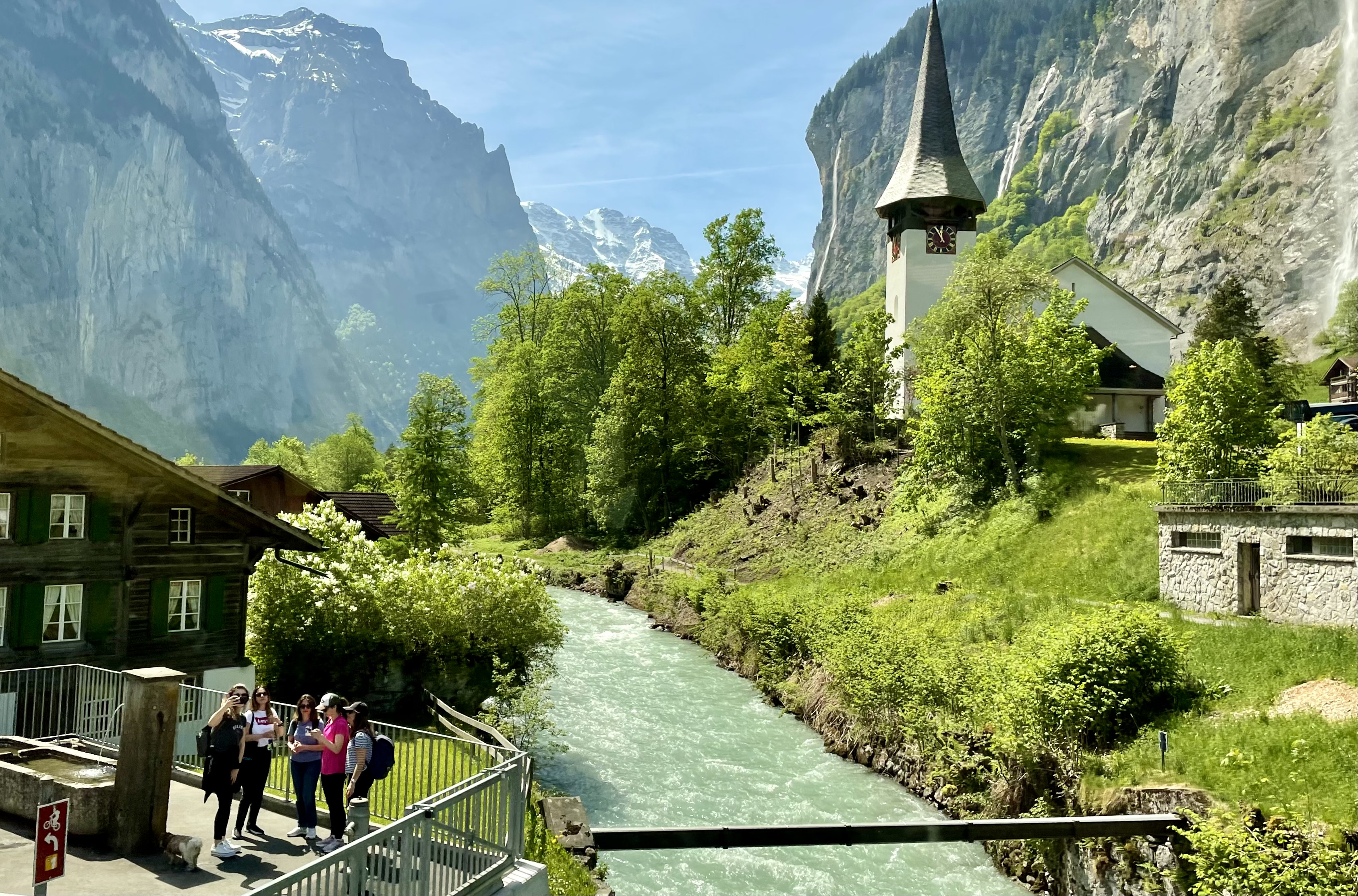
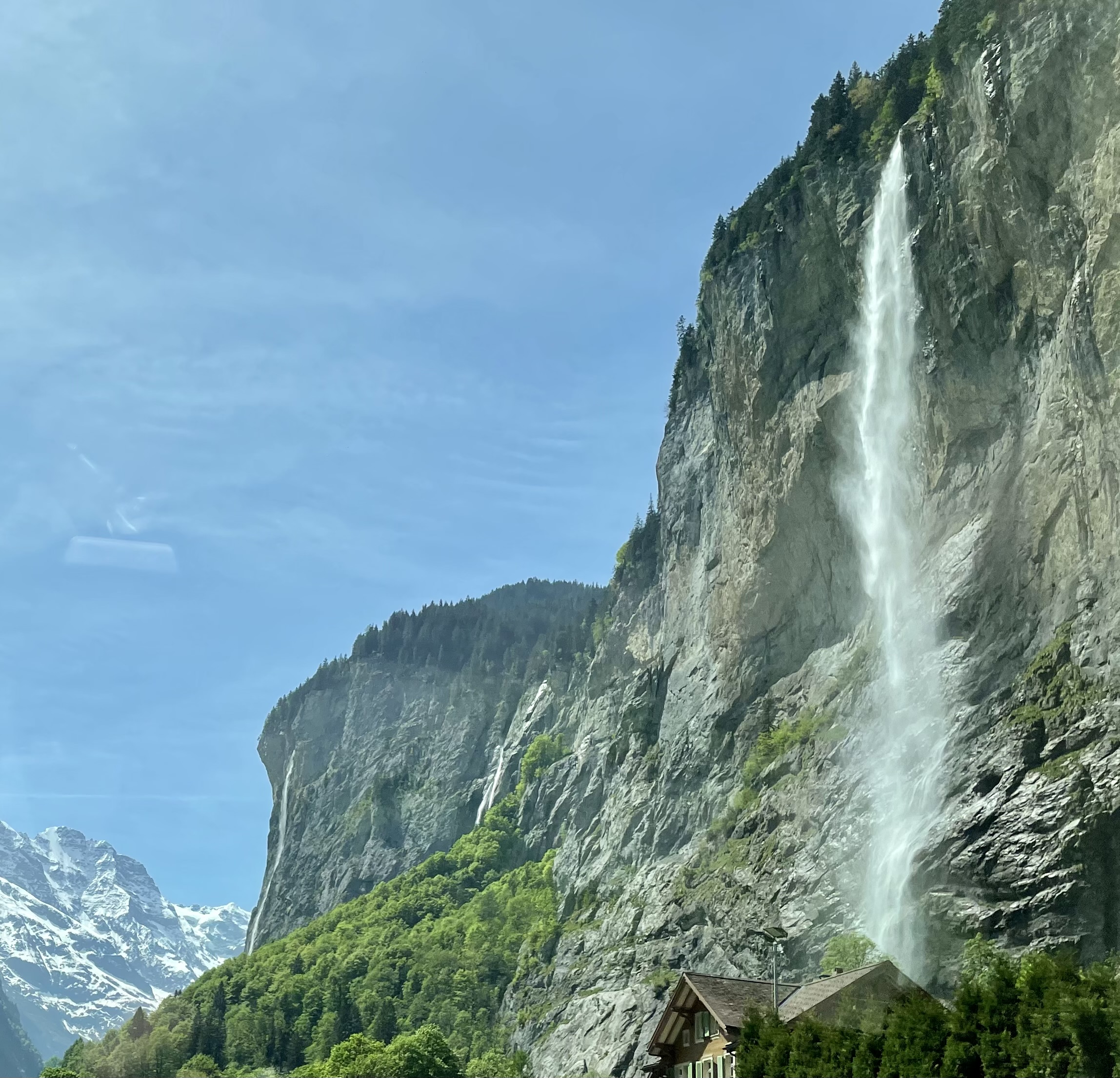
Our glorious journey continued as we wound our way through the breathtaking Lauterbrunnen Valley. Unfortunately, we had to absorb all we could from the bus as it passed through the charming village. I was able to get a few shots of the famous Staubbach Waterfalls. It was a scene I had seen many times, and now we were passing right by it.
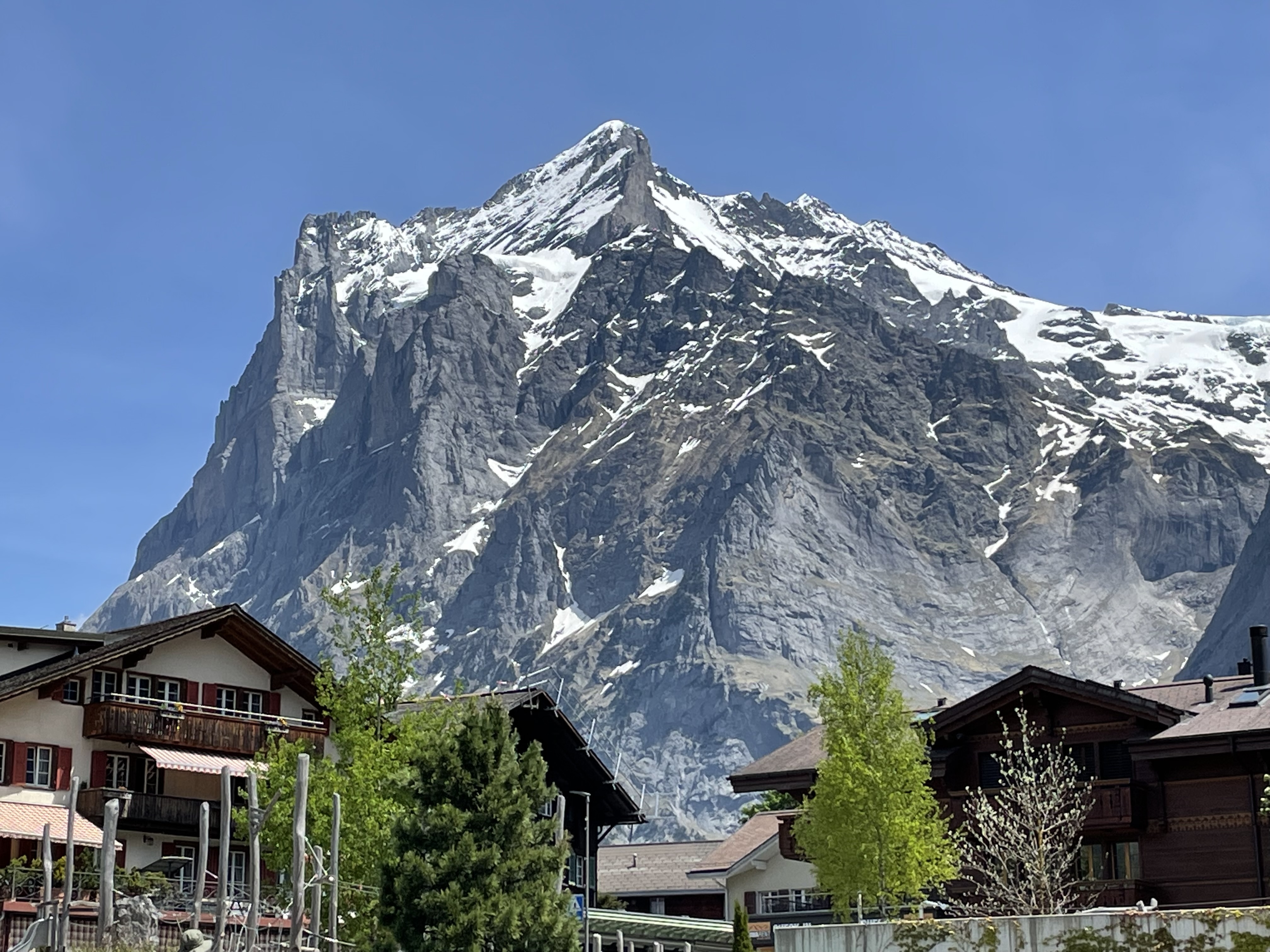
Soon our very capable bus driver turned onto a more narrow road, and up we climbed to Grindelwald at the foot of Eiger Mountain. It was lunchtime, and while most of the others on our bus opted for a restaurant or cafe, my wife and I grabbed some munchies at a grocery store and sat on a bench that overlooked the famous mountain. The blaze away, but the air was cool, the Swiss goodies tasty, and the company at my side couldn’t have been more pleasing to me.
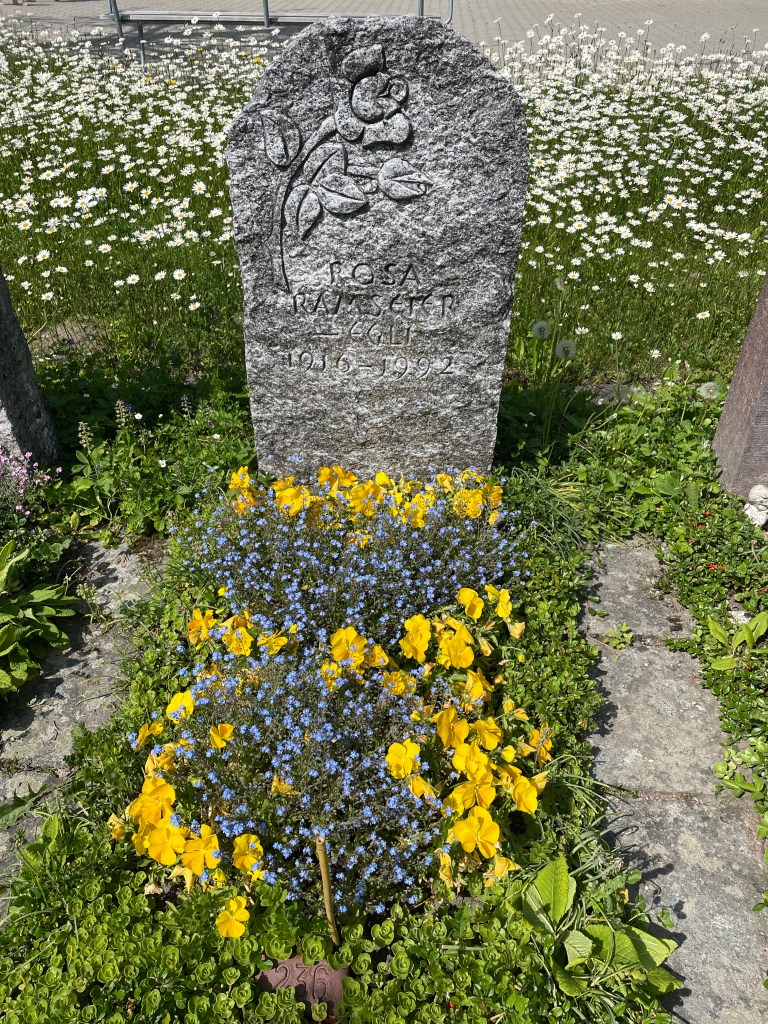
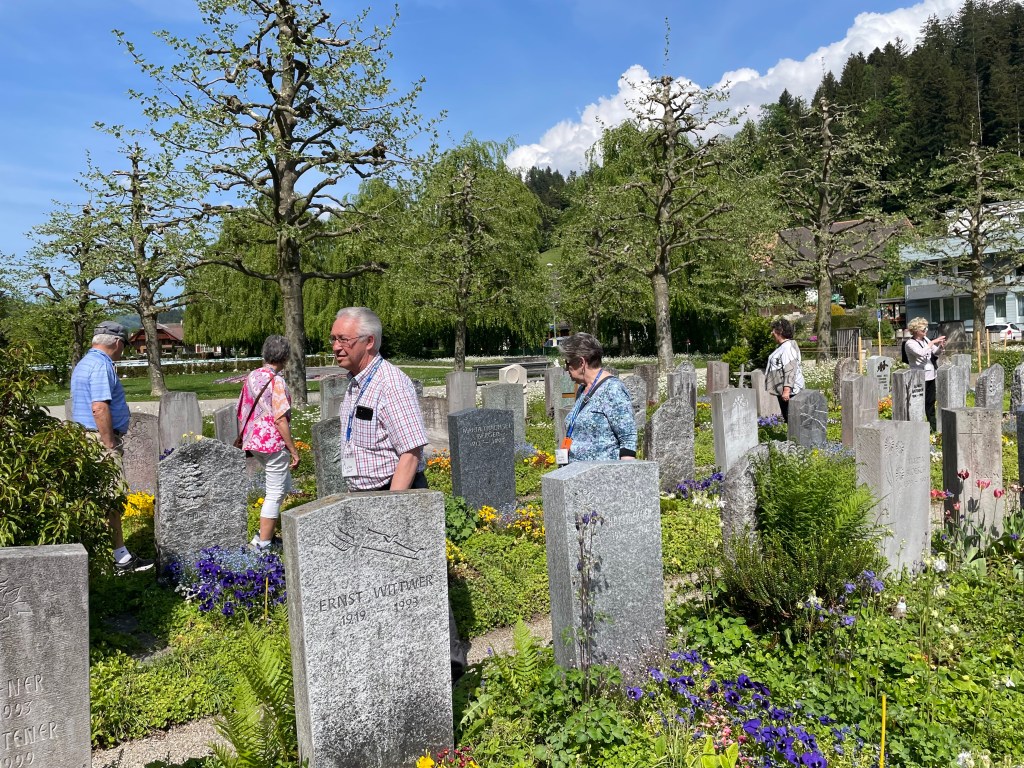
All too soon, we again boarded the bus and headed for the lovely Emmental Valley to visit the oldest operating Mennonite Church in Langnau. Our hosts shared about their growing church and then invited us to wander the cemetery across the street. Familiar last names appeared on the headstones. Many American Mennonite families can trace their family tree to this location.
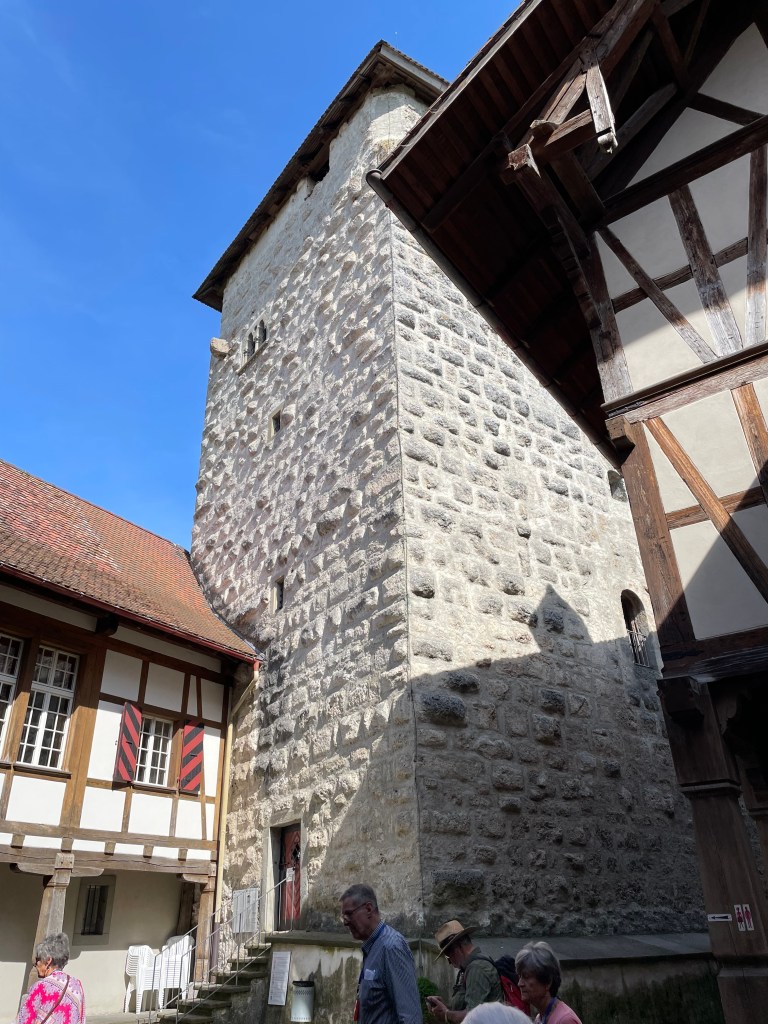
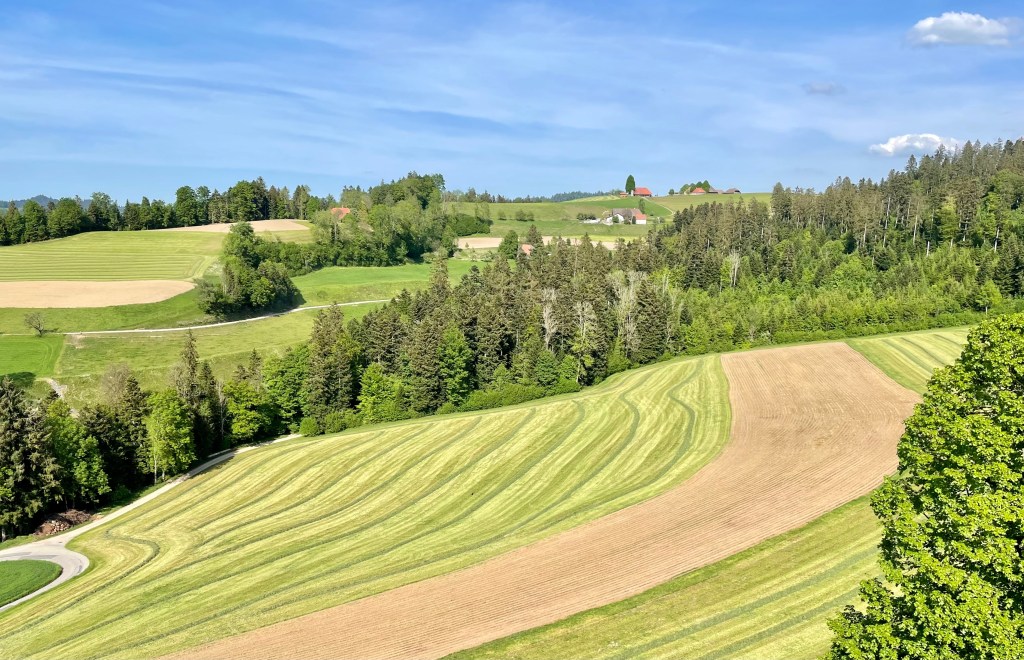
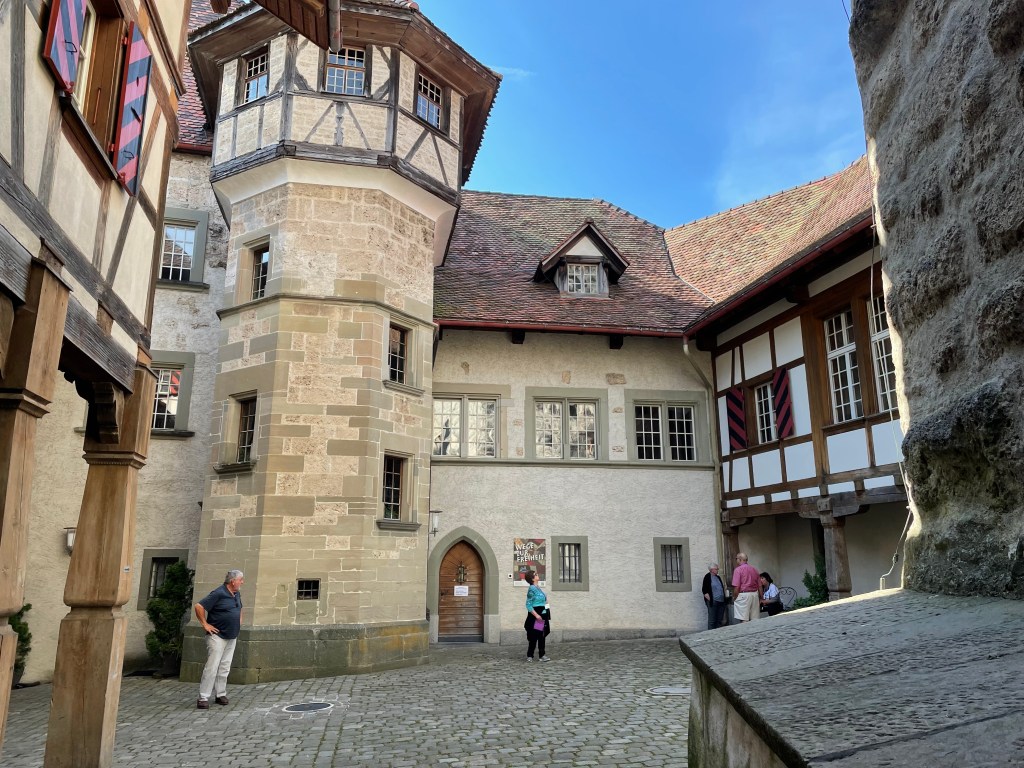
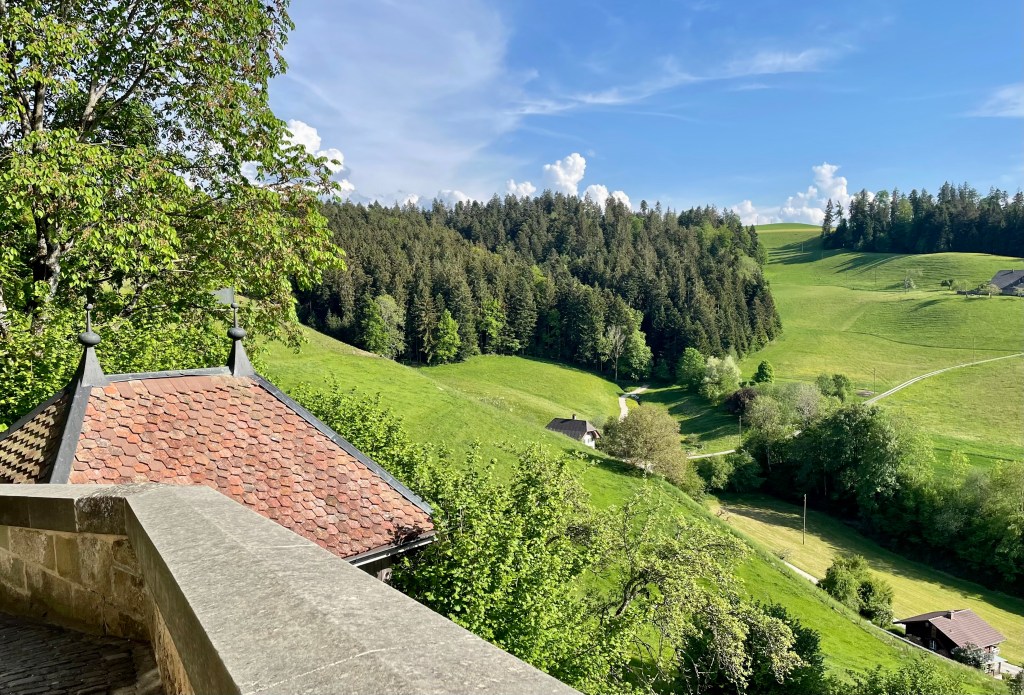
From Langnau, the bus navigated more narrow country roads to the Trachselwald Castle, where Anabaptists were imprisoned in the 16th and 17th centuries. The view from the castle was likely more appealing for us than it was for those early martyrs.
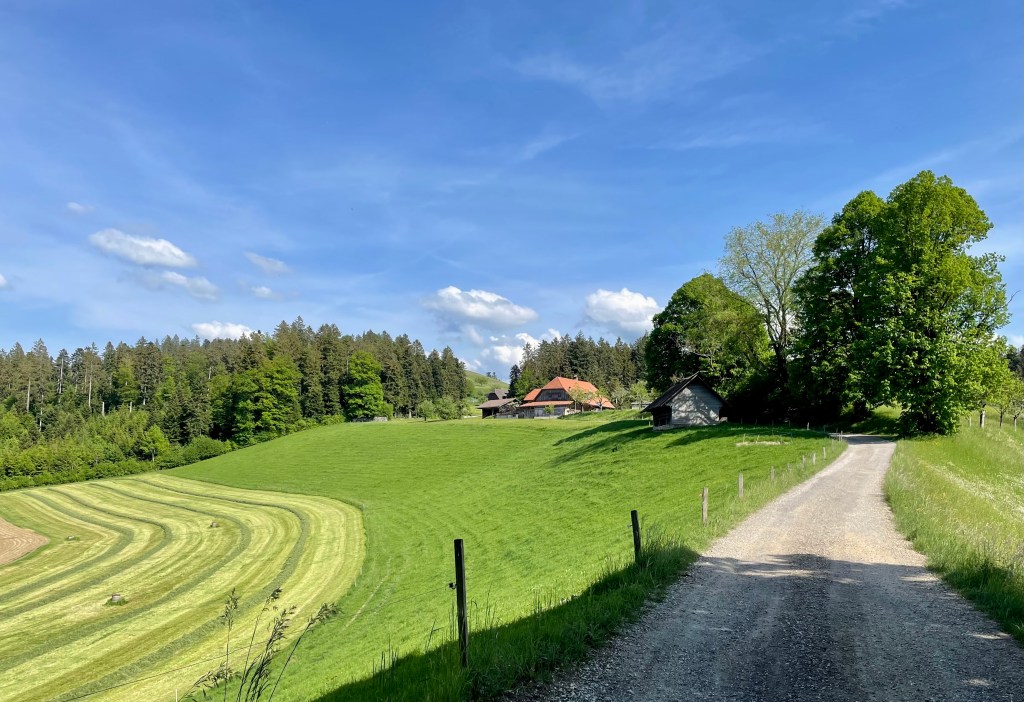
We wound our way to the farm of a descendent of Hans Hasselbacker, who was imprisoned in the old castle. His namesake relative greeted us and showed us his farmstead, which has the house and barn connected in true Swiss fashion.
The view from the castle.
With the sun nearing the horizon, we drove country roads back to our hotel in Lucerne. It had been a great day, made even better by the news that we had a new grandson born late May 14 in Rochester, New York. Welcome to the world, Teddy!
My wife and I had never been to Europe. When an opportunity arose for us to join a tour group to visit Austria, Germany, and Switzerland, we quickly signed up. That was in pre-pandemic times. Consequently, our initiation into all things European was delayed two years until this spring when it was deemed safe to travel again.
The most influential element in the trip going forward was the rescheduling of the Passion Play at Oberammergau, Germany. The play is held once every 10 years by citizens of the small Bavarian town set at the foothills of the Alps. Click this link to read the fascinating history of why and how the drama began in 1634 and continues today.
The focus of this tour was Anabaptist history. That aspect was added to an established 10-day tour offered by a New England tour company. By trip’s end, those of us on the tour, all senior citizens save one, realized it was a bit much. We had difficulty keeping up with the rapid pace to cram everything in. Consequently, we only skimmed the surface of exploring this beautiful and historic area of Europe. However, that did not detract from our enjoyment of the tour and learning to interact with our fellow tourists and people we met along the way.
Given that, I will share highlights of our trip through select photos, going in chronological order. Please feel free to ask questions in the comments.
I hope you enjoy the trip via the photos as much as my wife and I did in person.
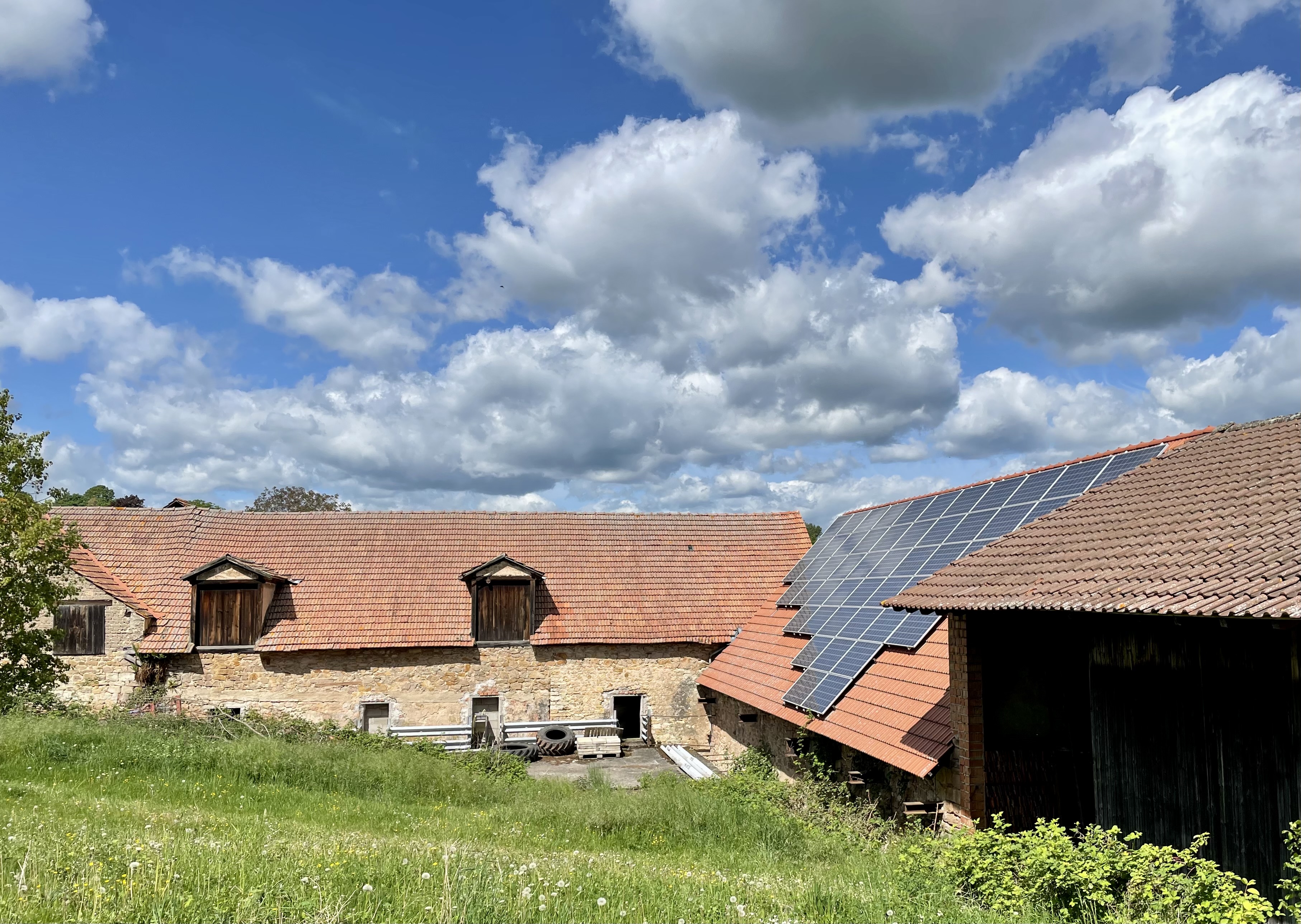
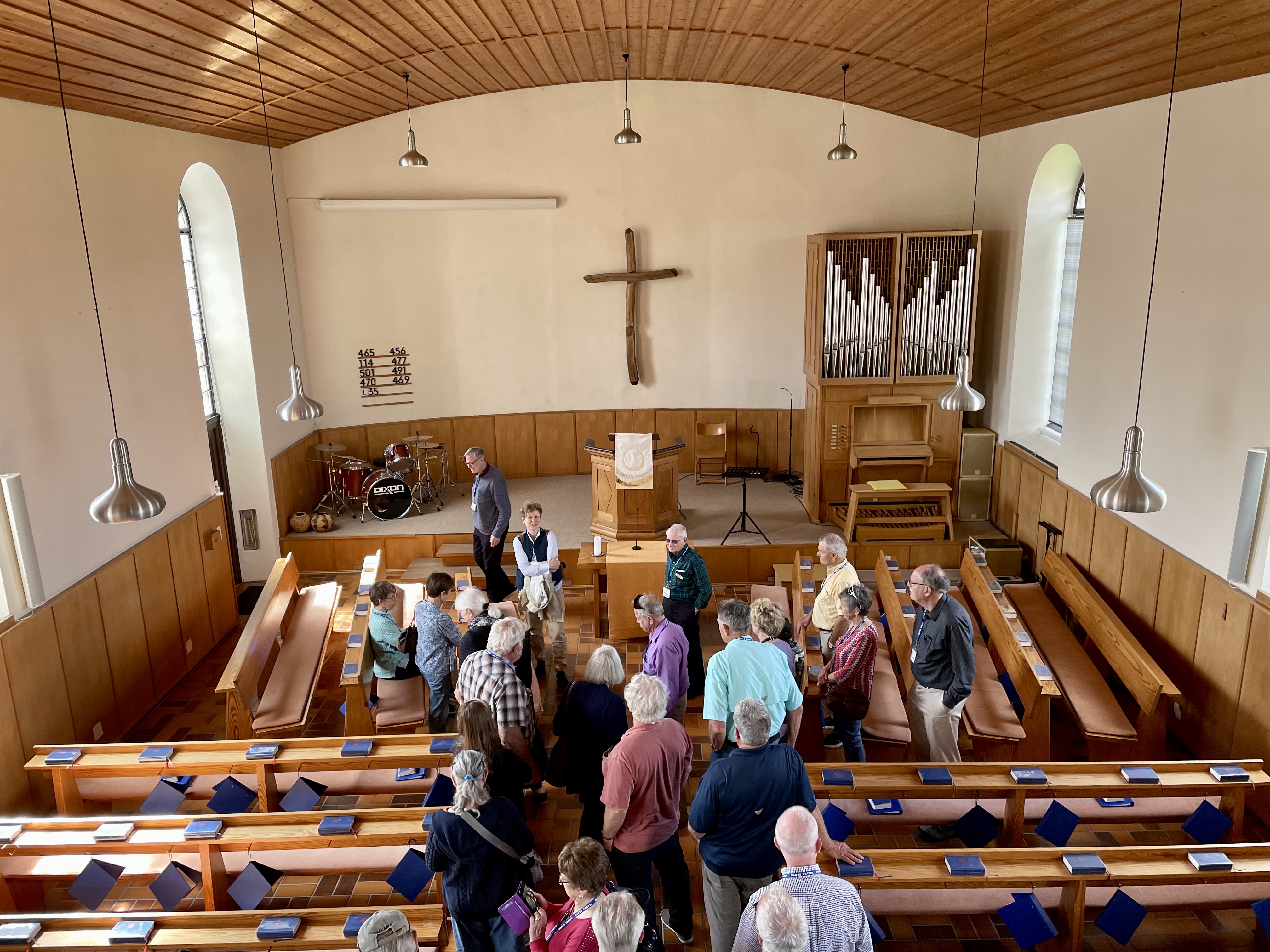
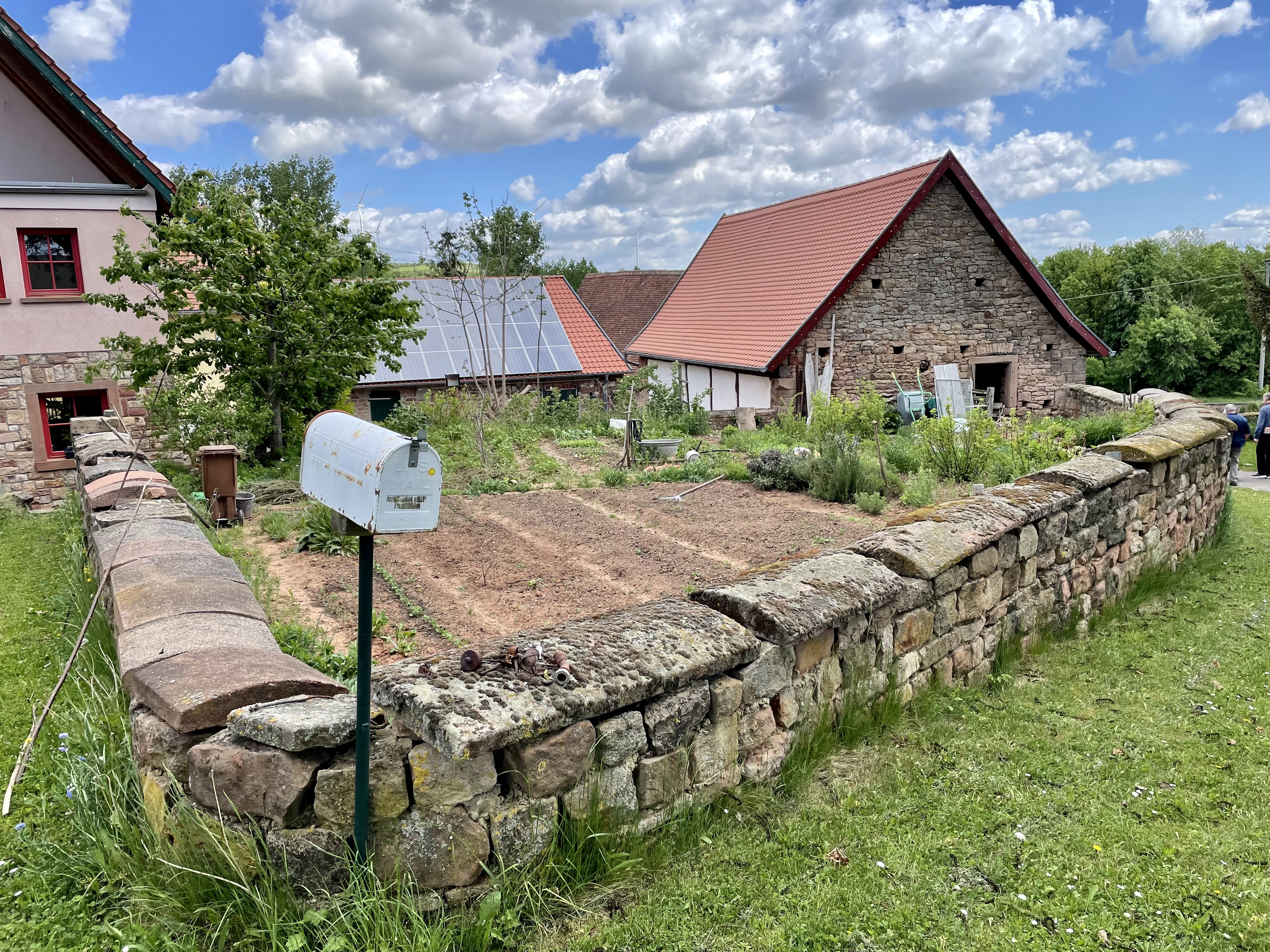
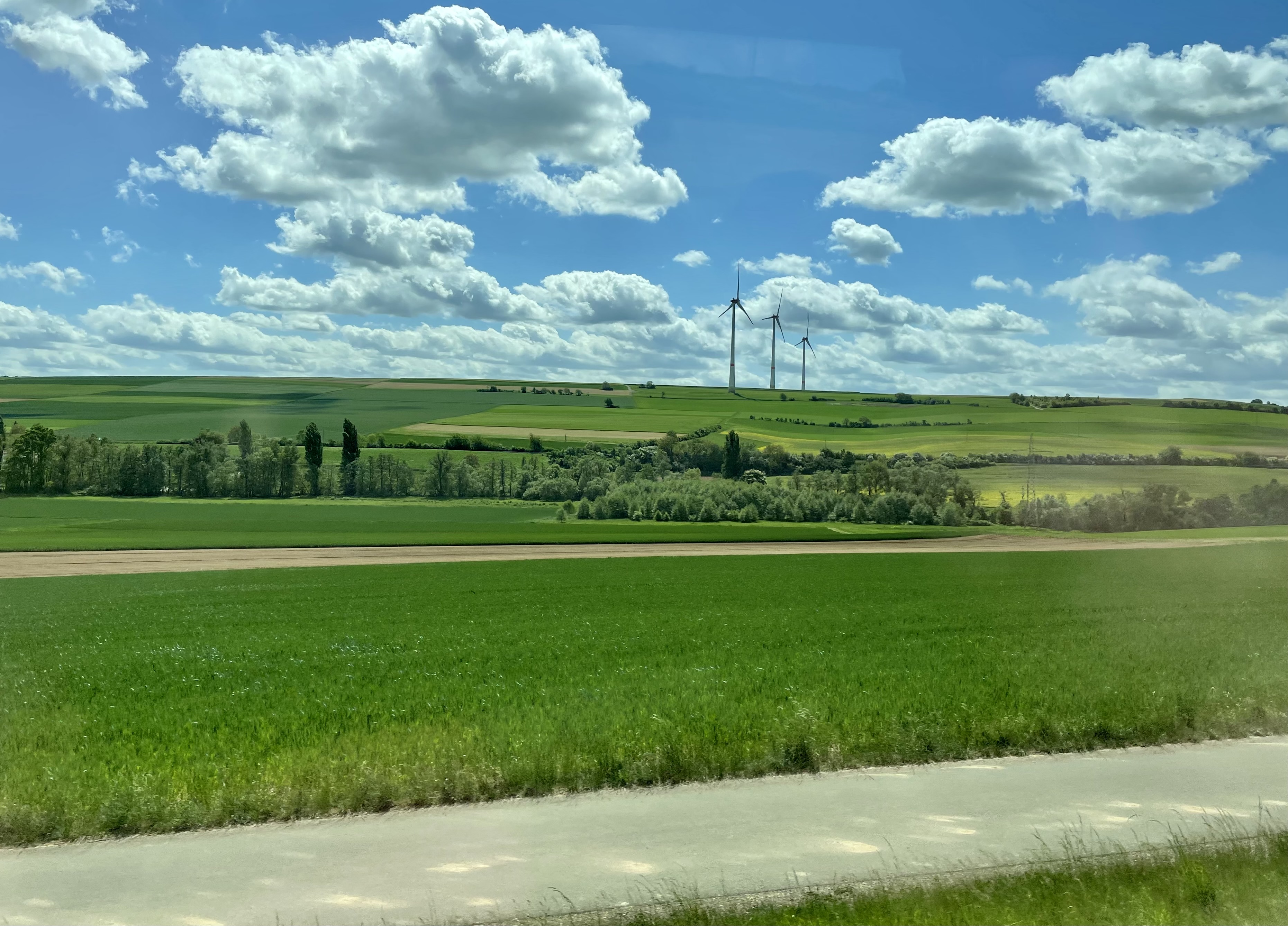
The photos above were all taken at our first stop, Weierhof, an early Anabaptist settlement. The images show a little free library; solar panels on an old farmstead; the Weierhof Mennonite Church; a walled garden, and the rolling German countryside with bike paths, farm fields, and windmills.
We traveled from the rural village to the city of Worms, Germany, where Martin Luther began his resistance to the ruling Catholic Church.
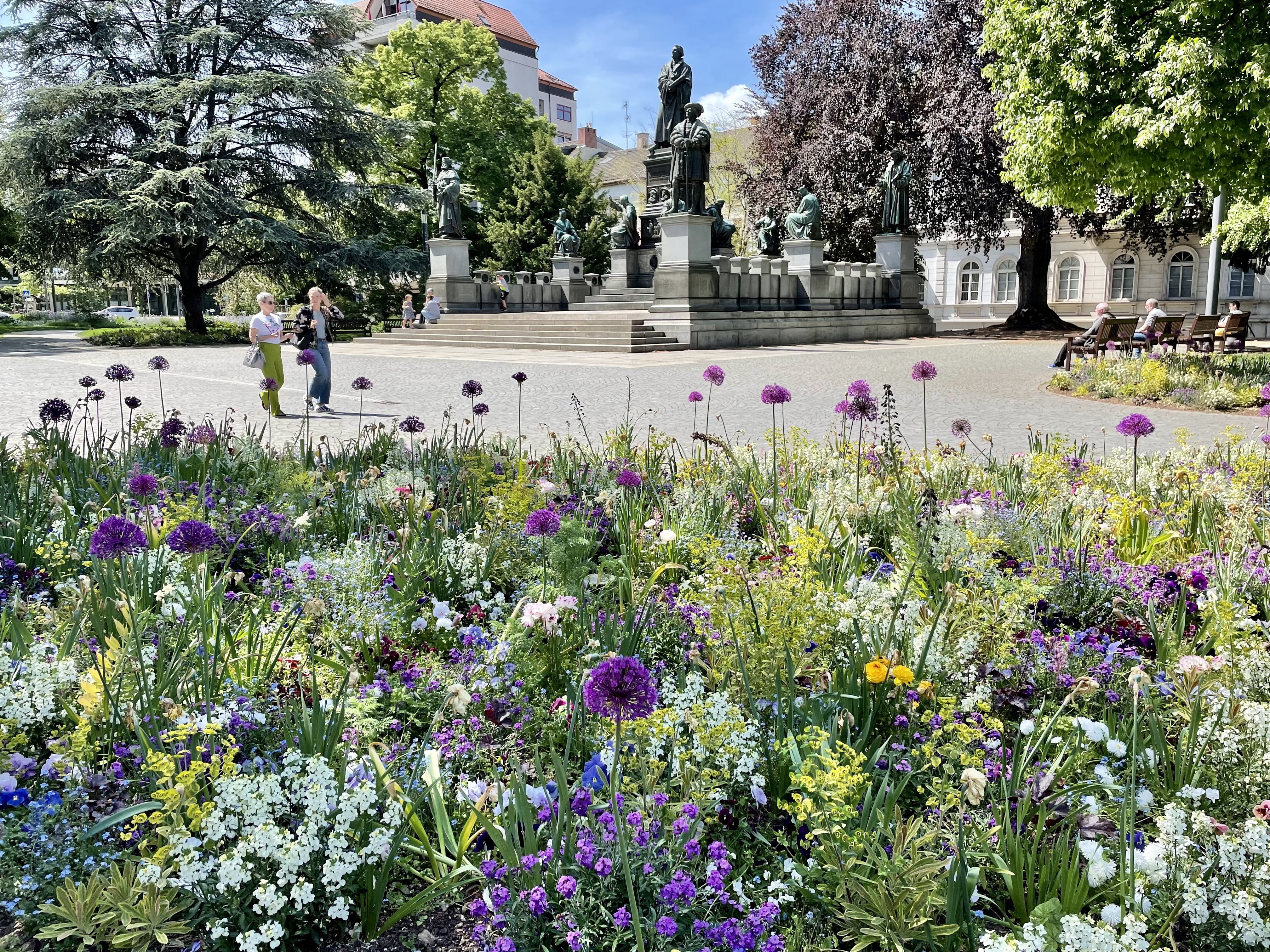
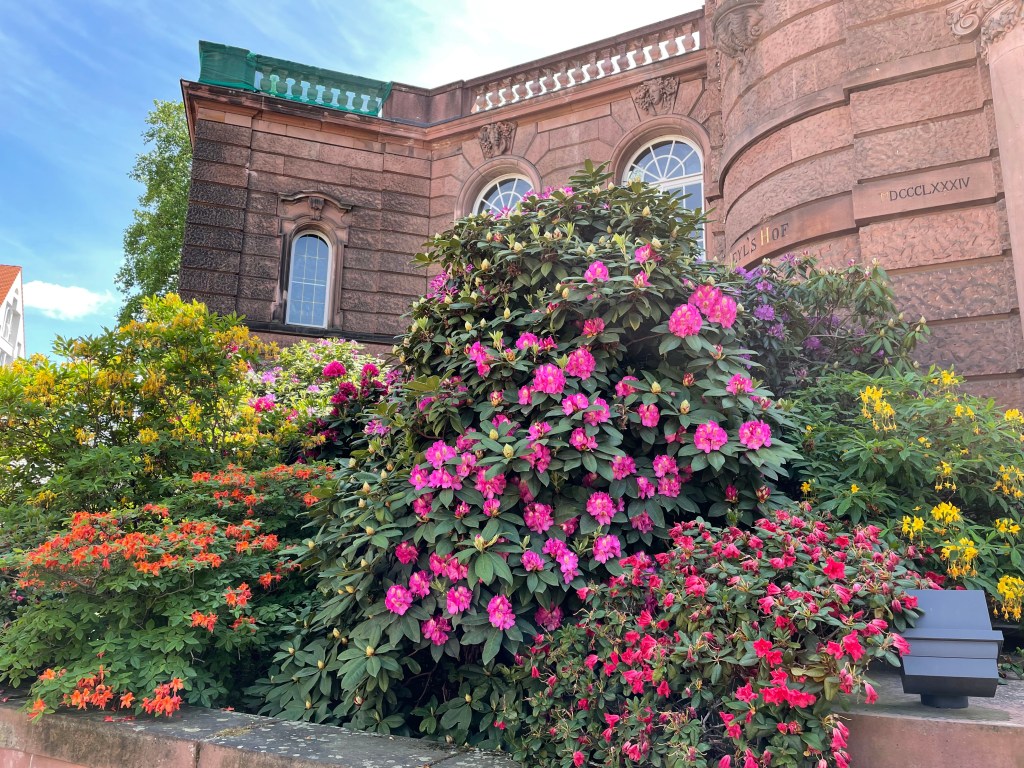
Our lunch stop in Worms, Germany, included touring significant sites where Martin Luther began his public resistance that eventually led to the beginning of the Reformation. Flowers and flowering shrubs were in full bloom. We visited the spot where Luther made a dramatic speech and the Reformation Monument at Luther Plaza. A plaque included the complete statement by Luther.
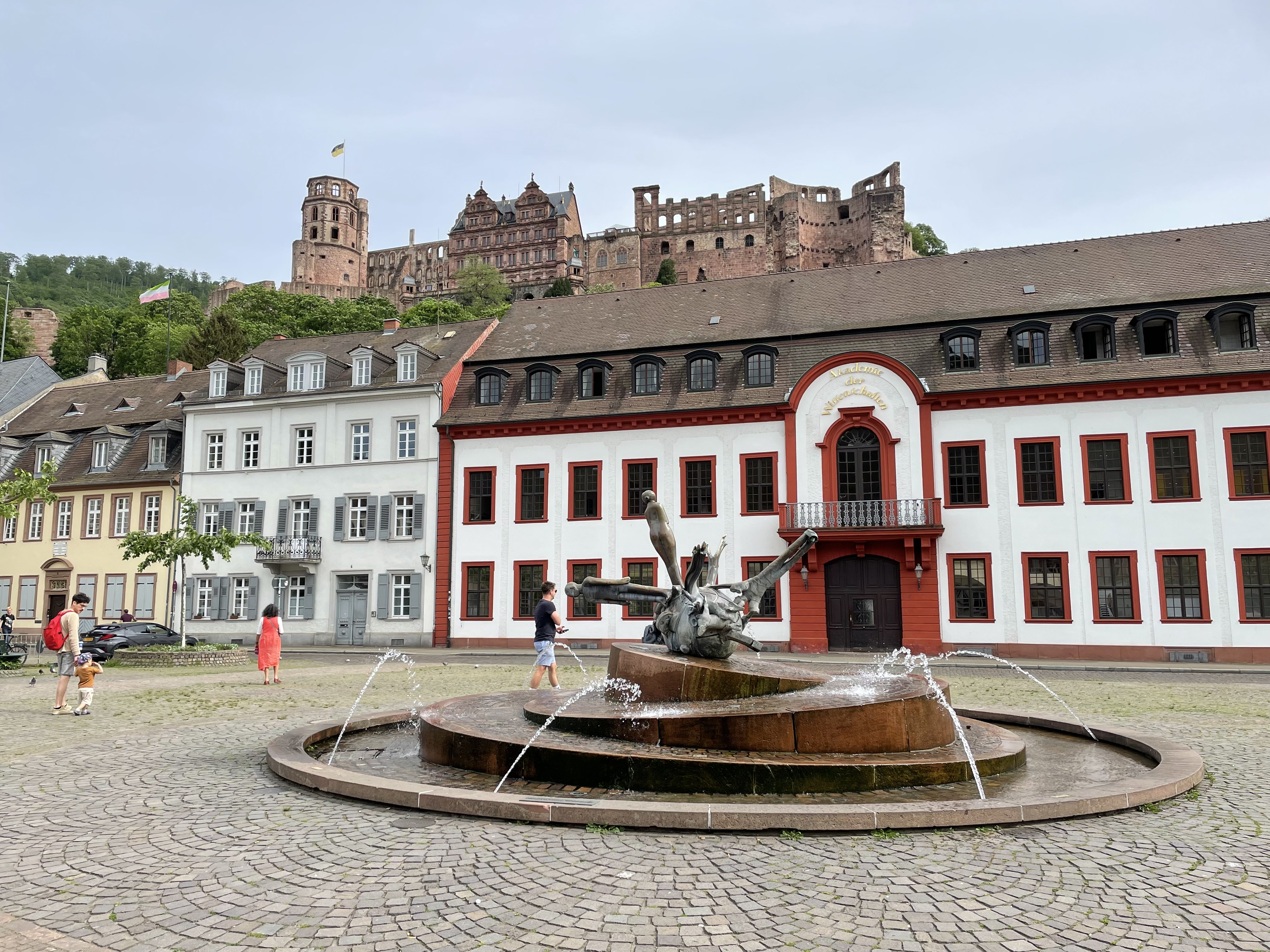
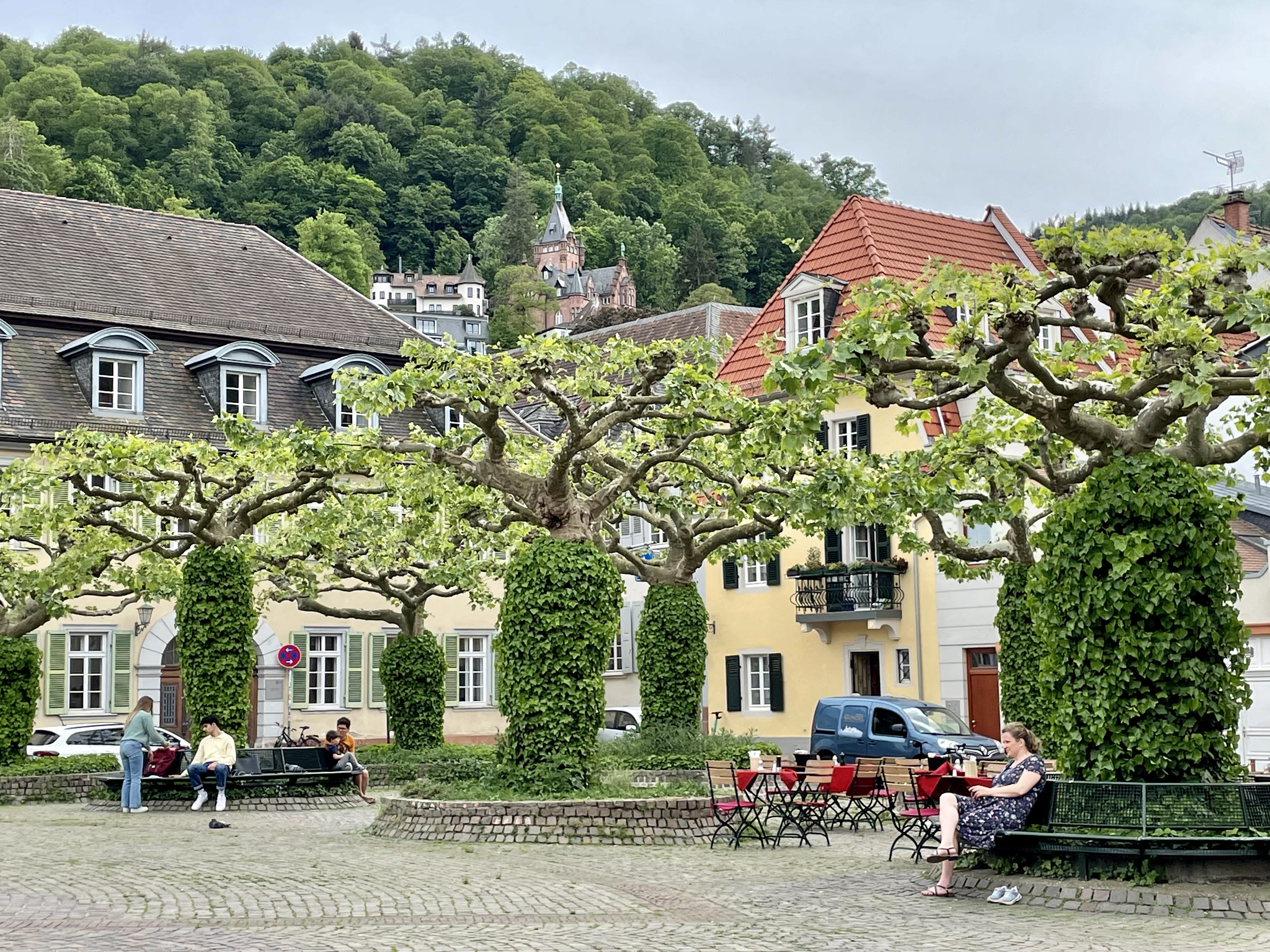
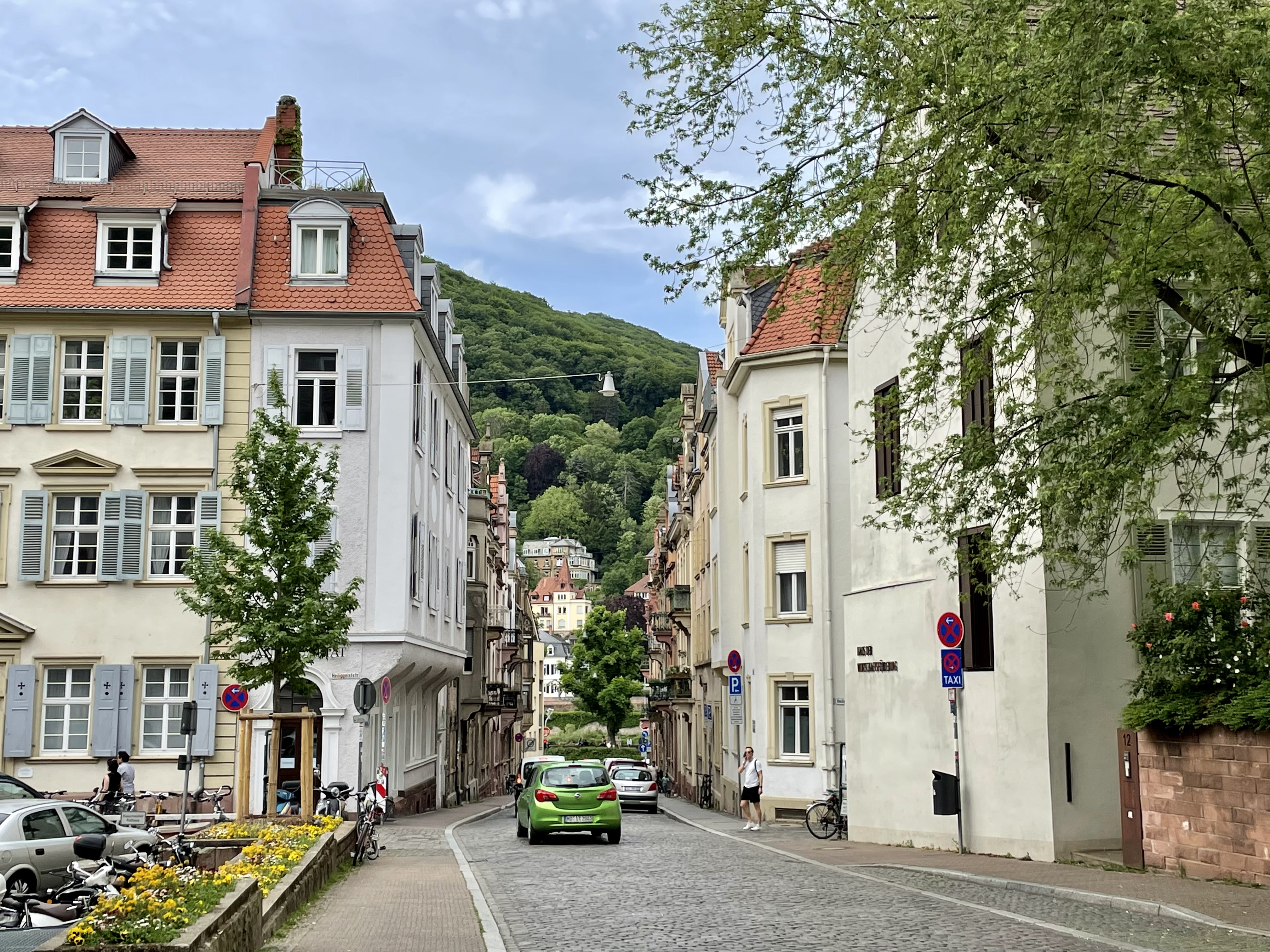
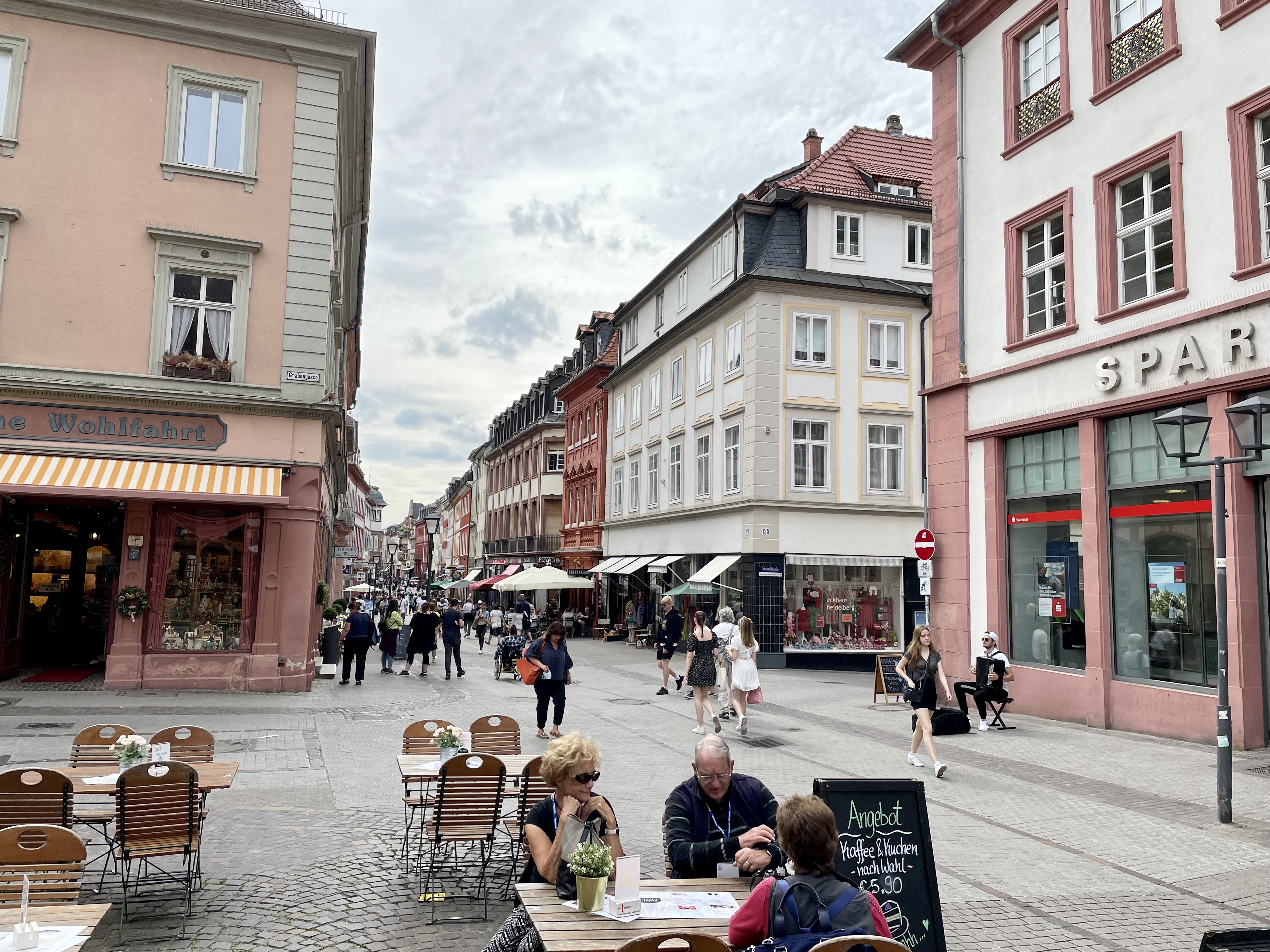
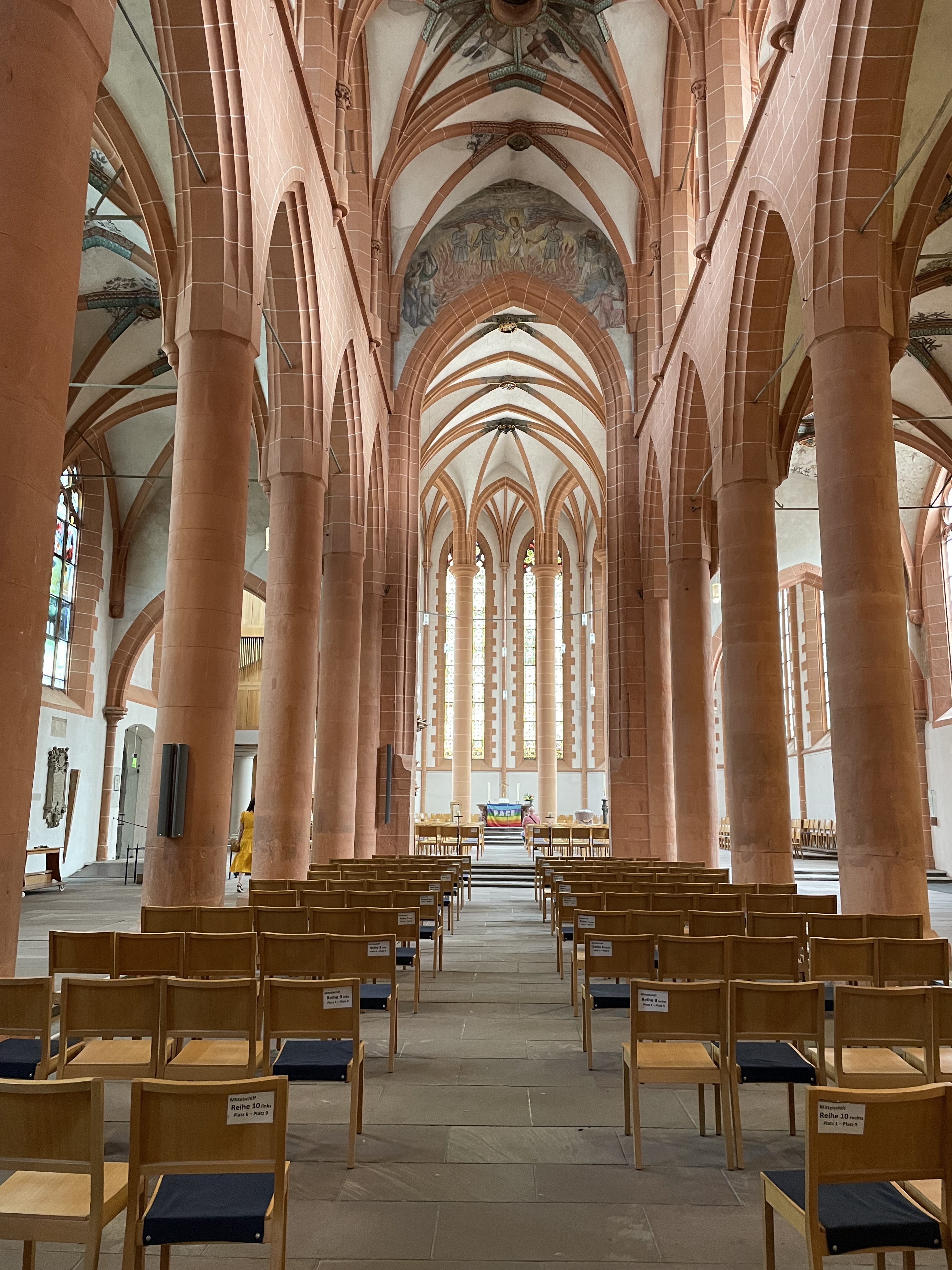
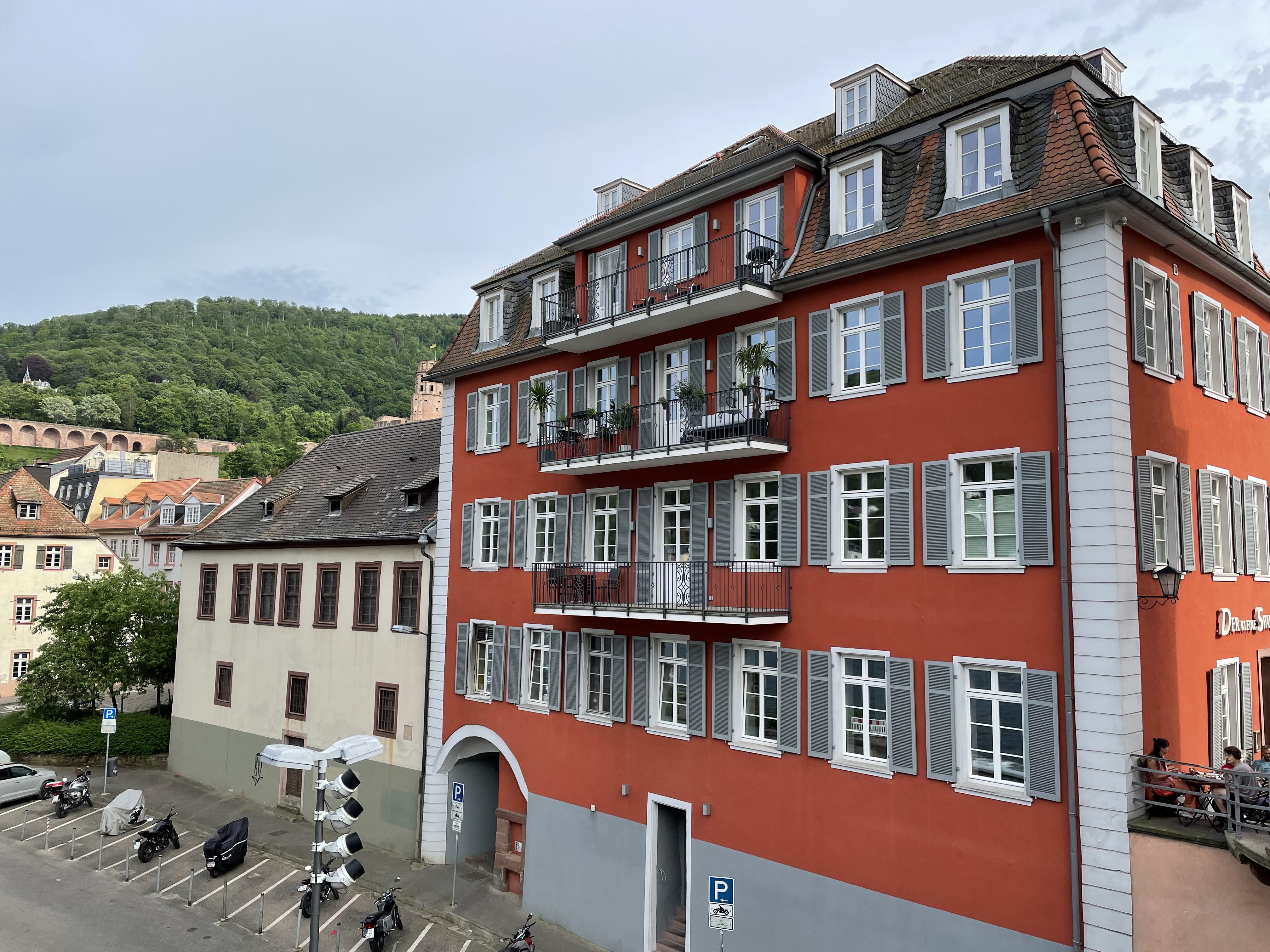
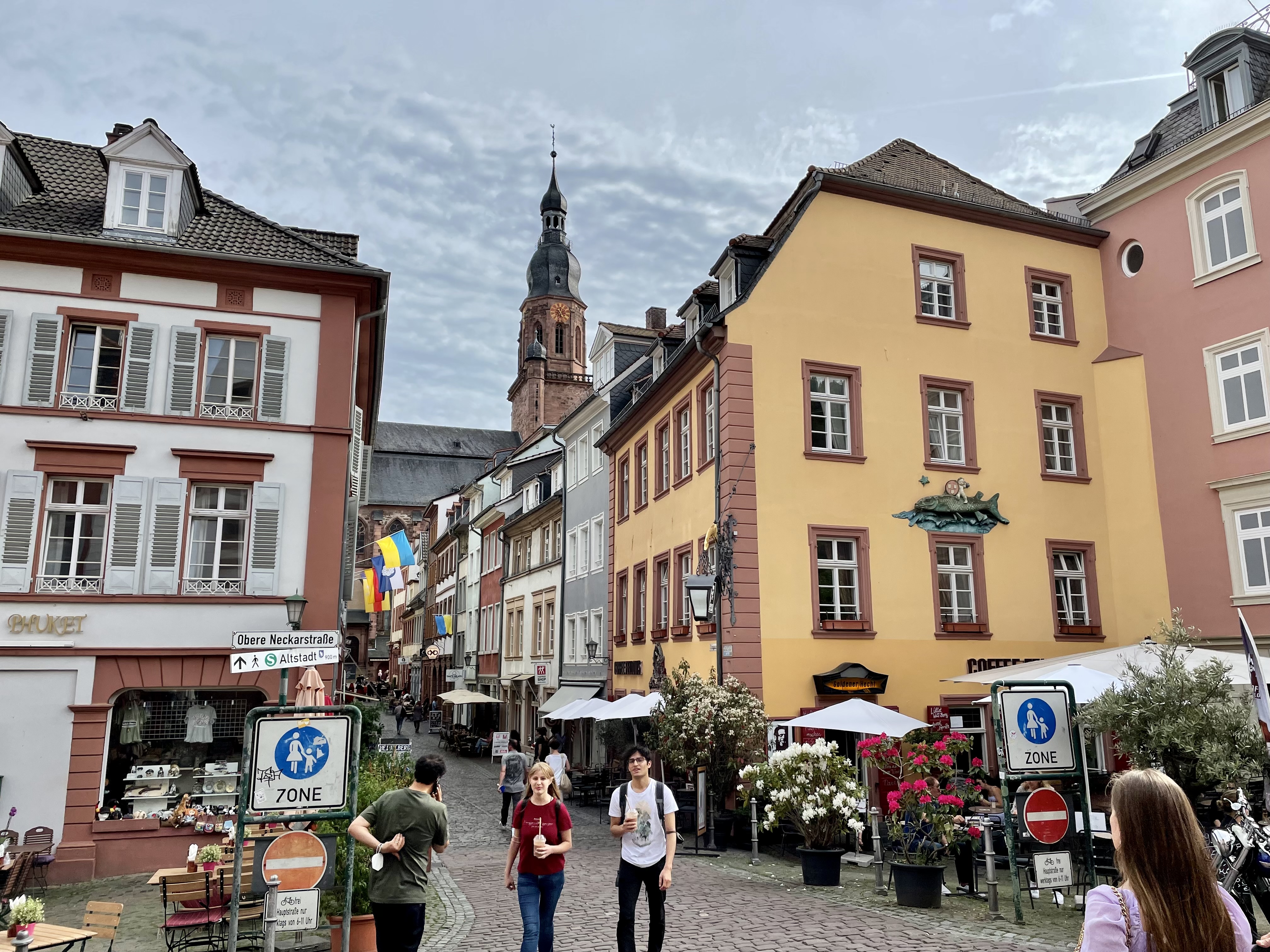
From Worms, we made an all-too-brief stop in the historic city of Heidelberg, Germany. Because of its rich history and preserved old buildings, the town was saved from the massive bombings of World War II.
An old fortress still stands above the old city.
Karls Plaza.
A typical street in Heidelberg.
Students head home after classes at Heidelberg University.
It was a pleasant evening for outdoor dining.
A lovely church.
A pedestrian-only street.
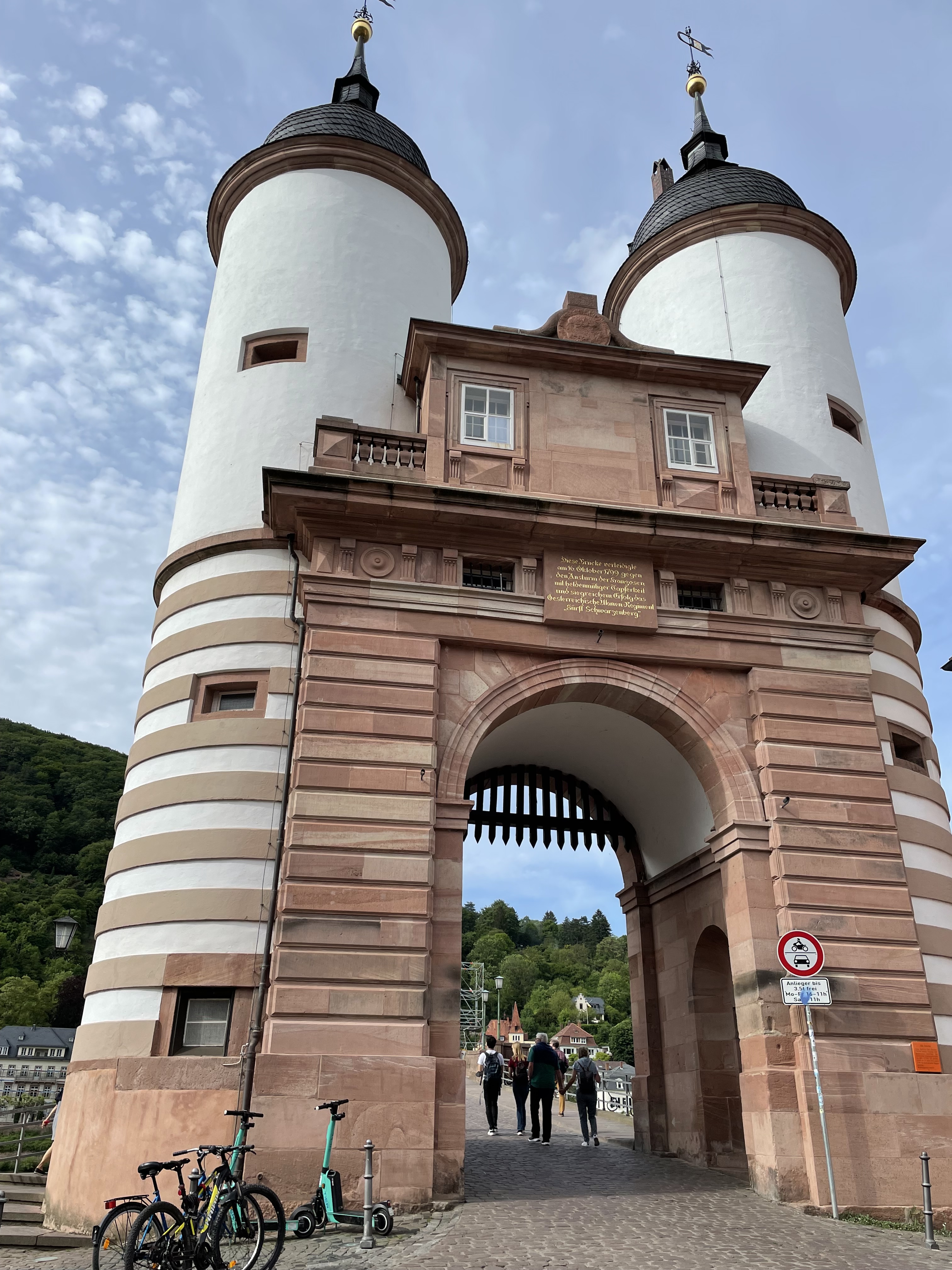
At the old bridge.
The beauty of Heidelberg.
One of the ancient city gates.
The Neckar River.
All too soon, we had to leave Heidelberg and head to our hotel in Viernheim. Our first day in Europe was filled with wonder, beauty, and history. But after an eight-hour flight and a full day of touring, we were ready for a good night’s sleep.
I frequent Silver Lake in Dayton, Virginia for a number of reasons. Birding and taking sunsets top the list.
I never know what I will find. Sometimes the sunsets are a bust. Sometimes few birds are present, not counting the ubiquitous resident Mallards.
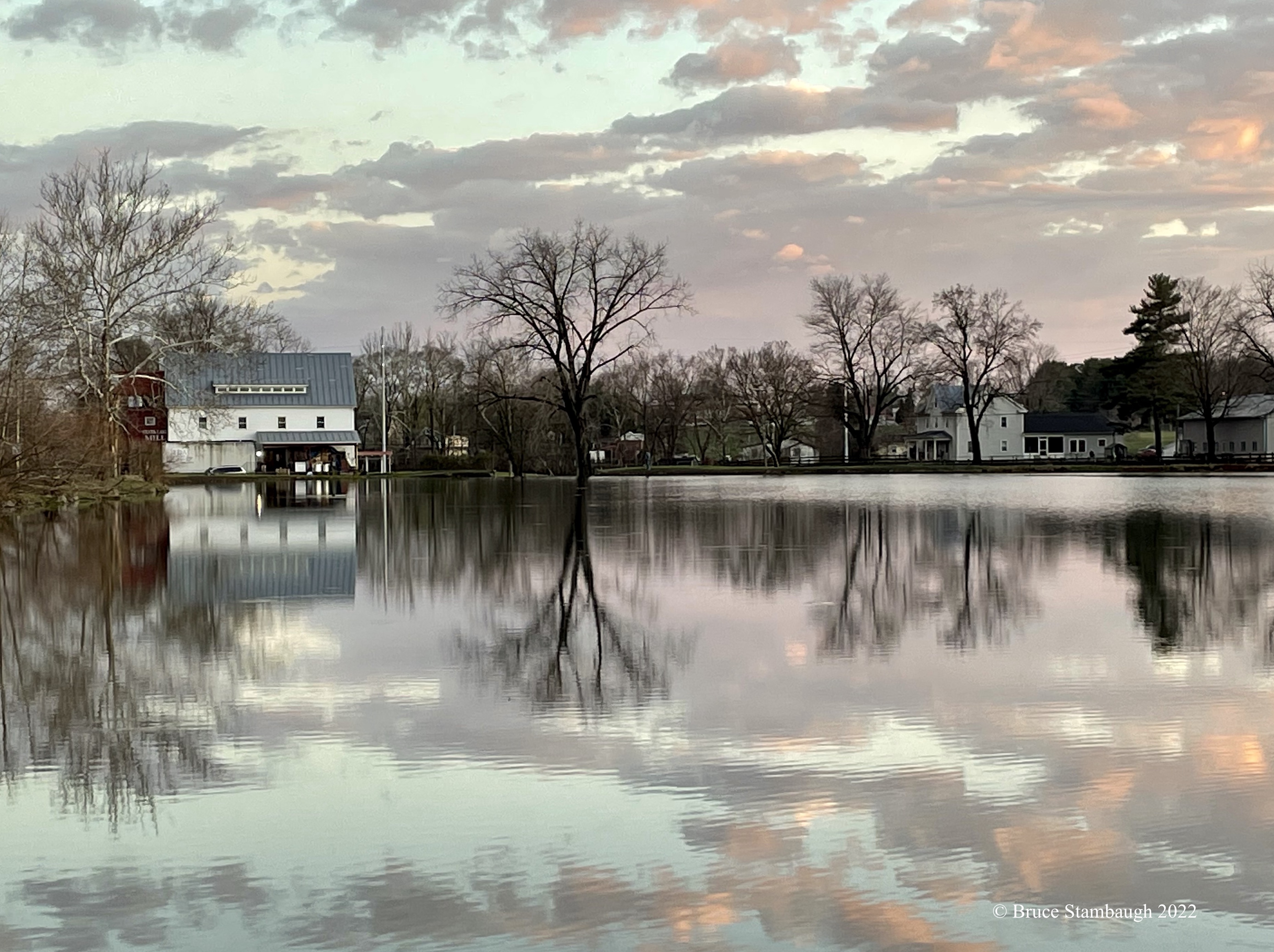
Like most photographers, I look around for unexpected scenes. I couldn’t miss this one.
The clouds over the mountains to the west had moved east. Consequently, the sun sank behind the Allegheny Mountains without much color or fanfare.
The day’s last rays tinted the remanent clouds that lingered over the nearly still lake. This mirror-image perspective spoke volumes without saying a word.















































 Roadkill Crossing
You must be logged in to post a comment.