The boy and the girl
took turns sliding down the hill
in a coal shovel.
Bruce Stambaugh
December 13, 2010

By Bruce Stambaugh
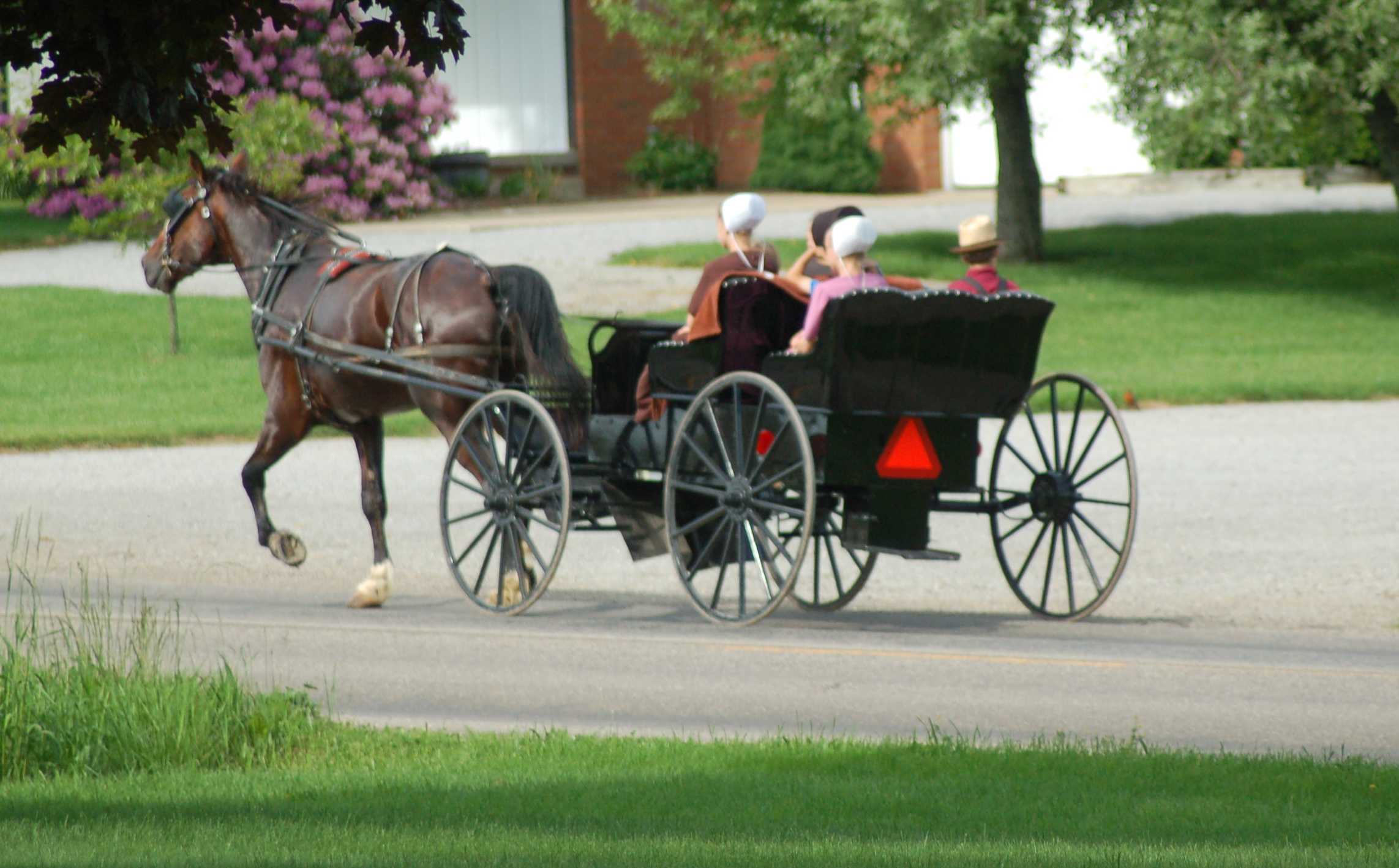
The Amish enjoy celebrating the holidays just as much as anyone else. They simply go about it a bit differently.
Defining how the Amish celebrate America’s most time-honored holidays deserves an introductory explanation. The Amish are divided into church groups, usually about 100 persons per church. And by church, they mean fellowship, since they hold church in their homes, shops or barns.
There are actually many different types or orders of Amish. The Swartzentruber Amish are considered to be the lowest order, with the New Order Amish the highest, since they hold Sunday school on the alternate worship Sundays.
Using the terms “lowest” and “highest” is not intended to be derogatory or even hierarchical. It simply is the way it is with the Amish. Those in between are the Old Order, by far the most numerous in among the Amish population. The orders are simply determined by rules of the church leaders.
Clearly, defining the Amish is a lot harder than their simple lifestyles might let on. Nevertheless, they all celebrate the holidays one way or another.
The key to understanding how the Amish do so lies in this understanding. You can’t generalize about the Amish. Their holiday traditions and rituals vary from family to family, church-to-church and sect-to-sect, not much different that any other culture or ethnic group.
Modesty is a major principle in the values of the Amish. That fact can be seen in exactly how the Amish keep the holidays. In living out their faith beliefs, they do so joyously surrounded by food, family and friends.
Here then is an overview of how any given Amish family, save those in the Swartzentruber order, might celebrate the holidays.
Thanksgiving
Most Amish take advantage of this national holiday just the way the rest of the country would. They gather with family, extended family and friends and enjoy turkey, mashed potatoes and gravy, cranberry sauce, a vegetable and of course dessert, usually homemade pie.
However, instead of breakfast, many of the Amish fast prior to the large noon meal. Fasting is a physical sign of purification in preparation for the celebration.
The lower order Amish, however, have a different take on Thanksgiving. They see it as an opportunity to prepare for the winter months ahead. For them, Thanksgiving is the big hog-butchering day. They’ll save their substantial meal for another later.
Christmas
From the Amish perspective, anyone not Amish is considered “English.” The Amish recognize and respect the “English” demarcation of Christmas on December 25. For them, Christmas is a sacred day in honor of the birth of God’s only son, Jesus Christ. And here again, many, though not all, will fast prior to their family gathering.
Amish actually celebrate Christmas twice, once on the standard date of December 25, and again on January 6, commonly referred to as Old Christmas. In higher religions, that day is known as Epiphany.
Unlike the rest of society that celebrates Christmas, the Amish do not have Christmas trees or decorations. They will, however, burn Christmas candles in honor of the day.
After the usual Christmas meal of turkey or ham and all the trimmings, the Amish will spend the afternoon and evening away playing table games, board games and cards. None of the card games would involve using face cards.
Of course, it wouldn’t be Christmas without gifts and the Amish carry out this tradition of gift giving as well. The gifts will be wrapped, but usually nothing elaborate. Children will receive toys.
Since not all of Amish Country is Amish, the usual holiday decorations and activities occur like in the rest of Christendom. Millersburg, the Holmes County, Ohio seat, holds a Christmas parade, Santa included, and on December 10 will initiate its first candlelight church walk from 6 to 8 p.m.
Berlin, Ohio, the hub of Amish Country, has a luminary ceremony. Even little Mt. Hope, where mostly Amish live, has a Christmas parade and a live nativity scene. Santa, however, is nowhere to be found.
Old Christmas
Old Christmas harkens back to the change from the Julian calendar to the Gregorian calendar during the latter stages of the Reformation when Pope Gregory XIII switched Christmas to December 25. Out of tradition and reverence for their forefathers, the Amish have continued to honor Christ’s birth on January 6.
Unlike the more jovial December 25 celebrations, Old Christmas is more solemn. It begins with fasting, followed by another typical Christmas meal and some more gift giving. However, the emphasis is on reflecting and visiting as apposed to reveling.
No matter which holiday is being celebrated, family is always an important element in any get-together for the Amish. And that is true for any Amish order.

By Bruce Stambaugh
Soon I’ll be 63. I used to think that age was ancient. I probably was 36 then.
Of course, there was a time when I viewed 36 as old. I was probably 18. When I was nine, 18 was old. You get the pattern. “Old” is a relative term.
I am not saying that I don’t feel my age. I do. I say that because whoever said 60 is the new 50 must have been 50. They sure weren’t 60.
Ever since I hit the big 6 0, an invisible physical switch seems to have been flipped. I eat less and gain more. I tire too easily, but find consistent restful sleep evasive. I have far less hair than five years ago, and what’s left is mostly gray.
My memory isn’t as sharp as it once was, my dexterity not as nimble. Aches and pains seem the rule rather than the exception they once were, even after only moderate exercise.
I might feel the various bodily effects of aging, but my mind says I’m still young at heart. I’ll be the first to acknowledge that I sometimes act like I’m still 18. But after a half dozen tosses of the baseball to my grandson, my arm feels like it will fall off.
I recently spent an inspirational afternoon with a handful of young people, all in their 20’s. The outing was intended to be an opportunity for quiet reflection and introspection.
When it was time to share at the end of the retreat, I told those assembled that I really felt for them. Here they all were, young, talented, each one much smarter than me, and yet, they were struggling to find jobs that fit their training, experiences and dreams.
I shared how it was so much different for baby boomers like me when we were their age. We graduated from college, and we could basically name our price and place to work. They all laughed when I said, “And I chose Killbuck, Ohio.”
It was one of the best decisions I ever made. Killbuck Elementary School was where I began my teaching career. I was 21, right out of college with a degree in journalism. The only education class I had had was driver education.
That didn’t matter. There was a teacher shortage, and since I had a bachelor’s degree and heartbeat, I was offered a contract 20 minutes into my interview. I made $6,000 that first year, and $186 more the second.
But like most educators, I clearly didn’t teach for the money. I taught because I loved the kids, the personal interaction, the daily battle between routines and spontaneous interruptions, the classroom characters, and the challenging instructional process. In all that, I felt welcomed with open arms and loving hearts.
Sure there were things I detested. Every job has that. That’s where age has an advantage. I have found it more convenient, healthier, and safer to let the good memories override the bad.
I told that crew of young people that I never ever expected that we would be in a situation where good jobs would be so scarce. In hindsight, I realize just how fortunate I was back then, salary not withstanding.
My birthday is my personal reminder that time is short. I want to be as productive, as positive, and as purposeful as possible. You never know what tomorrow will bring.
I want to get up everyday with a spring in my step, a song in my heart and an audacious hope that I will remain forever young regardless of how “old” I am or will be.

By Bruce Stambaugh
It was only appropriate that for a full week after the first snow of the year that we experienced a perfect Indian summer here in Ohio.
The extended summer-like days, which seemed to actually improve chronologically until the rains came, served as a picturesque bridge between a superb fall and an inexplicit winter yet to come.
We can only wonder what winter will be like. Will it be as harsh and record breaking as the last? We hope not. Clearly we have no say in the matter.

Every fall the National Weather Service issues a long-term guesstimation of what winter will bring. But even the scientists hedge their prognostications on percentages, casino like.
In the end, we have no choice but to take what we get. Hushed by the holiday clamor, a certain question lingers unspoken. Will we appreciate what we receive? In truth, that question can and should be applied far beyond the realm of weather.
I remember well the winter of 2004-2005 when the infamous ice storm nailed our area. The accumulating ice snapped giant trees, brought down power lines, halted commerce, interrupted communications, and thinned traffic to emergency purposes only for days.
Those of us who were on the electrical grid were hit hard. Fortunately, an Amish friend saved my family and me with the use of a generator to at least keep the gas hot water heat on. Without the generator’s assistance, the pipes in our home would have frozen and burst, causing extensive damage. Thankfully that did not happen, due to the unconditional generosity of my friend.
All the while, with our communication to the outside world cut, thousands upon thousands of people were caught in the wake of a horrific earthquake and subsequent tidal waves that killed scores of people.
In sorting through an overflowing basket of mishmash the other day, I came upon some handwritten notes I had made about the catastrophe. Apparently, I did so while listening to a battery-operated radio. In reviewing my scribbling, I was reminded that the inconvenience of living without electricity for five days paled in comparison to the plight of millions of fellow human beings halfway around the world.
A sampling of my jottings, dated Dec. 26, 2004, relived the calamity: Banda Ache, 60-foot wave, two miles inland, 30 mph, eight-12 feet deep flood; deaths, 200,000 in Indonesia alone, 400,000 injured; no system to alert people in Indian Ocean rim; 9.3 magnitude earthquake, the world’s deadliest tsunami. Unfortunately, those initial notations proved accurate.
Once power was restored the horrible scenes unfolded on television. I was appalled for the victims, thankful for my family that we had only lost power and a few trees in the yard. Compared to the widespread wreckage and unbelievable totals of death and injuries of so many innocents, we had been fortunate.

Since then, infinite natural and man-made disasters, including the sluggish global economy, have occurred. Others will likely continue to develop as time progresses. Nevertheless, as we begin this holiday season in North America, we still have so much for which we can be thankful no matter our personal situation.
This Thanksgiving perhaps we can express our gratitude by simply helping the less fortunate. We may not have to look clear to the Indian Ocean rim for those opportunities either.
Maybe, just maybe, a proactive generosity can be an Indian summer bridge to brighten someone else’s rainy day life. That would be a practical, productive and prudent Thanksgiving.

By Bruce Stambaugh
We awoke on the first Saturday of November to a skiff of snow on the roofs, grassy areas and glued to the trees. The driveway and the road in front of our house were just wet.
Since the temperature hovered right at 32 degrees Fahrenheit, I figured we probably had had more than the dusting that remained. Not one to quibble with the weather, I simply inhaled the beauty as a drab dawn broke.
My wife and I were ready to head for our cottage for a post-election weekend retreat with some friends. After the tiresome multimedia blasts of campaign negativity, we needed a quiet place, and the cottage was it.
Just a few minutes down the road, we caught up to the menacingly low clouds that were still spitting snow. During the 75-minute trip, we were amazed at just how spotty the snow was. We drove in and out of the white stuff several times.
In some places, the snow was two or three inches deep. In most, the ground was bare. The snow had fallen in various depths in a long, narrow band stretching northwest to southeast from Lake Erie to the Ohio River.
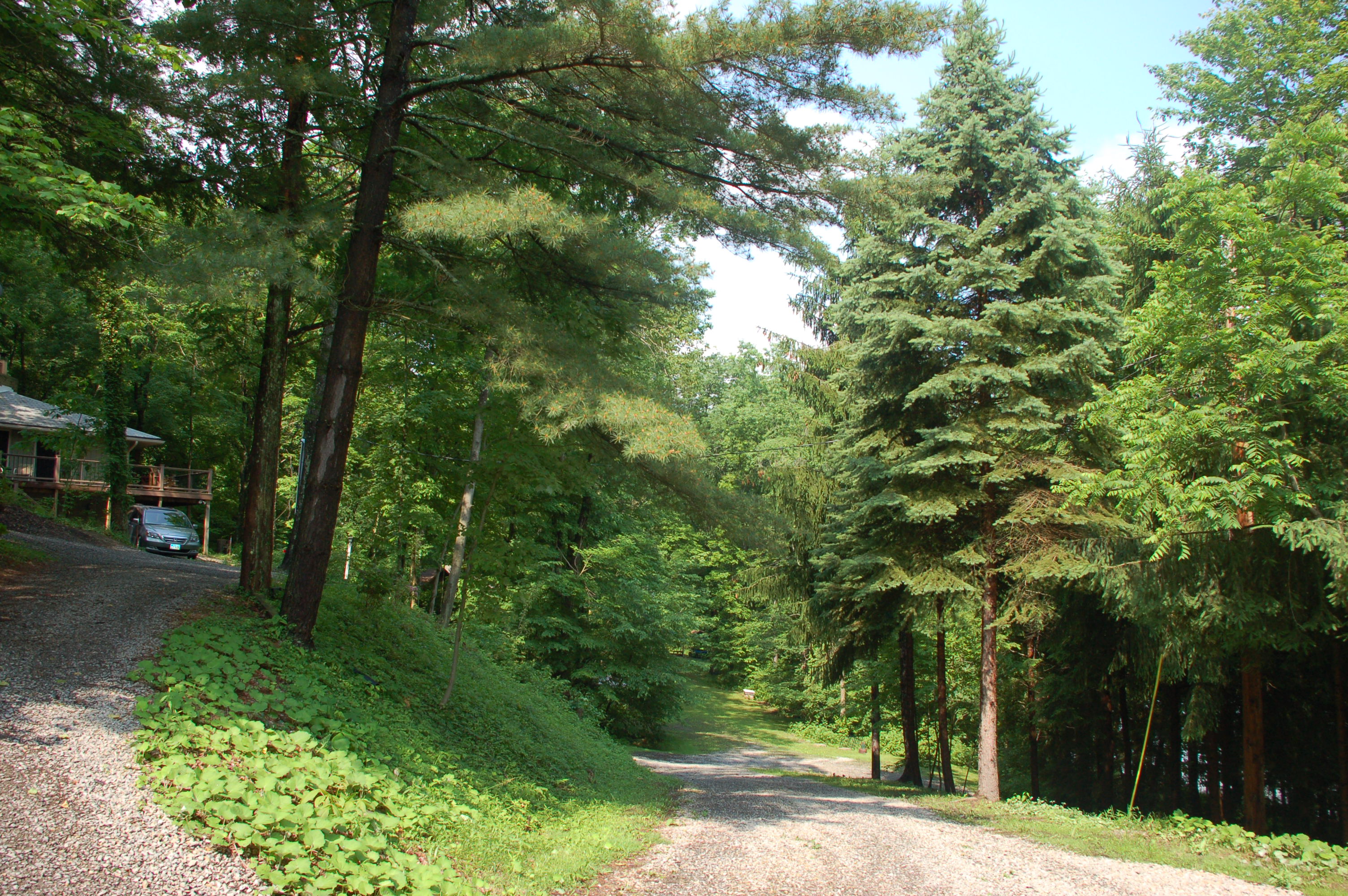
When we pulled onto the long steep lane that leads to our cottage, an inch of fresh, fluffy snow welcomed us. Initially the lane goes uphill. At the summit, the road dives into the woods, and quickly curves right, down a steep, straight slope.
Just as I began the decline, the car stopped out of respect. It couldn’t crush the beauty before us, not at least until I had taken some pictures of the virgin snow.
The limestone on the lane must have been warm enough to melt the snow on impact. Everyplace else, the snow stuck undisturbed, beautiful, mesmerizing.

With the concealed sun unable to lessen the early winter grip on the landscape, the panoramic scene seemed basic black and white. The only variation came in the clay colored clouds.
I snapped a few photos and returned to the vehicle. I guided it ever so slowly down the straight slope, around the hard left-hand curve, under slow laden white pine bows, toward the lake that reflected the steely sky.
We made the final zigzag up the lane and into the drive to the cottage. This last leg of the trip adds a faux remoteness to the location. I had brought along a leaf blower to dispense with any remaining natural litter on the cottage deck. I should have tossed in the snow shovel instead.
The combination of the snow and the cabin’s chill called for a fire in the impressive sandstone fireplace. I obediently responded.

With the fire underway, I cranked up the chain saw and headed out into the morning sharpness. Each time I exhaled my glasses steamed up.
There is something about snow, especially the season’s first, that exhilarates me. I have to plunge headlong into it.
The chain saw, which had not run in months, must have liked the snow, too. It purred right along, and the two of us accomplished our woodcutting goal in less than an hour.
The snow was still in place when our friends arrived late morning. They wore the same smiles as my wife and I. I don’t know if it was the snow, the blazing fire, the setting or the combination there of.
No matter how long you live where it snows, there is just something extra special about that first snowfall. This one was breathtaking.


By Bruce Stambaugh
In August, I emotionally crashed and burned. I thought I had been dealing pretty well with my father’s death late last year. Truth is, I wasn’t dealing with it at all.
Like so many others who have lost loved ones, I kept myself busy, and suppressed any emotions and hurts that spontaneously tried to ooze out at serendipitous times. I denied my suffering perhaps afraid to let myself go. I needed to properly mourn, take care of myself and share with others just how much Dad meant to me.
I thought I had of course. But I was just fooling myself. I know now that what happened to me was inevitable. I was in denial and the resulting consequences finally had caught up to me. I thought I was alone in this internal battle, and had to be strong for our mother and myself.
In his final months and days, Dad had received marvelous care from Hospice of Holmes County, along with the staff at Walnut Hills, the assisted living facility in Walnut Creek, Ohio where he and Mom lived. After his death, I began receiving monthly mailings from Hospice. Most of them had articles and literature on grieving.
Thinking that I was doing just fine, I usually glanced at them and that was it. That information was for others, not me. I was wrong.
The day my emotions hit rock bottom another Hospice mailing arrived. In it was an invitation to attend a special five-week session on grieving. I wasn’t tolerating the depression medicine the doctor had prescribed for me. I decided to stop the meds and start the counseling.
The group was small, which allowed for intimate, personal, confidential sharing. We met once a week for five consecutive Thursdays. I knew most of the handful of people who attended. The lives of rural people tend to intertwine consequentially.

Participants made the two hours each week a priority. We laughed, cried, listened and comforted each other. Our common, profound grief, our tears and smiles bonded us together with measureless compassion.
By the end of the final session, I had a greater appreciation for what others go through, how much people hurt even years after losing a loved one. I was no exception. I learned, though, that hearing the varying situations of others helped see my own issues in a new and realistic perspective.
We learned that grieving is an ongoing process. It takes time and understanding.
Still, I saw healing in my fellow mourners, and I felt healing myself. The last night we met, each of us took turns sharing something significant about our loved ones. Pictures, quilts, special mementos were all passed around.
I showed a slideshow of the Honor Flight trip I took with my father and older brother to Washington, D.C. in September 2009. Honor Flight is a program begun a few years ago to transport as many World War II vets as possible to the memorial in their honor in the nation’s capital.
I served as Dad’s guardian for the day, wheeling him around in his wheelchair. My older brother assisted two more able bodied vets. When asked where that experience fit in his 89 years of living, Dad said it ranked right after his marriage.
Knowing how much the trip meant to Dad, my brother and I were blessed to have been a part of that marvelous experience. In the same way, I was honored to have participated in the bereavement small group. The unconditional love and acceptance I experienced were unforgettable and priceless.
The hugs and handshakes upon parting told me the feelings were mutual.


By Bruce Stambaugh
I wasn’t going to say anything about the ghost I saw last summer. But with the ghoulish season of Halloween upon us, and the details of the experience still fresh in my mind, I decided to share what I saw.
First and foremost, I am not a fervent believer in ghosts, especially the horror kind put forth each Halloween season. I have watched with skeptical interest the ghost hunter shows on television. Once I saw how excited they got after showing video of some supposedly spectral orb, I was more convinced than ever that such adventures bordered on silliness.
Nevertheless, I had occasionally wondered how I would respond if I had encountered a ghost first hand. Last July 3, I found out. I just sat there watching, calm and unafraid, taking in every detail.
I was hardly alone when the apparition appeared. More than 2,000 others were in their seats two-thirds of the way through a lively, if not loud, concert in Hoover Auditorium in Lakeside, Ohio.
During one of the songs, something caught my attention directly above the stage. I looked up, and I saw the bluish-white shape of a man walk across the catwalk that held the lighting and speaker systems for the performance hall.
I say “appearance of a man” because that is all I can logically conclude that it was. I watched as the man, dressed in period work clothes of the early 20th century, casually walked across the catwalk from stage left to stage right. He bent down as if to pick up something, and then simply disappeared. I glanced to the stage where the band continued to belt out its Celtic vibrations, looked back up, and saw only darkness.
I knew right then and there that it would have been impossible for a human being to actually walk across that purposed bridge. The crisscrossed steel structure had no stairs that led to it. In fact, the structure wasn’t designed for anyone to ever walk there. The horizontal frame was simply lowered by a system of ropes and pulleys.
Convinced of what I saw, the next day I headed to the Lakeside Historical Museum to see what I could discover about ghosts and the construction of Hoover Auditorium in 1928-1929. Neither the young museum curator nor the senior archivist blinked at my story. Neither did they laugh at me.
After an exhaustive search by the three of us, we had come up empty on both the report of previous ghosts in Hoover, and the report of any serious accidents or deaths during its construction. The one interesting fact I did discover from old blueprints was that the scaffolding that was used to erect the large meeting room was exactly the height of the structure that held the speakers and lighting.

I also learned of reports of ghosts in the Hotel Lakeside and in the museum where I had begun my search. I appreciated the fact that both the curator and the archivist dived right in to help me find whatever facts we could.
Unfortunately, the facts were few, but the personal encounter was real. If anyone else in the audience saw anything, they never said so. It wasn’t like seeing the ghosts of Christmas Past, Present and Future, and it certainly wasn’t the commercial and entertainment-driven ghoulishness currently being spewed out.
I know I saw this man in clunky work boots, old-style work pants, a thick leather belt, and old-fashioned work shirt and slicked back hair. I just don’t know why.


By Bruce Stambaugh
Every time I see my three grandchildren, I marvel at how much they have grown. I used to think that a lot when they lived in Texas, and we only saw them three or four times a year.
Each time we visited, whether the venue was here or there, our Texan born grandchildren showed obvious changes. One would expect that given the infrequent gatherings.

But now that they live in Virginia’s lovely Shenandoah Valley, I seem to find myself saying that to them and about them each time we see them. And compared to Texas, that’s been a lot more frequent.
Since they moved from Pflugerville to Harrisonburg in mid-June, we have been together with Evan, Davis and Maren several times already. They have been in Ohio twice, and we have driven the 350 miles southeast four times.
The visits included a couple of celebrations since two of those trips marked birthdays. In July, we finally got to party with Davis on his fourth birthday. The Texas heat always discouraged us from mid-July visits, other than when he was born of course. We wouldn’t have missed that no matter how hot it got.
On our most recent trip, we celebrated Maren’s first birthday with a host of family and friends. It was quite the party. They may be living in Virginia, but their Texas roots run deep. Maren’s daddy couldn’t forget the good things about Texas. He bought a smoker and we had ourselves some swell tasting Texas brisket with homemade barbecue sauce.

Joining in on Evan’s special day was never a problem. Flying to Texas in mid-April, when the gorgeous blue bonnets were often in full bloom, was always a pleasure.

Now all of that has changed. Evan is enjoying first grade and is growing like a weed. He is athletic, inquisitive, assertive, and definitely knows he is the oldest of the three. In other words, he is a typical six-year old.

Davis enjoys his pre-school three days a week. On our last visit, his bouncy, blonde curls had been trimmed back to manageable standards. That didn’t seem to deter getting the attention of the girls at his soccer match.
A true lefty, no lines can confine his creativity. That included drawing with red permanent marker on the new tan bedroom rug. He can be a bit moody like his Nana. Nevertheless, it is a joy to be the brunt of his silly jokes. Playing along is all a part of being a grandparent.
My favorite moment with the boys came when they spent time with us here in early August. Nana and I took them to an Indians game, where Slider, the Tribe’s fuzzy mascot, jumped the boys, much to their delight.

Maren is the happiest baby I have even seen, unless of course she wants her mommy and her mommy is unavailable. Modeling might be in her future. She already poses for the camera.
By definition, Maren is really a toddler now that she has passed her first birthday. Close to walking, Maren stands by herself and never tires of pushing around the toy cart Nana bought her.
With those sparkling baby blue eyes, that constant smile and gregarious demeanor, Maren is already a knock out. At the rate she is growing up, I may be called into Virginia guard duty sooner than I think.


By Bruce Stambaugh
Even before we left to visit our daughter’s family in Virginia’s lovely Shenandoah Valley, signs of fall were abundant.

A casual drive around the Holmes County countryside provided enough evidence to
convince even an inattentive jury. Autumn had no choice but to plead guilty as charged.
Fall’s natural arrival was indisputable. Leaves had begun their annual transformation from green to some color of the rainbow. Others, due to the late summer dryness, simply fell off the trees altogether.
The regular purr of leaf blowers had replaced the regular whine of lawnmowers, further proof that summer had succumbed to fall. Occasional columns of white smoke signaled smoldering leaf piles.
Fall weather arrived just before we left for our Virginia visit. A strong cold front pushed the warm, muggy air out, and replaced it with cloudy, rainy, cooler days and nights. The annual fall fogs had already begun making morning commutes temporarily treacherous.

In my own yard, silky green to purplish dogwood leaves accentuated the trees’ bold, bright red berries. The backyard birds weren’t too pleased with me for disturbing their feasting.
My neighbor was just beginning an early harvest of his field corn, and we had yet to have a frost. Elsewhere, other farmers still resorted to the old-fashioned and nostalgic way of picking corn. They filled their fields with row upon row of shocks, mimicking an encampment of teepees.

A month ago already football had replaced baseball as the primary pastime, whether viewed from the bleachers or the couch. Back outside, squirrels scurried across the road. Some of them didn’t make it, casualty to road kill or a hunter’s sharp aim.
Long before the leaves began to change colors, autumn was being ushered in with human flare. Front porches once home to pots of impatiens, petunias and begonias were now decorated with all sizes of orange pumpkins, gold, white and crimson chrysanthemums and multi-colored and curiously shaped gourds.

For those desiring more man-made symbols, giant ghouls and inflated spiders hanging on webs big enough to catch a bus popped up almost overnight. The business industry had also begun their annual capitalization of fall with seasonal displays and multi-media commercials.
Inventory at roadside produce stands had changed accordingly. Bound bundles of cornstalks and the aforementioned flowers and squash replaced zucchini and tomatoes.
One place banked on a narrow market share. The good folks only offered the scarce bittersweet. By the number of cars in their tiny lot, they seemed to have found their niche.
Fall festivals, often historically annual events, began to celebrate nearly every conceivable aspect of autumn. A town picked a theme, say pumpkins, apple butter, antiques, wooly worms, quilting, or just good old-fashioned fun, and the festival was on.
These endeavors were not unique to Amish country either. Large banners across the main drags of many a town on our drive from Ohio to Virginia announced their particular local event.
Fall even showed its face on menus with fresh pumpkin pie, locally grown apples sliced and dipped in yummy caramel, and of course the seasonal snack mix of candy corn and salted peanuts.

Given all these obvious signs of fall, there can be no doubt. From gardens to town squares, fall is in full force everywhere we look.
Wildlife Photos From The Chesapeake Bay Region
Culture and Communities at the Heart Of India
Artist and nature journalist in the Shenandoah Valley of Virginia.
Photographer Of Life and moments
Less Noise. More Meaning
Art is the only way to run away without leaving home. -Twyla Tharp
Writing generated from the rural life
writer. teacher. podcast cohost.
El amor cruza fronteras / Love crosses borders
You must be logged in to post a comment.