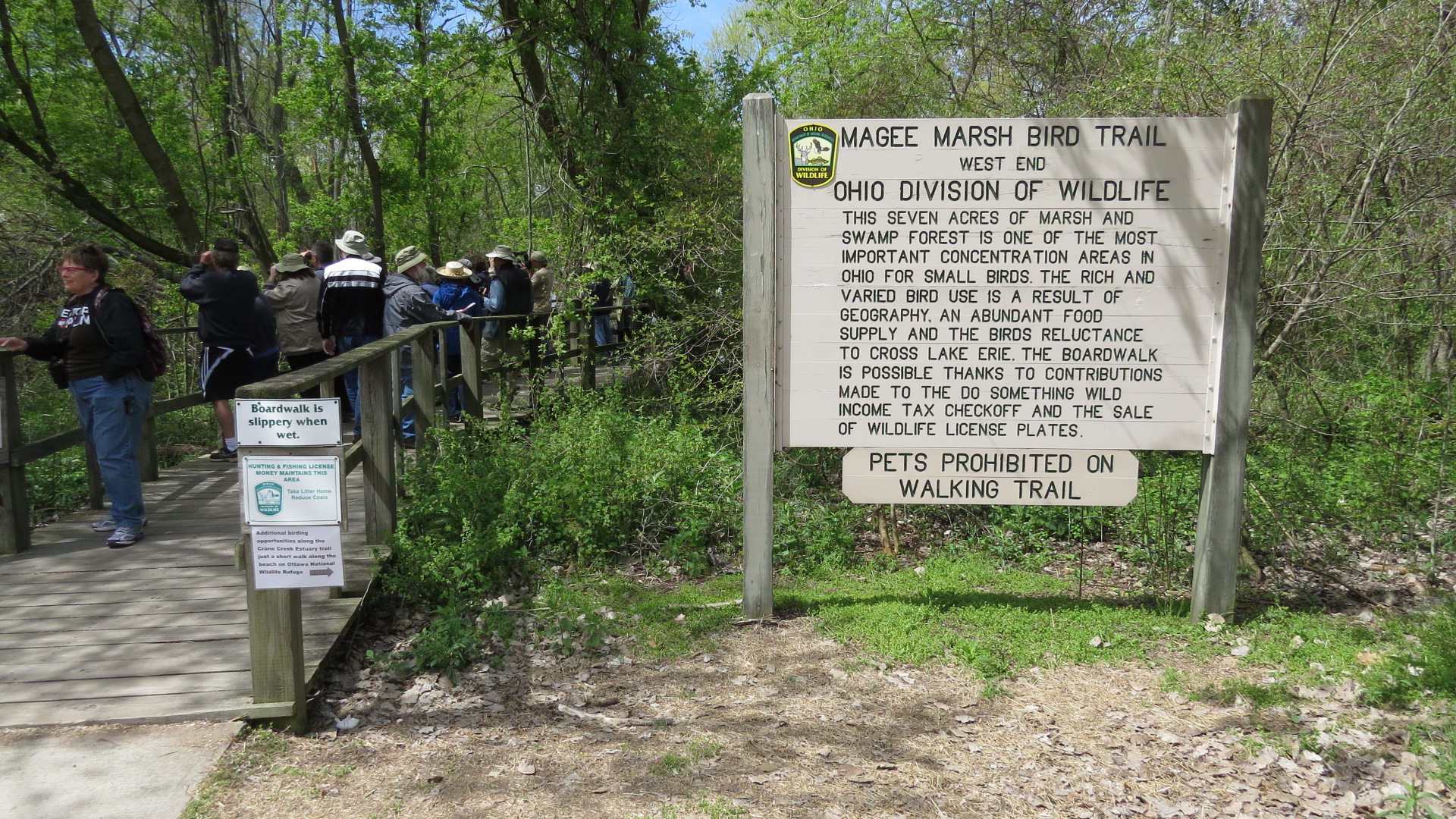
The west entrance to the Magee Marsh boardwalk is a great place to begin the birding.
By Bruce Stambaugh
Birds and birders have a lot in common. This thought struck me on my latest trip to northwest Ohio’s birding mecca, Magee Marsh Wildlife Area.
Billed as the Greatest Week in American Birding, the event coincided with the peak of the spring warbler migration. Warblers, and other migrating birds, use Ohio’s airspace as their launching pad to their northern breeding grounds.
Before the birds cross Lake Erie, they tend to rest along its shores. There they replenish their strength by devouring insects that flit around the budding and blooming deciduous trees, shrubs and wildflowers. Shorebirds scour the marshes and shores for their nourishment.
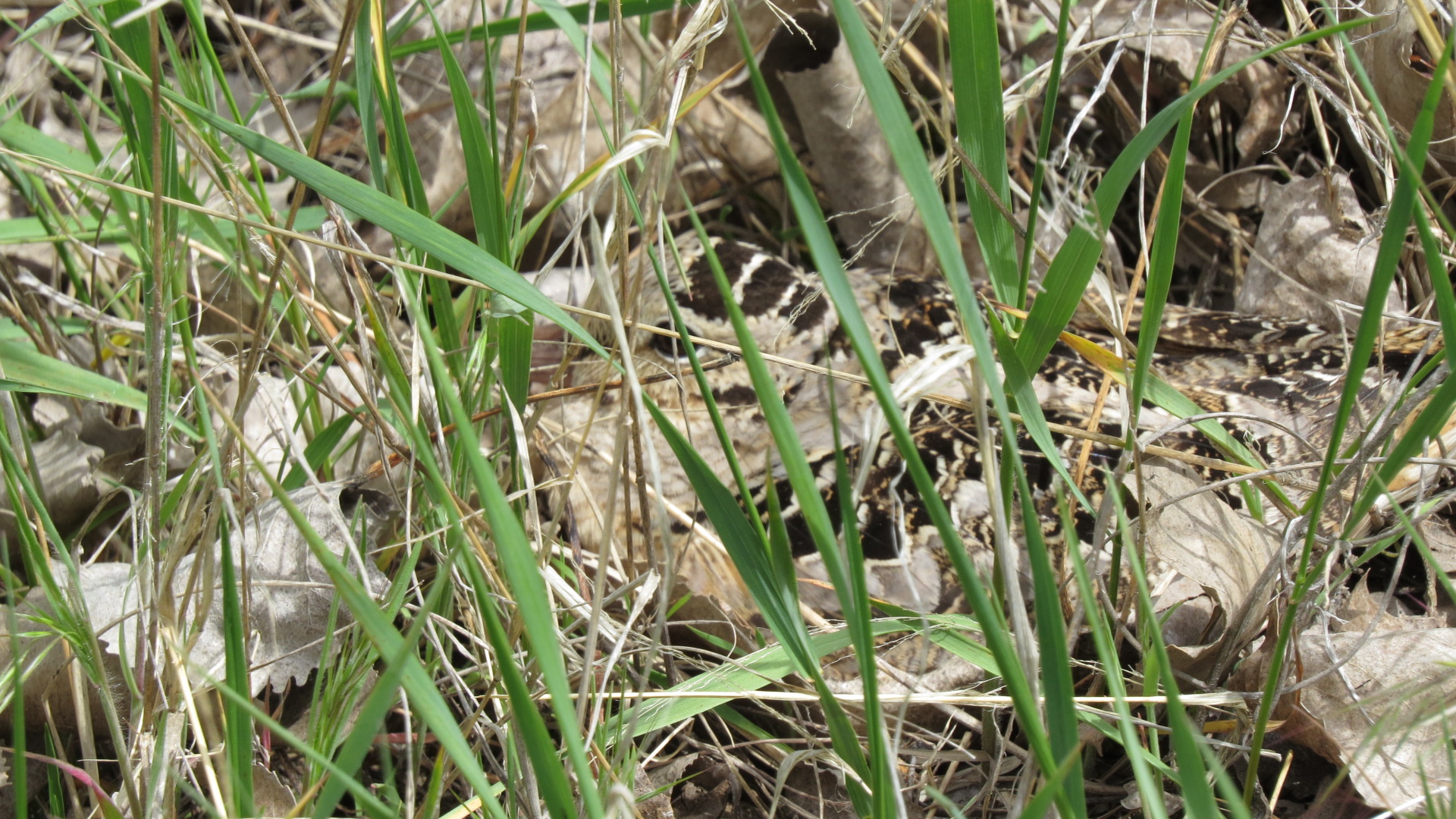
This American Woodcock chose the median of the parking lot to make her nest.
As an amateur birder, I enjoy watching backyard birds and observing passers through with equal zeal. But if I want to see a multitude of colorful migrating birds packed into one location, Magee Marsh is the place to go.
The marsh and its 2,200 surrounding acres serve as a sprawling wildlife sanctuary with varied habitat types, including estuaries, marshes, scrub lands, woodlots, rocky areas, beaches and of course the lake itself. The area also provides sportsmen with seasonal controlled hunting and fishing.
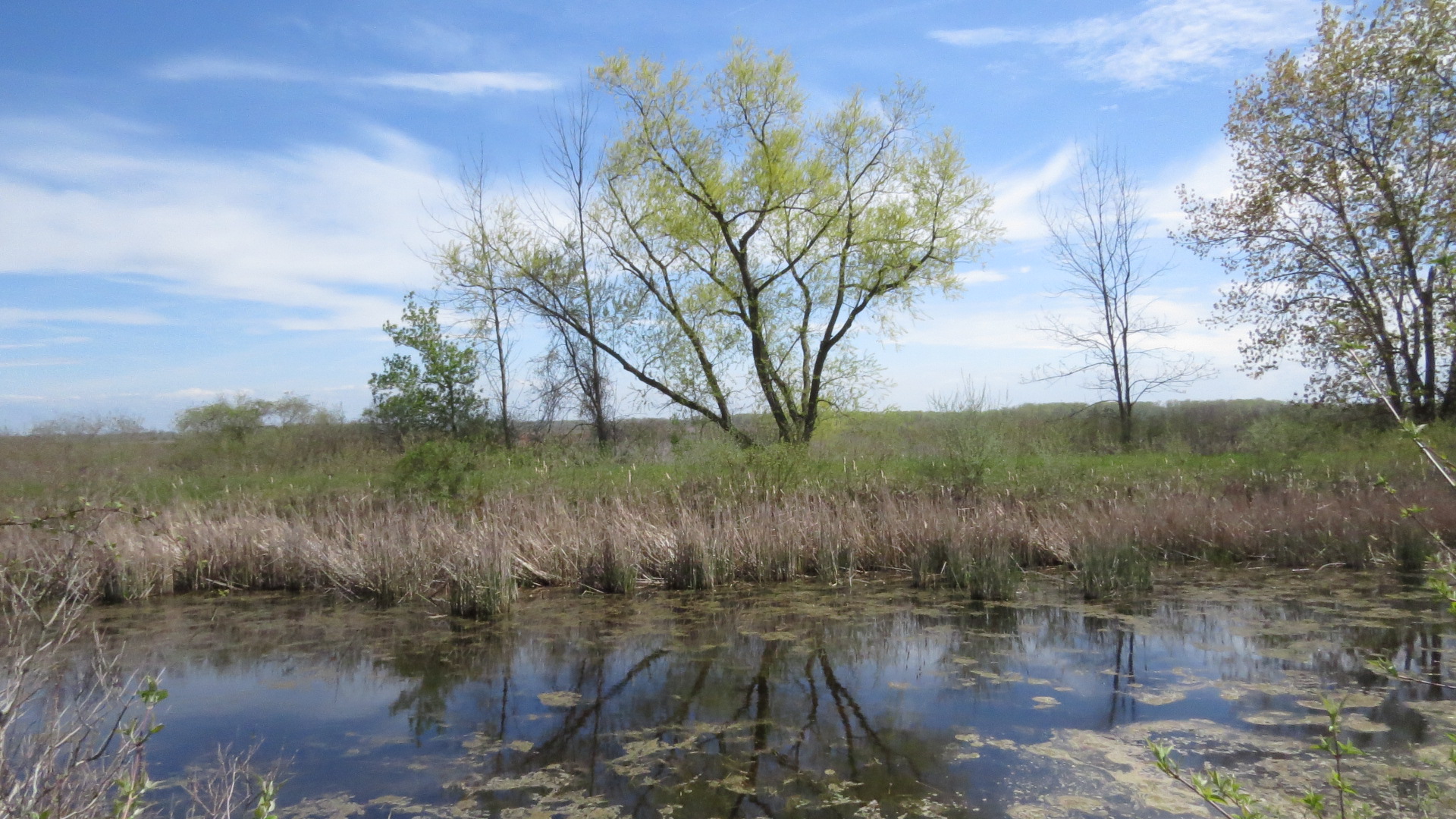
Magee Marsh has many habitats that attract several species of migrating birds.
During bird migration season, the only shooting of birds permitted is with cameras. Believe me, plenty of shots are fired in search of the perfect picture of the incredible songbirds, shorebirds, and birds of prey.
In my meandering around the boardwalk, trails and beach, I discovered something that should have been obvious. Birders have a lot in common with the birds they watch.
Birders checked out warbler on the boardwalk at Magee Marsh
Like their feathered friends, birders come in all shapes, sizes and ages. Just like the birds, birders sport different hues and clothe themselves in a variety of colors, including camouflage, worn more to soothe the birds than hide from predators.
There are other comparisons, too. Some birders maneuver and forage in solitude for their targets. Others travel in organized groups. Most birders are quiet, but some let loose with an effusive chatter when a flashy warbler or rare bird is spotted.
When a shorebird captures a fish, it often finds itself quickly surrounded by others hoping to also steal a bite. When a birder discovers a coveted find, others gather around hoping to capture the image through their spotting scopes, binoculars, or cameras. Those without scopes are graciously invited to better view the often-concealed bird. Birders are genuinely kind people.
A young family took a break from their birding at Magee.When a bird is located along the boardwalk at Magee, birders bob and weave, stretch and stoop to get just the right viewing angle. Birds do the same in search of food or checking out habitat. Most birders go in search of birds, like the many warblers that flit from limb to limb decreasing the insect population. Others sit and wait for the birds to come to them, like a Great Blue Heron patiently waiting for a fish to spear.
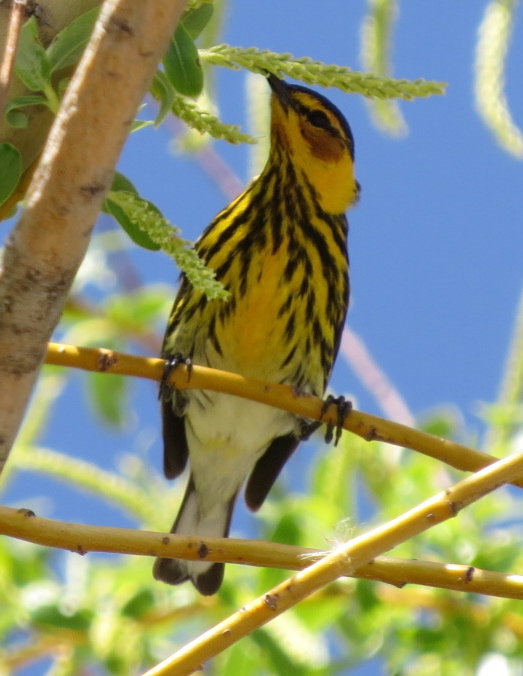
Camaraderie and sharing are normal in the sport of birding. Staunch birders make life lists, month lists, day lists, yard lists, This Cape May Warbler dined on insects before heading across the lake.state lists, annual lists, and just about any other kind of list you might imagine. That’s how serious they take this popular sport.
If someone finds a bird they can’t identify, a more expert birder gladly assists in teaching how to properly confirm just what species it is. Teaching and learning are just as important as appreciating the birds and their habitats.
Perhaps that is why birding is one of the most popular sports in the world. During the Biggest Week in American Birding, global citizens flock to northwest Ohio in hopes of seeing a special species.
To hear the various lyrical birdsongs and behold the flashy mating plumages first hand is truly a treat. To see the smiles and satisfaction on the faces of the elated birders is equally rewarding.
After a long, chilly and wet winter and early spring, true spring has arrived in Ohio’s Amish country.
By Bruce Stambaugh
Finally, it really is spring! I was beginning to think we would never receive its blessings.
I for one am certainly glad to embrace May. In Ohio, it’s the calendar’s conduit between a long cold, wet winter and early spring, like we have experienced this year, and summer’s usual balmy offerings.
Springtime has much to offer nature lovers. She is especially mesmerizing. Spring lulls you to sleep with her vivaciousness, her lusty beauty and verdant perfumes.
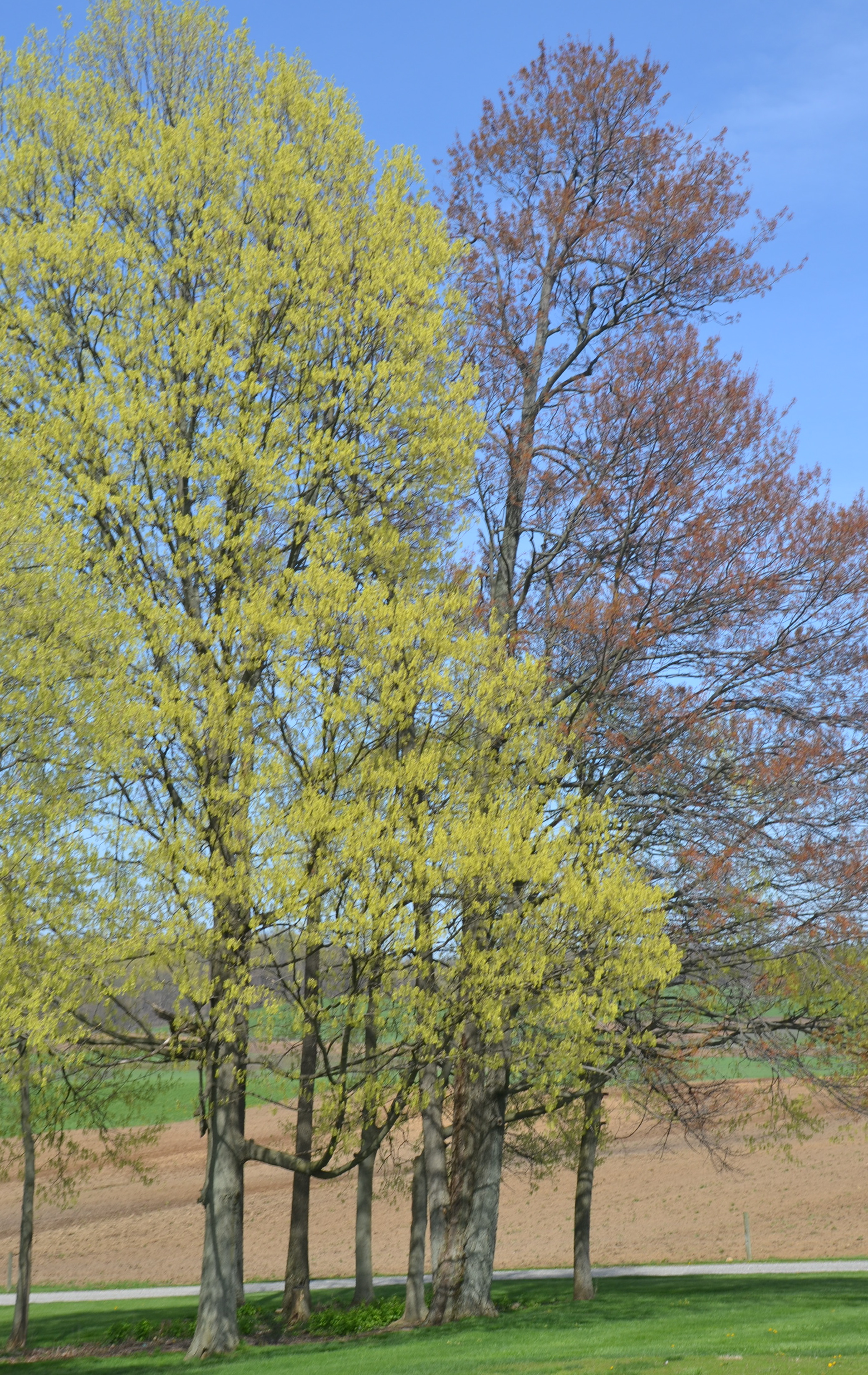
Once the weather warmed and the days brightened, the leaves of the deciduous trees quickly unfurled.However, you have to be alert, or you could miss a few of her best offerings. In our hustle and bustle to catch up to what we think is important we may miss her most amiable samplings.
May is one of the main accomplices to this annual transition from hibernation to horticulture. The month has a lot to offer.
We have to pay attention though to absorb it all because the transforming processes evolve so quickly. One day we notice the maple tree buds swelling. The next, it seems, the full canopy has unfurled. How and when did that happen?
To grasp the full measure of spring requires the honing of all of our senses. For those poor souls with pollen or grass allergies, no reminder is likely needed.
Spring, and especially May, is anything but quiet. The spring peepers are the first to break loose. Their noisy outbursts are their celebrative acknowledgements that spring has arrived. The amphibious cacophony is music to our ears.
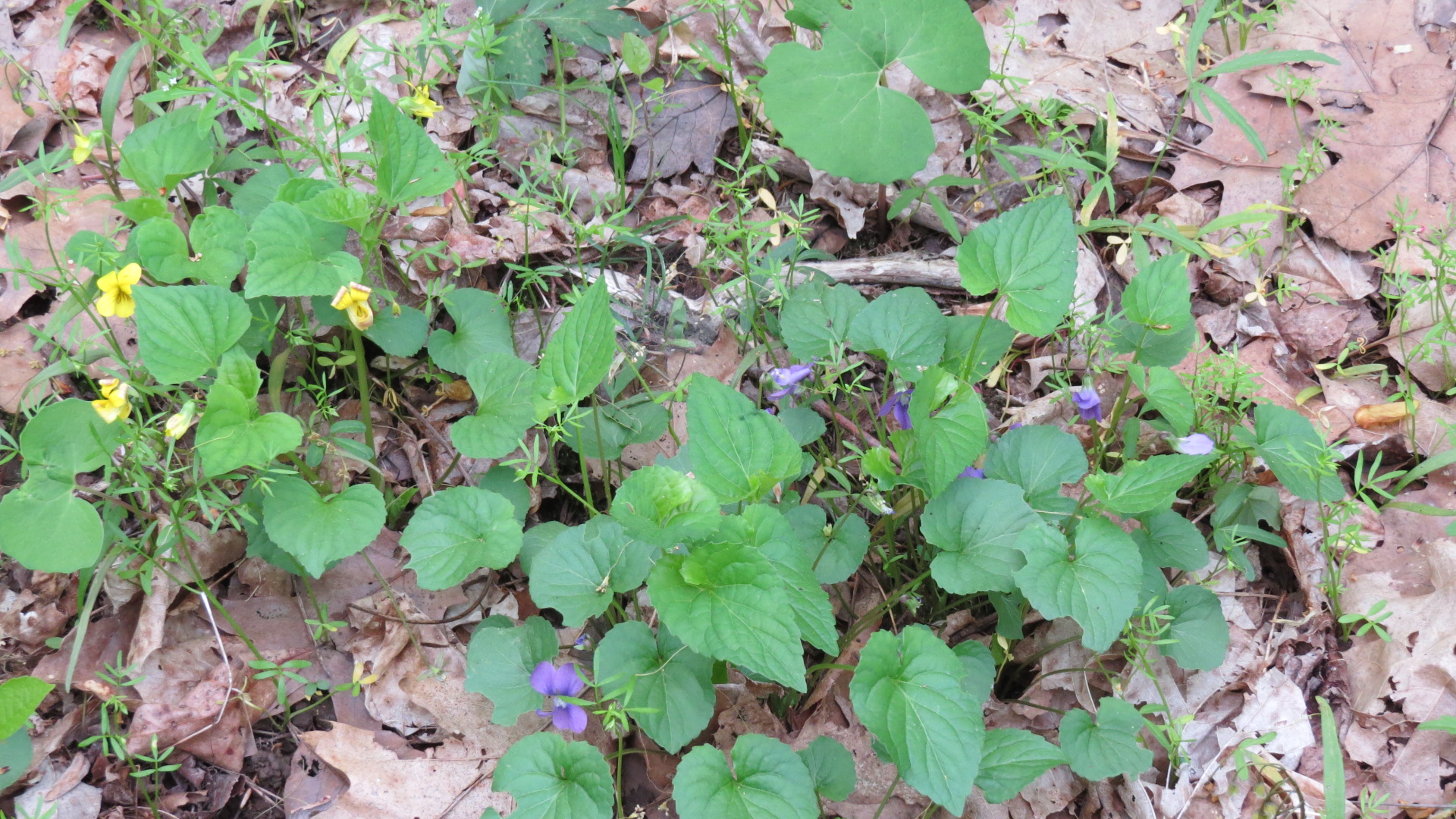
Wild yellow and purple violets are in full bloom now in Ohio’s woodlots.
Just one sunny spring day beckons buttery coltsfoot and dainty spring beauties. They brighten dusky roadsides and carpet forest floors and spacious yard-lots alike. Yellow and purple wild violets and lacy trilliums soon follow in all their grace and glory.
Clumpy lawns have already been mowed, evening the emerald patchwork from one neighborhood to the next until the prodigious dandelions appear and reappear. Try as you might, there is no obliterating them. Overnight, their yellowy blooms turn to silky seedpods, which succumb to certain spring gales and find a home just around the corner.
The beautiful sights and calls of the Baltimore Orioles fill the woods and neighborhoods in Ohio’s Amish country in and around Millersburg, OH.For avid bird lovers, this is prime time for migrating birds, especially songbirds. A whole host of magnificently colored wood warblers, Golden-winged, Yellow-rump, and Black and White among them, pass through our area on their way north. A few, like the convivial Yellow Warbler and gregarious Baltimore Orioles, will stay to nest and brighten the days with their vigorous choruses.
American Robins have already chosen their first nesting spots, and not always in the choicest locations. Mud-based nests on door wreaths or porch lights are only temporary inconveniences to those who enjoy their early morning wake up calls without setting the alarm clock.
The sooty Chimney Swifts have returned and chatter as they snatch dinner with spring’s first batch of insects. American Goldfinches seemingly changed to their day glow yellow and contrasting black overnight.
For once the magnolias bloomed without fear of a killing frost in northern OH.Native shrubs and ornamental flowering trees light up the landscape with their rainbow of colors. One day the neighbor’s giant Magnolia is bursting in pink bloom. The next, her Cinderella gown morphs into a colorful comforter spread on the ground beneath.
Just like a fast moving thunderstorm, the rubies of spring don’t last long. Will we grant ourselves the privilege to gather them in?
It pays huge personal dividends to be alert and watch as spring magnifies the hills and hollows with sights and sounds and fragrances for all to behold. Spring is here. Let’s enjoy it before it’s gone.
Even sunny days that looked warm were chilled by persistent winds.
By Bruce Stambaugh
The cold and wet of winter and early spring seemed to be unrelenting. The constant breezes made already cold days seem even more so, and damper than they really were. It felt like the wind had blown nonstop since Thanksgiving.
To paraphrase John Heywood, who first penned the words in the 16th century, “It’s an ill wind that blows nobody any good.” That’s the way I thought of the many persistent gales that delivered us storm after storm for four months.
We here in northeast Ohio have endured a variety of weather elements for too long. Snow, sleet, freezing rain, ice, fog, torrential rains, flooding, and bone chilling temperatures have all been part of our weather menu. However, it has been the relentless wind that has been the most bothersome. It made even a sunny spring day seem like February all over again.
Day after day the icy wind seemed to go right through you. It was that bad. As much as I love weather, I had about had it with the unyielding gales.
Amish farmers have had some raw days to do their field work this spring.
I am glad, however, that the wind does aid farmers by drying out the mushy soil so planting can begin. But I pity the many Amish farmers who have had to spread, plow, harrow, and plant in the endless blusters. They and their trusty draft horses had to be freezing.
There’s another hazard to wind. Wildfire danger increases when steady breezes dry out already brittle dormant foliage and grasses. That’s one reason why spring’s quenching rainfalls are so welcome, even if they are accompanied by nasty winds.
On a recent trip to visit friends in Leamington, Ontario, a steady wind buffeted our van on the trip north. Along the Ohio Turnpike we spotted a Bald Eagle soaring against the northwest wind over an open field in search of prey.
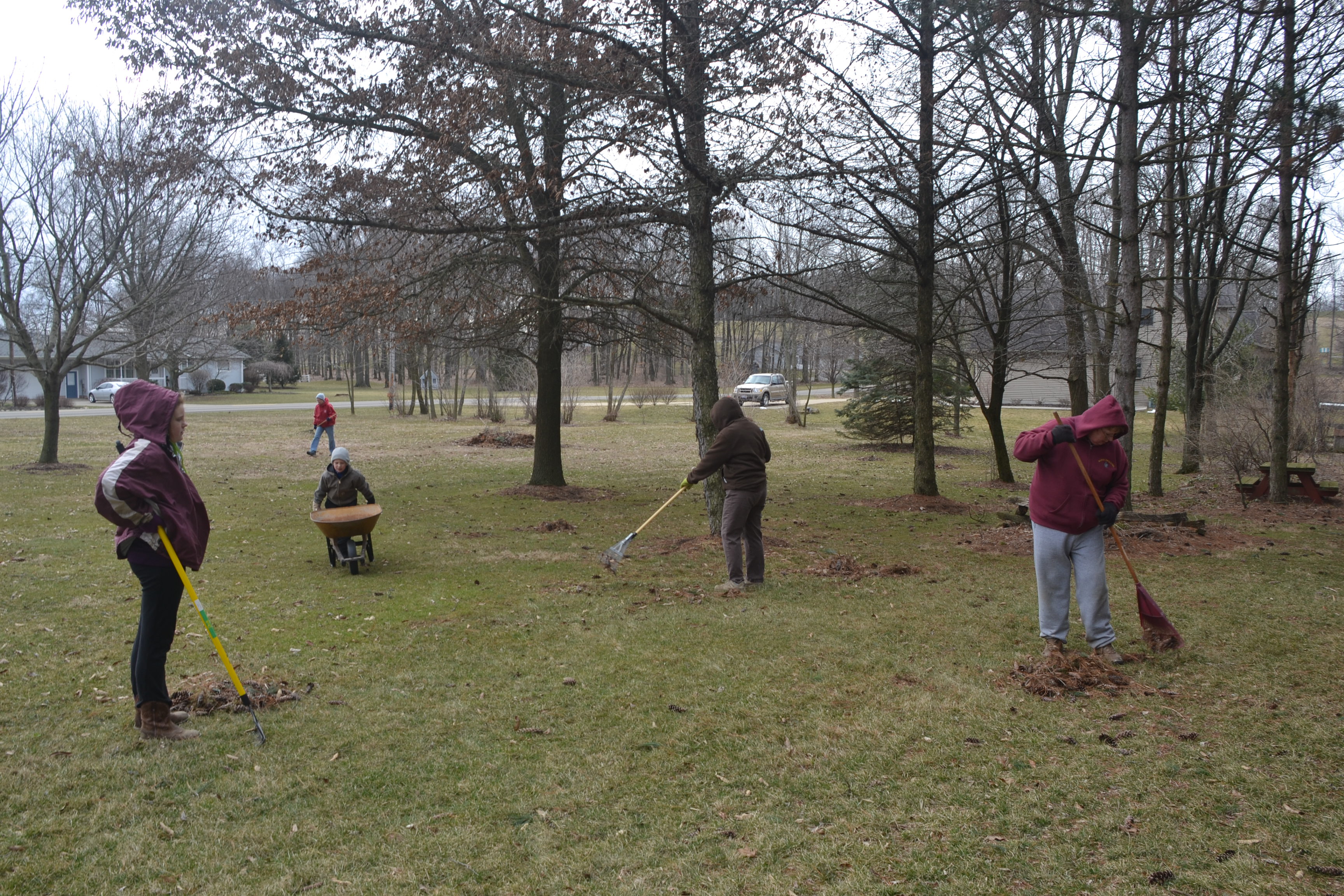
Brisk yard work of cleaning winter’s deposits of debris still required coats and gloves in Ohio this spring.
We discovered that the weather in Ontario, including the wind, hadn’t been any better than ours. Indeed, we wore sweaters and jackets during the extended weekend.
The only exception was our last day there, Monday, April 15. That day dawned in beauty and quiet. The sun shone brightly as we said goodbye to our friends.
By afternoon as we reentered the U.S., the wind had once again picked up. At least it helped push us homeward as we traveled.
I was glad to see the sun, and feel its welcome warmth. Perhaps the stubborn winter weather systems that brought the chilling blustery northwest winds had finally been broken.
Shortly after 4 p.m. I turned on the van’s radio to listen to the news. From the announcers’ demeanors we knew that something serious had happened, only neither my wife or I were clear as to what the problem was. As we listened, we learned of the bombings in Boston.
Like most good people of the world, we were horrified. It was an ill wind no good citizen could ever have anticipated.
Tolerating a persistent cold wind is one thing. Enduring a terrible, intentional act of violence is another concern altogether.
We must live our lives as best we can, embracing each new day with gusto, hope and a fearlessness that no harsh wind, natural or man-made, can destroy.
I am pleased to announce that I have a chapter in a newly published book, Fifty Shades of Grace, by Herald Press, Harrisonburg, Virginia and Waterloo, Ontario. The book will be released May 1.
As a special introduction, Herald Press is offering a 30% discount on the book until May 9. The book sells for $12.99. To order the book, contact MennoMedia at 800-245-7894 or click this link, MennoMedia.
The book is a collection of true inspirational stories about experiencing God’s grace in the midst of everyday life. Each of the fifty essays explores what grace looks like in action—even in a world jaded by violence and unforgiveness—and how grace can triumph over tragedy, or the daily annoyances of family life.
The chapter I wrote, entitled “Testing my Peace Stance,” tells about accompanying my late father, Richard, on an Honor Flight for World War II veterans. Stories are also included from noted writers Jim Wallis, John Powell, John Perkins, Lovella Schellenberg, Christopher Kennedy Lawford and many others, mostly from the Mennonite/Anabaptist tradition.
In his foreword, Donald Kraybill says, “The stories compel, mesmerize and strike again and again with wonderment for the many colors of God’s lavish love. These contemporary stories of grace all rub against the grain of popular culture. They offer a redemptive counterpoint to the darkness and oppression lurking in the shadows of bestseller Fifty Shades of Grey.” Kraybill, an authority on Anabaptist groups, is a co-author of Amish Grace: How Forgiveness Transcended Tragedy and author of many other books.
I learned the love of nature from my late father and the discerning eye to capture it from my late mother.
By Bruce Stambaugh
As far as I’m concerned, everyday should be Earth Day.
I got that attitude from my late parents. They weren’t environmental activists to be sure. But they appreciated nature, each in their own way. They respected the environment and taught their five children to do the same.
Dad loved to hunt and fish. As we grew up, he had each of his three sons tag along while he hunted. I don’t know why he didn’t involve our two sisters. I remember Dad once being so keen-eyed that he caught a cottontail rabbit with his bare hands. No buckshot was every fired.
The late Marian and Dick Stambaugh at the cottage they built in southeast Ohio.
When we were old enough, we joined him hunting pheasants, squirrels, rabbits and grouse. Dad saw the benefits of hunting, being outdoors, bringing home game, teaching his children about wildlife and conservation.
Since I tended to be a fair-weather sportsman, I preferred fishing. Problem was, when you went fishing with Dad, it was an all day deal no matter whether the fish were biting or not.
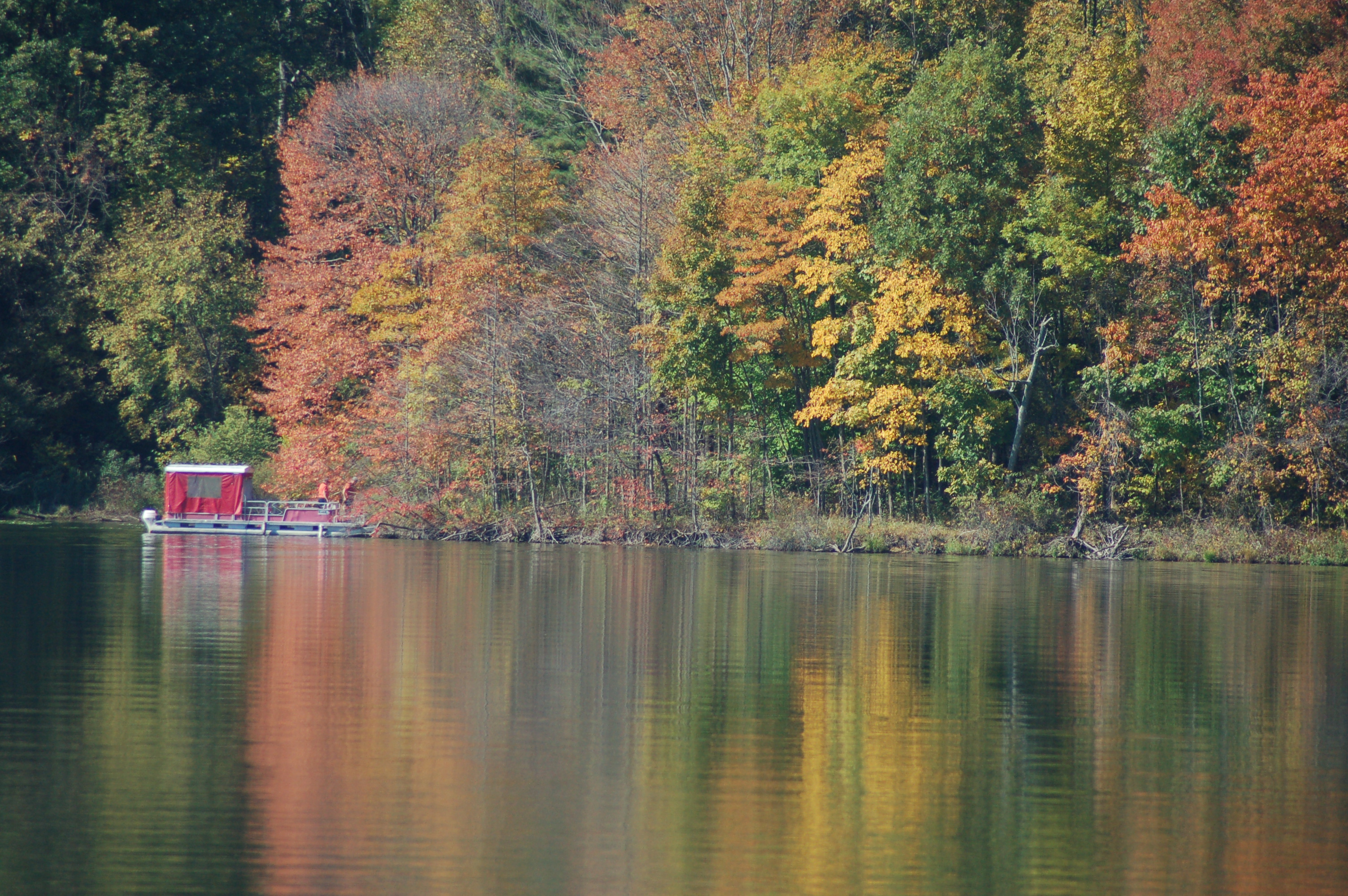
A pontoon boat on Clendening Lake in southeast Ohio.
Dad loved to take his grandchildren on lazy cruises on his pontoon boat on his favorite fishing lake, Clendening. He would motor up Coleman’s Run to one of the many giant, sandstone outcroppings, and tie up. It didn’t matter if we caught much or not. We lounged in the warmth of the afternoon sun and the fellowship.
There was just something about being out in the fresh air, taking in the natural beauty all around. One time we even heard a black bear scratching its claws on a tree trunk.
Our gentle mother gave us a more cultured look at caring for and appreciating the earth. She was an accomplished artist, and loved painting landscapes, usually in watercolor.
Using both vibrant and soft colors, Mom perfectly captured nature in her many seasonal moods. There is a sparkling stream cutting through a dormant, snowy pasture, a gently curving country road that leads your eye past a vernal woods on the left and a Victorian farmstead on the right, and a glowing array of blazing Holmes County, Ohio fall foliage, and a thousand more.
Mom painted Dad walking through the woods, shotgun over his shoulder.Mom even captured Dad on canvas. He is a mere silhouette, shotgun over shoulder, walking back to their cabin, empty handed as usual. Dad admired that painting in part because his lovely wife chose him as the subject. He also loved it for the scene, a lone hunter hiking through a shaded glen, the glassy lake shimmering in the background. It certainly reflected Dad’s child-like spirit of simply enjoying the invigorating experience of nature.
As a youngster, I remember helping Dad plant hundreds of tree seedlings on a steep, abandoned farm field overlooking Clendening. Thrusting those sprigs into the loamy earth was much more than a kind act of conservation. It was a true lesson in hope.
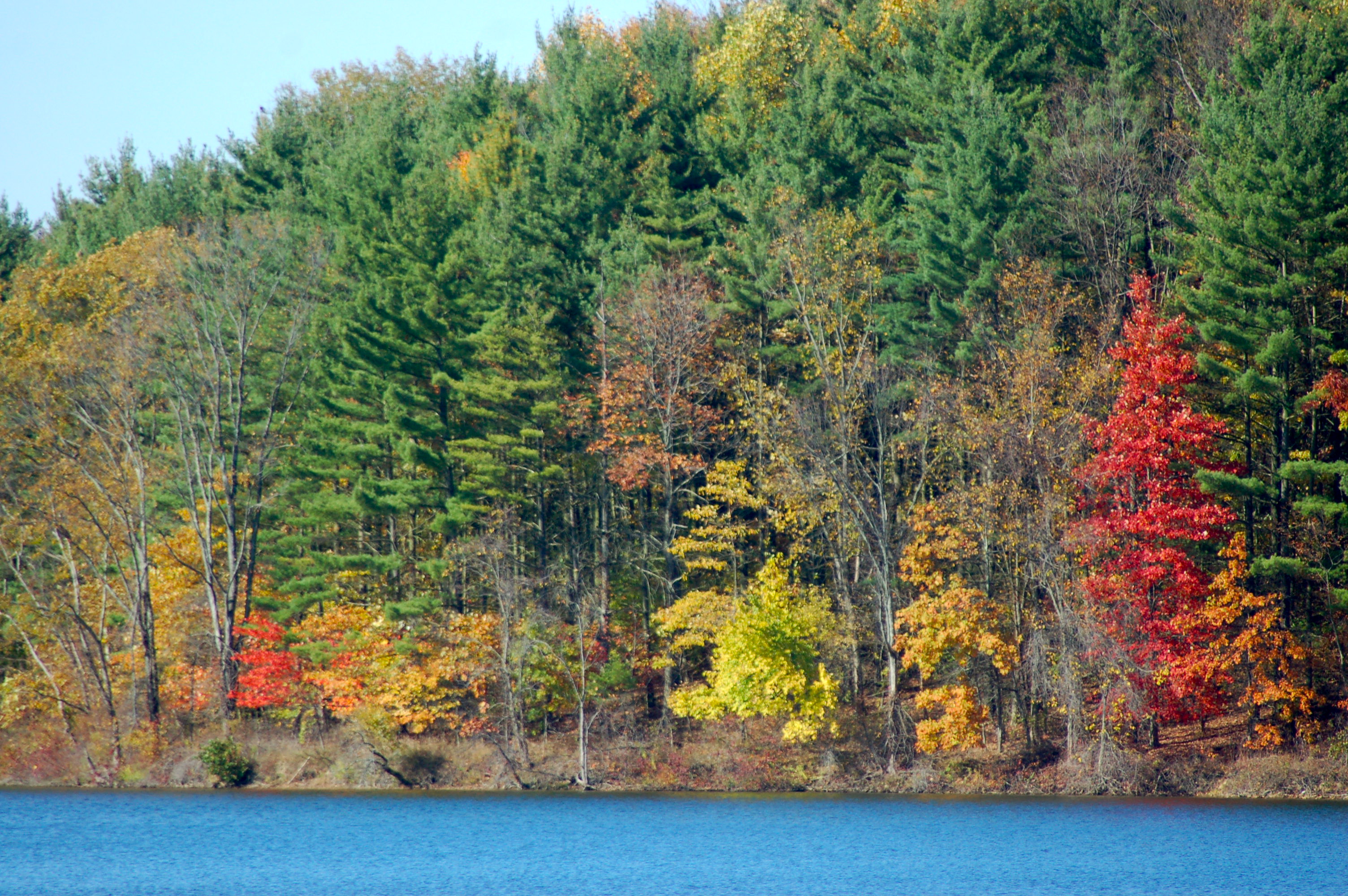
The pines I helped to plant have grown tall along the lakeshore.
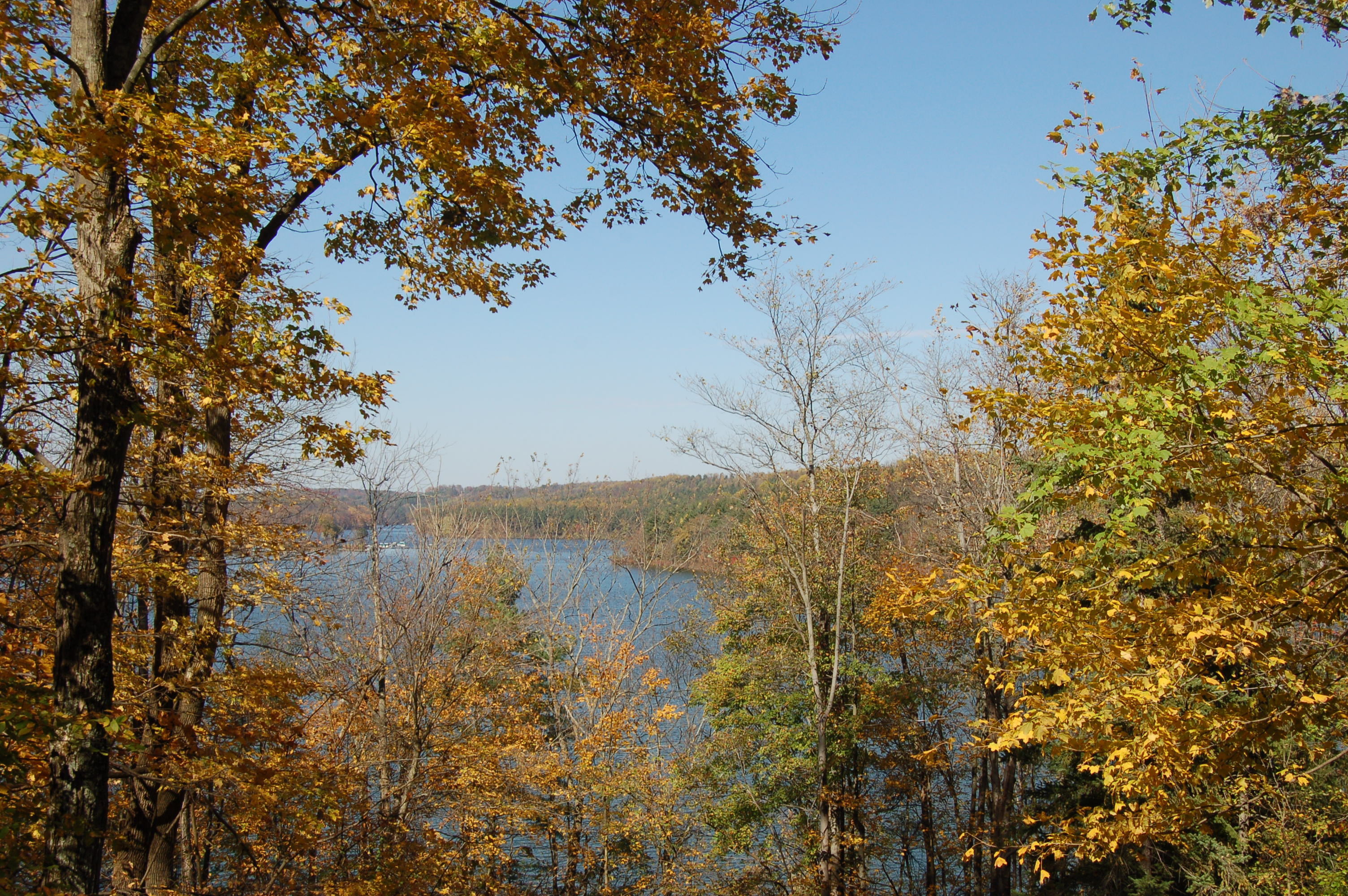
I say that because now I enjoy the view from the porch of the cottage that the folks built. My wife and I bought and remodeled it and use it in much the same way as Mom and Dad. We enjoy sharing the same woodsy lushness, the forest creatures, the starry nights, and the quiet calm as Mom and Dad.
Just like Dad did with his children and grandchildren, I can stand on the porch, point across the lake to the grove of tall pines and tell a story about when they once fit in the palm of a young boy’s hand.
Thanks to my savvy parents, Earth Day doesn’t just happen in April.
I am honored to report that today I received the University of Akron’s Wayne College Regional Writers Award for non-fiction. Since I’m naturally too modest to say much about myself, friends and colleagues encouraged me to share this winning essay with you.
By Bruce Stambaugh
I have always been enamored by names.
By names, I mean the title affixed to something, someone or someplace that transcends the given moniker of the object, the person or the place.
When I moved to Holmes County, Ohio many moons ago, I immediately picked up on the custom of speaking in this sort of colloquial code that was neither an accent nor a dialect.
People spoke of names for places as if the entire world knew to what and where they were referring. Often times, most of those names could not be found on any official document, including a county map.
Still, people used the names as reference points, meeting places and settings for stories, imaginary and true. With apologies to Stephen Colbert, the “truthiness” of the tale didn’t really matter.
In my teaching days, my elementary students matter-of-factly offered up perfect examples of what I mean. When I asked the students where they lived, I got answers like “on French Ridge” or “next to Dingle Brown” or “ beside Blackbird Croskey.”
Once I caught on to this provincial name-dropping, I tried turning the tables on the kids through the lessons. They found it down right sacrilegious to learn that Glenmont had once been Napoleon and Killbuck was first Oxford.
Nor did they believe me when I told them that Fort Fizzle had really been a fort, and the cause of its rebellious caretakers actually did fizzle. It was an insignificant skirmish in the American Civil War. But it was our own.
The cute terminology wasn’t confined to the schoolhouse either. Once, when I reported to the fire station after the alarm had sounded, I found the first two trucks gone and the station empty. I checked the chalkboard where the type of run and its location were hastily scribbled. “Grassfire, Baddow Pass” was all it said.
I was stumped. I had no idea where that was, and had to wait until another volunteer showed up to find out which way we should go.
The name game even spilled over to church. When the youth group wanted to go on a hayride to Panther Hollow, I again had to ask about the exact location. When we got there, it was so spooky I thought it should be named Ghost Hollow. But I soon learned that was actually on the north side of the nudist camp. And no, I am not making up any of this.
When I moved to the eastern part of the county, I discovered the local names just as prolific, if not more so. Amid the Amish and Mennonite culture, several people have the same name. But there was only one Bicycle Dan and one Toothpick Andy.
We had our church picnic in Troyer’s Hollow. The Stink Plant sits on Weaver Ridge. Good friends live on Joe T. hill.
In the western, more Appalachian area of the county, the hills are steeper and the valleys are wider. In the east, with its more gently rolling hills, the tranquil valleys are referred to as bottoms.
A young woman was once talking with a small group of people about what each valley was called. She said she lived in Bulla (or Bull) Bottom, and that the valley on the north side of Walnut Creek was called Genza (or Goose) Bottom.
She promptly turned to a young man who lived over the next ridge, and innocently asked him, “And what is your bottom called?”
Like I said, I love these earthy, rural names rich in traditions and full of life, goodness and virtue.
Some time ago I listed several questions over a wide range of topics that I had accumulated. Most of my musings were unanswerable.
Well, since I’m an inquisitive fellow by nature, I’ve done it again. My inquiring mind wants to know, and I thought April Fools Day might be a good time to ask. Should we let the questions begin?
The North Coast of Ohio is really the south shore of Lake Erie.
Why is the south shore of Lake Erie called the North Coast in Ohio?
Why do people feel compelled to yell “In the hole!” after a pro golfer hits a shot?
Are there East of Chicago pizza places west of Chicago?
Why do fans in line with the TV camera at baseball games wave and wave and wave once they realize they are on TV?
Beside the letter “r,” what’s the difference between the word “wiggle” and “wriggle?”
If lights attract moths, why don’t these nocturnal winged insects come out in the daytime?
Do they serve Cuban sandwiches in Cuba?
What kind of wine goes with honey barbequed potato chips?
Why are the natives of the Philippine Islands called Filipinos and not Philipinos?
Why is it that when a teacher says the test will be simple, it will always be hard?
Some assembly required.Why is it that when directions say, “Some assembly required,” it usually is a lot?
Did you know there is a right way and a wrong way to hang a roll of toilet paper?
Do you know which is the right way to hang a roll of toilet paper?
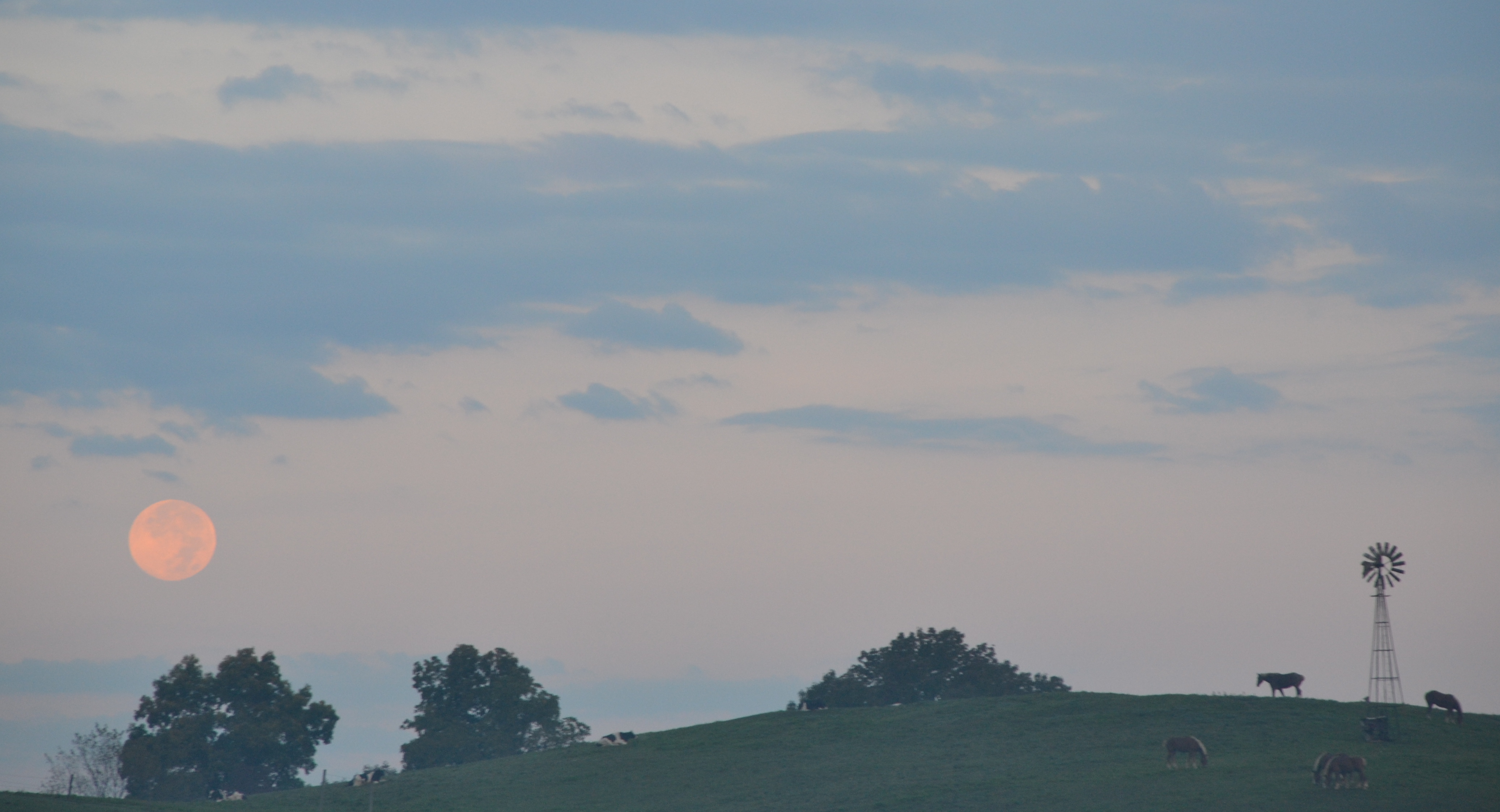
Did you know that Easter always falls on the Sunday after the first full moon after the vernal equinox?
Did you know the emergency number in Australia, the country down under, is 119?
If tornadoes in the northern hemisphere spin counter-clockwise, and tornadoes in the southern hemisphere spin clockwise, which direction would a tornado on the Equator spin?
Did you know that in Ohio it’s a law that motorized vehicles have to have their headlights on if their windshield wipers are operating?
How do bullfrogs know when the air is warm enough for insects to fly in early spring?
Did you know that the only direction you can travel from the North Pole is south?
When you sneeze, why do people say, “God bless you?”
You won’t find these hot dogs at McDonald’s or any other fast food restaurant for that matter.
Have you ever tried to order a hotdog at McDonalds?
Where did the idea of the Easter Bunny originate?
Is Allstate Insurance really available in all states?
Have you ever wondered who your doctor’s doctor is?
Why is baseball the only professional sport where the manager and coaches have to wear uniforms like the players?
Why is it when you are following a slow moving vehicle in a no passing zone, you don’t pass any oncoming cars, but as soon as it is all right to pass you can’t because there is oncoming traffic?
What is the difference between a day being “partly sunny” or “party cloudy?”
Partly sunny or partly cloudy?
Why do emergency vehicles proclaim “Dial 911” when we no longer have rotary phones?
Why do we still say we’ll carbon copy an email, for example, when we no longer use carbon paper?
Do they serve French toast in France?
In good weather or foul, American Robins still have orange breasts.Why do people refer to the red, red Robin when the American Robin’s breast is orange?
Why do donuts have holes in the first place?
Why does it seem colder at 27 degrees in April than it does when it’s 27 degrees in January?
An assortment of buggy styles were tied up at a local auction barn.
By Bruce Stambaugh
Amish buggies in Ohio’s Amish Country may be all black, but they definitely aren’t all the same. The nondescript, unobtrusive color merely keeps them uniform and modest.
Even if they all are black, a closer look reveals that there are many differences in buggies. These variances are especially true for buggies owned by younger Amish men. Particular attention is paid to the kind of accessories included on their buggies. After all, a buggy can last for 30 years if it is well maintained.
An Amish bench wagon stood outside an Amish buggy shop near Berlin, OH. The wagon is used to carry the church benches from one location to another. Since the Amish do not have church buildings, they take turns hosting church for the 100 or more members and their children. Shops like this one are cleared out and cleaned in preparation for church service.At least two-dozen buggy shops are sprinkled around the Greater Holmes County area. That way the Amish do not have to travel far to order a buggy or have one repaired. That concept is maintained in all aspects of the Amish lifestyle.
Demand for new buggies is high. Most buggy shops reported a year’s wait for a new buggy. Depending on the size of the shop and the kind of buggies being built, buggies are produced at the rate of no greater than one per week. Buggy repairs are worked in accordingly. Should a buggy be damaged in an accident or lose a wheel, for example, it would receive priority status.
Most buggy shops are family operations. A father and his son or sons may run the shop, assisted by an apprentice or even wives and daughters. This way the trade can be passed from generation to generation.
Amish buggies are built one at a time. The buggy in the foreground still needs to have its black vinyl coated cloth skin attached, and painting completed.
Because each buggy is custom-built one at a time, assembling a buggy is a prolonged process, taking as long as a year to complete. To build a sturdy, useful buggy, shop owners and workers need a variety of skills. They must be a carpenter, welder, upholsterer, painter and mechanic all in one.
According to Menno Schlabach, owner and operator of M & S Coach near Berlin, buggies start with a wooden base. Reinforced with metal braces, a wood framed structure is attached. The sides and tops are covered with a grained, vinyl coated black cloth.
“With 150 church districts in the area, customization of each buggy varies a great deal,” Schlabach said.
This wood inlaid dashboard is typical for young Amish men to have installed in their first buggy. The levers that operate lights and even a hand-powered windshield wiper fit through the cutout holes.
Indeed, it is the customization that allows the customer to put personal preferences into the new buggy to give it character. That process also slows the construction. With all the various options, Schlabach said it takes an average of 150 hours to build a new buggy.
A worker installed a window in the door of a new buggy.Some buggies have curtain doors that roll up, while others have sliding doors on the side and a hinged door in the back for easier access. Other buggy accessories include shelves for storage, switches, battery compartments, mirrors, window sizes and shapes including the choice of glass or Plexiglas or no glass at all, shapes and cushioning of seats, manually operated windshield wipers, brakes, upholstery and a variety of lighting options. Even the materials of the wheels and shafts vary.
Dashboards seem to be the telling tale of the owners’ preferences. Some are intricately made using inlaid or exotic wood. The dashboards are mounted on the inside of the front piece of the buggy. They generally house switches for exterior and interior lights and turn signals.
Buggies in the Greater Holmes County, Ohio area are usually well-lighted and marked with a slow moving vehicle reflector, reflective tape, and rear amber blinking light.Even the exterior lighting is customized. Just like cars, buggies have headlights and taillights. Most also have amber warning lights on the top rear of the buggy. Running lights along the sides of the buggies help drivers see at night. Marker lights positioned on the front and sides of buggies are other accessories that give the buggy its individual distinction. Only buggies owned by Swartzentruber Amish, the lowest Amish order, still use kerosene lanterns for visibility.
The style of buggy is determined by its purpose. A two-wheeled cart is the simplest of all buggy types and is used for quick, local trips. The hack is the Amish equivalent to a pick up truck. Sometimes called buckboards, a hack is a four-wheel buggy that is designed for hauling livestock and other bulk items. Some driver compartments of hacks are covered, while others are open.
The most common buggy type is the surrey. They are built with a bench seat and a storage area in the back that also has an option for two small flat seats along the insides. The side seats can be removed to increase storage. Usually children use those rear seats.
Most parts of buggies are made locally, including these shafts that connect the horse to the buggy. The shafts are made and bent at a specialty shop near Mt. Hope, OH.
Surreys come covered or open. Covered buggies are called top buggies. The family version of a surrey has two bench seats and four openings for access, plus some storage space in the rear with a door or curtain that rolls up.
The Amish like to keep things as local as possible. The wheel, spokes, axel and brakes were all made within 15 miles of this buggy’s owner’s home.The newest buggy version is the mini-surrey, which can actually hold more passengers than a regular top buggy. Affectionately called a minivan by some Amish, the mini-surrey serves the same purpose. The side seats behind the front bench comfortably hold two adults or several children on each side.
The cost of new buggies varies depending on the type and size of the buggy and the kind and amount of accessories included. A new cart could cost $1,500 while a new, well-equipped mini-surrey could run up to $7,000.
With a horse for an engine, the buggy’s driver steers with a set of reins instead of a steering wheel. Still, the purpose of a buggy is the same as a motorized vehicle. It transports its passengers from one place to the other, just at a much slower speed.
Buggies may be black. But they are an important element that helps keep the Amish culture moving in every way.
The newest style buggy seen is the Holmes County area is the Amish mini-buggy, affectionately called the Amish minivan.
Eastern Bluebirds frequented a backyard water feature during a cold spell in Ohio.
By Bruce Stambaugh
Marcella Hawkins of Glenmont, Ohio has a passion for Eastern Bluebirds. That passion became productively evident Feb. 23 at the Ohio Society of Bluebirds (OSB) annual conference in Wooster, Ohio. Hawkins is the executive director of OSB.
From the record number of people who attended the conference held Feb. 23, Hawkins is not alone. More than 300 bluebird enthusiasts participated in the all day event, held at the Shisler Conference Center on the campus of the Ohio Agricultural and Research Development Center.
Adrienne Hopson-Gaston of Mansfield, Ohio surveyed the door prizes available at the Ohio Bluebird Society conference.The day was filled with exhibits, vendors, speakers and presentations, with only a few breaks. Experts and amateurs alike shared their research and experiences regarding some aspect of bluebirds, their predators and habitats.
Darlene Sillick, a conservationist and birder from Powell, Ohio, related her years of experiences with the Ohio Wildlife Center with owls. She explained that owls could turn their head 270 degrees because they have 14 vertebrate, twice the number of humans.
Sillick said owls depend on their keen sense of hearing and large eyes to track prey. She shared that it is the force of the owl’s talons that kills its prey.
Sillick introduced Matthew Wiese of Dublin, Ohio. Wiese, 17, did a nest box project on Safari Golf Club for his Eagle Scout badge. Wiese said he put in a total of 319 volunteer hours in planning, mapping and checking the numerous bluebird boxes he installed. He also learned to band the hatchlings in several of the boxes.
Jason Martin, head of Cornell’s Nest Watch project, answered questions from participants.Roger Downer of Wooster, a retired entomologist from the OARDC, gave a presentation on moths. He said the important connection between moths and bluebirds are the caterpillars that serve as a food source for the bluebirds. Those that survive become moths, which other birds also use as food.
Chuck Jakubchak of Strongsville, Ohio gave a pep rally style presentation about how birds know when to migrate. In the case of Eastern Bluebirds, he proposed three scenarios. He said studies show that some bluebirds migrate to the southeastern states with habitat similar to what they have in Ohio. Others only partially migrate, going to warmer but closer states where they compete for food with non-migrating birds.
Volunteers at the Medina Raptor Center displayed several species of injured birds at the conference, including this leucistic Red-tailed Hawk.Jakubchak said the bluebirds seen in Ohio during the winter are non-migrating.
“They stay put, perhaps because they have had a successful breeding history,” he said. “But we really don’t know for sure, other than the fact that they choose to stay.”
Jason Martin of the Cornell Lab of Ornithology in Ithaca, N.Y., spoke on the importance of documenting Eastern Bluebirds by monitoring their nesting boxes. He invited participants to join his project, Nest Watch, by keeping track of what is happening inside the nesting boxes.
“Inside the boxes,” Martin said, “is where the action is.” The Nest Watch project began in 1960 and has progressed to online reporting of nesting activity from around the country.
Noted birder Greg Miller from Sugarcreek, Ohio gave an autograph to Trevor Zook of Mansfield, Ohio.
Greg Miller of Sugarcreek, Ohio closed out the session with a spellbinding account of his Big Year experience. He especially focused on the time he spent as the bird consultant on the set of the movie, The Big Year. He told personal accounts of meeting the movie producers and stars, including Jack Black, who played Miller in the movie.
Allen and Nina Bower of Britton, Mich., received OBS’s Blue Feather Award for their effort in spreading the importance of proper nest boxes for Eastern Bluebirds. The group’s Wildlife Conservation Award went to Charlie Zepp of Dublin. Zepp has built more than 6,000 bluebird boxes with wood he gathered from refuge bins at construction sites.
After announcing several winners of donated raffle prizes, Hawkins thanked the volunteers and sponsors of the conference, which was free of charge for those who had preregistered.
A young Amish boy gets a head start on spring plowing with his a team of draft horses during a winter thaw.
By Bruce Stambaugh
On my way to dinner with a friend, a simple yet pleasant notice brought a smile to my face. As my car turned the sharp corner, I saw the sign in front of the volunteer fire station. It read, “Baseball sign up Saturday.”
With yet another wintry storm on the way, that was welcome news to me. Just the thought of those youngsters already registering to play baseball got me through the next day’s ugly weather.
Daffodils peep through March’s melting snow.That’s what I like about March. It’s both winter’s last gasp and spring’s first breath. That posting was a clarion call for more than little leaguers. It was a sign of hope.
Once we reach March, I feel like a new person. I know winter’s icy grip is behind us, and that spring is peeping.
I’m also old enough to know not to get too giddy too soon. March often offers up some of winter’s heaviest snows. But with the days growing longer, not counting Daylight Savings Time, you know the snow will not last long.
March is notorious for delivering some heavy snowstorms in Ohio’s Amish country.
In fact, March often delivers us a four-star package deal on weather. Wait. You had better make that a four seasons package. March is famous for thawing out winter’s clutch, teasing us with summer-like days, then bringing us back to reality with a fall-like cold front. One day we could enjoy a welcomed spring rain, and the next be dodging tornadoes. March can be as fickle as it is friendly.
Easter Sunday is March 31 this year.This year March brings us a Trifecta of joy. St. Patrick’s Day, Palm Sunday and Easter consecutively complete March’s Sundays.
There’s much more, too. Early migratory birds begin to make an appearance. The male Red-wing Blackbirds begin to scout out their territories. American Robins come out of hiding and begin their bob, bob, bobbing along.
American Robins begin marking their territories in March.The Song Sparrows pick their fence post perches, tilt back their striped heads, and let it rip. American Goldfinches brighten as they begin their lemony spring molt.
If the ground is dry enough, farmers begin their plowing in earnest. Crocuses and daffodils poke their pointy green shoots through the crystalized snow remnants and await the sun’s command to bloom.
We humans follow their lead. We shake off our cabin fever, and find any excuse we can to go outside. If we do have an early warm spell, dedicated gardeners will be sure to be planting their peas.
We check our property for any winter damage. Without complaint we pick up sticks deposited by winter’s frequent, fierce winds. We’re just happy to be breathing in the freshness of life, and exhale without seeing our own breath freeze in midair.
Bicycles are common on the Holmes Co. Trail on a decent March day.
Bicycles, motorcycles and fishing gear are all dusted off, even if they won’t be used right away. Winter’s smudge is washed off the windows on the first reasonably warm day. Of course, the boys of summer spend March warming up for their April to October baseball games.
High school and college men and women create excitement and celebration with their basketball March madness. We dutifully follow along even if we haven’t attended a game all year.
Much to the delight of honey bees, crocuses are often the first flowers to poke through winter’s litter.
As you might be able to tell, I’m ready for some consistently warmer weather. The fact that we have already opened March’s door confidently tells me that winter is well on the wane.
As if we had any say in the matter, March always has her way with us. I for one am ready to be under her seductive spell, and bid a fond farewell to her bully winter cousins.
Last year our yard received its initial mowing on March 23.
You must be logged in to post a comment.