
The title of this photos says it all. The August sunset illuminated the contrails and clouds and silhouetted the cows grazing on the hillside pasture.
“Contrails, Clouds, and Cows” is my Photo of the Week.
© Bruce Stambaugh 2016
The title of this photos says it all. The August sunset illuminated the contrails and clouds and silhouetted the cows grazing on the hillside pasture.
“Contrails, Clouds, and Cows” is my Photo of the Week.
© Bruce Stambaugh 2016
By Bruce Stambaugh
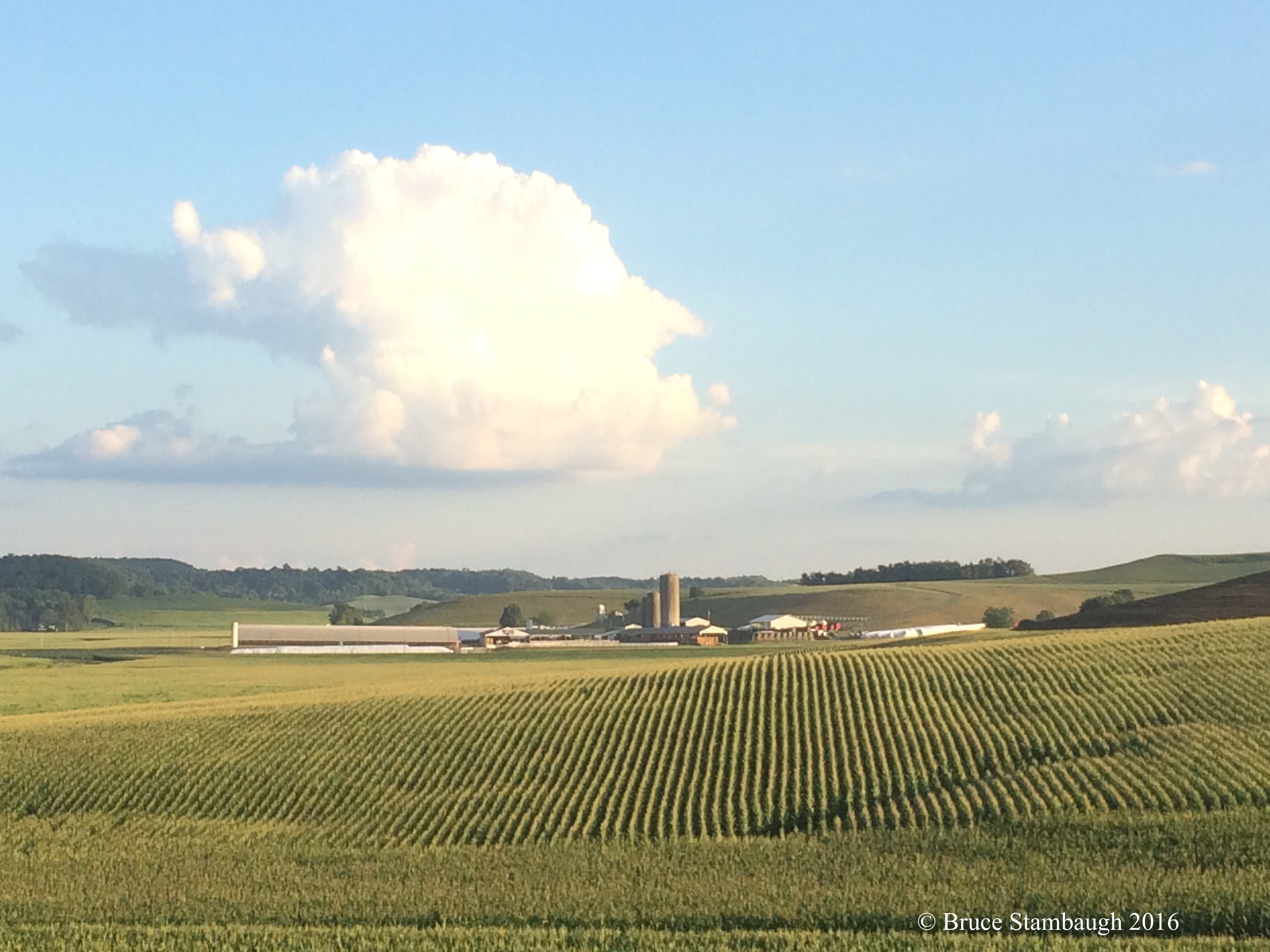
I don’t need a calendar to know we’ve past August’s midpoint. The sights and sounds, signs and symptoms abound.
Day by day, the sun rises brilliant and bold closer to the center of the horizon. Ghostly layers of morning fog drift above row after row of tan tasseled field corn, the stalks stunted by the parching summer heat and subpar precipitation.
Teachers’ cars already sit early and stay late in school parking lots while their masters slave away in the sweltering classrooms on their own time, already preparing for the year ahead. Mothers, brothers, cousins, nieces, and nephews accompany the fortunate ones, cutting out letters for holiday bulletin boards or hanging artwork to brighten the sterile schoolroom.
Workdays and evenings repeat the same preparations at Amish parochial schools. Schoolyards get mowed, windows washed, desks and books readied, backstops repaired, all to ensure everything is a go for the teachers and scholars on day one.
The busy buzz of back to school sales replaced the monotonous cicada chorus. Youngsters were glad for both.
The Holmes County Fair is over, this year celebrating not just another successful week, but its new digs. Farmers secretly wish the county commissioners would move up the start of the fair by a month just to get the rain when it’s needed the most. It poured right on schedule.
Multi-shades of brown paint the landscape. Flowers, well watered in the morning, wilt by afternoon.


Applesauce, sweet corn, and tomatoes are canned and frozen within days of one another. There is no rest for the gardeners, chefs, and lovers of all things natural, homegrown, and home-cooked. Succotash in January is the plan.
Orange barrels multiply overnight. Everyone’s pace quickens, except in construction zones. Time is fleeting, but we can neither increase nor decrease its speed.
At night, windows are thrown open even in homes with air conditioning. The concerts of the katydids and crickets are the reward.
The Perseid meteor showers, even more spectacular this year than most, are waning, along with the lightning bugs. Nature’s fireworks announce autumn’s awakening like an opened wedding invitation.
The boys of summer are sorting themselves out in some divisions, and bunching up in others. It’s marvelous to see the Cleveland Indians giving it ago, and those annoying Yankees not so much.
Footballers, pro, college, and high school, practice in the heat. Come playoffs, you can see the quarterback’s breath bark out the plays, we’re that close to the cold.
This year the Olympics caught the tail of summer’s dog days if one cared to watch. I chose to view the evening sky’s gold, silver, and bronze as the insects sang.
American Goldfinches, some of the last birds to incubate, escort their young to the feeders. Their thistledown nests will soon weather away in the forsythias.
August sunsets try hard to outdo the sunrises. Often the orange ball simply slinks out of sight, leaving only contrails glowing in the west.
From month’s beginning to end, nighttime quickens, too, and we wonder where both August and the summer went. They’re still here, just in shorter increments.
Despite the mini-drought, a rainbow of fruits and vegetables color local produce stands. Yellow, gold, crimson, and purple early blooming mums clash with the ubiquitous Bubblegum petunias. No one complains.
Wildfires burn out west, the result of global weirding and human intrusion on wildlife habitat. Like the drought, the fires will end though the intrusive expansions will not.
As August fades, life’s steady heartbeat thumbs its way into September. Are you ready?

© Bruce Stambaugh 2016

A fellow blogger friend of mine hates Monday mornings. I laugh at his social media ranting and memes about having to start a new work week. I laugh because he’s funny, and I’m mostly retired. What “work” I do do, I do from home.
I’m pretty sure my friend would have loved last Monday morning. The sunrise was brilliant, the colors changing by the moment. Of course, I hustled out with my camera. However, it was what I saw in the western sky that caught my fullest attention. Much like beautiful sunsets reflect in the eastern heavens, the morning’s pinks and blues danced off the neighbor’s buildings and the clouds hanging in the west.
“Reverse Sunrise” is my Photo of the Week.
© Bruce Stambaugh 2016

By Bruce Stambaugh
The day began as another sleepy sonnet in a series of hot, muggy, midsummer dog days. It turned out to be an inspirational novella.
In keeping with my fair weather routine, I took my morning stroll. I typically immerse myself in the sights, sounds, and morning fragrances of field corn and fresh laundry.
Not this day. The air was thick, moist enough to ring it out and still be left holding a damp rag. Breathing even became a chore.
Already sweated, I dove into necessary yard work back home. I wanted to complete it before the elements became even more oppressive.
I donned my trusty work gloves. Out came the noxious poison ivy. Out went the volunteer walnut and oak seedlings sprouted from the nuts that the squirrels and blue jays had planted in the flowerbeds last fall. They conveniently abandoned them for my birdfeeders.
Even with little rain, the shrubs seemed to have grown a foot while we were away. I grabbed the trimmer and snipped the wiry branches.
After cleaning up, I took breakfast in the shade of the back porch. With the high humidity, the chances of rain looked promising.
I checked the progress of the road repair in our rural township, the prettiest in the state. No, I’m not up for reelection. As a trustee, I just enjoy inspecting the roads, conversing with folks, and breathing in the beauty of the picturesque landscape.
My camera is my faithful sidekick on my rounds. I’m mindful of respecting Amish ways when it comes to photography. I focus on the agricultural artistry. The golds and greens are at their peak of brilliance even in this mini-drought.
While away, the neighbor mowed the adjacent alfalfa much to the delight of the swooping swallows and the purple martins. They harvested insects in concentric circles around the sturdy workhorses and their mowing master.
To the east, thunderstorms built fast and furious, their anvil tops reaching 60,000 feet. Our meteorological ingredients fed the liquid fortunes of folks 100 miles away.
In the afternoon heat, I turned to writing in the comfortable air conditioning. I confess to guiltlessly adding my two cents worth to global warming.
Neva worked her magic with dinner. We enjoyed a summer feast of fresh veggies and fruit washed down with freshly brewed garden mint tea.
As the storms moved further east, the air here cleared and cooled, if only because the dew point and humidity took a temporary break. Feeling refreshed, we walked around the parched flower gardens and discovered the season’s first monarch caterpillars.
It was about that time that a friend rode by on his bicycle and waved hello. We returned the gesture and moseyed into the house. We weren’t in long when the doorbell rang. It was Mark. He had turned around, and come for a spontaneous visit, the best kind.
Mark was a former student of mine. With more tea poured, we began a marvelous time of reminiscing on the back porch. He filled us in on his family and former classmates. We happily learned that he is now a grandfather.
We cherished his presence and friendly update, despite the unintentional reminder of how old my wife and I are. It was one of the main perks of living and working in the same community over time.
Rank and location have their privileges. So does having a view to the west. A stunning sunset proved a fitting end to a perfect summer’s day.

© Bruce Stambaugh 2016

My wife and I are fortunate to have the view to the west that we do. Farm fields flow down and away from our home until they meet a steep hill that juts into the western horizon. A windmill that supplies water for our Amish neighbors serves as the centerpiece for the view.
We have lived here for 37 years, and each evening brings a new look west. I recently found this golden glowing backlit cloud hovering beyond the windmill.
“Backlit Cloud” is my Photo of the Week.
© Bruce Stambaugh 2016
By Bruce Stambaugh
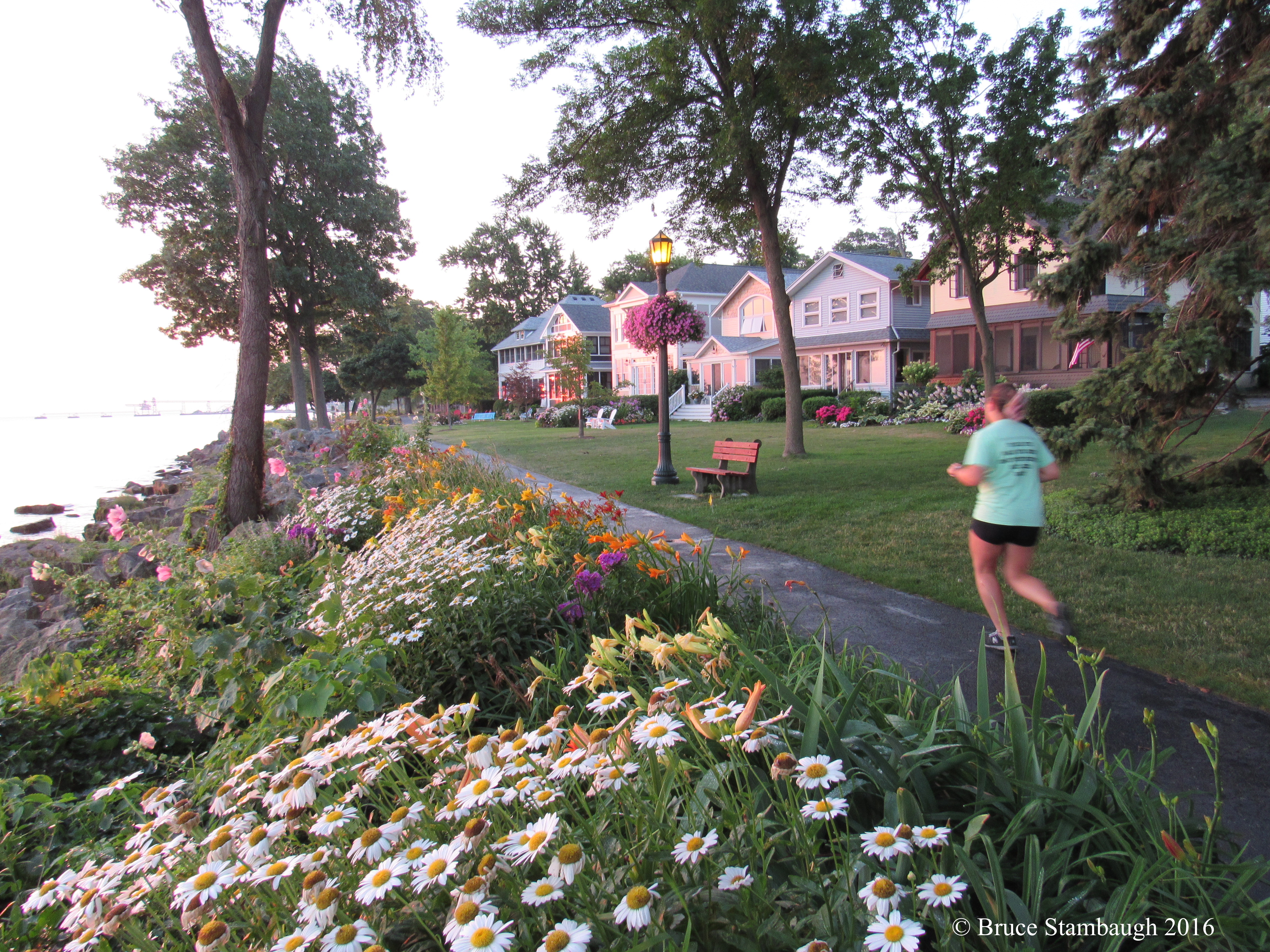
As I walked along the lakeshore on my morning stroll, the clock tower chimed “All is well with my soul.” I smiled at the apt anthem.
Indeed, that’s just how I felt. After all, I was at my favorite vacation spot, Lakeside, Ohio, the Chautauqua on Lake Erie.
My wife and I have spent a mid-summer week here every year since 1987. The last three years our daughter’s family has joined us.
Why do we keep going back to the same place when there are so many other marvelous destinations in the world to explore? The answer is simple. We love Lakeside.
It’s a dreamy place, a step back in time, a sanctuary of sorts, a retreat to escape from the hustle, bustle, and negativity of the other world to this dreamland. I could dream this dream every day.
I’m not alone in that sentiment. The usually sleepy town of hundreds morphs into a gated resort for 10 weeks each summer. Weekly visitors number in the thousands.
Why? Lakeside is a beautiful place. It’s a safe place where people don’t lock their doors, where children run free, where strangers smile and say hello, where families like ours gather for a respite generation after generation, year after year.


A quick check of car license plates reveals Lakeside’s universal appeal. Lakeside’s tranquility, setting, familiarity, and planned nurturing draw folks from Texas, Illinois, Michigan, Virginia, and Ontario, Canada and places beyond.
What lures them? The Chautauqua community’s four pillars of purpose ensure a variety of stimulating activities for every age. Religion, education, arts and entertainment, and recreation soothe the soul of each participant.
That’s true even if you decide to sit on a bench and read a book or quilt. The dreamy world that is Lakeside envelops you.
Ferries shuttle vacationers and delivery trucks back and forth on the waters from Marblehead to Kelley’s Island. Freighters wait their turn to take on their payload at the limestone quarry dock.
Joggers and walkers and parents with baby strollers amble along the shore, the busyness of home and work overwhelmed by the vestiges of this remarkable space.
Immaculate lakefront homes and cottages line Plum, Poplar, Maple, Walnut, and 2nd and 3rd Streets, and all the other gridded streets. The variety of their architectural styles and colors inspire passersby and artists alike.
A stunning assortment of flowers and landscaping accentuates the historic homes and buildings. It’s like a different calendar photo on every block.
Folks gather in parks for sports, picnics, and introspection. Birds of all kinds cohabit with the humans among the tall trees and ornamental shrubs.
Children enjoy the kiddy pool and splash park while admiring grandparents smile and supervise from the parameters. Older siblings and parents play shuffleboard or listen to a noted lecturer. Kayakers and sailboats zip in and out of the little harbor near the dock, the magnet for all the Lakeside dreamers.
While teens and seniors sunbathe on the dock, three generations of fishermen angle for perch, smallmouth bass, and walleye. In reality, it’s sheep head, channel catfish, and white bass they reel in the most.
After the evening’s family entertainment at historic Hoover Auditorium, the little business district is abuzz with lovers of ice cream, caramel corn, and yummy pizza. All are satisfied.
In 1873, the founders of Lakeside dreamed of a place where people could gather to recreate, learn, create, and worship in a sacred setting. Because those dreams have come true in Lakeside Chautauqua, all is truly well for those who care to partake.

© Bruce Stambaugh 2016
By Bruce Stambaugh
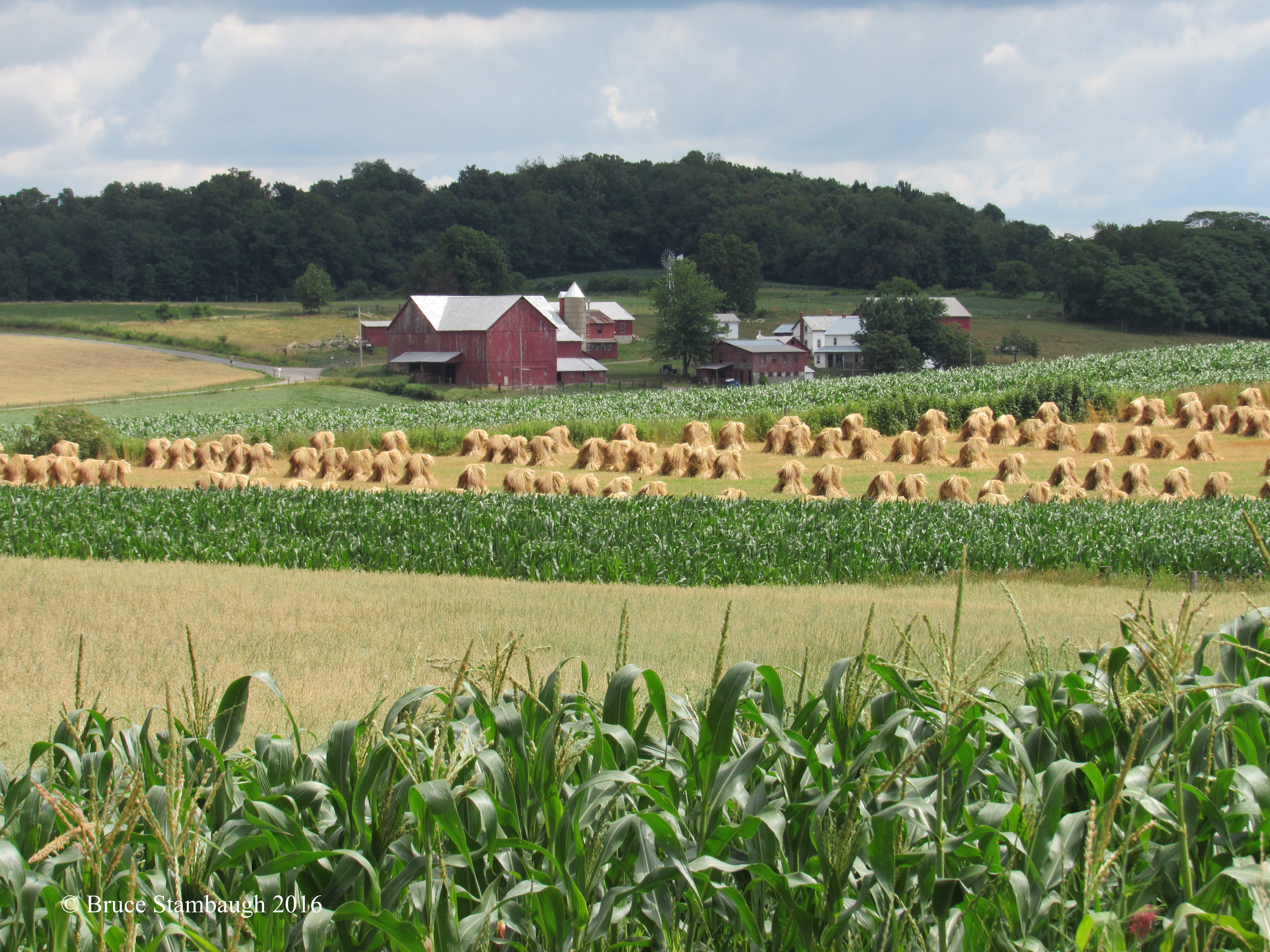
At this time of year, I especially like to frequent one particular lofty spot a few miles from home in the township where I live in Ohio’s Amish country. The view alone keeps me inspired, thankful and refreshed.
From there I watch the sky dotted with patches of cottony clouds tease the earth. Sun and shadows ripple across golden wheat shocks, lush rows of cornstalks, and ripening honey-colored oats. Green alfalfa already blankets the floor where the shocks stand.
I look west far across the Killbuck Valley to the up sloping hills miles away. Tin topped roofs twinkle in the morning light as the clouds and sun play their game of tag.

All the while I unknowingly entertain a family of Barn Swallows teetering and twittering on a power line. Eastern Meadowlarks fly their funny flight from fence post to nest, gurgling all the way.
Back home, the House Wrens begin their second nesting in the ceramic nest bottle hung up for them. The adult Baltimore Orioles lead their fledglings to the grape jelly feeder, encouraging them to partake. The young just squeak and childishly flap their wings.
The Eastern Bluebirds carefully attend their bright blue eggs in the box attached to the old clothesline pole. A bowl of fine grasses and soft pine straw caress the delicate eggs. It’s their second clutch, too.
The Chimney Swifts are as active as any time since they arrived in early April. Their young prattle their pleasure each time the parents swoop into the chimney with a force that rattles the fireplace doors.
The birds made quick work of the ripened black raspberries while we were away for a few days. They left their thank you notes where I was sure to find them, splattered on the sidewalk.
Click on the photos to enlarge them.


At my neighbors, the Purple Martins hold court discussing their eventual departure. Too soon, they’ll join the orioles and others on their long journey.
Other symptoms also point to the fact that we indeed are halfway through the summer. Queen Anne’s Lace, bulbous red clover blossoms, and cerulean chicory blooms decorate even the busiest country road.
Well-attended domestic flower gardens are in full bloom. Roses have replaced tulips, and dainty poppies with pastel crepe paper petals wave in gentle summer breezes. Fragrant milkweed flowers sweeten the air, attracting bees, butterflies, and other assorted insects.
The first tomatoes, like green golf balls, swell on the vines. Warm nights and bright sunshine will soon transform them into juicy redheads if the rains return.
I got a surprise verification of summer’s peak from a rare source. I encountered a small wagon train of folks traveling the local roads. They have done so in early July for 22 years now. The troupe from northwest Ohio camps at local farms always energized by the hearty welcome they receive.
Towns and civic organizations hold annual festivals to celebrate the season of plenty. They also try to make a little money while they’re at it.
The heart of summer beats loud, strong, and sure this time of year. I love to take its pulse. Its healthy palpations are life-giving, uplifting, invigorating, and transforming.
This summit of summer enables us to appreciate all of life’s goodness. Let’s enjoy the momentous moments before they wane.

© Bruce Stambaugh 2016

By Bruce Stambaugh
I’ve been curious about covered bridges for a long time. I wondered about their purpose other than the obvious one of crossing from one side of a stream to another.
My curiosity got the best of me recently. Accompanied by my wife and another couple, we went exploring all 18 of Ashtabula County’s covered bridges. We discovered that the unique architectural wonders were so much more than a conveyance from one bank to another.
If you’re not familiar with Ashtabula County, it’s Ohio’s northeastern most county. It bumps against both Lake Erie on the north and Pennsylvania to the east.
It’s a big county with varied topography and land usage. Its trail of covered bridges is one of its most distinctive features. Most of the bridges are still in use today.
Covered bridge hobbyists admire the intricate architectural details of the wooden tunnels. I focused my admiration on their individual aesthetic characteristics.
Covered bridges were once common across the United States. I wondered why 19th-century builders labored so to simply cover a bridge? I always had heard two main answers to that question.
The bridge had sides and roof so the horses pulling buggies and wagons wouldn’t spook from the sound of rushing water below the bridge or the sudden open space. The other was that the bridge was a respite from foul weather.
Never having driven a horse and buggy, I didn’t question the first reasoning. The second one seemed a bit questionable. I mean you could only get so many horse-drawn vehicles onto a covered bridge during a storm.
Like members of the same family, the bridges had many similar characteristics. Each bridge had its own history and personality.
Some were erected just after the Civil War, with others built more recently. I suspect county leaders recognized the economic value of having a covered bridge trail.
The bridges of Ashtabula County served as living monuments to a bygone era. Hand-hewn timbers joined by wooden pegs spoke of the intensive effort that went into building these nostalgic icons.
The bridges historically contributed to social, political, religious, and economic values of the county. In a way, history was repeating itself.
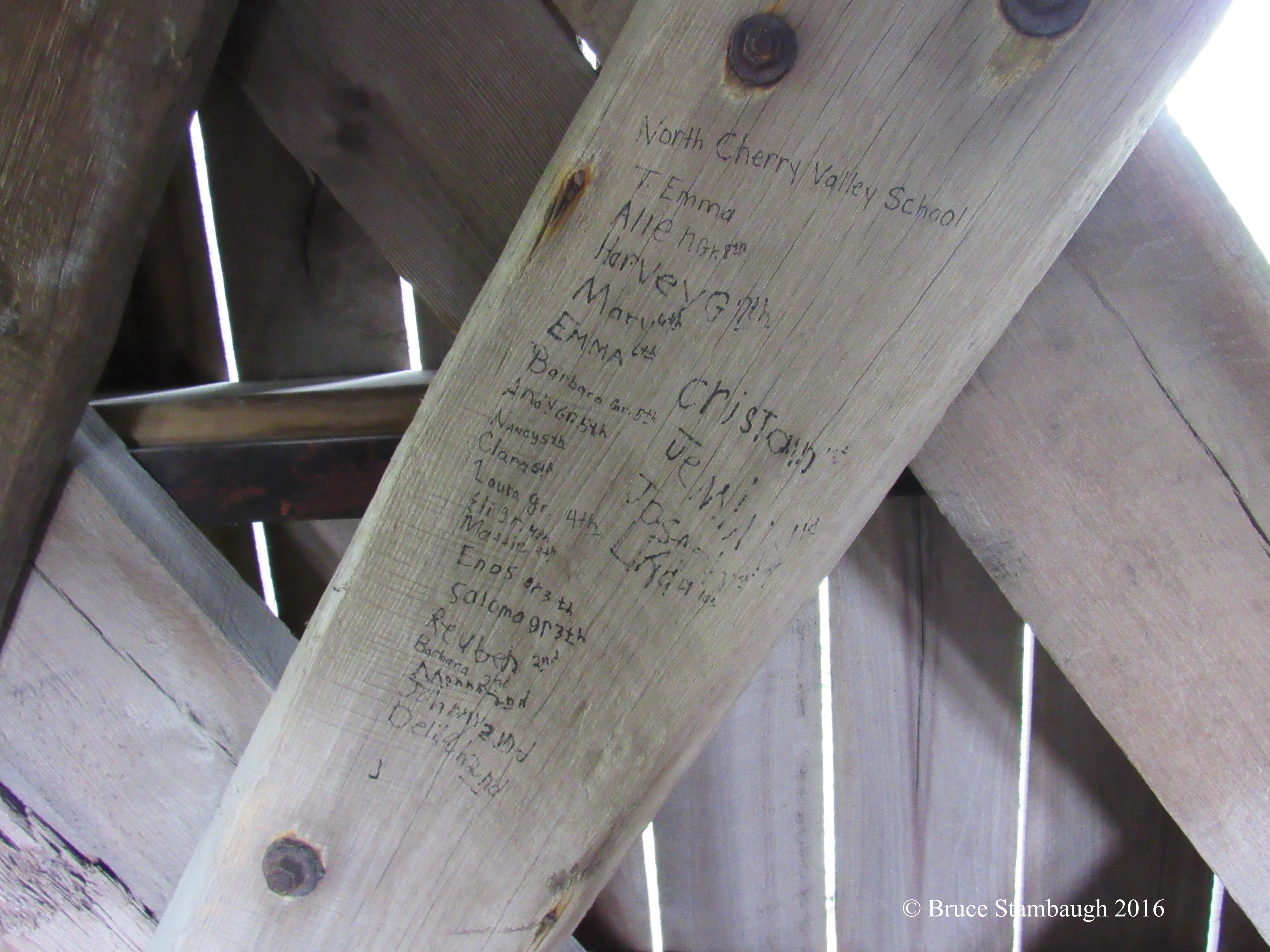
The bridges had other callings as well. They served as gathering places for community meetings, political rallies, and religious services. Given the inspiring settings of some of the bridges, I could see why folks would like to linger there.
Unfortunately, other folks had little appreciation for either history or public property. Skid marks on the wood decking of some of the bridges evidenced raucous drivers thrilled with the sound of squealing tires. Others painted graffiti or left personal signatures, including an entire school class on an outing. Perhaps that’s why many of the bridges were outfitted with security lights and fire alarms.
After traversing fairly flat countryside for miles, the rural roads suddenly dipped and curved into steep, wooded ravines. The roads often rounded into and out of bridges, creating limited visibility. Passing motorists chased us to a bridge’s side more than once.
Most were courteous and slowed to a crawl. Likely we weren’t the first curious tourists they had encountered on their daily path across history.

© Bruce Stambaugh 2016

Though the silhouetted willow trees gave the photo a tropical look, I recently captured the photo in Ohio’s Amish country. The scene made it more than worthwhile to rise and shine at 5 a.m.
“Rural Reflections” is my Photo of the Week.
© Bruce Stambaugh 2016
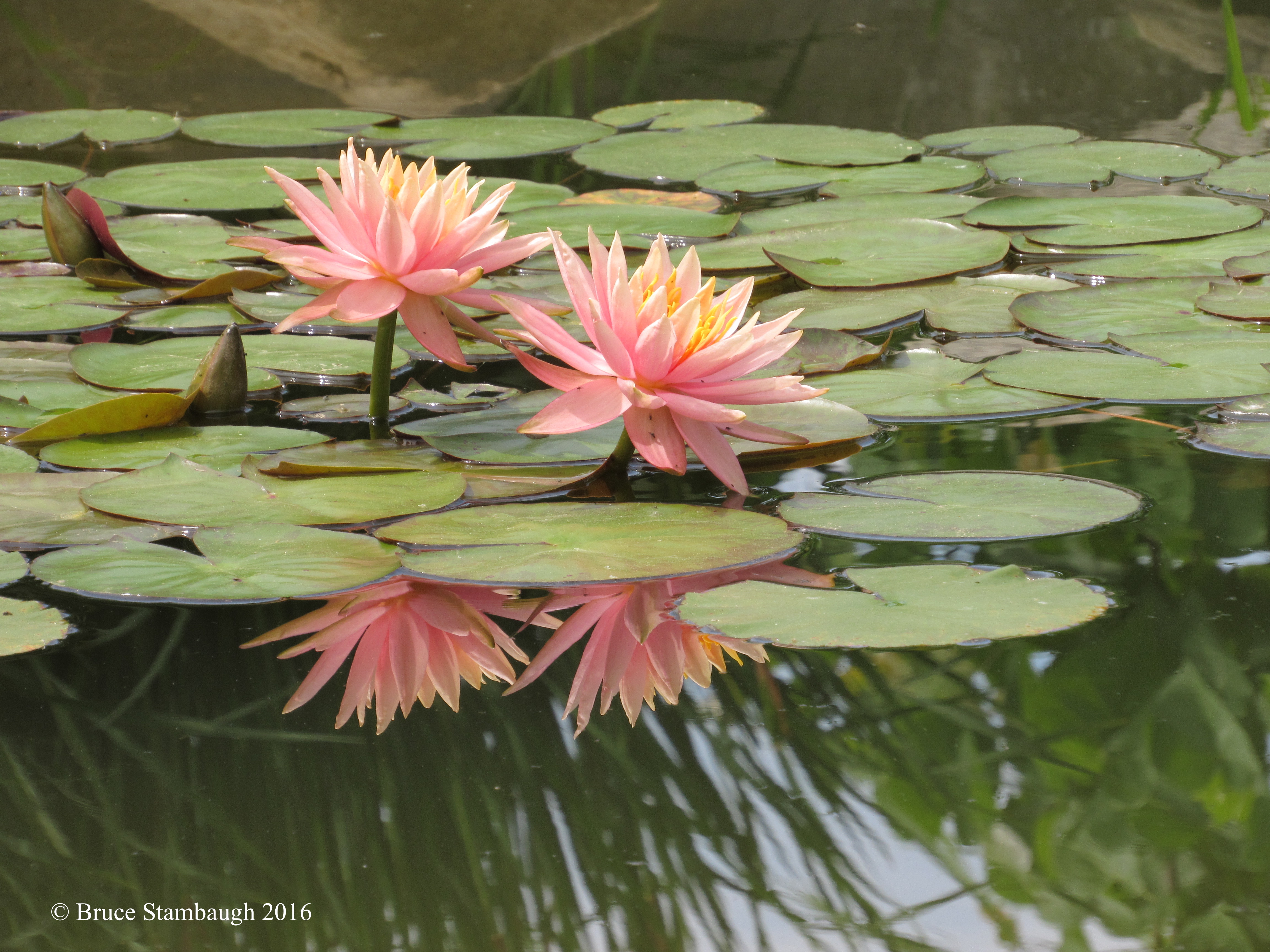
When I saw these beautiful blossoms, how could I not think of Claude Monet’s “Water Lilies” series?
“Channeling Monet” is my Photo of the Week.
© Bruce Stambaugh 2016
Wildlife Photos From The Chesapeake Bay Region
Culture and Communities at the Heart Of India
Artist and nature journalist in the Shenandoah Valley of Virginia.
Photographer Of Life and moments
Personal Blog
Art is the only way to run away without leaving home. -Twyla Tharp
Writing generated from the rural life
writer. teacher. podcast cohost.
El amor cruza fronteras / Love crosses borders
 Roadkill Crossing
You must be logged in to post a comment.