Flowers, wild or propagated, flourish this time of year. With warmer temperatures, cooler nights, and well-watered fields and forests, floral colors brighten neighborhoods, countrysides, and forest floors.
Here are a few photos of flowers I spotted wherever I went.
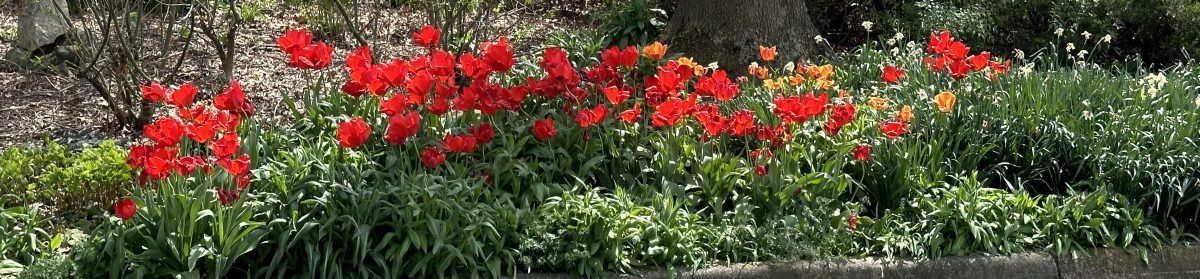
Around our house.
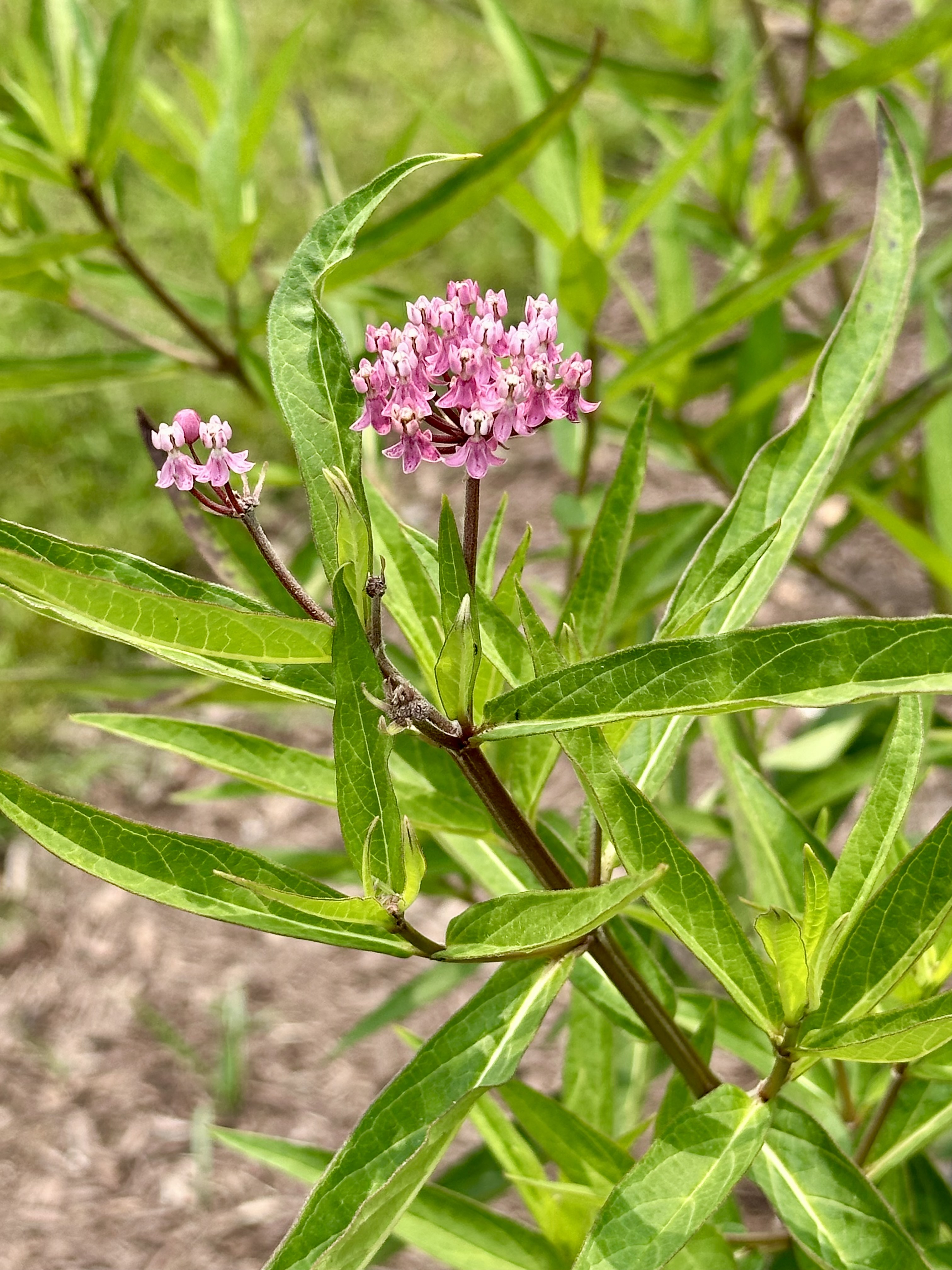
Wildflowers.
Along the path.
Honeysuckle.
Mountain Laurel.
Foxglove Beardtongue
Delphinium.
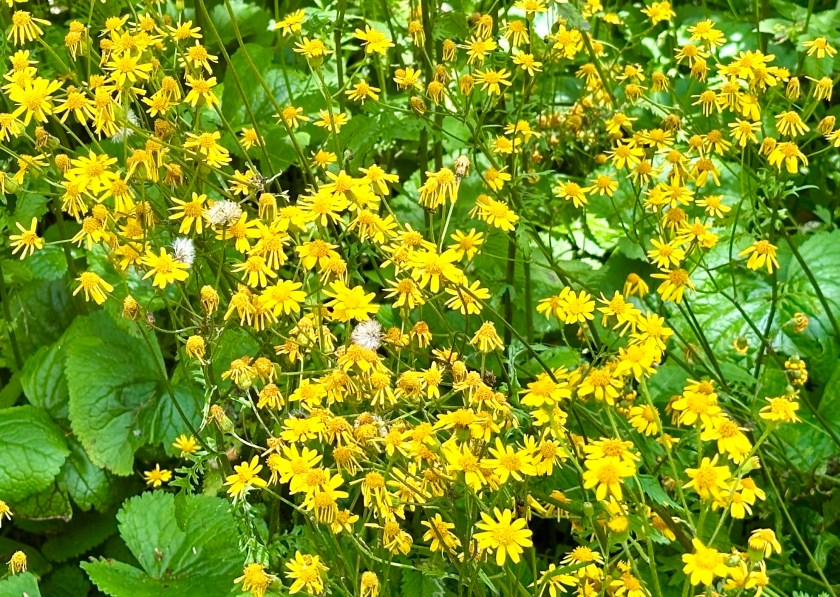
Golden Ragwort.
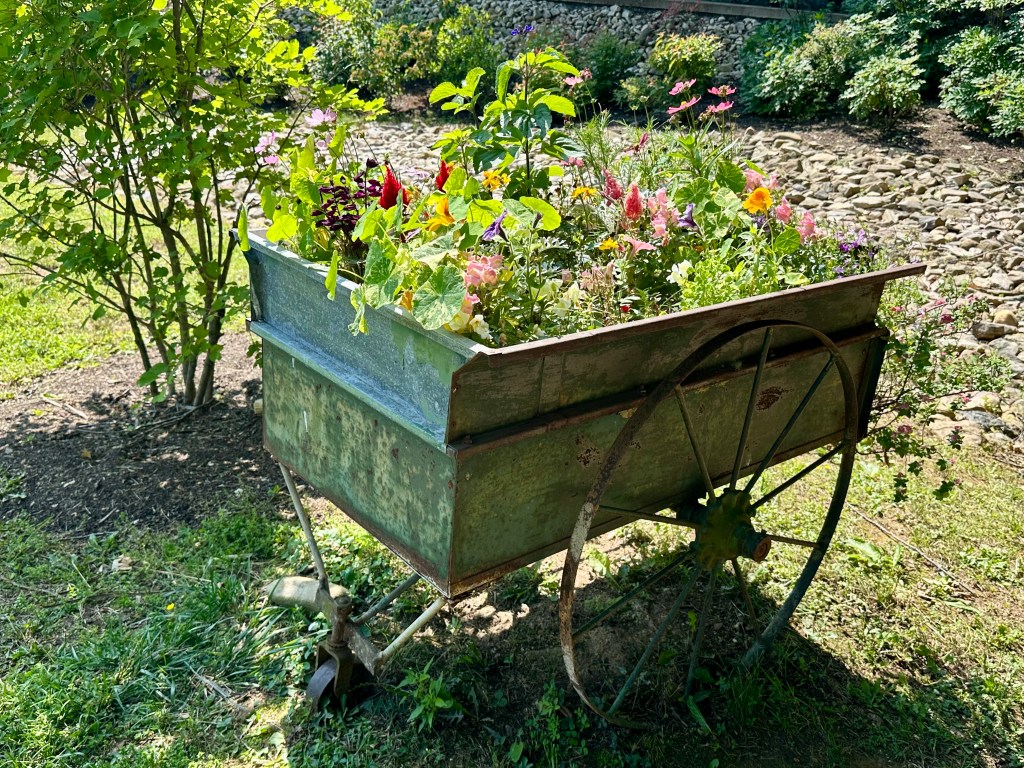
Cultivated.
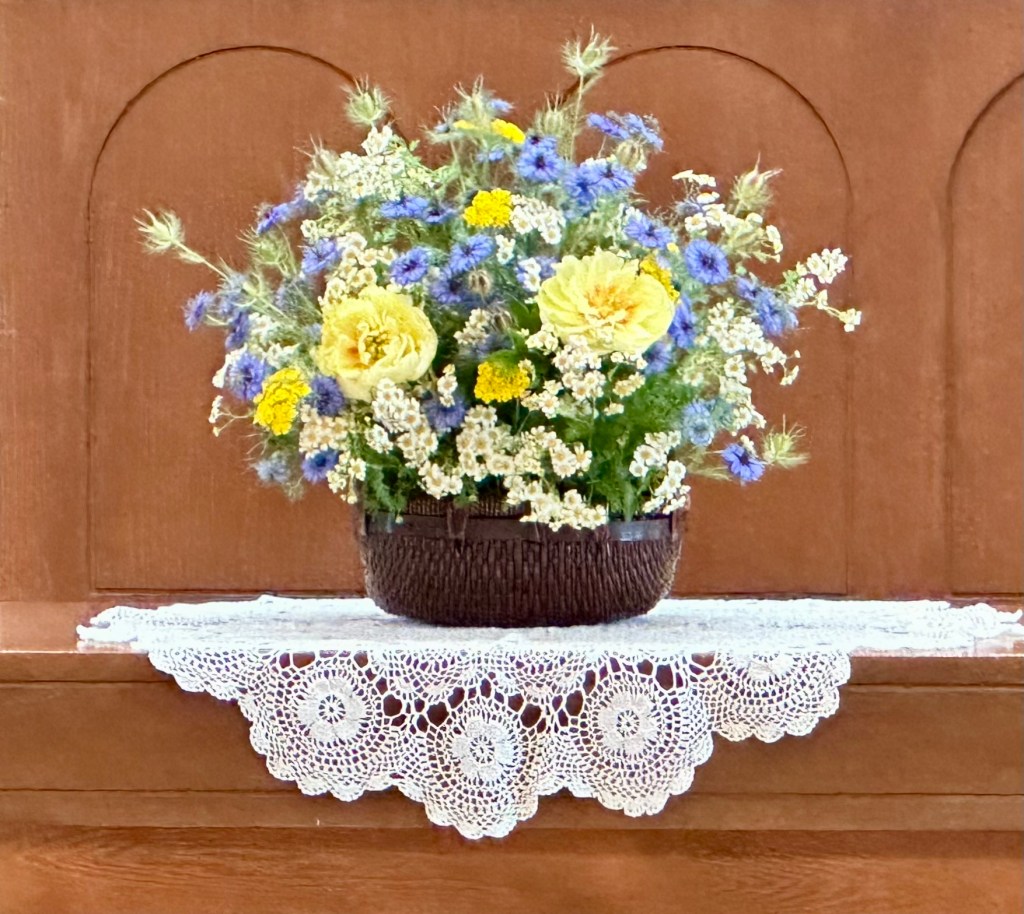
At the arboretum.At the neighbor’s.Calla Lililies. Planter.Climatis.Rose Campion.Church decor.
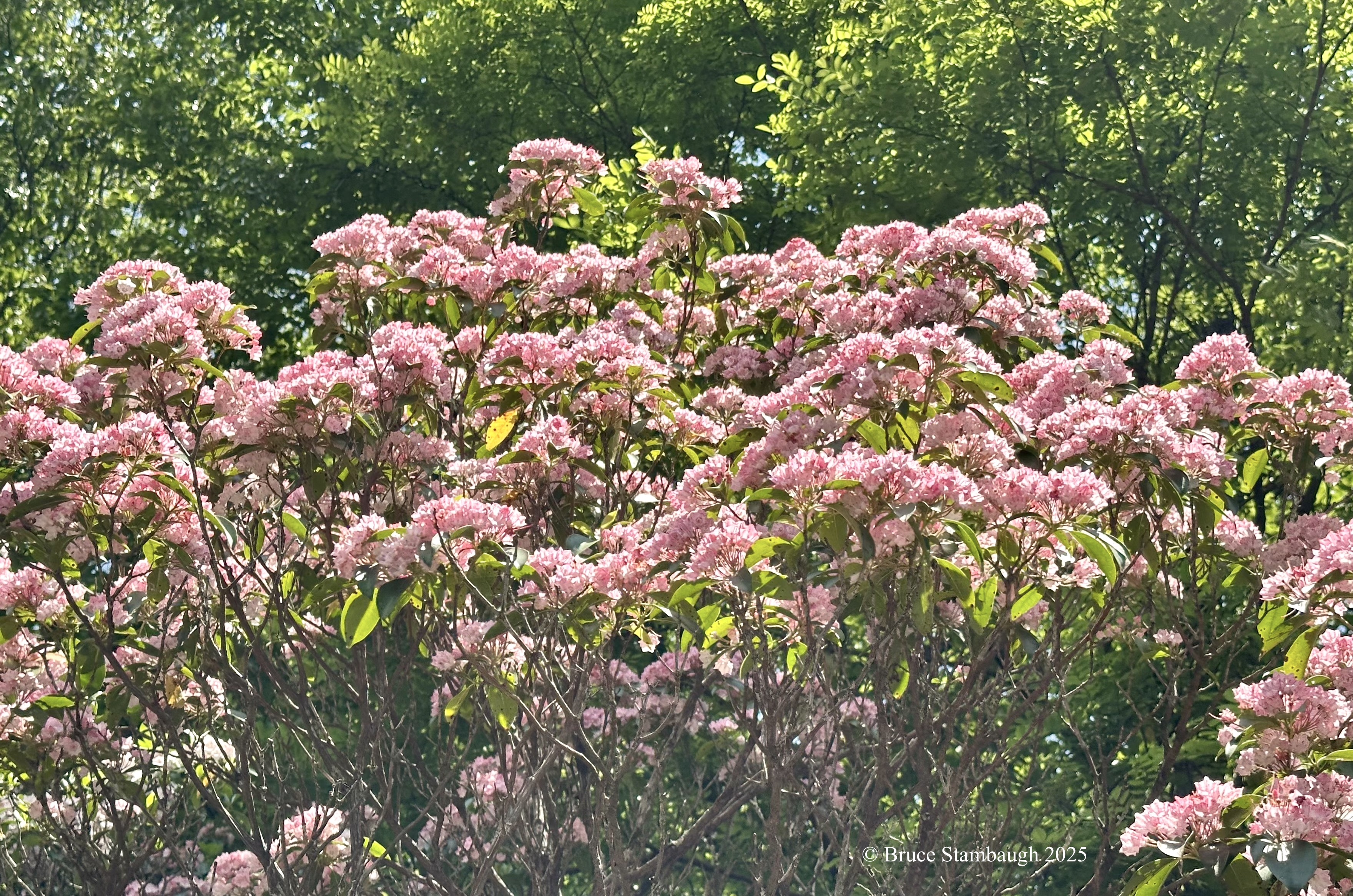
Mountain Laurel blossoms. Photo by Bruce Stambaugh
I went for the birds and the blossoms, but forgot about the bugs. They didn’t deter me, however.
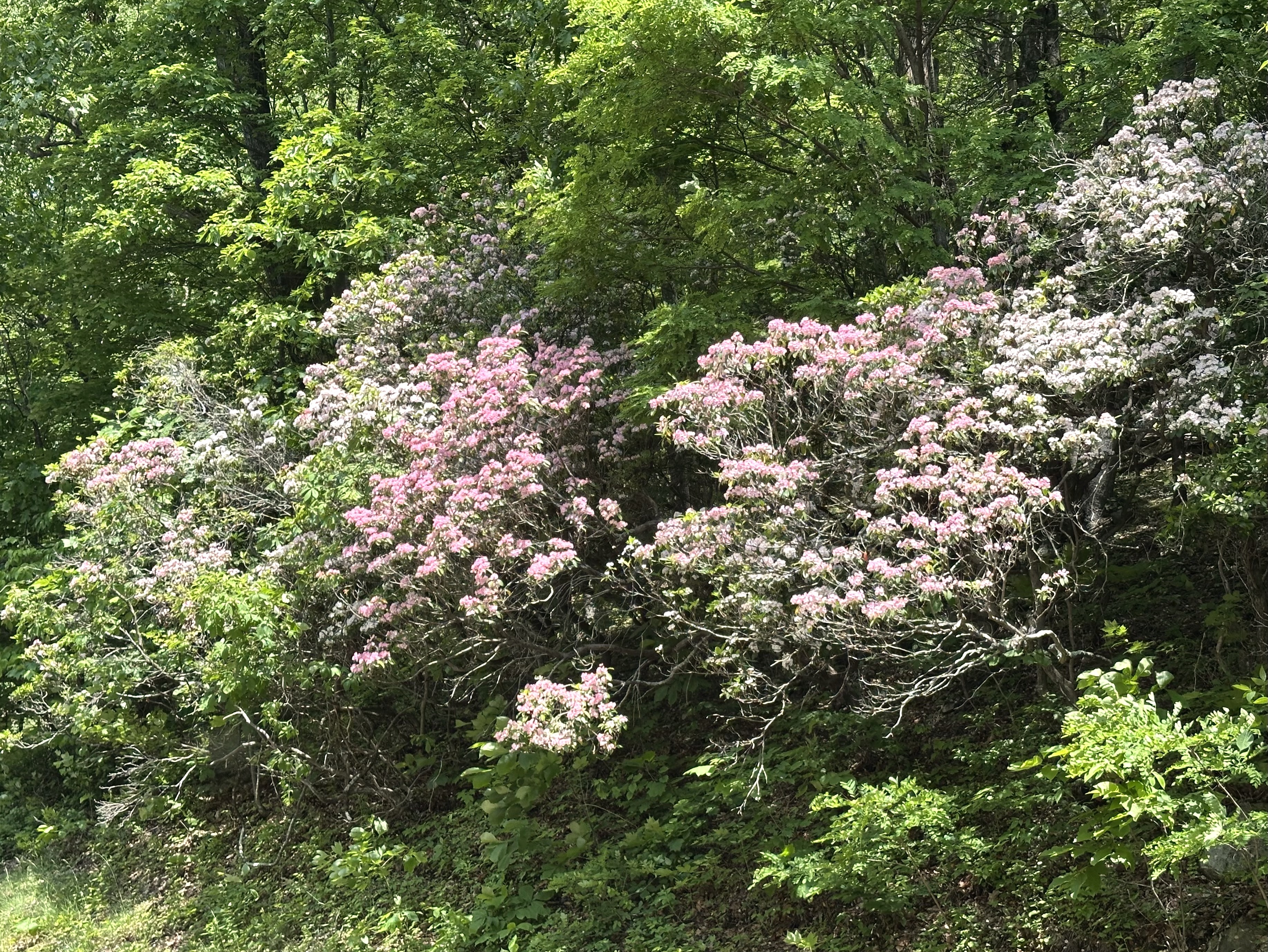
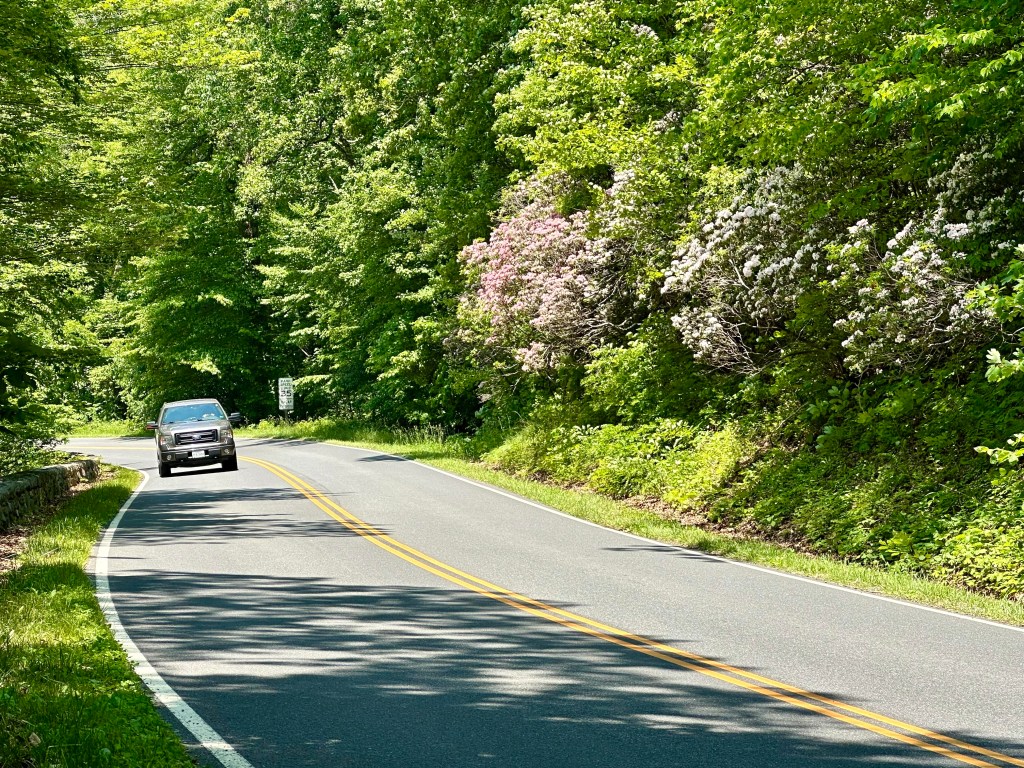
My neighbor had told me that the Mountain Laurel bushes were blooming at various locations in Shenandoah National Park, just a short drive from my home. The laurel blooms from late May into mid-June, depending on elevation.
Of course, I had to see for myself. I fixed a hiker’s lunch, packed my binoculars, camera, and a couple of jackets, and headed out. It’s often 10 degrees or more cooler in the mountains than in the Shenandoah Valley, where I live.
I didn’t need to bother with the jackets. The temperature was 70 degrees when I arrived, and it was humid, with little to no breeze. It was 79 when I left.
A small black bear cub greeted me not long after I entered the park. Fortunately, it scampered back off the old stone wall away from the road and into the forest.
I soon reached my first destination. Just a short distance off Skyline Drive, I reached the Appalachian Trail, which crossed a fire road. I didn’t see any Mountain Laurel, but songbirds were plentiful. So were the knats and mosquitoes.
A male Eastern Towhee. Photo by Bruce Stambaugh
I strolled along the AT, swatting at the pesky bugs and trying to locate the many warblers I was hearing and recording on my smartphone’s birding app. Singing its unmistakable “drink your tea” melody, a male Eastern Towhee posed for a photo on a limb hanging right over the trail.
I met a lone through-hiker from South Carolina. She hoped to reach Mt. Kadadhin in Maine by mid-September. She told me she had passed many stands of Mountain Laurel on her hike so far, which began at the Appalachian Trail’s traditional starting point, Springer Mountain, in Georgia.
She headed north while I retraced my steps to my vehicle. The birdsong was terrific, but the forest’s full foliage made it challenging for this old guy to spot the warblers as they flitted from one branch to another, munching on their insect smorgasbord.
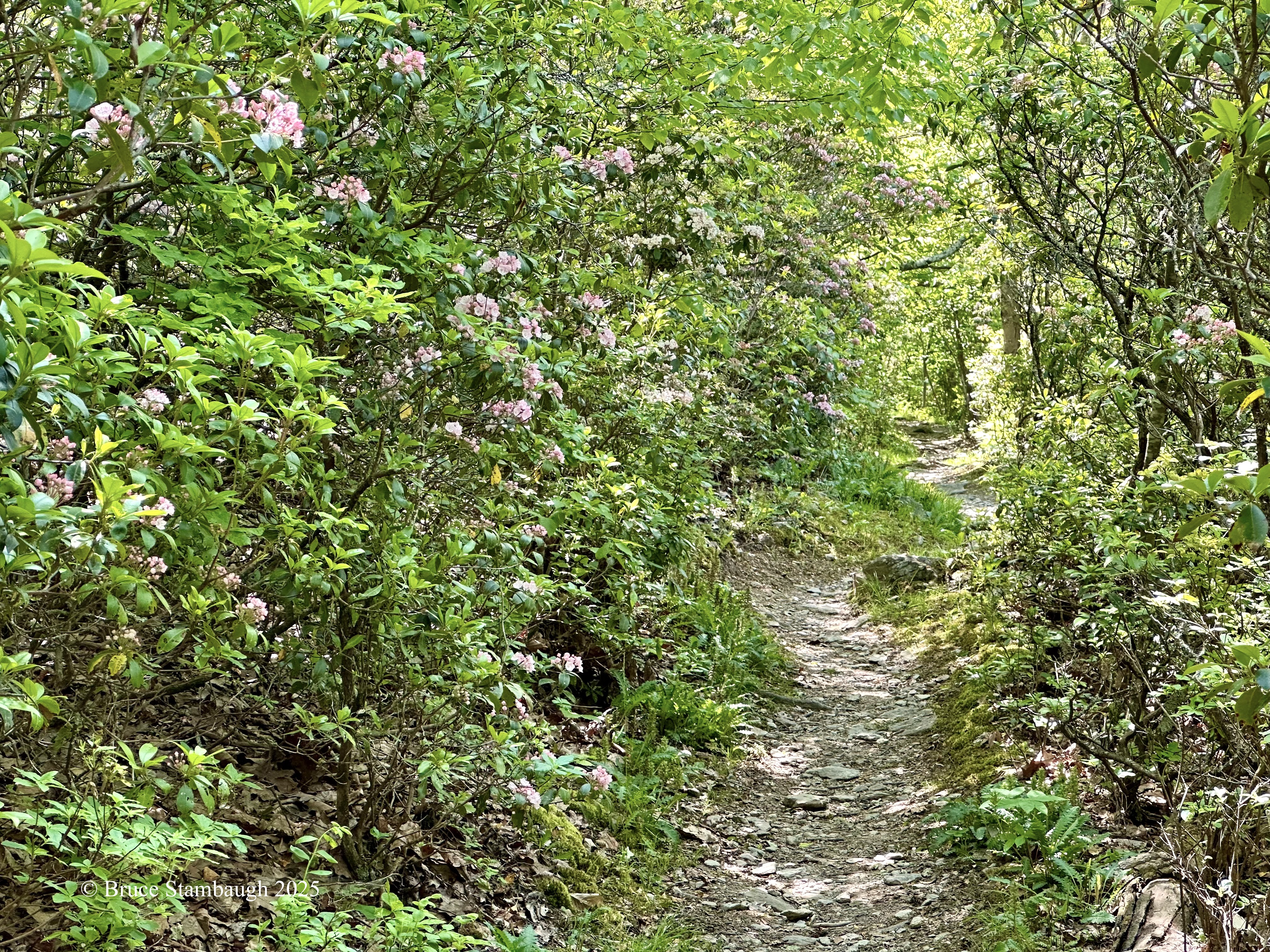
Besides, my main goal was to photograph the blooming Mountain Laurel. I followed my neighbor’s directions to another section of the AT, where the Mountain Laurel was so prolific that it formed a floral tunnel.
The laurels were in all stages of blooming, from tight pink buds to hexagonal flowers in full bloom. In places, the sun filtered through the forest canopy, highlighting the beauty before me.
The laurel blooms offered no fragrance, and I never saw an insect of any kind on any of the hundreds of blossoms. There was a good reason for that. As pretty as the prized flowers are, they are poisonous to any living creature. Every part of the plant is toxic.
So, if someone offers you Mountain Laurel honey, politely decline. Merely enjoy the flowers with their evergreen leaves. If you go, make sure you take your favorite bug spray.
Mountain Laurel grows along the Skyline Drive in several locations. Photo by Bruce Stambaugh
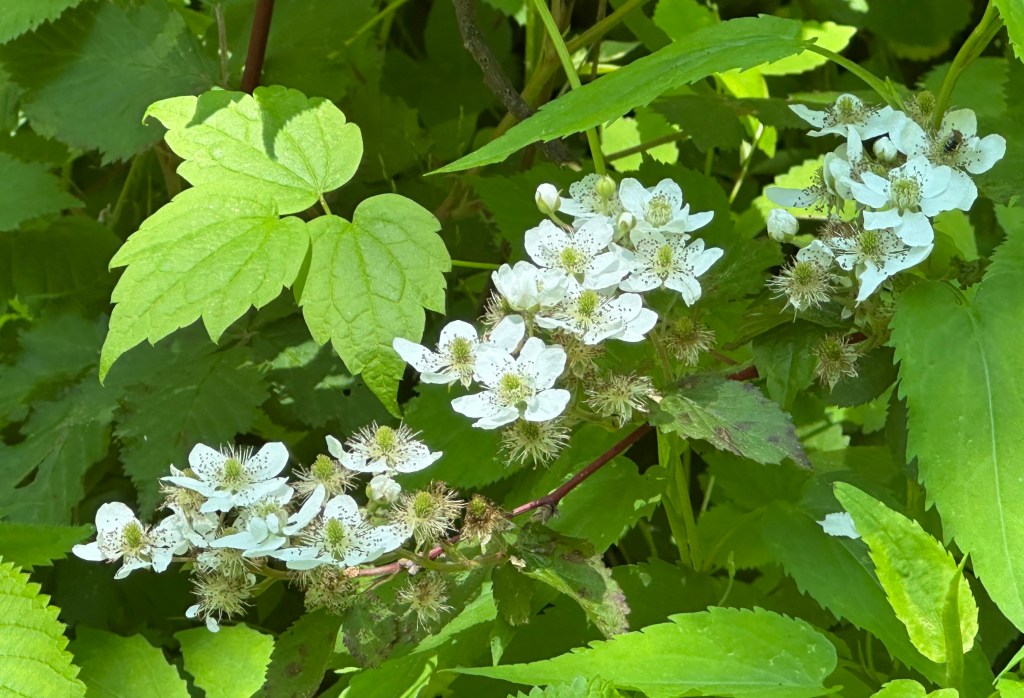
Appalachian Blackberry blossoms. Photo by Bruce Stambaugh
On a recent day hike on the Appalachian Trail in Shenandoah National Park, I came upon these lovely flowers. They are the blooms that, in a month or so, will turn into Appalachian Blackberries. With all the birds and black bears around, they likely won’t last long.
After an 8 a.m. doctor’s appointment, I took a long and much-needed walk in the woods. It happened that the doctor’s office was adjacent to one of my favorite places in the Shenandoah Valley.
The Edith J. Carrier Arboretum on the James Madison University campus in Harrisonburg, Virginia, is a life-giving oasis among 21st-century din. There, birdsong, blossoms, and the verdant forest provide a temporary sanctuary from life’s bustling and boisterous busyness.
To be sure, you still hear the sirens, the traffic’s hum on the interstate that cuts the campus and town in half, the train horns, even the airliners cruising into airports two hours away.
The forest canopy covers you with its sacred, healing goodness. It’s life’s true purpose. Use your senses to enjoy the rapturous unfolding.
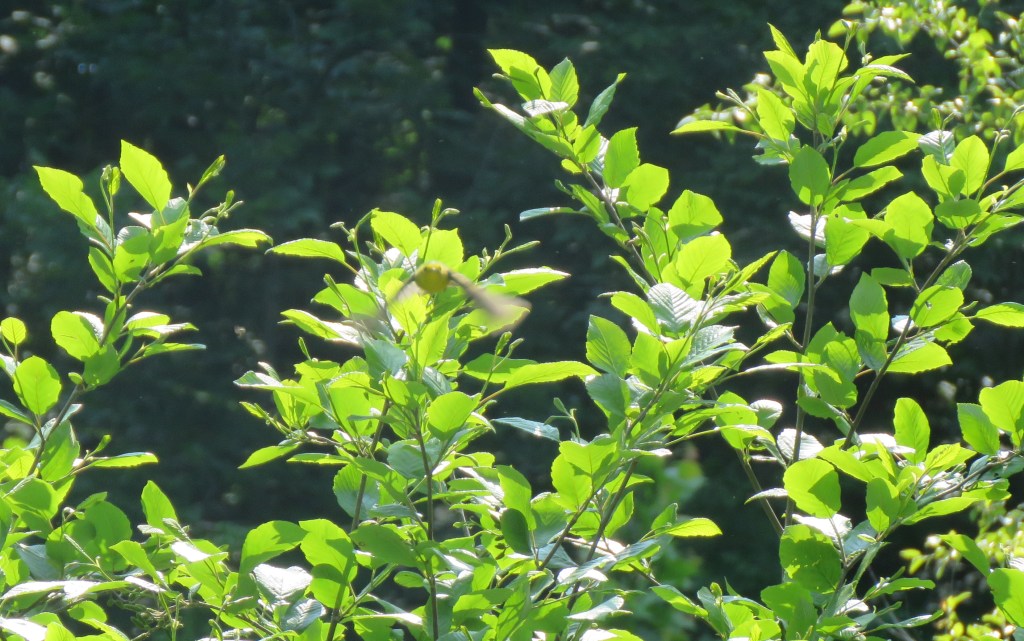
A late-migrating Wilson’s Warbler flits and feeds on insects deep in the recesses of dense elderberry bushes. Wood Thrushes sing their multiphased cheery song in the shadows of the mixed deciduous woodlots. American Robins scold one another as they defend their nesting territory.
A Wood Thrust sheltered in the shade of a hickory tree. Photo by Bruce Stambaugh
A slight mist rises from the forest floor, beckoned by the strengthening morning light. White-breasted Nuthatches, Eastern Wood-Pewees, Tufted Titmice, Northern Cardinals, Carolina Wrens, and Song Sparrows fill the wooded ravine with glorious, variegated tunes. A Red-bellied Woodpecker’s vocalization echoes deep from the hillside woodlot while an American Crow sails through the trees, cawing from one perch to the other.
Each in their own way, joggers, birders, parents with toddlers, grandparents, and college students enjoy this preserved paradise. Time in the arboretum is an equal opportunity home with a smorgasbord of enjoyment. Some are passing through. Some are exploring the flora and fauna. Others simply sit, look, listen, and smile.
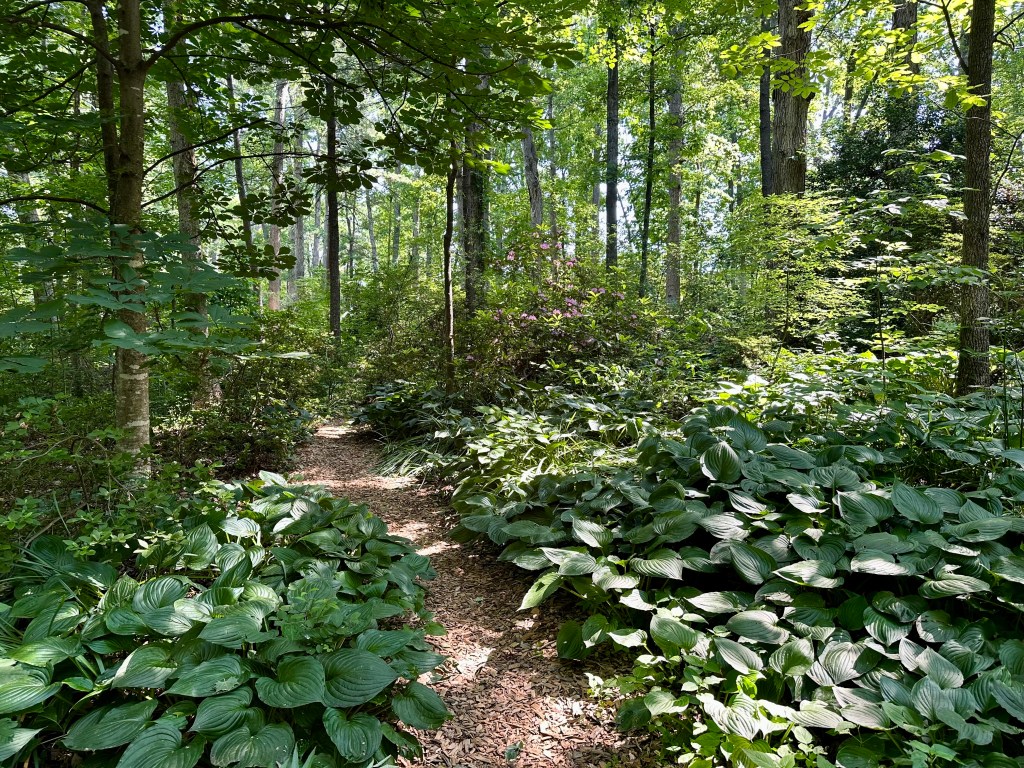
A lone rhododendron holds onto its precious purple blossoms along a wood-chipped path in the shade of the congregation of hardwoods. Here and there, morning light filters through the giants’ canopy, speckling the forest floor.
The broad leaves of huge hosta plants invite you to explore, hike, relax, reflect, listen, and admire all that nature has to offer. A well-located bench beckons you to sit a spell and breathe in the cool freshness before summer’s heat and humidity arrive.
My only shot of a reclusive male Wilson’s Warbler. Photo by Bruce Stambaugh
Spent pink petals on a manhole cover. Photo by Bruce Stambaugh
I was walking in downtown Harrisonburg, Virginia, when I came upon this improbable scene. Spent petals from pretty pink blossoms on an ornamental tree had fallen and stuck between the metal grids on manhole covers.
I marveled at the beauty of the pattern the contrasting elements had made. Natural pink on human-made rusty iron surrounded by the concrete of the sidewalk.
A few of the noontime sun’s rays added a dappled effect to this natural urban art.
Earth Day in Virginia’s Shenandoah Valley dawned with a steely gray overcast sky. It remained that way for the entire day. Still, I ventured out to celebrate the day set to honor Mother Earth.
Recently diagnosed with some unsettling health issues, I spontaneously decided to join the celebration. I hoped doing so would calm my nerves and help me settle my emotions.
I usually plan my daytrips so I’m ready to go at the crack of dawn. Consequently, I lost valuable time in the morning packing my lunch, birding equipment, and attire for the mountains. My destination was Reddish Knob, a peak on the front range of the Allegheny Mountains on the border of Virginia and West Virginia.
With reports of migrating shorebirds and songbirds returning, I wanted to see what I could find. Even though I have been birding for most of my life, I consider myself an average birder. As I age, my hearing has diminished, so I can no longer hear the higher-toned decibels of many songbirds.
I’m grateful for the birding apps on my smartphone. I especially like the Merlin app for identifying bird calls. It’s not always accurate, but it gets the job done for me. Better birders than I, most of whom are younger, are proficient in naming birds upon hearing and seeing them. It’s reason enough to bird in a small group of experienced birders.
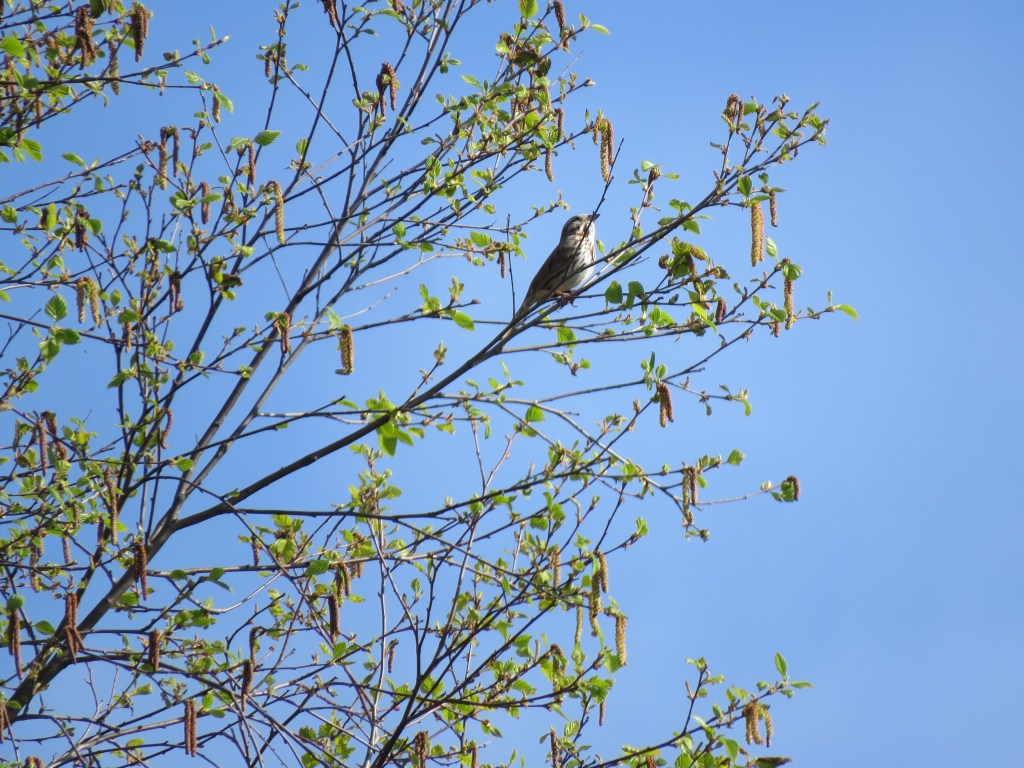
A Song Sparrow sang before I left home. Photo by Bruce Stambaugh
However, today, I chose to go it alone. I needed the solitude and the solace. I did so, knowing that other birders would likely be out searching in the same areas. But it wasn’t to be. I spent the day on my own.
Before I even left, a Song Sparrow sang from a tree across the street. My first stop was a nearby lake renowned for its bird-watching and fishing opportunities. Wind-felled trees provided cover and roosting areas for birds and reptiles.
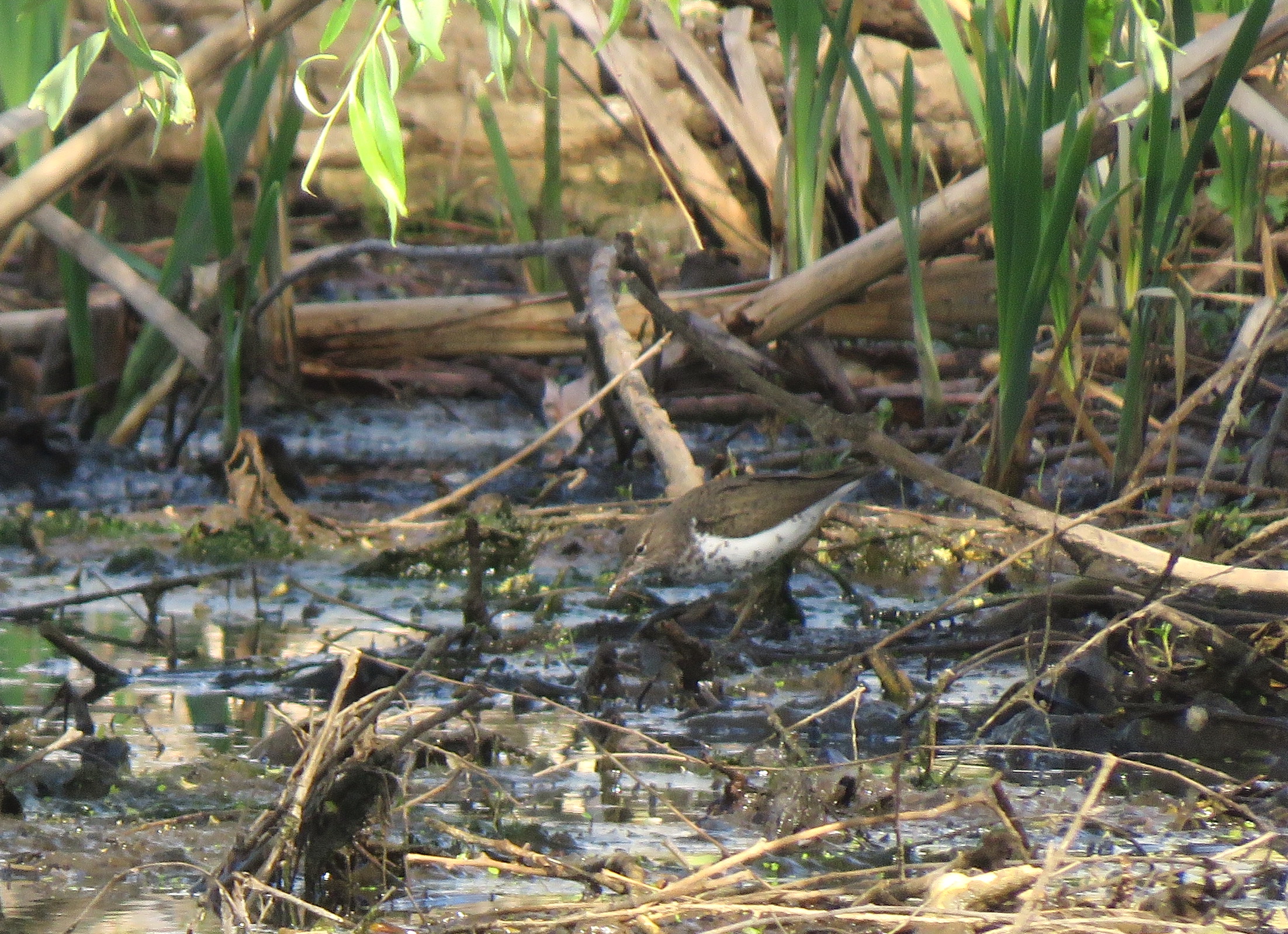
I spotted movement in the shadows along the shallow end of the lake’s shoreline. Beyond a downed tree where turtles rested, a Solitary Sandpiper stealthily stalked its prey. Closer to me, a pair of Spotted Sandpipers waded gingerly among the lily pads, reeds, and downed branches, searching for breakfast.
The lake is a hotspot for migrating ducks and other waterfowl, but there were none today. Above the spillway, however, a pair of Black-crowned Night Herons occupied separate branches on a giant sycamore tree. Soon, a stately-looking Osprey joined them. All eyes were on the lake.
A few miles away, I stopped at a marsh in a farmer’s pasture that allows visibility from the public highway. I heard the familiar calls of Killdeer, and a pair soon landed among the grasses sprouting from the marsh’s muck. Red-winged Blackbirds trilled while Black Vultures sailed silently overhead.
Killdeer at the marsh’s edge. Photo by Bruce Stambaugh
I passed through the rural burg of Briery Branch, and onto Reddish Knob Road. I drove at a snail’s pace with the windows and moonroof open. I turned on the Merlin birding app to listen for calls. When a Louisiana Waterthrush and Blue-headed Vireo popped up, I pulled off the narrow road, turned off the car, grabbed my binoculars, and scanned the tender, emerging leaves for birds. Though they continued to call, I couldn’t find them. The gray sky proved a harsh backdrop.
I continued the slow climb up the mountain. The valley gave way to steep forested hillsides, split by a rushing stream, as I drove higher and higher into the Allegheny Mountains. I stopped whenever a pull-off presented itself and scanned the trees and bushes for birds.
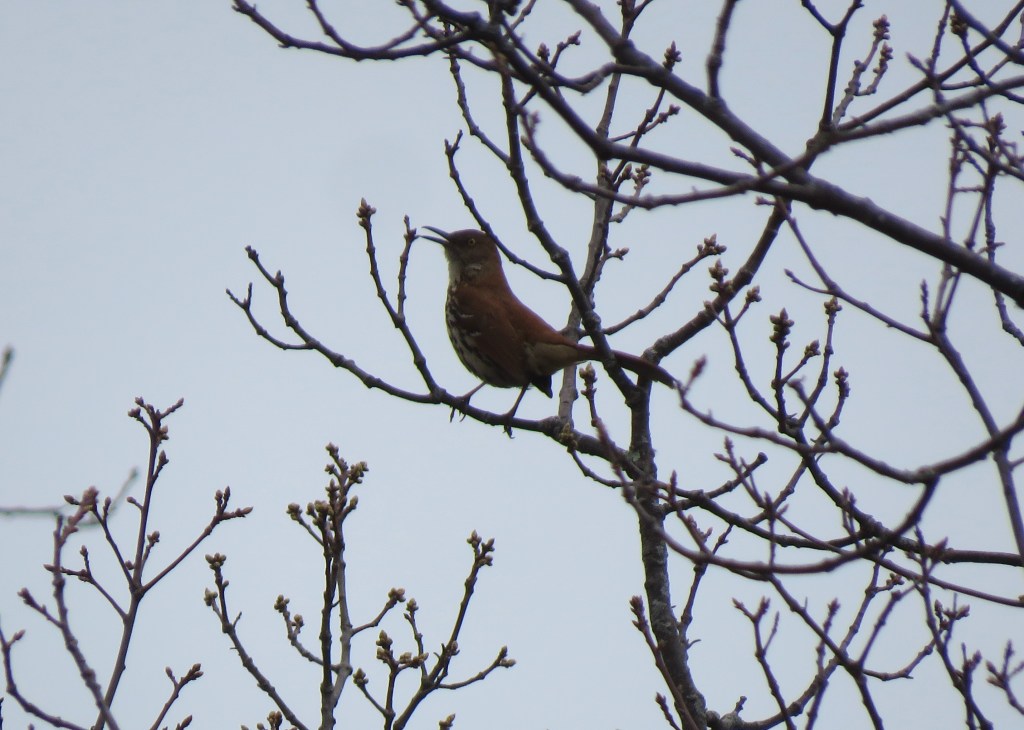
On the right, a recent controlled burn had left the landscape blackened. The underbrush was singed brown, and the needles of young pines hung yellow from the heat. The smell of the fire lingered in the air. Still, I found a Brown Thrasher perched in a tree singing its melodious song high above the scorched earth below.
Brown Thrasher singing. Photo by Bruce Stambaugh
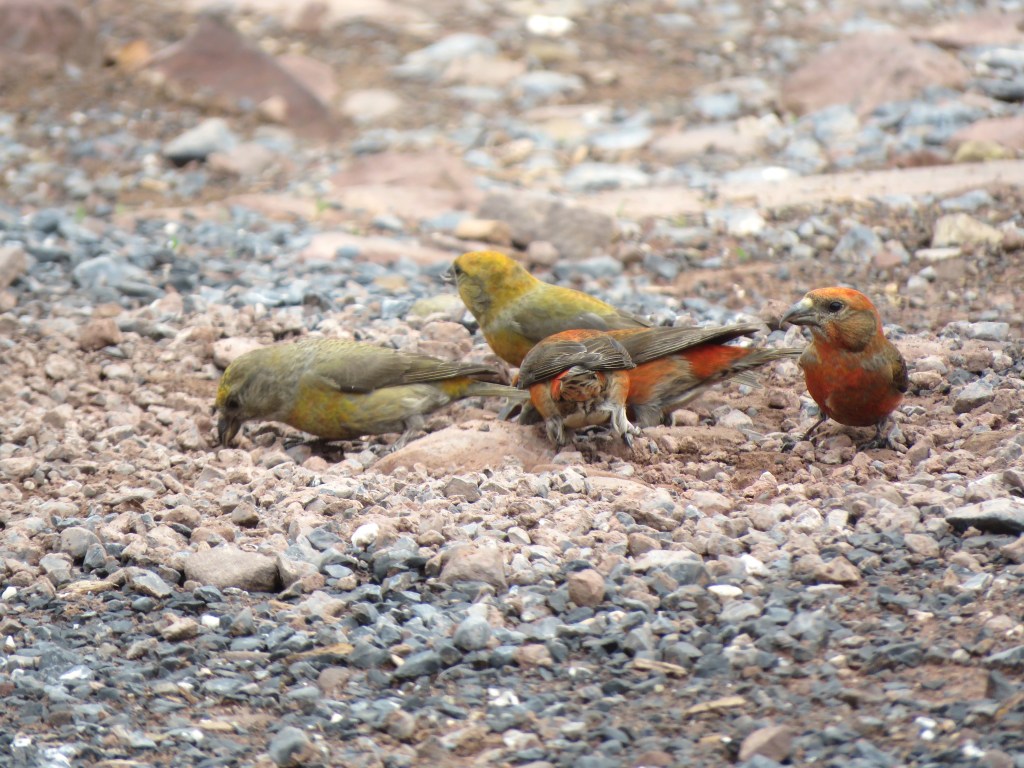
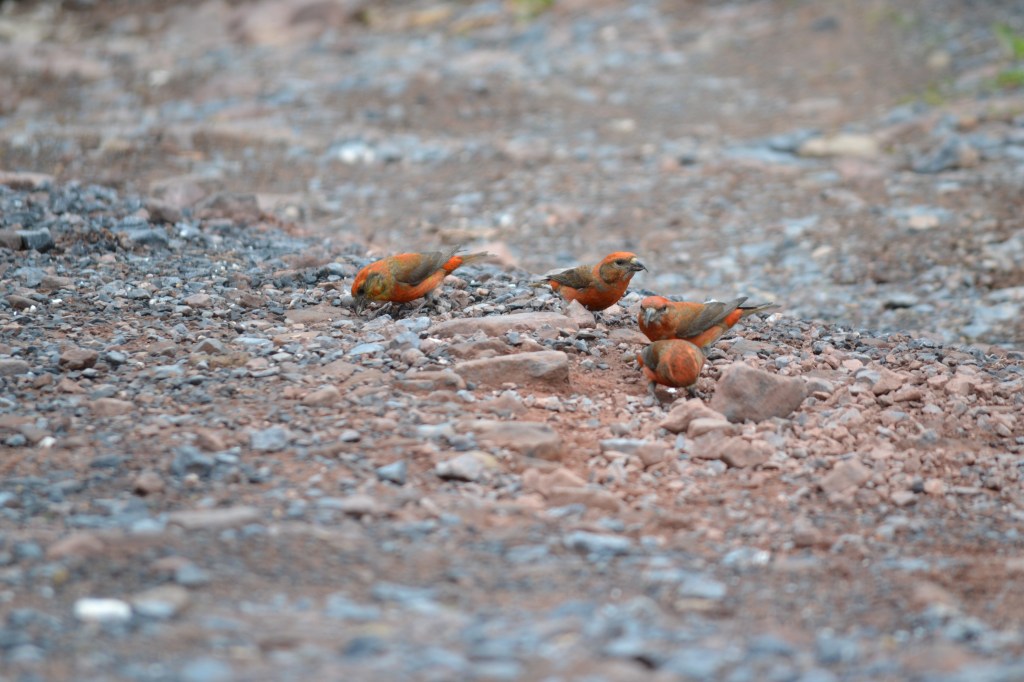
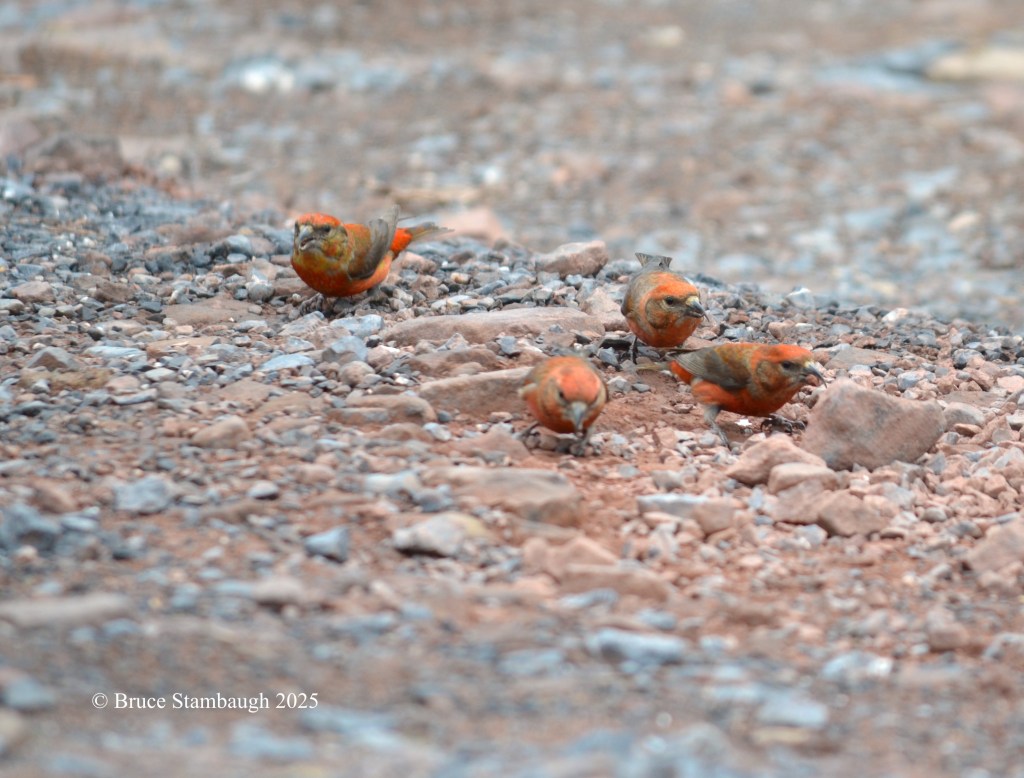
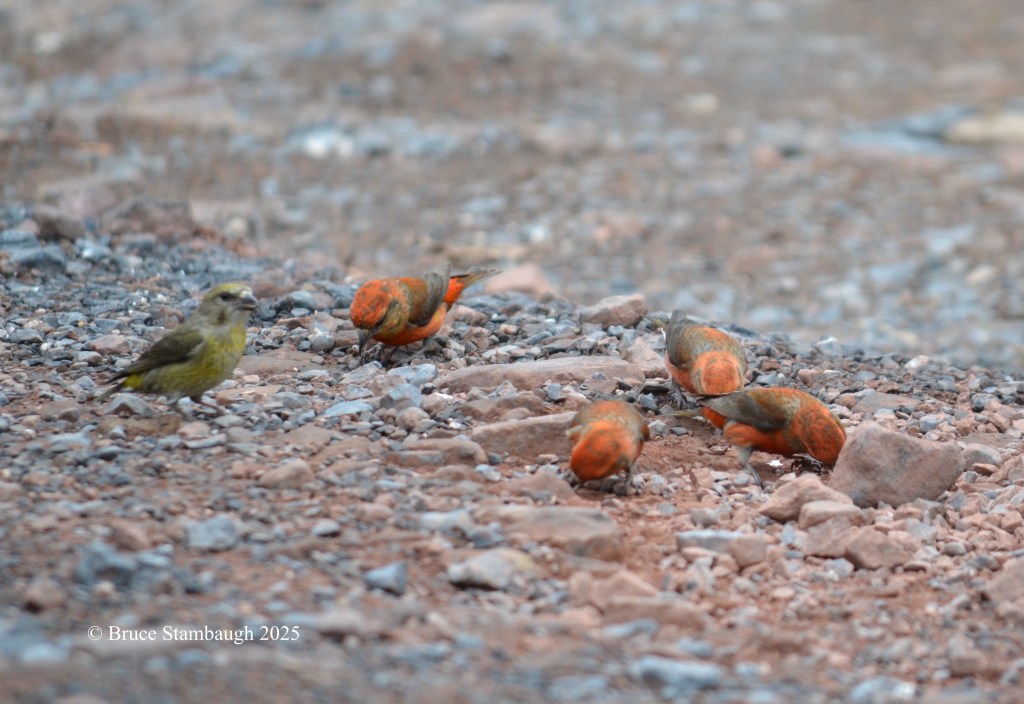
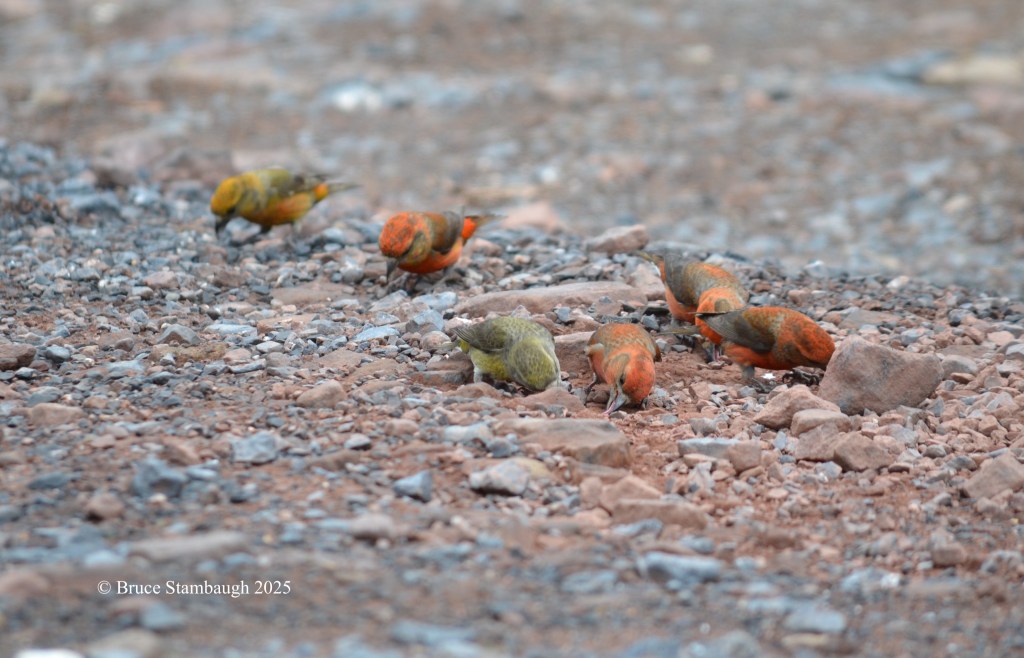
Just up the road, I reached my destination, the intersection of Reddish Knob Road and a US Forest Service fire road, which is a mix of dirt and gravel. As I pulled over to park, a small flock of Red Crossbills flew up in front of my vehicle. Those were the birds I had hoped to see and photograph.
I parked my vehicle a few feet away, excitedly exited with my camera, and the birds returned to the same spot on the side of the road. These beautiful birds were what I call “graveling.” Why do these lovely, social birds ingest grit and minerals along roadsides? The pebbles and dirt help them digest the pinecone seeds they eat.
The Red Crossbills gathering grit. Photos by Bruce Stambaugh
The birds settled in as I stayed as still as possible. I captured several photos of these magnificent birds gathering grit. The females are a yellowish-green, while the males are mostly a fire-engine red with dark wings. They can be found year-round in a small geographical area along the front range of the Alleghenies. They are scarce in most other regions of the US except the Rocky Mountains.
All the while, Common Ravens flew back and forth above the ridgeline. Blackburnian and Black-throated Green Warblers sang in the tree tops as they foraged for insects. Ovenbirds, Blue-headed Vireos, and Eastern Towhees joined the chorus.
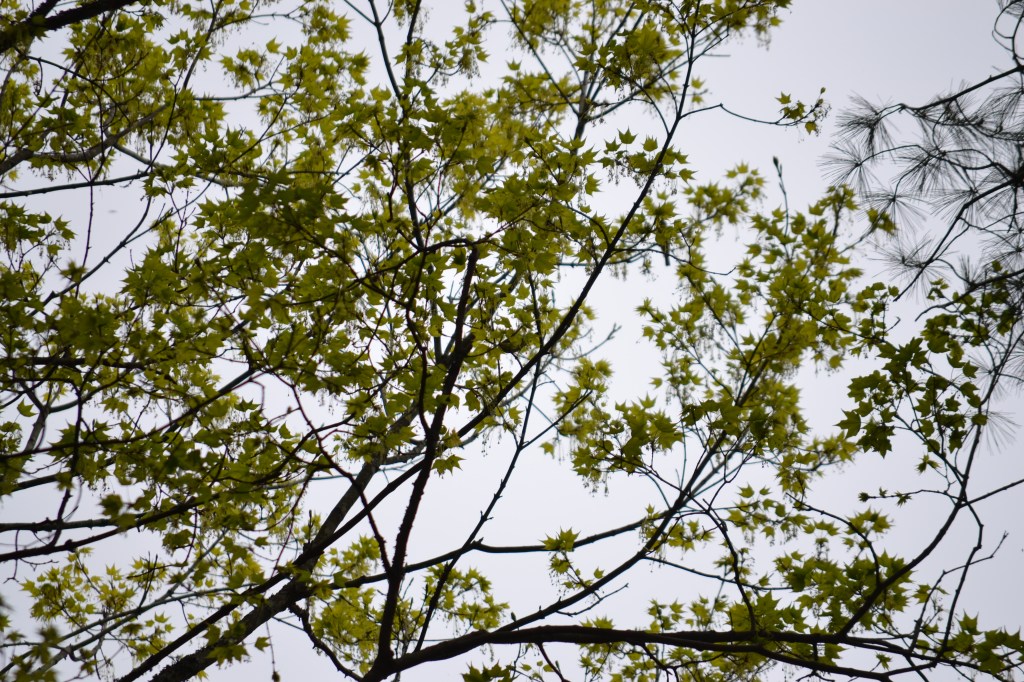
The budding pastels.High in the treetops.Help me find the bird.Can you find and ID the warbler?
Please click on the photos to view them in full size.
On my retreat down the mountain, I stopped at a camping area adjacent to a gurgling mountain stream. I heard many warblers, but saw only a few. I could have used other pairs of eyes to help spot the birds high in the emerging canopies.
Still, it was a fulfilling and satisfying Earth Day for this septuagenarian. I surrendered to my surroundings, the fresh air, the towering evergreens, and the budding deciduous trees. Bird calls replaced motor vehicle and lawnmower noises, and clear mountain streams rushed their way to the valley floor.
Thanks to the bird song choruses, inspiring mountain views, and the singing brooks, nature’s peace enveloped me. Isn’t that one of the goals of Earth Day?
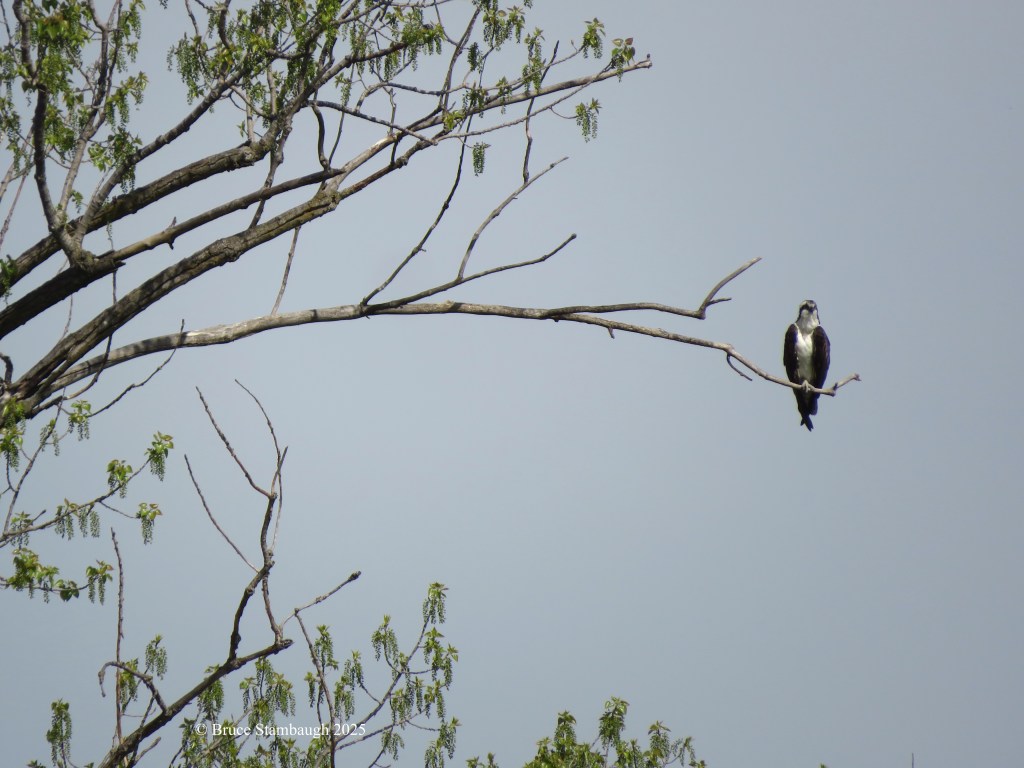
Osprey, Silver Lake, Dayton, Virginia. Photo by Bruce Stambaugh
While birding on Earth Day, this osprey provided several good poses for me to capture. It went from a towering tree snag to the limbs above to this precarious perch on a limb that hung over Silver Lake in Dayton, Virginia.
It’s the best of both worlds. I can work on my laptop and watch the birds simultaneously.
I was gifted a clear plastic birdfeeder that sticks to a window via two suction cups. However, with two birdfeeders hanging nearby from the front yard red maple tree, I doubted birds would be attracted to it. The birds proved me wrong.
The hanging feeders held chipped sunflower seed hearts and black oil sunflower seeds. I filled the window feeder’s floor with safflower seeds to keep squirrels and other birds, such as common grackles and European starlings, away. Most bird species don’t like safflower seeds.
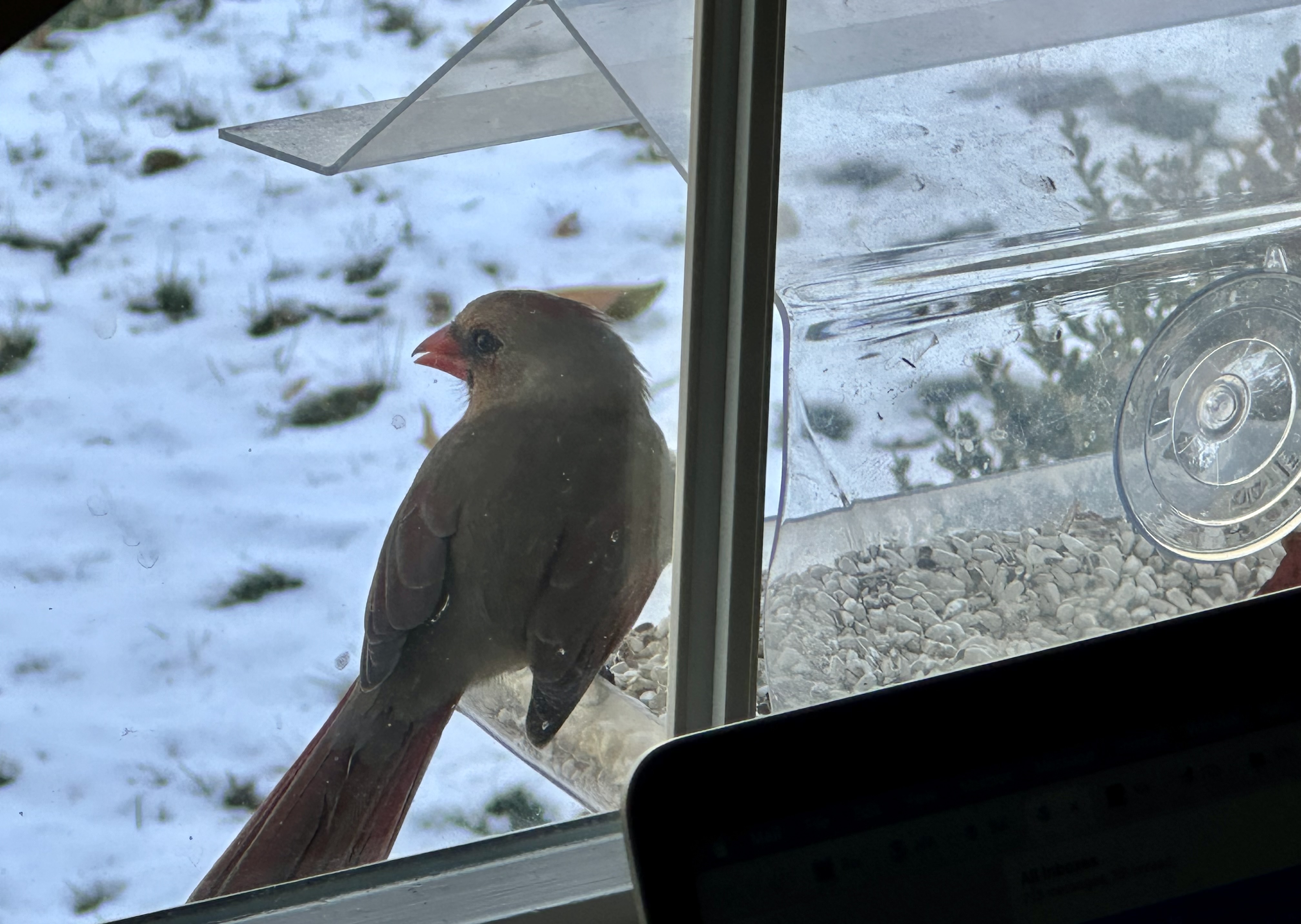
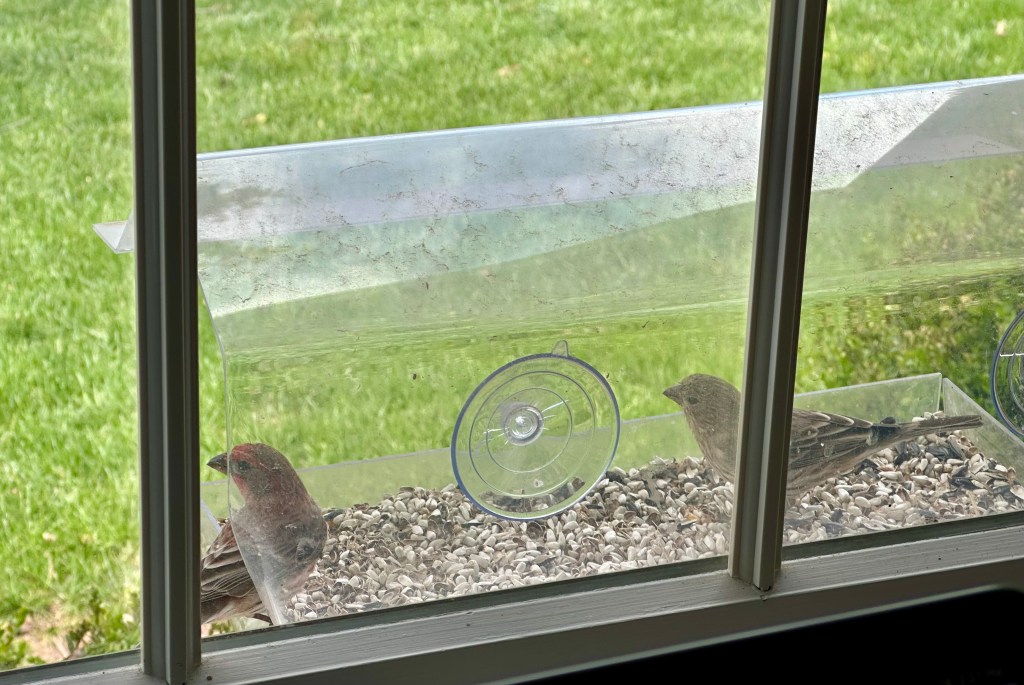
Once birds found the feeder, they kept coming, though irregularly. Northern Cardinals, Carolina Wrens, Carolina Chickadees, House Finches, and Purple Finches are among the species that frequent the feeder.
It’s made my days more enjoyable. The Northern Cardinals are often the first and last to enjoy the seeds daily, coming at the first and last light of the day. It’s a good way to start and end the day while writing or reading on my laptop.
I have learned to sit still and let them eat. Any little movement can startle them. The female and male Northern Cardinals eye the seed, pick one, and roll it rapidly with crushing bills until they reach the seed’s meat. The cracked shells fall to the floor of the feeder, which I regularly clean by hand.
Please click on the photos to enlarge them.
The Carolina Wrens seem to be looking more for morsels of the seed and insects that happened to be in the feeder. The beautiful, busy birds are antsy and cautious as they search the feeder. They seldom stay long.
Only the female Purple Finches have come to the window. Even then, they were skittish and spooked at any movement. Consequently, I have learned to roll my office chair away from my desk and raise my phone with the long lens, ready for any shots I can get. That setting works best since the feeder is less than a foot away. Still, I might only get one shot before the birds dart away.
The feeder sits to the right side of the eight-paned window, less than a foot away from my computer. A pencil holder, a small basket with notes, and small notepads serve as a partial shield for me.
Also, I’ve noticed that the birds seem more comfortable in the feeder than in front of the glass window. Perhaps the birds’ visibility is not as sharp due to the plastic feeder’s large suction cups and the bent, molded sides and roof. Plus, the covered feeder keeps the seeds dry from rain and snow. Partially protected by the window sill and frame, even gusty winds don’t shake the feeder.
I am most grateful for these opportunities to observe and record the many bird behaviors and pecking orders exhibited. I enjoy hearing the House Finches twitter to one another as they eat, and other birds quietly enjoy their meals.
The observations teach me to be patient and still, if I genuinely want to learn from my feathered friends.
This pair of House Finches flew as soon as I captured the shot. Photo by Bruce Stambaugh























 Roadkill Crossing
You must be logged in to post a comment.