Enjoy each moment as it occurs

I didn’t realize how much I charged through life until I couldn’t. Getting a new knee will do that to you.

Much like my late father, I wanted to get as much out of life as I could. Dad would come home from work, eat supper, and off he would go to his next adventure. His chosen activities ran the gamut of his interests: softball, arrowhead hunting, fishing, hunting, or attending one of his many organizational meetings.

With all this time on my hands in recuperation mode, I have come to an insightful realization. I mirrored my father for too long in my life. I had and still have many interests. Besides my career in public education, community service consumed much of my time.

Volunteer firefighting, township trustee, hospital trustee meetings, and church leadership all demanded my time. Those days are over. I still enjoy the out-of-doors just as Dad did. In my open-air times, I shoot birds, too, only I use a camera.
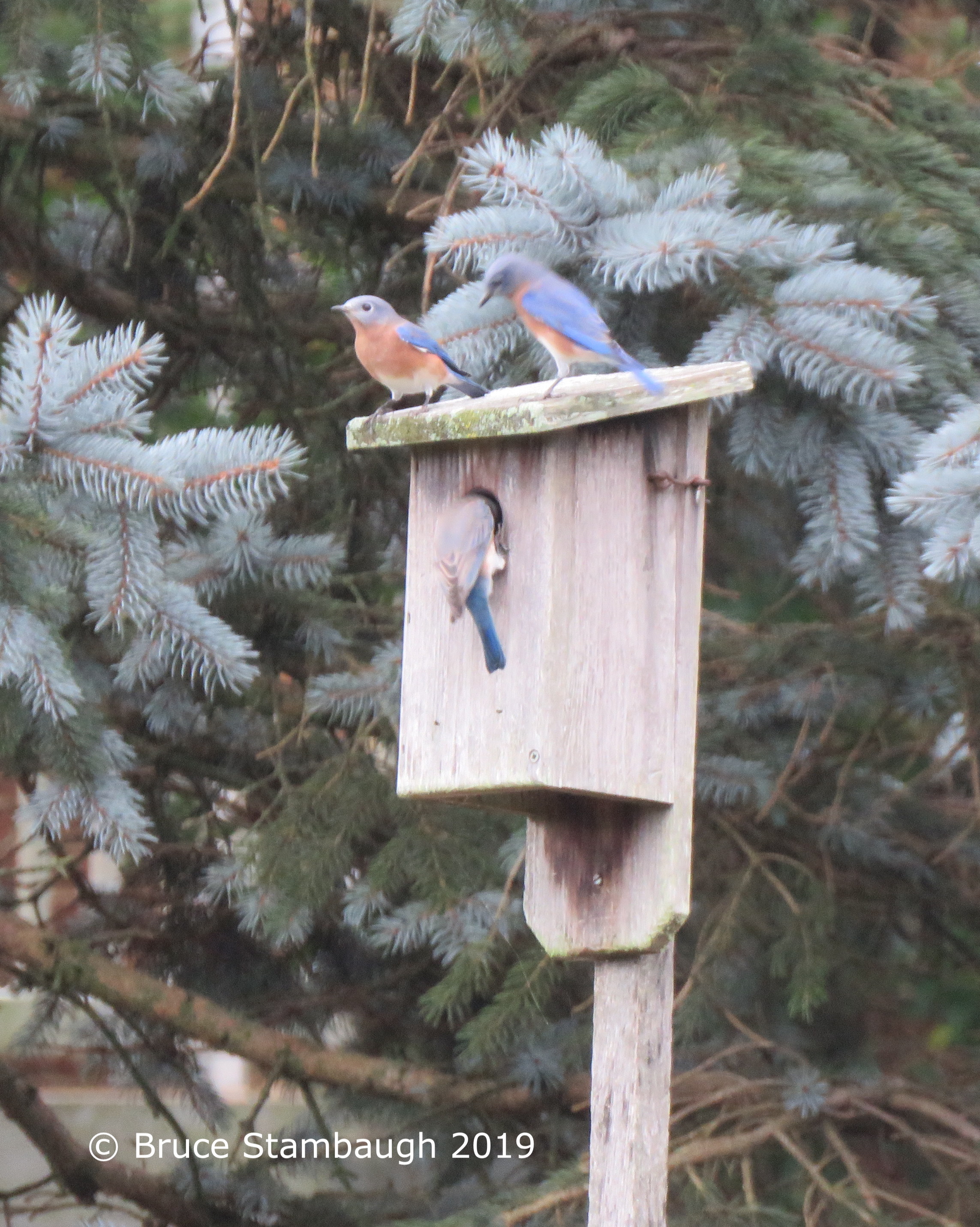
The inspection.
This time of year, the leaves are usually my main focus. Given my current limited mobility status, however, that has mostly changed. Unless I go for a drive with my chauffeur wife, I enjoy the colors that I can see from home.

What better time than October to change gears, relax, and just embrace each moment as it arrives. The air has cooled. The front and back doors are propped open, inviting a refreshing and gentle breeze to flow through the house.

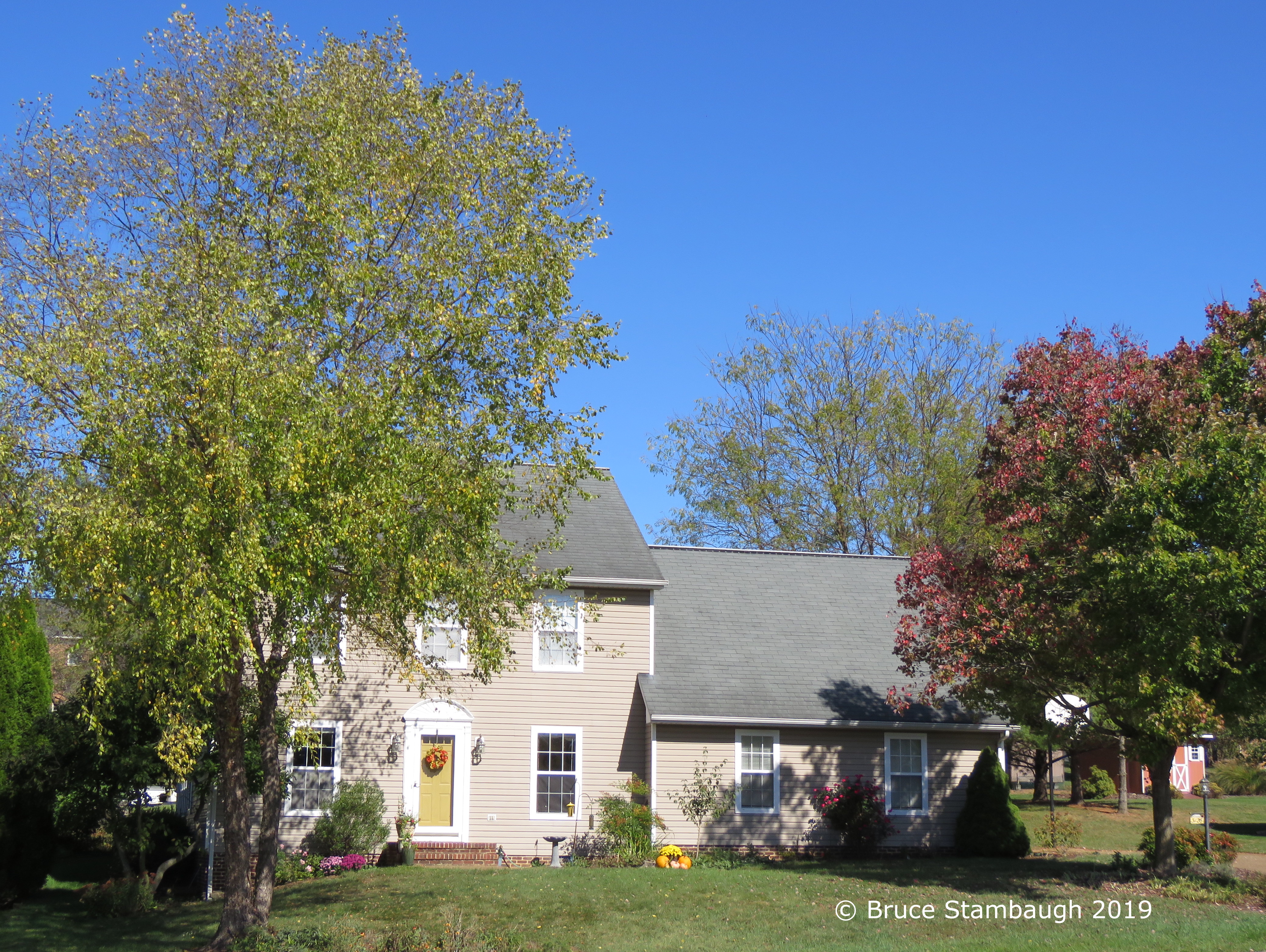
The morning sun illuminates our neighbor’s home across the street. A glorious blue sky serves as the backdrop, and a handsome birch tree and a tinting red maple stand as bookend accents. Their fall decorations of yellow mums and cluster of orange pumpkins give a warm welcome.

To the south, the sun bathes the backyard, too, highlighting the pale green, elongated leaves of the shingle oak we transplanted from our Ohio home. Those leaves, also, are slowly transforming to a gilded brown and will rustle in the winter winds until springtime buds displace them.

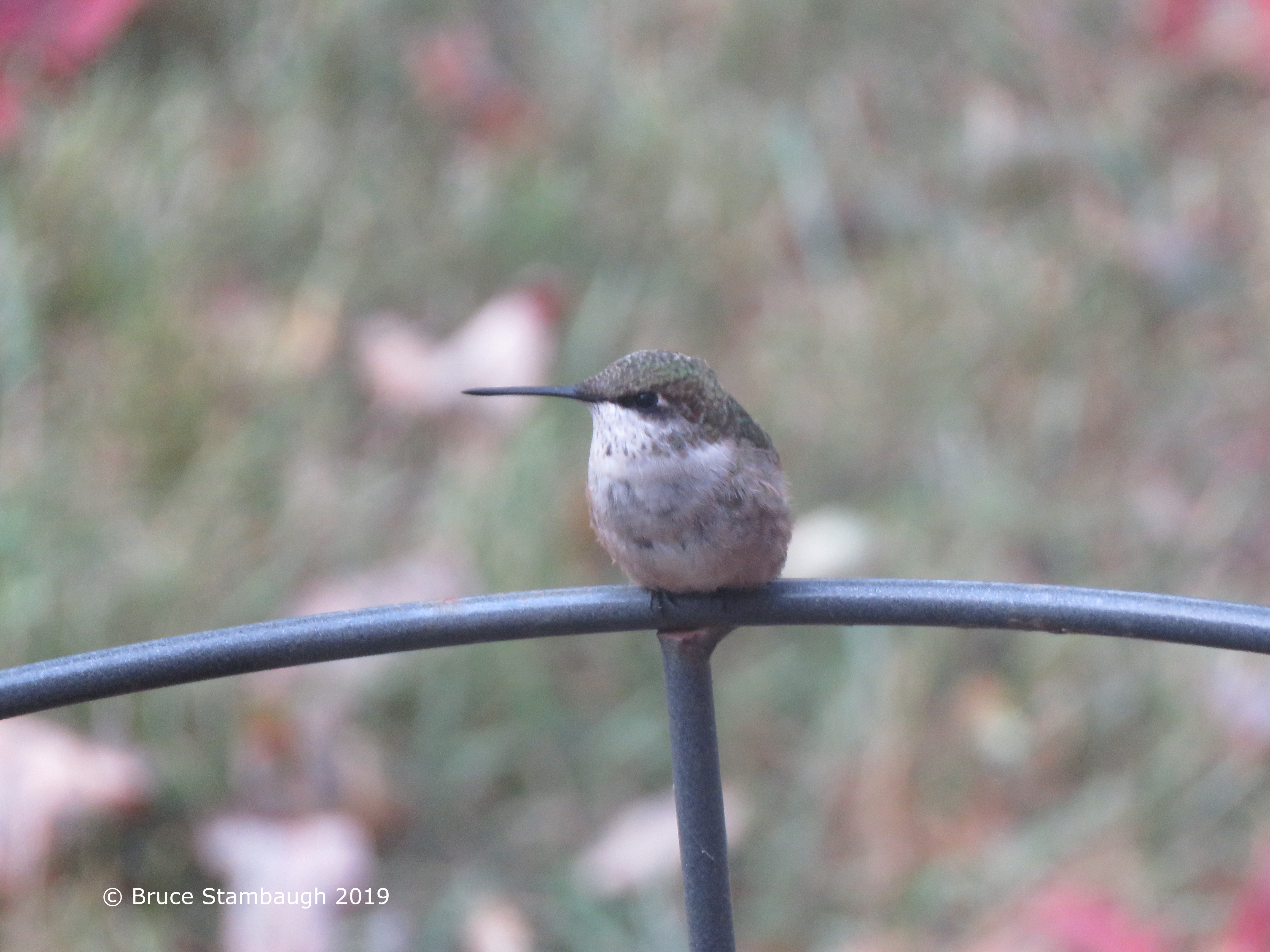
A family of house finches chatters softly in the blue spruces above the white picket fence of another neighbor. Northern cardinals chip in adjacent pines before taking turns at the black oil sunflower feeder. A family of eastern bluebirds checks out a birdhouse for possible winter habitation.

With the afternoon sun beaming, I return to my reading on the patio. The natural warmth seems to enhance the book’s enlightening content. To keep my leg limber, I shift positions as often as I turn pages.


Towards evening, it’s rush hour at the birdbaths. American Robins, unseen and unheard for days, suddenly swamp the three aquatic venues available. The hand-honed sandstone bath proves the most popular. Others settle for the water dish and the old cast iron pedestal basin.

Living life at my modified and sometimes stationary pace is inspirational. In my reposed state, I marvel at the rosebuds outside my office window, closed tight in the morning, and fully opened by mid-afternoon.

Both the Harvest Moon and the Hunter’s Moon have come and gone. The first frost has ended the growing season in many locales while others have experienced their first snowfall. Winter is knocking on the door. October’s showiness will soon be over.

It is with great gratitude that I embrace each moment as it arrives, glad that my previous busyness is history. My sincere hope is that I’ll still apply this moment-by-moment attitude when I no longer have to sit icing my elevated knee.

© Bruce Stambaugh 2019
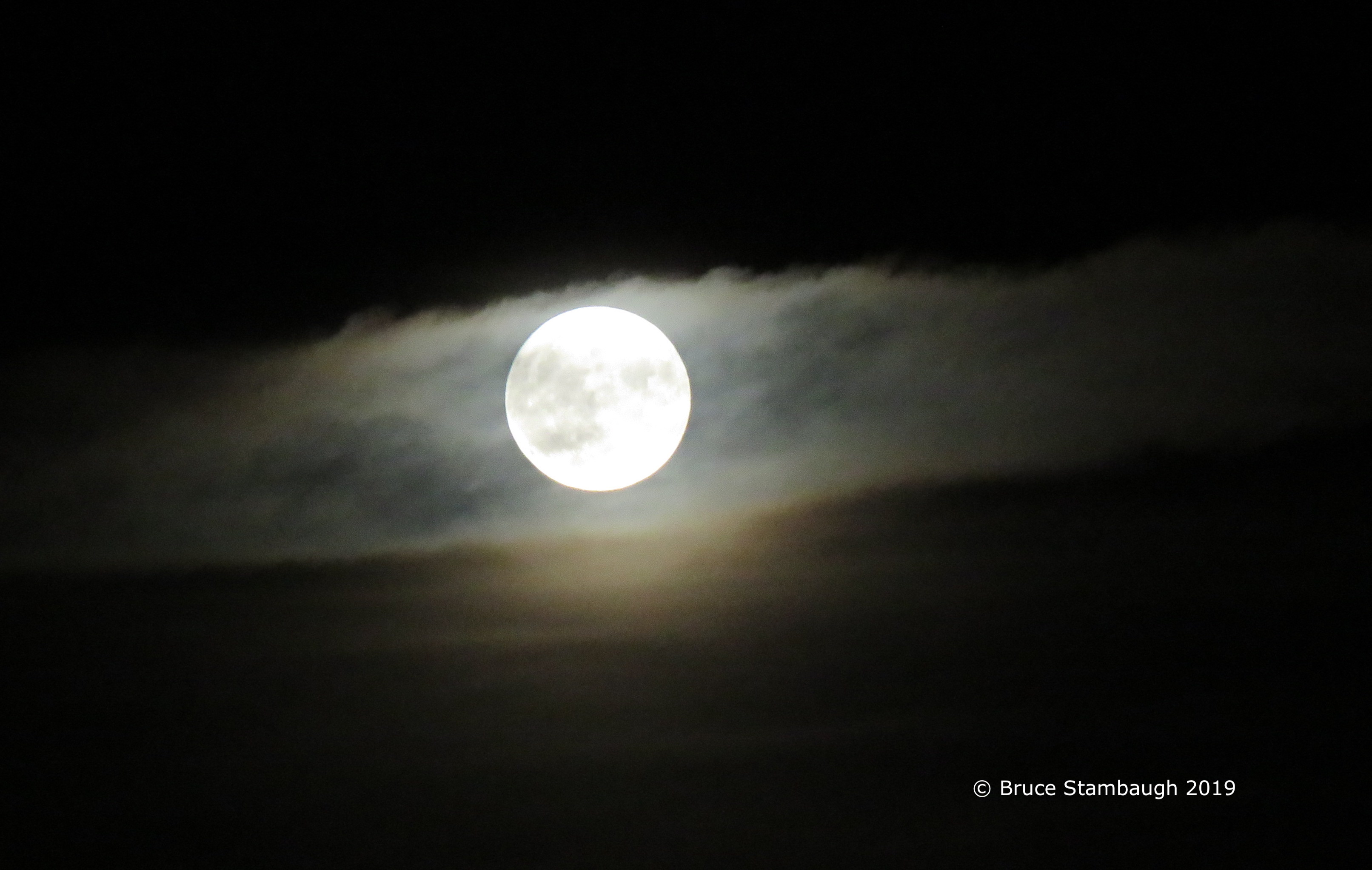
A Veiled Hunter’s Moon


Thin clouds hung over Massanutten Mountain as October’s Hunter’s Moon rose near Harrisonburg, Virginia. The result was an eerie effect as the moon began to rise above the clouds.

“A Veiled Hunter’s Moon” is my Photo of the Week.

© Bruce Stambaugh 2019

Healing is a humbling experience


I thought I was doing so well with my new knee. Then reality hit.

At my two-week post-surgery check-up, the orthopedic surgeon was pleased with my progress. However, he didn’t like the swelling in my leg from above my knee to my toes. I didn’t much like it, either.

The doctor said the swelling was most likely from my daily goal of walking a mile. I needed to rest, not walk.

That was my reality check. Thinking I was doing the right thing, my extra walking was actually slowing the healing process, adding to the post-surgery pain that goes with any major operation like knee replacement.

The doctor repeated what I already knew and was doing. “Elevate your leg, ice it, and rest,” were his orders. He assured me that I was well ahead of schedule in my healing. I need not try to hurry it along with my aggressive walking goals.

I got the same message the next day from my physical therapists. The swelling was hindering my ability to stretch, extend, and flex my repaired leg. I felt silly.

I got the message loud and clear. Healing takes time.

Being retired, the time I had. So I reordered my post-surgery routine. I continued with my physical therapy twice a week. I did my exercises and stretches. I wore out my recliner, my go-to spot to raise my leg and ice it, a lot.

Most importantly, I eliminated the additional walking. Both the doctor and therapists told me that many patients still used either a walker or a cane several weeks after the surgery. I walked without either a week after my operation.

I was the exception to the rule. Only I didn’t realize it or appreciate it. The doctor said that my dedication to the pre-surgery exercises likely had prepared me for a quicker response to walking unaided.

However, I needed to adhere to after surgery recommendations for a successful recovery. Now that I have settled into my new routine, I see how foolish I was to try to rush something that genuinely needed time and rest to properly heal.

I have always been an active, involved, engaging person who enjoys helping people. I like staying busy. I enjoy work that I can do. I learned that for the present, my most important task was to rest, elevate, and ice.

I listened to the medical experts by reprogramming that energy. I have limited my computer time. When I do write, I type with the laptop on my lap, feet up.

Treasure hunt.
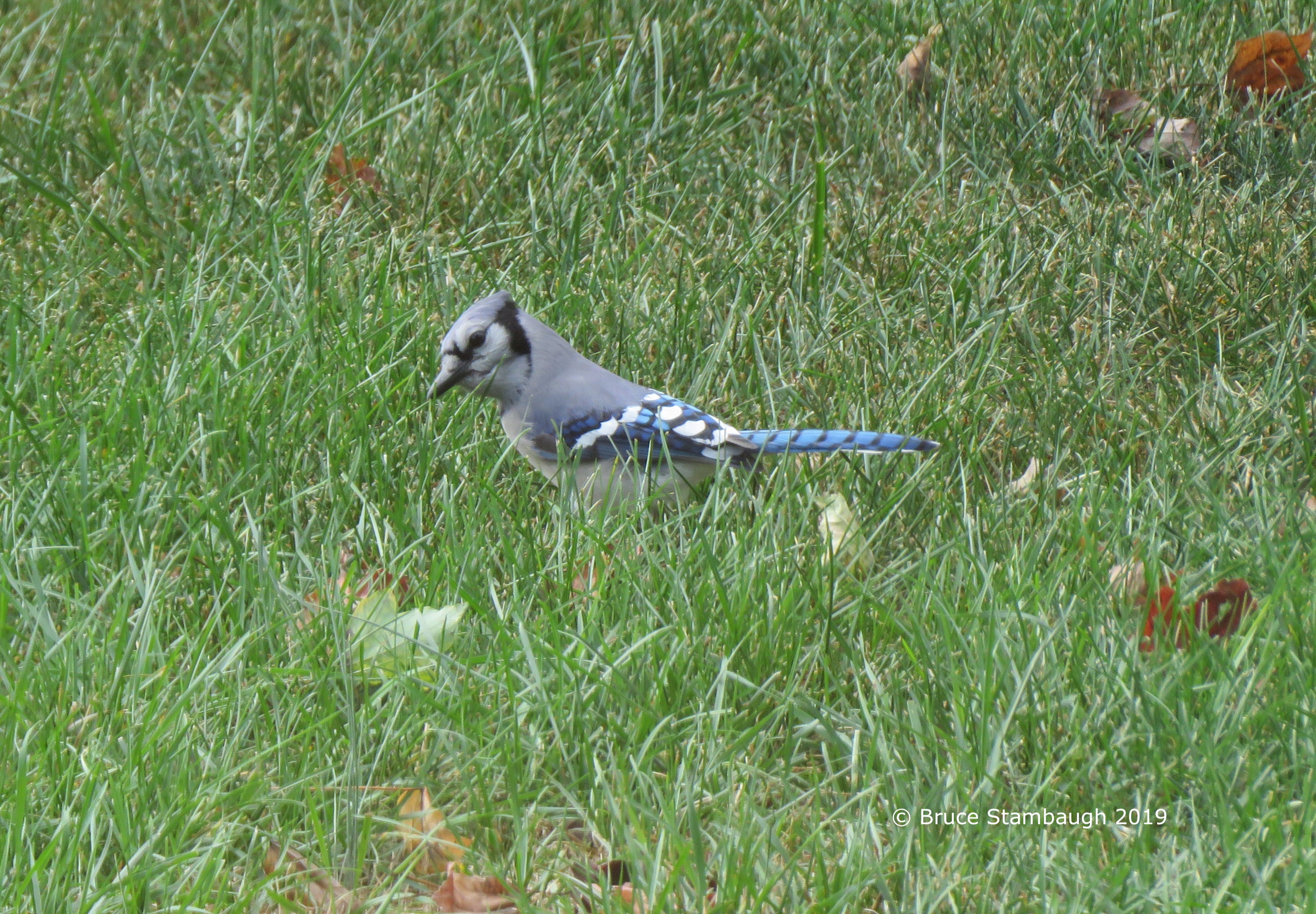
I sit in the sunshine on the back porch, reading or watching gray squirrels plant acorns in the grass. Minutes later, the ever-observant blue jays unearth those same tasty treasures. For a change of scenery, I lounge in the comfort of my recliner, feet up, leg iced, and reading.

Even at this slower, laid-back approach, the days seem to fly by. I hope that’s not merely a reflection of my age.

The healing process has been an awakening and a humbling experience. I thought of others who weren’t as fortunate as me. Weeks after their surgery, they still relied on walkers and canes. I realized the arrogance of my over-zealousness to heal.

I grasped the importance of patience. The stark awareness of my situation increased my gratitude.

I learned that clarifying my own condition sharpened my empathy for those not as fortunate. Compassion took on a new form.

Healing from significant trauma to the body, whether by choice or accident, simply takes time. This old patient has finally discerned how to be patient.

© Bruce Stambaugh 2019

That Time of Year


It’s that time of year, again, when the leaf peepers hurry far and wide to find the prettiest leaves. This photo was taken exactly four years ago to the day high in the Maryland mountains. The leaves on the trees on this hillside declare the breadth of Mother Nature’s paint palette. In this case, I was on one of my many trips between Ohio and Virginia before we moved to the Shenandoah Valley.

“That Time of Year” is my Photo of the Week.

© Bruce Stambaugh 2019

October is the nostalgic month

A typical fall scene in eastern Holmes Co., Ohio.

If the calendar has a nostalgic month, October is it for me.

As a child, our father would load his brood of five into the old cream-colored Chevy, and we would head southwest out of our blue-collar steel town to the wonders of Holmes County, Ohio. Oh, the things we would see and encounter.

We’d stop along the windy way of U.S. 62 to sample cheese. We watched horse-drawn black buggies clop along, marvel at the corn shocks standing in rolling fields, and gape at long farm lanes that led to large white houses with big red bank barns. The real show, however, was in admiring woodlot after woodlot ablaze with every shade of orange, red, and yellow.

Dad would photograph the most colorful of the scenes. I couldn’t have imagined that as an adult that I would spend the best years of my life in that setting, among those people.

If I had to pick an ideal month and place to paint an iconic picture of our life, it would have to be October in Holmes County. My wife and I reared and raised our children there. We fulfilled our careers there and made life-long friendships.

During the first decade of our life together, my wife and I lived in the western hills of Holmes County. In October, there was no prettier drive than the road from Killbuck to Glenmont with its seven hills all dotted gold, russet, and yellow. It was a landscape artist’s paradise.

We built our first home on a bluff facing into that lovely valley. The view was always gorgeous in October.

When we moved to the eastern section of the county, our directional orientation and views changed but were equally splendid. Facing east, many gorgeous sunrises greeted us. The brilliant sunsets we enjoyed from the back yard were similarly lovely.

Our Ohio October view.

The bucolic scenes of corn shocks drying in fields surrounded by blushing sugar maples, rusting oaks, and yellowing ash and tulip poplars were commonplace, but no less appreciated. I drove back many of those long lanes to converse with the inhabitants of those white houses, and the keepers of those red barns. It was like those childhood visions had become actuality. That’s because they indeed had.

But October served as a double-edged sword of sorts for me. I didn’t mind the changeable weather. If an early-season Canadian clipper arrived, the snow seldom stuck, and if it did, the fluffy whitewash merely enhanced the already glorious countryside.

It wasn’t the weather or even the stinging scent of burning leaves that concerned me, though. Early Halloween pranks brought us volunteer firefighters out at 3 in the morning to douse some of the corn shocks that had been set on fire for pure orneriness.

On more than one occasion, town squares resembled barnyards. Temporary pens of goats and sheep were surrounded by hay bales and relocated corn shocks that blocked the traffic flow.

The good news was that the farmers usually got their livestock back safe and sound. Fortunately, that tradition has waned with the advent of security cameras and alarms.

We haven’t experienced such shenanigans during our two-year stint in Virginia’s Shenandoah Valley. With consecutive dry summer and fall months, the autumn leaf colorations can’t compare to those of our former home either.

I suppose that is what in part drives my pleasant autumn nostalgia for those bygone Holmes County days. October does that to me.

© Bruce Stambaugh 2019

Purple Haze


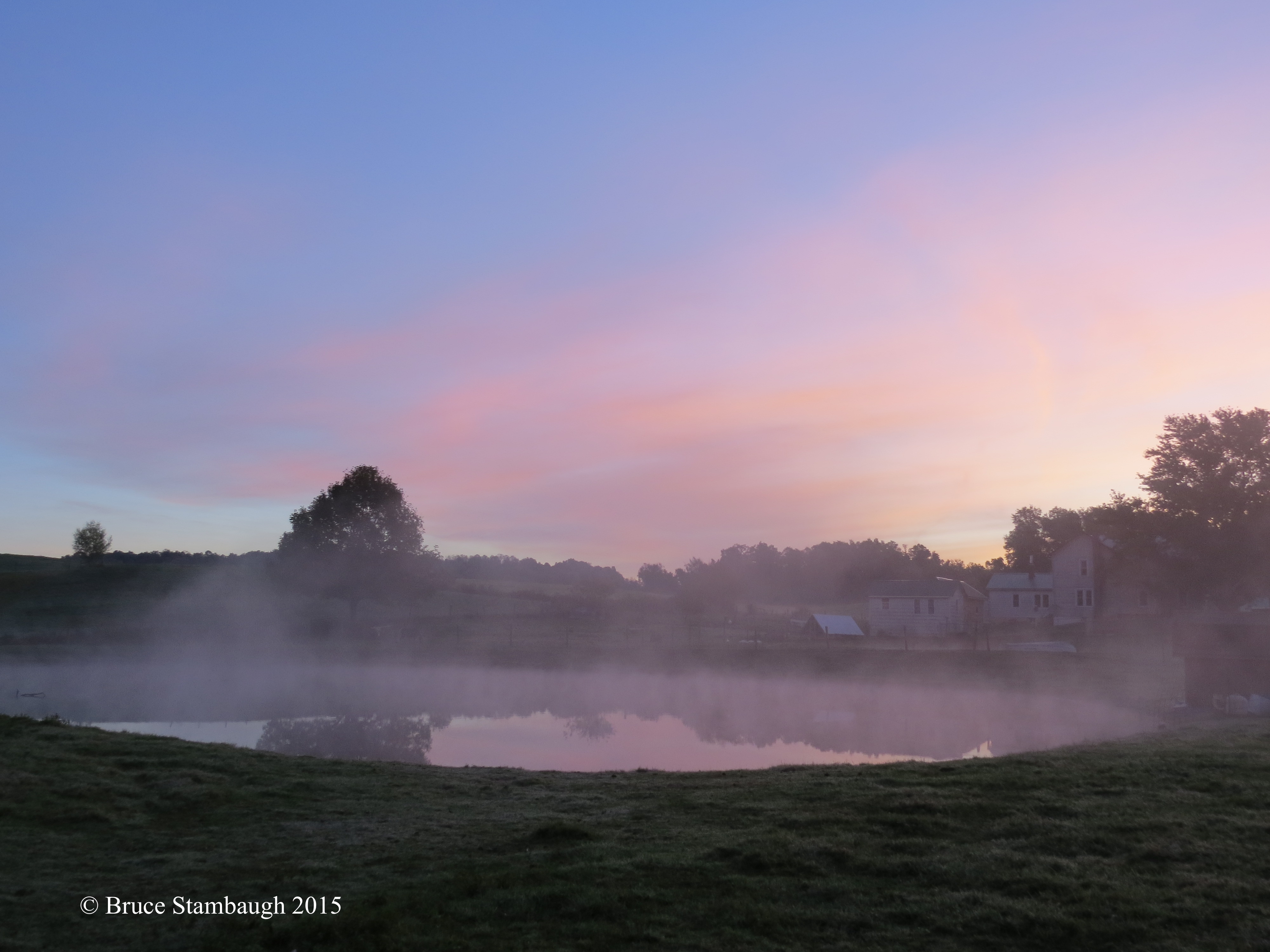
I sincerely doubt that this is what Jimmie Hendrix had in mind with his song “Purple Haze.” But if there ever was a photo of purple haze, this surly has to be it.

It was a chilly morning several years ago in Ohio’s Amish country about this time in October. The mist coming off of the farm pond caught the twilight’s first light. I also doubt that the residents of this Amish farmhouse ever heard of Jimmie Hendrix. But they do know what purple haze is.

“Purple Haze” is my Photo of the Week.

© Bruce Stambaugh 2019
Recognizing the virtue of September’s silence

Listen. Did you hear it? If not, there’s still time. In a few short days, September’s most significant gift will be gone.

The changing leaves too often get all the attention, especially the gorgeous sugar maples. I have no argument with that whatsoever. September merely sets the stage for Nature’s colorful artwork.

Inexplicably, that wondrous, warming rainbow leaves leafy trails to this September virtuous quality. Can you guess what it is?

In the pondering, we uncover this gracious gift the world is too often too busy to unwrap. September’s silent specialty is all around us. Do you hear it? That rhetorical question is no joke.

Silence is golden as the saying goes, and from beginning to end that silence is never more so than in September. Listen again to see if you agree.

September gives us ample opportunity to embrace her unique child. Her silence never sleeps. She is as still as still can be 24-hours a day.

At every dawn, September’s stillness is broken not by the sun, but by humankind winding up for another day of work. Unnatural sounds break the silence and intrude upon our slumber.

The morning train whistles reverberate up and down the valley warning of its impending crossings. Even with the house windows closed, we can hear it from miles away.

Tires hum on the variegated macadam where country and city roadways meet. On occasion, sirens tell a tale of disrespect, distress, or disorder that further disturbs September’s sacredness.

With the initial rush over, my wife and I settle on the back porch for a simple breakfast. Too fascinated with the month’s hush, we seldom interrupt it or one another’s thoughts.

Thinking the coast is clear, mourning doves swoop in for morning refreshments at the birdbaths. One slight movement by either of us and the spell is broken. The ripple of wind that propels them to safety in the neighbor’s blue spruce tickles my neck.

A rabbit nibbles freely at the fibrous greenery. Its oversized eyes sparkle in the sunshine, its floppy ears twitch without disturbing the quietude.

We take up the same positions at lunchtime. Migrating ruby-throated hummingbirds squawk their arrival at the nearby feeder. Too much like humans, they spend more energy chasing each other away rather than learning to share the nourishing liquid nectar.

The leaves and needles of the neighborhood trees hang limp and still. Even if a slight afternoon breeze gently bounces them around, they remain faithful to the code of September silence. They hit the ground inaudibly.

Beneath those shady limbs, lawnmowers roar back and forth, back and forth. When the last blade is cut, the glorious silence returns. Does anyone hear it?

If not, the ubiquitous gangs of bellowing blue jays are sure to enforce it with their host of calls and cries. Their intentions are righteous; their methods are inadequate and contradictory, to say the least. Still, once gone, September’s silence is palpable.

Twilight may be the best time to catch a glimpse, a snippet, a pocketful of September’s hush. With the day’s work done and supper over, the last of the season’s crickets sing the silent song into the night.

Overhead, the Milky Way, dim as it is in the potentate sky, twinkles its approval of the welcome stillness. The day is done. Though many have tried sunup to sundown, September’s silence has thankfully prevailed.

Much like the rest of us, September’s days are numbered. Listen for her calming silence while there is still time.

© Bruce Stambaugh 2019

Moving more slowly for good reasons


I’ve been moving a lot slower lately. At my age, that can be expected. That, however, is not the primary reason for my more leisurely pace. I recently had a right knee replacement.

Before the operation, I had been hobbling along at my usual rapid stride for too long. With bone on bone, arthritis, and bone spurs, I knew my knee would need medical attention.

I sought the absolute best orthopedic surgeon I could find. His reputation clearly preceded him. I had to wait three months for a consultation, and then another five months for the knee replacement surgery itself.

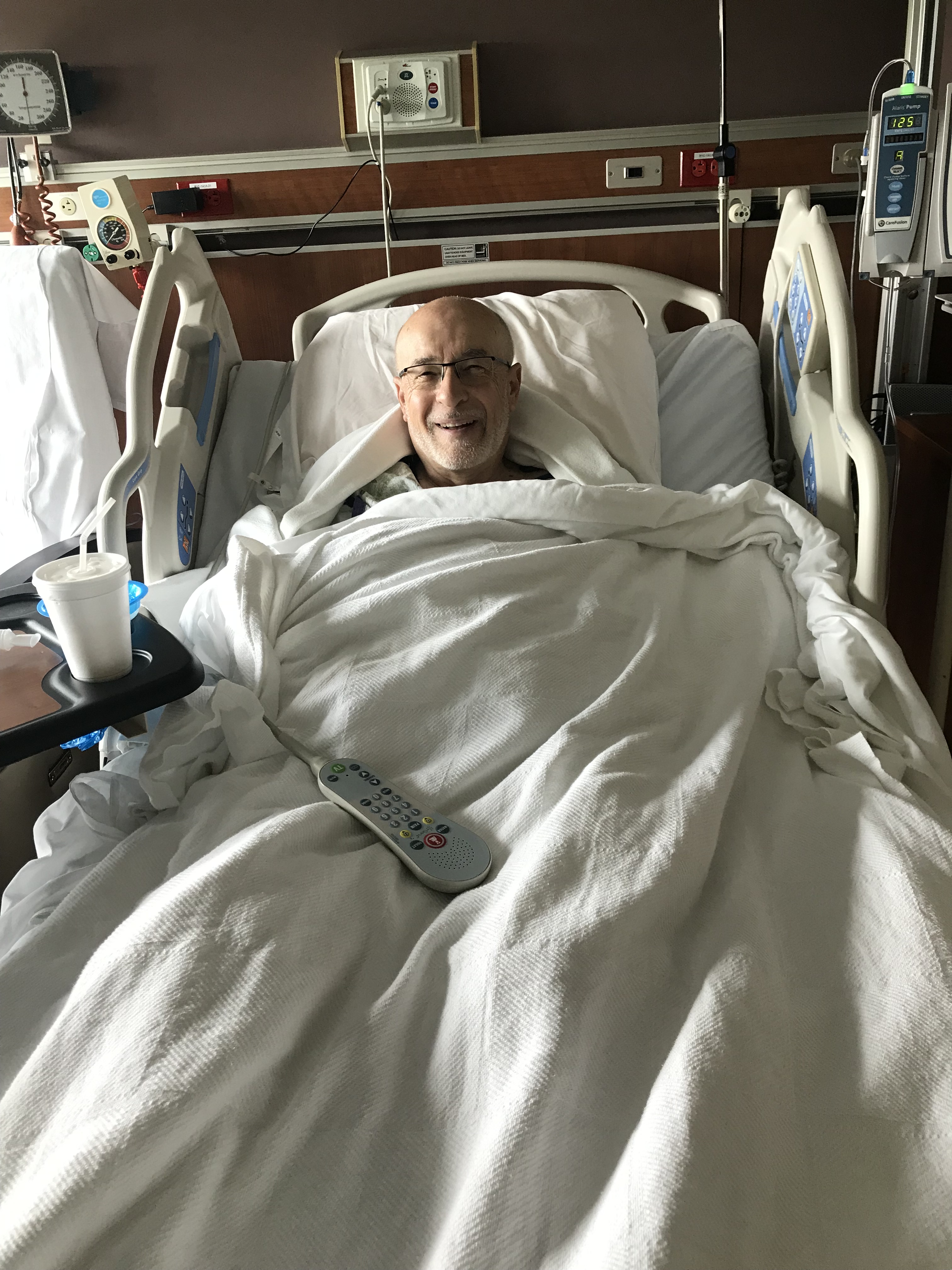
Three and a half hours after the surgery.
I took that delayed process as a cue. I needed to be more patient, more deliberate in my approach to life. I wasn’t a spring chicken anymore, and my achy knee daily reminded me of that fact.

My wife and I attended pre-surgery classes together. The instruction covered the do’s and don’ts of my activities both before and after the operation. Also, a friend from church had had the same surgery by the same surgeon at the same hospital as me with impressive results.

From these sources, I gained confidence, and specific themes emerged.

“Stay ahead of the pain,” was one. In other words, don’t try to be a hero. Take the pain medicines as directed.

“Ice is your friend,” was the second piece of wisdom. Elevating and icing the leg helped reduce the swelling and inflammation. Ironically, though, swelling is needed to properly heal the soft tissue, muscles, and ligaments that have been cut into and/or moved in the surgery process. The key was to keep the long, stapled incision dry and clean.

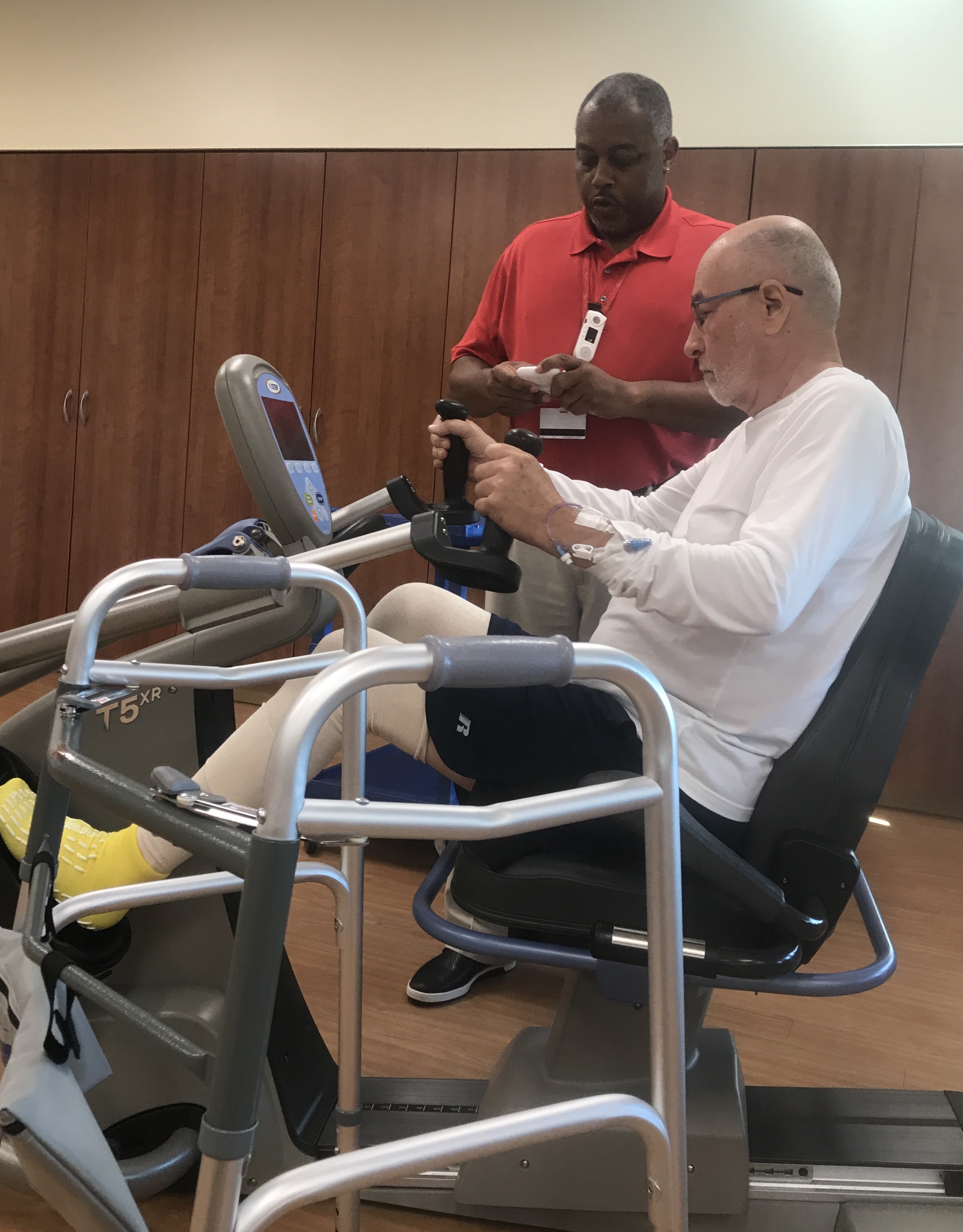
Long before the surgery, I began a routine of recommended exercises. I continued to do them in the healing process. Doing so clearly paid dividends.

On the stationary bike in the hospital rehab.
The doctor had told me that he would have me walking the same day as the operation. My surgery was at 10:30 a.m., and I was strolling down a hospital hall with a walker and supervision by 3:30 that afternoon.

Staying hydrated was another essential element in the post-surgery protocol. I drank like a fish.

The doctor had one more piece of pre-surgery advice for me: “Keep moving.” So I did.

I walked around the neighborhood, usually in the morning, as much as I could. I also went hiking, though I often stopped to rest, especially on inclines.

Though I have yet to have my post-op surgery visit with the doctor, it’s clear all that locomotion paid off. At the end of my first session, my physical therapists said I didn’t need either my walker or cane. A week after surgery, I was walking unaided up and down our street.

How I kept writing.
I noticed that my gait was nearly half of what it was before the surgery. As we walked side by side, I told my wife that I think this is the stride that I should continue to maintain.

I felt comfortable walking at a slower pace. An occasional sharp pain radiating from either side of the knee kept me focused on each and every step. It was the first test of my new, slower resolve. I had a new knee and a renewed appreciation for all that was around me.

I know I am fortunate, and that I still have a long way to go in the healing process. I hope that the more unhurried stroll through life will enhance my awareness. I’ll breathe deeply, observing, absorbing, and appreciating with even more vigor of whatever finds me along life’s path.

© Bruce Stambaugh 2019
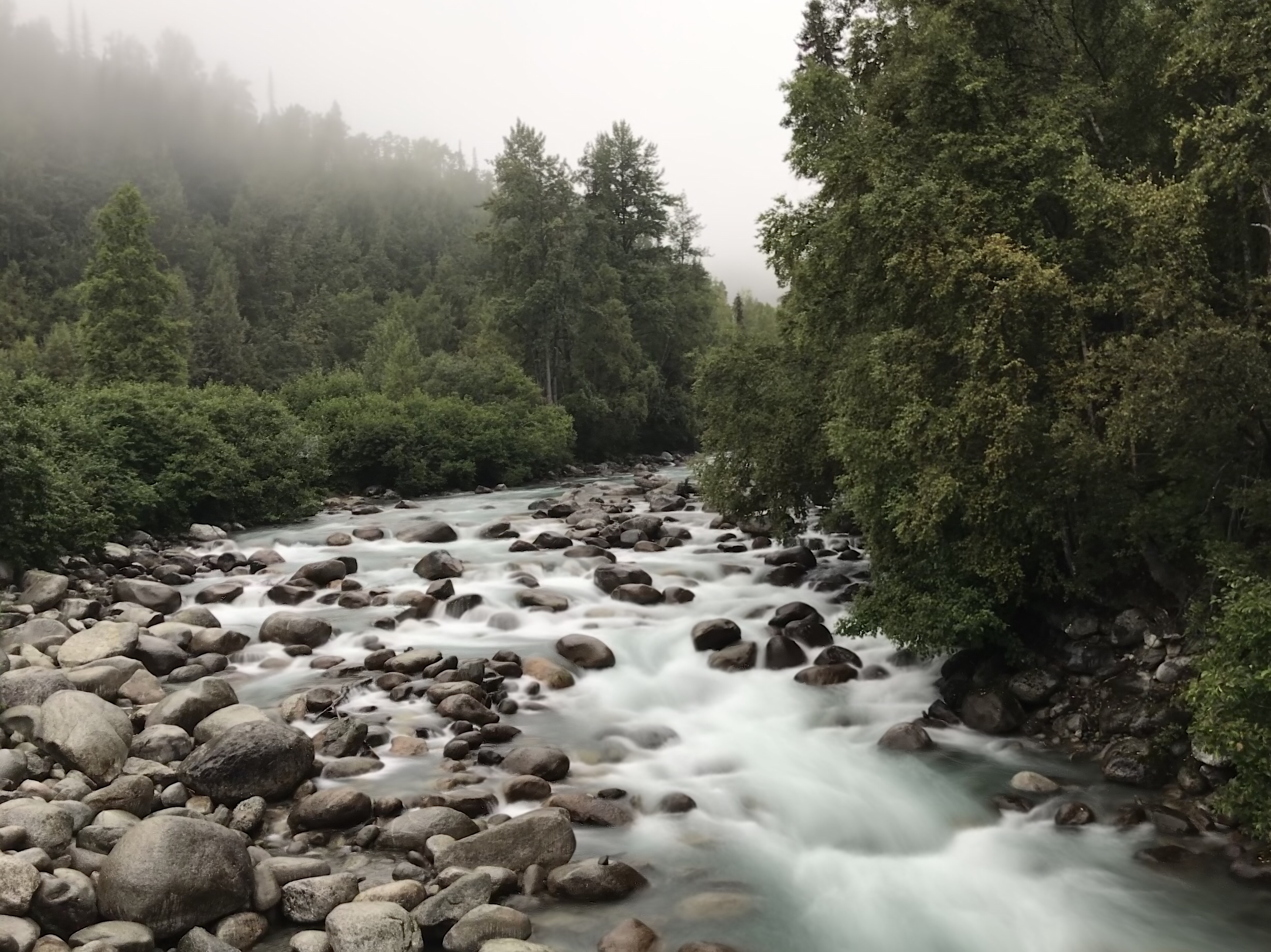
Relaxing


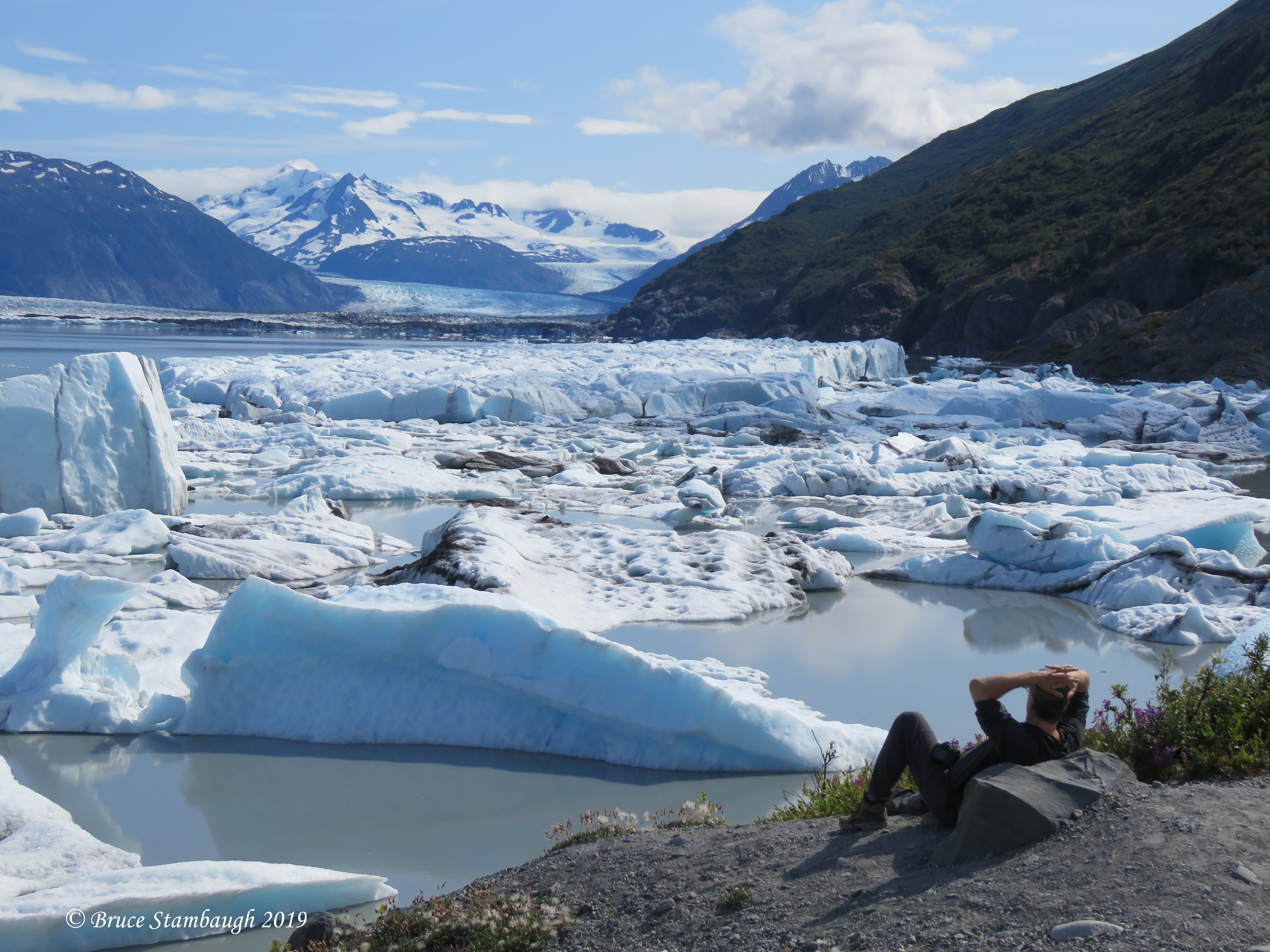
Our friend had the right idea. But then, he had been to Knick Glacier near Palmer, Alaska, several times. While the rest of us scurried around exploring moraines, discovering wildlife, and capturing as many photos of the incredible scenery as possible, Doug leaned against a rock and just relaxed. With this view, who could blame him?

“Relaxing” is my Photo of the Week.

© Bruce Stambaugh 2019
Finding a new sanctuary

Big Meadows.

Not long after we moved to Virginia’s Shenandoah Valley more than two years ago, I sought a nature spot. I wanted a place where I could practice my photography, quietly watch birds, or simply do some walking.

I had many such places within an hour of our home in Holmes County, Ohio. They all had their unique features that attracted many folks in addition to fulfilling my photography, birding, and hiking desires. I had hoped to find one location close to our Virginia home that met those needs, too.

I have plenty of choices when it comes to getting out into nature for walks, birding, and photography in the Shenandoah Valley. I hit the trifecta if I can incorporate all three into one trip.

When you have a national park within the boundaries of your county, the answer seems obvious. It’s a 40 minutes drive to the park’s closest entrance. Shenandoah National Park was formed out of parts of eight Virginia counties, Rockingham among them.

This slideshow requires JavaScript.

The park offers a host of options for visitors, though I have only been able to thoroughly explore a few so far. Big Meadows is one of those, and to date, it has been my go-to spot.

Big Meadows is a wide-open space on the summit of Skyline Drive at mile-marker 51. Its simplistic name perfectly describes its main feature. The place is a big meadow.

What’s it doing there, and why? With the park’s dense forests, fast-running streams that often lead to crashing waterfalls, Big Meadows is an anomaly to the park. No one seems to know how or why Big Meadows was formed. It’s certainly a fish out of water given the diverse geology, geography, and biology in Shenandoah National Park.

Big Meadows is and always has been lush with wildflowers, grasses, and low shrubs. Archeological research reveals that Native Americans camped in Big Meadows. Evidence shows they used controlled burns to flush out the abundant wildlife of the area. The park service still uses controlled burns to keep Big Meadows Big Meadows.

The area is more than a big meadow, however. The Byrd Visitors Center offers an informative display on the formation of the park, along with a gift store, and restrooms. A way station for hikers, an amphitheater, a lodge, restaurant, campgrounds, picnic areas, and multiple hiking trails can all be reached from Big Meadows.

A few photos from my most recent visit to Big Meadows. Please click on the photos to enlarge them.

Of course, the Appalachian Trial runs on the west slope of the Blue Ridge Mountains on the edge of Big Meadows. Waterfalls are not far away along with some incredible views of the Shenandoah Valley.

On a hot summer’s day, Big Meadows is a pleasant escape from the valley’s heat and humidity. The temperature on the mountain can be 10 to 15 degrees cooler.

Even for those who aren’t able to hike very far, Big Meadows offers a lot. Visitors can sit in their cars while butterflies flit from one group of flowers to another. I’ve even seen dark-eyed juncos pecking for food around the Byrd Visitors Center in the summer.

The winter weather gets so wicked, however, that I tend to only visit spring, summer, and fall. Besides, the park often closes the Skyline Drive in the winter anyhow.

Everyone needs a place to get away, a place to relax, to take a load off, retreat from the hectic, pounding pace that we’ve come to know in the early 21st century. Big Meadows is such a place for me. Where is yours?

The view of the Shenandoah Valley from Big Meadows Lodge.

© Bruce Stambaugh 2019
Bay Photos by Donna

Wildlife Photos From The Chesapeake Bay Region

ROAD TO NARA

Culture and Communities at the Heart Of India

K Hertzler Art

Artist and nature journalist in the Shenandoah Valley of Virginia.

Maria Vincent Robinson

Photographer Of Life and moments

Gabriele Romano

Personal Blog

Jennifer Murch

Art is the only way to run away without leaving home. -Twyla Tharp

Roadkill Crossing

Writing generated from the rural life

ANJOLI ROY

writer. teacher. podcast cohost.

Casa Alterna

El amor cruza fronteras / Love crosses borders