My wife and I and some friends of ours from Ohio were visiting Ft. Clinch in Ft. Clinch State Park in Fernandina, FL during a “Living History Day.” A volunteer in era-appropriate Civil War attire was eloquently sharing about the old fort’s infirmary when this oil lamp caught my attention. The morning sunlight warmly played upon the lamp and the table on which it sat. The white-washed brick wall, with some original mortar showing through, served as an appropriate backdrop. The setting made for an impromptu capture without me being too rude to our guide.
The 2014 version of Punxsutawney Phil. (Photo courtesy of the Pittsburgh Post-Gazette.)
By Bruce Stambaugh
Another Groundhog Day is upon us. What’s all this silliness about anyhow?
I’ve never entirely understood the ubiquitous clamor over this unofficial holiday. Even as a youngster, I remember watching the Today Show on television on Feb. 2. Willard Scott, the show’s weather guy, got so excited if the groundhog didn’t see its shadow. Folklore says that means spring will arrive sooner than the official date.
That’s just nonsense, of course. Wild animals have some sense of impending doom. I heard stories about deer fleeing the lowlands along the Killbuck Creek in Holmes Co., Ohio well ahead of the devastating flooding in 1969.
But a groundhog, or if you prefer woodchuck, whistle pig or land beaver, predicting when spring will really arrive? I don’t think so.
The town of Punxsutawney, Pennsylvania garners the most attention on Groundhog Day. The good folks of the hard-to-spell town have been hosting the official celebration of this hoax of a holiday ever since 1886.
I was surprised to learn the event had been going on that long. It’s gained in popularity since the release of the Hollywood movie of the same name in 1993. Since then, folks swamp the little west central Pennsylvania burg wanting to get a look at the four-legged weather prognosticator from Gobbler’s Knob.
I was also intrigued to learn that Groundhog Day was a carryover from traditions in Europe. Most of them were borne around a religious holiday called Candlemas, where clergy blessed candles that were distributed to parishioners.
The candles were lighted on February 2. If the candlelight was needed due to dreary weather, the populous took that as a sign that winter was waning.
Who were these kind but superstitious folks? Why Germans, of course. And what nationality predominated in swarming through Penn’s Woods in the pioneer days of our great country? Why Germans, of course.
In clearing the land for farming, they found groundhogs rather numerous. The four-legged varmint also happened to resemble an animal from their homeland, the hedgehog.
In fact, pioneer farmers in New England had a very practical saying. “Groundhog Day, half your hay.” In other words, if a farmer had used up more than half of the hay stored for the winter, lean times could be ahead for the livestock if winter lingered.
So it seems that I might have to ease up on the good folks in Punxsutawney. Why not have a little fun and make a little money in the process?
Having something to celebrate at winter’s midpoint may not be such a bad idea, after all. Given the day’s history, it does have a purposeful origin. As time and traditions both transformed, a case can be made that Candlemas morphed into Groundhog Day.
I don’t see either the day or the fuss going away anytime soon. We can thank the Germans for creating the tradition. We can thank the hyperventilating media for extending it.
I guess this just goes to show that even when you think something is a bit unusual, you can still learn from it if you keep an open mind. I won’t demean Groundhog Day again. Neither am I planning on celebrating it.
I will light a candle in the day’s honor. While I’m at it, I better check my supply of hay, too.
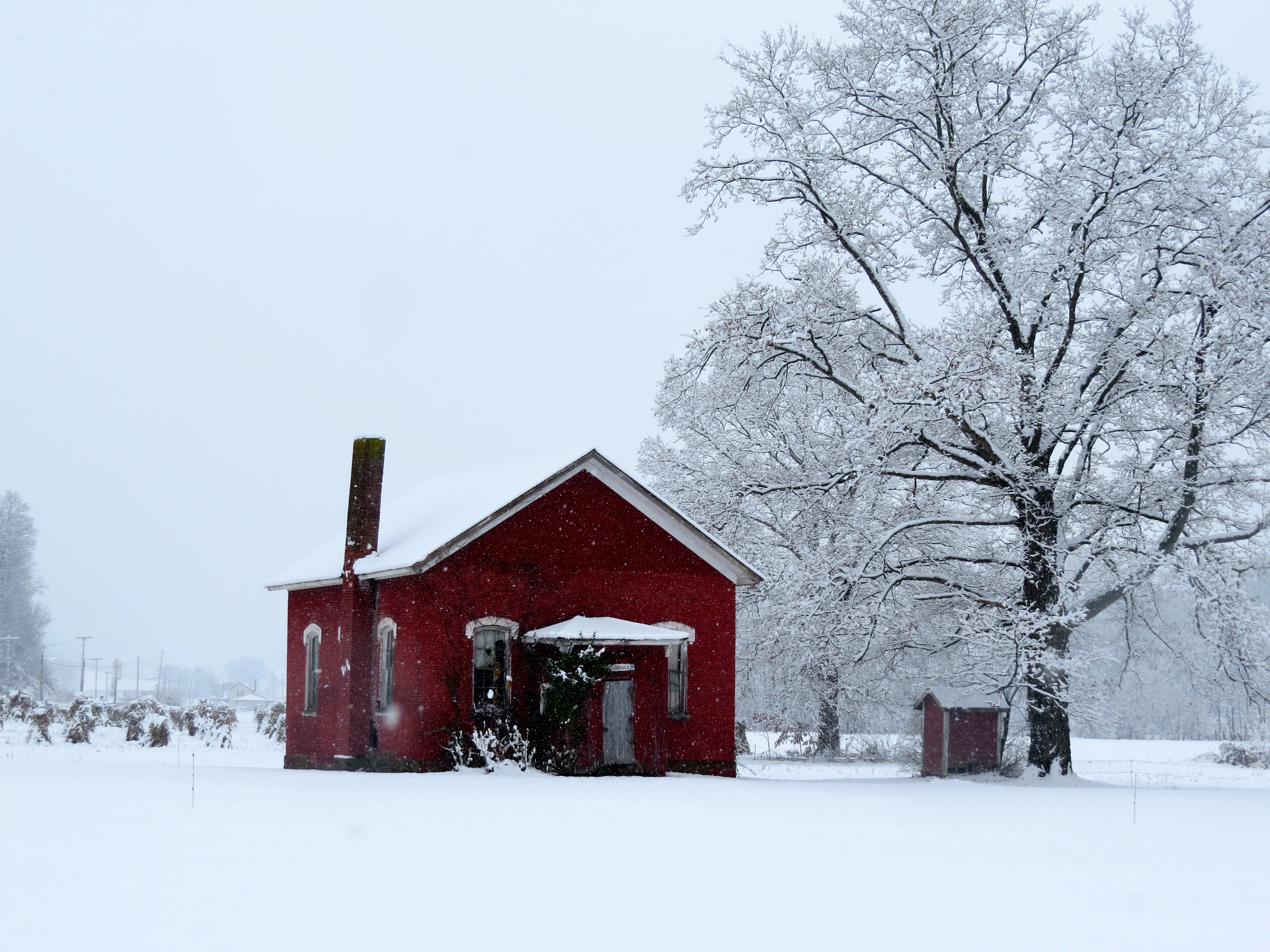
The red bricks of this abandoned one room school a few miles from my home stood in sharp contrast to the season’s first snowfall. Long since closed, this little red brick school once served as the incubator for future lawyers, farmers, housewives, teachers and business owners.
The outhouse on the right also played an important part in the school’s history. Right after World War II, the students gathered in the morning for class, but their usually prompt teacher wasn’t in the building. After several minutes, the oldest student, an eighth grader, went looking for the teacher, and found him sitting in the privy dead.
I always think of that story when I pass by the old Beechvale School. “Little red schoolhouse” is my Photo of the Week.
I’ve loved baseball since I was a kid. That’s a long time, never mind how long.
Baseball was in my DNA. I suppose my father’s love of the game, and that of my grandfather highly influenced me. Dad played baseball in high school. Grandpa Merle played in high school, college, and in summer leagues.
My big brother played sandlot baseball, too. Of course, I wanted to be just like him.
Youth was my golden era for baseball. I was young, innocent, impressionable, enthusiastic, looking for any diversion from either work or school. Baseball was it.
I started playing baseball when I was seven. The coaches put me at second base for very practical reasons. I was small and it was the shortest throw to first base.
As I grew, I played every position on the field. Catcher was my favorite. I could see the entire game unfold before me. Plus, it was the shortest walk to the bench after the inning was over.
When I wasn’t playing, I listened to games. I was in my glory when transistor radios came out. I could listen to the Indians late at night, when we were supposed to be sleeping. And I listened to them when grandpa took us fishing. I liked that kind of leisurely multitasking.
I enjoyed how Jimmy Dudley, then the Indians play-by-play announcer, called the game. He drew me in like I was really there, and several fish happily escaped my baseball daydreaming.
I always wanted to play third base for Cleveland. Ken Keltner, Al Rosen, and Bubba Phillips were my heroes. Max Alvis not so much. My all-time favorite Indian, Lou Klimchock, also played third on occasion, but his main position was second. Mostly, I just liked his name.
I knew baseball statistics. I collected baseball cards. I even chewed that stiff, hard, usually stale, flat piece of bubblegum inside every pack of Topps cards.
I watched what few games were broadcast on television, at first in black and white, and only later in color. Mostly I relied on the alluring voice of Dudley to keep me informed of every pitch.
Our family attended a game or two each year. They were too expensive and too far away. Expressways hadn’t been invented yet.
As I grew from adolescence into adulthood, I continued my love affair with the Indians. I tried to pass that on to my own children, but times have changed, and so have they, for the better of course.
My wife also knows the game well. We attend a few games each year. We hope against hope that the Indians will someday win the World Series.
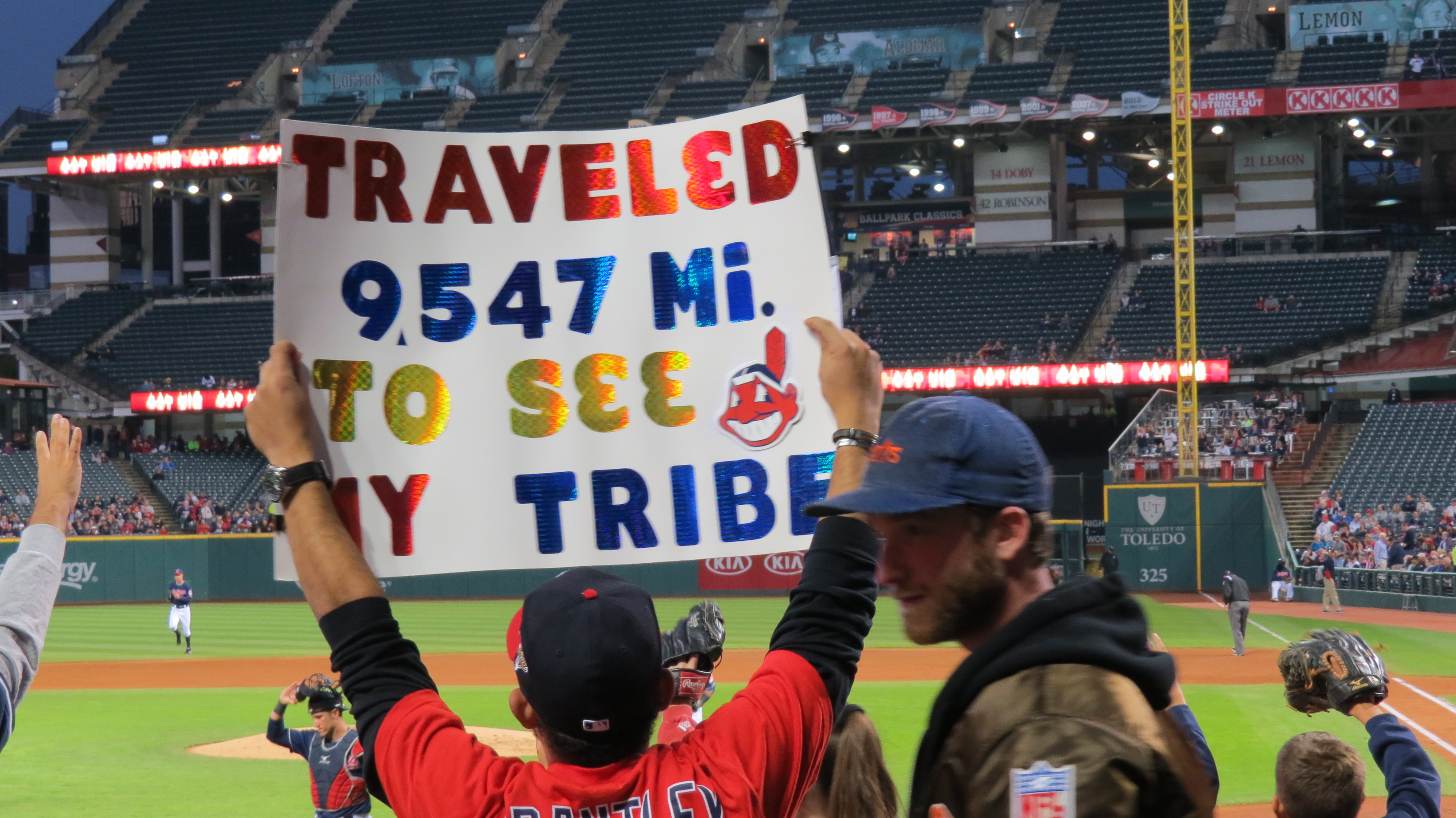
With the San Francisco Giants recently winning the game’s championship, Major League Baseball is over for 2014. Like any good Cleveland Indians fan will tell you, there’s always next year.
When a friend learned that I was traveling across the border to the Niagara Falls region in Canada, she lightheartedly instructed me not to create any international incidents. She need not have worried.
My wife and I traversed a bridge over the churning Niagara River for peaceful purposes only. We had scheduled a reunion with some Ontario friends. The historic town of Niagara-on-the-Lake served as the point of rendezvous.
As it turned out, it was the ideal spot for our gathering, especially given the historical implications of the town and our connections with our acquaintances. We had known one couple, Ken and Ruth, for years. The other friends, neighbors to Ken and Ruth, we had met only last winter in Fernandina Beach, Florida of all places.
Neva and I immediately hit it off with them. Just like we did with Ken and Ruth, we shared common interests, and enjoyed each other’s company and conversation.
After touring the historic Niagara town and enjoying a lovely lunch, we sat on two benches, men on one, women on the other, just like three old couples would in a park. That’s probably because we were three old couples, and we were in a park.
Old, of course, is a relative term. We were all grandparents, but to hear us cackling on that glorious day, we more likely resembled teenagers. Life has those golden moments you know. When it does, you want to harvest their nurturing bounty.
Sitting under those giant shade trees, we laughed, inquired, listened, observed, and pondered what life had brought us, and would bring us still. It’s what good friends do no matter what nationality.
On the opposite shore stood historic Old Fort Niagara in Youngstown, New York. This particular location had been the scene of many battles since the 18th century. We had a clear view of the impressive fort, and heard muskets fired during a battle reenactment.
Multi-nationalities had claimed these lands and waterways over the centuries. Native Americans, French, English, and Americans had all fought for this once strategic military position.
Our weapon of choice was sarcasm. I blamed the cool, wet summer weather on imaginary Ontario icebergs. My friends returned volleys of witticisms of their own. No injuries resulted from the friendly bantering.
During any visit to the Niagara Falls region, the global attraction to this magnetic place is obvious. We encountered cultural dress, various native languages, and many ethnicities wherever we went.
When we asked a stranger with a Caribbean accent to take photographs of our group, he gladly obliged. I wasn’t surprised. He and his companions were enjoying the same fair weather, agreeable setting and pleasing vistas as us. It was the perfect recipe for an amicable afternoon reunion of international friends all around.
The only significant shots we fired were with our cameras.
I had just finished photographing some early evening scenes along the Lake Erie shore in Lakeside, Ohio, when I came upon this brilliant red barn right next to the Historic Lakeside Hotel. Its beauty stunned me. How the sun highlighted the barn’s red color and white trim also grabbed my attention. I loved how the green leaves of the tree limb intersected and nicely contrasted with the bright red. More than that, my wife and I have vacationed every summer at Lakeside Chautauqua since 1987, and I couldn’t recall ever seeing this barn.
I have thousands of photos from this beautiful gem of a town. The surprise of finding this barn, once seemingly hidden, but revealed by the combination of fresh paint and good timing made it my Photo of the Week.
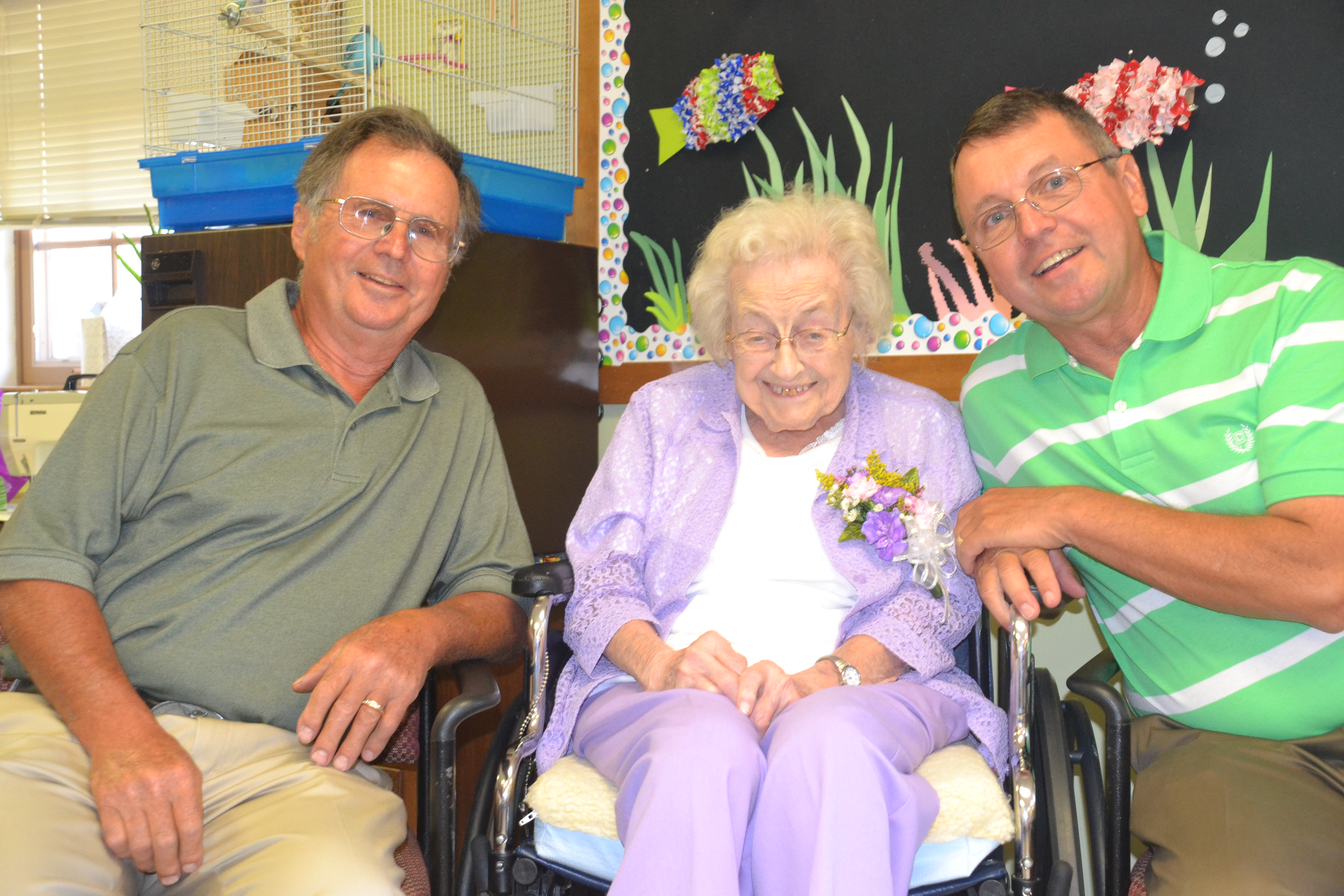
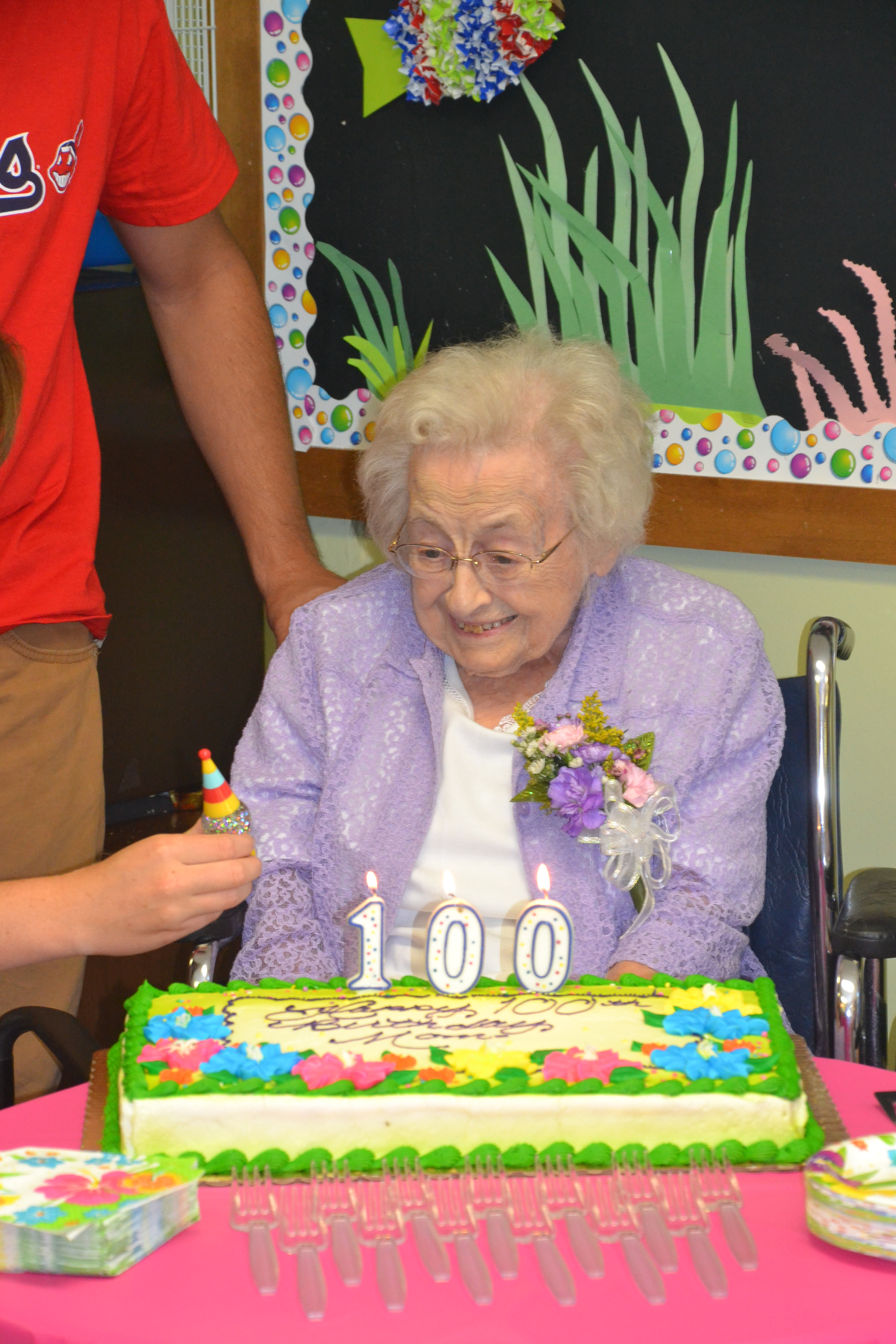
I stood in the background with my camera capturing the unfolding, tender moments. I did so out of appreciation and gratitude for this gracious, gregarious family.
I had known Betty Findley and her late husband, Bud, for a long time. We lived just blocks away from one another when we were all much younger. Now here we were celebrating her 100th birthday in a different place and century.
Her son, Dave, shared a timeline of his mother’s life with the assembled friends and family. It was ironic that her birth came as World War I, the war to end all wars, began.
If ever there was a peaceable woman, it was Betty. She loved her family, community and church, and expressed that love in faithful graciousness. Betty was and is equally loved and respected in return.
There is a kernel of metaphoric truth in that innocent comparison. If you hit your 100th birthday, you most certainly are a giant. Not too many people live that long and get to see the world change the way Betty has.
In reality, age has a way of humbling you physically. Notwithstanding, Betty may not be a Goliath in stature, but she sure has been by nature. Her son tearfully ticked off her fruitful lifelong achievements.
Betty canned and baked and sewed, and was a favorite room mother in my elementary school days. She made the best heart-shaped sugar cookies a kid could conjure.
The morning of Betty’s birthday bash, I heard another shocking descriptor. The speaker at church called Paul Roth, another senior citizen friend, a rock star. Everyone in attendance chuckled, but nodded their heads in agreement. I think modest Paul enjoyed the flattering hyperbole, too.
The speaker said her two sons referred to him that way out of admiration and reverence. After all, he was the doctor who brought them into the world and treated them for childhood illnesses and bumps and bruises. It was most appropriate that this kind, humble country doctor be elevated to Mick Jagger status.
I concurred with that assessment. Dr. Roth, as he was most commonly addressed, had brought our daughter and son into the world as well. He treated patients of all ages kindly and compassionately, even making house calls. He usually charged less than he should have, too.
Our granddaughter’s literal pronouncement spoke volumes. Persons born early in the 20th Century have experienced major transformations in their lifetime, the wars, the Great Depression, the herculean jumps in communications and transportation, the advances in medicine, and so much more.
To honor these two titans is to also celebrate all other productive individuals of what Tom Brokaw has labeled “The Greatest Generation.” Their work ethic, devotion to family, friends, community and country set the solid foundation for society to advance, as it never had before.
I bet you know genuine giants and rock stars, too. Let’s celebrate their magnanimous contributions to the world while we can.
I made a very revealing, personal discovery today. The 2014 calendar is identical to the 1947 calendar.
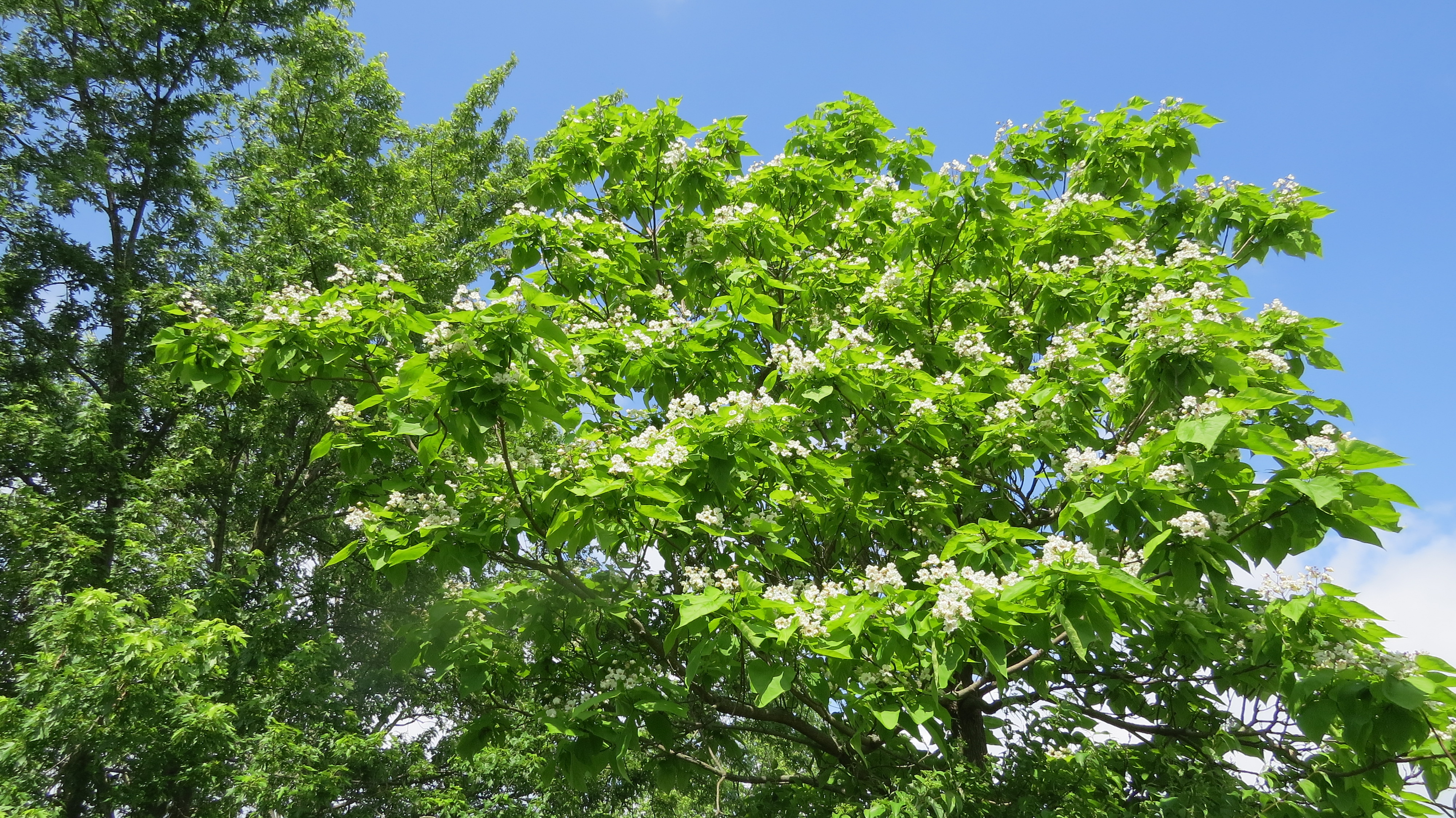
I know that’s not earth-shattering news. But it was for me. And it all started with me taking a photo of a blooming catalpa tree yesterday. I remember a story my late father once told me, one I have written about before, and will never forget.
Whenever the catalpa trees bloom in northern Ohio, Father’s Day is near. I had never paid much attention to that until Dad related his moving story.
On Sunday afternoons, my mother’s parents took turns visiting their three married daughters, all whom lived in Canton, Ohio. But on Father’s Day in 1947, Grandma and Grandpa Frith went to each of their daughter’s homes to visit. While sitting on our my parents’ front porch, Dad eyed a blooming tree down the street, and asked my grandfather if he knew what kind of tree it was. Grandpa Frith told Dad that it was a catalpa tree. Some people refer to it as the cigar tree, in reference to the tree’s long, green fruit pods.
The next day Grandpa Frith went to a job site where he was working as an electrician. He had turned off the power to do his electrical repairs when someone came along and turned the power back on. Grandpa Frith was killed instantly.
In retrospect, Dad said Mom, Aunt Gerry and Aunt Vivian were ever so grateful for that last visit they had with their father. They even wondered if it wasn’t simply meant to be.
I was born that December, never having met my grandfather.
Knowing that this Sunday, June 15 is Father’s Day, the exact same day as 67 years ago, seeing that blooming catalpa tree had even more meaning for me than ever before.
Today is Ascension Day, the 40th day after the resurrection of Christ. For the Amish in the Holmes County, Ohio area, Ascension Day is a holiday. Families gather to reflect, visit, share, relax, and just enjoy each others company. Youngsters may go fishing, hiking, biking or play games like volleyball and softball.
Of all the holidays that the Amish celebrate, Ascension Day is the most informal, with no worship service or fasting. It simply is to honor the day that Christ ascended into heaven. Perhaps it’s a lesson from which all of us can learn.
I greatly enjoy the people I meet along life’s journey.
Many of the people I’ll encounter again I’m sure, if only by proximity to where I live or my relationship to them. Others I may never see again, but I’ll certainly remember their kindness and hospitality.
On our recent trip south, my wife and I met several people who graciously shared those two dynamic characteristics. I’d like you to meet just two of them.
Like much of North America, the winter in the southern United States this year has been hard. With the potential of slippery roads ahead, we decided to stop for the night at a motel in Richburg, South Carolina.
After checking in, we walked to a nearby no frills mom and pop restaurant. Only a few tables were occupied when my wife and I arrived. A kind lady draped with a stained apron and holding a wet washcloth invited us to sit wherever we wanted. We chose a table well away from the door where cold air rushed in at every opening.
The official forecast for that area projected black ice on roadways in the South Carolina Piedmont region, where Richburg is located. Hearing that, the restaurant manager had sent the young help home before dark since they were all inexperienced drivers.
A skeleton crew kept the restaurant open. The thinking was they wouldn’t get many evening customers. Most of the day had already been slow.
However, shortly after Neva and I sat down, several other people filed in and the restaurant was soon abuzz with hungry diners. The kind woman, who later introduced herself as Laura, welcomed everyone the same way she had us, with an apologetic invitation to find a seat.
“I’m so sorry,” Laura said in her soft, easy southern drawl. “We’re short staffed since we sent our young help home because of the weather. Please be patient with us.”
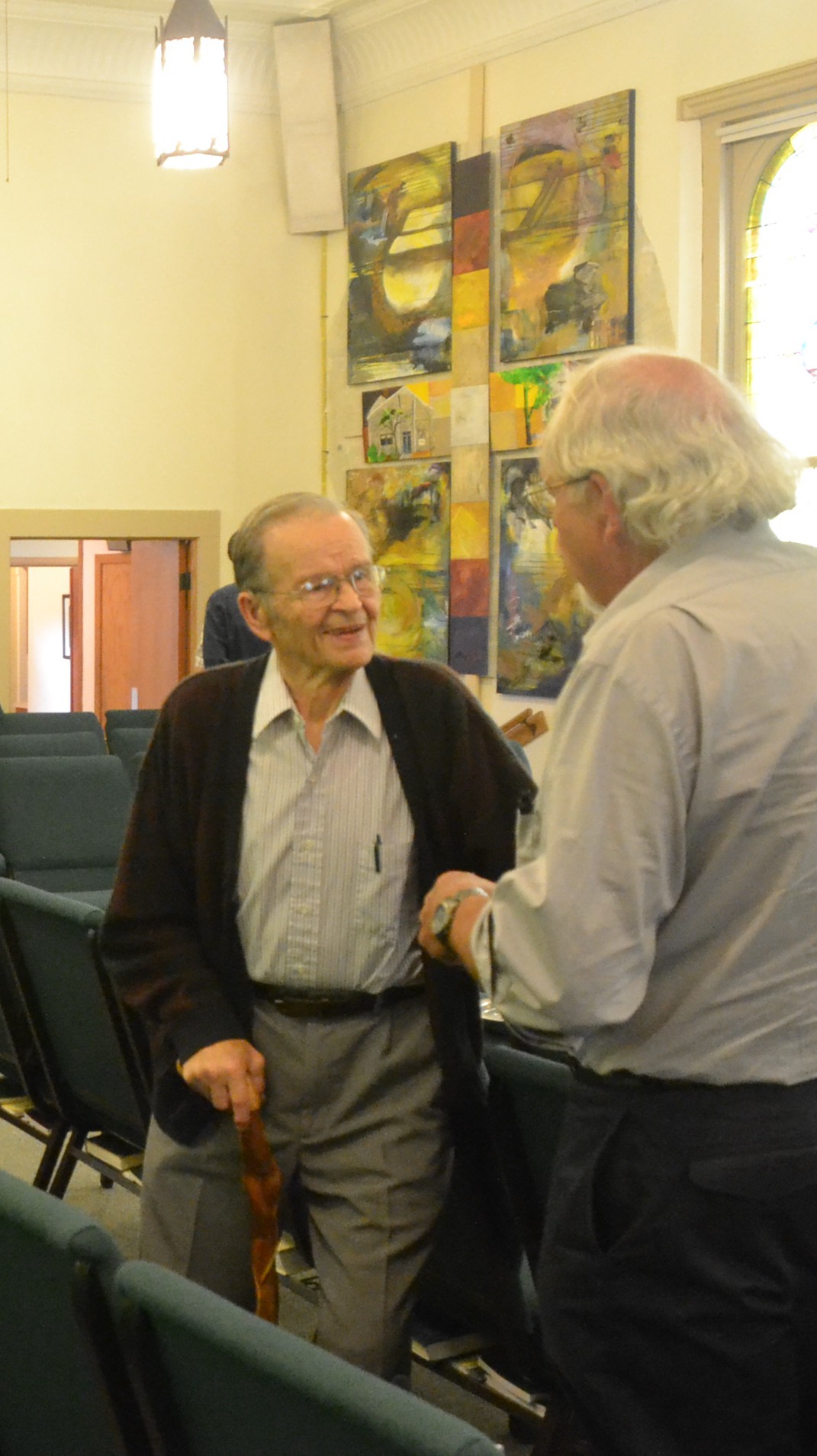
Bill, the volunteer greeter at the Rebault Club Inn.Laura was a stately woman in her 50s. She kept repeating the same thing to every new patron who arrived. She cleared, cleaned and waited on every table by herself. She sent the dinner orders to the kitchen and returned to check on every table. With each visit, she kept kindly apologizing.
Yet she and the kitchen staff seemed to work miracles. The food was not only served in a timely manner, it was as delightful as Laura’s hospitality. The baked chicken, black-eyed peas and grits were scrumptious. This woman defined both graciousness and efficiency. I hope all her tips were generous.
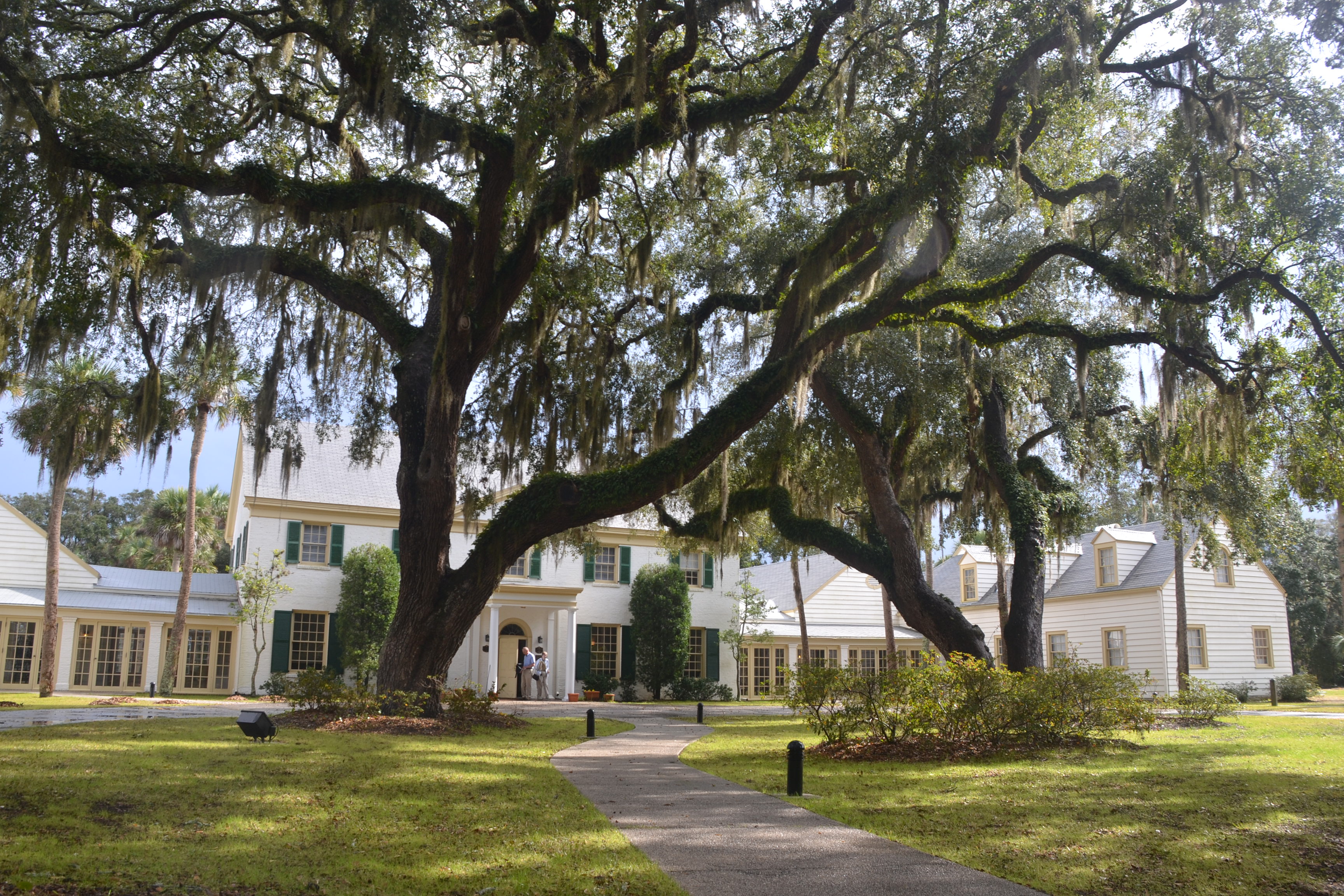
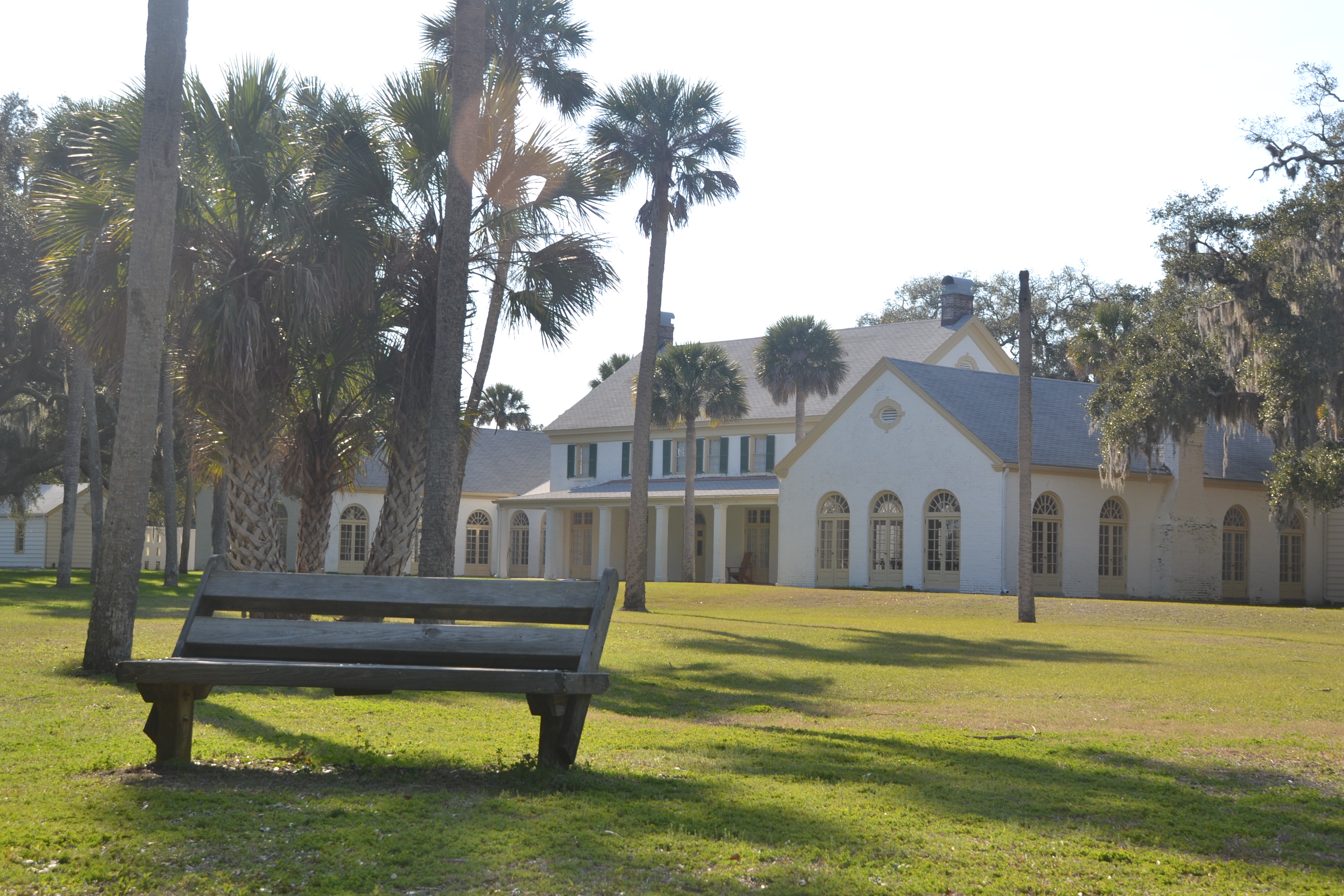
Then there was Bill, an octogenarian volunteer guide who greeted us at the door of an out-of-the way national historical site we discovered by accident in Florida. We easily struck up a conversation with Bill as he greeted us as we entered the Rebault Club Inn. Originally from the far southwestern hills of Virginia, we enjoyed hearing his personal story as much as we did touring the beautiful estate.
Bill’s eyes sparkled and his smile grew with each question I asked him. He had come to northern Florida to get away from the harsh winters of the Appalachian Mountains. He was glad he had.
Imagine my surprise when he told us that he had graduated with honors from Ohio University at age 68. When the dean announced his name, he received a standing ovation. Bill repeated the story like the audience was still applauding.
No matter our destination, it’s people like Laura and Bill who really make our travels memorable.
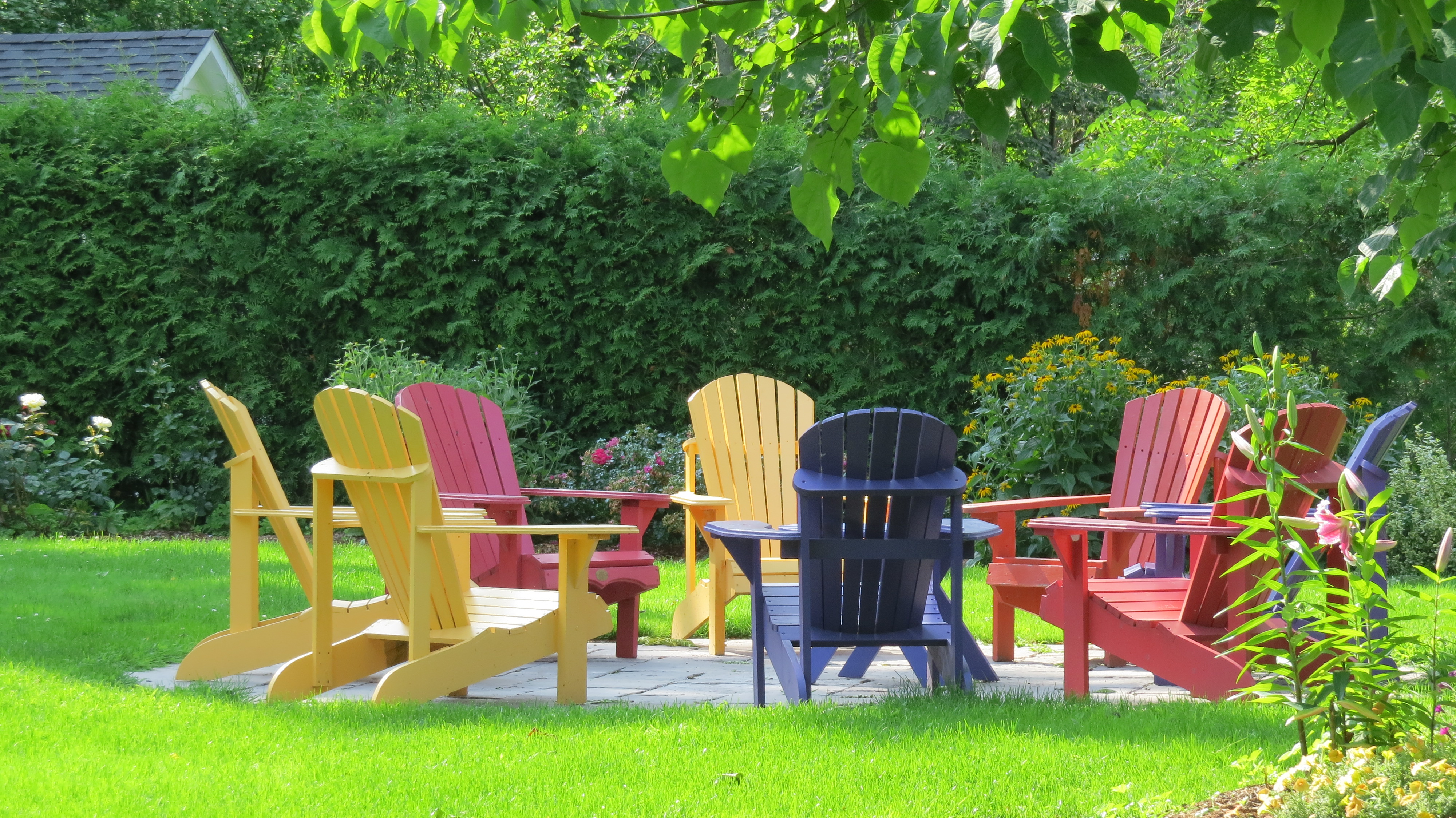
The lawn of the backyard of the Rebault Club Inn, where many weddings are held.













 Roadkill Crossing
You must be logged in to post a comment.