I am fortunate that I can incorporate my three favorite hobbies into one outing. Whenever I go hiking, I always take my binoculars and camera. Every now and then, I am rewarded with an opportunity to capture the beauty of birds.
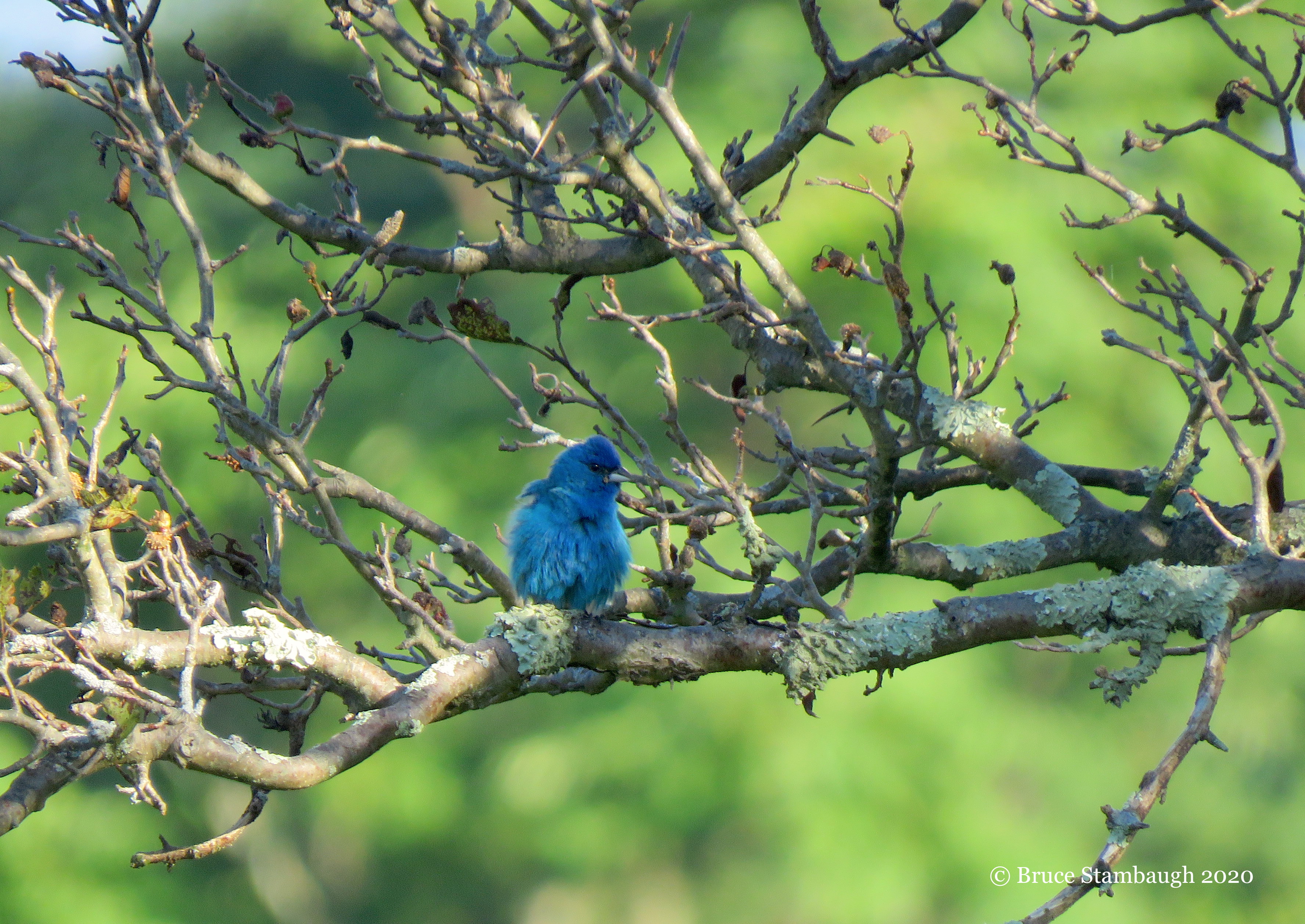
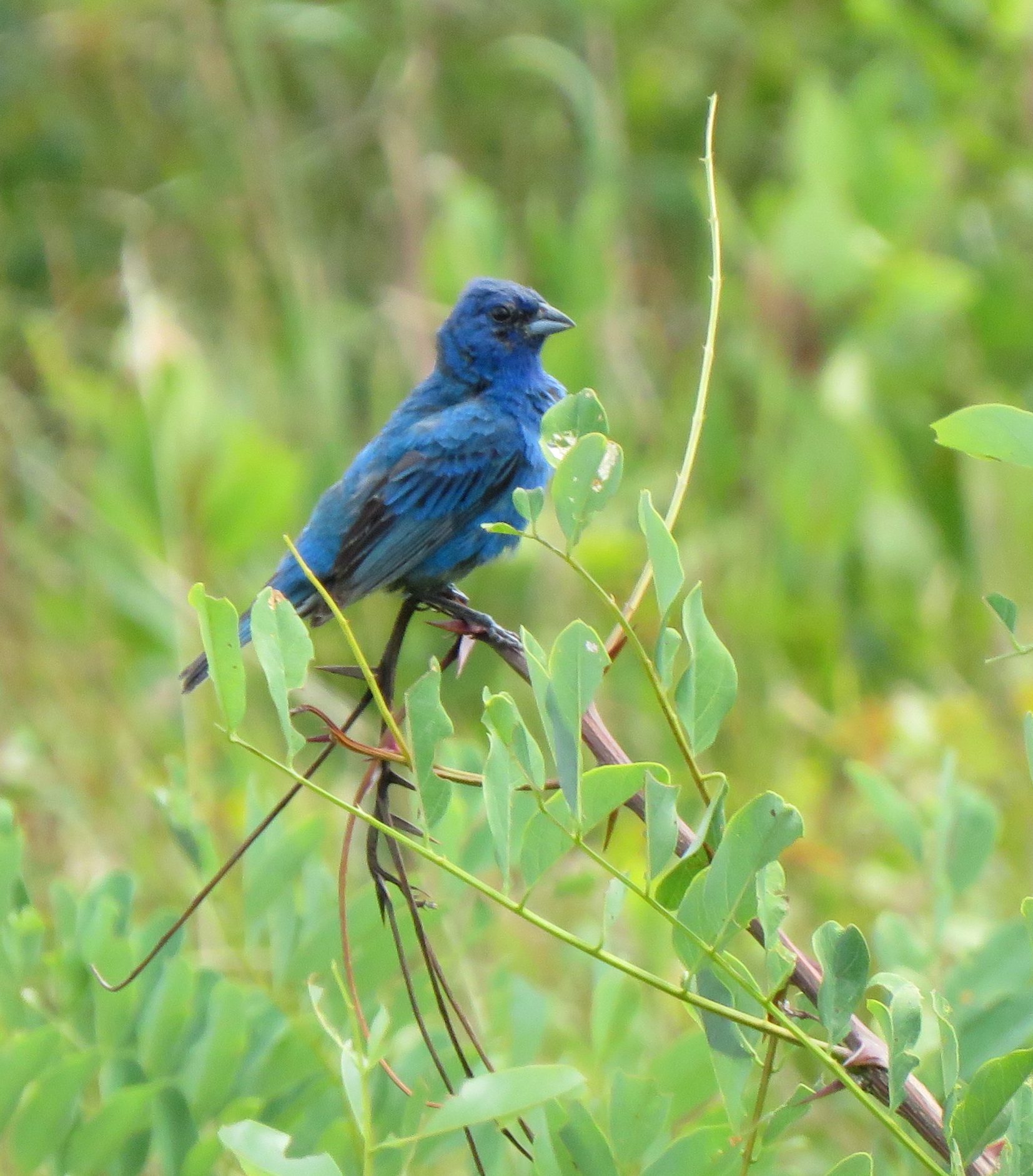
This male Indigo Bunting landed on this jumble of dead branches just out of the morning’s sunlight. Still, the ruffle of the striking bird’s feathers as it turned its head revealed several shades of blue. Indigo is the perfect name for this avian beauty.
I am happy to share my Photo of the Week with you, “The Blues Have it!”
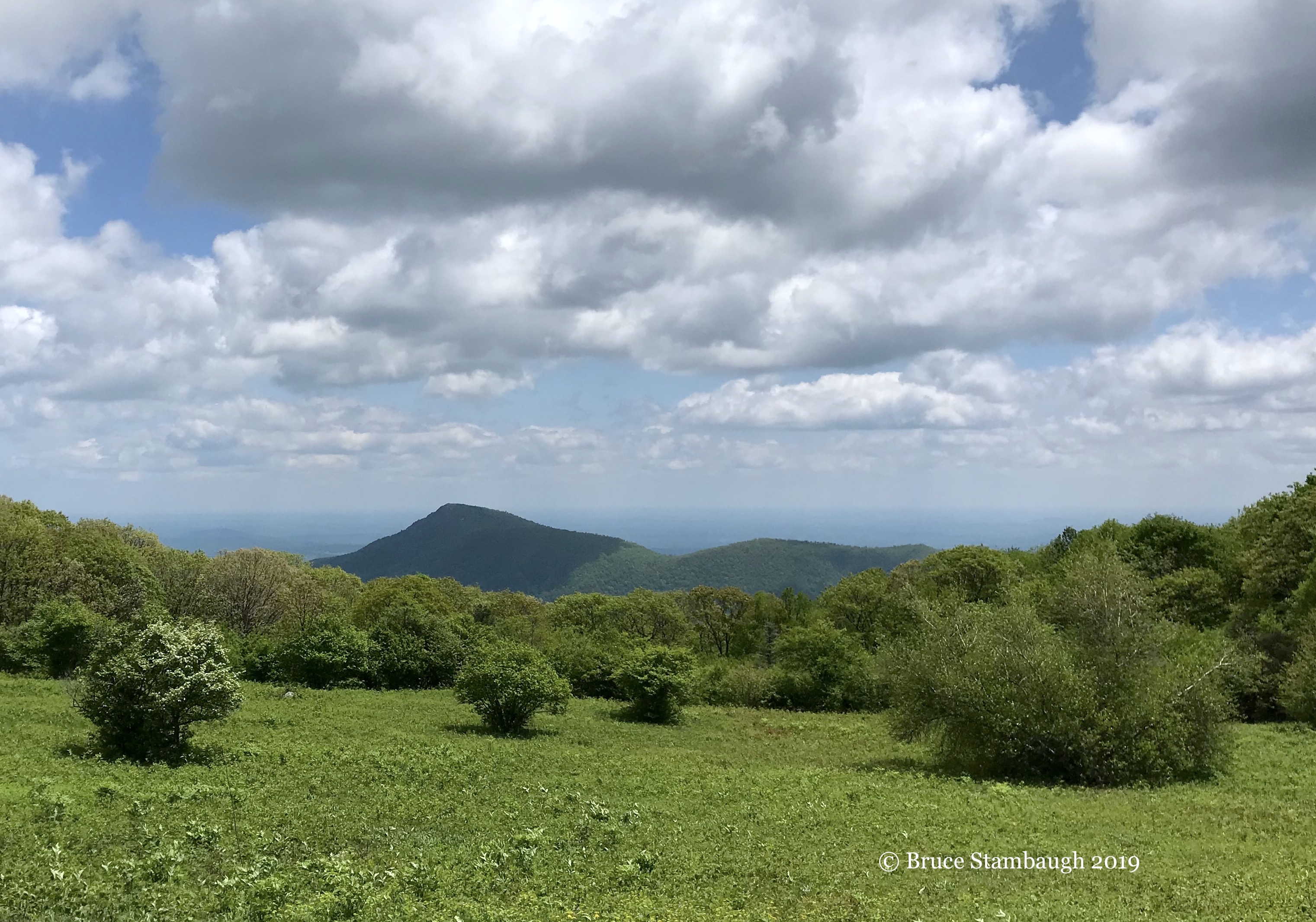
Old Rag is a popular hike in Shenandoah NP.
My wife and I have enjoyed Shenandoah National Park since we moved to Virginia three years ago. There’s a lot to love about the park, and it’s less than an hour away.
We’re not the only ones who appreciate it, of course. The estimates of annual visitors compare to those of Ohio’s Amish country, our former residence. Each location attracts millions of visitors a year.
Of course, the novel coronavirus pandemic has put a damper on tourist numbers everywhere. With the virus cases flattening out in Virginia, the park has mostly reopened.
When we want to break our stay-close-to-home routines, Neva and I head for the hills. Sometimes I will venture out alone, birding, hiking and shooting photos. It’s an enchanting place, a multi-sensory extravaganza.
This slideshow requires JavaScript.
I hear the beautiful song of an indigo bunting, and I raise my binoculars, scanning the area for the likely source of the melody. Novice that I am at identifying bird calls, I want to make sure I am matching the right species with the song. I’ve learned that, like human accents, bird calls of the same species vary geographically.
Once I find the bird, I switch to my camera to try to get a decent photo. With the trees in full summer canopy, that’s not easy to do. Now and then, I am fortunate to find a bird singing in the open, and I click away.
I catch a slight, silent movement out of the corner of my eye. Is it a doe with a fawn, or perhaps twins? Is it a black bear grazing before nightfall? One never knows. On warm days, keeping a lookout for a lounging timber rattler while scrambling on a rock outcropping is always a good idea.
Male Indigo Bunting.
South River.
Beauty in any season.
Hike rewarded.
Ridge view.
Gold and black.
Pink and blue.
Peregrine Falcons.
The park is a great place to take sunset photos, too. But sunsets in the mountains can be problematic.
The expansive, rolling Shenandoah Valley is bordered on the east and west by mountain ranges. Sunsets can be as disappointing as they are stunning. Weather plus geography equals a formula for the unknown.
When we lived in Ohio, all we had to do was look out our windows to know the potential for a spectacular sunrise or sunset. We were spoiled.
Here in the breadbasket of Virginia, the rising and falling topography makes it iffy to predict what the eastern and western skies will do at dawn or dusk, respectively. You hope, pray, and go for it. Sometimes you are disappointed. Other times, you are speechless.
From this…
…to this dreamland sunset in a matter of minutes.
(Mouse over the photos for the captions)
It can be cloudy and raining in the valley. The view from the mountains of the park, however, might be spectacular if you wait long enough. Pick one of the many west-facing overlooks along the majestic Skyline Drive, and prepare yourself for come-what-may.
The elevation of the old, folded mountains ranges up to 2,500 feet higher than that of the valley. From the park, you can see the Allegheny Mountains that mark the boundary between the Commonwealth and West Virginia.
Patience, intuition, and good fortune can be the formula for bathing in a dreamland. Even with a thick cloud cover, the sun can still break through, turning drabness into beautiful in the blink of an eye.
I’ve learned to be ready for the unexpected as the sun slinks below the jagged horizon. Will the clouds refract the sun’s rays into pinks and blues, lavenders and oranges? Or will they merely steal away the sun without fanfare?
I reached into my archives and found this lovely Eastern Meadowlark singing from an old wooden fence post. You can frequently hear these colorful robin-sized birds before you spot them.
I thought the shot was the perfect way to welcome you all to June. “Whistling in June” is my Photo of the Week.
I had to let the birds come to me during this year’s spring bird migration. Due to the coronavirus pandemic, I only occasionally ventured out on short excursions that often included a grocery pick up after a brief search for migrating birds.
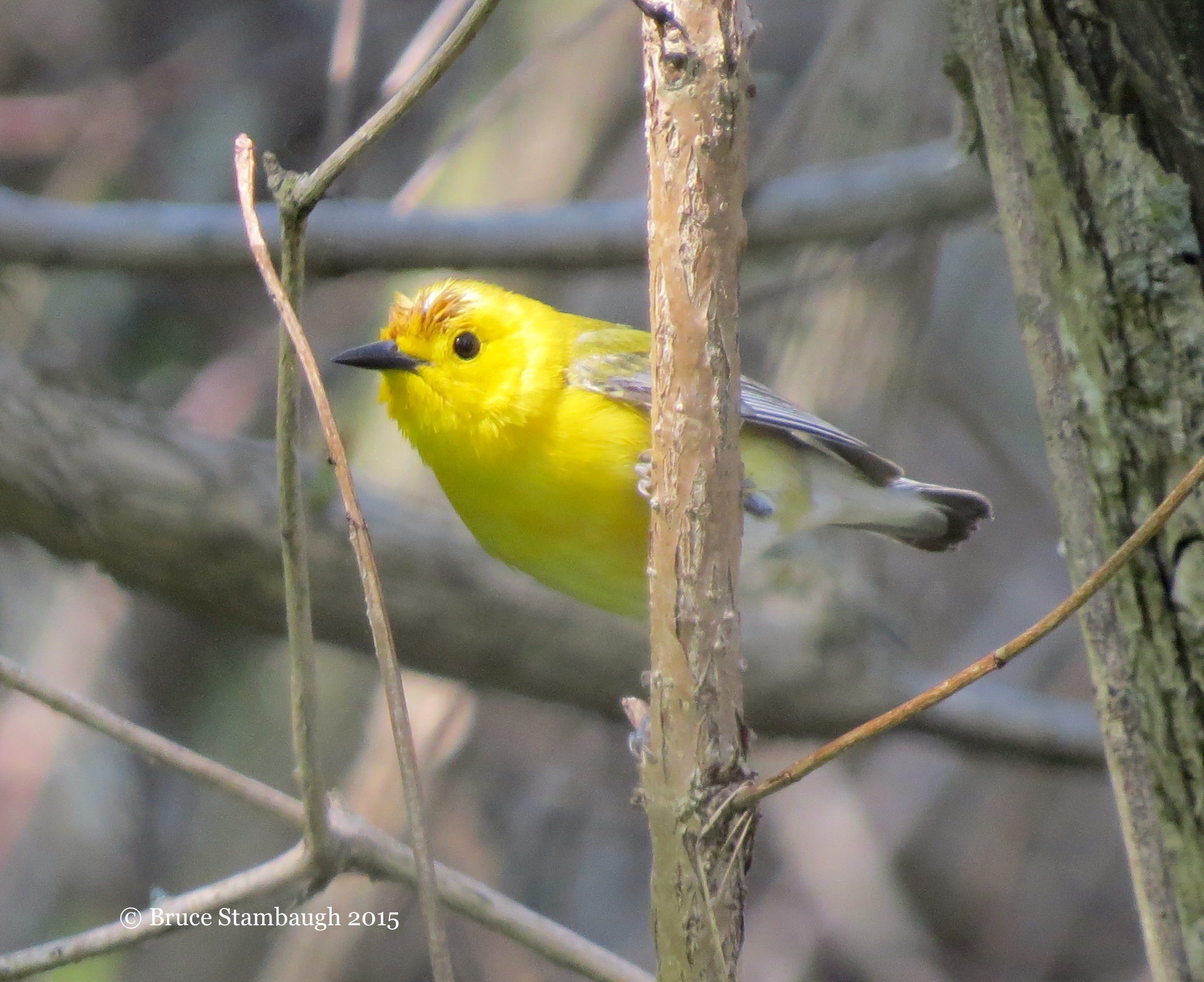
So, I decided to look back in my photo files for a bird that I had never shared before. This Prothonotary Warbler caught my attention and sent me back to when and where I had photographed it. It was a cool, damp day at Magee Marsh Wildlife Area along Lake Erie’s shore in northwest Ohio. The boardwalk was crowded with other birders of all ages from around the world. The cameras clicked away when this bright yellow fellow appeared. Unfortunately, Magee Marsh is closed this year due to the Covid-19 pandemic.
Prothonotary Warblers are only one of two warbler species that nest in tree cavities. They prefer marshy thickets as their habitats. They are named for Roman Catholic papal clerks known as prothonotaries who wear bright yellow robes.
Reflections at the alligator pond.
My wife and I were social distancing before we knew there was such a thing.
Before the coronavirus pandemic hit the U.S., I made an all-day social distancing trip to Okefenokee National Wildlife Refuge. It was a mere hour’s drive from our winter hideout on Amelia Island, Florida.
I invited my lovely wife to accompany me. Having already visited there briefly with friends, Neva declined. Her aversion to snakes and reptiles made that an easy decision. However, I wanted to explore the place more thoroughly.
I didn’t mind going solo at all. We each believe that doing our own thing has contributed to the longevity and quality of our marriage. There’s a metaphor in there somewhere.
You might know the refuge by its more colloquial name, Okefenokee Swamp. That is what the locals call it. Take a tour, however, and you will quickly learn that Okefenokee isn’t a swamp at all.
This slideshow requires JavaScript.
Native Americans gave the sprawling area the name centuries ago. In English, Okefenokee means “land of the trembling earth.” The moniker fits. In the less disturbed marshy areas, the land beneath reverberates with each step you take.
Okefenokee has been a national wildlife refuge since 1937. It was designated a World Heritage Site in 1974.
Much more than a shallow blackwater swamp, the 403,000 acres that comprise Okefenokee are a beautiful blend of hammock forests, creeks, wetland prairies, and cypress groves. Altogether, they serve as the headwaters for both the Suwannee River and the St. Mary’s River, which marks the Florida/Georgia boundary.
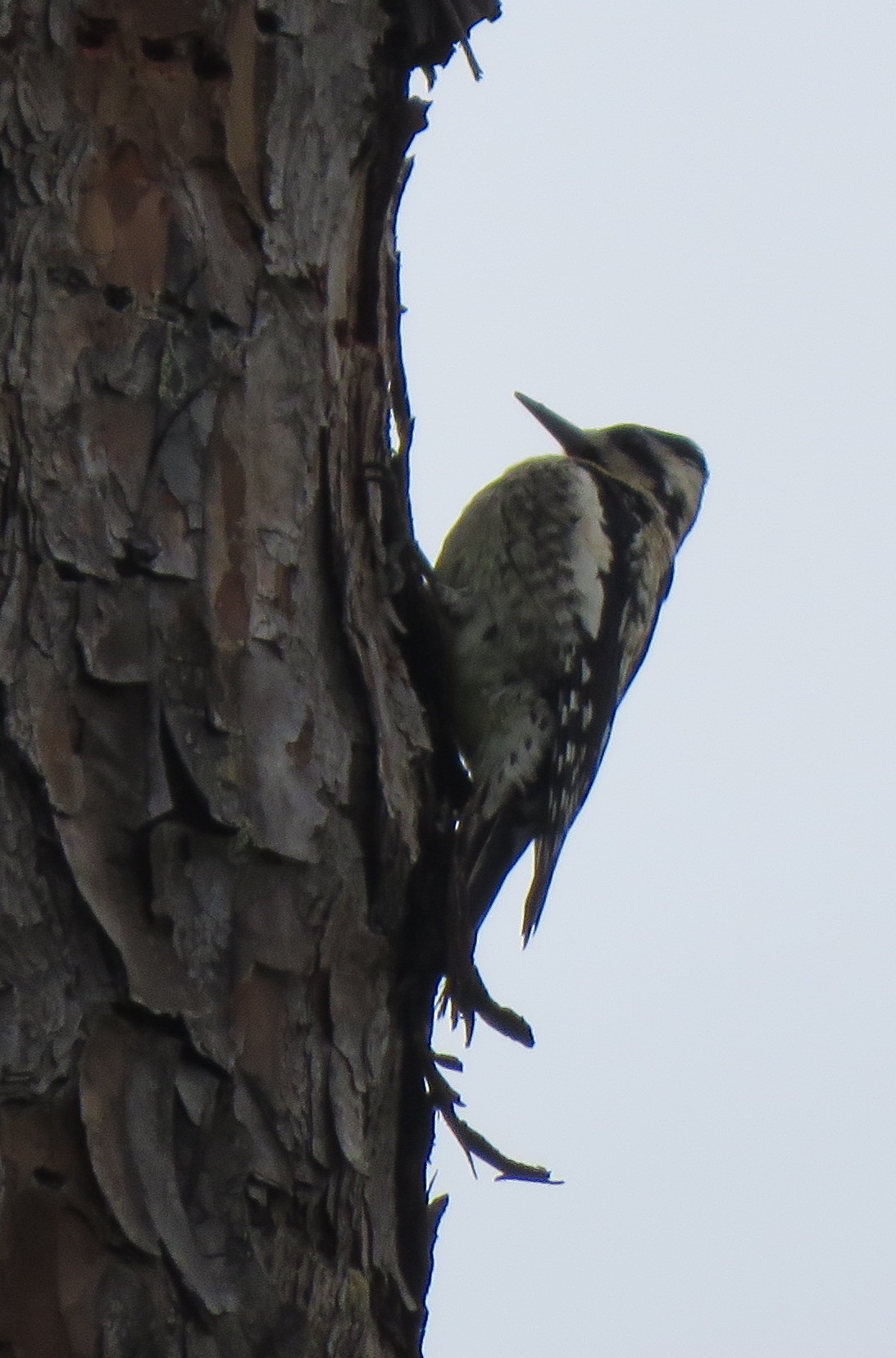
My heart jumped when I saw this woodpecker land on the trunk of this longleaf pine. It was a yellow-bellied sapsucker.I arrived mid-morning under hazy, smoky skies in early February. My main objective was to find the elusive and rare red-cockaded woodpecker. Okefenokee is one of the last remaining sanctuaries for the endangered bird.
I drove down the eerily lovely Swamp Island Drive in search of the woodpecker. I had never seen one, and after spending the morning trying, I still haven’t. I did see plenty of nest holes high up in the longleaf pine trunks.
I wasn’t disappointed. Just being among all the beauty and the sounds and earthy fragrances of nature was sufficient.
Hundreds of sandhill cranes cackled unseen in the wetlands beyond the pines that surrounded a small pond. An alligator laid like a fallen log on the pond’s far lip. A brown-headed nuthatch foraged on a tree trunk only four feet from me.
Bigger alligators rested roadside along shallow ditches. I found it surprising how much the vegetation changed at the slightest rise or dip in elevation. The scenery was stunning despite the gray overcast sky and smoke from a nearby forest fire.
On the Suwannee Canal.
Red-shouldered Hawk.
The snake.
The tour boat.
The wetland prairie.
Sunning.
Spanish moss.
Hazy sky.
Only a few feet from the boardwalk trail, alligators absorbed whatever warmth the day offered. Neva would not have approved. By the time I reached the observation tower, the sandhill cranes had quieted and were out of sight.
I learned much more about Okefenokee on the afternoon boat tour. Our guide explained that the deepest water was only four feet. The vast geologic basin was filled with peat, which is why it quivered when stepped upon.
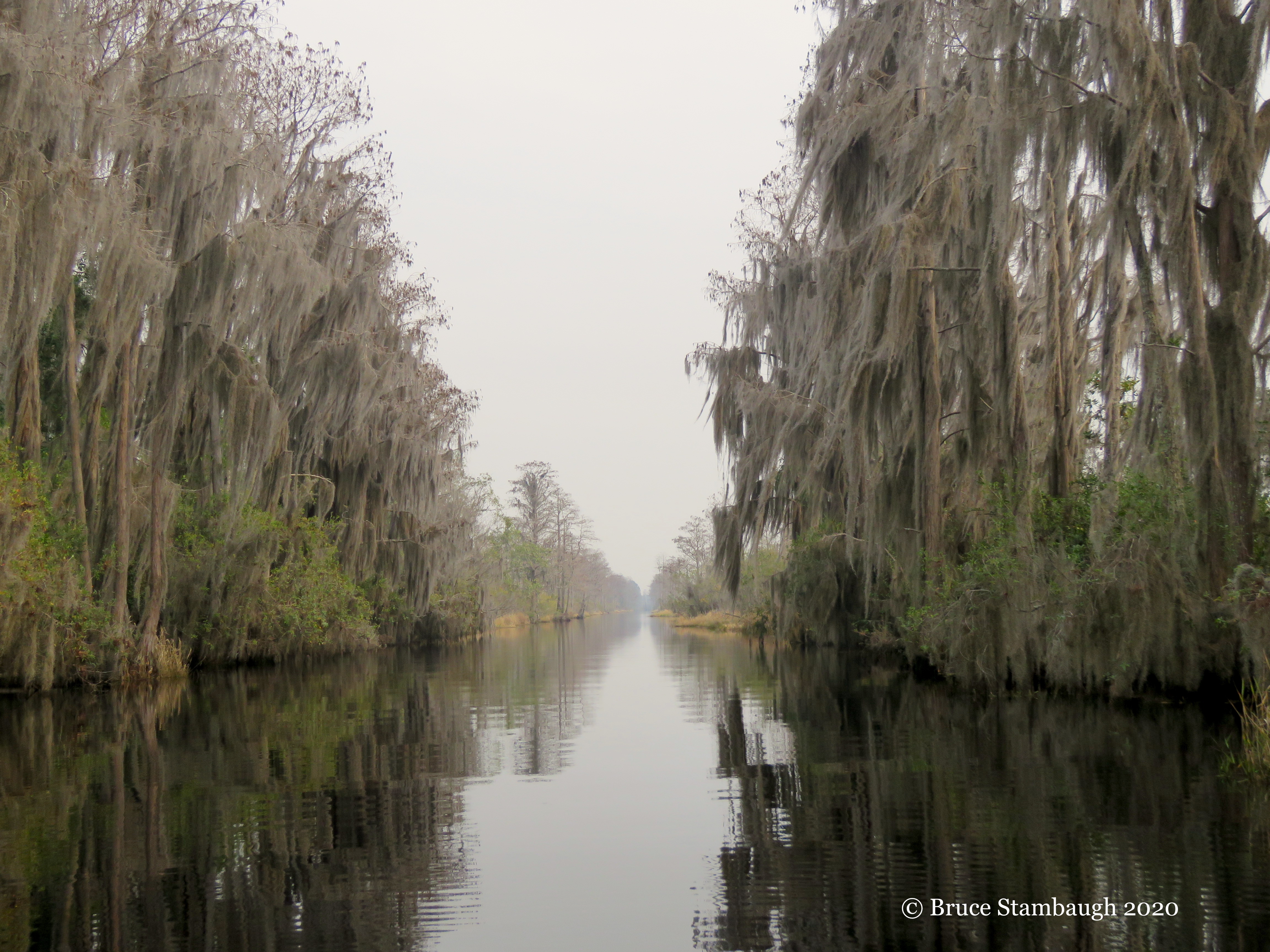
Our small flat-bottom boat cruised between stands of cypress graciously draped with Spanish moss, which isn’t a moss at all. Huge alligators lounged along the way, while a highly venomous water moccasin soaked in the filtered sunshine. Red-shouldered hawks screeched from high perches on old snags.
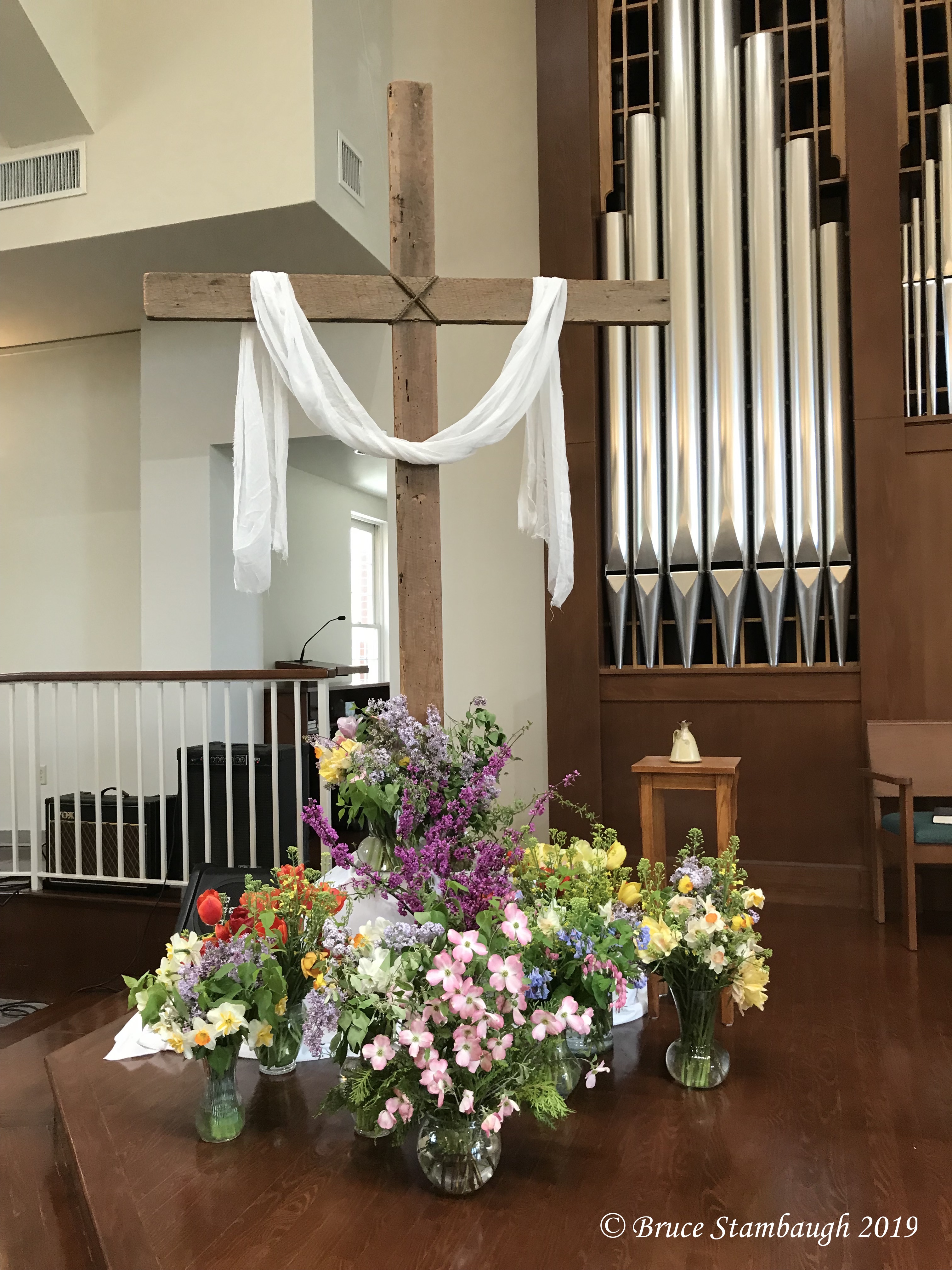
By definition, Holy Week transitions from the jubilant high expectations on Palm Sunday to the sadness and disbelief of Good Friday to the sacred joy of Easter morning.
This year Eastertime is symbolic of the current world situation. Regardless of one’s religious beliefs, Holy Week mirrors the global state of human existence amid the coronavirus pandemic. We face the same human emotions today as that mixed crowd of humanity 2,000 years ago.
Our lives have been turned upside down in this evolving medical crisis. No one can escape the grasp of the pandemic’s ramifications, whether we contract the virus or not. We are all affected.
A migrating Pine Siskin.We all had high hopes with the advent of spring, especially at Easter. Now, all of that has changed. Unless you are one of the few remaining skeptics, reality has hit hard.
Personnel on the frontlines of helping to stem the epidemic are stressed and very fearful for their patients, their families, and themselves. Even following all of the recommended precautions has not been enough for some.
Schooling has taken on a very different and dynamic atmosphere for students, teachers, administrators, and parents alike. Challenging doesn’t begin to describe it. Nor does frustration, especially for those denied the much-anticipated pomp and circumstance of graduation ceremonies.
For those who live alone, the elderly, those who struggle with mental issues, or live with special needs, fear invades the interactions of daily living. Coping has never been harder.
Many have lost their jobs, income, and insurance benefits. Others employed in businesses deemed essential encountered the ignorance of others. The outrage of service workers filled social media as entire families show up to buy a hammer or just browse big box stores, clearly ignoring the social distancing safety recommendations.
Misinformation stokes the fear and invites unfounded rumors, which only leads to more confusion and doubt. Opportunists who price-gouge only see personal and financial gain in this time of crisis.
Where then is the Easter joy? We must look through the numbing heartache to see it.
This slideshow requires JavaScript.
The warming weather, the blooming flowers, and budding trees, the emerald green grass, the colorful migrating birds, the friendly waves, and well-wishes of walkers as they pass by are but a few expressions of hope. Springtime’s renewal parallels that of Easter morning.
We should sing prayerful praises for those who tirelessly toil to save lives and defeat this virus. First-responders, law enforcement, pharmacists, doctors, nurses, utility workers, grocery store owners and their employees, and delivery people are only a few of today’s heroes.
Globally, folks with a passion for helping have unselfishly responded. Scores of caring people are making homemade masks and donating them to local service agencies.
Here in Harrisonburg, Virginia, many people have sewn and donated thousands of masks for businesses, the hospital, medical offices, fire departments, the volunteer rescue squad, and not-for-profit groups that shelter the homeless. My wife is one such person, though I doubt she would want me to tell you that.
In a pandemic, contagion ignores race, ethnicity, politics, borders, and social status. We all are potential victims and potential helpers. Our humanness makes us vulnerable, afraid, uncertain and exposed. And yet, it is those very qualities that inspire us to join as one at this most difficult time.
Together we must use our gifts and skills for the common good to rise to this once-in-a-lifetime threat. Only then will the anguish of Good Friday transform into the gratefulness of Resurrection Sunday’s love.
To stretch my legs and get some fresh air during our self-quarantine time, I took a short drive to a local park. I was the only one there. As I walked along the paved path, I found this female Mallard resting on a limestone boulder in a small stream near Dayton, Virginia. She looked pretty contented to me.
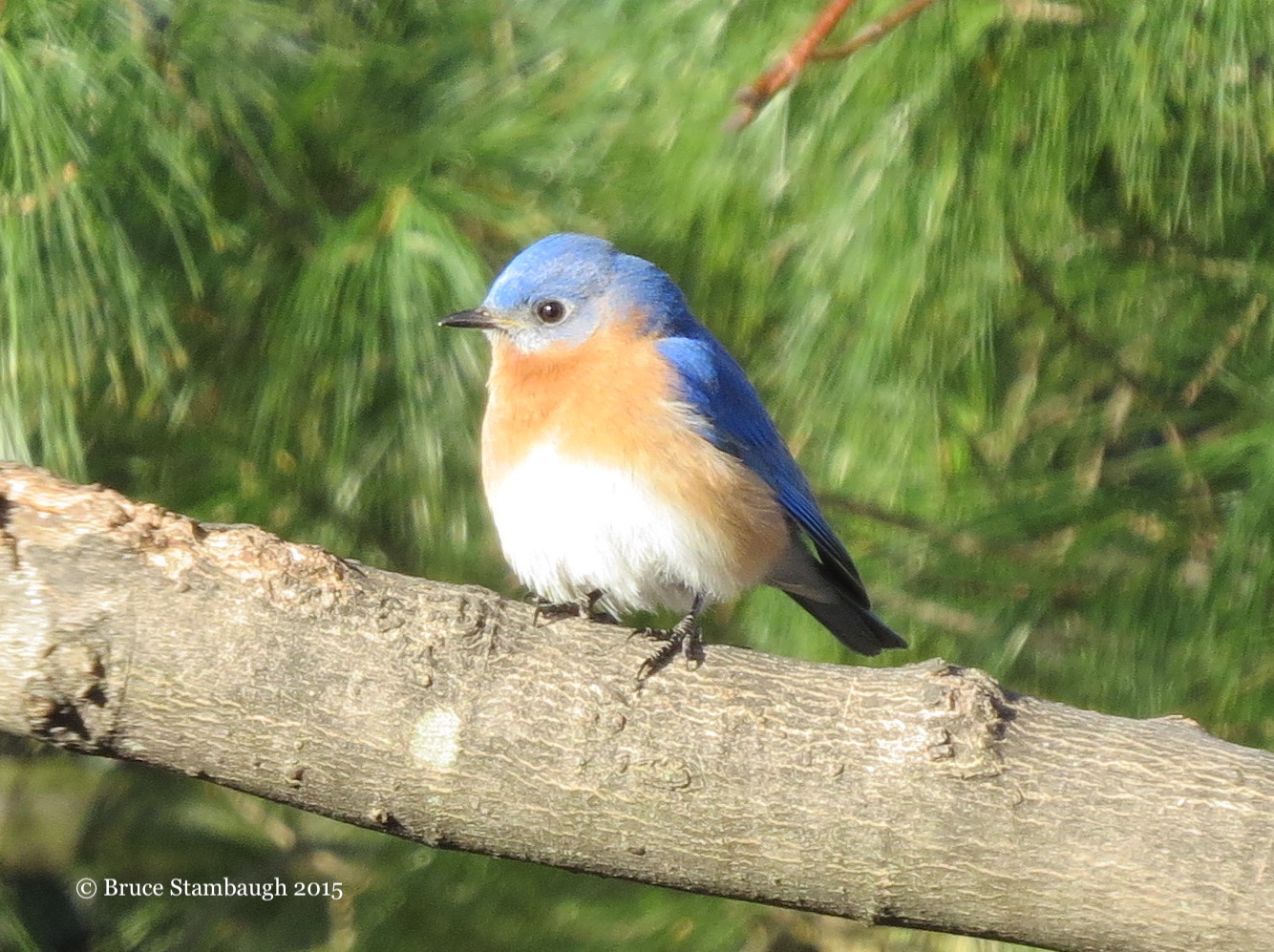
Eastern Bluebirds are some of my favorite birds. I love everything about them. Their colors are stunning, as this male perfectly models. Their songs are subdued, wishful, peaceful, and satisfying. They are docile, eat tons of insects and seeds, and are generally congenial to humans. Once on the decline, Eastern Bluebirds are making a comeback thanks in part to bluebird trails being established in appropriate habitat for them.
I took this photo five years ago in our Ohio backyard. This male was basking in the morning sunshine on a day late in March. Eastern Bluebirds made regular visits to my feeders year-round.
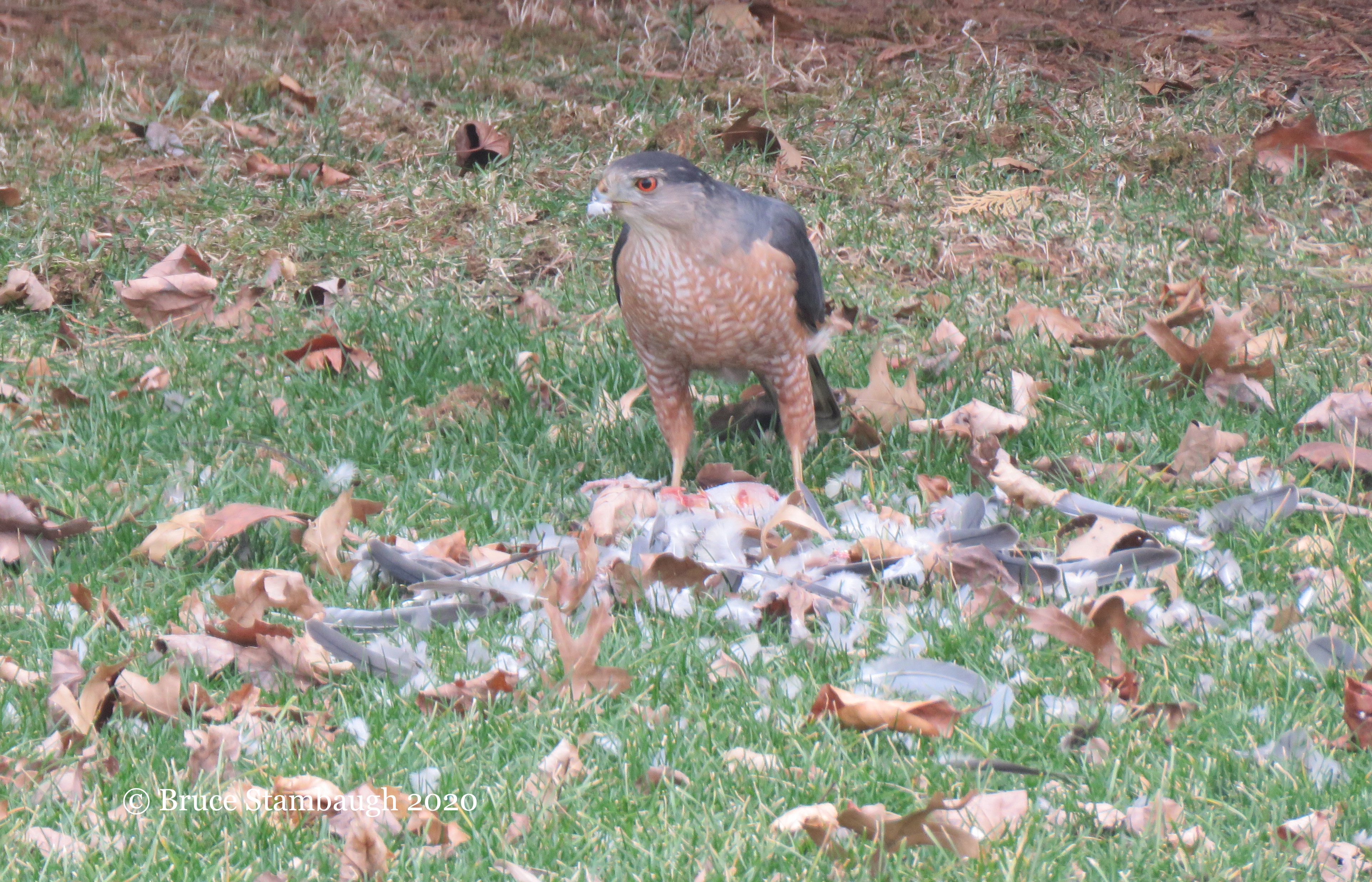
“There’s a hawk in the backyard,” my wife hollered from the other end of the house. I rushed to where she was. The bird was on the ground near the line of evergreens that divide our yard from a neighbor’s.
It was the neighborhood Cooper’s hawk. I had seen it before swooping low over homes in search of its favorite target, songbirds that frequented backyard feeders. I had briefly seen it in our backyard before.
The hawk’s blood-red eyes shown even from that distance without my binoculars. It was too big for another similar accipiter, the stealth sharp-shinned hawk. This beautiful Cooper’s had made a kill and was ripping it apart with its sharp, hooked bill.
I hurried to retrieve both my binoculars and my camera to watch the unfolding drama. I need not have rushed. The hawk remained in the same spot undisturbed, devouring its catch for nearly an hour.
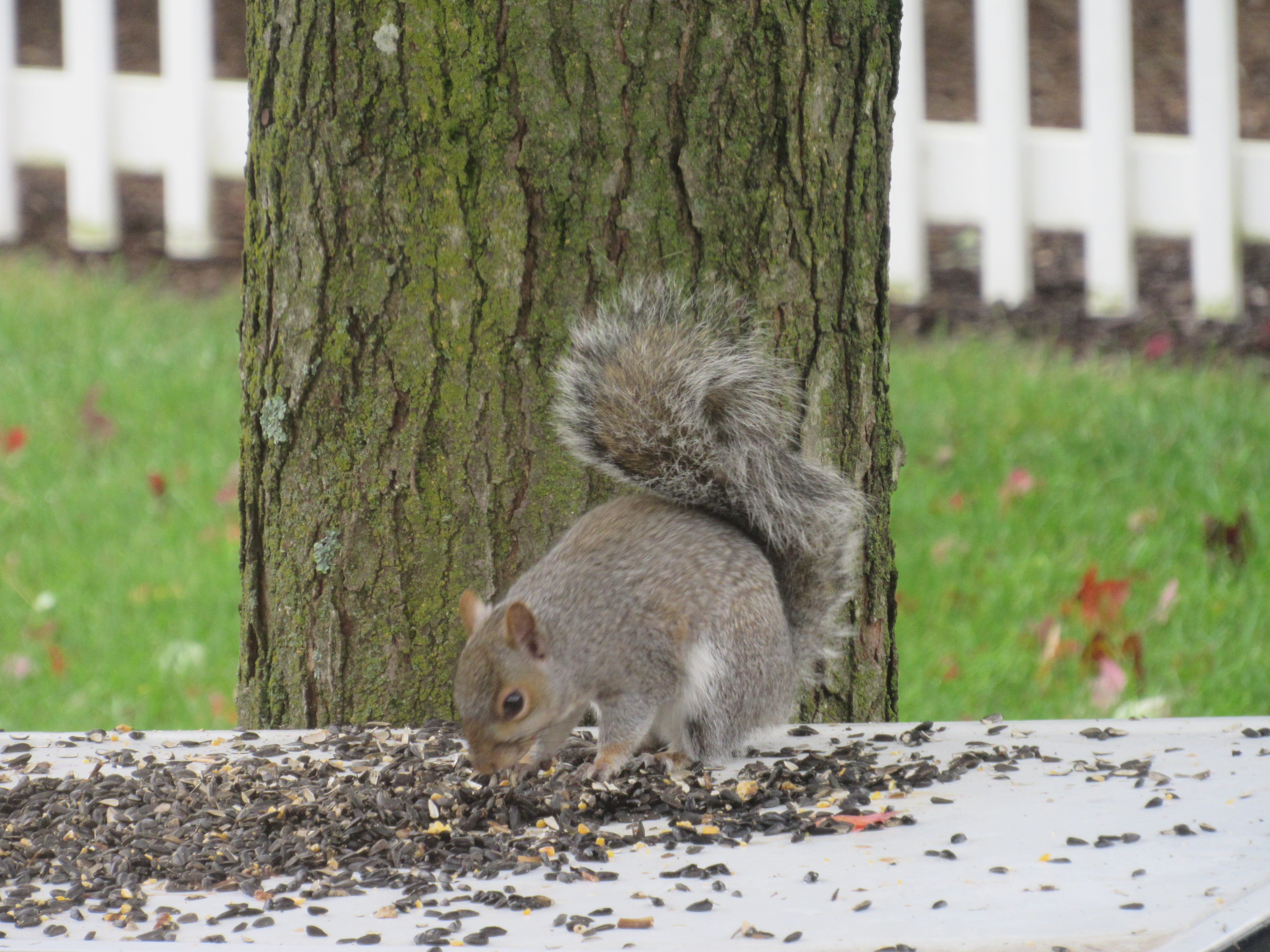
At first, I thought the Cooper’s had captured one of the many grey squirrels that frequent our yard in search of food or to drink from the birdbaths placed around the exterior of the house. As soon as I lifted the binoculars to my eyes, I knew it wasn’t a squirrel.
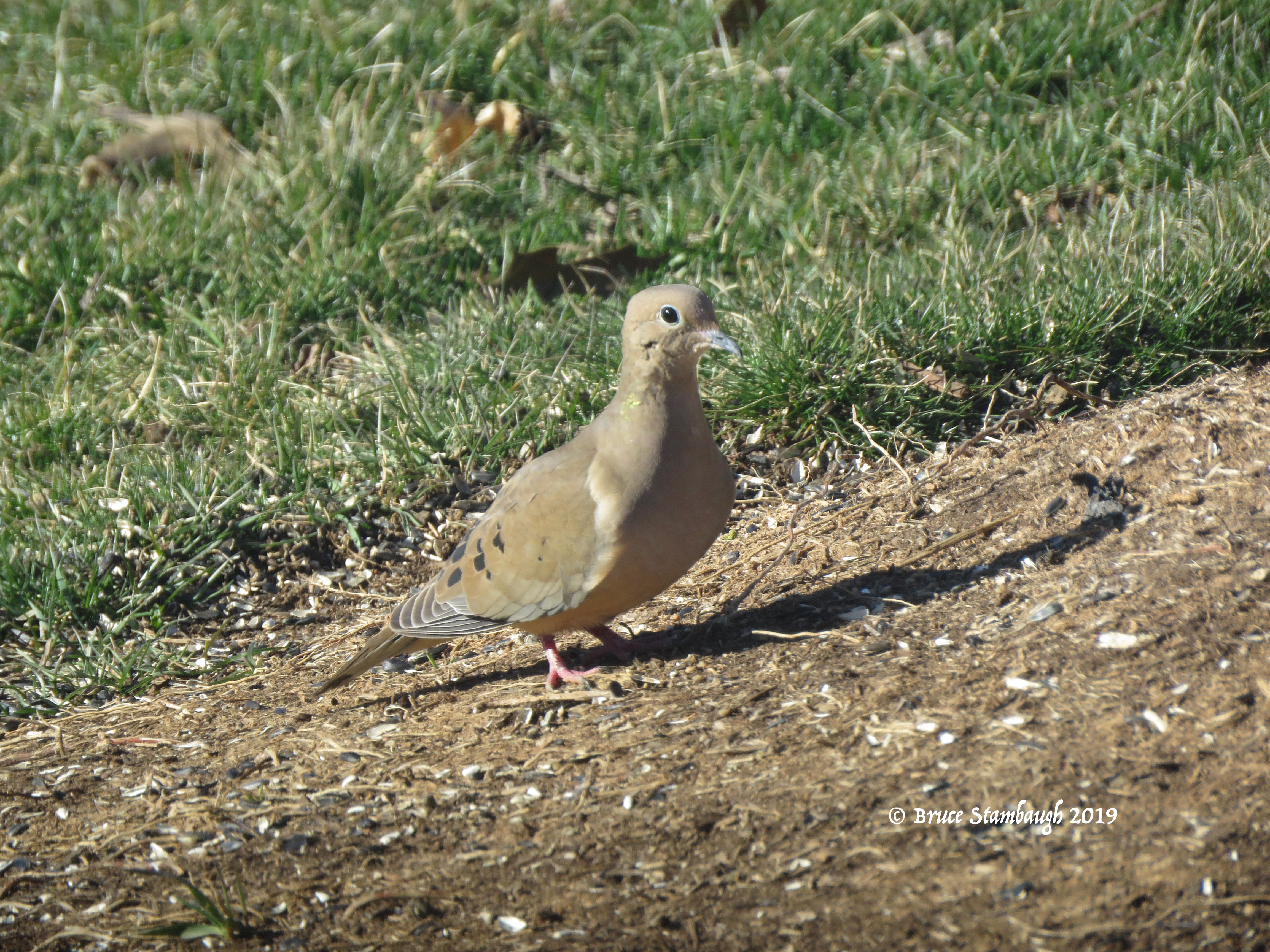
I could see feathers scattered on the ground around the hawk. It had captured one of the mourning doves that come to the feeders or roost in our trees.
I wasn’t sad, nor did I think the scene gruesome. Neva and I had witnessed the balance of nature in progress, “survival of the fittest,” as some refer to it. Just as the dove needed food, water, and shelter, so did the hawk. In this case, the dove was at the wrong end of the food chain.
Empath that I am, I felt a little sorry for the poor mourning dove, but not that sorry. After all, the Cooper’s hawk needed to eat, too. That’s the way of nature.
I try to not get too attached to birds and other wildlife that I encounter. Instead, I just try to enjoy them and their various antics. Each one seems to have a personality all its own, behaviors that set it apart from others of the same species. The riotous European starlings might be the exception to that observation.
I marvel at how nature unfolds, sometimes at her own expense. Once, while watching sandhill cranes walk toward me in Florida, I heard a commotion behind me. A bald eagle had snatched an American coot from a channel. The eagle landed in a large tree where black feathers flew as the eagle ripped apart its breakfast.
Songbirds like this Indigo Bunting devour weed seeds.It’s important to remember the big picture when it comes to nature. Where would we be if birds didn’t eat insects or weed seeds or other animals? That alone is reason enough for humans to take better care of planet earth.
I watched the Cooper’s hawk off and on for the duration of its dining. It ate judiciously, pausing every now to check its surroundings. It would return to its meal, pulling sinew, flesh, and bones from the carnage.
After it flew off, I went out to inspect the crime scene. All that remained of the mourning dove were two circles of feathers. One fanned out where the dove was snagged, and the other only inches away from where the hawk dined. The hawk had eaten every other part of its victim.
That is the way nature works. It is a joy and an honor to admire her at each opportunity that she affords.
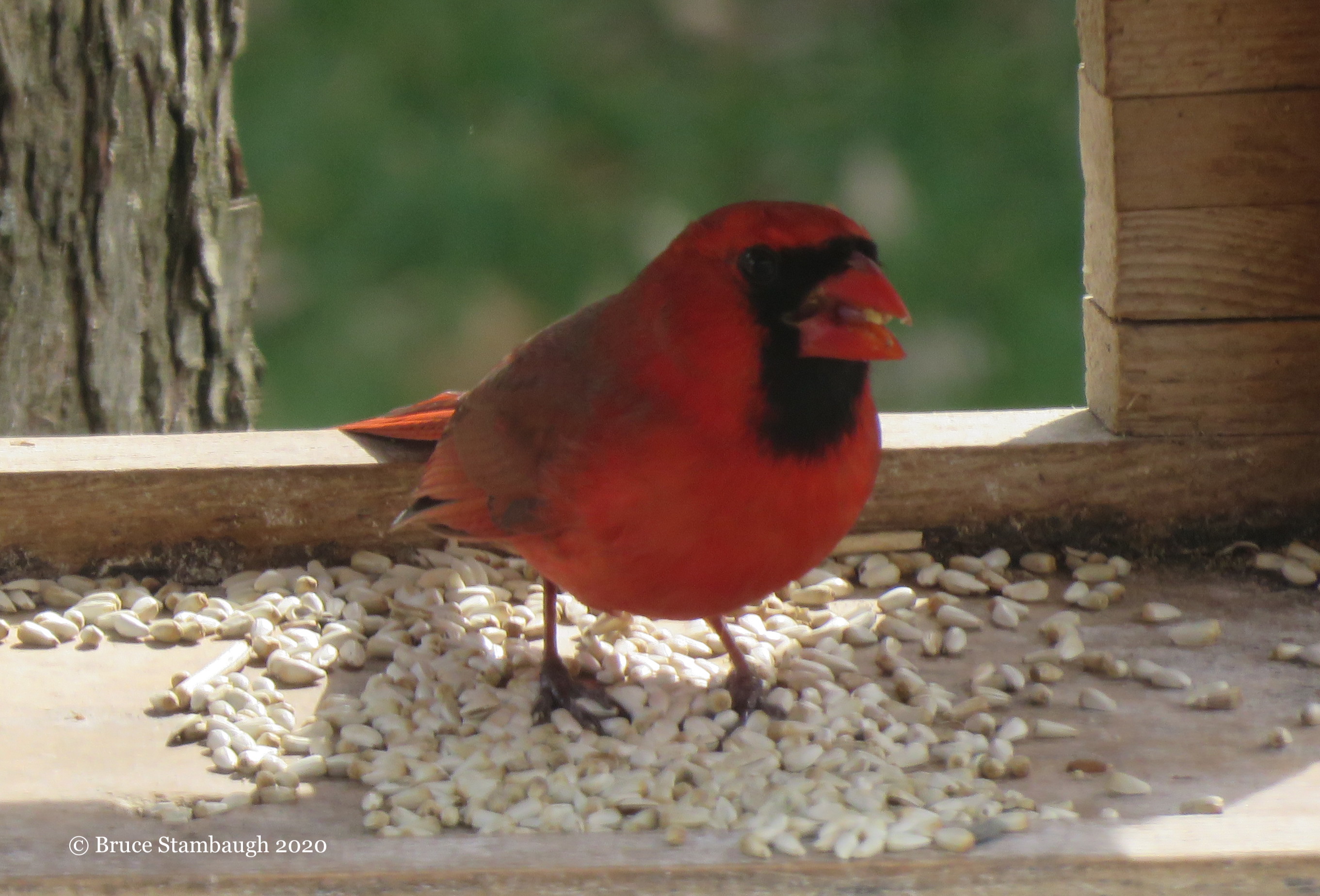
I caught this male northern cardinal chowing down on safflower seeds that I had set out for the few birds that will eat them. European starlings and common grackles won’t touch the seeds. So if they are hogging the other feeders that contain black oil sunflower seeds, the cardinals and other songbirds help themselves to the bleach-white offerings.







 Roadkill Crossing
You must be logged in to post a comment.