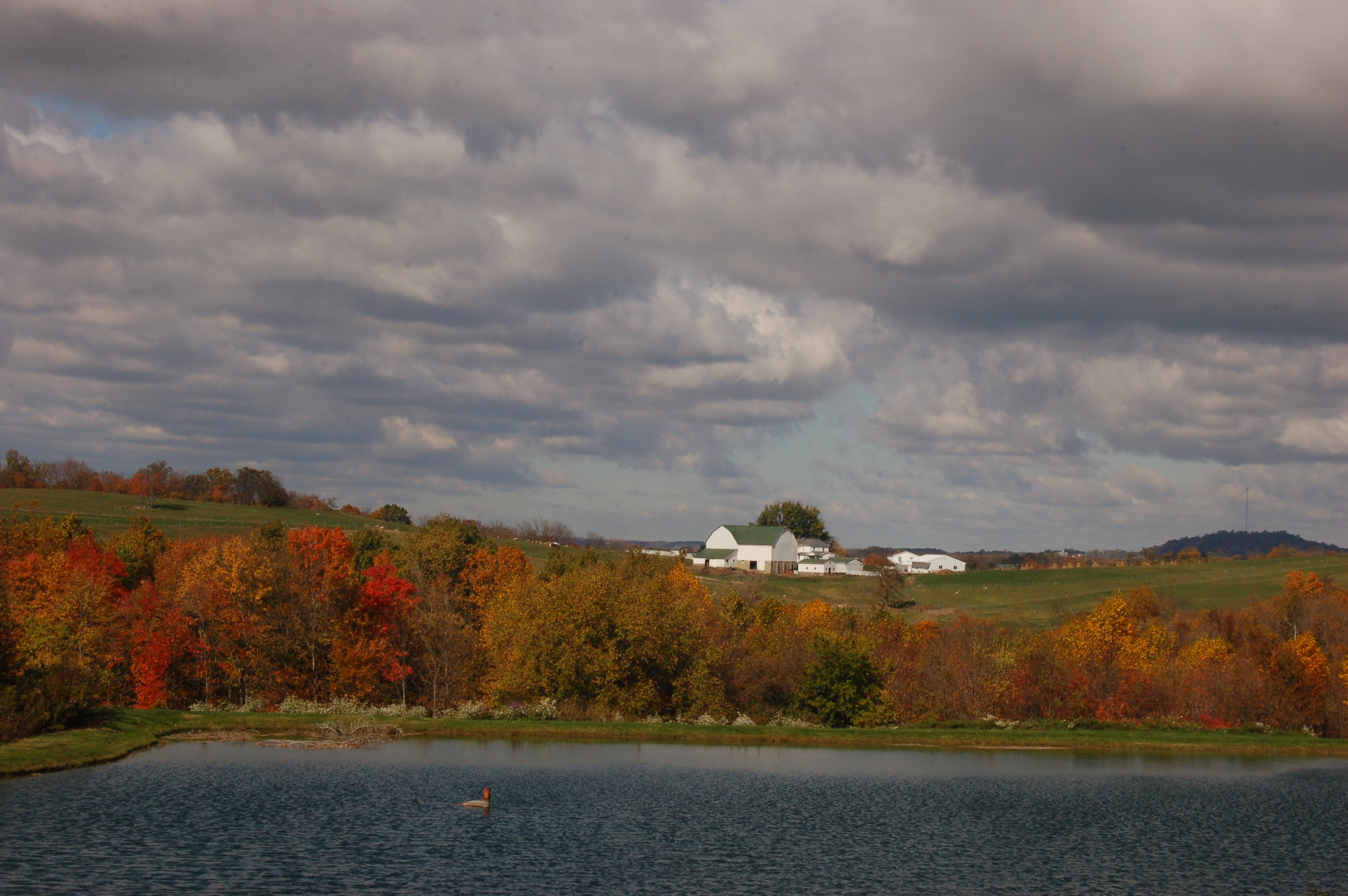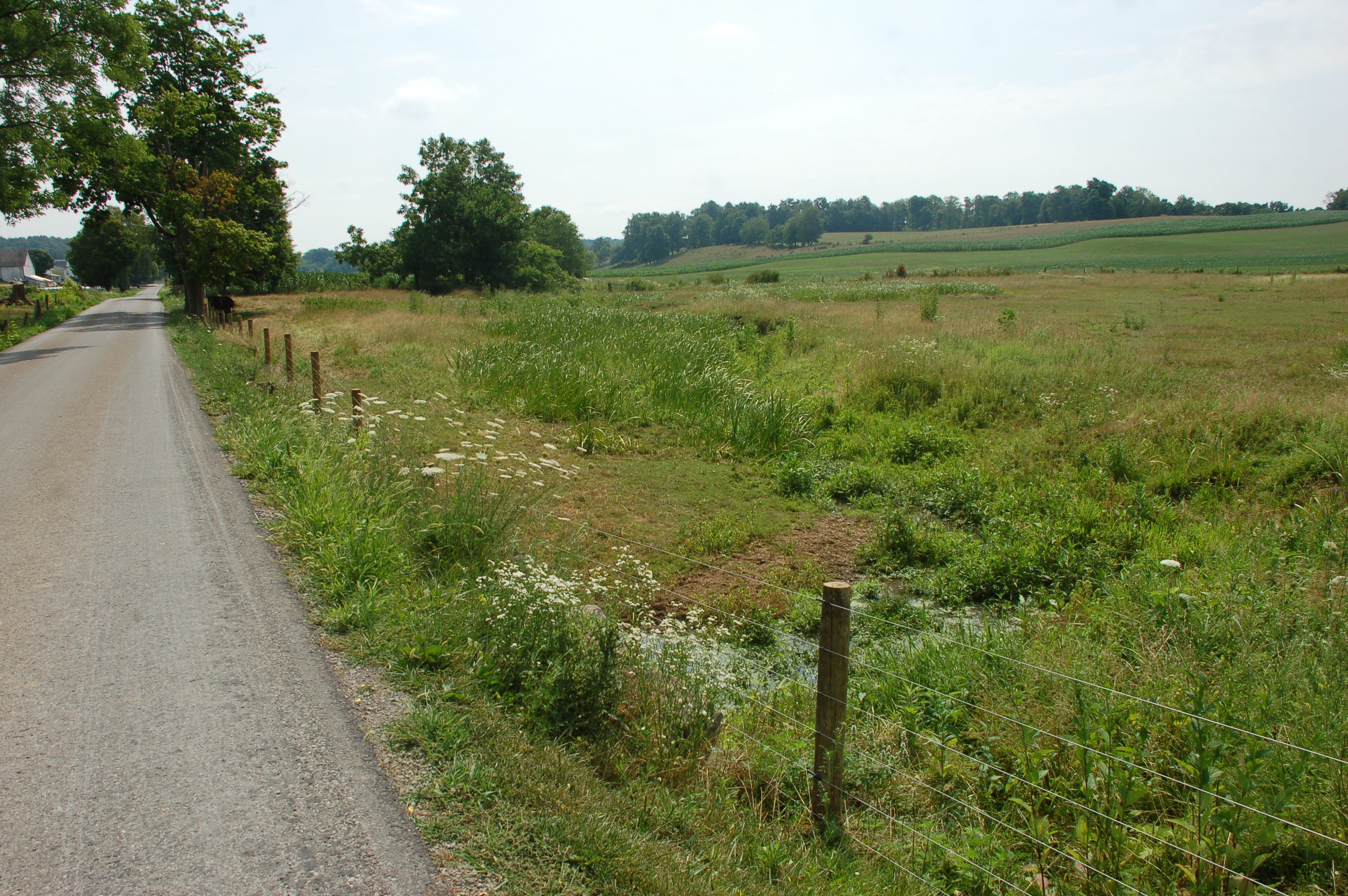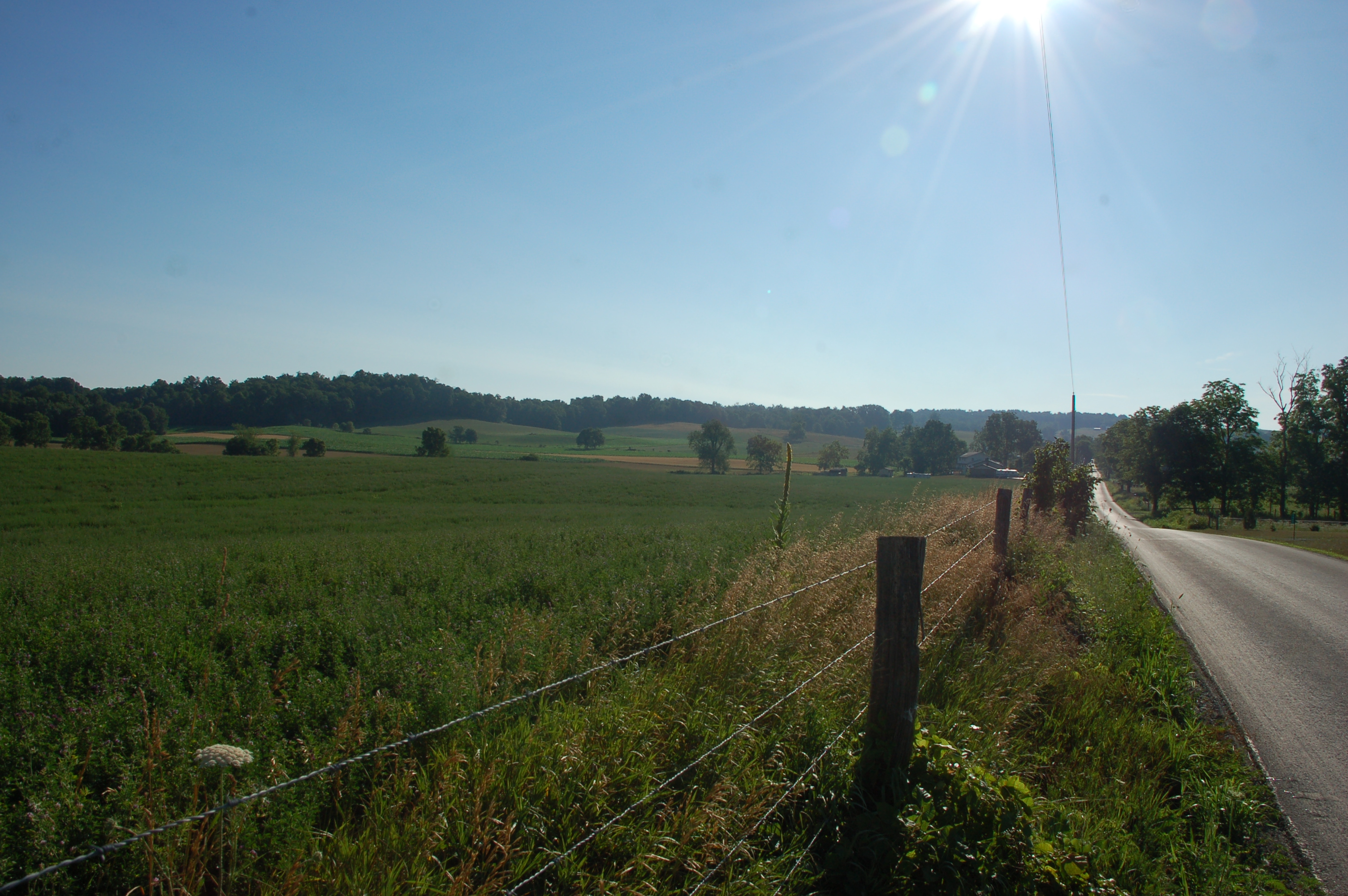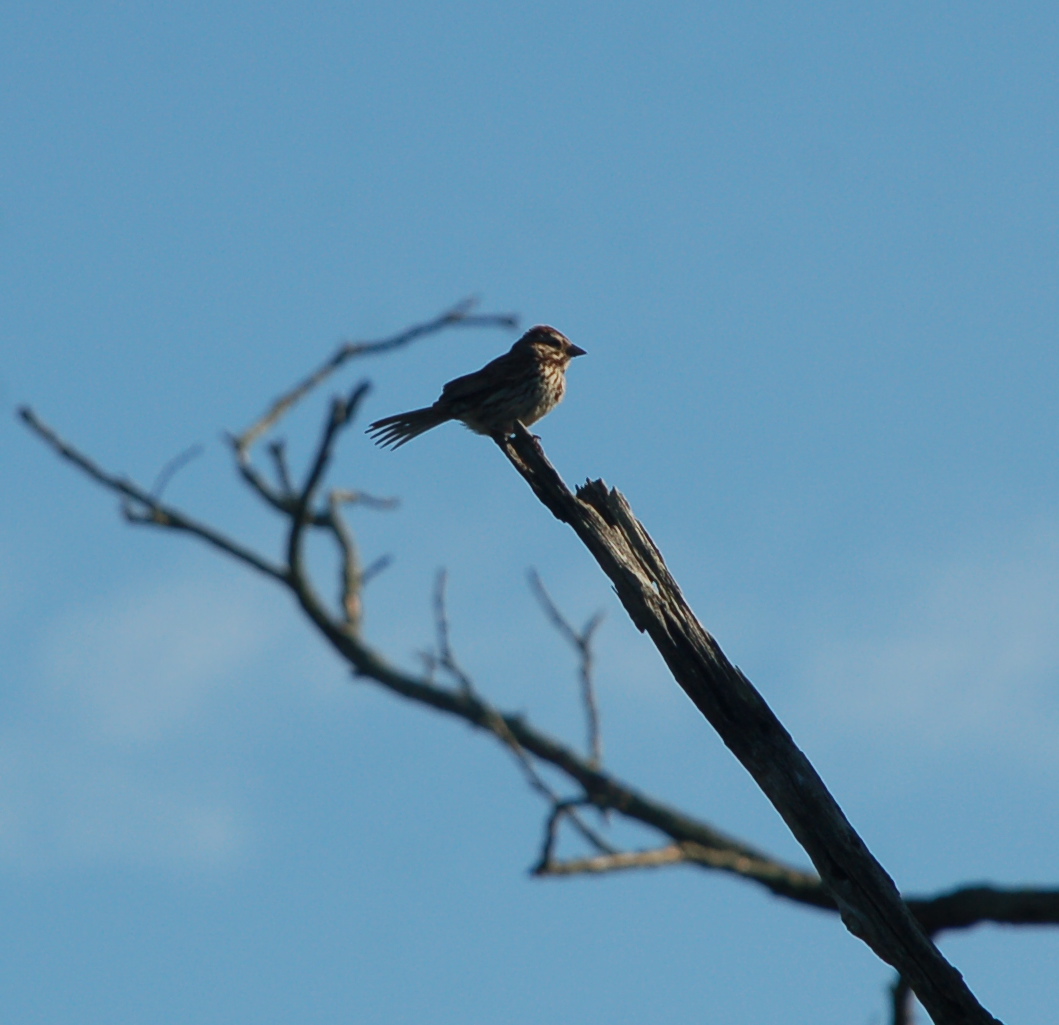
The year in pictures

By Bruce Stambaugh

I had the grandiose idea to post photos I had taken in 2011 in four categories, people, floral and fauna, scenery and weather. As I sorted through the nearly 4,000 imagines I had taken this year, I quickly realized that the task was too daunting, especially given the limited time I had.

Instead, I chose to select a picture for each month of the year. Most were taken near my home near Millersburg in Ohio’s Amish country. Others were shot while on vacation or out of our area. What I assembled turned out to be an eclectic collection that ends up serving both as a through the lens summary of my year and a representation of each of the original categories.

Here, then, are my pictures of the month for 2011.

January

American Goldfinch by Bruce Stambaugh
Bird lover that I am, I enjoy feeding and photographing birds. This female American Goldfinch posed nicely for me on a porch post while waiting for an opening at a feeder.

February

Eastern Bluebird by Bruce Stambaugh
Though this shot is of another bird, this chilly female Eastern Bluebird served as model for both the birds that I love and the weather that I watch. With the stinging, horizontally blowing snow on a late February day, she sought food and shelter and found both in the hollowed out log peanut feeder that hung on our back porch.

March

Espresso art shot by Bruce Stambaugh
I chose this shot as a symbol of how the year unfolded. Taken outside a café in downtown Charlottesville, Virginia, I couldn’t help notice the irony of the dark gray shadow of the white window lettering on the back of the chair inside the shop. The rest of the picture is busy and blurred with multiple reflections, much like my 2011 life experience.

April

Family photo by Bruce Stambaugh
Inscribed on my grandfather Stambaugh’s tombstone is the simple yet profound phrase, “He liked people.” Well, so do I, especially family. Whenever family gathers, like my daughter’s family did at Easter with us, we try to get a family photo. But with young children, getting a perfect picture is a challenge. I thought this imperfect one to perfectly represent that point. The middle child, the long-haired lefty on the left, distains set up shots about as much as me. His older brother enjoyed Davis’ tantrum while the boys’ father tried to settle number two. The granddaughter ignored the silliness and played with a toy, while our photogenic daughter stayed focused on the camera as best she could.

May

Two birds by Bruce Stambaugh
Yep, another bird picture. It wasn’t the subject matter as much as the color that made this the May pick. Plus, it’s a rarity to have a male Baltimore Oriole and a male Red-headed Woodpecker on a suet feeder at exactly the same time. Fact is, neither seemed to mind the other since they continued to feed for several minutes.

June

Floral and fauna by Bruce Stambaugh
June was a beautiful month, save the occasional severe weather. After a long, chilly, wet spring, June’s warmth and sun brought out beautiful flowers and insects, like these Sweet Williams and this Tiger Swallow-tail butterfly.

July

Shelf cloud by Bruce Stambaugh
I felt this picture embodied the year we had in northeast Ohio as much as any photo I shot. Precipitation records were broken throughout the state in 2011. Severe thunderstorms, like this one with its foretelling shelf cloud, pelted northern Ohio all spring and well into the fall. Flooding, damaging tornadoes and microbursts, hail and blinding snowstorms were all a part of the year’s complex weather.

August

Lush harvest by Bruce Stambaugh
Notorious as a hot, humid and often dry month, August fooled us this year. As lovely as June was, August was even nicer. I thought this shot of my Amish neighbor cutting golden oats between lush alfalfa and emerald field corn best represented the month’s congeniality.

September

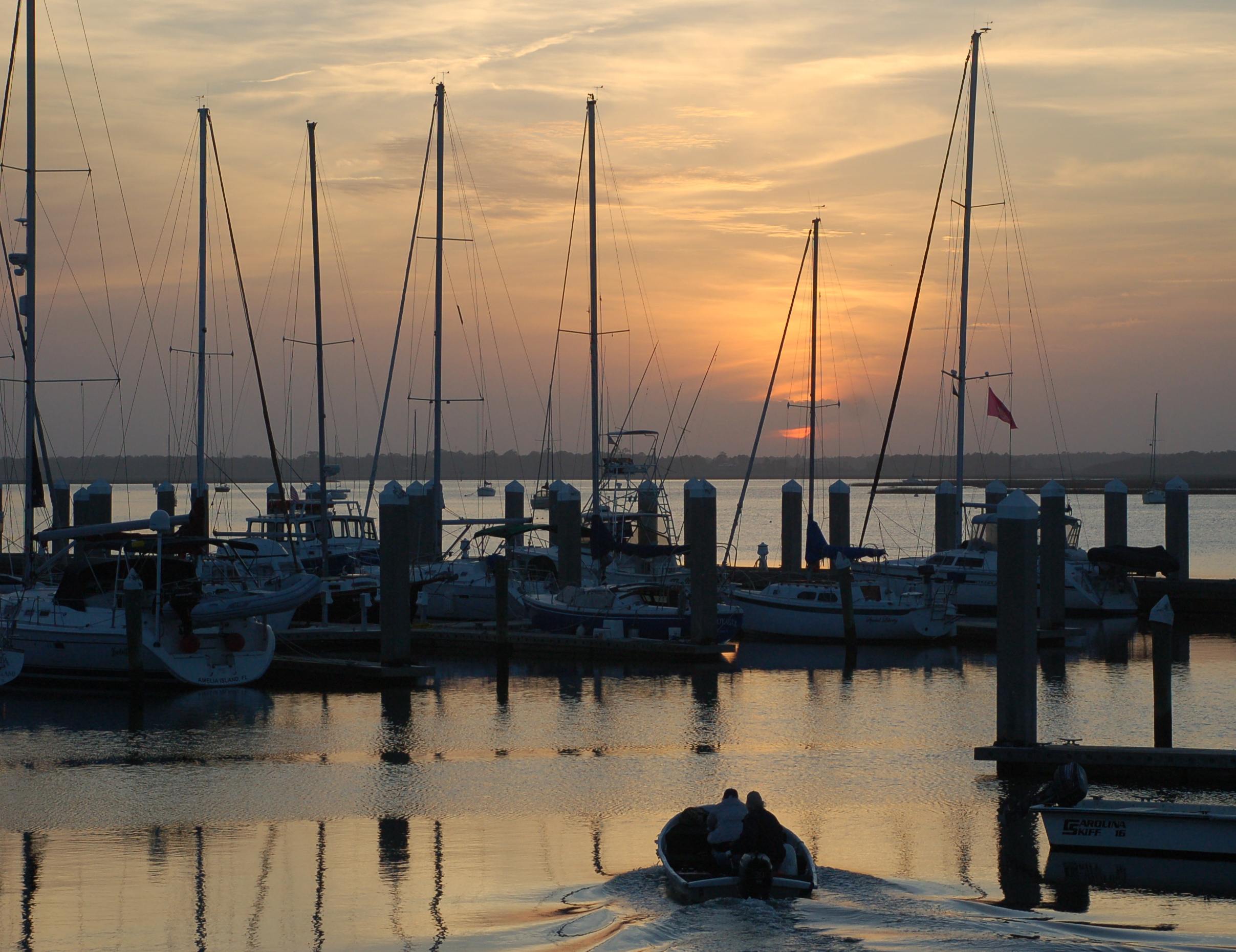
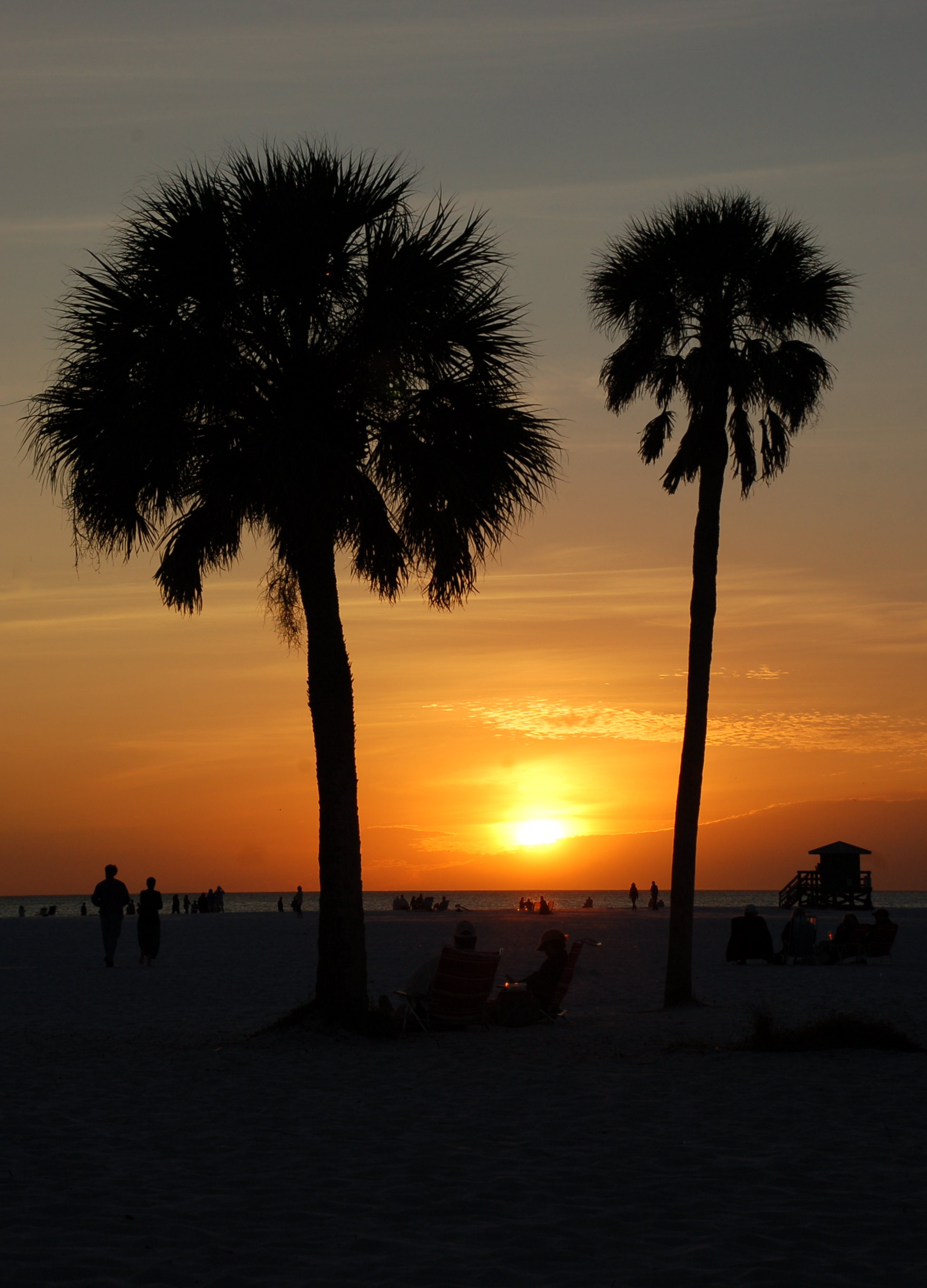
Sept. 11 sunset by Bruce Stambaugh
Like millions of other global citizens, September 11 is a special day for me. Mostly out of the desire for peace, I consider this day personally sacred. I tend to use the day for reflection and prayer. I thought the sunset on the 10th anniversary needed no words of explanation as to why it was September’s choice.

October

Fall sunrise by Bruce Stambaugh
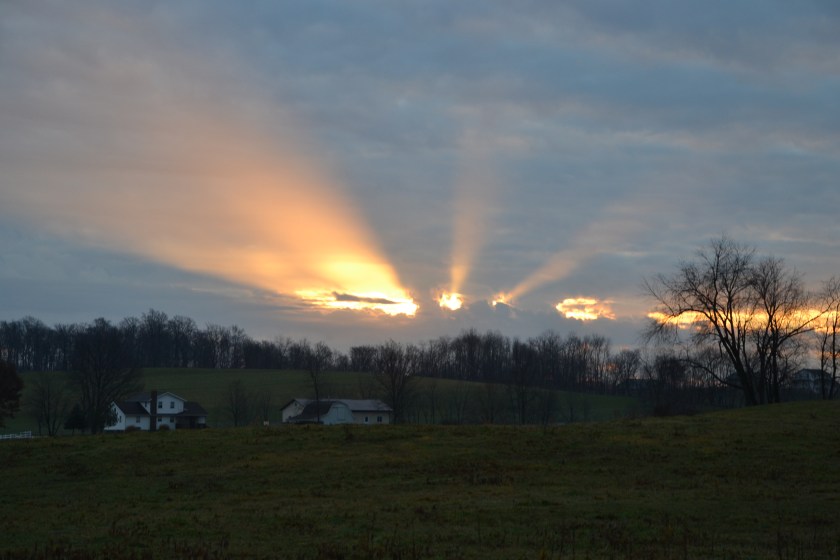
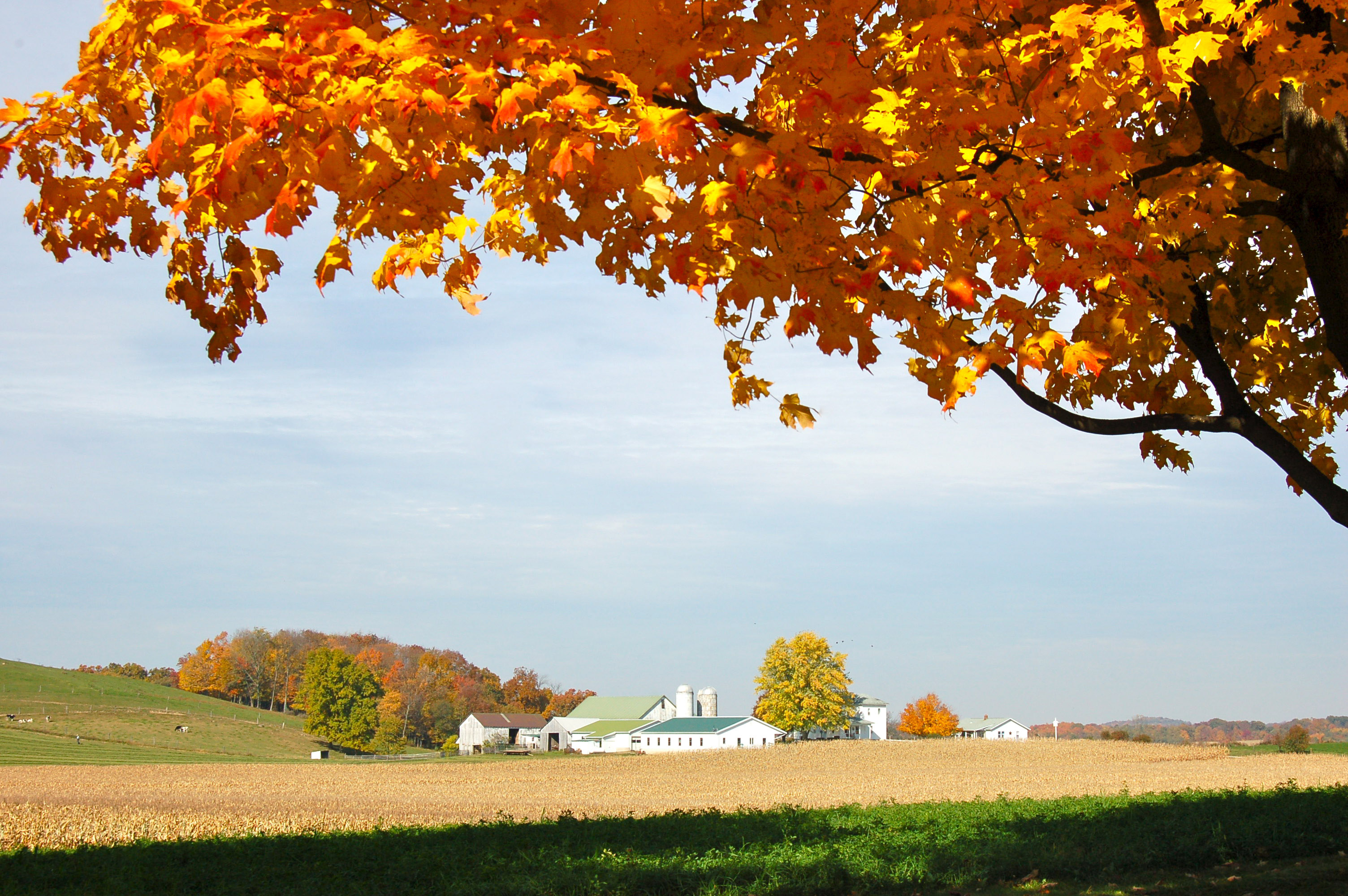
Every photographer knows when he or she has taken the shot. On a foggy fall morning, I was fortunate enough to capture this shot two miles east of our home. I still smile when I see it.

November

Benefit auction by Bruce Stambaugh
Our church community is an important ingredient in my life. On the first Saturday in November, Millersburg Mennonite Church held a benefit auction for two couples in our congregation who either have adopted or are in the process of adopting children. Of course, the cost of that process is high. All the items in the auction were donated. Needless to say, the auction was an all-around success.

December

Christmas Bluebird by Bruce Stambaugh
We began this venture with a bird. I figured we might as well end it that way, too, especially when this male Eastern Bluebird came calling at the sunflower heart feeder and basked in the Christmas Day afternoon sun.

People, floral and fauna, scenery and weather all play important parts in my life. I feel fortunate to be able to regularly photograph shots representing each category. If I just happen to stumble upon some scene, bird, flowers, cloud or person that requires that I shoot a shot, I consider myself a happy and blessed person.

Happy New Year everyone!

Bruce

Ornithology is for the birds

Wood Storks by Bruce Stambaugh
These Wood Storks appeared in a marshy area in Coshocton Co., Ohio in August 2008. They normally are coastal birds in the southern U.S.

By Bruce Stambaugh

More often than not, birders take it on the chin just for being birders. Compared to football, American or Australian, it’s not exactly a contact sport, at least in the physical sense.

Birding is, however, very popular worldwide. That might be because of the many amenities that bird watching affords, and those that it avoids, like unnecessary roughness.

Why is birding so universal? Let me count the ways.

Birding is fun. Birding can be enjoyed by all ages. Birding doesn’t require a lot of expensive equipment, though you can spend big bucks if you so choose. Birding can be free. The birds come to you.

Black Vultures by Bruce Stambaugh
The owners of this camper probably didn't expect to get this friendly with these Black Vultures.

Birding can be enjoyed year round. Birding is an inclusive activity. Birding can be enjoyed by persons of any age. In fact, it is not uncommon to find entire families enjoying the sport together.

Birding is addictive, turning that usually negative word on its head. Once you learn a little about birds, you intuitively want to know more.

Birding is interactive. Birds get to know you. You get to know the birds.

Green Herons by Bruce Stambaugh
I had the luxuary of observing this pair of young Green Herons from my back porch.

Birding can be done anytime anyplace, hiking, biking, sitting, traveling, on the beach, in the woods, on vacation, or while at work. All are good times to “bird.”

Birding not only introduces you to new species. You make new friends while enjoying an outing, too.

Birding is both personal and interpersonal. You make your own sightings, but immediately share the information with other birders to verify the identification. Others do the same for you. Birding it is both a sociable and a social sport. It is a whole lot more fun done with others than alone.

Birders by Bruce Stambaugh
Birding is a social sport, best enjoyed in the company of other birders, whether novice or experts.

Believe it or not, birding can and does get competitive, but in a good way. Many birders compile a life list, an accounting of all the bird species they have ever seen, which includes when and where.

When a rare bird is spotted, birders shun selfishness. They call other birders or have it posted on a bird alert website. Soon scores of birders show up hoping to see the rarity for themselves.

White-winged Crossbill by Bruce Stambaugh
A flock of White-winged Crossbills spent a few days in the Holmes Co., Ohio area in March 2009. They migrated from pine grove to pine grove, including the one in my own backyard.

When a quartet of Wood Storks, birds usually found in Florida, appeared in Coshocton Co., Ohio awhile back, someone asked me if I had seen them. I hadn’t. They gladly gave me directions and I was ready to go. But I didn’t go alone. I filled my van with other birders, three generations who wanted to see the storks, too.

Birding leads to hospitality. You welcome birds by feeding them. You greet and meet other birders if you have a rare bird arrive, even having them sign their names and where they are from. That’s just common etiquette among birders.

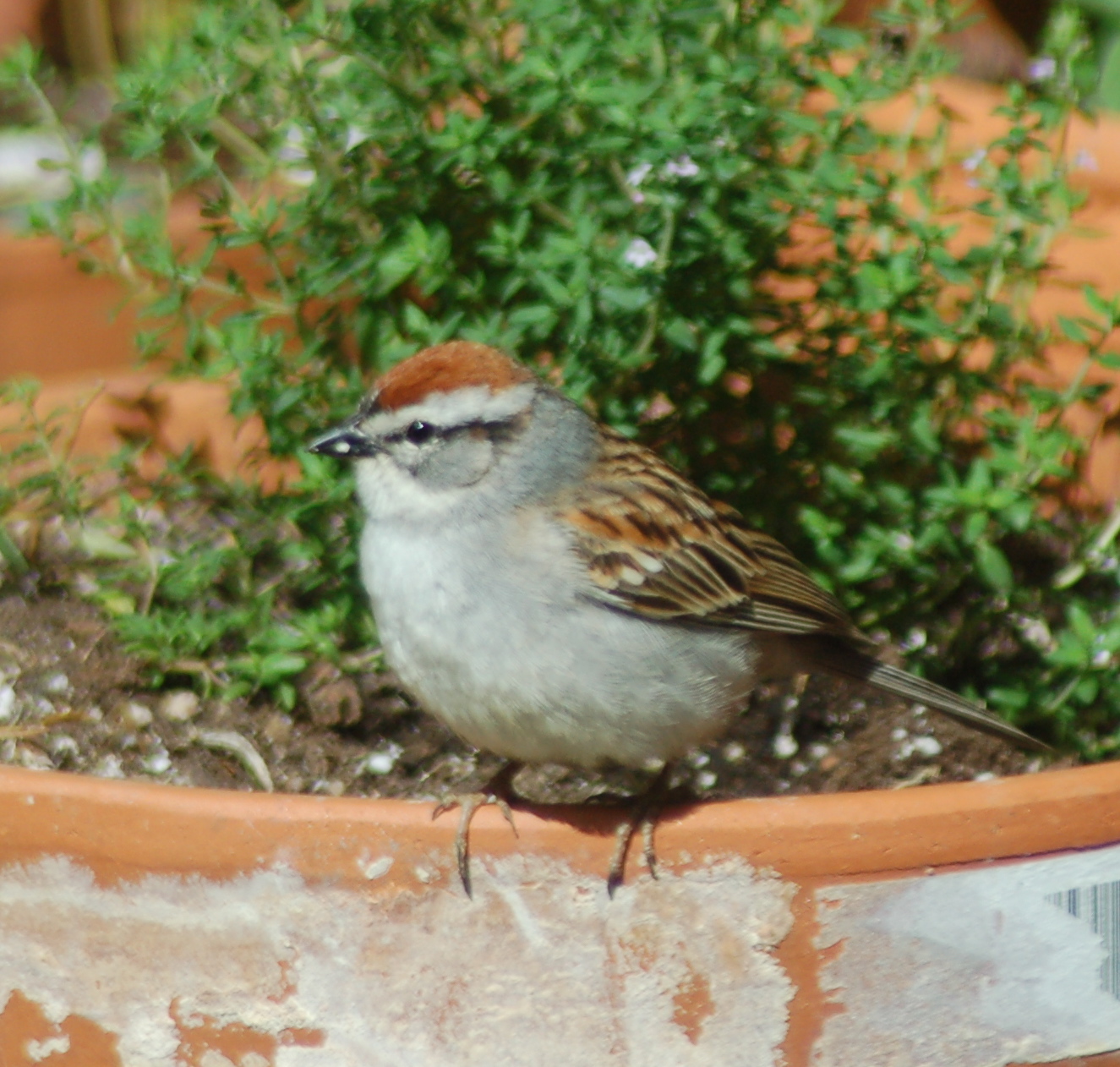
Tree Sparrow by Bruce Stambaugh
This Tree Sparrow found the perfect refuge from a harsh winter's storm.

Birding invigorates your senses. The range of songs and calls of birds are often heard before the birds are seen. The amazing array of bird plumage dazzles the imagination.

Birders are polite and follow directions. Hundreds of birders from 37 states and 10 countries attended the Midwest Birding Symposium recently in Lakeside, Ohio. A Lakeside resident was impressed that the birders actually stopped for stop signs.

Birders are clean and emphasize being green, preferring reusable water bottles to disposable plastic ones. Birders are nice to others and the environment.

Birders are teachers. They are happy to share what they know and see.

For the birds by Bruce Stambaugh
This vanity plate leaves no doubt about the hobby of this driver.

Ornithology is the scientific study of birds. Given all their positive characteristics, the study of birders could be labeled “civility.” Birders clearly are their own special flock.

An empty nest is a good thing

By Bruce Stambaugh

We humans can learn a lot from bird behavior.

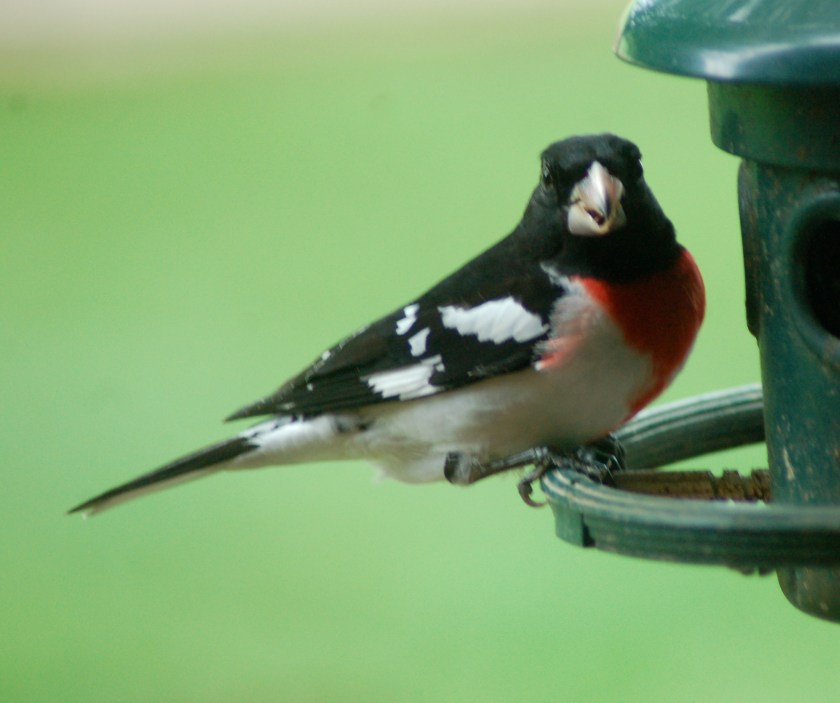
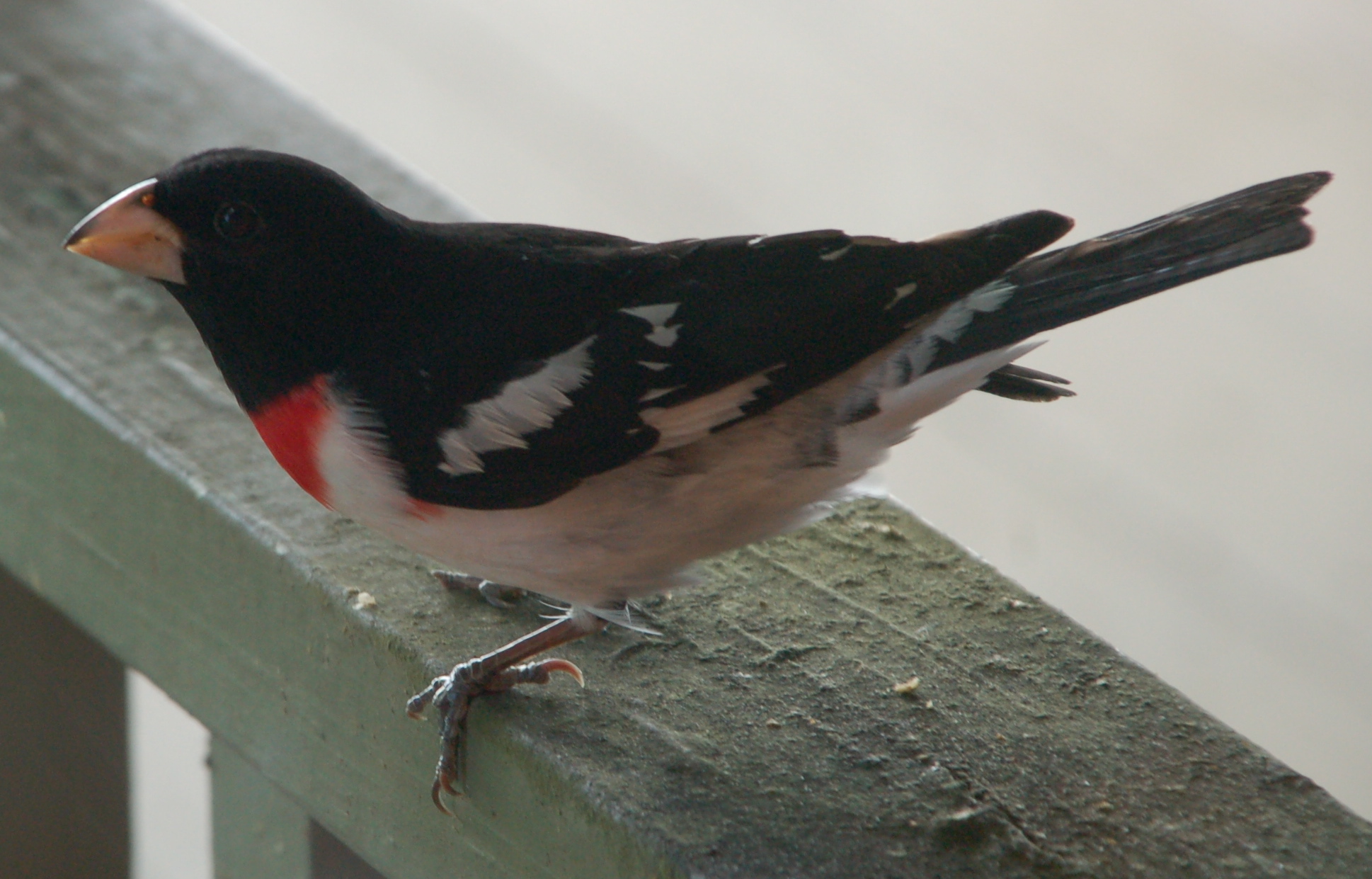
A pair of Rose Breasted Grosbeaks had frequented a backyard hanging feeder filled with sunflower seeds for much of the summer. Time and again they ferried nourishment to their young somewhere deep in the woods. When they were ready, the young fledged and flew the coop. The nest was empty.

Rose Brested Grosbeak by Bruce Stambaugh
A male Rose Breasted Grosbeak at the oil sunflower feeder.

My wife and I knew early on in our child rearing that the day would come when our daughter and our son would both be gone. They would grow up and begin lives of their own. That’s as it should be.

The main role of parents is to raise your children the best you know how, imperfectly to be sure, and then let them go. They are adults. They can use their own wings to fly through this crazy world of ours.

Still, I have encountered parents who long for the days when their children were younger. They just can’t give them up, even though they are adults. The comments have not only come from newbie nesters, also known as helicopter parents, who hover over their college freshmen. Veteran parents whose “children” left long before our own also seem melancholy.

Empty nest by Bruce Stambaugh
No post about the empty nest would be complete without a picture of an empty nest, in this case a House Wren's nest in an Eastern Bluebird box.

Ideally, the child/parent relationship should go something like this. As infants, the children are totally dependent on the parents. As they grow and mature, they change from children to young adults, responsible for their own actions.

By their late teens, the kids may go off to college, like our children did, or simply leave home to begin life on their own. It is at this critical point in the family relationship cycle that parents need to freely release their offspring.
Unfortunately, given the current extended downturn in the global economy, jobs are harder to come by. The reality for some is that out of financial necessity adult children and sometimes grandchildren have had to move back in with parents and grandparents.

In the 16 years since our nest has been empty, my wife and I have had opportunities to travel without the constraints of busy teenagers’ schedules. More often, we have simply enjoyed our quiet times together. Of course we continue to interact with our grown children and the grandchildren as frequently as we can. But we have also learned to give them their own space.

Flower garden by Bruce Stambaugh
My wife gets many compliments on her beautiful flower gardens.

The empty nest has had another unexpected benefit. My wife and I have also rediscovered one another, and learned to enjoy our own hobbies and interests. Some we do as a couple. Others, like gardening for Neva and birding for me, we enjoy separately. We have gained individually and as partners.

I know humans have a higher calling than birds. Birds at least instinctively know that their role as parents is to sit on those eggs until they hatch, feed the chicks until they fly, teach them how to forage for food and to fear predators. After that, they are generally on their own.

For me, that’s where the comparison tilts to our advantage. We should strive for interdependence with our adult children, keeping in contact with them, always loving and communicating with them, without controlling or smothering them. Achieving that optimum goal can help combat the emptiness of the empty nest.

A healthy, nurtured interdependence between parents and adult children can result in the empty nest being a good thing for all involved, birds included.
Family by Bruce Stambaugh

Five easy steps to attract birds

Amish country by Bruce Stambaugh
By Bruce Stambaugh

Feeding birds is easy, and fall is a great time to start. In fact, if you follow some simple but basic birding steps, you can attract returning migrants and hungry year-round residents to any backyard environment.

Keep in mind that different birds have different feeding habits and nutritional needs. Varying the style of the feeders, the kind of bird food used in each, and the feeders’ placement can greatly determine the popularity of your feeders.

1.            Identify your habitat

Once you decide to feed birds, it’s important to know what habitat you are in and establish the right feeders with the appropriate feed. Hanging out suet on a balcony in the city most likely won’t attract the desired birds. Doing so in the country or a loosely wooded backyard can yield great rewards.

Feeders placed in grassy suburban backyards or rural settings have the chance to attract the biggest variety of birds. Feeders should be placed where they can be easily observed through a window in your home, and stocked and maintained with the appropriate feed.

2.            Select your feeders

The key to successful feeding is to pick the correct feeder or feeders for your situation. A backyard that has even a small grassy opening surrounded by hedges, shrubs fields or trees may be perfect for every kind of bird feeding style. Feeders don’t have to be complicated or expensive either.

Birds feeding by Bruce Stambaugh
Even the top of an old stump can serve as an excellent feeding station for birds.

A simple piece of plywood placed on some bricks or small cement blocks would serve as a nice platform feeder for birds that prefer to feed at ground level. A hopper feeder could be hung from a porch overhang or a firmly planted shepherd’s hook. A hanging feeder, such as an empty mesh citrus sack, could hold high protein suet for birds that can cling to what they are eating.
Place the feeders where they will attract the most birds and are easily observed from the safety and warmth of your home. Placing a hanging feeder or a shelf feeder on your windowsill will bring the birds right to you.

3.            Keep the feeders filled

Once you start to feed the birds, keep at it, even if it takes the birds awhile to find your offerings. The feeders need to be kept filled, too. The ground feeder could be mixed wild birdseed or simply cracked corn spread out.

Filling the feeder by Bruce Stambaugh
Keeping feeders filled with seeds the birds like is critical to consistently attracting birds.
Stock hopper and hanging feeders with black oil sunflower seeds which many bird species enjoy. Thistle feeders are also popular with many species of birds in northern Ohio.

Suet feeders can be fat from the butcher, or you can either make or purchase cakes of suet that are loaded with peanuts and seeds. Those fit well into square wire feeders.

4.            Keep them cleaned

In addition to keeping the feeders full, it is critical that the feeders be attended to at least weekly. Even in cold weather, mold and disease can spread from uncared for feeders. Moisture can cause seed residue to crust, creating a potentially unhealthy situation for the birds.

Clean out any clogged holes in hanging or hopper feeders and make sure the seeds appear properly. Clear away any accumulated material. Tray feeders and even the bare ground should be raked periodically to remove spent seed hulls and bird droppings. Suet feeders should be checked for any signs of decay or mold.

Binoculars by Bruce Stambaugh
A good pair of binoculars, when used properly, can enhance birdwatching.
5.              Keep a record

For most birders, keeping track of what is seen is half the fun. Again, this is not a difficult or time-consuming task. Keep a notebook and pencil handy and record the day, time, weather, and type of bird you saw. You will be surprised how quickly the number of species adds up on your yard list. Do this annually and you will have an accurate and personal record of what birds you saw, when and under what conditions.

A good bird guide is also an essential tool. Easy to use bird books are available at area shops and bookstores. Having a good pair of binoculars can enhance your bird viewing, too. After all, watching the birds eat is the main objective.

Putting up feeders, keeping them filled and cleaned, and keeping track of what you saw is a wonderful way to pleasantly pass the time when the weather outside is frightful. The birds need the food, and with a front row seat you will be glad for the variety of aviary entertainment without having to go out into the elements yourself.

Bluebird by Bruce Stambaugh
Feeding birds sometimes brings pretty surprises, like a hungry Eastern Bluebird.

This story first appeared in Around the House.

Kids these days

Juvenile Redheaded Woodpecker by Bruce Stambaugh

Boisterous, brassy,
young redheaded woodpecker
posed for photo op.

Bruce Stambaugh
August 30, 2011

August is the quiet month

August sunset by Bruce Stambaugh
A typical August susnet in Ohio's Amish country.

By Bruce Stambaugh

I have always thought of August as a transitional month, the days between busy, boisterous July and the revitalizing September.

August is the stepping-stone from summer’s onslaught of activities into a pre-fall mentality. Vacations wind down for most people. It’s back to school and back to work.

If we take time to halt our busyness, our clamor to re-ready ourselves for the new school year at hand, we can take note of this calendar bridge from tilling to harvest, from clamor to order. In its intermediary mode, August seems to quietly take it in stride.

The songbirds no longer need to announce their territory or impress their mate. The young have flown the coop, or more properly stated, the nest, and bird life has returned to seeking daily subsistence. The American Robin precisely models the point.

From April to July, the Robins paired off, warbled their luxurious choruses almost continuously sunup to sundown. They pecked on windows, noisily flitted off their nests when disturbed and faithfully fed their young.

The Robins were ubiquitous in both presence and song. People often comment when they see their first Robin of the spring.

First Robin by Bruce Stambaugh
People often remark when they spot their first Robin of the spring.

Now, in late August, the Robins have all slyly retreated to their preferred nomenclature. They are more than content to while away the day searching for food deep in the recesses of the shade and forest.

Think about it. When was the last time you either heard or saw a robin? They simply and silently slipped away unnoticed.

If they haven’t already, other bird species will soon be disappearing from the area altogether. The Purple Martins, Barn Swallows and Common Nighthawks all heed their interior instinctive urgings and vanish unseen much like the Robin. We under-appreciate their massive consumption of insect protein until it’s too late to thank them.

Just as quietly, the multiple greens of fields and pastures have grown taller, richer. Chameleon-like, they have morphed into emeralds, tans and russets with hardly a rustle.

August harvest colors by Bruce Stambaugh
The colors of August change from day to day.

Farmers have taken in their wheat and most of their oats matter-of-factly, and now tolerantly wait the drying of the later cash crops, corn and soybeans. There is no mechanized clanking in patience.

Song Sparrow by Bruce Stambaugh
A Song Sparrow sings away.
The Song Sparrow still belts out an occasional composition, but nothing as regular as it had been earlier in the season. The House Wrens, once so noisy they approached annoyance, have taken to the underbrush, giving their last brood endurance lessons.

August’s atmosphere also has been quieter than the previous months, save for a couple of late night thunderstorms. The brilliant flashes and deep, rolling booms shattered my sleep like Civil War cannon fire might have. Midnight imaginations run wild when deafeningly jolted.

The few sounds of August we can count on are more monotonous and so commonplace we may not even notice their calls. Cicadas and crickets signal day and night. With windows thrown open to catch the unusual August twilight coolness, the insect symphony has helped humans settle in for sound sleeping.

Every now and then a ranging coyote howls from atop the neighbor’s pastured hill, if for no other reason than to drive the tethered neighborhood canines crazy. The feral call is one thing. The domesticated is another.

Now that school years in most locales begin well ahead of September, the playful echoes of children rollicking at recess again fill the air. It’s a timbre I love to hear over and over again, even if it does break August’s amazing silent spell.
Amish school by Bruce Stambaugh

Marshy field

Geese in oats by Bruce Stambaugh

Beside oat soldiers
squads of geese, ducks and shorebirds
glean the marshy field.

Bruce Stambaugh
August 16, 2011

Aviary gleaning

Barn Swallows by Bruce Stambaugh

Swallows encircle
the farmer and his mower,
a whirling harvest.

Bruce Stambaugh
July 30, 2011

Wren haiku

House Wren by Bruce Stambaugh

Warbling mother wren,
fledglings rattle from gourd house.
Satisfaction reigns.

Bruce Stambaugh
July 29, 2011

A long answer to a simple question

Garden pond by Bruce Stambaugh
The little garden pond in our backyard.

By Bruce Stambaugh

During his last visit to Ohio, my Virginian grandson, Davis, asked me a simple yet rather analytical question, befitting the inquisitive four-year-old, left-handed boy.

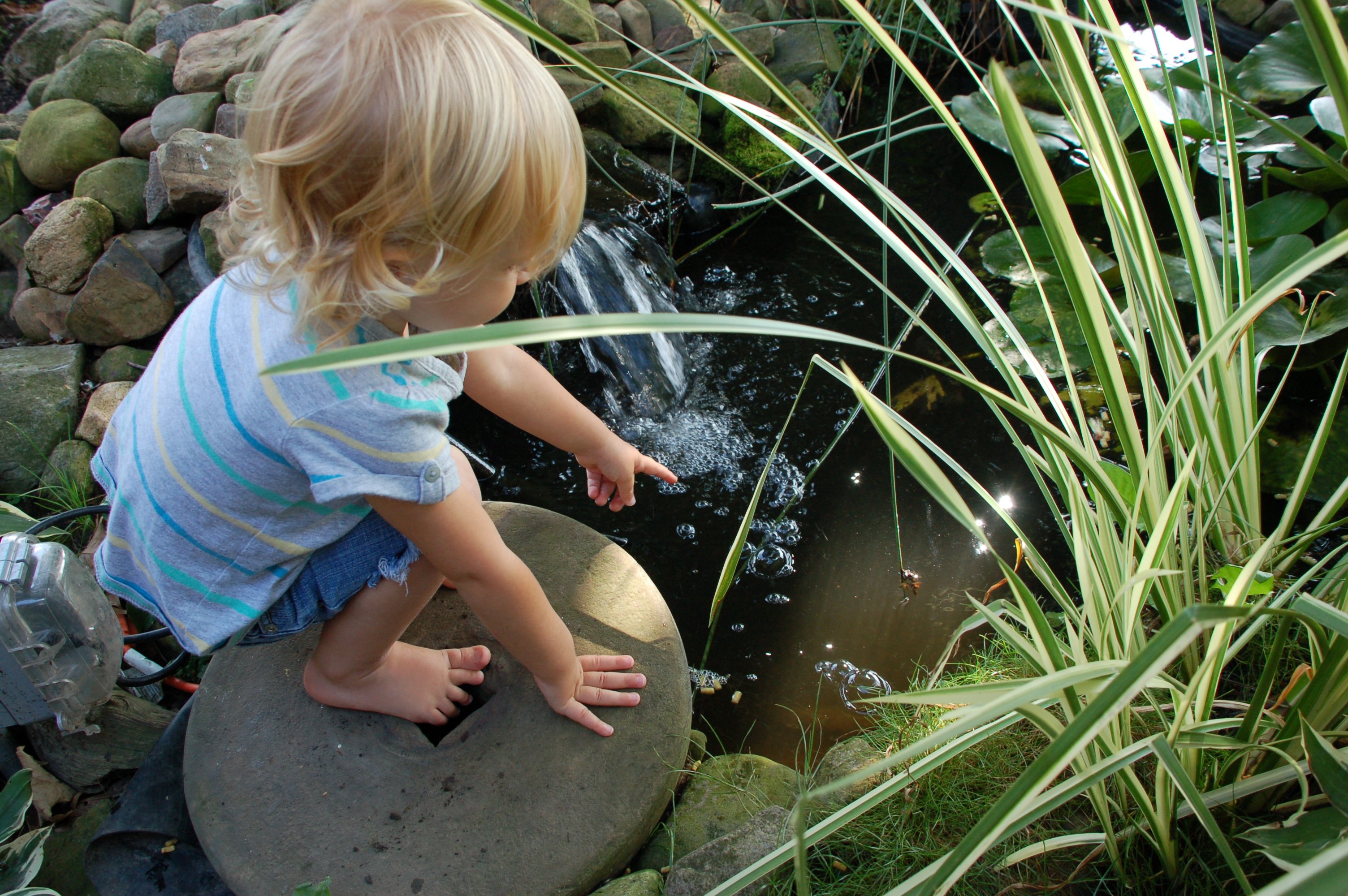
Davis and I were outside filling birdfeeders near the little garden pond positioned a few feet away from the back porch and just outside our kitchen window. Davis approached the pond’s edge, lined with mostly flat rocks scavenged from the neighbor’s farm fields.

“Poppy,” Davis queried, “Why do you have a pond?”

The bluntness of the simple question gave me pause. I straightened up, and thought long and hard before I answered him. The tone and intensity of his uncomplicated question told me that Davis really wanted to know.

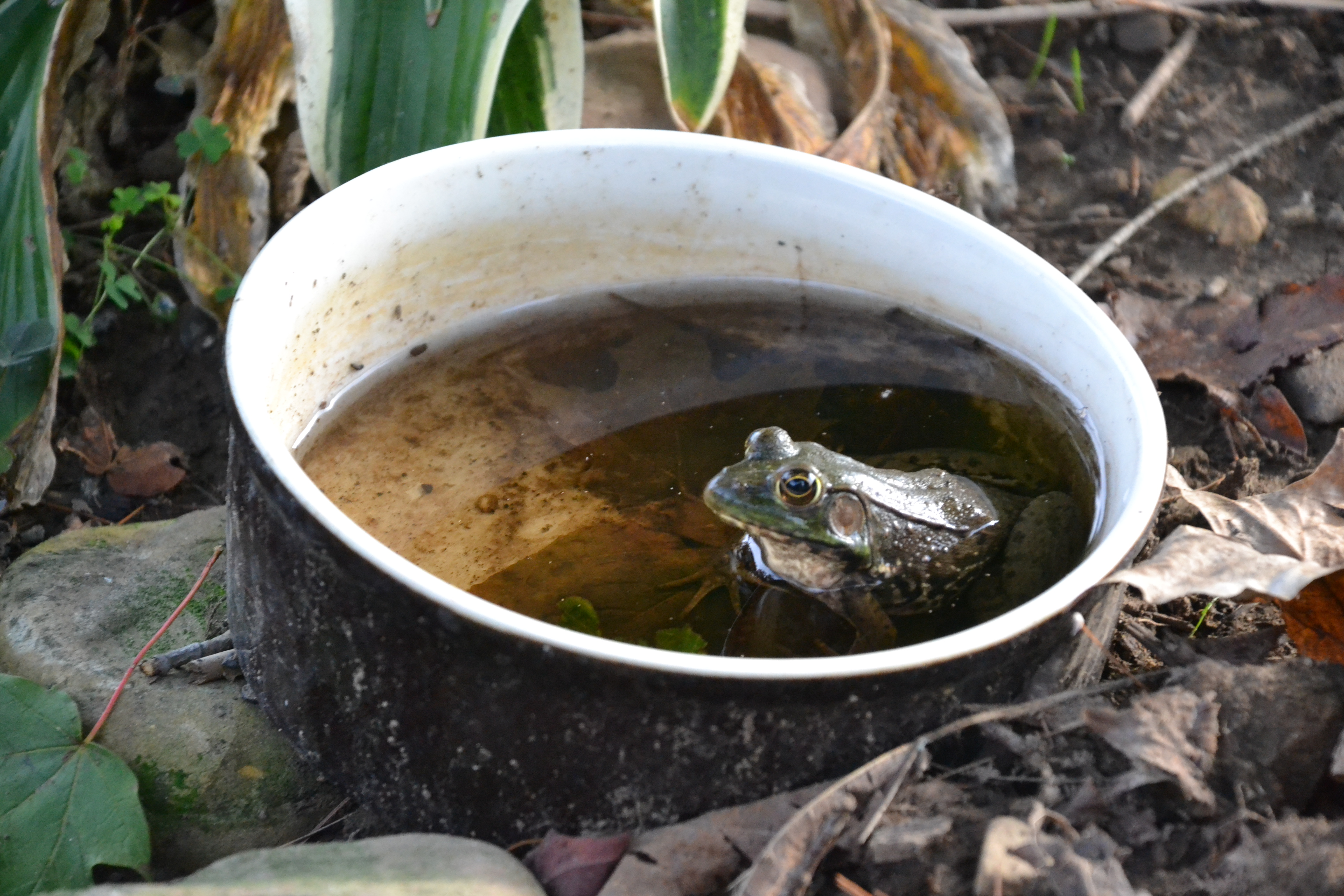
As I contemplated my answer, Davis waited patiently, searching for the resident frogs and trying to count the darting goldfish. His long, strawberry blonde curls bounced with even the slightest move.

I was impressed with his youthful inquisitiveness. His question piqued my own consciousness regarding the purpose of the pond. I gave Davis the long answer.

I told him that when I retired as a principal, the staff and students at one of my schools gave me a gift certificate to build a garden pond. Apparently, I had let it slip that the pond was one thing I wanted to create once my school days were completed.

Of course, all that was probably too much information for Davis to process. Perhaps it mimicked a politician’s answer to a reporter’s intrusive direct question. Davis looked at me with his big blue eyes and repeated, “But why?”

I changed tactics. I gave him the words I figured he knew and that I loved.

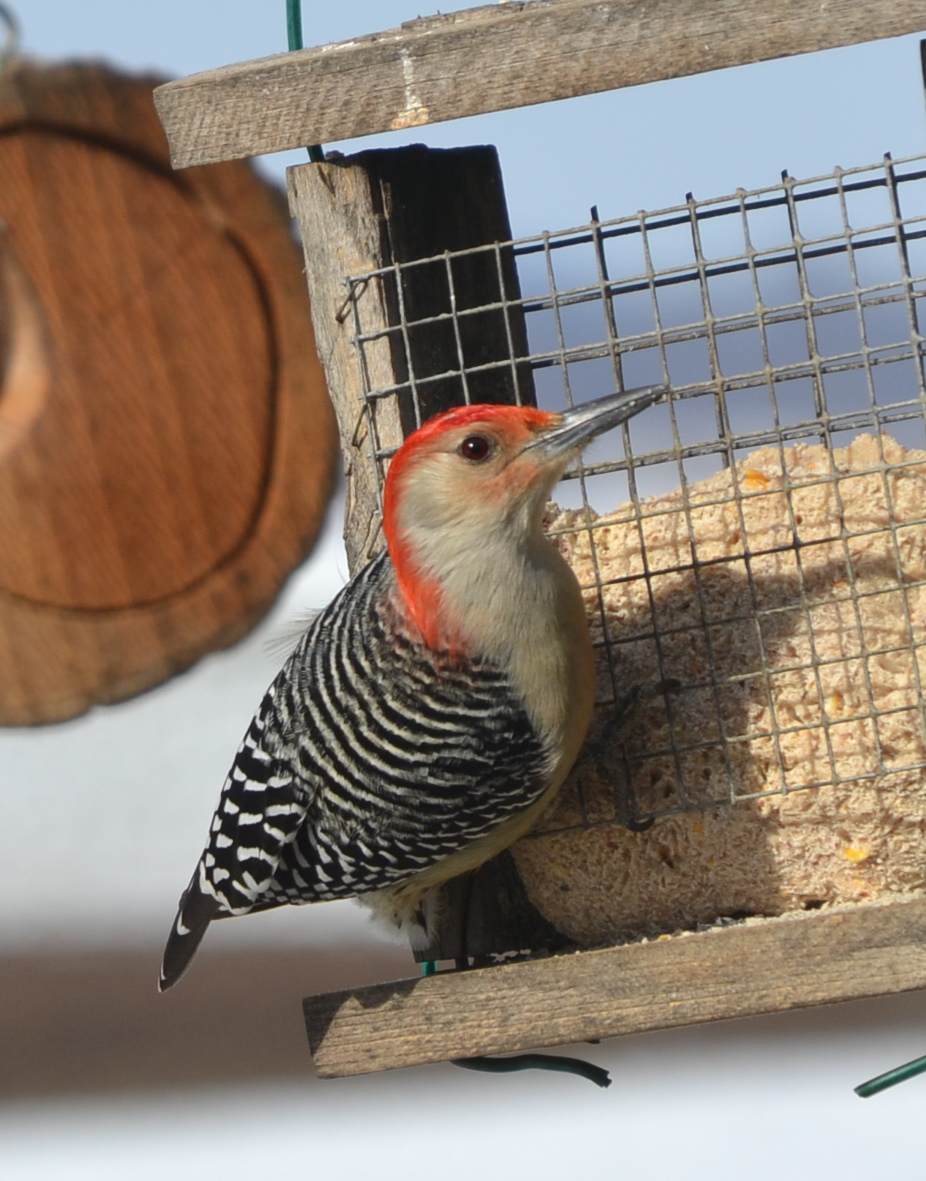
Red-bellied Woodpecker by Bruce Stambaugh
A male Red-bellied Woodpecker enjoyed a sip from the little waterfalls on a cold December day.

I told Davis that the pond attracts life. I itemized a quick catalog of what I meant. The birds I enjoy watching, squirrels, rabbits, deer.

“Deer?” Davis quizzed long and slow, head tilted, hands thrown into the air.

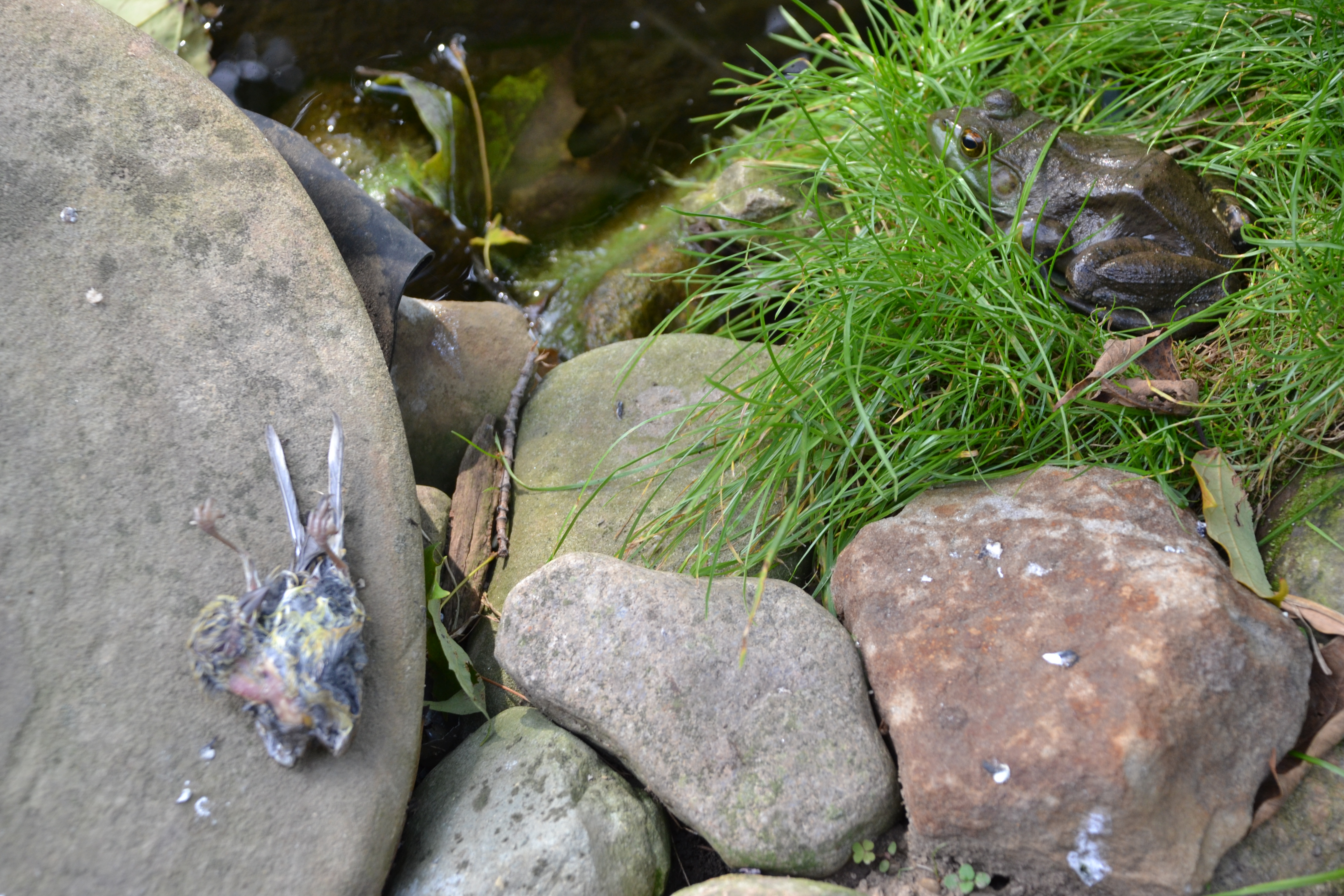
I explained that although I had never actually seen deer drink there, I had found their hoof marks in the mud and snow around the oblong pool. We stepped away, and soon a chipping sparrow flitted to the gurgling little waterfall for a refreshing sip.

Grandson by Bruce Stambaugh
Davis, my inquisitive grandson.

I could almost see Davis’ gears churning beneath those flowing locks. I knew the inquisition would continue.

“Why do you have goldfish?” Davis asked next.

I lovingly touched his curly head and simply said, “So you and your brother can feed them.” Davis looked up at me and smiled, as if he sensed the patronization.

“The fish help keep the pond clean,” I continued. “They eat things that float in the water.” I prayed he didn’t ask for their scientific names.

My grandson’s pointed question helped me step back and appreciate my little garden pond all the more. I enjoy its abundant life, the alluring sound, the attractive and useful greenery in and around the pond, along with the attraction of fur and feathered wildlife year-round.

Those intrinsic pleasures more than compensate for the necessary regular maintenance required to keep the pond in a habitable state. Now, whenever I clean the pump filters, watch birds revel in the water and hear the frogs croak late at night, I’ll remember Davis’ clear question, too.

I know why I have a little pond with a miniature waterfall, brilliant orange goldfish and complementary water plants. “Because I like it,” which is what I should have told Davis in the first place.