I recently served as a guide to a local Amish farm that had an active Barn Owl nest. It was one of several in the Holmes County, Ohio area. For the most part, the Amish are very respectful towards wildlife, especially birds. They fully understand what a gift it is to have Barn Owls around. The owls help control the rodent population.
Certified naturalist and speaker, Chuck Jakubchak, accompanied me on the field trip. After everyone had viewed the trio of young Barn Owls in their nesting box through a peephole, Chuck suggested I get a picture of the owls. I certainly didn’t want to stress the young birds, so he lifted the top of the box just enough for me to take this photograph. Of course, the owls hissed and bobbed, their natural defense mechanisms, for the few seconds that it took me to snap the shutter. We left the young owls in peace.
The morning sun streamed through the entrance to the nesting box, and an east breeze fluffed up their downy feathers. This was the only picture that I took, and I wanted to share it with all of you.
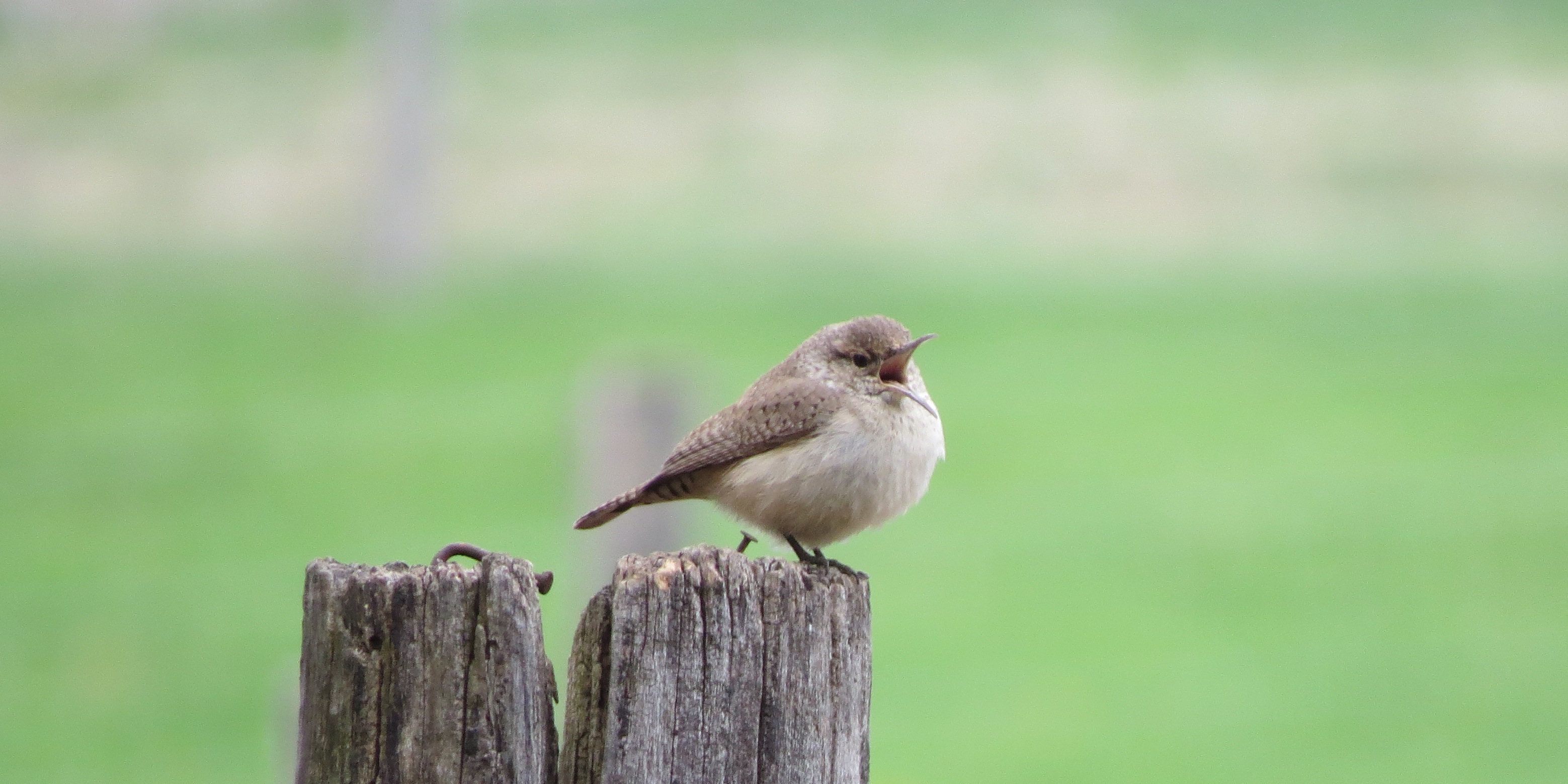
A month ago, a wayward little bird, a Rock Wren, ended up far from home smack in the middle of Ohio’s Amish country. Its arrival caused quite a stir. Over and over again, the wren flitted from a farm to a residence to a barnyard to a business and back.
Here it was two miles east of my home at a crossroads colloquially dubbed Bowman’s Corners. The buildings, the pastures, the animals, hardly resembled the wren’s native habitat in the American southwest. Nevertheless, the wren made itself at home for 10 days, and then just disappeared.
Word of the rarity quickly spread, and birders from near and far came with binoculars and cameras with long lenses to catch a glimpse of the dusty-colored wren if they could. Since the only other Ohio sighting of this bird had been in December 1963, I wasn’t surprised at all the commotion.
By the end of its short visit to the world’s largest Amish population, the pallid bird had taken on rock star status. It was a Rock Wren after all.
People from all stages of life came from miles around hoping to catch even a glance of the vagabond bird. Young, old, women, men, boys and girls, novice and internationally known birders flocked to view the Rock Wren. In total, more than 500 birders came in search of this special appearance. Many got to see the fickle little bird while others did not despite their patient waiting.
Hopping.
On a leaf pile.
Danger.
On the gate.
Spotted.
Beautiful setting.
Looking.
The Rock Wren earned the title of the “Junkyard Bird” because it often feed and perched among discarded farming materials.
Hard to find.
Birders.
Looking down.
Posing.
On the stump.
Jailbird.
The bird was the great equalizer. World-class birders stood side-by-side with youngsters gawking to see what all the fuss was about. When the secretive bird reappeared, a birder’s hand went up, excitedly waving. Other birders hustled to the spot to get a peek or to take a photo.
There was no class system, no pecking order, and no discrimination among these birders. If a birder saw it, he or she made sure others got to as well, even if it meant lending their own binoculars for others to spot the wren.
Fancy, expensive automobiles sat beside plain black buggies. Boys with suspendered denim pants, and straw hats stood alongside strangers old enough to be their grandparents. They were there for the same reason, and nothing else mattered than to catch a glimpse of the Rock Wren.
Those who were kind enough to host the posse of birders during the wren’s Amish country vacation seemed to enjoy the people as much as the bird. Of particular note was an older couple from the Cleveland area. Their story earned the respect and admiration of several, and served as an example of the dedication of birders.
The elderly gentleman was 95, and his wife was 90. Avid birders, they were undecided about making the two-hour drive form their home. Finally, they committed to coming, and they were not disappointed. Their zeal for birding brought smiles all around.
In its happenstance landing at Bowman’s Corners, the Rock Wren helped make new friends of those who sought to see it. More importantly, despite gender, age, wealth, education, birding experience or life’s station, they gathered as one through a common interest, a genuine love of all things created. The Rock Wren had woven its magic, innocently converting strangers into friends.
The Rock Wren was a splendid surprise. The gracious hospitality availed by the property owners of Bowman’s Corners that enabled so many folks to see this precious bird was no surprise at all.
It happened in a flash, as scary moments often do. I was mere inches from serious injury if not death. My guess is we all have events like this.
I don’t mean to overdramatize this. The split-second incident helped me further appreciate both what had previously occurred that day and what I was about to encounter.
I had already had an illuminating morning. I got to help my Amish neighbors run some timely errands. They had made dozens of glazed donuts for an open house at a nearby greenhouse. My task was to deliver the golden goodies and their makers to the party. It was hardly a chore.
Where it happened, without our granddaughter present.I also got to see the wayward Rock Wren again. Why this cute little creature landed two miles east of my house smack in the middle of the world’s largest Amish population, I have no idea. I just know it did, and the property owners were more than hospitable to any and all who wanted a chance to see this rarity.
Hundreds came to view this bird that belonged in the Rocky Mountains. This was only the second recorded appearance of this species in Ohio. After taking too many photographs of this feathered rock star, I returned home.
I checked to see if the mail had been delivered. With a small hill to the north, I have been especially careful about crossing our busy county highway for 34 years. The vehicles tend to zip along despite the posted speed limit. Just like my mother taught me, I looked both ways, and crossed to the mailbox, which sets well away from the road.
I grasped the handful of letters and turned to retrace my steps. At that exact moment, a car driven by a young man roared by going south in the northbound lane. As he passed two other vehicles, his rearview mirror nearly clipped me.
Barred Owlets.I don’t think the young driver ever saw me. He was too focused on getting wherever he was going. At first, I stepped back to catch my breath even though the roadway was now clear.
Then I smiled. Rather than be mad or frightened, I immediately became filled with gratitude for many things. Being kept safe topped the list. Others included the fulfilling experiences and interactions I had already had that day.
I determined to be even more grateful for the rest of the day and all the days that followed. I would he thankful for the people I meet along the way, too.
My life continued. I visited friends near Mt. Hope that had a pair of Barred Owlets roosting on a tree near their home. The afternoon sun beautifully highlighted the cute, cuddling pair.
Our hardy meal of morel mushrooms, an over easy egg, and locally cured bacon.Another friend had given my wife and me our first morel mushrooms of the season. Neva sautéed them with olive oil and a dash of salt, and we downed them with over easy eggs and some locally raised and cured bacon.
It may have been one of the best meals I had ever eaten or was glad to eat, given the close call. For dessert I relished the relationships with friends and family as much as the savory mushrooms and bacon.
My mailbox episode was an important universal lesson. We need to express our gratitude whenever and wherever we can as often as we can. We just never know when we will no longer have that chance.
After the long, miserable, snowy winter, and the damp, cloudy and windy days of early spring, soaking in the warmth and calm of a sunny afternoon was just what was needed. And that’s just what I did.
After a light Sunday lunch, I poured a glass of mint tea and headed to the back porch. I wasn’t alone.
Because of the unfriendly weather, we had delayed rescuing all of the porch furniture from storage. I simply sat on the steps that face our little garden pond, and absorbed the soothing sun and so much more.
Since it was a Sunday, the usual hustle and bustle of work traffic on our busy county road was nil. Sounds of horse clops and A horse and buggy wheel it up the road.rolling wooden buggy wheels coursing along the unyielding macadam predominated, occasionally interspersed with vehicles motoring north and south.
That was the background noise. Around me the action took a more natural flow. Newly arrived Chipping Sparrows flitted from tree to greening grass, searching for seeds and nesting material, their sharp, delicate chipping joining the chorus of other birdcalls.
Downy Woodpeckers announced their arrival with an assured flutter of wings and their usual, perky chirp. Their herky-jerky head gyrations showed their cautiousness. Hunger quickly overcame their suspicions of me, and they clung wearily to the peanut butter suet feeder.
The much more brash male Red-bellied Woodpecker loudly barked out its presence as a warning to any other species that might have thoughts of feasting there. He clearly trumpeted that it was his turn, and he took it with me as an audience.
Chipping Sparrow
Downey Woodpecker
Red-bellied Woodpecker
American Goldfinch
Northern Cardinal
American Robin
I didn’t realize I was doing such a good job of behaving myself until a female American Robin jumped out from beneath our porch deck. She bounced within inches of my feet and into the shade beneath the feeder that hangs in front of the kitchen window.
I sat as still as possible while she poked and pecked at the seed residue dropped by the perching birds onto the soft soil below. Then she hit the lottery. She snagged an earthworm, which she downed posthaste.
With that the robin bounded away, and then harshly scolded me as she winged it to a far limb on the old sugar maple 20 feet off. When she finished her lecture, she promptly flew away.
It was at that point that I noticed the dozen or so goldfish in the pond basking in the sun at water’s surface. All faced me, their mouths opening and closing as if to say, “Feed me. Feed me.”
This slideshow requires JavaScript.
I went to the little garden shed, grabbed a handful of fish food and plopped it into the water. The school scurried and splashed to get to the nutritious floating pebbles, then sank to the bottom to finish the meal.
The sun also brought out the resident green frog nestled into a cozy spot among the sprouting pond reeds. It picked off several insects while I sipped my tea. Bathed in abundant sunshine, the neighbor’s road horses grazed lazily on the new sprouts in the hillside pasture.
This slideshow requires JavaScript.
The first butterfly of the spring fluttered by and landed in the sun at the back of the porch. The Mourning Cloak was well-worn from its long flight north.
A male Cardinal called sweetly from a perch in front of the house. I eased around the corner and soon spotted it. He sat at the summit of one of the crimson maple trees in the front yard, singing his entire repertoire. Behind the house, the sun coaxed a small herd of deer into the alfalfa field.
The glorious sunshine had warmed my skin. The immerging springtime sights and sounds heartened me to the core.
I’m glad to be home from vacation. But I have to be honest. I miss Amelia Island, Florida and all the charm and variety it has to offer.
I miss waking early in the day to welcome the sun, or rain or fog, whatever weather greeted me. It often changed quickly from good to bad or bad to good, just like in Ohio.
This slideshow requires JavaScript.
I miss the rising sun painting with its broad brush, constantly rearranging the brilliant arrays of pinks, blues, oranges, yellows and reds on twilight’s canvas. I miss the sun’s shimmering, silver dance on its forever rolling sea stage.
Equally so, I miss the moon, full or half or quarter, glimmering its creamy, seductive light into our night lives. I miss being transfixed by its profound beauty.
I miss seeing the sun sink behind the trees beyond the Intercoastal Waterway. Unless the fog or rain clouds interfered, the alluring sunsets nearly took our breath away. Like the days began, each evening glow was emotionally evocative.
Harbor reflections.
Foggy sunset.
Side by side/
Tranquility.
Dolphin.
Harbor sunset.
Intercoastal.
Sky on fire.
Morning and evening, I miss the dolphins slicing through the hoary sea, first one, then two, then three, then more, fins intermittently marking their gourmet gallop. Their appearing and disappearing mesmerized me.
I miss the slow walks on the beach with my wife. She hunted for seashells and shark’s teeth while I photographed birds, people, and patterns in the sand. Then I’d hustle to catch up.
I miss the delectable seafood meals Neva created. Locally caught, fresh shrimp sautéed in butter and olive oil, a little lemon and a dash of salt and pepper combined with locally made sweet potato pasta and flax seed rolls beat any pricy restaurant entree.
This slideshow requires JavaScript.
I miss the strolls through Egan’s Creek Greenway, a salt marsh wildlife preserve set aside for painters, birders, photographers, joggers, bikers, walkers and admirers of all things nature. The Greenway is home to alligators, snakes, river otters, rabbits, bobcats, deer, wading birds, shorebirds, birds of prey and songbirds.
I miss the drives and walks through well-maintained Ft. Clinch State Park, a marvelous blend of ecosystems and history. It was equally easy on the eyes and wallet. The 3,300 ft. fishing pier that paralleled the inlet to the Amelia River afforded panoramic views and a perfect perch for birding.
The welcome sign said it all.
Kelley’s Courtyard Cafe.
In Fernandina Beach, FL, trees take priority.
The Nassau Co. Courthouse at night.
The beach at Ft. Clinch State Park.
Fishing in Ft. Clinch State Park.
A trail in Ft. Clinch State Park.
Ft. Clinch.
Oystercatchers on a break wall off Ft. Clinch.
The Pippy Longstocking House in Old Town.
A Trident sub is escorted through the Amelia River off Ft. Clinch.
The beach near Ft. Clinch is a popular spot for finding seashells and shark’s teeth.
An artsy entrance to a gallery in Fernandina Beach.
Beautiful old homes are the hallmark of Fernandina Beach.
The fishing pier in Ft. Clinch State Park is a great place to see rare birds like this Northern Gannet.
The 3,300 ft. fishing pier at Ft. Clinch State Park is a good place to fish, walk, bird, and just enjoy the views.
I miss the charm of historic downtown Fernandina Beach, the only city on the island, and the nation’s oldest settlement. Founded three years before St. Augustine, the quaint town attracts customers from around the world.
I miss the eclectic mix of Amelia’s people. From tourists to shop owners to fishermen to photographers, everyone, I mean everyone, was friendly, like open books if you took the time to turn their pages.
The Florida House Inn flies the eight flags that have flown over Amelia Island.I miss the quirkiness of the island that has seen the flags of eight different nations fly over its humble geography. Florida’s oldest continuously operating hotel and bar stand less than a block apart. Businesses boldly display the scores of football games when Georgia’s Bulldogs beat Florida’s Gators.
Those in the know like to say that Fernandina Beach is the East Coast’s western most port. In other words, drive straight north, you run into Cincinnati, Ohio.
Of course, I miss the warmer weather, too. However, warm is a relative word. Our Florida vacation ended the way it began, wearing winter coats. Still, we had it nice compared to what much of eastern North America experienced in our absence.
I like it so much that I could live there. But I won’t. As incredible as Amelia Island and its people are, I like it right here in Holmes County, Ohio even better.
The day we left Ohio it was 15 degrees below zero, and the snow rollers, a rare weather phenomenon, still graced open fields surrounding our home.
By Bruce Stambaugh
I never thought I would ever be a snowbird. Snowbirds are old people that head south to Florida or southwest to southern Texas or to Phoenix for the winter to avoid the chilling temperatures and the harsh weather of northern latitudes.
I wasn’t going to be “one of those people.” I liked winter’s Jekyll and Hyde fickleness. In Ohio, a dull, dirty brunet landscape can be magically transformed overnight into a fluffy, frosted wonderland.
Really, I cherish the change of all the seasons. I never tire of seeing the verdant transition from winter’s dormancy, whether brown or white, to spring’s greening and glorious floral colors. Splashes of vivid feathers of our aviary friends enhance spring’s sparkle.
Of course after spring, summer’s cottony clouds come sailing over maturing crops and rainbow gardens full of nascent flowers and luscious vegetables. Then there is fall’s full blaze of glory amid the many stands of hardwoods to behold, too.
Rural summer.
August sunset.
Winterscape.
Summer afternoon.
Wheat shocks.
Summer day.
Teamwork.
Blossoms.
Through the fog.
Early fall.
Colors.
Wetlands and woodlands.
We are fortunate that our area offers diverse landscapes, from steep wooded hills to vital marshy habitats for an array of wildlife. I marvel at the hilly farmlands, with their multihued, flowing ribbons of contoured crops, and smart fields of grazing livestock. Contrasting brushy fencerows stitch the agrarian patchwork quilt together.
At middle age, I began to view winter differently. No longer was it the snowy playground of my youth, but a season to appreciate the beauty of white against earthy sepia browns and blacks, and breathtaking sunrises and sunsets.
Even so, I have to confess that my fondness for winter has waned. During February, my wife and I overlooked a sandy beach that gently sloped down to the ever-rolling Atlantic Ocean.
The view from our condo.
Traveling the interstates to the Sunshine State, we saw many other gray-tinged peers migrating, too. Like us, they fled from Indiana, Ohio, Pennsylvania, New York, New England and Canadian provinces alike.
Some drove vehicles like ours, stuffed to the gills with clothes, food, bikes and any other paraphernalia deemed necessary for their extended winter’s stay. Others steered huge recreational vehicles, towing equally crammed cars.
It’s the fourth consecutive year we’ve made the journey to Florida. Our stays have evolved from the original few pleasing days to several weeks in order to maximize the obvious.
I never thought I would ever say that. If I had my preference, I’m a mountain man. But the mountains are cold in the winter, and the cold makes my arthritis ache, and my bones groan. The modest warmth of northern Florida minimizes those maladies.
So there I was, a snowbird, partaking in the many amenities that Amelia Island, Florida had to offer. And believe me, it’s a lot.
This slideshow requires JavaScript.
There I birded without crawling into my insulated coveralls and donning a stocking cap. There we read, wrote, explored, met new friends. There we could stroll the beach for a dozen miles if we wanted. We didn’t.
We were content to walk up and down the same sections of sand, embracing the sounds of the sea crashing the beach, the shorebirds probing for food or skimming the rolling surface for sustenance.
We gathered seashells simply because they were pretty. We embraced sunrises and moon rises shimmering at the ocean’s horizon. A mile west, the harbor sunsets were spectacular.
Our consecutive trips south for part of the winter serve as evidence enough. I readily and happily admit that we are officially now snowbirds.
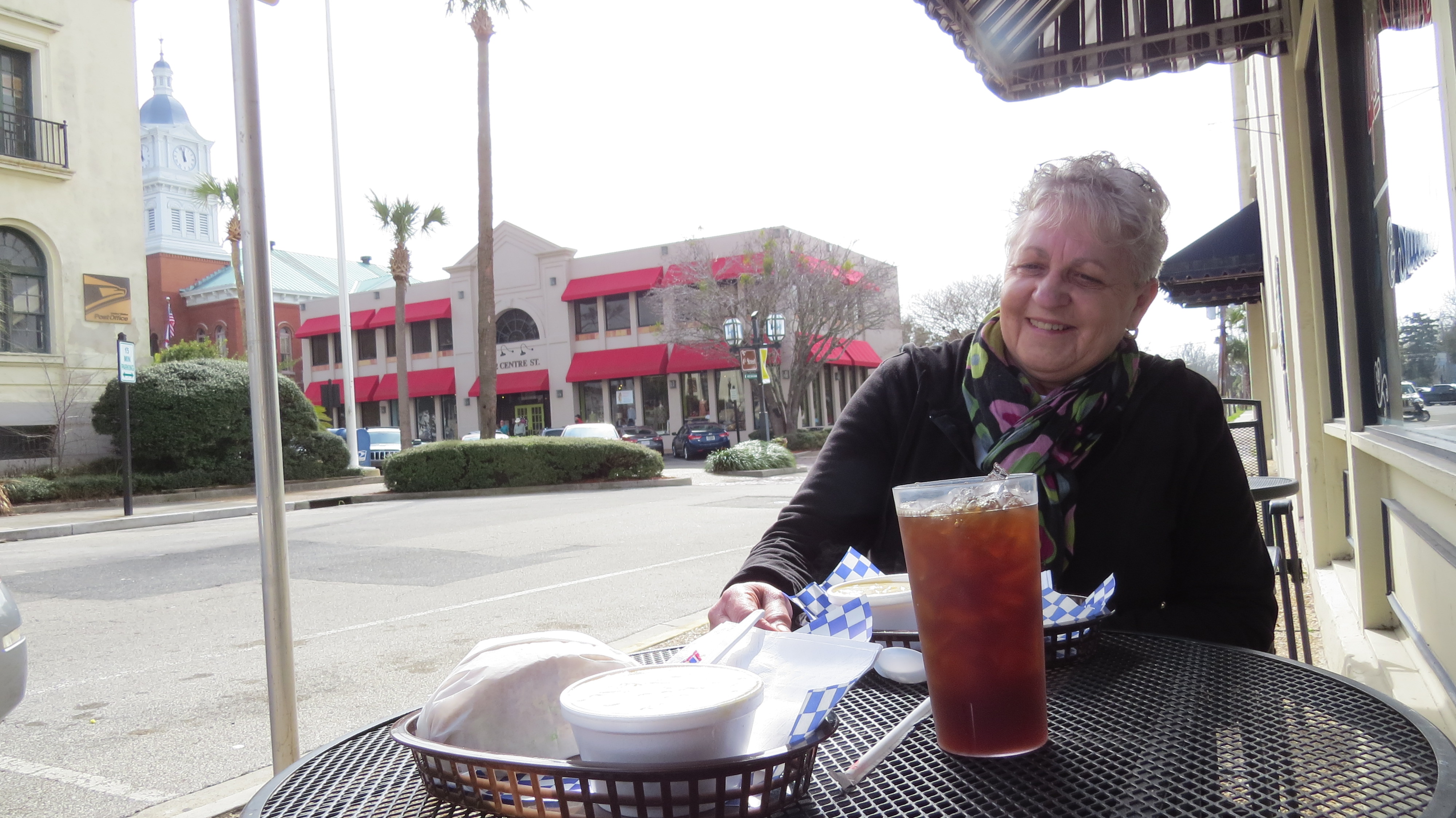
My wife and I enjoyed our first lunch at Fernandina Beach, Florida outside, and it was Feb. 1.
The Horned Grebe landed on the wet lane behind the barn on the Amish farm in Wayne Co., Ohio.
By Bruce Stambaugh
My good friend Robert phoned again recently. When Robert calls me, I listen.
Known as the go to bird guy, Robert gets all kinds of calls regarding birds, especially rare species since he hosts the rare bird phone alert for Holmes and surrounding counties in Ohio’s Amish Country. Sometimes he even serves as a conduit for rescuing birds.
That was the nature of this call. A bird had landed on a gleaming, long farm lane, obviously mistaking it for a stream or water-filled ditch. The young mother of the family that found the floundering bird had called Robert out of desperation.
The family had easily captured the bird and, recognizing it as a waterfowl species, placed it in a basement utility tub half filled with water. That’s where it still was when Robert, his son and I arrived the next morning.
Robert immediately identified the bird as a Horned Grebe all decked out in its spiffy winter plumage. It’s red eyes looked like bright buttons against its clean, white cheeks and charcoal head.
Not only was this an unusual situation, it was an unusual bird for this area for this time of year. Horned Grebes need long stretches of water to get airborne. The shiny, wet driveway had apparently confused the poor bird.
Fortunately, the grebe appeared to be fine. But with the extreme cold of early January, large, open water spaces were scarce. I called another noted area birder who told us she had seen a good section of the Killbuck Creek free of ice near Holmesville in northern Holmes County.
Robert donned his gloves, and carefully lifted the Horned Grebe out of its watery confinement and wrapped the bird in towels to protect it from any human contaminants. Off we went with the grebe perched patiently on Robert’s lap. We’ll discount the several attempts to drill Robert with its thick, pointed bill.
When we arrived at the creek, we found a couple of good release points. We chose a large ice-free spot 100-yards south of the bridge that crosses the Killbuck. It appeared to be the best place to release the bird back to its proper habitat.
Robert slowly approached the creek bank, and gently tossed the grebe toward the stream. The Horned Grebe flapped its way to the murky water. It swam a short distance, pecked the surface as if in disbelief, and made a quick dive to the bottom. Even though the Amish family had dropped bits of frozen fish into the tub’s water, the Horned Grebe was naturally hungry.
This slideshow requires JavaScript.
After a few seconds, the natty bird resurfaced, leaned back, shook its wings and head simultaneously. If birds can express emotions, this fortunate fellow was down right ecstatic.
The Horned Grebe swam and dove, swam and dove. The three of us headed back to the car satisfied that the bird was uninjured and would be just fine.
Once it had gained its strength, the Horned Grebe would likely take its long, running start across the water’s surface and lift into the air. Hopefully, when and wherever it landed, it would pick a real pond or stream this time.
On land, the Horned Grebe was simply helpless, completely out of its element. On water, it was a graceful and stately wonder. As proof, the grebe was placidly floating in the center of the stream as we left.
We took one last glance as we crossed back over the bridge in the car. The grebe was gone. Either it was down for another food forage or it had taken off for another locale.
There is great satisfaction in helping the helpless, confused birds included.
This was the last time we saw the Horned Grebe as we walked back to my vehicle.
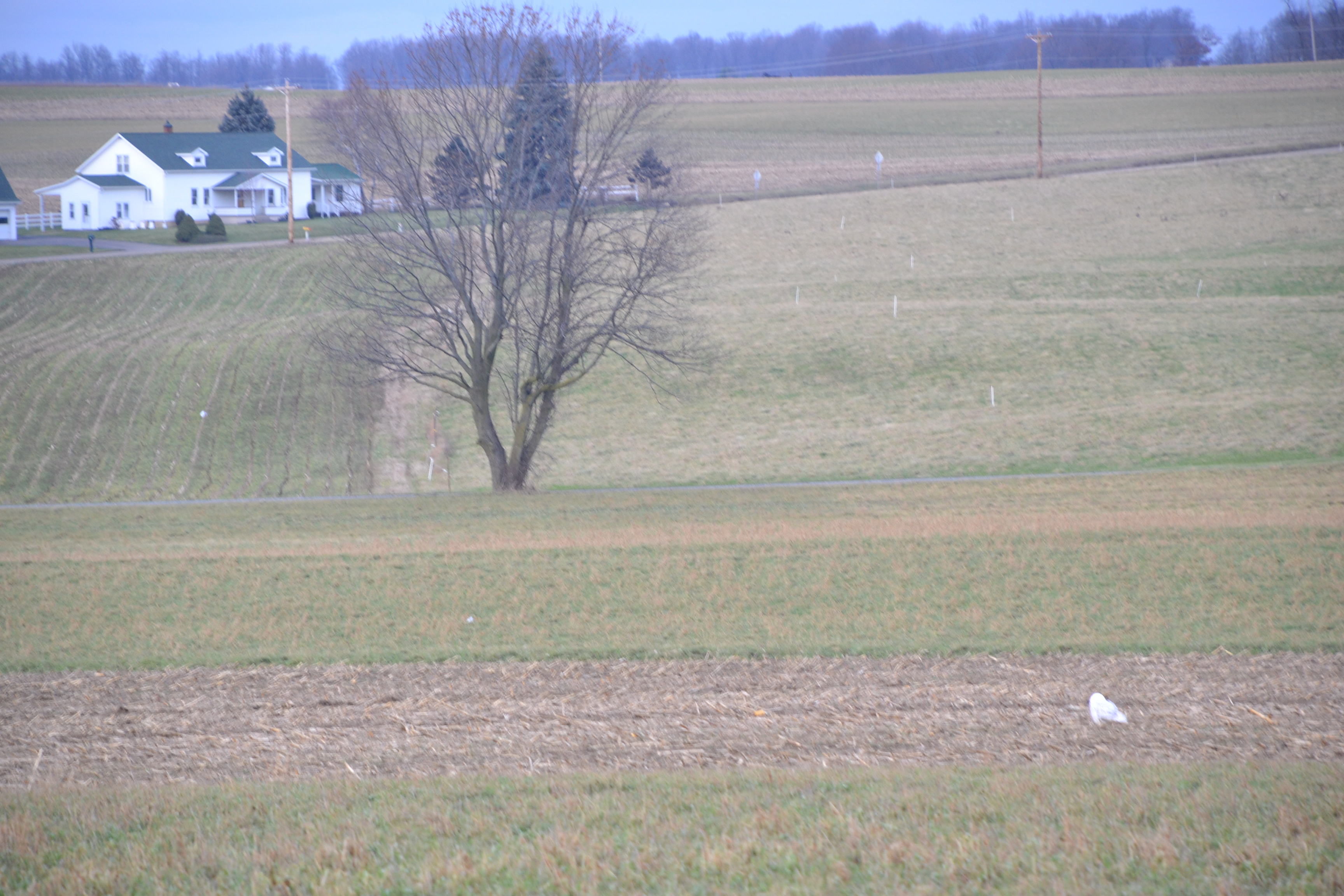
The Snowy Owl as viewed from the lane north of Mt. Hope, OH.
By Bruce Stambaugh
Birding is one of my many hobbies. I’m not the best birder by any stretch of the imagination. But I consider it a compliment to be called a birder.
I’m not alone. Believe it or not, birding is one of the most popular sports in the world. Birding is an international activity that can be enjoyed by anyone, any age at anytime. All you need are birds and an awareness to see and hear what is flitting right around you.
Birders have long been interconnected. That’s because it’s equally fun witnessing the enthusiasm and excitement of others experiencing the same bird you got to see. Ask my wife. I’ve called her to the kitchen window many a time to view the beauty and antics of our backyard birds.
Today birders connect in many ways. Bird alerts via phone, texts, email and Internet posts keep avid and amateur birders alike apprized of any rarity that arrives. Organizations and clubs also promote birds and birding.
A Spotted Towhee recently spent several weeks at a feeder at an Amish home west of Holmesville , OH.Over the years, we’ve had our fair share of rare birds appear in Ohio’s Amish Country. They get noticed here more than other places perhaps because we have so many good birders who live here. Many of them are young Amish folks.
We’ve had Wood Storks, Rufous Hummingbirds, Northern Wheatears, Spotted Towhees and Swallow-tailed Kites. The latest rarity influx has been Snowy Owls.
When my friend, Robert, called just before Christmas and asked if I wanted to see a Snowy Owl that was reported near Mt. Hope, I was elated. I stopped what I was doing, gathered my binoculars and cameras, and picked him up.
Snowy Owls normally winter in southern Canada. Once in a great while, the impressive white birds will wander farther south into Ohio and other states.
The Thanksgiving Day sunrise produced a marvelous sun pillar.
Robert had also called about a Snowy Owl the day before Thanksgiving. It had been seen between Berlin and Walnut Creek. When we arrived at the location given for the bird, it was gone. We drove around scouting for it without success.
As soon as we arrived back home, Robert received another call that the Snowy Owl had returned to its original spot. It was close to dusk, and we both decided not to retrace our tracks, thinking we could see it the next day.
We were wrong. We were up early Thanksgiving morning. It was frigid, but a beautiful sunrise brightened the horizon with a spectacular sun pillar thrown in for good measure. But no Snowy Owl.
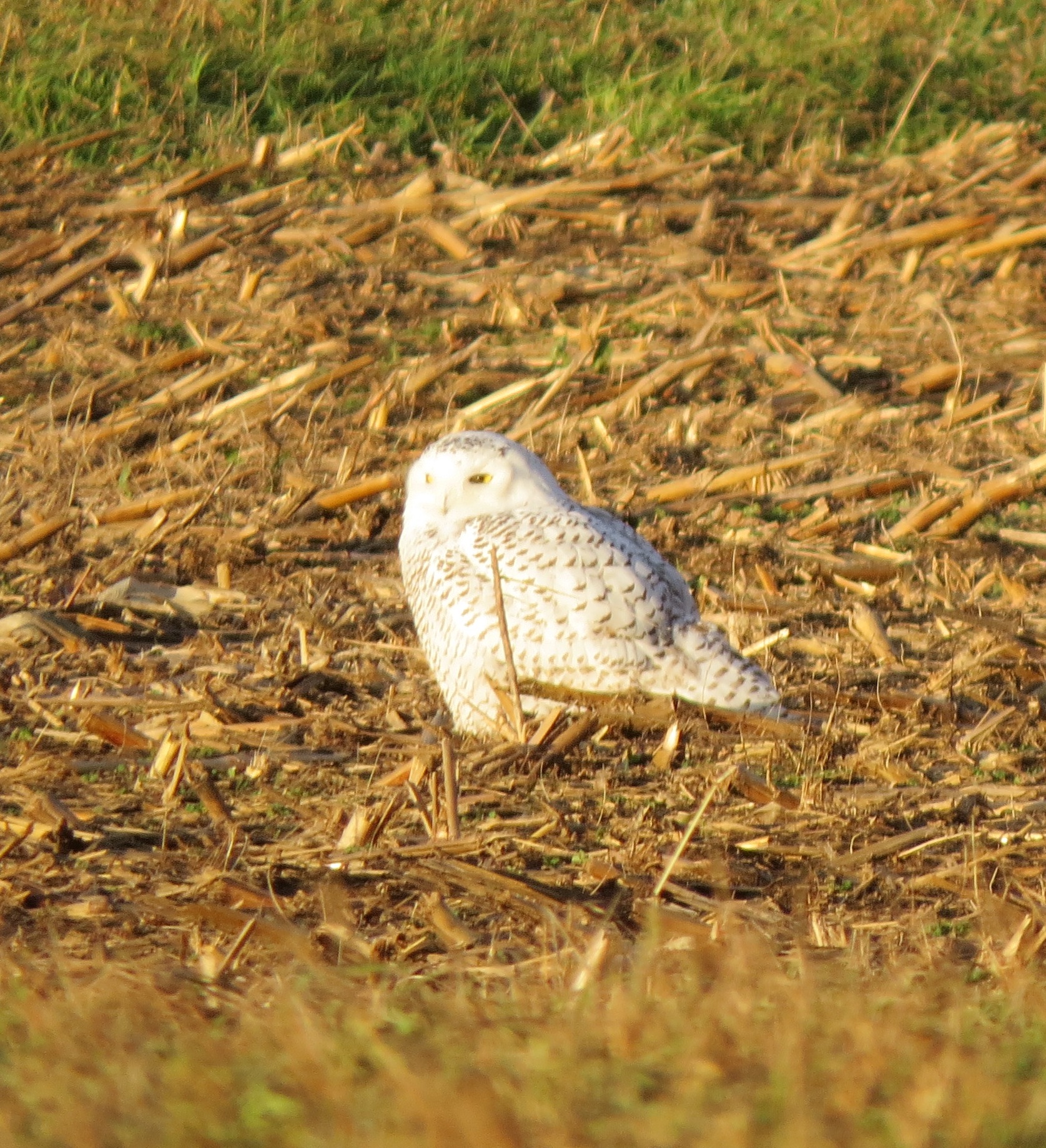
I wasn’t about to miss this latest opportunity. When we arrived at the reported location north of Mt. Hope, the Snowy Owl was right where it was supposed to be. The large white bird with gray speckles sat unconcerned in the middle of a corn stubble field. I took several pictures of the astonishing bird while Robert used my cell phone to call others to confirm the bird’s sighting.
The Snowy Owl seen Dec. 23, 2013 near Mt. Hope, OH.After soaking in the beautiful bird and quietly celebrating our success, we returned to our respective homes. I alerted other birders about the Snowy Owl. Half the fun in birding is sharing what is found.
Since November, several other Snowy Owls have appeared in more than half of Ohio’s 88 counties. Such an invasion of rare birds is called an irruption. People were reporting and photographing Snowy Owls all around Ohio, and even in other states, including Florida.
I’m glad Robert and I got a second chance at the Snowy Owl. I hope you get to see one, too.
Damage left by an EF2 tornado that hit Wooster, Ohio on Sept. 16, 2010.
By Bruce Stambaugh
I never believed much in New Year’s resolutions. I prefer to view the big picture. Besides, by now, I may have already broken half my resolves.
This year, rather than aim to lose five pounds in a month, I want to lean into the wind. That should be easy for me. I’m known to be a little windy from time to time.
You can blame my young pastor for this idea. He’s young because he’s half my age. Pastor Patrick recently preached a sermon about making yourself available and vulnerable to lean into life’s daily situations, good and bad, the way you would brace yourself against a good gale.
I liked that image a lot. I’ll share a few ways I plan to apply the concept. I want to challenge myself to embrace all that swirls around me, positive or negative, this year. We learn from either perspective.
Despite my loss of dexterity, I will lean into the wind and hold a child’s hand, steadying her wobbling stroll across a room. Though my hearing is diminished, I will listen attentively to what others have to say, even though I may vehemently disagree with their opinion or decision.
Though my eyesight is aided with bifocal glasses, I will look for the simplest pleasure nature has to offer. A breathtaking sunrise, a singular drop of water hanging perilously at the end a leaf, a brilliant wood warbler migrating north will all be part of my leaning into the wind.
Even though my cranky knees limit my mobility, I will do my absolute best to bend low to pick up trash thoughtlessly discarded by others. If someone else is leaning into the wind nearby, maybe they’ll help me back to my feet.
Leaning is an active verb, not passive. Life is a series of winds of various velocities that shift daily. We can only feel the wind. We measure it by the effects on everything the wind touches, whether it does so fiercely or persistently.
Regardless of the velocity, life’s winds affect us all. Leaning in enables us to practice gratitude and joy, the byproducts of vulnerability.
Life offers no guarantees. It is full of pitfalls and mistakes as well as abundant joy and beauty. I want to discard the rose-colored glasses, and recognize the good from the bad. I want to accept them for what they are, and lean into 2014 accordingly.
The blizzard winds of January will eventually subside. Before we know it, invigorating breezes of May, with their warm, sweet fragrances and life-giving rains, will arrive as a blessed balance for us all.
A friend of mine shared a picture of an old apple tree, trunk bent from age and time, some limbs broken and sagging. The caption beneath the old tree defined what I mean by leaning into the wind.
It read, “A little bent by time, shaped by the wind and the seasons, a few branches broken. Today I feel like that old apple tree. But I’m still reaching for the sky, and doing my best to take in what the world gives me and turn it into something good and useful.”
By leaning into the wind, I can anticipate enduring, absorbing and embracing all of the various breezes that life blows my way in 2014.
Who knows? I might even lose five pounds in a month.
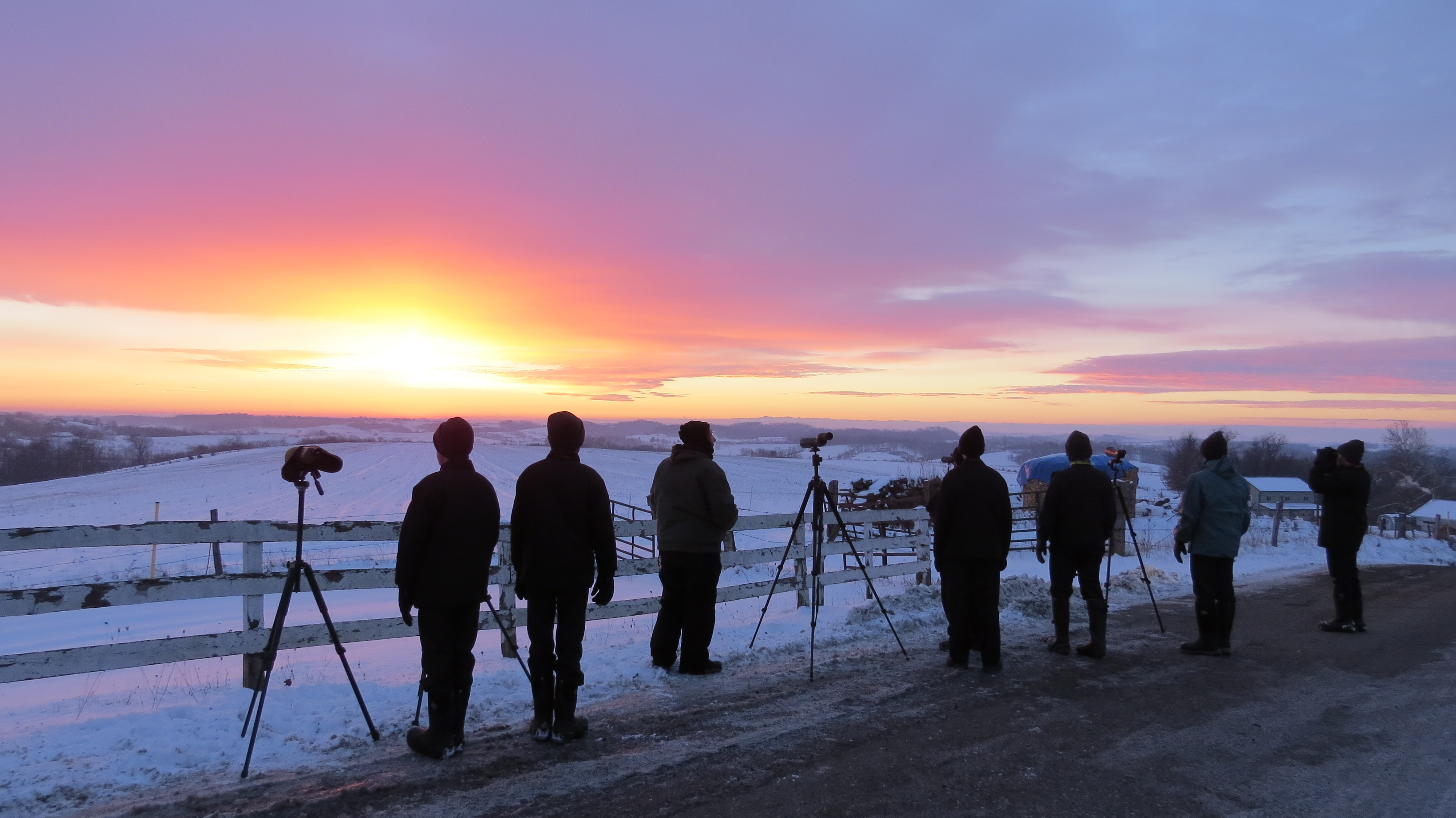
A beautiful sunrise greeted these birders in search of a Snowy Owl.
By Bruce Stambaugh
For much too long already we’ve been enduring an avalanche of cutesy commercials and gimmicky advertisements foisting an assortment of products from A to Z on us. Each one is pitched as the perfect Christmas gift to give.
Snowy Owl.Catalogues, newspapers, magazines, radio, television, the Internet, even emails push various products for us to purchase for our loved ones. I do my best to ignore them. It’s a bold statement from someone who spent part of his career in marketing.
I understand why all the product promotions are done. Retailers often need productive holiday sales to ensure a profit for the year. I certainly don’t begrudge them for trying.
At my stage in life, I find greater joy in a brilliant but brief sunrise than a glitzy ad. Sometimes on the coldest rural Ohio mornings, the pinks and blues that quickly morph into warm oranges, reds and yellows stir me more than any new car wrapped in a big red bow could.
Joy comes in many packages if we just take the time to notice them, even on the grayest of days. Amid this entire holiday hullabaloo, I have to remind myself to stop and take a deep breath.
Advent is the perfect time to slow down our lives, not speed them up, rushing around trying to find just the proper gift. It might already be right in front of us.
Ruby-throated Hummingbirds on nest.
Leaning on Daddy.
Raking hay.
August sunset.
Winter scene.
Building their nest.
Song Sparrow.
Hoar frost.
Cold plowing.
Rainbow.
I speak from experience.
When our daughter, now a mother with young children of her own, was two-years old, she would stand on the kitchen counter at our home in Killbuck, Ohio. Together we would watch the birds devour the birdseed we had put out for them. Young as she was, Carrie could correctly identify each species.
Teetering on the rim of the Grand Canyon is an awesome feeling. Sharing that incredible vista with a person who is viewing it for the first time is even better. When it’s your son, seeing his smile is priceless.
When my wife and I braved a frigid winter’s night with a dear couple to search the dark sky for a rare comet, I was cold but hopeful. We rejoiced when we found it, quietly celebrating the event together. No words were needed.
When you go in search of a Snowy Owl, a rare avian visitor to our area, your hopes are high. Even when the bird can’t be located, the camaraderie of other birders on the same search makes up for the whiff. There are no wild goose chases in birding.
When you receive a hand-made card that includes drawings of a cardinal, an eagle and a blue jay, all appropriately colored by your grandchild, you know you are loved. You keep and display that precious gift where you can see it daily.
The gifts of life are all around us. We just have to look for them.When a long-lost relative unexpectedly contacts you, you rejoice and reconnect with someone you may have only ever met once or maybe never. Surprise gifts rule.
When you stand in line for an hour or more to offer your condolences to the family of someone you have never met, you are blessed by the grace and appreciation shown to you by the mourners. Even in grief, great gifts are exchanged.
Advent is a time for reflection, renewing, remembering. It is a holy gift, freely given, gladly embraced.
The din of commercials not withstanding, Christmastime models what it means to give and to receive. I wonder what gifts will unwrap themselves for you and me today.




















 Roadkill Crossing
You must be logged in to post a comment.