I loved how the afternoon light highlighted the prickly details of this dense stand of spent teasel heads. Likely, several varieties of birds thrived on the seeds of these thorny remains.
I was happy that the farmer had let these beauties stand for all to enjoy. “Teasel” is my Photo of the Week.
Singing September’s song.
We’re already pushing to the middle of September. Have you heard the many melodies she’s already played?
If not, please don’t fret. If September plays her usual gig, she will beautifully and joyously harmonize her way into October.
We have to pay attention morning, noon, and night to fully appreciate September’s numerous odes. It’s a perpetual concert out there.
September has many modes of singing to us. That’s good news for those of us with diminished hearing. The seasonal songs are ubiquitous and indiscriminate.
Crickets, katydids, and locusts lull us with their winged cacophonies. Nature’s stringed rhapsody signals the season’s end and celebrates each day’s closing.
This slideshow requires JavaScript.
A tiny screech owl’s raspy soliloquy provides a brief interlude to the insect symphony. The chilling tune means trouble for little four-legged rodents romping around in summer’s last evenings.
If you listen carefully, you might be fortunate to catch the call of migrating birds piping on the wing high overhead. If you can’t hear them, aim your binoculars at the moon and enjoy the sideshow.
September croons to us in color, too. Her many blooms of gold, crimson, yellow, red, and even blue paint a many-colored musical in flower gardens, along roadsides, and in unkempt fields.
The month’s repertoire includes occasional towering thunderstorms. Their lightning dances and their thunder booms, drumming fear into almost every canine within miles.
At the storm’s end, perhaps she will surprise us with a dangling rainbow. Look quick before that high note fades. Remember to breathe in the aftermath, refreshing, clean, pure.
September invites us to sing along with her eclectic playlist. The crisp snap of husking the golden ears of sweetcorn is the prelude to perhaps the year’s last fresh corn on the cob.
Of course, the hiss of canners still sings, bubbling with goodness and a kaleidoscope of colors. Besides corn, salsa, beans, tomatoes, pickles, peppers, peaches, grapes, and apples all play their fruitful parts.
I adore the choruses in the outdoors the most. Find a pleasant spot in the woods, and just sit, watch, and listen as the sounds of silence come floating in decorative displays.
Migrating butterflies flutter to their specific tunes. Groups of Monarchs congregate in the coolness and safety of trees until the morning sun dries and warms their wings.
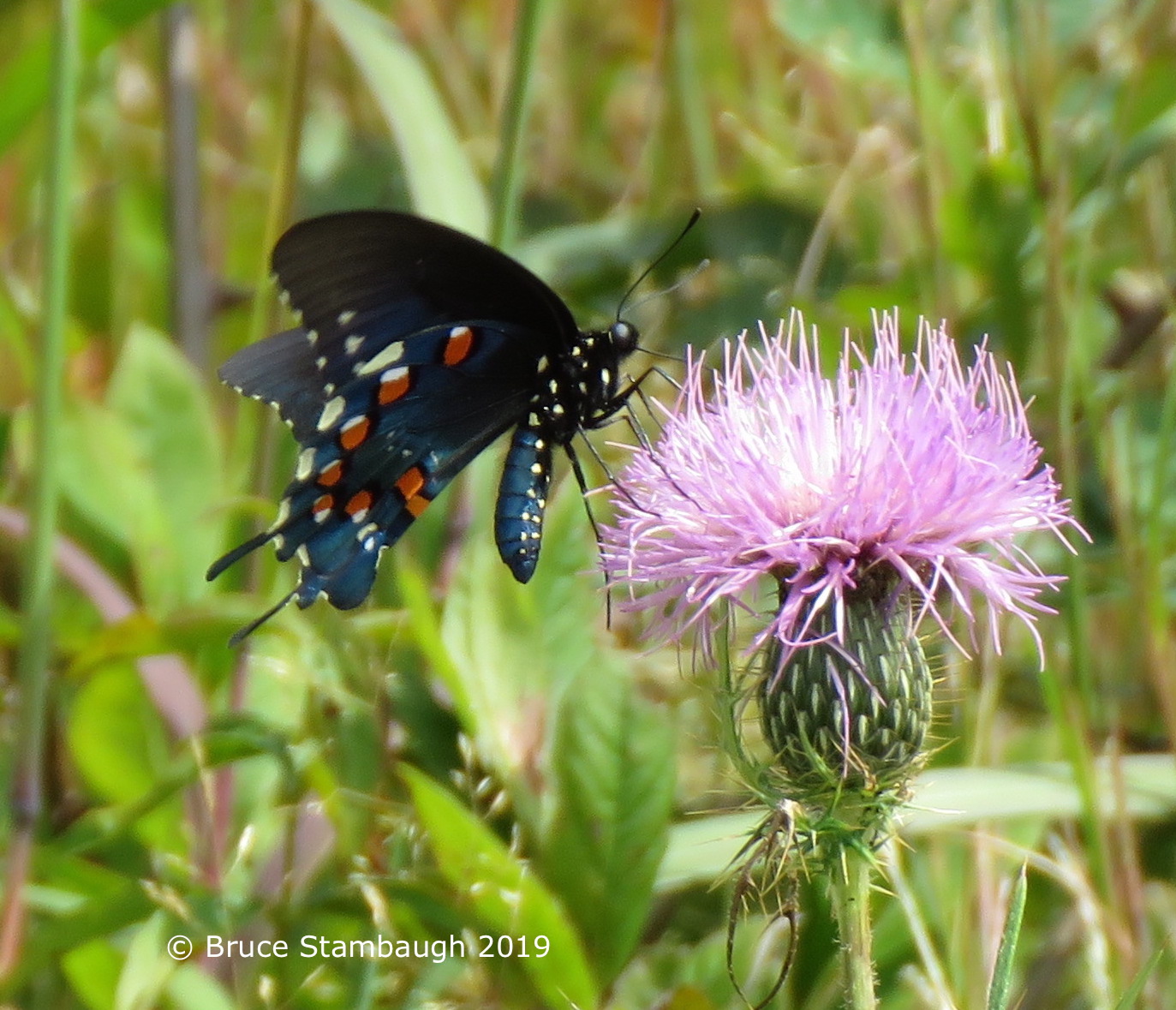
Swallowtails, fritillaries, Buckeyes, and skippers flutter their notes in their particular and various flights. It’s always amazing how they can find the slightest blooming speck to nourish them on their way south.
Brilliant sunrises and sunsets add magical backdrops to September’s forte. The trick is to rise in time to catch the morning show or to stop what you are doing and embrace heaven’s evening song.
The deciduous trees, of course, join the colorful choir one leaf at a time. Their intensity increases as the month wanes. They usually wait until October for their triumphant exit.
Still, whatever voice they can bring to September’s musical is much appreciated. We humans inadvertently join the band with our out of tune rakes and mechanical blowers.
Nevertheless, September’s concert is a joy to grasp. That’s true even if the neighborhood skunk makes an unwelcomed visit.
We can still enjoy the many classical notes of the year’s ninth month. At day’s end, the stars and planets twinkle their universal choruses, glorifying the heavens above.
I spied this female Eastern Bluebird peering over the top of the leaves of this tree early one morning. I heard her plaintiff call, and then another from a slightly different location. A quick glance around revealed this juvenile basking in the morning sunshine.
Apparently, mom just wanted to make sure her baby was alright, or perhaps they were searching for breakfast in the wild cherry tree. “The Doting Mother” is my Photo of the Week.
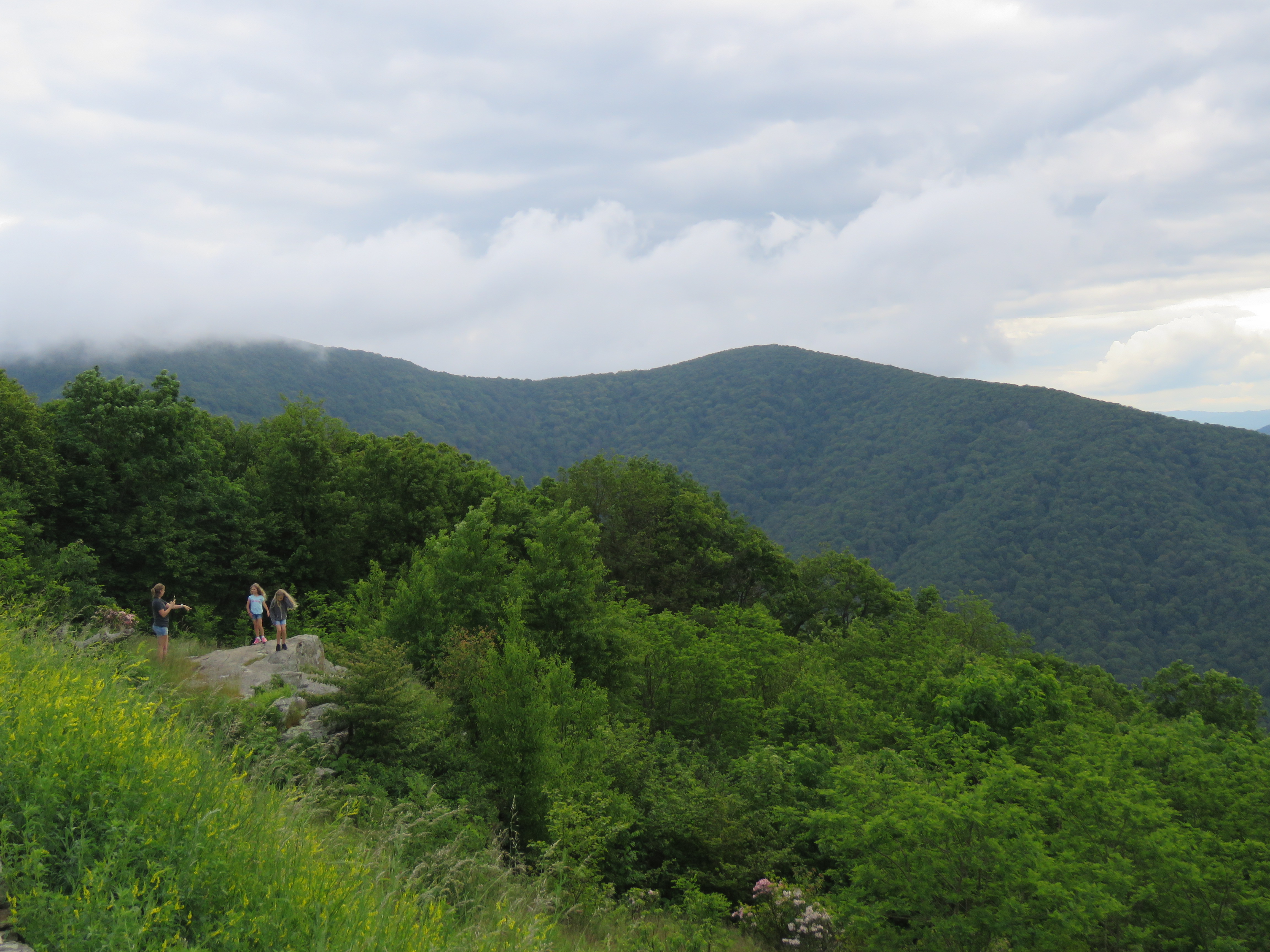
The misty morning view from the Skyline Drive.
Awash with news and information about COVID-19, it’s easy to feel tense, confused, irritable, fearful, or even bored. Due to the global pandemic, millions of people of all colors, religions, cultures, and languages are experiencing similar trepidations.
A sense of hopelessness can be emotionally overwhelming. There’s a way to help overcome that despair. Head outside!
Studies have shown that connecting with nature calms fears, and uplifts spirits. I embrace those findings as often as I can. I recently headed to my favorite get-away place, Shenandoah National Park.
Mine was a twofold mission. Besides going into the wild, this was my first hiking experience since my knee replacement surgery last September.
I started early to beat the heat and humidity. The sun hadn’t yet risen over the Blue Ridge Mountains as I approached the park on U.S. 33. I exit that road into the park at Swift Run Gap.
This slideshow requires JavaScript.
Rounding a slight curve on a typically hazy summer morning, I noticed a large dark object in the opposite lanes of the divided highway. I slowed and rolled past a massive black bear standing beyond the grassy medium.
The magnificent creature looked both ways and then bolted across the roadway. It promptly disappeared into the steep, wooded hillside before I could even grab my camera.
Buoyed by that encounter, I arrived at the trailhead in high spirits. Surely, anything that I would experience the rest of the day would be anti-climactic, unless I saw another bear on the hike. I didn’t.
I walked a few yards on the Appalachian Trail to where it intersected with the trail I wanted, the Mill Prong. It was all downhill from there until the return trip.
The forest was amazingly still. No birds sang, and no vehicles hummed along the nearby Skyline Drive. I took in every moment, the wildflowers, the ferns, brightly colored fungus conspicuously growing on dead trees. The distant sound of water gurgling its way down the mountainside lured me onward.
I heard or saw no one else. A gray catbird burst from a bush beside the trail. A feisty squirrel angrily scurried away, flapping its tail in disgust of the human disruption.
I rested at the shallow stream. The morning sun filtered through the forest canopy, sparkling the gently rippling water. I felt exalted.
Farther downstream, I sat on a large rock and just enjoyed the sound of water trickling over ancient boulders. On my return trip, I passed a few other hikers. Each one donned face masks as we passed on the trail. More gratitude and thoughtfulness mutually expressed.
Mountain stream
Turk’s cap lily.
Wildflowers.
Common Wood Nymph.
Young Dark-eyed Junco.
Thistle blossoms.
Covered in pollen.
Click on the photos to enlarge them.
When I reached the parking lot, the strengthening morning sun spotlighted some bright orange Turk’s cap lilies just off the trail. Their beauty drew me like a magnet. I snapped my camera’s shutter over and over, trying to preserve the glory I beheld perfectly.
Suddenly, a female tiger swallowtail butterfly alighted on the same flower that I was photographing. Again, delight and gratitude filled me to the full.
In the rest of the world, the pandemic raged. But in the wild, only the big black bear, the forest’s serenity, the kindness of other hikers, and this tango of floral and fauna mattered.
I was thankful for each magical moment, and for the skillful surgeon who had replaced my knee. Gratitude is appropriate anytime, but especially during this pandemic.
Connecting with nature does indeed do wonders for your soul. You can find peace and gratitude in a local park or even your backyard.
I am fortunate that I can incorporate my three favorite hobbies into one outing. Whenever I go hiking, I always take my binoculars and camera. Every now and then, I am rewarded with an opportunity to capture the beauty of birds.
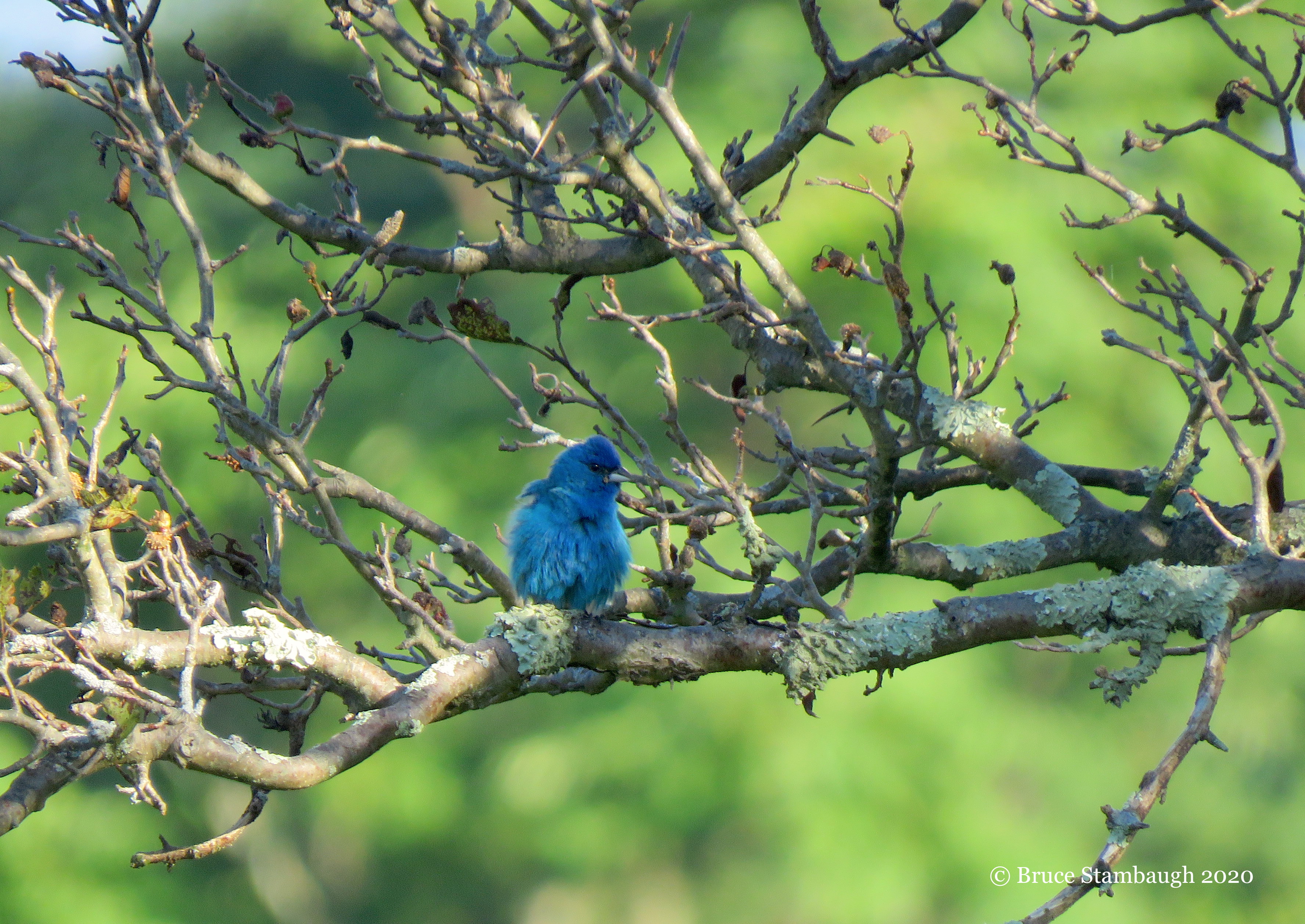
This male Indigo Bunting landed on this jumble of dead branches just out of the morning’s sunlight. Still, the ruffle of the striking bird’s feathers as it turned its head revealed several shades of blue. Indigo is the perfect name for this avian beauty.
I am happy to share my Photo of the Week with you, “The Blues Have it!”
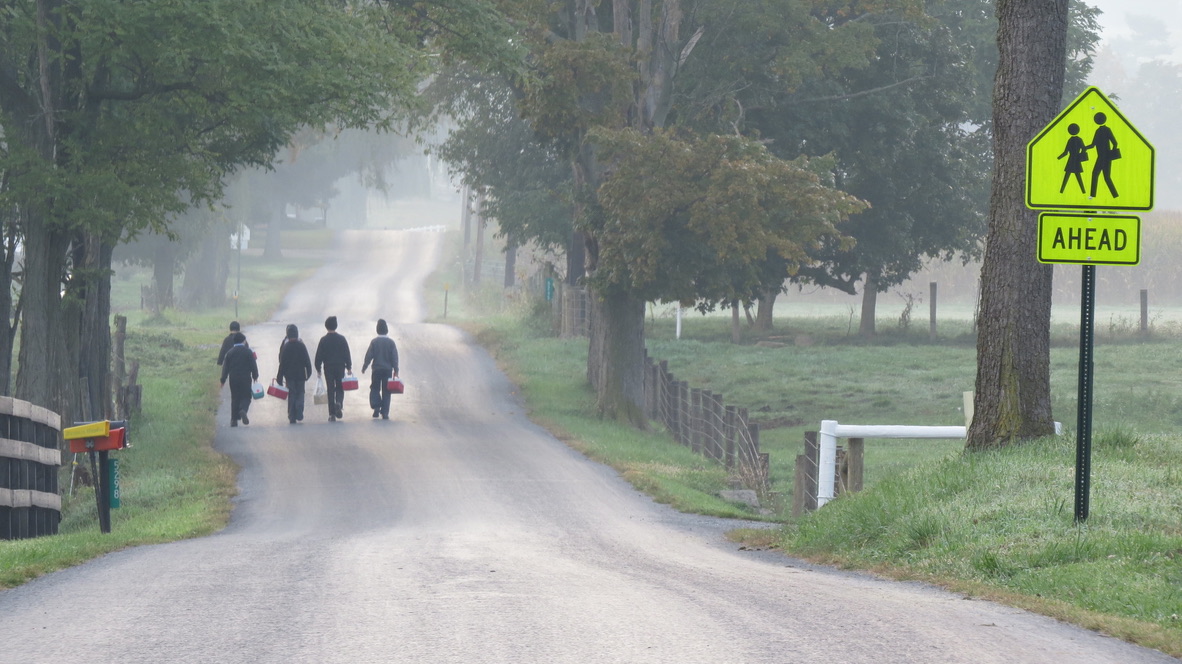
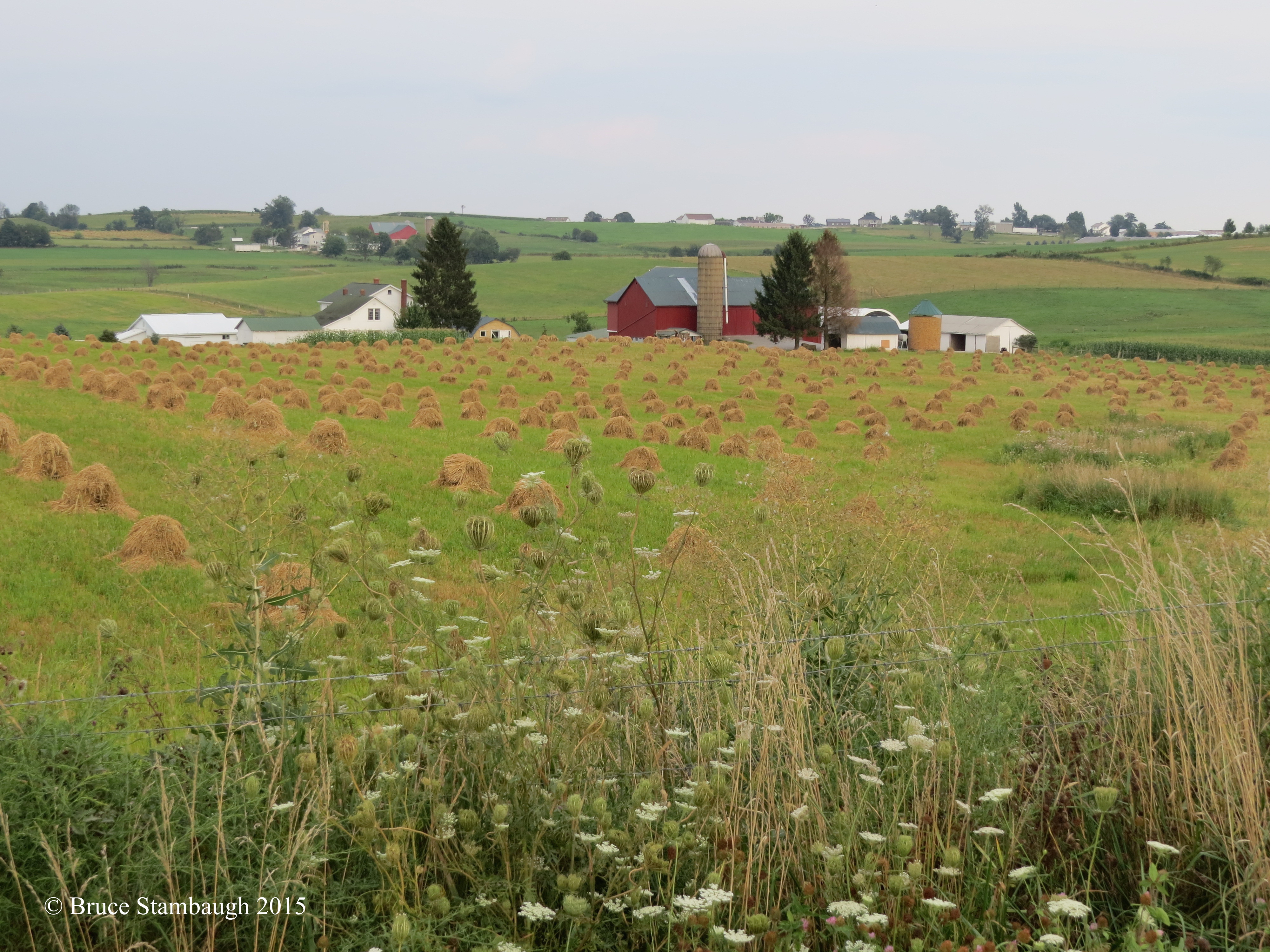
August in Ohio’s Amish country.
I’ve always been a bit ambivalent about August. I’m especially so this year, given all the ramifications of the ongoing pandemic.
When my wife and I lived in Ohio, August kept us busy as career public school educators. We each geared up for the start of a new academic year. As a principal, I created schedules and rosters and attended too many meetings. The excellent teacher that she was, my wife spent many hours preparing each classroom to be an inviting learning haven.
Canned peaches.August also ushered in the food preservation season. We froze dozens of containers of sweet corn and apple sauce. We waited for the canning lids to sound the seal of approval with satisfying “pops” for the tomatoes, grape juice, beets, and peaches. Rainbows of goodness adorned our shelves.
Of course, we weren’t alone in these endeavors. After I retired, I savored sale mornings at the local produce auction. I loved the hustle and bustle of men and women unloading their trucks and horse-drawn wagons. The rhythmical cadence of the auctioneers barking out their persuasive banter was sweet music to my ears.
The growing season here in the Shenandoah Valley where we live now is a couple of weeks ahead of Holmes County, Ohio. So, we don’t have to wait as long to enjoy our first taste of locally grown veggies. Auction in action.
August is more than agriculture, though. The three H’s rule the eighth month: hot, hazy, humid. That’s not the main reason for my ambivalence, however. With the coronavirus continuing to run rampant, uncertainty abounds in everyone’s life.
The city schools where our grandchildren attend here were set to open with a combination of in-person and online instruction. The latest surge in COVID-19 has altered that plan. They’ll start the year learning remotely.
Mask-wearing is the norm, especially when entering stores or buildings. Neva and I have continued to be extra cautious about keeping our physical distancing. We truly miss the close socialization of friends and family.
Some states are doing better than others at slowing the virus. States that reopened with too few restrictions or where few people followed the guidelines are unfortunately paying the price.
A migrating black tiger swallowtail butterfly.Since the governors have had to take the lead in issuing orders and health guidelines, rules and suggestions vary significantly from state to state. In part, that’s what has fueled our consternation.
We haven’t seen in person our son and his wife, who live in New York State, in more than a year. We have friends and relatives who have tested positive, but fortunately, they have all recovered so far. Too many others weren’t as fortunate.
County and street fairs, high school football, band shows, concerts, vacations, have all been canceled. Major League Baseball is trying to play a shortened season with no fans in attendance.
Virus or no virus, August will be August no matter what. Golden sunsets will blaze away in the hazy evening skies. Migrating birds and butterflies will begin to wing their way south.
We’ll continue to meet with friends, relatives, and worship remotely through technology.
Under the current dire circumstances, it’s the best and safest we can do. We’ll continue to do our shopping curbside.
Even given all that, I know that my August ambivalence must yield to patience, and patience to resolve. We have to see this global health crisis through for however long it takes. I’ll continue to be cautious, careful, and diligent. I am not ambivalent about COVID-19.
Old Rag is a popular hike in Shenandoah NP.
My wife and I have enjoyed Shenandoah National Park since we moved to Virginia three years ago. There’s a lot to love about the park, and it’s less than an hour away.
We’re not the only ones who appreciate it, of course. The estimates of annual visitors compare to those of Ohio’s Amish country, our former residence. Each location attracts millions of visitors a year.
Of course, the novel coronavirus pandemic has put a damper on tourist numbers everywhere. With the virus cases flattening out in Virginia, the park has mostly reopened.
When we want to break our stay-close-to-home routines, Neva and I head for the hills. Sometimes I will venture out alone, birding, hiking and shooting photos. It’s an enchanting place, a multi-sensory extravaganza.
This slideshow requires JavaScript.
I hear the beautiful song of an indigo bunting, and I raise my binoculars, scanning the area for the likely source of the melody. Novice that I am at identifying bird calls, I want to make sure I am matching the right species with the song. I’ve learned that, like human accents, bird calls of the same species vary geographically.
Once I find the bird, I switch to my camera to try to get a decent photo. With the trees in full summer canopy, that’s not easy to do. Now and then, I am fortunate to find a bird singing in the open, and I click away.
I catch a slight, silent movement out of the corner of my eye. Is it a doe with a fawn, or perhaps twins? Is it a black bear grazing before nightfall? One never knows. On warm days, keeping a lookout for a lounging timber rattler while scrambling on a rock outcropping is always a good idea.
Male Indigo Bunting.
South River.
Beauty in any season.
Hike rewarded.
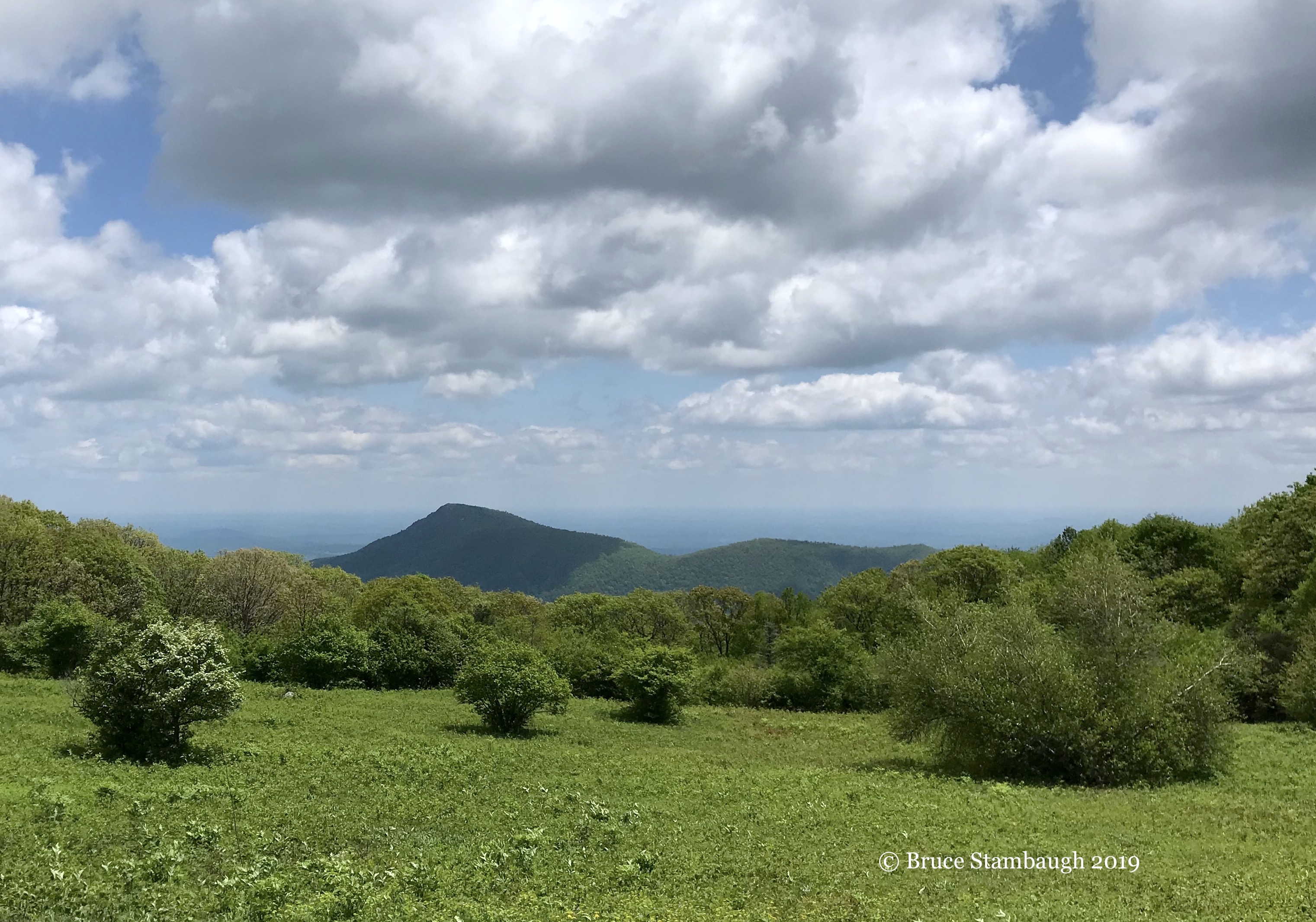
Ridge view.
Gold and black.
Pink and blue.
Peregrine Falcons.
The park is a great place to take sunset photos, too. But sunsets in the mountains can be problematic.
The expansive, rolling Shenandoah Valley is bordered on the east and west by mountain ranges. Sunsets can be as disappointing as they are stunning. Weather plus geography equals a formula for the unknown.
When we lived in Ohio, all we had to do was look out our windows to know the potential for a spectacular sunrise or sunset. We were spoiled.
Here in the breadbasket of Virginia, the rising and falling topography makes it iffy to predict what the eastern and western skies will do at dawn or dusk, respectively. You hope, pray, and go for it. Sometimes you are disappointed. Other times, you are speechless.
From this…
…to this dreamland sunset in a matter of minutes.
(Mouse over the photos for the captions)
It can be cloudy and raining in the valley. The view from the mountains of the park, however, might be spectacular if you wait long enough. Pick one of the many west-facing overlooks along the majestic Skyline Drive, and prepare yourself for come-what-may.
The elevation of the old, folded mountains ranges up to 2,500 feet higher than that of the valley. From the park, you can see the Allegheny Mountains that mark the boundary between the Commonwealth and West Virginia.
Patience, intuition, and good fortune can be the formula for bathing in a dreamland. Even with a thick cloud cover, the sun can still break through, turning drabness into beautiful in the blink of an eye.
I’ve learned to be ready for the unexpected as the sun slinks below the jagged horizon. Will the clouds refract the sun’s rays into pinks and blues, lavenders and oranges? Or will they merely steal away the sun without fanfare?
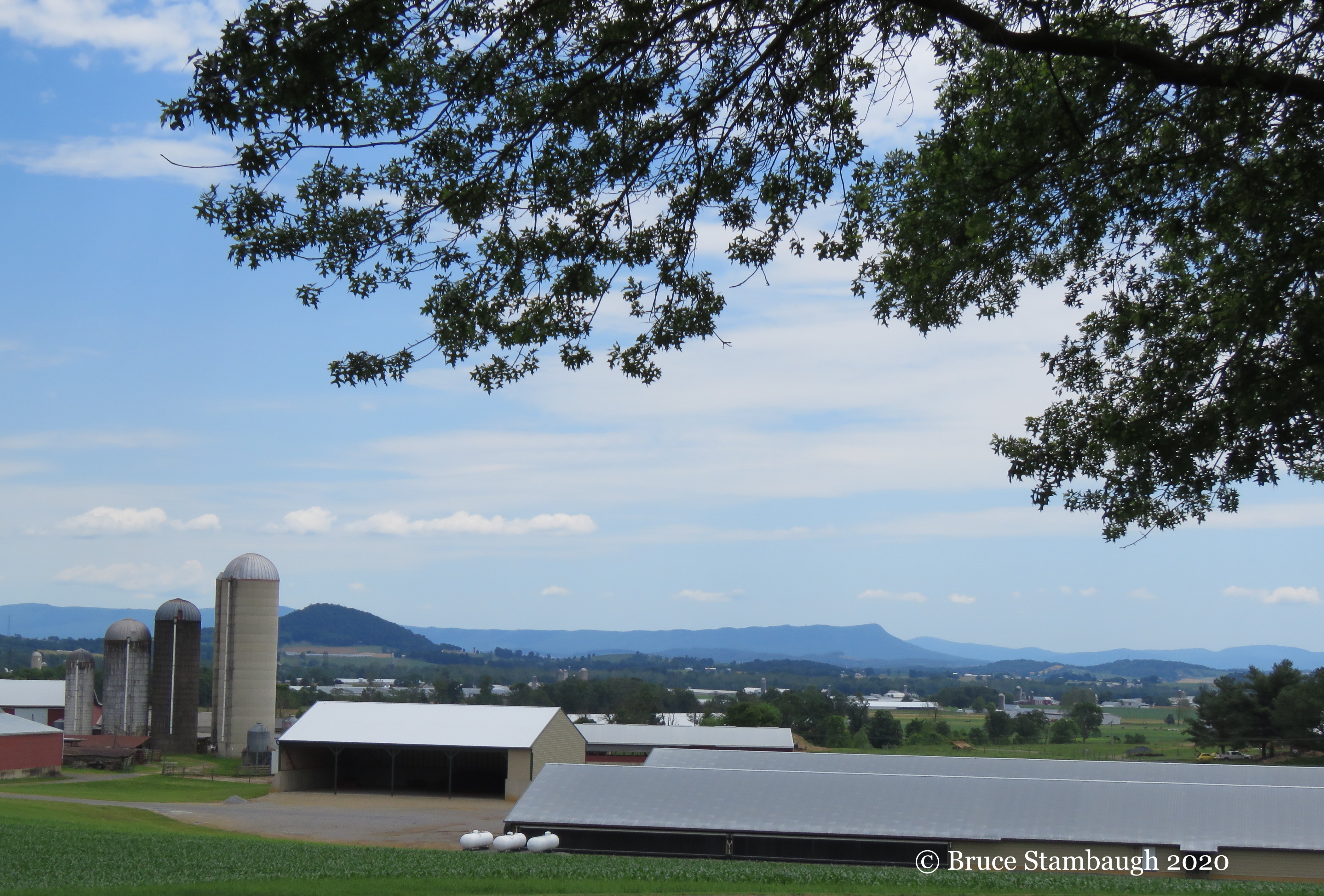
The Blue Ridge Mountains in the distance mark the eastern boundary of Rockingham Co.
My wife and I have closely followed the stay-at-home coronavirus requirements since they began in mid-March. We hadn’t even been out of our county until just the other day.
Even though Rockingham is the second-largest county in square miles in Virginia, we stayed close to home nevertheless. We have taken the pandemic and the safety recommendations suggested by medical professionals seriously.
While waiting for the predicted rain to arrive, Neva and I went about our regular homebound routines. She sewed and read. I wrote and spent too much time on social media, including sorting my many daily emails. When our church’s weekly newsletter landed in my inbox, I got an idea after reading it.
Friends had recently visited Shenandoah National Park, which stretches 105-miles along the Blue Ridge Mountains. The mountains grace and mark the eastern boundary of Rockingham County. The mountain laurel bushes were in full bloom.
That’s all that I needed to read. With the afternoon half gone and the forecasted rain failing to appear, I suggested we head to the park, too. Neva gladly agreed.
Fog rolled in from the east.We dressed for the cooler weather that we were sure to encounter in the higher elevations of the park. We were glad we did. Fearsome black clouds hovered over the mountains as we headed east.
We have lived here long enough to know that the mountain weather’s main characteristic is fickleness. The weather changes quickly in those blue mountains.
Sure enough, in the 25 miles we drove on Skyline Drive to Limberlost Trail, we dodged in and out of the sunshine, clouds, fast-moving fog, mist, and even a little rain. We kept going.
We were so glad we had. Only a couple of other cars were in the parking lot of the handicapped accessible trail. Limberlost is a 1.3-mile loop trail that is beautiful in every season.
I had never been on the trail in the spring when the mountain laurel bloomed. Neva had never been there at all. We were both in for an awe-inspiring treat.
This slideshow requires JavaScript.
We only had to walk a short distance before we encountered the beautiful blooming bushes. We were glad that we had dropped what we were doing and followed our friends’ advice.
Individual bushes and thickets of blooming mountain laurel flourished all along the circular path. They overwhelmed other, more subtle wildflowers that I almost missed.
This area of the park had burned several years ago. Many of the old-growth trees were gone, replaced by patches of spindly saplings. The trail ran through them, creating a fairy-like world. Colorful fungus grew out of tree stumps, and fallen timber left lying right where they landed.
Lush Christmas ferns carpeted the forest floor. The fragrant pink and white blossoms of the mountain laurel painted a lovely contrast to the emerald of the tree canopy above and the sea of ferns below.
We noticed no bees or butterflies, however. I later learned that this variety of rhododendron is toxic to both pollinators and humans. Look, but don’t touch.
A chorus of warblers, vireos, and other woodland birds serenaded us on our enchanting stroll. We were clearly in a national park, but it felt like paradise. Our spontaneity had certainly paid off.
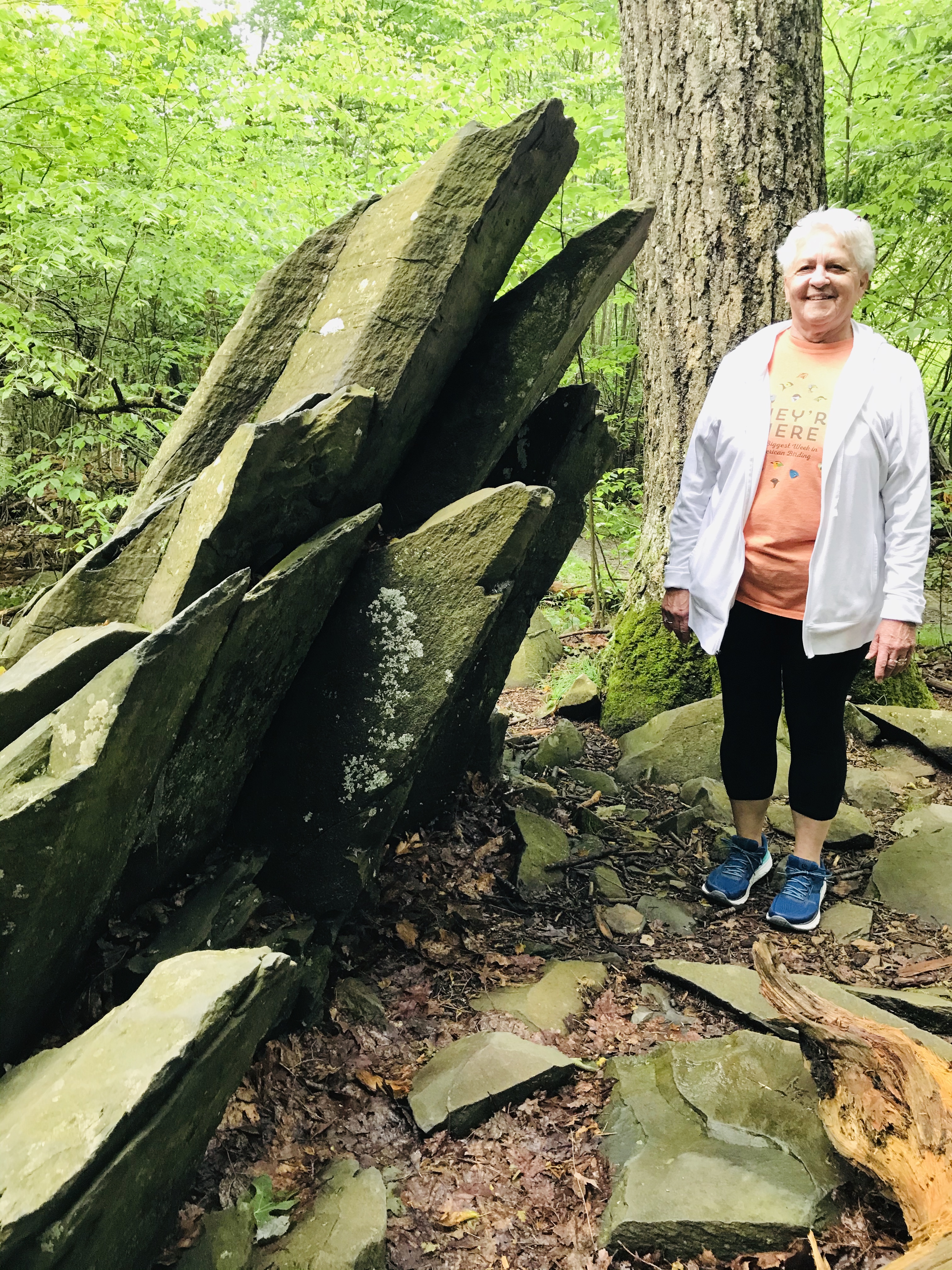
The trail even featured an ancient basalt columnar outcropping.I realize not everyone has a national park to hurry off to in less than an hour. But you likely have a special place that you have meant to visit, someplace you haven’t been since a child.
So, pack up the kids, the snacks, drinks, and don’t forget the hand sanitizer, masks, gloves, and your camera. You just might find paradise, too.
I reached into my archives and found this lovely Eastern Meadowlark singing from an old wooden fence post. You can frequently hear these colorful robin-sized birds before you spot them.
I thought the shot was the perfect way to welcome you all to June. “Whistling in June” is my Photo of the Week.
I had to let the birds come to me during this year’s spring bird migration. Due to the coronavirus pandemic, I only occasionally ventured out on short excursions that often included a grocery pick up after a brief search for migrating birds.
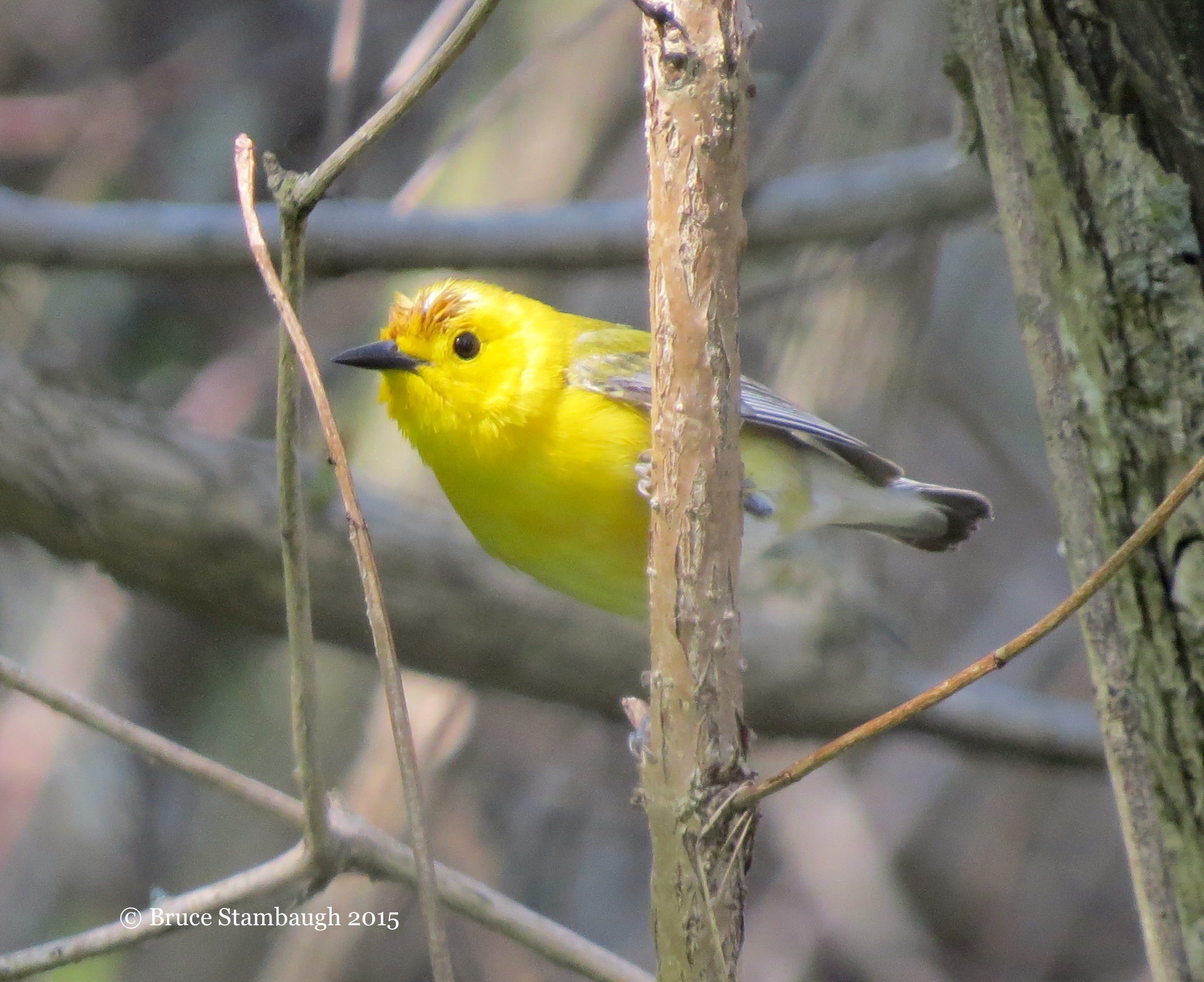
So, I decided to look back in my photo files for a bird that I had never shared before. This Prothonotary Warbler caught my attention and sent me back to when and where I had photographed it. It was a cool, damp day at Magee Marsh Wildlife Area along Lake Erie’s shore in northwest Ohio. The boardwalk was crowded with other birders of all ages from around the world. The cameras clicked away when this bright yellow fellow appeared. Unfortunately, Magee Marsh is closed this year due to the Covid-19 pandemic.
Prothonotary Warblers are only one of two warbler species that nest in tree cavities. They prefer marshy thickets as their habitats. They are named for Roman Catholic papal clerks known as prothonotaries who wear bright yellow robes.











 Roadkill Crossing
You must be logged in to post a comment.