How Seniors Plow Their Driveways

Our landscaper saved the day. Photo by Bruce Stambaugh

There was a time when I enjoyed shoveling snow from our driveway and sidewalk. That was when we lived in Ohio, and I was much, much younger.

We had plenty of notice from the National Weather Service and the media about the most recent major winter storm that chugged eastward from Texas into New England.

Snow is the hardest precipitation for the NWS to predict. This storm was exceptionally so. The storm surged farther north than anticipated, and it had a “warm nose” that changed our precipitation from snow to sleet.

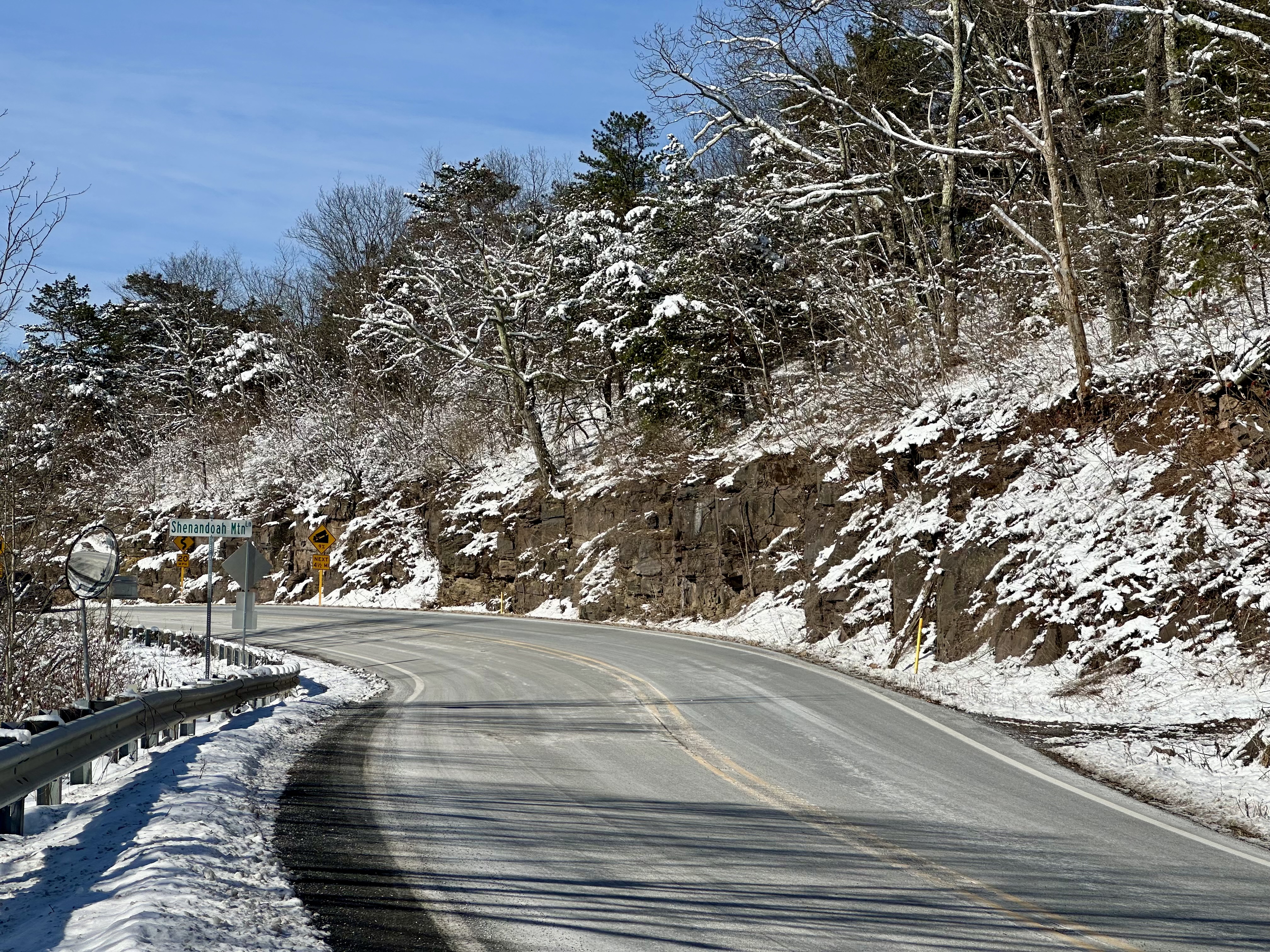
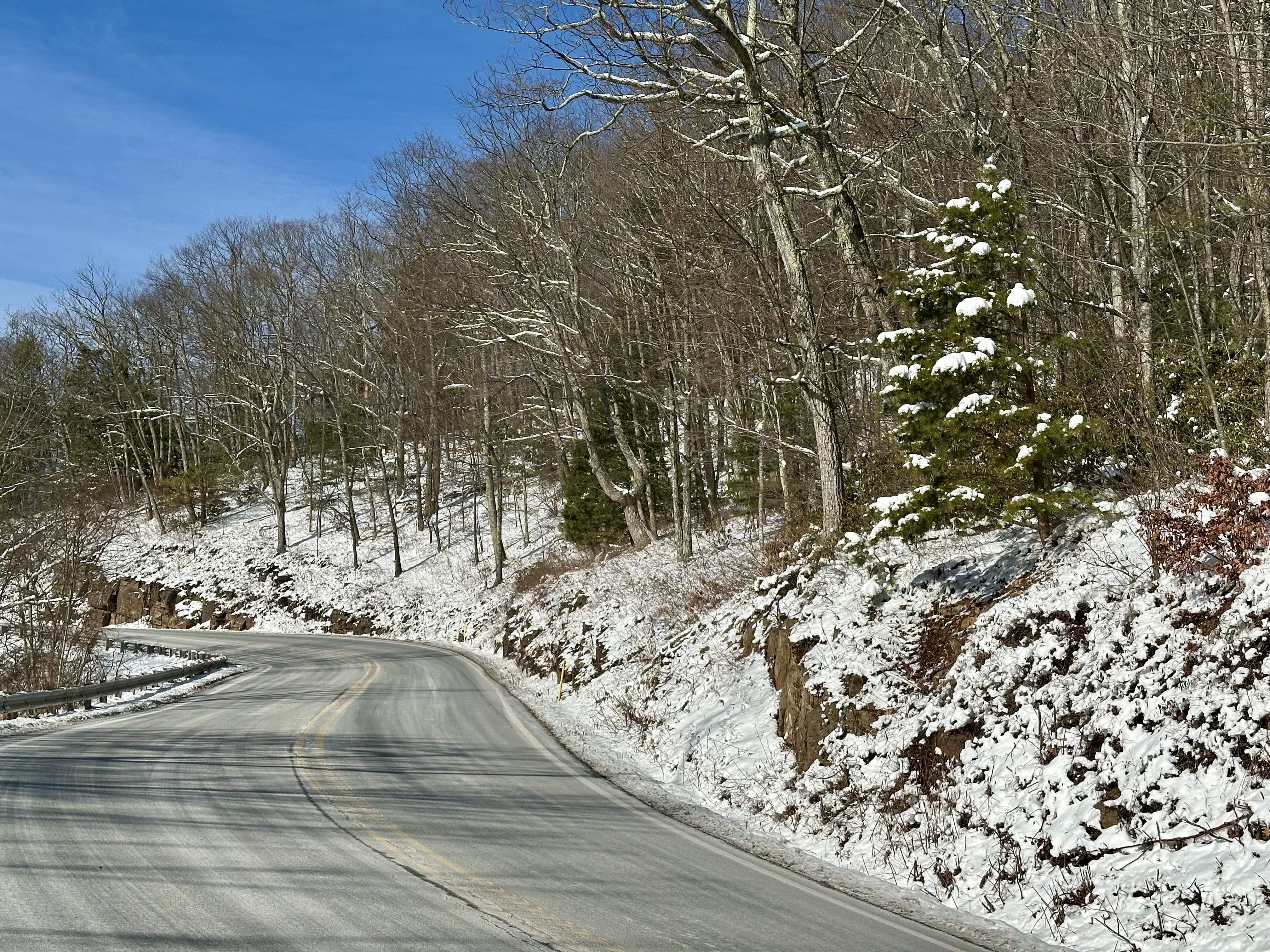
Despite the cold surface temperatures, the Shenandoah Valley had sleet all day. Since it is finer than snow, the sleet added two inches to our four inches of overnight snow.

Knowing the storm was going to deliver a nasty punch no matter what kind of frozen precipitation fell, we knew we would need help with the driveway and sidewalk.

By the next morning, the storm had cleared. When I went out to spread birdseed on the ground shortly after sunrise, the cold overnight temperatures had frozen the top layer of snow, so I could walk on it for a few steps before it gave way.

The Virginia Department of Transportation contracts with local farmers to plow our suburban streets. They often do it at night, and that was the case this time. The street was clear of snow, but a two-foot-high pile of large snow chunks blocked the driveway. I was glad we had a snowplow coming.

Our landscaper arrived mid-morning and immediately went to work cleaning the drive with a small tractor and plow. Its size and design allowed it to make sharp turns and push the snow out of the way while his helper shoveled our walk.

Of course, the neighbors heard the tractor’s engine, and soon two of them approached the plow operator to ask about clearing their drives as well. It wasn’t long until yet a third neighbor added to the workload.

When the first neighbor approached. Photo by Bruce Stambaugh

All of us were retirees, and we all knew it was much better to have a machine do what we used to do in our younger years. We were all more than glad to pay for this service rather than risk overdoing it or, even worse, hurting ourselves.

It’s nice to be in a position where we can afford to do that. As senior citizens, it was the right decision, regardless of the cost.

© Bruce Stambaugh 2026

In Search of the Northern Lights

The aurora borealis as seen from my driveway on January 20. Photo by Bruce Stambaugh

I get excited when there’s a chance to see the northern lights or aurora borealis. I suspect I’m not alone. Why shouldn’t we be excited?

After all, the colorful lights are dancing in the sky over the polar north. That’s a long way from the Shenandoah Valley in western Virginia.

I follow social media posts closely for sun flares and alerts on possible northern light events. But being this far south, I keep my expectations in check.

History has shown, however, that seeing these beautiful phenomena is indeed possible in Virginia and points south. In fact, on October 10, 2024, at 10:30 p.m., I walked out the front door, and greens, reds, and pinks danced in the sky over my neighbors’ houses. Of course, the light display was much farther north than that.

The aurora borealis as seen from my front porch on October 10, 2024. Photo by Bruce Stambaugh

I snapped a couple of photos and went back to bed. The app on my cell phone had alerted me to the possibility of seeing the aurora borealis. And there it was.

Looking back on that experience, I wish I had chosen a better viewing location for more photos instead of going back to sleep. Still, I was happy with the pictures I got. They clearly showed the northern lights.

So, when the alert came out for Monday and Tuesday, January 19 and 20, this week, I was ready. However, being a man, and an aging one at that, I easily got distracted.

The NCAA National Championship football game between Indiana University and Miami University was on TV at 7:30. Because the IU coach had led James Madison University’s football team to exciting winning seasons, my wife and I were glued to the TV. JMU is located in Harrisonburg, Virginia.

However, my attention shifted when I saw a photo of the aurora borealis posted on Facebook by a friend who lives a few miles away. I walked outside, took a few pictures, and could see a little red in the sky.

So, I diverted my attention from football to photography and went in search of a decent view of the northern sky. It was harder than I thought. Rockingham County, where I live, may be in the Shenandoah Valley, but it certainly is not flat.

The landscape, predominantly agricultural west of the city, is rolling, dotted with high hills, and full of powerlines running every which way. With no moonlight, the night was dark, so even though I was familiar with the roadways, I had difficulty finding a place with a good view, free of light from security lights or buildings.

It didn’t take me long, however, to realize that the colors had faded since my friend took her photo two hours earlier. I headed home with fairly dull images of the night sky.

I was determined to make the aurora my priority after dark on Tuesday night. I again stepped into the darkness of our neighborhood and immediately saw reds and pinks in the sky, especially to the northwest. It is one advantage of having no street lights in our housing development. Of course, the colors I saw can’t compare to the amazing shots of curtains of colors dancing in the sky in the northernmost latitudes.

With temperatures below normal in our area, I bundled up and headed out, this time more certain about where I needed to go. But again, once I got out into the open countryside, the aurora colors seemed to dim.

The photo with the house was my first hint of the northern lights. The rest are from my excursion in the county. Please click on the images to enlarge them.

They were brighter than the previous night, but not like I had seen in October 2024 or when I saw my first northern light in Ohio’s Amish country decades ago.

In that case, I was walking out to retrieve the evening paper from its roadside box when I first heard and then saw the northern lights. I stopped in my tracks when I heard a loud crackling sound, like a zap of electrical current.

I looked toward the sound, and in the southern sky, bright green zigzagging flashes danced low in the night sky. They lasted only seconds, but I realized what they were even though they appeared on the wrong horizon.

Soon, bulletins appeared on TV screens across northern Ohio about strange objects appearing in the sky. Witnesses who saw what I saw called the police and TV and radio stations to report the weird noises and lights.

There were all kinds of speculations, aliens included. Even the local weather service put out a special statement. When I saw that, I called the weather office at the Akron-Canton Airport to share what I observed.

I felt obligated to set the record straight, and since I was a trained severe weather spotter for the National Weather Service, they were familiar with where I lived.

Because of that experience, I longed to see the aurora borealis in its proper setting, the northern sky. Consequently, I was very pleased to be able to view them in Virginia, not once, but twice.

You can be assured I’ll remain on the lookout whenever the next aurora alert is issued, regardless of what time of night it is or what’s on TV.

© Bruce Stambaugh 2026

On Bells Lane

My wife and I planned to meet some friends for dinner at a restaurant in the town where they live, 30 minutes south of our home. On the way there, I wanted to check a birding hotspot where several nice bird species had been seen and photographed.

We veered off our route a mile and a half to drive the narrow, hilly, winding Bells Lane. The road wound up, down, and around for less than two miles. Yet, the habitat varied greatly in that short distance.

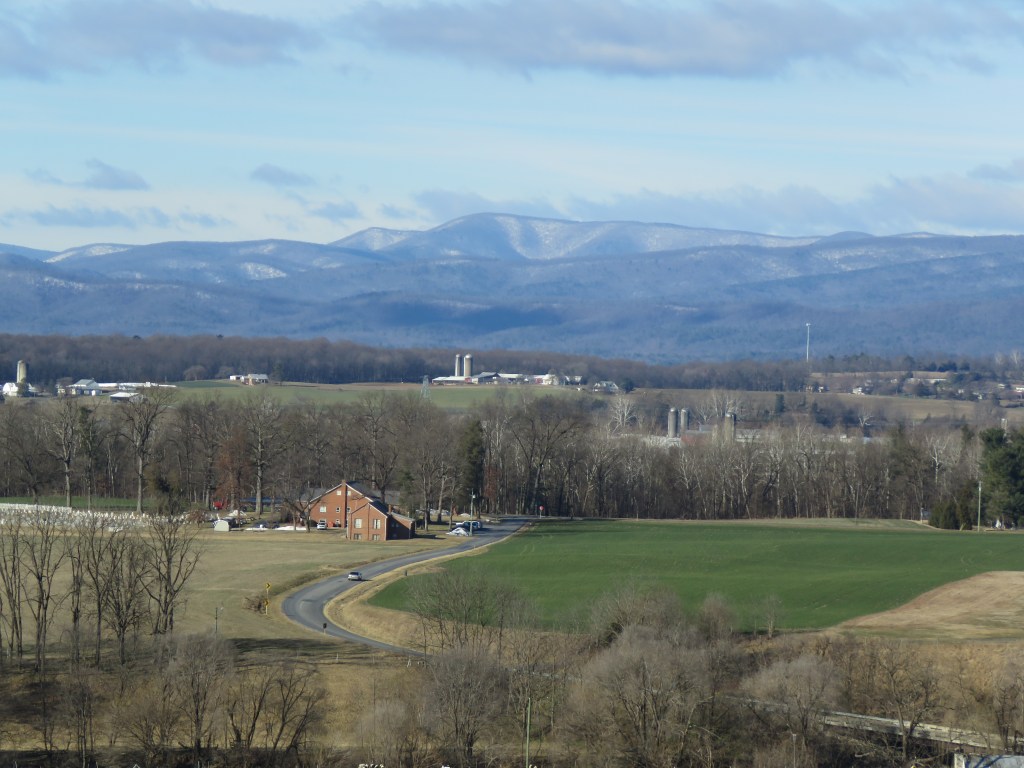
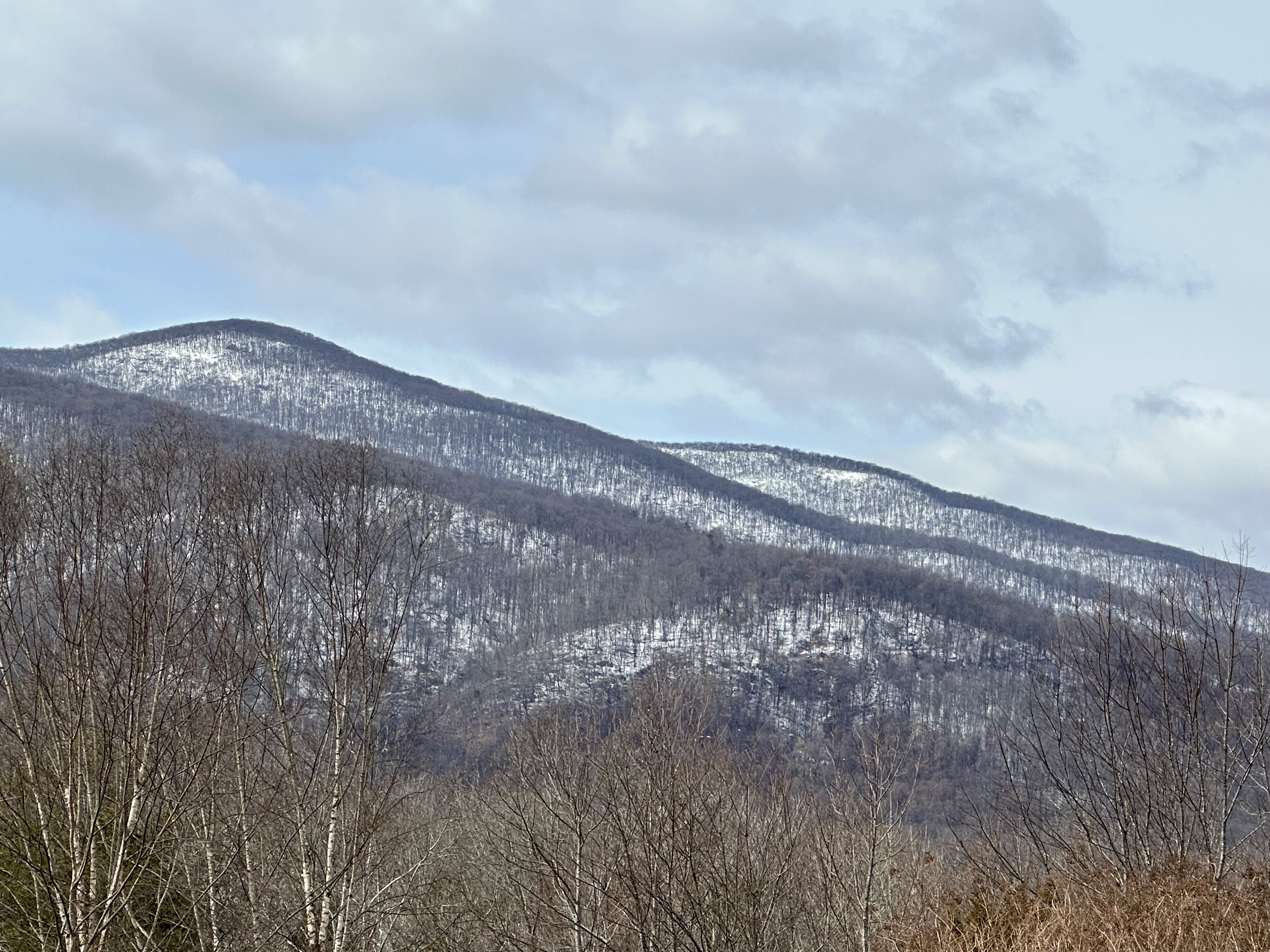
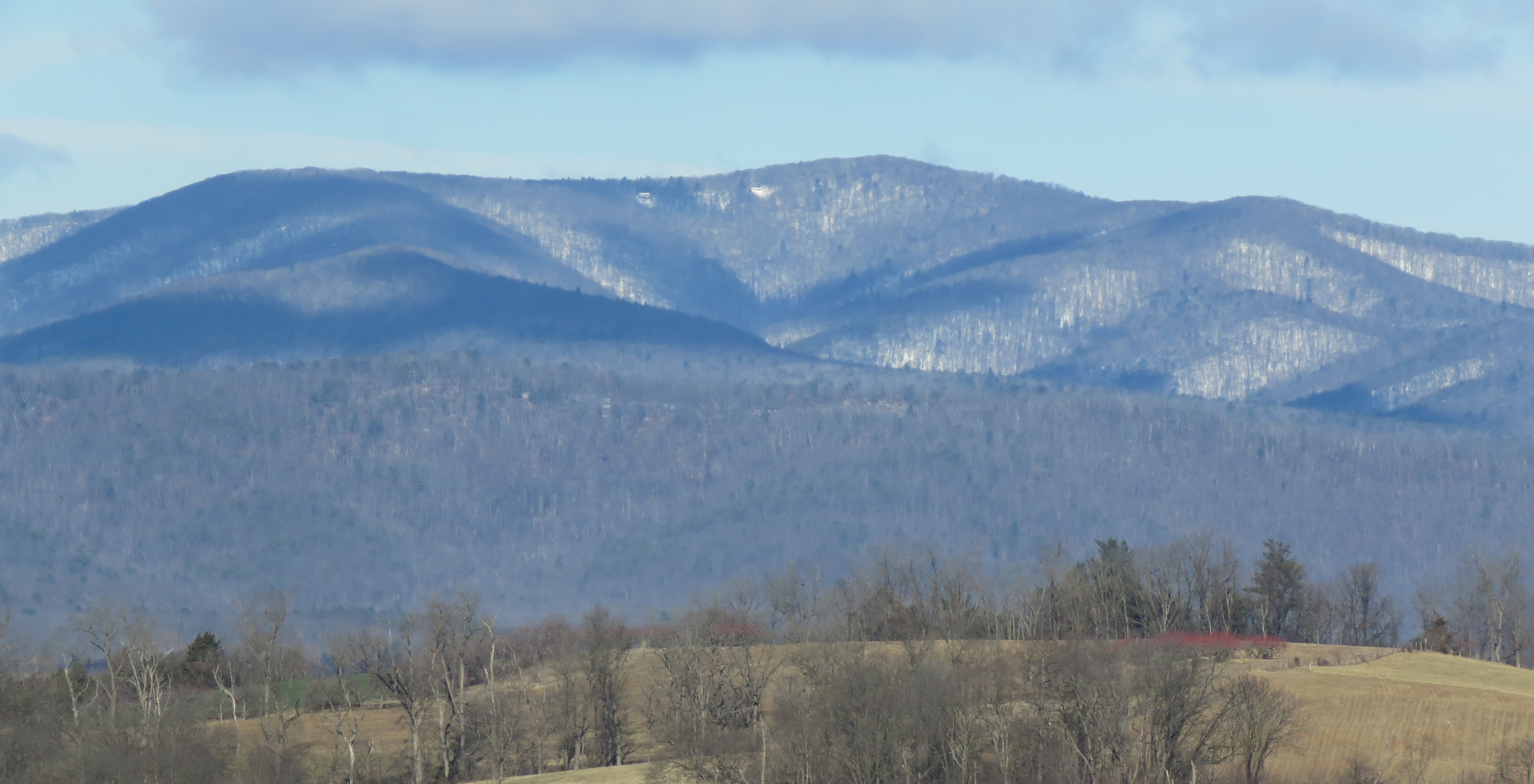
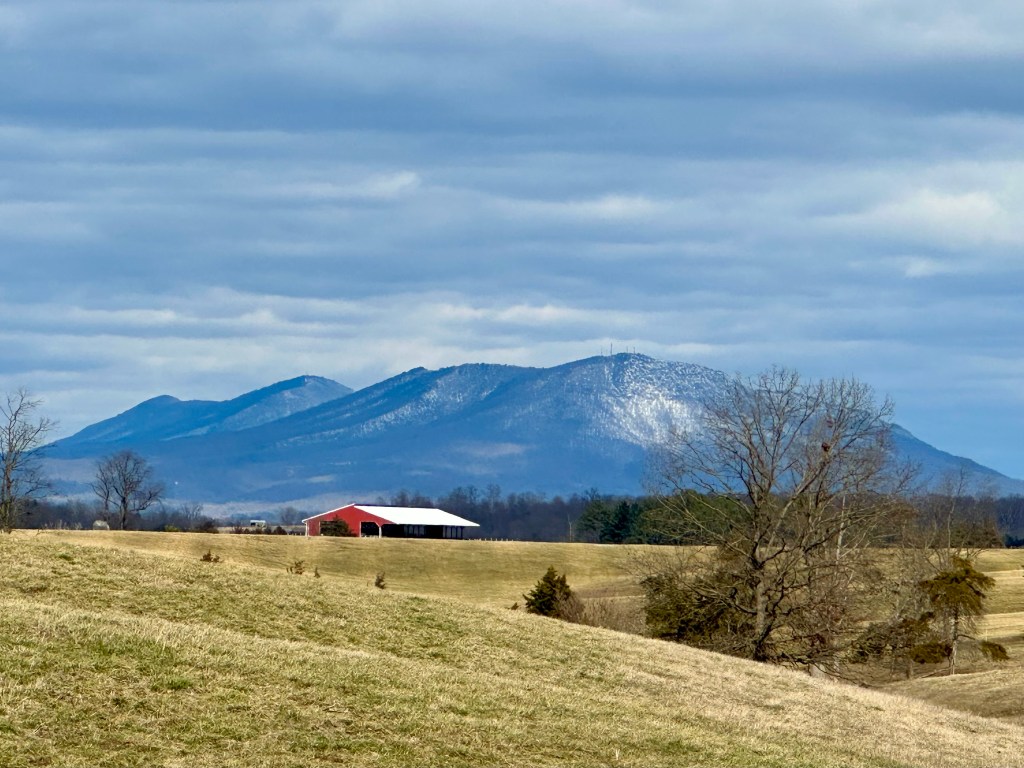
The Blue Ridge Mountains serve as the backdrop for Bells Lane. Photo by Bruce Stambaugh

As we climbed the first hill lined by brushy fence rows and trees, I spotted a small flock of Canada Geese foraging on the hilltop. Pastured hillsides with tuffs of tall grasses, dotted with a few large trees, roll away on either side of the roadway.

I didn’t dare drive too fast. There was too much to see. Tucked away in the swale of two hills, cattails ringed a small pond, perfect for shorebirds and waterfowl.

Since the day had been mostly cloudy and dusk was nearly upon us, I merely wanted to check out this popular birding spot. Still, I saw a Northern Harrier coursing over a rolling field heading away from us.

Of course, I stopped a few times to take photos of this stunning landscape, even in winter’s dormancy. Amber stocks of spent weeds infiltrated the rolling tan pasture fields. Dead thistle plants painted their own fencerow portraits.

Spent thistle. Photo by Bruce Stambaugh

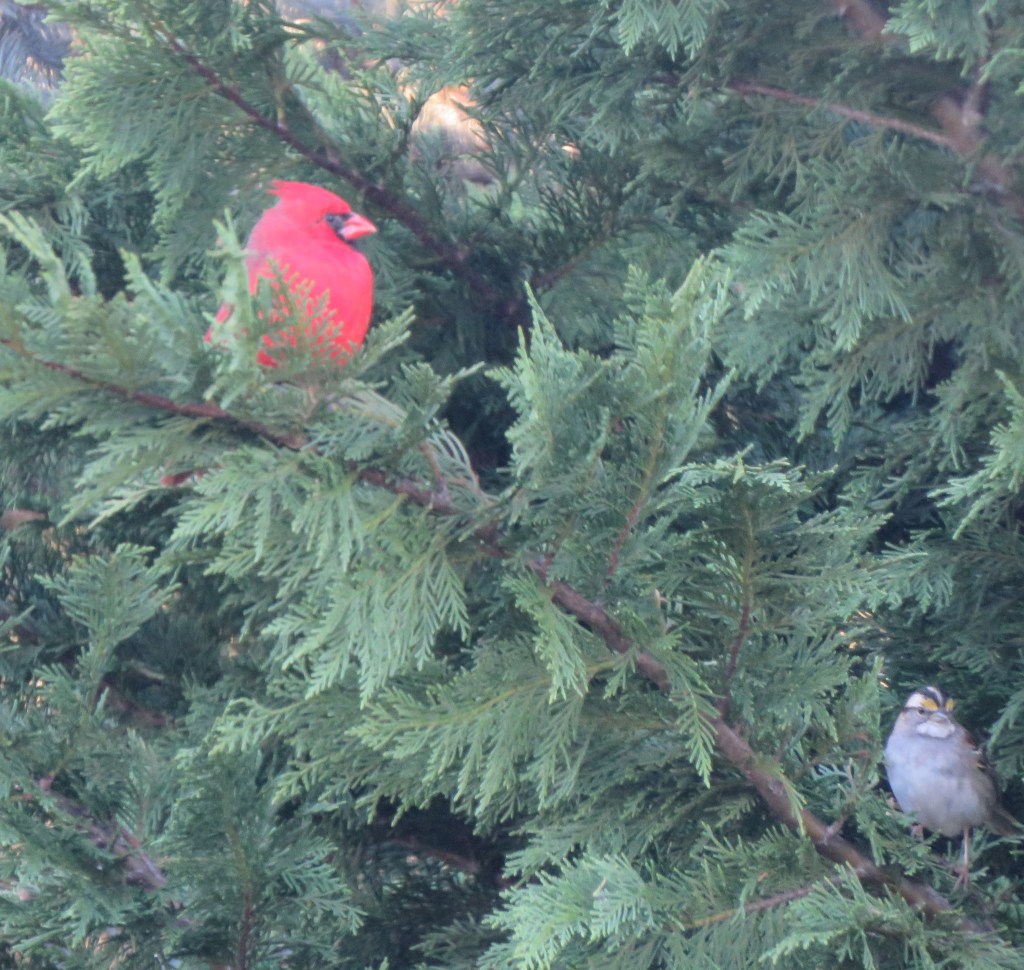
White-crowned Sparrows and White-throated Sparrows flushed from the roadside into the safety of nearby bushes. A Red-tailed Hawk perched on a precarious limb over another fallow field.

What surprised us most were the old, plantation-like farms we found along Bell Lane. The farm lanes were so long and lined with unkempt trees and vegetation that we could hardly see the homes and outbuildings. The settings literally oozed history.

Rounding a curve, we passed a gray-haired lady walking her black lab. On the left, a small pond stood, nearly hidden by the vines threading their way through the saplings and the wire fence.

Please click on the photos to enlarge them.

We crossed a small stream and were soon at the intersection back at the main highway. I was mightily impressed with the opportunity this country lane provides for bird watchers.

Without question, I will be back to Bells Lane. I’ll search for the Sandhill Cranes, Short-earred Owls, and any other birds, big or small. I’ll see what stories this curious road reveals as well.

© Bruce Stambaugh 2026

Martin Luther King, Jr. Day

Though he was born on January 15, 1929, today is Martin Luther King, Jr. Day, a national holiday in the United States.

Through his tireless work, marches, and speaking, Dr. King rightly became an icon of the civil rights movement.

We honor him today.

The Martin Luther King, Jr. Memorial, Washington, D.C. Photo by Bruce Stambaugh

© Bruce Stambaugh 2026

On Golden Pond

I had company while taking photos of the spectacular sunset at Silver Lake in Dayton, Virginia. A lone female Bufflehead repeatedly dove in the calm, shallow water for food.

The diving duck did what it was supposed to do to survive. It dove and surfaced so frequently that small ripples created a corduroy effect across the southern section of the lake. The warm light of the setting sun transformed Silver Lake into a golden pond.

A female Bufflehead floated on Silver Lake. Photo by Bruce Stambaugh

© Bruce Stambaugh 2026

Sunrise, Sunset on the Same Day

After an early morning lab test at the local hospital, I drove a couple of miles to a favorite lake that often affords decent birding. I found the bird I hoped would be there, a lone Sandhill Crane, plus I got a bonus.

The small lake lay east and west, with an opening to the east where the spillway falls into a natural ravine. The Blue Ridge Mountains in Shenandoah National Park are visible in the far distance.

As I began my search for the crane, the sun broke through a layer of low clouds. It wasn’t much, and it didn’t last long, but the mauve and orange caught my eye. It was a stunning but subtle scene.

Sunrise at Lake Shenandoah, Harrisonburg, Virginia. Photo by Bruce Stambaugh

Once I found the bird and pointed it out to a trio of young birders, I headed home. I kept my eye on the sky in hopes of an even prettier sunset.

With high broken clouds, I decided to visit Silver Lake in the quaint town of Dayton, just a few miles from my home. I arrived with the sun still hanging low in the southwest.

At first, I wasn’t impressed. I was fearful that the clouds that often congregate over the Allegheny Mountains to the west in the evenings might spoil any chance of a nice sunset. However, I have learned to be patient after years of chasing sunrises and sunsets.

That’s been even more true here in the Shenandoah Valley. With mountain ranges to the east and west of the county, the sun takes its time to paint the sky. That’s exactly what happened.

Things were still dull in the west, but I looked behind me, and the clouds in the eastern sky blushed in warm tones. I drove to the other side of the lake to capture the reflections.

I no sooner arrived there when the western horizon burst with fiery hues. I returned to my original spot and snapped away.

I was most grateful for nature’s wondrous morning and evening displays that day. It pays to keep an eye on the sky.

A lone Sandhill Crane. Photo by Bruce Stambaugh

© Bruce Stambaugh 2026

Lovers at Sunset

This middle-aged couple provided a perfect silhouette while standing in their street clothes on North Lido Beach in Sarasota, Florida.

I observed them for several minutes, simply standing there, leaning in, and casually touching one another in flirtatious gestures, as lovers tend to do. But they keep their eyes on the setting sun, seemingly comfortable with one another in those precious moments.

© Bruce Stambaugh 2026

Haiku for Today

Holidays all done,
Save two in one, Old Christmas
With Epiphany.

© Bruce Stambaugh 2026

Birds of Vacation

One of several large ponds at the Celery Fields, Sarasota, Florida. Photo by Bruce Stambaugh

I love birding. It’s one of my favorite hobbies, mostly because you can bird anywhere, anytime, including on family vacations.

My wife and I recently spent a week with our daughter’s family in Sarasota, Florida. That area is a birding paradise, with many parks, beaches, wetlands, and preserves that offer birding hotspots.

I knew I had to be considerate of what the others wanted to do. With three young adults, the beach would be a priority. So, I planned my bird-watching times accordingly so I could also spend time with family.

Since I preferred to bird in the morning, none of the others in our group of seven wanted to go with me, and I had no issue with going alone. I was sure to meet other birders on my outings.

While the others sunned on the beach, I had my binoculars at hand to try to identify the gulls and shorebirds I encountered. Of course, I listened for and watched a few birds near the house we rented for the week.

The designated preserves and parks provided the best birding opportunities. I headed to the area’s best birding spot, the Celery Fields in Sarasota. The county-owned marshland got its name because 100 years ago, celery was actually cultivated in the 400+ acre plots.

Today, the Celery Fields are a multi-purpose property for residents and visitors in the Sarasota area. The Celery Fields serve as Sarasota County’s primary flood mitigation zone. The county recognized the importance of preserving wildlife habitat, and today has an Audoban Visitors Center run by a score of dedicated volunteers.

The different habitat areas of the Celery Fields.

With areas of wetlands, mudflats, canals, ponds, a wide variety of marshland vegetation, and treelines, the Celery Fields attract several species of birds and wildlife. It’s a birding magnet for people like me.

I visited the Celery Fields three times, aiming to see my spark birds, the gorgeous Painted Buntings, the social Sandhill Cranes, and the attractive Roseate Spoonbills. I got to see those and much more.

I also checked out two preserves along the coast near Bradenton. The first was small, and the other massive. Both had the kind of small trees, tropical vegetation, and wetlands that attract several species of birds.

However, rainfall in Florida has been far below normal, and many areas of wetlands have dried up, forcing birds and other wildlife into small pools of water.

Still, I was able to see and photograph several bird species, and other animals, like an alligator and a snake. I’ll share those encounters in a separate post.

The Celery Field

The Celery Fields afforded the best opportunities to see a variety of wildlife up close via boardwalks, levees, and stone paths.

The place had changed significantly since my last visit years ago. An Audoban Visitors Center had been built to provide visitors with information and maps of the many walking and birding paths.

Bird feeders were strategically placed near the center, attracting several species of birds for a closer look. This included a handsome pair of Painted Buntings.

Volunteer naturalists were also available to answer questions and explain what was being seen. Ponds, canals, trees, bushes, and natural plants provided excellent habitat and cover for the birds and wildlife.

Beaches

Since it was the holidays and the weather was sunny and warm, the beaches were crowded. Consequently, I only captured a few photos.

Please click on the photos to enlarge them.

The Preserves

I discovered the Ungarelli and Robinson Preserves after dropping off my oldest grandson at a golf course. Again, due to the lack of rain, the water levels at both places were very low, and some of the mudflats had hardened.

Still, bird species were plentiful, and the people I met were friendly and inquisitive about birds they saw but couldn’t identify. The binoculars dangling around my neck over my birding vest gave me away. It was a pleasure to help them learn about Rosate Spoonbills and Red-shouldered Hawks.

Like the Celery Fields, the Robinson Preserve was a multi-use facility. Kayakers, bikers, joggers, and dog walkers far outnumbered birders like me. That didn’t deter my enjoyment of the time spent there.

The highlight was discovering a large flock of American White Pelicans. I met a couple from Germany who equally enjoyed these fantastic birds. We watched as several pelicans flew into the flock, where many of them preened in the afternoon sunshine.

© Bruce Stambaugh 2026

Happy New Year!

© Bruce Stambaugh 2026

Bay Photos by Donna

Wildlife Photos From The Chesapeake Bay Region

ROAD TO NARA

Culture and Communities at the Heart Of India

K Hertzler Art

Artist and nature journalist in the Shenandoah Valley of Virginia.

Maria Vincent Robinson

Photographer Of Life and moments

Gabriele Romano

Personal Blog

Jennifer Murch

Art is the only way to run away without leaving home. -Twyla Tharp

Roadkill Crossing

Writing generated from the rural life

ANJOLI ROY

writer. teacher. podcast cohost.

Casa Alterna

El amor cruza fronteras / Love crosses borders