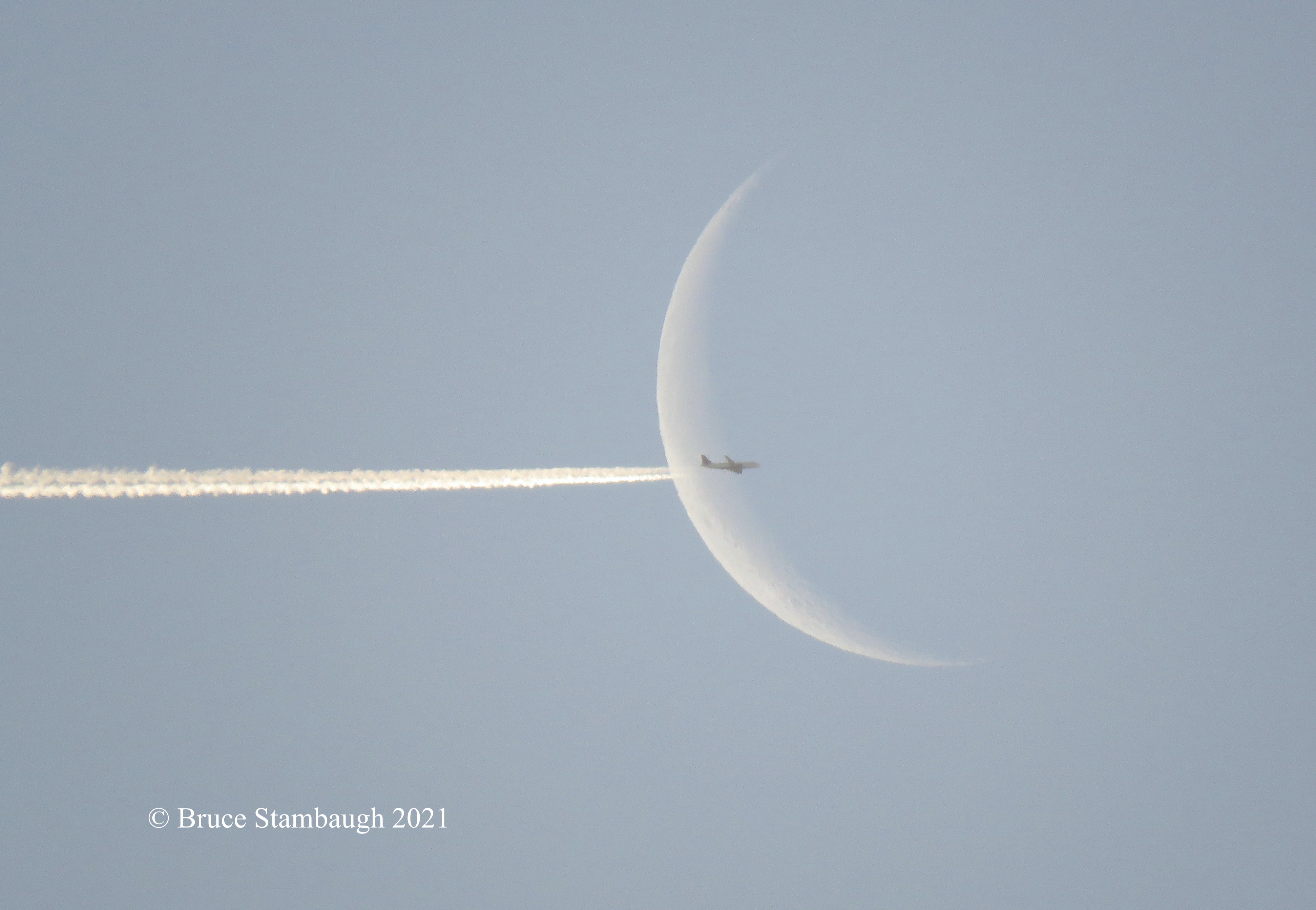
I couldn’t believe my good fortune. Standing at the kitchen sink yesterday morning, I happened to notice the crescent moon hanging in the southeastern morning sky. I grabbed my camera and headed out to the patio to shoot the moon so to speak before the sun blinded it from view.
I took the photo and turned to go back inside since it was 15 degrees outside. I happened to notice a jet streaking through the sky to the left of the moon. I braced myself against the frame of our porch door and took this handheld shot just as the jet crossed in front of the moon. Immediately, the lyrics of Count Basie filled my mind. Of course, it was Frank Sinatra’s voice singing this iconic song.
Always look up. You might be surprised by what you see.
I debated about how to title my Photo of the Week. Posting an apparent abstract photo is unusual for me. I even thought about holding a contest as to what the content of this photo actually is. But, I decided against it, and instead gave you a hint in the title as to where this photo was taken, which was inside my house.
I also considered titling the photograph “Winter Abstract,” but settled on “Inside Out.” Any guesses as to what this photo shows?
This my friends is actually a shot of the skylight in our great room. The crinkly pattern in the center of the photo is six-inches of snow atop the curved glass. It drew my attention when my wife and I noticed how dark it was in that portion of the room. When I investigated, I knew I had to share this beauty.
Yes, it the day we inaugurated a new president of the United States. It was also the day our country passed a sobering, horrid milestone. The number of deaths in the U.S. from the COVID-19 virus surpassed the total number of U.S. military personnel killed in World War II.
That stark and mournful statistic sends a message more significant than its unfathomable number. More citizens have now died of a virus in a year than a four-year-war. What does that say about us as a people?
Indeed, the rest of the world is watching us. And, I can tell you that friends who live in other countries are shocked by what is happening with the spread of the pandemic in our great nation. It shouldn’t have been this way. But it is, and we all have to do something about it cooperatively.
Scientists, medical personnel, and researchers made great strides in developing COVID-19 vaccines in a short time. Of course, they were aided by the federal government with funds and expeditious approval of the vaccines. For that, I give great thanks.
But the facts are facts. To curtail this horrible pandemic, as many people as possible need to get the vaccines. Because of supply and demand, many of us will have to be patient and wait our turn.
Because we are a democratic republic, federal, state, and local authorities must now work together to distribute the vaccines. Consequently, when you get yours will depend on where you live and to which category you belong. Each state has set its particular priority classification requirements for immunization.
In part, that is why my wife and I decided not to be snowbirds this winter. We wanted to stay home for several reasons. Safety and getting the vaccines were high on the list.
A snowbird breakfast.
Yes, we miss our friends and the crashing waves and warmer temperatures on our beloved winter paradise, Amelia Island, Florida. However, we were uncertain if non-residents would be able to be vaccinated in the Sunshine State.
This winter is our first full one in the Commonwealth, even though we moved here nearly four years ago from Ohio. It’s a lot like living in northeast Ohio, except we have more sunny days and less snow.
With all those years of living in much more severe conditions than we have in the Shenandoah Valley, Neva and I are making it through. We are also following all of the CDC guidelines as best we can.
We continue to stay close to home. We continue to do curbside grocery pick up. If we order a meal, we get it via curbside delivery. We much appreciate those services and tip accordingly to show our gratitude.
As for the coronavirus vaccine, we are still waiting.
We know that some people may be leery about being inoculated. We are not. We respect people’s rights not to, but we also expect them to follow the proper guidelines to keep the rest of the population safe.
The reality is that we must all do our part in dampening down this once-in-a-lifetime pandemic to ensure that it is quelled and does not reoccur. Getting the vaccine will go a long way to reaching that end.
We will also wash our hands, and wear masks and keep our physical distance when around others. We will continue to pray for the sick and all those who are working diligently with those infected.
Given the critical circumstances, it’s the best we can do.
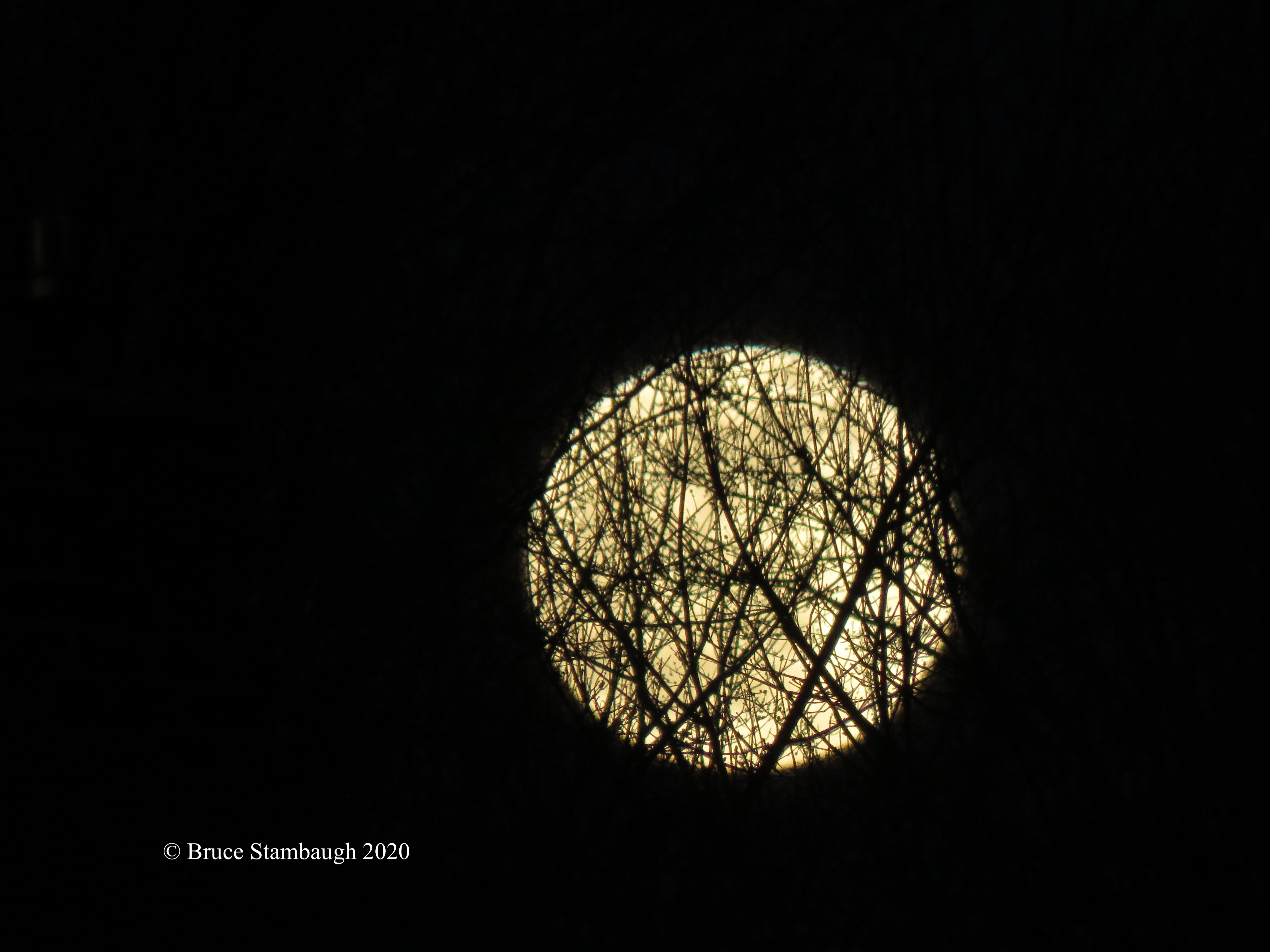
Though this might resemble a nearly empty ball of yarn, it’s actually December’s full moon rising behind some trees. I’m posting this as a reminder to watch for tonight’s Wolf Full Moon. Hopefully, it will be clear where you live so you can enjoy its splendor without any obstructions.
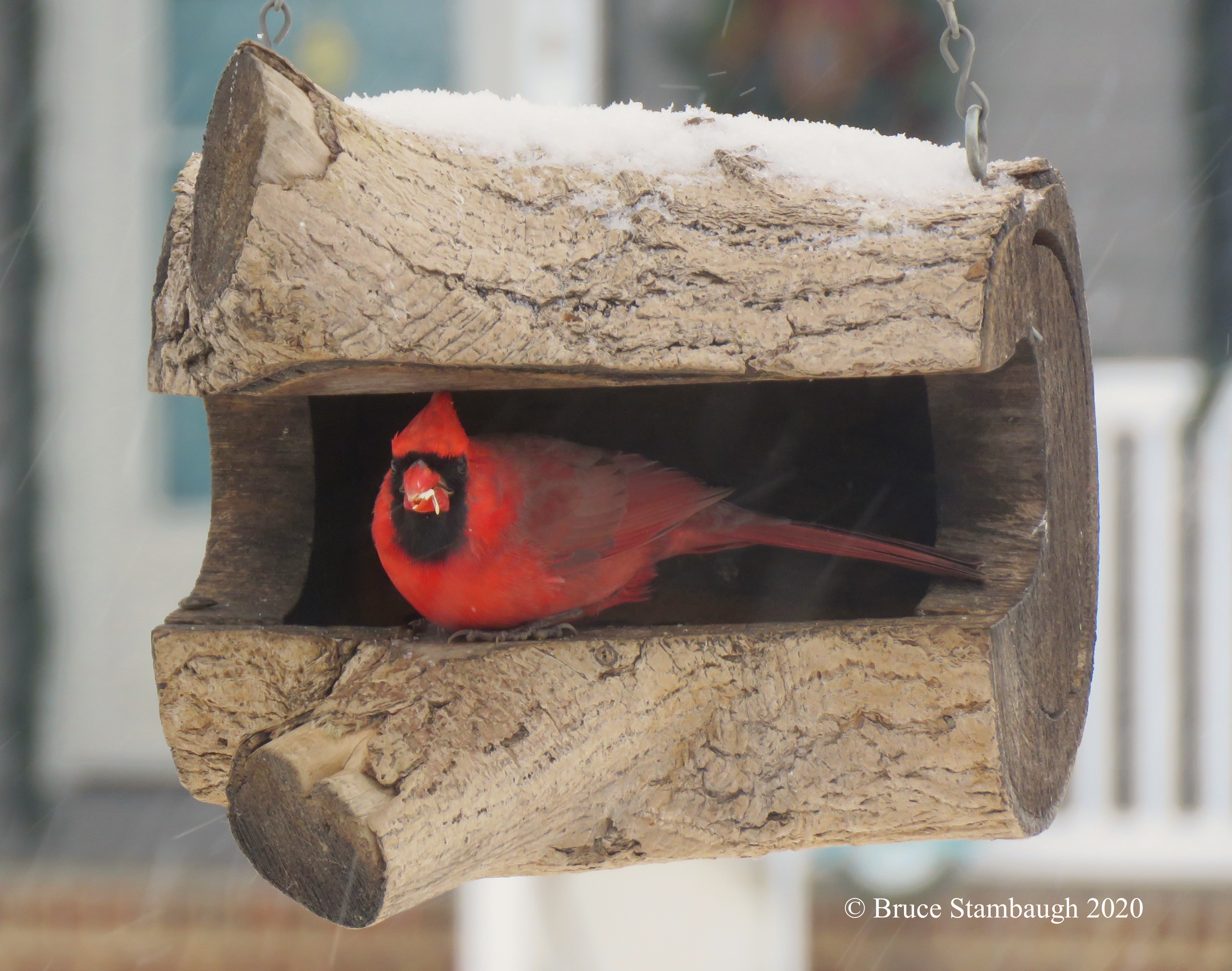
A male Northern Cardinal chows down on safflower seeds.
I’m thankful for birds. That’s one reason I spend the money, time, and effort to keep them happy most of the year-round. That’s never been truer than now.
Usually, my wife and I would be on Amelia Island, Florida, right now, enjoying the birds, wildlife, and strolls on the beach. The coronavirus, of course, changed all of that. We decided to continue to stay close to home. We also didn’t want to miss out on getting the vaccines to protect us from the virus.
So, instead of searching for great egrets, little blue herons, American white pelicans, willets, sanderlings, and black skimmers, I’m settling for mostly seedeaters this winter. I’m just as happy.
Watching the various birds interact, feed at the different stations I have set up in the front and back yards, and at the heated birdbaths helps the time pass. Like humans, food and water are essential ingredients for the birds and too many aggressive squirrels during the cold and dark days of winter.
I have the feeders placed where I can watch them from where I spend most of my time. I can observe the comings and goings from my office window facing the street or enjoy the multiple feeders in the backyard from the bathroom window. Those who know me well will clearly understand that logic.
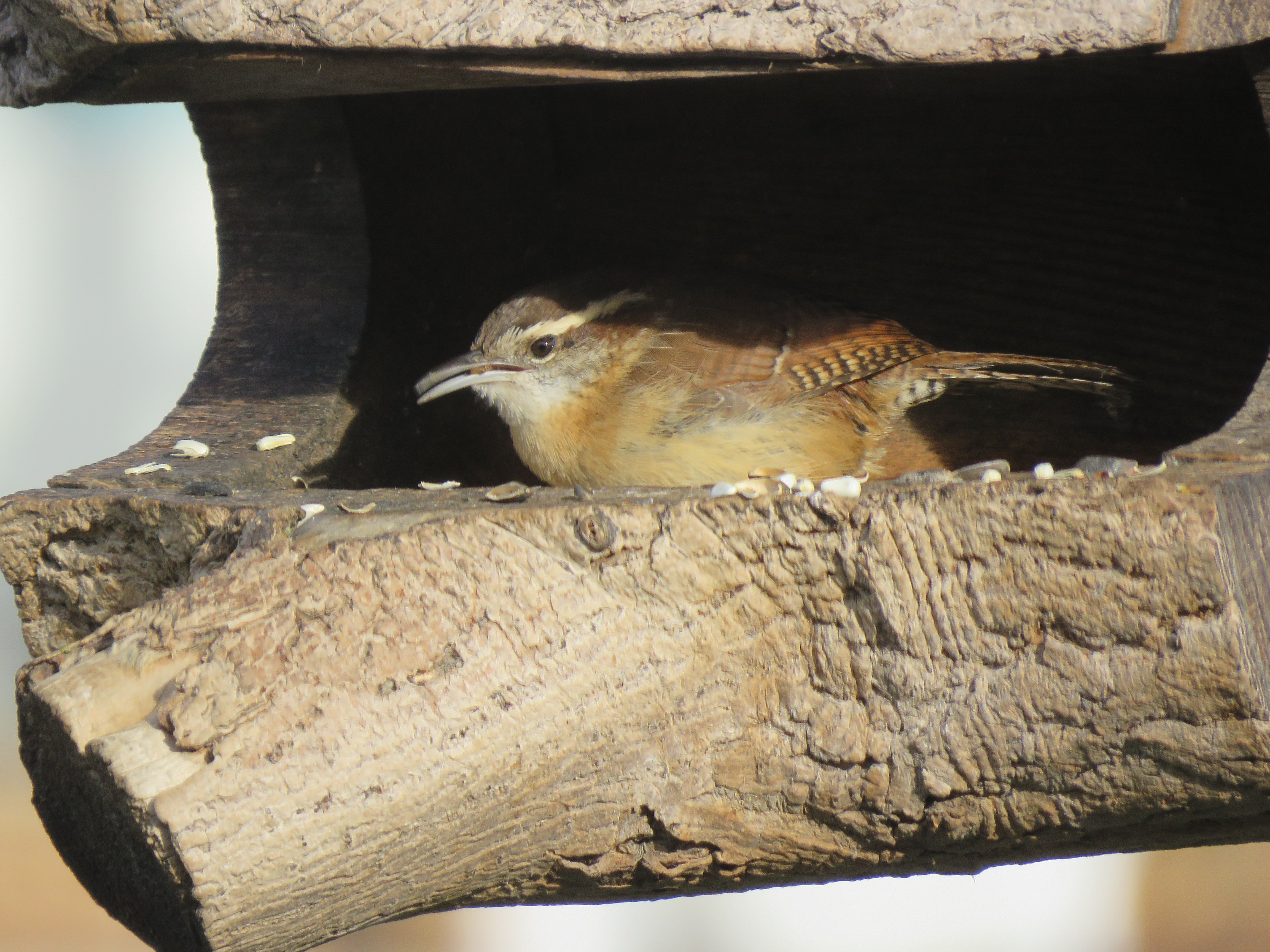
Three feeders dangle from the front yard red maple, and cracked corn is spread around its trunk. In the back, a suet feeder attracts members of the woodpecker family, the neighborhood northern mockingbird, and Carolina wrens, to name a few.
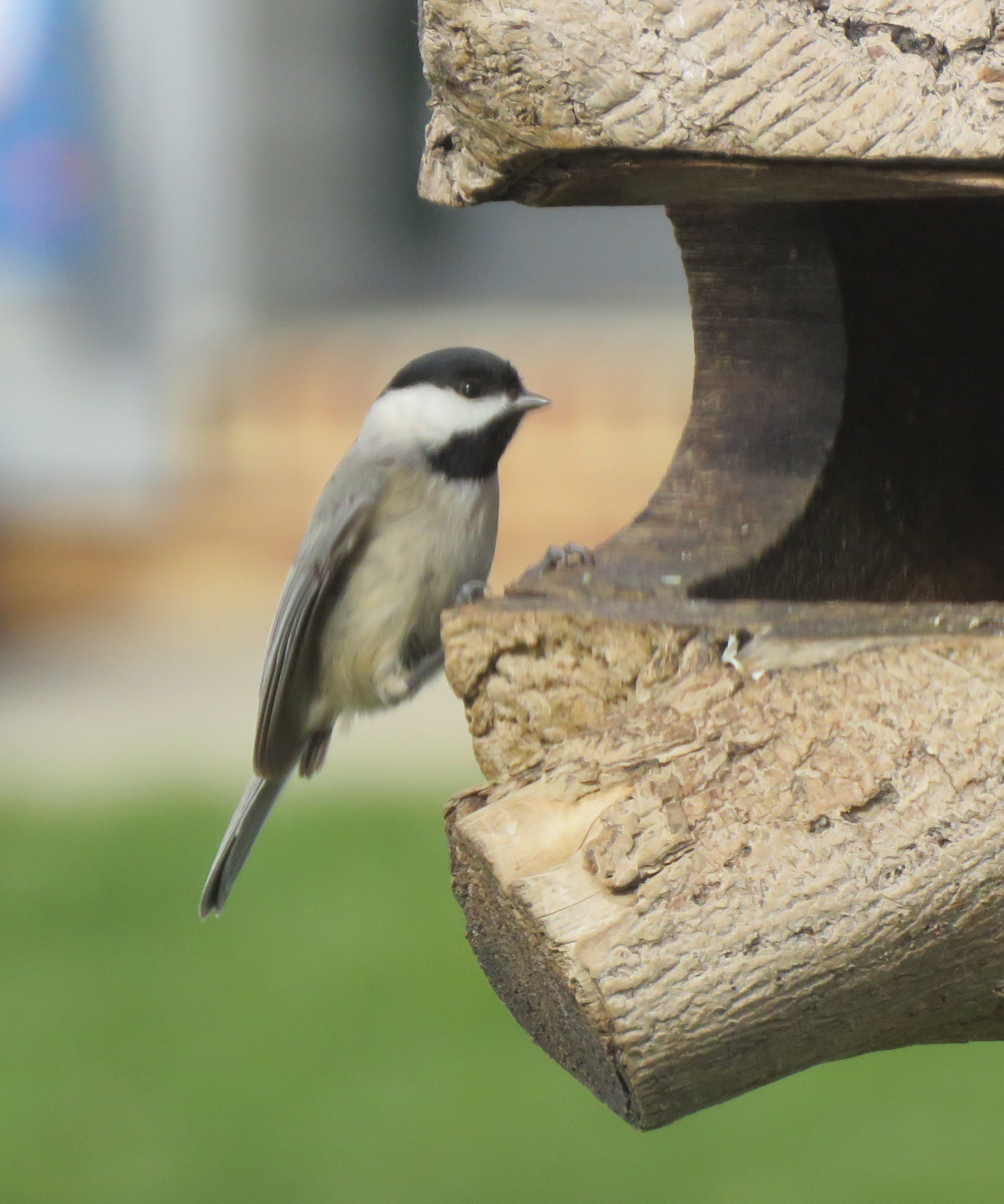
A squirrel-proof tube feeder filled with black oil sunflower seeds draws in northern cardinals, house finches, Carolina chickadees, a few tufted titmice, and white-throated nuthatches. Dark-eyed juncos peck the ground for what other birds drop or miss.
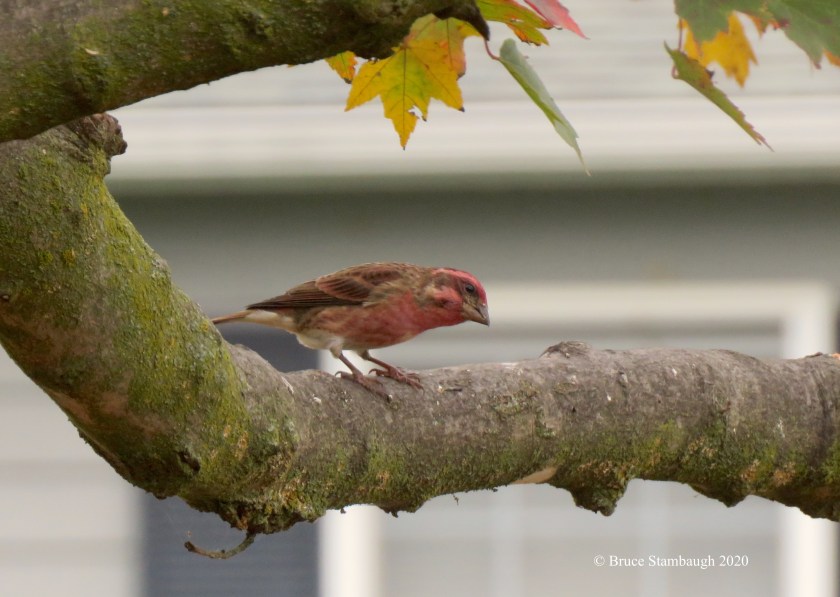
Most of these birds are relatively regular to the feeders. The more elusive birds, like the purple finches and pine siskins, are inconsistent with their visits. Still, I am delighted when they arrive, even if it is only for a brief time.
Of course, I miss heading to Spoonbill Pond on Big Talbot Island to see an everchanging variety of shorebirds, waterfowl species, and raptors. But an occasional strafe of a sharp-shinned or Cooper’s hawk or a pair of bald eagles soaring overhead helps keep my mind focused.
Last year was a universally challenging year in nearly every aspect of life. A year into the virus, hope for relief grows closer by the day. The virus, however, has likely yet to peak.
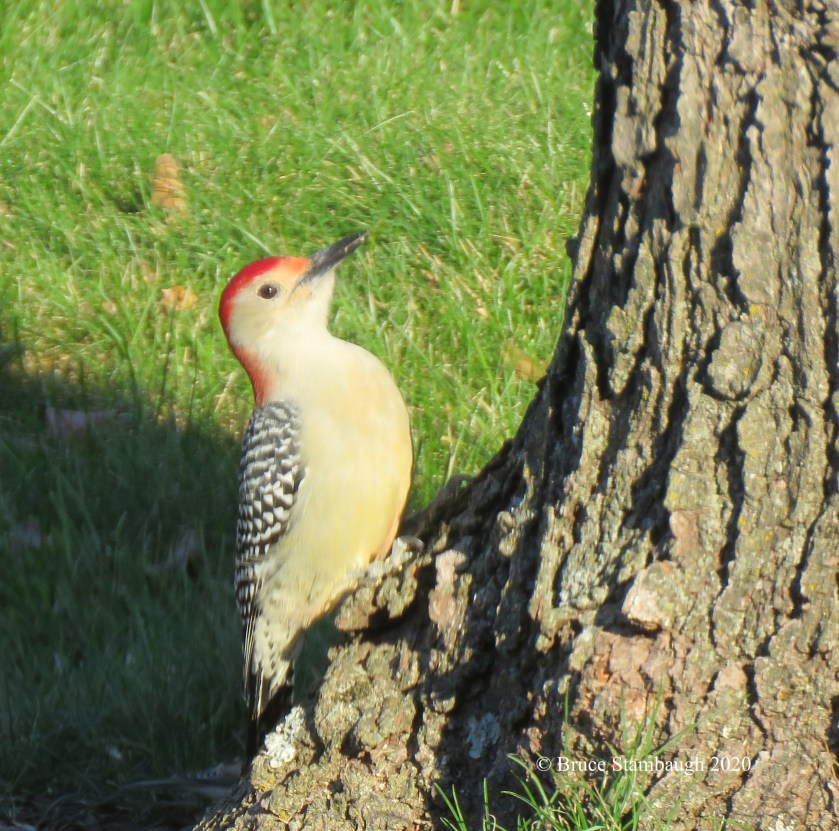
Red-bellied Woodpecker.
Red-breasted Nuthatch.
Tufted Titmouse.
Blue Jays.
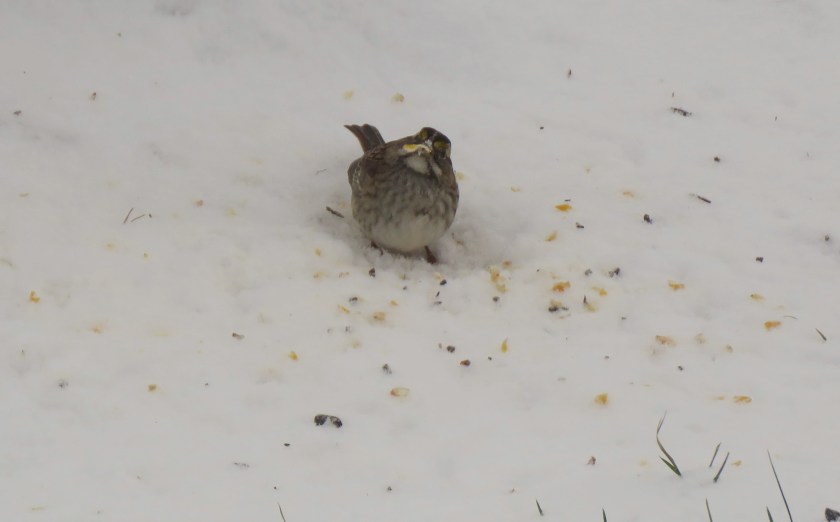
White-throated Sparrow.
Pine Siskins.
Purple Finch.
Female Purple Finch and female House Finch.
In the meantime, my wife and I will continue to stay close to home and enjoy whatever birds come our way. I like watching the different habits and behaviors of the birds and their wildlife counterparts.
One particular white-throated sparrow prefers the confines of a hanging feeder made of a hollowed-out limb. This sparrow jumps and kicks at the safflower and black oil sunflower seeds as if it were on the ground scratching for food. That’s what the rest of the white-throated do.
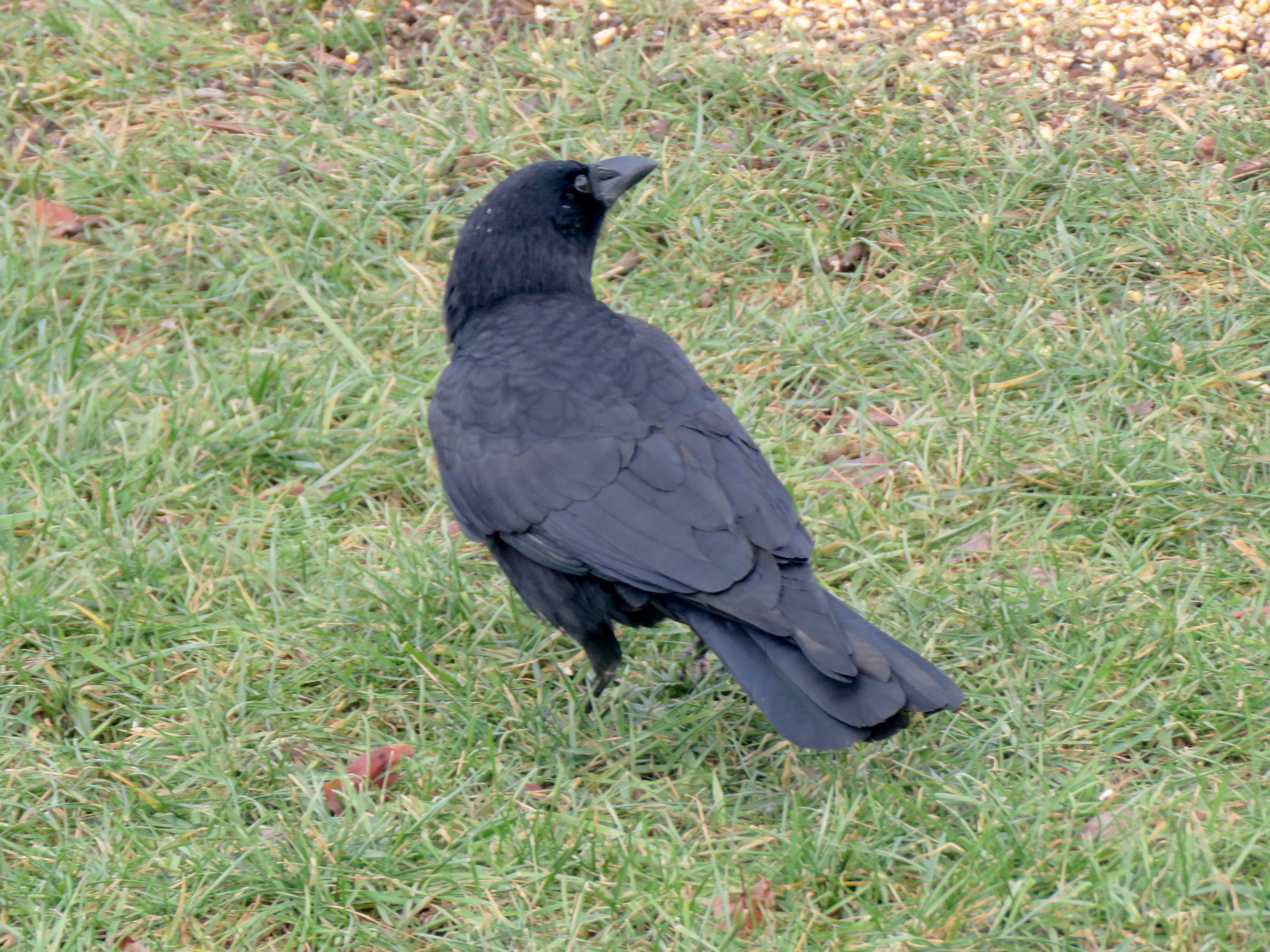
Recently, a lone American crow began visiting. It feeds on the cracked corn spread beneath the red maple. I know it’s the same bird because of its persistent limp.
Despite their bossiness, I even enjoy the squadron of blue jays that loudly announce their arrival as a warning to the other birds. Then they divebomb onto the feeders and ground and gulp down dozens of seeds.
I miss Florida’s birds, but I enjoy the birds that fill each day here at home. They salve my soul.
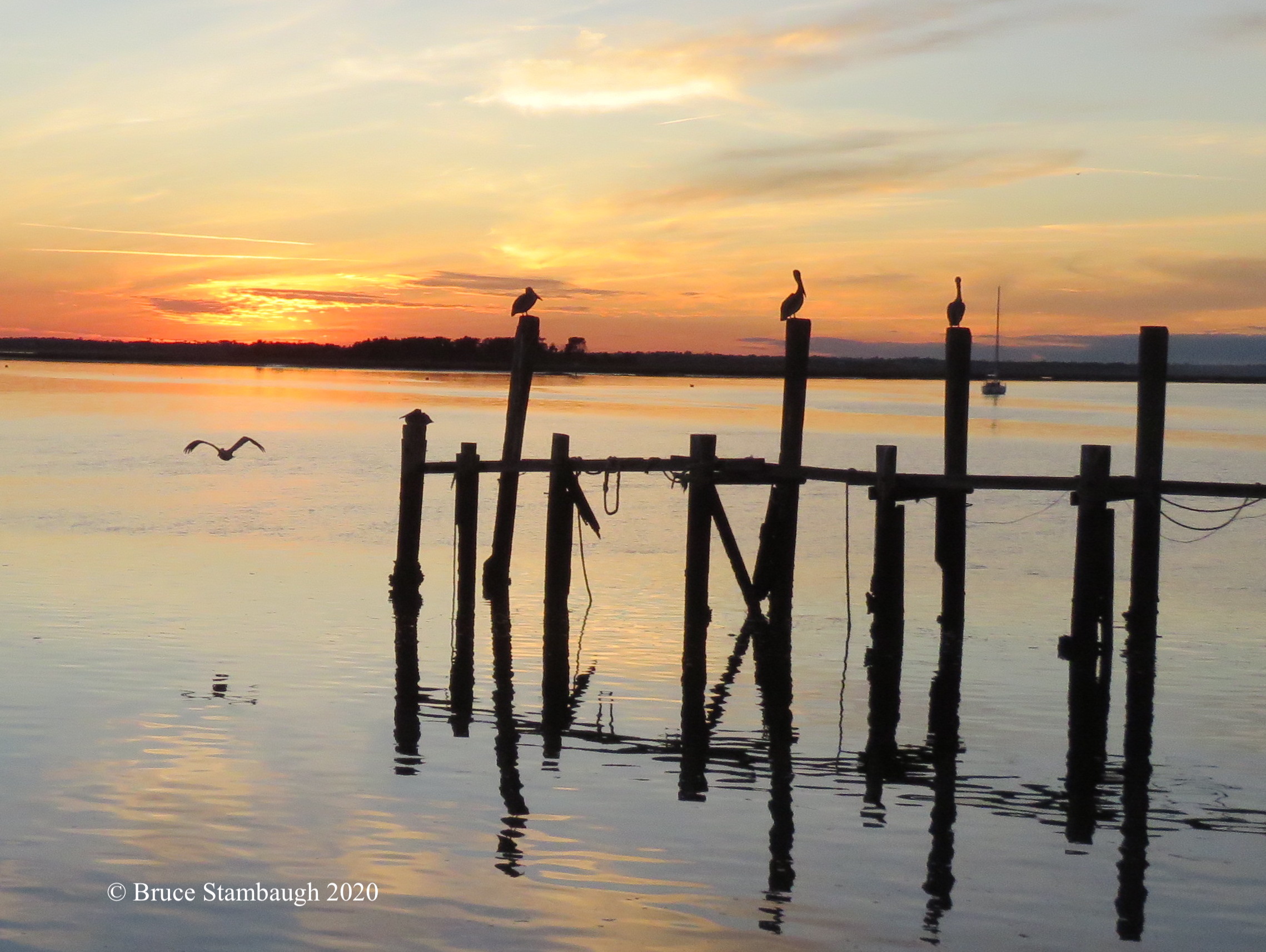
Brown Pelicans arrive to roast for the evening along the Amelia River, Fernandina Beach, FL.
I was fortunate to catch this pair of Northern Cardinals making good use of the birdbath in our backyard. A heater keeps the water from freezing so the backyard birds have access to water year-rouncd.
If you are not familiar with Bobby Darin’s hit rock and roll song, “Splish Splash,” click the link.
Because of the needed health restrictions, we stayed close to home for much of 2020. That didn’t keep us from visiting with family and friends, however.
We recognized that the issued restrictions were and continue to be for our own safety. So, we faithfully followed them.
Like everyone else, we missed our everyday human interactions with friends and family most of all. Then we discovered a satisfactory no contact substitute.
We Zoomed.
Zoom is a program that works on devices like laptops, smartphones, and iPads to share face-to-face. Many businesses and educational institutions use it to operate during the pandemic.
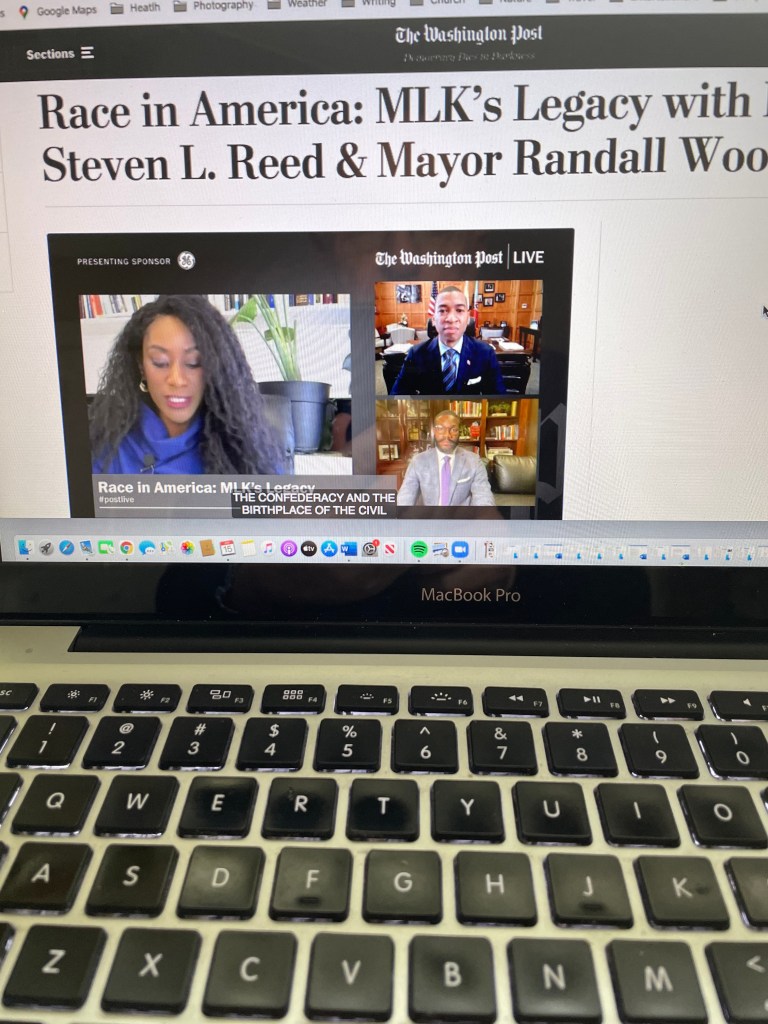
We enjoyed being able to interact with folks and see them, too. We attended lectures, joined college classes, and watched concerts remotely on our computers.
Impressed, I downloaded Zoom onto my laptop, figured out how to set up a meeting, and off we went. Of course, Zoom isn’t the only remote option around. It just seemed the most logical and straightforward to use, especially with groups.
The executives of Zoom are no dummies. Your first session is free with no time limit. After that, the program shuts down after 40 minutes.
I’m no dummy, either. I bought a subscription when it was on sale, of course, and we haven’t looked back.
Zoom helped save our social life without violating the physical distancing requirements. We set up meetings with friends and family far and wide, and we Zoomed away.
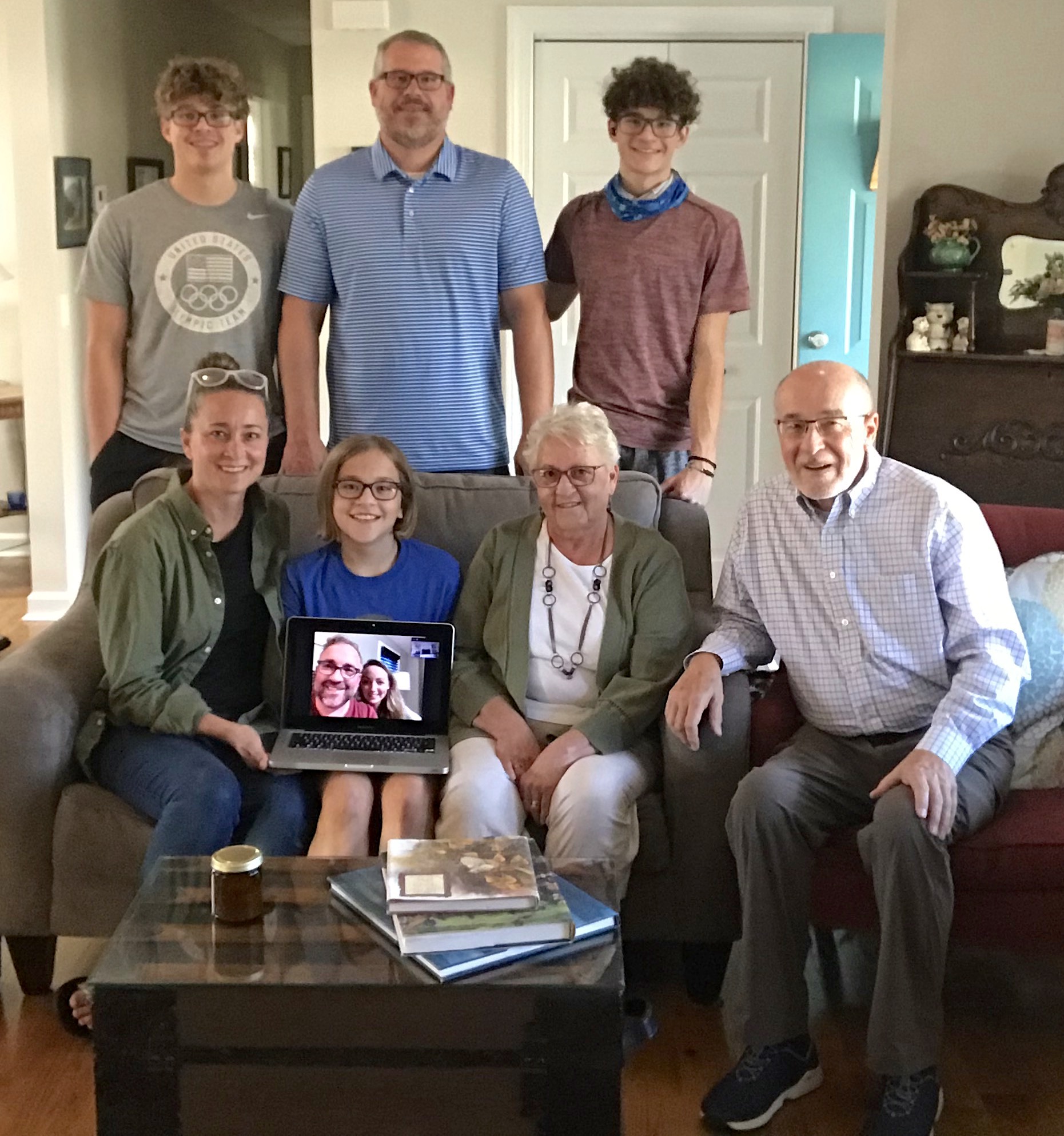
We Zoomed at Thanksgiving with our son and his wife in New York. Our daughter and her family were with us, and we managed a holiday family photo with our granddaughter holding her uncle and aunt on her lap. That’s what laptops are for, right?
Before the COVID-19 travel restrictions, we had scheduled a reunion with my wife’s cousins and spouses. We kept the date and met remotely via Zoom.
Everyone liked it so well that we met again two weeks later. We’ve kept that up ever since, with everyone making it a priority. One cousin remarked that we have met together more via Zoom than we had in-person all the years previous. Technology transcends state boundaries or mountain ranges or hundreds of miles.
We heard stories new and old. We laughed and laughed, especially at the play-by-play of a herd of wayward dairy cows. In these dark times, we need as much laughter as we can get.
I even took free Zoom classes to sharpen my hosting skills. I was one of the hundreds in the remote classroom, yet I never left home to learn. I didn’t have to raise my hand to use the restroom, either.
We Zoomed with friends and family in Ohio, North Carolina, and locally, too. My wife contacted some college friends and set up a Zoom meeting. The ladies enjoyed it so much that they also now regularly met.
They chat as if they were in a dorm room. After the classmates’ last Zoom gathering, their laughter carried out of my office clear to the great room.
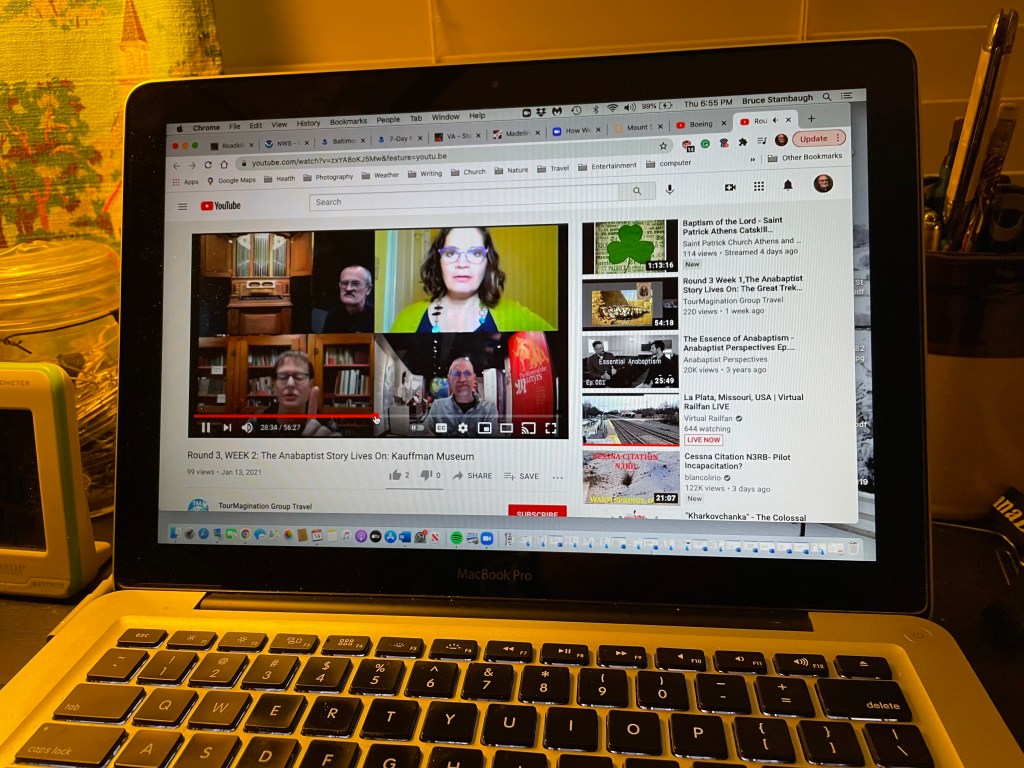
We have also Zoomed for doctor appointments, church meetings, small groups, worship, and community service meetings. We have visited history museums and taken virtual field trips via Zoom.
Though we use other options to communicate remotely, Zoom is our go-to tool. For the record, I don’t own Zoom stock, and Zoom didn’t endorse my commentary.
Pandemic or no pandemic, we are glad technology has permitted us to continue our lives and personal connections and still stay safe and sound.
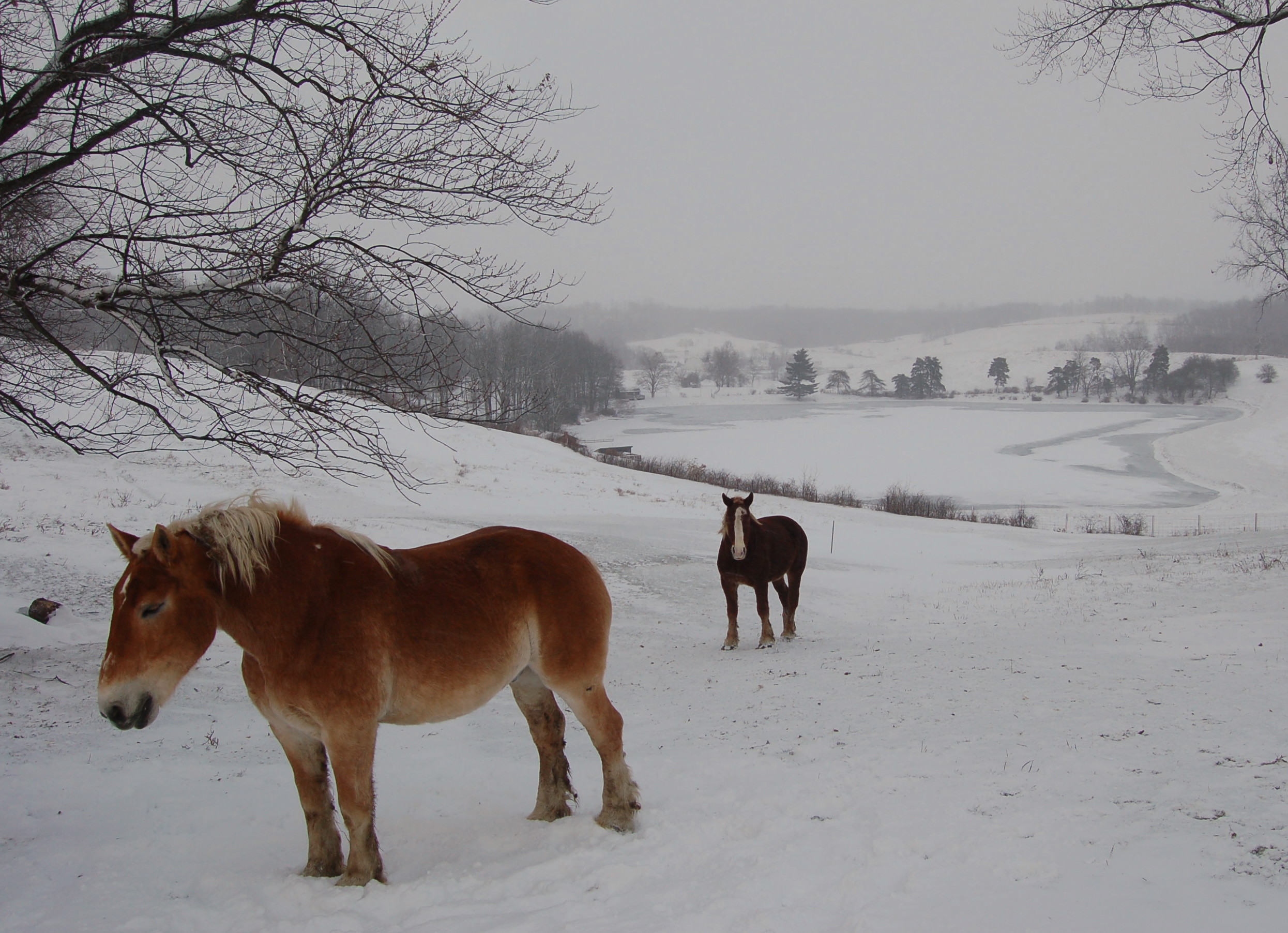
Seeing horses was an everyday occurrence when my wife and I lived in Ohio’s Amish country in Holmes County, Ohio. We would see horses pass by our home on the busy county road daily pulling carts, buggies, and wagons.
The Amish still use workhorses, like the ones shown here, for their field work. Mechanical power was shunned in order to literally ground and keep the Amish connected to their earthy roots.
This photo shows a pair of workhorses amidst a wicked snowstorm in bitterly cold conditions. Since they could not find grass on which to graze, their owners would bring hay and feed to sustain them. In the distance at the bottom of the hill, the fallen snow had already been started to be cleared so Amish youngsters could skate on the thick ice.
My wife and I are leaving the lights on for you. And, no, we’re not Motel 6.
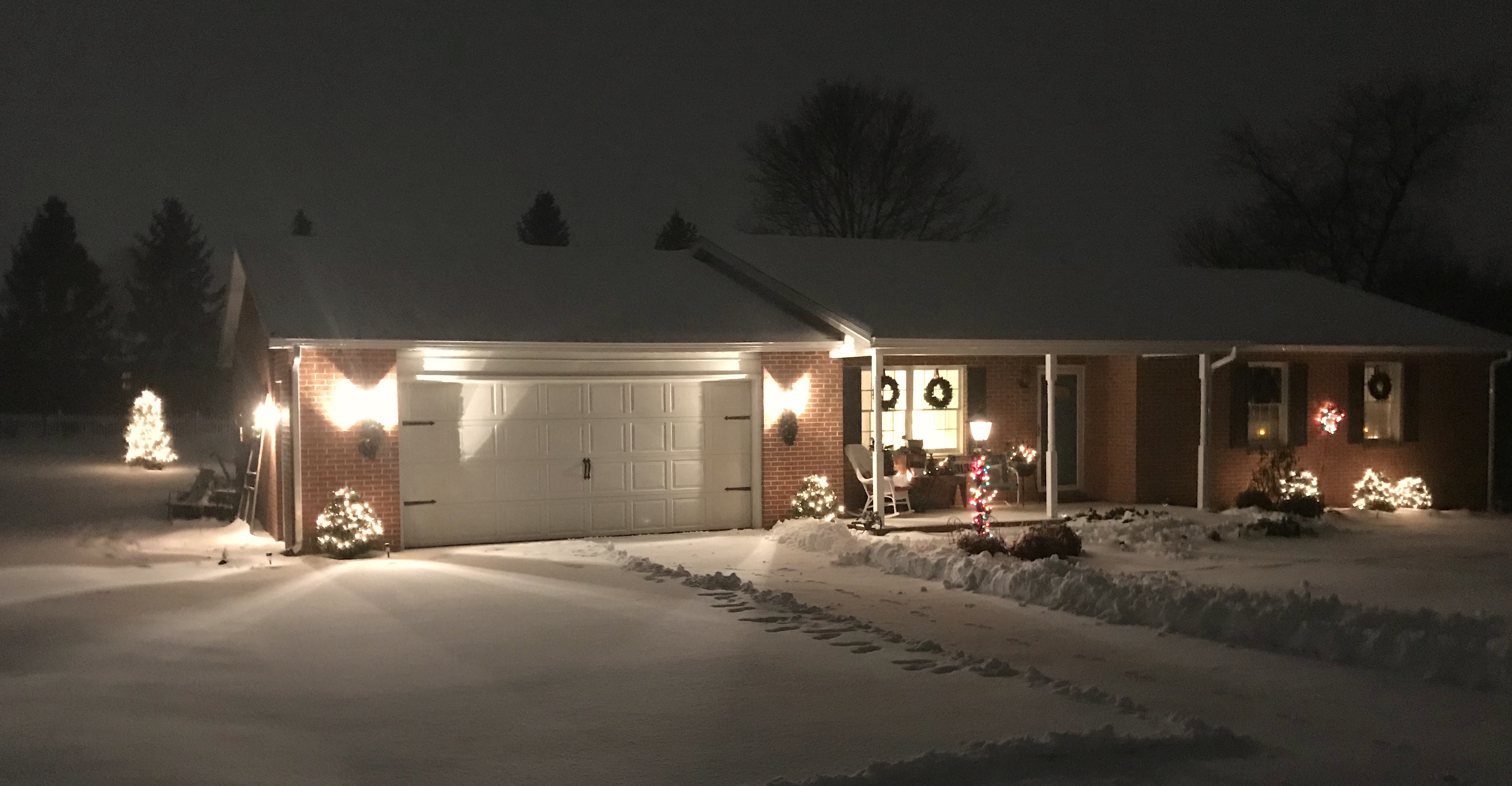
The year-end holidays may be over, but our modest festive light display is still burning brightly. We began our celebrative decorating early and are letting our lights shine well into the New Year.
We are not crazy, nor do we own stock in our electricity company. We have our altruistic reasons for letting the lights continue to shine.
Lighting up our homes inside and out runs deep in our linage. My wife’s family always brightened their cozy farmhouse with tactful holiday flare. Her frugal farmer parents wanted to share their holiday spirit, too.
Although my exuberant father sometimes got a bit too flashy for my taste, my family was no different. Nevertheless, Dad’s heart was in the right place. He wanted to bring joy to all who passed by our little brick bungalow on our busy suburban corner.
Dad’s enthusiasm seemed to progress with each passing year, however. He loaded the corner evergreen with strings of those big-bulbed multi-colored lights. Later, he outlined the front porch, then still later erected dangly white lights that imitated icicles around the roof’s edges.
Fortunately, our mother, the artist, had control over the creative interior decorating. The decked-out Christmas tree always stood in front of the living room’s picture window. Christmas cards covered the inside of the old wooden front door, and the fireplace mantel always said Happy Holidays!
My wife and I have a 49-year tradition of lighting up our home inside and out for the holidays. We credit our parents for that creative itch.
Given the world’s state in 2020, Neva and I decided to get a jumpstart on our holiday decorating. We had the time and opportunity since we tried to follow the stay close to home pandemic guidelines. So, that precisely is what we did.
We didn’t try to imitate my late father by any stretch of the imagination. We simply did our usual holiday festooning, only jumpstarted the holiday decorating just before Thanksgiving. The traditional commencement for our holiday decorating was the day after.
Our Jenny tree, a memorial for a friend gone too soon.
Now with Christmas come and gone, we packed away most of the interior decorations. But drive by our modest ranch home at night, and you’ll discover the exterior lights still brightly burning. They will continue to do so for a while.
What is our motivation? We are taking the idea of letting your light shine seriously. And why not? With the pandemic and continued social polarization, society is still bewildered and dismayed nationally and globally. The recent coup attempt in our nation’s capital only added to the nationwide angst.
Some might view our extended light display as simple-minded. We’re alright with that. It’s just our way of expressing gratitude for a new year and new opportunities to make things right in the world.
We also know that some might think our actions foolish. Our lights will shine nevertheless.
The multiple strings of little white lights combined won’t generate much real warmth. Instead, by letting the lights continue to glow, we hope that their presence, their shining on, countering the cold darkness of the world, will, in some small ways, warm a few hearts.
Like our late parents, our sincere hope is that this humble display simply helps brighten any passersby’s souls on any given chilly winter’s eve. We’ve noticed that we aren’t alone. Others continue to keep their holiday lights on, too.
Whether it’s a single glowing candle in the front window or a lighting extravaganza, that light radiates joy. That’s a commodity all of us need now and always.
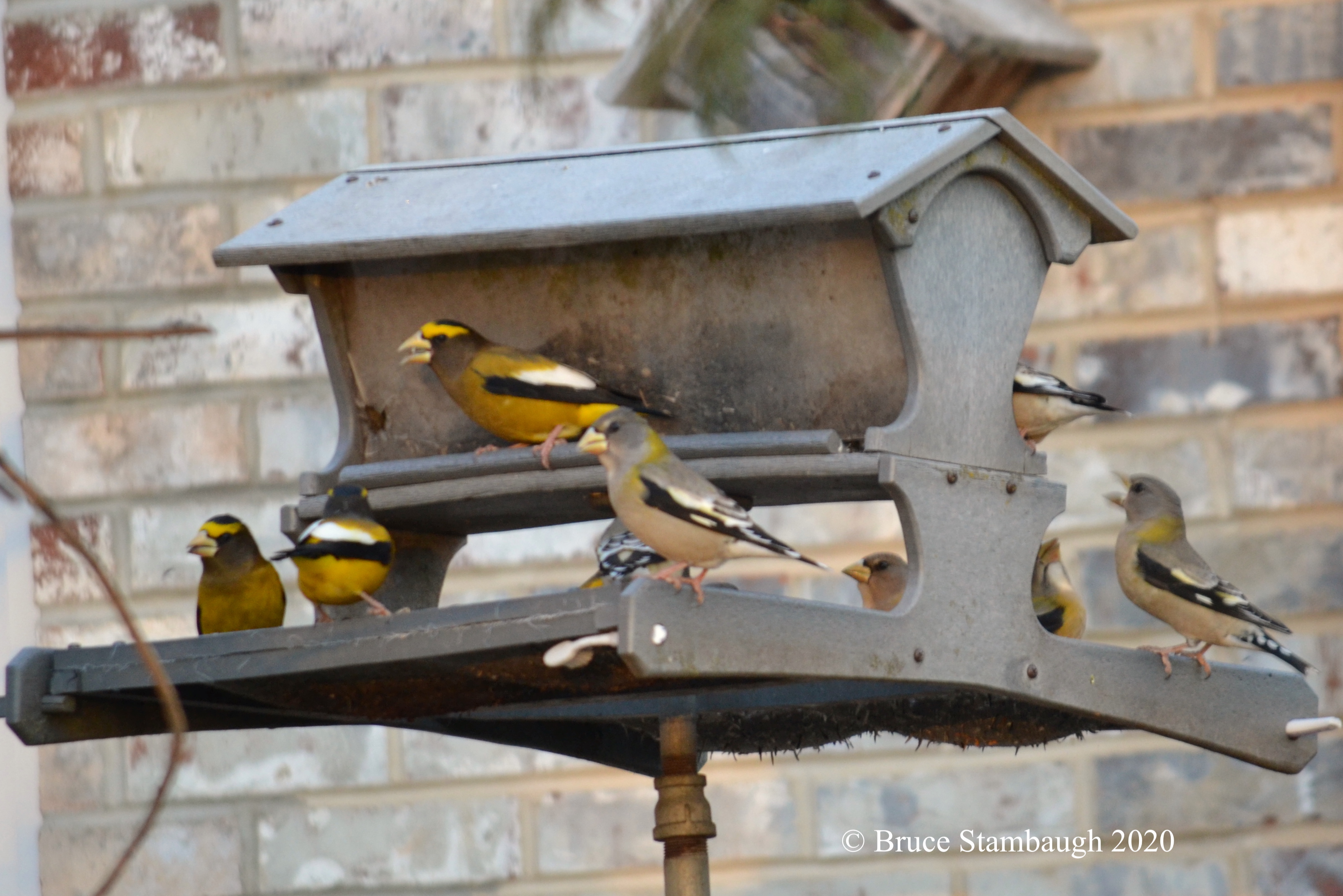
I had heard that flocks of Evening Grosbeaks were in the Rockingham Co., Virginia area. However, I could never discover where they were showing up on a regular basis. Then a friend from Ohio, where we used to live, sent me a text with a photo of Evening Grosbeaks that were regular visitors at her brother’s feeders. He lived a little more than 10 miles from our home.
I called and received persmission to photograph the birds. The home owner, also a birder, said the birds usually fed in the morning between 7 and 9. My wife and I arrived around 8 a.m., and I drove slowly up the farm’s long driveway. As soon as I reached the back of the house where the feeders were, about 30 Evening Grosbeaks flew to trees not far away. I lowered the van windows and waited for them to return.
And return they did! I had both of my cameras along, and I clicked away. I had seen Evening Grosbeaks before, but never this close or this many. Normally, Evening Grosbeaks don’t venture this far south in the winter. But during irruption years, they appear almost randomly at various locations in the east and midwest. It is thought that an irruption occurs when the hatch rate of birds is high, but their usual food supplies can’t match the demand. Other species, like Snow Owls, also appear in irruptions. The Evening Grosbeaks were feeding on black oil sunflower seeds.












 Roadkill Crossing
You must be logged in to post a comment.