At long last, summer has arrived

summer flowers, flower gardens
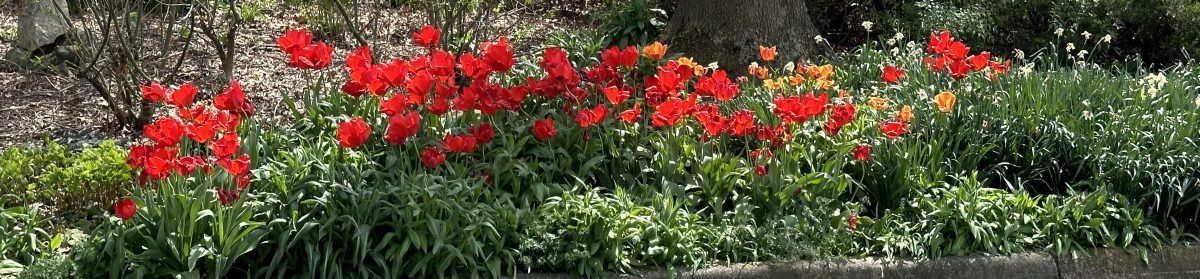
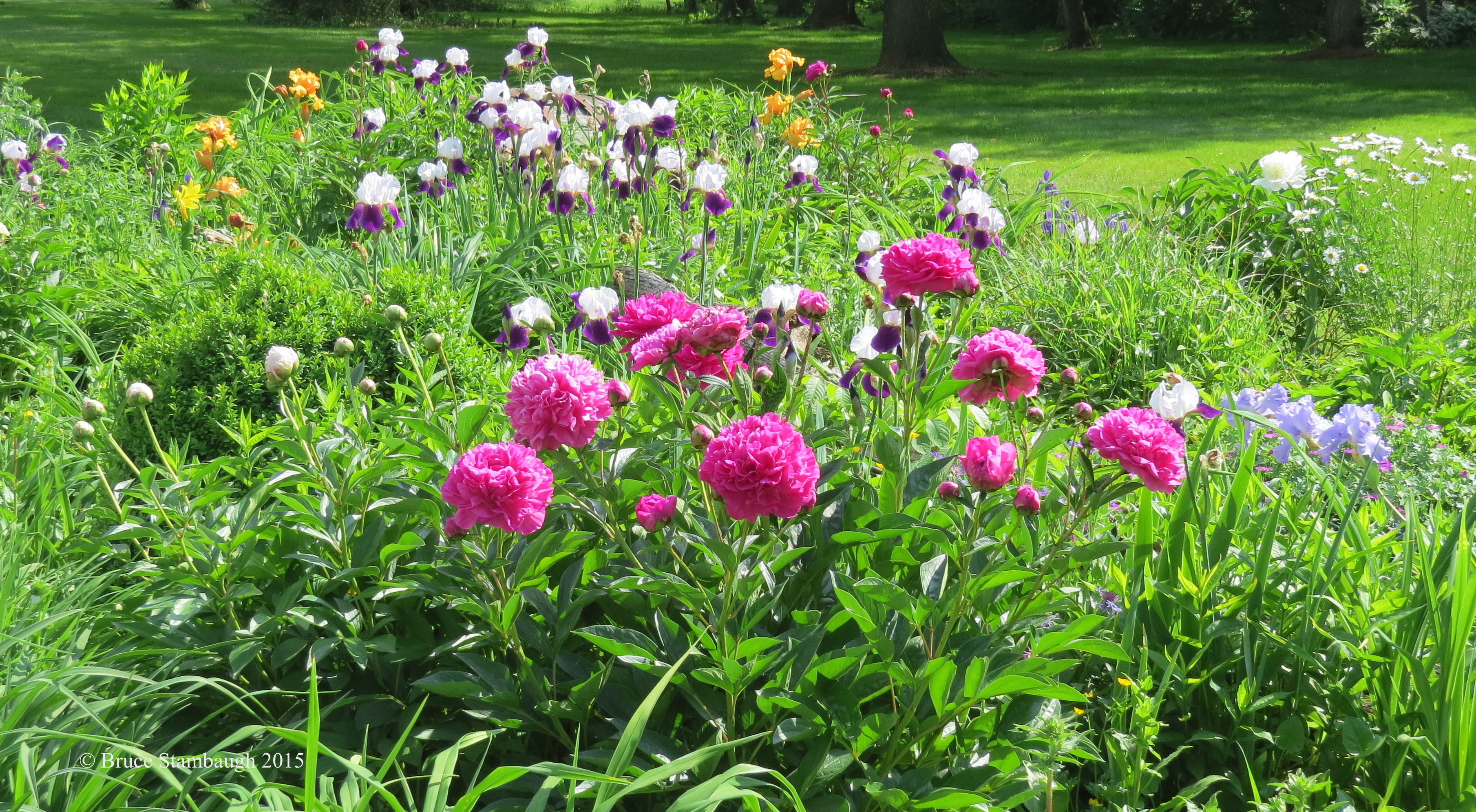
Early summer flowers. © Bruce Stambaugh 2015

By Bruce Stambaugh

Summertime. Isn’t that an absolutely gorgeous word? Let it roll off of our tongues and past our moist lips slowly, magnificently, joyfully.

Those of us who reside east of the Mississippi River and north of Disney World endured a long, hard, cold, snowy, record-setting winter. It’s truly a blessing to say that lovely word, summertime.

It’s not like we’ve earned summer either. We just have longed for the expected warmer, more pleasant weather, plus its immeasurable benefits.

Though the summer solstice doesn’t officially arrive until June 21, that’s become insignificant, even obsolete. Here in commercialized America, we’re accustomed to the definition of summer as the days between Memorial Day and Labor Day.

I know I am not the only one that is thankful that June is here. With apologies to Walt Whitman, I can indeed see and hear America singing. All I have to do is be attentive.

The early summer flowers, the irises, poppies, and petunias are or soon will be blooming. So are the weeds.
raking hay, Amish, making hay
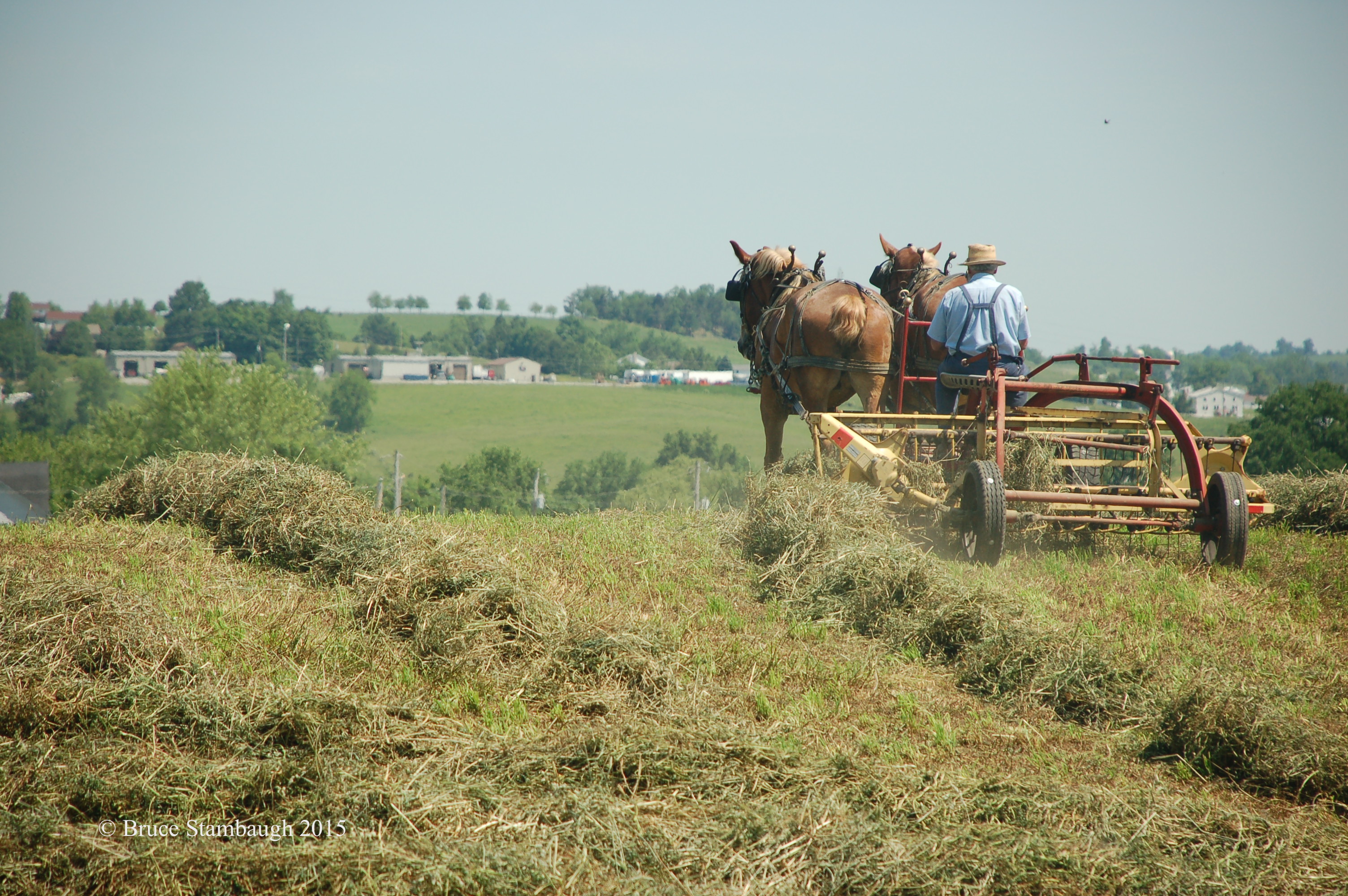
Making hay. © Bruce Stambaugh 2015
The days are not only longer when measured in daylight hours; they are warmer and more humid, too. That is the norm.

Of course as part of America has already experienced, we’ll likely have our share of hazardous weather. That, too, is within the season’s nomenclature.

The first cutting of hay, whether by horse and sickle or tractor and big round baler, has commenced. School years have ended, except for educational institutions that offer additional classes. They are appropriately called summer school.
Bobolink, song birds
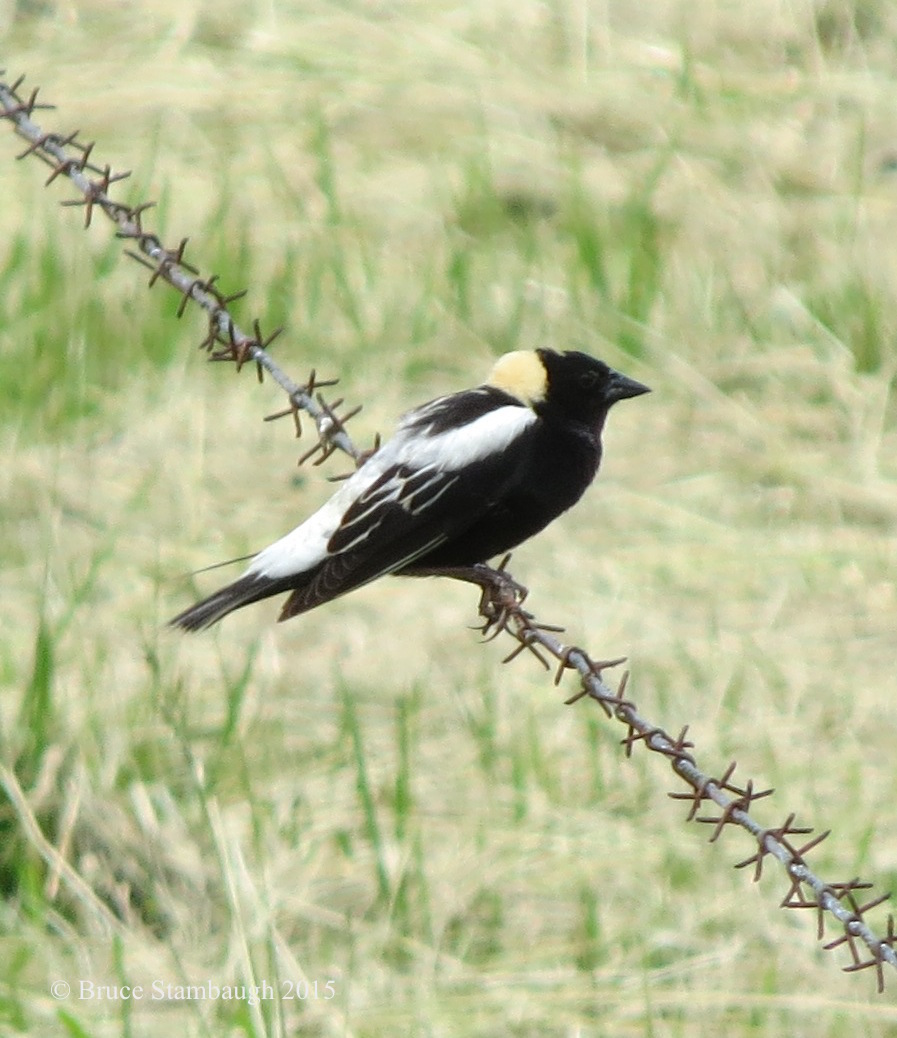
Male Bobolink. © Bruce Stambaugh 2015
We humanoids aren’t the only one’s happy about the transformation. The birds and the bees have gotten a head start on articulating their predestined survival behaviors. Shorebirds, songbirds, and yard birds will fledge their young, and begin a second brood if there is time.

Soon lightning bugs will be rising from fields and grasses, blinking under spacious, starry skies. It’s a scene of which I hope I never tire. If the grandkids visit, we’ll fill jars and watch the incredible insects glow, and then release them to do their thing, the bugs not the grandkids, that is.

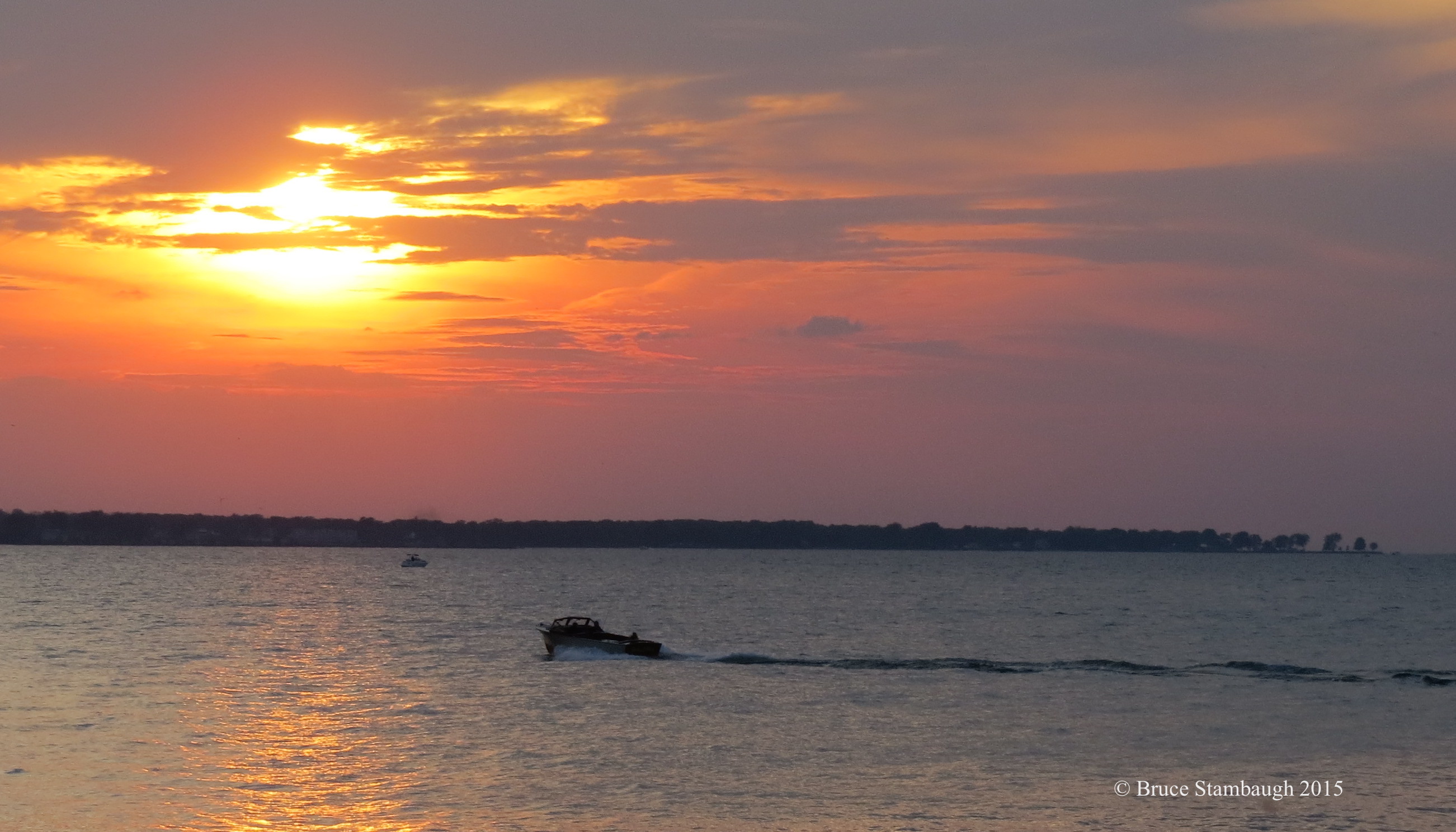
Boats big and small will cut temporary wounds into placid waters, which will heal themselves with no thought whatsoever by either the offender or the offended. The squeals of a toddler’s first catch of the year or the rich laughter of children diving into tepid water at dusk will confirm summer’s presence.
boat at sunset, wake
Slicing through. © Bruce Stambaugh 2015
Produce stands have already begun to present seasonal rewards. Patient diligence will yield even juicier, tasty results. I gladly anticipate fresh buttered beets, succulent heirloom tomatoes and savory, sweet mint tea, leaves right from the garden.

Long-delayed chores can finally be completed. Weathered house siding will be revived with fresh coats of brightness to complement immaculate gardens full of rainbows of color and busy insects and critters.

I’ll sit on my back porch on a luxurious summer’s Sunday evening and listen to the clip-clopping of the horses as they carry home families early and courting teens late. I can hear the latter coming from a half-mile away, boom boxes blaring.

Vacations will bring thousands of tourists to Ohio’s Amish country, where I live, to witness some of those native interactions. Wise locals will flee to beaches or mountains or solitude.

As I write, a framed placard on the wall of the summer home of a friend succinctly summed it up. “Miracles are as close as the heavens above and the blossoms beneath.”

Amen to that and a hardy welcome to all that summer has to offer.
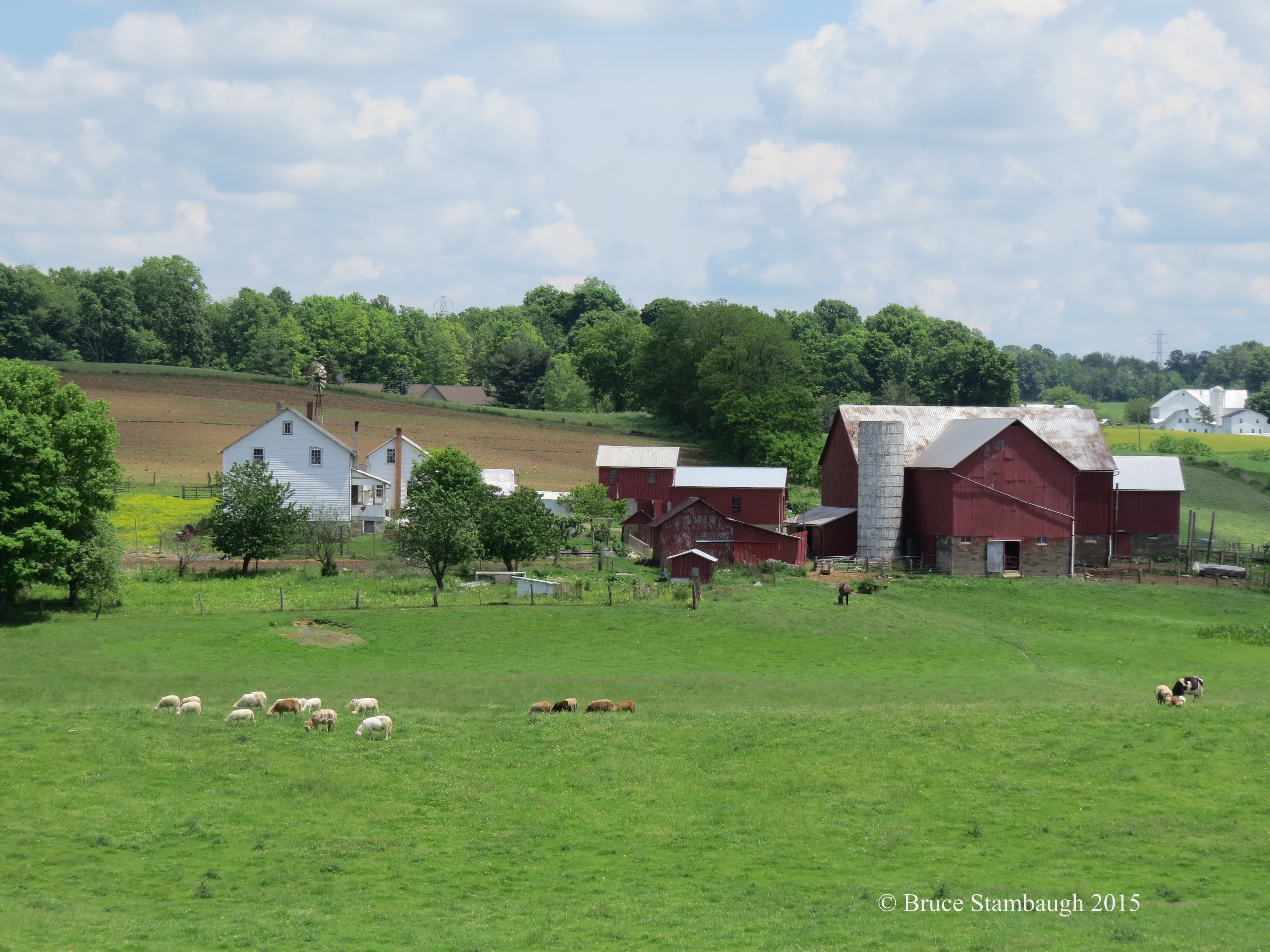
pastoral scene, Holmes County Ohio, sheep grazing
Pastoral scene. © Bruce Stambaugh 2015

© Bruce Stambaugh 2015

For birders, migration is like Christmas in springtime

Bay-breasted Warbler, migratiing birds, locating birds
Migrating warblers, like this Bay-breasted Warbler, are often easy to hear but hard to locate since they usually stay high in trees and are constantly on the move feeding. © Bruce Stambaugh 2015

By Bruce Stambaugh

Like children dreaming of Old St. Nick on Christmas Eve, this is the time of year birders have yearned for, longed for, relished.

For hardcore birders, spring migration is a Christmas morning that spans several weeks from mid-March to mid-May. Avid birders are especially on the alert now to find the many species they seek, and some they couldn’t even imagine.

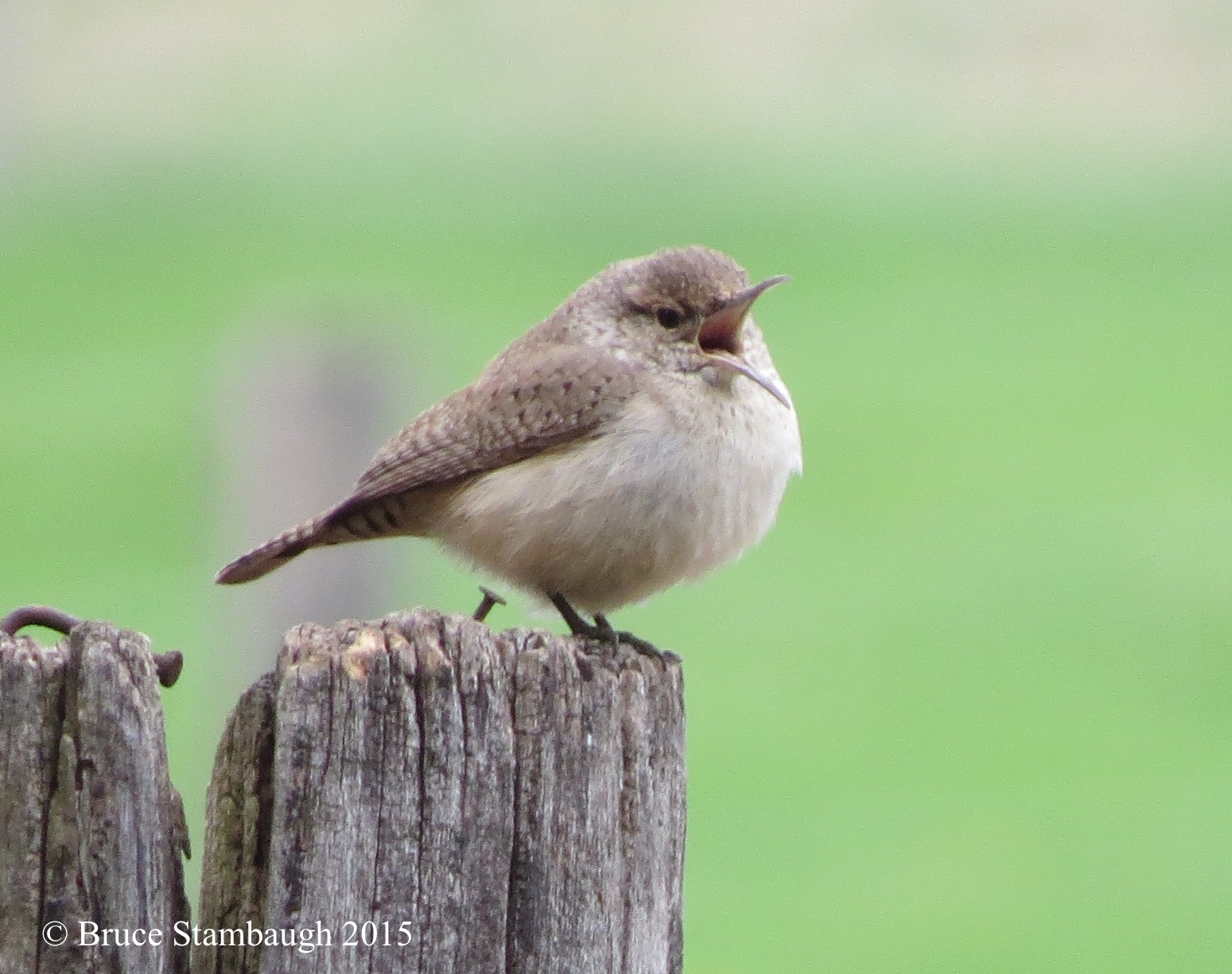
Rock Wren, rare birds, spring migration
Rock Wren. © Bruce Stambaugh 2015
When a rarity shows up like the Rock Wren did last spring, it’s a birding bonanza. The Rock Wren became a rock star. For several days, the bird from America’s southwest was a magnet, attracting folks from far and wide to Holmes County.

Such birds are the exception. The spring migratory norm is to view birds that either return here to nest or to catch a glimpse of those that are just passing through. Depending on the weather, the transients might stay a day or two, or just make a short pit stop to rest and refuel.

The challenge is to be at the right place at the right time to see and hear the birds.

For me, I’m just as happy to note the return of my backyard birds. The Chimney Swifts rattled the fireplace doors as they swooped into our chimney the evening of April 18, the same date as last year.

How do I know? Like most birders, I keep a list of when I see a species for the first time each year. In the birding world, that’s known as the FOY, first of year. For instance, the Red-headed Woodpecker was a day later than last year, arriving April 21.

This slideshow requires JavaScript.

Today’s birders use social networking sources to track the movement and appearance of the various species. That gives the flocks of birders a heads up on finding and photographing particular birds.

We are fortunate in Ohio to have one of the best locations in the country to observe and hear a wide variety of transitory and returning birds, especially warblers. This time of year both birds and birders pack Magee Marsh Wildlife Area.

A conservation group, the Black Swamp Bird Observatory, located at the entrance to Magee Marsh in northwest Ohio, sponsors “America’s Biggest Week in Birding.” In fact, it’s going on right now.

These folks welcome thousands of birders, amateur to professional, in hosting this attractive annual festival. Magee Marsh, a state park, is billed as “the warbler capital of the world.” Having been there on many occasions, I can attest to that.

Birders from around the world converge on Magee Marsh just to watch the warblers and shorebirds come and go. It’s not unusual to observe 20 or more kinds of warblers in just a few hours. Magee Marsh and the surrounding acreage are protected habitat that ensures safe harbor for migrating and nesting birds of all sizes, colors and species.

My first visit to Magee Marsh years ago was indeed like Christmas. A few steps onto the wooden boardwalk and I spotted a variety of colorful warblers decked out in their impressive breeding plumage. The brightly colored little birds looked like Christmas tree ornaments perched on low-hanging tree branches.

Where I live here in Ohio’s Amish country, we don’t necessarily have to drive that far to enjoy the migrating birds. The Killbuck Marsh Wildlife Area, the Holmes County Trail, The Wilderness Center, and the many ponds and lakes in our area provide excellent habitat for a variety of birds.

Or you can just step outside and watch and listen. You just might think it’s Christmas in springtime.

overlapping birds in spring migration
Winter and summer residents, like this White-crowned Sparrow, and male Rose-breasted Grosbeack, oftern overlap during spring migration. © Bruce Stambaugh 2015

© Bruce Stambaugh 2015

Angry sunset

sunset in Ohio's Amish country
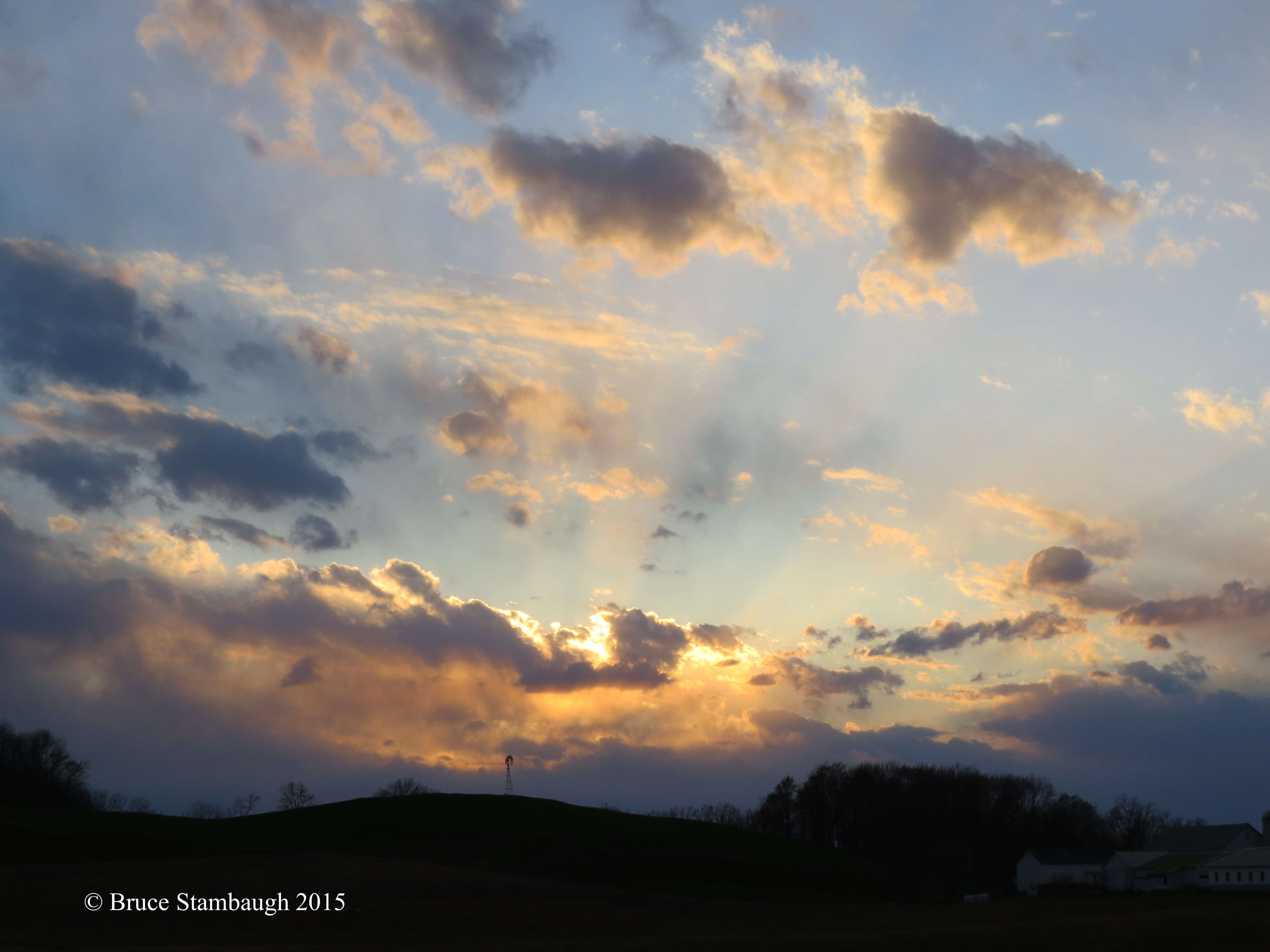
April sunset. © Bruce Stambaugh 2015

Each evening around sunset, I usually look out the kitchen window to the west to gauge whether the sunset will be colorful or not. After yet another of our cloudy, wet and chilly days here in Ohio’s Amish country, I wasn’t expecting much of a sunset. That was until I took a peek out the window. I grabbed my camera and captured this fast-moving cloud blocking the setting sun.

The deflected rays shooting up, the light and dark contrasts in the cloud made it almost appear to have an angry look about it. Throw in the hill, the windmill, and treeline, all nearly in silhouette, and the cloud seemed to radiate its own personality.

“Angry Sunset” is my Photo of the Week.

© Bruce Stambaugh 2015

The Grass is Greener

Amish country, horses,
The Grass is Greener. © Bruce Stambaugh 2015
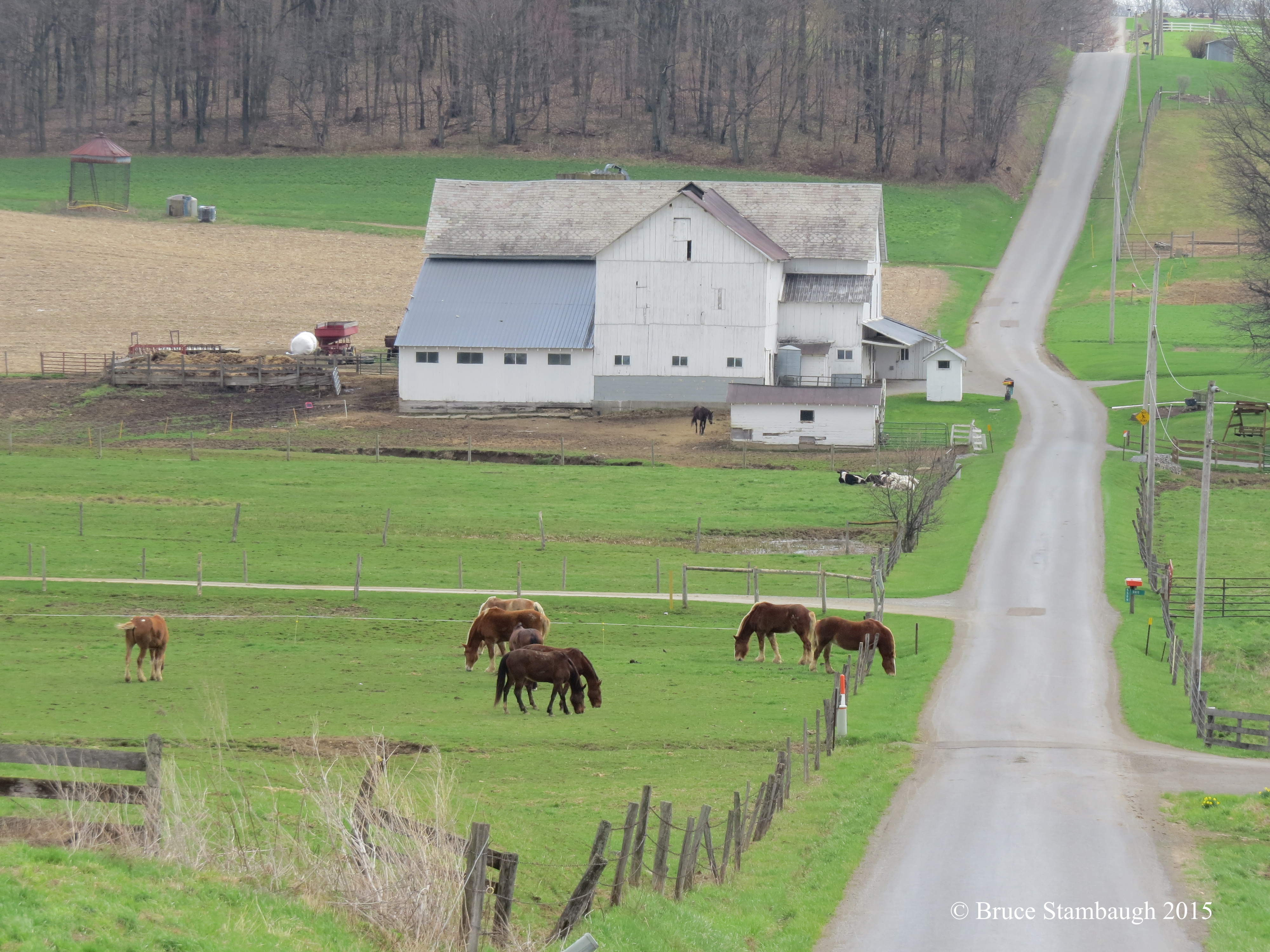
I am fortunate to live among the largest Amish population in the world. A photo opportunity is seemingly around every curve. On a recent nice day, I was out and about taking some photos of spring emerging. As I topped a small hill, I saw this pastoral scene and just happened to catch this horse reaching across the fence to munch the same lush grass it was standing on.

Apparently, the grass really is greener on the other side of the fence. “The Grass is Greener” is my photo of the week.

© Bruce Stambaugh 2015

Springtime fun

Amish children, fishing, pond
Springtime fun. © Bruce Stambaugh 2015

In photography, sometimes you get more than you realize when you snap the shutter. The afternoon sun playing on a charming farmstead caught my eye. When I exited the car to take the photo, I took that picture, and a few others. It wasn’t until I looked below me that I spied these Amish youngsters fishing. They were enjoying a rare, sunny and warm afternoon in Ohio’s Amish country. I marveled at the symmetry of the shot. The ruby-colored dresses of the girls mirrored that of the faded barn. Both girls were standing, fixing their poles. The two boys sat cross-legged, lines in the pond’s calm water, patiently waiting for a bite.

“Springtime fun” is my Photo of the Week.

© Bruce Stambaugh 2015

Warm Whispers

spring sunset, orange sunset
Warm Whispers. © Bruce Stambaugh 2015

At first glance, this photo appears to be a sunset somewhere in the western United States. In fact, I shot this sunset from my backyard in Holmes County, Ohio. From there, I have a clear view of the pastured hillside on our Amish neighbor’s farm. The windmill, bare trees and fencerow created a wonderful silhouette against the warm, whispery clouds of the multi-hued sunset.

“Warm Whispers” is my Photo of the Week.

© Bruce Stambaugh 2015

A stranger who quickly became a friend

Anna Ruby Falls, mountain man, hiker, friend
Our new friend, Gary. © Bruce Stambaugh 2015

By Bruce Stambaugh

My wife and I had already taken several photos of the beautiful double waterfalls in remote northeastern Georgia. We had no idea the Anna Ruby Falls were even there until a resident of nearby Helen, Georgia encouraged us to go see them.

Little did we know that we would discover more than gorgeous cascading mountain streams on our brief side trip into the highlands of the Chattahoochee National Forest. We encountered much more than natural beauty.

It was an easy but exhilarating walk on the paved path from the parking lot to the base of the roaring waterfalls. A pair of convergent streams formed Anna Ruby. Together Curtis and York Creeks thundered with the melt from a recent heavy snowfall.

As we turned to retreat down the half-mile path, a mountain man appeared on the eastern hillside. Amid the mature hardwoods, dormant laurels, and granite outcroppings, he gingerly descended the slippery path with his walking stick to the base of the falls.

The man had a long, full flowing beard, a partially buzzed head, tattoos, wore a hiker’s kilt, and lugged a loaded backpack. He also had a smile that wouldn’t quit. It was clear this man was serious about his hiking.

Though the day was cool, this middle-aged man was sweated from his strenuous trek across the countryside. He had found the falls more by accident than a destination. He had incorrect directions.

We introduced ourselves, and the friendship was on. Gary shook hands with us. I took his photo with his phone camera. Gary said I was the first person ever to offer to take his photo. I liked the guy already. When I heard the rest of the story, I liked him even more.

Gary had been in the military, was from northern Michigan, had a wife and four children, and served as a minister. He was on a personal quest to hike the Appalachian Trail, or AT as the pros refer to it.

And just like that, Gary was off to find the closest AT trailhead. On our way out to the main road, we spotted our new friend walking. We offered him a ride, and Gary gladly jumped in.

We were glad he had, too. It was six miles, mostly uphill, to where he needed to go. That gave us just enough time to get further acquainted. He lived in Michigan’s cherry country. We lived in Ohio’s Amish country.

As he exited our van, he pulled out a postcard addressed to his family back home and asked us if we would mail it. Why, of course, we would do that. We deposited it at the next post office we came to miles down the mountain.

Imagine our surprise when a few days later Gary’s lovely wife, Nicole, called to thank us for helping her wonderful husband, and for mailing the card. I had given Gary my business card, which is how Nicole got my number.

Nicole asked for our address. Gary wanted to send us something for helping him. I told her that wasn’t necessary, but I complied with her request nonetheless.

A few days later a weighty little box arrived in the mail. I couldn’t wait to open it. Chocolate covered cherries, cherry jam and other cherry goodies filled the gift box. It was quite the surprise.

I’m glad we didn’t hesitate to give Gary a ride that day. I think the friendship will last longer than the chocolate covered cherries did.

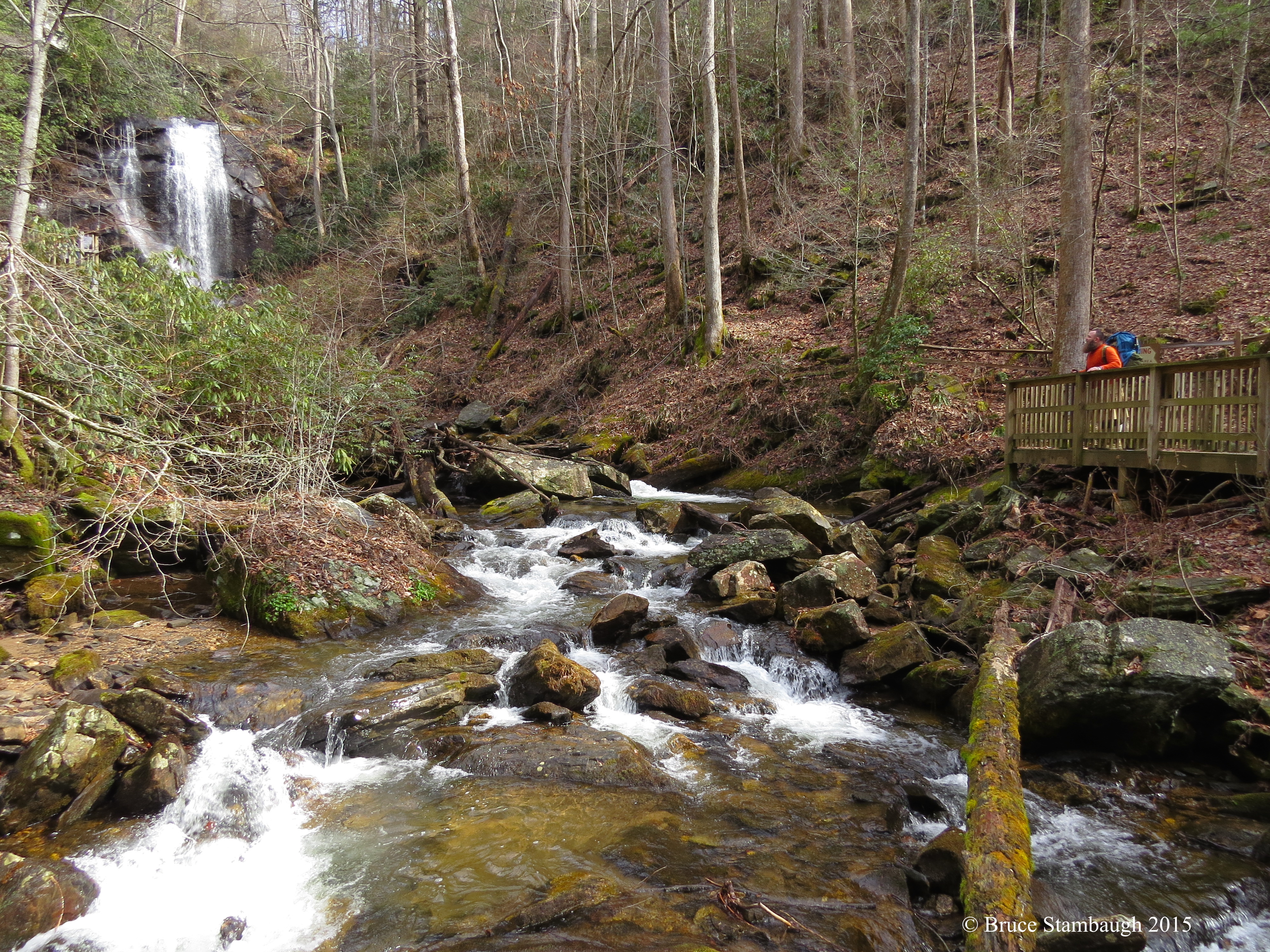
Anna Ruby Falls
Gary viewing the falls. © Bruce Stambaugh 2015

© Bruce Stambaugh 2015

Sadness fills a beautiful, peaceful valley

Rock Doves, pigeons, barn roof
Pigeons roost atop Ivan’s barn. © Bruce Stambaugh 2015
By Bruce Stambaugh

Sadness has come to my favorite valley.

Now, there are plenty of beautiful valleys in our area. For me to say I have a favorite sounds a bit selfish. It’s not. It’s personal.

To be sure, I don’t own the undulating acreage. I just enjoy it.

You can’t find a name for my favored hollow on any map. I’ve never heard anyone refer to it by name in the three decades my wife and I have lived here.

Amish school, one-room school, Drushel Knoll School
Drushel Knoll School. © Bruce Stambaugh 2015
An Amish one-room school, Drushel Knoll, might come the closest to naming this wide-open expanse of land surrounded by wooded hills. Drushel was a pioneer landowner where the school sits. The knoll is nothing more than a rise in a sweeping pasture.

To call it a valley might even be a stretch. A quiet brook lazily meanders northwest through this productive, fertile ground. For the longest time, the land was all farmland. Farmsteads dotted hill and dale. More recently, a few residences have also popped up along the skinny township road that rises, falls and rises again east and west.

This is the sacred place where I take my physical and mental exercises. When the weather is decent, I love to walk this humble road over to Ivan’s farm.

Amish school children, scholars walking
Students walk to the Amish school in the valley. © Bruce Stambaugh 2015

I will continue to do so, but Ivan will no longer be there. As he fixed his lunch bucket for work one recent morning, he collapsed and was gone. He was only 65.

Ivan would bicycle by our home on the way to and from his job at a local business we can see from our home. Not long ago, he had turned the hard but satisfying task of farming over to his energetic son, whose wife was one of my former students.

As my wife and I entered the farm building where Ivan’s body lay at rest, friends and warm handshakes greeted us. We paid our last respects to this quiet, hard-working man, husband, father, grandfather, brother, friend.

Tears flowed as we bent to share our condolences with Ivan’s widow and family. In the Amish tradition, family members sit in rows of facing chairs as mourners quietly pass through, shaking hands left and right, nodding heads, sharing moments, memories, and sorrowful tears.

summer sunset, Ohio's Amish country
The pond behind Ivan’s barn reflected a beautiful summer sunset. © Bruce Stambaugh 2015
Wife, children, grandchildren, brothers, sisters, aunts, uncles, cousins, neighbors, friends, all expressed grace in the Amish manner, through their quiet, reverent presence. It was a communion of sorts, tears for wine, a gathering of steadfast people its bread.

I marveled at the strength of the family, their genuine kindness and positive comments even in the face of their grievous loss. As I scanned the forlorn faces, I saw folks I had not seen for years. Our spirits mutually embraced without actually hugging one another.

When you live in a rural community for decades, you take for granted the integral connections of one family to another. Being among those assembled mourners, the closeness and goodness of our common kinship washed over me.

Ivan was a good man, a quiet man, a respected man, a man of peace. To a member, his family mirrors his pleasant disposition.

It seemed impossible that such sadness could hover over this lovely setting, home, family. And yet, it did. It does.

A different kind of beauty flooded my favorite valley. The loving grace of community responding to a stricken, grieving family surpassed that of the basin’s enchanting pastoral physical features.

Even in death’s darkness, the light radiated in my beloved valley.

Amish farm, walking
My grandsons check out birds on the fence and phone line on a summer’s morning walk. Ivan’s farm is in the background. © Bruce Stambaugh 2015

© Bruce Stambaugh 2015

Wash day

Amish, laundry line, wash line, wash day, Holmes County Ohio
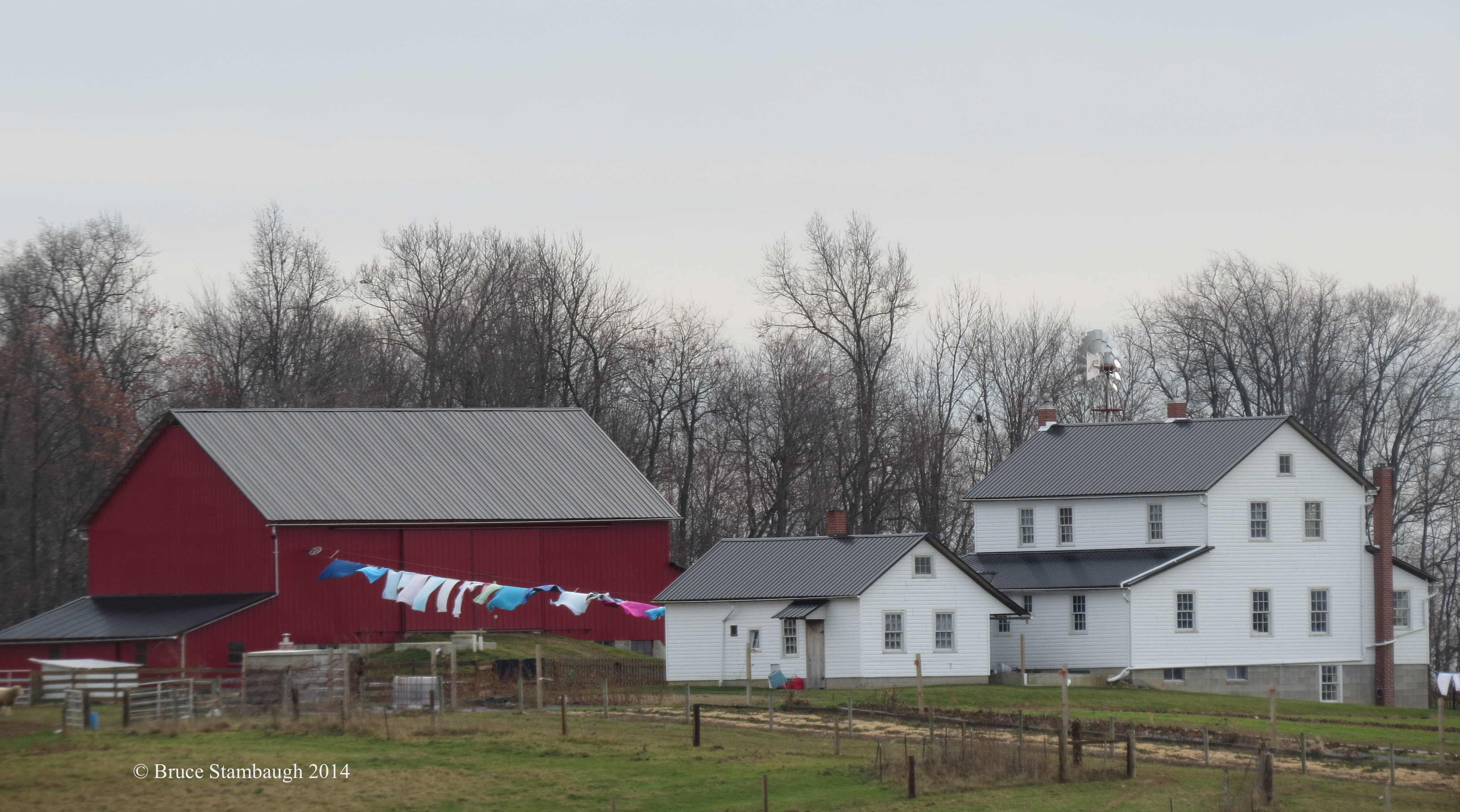
Wash day. © Bruce Stambaugh 2014

No matter the season or the weather, Monday is laundry day in Ohio’s Amish country. That’s a given, since the Amish take seriously the scriptural admonition to do no work on the Sabbath. Other than necessary farm chores, the Amish do not “work” on Sunday. Consequently, it’s normal to see freshly washed clothes flapping on a laundry line every Monday. Given the size of their families, averaging about five children, laundry is done other days as well. But you can always count on seeing laundry lines on Monday all around Amish country.

As is evident in this photo, the Amish have become quite adept at stringing the wash so that it does not interfere with children, animals and implements can move freely around the yard. In this case, a sturdy line was affixed to a pulley high on the barn siding. The line connects to a similar pulley on the wall of the outbuilding. This makes it very convenient to hang the laundry without having to endure the wintry elements of a typical northeast Ohio winter. The pulley moves so that clothes are hung one garment at a time.

The pastel pieces of laundry really stand out against the solid red background of the barn. “Wash day” is my Photo of the Week.

© Bruce Stambaugh 2014.

Pair of Pileateds

Pileated Woodpeckers, Bruce Stambaugh, birding,
Pair of Pileateds. © Bruce Stambaugh 2014.

When I hear that distinctive, penetrating squawk outside, I usually grab my camera and head to a window at the rear of our home in Ohio’s Amish country. A Pileated Woodpecker, or maybe two, is brashly announcing its arrival. As a birder, I have been fortunate to have Ohio’s largest woodpeckers coming to the feeder regularly year-round. They especially frequent the feeder in the summer when the parents bring a juvenile to the peanut butter suet feeder that hangs from the backyard sugar maple tree.

I have had all three birds near the feeder at the same time, but never on the feeder simultaneously. As you can see, I can no longer say that.

When I glanced out a window recently after hearing that call, I was pleasantly surprised to see both the male and the female on the feeder opposite one another. Even as an average birder, I knew this was a very rare event. Most birders long to even see a Pileated Woodpecker, much less have them as a yard bird. Pileateds are normally shy birds that keep to the deep woods. Why this pair feels safe in visiting my backyard, I don’t know. I’m just glad they do. I know I was extremely fortunate to have both the male and the female together in the same photo.

“Pair of Pileateds” is my photo of the week.

© Bruce Stambaugh 2014

Bay Photos by Donna

Wildlife photos from the Chesapeake Bay region

ROAD TO NARA

Culture and Communities at the Heart Of India

K Hertzler Art

Artist and nature journalist in the Shenandoah Valley of Virginia.

Maria Vincent Robinson

Photographer Of Life and moments

Gabriele Romano

Personal Blog

Jennifer Murch

Art is the only way to run away without leaving home. -Twyla Tharp

Roadkill Crossing

Writing generated from the rural life

ANJOLI ROY

writer. teacher. podcast cohost.

Casa Alterna

El amor cruza fronteras / Love crosses borders