An Encounter With a Homeless Man

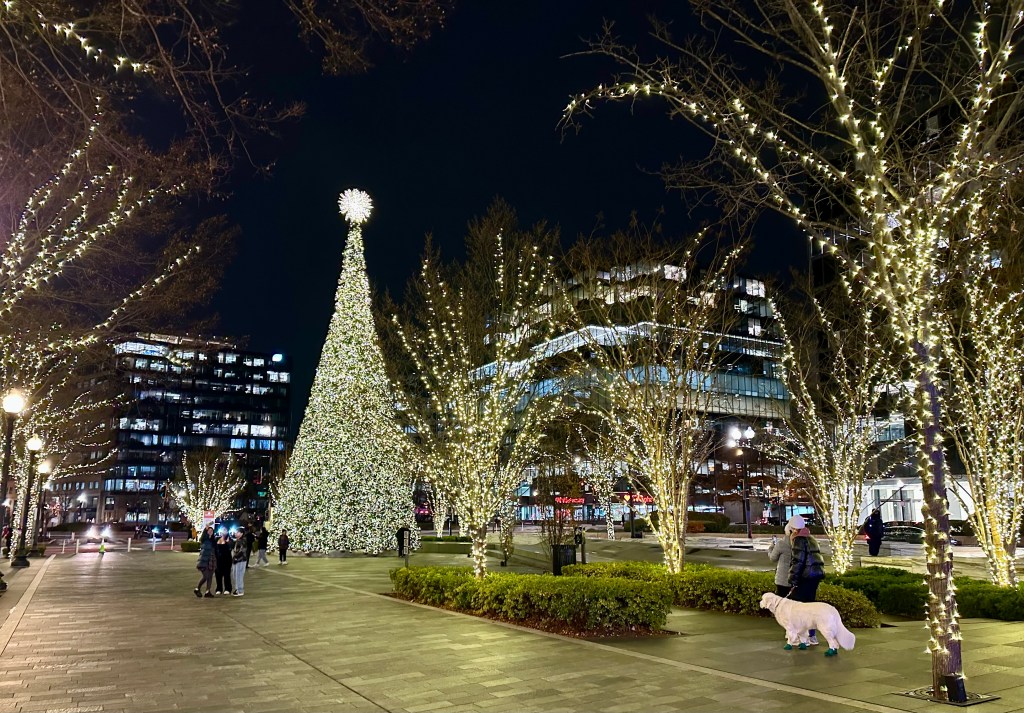
The Park at CityCenter, Washington, D.C. Photo by Bruce Stambaugh

The man sat on the little padded bench in the entrance to the cafe where my family and I had lunch. He was one of dozens of homeless people we had seen during our extended holiday weekend gathering in Washington, D.C.

He sat there silently, bent over from age, the biting cold, and the exhaustion of living on the streets. His hair, scraggly full beard, and disheveled clothes told that tale. I kept glancing at this poor fellow as we waited in line to order.

Our family has established a tradition of meeting in our nation’s capital for the holidays. Our son, his wife, and their toddler son fly in from Upstate New York while our daughter, her family, my wife, and I each drive the two hours to Washington, D.C.

It’s a joyous time together, especially since we see our youngest grandson infrequently. We gather at a hotel and plan out our long weekend together. We try to accommodate everyone in the places we visit and activities we do.

If weather permits, we like to walk to our destinations. If it’s too far or too cold, we ride the Metro.

As we walk, I enjoy observing the people we pass. Everyone always seems to be in a rush, hurriedly stepping along. Several are on their phones, perhaps chatting with spouses, friends, or coworkers.

Others use earbuds to tune out the sounds of the city, the sirens, and the traffic, listening to music, news, or podcasts. Their desire is escape, and they avoid any personal interaction with others.

Then there are the many homeless people, some squatting on cold sidewalks, begging for any amount of money. Some held hand-made signs that were hard to read, scratched onto any piece of cardboard they could find. I seldom saw passersby drop even coins into their containers.

I usually stroll right by them without any acknowledgment that they exist. I do, however, tend to look at them, and most of them notice, hoping I’ll stop with a dollar or two. I prejudicially rationalize that I don’t know what they’ll do with the money.

Still, I don’t feel good about not helping, but there are so many. I can’t help them all. My guilt fades as I walk farther away until I encounter the next one and the next.

Now, here was this lone man. He and I were in the same space. How could I help him? Was this my chance to make a fleeting, spontaneous, compassionate gesture?

My son nudged me back into the moment. I ordered a cup of soup for my wife and a bowl for myself, took my number to our table, and waited for the food. I poured two cups of water from the jug’s spigot near our table. While we waited, I told my wife about the man in the doorway.

The soups soon arrived with a bonus I didn’t expect. A delectable-looking roll accompanied our steaming soups. As soon as I saw that tantalizing butter-glaze, brown-crusted dinner roll, I thought of the man. My innate empathy kicked in.

I hoped he was still there. I grabbed the roll on its napkin and hurried to the entrance across the black-and-white checkered tile floor. I fixed my eyes on the door.

There he still sat, frozen in the same hunched position. Only this time, I indeed saw him for the human he was. His left pant leg hung loose and empty, and a metal crutch slung over what remained of his left thigh. That new insight had me wondering even more about this man. How did he lose the leg? Was he in Vietnam?

I bent down and eased the roll forward into his blank stare. He looked up, and we locked eyes.

“Do you want some food?” I asked.

“Are you sure?” he queried, his voice quivering. Surprised at this response, I merely nodded my head in affirmation.

The man reached out and took the offering with his right hand. He immediately extended his left hand with a $5 bill threaded through his grimy fingers. I surmised someone had recently given him the currency without considering that the money might be his. Plus, he could have purchased more than a roll for that amount.

Stunned, I waved off his humble offer, backed away, and retreated to my table without asking him if he needed anything else. I didn’t even ask his name.

Giving up the roll was not a great sacrifice. Since I am gluten-intolerant, I couldn’t eat it anyway, so it was a small act of kindness, nothing more. Empath that I am, I would have given him the roll even if I could eat gluten.

Still, I felt unsettled for not engaging with him more. I also wished I had offered the man something to drink, even a tiny glass of the cool, clear water.

Only then would our fleeting communion have been complete.

© Bruce Stambaugh 2025

September’s First Week in Photos

The first week of September brought a variety of photographic opportunities and emotions. I’ll let the week’s activities play out in the photos and captions.

My wife and I spotted this hot air balloon sailing over our neighborhood on our regular morning walk. Photo by Bruce Stambaugh
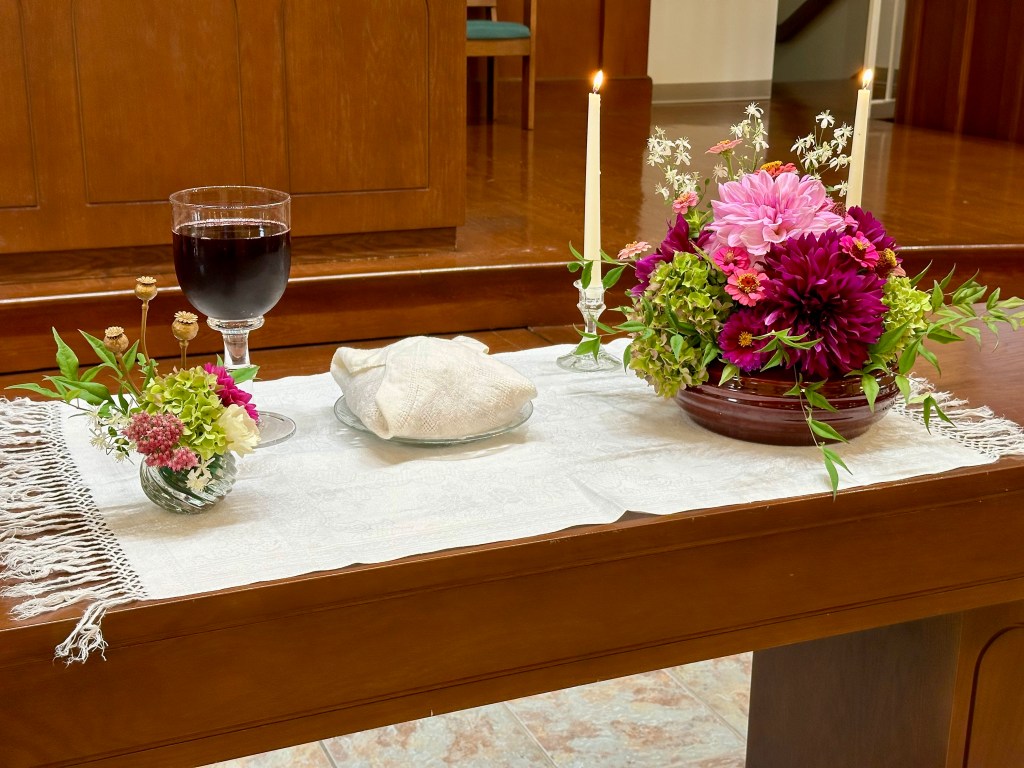
We celebrated communion at church. Photo by Bruce Stambaugh
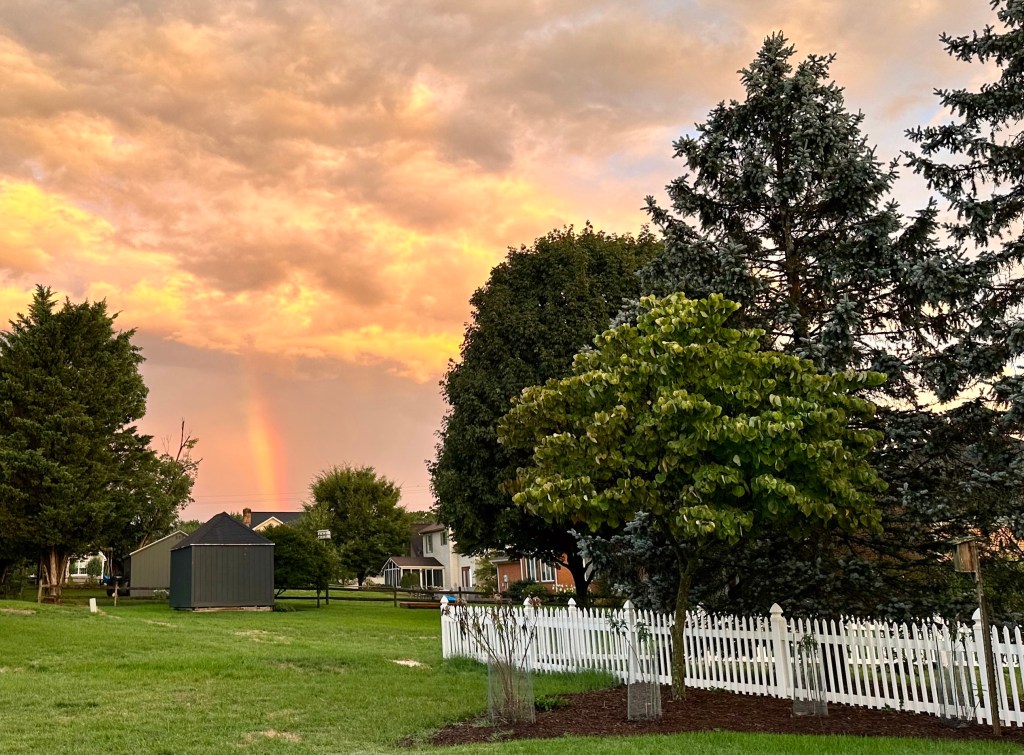
A storm front brought much-needed rain Sunday evening, leaving a rainbow spawned by the setting sun’s rays. Photo by Bruce Stambaugh
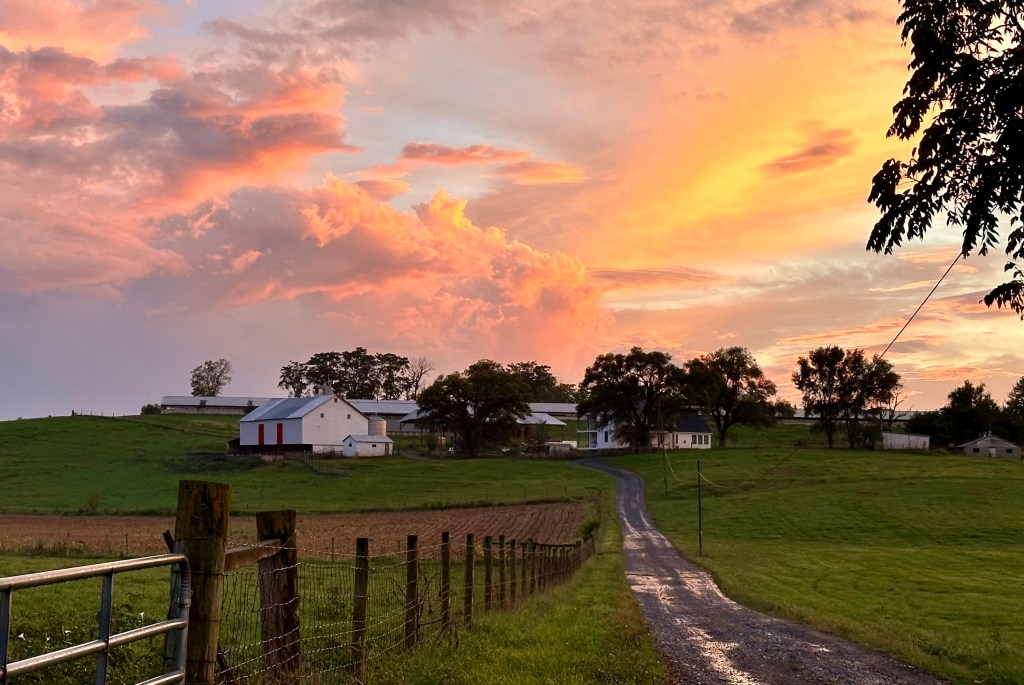
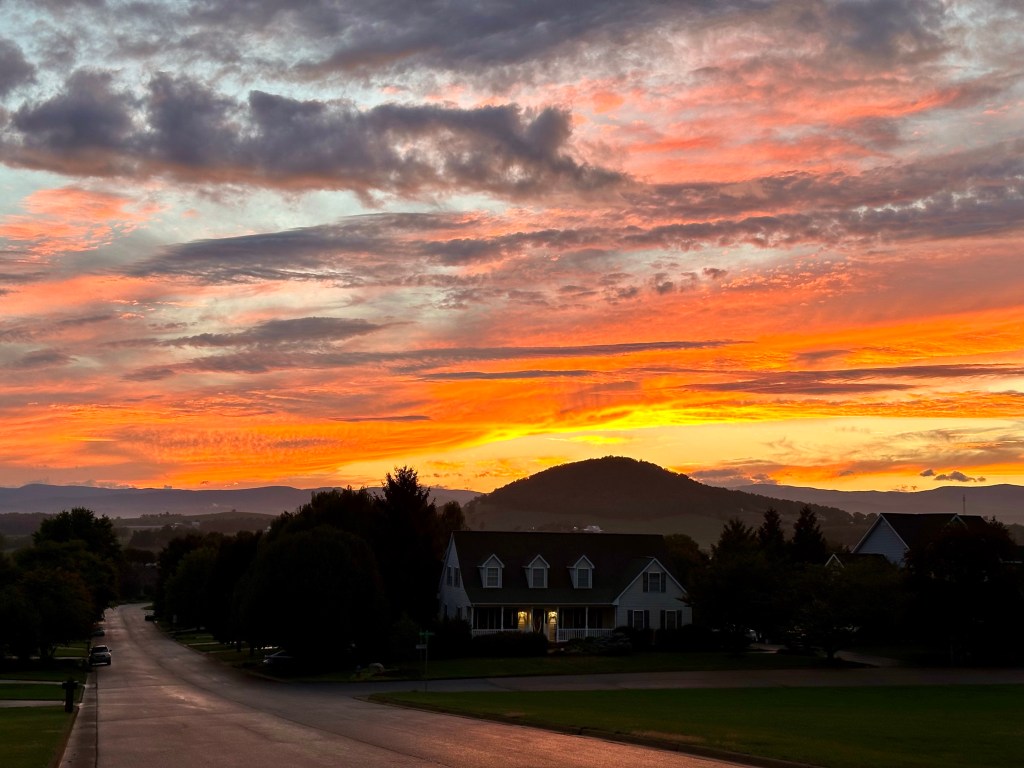
Sunday’s sunset exploded with a multitude of texts and colors. This photo was taken on Sunny Slope Farm. Photo by Bruce Stambaugh
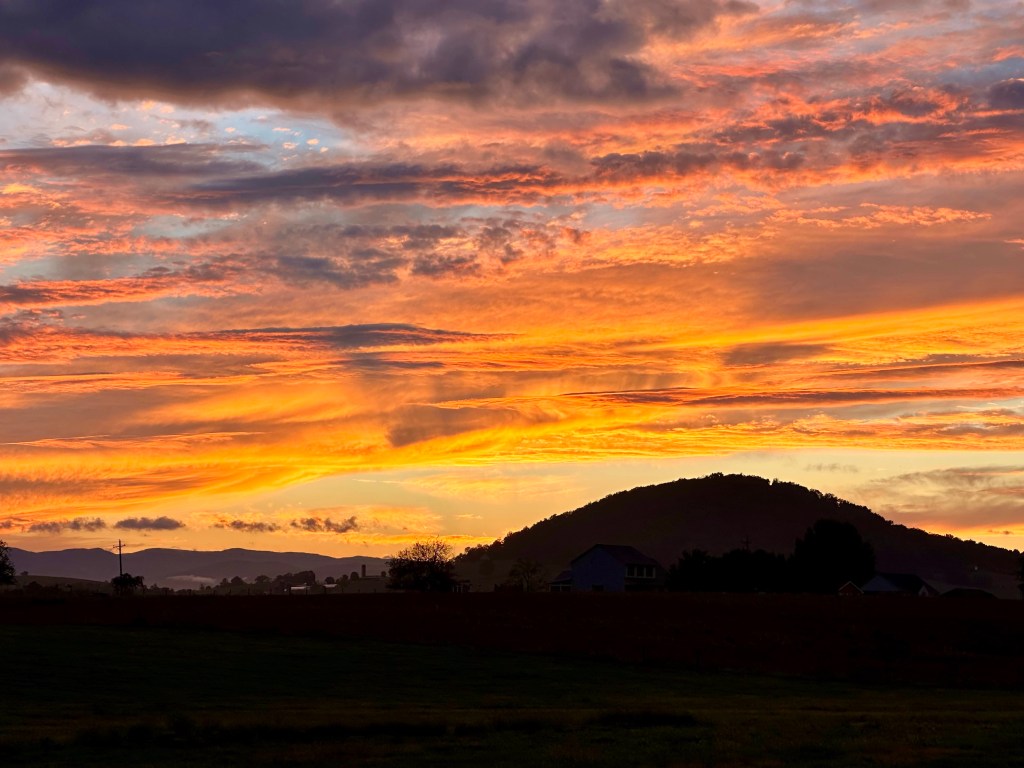
Mole Hill, an extinct volcanic core, always makes an excellent foreground for the sunset over the Allegheny Mountains. Photo by Bruce Stambaugh
Fog rose from the Dry River in western Rockingham County that Sunday evening while grays and mauves dominated the southwestern sky. Photo by Bruce Stambaugh
The sky’s drama continued as I drove home on September 1. Photo by Bruce Stambaugh
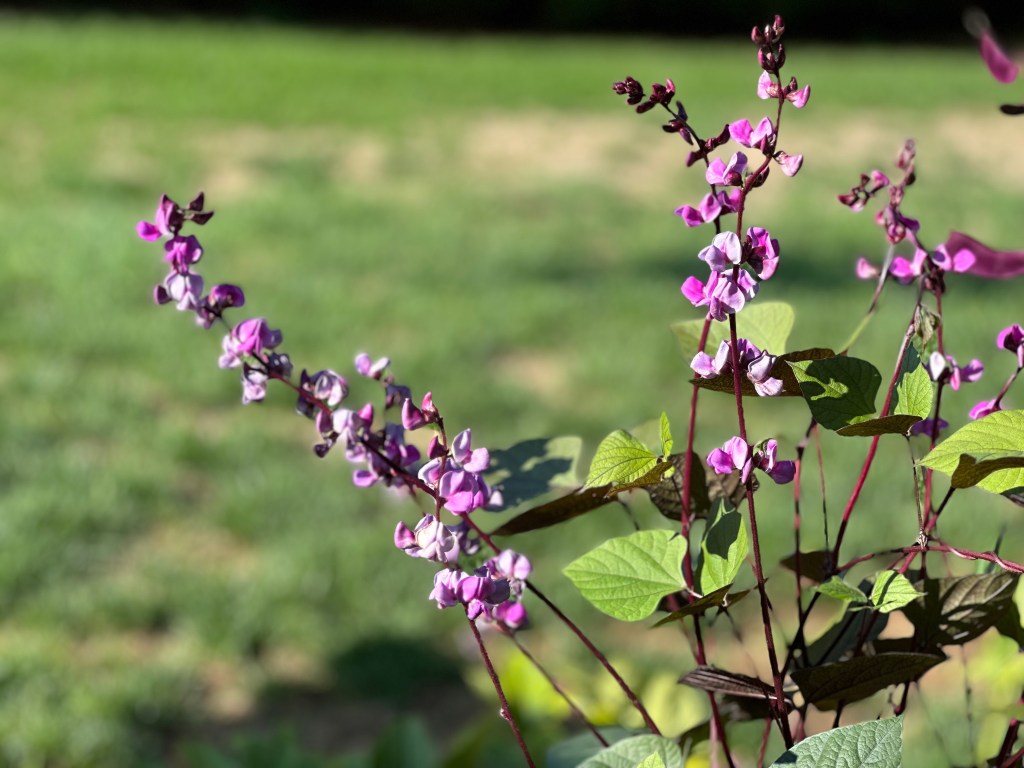
The backyard Hyacinth bean plant was in full bloom in the morning sunshine on September 3. Photo by Bruce Stambaugh
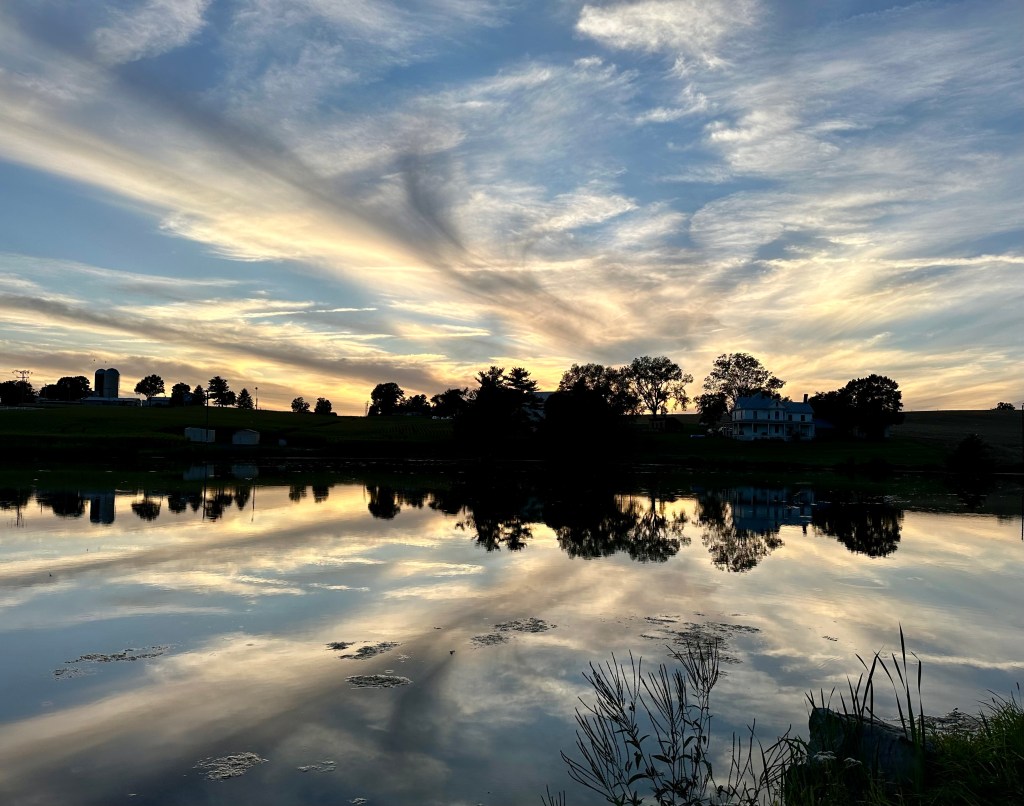
Evening clouds splayed over Silver Lake near Dayton, Virginia, on September 3.
Photo by Bruce Stambaugh
The evening’s thin cirrus clouds made it seem like old Mole Hill was erupting.
Photo by Bruce Stambaugh
On the west side of Mole Hill, the soft sunset seemed to emmite striated clouds.
Photo by Bruce Stambaugh
As I watered our thirsty flowers, shrubs, and trees the following evening, I spotted a Black Swallowtail caterpillar. Photo by Bruce Stambaugh
I attended an excellent lecture and gallery preview by photojournalist and filmmaker Morgan Heim at Eastern Mennonite University on Friday morning. Photo by Bruce Stambaugh
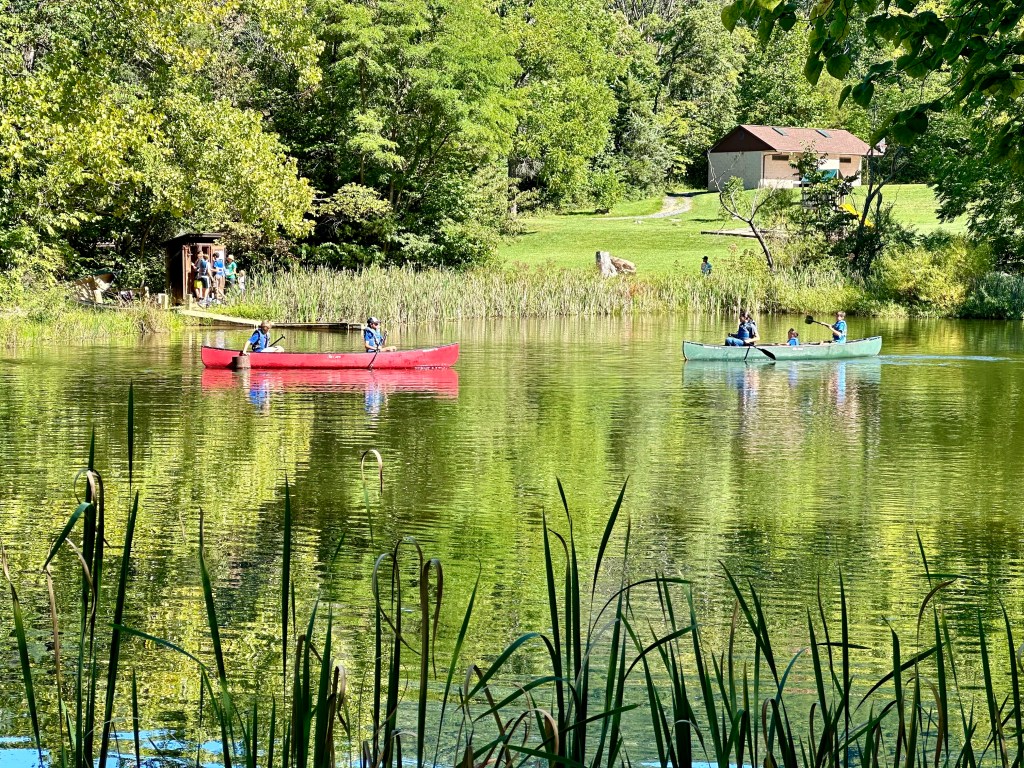
We ended the week by attending our church’s annual retreat at a camp at the base of Massanutten Mountain northeast of Harrisonburg. Photo by Bruce Stambaugh

© Bruce Stambaugh 2024

Saying both thank you and goodbye

trees in blossom, spring in Ohio
Goodbye blooms.

By Bruce Stambaugh

In a couple of days, the moving truck will arrive. Men I’ve never met will pack our selected belongings into the straight bed of a box truck. A couple of days later, they’ll reverse the process, and we’ll begin life anew in our new home in Virginia.

I have looked forward to this event. I have dreaded this event. I am excited to be close to our daughter and her family. I’m sad that we’ll be six hours away from our son and other family members along with a lengthy list of lifetime friends.

That’s the dichotomy of uprooting yourself after spending all of your quality years in one geographic location. A time to dance and a time to refrain from dancing as the scripture goes.

We recognized that this major decision came with both good and bad consequences. We will spend time with our grandchildren, watch them grow from adolescence into young adults, the good Lord willing.

We’ll also help out our daughter and her husband with their hectic work and household agenda. The grandkids’ and their parent’s schedules aren’t mutually exclusive of course.

We recognize, too, the friends, neighbors, and family we leave behind, the relationships that will forever change by not being able to commune together regularly. We will dearly miss that.

We have lots of folks to thank for their faithful support for us as we worked in the local public schools and the various community service endeavors in which we participated. We know we gained far more than we were able to give.

This slideshow requires JavaScript.

Church, school, fire department and rescue squad, township, thrift store, friendships, neighborhood and family activities and gatherings all pieced together the crazy quilt that formed our active lives. We can never repay them all for the kindness, patience, acceptance, and including us in their lives.

We anticipate this transplanting will take some time for our roots to take hold in our new community endeavors. Virginia friends and new acquaintances have already begun to make us feel welcomed, and we haven’t even moved yet. That’s southern hospitality for you.

I’ll continue to write and share what I encounter as we settle in, explore our new surroundings, meet new folks, and experience all that is in store for us. My words just may develop a southern accent.

Friends and family have given us an extended send-off. These last few days have been bittersweet. We have been showered with hugs and kisses, tears and celebratory well-wishes. The fellowship we have experienced added spice to the already delicious meals we’ve shared with dear friends and relatives. Close neighbors even held a carry-in and gave us an unexpected monetary gift as goodbye presents.

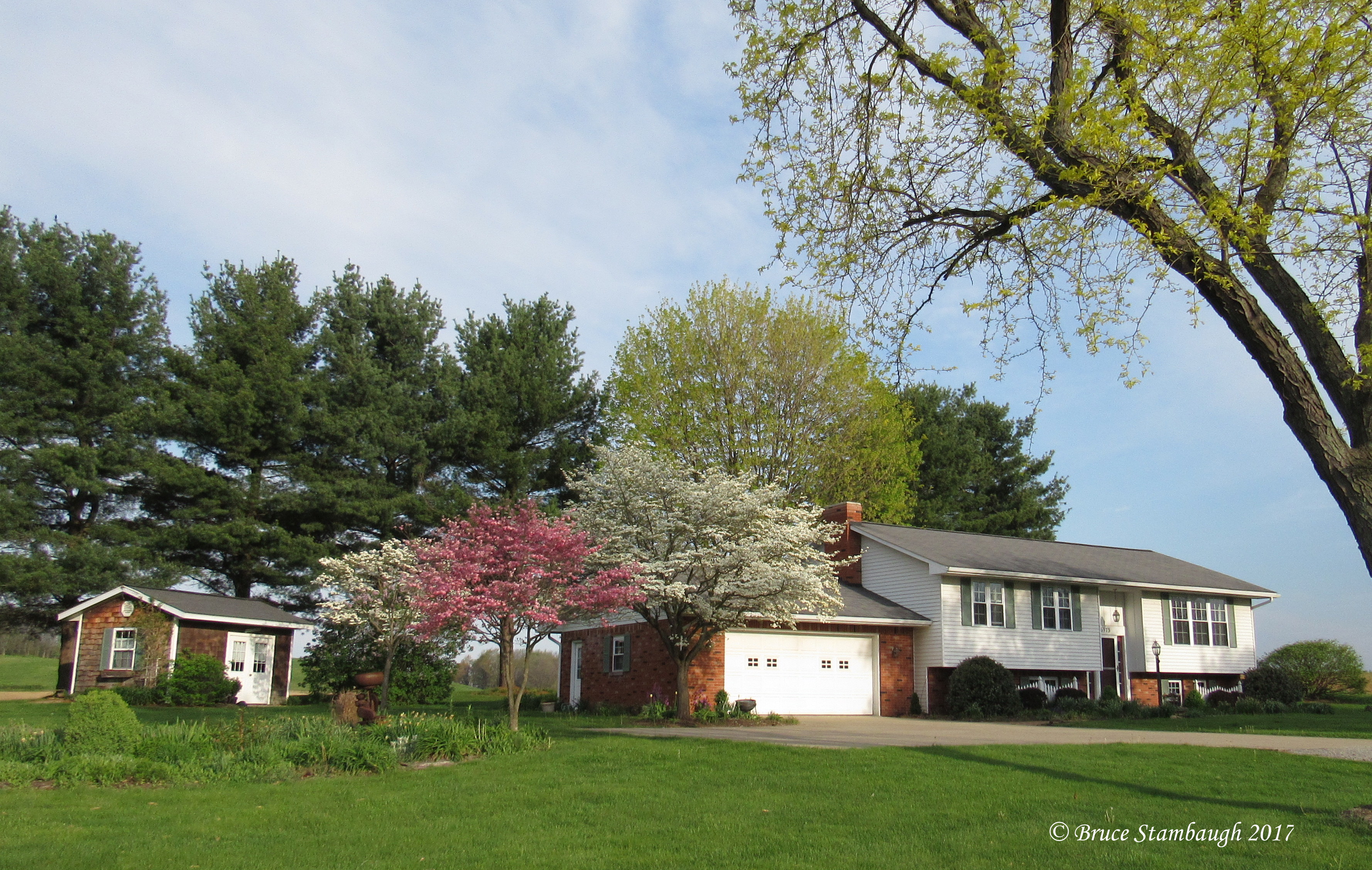
Even the vegetation around our house blossomed a flowery finale for us. The flowering trees, shrubs, and plants bloomed the best and brightest that they have in our 38 years of living here. As the daffodils faded, the dogwoods and lilacs burst with vibrancy. Their fragrances were intoxicating. It was as if they had conspired to ensure us a very colorful goodbye.

The backyard birds joined the party, too. The Red-headed Woodpecker, White-crowned and White-throated Sparrows, the Pileated Woodpeckers, and even the resident Bald Eagles took turns bidding us an avian adieu.

Thanks to each one of you for all of your help along the way, and for your blessings as we begin this next phase of our lives. I’ll say goodbye, but not farewell. That has too much of a final ring to it.

I’ll see ya’ll later.

blooming dogwoods
Colorful sendoff.

© Bruce Stambaugh 2017

A commitment to community

fullyinvolvedbybrucestambaugh
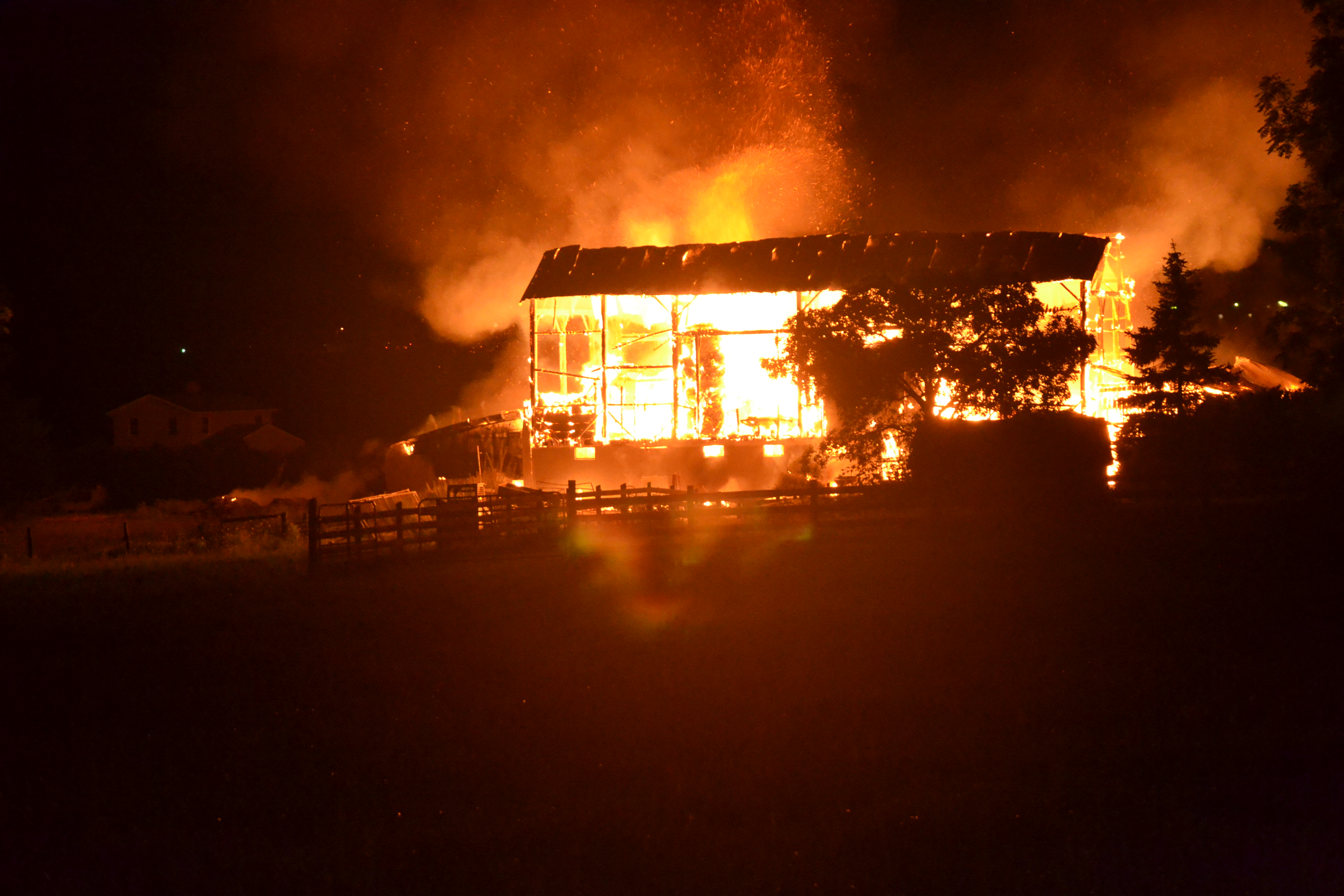
Fire fully involved the barn in minutes.

By Bruce Stambaugh

The middle-aged man sat in the van watching what he really wanted to do. His physically weak condition didn’t allow him to help rebuild the barn that had burned a month earlier.

I knew this man, and knew his heart was with these good people, people from across the community who came together to help resurrect the barn. My friend’s presence moved me as much as the corporate act of mutual aid that we witnessed.

Though he couldn’t help, my friend wanted to be there for support, for community, to keep the connection with his people. His presence was his help. Everyone knew about the fire that had destroyed the old bank barn. There was nothing firefighters could do that night other than to protect the adjacent buildings, which they did successfully.

Only three days before the barn raising, the clarion call went out, one phone message to another, for help. The result was a swarm of activity that began at sunrise and lasted until the job was nearly completed. This was not only how the community worked. It was the community.

barnraisingbybrucestambaugh
Three hours after the work had begun the barn was fully framed.

My friend knew this. He viewed his vicarious participation as imperative.

He didn’t need to tell me this of course. In our decades of living here in this place, we knew the unwritten, modest code of conduct. When your neighbors need help, help them.

It is the way this community operates, has operated, will operate. It is who we are and how we survive. Without one another, we are nothing. No man is an island indeed.

Old Order and New Order Amish worked side-by-side, hammer by hammer, board by board, with one another. Conservative Mennonites, Mennonites, and probably a few Baptists and Presbyterians were in the mix, too. All hands were on deck, no membership cards needed.

One man served as the coordinator for constructing the structure back into a barn. One body, estimated at about 300 men, women and children, made it happen. The process was beautiful to behold, a community in action.

With the foundation and floor previously completed, the framing of the barn began before sunup. By 8 a.m., the trusses were already being set. No orders needed to be barked. Spontaneous crews simply flowed in precision without cue, and the building arose. It was mind-boggling, astounding and inspiring.

Bearded men, clean-shaven men and teenage boys, proving themselves worthy, massed over the 50 by 60 foot frame. Seated on church benches, youngsters and women, their bonnets bleached whiter by the day’s brightness, watched and waited their turn.

By noon, the siding and roof were nearly completed. Hearty meals of homemade meatloaf, mashed potatoes and gravy, and plenty of side dishes and luscious desserts refueled the crews for the afternoon.

Even the weather cooperated for stepping casually across the peek of the roof. Clear blue sky, no wind to sway the balance, no humidity to dehydrate efficient work all made for perfect construction conditions.

In practicality, such a coordinated effort helped cut the cost of rebuilding for the owner. In a broader sense, such a coordinated effort reaffirmed that in a cooperative community no tragedy is too great to overcome.

Though he couldn’t help lift a board, my friend participated in this most sacred and iconic act. To the passersby who stopped to take photographs, it was a special treat to behold.

For those who knew what really transpired, like my friend, it was much more than a delight. It was communion.

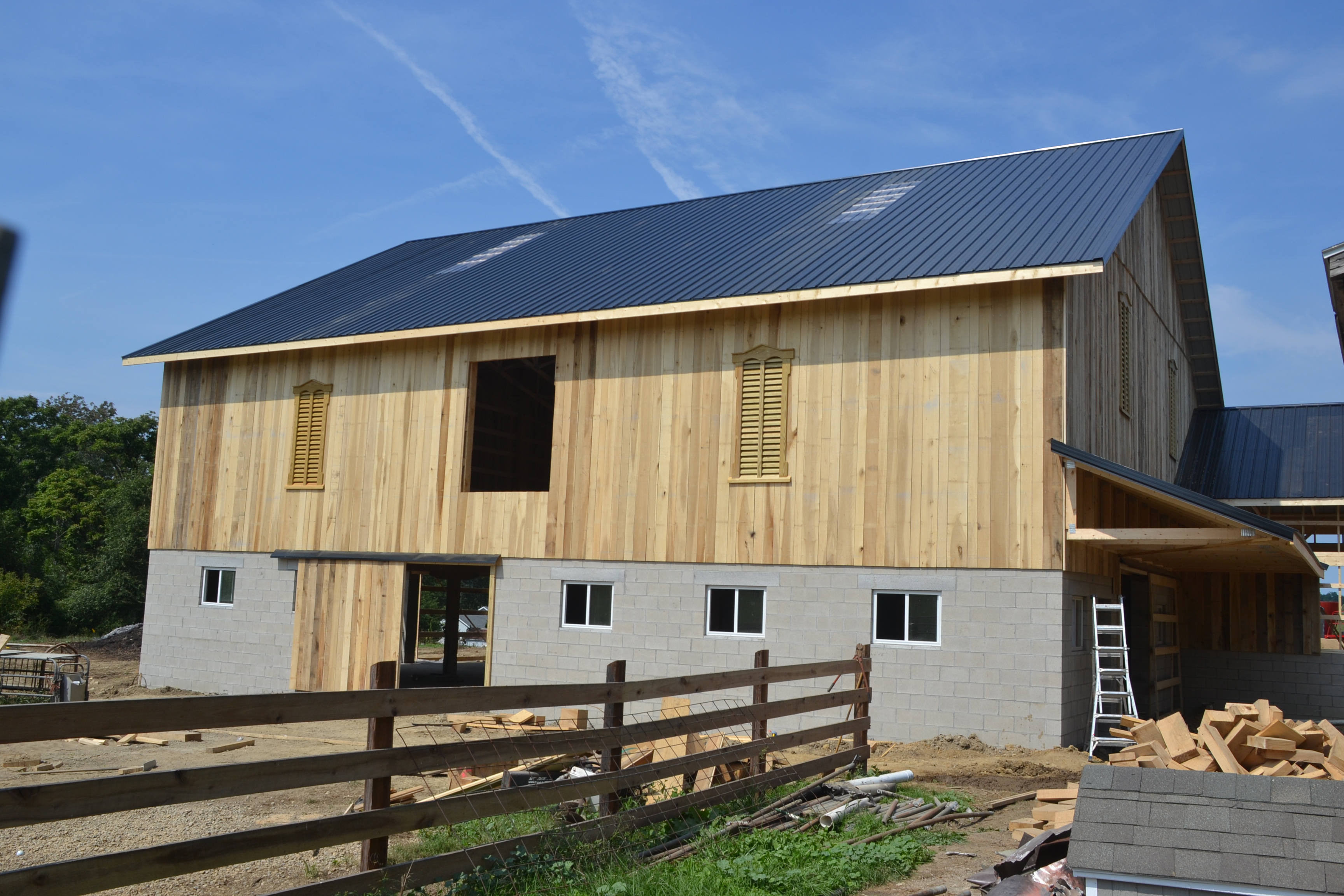
newbarnbybrucestambaugh
By evening work on the main barn had been completed.

© Bruce Stambaugh 2013

Bay Photos by Donna

Wildlife photos from the Chesapeake Bay region

ROAD TO NARA

Culture and Communities at the Heart Of India

K Hertzler Art

Artist and nature journalist in the Shenandoah Valley of Virginia.

Maria Vincent Robinson

Photographer Of Life and moments

Gabriele Romano

Personal Blog

Jennifer Murch

Art is the only way to run away without leaving home. -Twyla Tharp

Roadkill Crossing

Writing generated from the rural life

ANJOLI ROY

writer. teacher. podcast cohost.

Casa Alterna

El amor cruza fronteras / Love crosses borders