2025 in 12 Photos

We live in a crazy world that seems to grow crazier by the day. But we must not let the chaos get to us. We need to carry on as best we can. For me, photography is one outlet that shuts out the din of the world’s madness against itself.

I enjoy photographing the wonder all around me, the serendipitous joy that springs upon me. By capturing those affectionate moments, I can share them with others, including you.

Staying in the present moment allows me to see things that others might just pass by. Consequently, I took thousands of photos this year. My photos feature people, insects, birds, trees, mountains, flowers, sunsets, sunrises, boats, planes, and a sundry of other subjects.

I have chosen to select one image for each month to review 2025. I hope each photo speaks to you the way they all did to me. Here then is 2025 in photos. Enjoy.

January

It’s only appropriate to begin this photo series with a snowy scene in January. This lone tree stood beneath the hovering clouds and was perfectly centered by the farm equipment tracks in the snow. The cerulean sky provided an excellent backdrop, like blue ice in a glacier.
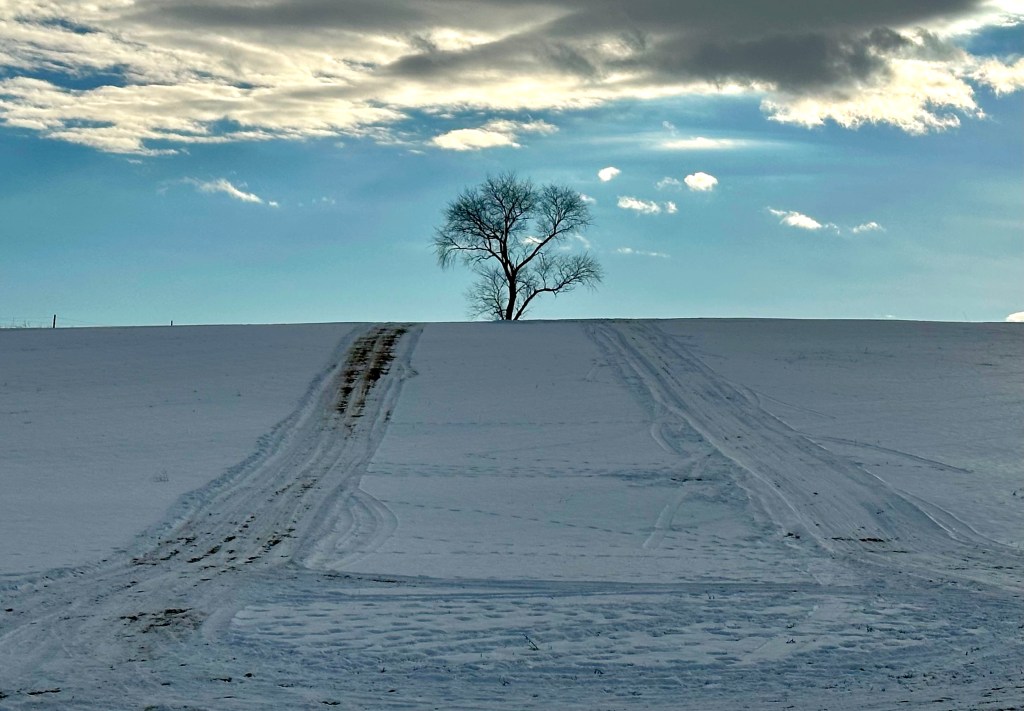
The tree, January 15, Rockingham County, Virginia. Photo by Bruce Stambaugh

February

Is there anything more stunning than a bright red male Northern Cardinal in the midst of winter? Against evergreens laden with a skiff of snow, the bird shows even more colorfully. It’s just one of the reasons I love watching, feeding, and photographing birds.

That’s especially true when they grace your backyard with such natural beauty.
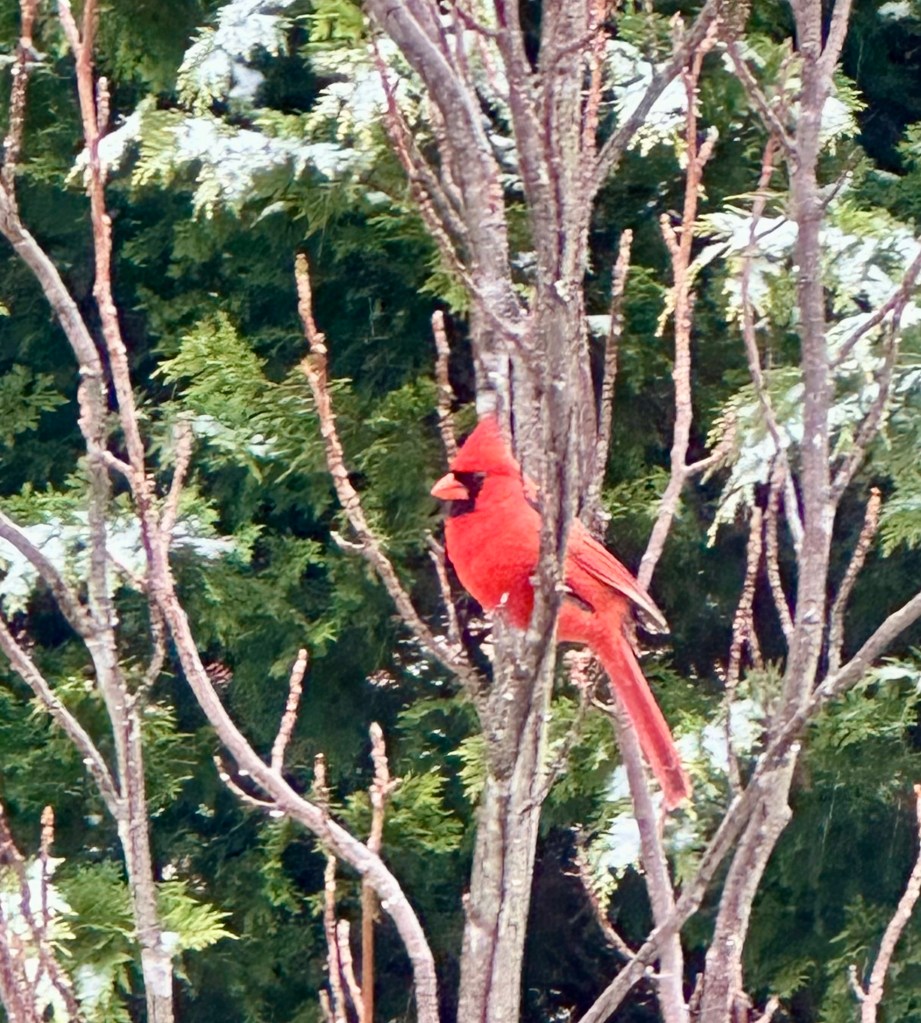
Male Northern Cardinal, Harrisonburg, Virginia. February 8. Photo by Bruce Stambaugh

March

I enjoy walking in our suburban neighborhood of nearly 500 homes any time of year. Besides the required exercise, I encounter many photographic moments. This neighbor had the foresight to plant daffodil bulbs around an old hand cultivator, once used to till garden soil, which helped control the weeds.

Emerging from winter, the buttery yellow of the blooms added a splash of color that complemented the old, rusting implement.
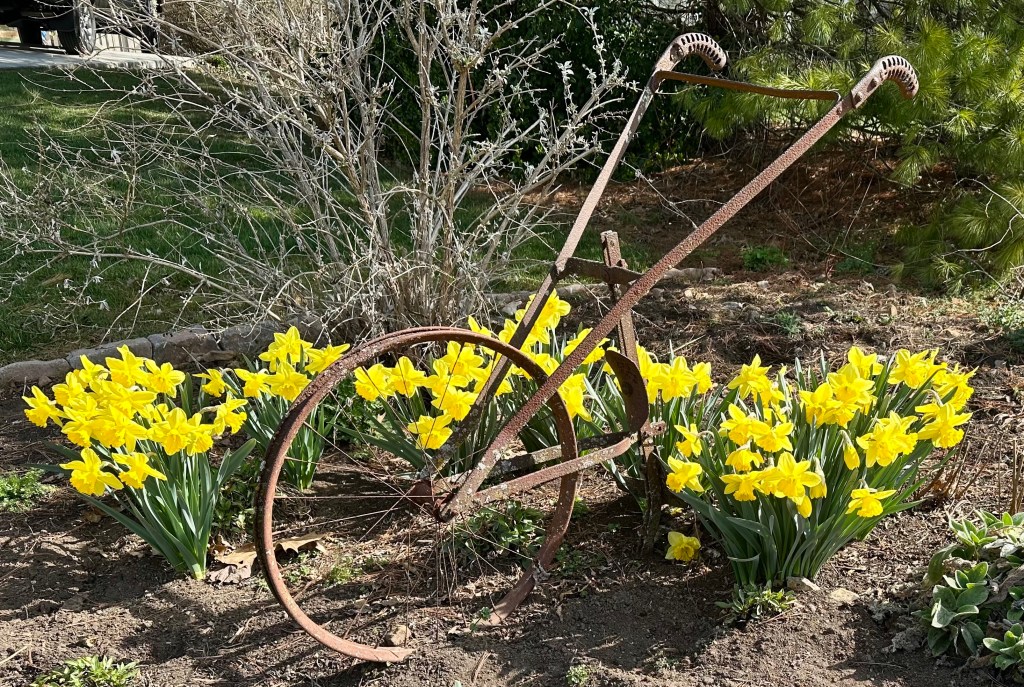
Daffodils as accents, March 21, Harrisonburg, Virginia. Photo by Bruce Stambaugh

April

Though not the state flower, Virginia Bluebells should be. They are native to the state and are its namesake. Besides that, the flowers are simply beautiful. Their pink buds turn to azure blue blossoms, and they are a welcome sight wherever they bloom in spring.
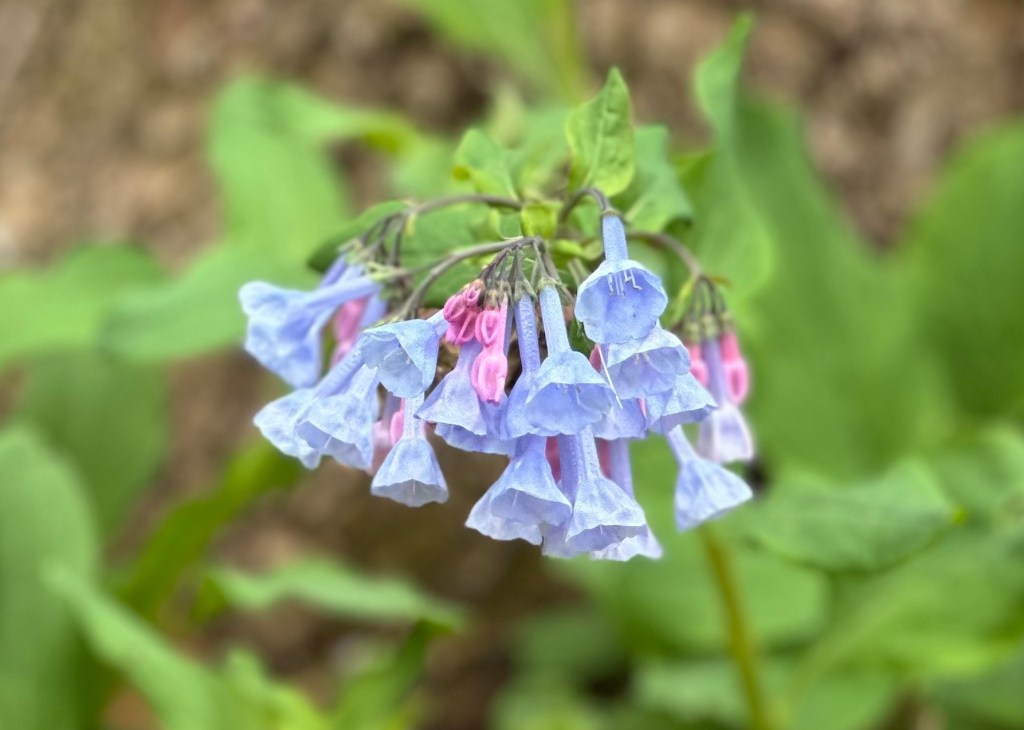
Virginia Blue Bells, April 8, Edith J. Carrier Arboretum, Harrisonburg. Photo by Bruce Stambaugh

May

I captured this photo at a historic village in Mumford, New York. Since it was Mother’s Day, the Genese Country Village and Museum had people in period clothing doing demonstrations and providing information about their particular station.

While walking by a barn, I caught this man and his dog sitting in the morning sunshine. The darkness of the barn’s interior made them stand out all the more.
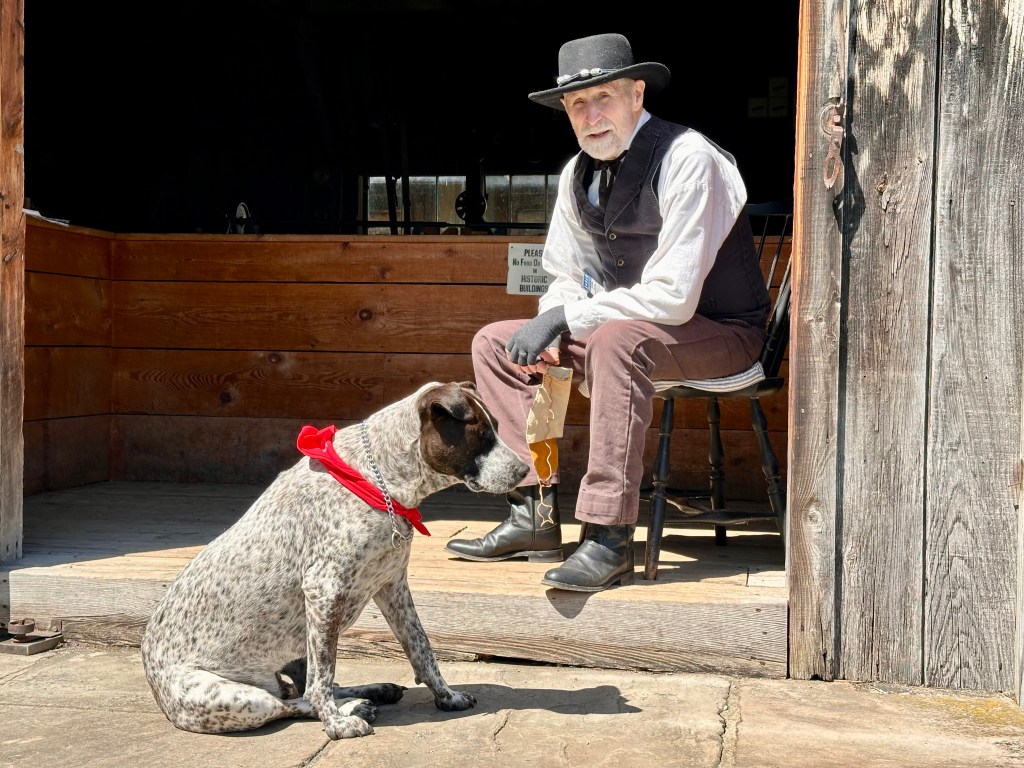
A man and his dog, Mumford, New York, May 11. Photo by Bruce Stambaugh

June

I’m a sucker for sunsets. With its fluffy-cloud days, June is often a good time to watch for glowing evening skies. June 20th was one such day. It just happened to be the summer solstice, when the sun would be at its northwestern-most point in the evening sky.

I headed to my favorite photo spot, the western slope of a local landmark, Mole Hill. Mole Hill is a prominent mound in Shenandoah Valley’s Rockingham County. You can see miles south, west, and northwest from the extinct volcanic core.

On the way there, I saw a pony cart tied to the trunk of a walnut tree at the peak of Mole Hill Road. I didn’t think much of it until I heard the distinct sound of hoves hitting the pavement. I turned and saw an Old Order Mennonite young woman and two girls in an open cart behind a blond-maned pony heading my way.

Knowing they would not want their photo taken, I waited until the cart was well past my location before I snapped the shutter. The setting sun illuminated the pony’s mane and the seeded heads of the tall grass north of the roadway.

With the evening quickly cooling, a light fog began lifting out of the river valley below the Allegheny Mountains that mark the boundary between Virginia and West Virginia.

The combination of the golden sky, the glowing clouds, the darkened mountains, the mist, the farmsteads, and the rolling valley floor created a once-in-a-lifetime scene. It felt like a holy moment, and I was thrilled to capture it for others to see.
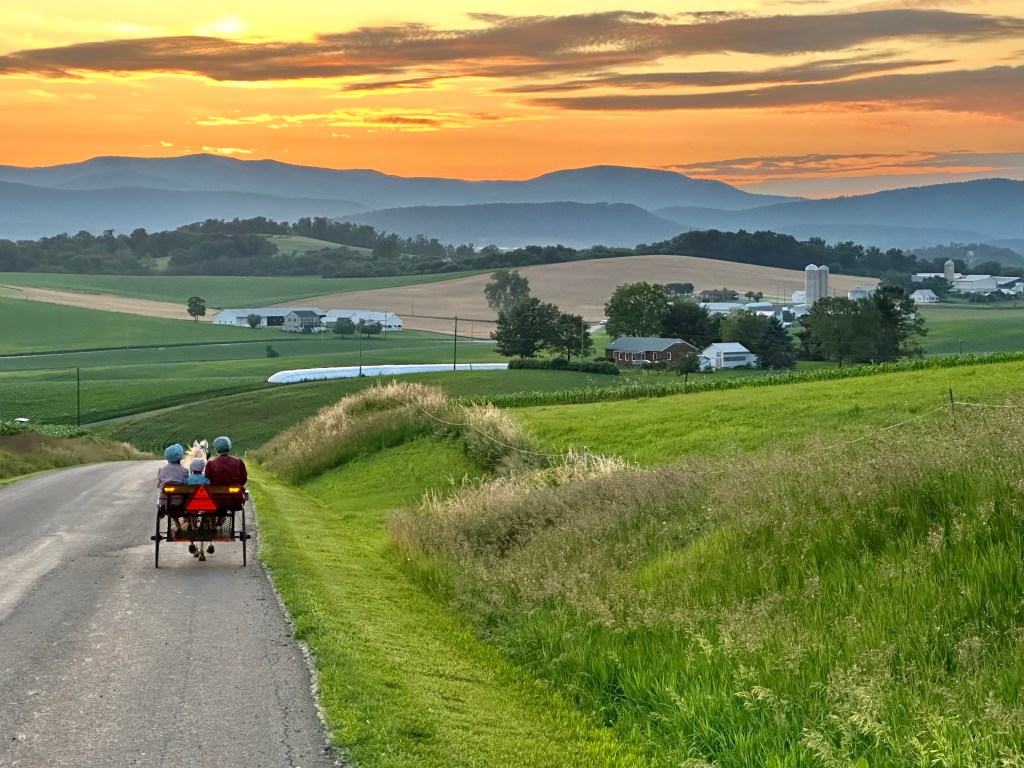
Heading into the sunset, June 20, Dayton, Virginia. Photo by Bruce Stambaugh

July

In the United States, July literally always starts out with a bang. July 4th is Independence Day, and it just so happened that the cruise ship my wife and I were on docked in Portland, Maine, on that hallowed day.

Fortunately, the ship’s starboard side, where our cabin was, faced the city’s harbor. We had a front-row seat to all the explosive colors reflected in the water. It was a fun way to close out our trip.

July 4th, Portland, Maine. Photo by Bruce Stambaugh

August

Like many other locales in the nation, August was a hot, humid, and all too dry month. Still, people ventured out, keeping their routines and schedules despite the withering temperatures.

That was true for all kinds of outdoor sports. This photo shows the proud moment of the young man I mentor, far outpacing all the other high school runners in a cross-country meet. I wasn’t the only one who was pleased. Daniel’s classmates created a human gauntlet to welcome him as he approached the finish line.
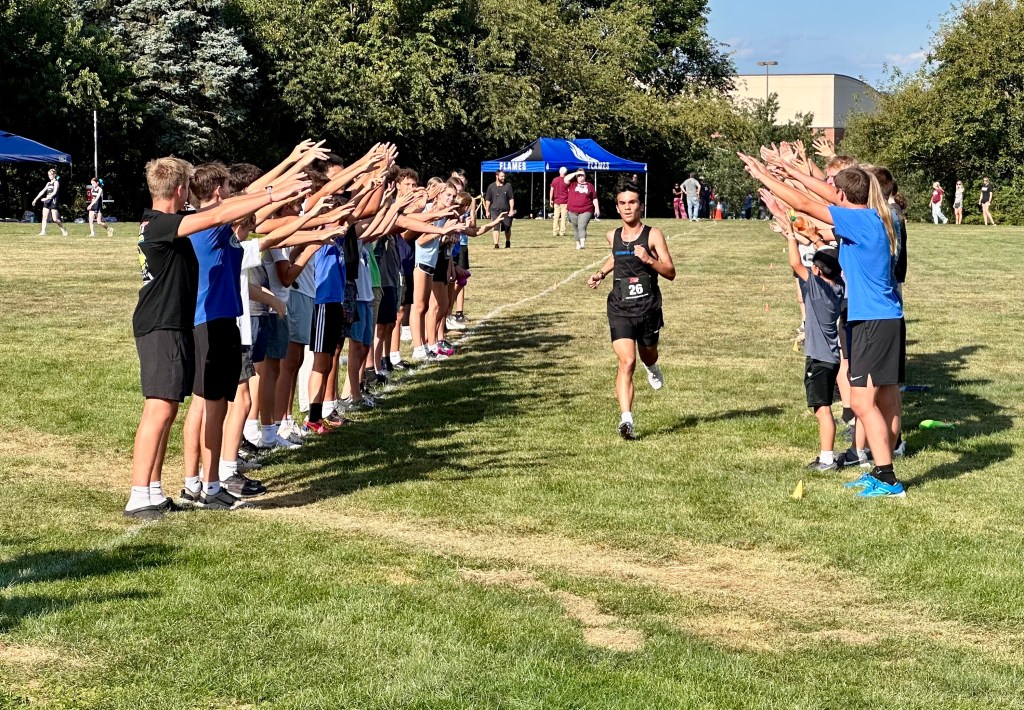
Winning the race, August 29, Harrisonburg, Virginia. Photo by Bruce Stambaugh

September

This September in Virginia’s lovely Shenandoah Valley was fabulous. After a hot, humid summer, September ushered in cooler temperatures and revealed the magnificent colors of her topography and vegetation, both natural and cultivated.

This was the view I saw as I exited my vehicle at a country store near the quaint town of Dayton. How could I not take this shot?

From the area’s fertile soil, curving rows of field corn and rolling contours led the eye to the Allegheny Mountains to the northwest and the cruising cumulus clouds above. Come harvest, it was a bumper crop of corn.

Though I didn’t see it at the time, an American Crow is near dead center in the pastoral photo.
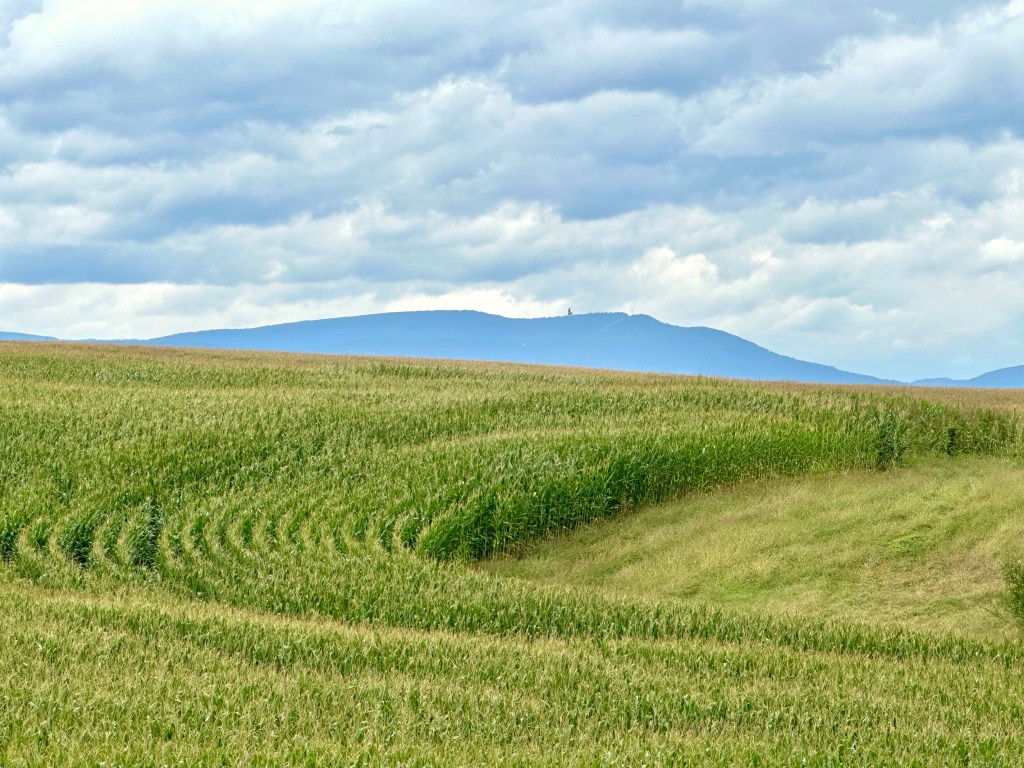
Early September in the valley, September 4, Dayton, Virginia. Photo by Bruce Stambaugh

October

Our three-year-old grandson loves Halloween. He also loves bubbles, so his folks bought him a bubble machine. Teddy wanted to show off how the bubble maker worked when we visited him and his parents the week of Halloween.

When Teddy ran behind the bubbles, the sharply slanting sun highlighted the multi-colored, windblown bubbles. The various-sized bubbles and their proximity to my camera created a moment I can’t forget. It was one of my favorites of the year.
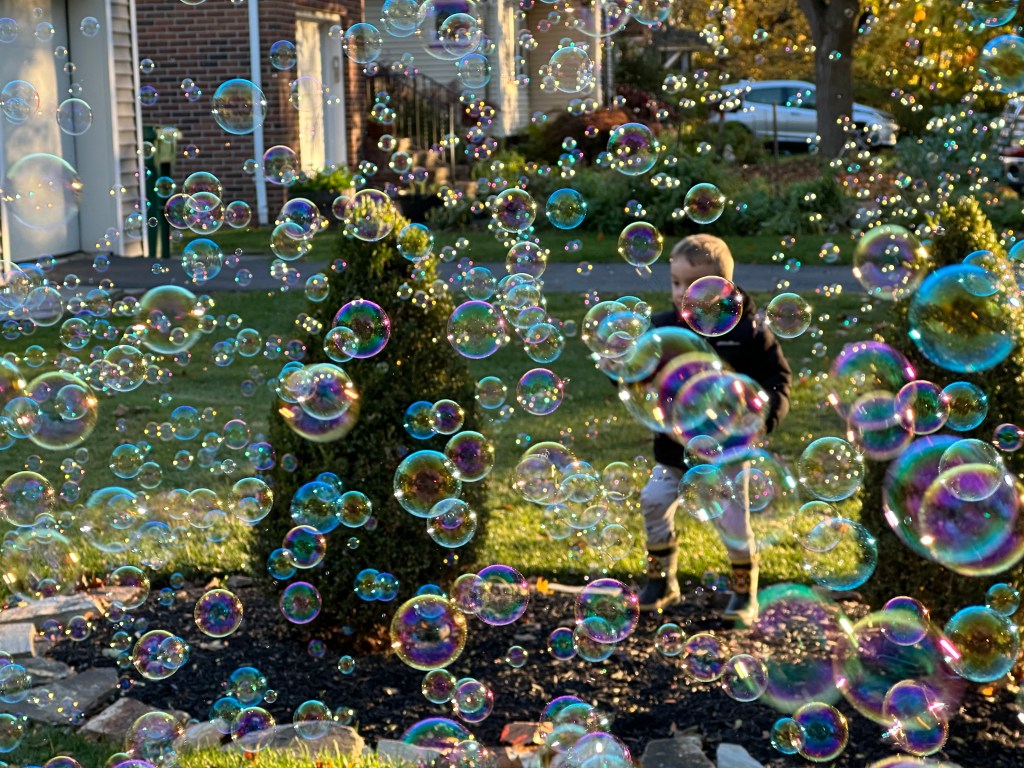
Teddy and his bubbles, Rochester, New York, October 26. Photo by Bruce Stambaugh

November

When a Red-headed Woodpecker poses for you, you have to take the shot. Of course, I am always ready with the camera when the moment arrives.
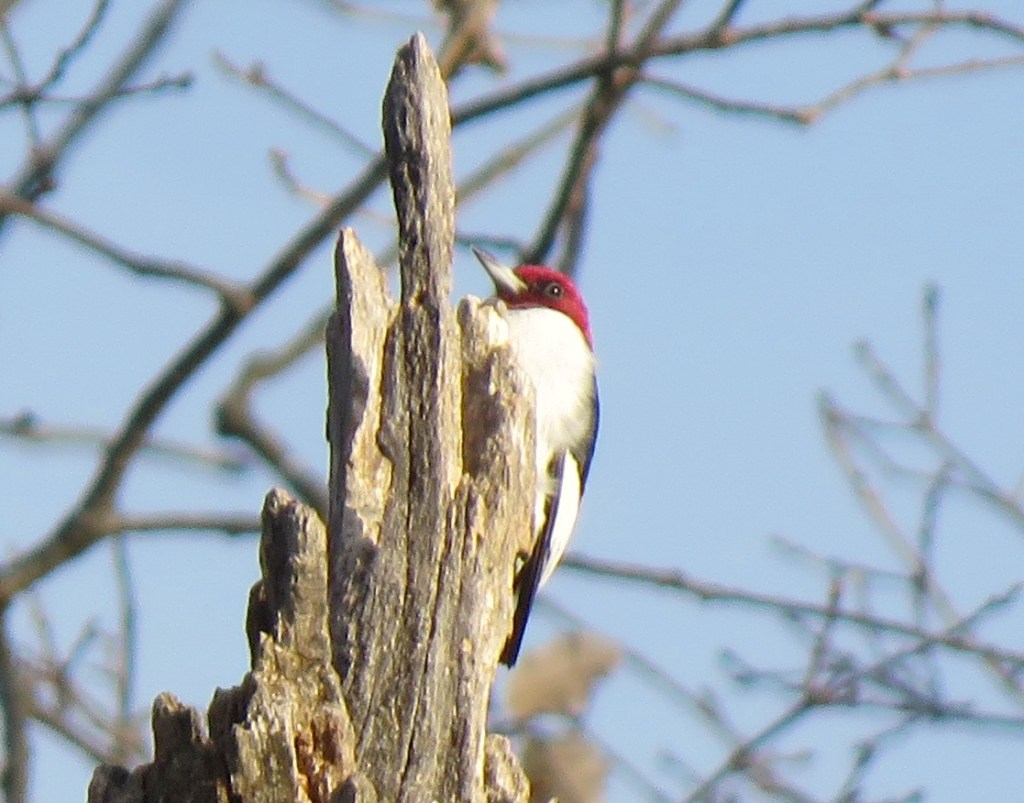
Red-headed Woodpecker, November 7, Linville, Virginia. Photo by Bruce Stambaugh

December

My wife and I spent Christmas week in Sarasota, Florida, with our daughter and her family. We wanted to devote holiday family time together somewhere warm. I’m happy to say the weather was perfect. With two college-aged grandsons and a teenage granddaughter, we hit the beach a few times.

After basking in the warm sunshine during the day, we returned a couple of times for the sunset. When the clouds didn’t cooperate, we settled for golden sundowns.

In this photo, a Brown Pelican appears to be leading the way home for this family walking along North Lido Beach. Sometimes the photo paints the picture for you. Plus, it’s only appropriate that we let the sun set on 2025.
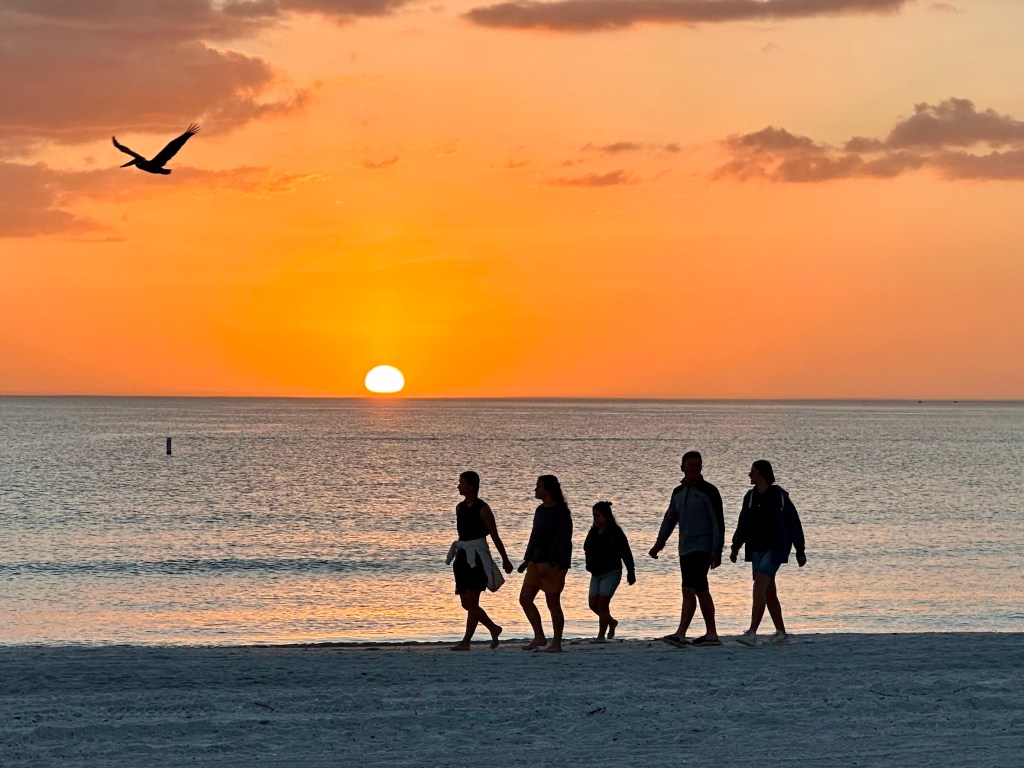
Leading the way, December 23, Sarasota, Florida. Photo by Bruce Stambaugh

I hope you and yours have a joyous and safe New Year.

© Bruce Stambaugh 2025

Birds at My Window

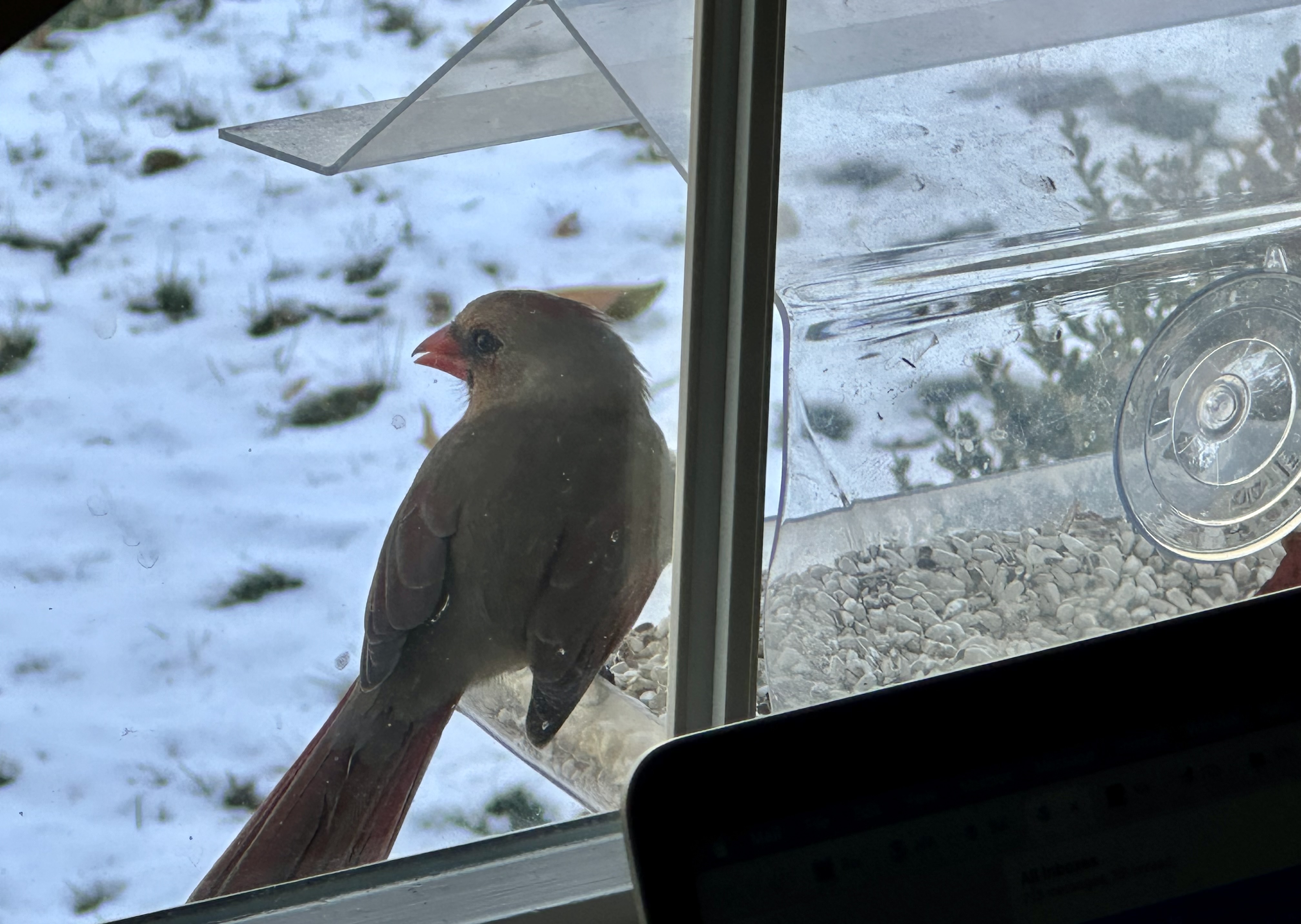
A male Northern Cardinal inspects the safflower seeds at my window feeder. © Bruce Stambaugh

It’s the best of both worlds. I can work on my laptop and watch the birds simultaneously.

I was gifted a clear plastic birdfeeder that sticks to a window via two suction cups. However, with two birdfeeders hanging nearby from the front yard red maple tree, I doubted birds would be attracted to it. The birds proved me wrong.

The hanging feeders held chipped sunflower seed hearts and black oil sunflower seeds. I filled the window feeder’s floor with safflower seeds to keep squirrels and other birds, such as common grackles and European starlings, away. Most bird species don’t like safflower seeds.

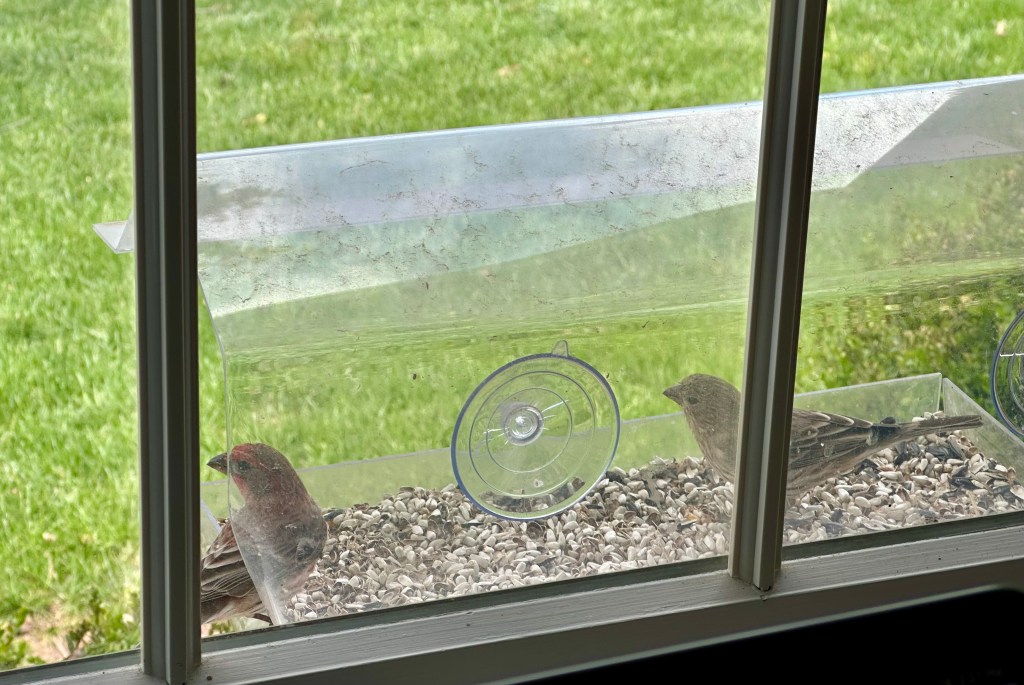
Once birds found the feeder, they kept coming, though irregularly. Northern Cardinals, Carolina Wrens, Carolina Chickadees, House Finches, and Purple Finches are among the species that frequent the feeder.

It’s made my days more enjoyable. The Northern Cardinals are often the first and last to enjoy the seeds daily, coming at the first and last light of the day. It’s a good way to start and end the day while writing or reading on my laptop.

I have learned to sit still and let them eat. Any little movement can startle them. The female and male Northern Cardinals eye the seed, pick one, and roll it rapidly with crushing bills until they reach the seed’s meat. The cracked shells fall to the floor of the feeder, which I regularly clean by hand.

Please click on the photos to enlarge them.

The Carolina Wrens seem to be looking more for morsels of the seed and insects that happened to be in the feeder. The beautiful, busy birds are antsy and cautious as they search the feeder. They seldom stay long.

Only the female Purple Finches have come to the window. Even then, they were skittish and spooked at any movement. Consequently, I have learned to roll my office chair away from my desk and raise my phone with the long lens, ready for any shots I can get. That setting works best since the feeder is less than a foot away. Still, I might only get one shot before the birds dart away.

The feeder sits to the right side of the eight-paned window, less than a foot away from my computer. A pencil holder, a small basket with notes, and small notepads serve as a partial shield for me.

Also, I’ve noticed that the birds seem more comfortable in the feeder than in front of the glass window. Perhaps the birds’ visibility is not as sharp due to the plastic feeder’s large suction cups and the bent, molded sides and roof. Plus, the covered feeder keeps the seeds dry from rain and snow. Partially protected by the window sill and frame, even gusty winds don’t shake the feeder.

I am most grateful for these opportunities to observe and record the many bird behaviors and pecking orders exhibited. I enjoy hearing the House Finches twitter to one another as they eat, and other birds quietly enjoy their meals.

The observations teach me to be patient and still, if I genuinely want to learn from my feathered friends.

This pair of House Finches flew as soon as I captured the shot. Photo by Bruce Stambaugh

© Bruce Stambaugh 2025

A Birder’s Dream Come True

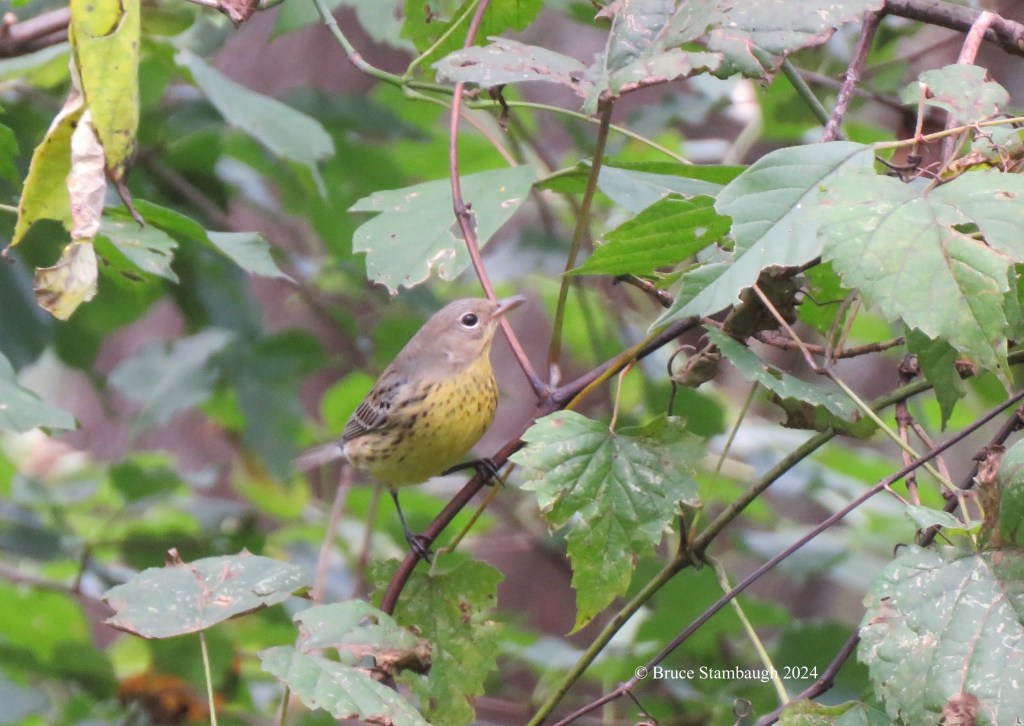
Kirtland’s Warbler, Waynesboro, Virginia. Photo by Bruce Stambaugh

When I opened the email from the birding listserv this morning, I knew I would pursue this rare bird. Fall bird migration was in full swing, and it’s a real rarity when a Kirtland’s Warbler is spotted. Experts estimate that only 1,500 of this species remain today.

It turned out that this bird was in a park only a mile from the wildlife rescue center where I took the injured Cape May Warbler last week. I had never been to the park where the Kirtland’s had been spotted.

My wife and I headed southwest toward Waynesboro, taking familiar back roads. Crossing over I-81 told us we had made the right decision. The busy highway was nearly bumper to bumper in both north and south lanes.

The GPS took us right to the park. The small parking lot was full, but fortunately, a space opened up right after we pulled in. Another birder arrived right after us and wondered where the bird was. I had no idea until we saw a small group emerge from the trees and thicket carrying binoculars and cameras with baseball bat-sized lenses.

They stopped and pointed their cameras and bins toward the thicket as we joined them. They spotted the bird immediately, and as good birders are want to do, they helped newcomers like us find the bird.

My wife had the rare bird in her binoculars before I did. Once it popped into the open, I saw the bird through my binoculars and then tried to capture images on my camera. Documentation is essential in birding, especially rare birds.

The bird darted up and down, in and out of the jungle of vines, saplings, and mature trees. It foraged on insects and berries. The bird finally popped into my viewfinder, and I got this photo and a few other less desirable ones.

Seeing a Kirtland’s Warbler is always exciting, especially if it is a life bird, meaning the first time you have seen the elusive bird. It’s a birder’s dream come true. Indeed, this bird was a lifer for several in the cooperative group.

Birding is all about finding and sharing, which Neva and I experienced today. On our way home, we celebrated with a delicious late lunch at our favorite burger place.

© Bruce Stambaugh 2024

Can You Eat Upside Down? Birds Can!

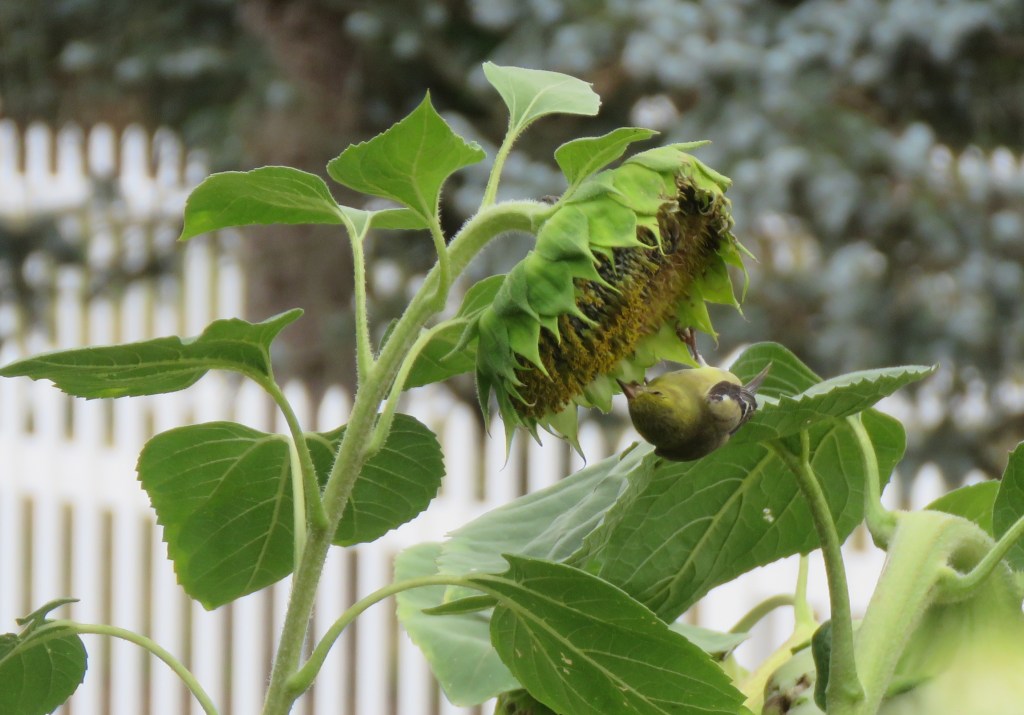
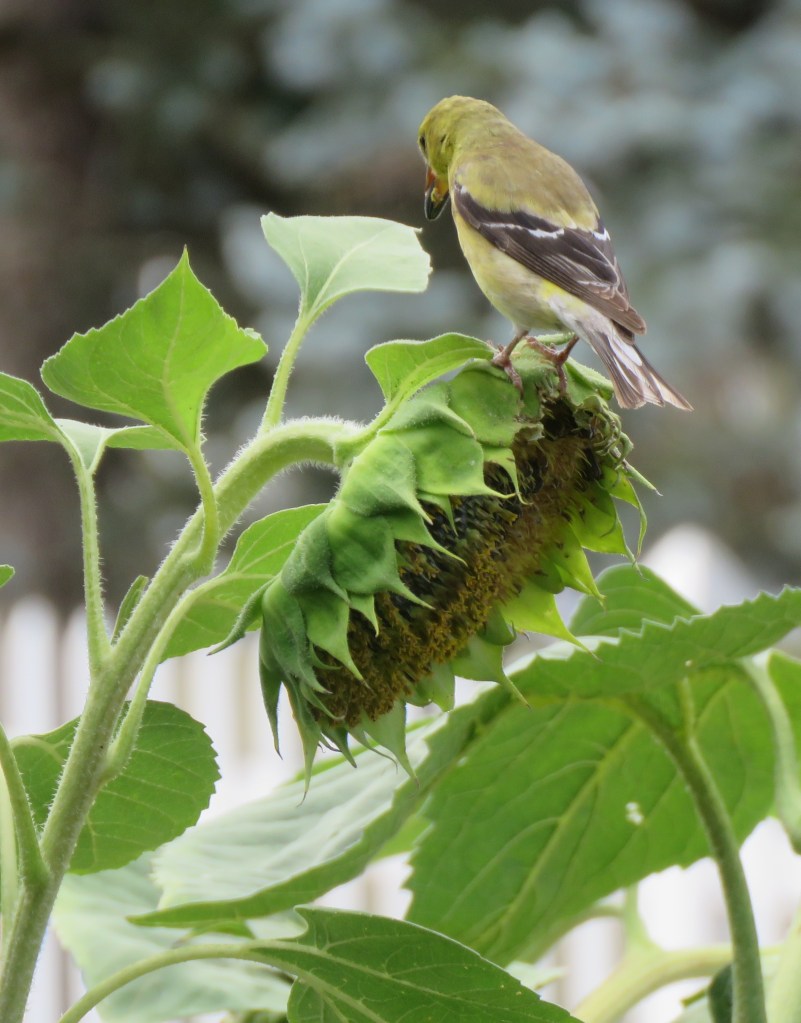
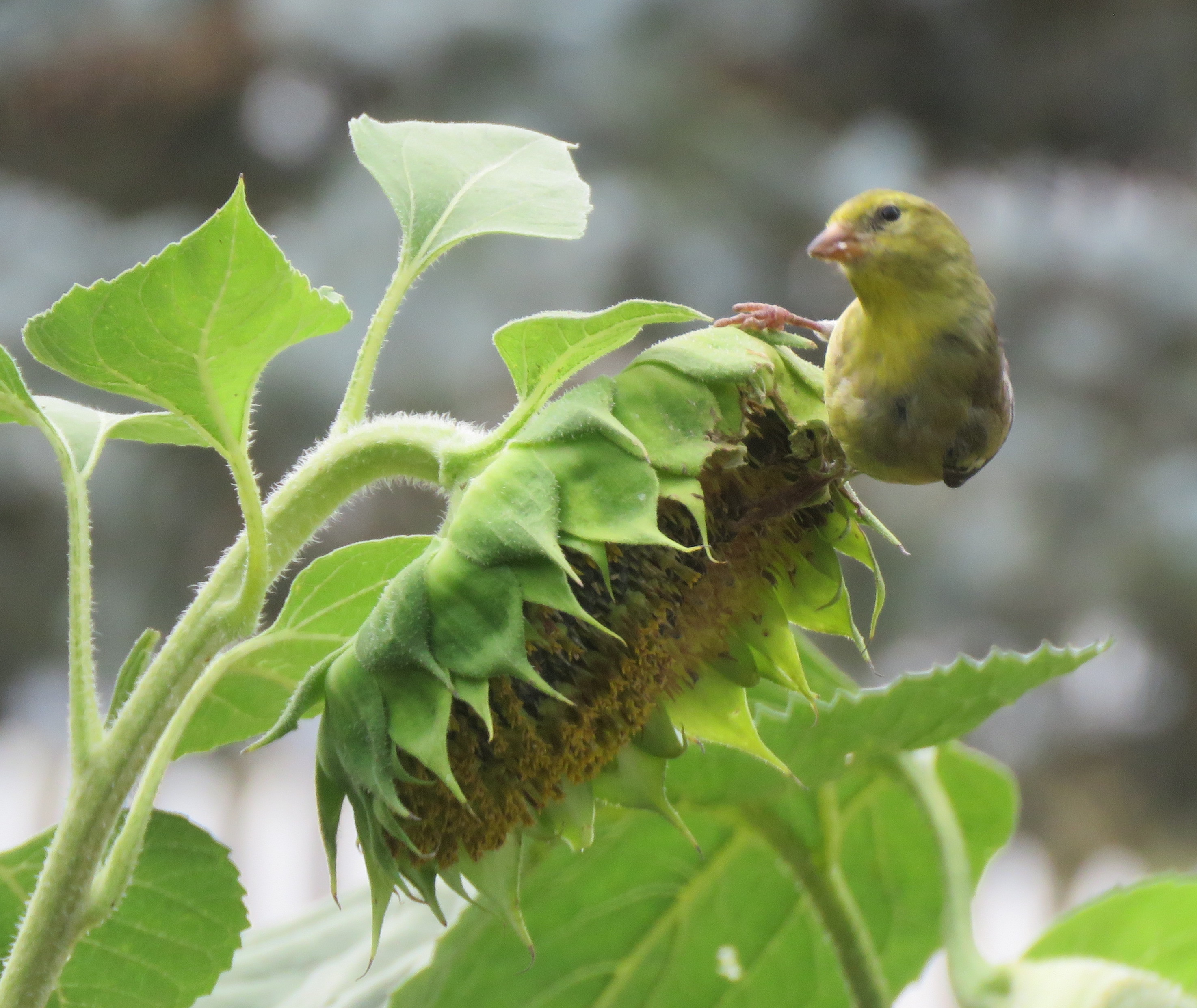
A female American Goldfinch plucks a seed from a sunflower head. Photo by Bruce Stambaugh

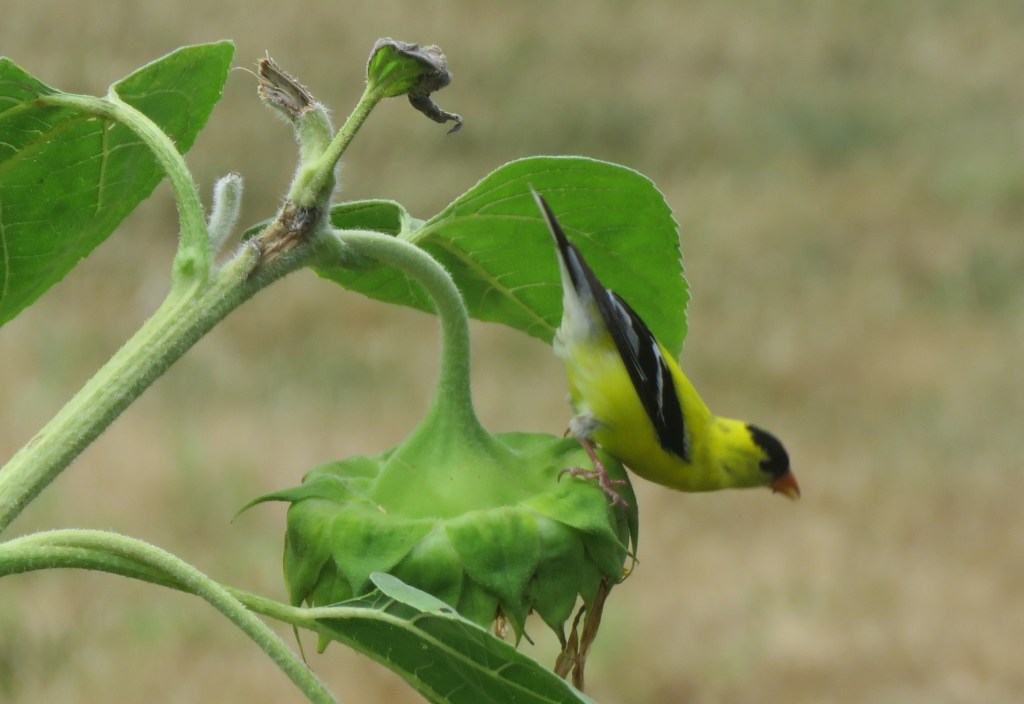
Can you eat upside down? American Goldfinches sure can!

In the summertime, the acrobatic little birds put on a show around sunflowers. Often, they hint at their arrival at a sunflower patch with a distinctive, cheery call. Soon, they land atop a flower and begin their feeding.

The lively and colorful birds use their short, sharp beaks to pry the juicy new seeds from the flower head. Their sturdy pinkish bill effortlessly cracks open the seed, and the birds devour their reward.

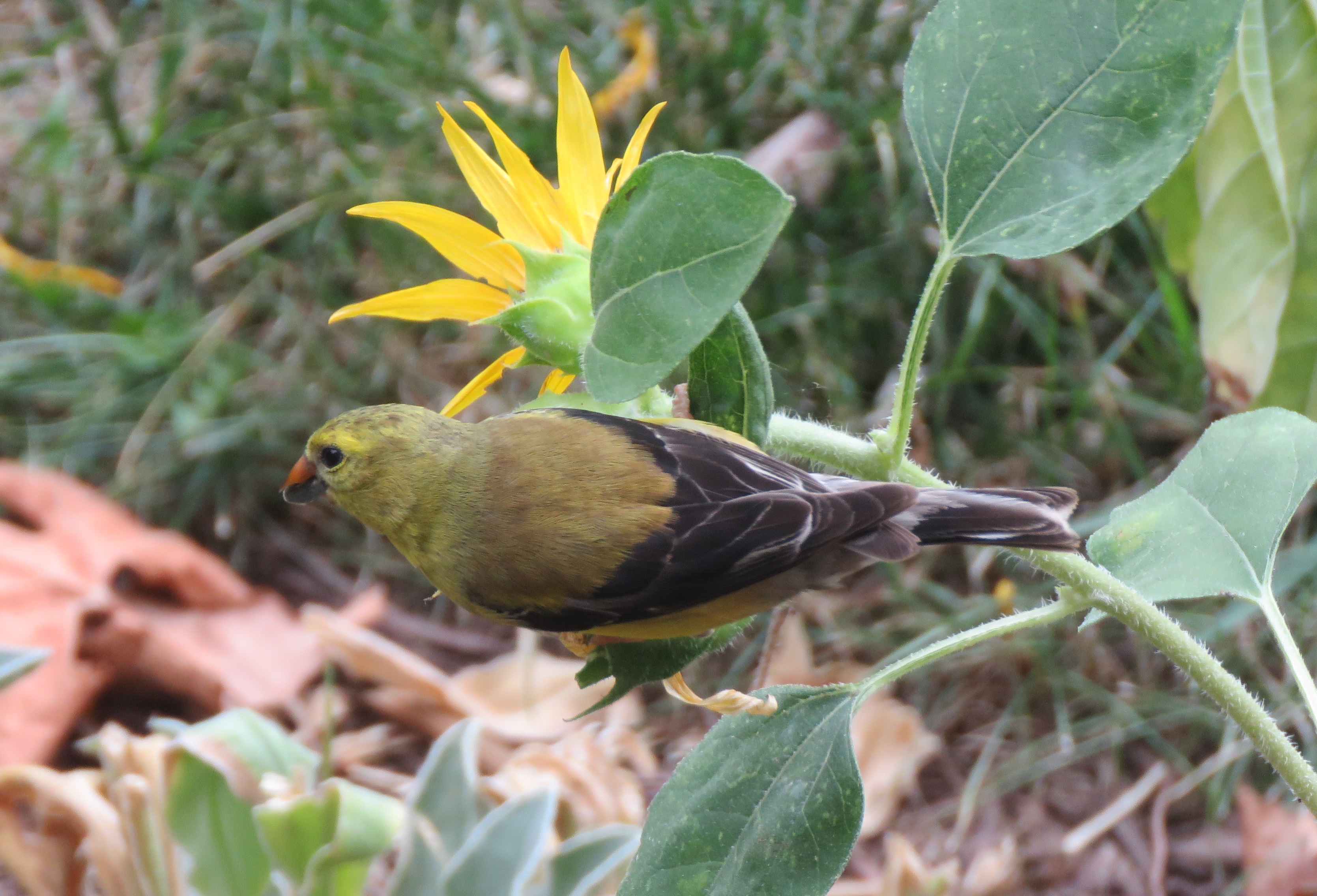
The American Goldfinches seem able to eat in any position: upside down, sideways, or at any angle. Since the laden flower heads bend toward the ground as their seeds mature, the birds have no choice but to attack their target in any way they can. The birds gain needed nutrition and moisture from the fresh seeds.

The male looks regal in its summer mating plumage of bright yellow with jet-black wings, tail, and forehead. A white wing-bar adorns each wing. The female is duller in color year-round. She is feathered more for camouflage than fashion. Her pale yellow-green is much duller to help blend in with the greenery she inhabits. The female’s coloration helps conceal the eggs during incubation and the young when they hatch.

In the winter, both sexes turn dull to protect themselves by blending in with their weedy surroundings. Black oil sunflower seeds draw them to feeders, though the pulp center has to be much drier than the fresh-off-the-flower summer offerings.

Of course, goldfinches aren’t the only species with this feeding trait. Nevertheless, it’s a joy to watch their antics in any season.

Birds aren’t the only animals that prefer fresh sunflower seeds. Photo by Bruce Stambaugh

© Bruce Stambaugh 2024

Camouflaged

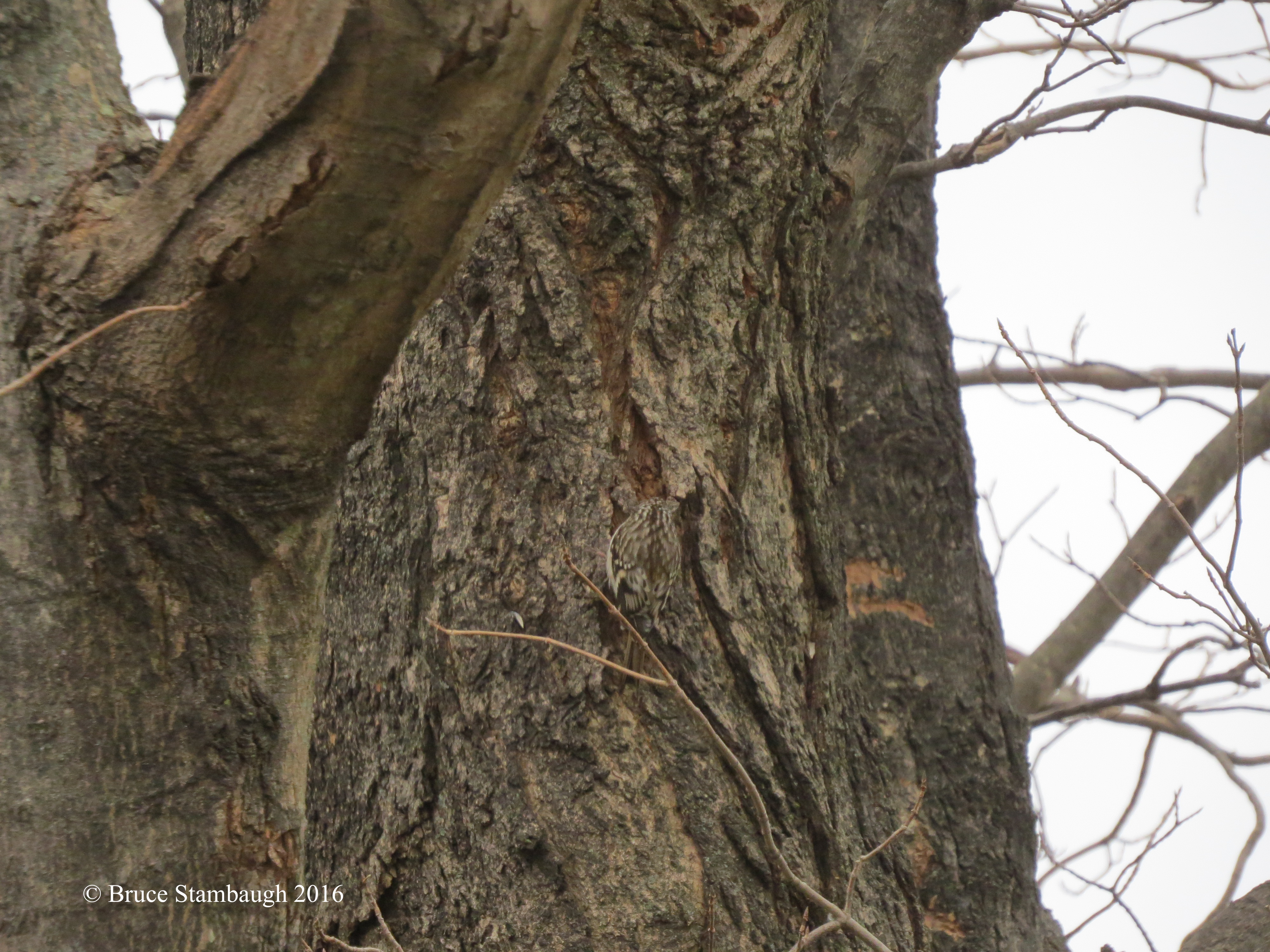
brown creeper
Camouflaged.

I’m always pleased when I discover a bird that I have never seen in my yard before. I was photographing some woodpeckers when I noticed a little bird darting around the trunk of the large sugar maple tree in the backyard. Not only did this bird move fast, it blended in perfectly with the bark of the tree.

Can you find the Brown Creeper?

“Camouflaged” is my Photo of the Week.

© Bruce Stambaugh 2016

Sleepyhead

sleeping barn owl, juvenile barn owl
Sleepyhead. © Bruce Stambaugh 2015

When the farmer called me the other morning, I was away from home. He said he had two juvenile Barn Owls sleeping near his barn. My wife and I finally arrived at the Amish farm two miles from our home. The owls were still in the same place. Both were still sound asleep despite being only a few yards from a busy highway.

The owls had recently fledged from their nest box in the farmer’s barn. Rather than be disturbed by their younger siblings, still too young to fly, each owl found a personal, private spot to snooze. This one chose a silver maple tree in the farmer’s yard. The afternoon sun highlighted its breast feathers and some of the tree’s leaves.

“Sleepyhead” is my Photo of the Week.

© Bruce Stambaugh 2015

Some days are simply for the birds and more

Amish farm
The farm. © Bruce Stambaugh 2015

By Bruce Stambaugh

Some days are simply for the birds.

Recently, I had a couple of days that were exactly that. I helped out a friend by leading a few birding field trips to a local farm.

The target birds were young Barn Owls, a couple of fuzzy baby American Kestrels, and bubbly Bobolinks. In a rather rare situation, both Barn Owls and Kestrels had hatched their young in nesting boxes the farmer had erected in his old bank barn. The meadow across the road remained uncut so the tinkling Bobolinks could frolic and flourish.

The farmer and his family went out of their way to accommodate both the birds and us. Their farmstead was neat as a pin. Flower beds and gardens were nearly pristine. The three generations that called this place home welcomed us with open arms and hearts.

Both the farm’s setting and the intentional agricultural techniques employed accounted for the diversity of birds and other wildlife. Surrounded by rounded hills dotted with emerald woodlots, the land rolled away from the farm buildings more like waves than fields.

This slideshow requires JavaScript.

I imagined in a birdseye view a quilted panorama. Broad patches of variegated greens and tans from forested hills, alternating fields of pasture and croplands stitched together by brushy fencerows created a pastoral patterned effect.

Such a landscape also enhanced the desired habitats and food sources needed for the various avian species. It was obvious the farmer, typical of many in our area, understood the balance between conservation and productivity. Sad to say, some deem that approach as inefficient or even old-fashioned.

The days were precious in so many ways. Cottony clouds hung in salient skies over windswept grasses nearly as tall as the weathered wooden fence posts that delineated their boundaries.

The meadow’s high grasses mingled with seedy weeds, and wildflowers danced in the wind beneath while the Bobolinks, Eastern Meadowlarks, Song and Savannah Sparrows and Red-winged Blackbirds let loose. The birds’ melodious chorus easily drew the attention and appreciation of each group. All the birders, spanning three generations, thought the birds and their songs beautiful and luxurious.

(Click on the photos to enlarge them.)

Though he said he wasn’t a birder, the kind farmer had erected nesting boxes in his ancient barn for the owls. That is what attracted folks from near and far for this special chance to view the birds. It was indeed rare to have both owls and falcons nesting in the same barn.

Participants hailed from cities. Others lived nearby. Their ages ranged from preschoolers to octogenarians. A courageous woman on crutches in the midst of cancer treatments even ventured forth. I drew strength from their enthusiasm.

Atop wobbly ladders, we viewed the baby birds one by one through a pencil-sized peephole drilled in the plywood boxes made by students at a local vocational school. A small, square hole cut into the barn siding permitted the adults to enter and exit to feed their young.

Below, hushed conversations ensued in each group. Sunlight streamed through the intentional spaces between the horizontal clapboards. Still the barn was dark and steamy.

No one complained whatsoever. All realized what a privilege it was to view the birds and enjoy the genial hospitality of this marvelous family who welcomed all of God’s creatures.

These glorious days were definitely for the birds, obviously in a juxtaposed sense. The smiles on the faces of all the birders declared each visit a joyous success. None of us could have asked for more.

meadow, Amish farm
The meadow. © Bruce Stambaugh 2015

© Bruce Stambaugh 2015

Good morning!

downy woodpecker
Good morning! © Bruce Stambaugh 2015

I am fortunate to have several species of Ohio’s woodpeckers come to my feeders on a regular basis. Most prefer the peanut butter suet feeder that hangs from a branch of the large maple tree in our backyard. A few will venture up to the hopper feeder hanging right outside our kitchen window. They can’t resist the chipped sunflower seeds that many other birds also enjoy.

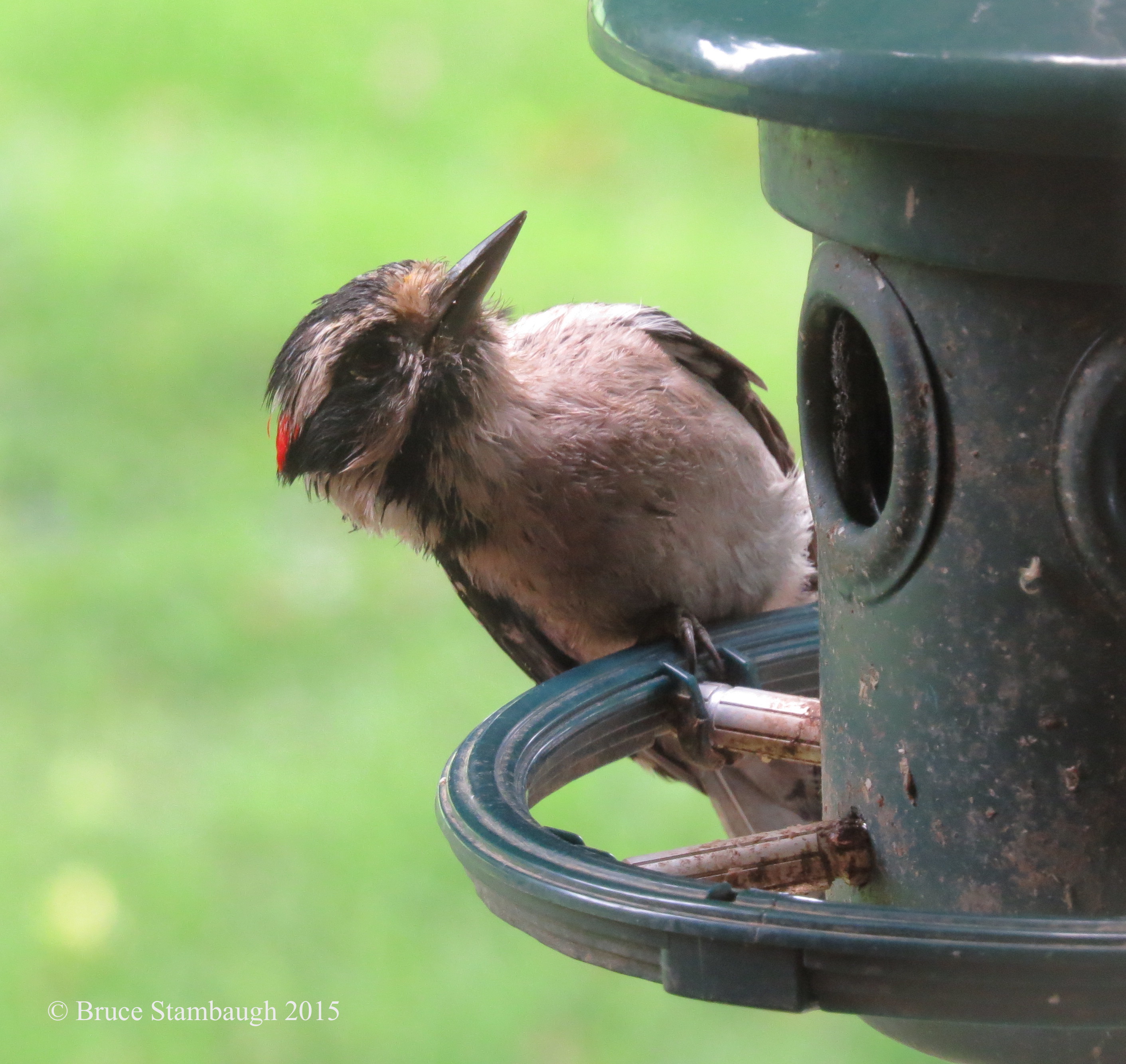
I’m glad I had my camera in hand when this juvenile male Downy Woodpecker, soaked from the day’s rain, arrived at the feeder. The young bird didn’t seem deterred either by my presence or its rather damp feathers.

“Good morning!” is my Photo of the Week.

© Bruce Stambaugh 2015

A Big Day with big, renewing results

prothonotary warbler, warblers
Male Prothonotary Warbler at Magee Marsh. © Bruce Stambaugh 2015

By Bruce Stambaugh

Even in my semi-retirement, I’m a busy person. Keeping active and involved in the community has been a priority and passion my entire life.

That lifestyle takes a personal toll, however. From time to time, I need to recharge my body, mind, and spirit. I step away from my daily routine and spend some time just enjoying life.

I have found that immersing myself into nature is the salve that soothes the soul. I love the outdoors and all the beauty that she offers.

A Big Day does that for me. In the birding world, a Big Day is an entire day devoted to nothing more than counting all the species of birds that you can identify by sight or sound.

Folks do Big Days in groups that cover a given territory. Or they are done by simply staying put in one spot and counting all creatures avian seen or heard. That is appropriately called a Big Sit.

My Big Day, however, wasn’t either one of those. Instead, with the warbler migration in full swing, I knew the various locations I wanted to visit in northwest Ohio to view the returning and transient birds.

Traveling alone to different birding hot spots allowed me to go at my own pace, and to absorb fully all that I experienced.

Spring birding near Lake Erie means dressing for all seasons. I was glad I had.

This slideshow requires JavaScript.

The steady, stiff northeast wind off of the lake brought out the winter duds in most birders on the boardwalk at Magee Marsh, my first destination. Being bundled up didn’t deter either the active bird observations or the usual universal geniality of most birders.

The boardwalk was packed with birders young, old and in between from around the world. Warblers and other birds flitted everywhere.

Even though I had gone by myself, I clearly wasn’t alone. Among the hundreds of birders at Magee, I only knew one, my friend and expert birder, Greg Miller, of ‘The Big Year” fame. The rest weren’t strangers though, helping me to locate and identify 23 warbler species. Their kindness meant more than the day’s species numbers.

Later, when I drove the Ottawa National Wildlife Refuge road and then hurried to see some other rare birds, I found the same excited congeniality. Sullen grumpiness isn’t part of birding ethics. Beautiful birds and friendly birders cohabited.

(Click on the photos to enlarge them)

With the day quickly waning, I headed east to the Marblehead Peninsula. I wanted to enhance my day with a brief visit to the Lakeside Daisy Nature Preserve to view the flowers in their prime. Though the day was mostly cloudy and cool, the little buttery daisies warmed my soul with their lusciousness.

After a quick supper, I hustled to my favorite spot in Ohio, Marblehead Lighthouse. The setting sun cast long shadows of trees onto the historic white lighthouse. Its red top, where the beacon blinked for sailors, was bathed in creamy, warm light.

A handful of other photographers celebrated with me. I can’t speak for them. But with each click of the camera’s shutter, my soul felt lighter, cleansed, fulfilled.

I hurried to nearby Lakeside to watch the sunset’s golden evolution. The day was complete.

Such are the positive consequences of observing, listening, contemplating, reflecting and sharing with humankind amid the earthly creation for which we all are charged to preserve. My Big Day finished bigger than I could have ever imagined.

Joy abounded all around in regeneration. Isn’t that the real reason for spring?

Lakeside sunset, sunset
Lakeside sunset. © Bruce Stambaugh 2015

© Bruce Stambaugh 2015

For birders, migration is like Christmas in springtime

Bay-breasted Warbler, migratiing birds, locating birds
Migrating warblers, like this Bay-breasted Warbler, are often easy to hear but hard to locate since they usually stay high in trees and are constantly on the move feeding. © Bruce Stambaugh 2015

By Bruce Stambaugh

Like children dreaming of Old St. Nick on Christmas Eve, this is the time of year birders have yearned for, longed for, relished.

For hardcore birders, spring migration is a Christmas morning that spans several weeks from mid-March to mid-May. Avid birders are especially on the alert now to find the many species they seek, and some they couldn’t even imagine.

Rock Wren, rare birds, spring migration
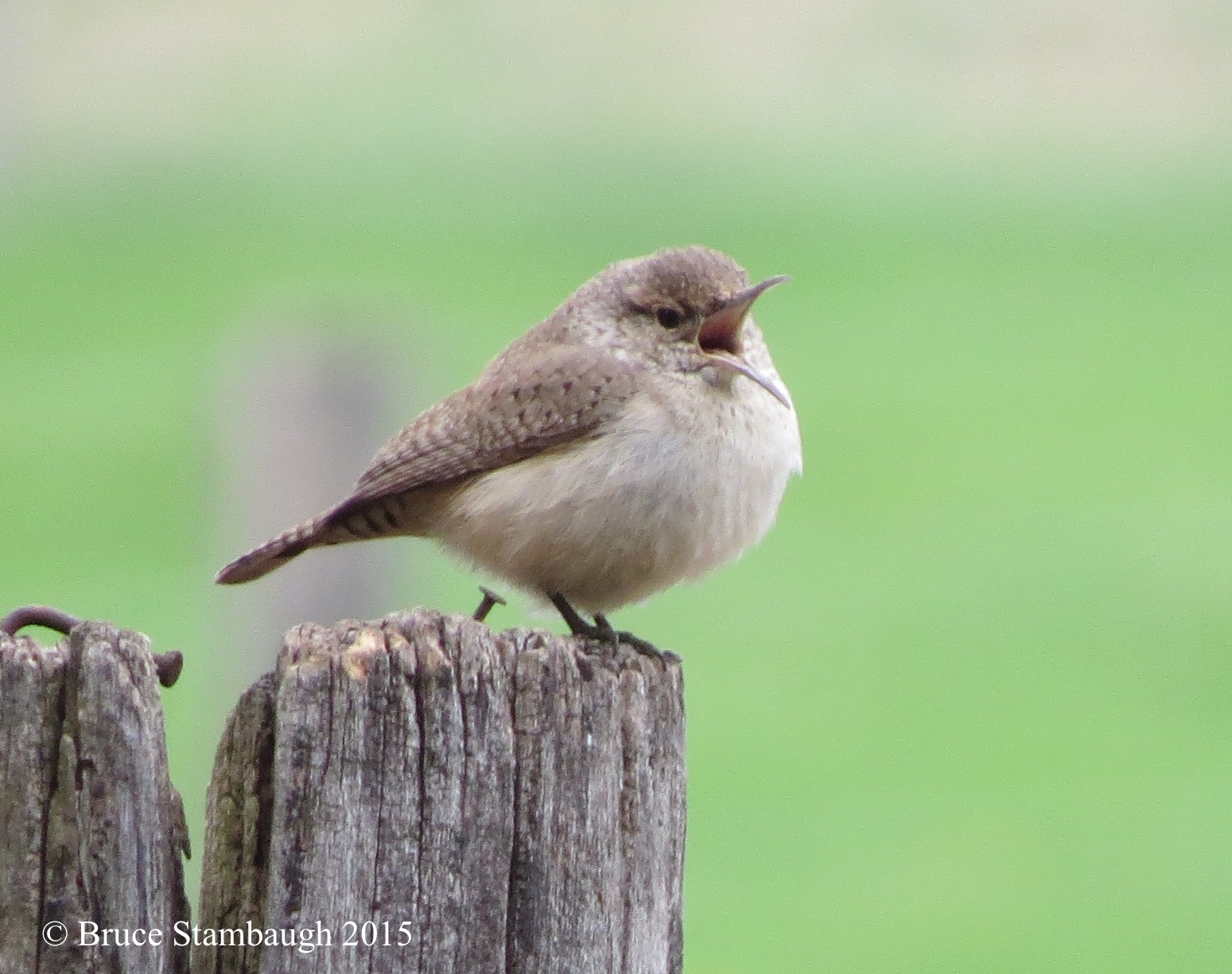
Rock Wren. © Bruce Stambaugh 2015
When a rarity shows up like the Rock Wren did last spring, it’s a birding bonanza. The Rock Wren became a rock star. For several days, the bird from America’s southwest was a magnet, attracting folks from far and wide to Holmes County.

Such birds are the exception. The spring migratory norm is to view birds that either return here to nest or to catch a glimpse of those that are just passing through. Depending on the weather, the transients might stay a day or two, or just make a short pit stop to rest and refuel.

The challenge is to be at the right place at the right time to see and hear the birds.

For me, I’m just as happy to note the return of my backyard birds. The Chimney Swifts rattled the fireplace doors as they swooped into our chimney the evening of April 18, the same date as last year.

How do I know? Like most birders, I keep a list of when I see a species for the first time each year. In the birding world, that’s known as the FOY, first of year. For instance, the Red-headed Woodpecker was a day later than last year, arriving April 21.

This slideshow requires JavaScript.

Today’s birders use social networking sources to track the movement and appearance of the various species. That gives the flocks of birders a heads up on finding and photographing particular birds.

We are fortunate in Ohio to have one of the best locations in the country to observe and hear a wide variety of transitory and returning birds, especially warblers. This time of year both birds and birders pack Magee Marsh Wildlife Area.

A conservation group, the Black Swamp Bird Observatory, located at the entrance to Magee Marsh in northwest Ohio, sponsors “America’s Biggest Week in Birding.” In fact, it’s going on right now.

These folks welcome thousands of birders, amateur to professional, in hosting this attractive annual festival. Magee Marsh, a state park, is billed as “the warbler capital of the world.” Having been there on many occasions, I can attest to that.

Birders from around the world converge on Magee Marsh just to watch the warblers and shorebirds come and go. It’s not unusual to observe 20 or more kinds of warblers in just a few hours. Magee Marsh and the surrounding acreage are protected habitat that ensures safe harbor for migrating and nesting birds of all sizes, colors and species.

My first visit to Magee Marsh years ago was indeed like Christmas. A few steps onto the wooden boardwalk and I spotted a variety of colorful warblers decked out in their impressive breeding plumage. The brightly colored little birds looked like Christmas tree ornaments perched on low-hanging tree branches.

Where I live here in Ohio’s Amish country, we don’t necessarily have to drive that far to enjoy the migrating birds. The Killbuck Marsh Wildlife Area, the Holmes County Trail, The Wilderness Center, and the many ponds and lakes in our area provide excellent habitat for a variety of birds.

Or you can just step outside and watch and listen. You just might think it’s Christmas in springtime.

overlapping birds in spring migration
Winter and summer residents, like this White-crowned Sparrow, and male Rose-breasted Grosbeack, oftern overlap during spring migration. © Bruce Stambaugh 2015

© Bruce Stambaugh 2015

Bay Photos by Donna

Wildlife photos from the Chesapeake Bay region

ROAD TO NARA

Culture and Communities at the Heart Of India

K Hertzler Art

Artist and nature journalist in the Shenandoah Valley of Virginia.

Maria Vincent Robinson

Photographer Of Life and moments

Gabriele Romano

Personal Blog

Jennifer Murch

Art is the only way to run away without leaving home. -Twyla Tharp

Roadkill Crossing

Writing generated from the rural life

ANJOLI ROY

writer. teacher. podcast cohost.

Casa Alterna

El amor cruza fronteras / Love crosses borders