Spending Earth Day in Nature

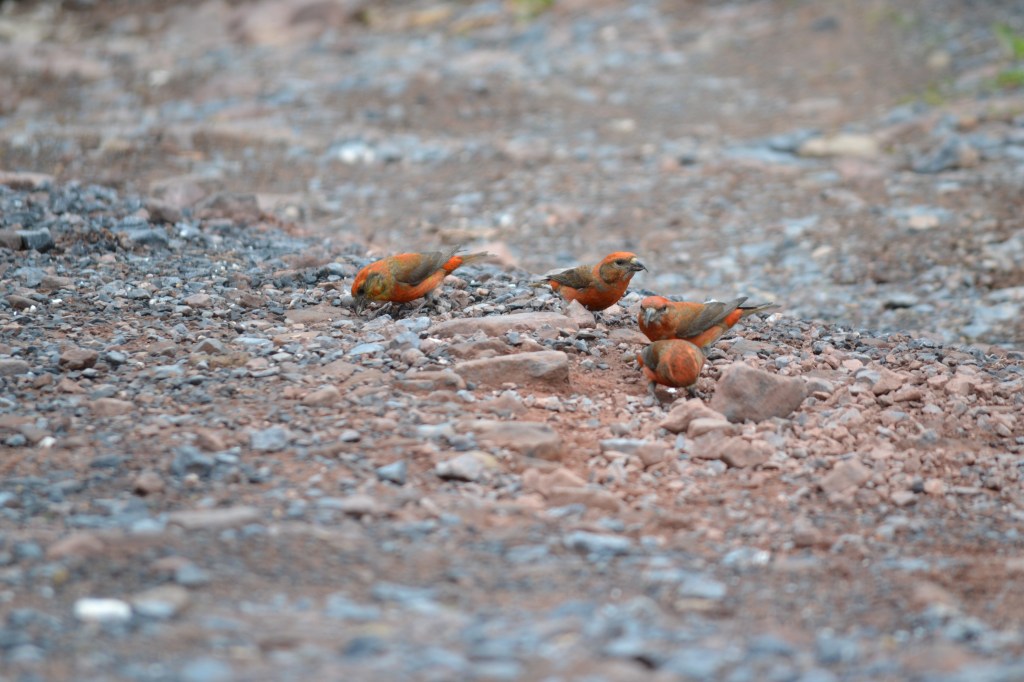
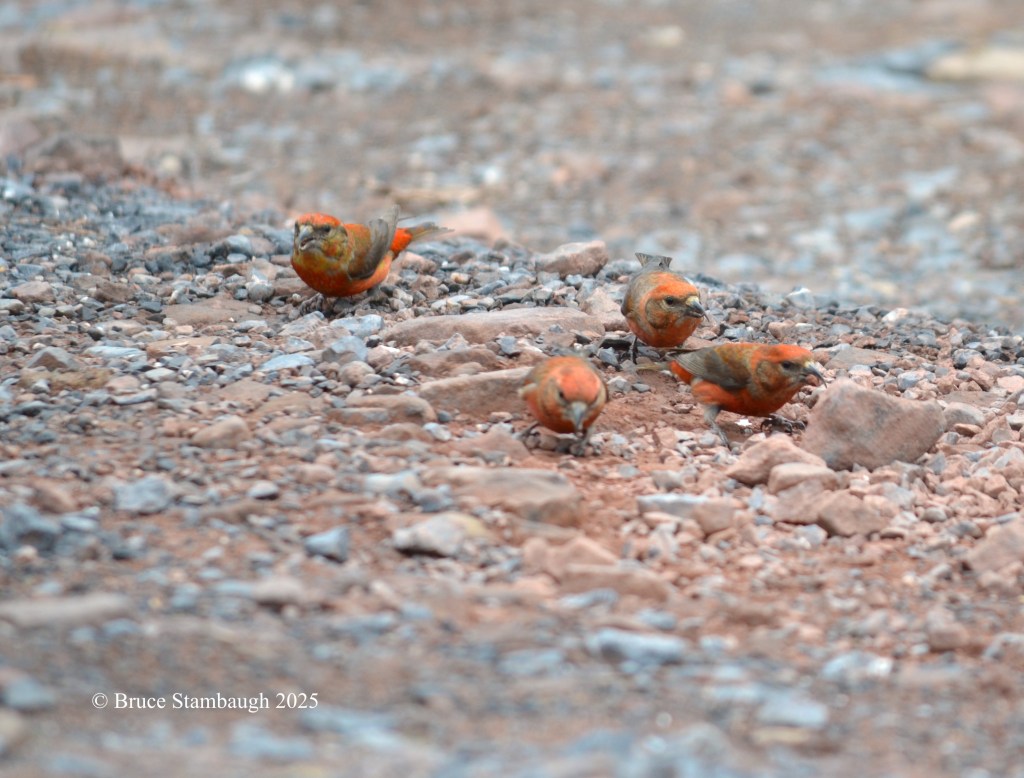
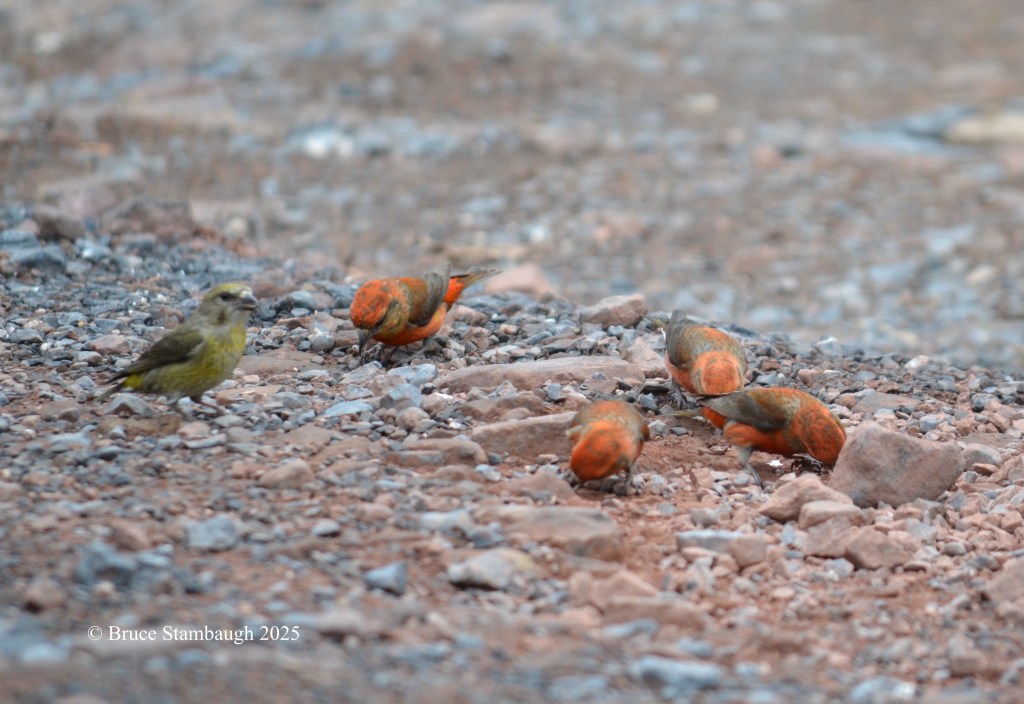
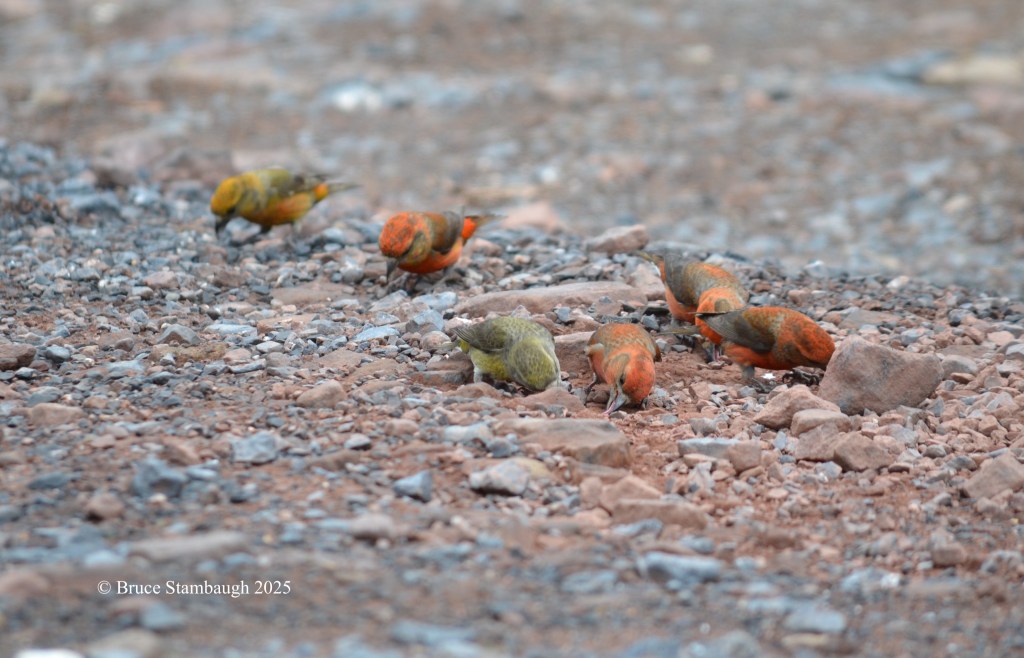
Red Crossbills. Photo by Bruce Stambaugh

Earth Day in Virginia’s Shenandoah Valley dawned with a steely gray overcast sky. It remained that way for the entire day. Still, I ventured out to celebrate the day set to honor Mother Earth.

Recently diagnosed with some unsettling health issues, I spontaneously decided to join the celebration. I hoped doing so would calm my nerves and help me settle my emotions.

I usually plan my daytrips so I’m ready to go at the crack of dawn. Consequently, I lost valuable time in the morning packing my lunch, birding equipment, and attire for the mountains. My destination was Reddish Knob, a peak on the front range of the Allegheny Mountains on the border of Virginia and West Virginia.

With reports of migrating shorebirds and songbirds returning, I wanted to see what I could find. Even though I have been birding for most of my life, I consider myself an average birder. As I age, my hearing has diminished, so I can no longer hear the higher-toned decibels of many songbirds.

I’m grateful for the birding apps on my smartphone. I especially like the Merlin app for identifying bird calls. It’s not always accurate, but it gets the job done for me. Better birders than I, most of whom are younger, are proficient in naming birds upon hearing and seeing them. It’s reason enough to bird in a small group of experienced birders.
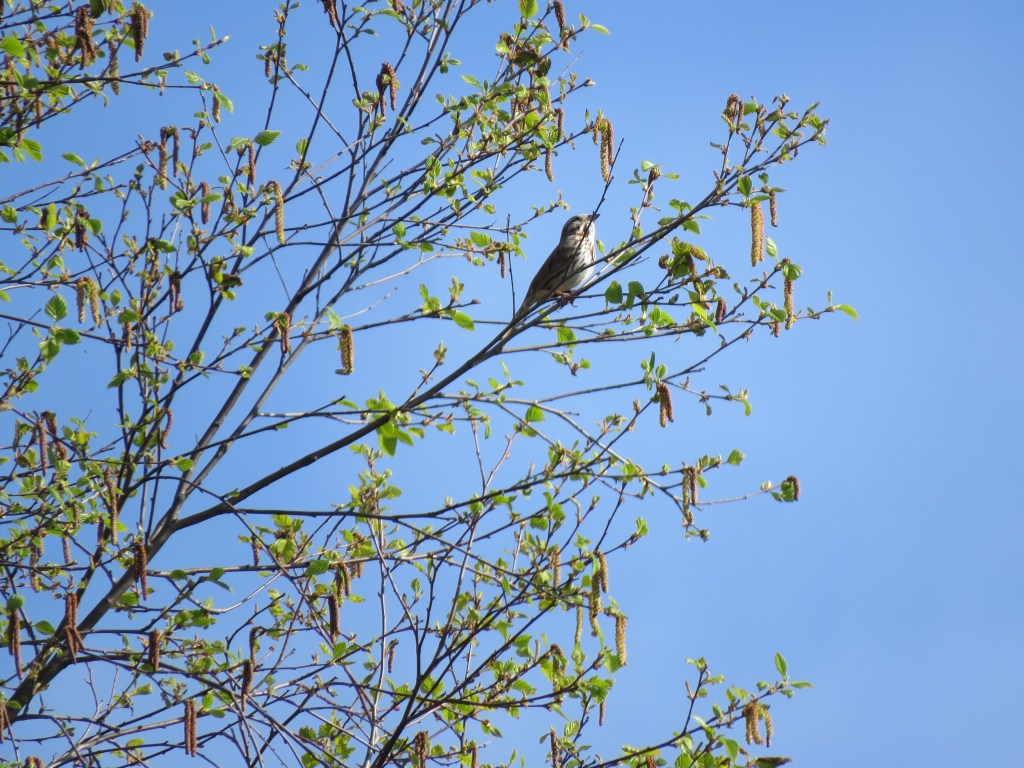
A Song Sparrow sang before I left home. Photo by Bruce Stambaugh

However, today, I chose to go it alone. I needed the solitude and the solace. I did so, knowing that other birders would likely be out searching in the same areas. But it wasn’t to be. I spent the day on my own.

Before I even left, a Song Sparrow sang from a tree across the street. My first stop was a nearby lake renowned for its bird-watching and fishing opportunities. Wind-felled trees provided cover and roosting areas for birds and reptiles.

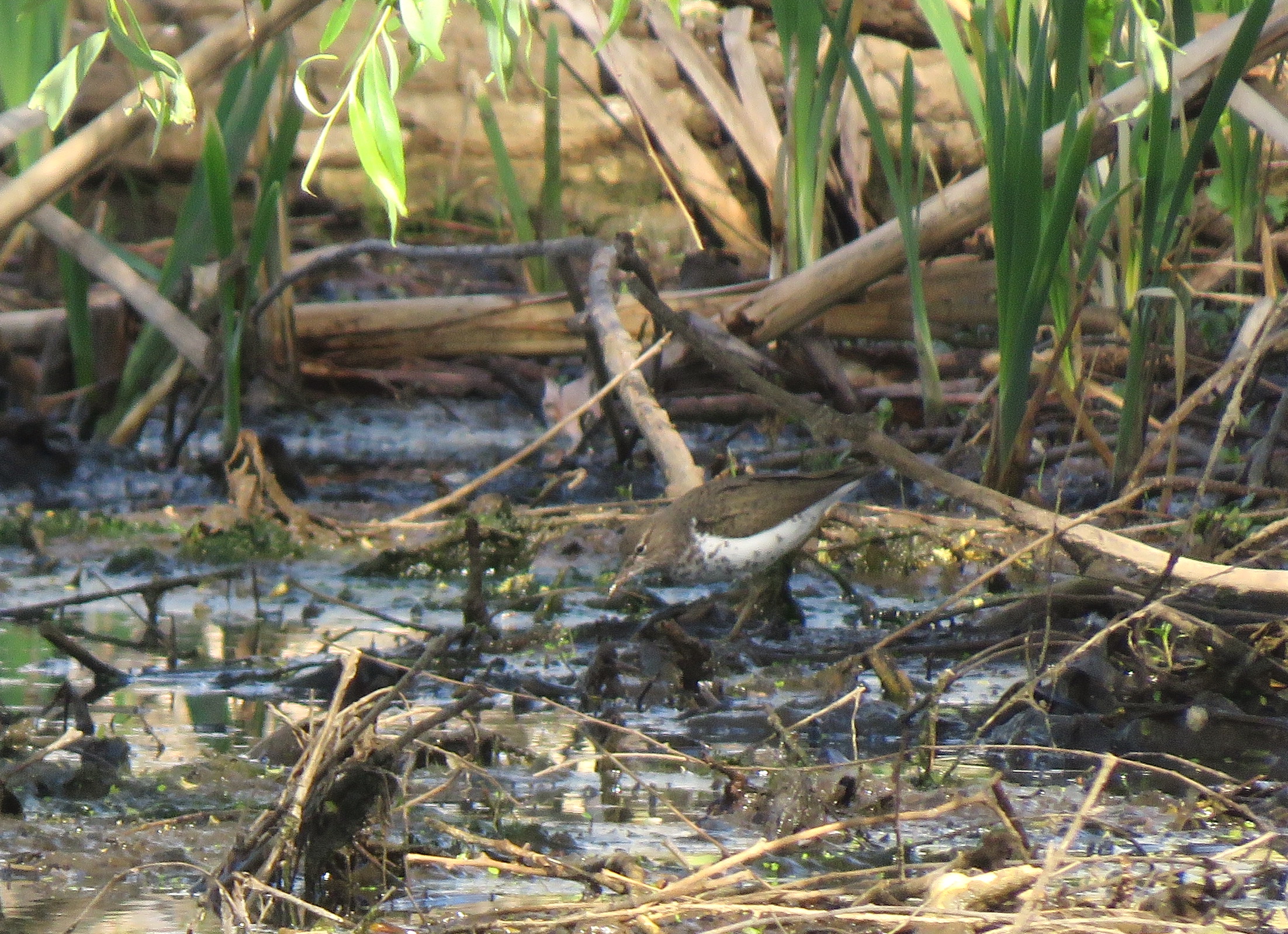
I spotted movement in the shadows along the shallow end of the lake’s shoreline. Beyond a downed tree where turtles rested, a Solitary Sandpiper stealthily stalked its prey. Closer to me, a pair of Spotted Sandpipers waded gingerly among the lily pads, reeds, and downed branches, searching for breakfast.

The lake is a hotspot for migrating ducks and other waterfowl, but there were none today. Above the spillway, however, a pair of Black-crowned Night Herons occupied separate branches on a giant sycamore tree. Soon, a stately-looking Osprey joined them. All eyes were on the lake.

A few miles away, I stopped at a marsh in a farmer’s pasture that allows visibility from the public highway. I heard the familiar calls of Killdeer, and a pair soon landed among the grasses sprouting from the marsh’s muck. Red-winged Blackbirds trilled while Black Vultures sailed silently overhead.

Killdeer at the marsh’s edge. Photo by Bruce Stambaugh

I passed through the rural burg of Briery Branch, and onto Reddish Knob Road. I drove at a snail’s pace with the windows and moonroof open. I turned on the Merlin birding app to listen for calls. When a Louisiana Waterthrush and Blue-headed Vireo popped up, I pulled off the narrow road, turned off the car, grabbed my binoculars, and scanned the tender, emerging leaves for birds. Though they continued to call, I couldn’t find them. The gray sky proved a harsh backdrop.

I continued the slow climb up the mountain. The valley gave way to steep forested hillsides, split by a rushing stream, as I drove higher and higher into the Allegheny Mountains. I stopped whenever a pull-off presented itself and scanned the trees and bushes for birds.

On the right, a recent controlled burn had left the landscape blackened. The underbrush was singed brown, and the needles of young pines hung yellow from the heat. The smell of the fire lingered in the air. Still, I found a Brown Thrasher perched in a tree singing its melodious song high above the scorched earth below.
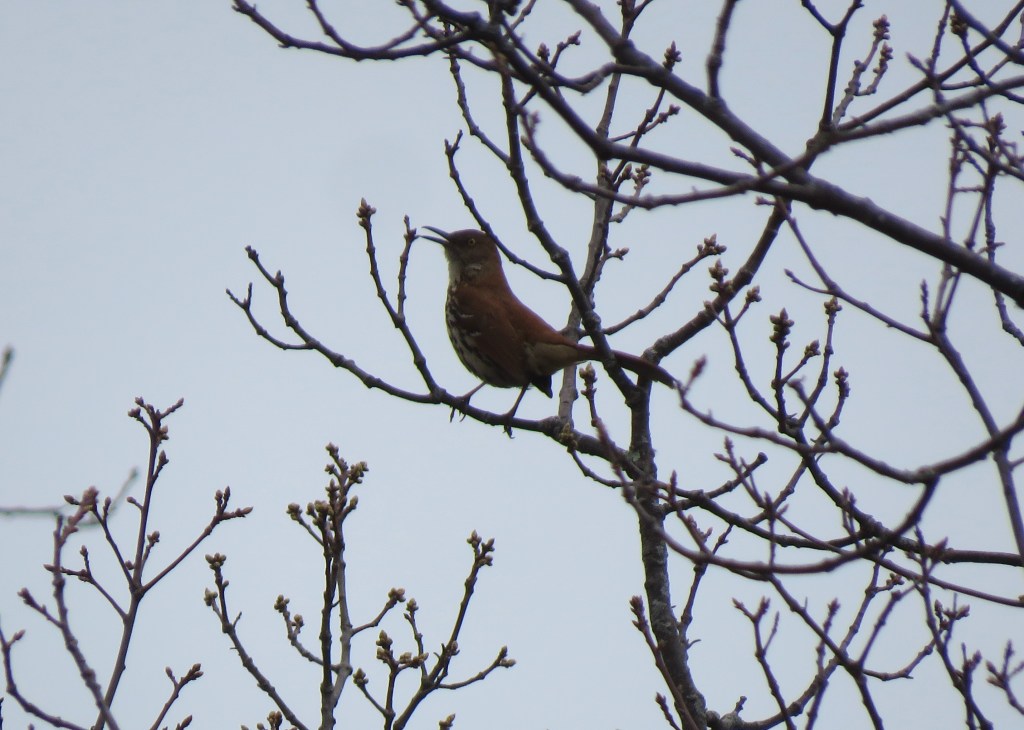
Brown Thrasher singing. Photo by Bruce Stambaugh

Just up the road, I reached my destination, the intersection of Reddish Knob Road and a US Forest Service fire road, which is a mix of dirt and gravel. As I pulled over to park, a small flock of Red Crossbills flew up in front of my vehicle. Those were the birds I had hoped to see and photograph.

I parked my vehicle a few feet away, excitedly exited with my camera, and the birds returned to the same spot on the side of the road. These beautiful birds were what I call “graveling.” Why do these lovely, social birds ingest grit and minerals along roadsides? The pebbles and dirt help them digest the pinecone seeds they eat.
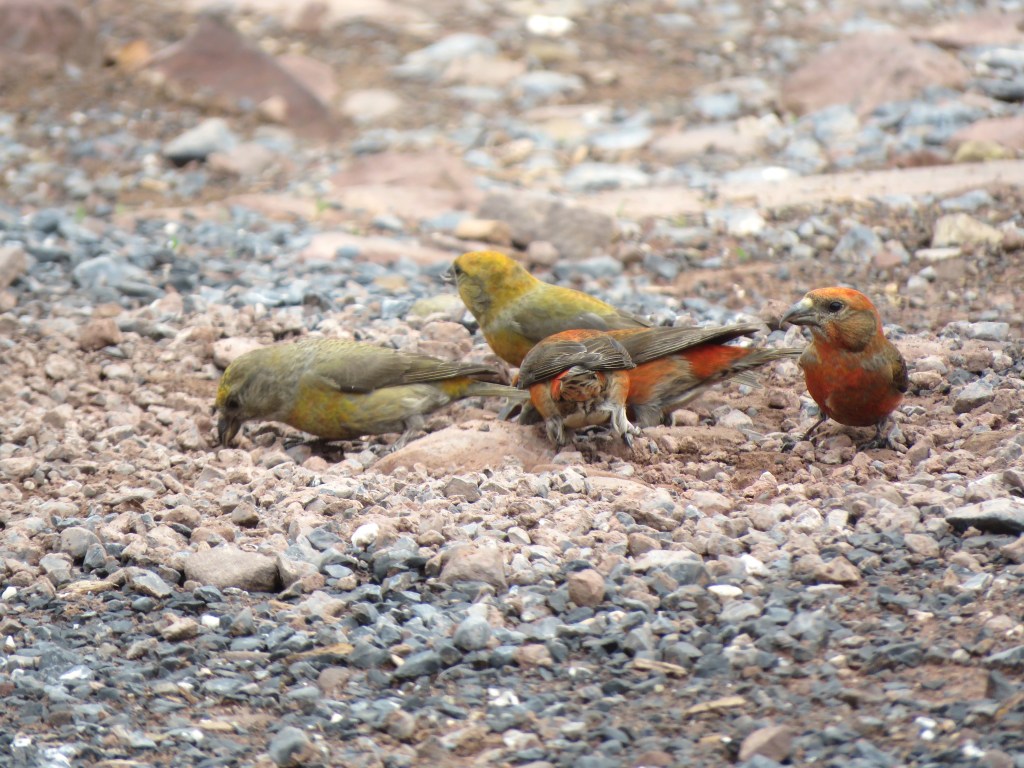
The Red Crossbills gathering grit. Photos by Bruce Stambaugh

The birds settled in as I stayed as still as possible. I captured several photos of these magnificent birds gathering grit. The females are a yellowish-green, while the males are mostly a fire-engine red with dark wings. They can be found year-round in a small geographical area along the front range of the Alleghenies. They are scarce in most other regions of the US except the Rocky Mountains.

All the while, Common Ravens flew back and forth above the ridgeline. Blackburnian and Black-throated Green Warblers sang in the tree tops as they foraged for insects. Ovenbirds, Blue-headed Vireos, and Eastern Towhees joined the chorus. 

Please click on the photos to view them in full size.

On my retreat down the mountain, I stopped at a camping area adjacent to a gurgling mountain stream. I heard many warblers, but saw only a few. I could have used other pairs of eyes to help spot the birds high in the emerging canopies.

Still, it was a fulfilling and satisfying Earth Day for this septuagenarian. I surrendered to my surroundings, the fresh air, the towering evergreens, and the budding deciduous trees. Bird calls replaced motor vehicle and lawnmower noises, and clear mountain streams rushed their way to the valley floor. 

Thanks to the bird song choruses, inspiring mountain views, and the singing brooks, nature’s peace enveloped me. Isn’t that one of the goals of Earth Day?

The mountain stream. Video by Bruce Stambaugh

© Bruce Stambaugh 2025
From One Nest to Another

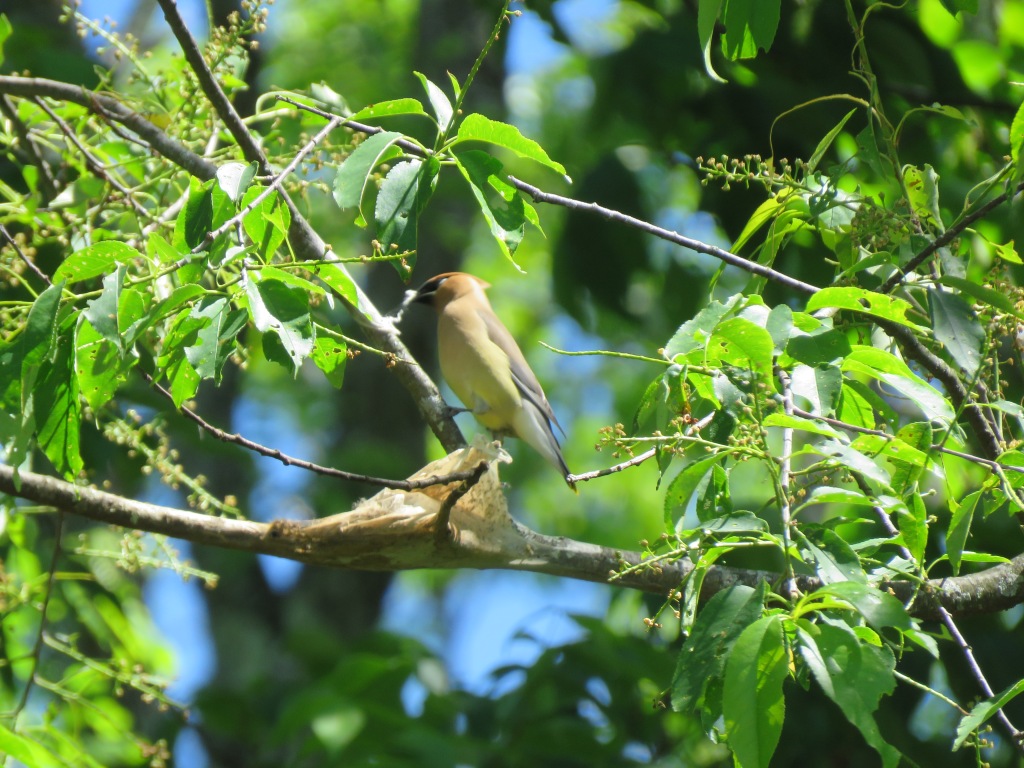
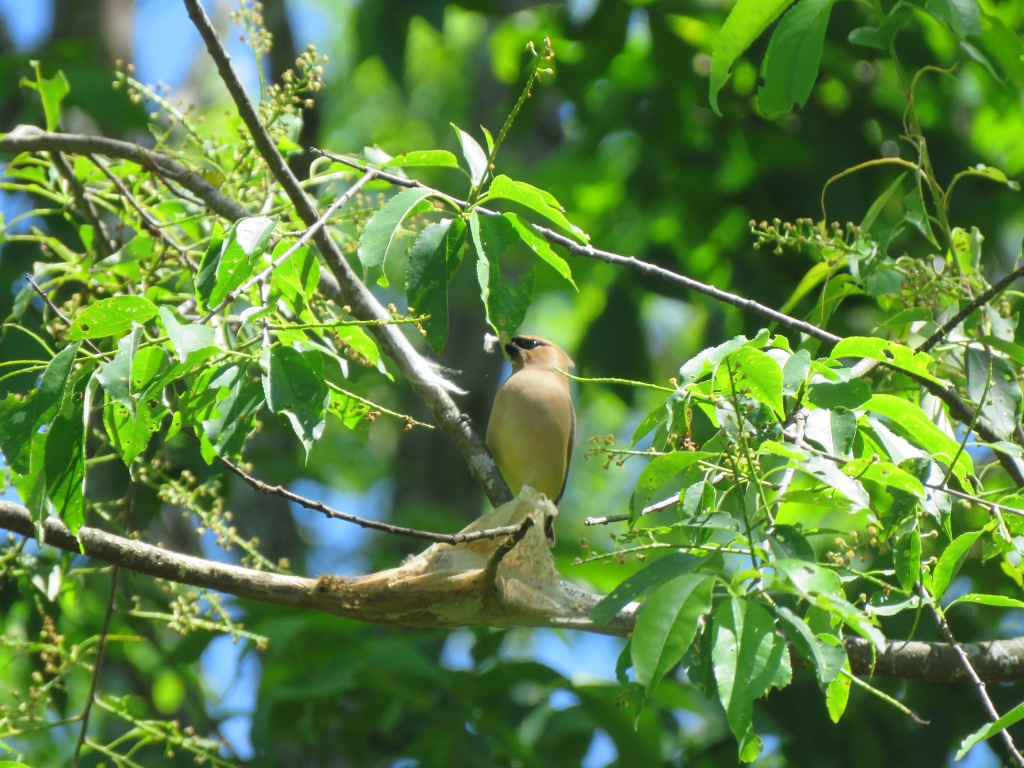
A Cedar Waxwing collects nesting material. Photo by Bruce Stambaugh

Birds always teach something new.

While mainly looking for warblers on Reddish Knob on the Virginia/West Virginia boundary, I spotted a Cedar Waxwing light into a wild cherry tree. I aimed my camera to capture a shot or two of the always lovely and entertaining waxwings.

At first, I thought the bird might be after the Eastern Tent Caterpillars in their silken nest. Waxwings supplement their spring and summer diets with insects when berries aren’t available.

Since the bird stayed in the same spot, I kept clicking away. It wasn’t until I loaded the photos onto my laptop that I realized that the Cedar Waxwing was after nesting material, not food. According to the Cornell Lab of Ornithology, the female Cedar Waxwing usually gathers the nesting material for the first brood.

In this case, the waxwing collected the tent’s silk support strands and ignored the rest. Perhaps those connecting threads are stronger than the silk that forms the tent.

The process took less than a minute, and she was off to add her precious cargo to construct her own nest. The female waxwing weaves grasses, twigs, cattails, and pine needles to form her cup-like nest. Now, tent caterpillar silk threads can be added to the list.

The sequence of the Cedar Waxwing gathering silk from the Eastern Tent Caterpillar tent. Please click on the photos to enlarge them. Photos by Bruce Stambaugh.

Not only did I see a beautiful bird at work, but I also learned about Cedar Waxwing nest building. And, yes, I heard and saw a few colorful warblers, too.

© Bruce Stambaugh 2024

Snow on the Mountains

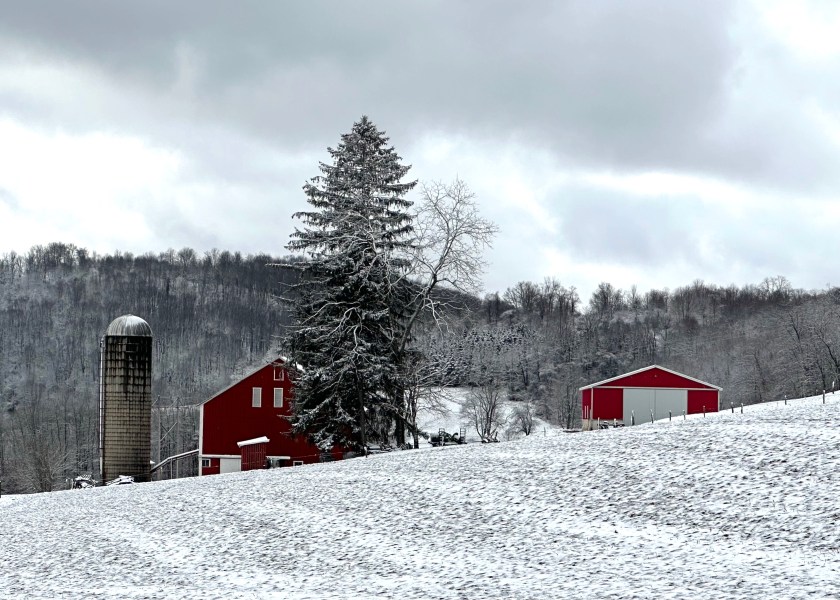
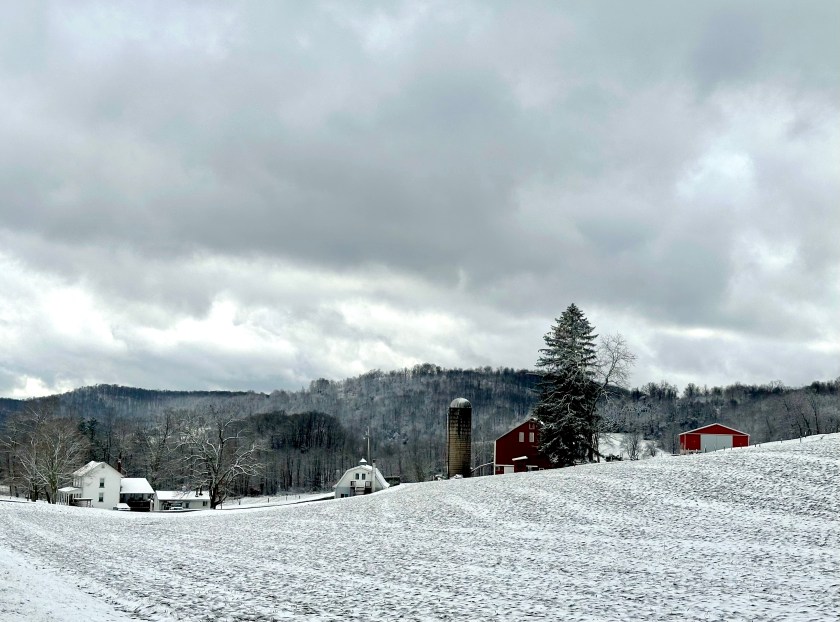
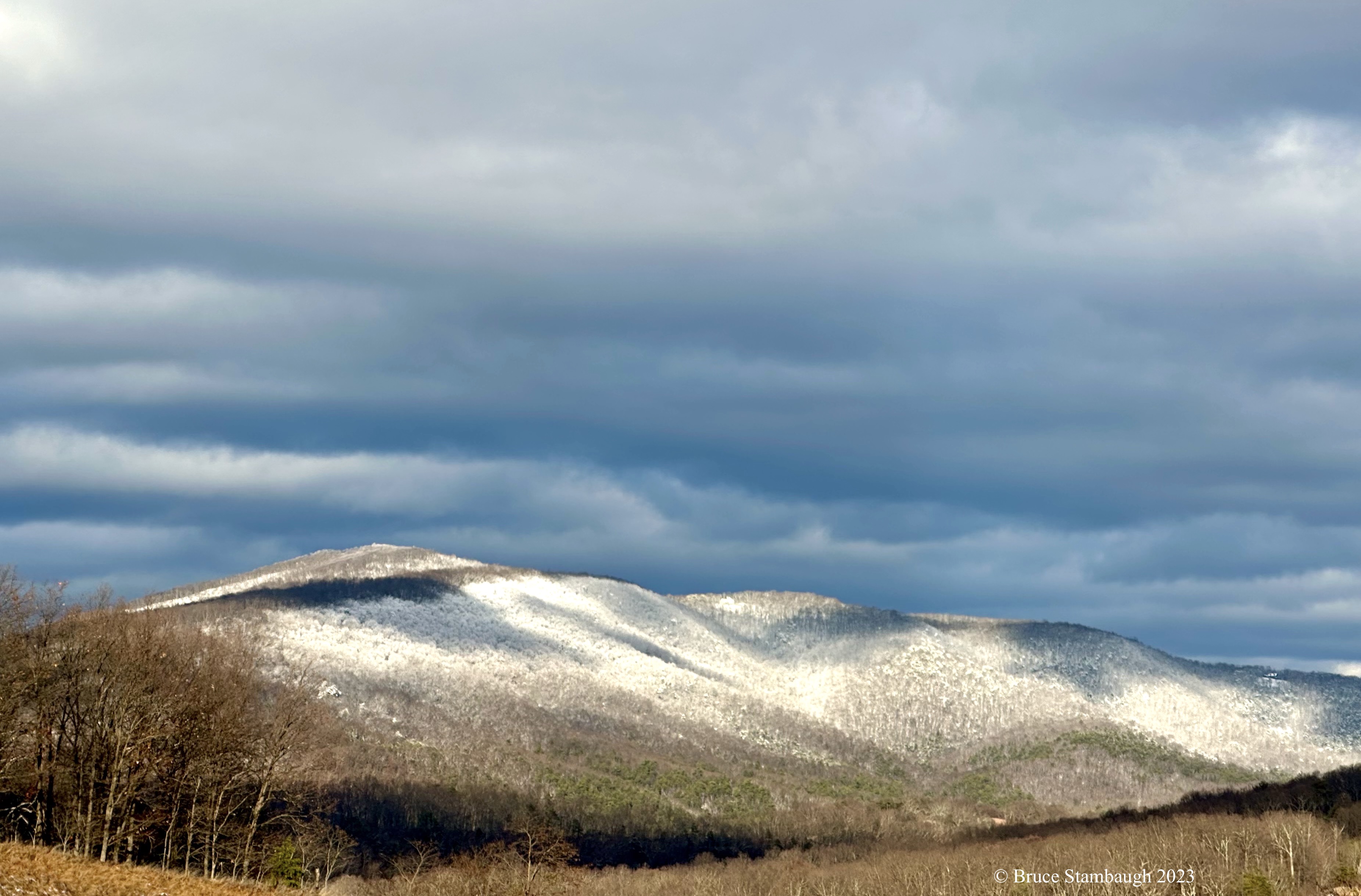
A view of the snow-covered West Virginia mountains.

My wife and I spent a wonderful long weekend visiting family and friends in Ohio. With a powerful cold front sweeping across the country, I suspected our return trip might be dicey since we had to travel through several mountain ranges to return to our home in Virginia’s Shenandoah Valley.

To avoid slippery roads, we waited until the warnings and advisories for heavy snow expired before setting out. That still gave us time to arrive home before dark as long as the roads were clear. Fortunately, they were.

The snow appeared as soon as we began to climb in elevation east of Morgantown, West Virginia. The tall, dark, barren trees sprouted from a light snow covering. The beauty would only increase as we progressed southeast.

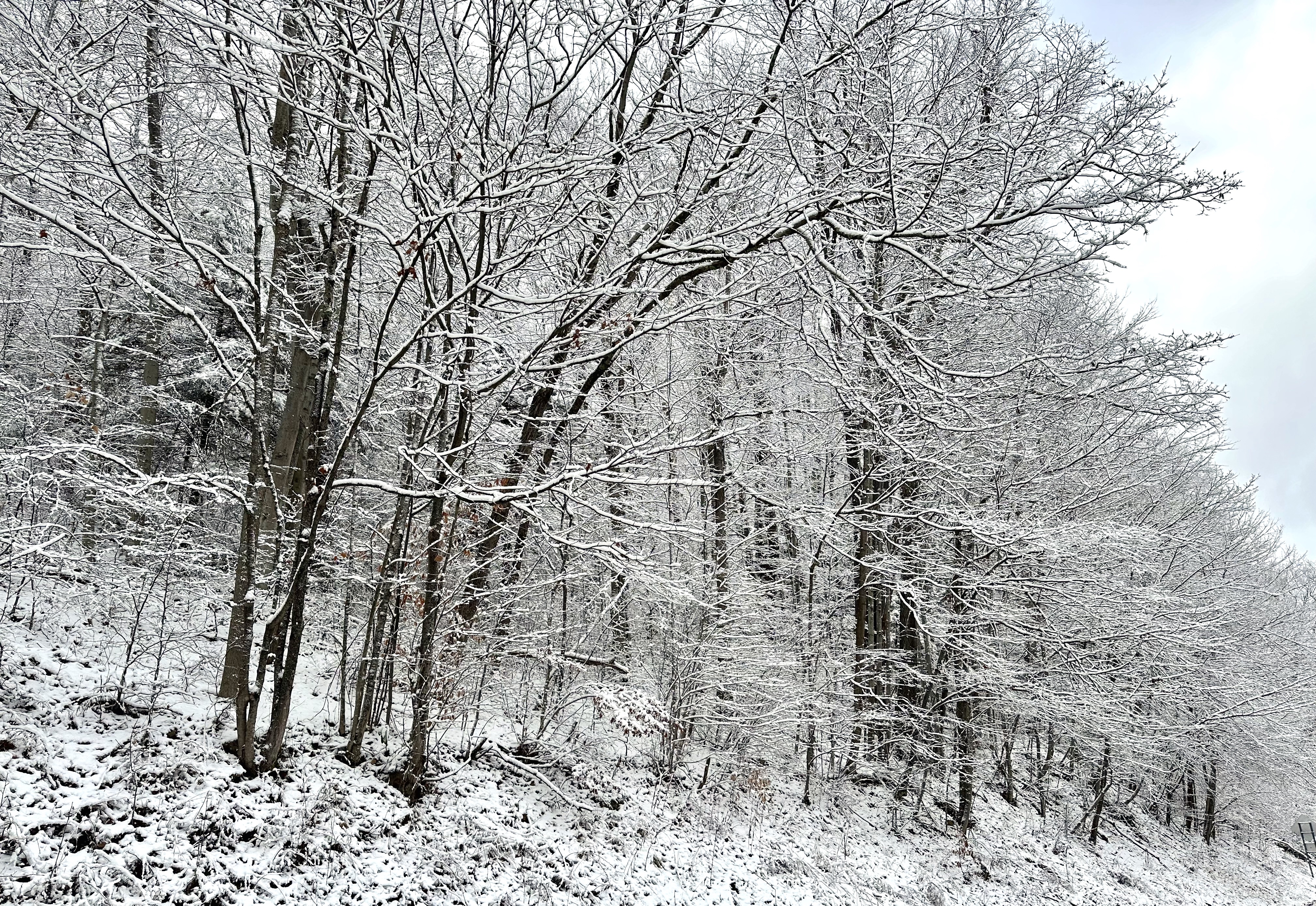
A snowy scene near Oakland, Maryland.

The highways in Maryland traverse mountains that appear all scrunched together. The effect is that you are riding across the mountaintops without ever descending into deep valleys. There, the storm had frosted entire woodlots with powdered sugar. Inches of snow stuck to the tree branches and trunks and covered the forest floor and adjoining farm fields. It was gorgeous.

I stopped several times for photos. However, we saw numerous scenes without a safe place to pull over. Those images will have to remain pleasant memories.

Please click on the photos to enlarge them.

Since I couldn’t stop along the narrow, winding state route, I chose several county roads for photos. I didn’t have to go far. It was like we had driven into a black-and-white movie from the 1950s. Forboding dark clouds enhance that effect.

We continued our trek south and east into West Virginia. The snowy, panoramic landscape became wide open once we hit Corridor H, U.S. 48. We took advantage of highway overlooks for thrilling shots.

Please click on the photos to enlarge them.

In Maryland and West Virginia, giant windmills swooped their massive blades round and round. Despite their distance from us, the noise shocked me when I exited the vehicle for photos.

The valleys became more expansive, and the mountains steeper as we continued east. As the National Weather Service predicted, areas above 2.000 feet in elevation received the heaviest snow. The lowland had little to no snow at all.

A sunlit mountainside near Baker, West Virginia.

The farther east we traveled, the more frequent the breaks in clouds, which allowed the late afternoon sun to break through. The contrast between the sunlit and shadowed snow created lovely shade and color contrasts.

As we entered our beloved Shenandoah Valley, snow had all but disappeared. Only the higher ridges remained white. The morning photos of friends on social media showed the comeliness of the snowfall in the valley, with the snow-covered old-age mountains as a beautiful backdrop.

Still, we were happy to have seen the snowy sights and thankful for cleared highways, and to be home.

Cattle grazed beneath the snow-covered Allegheny Mountains near Lost City, West Virginia.

© Bruce Stambaugh 2023

Autumn’s Amazing Colors – Part 2

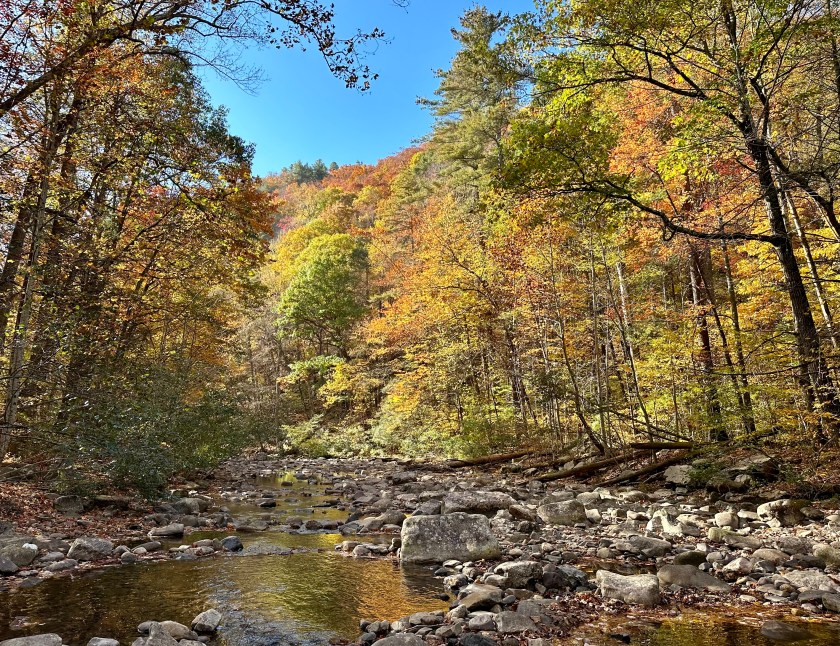
The Dry River in western Rockingham County, Virginia.

My quest to capture fall’s unique colors continued. The weather was incredible for taking photos. The blue skies, unseasonably warm temperatures, and the desire to get outside and enjoy creation spurred me on. Plus, my wife was more than happy for the time to spruce up the house with me out of the way.

I originally had planned to go to Shenandoah National Park at the eastern end of Rockingham County, Virginia’s second largest in square miles. Instead, Shenandoah Mountain on the western edge of the county called my name.

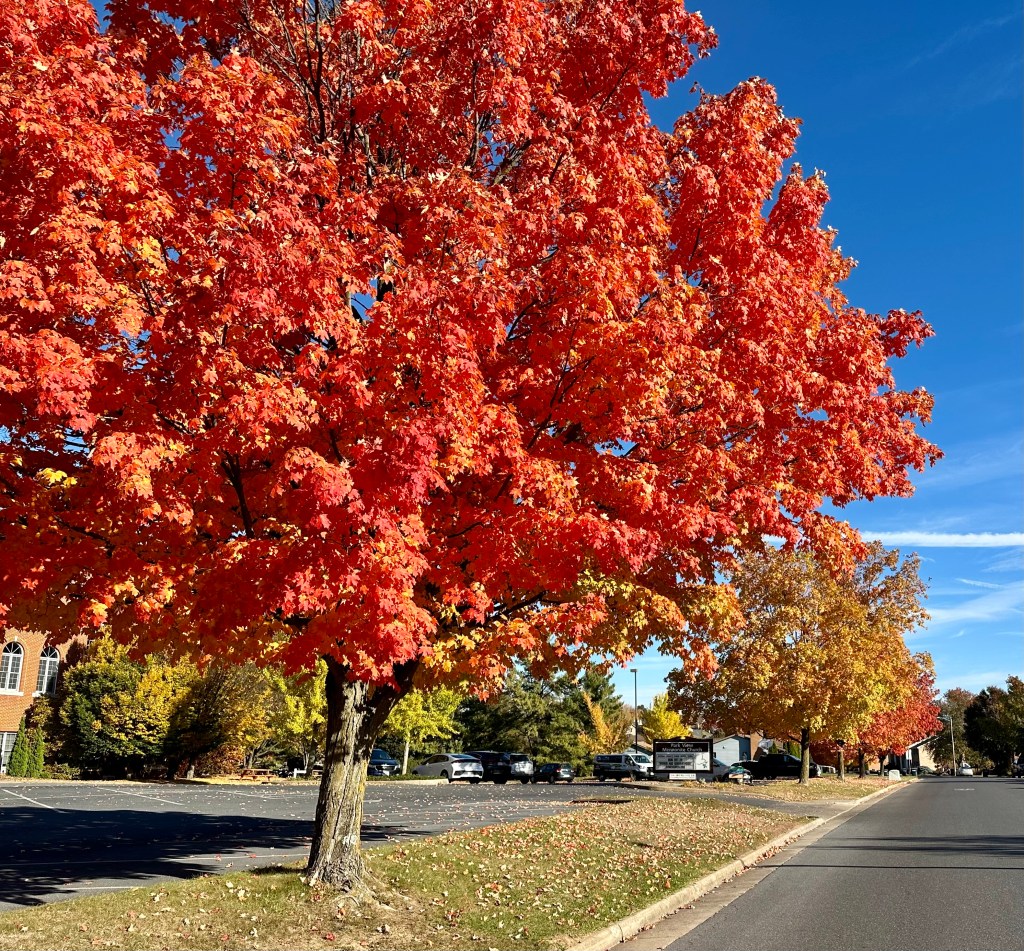
Sugar maples at Pleasant View Old Order Mennonite Church.

I first returned to the Old Order Mennonite Church to capture more photos of the radiant sugar maples in the morning light. They had a funeral the previous day, and out of respect, I didn’t want to interfere, so I only took a few photos.

I wound my way towards the Allegheny Mountains, first stopping at Riven Rock Park, maintained by Harrisonburg Parks and Recreation, even though it is 13 miles west of the Friendly City. Despite the buzzing insects, it was the right decision.

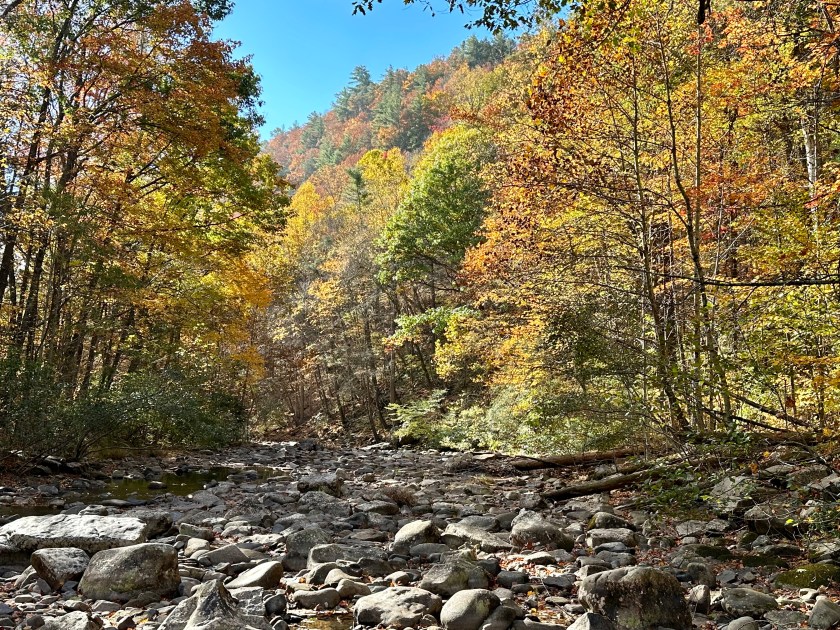
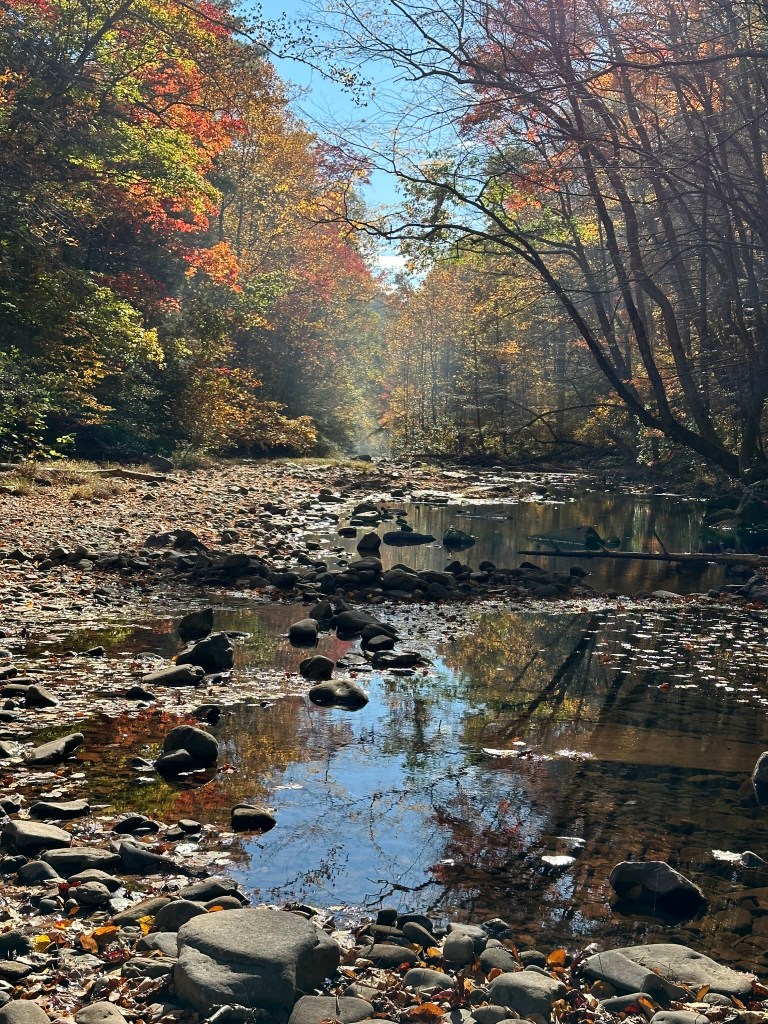
Because the area has been in a moderate to severe drought for weeks, the Dry River was indeed nearly dry. The rising sun sparkled what water was there and drew a light fog from the forest. A few lucky leaves bathed in the sun’s rays in the narrow gap between the steep foothills.

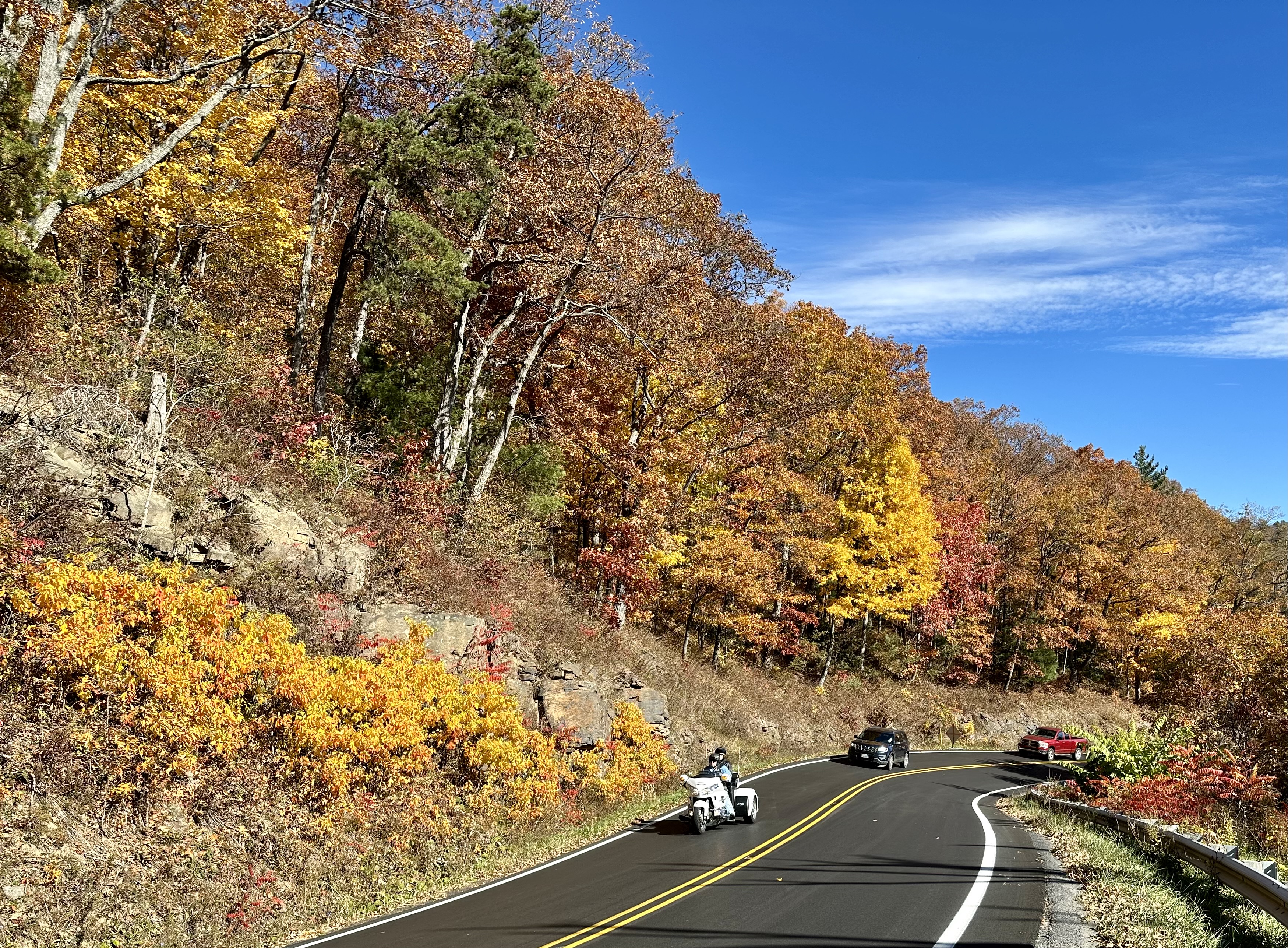
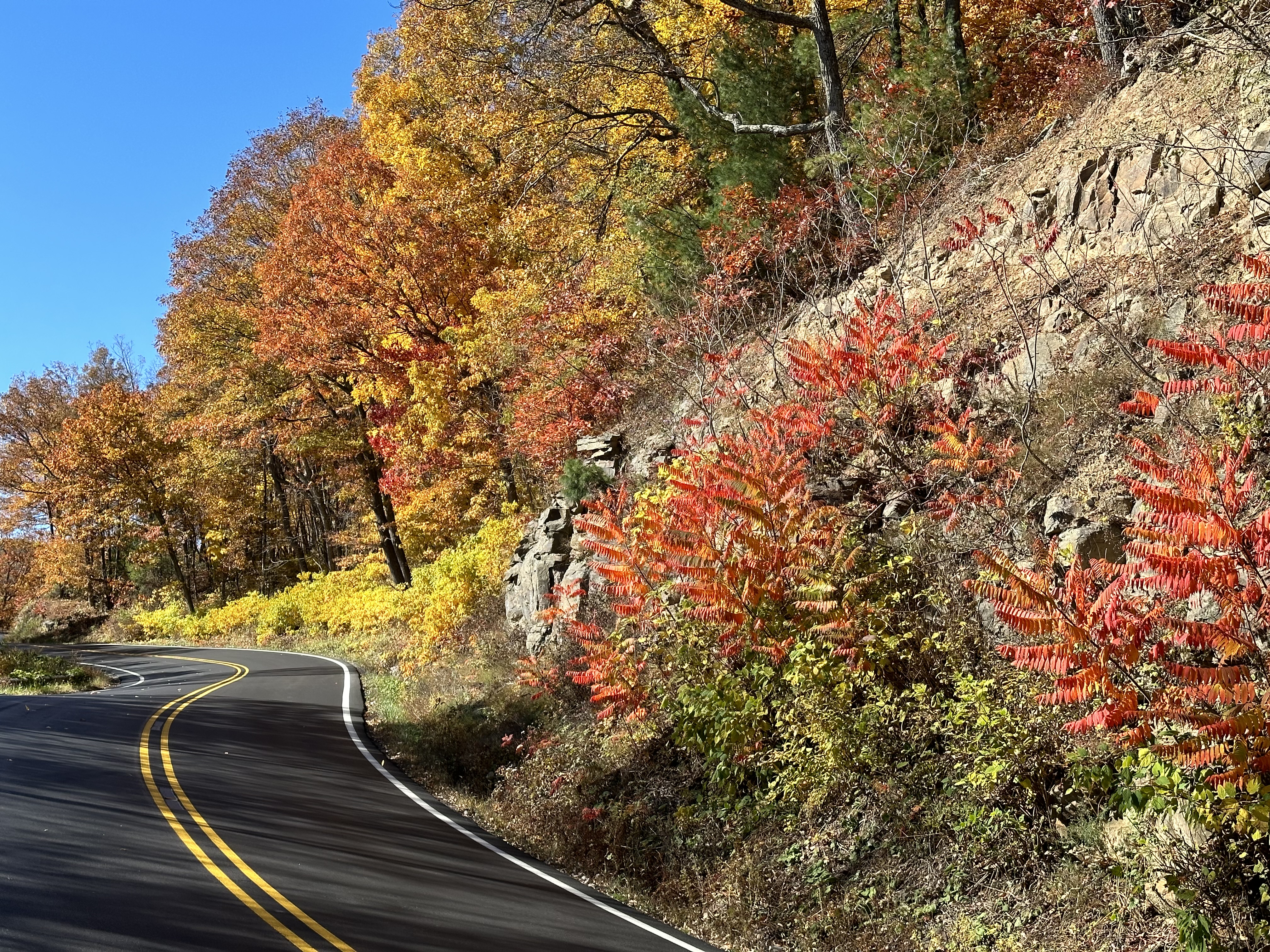
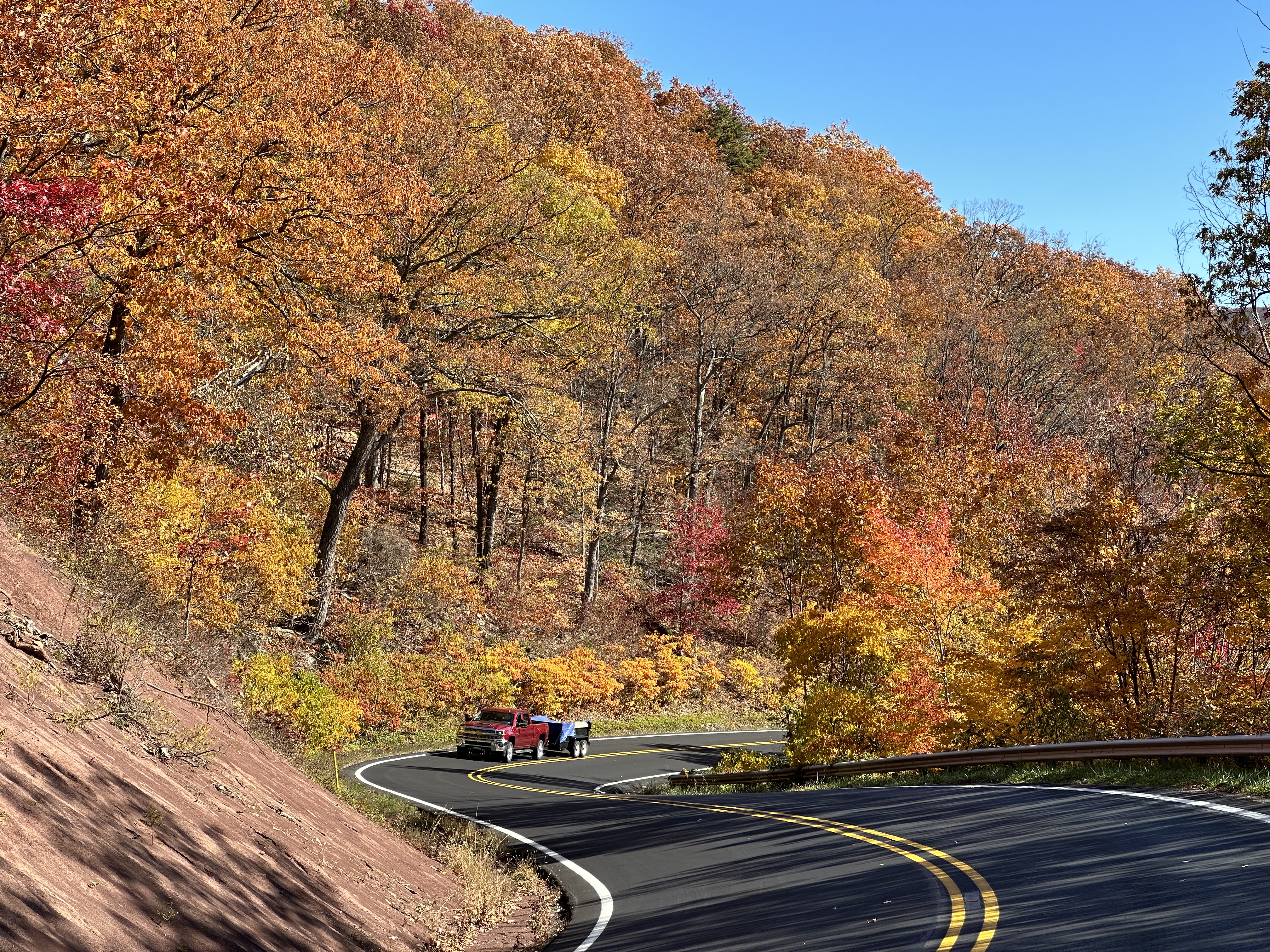
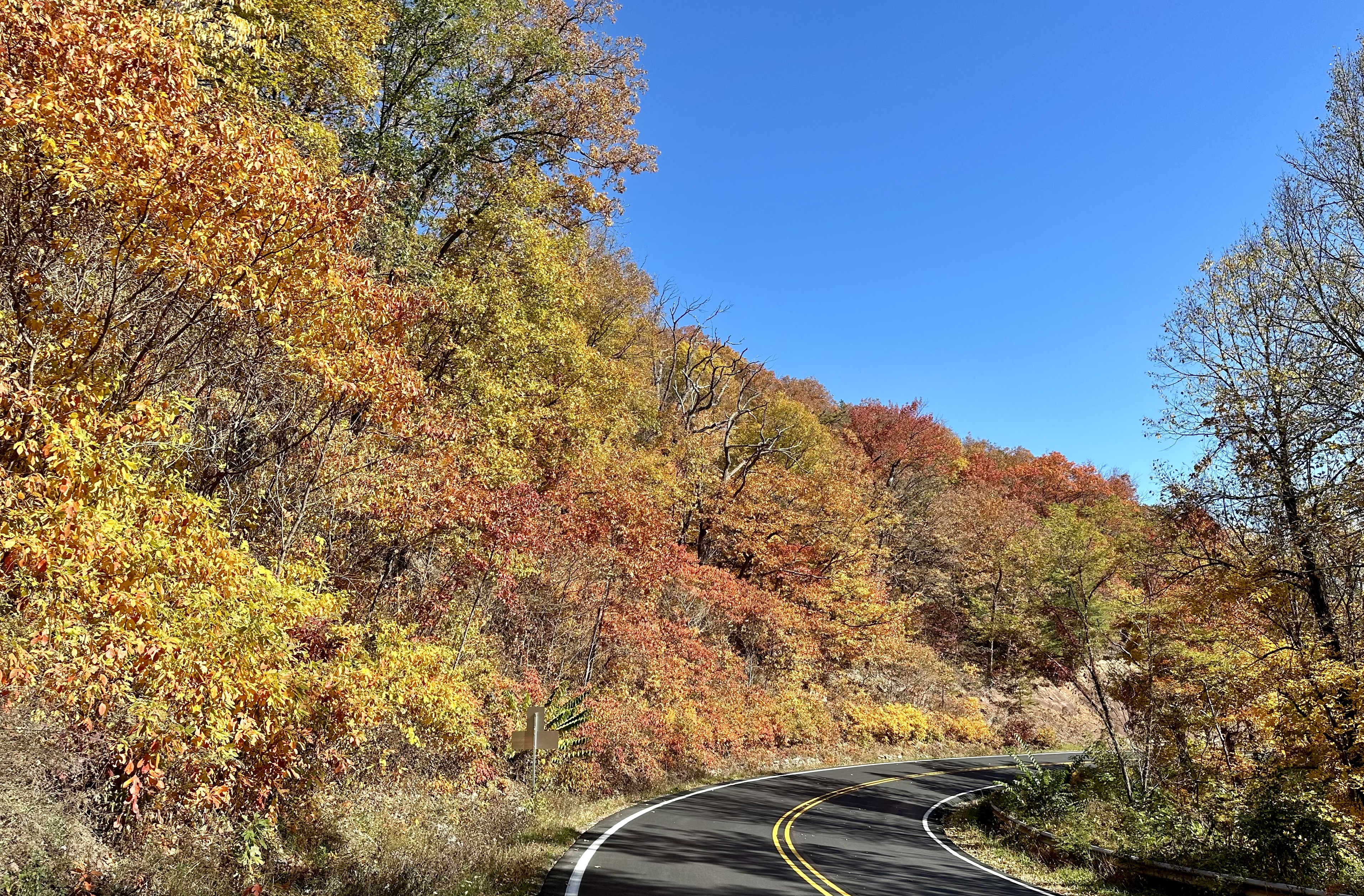
I snapped a few photos and continued through the tunnel of trees of the George Washington National Forest. In a couple of miles, U.S. Route 33 instantly transforms from an arrow-straight highway to a zigzagging assembly of switchbacks for four miles to the peak of Shenandoah Mountain.

I noted several photo opportunities on the way to the mountaintop, as the state line between Virginia and West Virginia. I watched for places to pull off the winding, narrow roadway, too.

Within a quarter mile of my turn-around destination, traffic stopped. West Virginia Department of Transportation was doing some roadwork. Experience told me that it would be a while sitting in the line of vehicles since WVDOT uses a “Follow Me” pilot vehicle in construction zones. That is especially true in the mountains. It’s all for safety’s sake.

Once the line began moving, I pulled into the parking lot for Hightop Mountain Trail, which runs south along the state line to an old fire tower. Once all the cars behind me were gone, I headed back down the mountain. The look on the flagger’s face said, “Where in the heck do you come from?” I just smiled and waved until I reached my first safe pull-out.

I stopped several times, all the while being mindful of traffic from both directions. I often take photos with vehicles in the roadway for perspective and depth.

The next day, I chose to return to the Park View neighborhood of Harrisonburg and continue photographing the many beautiful trees there. I knew it would only be a matter of time before the trees would all be bare.

The sugar maples and the ginkgo trees complement one another.

© Bruce Stambaugh 2023

Hiding in Plain Sight

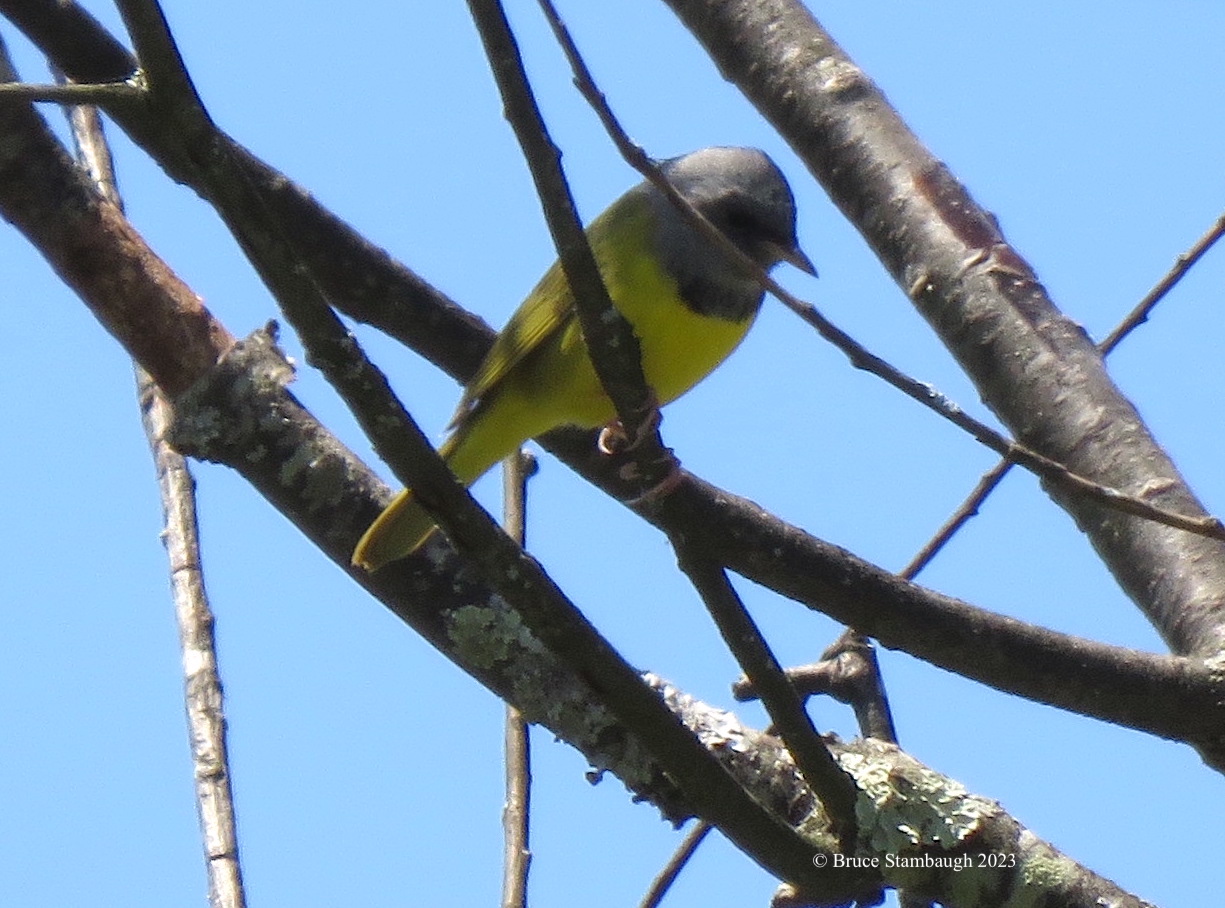
A male Mourning Warbler.

I couldn’t believe my eyes. I had heard a Mourning Warbler singing before, but I had never seen one. I always attributed that to their habitat and skulking behavior. It could have been my poor eyesight, however.

Mourning Warblers tend to stay closer to the ground than the one I spied 15 feet high in a dead wild cherry tree. They favor low brushy habitats, not bare tree limbs. Yet, here it was, and I was pretty happy to be able to capture a few photos before this beautiful bird with a lovely song dropped into the underbrush and out of sight.
Most Mourning Warblers nest in boreal forests in states and Canadian provinces well north of Virginia. However, there is a small area in the Allegheny Mountains along the boundaries of Virginia and West Virginia, where they also breed.

When I learned that other birders had spotted Mourning Warblers near Reddish Knob, a mountain summit on the Virginia/West Virginia border, I decided to go for the bird. The drive to that area is less than an hour from my home in the Shenandoah Valley.

Other birders had the same idea. The bird was easily heard, and with six pairs of eyes, the target bird was soon spotted. However, I didn’t expect it to be so out in the open. But I had to act fast. Mourning Warblers seldom sit still. As you can see, this bird was already looking down and dropped out of sight right after I snapped this photo.

I was grateful for the help of the other birders, who were equally happy that I was able to get the photographs I desired. The Mourning Warbler was only one of several bird species I saw that day, but it was the best.

© Bruce Stambaugh 2023

September’s 1st Sunset

Please click on the photo to enlarge it.

I was out watering plants and trees last evening since we haven’t had any rain for several days. Suddenly, the western sky turned bright golden.

I quickly wrapped up my watering, grabbed my camera and iPhone, and headed to a close location with an open view to the west. The golden glow had faded. The sun disappeared behind the Allegheny Mountains, but dramatic color remained.

The farmer had already cut the enormous cornfield and had turned loose steers to forage for spilled corn cobs. With Mole Hill to the left and the sunset’s remnants still lingering above the mountains, it looked like a scene out of the old west, not the Shenandoah Valley.

The vista was a beautiful way to close out the first day of September.

© Bruce Stambaugh 2022

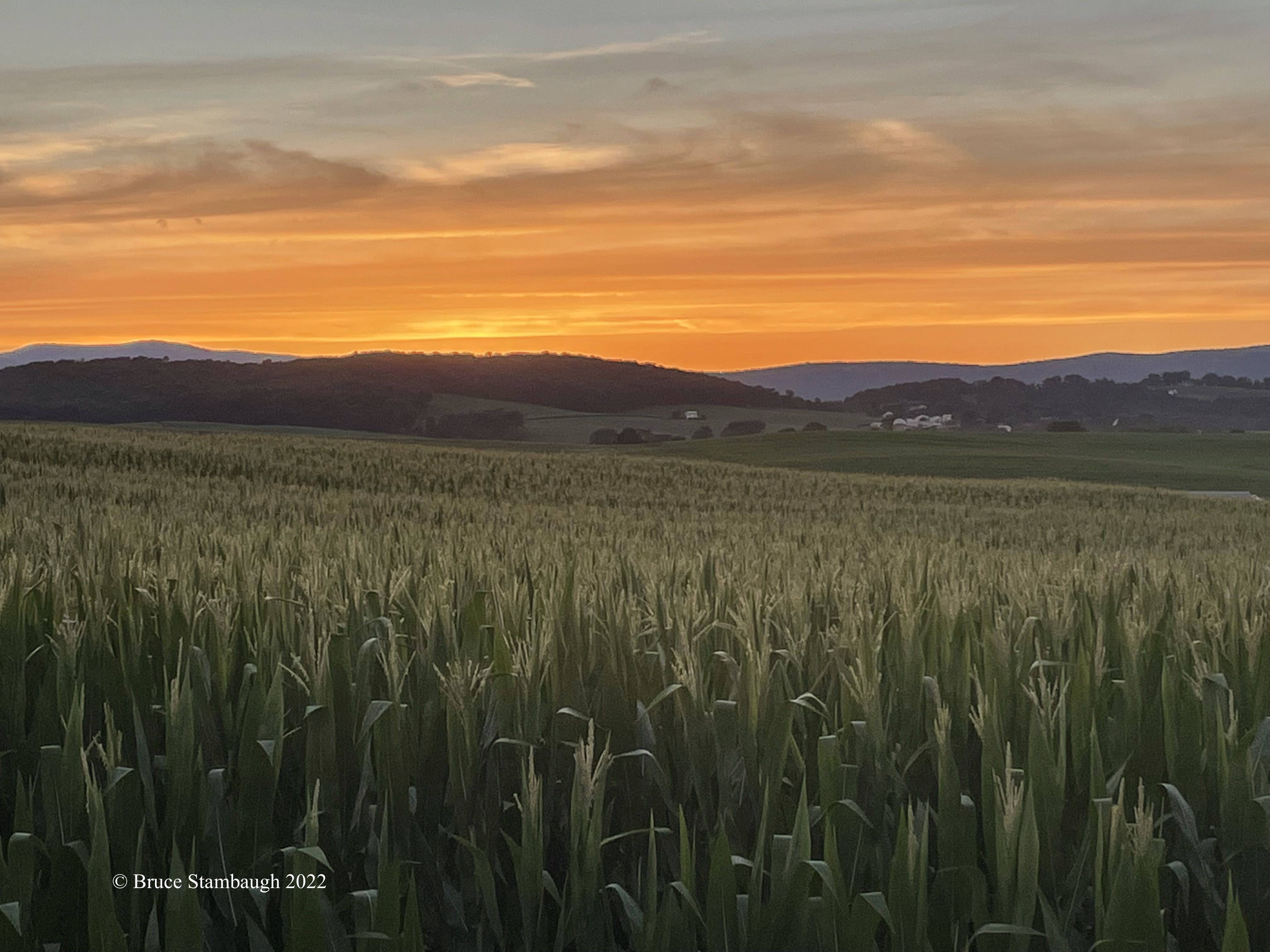
Tassels at Sunset

Please click on the photo to enlarge it.

I am always looking for new locations to capture sunsets. I accidentally found this spot on a dead end road.

While the sunset wasn’t spectacular, something else caught my attention. The sweet fragrance of growing corn filled my senses. Then I noticed how the soft evening light highlighted the emerging tassels of the cornstalks. The flow of the large cornfield took my eye right back to the Allegheny Mountains and the setting sun.

© Bruce Stambaugh 2022

Mountain to Mountain

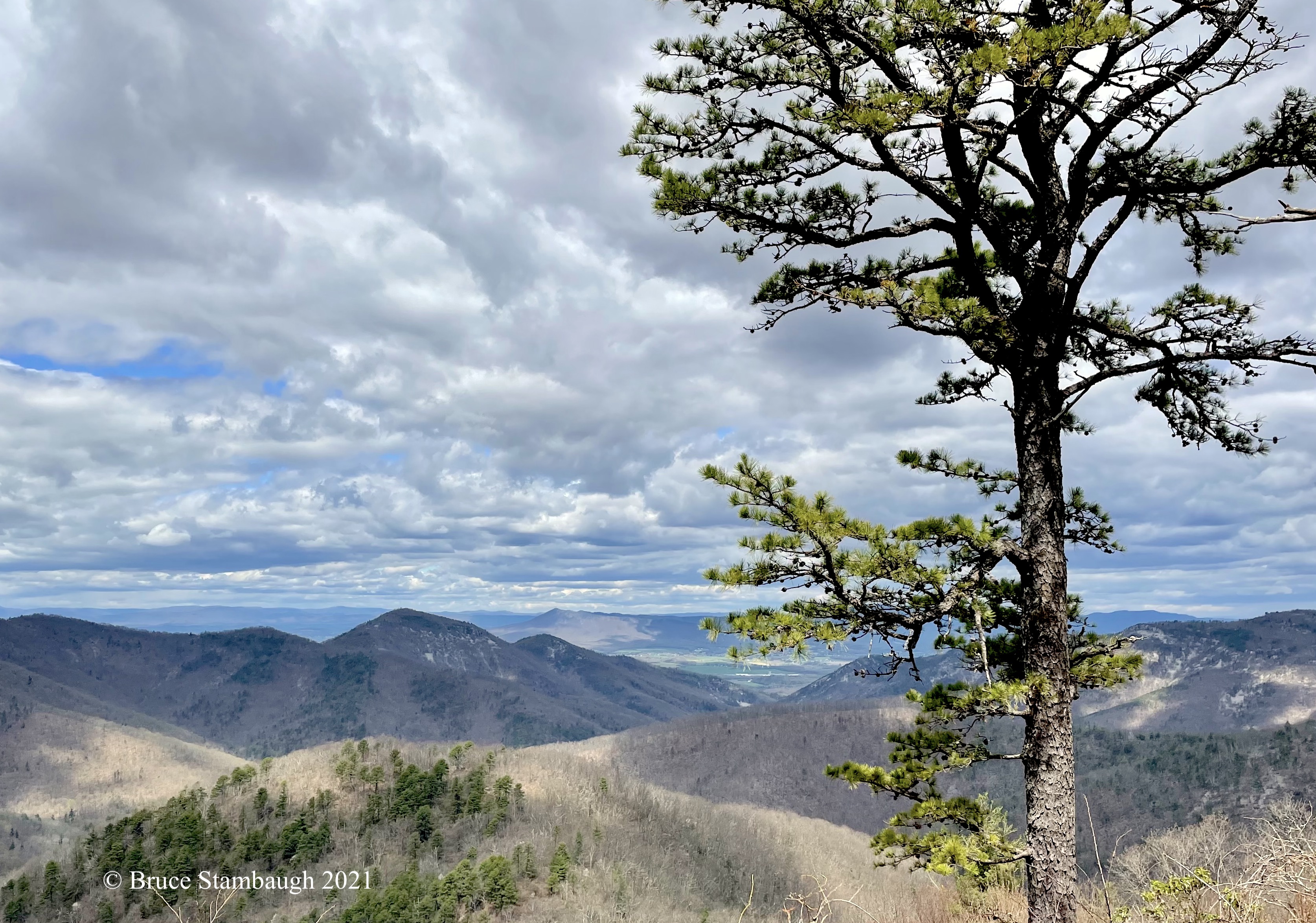
I live in one of the prettiest places in the world. I can be atop the Allegheny Mountains in less than half an hour. They are the mountains in the far distance, center to left in the photo.

In less than an hour, I can be driving on the enchanting Skyline Drive in Shenandoah National Park, which runs 105 miles along the Blue Ridge Mountains. This photo was taken less than a month ago from Rockytop Overlook on Skyline Drive.

The peak in the center of the photo is the southern tip of the Massanutten Mountains east of Harrisonburg, Virginia. These old age mountain ranges can’t compare in beauty to the younger, sharper, snow-covered Rocky Mountains. Nonetheless, I find beauty in the mountains that border and bisect the Shenandoah Valley even on a mostly cloudy day.

© Bruce Stambaugh 2021

Day is Done

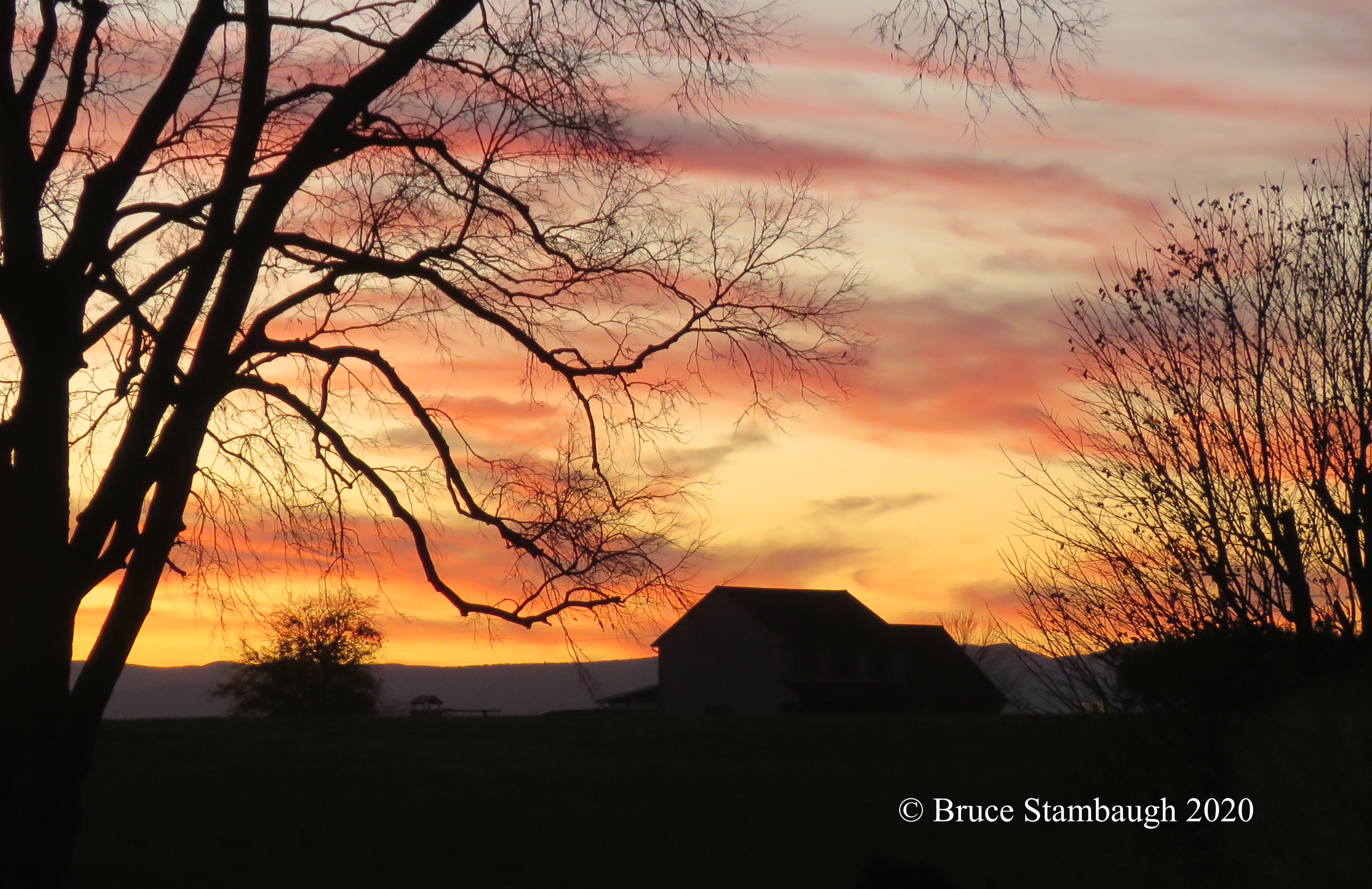
Showy sunsets have been hard to come by recently in the Shenandoah Valley. Either the skies have been clouded over, or there have been no clouds at all. When friends invited us over to view the sunset from their backyard, I was hoping for the best. I got my wish.

As we sat around the fire pit in the coolness of the early evening, the day’s high, thin clouds hung around long enough to provide a colorful show to the waning day. In the foreground, the silhouettes framed the reddish clouds hanging over the Allegheny Mountains, which mark the boundary between the Commonwealth of Virginia and West Virginia.

“Day is Done” is my Photo of the Week.

© Bruce Stambaugh 2020

Explosive Sunset


The setting sun backlit this thunderstorm over Sugar Grove, West Virginia just as the top of the storm was being blown apart by upper level winds. I shot the dramatic scene from a ridge in western Rockingham Co., Virginia.

“Explosive Sunset” is my Photo of the Week.

© Bruce Stambaugh 2019

Bay Photos by Donna

Wildlife photos from the Chesapeake Bay region

ROAD TO NARA

Culture and Communities at the Heart Of India

K Hertzler Art

Artist and nature journalist in the Shenandoah Valley of Virginia.

Maria Vincent Robinson

Photographer Of Life and moments

Gabriele Romano

Personal Blog

Jennifer Murch

Art is the only way to run away without leaving home. -Twyla Tharp

Roadkill Crossing

Writing generated from the rural life

ANJOLI ROY

writer. teacher. podcast cohost.

Casa Alterna

El amor cruza fronteras / Love crosses borders