In the Northern Hemisphere, we have entered the time of our shortest days, our darkest time of year. We also approach two important religious holidays that happen to occur simultaneously this year. The Jewish festival of lights, Hanukkah, begins on Saturday. The Christian celebration of Christmas is Sunday, with many activities taking place on Christmas Eve or Saturday.
The Hanukkah and Christmas celebrations each revolve around lights. Hanukkah has its menorah, Christmas its star of Bethlehem. Hanukkah celebrations run through New Year’s Day. Some Christians follow the 12 days of Christmas to January 6, also known as Old Christmas or Three Kings Day.
In both instances, the light shines brightly in December’s darkness. “Season of Lights” is my Photo of the Week.
I’m about to tell you the best possible Christmas story I could imagine. None of the usual animated characters play a part. No Grinch or Santa, no reindeer or elves, no extravagance or selfishness are involved.
The main characters are two ordinary, observant, wise, and caring women. I think that’s what makes this narrative so meaningful and beautiful. As soon as my wife told me this true story, I knew I had to share it with you. It’s that good. I hope you agree.
I don’t personally know nor have I met the women in this story. Maybe you have. I’m not even aware of their names. We’ll call them Alice and Betty.
Alice and Betty had never met before until recently. They had, however, seen each other daily on their way to work.
Alice lives in the Wooster, Ohio area and works in Millersburg, 16 miles to the south. Betty resides in Millersburg and works near Wooster. These two women travel the same county road to and from their jobs and apparently work similar hours.
Each day Alice and Betty passed one another driving in the opposite directions on their way to work. As they did so, they both began to notice the other. Alice and Betty likely passed near the same location since they kept comparable time schedules.
Along the way.Soon they began to wave to each other as they passed. It became something to look forward to on the routine drive to work.
Their waving became more and more vigorous as time went on. The women looked for one another, partly as a source of reassurance like a sailor seeks a lighthouse. Their mutual waves became bright beacons of familiarity.
One recent morning, Betty noticed that Alice had pulled off the road. Thinking she might need assistance, Betty turned around.
Alice was shocked when her waving buddy pulled in. That’s when the story gets surreal.
Alice couldn’t believe what had just happened. She told Betty it had to be a miracle, and then handed Betty a coffee mug filled with chocolates.
Alice had only stopped to flag down her unknown friend to give her the gift. In the process, she didn’t see that Betty had already gone by. Alice explained to Betty that she struggled at times with enjoying her job.
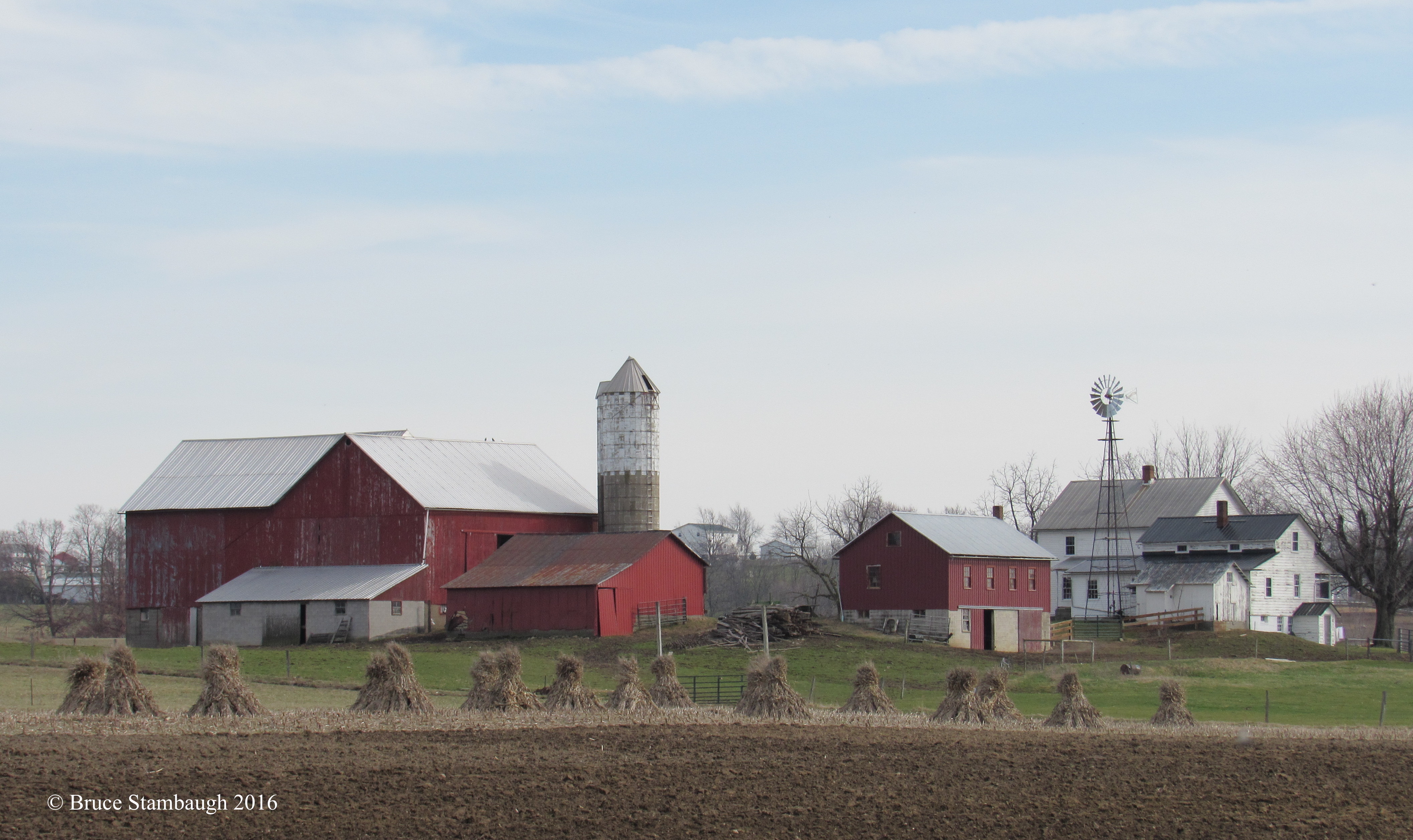
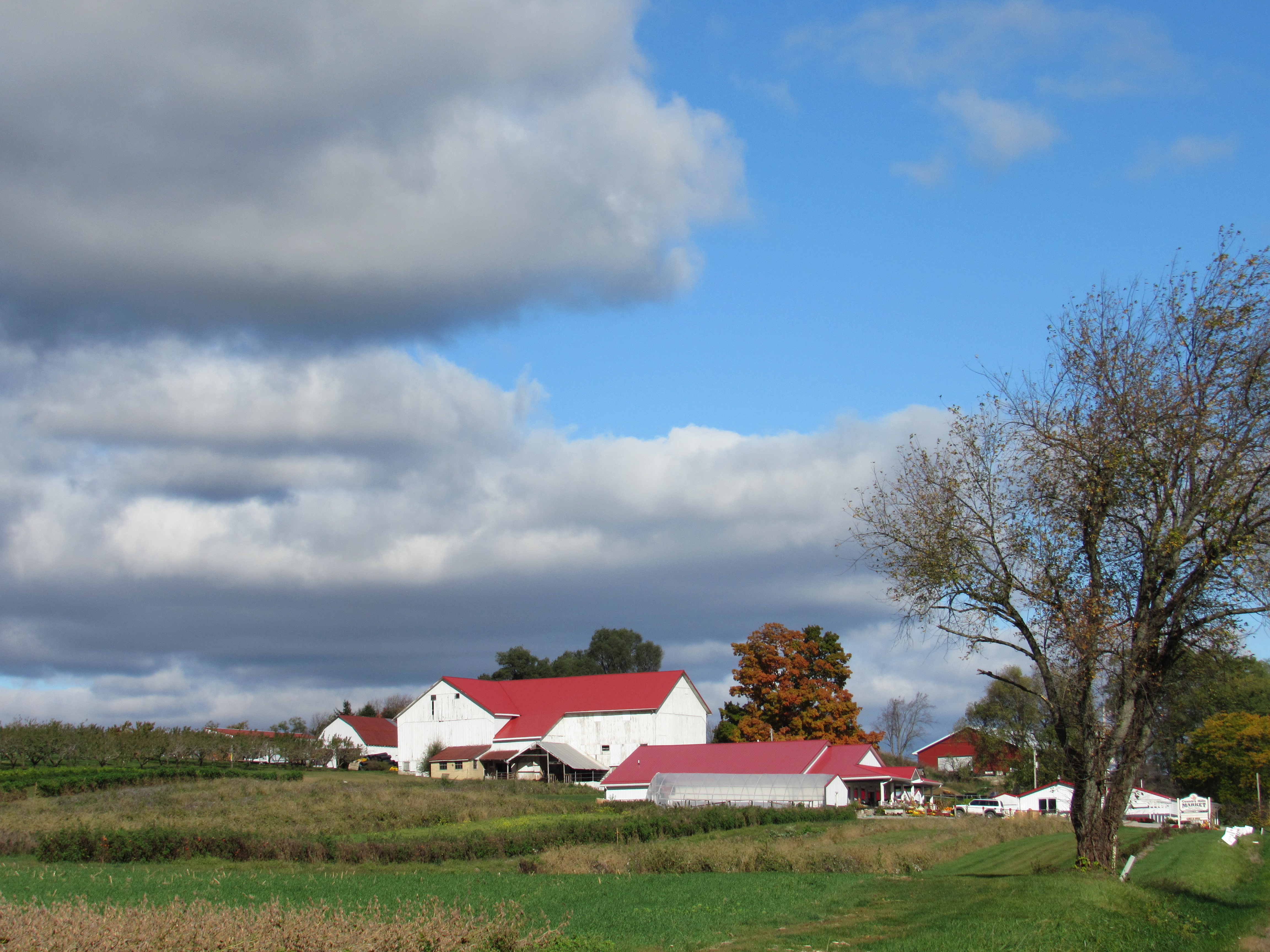
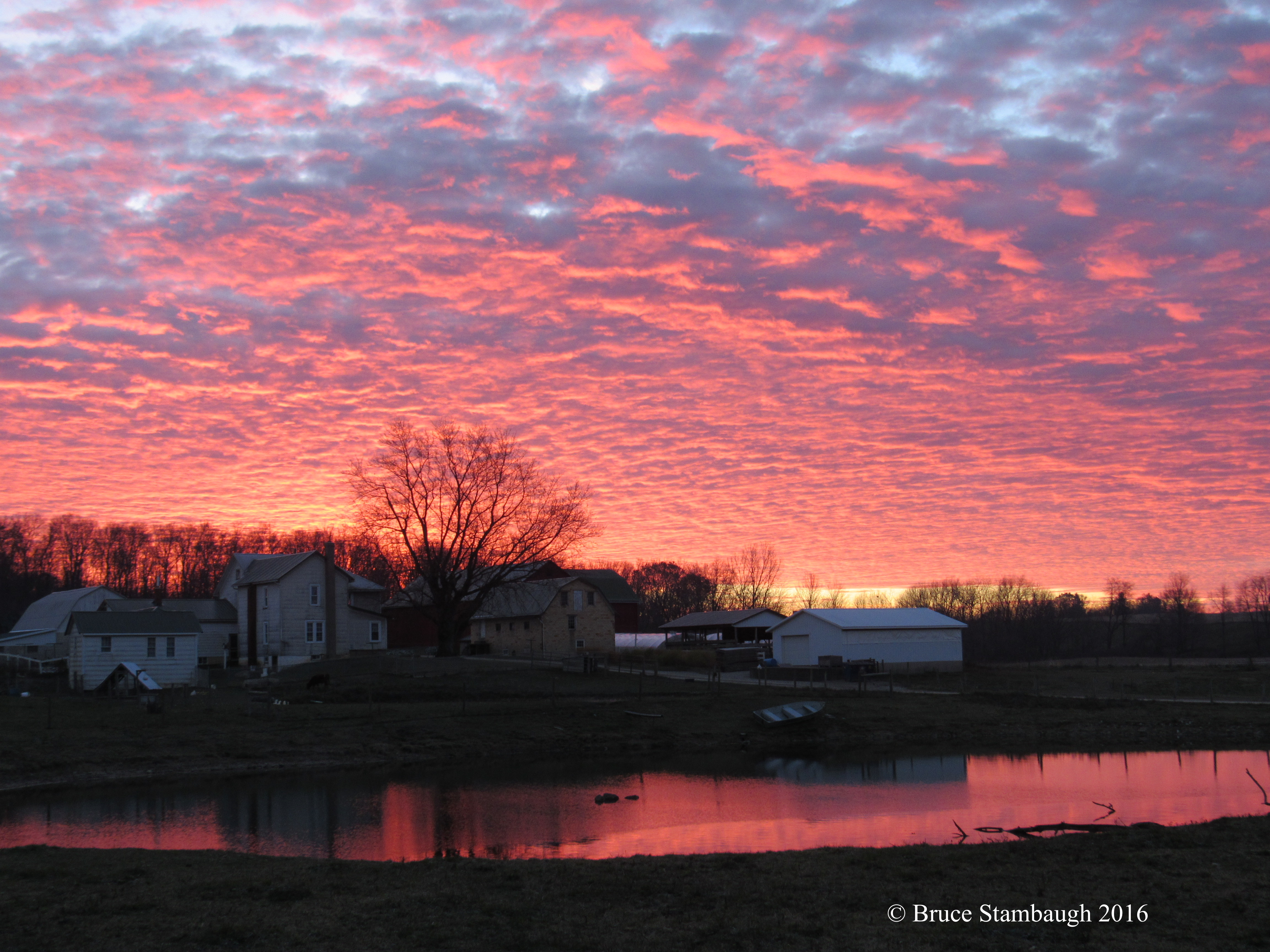
Amish farmstead.Alice said Betty’s welcomed wave instilled a positive start to each day. Imagine that. Something as simple and easy as a friendly wave made her day, and gave her strength to see the day through even though Alice knew it might be tough.
Betty was stunned. She had no idea her energetic wave had such an affirming influence on this stranger, who in reality was no longer a stranger.
The two women exchanged names and numbers. I have a hunch they’ll be staying in touch with one another more than their friendly waves.
It’s hard to comprehend that such an uncomplicated gesture as a wave from a person you had never met could make such a significant impact on your life. But it did for Alice.
Wonderment and risk-taking flavor this Christmas story. Both women made themselves vulnerable for the benefit of the other.
Isn’t that what Christmas is all about? Isn’t that the purpose of Christmas? Those who believe in the Christmas story are charged with creating joy, not just for self, or for those we know and love, but for all.
After days and days of gray sky days here in northeastern Ohio, I wondered if we would actually get a chance to see December’s Super Full Moon. It is the third consecutive month for a super full moon, and October’s and November’s were both spectacular.
I got my answer in the middle of the night. After an all day snow, the skies cleared and the Long Night Full Moon reflected brightly off of the newly fallen snow. Just as the sun rose yesterday, the full moon was setting in the northwestern sky.
“December’s Super Full Moon” is my Photo of the Week.
The young woman beautifully played the piano her parents had purchased from us earlier in the year. As my friend Sharon Randall would say, I wish you could have been there to hear her.
The moment was so much more than marvelous. Never could I have anticipated being the audience for this impromptu recital.
A set of unusual and timely circumstances led me to this setting. It’s a tale of just how interconnected we all are.
My friend Ava hitched a ride to Virginia with my wife and me for a short visit with her family. When her friends in the Shenandoah Valley learned Ava would soon be returning to Ohio with us, she became the courier of a gift for an injured boy.
As we traveled home, Ava related to us who the recipient of the package was. The boy had been seriously hurt in an auto accident that had killed his mother. When Ava told us where the gift was to go, we were astonished. We knew the family, especially the father. I offered to deliver the gift personally.
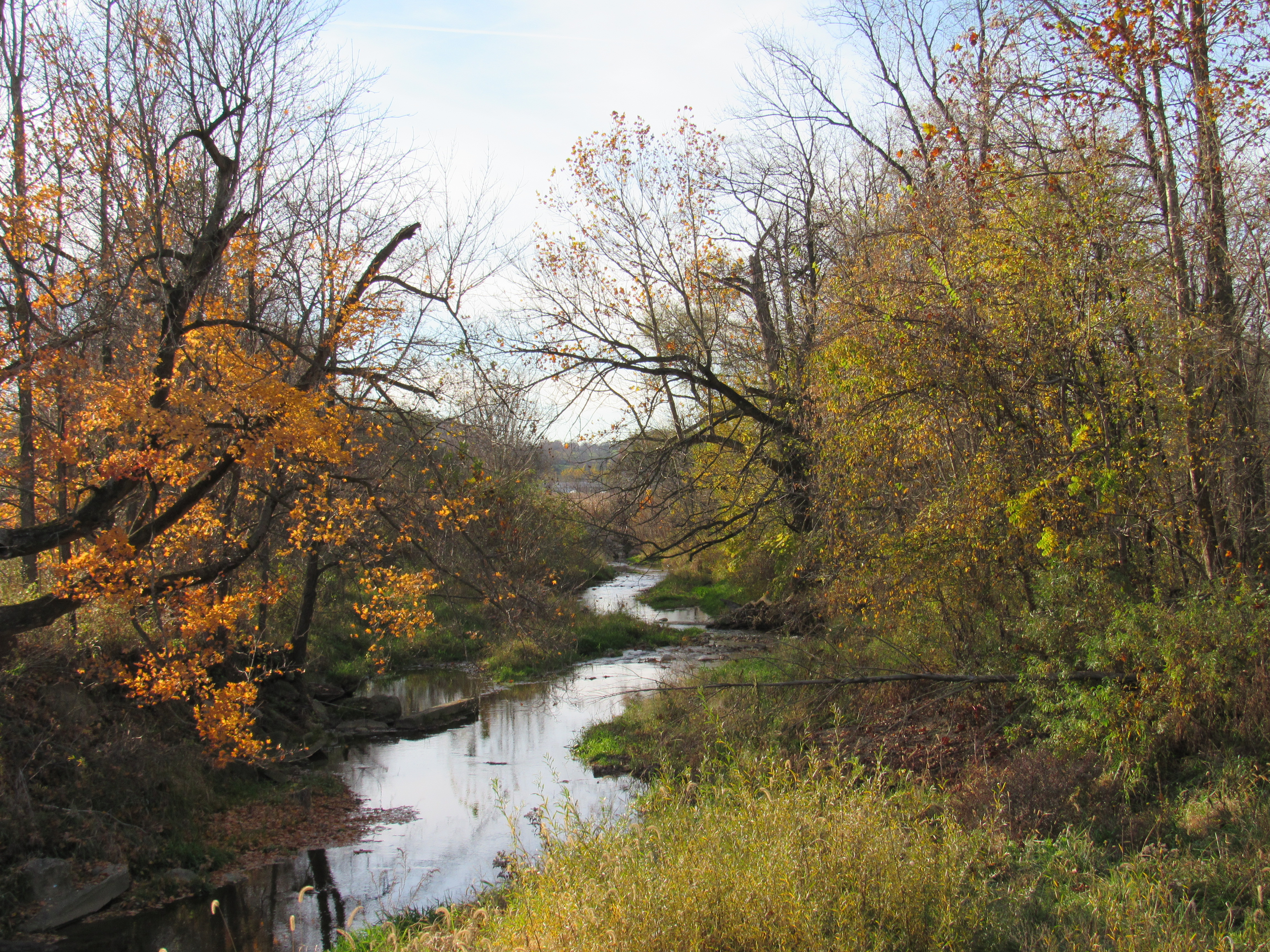
Martins Creek.All of this ran through my mind as the young woman caressed the keys that produced the mesmerizing song. Victoria passionately played “River Flows in You” as her mother and I stood silently admiring both the devotion and the soothing music while the pianist’s little sister quietly played with dolls in the background.
My wife and I had known Victoria’s father Lonnie since he was born two hours before our daughter four decades ago. Their cribs stood side-by-side in the hospital nursery. Our lives had overlapped in multiple ways we couldn’t even have imagined. This moment was the latest.
Lonnie was one of my former students. His friendly family had welcomed me into their home as principal and friend many times. I was the first responder to arrive at the scene of an industrial accident that took the fingers of Lonnie’s left hand. I responded to the house fire that badly burned Lonnie’s mother. I gladly served as a driver for family members during both hospitalizations.
This family had endured a lot. Still, Lonnie’s daughter played so passionately that I could not have wiped that broad smile of satisfaction off of my face if I had wanted to.
Tears flooded my eyes as Victoria tenderly tapped the last lingering note. The connected circumstantial dots wove a human tapestry of love that brought me to this cherished moment. Gratitude couldn’t begin to describe my emotions.
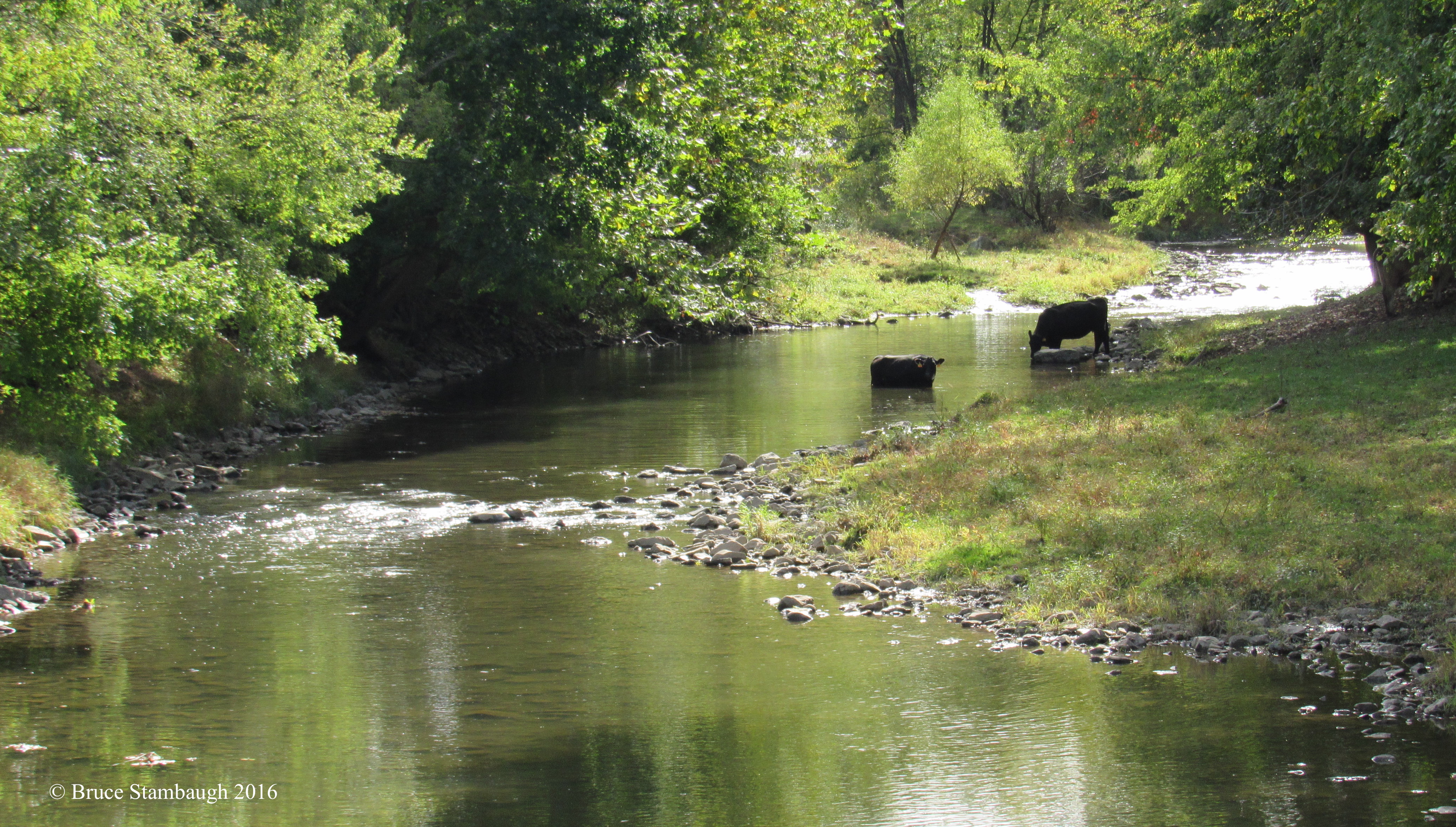
Lost River, WV.I was so glad I had had the privilege of delivering this gift for this healing boy, and to hear Victoria’s playing. I could clearly see that our former piano was in the right hands.
I had made the gift’s delivery a priority, partly because I didn’t want to forget about it. I didn’t know, however, that the youngster was coming home from the hospital that same day. I’m sure that whatever was inside that brightly wrapped box would bring the young boy as much pleasure as I had just experienced.
I’ve told this story for both its face value and its intrinsic value, not for vanity’s sake or personal gratification. That came from listening to Victoria.
I’m certain you have similar tales to tell. It’s the way life was meant to be. A river flows in you and me. We need to ensure that the confluence of our individual streams creates a harmonious symphony for all to enjoy.
Sunshine in northeast Ohio in November and December tends to be a rare treat. When the sun does shine, all of God’s Creation soaks it in, including this lovely female Red-bellied Woodpecker. She took a break from enjoying lunch at the peanut feeder to warm herself on a chilly late fall day.
The headline on the promotional, educational email I received got my attention. Listen. Live. Lead.
I had just finished reading a nationally known political commentator when the email arrived. Though written from entirely different perspectives, their messages mirrored one another.
The email’s main point perfectly meshed with that of the columnist’s. In this time of turmoil in our global society, we need to listen to one another earnestly.
The rural view is changing.We live in noisy, chaotic times. Even here in our rural setting, we feel the pressure of universal unrest. We can thank technology for that, for keeping us up to date with the world’s events as they happen 24/7.
At times, there appears to be no escape from the convoluted static that counters the pastoral approach to life here. From my senior years of observation, it seems that lifestyle is even wavering at times. I lament that fact as I see more and more compromising of our once calm, compassionate way of life.
The news isn’t all bad of course, but we need to be wise and use our common sense filters to sort out some of the ugliness. These are uncertain times. I think my father, grandfather, and great-grandfather all could have said the same thing.
Life is full of doubt, disappointment, and dismay. That should not deter us from being civil, generous, and kind, especially at this time of year.
To avoid the appearance of casting stones, I’ll take responsibility for my own actions. It’s all any of us can ever do.
As I age, and I just had a birthday, I remember that everything I do and say has an impact on someone, someplace, somewhere. We don’t always know whom, when, and where that may be.
So it is critical, as the email stated, to listen to different perspectives, to live as global citizens, and to lead for the common good. I try to remind myself of those necessary life skills every day.
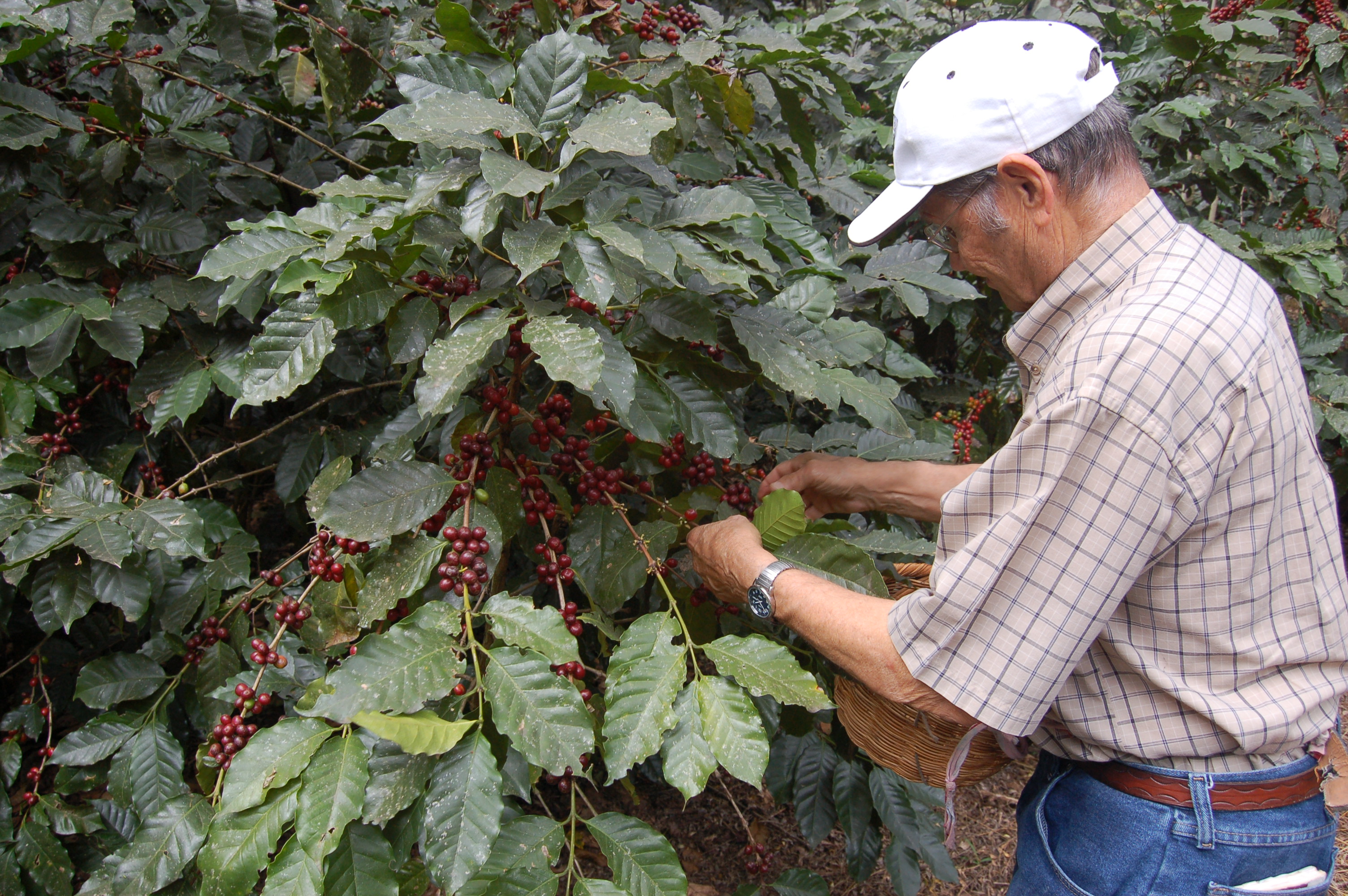
Picking coffee beans.I think about my friends in Honduras who have taught me so much over the past 16 years. I first visited that lovely Central American country with a church group just as the new century arrived.
Not knowing much Spanish, I had no choice but to listen as I worked side by side with my new friends. We picked coffee beans together, mixed cement together, and shared meals together. For a few days, we lived the lives they lived.
Those in our groups learned so much about our hosts’ lives that varied so much from ours. The children especially were eager to teach us Spanish and we, in turn, taught them English. Listening significantly enhanced our cultural interchange.
When you’re knocking on the door of 70, words like listen, live, and lead grab your attention. I’m overjoyed for each new day I’m given.
In this season of gratefulness and celebration, it’s easy to get caught up in the all the hubbub of the holidays. The glitzy commercials extolling the charms of speeding, flashy, expensive automobiles, sparkling diamonds, and the latest computer games can overshadow the real reasons for the season.
That’s why the mutual messages of the newspaper columnist and the email hit home with me. Listen, live, and lead took on deeper meanings than buy, buy, buy.
If we apply those words of advice selflessly, our world and those we touch will be a better place. That’s a birthday gift I can gladly unwrap, heartily embrace, and willingly share.
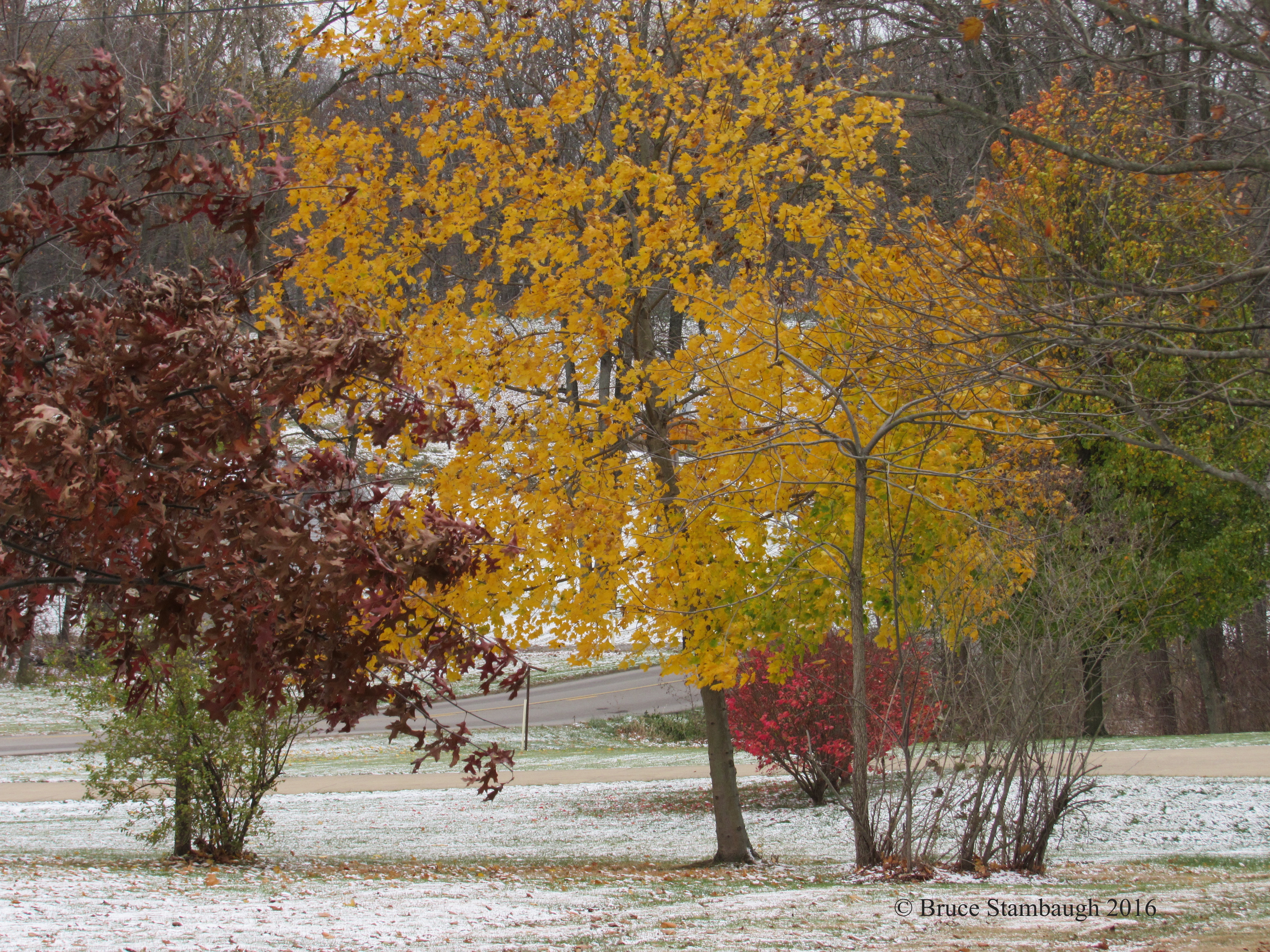
When I saw this scene one morning a few days ago, I had to stop and take a photo. I loved how the sun backlit the burgundy leaves and highlighted the farm implements seemingly placed haphazardly around the farmyard.
By now, the winds and rains of late have stripped the color from the tree until next year.
Residents of northeast Ohio have now tasted both the Thanksgiving Day turkey and the season’s first snow. The holidays are indeed upon us.
As we prepare to head into the year’s final month, holiday lights twinkle inside and outside homes and businesses alike. Even without radiating any substantial heat, they warm hearts nevertheless.
Most holidays in December focus their celebration around the theme of light just as the daylight diminishes. The days are in fact the shortest of the year.
Advent candles.I’ve always found it more than a bit ironic that in the darkest part of the year, our secular and religious holidays glow with light. In fact, these important days gather together as if they were competing for our attention as the calendar year draws to an end.
Given the state of the world today, these celebrations of light are just what the doctor ordered. Earth’s inhabitants need as much light at they can get.
It’s only fitting that the major celebrations of Christmas, Hanukkah, and the winter solstice all squeeze together in late December. It’s like a hidden magnet pulling them into the light itself. I don’t mean to be too jocular about these simultaneous celebrations. Just the opposite is true.
Christians consider Advent, the weeks leading up to and just after Christmas Day, as holy, sacred, magical. My Jewish friends rightly believe the same about Hanukkah.
Those who celebrate the winter solstice as Yule have a practical reason for making merry. From that point forward, daylight increases little by little each day.
It’s all very human of us to acknowledge the importance of light in our lives just when we have the least of it. Doing so gives us hope in the midst of darkness.
Hanukkah is an eight-day Jewish festival also known as the Festival of Lights. One candle is lighted each day on the nine-candle menorah. Hanukkah means rededication and annually commemorates the Jewish struggle for religious freedom.
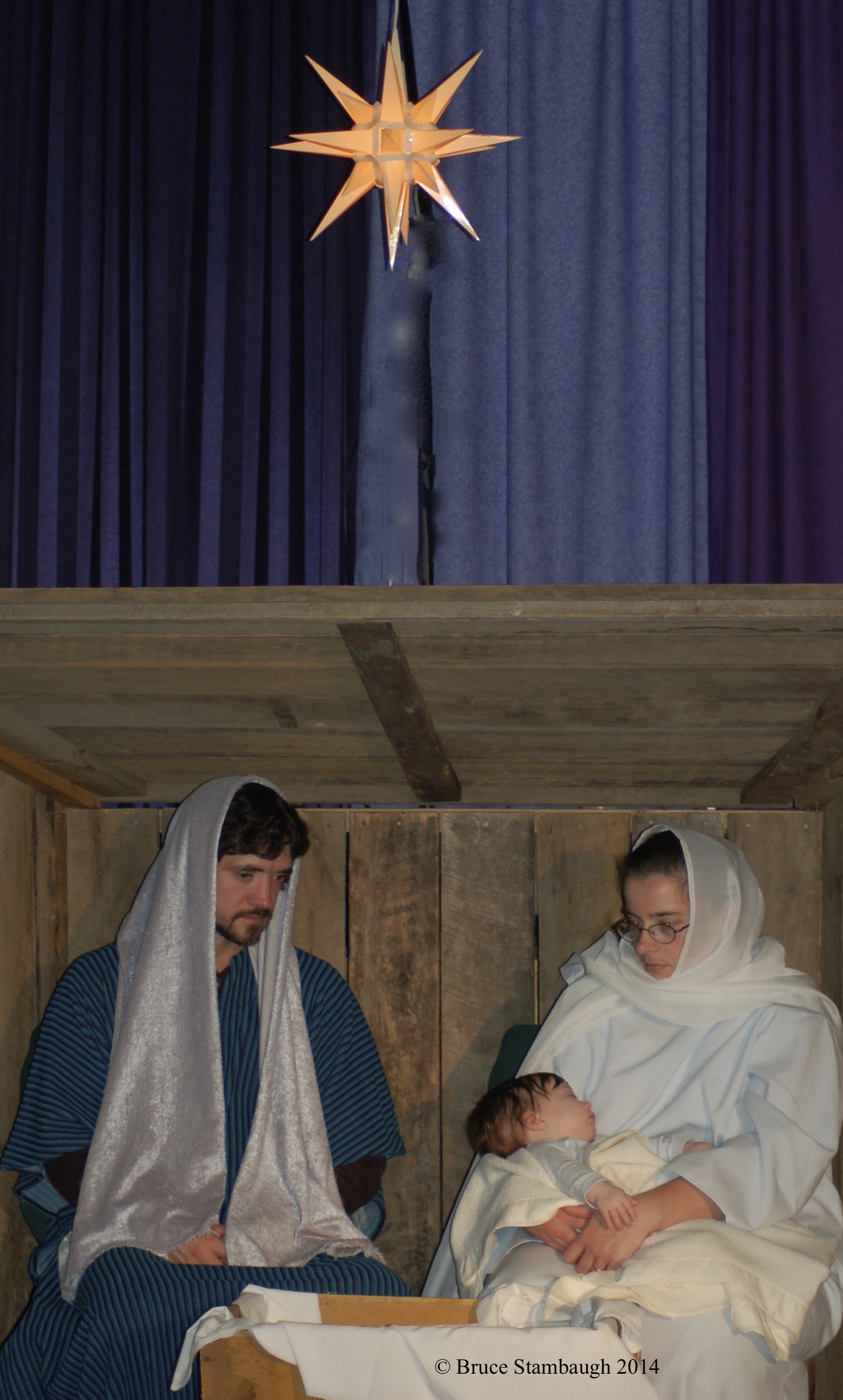
Star over Bethlehem.Christmas also is a commemoration. Lights of many kinds fill its traditions. The star in the east that hovered over Bethlehem, birthplace of the Christ child, is reflected on Christmas cards, and in displays, plays, poems, stories, and musicals.
Candle lighting services, often held on Christmas Eve, symbolize the birth of Jesus, the Christians’ declaration of the true light of life. In fact, four churches in Millersburg, Ohio will hold a Candlelight Walk on the evening of December 9 to help usher in the season.
My energetic wife had the electric candles glowing in our windows even before Thanksgiving this year. Illuminating each window with candles is a tradition we’ve had for our 45 years together.
In fact, one Christmas long ago our young daughter wouldn’t let us take down the candle in her bedroom window. When I shared in church about Carrie’s insistence, our late friend and resident poet Lorie Gooding wrote a poem about it. To my knowledge, this is the first publication of that poem.
Carrie’s Candle
I have a candle. It is mine.
I like to watch my candle shine.
It was a light for Christmas cheer.
But I’m going to keep it all the year.
Then when the darkness comes at night,
I’m going to watch my little light.
My good daddy and my pretty mother
Smile at my candle. So does my baby brother.
The light is for everyone to see.
But the little candle belongs to me.
Lorie Gooding
My wish for all of you this holiday season is that the light shines brightly in your lives wherever you may be.
I had driven this route many times in the past. Usually, it started in the early morning twilight and ended in the glare of the afternoon sun, if I didn’t have a meeting after school.
I served as principal at two of the nicest elementary schools anyone could hope for or conjure. I loved my job at Mt. Hope and Winesburg schools.
An emotional funk had overtaken me, and I needed a spiritual pick me up. Those former school days mentally surfaced, so I called the man who had replaced me 17 years ago. Dan was more than happy to show me around the schools where I once whistled my way down the halls. It had been years since I last graced them.
With our impending move to Virginia set for next spring, I knew I needed to start reconnecting with folks and places that had played such important roles in my life, professionally and personally. The schools were on that list.
That’s how I came to retrace the roads I took for 21 years every school day. I knew every turn, hill, and valley.
Along the road.I made Mt. Hope my first stop. Dan greeted me at the front door after I pushed the security buzzer, a necessary addition since the Nickel Mines shooting 10 years ago in Lancaster Co., Pennsylvania.
Dan escorted me around the building that I knew so well. Physically, not much had changed. The staff and pupils, however, had. I soon found familiarity and links to the past.
Dan asked the students in each class how many of their parents had gone to Mt. Hope School. I was astonished at how many hands flew up. We went pupil by pupil to see if I could remember their folks.
To my amazement, and theirs as well, I remembered their parents and grandparents, where they lived, and even a few first names. When the school is full of Yoders and Millers, that’s not an easy task.
My reunions with Jerry the librarian, Jim the teacher, and Nettie the cook brought smiles to my face, stirred my soul and filled me with compassion for their career commitments to nurturing children.
My age hit me square in the face when I met the custodian of both schools, Brandon, a former student. He was too busy to talk much, but his handshake spoke volumes. The school sparkled as brightly as his eyes.
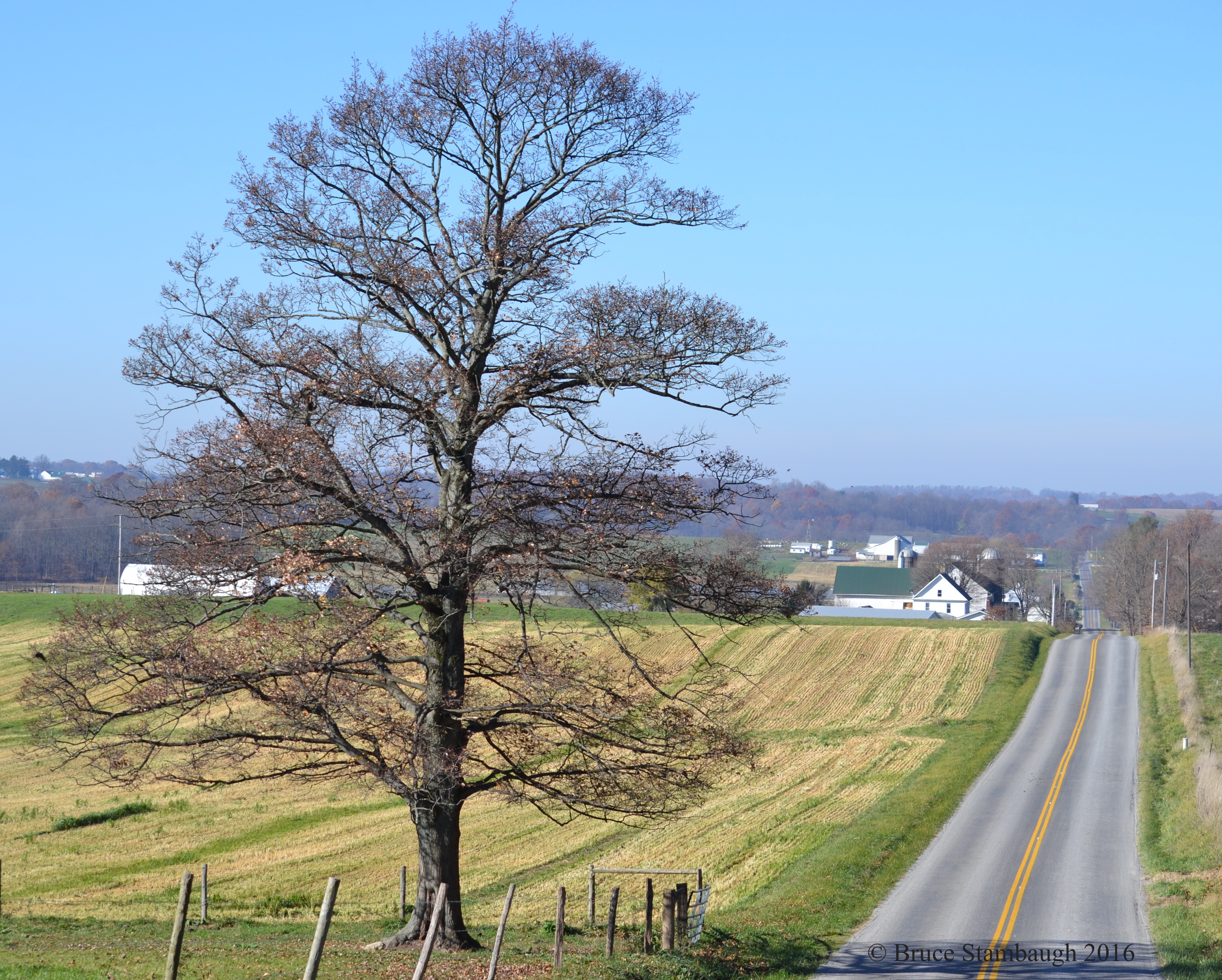
A view around every turn.More memories resurfaced while driving the five miles between Mt. Hope and Winesburg. There still is no bar or golf course in between. The road was still bumpy, the views still pristine. Corn shocks stood in the same fields they had all those years ago.
At Winesburg, I found the school just as clean and hospitable as Mt. Hope. I was glad to see many of the same staff members I had worked with and hired before I retired. We hugged and shared heartfelt recollections.
The storyline with the students also repeated. The eagerness of the youngsters to name their parents buoyed me. Some I identified by family name just from their physical features. When a student said who her mother was, I said, “Oh, yes. I remember. Carie with one “r.” I’ll never forget the beam on that young face.
This uplifting experience had been a morning to remember for me. All this human interaction freed me from my gloominess. It gave me hope that any day, no matter how trying, can be a good day.
I just had to take the initiative. The children and friends did the rest.










You must be logged in to post a comment.