Amish show their thanks through service to community

Amish harvest by Bruce Stambaugh
During harvest, the Amish literally pitch in to help one another.

By Bruce Stambaugh

Once the floodwaters of the historic July 1969 flood had receded, the residents of Killbuck, Ohio were in shock. Homes and businesses were either destroyed or severely damaged by the record high water levels. Townspeople were ready to give up, the cleanup looked so daunting.

Then something amazing and unexpected happened. Scores of Amish and Mennonites arrived from the eastern section of the county, home to the world’s largest Amish population, to help. No one had asked them to come. They just showed up.

The volunteers waded in and did the absolute hardest, dirtiest jobs, clearing out mud and muck with no complaints. They did it all out of a basic foundation of thankfulness.

Helping in times of need affords the Amish a method of connecting with the community. It is their personal and active way of expressing their appreciation for community and country, and the cherished ability to worship freely.

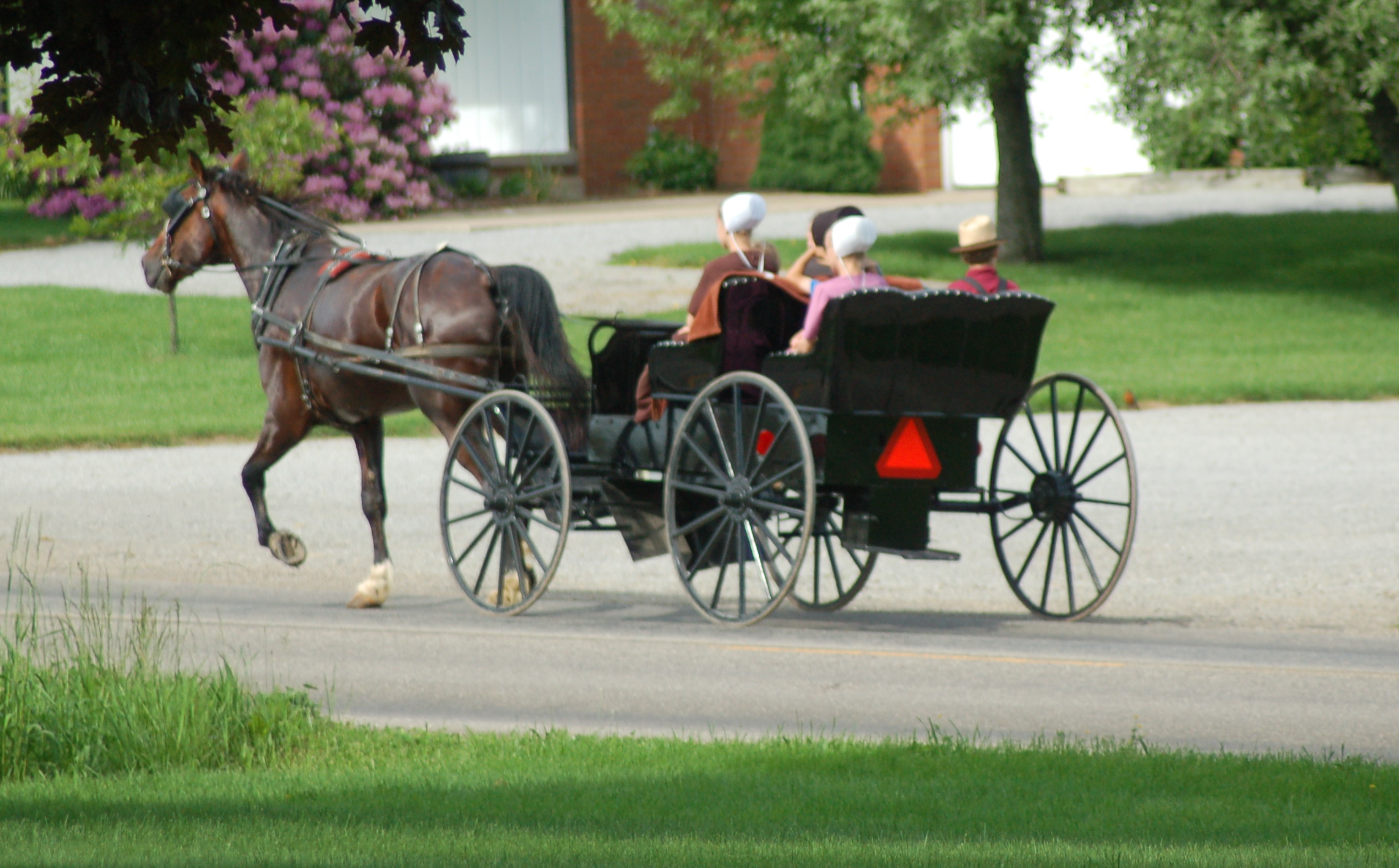
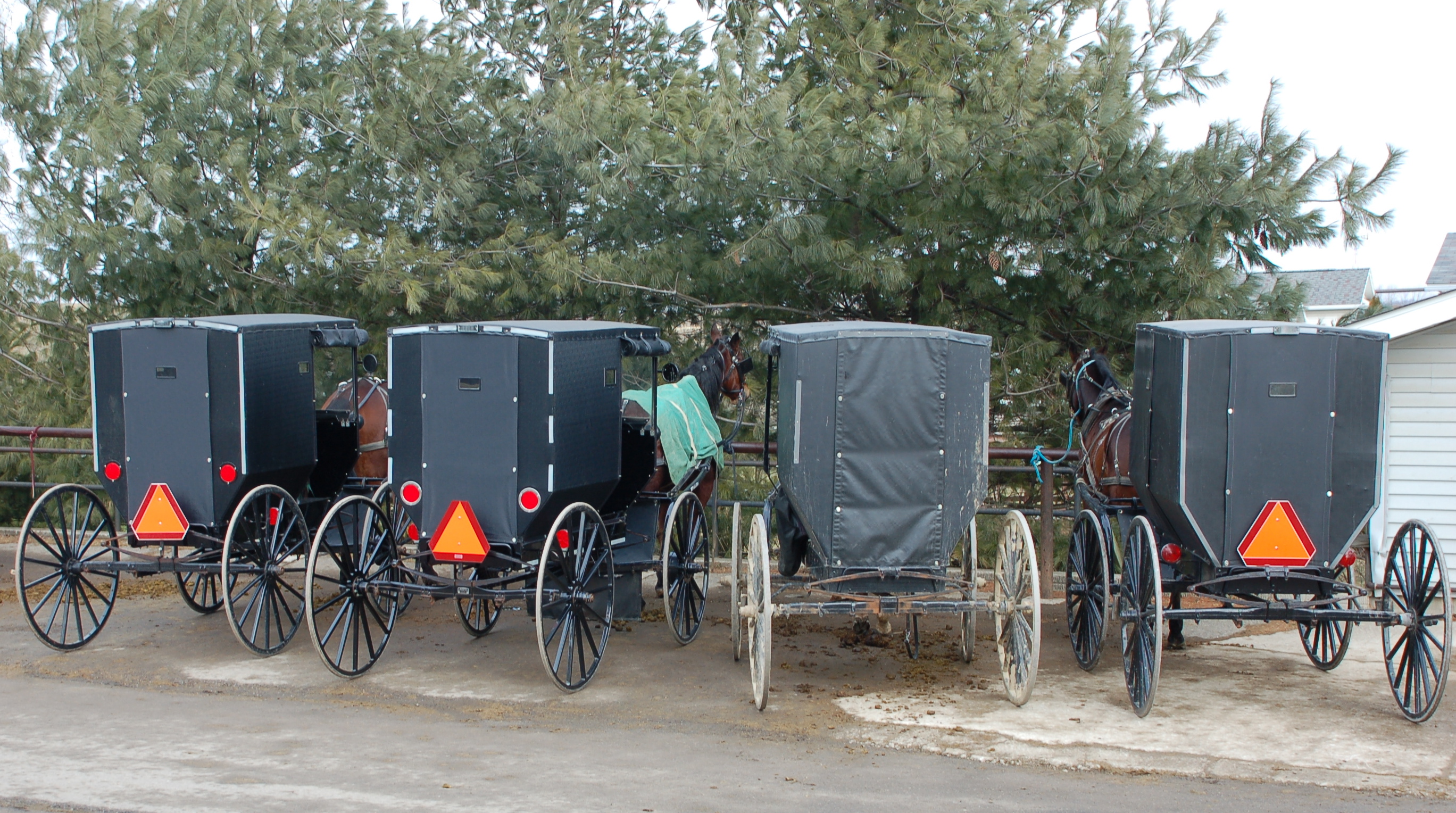
Church buggies by Bruce Stambaugh
Gathering the buggies before church at an Amish home in Holmes Co., Ohio.

Amish do not normally participate in organized governmental positions. They do not take oaths, which such positions often require. Consequently, when opportunities to assist others arise, the Amish respond.

The Amish do not always wait for disaster to strike either. They are proactive in helping the less fortunate.

Donating blood is one of those opportunities. It’s not unusual for a local blood drive to collect 100 or more units every 56 days.

The Amish also show their thankfulness by helping with numerous annual benefit auctions that are held locally. A short list would include The Rainbow of Hope auction, The Ohio Mennonite Relief Sale, the Holmes County Home and the Holmes County Training Center.

Hitching rail by Bruce Stambaugh
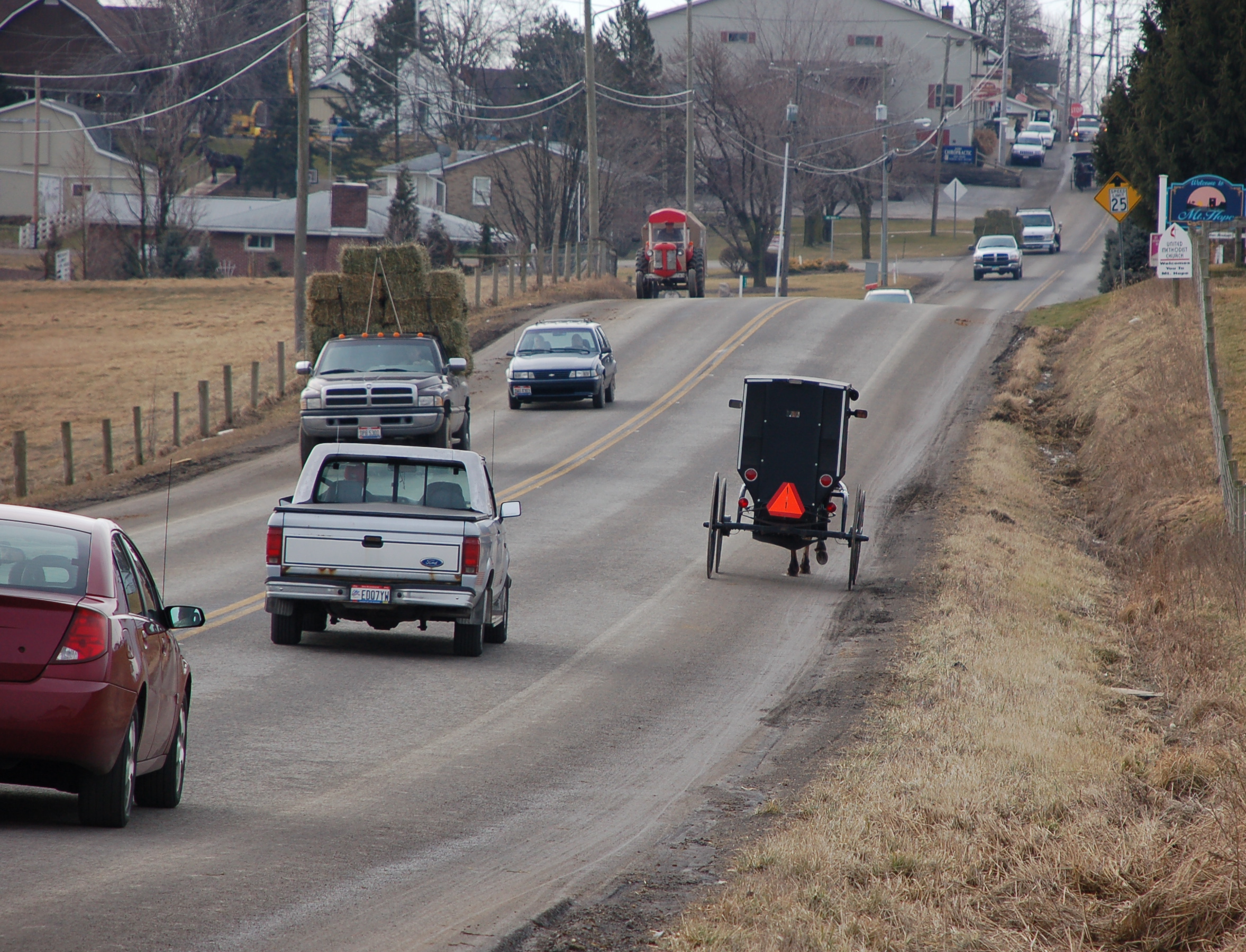
The hitching rail at the Mt. Hope, Ohio, Auction is lined with horses and buggies on sale day.

Supporting such causes is borne of a two-fold purpose for the Amish. They recognize the importance to help those who have particular needs, and they also accept that they could possibly be in that situation themselves. They are grateful for whatever happens.

To briefly identify the purpose of the aforementioned benefits helps to understand the depth and breadth of the Amish aid. Funds from the Rainbow of Hope auction assist children with major medical bills. The Relief Sale raises funds for worldwide projects under the direction of Mennonite Central Committee.

MDS house by Bruce Stambaugh
A home damaged by Hurrican Katrina in Boothville, LA was repaired under the direction of Mennonite Disaster Service.

Amish even travel far from their geographic area to put their faith into action. After Hurricanes Katrina and Rita, scores of Amish assisted in the Gulf States cleanup and reconstruction. So many helped, in fact, that Mennonite Disaster Service set up an Amish only camp where the volunteers could live according to their normal lives without the influence of distractions like television and the Internet.

Locally, the auctions for the county home and the Training Center raise operating funds. The county home has some Amish residents, and Amish make up a good percentage of the population at the Training Center, which works with developmentally challenged students and adults.

Another way of contributing to the common good for some Amish is to join the local volunteer fire department. Several area departments have Amish on their rosters as firefighters and emergency medical technicians.

True to their desire for modesty, the Amish want no recognition or publicity for their kind efforts. Their satisfaction comes from the simple act and ability to help others.

Amish help by Bruce Stambaugh
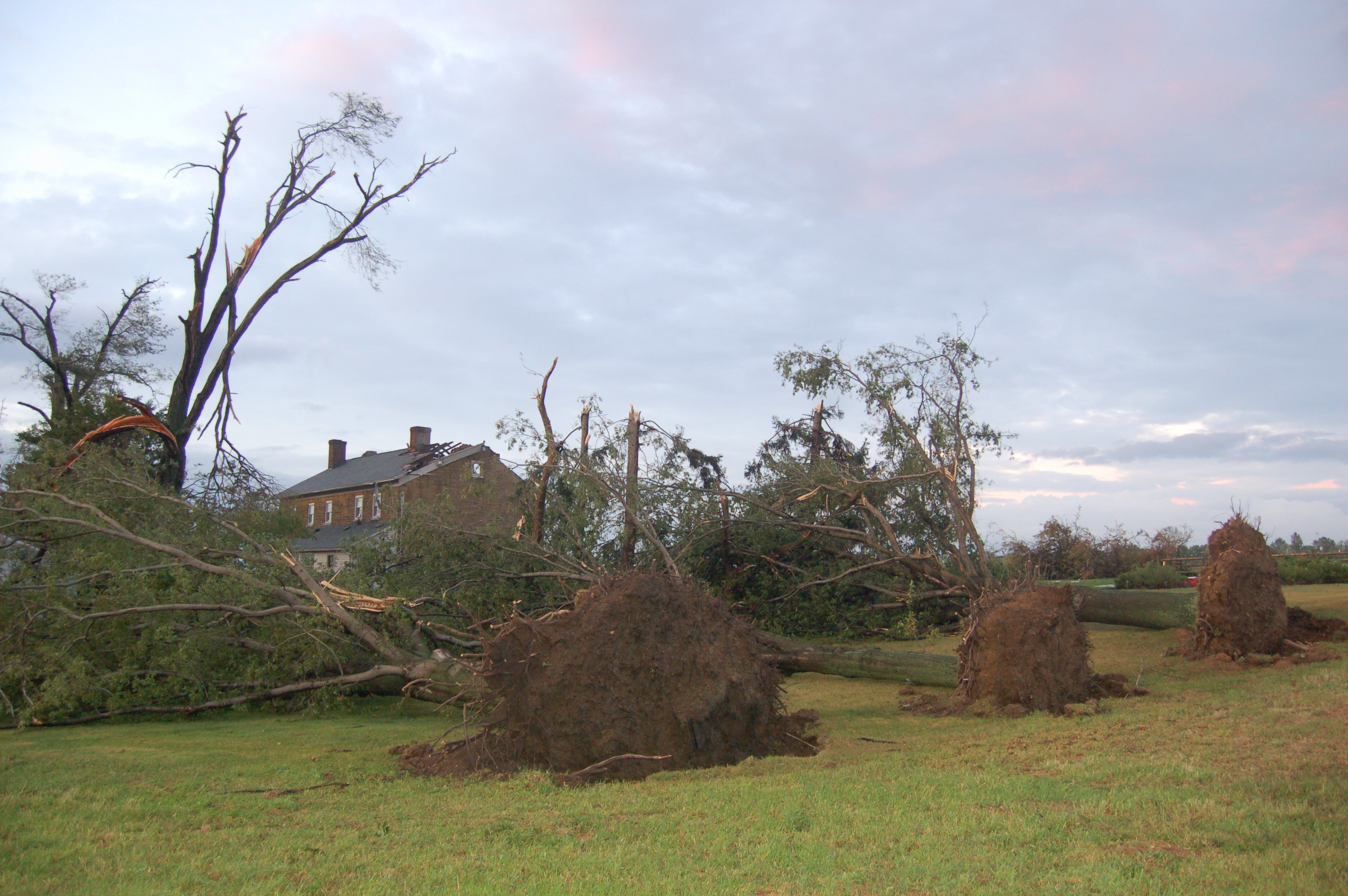
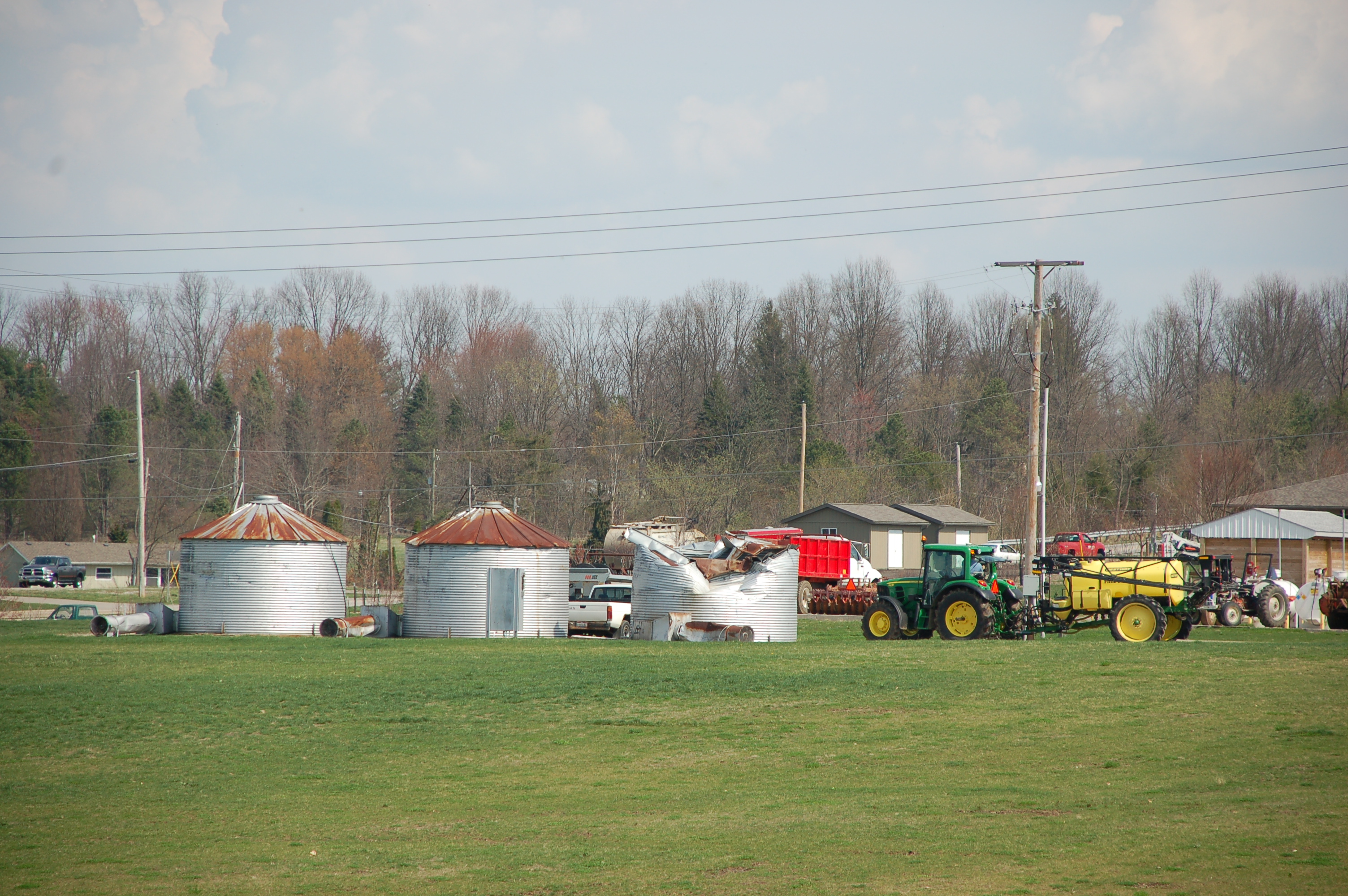
Amish quickly helped their neighbors have a severe thunderstorm hit near Charm, Ohio in July.

Of course, the iconic images of Amish helping at a barn raising are conjured up as the ideal way to help their neighbor. But their generous participation in the community and world at large clearly shows that the Amish think and act out of thankfulness far beyond their own immediate area.

To be sure, most Amish families embrace Thanksgiving as a day of joyous celebration of community, bountifulness and life itself. Even then many Amish approach the day piously, fasting in the morning prior to the feast that includes all the traditional trimmings.

The Amish mark Thanksgiving Day as a pinnacle to a lifestyle of serving. Fittingly, they would be too modest to acknowledge that fact.

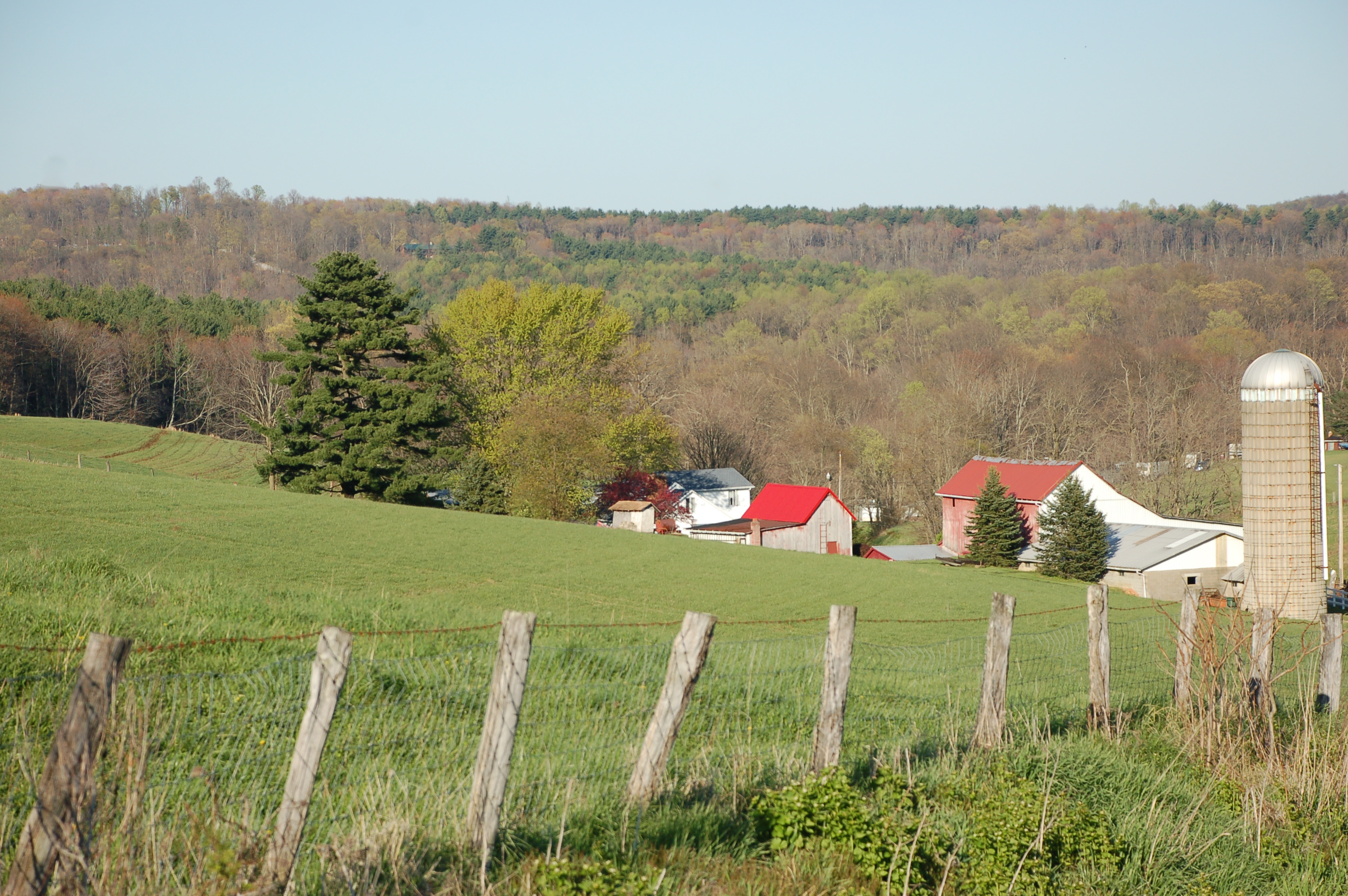
Amish farm fall by Bruce Stambaugh
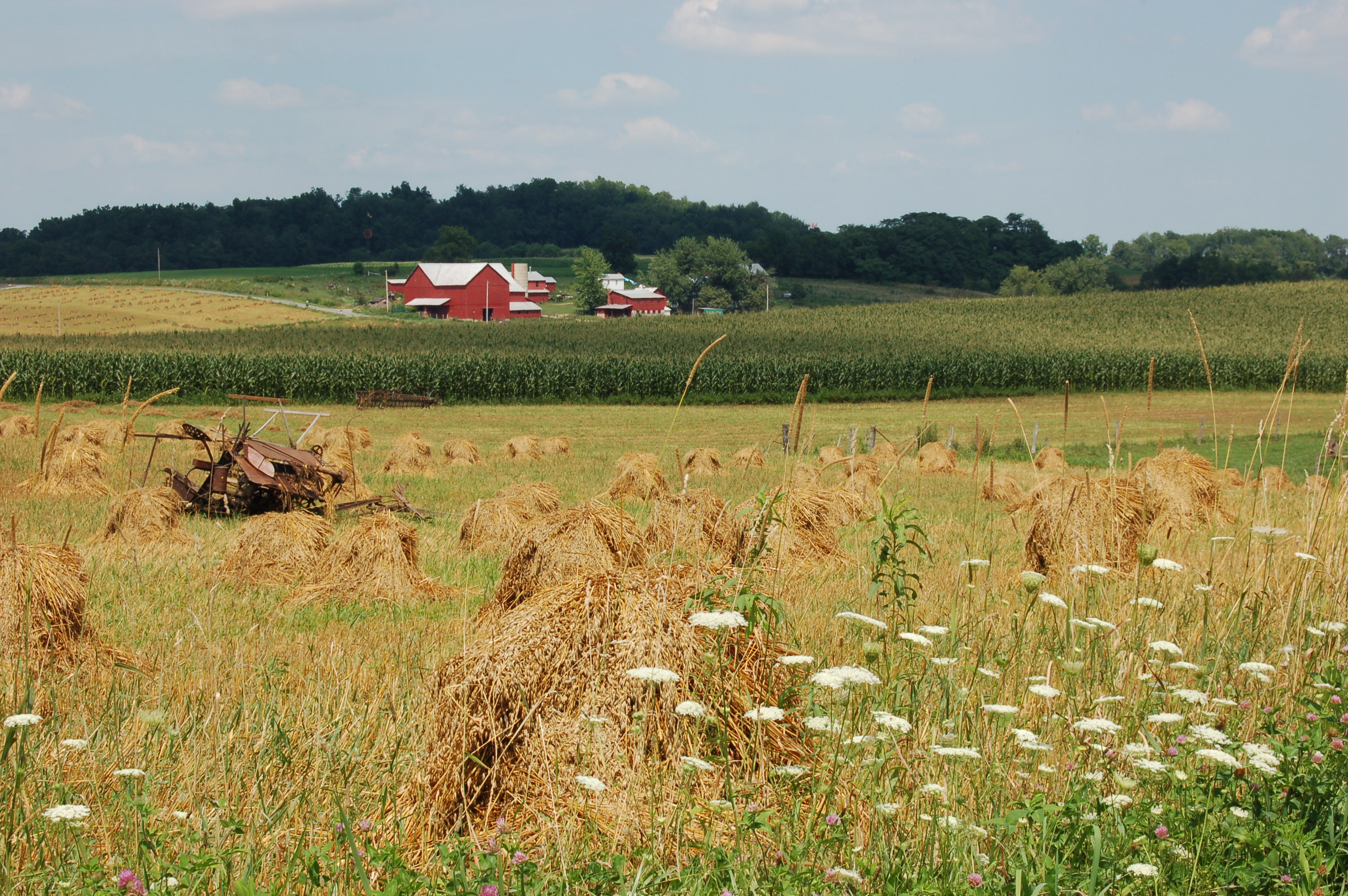
A typical Amish farm in the fall in Holmes County, Ohio.

This article appears in the November 2011 edition of Ohio’s Amish Country magazine.

Thanking the people who matter

Thanksgiving by Bruce Stambaugh
Around the Thanksgiving table.

By Bruce Stambaugh

The school superintendent called him his million-dollar man. To illustrate his point, the school leader even had mock million dollar bills printed with the person’s face front and center.

The scenario played out at the beginning of this school year in the school district where I had grown up. Along with hundreds of others, I had been invited to attend the opening rally as a guest. As people entered the stadium where the ceremonies were held, each person was handed the play money.

During the 90-minute ceremony, the superintendent recognized many people in the district for their outstanding efforts. He also announced that the district had achieved the top academic awards in the state.

The summit, however, was this one man who had worked so tirelessly to reduce costs for the financially strapped district. The superintendent had calculated that this one individual had saved the district a million dollars through cost saving changes, including the installation of energy saving light bulbs. That’s what earned him the extra special notoriety.

Friends by Bruce Stambaugh
Friends.

I was duly impressed and honored to have witnessed this celebrative opening to another school year. Though I had not been a part of the district for years, I felt connected and inspired by what had transpired.

The proceedings were a reminder to me to thank those who have made a difference in my life. Of course, I realized I wouldn’t have to have play money printed up to do so. A simple word of thanks, a personalized note card, a hardy hug, would send the proper and immediate message.

Believe me, I have much for which to be thankful this year. This hasn’t exactly been the healthiest year of my life, and yet, here I am at Thanksgiving, alive and well, and forever grateful.
Neva and me by Bruce Stambaugh
A good place to start would be with my wife, who has been by my side through thick and thin. She has gone far beyond the second mile for me.

I have nothing but praise for the good doctor who removed the cancer from my body. My recovery continues. Overall, I feel great, and best of all I am cancer free.

At the same time, I can tick off person after person that I either know personally or have heard of who have not had the same results. Their illnesses or injuries remind me to be humble in my elation yet determined in my prayers for them and their families.

Window cross by Bruce StambaughStill, as the thoughtful and expressive superintendent modeled, we must not hold back in our praise of others when they accomplish great things for themselves or for the good of the community. It truly is better to give than receive.

As we approach this national holiday of thanks with its abundance of savory food and gathered family, I plan on thanking people who have made a difference in my life. I’ll tell them how much they have meant to me and how appreciative I am for their contribution to my life.

How about you? Who have been the million dollar people in your lives?

As part of celebrating this Thanksgiving, consider offering a few words of thanks to those who have helped you along your life’s path. You don’t have to print up hundreds of fake million dollar bills to show your appreciation. But you can if you want.
Fall lane by Bruce Stambaugh

A satisfying sense of closure for Mil Agnor

Mil Agnor 1 by Bruce Stambaugh
Mil Agnor with some of the artwork she brought back from Romania.

By Bruce Stambaugh

You can see it in her eyes, in her smile and in her body language. Mil Agnor finally has closure.

Earlier this year, the 80-year-old former Millersburg, Ohio resident had her two-year term of service with the Peace Corps in Romania unexpectedly interrupted. After a routine physical exam, she was sent back to the United States for more medical work.

Agnor was diagnosed with bladder cancer, underwent surgery and treatment, and was glad to be up and around and physically well. But something was missing in her life. She had to leave her Peace Corps teaching assignment without saying goodbye to her students, cohorts and friends.

“I didn’t have a chance to say thank you and goodbye,” Agnor said. “I didn’t feel like I had closure.”

The self-assured and talented Agnor was determined to correct that situation. Once she got the medical all clear, Agnor began planning a trip back to Romania. She left Oct. 12 and returned to her new home in Stow Oct. 26 a very satisfied person.

Agnor didn’t make the trip alone. She took along 400 refrigerator magnets that she had made at a print shope in Millersburg. She handed them out to her former students, fellow staff, Peace Corps partners, parents, school and government officials, and even to people she met on the street.

“Romanian’s are very friendly,” Agnor said. “They were very appreciative.”

They should have been. The magnet was a photo of Agnor in front of the school where she taught English in Palanca, Romania. The magnets were inscribed in Romanian with heart-felt thanks from Agnor.

Below the U.S. and Romanian flags was the salutation, “For my dear friends in Palanca and Romania. My greatest thanks to you and your good health.” It was a keepsake anyone there would cherish, especially since Agnor had it made herself and personally handed it out.

That’s not all the generous and compassionate woman did. Teacher that she is, Agnor took along another small gift that created a memorable object lesson for her former students. She gave each student a Lincoln Head penny while sharing this little rhyme: “Find a penny, pick it up; all day long you’ll have good luck.”

She also seized the moment to teach the students about Abraham Lincoln, whose profile is on the coin.

“I told them all about Abe Lincoln, one of our most successful presidents,” Agnor said. “Like my students, he had a humble beginning, was honest, worked hard and loved to learn.”

Ribbon cutting by Bruce Stambaugh
As the honored guest, Mil Agnor assisted the school's principal, Dumitru Cojocaru and Palanca's mayor, Adrien Palistan, in cutting the ribbon to the new science lab.
To Agnor’s great delight, her hosts had a nice surprise for her, too. A dedication was held in her honor for the new science lab that Agnor helped create. She wrote a proposal for the lab, which was approved by Peace Corps officials in Romania and the U.S. The project, which included adding water and electricity in the unused room, totaled $9,300.

The local school raised 35 percent of the amount, 10 percent more than what was required, Agnor said. That amount included $275 collected by the students from selling jewelry and food. The balance was raised through donations to the Peace Corps.

The staff and students hustled to complete the science lab while she was visiting. A special celebration was held, requiring Agnor to stay in Palanca an extra day.

County and local officials and school personnel all acknowledged Agnor’s leadership role in helping to instigate and create the lab. Agnor said she felt honored to receive the recognition.

The biggest hit of the science lab was the smart board, which is basically a large interactive computer screen that allows teachers and students to share in researching and displaying projects. In addition, the monies raised help supply the lab with tables and chairs.

“The project had to be sustainable,” Agnor said. “We had to develop something that will be ongoing in the absence of Americans.” She said the Peace Corps would terminate its services in Romania within two years.

Agnor’s service in Romania is completed, but her dedication to helping there is not.

“I’m going to find a way to continue to work in some nonprofit approach here to help my friends in Romania,” she said. Given her commitment and determination, she will likely be successful at that as well.

Mil Agnor quilt by Bruce Stambaugh
Agnor's students gave her a hand print quilt they made. She was also given the summer wedding vest that she is wearing as a thank you gift.

In honor of the day, my late father, and the visionary founders who penned our freedoms

Richard H. Stambaugh by Bruce Stambaugh
My father, Richard H. Stambaugh, achieved a long-time goal when he was able to visit the World War II Memorial in Washington, D.C. on September 12, 2009 thanks to Honor Flight. As part of a photographic review of the 21st century's first decade, this picture appeared on the front page of the NewYorkTimes.com on December 24, 2009, three days after Dad died.

The original article was first published on Nov. 11, 2011. I am republishing a revised version today in honor of Veteran’s Day in the U.S. and for all those who work globally for peace.

By Bruce Stambaugh

The very first sermon I heard preached in a Mennonite church 40 years ago was on nonresistance. That was precisely what I was looking for spiritually, and I embraced it. My father, a World War II veteran, was skeptical, but eventually accepted my decision.

Now years later, I was to accompany my 89-year-old father on a special excursion called Honor Flight for World War II vets. Dad was dying of cancer, and he had long wanted to make this trip to Washington, D.C. Regardless of physical condition, each of the 117 vets on the plane was required to have a guardian for the all-day round-trip. Given his physical situation, Dad needed extra care.

Given my nonresistance stance on war, I was reluctant to go. I likely would be the only conscientious objector on the packed plane. But this trip wasn’t about me. It was about my father fulfilling one of his dreams. To help him accomplish that, regardless of my personal convictions, I needed to go with him.

Bruce Craig and Dick by Bruce Stambaugh
My older brother, Craig, and I with our father, Dick, prior to leaving Akron-Canton Airport. Craig served as guardian for two other vets on the day-long trip

As anticipated, the vets received their patriotic just due. Upon arriving at Reagan National Airport in Washington, D.C., fire trucks sprayed arches of water across our arriving jetliner. This ritual was usually reserved for dignitaries. As we exited the plane and entered the terminal, a concert band played patriotic music. Red, white and blue balloons were everywhere, and hundreds of volunteers vigorously greeted us.
Handshake by Bruce Stambaugh
Another veteran was the first to welcome Dad to the World War II Memorial in Washington, D.C.

At the circular, mostly granite World War II memorial, strangers came up to the vets and shook their hands and thanked them for their service. I emotionally took it all in, focusing my attention on caring for my elderly father.

The entourage visited several other war monuments in the U.S. capital that day, too. Back at the airport, we had left in the morning, the vets received a similar patriotic welcome home. Dad said this experience ranked right behind his 67- year marriage.

With that comment, I was exceedingly glad that I had had the chance to experience that day with my father. I felt honored to have been able to accompany him on his most significant day and glad he had gotten to go. Dad died three months later.

Despite all the hoopla of that day or perhaps because of it, the futility of war became all the more obvious to me and had actually reinforced my nonresistance stance. To a person, the vets with whom I spoke said they hated what they had had to do. I

Welcome home by Bruce Stambaugh
Hundreds of well-wishers greeted the vets upon their return to Ohio.
also remembered the words of Jesus, when he said to turn the other cheek and to go the second mile and beyond for your enemy.

For a day I had had one foot on the foundation of God and country, and the other on the teachings of Jesus. The trip with my father was an inspirational reminder of the commitment I had made as a young man to a different way of making peace in a hostile world.

Mailcall by Bruce Stambaugh
Each vet on the Honor Flight received letters to read during mail call on the flight home.

Because of this experience, I had bonded with my father in his time of need, and I greatly respected what my father and the other veterans on the flight had done. And yet, I knew I could not have done what they had, not because of cowardice, but out of conviction.

I had participated in the Honor Flight out of love and respect for my earthly father. I had held fast to my peace convictions out of love and devotion to my father in heaven. In that paradox, I had found no conflict whatsoever.

Bob Dole, WW II Memorial
When Dad spied Senator Bob Dole, who forged the way for the World War II Memorial, he rose out of his wheelchair and shuffled and squeezed his way beside the senator.

© Bruce Stambaugh 2017

This first article appeared in Rejoice!, the daily devotional for Mennonite Church USA.

Greg Miller is a nice guy

By Bruce Stambaugh

Greg Miller is a nice guy. Anyone who even remotely knows Greg would easily agree with that statement.

Greg Miller by Bruce Stambaugh
Greg Miller

Though raised just a mile south of where my wife and I have lived for 32 years near Berlin, Ohio, I really never got to know him until recently. Greg had long grown up and started his own adult life before we moved here. His mother continues to live in the same house, and still meticulously adorns her property annually with a wide assortment of lovely flowers.

Others have known Greg much longer and better than I have. But just from the few conversations that I have had with him, I can attest that Greg is the kind of guy everyone would welcome as a friend.

I had heard of Greg well before I got to know him. He was one of three birders about whom Mark Obmascik wrote his 2004 book “The Big Year.” When Hollywood turned the book into a big screen movie of the same name, Greg was ecstatic, and rightly so. Not everyone has a book written or a movie made about a life accomplishment.

By his own description, Greg is a computer programming geek by trade and an avid and expert birder by desire. Greg transformed that hobby into nearly an obsession when he spent much of 1998 doing a Big Year. A Big Year is when a birder observes or hears as many North American bird species as possible.
Banner at Lakeside Ohio by Bruce Stambaugh
That year Greg surpassed the coveted 700 mark, as did two other men. The story of the extreme efforts of those three birders inspired both the book and the recently released movie.

Greg gave a touching keynote address at the Midwest Birding Symposium in Lakeside, Ohio in mid-September. He spoke to an audience of nearly 1,000 for an hour using no notes, speaking directly from his heart. Greg had the crowd spellbound relating his personal, touching story.

I was greatly moved when early in his talk Greg cited the influence of his kind parents, especially his father, in generating his interest in birding. Greg said he couldn’t remember seeing his first bird or getting his first pair of binoculars. Birding was simply a part of his heritage, thanks to the quiet, patient guidance of his late father, who himself was a man of integrity.

Kevin Cook and Greg Miller by Bruce Stambaugh
Kevin Cook and Greg Miller at the Midwest Birding Symposium held at Lakeside, Ohio in September.

Greg told the crowd how his father taught him to see the bird, and then lift his binoculars to his eyes to observe the bird’s details and to verify the species. Years later, Greg showed movie star Jack Black, who played Greg in the movie, the same birding technique.

Greg served as the birding consultant for the movie. He spent three weeks on-site with the crew. Greg couldn’t get over that the cast and crew were as enamored with him as he was in awe of them.

Greg is not perfect. He would be the first to tell you that. Greg has encountered and endured some of life’s pitfalls, like the rest of us humans. Now, however, he is basking in the glow of notoriety, racing to speaking engagements all across the country as if he were chasing after the rarest of birds.

Good for him. Through it all, Greg has remained Greg. He has not lost the sense of whom he is nor how he got to be where he is. That alone speaks volumes of just how nice a guy Greg Miller really is.

Julie Zickefoose by Bruce Stambaugh
Author and illustrator Julie Zickefoose greeted some of her admirers at the Midwest Birding Symposium at Lakeside, Ohio in September.

What’s in a name? Does it really matter?

Edgefield basketball team by Bruce Stambaugh
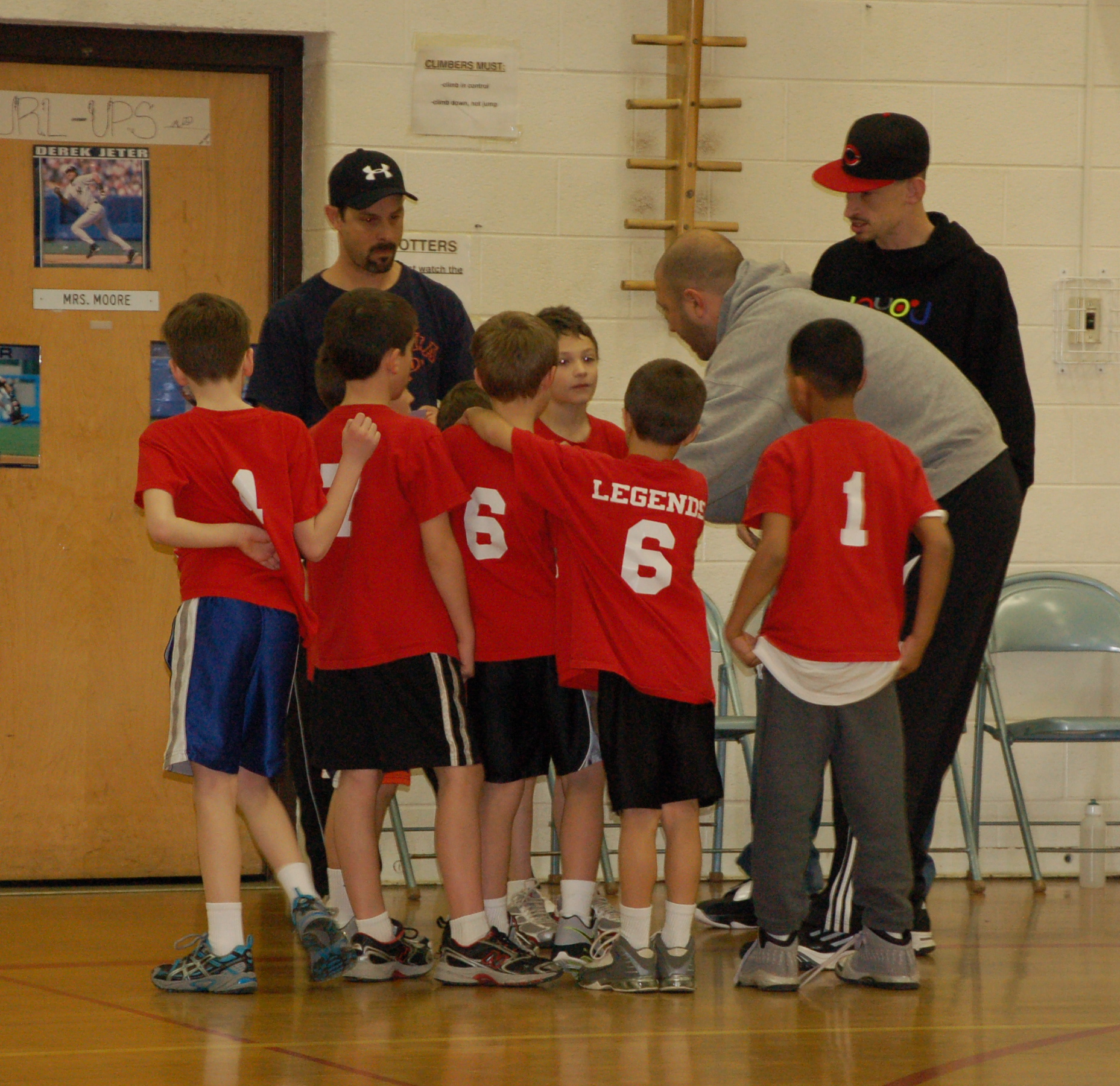
My sixth grade basketball team.

By Bruce Stambaugh

I recently had a very nice conversation with a six-year-old girl named Sophie. I told her that I liked her name. In response, she just beamed an ear-to-ear smile and blinked her brilliant blue eyes.

I didn’t tell Sophie this, but she reminded me of another Sophie I knew when I was in elementary school. That Sophie and I were in the same grade and often in the same class.

I remember her in part because of her name, which was rather unusual in the 1950s. Plus, when compared to the rest of the hoard of heads in the overflowing classroom, Sophie’s last name was even more foreign than her first.

Just years removed from World War II and in the midst of the Cold War, families with eastern European last names were often Girl and pumpkin by Bruce Stambaughlooked at askance. That didn’t make it right. It’s just the way it was. As I recall, Sophie was even picked on by other kids, despite her pleasant personality and her charming looks.

I never liked that she got taunted. But I don’t remember ever standing up for her either. I admired Sophie for being so impervious to the mocking and bullying. I seemed only able to empathize with her, stymied by my own juvenile sense of inferiority.

I got teased a lot in school, too. Out of the hundreds of students in our elementary school, I think I was the only Bruce. It didn’t help that I was small and younger than most kids in the class. I remember the hurt feelings more than exactly what was said. I couldn’t imagine how Sophie felt. Yet she kept that furtive smile and carefree attitude.

I silently blamed my parents for my troubles since they had stuck me with the cursed name. I don’t think they liked me. I theorized that since they already had a son, they were hoping for a girl next. Back then, parents had to wait until the actual birth to know the sex of their child.

Mom and Dad by bruce Stambaugh
My mother, Marian, and late father, Richard H. Stambaugh

I figured when another boy popped out, my parents were so disappointed that they named me Bruce. Coupled with my last name, callous students also poked fun at my initials. I had to wonder what were my parents thinking.

My predicament grew worse. A couple of years later, my parents got their girl and I became the forgotten middle child. To complete the Stambaugh brood, Mom bore both another boy and girl.

As you might imagine, the derisive name-calling worsened among the squirrelly junior high school kids and the insensitive high school jocks. When I finally began to both accept my name and get over my silly self-pity, I realized what my classmate Sophie had known all along. Bruce, like Sophie, was just a name, and a decent one at that.

I long ago got over my folks tagging me with the name Bruce. I’m just plain stuck with the initials. Given my orneriness, I probably have earned them anyway.

Davis by Bruce Stambaugh
Be your own person.

I enjoyed my recent chat with young Sophie; glad for the memories she evoked. From what I could tell, Sophie had already learned an important lesson that would take her far in life.

Like the Sophie in my elementary school, this sociable first grader instinctively seemed to know that it’s not what’s in a person’s name that is important. It is what’s in the person that really counts.

Pumpkins are for more than pie

Great pumpkin by Bruce Stambaugh
Pumpkins, including the Great Pumpkin apparently, are sold in lots of large boxs at a produce auction near Mt. Hope, OH.

By Bruce Stambaugh

Besides the colorful leaves, pumpkins have to be right up there as one of the top icons of fall. The portly orange fruit seems to be everywhere this time of year.

By their sheer numbers, people appear to be in love with pumpkins. Maybe that’s because they don’t have to rake them like they do the pumpkin’s leafy fall compatriots.

Perhaps the pumpkin’s versatility is the primary reason for its popularity. Pumpkins are used for all sorts of things. My favorite, of course, is in pumpkin pie; hold the whipped cream please.

Pumpkin pie by Bruce Stambaugh
My wife's fabulous pumpkin pie.

I know I’m prejudiced. I’m partial to the pies my good wife makes. That doesn’t deter me, however, from enjoying the baking efforts of others just to prove my point.

Fall is the time of year when real, honest-to-goodness pumpkin pie begins to show up on the menus of local restaurants. There’s good reason for that. It’s pumpkin harvest time. Of course with canning and freezing, pumpkin pie can be made anytime. But given its delicate ingredients, it’s best made in cooler climes.

It’s also worth noting that the pumpkins we see for sale in the market, at roadside stands and in people’s front yards are not generally the kind of pumpkins of which pie is made. For that, you need pie pumpkins, which makes perfect sense to me.

Pumpkin display by Bruce Stambaugh
Homestead Furniture, Mt. Hope, OH used pumpkins in it's 20th Anniversary Sale last October.

These pumpkins have a much higher calling. They are for show. Pumpkins decorate front porches, yard displays, commercial displays and accent fall flower gardens. Their bright orange color warms the coolest autumn morning.

Toward Halloween, people pick the perfect pumpkin for their Jack O’ Lantern. Carving a face into the anointed pumpkin can be a family affair that makes lasting memories for impressionable children. On October’s darkened nights, a single lighted candle sufficiently illuminates the caricature designed and desired.

Colorful pumpkins by Bruce Stambaugh
Pumpkins of different colors.

To be chic, pumpkins now come in alternate colors. There are white ones, gray ones, brown ones and even blue ones. These, too, are prized for their ornamentation qualities, and exhibited indoors and out.

Pumpkins are so highly regarded in our North American societies that they even earn their very own festivals. Towns around the country, especially in the Midwest where most pumpkins are grown, celebrated with contests like the largest pie and the largest pumpkin grown. To date, the record belongs to a young man in Wisconsin with a pumpkin that weighed in at 1,810.5 pounds.

Painted pumpkins by Bruce Stambaugh
Pumpkins even get painted rather than carved so they last longer.

Pumpkins show up on our dinner tables in other forms besides pies and decorations. There are pumpkin cakes, rolls, ice cream, lattes, ravioli and soups. The seeds can even be roasted and eaten for snacks.

We shouldn’t be surprised at this. We are simply repeating history. Native Americans taught early explorers to North America to roast pumpkin slices skewered on long sticks over an open fire. Settlers learned to cut the top off a whole pumpkin, hollow it out, and fill it with milk and spices, and then bake it on hot coals. This entrée was the forerunner to our pumpkin pie.

The indigenous peoples also understood the pumpkin’s versatility. They would dry strips of pumpkin, and then weave them into mats to sit on.

Besides our early history, pumpkins have also played major roles in our folklore. Cinderella’s coach turned into a pumpkin at midnight. The headless horseman in The Legend of Sleepy Hollow threw a pumpkin at poor Ichabod Crane. Of course, Charlie Brown is full of hope, still looking for the elusive Great Pumpkin.

Whether reading, eating or decorating, enjoy the pumpkin variety show while it lasts. Now pass the pie please.

Large pumpkins by Bruce Stambaugh
Pumpkins of all shapes and sizes are sold every fall at the Mt. Hope Produce Auction, Mt. Hope, OH.

Fall, a time to die and a time to live

Fall in Amish country Ohio by Bruce Stambaugh
By Bruce Stambaugh

For those of us fortunate enough to live within proximity of giant stands of mixed hardwood trees, fall is a glorious time of year to observe life’s constant changes.

The annual autumn spectacular of the once lush leaves magically transforming the emerald landscape into magnificent warm rainbows carries us into nostalgic reflectivity. This year I couldn’t help but note a symbolic similarity in the recent death of the ingenious Steve Jobs, the guru who started Apple Computer.

Rainbow of colors by Bruce Stambaugh
Fall's rainbow of colors on display.

The very first computer I ever used was an Apple. Just the name of the computer endeared educators to these amazing, easy to use personal computers. School systems across the country bought them for student and teacher use. The fact that Apple was wise enough to give teachers and school districts educator discounts on their purchases made them all the more attractive.

One of the schools where I was principal acquired an Apple computer for the library in 1989. Now obsolete floppy discs were inserted to boot programs or software for students to use. I have primarily used Apple computers ever since.
Apples by Bruce Stambaugh
Shortly after hearing of Jobs’ death, the Internet was full of information about his life. I found many of the touching quotes and reflections via posts on Facebook.

One particular poignant clip greatly moved me. It was a 15-minute video of Jobs’ address at the 2005 Stanford University commencement. No one would have mistaken the pure genius that produced innovative personal electronic devises like the iPod, iPhone and iPad for Shakespeare. But his message was prophetic nevertheless.

His words were neither flowery nor convoluted. Like his multitude of popular electronic inventions, his exhortation was straightforward and concise. He had three simple points for the graduating class that day. Each was illustrated by personal stories from his humble yet incredible, creative life.

His final point was perhaps the most powerful and applicable. Just a year removed from having survived pancreatic cancer, Jobs told the sun-drenched audience “death is very likely the single best invention of life.” He told those gathered that if you live each day as if it were your last, someday you’ll be right. Jobs was as pragmatic as he was innovative.

Though he had hoped to live decades longer, Jobs emphasized that remembering that he would be dead soon was the most important motivator for him. He related that view even though he of course had no idea how long he would live. Jobs said no one wants to die, but death is the destination that we all share. Death clears out the old to make way for the new.
Maple tree by Bruce Stambaugh
That’s the way it is with the leaves. They bud in spring, unfold overnight to lush, lovely green or crimson until their predictable fate in the fall. Having done their job of helping the tree thrive and grow another year, the leaves succumb to the inevitable.

The leaves unveil their natural, vibrant colors, keep us captivated for a few precious days, and then drop and wither. Left behind is a tiny bud that will become next year’s new foliage. The old give way to the new, returning to the earth from whence they came.

Our lives follow the same cycle, though most span more than a year. The colors of some leaves are more remarkable than others. In the same way, some lives shine brighter than others for humankind.
Sugar maple leaf by Bruce Stambaugh
Steve Jobs was one of those brilliant leaves.

White and gold

White and gold by Bruce Stambaugh

Fog in the valleys,
a golden sunrise backdrop
silhouettes the hills.

Bruce Stambaugh
Oct. 9, 2011

Admiring children’s creativity, especially the grandchildren’s

Grandkids by Bruce Stambaugh
Our grandchildren, Evan, Davis and Maren.

By Bruce Stambaugh

A painting hangs on a wall in my home office where I spend much of my workday. The artistry isn’t one of my mother’s rich landscape watercolors.

The painting is simple in content, perhaps even a bit juvenile in style. That’s why I like it so much. I purchased the watercolor from a former student.

The sixth-grade artist took a common setting and made it exquisite. She had captured perfectly the daily scene in her classroom. A row of colorful books lined the soldier brick windowsill. The black tattered blinds, cords hanging limp, covered the upper third of the old steel framed windows.

I wanted the painting as a memento. I also wanted to encourage her to keep painting. That was a long time ago, and I don’t know if the girl, now a young woman, still paints or not. I hope she does. She had a creative eye.

Mother and daughter by Bruce Stambaugh
Maren insisted that I take a picture of her with her mommy and their sunglasses.

My middle grandchild does, too. His older brother by two years, and his 2-year old sister also have their own individual flashes of creativity. But Davis is different for sure. He is left-handed after all.

For a 5-year old, he seems to see patterns that others, myself included, look right through or ignore altogether. Davis may have inherited some of his great-grandmother’s artistic ability.

My wife and I visited recently with our daughter and her family in Virginia’s beautiful Shenandoah Valley. During our stay, Davis’ creativeness burst forth on more than one occasion.

He showed me his rock collection, which is housed on the porch of an unused entrance to their home. Davis uses several characteristics to choose his rocks. Size, color, texture, shape, and weight are all his geologic requisites.

I was honored when he asked me to identify a rock he chose to take to preschool to share with the other students. I told him it was granite, and Nana chimed in that countertops are made of granite. This took us to the Internet for pictures of the coarse-grained igneous rock. Davis was fascinated with all the different types and colors.

Touchdown by Bruce Stambaugh
The grandsons enjoy their football.

While playing football with him outside, I pointed out a big puffy cloud floating overhead. Davis informed me that it was a dragon. On second glance, I don’t know how I missed that obvious observation.

The sure sign that we may have a budding Picasso in the family was Davis’ intensity while drawing. He stared at the Wii characters on the television screen as his big brother played a game. Davis turned to his drawing paper over and over again, dedicated to replicate what he saw. He didn’t quit until he was satisfied with what he had sketched.

His siblings, Evan and Maren, draw, too. Evan is a meticulous stay-between-the-lines kind of guy, while little Maren is just honing her abstract expressionism. She sent a sample of her early work back to Ohio with us.

Sketching by Bruce Stambaugh
Davis sketching in the pea gravel at the playground.

At the park, Davis discovered a shark designed cleverly onto a section of a gigantic wooden play set. Like the dragon, I didn’t see it until Davis pointed it out. The sharp teeth, the menacing eye, the dorsal fins and the fanned tail were all right there. Creative kid that he is, Davis sat down in the pea gravel and began to outline a replica with his index finger.

I marvel at children who can see the extraordinary in the ordinary. I admire it all the more when the children happen to be youngsters I know well, like my grandchildren.

Shark by Bruce Stambaugh
Davis and his playground shark.