The initial stop on the Sugar Trail at New York’s Genesee Country Village and Museum.
I didn’t really know what to expect when our son and his wife informed us that we were going to a maple sugar festival. I knew that our daughter-in-law was super excited, which was enough incentive for me. Besides, what choice did I have? They had already purchased tickets, and it was a rain or shine event.
So, off we drove southwest from Rochester, New York, to the Genesee Country Village and Museum. We arrived in less than an hour, and it was clear from the crowded parking lot that we weren’t alone on this adventure.
We checked in and were directed to the Sugar Shack, where the modern method of boiling maple sap down to create maple syrup was explained. In New York, it takes about 39 gallons of sap to make a gallon of maple syrup. I thought back to my Ohio days when I visited various sugaring operations. The general rule there was 52 gallons of sap to create a gallon of maple syrup. I wondered if the latitude had anything to do with the difference.
From there, it was on to sugar snow. That’s where maple syrup is poured over snow for a special tasty treat. In the absence of snow, crushed iced served the same purpose. We enjoyed it just the same.
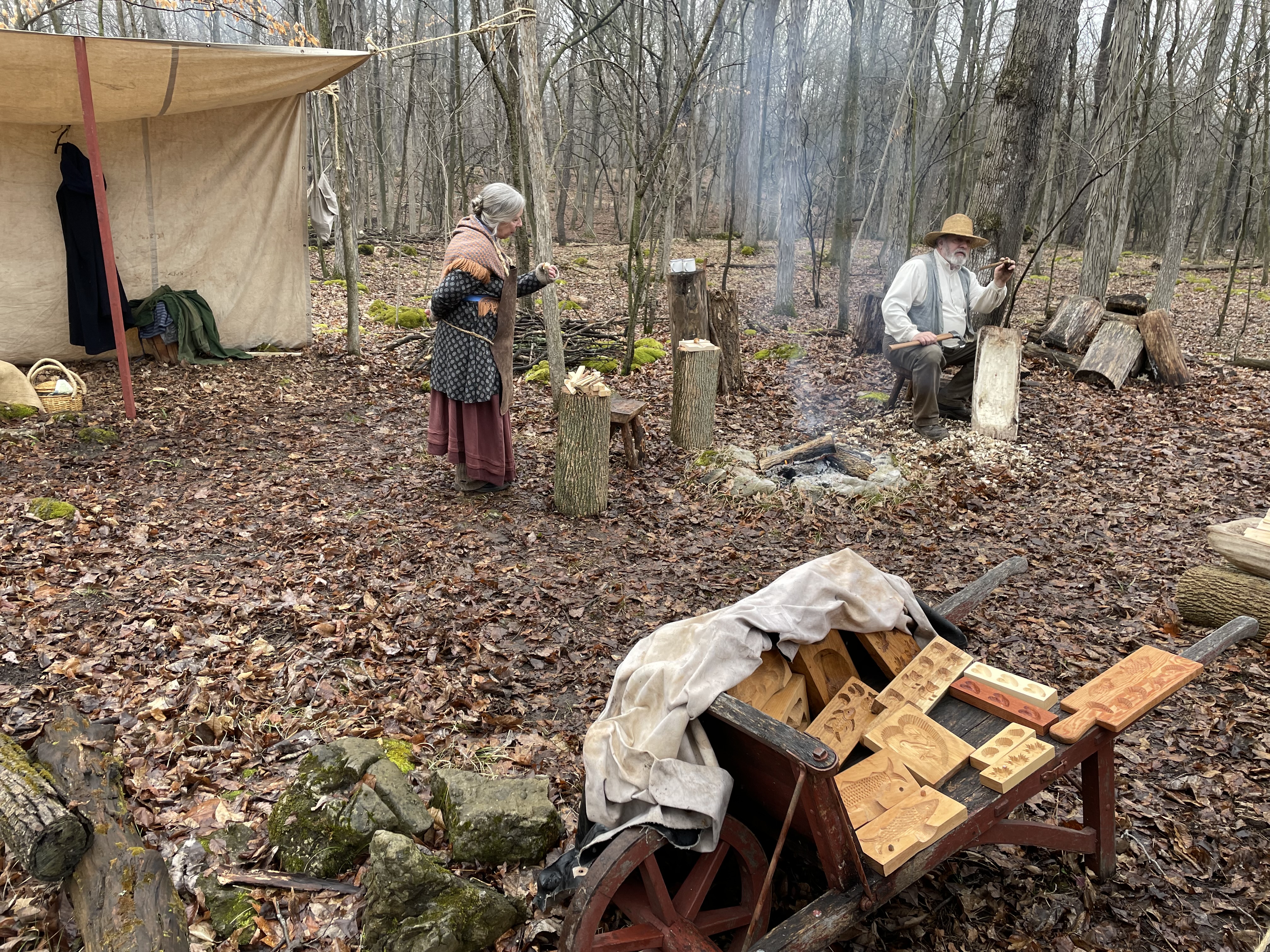
Wooden molds like pioneers used for maple sugar candy.
When the docent tells you that the sap in the bucket is full of bugs and bacteria.
The modern way of tapping maple trees, but don’t use the same spot as you did last year.
Tasting sugar snow.
Soon, we were on the Sugar Trail, where volunteers in period costume explained the maple sugaring evolution one station at a time. Our umbrellas went up before we even stepped foot on the trail.
The wet weather didn’t dampen the spirits of either our gang of six or the knowledgeable folks at each stop. They knew their stuff and shared how both Native Americans and white settlers took advantage of the sap run during February and March.
We learned a lot along the way. The walk was equally a figurative and literal stroll through the woods dominated by sugar maple trees. We followed the signs from stop to stop, ending up at how maple sap is currently gathered by most successful sugaring operations.
Plastic tubing is strung from tree to tree with plastic inserts that are tapped into the tree. Gravity carries the sap to the main collecting barrel instead of going from tree to tree emptying individual buckets full of the sweet stuff. In truth, only 2% of the water collected is sugar, thus the boiling of the water. Workers have to gauge the proper heat to avoid burning the syrup. Despite the mechanization, it’s still a tedious process.
By trail’s end, we were ready for lunch. A brief stop at an on-sight eatery got us going again. That’s when the real surprise came.
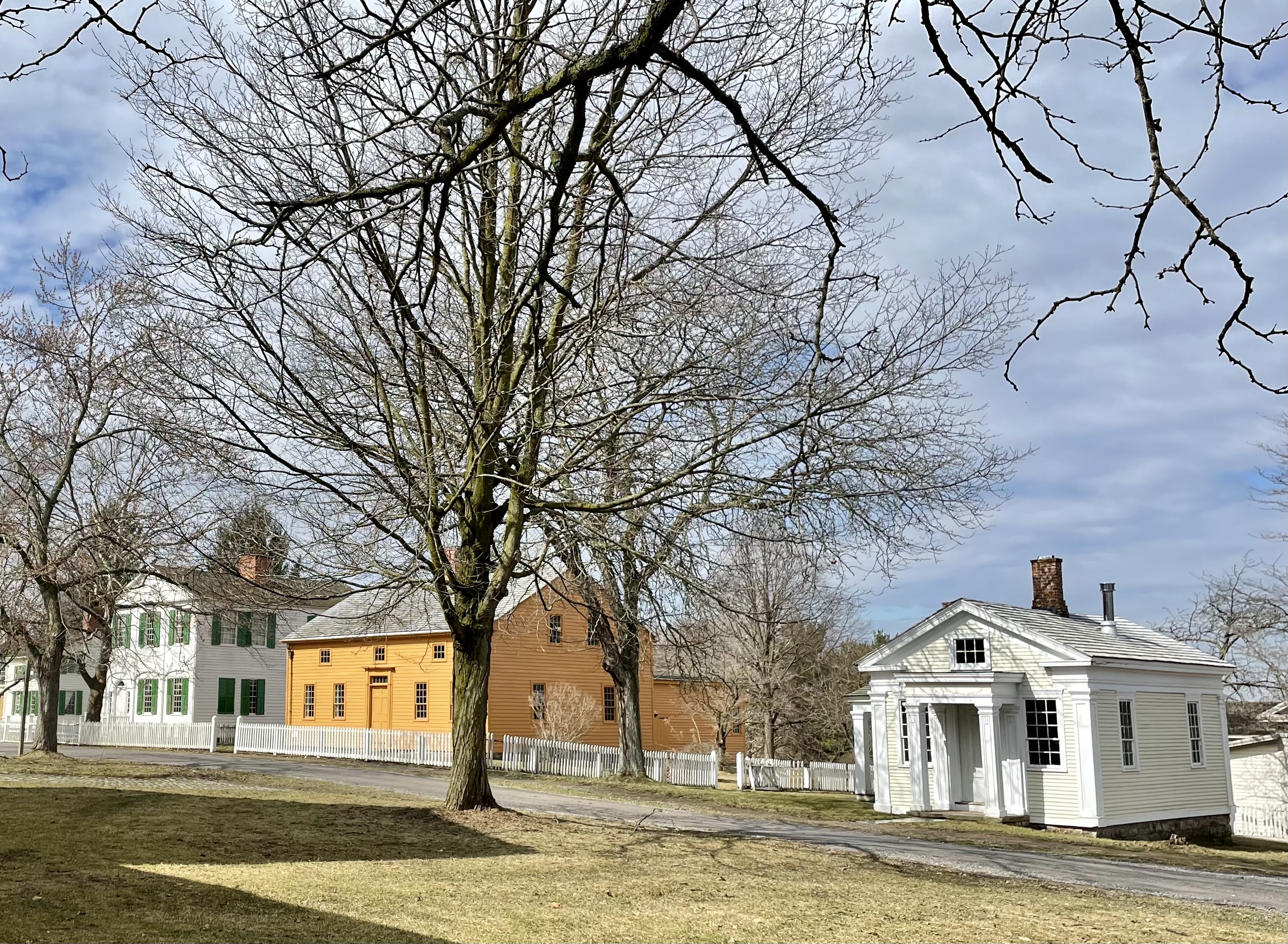
Genesee Country Village and Museum is a collection of historical buildings brought to the site for educational purposes. George Eastman’s boyhood home is in the village. Eastman was the founder of Eastman Kodak Company.
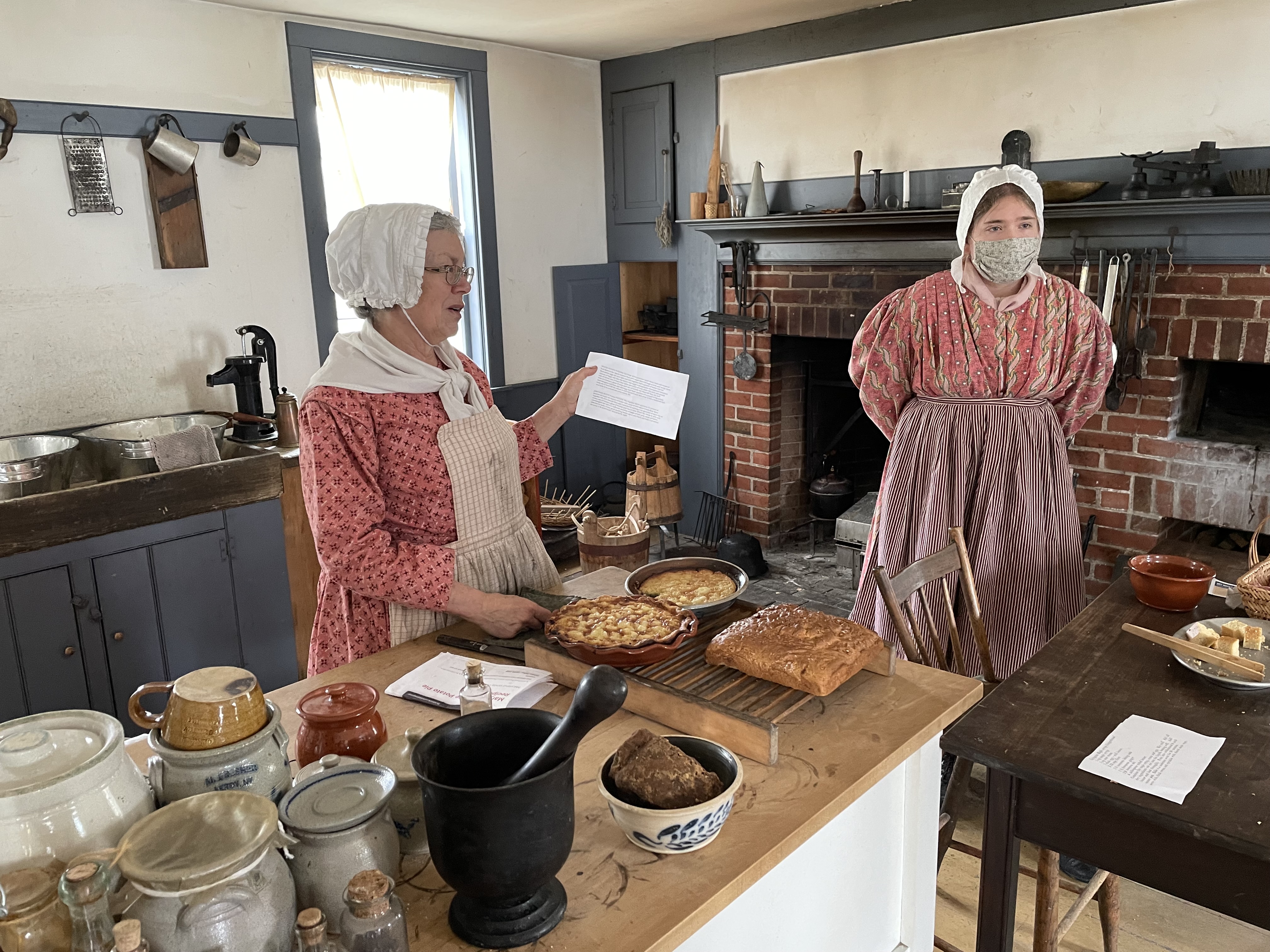
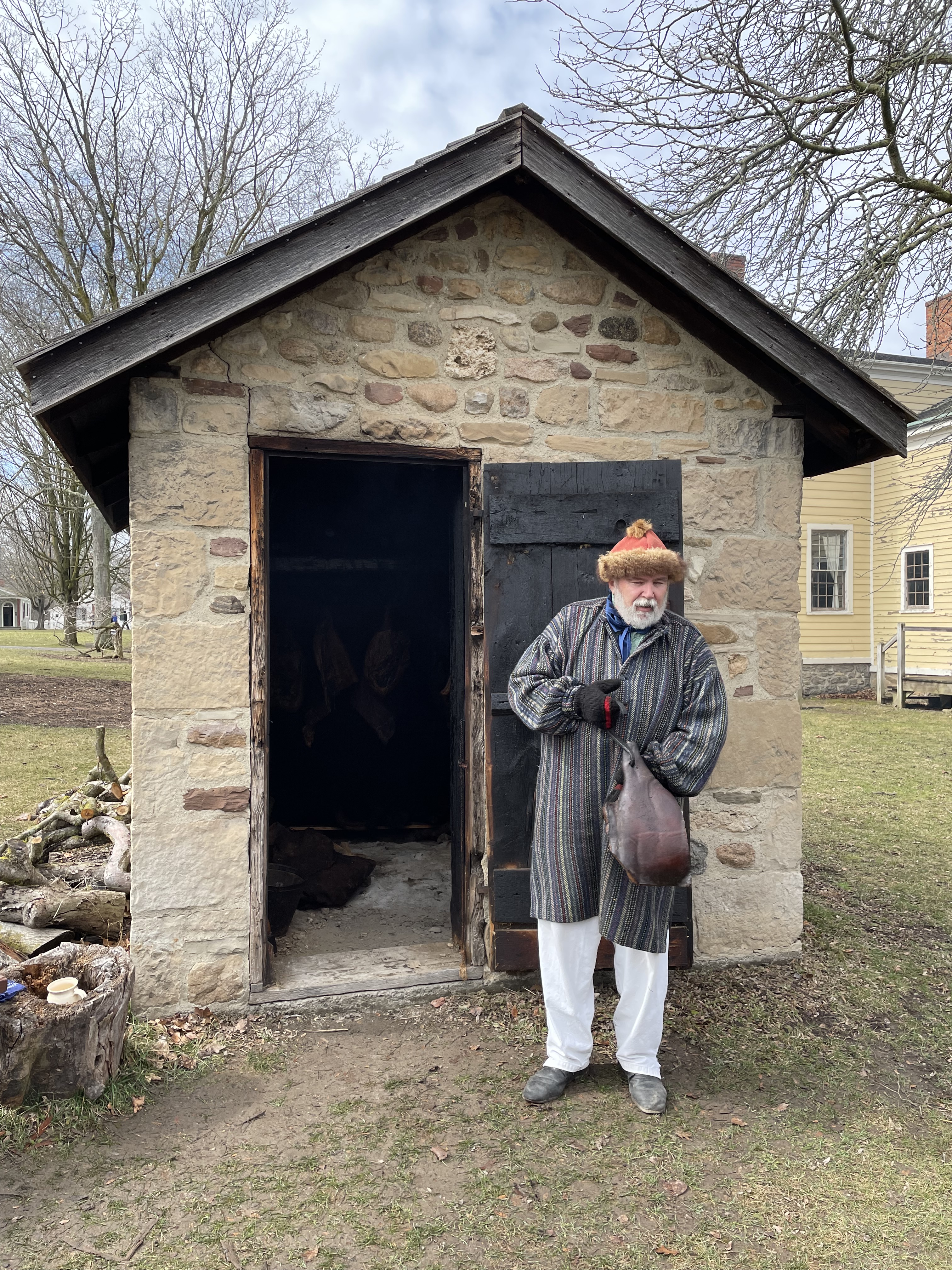
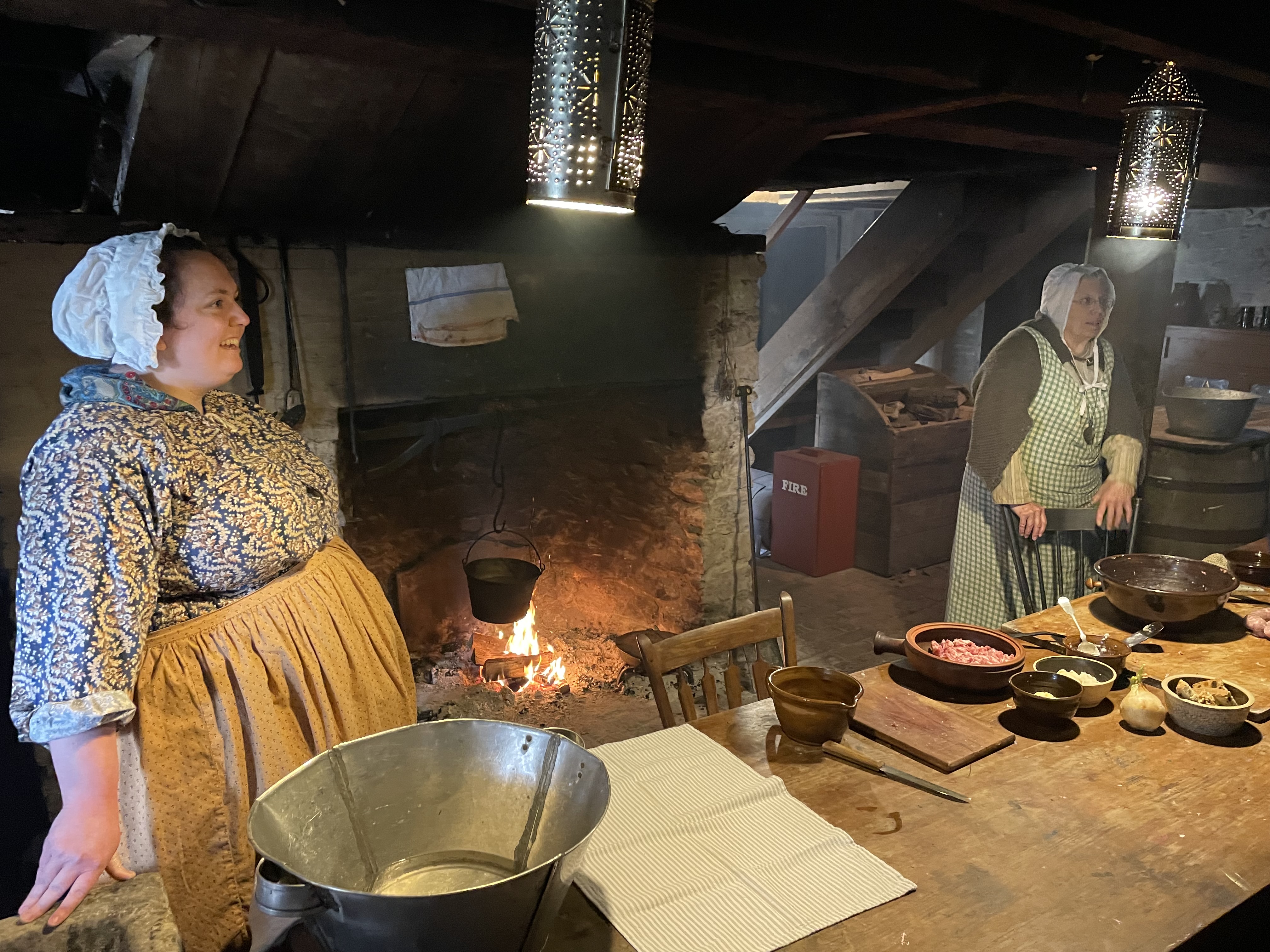
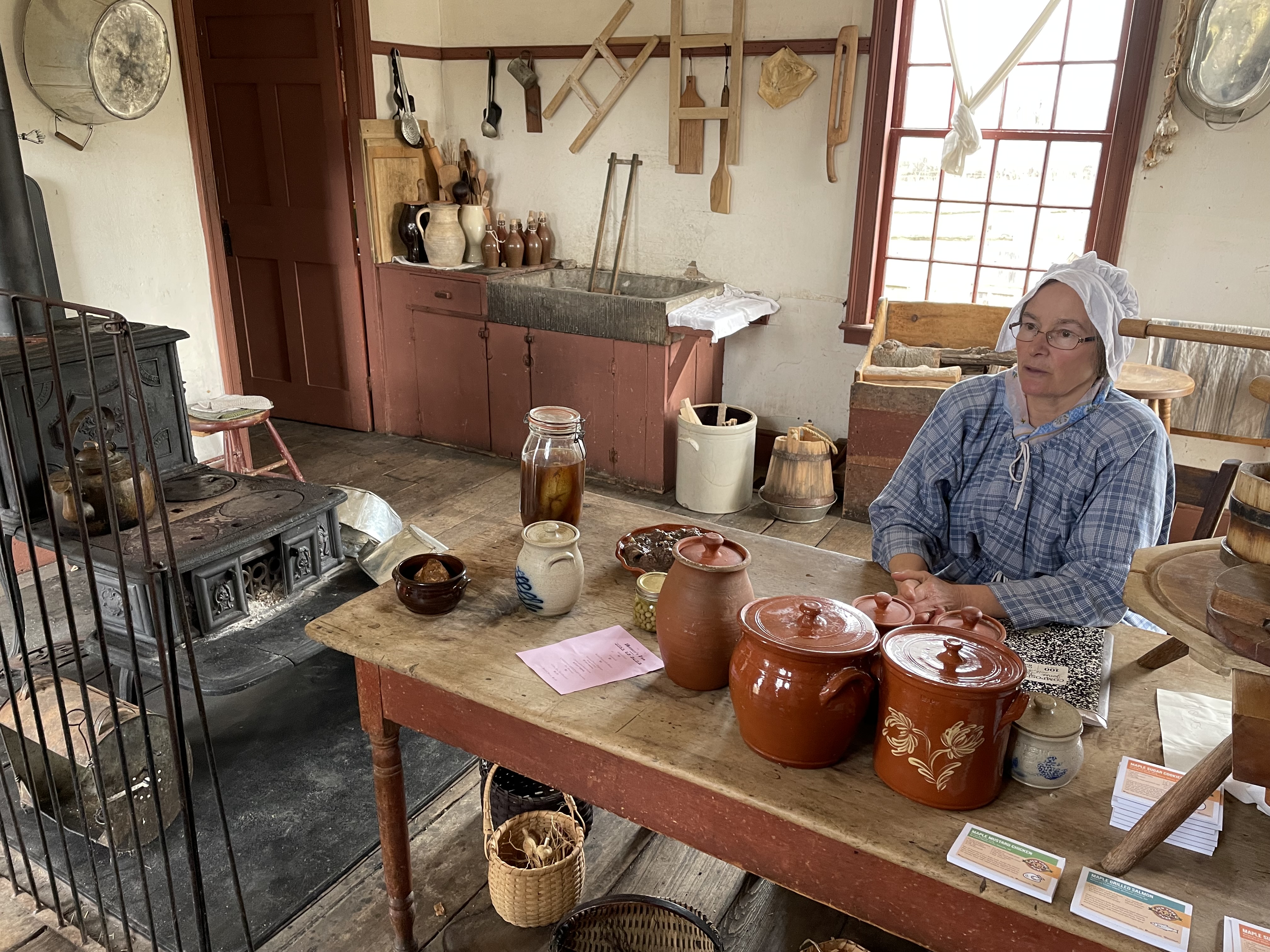
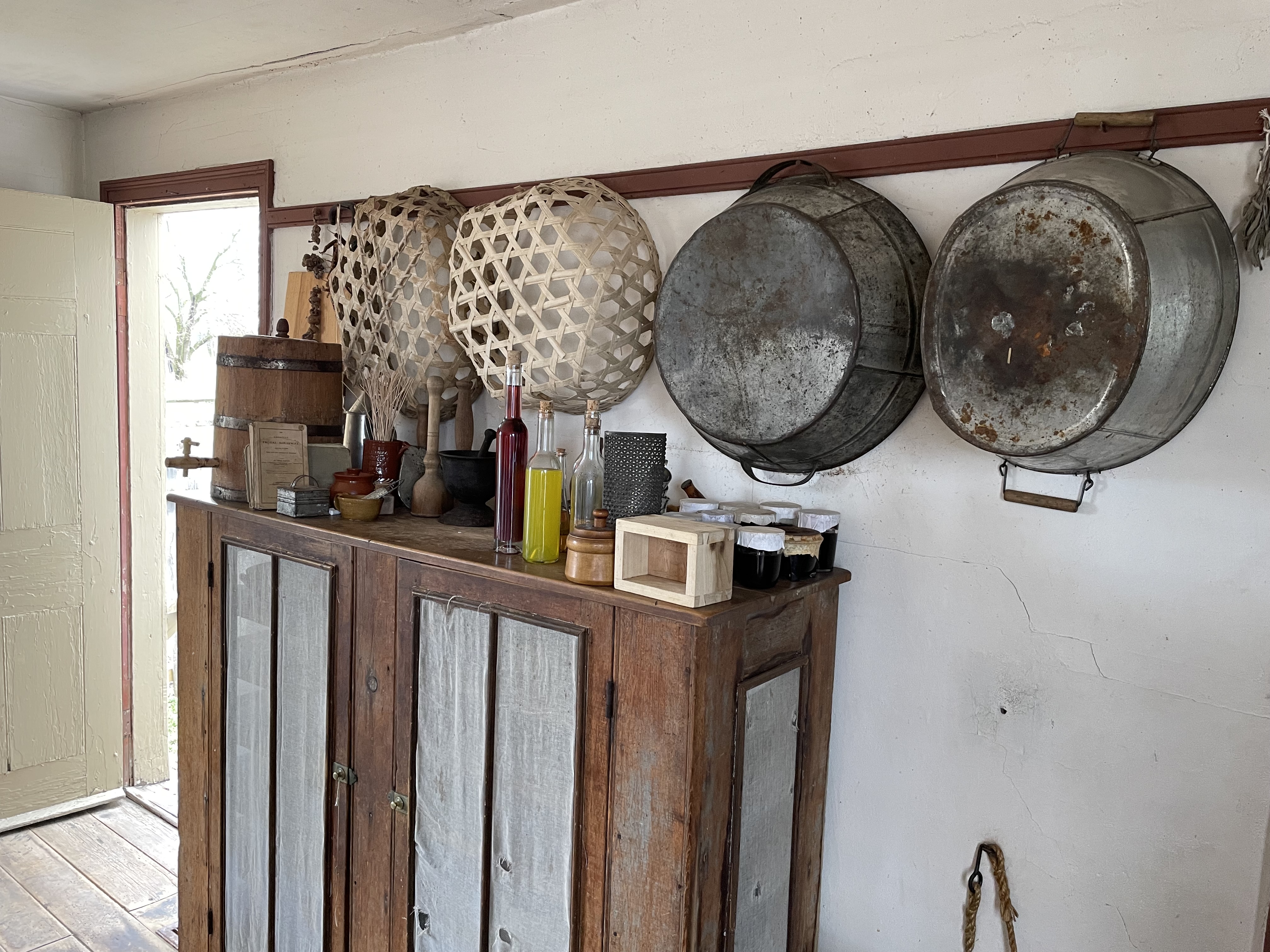
The village is divided into sections to represent the various architectural structures of the late 18th century into the early 20th century. Some of the buildings, like the Hosmer’s Inn and its smokehouse and the Jones Farm had guides in period outfits to give a brief description of the way life used to be in those particular times. We also enjoyed maple flavored goodies from the bakery.
The sun came out, and the temperature warmed, making our afternoon even more delightful. Most of all, it was a joy to spend these precious moments with family.
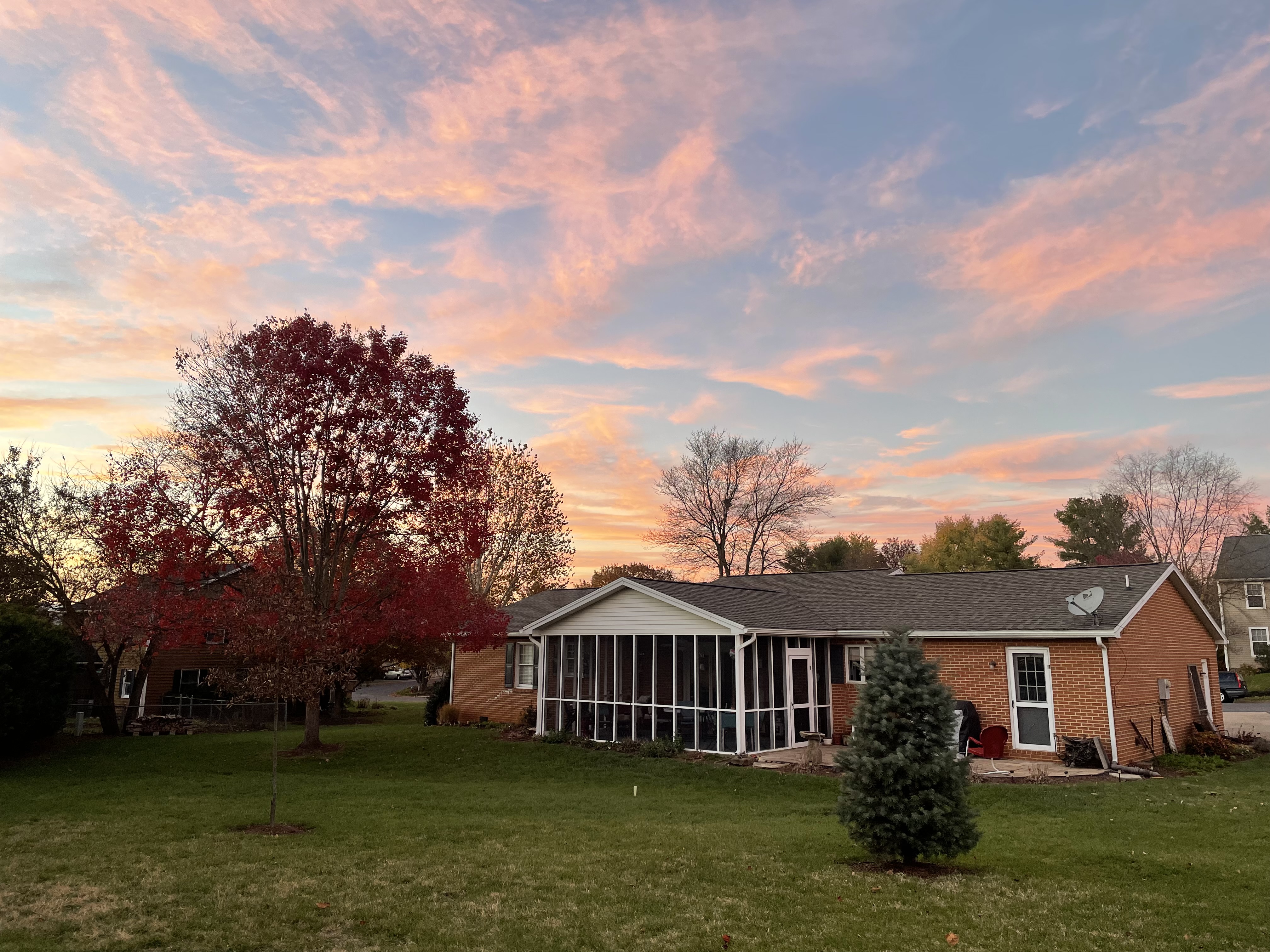
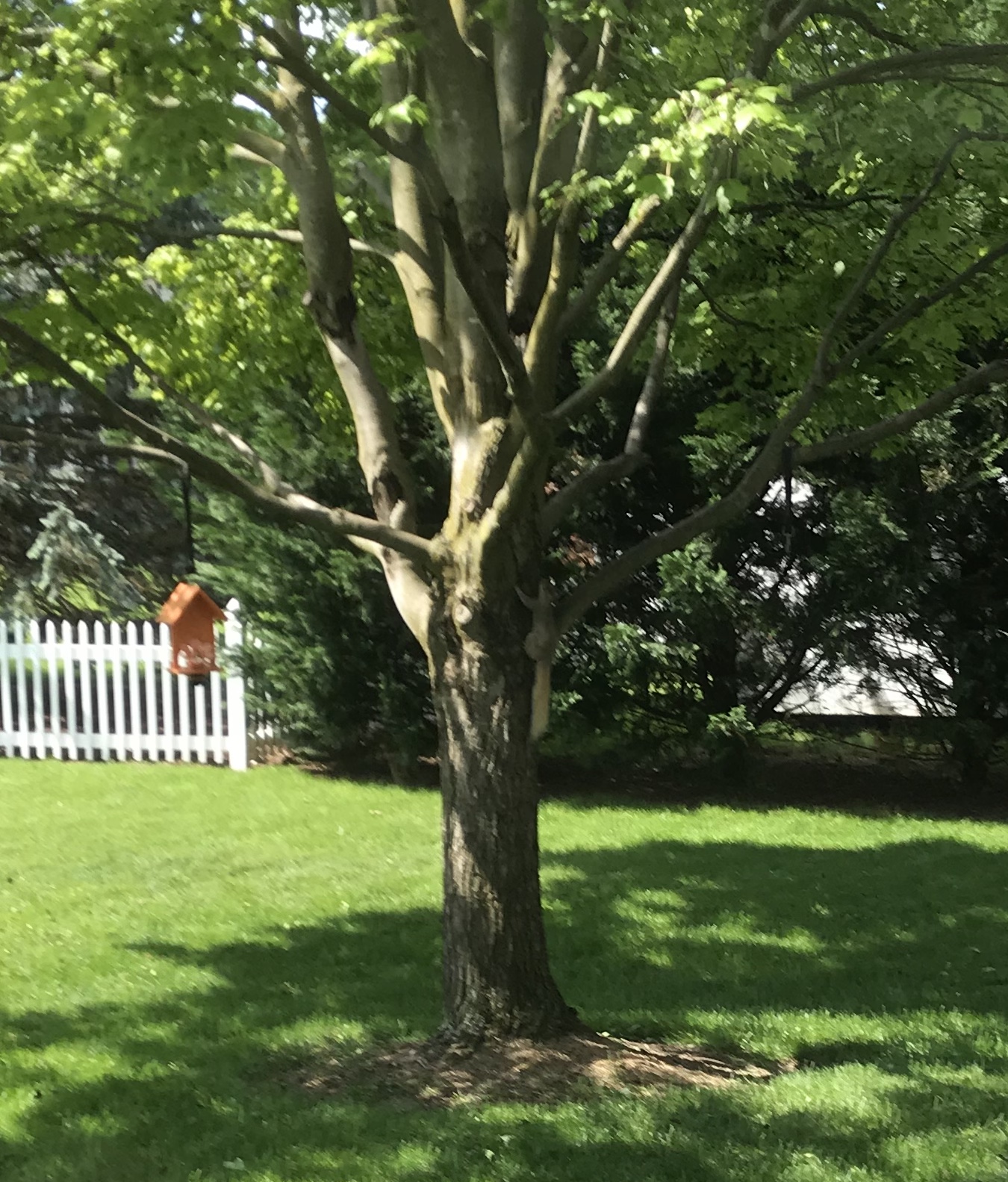
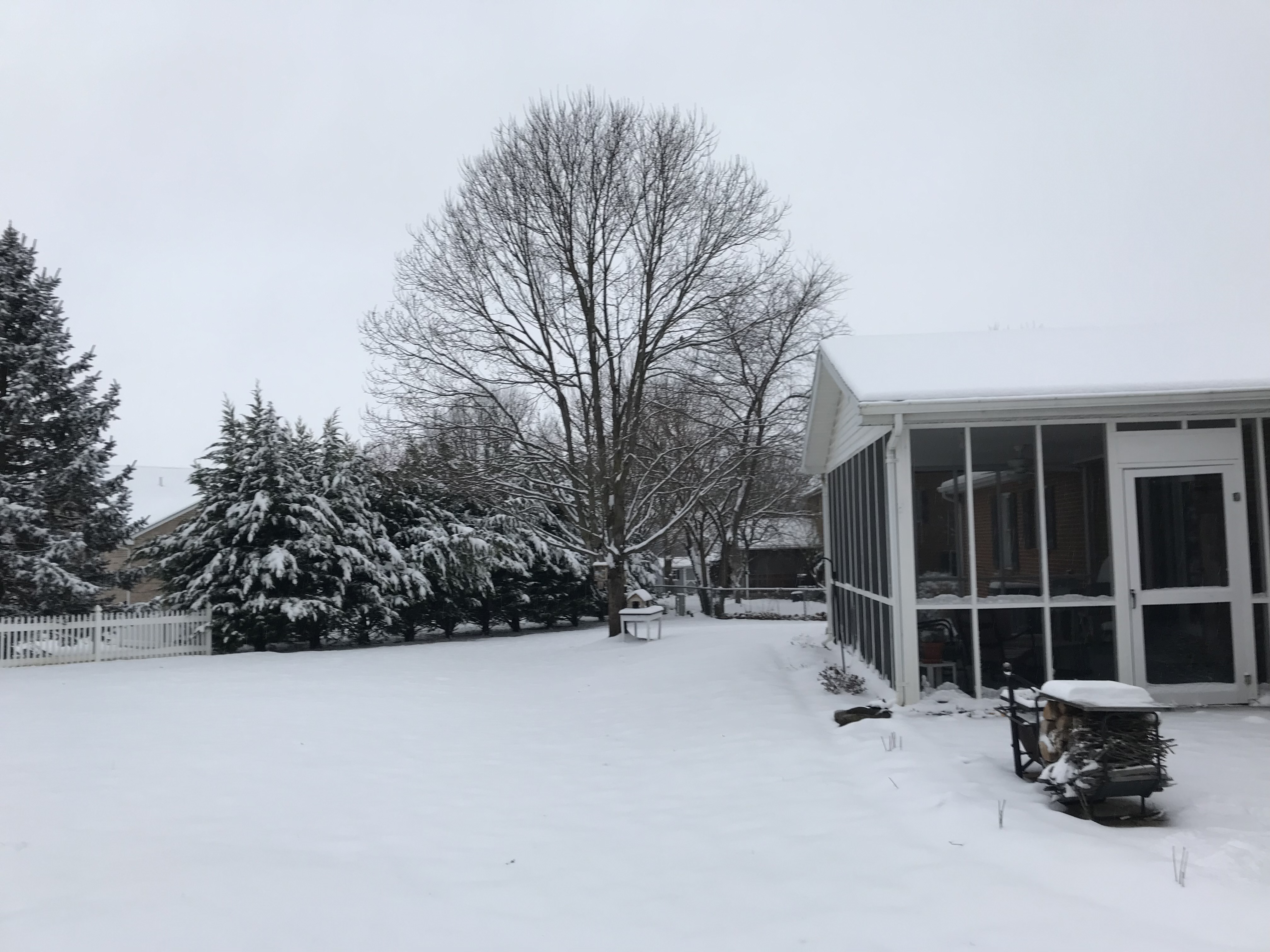
The backyard red maple saw a lot of lovely sunsets.
I said goodbye to an old friend recently. I had the utilitarian red maple tree in our backyard cut down. I didn’t really want to, but it was the right thing to do.
The tree has served us well year-round in the short time my wife and I have lived in the Shenandoah Valley. We moved here from Ohio’s Amish country to be near our grandchildren.
In the summer, the backyard tree provided much-needed shade for us and the wildlife. The tree reached far above the peak of our home, helping to block the hot afternoon sun. Birds and squirrels were often seen lounging in the coolness.
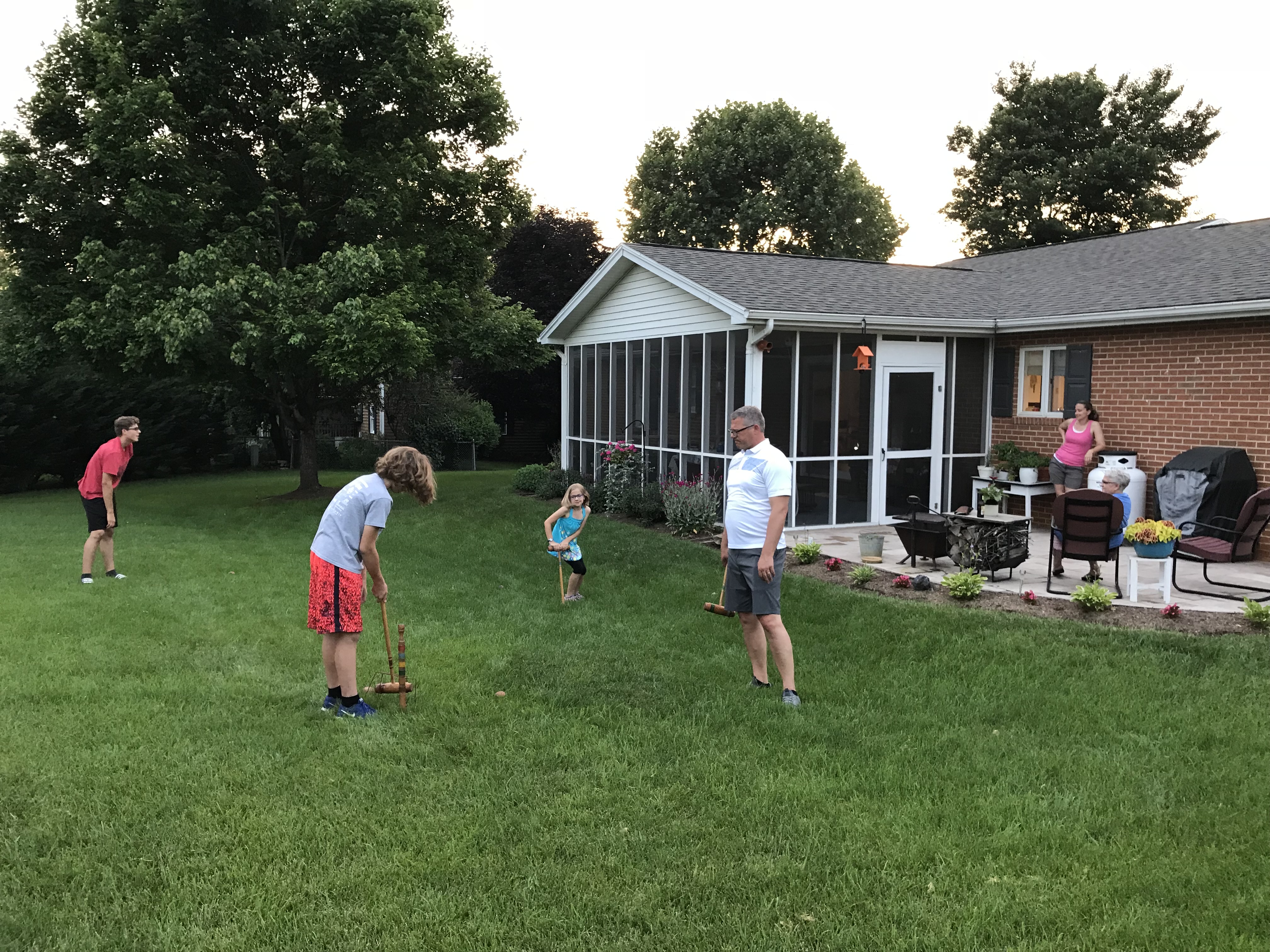
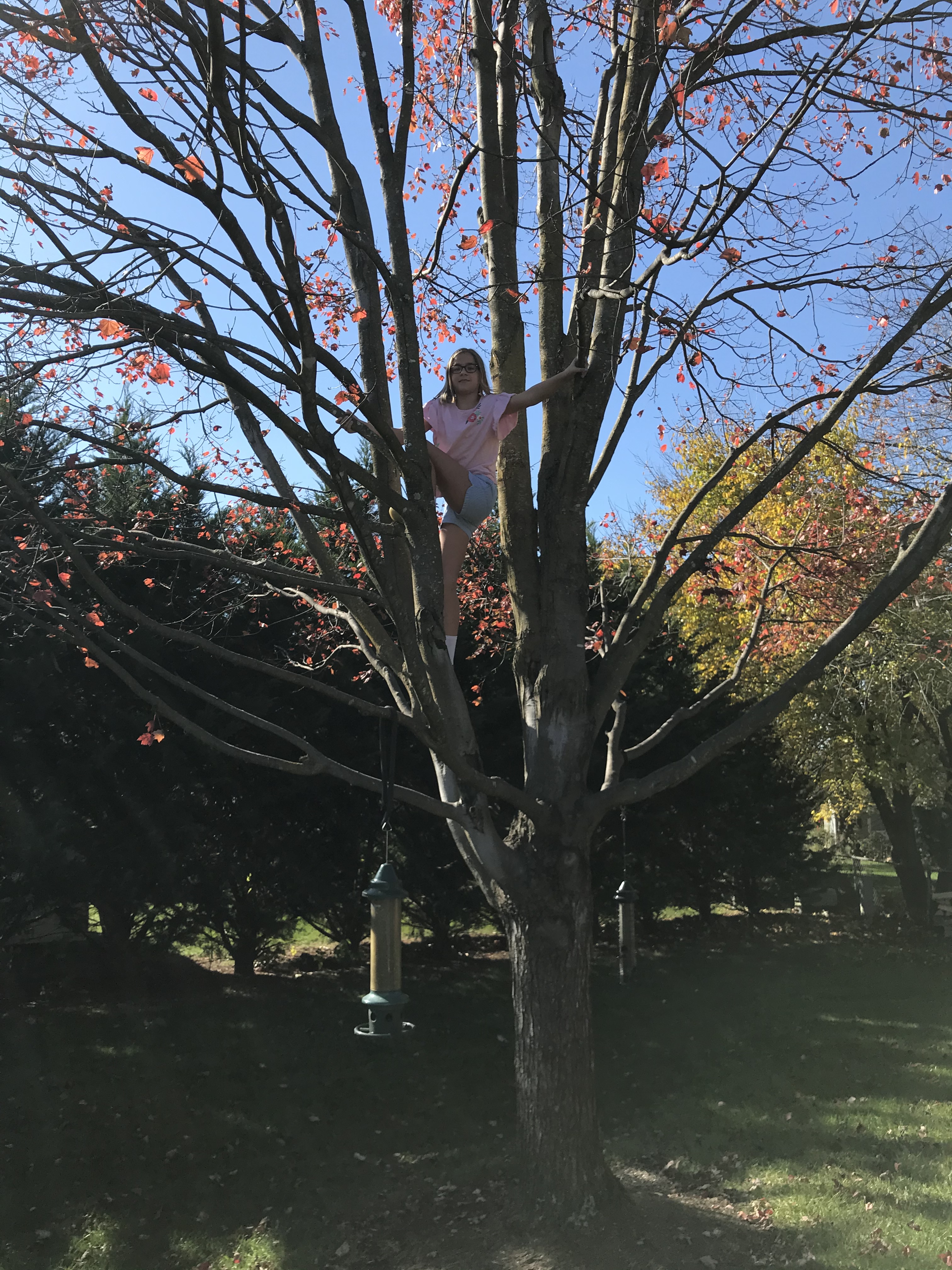
Our grandchildren scaled the alluring tree with her low, sweeping branches. She oversaw their croquet games, soccer kicking, and baseball tossing. American Robins and Blue Jays nested high in her tender branches.
The red maple glowed most gloriously in the fall, of course. Her red leaves brightened chilly, gray autumn days. But the healthier front yard red maple always outshone her sister’s beauty.
In the winter, she cradled the various backyard bird feeders I hung from her lower limbs and placed beneath her silver trunk. White-throated Sparrows, House Finches, Purple Finches, Carolina Chickadees, Carolina Wrens, and American Goldfinches were just some of the species that rested on her branches.
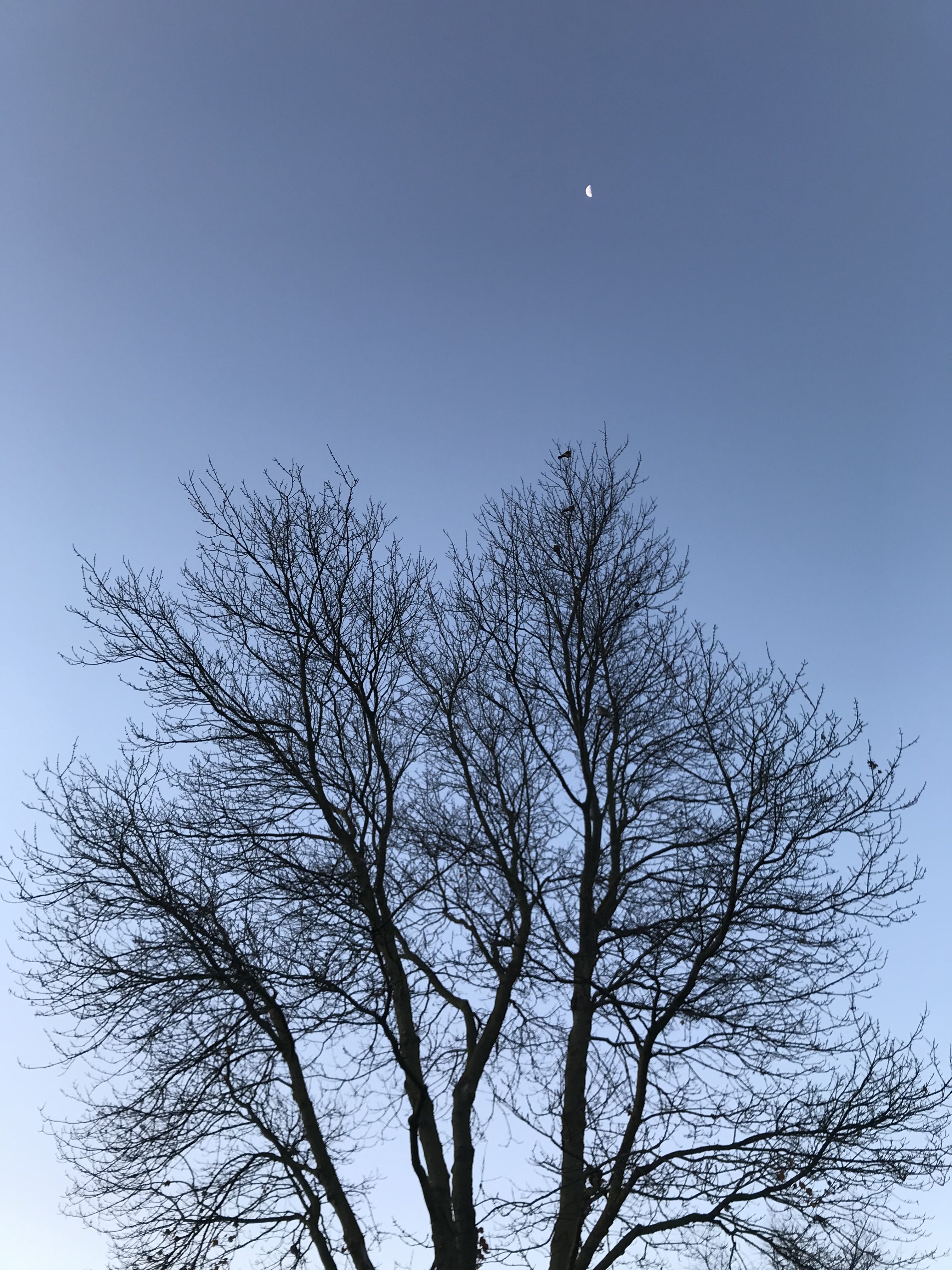
Woodpeckers especially loved her. Downey, Red-bellied, Northern Flickers, and even a Pileated Woodpecker graced her offerings. American Robins roosted high in her crown as days drew to a close.
In the spring, her dainty, concealed blossoms attracted pollinators before I even realized they were there. In addition to her budding lime leaves, she sprouted her precious, life-giving seeds. Unfortunately, they were so numerous not even the horde of neighborhood squirrels could devour them all. The twirling seeds clogged our spouting and downspouts until we had gutter guards installed. More personally, they activated my allergies. I alone kept Keenex® in business.
Neither of those negativities led to her demise, though. No, I knew the tree was sick from the time we moved in nearly five years ago. Even a casual glance would have told any passerby that the tree had an issue.
The red maple was only one of two mature trees on our third of an acre. A second red maple frames the front yard. Even from the street, you could see that the color of the leaves of the two trees was different. The front yard maple’s leaves shown glossy and vibrant. The leaves of the backyard tree appeared dull, even sickly.
I knew that one large east-facing branch of the backyard red maple struggled to produce leaves. But last summer, when the region was in a moderate drought, the leaves suddenly turned brown and shriveled up.
A certified arborist showed me the reasons for the beloved tree’s demise. Insects had girdled the limb in question near the trunk, and the bark had flacked off. In fact, the bugs had burrowed into the trunk as well. No wonder woodpeckers loved the tree.
The arborist said the tree would live no longer than five years. We made the difficult decision to have the tree taken down, and replace it with another that hopefully will produce a crown that will mirror the qualities of the red maple.
My wife and I won’t likely live long enough to watch the replacement tree grow to maturity. We are resigned to watching the young sweet gum grow the way we have enjoyed watching our grandchildren morph from joyous youngsters into achieving and helpful youth.
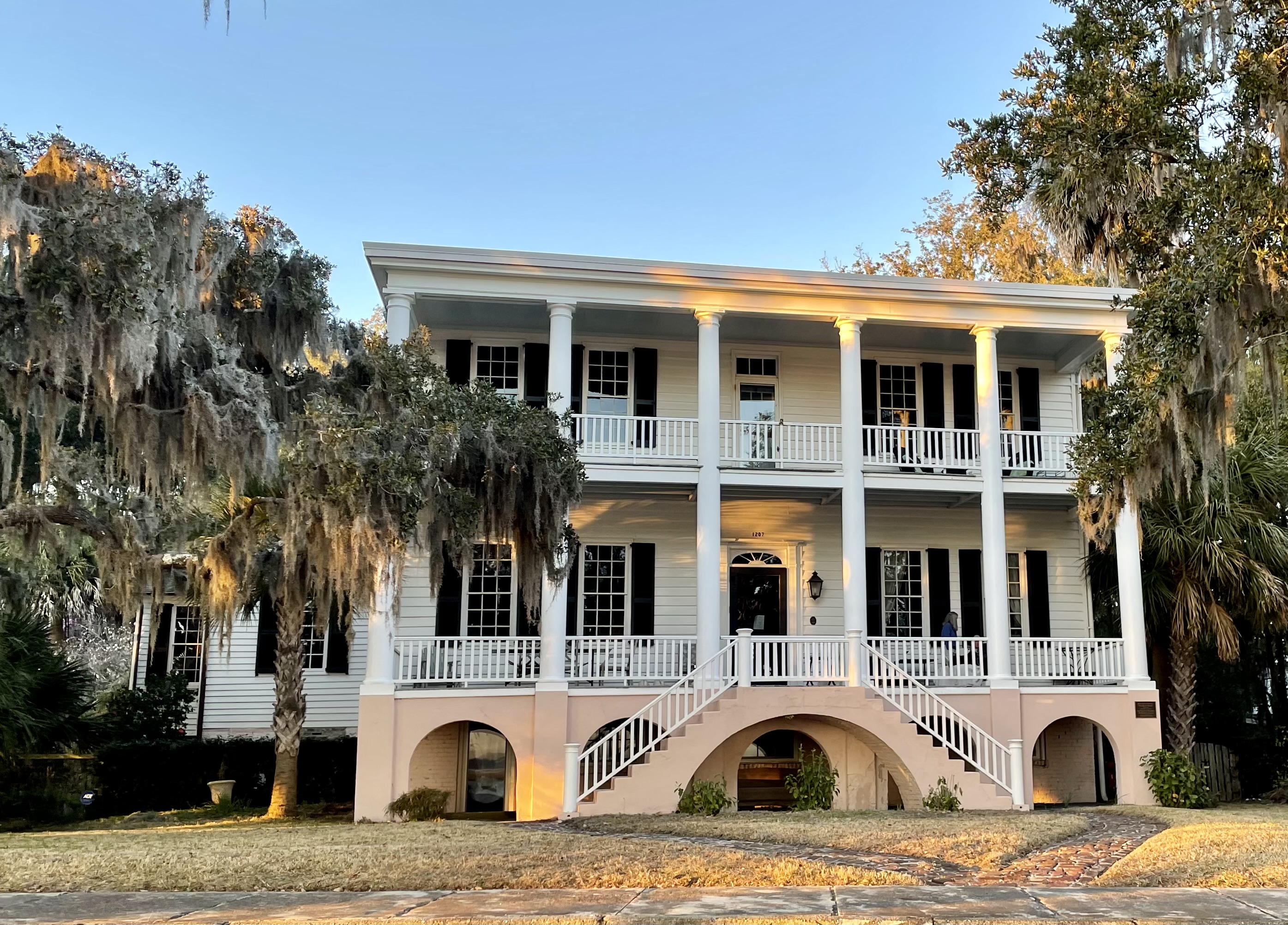
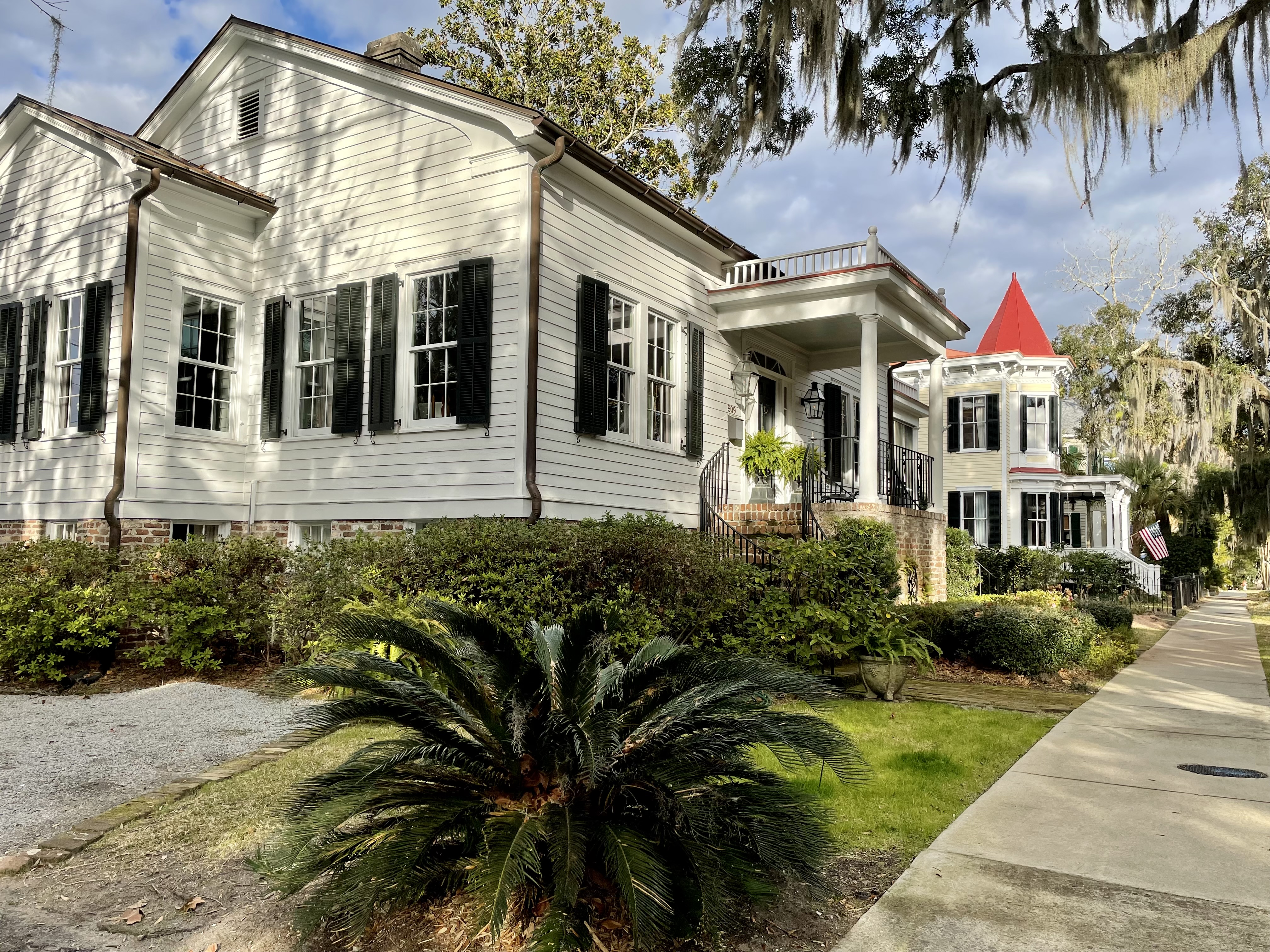
The Tabby Manse House, Bay St., The Bluff, Beaufort, SC.
As much as I enjoy wildlife, especially birds, history and architecture also rate high on my list. In Beaufort, South Carolina, you can have it all.
After spending a month on Florida’s Amelia Island northeast of Jacksonville, my wife and I weren’t ready to head back to the northern winter climes. We rented an Airbnb for a few days with another couple. My wife did an expert job of choosing our place. It was located only three blocks north of the historic waterfront area of the quaint and bustling downtown section.
Beaufort (as in beautiful) is indeed beautiful. Its city planners clearly understood the importance of maintaining the town’s long history while making the scenic waterfront attractive and available to all, locals and tourists alike.
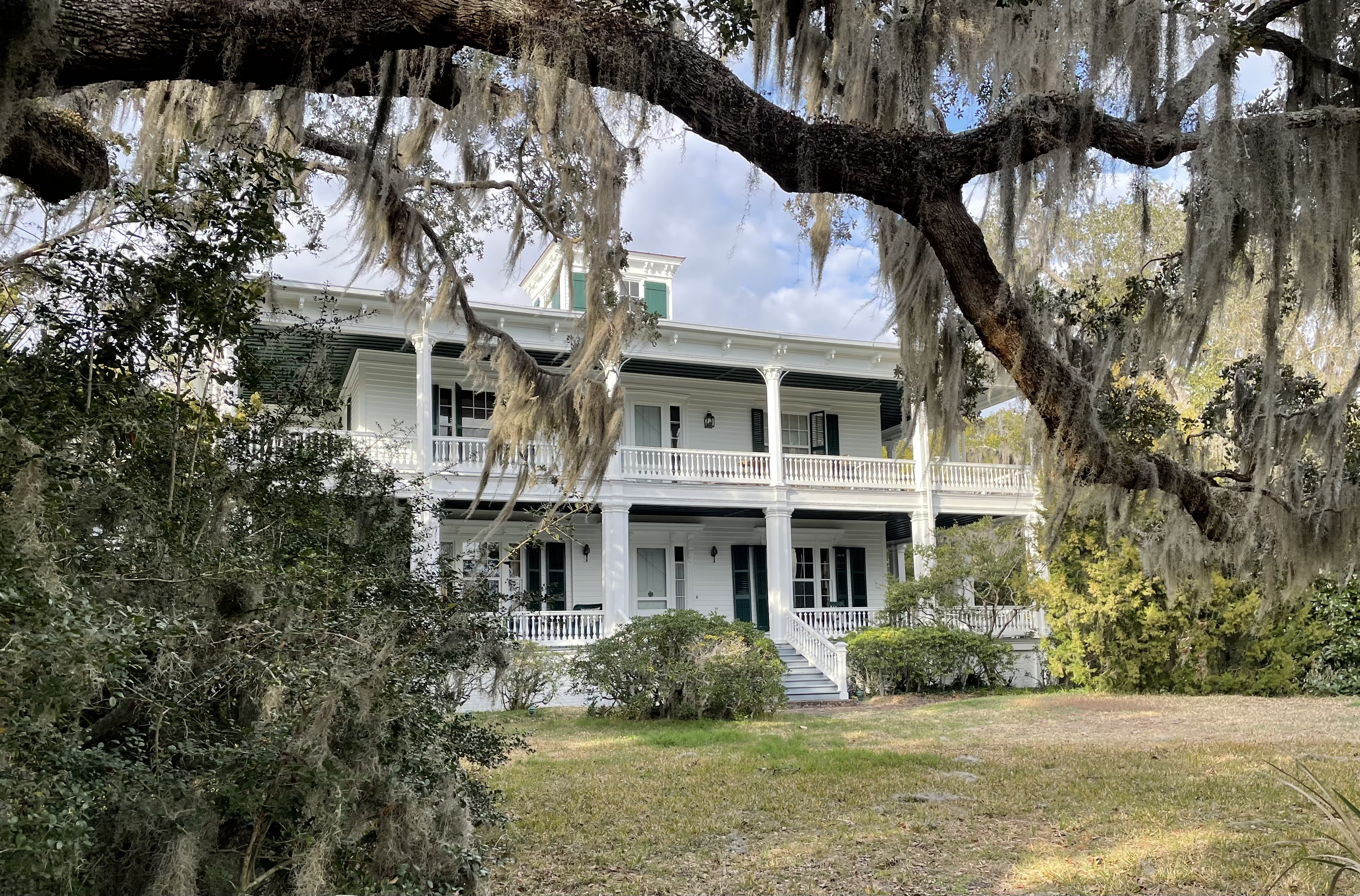
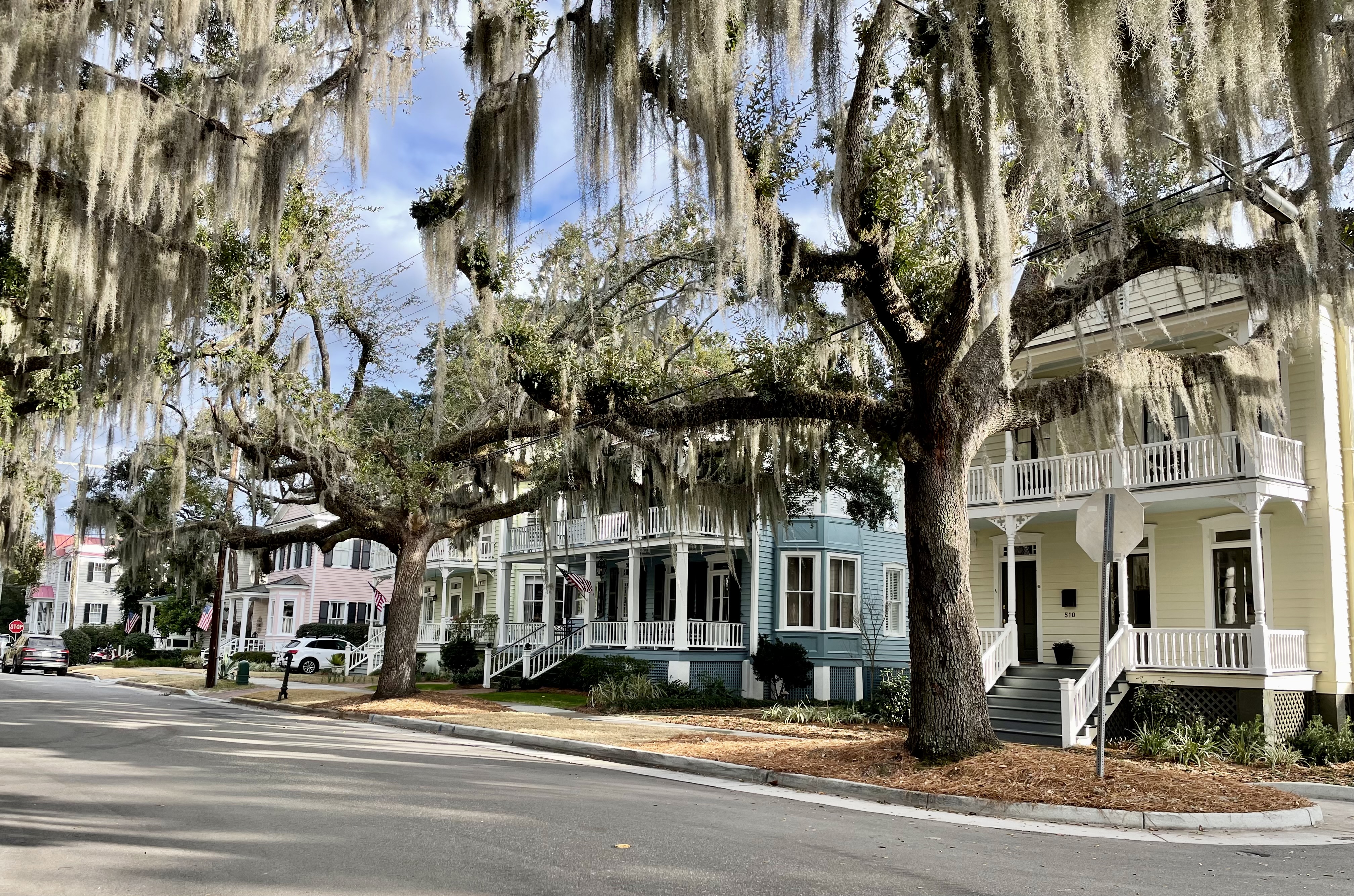
We had been to Beaufort before, but my wife and I never tire of seeing the old antebellum mansions surrounded by stately old live oak trees dripping with Spanish moss. The more famous ones are located west of downtown on The Bluff along Bay St. They overlook the marina on the Beaufort River where shorebirds mingle with sailboats.
They aren’t the only beauties to be found, however. We prefer to drive around on our own, stopping at our leisure to photograph historical architecture, lovely scenery, and whatever wildlife we happen upon. We meet friendly locals out walking their dogs on an evening stroll in the process.
The homes and historic buildings grabbed our immediate attention every time we turned the corner. Some were newer, built to fit into Beaufort’s style. Most, however, were well-maintained residences or upscale inns, where customers could sit on expansive front porches and enjoy the evening, tea, and genuine conversation.
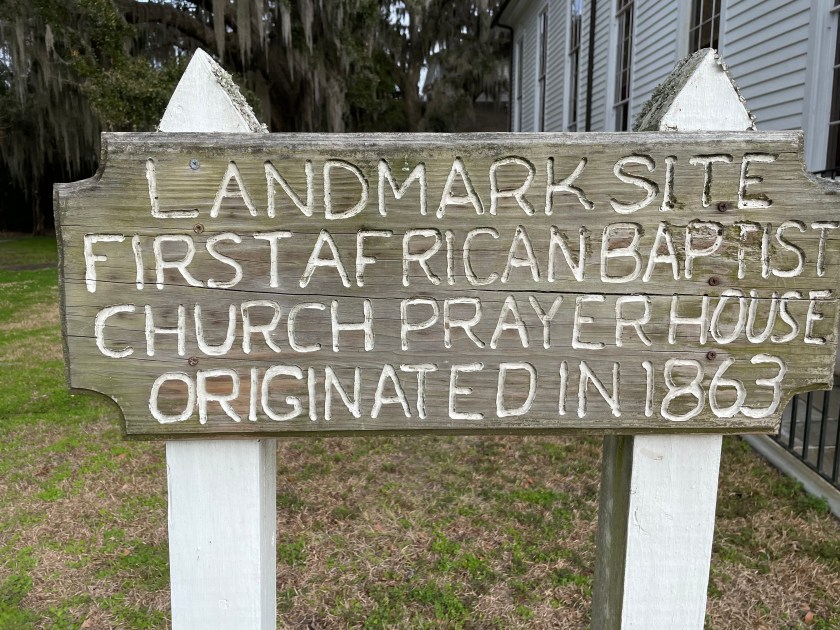
Beaufort is a town steeped in history. Its iconic mansions shout that loud and clear.
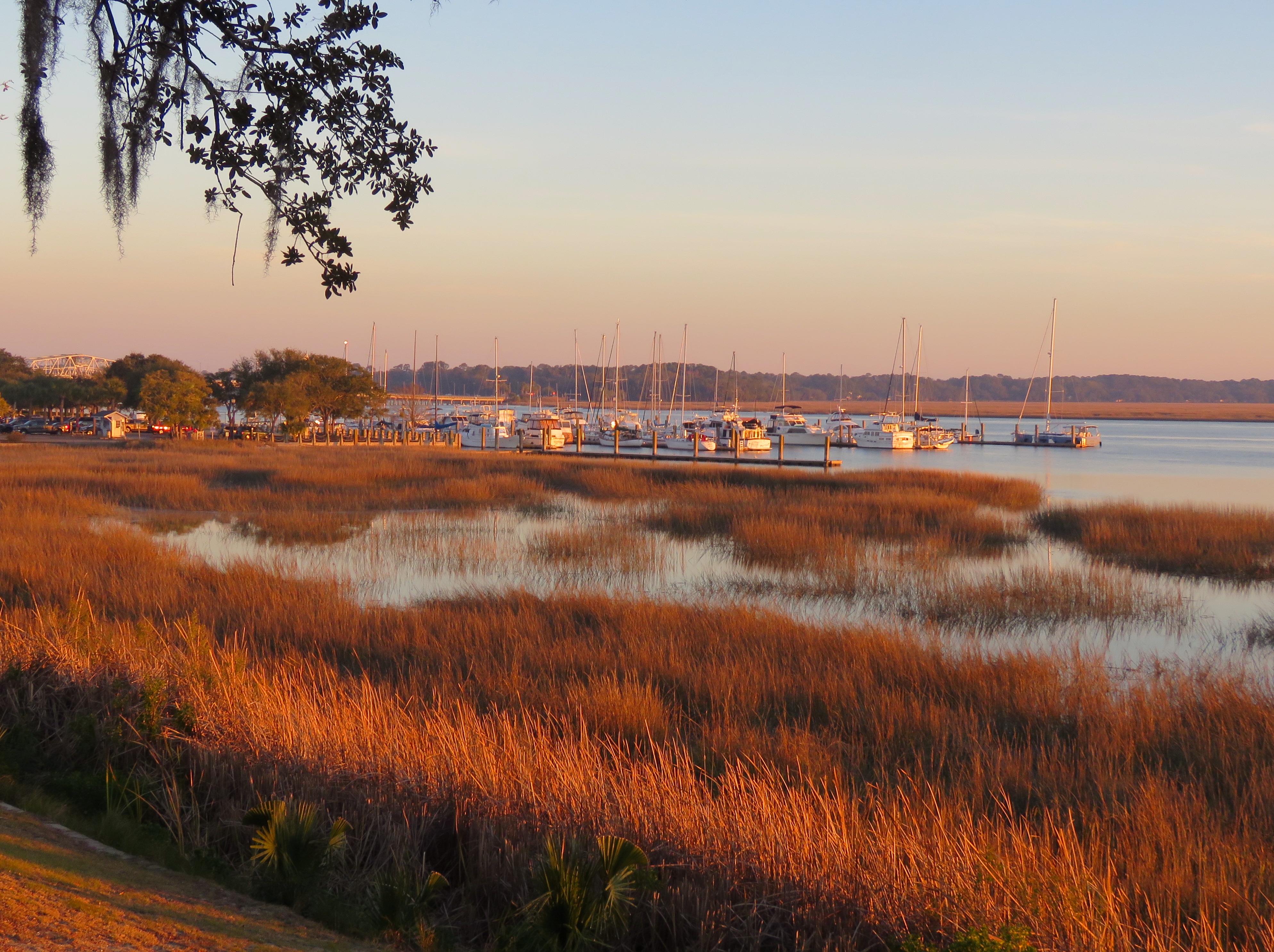
Dusk highlighted the Beaufort, SC marsh and marina area with the Woods Memorial Bridge visible above the trees at the west end of the Henry C. Chambers Waterfront Park.
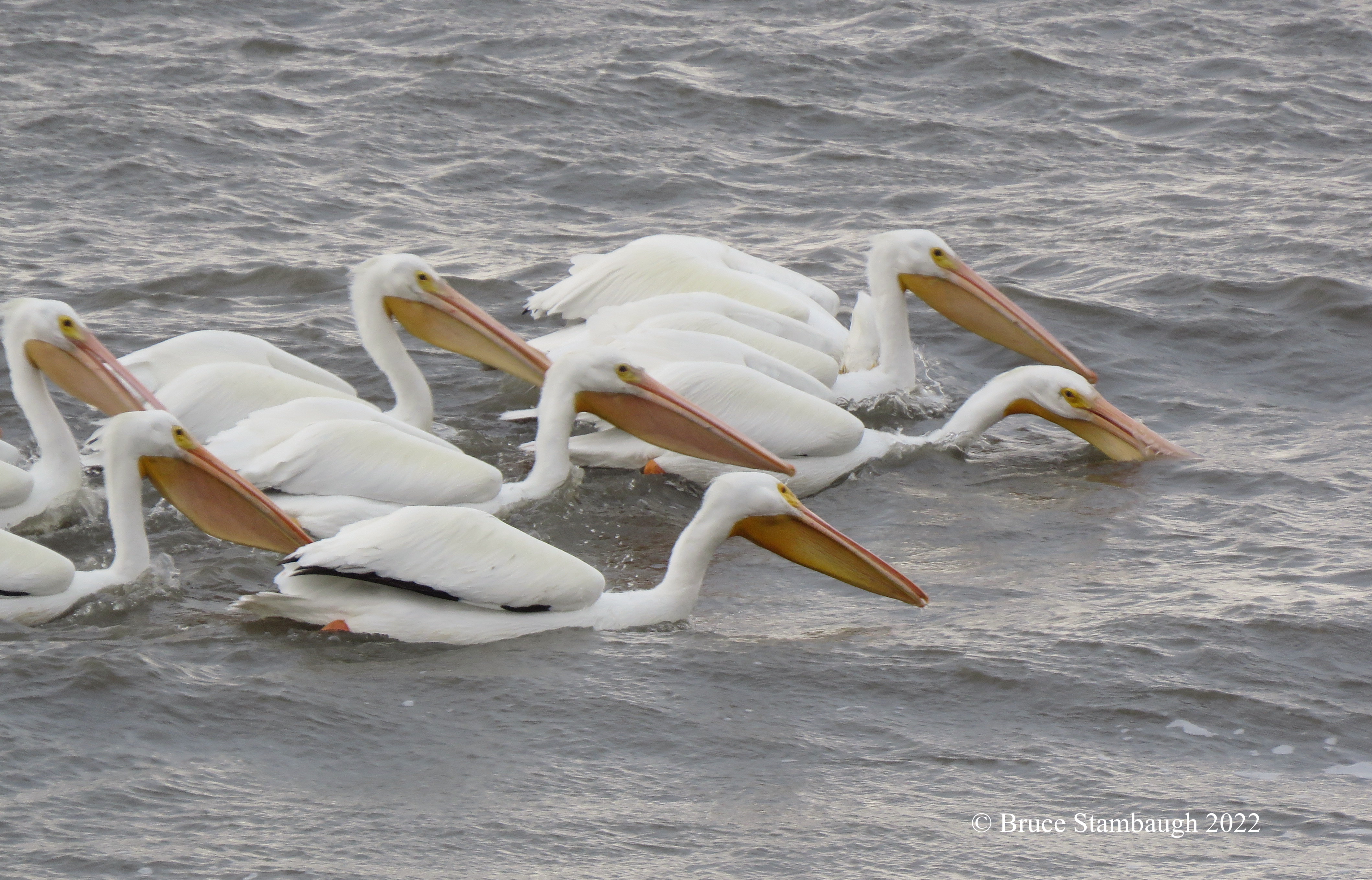
American White Pelicans on the Amelia River, Fernandina Beach, Florida.
My wife and I showed a couple visiting us from Ohio around our favorite winter retreat, Amelia Island, Florida. We drove to Old Town Fernandina Beach, where lots of history has occurred. A small square, Fernandina Plaza Historic State Park, marks the site of a colonial massacre of Indigenous peoples and some French trappers.
We drove to the small parking area overlooking the Amelia River on a bluff. Soon, our attention was drawn away from history to the present moment. A small flock of American White Pelicans had landed along the river’s edge at the park’s base.
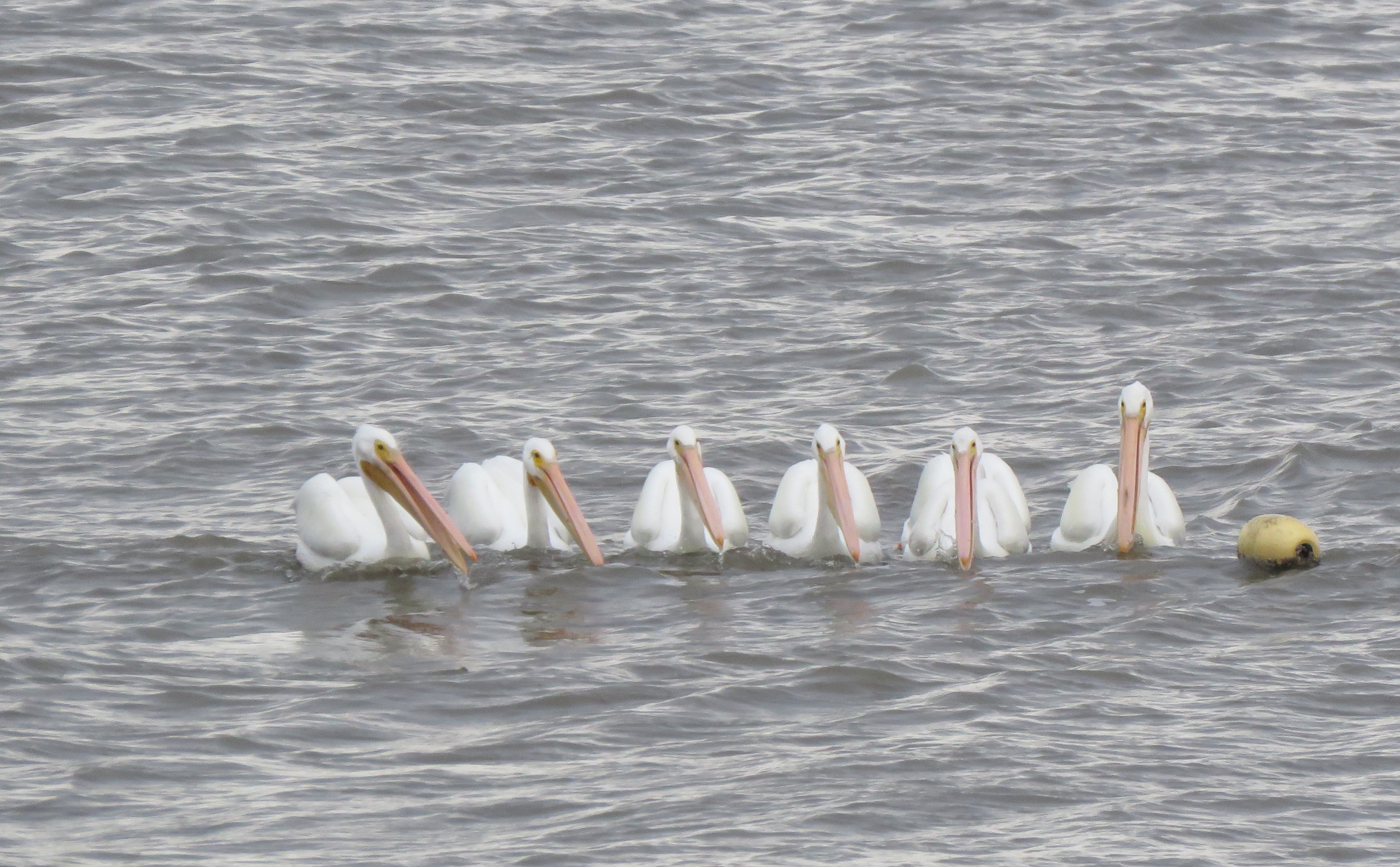
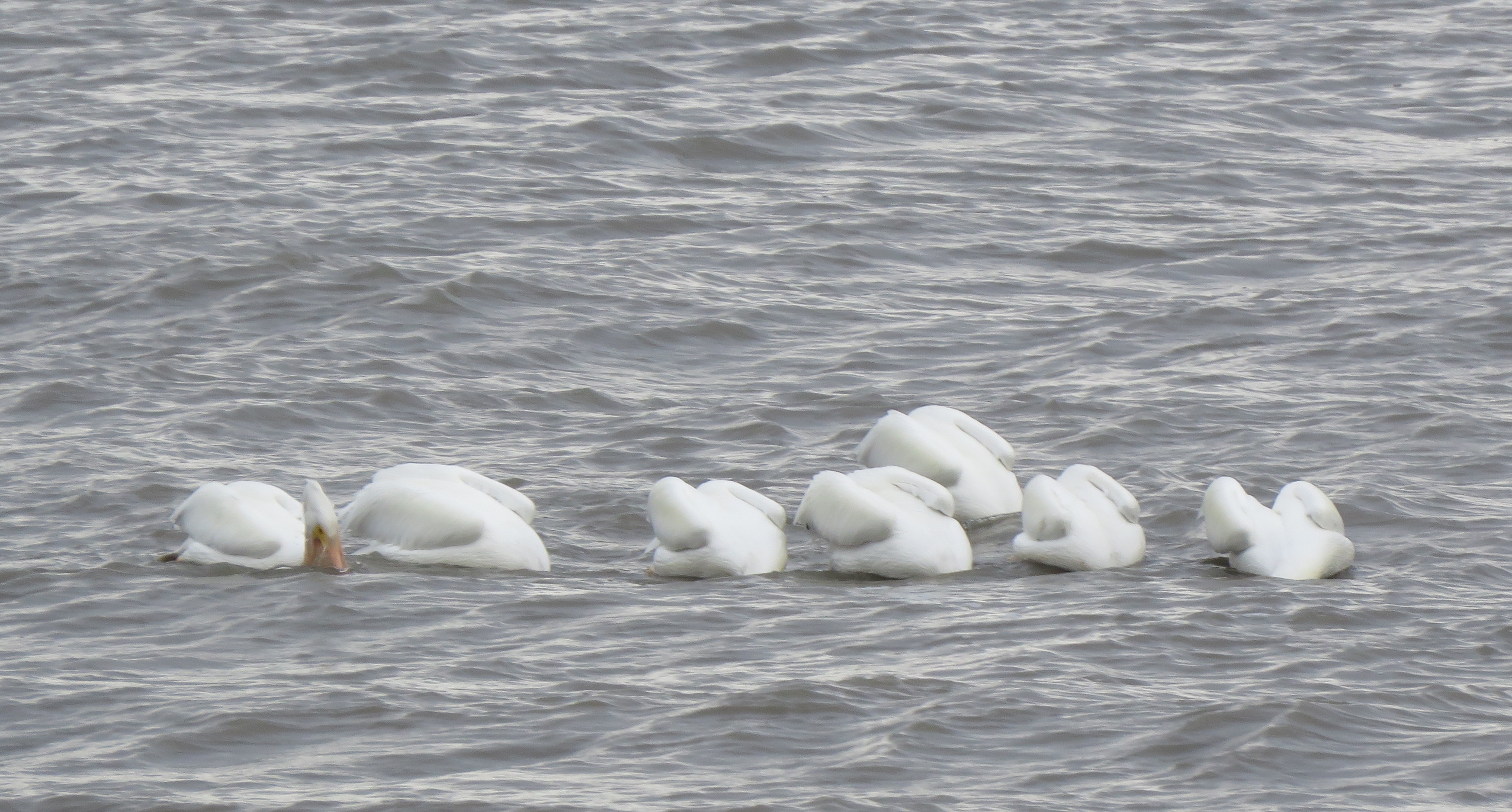
The beautiful birds formed a floating wedge of sorts and immediately began to forage in their unique synchronized fashion. We witnessed a ballet on the water, as the video shows.
Seeing these elusive migrators was one thing. Observing their feeding ritual was something else altogether.
These were the first arrivals. The photos were taken five seconds apart.
American White Pelicans migrate to the coastal areas of California, Central America, and the Gulf Coast States for the winter. They nest in the Midwest and western states, as well as the Canadian prairie provinces.
I was sitting one recent morning at my desk that faces the Atlantic Ocean when I noticed a sailboat passing by at least a half-mile offshore. When I went to take a photo of it, I spotted something else in the water. I snapped a picture, ensuring I got both the boat and the unknown object in the frame.
I switched to my binoculars and couldn’t believe my eyes. The long dark object appeared to be a whale. The morning sunshine reflected off of its face. I had never seen a Right Whale before, but I was pretty sure that’s what it was. I took a couple more shots and then Googled the phone number to report the sighting.
Earlier, I had noticed a red and white airplane circling over the ocean just to the north of our rented condo. As I found the number, I put two and two together. Because they are an endangered species, most Right Whales are tracked by various science organizations, including the National Oceanic and Atmospheric Administration. I figured the plane must have been verifying the whale’s presence.
Because Right Whales are protected, the public is asked to notify authorities of any sightings. Right Whales migrate more than 1,000 miles south from the Canadian and New England coasts to warmer waters off the Carolinas, Georgia, and Florida’s east coast. It is there that they calf their young.
Scientists estimate that less than 400 Right Whales still exist. Protecting them and their young is critical to the whale’s survival. Consequently, the requests to report their sightings.
My call went to voicemail at the North Atlantic Right Whale Project, a Florida Fish and Wildlife Conservation Commission division. It wasn’t long before I received a call back from one of their agents asking when and where I had seen the whale. When I told the person that a red and white plane had drawn my attention, enabling me to spot the whale, I was told it was one of the project’s aircraft.
The agent told me that what I saw was actually a mother and her calf and asked me to send my photos to them to help support the plane’s sighting. I gladly cooperated.
I looked closer at my photos. I could see two separate facial reflections, one large and another much smaller. I was ecstatic. The images aren’t top quality since the whales were a half-mile from me. I was glad for the sighting and more than happy to help identify this Right Whale mother and her baby.
Sunrise over the Atlantic Ocean, Fernandina Beach, FL.
My wife and I are on our winter vacation on Florida’s Amelia Island northeast of Jacksonville. We try to retreat here during winter’s coldest time. Though it’s not balmy here like southern Florida, we don’t have all that snow folks do up north right now.
There are a great many things to like about Amelia Island. The sunrises and sunsets top my list, closely followed by the wildlife, especially the many species of birds.
Our rented condo is right on Main Beach in Fernandina Beach. Unless it’s cloudy, sunrises are a daily treat. No two are alike.
We don’t have far to go for sunsets either. We drive to various spots along the Amelia River that afford marvelous views of the setting sun. Of course, not every evening offers up a golden sky, but we have seen many glorious sunsets in our several visits to this unique isle.
I enjoy photographing as many sunrises and sunsets as possible. I love sharing them with you all the more.
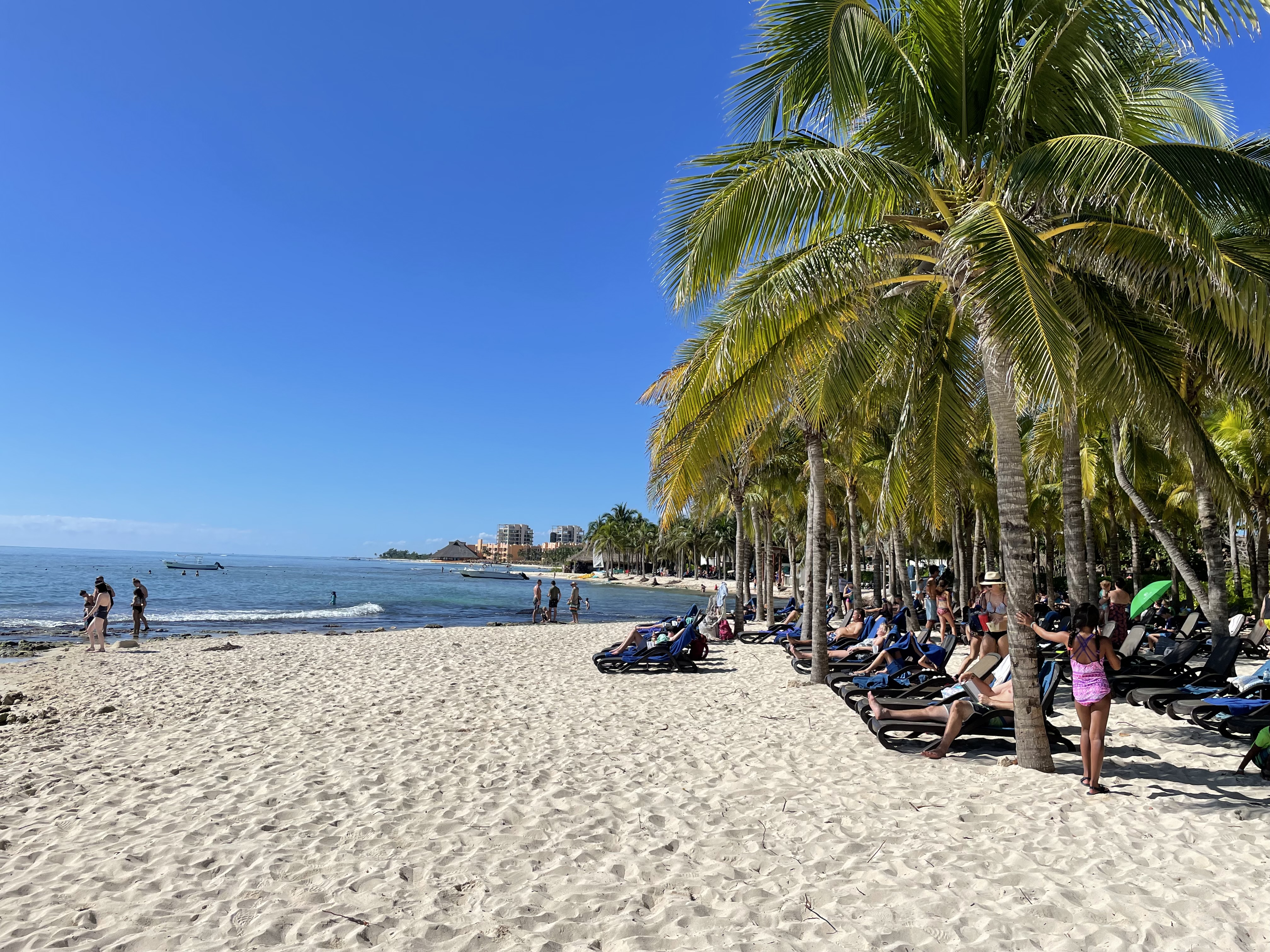
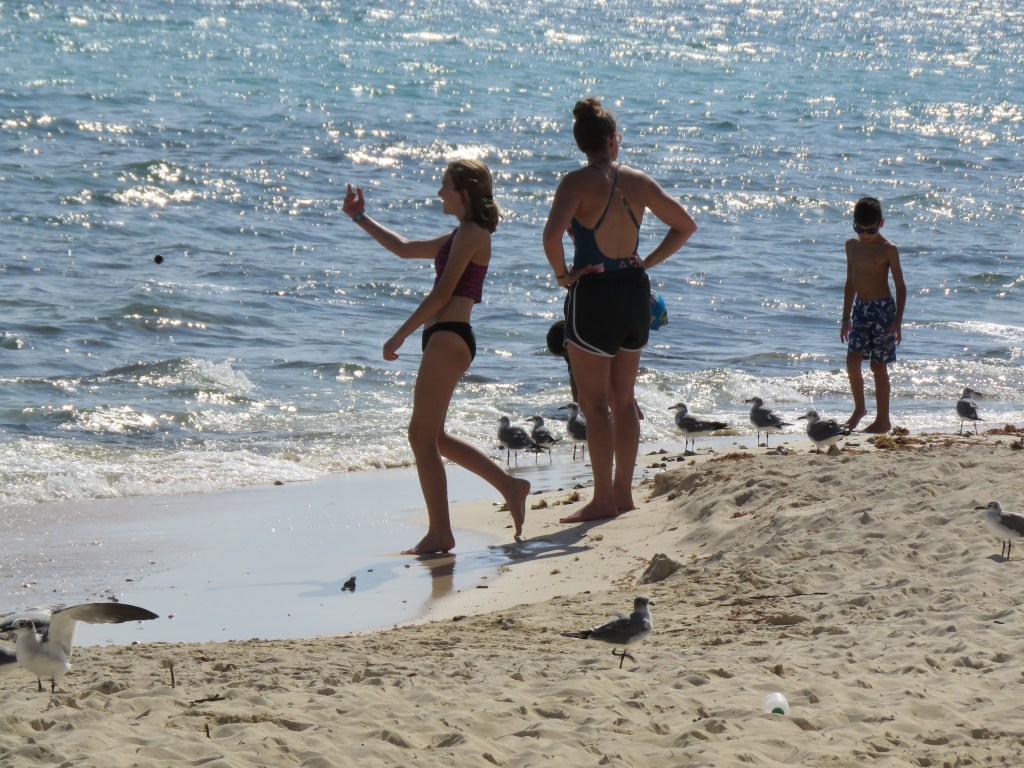
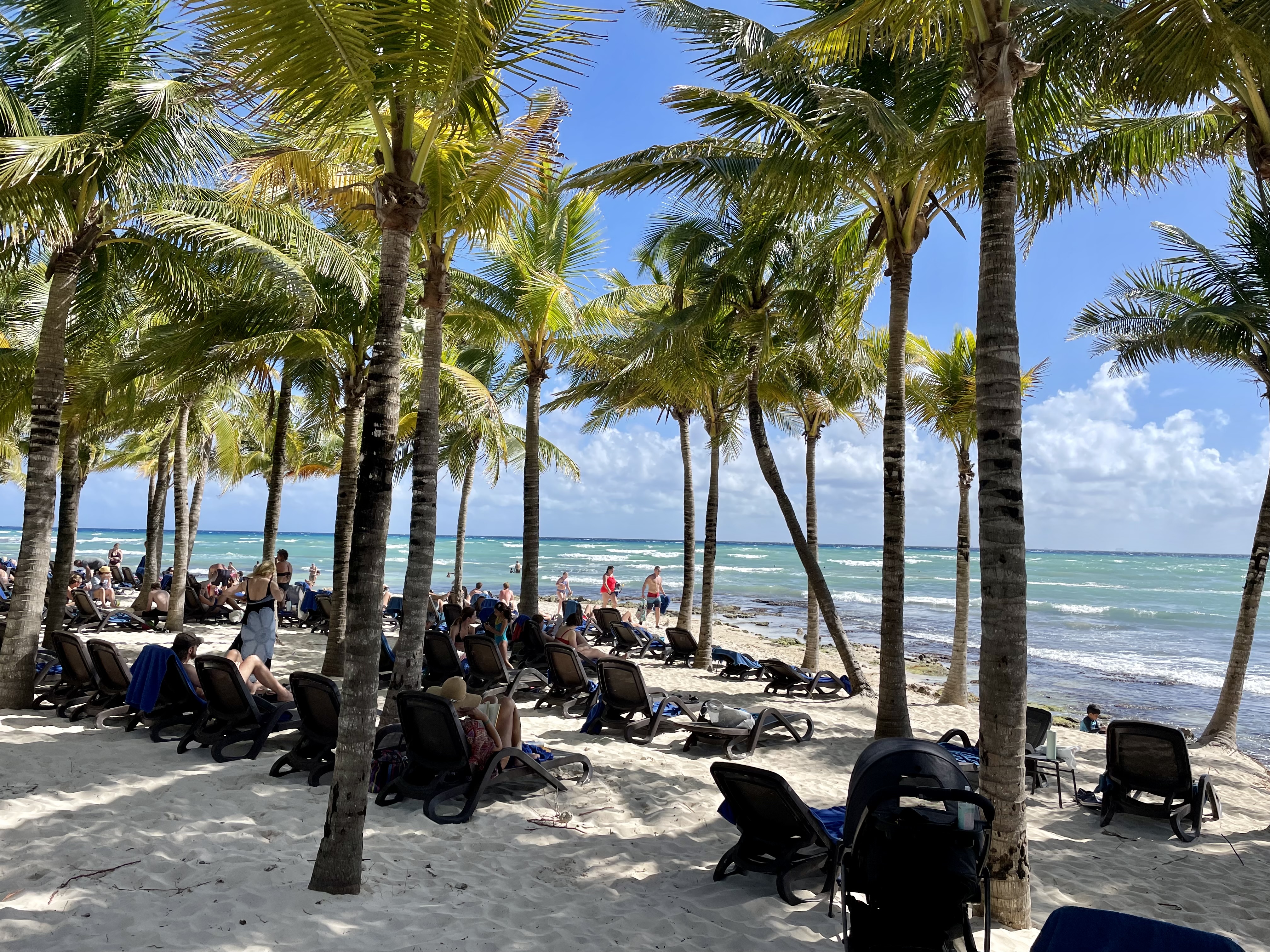
The beach along the Gulf of Mexico at the resort where we stayed.
My wife and I wanted to wrap up our 50th anniversary year with the entire family in someplace warm. It didn’t quite work out that way.
Since our son’s career is in hospitality, we let him make the reservations. He found a family-friendly, eco-friendly resort south of Cancun, Mexico. However, it ended up that he and his wife couldn’t join us after all. Their doctor wouldn’t let her travel out of the country due to her high-risk pregnancy.
So, our daughter and her family, and my wife and I headed to Cancun without them with their blessings. We left Christmas Eve and returned on New Year’s Eve.
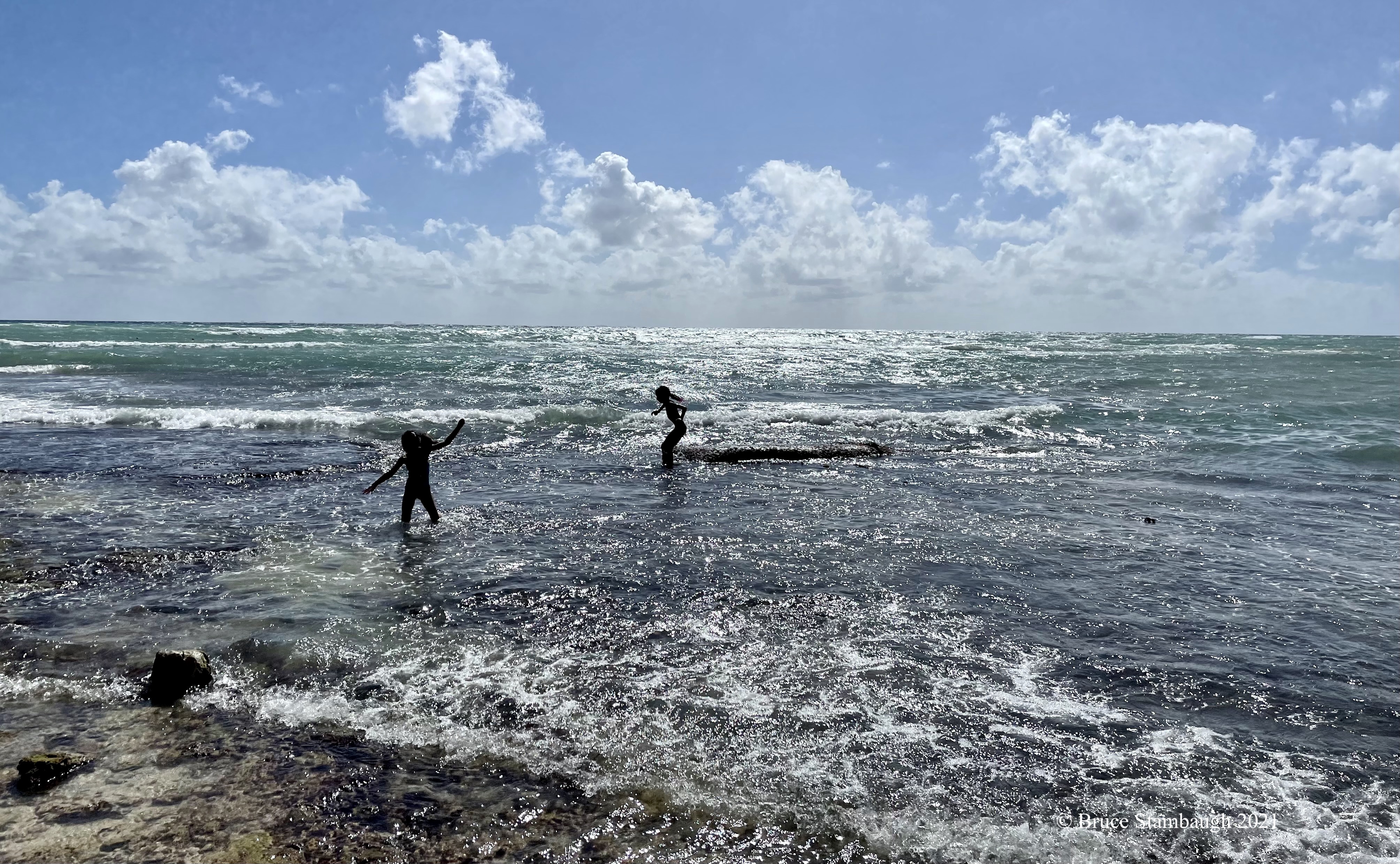
It was great to lounge in 85-degree weather on the beach with our three grandchildren and their mother and father. They enjoyed the waterpark, too, since the shoreline was rocky and uneven. We relaxed with them, chatting and teaching them card games.
Our reservations were made in early October, well before the omicron variant reared its ugly head. We double-checked with the airlines and the resort regarding their COVID-19 protocols. We were assured that all precautions would be taken, and that is what we experienced. We always felt very safe.
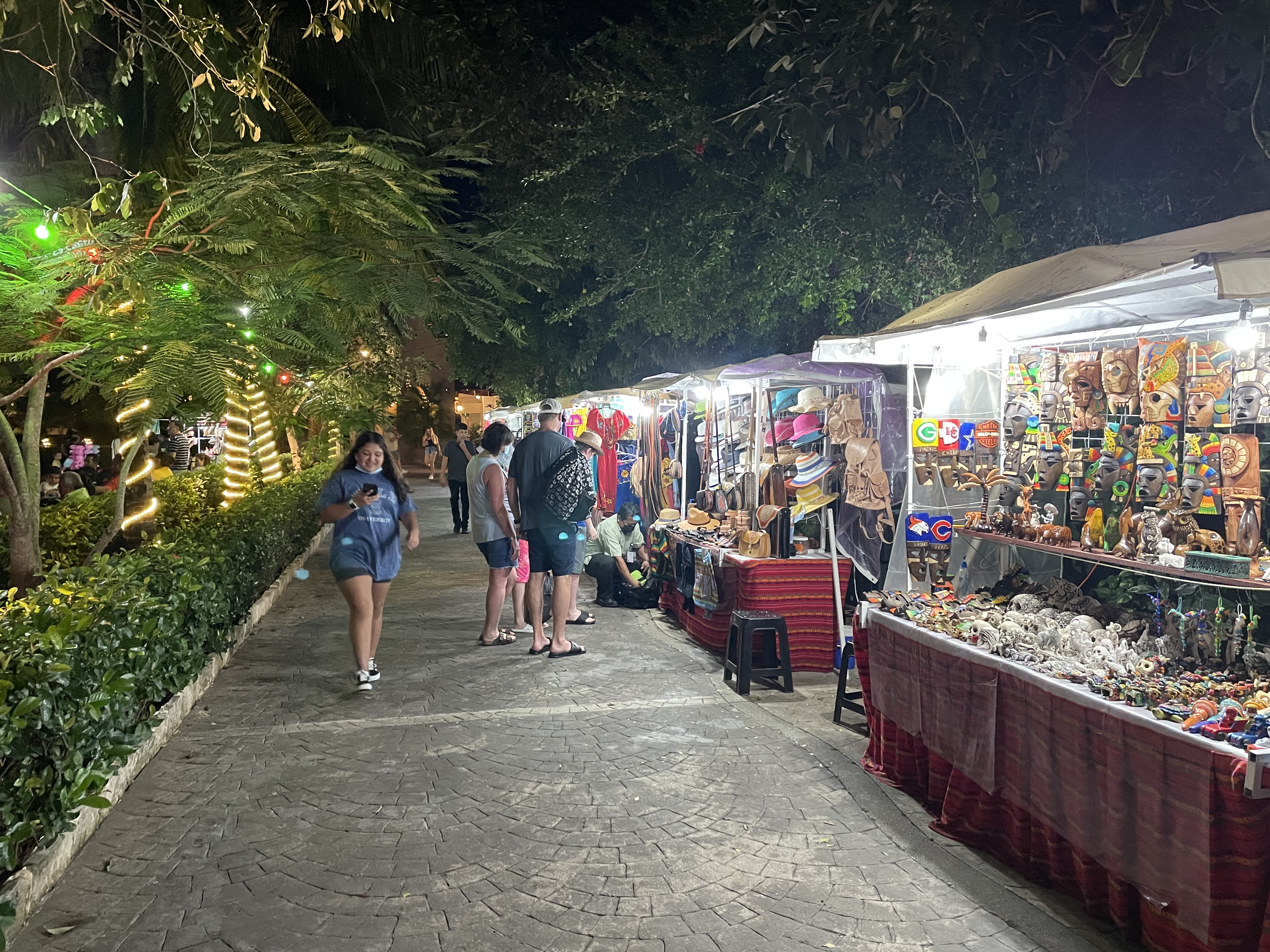
Here are some representative photos of our week-long experience at Sandos Caracol Eco Resort, Playa del Carmen, Mexico.
We traded Christmas trees for palm trees.
Palm trees provided plenty of shade for us, non-sun worshipers. The beach was lovely, but there were more rocks than sand under the water, which required water shoes to be worn to stay safe.
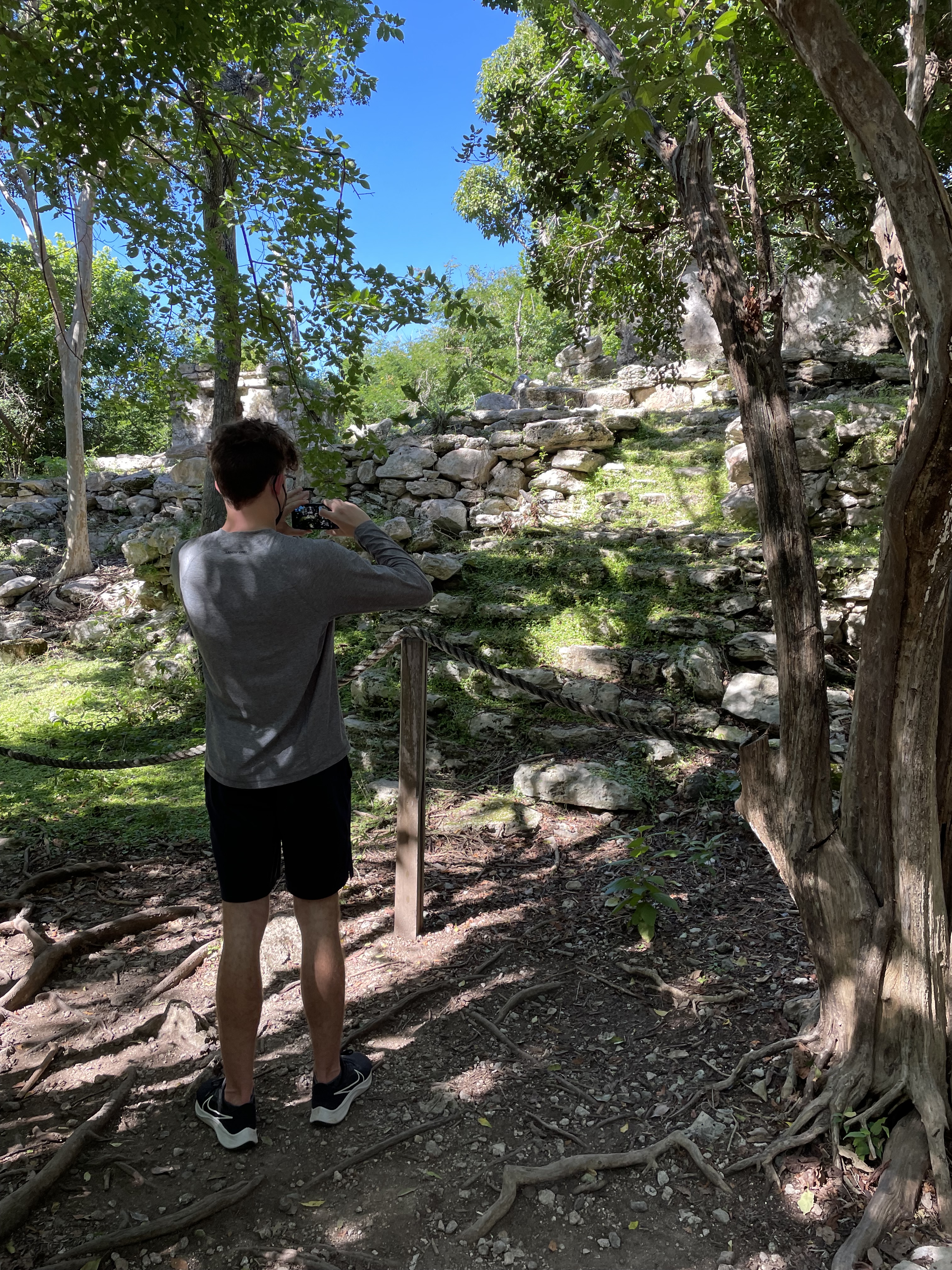
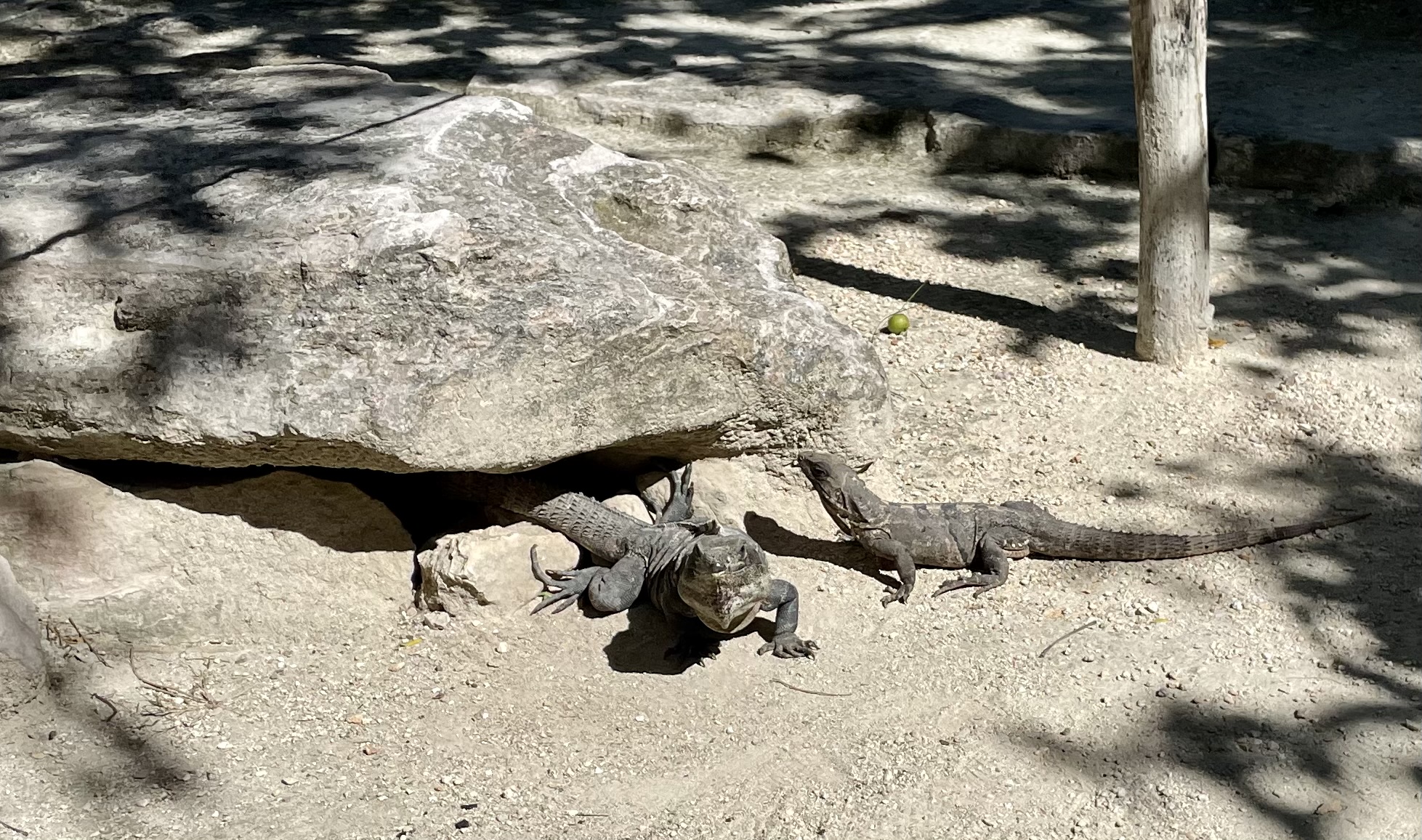
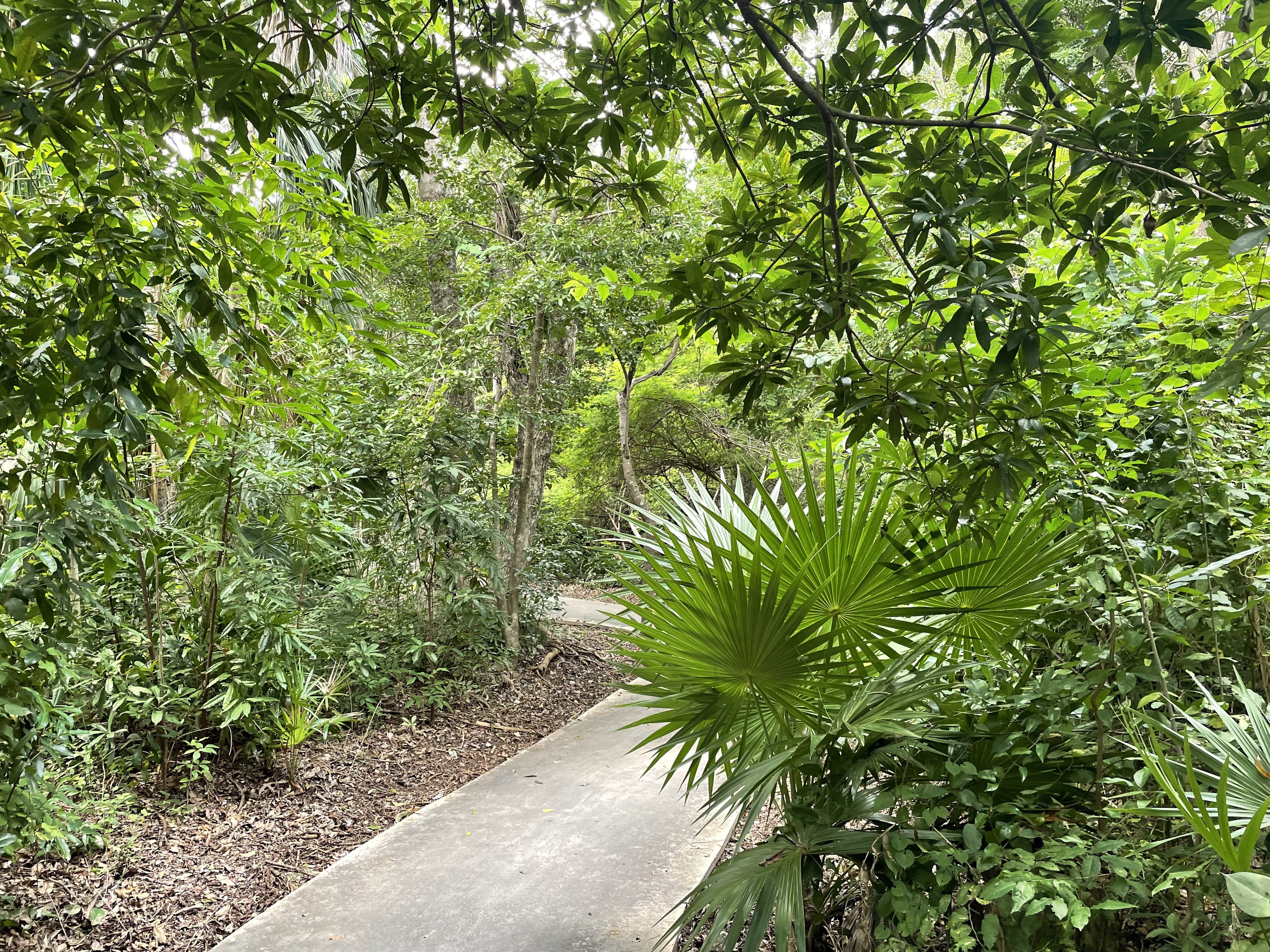
We spent Christmas Day getting acquainted with the resort. One of our grandsons and I explored the Mayan ruins on the resort property. We saw several giant iguanas, enjoyed a meal at one of the resort’s restaurants, saw the sunset, and watched a reenactment of a Mayan fire ceremony.
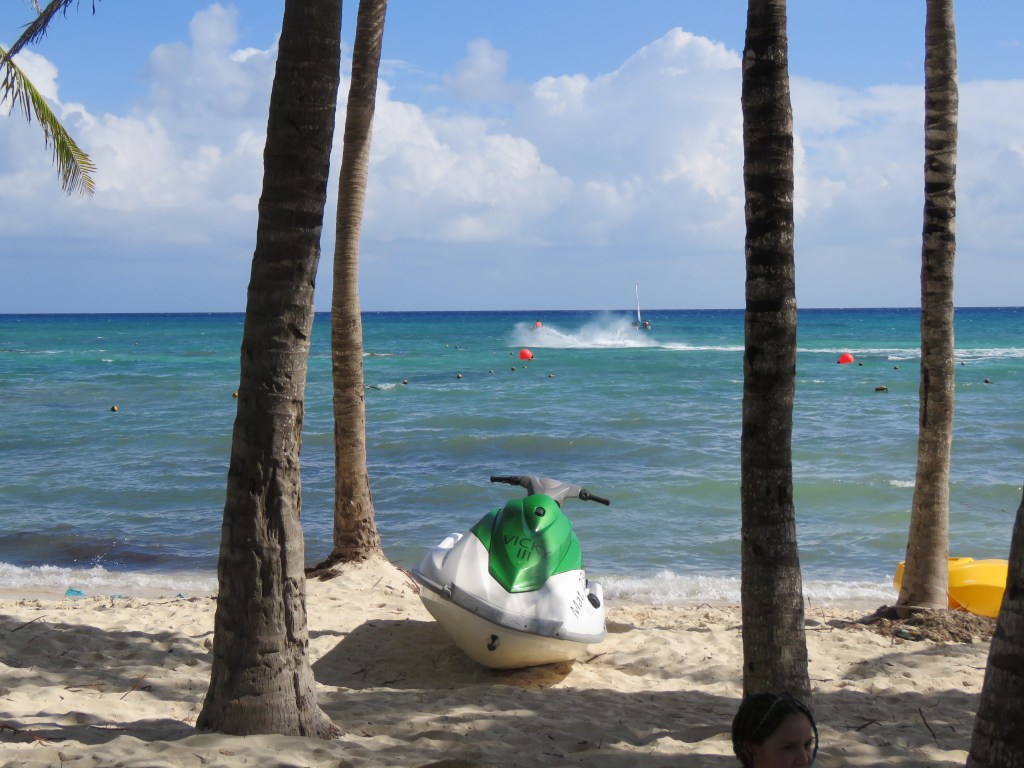
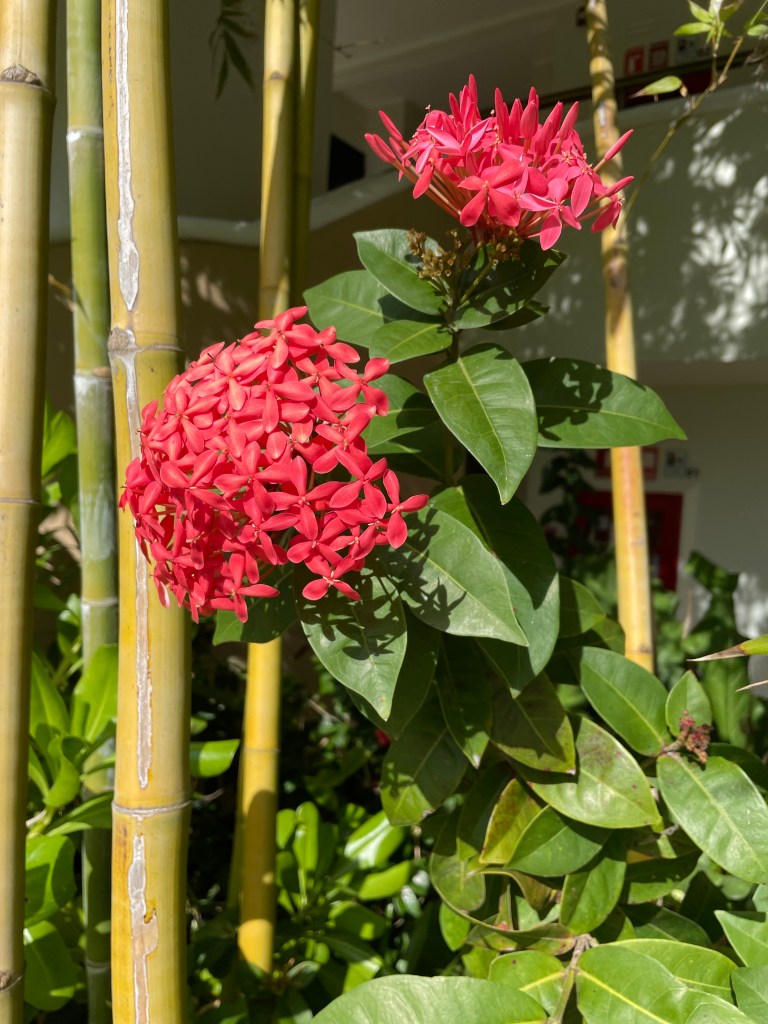
Of course, our oldest grandson and his dad had to try the jet skis while the rest of us watched from the shore. We also enjoyed the beautiful flowers and greenery that were all around us.
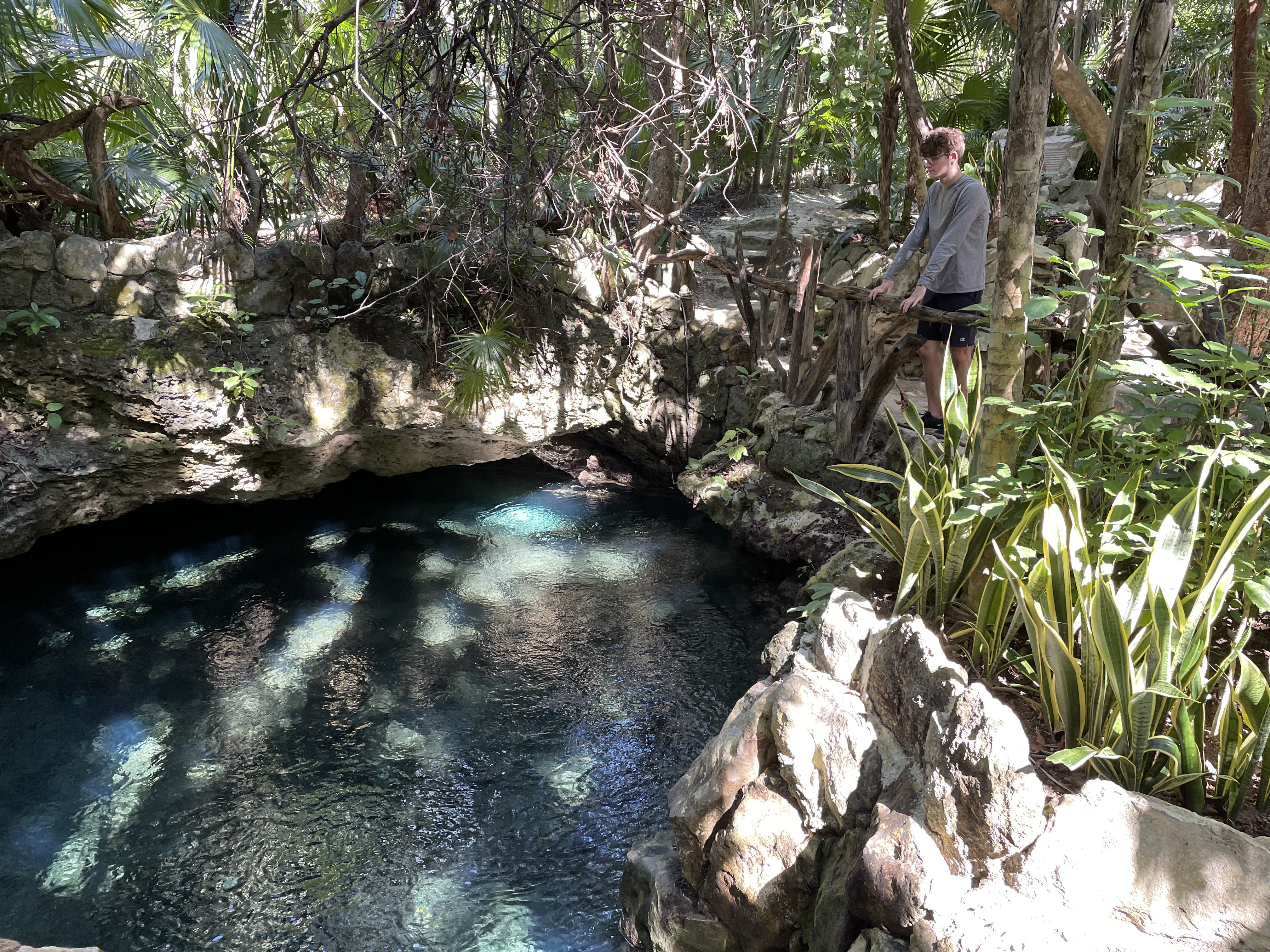
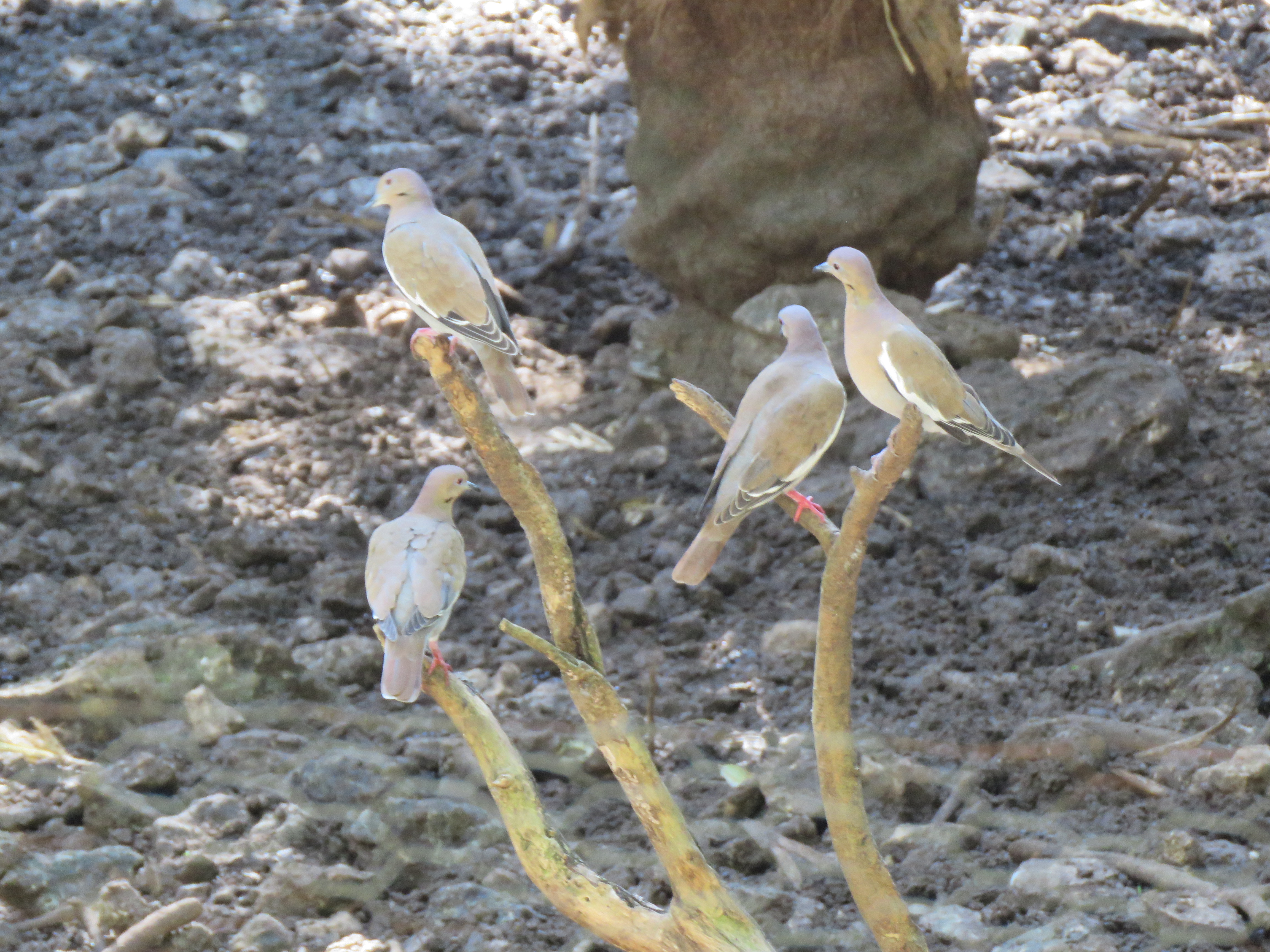
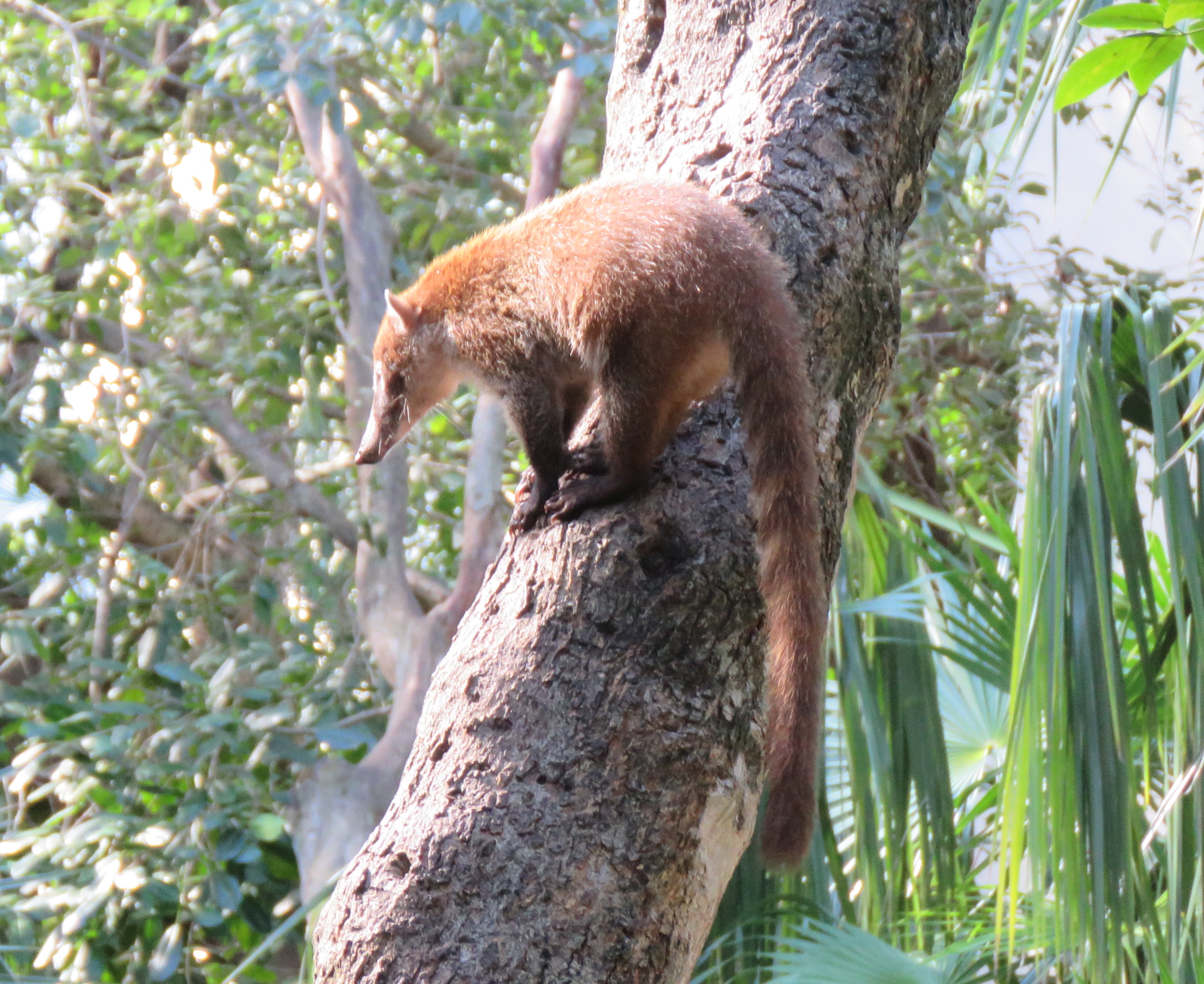
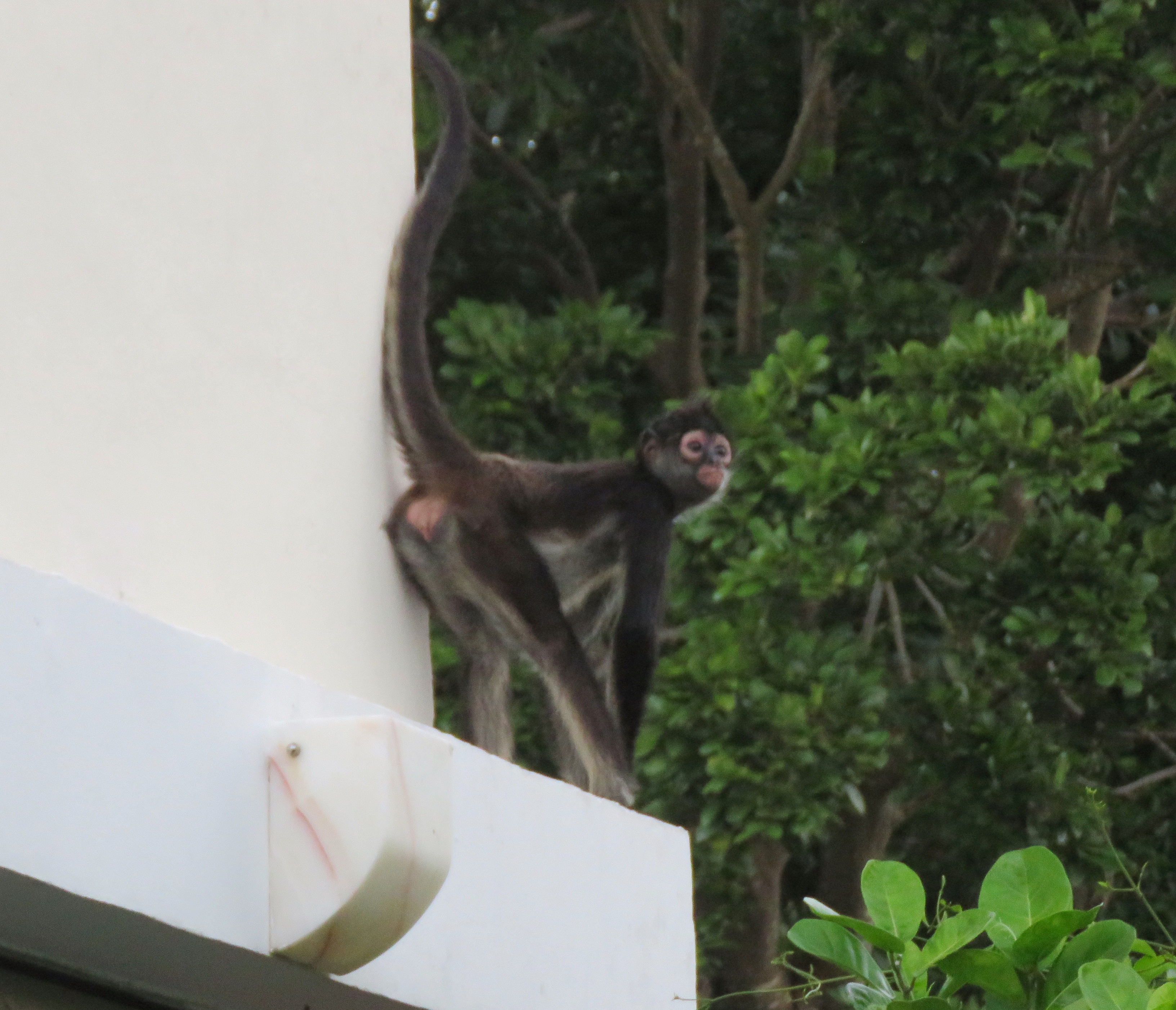
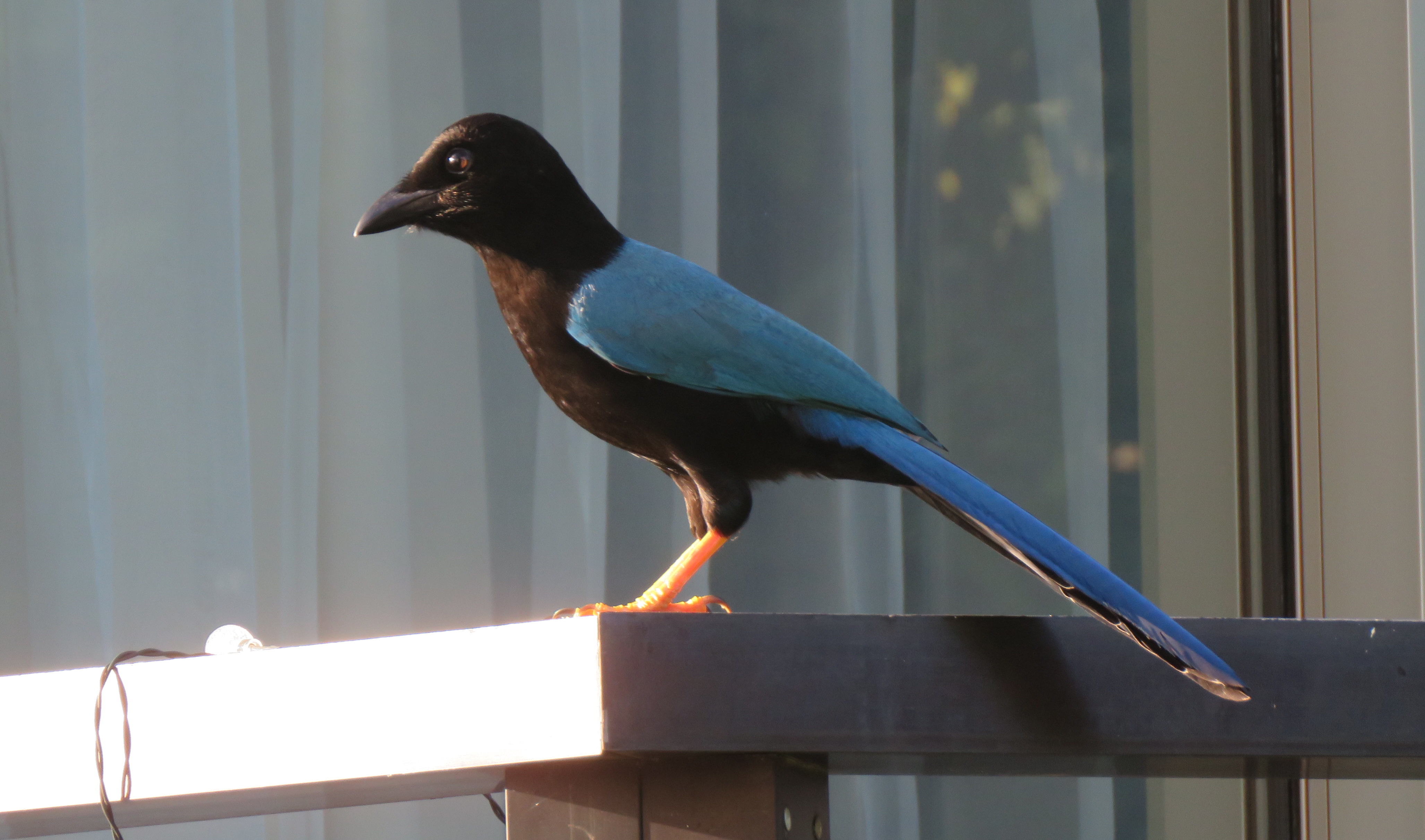
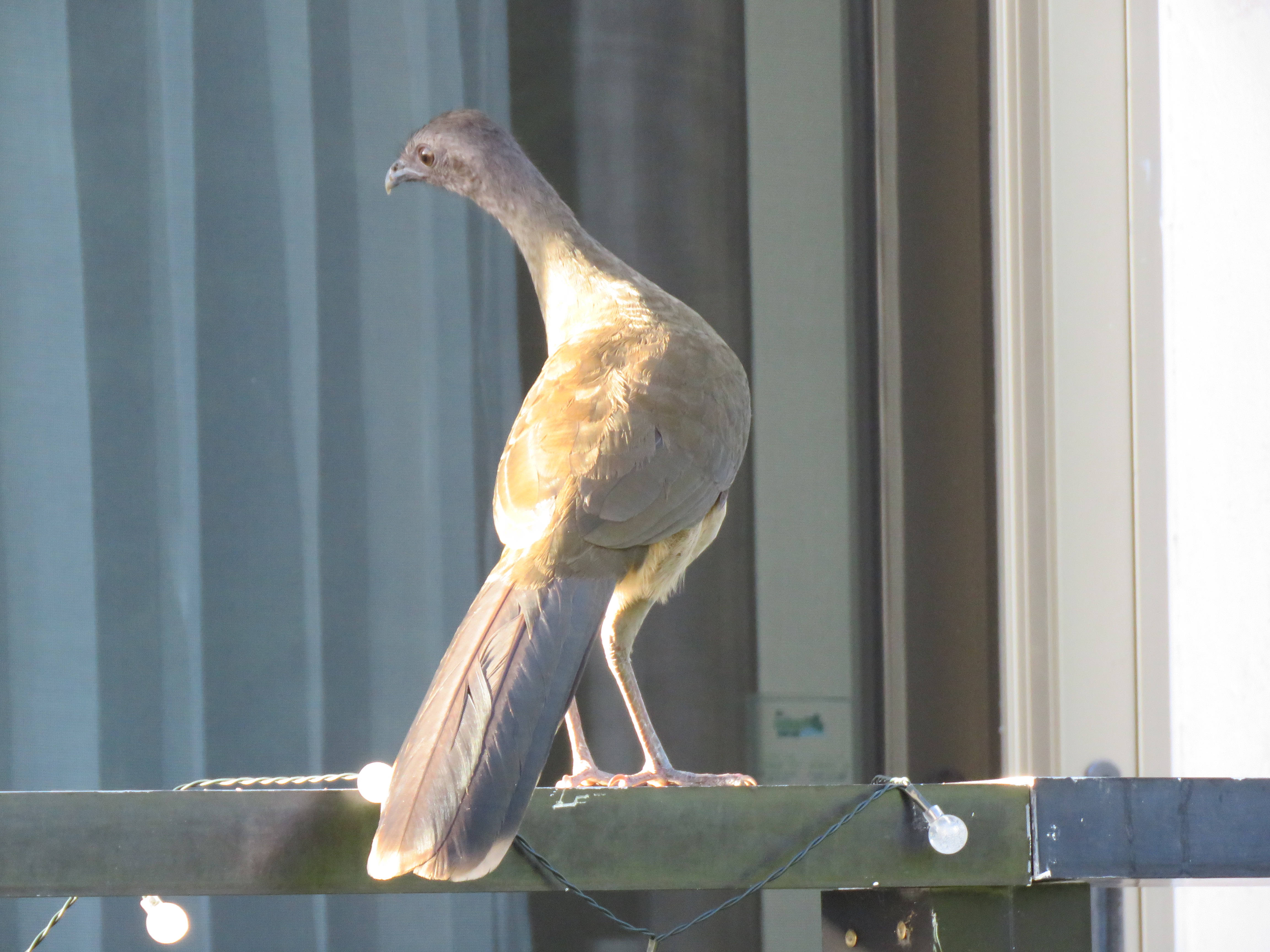
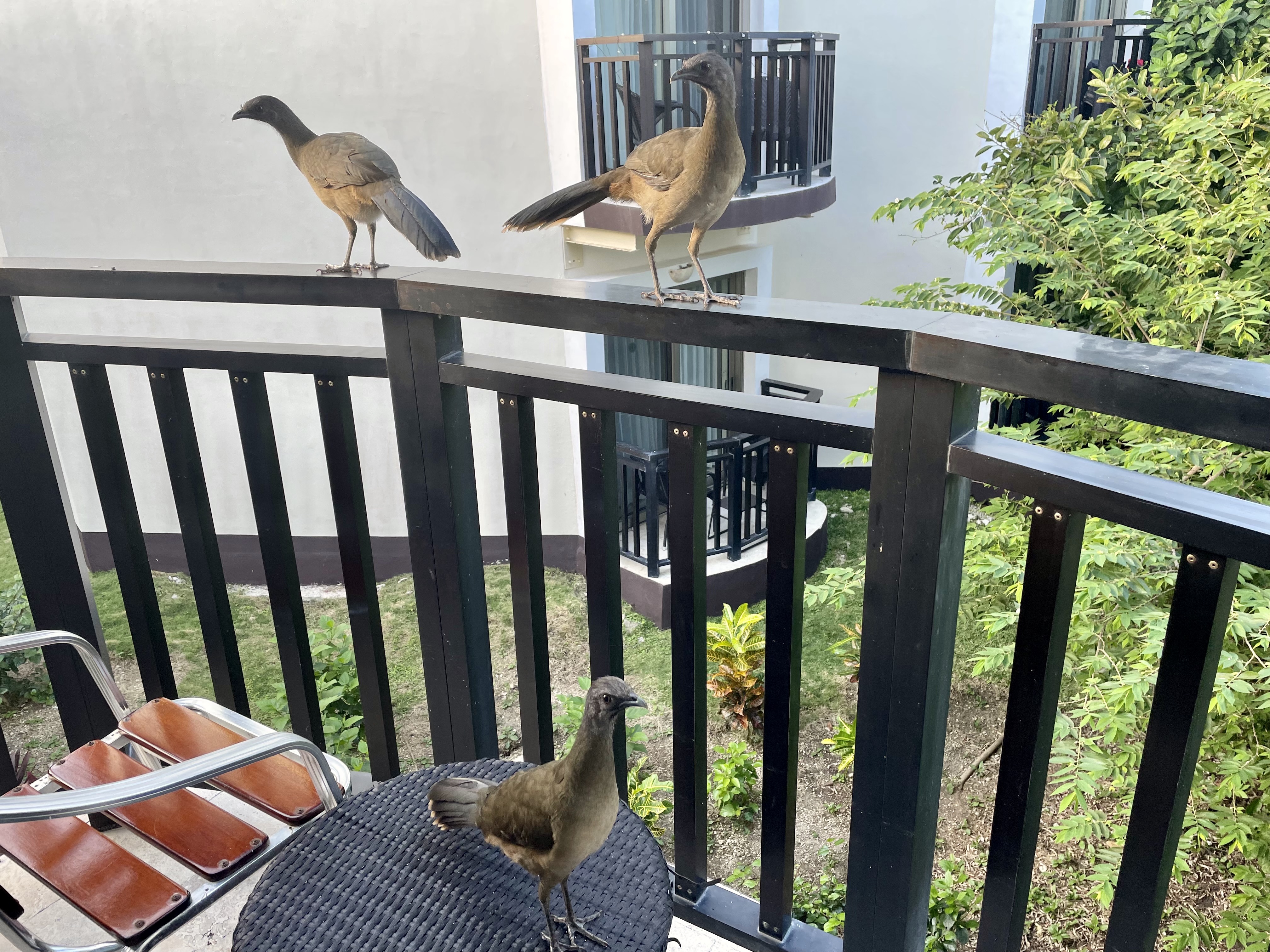
Because the resort is built in a jungle, we didn’t have to go far to find wildlife. Often, the critters came to us, mainly because people ignored the “Do Not Feed the Animals” signs. So, it was prudent to not leave anything on your balcony or your sliding door open. As a birder, I was pleased to see a variety of bird species. Some were life birds for me.
We enjoyed our time at the resort. Patience was paramount given that, like most everyplace else, the resort was short-staffed due to COVID-19. Being flexible enhanced our overall enjoyment of the Sandos Caracol Eco Resort.
Sunset in Shenandoah National Park. Photo by Bruce Stambaugh.
I’m glad 2021 has ended. We would all like to forget it for a million reasons. Likely, we never will, nor should we.
With politics and the coronavirus and its variants making up much of the headline news, I did my usual thing and kept track of some of the more quirky but still significant information.
Here are just a few of the newsy pieces that didn’t make the headlines or the TV news.
January 1 – The National Interagency Fire Center reported that U.S. wildfires burned 10,275,000 acres, the most ever recorded.
January 7 – Tesla CEO Elon Musk became the wealthiest person globally with a net worth of $185 billion, surpassing Jeff Bezos’s paltry $184 billion.
January 8 – A Missouri woman who married a 93-year-old Civil War Veteran when she was 17 died as the last remaining widow of the war.
January 9 – The state fire marshal announced that no child died in a fire in Massachusetts for the first time since officials kept records.
January 15 – A racing pigeon that disappeared from Oregon in October 2020 reappeared in Melbourne, Australia, where officials tried to catch and kill it due to Australia’s strict quarantine rules.
January 18 – D.C. National Guard Sgt. Jacob Kohut, a band teacher, taught students from his Humvee before a 12-hour shift to guard the Capitol Building.
January 25 – A new study showed that the earth is losing 1.2 trillion tons of ice per year through melting glaciers and polar ice caps.
Glaciers globally are melting at rapid rates.
January 26 – Stranded in a snowstorm near Hayes Hill, Oregon, Jefferson County Public Health staff administered doses of the COVID-19 vaccine that were about to expire to motorists who were also stuck.
February 12 – The U.S. had its deadliest week in a century for avalanche deaths when 15 skiers died between January 26 and February 6.
February 16 – Fran Goldman, 90, was so determined to get her first coronavirus vaccine after struggling to get an appointment that she walked six miles round-trip in a foot of snow in Seattle.
February 17 – Houston’s Gallery Furniture opened two stores to shelter people from the cold and snow after power and water supplies were lost all across Texas.
March 3 – The California Highway Patrol in Los Angeles caught a driver in the carpool lane with a realistic-looking passenger dummy wearing a face mask and a Cleveland Indians baseball hat.
March 8 – The sun shining through a crystal ball in the living room of a Delton, Wisconsin home caused a $250,000 fire.
March 9 – Shoe Zone, a foot ware retailer in Great Britain, announced that Terry Boot had replaced Peter Foot as the company’s financial boss.
March 11 – A digital artist known as Beeple sold a collage jpg image at a Christie’s auction for $69.3 million.
March 16 – Despite being closed for six weeks during the pandemic, a record 1.7 million people visited Shenandoah National Park, Luray, Virginia, in 2020.
March 19 – Iceland’s Fagradalsfjall volcano erupted for the first time in 800 years.
March 23 – Officials blamed high winds from a dust storm for the grounding of Ever Given, one of the world’s largest container ships, to be blown sideways, blocking the Suez Canal and closing the busy shipping route.
April 8 – Archeologists in Egypt announced the discovery of a 3,000-year-old lost golden city unearthed near the city of Luxor.
April 8 – On his second shot on the seventh hole of the Masters Golf Tournament in Augusta, Georgia, professional golfer Rory McIlroy hit his spectator father with the golf ball.
April 12 – Hope Trautwine pitched a perfect game for the University of North Texas softball team by striking out all 21 batters from Arkansas Pine Bluff.
April 14 – A report in “Nature Communications” revealed that archeologists had unearthed 3,500-year-old terracotta honey pots in central Nigeria.
April 28 – Walmart restarted its pandemic delayed experiment of online ordering of groceries and having one of their employees not only deliver it to your home but also stock your shelves and refrigerator.
May 8 – Spencer Silver, the research chemist at 3M who invented the Post-It Note, died at age 80 at his home in St. Paul, Minnesota.
May 11 – A skull-head painting by Jean-Michel Basquiat sold at auction at Christie’s in New York City for $93.1 million.
May 20 – Research from Minderoo found that the average American throws away 110 pounds of plastic annually.
June 3 – Italian artist Salvatore Garau sold an invisible sculpture at auction for $18,300.
June 5 – A study revealed that, on average, Americans touch their smartphone 2,617 times per day.
June 9 – National Geographic officially recognized the body of water around Antarctica as the world’s fifth ocean, the Southern Ocean.
June 23 – A herd of 30 cows escaped from a slaughterhouse in Pico Rivera, California, and were later corralled in a cul-de-sac by police, although deputies shot one cow.
It’s not a herd, but it definitely is loose. Photo by Bruce Stambaugh.
June 28 – The New York Yankees, the team I love to hate, made Gwen Goldman’s 60-year-old dream come true by making her the team’s honorary batgirl for a game.
June 28 – Ankeny, Iowa, police arrested 42-year-old Robert Gollwitzer, Jr. for phoning in a bomb threat to a local McDonald’s restaurant because employees forgot to include dipping sauce for his chicken McNuggets.
July 8 – Zaita Avant-garde, a 14-year-old from New Orleans, became the first African-American to win the National Spelling Bee contest in Washington, D.C.
July 10 – Death Valley, California, the temperature hit a world-record high of 135 degrees Fahrenheit.
July 12 – The Copernicus Climate Exchange Center reported that June was the hottest on record in North America.
July 13 – Florida Fish and Wildlife Commission reported that 841 manatees had died between January 1 and July 2, more than any other time in the state’s history.
July 22 – The United Arab Emirates used technologies, including drones, to stimulate clouds to produce rain to counter 120 temperatures and low potable water sources.
August 6 – An unopened Super Mario Brothers video game sold for $2 million at auction.
August 10 – NASA satellite photos showed for the first time in recorded history smoke from wildfires burning in Siberia reached the North Pole.
August 12 – According to the 2020 U.S. Census, the number of White people fell for the first time since 1790.
August 13 – The National Oceanic and Atmospheric Administration said July 2021 was the hottest on record, 1.67 degrees Fahrenheit above the 20th -century average.
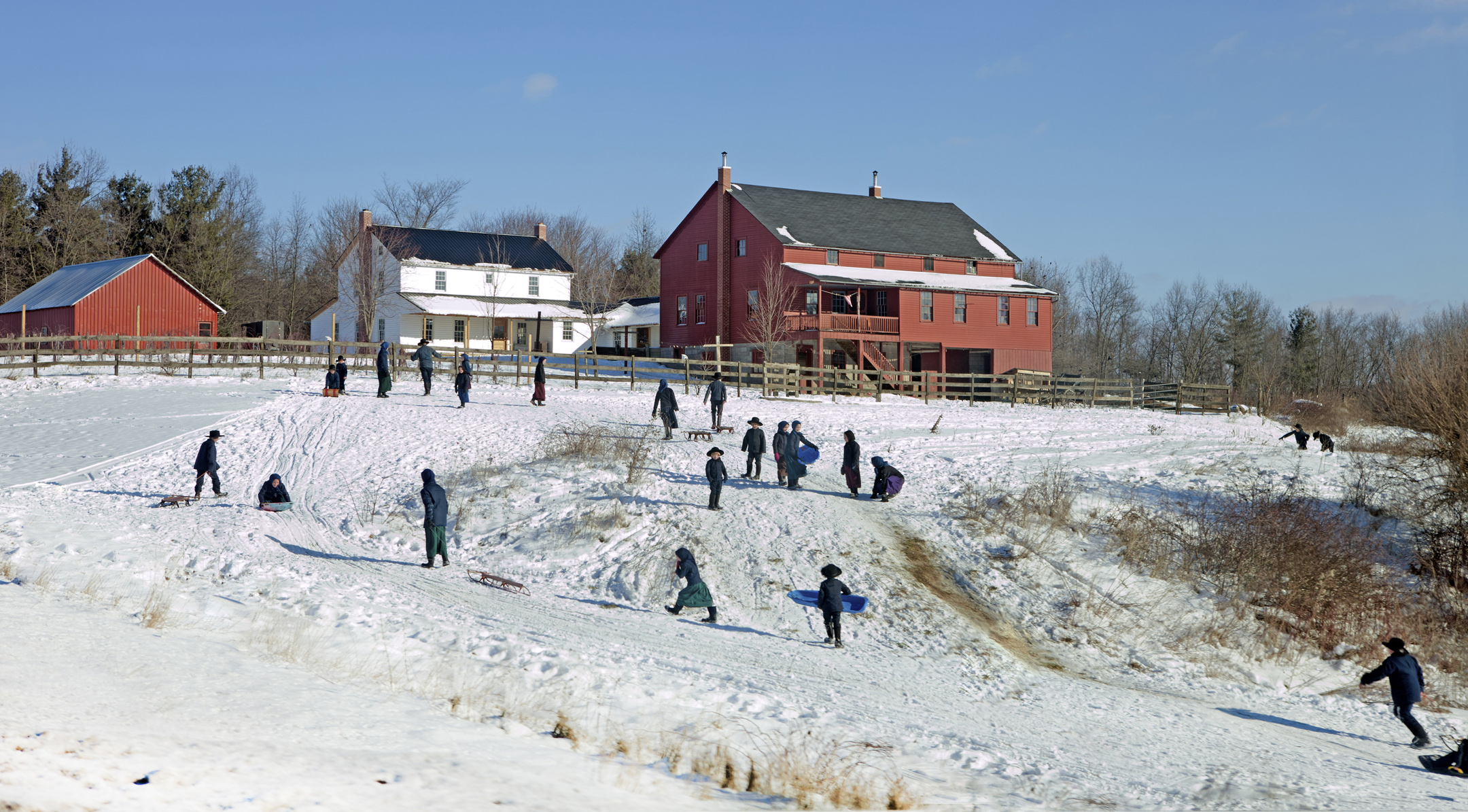
Amish children sledding. Photo by Bruce Stambaugh.
September 9 – France fast-tracked 12,000 frontline COVID-19 workers to citizenship for their valiant ongoing efforts to help those in need.
September 12 – Lawrence Brooks of New Orleans, Louisiana, turned 112, the oldest surviving World War II veteran. (Sadly, Mr. Brooks died January 5, 2022).
September 13 – The governor of Massachusetts mobilized 250 National Guard members to serve as school bus drivers since the state’s schools were short on employed drivers.
September 16 – Tobacco giant Philip Morris purchased Vectura, a British company that manufactures inhalers.
September 17 – Alabama’s Health Officer, Scott Harris, said that for the first time in known history, the state had more deaths than births in 2020.
September 20 – The Guinness Book of World Records named the paint developed by researchers at Purdue University as the world’s whitest.
October 4 – A Brazilian soccer player was arrested for attempted murder after kicking a referee in the head during a match.
October 16 – Elon Musk became the world’s richest person when the company’s stock soared, and his net worth grew to $209.4 billion.
October 21 – Timber the Moose, a wooden marketing sign for the Cabin Store in Mt. Hope, Ohio, got its stolen head returned by an Amish youngster who found it in a field 10 miles away.
A real bull moose in Denali National Park.
October 25 – Hertz announced that it had ordered 100,000 Tesla electric cars for its rental inventory.
October 26 – A hiker in Colorado got lost but refused to answer his cell phone because he didn’t recognize the search and rescue team’s number.
November 4 – Colin Craig-Brown of Hamilton, New Zealand, dug up what may be the world’s largest potato that weighed 17.2 pounds from his garden.
November 5 – Billy Coppersmith, a Maine lobsterman, caught a one-in-100 million blue “cotton candy” lobster and donated it to an aquarium in New Hampshire.
November 16 – Psychologists in London revealed a study showed that the perfect hug should last between five and 10 seconds.
November 24 – Roto-Rooter said that plumbers refer to the Friday after Thanksgiving Day as Brown Friday because it’s the busiest day of the year for plumbers.
December 4 – The National Weather Service issued a Blizzard Warning for the summit of Mauna Kea volcano in Hawaii.
December 7 – A report stated that turf grass is now the biggest plant crop in the U.S., collectively covering an area larger than Wisconsin.
December 9 – Davyon Johnson, 11, of Muskogee, Oklahoma, saved a fellow student from choking using the Heimlich maneuver and saved an older woman from her burning house later in the afternoon.
December 11 – The Oxford Dictionary named “vax” its word of the year for 2021.
December 26 – Kodiak, Alaska hit a record high of 67 degrees, giving the term “baked Alaska” a new meaning.
Christmas morning in our Ohio home several years ago. Photo by Bruce Stambaugh.
Of all the holidays in the calendar year, Christmas is my favorite. I know I am not alone in that declaration.
I have many fond memories of Christmases past. The most memorable seem to be snippets of bigger pictures, but they are still meaningful after all these years.
Delivering Sunday’s newspaper as a teenager on a snowy Christmas Eve night is one of my favorite memories. I can still see the smiles and hear the well-wishes from many customers as I tromped through heavy, wet snow.
Christmas was my father’s favorite holiday. He was a big little kid when it came to Christmas. He and our dear mother worked hard to make each Christmas extra special on Dad’s meager salary.
Dad loved to get the last-minute shopping discounted deals. He spent part of Christmas Eve buying presents he thought were bargains. His offspring reaped the rewards early Christmas morn.
Christmas Day in the Stambaugh household was a joyous time. We woke our parents too early and tore open packages with abandon. The pile of ripped wrapping paper grew exponentially.
As my brothers and sisters and I grew, married, moved, and raised children of our own, our traditions changed, of course. However, Mom and Dad hosted us all as long as they could until the brood expanded beyond the limited capacity of their post-World War II bungalow.
My siblings who lived nearest our folks took turns hosting the annual Christmas dinner and gift exchanges. Of course, once our children grew to adults and married, those traditions changed again.
My wife’s family always opened their presents on Christmas Eve, usually after attending services at their church up the road from their farm. It was Christmas Eve with Neva’s family, Christmas Day with mine.
At my age, the calendar isn’t nearly as important as the opportunity to gather the family together whenever we can. Christmas just made it a most memorable delight.
Nostalgia only carries so much weight in celebrating the holidays. It’s the here, and now that counts. We celebrate with those we love today, creating similar meaningful memories for the younger generations.
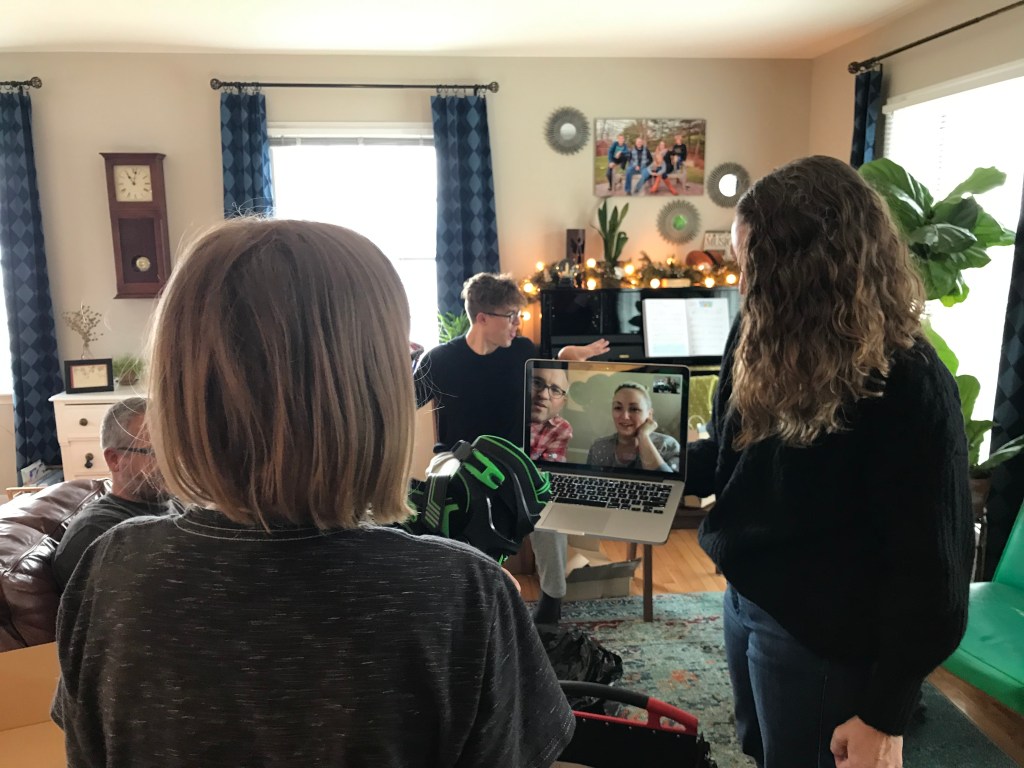
We will cherish the season with those who can join us and connect remotely with those who can’t. It’s the best we can do in this season of holidays mixed with precautions necessitated by the pandemic.
With that, I wish you all Happy Holidays, Merry Christmas, and Happy New Year!
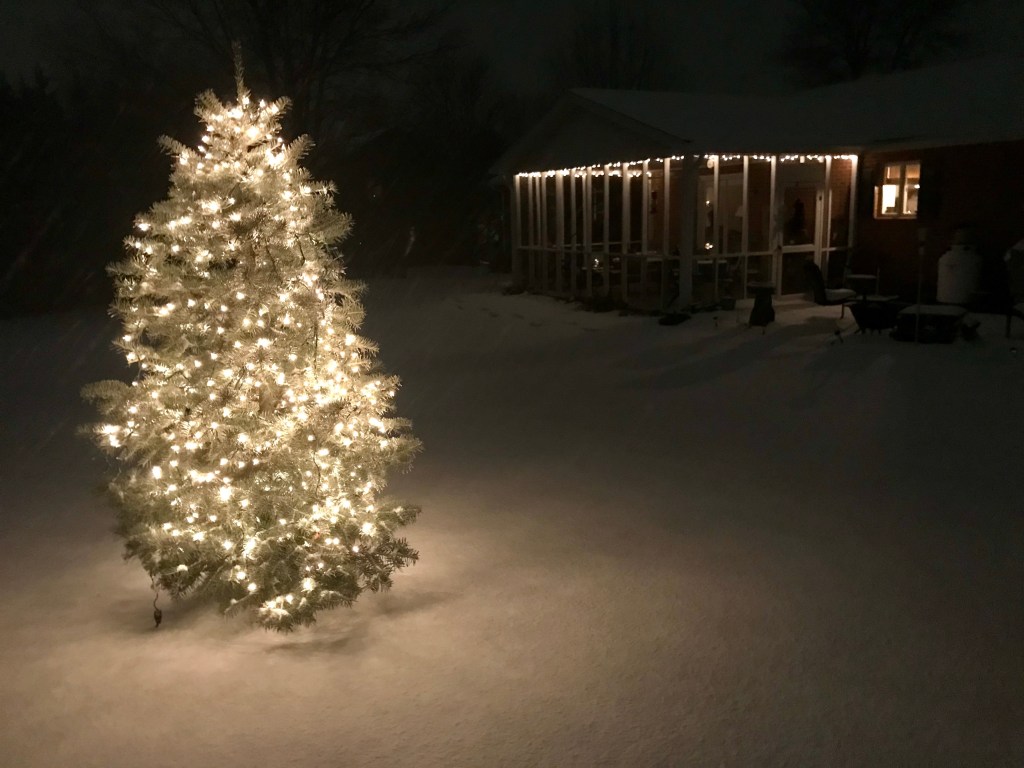
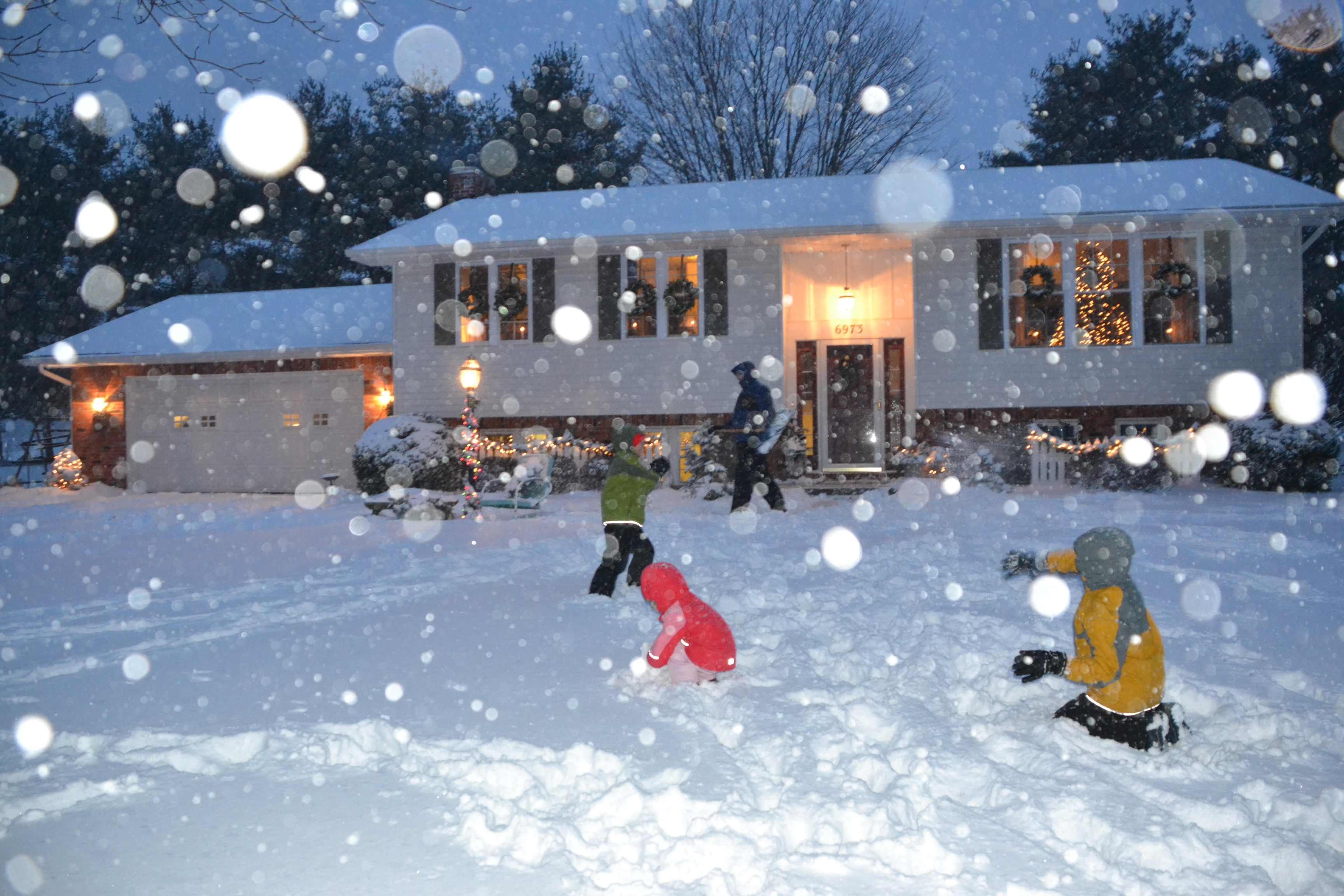
There is nothing better than snow on Christmas Day with the grandchildren.
A special note to followers of this blog.
Much of the content of this blog comes from newspaper columns that I have written for 23 years. This is my last column, but not the last blog post. I will continue to populate Roadkill Crossing with other musings and of course my photos.
As I near the three-quarters of a century mark in age, I have other writing projects that need my attention. I want to complete them while still having my wits and enough energy to put pen to paper.
I started a memoir of living among the Amish years ago. Completion of that book is long overdue. I have other stories swirling in my head, too. I want to set them to print before the Good Lord calls my name.
In that regard, I hope to share snippets of those with you here on Roadkill Crossing. So, please don’t give up on me!
Like most everyone else, I was shocked and saddened to hear of the death, injuries, and massive destruction left by the late-season outbreak of strong tornadoes that hit the country’s midsection like a gut punch recently.
Given this and other tragic global current events, how can we be joyous now? The answer is both easy and hard.
This family of tornadoes brought sorrow to innocent people. Survivors were thankful to be alive. Many people lost everything, and dozens died.
As I viewed the video of the immediate aftermath of the tornadoes, one clip particularly caught my attention. A first responder walked into a heavily-damaged nursing home where one person died from the tornado strike.
As the firefighter waded through inches of water in the dark, he passed several elderly nursing home residents sitting in their wheelchairs waiting for help. More than one of the residents thanked the firefighter for his assistance.
I was amazed. I figured those poor folks would be in shock and confused. Some probably were. But a few chose to express their thanks and joy for help despite their dire circumstances.
Not everyone can be joyous in this holiday season. Some feel alone. Some are homeless, cold, separated from family, while others mourn the loss of loved ones.
Our family knows those feelings all too well. My wife’s father died just before Christmas in 2001, and eight years later, I lost my father on December 21.
At Dad’s memorial service, I told those in attendance not to be sad for us. Dad loved Christmas and that there was no better time for him to pass on. He would have loved the festive decorations of the church.
During calling hours before the service, friends, family, and acquaintances shared their condolences and heartfelt stories of knowing our father. I remember one young man in particular.
The youngster came with his grandparents to express both his gratitude and sorrow. The young man remembered our father because Dad had shown him his arrowhead collection. That lasting impression exemplified our father’s love for life and learning.
How could we be sad at that? We couldn’t be, of course.
We loved our quirky, gregarious father, and we loved that others had opportunities to experience our father’s wide range of interests and joy for life. The fact that so many took time out of their holiday celebrations and ventured out in the snow and cold to be with us spoke volumes.
Joy on Christmas morning.
Another recollection of joy experienced at a stressful time was at the first fire I responded to as a volunteer firefighter in Ohio’s Amish country. A chimney fire had spread into the attic of a century-old Amish farmhouse. At the end of a 30-foot ladder, I sprayed water onto the fire through a small attic window.
With the flames under control, I looked down to the front yard, and I couldn’t believe the unfolding scene. Scores of people, primarily Amish, rushed in and out of the house, hauling out precious family heirlooms, furniture, dishes, and other items.
Several ladies and teenage girls already had washed some of the family’s clothes and hung them on the laundry line. Talk about expressing joy in the face of despair.
That is the way life is, isn’t it? When we are down and out for whatever reason, joy reaches in and touches our heart and soul and gives us hope.
We can choose to be joyful even in the face of death and terror. At every opportunity, be the joy.



















































You must be logged in to post a comment.