Showy sunsets have been hard to come by recently in the Shenandoah Valley. Either the skies have been clouded over, or there have been no clouds at all. When friends invited us over to view the sunset from their backyard, I was hoping for the best. I got my wish.
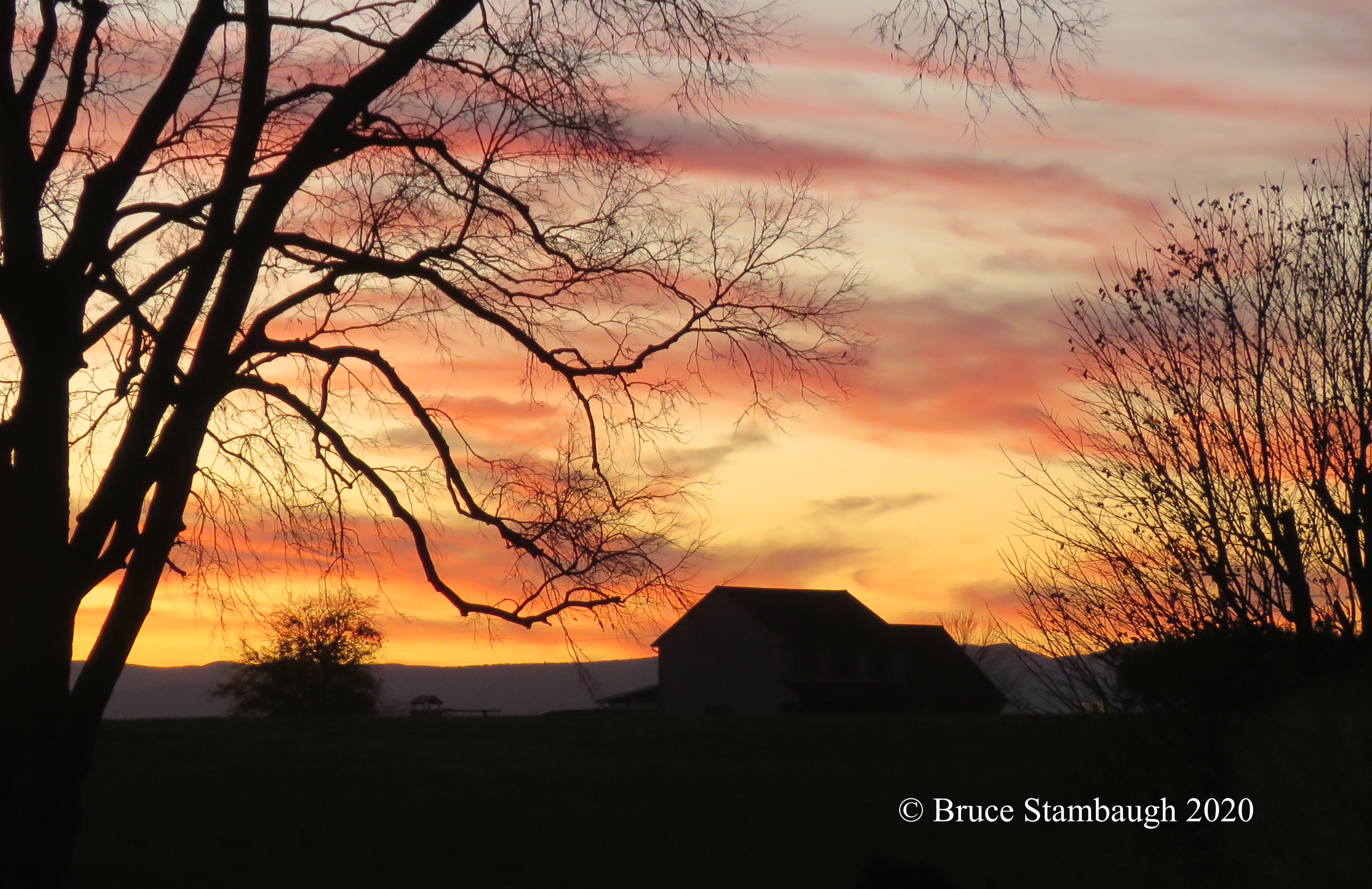
As we sat around the fire pit in the coolness of the early evening, the day’s high, thin clouds hung around long enough to provide a colorful show to the waning day. In the foreground, the silhouettes framed the reddish clouds hanging over the Allegheny Mountains, which mark the boundary between the Commonwealth of Virginia and West Virginia.
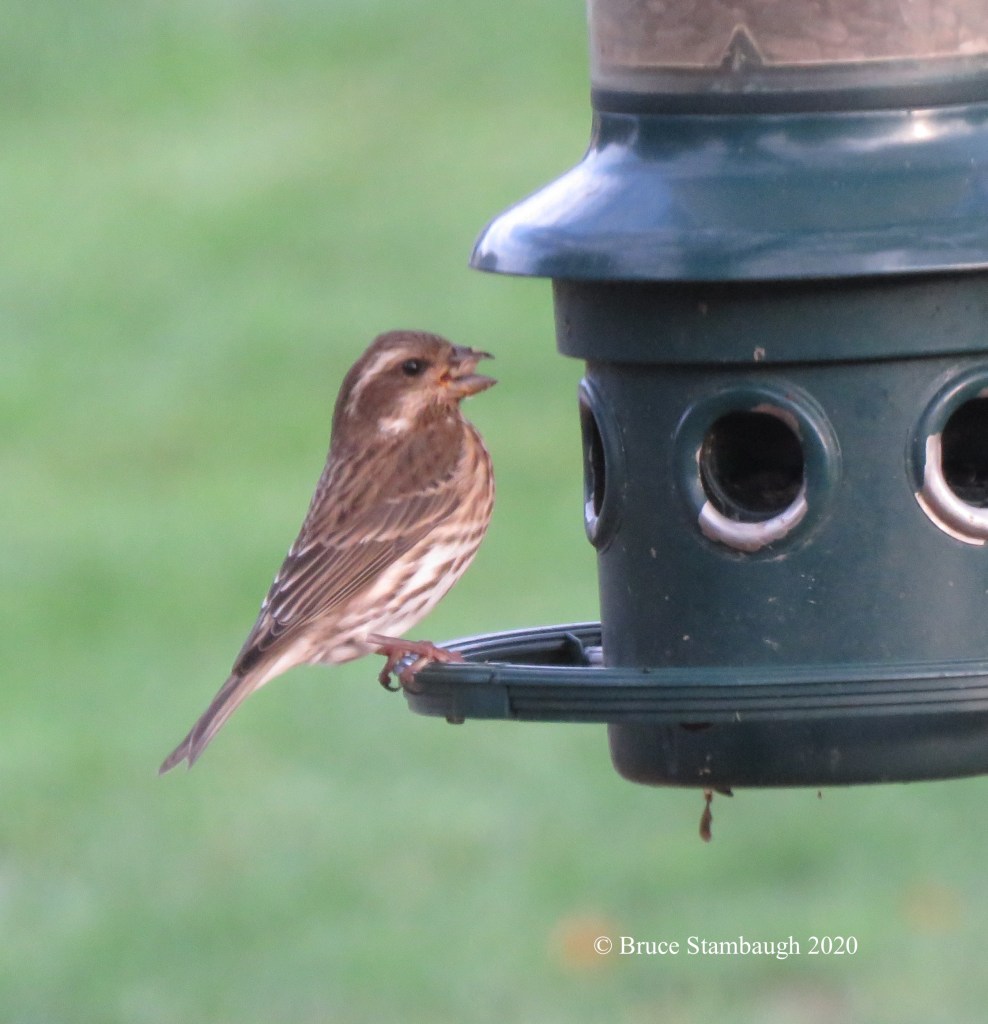
A male Purple Finch eyed the black oil sunflower feeder.
I’m sitting at my desk, looking out the window, enjoying my favorite pastime. Several winter birds have returned and are feeding on and under the feeders that I hang each fall.
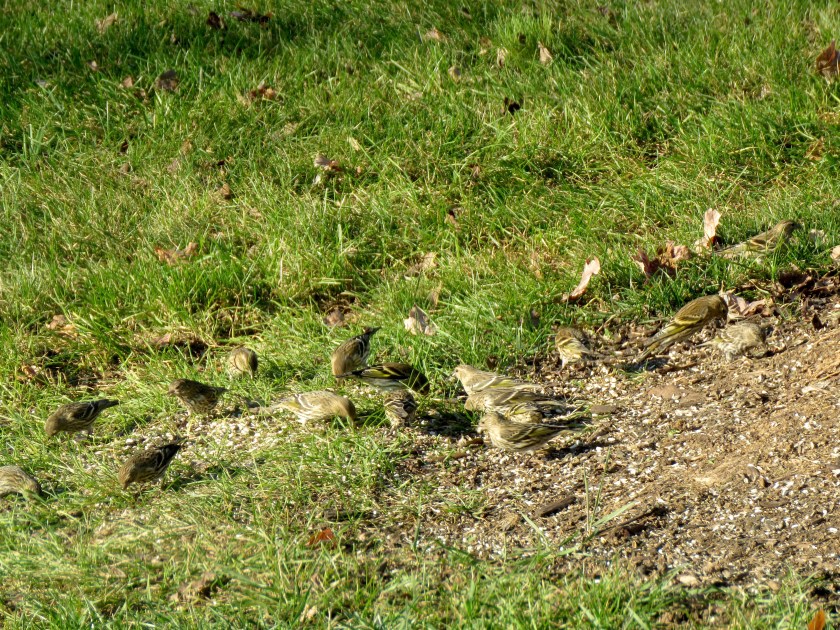
In this case, it’s a flock of chattering pine siskins partaking of black oil sunflower and safflower seeds. I mix the two varieties in a tube feeder that dangles from the lowest red maple branch in our front yard.
That’s what the sociable pine siskins were devouring. They are a dainty bird with a pointy little beak. Unlike other species, the siskins don’t seem to be too competitive. They dine cooperatively. The pesky house finches could learn a lesson from their smaller cousins.
I consider the siskins a real treat, an honor to have them partaking of my offerings. They tend to move around a lot in the colder months. They can be here one day and gone the next. So, I enjoy them and the other birds while they are here. I do hope they stick around.
Mourning Doves.
Male Northern Cardinal.
Female American Goldfinch.
A small flock of Pine Siskins foraged beneath the feeders.
Dark-eyed Juncos.
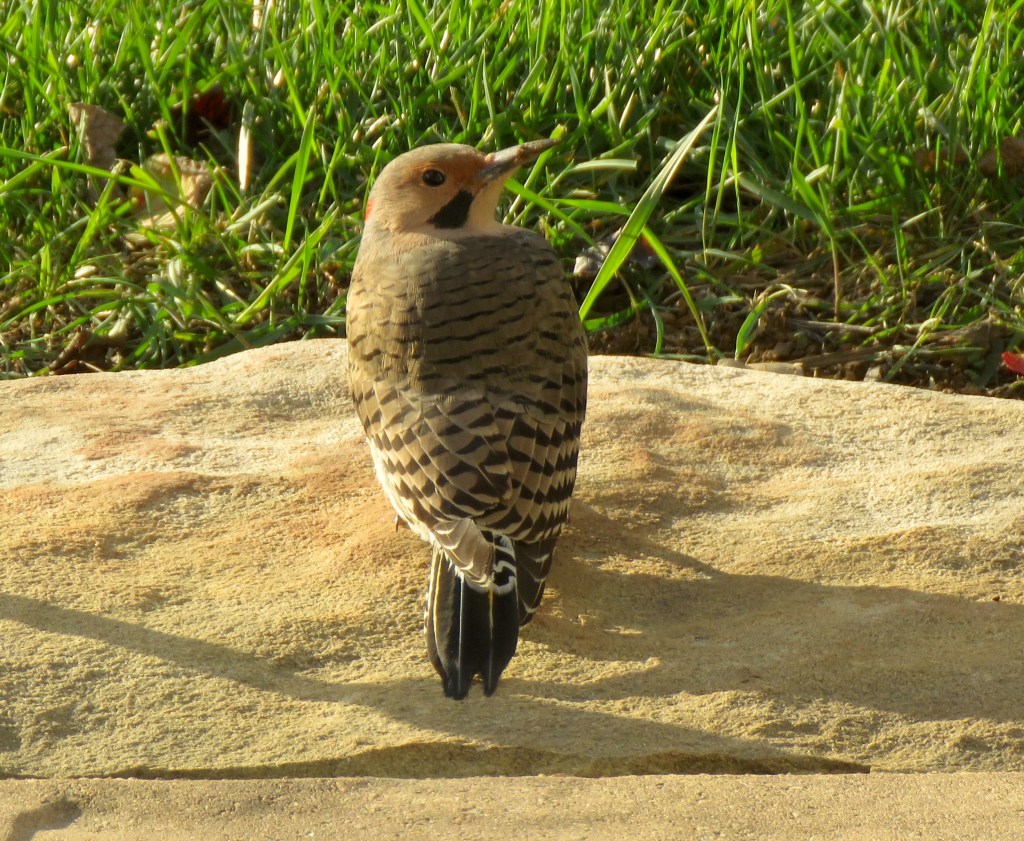
Northern Flicker.
The purple finches have returned, too. Like the siskins, I never know how long they will stay. I just keep filling the feeders and appreciate their beauty. Birders ogle over having purple finches, and the glorious but unpredictable evening grosbeaks even more so.
The white-throated sparrows have also arrived for their six-month hiatus from the Canadian provinces and the northeastern forests. They are marvelous birds to both watch and hear. I never tire of their hop and kick approach to feeding on the ground.
The song of the white-throated is the delight of winter. Neva and I hear their distinctive, lyrical whistle when we walk in the morning. Their cheery call quickens our step on chilly mornings.
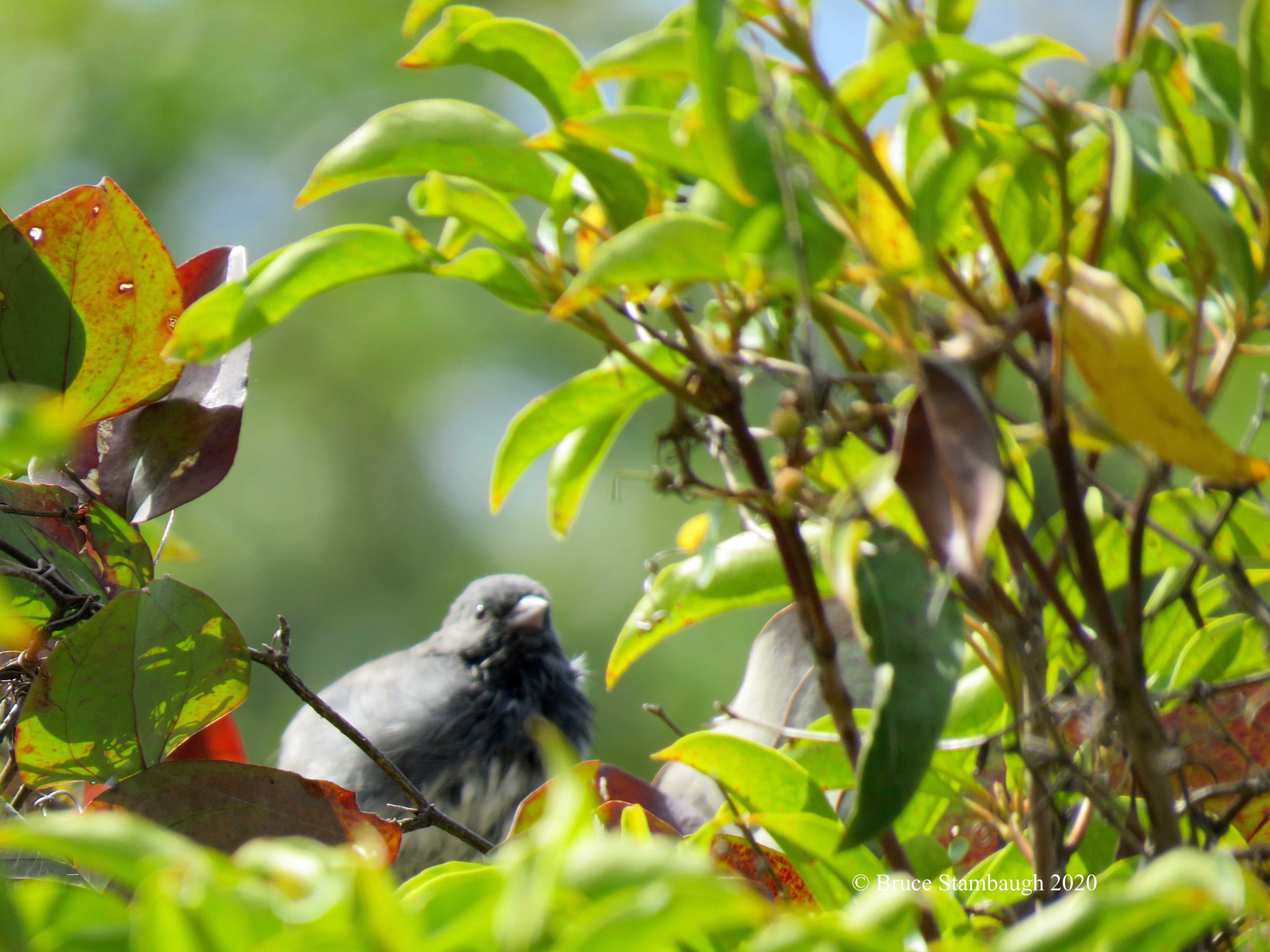
The dark-eyed juncos and white-crowned sparrows have just begun to arrive. More will likely appear as the weather grows colder.
I enjoy the year-round birds, too. Is there anything more beautiful than a bright red northern cardinal perched on an evergreen branch? If it happened to have snowed, it creates a Christmas card moment for sure.
I can always tell when the neighborhood Cooper’s hawk is on the prowl. Stealth as it is, the songbirds can’t always fly for safety. So, they freeze in place by staying still and low or press tightly against a tree trunk, hoping not to be spotted.
I don’t mind if the sly hawk captures one. It has to eat, too. However, my preference would be to snag a few of the noisy, hoggish European starlings. They devour the suet cakes like they are candy.
Female Purple Finch.
Male Purple Finch.
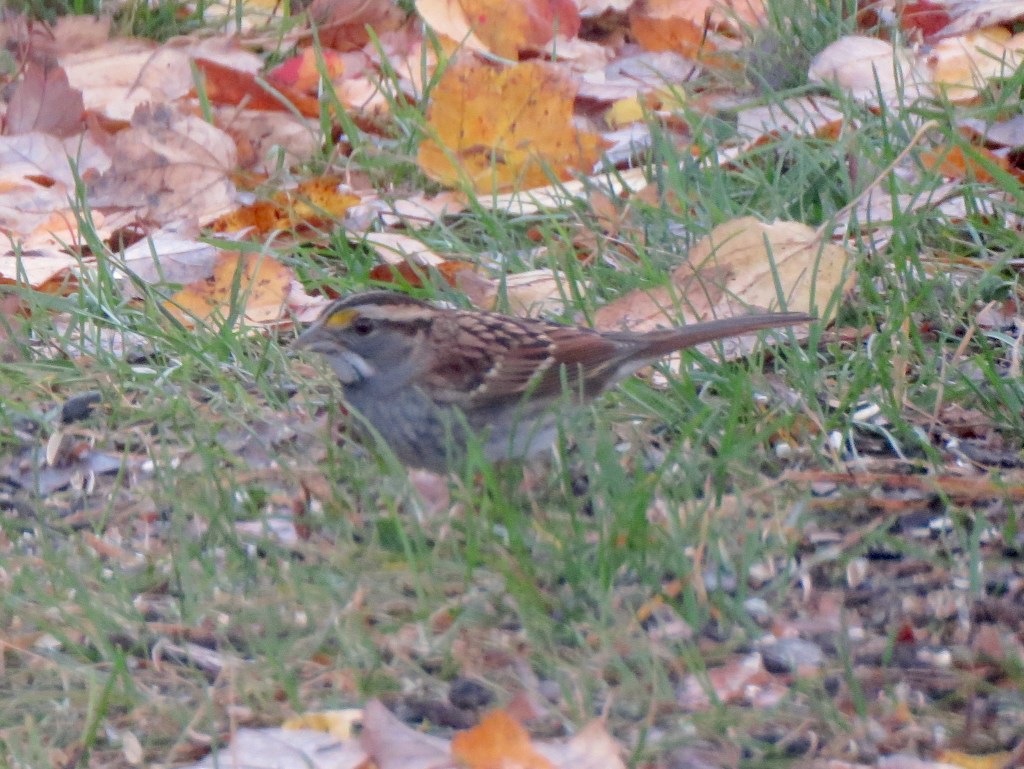
White-throated Sparrow.
Carolina Chickadee.
Northern Flicker on alert for the Cooper’s Hawk.
I enjoy the various antics and interactions of my feathered friends. The Carolina wren’s repertoire of songs alerts me to be on the lookout. Sure enough, it bounces around our front porch, checking nooks and crannies for any dead insects.
The wren also partakes of the seeds and suet. Birds need their protein, too. That explains why American robins peck beneath the suet feeder while the starlings sloppily gorge themselves. The robins gobble up the dropped suet pieces from the unruly gang overhead.
I always am pleased when the northern mockingbird makes an appearance at the suet, too. Even the starlings yield to this aggressor.
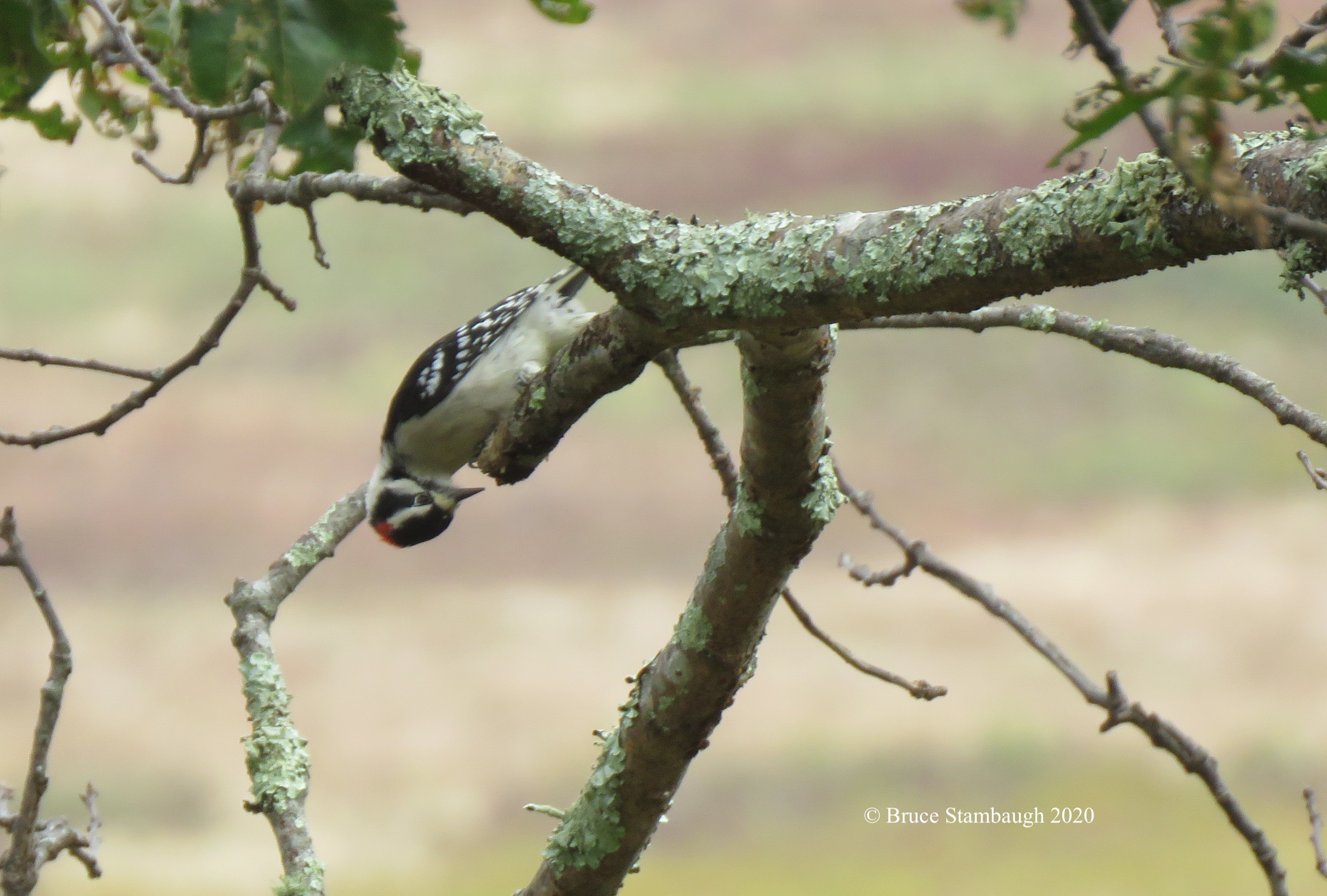
I marvel at the various woodpeckers that make infrequent stops. The downy is the most faithful, followed by the red-bellied and northern flickers. I’m still waiting on the pileated to make its initial appearance this year.
That’s half the enjoyment of being a birder. You never know what to expect next. You just have to keep watching and appreciate what arrives, starlings excepted.
This Pileated Woodpecker got the last of the peanut butter suet on March 24, 2020.
Like many other locales in the eastern United States, the Shenandoah Valley has been experiencing some marvelous, unseasonably warm weather. After morning fogs burn off, clear blue skies have dominated most days.
Imagine my surprise when I stepped outside one recent afternoon to enjoy the amazing weather. What appeared to be an army of wispy cirrus clouds hung in the eastern sky. Cirrus clouds are ice crystals that form above 20,000 feet in the atmosphere. They often appear bright white and in unusual formations, sometimes resembling human hair or feathers.
I thought their bright white against the deep blue sky created an inspiring scene. “Cirrus Clouds” is my Photo of the Week.
October’s Harvest Moon rises over Massanutten Mountain near Harrisonburg, VA.
Many moons ago, I remember clearly seeing the Milky Way for the first time in ages. I stood starstruck at the twinkling, gem-like brilliance overhead.
In the evening chill, I gazed transfixed, awestruck. Of course, the setting alone provided that opportunity. I had just stepped out of the historic El Tovar Hotel at the Grand Canyon’s edge in northern Arizona.
I felt like a child again, my mind racing back to forgotten summer nights when I would lay on my back in the coolness of the grass and watch the stars and planets. My family lived in a suburb of a blue-collar steel town in northeast Ohio. We could still see the heavens above.
Back then, light pollution was not an issue. Street lights were fewer, and their incandescent bulbs radiated soft light. I even remember being able to track satellites from our front yard.
Somehow, somewhere we North Americans became afraid of the dark. More and brighter street lights and security lights multiplied, all in the name of blotting out the darkness. Now, light pollution prevents 80 percent of the U.S. population from seeing the stars.
The evolution of lighting up streets, buildings, and entire cities has grown exponentially with urban sprawl. In today’s world, most people have to travel out into the country to see the stars.
Residents of cities like Jacksonville, FL, have little chance of seeing the night sky.
Seeing the night sky was one of the benefits of living in a rural area like Holmes County. The air was so clean that Amish buggies rode by at night with no lights on at all until they heard a vehicle coming. Though it wasn’t a safe thing to do, the point was that the horse and driver didn’t need lights to guide them.
We chose the house we now live in near Harrisonburg, Virginia, in the daytime. Being able to see the night sky on a clear night came as a bonus. Our expansive housing development has no street lights.
Light fills our modern night lives, too much of which is bright, blue illumination from all of our electronics. Cell phones, computers, and TV screens stimulate us rather than relax us before bedtime.
Humans need dark nights to get proper sleep. Some people have to use black nightshades to cover their windows to shut out external, artificial light to get some sleep. Sleep deprivation can lead to too many negatives for us humans.
Excessive night lighting disturbs wildlife, too. More than 60% of invertebrates and 30% of vertebrates are nocturnal. Each year, millions of migrating birds die by flying into urban windows illuminated at night long after employees have gone home.
Newly hatched sea turtles crawl to the brightest light, which used to be the stars and moon twinkling over the sea. Now, the turtles turn the wrong way and perish unless the artificial lighting is turned off.
Nighttime photos taken from space of urban areas may look pretty, but such massive lighting causes problems and is extremely expensive. Imagine the money and resources society would save by simply turning off all those unnecessary lights. Plus, too many of the lights point skyward instead of down.
We shouldn’t be afraid of the dark. Nighttime is good for our rest, our bodies, our souls, our ecosystem. As we enter the winter’s season of darkness, we should embrace it, not try to either eliminate or illuminate it.
Yes, darkness arrives early now and will continue to do so into the New Year. Until then, I’ll just steal an opening line from Simon and Garfunkel: “Hello darkness, my old friend…”
Halloween’s Blue Moon and Mars in the abstract, taken from my backyard.
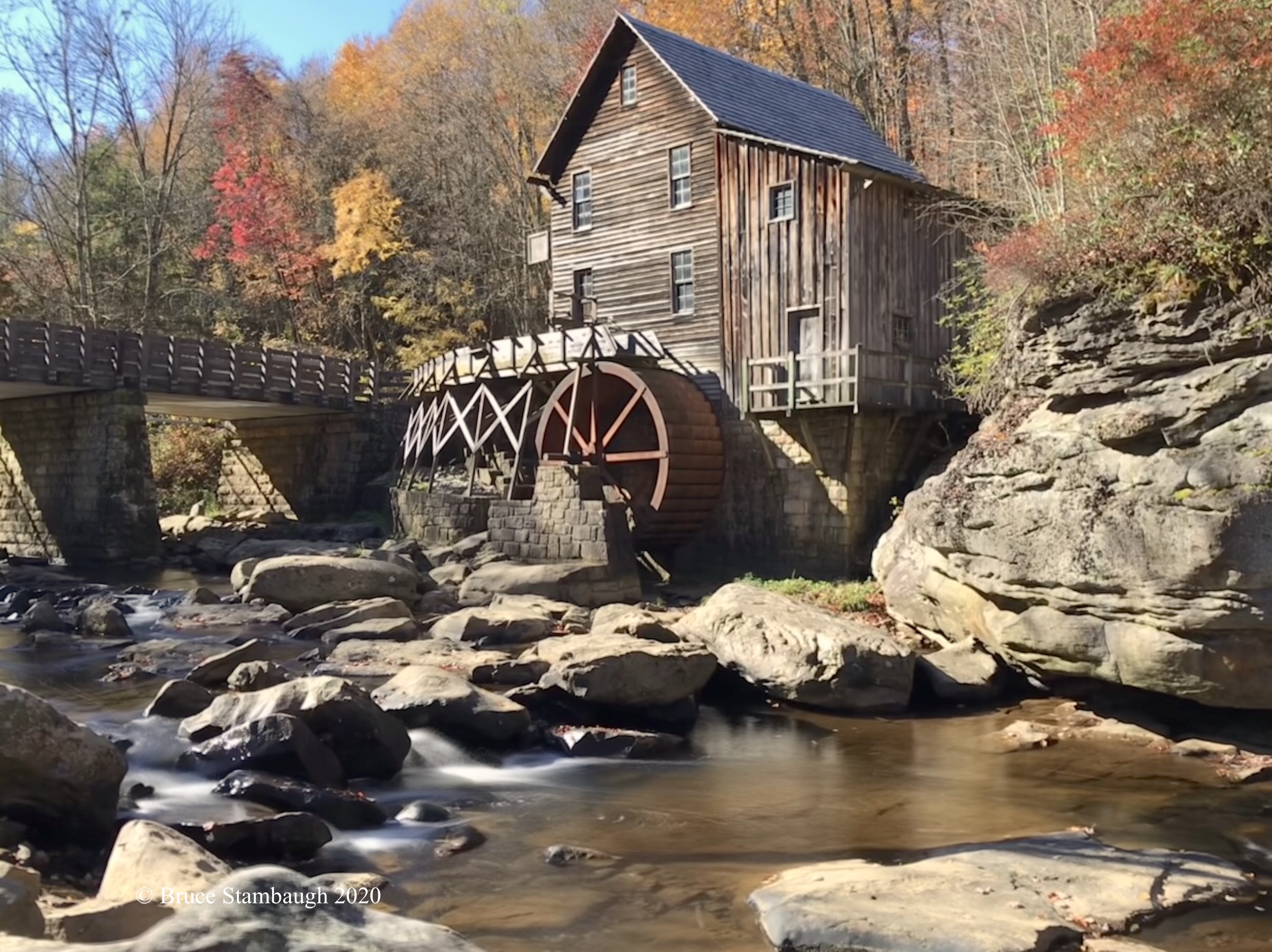
The Glade Creek Grist Mill in West Virginia’s Babcock State Park is on most photographer’s “must do” list. I was no exception, especially since moving to Virginia’s Shenandoah Valley more than three years ago.
The old mill is most often photographed in fall and winter. I missed the peak of the leaf color by just a few days. Still, I was pleased with the residual colors that framed the mill along its namesake stream.
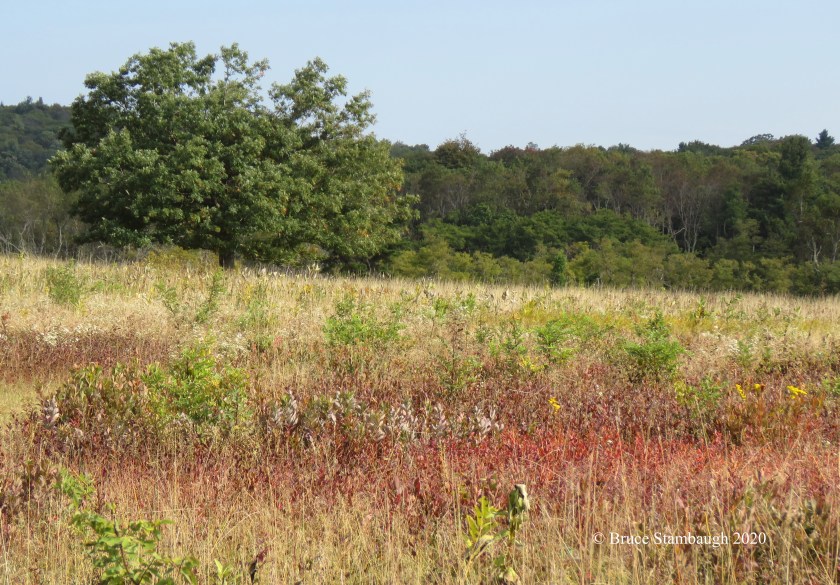
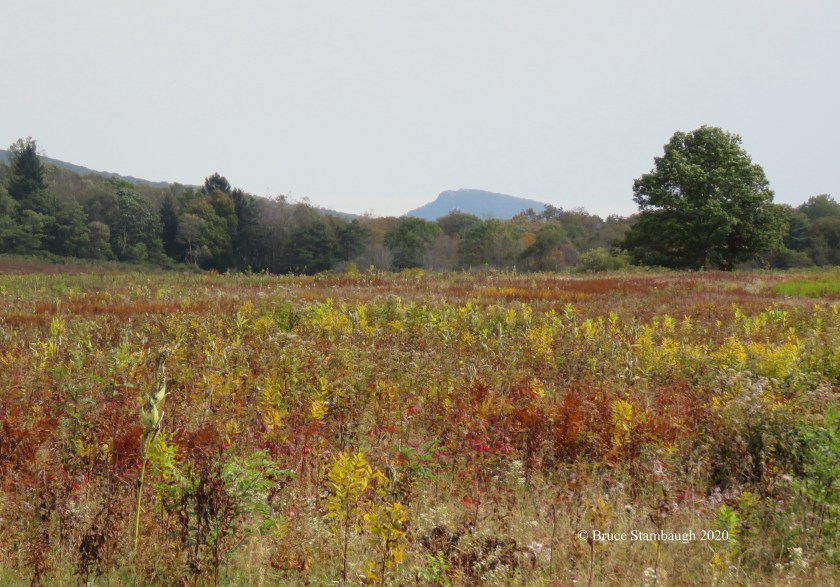
Looking west from a point in Big Meadows in Shenandoah National Park.
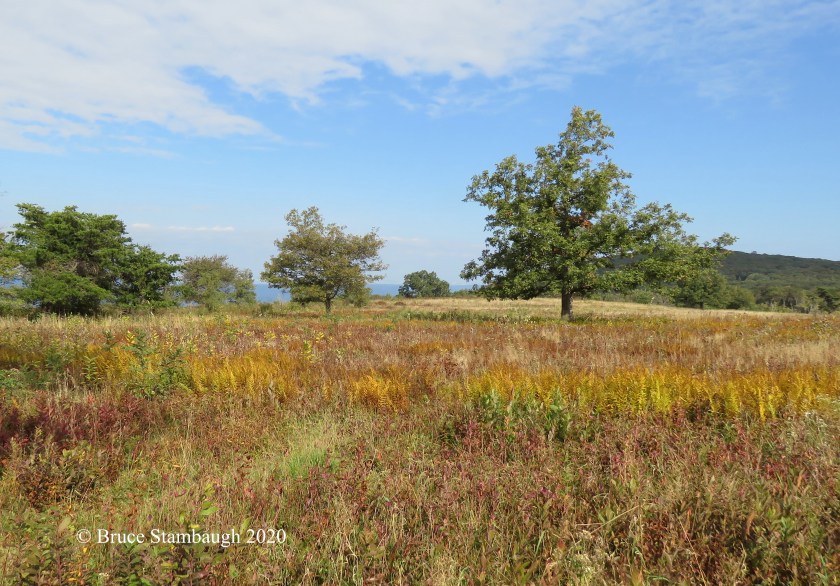
Even though the morning’s southeast breeze was gentle, the leaves rained down like ticker-tape parade confetti. I was in my favorite outdoor space, Shenandoah National Park’s Big Meadows.
Big Meadows is an anomaly. No logical or scientific reasons can explain why the expansive meadow sits in the middle of this popular national gem.
Scientists have determined that there is nothing unique about the soil’s geologic makeup or bedrocks below that would create a meadow in the middle of a forest. In a matter of yards, the foliage changes from plants of a kettle-like marsh to wooded hillsides. I imagined Big Meadows as God’s thumb stamp of approval on these ancient mountains.
In the short time we have lived in Virginia, I’ve found fall is my favorite time to visit this gorgeous spot. From our valley home, the weather appeared to be perfect. But when you visit the mountains, conditions can be changeable at any time of year. I packed for the unexpected, and that’s what I got. With every step, creation’s glory unfolded.
You could hardly call my creeping along as hiking. I followed the parameter of the southern part of Big Meadows. In three hours, I covered only a mile and a half. A wooly worm would have made more progress, but likely not shared my joy.
I wasn’t out to break any endurance records. I went to see whatever came to me as I strolled along and through the area’s various topography. In the mountains, just a change in altitude of a few feet makes a big difference in the kinds of vegetation that grow.
This gently sloping mead is home to flowers, grasses, reeds, trees, and assorted creatures great and small. As an invader of their varied habitat, I tried to remain obscure.
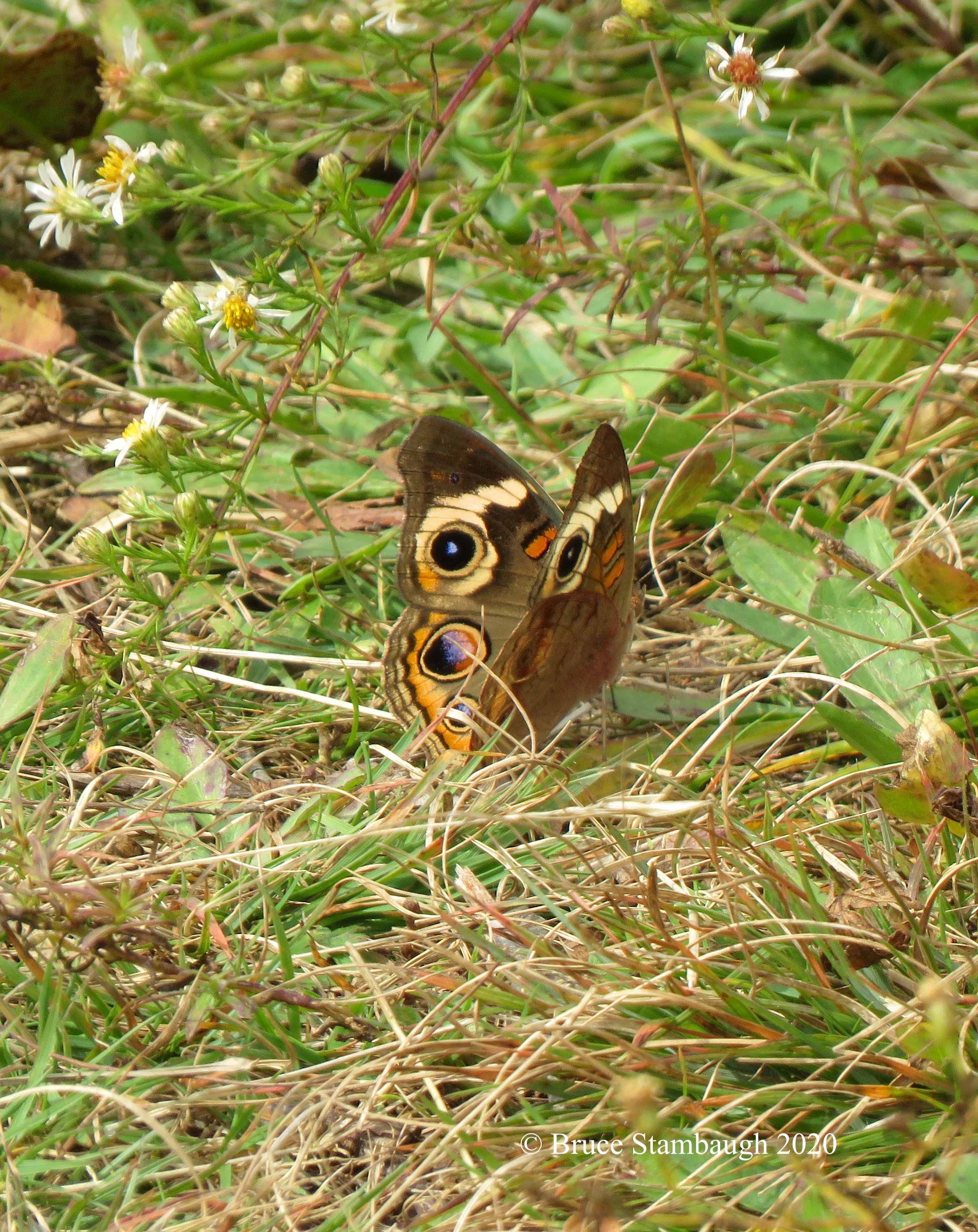
With fall’s migration, I knew plenty of bird species might be passing through on their way south. I expected year-round residents, too, along with a few lingering butterflies.
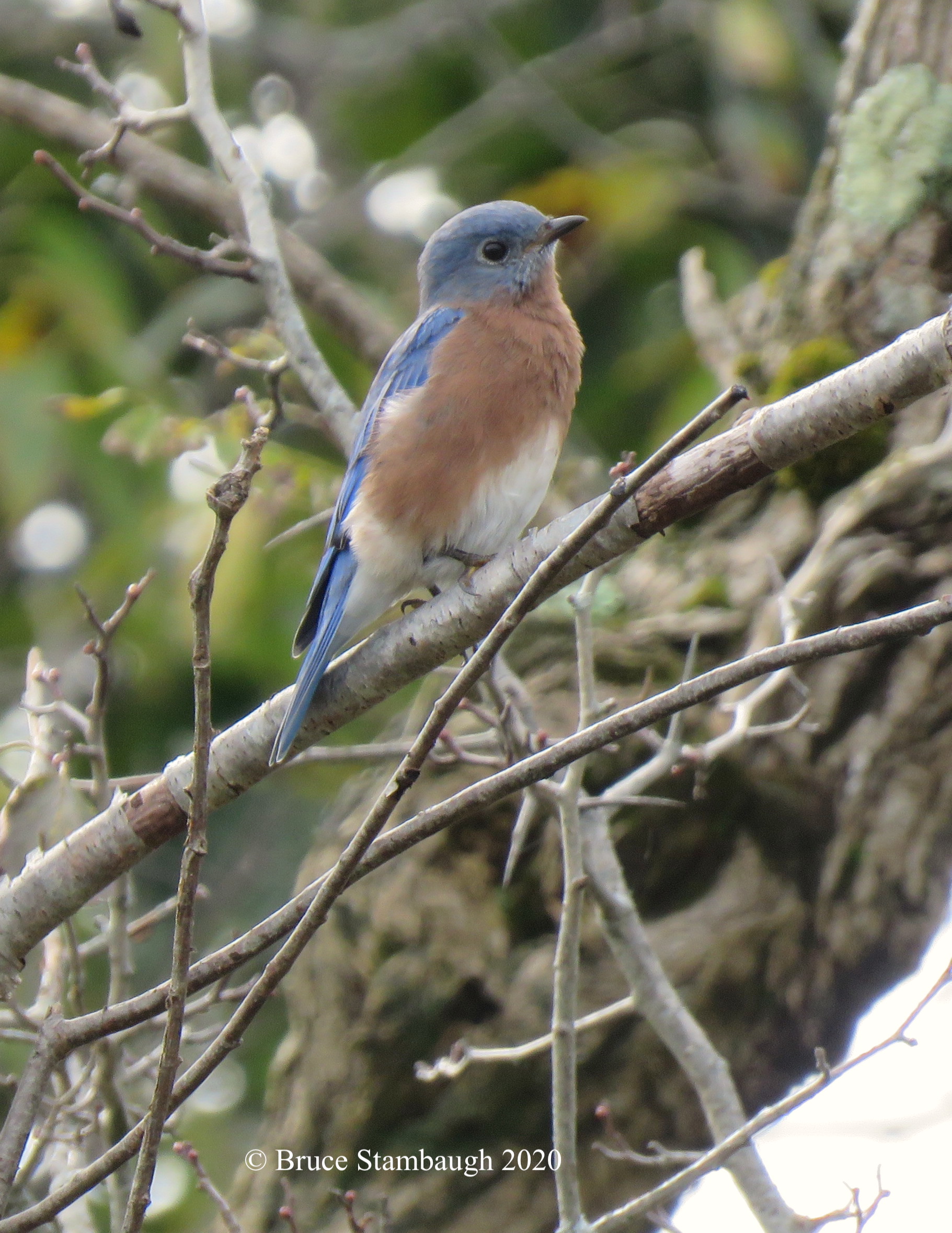
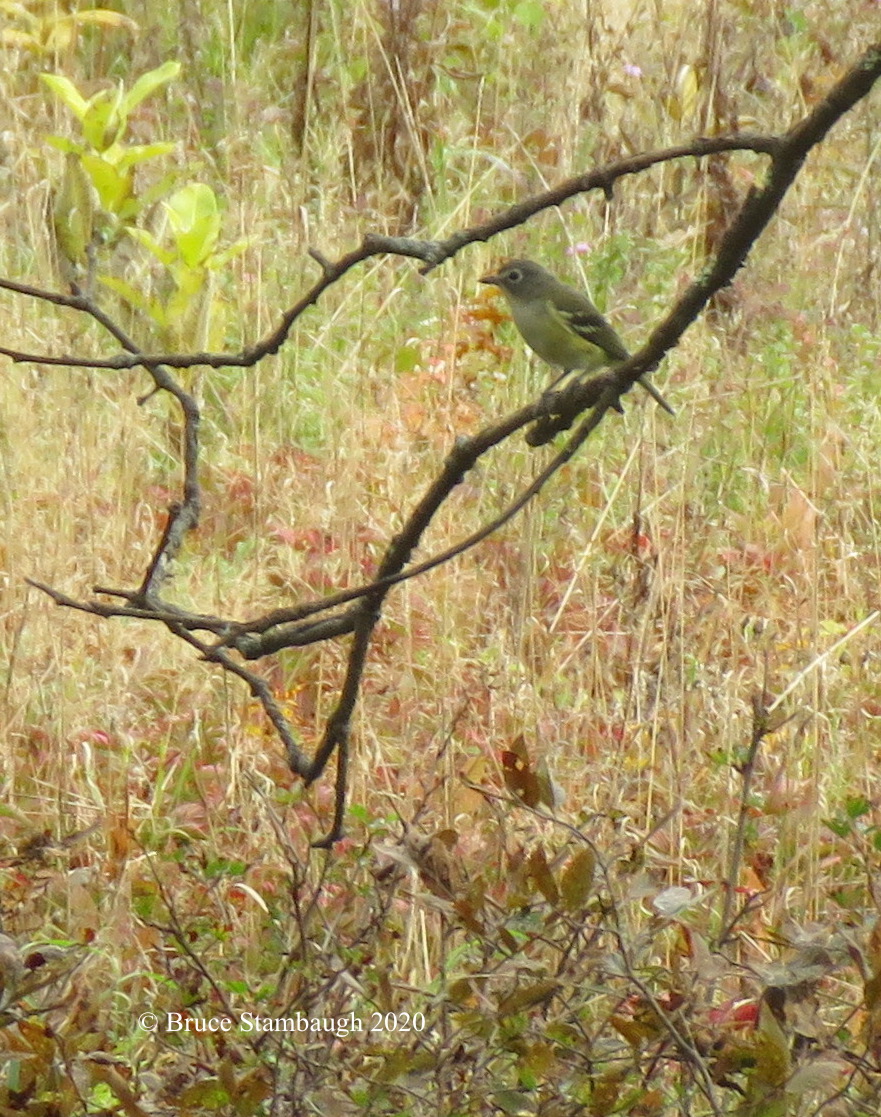
Resident eastern bluebirds and handsome field and song sparrows greeted me. Eastern phoebes, magnolia warblers, blue-headed vireos, Carolina chickadees, and dark-eyed juncos darted about, too.
Dressed in their duller non-breeding feathers, some birds, especially the warblers, went unidentified by this average birder. Chirps near and far came from other species that I couldn’t locate.
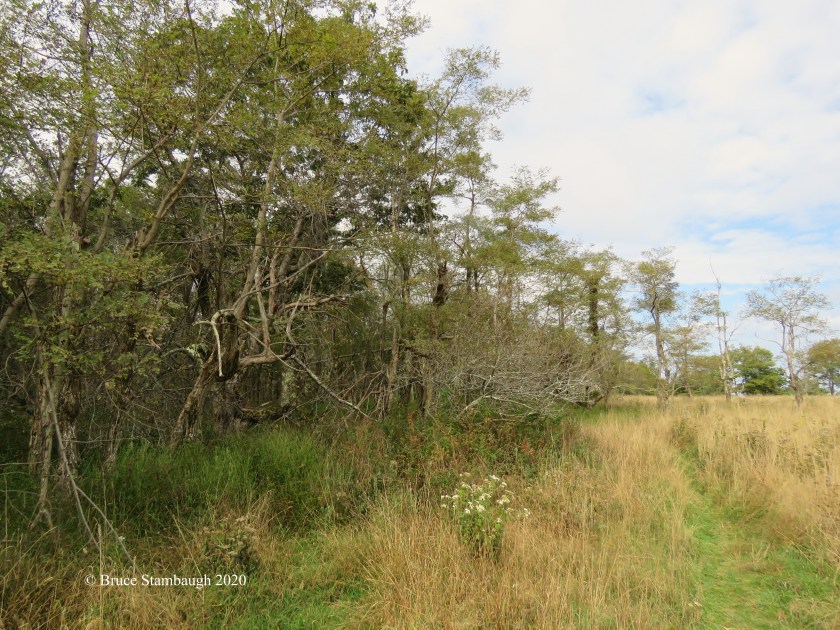
I crept along the raggedy edge that separated fields from woods, exhilarated. I lingered in a high place beneath a sweeping white oak at the meadow’s southernmost border, where I could see near and far.
Contentment filled me as I sensed all the life around me. Instead of hiker, birder, or photographer, I was an uninvited but appreciative guest. Every moment bore existential meaning.
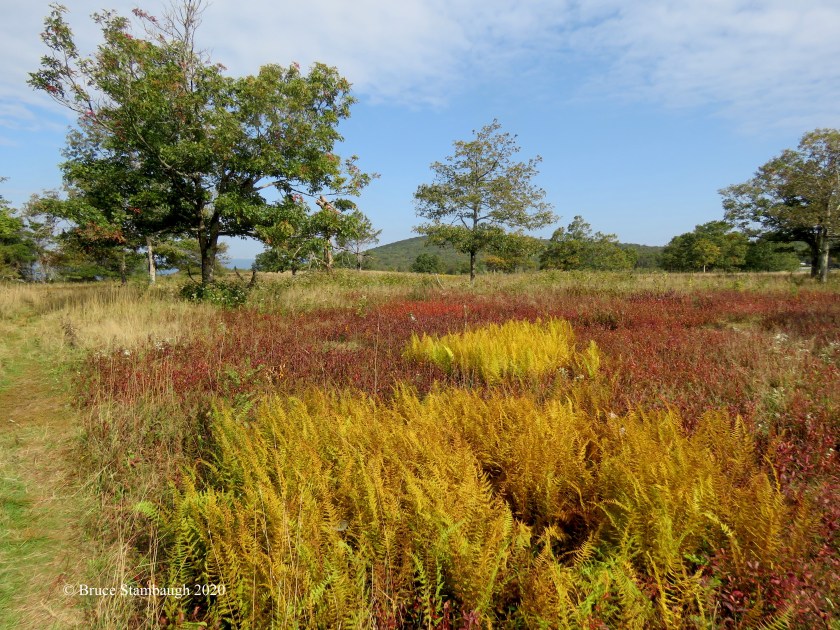
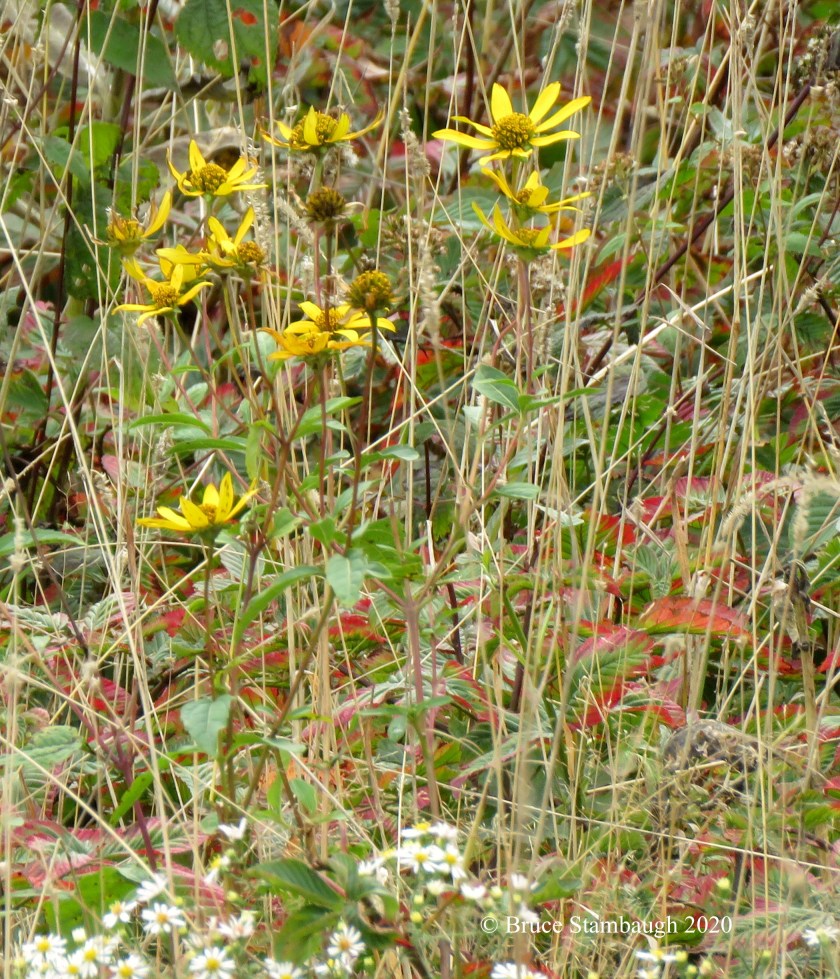
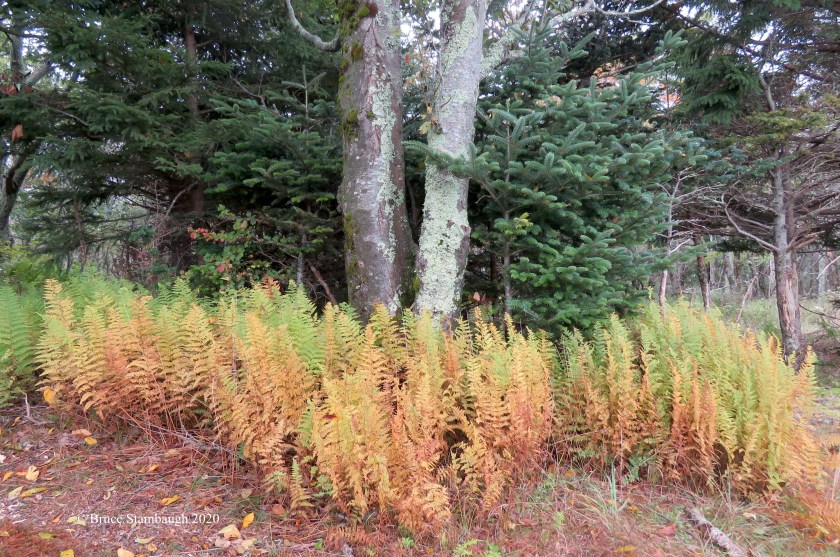
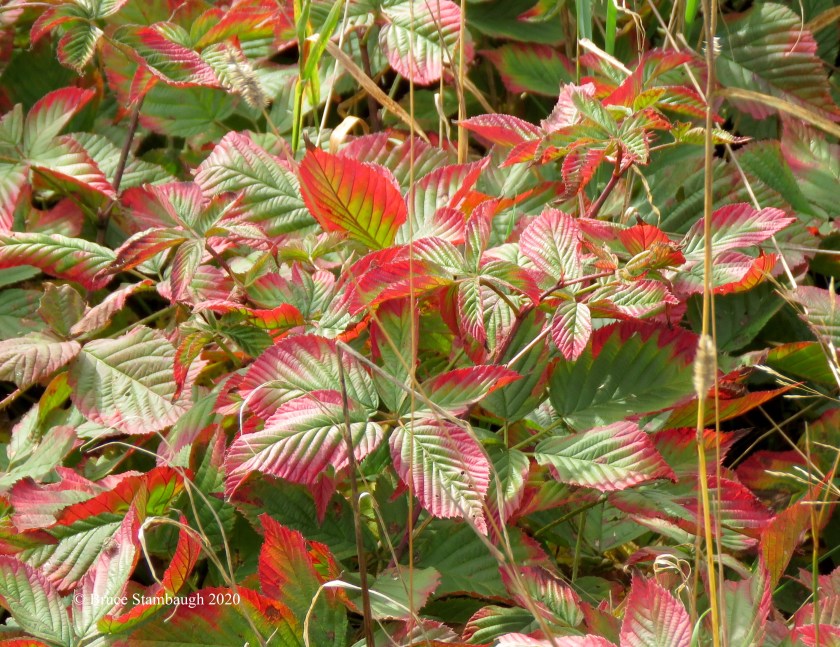
The first frosts of the season created a festive carpet of fall’s primary colors that spread across the landscape. The leafy trees and evergreens looked on in envy. Red-tinted green leaves, spent wildflowers, delicate ferns frosted golden, ruby-colored blueberry leaves, and russet grasses decorated the earth like it was Christmas.
Overhead, the sky also joined nature’s artistry. One minute, it was pure cerulean, the next white fluffy clouds.
Suddenly, a fog rolled in from the eastern piedmont. The steady breeze soon carried it to the western slope of the Blue Ridge Mountains.
I breathed an appreciative silent prayer of gratitude for all these sights and sounds. The old withered away, yet the promise of rebirth remained.
At every step that I took, I was delighted to have observed all that found me.
The fog that hung over Shenandoah National Park even after I left.
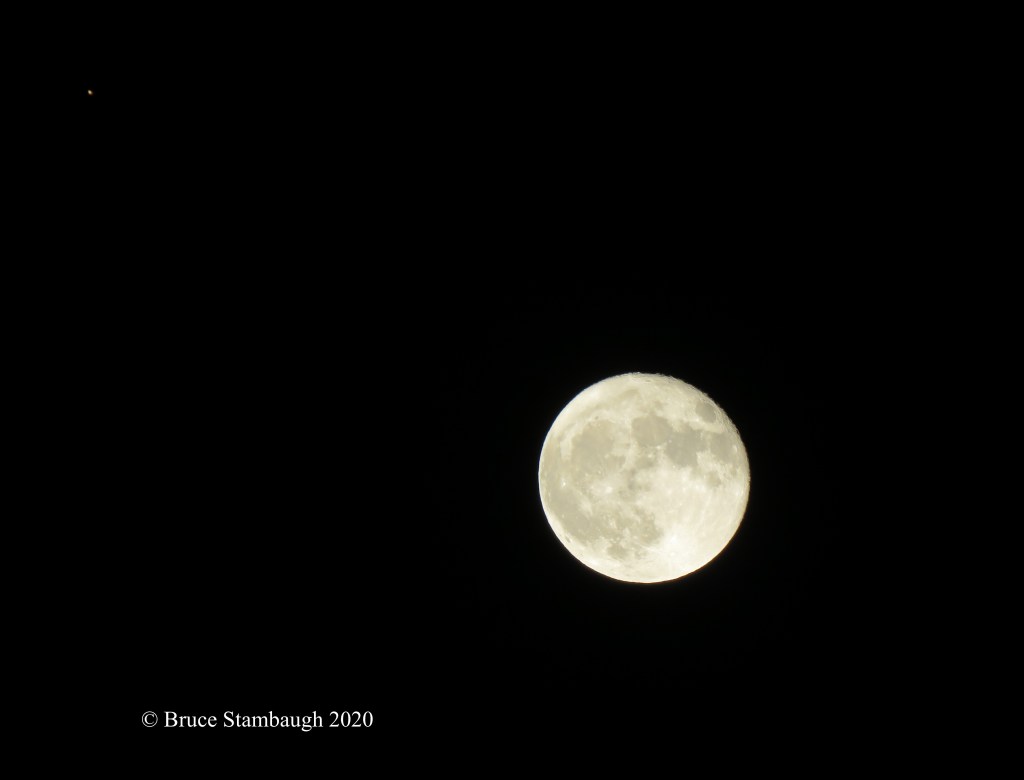
The skies were clear in the Shenandoah Valley for the rise of Mars and October’s Harvest Moon. Mars was first to appear over the Massanutten Mountains that end east of Harrisonburg, Virginia. A few minutes later, the full moon also appeared. As the moon rose higher, Mars drew closer to the moon. Mars is the small dot in the upper left-hand corner of the photo.
I took this photo handheld from my front yard just outside the city. “Mars and the Harvest Moon” is my Photo of the Week.
October offers up some of the year’s best weather. It often claims ownership of the year’s first killing frost, too, and the first snow. Sometimes it’s both.
October and I have a lot in common.
Weather is one of my favorite hobbies. I have satisfied that itch as a volunteer severe weather spotter for half a century for the National Weather Service. However, October is usually one of the quieter weather months unless a tropical storm plays havoc across the eastern U.S. Evidence 2012’s Superstorm Sandy.
The western edge of Superstorm Sandy exits Holmes Co., Ohio.
October tends to be the calendar’s buffer between fairer weather and the more barren, colder months that follow. In other words, the tenth month foretells the winding down of every year. There can be no better year than the present to draw to a close. I doubt that I need to elaborate or provide the gory details.
Enough of the quixotic shenanigans. October and I have much more in common than climatological conditions.
I’ve entered the October of my life. I stay as active as I can, but it’s pitiful to watch me throw a tennis ball for our granddog to fetch. Millie is so unimpressed that she often refuses to give up the retrieved ball I’ve thrown.
Millie.
Millie knows that my toss can’t compare to that of our oldest grandchild, the 16-year-old with a pitcher’s arm. Millie gets to run far beyond one of my feeble efforts.
Before and since my knee replacement a year ago, I have maintained a regular exercise routine. I also do yoga twice a week. I try to walk a mile every day. I ride my bike around and up and down our inclined neighborhood. To look at me, you wouldn’t know that I do any of that.
I have never been a muscular guy. But I usually could hold my own in most physical activities. Not anymore.
I am not ashamed to admit it. I’ve accepted where I am in life. I also kindly relent to any assistance from passersby when I’m toting multiple bags of mulch or birdseed, or anything heavier than a gallon of milk. I’m old, and I want to get older. So I quash my male ego and accept offers to help.
A few years ago, Walter C. Wright wrote a book, “The Third Third of Life: Preparing for Your Future.” It’s a workbook to help you ready for retirement and beyond. It’s an easy, practical read. The hardest part is accepting the fact that you are in that senior citizen-stage of life. For some, it comes sooner than it does for others.
When I was young, I’d spouted off that I would live until I was 100. I have longevity on both sides of the family to back that up. But I also have ancestors who never reached retirement age.
Like leaves on deciduous trees, I want to keep on hanging on as long as I can. However, the leaves, of course, eventually color, fade, and fall.
I also understand that that is where October and I differ. After the foliage tumbles, buds protrude for next year’s crop to unfurl, and once again nurture the growing tree with a thriving canopy.
Humans don’t have that option. We get one shot at life unless you believe in reincarnation. For the record, I don’t. But if I did, I would return either as a chiropractor or a meteorologist.
October is a fine month of the year. I have fond memories of her from childhood to the present. Here’s to many more nostalgic Octobers for everyone.
Fall in the Northern Hemisphere has officially arrived! I always welcome the fresher, cleaner air, less humidity, and cooler temperatures.
The first sunrise of autumn on September 23, 2013, brought all of that and more. As you can see, fall got off to a foggy start that day.
This photo was taken as the sun filtered through a typical September morning fog in Ohio’s Amish country, where I used to live. The wagon in the alfalfa field is a church bench wagon. It was parked there to provide seating for an Amish wedding.
“Autumnal Equinox Sunrise” is my Photo of the Week.
Residents of the Northern Hemisphere are on the eve of yet another autumnal equinox. Autumn officially begins at 9:30 a.m. EDT on Tuesday, September 22.
Autumn has given us plenty of warnings even before her arrival. Instead of turning red, many of the leaves on our backyard maple have simply been falling off one-by-one for weeks. We can thank the leafcutters for much of that.
The crazy weather of this insane year has also played a role in the dying leaves, along with other climatological irregularities. Let’s count the ways.
In late spring, an extended spell of chilly, wet March-like days did their damage. The steady damp weather kept farmers out of fields over much of the U.S. east of the Rocky Mountains.
Some bird species even delayed nesting because the weather was so foul. If birds did nest, naturalists found hatchlings dead because their parents couldn’t find enough insects to feed them.
Then just like that, it got hot and dry. Here in western Virginia, the furnace was on one day, and the air conditioner the next. Vegetation flourished in such conditions, causing the humid, hot wind to carry various pollens far and wide. According to my allergist, I wasn’t the only one sneezing.
The day the rains started in mid-July.About the time Major League Baseball finally began in July, the heavens opened up. The rains canceled games, and so did COVID-19 because too many players tested positive.
Record rains pelted the full length of the Shenandoah Valley. August usually is a hot and dry month here. Not this year. The weather was more like June should have been. We mowed our lush lawn twice a week for several consecutive weeks.
All the while, fall kept creeping upon us. Butterflies, relatively scarce during June and July, began to arrive. So did the ruby-throated hummingbirds. Now they are all filling up their tanks for their annual southern migration.
Juvenile male Ruby-throated Hummingbird.
The yellow, green, and black Monarch caterpillars have morphed their way into magnificent orange and black butterflies. Predators have learned to avoid dining on them since the Monarch’s appetite for milkweed renders them bitter, according to lepidopterists.
That dreaded F word, F-R-O-S-T, has already made appearances across the northern reaches of the U.S. Can the rest of us be far behind?
If you listen to the jingles and jargon on TV, this is pumpkin spice everything season. Despite the marketing ploys, I’ll gladly stick to my decaf mocha lattes. They’ll taste just as robust when the first freeze hits.
Of course, hurricane season peaks in the first few weeks of fall. The National Hurricane Center has already increased its predictions for both the numbers and intensities of those tropical storms.
Out west, you can’t breathe the air. It’s so oppressively hot and thick with smoke from record-breaking fires that have caused death, destruction, and devastation to humans, wildlife, and entire towns. More than 10 percent of Oregon’s population has been evacuated as of this writing.
Unfortunately for those millions of west coast folks, the sky has glowed an apocalyptic orange for all the wrong reasons. A good frost or even a lovely blanket of snow would greatly help those tired firefighters slow the infernos.
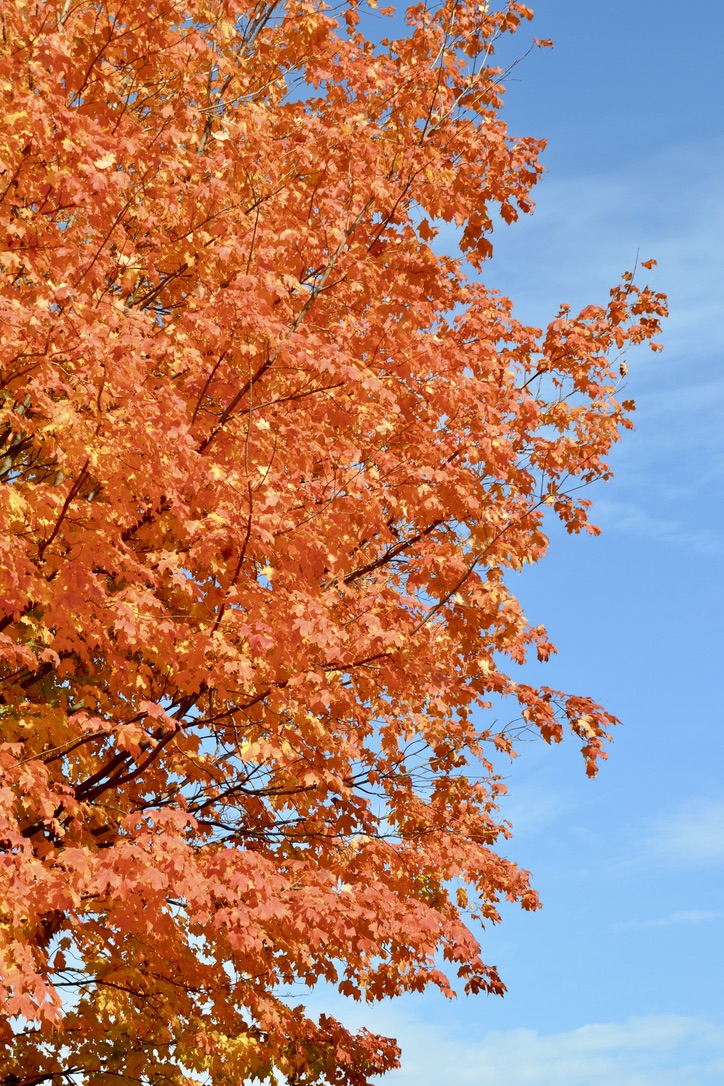
Autumn, of course, abounds with fiery colors, orange included. In addition to the winged creatures, mums, maples, pumpkins, and gourds are but few of the things that warmly usher in fall.
Climate change has undoubtedly played a part in stirring up 2020’s weird and wild weather. It’s been a universally strange enough year already all the way around.
Let’s welcome fall with a blissful hope for more normal global weather patterns. The right kind of orange.
























 Roadkill Crossing
You must be logged in to post a comment.