The morning sun broke through the layer of cumulus clouds to perfectly highlight this hillside farm west of Harrisonburg in Virginia’s Shenandoah Valley. Even though they were past their peek coloration, the sun-drenched buildings of the farmstead nicely accentuated the leaves of the mixed hardwoods.
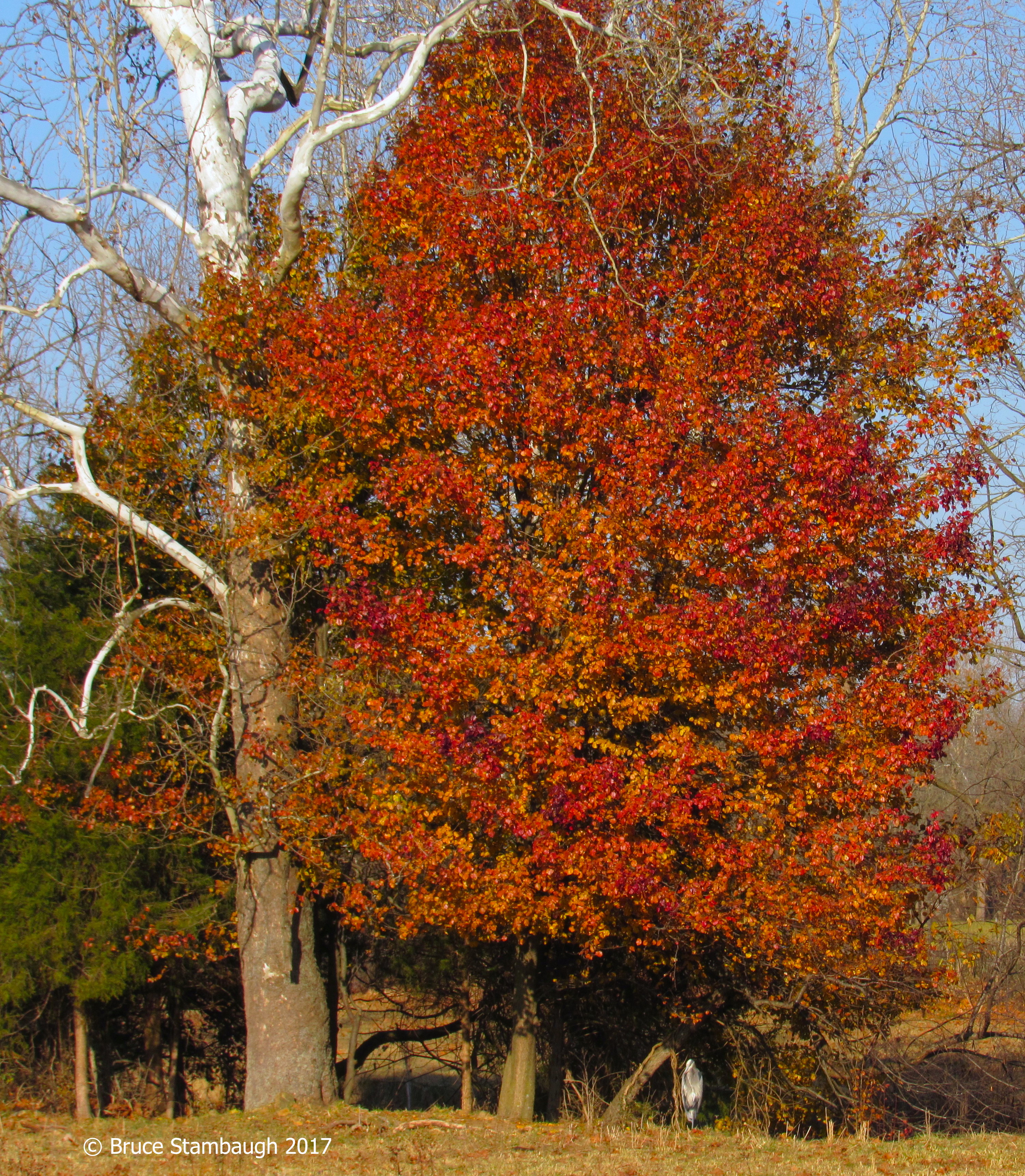
At first sight, I wasn’t sure what was under the blazing maple tree. From a quarter of a mile away, I couldn’t tell if the figure was a person or a bird.
Fortunately, I found a route that paralleled the scene and drove slowly down the narrow country road. I clicked a shot with my zoom lens fully extended. A quick review of the picture confirmed my suspicions. I had captured a Great Blue Heron basking in the warmth of the late afternoon sun. But why at this exact spot? Was there water nearby?
I pulled my vehicle forward and found the answers to my questions. A small stream, which I later learned was Cub Run, meandered behind and below the bird and alongside a set of railroad tracks. This gorgeous bird couldn’t have picked a more lovely spot to absorb the welcomed sunrays.
I love to hike. Planting myself in a hiker’s paradise has afforded me unlimited opportunities to satisfy my love for hiking. In reality, it hasn’t worked out quite the way I anticipated.
First of all, I have too many interests and too little time to fulfill all of them. Family responsibilities top my priority list, especially in the fall when our grandchildren seem to be their busiest. Hiking takes a backseat so I can help with the grandkids.
When I do get a chance to head to the many trails of Shenandoah National Park, I usually go alone. I enjoy the oneness with nature and the precious personal time to think and explore at my own pace.
However, that lone ranger approach to hiking changed when I discovered a peer-hiking group. When an outing on a trail I had not yet tackled was offered, I wanted to go. However, I hesitated for somewhat personal reasons.
I wasn’t sure just how fast the group would walk. Neither did I know if they would take as many breaks as I was sure to need. At my age, any hike that begins early morning can be problematic. In the words of Forest Gump, “And that’s all I have to say about that.”
Despite my doubts, I sent the confirmation email that I would join the group. I was greatly relieved when I got the reply.
The leader welcomed me into the hiking circle. He volunteered that the trek would accommodate all the hikers’ needs. In other words, the group would stop as often as necessary. I was glad about that news, but now a new set of insecurities surfaced.
I didn’t know how many people would be in the group. I didn’t know their level of hiking expertise. Nevertheless, I didn’t let my petty, irrational fears deter me, and prepared for the hike.
This slideshow requires JavaScript.
I loaded my hiking gear, the hiking poles I had purchased but never used, my camera, binoculars, and a light lunch. I dressed in several layers of clothing to peel off as the day warmed.
Our group was small, only five, all of us retired with various levels of hiking proficiency. The other four hikers were as pleasant as could be.
We each enjoyed the camaraderie that ensued along the way. Our revered leader knew all aspects of the park, its botany, geology, and history. His genial personality served him well.
The day was crisp, the forest quiet except for an occasional gusty wind that rustled the still green leaves. I was surprised at how very few birds I saw or heard.
We followed the Appalachian Trail up the ridge on sometimes rocky, steep terrain, sometimes mostly flat, well-worn earth. Short grasses and fallen leaves bordered the trail.
We ate our lunch standing and sitting on ancient igneous outcroppings overlooking the sweeping valley below. Signal Knob, the northern-most point of the Massanutten Range, stood across the way overlooking the old-aged Shenandoah River.
After lunch, we crossed back over the AT, scrambled around and down another rocky point to view a rare exposure of basalt columnar jointing. Seeing the hexagonal formation dispelled once and for all any remnants of my silly fears.
It had been a glorious day hiking with newfound friends. Naturally, all of my fears proved to be unfounded.
In this age of fear-mongering and extreme reactionary phobias, it was a timely reminder for me. Trivial or not, tell your fears to take a hike before they walk all over you.
With Halloween season in full swing and the day itself less than a week away, I wanted to join the fun. As we continue to explore our new Virginia haunts (pun intended), we keep encountering fantastic scenery and intriguing architecture all across Rockingham Co.
On our latest exploration, we visited the burg of McGaheysville (pronounced MaGakiesville) southeast of Harrisonburg. We found a cute little shop, some Civil War era farm homes and a doctor’s office/residence combination. A historical placard indicated that the building across the road from the doctor’s place was the embalming house. I thought that was both convenient and a subtle inference of the former physician’s medical prowess.
“The Embalming House” wasn’t much to look at, but it was more than appropriate for my Halloween Photo of the Week.
Just the other day I remarked to my daughter about how fast the days seem to go. I didn’t have to wonder why.
Logic would dictate that just the opposite would be the case in retirement. Weren’t the golden years meant to be slower, more relaxed than when we were younger?
I thought back to my full-time working life when days started early and ran late. Whether in my first career as an educator for 30 years or in my second gig in marketing, a wide variety of activities filled the days.
Add in the agenda of our active, growing children, community commitments, recreation, organizational meetings, and each day just disappeared. There never seemed to be enough time to complete all that was on my daily plate.
As you might imagine, teaching was demanding. I was bone tired by the time Friday rolled around. When I became an administrator, the routines changed, but my duties often extended long after school had been dismissed both for the day and for the year. Mindless meetings had much to do with that dynamic.
Not much changed in my marketing career. I could always count on surprises that suddenly altered my plans for the day.
When I said goodbye to all of that a couple of years ago, I figured my pace would slow down. Instead, life’s speed seems to have accelerated in retirement.
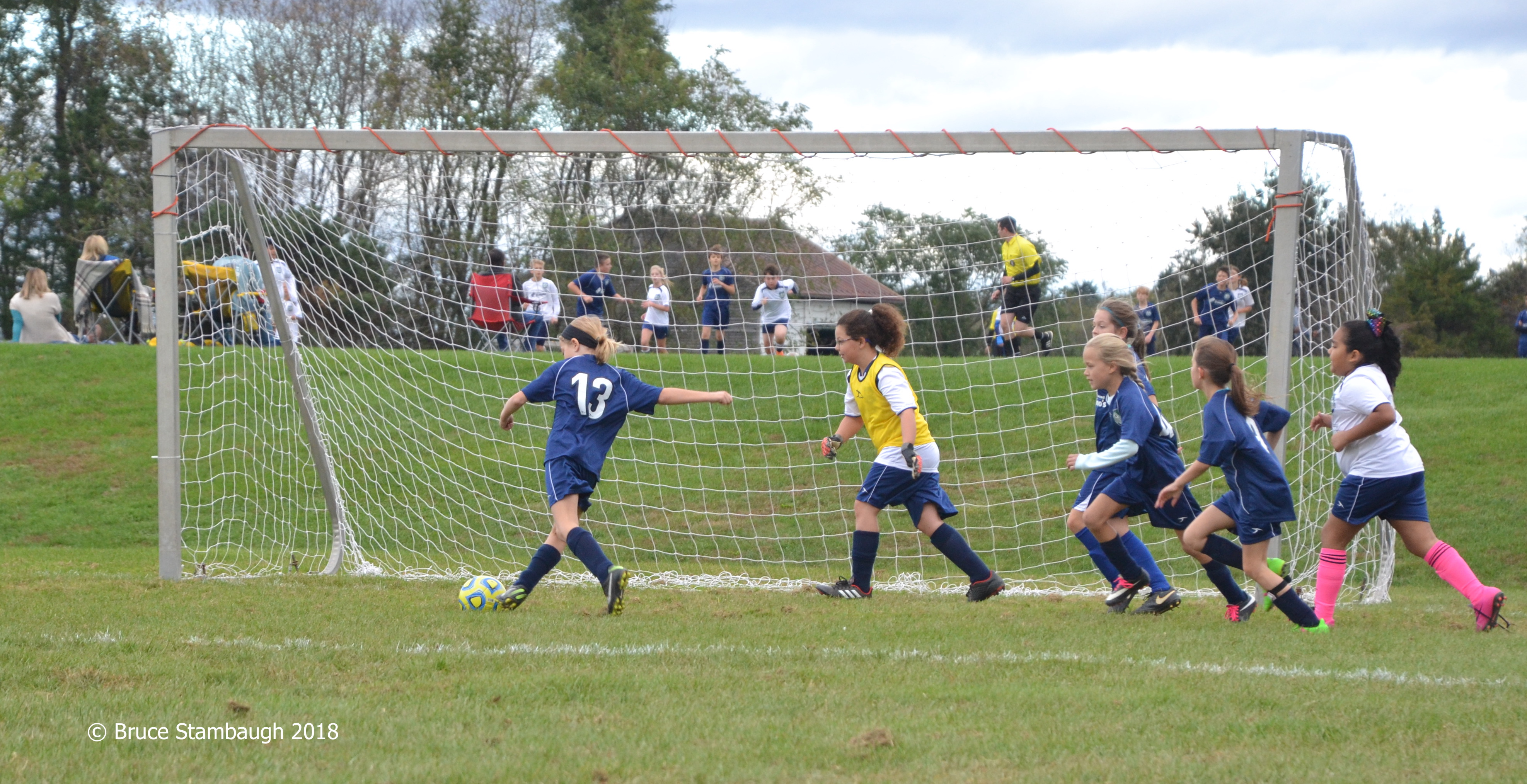
Goal by our granddaughter.
My daughter concurred with me about the quickness of the days. I had to wonder, however, about the look she gave me. Was it a sympathetic gaze into what the future held for her, or was it a look of astonishment at my declaration?
Perhaps there was a third option, one of appreciation for the assistance her mother and I provide to her family. We were in the heart of the volleyball season, and Nana and I do our parts to help make our daughter’s household run as smoothly as possible.
Carrie is the women’s coach at Eastern Mennonite University, and her husband is the chief financial officer for a rapidly growing start-up company. Professional duties pack their daily schedules.
So we do what we can to help. Nana makes meals, tidies up our house and theirs, and does laundry, shopping, and so much more. I have my honey-do lists.
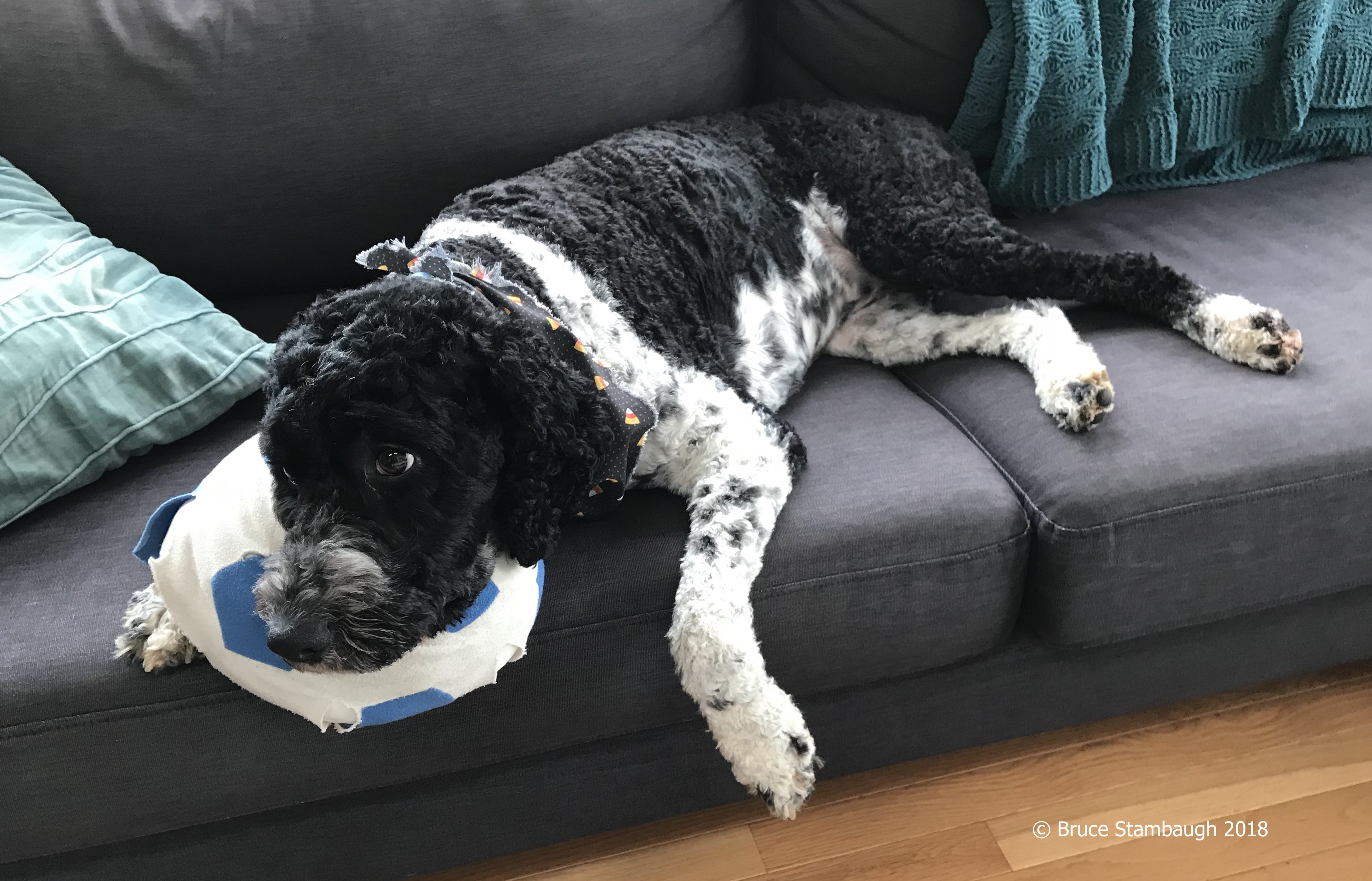
Our granddog.
Sometimes I care for our granddog. Sometimes I pick up a grandchild at school and transport them to another venue. Sometimes I serve as the landscaper, and sometimes I help with homework, even if it is math and in Spanish.
All of this interaction helps make the days disappear one right after the other. Of course, it could be that our energy level at this age isn’t what it was in our younger years. Then we chauffeured our son and daughter from school to soccer and piano practices to church youth group in addition to all of our other responsibilities.
Whatever the reasons for time flying, Nana and I prioritize our time and efforts into doing the tasks at hand. In between, we rest, relax, exercise, have lunch on the porch together, pray and meditate each in our individual way.
In truth, we expected all the busyness. We moved from Ohio’s Amish country to Virginia’s Shenandoah Valley for just such assignments. It’s our new life calling.
We didn’t realize how very fast these golden times would go, however. In these autumn days of our lives, the time just seems to evaporate. I for one couldn’t be happier.
My wife and I have enjoyed observing the various migrating butterflies that frequent the flowering butterfly bushes in our backyard. We had the three shrubs planted this spring. The fragrant, white blossoms have attracted several varieties of butterflies.
I especially enjoyed watching this Common Buckeye flit from flower to flower. I liked how the sun cast a shadow of the flower onto the Buckeye as it enjoyed the sweetness of the blossom.
The day hadn’t gone well for either my wife or me. You would think that people our age would know enough not to let circumstances negatively influence our attitudes. But, hey, we’re human after all. We each succumbed to separate and sundry annoyances.
My wife had more reason to be upset than me. But I didn’t know that at the time. I was too consumed with my own pettiness. Men tend to do that, at least I do.
Neva volunteers at a local thrift store as a manager. While the store’s full-time managers were away on vacation, the credit card machine malfunctioned. Once Neva realized there was a significant issue regarding recording sales, she scrambled to correct the problem.
I was at home oblivious to all of this. The world was falling apart again, and I foolishly allowed myself to absorb too much of the toxic news.
Despite our individual funks, we each still had our usual grand-parenting duties to fulfill. I was responsible for transporting Neva’s premade, delicious casserole to our daughter’s place, putting it in the oven at the prescribed time and at the predetermined temperature. Neva would be there to ensure the meal got served.
I completed my assigned, simple duties and retreated to the sunroom. I sat on the couch still miffed. I stewed in my own self-made misery, absorbing more and more discouraging news. You would think a retired volunteer firefighter would know better than to throw gasoline onto a smoldering campfire.
Maren was pleased with the shoes she got for her birthday.Right after Neva arrived, an amazing thing happened. Our nine-year-old granddaughter entered the room, donned a pair of headsets and started to sing. Maren ignored everything else, focusing solely on getting each note just right, just the way she was hearing it sung through her headset. She was practicing for her children’s choir.
Her cheerful, innocent voice buoyed me. I threw all of my attention into admiring her determination, her concentration, her ambition, her appreciation for each tune, the lyrics, the opportunity to merely sing.
I resisted the urge to photograph and record the impromptu mini-concert. Instead, I just sat in admiration and joy, breathing and smiling. It was then that I realized something critical. I had forgotten about “my problems.” I realized they weren’t problems. I also understood the importance of what I was witnessing. This young lady singing her heart out was all that I needed, all that mattered.
Maren sang and sang until Neva couldn’t contain herself any longer. She interrupted the spontaneous concert to compliment Maren. Besides, suppertime was near.
I felt fortunate to have been witness to this spontaneous musical interlude of Maren’s. It was a heavenly reprieve from the messy noise of today’s world. I wish you could have been there, too.
There was a lesson there, not just for me, but all of us caught up in the heat of the moment, in the avalanche of information that streams from our televisions, radios, computers, cell phones, laptops, and any other electronic device to which we are tethered.
In the beginning, I had allowed hopelessness and despair to rule the moment. In the end, a time of earnest, uplifting singing transformed my heart and soul. I live for moments like these.
My granddaughter’s singing reminded me to live in the moment, breathe, and listen. Those are the ingredients for a beautiful day every day no matter the nature of the news.
If I have learned one thing in my seven decades on this marvelous planet of ours, it is to go with the flow. When I left the house, pleasant temperatures and partly cloudy skies ruled the sky. I intended to drive 10 miles to Paul State Forest near the crossroads known locally as Ottobine. I planned on walking the trails of this 172-acre gem of a woods to look for birds.
I packed my binoculars, birding hat and vest, and of course my travel camera, a Canon PowerShot SX530 HS. The camera is light, easy to use, and takes excellent shots, as long as sufficient light is available. I also had my iPhone along for safety sake. You never know when an old guy like me will need to make an emergency call.
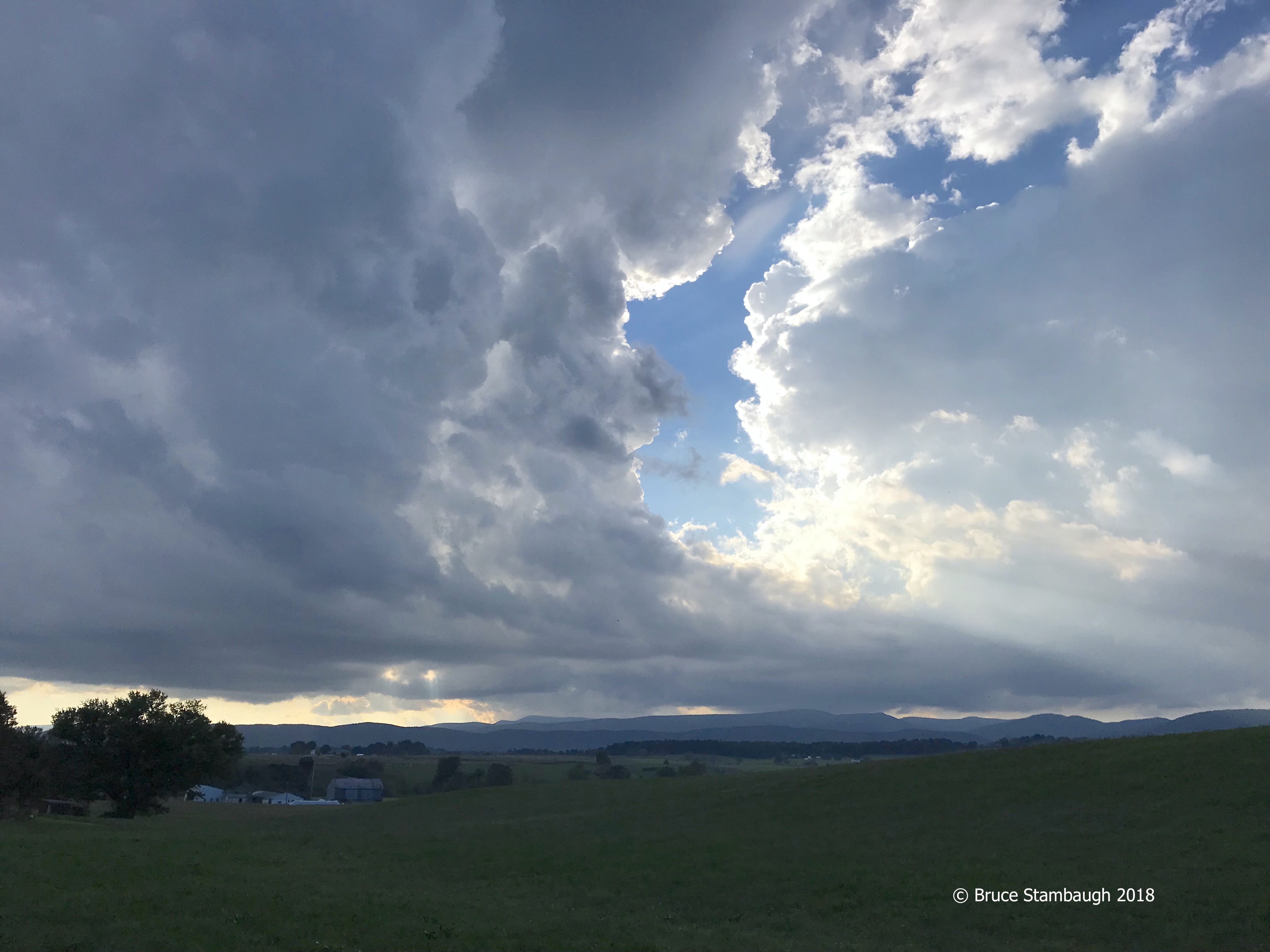
Not far from the forest, the roadway showed signs of recent rain. Indeed, the clouds that hung close to the Appalachian Mountains to the near west looked ominous. With the early evening sun occasionally peeping through, they also looked gorgeous. The billowing thunderheads showed every shade of gray. Sun rays streamed through breaks in the building cumulous clouds, creating a stunning rural scene.
When I reached the small parking lot of the forest, the bucolic view towards the mountains was surreal. I turned my attention to shooting the unfolding and rapidly changing scene. The valley played open to the west, giving me an excellent view. I snapped away with both my camera and phone. Satisfied with the shots, I returned to my original goal of walking the woods in search of any migrating birds settling in for the night.
I had only walked a short distance when the heavens opened up. I returned to my vehicle, contented with the pastoral scene of clouds, rain, and sun rays. The birds would have to wait for another day.
Memories often materialize in the most unusual of circumstances.
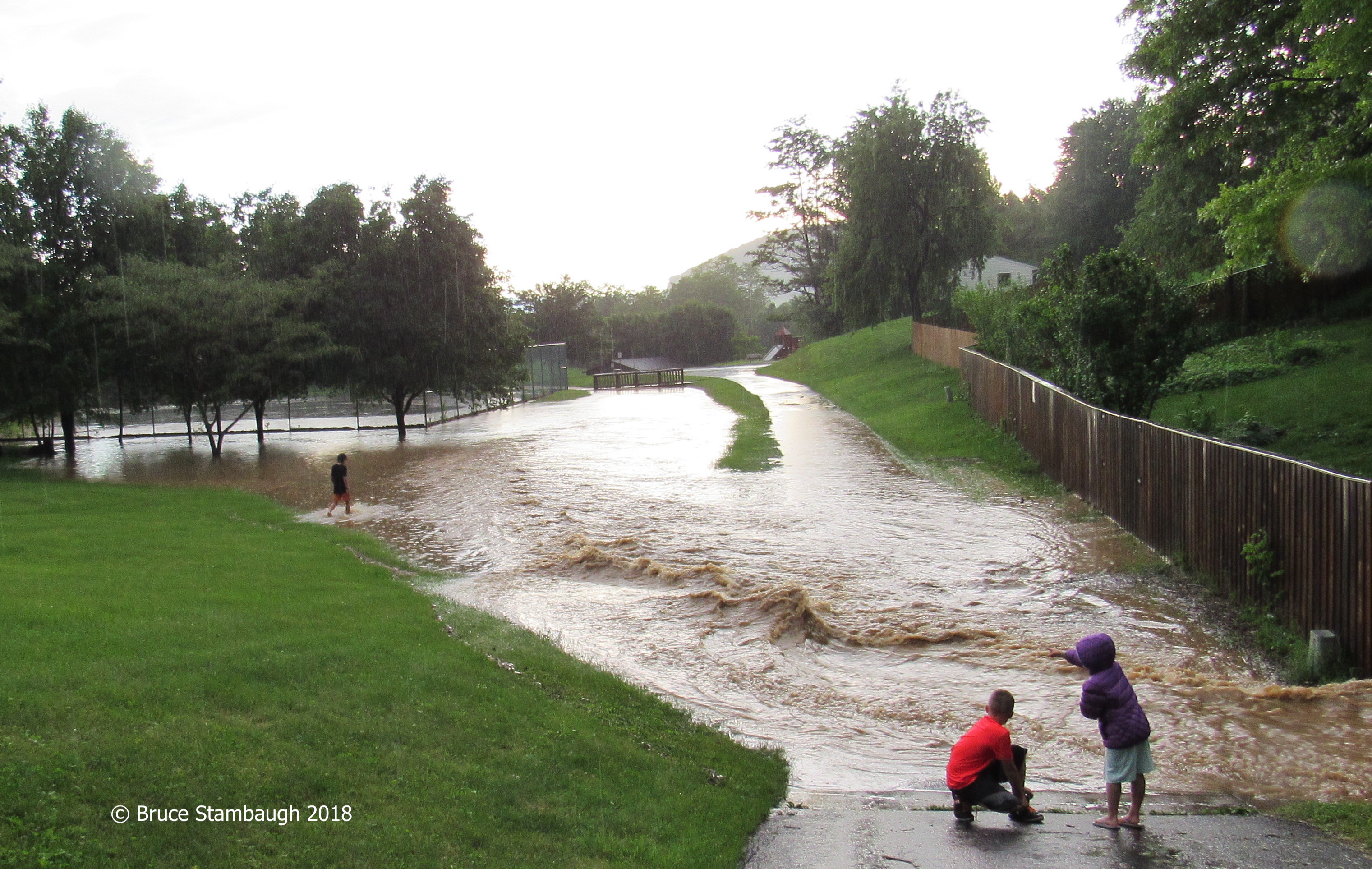
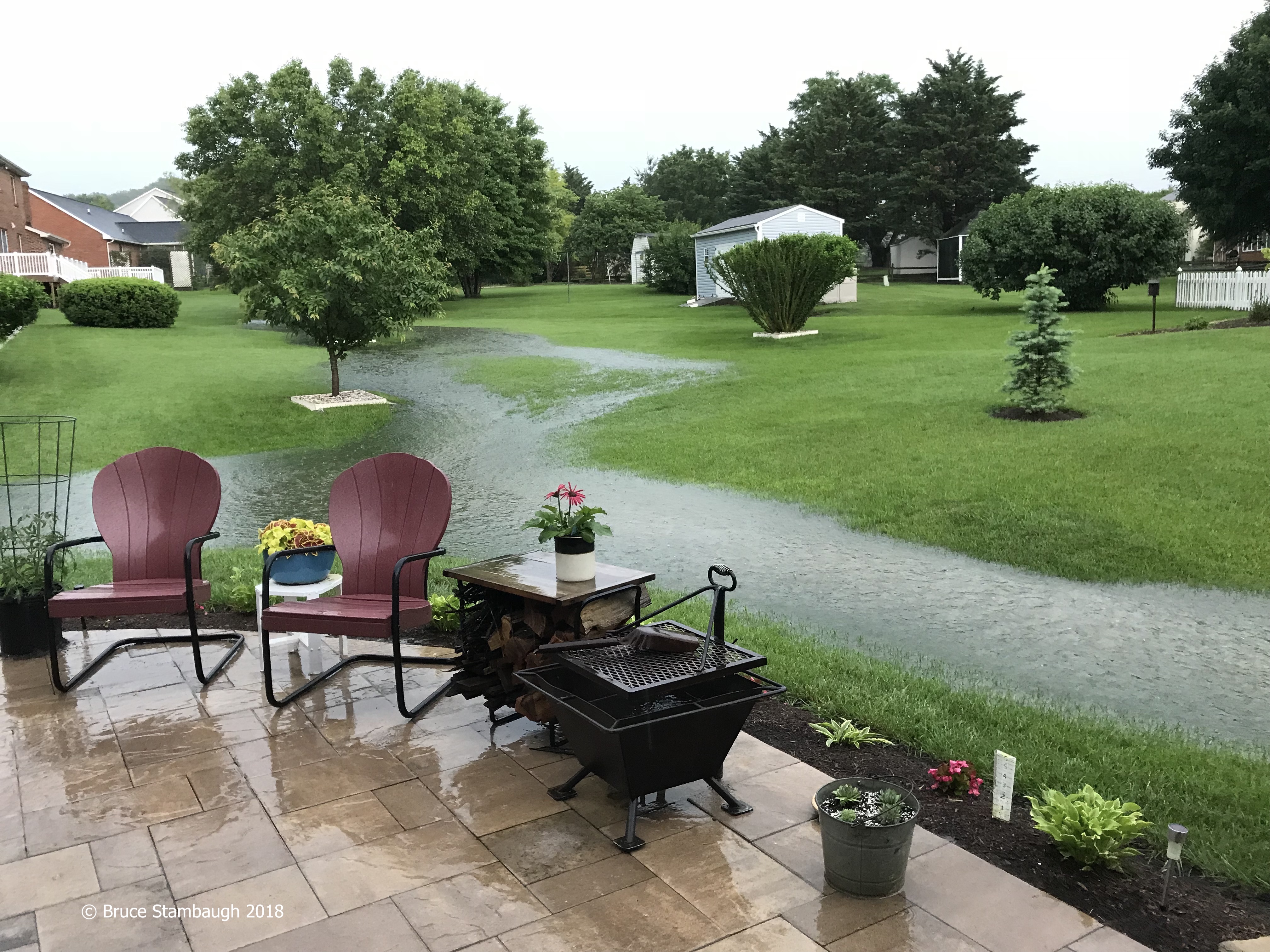
It was early June, and we had endured rainstorm after rainstorm. At times, the rain pelted down at the rate of two inches an hour.
When you live between two mountain ranges and groundwater has already saturated the sticky, red-clay soil, that much precipitation spells trouble. And trouble found lots of folks throughout the picturesque Shenandoah Valley.
High water flooded roadways, keeping fire departments and rescue squads busy with multiple water rescues. It was still pouring when a river of muddy water rushed through our backyard.
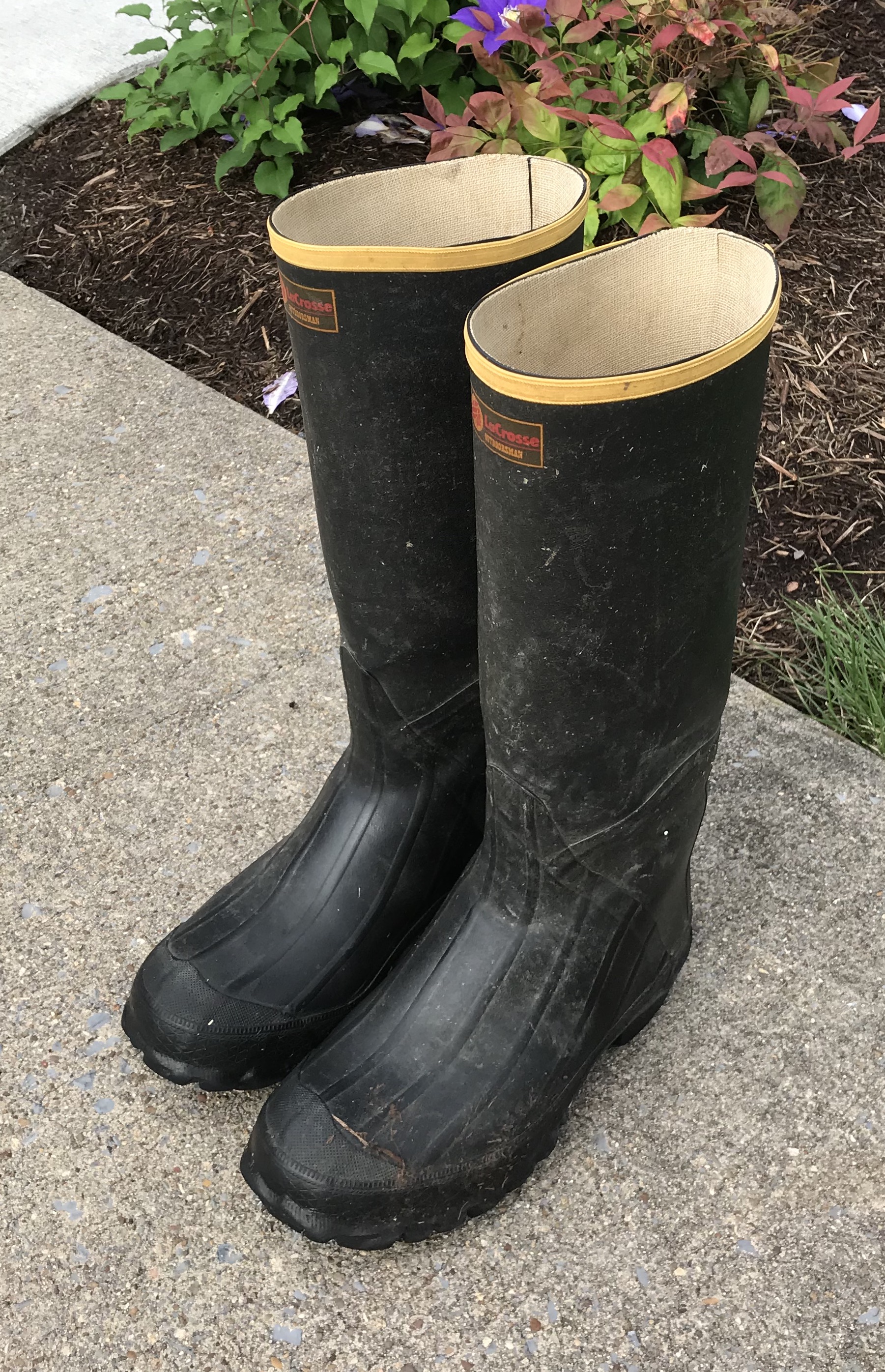
I decided to check the five-foot crawl space beneath our ranch home. I slipped on my old black gumboots and jumped into eight inches of water. Instantly, cold, yucky water surrounded my right foot. The combination of old age and wear and tear had finally taken their toll on my versatile rubber boots.
I was grateful a local plumber was gracious enough to bail us out despite being swamped with other calls. Everything beneath our home seemed to have weathered the storm except my precious boots.
My old friends.Gumboots are knee-high footwear made of rubber and fabric designed for all kinds of outdoor activities. Those boots and I went way back. They had served me well in a variety of conditions over several years.
I remember where I bought them nearly three decades ago at a now-defunct shoe store in Mt. Hope, Ohio. I wore the boots often in many different situations. I had depended on them time and again, often in dire instances.
When a storm hit, I put them on to check my roads as a township trustee. I can’t tell you how many flooded streets and ditches I waded through wearing those boots. I traipsed through many snowstorms with them, too.
Once after a big snow, I spied a grizzled old opossum munching birdseed from a feeder that sat atop a picnic table in our backyard. On went my coveralls and those gumboots. I intended to shoo off the unwanted mammal. As I opened the door, our pet rat terrier Bill shot out the door ahead of me.
Scene of the rescue.Bill’s fearless instincts immediately kicked in when he spotted the opossum. The little dog circled the unimpressed marsupial once, and on his second pass, Bill leaped for the much larger animal’s tail. The opossum hit the ground with a thud, dead on arrival.
Those boots even helped me as a volunteer firefighter and EMT. On one run, I found myself standing in the shallows of a stream holding up an elderly victim who had fallen into the rushing creek. I still remember the fire chief’s surprised expression when he saw me in the water with those black boots.
Another time, on an early subzero February morning, I spotted our Amish neighbor heading across frozen farm fields toward our house. Levi was delivering the promised fertilizer for our garden. Steam shimmered in the morning light as it rose from the hardworking draft horses and the load of manure they were pulling in the spreader.
By the time I dressed and pulled on my gumboots, I was too late. Levi and his pitchfork had already deposited a still-steaming pile of manure onto the garden plot. Standing in that frigid, fragrant morning air, I asked him how much I owed for the delivery. Levi just smiled and said wryly, “Nothing. I don’t have anything in it.”
Like I said, sometimes the strangest circumstances stir the fondest memories.
Heavy rains from the remnants of Hurricane Florence forced many bird species to lay low. This young female Ruby-throated Hummingbird hunkered down on the top rung of the tomato cage near our backyard hummingbird feeder.
I took a series of rapid-fire shots of the bird sitting in the rain. In one of those, the hummingbird shook the moisture off its feathers. I was fortunate to catch this awkward looking, twisting position.










 Roadkill Crossing
You must be logged in to post a comment.