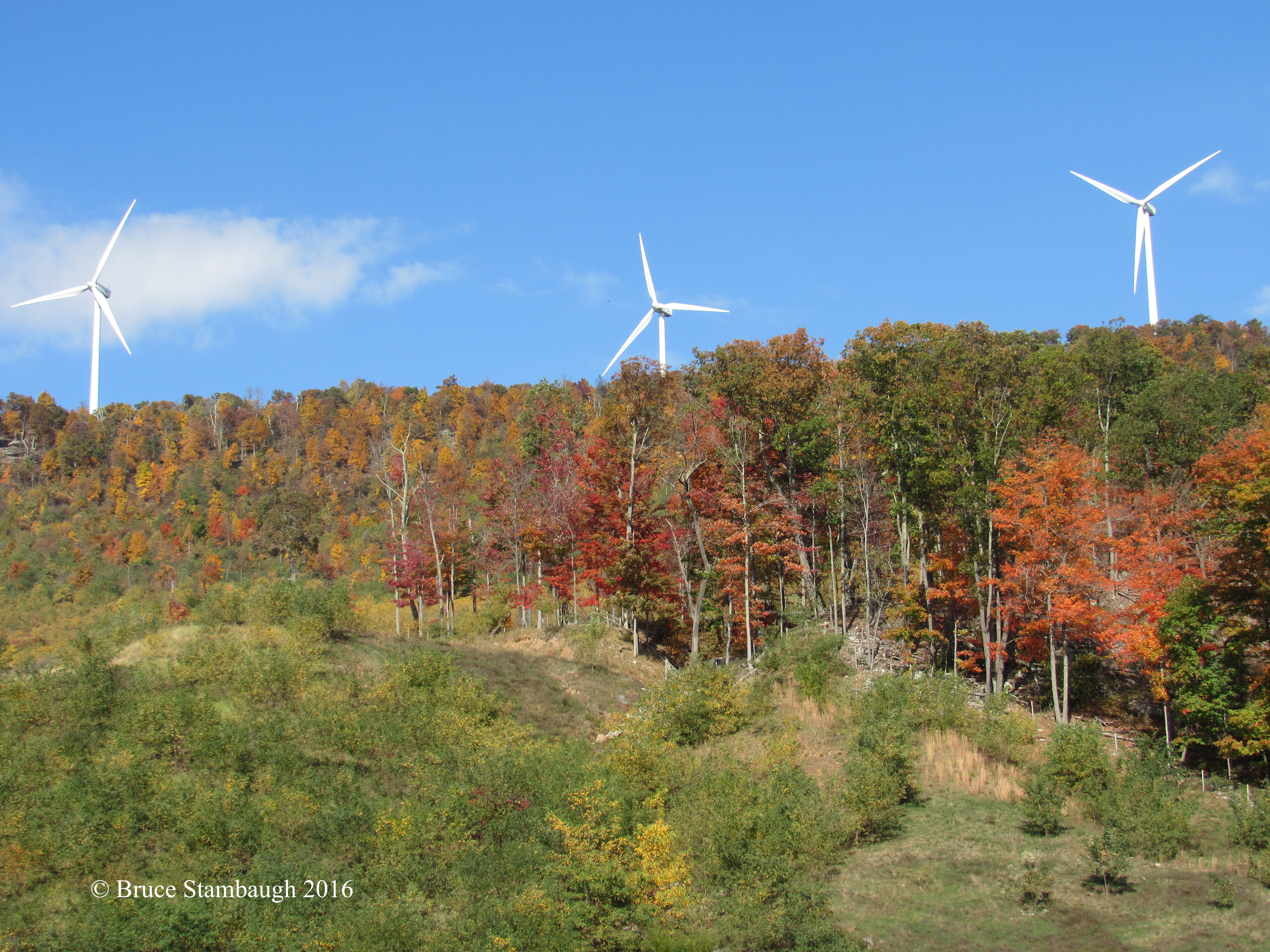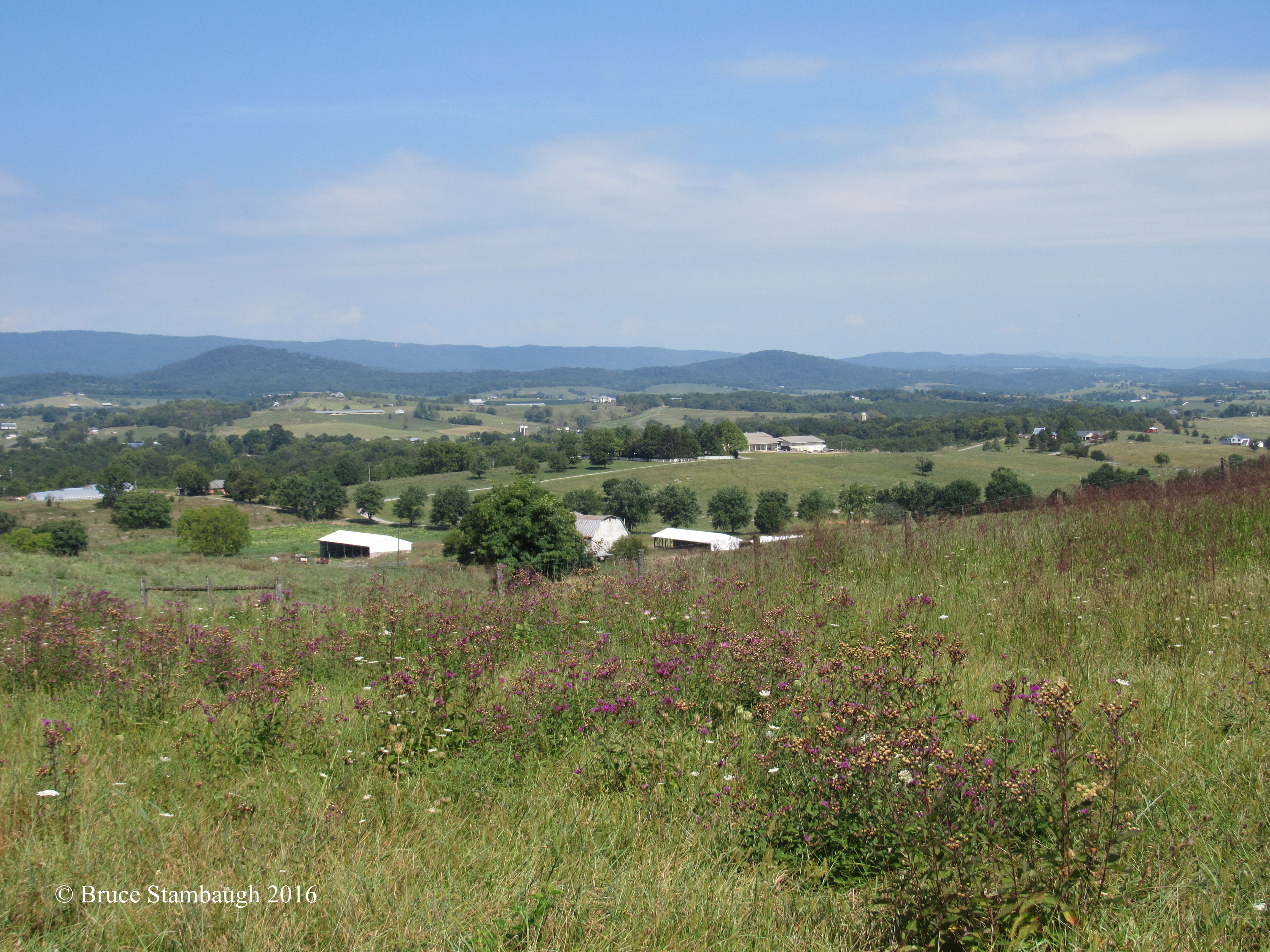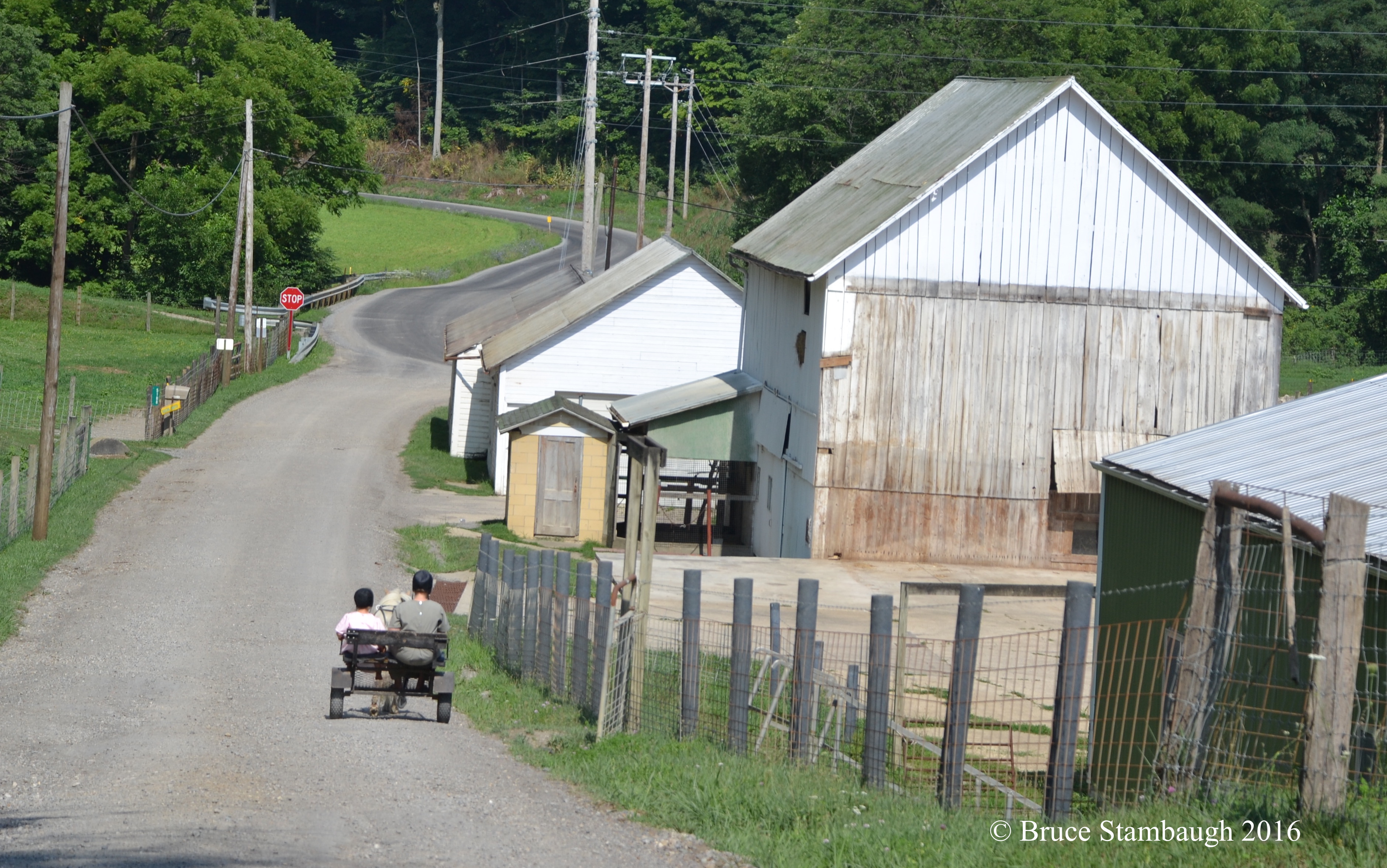
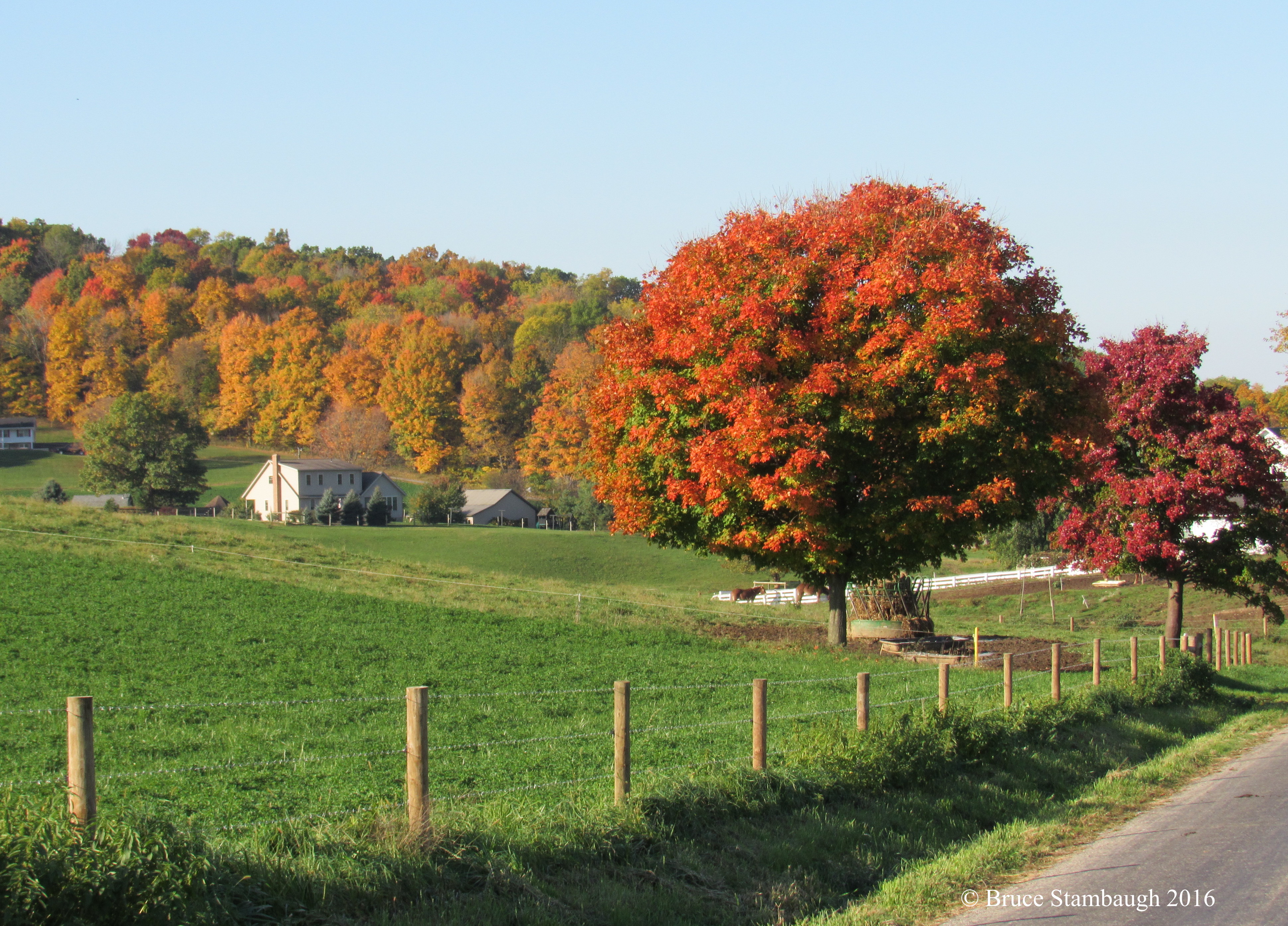
I pass by this scene on every trip between Holmes Co., Ohio and Virginia’s Shenandoah Valley. Due to schedules or weather, I never had a chance to photograph the beauty of this Christmas tree farm in the mountains of northern West Virginia. But my latest trip proved the perfect opportunity. I wasn’t disappointed. The early morning sun highlighted the various greens and browns of early September, and the rows of evergreens added a geometric touch to the natural beauty.
“Christmas in the Mountains” is my Photo of the Week.
Is it possible to accidentally buy a house? I suppose so since we did.
I’ve attended auctions where someone has scratched their head or waved to a friend, only to hear the astute auctioneer bellow out, “SOLD!” Once the dust settled, the person embarrassingly explained his way out of the unintentional purchase.
Buying this house didn’t work that way for my lovely wife and I. Nor did we even try to back out. Once the hammer dropped, we enthusiastically signed on the dotted line. And we signed and signed and signed.
It didn’t take long to appreciate the consequences of our unintentional intentional purchase. We were in it for the long haul. “It” is moving to the Commonwealth of Virginia. We had our very personal reasons.
To uncomplicate this complicated story of our apparently surprise transaction, let me begin at the beginning. It might even help me to grasp what has truly transpired.
Our daughter and her family, which includes our only grandchildren, live in Harrisonburg, Virginia. They love it there. They work there. They play there. They even went to school there, Eastern Mennonite University to be exact. Their alma mater employs both our daughter and her husband.
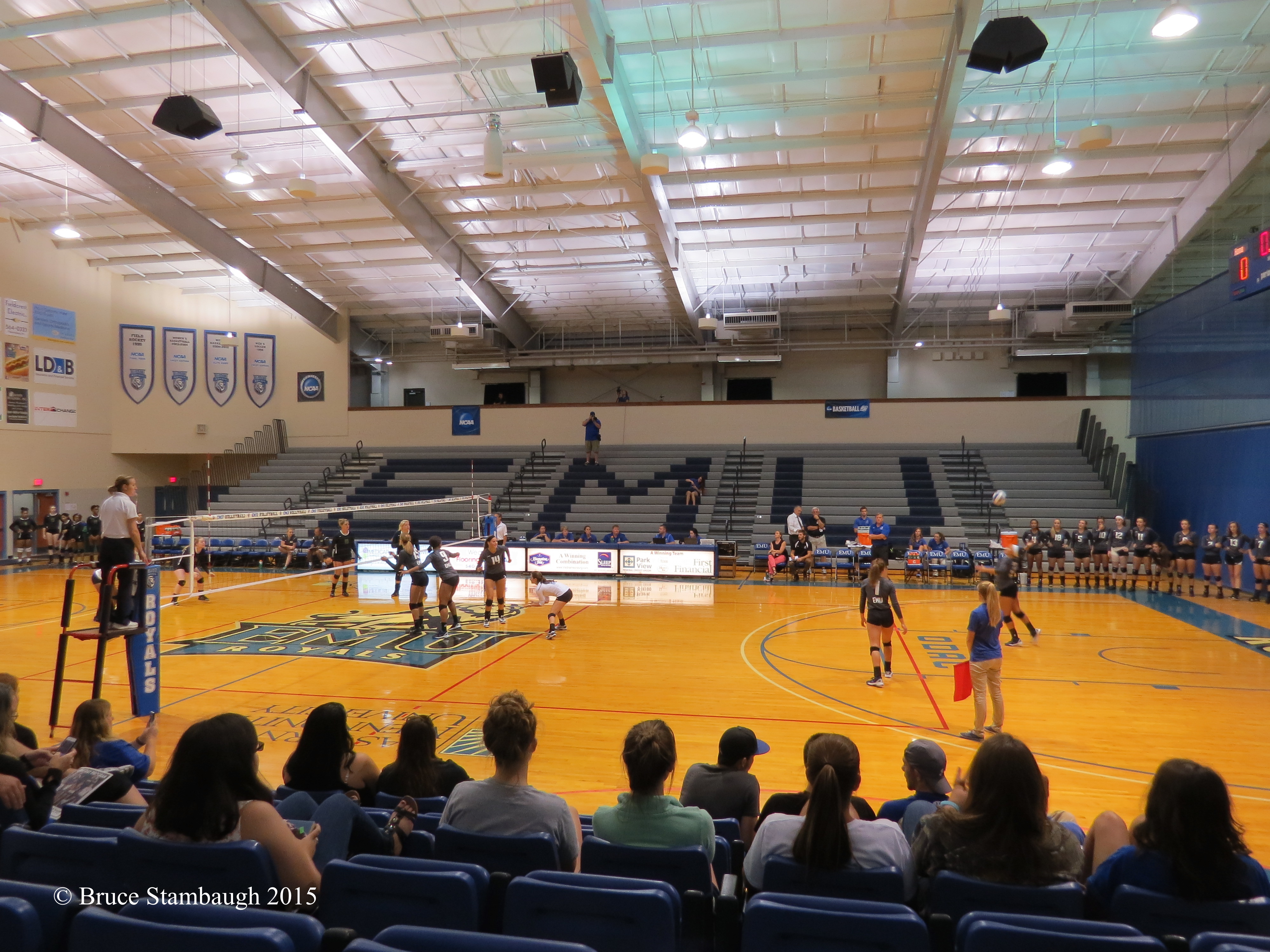
In fact, our daughter is the head coach for the women’s volleyball team. She’s very busy August into November preparing for and playing the season. Of course, we want to watch her team in action. So over the mountains and through the woods we go from our home in Holmes County, Ohio to the magnificent in any season Shenandoah Valley, home to Harrisonburg.
Where we hang out.
In these hectic times, Carrie needs our help, well, at least my wife’s. Neva is the engine that keeps the household humming. With three busy youngsters, someone needs to see they are fed, watered, and clothed. Add in going to doctor appointments, baseball, choir, and soccer practices, and their schedules resemble those of Chicago’s O’Hare International Airport.
Consequently, we spend much of the fall helping in Harrisonburg. We also make several six-hour trips from Ohio to Virginia to attend the grandchildren’s events throughout each year.
We’re not spring chickens anymore. So we began to consider moving to the valley. To see what our money could potentially buy, our realtor friend scheduled some house tours for us.
The last place got our attention. We wanted a turnkey home, one floor, no basement, smaller lot, a two-car garage, and municipal sewer and water. This little ranch had it all. The owners had also remodeled it just the way we would have done it ourselves. We immediately felt at home.
There were issues, however. We weren’t exactly ready to buy a home, according to our established moving timeline. At first, that was no problem because another couple had already put in a bid on this house.
However, those potential buyers and the sellers couldn’t agree on a price. Excuse the pun, but that opened the door for us. So we made an offer. In a matter of head-spinning hours, we had a deal. The house was ours. I signed the sales agreement electronically online. Neva signed on the hood of a car in a parking lot at 10:30 at night.
Apparently, we indeed wanted this house. We had better. We now owned it. Intent on keeping to our timeframe, excellent renters were quickly found for our new home.
If everything goes as planned, which it has so far, we will become Virginians by next summer. So there you have it.
If ever there was a road trip, our day outing down history’s lane was it.
We knew we would encounter historical remnants as we drove the length of Port Washington Road, Ohio’s first state highway. We didn’t anticipate the surprises we found.
Port Washington Road was created to connect Millersburg, Ohio with Port Washington, Ohio. That seems logical enough. Nearly 180 years ago, an accessible route was critical to local farmers who wanted to get their goods to market.
Back then travel was tough. The dirt roads that existed were rutted, dusty, and dangerous. Carrying your product to market was extremely problematic.
The opening of the Ohio and Erie Canal to Port Washington in southern Tuscarawas Co. was designed to improve that process. The canal system, hand dug in the 1820s and 1830s, speeded Ohio’s development. In turn, goods were shipped to New Orleans and New York City, enhancing the local economy.
Another couple joined my wife and me on the excursion. I had driven parts of the road many times, but never the full length. With directions secured from literature about the road, we began our trek across from Millersburg Elementary School on a diagonal street, Port Washington Road.
The beginning.
Trail marker.
The route.
Abandoned school
Serenity.
Wash day.
Under the pines.
Baltic.
Signs marked the way we should go. It was a good thing, too, because there were more twists and turns, curves and hills than on any of Cedar Point’s many roller coasters.
Our air-conditioned van took us up, down, and around steep grades. I gasped at the thought of driving a team of horses pulling a fully loaded wagon with a season’s harvest aboard. It was hard enough for me to maneuver.
How in the world did they negotiate those hills safely? No wonder it was a two-day trip from Millersburg to the canal. The halfway mark was a layover in Baltic. That’s where we had lunch, in more comfortable accommodations than those early travelers.
We traversed village, township, county, and state highways. We visited curious crossroads romantically named Saltillo, Becks Mills, Meadow Valley, and Fiat.
Most of the roads were hard-surfaced in Holmes Co. But once we headed southeast out of Baltic, gravel roads became the norm.
Not long after leaving Baltic, we came upon a bald eagle foraging on a carcass in freshly cut oats stubble. I imagined sitting on a hard bench seat glad for the beautiful distraction from the dusty, bumpy road. The magnificent bird flew in sweeping loops over the field until we left.
This slideshow requires JavaScript.
The scenery alone was worth the trip. Other than the open areas on high ridges, the landscape likely compared to what those wagon masters must have encountered. We passed through tree tunnels, and by old homesteads long abandoned, well-weathered clapboard siding showing more patina than paint.
We found several cemeteries along the route, too. We couldn’t help but wonder if some of the hopeful farmers didn’t end up deathly disappointed from the ruggedness, and maybe even being waylaid by bandits.
In the middle of nowhere, we discovered a church with a golden dome. The names on cemetery’s tombstones revealed former parishioners. Farther down the road, a sign marked another church cemetery. The structure was long gone.
In the meandering 37 miles we trekked, we had to have traveled in every direction of the compass. The roads were that convoluted. Nevertheless, we made it to our destination, now a sleepy, residential hamlet.
With the actual canal filled in long ago, the only hint of the waterway was a slight depression that paralleled Canal St. Between there, and the Tuscarawas River laid the railroad tracks, the steel trail of the invention that killed the canal.
The steel tracks left the canal to history and the curious to rediscover.
At this time of year, I especially like to frequent one particular lofty spot a few miles from home in the township where I live in Ohio’s Amish country. The view alone keeps me inspired, thankful and refreshed.
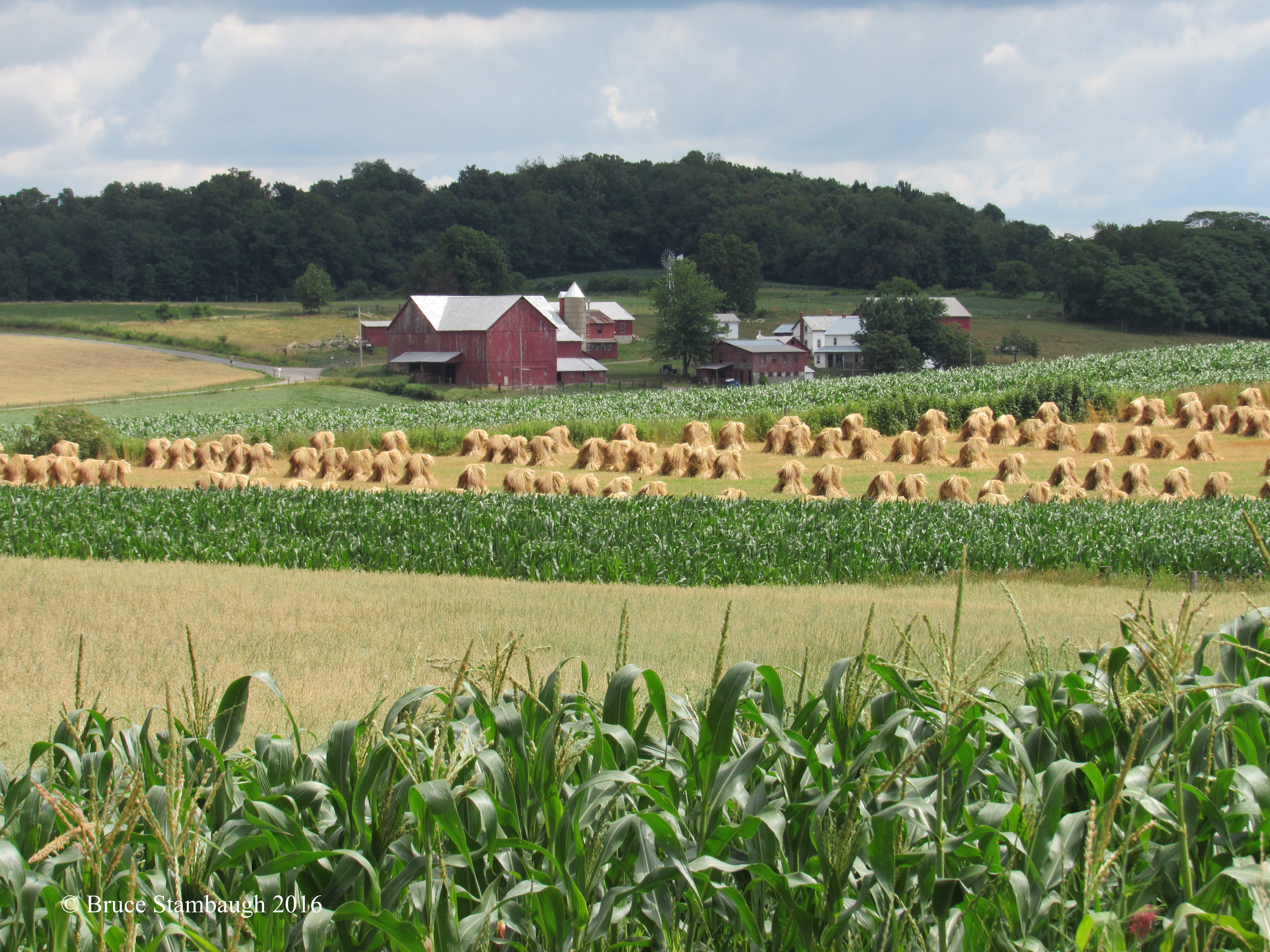
From there I watch the sky dotted with patches of cottony clouds tease the earth. Sun and shadows ripple across golden wheat shocks, lush rows of cornstalks, and ripening honey-colored oats. Green alfalfa already blankets the floor where the shocks stand.
I look west far across the Killbuck Valley to the up sloping hills miles away. Tin topped roofs twinkle in the morning light as the clouds and sun play their game of tag.
Eastern Bluebird eggs.Turning east, Berlin bustles with the business of tourists and locals alike. Even with binoculars, I couldn’t see the money exchanging of course. It just does as cash is traded for fresh peaches and cucumbers and t-shirts.
All the while I unknowingly entertain a family of Barn Swallows teetering and twittering on a power line. Eastern Meadowlarks fly their funny flight from fence post to nest, gurgling all the way.
Back home, the House Wrens begin their second nesting in the ceramic nest bottle hung up for them. The adult Baltimore Orioles lead their fledglings to the grape jelly feeder, encouraging them to partake. The young just squeak and childishly flap their wings.
The Eastern Bluebirds carefully attend their bright blue eggs in the box attached to the old clothesline pole. A bowl of fine grasses and soft pine straw caress the delicate eggs. It’s their second clutch, too.
The Chimney Swifts are as active as any time since they arrived in early April. Their young prattle their pleasure each time the parents swoop into the chimney with a force that rattles the fireplace doors.
The birds made quick work of the ripened black raspberries while we were away for a few days. They left their thank you notes where I was sure to find them, splattered on the sidewalk.
Click on the photos to enlarge them.
Wildflower garden.
Wagon train.
Shiny roofs.
The binder.
Across the valley.
Barn Swallows.
Flower garden.
At my neighbors, the Purple Martins hold court discussing their eventual departure. Too soon, they’ll join the orioles and others on their long journey.
Other symptoms also point to the fact that we indeed are halfway through the summer. Queen Anne’s Lace, bulbous red clover blossoms, and cerulean chicory blooms decorate even the busiest country road.
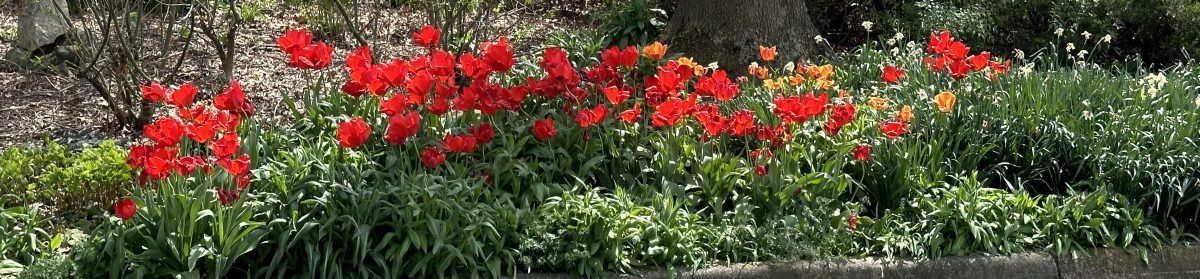
Well-attended domestic flower gardens are in full bloom. Roses have replaced tulips, and dainty poppies with pastel crepe paper petals wave in gentle summer breezes. Fragrant milkweed flowers sweeten the air, attracting bees, butterflies, and other assorted insects.
The first tomatoes, like green golf balls, swell on the vines. Warm nights and bright sunshine will soon transform them into juicy redheads if the rains return.
I got a surprise verification of summer’s peak from a rare source. I encountered a small wagon train of folks traveling the local roads. They have done so in early July for 22 years now. The troupe from northwest Ohio camps at local farms always energized by the hearty welcome they receive.
Towns and civic organizations hold annual festivals to celebrate the season of plenty. They also try to make a little money while they’re at it.
The heart of summer beats loud, strong, and sure this time of year. I love to take its pulse. Its healthy palpations are life-giving, uplifting, invigorating, and transforming.
This summit of summer enables us to appreciate all of life’s goodness. Let’s enjoy the momentous moments before they wane.
I’ve been curious about covered bridges for a long time. I wondered about their purpose other than the obvious one of crossing from one side of a stream to another.
My curiosity got the best of me recently. Accompanied by my wife and another couple, we went exploring all 18 of Ashtabula County’s covered bridges. We discovered that the unique architectural wonders were so much more than a conveyance from one bank to another.
If you’re not familiar with Ashtabula County, it’s Ohio’s northeastern most county. It bumps against both Lake Erie on the north and Pennsylvania to the east.
It’s a big county with varied topography and land usage. Its trail of covered bridges is one of its most distinctive features. Most of the bridges are still in use today.
Covered bridge hobbyists admire the intricate architectural details of the wooden tunnels. I focused my admiration on their individual aesthetic characteristics.
This slideshow requires JavaScript.
Covered bridges were once common across the United States. I wondered why 19th-century builders labored so to simply cover a bridge? I always had heard two main answers to that question.
The bridge had sides and roof so the horses pulling buggies and wagons wouldn’t spook from the sound of rushing water below the bridge or the sudden open space. The other was that the bridge was a respite from foul weather.
Never having driven a horse and buggy, I didn’t question the first reasoning. The second one seemed a bit questionable. I mean you could only get so many horse-drawn vehicles onto a covered bridge during a storm.
Like members of the same family, the bridges had many similar characteristics. Each bridge had its own history and personality.
Some were erected just after the Civil War, with others built more recently. I suspect county leaders recognized the economic value of having a covered bridge trail.
The bridges of Ashtabula County served as living monuments to a bygone era. Hand-hewn timbers joined by wooden pegs spoke of the intensive effort that went into building these nostalgic icons.
The bridges historically contributed to social, political, religious, and economic values of the county. In a way, history was repeating itself.
Calling card.Besides the obvious purpose of crossing a stream, covered bridges were quite utilitarian. They indeed quieted horses and became a respite during a storm. Since the bridges were constructed entirely of wood, the covered sides and roof also protected the timbers and flooring from the elements and weathering. They minimized repairs.
The bridges had other callings as well. They served as gathering places for community meetings, political rallies, and religious services. Given the inspiring settings of some of the bridges, I could see why folks would like to linger there.
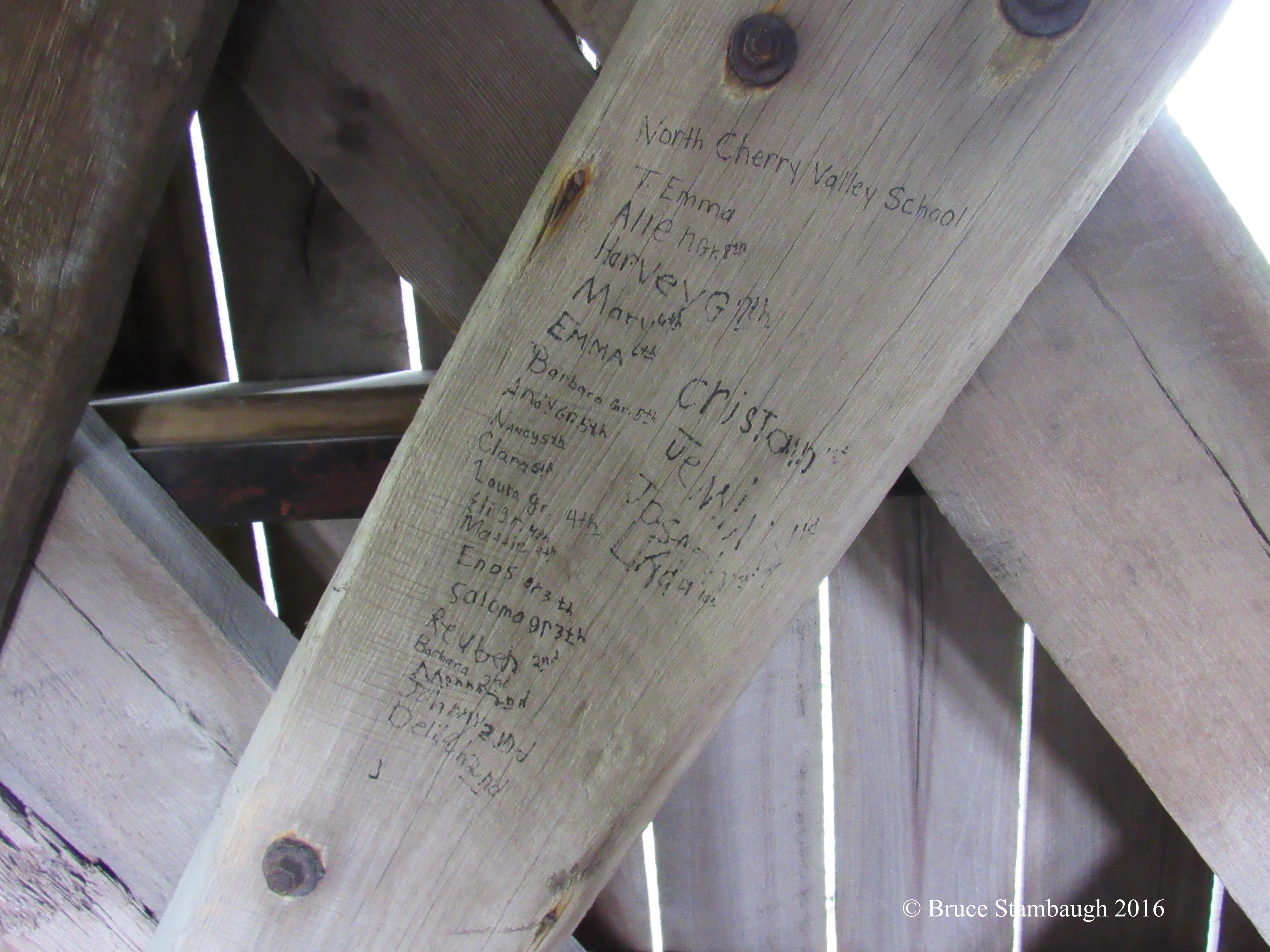
Unfortunately, other folks had little appreciation for either history or public property. Skid marks on the wood decking of some of the bridges evidenced raucous drivers thrilled with the sound of squealing tires. Others painted graffiti or left personal signatures, including an entire school class on an outing. Perhaps that’s why many of the bridges were outfitted with security lights and fire alarms.
After traversing fairly flat countryside for miles, the rural roads suddenly dipped and curved into steep, wooded ravines. The roads often rounded into and out of bridges, creating limited visibility. Passing motorists chased us to a bridge’s side more than once.
Most were courteous and slowed to a crawl. Likely we weren’t the first curious tourists they had encountered on their daily path across history.
My daughter’s words cut right to the truth. In the brief silence that followed, I was once again reminded that I am my father’s son.
The situation embarrassed me. I don’t even remember what caused the unpleasant commotion. I do recall my daughter’s sternness vibrated to my core as soon as she invoked my father’s name.
I bit my tongue, preferring instead to analyze the situation mentally. Dad, God rest his soul, would have persisted in driving home his point.
It’s taken me a long time to confess my similar faults. What’s the line about teaching old dogs new tricks?
Internally confronting the reality of your negative personal behaviors, comments, and intentions isn’t easy. But it’s necessary if I want to be a better husband, father, grandfather, friend, and person. It’s just the way it is.
Being too quick to respond is only one way I am my father’s son. I had a marvelous mentor in Dad offering an opinion whether requested or not.
I’m an expert at translating an interesting short story into a novel with no climax. I might even mention the main point. That never bothered Dad’s storytelling.
Shooting with my lens.I can’t tell you the number of times my wife has chided me for wiggling my leg while sitting beside her. At church, at home, in a theater, at a concert, I’m used to a nudge, an elbow, or verbal reminder that I’m activating global seismographs with my leggy machinations, just like Dad.
Fortunately, all my fatherly similarities aren’t undesirable. I enjoy meeting new people. They have enriched my life. Dad never met a person he didn’t like until they proved otherwise.
Dad was a man with many interests. He loved hunting, fishing, archeology, family gatherings, dancing, baseball, football, basketball, grandchildren, and great-grandchildren. He was a lifetime community activist.
My likes are just as diverse. A lot overlap with Dad’s, like sports and serving community. However, I shoot wildlife with my camera and frame my trophies rather than eat them.
Where Dad liked to visit.
Dad liked to travel, too. With a house full of children and all of those outdoor interests, we didn’t often traverse beyond Ohio’s borders. We didn’t have to. The Buckeye state had plenty of day trips to offer families, including visiting Amish country.
I had the good fortune to marry someone who enjoys exploring new places near and far. It’s often fun revisiting the same locations my family did all those years ago.
It’s interesting to hear my two sisters-in-law confiding with my lovely wife about how my two brothers’ idiosyncrasies compare to Dad as well. At least I’m not alone.
Dad was over the moon for Mom.Dad had one admirable quality that glowed like a super full moon. He loved our mother to death. Dad showered Mom with flowers, candy, and cards every birthday, anniversary, and holiday.
He wasn’t exactly jealous. Dad just knew he had a beautiful wife, and wanted to keep that relationship as secure as possible. He thought the solution was to smother Mom, which came across as control.
Given the spunkiness of each of our wives, neither my brothers nor I need worry about that. We appreciate and encourage spousal individuality, and celebrate our special days accordingly. We know we are as fortunate in love as our father was.
I’m thankful for all that my gregarious, energetic, enthusiastic father modeled even if I unconsciously replicate some of those talents that occasionally land me in the proverbial doghouse.
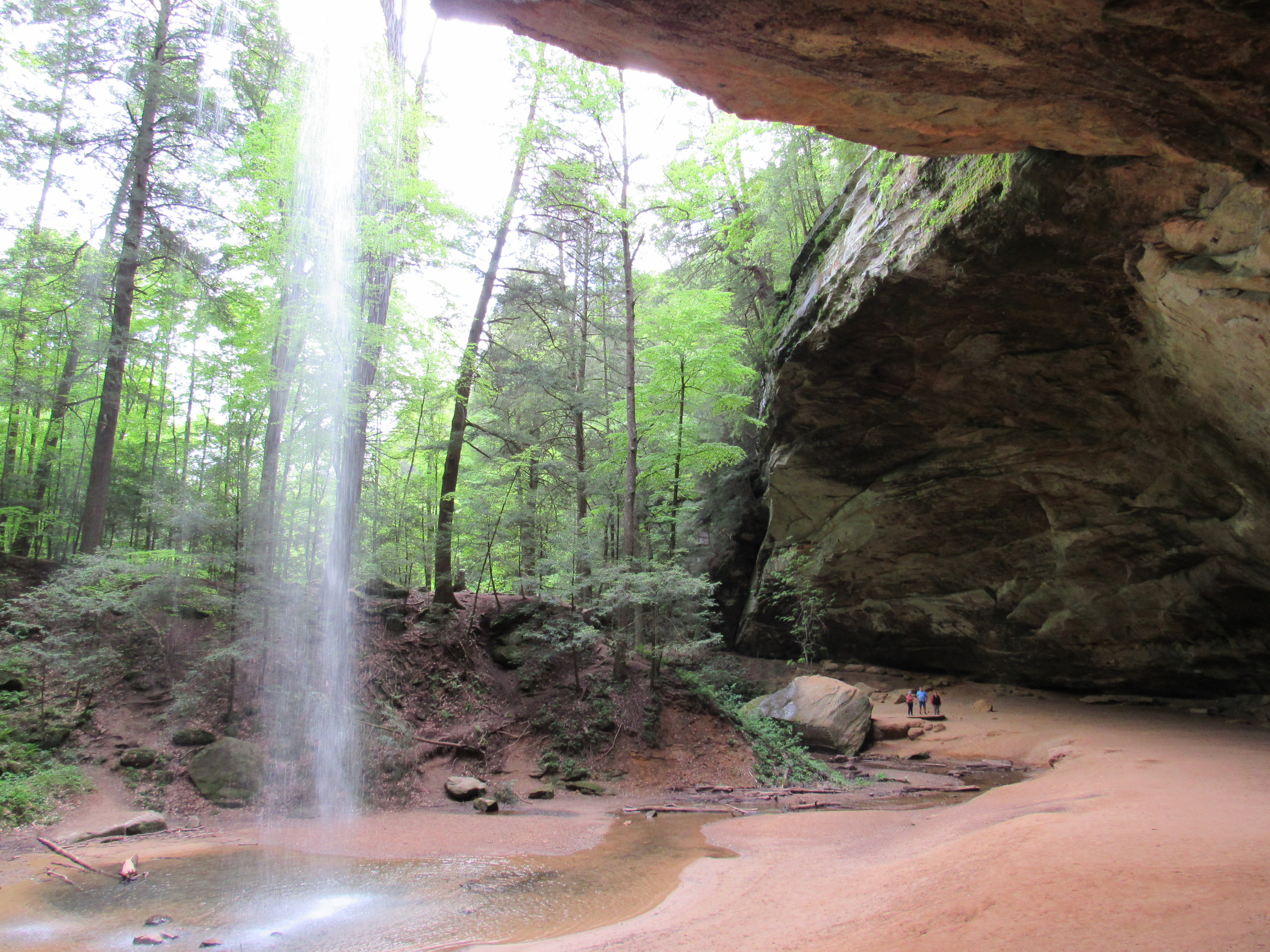
On a recent visit to Hocking Hills State Park, Logan, OH, the many shades of green we encountered astonished us. In this setting in Conkles Hollow, the feathery ferns filled the steep hill beneath massive rock outcroppings and towering cedars and deciduous trees with leaves unfurling. The mosses and lichens added to the natural green pallet as a trio of men did a photoshoot of their own.
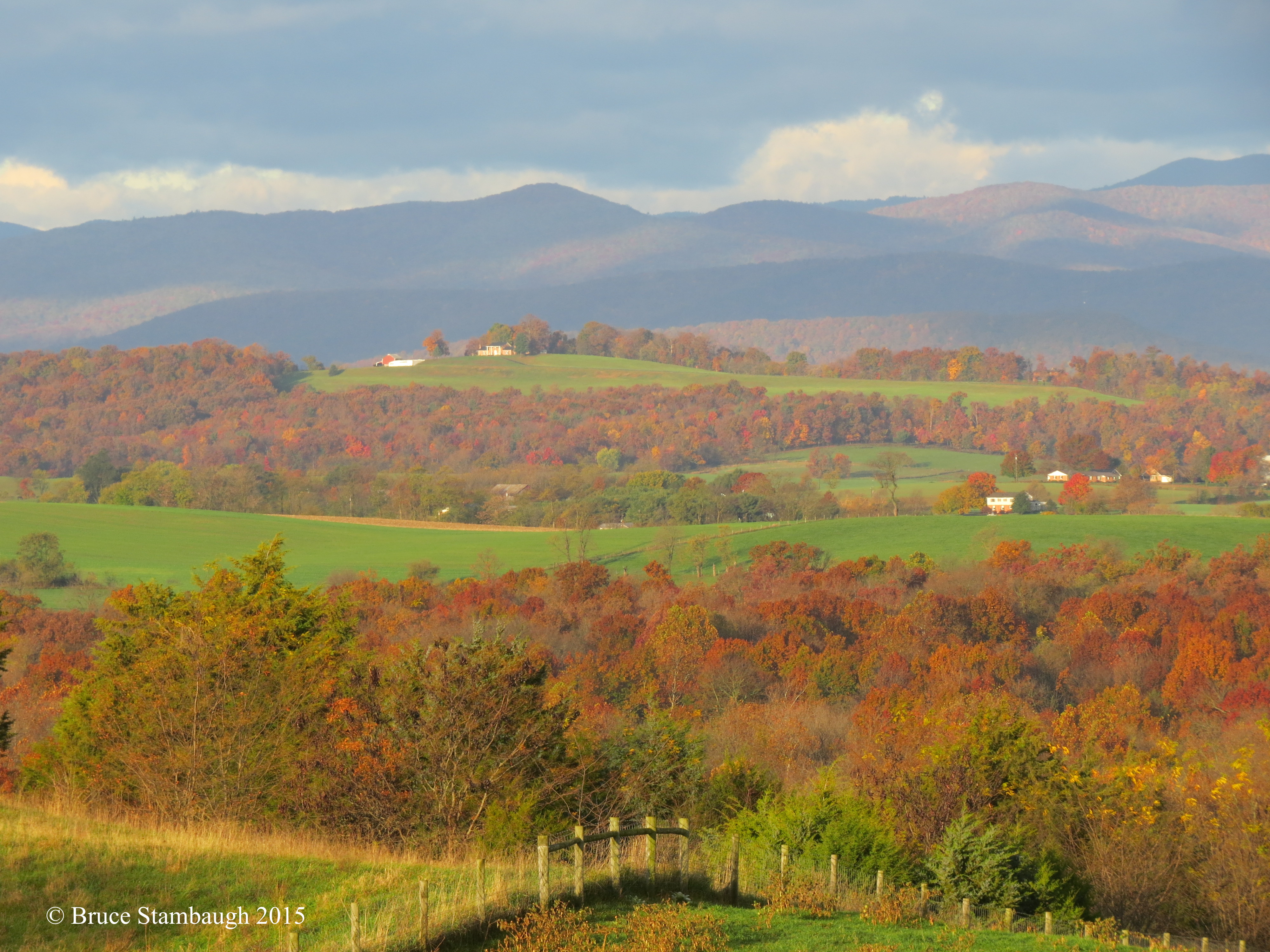
From my perspective, there is nothing particularly dynamic or unusual about this photo. As soon as I saw this scene, I knew I had to capture it. Driving back roads in Virginia’s Shenandoah Valley, the contrasting, vibrant colors jumped out at me.
As soon as I exited my vehicle, the cows stopped their grazing and stood posed for the photo op as if they had done this several times before. They might have. Because right after I snapped this photograph, most of the Holsteins charged the fence to scare off the paparazzi. I obliged them.
My guess is we all have at least one. You know. A place you can go to be alone with the world. You declare it as your personal retreat.
It could be your man cave or your sewing room. It could be a remote waterfall miles up a winding trail.
Your place of refuge might be a park bench or even a busy city street corner where hundreds of people pass by with no notice of you. Still, you’re at peace.
Others find solace sitting on the shore of a farm pond or pulling weeds in the family garden patch. It might be an art museum, or for that matter, even one particular painting that mesmerizes you.
I find my inspirational solitude in many venues. During the winter months, I recharge in a three-mile stretch of marshland called Egan’s Creek Greenway. The stream itself runs north through the middle of Amelia Island, Fla., where my wife and I migrate as snowbirds.
Though it’s a public domain, I claim Egan’s Creek Greenway as my private secret garden. The town’s parks and recreation department maintains this sacred place. Lots of folks, locals, tourists and snowbirds like myself, frequent this marvelous reserve.
This slideshow requires JavaScript.
Their intrusions don’t bother me at all. In fact, part of the joy is meeting new friends who enjoy the same open space delights. The Greenway is a multiple-use resource.
When I go there, I wear my hiking shoes. I also don my birding vest to squirrel water, snacks, binoculars, a note pad and birding checklist. I also drape a camera around my neck. It’s my way of documenting each and every visit. Get the picture?
Palm fronds are brown from frost or wind damage. Deciduous trees stand bare. Grayish Spanish moss dangles from limbs high and low. A variety of bird species devour the deep blue berries of the cedar trees and the ruby red ones on sparkleberry bushes.
Subtle hints of spring appear even in February. Silver and red maple buds sprout crimson against the live oaks’ perpetual green. The dormant marsh grass stalks show mint green at their bases.
Even in cooler temperatures, people run, jog, bike, walk and bird along the greenway’s well-worn paths that parallel creeks and channels, and crisscross the marsh. On weekends and holidays, the place is abuzz with activity, human and otherwise.
Still, I stroll this paradise in search of whatever finds me. I frequent the Greenway alone, and with my wife, with friends, with family, with strangers. I don’t mind sharing this beautiful secret.
Each trek there unfolds anew with different characters. The results are the same.
Red-shouldered Hawk.
Suspicious.
Great Blue Heron.
Cedar Waxwing.
Lunch.
On any given day, I can hear Navy helicopters on test flights over the Atlantic. Train engine whistles echo from the town two miles away. None of this interferes with my enjoyment.
A river otter munches on plants in one of the rivulets. A red-shouldered hawk sits on a snag, its harsh call contrasting with its feathery beauty. Gangs of American robins madly chirp when disturbed by a bossy pileated woodpecker.
A plump rabbit and a skinny doe nibble grass only feet away. Alligators and painted turtles soak in the afternoon sun as neighbors.
Gray catbirds gobble the sparkleberries while cedar waxwings down their namesake’s fruit. Scores of yellow-rumped warblers dart in and out of the thickets, plucking insects. Eastern phoebes sit and bob their tails.
Me? I just smile inside and out, thankful for my secret, sacred sanctuary.
I stood on the beach beside Sam enjoying another inspiring sunrise. Though I didn’t know it, the scene renourished me. I had never heard that word before.
Sam was a security guard for a beach restoration project that was ongoing on the barrier island where my wife and I have wintered for the last several years. He had just come on duty for his 12-hour shift.
Renourishment.Sam couldn’t contain himself. In his strong southern drawl, he chatted while I snapped away with cameras to capture the unfolding beauty before us.
Sam said he had come to work early just to see the sunrise. He succinctly expressed the natural fringe benefits he received from just doing his job.
“I get to see sunrises, the full moon last night, the stars and planets, and a beautiful sunset over the island,” he said. I had found a kindred soul mate. Sam described in one sentence why my wife and I return year after year to this little paradise.
It’s not balmy by Miami standards, or even Sarasota for that matter. But we find the island’s winter weather much more agreeable than northeast Ohio.
From another glorious dawn to a spectacular sunset, this particular day served as a perfect example of how we recharge.
I couldn’t help but see the irony in
the beach reinvigoration.
This slideshow requires JavaScript.
The massive renourishment project was an engineering marvel. Involved were large freighters, tugboats, survey boats, an enormous pumping station, hundreds of 40-ft. long steel pipes sections, and a variety of heavy-duty excavating equipment.
Huge ships dredged the river inlet to maintain shipping lanes. Pumps recycled the sand through a miles-long piping system. A slurry of sand and seawater spewed back out onto the beach.
Giant bulldozers plowed a path to channel the excess water back into the ocean. Shore birds and sea birds reaped the benefits by feasting on the crawling critters caught up in the pressurized flush of sand and water.
Renourishment came in more natural ways, too. The salty spray, the sanguine setting of having an ocean for a front yard, the wildlife, the nearby marine forest and accompanying saltmarsh, and the friendly folks encountered during our extended stay combined to enrich our lives.
Sam at work.Sam and I lingered a long time on the beach, side-by-side, silent, soaking in the radiance before us. When the colors muted, he returned to his station at the end of the orange iridescent construction fence and took a sip of water.
I retreated to our rented condo to the company of my hospitable wife and our latest of many visitors. They were just as thrilled with the sunrise as I was. That, too, served as nourishment for my soul.
To be honest, I’m not a beach person. I’d much rather be hiking in mountains than lazing along the shore. But it’s cold in the mountains in winter, and though it’s not even subtropical here, we had a lot in common with Sam and the beach project.
The word renourishment, in fact, applies specifically to restoring damaged beaches. Standing beside Sam enjoying the sunrise brought a wider meaning of the word for me.
Neva and I were exceedingly grateful to be renourished by the marvels all around, and by the good folks who came calling. I was especially pleased when Sam asked to have a sunrise photo sent to him.
Even beaches need to be renourished from time to time. How and where are you replenished?
You must be logged in to post a comment.