Purple Haze


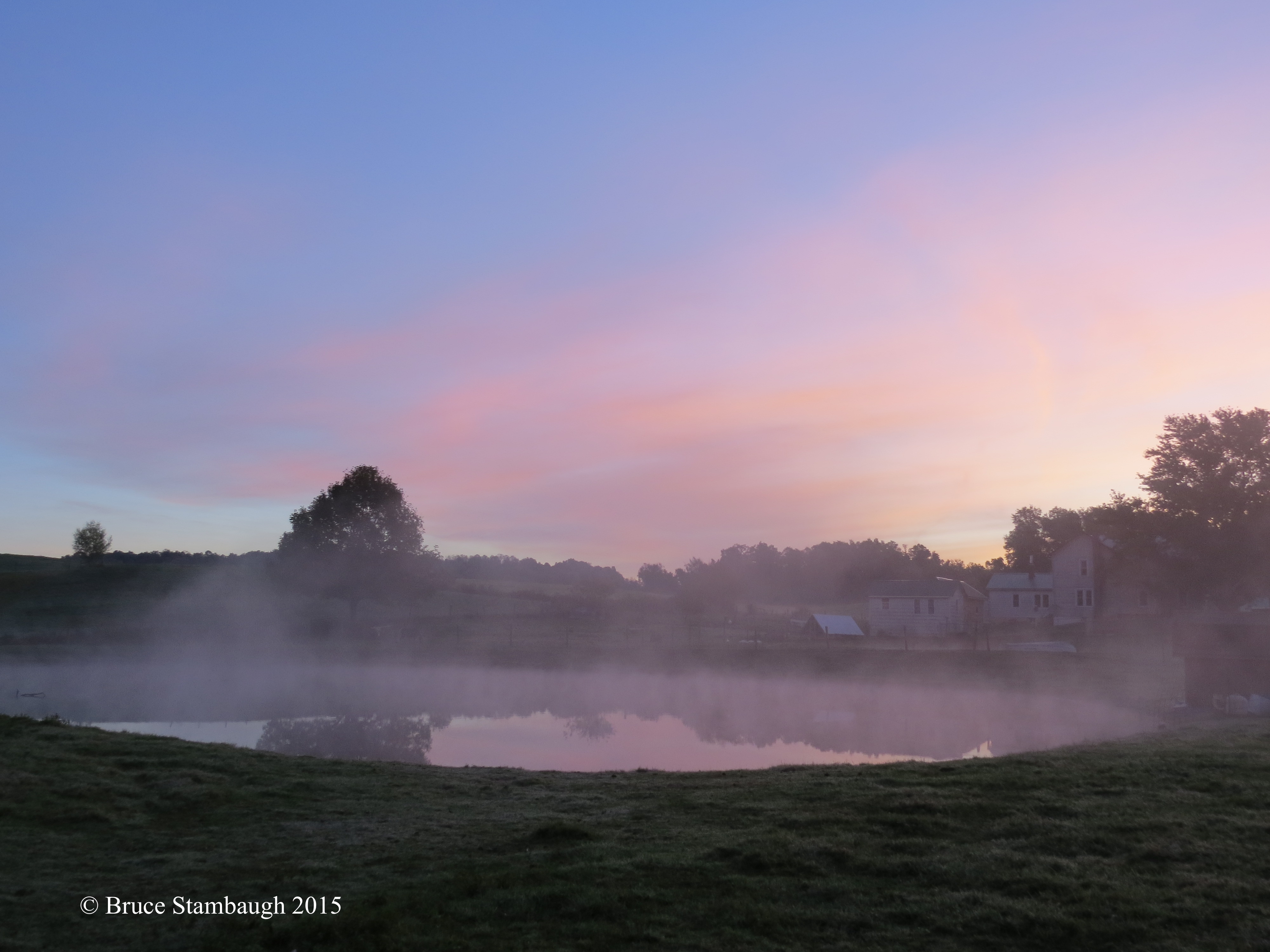
I sincerely doubt that this is what Jimmie Hendrix had in mind with his song “Purple Haze.” But if there ever was a photo of purple haze, this surly has to be it.

It was a chilly morning several years ago in Ohio’s Amish country about this time in October. The mist coming off of the farm pond caught the twilight’s first light. I also doubt that the residents of this Amish farmhouse ever heard of Jimmie Hendrix. But they do know what purple haze is.

“Purple Haze” is my Photo of the Week.

© Bruce Stambaugh 2019

Relaxing


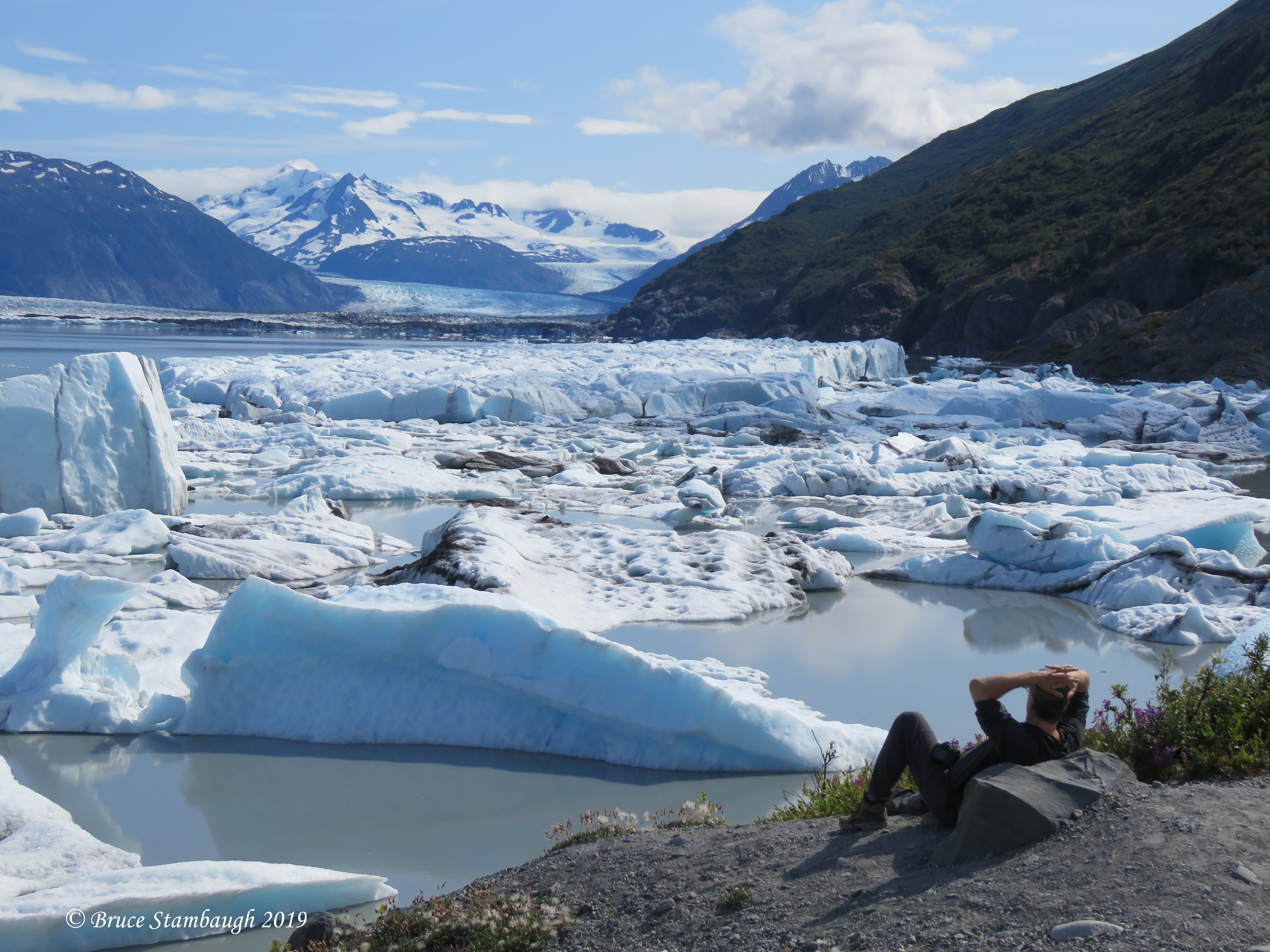
Our friend had the right idea. But then, he had been to Knick Glacier near Palmer, Alaska, several times. While the rest of us scurried around exploring moraines, discovering wildlife, and capturing as many photos of the incredible scenery as possible, Doug leaned against a rock and just relaxed. With this view, who could blame him?

“Relaxing” is my Photo of the Week.

© Bruce Stambaugh 2019

Finding a new sanctuary

Big Meadows.

Not long after we moved to Virginia’s Shenandoah Valley more than two years ago, I sought a nature spot. I wanted a place where I could practice my photography, quietly watch birds, or simply do some walking.

I had many such places within an hour of our home in Holmes County, Ohio. They all had their unique features that attracted many folks in addition to fulfilling my photography, birding, and hiking desires. I had hoped to find one location close to our Virginia home that met those needs, too.

I have plenty of choices when it comes to getting out into nature for walks, birding, and photography in the Shenandoah Valley. I hit the trifecta if I can incorporate all three into one trip.

When you have a national park within the boundaries of your county, the answer seems obvious. It’s a 40 minutes drive to the park’s closest entrance. Shenandoah National Park was formed out of parts of eight Virginia counties, Rockingham among them.

This slideshow requires JavaScript.

The park offers a host of options for visitors, though I have only been able to thoroughly explore a few so far. Big Meadows is one of those, and to date, it has been my go-to spot.

Big Meadows is a wide-open space on the summit of Skyline Drive at mile-marker 51. Its simplistic name perfectly describes its main feature. The place is a big meadow.

What’s it doing there, and why? With the park’s dense forests, fast-running streams that often lead to crashing waterfalls, Big Meadows is an anomaly to the park. No one seems to know how or why Big Meadows was formed. It’s certainly a fish out of water given the diverse geology, geography, and biology in Shenandoah National Park.

Big Meadows is and always has been lush with wildflowers, grasses, and low shrubs. Archeological research reveals that Native Americans camped in Big Meadows. Evidence shows they used controlled burns to flush out the abundant wildlife of the area. The park service still uses controlled burns to keep Big Meadows Big Meadows.

The area is more than a big meadow, however. The Byrd Visitors Center offers an informative display on the formation of the park, along with a gift store, and restrooms. A way station for hikers, an amphitheater, a lodge, restaurant, campgrounds, picnic areas, and multiple hiking trails can all be reached from Big Meadows.

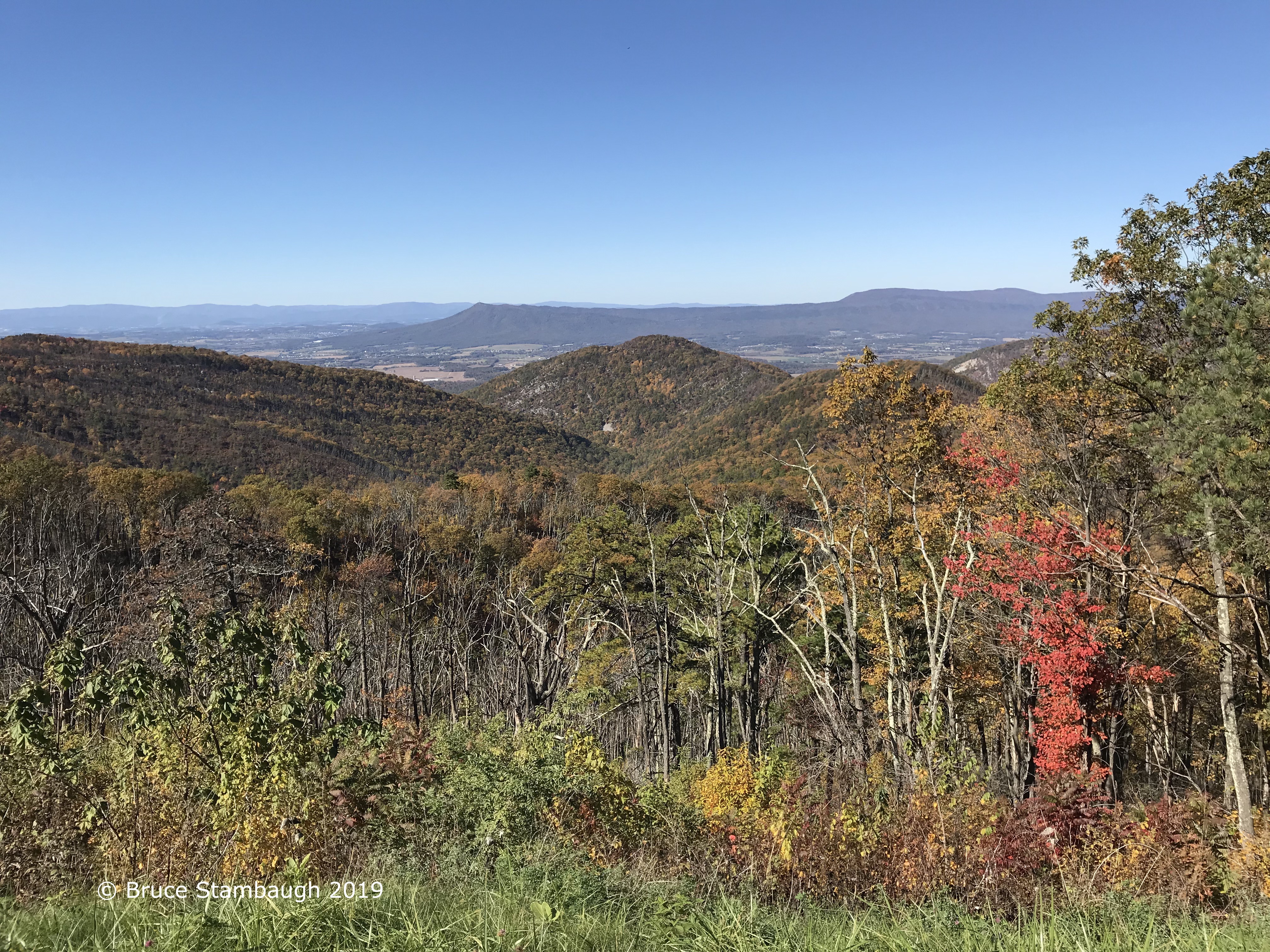
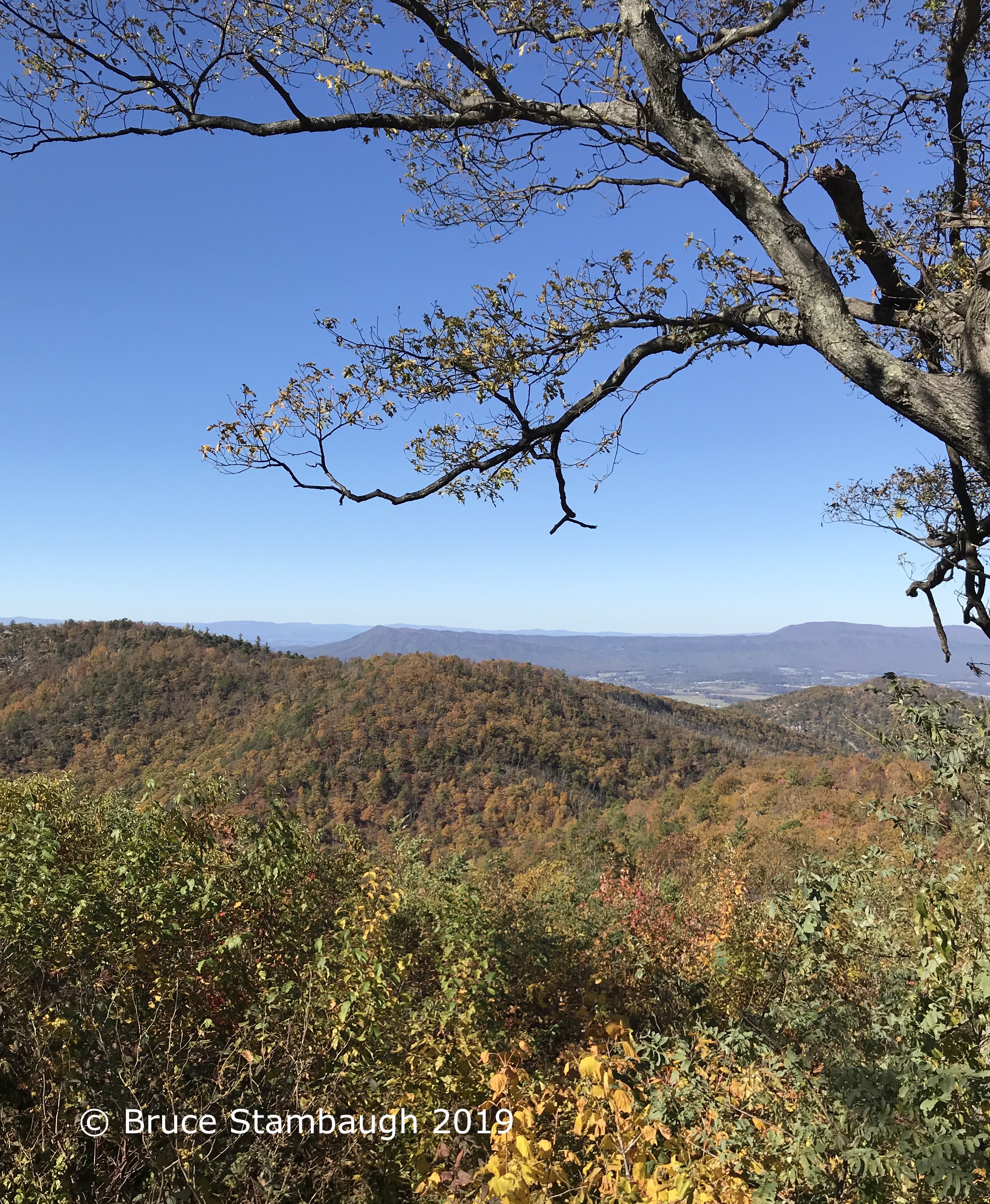
A few photos from my most recent visit to Big Meadows. Please click on the photos to enlarge them.

Of course, the Appalachian Trial runs on the west slope of the Blue Ridge Mountains on the edge of Big Meadows. Waterfalls are not far away along with some incredible views of the Shenandoah Valley.

On a hot summer’s day, Big Meadows is a pleasant escape from the valley’s heat and humidity. The temperature on the mountain can be 10 to 15 degrees cooler.

Even for those who aren’t able to hike very far, Big Meadows offers a lot. Visitors can sit in their cars while butterflies flit from one group of flowers to another. I’ve even seen dark-eyed juncos pecking for food around the Byrd Visitors Center in the summer.

The winter weather gets so wicked, however, that I tend to only visit spring, summer, and fall. Besides, the park often closes the Skyline Drive in the winter anyhow.

Everyone needs a place to get away, a place to relax, to take a load off, retreat from the hectic, pounding pace that we’ve come to know in the early 21st century. Big Meadows is such a place for me. Where is yours?

The view of the Shenandoah Valley from Big Meadows Lodge.

© Bruce Stambaugh 2019

The Bush Pilot


While returning from an exhilarating trip to the Knik Glacier, a bush pilot flew low over our boat in the Knik River. The pilot was shuttling tourists like us for flyovers of the glacier and surrounding mountainous areas.

“The Bush Pilot” is my Photo of the Week.

© Bruce Stambaugh 2019

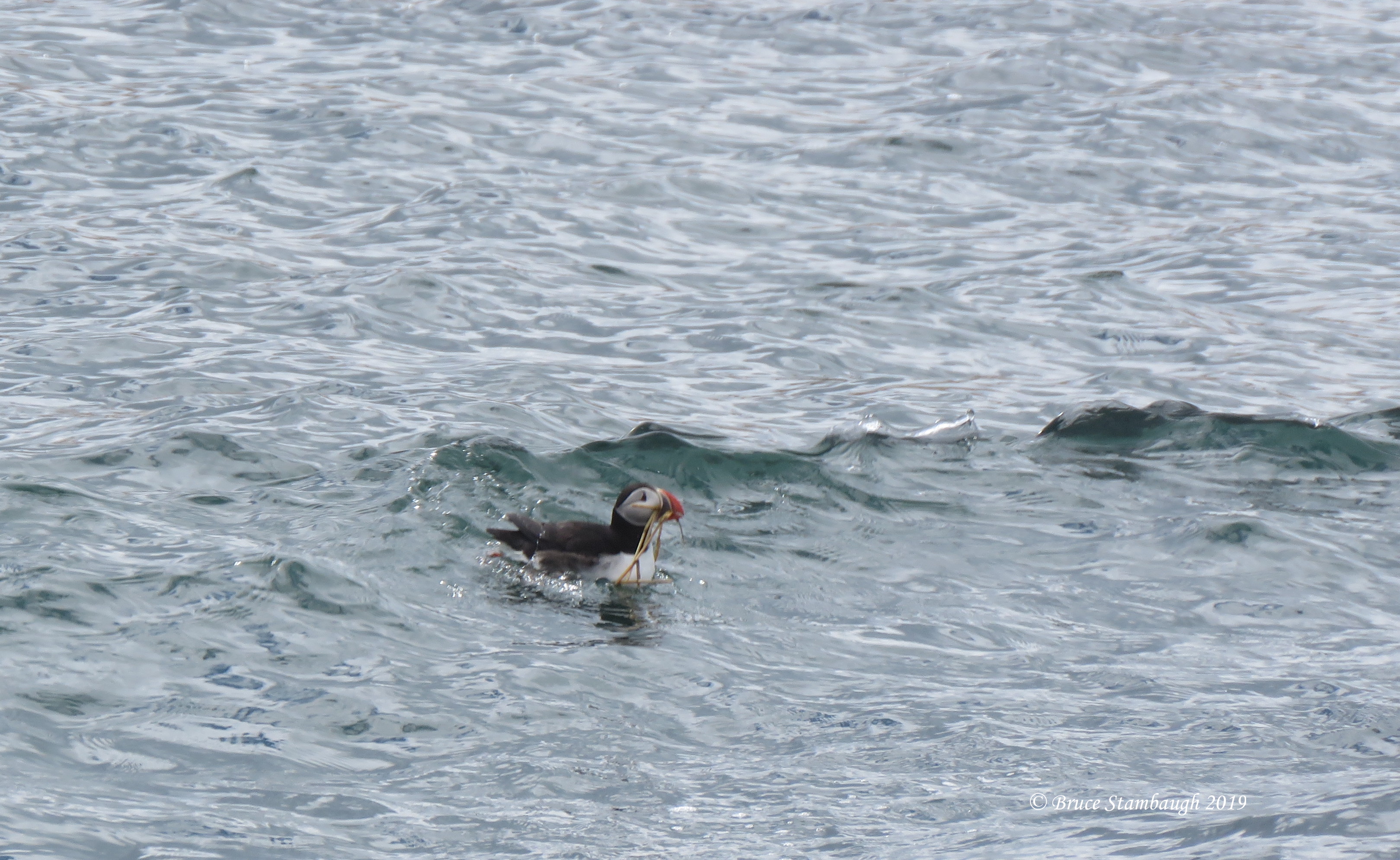
Atlantic Puffin


My wife and I booked the first wildlife and lighthouse boating excursion of the year out of Bar Harbor, Maine in mid-May. The guide had promised that we would see lighthouses, harbor seals, bald eagles, and Atlantic Puffins. It was the latter that most intrigued me.

I had never seen a puffin in the wild. I not only wanted to see some but photograph the cute birds, too. The tour guide and ship’s crew made good on all their promises. When we got to Petit Manan Island, Maine, everyone including the crew was surprised to see dozens of puffins. We stayed a safe distance away from the birds to ensure their safety. At first, small flocks circled the boat in a feeble flight. I snapped away.

While nearly everyone else was focused on the birds in the water and on the island ahead of us, I spotted a few loners in the ocean that appeared nearer the boat. I did my best to steady the camera and focused on one particular puffin bobbing on the choppy waves.

After taking several pictures, I checked to see if I had any keepers. I was pleasantly surprised to find this shot of a puffin with nesting material in its bulbous beak. Puffins are often photographed with multiple small fish sticking out of both sides of their bills. But nesting material was another matter. Another photographer on board had the same capture. We were both overjoyed to have a decent shot of something not often seen.

Adding the Atlantic Puffin to my life list was one thing. Capturing this shot was something else altogether.

“Atlantic Puffin” is my Photo of the Week.

© Bruce Stambaugh 2019

This picture really is worth a thousand words

Overlooking the icebergs in front of the Knik Glacier, Palmer, AK.

Of the more than 2,000 photos that I took on a recent two-week trip with my wife, one single photo stands out for me. It wouldn’t win any photo contests, but it best represents the sentiment of our journey to Alaska and Canada’s Yukon Territory.

The picture could have been of the ubiquitous and colorful fireweed blanketing a misty alpine meadow. During our visit, I captured the brilliant pink flower in every stage of blooming. But that’s not it.

I could have easily chosen one of several digital landscapes of the Knik Glacier. Our friends Doug and Rosene took us there on our very first day in the 49th state. The views were stunning, the experience exhilarating. But, no, that’s not my favorite photo.

The early morning view from Flat Top Mountain overlooking Anchorage, Alaska could certainly qualify, too. I could faintly see the grand mountain Denali through the morning haze. That wasn’t it either.

Other possibilities were the many snapshots of caribou grazing in meadows in Denali National Park and Preserve. For shooting at some distance through the window of a refurbished school bus, I thought the photos turned out pretty well. However, none of those shots could compare to my favorite.

This slideshow requires JavaScript.

I had hoped to see a bull moose while on our trip. As we approached the end of our Denali tour, we spied one lumbering through the brush 100 feet from the bus. Even my first bull moose pictures couldn’t match the one that touched me most.

We much enjoyed our walk around the frontier town of Dawson City, Yukon. With its dirt streets and eclectic set of residential and commercial structures, it looked like a set right out of a John Wayne movie. As lovely as that assortment of Dawson photos was, they couldn’t measure up to my pick.

You should see Emerald Lake, a beautiful body of water worthy of its colorful name in the Yukon. Surrounded by mountains dotted with forests and meadows, the shots I got are some of my favorites, but not the favorite.

Shortly after that, we stopped at the quaint village of Carcross, built on a spit of land between two sparkling lakes. I captured a flock of ducks twisting and turning in the sky over Lake Bennett. As ecstatic as I was, those pictures can’t compare to my most precious shot.

Please click on the photos to enlarge them.

The narrow-gauge train trip down the mountain gap from the Canadian border to Skagway, Alaska was breathtaking. With a clear sky and divine mountainous scenery, the shot of the train crossing the trestle over a river is calendar-worthy. Nope. That’s not the one either.

I had high expectations for getting shots of several different glaciers in Glacier Bay National Park. Sea, air, and light conditions made for perfect shots. But as you likely have surmised, they aren’t my choice either.

I was fortunate to capture memorable photos of gorgeous scenery, thrilling wildlife, spectacular glaciers, and eye-catching architecture. Yet, none qualify as my shot of shots. What is?

My favorite photo of our dream vacation is one of the best I have ever taken of my wife. Neva is standing at the stern of our cruise ship as it slowly eases out of port to begin our brief voyage.

The smile on her face is both precious and priceless. As she looks back at the camera, Neva’s radiance lights up the dim evening setting. It wasn’t the anticipation that created that glow. It was the pure pleasure of being there together.

© Bruce Stambaugh 2019

It was a cloudy day all across the U.S.

On the tarmac.

It was a cloudy day all across the United States. My wife and I flew five hours from Vancouver, British Columbia, Canada, to Dulles International Airport near Washington, D.C.

A blanket of gray covered the entire area of the northwestern United States and southwestern Canadian provinces. On liftoff, it didn’t take long for the jetliner to punch through the clouds, and quickly climb above them.

As the plane leveled out at its cruising altitude, splotches of brown and green peeked through the gray and puffy white clouds. Were we over Washington, Idaho, Montana? I didn’t know, and it didn’t matter.

Evening clouds.
We were winging it home after a two-week stint of sampling nearly every type of transportation imaginable. On our extended trip, we hopped on planes, trains, buses, cars, vans, SUVs, boats, old Army troop trucks, ships, and even repurposed school buses. We walked a lot, too. Now we were back on a jet heading home.

It was Alaska or bust for us this time. Unlike too many of the old gold prospectors of long ago, the 49th state was no bust for us. Neither was the Yukon Territory, which geographically mirrored much of Alaska’s towns, mountains, and inland rivers.

We had crossed back and forth between the two countries several times. But now in the sky, borders were insignificant, indefinable. They were unrecognizable as God meant them to be until man intervened and contrived invisible boundary lines. Bees, butterflies, grizzly bears, bald eagles, and migrating birds deemed them meaningless.

The clouds thinned over America’s breadbasket. Their charcoal shadows indiscriminately cast jigsaw-like puzzle pieces onto croplands and the Badlands alike.

Evening clouds.
From the jetliner, more ominous storm clouds appeared, and the earth again disappeared. We flew south of the sharp anvil-shaped thunderheads that towered 20,000 feet higher than the 37,000 feet we reached.

Once clear of the storms, I saw the mighty Mississippi River turn and twist beneath the haze as the plane began to bounce in the turbulence ahead of the weather front we had breached. Fastened seatbelts kept us in place until the skies smoothed and summer’s famous white, fluffy clouds steered us eastward.

The clouds were broken enough for me to finally distinguish details on the ground seven miles below. Jagged rows of giant windmills sprouted in the quilt-patterned patches of midwestern agriculture. I wondered if the farmers regretted or relished the decision to take the money and let the monsters run.

Directly to the north, I could see an airport and a city butted up against the end of a large lake. It had to be Duluth, Minnesota at the western tip of Lake Superior.

East of the Big Muddy, clouds blanketed the states like one continuous unrolled sheet of quilt batting gone ballistic. Then the cottony layer transitioned into cotton balls. I could see Michigan’s western shoreline, even the little inlet to Traverse City.

The plane began its gradual descent. Lake Erie appeared through the summer haziness, then Columbus, and then the squiggly Ohio River. In West Virginia, rows and rows of hundreds of windmills towered above lush hardwood forests on old, folded mountain ridges. John Denver played in my head.

As the sun waned, the plane drew lower and lower. We crossed the Appalachians, the Shenandoah Valley, and the Blue Ridge Mountains, all in less than a minute. Through the haze, we landed with a gentle bounce.

We had had a marvelous trip, but it was good to be home under a cloudless sky.

Home.

© Bruce Stambaugh 2019

Framing History


While visiting the Anchorage, Alaska area, friends took us to the Independence Mine State Historical Park. Many of the original buildings are in disrepair. A few still exist, while others are reconstructed.

In Anchorage, the weather was warm and sunny. At the old gold mine site high in Hatcher Pass, rain and fog prevailed. As we toured the buildings, I spied this view of the grounds. Taking a photograph through the old bunkhouse window was both symbolic and representative of the past and present. It perfectly framed the scene. The pink fireweed in full bloom added a subtle color that accented the foggy setting.

“Framing History” is my Photo of the Week.

© Bruce Stambaugh 2019

The colors of August

Wheat shocks at sunset.

The colors of August captivate me. Living nearly all of my adult life in Holmes County, Ohio gave me a full range of that summer paint pallet.

The pleasing contrasting greens and golds quickly got my attention. I admired the rolling contoured rows of lush green field corn against the toasted waves of winter wheat.

In the eastern part of the county, wheat shocks stood as sentinels guarding the fattening ears of corn nearby. Unfortunately, their presence seldom deterred the deer from nibbling the outer rows to the cob.

The blooming alfalfa brought pretty butterflies, honeybees, and other vital pollinators. The swooping swallows had their own feast, especially when the farmers made their August cuttings whether by tractors or horse-drawn mowers.

August was when the vibrant green leaves of deciduous trees began to curl in the heat, humidity, and parched soil. By month’s end, a few even turned brown or began to color.

This slideshow requires JavaScript.

I always enjoyed the flowers that bordered blossoming gardens or multiple flowerbeds like my wife cultivated to perfection. Hollyhocks were my favorite until the gladiolas raised their pink, red, yellow, and white flags.

I would be negligent if I failed to mention the summer birds, some of which had already begun their return flight south. Though not as vocal as earlier in the year, most still showed their breeding colors.

The flashing iridescent red on emerald of the male ruby-throated hummingbird and the flashy orange and black of Baltimore orioles spruced up any welcoming yard, if only temporarily. Sometimes the two species vied for dibs at the sugar-water feeders.

By months end, early morning coolness brought silent, silken fog that glowed bronze with the rising sun. If eyes were sharp, silver droplets dotted the dewy threads of spider webs artistically strung from one barbed wire strand to another.

Much of that changed, however, when my wife and I moved to Virginia’s Shenandoah Valley. Like Holmes County, the Valley, as locals like to call it, is the breadbasket of the south. Agriculture still rules the rural areas.

Farming is a bit different here, however. Though the Old Order Mennonites still drive horses and buggies, they man the latest farm machinery invented. As thrifty as their Amish cousins, they often farm right up to the roadway.

Though the topography is similar, strip cropping is seldom used. No-till farming seems to be the in thing here. The result is wide swaths of wheat sown between two fields of field corn or the tallest soybeans I have ever seen. It’s still green and gold, just different species.

With soil that hardly ever freezes and being further south, the growing season is longer. Farmers and gardeners get an earlier start on planting and consequently harvesting. The colors I was used to in August begin to appear in July. Produce stands evidence that.

The produce peak, however, still seems to be August. My wife and I can attest to that thanks to the generosity of our son and daughter’s families. They gifted us a weekly produce box known as CSA, Community Supporting Agriculture.

End of August morning.
We have already enjoyed weeks’ worth of fresh, organic produce that is as tasty as it is luscious to admire. Mellow yellow summer squash, prickly green pickles, plump red tomatoes, sweet red beets, orange cantaloupe, and juicy red watermelon make our summer meals perfect.

Happy to merely admire the colors, I almost hate to have Neva slice, dice, fry, cook, and can the colorful lot. I change my mind, however, with the fresh salsa alone.

© Bruce Stambaugh 2019

Fabricated Rainbow


We enjoy showing visitors the backroads sights of where we live in Rockingham Co., Virginia. We often stop at this dry goods store, which offers all kinds of merchandise for customers. Rocky Cedars is situated among the Old Order Mennonite and Conservative Mennonite folks who populate the countryside in the western section of Virginia’s second-largest county.

The bolts of colorful fabric caught my eye. “Fabricated Rainbow” is my Photo of the Week.

© Bruce Stambaugh 2019

Bay Photos by Donna

Wildlife Photos From The Chesapeake Bay Region

ROAD TO NARA

Culture and Communities at the Heart Of India

K Hertzler Art

Artist and nature journalist in the Shenandoah Valley of Virginia.

Maria Vincent Robinson

Photographer Of Life and moments

Gabriele Romano

Personal Blog

Jennifer Murch

Art is the only way to run away without leaving home. -Twyla Tharp

Roadkill Crossing

Writing generated from the rural life

ANJOLI ROY

writer. teacher. podcast cohost.

Casa Alterna

El amor cruza fronteras / Love crosses borders