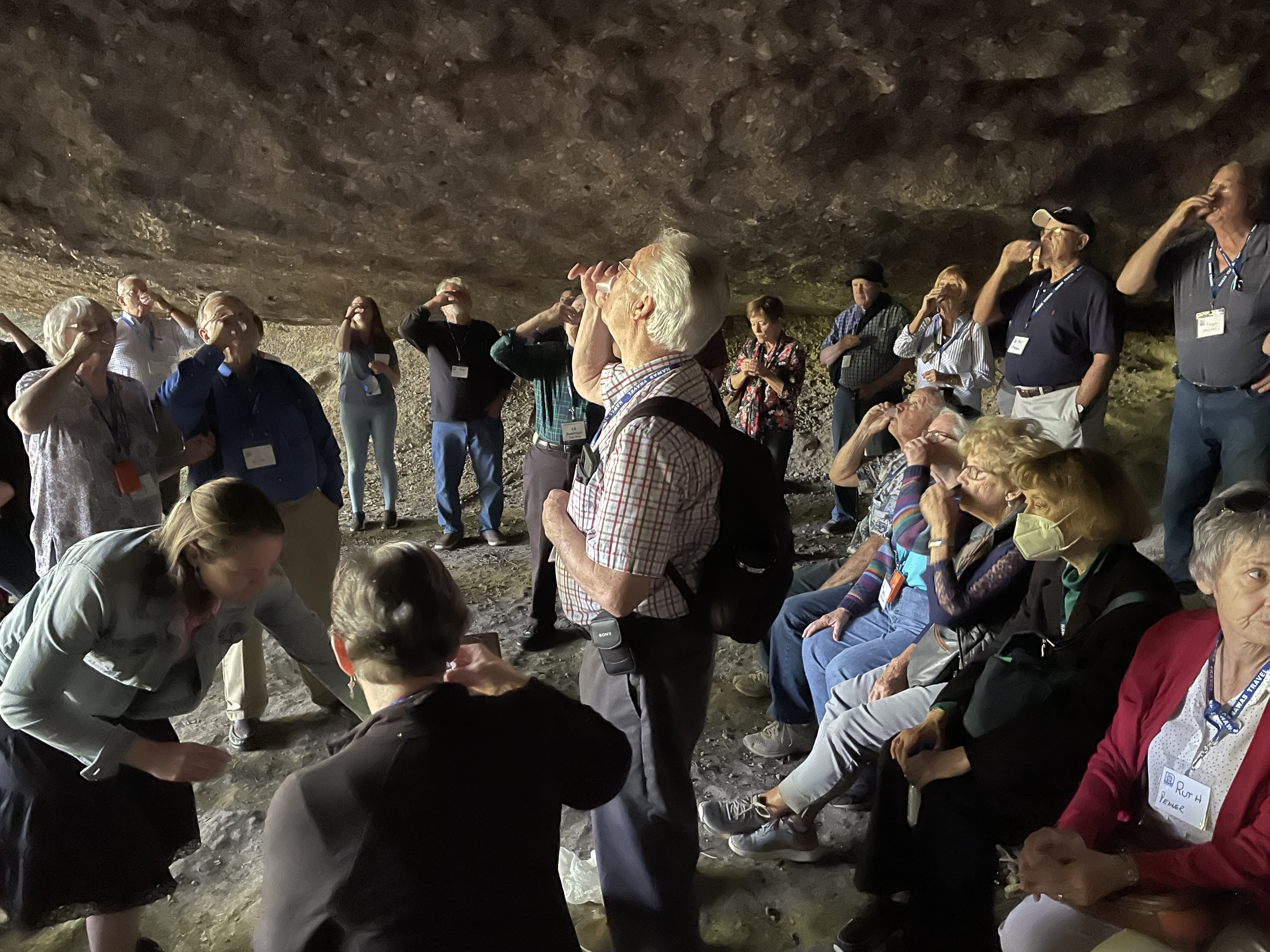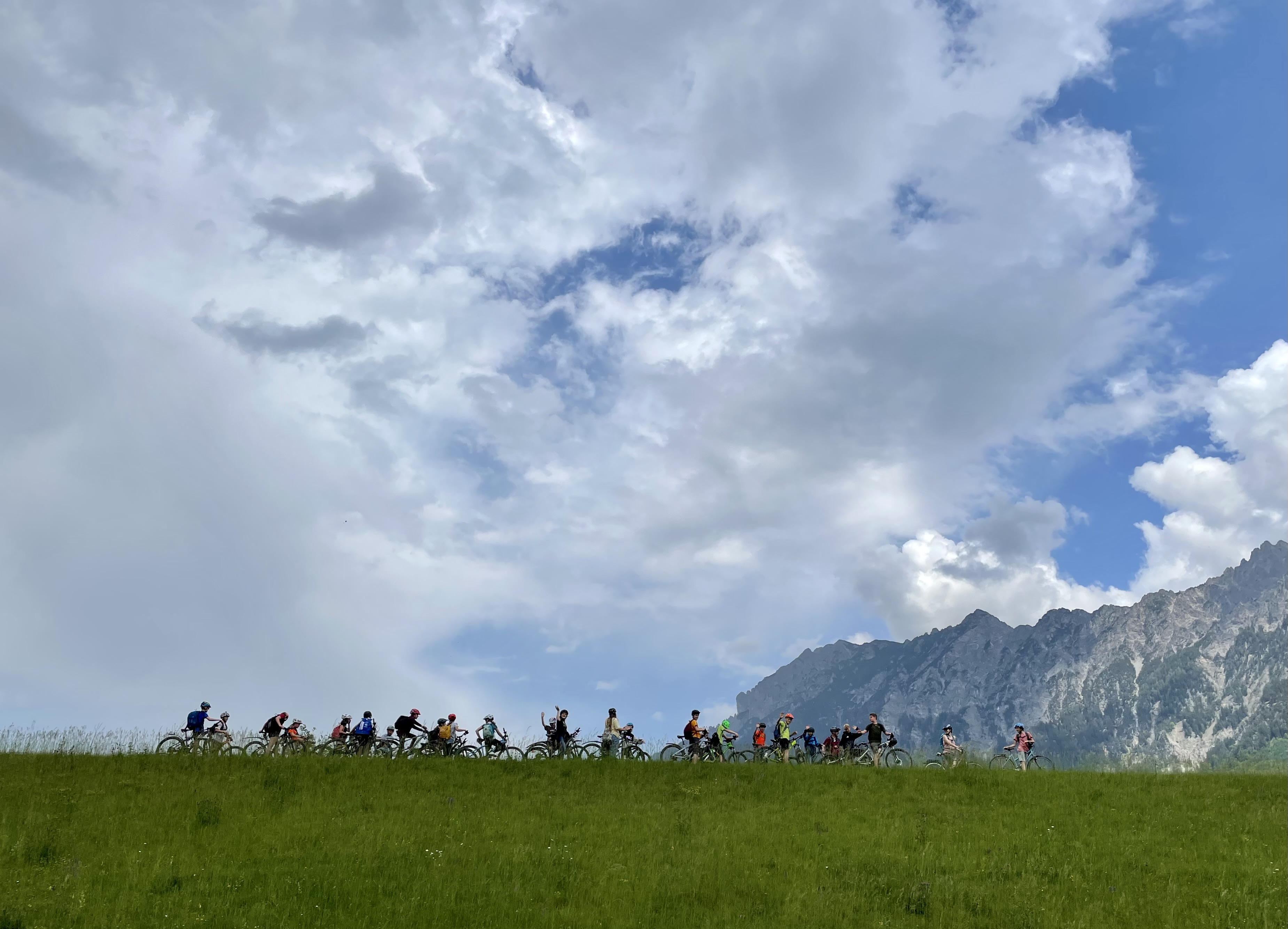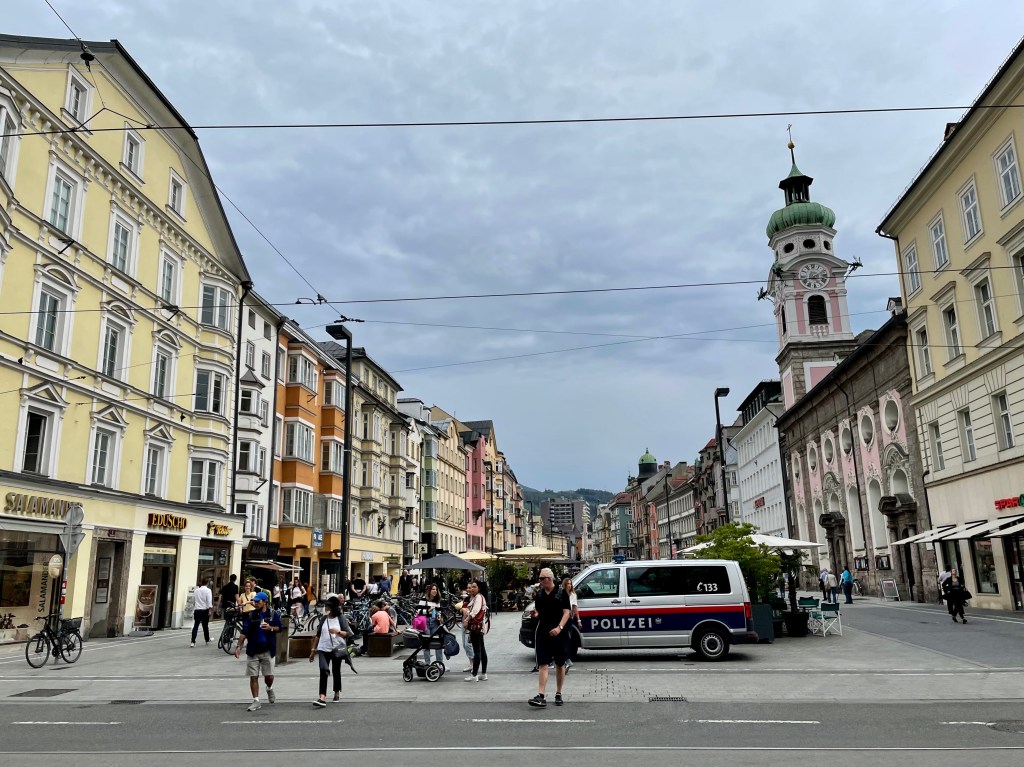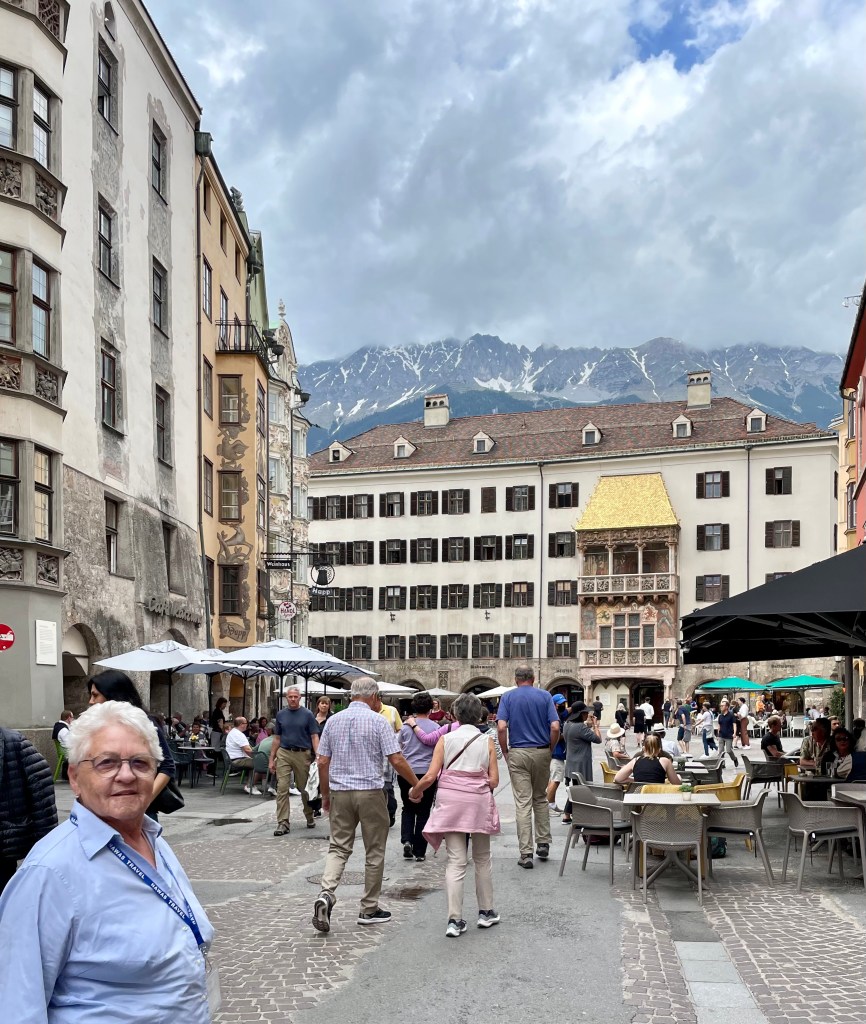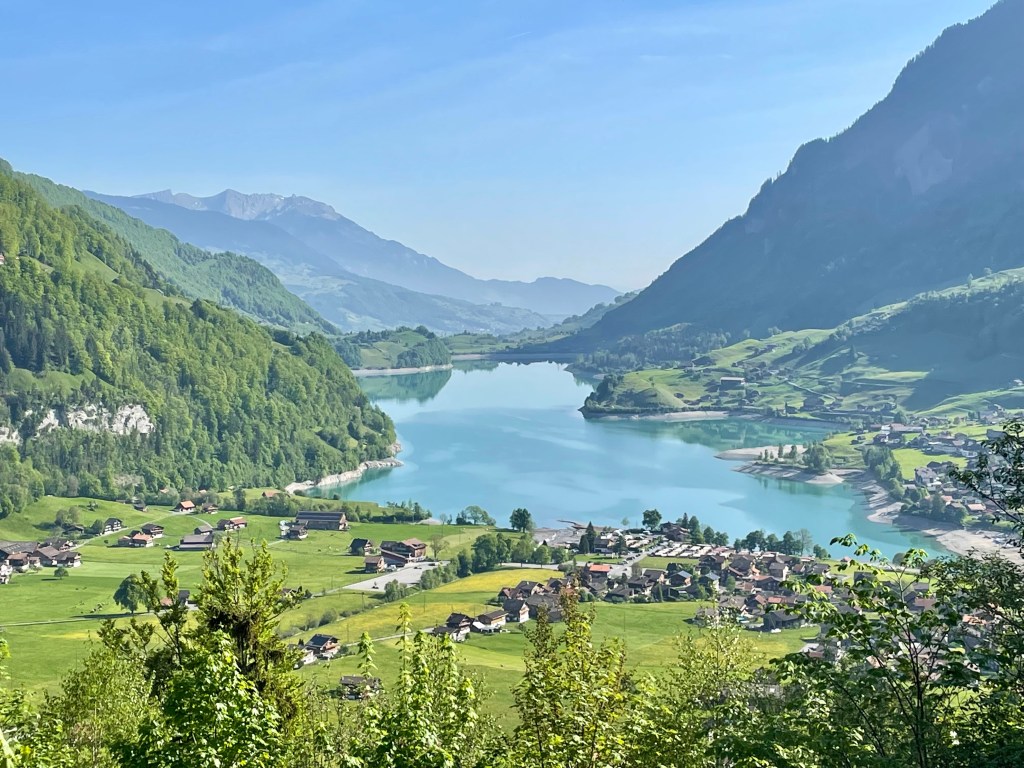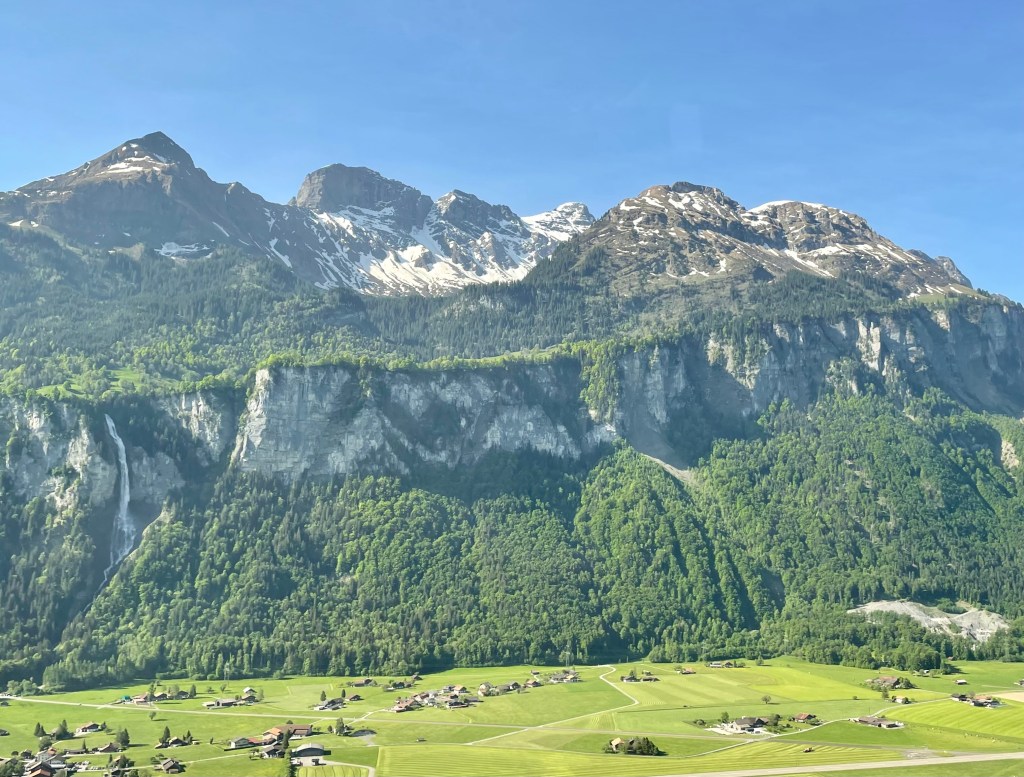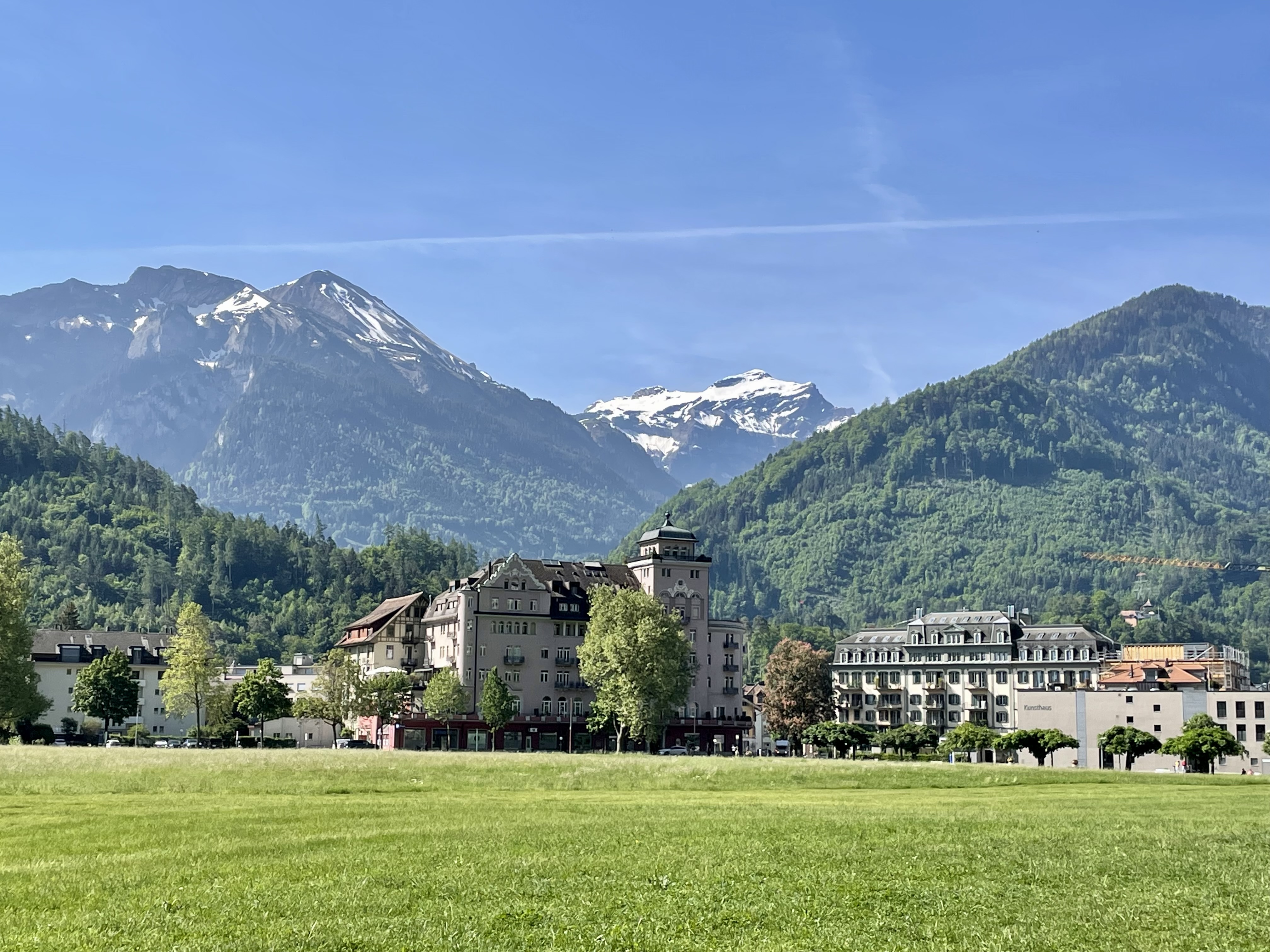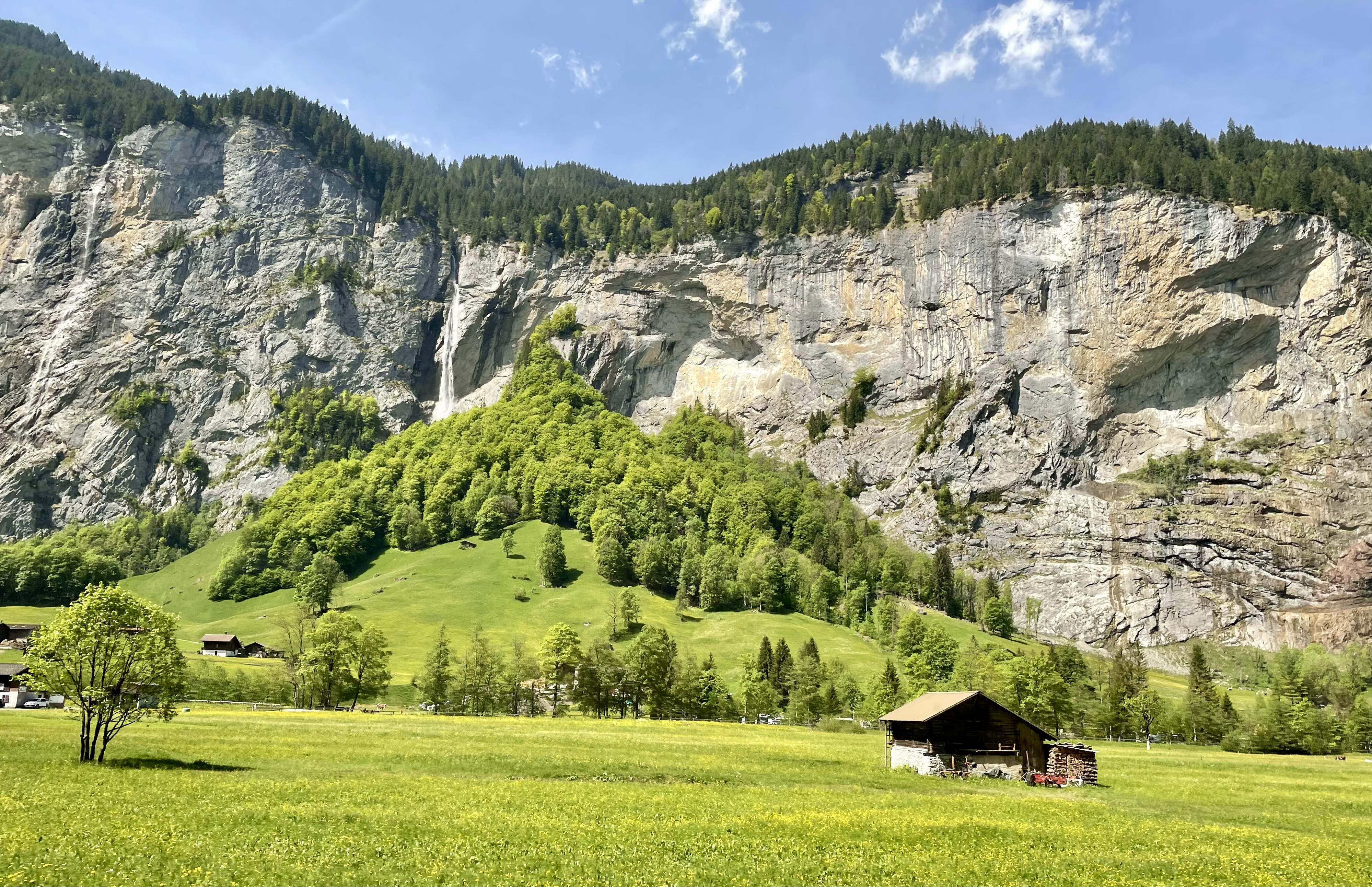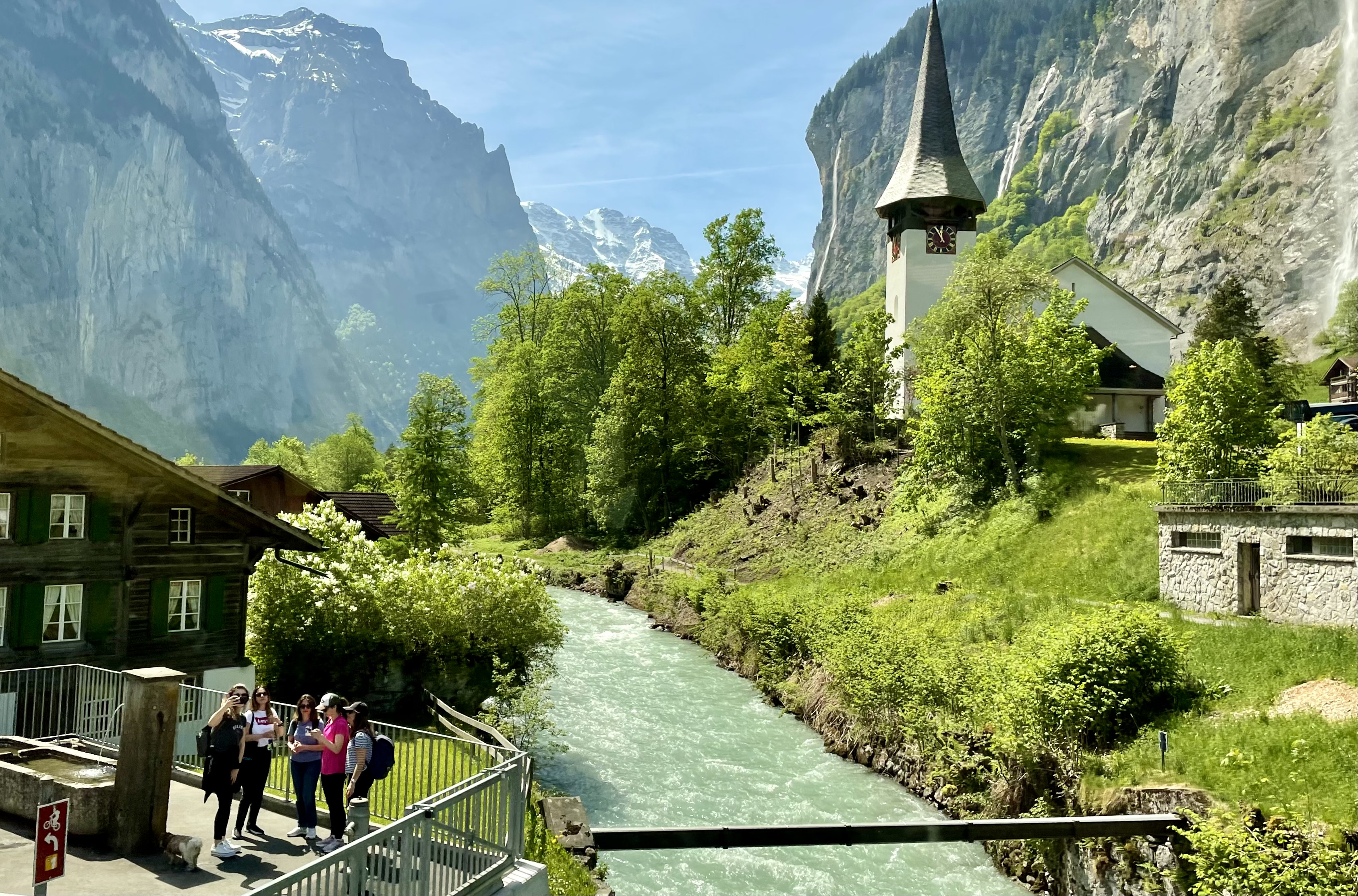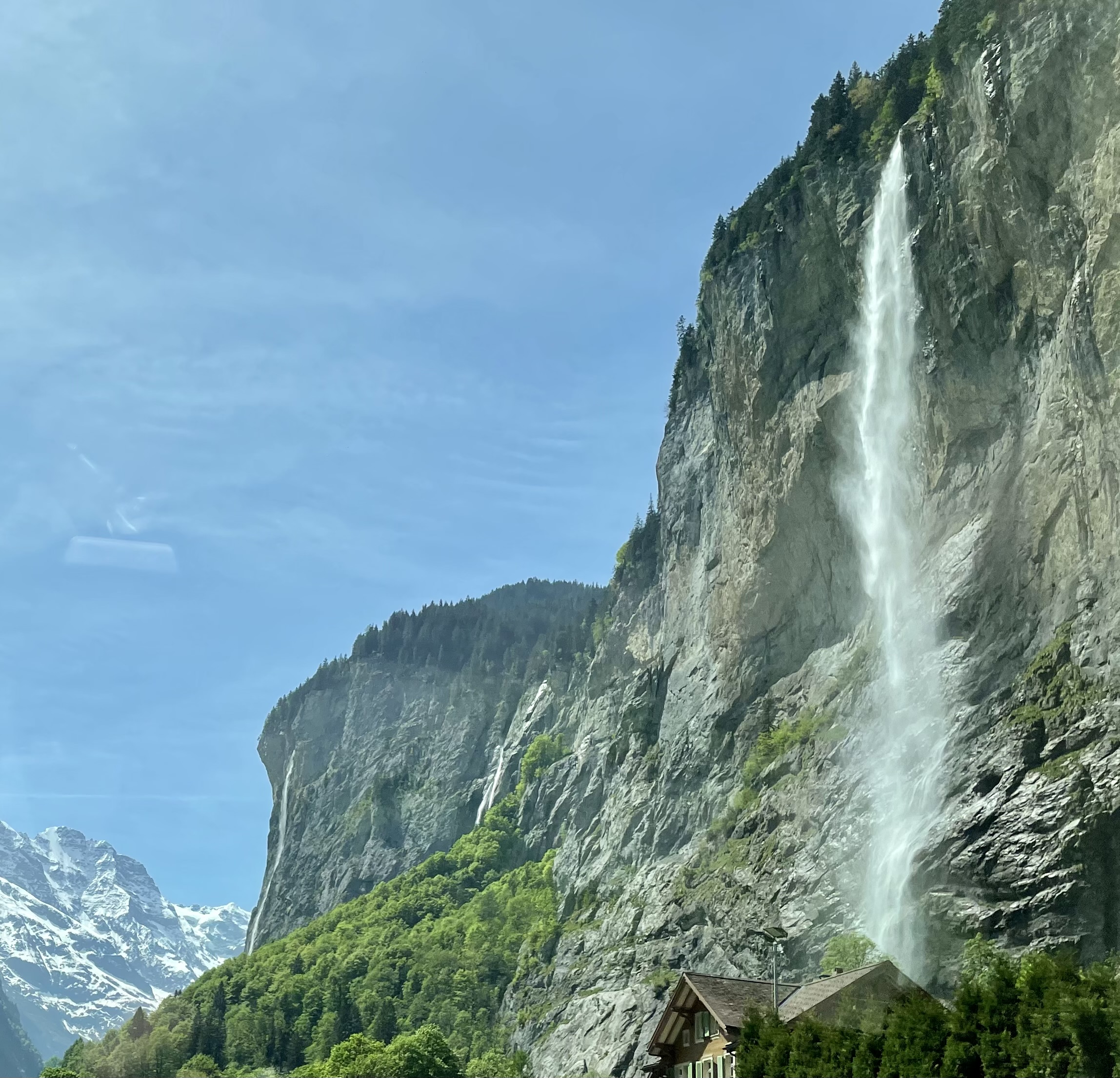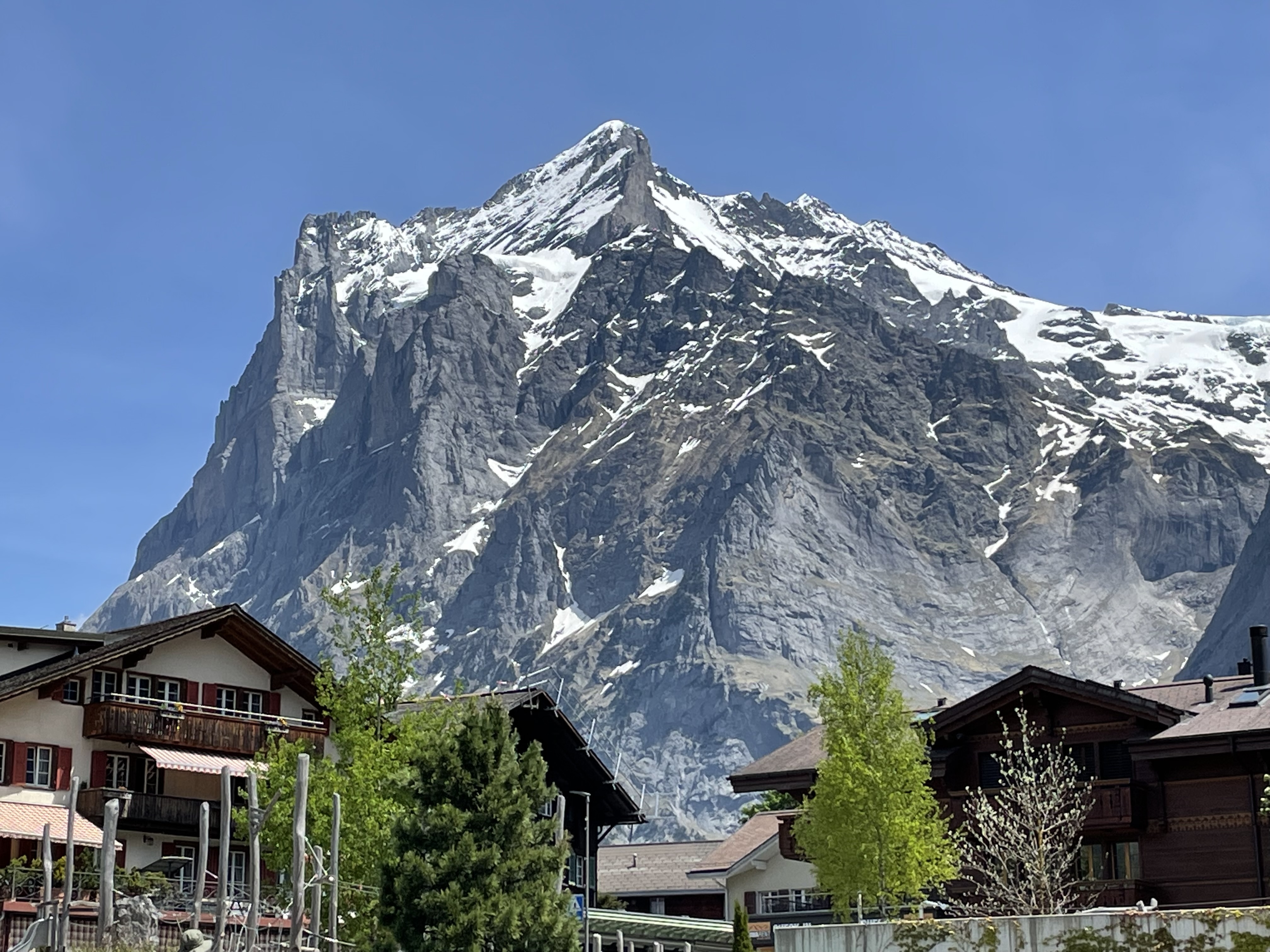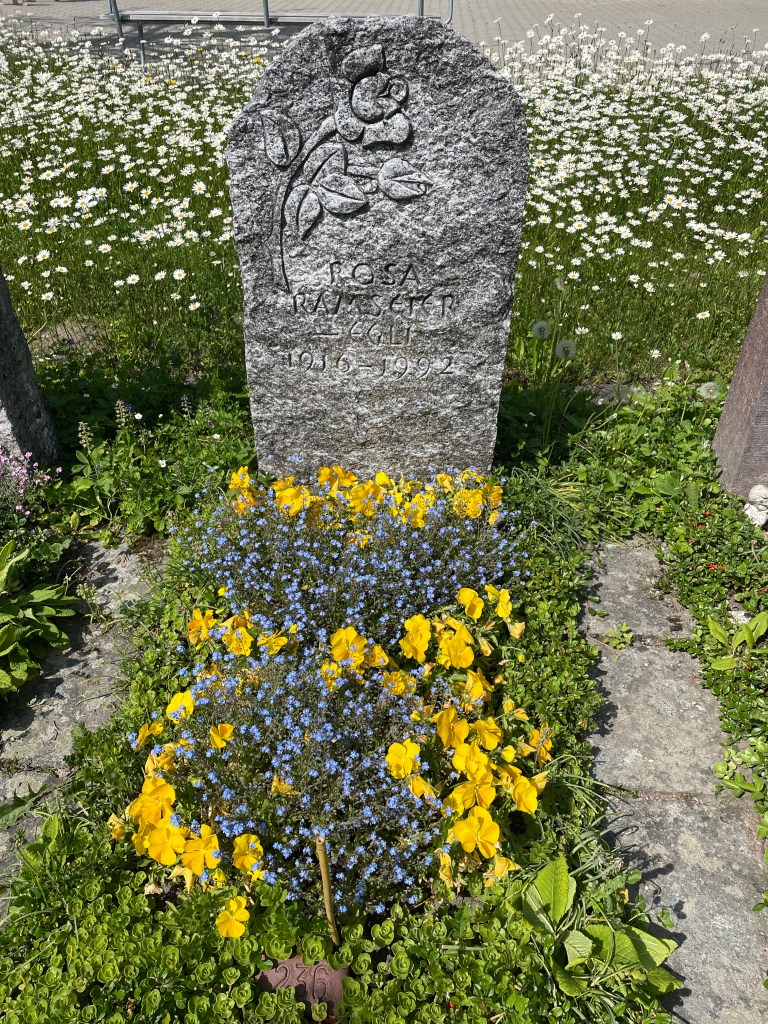
Our European Adventure – Day 3

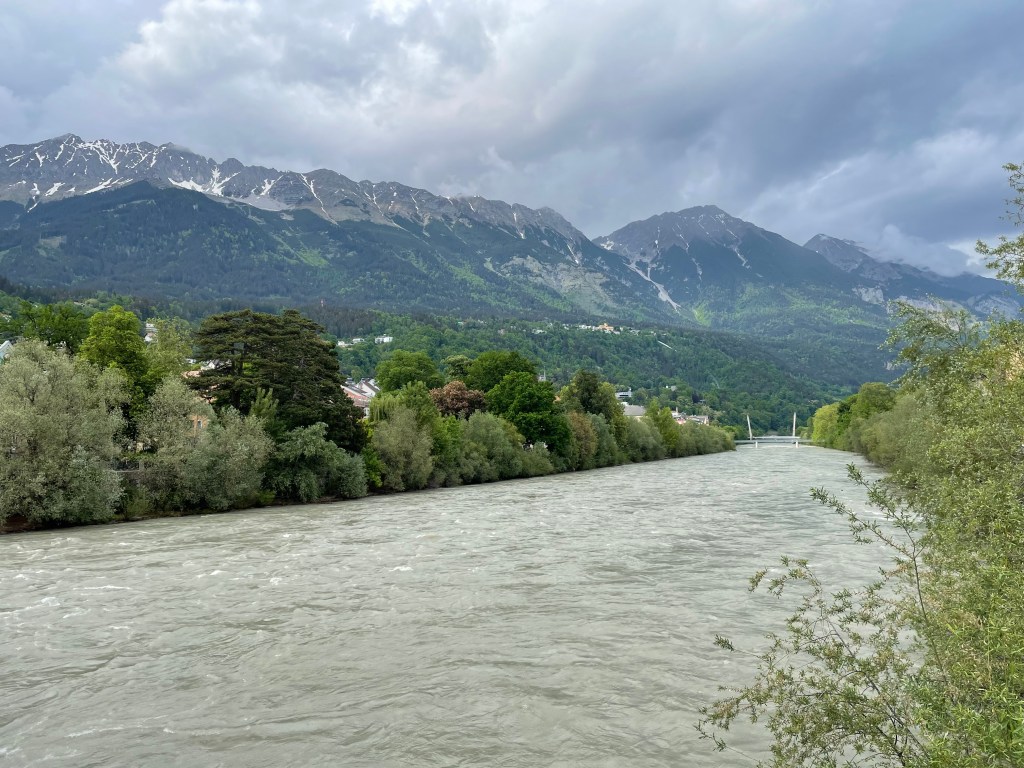
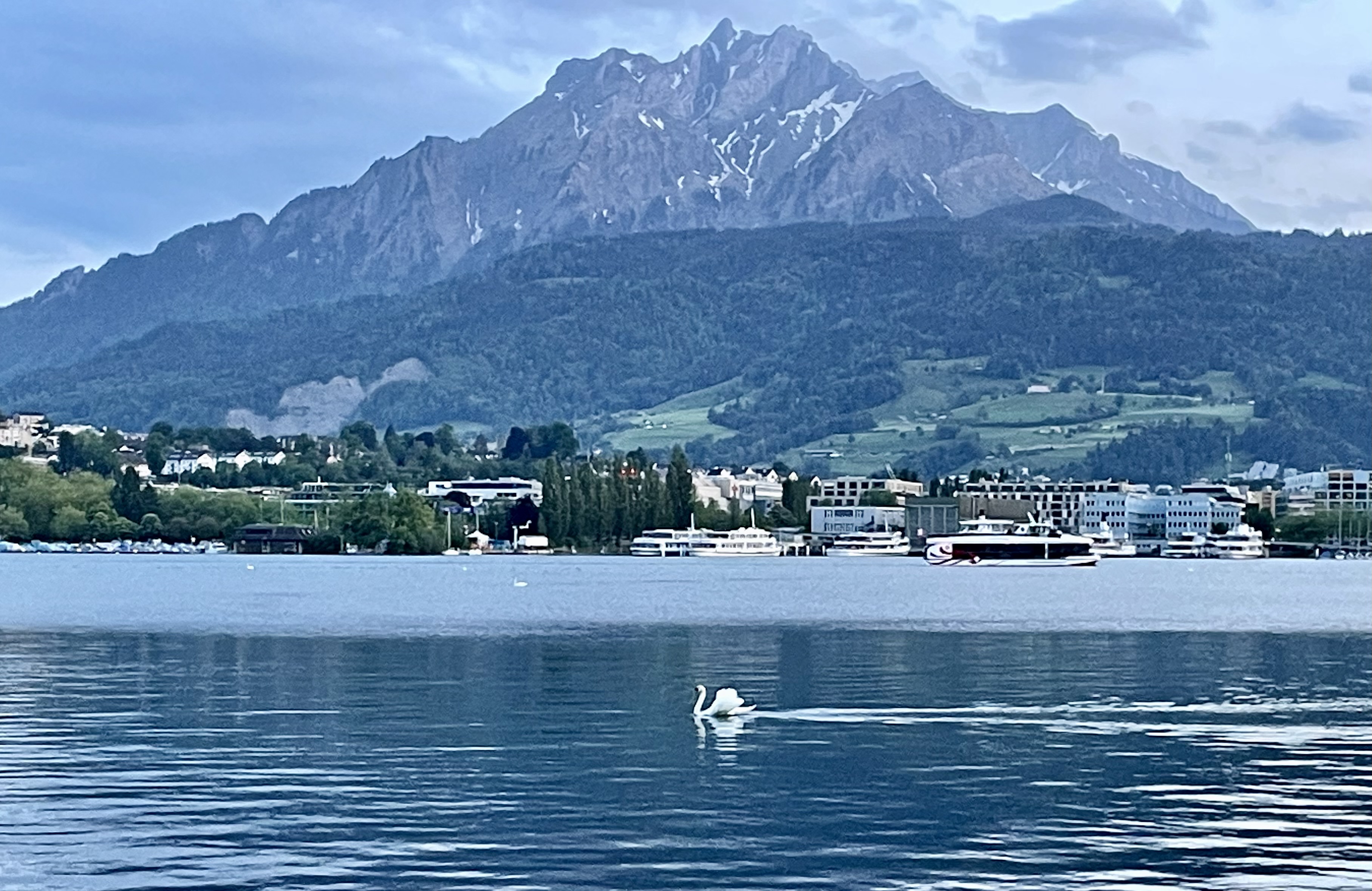
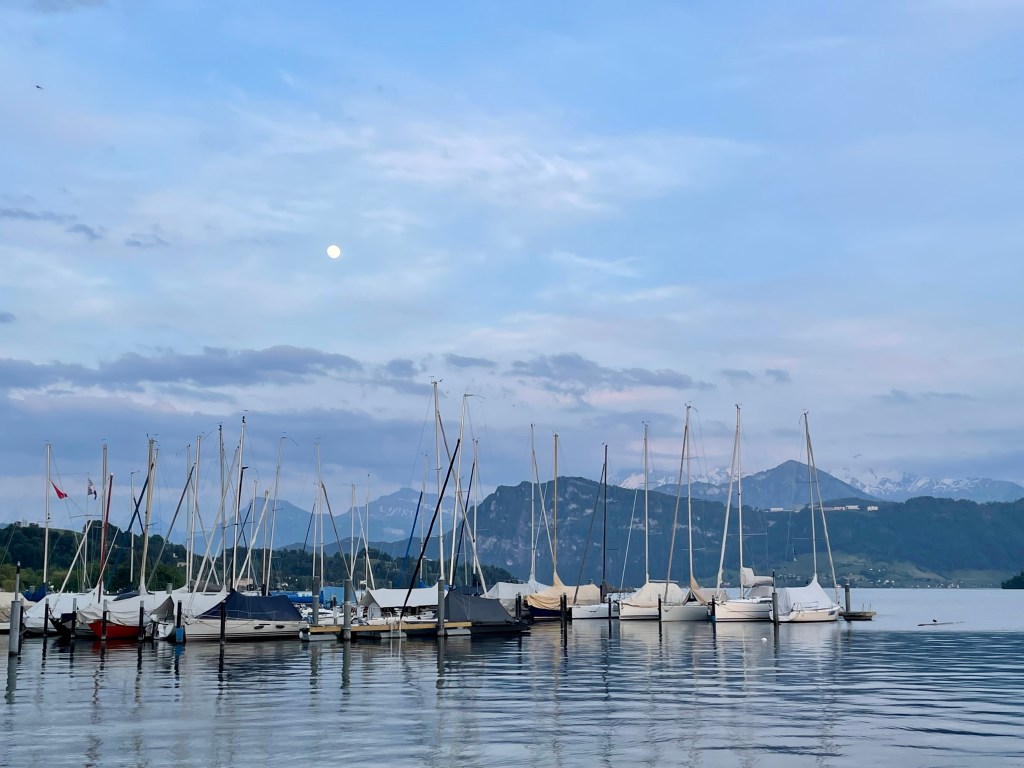
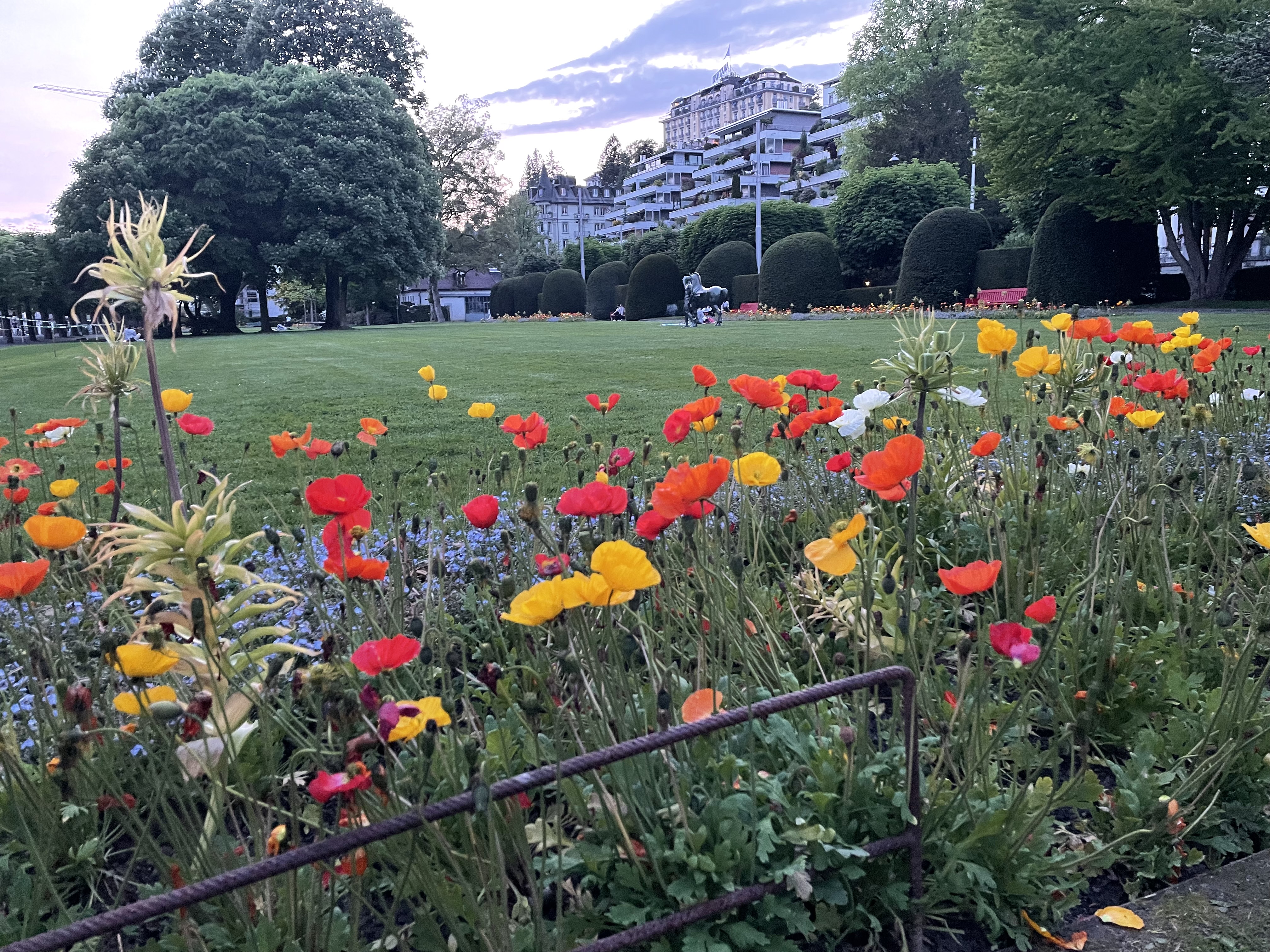
Lake Lucerne with her famous swans and Mt. Pilatus in the background, Lucerne, Switzerland.

As I look back on it, the third day of our European adventure was one of the trip’s highlights. I was too tired to fully appreciate it then, but I enjoyed each moment as we crammed as much history and sightseeing into the day.

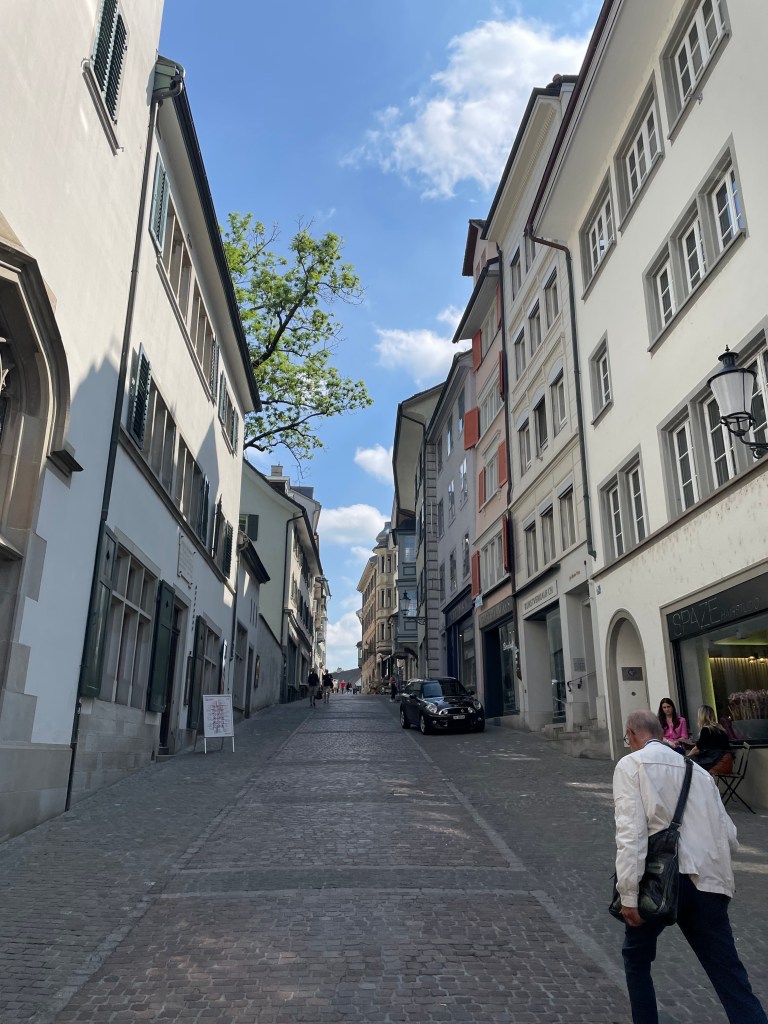
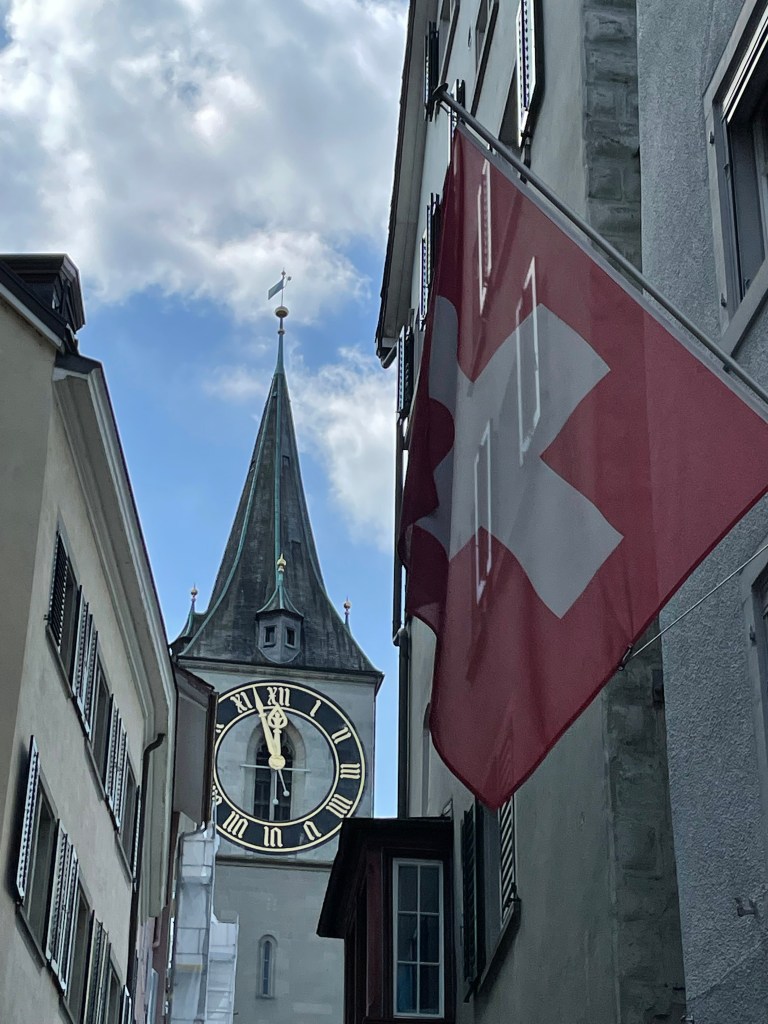
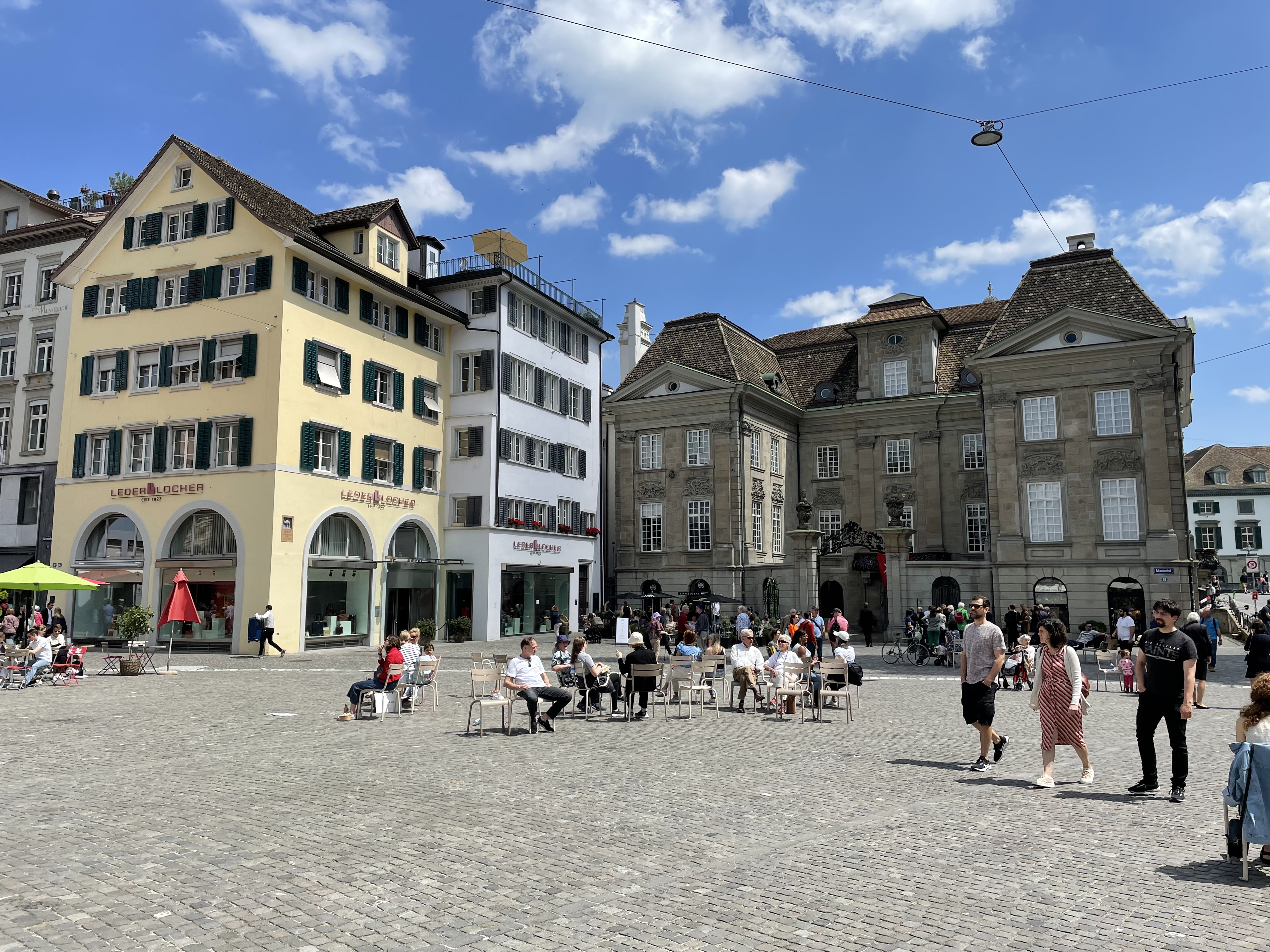
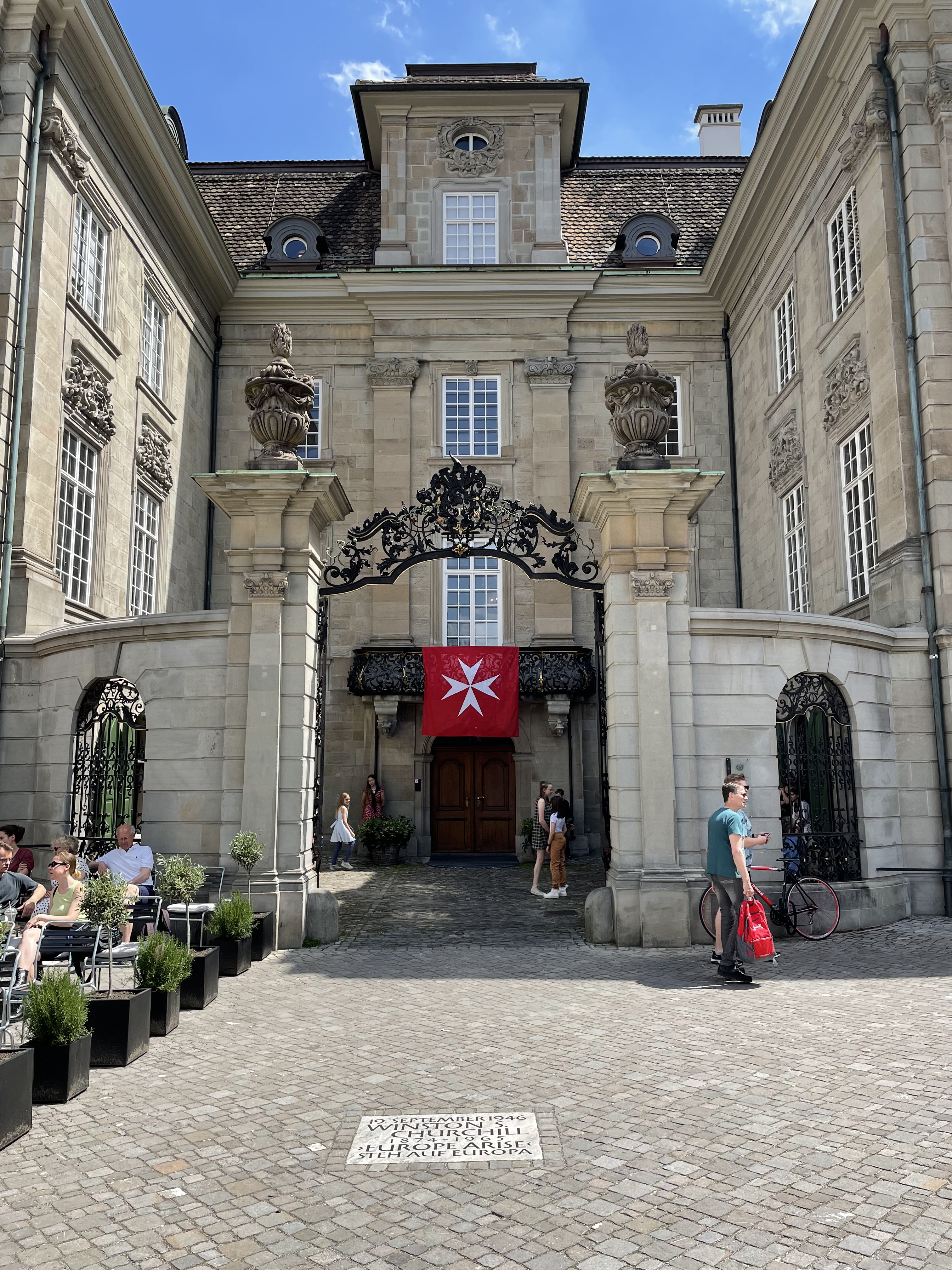
It was a short bus ride from our suburban hotel to the heart of Zurich, Switzerland, a global financial center. Indeed, we saw no skyscrapers, only well-maintained office buildings a few stories high. The many church steeples reached higher than the buildings.

Our main objective was to discover the locations of the beginning of Anabaptism in 1525. Today Anabaptist churches are considered peace churches. With nonresistance as a fundamental principle, today’s Anabaptist churches would include Amish, Brethren, Conservative Mennonite, Hutterite, and Mennonite, to name a few.

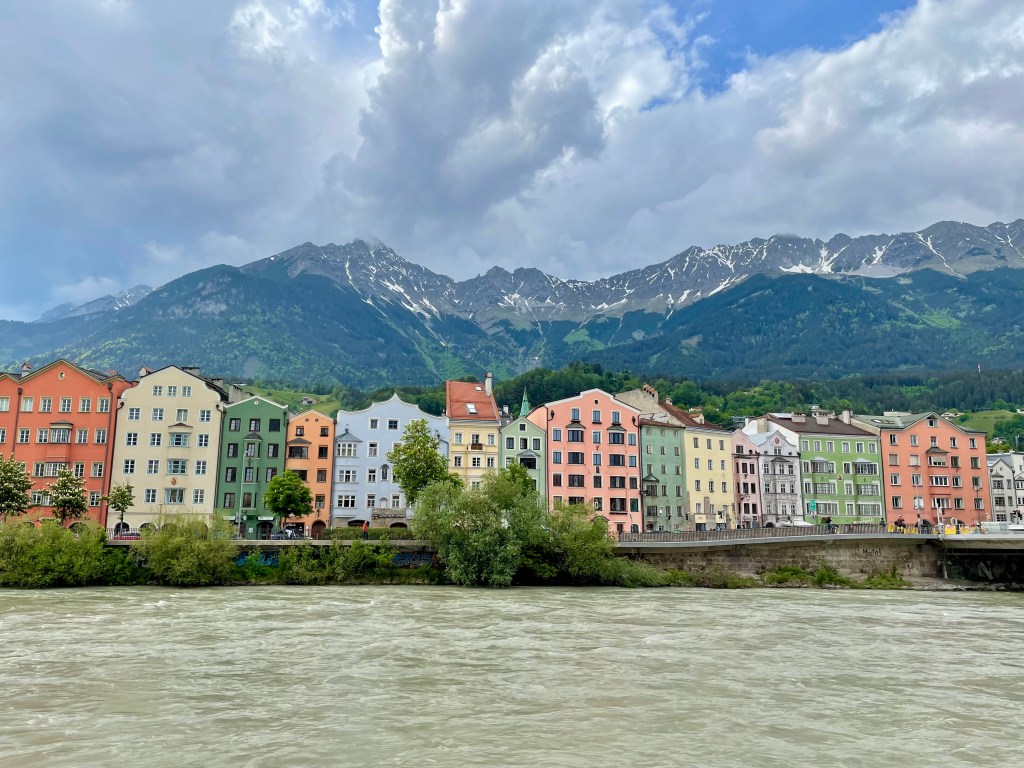
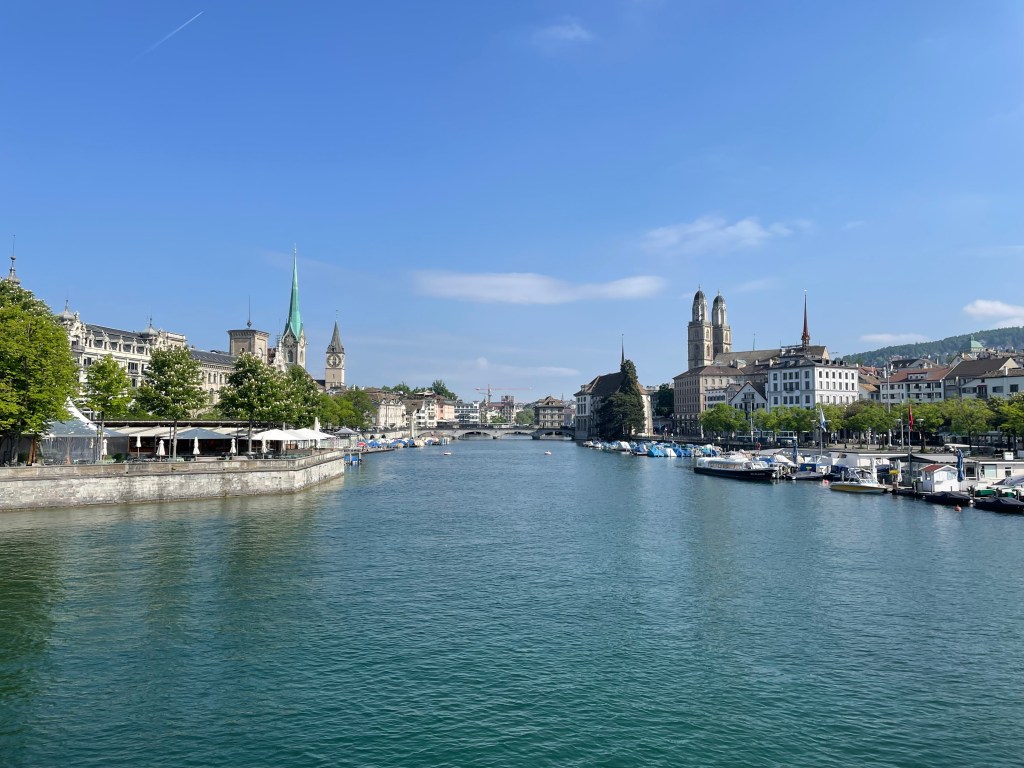
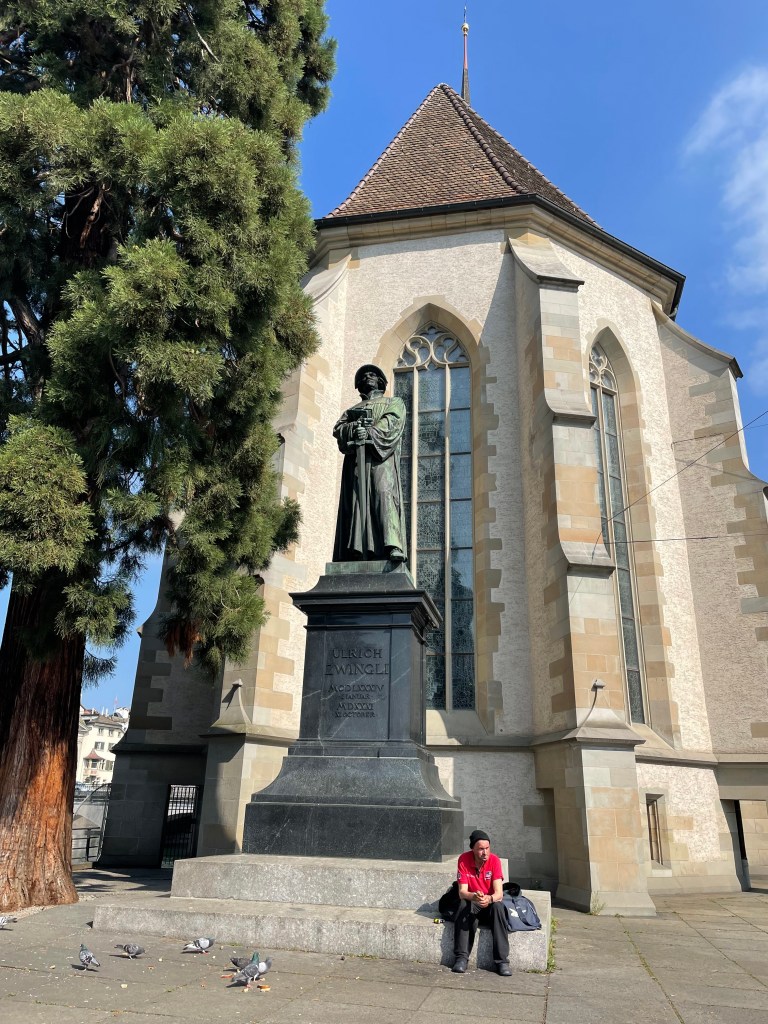
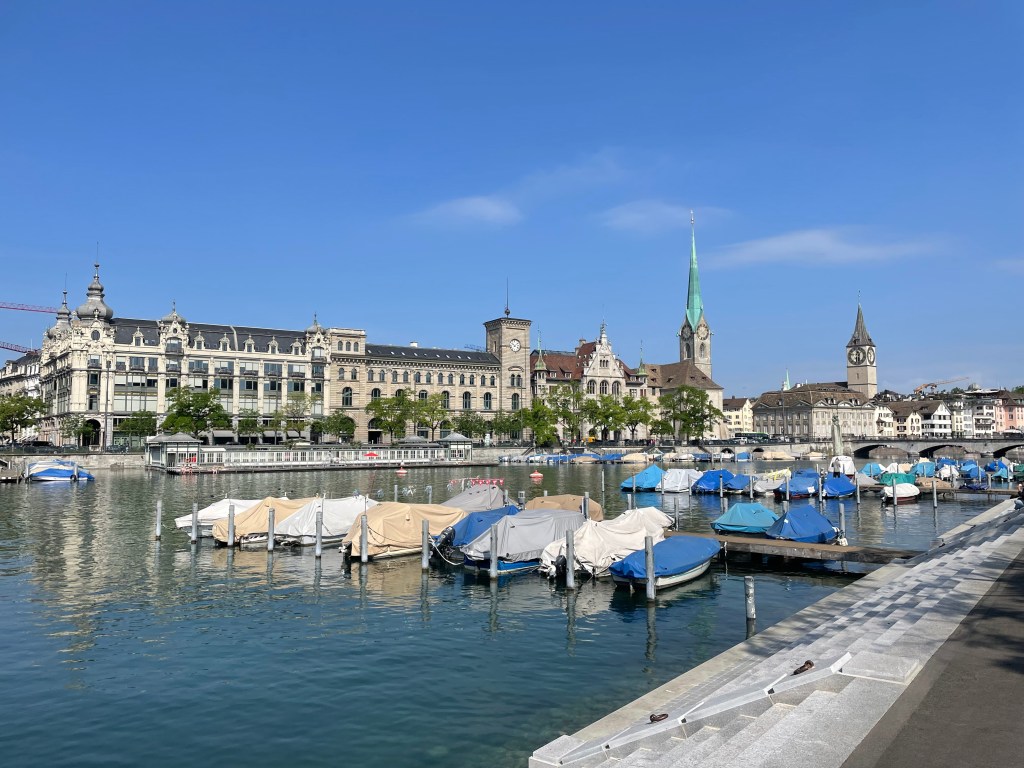
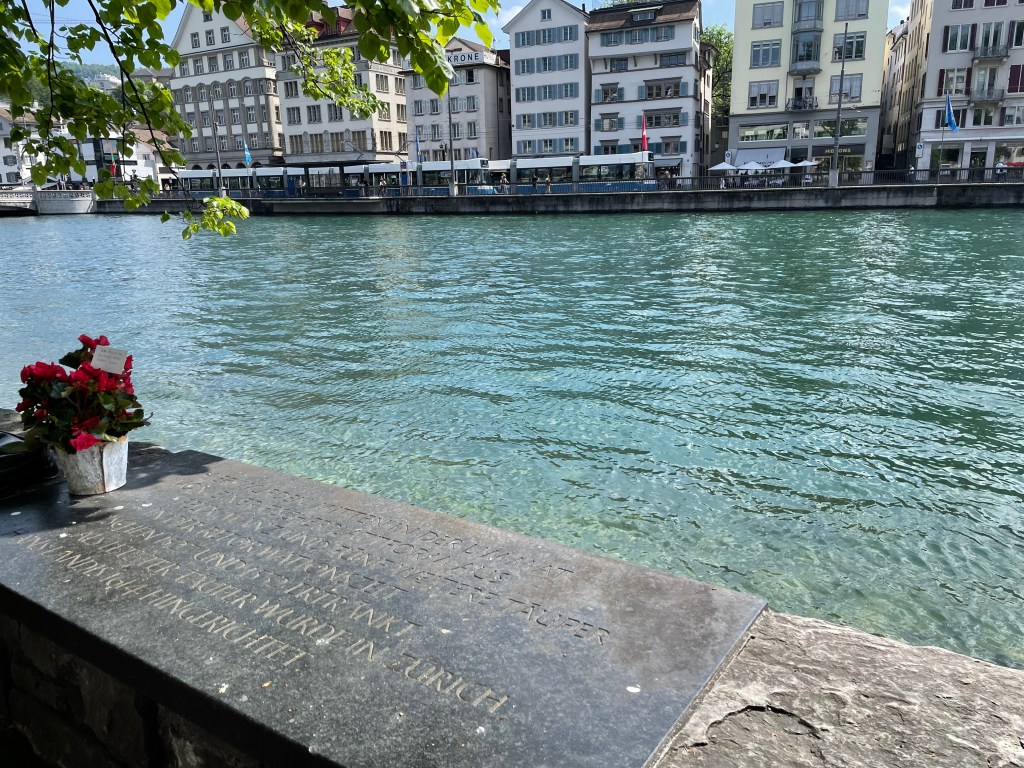
The Limmat River with the twin steeples of the Grossmusnter, a statue of Urlich Zwingli, the City Hall across the river, and a typical street in Zurich.

In Zurich, the first Anabaptists met and were baptized as adults. Shunning infant baptism infuriated both the established Roman Catholic Church leaders and those of the burgeoning Protestant religions led by reformers like Martin Luther and Ulrich Zwingli.

Consequently, the early Anabaptists were hunted down by Catholics and Protestants alike. Some were drowned, while others were burned at the stake. Felix Manz was the first Anabaptist martyr, and we visited the spot where he was drowned in the Limmat River that runs through the heart of Zurich.

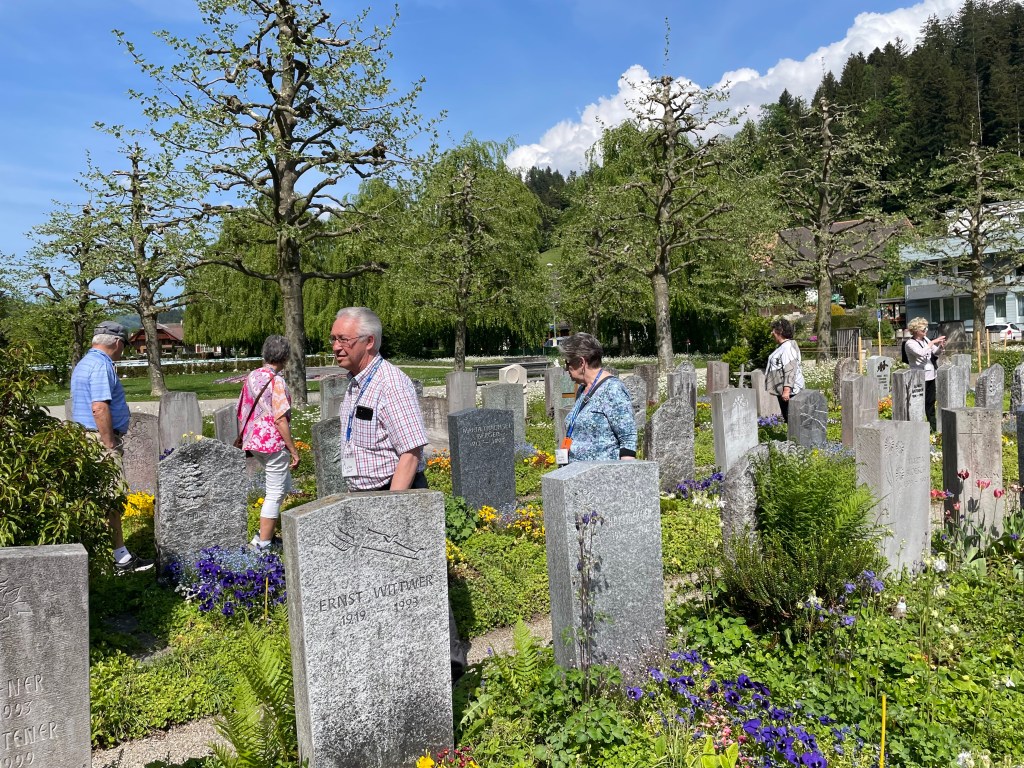
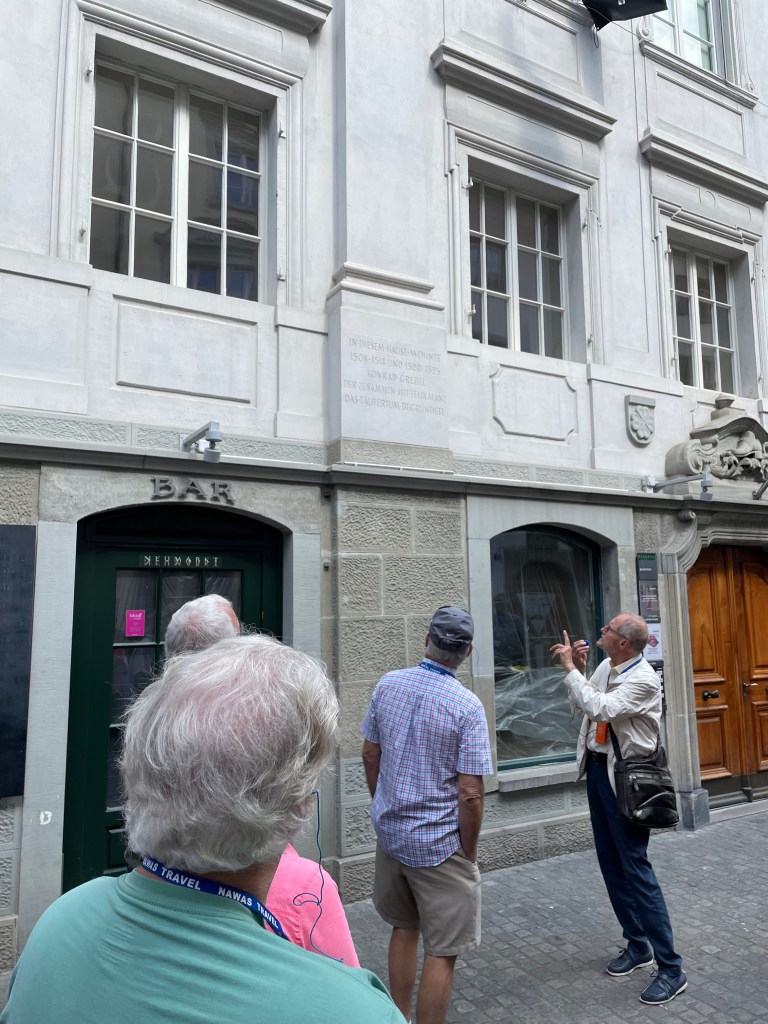
We also visited Manz’s mother’s home, where Conrad Grebel baptized Manz and others considered the Zurich rebels. We also saw the homes of Zwingli and Grebel. It was mind-boggling that these structures still stand, much as they were in the 16th century. Of course, they have been updated and some repurposed. Zwingli’s home is a theater, while Grebel’s is a bar.

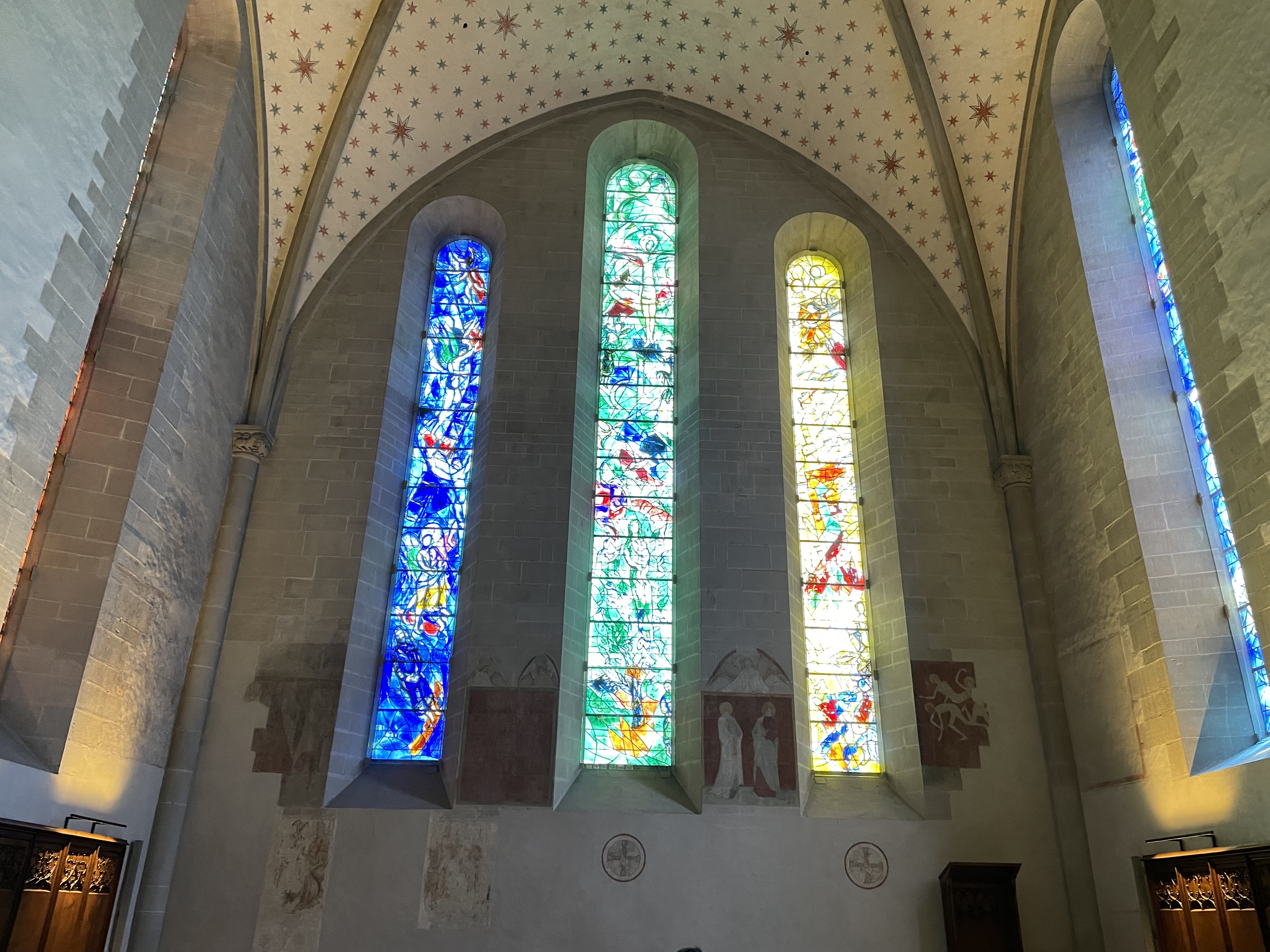
After a pleasant lunch in Munster Plaza, our local guide gave us a brief tour of the Fraumunster Church. He focused his time on sharing about the Chagall stained glass windows, which were beautiful. The pastel frescoes added a complementary contrast to the glorious colors of the Chagall windows.

Please click on the photos to enlarge them.

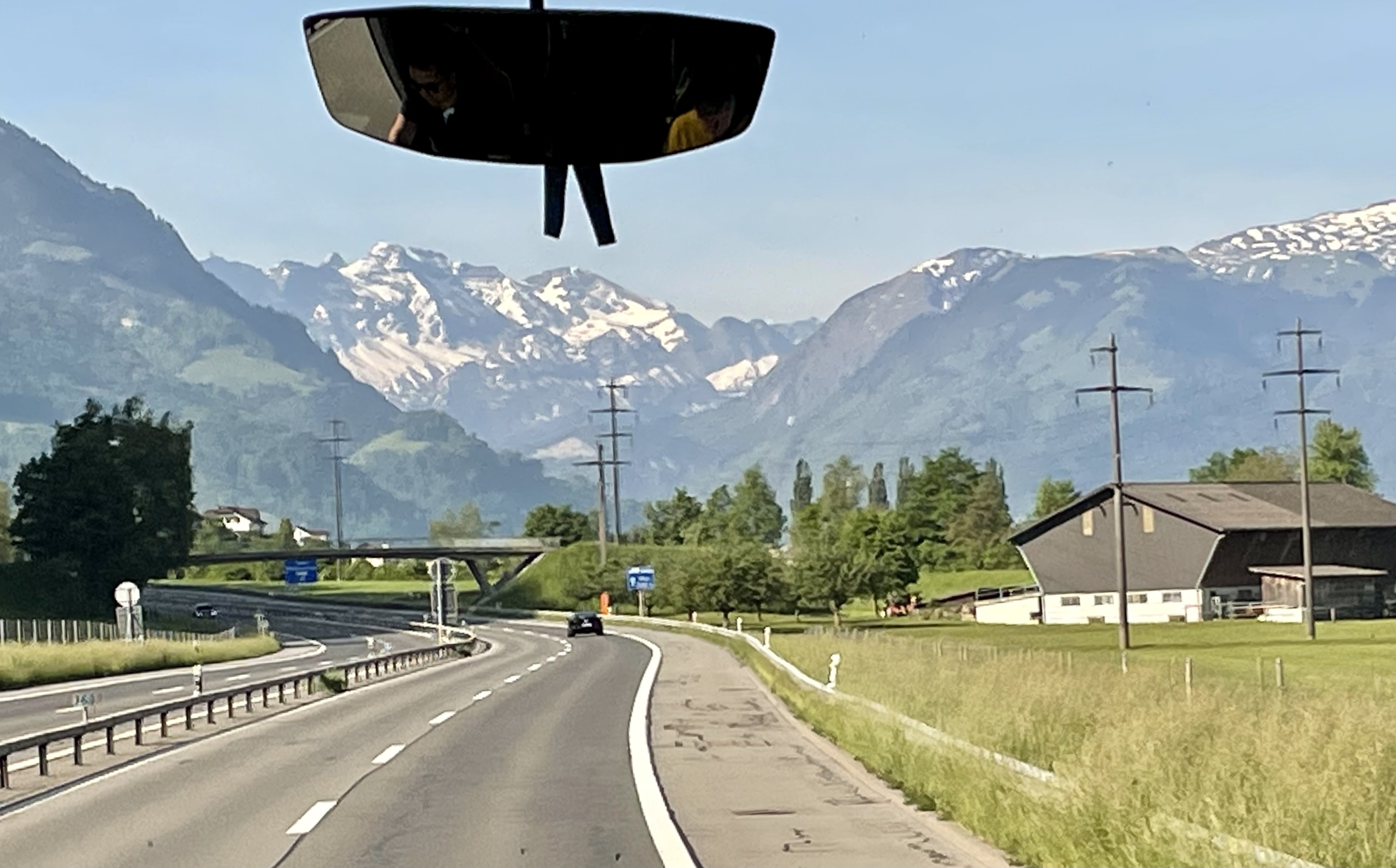
Just like that, we boarded the bus again for Lucerne. On the short drive there I was impressed by the many tunnels that the Swiss have built. Their lengths vary, but they all are clean and help maintain the natural beauty of the lovely countryside. In the states, it is most common for roadways to gouge out giant hillsides to avoid building expensive tunnels that must be maintained. The Swiss do a magnificent job with their commitment to preserving natural landscapes and building efficient infrastructure that enables vehicles to move from one location to another.

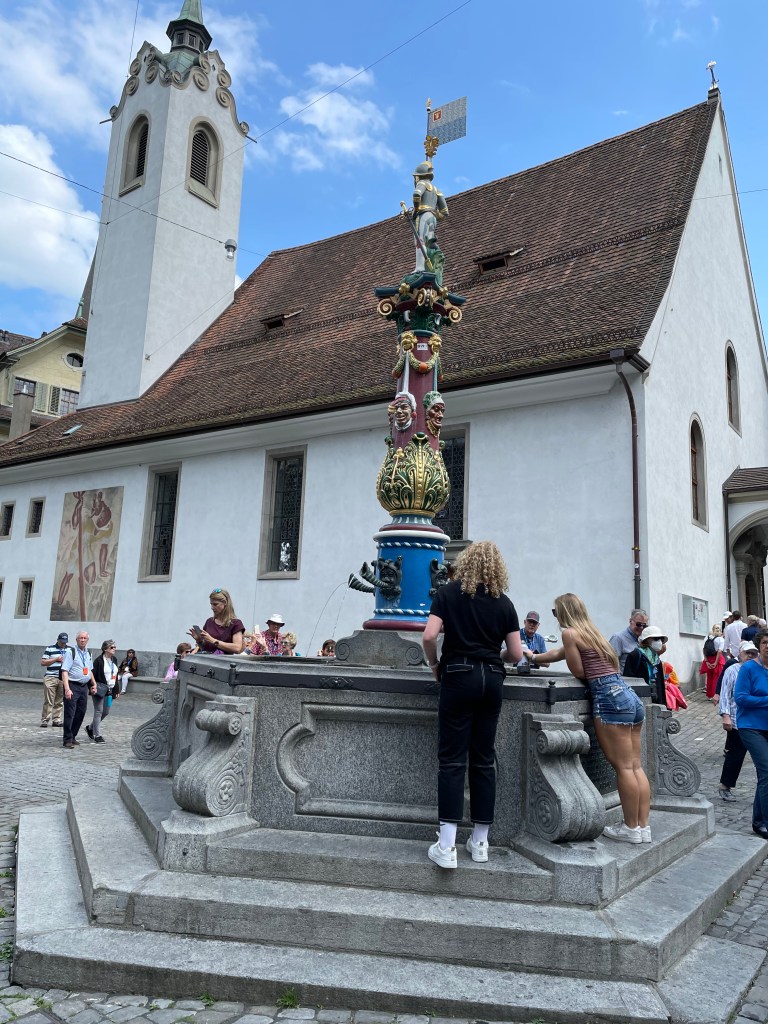
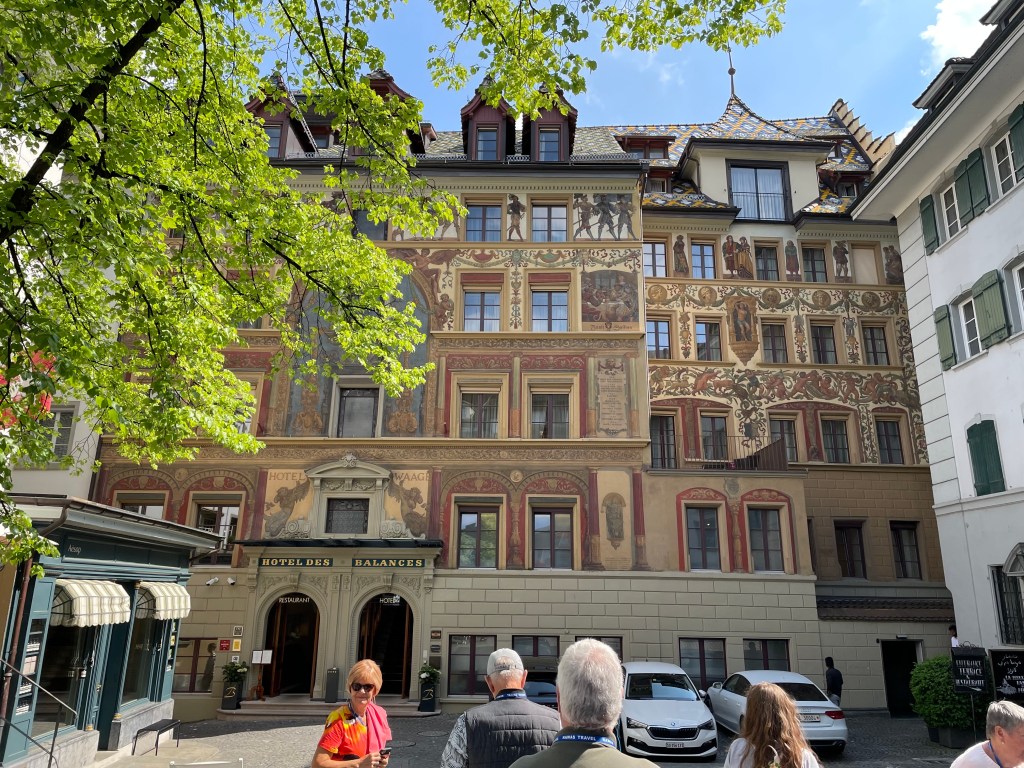
We arrived in Lucerne late afternoon and immediately began to explore the Old Town section. We enjoyed walking the cobblestone streets, viewing the many frescos on the old buildings, and listening to a school band play lively street music. We walked across the famous Chapel Bridge, too.

On the way to our hotel, we stopped to view the noted Lucerne Lion Monument or the Lion of Lucerne. It is a rock relief hewn in 1820-21 in memory of the Swiss Guards killed in the French Revolution in 1792. It was pretty impressive.

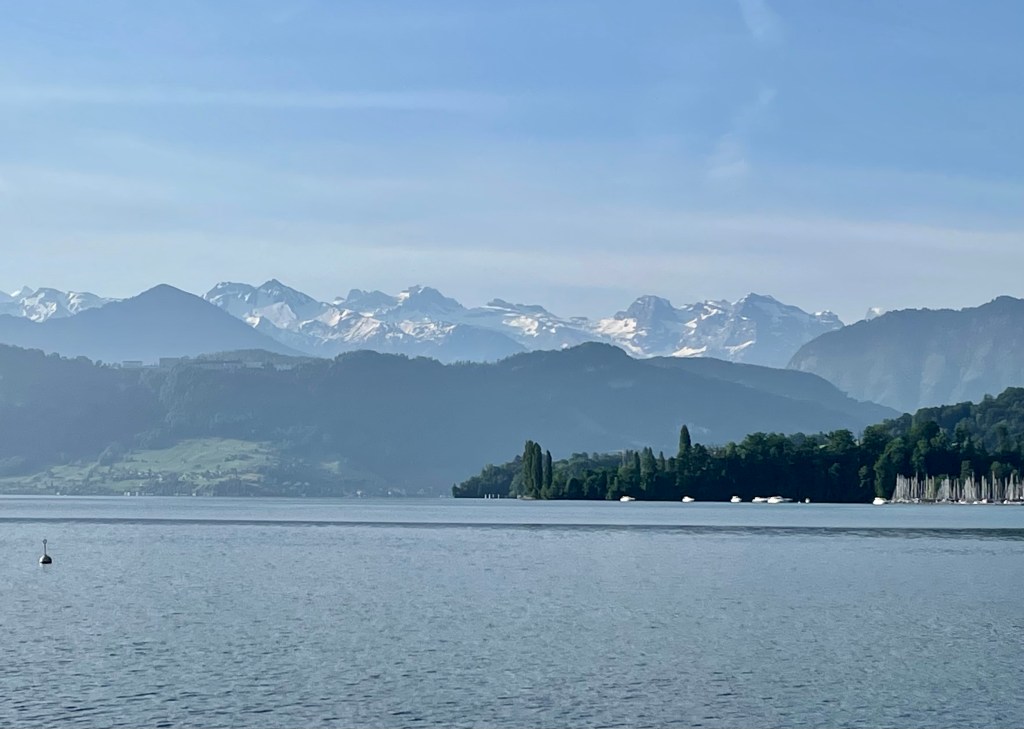
We stayed at the Grand Europe Hotel, which faced the beautiful Lake Lucerne. The lake lured me down to its edge that evening at dusk and again the following day after sunrise. The famous swans of Lake Lucerne added an exclamation point to an already gorgeous scene. Mount Pilatus stood mighty in the background.

After all of the walking and trying to absorb all we had seen and learned this day, we were exhausted. We needed to rest well because the next day would be even more exciting.

The morning view of Mt. Pilatus from a park along Lake Lucerne, Lucerne, Switzerland.

© Bruce Stambaugh 2022
Our European Adventure – Day 2

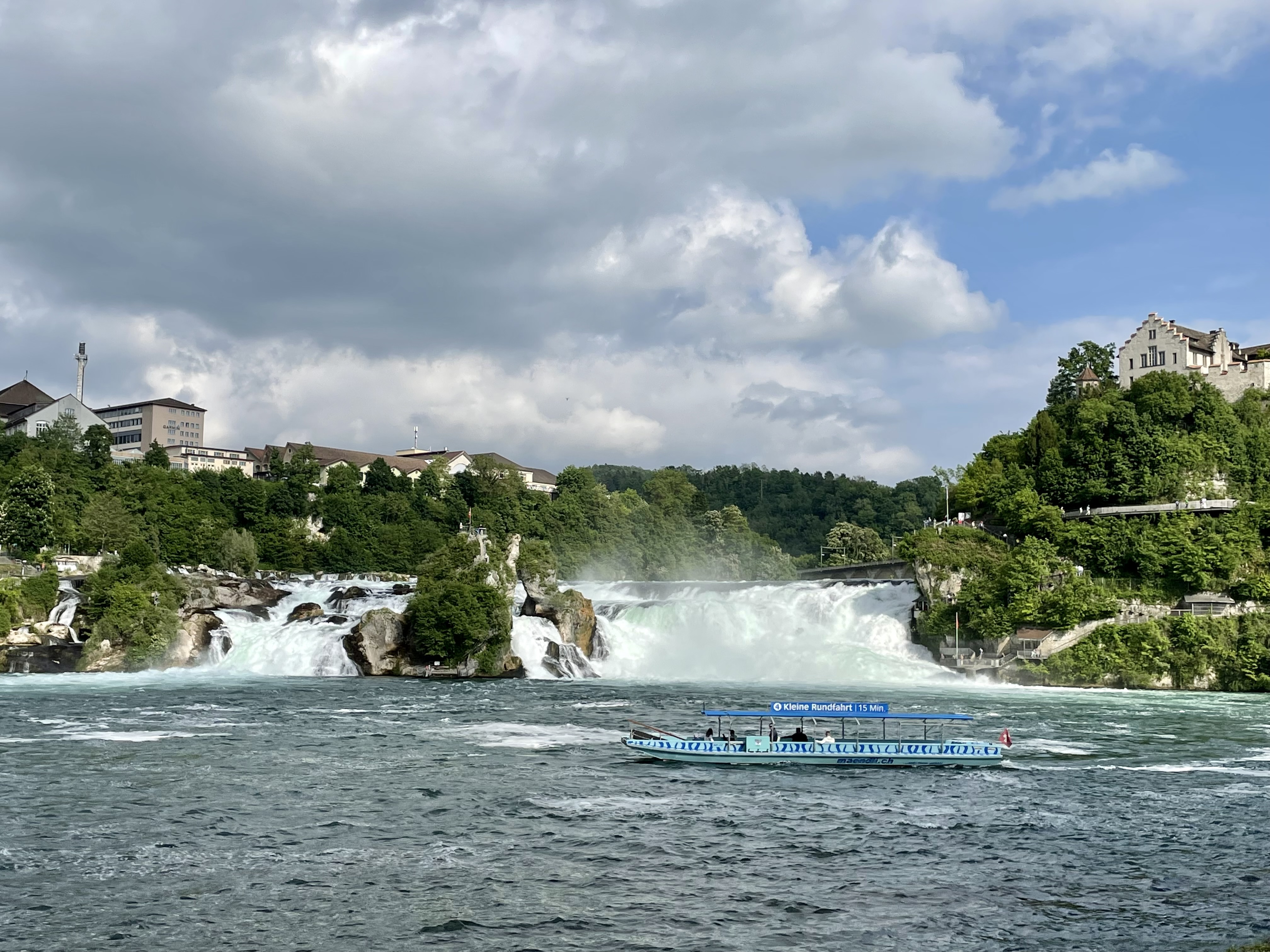
Rheinfall, Schaffhausen, Switzerland.

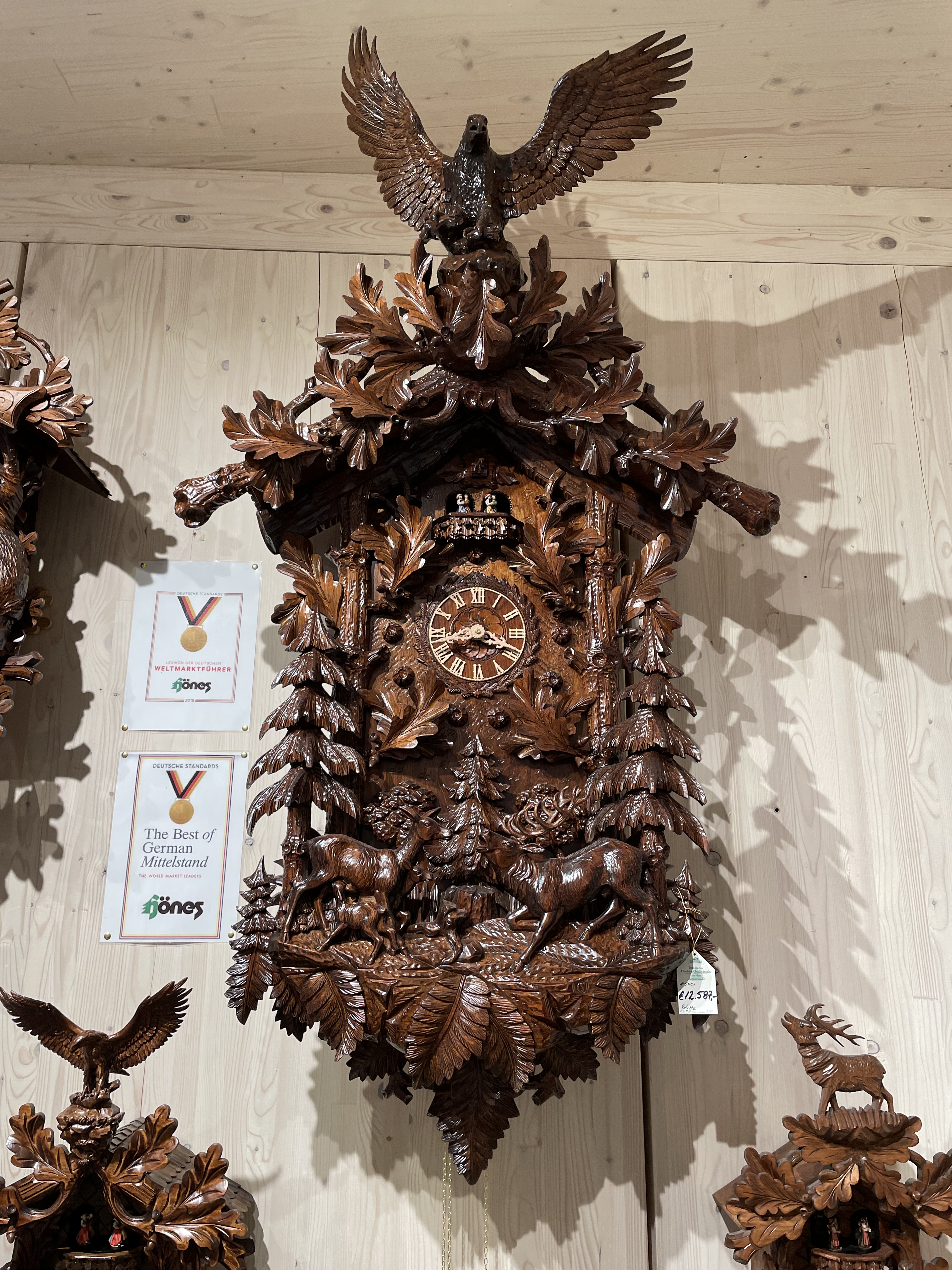
We left our hotel in Viernheim, Germany, and headed to Schleitheim, Switzerland. Our bus traveled along and then through the Black Forest. As we climbed a mountain pass, it began to rain. We soon stopped for lunch at an alpine complex of buildings that clearly was a stopover for tourists. Besides restaurants, we passed through gift shops displaying intricately made cuckoo clocks. I found one that cost over $12,000.

Where we ate and the $12,000 cuckoo clock.

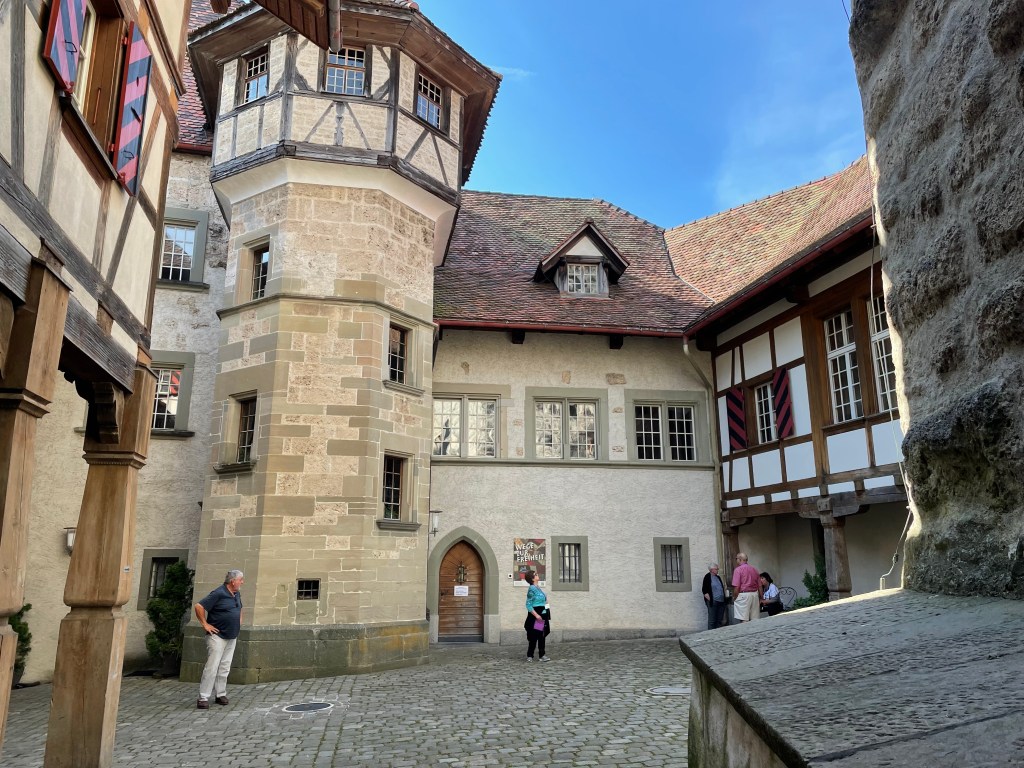
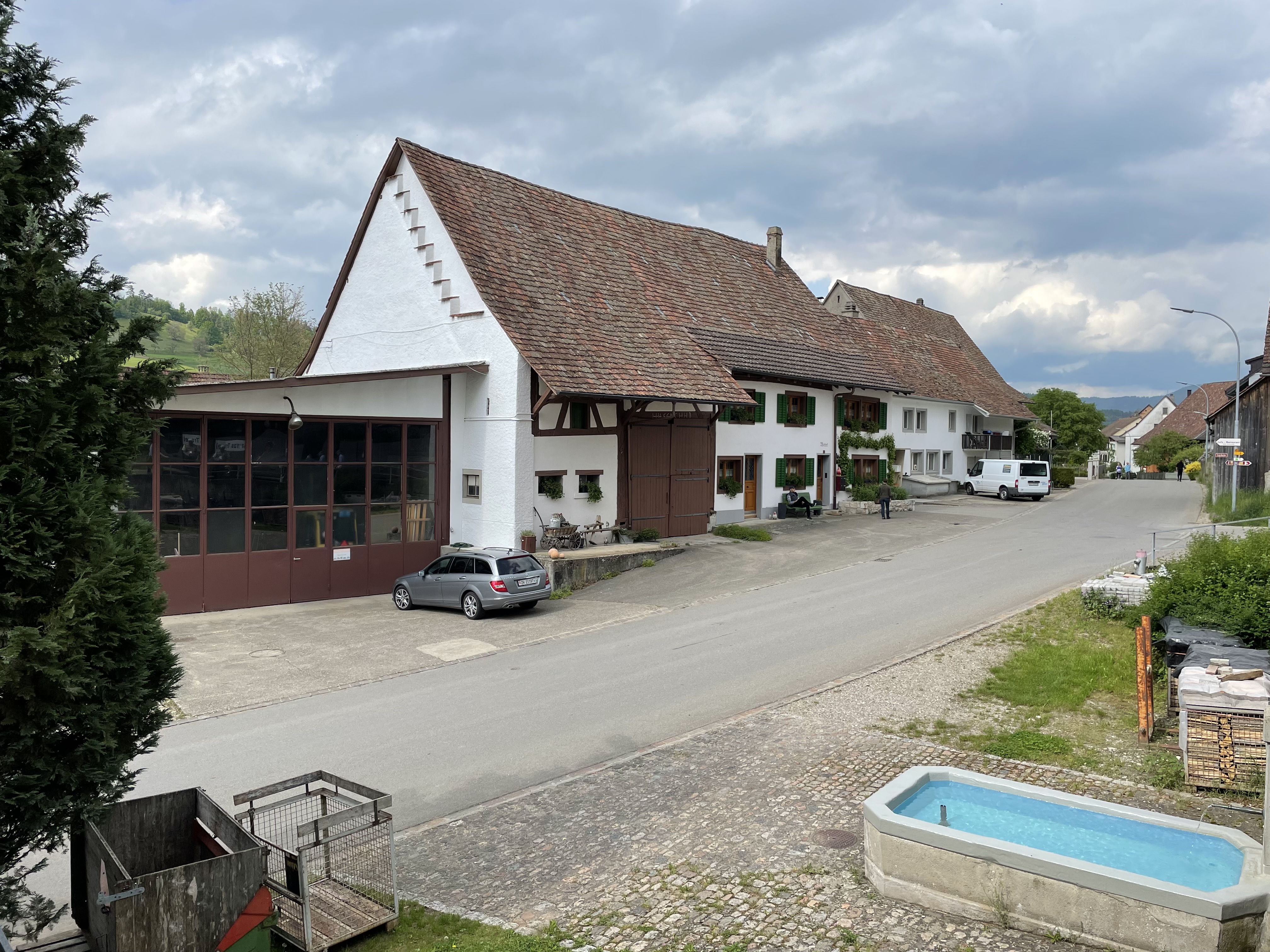
From there, it was a short distance to the Swiss border, where our driver had to exit the bus and show several documents before we could enter the country. After a brief delay, we were on our way and soon arrived in Schleitheim, a rural Swiss village where Anabaptists met in February 1527. Though no list of participants remains, scholars are certain that Michael Sattler participated in this meeting of the minds to clarify the beliefs of these radical reformers.

The Schleitheim document contained several main articles that gave form and direction to the young movement. Sattler most assuredly wrote the manuscript that included instructions for adult baptism, the ban, communion, separation of church and state, pastors in the church, nonresistance, and forbidding the taking of oaths.

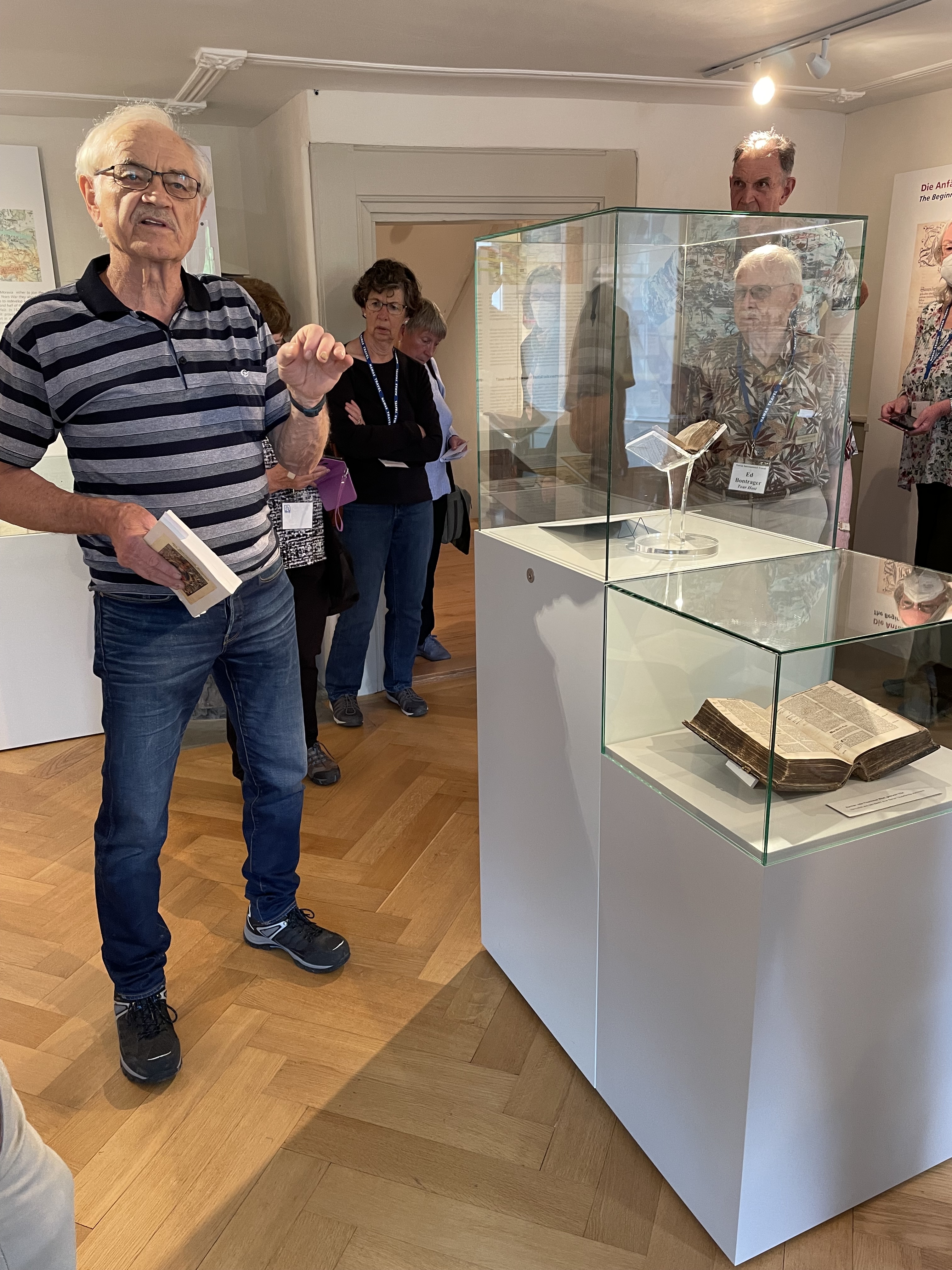
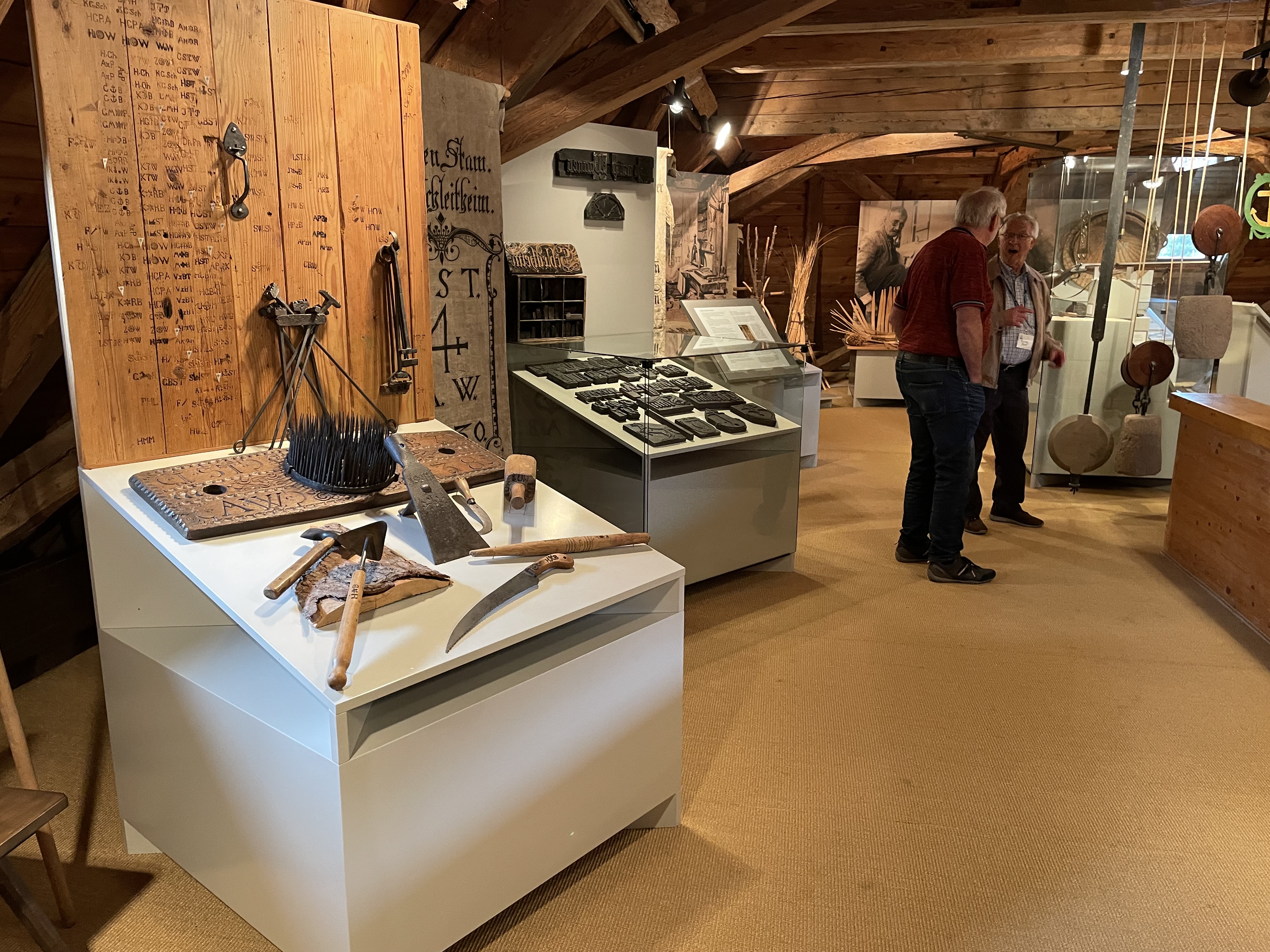
The Schleitheim Museum is housed on the top two floors of the town’s community building. Because our group was too large, half went upstairs while the rest of us were told to look around. So, we did.

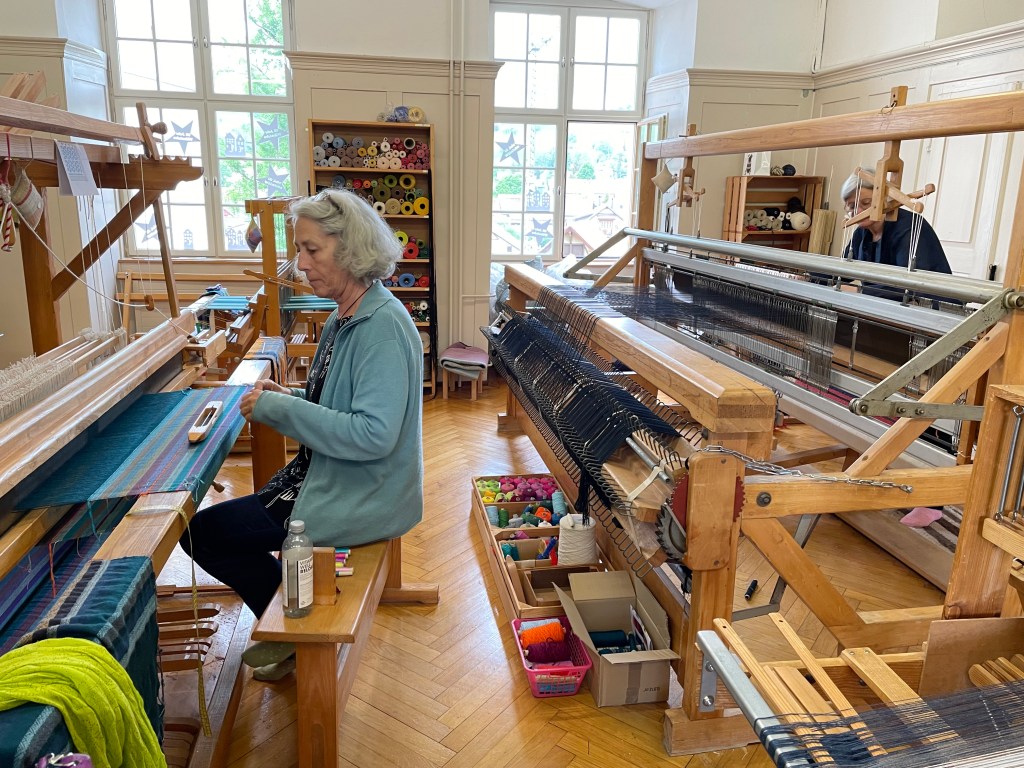
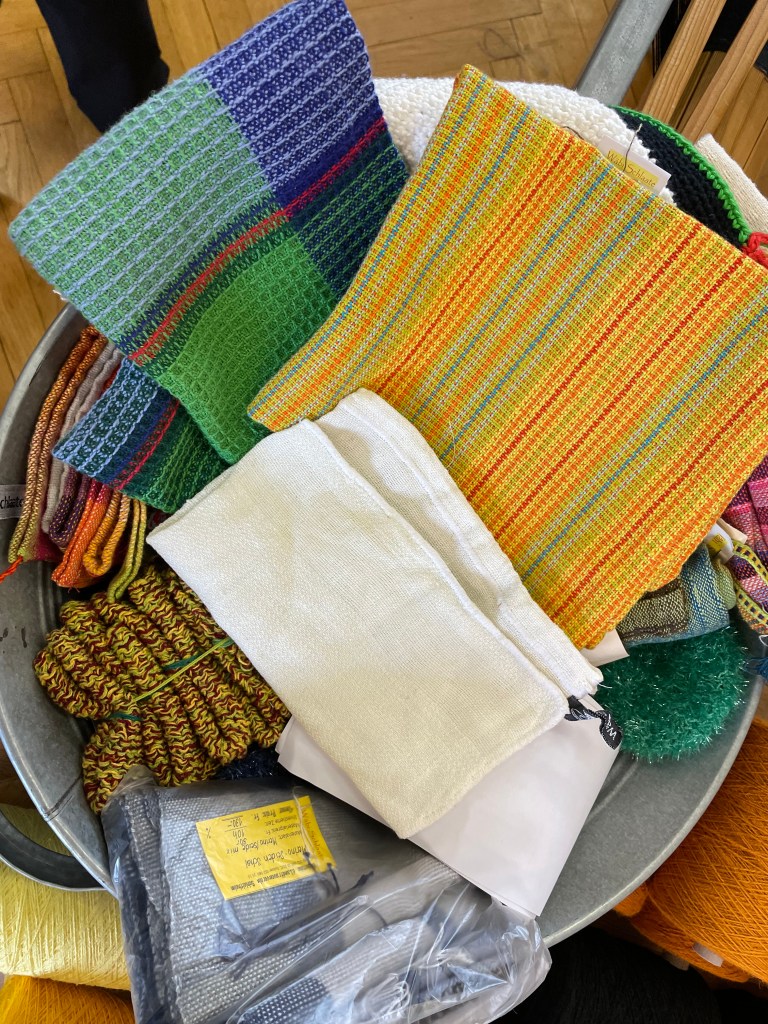
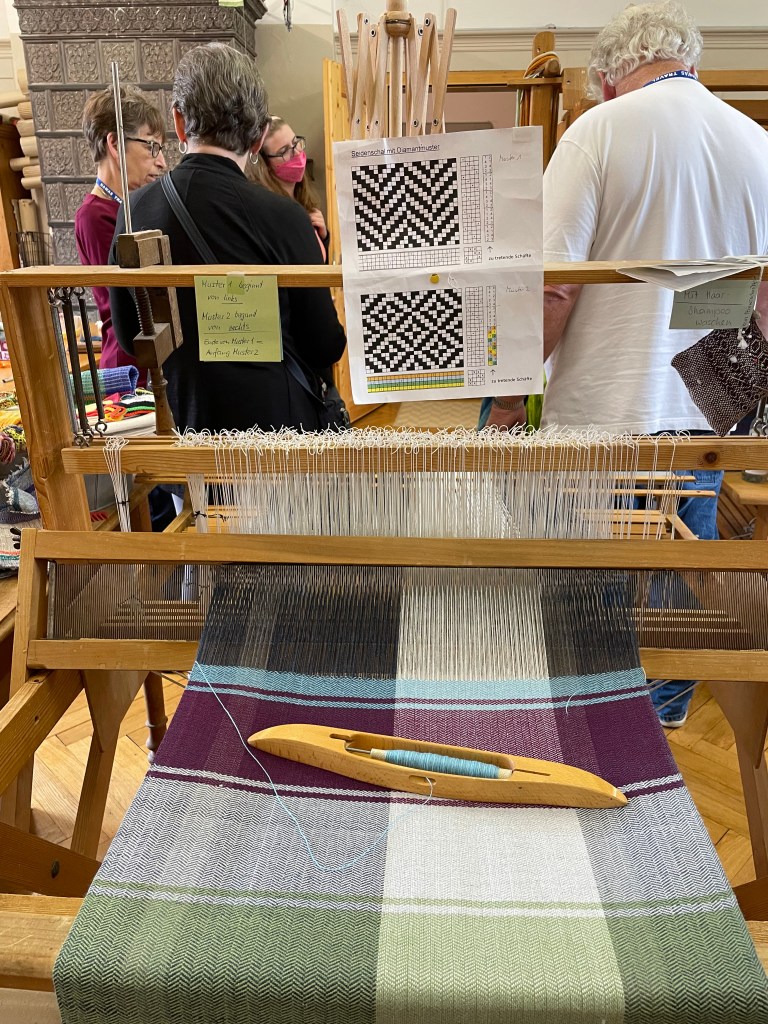
When I opened a large wooden door, I startled three local ladies who were using looms to make scarves and other clothing items. Once we explained who we were, the women relaxed and graciously showed us what they were doing. I found plenty of photo opportunities in the large workspace.

The same was true for the museum. All sorts of antiques had been saved, from the sign on the railroad depot to the first hand-drawn fire engine. Of course, there were old documents, books, and bibles from the time when Mennonites flourished there.

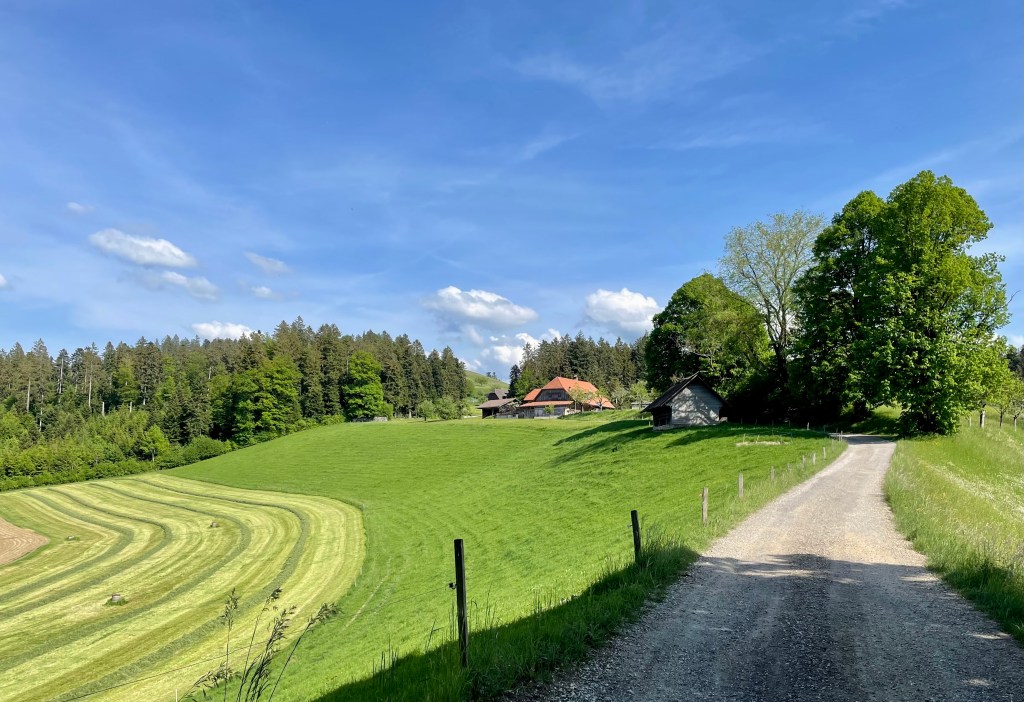
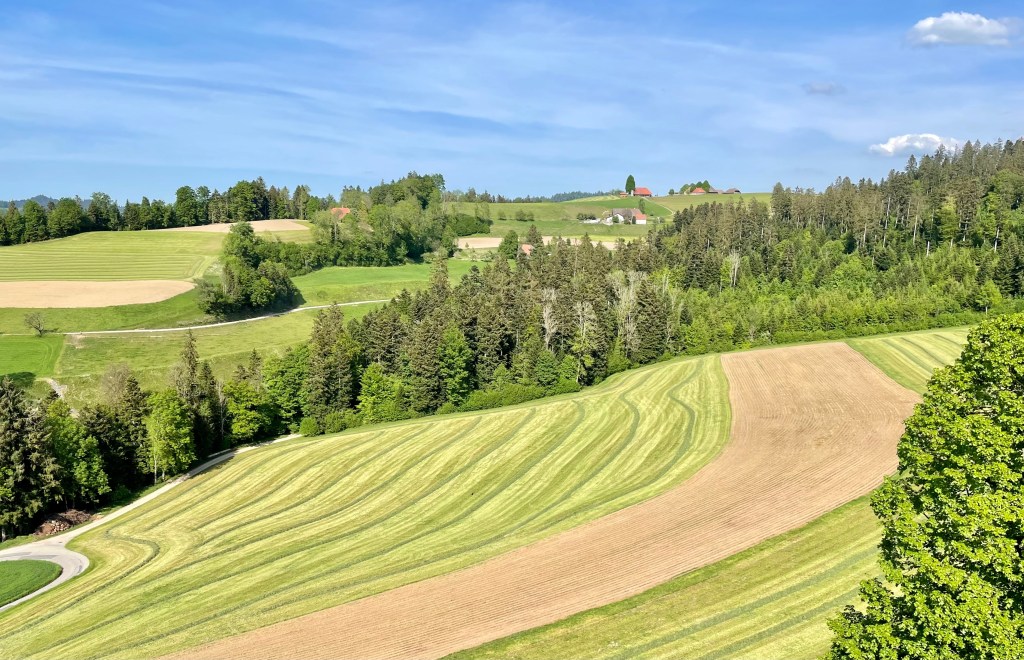
After leaving Schleitheim, we wound our way through gorgeous farm country, where big round bales of hay had just been stacked. I tried to capture the scenery through the tinted bus windows.

Soon we arrived in Schaffhausen at the Rheinfall, a cascading waterfall that draws lots of tourists. A few of the tour boats that take you closer to the falls were operating. It was a beauty to behold, but I had a hard time believing we were standing on the banks of the Rhine River.

We left that beautiful place and headed to Zurich, where we would spend the night.

© Bruce Stambaugh 2022

Our European Adventure Begins – Day 1

The Reformation Monument in Worms, Germany.

My wife and I had never been to Europe. When an opportunity arose for us to join a tour group to visit Austria, Germany, and Switzerland, we quickly signed up. That was in pre-pandemic times. Consequently, our initiation into all things European was delayed two years until this spring when it was deemed safe to travel again.

The most influential element in the trip going forward was the rescheduling of the Passion Play at Oberammergau, Germany. The play is held once every 10 years by citizens of the small Bavarian town set at the foothills of the Alps. Click this link to read the fascinating history of why and how the drama began in 1634 and continues today.

The focus of this tour was Anabaptist history. That aspect was added to an established 10-day tour offered by a New England tour company. By trip’s end, those of us on the tour, all senior citizens save one, realized it was a bit much. We had difficulty keeping up with the rapid pace to cram everything in. Consequently, we only skimmed the surface of exploring this beautiful and historic area of Europe. However, that did not detract from our enjoyment of the tour and learning to interact with our fellow tourists and people we met along the way.

Given that, I will share highlights of our trip through select photos, going in chronological order. Please feel free to ask questions in the comments.

I hope you enjoy the trip via the photos as much as my wife and I did in person.

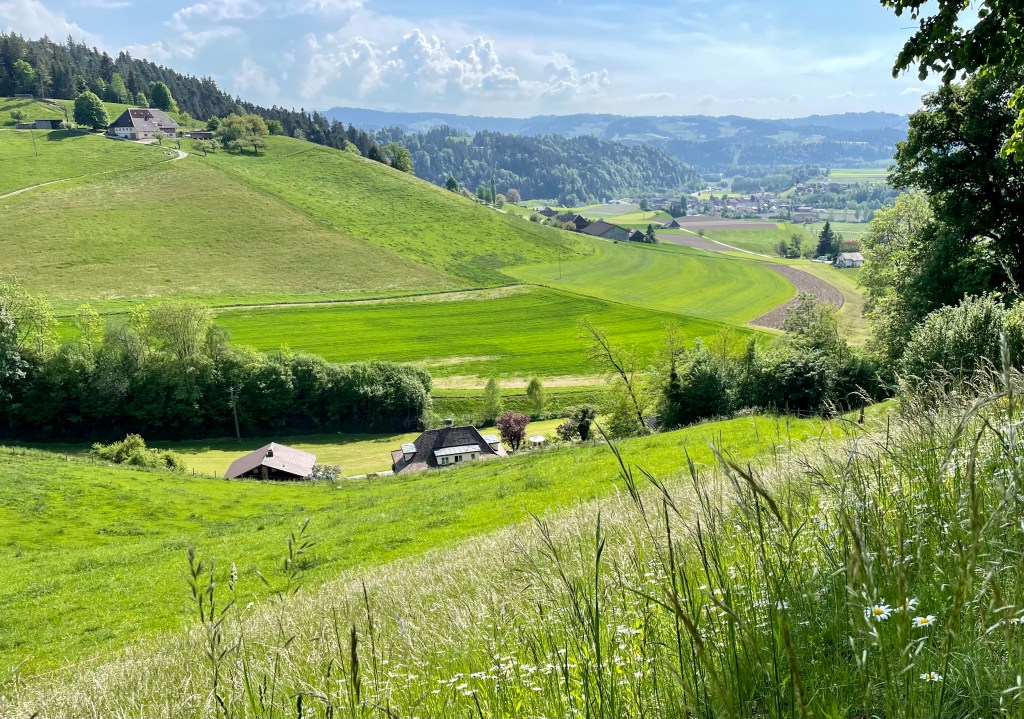
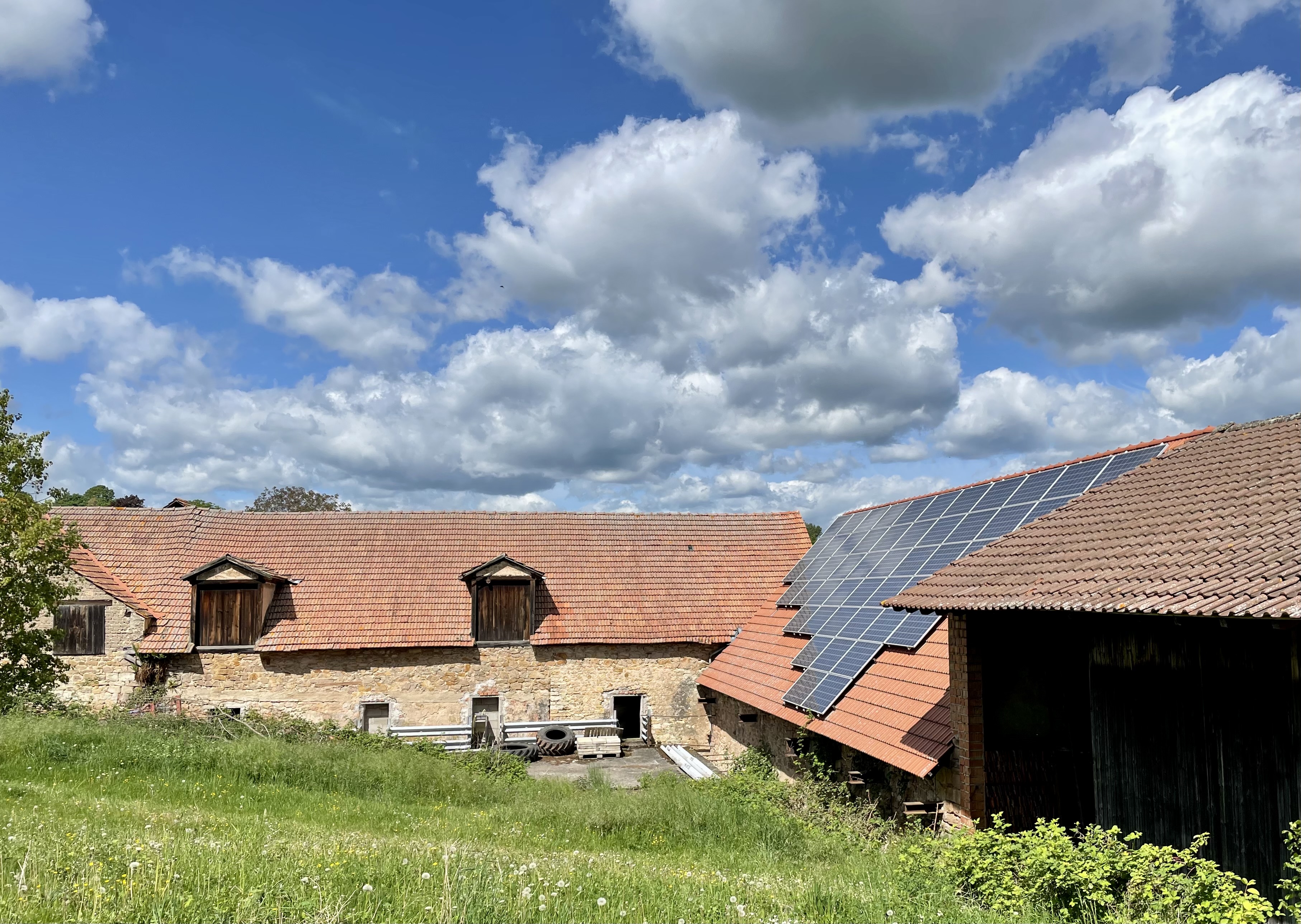
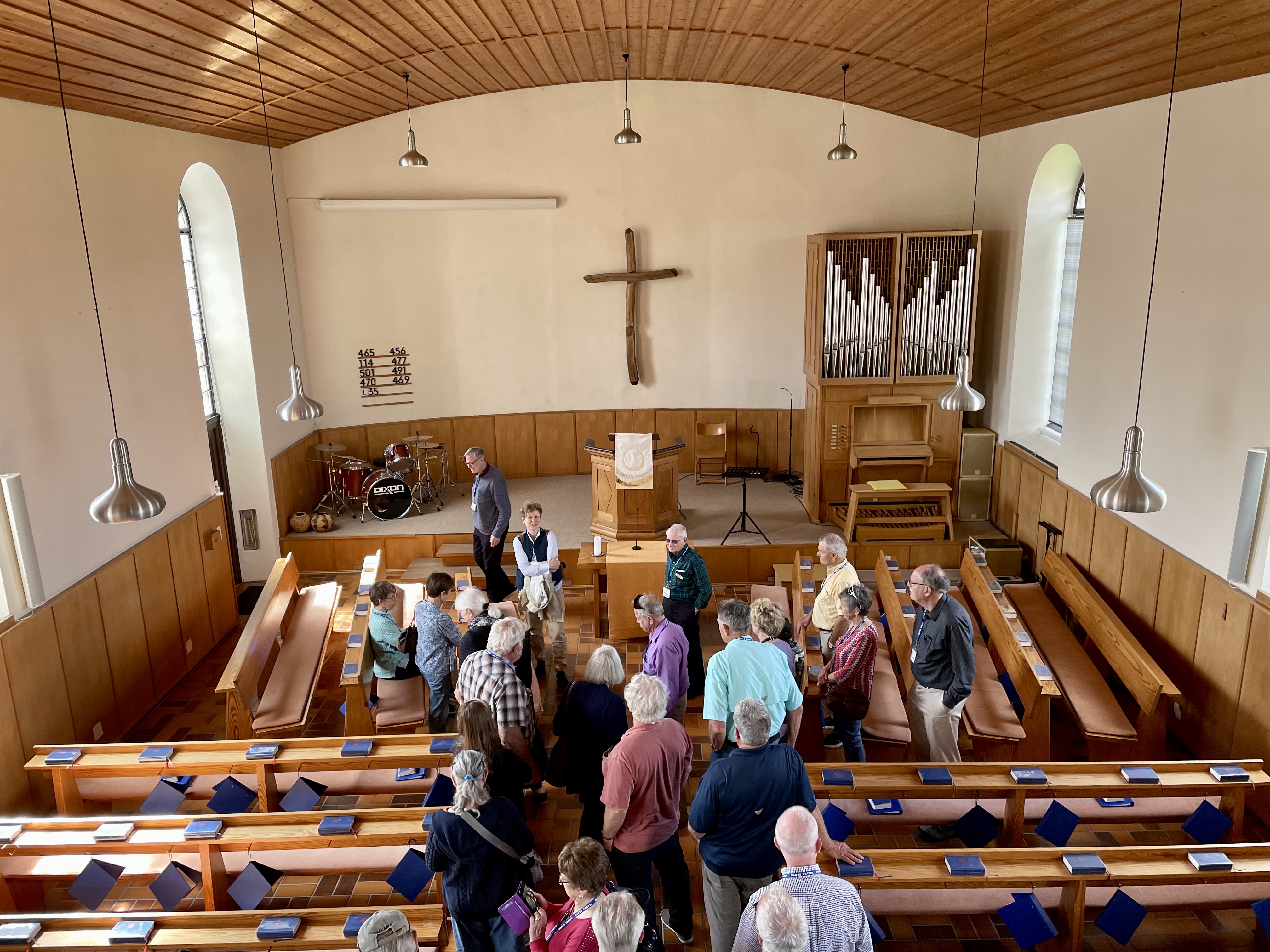
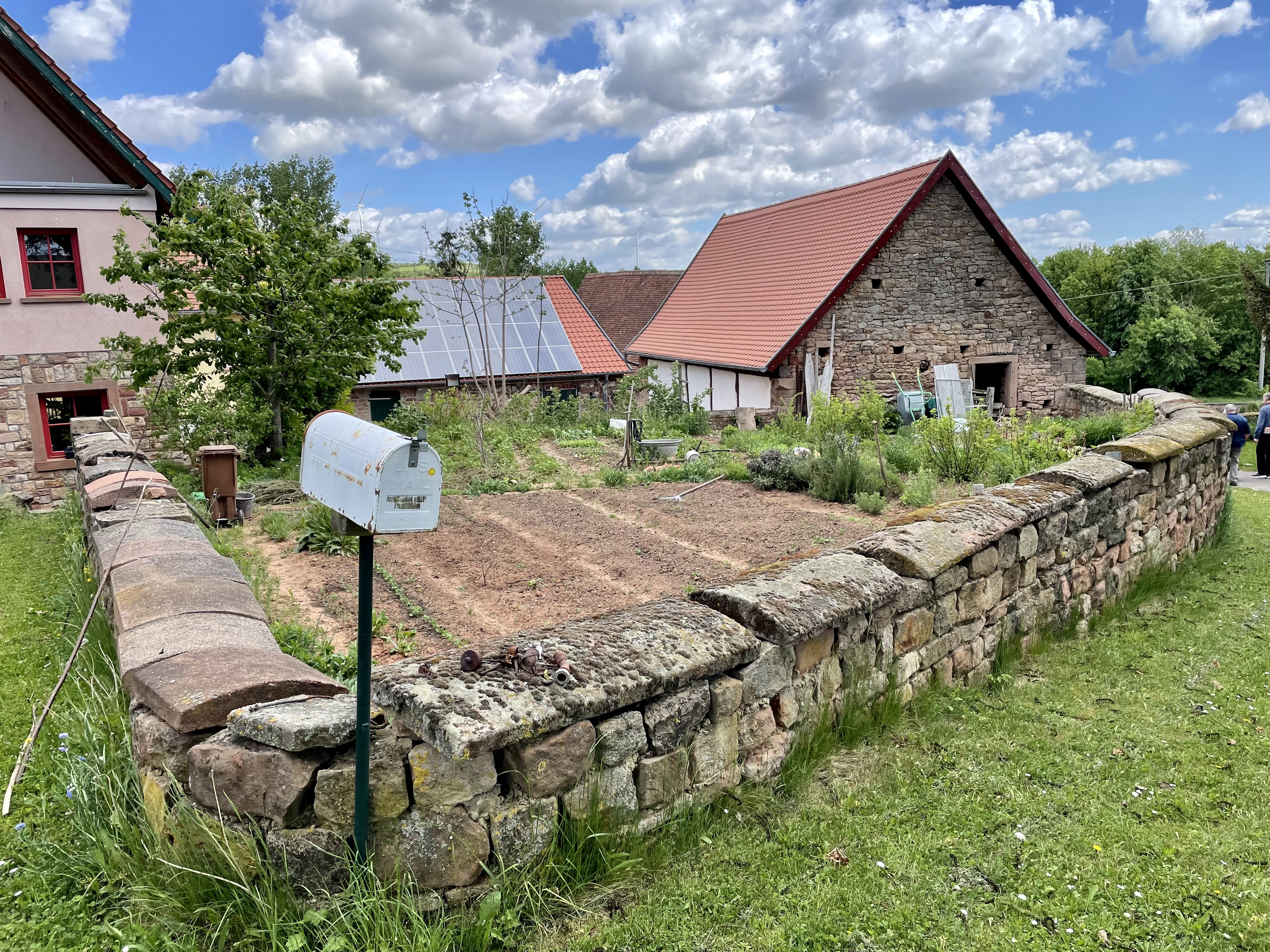
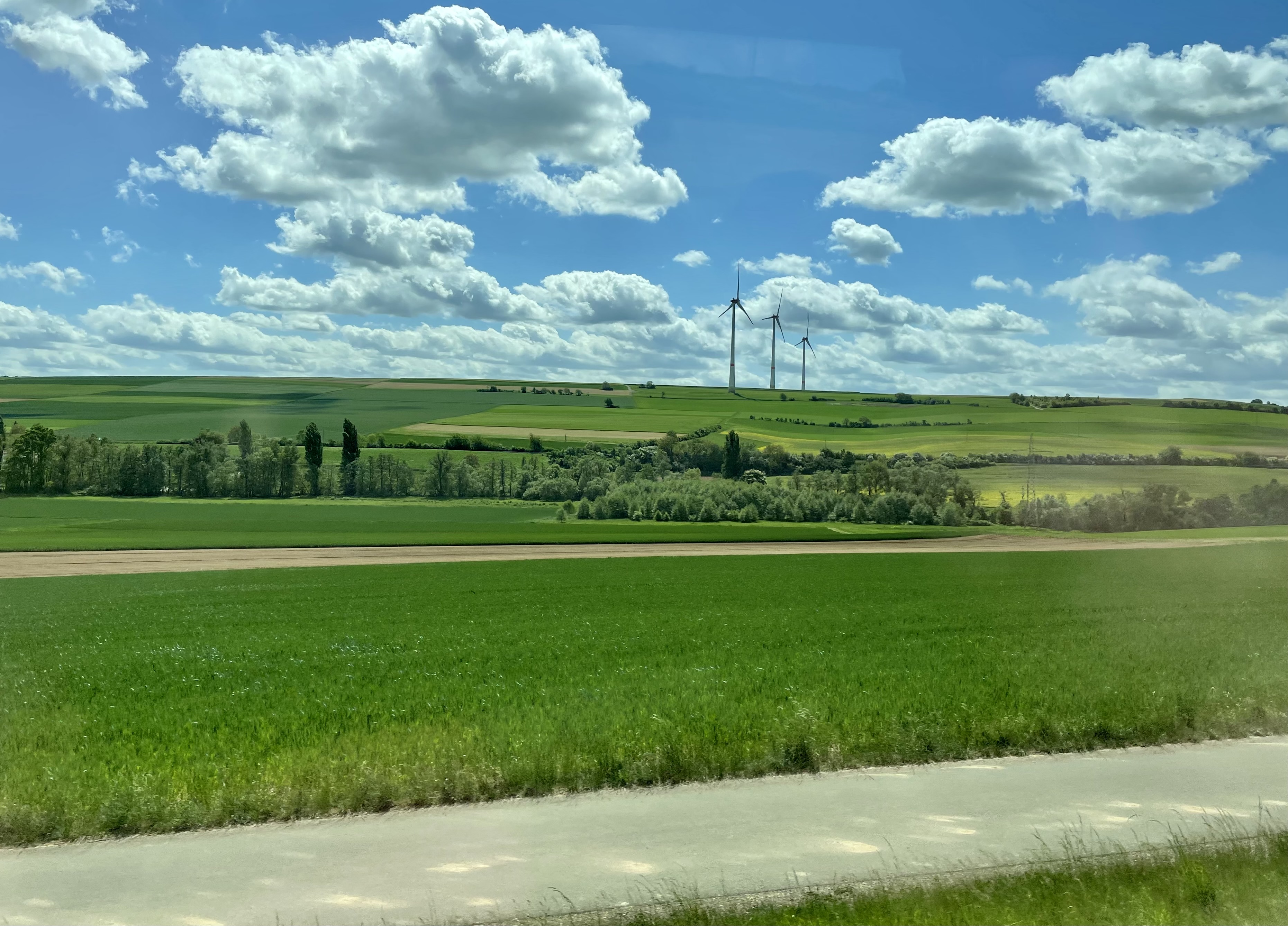
The photos above were all taken at our first stop, Weierhof, an early Anabaptist settlement. The images show a little free library; solar panels on an old farmstead; the Weierhof Mennonite Church; a walled garden, and the rolling German countryside with bike paths, farm fields, and windmills.

We traveled from the rural village to the city of Worms, Germany, where Martin Luther began his resistance to the ruling Catholic Church.

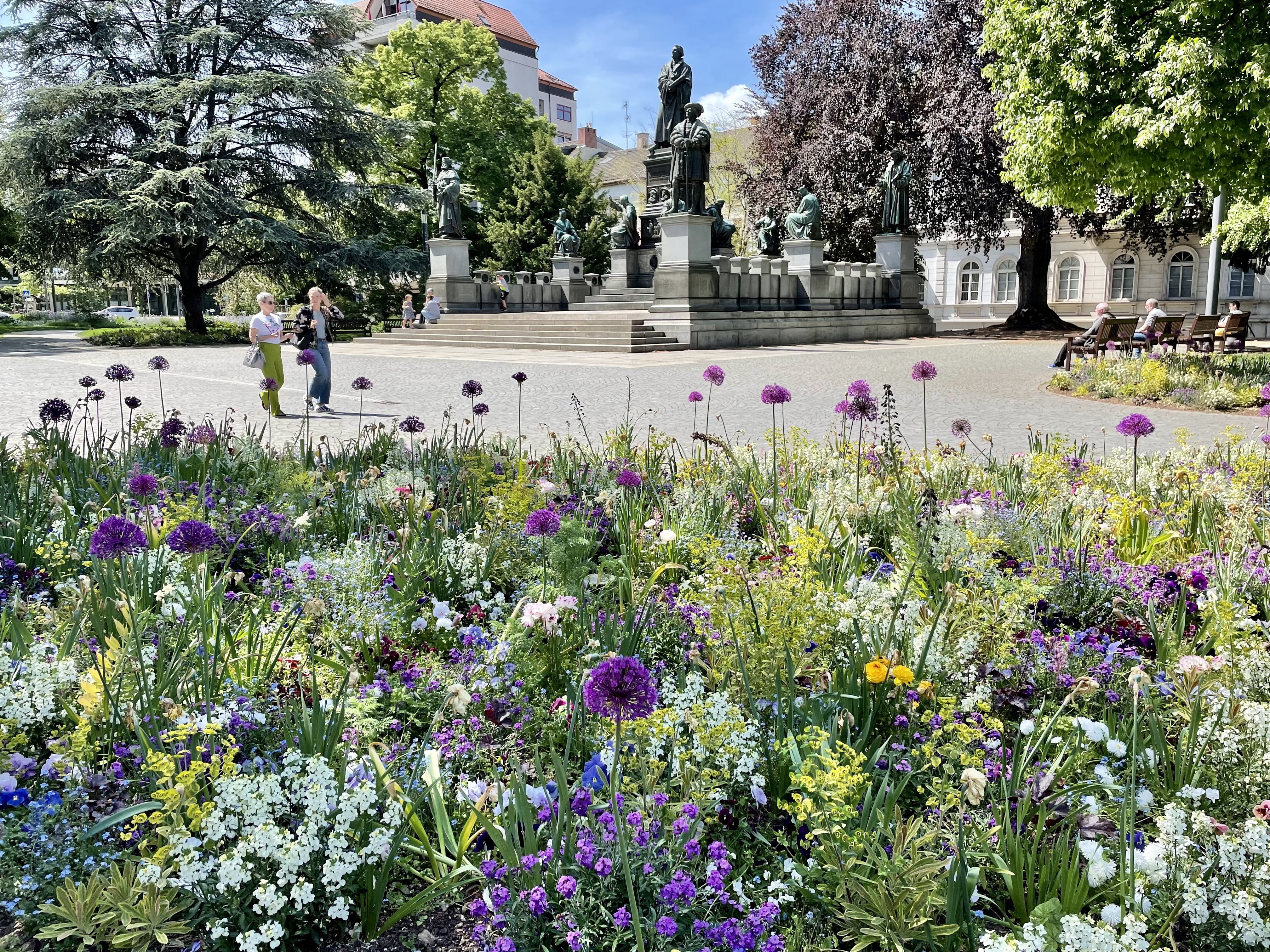
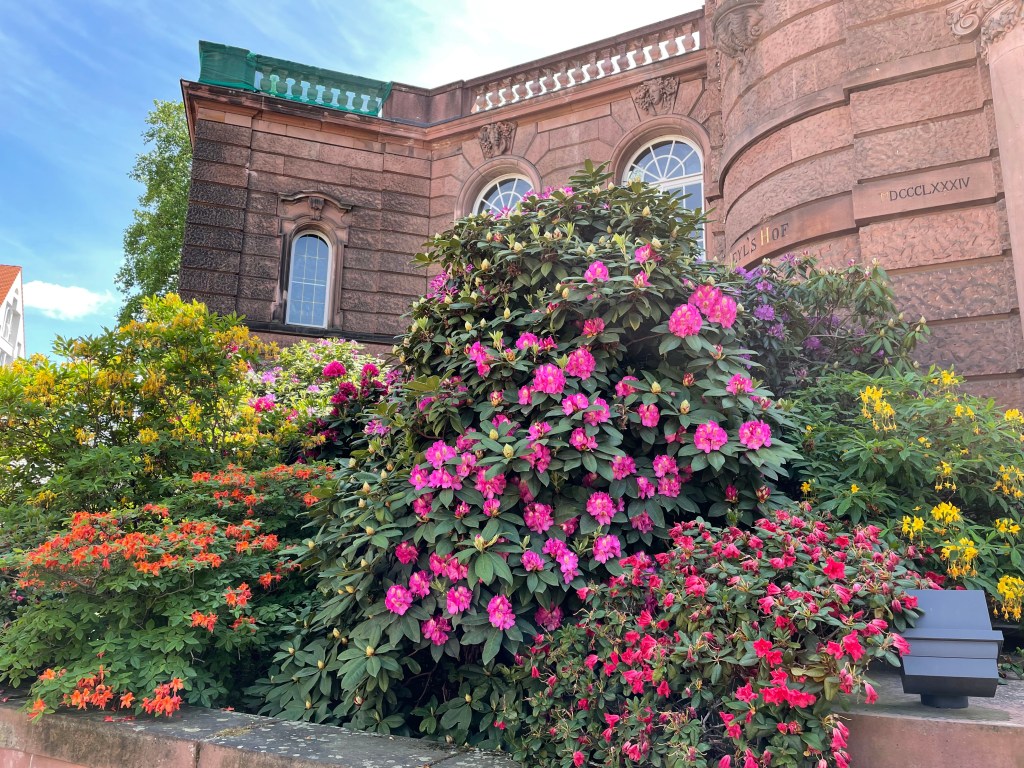
Our lunch stop in Worms, Germany, included touring significant sites where Martin Luther began his public resistance that eventually led to the beginning of the Reformation. Flowers and flowering shrubs were in full bloom. We visited the spot where Luther made a dramatic speech and the Reformation Monument at Luther Plaza. A plaque included the complete statement by Luther.

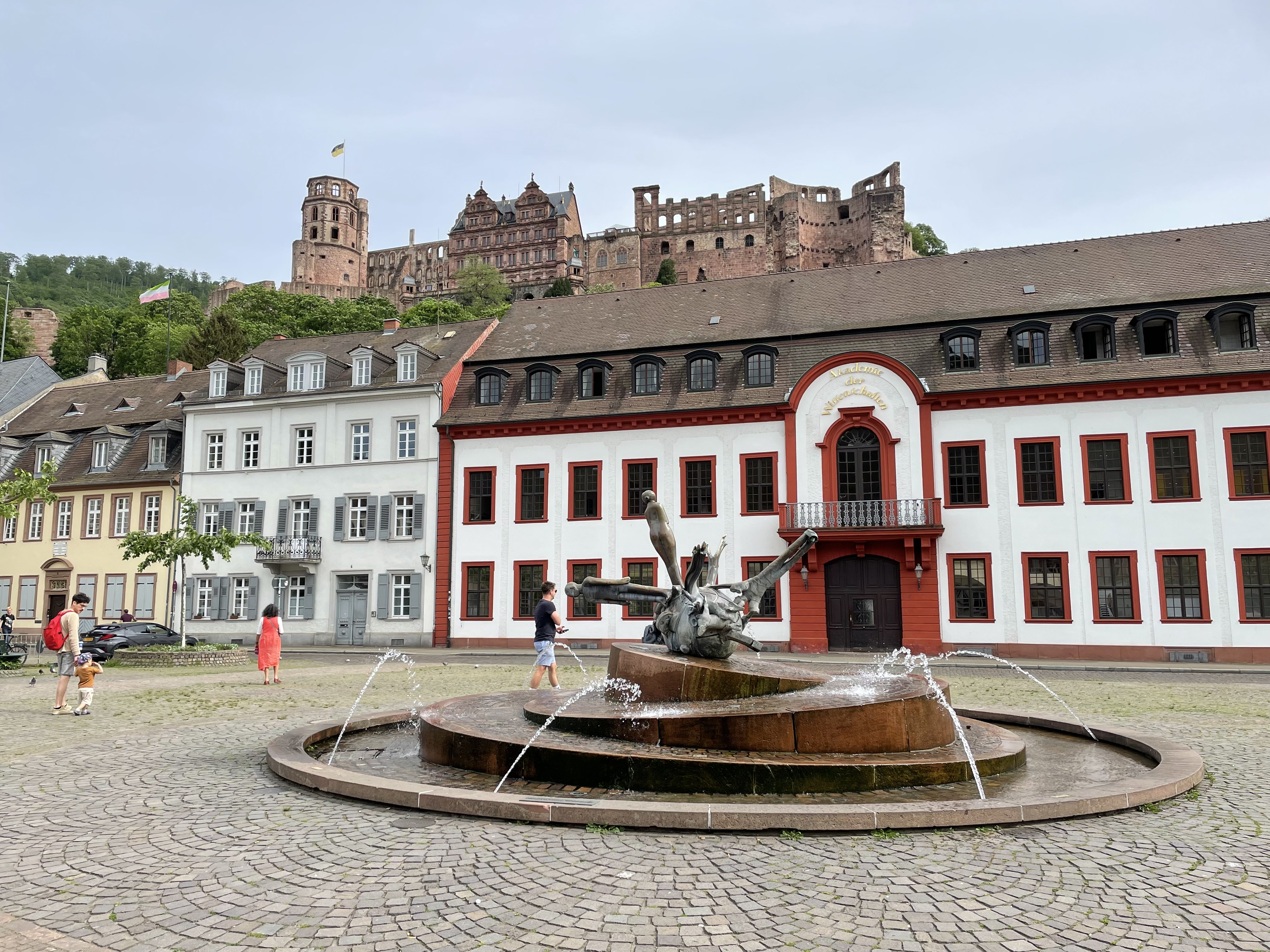
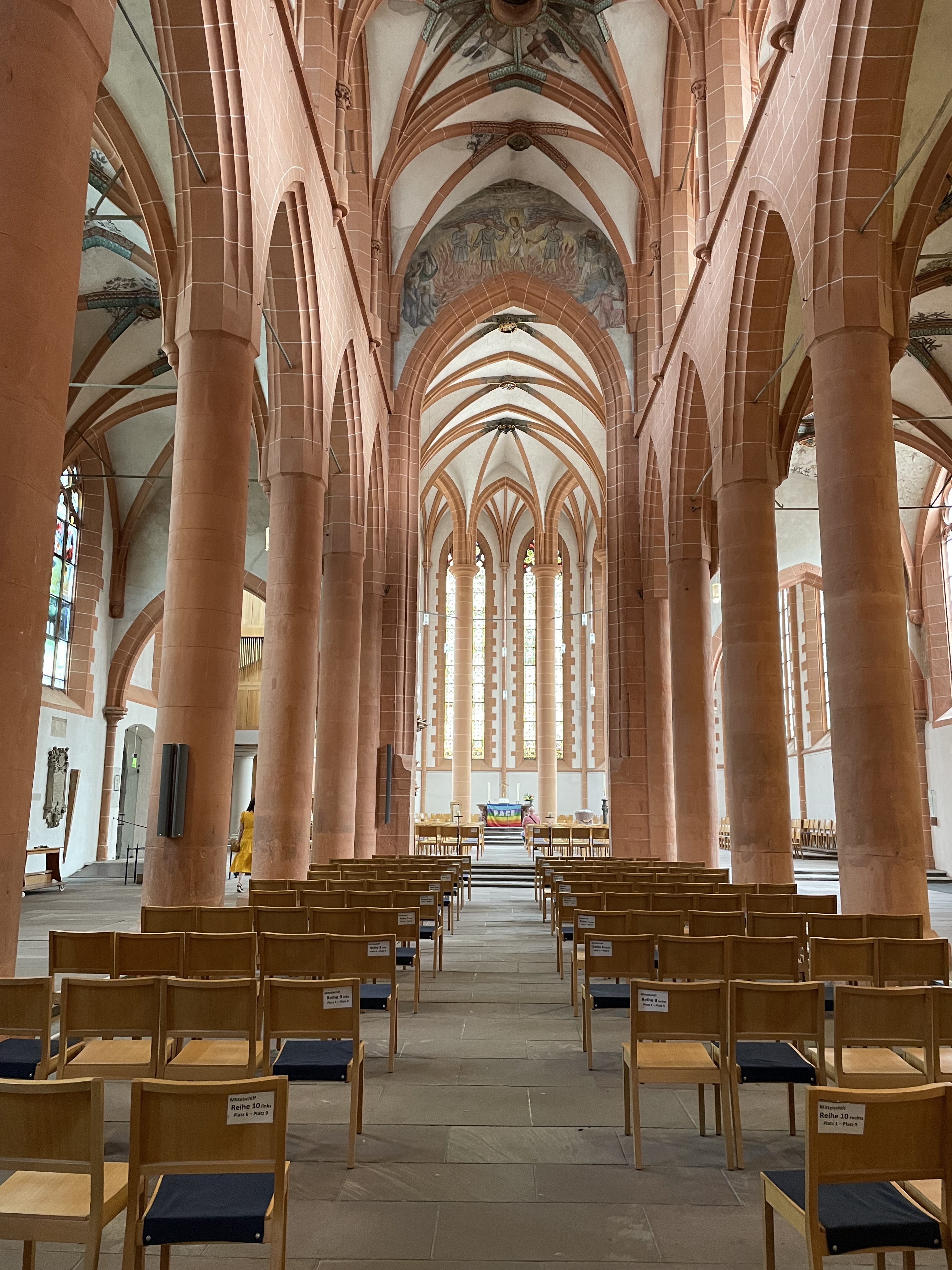
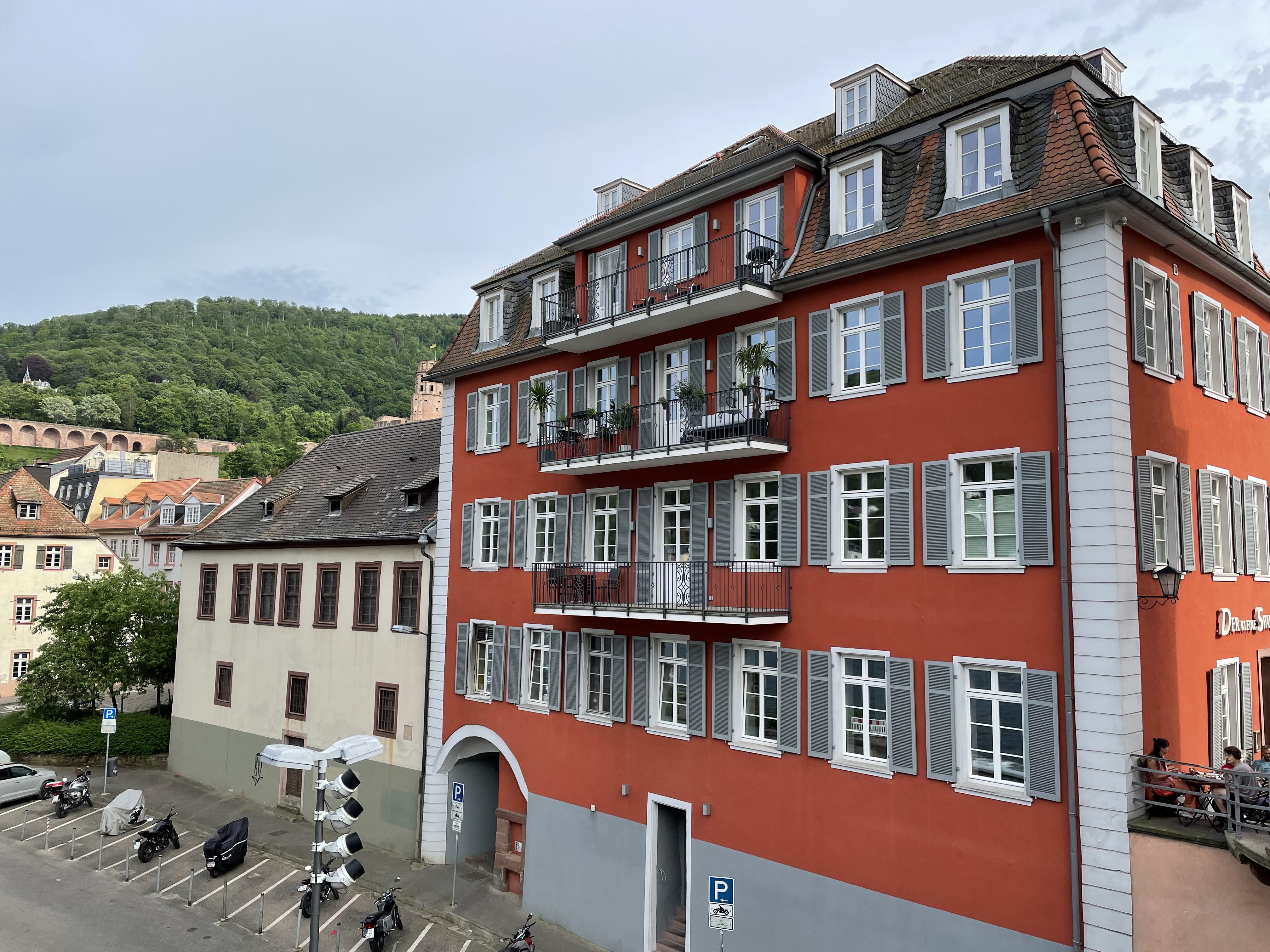
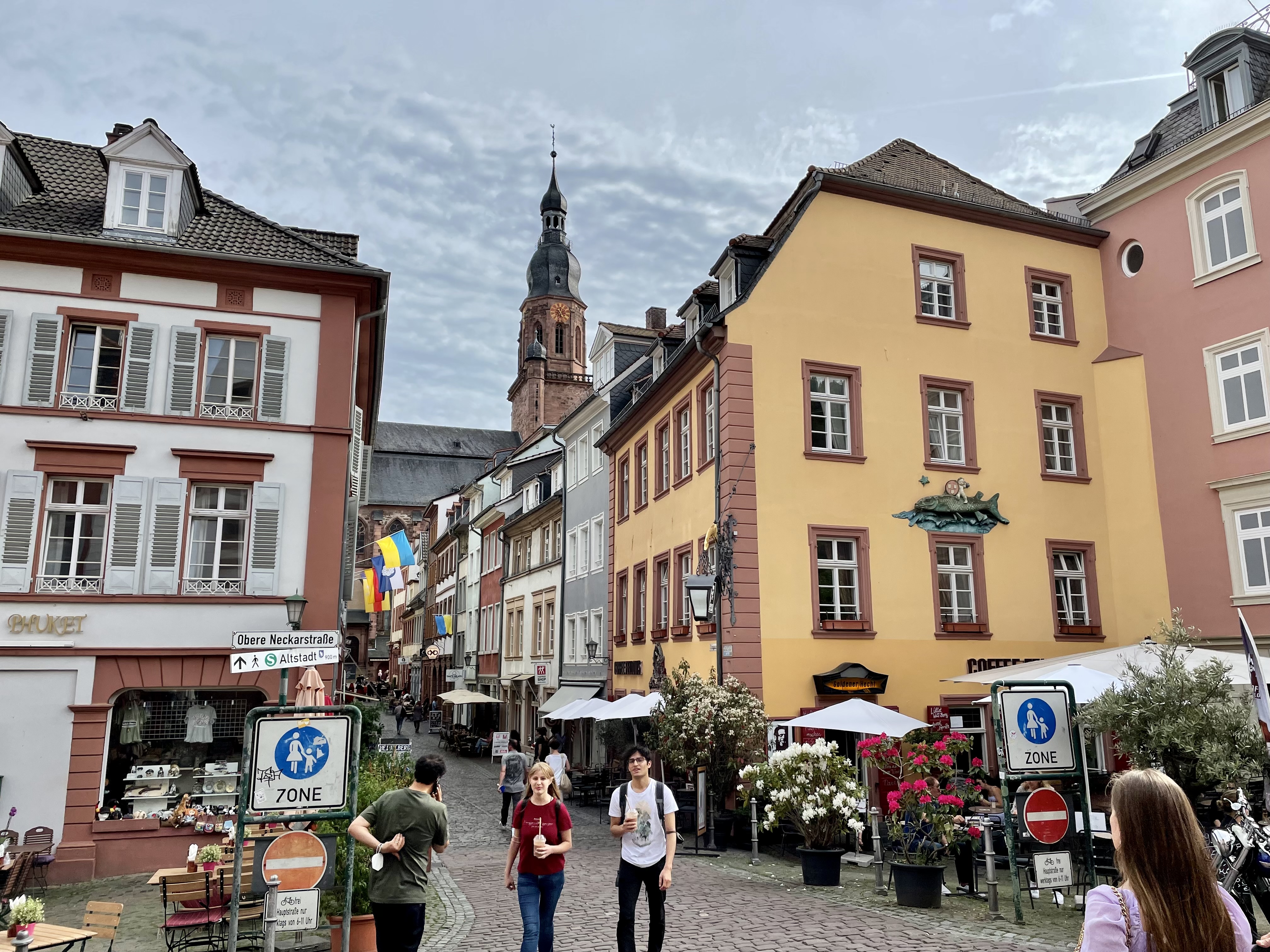
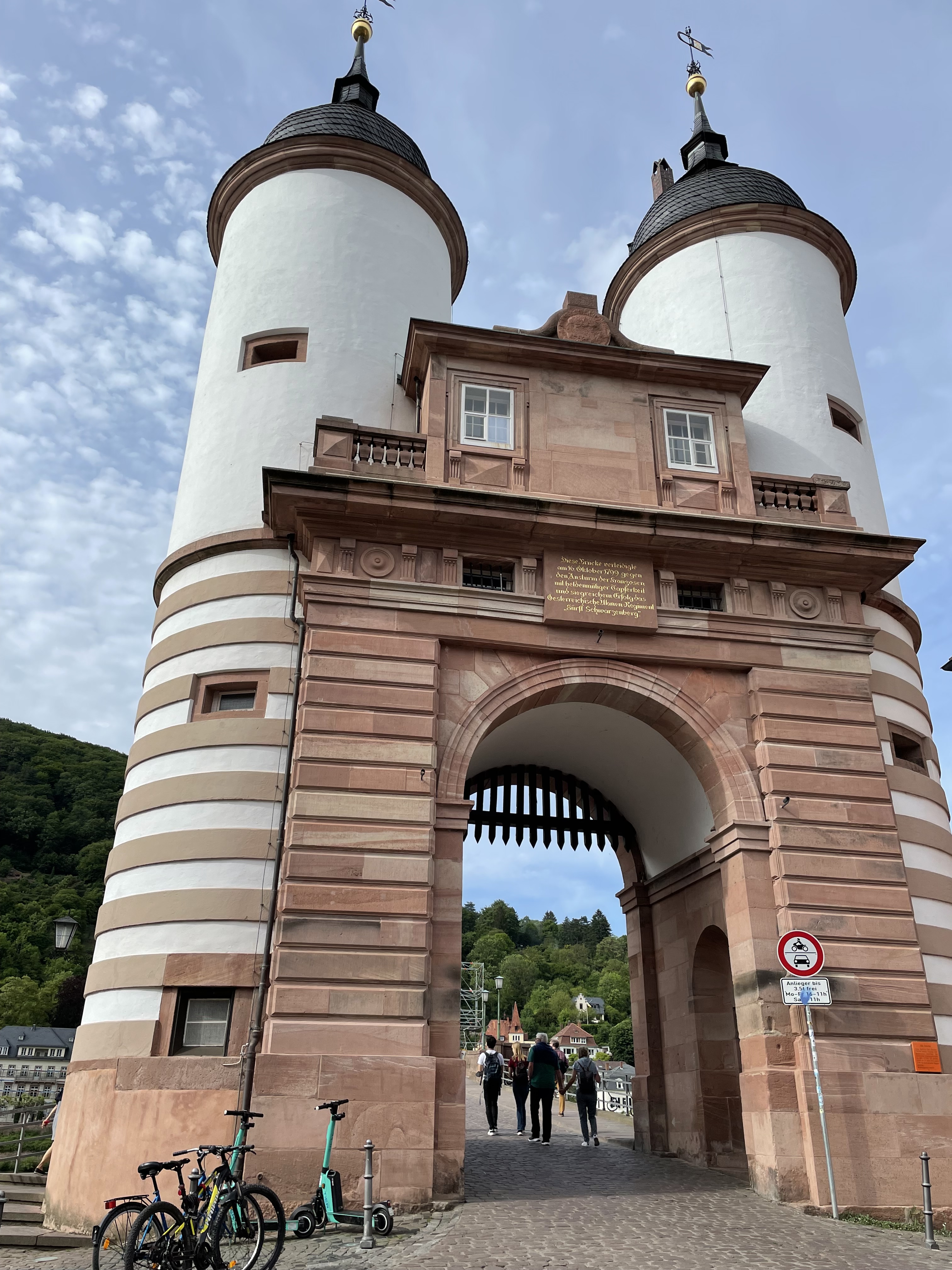
From Worms, we made an all-too-brief stop in the historic city of Heidelberg, Germany. Because of its rich history and preserved old buildings, the town was saved from the massive bombings of World War II.

All too soon, we had to leave Heidelberg and head to our hotel in Viernheim. Our first day in Europe was filled with wonder, beauty, and history. But after an eight-hour flight and a full day of touring, we were ready for a good night’s sleep.

© Bruce Stambaugh 2022

Explaining My Absence

I realize it’s been a while since my last post. I apologize for being absent. I have my reasons. Let’s just say that it’s been a busy spring for our family.

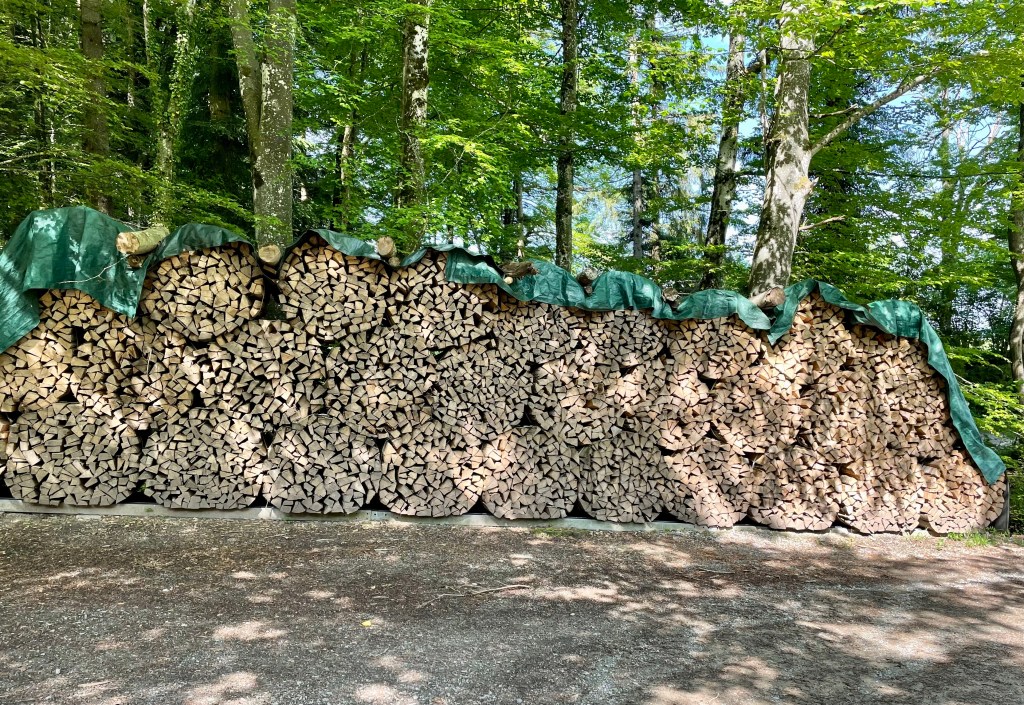
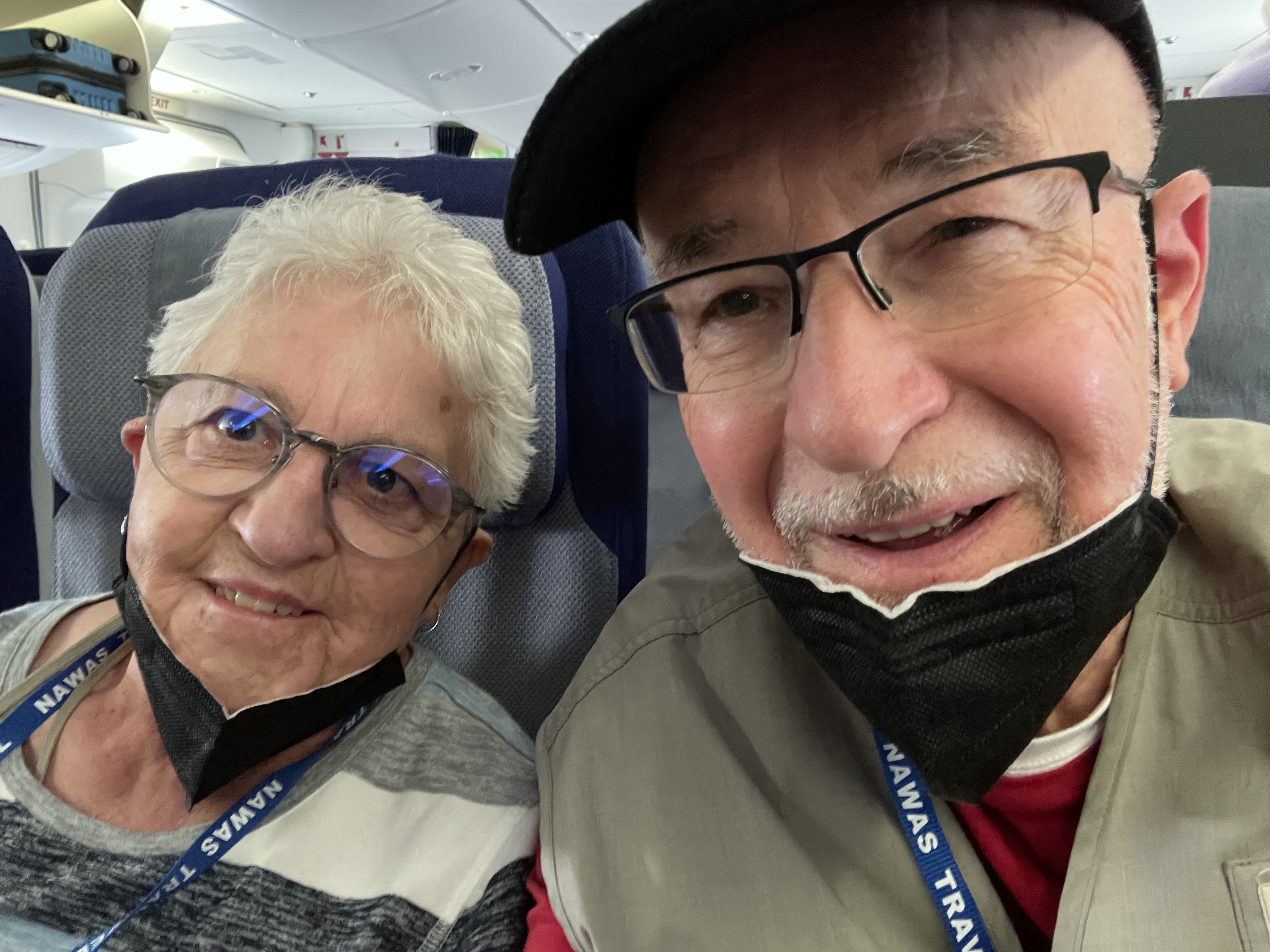
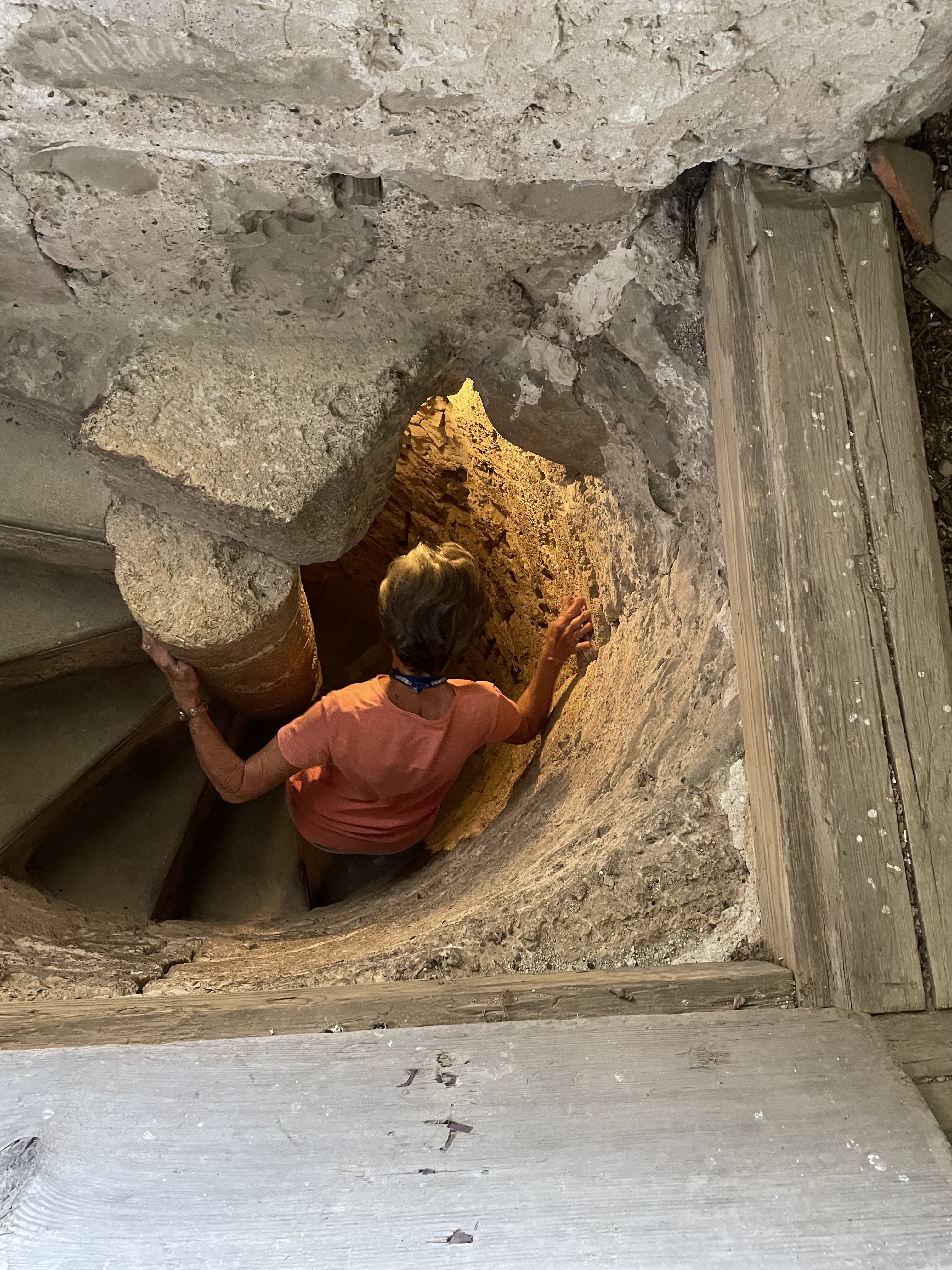
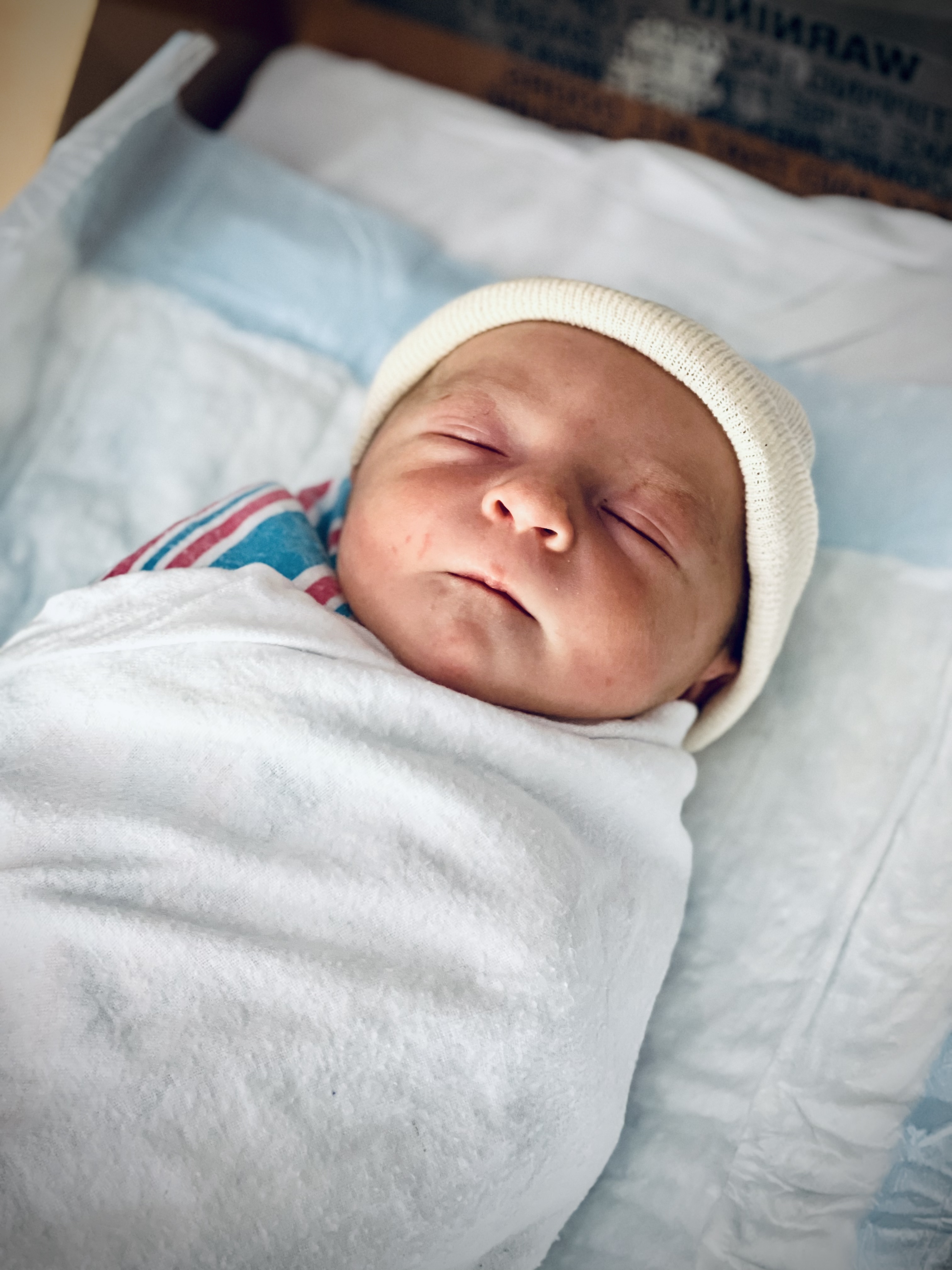
Below are some photographic hints explaining where I have been, and why I haven’t published either stories or photos lately. I am in the process of creating new posts, so these teasers will have to do for now.

Any guesses as to why these photos help identify my lack of posts? I’d love to hear your thoughts. Comment away!

© Bruce Stambaugh 2022
Bluebells on the Bluebell Trail

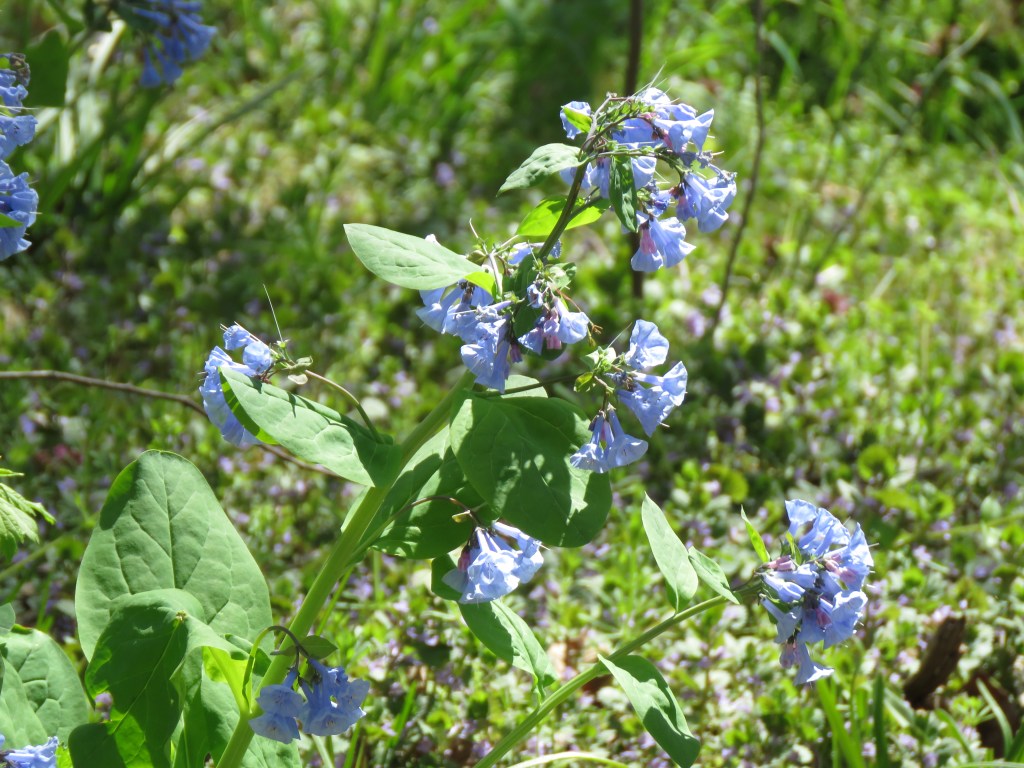
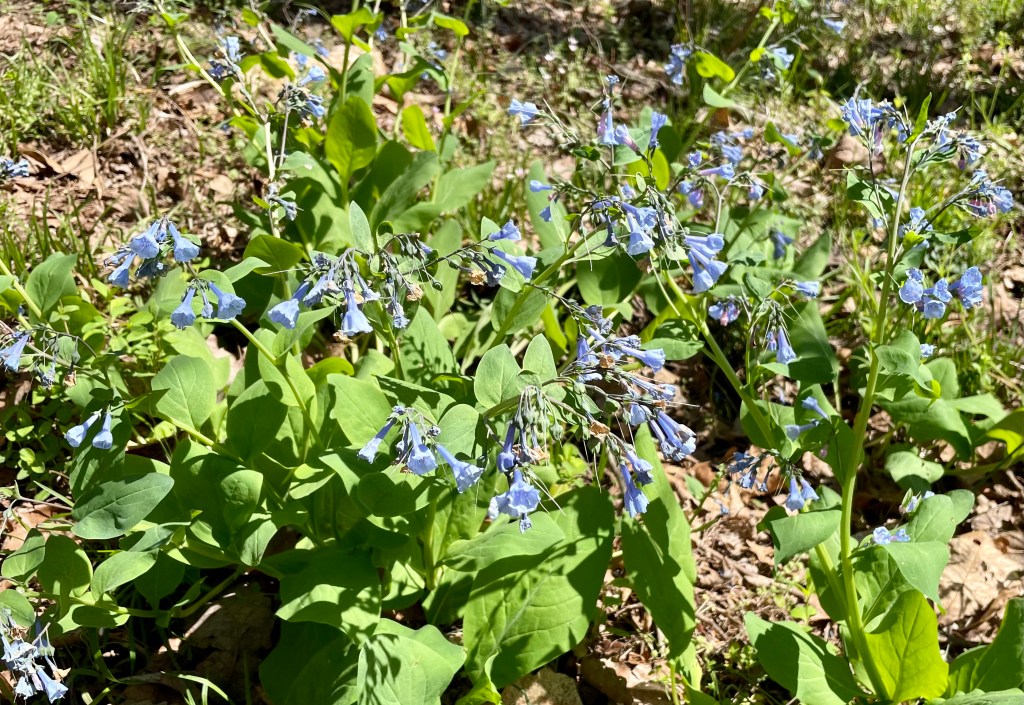
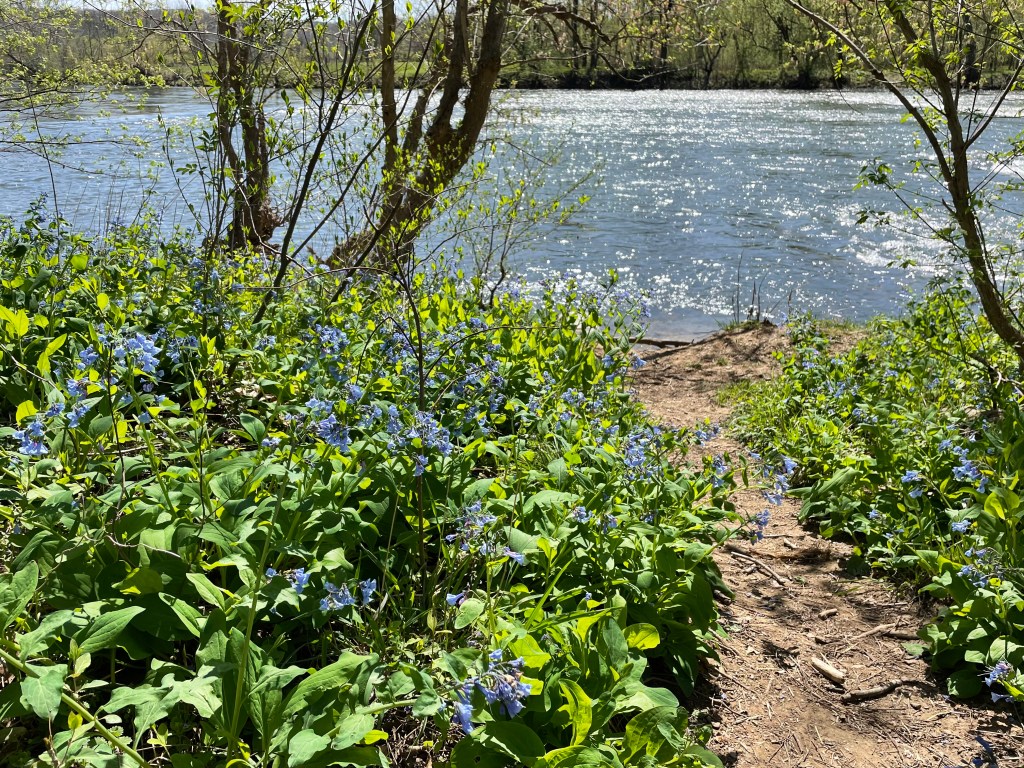
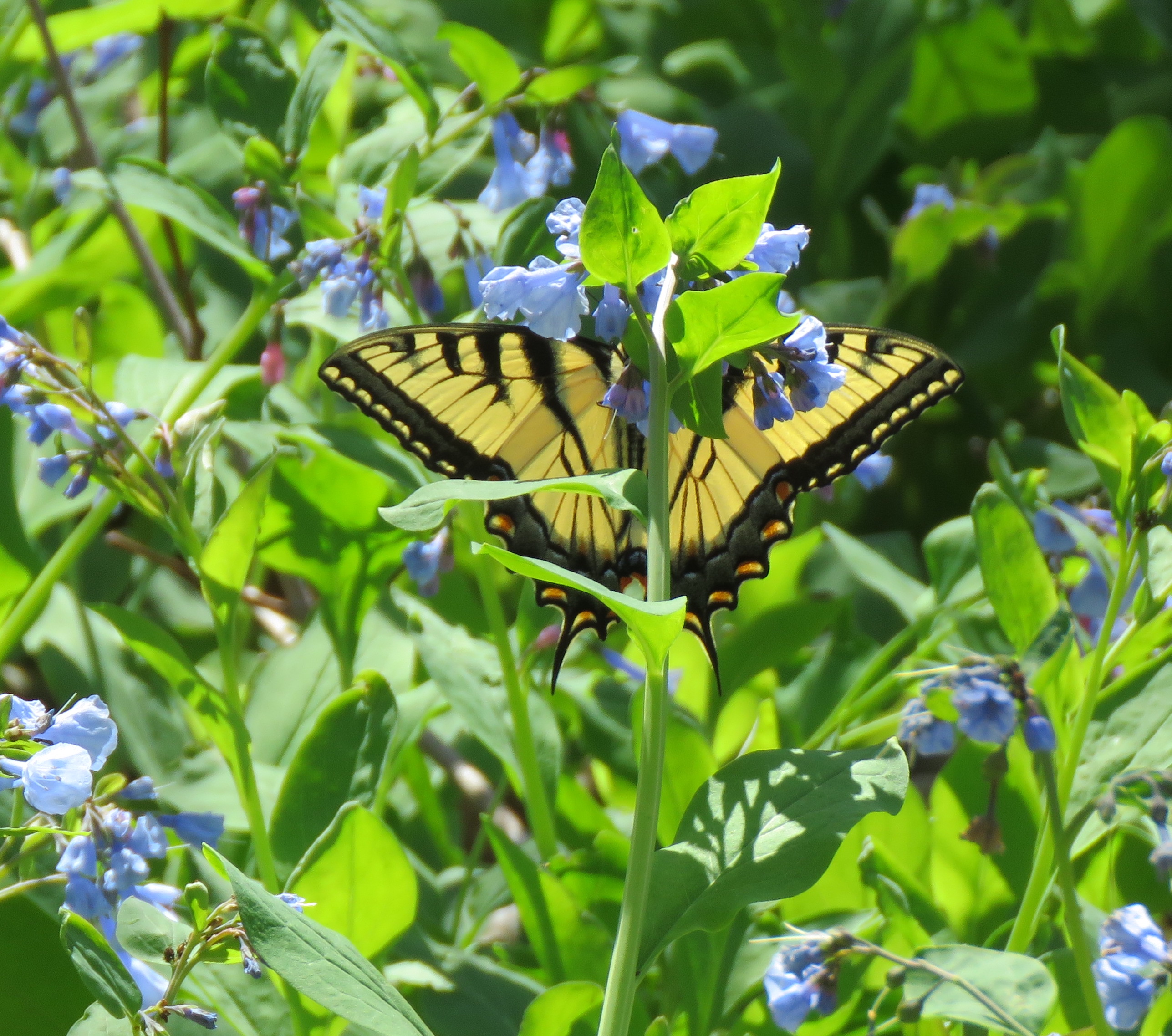
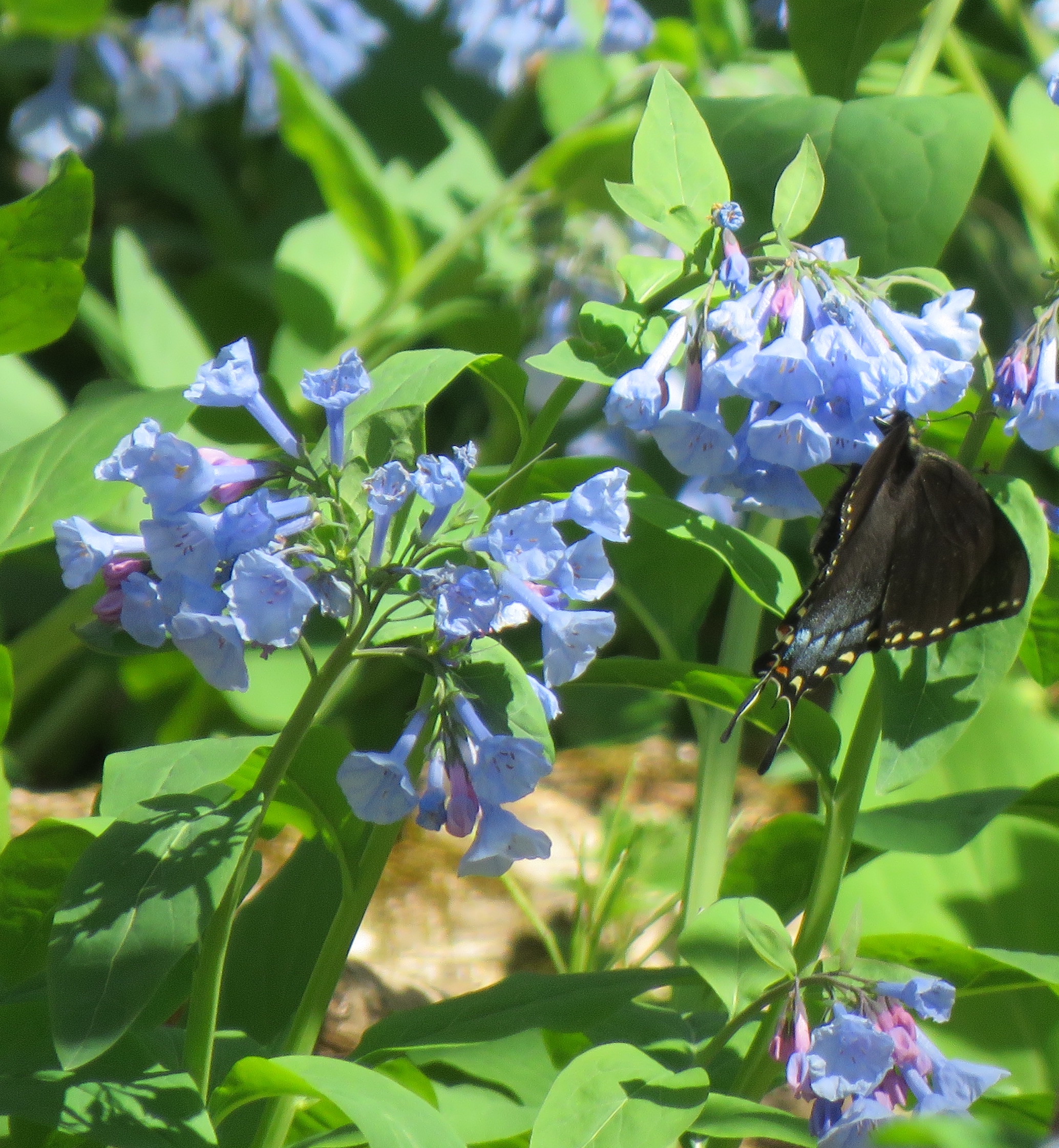
Virginia Bluebells beautified the space between the Bluebell Trail and the South Forth of the Shenandoah River in Shenandoah River State Park.

Friends told me that the Virginia Bluebells were at peak bloom along the Bluebell Trail in Shenandoah River State Park. I had to go see for myself.

The weather was perfect. Sunny skies and warm temperatures dominated the day. Both had been recent rarities in the Shenandoah Valley.

So, off I went, down what the Confederates called the Middle Road, to Timberville. From there, I took U.S. 211 east through New Market, up and across the Massanutten Mountain Range, and around the quaint town of Luray to U.S. 340.

A dozen miles later, I entered the park to find the empty entrance station. Due to staffing shortages, it’s an honor system to enter. You grab an envelope, place $10 in it, and deposit the fee into the slot. Hang the receipt from your rearview mirror, and you’re good to go.

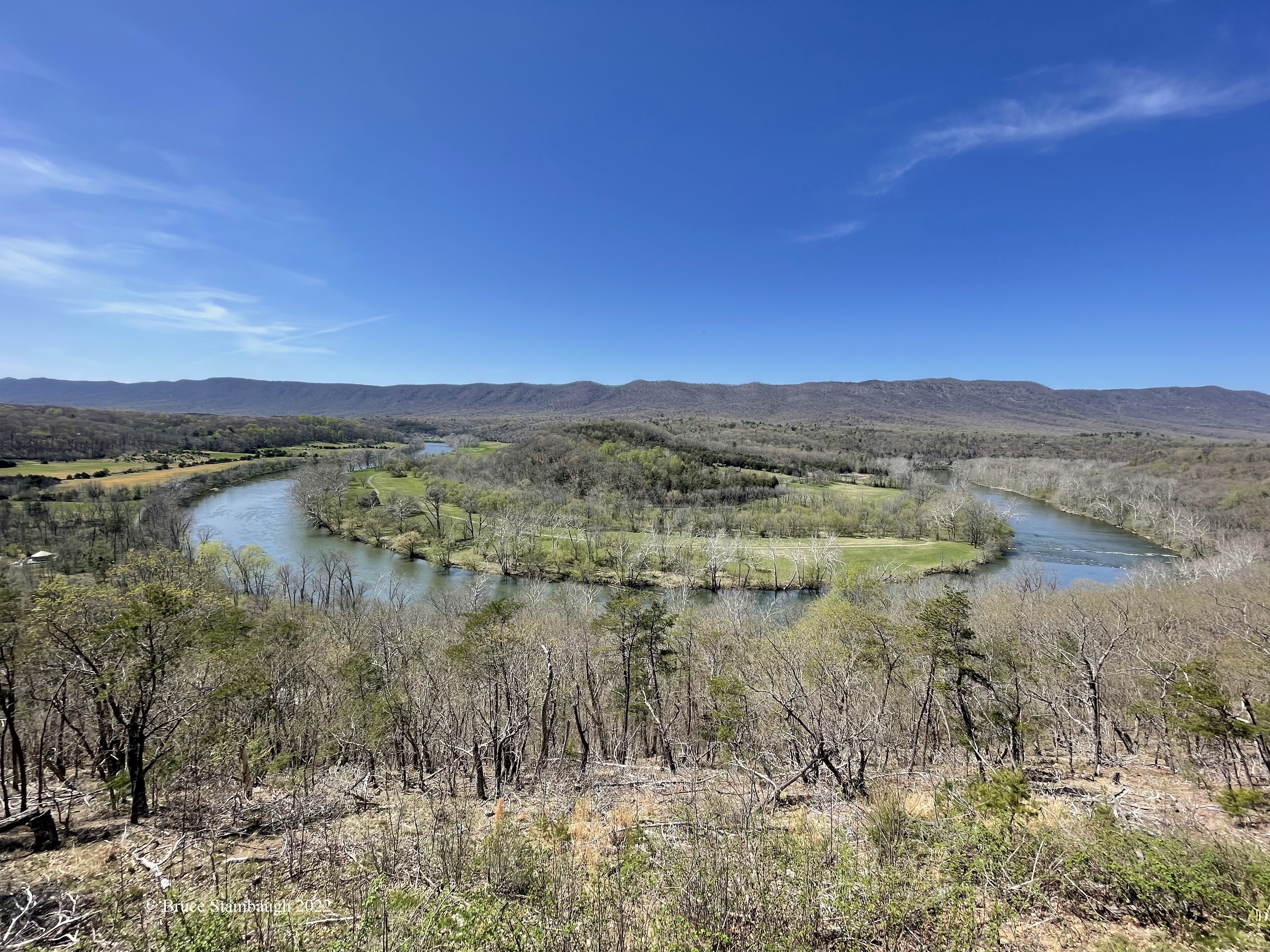
And what a splendid day it was. First, I stopped at Cullers Overlook for a fantastic view of the South Fork of the Shenandoah River, snaking its way north. Only a few more miles, and it converges with its twin, the North Fork of the Shenandoah River, at Front Royal. The majestic and historic Shenandoah River flows north to meet the Potomac River at Harper’s Ferry, West Virginia.

The South Fork of the Shenandoah River from Cullers Overlook, Shenandoah River State Park, Bentonville, Virginia.

As glorious as that view was, I didn’t linger long. I wanted to see the Bluebells. It was all downhill from there to the trailhead a half-mile away.

With camera and binoculars in hand, I eagerly set out on the mile-long trail. A swarm of insects greeted me only a few steps onto the earthen path. I had forgotten to pack the bug spray, so I raised my tolerance level and soldiered on.

Soon I began to pass folks who had a head start on me. They assured me that I couldn’t miss the lovely flowers as they headed to their vehicles. They were right.

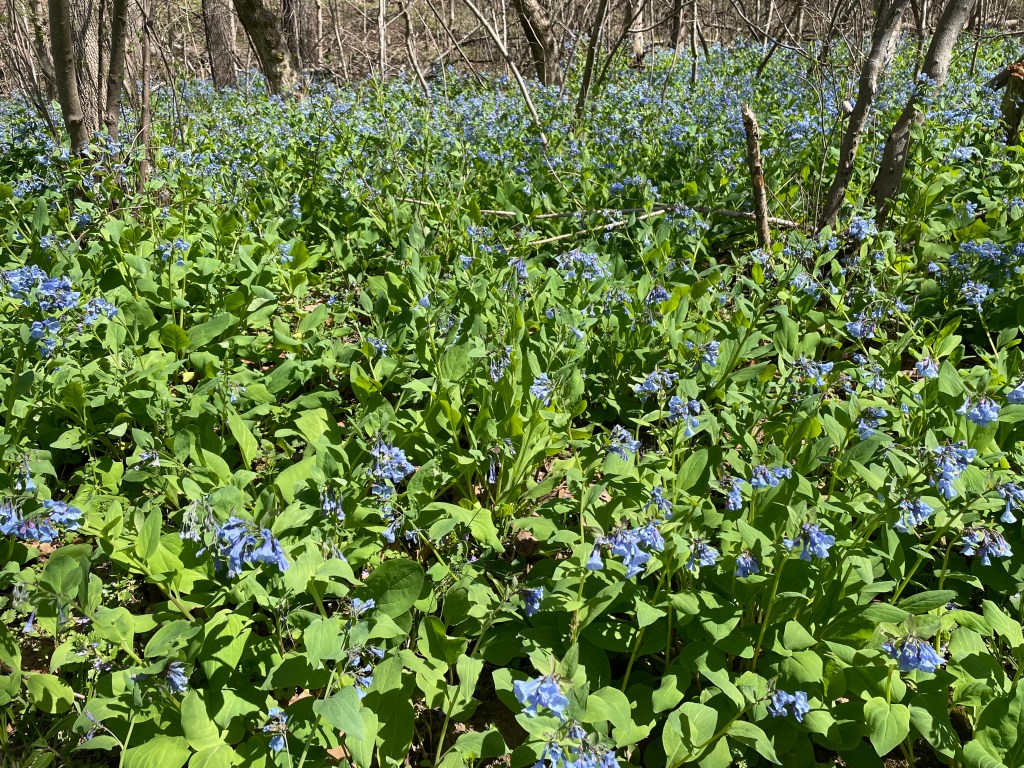
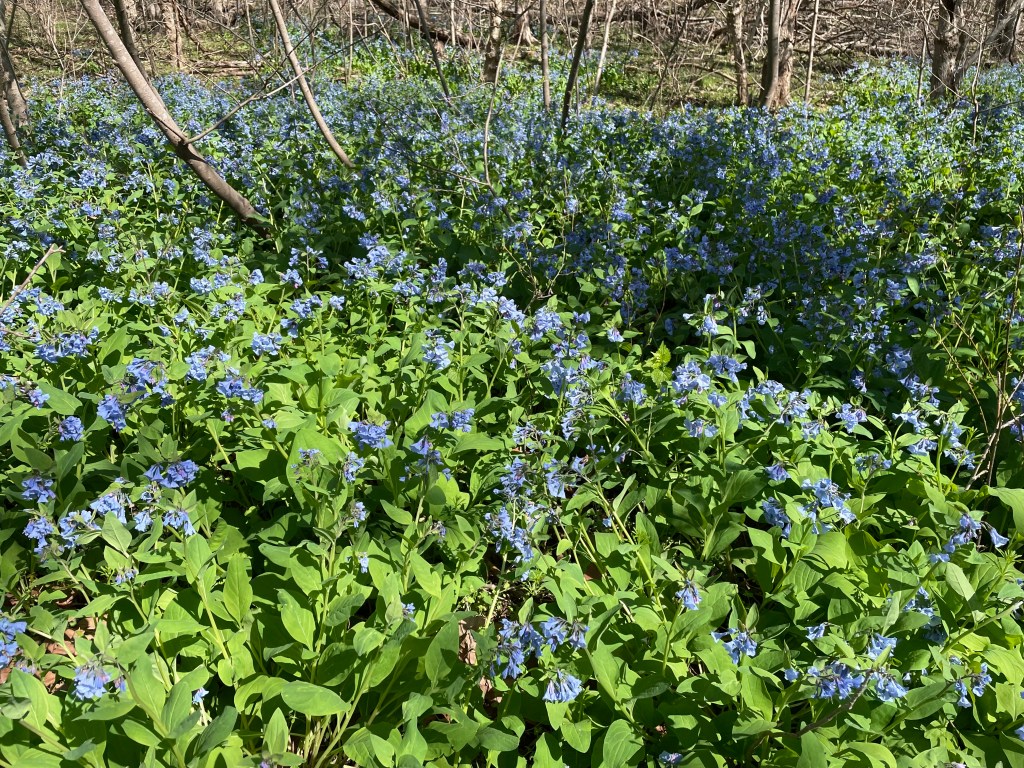
Once the trail straightened out, patches large and small of Virginia Bluebells spread across the forest floor like a blue and green carpet. They even lined the riverbank much of the time.

I had an ample selection of flower photo ops. Since I also enjoy birds, calls from high above told me that warblers and other songbirds were foraging for insects among the emerging leaves.

The hungry little birds moved fast and furious, fueling up for their continued flight north. To my surprise, my attention focused on more obvious winged creatures.

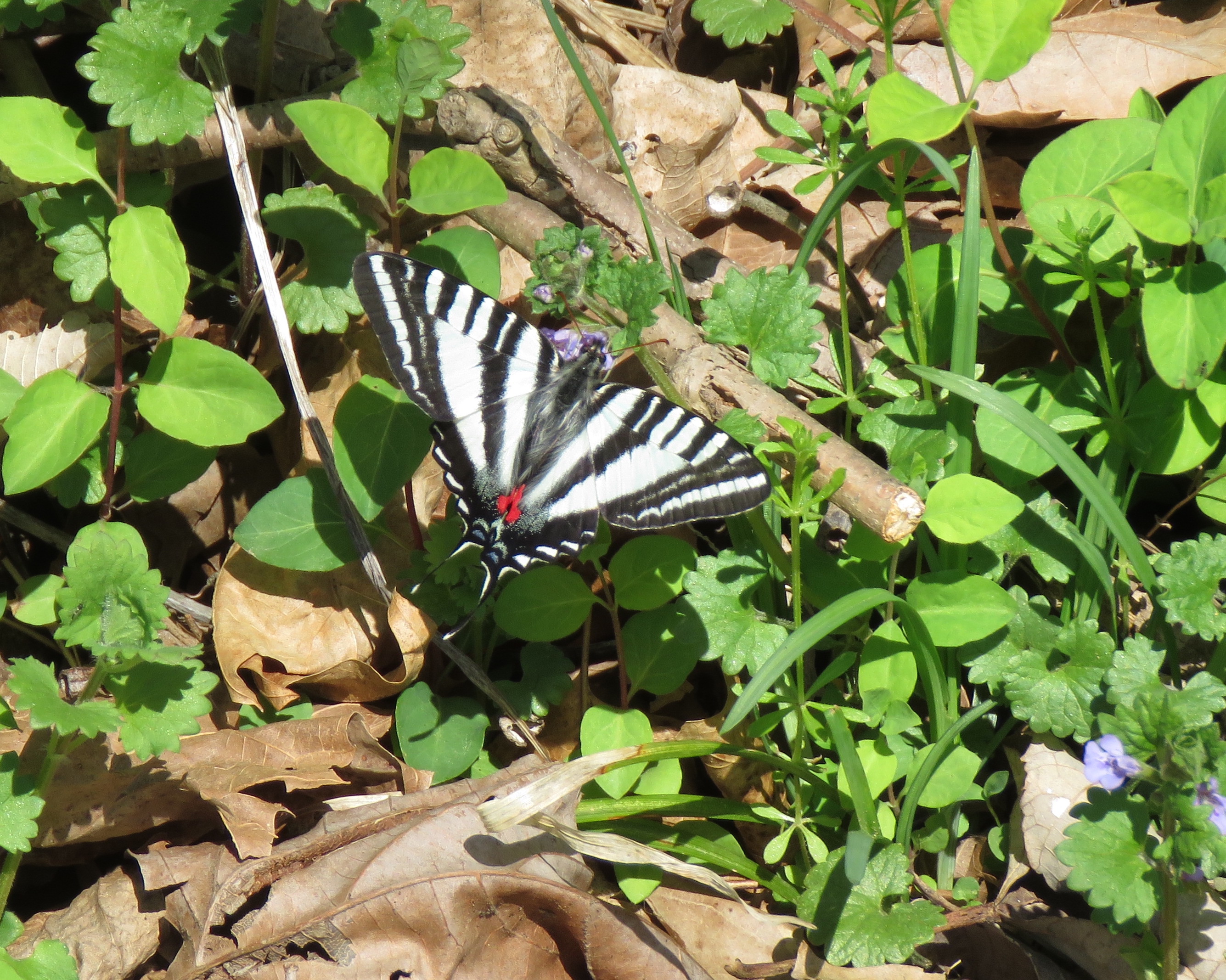
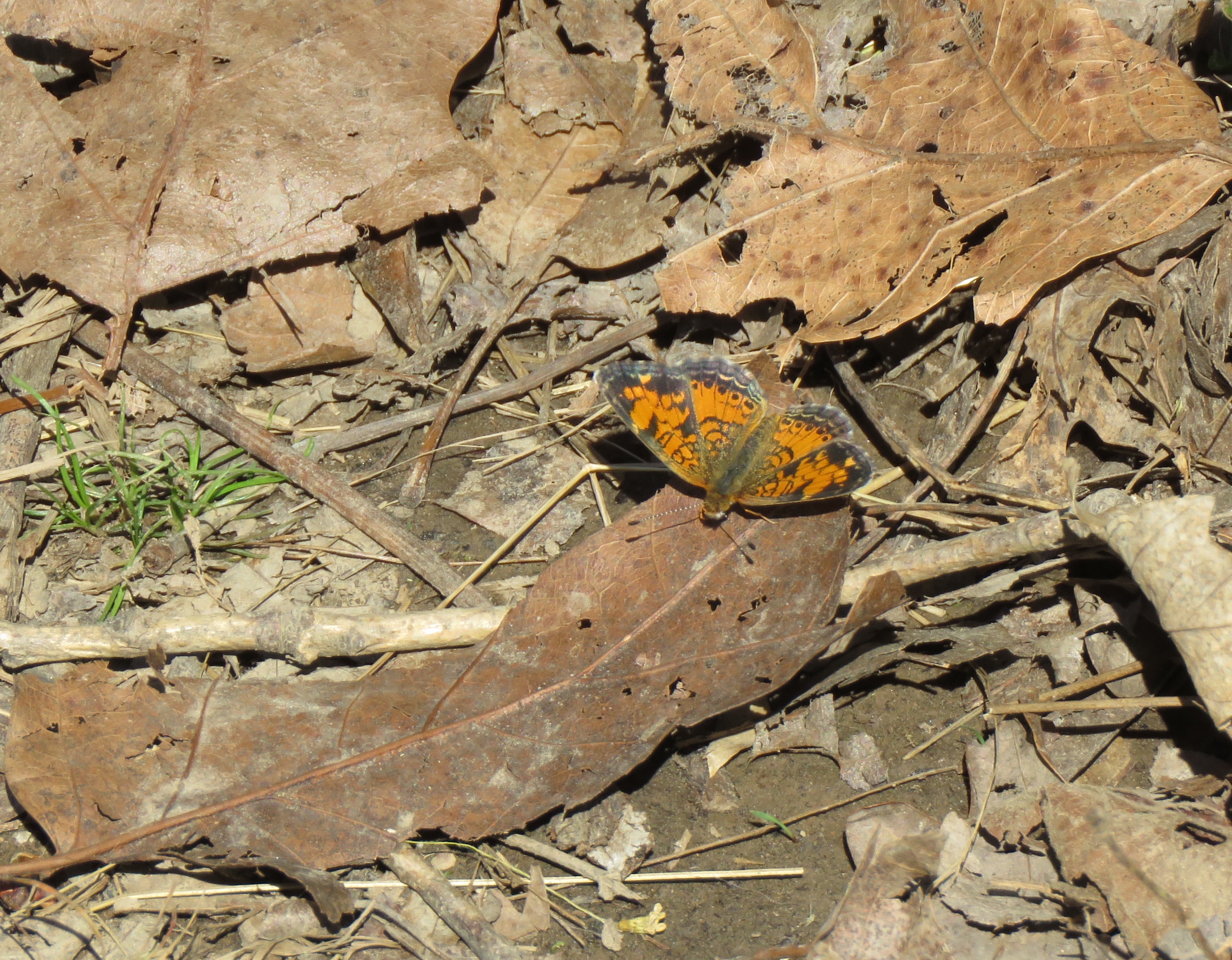
Several butterflies flitted all around the trees and flowers in irregular patterns. I soon learned to stay still and let the beautiful insects come to me. Several were puddling on the path wear they found damp spots. They extracted nutrients from the moistened soil. A few stayed in place long enough for me to get a few decent shots.

Of course, I kept passing other hikers, and a few bikers who surprised me from behind. The butterflies flew but often returned within camera range.

I didn’t see as many birds as I had hoped, but I counted the trip a success. Communing intimately with nature tends to fill you with joy and appreciation. By the time I left, my cup overflowed

© Bruce Stambaugh 2022

What Happened to Mel?

I had to wonder, when I saw this on the side of a panel truck, what happened to Mel? Was he bought out of the company? Did he move? Was he fired? Did he walk the plank?

Whatever happened and wherever Mel is, Happy April Fools Day!

© Bruce Stambaugh 2022
It Was a Sugary Kind of Afternoon

The initial stop on the Sugar Trail at New York’s Genesee Country Village and Museum.

I didn’t really know what to expect when our son and his wife informed us that we were going to a maple sugar festival. I knew that our daughter-in-law was super excited, which was enough incentive for me. Besides, what choice did I have? They had already purchased tickets, and it was a rain or shine event.

So, off we drove southwest from Rochester, New York, to the Genesee Country Village and Museum. We arrived in less than an hour, and it was clear from the crowded parking lot that we weren’t alone on this adventure.

We checked in and were directed to the Sugar Shack, where the modern method of boiling maple sap down to create maple syrup was explained. In New York, it takes about 39 gallons of sap to make a gallon of maple syrup. I thought back to my Ohio days when I visited various sugaring operations. The general rule there was 52 gallons of sap to create a gallon of maple syrup. I wondered if the latitude had anything to do with the difference.

From there, it was on to sugar snow. That’s where maple syrup is poured over snow for a special tasty treat. In the absence of snow, crushed iced served the same purpose. We enjoyed it just the same.

Soon, we were on the Sugar Trail, where volunteers in period costume explained the maple sugaring evolution one station at a time. Our umbrellas went up before we even stepped foot on the trail.

The wet weather didn’t dampen the spirits of either our gang of six or the knowledgeable folks at each stop. They knew their stuff and shared how both Native Americans and white settlers took advantage of the sap run during February and March.

We learned a lot along the way. The walk was equally a figurative and literal stroll through the woods dominated by sugar maple trees. We followed the signs from stop to stop, ending up at how maple sap is currently gathered by most successful sugaring operations.

Plastic tubing is strung from tree to tree with plastic inserts that are tapped into the tree. Gravity carries the sap to the main collecting barrel instead of going from tree to tree emptying individual buckets full of the sweet stuff. In truth, only 2% of the water collected is sugar, thus the boiling of the water. Workers have to gauge the proper heat to avoid burning the syrup. Despite the mechanization, it’s still a tedious process.

By trail’s end, we were ready for lunch. A brief stop at an on-sight eatery got us going again. That’s when the real surprise came.

Genesee Country Village and Museum is a collection of historical buildings brought to the site for educational purposes. George Eastman’s boyhood home is in the village. Eastman was the founder of Eastman Kodak Company.

The village is divided into sections to represent the various architectural structures of the late 18th century into the early 20th century. Some of the buildings, like the Hosmer’s Inn and its smokehouse and the Jones Farm had guides in period outfits to give a brief description of the way life used to be in those particular times. We also enjoyed maple flavored goodies from the bakery.

The sun came out, and the temperature warmed, making our afternoon even more delightful. Most of all, it was a joy to spend these precious moments with family.

© Bruce Stambaugh 2022
Beautiful Beaufort, South Carolina

The Tabby Manse House, Bay St., The Bluff, Beaufort, SC.

As much as I enjoy wildlife, especially birds, history and architecture also rate high on my list. In Beaufort, South Carolina, you can have it all.

After spending a month on Florida’s Amelia Island northeast of Jacksonville, my wife and I weren’t ready to head back to the northern winter climes. We rented an Airbnb for a few days with another couple. My wife did an expert job of choosing our place. It was located only three blocks north of the historic waterfront area of the quaint and bustling downtown section.

Beaufort (as in beautiful) is indeed beautiful. Its city planners clearly understood the importance of maintaining the town’s long history while making the scenic waterfront attractive and available to all, locals and tourists alike.

We had been to Beaufort before, but my wife and I never tire of seeing the old antebellum mansions surrounded by stately old live oak trees dripping with Spanish moss. The more famous ones are located west of downtown on The Bluff along Bay St. They overlook the marina on the Beaufort River where shorebirds mingle with sailboats.

They aren’t the only beauties to be found, however. We prefer to drive around on our own, stopping at our leisure to photograph historical architecture, lovely scenery, and whatever wildlife we happen upon. We meet friendly locals out walking their dogs on an evening stroll in the process.

The homes and historic buildings grabbed our immediate attention every time we turned the corner. Some were newer, built to fit into Beaufort’s style. Most, however, were well-maintained residences or upscale inns, where customers could sit on expansive front porches and enjoy the evening, tea, and genuine conversation.

Beaufort is a town steeped in history. Its iconic mansions shout that loud and clear.

Dusk highlighted the Beaufort, SC marsh and marina area with the Woods Memorial Bridge visible above the trees at the west end of the Henry C. Chambers Waterfront Park.

© Bruce Stambaugh 2022
A Hidden Treasure

I wouldn’t have seen this hidden treasure if it hadn’t been for another photographer. My wife, some friends of ours, and I were driving into Ft. Clinch State Park at the north end of Amelia Island, Florida, when we noticed a woman with a huge lens on a tripod aimed at a tree.

That could mean only one thing: she was photographing a bird. I parked and exited the van, eager to know what her subject was. She had me look through her long lens. This beautiful Great Horned Owl stared back at me.

I quickly pointed my camera at this beautiful bird and carefully snapped away. I quietly thanked the woman for graciously sharing her find with me. Thanks to her, I was also able to view this superb owl resting in the fork of a live oak tree.

© Bruce Stambaugh 2022
Synchronized Foraging

American White Pelicans on the Amelia River, Fernandina Beach, Florida.

My wife and I showed a couple visiting us from Ohio around our favorite winter retreat, Amelia Island, Florida. We drove to Old Town Fernandina Beach, where lots of history has occurred. A small square, Fernandina Plaza Historic State Park, marks the site of a colonial massacre of Indigenous peoples and some French trappers.

We drove to the small parking area overlooking the Amelia River on a bluff. Soon, our attention was drawn away from history to the present moment. A small flock of American White Pelicans had landed along the river’s edge at the park’s base.

The beautiful birds formed a floating wedge of sorts and immediately began to forage in their unique synchronized fashion. We witnessed a ballet on the water, as the video shows.

© Bruce Stambaugh 2022

Seeing these elusive migrators was one thing. Observing their feeding ritual was something else altogether.

These were the first arrivals. The photos were taken five seconds apart.

American White Pelicans migrate to the coastal areas of California, Central America, and the Gulf Coast States for the winter. They nest in the Midwest and western states, as well as the Canadian prairie provinces.

© Bruce Stambaugh 2022
Bay Photos by Donna

Wildlife photos from the Chesapeake Bay region

ROAD TO NARA

Culture and Communities at the Heart Of India

K Hertzler Art

Artist and nature journalist in the Shenandoah Valley of Virginia.

Maria Vincent Robinson

Photographer Of Life and moments

Gabriele Romano

Personal Blog

Jennifer Murch

Art is the only way to run away without leaving home. -Twyla Tharp

Roadkill Crossing

Writing generated from the rural life

ANJOLI ROY

writer. teacher. podcast cohost.

Casa Alterna

El amor cruza fronteras / Love crosses borders