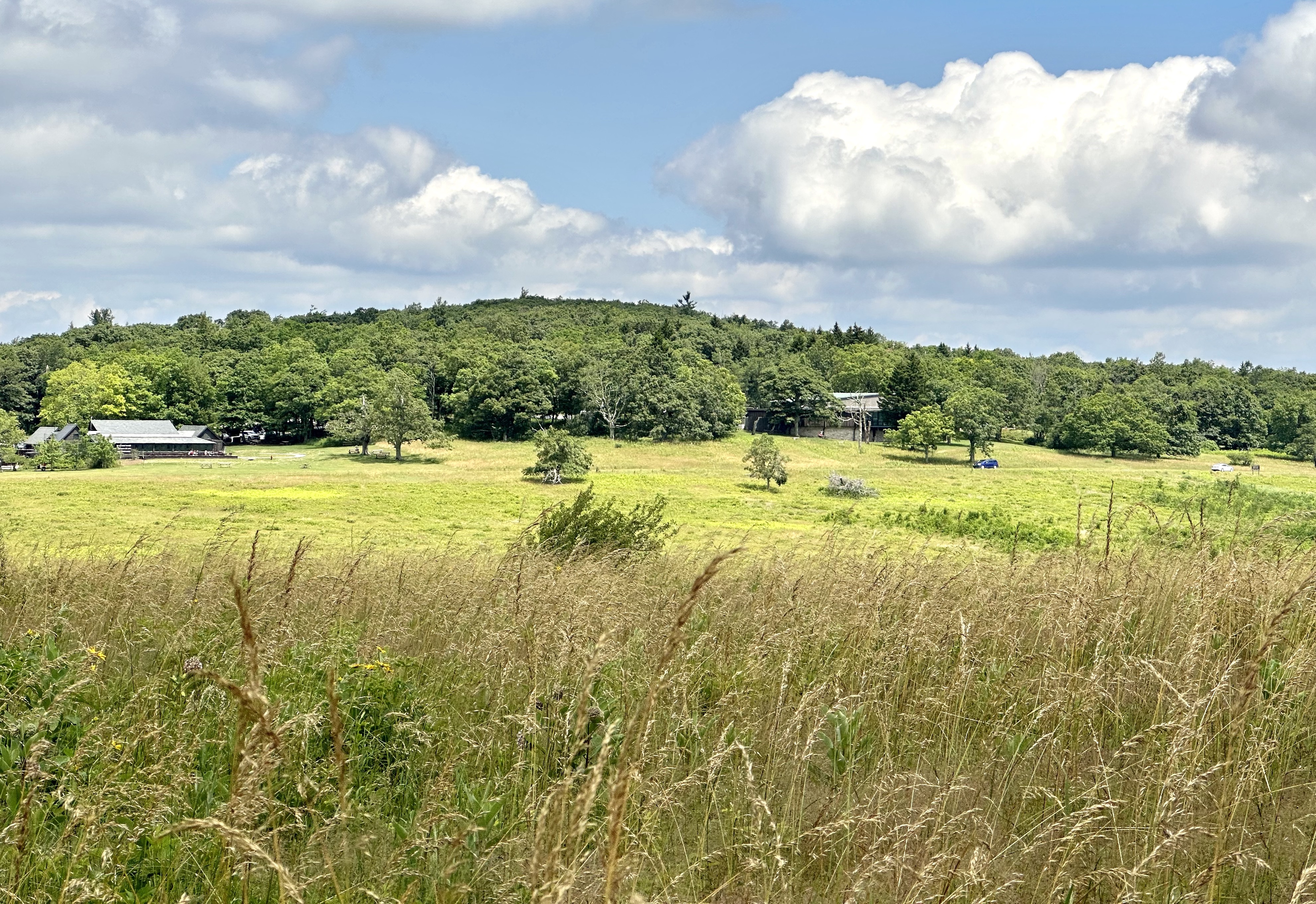
Big Meadows Wayside on the left and the Byrd Visitors Center on the right.
Big Meadows, an open, rolling, bowl-shaped landscape, features diverse plant, tree, and wildlife species. I consider it one of the most beautiful locations in Virginia’s Shenandoah National Park.
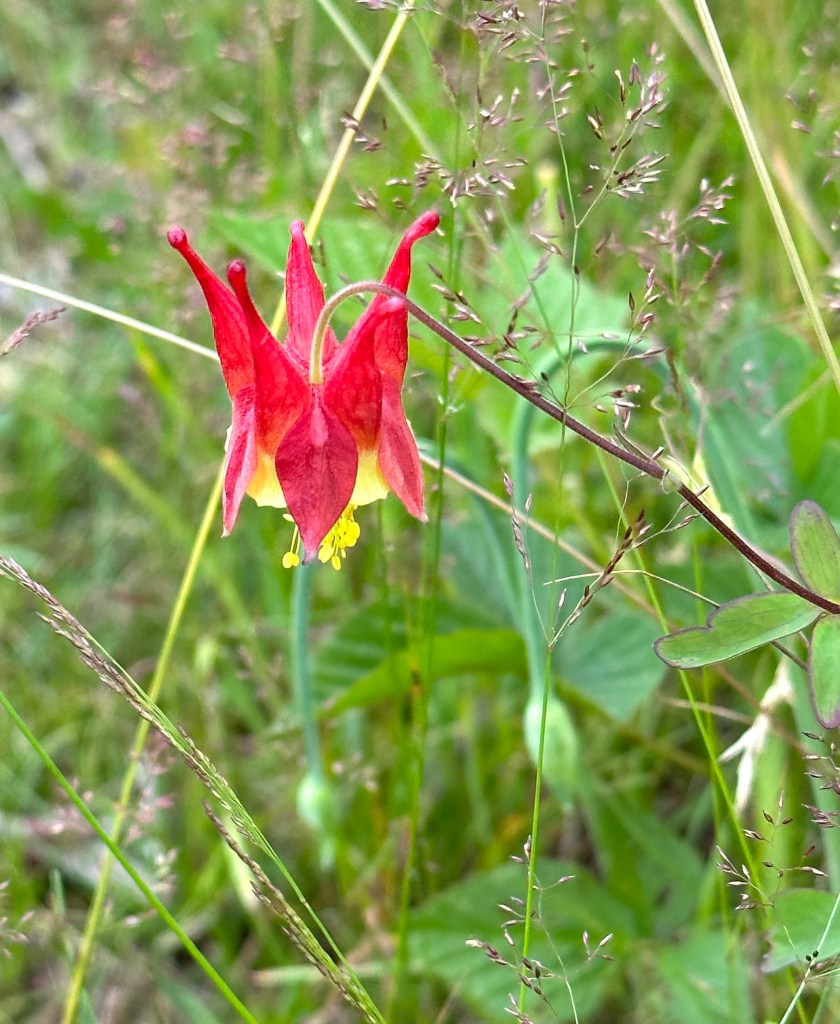
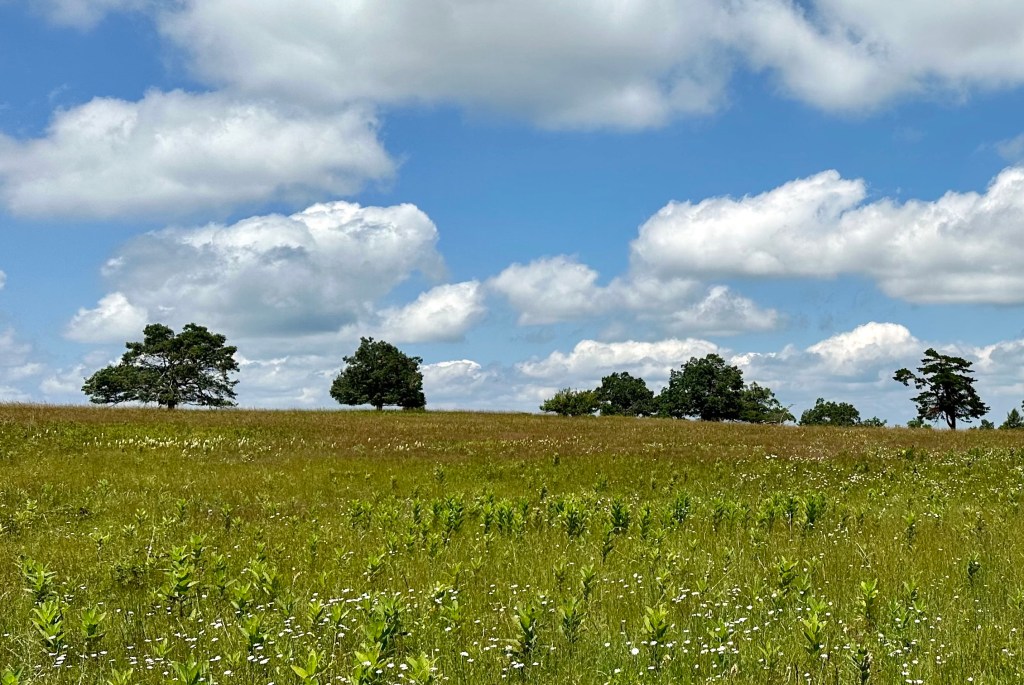
As evidence of its wonders, these photos from a recent visit exemplify its natural splendors.
Fawn at the meadow’s edge.Wild Columbine. Male Indigo Bunting.Woodland Sunflower.The land meets the sky.A ladybug on Fly Poison.
I gladly handed over my iPhone to the ticket-taker at the Van Gogh Immersive Experience in Washington, D.C. We had only just gathered everyone together at the entrance when she had offered to take our family photo, an image I dearly wanted.
It had been four years since the three families had all been together, and in that time, another grandchild had joined our ranks. Our two oldest grandsons had never met the youngest. I wanted this precious moment to be documented for perpetuity. As mobile as today’s societies are, especially the younger generations, I wasn’t taking any chances. I considered the family photograph as my personalized Father’s Day present.
As it turned out, this was the only photo of all of us together at the same place at the same time we got in the three-day gathering in our nation’s capital. The comings and goings of our active crew mirrored the busy lives of our adult children, their spouses, and teenagers. I certainly wasn’t disappointed.
I had my shot and could now relax into the follow-the-crowd mode. The other adults, our daughter, son, son-in-law, and daughter-in-law, would share the responsibility of setting the agenda for the Sunday through Tuesday reunion. I’m usually the one to suggest and plan trips. However, this time I silently relished my grandfatherly role. Though not surprised, I marveled at their skills in managing offspring, arranging transportation, and finding restaurants to suit everyone.
Of course, they consulted Nana and Poppy about places we wanted to go, do, visit, and tour. I was more than happy to go with the flow. Shoot. I would have been pleased if we had stayed in the hotel. A certain familial satisfaction overcame me.
The pandemic played a significant role in keeping us apart all this while. Our son, his wife, and the newest grandson, Teddy, live in upstate New York, a seven-hour drive from the lovely Shenandoah Valley, where my wife and I live. We moved there six years ago from our home of 38 years in Ohio’s Amish country to be close to our daughter and her family.
Teddy arrived over a year ago, complicating our Nana and Poppy roles. Our son and his wife have done an exceptional job keeping us informed of Teddy’s progress, and we travel north as we can.
But here we all were, assembled together. Everyone agreed to make the Van Gogh experience our initial group event. The New Yorkers intended to take the Metro from Dulles International Airport to the hotel. Due to track maintenance, that plan got derailed. It took them longer to get from the airport to the hotel than from Rochester to Dulles.
With air temperatures heating up, the Van Gogh Immersion became the perfect place to chill and smother Teddy with plenty of attention. To enhance the experience, lounge chairs, bean bags, small ottomans, and blankets were scattered around the gymnasium-sized, carpeted room. We all found our relaxation niche and enjoyed the show. Teddy loved showing off his newly found walking and running skills. The rest of us merely basked in the moments as they unfolded.
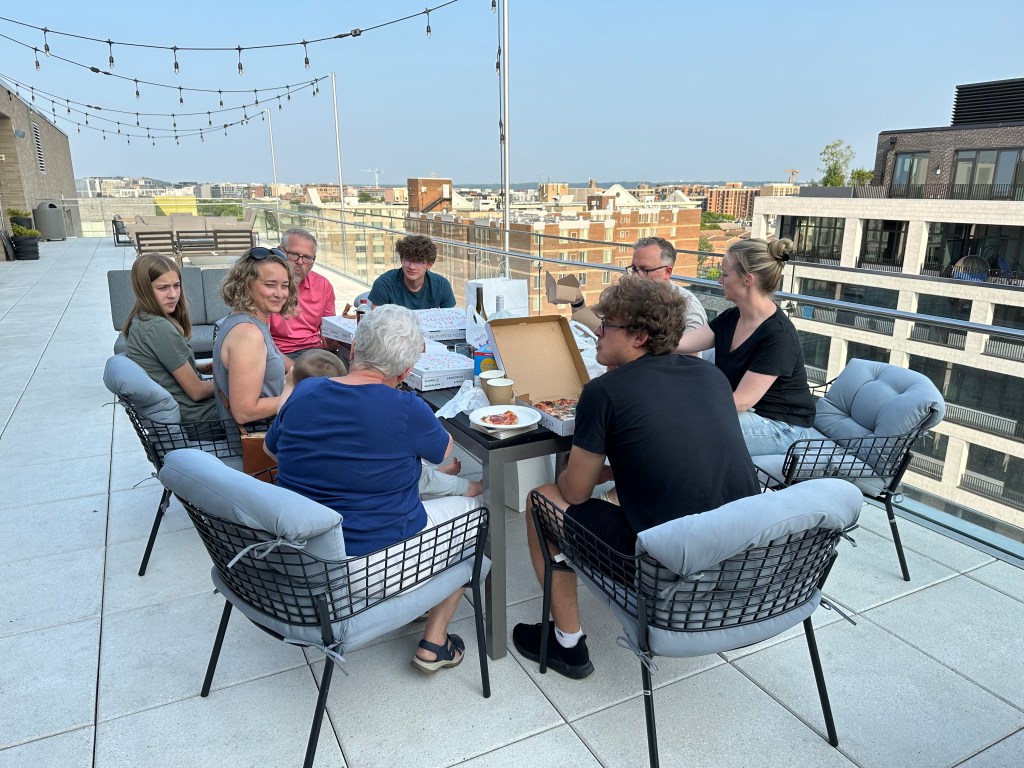
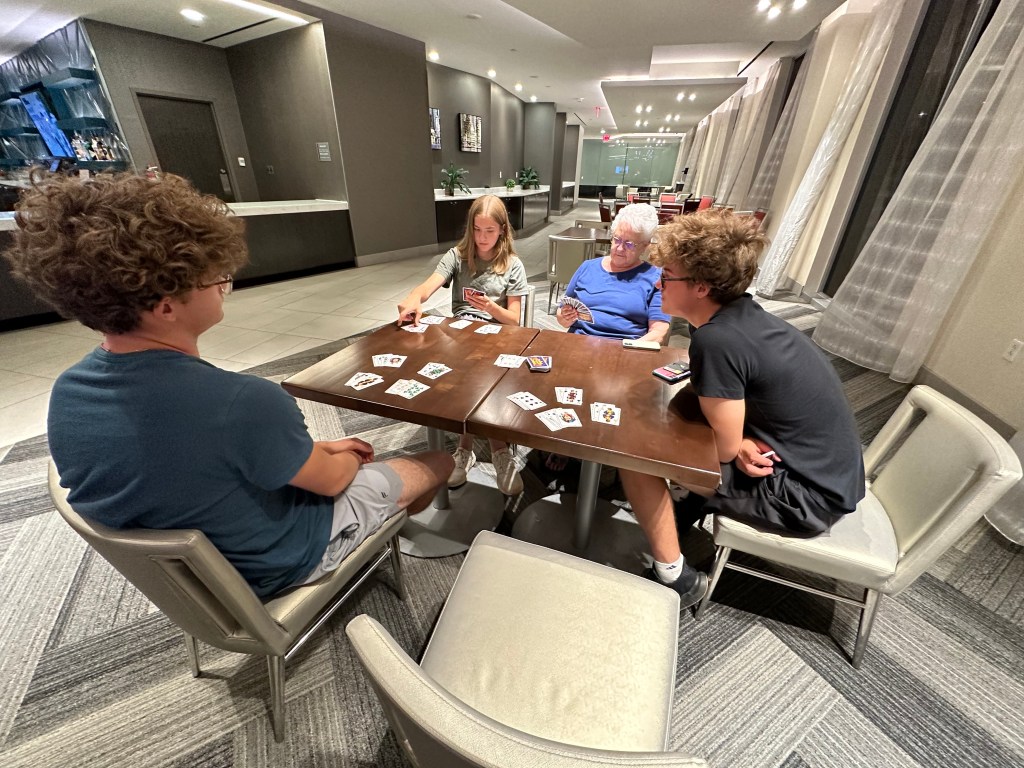
That was plenty for the first day. Returning to the hotel, we ordered dinner from a local pizzeria. We found the perfect place to hold a pizza party and enjoy each other’s company, the building’s rooftop. I relished the lively chatter, the food, and the cityscape views. We finished the day with gelato and a rousing game of cards with the teens. It was a balance we all needed to complete the day.
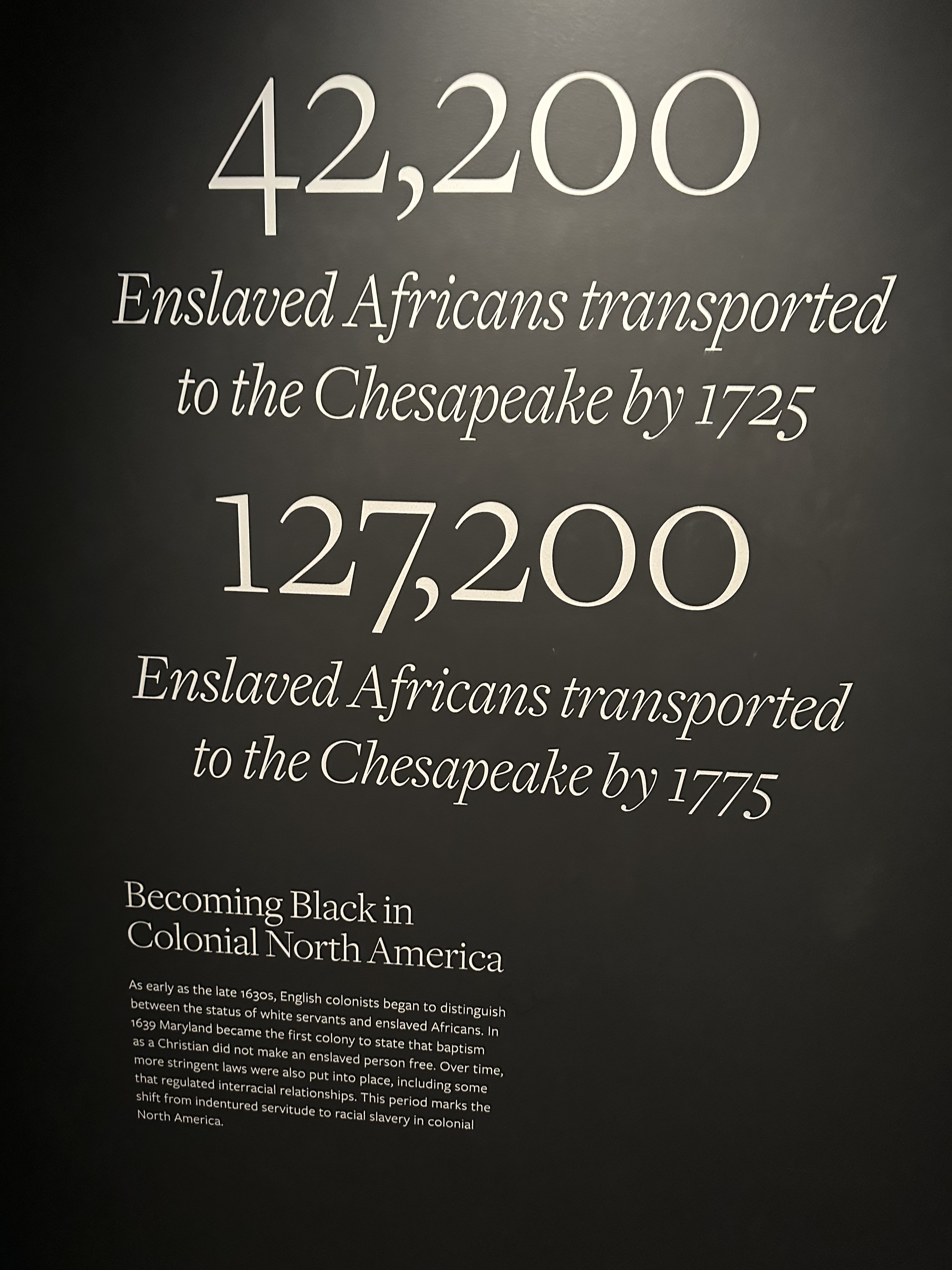
We walked a mile in the morning’s coolness the next day for a delicious breakfast spread. The portions were so large that only the teens cleaned their plates. We stayed so long that the day’s heat had already begun as we worked our way toward the National Mall. It was Juneteenth, and we had tickets for the National Museum of African American History and Culture. We wanted the youngsters to see first-hand the sad history of how African Americans arrived in this country and what they endured in slavery, the Jim Crow era, and the present. The chronology began on the lower floors, and we worked our way up in small groups. Is there another choice when you have a toddler and septuagenarians in the same family? We didn’t have time to do the outstanding museum justice.
We exited into the early afternoon heat and humidity commonplace for D.C. summer days. Teddy’s parents found a refreshment truck parked near some massive shade trees, and the rest of us soon joined them for some shaved ice and smoothies. Nana was in her glory feeding Teddy some of her cool mango drink. Teddy’s eager reaction showed his gratitude.
Colorful murals were abundant.
Mural.
The Washington Monument from the Jefferson Memorial.
At the FDR Memorial.
Colorful canopy.
A short walk brought us to the World War II Memorial in the shadow of the Washington Monument and at the reflecting pool’s eastern end. I spied a group of Amish circling the memorial’s parameter and recognized the older leader. Unfortunately, I was too far away to say hello.
We continued walking west to the Lincoln Memorial for the older grandkids to experience. Before we left the area, we pointed out the impressive yet solemn Vietnam War Memorial from a distance.
By now, everyone was tired, and we headed back to the hotel via three modes of transportation. Some of us took an Uber, while two adventurous teens followed their father to the Metro. Since Teddy needed a nap, his parents chose to push the stroller three miles.
With the day’s heat and humidity, we were glad for the hotel’s air conditioning in which to rest. However, the teenagers all wanted to play cards, a vacation tradition since they were young. We ordered burgers from a local restaurant and reclaimed the hotel’s rooftop. The banter and passing around Teddy put a punctuation mark on a fulfilling day. The games played on, but we seniors called it a night, our hearts full.
As I settled in for the night, I reflected on the day’s interactions. Everyone we met, hotel, restaurant, museum staff, and Uber drivers, were engaging and courteous. They made this country boy feel right at home in the city.
The adults headed for a lighter breakfast than the previous day while the teens slept in. Afterward, they had to be awakened to say goodbye to Teddy and his parents, who had to leave for their return flight. We hugged and kissed and thanked them for making the trip, and then they were gone.
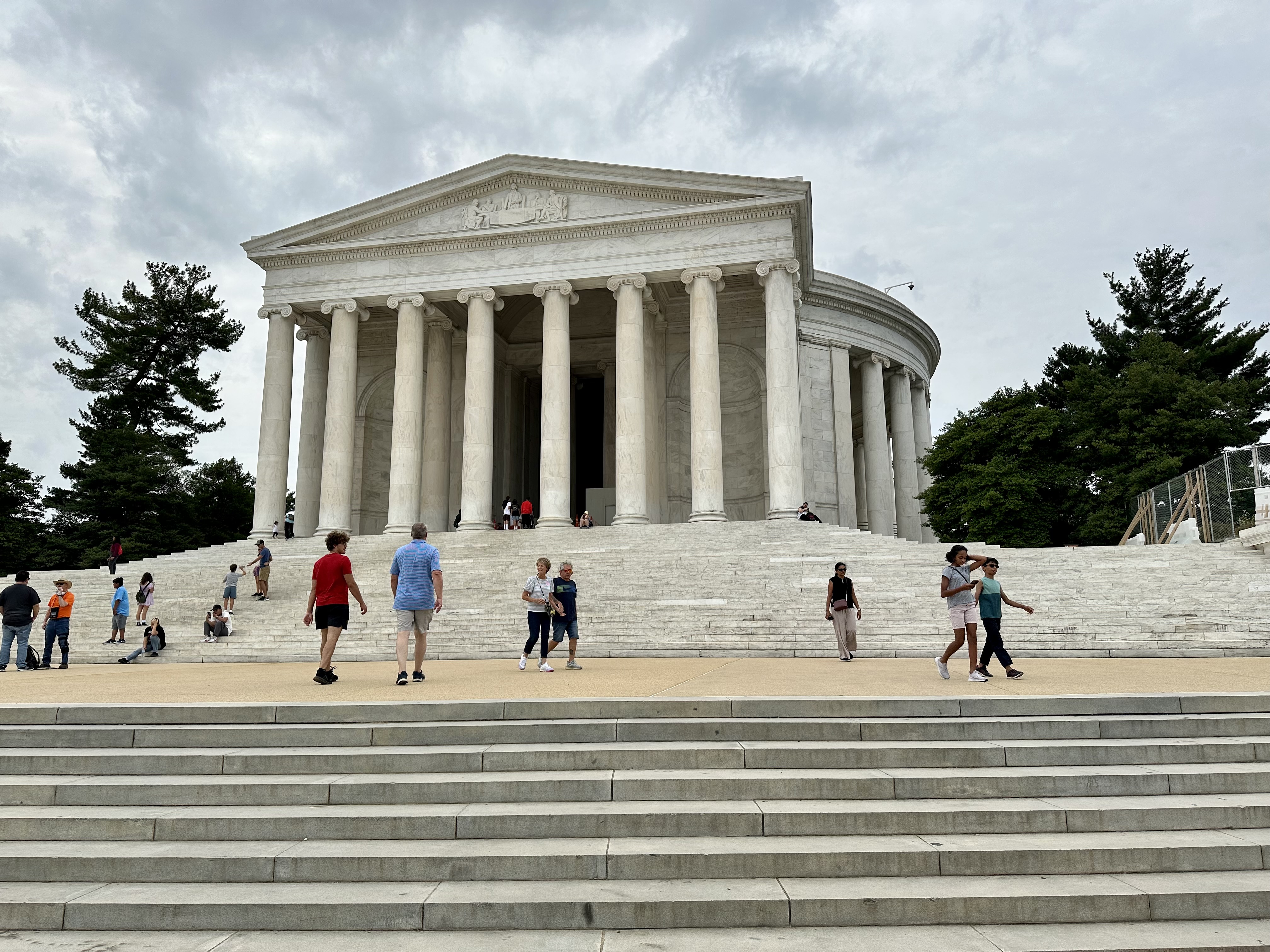
Those that remained returned to the monument area. Our first stop was the Jefferson Memorial. The day was warm again, but a steady east wind made it bearable.
Please click on the photos to enlarge them.
We walked to the Franklin Delano Roosevelt Memorial, which my late father truly enjoyed when I first visited it with him as part of an Honor Flight for World War II veterans. I told the grandkids how their great-grandfather, who used a wheelchair, nearly rose to his feet when he saw the statues of the longest-serving president. Dad even knew the name of Roosevelt’s dog, which also had an oversized bronze.
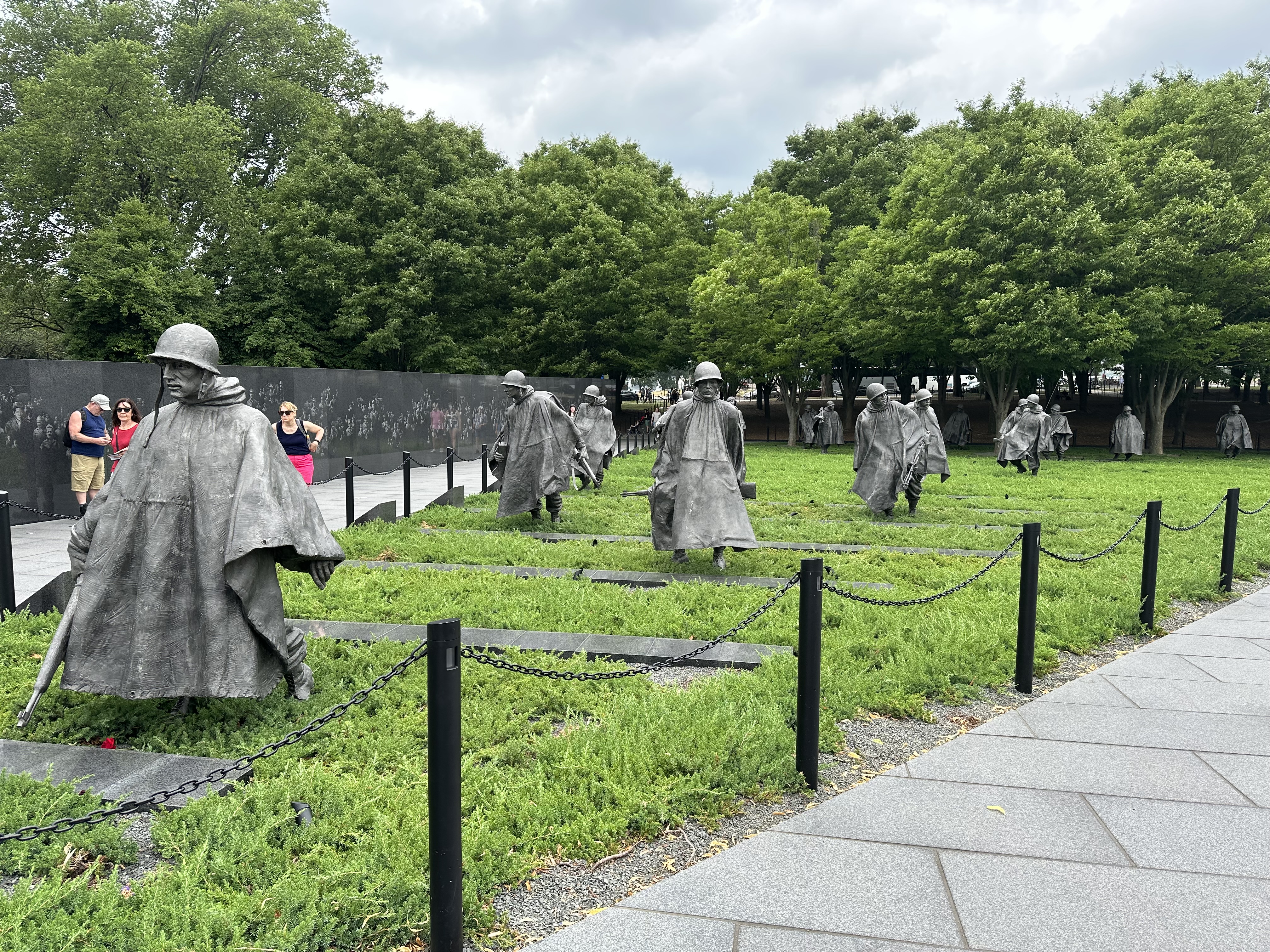
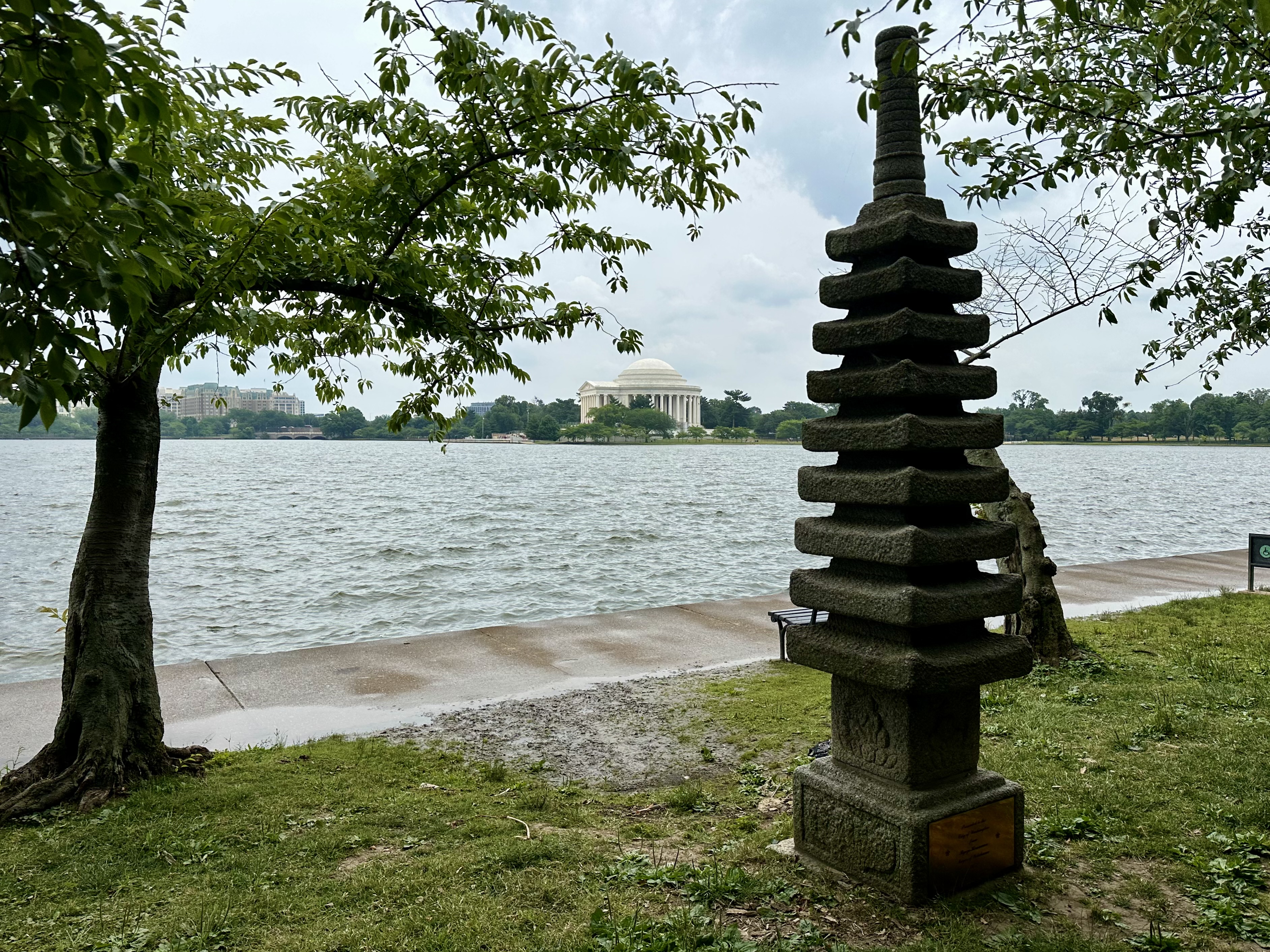
The Martin Luther King, Jr. Memorial stood a short walk away. We were a few months late for the blooming of the famous cherry trees along the path. The impressive King Memorial faced the Jefferson Memorial across the choppy basin. From there, we strolled to the Korean War Memorial. With its platoon of soldier statues, the setting gives you pause about the futility of war.
It was time to head home. We retraced our steps through the FDR Memorial and back to the van. As we rolled south down the interstate, I enjoyed the commotion of the card games with Nana and teenage grandchildren in the back seats. I was happy to have my son-in-law drive and most grateful for our joyous times together.
We had so much fun that we had already made tentative plans for next year’s get-together. In the meantime, I’ll bask in the joyous afterglow of our little family’s reunion.
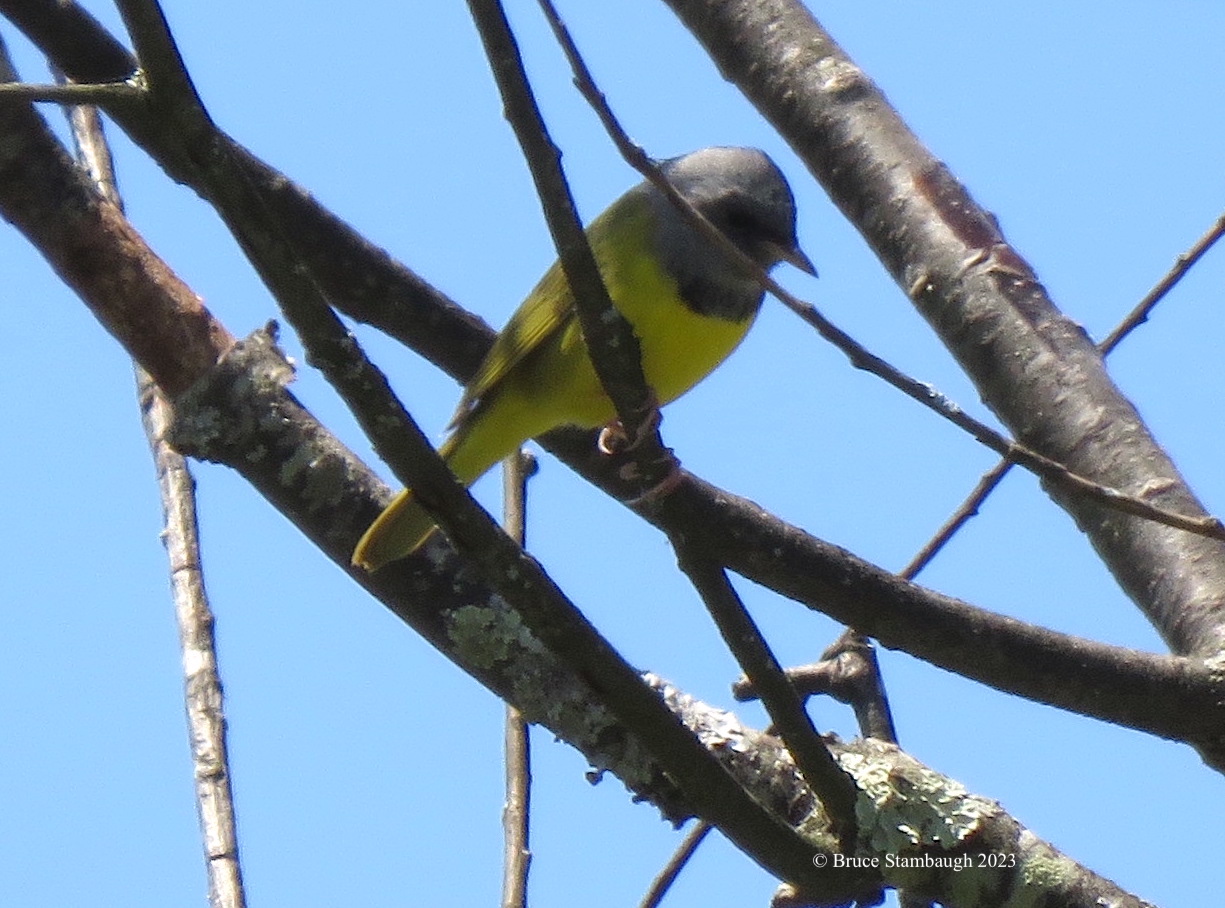
I couldn’t believe my eyes. I had heard a Mourning Warbler singing before, but I had never seen one. I always attributed that to their habitat and skulking behavior. It could have been my poor eyesight, however.
Mourning Warblers tend to stay closer to the ground than the one I spied 15 feet high in a dead wild cherry tree. They favor low brushy habitats, not bare tree limbs. Yet, here it was, and I was pretty happy to be able to capture a few photos before this beautiful bird with a lovely song dropped into the underbrush and out of sight.
Most Mourning Warblers nest in boreal forests in states and Canadian provinces well north of Virginia. However, there is a small area in the Allegheny Mountains along the boundaries of Virginia and West Virginia, where they also breed.
When I learned that other birders had spotted Mourning Warblers near Reddish Knob, a mountain summit on the Virginia/West Virginia border, I decided to go for the bird. The drive to that area is less than an hour from my home in the Shenandoah Valley.
Other birders had the same idea. The bird was easily heard, and with six pairs of eyes, the target bird was soon spotted. However, I didn’t expect it to be so out in the open. But I had to act fast. Mourning Warblers seldom sit still. As you can see, this bird was already looking down and dropped out of sight right after I snapped this photo.
I was grateful for the help of the other birders, who were equally happy that I was able to get the photographs I desired. The Mourning Warbler was only one of several bird species I saw that day, but it was the best.
The Dry River spills over Slab Road, Dayton, Virginia.
I appreciate the simplistically specific way of naming roads in Rockingham County, Virginia. The roadways are numbered, of course, but the colloquial names are what people know. Slab Road is a prime example.
Hardly a half mile long, Slab Road connects two main county roads. Between the two is the Dry River, often devoid of water. A solid cement slab serves as the roadbed that crosses the riverbed from bank to bank. Thus, the unusual but appropriate name for a public road.
After some recent rains, the river flowed steadily over the slab, forming a mini-waterfall. I wanted to gather some rocks for a water feature I was assembling for our backyard birds. The high water limited my search to the south side of the slab. While collecting a few stones, I couldn’t help but notice the beauty of the evening sun filtering through the trees and reflecting off the smooth surface of the now not-so-dry river.
The need for a few flat rocks drew me to this inspiring scene that warmed my soul during this day’s golden hour.
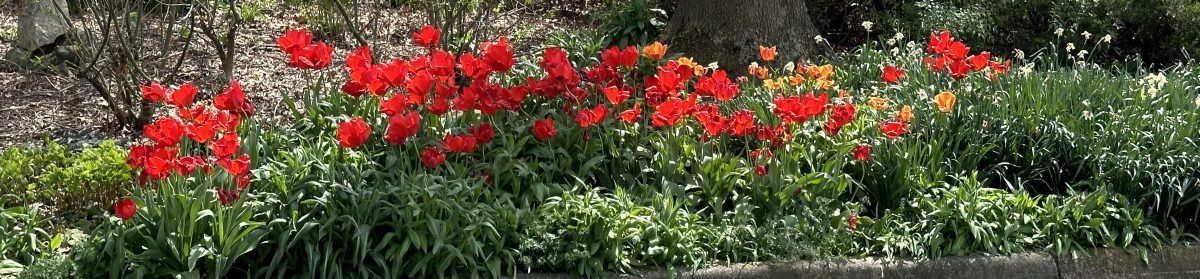
Don’t let those lovely calendar images of spring fool you. The gorgeous photos of tulips, daffodils, dogwoods, and any other flowering plant or tree may last all month in the picture hanging on your wall. But you better hurry outside to see them before they rudely disappear.
That’s Spring in a nutshell. It can be as fickle as the weather because the weather, especially in the age of rapid climate change, affects when things bloom and for how long. Throw in a heavy frost or two, and the blossoms’ purposes are lost until next year.
I don’t mean to be sounding doom and gloom. After the long, dark, and in many places, cold and snowy winter, we celebrate Spring’s arrival. But we need to get out and enjoy it while we can. We can easily take the many blooms and fragrances for granted until they are gone.
I’m as guilty of that as anyone. The older I get, the colder I get. Consequently, I avoid being outside too long on blustery, chilly days. I know. My age is showing.
I’ll admit that I’m a fair-weather kind of guy. I need the sun to keep me warm no matter how many layers of clothing I wear. Still, I love taking in the rapidly changing spring scenes. The leaves start to unfurl once the blossoms fade. Depending on the species and the weather, it is not long until the plant or tree leaves are in their fullness. As the leaves mature on some plants and trees, they darken into a rich green.
We are fortunate here in Virginia’s Shenandoah Valley. The first spring blossoms show themselves in the forests in late winter. Witch Hazel blooms can easily be overlooked. The white snowdrop petals are easier to see against the burnished leaf litter.
This year, February and March traded their weather. Varieties of daffodils and crocuses bloomed early and stayed late. As Spring progressed and the weather cooled, they became the exception. Pockets of the Glory of the Snow, Spring Beauties, Bloodroot, and Coltsfoot soon joined them.
The Redbud trees were gorgeous unless back-to-back freezes nipped their pretty pink blossoms. The impatient leaves soon pushed the petals to carpet the ground. Even the maples were in a hurry to begin their chlorophyll duties.
Soon neighborhoods, roadsides, and forests were ablaze with color in April. The azaleas, rhododendrons, Virginia Bluebells, tulips, wild geraniums, and poppies put on a show. The pollinators buzzed high and low.
So, here we are in May. The dogwood blossoms have faded, while their leaves stand ready, awaiting touches of sunshine and rain. They need both.
Together let’s pledge to get out and enjoy whatever is blooming in our neck of the woods. If we wait too long, we’ll only have the calendars to remind us of what we missed.
Whenever I go birding, I inevitably discover many other curiosities to photograph. Such is the life of a retired senior citizen.
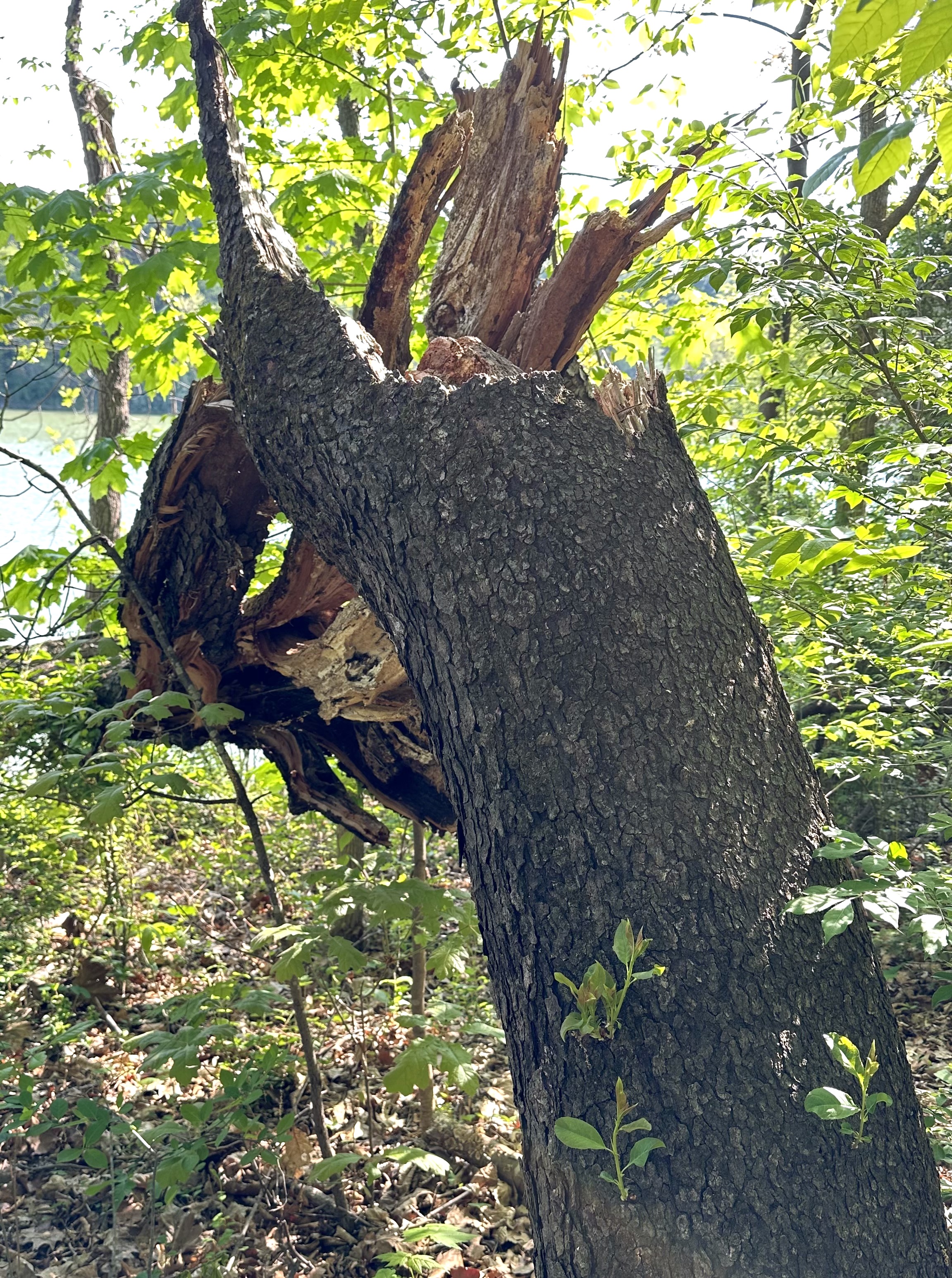
On my most recent outing, I came upon this wild cherry tree that had been struck by lightning sometime last year. I hated to see the stately tree destroyed since it was one of only a few in this small state park. All kinds of wildlife depended on its flowers and berries for sustenance.
Since the tree is about halfway around the lake, pictured in the background, I usually pause my hiking for a rest here, admiring the beauty of the tree’s bark and splintered wood. This time, however, I noted something fascinating. Tender shoots of new branches were growing from the tree trunk, as seen in the foreground of the determined hardwood.
Such is nature’s way of producing life, where we humans see only demise. There is a lesson to remember here: No matter your situation, never give up.
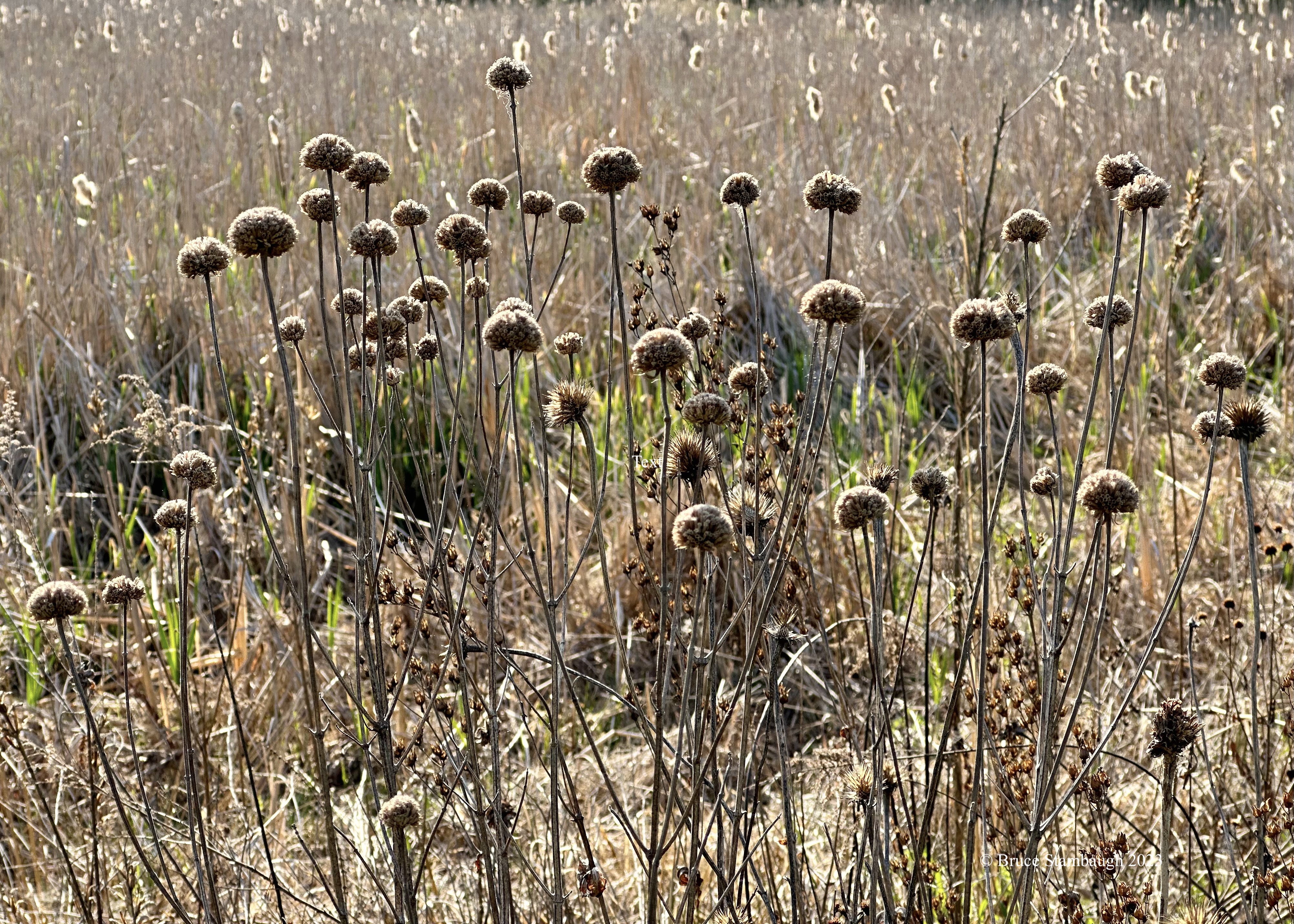
The cones of last summer’s Black-eyed Susans stand naked before fluffy cattails.
On a recent birding expedition to a local lake, I spotted these spent heads of last summer’s crop of Black-eyed Susans. The buttery petals had fallen off or been eaten by birds or insects, and several hungry bird species had devoured the nutritious burnished seeds in the center of the wildflowers.
The morning sun kissed the bulbous cones, creating a two-toned effect. It was a fun find.
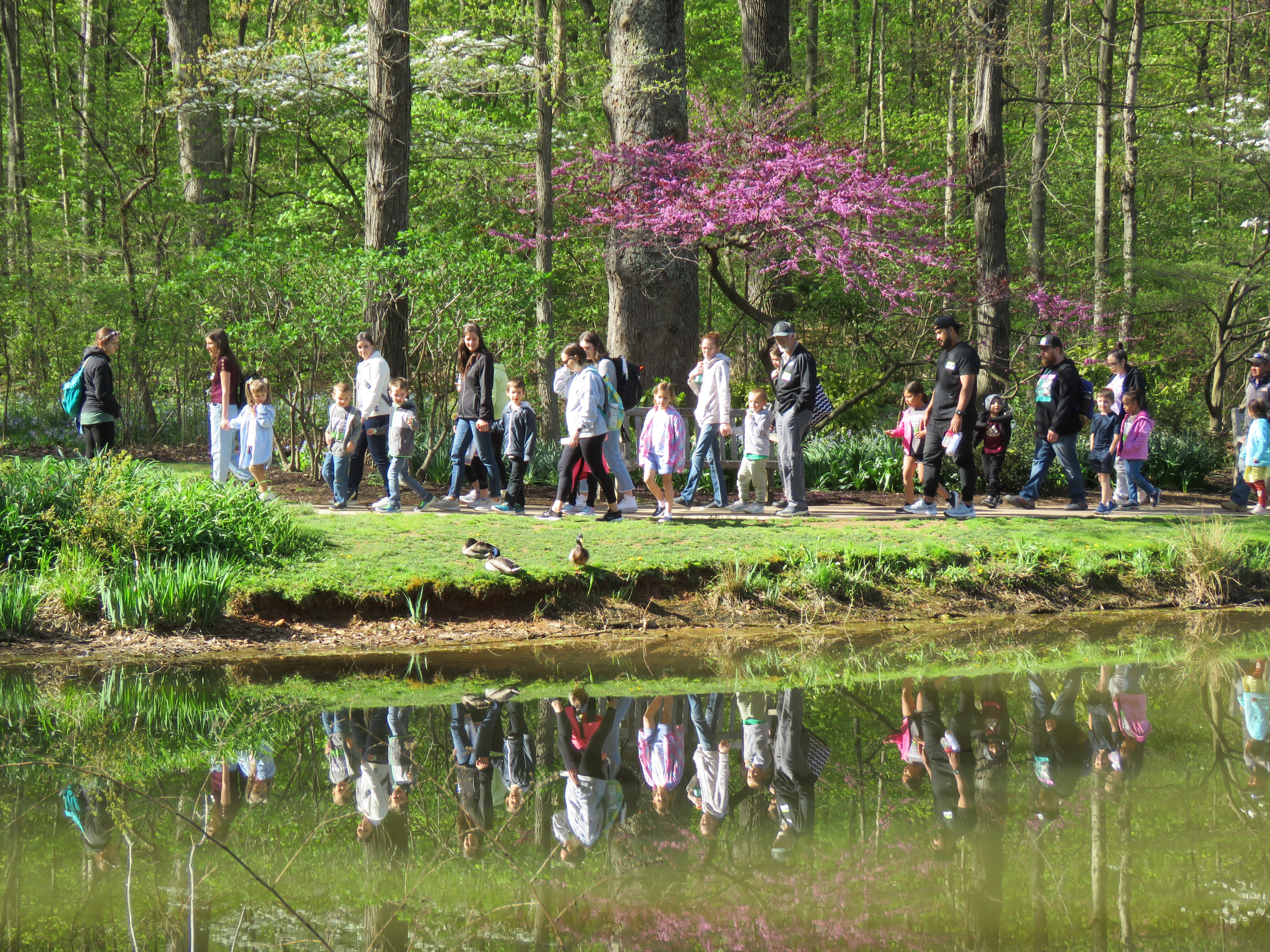
Students, parents, and teachers visited a local arboretum.
Every year since 1970, April 22 has been observed as Earth Day. It’s a day to recognize humankind’s responsibility to respect the planet on which we all live.
The marking of this day found 20 million Americans striving for cleaner air, water and conservation of the land and its natural resources. The movement eventually led to the creation of the Environmental Protection Agency and the passage of several U.S. environmental laws.
In 1990, Earth Day went global, with 200 million people in 141 countries coordinating to improve the environment in their various locales. It lifted environmental issues onto the world stage.
So, here we are 53 years later, still striving to care for our precious planet. What plans do you have to commemorate Earth Day?
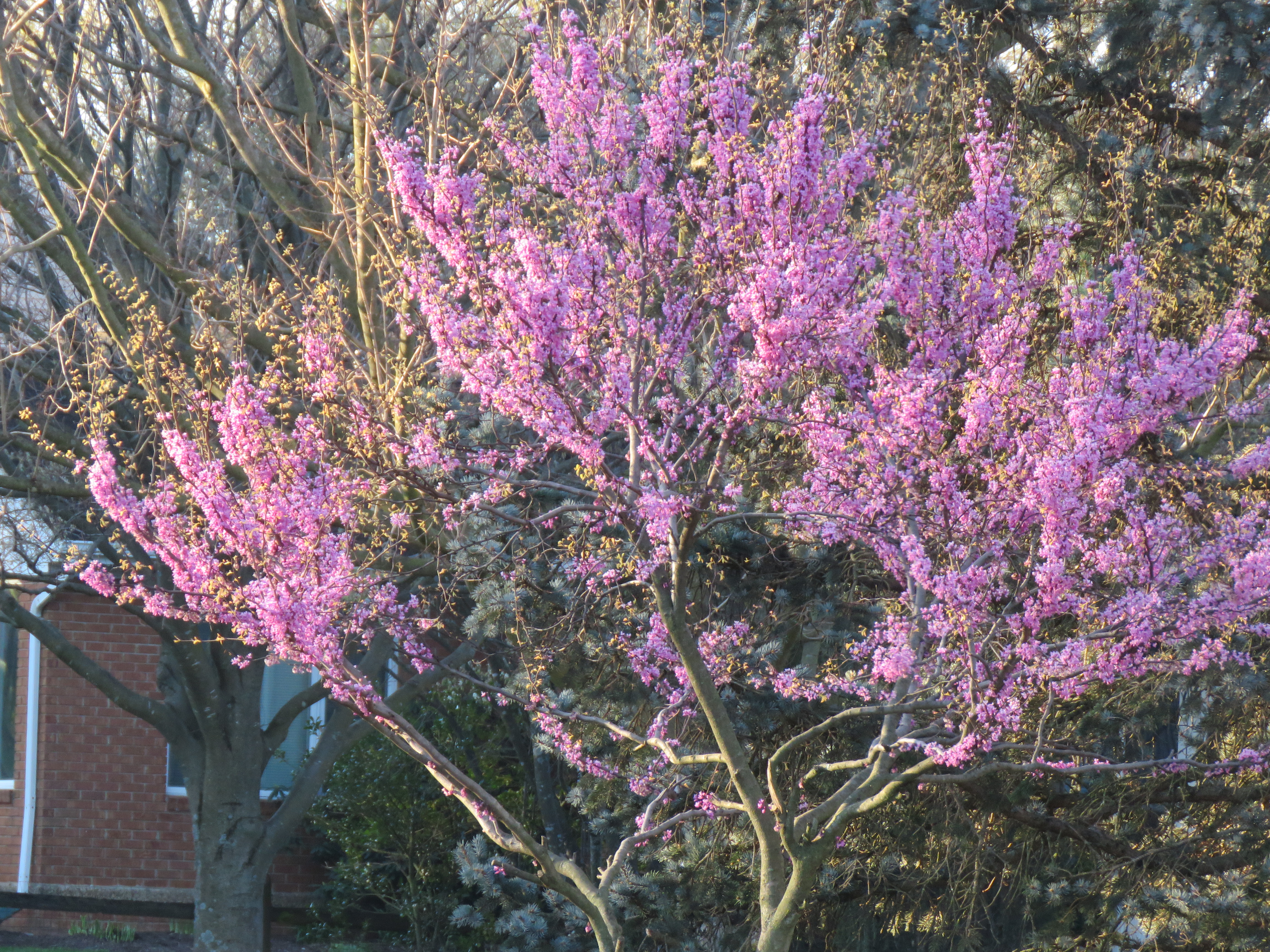
A redbud tree at peak bloom in Harrisonburg, Virginia.
Redbud trees are in full bloom in the Shenandoah Valley and across the entire Appalachian region. The mountain drives are gorgeous right now.
Redbuds are one of the earliest blooming trees, and they grow in all sorts of conditions. They are one of my favorite trees, especially in bloom.
That’s because there is more to their beauty than meets the eye. The unique way the individual blossoms form is the secret. Clumped together, it’s not easy to see. Get up close, and focus carefully. You can see that each separate flower closely resembles a hummingbird.
Not convinced? Perhaps the photo below can help you see the pink little hummingbirds. I hope you have a chance to check out this phenomenon in person.
Daffodils at the arboretum. Photo by Bruce Stambaugh.
My wife and I recently celebrated our 52nd anniversary. We did so quietly.
Initially, we considered driving to Washington, D.C., to view the cherry blossoms at their peak. We had never done that, and living only two hours away, we could easily view the iconic flowers and be home before dark. We weighed our options and decided instead to stay close to home, which was my wife’s preference.
That decision paid dividends we didn’t expect. First, we slept in, which is not our routine. We usually awaken at first light. It felt good to start our big day well-rested.
After a quiet, light breakfast, we continued with a habit we started during the pandemic. We played cards and drank our morning decaf coffee. With the temperature hovering slightly above freezing, we were in no hurry to head outside for a few local adventures.
Traffic was light for the 10-minute drive downtown for an early lunch at a favorite restaurant. Since it was a Monday and not yet noon, there was no wait. We enjoyed our meals and the quiet atmosphere. They even had gluten-free bread for my brisket sandwich. It was nice to sit in the serenity of the ordinarily bustling restaurant. Our waitress even took her time bringing the check.
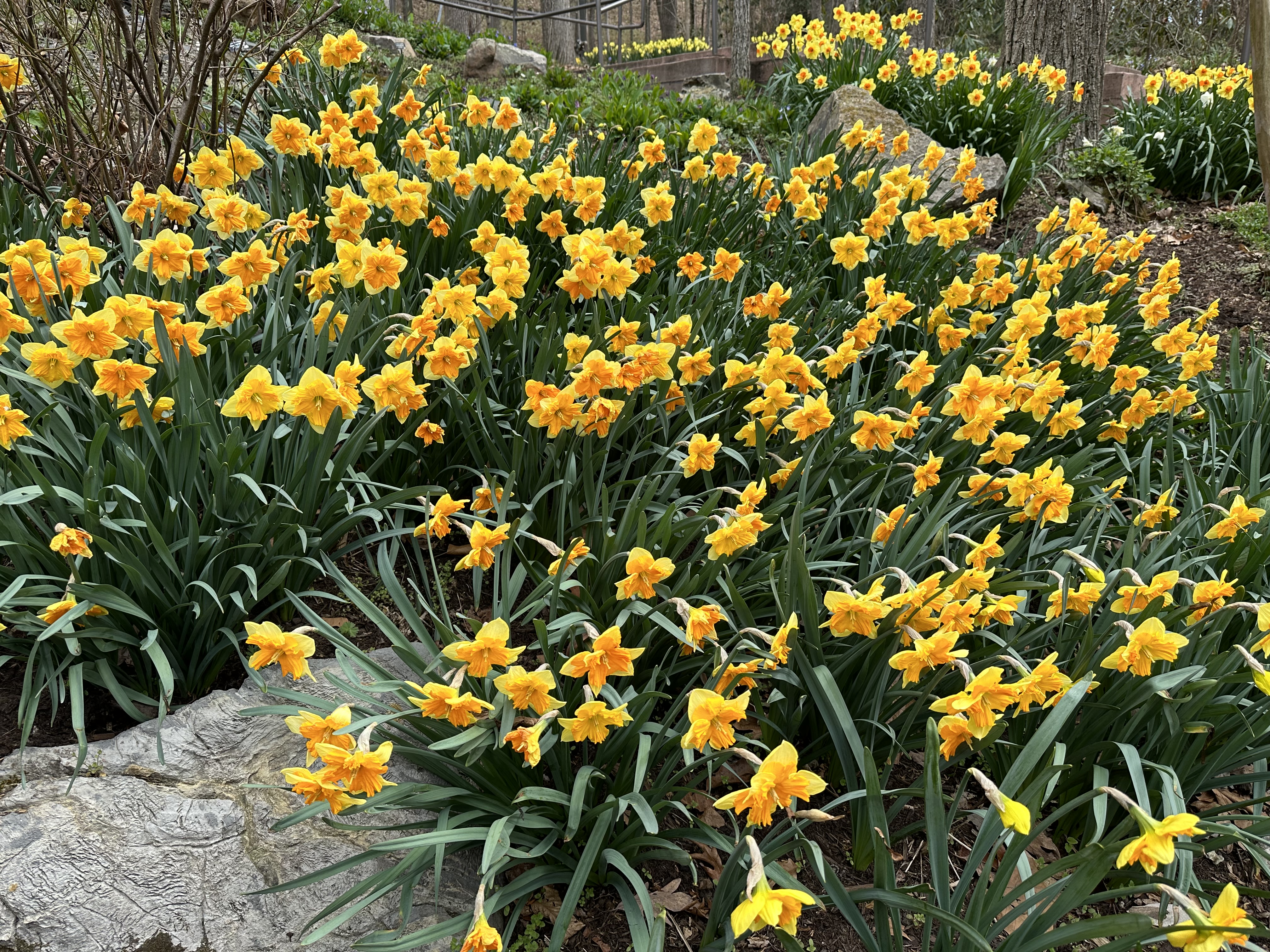
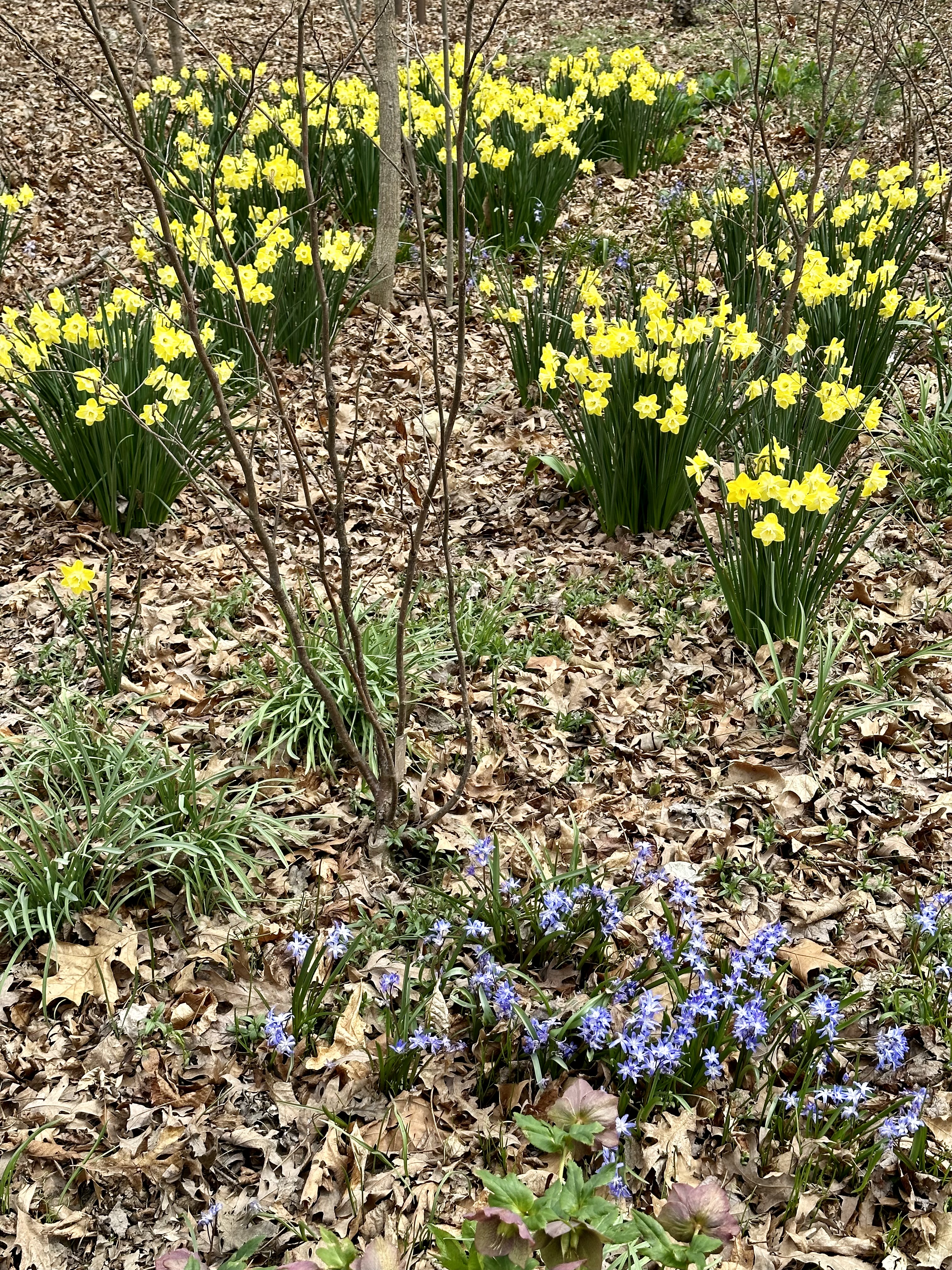
After lunch, we drove to a local arboretum and strolled around the artificial pond. Both buttery yellow and white daffodils colored the forested hillside surrounding the murky pond. Some flowers were already fading, while others were beginning to bud.
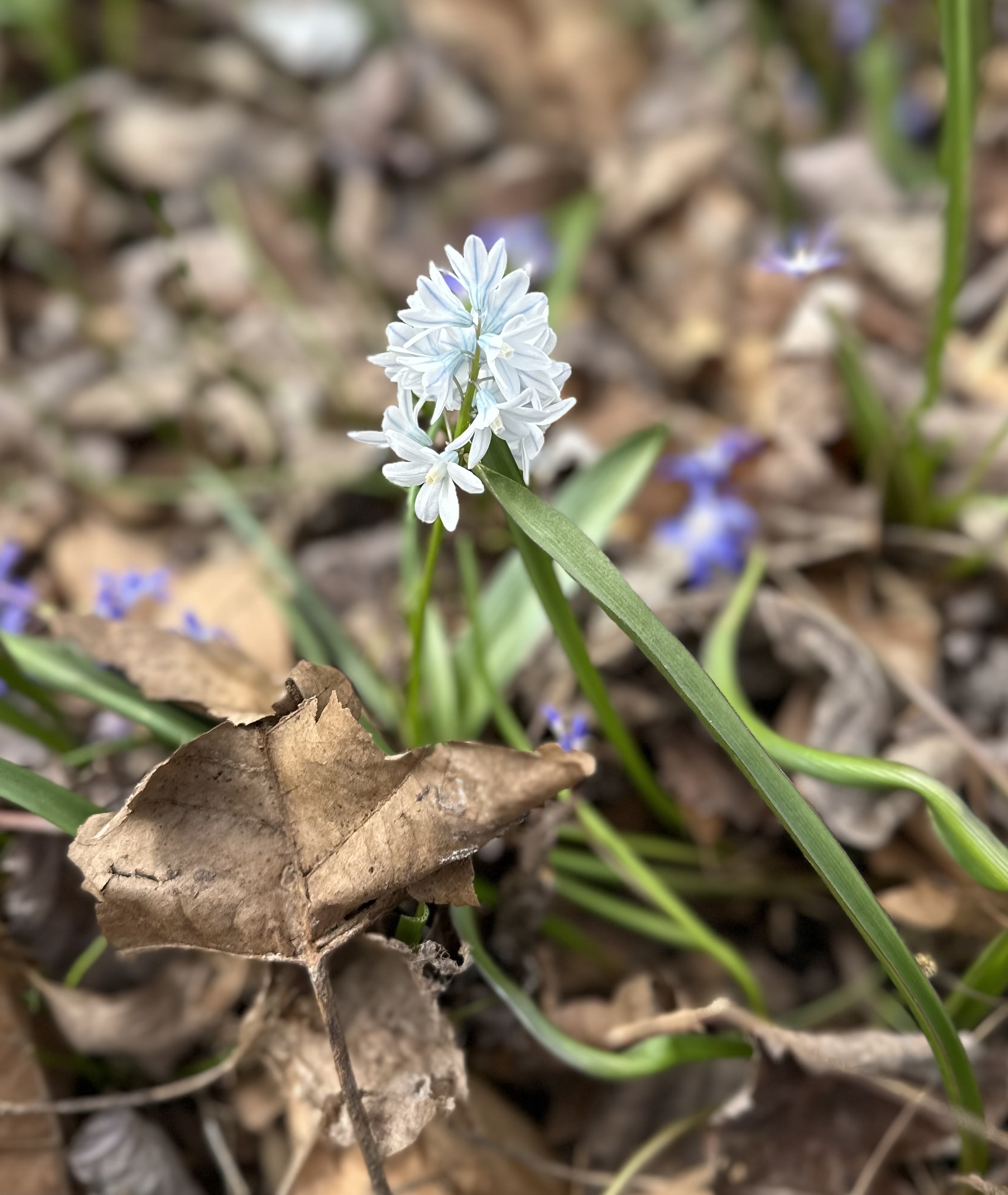
The aptly named star magnolias were also losing their luster. We admired some snappy-looking white and orange daffodils and various wildflowers beginning to grace the forest floor.
A young man approached us as we sniffed the blooms. He was the new marketing person for the arboretum, and we enjoyed an extended conversation with him about photography. My constant snapping of the shutter gave me away.
By then, the sun had taken the chill out of the air. That meant one thing: ice cream. We drove to a local ice cream parlor in a neighboring town. A kid’s cup is suitable for us now. My wife was more adventurous and ordered a caramel salted chocolate chunk while I stuck with my tried and true chocolate. We chose a table outside where my wife sat in the shade while I preferred the sun on my back.
On the way home, we stopped at another smaller arboretum at the north end of the small town. The place is more park than a botanical garden. A small, tree-lined stream called Cooks Creek winds lazily through a green space. Cooks Creek Arboretum is sandwiched between a hillside condo complex and a farmer’s still-fallow field stretching up to a big red barn.
Once the flock of pesky common grackles flew off, we heard a barred owl calling softly from inside an owl box fastened to a giant sycamore on the creek’s bank. The harmony of the owl’s twittering and the silvery gurgling of the stream brought a smile to both of us.
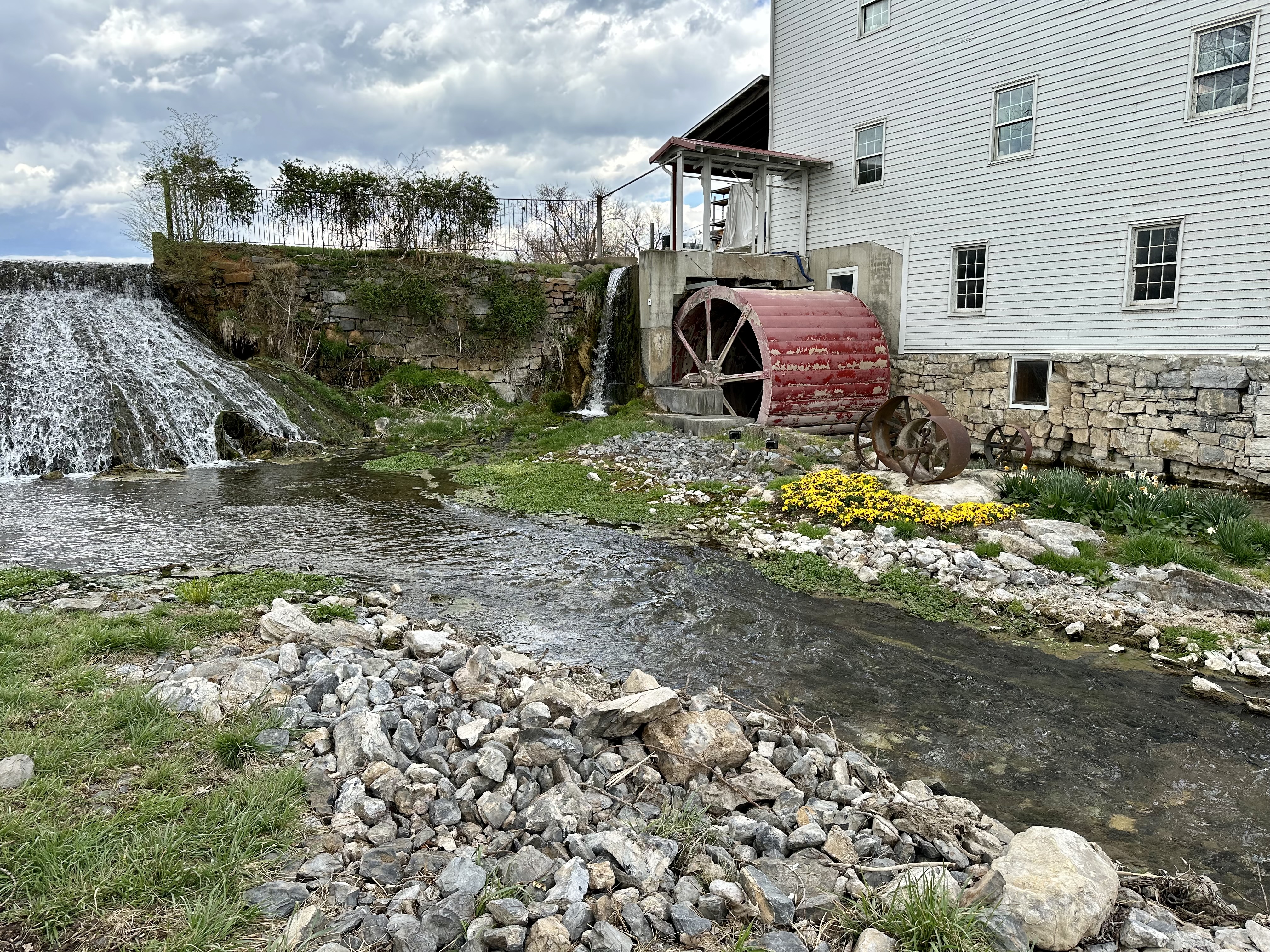
Ring-necked DucksSilver Lake MillThe old waterwheel
Please click on the photos to enlarge them.
With the return of the noisy grackles, we detoured to Silver Lake to check for migrating waterfowl. A quartet of ring-necked ducks floated and dived, floated and dived on the shallow lake’s surface. The lake’s Civil War-era mill attracts people far and wide.
Shortly after we arrived back home, the doorbell rang. A young woman handed my wife a bouquet from her sister and her husband, who live in Ohio. We appreciated their kind and loving gesture.
We snacked for supper, and after sunset, I drove to a high point in the countryside to take photos of three planets. Venus shown bright in the night sky, but I couldn’t find the conjunction of Saturn and Mars near the horizon. An invisible haze hung over the Allegheny Mountains, obscuring any starry beauty.
When I returned home, another kind of darkness fell. We learned of the horrific mass shooting at the Covenant School in Nashville. The sad news snapped us out of our anniversary bliss into the reality of today’s life in the United States. Our peaceful, quiet, and enjoyable anniversary day with my loving wife ended with a tearful thud.

































 Roadkill Crossing
You must be logged in to post a comment.