I’m a person that is usually on the go. However, I know first-hand the benefits of standing still.
I recently went to the Big Meadows area of Shenandoah National Park in Virginia to do some birding. I have learned that the open spaces along and near parking lots are favored by certain bird species. Wildflowers and dense brush grow there beneath mature deciduous trees. That combination provides both cover and food for my avian friends.
It didn’t take me long to be rewarded. Though it was windy, the birds were active. Due to the wind, however, most kept low and in the thicket, making it harder to photograph them or even find them with binoculars.
On this overcast morning, the sun suddenly peeked through, and just as suddenly, this lone Cedar Waxwing landed on a pokeweed bush right in front of me. I slowly raised my camera and clicked away.
I couldn’t believe my good fortune. Cedar Waxings are some of my favorite birds due to their posture, coloration, and behavior make them regal birds. I snapped off four quick shots of this beauty as it checked its surroundings, and then just as quickly as it had arrived, the bird flew off.
Other than the slow raising of my camera and the ear-to-ear smile, I hadn’t moved. I was graciously rewarded for standing still. For the record, cropping and adding my watermark were the only “alterations” done to the photo.
“The benefits of standing still” is my Photo of the Week.
A balmy day in the Shenandoah Valley.
When I drive alone, I often meditate.
It’s not what you might think. I don’t close my eyes, of course. I just enjoy the peace and the time alone to think. I don’t forget about driving. It would be both foolish and dangerous to do so.
I try to allow extra time for a more leisurely drive. I avoid superhighways. Backroads are my preference because I never know when I might need to stop to take a few photos of the fantastic scenery that Virginia’s Shenandoah Valley affords.
Unlike my younger years, I drive silently. No radio, no CDs playing. I enjoy the quiet unless the road surface is too rough. Then I take in the music that my tires sing to the tune over the various macadam surface textures. The octaves change by the mile.
I’ll use the GPS when I have to. Once I know the way, however, I am on my own, like the other day when I had a doctor’s appointment 35 miles away. A typical farm in the Shenandoah Valley.
I left nearly two hours before my 2 p.m. appointment. Besides a couple of brief planned stops, I knew there would be photo opportunities along the way. I had been that route before.
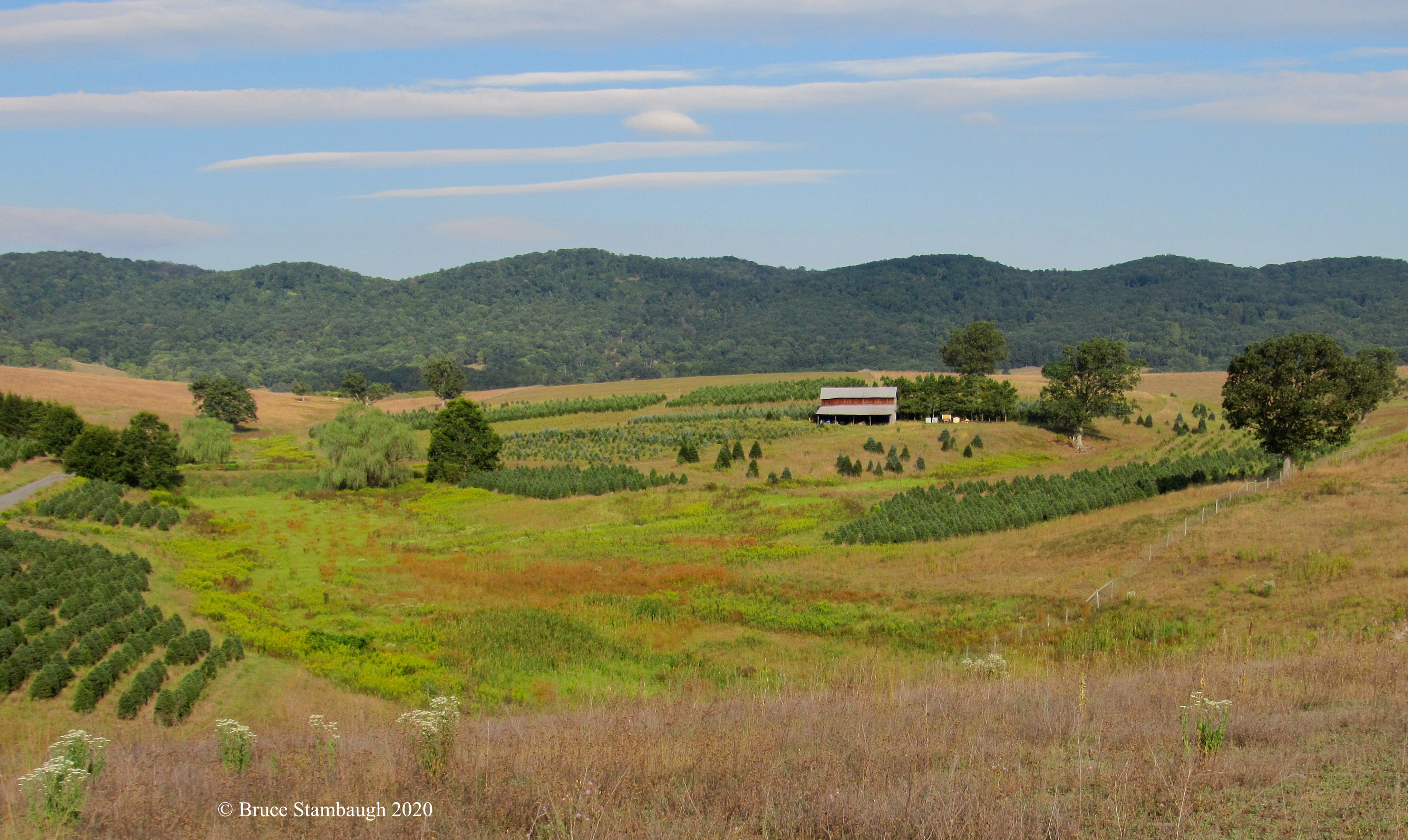
Driving in that contemplative state helps to clear my mind from all of life’s noisiness. Plus, I get to enjoy the mountains to my left and mountains to my right. In between, there is nothing but gently rolling countryside dotted by farms, fields, forests, and more gigantic chicken houses than I care to count.
Weather permitting, I ride with the windows down and the sunroof open. I sometimes pay the price if I pass a freshly manured field.
This trip turned extra-special. Once I passed Sulphur Pump Road, I turned south on the narrowest windy way with no ditches and farmers’ fences hard against the blacktop.
The paved path twisted and turned, rolled up, down, and around until I made a slight right onto Battlefield Road. In less than a half a mile, I crossed a short narrow bridge in the curve of the road. Ahead, an old plantation sat high on a ridge behind a grove of mature pines. The spot where young men died in the Civil War Battle of Bonnie Doon.
At this exact spot at the bottom of the hill, Americans fought Americans in a Civil War skirmish. Hand-to-hand combat ensued, with heavy casualties on both sides. Today, fruit trees and fence line trees waved in the wind.
No historical marker identified the bloody spot. I knew it from a Civil War class that I am taking remotely. It was this week’s lesson.
Farther south, a couple of miles, two different historical markers on opposite sides of the road defined the facts and sight of a deadlier clash, the Battle of Piedmont. Field corn and an impressive planting of soybeans nearly hid both plaques, while the Blue Ridge Mountains and Shenandoah National Park created an enchanting backdrop.
I wondered if people knew what had taken place here, the massive loss of life, the many casualties, and prisoners of war, the consequence of the Union victory. If they knew, did they still hold a grudge or even care?
Did they appear only as fields of corn and beans to them? Were people merely on their way from point A to point B in their daily lives as they passed?
I pondered all of this as I arrived at the impressive multi-storied medical office building. I donned my mask, had my temperature taken, responded in the negative to all of the required COVID-19 questions, and waited my turn for my 21st-century exam.
Fall in the Northern Hemisphere has officially arrived! I always welcome the fresher, cleaner air, less humidity, and cooler temperatures.
The first sunrise of autumn on September 23, 2013, brought all of that and more. As you can see, fall got off to a foggy start that day.
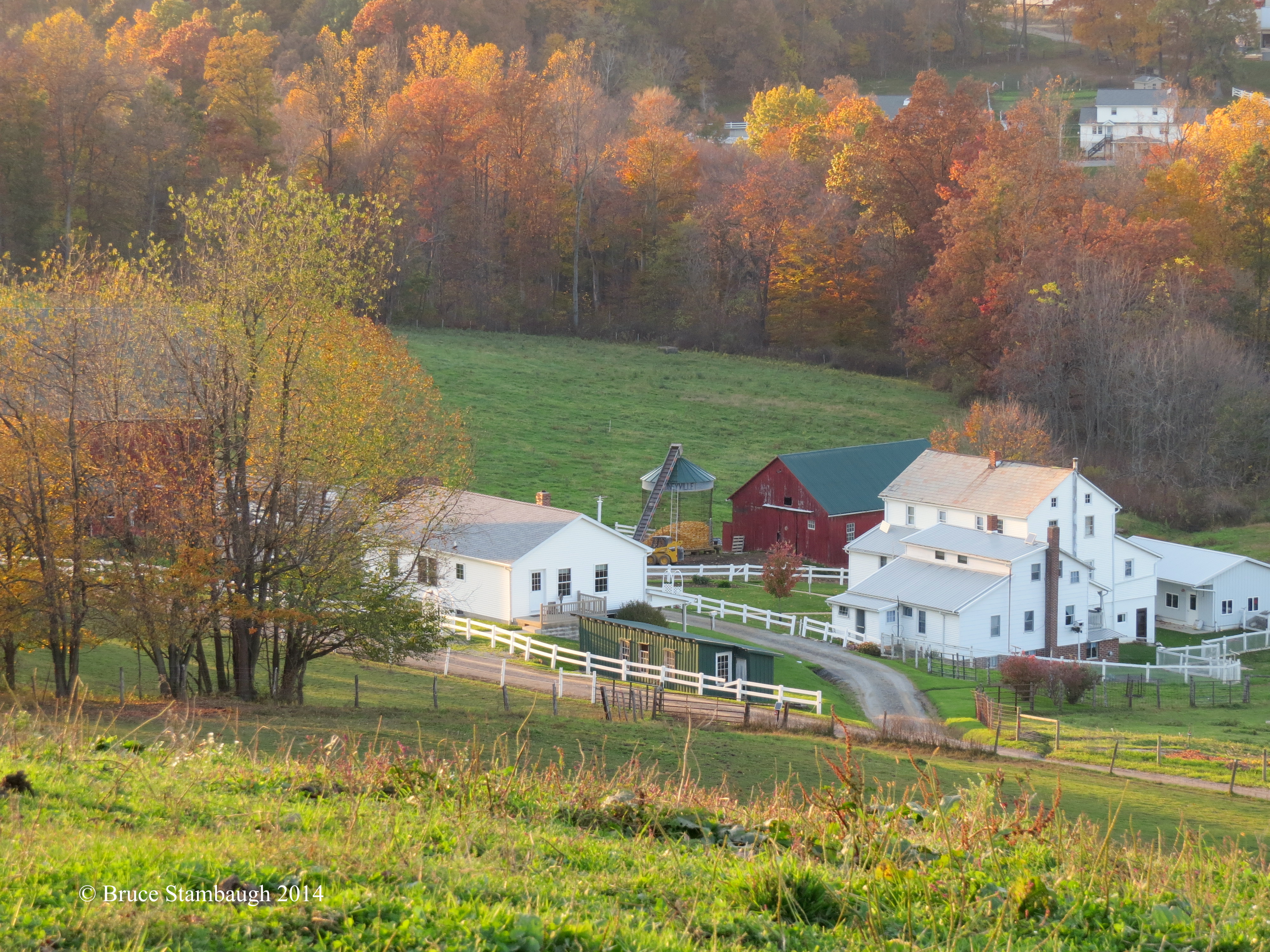
This photo was taken as the sun filtered through a typical September morning fog in Ohio’s Amish country, where I used to live. The wagon in the alfalfa field is a church bench wagon. It was parked there to provide seating for an Amish wedding.
“Autumnal Equinox Sunrise” is my Photo of the Week.
Residents of the Northern Hemisphere are on the eve of yet another autumnal equinox. Autumn officially begins at 9:30 a.m. EDT on Tuesday, September 22.
Autumn has given us plenty of warnings even before her arrival. Instead of turning red, many of the leaves on our backyard maple have simply been falling off one-by-one for weeks. We can thank the leafcutters for much of that.
The crazy weather of this insane year has also played a role in the dying leaves, along with other climatological irregularities. Let’s count the ways.
In late spring, an extended spell of chilly, wet March-like days did their damage. The steady damp weather kept farmers out of fields over much of the U.S. east of the Rocky Mountains.
Some bird species even delayed nesting because the weather was so foul. If birds did nest, naturalists found hatchlings dead because their parents couldn’t find enough insects to feed them.
Then just like that, it got hot and dry. Here in western Virginia, the furnace was on one day, and the air conditioner the next. Vegetation flourished in such conditions, causing the humid, hot wind to carry various pollens far and wide. According to my allergist, I wasn’t the only one sneezing.
The day the rains started in mid-July.About the time Major League Baseball finally began in July, the heavens opened up. The rains canceled games, and so did COVID-19 because too many players tested positive.
Record rains pelted the full length of the Shenandoah Valley. August usually is a hot and dry month here. Not this year. The weather was more like June should have been. We mowed our lush lawn twice a week for several consecutive weeks.
All the while, fall kept creeping upon us. Butterflies, relatively scarce during June and July, began to arrive. So did the ruby-throated hummingbirds. Now they are all filling up their tanks for their annual southern migration.
Juvenile male Ruby-throated Hummingbird.
The yellow, green, and black Monarch caterpillars have morphed their way into magnificent orange and black butterflies. Predators have learned to avoid dining on them since the Monarch’s appetite for milkweed renders them bitter, according to lepidopterists.
That dreaded F word, F-R-O-S-T, has already made appearances across the northern reaches of the U.S. Can the rest of us be far behind?
If you listen to the jingles and jargon on TV, this is pumpkin spice everything season. Despite the marketing ploys, I’ll gladly stick to my decaf mocha lattes. They’ll taste just as robust when the first freeze hits.
Of course, hurricane season peaks in the first few weeks of fall. The National Hurricane Center has already increased its predictions for both the numbers and intensities of those tropical storms.
Out west, you can’t breathe the air. It’s so oppressively hot and thick with smoke from record-breaking fires that have caused death, destruction, and devastation to humans, wildlife, and entire towns. More than 10 percent of Oregon’s population has been evacuated as of this writing.
Unfortunately for those millions of west coast folks, the sky has glowed an apocalyptic orange for all the wrong reasons. A good frost or even a lovely blanket of snow would greatly help those tired firefighters slow the infernos.
Autumn, of course, abounds with fiery colors, orange included. In addition to the winged creatures, mums, maples, pumpkins, and gourds are but few of the things that warmly usher in fall.
Climate change has undoubtedly played a part in stirring up 2020’s weird and wild weather. It’s been a universally strange enough year already all the way around.
Let’s welcome fall with a blissful hope for more normal global weather patterns. The right kind of orange.
I loved how the afternoon light highlighted the prickly details of this dense stand of spent teasel heads. Likely, several varieties of birds thrived on the seeds of these thorny remains.
I was happy that the farmer had let these beauties stand for all to enjoy. “Teasel” is my Photo of the Week.
Singing September’s song.
We’re already pushing to the middle of September. Have you heard the many melodies she’s already played?
If not, please don’t fret. If September plays her usual gig, she will beautifully and joyously harmonize her way into October.
We have to pay attention morning, noon, and night to fully appreciate September’s numerous odes. It’s a perpetual concert out there.
September has many modes of singing to us. That’s good news for those of us with diminished hearing. The seasonal songs are ubiquitous and indiscriminate.
Crickets, katydids, and locusts lull us with their winged cacophonies. Nature’s stringed rhapsody signals the season’s end and celebrates each day’s closing.
This slideshow requires JavaScript.
A tiny screech owl’s raspy soliloquy provides a brief interlude to the insect symphony. The chilling tune means trouble for little four-legged rodents romping around in summer’s last evenings.
If you listen carefully, you might be fortunate to catch the call of migrating birds piping on the wing high overhead. If you can’t hear them, aim your binoculars at the moon and enjoy the sideshow.
September croons to us in color, too. Her many blooms of gold, crimson, yellow, red, and even blue paint a many-colored musical in flower gardens, along roadsides, and in unkempt fields.
The month’s repertoire includes occasional towering thunderstorms. Their lightning dances and their thunder booms, drumming fear into almost every canine within miles.
At the storm’s end, perhaps she will surprise us with a dangling rainbow. Look quick before that high note fades. Remember to breathe in the aftermath, refreshing, clean, pure.
September invites us to sing along with her eclectic playlist. The crisp snap of husking the golden ears of sweetcorn is the prelude to perhaps the year’s last fresh corn on the cob.
Of course, the hiss of canners still sings, bubbling with goodness and a kaleidoscope of colors. Besides corn, salsa, beans, tomatoes, pickles, peppers, peaches, grapes, and apples all play their fruitful parts.
I adore the choruses in the outdoors the most. Find a pleasant spot in the woods, and just sit, watch, and listen as the sounds of silence come floating in decorative displays.
Migrating butterflies flutter to their specific tunes. Groups of Monarchs congregate in the coolness and safety of trees until the morning sun dries and warms their wings.
Swallowtails, fritillaries, Buckeyes, and skippers flutter their notes in their particular and various flights. It’s always amazing how they can find the slightest blooming speck to nourish them on their way south.
Brilliant sunrises and sunsets add magical backdrops to September’s forte. The trick is to rise in time to catch the morning show or to stop what you are doing and embrace heaven’s evening song.
The deciduous trees, of course, join the colorful choir one leaf at a time. Their intensity increases as the month wanes. They usually wait until October for their triumphant exit.
Still, whatever voice they can bring to September’s musical is much appreciated. We humans inadvertently join the band with our out of tune rakes and mechanical blowers.
Nevertheless, September’s concert is a joy to grasp. That’s true even if the neighborhood skunk makes an unwelcomed visit.
We can still enjoy the many classical notes of the year’s ninth month. At day’s end, the stars and planets twinkle their universal choruses, glorifying the heavens above.
Touring around the Shenandoah Valley, we stopped at a local orchard and vineyard. Noted for both their apples and cider, both hard and regular, Showalter’s Orchard and Greenhouse has the perfect spot to while away a late summer afternoon.
It wasn’t hard to miss these two young girls as they stepped along the river’s shoreline in search of just the right spot to fish. A few minutes earlier, their father gave them instructions and stepped back to let them do their thing.
Initially, the girl with the net had a fishing pole. However, she traded it in for the oversized net in anticipation that her fishing buddy would catch a whopper. The scene reminded me of Tom Sawyer and Huck Finn on one of their adventures. The afternoon sun beamed down on the girls with their floppy hats, clunky boots, matching red shorts, and colorful T-shirts.
After the first year’s first sunrise, it has seemed all downhill from there.
Here we are at the end of August. Is it just me, or have these been the longest eight months ever?
With 2020 being a presidential election year, we knew things could be wacky. However, they quickly became excruciating with the arrival of the novel coronavirus pandemic.
The virus has drastically altered all of our lives, some in catastrophic ways. Hundreds of thousands of deaths, millions of cases, and both founded and unfounded fear have permeated our lives together on planet Earth.
We have all made changes in our lives, whether they be out of safety or fear, or perhaps both. Most health and government officials have done their best at providing direction and directives to keep us well against a previously unknown health threat.
Some of us have tried to follow the guidelines as best we can. Others have not.
Technology has helped relieve some of the tension of being faced with shutdowns, physical distancing, and other health guidelines by allowing us to share virtually. We have gathered remotely for school, worship, business, and community meetings rather than in-person.
My wife and I have participated that way with church services, yoga, college classes, doctor appointments, weddings, memorial services, and visiting with friends and family. Though we would prefer meeting in person, face-to-face via technology has had to suffice for now.
How long will it last? Las Vegas hasn’t even placed a bet on that one.
As a career public educator, I always looked forward to the start of school. I pity today’s teachers, administrators, and school support staff who have to make hard decisions that are for the best and safest for all.
Some schools, including colleges and universities, are starting with in-person instruction. Others will open with a hybrid version, alternating between in-person and online education. Still, others have chosen all remote learning.
I wish them all well, and the safest of school years. Likely, backup plans are in place if the COVID-19 numbers spike again as students gather.
Parents, grandparents, and other caregivers try to balance the worlds of work, household chores, and instruction for youngsters if schools are not entirely in-person. They need our sincere support.
Employment is another issue that has so far muddled 2020. Many people who were working have been laid off or furloughed. Ironically, some sections of the economy are going gangbusters, while others flounder.
First-responders, nurses, doctors, and all their helpers must take extreme precautions just to treat the sick. I try to be mindful of them every day.
I am most thankful that technology certainly has helped to keep society operating. This old guy even ordered groceries from an app on his cell phone.
Storm clouds have hung over most of 2020.Of course, the pandemic isn’t the only life-changing event of the year. Historic wildfires have raged in the United States, Australia, and Siberia. Hurricanes and tropical storms have caused death and destruction in their path. Those storms are both more powerful and more frequent than in the past.
Professional sports aren’t the same, either. The NBA is holdings its playoffs in a Florida bubble, while MLB is playing a 60-game season with seats occupied with human cardboard cutouts instead of real paying fans.
I always welcomed September’s arrival with the hope of fairer weather and the sights and sounds of autumn’s appearance. But with the pandemic still raging and the presidential campaign heating up, a face mask won’t be the only accessory in my wardrobe.
A clothespin, a blindfold, and earplugs might also be warranted to reach 2021.
I spied this female Eastern Bluebird peering over the top of the leaves of this tree early one morning. I heard her plaintiff call, and then another from a slightly different location. A quick glance around revealed this juvenile basking in the morning sunshine.
Apparently, mom just wanted to make sure her baby was alright, or perhaps they were searching for breakfast in the wild cherry tree. “The Doting Mother” is my Photo of the Week.











 Roadkill Crossing
You must be logged in to post a comment.