Millersburg, Ohio, Christian Church held a live nativity scene at last year's church walk. By Bruce Stambaugh
The initial Millersburg, Ohio, Candlelight Church Walk last year was so successful the event’s planners decided to make it an annual affair.
The 2011 church walk will be held on Friday, Dec. 9, from 6-8 p.m. in Millersburg, according to Kate Findley, who coordinates the event. Millersburg is located in the center of Holmes County at the intersections of US 62 and SR 83.
“We had so many compliments on it last year,” Findley said. “The participants made the decision for us to hold it again.”
“People can either walk or drive to the churches,” Findley said. Maps will be available at each church, and participants may begin and end their self-guided tour at any church they choose.
Findley encouraged people of all ages to come to the walk.
“It’s an event for the entire family,” she said.
The five churches, which were chosen for their close proximity, will be open for visitors to tour. Representatives from each participating church will be on hand to explain the history of their church.
In addition, the churches will be decorated for the holidays and music will be provided during the visitations. Refreshments will be served at each church.
This year the walk will conclude with a special program provided by the Walsh University Chamber Singers at 8:15 p.m. at the Faith Lutheran Church.
The walk is free and open to the public. Last year, several persons from outside the Holmes County area attended along with many county residents.
Deer season is at hand. It couldn’t come soon enough for avid deer slayers. Thousands around the state will be out in force trying their best to cull the herds of white-tails that roam all across Ohio.
I won’t be one of them. I’m not against hunting, mind you. I would just rather shoot deer with my camera instead of a gun. Besides, my family and I have bagged our share of Bambies the expensive way, with our vehicles.
As a young boy, I went hunting often with my outdoor sportsman father. Squirrel hunting was my favorite. I especially enjoyed a rolling farm far from our suburban home.
I loved the slow, quiet walk among the pastured hardwoods. An amenable creek, really the headwaters of a major river in eastern Ohio, meandered through the giant beeches, oaks, maples, walnuts and wild cherries.
Holsteins grazed the natural grasses that grew beneath the impressive stand of tall trees. It made for easy walking and great visibility. My father and I could be distantly separated and still stay in eyesight of one another.
I shot rabbits and pheasants, too. But those were found more in open, overgrown fields, thickets and fencerows than in the woods. It was among the graceful trees where I felt most comfortable. Even in a gentle breeze, their creaking limbs spoke to me. I could dream and hunt simultaneously.
Dad never invited me along to deer hunt. He probably sensed my romanticizing or lollygagging while on the prowl. Lord knows there’s no room for either when driving for deer. Dad was too antsy to occupy a deer stand.
I always said that the deer were safe as long as Dad was after them. In all the years he hunted, I think he only ever shot two, and one was a fluke. Dad told that story like a Dickens novel.
He was in southeast Ohio where the hills are high and the valleys steep, and the landscape was thickly populated with mixed, second growth hardwoods. Occasional meadows broke the tree monopoly.
A young buck in the woods.Dad had been tracking a deer for a while and finally spotted a big buck across the valley, loping up the opposite hillside. Dad took aim with his trusty 20-gauge and fired just as the buck leaped over a fence.
Dad said he saw the deer drop. He hustled down the hill, crossed a small stream and lumbered up the other slope. When he reached the fencerow at the spot where he had shot, Dad leaned over the vine-infested barrier and got a shock. There was a dead deer all right; only it was a doe, not the buck.
Of course Dad took a lot of ribbing from his hunting buddies. But he always insisted that he had shot at a buck. All he could figure was that the doe was lying out of view beyond the fence. His slug must have missed the buck and hit the doe.
Dad loved to tell the “I shot at a buck and hit a doe” story time and again. I had no reason to doubt his word whatsoever. I saw the joy that it brought him as he laughed through the details that never changed.
I don’t have to go hunting to enjoy deer season. I’m satisfied to recall my father’s true tall tale. It makes me as happy as if I had shot a 12-point buck myself. Or was it a doe in disguise?
During harvest, the Amish literally pitch in to help one another.
By Bruce Stambaugh
Once the floodwaters of the historic July 1969 flood had receded, the residents of Killbuck, Ohio were in shock. Homes and businesses were either destroyed or severely damaged by the record high water levels. Townspeople were ready to give up, the cleanup looked so daunting.
Then something amazing and unexpected happened. Scores of Amish and Mennonites arrived from the eastern section of the county, home to the world’s largest Amish population, to help. No one had asked them to come. They just showed up.
The volunteers waded in and did the absolute hardest, dirtiest jobs, clearing out mud and muck with no complaints. They did it all out of a basic foundation of thankfulness.
Helping in times of need affords the Amish a method of connecting with the community. It is their personal and active way of expressing their appreciation for community and country, and the cherished ability to worship freely. Gathering the buggies before church at an Amish home in Holmes Co., Ohio.
Amish do not normally participate in organized governmental positions. They do not take oaths, which such positions often require. Consequently, when opportunities to assist others arise, the Amish respond.
The Amish do not always wait for disaster to strike either. They are proactive in helping the less fortunate.
Donating blood is one of those opportunities. It’s not unusual for a local blood drive to collect 100 or more units every 56 days.
The Amish also show their thankfulness by helping with numerous annual benefit auctions that are held locally. A short list would include The Rainbow of Hope auction, The Ohio Mennonite Relief Sale, the Holmes County Home and the Holmes County Training Center. The hitching rail at the Mt. Hope, Ohio, Auction is lined with horses and buggies on sale day.
Supporting such causes is borne of a two-fold purpose for the Amish. They recognize the importance to help those who have particular needs, and they also accept that they could possibly be in that situation themselves. They are grateful for whatever happens.
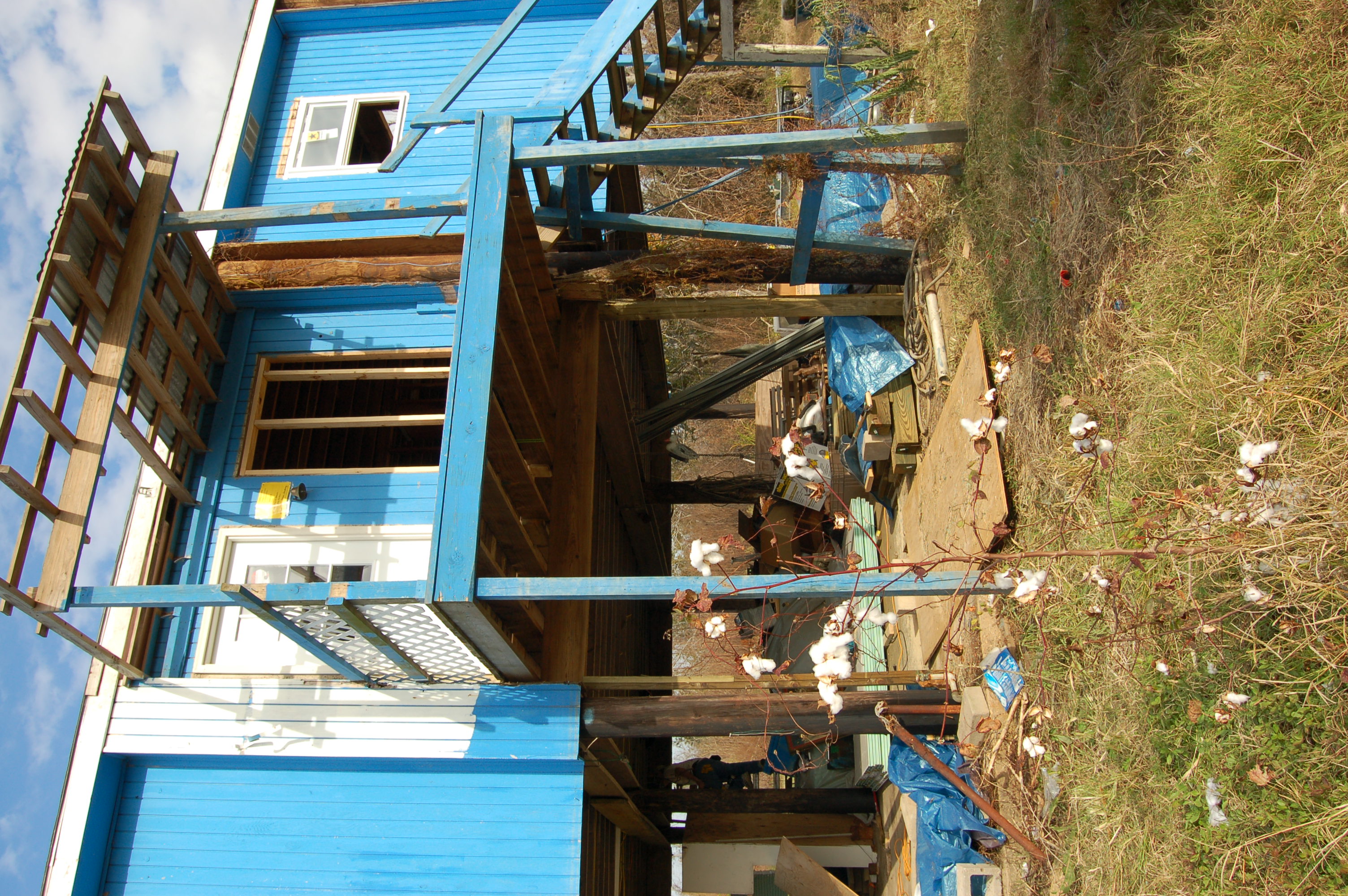
To briefly identify the purpose of the aforementioned benefits helps to understand the depth and breadth of the Amish aid. Funds from the Rainbow of Hope auction assist children with major medical bills. The Relief Sale raises funds for worldwide projects under the direction of Mennonite Central Committee. A home damaged by Hurrican Katrina in Boothville, LA was repaired under the direction of Mennonite Disaster Service.
Amish even travel far from their geographic area to put their faith into action. After Hurricanes Katrina and Rita, scores of Amish assisted in the Gulf States cleanup and reconstruction. So many helped, in fact, that Mennonite Disaster Service set up an Amish only camp where the volunteers could live according to their normal lives without the influence of distractions like television and the Internet.
Locally, the auctions for the county home and the Training Center raise operating funds. The county home has some Amish residents, and Amish make up a good percentage of the population at the Training Center, which works with developmentally challenged students and adults.
Another way of contributing to the common good for some Amish is to join the local volunteer fire department. Several area departments have Amish on their rosters as firefighters and emergency medical technicians.
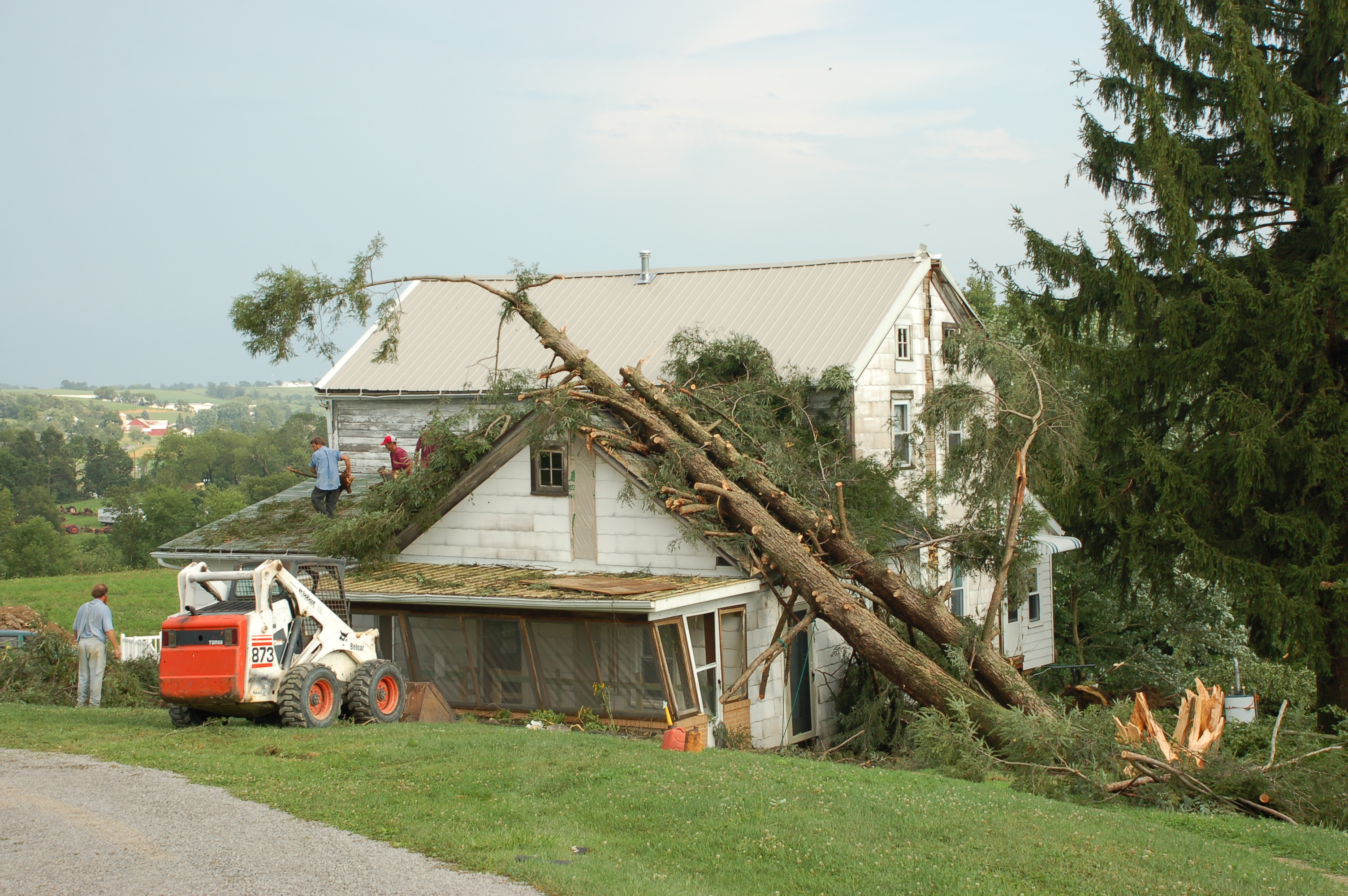
True to their desire for modesty, the Amish want no recognition or publicity for their kind efforts. Their satisfaction comes from the simple act and ability to help others. Amish quickly helped their neighbors have a severe thunderstorm hit near Charm, Ohio in July.
Of course, the iconic images of Amish helping at a barn raising are conjured up as the ideal way to help their neighbor. But their generous participation in the community and world at large clearly shows that the Amish think and act out of thankfulness far beyond their own immediate area.
To be sure, most Amish families embrace Thanksgiving as a day of joyous celebration of community, bountifulness and life itself. Even then many Amish approach the day piously, fasting in the morning prior to the feast that includes all the traditional trimmings.
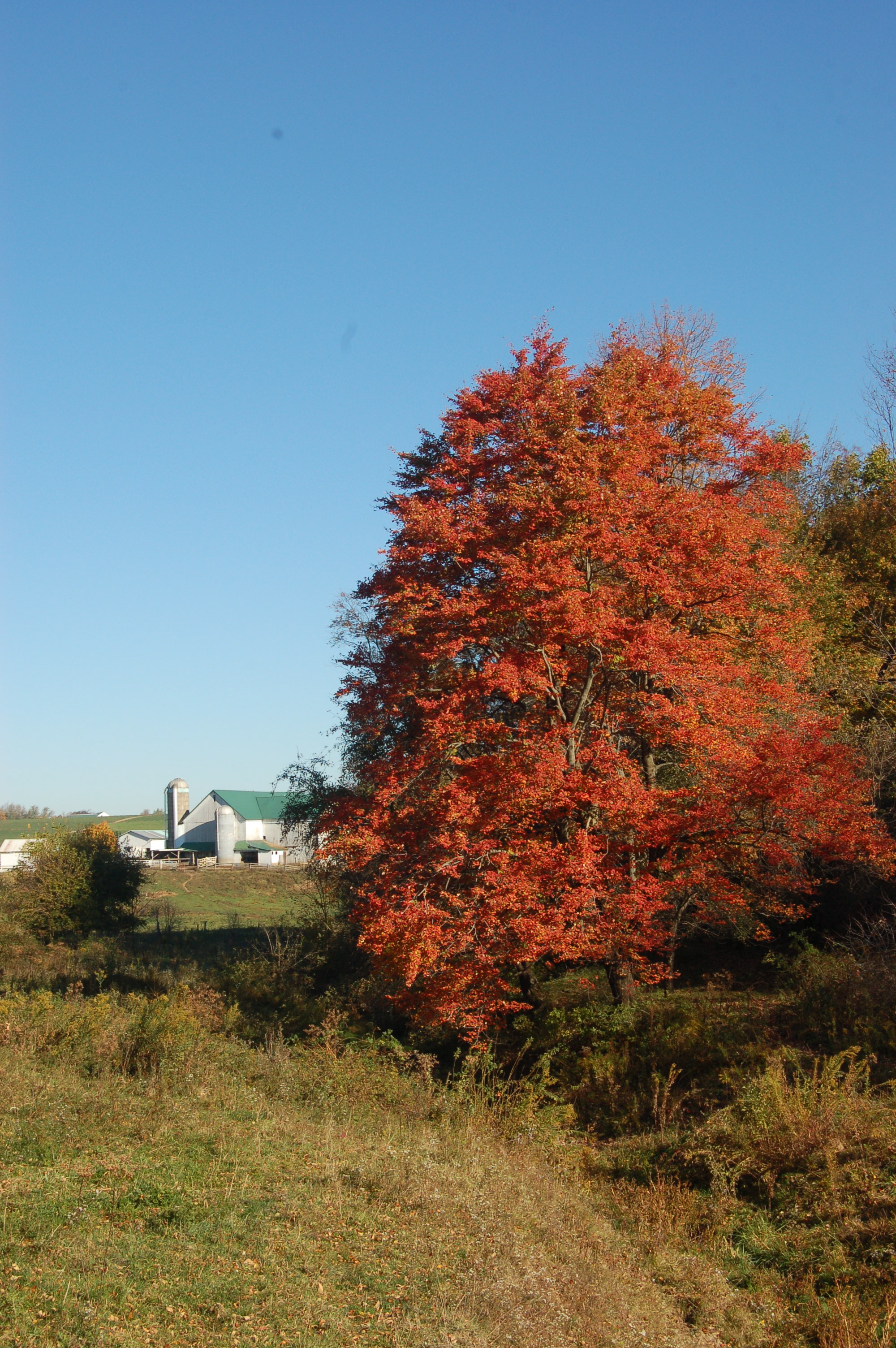
The Amish mark Thanksgiving Day as a pinnacle to a lifestyle of serving. Fittingly, they would be too modest to acknowledge that fact. A typical Amish farm in the fall in Holmes County, Ohio. This article appears in the November 2011 edition of Ohio’s Amish Country magazine.
The school superintendent called him his million-dollar man. To illustrate his point, the school leader even had mock million dollar bills printed with the person’s face front and center.
The scenario played out at the beginning of this school year in the school district where I had grown up. Along with hundreds of others, I had been invited to attend the opening rally as a guest. As people entered the stadium where the ceremonies were held, each person was handed the play money.
During the 90-minute ceremony, the superintendent recognized many people in the district for their outstanding efforts. He also announced that the district had achieved the top academic awards in the state.
The summit, however, was this one man who had worked so tirelessly to reduce costs for the financially strapped district. The superintendent had calculated that this one individual had saved the district a million dollars through cost saving changes, including the installation of energy saving light bulbs. That’s what earned him the extra special notoriety. Friends.
I was duly impressed and honored to have witnessed this celebrative opening to another school year. Though I had not been a part of the district for years, I felt connected and inspired by what had transpired.
The proceedings were a reminder to me to thank those who have made a difference in my life. Of course, I realized I wouldn’t have to have play money printed up to do so. A simple word of thanks, a personalized note card, a hardy hug, would send the proper and immediate message.
Believe me, I have much for which to be thankful this year. This hasn’t exactly been the healthiest year of my life, and yet, here I am at Thanksgiving, alive and well, and forever grateful.
A good place to start would be with my wife, who has been by my side through thick and thin. She has gone far beyond the second mile for me.
I have nothing but praise for the good doctor who removed the cancer from my body. My recovery continues. Overall, I feel great, and best of all I am cancer free.
At the same time, I can tick off person after person that I either know personally or have heard of who have not had the same results. Their illnesses or injuries remind me to be humble in my elation yet determined in my prayers for them and their families.
Still, as the thoughtful and expressive superintendent modeled, we must not hold back in our praise of others when they accomplish great things for themselves or for the good of the community. It truly is better to give than receive.
As we approach this national holiday of thanks with its abundance of savory food and gathered family, I plan on thanking people who have made a difference in my life. I’ll tell them how much they have meant to me and how appreciative I am for their contribution to my life.
How about you? Who have been the million dollar people in your lives?
As part of celebrating this Thanksgiving, consider offering a few words of thanks to those who have helped you along your life’s path. You don’t have to print up hundreds of fake million dollar bills to show your appreciation. But you can if you want.
Mil Agnor with some of the artwork she brought back from Romania.
By Bruce Stambaugh
You can see it in her eyes, in her smile and in her body language. Mil Agnor finally has closure.
Earlier this year, the 80-year-old former Millersburg, Ohio resident had her two-year term of service with the Peace Corps in Romania unexpectedly interrupted. After a routine physical exam, she was sent back to the United States for more medical work.
Agnor was diagnosed with bladder cancer, underwent surgery and treatment, and was glad to be up and around and physically well. But something was missing in her life. She had to leave her Peace Corps teaching assignment without saying goodbye to her students, cohorts and friends.
“I didn’t have a chance to say thank you and goodbye,” Agnor said. “I didn’t feel like I had closure.”
The self-assured and talented Agnor was determined to correct that situation. Once she got the medical all clear, Agnor began planning a trip back to Romania. She left Oct. 12 and returned to her new home in Stow Oct. 26 a very satisfied person.
Agnor didn’t make the trip alone. She took along 400 refrigerator magnets that she had made at a print shope in Millersburg. She handed them out to her former students, fellow staff, Peace Corps partners, parents, school and government officials, and even to people she met on the street.
“Romanian’s are very friendly,” Agnor said. “They were very appreciative.”
They should have been. The magnet was a photo of Agnor in front of the school where she taught English in Palanca, Romania. The magnets were inscribed in Romanian with heart-felt thanks from Agnor.
Below the U.S. and Romanian flags was the salutation, “For my dear friends in Palanca and Romania. My greatest thanks to you and your good health.” It was a keepsake anyone there would cherish, especially since Agnor had it made herself and personally handed it out.
That’s not all the generous and compassionate woman did. Teacher that she is, Agnor took along another small gift that created a memorable object lesson for her former students. She gave each student a Lincoln Head penny while sharing this little rhyme: “Find a penny, pick it up; all day long you’ll have good luck.”
She also seized the moment to teach the students about Abraham Lincoln, whose profile is on the coin.
“I told them all about Abe Lincoln, one of our most successful presidents,” Agnor said. “Like my students, he had a humble beginning, was honest, worked hard and loved to learn.”
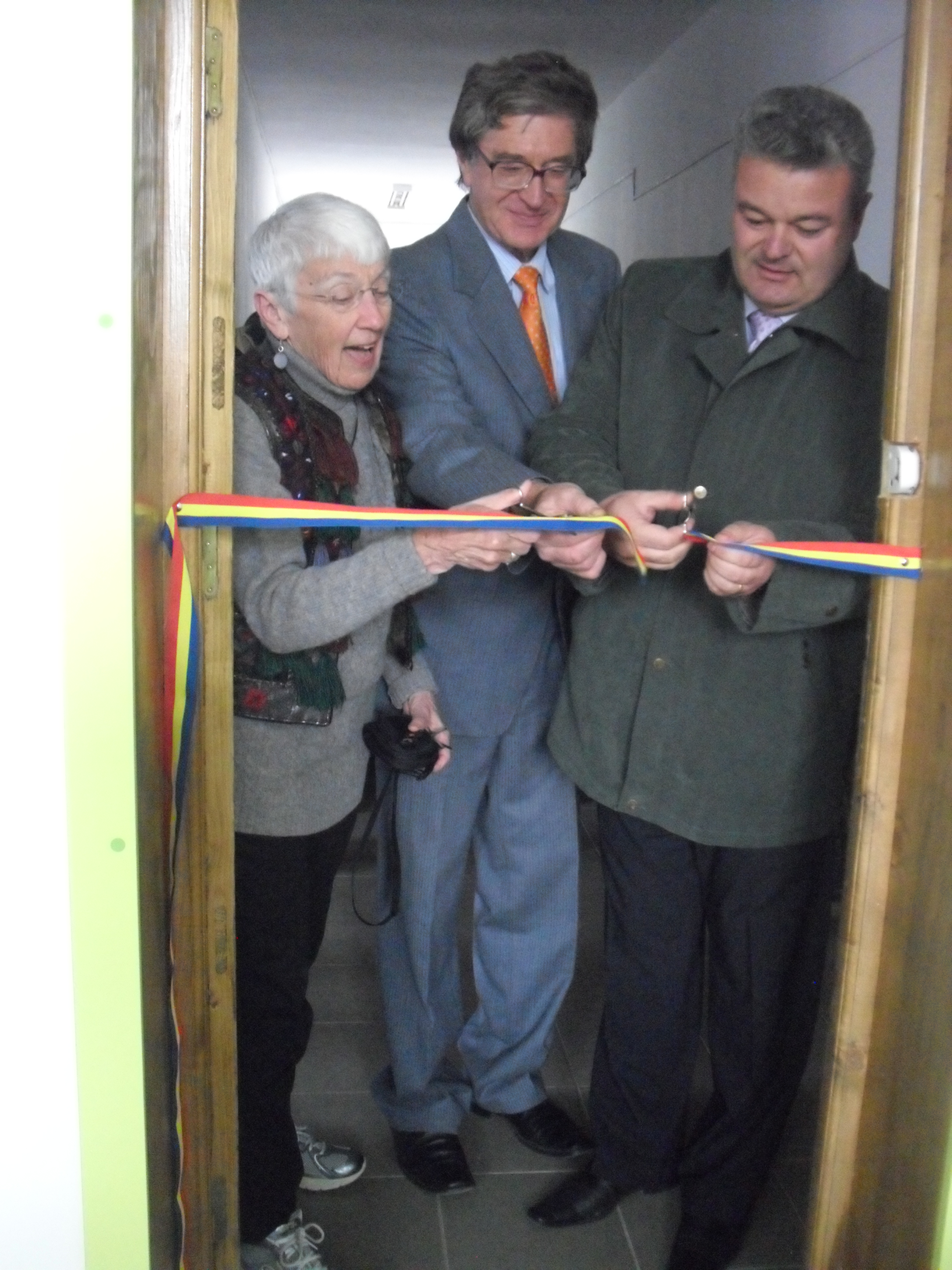
As the honored guest, Mil Agnor assisted the school's principal, Dumitru Cojocaru and Palanca's mayor, Adrien Palistan, in cutting the ribbon to the new science lab. To Agnor’s great delight, her hosts had a nice surprise for her, too. A dedication was held in her honor for the new science lab that Agnor helped create. She wrote a proposal for the lab, which was approved by Peace Corps officials in Romania and the U.S. The project, which included adding water and electricity in the unused room, totaled $9,300.
The local school raised 35 percent of the amount, 10 percent more than what was required, Agnor said. That amount included $275 collected by the students from selling jewelry and food. The balance was raised through donations to the Peace Corps.
The staff and students hustled to complete the science lab while she was visiting. A special celebration was held, requiring Agnor to stay in Palanca an extra day.
County and local officials and school personnel all acknowledged Agnor’s leadership role in helping to instigate and create the lab. Agnor said she felt honored to receive the recognition.
The biggest hit of the science lab was the smart board, which is basically a large interactive computer screen that allows teachers and students to share in researching and displaying projects. In addition, the monies raised help supply the lab with tables and chairs.
“The project had to be sustainable,” Agnor said. “We had to develop something that will be ongoing in the absence of Americans.” She said the Peace Corps would terminate its services in Romania within two years.
Agnor’s service in Romania is completed, but her dedication to helping there is not.
“I’m going to find a way to continue to work in some nonprofit approach here to help my friends in Romania,” she said. Given her commitment and determination, she will likely be successful at that as well. Agnor's students gave her a hand print quilt they made. She was also given the summer wedding vest that she is wearing as a thank you gift.
Greg Miller is a nice guy. Anyone who even remotely knows Greg would easily agree with that statement. Greg Miller
Though raised just a mile south of where my wife and I have lived for 32 years near Berlin, Ohio, I really never got to know him until recently. Greg had long grown up and started his own adult life before we moved here. His mother continues to live in the same house, and still meticulously adorns her property annually with a wide assortment of lovely flowers.
Others have known Greg much longer and better than I have. But just from the few conversations that I have had with him, I can attest that Greg is the kind of guy everyone would welcome as a friend.
I had heard of Greg well before I got to know him. He was one of three birders about whom Mark Obmascik wrote his 2004 book “The Big Year.” When Hollywood turned the book into a big screen movie of the same name, Greg was ecstatic, and rightly so. Not everyone has a book written or a movie made about a life accomplishment.
By his own description, Greg is a computer programming geek by trade and an avid and expert birder by desire. Greg transformed that hobby into nearly an obsession when he spent much of 1998 doing a Big Year. A Big Year is when a birder observes or hears as many North American bird species as possible.
That year Greg surpassed the coveted 700 mark, as did two other men. The story of the extreme efforts of those three birders inspired both the book and the recently released movie.
Greg gave a touching keynote address at the Midwest Birding Symposium in Lakeside, Ohio in mid-September. He spoke to an audience of nearly 1,000 for an hour using no notes, speaking directly from his heart. Greg had the crowd spellbound relating his personal, touching story.
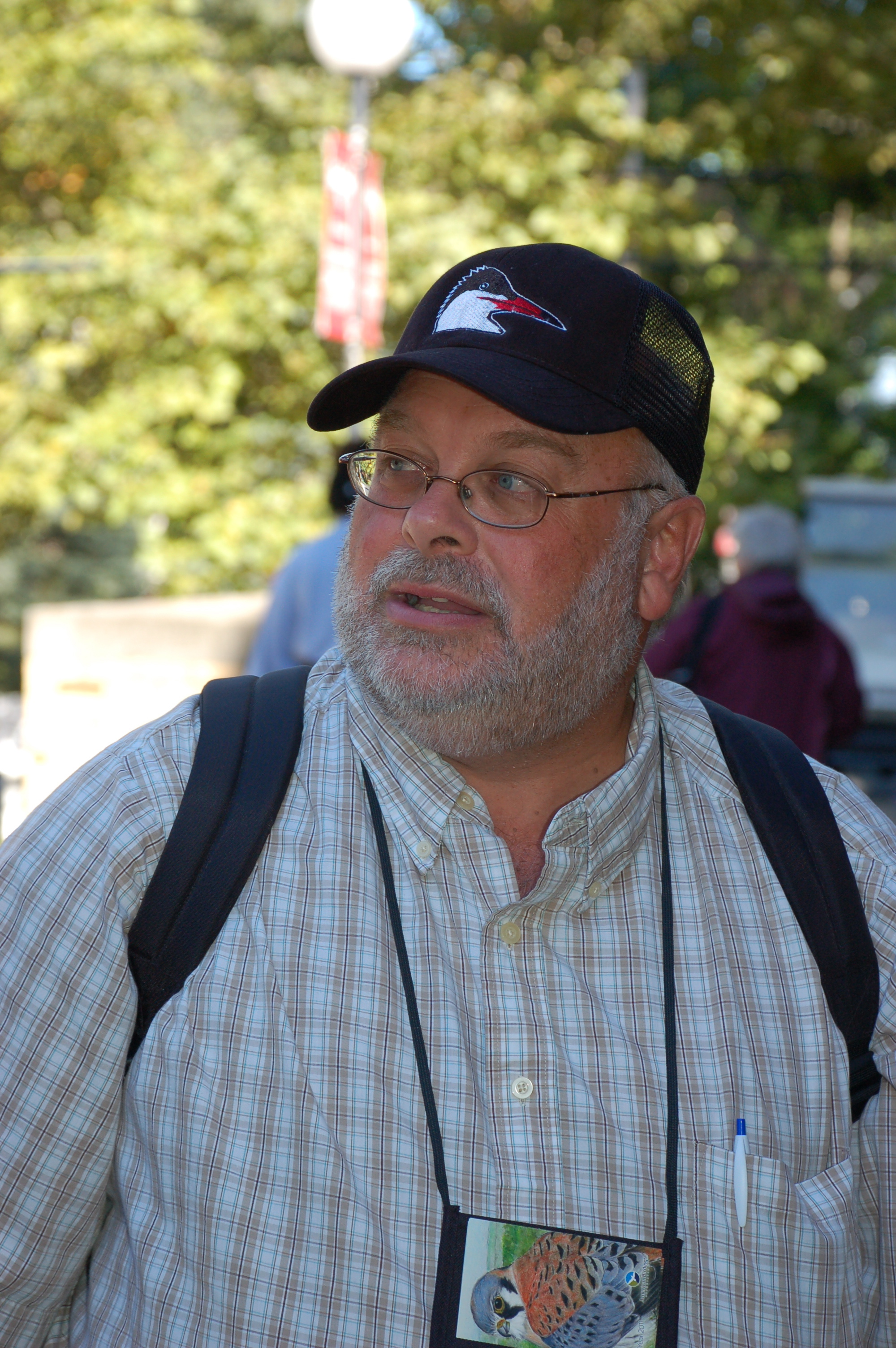
I was greatly moved when early in his talk Greg cited the influence of his kind parents, especially his father, in generating his interest in birding. Greg said he couldn’t remember seeing his first bird or getting his first pair of binoculars. Birding was simply a part of his heritage, thanks to the quiet, patient guidance of his late father, who himself was a man of integrity. Kevin Cook and Greg Miller at the Midwest Birding Symposium held at Lakeside, Ohio in September.
Greg told the crowd how his father taught him to see the bird, and then lift his binoculars to his eyes to observe the bird’s details and to verify the species. Years later, Greg showed movie star Jack Black, who played Greg in the movie, the same birding technique.
Greg served as the birding consultant for the movie. He spent three weeks on-site with the crew. Greg couldn’t get over that the cast and crew were as enamored with him as he was in awe of them.
Greg is not perfect. He would be the first to tell you that. Greg has encountered and endured some of life’s pitfalls, like the rest of us humans. Now, however, he is basking in the glow of notoriety, racing to speaking engagements all across the country as if he were chasing after the rarest of birds.
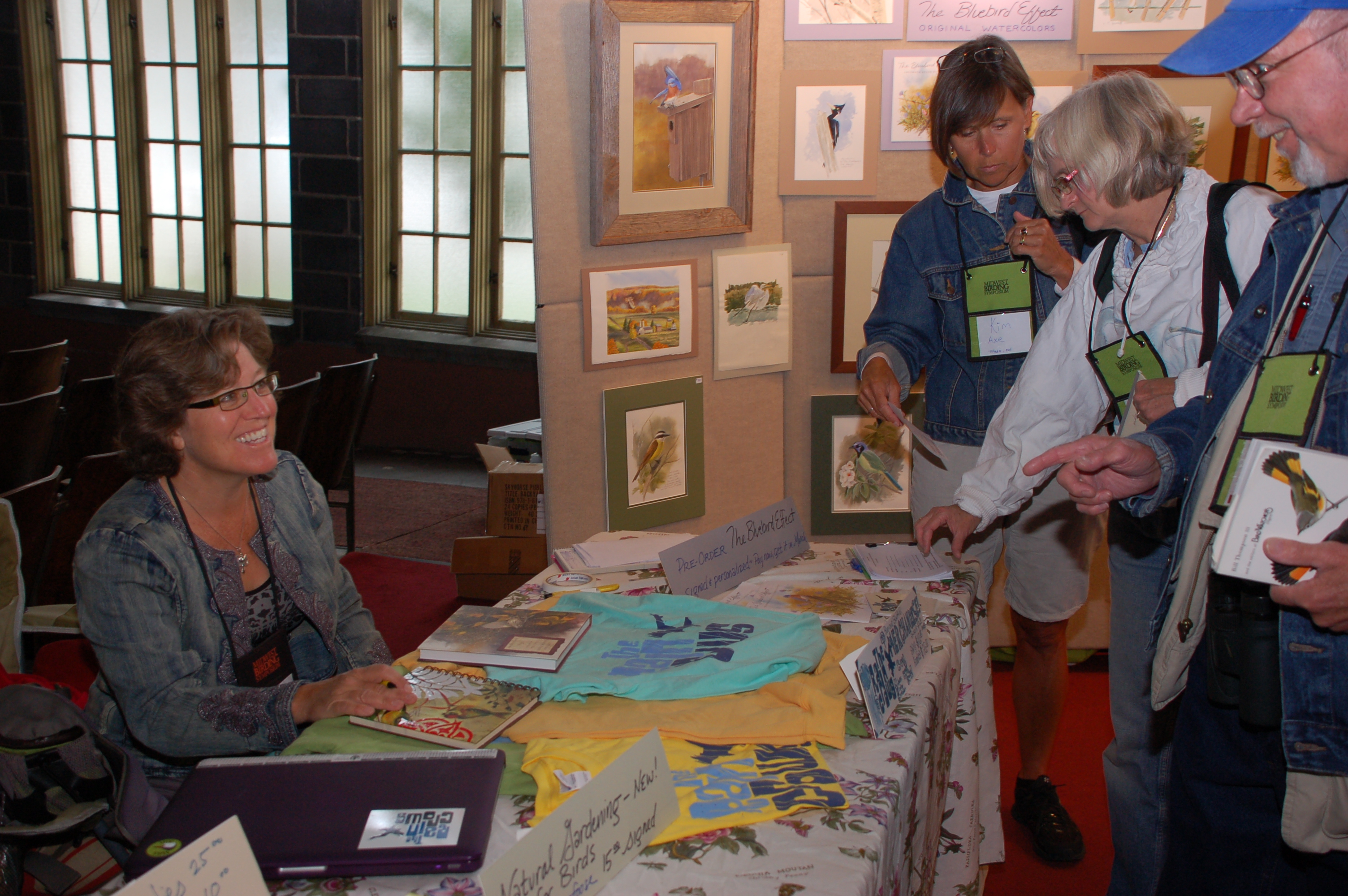
Good for him. Through it all, Greg has remained Greg. He has not lost the sense of whom he is nor how he got to be where he is. That alone speaks volumes of just how nice a guy Greg Miller really is. Author and illustrator Julie Zickefoose greeted some of her admirers at the Midwest Birding Symposium at Lakeside, Ohio in September.
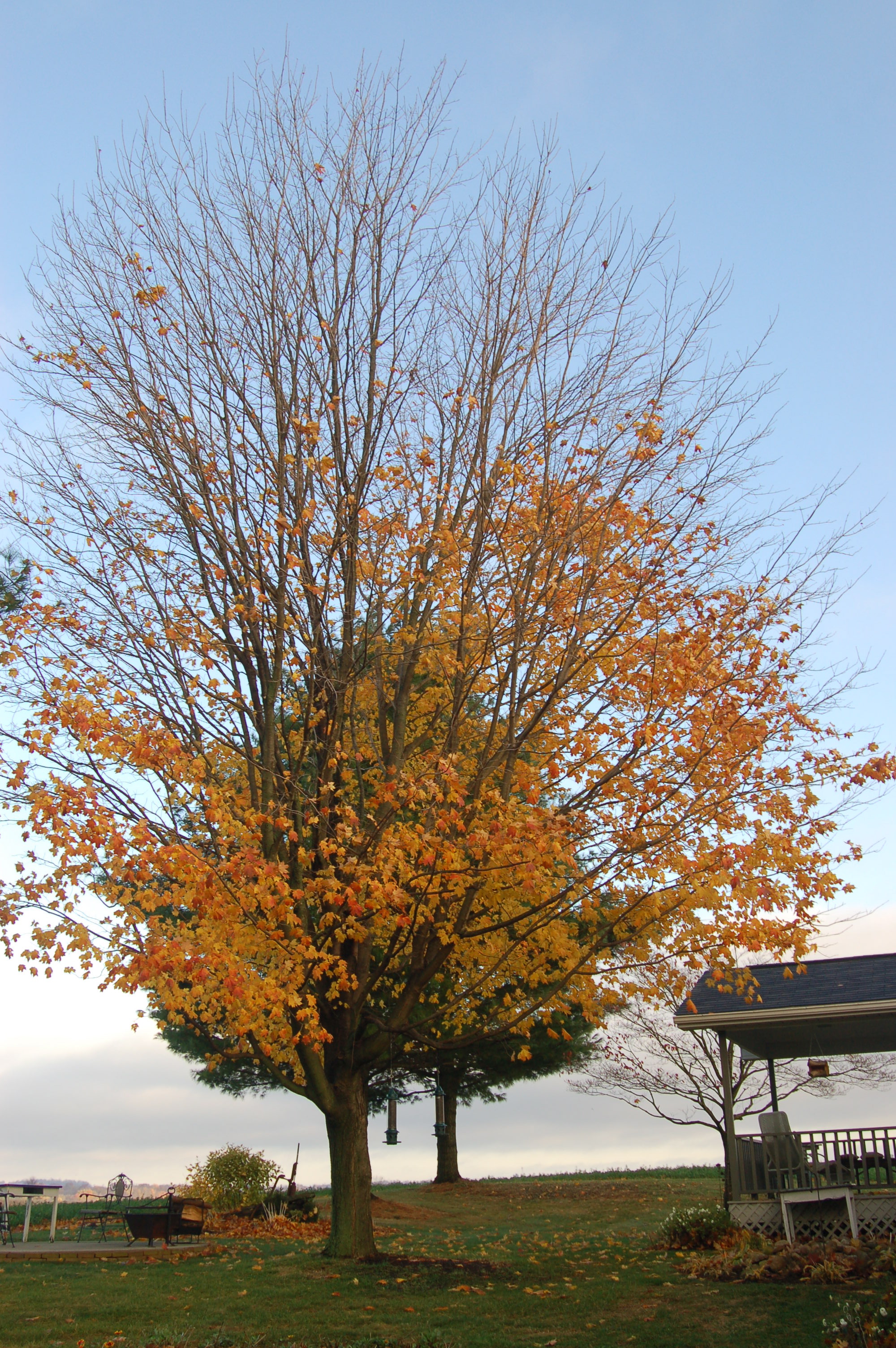
For those of us fortunate enough to live within proximity of giant stands of mixed hardwood trees, fall is a glorious time of year to observe life’s constant changes.
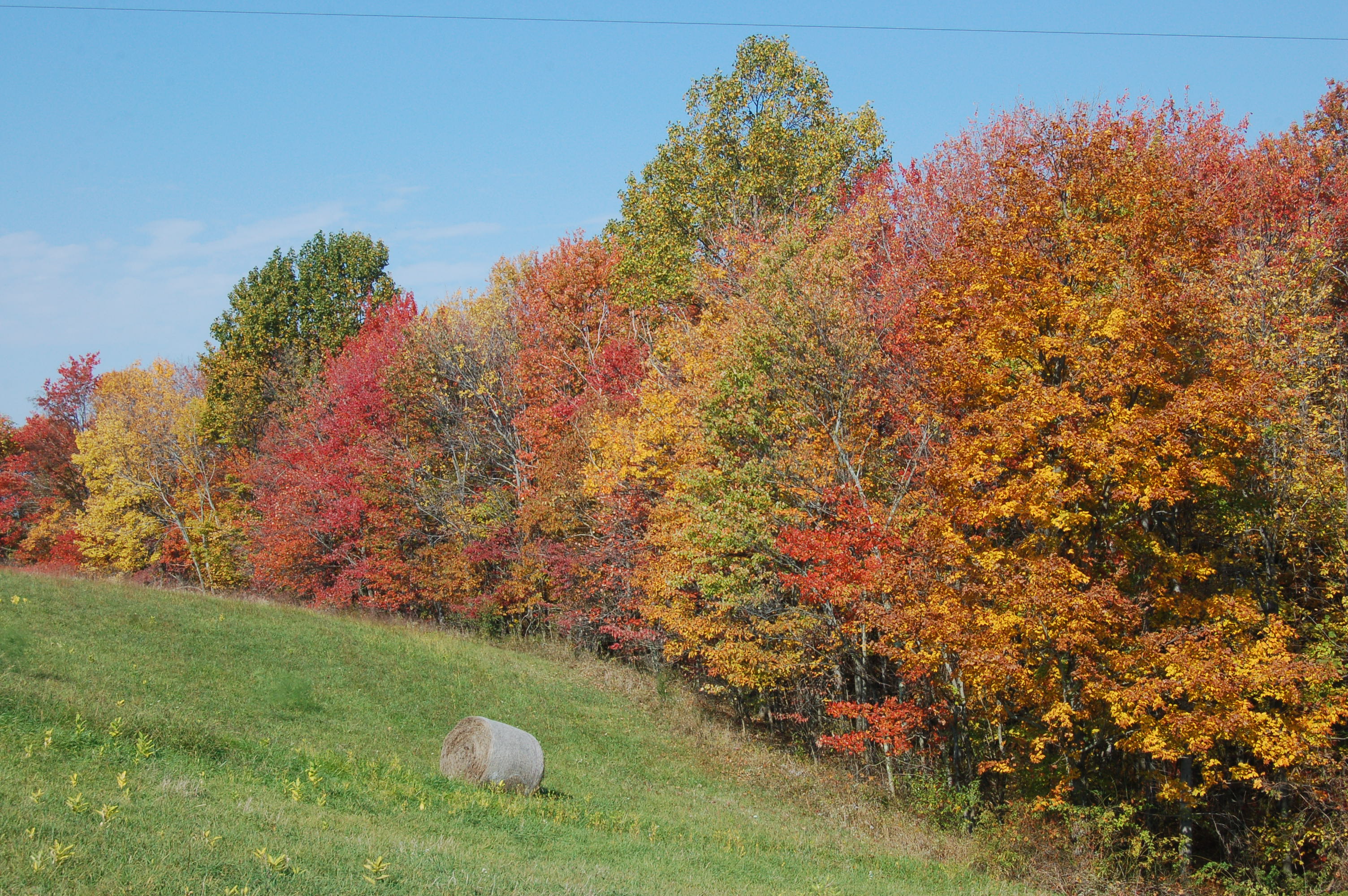
The annual autumn spectacular of the once lush leaves magically transforming the emerald landscape into magnificent warm rainbows carries us into nostalgic reflectivity. This year I couldn’t help but note a symbolic similarity in the recent death of the ingenious Steve Jobs, the guru who started Apple Computer. Fall's rainbow of colors on display.
The very first computer I ever used was an Apple. Just the name of the computer endeared educators to these amazing, easy to use personal computers. School systems across the country bought them for student and teacher use. The fact that Apple was wise enough to give teachers and school districts educator discounts on their purchases made them all the more attractive.
One of the schools where I was principal acquired an Apple computer for the library in 1989. Now obsolete floppy discs were inserted to boot programs or software for students to use. I have primarily used Apple computers ever since.
Shortly after hearing of Jobs’ death, the Internet was full of information about his life. I found many of the touching quotes and reflections via posts on Facebook.
One particular poignant clip greatly moved me. It was a 15-minute video of Jobs’ address at the 2005 Stanford University commencement. No one would have mistaken the pure genius that produced innovative personal electronic devises like the iPod, iPhone and iPad for Shakespeare. But his message was prophetic nevertheless.
His words were neither flowery nor convoluted. Like his multitude of popular electronic inventions, his exhortation was straightforward and concise. He had three simple points for the graduating class that day. Each was illustrated by personal stories from his humble yet incredible, creative life.
His final point was perhaps the most powerful and applicable. Just a year removed from having survived pancreatic cancer, Jobs told the sun-drenched audience “death is very likely the single best invention of life.” He told those gathered that if you live each day as if it were your last, someday you’ll be right. Jobs was as pragmatic as he was innovative.
Though he had hoped to live decades longer, Jobs emphasized that remembering that he would be dead soon was the most important motivator for him. He related that view even though he of course had no idea how long he would live. Jobs said no one wants to die, but death is the destination that we all share. Death clears out the old to make way for the new.
That’s the way it is with the leaves. They bud in spring, unfold overnight to lush, lovely green or crimson until their predictable fate in the fall. Having done their job of helping the tree thrive and grow another year, the leaves succumb to the inevitable.
The leaves unveil their natural, vibrant colors, keep us captivated for a few precious days, and then drop and wither. Left behind is a tiny bud that will become next year’s new foliage. The old give way to the new, returning to the earth from whence they came.
Our lives follow the same cycle, though most span more than a year. The colors of some leaves are more remarkable than others. In the same way, some lives shine brighter than others for humankind.
Steve Jobs was one of those brilliant leaves.
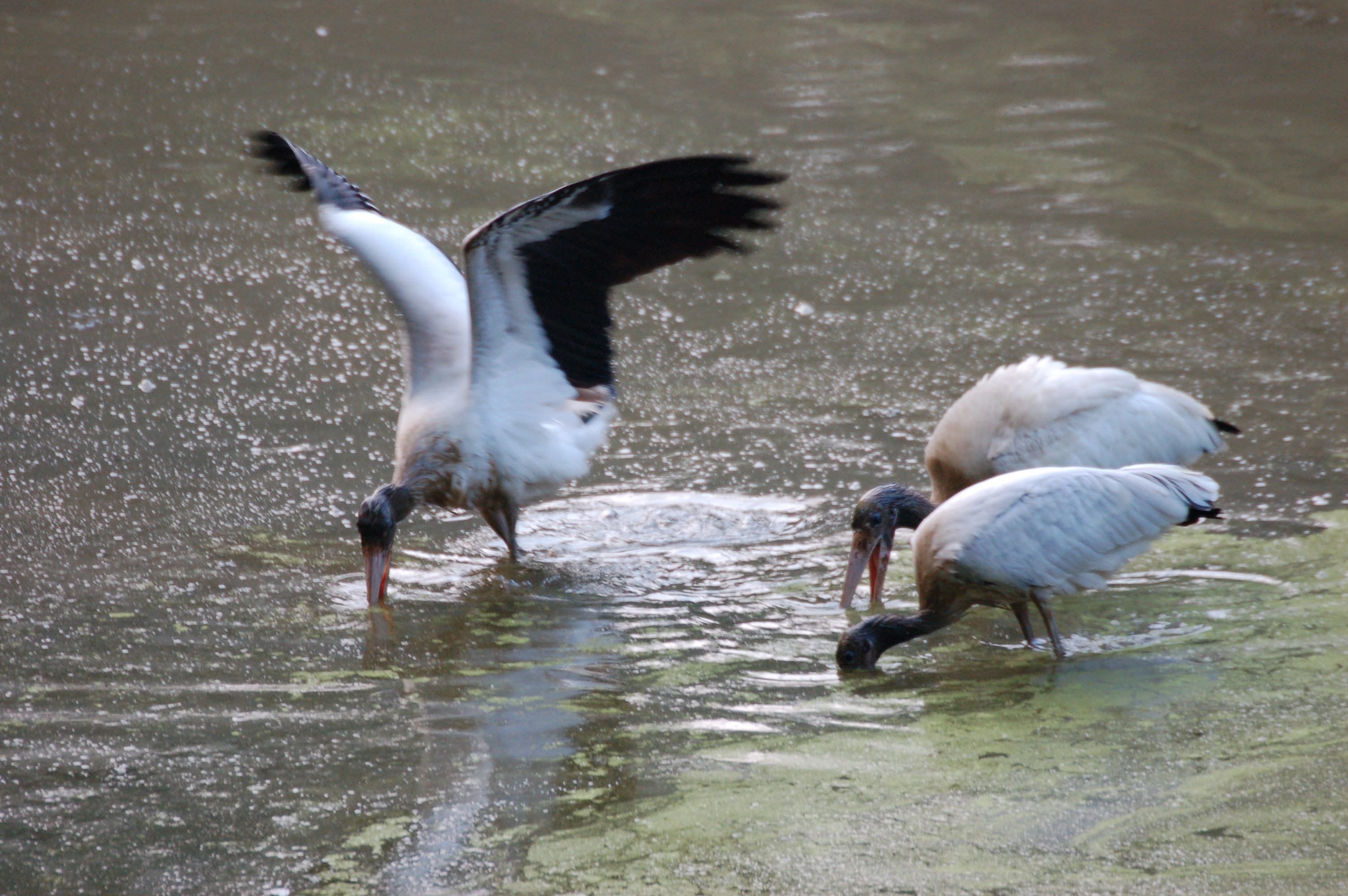
These Wood Storks appeared in a marshy area in Coshocton Co., Ohio in August 2008. They normally are coastal birds in the southern U.S. By Bruce Stambaugh
More often than not, birders take it on the chin just for being birders. Compared to football, American or Australian, it’s not exactly a contact sport, at least in the physical sense.
Birding is, however, very popular worldwide. That might be because of the many amenities that bird watching affords, and those that it avoids, like unnecessary roughness.
Why is birding so universal? Let me count the ways.
Birding is fun. Birding can be enjoyed by all ages. Birding doesn’t require a lot of expensive equipment, though you can spend big bucks if you so choose. Birding can be free. The birds come to you. The owners of this camper probably didn't expect to get this friendly with these Black Vultures.
Birding can be enjoyed year round. Birding is an inclusive activity. Birding can be enjoyed by persons of any age. In fact, it is not uncommon to find entire families enjoying the sport together.
Birding is addictive, turning that usually negative word on its head. Once you learn a little about birds, you intuitively want to know more.
Birding is interactive. Birds get to know you. You get to know the birds. I had the luxuary of observing this pair of young Green Herons from my back porch.
Birding can be done anytime anyplace, hiking, biking, sitting, traveling, on the beach, in the woods, on vacation, or while at work. All are good times to “bird.”
Birding not only introduces you to new species. You make new friends while enjoying an outing, too.
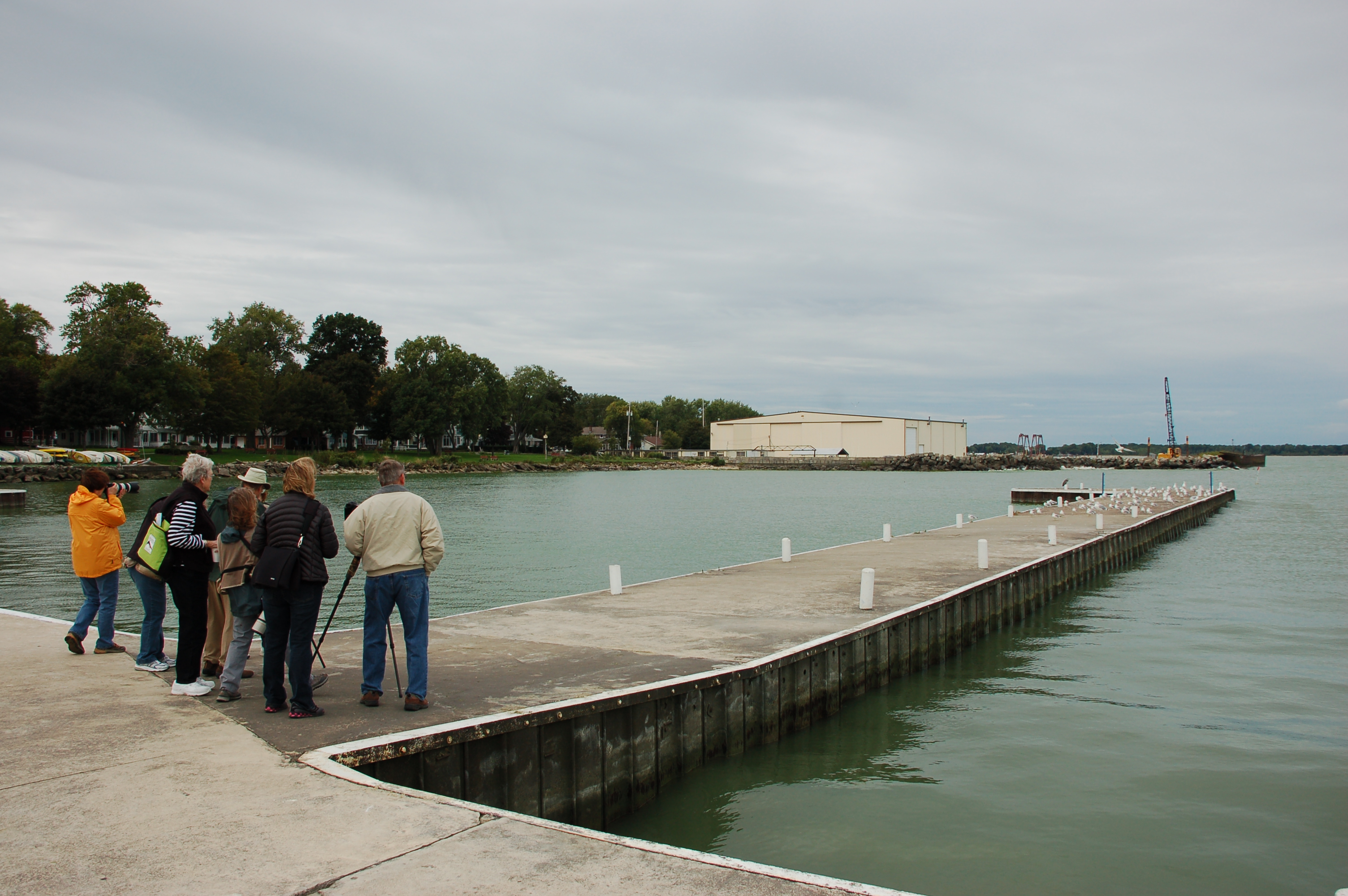
Birding is both personal and interpersonal. You make your own sightings, but immediately share the information with other birders to verify the identification. Others do the same for you. Birding it is both a sociable and a social sport. It is a whole lot more fun done with others than alone. Birding is a social sport, best enjoyed in the company of other birders, whether novice or experts.
Believe it or not, birding can and does get competitive, but in a good way. Many birders compile a life list, an accounting of all the bird species they have ever seen, which includes when and where.
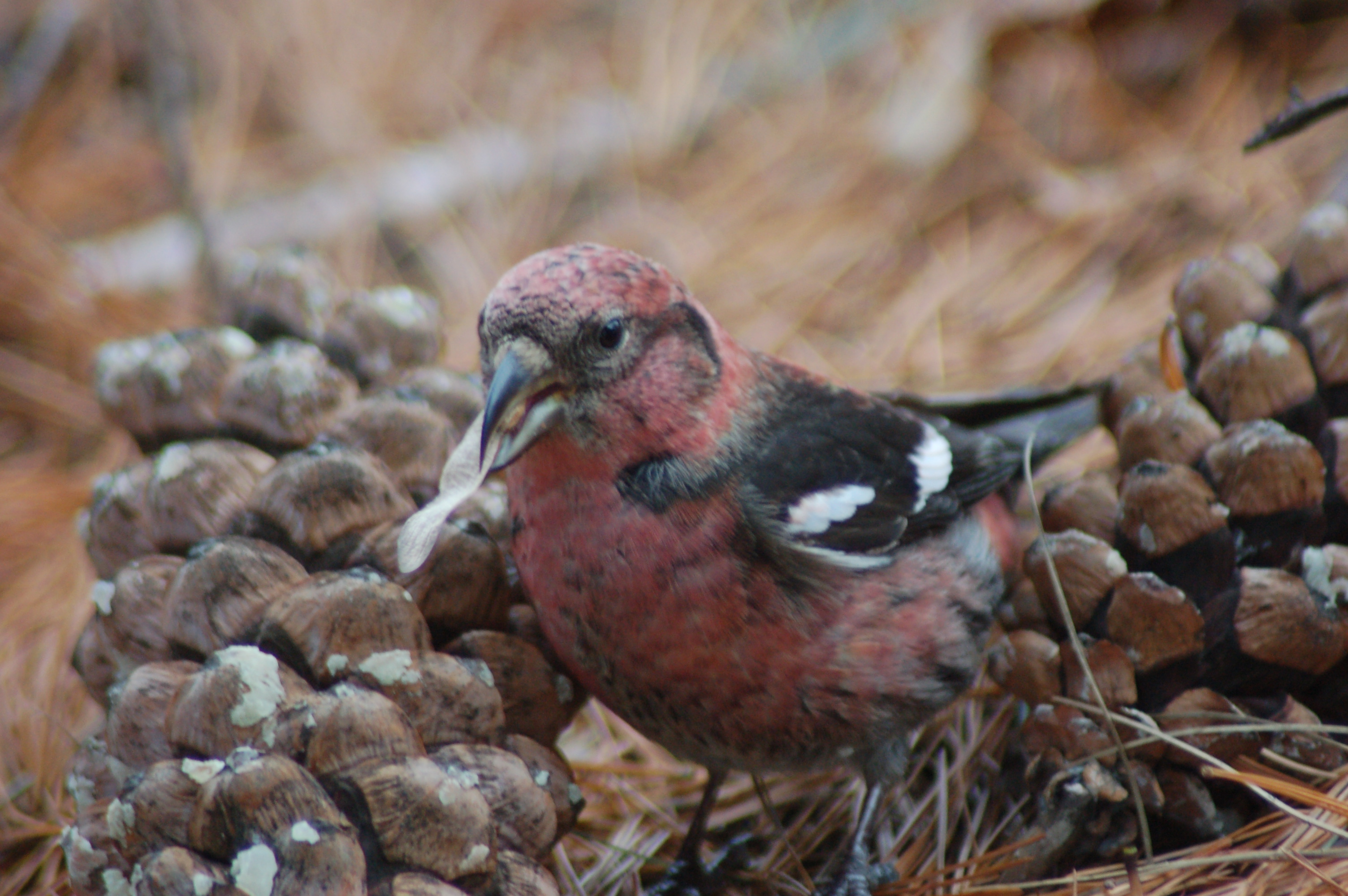
When a rare bird is spotted, birders shun selfishness. They call other birders or have it posted on a bird alert website. Soon scores of birders show up hoping to see the rarity for themselves. A flock of White-winged Crossbills spent a few days in the Holmes Co., Ohio area in March 2009. They migrated from pine grove to pine grove, including the one in my own backyard.
When a quartet of Wood Storks, birds usually found in Florida, appeared in Coshocton Co., Ohio awhile back, someone asked me if I had seen them. I hadn’t. They gladly gave me directions and I was ready to go. But I didn’t go alone. I filled my van with other birders, three generations who wanted to see the storks, too.
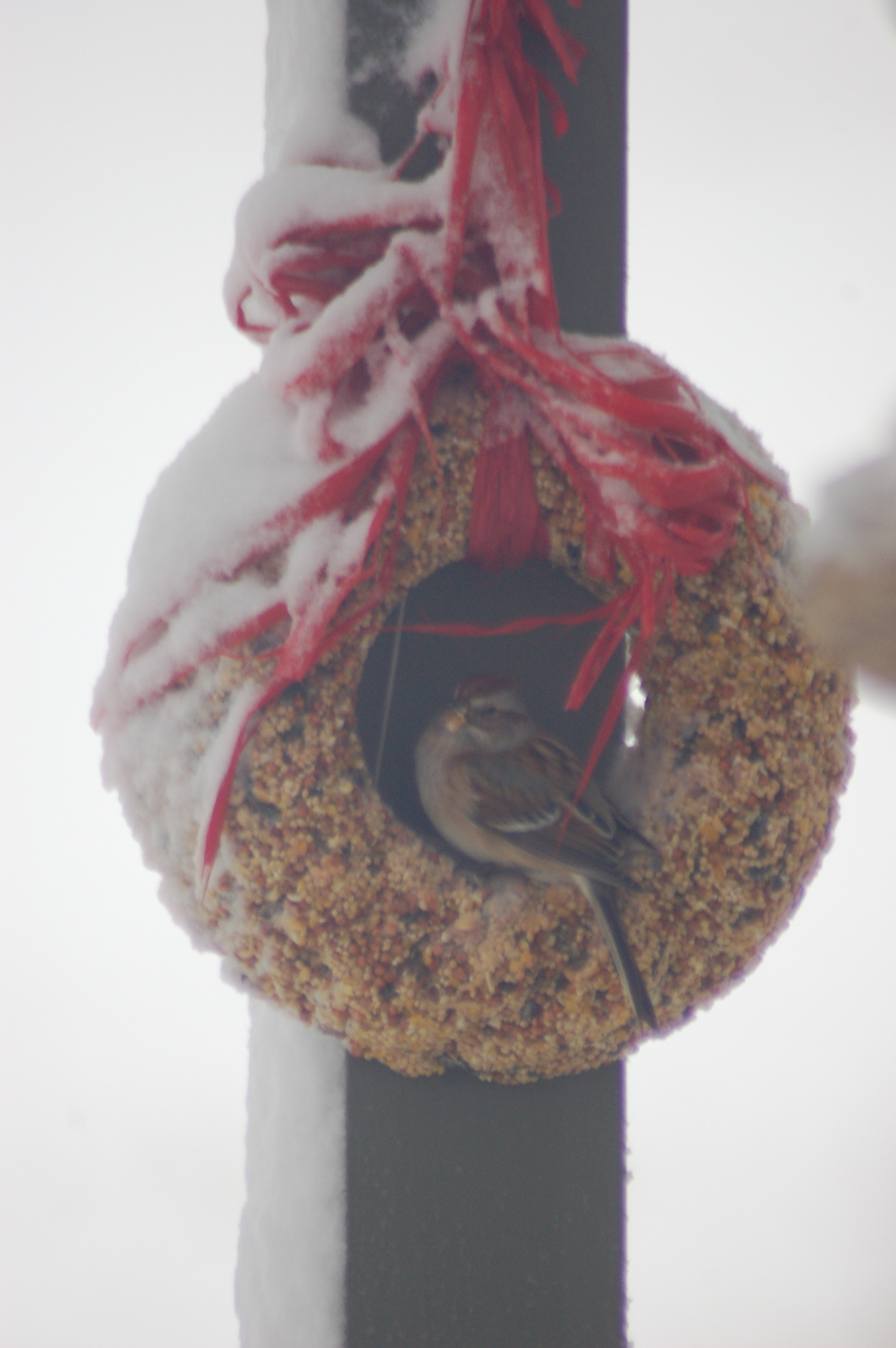
Birding leads to hospitality. You welcome birds by feeding them. You greet and meet other birders if you have a rare bird arrive, even having them sign their names and where they are from. That’s just common etiquette among birders. This Tree Sparrow found the perfect refuge from a harsh winter's storm.
Birding invigorates your senses. The range of songs and calls of birds are often heard before the birds are seen. The amazing array of bird plumage dazzles the imagination.
Birders are polite and follow directions. Hundreds of birders from 37 states and 10 countries attended the Midwest Birding Symposium recently in Lakeside, Ohio. A Lakeside resident was impressed that the birders actually stopped for stop signs.
Birders are clean and emphasize being green, preferring reusable water bottles to disposable plastic ones. Birders are nice to others and the environment.
Birders are teachers. They are happy to share what they know and see. This vanity plate leaves no doubt about the hobby of this driver.
Ornithology is the scientific study of birds. Given all their positive characteristics, the study of birders could be labeled “civility.” Birders clearly are their own special flock.
Feeding birds is easy, and fall is a great time to start. In fact, if you follow some simple but basic birding steps, you can attract returning migrants and hungry year-round residents to any backyard environment.
Keep in mind that different birds have different feeding habits and nutritional needs. Varying the style of the feeders, the kind of bird food used in each, and the feeders’ placement can greatly determine the popularity of your feeders.
1. Identify your habitat
Once you decide to feed birds, it’s important to know what habitat you are in and establish the right feeders with the appropriate feed. Hanging out suet on a balcony in the city most likely won’t attract the desired birds. Doing so in the country or a loosely wooded backyard can yield great rewards.
Feeders placed in grassy suburban backyards or rural settings have the chance to attract the biggest variety of birds. Feeders should be placed where they can be easily observed through a window in your home, and stocked and maintained with the appropriate feed.
2. Select your feeders
The key to successful feeding is to pick the correct feeder or feeders for your situation. A backyard that has even a small grassy opening surrounded by hedges, shrubs fields or trees may be perfect for every kind of bird feeding style. Feeders don’t have to be complicated or expensive either. Even the top of an old stump can serve as an excellent feeding station for birds.
A simple piece of plywood placed on some bricks or small cement blocks would serve as a nice platform feeder for birds that prefer to feed at ground level. A hopper feeder could be hung from a porch overhang or a firmly planted shepherd’s hook. A hanging feeder, such as an empty mesh citrus sack, could hold high protein suet for birds that can cling to what they are eating.
Place the feeders where they will attract the most birds and are easily observed from the safety and warmth of your home. Placing a hanging feeder or a shelf feeder on your windowsill will bring the birds right to you.
3. Keep the feeders filled
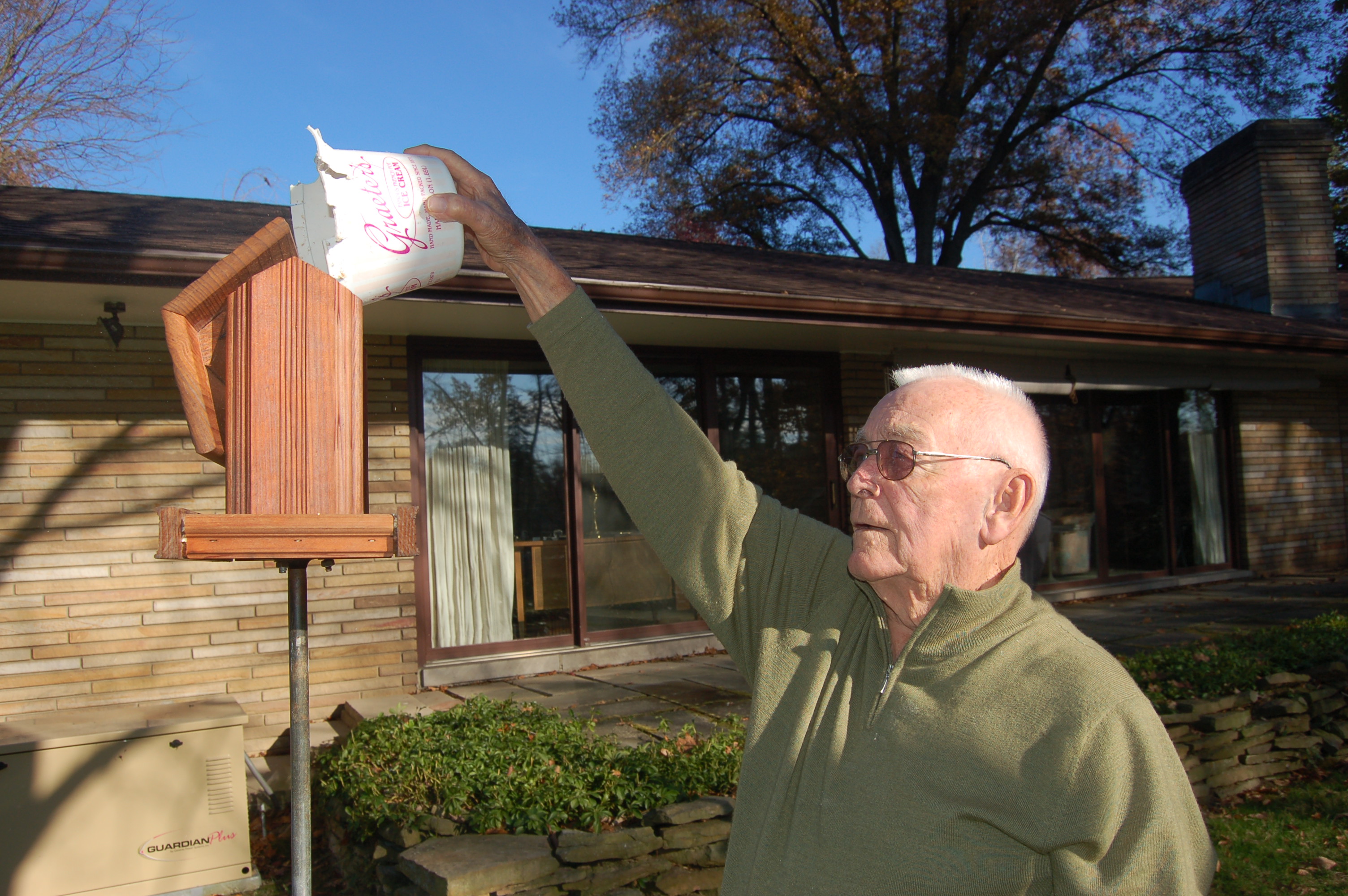
Once you start to feed the birds, keep at it, even if it takes the birds awhile to find your offerings. The feeders need to be kept filled, too. The ground feeder could be mixed wild birdseed or simply cracked corn spread out.Keeping feeders filled with seeds the birds like is critical to consistently attracting birds. Stock hopper and hanging feeders with black oil sunflower seeds which many bird species enjoy. Thistle feeders are also popular with many species of birds in northern Ohio.
Suet feeders can be fat from the butcher, or you can either make or purchase cakes of suet that are loaded with peanuts and seeds. Those fit well into square wire feeders.
4. Keep them cleaned
In addition to keeping the feeders full, it is critical that the feeders be attended to at least weekly. Even in cold weather, mold and disease can spread from uncared for feeders. Moisture can cause seed residue to crust, creating a potentially unhealthy situation for the birds.
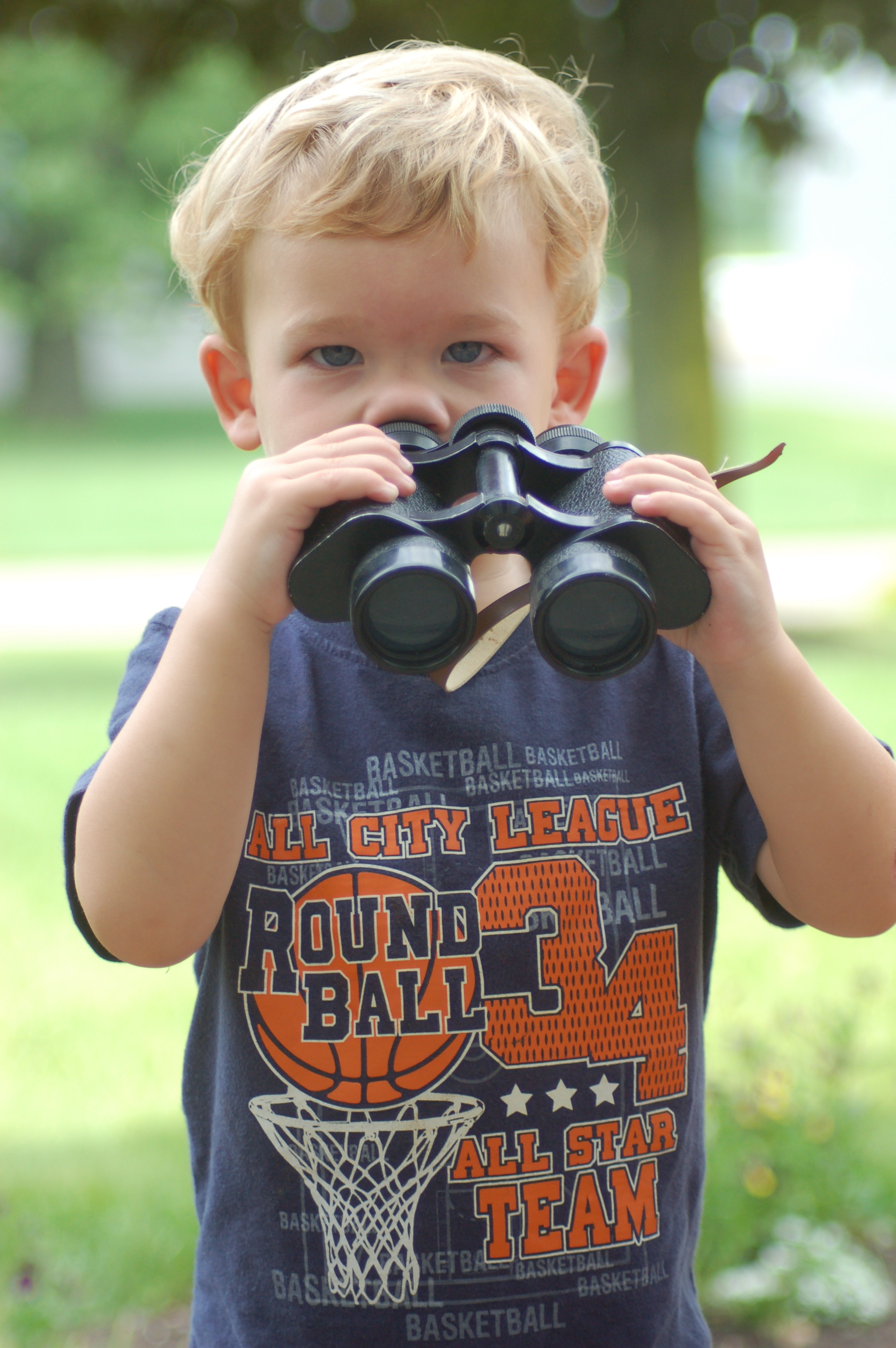
Clean out any clogged holes in hanging or hopper feeders and make sure the seeds appear properly. Clear away any accumulated material. Tray feeders and even the bare ground should be raked periodically to remove spent seed hulls and bird droppings. Suet feeders should be checked for any signs of decay or mold. A good pair of binoculars, when used properly, can enhance birdwatching. 5. Keep a record
For most birders, keeping track of what is seen is half the fun. Again, this is not a difficult or time-consuming task. Keep a notebook and pencil handy and record the day, time, weather, and type of bird you saw. You will be surprised how quickly the number of species adds up on your yard list. Do this annually and you will have an accurate and personal record of what birds you saw, when and under what conditions.
A good bird guide is also an essential tool. Easy to use bird books are available at area shops and bookstores. Having a good pair of binoculars can enhance your bird viewing, too. After all, watching the birds eat is the main objective.
Putting up feeders, keeping them filled and cleaned, and keeping track of what you saw is a wonderful way to pleasantly pass the time when the weather outside is frightful. The birds need the food, and with a front row seat you will be glad for the variety of aviary entertainment without having to go out into the elements yourself. Feeding birds sometimes brings pretty surprises, like a hungry Eastern Bluebird. This story first appeared in Around the House.





















 Roadkill Crossing
You must be logged in to post a comment.