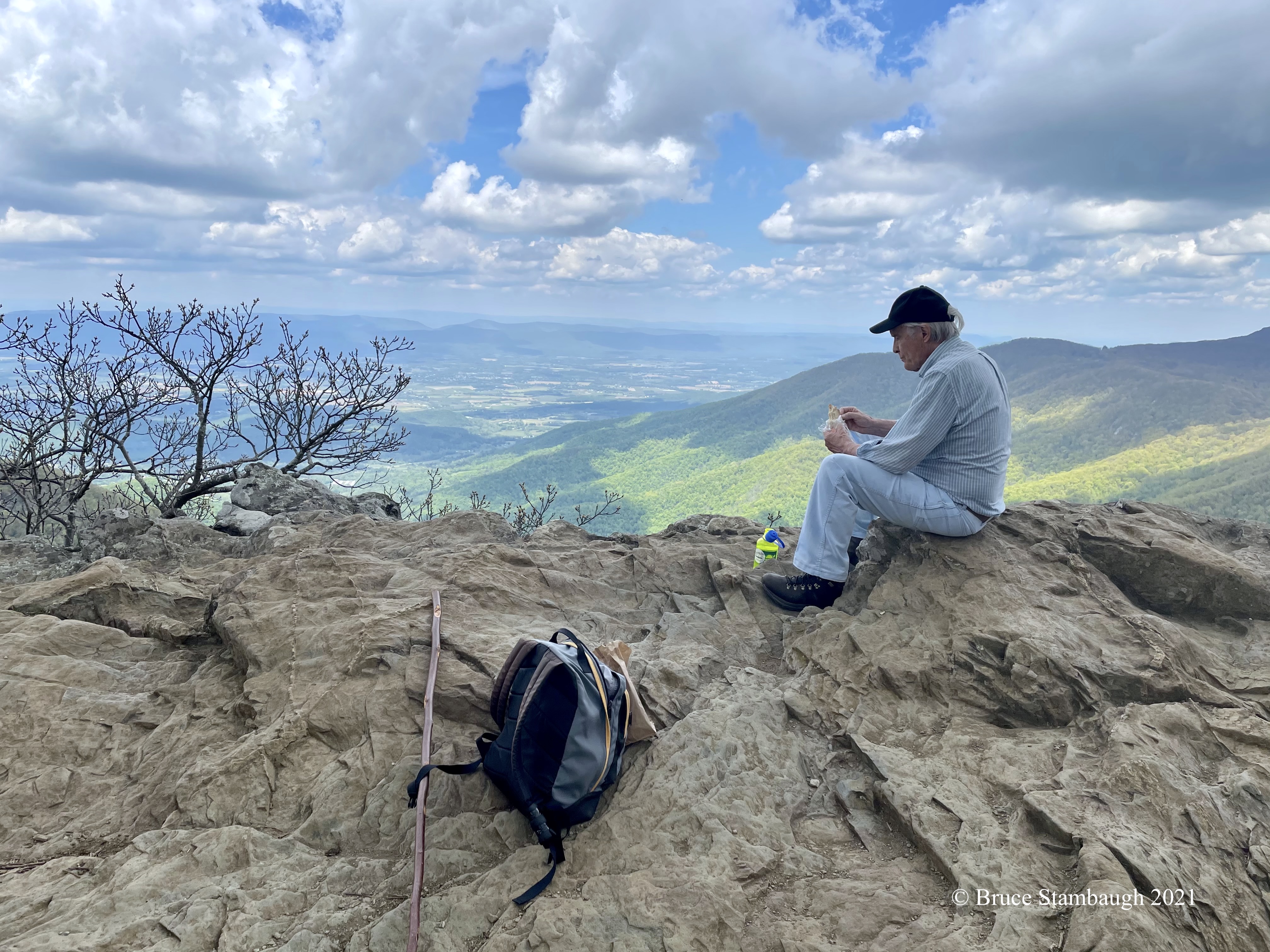
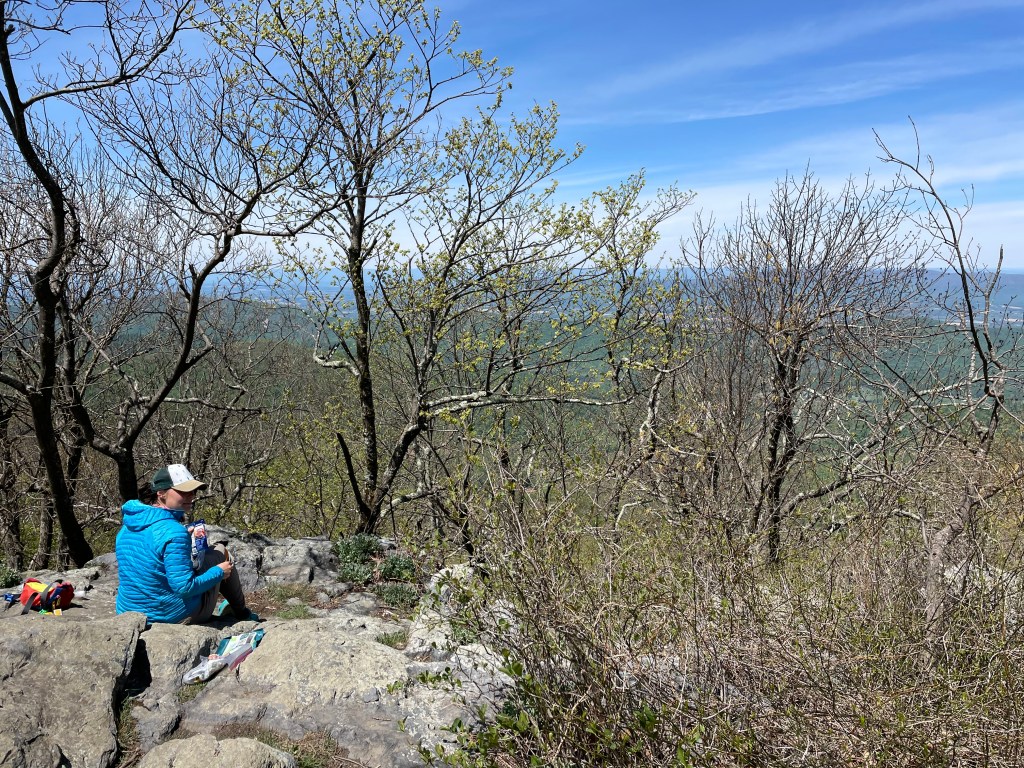
Hiking has its rewards. Reaching the summit of a peak is one of them. Hikers often celebrate with some cool water and a light lunch to refresh their body’s energy. This hiker is doing just that while also enjoying the gorgeous view from Hawksbill Summit, the highest peak in Shenandoah National Park. New Market Gap in the Massanutten Range is in the distance.
Don’t look now, but we are in the middle of May already. May always goes too fast for my liking.
Ideally, it would be nice to put a speed limit on each of May’s 31 days to slow their pace. Of course, that is a romantic pipe dream.
There is an antidote. We can each slow down, take our time, enjoy all that is around us.
Here in the Shenandoah Valley, I am grateful to be part of a hiking group that helps me do just that. It’s a program primarily designed for retirees, so going slow is what we do.
The group generally hikes twice a month and almost always in the gem of the valley, Shenandoah National Park. Each outing is limited to a dozen hikers. The leader is a retired bank president who volunteers in the park by keeping trails open for hikers.
I can’t participate in every hike, but I try to do both hikes in May if I can. The leaves of the mountain forests have yet to unfurl, allowing many wildflowers and trees to bloom. Plus, hikers’ nemeses, heat, humidity, and insects, are scarce.
Our leader plans the hikes and reminds us to come ready for the cool mountain temperatures and bring plenty of water and a lunch. We often trek to a precipice that overlooks the rolling countryside that dominates the Shenandoah Valley.
Mosey might be a better way to describe our hikes. We usually take four or more hours to hike three to four miles roundtrip. Pokey we may be, but we indeed have a glorious time enjoying each other’s company and the beauty we encounter.
It’s not unusual for us to climb 1,000 feet or more in that distance and back down again. Along the way, we frequently stop to enjoy and photograph the floral display spread out for us like a colorful carpet on the forest floor.
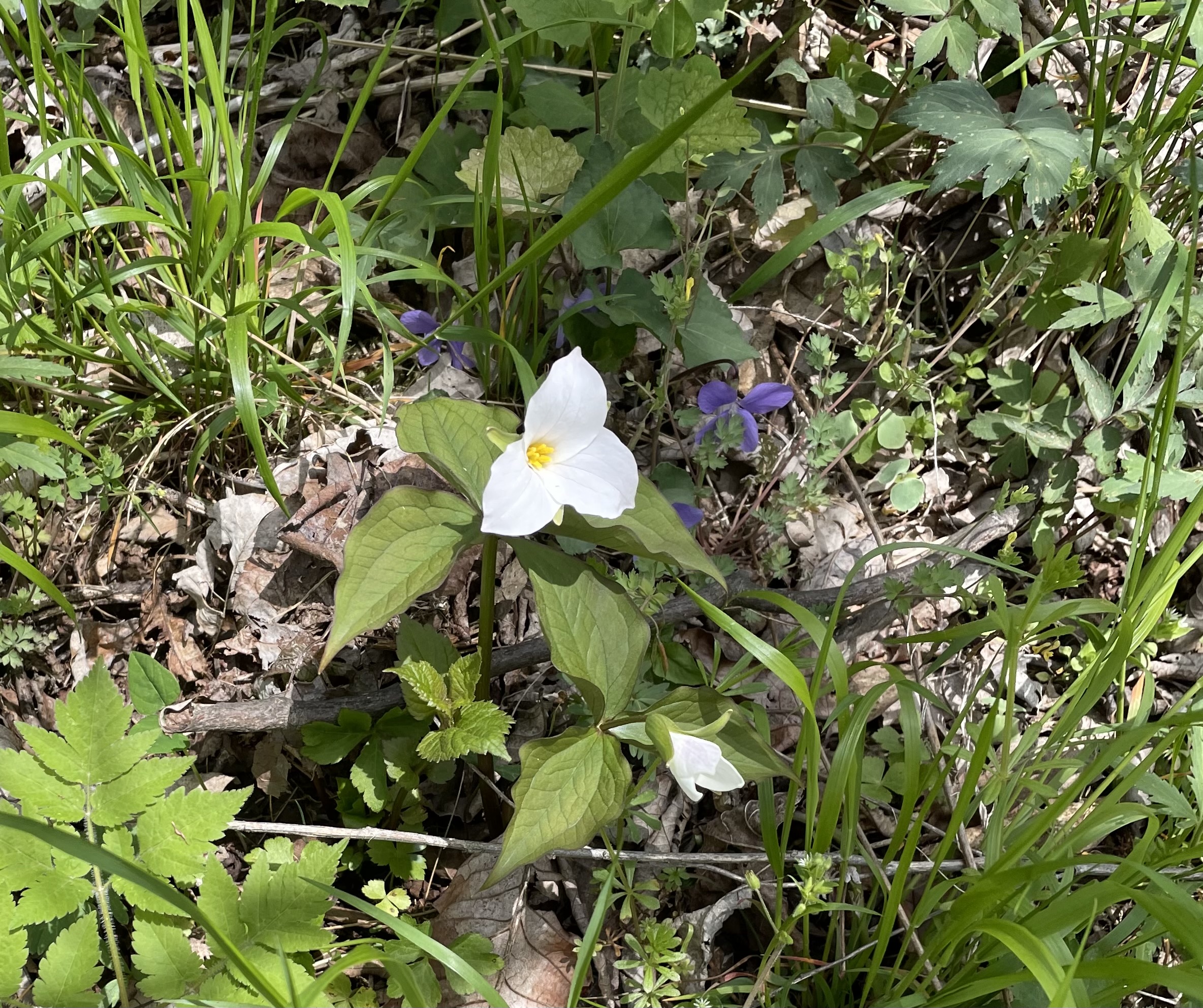
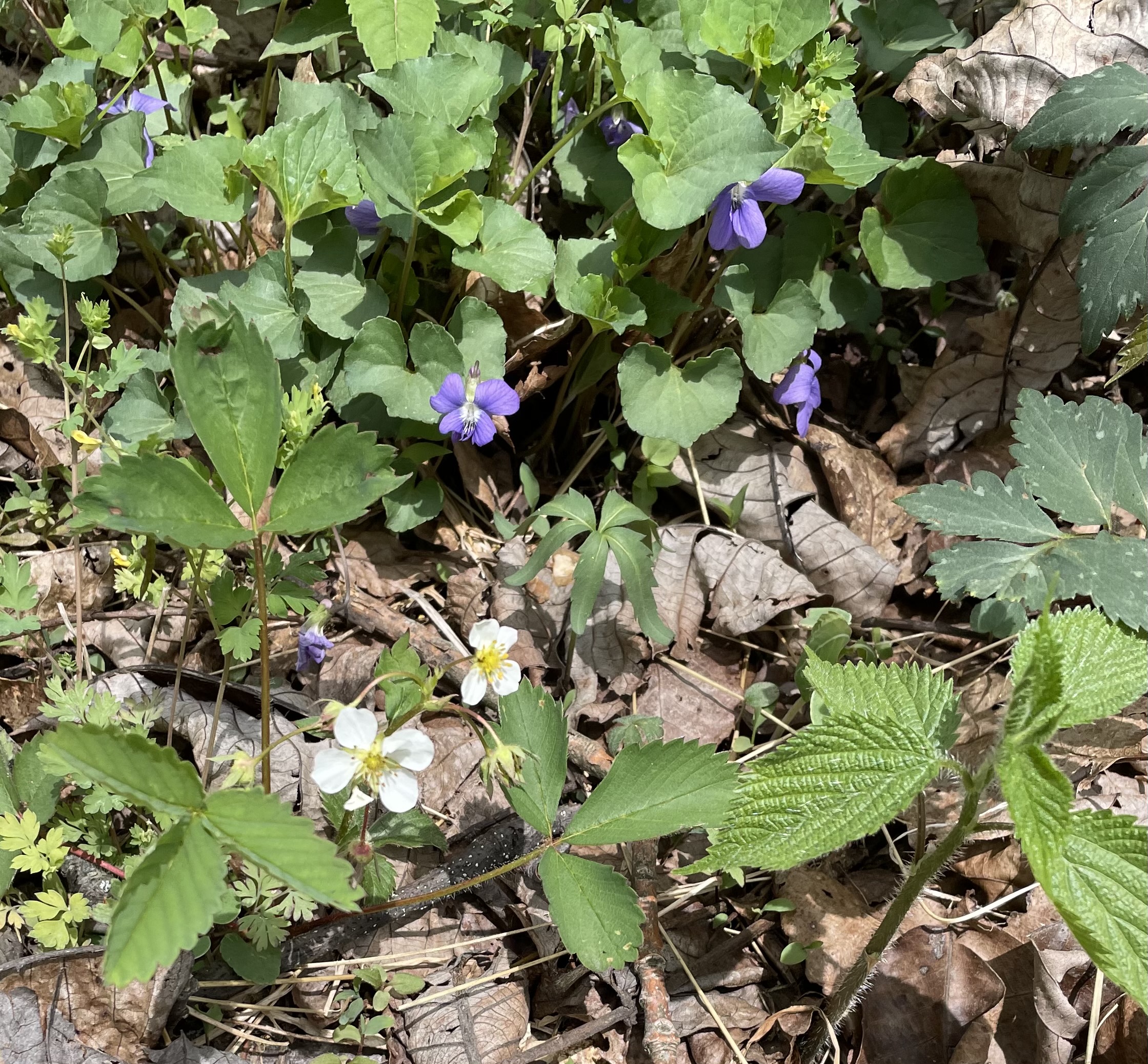
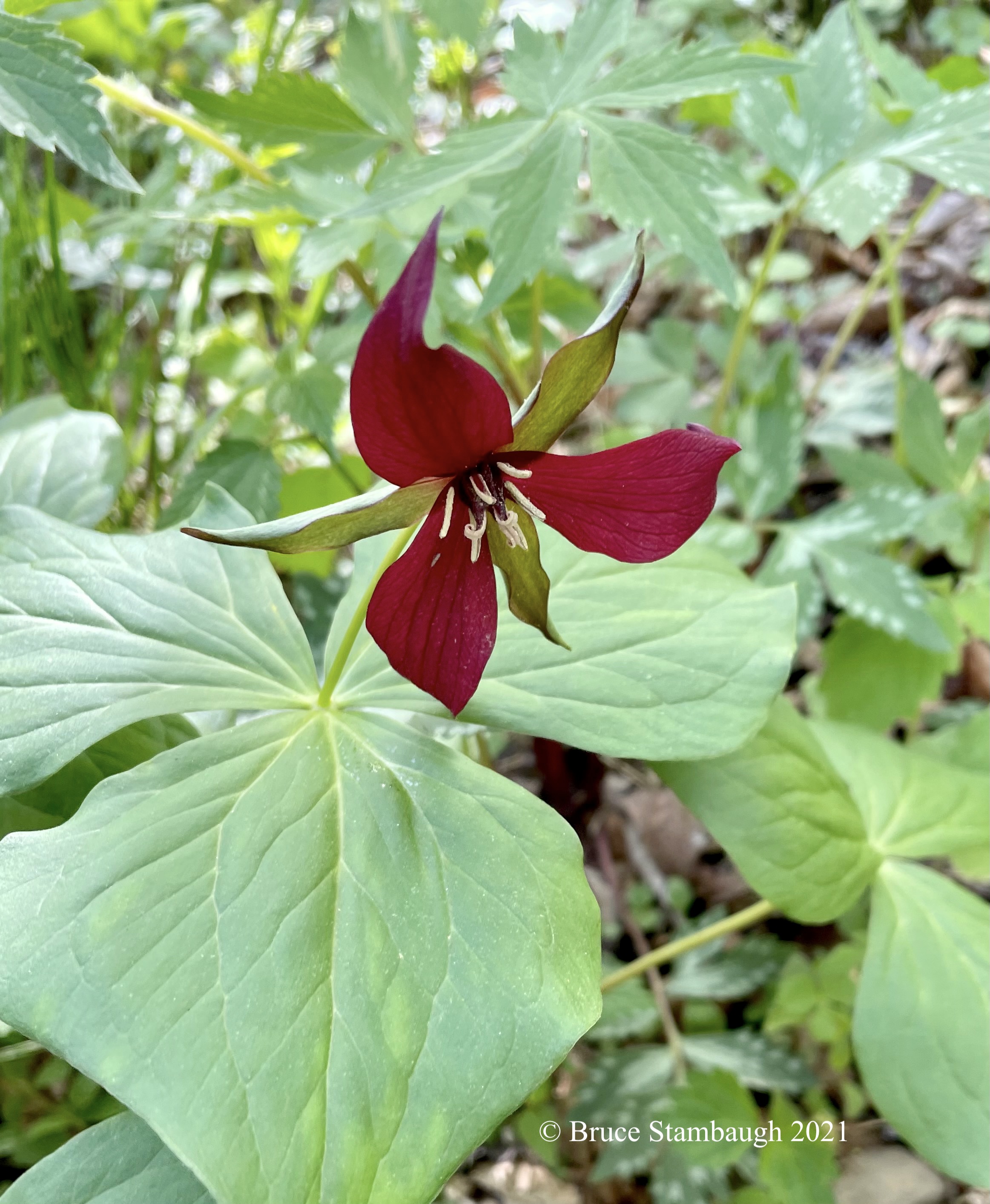
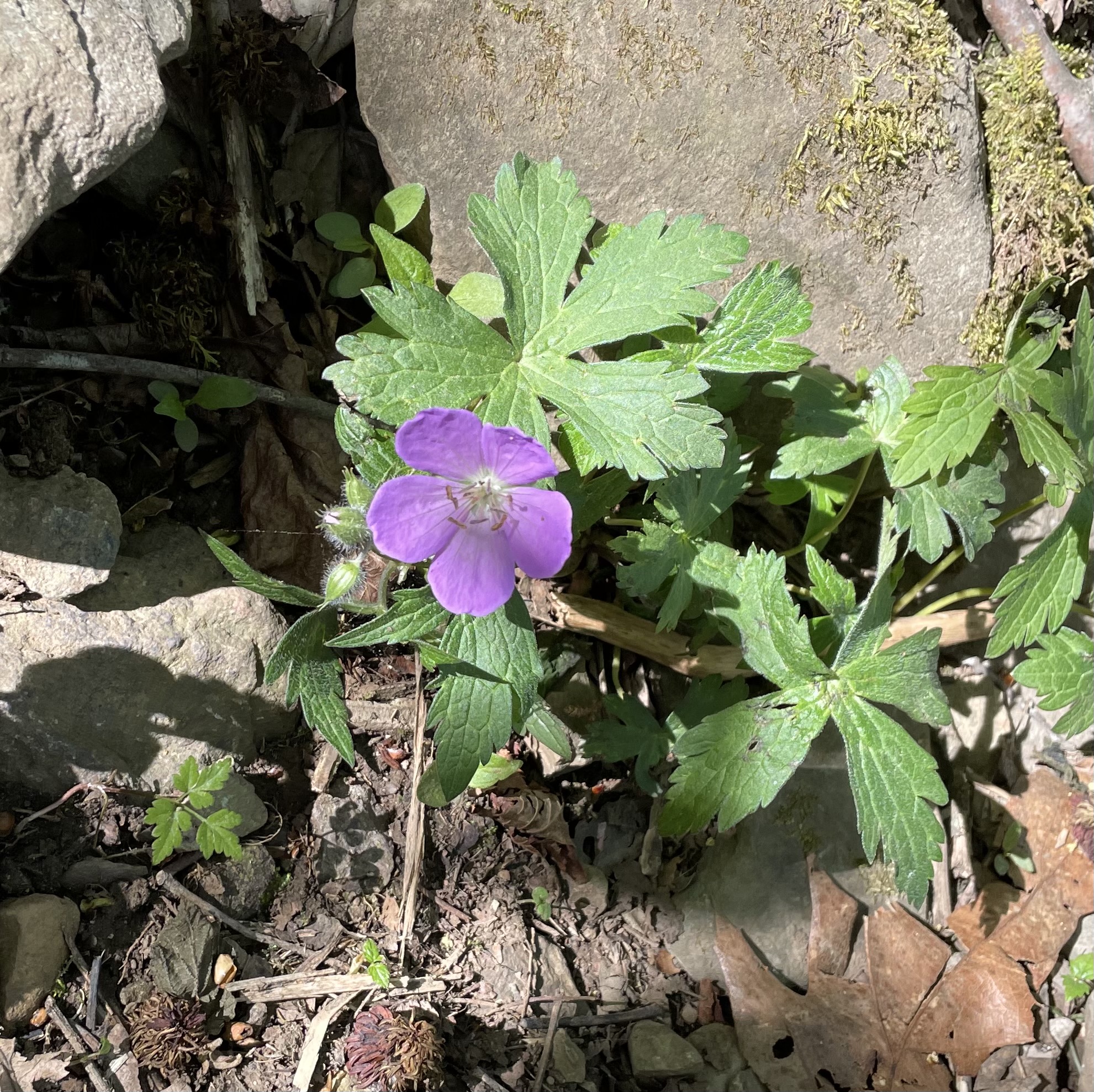
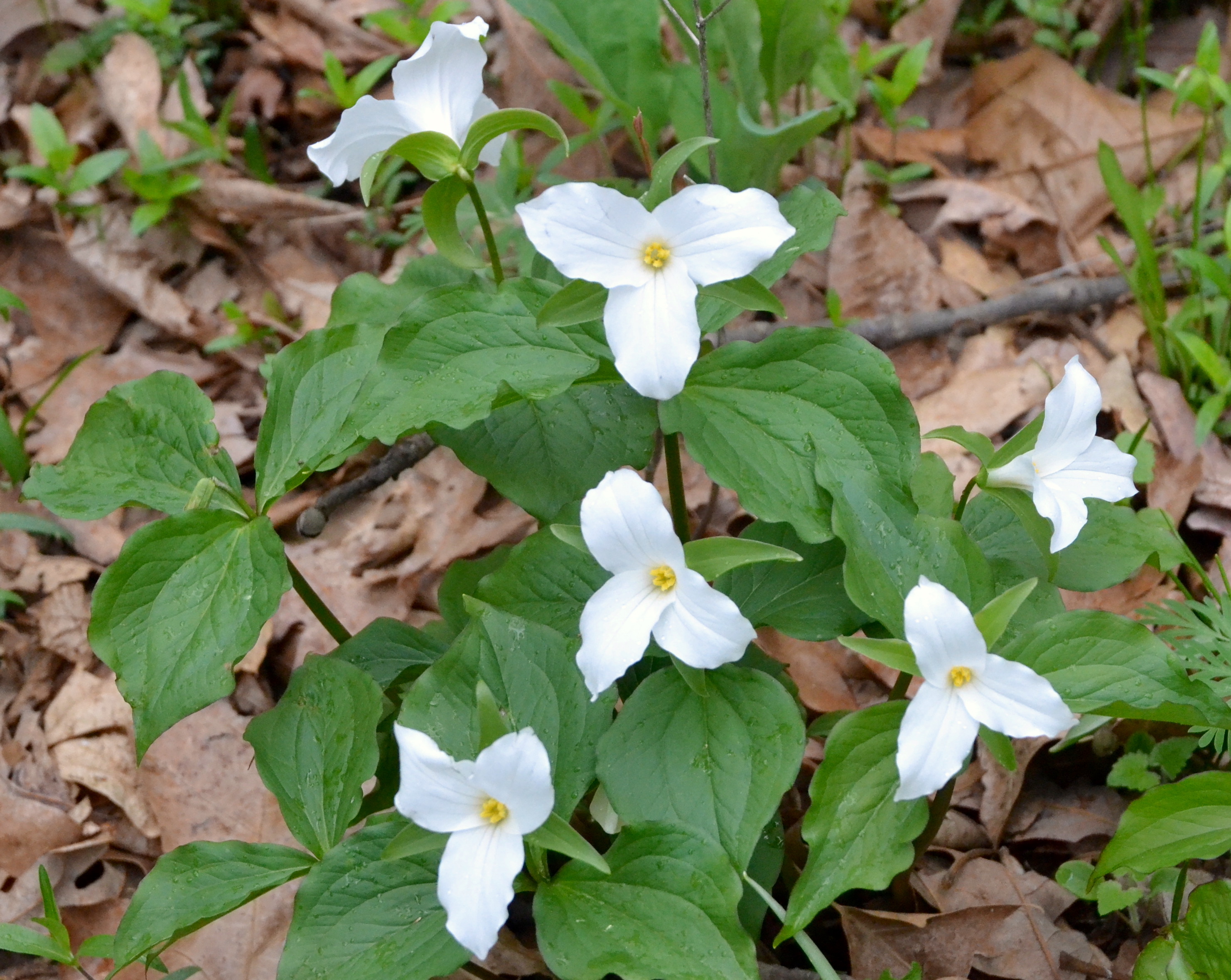
On our latest trip, we enjoyed seeing both large and small-flowered white trilliums, patches of red trilliums, wild geraniums, yellow and blue violets, black haw bushes, and hawthorn trees in bloom. Wild strawberries blossomed low while towering tulip poplar buds opened high above.
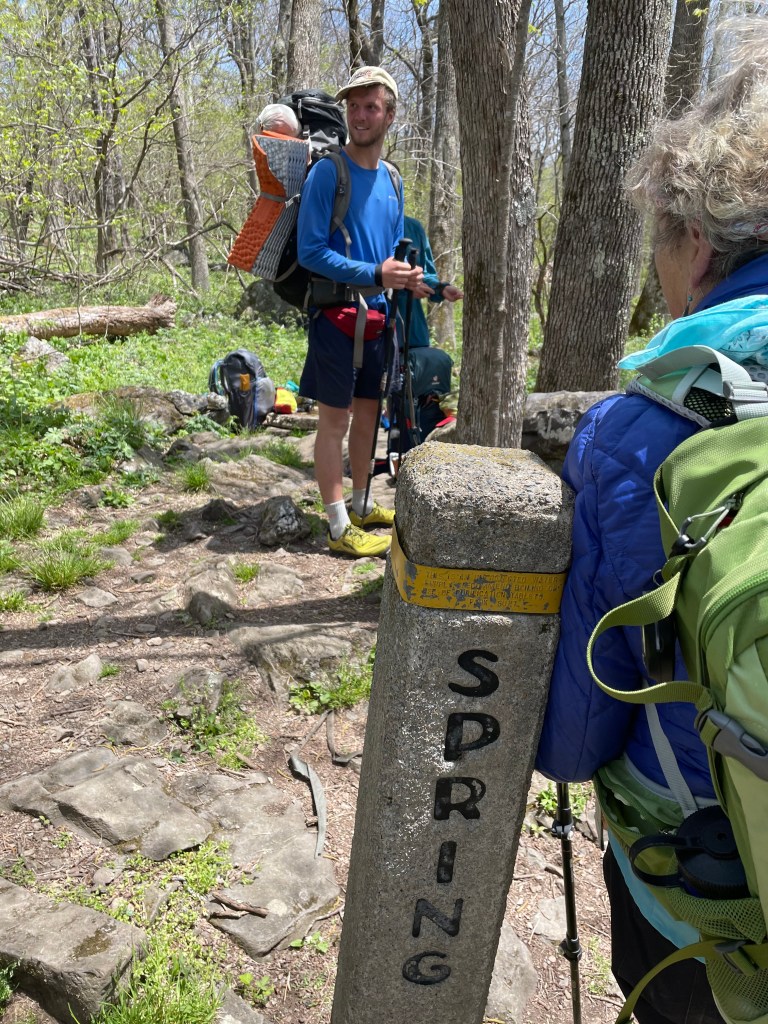
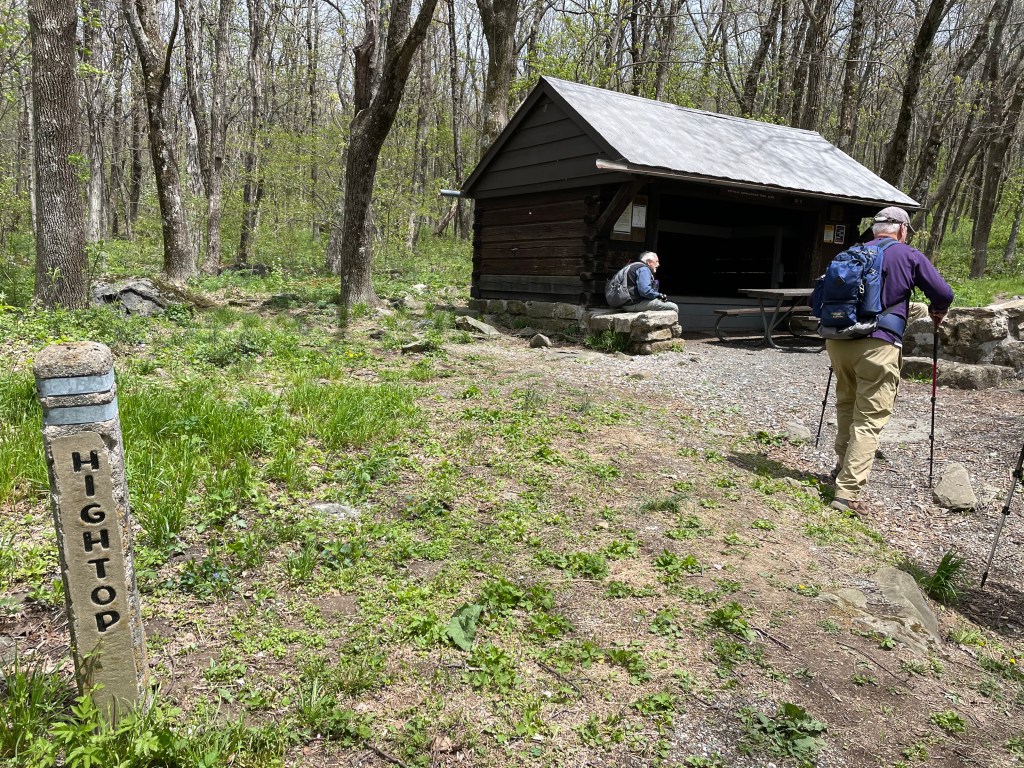
To reach the summit of Hightop Mountain, we walked the Appalachian Trail (AT) that snakes its way the entire length of the national park. We meet other day hikers like us, section hikers, and through-hikers.
Section-hikers walk the AT one section at a time, returning multiple times later to do more hiking. Through hikers are the serious ones. Their goal is to hike the entire 2,500 miles of the AT.
Most start at the trail’s beginning in Georgia and hike north to its terminus in Maine. In doing so, they experience an unfolding of spring over and over from the south to the rugged northeast.
Our group tries to give way to these more experienced hikers, but they are often as curious about us as we are about them. They often share their trail names and hometowns, and off they go.
We then return to observing the songbirds singing and flitting all around us and the many varieties of wildflowers as we meander. At our age, we have no choice to simply take our time to be safe and to inhale both our surroundings and the refreshingly cool mountain air.
Perhaps that is a good lesson for all of us. Slow down. Take your time. Enjoy all you encounter, moment by moment, breath by breath. Maybe then the remainder of May will gladly join you.
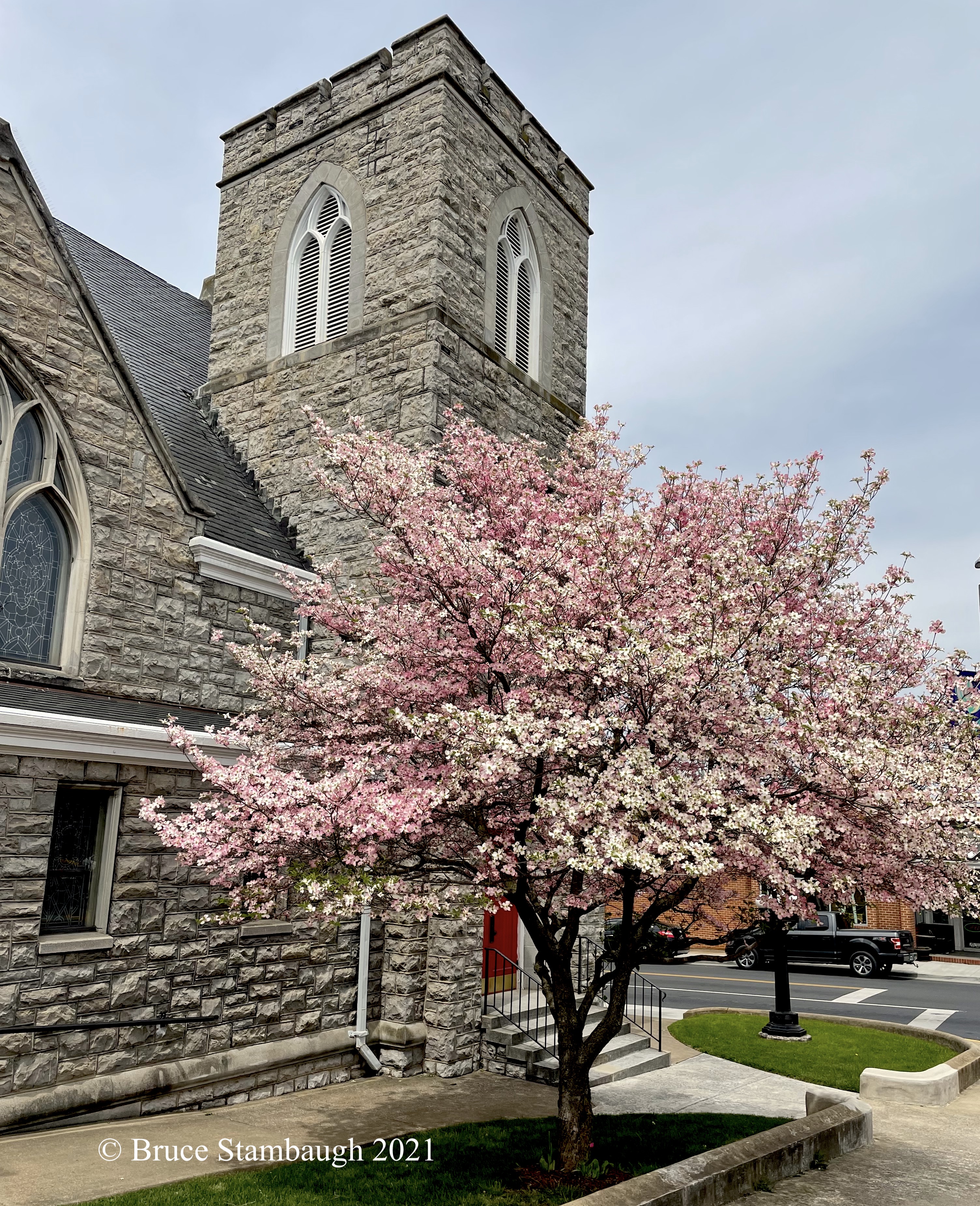
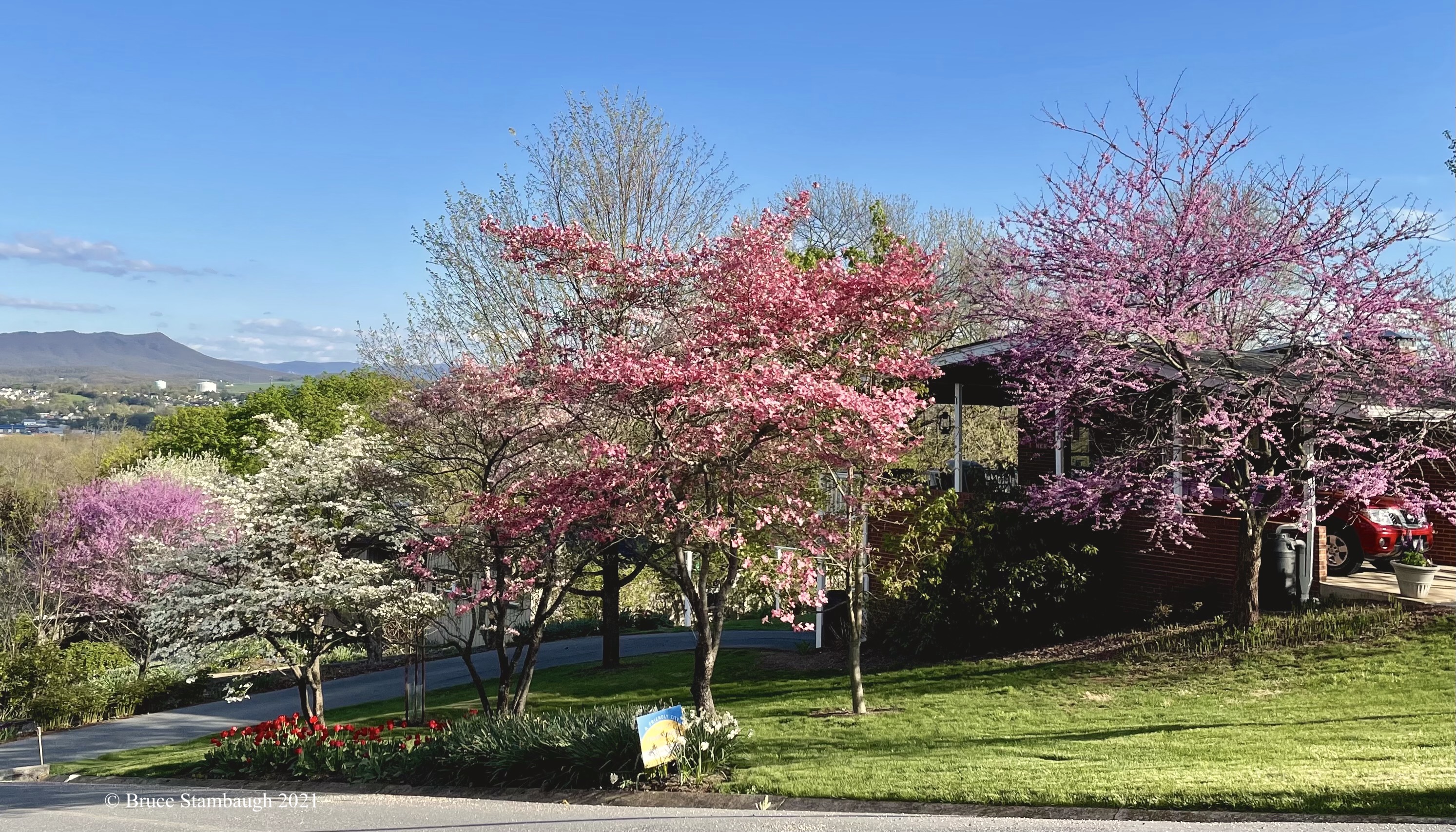
On a day trip last month, this two-toned beauty of a dogwood caught my eye. I hadn’t ever seen a dogwood blooming with both pink and white blossoms. It was ironic that this glorious tree was growing in the devil strip in front of a church in Luray, Virginia. For those unfamiliar with the term, a devil strip is the grassy area between the sidewalk and the curb. In my research, I found the origin of the term to be a bit fuzzy. Nevertheless, I wanted to share this lovely tree with you before we got farther into spring.
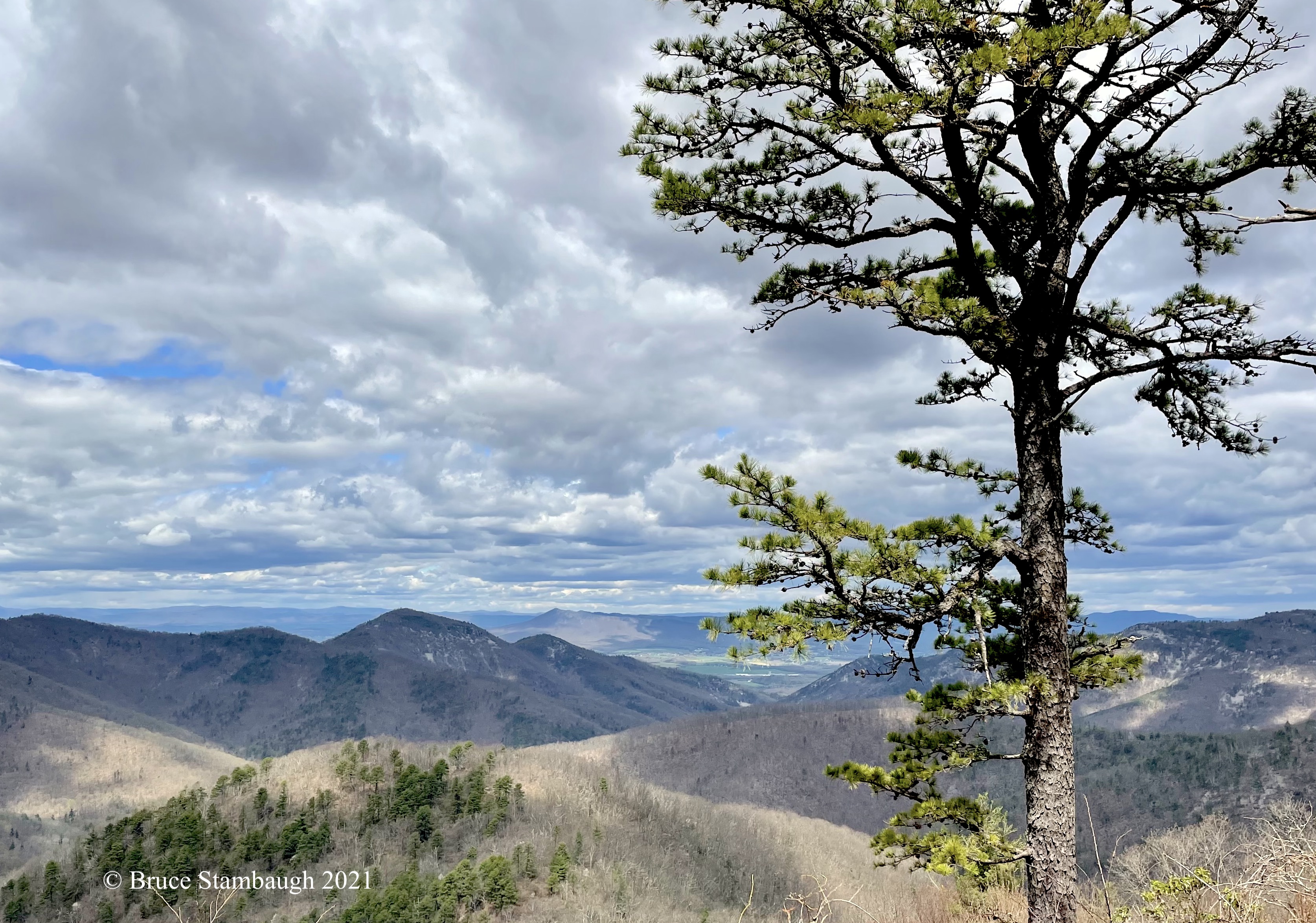
I live in one of the prettiest places in the world. I can be atop the Allegheny Mountains in less than half an hour. They are the mountains in the far distance, center to left in the photo.
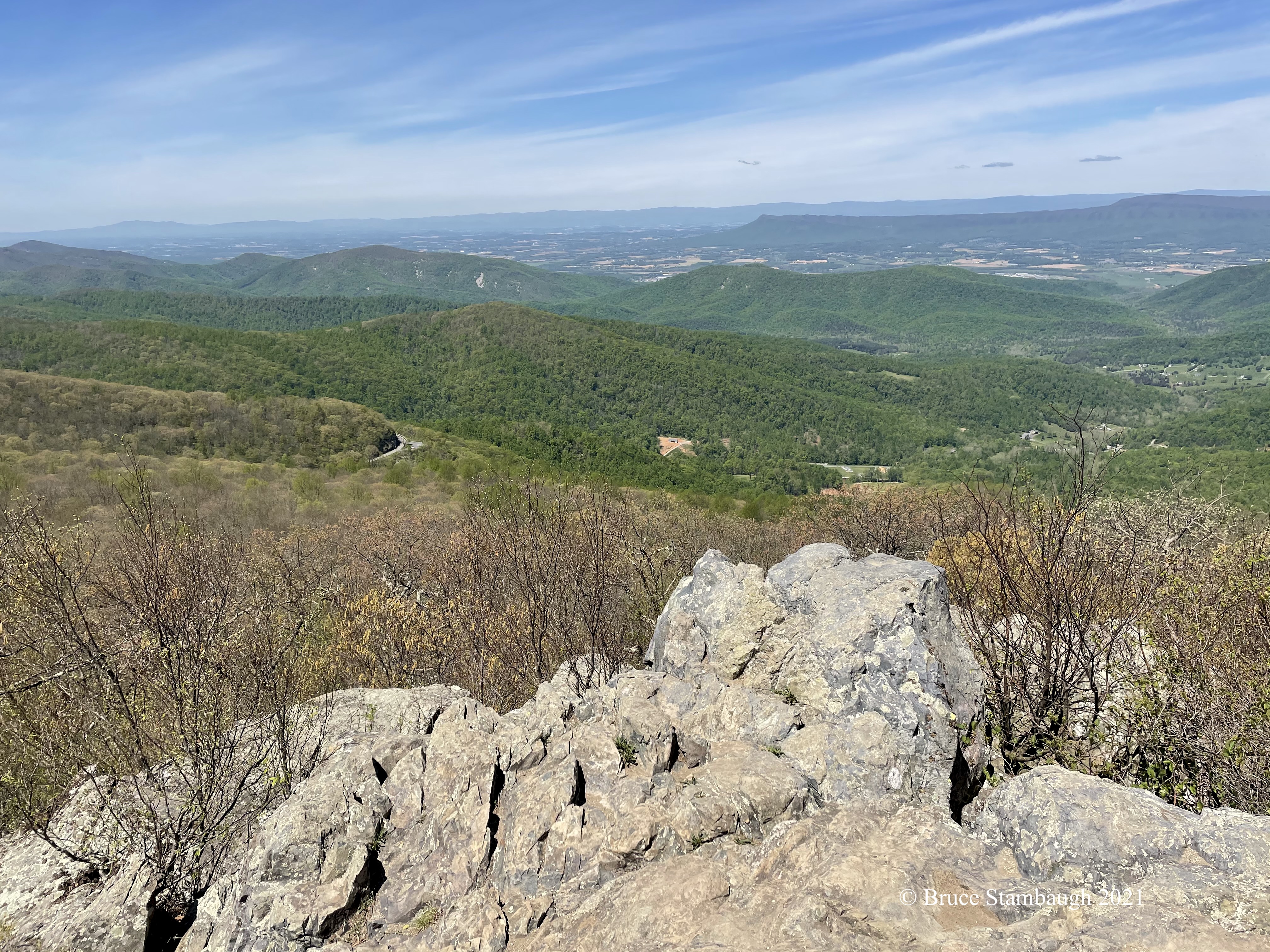
In less than an hour, I can be driving on the enchanting Skyline Drive in Shenandoah National Park, which runs 105 miles along the Blue Ridge Mountains. This photo was taken less than a month ago from Rockytop Overlook on Skyline Drive.
The peak in the center of the photo is the southern tip of the Massanutten Mountains east of Harrisonburg, Virginia. These old age mountain ranges can’t compare in beauty to the younger, sharper, snow-covered Rocky Mountains. Nonetheless, I find beauty in the mountains that border and bisect the Shenandoah Valley even on a mostly cloudy day.
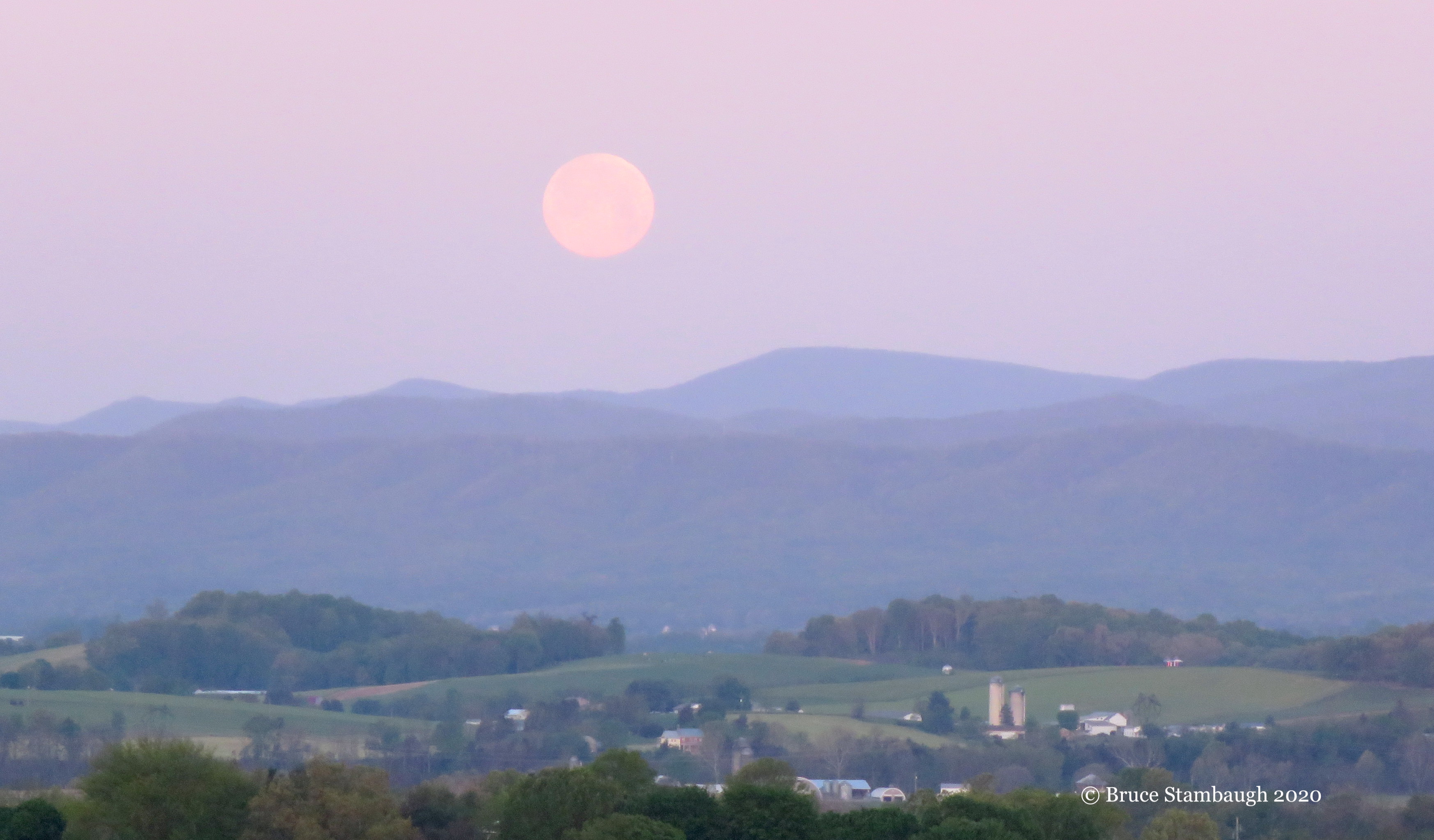
Full moon setting over the Allegheny Mountains on May 5, 2020.
I always breathe a sigh of relief when we get to May. Don’t we all do that?
We gratefully welcome the fifth month, if only in anticipation of her fairer weather. She provides a hopeful reprieve from last month. After surviving April 2021, it is a relief to flip the calendar.
May tends to be more predictable on the weather front. The temperatures warm, flowers, shrubs, and trees all bloom in earnest. Lawnmowers work overtime.
When it comes to months, May might be the closest we get to paradise here on earth. The days lengthen, sunny days generally outshine the cloudy ones, and we can finally put the windshield scrapers away.
That doesn’t mean May won’t open the old icebox once in a while. Farmers and gardeners alike keep a wary watch out for dreaded frosts. Of course, this year, April might have already damaged the fruit tree crops with her one-two punches of snow and hard freezes.
Dancing around maypoles at an elementary school.
May has other things on her mind besides weather issues. May 1 is May Day, raucously celebrated around the world for various reasons that date back ages. Dancing around the Maypole is just one tradition that continues today.
Our Puritan forbearers naturally frowned on such frolicking. So, people invented more muted celebrations like May Basket Day, where folks would fill woven baskets with flowers and candy and hang them on the doors of neighbors, friends, and family.
In some countries, May Day continues as a time to celebrate the rights of workers. By month’s end, Memorial Day in the United States is a time to pause and remember those who have gone before us. An extended weekend instantly turns spring into summer.
A cemetery decorated for Memorial Day.
For me, May rings in a roller coaster ride of emotions. My wife and our daughter and son, along with several friends, some now deceased, all have May birthdays.
My wife pleaded with me to get off the riding mower and drive her to the hospital so she could deliver our daughter. When I heard those first cries of life, the half-mown lawn no longer mattered.
Our son’s birth was even more dramatic. I had just arrived at school when I got the call that Neva’s water had broken. Despite some unexpected delays, we made it to the hospital on time, and I’ll never forget Dr. Roth’s exclamation as he lifted our newborn by the legs.
“She’s a boy!” Indeed, Nathan was a gift from God, the meaning of his name.
Decades later, our son visited me in the hospital on his birthday after my robotic prostate surgery. I’m pleased to say that I’ve been cancer-free ever since.
May 4 stirs hard memories of unnecessary conflict and casualties. As a Kent State University graduate the previous year, I can never forget that day.
Hispanics celebrate May 5 as Cinco de Mayo with parades, food, music, and folkloric dancing. Today’s festivals are remanences of the original celebration of the Mexican Army’s victory over the French.
This May, a total lunar eclipse will occur on Wednesday the 26th. Unfortunately, we won’t get to see the eclipse to its completion here in the east.
May means warmer days and nights, fragrances, and sounds we haven’t smelled or heard for 12 months. The month serves up summer’s appetizers.
From beginning to end, all of creation springs forth in May. May is a time to celebrate, reflect, plant, play, and rejoice in all that life offers.
Given all that we have been through in this ongoing pandemic, is it possible for us to replicate May’s commitment to life itself?
Just south of the quaint village of Luray, Virginia, Willow Grove Mill stands between the east and west branches of the Hawksbills Creek. As interesting as the old mill was, it was the old, one-lane bridge that crossed the creek that intrigued me. The bridge was straight as an arrow, but as soon as you crossed it, the road took a sharp left turn.
“The Bridge to Willow Grove Mill” is my Photo of the Week.
Edith J. Carrier Arboretum, Harrisonburg, Virginia.
Now is the time to get outdoors. Nature is in all of her rejuvenated glory.
No matter where you live, there are likely plenty of opportunities to explore and enjoy the blossoming beauty. It could be the mauve of your neighbor’s crabapple tree. It could be a local park, where multiple options abound. Maybe it’s your own backyard.
The location is insignificant. All of nature is coming alive right now in the Northern Hemisphere. But as the daffodils have shown, this beauty won’t last. Enjoy it while it’s here.
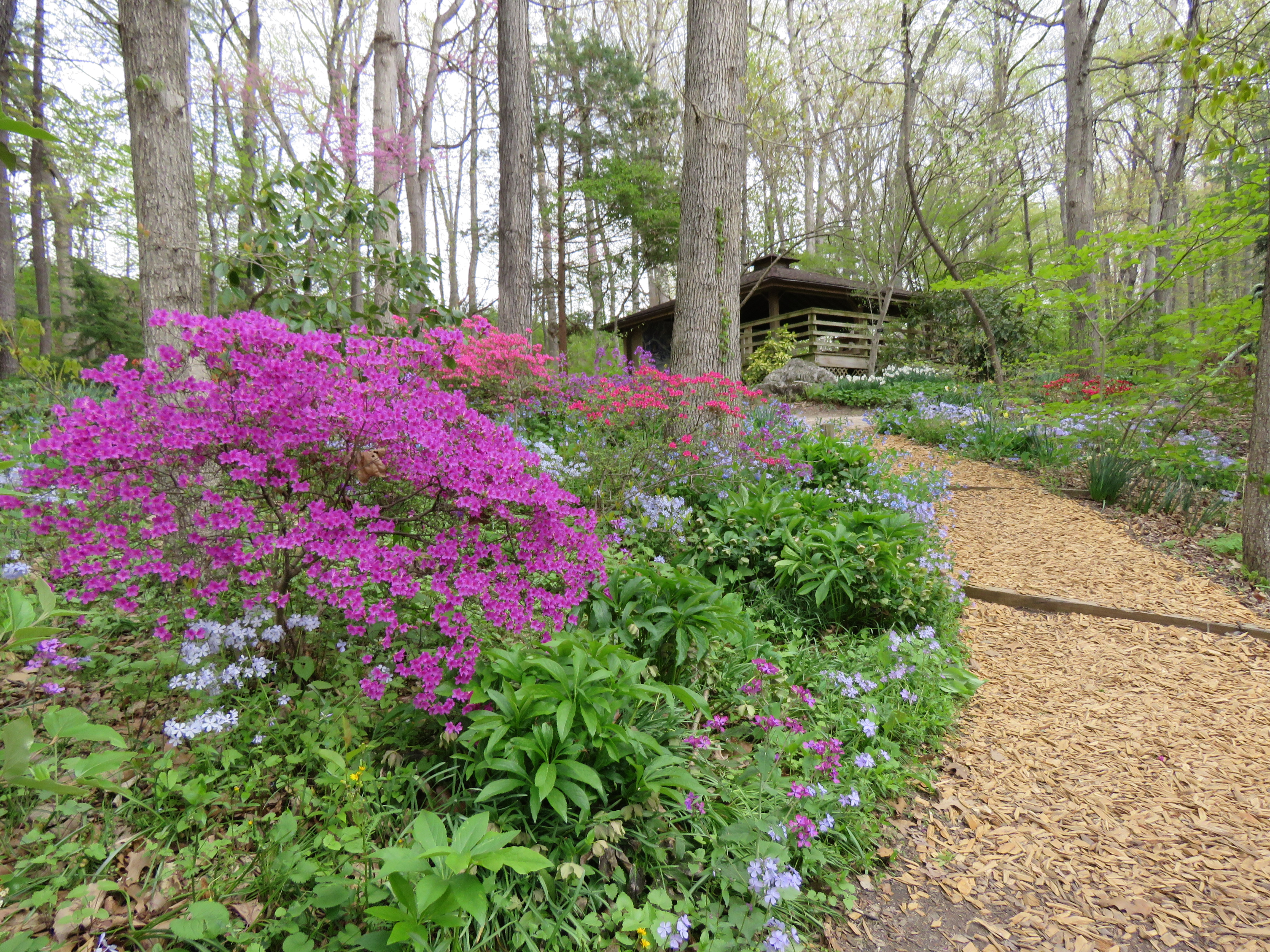
When a friend invited my wife and me to see their magic garden in full bloom, we didn’t hesitate. We had been there before and knew what a treat it would be.
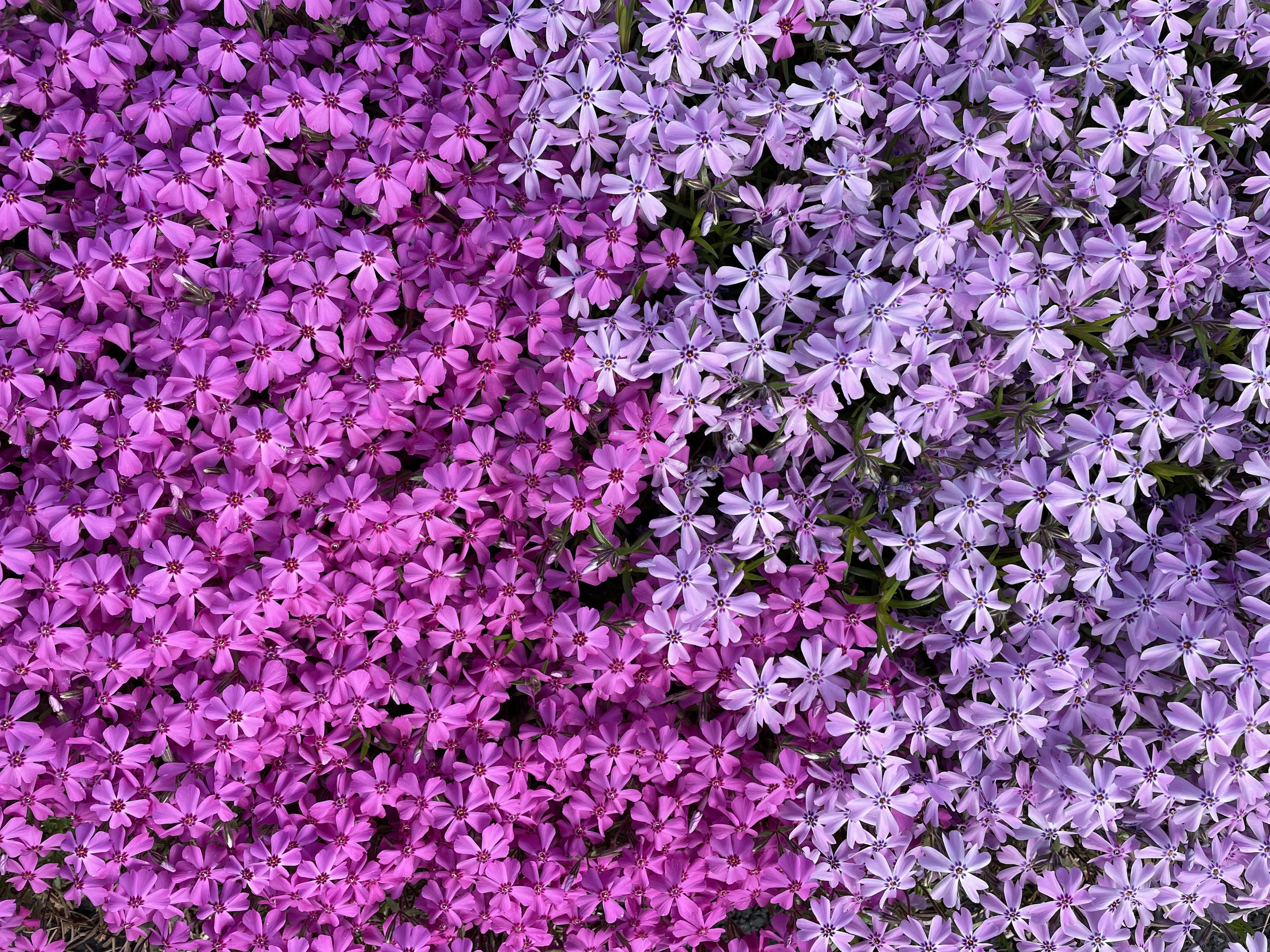
Our friend Mary guided us through the glorious garden filled with various vibrant flowers, all native to the Shenandoah Valley. A pastel pallet of creeping phlox that lined the sidewalk and driveway served as our greeters.
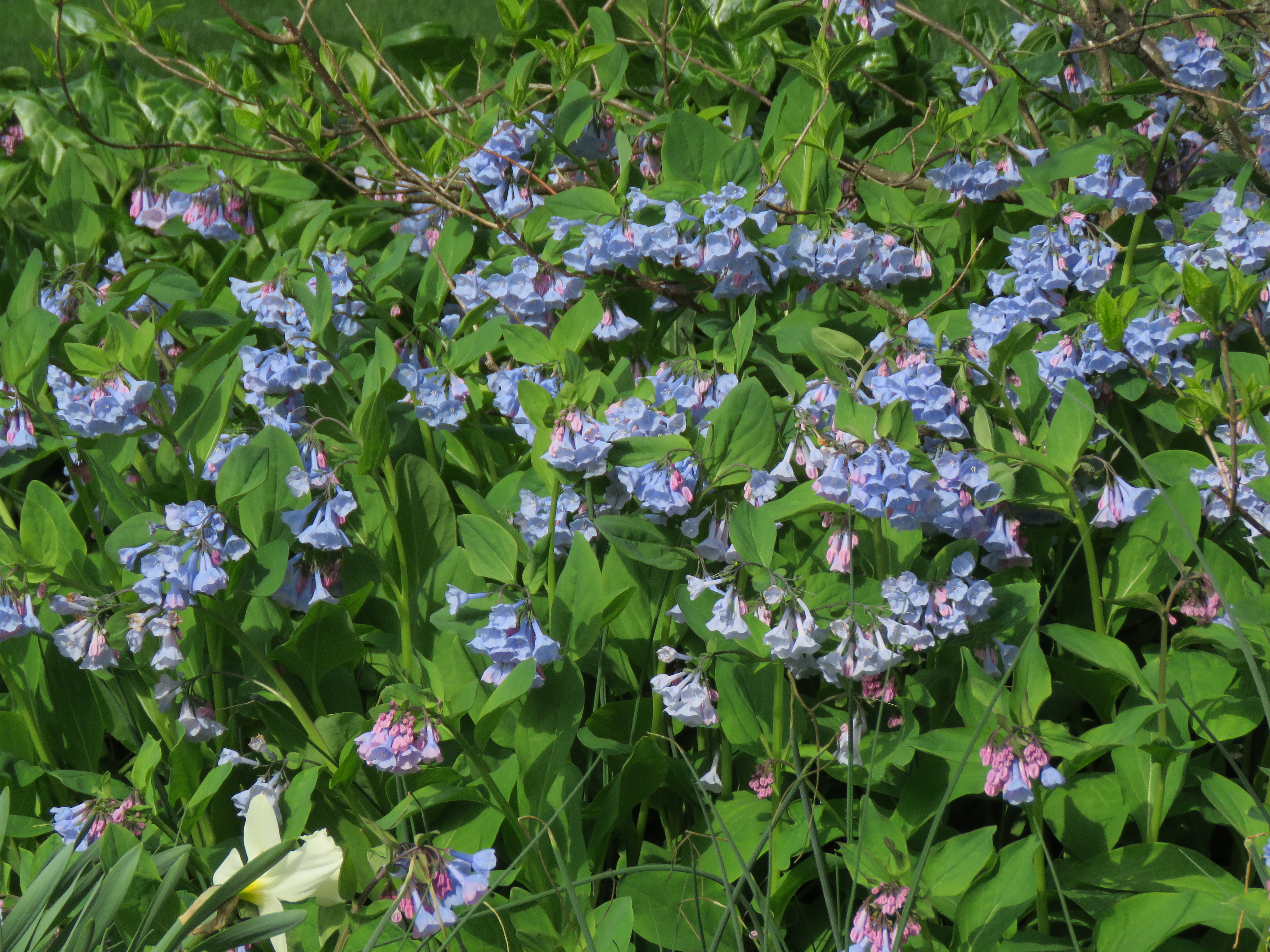
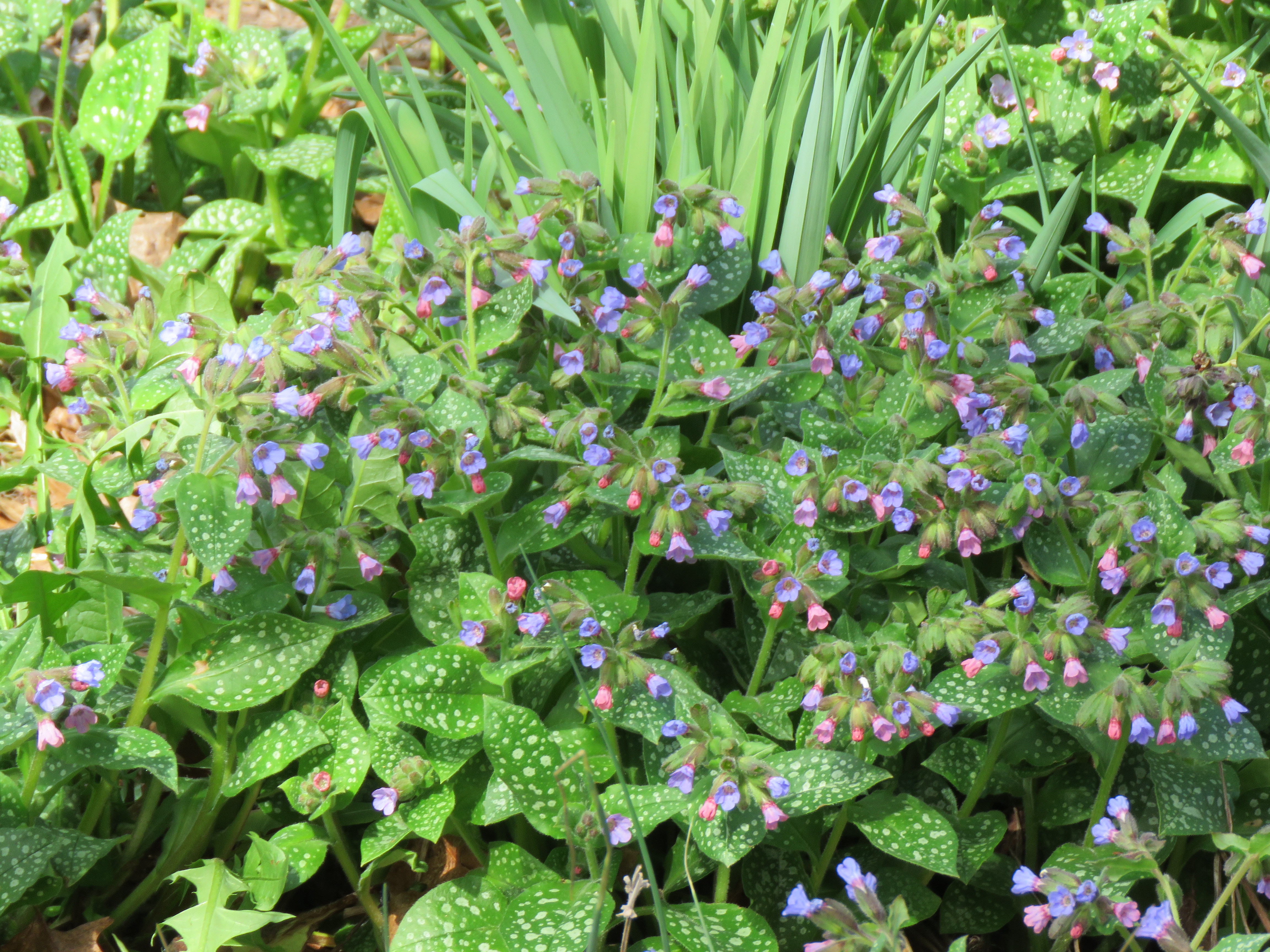
As we wound our way around the house and down into a lovely shaded area, blooming azaleas and cultivated wildflowers popped into view. Mary’s husband Glenn sat on a bench surrounded by Virginia bluebells and their smaller imitators lungworts. Their spangled leaves accented the dainty pink and blue blossoms.
The vivid colors of our friends’ personal arboretum.
Mary and Glenn made us feel at home in their little slice of paradise on earth. I’m sure that’s the case for everyone who visits. They are as welcoming as their heavenly arboretum.
The previous day Neva and I had visited the noted Edith J. Carrier Arboretum on the James Madison University campus in Harrisonburg, Virginia. A free wildflower tour happens every Wednesday when the wildflowers bloom.
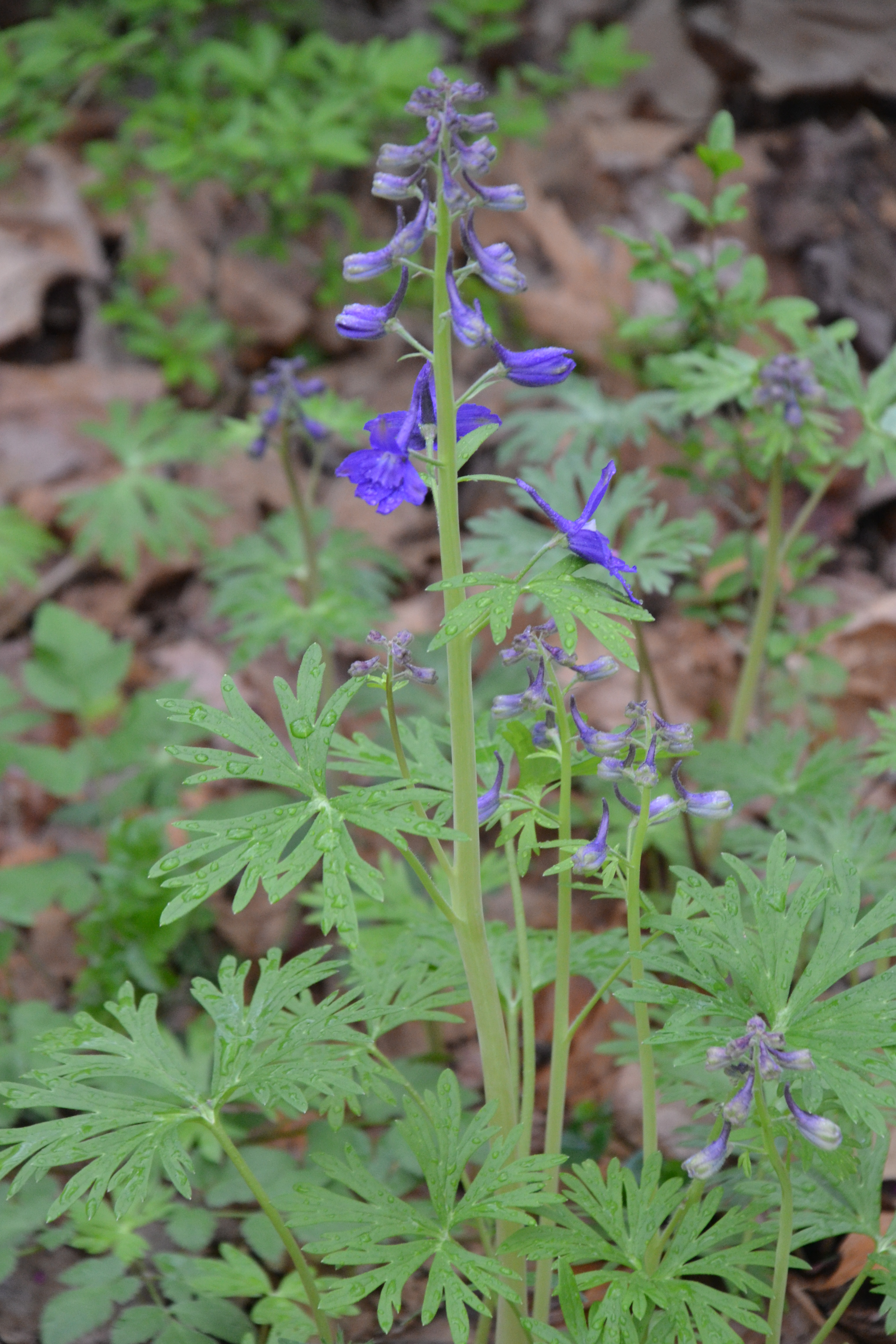
Our guide led us around the pond into the woods, frequently stopping to point out the various wildflowers and blooming trees. Of course, the Virginia bluebells stole the show.
The beauty of the Edith J. Carrier Arboretum.
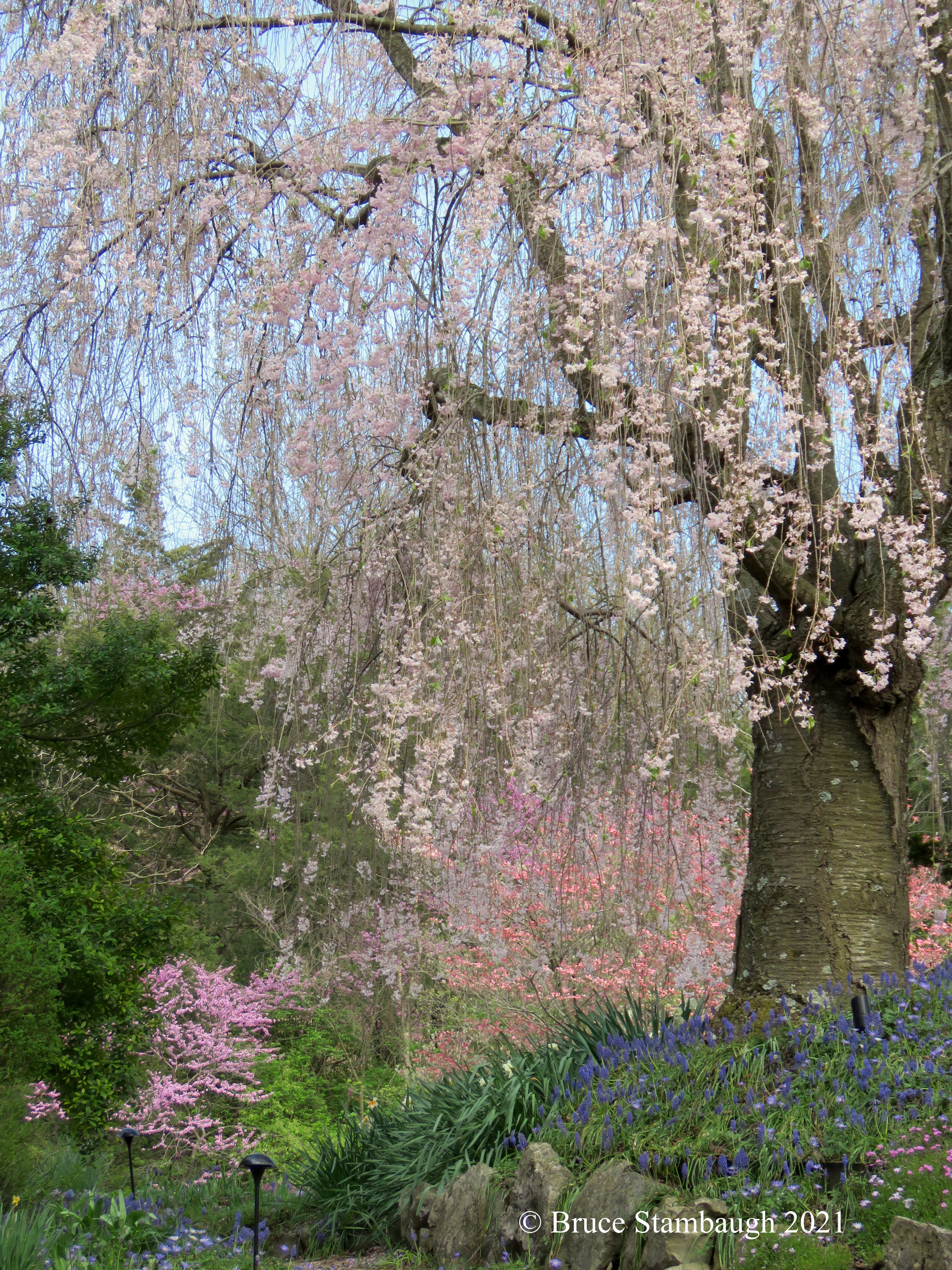
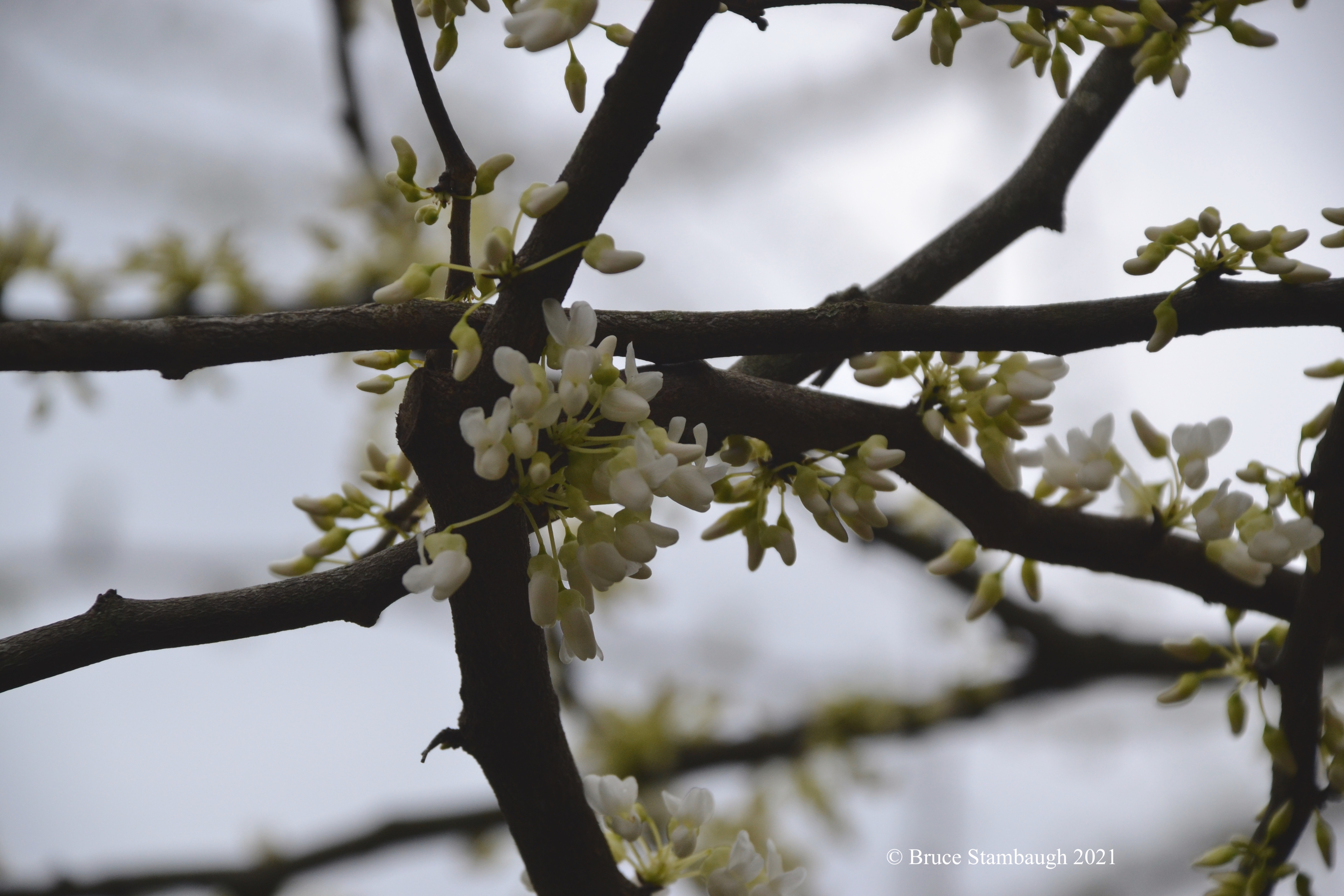
Not to be outdone, the deep burgundy of the toad trillium nicely contrasted with their white cousins nearby. Redbuds, both pink and white, provided a pretty umbrella for the gentle, steady rain.
Late-blooming spring beauties and buttery daffodils with orange trumpets caught our attention. The last of the white-petaled bloodroots had to be impressed with the Dutchman’s britches dancing in the raindrops.
The deep red pawpaw buds were still tight, waiting for warmer and sunnier days to open. Several in the group told stories of the delicious pawpaw fruit. Others had their doubts.
Wild blue phlox and lungwort tried their best to distract the visitors from admiring the rose azaleas. Warblers and woodpeckers achieved that goal for me.
We saw and learned about scores of other flowers, plants, shrubs, and trees in the conservatory. Something is always blooming there in the springtime. You can drown in wildflowers.
Back in Ohio, the Wilderness Center at Wilmot and the Secrest Arboretum at the OARDC in Wooster were always my favorite places to visit, especially in the spring. Wildflowers, ornamental trees, and birds and butterflies kept me busy for hours.
Of course, just traveling hiking and biking trails this time of year is a real treat. Different flowers seem to appear daily, along with the migrating and resident songbirds.
My friend and author Julie Zickefoose said it succinctly, “There is so much living to be done in spring when everything is so beautiful.” I couldn’t agree more.
You likely have your favorite places to visit in the spring to view the wildflowers and enjoy the colorful birds. Even if it’s your own backyard, get out and enjoy the glorious show.
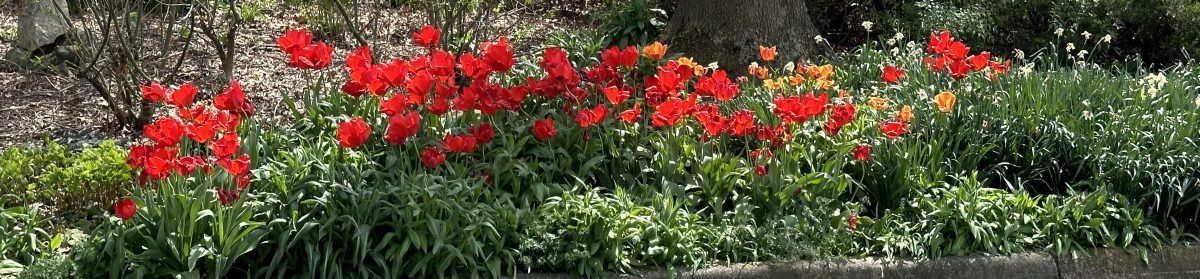
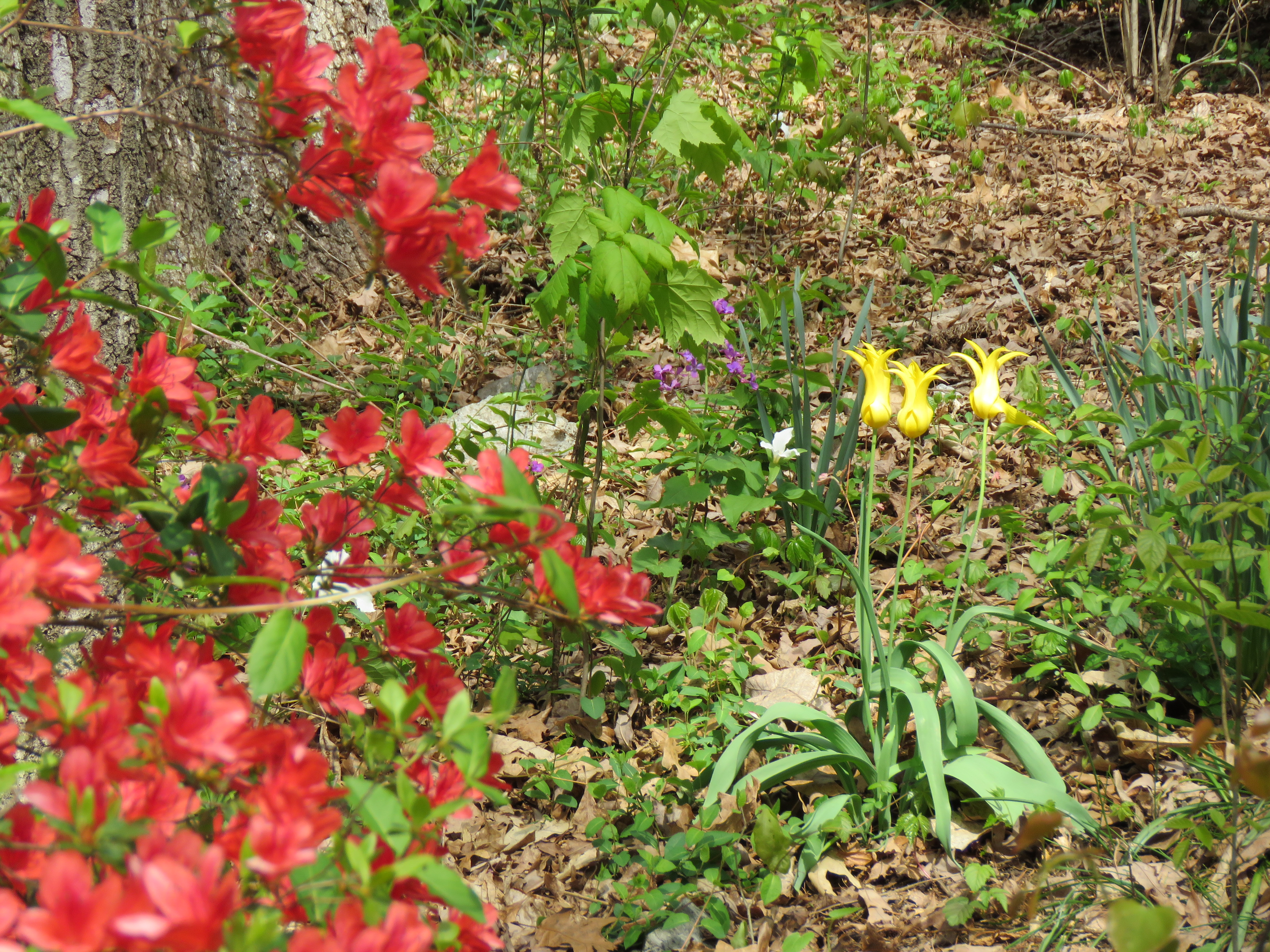
A springtime floral display in Harrisonburg, Virginia.
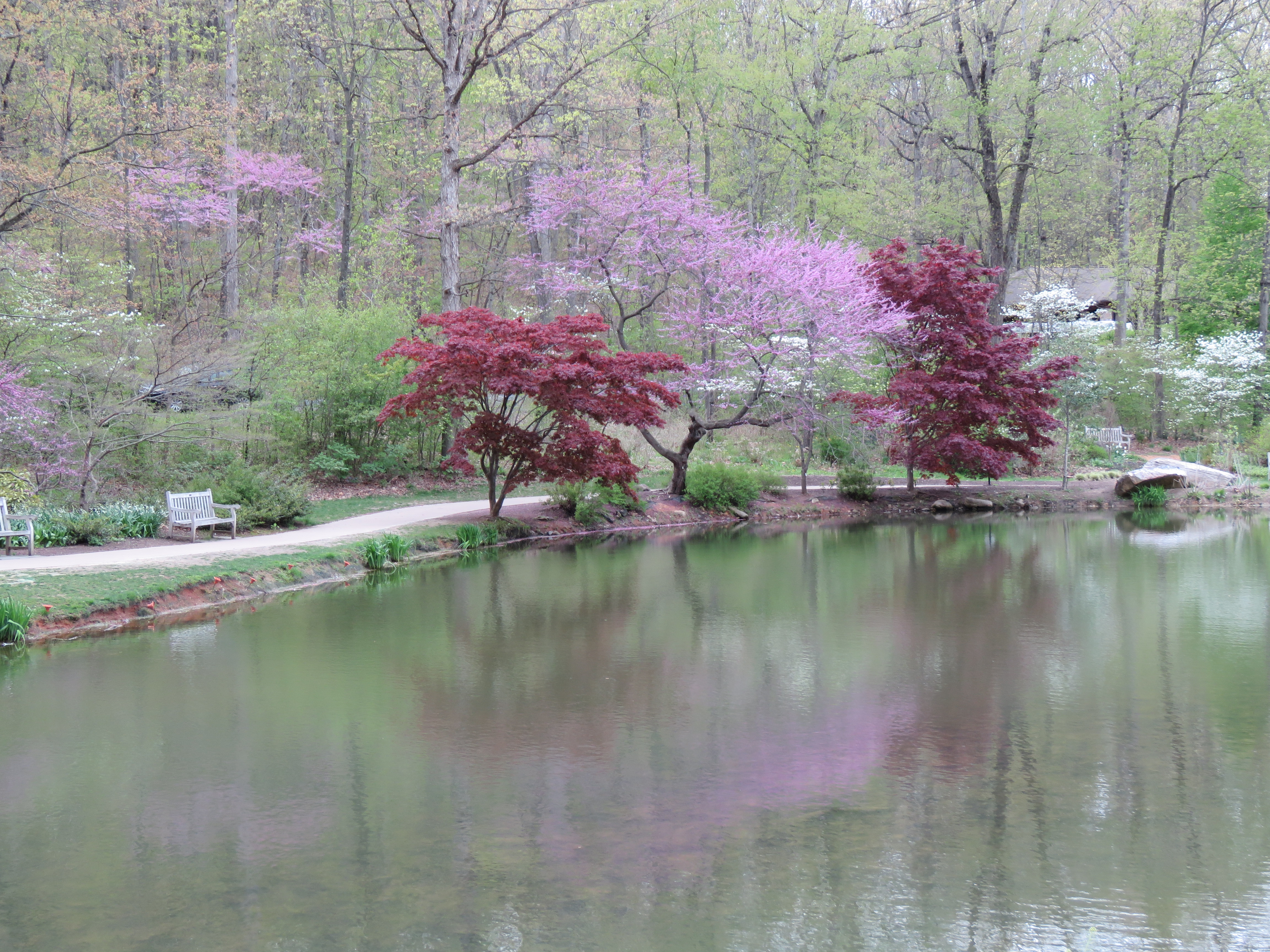
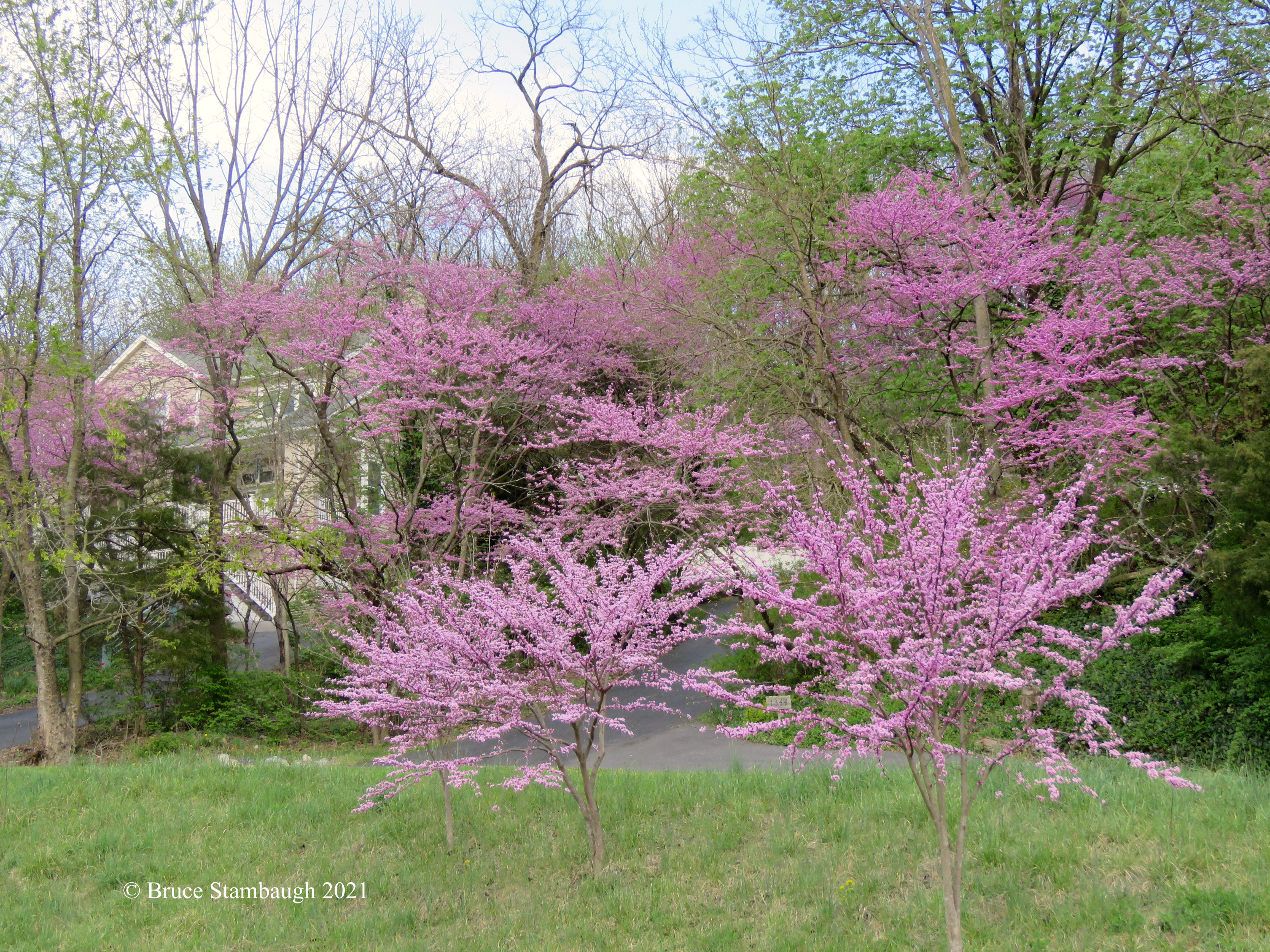
Shortly after my wife and I arrived at a local arboretum, the overcast skies began to leak. The raindrops stirred this already murky pond, but the redbuds still reflected their beauty.
“Reflections on a Rainy Day” is my Photo of the Week.
I’ve known a few characters in my lifetime. I bet you have, too.
By character, I mean a unique individual who enjoys life outside the expected societal norms. Every family, workplace, and even church seems to have at least one individual who fits the profile.
I’ve learned that you don’t have to be human to be a character either. Our long-departed rat terrier Bill fit that category.
Bill’s personality far outsized his small frame. He once jumped up to try a catch a Canada goose that flew low over our Ohio home.
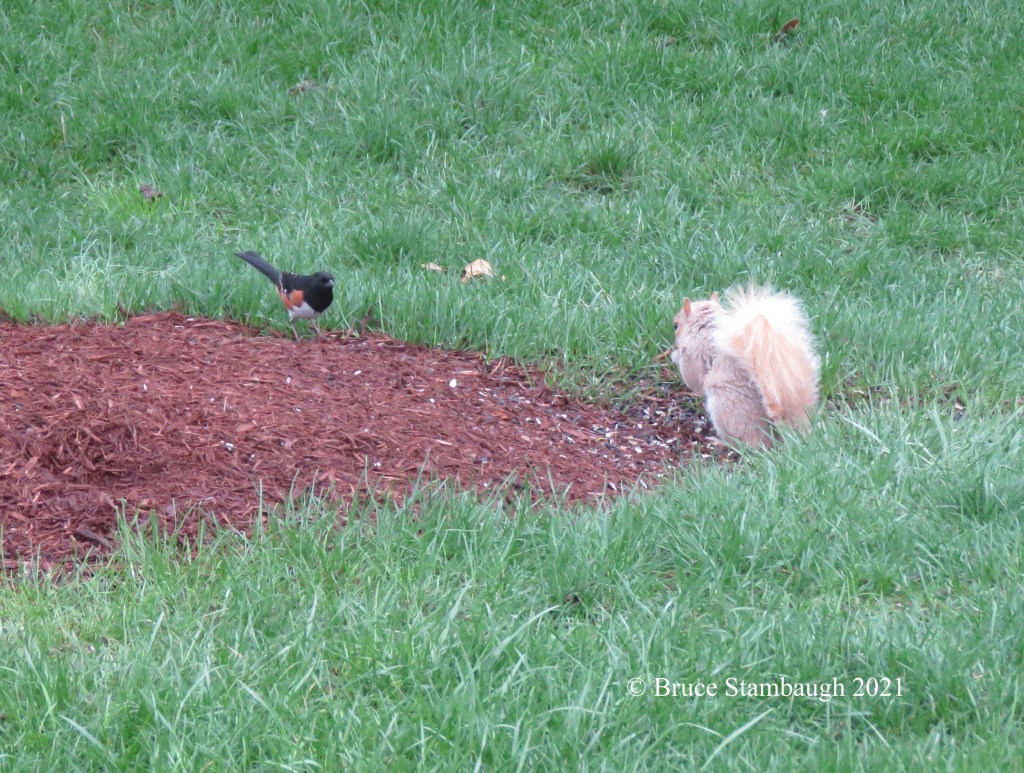
Other non-human characters include our backyard blonde squirrel and a pair of mallard ducks that frequent our neighborhood.
Just being blonde and a squirrel is character enough. When other squirrels approach, Blonde rapidly flips her beautiful golden tail to defend her territory. Satisfied that all is clear, she stretches out on the cool grass in the shadow of the maple, relishing in her most recent victory.
The ducks are a different story. Even though our suburban home’s closest water sources are swimming pools, this pair flies around the neighborhood, landing on rooftops. From there, they scout out nearby birdfeeders and go house to house foraging for breakfast, lunch, and supper.
The mallards and a standoff between an Eastern Towhee and the blonde squirrel.
Characters, however, don’t have to be living beings or animals.
Take our Julian calendar, for example. Months have dynamic personalities, too. April earns head of the class and not necessarily for alphabetical reasons.
Among her 11 siblings, April can often be a bit obnoxious. That’s especially true when it comes to weather.
April showers bring much more than May flowers. April’s repertoire dishes out tornadoes, snow, frost, floods, 80 degree days, and more. Sometimes only hours separate those diverse conditions.
No matter where you live in the United States or Canada, April can be a stinker. She doesn’t rely only on April 1 to fool you. One day, it’s 15 degrees above average. The sun is shining in a clear blue sky, while songbirds fill the warm air with luxurious melodies. The sound of lawnmowers echoes far and wide.
The next day the fog is so thick the sun can’t even breakthrough. Soon the wind picks up, and storm clouds race across the landscape, pelting rain, hail, and producing winds that exceed the speed limit. It would be justifiable if the weather service issued an arrest warrant for April for perpetrating days like this.
It’s not that we don’t expect variety in the weather. It is spring, after all. But it would be pure pleasure to know it’s safe to store the ice scrapers and snow shovels for at least a few months.
I have anecdotal evidence of such events. One early April day, 20 inches of heavy, wet snow brought much of Ohio to a halt. Volunteer fire departments ferried medical workers to and from hospitals.
On April 3 and 4, 1974, massive and deadly tornados hit Xenia, Ohio, and many other locations in more than a dozen states. Holmes County was in the path of the storm, too.
The sky turned pea green, and everything grew still. The tornado never touched down, but instead, tattered and torn objects from Xenia drifted to earth. People found checks and personal effects from 150 miles southwest.
April continues to be a Jekyll and Hyde. Just as our redbuds were about to bloom pink and bold, back-to-back days of 20-degree mornings deadened their potential pink beauty. I hope they can recover from their frigid encounters.
April is a character, all right. She still has time to repent, however.
My wife and I participated in a guided spring wildflower walk at the local arboretum yesterday in Harrisonburg, Virginia. While other participants eyed some other floral beauties, I spotted this clump of wild blue phlox, phlox divaricata, growing hard against a bolder of the area’s noted blue limestone. I thought the rock and the bouquet make a nice couple.





















 Roadkill Crossing
You must be logged in to post a comment.