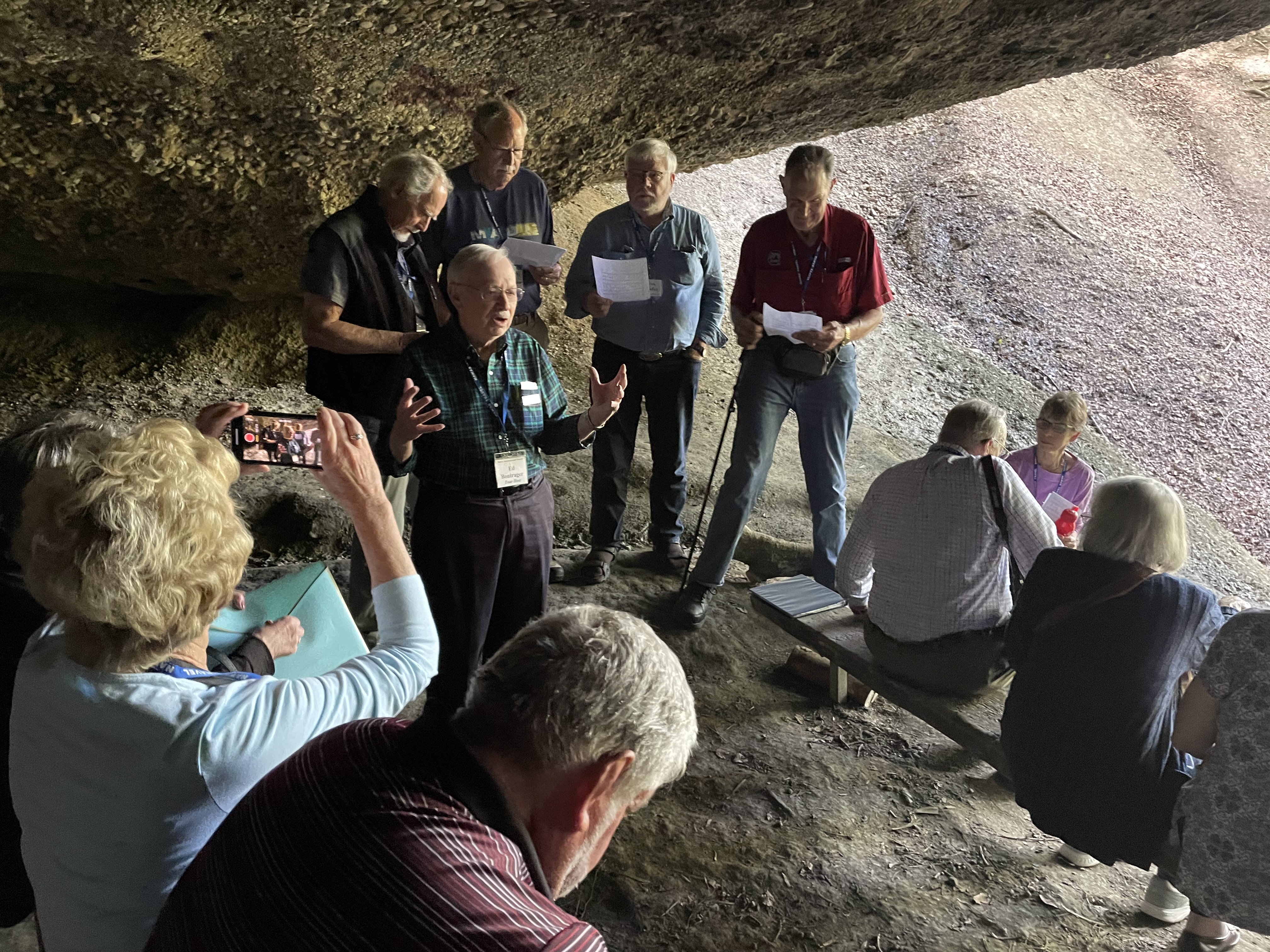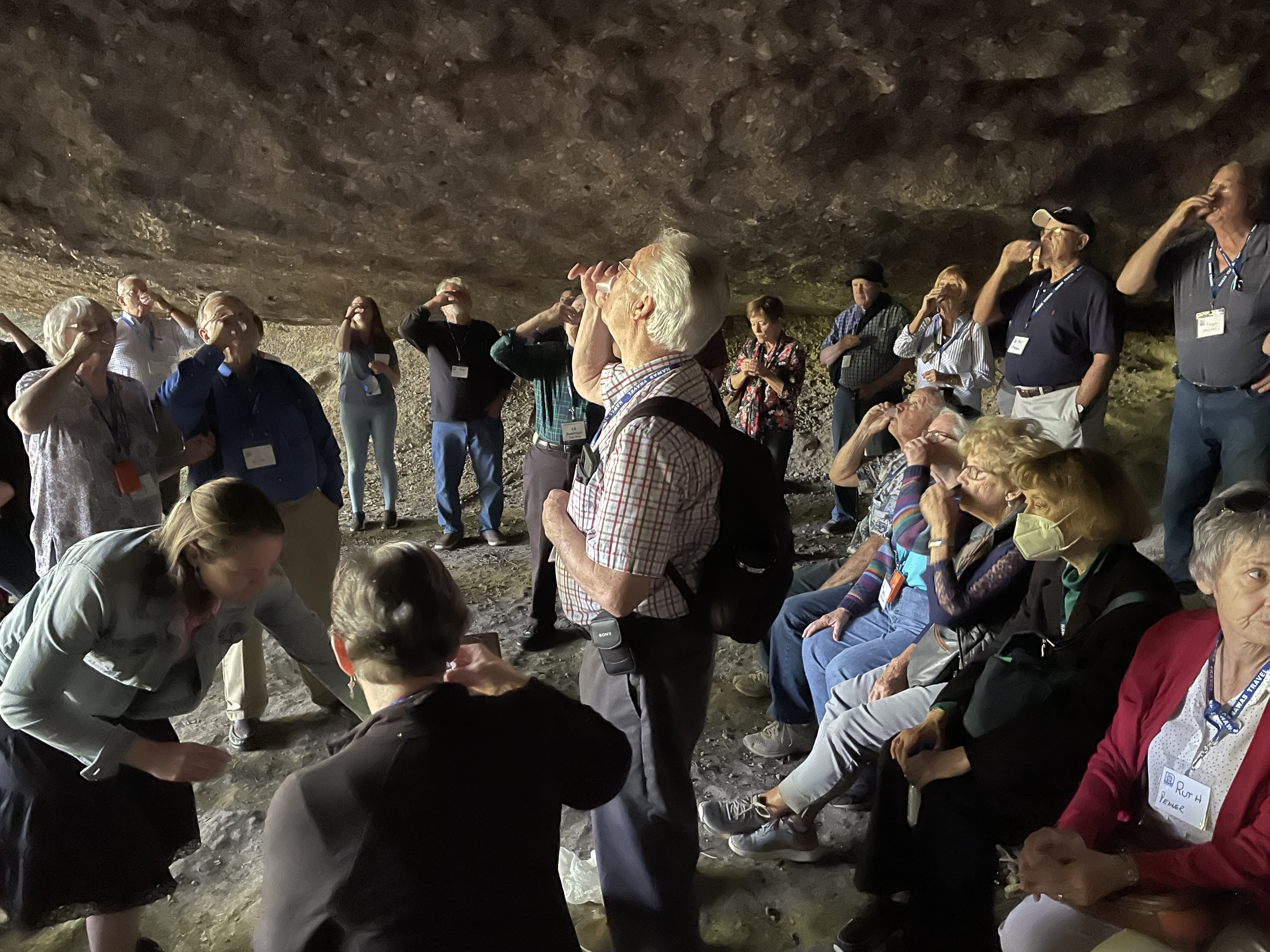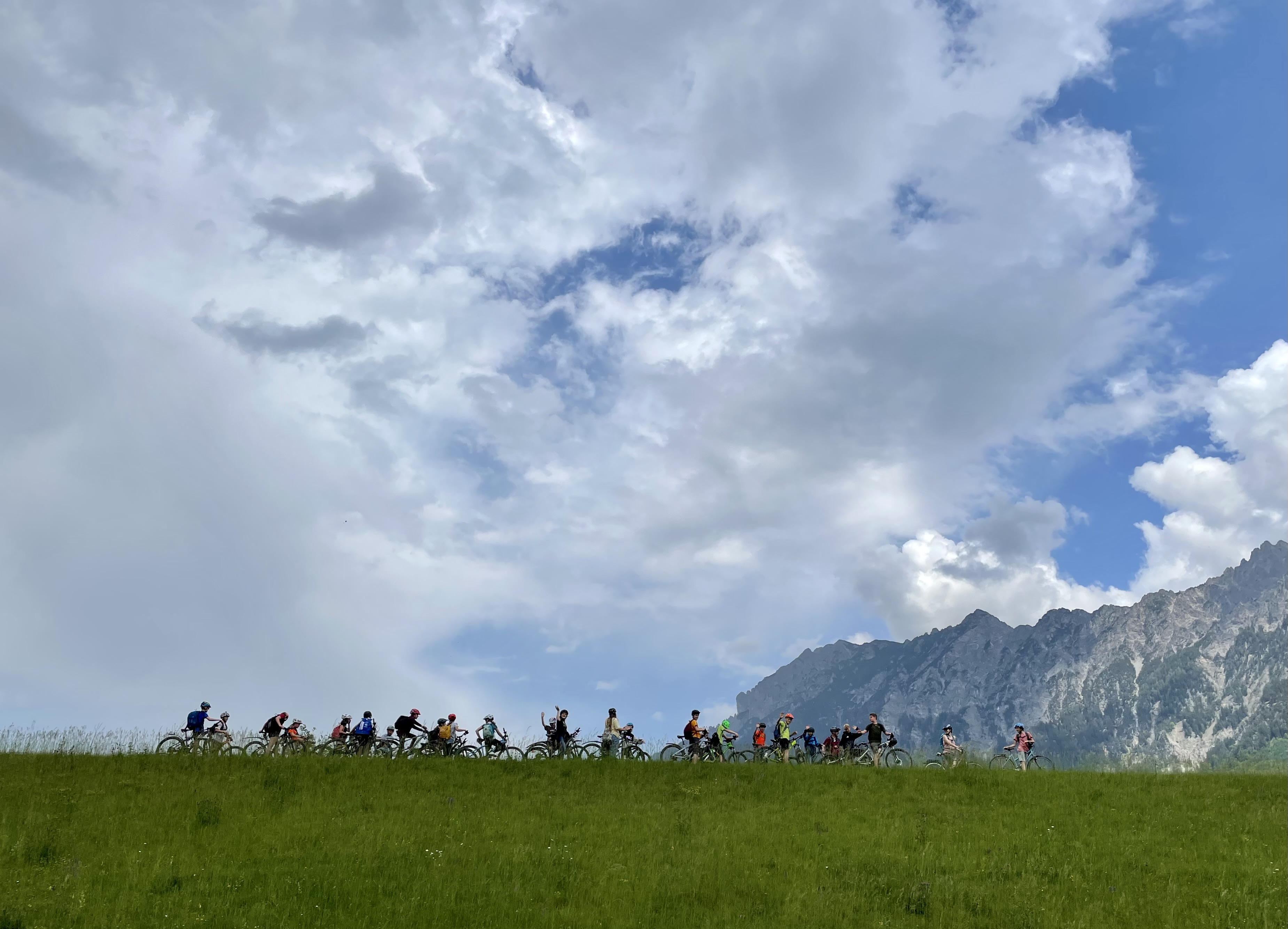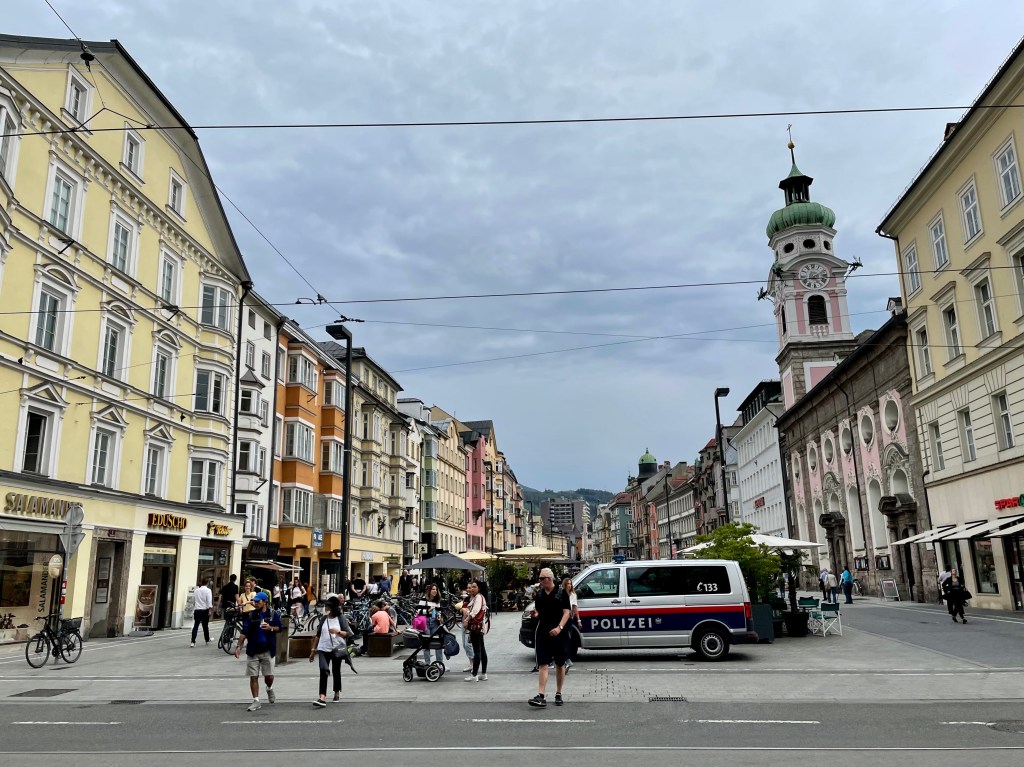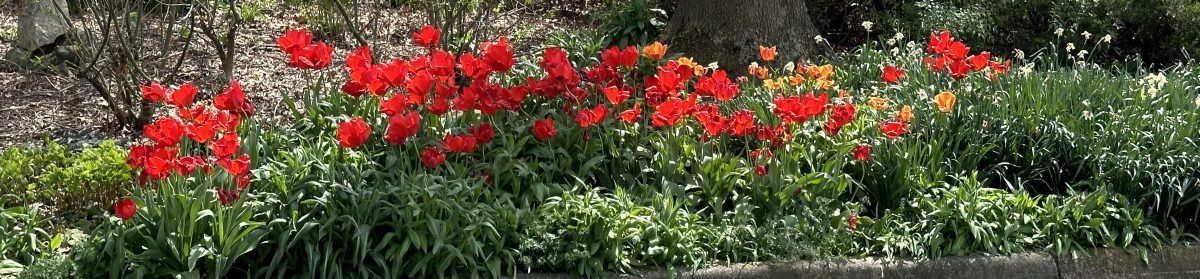
Our European Adventure – Day 3

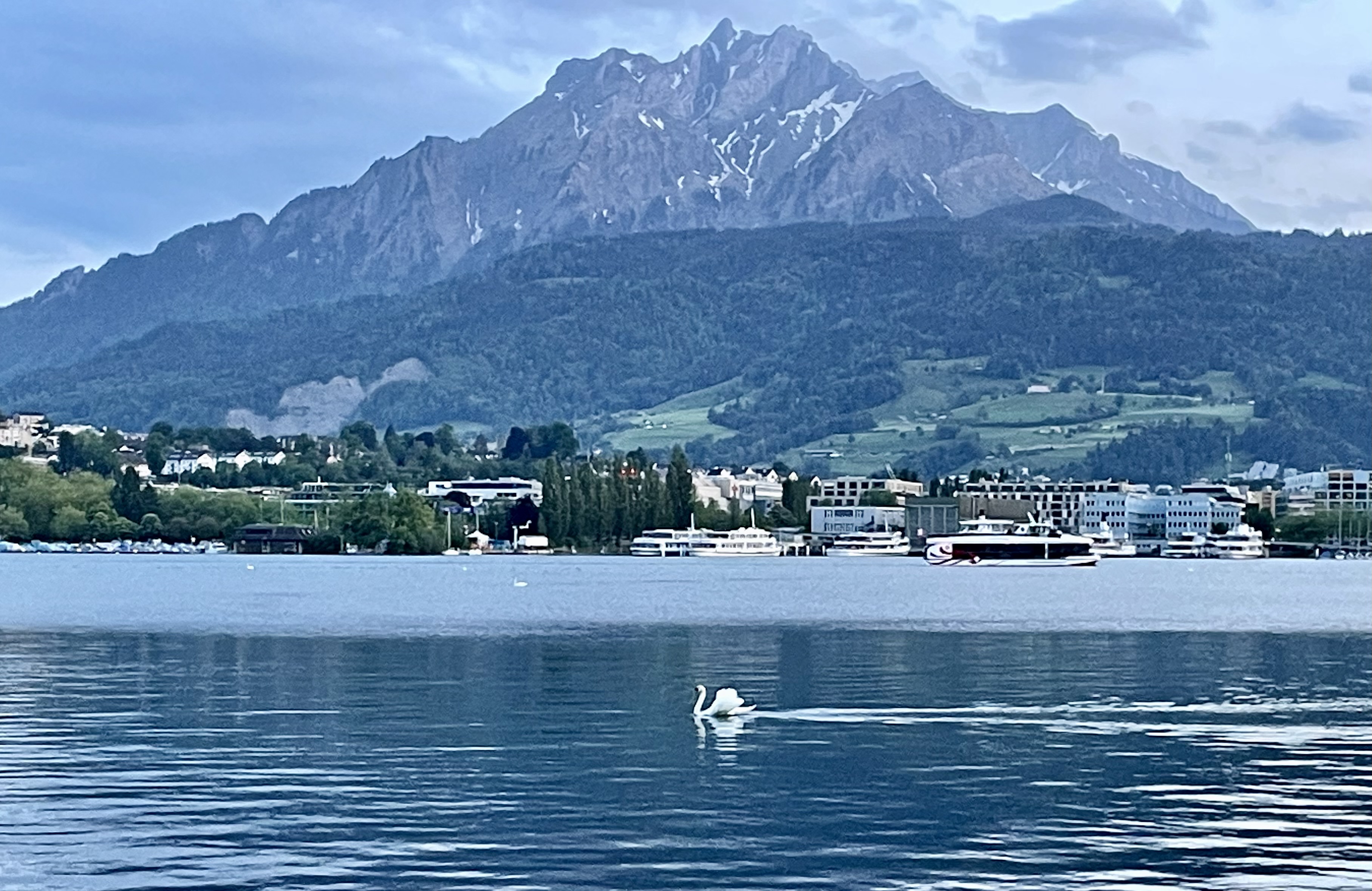
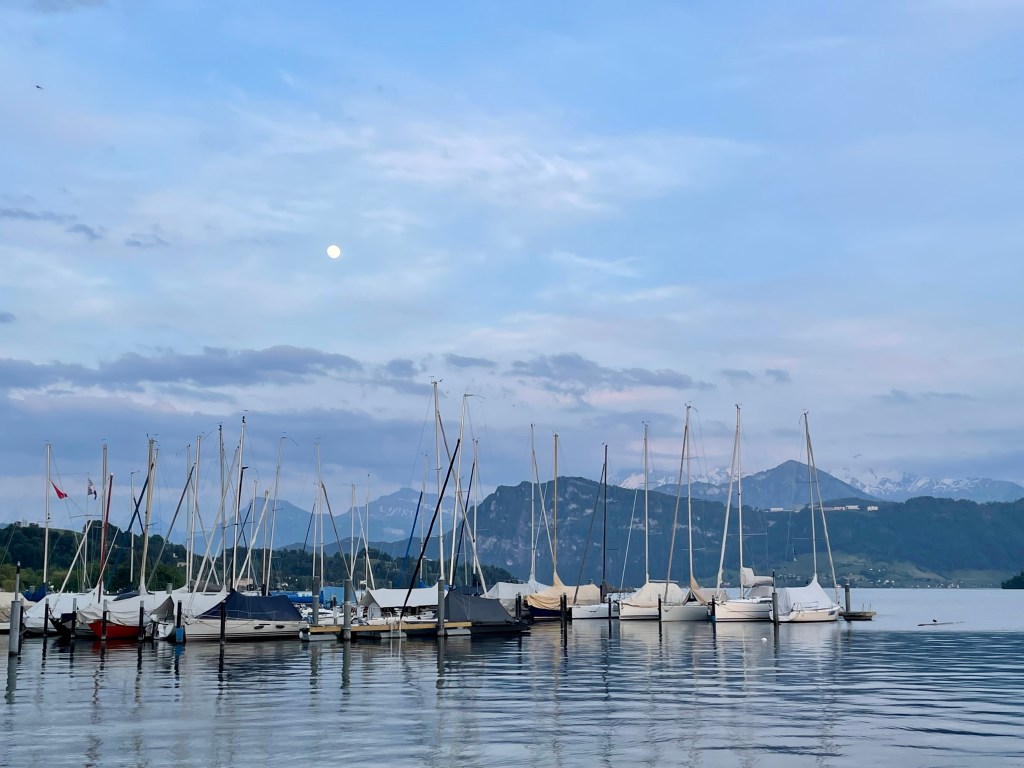
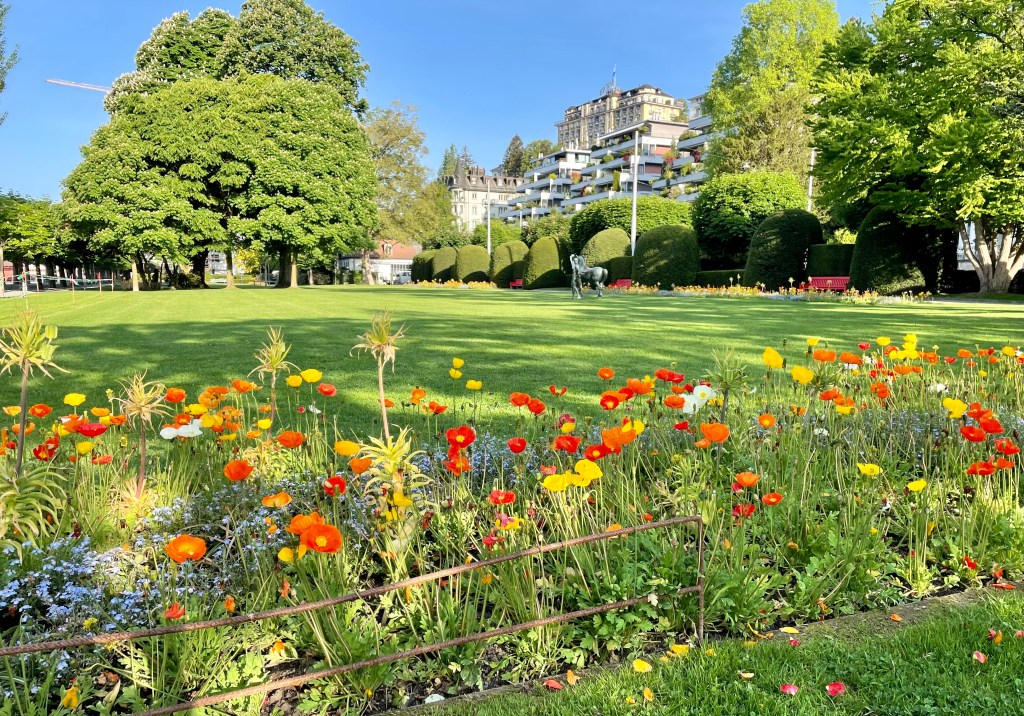
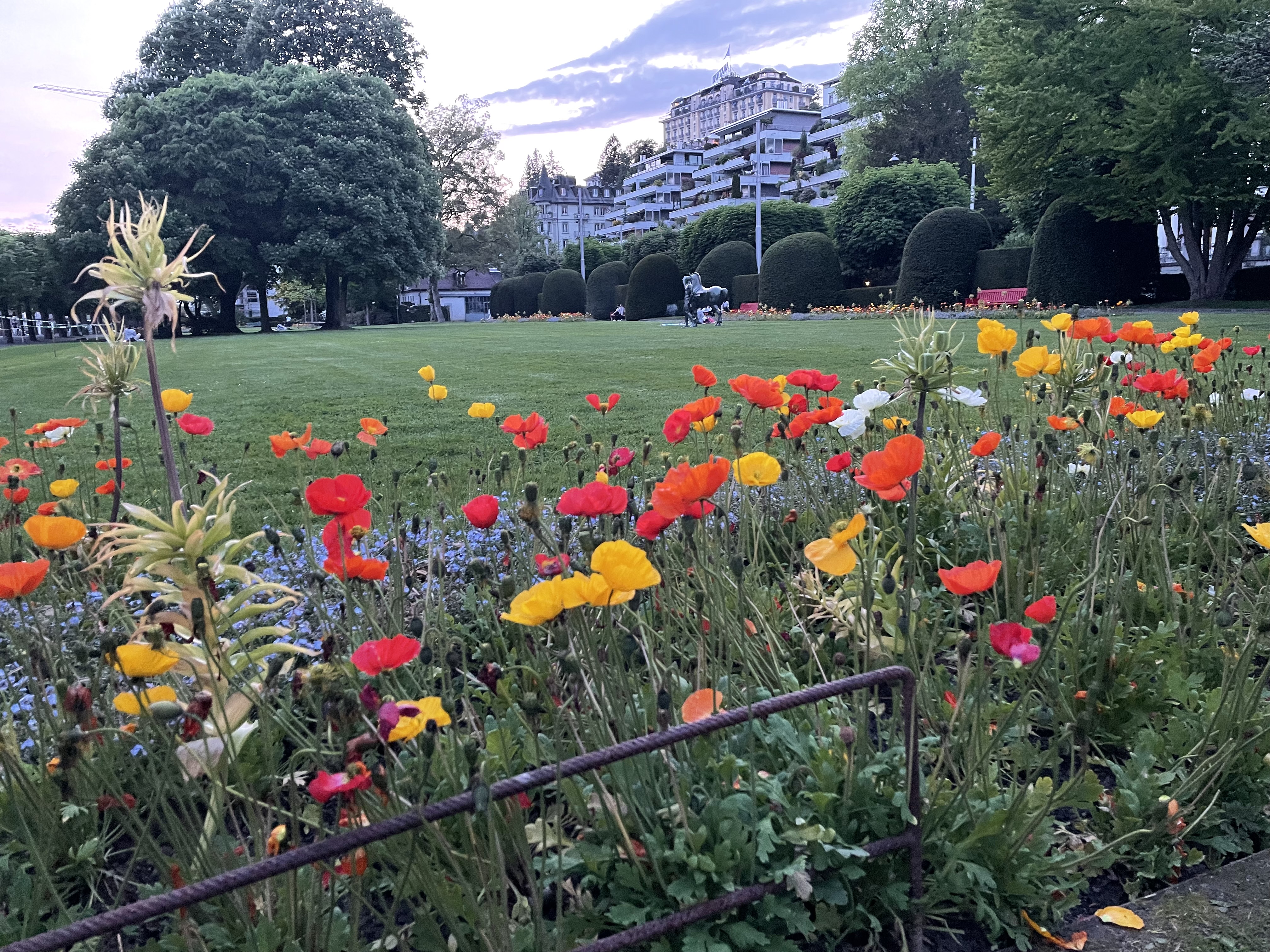
Lake Lucerne with her famous swans and Mt. Pilatus in the background, Lucerne, Switzerland.

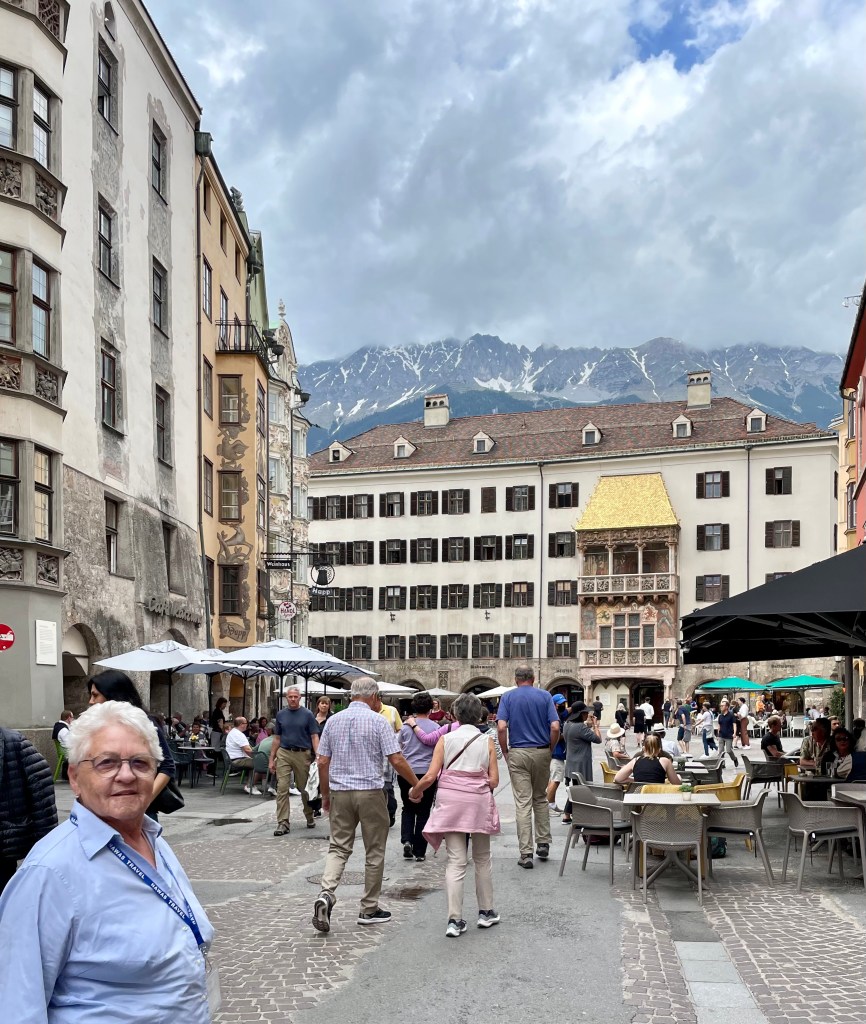
As I look back on it, the third day of our European adventure was one of the trip’s highlights. I was too tired to fully appreciate it then, but I enjoyed each moment as we crammed as much history and sightseeing into the day.

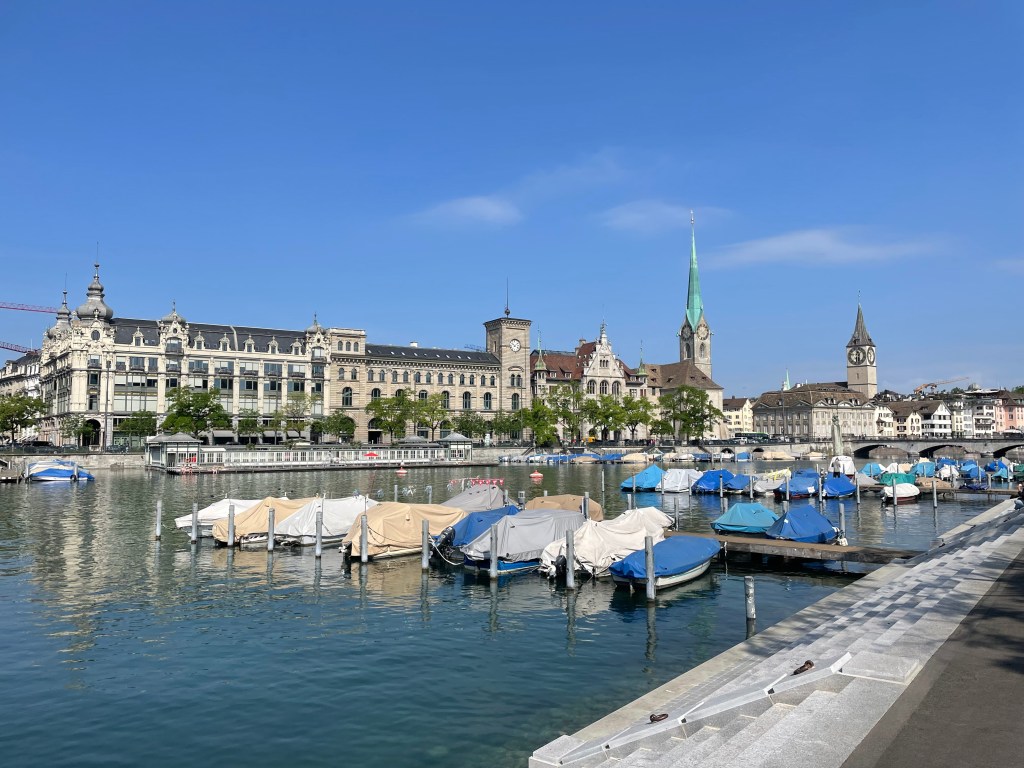
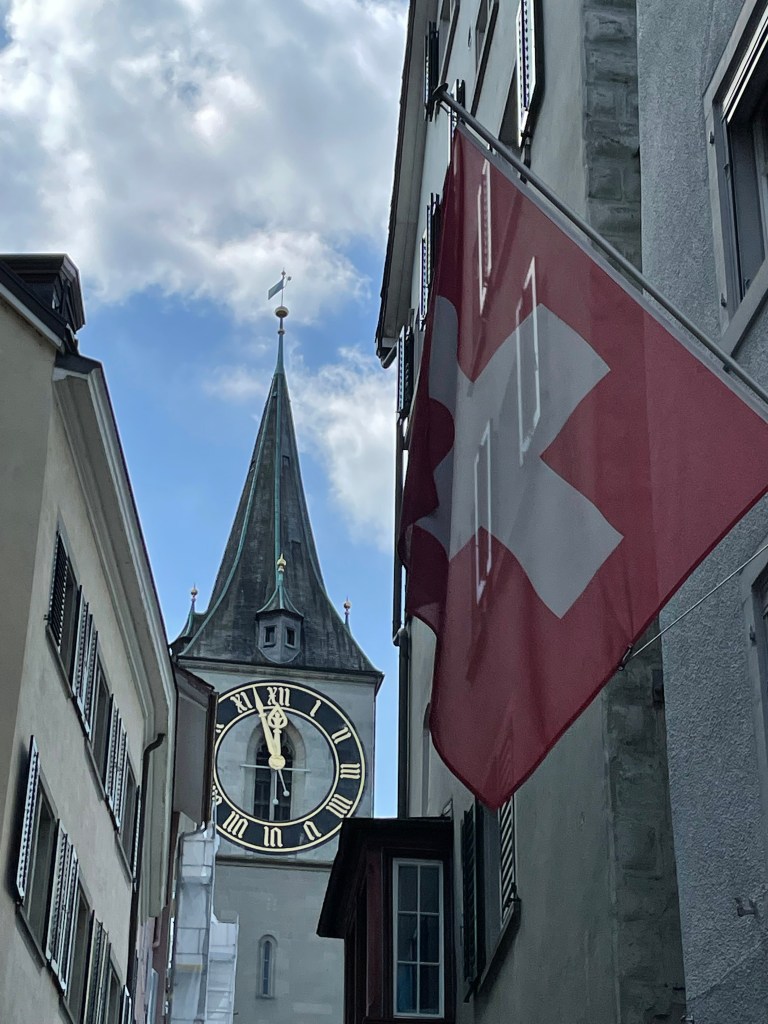
It was a short bus ride from our suburban hotel to the heart of Zurich, Switzerland, a global financial center. Indeed, we saw no skyscrapers, only well-maintained office buildings a few stories high. The many church steeples reached higher than the buildings.

Our main objective was to discover the locations of the beginning of Anabaptism in 1525. Today Anabaptist churches are considered peace churches. With nonresistance as a fundamental principle, today’s Anabaptist churches would include Amish, Brethren, Conservative Mennonite, Hutterite, and Mennonite, to name a few.

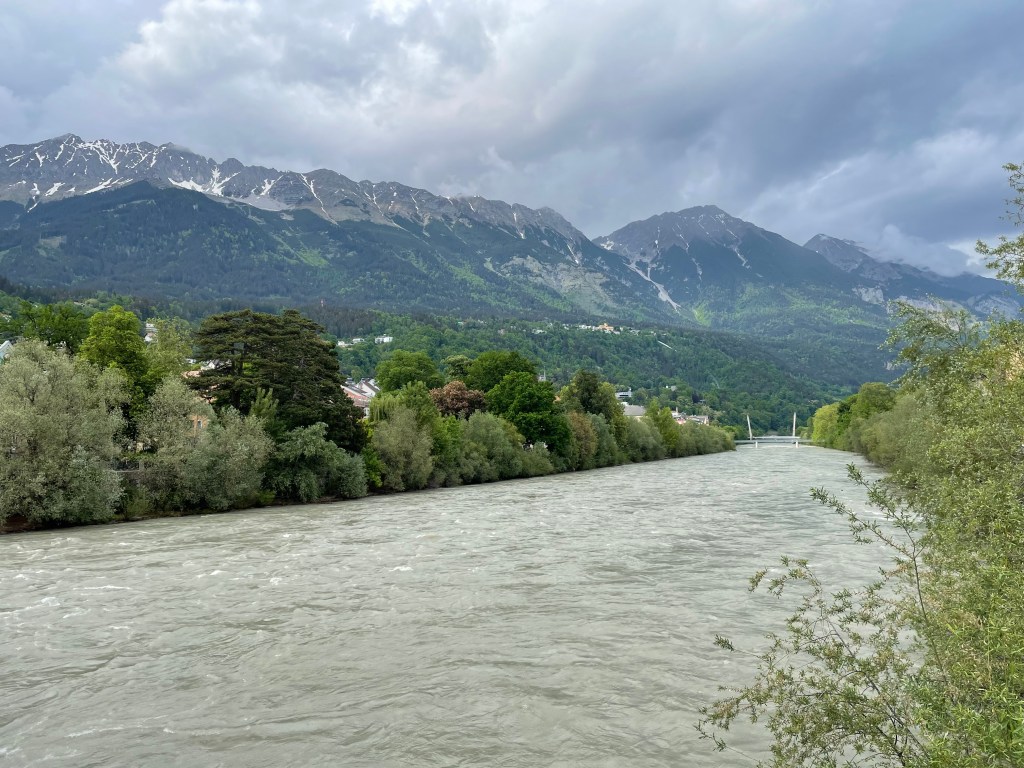
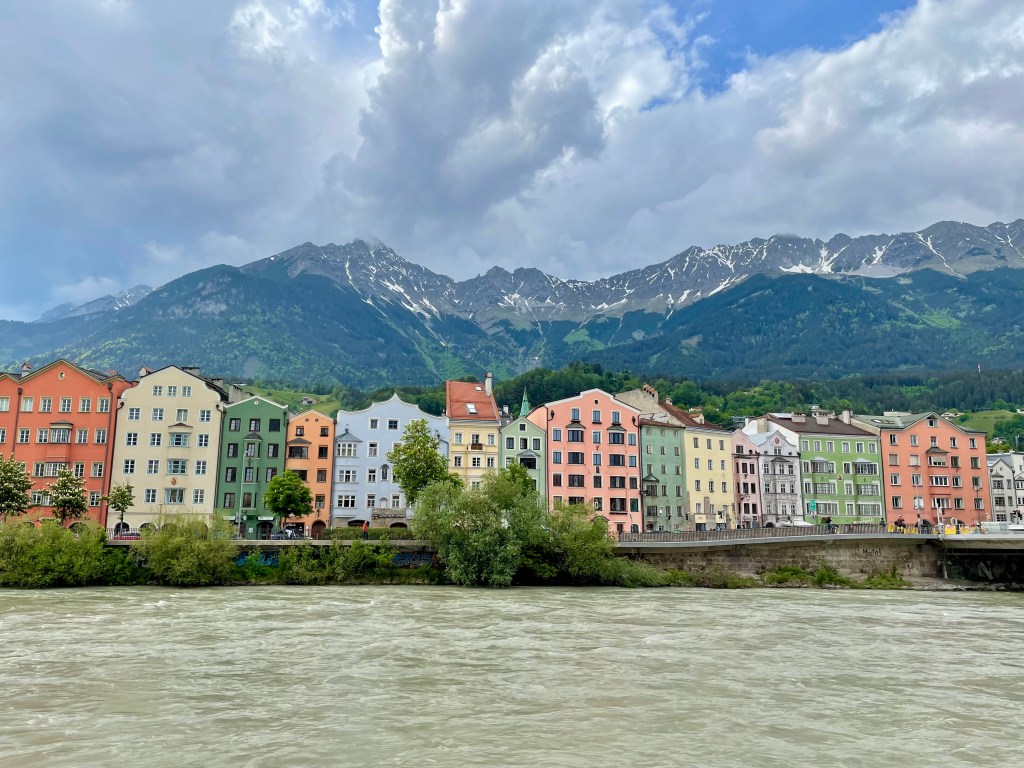
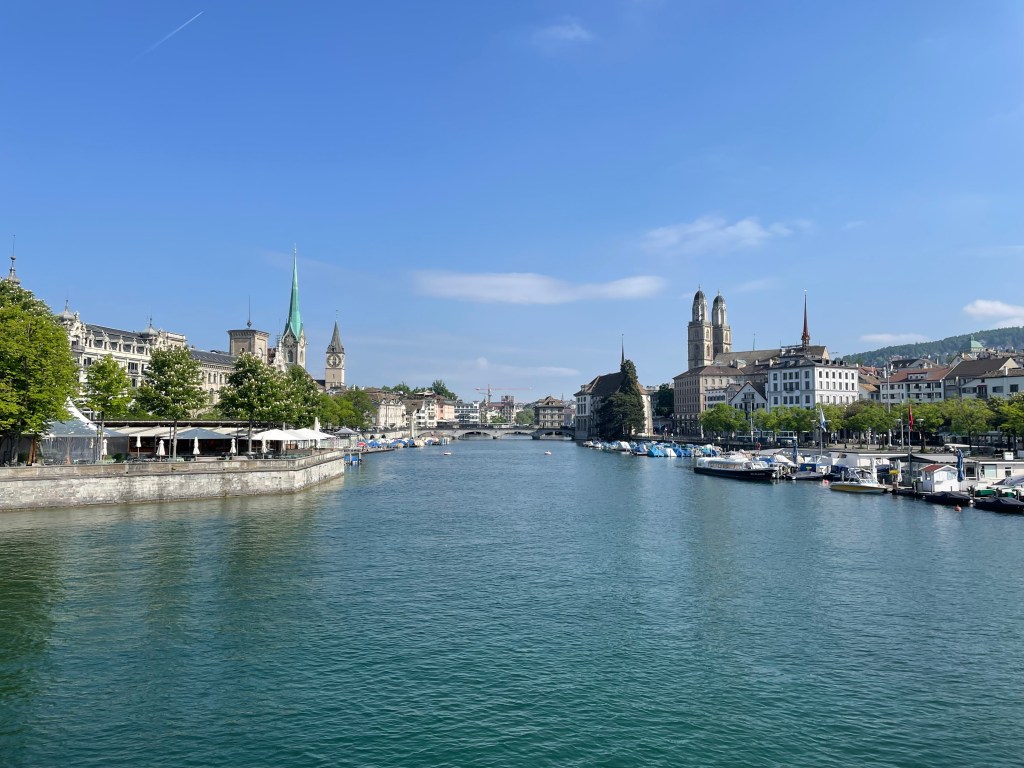
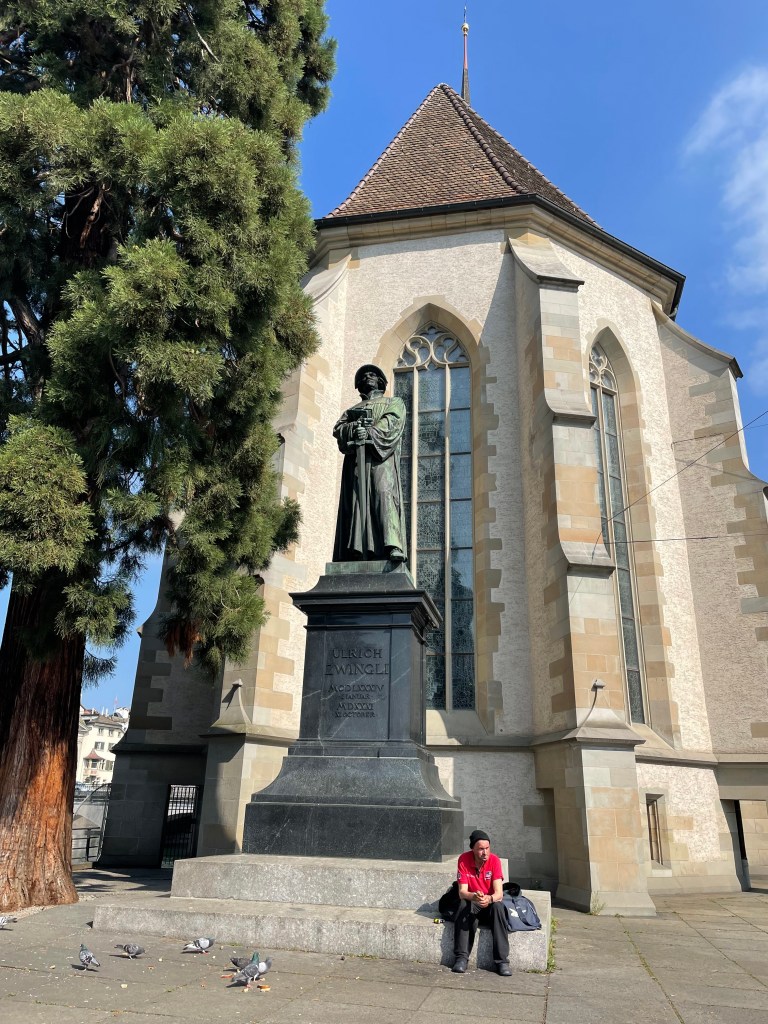
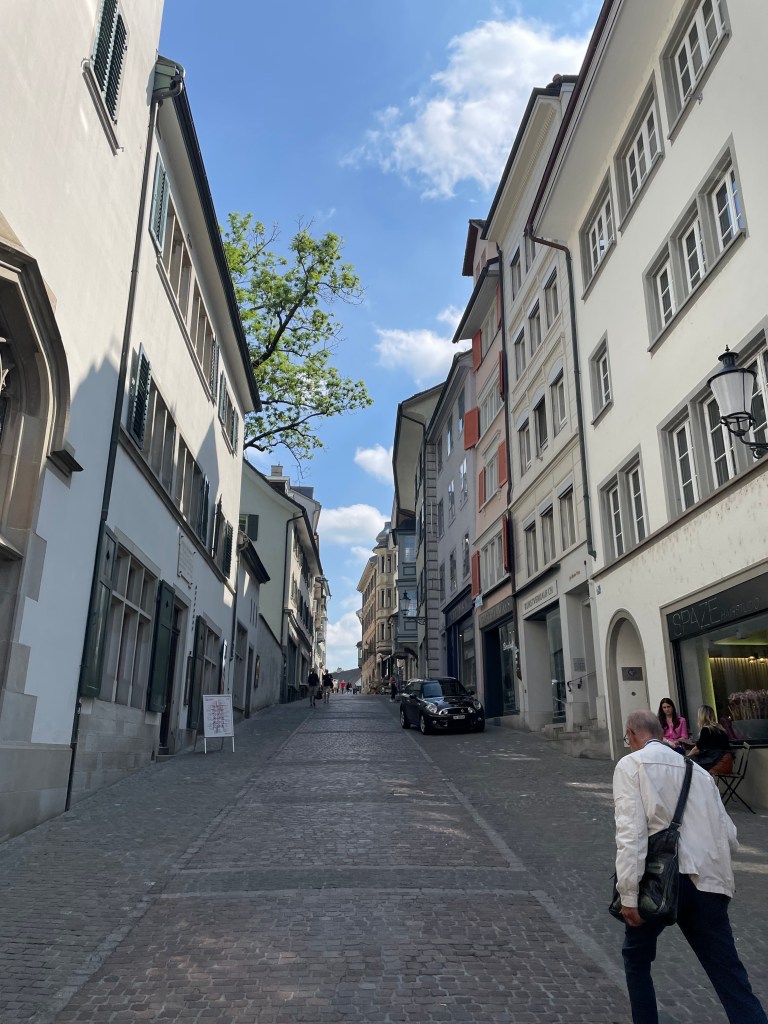
The Limmat River with the twin steeples of the Grossmusnter, a statue of Urlich Zwingli, the City Hall across the river, and a typical street in Zurich.

In Zurich, the first Anabaptists met and were baptized as adults. Shunning infant baptism infuriated both the established Roman Catholic Church leaders and those of the burgeoning Protestant religions led by reformers like Martin Luther and Ulrich Zwingli.

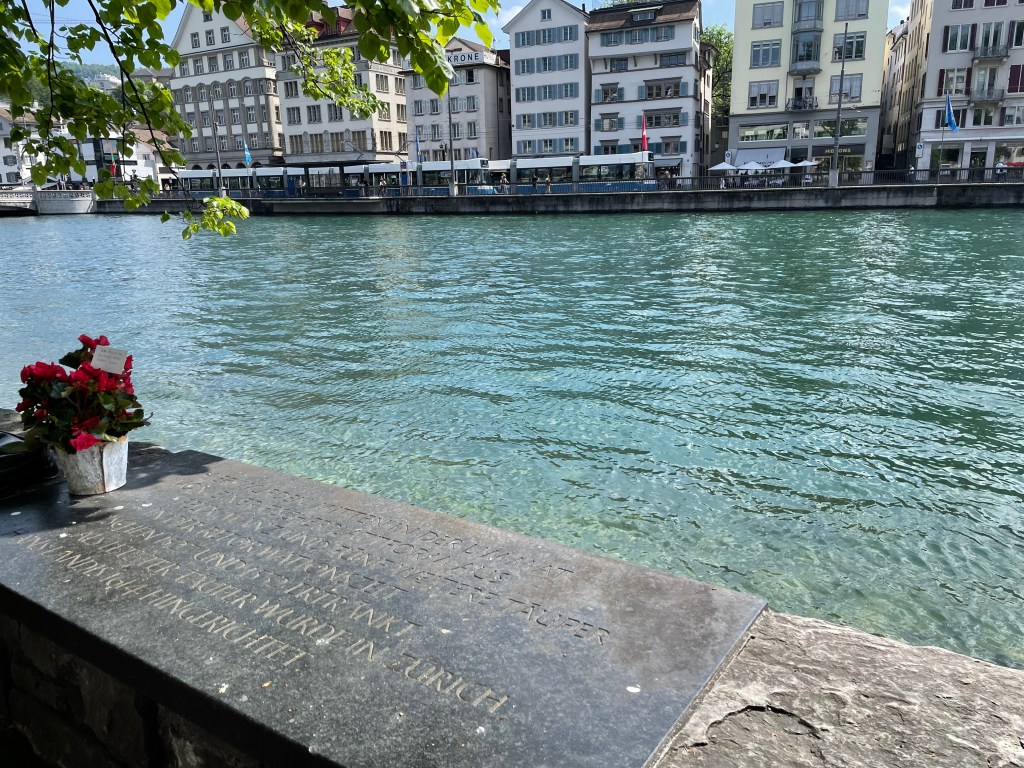
Consequently, the early Anabaptists were hunted down by Catholics and Protestants alike. Some were drowned, while others were burned at the stake. Felix Manz was the first Anabaptist martyr, and we visited the spot where he was drowned in the Limmat River that runs through the heart of Zurich.

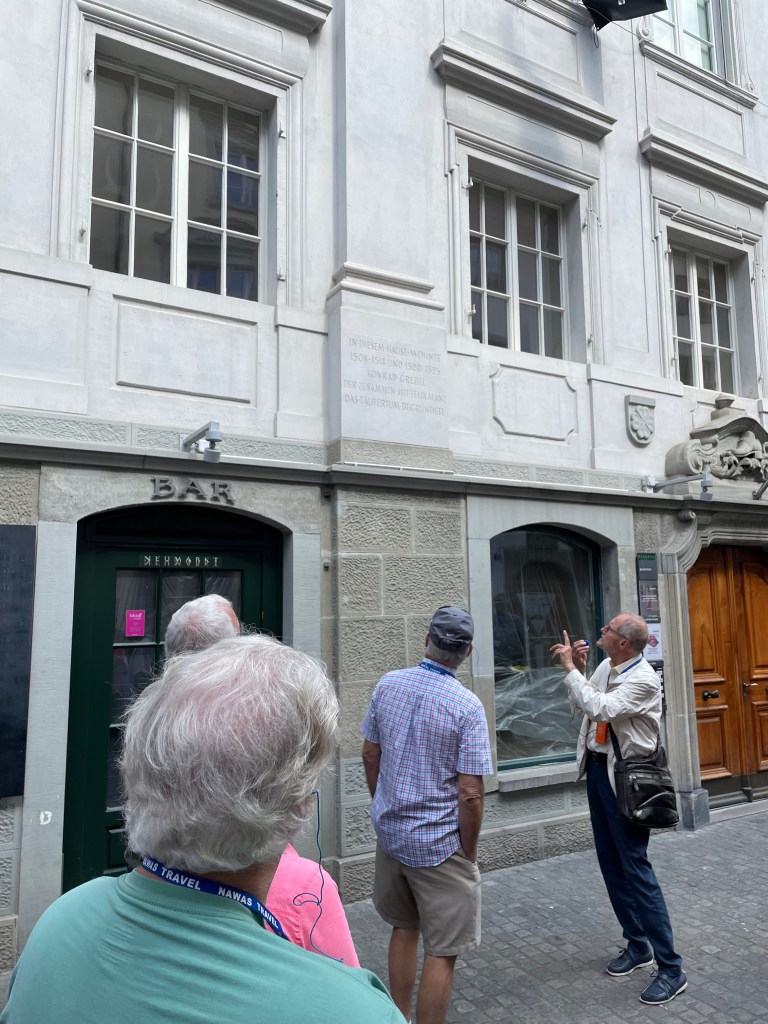
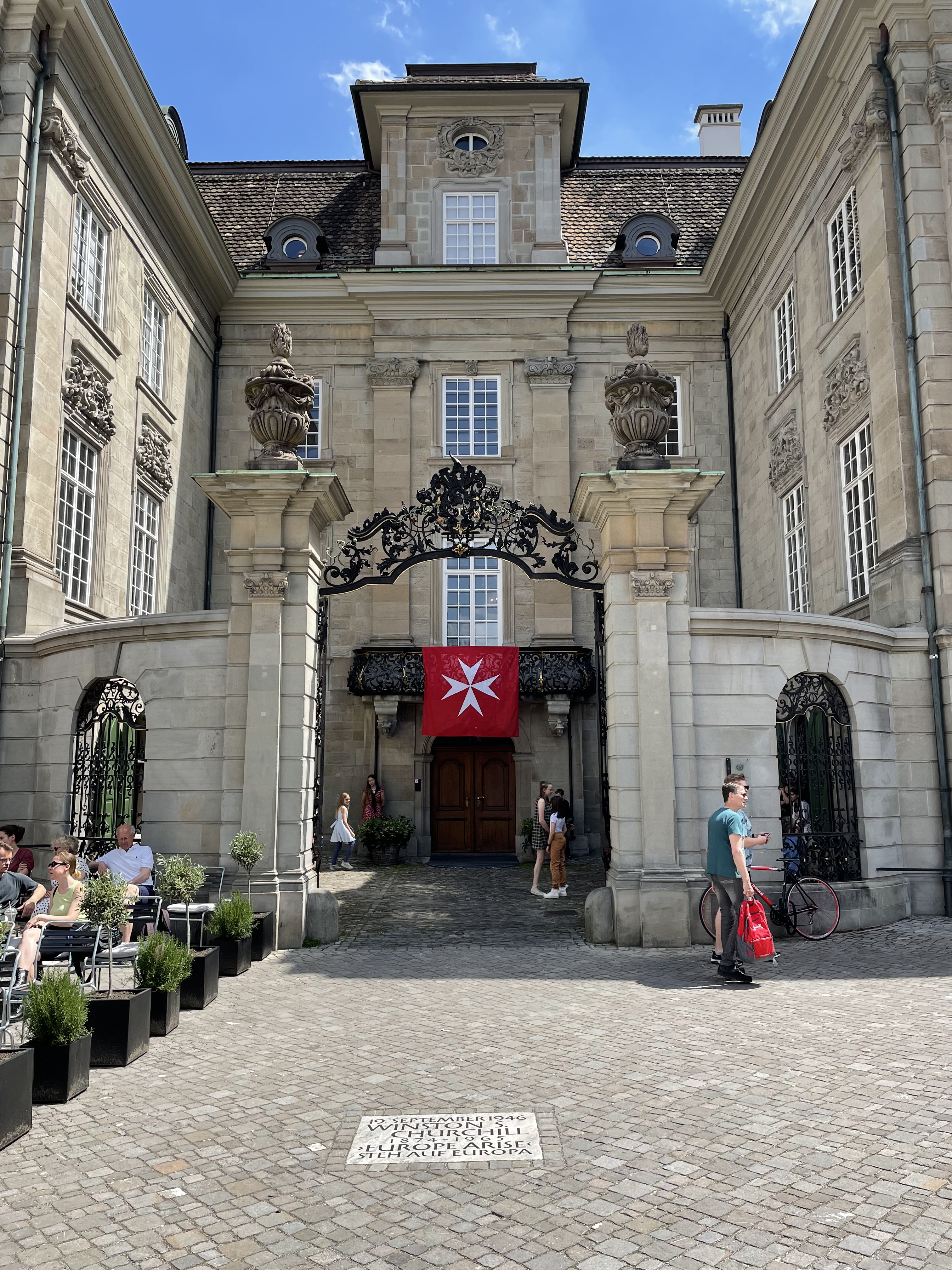
We also visited Manz’s mother’s home, where Conrad Grebel baptized Manz and others considered the Zurich rebels. We also saw the homes of Zwingli and Grebel. It was mind-boggling that these structures still stand, much as they were in the 16th century. Of course, they have been updated and some repurposed. Zwingli’s home is a theater, while Grebel’s is a bar.

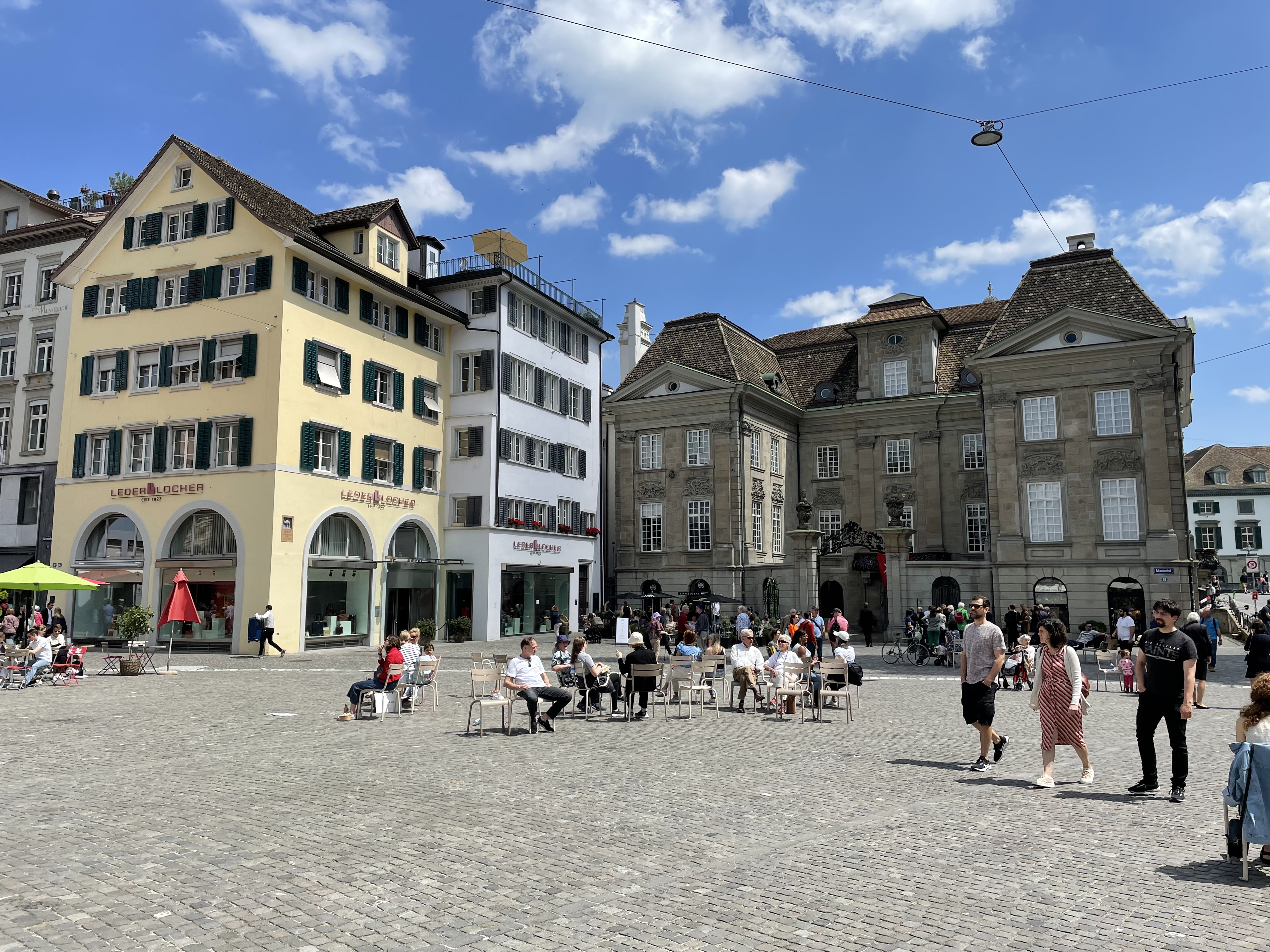
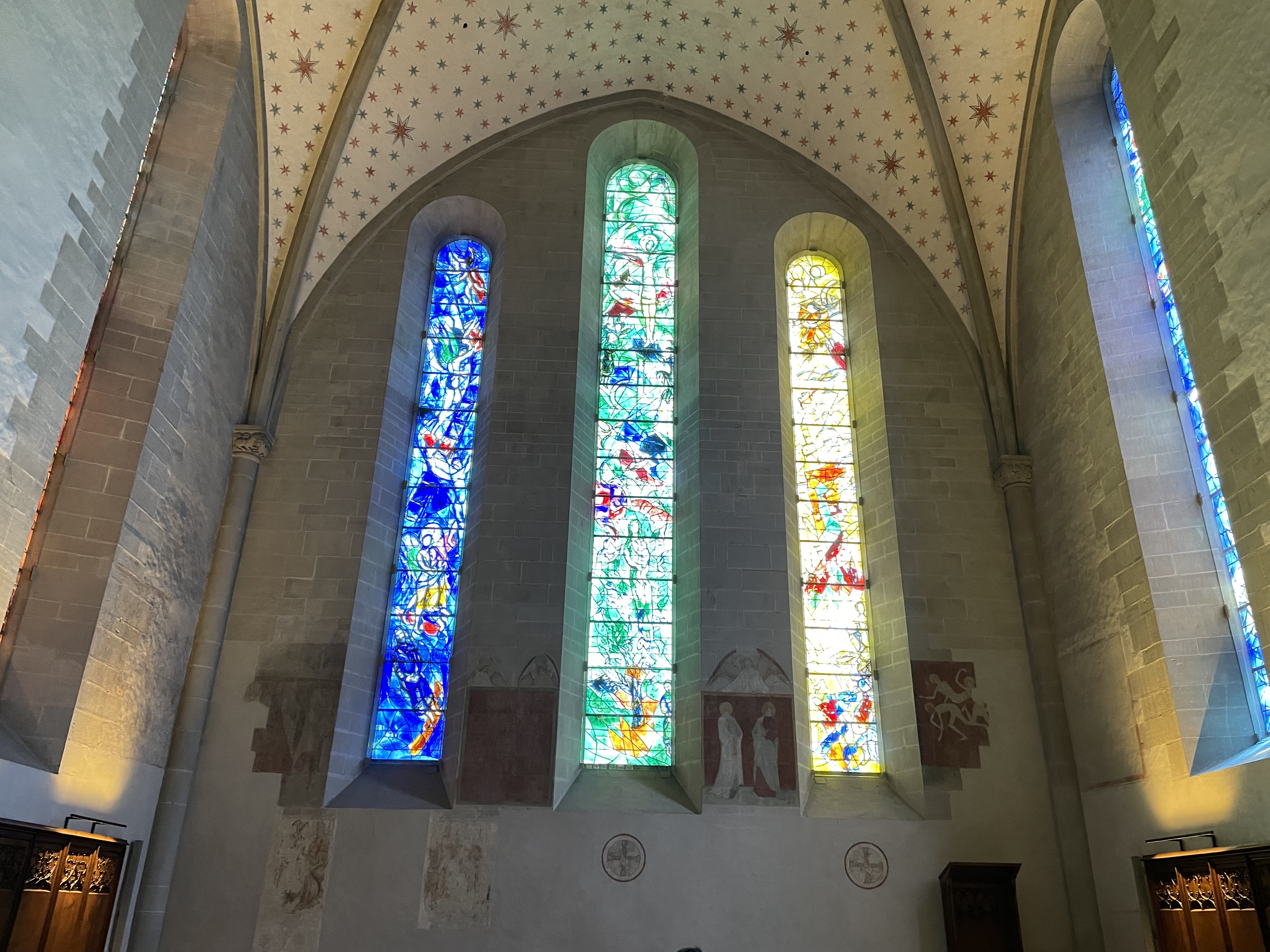
After a pleasant lunch in Munster Plaza, our local guide gave us a brief tour of the Fraumunster Church. He focused his time on sharing about the Chagall stained glass windows, which were beautiful. The pastel frescoes added a complementary contrast to the glorious colors of the Chagall windows.

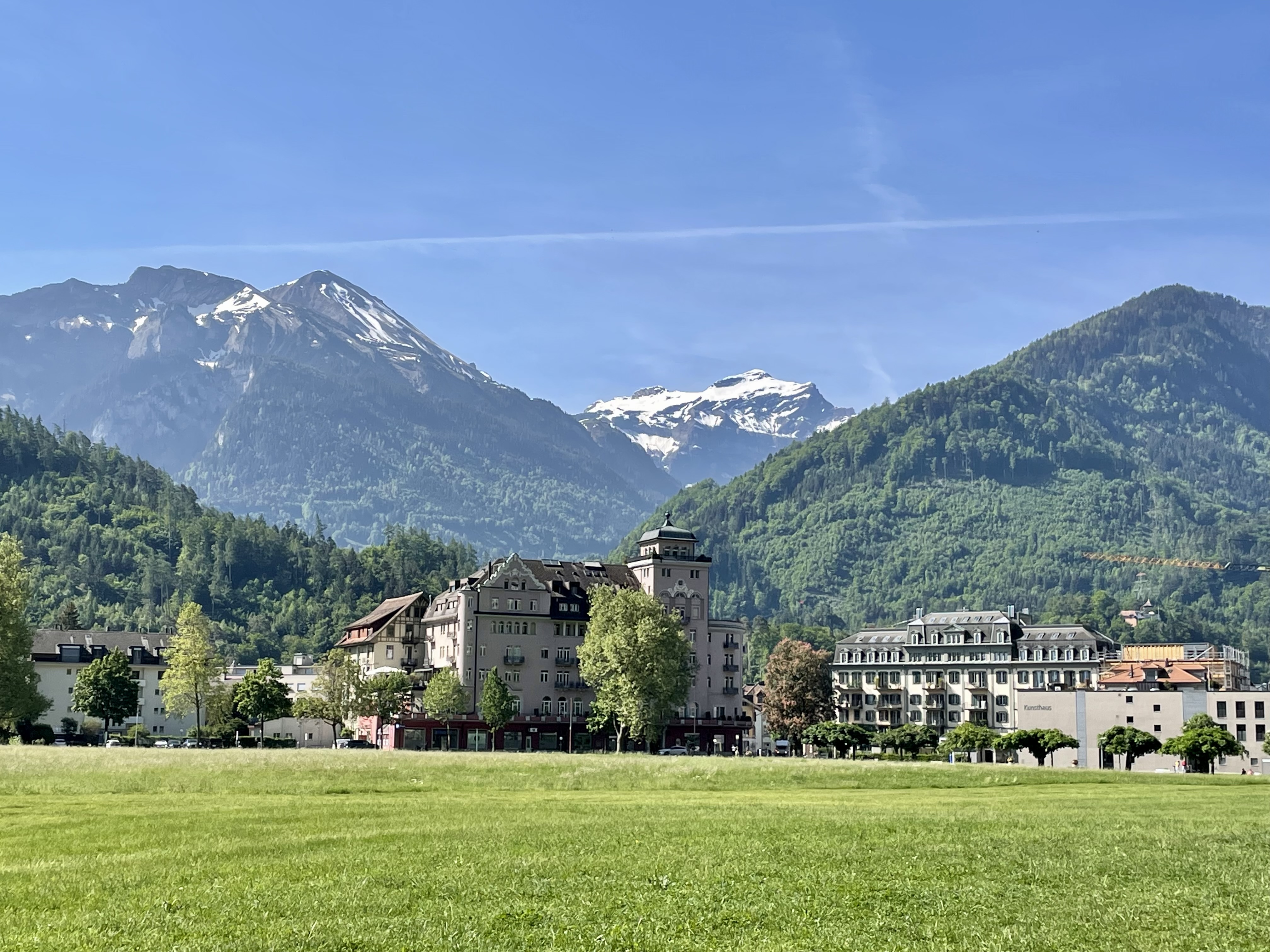
Please click on the photos to enlarge them.

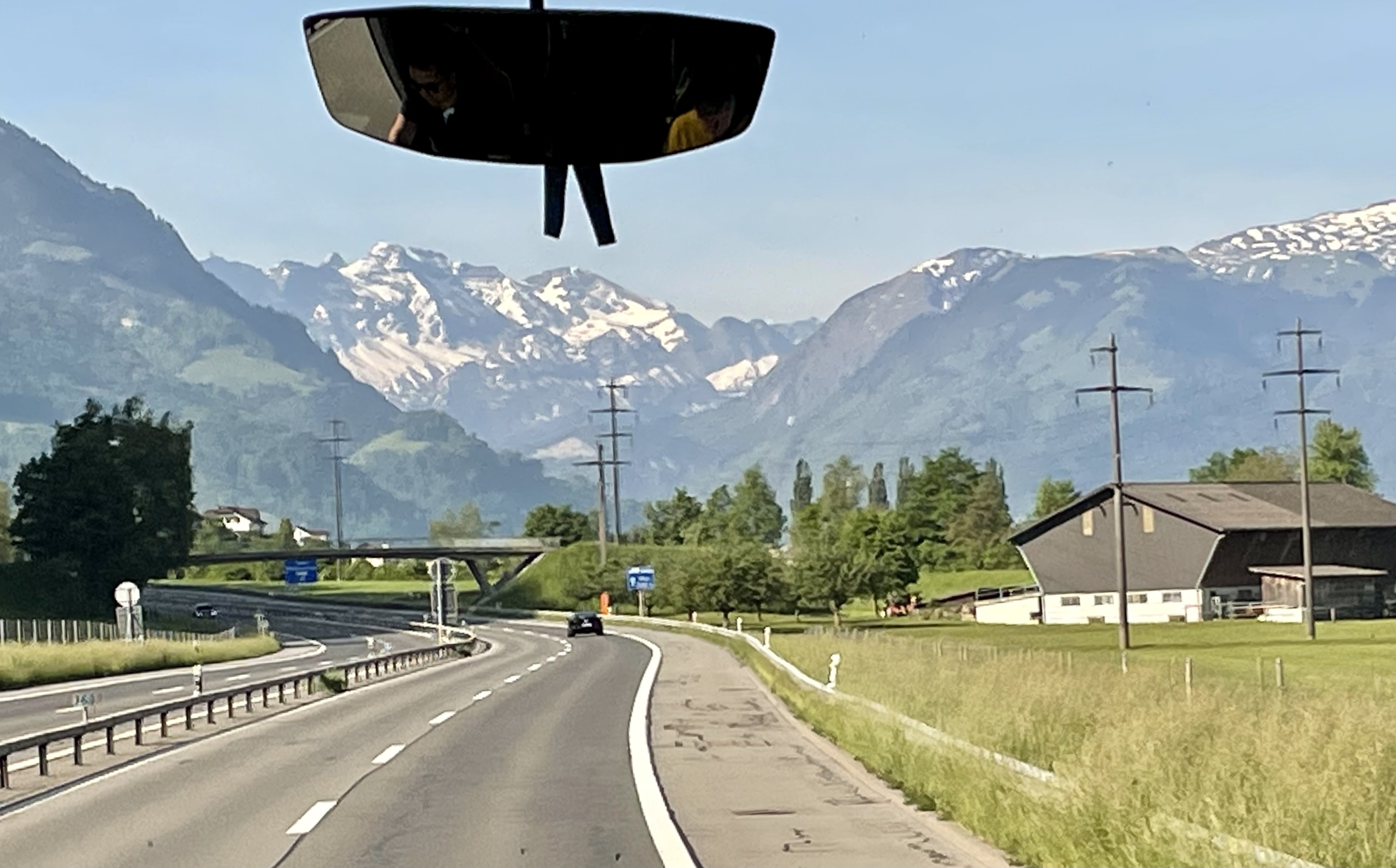
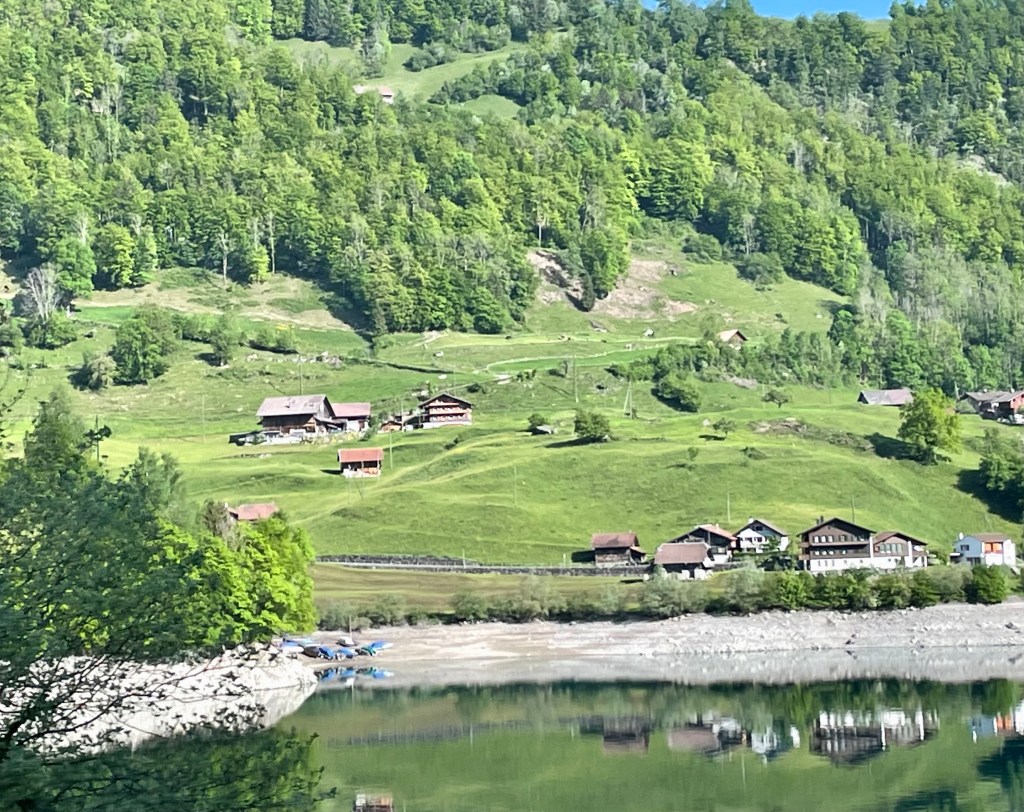
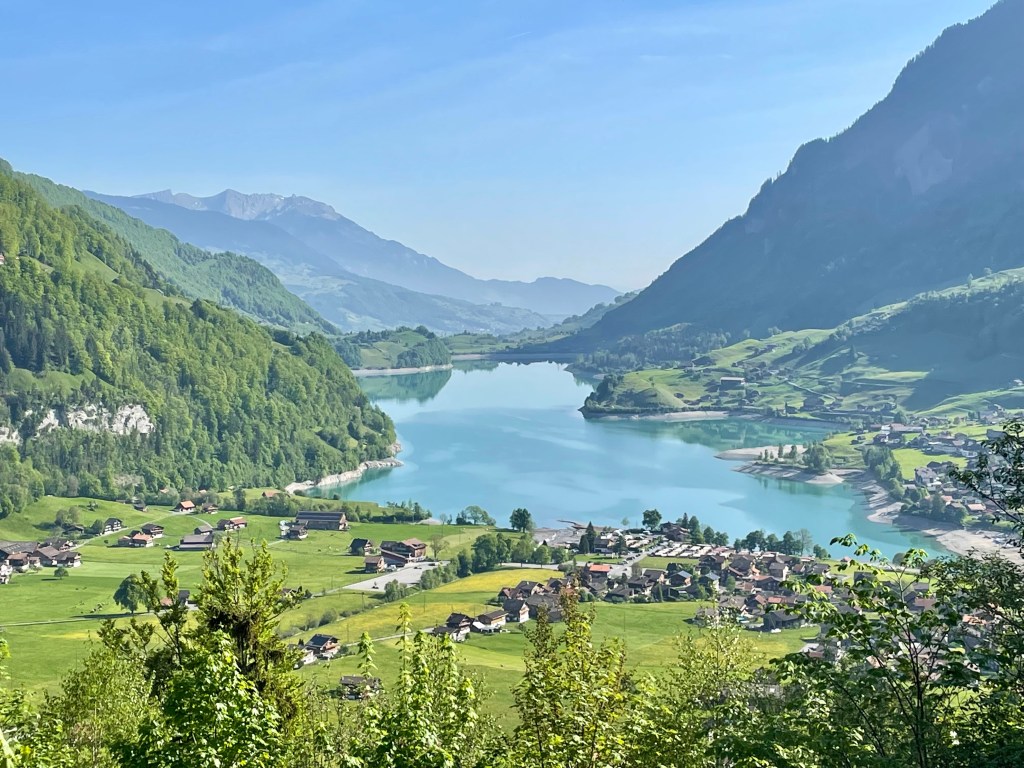
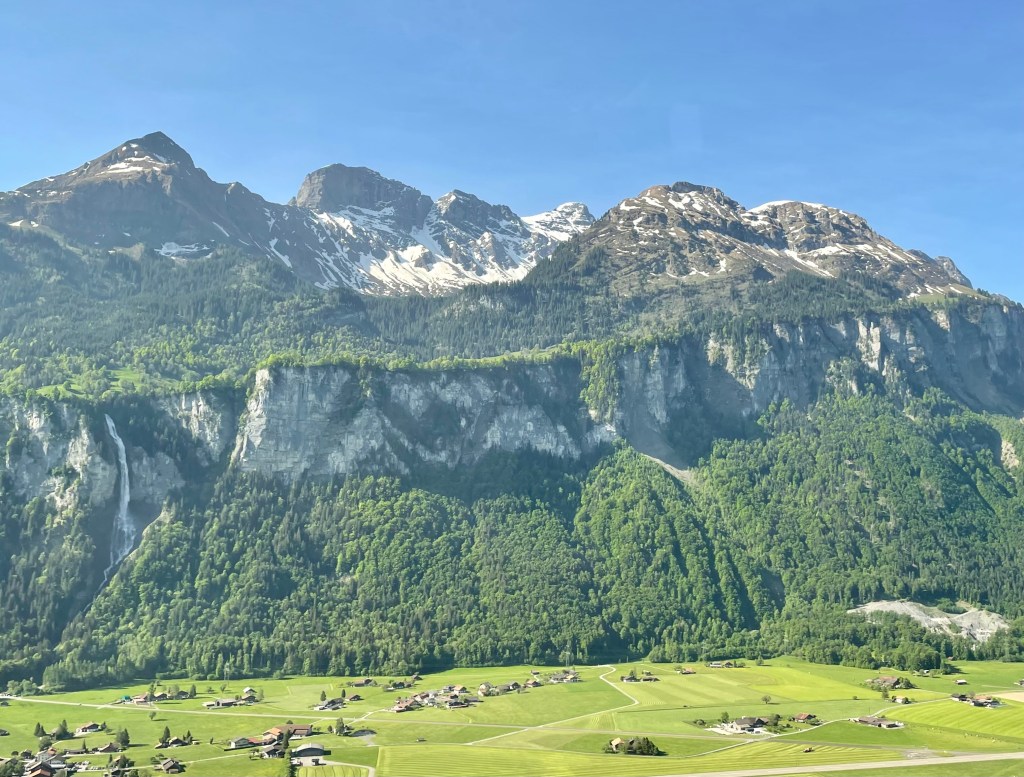
Just like that, we boarded the bus again for Lucerne. On the short drive there I was impressed by the many tunnels that the Swiss have built. Their lengths vary, but they all are clean and help maintain the natural beauty of the lovely countryside. In the states, it is most common for roadways to gouge out giant hillsides to avoid building expensive tunnels that must be maintained. The Swiss do a magnificent job with their commitment to preserving natural landscapes and building efficient infrastructure that enables vehicles to move from one location to another.

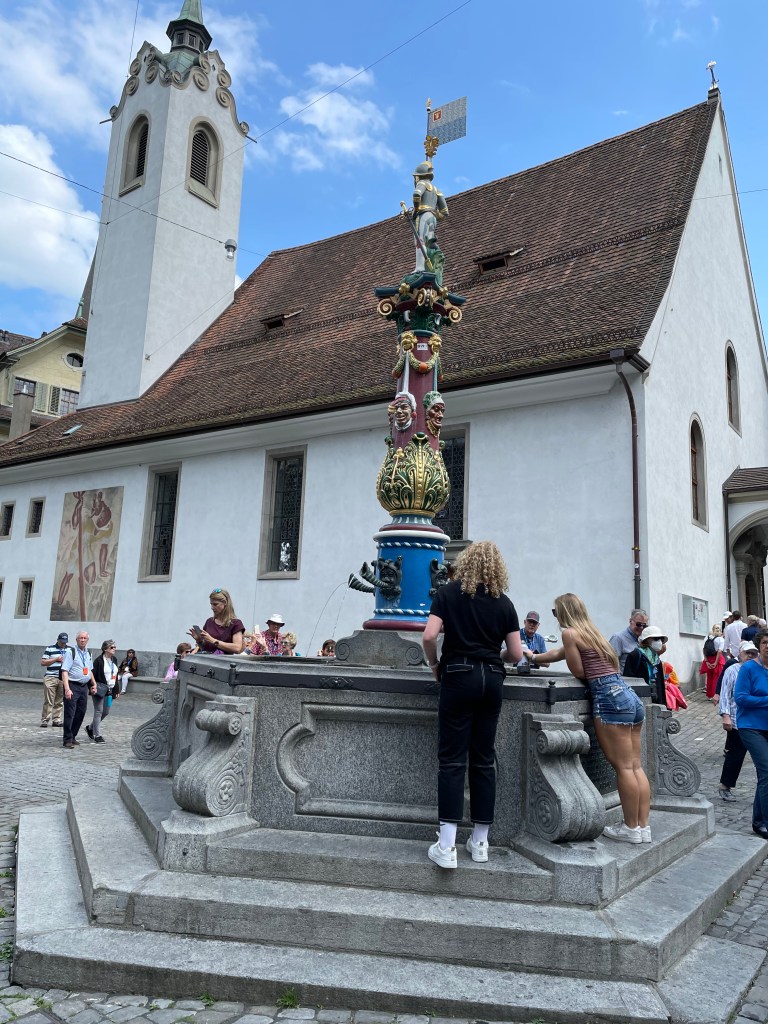
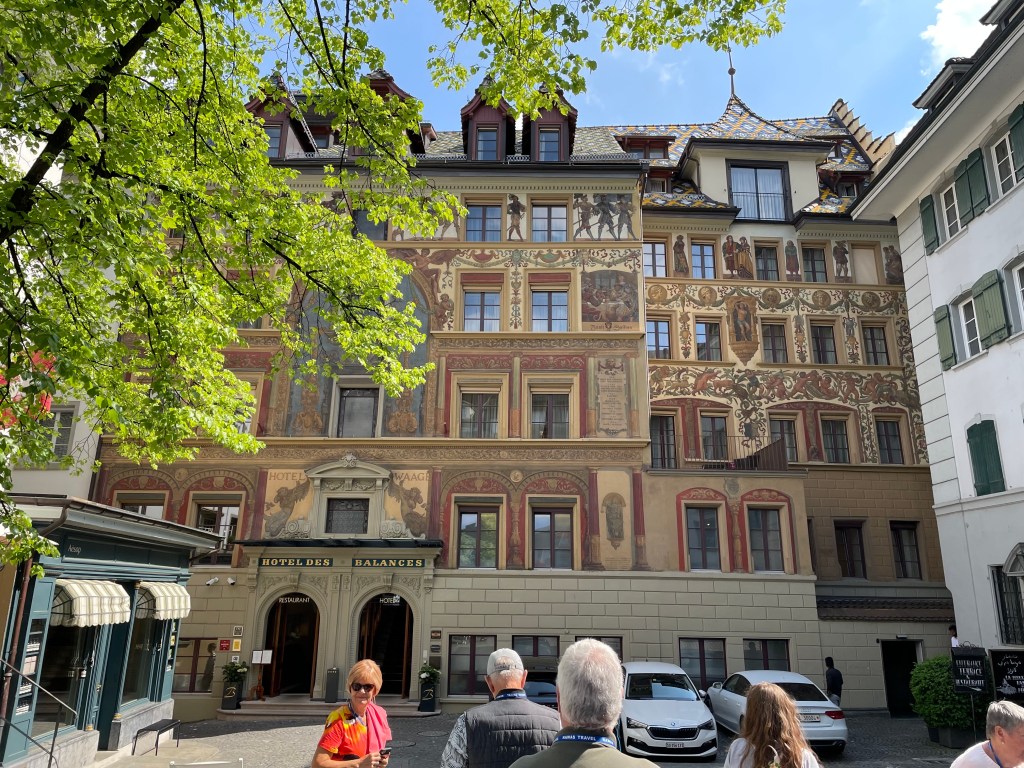
We arrived in Lucerne late afternoon and immediately began to explore the Old Town section. We enjoyed walking the cobblestone streets, viewing the many frescos on the old buildings, and listening to a school band play lively street music. We walked across the famous Chapel Bridge, too.

On the way to our hotel, we stopped to view the noted Lucerne Lion Monument or the Lion of Lucerne. It is a rock relief hewn in 1820-21 in memory of the Swiss Guards killed in the French Revolution in 1792. It was pretty impressive.

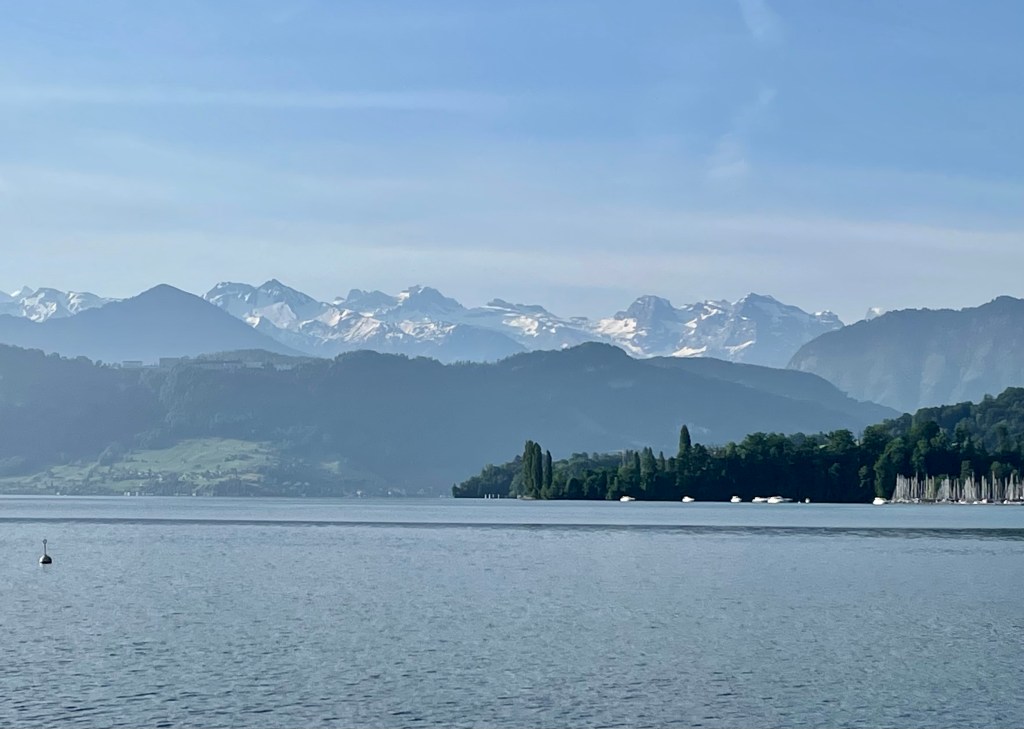
We stayed at the Grand Europe Hotel, which faced the beautiful Lake Lucerne. The lake lured me down to its edge that evening at dusk and again the following day after sunrise. The famous swans of Lake Lucerne added an exclamation point to an already gorgeous scene. Mount Pilatus stood mighty in the background.

After all of the walking and trying to absorb all we had seen and learned this day, we were exhausted. We needed to rest well because the next day would be even more exciting.

The morning view of Mt. Pilatus from a park along Lake Lucerne, Lucerne, Switzerland.

© Bruce Stambaugh 2022
Our European Adventure – Day 2

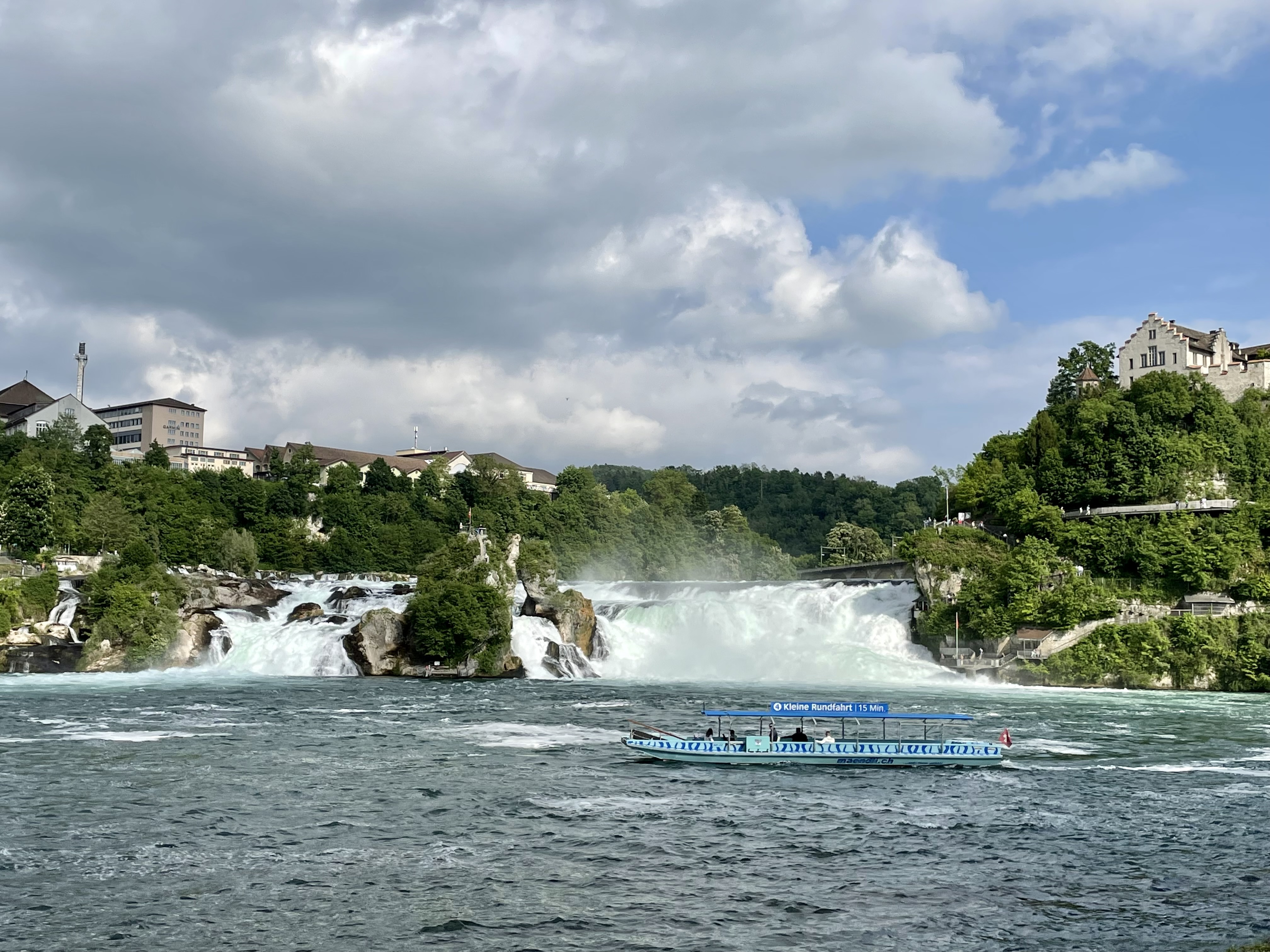
Rheinfall, Schaffhausen, Switzerland.

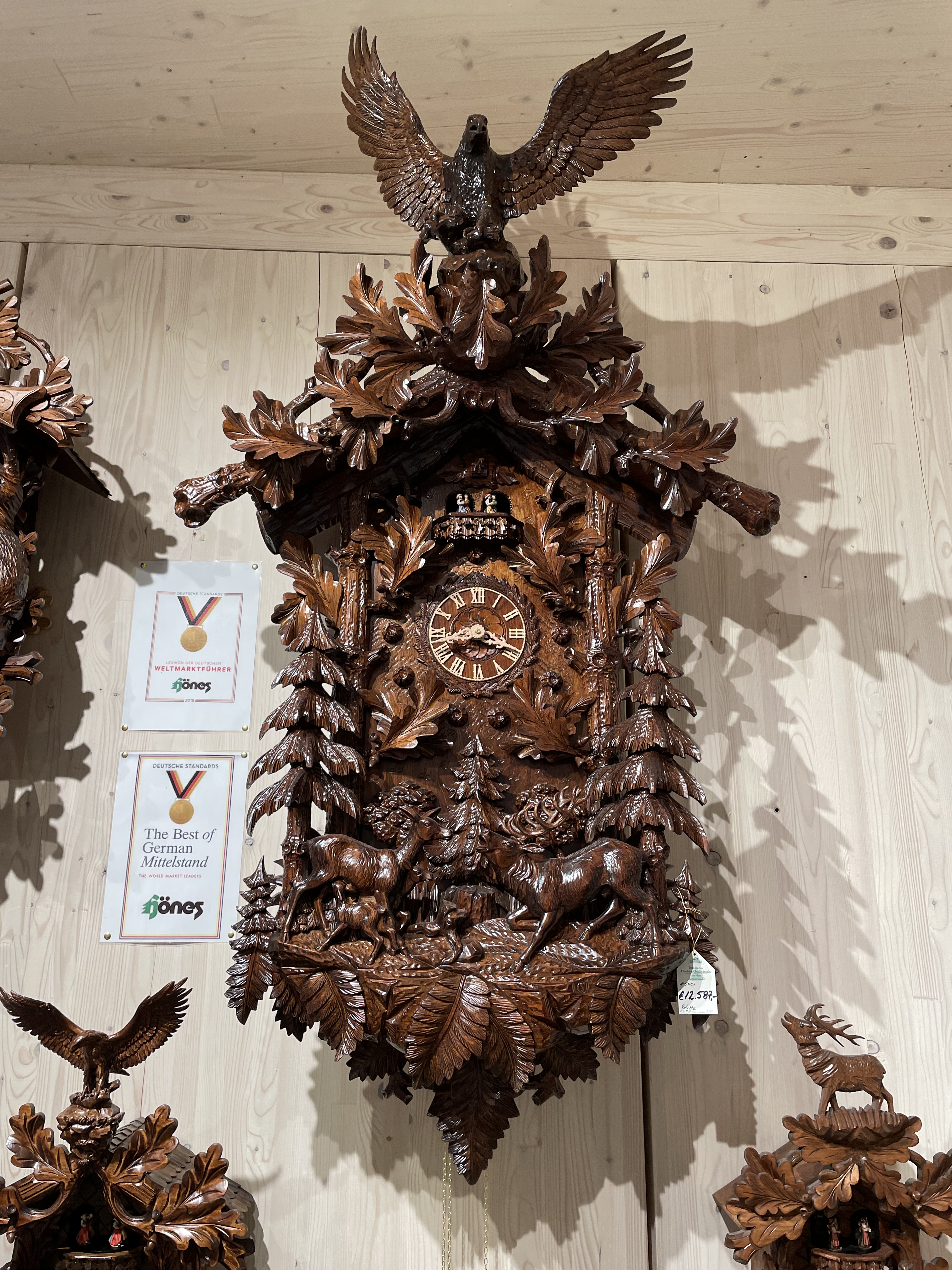
We left our hotel in Viernheim, Germany, and headed to Schleitheim, Switzerland. Our bus traveled along and then through the Black Forest. As we climbed a mountain pass, it began to rain. We soon stopped for lunch at an alpine complex of buildings that clearly was a stopover for tourists. Besides restaurants, we passed through gift shops displaying intricately made cuckoo clocks. I found one that cost over $12,000.

Where we ate and the $12,000 cuckoo clock.

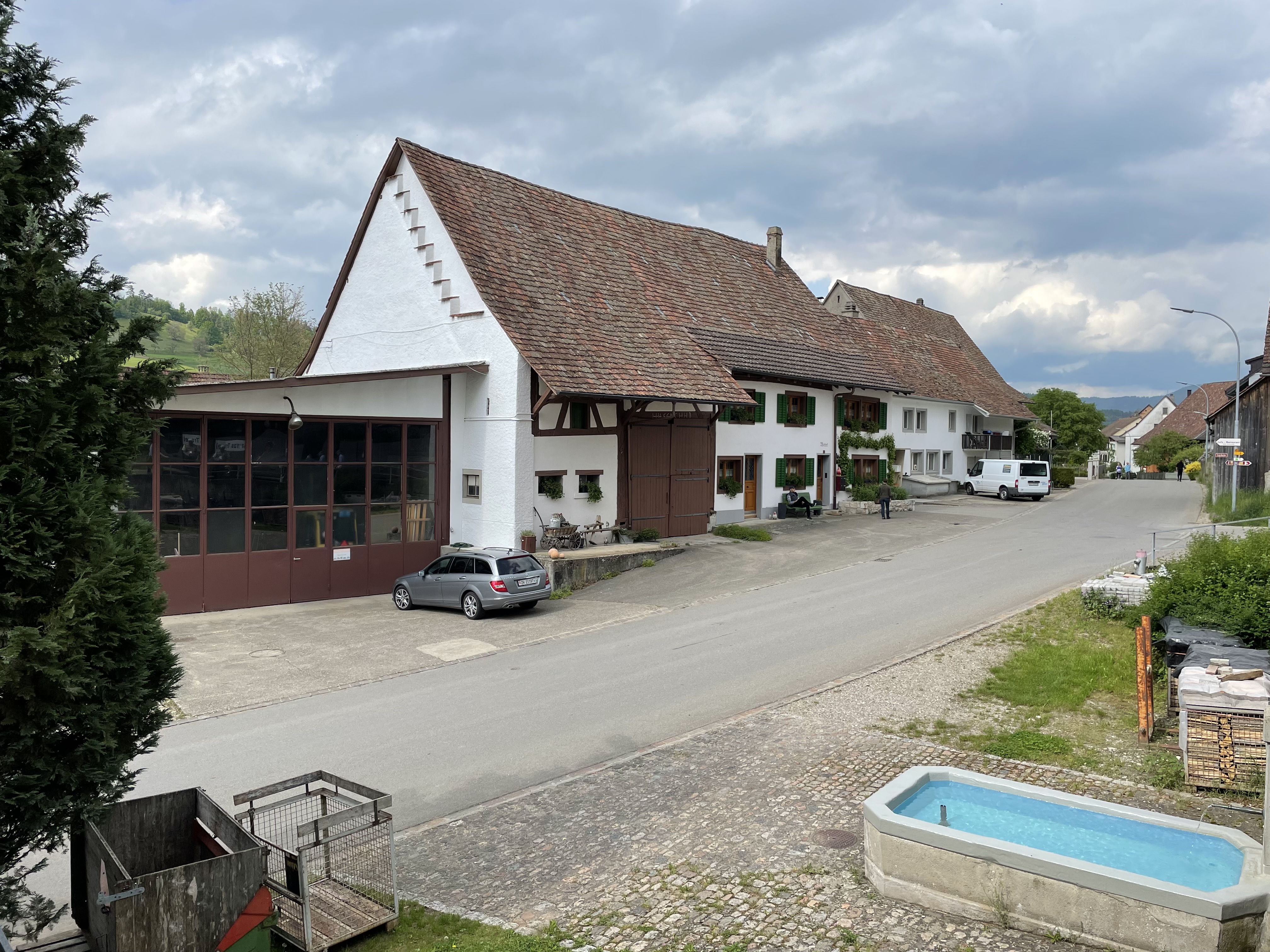
From there, it was a short distance to the Swiss border, where our driver had to exit the bus and show several documents before we could enter the country. After a brief delay, we were on our way and soon arrived in Schleitheim, a rural Swiss village where Anabaptists met in February 1527. Though no list of participants remains, scholars are certain that Michael Sattler participated in this meeting of the minds to clarify the beliefs of these radical reformers.

The Schleitheim document contained several main articles that gave form and direction to the young movement. Sattler most assuredly wrote the manuscript that included instructions for adult baptism, the ban, communion, separation of church and state, pastors in the church, nonresistance, and forbidding the taking of oaths.

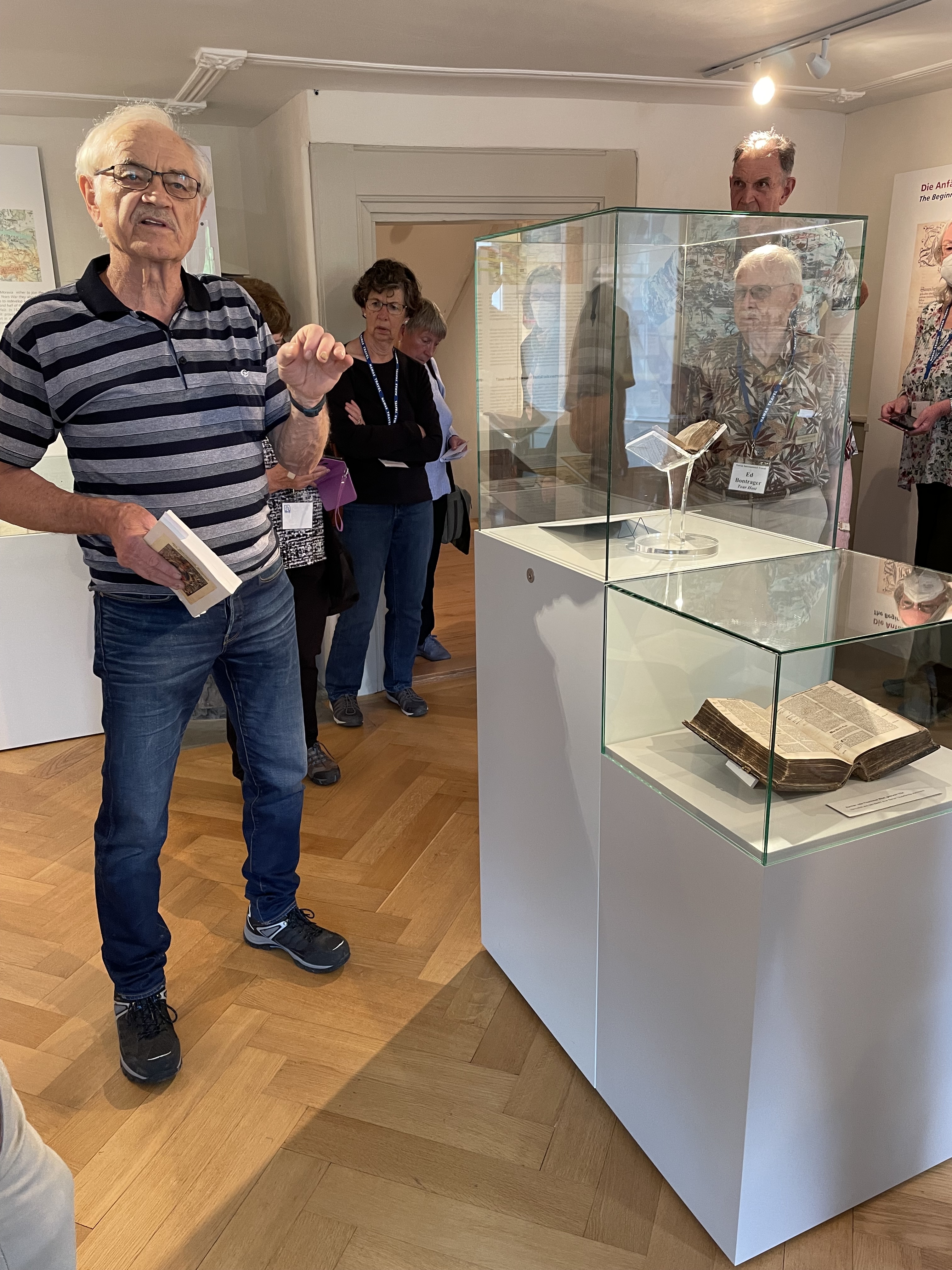
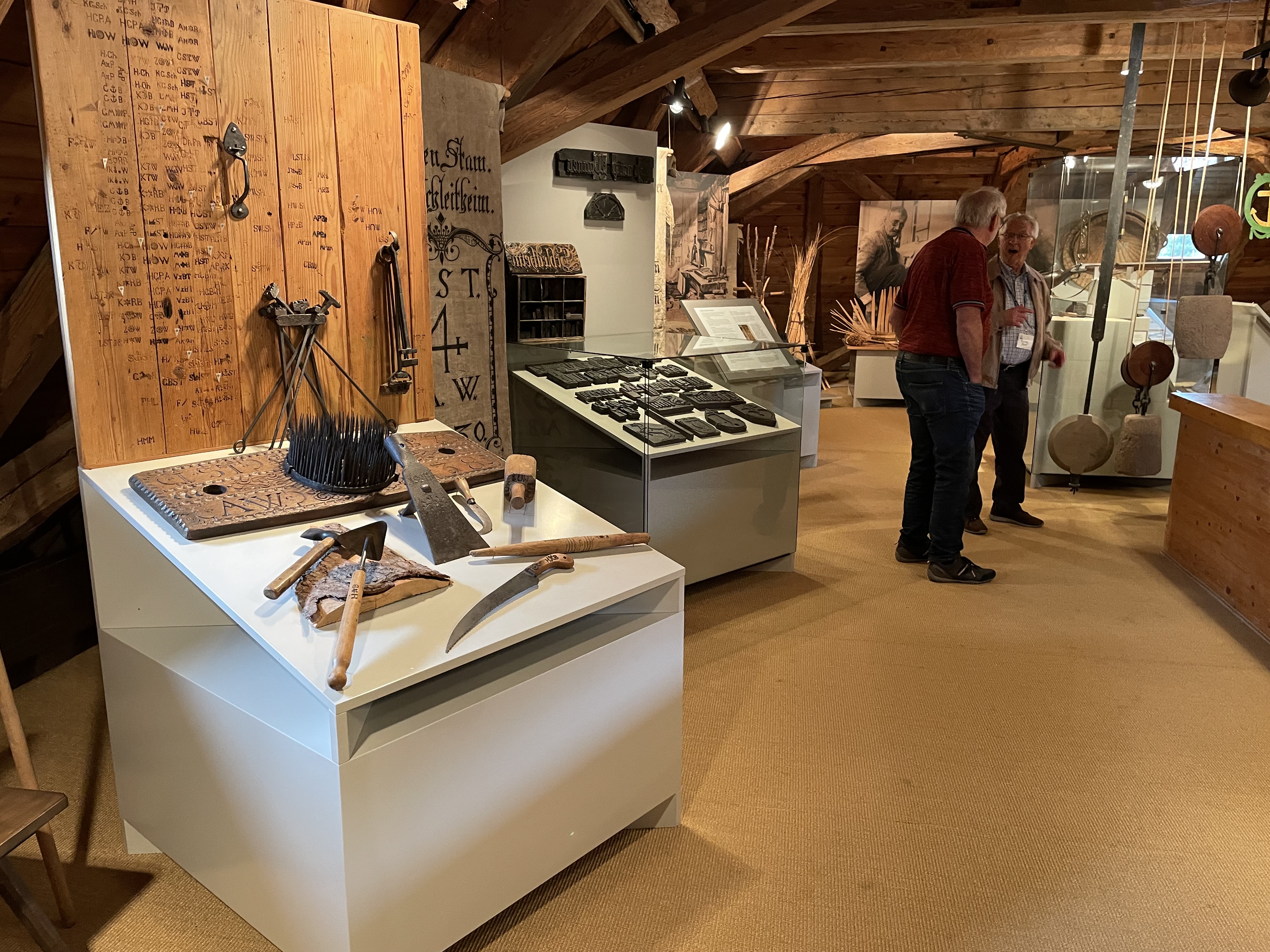
The Schleitheim Museum is housed on the top two floors of the town’s community building. Because our group was too large, half went upstairs while the rest of us were told to look around. So, we did.

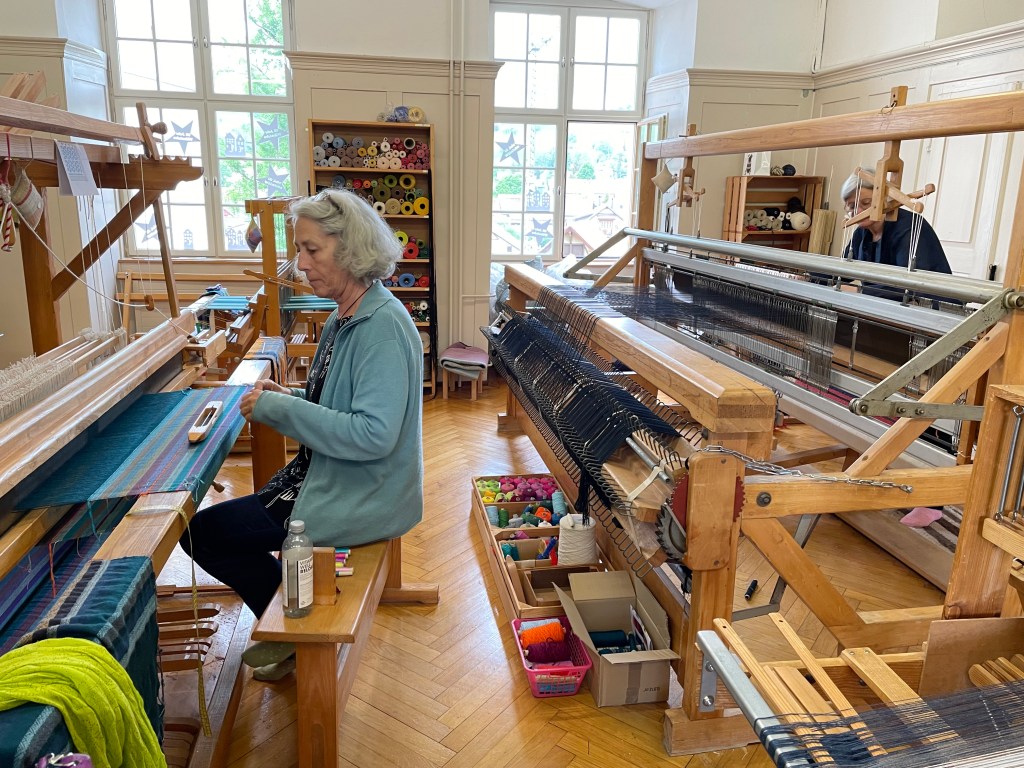
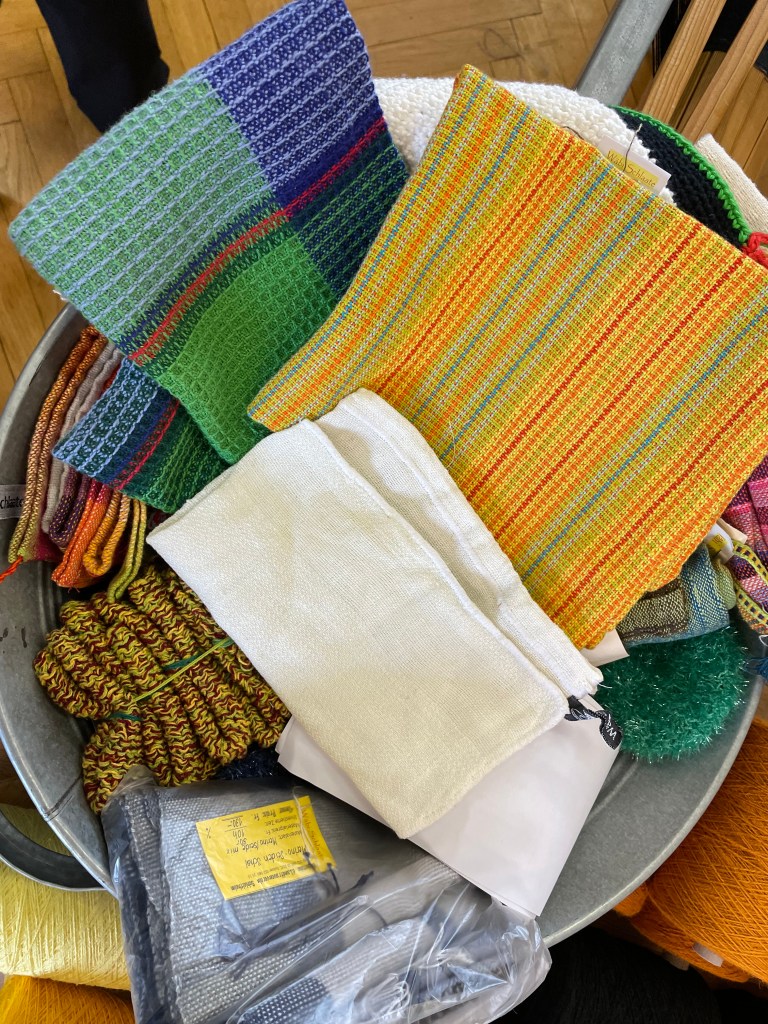
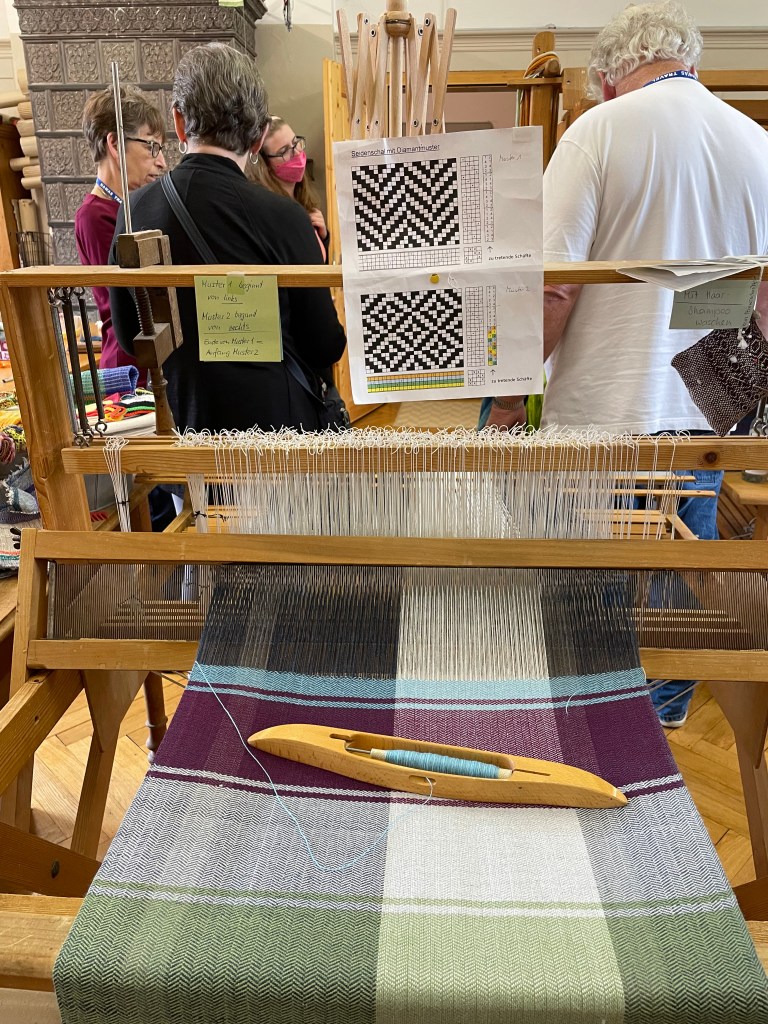
When I opened a large wooden door, I startled three local ladies who were using looms to make scarves and other clothing items. Once we explained who we were, the women relaxed and graciously showed us what they were doing. I found plenty of photo opportunities in the large workspace.

The same was true for the museum. All sorts of antiques had been saved, from the sign on the railroad depot to the first hand-drawn fire engine. Of course, there were old documents, books, and bibles from the time when Mennonites flourished there.

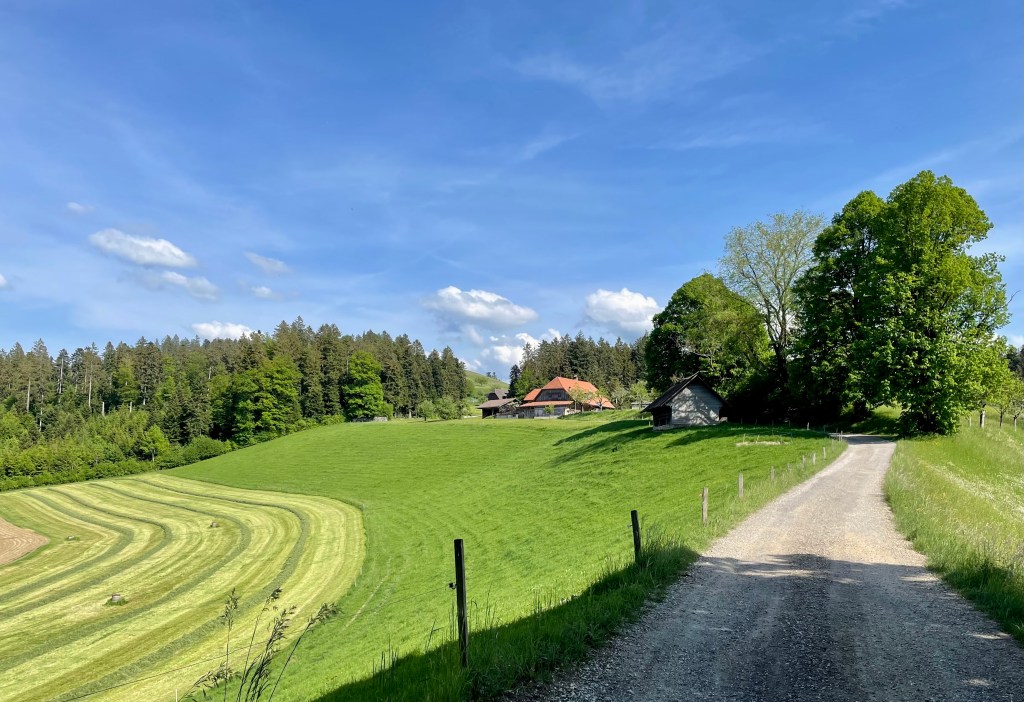
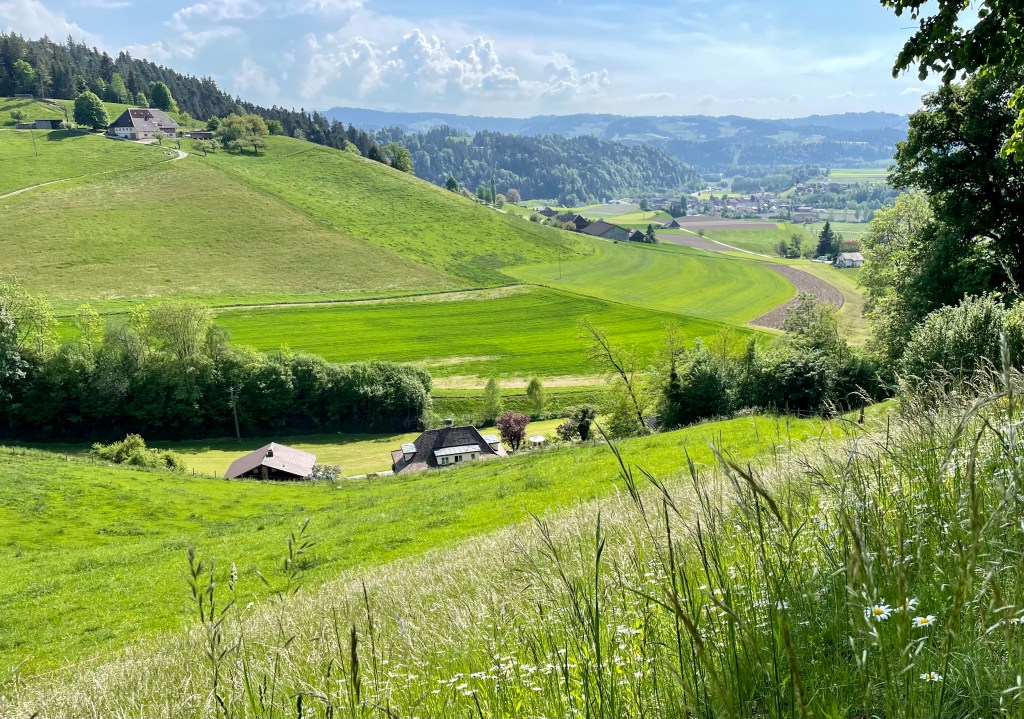
After leaving Schleitheim, we wound our way through gorgeous farm country, where big round bales of hay had just been stacked. I tried to capture the scenery through the tinted bus windows.

Soon we arrived in Schaffhausen at the Rheinfall, a cascading waterfall that draws lots of tourists. A few of the tour boats that take you closer to the falls were operating. It was a beauty to behold, but I had a hard time believing we were standing on the banks of the Rhine River.

We left that beautiful place and headed to Zurich, where we would spend the night.

© Bruce Stambaugh 2022

Our European Adventure Begins – Day 1

The Reformation Monument in Worms, Germany.

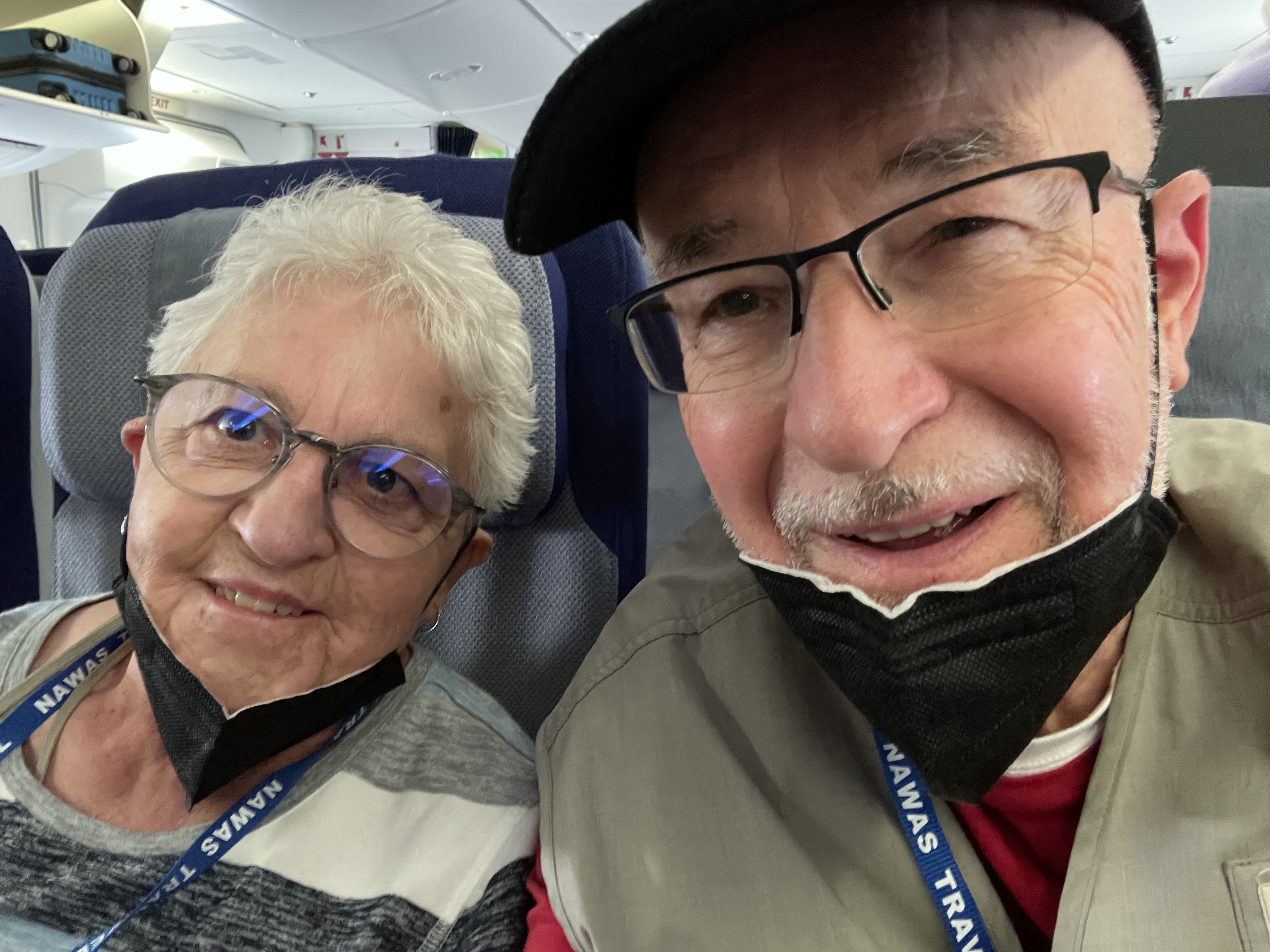
My wife and I had never been to Europe. When an opportunity arose for us to join a tour group to visit Austria, Germany, and Switzerland, we quickly signed up. That was in pre-pandemic times. Consequently, our initiation into all things European was delayed two years until this spring when it was deemed safe to travel again.

The most influential element in the trip going forward was the rescheduling of the Passion Play at Oberammergau, Germany. The play is held once every 10 years by citizens of the small Bavarian town set at the foothills of the Alps. Click this link to read the fascinating history of why and how the drama began in 1634 and continues today.

The focus of this tour was Anabaptist history. That aspect was added to an established 10-day tour offered by a New England tour company. By trip’s end, those of us on the tour, all senior citizens save one, realized it was a bit much. We had difficulty keeping up with the rapid pace to cram everything in. Consequently, we only skimmed the surface of exploring this beautiful and historic area of Europe. However, that did not detract from our enjoyment of the tour and learning to interact with our fellow tourists and people we met along the way.

Given that, I will share highlights of our trip through select photos, going in chronological order. Please feel free to ask questions in the comments.

I hope you enjoy the trip via the photos as much as my wife and I did in person.

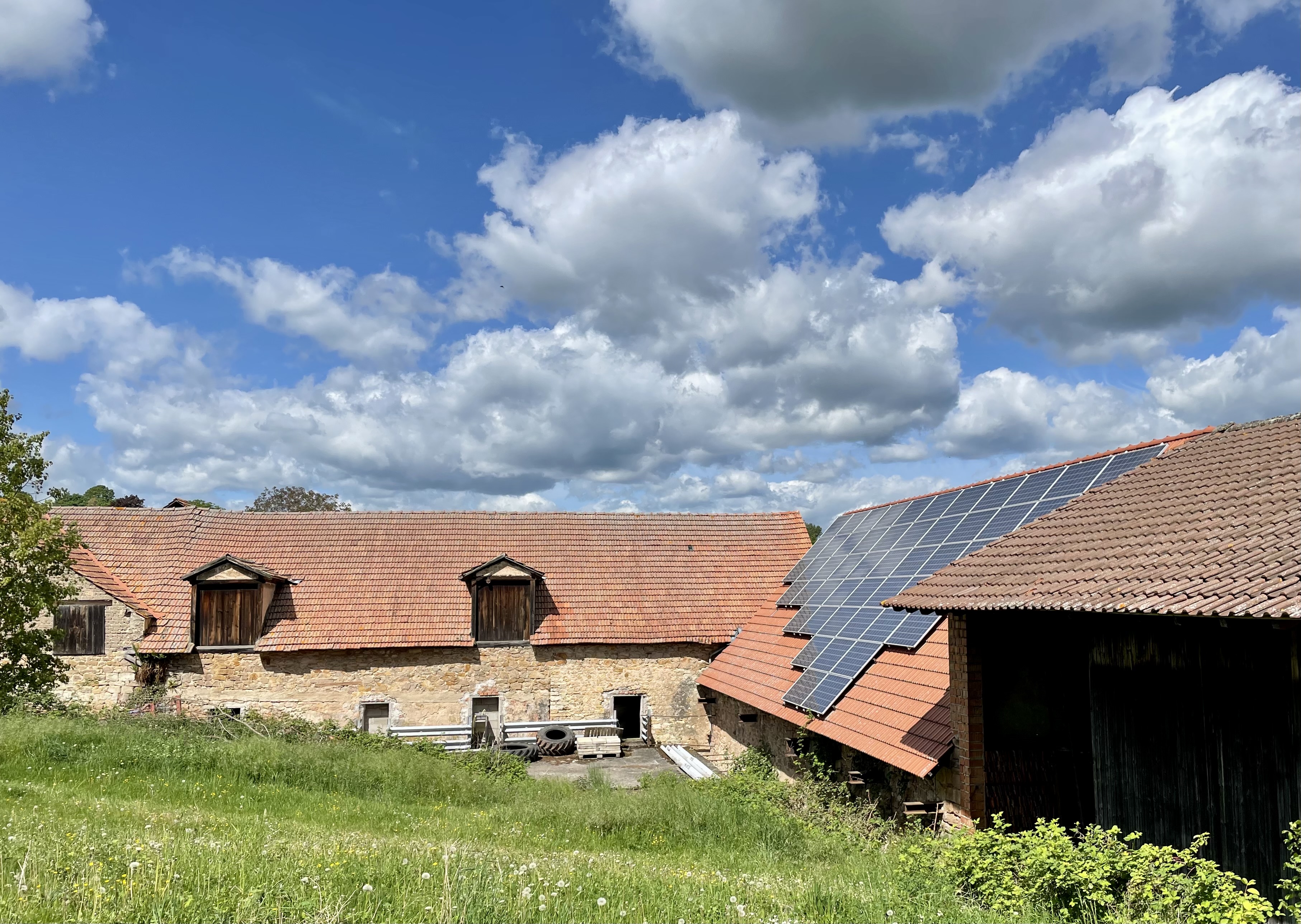
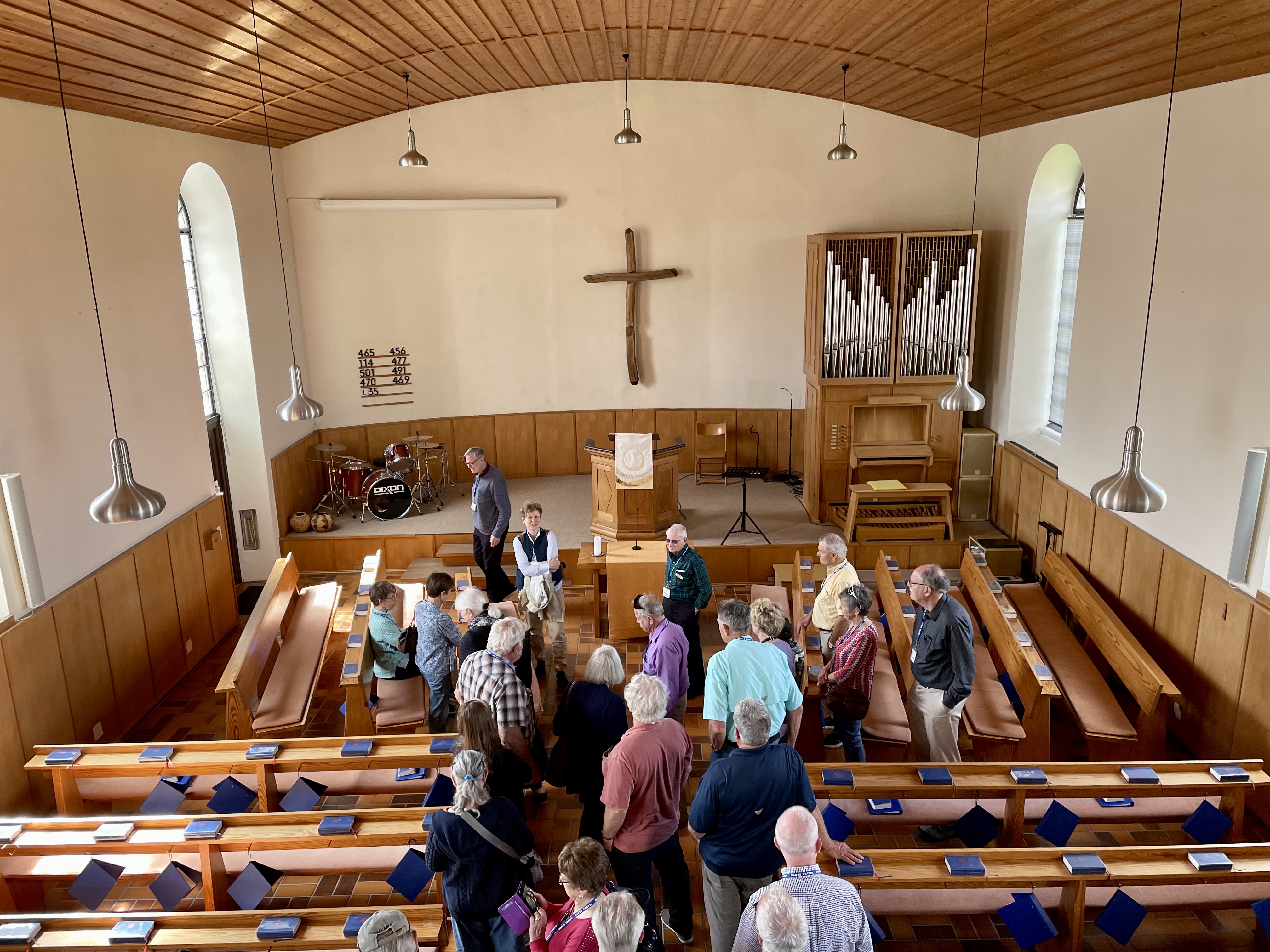
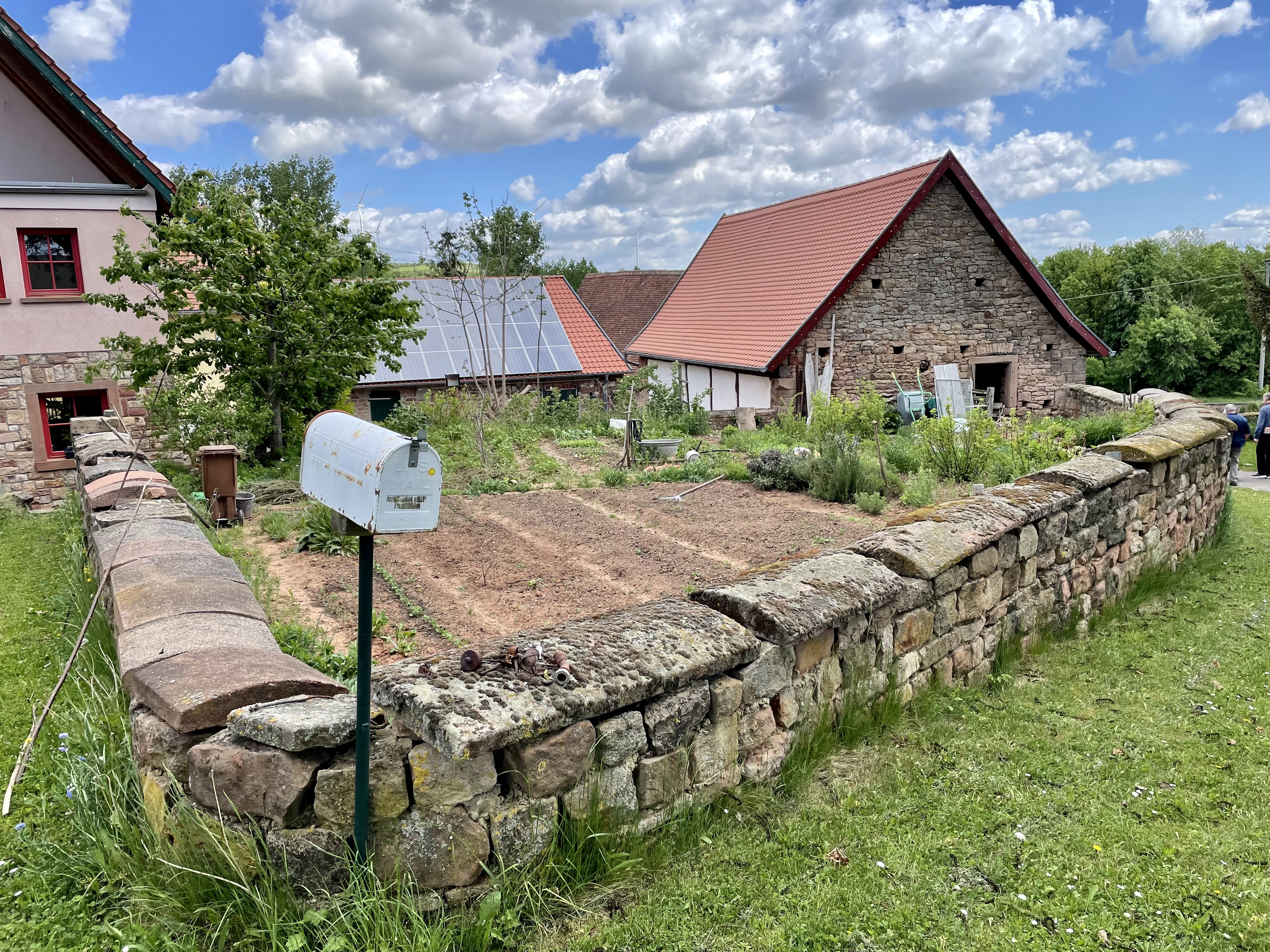
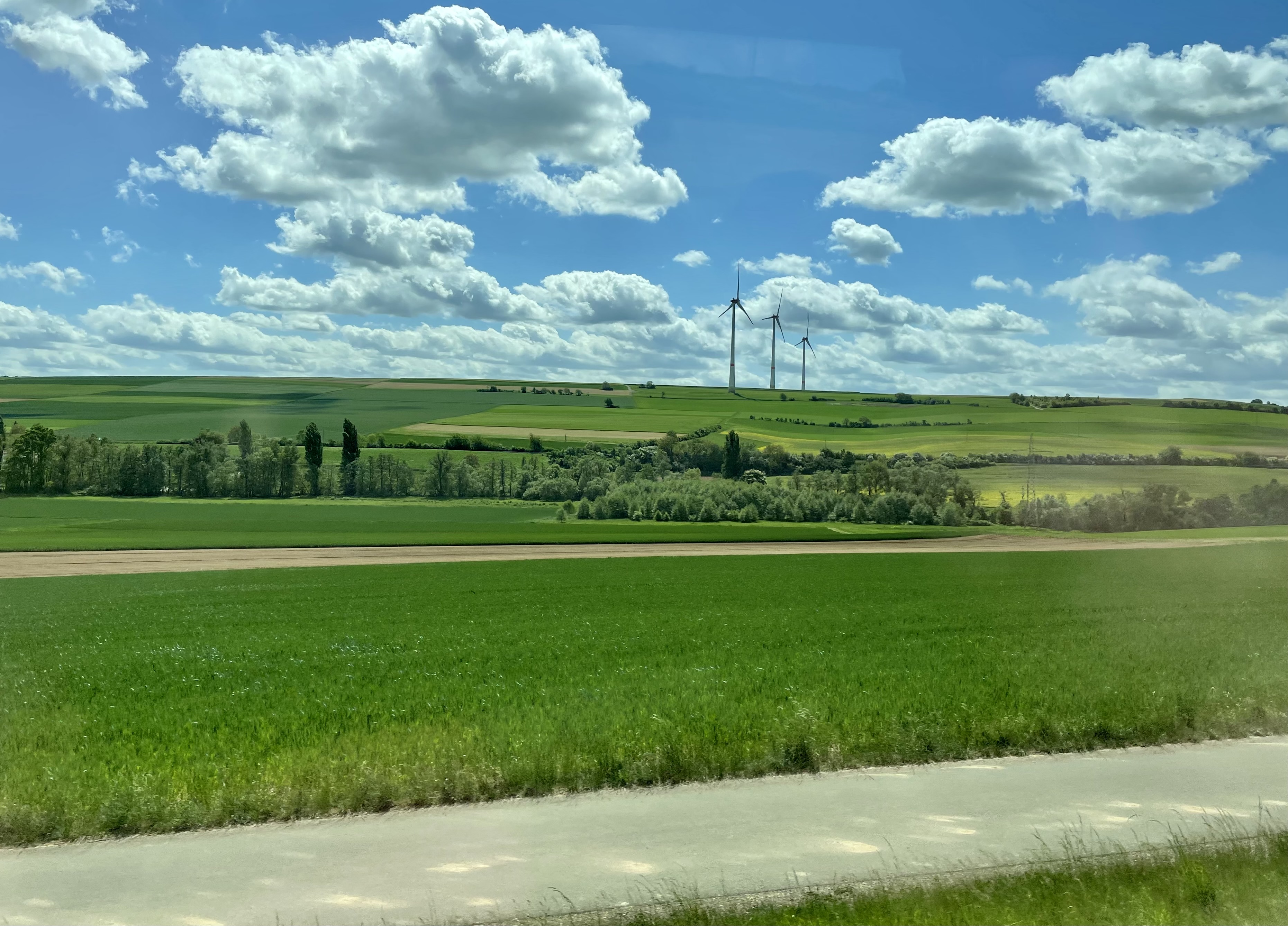
The photos above were all taken at our first stop, Weierhof, an early Anabaptist settlement. The images show a little free library; solar panels on an old farmstead; the Weierhof Mennonite Church; a walled garden, and the rolling German countryside with bike paths, farm fields, and windmills.

We traveled from the rural village to the city of Worms, Germany, where Martin Luther began his resistance to the ruling Catholic Church.

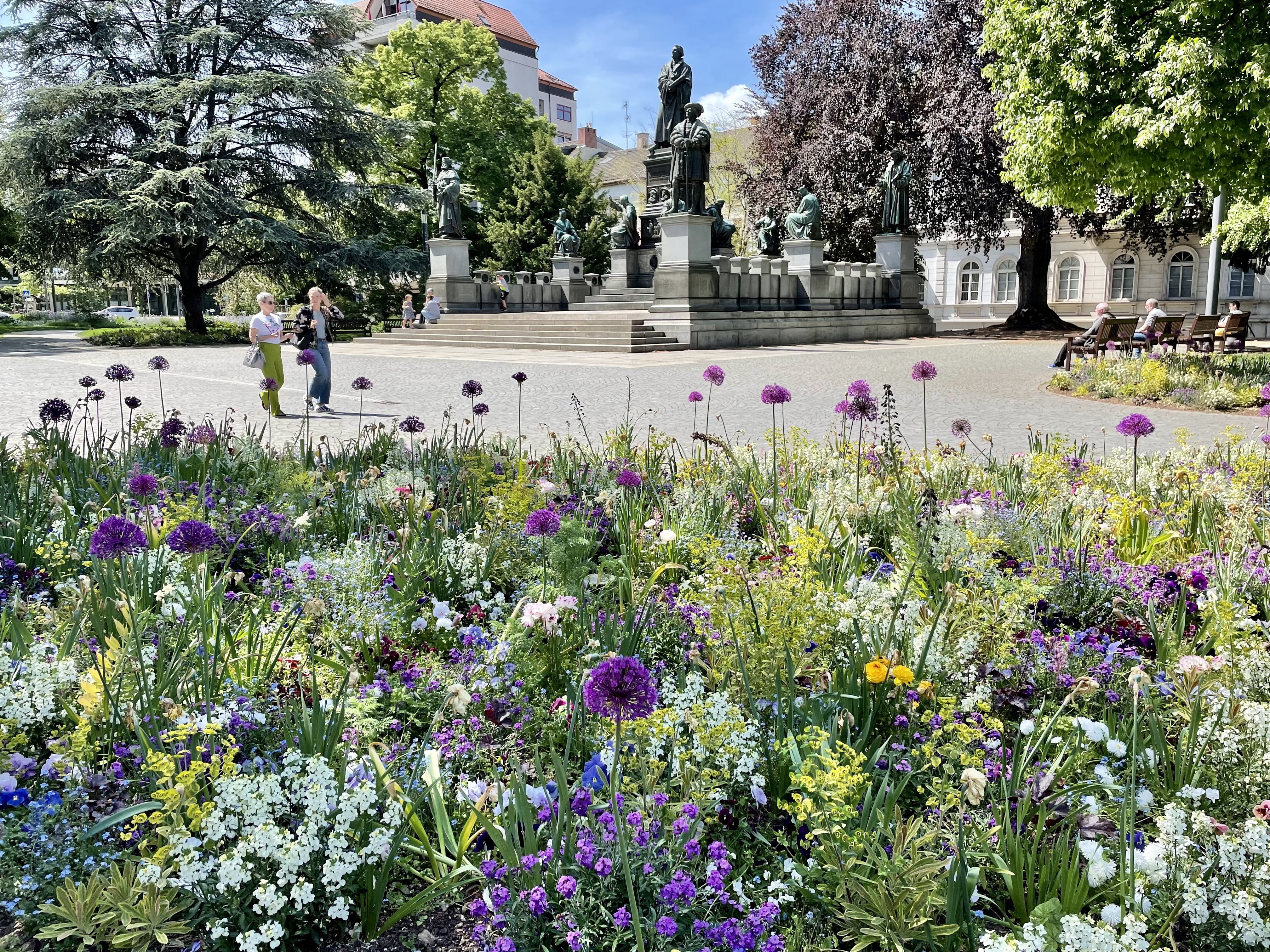
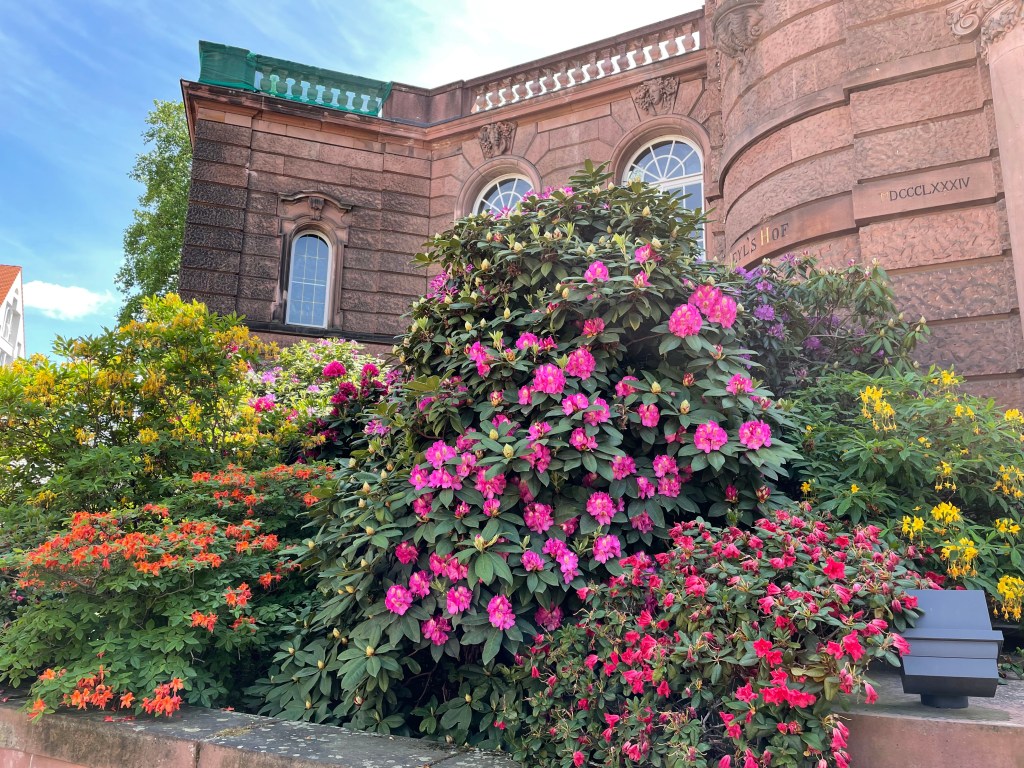
Our lunch stop in Worms, Germany, included touring significant sites where Martin Luther began his public resistance that eventually led to the beginning of the Reformation. Flowers and flowering shrubs were in full bloom. We visited the spot where Luther made a dramatic speech and the Reformation Monument at Luther Plaza. A plaque included the complete statement by Luther.

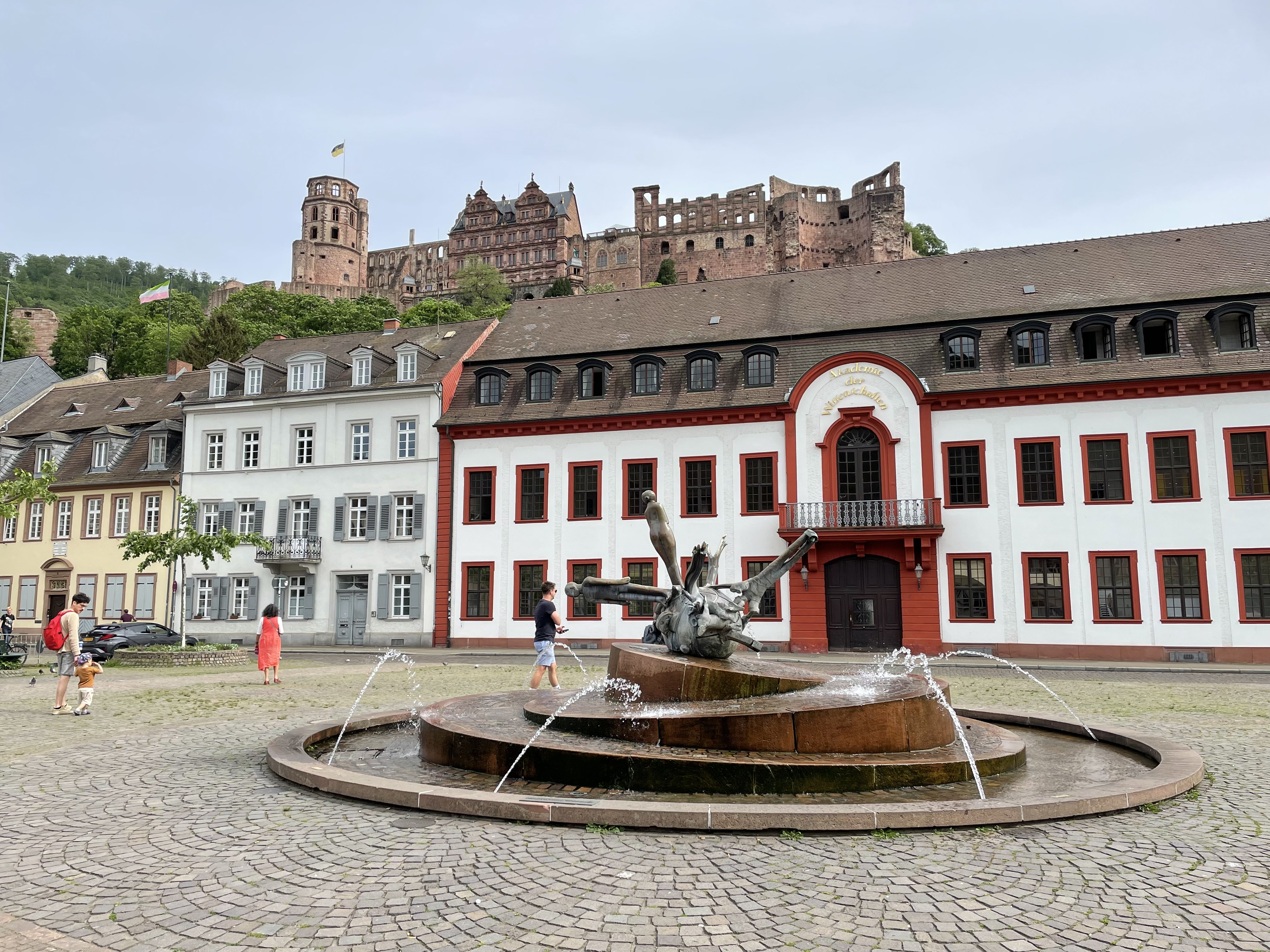
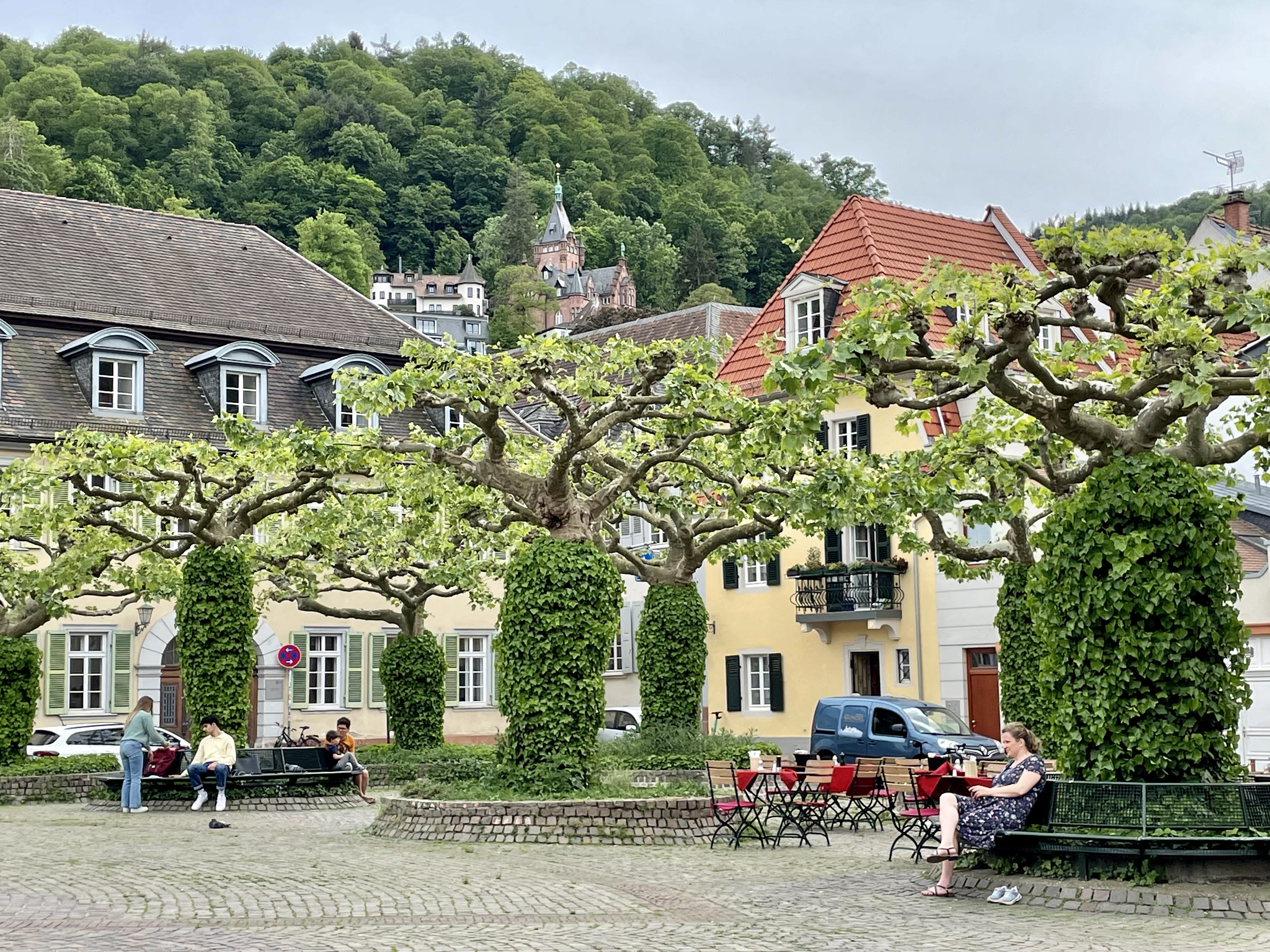
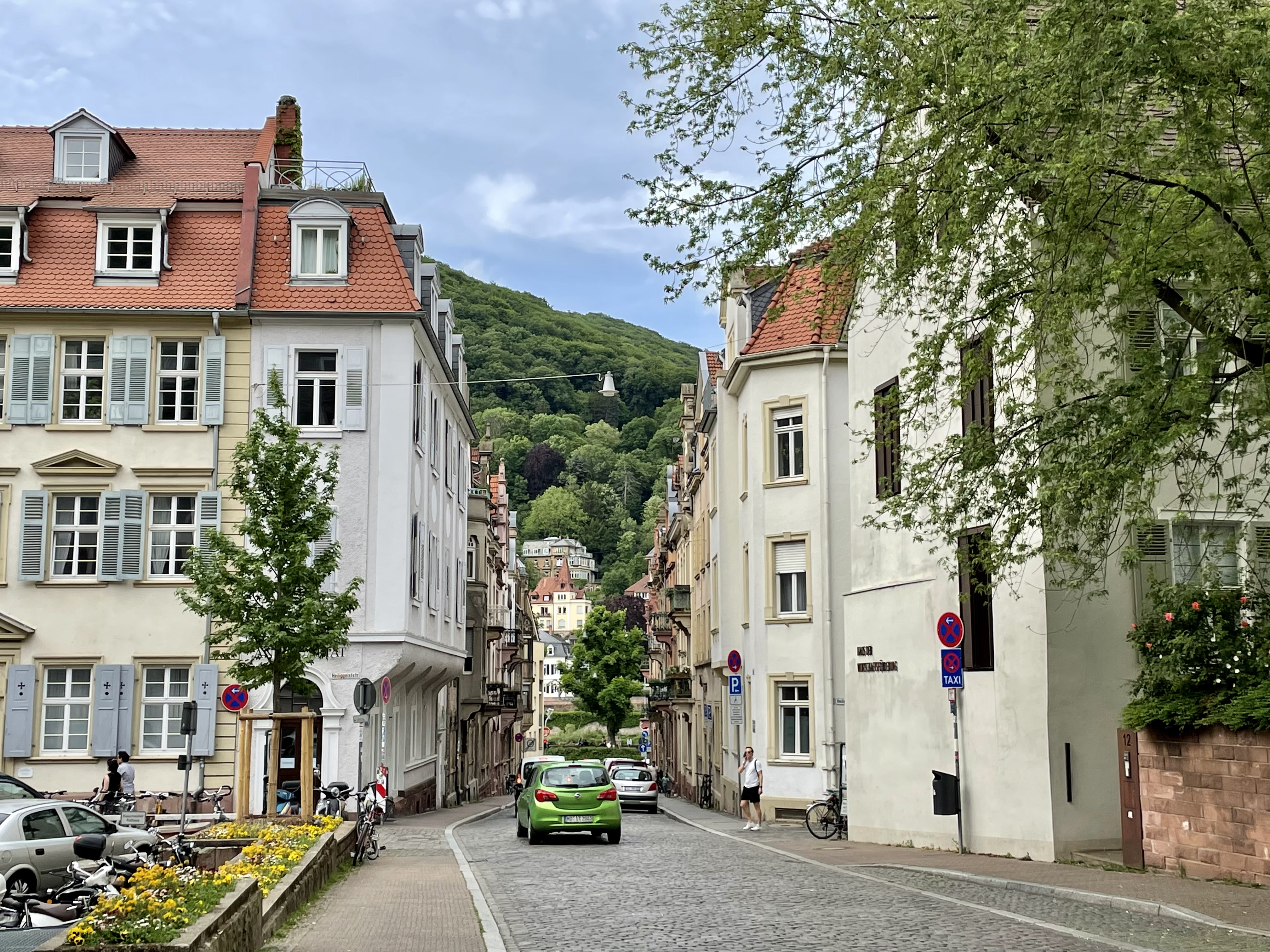
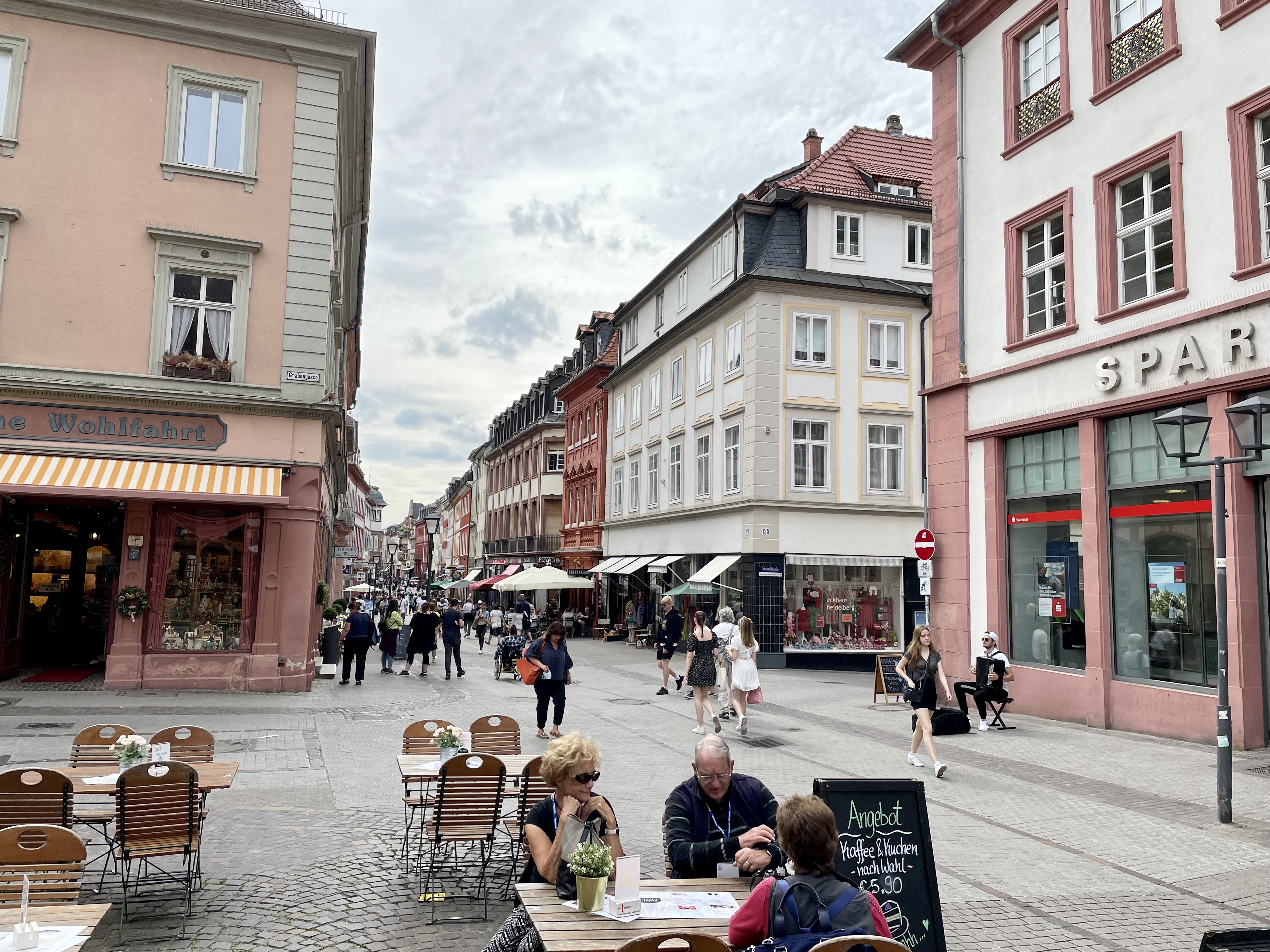
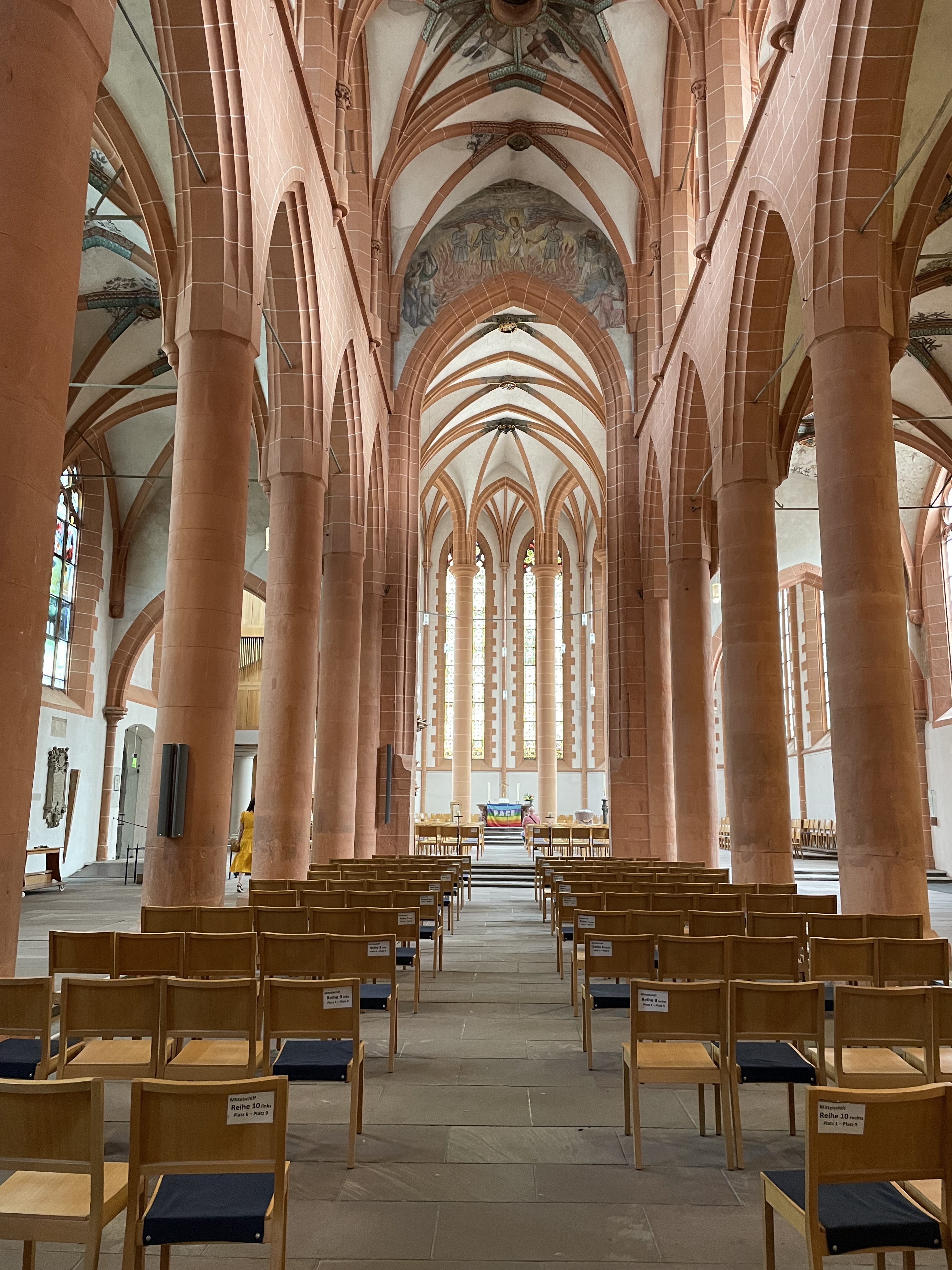
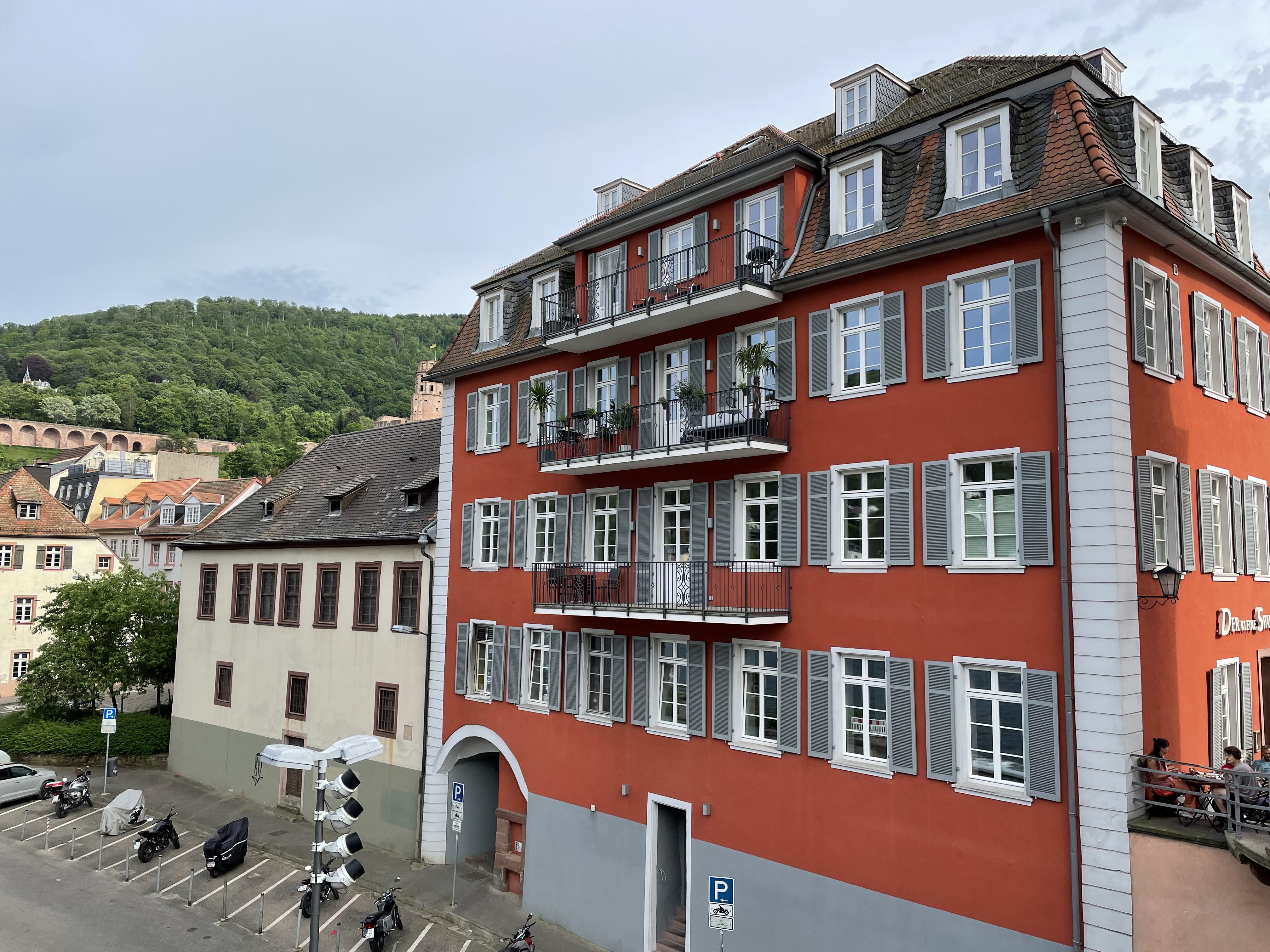
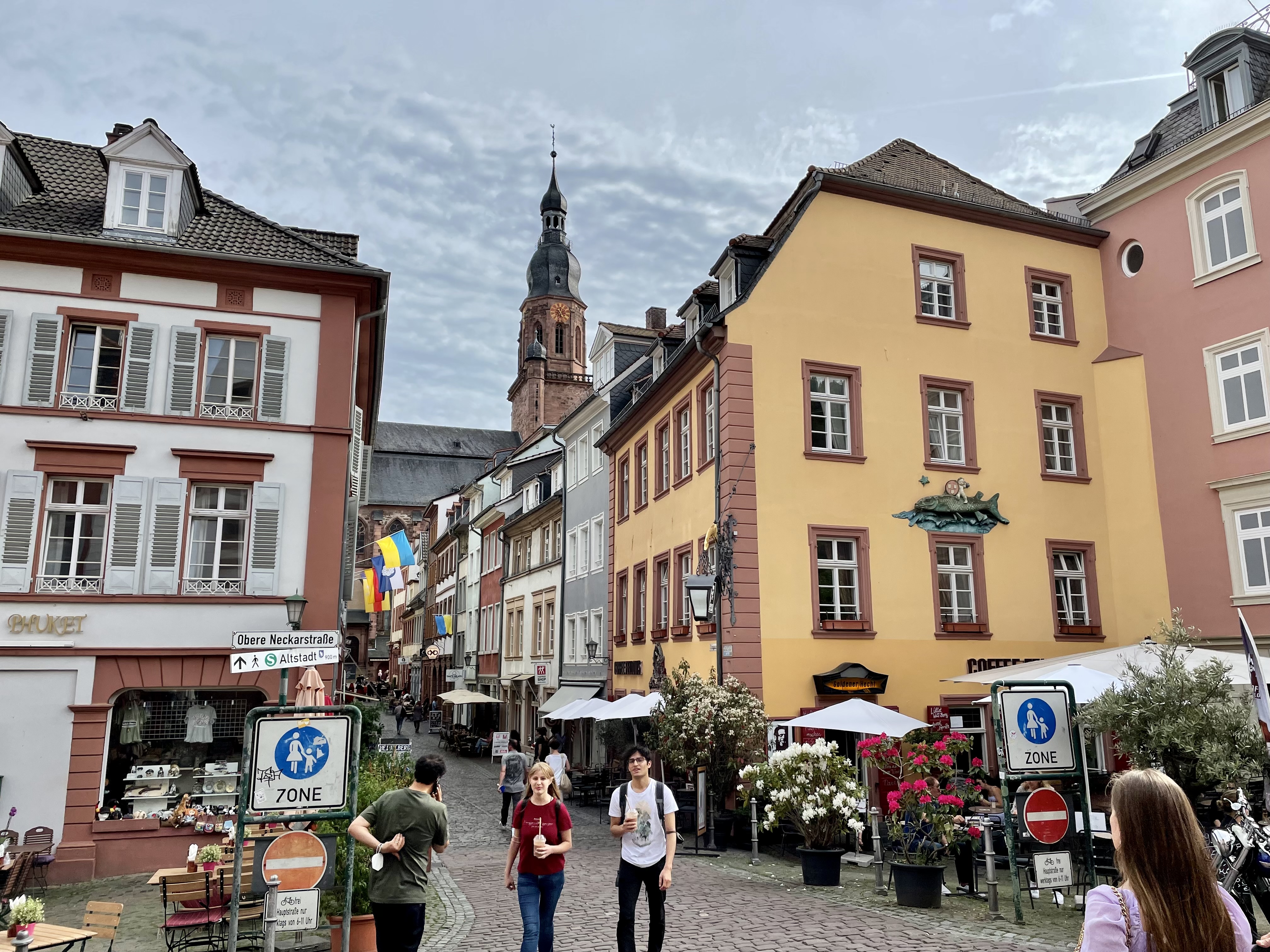
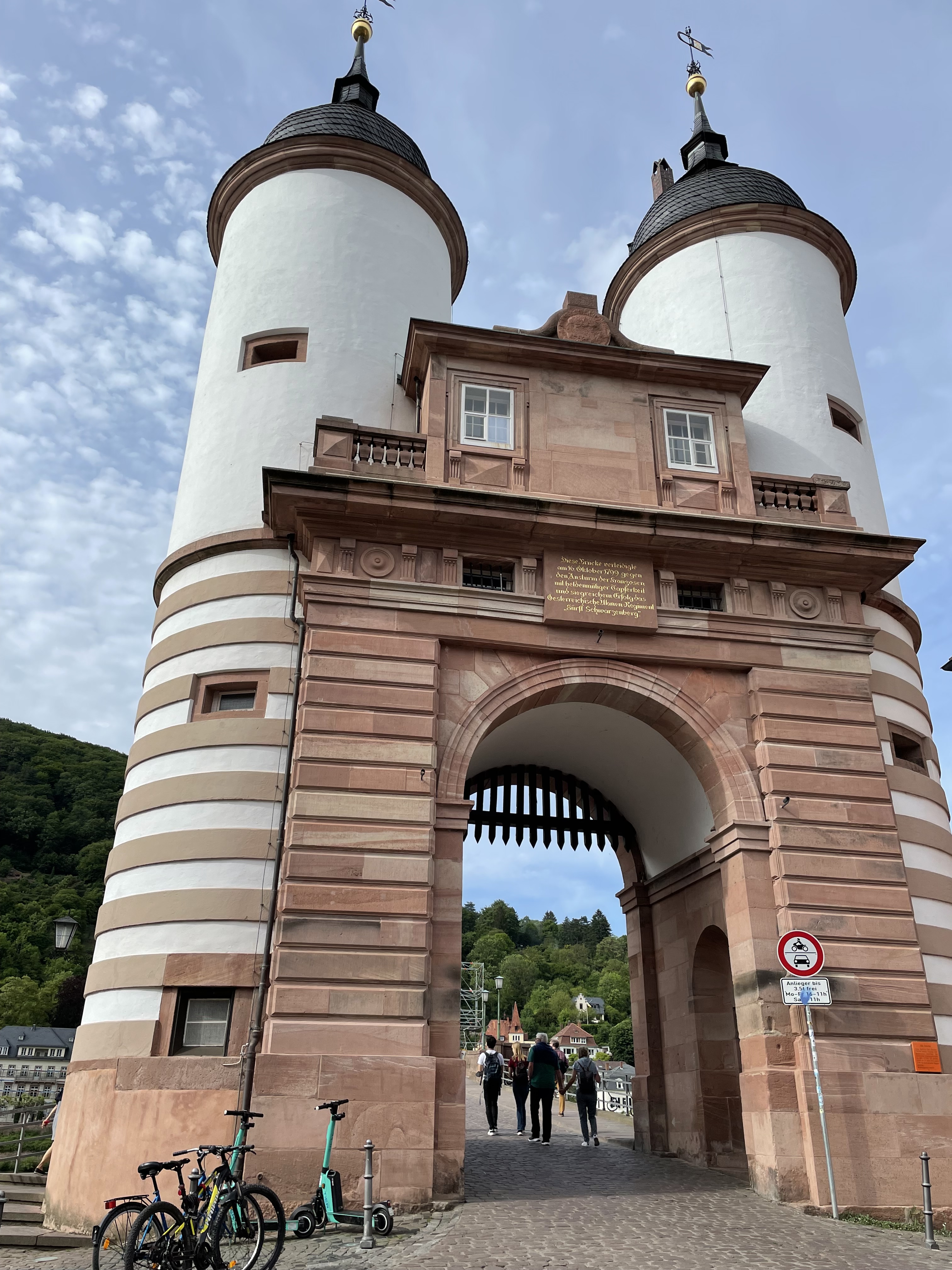
From Worms, we made an all-too-brief stop in the historic city of Heidelberg, Germany. Because of its rich history and preserved old buildings, the town was saved from the massive bombings of World War II.

All too soon, we had to leave Heidelberg and head to our hotel in Viernheim. Our first day in Europe was filled with wonder, beauty, and history. But after an eight-hour flight and a full day of touring, we were ready for a good night’s sleep.

© Bruce Stambaugh 2022

Explaining My Absence

I realize it’s been a while since my last post. I apologize for being absent. I have my reasons. Let’s just say that it’s been a busy spring for our family.

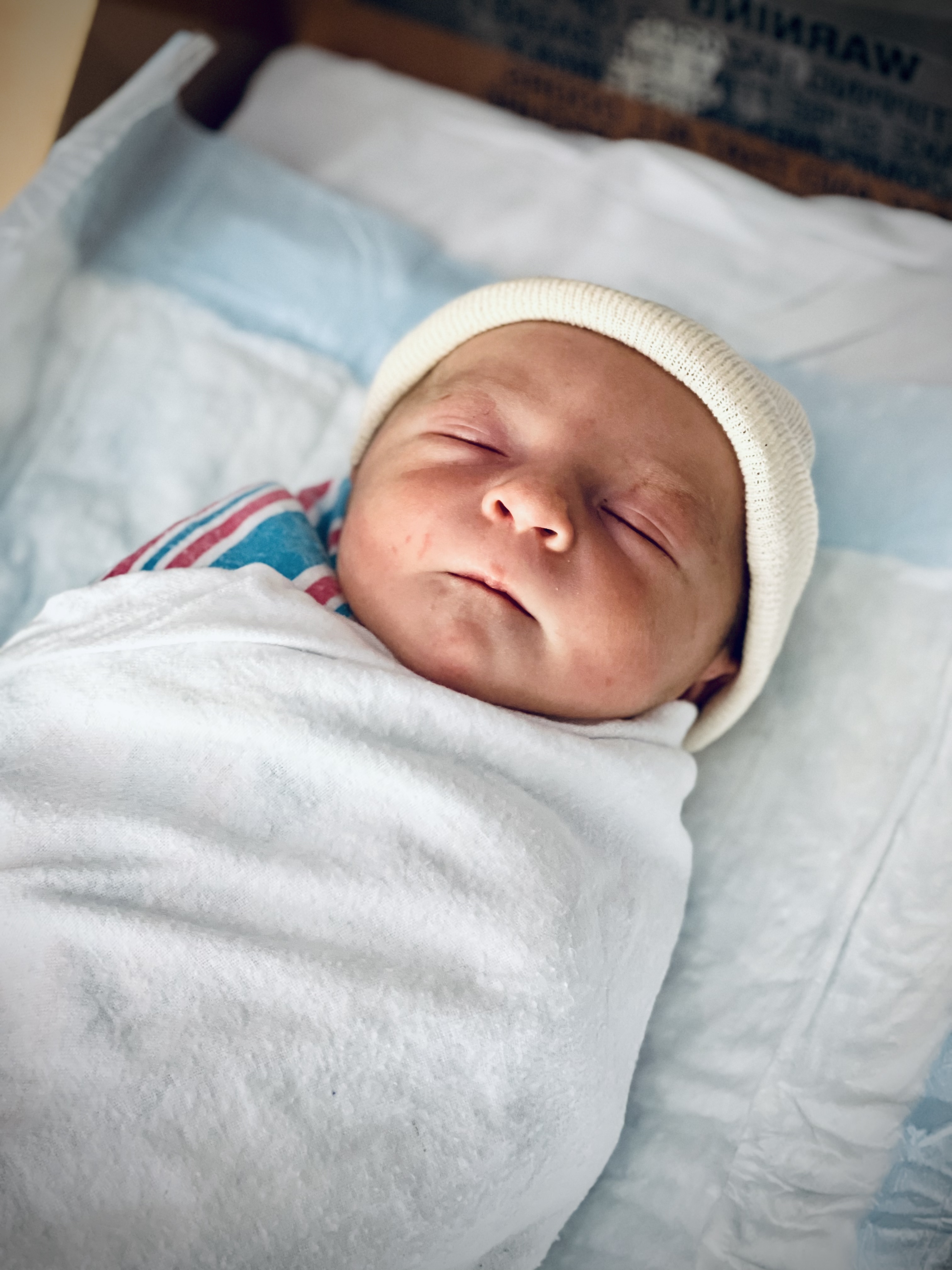
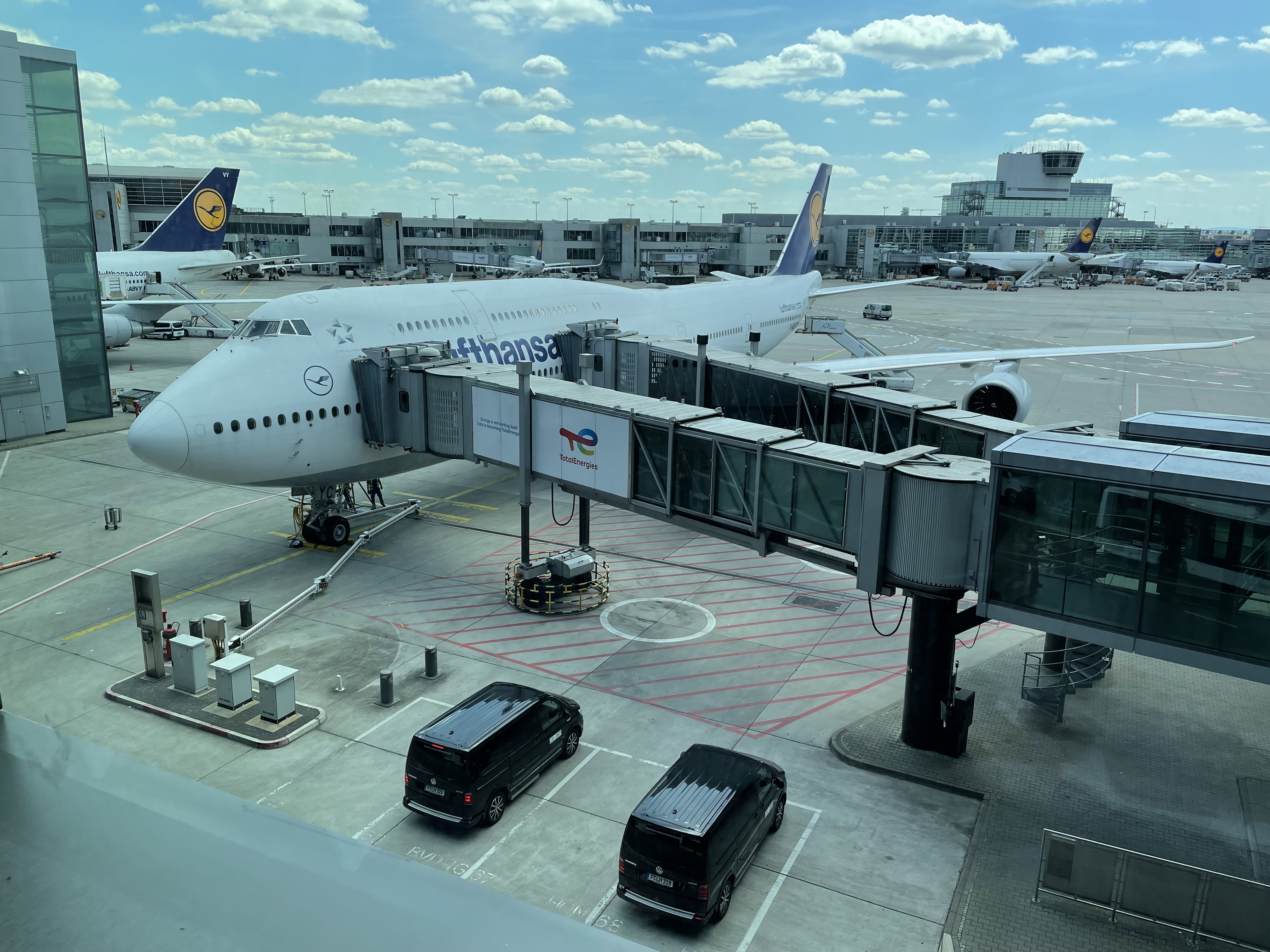
Below are some photographic hints explaining where I have been, and why I haven’t published either stories or photos lately. I am in the process of creating new posts, so these teasers will have to do for now.

Any guesses as to why these photos help identify my lack of posts? I’d love to hear your thoughts. Comment away!

© Bruce Stambaugh 2022
Bluebells on the Bluebell Trail

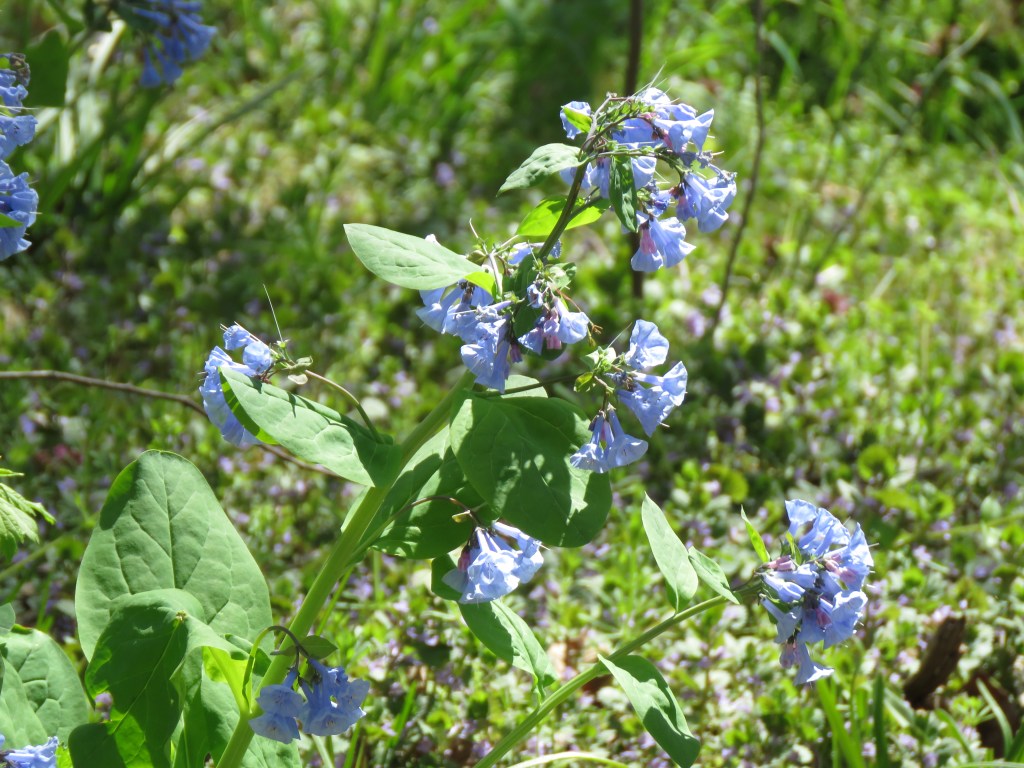
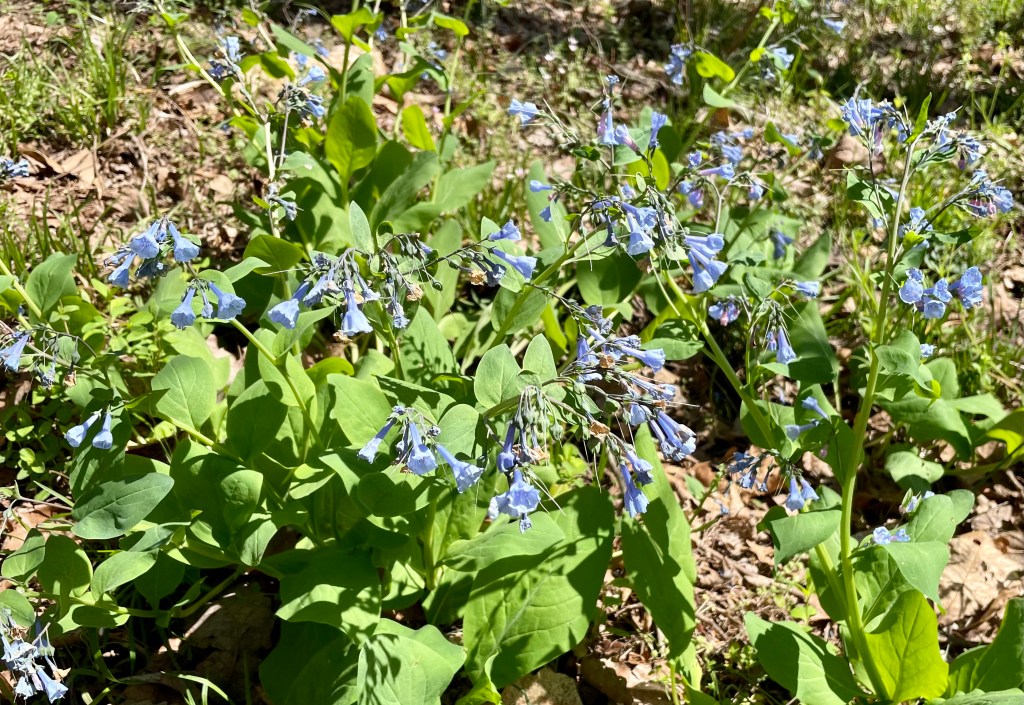
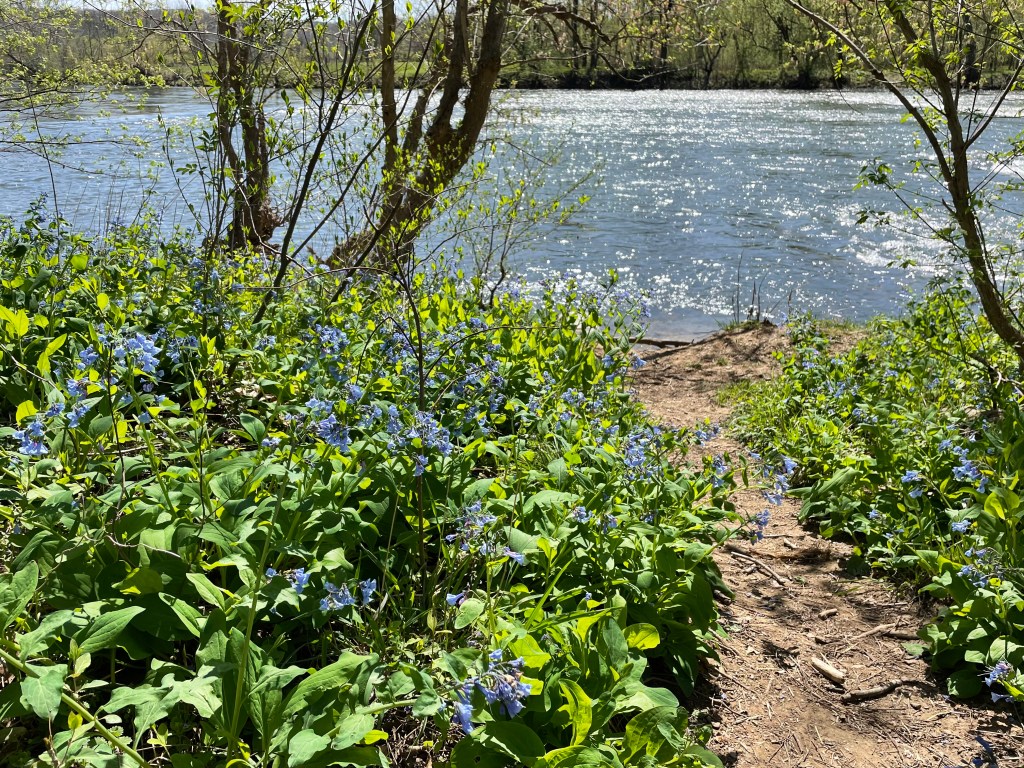
Virginia Bluebells beautified the space between the Bluebell Trail and the South Forth of the Shenandoah River in Shenandoah River State Park.

Friends told me that the Virginia Bluebells were at peak bloom along the Bluebell Trail in Shenandoah River State Park. I had to go see for myself.

The weather was perfect. Sunny skies and warm temperatures dominated the day. Both had been recent rarities in the Shenandoah Valley.

So, off I went, down what the Confederates called the Middle Road, to Timberville. From there, I took U.S. 211 east through New Market, up and across the Massanutten Mountain Range, and around the quaint town of Luray to U.S. 340.

A dozen miles later, I entered the park to find the empty entrance station. Due to staffing shortages, it’s an honor system to enter. You grab an envelope, place $10 in it, and deposit the fee into the slot. Hang the receipt from your rearview mirror, and you’re good to go.

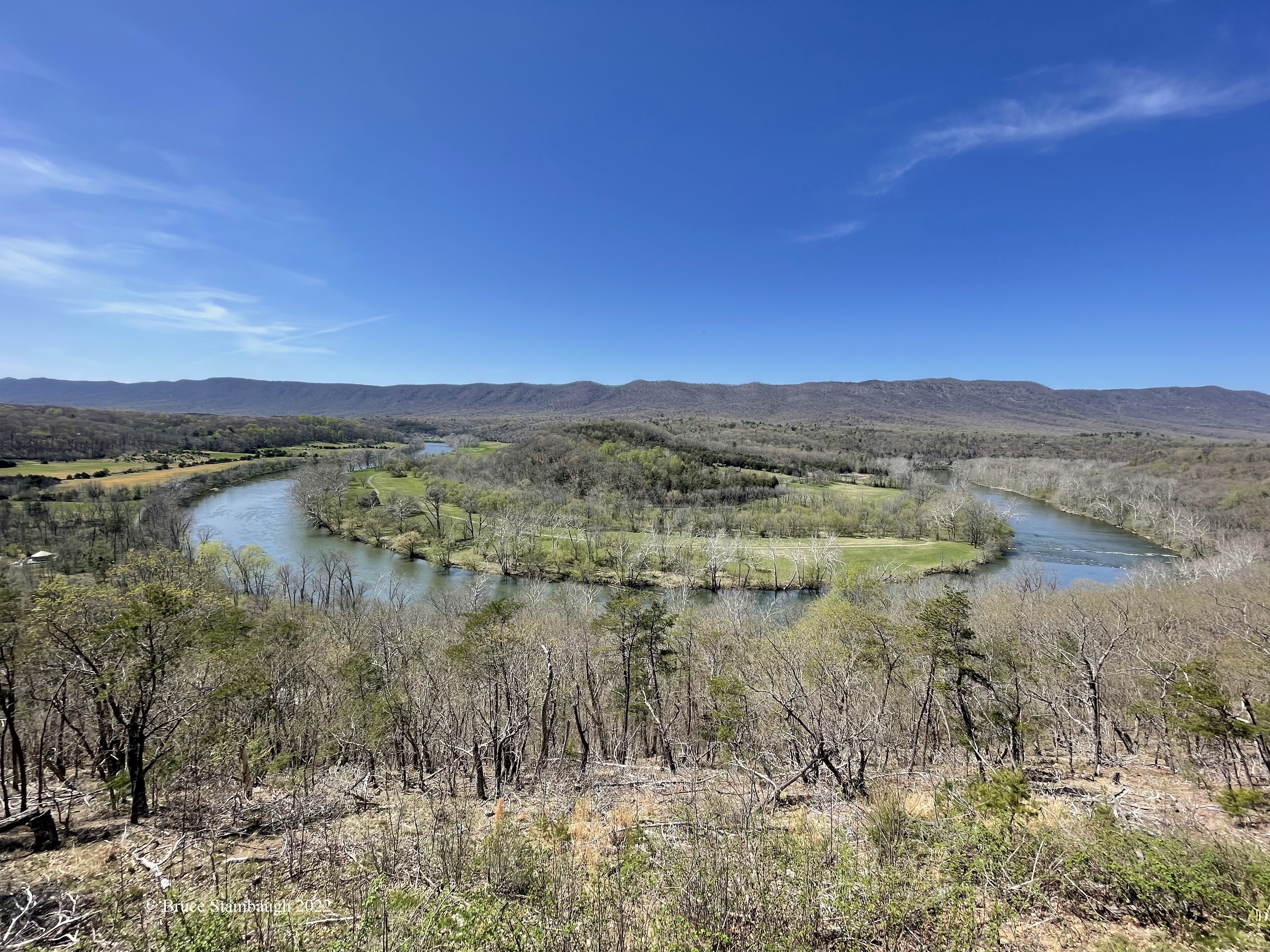
And what a splendid day it was. First, I stopped at Cullers Overlook for a fantastic view of the South Fork of the Shenandoah River, snaking its way north. Only a few more miles, and it converges with its twin, the North Fork of the Shenandoah River, at Front Royal. The majestic and historic Shenandoah River flows north to meet the Potomac River at Harper’s Ferry, West Virginia.

The South Fork of the Shenandoah River from Cullers Overlook, Shenandoah River State Park, Bentonville, Virginia.

As glorious as that view was, I didn’t linger long. I wanted to see the Bluebells. It was all downhill from there to the trailhead a half-mile away.

With camera and binoculars in hand, I eagerly set out on the mile-long trail. A swarm of insects greeted me only a few steps onto the earthen path. I had forgotten to pack the bug spray, so I raised my tolerance level and soldiered on.

Soon I began to pass folks who had a head start on me. They assured me that I couldn’t miss the lovely flowers as they headed to their vehicles. They were right.

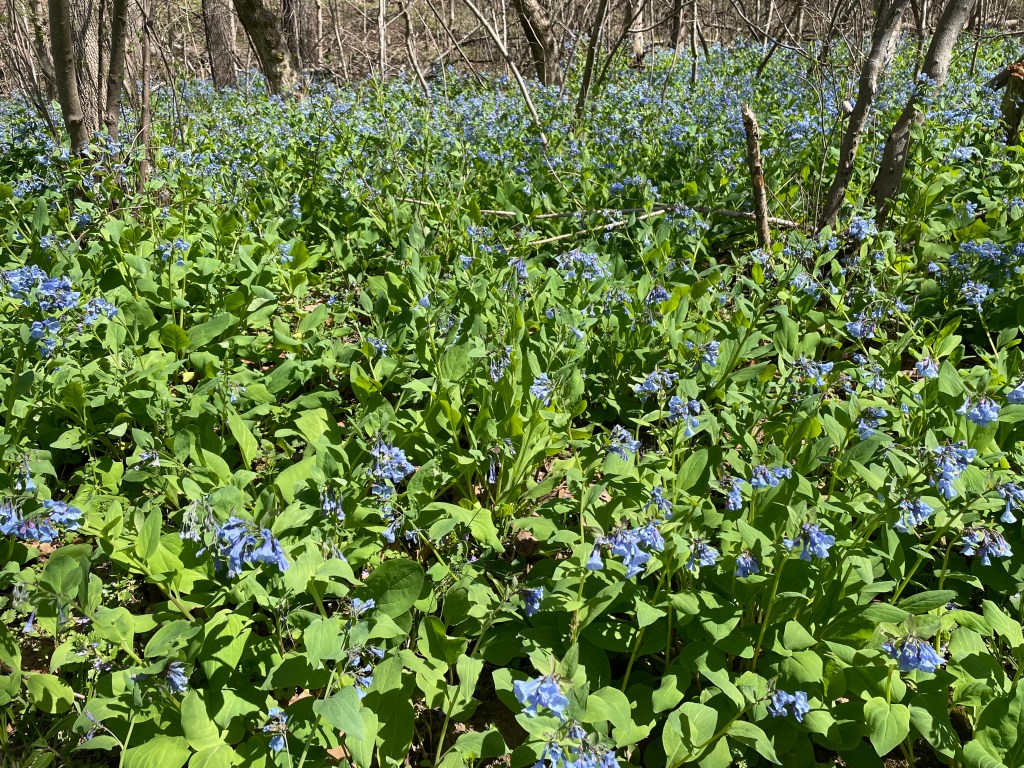
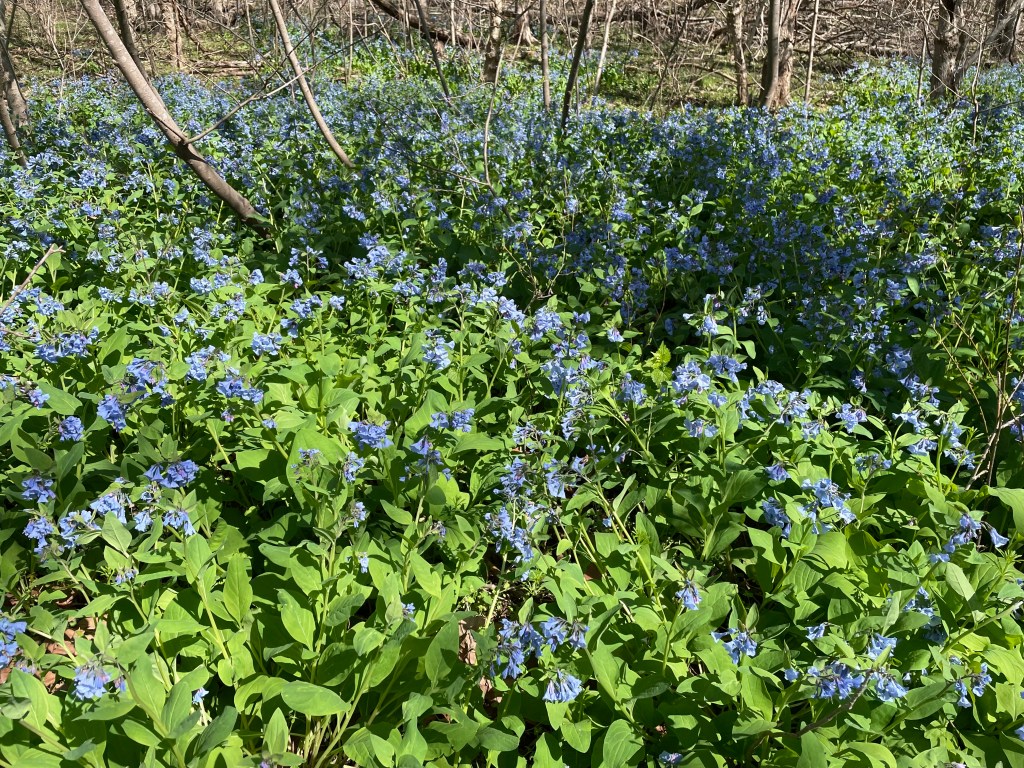
Once the trail straightened out, patches large and small of Virginia Bluebells spread across the forest floor like a blue and green carpet. They even lined the riverbank much of the time.

I had an ample selection of flower photo ops. Since I also enjoy birds, calls from high above told me that warblers and other songbirds were foraging for insects among the emerging leaves.

The hungry little birds moved fast and furious, fueling up for their continued flight north. To my surprise, my attention focused on more obvious winged creatures.

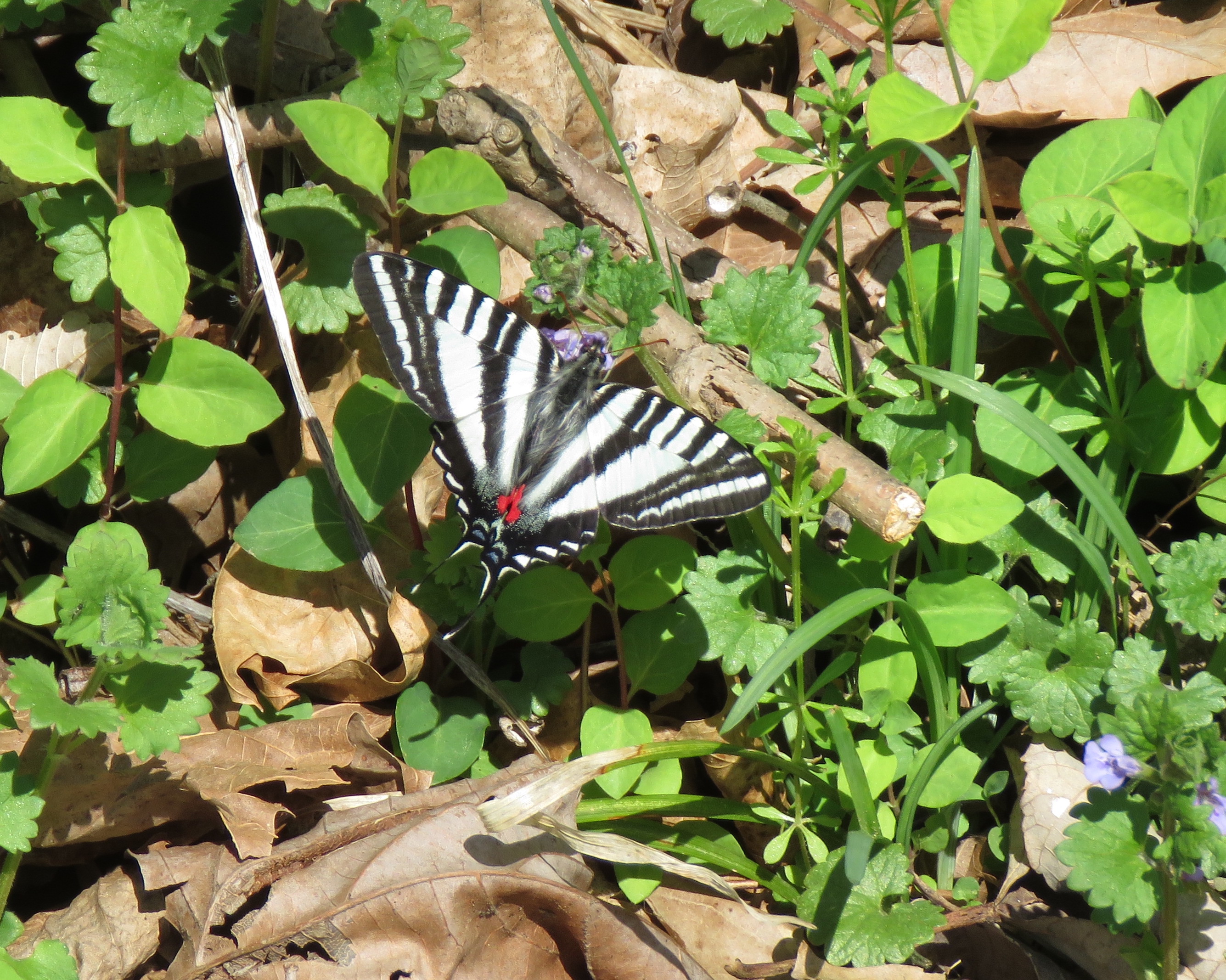
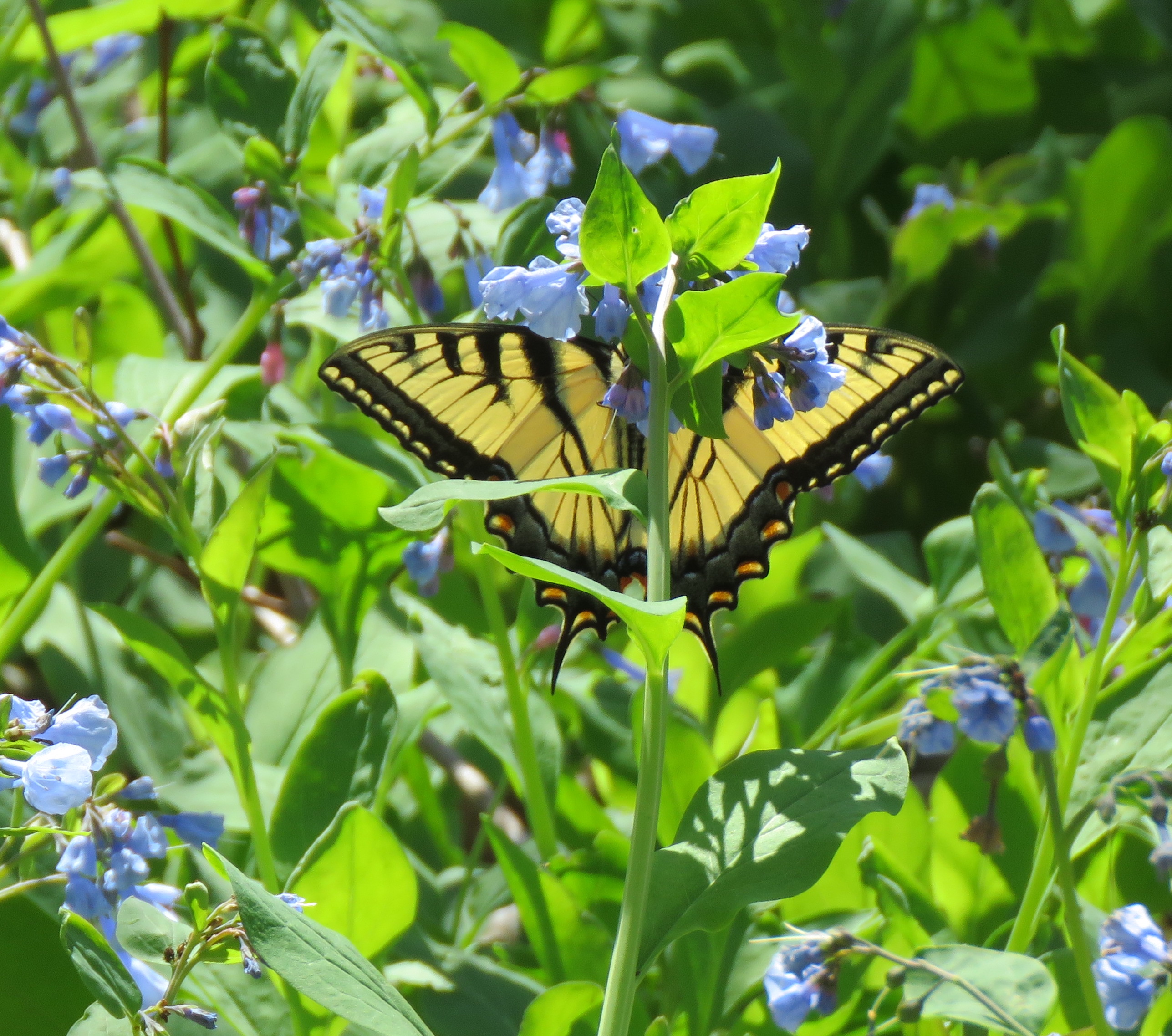
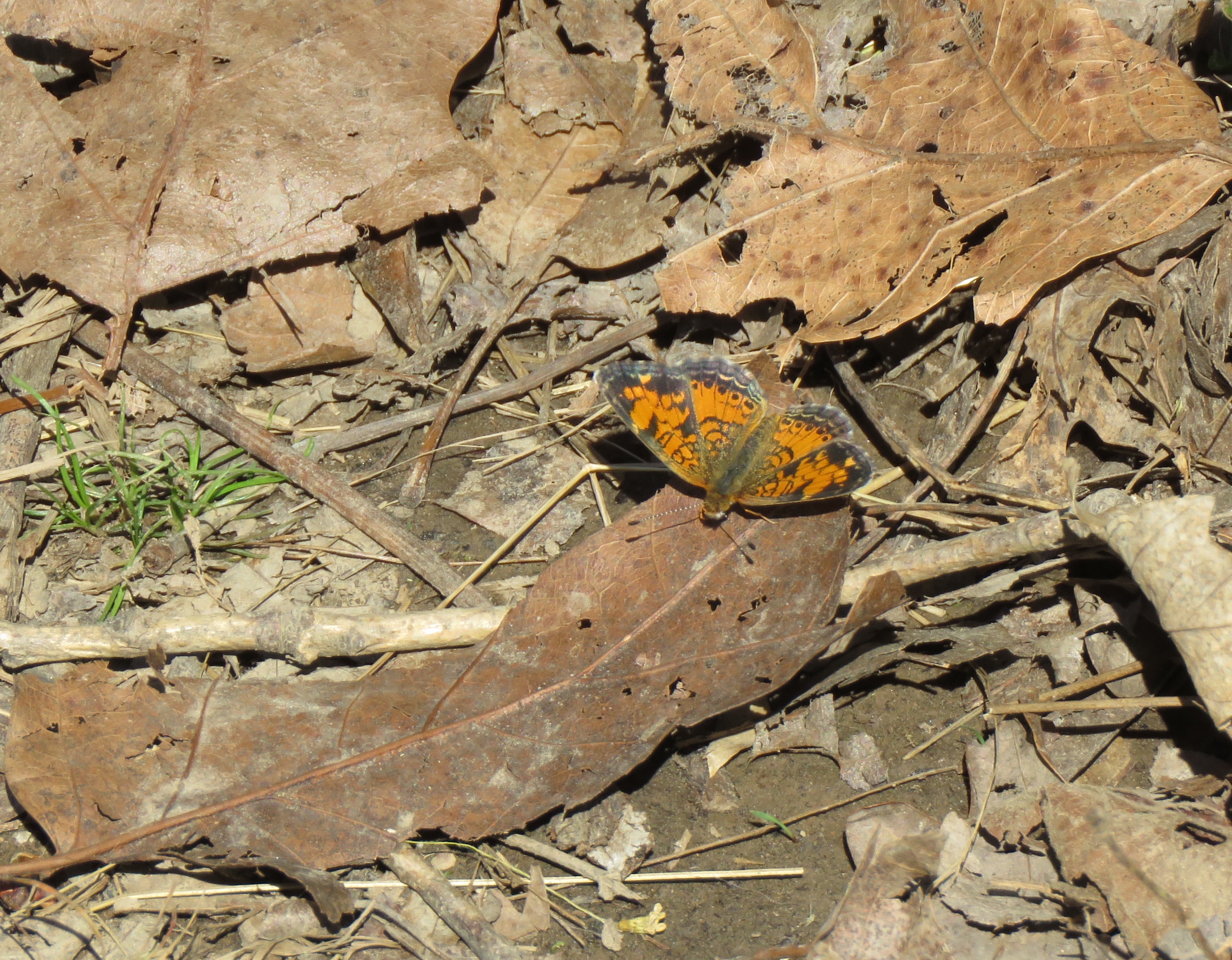
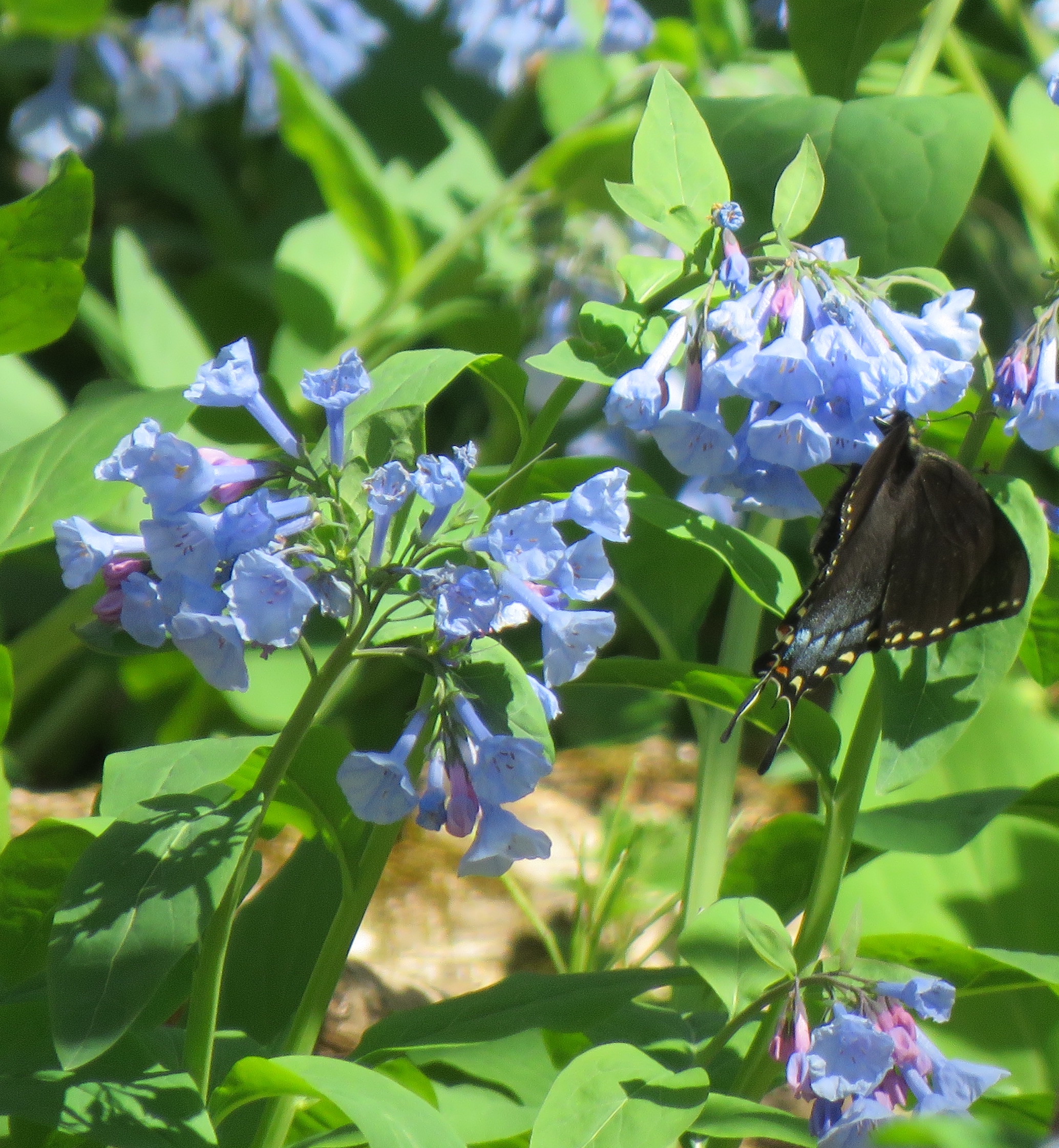
Several butterflies flitted all around the trees and flowers in irregular patterns. I soon learned to stay still and let the beautiful insects come to me. Several were puddling on the path wear they found damp spots. They extracted nutrients from the moistened soil. A few stayed in place long enough for me to get a few decent shots.

Of course, I kept passing other hikers, and a few bikers who surprised me from behind. The butterflies flew but often returned within camera range.

I didn’t see as many birds as I had hoped, but I counted the trip a success. Communing intimately with nature tends to fill you with joy and appreciation. By the time I left, my cup overflowed

© Bruce Stambaugh 2022

Earth Day 2022!

Hikers enjoyed the Virginia Bluebells in full bloom as they walked the Blue Trail in Shenandoah River State Park south of Front Royal, VA.

Today is designated as Earth Day. It’s the annual reminder to care for Mother Earth. She’s our only place of residence.

© Bruce Stambaugh 2022
Mirror Image

Silver Lake, Dayton, VA.

I frequent Silver Lake in Dayton, Virginia for a number of reasons. Birding and taking sunsets top the list.

I never know what I will find. Sometimes the sunsets are a bust. Sometimes few birds are present, not counting the ubiquitous resident Mallards.

Like most photographers, I look around for unexpected scenes. I couldn’t miss this one.

The clouds over the mountains to the west had moved east. Consequently, the sun sank behind the Allegheny Mountains without much color or fanfare.

The day’s last rays tinted the remanent clouds that lingered over the nearly still lake. This mirror-image perspective spoke volumes without saying a word.

© Bruce Stambaugh 2022
Witnessing the Ugly Side of Birding

The Bald Eagle flew shortly after I arrived on the scene.

At first, I did a double-take.

My wife and I had just turned the corner onto Erickson Ave. just west of Harrisonburg, Virginia in the Shenandoah Valley. As we passed the Word Ministries Christian Church entrance, I noticed two large birds to my left, just south of the church.

Both birds furiously flapped their wings. But there was something extraordinary about what we were seeing. My wife observed that they both appeared to have white heads.

I initially thought we were watching two Bald Eagles interacting. But the eagle was riding the back of the other bird, steadily forcing it to the ground. I tried to keep an eye on the plummeting birds while slowly driving. Fortunately, there was no traffic.

The birds, still locked together, disappeared from view since the roadway was below the level of the sloping land. We were on our way home from church, so I dropped off my wife at the house since dinner was in the oven. I grabbed my camera and binoculars and hurried back to the scene.

The birds had flown northwest over a woods that lines the crest of a hill that separates the city from the county. The hostile interaction began when they got to the clearing south of the church.

My first view of the Bald Eagle.

I drove to the southwest corner of the parking lot and, from my vehicle, immediately spotted the Bald Eagle sitting in the open field. Through my binoculars, I saw the other bird. It was an Osprey, looking directly toward the eagle.

Within a minute, the eagle flew up and began circling overhead in vast swaths. I drove up to be closer to the Osprey. It was clear that this beautiful bird of prey was severely injured.

Ospreys and Bald Eagles often use the same habitat since both species are skilled at plucking fish from bodies of water. If one catches a fish, the other will pester the bird with its lunch to get it to drop it. Usually, it’s the eagle that chases the Osprey.

But we were nowhere near a large stream, lake, or pond. I wondered what had happened to cause the eagle to be so aggressive toward the Osprey. I took some photos and then turned my attention to finding help for the poor bird.

I posted on a local bird club Facebook page about my dilemma. Within minutes, birders suggested I contact the Wildlife Center of Virginia in Waynesboro. That’s what I did.

The injured Osprey.

Since it was a Sunday, I expected the call to go to voicemail. But on the second ring, a young woman answered. I explained the situation, and she sent me a text with five names and phone numbers of trained wildlife rescue transporters to contact.

All the while, word quickly spread in the local avian network. Black Vultures, American Crows, and Common Grackles began circling overhead. A Cooper’s Hawk zoomed into a nearby tree. The eagle, however, was gone.

The first transporter I called answered right away. Unfortunately, the woman couldn’t help because she was driving to her daughter’s bridal shower. None of the other people responded.

Then I thought of Clair. I should have called him right away. Clair Mellinger is a retired biology professor emeritus from Eastern Mennonite University, and he lives just a quarter of a mile away.

Fortunately, Clair was home, and he told me that he was a trained transporter and had taken birds to the Wildlife Center before. He and his wife arrived in a few minutes.

Ospreys have razor-sharp talons and a sharp beak designed to tear apart the flesh of the prey they catch. Clair was ready. His pants were tucked into his hiking boots. He wore a thick jacket and gloves and carried a blanket to throw over the bird.

As Clair approached the Osprey, he could see just how badly injured the bird was. Its left wing was broken, and it wasn’t able to walk. So, picking up the bird was easier than we had expected.

Clair Mellinger with the injured Osprey.

The bird didn’t squawk or even try to move as Clair carefully carried the Osprey to the trunk of his car. He placed it in a plastic milk crate, put another one on top, and bound the two with bungee cords.

Before he left, Clair told me that he had never seen an eagle be so aggressive. The injuries were that bad.

I hoped the Osprey and its human escorts were on their way to a good outcome. The Virginia Wildlife Center is a noted rehab center.

Unfortunately, the eagle severely injured the Osprey; there was nothing the veterinarian at the center could do. An email informed me that the bird died in surgery the next day.

As an avid amateur birder, the news saddened me. I was happy to have an expert and trained birder like Clair to call on in this time of urgent need. And I was grateful to the rehab center for their efforts in trying to save the Osprey.

Clair told me that he figured that the Osprey was on its northern migration and passed through the eagle’s territory. Nesting eagles in the Shenandoah Valley are either currently incubating eggs or feeding young that have hatched.

This fact could have accounted for the once-in-a-lifetime altercation that my wife and I witnessed. We only wished the events would have had a better outcome for the Osprey.

© Bruce Stambaugh 2022
It Was a Sugary Kind of Afternoon

The initial stop on the Sugar Trail at New York’s Genesee Country Village and Museum.

I didn’t really know what to expect when our son and his wife informed us that we were going to a maple sugar festival. I knew that our daughter-in-law was super excited, which was enough incentive for me. Besides, what choice did I have? They had already purchased tickets, and it was a rain or shine event.

So, off we drove southwest from Rochester, New York, to the Genesee Country Village and Museum. We arrived in less than an hour, and it was clear from the crowded parking lot that we weren’t alone on this adventure.

We checked in and were directed to the Sugar Shack, where the modern method of boiling maple sap down to create maple syrup was explained. In New York, it takes about 39 gallons of sap to make a gallon of maple syrup. I thought back to my Ohio days when I visited various sugaring operations. The general rule there was 52 gallons of sap to create a gallon of maple syrup. I wondered if the latitude had anything to do with the difference.

From there, it was on to sugar snow. That’s where maple syrup is poured over snow for a special tasty treat. In the absence of snow, crushed iced served the same purpose. We enjoyed it just the same.

Soon, we were on the Sugar Trail, where volunteers in period costume explained the maple sugaring evolution one station at a time. Our umbrellas went up before we even stepped foot on the trail.

The wet weather didn’t dampen the spirits of either our gang of six or the knowledgeable folks at each stop. They knew their stuff and shared how both Native Americans and white settlers took advantage of the sap run during February and March.

We learned a lot along the way. The walk was equally a figurative and literal stroll through the woods dominated by sugar maple trees. We followed the signs from stop to stop, ending up at how maple sap is currently gathered by most successful sugaring operations.

Plastic tubing is strung from tree to tree with plastic inserts that are tapped into the tree. Gravity carries the sap to the main collecting barrel instead of going from tree to tree emptying individual buckets full of the sweet stuff. In truth, only 2% of the water collected is sugar, thus the boiling of the water. Workers have to gauge the proper heat to avoid burning the syrup. Despite the mechanization, it’s still a tedious process.

By trail’s end, we were ready for lunch. A brief stop at an on-sight eatery got us going again. That’s when the real surprise came.

Genesee Country Village and Museum is a collection of historical buildings brought to the site for educational purposes. George Eastman’s boyhood home is in the village. Eastman was the founder of Eastman Kodak Company.

The village is divided into sections to represent the various architectural structures of the late 18th century into the early 20th century. Some of the buildings, like the Hosmer’s Inn and its smokehouse and the Jones Farm had guides in period outfits to give a brief description of the way life used to be in those particular times. We also enjoyed maple flavored goodies from the bakery.

The sun came out, and the temperature warmed, making our afternoon even more delightful. Most of all, it was a joy to spend these precious moments with family.

© Bruce Stambaugh 2022
A Photo Essay for an Old Friend

The backyard red maple saw a lot of lovely sunsets.

I said goodbye to an old friend recently. I had the utilitarian red maple tree in our backyard cut down. I didn’t really want to, but it was the right thing to do.

The tree has served us well year-round in the short time my wife and I have lived in the Shenandoah Valley. We moved here from Ohio’s Amish country to be near our grandchildren.

In the summer, the backyard tree provided much-needed shade for us and the wildlife. The tree reached far above the peak of our home, helping to block the hot afternoon sun. Birds and squirrels were often seen lounging in the coolness.

Our grandchildren scaled the alluring tree with her low, sweeping branches. She oversaw their croquet games, soccer kicking, and baseball tossing. American Robins and Blue Jays nested high in her tender branches.

The red maple glowed most gloriously in the fall, of course. Her red leaves brightened chilly, gray autumn days. But the healthier front yard red maple always outshone her sister’s beauty.

In the winter, she cradled the various backyard bird feeders I hung from her lower limbs and placed beneath her silver trunk. White-throated Sparrows, House Finches, Purple Finches, Carolina Chickadees, Carolina Wrens, and American Goldfinches were just some of the species that rested on her branches.

Woodpeckers especially loved her. Downey, Red-bellied, Northern Flickers, and even a Pileated Woodpecker graced her offerings. American Robins roosted high in her crown as days drew to a close.

In the spring, her dainty, concealed blossoms attracted pollinators before I even realized they were there. In addition to her budding lime leaves, she sprouted her precious, life-giving seeds. Unfortunately, they were so numerous not even the horde of neighborhood squirrels could devour them all. The twirling seeds clogged our spouting and downspouts until we had gutter guards installed. More personally, they activated my allergies. I alone kept Keenex® in business.

Neither of those negativities led to her demise, though. No, I knew the tree was sick from the time we moved in nearly five years ago. Even a casual glance would have told any passerby that the tree had an issue.

The red maple was only one of two mature trees on our third of an acre. A second red maple frames the front yard. Even from the street, you could see that the color of the leaves of the two trees was different. The front yard maple’s leaves shown glossy and vibrant. The leaves of the backyard tree appeared dull, even sickly.

I knew that one large east-facing branch of the backyard red maple struggled to produce leaves. But last summer, when the region was in a moderate drought, the leaves suddenly turned brown and shriveled up.

A certified arborist showed me the reasons for the beloved tree’s demise. Insects had girdled the limb in question near the trunk, and the bark had flacked off. In fact, the bugs had burrowed into the trunk as well. No wonder woodpeckers loved the tree.

The arborist said the tree would live no longer than five years. We made the difficult decision to have the tree taken down, and replace it with another that hopefully will produce a crown that will mirror the qualities of the red maple.

My wife and I won’t likely live long enough to watch the replacement tree grow to maturity. We are resigned to watching the young sweet gum grow the way we have enjoyed watching our grandchildren morph from joyous youngsters into achieving and helpful youth.

Even when dormant, the red maple looked grand.

© Bruce Stambaugh 2022

Bay Photos by Donna

Wildlife Photos From The Chesapeake Bay Region

ROAD TO NARA

Culture and Communities at the Heart Of India

K Hertzler Art

Artist and nature journalist in the Shenandoah Valley of Virginia.

Maria Vincent Robinson

Photographer Of Life and moments

Gabriele Romano

Personal Blog

Jennifer Murch

Art is the only way to run away without leaving home. -Twyla Tharp

Roadkill Crossing

Writing generated from the rural life

ANJOLI ROY

writer. teacher. podcast cohost.

Casa Alterna

El amor cruza fronteras / Love crosses borders